Tag Archives: brain-candy

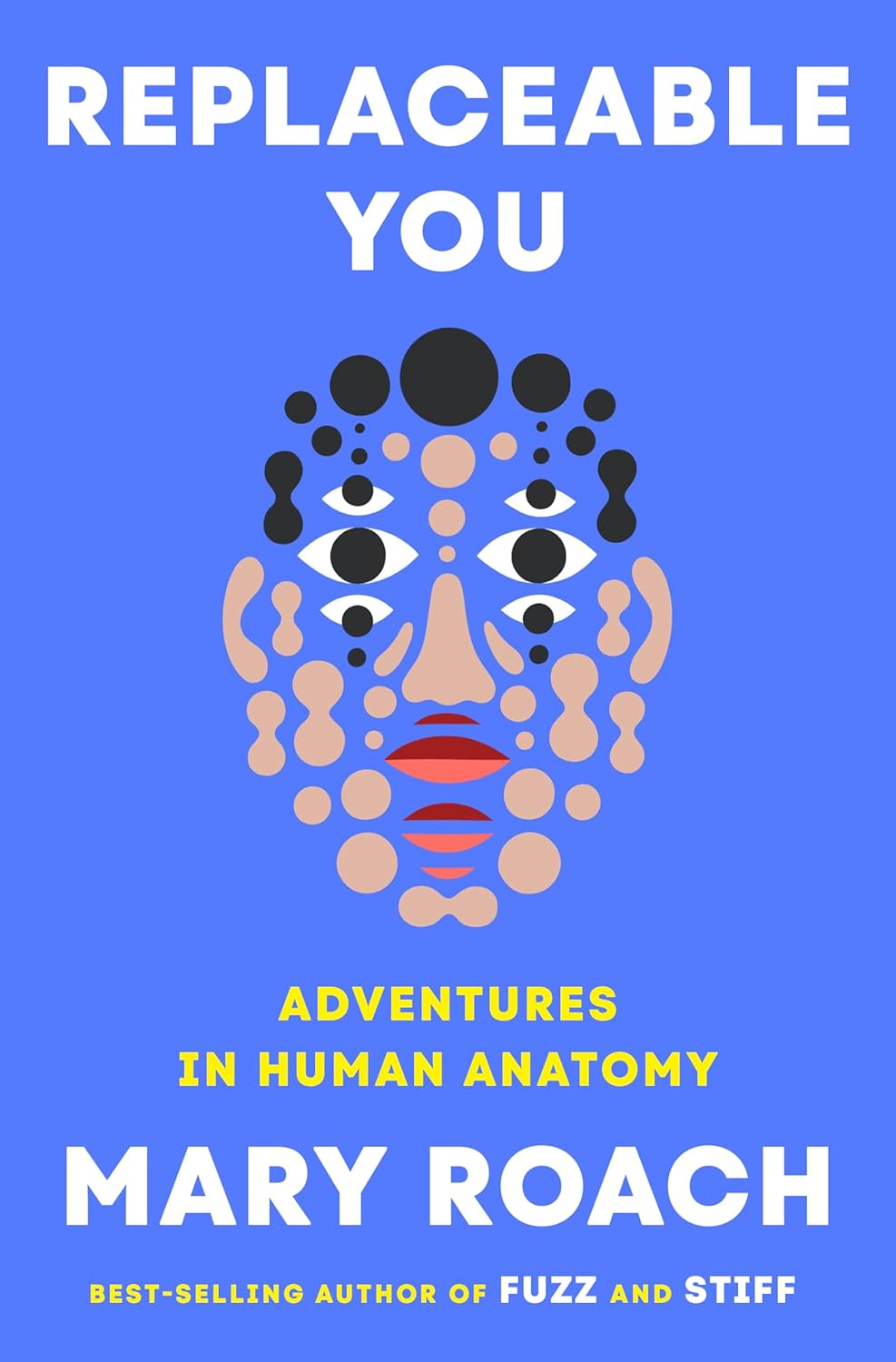
Replaceable You by Mary Roach

book cover

It’s another photograph of the penis [transplanted from the owner’s middle finger], now with a rustic ceramic pitcher hanging off of it. Exactly as you or I could put a hand out, palm up, and hang a pitcher off our middle finger. The pitcher is hand-painted, white with a red and green floral pattern. I’m picturing the man and his partner again, this time having lunch in the kitchen. A little iced tea, my love?

Eventually the day arrives when no further breach is possible. Mr. Baron, wrote his doctor, Richard Martland, “was now informed, the only chance for saving his life was by making an artificial anus . . . the inconveniences resulting from such operation, were candidly pointed out to him.” Mrs. White, on the occasion of her twelfth day without a bowel movement, is presented with the same proposition. Both patients consented. Or rather, as Pring put it, “did not violently object.” And so it went. “An opening was now made . . . and instantly a large quantity of liquid feces and wind escaped,” Martland wrote. Both doctors were impressed by the force with which the matter was expelled, with Pring taking additional note of the “considerable distance” traveled. – There was no mention of a fan in the vicinity.

This book certainly lends new meaning to the expression “an heir and a spare.”

I imagine many of us, certainly folks of my demographic, have had the experience of having parts replaced, probably because of need, but for some because of choice. I know I would happily have my begrudging spine replaced if I had the chance. And there are certainly a few improvements I could use that would be competing for second place on that list. Thus, my interest in Mary Roach’s latest, Replaceable You. (My ex can attest to the truth of the title’s applicability to the entire me.) Of course, I would read anything Mary Roach has written. She is one of my all-time favorite authors. And just in case her work is new to you, she combines a hard-reporting look at a particular scientific realm with a sense of humor that will leave you gasping for breath. Complete swallowing any ingested liquids before reading her work, as they may come blasting out your nose and mouth before you can get a grip. You have been warned.

description
Mary Roach – image from Harvard Bookstore – shot by Jen Siska

Roach has made a career of writing about the human body, from conception (Boink) to grave (Stiff), and beyond (Spook), with travels through the alimentary canal (Gulp), the body’s reaction to space flight (Packing for Mars), to war (Grunt) and even to strangeness having to do with our interactions with animals (Fuzz). This time around, she covers a range of body parts subject to replacing. She sniffs out the history of nose jobs back to the 1500s, and lets us in on why they were in such high demand back then. She brings home the bacon by filling us in on the status of pig research (on, not by) for the purpose of developing organs that can be transplanted into humans, a subject close to my heart.

A formal “miniature swine development” project got underway in 1949, a collaboration between two Minnesota powerhouses, the Mayo Foundation (research arm of the Mayo Clinic) and the Hormel Institute (research arm of pork).

There are sections on the replacement, or enhancement, of sexual organs. One of the opening quotes of this review notes a particular form of actual, not kidding, replacement for a male member. Female anatomy comes in for a bit of consideration as well.

Dow Corning…made the first silicone breast implant, circa 1961, this one at the urging of Texas plastic surgeon Thomas Cronin. Cronin had been “inspired by the look and feel of a bag of blood.” It is hard for me not to picture the scene: Cronin standing around the OR, idly gazing at a bag hanging on a transfusion pole and turning to a colleague: Hey. Does that remind you of something? Cronin contacted Dow, and his resident, Frank Gerow, implanted some prototypes into dogs. The team were “excited” by the outcome—and again, stop me from picturing this.

Continuing downstairs…

Who looks at the human digestive tract and thinks, Moist, tubular, stretchy . . . Might that make a reasonable vagina?

Some, apparently. The derriere comes in for a long look as well. Part of this is a consideration of the changing fashions in tush shape, stretching from sane to anime.

I have made it (well in) to septuagenarian with what is probably an unremarkable range of replacement parts. My right arm was the recipient of two metal plates and a bone graft from my hip after a rather nasty industrial accident in 1970. The plates were removed once they had done their job of helping my bones knit, a few years later. The bone graft helped heal another fracture, and was eventually absorbed back into my skeleton.

Roach tells of prosthetic limbs, and the surprising news that some people prefer them to the original. In fact, the initial inspiration for this book came from a reader who had suggested that Mary take on the exciting world of football referees. Understandably, that failed to score, but it turned out that the woman, who has spina bifida, had a problem with her foot. It had, as a result of her other difficulties, become less than useless. She wanted it removed so she could get a prosthetic, but few surgeons would consider electively removing it. Mary joined her at the Amputation Coalition National Conference, and the game was…um…afoot.

It will come as no shock that using one’s own body bits as a source of transplantation offers the huge advantage of sparing you the need for a lifetime of immunosuppressive drugs. The body’s Studio 54 security guard can take a quick look and wave the new part in as the right sort. It worked for me a second time.

Other recent personal additions were the product of open-heart surgery, three stents and an aortic valve replacement. The stents were made up of material extracted from my right leg, and the valve was contributed by a member of our porcine community. I have yet to experience any desire to go digging for truffles in nearby woodlands.

Roach takes joy in comparing the techniques and tools of hip replacement surgery to woodworking, noting that while patients could actually be conscious during the surgery, the clanging, sawing machinery noise would be so disturbing that it is deemed preferable for patients to remain unconscious for the duration. She says that “Hip replacement has the visual drama of a visit to a Chevron station.”

Sadly, I was born with a mouthful of (well, maybe not born with, which would be weird, but ultimately host to a couple of sets, baby and adult) soft teeth (my dentist’s words). This led, over time, to a need for fillings, caps, bridges and dentures.
.
If you count up all the teeth that are removed and replaced with implants or dentures, I bet they would lead the pack in sheer numbers of replacement bits. Mary leads us on a walk through dentures in history, the up and down sides, as well as the benefits of not using them at all. Yes, Geoge Washington makes an appearance. You will find the section on spring-loaded replacements both fascinating and alarming, and concerning as well is the fact that so many people have elected to remove healthy teeth in order to install dentures.

Replacing hair is big business these days. But not just up top. Pubic hair is also replaceable. Not only can the short and crinkly be replaced, with hair from the head, but the opposite can be done as well. Of course this can present some grooming challenges, as pubic and head hair grow differently and behave inconsistently when treated with grooming products. Mary subjected herself to a bit of hair harvesting in her travels.

My donor site is smeared with bacitracin, but no gauze is taped in place, because my hair would get stuck. On the flight home, I will feel the back of my head start to ooze. Do you fly Southwest? Don’t sit in 11B.

She delves into the growth industry of 3D printing of bodily materials. It turns out that it is not so simple as it might seem. Each muscle and organ has particular abilities and behaviors that are very difficult to replicate, involving twisting, contracting, and reacting to incoming messaging from the brain. The Star Trek replicator might do a great job of producing “Earl Grey, hot,” but fabricating people-pieces is proving a much more complex undertaking than sci-fi writers imagined.

Eye lenses are being replaced at increasing rates. There are even many people who, as with tooth replacement noted above, are having their natural lenses replaced in order to improve their vision.

I have worn glasses since I was eight years old, for distance. The only issue I had with them was losing track of them. But in the last few years, it became obvious that there was a buildup of material on the left lens of my eye (not just the product of inattentive eyeglass wiping) that made night driving particularly challenging. Oncoming headlights, even non-bright ones, spread a glare across my field of view that was problematic. I had cataract surgery earlier this year (2025), left eye only. And it worked like a squeegee on a filthy window. The headlights are still miserable, particularly when people insist on using their brights, and when many newer cars use lights that are brighter than the prior generations of illumination, but the improvement in my vision was immediate.

She writes about the processes involved in recovering bio-materials from the recently dead, the potential for banking our own cells as a source for future replacement materials, a machine for offloading heart and respiration work from the body temporarily, and introducing us to the wonderful world of ostomies, noted up top.

Mary may write about science, but she is not, per se, a scientist. Thus, she can offer us an every-person view into the subjects she investigates. She reacts how we might react when faced with the same discoveries. She brings the oh, wow!, the joy-of-discovery moments to life for readers, and thus makes what she has learned stick for us more than it would from any dry textbook. If she leaves you in stitches, that might just be a part of your replacement work. If you burst with laughter, bust a gut, if you crack up or your laughter is side-splitting, that may be why you needed the work in the first place. Of course, if you laugh your head off, there is probably no short-term solution to that. Replaceable You is the real thing, as is Mary Roach. She is one of a kind. Accept no substitute. She is irreplaceable.

Nana takes a seat at Kuzanov’s desk and starts opening files on his computer desktop. After a few false starts, she locates a folder of photographs documenting a finger transplant performed on a cancer patient. Most of the man’s penis had been amputated, leaving him unable to do two of the things most men like to do with their penis: penetrate and pee while standing. The surgery would restore both. – She missed one.

Review posted – 09/19/25

Publication date – 09/16/25

I received an ARE of Replaceable You from W.W. Norton & Company in return for a fair review. Thanks, folks, and thanks to NetGalley for facilitating. And could you check to see if anyone left any spare spines lying around.

This review is cross-posted on Goodreads. Stop by and say Hi!

===================================EXTRA STUFF

Links to Roach’s personal, Instagram and Twitter pages

Profile – from her site

I grew up in a small house in Etna, New Hampshire. My neighbors taught me how to drive a Skidoo and shoot a rifle, though I never made much use of these skills. I graduated from Wesleyan in 1981 and drove out to San Francisco with some friends. I spent a couple years working as a freelance copy editor before landing a half-time PR job at the SF Zoo. On the days when I wasn’t there in my little cubicle in the trailer behind Gorilla World, I freelanced articles for the Sunday magazine of the local newspaper. One by one, my editors would move on to bigger publications and take me along with them. In the late 1990s, magazines began to sputter out and travel budgets evaporated, and so I switched to books.
People call me a science writer, though I don’t have a science degree and sometimes have to fake my way through interviews with experts I can’t understand.
I have no hobbies. I mostly just work on my books and hang out with my family and friends. I enjoy bird-watching (though the hours don’t agree with me), hiking, backpacking, overseas supermarkets, Scrabble, mangoes, and that late-night “Animal Planet” show about horrific animals such as the parasitic worm that attaches itself to fishes’ eyeballs but makes up for it by leading the fish around.

Interviews
—–Stuff to Blow Your Mind on iHeart – Replaceable You, with Mary Roach by Robert Lamb – audio (36 minutes) with available transcript
—–Peculiar Book Club – MARY ROACH is Un-Replaceable! – video – 1:10:03 – from 5:00
—–NPR – From heart to skin to hair, ‘Replaceable You’ dives into the science of transplant with Brandy Shillace
—–Association of Health Care Journalists – Mary Roach calls herself ‘the gateway drug to science’ by Lesley McClurg

Other Mary Roach books we have enjoyed
—–2021 – Fuzz: When Nature Breaks the Law
—–2016 – Grunt: The Curious Science of Humans at War
—–2013 – Gulp
—–2010 – Packing for Mars
—–2006 – Spook Six Feet Over – recently renamed
—–2004 – Stiff

Items of Interest
—–New York Times – 10 Icky Things Mary Roach Has (Unfortunately) Brought to My Attention – by Sadie Stein – from sundry MR writings, in case you have not laughed enough from reading her latest
—–Bauman Medical – What is a Pubic Hair Transplant?
—–Youtube – A particularly disturbing transplantation scene from the 1973 film Oh Lucky Man

Song
—–Beyonce – Irreplaceable
2 Comments

Filed under History, Non-fiction, Public Health, Science and Nature

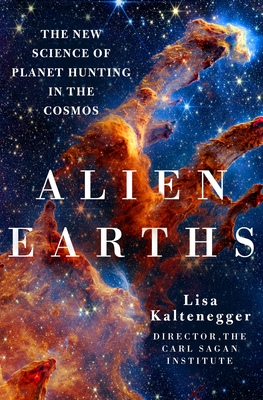
Alien Earths by Lisa Kaltenegger

book cover

Before I started searching for life in the cosmos, I just assumed scientists knew how it started on Earth. We don’t.

…it is sobering to realize that for most of Earth’s history, humans would not have been able to survive on this planet. If we could rewind Earth’s history and start again, it seems unlikely that Earth would produce humans again. A planet with different starting conditions and paths of evolution has no obligation to support life similar to Earth’s, let alone curious humans.

The truth is out there.

Are we alone in the cosmos? The question should have an obvious answer: yes or no. But once you try to find life somewhere else, you realize it is not so straightforward.

At least until the age of permanent haze across the planet, we have always had the stars in our consciousness. Since the second century AD we have had stories about alien worlds. Since Galileo we have been able to see other worlds in the cosmos. A 1792 novel by Voltaire tells of an alien encounter. Concern about extraterrestrial locales has been a part of human consciousness ever since. The concern is certainly fed by the history of strange human invaders helping themselves to land distant from their home soil.

description
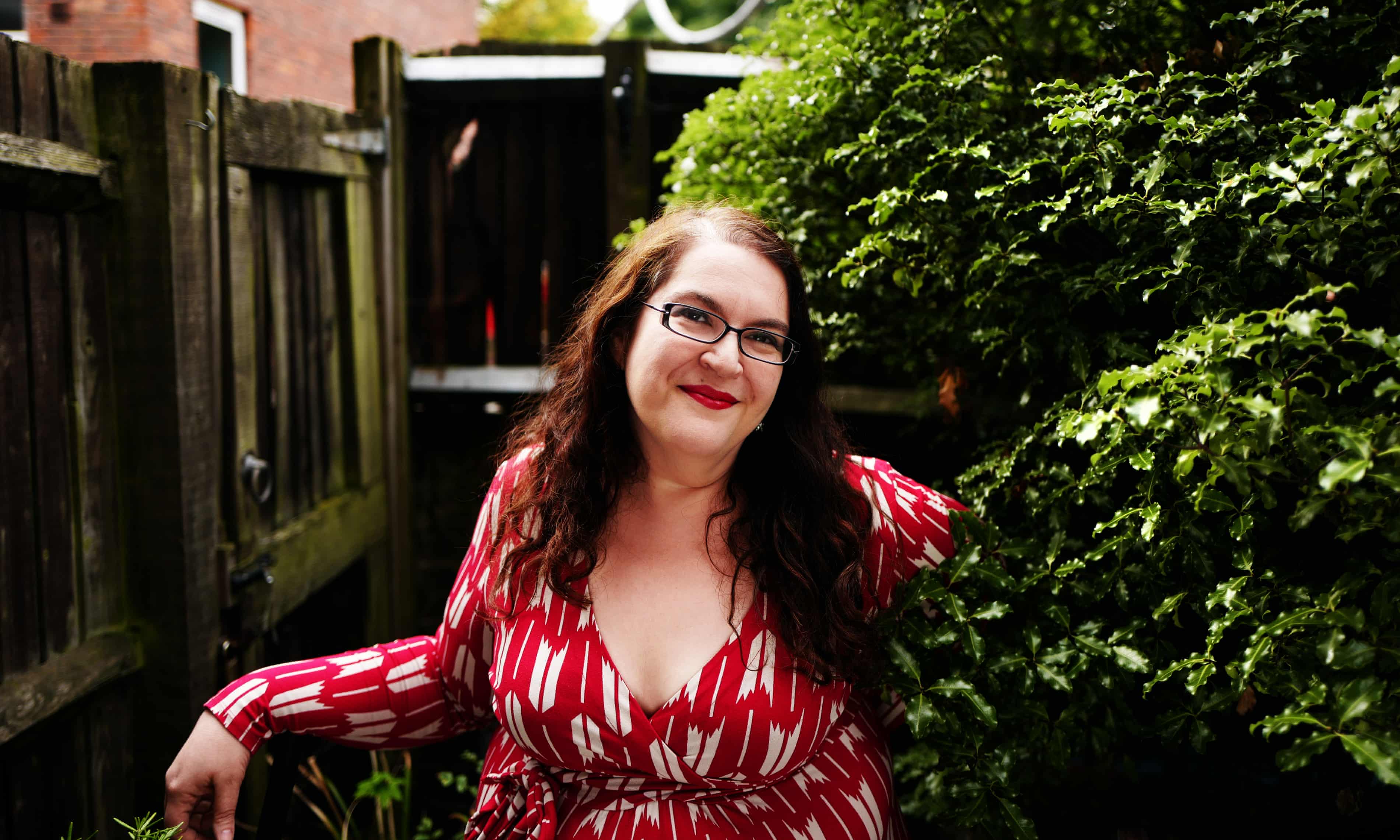
Lisa Kaltenegger – image from The Guardian – shot by Naomi Haussmann/The Observer

The interest in things alien certainly kicked up in the twentieth century. Many of us grew up in the space age, witness to the first “Beep-Beep” from orbit, the first peopled orbiters, rapt in front of our televisions when mankind first set foot on the moon. Part of this experience is to be awash in the science fiction of our own and earlier ages, dreaming of strange other-world societies, fearful of invasion, eager to learn the lessons of advanced technology. Some were even impressed and excited enough by the technology and the optimism of the age to begin college careers with the dream of becoming aeronautical engineers, and designing some of the hardware of the future.

description
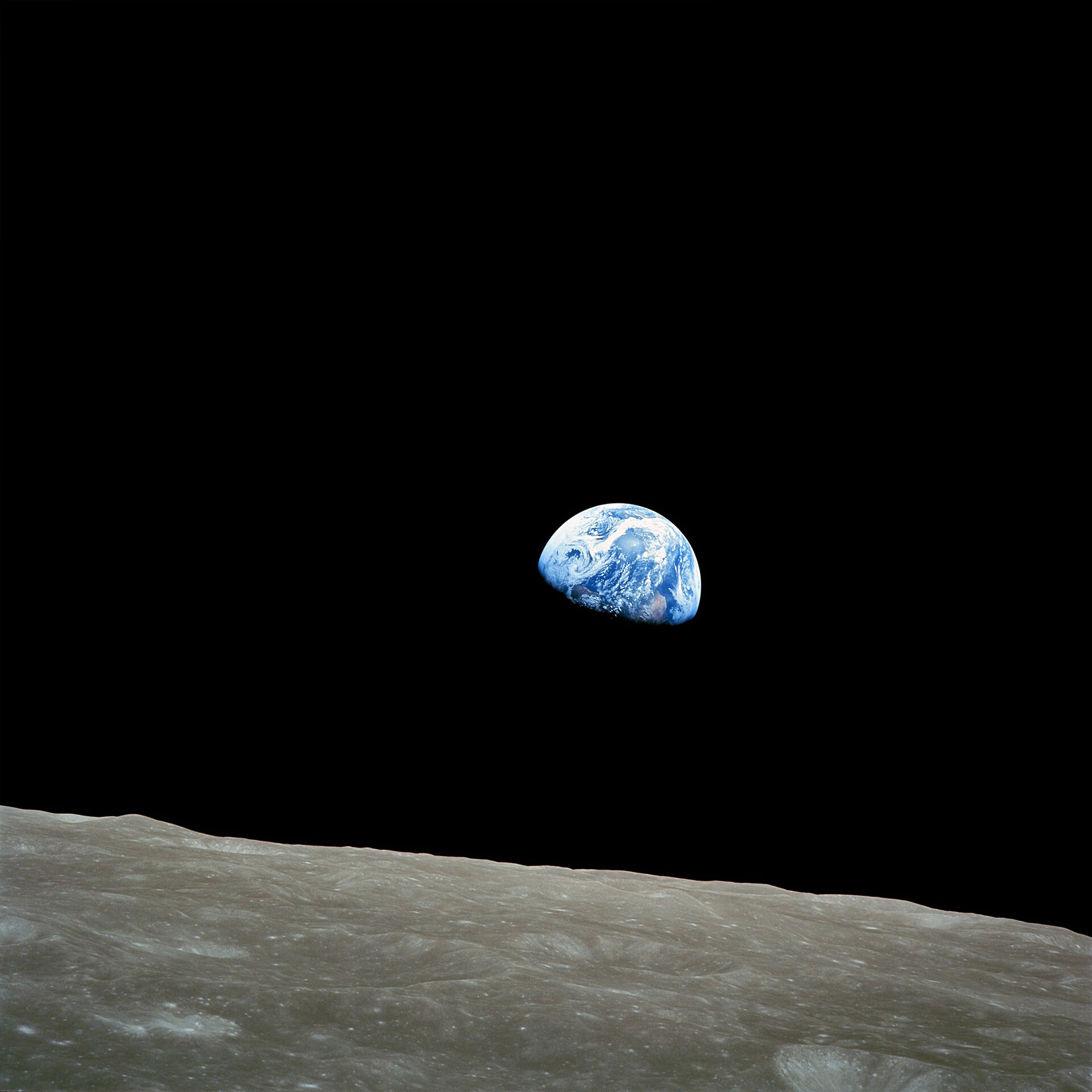
Earthrise – image from Wikipedia

But so much of this was based on fantasy, (including that engineering thing) limited to imagining what might exist out there. Even the early observations of other planets in the solar system generated fantasies in addition to scientific elucidation. But in 1995 scientists discovered the first two exoplanets, and new discoveries are now a nearly daily event. Today, because of the major advances that we have made in telescope technology, we are able to see to the far ends of the universe. Enter Lisa Kaltenegger, founder and head of the Carl Sagan Institute at Cornell University

I spend my days trying to figure out how to find life on alien worlds, working with teams of tenacious scientists who, with much creativity and enthusiasm and, often, little sleep but lots of coffee, are building the uniquely specialized toolkit for our search.

In studying what we have seen, it has become possible to detect stars that have planets around them. In fact, most stars have company. The way this is detected is to measure “wobble” in the light being observed from distant places. As if you were looking at a bright light and someone threw a ball across your field of view. The measured light would change and you could tell that something had been there. Keep looking to see if it repeats. If it does, then you probably have a planet orbiting that star. (or an annoying neighbor tossing something back and forth in front of you) Keep pointing the James Webb Space Telescope (the state of the art in telescopy today) to more and more locations in space. And discover more and more planets.

description
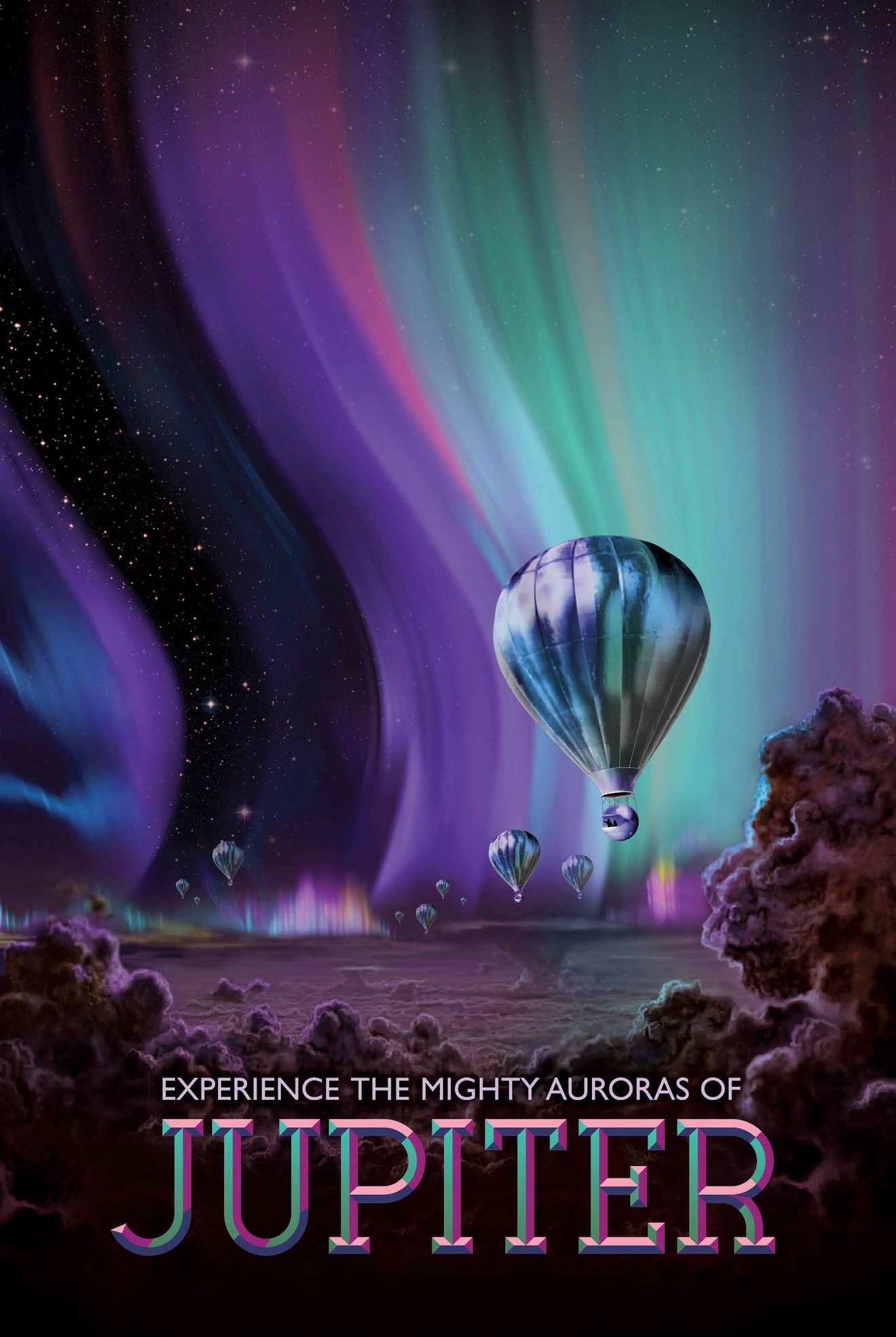
Jupiter – image from Exoplanet Travel Bureau – NASA

Kaltenegger has been looking into the reality of other worlds her entire career, and in doing so, has advanced our knowledge base considerably. She begins this book with a brief visit to an other planet, one that is very different from ours, a star-facing world that has portions in eternal day, night, and dusk, and local life adapted to the local venues, just to get things started on what we might expect out there, just to challenge our assumptions.

description
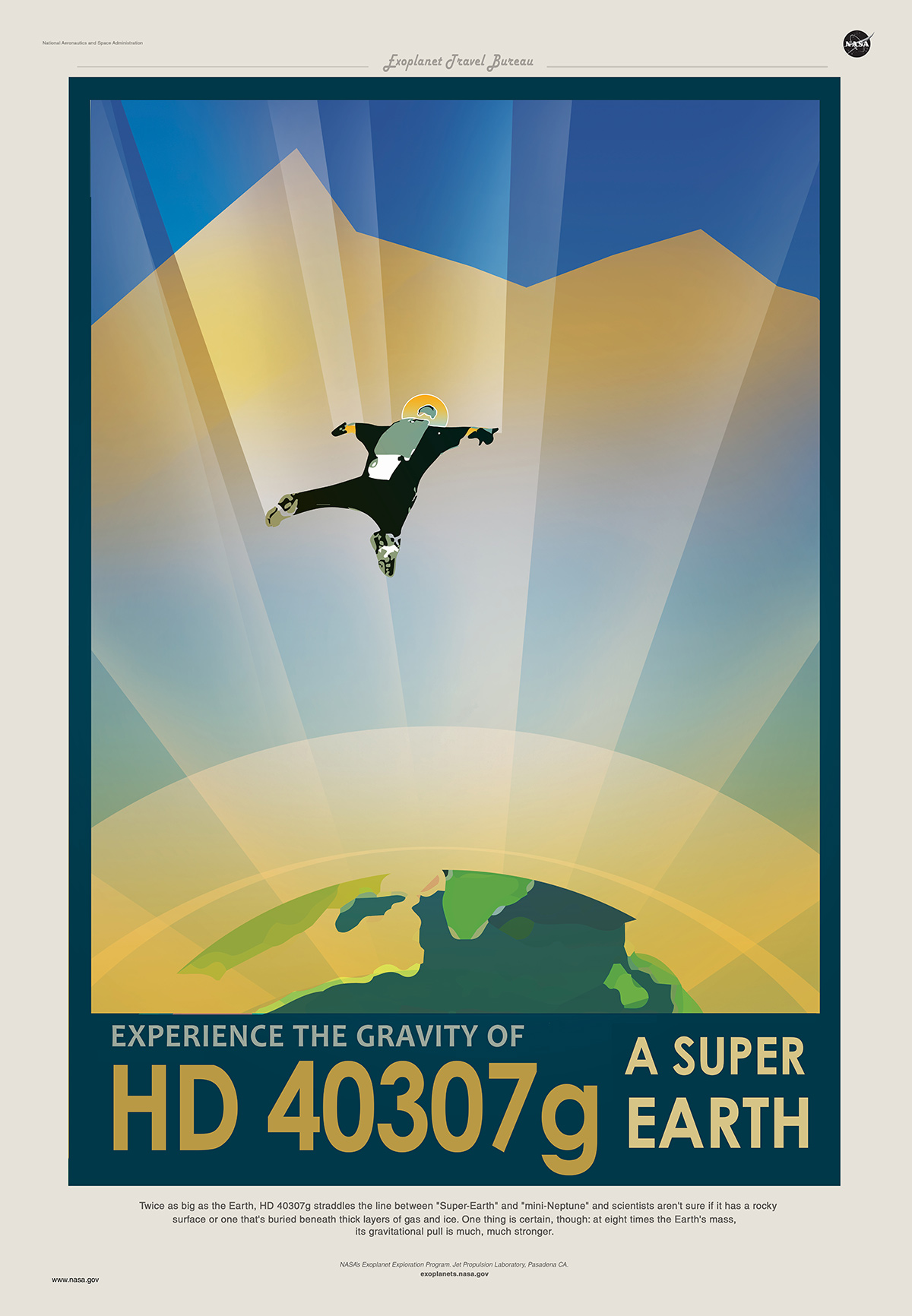
HD 40307g – A Super Earth – image from Exoplanet Travel Bureau – NASA

She follows with a history of Mother Earth, noting major stops along the evolution of our favorite place. She notes how life might have formed, when, and how that event altered the atmosphere and even the color of our atmosphere. The sequence is important, as her discussion of our exoplanet dreams demonstrates that we are a prisoner of time. What we see with our telescopes (and eyes) arrived here on light, and light must travel at or below the universal speed limit. (a leisurely 186,282 miles per second) So, whatever we see from even a nearby star/planet system originated tens or hundreds of years go, or even billions for our more distant neighbors. Anything residents of out there might have seen of us (really only since we started sending signals into the ether maybe a hundred years ago) is quite dated relative to who and what we are today. Absent the invention of a Warp Drive of some sort, we are doomed to be always too far away in years and miles from other intelligent species. Well, maybe.

description
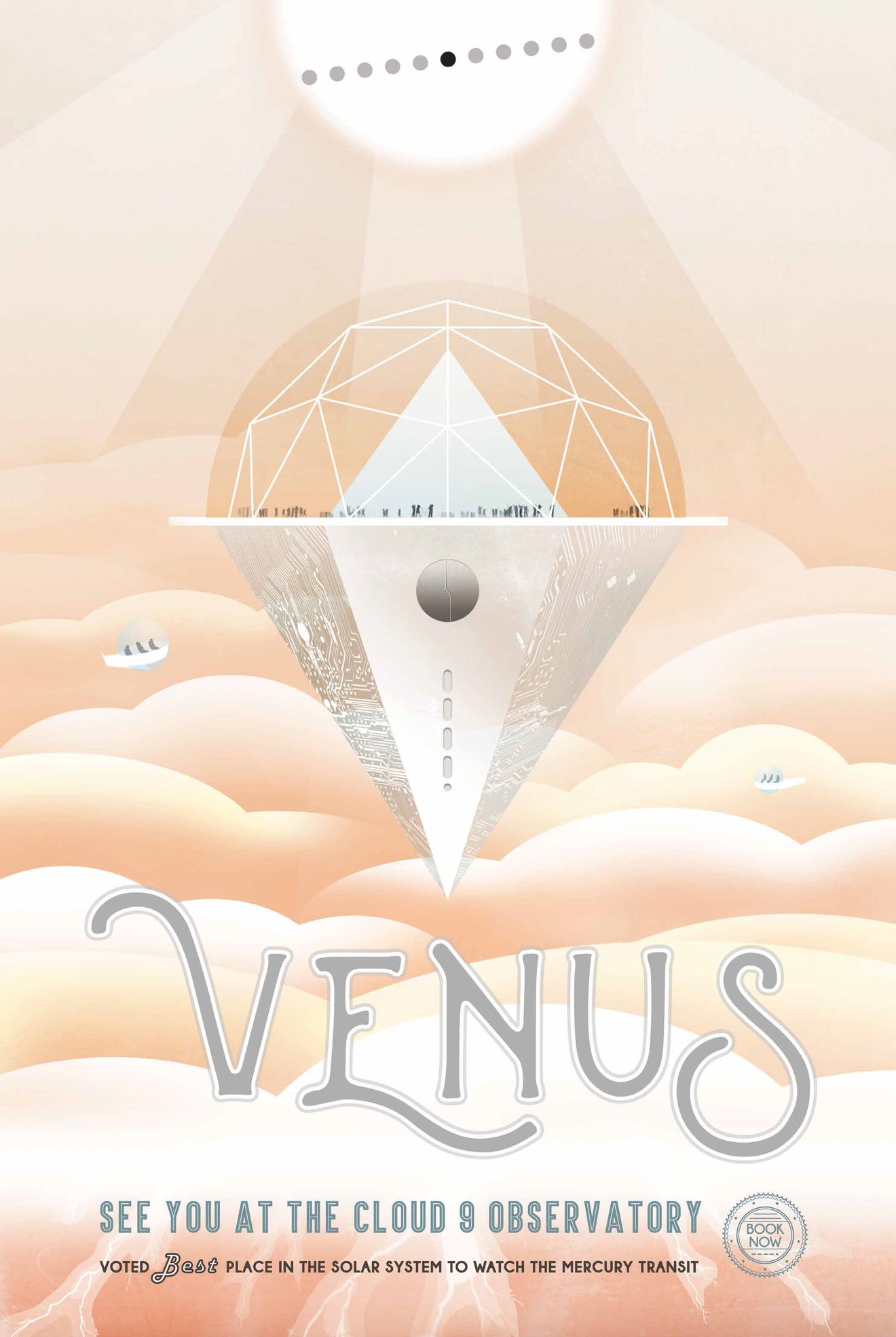
Venus – image from Exoplanet Travel Bureau – NASA

It is possible, I suppose, for a civilization with massive resources to send a desperate one-way mission to save their species from hundreds of light years away. It is unlikely that any visitors from such distant realms would be making reports home. But this need not necessarily apply to all possible visitors. It appears that there are plenty of possible planets within a few light years of us that might present some interplanetary possibilities.

description
Mars – image from Exoplanet Travel Bureau – NASA

Kaltenegger delves into the nearer-earth planets, looks at their characteristics, and offers explanations as to their suitability for life. She looks at probable communication issues should we ever come across an ET, suggesting it might be the equivalent of humans attempting to communicate with a jellyfish

description
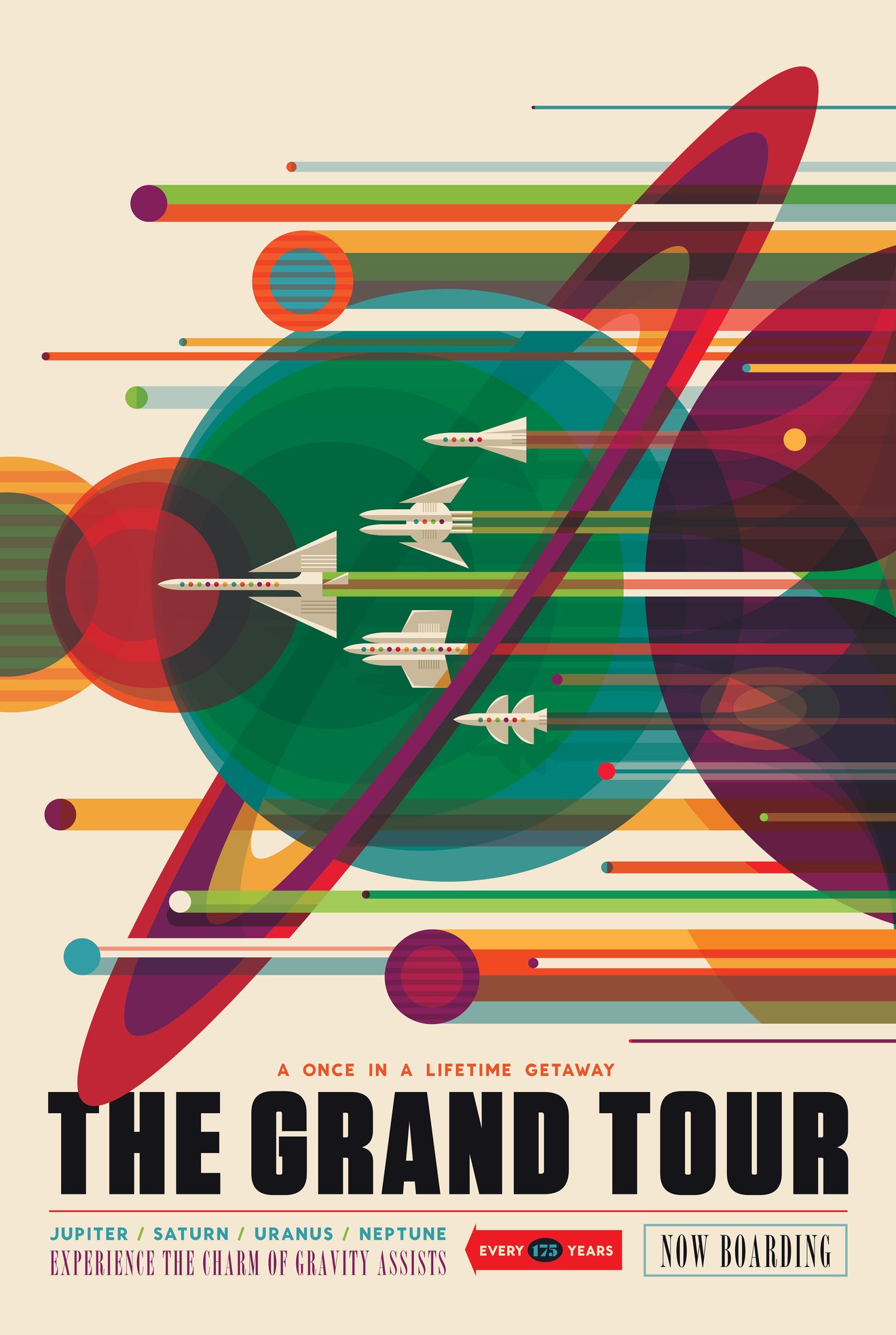
Grand Tour – image from Exoplanet Travel Bureau – NASA

Kaltenegger and her team design computer simulations, based on the hard work of examining concrete materials, inert and biologic, and putting that intel into a database. Check the signature spectrum of every new world and compare it with the growing list of catalogued items.

Today, solving the puzzle of these new worlds requires using a wide range of tools like cultivating colorful biota in my biology lab, melting and tracing the glow from tiny lava worlds in my geology lab, developing strings of codes on my computer, and reaching back into the long history of Earth’s evolution for clues on what to search for. With our own Earth as our laboratory, we can test new ideas and counter challenges with data, inspired curiosity, and vision. This interaction between radiant photons, swirling gas, clouds, and dynamic surfaces driven by the strings of code within my computer, creates a symphony of possible worlds—some vibrant with a vast diversity of life, others desolate and barren.

She notes the core need of life-sustaining planets is to be rocky. Sorry, Jupiter, no gas giants need apply (but their moons might). They also need to be within a certain range of the stars they circle, the so-called “Goldilocks Zone,” not so close as to be too hot nor so distant as to be too cold, and they need to show the presence of key life-sustaining elements.

description
Europa – image from Exoplanet Travel Bureau – NASA

Kaltenegger offers readers info on some topics likely to be new to most of us, Stellar Corpses, for example, warm ice, the Fermi Paradox, the Drake Equation, the Great Silence, tardigraves, and plenty more. All of these are explained clearly and simply. It is as if the author is telling us: This is what we have learned. This is what we expect. This is how we go about gathering information, fusing our fields of expertise, learning more, solving the mysteries that the data present. This is our understanding of what is possible. This is our plan for looking further and farther.

description
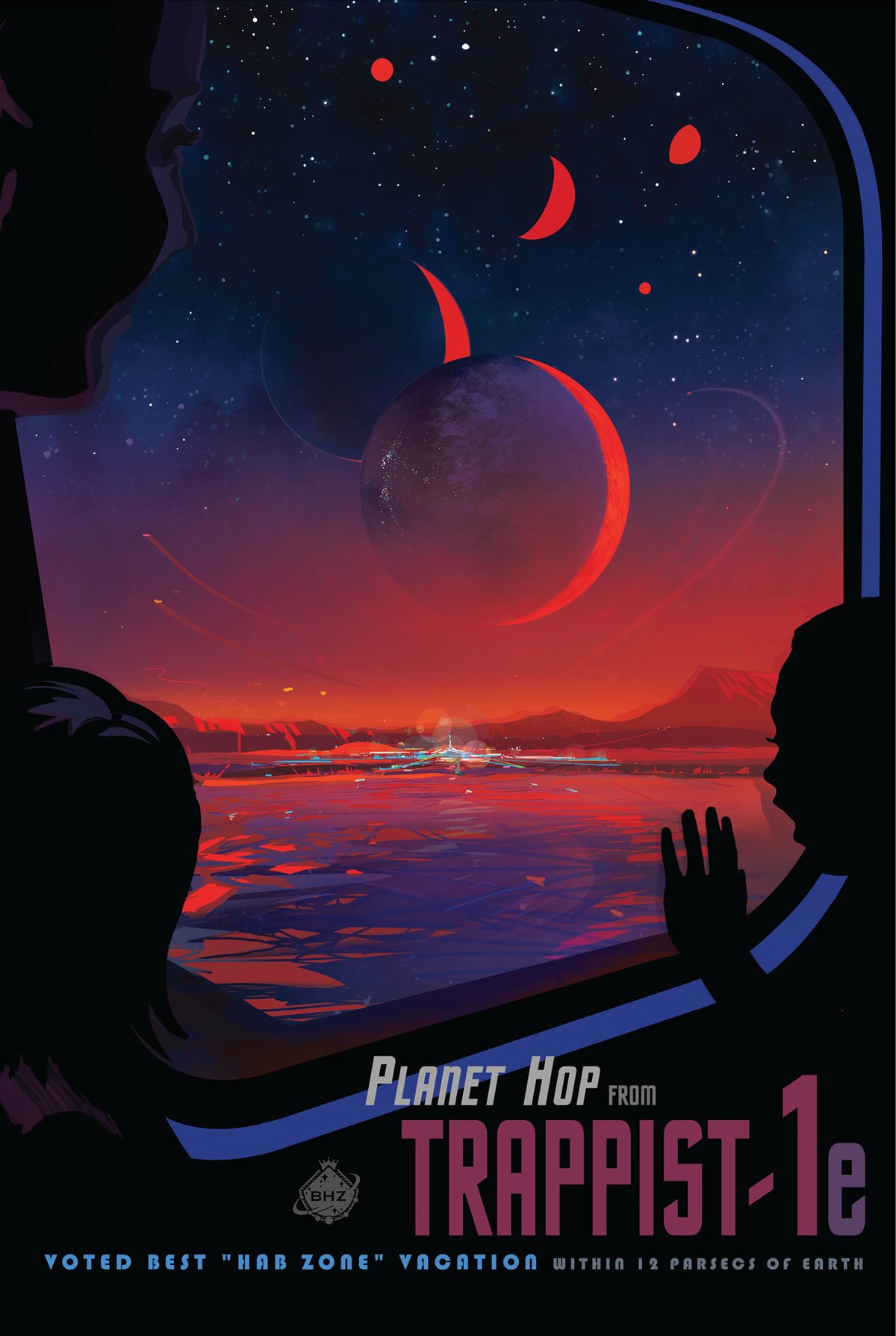
Trappist – image from Exoplanet Travel Bureau – NASA

Alien Earths may not point to an actual catalog of life-sustaining exoplanets, but it does offer an accessible pop-science portrait of the current state of the art in the search. This galactic age of exploration has been ongoing for some time, getting a jolt from the discovery of other worlds. It has advanced to where we are now looking for (and expecting to find) evidence of life on other planets. It is likely that what we find will be pretty basic, single-cell critters, maybe even plant life. And it will probably take a good long time before we can move up to the final phase of the game, finding intelligent life. The time scale for any potential interaction is likely to be considerable, but who knows? The universe is full of surprises among its billions and billions of stars.

So far, despite wild claims to the contrary, we have not found any definitive proof of life on other planets. Until we do, we will continue to improve our toolkit and look for signs of alien life the hard way: searching planet by planet and moon by moon.

Review posted – 09/27/24

Publication date – 04/16/24

I received an ARE of Alien Earths from St. Martin’s Press in return for a fair review. Thanks, folks, and thanks to NetGalley for facilitating.

This review is cross-posted on Goodreads. Stop by and say Hi!

=======================================EXTRA STUFF

Links to the author’s personal, FB, Instagram, and Twitter pages

Interviews
—–We live in a golden time of exploration’: astronomer Lisa Kaltenegger on the hunt for signs of extraterrestrial life by Emma Beddington
—–Chris Evans Breakfast Show – Lisa Kaltenegger: Is There Alien Life? – Video – 25:39
—–StarTalk – Distant Aliens and Space Dinosaurs – with Neil DeGrasse Tyson – audio – 50:03
—–StarTalk – Astrophysicists Discuss Whether JWST Discovered Alien Exoplanets – Neil DeGrasse Tyson – video – 48:58

Item of Interest from the author
—–Lisa Kaltenegger. On Looking for Signs of life – Video – 10:36

Items of Interest
—–NASA – Jet Propulsion Laboratory – Visions of the Future
—–The Carl Sagan Institute
—–Unilad.com – NASA discovered -planet bigger than Earth with a ‘gas that is only produced by life’

Song
—–Monty Python’s Galaxy Song

Leave a comment

Filed under History, Non-fiction, Reviews, Science and Nature

The Future by Naomi Alderman

book cover

The road to ruin is paved with certainty. The end of the world is only ever hastened by those who think they will be able to protect their own from the coming storm.

Love is the mind killer.

So what would you do if your super-secret software gave you the alert? End times are afoot. Time to scoot! If you are like most of us, you might seek our your nearest and dearest to see the world out together. But what if you are one of the richest people on the planet? Well, in that case, you would have prepared a plan, an escape, a plane, supplies, a bunker somewhere safe. Buh-bye, and off they go. The they in this case includes three billionaires, the heads of humongous tech companies, some years in the not-too-distant future, Lenk Sketlish, Zimri Nommik, and Ellen Bywater.

They were definitely not inspired by anyone specifically who could sue me for everything I’m worth and barely notice it…They are composite characters made up of some of the ridiculous and awful things that tech billionaires have done and some of it just made up out of my head. But of course the companies are inspired by real companies. – from the LitHub interview

What if you were the number one assistant to one of these folks, or the less-than-thrilled wife of another, or the ousted former CEO and founder of a third one, maybe the gifted child of one? You might have been spending your time trying to see what you could do to mitigate the vast harm these mega-corporations have done to the planet. These are Martha Einkorn, Lenk’s #2, Selah Nommik, Zimri’s Black British wife, Alex Dabrowski, founder and former CEO of the company now headed by Ellen, and Badger, Ellen’s son.

“Margaret [Atwood] has very much covered how bad it can get, so we don’t need a lesser writer doing that,” Alderman says. “I’m interested in the most radical ideas about how we can make things better, and what are the avenues we can pursue.” – from the AP interview

BTW, Atwood mentored Alderman.

What if you were attending a conference in Singapore, having recently met one of group B above for an interview, and gotten entangled in an unexpected way, but now find yourself in the vast mall in which the conference is being held, being chased and shot at by some psycho, probably a religious nut? Lai Zhen is a 33yo refugee from Hong Kong, an archaeologist and well-known survivalist influencer. She had met someone she thinks may be The One, but her immediate survival is taking up all available mental space. Thankfully, she has help, but will it be enough?

description
Naomi Alderman – image from The Guardian

The action-adventure-sci-fi shell encasing The Future is a dystopian near-future that takes an if-this-goes-on perspective re the road we are currently traveling toward planetary devastation, global warming, the increasing greedification of the world economy, and concentration of wealth, at the expense of sustainability and human decency. But Alderman has done so much more with it.

The Future has a brain and a heart, to go along with the coursing hormones, and some serious mysteries as well. Did I mention there is a romance in here also? Good luck shelving this thing. You probably will not have much luck putting it down once you start reading. Well, take that advisedly. I did find that it took a while to settle in, as there is a fair bit to get through with introducing all the characters, but once you get going, day-um, you will want to keep on.

While offering a look at survival post everything, Alderman tosses in some fun high tech and BP-raising sequences. And she gives readers’ brains a workout, providing considerable fodder for book club discussions. To bolster the thematic elements, Aldermen provides plenty of connections to classic tales, biblical and other, that offer excellent starting points for lively discussions.

Martha was raised in an apocalypse-concerned cult, led by her father. As an adult she gets involved in on-line exchanges about questions like what might be learned from the experience of a biblical apocalypse survivor, Lot. Alderman was raised as an Orthodox Jew, studying the Torah in the original, so knows her material well. (God was about to firebomb Sodom when Lot’s kindness to a couple of god’s emissaries earned him and his family a get-out-of-hell-free pass.) In addition, she finds relevance in Ayn Rand, The Iliad, The Odyssey, and more.

She brings in a discussion of the enclosure act in the UK, how the stealing of public land by the wealthy has a mirror in the theft of public space of different sorts in the 20th and 21st centuries. But the biggest issue at work here is trust. In fact, Alderman had intended to title the book Trust. But when Herman Diaz’s novel, Trust, won a Pulitzer Prize, she had to find an alternative. Can Zhen trust her new love interest. Can she trust the AI that is supposedly helping her? Can she trust any of the oligarchs? Can she trust people she has known for years on line, but never met in person? This is a core concept, not just on a personal, but on a societal level. Civilizations are built on trust. It is an issue that touches everyone.

The wealthier you are, the less you have to ask people things and the less you ask people for things, the less you have to discover that you can trust and rely on them. Eventually, that erodes your ability to trust. Then, you’re sunk. – from the Electric Literature interview

Consider a concern that is immediate in early 2024. Can American allies, whose alliances have kept the world out of World War III since the end of World War II, trust the US intelligence services with their secrets, when our next president might give, trade, or sell it to our enemies? Can you trust that the person you are communicating with on-line is being honest with you. (As someone who has met people through Match.com, I am particularly aware of that one.) If you are stuck on a survival island, can you trust that the other people there will not do you in, in order to improve their chances of gaining power once things begin to return to some semblance of global livability?

In today’s culture, technology, particularly social media, “encourages us not to really trust each other,” Alderman explains. “The ways that we use to communicate with each other have been monetized in order to make us as angry at and afraid [of one another] as possible.” And while the internet can all too often amplify “absolute hateful stupidity” to feed our distrust of one another, the author continues, “It can also demonstrably, again and again, multiply our knowledge and capacity to understand.” – from the Shondaland interview

Zhen’s is our primary POV through this, although we spend a lot of time with Martha. She is an appealing lead, a person of good intentions, and reasonably pure heart. She is wicked smart, able, and adaptive. It is easy to root for her to make it through. But, noting the second quote at the top of this review, if Love is the mind killer, might it impair her clarity of thought, her maintenance of necessary defenses? Of might it impair that of the person she is love with?

The concern with dark forces is a bit boilerplate. Two of the oligarchs are cardboard villains; another has some edges.
But it is the conceptual bits that give The Future its heft. Oh, and one more thing. Woven throughout the 432 pages of this book is minor crime, Grand Theft Planet. It should come as no surprise that an author who has had great success with her previous novels, and who has spent some years writing video games, would produce a fast-paced, engaging read, replete with dangers, anxieties, fun toys, and wonderful, substantive philosophical sparks. I cannot predict the future any better than 2016 presidential pollsters, but my personal AI suggests that should The Future will find its way to you, you will be glad it did.

Imagining bad futures creates fear and fear creates bad futures. The pulse beats faster, the pressure rises, the voice of instinct drives out reason and education. At a certain point, things become inevitable.

Review posted – 3/8/24

Publication date – 11/7/23

I received an ARE of The Future from Simon & Schuster in return for a fair review, and the password to my super-secret software. Thanks, folks, and thanks to NetGalley for facilitating.

This review is cross-posted on Goodreads Goodreads. Stop by and say Hi!

=======================================EXTRA STUFF

Links to the author’s personal, Instagram, GR, and Twitter pages

Profile – from Simon & Schuster

Naomi Alderman is the bestselling author of The Power, which won the Women’s Prize for Fiction, and was chosen as a book of the year by The New York Times, The Washington Post, the Los Angeles Times, and was recommended as a book of the year by both Barack Obama and Bill Gates. As a novelist, Alderman has been mentored by Margaret Atwood via the Rolex Arts Initiative, she is a Fellow of the Royal Society of Literature, and her work has been translated into more than thirty-five languages. As a video games designer, she was lead writer on the groundbreaking alternate reality game Perplex City, and is cocreator of the award-winning smartphone exercise adventure game Zombies, Run!, which has more than 10 million players. She is professor of creative writing at Bath Spa University. She lives in London.

Interviews
—–Professional Book Nerds – Dystopian Futures with Naomi Alderman – video, well, mostly audio, with no real video – 41:59
—–Toronto Public Library – Naomi Alderman | The Future | Nov 13, 2023 with Vass Bednar – 45:05 – there is a nice bit in here on tech as neither bad nor good, but a tool which can be used for good or evil.
—–Literary Hub – Naomi Alderman on Creating a Fictional Tech Dystopia by Jane Ciabattari
—–Shondaland – Naomi Alderman Is Still Finding Hope in Humankind by Rachel Simon
—–AP- Naomi Alderman novel ‘The Future’ scheduled for next fall by Hillel Italic
—–Electric Literature – Dystopian Future Controlled by Technology by Jacqueline Alnes
—–Independent – How We Met: Naomi Alderman & Margaret Atwood – by Adam Jacques – Atwood mentored Alderman in 2012 – a fun read

Item of Interest from the author
—–BBC Sounds – audio excerpt – 1.0 – The End of Days – 15:47

Items of Interest
—–Tristia by Ovid – Zhen reads this prior to a trip to Canada
—–The Admiralty Islands
—–inert submunition dispenser – a kind of cluster bomb
—–Wiki on the enclosure act

Leave a comment

Filed under Action-Adventure, AI, Cli-Fi, computers, Fiction, Literary Fiction, Mystery, Reviews, Science Fiction, Thriller, Thriller

Artificial by Amy Kurzweil

book cover

What makes a person the same person over time? Is it our consciousness, the what-it’s-like to be us? Is consciousness like a light that’s either on or off?

What remains of a person once they’ve died? It depends on what we choose to keep.

Amy Kurzweil is a long-time cartoonist for The New Yorker. If the name sounds a bit familiar, but you aren’t a reader of that magazine, it may be because her father is Ray Kurzweil. He is a genius of wide renown. He invented a way for computers to process text in almost any font, a major advance in making optical character recognition (OCR) a useful, and ubiquitous tool. He also developed early electronic instruments. As a teenager he wrote software that wrote music in the style of classical greats. No gray cells left behind there. He happened to be very interested in Artificial Intelligence (AI). It helps to have a specific project in mind when trying to develop new applications and ideas. Ray had one. His father, Fred, had died when he was a young man. Ray wanted to make an AI father, a Fred ChatBot, or Fredbot, to regain at least some of the time he had never had with his dad.

description
Amy Kurzweil – Image from NPR – shot by Melissa Leshnov

Fred was a concert pianist and conductor in Vienna in the 1920s and 1930s. A wealthy American woman was so impressed with him that she told him that if he ever wanted to come to the USA, she would help. The Nazification of Austria made the need to leave urgent in 1938, so Fred fled with his wife, Hannah. (He had actually been Fritz in Austria, becoming Fred in the states.) He eventually found work, teaching music.

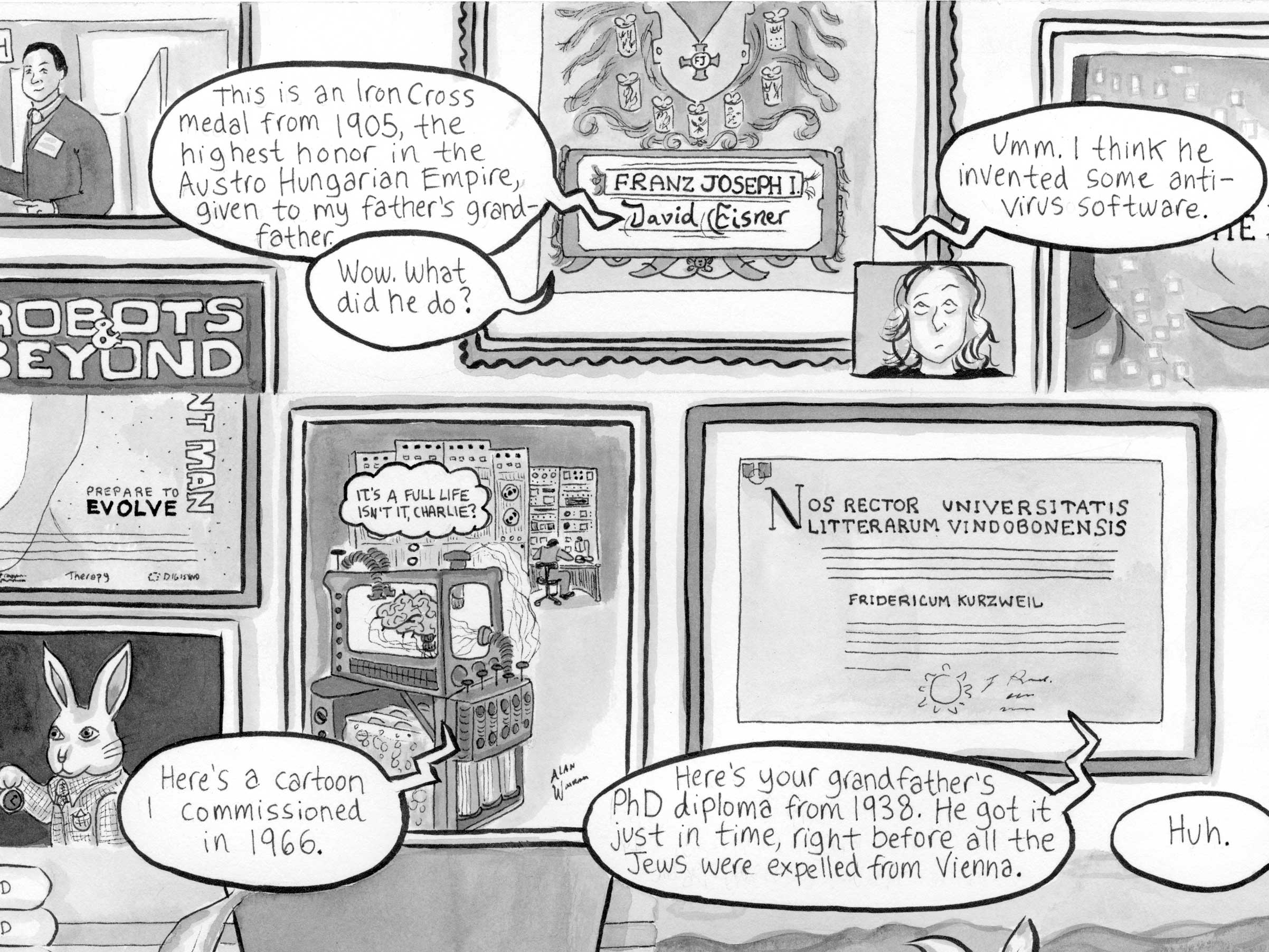
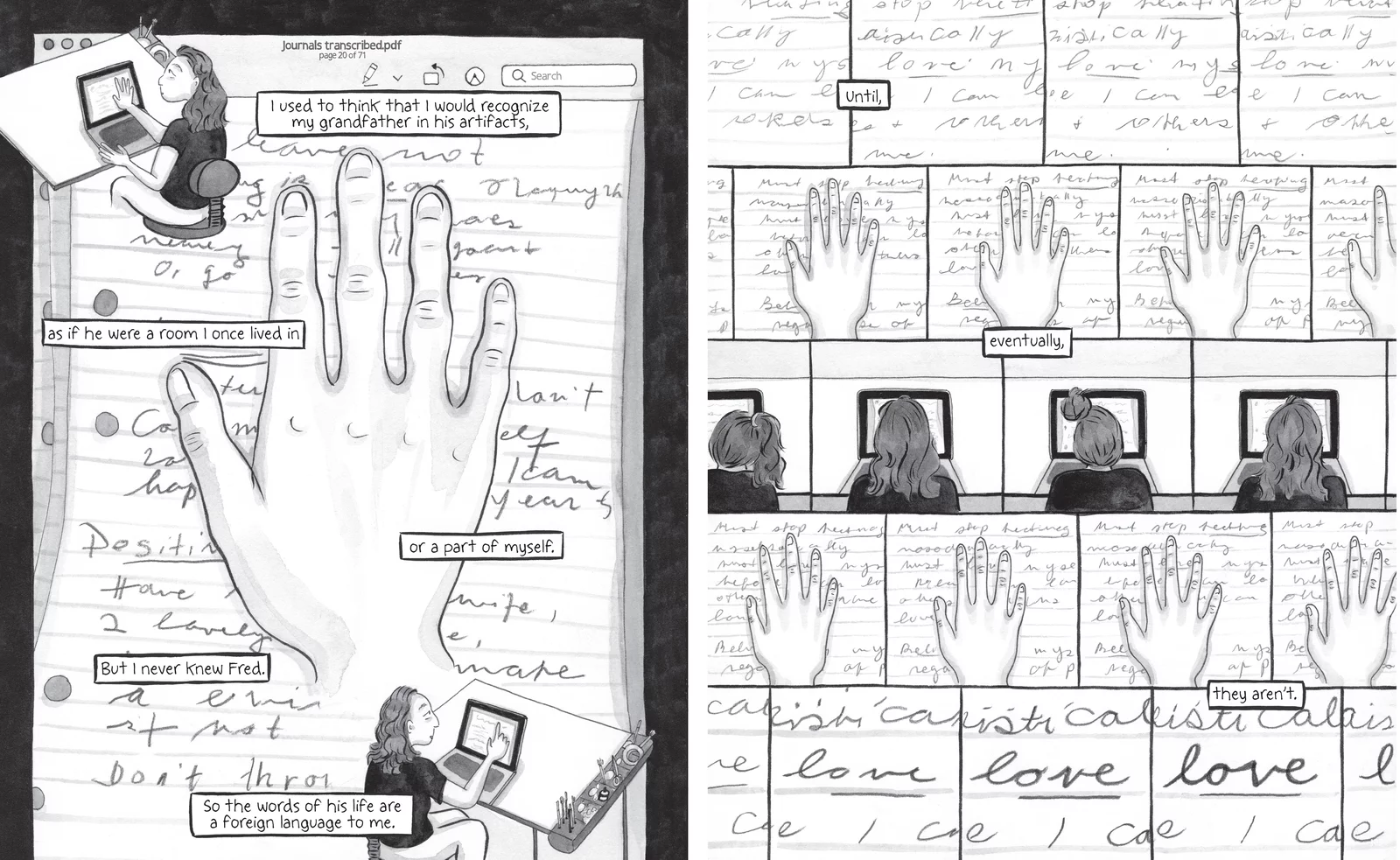
Artificial: A Love Story is a physically hefty art book, a tale told in drawings and text. Amy traces in pictures her father’s effort to reconstruct as much of his father’s patterns as possible. To aid in the effort there was a storage facility with vast amounts of material from his life both in Austria and in America. She joins into the enterprise of transcribing much of the handwritten material, then reading it into recordings which are used to teach/train the AI software. It is a years-long process, which is fascinating in its own right. She also draws copies of many of the documents she finds for use in the book.

description
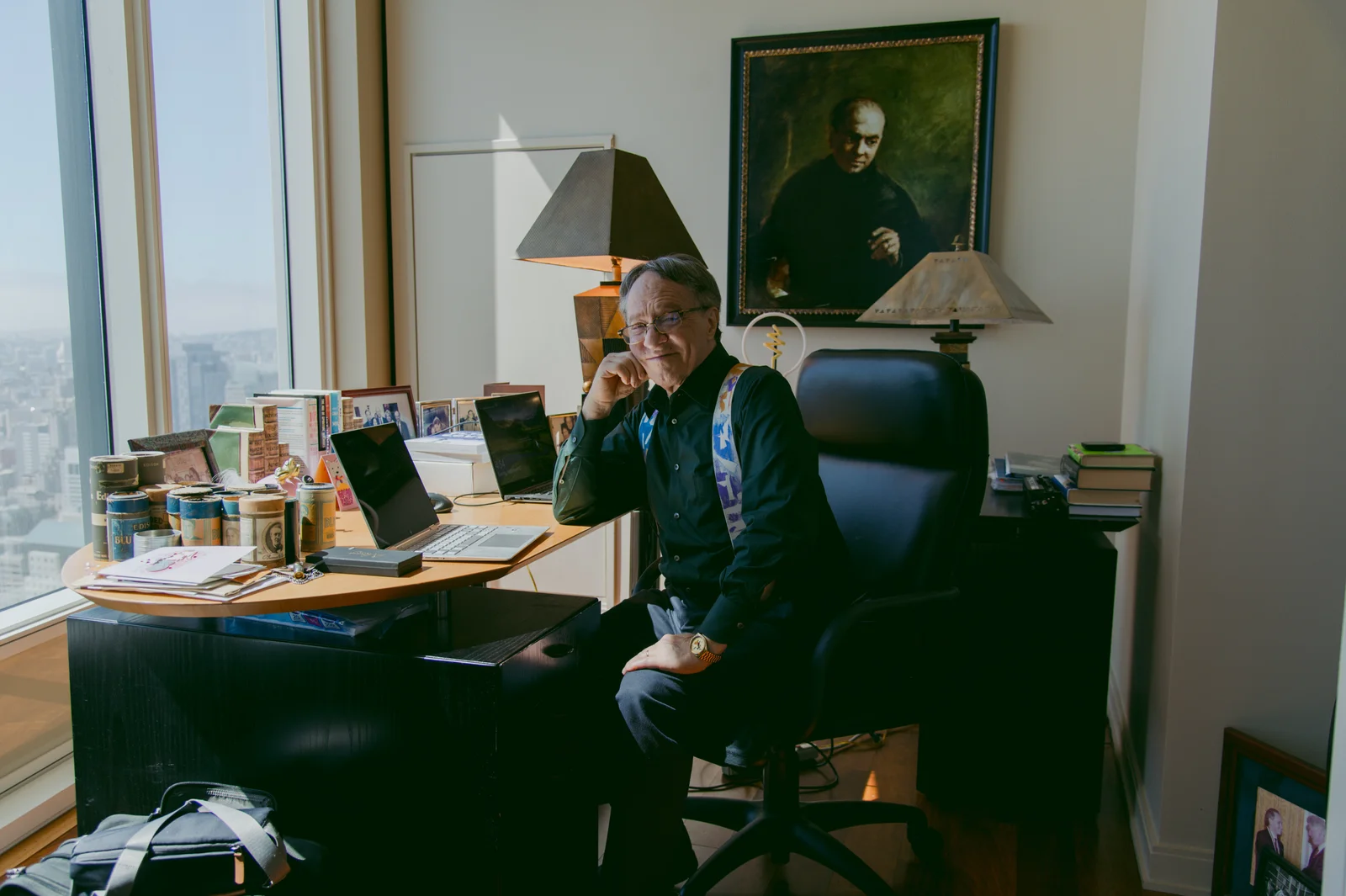
Ray Kurzweil with a portrait of his father – image from The NPR interview – Shot by Melisssa Leshnov

But there is much more going on in this book than interesting, personalized tech. First, there is the element of historical preservation.

I always understood my father’s desire to resurrect his father’s identity as being connected to two different kinds of trauma. One is the loss of his father at a young age in a common but tragic scenario, with heart disease. The other trauma is this loss of a whole culture. Jewish life in Vienna was incredibly vibrant. Literally overnight it was lost. The suddenness of that loss was profound, and it took me a while to appreciate that. My great-aunt Dorit, who died this past year at 98, said they were following all the arbitrary protocols of the Nazis to save all this documentation. Saving documentation is an inheritance in my family that is a response to that traumatic circumstance. – from the PW interview

Kurzweil looks at three generations of creativity, (Fritz was a top-tier musician. His wife, Hannah, was an artist. Ray was also a musician, but mostly a tech genius. Amy is a cartoonist and a writer.) using Ray’s Fredbot project as the central pillar around which to organize an ongoing discussion of concepts. In doing so, she offers up not merely the work of the project, but her personal experiences, showing clear commonalities between herself and her never-met grandfather. This makes for a very satisfying read. Are the similarities across generations, this stream of creativity, the impact not just of DNA, but of lived experience? Nature or nurture, maybe the realization of potential brought to flower by the influence of environment whether external (living in a place that values what one has to offer) or internal (families nurturing favored traits)?

description
Image from the book – posted on The American Academy in Berlin site

One could ask, “what makes us what are?” The book opens with a conversation about the meaning of life. But life is surely less determinative, less hard-edge defined than that. A better question might be what were the historical factors and personal choices that contributed to the evolution of who we have become?

description
Image from the book – it was posted in the NPR interview

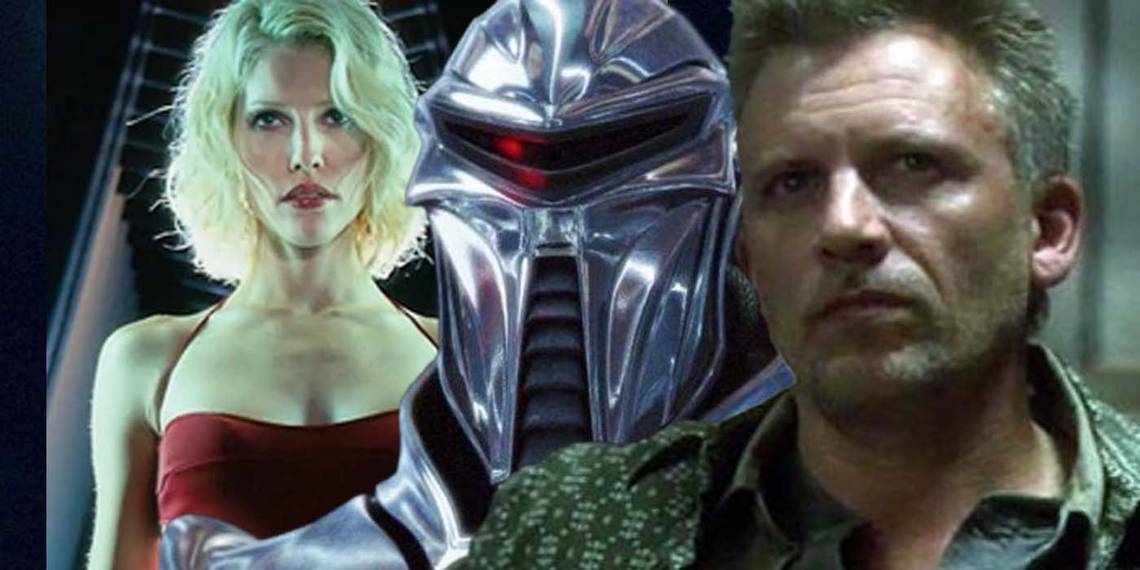
Existential questions abound, which makes this a brain-candy read of the first order. Kurzweil looks at issues around AI consciousness. Can artificial consciousness approach humanity without a body? What if we give an AI a body, with sensations? Ray thinks that we are mostly comprised of patterns. What if those patterns could be preserved, maybe popped into a new carrier. It definitely gets us into Battlestar Galactica territory. How would people be any different from Cylons then? Is there really a difference? Would that signal eternal life? Would we be gods to our creations? If we make an AI consciousness will it be to know, love, and serve us? The rest of that catechistic dictat adds that it is also to be happy with him in heaven forever. I am not so certain we want our AIs remaining with us throughout eternity. As with beloved pets, sometimes we need a break. Are we robots for God? Ray thinks such endless replication is possible, BTW. Kurzweil uses the image of Pinocchio throughout to illustrate questions of personhood, with wanting to live, then wanting to live forever.

description
Every Battlestar Cylon model explained – image from ScreenRant

Persistence of self is a thread here. As noted in the introductory quotes, Kurzweil thinks about whether a person is the same person before and after going through some change. How much change is needed before it crosses some line? Am I the same person I was before I read this book? My skin and bones are older. But they are the same skin and bones. However, I have new thoughts in my head. Does having different thoughts change who I fundamentally am? Where does learning leave off and transition take over? Where does that self go when we die? Can it be reconstructed, if only as a simulacrum? How about experiences? Once experienced, where do those experiences go? These sorts of mental gymnastics are certainly not everyone’s cuppa, but I found this element extremely stimulating.

Kurzweil remains grounded in her personal experience, feelings, and concerns. The book has intellectual and philosophical heft, and concerns itself with far-end technological concerns, but it remains, at heart, a very human story.

As one might expect from an established cartoon artist who has generated more smiles than the Joker’s makeup artist, there are plenty of moments of levity here. Artificial is not a yuck-fest, but a serious story with some comic relief. It is a book that will make you laugh, smile, and feel for the people depicted in its pages. Amy Kurzweil has written a powerful, smart, thought-provoking family tale. There is nothing artificial about that.

I used to wonder if I could wake up into a different self. For all I knew, it could have happened every morning. A new self would have a new set of memories.

Review posted – 01/12/24

Publication date – 10/17/23

I received a hard copy of Artificial: A Love Story from Catapult in return for a fair review.

This review is cross-posted on my site, Goodreads. Stop by and say Hi!

=======================================EXTRA STUFF

Links to the author’s personal, FB, Instagram, and Twitter pages

Profile – from Catapult

AMY KURZWEIL is a New Yorker cartoonist and the author of Flying Couch: A Graphic Memoir. She was a 2021 Berlin Prize Fellow with the American Academy in Berlin, a 2019 Shearing Fellow with the Black Mountain Institute, and has received fellowships from MacDowell, Djerassi, and elsewhere.

She has been nominated for a Reuben Award and an Ignatz Award for “Technofeelia,” her four part series with The Believer Magazine. Her writing, comics, and cartoons have also been published in The Verge, The New York Times Book Review, Longreads, Literary Hub, WIREDand many other places. Kurzweil has taught widely for over a decade. See her website (amykurzweil.com) to take a class with her.

Interviews
—–NPR – Using AI, cartoonist Amy Kurzweil connects with deceased grandfather in ‘Artificial’ by Chloe Veltman
—–Publishers Weekly – Reincarnation: PW Talks with Amy Kurzweil by Cheryl Klein
—–PC Magazine – How Ray Kurzweil and His Daughter Brought A Relative Back From The Dead By Emily Dreibelbis
——LitHub – Amy Kurzweil on the Open Questions of the Future by Christopher Hermelin

Songs/Music
—–The Jefferson Airplane – White Rabbit– referenced in Chapter 6

Items of Interest from the author
—–Artificial: A Love Story promo vid
—–The New Yorker – excerpt
—–New Yorker – A List of Amy Kurzweil’s pieces for the magazine

Items of Interest
—–Ray Kurzweil on I’ve got a Secret
—–A trailer for Transcendant Man, a documentary about Ray Kurzweil
—–WeBlogTheWorld – Amy interviews Ray in a Fireside Chat at NASA – sound is poor. You will need to ramp up the volume to hear – video – 23:07
—–Wiki on Battlestar Galactica

Leave a comment

Filed under AI, American history, Artificial Intelligence, Bio/Autobio/Memoir, biography, computers, History, Non-fiction

Fearfully and Wonderfully Made by Maureen Seaberg

book cover

I had no idea my experience was so different from other people’s. Now I’m convinced that everybody has their own unique holographic experience of the sensory world.”

Synesthesia has been incorrectly defined, in my humble opinion, as “crossed wires in the brain” or “mixed-up senses.” In fact, synesthetes have the same primary response to a stimulus as neurotypical people do. If the numeral 5 appears in newsprint, I know that it is black on a white (well, somewhat beige) background. However, simultaneously, I see navy blue around that number and above that number it, like an aura. Therefore, I’ve created what I believe is a much better definition: Synesthesias are traits in which a sensory stimulus yields the expected sensory response plus one or more additional sensory responses.

For myself, I have always been on the lower end of the taste/smell sensitivity bell curve, presuming there to be such a thing. I have always attributed this to the DNA luck of the draw. Some of it, though, might be a product of my homemaker mother’s abilities as a cook. There were a few things she made that were mouth-watering, but for the most part, it was said of Mom that she had a close relationship with Chef-Boyardee. Thus, it is no shock that my appreciation for cuisine exists in a narrow range. As smell is closely associated with taste, the two have traveled this low experiential road together. But maybe there is some hope for me and for folks with limitations like mine Maybe there are ways to expand the range of flavors and aromas we can detect and enjoy. (Make real friends with our taste buds?) That possibility is one of the points that Maureen Seaberg makes in her new book, Fearfully and Wonderfully Made. There are several others.

description
Maureen Seaberg – image from Amazon

Seaberg is a synesthete, gifted with abilities beyond the average. Even within that, she is a tetrachromat, proud possessor of four sets of visual cones to our usual kit of three. She has used this extra-sightedness to help a cosmetics firm produce more pleasing hues. She is also a mirror-touch synesthete, which means that she can feel your pain, really.

Patricia Lynne Duffy, a member of the United Nations Staff 1 Percent for Development Fund committee, was safely ensconced in her Manhattan office, but when she read the proposals before her, she felt the pain of the world’s most fragile people.

She is the author of multiple books on her personal experience as a sensory anomaly, and others looking into the science of what makes us different. Among these are Tasting the Universe, Struck by Genius, and The Synesthesia Experience.

While highlighting the differences in human capacity, Seaberg argues that we are all potentially synesthetes, but that our acculturation has defined limits to what our senses regard as the human range. She says we are capable of much more, and cites sundry studies to show our surprising range. One shows that we can detect light down to a single photon.

Is it that we are all, or most of us, or many of us, capable of experiencing, sensing much more of our world that we have to date? Are these tools in our toolbox that we have merely never been trained to use? Seaberg uses the examples of many people who are either synesthetes, or who have naturally enhanced capabilities to argue that we could be experiencing much, much more than we do. She also notes people who, through traumatic events, (a mugging in one case) have subsequently displayed enhanced capacities, supporting the notion that we all may have considerable untapped potential. One surprising element here is her reporting on the benefits of the Montessori teaching method, which encourages multi-sensate learning.

She suggests we incorporate into our psychological and medical frameworks the notion of a Perception Quotient, or PQ. Just as we have for our rational processing with the intelligence Quotient, or IQ, and EQ for Emotional abilities.

Seaberg spends some time with the question of transhumanism, the notion that people can evolve beyond our current biological constraints by incorporating connections (merging?) with technology. She argues against such, contending that our realized and latent capacities can take us a lot further than we have gone, without the need for electronic enhancement.

There’s plenty of evidence that humans are adapting to, even passing, machines by using their senses. Just look at the mind-meld young people have with their personal devices and the manual deftness with which they use them compared to older generations. Maybe the singularity moves in two directions, and we meet somewhere along the way. There’s a human-based component not yet considered. And since we’ve recently learned that human sensory potentials are far greater than we knew, perhaps we have a little more time to think about the value of being Homo sapiens.

In a related vein, she notes that there are mirror-touch synesthetes who blur those lines.

A very small subset of the neurological outliers known as mirror-touch synesthetes have extreme empathy for machines. They are sometimes able to feel the mechanisms in their own sensitive bodies. I call them machine synesthetes or machine empaths.

She touches on some even more esoteric subjects, like the remote viewing program sponsored by the USA military from the 1970s into the 1990s, and the possibility of consciousness permeating more of our biosphere than we may have realized.

If you are looking for a how-to re expanding your sensate horizons I would look elsewhere. The prompts offered for that here are introductory at best. Seaberg does offer some other places to go for that. This is more a treatise on the possibility of capacity expansion, not a manual for expanding ourselves.

If we are indeed the architects of our own reality, it is clear that some of us have been gifted with a superior toolkit for interpreting what we see, hear, smell, taste, and touch, in that construction process. Maybe for the rest of us there are some tools in the basement or shed that have been gathering dust all our lives, tools that can be cleaned off, greased up, and maybe even powered up. It may or may not be a widespread opportunity, but it is certainly a hopeful and very interesting one. In trying to make sense of senses, Maureen Seaberg has written a fascinating, accessible work on human possibility that should stimulate your curiosity, whether or not you experience collateral sounds, colors, scents or other incomings. Checking this book out would definitely be sensible.

“We genuinely experience scent as the emotion we have attached to it,” one sensory educator said. “Our hearts lift at the aroma that reminds us of a happy day at the beach, or our hearts break a little when we smell the aroma of a long-dead relative’s soap.”

Review posted – 10/20/23

Publication date – 8/8/23

I received an ARE of Fearfully and Wonderfully Made from St. Martin’s Press in return for a fair review. Thanks, folks, and thanks to NetGalley for facilitating.

This review is cross-posted on Goodreads. Stop by and say Hi!

=======================================EXTRA STUFF

Links to the author’s personal, Instagram, LinkedIn, and Twitter pages

Interviews
—–Audacy – The Science of Synesthesia and Super Sensors – audio – 30 min
—–PSIfest 2023 – Curious Realm – Maureen Seaberg @PSIFest 2023 – Video – 27:01

Songs/Music
—–Rollingstones – She’s a Rainbow – maybe another form of synesthesia

Items of Interest
—–Untapped Cities – THE SECRET COLORS OF NYC: HOW MAC’S NEW COLOR TALENT SEES THE CITY DIFFERENTLY THAN YOU by Owen Shapiro
—–Charlotte McConaghy’s wonderful novel, Once There Were Wolves, offers a fictional look at someone with mirror-touch synesthesia
—–Wiki – Montessori Method
—–Wiki – The Stargate Project – remote viewing by the military
—–Wiki – Transhumanism
—–Optimax – Tetrachromacy: Do you have superhuman vision?

Leave a comment

Filed under Evolution, Non-fiction, Science and Nature

Cosmogenesis by Brian Thomas Swimme

book cover

…it feels today that we are in the middle of a profound transformation of humanity.

We don’t live in a cosmos. We live in a cosmogenesis, a universe that is becoming, a universe that established its order in each era and then transcends that order to establish a new order.

Cosmos – The universe seen as a well-ordered whole; from the Greek word kosmos ‘order, ornament, world, or universe’, so called by Pythagoras or his disciples from their view of its perfect order and arrangement. – from Oxford reference

Genesis – Hebrew Bereshit (“In the Beginning”), the first book of the Bible. Its name derives from the opening words: “In the beginning….” Genesis narrates the primeval history of the world – from the Encyclopedia Britannica

description
Brian Thomas Swimme – image from Journey of the Universe

So, Cosmogenesis means, at its root, the beginning of everything. Diverse cultures have come up with diverse understandings of how everything came to be. Where Swimme differs is in seeing the genesis, the beginning, the creation of everything as an ongoing process, not a one-off in deep history.

Cosmogenesis tracks Swimme’s journey from math professor to spokesman for a movement that seeks to rejoin science and spirituality. The stations along this route, which runs from 1968 to 1983, consist of people he considers great minds. He gushes like a Swiftie with closeup tickets to an Eras Tour show over several of these genius-level individuals, while relying on his analytical capacity to note shortcomings in some of the theories some others propose. Swimme mixes his approach a bit. It is in large measure a memoir, with a focus on his intellectual (and spiritual) growth, along with descripti0ns of the places where he lived, taught, and studied, and the people who inspired him, providing some background to the theories and ovbservations to which he is exposed.

A mathematics PhD, with a long and diverse teaching history, he grounds his work in the scientific. But he does not separate the scientific from the spiritual, from the human. In his view, we are all a part of the ongoing evolution of everything, noting that every subatomic part that make up every atom in our bodies, in our world, was present at the Biggest Bang, then was further refined by the lesser bangs of supernovas manufacturing what became our constituent parts. Even today, we bathe, wallow, bask, and breathe in radiation from that original event. It may have occurred fourteen billion years ago, but in a measurable way it is happening still. And we all remain a part of it.

There is a piece of Swimme’s material-cum-spiritual notion that I found very appealing. I have experienced an ecstatic state while perceiving beauty in the world. On telling my son about one such, I remarked that it was like a religious experience. He answered, “why like?” Swimme recruits like experiences to bolster the connection between the humanly internal and the eternal of the cosmos.

Bear in mind that Swimme grew up in a Catholic tradition, which clearly impressed him. There is a strong incense scent of religiosity to his work. Not saying that Cosmogenesis is a religion, but I am not entirely certain it is not.

As a child I had learned that the Mass was where the sacred lived.

I had a very different response to the religious world to which I was exposed as a child through twelve years of Catholic education. There was no connection for me between the Mass and the sacred, whatever that was. Mass represented mostly a burden, a mandatory exercise, communicating nothing about layers of experience beyond the material, while offering hard evidence of the power of institutions to control how I spent my time. I did not, at the time, understand the community building and reinforcing aspect to this weekly tribal ritual, separate from the religious content.

I believe that what we think of as spiritual or spectral is the reality that lies beyond our perceptual bandwidth. The ancients did not understand lightning, so imagined a god hurling bolts. With scientific understanding of lightning, Zeus is cast from an imagined home on Mount Olympus to the confines of cultural history. Science expands our effective, if not necessarily our physical, biological bandwidth, and thus captures, making understandable, realities once thought the domain of imagined gods. But what of feeling? The ecstatic state I experience when witnessing the beauty of the world, is that a purely biological state, comprised of hormones and DNA? Or do we assign to that feeling, which can be difficult to explain, a higher meaning because of our inability to define it precisely enough? And, in doing so, are we not following in the path of the ancient Greeks who assigned to extra-human beings responsibility for natural events? So, I am not sure I am buying in to Swimme’s views.

It is, though, something, to pique the interest of people like myself who have rejected most forms of organized religion, particularly those that focus on a human-like all-powerful being, (see George Carlin’s routine re this. I’m with George.) but who hold open a lane for a greater, a different understanding of all reality. Where is the line between the material and the spiritual? How did we come to be here? Evolution provides plenty to explain that. But we still get back to a linear understanding of time as an impasse. If the (our) universe began with the big bang, then what came before? Einstein showed with his special theory of relativity that time is not so fixed a concept as we’d thought. Things operate at different speeds, relative to each other, depending on distance and speed. Who is to say that there might not be more fungability to our understanding of time, maybe even radically so? In a way, this is what Swimme is on about, ways of looking at our broader reality, at our origins and ongoing evolution, (not just the evolution of our species, but of the universe itself) through other, more experiential perspectives, (a new Gnosticism?) while still including science.

Humans have expressed their faith in a great variety of symbols, many of which have inspired me at one time or another. But today, if you ask for the foundation of my faith, I would say the stone cliffs of the Hudson River Palisades.

Overall I found this book brain candy of the first order. Take it as a survey-course primer for the theory he propounds. There are many videos available on-line for those interested in going beyond Cosmo 101. So, Is cosmogenesis one of the ten greatest ideas in human history as is claimed here? That is above my pay grade. Some of the notions presented here seemed a bit much, but there was enough that was worth considering that made this a satisfying, intriguing read. Suffice it to say that it is a fascinating take on, well, everything, and can be counted on to give your gray cells, comprised of materials that have been around for 14 billion years, a hearty jiggle at the very least.

Everything is up in the air. We are living in a deranged world where nihilism dominates every major state. The contest today is for the next world philosophy.

Review posted – January 13, 2023

Publication date – November 15, 2022

I received a hardcover of Cosmogenesis from Counterpoint in return for a fair review.

This review has been cross-posted on GoodReads

=======================================EXTRA STUFF

Links to the author’s personal, FB, and Twitter pages

Twitter and Facebook do not appear to have ever been used you might also try

Interviews
—–Deeptime Network – Brian Swimme — What’s Next? Planetary Mind and the Future – video – 1:12:41 – from 6:50
—–Sue Speaks – SUE Speaks Podcast: Searching for Unity in Everything – podcast – 31:27

Items of Interest from the author
—– The Third Story of the Universe
—–A Great Leap in Being – 28:56
—–Human Energy – Introduction to the Noosphere: The Planetary Minds
—–Journey of the Universe

Items of Interest
—–San Francisco Chronicle – Science doesn’t cover it all, author Brian Thomas Swimme explains
—–
George Carlin on religion

1 Comment

Filed under Bio/Autobio/Memoir, History, Non-fiction, Religion, Reviews, Science and Nature

The Last Days of the Dinosaurs by Riley Black

book cover

The disaster goes by different names. Sometimes it’s called the end-Cretaceous mass extinction. For years, it was called the Cretaceous-Tertiary, or K-T, mass extinction that marked the end of the Age of Reptiles and the beginning of the third, Tertiary age of life on Earth. That title was later revised according to the rules of geological arcana to the Cretaceous-Paleogene mass extinction, shorted to K-Pg. But no matter what we call it, the scars in the stone tell the same story. Suddenly, inescapably, life was thrown into a horrible conflagration that reshaped the course of evolution. A chunk of space debris that likely measured more than seven miles across slammed into the planet and kicked off the worst-case scenario for the dinosaurs and all other life on Earth. This was the closest the world has ever come to having its Restart button pressed, a threat so intense that—if not for some fortunate happenstances—it might have returned Earth to a home for single-celled blobs and not much else.

The loss of the dinosaurs was just the tip of the ecological iceberg. Virtually no environment was left untouched by the extinction, an event so severe that the oceans themselves almost reverted to a soup of single-celled organisms.

This is a story about two things, Earth’s Big Bang and evolution. K-Pg (pronounced Kay Pee Gee – maybe think of it as KFC with much bigger bones, where everything is overcooked?) marks the boundary between before and after Earth’s own Big Bang, manifested today by a specific layer of stone in the geologic record.

description
Riley with Jet – image from The Museum of the Earth

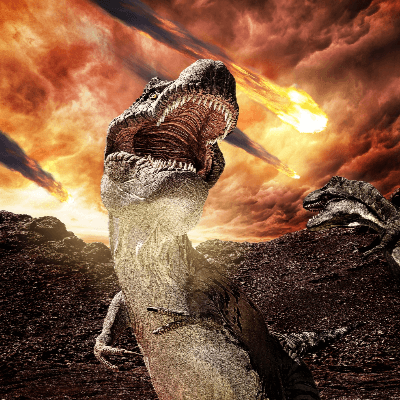
Ok, yes, I know that the catastrophic crash landing of the bolide, a seven-miles-across piece of galactic detritus, most likely an asteroid, that struck 66.043 million years ago, give or take, was not the biggest bad-parking-job in Earth’s history. An even bigger one hit billions of years ago. It was nearly the size of Mars, and that collision may have been what created our moon. Black makes note of this in the book. But in terms of impact, no single crash-and-boom has had a larger effect on life on planet Earth. Sure, about 3 billion years ago an object between 23 and 36 miles across dropped in on what is now South Africa. There have been others, rocks larger than K-Pg, generating even vaster craters. But what sets the Chicxulub (the Yucatan town near where the vast crater was made, pronounced Chick-sue-lube) event on the apex is its speed and approach, 45 thousand mph, entering at a 45-degree angle. (You wanna see the fastest asteroid ever to hit Earth? Ok. You wanna see it again?) It also helps that the material into which it immersed itself was particularly likely to respond by vaporizing over the entire planet. An excellent choice for maximum destruction of our mother. And of course, its impact on life, animal life having come into being about 800 million years ago, was unparalleled. In the short term, it succeeded in wiping out the large non-avian dinosaurs, your T-Rex sorts, Triceratops grazers, brontosaurian browsers, and a pretty large swath of the planetary flora as well, burning up much of the globe and inviting in a nuclear winter that added a whole other layer of devastation. Aqueous life was not spared. You seen any mososaurs lately? Even tiny organisms were expunged en masse. (Cleanup in aisle everywhere!)

description
Image from Facts Just for Kids

Here’s what the Earth looked like just before, just after, and then at increments, a week, a month, a year, and on to a million years post event. It is a common approach in pop science books to personalize the information being presented. Often this takes the form of following a particular scientist for a chapter as she or he talks about or presents the matter under consideration. In The Last Days… Black lets one particular species, usually one individual of that species per chapter, lead the way through the story, telling how it came to be present, how it was impacted by the…um…impact, and what its descendants, if there would be any, might look like. She wants to show why the things that were obliterated came to their sad ends, but also how the things that survived managed to do so.

description
Quetzcoatlus – image from Earth Archives

But as fun and enlightening as it is to track the geological and ecological carnage, like an insurance investigator, (T-Rex, sure, covered. But those ammonites? Sorry, Ms. Gaea, that one’s not specified in the contract. I am so sorry.) is only one part of what Riley Black is on about here. She wants to dispel some false ideas about how species take on what we see as environmental slots.

description
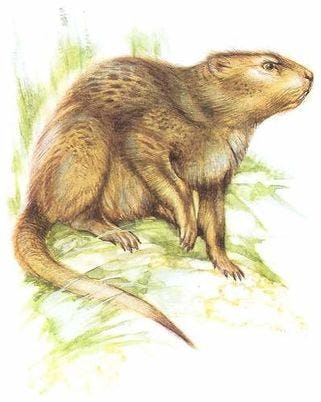
Mesodma – image from Inverse

Some folks believe that there are set roles in nature, and that the extinction of one actor (probably died as a result of saying that verboten word while performing in The Scottish Play) leads inevitably to the role being filled by another creature (understudy?) As if the demise of T-Rex, for example, meant that some other seven-ton, toothy hunter would just step in. But there is no set cast of roles in nature, each just waiting for Mr, Ms, or Thing Right to step into the job. (Rehearsals are Monday through Saturday 10a to 6p. Don’t be late), pointing out that what survived was largely a matter of luck, of what each species had evolved into by the time of the big event. If the earth is on fire, for example, a small creature has a chance to find underground shelter, whereas a brontosaurus might be able to stick it’s head into the ground, but not much else, and buh-bye bronto when the mega-killer infrared pulse generated by you-know-what sped across the planet turning the Earth into the equivalent of a gigantic deep fryer and making all the exposed creatures and flora decidedly extra-crispy.

description
Thescelosaurus – image from Wiki

Black keeps us focused on one particular location, Hell Creek, in Montana, with bits at the ends of every chapter commenting on things going on in other, far-away parts of the world, showing that this change was global. When the impact devastates the entire planet, it makes much less sense to think of the specific landing spot as ground zero. It makes more sense to see it as a planet-wide event, which would make the entire Earth, Planet Zero. It was not the first major planetary extinction, or even the second. But it was the most immediate, with vast numbers of species being exterminated within twenty-four hours.

description
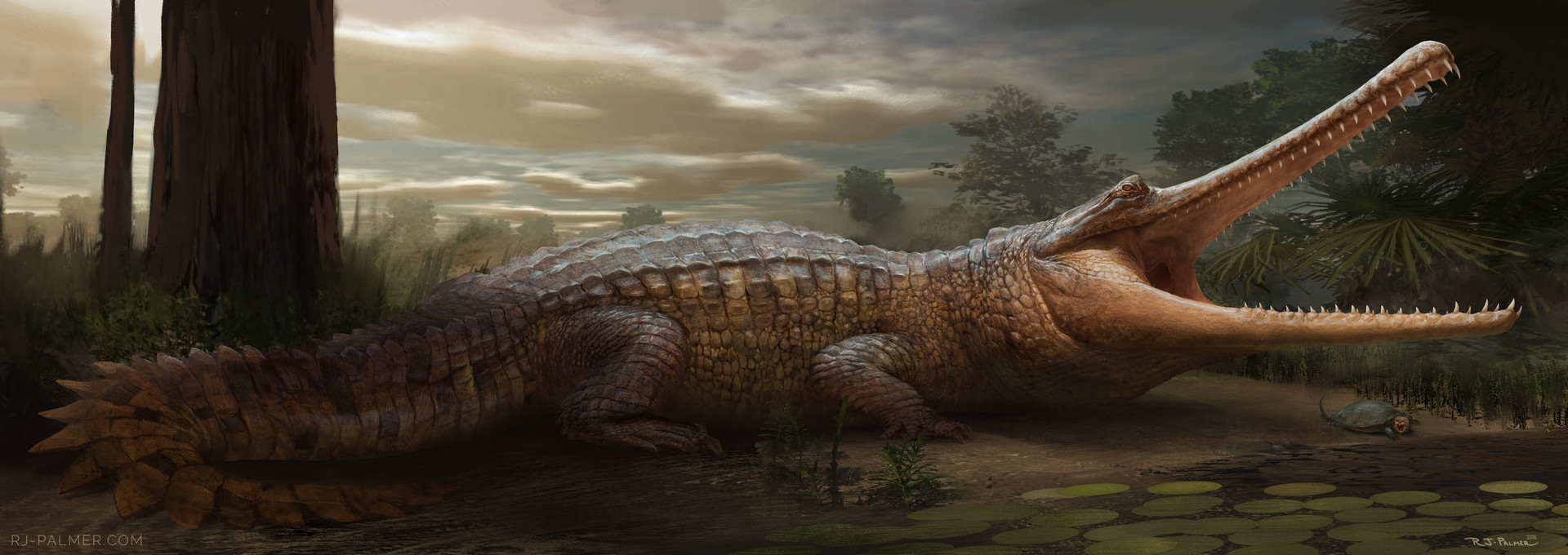
Thoracosaurus – image from artstation.com

I do not have any gripes other than wishing that I had had an illustrated copy to review. I do not know what images are in the book. I had to burrow deep underground to find the pix used here. I expect it is beyond the purview of this book, but I could see a companion volume co-written by, maybe, Ed Yong, on how the microbiomes of a select group of creatures evolved over the eons. For, even as the visible bodies of critters across the planet changed over time, so did their micro-biome. What was The Inside Story (please feel free to use that title) on how the vast array of bugs that make us all up changed over the millions of years, as species adapted to a changing macrobiome.

description
Purgatorius – image from science News

I love that Riley adds bits from her own life into the discussion, telling about her childhood obsession with dinosaurs, and even telling about the extinctions of a sort in her own life. What glitters throughout the book, like bits of iridium newly uncovered at a dig, is Black’s enthusiasm. She still carries with her the glee and excitement of discovery she had as a kid when she learned about Dinosaurs for the first time. That effervescence makes this book a joy to read, as you learn more and more and more. Black is an ideal pop-science writer, both uber-qualified and experienced in her field, and possessed of a true gift for story-telling.

Also, the appendix is well worth reading for all the extra intel you will gain. Black explains, chapter by chapter, where the hard science ends and where the speculation picks up. Black incorporates into her work a wonderful sense of humor. This is always a huge plus!

description
Eoconodon – image from The New York Times

Pull up a rock in the Hell Creek amphitheater. Binoculars might come in handy. An escape vehicle (maybe a TVA time door?) of some sort would be quite useful. Get comfortable and take in the greatest show on Earth (sorry Ringling Brothers) There literally has never been anything quite like it, before or since. The Last Days of the Dinosaurs a joy to read, is one of the best books of the year.

From the time life first originated on our planet over 3.6 billion years ago, it has never been extinguished. Think about that for a moment. Think through all those eons. The changing climates, from hothouse to snowball and back again. Continents swirled and bumped and ground into each other. The great die-offs from too much oxygen, too little oxygen, volcanoes billowing out unimaginable quantities of gas and ash, seas spilling over continents and then drying up, forests growing and dying according to ecological cycles that take millennia, meteorite and asteroid strikes, mountains rising only to be ground down and pushed up anew, oceans replacing floodplains replacing deserts replacing oceans, on and on, every day, for billions of years. And still life endures.

Review posted – May 13, 2022

Publication date – April 26, 2022

I received an ARE of The Last Days of the Dinosaurs from St. Martin’s Press in return for working my ancient, nearly extinct fingers to the bone to write a review that can survive. Thanks, folks.

This review has been cross-posted on Goodreads. Stop by and say Hi!

=======================================EXTRA STUFF

Links to the author’s personal, FB, Instagram, Tumblr, and Twitter pages

Profile from Museum of the Earth

Vertebrate Paleontologist & Science Writer
Riley Black is a vertebrate paleontologist and science writer. She is passionate about sharing science with the public and writes about her experiences as a transgender woman in paleontology.

Riley began her science writing career as a Rutgers University undergraduate. She founded her own blog, Laelaps, and later wrote for Scientific American, Smithsonian Magazine, National Geographic, and more. Riley has authored books for fossil enthusiasts of all ages, including Did You See That Dinosaur?, Skeleton Keys, My Beloved Brontosaurus, and Written in Stone.
Riley loves to spend time in the field, searching the Utah landscape for signs of prehistoric life. Her fossil discoveries are in the Carnegie Museum of Natural History, the Natural History Museum of Utah, and the Burpee Museum of Natural History. Riley’s work in the field fuels her writing. She believes doing fieldwork is the best way to learn about paleontology.

In your own words, what is your work about?

“What really holds my work together is the idea that science is a process. Science is not just a body of facts or natural laws. What we find today will be tested against what we uncover tomorrow, and sometimes being wrong is a wonderful thing. I love the fact that the slow and scaly dinosaurs I grew up with are now brightly-colored, feathered creatures that seem a world apart from what we used to think. I believe fossils and dinosaurs provide powerful ways to discuss these ideas, how there is a natural reality we wish to understand with our primate brains. The questions, and why we’re asking them, are more fascinating to me than static answers.”

Interviews
—–IFL Science – IFLScience Interview With Riley Black: The Last Days of the Dinosaurs – video – 15:40 – with Dr. Alfredo Carpineti – There is a particularly lovely bit at the back end of the interview in which Black talks about the inclusion in the book of a very personal element
—–Fossil Friday Chats – “Sifting the Fossil Record” w/ Riley Black” – nothing to do with this book, but totally fascinating

Items of Interest from the author
—–WIRED – articles by the author as Brian Switek
—–Scientific American – articles by the author as Brian Switek
—–Riley’s site – a list of Selected Articles
—–Science Friday – articles by the author
—–Excerpt

Items of Interest
—–Earth Archives – Quetzlcoatlus by Vasika Udurawane and Julio Lacerda
—–NASA – Sentry Program
—–Science Friday – Mortunaria – a filter-feeding plesiosaur
—–Biointeractive – The Day the Mesozoic Died: The Asteroid That Killed the Dinosaurs – on the science that produced our understanding of how the dinosaurs died out – video – 33:50
—–Wiki on the Hell Creek Formation

Leave a comment

Filed under Non-fiction, paleontology, Science and Nature

The Treeline by Ben Rawlence

book cover

Big changes are taking place across the vast plain stippled by spruce and striated with water that unfolds below the aircraft at 10,000 feet. The skin of the earth is melting, microbial life waking after thousands, possibly millions, of frozen years. The soil is transpiring—perspiring one could say since more moisture is being released than absorbed—and animals and plants are taking note. It is a new world, and intelligent life—the smart genes—is sniffing it out, sending out suckers, seeds and scouts, ranging north, getting ready.

The Treeline is a mind-blowing piece of work that will teach you many, many things you never suspected, while feeding your sense of awe and your sense of dread. We look to the margins for evidence of large changes in the world, tell-tale signs like rising levels along water frontages, expanding desert edges, changes in growing seasons, changes in wildlife. The treeline was the edge Ben Rawlence chose.

description
Ben Rawlence – Image from 5 x 15

He had spent years writing human rights reports and trying to get the UN and governments to address refugee issues, but when he started writing through the eyes of the refugees themselves, in several books, many more people began to listen.

Understanding that the conflict and the displacement that was going on was driven by climate change I began to look for other examples, other parts of the world where we could see this process in action, where we could see climate breakdown as history already, and we could catch a glimpse of the future that awaits the rest of us. So I began digging around and doing research and came across this very arresting image of the trees and the forest moving north towards the pole. I discovered that the forest was on the move and the trees were turning the white arctic green. They shouldn’t be on the move. That’s not supposed to happen. And this sinister fact has huge consequences for all life on earth. – from the 5×15 piece

So, what exactly is the treeline? Generically, it is the latitude above which there are no trees, roughly the Arctic Circle. Another measure is the rippled line around the globe south of which the average July temperature is ten degrees centigrade or higher. (The Arctic Squiggle?) Discovering that the Arctic treeline consisted of mostly six types of trees, he set about to look at each of these.

Scots pine in Scotland, birch in Scandinavia, larch in Siberia, spruce in Alaska and, to a lesser extent, poplar in Canada and rowan in Greenland. I decided to visit each tree in its native territory, to see how the different species were faring in response to warming, and what their stories might mean for the other inhabitants of the forest, including us.

The Arctic treeline is actually fairly squishy, not so much a line as an area of transition, an ecotone, where tree presence diminishes rather than ceases. Rawlence begins with a look at where he lives, in Wales, at the yew, struggling to persist in a world that is no longer conducive to its needs. But that may be changing. Then, it is off to the Cairngorm Mountains in Scotland, the Scandinavian interior, Siberia (larch), Alaska, Canada, and Greenland, looking at the role the boreal plays in our environment, and at the impact of global warming on these borderlands.

More than the Amazon rainforest, the boreal is truly the lung of the world. Covering one fifth of the globe, and containing one third of all the trees on earth, the boreal is the second largest biome, or living system, after the ocean. Planetary systems—cycles of water and oxygen, atmospheric circulation, the albedo effect, ocean currents and polar winds—are shaped and directed by the position of the treeline and the functioning of the forest.

One of the things that most impressed me, among the many fascinating nuggets to be found here were descriptions of the structures underlying forests.

Wherever there are mushrooms, ferns, bracken and particular kinds of woodland plants like violets there was once forest. Rings of mushrooms are usually the outline, the long-ago earthwork of a tree stump. There are between fifteen and nineteen ecto-mycorrhizal fungi (fungi growing around the roots) in a mature pine forest, and they play a role in everything from carbon and nutrient transport to lichen cover, taking sugar from the tree and providing it with minerals in exchange. Planting trees without regard for the essential symbiotic “other half” of the forest below ground may be far less effective than allowing the ground to evolve into woodland at its own pace. Oliver Rackham describes a planted oak wood in Essex that even after 750 years still does not possess the orchids, plants and mushrooms that you would expect of a natural wood.

I was reminded of what it might look like to see a city like New York or London from above and believe it to be constructed entirely of the visible structures, not appreciating that there are vast underground networks, water lines, sewer lines, gas lines, electrical lines, communication cables, transit tubes, and the like that provide the lifeblood which allows the above-ground, visible city to survive. Globally, these threads of mycorrhizal fungi make up between a third and a half of the living mass of soils. Soil is in fact a huge, fragile tangle of tiny connected threads. Having done some digging in our back yard, I can very much appreciate that.

Another impressive feat is Rawlence’s strength in communicating how local populations interact with the trees among which they live. There are many surprises to be found here, in the range of specific benefits trees provide for one, which includes the fact that they transmit aerosols carrying chemicals that help maintain health in humans, that their leaves, berries, bark and other parts providing medicine for a wide range of illnesses, that they provide materials that oceans need to sustain life, that they drive planetary weather. Did you know that there are birch trees with things called trichomal hairs on the underside of their leaves, that capture particulates from the air, natural air filters that then allow the materials to be dropped to the ground, and washed away with the next rain? They also act like a fur coat for the leaves. The list goes on. You will be surprised by many of the uses that Arctic peoples have devised to make use of their local trees.

Will it be possible to continue such a positive relationship as the land becomes less supportive of human endeavors? The Sami people, for example, are finding it increasingly difficult to manage their reindeer herds. Snowmobiles are less than ideal when there is no snow. Substituting four-wheel All Terrain Vehicles may allow them to herd their critters, but using them damages the landscape even more. At what point will it be impossible to continue at all?

There are plenty of dark tidings. In this ring of melting ice global warming is taking place at a rate far in excess of what we experience in the more temperate zones. And then this unnerving bit; with more Co2 in the air, trees do not need to work so hard to get what they need, thus will produce less oxygen. Uh oh. As the forests of the northern hemisphere migrate north (race actually, at a rate of hundreds of feet a year in some places instead of inches per century) they are pursued on their southern end by increasingly fire-prone conditions. How much of our forest land will be consumed by a Langolier-like army of drought and flames before finding more welcoming climes? And then there is methane, pretty pearl-like bubbles when seen through clear Arctic ice, but how about this cheery nugget as permafrost becoming permaslush?

Some studies have suggested that an unstable seabed could release a methane “burp” of 500–5000 gigatonnes, equivalent to decades of greenhouse gas emissions, contributing to an abrupt jump in temperature that humans will be powerless to arrest.

In pop science books, the author acts as a guide to the subject matter, introducing us to the places he visits, and the experts he consults. Rawlence is an engaging and informative teacher with a gift for extracting local cultural lore and area-specific histories, as well as reporting the science in accessible terms. He seems like someone you would want to hang out with. You would certainly like to sign up for any class he teaches. You will learn a lot. He is also a lyrical writer, able to offer not only straight-ahead exposition, but poetical, sometimes emotion-filled reactions to the places he visits and the experiences he has on this journey.

The brilliant sun on the pinkish cliffs and the starched blue of the sky, which has been mostly hidden all week, make the morning sing. The scent of a meadow is so heady it should be bottled. The hay has been freshly cut: huge plastic-covered bales guide the eye to a combine harvester abandoned mid-job, its windows covered in sparkling dew. Beyond, the path crosses the meadow to a wide bend that the flooding river has worked into a series of interlinked channels. The little bridges have been overwhelmed and carefully placed stepping-stones lie visible in the clear stream, half a meter underwater. Feet have cut a higher path along the edge of the valley, around drowned shrubs, riparian willow now floating midstream. The roar of the main river is all around. Gray water cradling slabs of dirty ice meanders around a cliff and then widens into a foaming skirt over even-sized white granite boulders that snag the ice and make it dance and nod until it falls apart and joins the sea-ward torrent.

Rawlence a not a fan of western capitalism, and it would be difficult to argue that the short-term profit motive is not at variance with the long-term health of the planet, but places that were at least nominally socialist did a pretty good job of devastating their environments too. Maybe the problem is a human one first, and a economic-political one second. Maybe if we lived as long as some trees (not all are long-lived) we might have a more long-term view of what matters, and not keep rushing to use everything as fast as we possibly can before someone else does. Rawlence keeps his eyes on the scientific and anthropological issues at hand. How is warming impacting these trees, the landscapes in which they exist, the societies that have lived with them for centuries, and the wider world? What can we learn from the changes that have already taken place? What can we look forward to? What can we do about it?

Despite the growth of electric car usage and renewable power generation, we have arrived at this party too late, and relatively empty-handed. Attempts to mitigate global warming cannot change the fact that there is warming to come that is already baked in. We can do nothing to change that. It will continue, even were we to cease all carbon usage tomorrow. Not that we should abandon attempts to reduce emissions. But we should know that we will not see the benefits of those actions. The mitigation work we do today may impact future generations, but the planet will continue heating up for quite some time regardless. The most we can hope for in the short term is to slow the rate somewhat.

The Treeline is a must read for anyone interested in environmental issues, global warming in particular. Who doesn’t love trees? After reading this you will love them ever more. As Rawlence points out, we are at our core tree people, having evolved thumbs to get around in an arboreal world, and having lived among or near trees for all of human history. We have evolved together, and will continue to do so. But we will have to adapt to the new Anthropocene world rather than attempting to force it back into its prior form.

In the future, when the ice is gone, there may be no such thing as a treeline at all.

Review posted – February 18, 2022

Publication date – February 15, 2022

I received an ARE of The Treeline from St. Martin’s Press in return for a fair review, and a promise to plant a few saplings. Thanks, folks. And thanks to NetGalley for facilitating.

This review has been cross-posted on GoodReads

=======================================EXTRA STUFF

Links to the author’s Twitter page

Lizzie Harper, a Welsh illustrator, provided many images for the book. Sadly, there were none in the e-galley I read. But you can see some on her site. Here are links to Harper’s personal, FB, LinkedIn, PInterest, and Twitter pages

Interview
—InterMultiversal – An Interview with Ben Rawlence by Simon Morden

Items of Interest from the author
—–Video trailer for the book – 1:09
—–5 x 15 – Ben Rawlence on The Treeline – video
—–The Big Issue – ‘As the planet warms, the forest is on the move’ by Rawlence

Items of Interest
—–Patagonia Films – Treeline (Full Film) | The Secret Life of Trees – video 40:16
—–Cairngorms Connect – 200-year vision to enhance habitats, species and ecological processes across a vast area within the 600 square kilometer Cairngorms National Park.
—–NY Times – Feb. 4, 2022 – Seen From Space: Huge Methane Leaks by Henry Fountain

You Might Also Want To Check Out
—–Land by Simon Winchester
—–Being a Human by Charles Foster
—–The Earth’s Wild Music by Kathleen Dean Moore
—–Road of Bones – not in form, obviously. But this one offers a fictional horror-story take on the great north rebelling against the outrages of humanity

Music
—–George Winston – Forest
—–Sondheim – Into the Woods

Leave a comment

Filed under Non-fiction, Public policy, Science and Nature

The Social Leap by William von Hippel

book cover

…dealing with fellow group members is a much greater mental challenge than manipulating objects. For this reason, many scientists have adopted the social brain hypothesis, which is the idea that primates evolved large brains to manage the social challenges inherent in dealing with other members of their highly independent groups.

…lying is a uniquely human form of social manipulation that requires substantially greater cognitive sophistication. To tell a lie is to intentionally plant a false belief in someone else’s mind, which requires an awareness that the content of other minds differ from one’s own. Once I understand what you understand, I’m in a position to manipulate your understanding intentionally to include falsehoods that benefit me. That is the birth of lying.

William Von Hippel’s The Social Leap looks at the crucial importance of our social evolution as we developed from australopithecines to Homo erectus to the Homo sapiens of today. The first phase was cutting out dependence on

Trees – come on down, why don’t ya. Of course, it was more like an eviction than an option, as changes in the environment made it necessary to descend to find greener pastures, or savannahs, actually. (Sure sounds like being kicked out of Eden to me, going from top tier predator to prey, leaving a verdant, arboreal life for a world of danger). And once our great-great-grandparents had been forced down, there was a clear advantage to

Bipedalism – stay up on those legs, and get a better view over the tall, tall grass, big guy. It might give you a heads up on those incoming lions. Of course, that took many millennia to evolve. Those who succeeded at walking on all twos lived to breed and make more little two-steppers. As we no longer had the need to climb, well, constantly anyway, those lower limbs could be re-focused on locomotion.

If we had not become bipedal, we almost assuredly would never have learned to throw so well, in which case the social-cognitive revolution that made us human might not have happened, either.

The physical realignment that resulted over hundreds of thousands of years is why we have creatures like Jacob deGrom walking the earth. It allowed them to do something their predecessors could not, throw things, rocks in particular, but I expect whatever was lying about would do, which came in pretty handy when something with large claws and teeth was coming at them. But being able to hit a moving strikezone from a distance was not, in and of itself, sufficient. It took something more to turn this rather huge change into a formidable force,

Cooperation – Instead of running in all directions from an incoming large kitty, they learned to join together with their fellow homo saps and throw rocks at the invaders. Voila, y’all get to live another day, or at least until the next predator attack, (and you might even get a nice meal out of the exchange) but that is a lot better than it might have been had you not joined together. This confluence of the ability to throw and the ability to throw as a group at a specific target, allowed humankind to claim the throne (iron?) of apex predator. Think of those films about medieval battles in which a phalanx of archers launches five hundred arrows at the enemy at once. More effective than a single archer, no? The only things we needed to fear, as a group, were other groups of Homo erectus.

description
William von Hoppel – image from Singularity University

This combination is a major element in what separates us from our forebears (which sounds uncomfortably ursine in this context) in the primate family tree, cooperation, and learning to kill at a distance. It is not that no other species cooperates, but there is no species that has done so to the astronomical level of Homo sapiens. And that initial cooperation, for self AND group protection has led to a world of change. Also, no other species has mastered the art of long-distance defense, or offense, depending, perhaps the greatest advance in military technology ever.

That change is manifest in the considerable size of our brains. Much larger than our Australopithicus, erectus, habilis, and all our early ancestors. Did we gain our cranial advantage from having to invent methods of coping with the world? von Hippel says not. He argues that most of the cause of our sudden boost in gray matter occurred because when we opted for cooperation for self-defense, that blossomed into cooperation across a passel of other matters as well, and created a social species, and that very pact of cooperation forced us to change.

…dealing with fellow group members is a much greater mental challenge than manipulating objects. For this reason, many scientists have adopted the social brain hypothesis, which is the idea that primates evolved large brains to manage the social challenges inherent in dealing with other members of their highly independent groups.

Cooperation may have been born out of a need for self-defense, but it broadened to form the basis of a community. Instead of only ever thinking of personal survival, our orientation was changed to having to consider the needs of the group at least as much as our own needs. So cooperation within the group was paramount. Anyone found to be slacking in doing their bit to support the group, piss enough of the group off, for whatever reasons, and you would likely be tossed out on your loincloth, and make a fine meal for a large local predator. Ostracism = death = no more babies for you = how natural selection externalizes those whose behavior leads to their death. But there was still

Competition within the group for mates. Von Hippel points out that mate choices were largely driven by females, who had a far greater amount at risk than any male. It is not really so different today, even to the physical characteristics that we find attractive in a mate. And then there was competition with those outside the group, which led to a not groundless

Hating/Fearing of the outsider, the other. When we evolved to the apex predator point that the only real threat to the group was from other groups of Homo erectus, we became particularly wary of outsiders. Not only might they attack us militarily, maybe take prey and other foods in our hunting domain, but they could make us ill. One does not need to have a theory of microbes to learn from experience that contact with certain groups is likely to result in illness. This inclination to be wary of anyone outside our group, however that may be defined, has certainly flourished in our DNA and in our social organizations. Thus racism, xenophobia, and bigotry of all sorts. Part of the development of our groups, clans, tribes, et al, was the development of a

Theory of Mind, meaning a desire, and some ability to see what is in someone else’s mind, gauge what they are thinking, even if the people of that time had no such grad school terminology. They learned to evaluate what other people were thinking and learned how to turn that knowledge to their advantage. The methods for accomplishing this make considerable use of

Lying and Exaggerating

But most of our smarts are going be dedicated to jockeying and manipulating our position among others. And if that’s the case, then the truth is only semi-important. If I can convince you of a world that’s actually favorable to me, then I can get you to back down in conflicts or defer to me when you really shouldn’t; that is a form of power. – from the Vox interview

Sound like something that might be relevant today? Even with our predilections we are not creatures of instinct. Unlike other animals we do not carry inside us a set of instructions on how to get by in the world. And our brains are not even ready to take in the information until we have been around a relatively long time. So we must be taught. Our urges, our impulses will still be there, but we do not have to yield to them. At least 50% of who we are, what we do, is the product of choice, and education. As a result, our genes may not be able to order us around, but they are ever-present, and bossy.

The tale revs up big time when it gets to the beginning of agriculture. I will leave that, and it’s very relevant look at the beginnings of contemporary society, for you to discover for yourself. It explains a lot.

Von Hippel certainly makes a strong case for our cranial ballooning being more the result of having to cope with other people, rather than from having to invent things. We are social creatures, who are both inclined toward cooperation, but also primed for competition, for mates and against outsiders. Thus the aphorism All’s fair and love and war.

This book was written as an attempt to help explain why we behave today in the ways that we do. What evolutionary basis might there be for those behaviors.

…potential ancestors who wandered the woods in the moonlight were less likely to survive and procreate, and thereby less likely to pass on their proclivity for midnight strolls. This is how evolution shapes our psychology, with the end result being that no one needs to tell you to be afraid of the dark; it comes naturally.

There are plenty of roots to be found here to the forest of our current world. Many of the ancestral behaviors described in this book were waaaaay too familiar. I found that throughout the book, while the socio-psychological evolution of humans was totally fascinating, I kept flashing specifically to the politics of today. So much of what von Hippel writes of offers an understanding, or at least some insight into the psychology of politics in the time of Trump. Don’t mistake me, I am not saying this is an anti-Trump screed. It is not. But some of what is in here makes understandable what seems singularly opaque about the motivations of any true Trump (or any other demagogue or authoritarian) supporter (those who are not cynically supporting Trump in order to accrue personal gain in some specific way). As in, how can any sane person buy into Trump’s transparent stream of lies, xenophobia, and demagoguery? There are plenty of group-think practitioners on the left as well, but those tend not to have guns, or to bother, ya know, voting, or threatening to kill people. But the innate need for the approval of the group makes it possible that people will believe whatever they want to believe, regardless of objective truth, and that is a very difficult barrier to breach. Von Hippel may make this dynamic more understandable, but it makes it no less frightening and disheartening.

The similarities between ancestral and contemporary mate selection preferences was quite interesting, as is his discussion of leadership styles, contrasting the styles of those who rule for all (elephants) with those who rule only for themselves (baboons), as is his discussion of how a division of labor enabled early man a great ability to do well in the world, as is his explanation for the basis of politeness.

This is very much a pop-psychology book, aimed at a general audience. It is eminently readable, and offers brain candy of the first order. Von Hippel cites his sources (including his own research) for the sundry opinions offered, without leaving one struggling with obscure charts or mathematical formulae. He is an excellent writer with a friendly, familiar style that will make the information go down very easily. I recommend checking out some of the videos linked in EXTRA STUFF, to get a feel for how he sounds as a lecturer and interviewee. He comes across very much the same in the book. Von Hippel is absolutely the prof you want for your psych classes.

You will not have to get an ok from your group to go ahead and check this book out. The Social Leap will expand your brain, without you having to wait a few hundred thousand years. That counts as real progress.

Of all the preferences that evolution gave us, I suspect the desire to share the contents of our minds played the single most important role in elevating us to the top of the food chain.

Review posted – December 17, 2021

Publication date – November 13, 2018

This review has been cross-posted on GoodReads

=======================================EXTRA STUFF

Links to the author’s personal, FB, LinkedIn, and Twitter pages

Von Hippel was born, raised, and educated in the USA. He taught at Ohio State and Williams College for over a decade. He has been teaching and conducting research in evolutionary social psychology in Australia for more than twenty years, since 2006 as a professor at the University of Queensland. He lives in Brisbane with his family

Interviews
—–Vox – Why humans evolved into such good bullshitters By Sean Illing
—–The Covid Tonic – Autism and Innovation – 2:03
Most folks. Because we are inherently social creatures, will seek social solutions to presenting problems. But people who are much less socially adept, those on the autism spectrum, for example, will, as a group, turn more to technical solutions to problems.
—–Owltail – There are several audio interviews available here
—–Vox – Why humans evolved into such good bullshitters – by Sean Illing
—–London Real – What Women Look for in Men – 3:32
—–London Real – WILLIAM VON HIPPEL-THE SOCIAL LEAP: Who We Are, Where We Come From, and What Makes Us Happy Part 1/2 – 45:37 – begin at 3:20

Items of Interest from the author
—–The Evolutionary Origins of Human Culture – Von Hippel offers a lecture on the origins of culture
—–The Royal Institute of Australia – Seven Deadly Sins: Lust – Is Love Blind? – Bill von Hippel – 26:38 – on how physical differences between males and females result in psychological differences as well, the impacts of testosterone, selecting long-term mates, and the significance of menopause

Just in case the ones linked here are not enough, there are many videos of the author being interviewed or delivering lectures.

Item of Interest
—–Five Early Hominids – Introduction to Hominids

Leave a comment

Filed under Non-fiction, Psychology and the Brain, Reviews, Science and Nature

Land by Simon Winchester

book cover

This we know: the earth does not belong to man, man belongs to the earth. All things are connected like the blood that unites us all. Man did not weave the web of life, he is merely a strand in it. Whatever he does to the web, he does to himself. – from Chief Sealth’s letter to President Pierce on a treaty giving much of what is now Washington state over for white settlement

What are the three most important things in real estate? All together now, “Location, location, location.” Simon Winchester, in his usual way, has offered us a grand tour of land, and thus real estate on our planet. Note the subtitle, How the Hunger for Ownership Shaped the Modern World). This is not the broker’s walk-through in which the good elements are highlighted while the less appealing aspects are minimized or ignored. It may be that location is the most important property of land, but there are other features that are worth knowing too. Things like How much land is there? How do we know? How was it measured, by whom, and why? Is the amount of land fixed? Can it increase or decrease? Can land be made unusable? Where is everything? Who can make use of it? Is land inherently public, for (reasonable) use by all? Was it ever? How did it come to be private? How do different cultures think about land? Why is land divided up the way it is, into public and private, into parcels of particular size? Who gets to own land, and who is relegated to merely renting it? Winchester has answers.

Land is the defining characteristic of every nation. Our (the USA’s) national anthem, for example, goes “O’er the land of the free” not o’er the pond, lake, river or fjord of the free, (and no, Norway’s anthem makes no specific mention of fjords), not the sweet air of the free, not the great views of the free (although “spacious skies” and “purple mountain majesties” from our other national anthem, America the Beautiful, comes close), but the land. Check your nation of choice for common ground re this. (Click for a list of anthems) The word “land” figures prominently. Although I suggest you check out the Algerian lyrics. Dude, switch to decaf. The war is over.

Land is seminal in human culture as well as national history. For many of us in the West, our very origin story begins with a landlord-tenant dispute. “If we owned the garden instead of renting it, Adam, I could have eaten the goddam apple and it would have been nobody’s business but my own. And we wouldn’t have to put up with the creepy landlord spying on us all the time, or his freaky feathered bouncer. The guy should get a hobby, make some friends or something.”

description
Simon Winchester at home in his study in the Berkshires – image from The Berkshire Eagle – Photo: Andrew Blechman

This is the eighth Winchester I have read, of his fifteen non-fiction books (so, plenty left to get to) and they have all been engaging, informative, and charming. He read Geology at Oxford, so, has a particular soft spot for explaining how physical things on our planet came to be where they are, how they changed over time, and why they exist in the forms they have taken on. You might be interested in the Atlantic Ocean, maybe the Pacific? Winchester has written a book on each. How about looking at the creation of the world’s first geological map, or maybe why Krakatoa blew its top. He is also interested in tracing back how we know what we know, (or, um, history) as a crucial element of understanding things as they are now, and how they came to be. The Perfectionists looks at how industrial standardization developed, and how machine tolerances improved to the point where they are beyond the control of flesh and blood humans. In The Professor and the Madman he looks at how the Oxford English Dictionary was made. The third element in Winchester’s trifecta of interest is people, often odd personalities who played pivotal roles in the development of technical and intellectual advances, thus expanding and deepening human understanding of the world.

I think what I’ve done is to get obscure figures from history and tell the stories like I’ve told you about Mister Penck and his maps, Mister Struve and his survey, Mister Radcliffe and his line, and turn them into what they truly are, which is heroic, forgotten figures from history….I just become fascinated by these characters. – from the Kinukinaya interview

There are plenty of interesting sorts in Land. Maybe none of the folks noted here are quite so interesting as the institutionalized murderer in The Professor and the Madman, but they are still a colorful crew, and it is clear Winchester had fun writing about them. They include Cornelius Lely, who built the 20-mile-long Barrier Dam in The Netherlands, which turned the Zuider Zee into vast tracts of arable land, Gina Rinehart, the world’s largest private landholder, not someone who has contributed nearly so much to the store of human knowledge as she has to conservative politicians, and Friedrich Wilhelm Georg von Struve, who spent forty years measuring a meridian for the tsar of Russia. There are many more, of both the benign and dark variety.

When the missionaries came to Africa they had the Bible and we had the land. They said ‘Let us pray.’ We closed our eyes. When we opened them we had the Bible and they had the land. — Desmond Tutu

There are surprising connections made, such as the relationship between the invention of barbed wire and America’s appetite for beef. Or the link between the growth of commercial aviation and the development of World Aeronautical Charts, well maybe not so surprising, that. But that such things did not exist prior to people flying the friendly skies reminds us just how recent so much of the foundation of today’s world truly is. I suppose it also might not count as surprising, but John Maynard Keynes had an interesting solution to the problem of landed gentry, euthanasia.

Winchester details many of the outrages that have been inflicted, in the name of seizing land, on indigenous people across the planet, Australia, New Zealand, and the USA figuring large in these. But there are also plenty of other people who have been expelled from their homes, livelihoods, and history by the forces of greed across the planet. These include immigrants to the USA whose land was stolen while they were illegally incarcerated, and farmers who were dispossessed by land-owners seeking to maximize the profitability of their holdings, via the Enclosure and Clearance laws passed in England and Scotland. Then there are the perennial turf battles, like those in Ireland and the Middle East.

Gripes are, per usual with any Winchester book, minimal. He writes about the role, historical, current, and potential, that trusts have, had, and might have for the preservation of land from destructive exploitation. Yet, in doing so, there was no mention of The Nature Conservancy. Their motto could be (it isn’t) We save land the old-fashioned way. We buy it. It has over a million members (yes, I am) and has protected about 120 million acres of land. It definitely merited a shoutout here. Another part of the book tells of the annihilation of bison from the American west. The critters are referred to as multi-ton. Like the mythical eight hundred pound gorilla which grows only to about 400 pounds at most, bison max out at roughly 2,000 pounds, or a single ton, which still leaves them as the largest land mammal in North America.

Like any good geologist, or writer, Simon Winchester enjoys digging. And we are all the lucky recipients of the informational nuggets he unearths. He is a master story-teller, and if you are ever fortunate enough to find yourself at a party with him, or find a chance to see him speak publicly, just pull up a seat and listen. You won’t be sorry.

So, I can tell from the looks on your faces that this one would be a perfect fit for you, particularly if you are planning to start a library soon. Do you think you’d like to make an offer on the book? There are other potential buyers stopping by this afternoon, and I would hate for you to miss out. It won’t stay on the shelves very long. Take my card and give me a ring when you make up your mind, ok. But I can assure you that, whether your preferences for land are LaLa, Never, Sugar, Holy, Promised, Wonder, Native, or Rover, when you check out Simon Winchester’s latest book, you will be a Land lover.

We abuse land because we see it as a commodity belonging to us. When we see land as a community to which we belong, we may begin to use it with love and respect. – Aldo Leopold, A Sand County Almanac (1948)

I could say that Winchester covered a lot of ground in this book, but really who would write such a thing? I suppose one might say that he planted a flag on his subject matter and claimed it for his own, and if you don’t like it, you can get the hell off his lawn. Not me. Nope. Nosiree.

Review first posted – February 5, 2021

Publication dates
———-January 19, 2021 – hardcover
———-January 18, 2022- trade paperback

This review has been cross-posted on GoodReads

=======================================EXTRA STUFF

Links to the author’s personal, Twitter and FB pages

A nice overview of Winchester’s professional life can be found here

Interviews
—–Kinokuniya USA – Interview with Simon Winchester on ‘Land’ – video – 30:03 – by Raphael – This is wonderful. The interview is a lot like SW’s books, one fascinating story follows another follows another.
—–RNZ – Simon Winchester: how land ownership shaped the modern world by Kim Hill – text extract plus audio interview – 48:24
—–The Book Club – Simon Winchester: Land – audio – 42:46

Songs/Music
—–Woody Guthrie – This Land is Your Land
—–The Lion King – This Land
—– LaLa Land – soundtrack

Reviews of other Simon Winchester books we have read:
—–2018 – The Perfectionists
—–2015 – Pacific
—–2010 – Atlantic
—–2008 – The Man Who Loved China
—–2005 – Krakatoa: The Day the World Exploded
—–2001 – The Map That Changed the World
—–1998 – The Professor and the Madman

Items of Interest – by Winchester
—–From 2013 – Simon Winchester at TEDxEast re his book The Men Who United the States – There is an interesting morsel here about 11 minutes in on an important Jeffersonian decision having to do with land ownership
—–American Scholar – Experience Everything

Items of Interest
—– Citizen Simon: Author, journalist, OBE, sage of Sandisfield by Andrew D. Blechman – Posted on September 9, 2018
—–International Map of the World
—–The Nature Conservancy

An extra bit. I had intended to incorporate the following into the body of the review, but just felt off about that. Nevertheless I do hold with the notion expressed, so here it is, tucked away at the bottom:

I was taken with a particular instance of the horrors that accompanied land grabs in the expanding USA, as having resonance with today, with Donald Trump as the embodiment of that carnage. Whereas the racist yahoos of the 19th century westward expansion delighted in slaughtering bison from a moving train, in order to deny the native residents a living and to make it easier to clear them from desired land, so Trump has spent his time in the limelight, and in power, blasting away at the things that are central to our culture, to our values, so that he could deny us our cultural and legal core, as he seized all he could grab for himself and those like him.

Leave a comment

Filed under American history, England, History, Non-fiction, World History