How to Win Friends and Influence Fungi – edited by Chris Balakrishnan, Matt Wasowski

book cover

Nerd Nite is an event usually held at a bar or other public venue where usually two or three presenters share about a topic of personal interest or expertise in a fun-yet-intellectual format while the audience shares a drink. It was started in 2003 by then-graduate student (now East Carolina University professor) Chris Balakrishan at the Midway Cafe in the Jamaica Plain neighborhood of Boston. In 2006 Nerd Nite spread to New York City, where Matt Wasowski was tasked with expanding the idea globally. – from Wikipedia

Be There and Be Square – Nerd Nite logo

There was a nerd magazine in 2012, a Youtube presence, and occasional podcasts. This is the first Nerd Nite book.

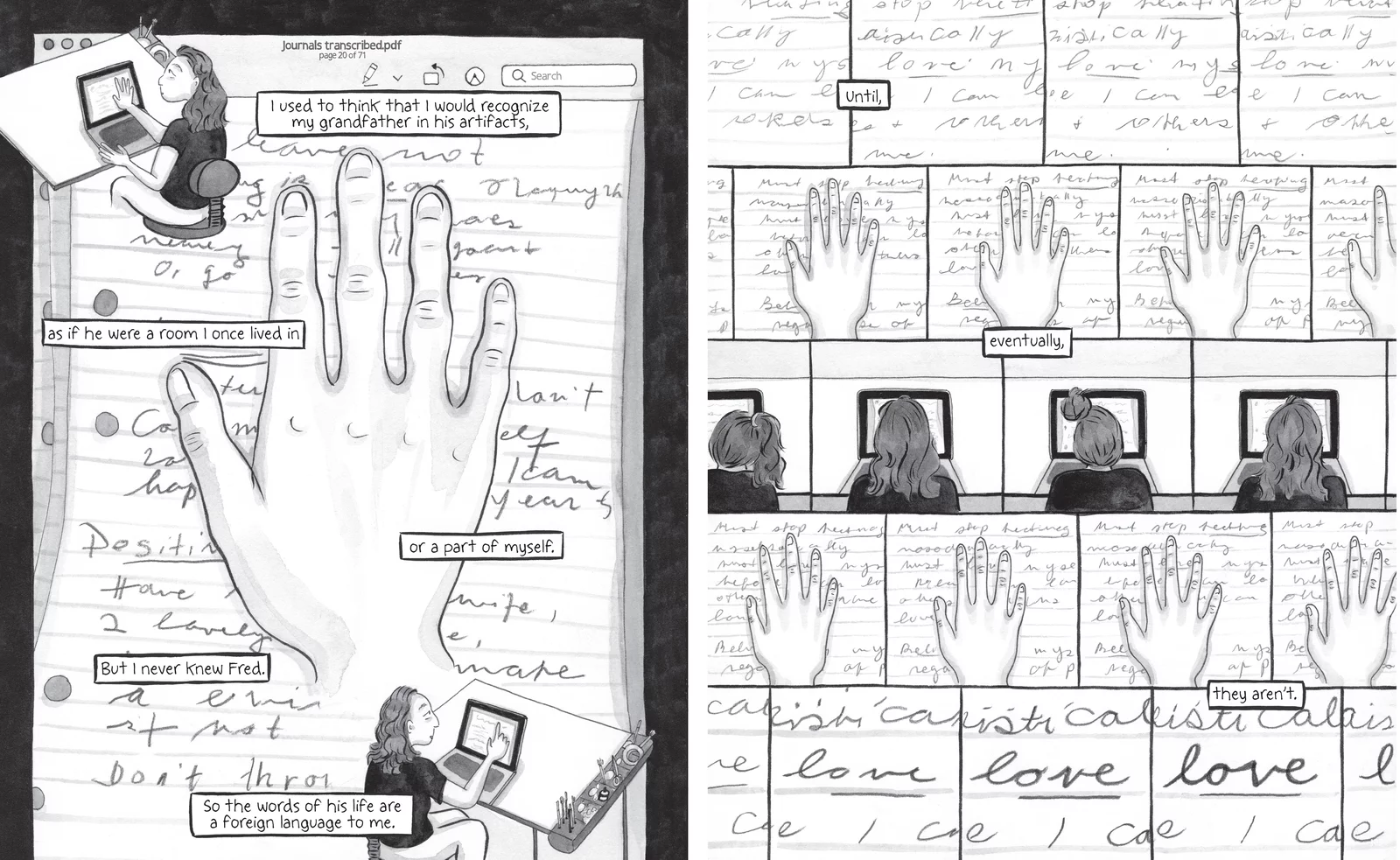
Misophonia can attach itself to any repetitive sound, but the most common ones are things, like chewing, breathing, sniffing, and throat clearing. It can be hard for sufferers to talk about because of how difficult it can be to tell someone politely that the sound of them keeping themselves alive is repulsive to you.

There are 71 entries, taken from live presentations done by the authors of each piece. (TED talks for those with short attention spans and a need for alcohol?) Nerd Nites have been held in over 100 cities across the globe. The material here covers eleven scientific areas. (see below) All the entries are brief, so if one does not appeal to your mental tastebuds hang on a couple of minutes for the next one, or just skip past.

description
Chris Balakrishnan and Matt Wasowski – editors – image (from some time ago) from Facebook

You can digest this book a few morsels at a time, and not have to worry about the fate of a fictional hero or put-upon victim. Nope. The heroes here are the scientists, the presenters. One of the great failings of popular science books, IMHO, is the absence of humor, or poor attempts at it. Not here. There are many moments in this one, and humor in almost all of them. That made me very happy. Of the 71 pieces, almost all are very pop-sciency, understandable by most readers, even me. There were only one or two that made my head hurt. It makes an excellent bed-side read. It was an upstairs book for me, to be read before nodding off, hopefully. Sometimes that takes a while. This is not an all-inclusive list of the articles, but lets you know what might be in store in its eleven sections

1 – Creature Features – on weird animals
2 – Mmmm…Brains – strangeness with how we learn and adapt
3 – Bodily Fluids – on things like coping with poo in space. (In space, no one can hear you fart?)
4 – Doing It – like it suggests, on sex, human and non-human, (no, not with each other. Don’t be weird.)
5 – Health and (un)Wellness – human smells (See Paul Giamatti in The Holdovers) – on therapeutic maggots, adolescent medicine, et al
6 – Pathogens and parasites – on birds, bacteria in birds, zombies, the scotch tape test (don’t ask), viruses
7 – Death and Taxes – mass extinction, cancer, algae
8 – Space, the Big and the Beautiful – ignorance, asteroid avoidance and use, life on Europa?, artificial gravity, studying a pristine meteorite, Webb telescope
9 – Tech (High and Low) – GMOs, dating app, human powered flight, cyborging humans, domesticating bacteria, nuclear fusion
10 – Math is fun – a seminal experiment, the math of gossip, the golden ratio, infinity, cryptography
11 – Careers – things removed from dogs, useless inventions, myths about death, animals CSI, amputations, fermentation, flames.

there are approximately 100 trillion microorganisms (mainly bacteria), representing as many as 30,000 different species, living in every crevice, nook, and mucosal cranny of your body that you can imagine.

I would include a list of my favorite articles, but it would wind up as long as the parts list above. But ok, because I have the sense of humor of a twelve-year-old, the one that made me laugh the most was To Boldy Go: Dealing with Poop and Pee in Space. Apollo 10 astronauts were gifted with the visual, and no doubt olfactory, treat of a turd meandering about in their capsule. This begins a talk about how one handles bodily waste in zero G. Another on bladder control, or the absence thereof, was sidesplitting. Others, on camel spiders and hangovers, generated a fair number of LOLs.

Some were fascinating, like one having to do with making a brain on a chip. (Can it be served with Salsa?) The pieces on bacteria and their importance to human life, heck, to all life on Earth, were fascinating.

There is plenty of weirdness, about diverse forms of milk, the proper use of maggots in healing, zombie parasites, asteroids, artificial gravity, and here we go with another bloody list. Sorry. Take my word, there is a wealth of material here that will broaden your knowledge base, and serve up plenty of conversational hors d’oeuvres for cocktail party chatter.

It worked quite well for me. There is a downside, though. Because all the articles here are very short, one is often left hungry for more. On the other hand, that limitation might provoke you to sate that desire with a bit of extra research, which is always a good idea. So, never mind.

If science piques your curiosity, if learning new and diverse things makes your heart race, or if you like to laugh, then this book is for you. How to Win Friends and Influence Fungi is a very filling read, one nibble at a time.

Review posted – 06/14/24

Publication date – 02/01/24

I received a hardcover of How to Win Friends and Influence Fungi from St. Martin’s Press in return for a fair review. Thanks, folks.

This review is cross-posted on Goodreads. Stop by and say Hi!

======================================EXTRA STUFF

Author/Editor links

Chris Balakrishnan – Program Director at the National Science Foundation – His personal and FB pages
A list of his articles

Matt Wasowski – Director of New Business and Product Development, Events at SAE International – His FB, LinkedIn and Twitter pages

Items of Interest from the authors (really editors)
—–Soundcloud – excerpt – 5:01
—–Birdsong: How the Twittering Set Learns to Speak
—–“Nerd Nite Published a Book!” by Matt Wasowski – Nerd Nite Austin 155, January 2024

1 Comment

Filed under Non-fiction, Psychology and the Brain, Reviews, Science and Nature

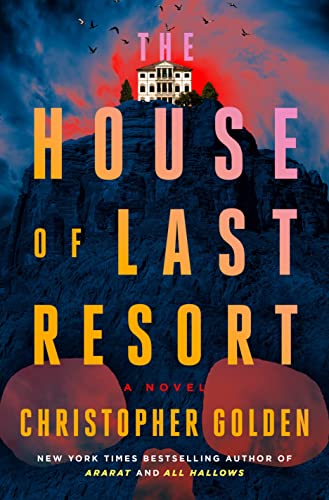
The House of Last Resort by Christopher Golden

book cover

A forty-minute drive from the volcanic Mount Etna, Becchina should have been alive.
Instead, it was the corpse of a town that didn’t even realize it was already dead.

A low scritching noise caught his attention, and he swung the flashlight beam down to the right, where the natural tunnel and the man-made wall formed a dark and jagged corner. Tiny, putrid-yellow eyes glittered in the shadows.
“Jesus Christ!” Tommy hissed, jerking backward in revulsion as the flashlight beam illuminated the foot-long rat crouched in that corner.
Silent, twitching, the rat stared brazenly up at him, unafraid. It watched him with apparent disdain, as if to let Tommy know that he was the intruder here, not the rat.

A deal that is too good to believe. Ownership of an abandoned hilltop house in a Sicilian town (Becchina, a made-up town, – buh-kee-na) for a single euro, as long as you agree to live there for five years and invest 50K euros fixing it up. What could possibly go wrong? Tommy and Kate Puglisi see this as a once-in-a-lifetime opportunity. A chance for a much better future than they could ever afford in Boston.

description
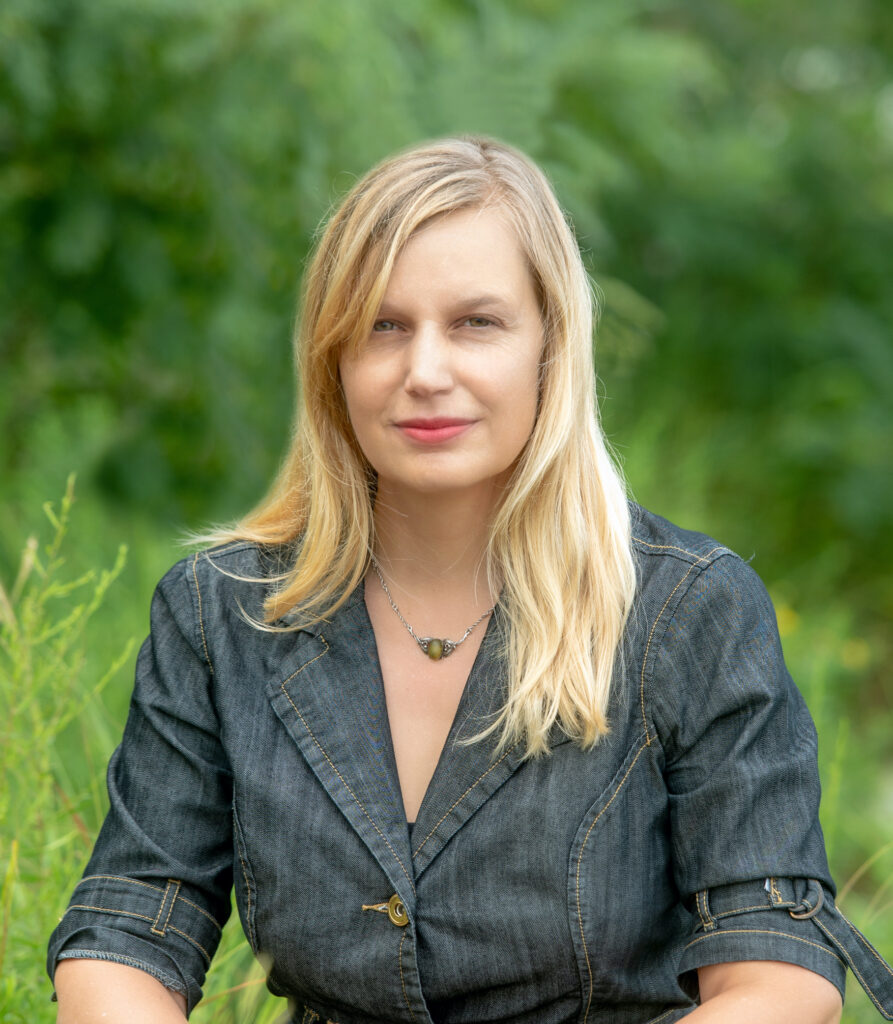
Christopher Golden – Image from MichelleRLane.com

The world seemed to be unraveling every day. American culture seemed to be rotting from the inside out, manipulated by an amoral oligarchy whose worst enemy was young people who didn’t want to play their game, and Kate and Tommy were happy to be counted in that category. The irony had not been lost on them, that the nineteenth and twentieth centuries had been defined by people leaving the so-called Old World to seek their fortunes in the New World, and now she and Tommy were doing the opposite, seeking new life in the Old World. But they both believed that earlier generations had it right—a slower life, a smaller circle, a focus on home.

That Tommy’s family had come from Becchina gave it an additional draw, a chance to spend time with his grandparents, whom he loved and very much wanted to see lot of in their final years. The importance of that is magnified by the fact that both of Tommy’s parents are dead. Tommy and Kate are on extended time off from work, so can attend to getting things fixed up before returning to their jobs, remote jobs, which allows them the freedom to live anywhere. And they do not yet have children.

Of course the house comes with some unadvertised extras. The book opens with:

The rats are like fingers.
No. That’s not right. Fingers can reach out, can grasp and extend. The rats are not like fingers at all. They are periscopes, like those on submarines, each able to give its captain only a limited view of the world above. From their place below, among the dead, the lost ones can see only as far as the rats can see. But they are patient, and so they wait. And they let the rats run.

Uh oh. Squatters. Toss in being within commuting distance of Mount Etna to shake things up. Oh, and that lady down the hill who is always staring daggers at them whenever they pass by. And the family, who is warm and welcoming but not altogether forthright about the history of the town or the house. On the other hand, there is a group of other new arrivals, lured by the same opportunity. They call themselves The Imports. It’s fun seeing Tommy reconnect with famiglia. He and Kate slowly get to know the town and some of its residents, make friends, and come up with a plan to boost the local economy. Can-do Yanks in action.

But things keep happening. Kate thinks she sees someone in the house, but did she really? A tremor arrives soon after they do. There is a part of the house that the R/E agent somehow managed to overlook when showing the place. A door that was locked, but then is mysteriously open. Golden makes generous use of Gothic fiction features (see abbreviated list in EXTRA STUFF) to give you chills.

Tommy and Kate are actually a happy couple. Many horror books use spectral events as manifestations of underlying relationship problems. Not the case here. This is also not a case in which better-off sorts gentrify an old area, forcing out the locals. Instead, they are trying to save, replenish, and reconstruct, infusing new life into a withered, crumbling, forgotten town. The houses The Imports bought were already abandoned. The newbies are looking to build up not just the houses they occupy but the community as well. So, the dark forces here are not cutouts for obvious social criticism. They are pretty much straight up malignancy coming at you in sundry ways. One way is our visceral reaction to vermin.

The rats that feature in the opening lines persist throughout, gaining in their power to induce fear and loathing. It was a specific choice. In the Book Nook interview, Golden talks about how he believes we mortals have a race-memory fear of rats, the result of plagues that wiped large portions of humanity from the planet multiple times, akin to the natural fear most of us have of snakes, from the days when they were in our immediate environment and posed a mortal threat. Rats give us the creeps.

What you get in The House of Last Resort is a likable pair in peril, with a plentiful supply of scary, a cauldron of creepy, and a shipload of shivers. If you think your basement is a mess, you have no idea. There are nifty twists, some local color and action aplenty to keep you turning the pages. Depending on your susceptibility to such books, you may get a sleepless night or two out of this one. A fun read, a pure entertainment, uncluttered by larger sociopolitical concerns, a fabulous summer read. But probably a bad idea to take this along if you plan to visit Sicily.

A voice crying out. Tommy frowned, wondering if that had been a dream or if it had been what woke him.
The wind gusted, rattling the window in its frame. He listened to see if the cry would come again but heard nothing beyond the sighs and creaks of the old house.

Review posted – 04/05/24

Publication date – 01/30/24

I received an ARE of The House of Last Resort from St. Martin’s Press in return for a fair review, and some DNA samples. Thanks, folks, and thanks to NetGalley for facilitating.

This review is cross-posted on Goodreads. Stop by and say Hi!

======================================EXTRA STUFF

Links to Golden’s personal, FB, Instagram, and Twitter pages

Profile

Golden is a monster of an author who got started, and found success, very early. He has a gazillion publications to his credit and an army-size host of teleplay credits from his years writing for Buffy with Joss Whedon, and plenty more. And then there are the comics. You may have heard of Hell Boy, among those. Here is a list of what he has published, from Fiction DB. I personally think he has elves, or more likely, goblins, chained to computers in his basement helping him crank out such volume.

My reviews of Golden’s two prior books
———-2022 – Road of Bones
———-2023 – All Hallows

Interviews
—–Paul Semel – Exclusive Interview: “The House Of Last Resort” Author Christopher Golden
—– WYSO – Book Nook – ’The House of Last Resort,’ by Christopher Golden by Vick Mickunas – audio – 50:04

Checklist – Partial Characteristics of the Gothic Novel
See my review of While You Sleep for more of this sort
Setting – castle or old mansion – oh, Yeah
Secret passages or creaky doors – of course
Atmosphere of mystery or suspense – fuh shoo-uh
Ancient prophecy or legend – sort of
Omens, portents, visions – tremors, hints from neighbors and family
Supernatural or otherwise inexplicable events – ghost sightings?
High, overwrought emotion – you betcha
Women in distress – actually not so much. Both Tommy and Kate are beset
Women threatened by powerful, tyrannical male – see above

Leave a comment

Filed under Fiction, Horror

Goldenseal by Maria Hummel

book cover

Falling into friendship, with Edith was also, for Lacey, inextricable, with falling in love with the northern summer. Never had she woken to birdsong, or plunged headfirst into cool water on a blazing day, or listened to the whispers of the oaks as a thunderstorm, swept in. Never had the sun felt so warm and golden, or rain soaked her so completely. The shrill of crickets, alarming at first, began to soothe her to sleep at night. A toad hunched by a log was so intensely ugly she cried out in shock, while a fox, slipping through the pines, looked like the tip of a paintbrush dipped in orange. Her hands and legs became tan and useful. She could tie three kinds of sailor knots, and she could kick her way up a river current. Her face in the spotty cabin mirror was freckled, it also looked rounder and full. She was gaining weight back, and when one night Edith observed, “You’re not coughing anymore,” Lacey realized it was true.

“When the stranger returned to the city…” are the opening words of Goldenseal, or could be of a fun Western. The description that follows is pure delight, set in 1990 Los Angeles, as Maria Hummel shows off her poet’s gift for description. In The Rumpus interview she talks about having to tone that element down to spend more focus on moving the story forward. A loss for the likes of me. Edith Holle left Lacey, and Los Angeles forty-four years ago. She is back now on a mission known only to herself.

I was interested in creating a novel that had an allegorical Western feel. The stranger comes back to this city for the first time in forty-four years; “the stranger comes to town.” That’s the beginning of the classic Western, and Westerns play an important role throughout the story, as both subject and backdrop, especially in regard to gender. Because in the classic Western, the “stranger” is male, right? But here, it’s Edith, an old woman in a wrinkled skirt and sneaker boots. – from The Rumpus interview

In addition to the western genre references, there is a mystery afoot here, well, a few. What was the nature of Edith’s connection to Lacey? Why did she leave? Why is she back?

description
Maria Hummel – Image from her site

We get an up close look at Lacey’s discomfort, wondering what Edith is up to, stressing over what to wear, as if her sartorial selections might provide a layer of armor, but Lacey is also clearly dying to see her. Once the waiting is done, we get on with the bulk of the story. It is told in two time lines. First is an ongoing conversation between the two women, the frame. Second is the history they recount within it.

Lacey Crane was born in Prague, her parents fleeing before, but not because of, the future Nazi invasion. Middle class, they were able to experience success in the hotel business. We get a look at the impact of the Holocaust on her parents, particularly her Jewish mother. As girls, Lacey and Edith meet at a California camp, where Edith is a bit of a loner, the daughter of the camp caretaker, special for her talent at stage performance, among other things, but seen as too lower class for most of the privileged girls. Not for Lacey. They become instant besties. (see quote at top) Edith’s home life is challenging, and Lacey wants to take her away from all that.

We follow the development of their friendship, and of their lives, together and apart. It is events in adulthood that split them, a final, dramatic schism. Dirty laundry is pulled from their memory bags, and held up for close inspection. Some garments are left unaired.

The contemporary conversation functions as a way for them to both examine the lives they have led. It also illuminates some of the changes women experienced in the 20th century.

The novel germinated over a protracted period, until all the elements finally came together. First was the Biltmore. When she and her husband moved there in the early aughts, Hummel was smitten with the LA hotel culture, particularly that hotel.

[This] combined with a book that I read that came out in American translation in 2001 called Embers …originally published in 1942, is a story about two old friends, males, an old general and a soldier, meeting in a castle in the Carpathians for the first time in forty years. They’re also weighing out friendship. When I read that book, I thought, this is such a great treatise on friendship, but it’s about male friendship. Female friendship is different. Wouldn’t it be great to use this structure but set it in an American castle? There it is. Then the third piece was, as we all experienced, we lived like recluses, particularly for me, the academic year that was 2020/’21. I thought, I know how to write this character now, this person who’s basically a hermit who lives in the hotel and never goes out and is locked in her tower. – from the Moms Don’t Have Time to Read Books interview

Underneath it all is that primal bond, forged in childhood, hardened in adulthood but seriously damaged. We are waiting for the high noon moment when the women unholster their revelations and take aim.

The Lacey-Edith intersection is, in a way, where Old World meets New. Lacey having been born middle class in Europe. Edith living a much more frontier-type of existence in the American far west. Lacey is relatively well-to-do, while Edith is a bit of a Cinderella character, responsible beyond her years, kept as something of a household slave by an unfeeling parent. Maybe Lacey can fit her up with a glass slipper, get her a carriage ride to something better? There are medical remedies from both the Old World and the New that present the strengths of both cultures. Familial tragedies echo across the divide.

Do we care? Each girl faces challenges at home. And both are portrayed as decent kids, so it is not hard to feel for them. The tale of their early friendship is incredibly charming and engaging, a major strength of the novel. The bond between these two is palpable and we want it to be eternal. Each girl finds relief from her personal stresses in having someone with whom to share. We get glimpses of their time together later, as teens, but these are fleeting, and lack the immediacy and impact of their camp days. Their time as adults is also presented in brief glimpses, stroboscopic flashes of events. Sure, there is angst, pain, heartbreak, betrayal, and disappointment, but having stepped back from Lacey and Edith, the impact is dulled. It is not a bad thing to leave readers wanting more of a character but it seemed to me that we got a bit short-changed and should not have needed that much more.

The narrative flow works quite well, switching back and forth between the contemporary and historical. But in a latter section of the novel, the conversation became much less…conversational, transforming into almost straight up exposition. I found this distancing, and thus off-putting.

There is a lot going on in Goldenseal. Thematically, it offers a trove of genre touches, coming of age, mystery, western, domestic drama and probably others. Hummel writes beautiful descriptions. I wish there had been even more of that. She gets us to care about her leads. And offers a persuasive explanation at the end, for most questions. It is a good read for sure, but maybe a Silver Seal instead of a Golden One.

Review posted – 03/29/24

Publication date – 01/09/24

I received a hardcover copy of Goldenseal from Counterpoint in return for a fair review. Thanks, folks.

This review is cross-posted on Goodreads. Stop by and say Hi!

=======================================EXTRA STUFF

Links to Hummel’s personal and Twitter pages

Profile – from her website

Maria Hummel is a novelist and poet. Her books include Goldenseal, Lesson in Red, a follow-up to Still Lives, a Reese Witherspoon x Hello Sunshine pick, a Book of the Month Club pick, and BBC Culture Best Book of 2018; Motherland, a San Francisco Chronicle Book of the Year; and House and Fire, winner of the APR/Honickman Poetry Prize… Hummel worked for many years as an arts editor and journalist, and as a writer/editor for The Museum of Contemporary Art, experience that informed Still Lives and Lesson in Red. She also taught creative writing at Stanford University and Colorado College, and is now a full professor at the University of Vermont. She lives in Vermont with her husband and sons.

Interviews
—–The Mark Twain House & Museum Program – GOLDENSEAL with Maria Hummerl and Barbara Bourland by Omar Savedo – Video – 58:15
—–Moms Don’t Have Time to Read Books – Maria Hummel, Goldenseal by Zibby Owens
—–The Rumpus Friendship Sunset: A Conversation with Maria Hummel by Jenny Bartoy

Items of Interest from the author
—–Reading Group Guide
—–LitHub – The Shadow Self of Domestic Stories: A Reading List of Novels Set in Hotels

Leave a comment

Filed under Fiction, Historical Fiction, Literary Fiction, Mystery

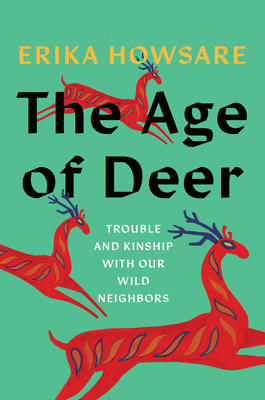
The Age of Deer by Erika Howsare

book cover

…deer…occupy a middle zone between …extremes of domestication and wildness. Far from tame, they are nonetheless experts at living with people, and in many ways, they actually prefer to share habitat with us. All across North America, as in many other parts of the world, we exist in intimate proximity to deer.

The FAA considers white-tailed deer more hazardous to U.S. civil aircraft than any other animal.

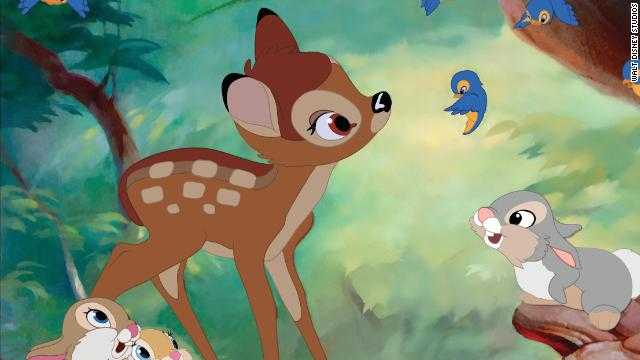
Many images might pop to mind when we think about deer. I am sorry to say that the first one in my tiny mind is the sad vision of road kill. The second is the sheer joy of spotting wild deer in woods, or yards, or, more grandly, in national parks, whether the white-tail native to my part of the world, the mule deer and caribou more prevalent in the west, and even moose. I cannot say I have seen reindeer in the wild, unfortunately. Many visits to the Bronx Zoo introduced me to a much wider range of cervids, the family to which deer belong, including the diminutive muntjacs.

description
Erika Howsare – image from her site

Erika Howsare has had more of a connection to deer than, I expect, most of us. She grew up in western Pennsylvania in a family that hunted. In fact, the Monday after Thanksgiving is an unofficial holiday in our state, with most schools, and many businesses closed due to expected high absenteeism. This is one of many foci of interaction between deer and people.

I’d had an inkling, even before writing the book proposal, that deer were involved in all manner of controversies, contradictions, and human strivings. That was what got me interested in them. But I didn’t know too many specifics. When I started researching, one of the first things I did was to set up news alerts on deer and several other related terms.

Within a week, I had a rough outline of some of the major roles deer play in our world. They are victims; they are pests; they are something to hunt as well as something to study and protect. They are the targets of culling operations and the objects of sentimental love. They are trophies and intruders. It was all there in the news cycle. – From the Lithub article

Thankfully, Howsare, a published poet, offers a lot more than the daily deer chyron.

I did start the book from a fairly cerebral place where I thought, “Oh yeah, great subject. Like, this will bring up all kinds of great questions, and I’ll be able to go down all these roads in terms of the research and make these points, and it’s gonna be a really great opportunity to dig into these intellectual questions.”
What I wasn’t expecting was how much it would change me as a person.
– from the Phoebe Journal interview

And a wondrous opportunity it proved. You will learn a lot about the human/deer connection, and a bit about deer behavior as well.

description
White tailed deer – image from PennVet – University of Pennsylvania

One thing to consider is just how long deer and humans have been interacting. Pretty much as long as there have been people, judging by the content of ancient cave art. They appear in all cultures, and are a rich presence in mythology worldwide. As our first-hand experience of deer is usually liminal, many have come to see deer as ambassadors of the wild world, crossing from theirs to ours, and maybe offering a route away from the world of living humans. Of course, for many of us there is an UR deer image that has been burned into our brains. Really, can you name any other deer this side of Santa’s team?

description
Bambi – image from Disney via KRCA.com

They are beautiful and offer us an image of wildland innocence. But for many they have become pestiferous. Consider having spent months planting and tending your beautiful back yard garden, only to wake one day to find that real-life Bambis and their kin have laid waste to all your work. There is also the carnage caused not just to deer but to people and their vehicles from collisions with deer. There are folks whose job it is to collect the bodies. Howsare spent time with one of them.

Deer have been a crucial source of food for people across the millennia, but also of a wide range of materials. Howsare gets trained in earth skills to find out how to make buckskin, and many other useful items formed from deer parts.

We usually think of reintroduction of wildlife having to do with trout, or other finned creatures. You may have heard of attempts to reintroduce predators, like wolves in Yellowstone. But the largest and most successful reintroduction in US history occurred in the early 20th century when deer, which had been driven near to extinction, were reintroduced in many parts of the nation.

description
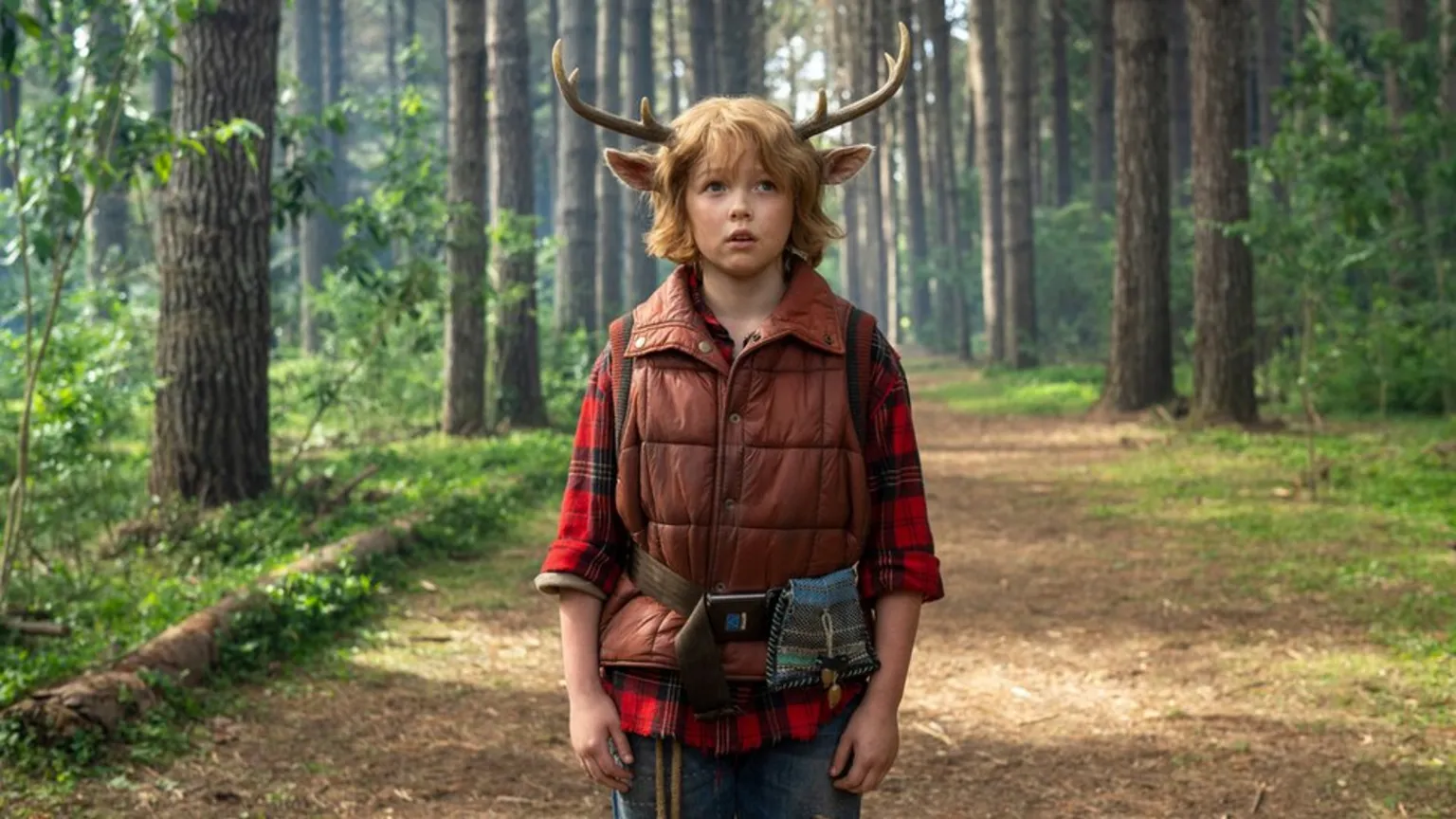
Sweet Tooth – image from Netflix via BBC

Ok, this was not at all included in the book but I kinda hoped it would gain at least a mention, as it does speak to the closeness of our species.

Factlets abound. Did you know that deer can suffer from a chronic, deadly disease that we usually associate with cattle, chronic wasting disease? Or that maybe the notion of adorning rulers with crowns was a way of imitating the stag rack? You will gain an appreciation for the use of deer-based imagery in the film Get Out. There are plenty more.

One of the main points to be gained is seeing how deer are actually quite adaptable, and have managed to carve out an ecological niche at the perimeters of human population.

description
Moose – image rom Britannica

A survey course on cervid-sapiens connection makes for an entertaining, informative read on its own. But Howsare incorporates a personal journey into her narrative. Never a hunter, at least not one who shoots anything, she has enough personal connection to folks who do, relations, to want to gain a better understanding of the hunting culture and the rationales of those who kill deer. She looks at her own feelings about deer and hunting. Not all who hunt actually shoot. Hunting can be a group activity, with a diversity of roles, very reminiscent of our prehistoric ancestors. One very appealing element of this learning curve for Howsare was becoming more comfortable with being still, settling into a place and letting herself experience the environment, the moment, fully, a form of meditation almost.

She looks at some of the outrages associate with hunting as well. Like releasing or breeding deer in fenced areas to be killed by people fond of killing things, but not much interested in doing all the research and preparation that serious hunters undertake. Think Dick Cheney hunting quail.

My only gripe about the book is a petty one. I find that science/nature books always go down easier when the information is spiced with a bit of humor. No danger of that here. So, past my personal preferences, The Age of Deer is an easy thumbs up. You will learn a lot and gain a far greater understanding of the relationship between humans and cervids throughout history and our interactions today, finding yourself saying, whether aloud or internally, “I never knew that.”

In the Anthropocene, it seems that far too much of humanity has assumed the position of the prototypical you-know-what frozen in place as the headlights of global doom approach at increasing speed. Deer, at least, have an excuse for such behavior, as their woodland-creature-instinct, however misguided it might be on a paved road, is to become very still so an approaching predator might not see or hear them. Given their abundance on the planet, it is a strategy that has worked out well for them, despite the roadside carnage, as deer remain the last large wild animal in most places. The roaches and rats will not be alone after we are gone. Deer, icons of woodland beauty, are adaptable. They are survivors, and will be keeping them company.

If the American project was, in part, to make a pastoral landscape out of a wilderness, deer benefited from that project in a cultural sleight of hand. We thought of them as part of the wild, but we had misconceived them. Their secret was that they, like us—like squirrels, corn, apple trees, clover, ands sparrows—would flourish in our human garden.

Review posted – 03/22/24

Publication date – 01/20/24

I received a hardcover of The Age of Deer from Catapult in return for a fair review. Thanks, folks.

This review is cross-posted on Goodreads. Stop by and say Hi!

=======================================EXTRA STUFF

Links to the author’s personal, FB, Instagram, and Twitter pages

Profile – from Catapult
ERIKA HOWSARE holds an MFA in literary arts from Brown University and has published two books of poetry. She also worked in local journalism for twenty years, covering culture and environmental issues. She teaches writing and contributes reviews and essays to various national outlets. A native of Pennsylvania, she lives in rural Virginia.

Interviews
—–Poets & Writers – Ten Questions for Erika Howsare by staff
—–Flyleaf Books – Erika Howsare presents THE AGE OF DEER -Howsare reads from the book then takes questions – the sound quality is poor
—–Phoebe Journal – Hungry Deer and Pissed off Gardeners: An Interview with Erika Howsare by Ashlen Renner

Items of Interest from the author
—–The Atlantic – An Incurable Disease Is Coming for Deer – an excerpt – but requires a subscription
—–Orion – Skin to Skin with a Deer – excerpt
—–Virginia Audio Collective – If You See a Deer – a four-episode companion podcast
—–Lithub – Erika Howsare on Finding Inspiration in Headlines

Items of Interest
—–Be vewy, vewy quiet. – Mister Fudd may be hunting a different species, but his approach applies to deer as well
My review of Stephen Graham Jones’s – The Only Good Indian – a wronged elk on the warpath
—–My review of Elizabeth Marshall Thomas’s – The Hidden Life of Deer: Lessons from the Natural World
—–Gutenberg – The Yearling by Marjorie Kinnan Rawlings

Leave a comment

Filed under anthropology, Non-fiction, Science and Nature

The Future by Naomi Alderman

book cover

The road to ruin is paved with certainty. The end of the world is only ever hastened by those who think they will be able to protect their own from the coming storm.

Love is the mind killer.

So what would you do if your super-secret software gave you the alert? End times are afoot. Time to scoot! If you are like most of us, you might seek our your nearest and dearest to see the world out together. But what if you are one of the richest people on the planet? Well, in that case, you would have prepared a plan, an escape, a plane, supplies, a bunker somewhere safe. Buh-bye, and off they go. The they in this case includes three billionaires, the heads of humongous tech companies, some years in the not-too-distant future, Lenk Sketlish, Zimri Nommik, and Ellen Bywater.

They were definitely not inspired by anyone specifically who could sue me for everything I’m worth and barely notice it…They are composite characters made up of some of the ridiculous and awful things that tech billionaires have done and some of it just made up out of my head. But of course the companies are inspired by real companies. – from the LitHub interview

What if you were the number one assistant to one of these folks, or the less-than-thrilled wife of another, or the ousted former CEO and founder of a third one, maybe the gifted child of one? You might have been spending your time trying to see what you could do to mitigate the vast harm these mega-corporations have done to the planet. These are Martha Einkorn, Lenk’s #2, Selah Nommik, Zimri’s Black British wife, Alex Dabrowski, founder and former CEO of the company now headed by Ellen, and Badger, Ellen’s son.

“Margaret [Atwood] has very much covered how bad it can get, so we don’t need a lesser writer doing that,” Alderman says. “I’m interested in the most radical ideas about how we can make things better, and what are the avenues we can pursue.” – from the AP interview

BTW, Atwood mentored Alderman.

What if you were attending a conference in Singapore, having recently met one of group B above for an interview, and gotten entangled in an unexpected way, but now find yourself in the vast mall in which the conference is being held, being chased and shot at by some psycho, probably a religious nut? Lai Zhen is a 33yo refugee from Hong Kong, an archaeologist and well-known survivalist influencer. She had met someone she thinks may be The One, but her immediate survival is taking up all available mental space. Thankfully, she has help, but will it be enough?

description
Naomi Alderman – image from The Guardian

The action-adventure-sci-fi shell encasing The Future is a dystopian near-future that takes an if-this-goes-on perspective re the road we are currently traveling toward planetary devastation, global warming, the increasing greedification of the world economy, and concentration of wealth, at the expense of sustainability and human decency. But Alderman has done so much more with it.

The Future has a brain and a heart, to go along with the coursing hormones, and some serious mysteries as well. Did I mention there is a romance in here also? Good luck shelving this thing. You probably will not have much luck putting it down once you start reading. Well, take that advisedly. I did find that it took a while to settle in, as there is a fair bit to get through with introducing all the characters, but once you get going, day-um, you will want to keep on.

While offering a look at survival post everything, Alderman tosses in some fun high tech and BP-raising sequences. And she gives readers’ brains a workout, providing considerable fodder for book club discussions. To bolster the thematic elements, Aldermen provides plenty of connections to classic tales, biblical and other, that offer excellent starting points for lively discussions.

Martha was raised in an apocalypse-concerned cult, led by her father. As an adult she gets involved in on-line exchanges about questions like what might be learned from the experience of a biblical apocalypse survivor, Lot. Alderman was raised as an Orthodox Jew, studying the Torah in the original, so knows her material well. (God was about to firebomb Sodom when Lot’s kindness to a couple of god’s emissaries earned him and his family a get-out-of-hell-free pass.) In addition, she finds relevance in Ayn Rand, The Iliad, The Odyssey, and more.

She brings in a discussion of the enclosure act in the UK, how the stealing of public land by the wealthy has a mirror in the theft of public space of different sorts in the 20th and 21st centuries. But the biggest issue at work here is trust. In fact, Alderman had intended to title the book Trust. But when Herman Diaz’s novel, Trust, won a Pulitzer Prize, she had to find an alternative. Can Zhen trust her new love interest. Can she trust the AI that is supposedly helping her? Can she trust any of the oligarchs? Can she trust people she has known for years on line, but never met in person? This is a core concept, not just on a personal, but on a societal level. Civilizations are built on trust. It is an issue that touches everyone.

The wealthier you are, the less you have to ask people things and the less you ask people for things, the less you have to discover that you can trust and rely on them. Eventually, that erodes your ability to trust. Then, you’re sunk. – from the Electric Literature interview

Consider a concern that is immediate in early 2024. Can American allies, whose alliances have kept the world out of World War III since the end of World War II, trust the US intelligence services with their secrets, when our next president might give, trade, or sell it to our enemies? Can you trust that the person you are communicating with on-line is being honest with you. (As someone who has met people through Match.com, I am particularly aware of that one.) If you are stuck on a survival island, can you trust that the other people there will not do you in, in order to improve their chances of gaining power once things begin to return to some semblance of global livability?

In today’s culture, technology, particularly social media, “encourages us not to really trust each other,” Alderman explains. “The ways that we use to communicate with each other have been monetized in order to make us as angry at and afraid [of one another] as possible.” And while the internet can all too often amplify “absolute hateful stupidity” to feed our distrust of one another, the author continues, “It can also demonstrably, again and again, multiply our knowledge and capacity to understand.” – from the Shondaland interview

Zhen’s is our primary POV through this, although we spend a lot of time with Martha. She is an appealing lead, a person of good intentions, and reasonably pure heart. She is wicked smart, able, and adaptive. It is easy to root for her to make it through. But, noting the second quote at the top of this review, if Love is the mind killer, might it impair her clarity of thought, her maintenance of necessary defenses? Of might it impair that of the person she is love with?

The concern with dark forces is a bit boilerplate. Two of the oligarchs are cardboard villains; another has some edges.
But it is the conceptual bits that give The Future its heft. Oh, and one more thing. Woven throughout the 432 pages of this book is minor crime, Grand Theft Planet. It should come as no surprise that an author who has had great success with her previous novels, and who has spent some years writing video games, would produce a fast-paced, engaging read, replete with dangers, anxieties, fun toys, and wonderful, substantive philosophical sparks. I cannot predict the future any better than 2016 presidential pollsters, but my personal AI suggests that should The Future will find its way to you, you will be glad it did.

Imagining bad futures creates fear and fear creates bad futures. The pulse beats faster, the pressure rises, the voice of instinct drives out reason and education. At a certain point, things become inevitable.

Review posted – 3/8/24

Publication date – 11/7/23

I received an ARE of The Future from Simon & Schuster in return for a fair review, and the password to my super-secret software. Thanks, folks, and thanks to NetGalley for facilitating.

This review is cross-posted on Goodreads Goodreads. Stop by and say Hi!

=======================================EXTRA STUFF

Links to the author’s personal, Instagram, GR, and Twitter pages

Profile – from Simon & Schuster

Naomi Alderman is the bestselling author of The Power, which won the Women’s Prize for Fiction, and was chosen as a book of the year by The New York Times, The Washington Post, the Los Angeles Times, and was recommended as a book of the year by both Barack Obama and Bill Gates. As a novelist, Alderman has been mentored by Margaret Atwood via the Rolex Arts Initiative, she is a Fellow of the Royal Society of Literature, and her work has been translated into more than thirty-five languages. As a video games designer, she was lead writer on the groundbreaking alternate reality game Perplex City, and is cocreator of the award-winning smartphone exercise adventure game Zombies, Run!, which has more than 10 million players. She is professor of creative writing at Bath Spa University. She lives in London.

Interviews
—–Professional Book Nerds – Dystopian Futures with Naomi Alderman – video, well, mostly audio, with no real video – 41:59
—–Toronto Public Library – Naomi Alderman | The Future | Nov 13, 2023 with Vass Bednar – 45:05 – there is a nice bit in here on tech as neither bad nor good, but a tool which can be used for good or evil.
—–Literary Hub – Naomi Alderman on Creating a Fictional Tech Dystopia by Jane Ciabattari
—–Shondaland – Naomi Alderman Is Still Finding Hope in Humankind by Rachel Simon
—–AP- Naomi Alderman novel ‘The Future’ scheduled for next fall by Hillel Italic
—–Electric Literature – Dystopian Future Controlled by Technology by Jacqueline Alnes
—–Independent – How We Met: Naomi Alderman & Margaret Atwood – by Adam Jacques – Atwood mentored Alderman in 2012 – a fun read

Item of Interest from the author
—–BBC Sounds – audio excerpt – 1.0 – The End of Days – 15:47

Items of Interest
—–Tristia by Ovid – Zhen reads this prior to a trip to Canada
—–The Admiralty Islands
—–inert submunition dispenser – a kind of cluster bomb
—–Wiki on the enclosure act

Leave a comment

Filed under Action-Adventure, AI, Cli-Fi, computers, Fiction, Literary Fiction, Mystery, Reviews, Science Fiction, Thriller, Thriller

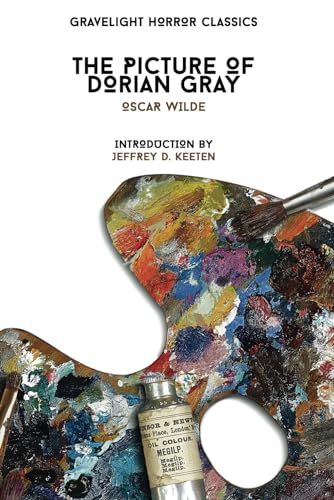
The Picture of Dorian Gray by Oscar Wilde, introduction by Jeffrey D. Keeten

book cover

There were moments when he looked on evil simply as a mode through which he could realize his conception of the beautiful.

“How sad it is! I shall grow old, and horrible, and dreadful. But this picture will remain always young. It will never be older than this particular day of June…. If it were only the other way! If it were I who was to be always young, and the picture that was to grow old! For that—for that—I would give everything! Yes, there is nothing in the whole world I would not give! I would give my soul for that!”

Be careful what you wish for.

description
Oscar Wilde – image from Wikipedia

Man sells soul to the devil in return for…something, in this case a body encased in eternal youth, while a portrait takes on the outward manifestation of his aging and his sins. It ends badly, as deals with the devil usually do. This is hardly a unique tale. In fact, it is a bit of a trope, a Faustian bargain. There is a lovely listing here of examples new and old. Absent, of course, is the most famous, and least successful example of a soul-selling, really more of a soul-buying, from Matthew 4:1-11, when the devil made Jesus an offer he actually could refuse. Don Corleone would have been very disappointed.

But it is a bit more complicated than that, as these things often are. It is always a challenge and an adventure to read a classic. Books become regarded as a base part of our culture for reasons. They can establish motifs, or ways of seeing the world that resonate with their contemporary audiences (well, not always) and future generations. They can offer us a portrait of a time and place, a culture, a class, a social or political issue. They can illuminate moral questions, deal in universal themes, offer insight into human motivation, whether individually or en masse. And we come to see them in particular ways. In The Strange Case of Dr. Jekyll and Mr. Hyde, the prior re-pub in this Gravelight series, what one finds in the original is not quite what one might expect, given how popular culture has transformed the story by bleaching out important nuance. That is less the case with Dorian Gray, at least in part because there appears to have been fewer iterations of the tale in popular entertainments. But, nonetheless, our understanding of the story is generally of the bare bones sort. There is plenty of flesh to give those bones some added heft.
description
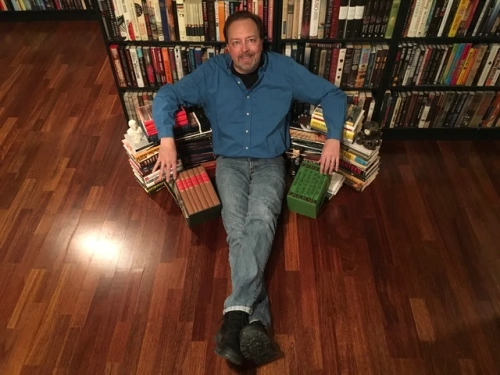
Jeffrey Keeten – they came to take his furniture, but the only way they will take his books is from his cold dead hands – image from his site

The history of a book matters. Keeten’s introduction offers an excellent take on how Dorian was received at publication. It generated quite a bit of attention on its release. There were many who were not amused. That may have contributed to the fact that The Picture of Dorian Gray is singular in being the sole novel published by Oscar Fingal O’Flahertie Wills Wilde. The subject matter was considered a big no-no in 1890. The Dorian of the title is a man of many tastes, and apparently insatiable appetites. He manages to bring ruin to both men and women. It was not, in particular, the ruination of women that caused a storm. The periodical in which it was first published was withdrawn from bookshops due to the outrage.

Wilde was a very popular writer of the time, wearing his sexuality like a badge. A tough stance to assume in a culture that preferred to sate it appetites and interests discretely. His novel was a shocker for the time in portraying homosexuality in interest, if hardly in action. The painter of Dorian’s portrait is clearly smitten with him, dazzled by his physical beauty, which he sees also as representative of an underlying perfection.

For all the shock of its homosexual content, there is no physical contact of that sort in the pages. (an earlier version may have been more direct) All is insinuation, suggestion, hinting. It is the same technique that has worked quite well for ages in the horror genre. Shadows, rattling chains, creaky doors, unsourced moans. Sometimes we are offered the shocker scene in which the monster is revealed. The Opera Phantom’s mask is pulled off to reveal the horror of his face. Hyde’s deformity is revealed as the window into Jekyll’s soul. And so it is here. Dorian’s true nature is revealed. The “I’m shocked, shocked” reaction of contemporary critics suggests more about what they were projecting onto the novel than what was actually there.

description
The portrait used in the 1945 film by Ivan Le Lorraine Albright – image from Wikipedia

So, what is the horror that is on display? It is the hedonism of the late 19th century English upper class, sashaying about in the interesting, entertaining, appealing drag of philosophy. Henry argues for the unashamedly sybaritic life. Art need have no meaning, no being other than itself. Apply to humans. Is art, is beauty the highest value? When beauty is left to dangle free, disconnected from any higher value, what is its impact on the world? Actions have no moral content. It is in fact a positive good to live a life dedicated to the primitive accumulation of sensation, through the arts, through physical pleasures, not just of sex, but of sight, smell, sound and touch, to experience beauty in all its forms. Try everything. Art for art’s sake in the guise of human experience. Some people have an amazing ability to come up with excuses for their excesses, explanations, some reason for why they shouldn’t be held accountable for their actions. Like the poor and taxes, we will always have the morally challenged, the malignant narcissists, the sociopaths with us.

beauty is a form of genius—is higher, indeed, than genius, as it needs no explanation. It is of the great facts of the world, like sunlight, or spring-time, or the reflection in dark waters of that silver shell we call the moon. It cannot be questioned. It has its divine right of sovereignty. It makes princes of those who have it. You smile? Ah! when you have lost it you won’t smile…. People say sometimes that beauty is only superficial. That may be so, but at least it is not so superficial as thought is. To me, beauty is the wonder of wonders. It is only shallow people who do not judge by appearances. The true mystery of the world is the visible, not the invisible….

But if this was on the up and up, there would have been no need to keep one’s behavior secret. It is clearly a place where freedom crosses the line into license. The practitioners of such a “philosophy” knew they were up to no good. They merely wanted to hide from the responsibility. Dr Jekyll was quite happy to have an alter-ego he could let loose on the world, to have the sorts of fun he could not have as himself in public view. They knew, not just that their behavior was wrong, not just that it ran afoul of extant mores, but that their reasoned explanation was taffeta thick.

description
Hurd Hatfield as Dorian in the 1945 film – image from Wikipedia

It is not the barely latent bisexuality of the novel that marks Dorian as fallen, it is that he had ruined peoples’ lives, men and women, not by having sex with them, (which is suggested, but never acted out on the pages) but by corrupting them in various ways, by causing them to become as self-centered, as pleasure-seeking as he was. A person can get away with this if he or she is wealthy enough. Paying off porn stars to keep quiet about an extramarital fling certainly fits into such a scenario. Dorian manages to keep his scandals at bay with the use of his wealth.

It is as true today as it was when Wilde was writing this book, the selfishness, the hedonism, the amorality of the wealthy feeds on the blood and life forces of those they exploit, few of whom can afford to fight back directly. (You go, E. Jean!) I imagine this is a core of what Wilde was getting at, and the real reason his critics were so angry at him.

Dorian does not come to his corruption unaided. He arrives as a beautiful young man, who is seen as being as pristine inside as he is on the surface. The Victorians were very concerned with exteriors, believing that they served as personal screens displaying to the world a person’s character. But then he is introduced to Lord Henry Wotton. Henry proceeds to emit a torrent of nonsense, albeit amusing nonsense, mocking the morals of the time. Wilde, speaking through Henry, is cattier than my living room when I shake a container of treats. Henry offers a torrent of false, cynical aphorisms, suitable material to be printed on small pieces of paper and tucked inside poisoned fortune cookies. Were he opining today, Henry would be posting outrageous clickbait opinions on Twitter. Here are a few examples. They are legion, and will sound familiar in tone to characters from Wilde’s 1895 theatrical triumph, The Importance of Being Earnest

…beauty, real beauty, ends where an intellectual expression begins. Intellect is in itself a mode of exaggeration, and destroys the harmony of any face. The moment one sits down to think, one becomes all nose, or all forehead, or something horrid.

…the one charm of marriage is that it makes a life of deception absolutely necessary for both parties. I never know where my wife is, and my wife never knows what I am doing. When we meet-we do meet occasionally, when we dine out together or go down to the Duke’s—we tell each other the most absurd stories with the most serious faces.

…as for believing things, I can believe anything, provided that it is quite incredible.

It is the cynical Henry who finds in the gullible Dorian the raw material with which to cast the young man into a representative of his very hedonistic view of life. Dorian offers the plasticity of the young to the dubious molding of the amoral. The young man is all ears. He even takes time away from the painter, Basil Hallward, to learn at Wotton’s feet. .

To a large extent the lad was his own creation. He had made him premature. That was something. Ordinary people waited till life disclosed to them its secrets, but to the few, to the elect, the mysteries of life were revealed before the veil was drawn away. Sometimes this was the effect of art, and chiefly of the art of literature, which dealt immediately with the passions and the intellect. But now and then a complex personality took the place and assumed the office of art, was indeed, in its way, a real work of art, life having its elaborate masterpieces, just as poetry has, or sculpture, or painting.

We are offered a bit of background on Dorian, to help explain his vulnerability to Lord Henry’s dark influence. And are even given a bit of theatrical brimstone to explain how the deal with the devil is achieved. Neither really matters much.

description
Angela Lansbury as Sibyl Vane in the 1945 film – image from Wikipedia

Early on, Dorian is smitten with a beautiful young actress, Sibyl Vane, who considers him her Prince Charming. It is Sibyl’s appearance, her elevated acting performances, in addition to her beauty, that attracts Dorian. But when her dazzling talent on stage suddenly vanishes, she can no longer offer Dorian the thing he most admired, and he dumps her, cruelly. It is the first crime to which we are witness, the first time his painting changes. The pursuit of beauty and sensation above all else has claimed its first victim. There will be many more, but most of those bad behaviors take place off screen.

Wilde put all of himself into this novel

“Basil Hallward is what I think I am: Lord Henry is what the world thinks me: Dorian what I would like to be.”

Unlike Lord Henry and Basil Hallward though, Wilde acted on his urges. Unlike Dorian, Wilde was imprisoned for his actions. Unlike Henry’s and Dorian’s depraved indifference to the harm they caused others, it is not clear that Wilde was a cruel person.

Dorian is clearly a corrupt individual. Whether he arrived there unaided or had a push is of secondary importance. Lord Henry is clearly corrupt as well, even though we do not see him engage in any physical acts of treachery. Perhaps the corruption of youth, pulling Luke Dorian to the dark side is enough. Henry and Dorian both represent the worst of the amorality of the Victorian age, the hypocrisy of the upper class. This seems the true target of Wilde’s effort. He is not celebrating amorality, but pointing an accusing finger at it, and letting us know who are its most damaging practitioners. At one point Dorian even shows enough residual humanity to want to turn over a new leaf, not appreciating that to succeed he would need to upend an entire forest. (don’t write. I know that the leaf in question was supposed to mean a book page.)

Keeten goes into some detail on the derivation of the name Dorian Gray. Why not Loki? There are very concrete reasons. In fact, there is a lot you will enjoy learning when you check out his introduction. It is rich with detail about the author, the book, and the controversy that surrounded its publication. It also looks at the lasting impact Wilde has had on modern culture. It will definitely increase your appreciation of this wonderful novel.

I suppose there might be a modern version in which Gray and his portrait are linked by quantum entanglement, or one should be made if it does not already exist. The battle between inner self and outer manifestation is certainly an eternal literary theme.

For the second time, a sojourn down the Gravelight illuminated alley of classic horror has proved stimulating and enlightening. From Keeten’s smart, incisive introduction to the chance to see what the original of a household-name classic was really on about, The Picture of Dorian Gray offers a richly rewarding reading experience, clever, funny, dark, shocking, intelligent, satirical, and satisfying.

There were moments when he looked on evil simply as a mode through which he could realize his conception of the beautiful.

Review posted – 02/23/24

Publication date – 11/6/23

I received copy of The Picture of Dorian Gray from Gravelight Press in return for a fair review. Thanks, folks.

This review is cross-posted on my site, Goodreads. Stop by and say Hi!

=======================================EXTRA STUFF

Links to Keeten’s personal, FB, and Instagram pages

Prior reviews for books intro’d by Jeffrey Keeten
—– Exhumed: 13 Tales Too Terrifying to Stay Dead – edited by David Yurkovich
—– The Strange Case of Dr. Jekyll and Mr. Hyde – edited by David Yurkovich

Items of Interest
—–Les Cent Nouvelles – a book of coarse French stories referenced in Chapter 4
—–Margaret of Valois
—–Manon Lescaut – an 18th C. novel in which young lovers live a life of sexual and social freedom, while giving morality little thought – referenced in chapter 4
—–The St. James’s Gazette – referenced in chapter 10
—–Elephantis – author of a sex manual in Classical Greece – noted in Chapter 11
—–Against Nature by Joris-Karl Huysmans – cited in the introduction – Dorian’s reading of this 1884 celebration of sensory gluttony contributes to his corruption
—–Wiki Deals with the devil in popular culture

2 Comments

Filed under classics, Fantasy, Fiction, Historical Fiction, Horror, Literary Fiction, Reviews

The Hive and the Honey by Paul Yoon

book cover

Come. I want to show you something. I learned it from the missionary. We haven’t seen him in a while, yes?…I retrieve my teacup where there is a little honey left, and I walk toward the perimeter of the woods and hold it up. I hear her coming up behind me, the slow rustle of her skirt in the grass, but I don’t turn.
A few minutes later, a bee appears, hovering, circling, then dips into the cup. Then it flies away into the woods. I follow it. She follows me. When I can’t see it anymore or hear it anymore, I stand still and hold up the cup and wait for the bee to come back. Which it does. So we move on, and as we head farther into the woods, I tell the daughter that it is a trick I learned from the missionary. We’re creating a trail.
“To the hive,” I say. “And the honey.”

In The Hive and the Honey Paul Yoon returns to areas that readers of his earlier work will recognize. This is his third story collection, following Once the Shore (2009) and The Mountain (2017). He has published two novels as well, Snow Hunters (2013) and Run Me To Earth (2020). He treats often in themes of Korean diaspora, losing a sense of home, trying to build new families and communities, feeling alone, often being alone, the impact of history on one’s lived experience, and the impacts of war. That holds here.

I can’t speak to a unifying Korean identity, but I think, growing up, because I had very little access to an extended family, I was often searching for my own version of that. And I think all my characters are searching for their own version of family. They’re quite literally and figuratively orphans. And they want to rebuild. They want to find a home in all sense of that word. – from the Pen-Ten Interview

There are seven stories in the collection, ranging from 17th century Japan to 20th century New York. The age of the primary characters covers a wide range. One lead is 16, others are in their 20s, returning from war or prison, or still in uniform. There is a couple in their forties and we see one life across decades.

description
Paul Yoon – image from Interlocutor – shot by Paul Yoon

A persistent challenge is to make a home. In Bosun, Bo tries to find a home and family in a small upstate NY town. In At The Post Station, Two samurai must repatriate a 12yo Korean boy to officials from his country. Toshio, the samurai who has been raising his young charge for many years, must face this direct loss of family. The boy must face introduction to an entirely alien culture. Cromer offers a middle-aged London shop-keeper couple, both children of North Korean refugees, who had opted to never have children of their own. But when a 12 yo apparently- battered runaway boy turns up in their shop, many miles from home, it makes them face the insular, child-free lives they had chosen, the community they had not built, the family they had not made. In The Valley of the Moon a man returns from a settlement to his isolated family farm after The Korean War. It is a moonscape, littered with bones and craters. He slowly but steadily brings the farm back. He even takes in two orphans to make a proto-family, but the damage from the war, and from an act he commits before the kids arrived, haunts him for the rest of his life.

Biological families here are all dispersed, or worse. Characters are often stuck on their own. Relations in other places are unreachable, unresponsive, or dead. Some of the impetus for the collection was Yoon’s own familial diaspora.

My grandfather was a Korean War refugee who eventually, after the war, settled in a house in the mountains in South Korea. Where he lived wasn’t nearly as isolated as the setting of “Valley of the Moon,” but my memory of him was that he was—or had become after the war—a bit of a loner, someone who kept to himself, and so I think (a) the character of Tongsu and where he returns to was always linked from the start, and (b) that initial push forward into this story stemmed from wanting to create and capture, perhaps, some corner of family history that felt, and still feels, really distant to me—to engage with that distance, creatively, and to engage with him and with so many others of that generation who had to flee their homes and do anything they could to survive during those horrific years. – from the New Yorker interview

Yoon’s characters also travel far afield. Bosun came to the USA at 18. In Komarov, a Korean cleaning woman is living in Spain. At the Post Station features a boy who was held prisoner by Japan for his entire life and will now be faced with living in an alien culture in Korea. In Cromer, the parents of the couple living in London all escaped from North Korea, and a young Korean boy flees apparent physical abuse. In The Hive and the Honey, the community over which the young soldier watches is comprised of Koreans who had left Korea and were establishing a small community in eastern Russia. In Person of Korea, the lead’s father had taken work far from home and had become unreachable. Families that remain (the survivors) are severely depleted, family trees having been pruned to stumps or worse by war and dispersion. Holding on even to images of one’s past can become a challenge.

Bo thought he would eventually miss Queens or perhaps even South Korea, where he had spent the first eighteen years of his life, but as the months went on, they were like the faces he tried to recall: far away, as though the places he’d once lived had been homes to someone else.

But for all the travails, the challenges, there is an intrepid spirit at work that pushes them onward. How easy would it have been for the farmer to simply walk away from his devastated fields? For the convict to have given up hope?

The use of imagery is exquisite, illuminating themes, showing how the past impacts, intercedes in, and informs the present.

Every night, the moon rose from here, and fell, and shattered. And then built itself back up again.

This certainly stands in well for the challenge of all these characters, forced as they are to reconstruct lives after the world has caused them so much disruption. The quote at the top of this review offers another wonderful image. Luring bees with honey then following them back to their nest, taking the steps one can take, however many may be needed, to reach your goal, whether the location of a hive, a home, or something else. A tree grows through the skull of a corpse, offering a (perhaps grim) reminder that life continues, creating a future by feeding on the past.

These are very moving tales, as rich with hope, tenacity, and sweetness as they are with loss, disappointment, and sadness, personal tales told against a backdrop of a nation’s history. The Hive and the Honey is an outstanding literary short-story collection, well deserving of all the award buzz it has been receiving. What could be sweeter?

economic reasons.”During the pandemic, Yoon says, “we were all scattered. I was separated from friends and to cope I imagined a kind of map. We were all in different places, but we were all part of one world. That got me thinking about the family tree, thinking of that as a map as well. This was the seed of the collection: the movement of a country and its people.” – from the Louisa Ermelino PW interview

THE STORIES

Bosun – a Korean man, just released from an upstate New York prison, tris to make a life for himself in a small community nearby.

Komarov – A refugee from North Korea is working as a cleaner in Spain when she is approached by Korean agents to spy on a Russian boxer they believe to be her son.

At the Post Station – Two 17th C. samurai accompany a Korean boy, who had been held hostage all his life, to Korean officials who will take him home.

Cromer – The children of escaped North Koreans, a middle-aged couple in London consider their life choices when a 12yo runaway boy happens into their convenience store.

The Hive and the Honey – A young Russian soldier is charged with overseeing a Korean settlement in remote eastern Russia. Things get out of hand when there is a killing, then another.

Person of Korea – When the uncle with whom he had been living dies, a 16yo boy travels to find his father, a security guard on an island off the east coast of Russia.

Valley of the Moon – two years after the Korean War a man returns home to a devastated, vacated farm, and tries to bring it back to life. He takes in two orphans and has a difficult, life-changing encounter with someone looking to cross the border.

Review posted – 02/09/24

Publication date – 10/10/23

I received an ARE of The Hive and the Honey from Simon & Schuster in return for a fair review. Thanks, folks, and thanks to NetGalley for facilitating.

This review is cross-posted on my site, Goodreads. Stop by and say Hi!

=======================================EXTRA STUFF

Paul Yoon’s personal site

Profile – from Wiki

Paul Yoon (born 1980) is an American fiction writer. In 2010 The National Book Foundation named him a 5 Under 35 honoree.

Early life and education
Yoon’s grandfather was a North Korean refugee who resettled in South Korea, where he later founded an orphanage. Yoon graduated from Phillips Exeter Academy in 1998 and Wesleyan University in 2002.

Career
His first book, Once the Shore, was selected as a New York Times Notable Book; a Los Angeles Times, San Francisco Chronicle, Publishers Weekly, and Minneapolis Star Tribune Best Book of the Year; and a National Public Radio Best Debut of the Year. His work has appeared in the PEN/O. Henry Prize Stories collection, and he is the recipient of a 5 under 35 Award from the National Book Foundation. His novel, Snow Hunters, won the 2014 New York Public Library Young Lions Fiction Award. His 2023 story collection, The Hive and the Honey, was named a finalist for The Story Prize.
Recently a part of the faculty of the Bennington Writing Seminars, Yoon is now a Briggs-Copeland lecturer at Harvard University.

Interviews
—–Publishers Weekly – In Seven Stories, Paul Yoon’s New Book Spans 500 Years of Korean Diaspora By Louisa Ermelino | Jul 07, 2023
—–The Pen-Ten Interview – Paul Yoon | The PEN Ten Interview by Sabir Sultan – October 12, 2023
—–The New Yorker – Paul Yoon on the Korean War’s Aftershocks by Cressida Leyshon – about Valley of the Moon
—–Publisher’s Weekly – Paul Yoon’s Haunted Geographies by Conner Reed
—–LitHub – Writing as Transformation: Who Paul Yoon Needed to Become to Finish His Book by Laura van den Berg (Yoon’s wife)

Leave a comment

Filed under Fiction, Historical Fiction, Literary Fiction, Short Stories

West Heart Kill by Dann McDorman

book cover

A scream suddenly pierces the air. Startled glances are exchanged on the porch, a drink is spilled, a baby begins to cry, and your muscles tense; you sense this is one of those plot leaps that writers use to punctuate and propel the narrative, like those bursts of biological creativity that scientists claim shock evolution into action. But you are unsettled; just pages into the book, is it too early? Should a mystery unfold in a more demure fashion? Aren’t the suspense and anticipation the real secret thrill of the book, rather than (let us be honest) the all-too-often disappointing dénouement, the magician turning over his cards for an audience that realizes, bitterly leaving the theater, that they’ve been had?

Other people’s secrets are easy. It’s our own that are hard

I am not particularly a fan of video games, the large immersive, role-playing ones. Nothing against them. They are simply outside my experience for the most part. But I do know that a lot of the experience, the joy of these games, lies in figuring things out. If I do this, what happens? What if I do that? Where might secret intel reside? How can I get to it? It strikes me that for many readers, particularly for readers of detective stories, the experience is comparable, however different the physical approaches might appear. The internal processes are quite similar. Reading West Heart Kill is a bit like having a game designer walking you through the construction of the game as you play it, reminding you of the usual rules, and teasing you a bit about whether you will actually figure things out or not, suggesting tricks and traps that writers (or game designers) employ to keep you off base, while remaining entertained.

I am a bit obsessive when I read mysteries, keeping lists of characters with their attributes, keeping track of timelines, locations, motives, et al, so am primed for such things. The game here is an overt one. The author is challenging you to figure out whodunit. If you accept the challenge you need to figure things out before the final reveal, otherwise it is game over for you. It is not that you finish the book with no points. Figuring out the mystery, the how, why, when and where, may be the top prize, but a skillful writer will offer plenty of rewards along the way, whether you succeed or fail. I did not figure out ahead of time the large murder questions, but I did suss out some of the lesser puzzles, and there was at least some whoo-hoo!-figured-it-out satisfaction to be had in that. There are further benefits to be had.

description
Dann McDorman – image from the NY Times – shot by Maansi Srivastava

The West Heart of the title is a private club (membership fees are exorbitant), high on wealth (well, presumed wealth, at least), and low on morals. Secrets abound, as one might expect. The residents, many of whom spent their summers there as children, have considerable difficulty with marital vows, in particular, and then, of course, with that whole thou shalt not kill thing.

Adam McAnnis is a thirty-something private investigator who has been hired to hang about, keep his eyes open, and see if he spots anything off. His connection is with an erstwhile classmate, from whom he manages to wheedle an invitation. The place is isolated, and will become more so as an expected storm seems likely to close off roads and cut off communications. Sound familiar?

Many of the elements that make up this very meta novel will, particularly as McDorman lays them out for us, addressing readers directly. The weary detective is one:

How often is he both lonely and alone, suspicious of everyone, accepting betrayal as the rule, not the exception? The deceits that begin to unfold the moment the client walks through his office door. Nights spent in parked cars watching illicit silhouettes behind shaded windows, receipts pulled from dripping trash bags, a five-dollar bill waved between two fingers before a junkie’s fixed gaze . . . the debased work of hundreds of cases, a file cabinet full of tragedies and comedies and tales too ambiguous to categorize.

Or one particular character type:

As a general rule, in murder mysteries, the least likable character is the most likely to die. But devious writers can anticipate your knowledge of this cliché and thrust a character like Warren Burr into early prominence to surprise you, later, with an entirely different victim. Or, perhaps, more devious still, circle back and kill him off in a double bluff—destined to die all along, exploiting and perverting your expectations from the start. Of course, some writers, among them not the least skilled, use much the same trick to mask and unmask their murderers . . .

These permeate the story, as McDorman pokes you to figure things out. He even provides lists of characters and clues to help you along.

It does not take too long for first mortality to occur. McAnnis takes on the role of investigator, publicly this time. We tag along as he interviews each of the suspects in turn. McDorman has a bit of fun, even concocting one interview with a dead person.

We are treated to small essays on this and that, methods of killing people, for example, or an etymology of the word Murder, or on Agatha Christie’s mysterious disappearance, or on well-known writers using pseudonyms, or on the rules for mysteries, or on unresolved literary murders, and more. These are small, delightful diversions.

Voice is handled differently from the norm here.

The novel takes place over a long July 4th holiday weekend —Thursday to Sunday — and so I had the idea of writing each day from an additional different perspective: “he”… “I”… “we”… etc. Thus, each section is stamped with its own particular identity. And of course, the “you” voice explores why the perspective suddenly shifts, and how that plays into the intrigue of the plot… – from the Bloomsbury interview

In fact, this works to keep one off-balance a bit. But there was some ambiguity even within the voice, at times, that I found off-putting. For example, there are sections in which the resident population is represented by a sort-of “we” voice. Then it mixed with an omniscient narrator. While there was certainly a purpose to it, it came across as jumbled to me.

Asked what drew him to the 1970s as a time in which to set his novel, McDormand said,

The superficial reason is that it was fun! The hairstyles alone defy belief. Some of the most entertaining hours I spent “working” on the novel involved paging through mid-70s clothing catalogs; that led directly to an entire paragraph early in the book that is just a listing of the trademarked (and fabulously named) artificial fabrics worn by the characters: Acrilan®, Fortrel®, PERMA-PREST®, Sansabelt®, Ban-Lon®…

More substantively, the zeitgeist of the 1970s felt intensely familiar to me. We’d lost trust in institutions and in each other; the old solutions didn’t work; the new ones seemed inadequate; a creeping disillusionment had overtaken the best of us, while the worst seemed full of passionate intensity. As an era, the 1970s seems extraordinarily relevant to writers and readers today. – from the Bloomsbury interview

There are plenty of suggestive atmospherics, like a part of the considerable property that is used for hunting (hunting what, exactly?), or a traditional bonfire that might be used for the destruction of evidence, (or maybe eliminating a pesky witness?) primitive maps, hidden paths, mysterious people seen at a distance on ill-lit trails, a dark and stormy night. All great fun.

Of course, there is another traditional element in the mystery novel. Be sure to bring along your fishing pole. There are red herrings aplenty to land.

I found this to be an entertaining read, but there were bits that did not sit well. There is an event that happens near the end, which I will not spoil, that created a bit of a vacuum, that space being filled in a way that, while very creative, still felt forced and unnatural. Certain scenes are written as plays, which seemed cutesy. Not saying these were not entertaining, but why?

Many of us who read Stephen King continue to do so because there is pleasure to be had in the reading, the engagement, the flow, the scares, even though many readers often find his final reveals to be unsatisfying. In a similar vein here. There is much in West Heart Kill that is great fun, that engages us and prods our brains to kick into gear when a less meta approach might just leave us to cruise through the read in a straight line. It encourages us to play, rather than just watch. That is worth a lot. The elements that bugged me made it less than a five-star read, but it will certainly stand out from the pack for seasoned readers of crime novels for its interactive approach. Game on.

Review posted – 01/26/24

Publication date – 10/24/23

I received an ARE of West Heart Kill from Knopf in return for a fair review. Thanks, folks, and thanks to NetGalley for facilitating.

This review is cross-posted on my site, Goodreads. Stop by and say Hi!

=======================================EXTRA STUFF

Author links – well, McDorman’s social media links definitely remind one of the time in which he located his novel. He did have a Twitter account at some point, but has not posted anything for years. Nada on FB. Here is his GR profile page.

Interviews
—–NY Times – When a Book Deal Feels Like ‘Winning the Middle-Age Lottery’ by Elizabeth A. Harris – nothing on the book itself, solely on his unlikely situation of getting a first novel published.
—–Bloomsbury – “In the end, both the detective and the killer must make a choice, whether to act from hate, or from love”
—–Crimereads – DANN MCDORMAN ON EXPLORING LITERARY HIJINKS AND META MYSTERY by Jenny Bartoy
—–BookBrunch – Q&A: debut novelist Dann McDorman by Lucy Nathan

Items of Interest
—–Publishers Weekly – Knopf Bets on ‘West Heart Kill’
—–Wiki on Angela Atwood – referenced in Chapter 1

2 Comments

Filed under Fiction, Mystery, Reviews, Suspense, Thriller, Thriller

Artificial by Amy Kurzweil

book cover

What makes a person the same person over time? Is it our consciousness, the what-it’s-like to be us? Is consciousness like a light that’s either on or off?

What remains of a person once they’ve died? It depends on what we choose to keep.

Amy Kurzweil is a long-time cartoonist for The New Yorker. If the name sounds a bit familiar, but you aren’t a reader of that magazine, it may be because her father is Ray Kurzweil. He is a genius of wide renown. He invented a way for computers to process text in almost any font, a major advance in making optical character recognition (OCR) a useful, and ubiquitous tool. He also developed early electronic instruments. As a teenager he wrote software that wrote music in the style of classical greats. No gray cells left behind there. He happened to be very interested in Artificial Intelligence (AI). It helps to have a specific project in mind when trying to develop new applications and ideas. Ray had one. His father, Fred, had died when he was a young man. Ray wanted to make an AI father, a Fred ChatBot, or Fredbot, to regain at least some of the time he had never had with his dad.

description
Amy Kurzweil – Image from NPR – shot by Melissa Leshnov

Fred was a concert pianist and conductor in Vienna in the 1920s and 1930s. A wealthy American woman was so impressed with him that she told him that if he ever wanted to come to the USA, she would help. The Nazification of Austria made the need to leave urgent in 1938, so Fred fled with his wife, Hannah. (He had actually been Fritz in Austria, becoming Fred in the states.) He eventually found work, teaching music.

Artificial: A Love Story is a physically hefty art book, a tale told in drawings and text. Amy traces in pictures her father’s effort to reconstruct as much of his father’s patterns as possible. To aid in the effort there was a storage facility with vast amounts of material from his life both in Austria and in America. She joins into the enterprise of transcribing much of the handwritten material, then reading it into recordings which are used to teach/train the AI software. It is a years-long process, which is fascinating in its own right. She also draws copies of many of the documents she finds for use in the book.

description
Ray Kurzweil with a portrait of his father – image from The NPR interview – Shot by Melisssa Leshnov

But there is much more going on in this book than interesting, personalized tech. First, there is the element of historical preservation.

I always understood my father’s desire to resurrect his father’s identity as being connected to two different kinds of trauma. One is the loss of his father at a young age in a common but tragic scenario, with heart disease. The other trauma is this loss of a whole culture. Jewish life in Vienna was incredibly vibrant. Literally overnight it was lost. The suddenness of that loss was profound, and it took me a while to appreciate that. My great-aunt Dorit, who died this past year at 98, said they were following all the arbitrary protocols of the Nazis to save all this documentation. Saving documentation is an inheritance in my family that is a response to that traumatic circumstance. – from the PW interview

Kurzweil looks at three generations of creativity, (Fritz was a top-tier musician. His wife, Hannah, was an artist. Ray was also a musician, but mostly a tech genius. Amy is a cartoonist and a writer.) using Ray’s Fredbot project as the central pillar around which to organize an ongoing discussion of concepts. In doing so, she offers up not merely the work of the project, but her personal experiences, showing clear commonalities between herself and her never-met grandfather. This makes for a very satisfying read. Are the similarities across generations, this stream of creativity, the impact not just of DNA, but of lived experience? Nature or nurture, maybe the realization of potential brought to flower by the influence of environment whether external (living in a place that values what one has to offer) or internal (families nurturing favored traits)?

description
Image from the book – posted on The American Academy in Berlin site

One could ask, “what makes us what are?” The book opens with a conversation about the meaning of life. But life is surely less determinative, less hard-edge defined than that. A better question might be what were the historical factors and personal choices that contributed to the evolution of who we have become?

description
Image from the book – it was posted in the NPR interview

Existential questions abound, which makes this a brain-candy read of the first order. Kurzweil looks at issues around AI consciousness. Can artificial consciousness approach humanity without a body? What if we give an AI a body, with sensations? Ray thinks that we are mostly comprised of patterns. What if those patterns could be preserved, maybe popped into a new carrier. It definitely gets us into Battlestar Galactica territory. How would people be any different from Cylons then? Is there really a difference? Would that signal eternal life? Would we be gods to our creations? If we make an AI consciousness will it be to know, love, and serve us? The rest of that catechistic dictat adds that it is also to be happy with him in heaven forever. I am not so certain we want our AIs remaining with us throughout eternity. As with beloved pets, sometimes we need a break. Are we robots for God? Ray thinks such endless replication is possible, BTW. Kurzweil uses the image of Pinocchio throughout to illustrate questions of personhood, with wanting to live, then wanting to live forever.

description
Every Battlestar Cylon model explained – image from ScreenRant

Persistence of self is a thread here. As noted in the introductory quotes, Kurzweil thinks about whether a person is the same person before and after going through some change. How much change is needed before it crosses some line? Am I the same person I was before I read this book? My skin and bones are older. But they are the same skin and bones. However, I have new thoughts in my head. Does having different thoughts change who I fundamentally am? Where does learning leave off and transition take over? Where does that self go when we die? Can it be reconstructed, if only as a simulacrum? How about experiences? Once experienced, where do those experiences go? These sorts of mental gymnastics are certainly not everyone’s cuppa, but I found this element extremely stimulating.

Kurzweil remains grounded in her personal experience, feelings, and concerns. The book has intellectual and philosophical heft, and concerns itself with far-end technological concerns, but it remains, at heart, a very human story.

As one might expect from an established cartoon artist who has generated more smiles than the Joker’s makeup artist, there are plenty of moments of levity here. Artificial is not a yuck-fest, but a serious story with some comic relief. It is a book that will make you laugh, smile, and feel for the people depicted in its pages. Amy Kurzweil has written a powerful, smart, thought-provoking family tale. There is nothing artificial about that.

I used to wonder if I could wake up into a different self. For all I knew, it could have happened every morning. A new self would have a new set of memories.

Review posted – 01/12/24

Publication date – 10/17/23

I received a hard copy of Artificial: A Love Story from Catapult in return for a fair review.

This review is cross-posted on my site, Goodreads. Stop by and say Hi!

=======================================EXTRA STUFF

Links to the author’s personal, FB, Instagram, and Twitter pages

Profile – from Catapult

AMY KURZWEIL is a New Yorker cartoonist and the author of Flying Couch: A Graphic Memoir. She was a 2021 Berlin Prize Fellow with the American Academy in Berlin, a 2019 Shearing Fellow with the Black Mountain Institute, and has received fellowships from MacDowell, Djerassi, and elsewhere.

She has been nominated for a Reuben Award and an Ignatz Award for “Technofeelia,” her four part series with The Believer Magazine. Her writing, comics, and cartoons have also been published in The Verge, The New York Times Book Review, Longreads, Literary Hub, WIREDand many other places. Kurzweil has taught widely for over a decade. See her website (amykurzweil.com) to take a class with her.

Interviews
—–NPR – Using AI, cartoonist Amy Kurzweil connects with deceased grandfather in ‘Artificial’ by Chloe Veltman
—–Publishers Weekly – Reincarnation: PW Talks with Amy Kurzweil by Cheryl Klein
—–PC Magazine – How Ray Kurzweil and His Daughter Brought A Relative Back From The Dead By Emily Dreibelbis
——LitHub – Amy Kurzweil on the Open Questions of the Future by Christopher Hermelin

Songs/Music
—–The Jefferson Airplane – White Rabbit– referenced in Chapter 6

Items of Interest from the author
—–Artificial: A Love Story promo vid
—–The New Yorker – excerpt
—–New Yorker – A List of Amy Kurzweil’s pieces for the magazine

Items of Interest
—–Ray Kurzweil on I’ve got a Secret
—–A trailer for Transcendant Man, a documentary about Ray Kurzweil
—–WeBlogTheWorld – Amy interviews Ray in a Fireside Chat at NASA – sound is poor. You will need to ramp up the volume to hear – video – 23:07
—–Wiki on Battlestar Galactica

Leave a comment

Filed under AI, American history, Artificial Intelligence, Bio/Autobio/Memoir, biography, computers, History, Non-fiction

Golden Gate by Amy Chua

book cover

“Evil is everywhere. Where you least expect it. It can seep out of the radio. Or a lobster salad.”
“Oh, Issy—why do you say that?”
“Because it talks to me.”
“What talks to you?”
“Evil.”
“Iris talks to you, and evil talks to you?”
“Yes.”
“Are they the same?”

Part of me wanted to shut her up—if there’s one thing I couldn’t stand, it was a rich girl who felt unlucky in life. But another part knew that what she was saying was factually true. Her family was a train wreck, almost as bad as my mine except rich. Meanwhile, a third part of me couldn’t help noticing her long lashes and her lips—she had what they call a rosebud mouth, a perfect version of it. “I may have misjudged you, miss. If I did, I’m sorry.”
“Don’t soften on me,” she said.
“If it was a hundred in the shade, I wouldn’t soften on you, miss.”
“Good. Because I’m bad, Detective. I do terrible things. And if you soften on me, I’ll do them to you.”

There are six primary (fictional) females driving the story in The Golden Gate, with Detective Al Sullivan functioning as the hub to which they all connect and around whom they all spin. There might have been a seventh, but Iris Stafford plunged down a laundry chute in 1930 at age seven, under mysterious circumstances, and appears now mostly in memories, dark visions, and dreams. Her sister, Isabella, all grown up in 1944, is a knockout, as was their mother, Sadie. The Stafford girls have two first cousins. Cassie Bainbridge is an expert hunter, (think Artemis) and a frightening wonder to behold when butchering large game. Nicole is fascinated by the far left, maybe dangerously so. Then there is Genevieve Bainbridge, grandmother to Iris and Isabella, Cassie and Nicole, mother to Sadie and John (who does not much figure in any of this.)

description
Professor Amy Chua – image from AboveTheLaw.com

Genevieve is 62 when we meet her, through a deposition she is writing for the DA. There are eleven parts to this document, sub-chapters, spread throughout the book. It is through these that we learn of the events circa and before 1930. But take her words with a shaker of salt. This Bainbridge is an unreliable narrator. She is faced with a very tough situation. The DA has made clear his belief that one of her three granddaughters is guilty of murder, and he is squeezing her to finger the guilty party, lest all three suffer consequences. The events of the novel take place primarily in two times, 1930, when Iris dies, and 1944, the today of the tale.

Detective Sullivan is having drinks with a young woman in the hotel bar, when he is summoned by hotel management, about a report of gunshots in one of the rooms. Walter Wilkinson, an industrialist running for president, has acquired a new bit of decoration in his room, a bullet hole above his bed. He offers a tale about a Russian Communist assassin, is relocated to another room, and goes about his night, as does Sullivan. Until a call comes in several hours later. The renowned Claremont Hotel in Berkeley, CA, need some assistance dealing with a newly deceased guest. Mr. Wilkinson had clearly had a pretty tough night.

A crew of detectives is called in. Guests, employees and everyone in the vicinity are identified and interviewed, and clues begin to emerge. Timelines and whereabouts are established. Who saw whom emerge from what room, or walk down which hall, at what time, dressed how, gender, ethnicity, age, and so on. The usual procedural digging offers up a list of folks who may have had it in for WW, for a wide range of issues, some personal, some professional.

Complications appear like shadows at dusk. Was it the same shooter both times? And what about the unusual way in which his body was left? Witnesses can be unreliable. You cannot believe everything people tell you. Can you believe anything? In fact, there is a sufficient number of the questionably balanced in this novel that the place could be known as much for its head cases as for its headlands. The constant lying and misdirection offer up enough twists to make this read feel like a very tasty bowl of rotini. And it is indeed very tasty.

There are two levels at play, the payload, a take on the time and place, and the mystery…well, mysteries. We are eager to learn not only what happened to candidate Wilkinson including wondering if he had it coming) but to Iris Stafford. Did she really fall down a laundry chute to her death? Or was there some dark force at play responsible for killing a seven-year-old child? Chua does a great job of keeping us guessing, and there is plenty to guess about. I figured out one element about halfway through, but there were many others I did not see coming at all. There are surprises aplenty.

So, who killed WW (who is loosely based on Wendell Wilkie)? Who was that cowled person seen leaving the scene of the crime? Some people were seen entering and leaving the victim’s room, including an Asian woman and someone answering to the description of the three cousins. Interestingly, Wilkinson had a connection with Madame Chiang Kai-shek.

Speaking of which, Chua peppers her novel with actual historical figures. The First Lady of China did, in fact, live in Berkeley during the period of the novel. Her reason for being there is not known. Chua offers one possible explanation. August Vollmer is a name you are unlikely to know, but he was a seminal figure in the evolution of policing. He served as police chief in Berkeley for a time, and is lightly incorporated into the tale, as Al’s mentor, among other things.

Place is of paramount importance in good detective tales, and Chua further satisfies the historical need by telling us about the construction of the Golden Gate Bridge, offering some of her characters a role in its opening. She also writes about the boom-town growth of the area during World War II, when it replaced Pearl Harbor as the premier shipbuilding location in the states, producing an astounding number of vessels for the war, and in so doing, attracting workers from around the country. Some were more welcome than others, as one might expect. There are union issues, housing shortages, poverty, racism, political intrigue, sexual shenanigans, tong gangs, and appearances by two noteworthy ahead-of-their-time accomplished female professionals.

Bigotry was shameless and rampant, with Mexicans forcibly “repatriated” by the hundreds of thousands, the Chinese Exclusion Act still in place, and hostile derision openly directed at “Okies,” a term then referring to poor white migrants from the Dust Bowl. In the 1940s came the Japanese internment, when full-fledged American citizens were literally caged off. For the first time, Blacks came to the Bay Area in significant numbers, pouring in from the American South in search of jobs, only to find themselves subjected to vicious prejudice, excluded by labor unions, denied entry into restaurants, theaters and hotels, and barred from living in white neighborhoods. Throughout this period, numerous other ethnic groups—such as Italians, Greeks, Poles, Slavs, Hungarians, and Jews—occupied a subordinate position too, not yet considered fully white. – from the Author’s Note

Chua builds this into her characters.

I chose to make Detective Sullivan a light-skinned mixed-race man in part because Berkeley’s police force in the 1940s included almost no women or minorities, but also because I wanted to explore the phenomenon of racial “passing.” Sullivan is part Mexican, part Nebraskan, and part Jewish on his Mexican side…But Sullivan can pass as white and chooses to go by Al Sullivan rather than Alejo Gutiérrez for reasons he has not fully admitted to himself. – from the Author’s Note

In fact, there is enough passing here to make one wonder if Berkeley streets are constructed of all left lanes. In addition to Al, noted above, Japanese characters pass for Chinese. Gay characters pass for straight. One does what one must to survive in a hostile environment. Pathological liars pass for honest citizens. Crazy people pass for sane, and rich kids pass for revolutionaries. But another way to look at some of this is as reinvention. Sometimes you need to change how you present yourself to the world, change how the world sees you, in order to become your truest self.

Al is a good guy, conflicted about his decision to conceal his heritage. In addition to his detective work, Al must handle a family problem. His half-sister does not function well in the world, has issues with substances and decision-making. Somehow, she produced an amazing kid. Miriam is eleven going on thirty, from having to cope with so much. She could use some more schooling, but is uber bright, and she loves her uncle Al, who is put into the position of having to take care of her during of her mom’s absences. The love between these two glows like a lighthouse beacon glaring through thick bay fog. Some of the most wonderful scenes in the book are those between Al and Miriam.

While it is not a large element, there is also occasional humor.

I hate to say it of a fellow Berkeley officer, but Dicky O’Gar was so thick he couldn’t tell which way an elevator was going if you gave him two guesses.

The events take place in the Berkeley Hills, for the most part. So, near to, while not exactly one of, the ground-zeros for hard-boiled detective yarns. There is some nifty noir-ish patois, (the second quote at the top of this review offers an excellent example) but I would not call this a noir novel, per se. While there is plenty of darkness and grim reality, there is enough optimism to float it out of that sub-genre.

Gripes are few. I found the explanation of one of the deaths that occurs less than satisfying. There is a taste of a fantasy element, revolving around the continued presence in the Claremont of the late Iris Stafford. While it adds atmosphere, it suggests more than it actually delivers.

Bottom line is that The Golden Gate is a first-rate entertainment, with fun, quirky, interesting fictional supporting characters, an introduction to some actual historical people of note, an insightful look at a vibrant place in an exciting time, a primary character to care about, and mysteries to keep your gray cells sparking. What’s not to like?

I put my collar up, pulled my hat brim down, and set off through the drizzle, wondering how much I’d been played in the last seventy-two hours and by how many different women.

Review posted – 12/29/23

Publication date – 9/19/23

I received an ARE of The Golden Gate from Minotaur Books in return for a fair review. Thanks, folks, and thanks to NetGalley for facilitating an ePub as well.

This review is cross-posted on Goodreads. Stop by and say Hi!

=======================================EXTRA STUFF

Links to Chua’s personal, FB, Instagram, and Twitter pages

Profile – from Wikipedia

Amy Lynn Chua (born October 26, 1962), also known as “the Tiger Mom“, is an American corporate lawyer, legal scholar, and writer. She is the John M. Duff Jr. Professor of Law at Yale Law School with an expertise in international business transactions, law and development, ethnic conflict, and globalization.[5] She joined the Yale faculty in 2001 after teaching at Duke Law School for seven years. Prior to teaching, she was a corporate law associate at Cleary, Gottlieb, Steen & Hamilton. Chua is also known for her parenting memoir Battle Hymn of the Tiger Mother. In 2011, she was named one of Time magazine’s 100 most influential people, one of The Atlantic’s Brave Thinkers, and one of Foreign Policy‘s Global Thinkers.

The Golden Gate is her first novel.

Interviews
—–Washington Post – Amy Chua says her hard-boiled detective also is a bit of a ‘tiger mom’ By Sophia Nguyen
—–USNews – ‘Tiger Mom’ Amy Chua Writes First Novel, ‘The Golden Gate’

Item of Interest from the author
—–Macmillan – Discussion Questions

Items of Interest
—–Wiki on August Vollmer, mentioned in Chapter 3, and throughout
—–Wiki on The Mann Act – mentioned in Chapter 14.4
—–Wiki on The Golden Gate Bridge

Leave a comment

Filed under Fiction, Historical Fiction, Mystery, Noir, Reviews, Suspense