The Impossible Us by Sarah Lotz

book cover

I now understand why desperate people find religion, or end up believing in aliens or conspiracy theories. Because sometimes the rational answer doesn’t cut it. Sometimes you have to look outside the box. And my hope-desperation twofer had led me way outside the box, all the way to a Willow Green allotment in fact, where, God help me, I was waiting to meet a bunch of people who even the most charitable among us would label “raging nut-job weirdos.”

You think your relationship is complicated? You have no idea what complicated is. Nick and Bee, now that is a truly complicated pairing. Guy sends a flaming message, raging about (and to) a client who has not paid for editing/ghost-writing services, and it somehow gets misdirected. Woman checking her e-mail receives said message and responds with great, subdued humor. And we have achieved our rom-com meet cute.

description
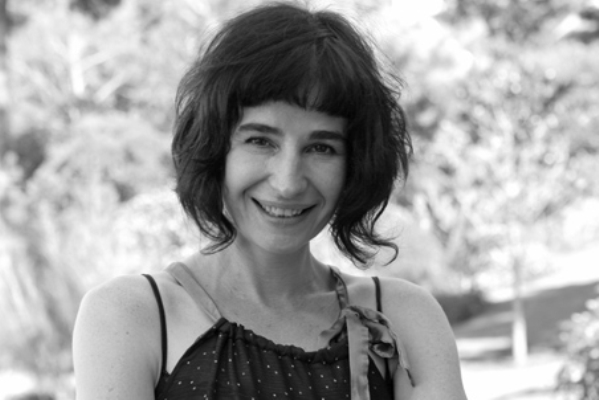
Sarah Lotz – image from A.M. Heath

Obviously the pair hit it off, as messages go zooming back and forth across the wires, ether, or whatever, and we get to the big Deborah Kerr/Cary Grant rendezvous scene. As this is London instead of New York, it is set under the large clock at Euston Station instead of at the top of the Empire State Building. And, well, as one might expect, it does not come off as planned, putting a huge dent in the “rom.” Pissed, Bee is about to write it all off when her bff convinces her to keep an open mind, and a good thing too. Turns out, her correspondent had indeed shown up, well, in his London, anyway. The two have somehow been the beneficiaries of a first-order MacGuffin, well a variant on one, anyway. Nick and Bee, while they may be able to exchange messages, are actually living in parallel universes. So I guess that makes their connection more of a meet moot?

description
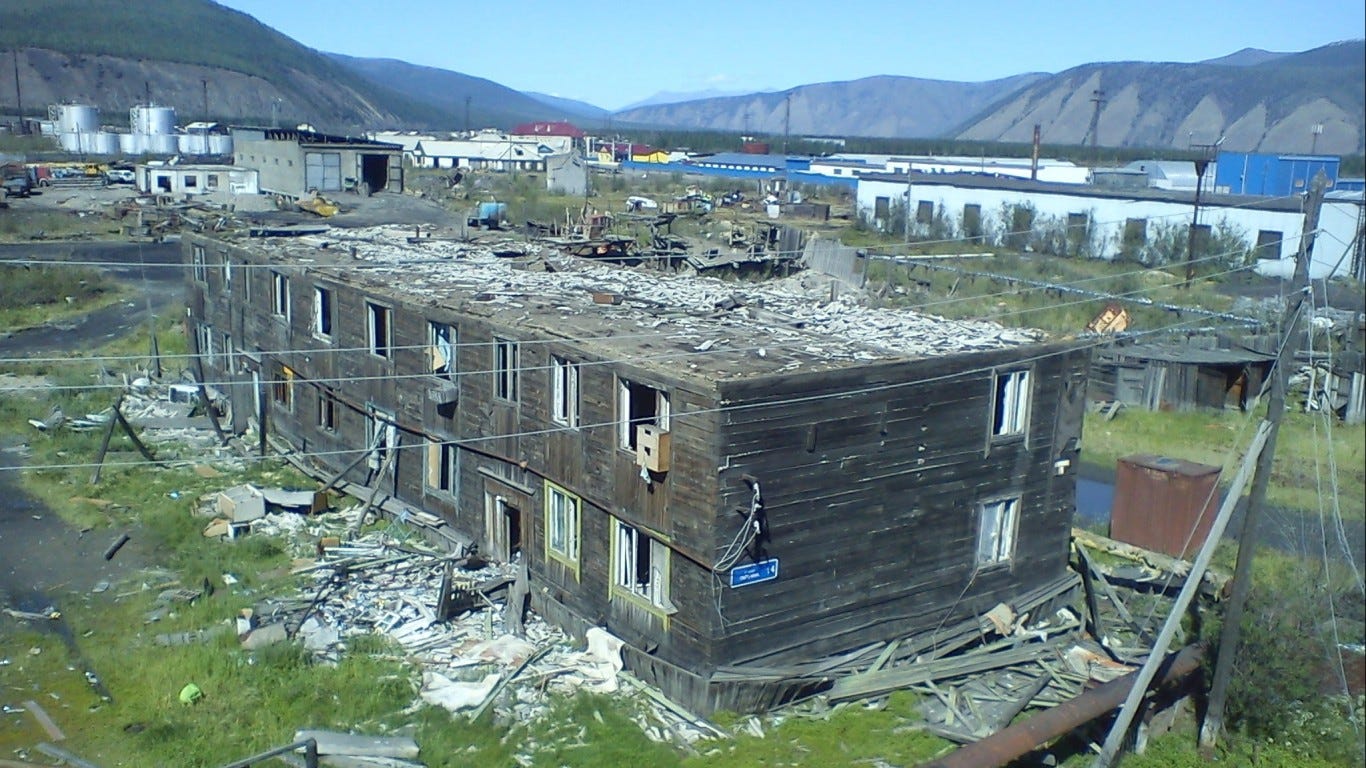
Big Clock at Euston Station image from AllAboard.eu

Still, the connection, divided as they are, is real. They try to figure out what to do. And that is where the next literary angle comes into play. Sarah Lotz adds into the mix references to Patricia Highsmith’s (and Alfred Hitchcock’s) Strangers on a Train. But not for the purpose of knocking off each other’s unwanted spouse. (Although now that you mention it…) If they can’t be together, maybe they can use their insider knowledge to find their side’s version of each other. Boy meets girl, boy loses girl, boy tries for very similar girl? I mean really, what would you do if you found the one, but were precluded by the laws of physics from realizing your dream?

Lotz has fun with literary/cinematic references, even beyond the two noted above. There is a Rebeccan mad mate, chapters with titles like Love Actually and One Wedding and a Funeral, and on. This is one of the many joys of this book. Catching the references, the easter eggs deftly scattered all about. Cary Grant’s Nickie in An Affair… is Nick here. Rebecca of the story of that name is Bee in one world, Rebecca in another.

There are lovely secondary characters, Bee’s bff, Leila, is the sort of strong supporting sort a fraught leading lady needs. Nick engages with a group of oddballs who have some off-the-grid notions about space-time, and what rules should apply when contact is achieved. There is a grade-A baddie in dire need of removal, a harsh landlady, some adorable pooches, and a very sweet young man.

Another bit of fun is the repeated presence of David Bowie references, including an album you have never heard of.

There is some peripheral social commentary as Nick and Bee compare the worlds in which they live, what programs have been enacted, which politicians have gained office, or not, where the world stands with global warming, things of that nature. These offer food for thought, actually more like dessert to go with the main course of the romance.

Time travel romances have made an impressive dent in our overall reading time. The Outlander, and The Time Traveler’s Wife pop immediately to mind. Other stories have been written about people communicating over time, but this is the first use I am aware of that makes use of parallel universes as an impediment to true love. You do not want to look too closely at the explanation for the whole parallel universe thing. Just go with it. suspend your disbelief. In fact, send it off for a long weekend to someplace nice.

Lotz has done an impressive job of delivering LOLs and tears all in the same book. I noted seven specific LOLs in my notes, and I expect there were more that I failed to jot down. On top of that, we can report that copious tears were shed. No count on that one. So Lotz certainly delivers on the feelz front.

Bee and Nick’s relationship may be insanely complicated, but there should be nothing complicated about your decision to check this one out. The Impossible Us is not only very possible, but practically mandatory. This is a super fun read that you should find a way to make happen for you, whether or not you have a tweed suit, a red coat, a rail station with a large clock, or a dodgy internet connection.

Review posted – March 18, 2022

Publication date – March 22, 2022

I received an ARE of The Impossible Us from Ace in return for a fair review in this universe. My much more successful self in that other place will have to handle the review on his side. Thanks, folks. And thanks to NetGalley for facilitating.

This review has been cross-posted on GoodReads

=======================================EXTRA STUFF

Links to the Lotz’s’s personal, FB, Instagram, and GR pages

Sarah Lotz writes under various names. Impossible Us (Impossible in the UK), is her eighth book under that name. Then there are four books written with her daughter, Savannah, as Lily Herne, five with Louis Greenburg as S.L. Grey, three with Helen Moffatt and Paige Nick as Helena S. Paige, and that does not even count screenplays.

Items of Interest
—–Parallel Universes in Fiction
—–MacGuffin
—–Rebecca
—–An Affair to Remember
—–Strangers on a Train

Reminds Me Of
—–Meet Me in Another Life
—–The Midnight Library

Leave a comment

Filed under Fantasy, Fiction, Romantic Comedy, Sci-fi, Science Fiction, Science Fiction

Secret Identity by Alex Segura

book cover

The comics business was messy—a slapdash sprint to meet immovable deadlines, a blur of pages flowing from production to editorial and back before being jettisoned out the door to the printer. Carmen loved it.

Miami was a city, too, Carmen knew—but New York was something else. A disease that bubbled and expanded and multiplied and morphed, like some kind of magical, mystical being that seemed from another world.

Carmen Valdez, late of Miami, is where she wants to be. She may not be exactly doing what she wants, but she is trying to get there. A New Yorker for the last year, Carmen is 28. She works at Triumph Comics, a third-tier publisher of such things, and is living the dream, if the dream is to be working as a secretary to a boss who cannot see past her gender, cannot even imagine a woman, let alone a Hispanic woman, actually writing stories for his press. But the stories are there, the ideas filling notebooks. She gives him some, but even if he bothers to read them, he dismisses the work out of hand. All she needs is a chance. And then one appears.

description
Alex Segura – image from Comicsbeat

Harvey Stern is a junior editor there, young, friendly. They bond over a shared love of the medium (a love she had acquired from her father taking her out for father-daughter bonding that included the buying of comics). They are friendly without being quite friends. The house has a sudden need for a new character; Harvey is given the job of coming up with one, a female hero who will get a rise out of young male Triumph readers. Carmen sees her opportunity and offers to “help.” Their work together goes well. The story is mostly hers, of course, but Harvey has some skills. They produce a pretty good book. It does well. Problem is that no one other than she and Harvey knows the truth about how it came to be. Then Harvey suffers a BLAM! BLAM! leaving him with even less conscious corporeality than an invisible six-foot pooka. Guess who finds the body? And the noir gets dark.

I’ve always been fascinated with Megan Abbott’s work and her ability to bring the tenets of noir to areas where you wouldn’t expect noir to exist—gymnastics, cheerleading, science, and so on. She crafts these narratives that are tense, fraught, and loaded with style outside of the typical noir settings. I remember reading Dare Me and just thinking, huh, wouldn’t it be cool to write a comic book noir? – from The Big Thrill interview

Segura had recently finished writing his Pete Fernandez Miami Mysteries, so has the chops to produce a pretty good whodunit. Carmen sees, in short order, that the police are not up to the task. She also knows that unless she can figure out why Harvey was killed, and by whom, she will never be able to get recognition for her work, or maybe sleep at night. Harvey is not the last person attacked by a mysterious villain.

description
The Legendary Lynx – from the book – image from The Firewire Blog

Secret identities abound here. Carmen hides her true author self from the boss because of the sexism of the age. Everyone seems to have a secret. Harvey certainly does did. Are all the names that we are given really the characters’ true names? Might there be an alias or two creeping around, for dark purposes?

she had to become someone else to survive

Segura has been busy in the comic book industry for many years, working on Archie Comics, while living in Miami, then moving to New York to work for DC. He has written detective novels, and a Star Wars book, stand-alone mysteries, short stories, a crime podcast, and probably an encyclopedia. He is married with kids, and I imagine that he must sleep some…time. Maybe he is one of the characters he writes about and his secret power is eternal wakefulness. Captain Insomnia takes on every request for writerly product, and satisfies them all.

He has a particular soft spot for the 1970s in the comics industry, when the industry’s body was laid out on the street, bleeding money and readers. Who would come to its rescue?

Well the comic book industry was really struggling at that time after the glory years of the 50s and 60s. Comics were struggling. It wasn’t like today, where we have shows about Peacemaker or obscure characters – it was considered a dying industry. So I wanted to use her passion for the medium and contrast it with comics at its lowest point, and then show her fighting to control this one thing she loves. – from the Three Rooms Press interview

This was a time when comic books were sold only on newsstands or in small stores, before there were comic book conventions, before the steady drumbeat of blockbuster films based on comic book characters. There was plenty wrong with the industry at the time (there probably still is), with notorious cases of people stealing credit for the work of others. Some of those are noted here. In fact, there are many references made to well-known names in the comic book industry. I am sorry to say that most just slipped past me, as I am not the maven for such things that Segura and no doubt many readers of this book are. I can report, though, that not knowing all the references did not at all detract from my overall enjoyment, and recognizing the ones I did enhanced the fun. He even tosses in a nod to a character of his from another project, as that character’s story was set in the same time period.

description
The Legendary Lynx – from the book – image from The Firewire Blog

There was plenty wrong with NYC at the time. I know. I remember. Fun City, originally a tossed-off line by a 1960s mayor facing multiple municipal crises (“It’s still a fun city.”) had not completed the shift to The Big Apple, itself a reconstitution of a city logo from the 1920s. The city, a political creation of the state, was starved by the state for the funds needed to provide the services it was required to offer, then was looked down on for that inability. It was a time when graffiti was ubiquitous, crime was up, and gentrification was beginning, as landlords were torching their properties to drive out residents so they could transform their buildings into co-ops. It was a time of white flight and a time when a local tabloid featured the infamous headline: Ford to City: Drop Dead, after NYC had turned to the federal government for aid. We get a taste with Carmen’s arrival.

the drab, claustrophobic walls of the Port Authority giving her the most honest first impression of New York she could expect. As she wandered the cavernous transport hub, a concrete behemoth at the tail end of the Lincoln Tunnel, she got a heavy dose of what she’d only imagined. A city in disrepair, boiled down into this one sprawling bus terminal. Leaky ceilings, shadowy conversations, blaring horns, and unidentifiable smells all coalesced into an unbridled fear that gripped Carmen as she stepped out into the New York sunlight.

description
The Legendary Lynx – from the book – image from The Firewire Blog

Carmen’s mission is to solve the crime of course (When a man’s woman’s partner is killed he’s she’s supposed to do something about it. It doesn’t make any difference what you thought of him. He was your partner and you’re supposed to do something about it.”), but it would not be a noir if Carmen did not have some personal struggles going on as she struggles to figure out whodunit. There are parental issues, which might not be quite noir-ish, but a dark episode from her past stalks her, which certainly is. And there are some romantic bits as well, which definitely fit. She may have been raised Catholic, but Carmen is no nun. All this serves to make for a rounded character, one we can cheer for. Part of that rounding involves some flaws as well, and not the sort we are used to in our primary investigators.

For example, did Carmen really believe that the boss would disbelieve her if she told him the truth about authorship of The Legendary Lynx? There is a scene in which Harvey gets weird and take off after a working-together session. Holy Tunnel Vision, Batman! No freaking out over that? And she lets Harvey take her notebooks, her primary and unbacked up material? Even the Daredevil wasn’t that blind. There was something else, of no real consequence, that really bothered me. There is a scene which entails Carmen walking from the East Side to the West Side of Manhattan without any mention of passing through Central Park, which is directly in the path, or walking around it. That just seemed odd, particularly coming from a guy who lives in New York. Not really a spoiler, just wanted to spare most folks this aside.
I used to live on the West side of Manhattan, for most of the 1970s, West 81st Street, then West 76th Street, and walked across the park to my grad school on the East Side. Walked back, too, so, speaking from experience. Like I said, no consequence.

One thing you will definitely enjoy is the inclusion in the book of seventeen pages from The Legendary Lynx. They presage events in the chapters that follow. It is a perfect addition to the book.

Music permeates, including nods to the venues of the day, The Village Vanguard, CBGBs, The Bottom Line, et al. Her roommate, Molly, is a musician, rubbing shoulders with rising stars, like Springsteen and Patti Smith.

Secret identity covers a fair bit of territory, an homage to a beloved industry in a dire time, a noir mystery, a look at the city where he now lives, when it was on its knees, while saluting the music of the time and the creators of the comic book industry, warts and all. And he tosses in a comic book for good measure. This is a fun read of the first order, even for those, like me, who may not be comic nerds. In producing this very entertaining novel, Alex Segura has revealed his true identity, at least for those who did not already know. Clearly, Seguro really arrived on this planet not in a Miami hospital ward, but probably somewhere in the Everglades, his ship originating in a galaxy far, far away. He may or may not be able to leap tall buildings in a single bound, but he clearly wields otherworldly power as a writer. POW!

If it got published, I’d be ghostwriting it. . . . I mean, I’d get a shot, and if it did well we’d reveal my involvement, but. . . .”
“You’d be anonymous at first? Like his secret partner?”
Carmen waited a beat, letting her mind skim over what she already knew to be true. She nodded at Molly, hoping her friend couldn’t see her resigned expression in the dark.
“Is that what you want?” Molly asked. “To live your dream—in secret?”
Carmen felt her stomach twist into a painful, aching knot.

Review posted – March 11, 2022

Publication date – March 15, 2022

I received an ARE of Secret Identity from, well, I can‘t tell you, in return for a fair review. Thanks, folks. And thanks to NetGalley for facilitating an e-galley copy.

This review has been cross-posted on Goodreads. Stop by and say Hi!

=======================================EXTRA STUFF

Links to the author’s personal, FB, Instagram, and Twitter pages

Interviews
—–Crime Reads – SHOP TALK: ALEX SEGURA IS ALWAYS WRITING, EVEN WHEN HE’S NOT by Eli Cranor
Mostly on Segura’s process and insane productivity
—–The Big Thrill – Up Close: Alex Segura by April Snellings
—–Three Rooms Press – Stand Up Comix:> An Interview with Author Alex Segura

Item of Interest from the author
—–Segura’s Sub-stack

Items of Interest
—–When a man’s partner is killed…
—–pooka

1 Comment

Filed under Fiction, Historical Fiction, Reviews, Suspense, Thriller

The Book of Cold Cases by Simone St. James

book cover

On the lawn, something moved across the surface of the grass. The touch of a footprint. Inside the house, one of the cupboard doors opened in the dark kitchen, groaning softly into the silence.
In a bedroom window a shape appeared, shadowy and indistinct. The blur, perhaps, of a face. A handprint touched the bedroom window, the palm pressing into the glass. For a second, it was there, pale and white, though there was no one to see.
The wind groaned in the eaves. The handprint faded. The figure moved back into the darkness. And the house was still once more.

“Being a girl is the best,” she said, “because no one ever believes you’d do something bad. People think you’ll do nothing, which means you can do anything. I’ll show you.”

1977 – Claire Lake, Oregon. Two men have been brutally murdered in separate incidents, roadside, no obvious motive. But a witness did see someone leaving the scene of one of the crimes. The description matches a local, a young woman generally regarded as odd. Beth Greer is standoffish, young, attractive, and rich. Parents both dead, Mom from an auto accident in a tree, Dad from a close encounter with fired round, in the kitchen. She has a taste for alcohol and keeping human connections ephemeral. When she is not out at bars and clubs, she is mostly at home, Greer House, not the happiest place on Earth. The bullets that did in the two randos just happen to match the one that laid Julian Greer out on the kitchen floor, a murder, BTW, that was never solved. You can see why the police might be a tad suspicious.

description
Simone St. James – image from her site – credit: Lauren Perry

2017 – Shea Collins is 29, newly (ok, almost a year) divorced. Has worked reception in a doctor’s office in downtown Claire Lake for five years. But her real self is invested in her website, The Book of Cold Cases. Shea is a true crime blogger, been at it for ten years, is certainly up on local crime legends, so she notices when one walks into the office, Beth Greer, forty years after she was believed to be The Lady Killer of tabloid fame, forty years after she was acquitted of the murders, which were never solved. Most think she was guilty. Beth pursues Greer, who, to her great shock, agrees to be interviewed.

And the game is afoot. There are two timelines at work, contemporary and back-then. In the 2017 line, Shea interviews Beth at Greer House, even though the place creeps her out. The décor is from the era of Beth’s parents, which is off-putting enough, but there is clearly a lot more going on there. Objects move without obvious cause. A mysterious girl appears outside a window. Shea does not feel safe there, but the lure of getting the whole story from Beth is too much to resist so she keeps coming back. Also, she and Beth seem to be forming a friendship. Beth may or may not be a killer, but Shea likes her, is fascinated by her. In the earlier time, we follow Beth’s childhood, stretching back to 1960, as events that lead up to the killings are revealed, bit by bit.

The alternate perspectives, Shea’s in first person and Beth’s in third, are not evenly divided. We get more Shea than Beth (26 chapters to 18, if you must know), with a few Others tossed in. They do not alternate in a steady format, but streak at times for one or the other.

Shea has some dark visions from her own past she has had to deal with for the last twenty years. At age nine she was abducted, but managed to escape with her life. The next girl her abductor took was not so lucky. Helps explain why she takes the bus and is reluctant to get into cars. Helps explain why she is way security conscious. Also, helps explain why she is reluctant to date again.

“Do you know how many serial killers dated lonely women in their everyday lives? Some divorcée who just wants companionship from a nice man? She thinks she’s won the dating lottery, and meanwhile he’s out there on a Sunday afternoon, dumping bodies. And now we’re supposed to use internet apps, where someone’s picture might not even be real. People are lying about their faces.”

It took a long time after we met on Match for me to discover my now wife’s history of serial criminal activity, so I get that.

There are mysteries to be solved and in the best True Crime fashion, Shea, along with her sort-of partner-in-crime-solving, PI Michael De Vos, dig into each of the questions as they arise. Very cozy mystery style. There is even a retired detective who offers a bit of help, continuing the cozy format. Of course, there are other elements that make this less of a cozy, the supernatural, for one, and a little more on-screen violence than might fit in that format. In fact The Book of Cold Cases crosses many genre lines, could be gothic, thriller, horror, suspense, or mystery, with a bit of romance tossed in for good measure. This particular mix of genre-salad was not always the Simone St. James brand.

I wrote five books set in 1920’s England, and while I loved writing them, I never intended to write about one period for the rest of my life. I wanted to flex my writing muscles and write something set in the USA—something that had two timelines, one of them contemporary. Creatively, I wanted a new goal and a new challenge while still writing a Simone St. James book. I got my wish! – from the Criminal Element interview

St James has stuck with that. Her first America-set thriller, The Broken Girls (2018), offers a split timeline, 1950/2014, the story centering on a deserted and reputedly haunted school for girls, and a journalist looking into the death of her sister twenty years before. The Sun Down Motel (2020) takes on a haunted establishment in upstate New York, splits between 1982 and 2017, and includes a 35-years-ago missing aunt, a niece eager to dig up the truth, and a slew of killings and disappearances that really need looking into. Keeping the string going, The Book of Cold Cases splits between 1977 and 2017, includes an amateur investigator (a blogger this time), some contemporary frights, some historical killings, and a haunted house. (I did ask her what she was planning to haunt next, but St. James declined to spill)

Strong primary characters can carry a book if the plot is well-thought out, and that would have been enough here. But St. James’ secondary characters were quite good, although we could have used even more of some of them. Detective Black, retired now, but involved in the 1977 investigations, was a strong presence. Shea’s PI, Michael De Vos, was off screen too much, as he was quite engaging when he was in view. I enjoyed the parallelism of relationships, Beth with Black and Shea with Michael.

Gripes – The only real blogging work we see Shea do (yes, there is a session or two noted, but only very much in passing) is on Beth’s case. Might have been a good thing to get a stronger, more fleshed out, look at how Shea has been spending her nights, which would have included a lot more on-line than live and in person investigations. Claire Lake, the town, did not feel strongly realized. This was more than made up for, however, by the seriously creepy haunted house, and the powerful presence of Beth Greer.

Lest you suspect there is some actual true crime in this true crime tale, I asked SSJ that question on her FB page, and she replied, “the cases in the book were all entirely fictional.” So you True Crime obsessives can stop looking for real-world sparks for this one. And as for ghosts in the real world, she has never had a spectral experience. St. James likes putting literary Easter eggs in her work, so keep an eye out for those.

Bottom line is that The Book of Cold Cases is a fun page-turner that delivers what it promises, murder mysteries, an intrepid investigator, some fascinating characters, a taste of the 70s, and a large dollop of the other-worldly. It is even a bit scary. I have a pretty high bar for such things, but there was one moment in which I got chills and the hair on my arms stood up at attention. That is one more than usually occurs, so, kudos. It sustains tension throughout, making you want to either blast through ASAP, or, my preferred approach, savor the fun in relatively low-dose portions night after night. In either case this is a fun, spooky, engaging read that is well worth your time, and should provide most readers with some chills.

some places hold you so that you can’t get free. They squeeze you like a fist.

Review posted – March 4, 2022

Publication date – March 15, 2022

I received an ARE of The Book of Cold Cases from Berkley in return for a fair review, and keeping quiet about a few things. Thanks, folks. And thanks to NetGalley for facilitating.

This review has been cross-posted on GoodReads

=======================================EXTRA STUFF

Links to the author’s personal, FB, Instagram, and Twitter pages

Simone St. James is the nom de plume of Simone Seguin, of Toronto. She worked for many years in TV, for a Canadian sports network, but not as a writer. She worked on budgets. She says she knows nothing about sports, despite the gig. It was only after she had had multiple novels published that she ditched budgeting to become a full-time writer. She had endured six years of rejections before her first book was published. The Book of Cold Cases is her eighth novel.

Interviews
—–Criminal Element – 2018 – Q&A with Simone St. James, Author of The Broken Girls for The Broken Girls by Angie Barry
—–The Inside Flap – 2020 – Ep. 98 How To Spy On People With Simone St. James by Dave Medicus, Andrew Dowd, and Laura Medicus – 1:36:48 – begins about 30:00 – to 58:00

Item of Interest from the author
—–Indigo – Sample – 1st four chapters

Music
—–George Thorogood – Bad to the Bone

Leave a comment

Filed under Fiction, Horror, Mystery, psycho killer, Reviews, Suspense, Thriller

The Treeline by Ben Rawlence

book cover

Big changes are taking place across the vast plain stippled by spruce and striated with water that unfolds below the aircraft at 10,000 feet. The skin of the earth is melting, microbial life waking after thousands, possibly millions, of frozen years. The soil is transpiring—perspiring one could say since more moisture is being released than absorbed—and animals and plants are taking note. It is a new world, and intelligent life—the smart genes—is sniffing it out, sending out suckers, seeds and scouts, ranging north, getting ready.

The Treeline is a mind-blowing piece of work that will teach you many, many things you never suspected, while feeding your sense of awe and your sense of dread. We look to the margins for evidence of large changes in the world, tell-tale signs like rising levels along water frontages, expanding desert edges, changes in growing seasons, changes in wildlife. The treeline was the edge Ben Rawlence chose.

description
Ben Rawlence – Image from 5 x 15

He had spent years writing human rights reports and trying to get the UN and governments to address refugee issues, but when he started writing through the eyes of the refugees themselves, in several books, many more people began to listen.

Understanding that the conflict and the displacement that was going on was driven by climate change I began to look for other examples, other parts of the world where we could see this process in action, where we could see climate breakdown as history already, and we could catch a glimpse of the future that awaits the rest of us. So I began digging around and doing research and came across this very arresting image of the trees and the forest moving north towards the pole. I discovered that the forest was on the move and the trees were turning the white arctic green. They shouldn’t be on the move. That’s not supposed to happen. And this sinister fact has huge consequences for all life on earth. – from the 5×15 piece

So, what exactly is the treeline? Generically, it is the latitude above which there are no trees, roughly the Arctic Circle. Another measure is the rippled line around the globe south of which the average July temperature is ten degrees centigrade or higher. (The Arctic Squiggle?) Discovering that the Arctic treeline consisted of mostly six types of trees, he set about to look at each of these.

Scots pine in Scotland, birch in Scandinavia, larch in Siberia, spruce in Alaska and, to a lesser extent, poplar in Canada and rowan in Greenland. I decided to visit each tree in its native territory, to see how the different species were faring in response to warming, and what their stories might mean for the other inhabitants of the forest, including us.

The Arctic treeline is actually fairly squishy, not so much a line as an area of transition, an ecotone, where tree presence diminishes rather than ceases. Rawlence begins with a look at where he lives, in Wales, at the yew, struggling to persist in a world that is no longer conducive to its needs. But that may be changing. Then, it is off to the Cairngorm Mountains in Scotland, the Scandinavian interior, Siberia (larch), Alaska, Canada, and Greenland, looking at the role the boreal plays in our environment, and at the impact of global warming on these borderlands.

More than the Amazon rainforest, the boreal is truly the lung of the world. Covering one fifth of the globe, and containing one third of all the trees on earth, the boreal is the second largest biome, or living system, after the ocean. Planetary systems—cycles of water and oxygen, atmospheric circulation, the albedo effect, ocean currents and polar winds—are shaped and directed by the position of the treeline and the functioning of the forest.

One of the things that most impressed me, among the many fascinating nuggets to be found here were descriptions of the structures underlying forests.

Wherever there are mushrooms, ferns, bracken and particular kinds of woodland plants like violets there was once forest. Rings of mushrooms are usually the outline, the long-ago earthwork of a tree stump. There are between fifteen and nineteen ecto-mycorrhizal fungi (fungi growing around the roots) in a mature pine forest, and they play a role in everything from carbon and nutrient transport to lichen cover, taking sugar from the tree and providing it with minerals in exchange. Planting trees without regard for the essential symbiotic “other half” of the forest below ground may be far less effective than allowing the ground to evolve into woodland at its own pace. Oliver Rackham describes a planted oak wood in Essex that even after 750 years still does not possess the orchids, plants and mushrooms that you would expect of a natural wood.

I was reminded of what it might look like to see a city like New York or London from above and believe it to be constructed entirely of the visible structures, not appreciating that there are vast underground networks, water lines, sewer lines, gas lines, electrical lines, communication cables, transit tubes, and the like that provide the lifeblood which allows the above-ground, visible city to survive. Globally, these threads of mycorrhizal fungi make up between a third and a half of the living mass of soils. Soil is in fact a huge, fragile tangle of tiny connected threads. Having done some digging in our back yard, I can very much appreciate that.

Another impressive feat is Rawlence’s strength in communicating how local populations interact with the trees among which they live. There are many surprises to be found here, in the range of specific benefits trees provide for one, which includes the fact that they transmit aerosols carrying chemicals that help maintain health in humans, that their leaves, berries, bark and other parts providing medicine for a wide range of illnesses, that they provide materials that oceans need to sustain life, that they drive planetary weather. Did you know that there are birch trees with things called trichomal hairs on the underside of their leaves, that capture particulates from the air, natural air filters that then allow the materials to be dropped to the ground, and washed away with the next rain? They also act like a fur coat for the leaves. The list goes on. You will be surprised by many of the uses that Arctic peoples have devised to make use of their local trees.

Will it be possible to continue such a positive relationship as the land becomes less supportive of human endeavors? The Sami people, for example, are finding it increasingly difficult to manage their reindeer herds. Snowmobiles are less than ideal when there is no snow. Substituting four-wheel All Terrain Vehicles may allow them to herd their critters, but using them damages the landscape even more. At what point will it be impossible to continue at all?

There are plenty of dark tidings. In this ring of melting ice global warming is taking place at a rate far in excess of what we experience in the more temperate zones. And then this unnerving bit; with more Co2 in the air, trees do not need to work so hard to get what they need, thus will produce less oxygen. Uh oh. As the forests of the northern hemisphere migrate north (race actually, at a rate of hundreds of feet a year in some places instead of inches per century) they are pursued on their southern end by increasingly fire-prone conditions. How much of our forest land will be consumed by a Langolier-like army of drought and flames before finding more welcoming climes? And then there is methane, pretty pearl-like bubbles when seen through clear Arctic ice, but how about this cheery nugget as permafrost becoming permaslush?

Some studies have suggested that an unstable seabed could release a methane “burp” of 500–5000 gigatonnes, equivalent to decades of greenhouse gas emissions, contributing to an abrupt jump in temperature that humans will be powerless to arrest.

In pop science books, the author acts as a guide to the subject matter, introducing us to the places he visits, and the experts he consults. Rawlence is an engaging and informative teacher with a gift for extracting local cultural lore and area-specific histories, as well as reporting the science in accessible terms. He seems like someone you would want to hang out with. You would certainly like to sign up for any class he teaches. You will learn a lot. He is also a lyrical writer, able to offer not only straight-ahead exposition, but poetical, sometimes emotion-filled reactions to the places he visits and the experiences he has on this journey.

The brilliant sun on the pinkish cliffs and the starched blue of the sky, which has been mostly hidden all week, make the morning sing. The scent of a meadow is so heady it should be bottled. The hay has been freshly cut: huge plastic-covered bales guide the eye to a combine harvester abandoned mid-job, its windows covered in sparkling dew. Beyond, the path crosses the meadow to a wide bend that the flooding river has worked into a series of interlinked channels. The little bridges have been overwhelmed and carefully placed stepping-stones lie visible in the clear stream, half a meter underwater. Feet have cut a higher path along the edge of the valley, around drowned shrubs, riparian willow now floating midstream. The roar of the main river is all around. Gray water cradling slabs of dirty ice meanders around a cliff and then widens into a foaming skirt over even-sized white granite boulders that snag the ice and make it dance and nod until it falls apart and joins the sea-ward torrent.

Rawlence a not a fan of western capitalism, and it would be difficult to argue that the short-term profit motive is not at variance with the long-term health of the planet, but places that were at least nominally socialist did a pretty good job of devastating their environments too. Maybe the problem is a human one first, and a economic-political one second. Maybe if we lived as long as some trees (not all are long-lived) we might have a more long-term view of what matters, and not keep rushing to use everything as fast as we possibly can before someone else does. Rawlence keeps his eyes on the scientific and anthropological issues at hand. How is warming impacting these trees, the landscapes in which they exist, the societies that have lived with them for centuries, and the wider world? What can we learn from the changes that have already taken place? What can we look forward to? What can we do about it?

Despite the growth of electric car usage and renewable power generation, we have arrived at this party too late, and relatively empty-handed. Attempts to mitigate global warming cannot change the fact that there is warming to come that is already baked in. We can do nothing to change that. It will continue, even were we to cease all carbon usage tomorrow. Not that we should abandon attempts to reduce emissions. But we should know that we will not see the benefits of those actions. The mitigation work we do today may impact future generations, but the planet will continue heating up for quite some time regardless. The most we can hope for in the short term is to slow the rate somewhat.

The Treeline is a must read for anyone interested in environmental issues, global warming in particular. Who doesn’t love trees? After reading this you will love them ever more. As Rawlence points out, we are at our core tree people, having evolved thumbs to get around in an arboreal world, and having lived among or near trees for all of human history. We have evolved together, and will continue to do so. But we will have to adapt to the new Anthropocene world rather than attempting to force it back into its prior form.

In the future, when the ice is gone, there may be no such thing as a treeline at all.

Review posted – February 18, 2022

Publication date – February 15, 2022

I received an ARE of The Treeline from St. Martin’s Press in return for a fair review, and a promise to plant a few saplings. Thanks, folks. And thanks to NetGalley for facilitating.

This review has been cross-posted on GoodReads

=======================================EXTRA STUFF

Links to the author’s Twitter page

Lizzie Harper, a Welsh illustrator, provided many images for the book. Sadly, there were none in the e-galley I read. But you can see some on her site. Here are links to Harper’s personal, FB, LinkedIn, PInterest, and Twitter pages

Interview
—InterMultiversal – An Interview with Ben Rawlence by Simon Morden

Items of Interest from the author
—–Video trailer for the book – 1:09
—–5 x 15 – Ben Rawlence on The Treeline – video
—–The Big Issue – ‘As the planet warms, the forest is on the move’ by Rawlence

Items of Interest
—–Patagonia Films – Treeline (Full Film) | The Secret Life of Trees – video 40:16
—–Cairngorms Connect – 200-year vision to enhance habitats, species and ecological processes across a vast area within the 600 square kilometer Cairngorms National Park.
—–NY Times – Feb. 4, 2022 – Seen From Space: Huge Methane Leaks by Henry Fountain

You Might Also Want To Check Out
—–Land by Simon Winchester
—–Being a Human by Charles Foster
—–The Earth’s Wild Music by Kathleen Dean Moore
—–Road of Bones – not in form, obviously. But this one offers a fictional horror-story take on the great north rebelling against the outrages of humanity

Music
—–George Winston – Forest
—–Sondheim – Into the Woods

Leave a comment

Filed under Non-fiction, Public policy, Science and Nature

Anatomy: A Love Story by Dana Schwartz

book cover

While Davey tugged the rope, Munro, still in the grave, helped to guide the body out of the small hole in the coffin and back toward the surface world, a strange reverse birth for a body past death. Munro successfully removed the body’s shoes off as it left its coffin, but it was up to Davey to strip off the rest of its clothes and throw them back in the grave. Stealing a body was against the law, but if they actually took any property from the grave, that would make it a felony.

It’s the lesson young girls everywhere were taught their entire lives—don’t be seduced by the men you meet, protect your virtue—until, of course, their entire lives depended on, seduction by the right man. It was an impossible situation, a trick of society as a whole: force women to live at the mercy of whichever man wants them but shame them for anything they might do to get a man to want them. Passivity was the ultimate virtue…Be patient, be silent, be beautiful and untouched as an orchid, and then and only then will your reward come: a bell jar to keep you safe.

Ok, so I screwed up. First off, I thought the pub date was 2/22/22 and scheduled my reading and review accordingly. Uh, sorry. Actual pub date was 1/18/22, so I am coming at this one a bit late. Second, I did not do a very thorough job of reading about the book when it was offered. I somehow managed to overlook the fact that it is a YA novel. I have nothing against YA novels. Some of my favorite books are YA novels, but I usually pass on YA books these days unless there is a compelling reason to take them on. Had I seen that it was a YA, I would probably have skipped this one. Finally, yet another failing on my part. I somehow managed to overlook the romance element in the promotional copy. Again, I have nothing against romance elements in books which are mostly of another sort. Quite enjoy them when they are well done. But did not have my expectations primed for the presence of quite as much as there is here, which is not to say that it is huge. It is not. So, multiple failings, mea culpa, mea culpa, mea maxima culpa. The product of impatience. Won’t happen again. I know the drill, Three Hail Marys and a couple of Our Fathers. Now that I’ve gotten that off my chest ands offered fair warning…on to the book itself.

description
Dana Schwartz – image from her site

Hazel Sinnett is seventeen. She has always lived in a castle an hour outside Edinburgh. It is 1817. She very much wants to study medicine, has read all the books in the family library on the subject, but lacks actual school-based tuition and hands-on experience. When the grandson of a famous doctor is in town to deliver a lecture, she finds a way to attend. Gender attitudes being what they were at the time, people of her sort were not welcome. Still, she finds a way, with some help, and when the doctor announces he will be offering an anatomy class she is desperate to attend.

Medicine is making some advances but the study of the human body requires actual human bodies, preferably lately late. Executions not providing sufficient resources to fill the need, a profession has arisen to satisfy that demand, resurrectionists, who, for a fee, relieve nearby graves of their residents, and deliver same to their clients with the utmost of discretion. Jack Currer, also seventeen, counts that among his several jobs. He happens to be hanging about near the Anatomists’ Society when Hazel is locked out. Meet Cute as Jack shows this clearly well-to-do young lady a secret way in. Think these two might just cross paths again? Of course, there are impediments.

Hazel is not in line to inherit anything, regardless of her parents’ wealth, bypassed in favor of the male heir. The female thing again. The usual way for a young lady from a god family to secure a future is to secure a husband of means. As it happens, she has a first cousin living not too far away, Bernard. They have known reach other forever, played together since early childhood, and it has been presumed that it was only a matter of time before Bernard would propose. He is not a bad sort, but rather dull and a bit too concerned with his appearance. Hazel recognizes that there are problems with her being allowed to make her own way in the world, so more or less anesthetizes herself to the likelihood that Bernard is her likeliest way out of a life of penury. God knows that is what her mother keeps telling her, and telling her, and telling her.

She manages to attend some of Doctor Beecham’s lectures, and is the star pupil, but the female thing again. Guys, catch up, C’Mon! Beecham at least recognizes her intelligence and they come to an agreement. If she can pass the medical exam at the end of the term, she will be able to get real medical training. Unfortunately, there’s that hands-on thing. Books alone will simply not do. But wait! It just so happens she has made the acquaintance of someone who might be able to help her out, and a beautiful friendship blossoms.

I really thought I was going to go be a doctor,” Dana Schwartz says about her time as a pre-med student in college. “Then I had this panicked moment of realizing I was so fundamentally unhappy. My dream was always to be a writer, but I never thought I could make a living that way.” – from the Forbes interview

But it is not all raw sexism and Hallmark moments. There are dark doings in Edinburgh. A plague has struck, a return of the so-called “Roman fever” which had killed over five thousand the last time it hit, two years before. It had even killed Hazel’s beloved brother, George. She had caught it as well, but managed to survive. Is it really Roman
Fever that is boosting the mortality rate? Jack is aware of far too many acquaintances vanishing, and there are strange doings in the local graveyards as a trio of heavies are haunting such areas, terrorizing the poor resurrection men. Then Hazel begins to see some very strange medical problems when she starts getting to study specimens obtained by Jack, and treating some locals. There is also something decidedly off about Doctor Beecham, who never seems to remove his dark gloves, and demonstrates a mind-numbing drug as a road to pain-free surgery. Then there is Doctor Straine, one eye, nasty skin and a worse attitude, a surgeon working with Doctor Beecham. Seems like a nogoodnik from the build-a-creep shop.

It was the gothic elements that had drawn me to the story. And they are indeed present. But Schwartz has had some fun with them. (For the following I used some of a list from Elif Notes.) Usually gothic novels feature a Desolate, haunted Setting, typically a very creepy castle or equivalent. Here, Hazel lives in a castle, which is a pretty benign home for her. Other sites must serve this purpose. Graveyards work, and certainly provide some chills, and any place where human bodies are being cut up, for purposes educational or malign, will also serve, so, check. Dark and Mysterious Atmosphere? You betcha, plenty of suspect characters and unexplained deaths and disappearances. Something supernatural? Well, I do not want to give anything away, so will say only that there is an element here that qualifies the story as fantasy. Emotional Extremes? Fuh shoo-uh. Although the emotional extremes are as much about Hazel’s lot in life as they are about the actual life-and-death shenanigans that are going on. Women as Victims – absolutely, but in the wider, sexism-conscious sense as well as in the way of a damsels being put upon by dastardly males. Curses and Portents – not so much, except what we all might wish upon some of the baddies. Visions and Nightmares – Hazel has some of the latter, but nothing mystical about them, just recollections of horrors she had seen in real life. Frightening Tone – most definitely. There is clearly something sinister going on in Edinburgh. Frightening Weather – not really. There is a fun early bit in which we are waiting for an incoming storm to deliver some life-generating lightning, but mostly, weather is not that big a deal here. Religious Concerns – social mores are more the thing in this one. Good versus Evil – there is some serious evil going on here. And Hazel is definitely a force for good. A Touch of Romance – yes. Well, more than a touch. Hey, Laddy, you’d better keep those hands to yersel ef ya wan ter keep ‘em on the ends uh yer arms.”

There is Romance and then there is Love. The title even highlights it, Anatomy: A Love Story. There is clearly some romance going on here. Hazel and Jack give off sparks which brings their obvious connection to life. But Hazel’s true love may be more the passion she has for learning, for science, for medicine, for anatomy, for surgery. If she were really faced with a choice between being a doctor or being with Jack, and the two were exclusive, are you confident what choice she would make? Is it possible to have your cake and dissect it too? Not so easy in 1817 Scotland.

The real horrors here are the treatment of women as a subordinate level of human and the joys of the class system in early 19th Century Scotland. Even coming from a family of means, Hazel is refused entry into a profession for which she has passion, and a clear capability, simply because of her gender. She must endure belittling by men, in power and not, who are her intellectual and moral inferiors, as she struggles to find a way forward. Contemplating her life options, Hazel sees her future as a life under a bell jar, whatever that may be referring to. The experience of being poor in the Georgian era is shown not only in the life of Jack, but in the ways the poor and working class are held in their place no less than if they were confined to a castle dungeon, and in the depraved indifference the wealthy show to the lives of those less fortunate than themselves.

“The main mystery I wanted to pick at and unravel is who gets forgotten in society and for what purpose,” Schwartz says. “Obviously today, there is a huge wealth gap that continues to grow, but in the 1800s, the aristocracy made that wealth gap explicit. There was a social and cultural line, so I wanted to explore in a way that doesn’t necessarily label the characters as heroes or villains.” – from the San Diego Tribune interview

There are some comedic elements, one of which focuses on a man-eater and is hilarious. There a lovely bit of a secondary romantic sub plot, and some fun references. Hazel is all excited to hear about a lecture/demonstration put on by someone named Galvini. This is a clear reference to the actual Luigi Galvani who was putting on shows in which dead things were animated with electricity from a battery. He provided some of the inspiration for a young writer of that era. The epigraph of the novel is a quote from Mary Wollstonecraft Shelley, whose creation has near universal familiarity. A mention of Mary Wollstonecraft, her mom, serves double duty as a reference to a leading light for women’s rights in the late 18th and early 19th centuries, and as a reminder that the novel deals with matters of life and death, and maybe life again. Hazel’s younger brother is named Percy, which again reminds one of Mary Shelley. A recollection of Walter Scott reciting his Lady of the Lake epic at her Uncle and Aunt’s house is also reminiscent of the Wollstonecraft/Godwin household, in which Coleridge read his Rime of the Ancient Mariner. So, there are many Frankensteinian parts gathered together to help animate the story.

Some parts did not quite fit, however. It was sooo convenient that her father was away on a prolonged naval mission, and that Mum decides to head out of town for an extended period with her other, much more valuable, male child, Hazel’s younger brother. So, Risky Business time for the entire season at Hawthornden Castle. (Although maybe Summer at Bernie’s might be a bit closer, given the issues with dead people.) AND, really? none of the staff rats Hazel out to her mother, the one paying their salary, for running a clinic at the family residence? Maybe we should consider this part of the fantasy element. Re my intro, I was not much excited by the squishy romance bits, but I already told you about that. No biggie, ultimately. It is mostly adorable.

Dana Schwartz has written a strong, literary, YA novel that offers some chills, an historical look at a place and time, and a look at the challenges faced by the poor and by those of the female persuasion, when it was still the rule to treat women as servants, eye candy, or brood mares. It shows a powerful approach and makes me eager to see what she comes up with when she writes a full-on adult novel, but that may not be next up on her board.

…right now, I have an idea for a sequel that I really want to tell and I think will be really fun. I thought this was going to be a one-off, but when I reached the ending, and I sat with that for a few months, I thought that there’s something else here.” – from the San Diego Tribune interview

Review posted – February 11, 2022

Publication date – January 18, 2022

I received an ARE of Anatomy: A Love Story from Wednesday Books in return for a fair review and some help dealing with an uncomfortable neck growth. Thanks, folks, and thanks to NetGalley for facilitating.

This review has been cross-posted on GoodReads

=======================================EXTRA STUFF

Links to the author’s personal, FB, Instagram, TikTok, and Twitter pages

Schwartz came to public notice when she was still in the employ of the New York Observer and Tweeted a criticism of Donald Trump for using anti-Semitic imagery in an anti-Hillary ad. She got viciously trolled by his minions, and wanted to write about that experience. Her boss gave her a green light, but did not really proof the piece, an open letter, which called out Jared Kushner, who owned The Observer, for not interceding with his father-in-law to prevent such things. As an undergrad, she established the “GuyInYourMFA” and “Dystopian YA” parody Twitter profiles. She had internships with Conan and Colbert, and was later was a staff writer for Disney’s She-Hulk, then created and hosted the Noble Blood podcast. Anatomy is her fourth book.

Interviews
—–Time Magazine – Dana Schwartz Wrote the YA Romance She Always Wanted to Read by Simmone Shah
—–Bustle – How My Chemical Romance Inspired Dana Schwartz’s Latest Novel – By Samantha Leach
—–Forbes – 26-Year-Old Dana Schwartz Doesn’t Need To Stick To A Genre by Rosa Escandon
—–San Diego Union Tribune – Dana Schwartz gets skin deep in ‘Anatomy: A Love Story’ by Seth Combs
—–Barnes & Noble – Poured Over: Dana Schwartz on Anatomy by BN Editors

Items of Interest from the author
—–Discussion Questions

Items of Interest
—–Edith Wharton – Roman fever – a short story
—–This very nice bio of Mary Shelley, from The Poetry Foundation, has considerable information about her other works.
—–A nifty web-site on Resurrectionists. Can you dig it?
—–Frankie for free, courtesy of Project Gutenberg
—–3/17/18 – MIT Press has produced an annotated version (Print and on-Line) of Mary Shelley’s classic novel. It is intended for use by STEM students, raising scientific and ethical questions from the original work. The comments are joined from diverse sources, particularly in the on-line version, with some by scientists, and some by students. The print version sticks to annotation articles by professionals. A fun way to approach this book if you have not yet had the pleasure, or a nice pathway back if you are returning for a visit. It is called, appropriately, Frankenbook. You can find the digital version here
—–NY Times – Reporter Calls Out Publisher (Donald Trump’s Son-in-Law) Over Anti-Semitism By Jonathan Mahler
—–My review of The Lady and her Monsters – This is a must-read book for anyone interested in Mary Shelley and the writing of Frankenstein

Leave a comment

Filed under Fantasy, Fiction, Historical Fiction, Horror, Literary Fiction, Reviews, Thriller, Thriller, YA and kids

How to Find Your Way Home by Katy Regan

book cover

…here begins one of the last evenings I remember of my old life. The life I had constructed like the tough, prickled outer shell of a horse chestnut around me, before it was cracked open and the truth of my life was laid bare, as frighteningly untouched and uncharted as that shiny conker hidden inside.

Do we choose our homes? Physically, sure. As adults we can move here or there. Does a chick choose its nest? We are not necessarily bolted to our birthplaces, but they are our first homes, and that initial setting is a very powerful thing, rich with association, memory, and attachment, particularly if we remain there more than just a few years. Many, maybe most people move away, significantly away. We may return annually to see family, or not. Maybe the places to which we relocate become truer homes for us. I shudder, for example, at the thought of ever again living in the neighborhood where I was raised. While I love the city, that particular part of it holds no attraction for me. I got out as fast as I could, and never wanted to be back there again. But for many, like Dorothy Gale, there is a primal bond with that ground. There’s no place like home for Stephen Nelson, as well, as he carries deep ties to the place where he was raised. He has been away from it for a very long time.

description
Katy Regan – from her Facebook pages

Emily Nelson has different rootedness issues. A connection to her brother is where home is for Emily. Stephen was an amazing big brother, about five years older. Delighted to have her there, eager to teach her about what excited him in the world, which was mostly birds, an interest his father shared and nurtured in his children. And she was always thrilled to be with “Deebie.” They found a particular Eden-ic magic in the avian-rich marshlands very near their home on Canvey Island, (Essex’s answer to the Mississippi Delta) even camping out there sometimes. She is concerned about his survival.

Their allegiance gained significance when their mother, unhappy with her exurban experience, ditched their father for what she’d hoped would be a more satisfying life. Sadly, her new mate seemed to have a bug up his bum about Stephen, always criticizing him, never recognizing Stephen’s strengths, and generally being a total horse’s ass of a stepfather. The sibs really needed to stick together when they were with Mum and Mitch. But something happened when they were still kids. Mitch was severely injured, and Stephen was jailed, from his teens into his twenties. Once out, things did not go well. He has been living rough for the last fifteen years.

We meet Emily in the today of the novel, 2018. She is 31, living in London, a housing officer in the council’s homeless department. She has had a series of relationships, (failure to nest?) the latest of which is with an architect, but:

She realizes that James will not last, no one will until she can resolve the huge hole in her from the loss of Stephen.

They have been out of touch since shortly after his release from prison. She has been desperate to find him for some time. When she hears his voice in her office one day, the chase is on. She invites him to move in with her.

The story moves along two time tracks. First is the contemporary, as Emily searches for Stephen, wanting to reconnect with him, wanting to help him, wanting to get her brother back after a very long absence. This current-day look is split between Emily’s first-person and Stephen’s third-person POVs. The second time track is a slow unraveling of the past, from Emily’s birth to the tragic event that defines the story. What happened in their lives as kids? What forged their bond? What ultimately caused Stephen to be sent to jail? Why has Stephen been homeless for so long? This is told in ten chapters, named for birds, telling stories from their childhood involving specific birds, or breeds, or just using bird imagery. Stork, for example, is about Emily’s arrival. Mother Duck tells of a Make Way for Ducklings event. Cockatoo refers to someone’s hairstyle.

Stephen struggles with hope, whether to keep on or to fly the coop on possibility. Lord knows, he has had plenty of reasons to. His father has been willing to keep lines of communication open, if with less than total warmth. But his mother, unhappily, stuck with caring for the husband whose tetraplegia is the reason Stephen was imprisoned, is not so eager. Stephen has learned to survive on the streets, kept going by his love of birds. He has artistic ability, and picks up some money selling drawings of them.

Regan first volunteered at a soup kitchen for the homeless when she was 17.

My favorite bit of the shift was to sit down after we’d served breakfast and chat. What surprised me then, besides the sheer resilience these people possessed, was how little there was between my life—a “normal life”—and theirs. A few wrong turns, a relationship breakup, some bad luck was all it seemed to take for you to wind up sleeping on the streets and relying on charity to eat. Most of all, what I learned there (as well as from my research for How to Find Your Way Home) was that the difference between those who managed to dodge homelessness and those who slipped through the net was just that: too-big holes in the net. If you’d burned the bridges of your support network or had been abandoned by the people in it, you were out of luck. When I became a writer, I promised myself I would one day write a book telling the story of a homeless person. – from the Bok Club kit

Bird imagery permeates the novel. In fact, there is enough avian material here to fill a king-size comforter. It is as lovely as one of those too, the feathered supporting cast bolstering the issues among the feather-free characters. A skein of geese, for example, is explained as group members taking turns bearing the brunt of the migratory lead. Swifts faithfully return to the same nesting site every year, maintaining their pair-bond for life. Although birds permeate the novel, the bird-title chapters focus on this imagery most pointedly.

Another motif to keep an eye on is windows. Stephen is an outsider from childhood. Emily feels like one as well. Windows always mark a separation, and what you see through them may not tell a true or a full tale.

That’s what you’d see, if you looked through the window: four thirty-something friends, “upwardly mobile” themselves I suppose, having dinner, chatting, having fun on a Saturday night, me in the middle in my orange top that says “Happy Days” on it. But I’m not happy.

Sometimes, windows offer frightening views.

A dark, tall shadow flashed across the kitchen window and I jumped half out of my skin.

Stephen and Emily have some serious issues between them to contend with, in addition to the challenges that both face with the wider universe. Stephen has good reason to be cautious about the world. He may have been sent to prison for a crime as a teen but he seems a pretty decent sort as a served-his-time thirty-something. Emily may have cut herself off from the world of love emotionally, if not physically, but we come to see that this originates in pain. She seems to have a good heart. So, rooting for these two is easy. And there is a very satisfying twist toward the end. HTFYWH was moving enough that my notes include three instances of TEARS!. There is also some exquisite, lyrical writing here.

I suppose there a few loose feathers that might make one sneeze a bit. Stephen seemed to spend an extreme number of years living on the street. Really? No social service types managed to coral him into a rehab program, maybe got him set up with a social worker. Possible? Oh, sure. But, still. Could Emily really have afforded a London flat in a nice neighborhood on a public employee’s income? Also, the wrap-up seemed a bit speedy. Without spoiling anything, situations were presented that seemed lacking in sufficient preparatory support. And yes, there was certainly a large volume of feathery references. Some might find that a downer. I rather liked it. I will spare you the Emily Dickinson quote, but it is certainly an undercurrent here as Stephen’s ability to carry on is bolstered by his love of birds and birding.

Louise Erdrich this ain’t, but it is a lovely, warm-hearted novel. That said, I found myself always very eager to return to my bedtime book home for the week and a half for which I was able to stretch this out. Dorothy Gale was right. There’s no place like it.

Stephen loved the sounds as much as he loved the space out here: the wind, creeping through the grasses, that reminded Stephen of rain, when it first, softly, begins to fall; the hum of traffic coming from the A130; and the occasional train, slicing through the countryside with its ghostly sigh. Stephen liked these reminders that the town was nearby. It was as if England and all it had to offer was right here, at the edge-lands—a world within a world. And it had been rolled out like a map, for him to run free over.

Review posted – February 4, 2022

Publication date – February 15, 2022

I received an ARE of How To Find Your Way Home from Berkley in return for directions. Thanks, folks.

This review has been cross-posted on GoodReads

============================EXTRA STUFF

Links to the author’s personal, FB, Instagram, and Twitter pages

Katy Regan was brought up in a seaside town in northern England. She studied at the University of Leeds before moving to London, where she worked as a journalist and as a commissioning editor at Marie Claire magazine. How To Find Your Way Home is her fifth book.

Items of Interest from the author
—–A map of locations in the novel
—–Book Club Kit

Songs/Music
—–The Hollies – He Ain’t Heavy, He’s My Brother – chapter 6
—–Robin S – Show Me Love – chapter 13

Leave a comment

Filed under Fiction, Literary Fiction, Reviews

System Error by Rob Reich, Mehran Sahami,  Jeremy M. Weinstein,  

book cover

Technologists have no unique skill in governing, weighing competing values, or assessing evidence. Their expertise is in designing and building technology. What they bring to expert rule is actually a set of values masquerading as expertise—values that emerge from the marriage of the optimization mindset and the profit motive.

Like a famine, the effects of technology on society are a man-made disaster: we create the technologies, we set the rules, and what happens is ultimately the result of our collective choices.

Yeah, but what if the choices are not being made collectively?

What’s the bottom line on the bottom line? The digital revolution has made many things in our lives better, but changes have come at considerable cost. There have been plenty of winners from the digitization of content, the spread of the internet, the growth of wireless communication, and the growth of AI. But there have been battlefields full of casualties as well. Unlike actual battlefields, like those at Gettysburg, many of the casualties in the battles of the digital revolution did not enlist, and did not have a chance to vote for or against those waging the war, a war that has been going on for decades. But we, citizens, do not get a say in how that war is waged, what goals are targeted, or how the spoils or the costs of that war are distributed.

description
Reich, Sahami, and Weinstein – image from Stanford University

In 2018, the authors of System Error, all professors at Stanford, developed a considerable course on Technology, Policy, and Ethics. Many Technical and Engineering programs require that Ethics be taught in order to gain accreditation. But usually those are stand-alone classes, taught by non-techies. Reich, Sahami, and Weinstein wanted something more meaningful, more a part of the education of budding computer scientists than a ticking-off-the-box required course. They wanted the teaching of the ethics of programming to become a full part of their students’ experience at Stanford. That was the source for what became this book.

They look at the unintended consequences of technological innovation, focusing on the notions of optimization and agency. It is almost a religion in Silicon Valley, the worship of optimization uber alles. Faster, cleaner, more efficient, cheaper, lighter. But what is it that is being optimized? To what purpose? At what cost, to whom? Decided on by whom?

…there are times when inefficiency is preferable: putting speed bumps or speed limits onto roads near schools in order to protect children; encouraging juries to take ample time to deliberate before rendering a verdict; having the media hold off on calling an election until all the polls have closed…Everything depends on the goal or end result. The real worry is that giving priority to optimization can lead to focusing more on the methods than on the goals in question.

Often blind allegiance to the golden calf of optimization yields predictable results. One genius decided to optimize eating, so that people could spend more time at work, I guess. He came up with a product that delivered a range of needed nutrients, in a quickly digestible form, and expected to conquer the world. This laser focus managed to ignore vast swaths of human experience. Eating is not just about consuming needed nutrients. There are social aspects to eating that somehow escaped the guy’s notice. We do not all prefer to consume product at our desks, alone. Also, that eating should be pleasurable. This clueless individual used soy beans and lentils as the core ingredients of his concoction. You can guess what he named it. Needless to say, it was not exactly a marketing triumph, given the cultural associations with the name. And yes, they knew, and did it anyway.

There are many less entertaining examples to be found in the world. How about a social media giant programming its app to encourage the spread of the most controversial opinions, regardless of their basis in fact? The outcome is actual physical damage in the world, people dead as a result, democracy itself in jeopardy. And yet, there is no meaningful requirement that programmers adhere to a code of ethics. Optimization, in corporate America, is on profits. Everything else is secondary, and if there are negative results in the world as a result of this singular focus, not their problem.

How about optimization that relies on faulty (and self-serving) definitions. Do the things we measure actually measure the information we want? For example, there were some who measured happiness with their product by counting the number of minutes users spent on it. Was that really happiness being measured, or maybe addictiveness?

Algorithms are notorious for picking up the biases of their designers. In an example of a business using testing smartly, a major company sought to develop an algorithm it could use to evaluate employment candidates. They gave it a pretty good shot, too, making revision after revision. But no matter how they massaged the model the results were still hugely sexist. Thankfully they scrapped it and returned to a less automated system. One wonders, though, how many algorithmic projects were implemented when those in charge opted to ignore the down-side results.

So, what is to be done? There are a few layers here. Certainly, a professional code of ethics is called for. Other professions have them and have not collapsed into non-existence, doctors, lawyers, engineers, for example. Why not programmers? At present there is not a single, recognized organization, like the AMA, that could gain universal accedence to such a requirement. Organizations that accredit university computer science programs could demand more robust inclusion of ethical course material across course-work.

But the only real way we as a society have to hold companies accountable for the harm already inflicted, and the potential harm new products might cause, is via regulation. As individuals, we have virtually no power to influence major corporations. It is only when we join our voices together through democratic processes that there is any hope of reining in the worst excesses of the tech world, or working with technology companies to come to workable solutions to real-world problems. It is one thing for Facebook to set up a panel to review the ethics of this or that element of its offerings. But if the CEO can simply ignore the group’s findings, such panels are meaningless. I think we have all seen how effective review boards controlled by police departments have been. Self-regulation rarely works.

There need not be an oppositional relationship between tech corporations and government, despite the howling by CEOs that they will melt into puddles should the wet of regulation ever touch their precious selves. What a world: what a world! A model the authors cite is transportation. There needs to be some entity responsible for roads, for standardizing them, taking care of them, seeing that rules of the road are established and enforced. It is the role of government to make sure the space is safe for everyone. As our annual death rate on the roads attests, one can only aim for perfection without ever really expecting to achieve it. But, overall, it is a system in which the government has seen to the creation and maintenance of a relatively safe communal space. We should not leave to the CEOs of Facebook and Twitter decisions about how much human and civic roadkill is acceptable on the Information Highway.

The authors offer some suggestions about what might be done. One I liked was the resurrection of the Congressional Office of Technology Assessment. We do not expect our elected representatives to be techies. But we should not put them into a position of having to rely on lobbyists for technical expertise on subjects under legislative consideration. The OTA provided that objective expertise for many years before Republicans killed it. This is doable and desirable. Another interesting notion:

“Right now, the human worker who does, say $50,000 worth of work in. factory, that income is taxed and you get an income tax, social security tax, all those things.
It a robot comes in to do the same thing, you’d think we’d tax the robot at a similar level.”

Some of their advice, while not necessarily wrong, seems either bromitic or unlikely to have any chance of happening. This is a typical thing for books on social policy.

…democracies, which welcome a clash of competing interests and permit the revisiting and revising of questions of policy, will respond by updating rules when it is obvious that current conditions produce harm…

Have the authors ever actually visited America outside the walls of Stanford? In America, those being harmed are blamed for the damage, not the evil-doers who are actually foisting it on them.

What System Error will give you is a pretty good scan of the issues pertaining to tech vs the rest of us, and how to think about them. It offers a look at some of the ways in which the problems identified here might be addressed. Some entail government regulation. Many do not. You can find some guidance as to what questions to ask when algorithmic systems are being proposed, challenged, or implemented. And you can also get some historical context re how the major tech changes of the past impacted the wider society, and how they were wrangled.

The book does an excellent job of pointing out many of the ethical problems with the impact of high tech, on our individual agency and on our democracy. It correctly points out that decisions with global import are currently in the hands of CEOs of large corporations, and are not subject to limitation by democratic nations. Consider the single issue of allowing lies to be spread across social media, whether by enemies foreign or domestic, dark-minded individuals, profit-seekers, or lunatics. That needs to change. If reasonable limitations can be devised and implemented, then there may be hope for a brighter day ahead, else all may be lost, and our nation will descend into a Babel of screaming hatreds and kinetic carnage.

For Facebook, with more than 2.8 billion active users, Mark Zuckerberg is the effective governor of the informational environment of a population nearly double the size of China, the largest country in the world.

Review posted – January 28, 2022

Publication date – September 21,2021

This review has been cross-posted on GoodReads

=======================================EXTRA STUFF

Links to the Rob Reich’s (pronounced Reesh) Stanford profile and Twitter pages
Reich is a professor of Political science at Stanford, and co-director of Stanford’s McCoy Center for Ethics, and associate director of Stanford’s Institute for Human-Centered Artificial intelligence

Links to Mehran Sahami’s Stanford profile and Twitter pages
Sahami is a Stanford professor in the School of Engineering and professor and associate Chair for Education in the Computer Science Department. Prior to Stanford he was a senior research scientist at Google. He conducts research in computer science education, AI and ethics.

Jeremy M. Weinstein’s Stanford profile

JEREMY M. WEINSTEIN went to Washington with President Obama in 2009. A key staffer in the White House, he foresaw how new technologies might remake the relationship between governments and citizens, and launched Obama’s Open Government Partnership. When Samantha Power was appointed US Ambassador to the United Nations, she brought Jeremy to New York, first as her chief of staff and then as her deputy. He returned to Stanford in 2015 as a professor of political science, where he now leads Stanford Impact Labs.

Interviews
—–Computer History Museum – CHM Live | System Error: Rebooting Our Tech Future – with Marietje Schaake – 1:30:22
This is outstanding, in depth
—–Politics and Prose – Rob Reich, Mehran Sahami & Jeremy Weinstein SYSTEM ERROR with Julián Castro with Julian Castro and Bradley Graham – video – 1:02:51

Items of Interest
—–Washington Post – Former Google scientist says the computers that run our lives exploit us — and he has a way to stop them
—–The Nation – Fixing Tech’s Ethics Problem Starts in the Classroom By Stephanie Wykstra
—–NY Times – Tech’s Ethical ‘Dark Side’: Harvard, Stanford and Others Want to Address It
—–Brookings Institution – It Is Time to Restore the US Office of Technology Assessment by Darrell M. West

Makes Me Think Of
—–Automating Inequality by Virginia Eubanks
—–Chaos Monkeys by Antonio Garcia Martinez
—–Machines of Loving Grace by John Markoff

Leave a comment

Filed under AI, Artificial Intelligence, computers, Non-fiction, programming, Public policy

Road of Bones by Christopher Golden

book cover

It wasn’t the desolation or the darkness or even the climate that had persuaded him to invest in this trip. It was that name…Official maps referred to it as R504. It wasn’t much of a road. The pavement started at both ends but not long thereafter the pavement gave way to packed gravel…In many places, the road was barely wide enough for two cars to scrape the paint off each other as they passed. The landscape consisted of snow, skeletal trees, mountains, and the occasional guardrail, as well as settlements that were considered urban but many of which were made up of a few dozen buildings and the hardy souls who went along with them.

It seemed like these people lived in a haunted, frozen hell.
To them . . . it was just home.

The Russians have a thing for giving characters in novels, and, it appears, real-world things, multiple names. R504, for example, is also known as P504. (no idea, don’t ask). It is also known as Federal Highway R504 and The Kolyma Highway. Locals call it The Kolyma Route. Plenty? Da. Complete? Nyet. It is also known as The Road of Bones. Construction began in 1932, during the Stalin era, using labor camp inmates. It continued using gulag prisoners until 1953. Workers die during construction? Permafrost in Siberia makes digging holes problematic, so the bodies were laid to rest under and near the road. Just a few, only somewhere between 250,000 to one million. Any chance a mother lode like that might attract a ghost hunter?

description
Christopher Golden – image from The Tufts Daily – photo by Shivohn Kacy Fleming

Not all the dead along the road were planted there due to construction. There are probably a million ways to die on the Road of Bones in winter. Run out of gas? You die. Flat tire? You die. Accident? You die. Vehicle breaks down for any reason? You die. Don’t go outside wearing glasses. They will get frozen to your face. Have a medical emergency that cannot wait three hours until you can get to the nearest ER? You die. And guys, don’t even think about stopping by the side of the road to pee. Bring a diaper or a container of some sort. Sounds fun. When are we leaving? (I love writing stories set in places where people shouldn’t live. Like WHY DO YOU LIVE THERE? – from the Dead Headspace interview)

Felix Teigland is a maker of documentaries. He has had some ups and downs in his career. He managed to build his own production company but he is still waiting for the breakout show that will keep him and his company above water for more than just now. He is a charmer and professional bullshitter, who means well, and has a rich imagination, producing a lot of interesting ideas, but far too often he is unable to make good on his promises. Felix needs a hit. But he needs a backer to fund it. Thus, his presence in this godforsaken land. He wants to take enough video, get enough of a story that he can persuade those with deep enough pockets to reach into them and toss enough rubles his way so that he can actually produce the project.

Teig was a fast talker, always with a scheme he would trumpet with unfettered enthusiasm—a feature documentary from a fourteen-year-old director out of Argentina, salvage rights to a Spanish galleon, a TV series about World War II comic book artists who were secretly spies, a mock-umentary in which the history of Scooby-Doo and his gang would be investigated as if they’d existed in real life.

description
Here the broken landscape of Stalin’s Kolyma Highway is pictured. Without a rail link to the city, the highway remains the only major land route into & out of Yakutsk… – image and text from Weather.com – photo by Amos Chapple

And what a project it is. Life and Death on the Road of Bones. Surely there are ghost stories aplenty, not to mention compelling survival tales. Teig has a background in supernatural work, having labored for several years on a TV show called Ghost Sellers.

He had reason to want to find ghosts, but he’d never seen evidence of one, despite the show confirming twenty-seven “official” hauntings while he’d worked with them.

He is skeptical of such things, has doubts, but even more importantly, hopes. Maybe the ghosts he finds in Siberia will help him find the spirit he truly seeks.

The grieving kid who’d lived inside him for more than twenty years had always longed for proof of the supernatural.
Careful what you wish for, idiot.

Teig is joined in this insane adventure by Jack Prentiss, a bear of an American, complete with a beard that would be at home in Brooklyn or the Yukon, a beer belly, and an imposing frame. Teig owes Prentiss a considerable sum of money, which gives Jack a bit of incentive to help make sure this project succeeds. Prentiss may be Teig’s only friend.

description
A view of Stalin’s “Road of Bones”, the route to Oymyakon (Oy-vey-myakon?, is pictured on a -50c evening – image from Weather.com. photo by Amos Chapple

You can probably leave your swimsuit at home. There are only five hours of daylight this time of year, and even when it is above the horizon, it remains hidden behind clouds. Get used to the darkness. The average daily temperature in Winter is -47F.

They begin in the port town of Magadan on the Sea of Okhotsk, heading to the community of Akhust, the coldest inhabited place on Earth. I did not find an actual Akhust in my Googling, so presume it is a made-up name, standing in for Oymyakon, a twenty hour drive according to Google directions. Teig’s journey is supposedly sixteen hours, so maybe it is somewhere between the two locations. Guess it depends on extant conditions.

They make a stop to pick up a twenty-something guide, Kaskil, an actual local. He will not be their last passenger. There is a lovely lady in distress, Nari, with “cherry black hair.” Vehicle broke down and she needs a lift. When they arrive in Akhust, the coldest place on Earth, the entire town of several hundred is abandoned. Only one inhabitant remains, Kaskil’s nine-year-old niece, Ariuna, in a catatonic state. Shock most likely.

description
Oymyakon, Sakah Republic, Russia Avg. temperature of 3 coldest months: -47.0 F Coldest month: January (-53.3 F) – image from USA Today – photo by Zac Allan / Wikimedia Commons

And then there are the odd things they have been seeing in the woods as they drove along. Trees moving strangely, oversized beasts, of uncertain shape, a Siberian tiger, of very certain shape, among them. Teig has odd thoughts urging him to give in to the cold. Whatever had driven or lured the residents of Akhust from their homes was now coming for them. And the chase is on, an army of creatures, led by a very large, human-like shaman is in hot pursuit. But why? Check, please.

The story is told through alternating POVs, not including everyone, but more than a couple. This kept things fresh, while also giving us the characters’ backstories, and reasons to care about their fates, maybe some understanding of their motivations. The action is pretty much non-stop. It is not a long book, but you might be out of breath by the time you finish reading. Lots of peril, lots of fleeing, a fair bit of fighting back. And questions. Um…why? I understand that the victims of Stalin might be pissed, but at people with no role in their killing? Are the members of this spirit army Stalin’s reincarnated roadkill? There is a character Kaskil refers to as ghost he has actually seen, who prays over the frozen dead. Does she have a role in this? The animal-like nature of the pursuers suggests also a rebellion of the natural world against a feckless humanity. Wrong place, wrong time. Who are those guys? Or is it something else? So what is the deal? Why are these spirits-made-material so intent on catching our small company?

Gripes are minimal. While there were multiple POVs, they did not all succeed in generating much interest in the characters. One character’s deep religious feelings define a life in an interesting and unusual way. Teig’s tale is given the most ink, and creates the strongest bond. The others? Some.

This is a chilling, acti0n-filled horror story, and it succeeds very much at that level. There is a lot of creativity on display in portraying these dark forces. And enough nuance to make them less than one hundred percent evil. Sound, in particular, plays a role here, not just in the songs noted in the text, but in the way sound can get into your head.

I’m…always intrigued with the idea of turning the concept of monstrosity on its head, of looking at a conflict through the eyes of the character that we would normally presume to be evil or cruel. – from the Nightmare Magazine interview

You will want to dress warmly while reading this one. You may shudder along with the characters at the death-dealing cold they must face for the entirety of the tale, and add a quiver or three for the spirits on the warpath. Consider having at hand either a mug of something very warm to drink or a bottle of Stoli. A favorite pet on your lap might help as well, at least as long as they do not start to look at you funny.

Here in this little scattering of human structures they could still convince themselves they were in the world of people, but once they passed into the woods, it would have been impossible to pretend they had control or authority over anything. Hunters and herders went into those woods or up that mountain from Akhust, and when they did they were surrendering to the primal nature of the world. Akhust stood as a stark reminder of how small a thing it was to be a human being.

Review posted – January 21, 2022

Publication date – January 25, 2022

I received an ARE of Road of Bones from St. Martins in return for a fair review and some extra warm mittens. Thanks, folks, and thanks to NetGalley for facilitating.

This review has been cross-posted on GoodReads

=======================================EXTRA STUFF

Links to the author’s personal, FB, Instagram, and Twitter pages

Golden is a monster of an author who got started, and found success, very early. He has a gazillion publications to his credit, an encyclopedic host of teleplay credits from his years writing for Buffy with Joss Whedon, and plenty more. And then there are the comics. You may have heard of Hell Boy, among those. Here is a list of what he has published, from Fiction DB. I personally think he has elves, or more likely, goblins chained to computers in his basement helping him crank out such volume.

Interviews
—–Nightmare Magazine – Interview: Christopher Golden by Lisa Morton – January 2014 issue
—–Dead Headspace – Ep. 126 – Christopher Golden – video – 1:51:56 – this is a long, fun interview that covers a wide range of subjects. The part dealing specifically with The Road of Bones goes from about 1:20:00 to about 1:29:00

Items of Interest
—–Wiki on the Kolyma Highway. Yes, it is a real thing
—–Weather.com – Breathtaking Photos of the Coldest City in the World by Nicole Bonaccorso – March 25, 2021

Songs/Music
—–Prince – Purple Rain – chapter 8
—–Bruce Springstein – Drive All Night – chapter 12
—–Bruce – Western Heroes – chapter 12
—–Bruce – Rosalita – chapter 14
—–Bruce – Somewhere North of Nashville – chapter 15
—–Elmira Terkulova – Million Scarlet Roses – English version – chapter 8
—–Alla Pugacheva –Million Roses – Russian version – chapter 8

2 Comments

Filed under Cli-Fi, Fantasy, Fiction, Horror, Suspense, Thriller

The Fields by Erin Young

book cover

Never tell.
It was an oath she had broken first, many months later, the words heaved from her in sobs, her parents’ expressions frozen, Ethan stumbling from the room, his face ashen. The secret once shared—once detonated—had destroyed them. Not in the first blast, but slowly, inexorably. A sickness in the heart of their family. A poison that lived for years, quietly working in each of them.

It’s not heaven. It’s Iowa.
———-Ray Kinsella in Shoeless Joe

Damn, did he have that right. The Iowa of Erin Young’s The Fields is a hell of a lot closer to The Children of the Corn than it is to any Field of Dreams. After spending some time in Cedar Falls and it’s larger sibling, agro-urban-wasteland town, Waterloo, where the rust-belt meets the corn-belt, you might swear off dreaming altogether. Well, town might be down-playing it a bit. Between the two (both are real places) they total about 100,000 souls (not counting livestock), so maybe small cities rather than towns. Abba may have been on to something when they referred to Waterloo. (Couldn’t escape if I wanted to) Some truly can’t. One of those turns up dead in a cornfield.

If not for the University of Northern Iowa—where she’d majored in criminology—with its annual influx of students and money, Riley guessed Cedar Falls would have slumped into the same depression as Waterloo. There had been some brave attempts at regeneration in recent years—microbreweries sprouting on weed-covered lots, kayaks for hire on the Cedar River and an annual Pride festival, fulminated against by local churches. But they were fighting a strong downward pull.

description
Erin Young, nom de plume for Robyn Young, showing off her Thriller-writer pose, or her “You expect me to believe that? Come on now.” face – image from her facebook pages

Riley Fisher is local, mid-thirties, single, grew up in Cedar Falls, her grandfather a former head of the Blackhawk County Sheriff’s Office. She knew early on that she wanted to follow in his footsteps. Now, after a detour or two along the way, she is head of investigations, to the consternation of others who had hoped for the promotion. The new-found body is in a field owned by the Zephyr Farms cooperative.

Cooperatives were how some smaller Iowa farms had been able to survive the relentless advances of Big Ag. By dominating the market in hybrid seeds, fertilizer and pesticides—the holy trinity of crop production—through aggressive trademarking, swallowing up the competition and tactical lobbying at the highest levels of government, giants like Agri-Co had come to control much of the nation’s agricultural wealth.

Been out there for days, been ripped at in an unusual way, was maggoty, ripe, and unsettling. No problems with an ID, though, once Sergeant Fisher arrives on the scene. Chloe Miller (nee Clark) was one of Riley’s besties two decades back, in high school. But they’d gone their separate ways. Seeing Chloe brings back a terrible time from Riley’s youth, a time that had derailed her life, a time she could never forget.

So, we are faced with two mysteries. What happened to Chloe in that field and why, and what is it about Chloe’s death that has brought Riley to such a state of emotional turmoil? Something happened back when they were still friends, something major. And the revived memories are not exactly a source of comfort. Both mysteries are peeled back like leaves on a lovely ear of you-of-what, bit by bit, the present-day crime via procedural investigation; the personal mystery through intermittent, mostly small recollections.

description
Blackhawk County – Image from Lands of America

But wait, there’s more. The discovery of Chloe’s body is the spark that starts the action, but Young has a wider field of view in her sites. A writer of very successful (over two million sold) historical novels, she wanted to have a go at writing thrillers, finding inspiration in

an article she read about the menacing power of Big Agriculture. A decision to set the novel in Iowa, corn-capital of the world, led her to make a fascinating journey across the state – from chance encounters with cops and farmers, and an audience with a local mayor, to shooting Glocks and getting caught in supercell storms. – from her website

A voice is given to concerns about the darker implications of increasing concentration in the age of the agro-industrial complex.

A necessary evil, some called them. Progress, said more. But to those whose forefathers had farmed this land since the days of the first families from New York, Philadelphia, and Virginia, who’d settled here after the Black Hawk War when the Ioway had been driven west, these corporations were vultures, polluters and thieves.

(Entirely unlike the settlers who drove out the natives, I presume.) So, not exactly a tension-free relationship between local growers and the bigger side of the farming industry, personified here by the Agri-co corporation. We get a strong oppo position from an activist determined to head off even more governmental pro-corporation actions.

Companies like Agri-Co only care about profit, not the soil and water they infect with their chemicals, or the wildlife they destroy. Cancer rates are rising from pesticides, and, still, their political allies and lobbyists help them sow their poison.

She blames the current governor, up for re-election, for his role in this. Concern with big-Ag concentrating power at the expense of smaller producers and fouling the environment in the process finds an echo in another part of the country.

It was almost a year since Logan joined the department, moving with his folks from Flint. His father, niece, and nephew had been badly affected by the crisis there—when lead seeped into Flint’s water supply after city officials changed the system in an attempt to save money, then tried to cover up the devastating consequences.

It is clearly impossible to run from the national corporation-led degradation of our environment, or from pervasive public corruption.

Riley is an engaging lead, clever in the way we expect our fictional detectives to be. We also expect our lead to carry some personal baggage, challenges at the very least. Her beloved grandfather, Joe, has been in decline for quite a while, coherent and in possession of his memories on an increasingly part-time basis. Her brother Ethan is a bit of a disaster, divorced, a ne’er do well with some substance issues. Riley can usually count on Ethan to step back whenever she needs him to step up. Ethan’s daughter Maddie is a teenager, a decent sort, overall, in a tough situation, but, you know, a teenager, so offering the family their RDA of stress. And Riley still carries the weight of what happened all those years ago. Unfortunately, Riley is saddled with the addition to her team of Officer Cole, an asshole cop straight from central casting, toting the usual bigotries, inflated self-view, and presumptions, with an extra dose of jealousy. Thankfully, Riley’s other partner, Logan, is another good cop.

And then a second body turns up, (not in a field) also not discovered until well past passing, also in very nasty shape, also featuring some remarkable damage. Is there a serial killer on the loose?

description
Abandoned meat-packing plant – image from sometimes-interesting.com

Thrillers have tropes like Ruffles have Ridges. Black SUVs put in an appearance. Are they good SUVs or bad SUVs? Ya gotta figure, when Riley spots a large poisonous snake on her property, (Chekov’s snake?) that it will rattle into play at some point. The question is how, when, to whom, and to what effect. News of a coming storm is another one. Usually this signals that the violent final resolution will occur against an atmospherically dramatic background. Young preps us with a mention of eight twisters having touched down in Iowa since April. Will one drop down into the mix here? Now, that would be a real twist. The upcoming Iowa State Fair is also noted, and gave me visions of snakes dropping on fair-goers, transported by a tornado, as everything is revealed in a climactic disaster scene. But Chekov surely does not have to take ownership of all these things. They could also just be foreshadowing images or external representations of the fear and turmoil Riley is experiencing, or the dangers she is facing. (But I sure do like that State Fairground snakenado notion).

So how does the historical novelist fare at the thriller genre? Young ticks off many of the usual boxes that make up the type. The author has to make good with the reader on explaining things at the end, the main things, anyway. Check. A ticking clock? “I’ve had the county attorney on the line already. Less than two months from the state fair and with the gubernatorial coming up? You know how vital this next budget is to the department. I want this case handled quickly. Efficiently.”, so, check. Our hero must face an increasingly perilous set of challenges, no escaping, victory can only be had by overcoming. What’s she gonna do when all those snakes start dropping out of the sky (Ok. I got carried away, again.) But yeah, Riley rolls, doing battle on multiple fronts. An element of suspense? Sure. Got that. Whodunit, why, and who’s next. An appealing hero? Sure. A reliable sidekick with an alternate skill set? Yep. Logan fills the bill. Plot twists? Of course. Red herrings? Bring your fishing pole. There are a few swimming about. Alternate POVs? The story is told in third person, but there is one first person POV that appears a few times. Cliffhangers? That is what made it tough to read only 20-30 pages a night of this book. An exciting climax? Yeah, for sure, even though I was really kinda hoping for the snakenado thing, even though I know it would have been really cool silly.

I quite enjoyed Young’s simple, but dark descriptions.

Waterloo was lifeless in the stagnant air. Smoke seeped from factory chimneys and the Cedar flowed sluggish and brown. Although the roads were clogged with trucks and trailers, there were few people about, just a few vagrants shambling along broken sidewalks, and cleaners and hospital workers trudging to or from shifts…It wasn’t long before she saw the old meatpacking plant on the outskirts of the city…Its twin smokestacks were dark fingers against the pallid sky, old bricks the color of rust. The bottom windows were boarded over, the ones higher up mostly shattered. A chain-link fence surrounded the site, bristling with barbed wire…stepping over heaps of rubbish, she found herself in a cavernous hall. Metal steps ascended to gantries that crisscrossed in between pillars and snaking pipes, conveyor belts and wheels. It all looked like some complex ride at the state fair, only made of metal and rust, fractured glass and hooks. She imagined the steers and hogs shuddering round, the iron spike of blood, steam from spilling guts. Parts of the gantries had collapsed. In places, the floor yawned into darkness.

A good book should teach you something about the world while delivering a good story. You will certainly get a sense of the perils of Big Ag, the history of how such concentration got started, and the impact it has had on the economy and the people of this area (presumed to be comparable in all farming states) You will learn a bit about the potential and potential dangers of genetic research for crops. And will learn some Ag lingo.

Good writing is good writing whether it is for historical novels set across the pond (well, across for us in the Western Hemisphere. For her, living in Brighton, the pond is right there.) or for a gritty thriller set in America’s heartland. Young has made the transition smoothly, with an engaging procedural-cum-political-thriller, featuring a strong lead, a diverse supporting cast, well-paced action, and plenty of mystery to keep one’s curiosity on high alert, all while offering a bit of information about the world, and highlighting very real issues concerning Big Agriculture. I am looking forward to the further fleshing out of Riley’s story and those of her supporting cast. Seeds have been planted. The soil is fertile.

The shoots are emerging for the Riley Fisher series, and look very promising. A bountiful annual harvest is forecast. Volume #2 will be set in Des Moines. I am betting that when she writes it, readers will come.

The lifeblood of rural America was being drained, leaving husks of cities, where poverty and crime rushed in to fill the void. It was a legacy all too visible in the boarded-up factories and processing plants that loomed like broken tombs around the city, haunted by vagrants and hookers, and cruised nightly by the squad cars of Waterloo PD.

Review posted – January 14, 2022

Publication date – January 25, 2022

This review has been cross-posted on Goodreads.

I received an ARE of The Fields from Flatiron in return for a review that was not too horribly corny. Well, I tried, ok. Thanks, too to NetGalley for facilitating.

=======================================EXTRA STUFF

Links to the author’s Erin Young and Robin Young personal,
FB, and Twitter pages

Items of Interest
—–Ruffles have Ridges
—–Master Class – Masterclass: What is the Thriller genre?
—–A bit of silliness
—–Reedsy Blog- Chekhov’s Gun: Don’t Shoot Your Story In the Foot
—–Crop Prophet – Corn production by state
Corn Production Rankings: 2020
Rank State Production (M bu)
1 Iowa 2296.2
2 Illinois 2131.2
3 Nebraska 1790.1
4 Minnesota 1441.9
5 Indiana 981.8
6 Kansas 766.5
7 South Dakota 729.0
8 Ohio 564.3
9 Missouri 560.9
10 Wisconsin 516.8
11 Michigan 306.5

Items of Interest from the author
Young has a few items coming up for publication soon, one in CrimeReads on her research trip to Iowa, and another in The Big Thrill Magazine. There is also an interview upcoming on Jeff Rutherford’s Reading and Writing podcast

Leave a comment

Filed under Action-Adventure, Cops, Fiction, Mystery, Suspense, Thriller, Thriller

A Thousand Steps by T. Jefferson Parker

book cover
1968 was certainly an interesting time. Laguna Beach was an interesting place, an artist colony and tourist destination of about 13,000 residents, and, these days anyway, about six million visitors a year for a current local population of a bit over 20,000. So, even with a temporal discount it had to have been a lot back then too. T. Jefferson Parker lived there for a stretch. It inspired his first, very successful, novel, Laguna Heat, so he knows the territory into which he places his young hero.

Sixteen-year-old Matt Anthony is a hard-working, pretty decent kid. Holds down a paper route for money, building muscle and character on his Schwinn Heavy-Duti bike. Single mom, Julie, holds down a crappy job at a Jolly Roger restaurant. (Might be better named Davey Jones’ Locker?) His older brother, Kyle, is a short-timer in ‘Nam, terrified that something will happen to him in his remaining weeks. Their father, Bruce, a former cop, has been mostly out of the picture for years, but maintains occasional contact. Mom has issues with substances, which are dramatically available in southern Orange County, and her issues are growing more alarming. Matt’s body is going through some changes, which is always a joyous experience. And then his sister, Jasmine, a recent High School graduate, gorgeous, straight-A student, in-crowd, rebellious toward the usual authorities, goes poof! Stayed out overnight (not alarming in itself) but has remained MIA and the local fuzz are uninterested.

I was fourteen-years old in 1968 so I experienced the strange, beguiling world of Laguna Beach as a very impressionable, wide-eyed, wonder-struck boy. When it came time to create a hero/protagonist for A Thousand Steps, I just aged myself—that fourteen-year old boy—into a sixteen-year old on the cusp of getting his driver’s license, and let him take off in his mother’s hippie van! – from the Mark Gottlieb interview

Bill Furlong personifies that disinterest, a large officer, with an interest in Julie for things other than possession of illegal substances. Brigit Darnell is the good cop, young, a mom, willing to listen to Matt. It may or may not matter. He knows his sister. Does not accept that she had simply run off. And one more piece. Bonnie Stratmeyer, 18, missing two months, posters proclaiming the fact up all around, has just been found at the bottom of the stairs at the Thousand Steps Beach. (Last time Parker actually went up, or down, or both, he counted 224, but the number changes with each attempt. It’s 219 in the book.) Bonnie had not taken the usual route down. Thus Matt’s panic about Jazz.

description
T. Jefferson Parker – image from Laguna Beach Independent – photo by Rita Parker

The thousand steps of the title is a notable waterfront location, but it might also be what Matt sets himself to take on, in the absence of official interest. The plot is Matt continuing to search for his missing sister, continuing to turn up clues, continuing to pester the cops to do their job, while trying to cope with chaos at home, and while coming of age, physically, socially, and emotionally. Although it may be less of a journey for Matt than other teens. He is a pretty grounded kid. And then there is the local color. A holding pen of new agers, con-men, regular crooks, a biker gang, drug dealers, drug abusers, and feckless teens. There are enough shady goings on here to blot out the California sun.

Mystic Arts World is a bookstore/head-shop/local institution that offers classes on meditation, among other things. Johnny Grail, the owner, is a bit of a local legend, a slippery sort, well able to keep a step or two ahead of the police, (who are desperate to catch him holding or doing anything illegal) to the delight of area residents. The whole New Age thing was not particularly popular with the constabulary. Go figure. But despite their clear prejudice, they actually may have something. Johnny is about as clean as a public crash pad.

description
Mystic Arts World (1967-1970), a head shop in Laguna Beach, was ground zero for psychedelic culture in southern California during the late 1960s and early 1970s. It was there that a loosely organized group of artists interested in alternative culture, mystical experience and the transformation of society, “The Mystic Artists”, congregated and exhibited their art. Their artistic expression ranged from Beat assemblage to figuration to psychedelic art. – image and text from The Brotherhood of Eternal Love site

Local color extends to the presence of Timothy Leary, offering lectures at the MAW, and a Swami who has attracted a bit of a following. He offers increasing levels of instruction to his followers. Some reside at his compound, a former seminary. Matt and his brother used to play there when they were kids and it was unused.

The town hosts an annual tableaux vivants, i.e. classic paintings brought to life with people dressed up as characters in the works, and sets made to bring the paintings to life. A few characters in the novel are in it. Matt likes this. He is a budding artist and draws a passel of scenes from his experiences to help police in their frail attempts to look for his sister, and address other crimes. He is particularly fond of the work of Edward Hopper.

Working class life contrasts with the lifestyles of the rich, corrupt, and horny. We get a peek at some excusive locations hosting some very dodgy goings on. Matt fishes less for recreation than for a supply of protein, which mom cannot always provide. They live in a clapboard rental, for which Mom struggles to make rent, Matt sleeping in the garage. But we see great wealth on display as well. There is a part of town called Dodge City, for its casual relationship with the law, general run-down-ness and general hostility toward people toting badges. Get out of Dodge? Sure, ASAP. But up-slope and down-slope have plenty of criminal intent in common.

So what happened to Jazz? Is she still alive? As the days pass the odds seem worse and worse. Is Matt’s mom serious about stopping her drug use? He gathers help where he can, and pedals on, but we wonder if he might be wasting his time. Why does Mom want to move to Dodge City? Will his father ever show up to help? He keeps promising. And even if he does, would he be more hindrance than help? Is the Swami as nice and wise as he seems? Girls are becoming more a part of his life, and maybe even some activities that often accompany such associations. Will Matt’s permanent crush on Laurel ever go anywhere?

I am roughly the same age as Matt, so can relate to being a teen in that era. It never hurts to add that into the reading enjoyment mix. On the other hand, my east coast experience was quite different from his Cali life, including the degree of drug exposure. My older brother was in the army too, but not in Viet Nam. My father was around. My mom’s drugs of choice were Tareytons and tea. But still, we all go through adolescence, so there is the coming-of-age element to relate to. Sounds like Matt skipped the parts where your voice goes to hell, your face resembles a moonscape, and embarrassing body parts pop up for no discernible reason, for all to see. Whatever. It is impossible not to love Matt. There is one gripe I have about him, though. For someone who was so smart and intrepid about tracking down his sister, he is startlingly blind about some items, which I will not spoil here, that were jumping up and down and screaming from the pages. Yeah, he is just an unworldly teen, so could easily miss some things, but he seems pretty sharp about other stuff, so it rankled.

description
Matt’s bike – image from TJP’s Twitter cache

Parker has been at this for a while. Steps is his 27th book. His first, Laguna Heat, was an instant success, and was brought to the screen by HBO. His work includes multiple series, and has earned him THREE EDGAR AWARDS! So, no slouch. He started his writing career as a cub reporter. In the Internet Writing Journal interview Parker was asked how his journalism background informed his writing.

The best thing about journalism is that it teaches a young person how the world works. It’s not the writing itself, because that is fairly straightforward and desirably formulaic. It’s the exposure that’s valuable. When I was 23 I was covering cultural events, movies, books, city hall, school board, fires, police — everything but sports and business. It was a crash course on civics, human nature, bureaucracy. It was also a crash course on how the press and the government and business all interact. Those relationships are at the core of what we are as a republic.

He knew he was not a journalistic long-timer, but being a reporter did hone his skills, and also allowed him a venues in which he could collect plenty of details to include in his fictional writing. His craft has grown as well. Keep an ear out for the soundscape Parker has incorporated. It enriches the reading experience.

I read this one at bedtime, 20-30 pps a night, sometimes more, sometimes less, depending. Every day I was reading this book I was eager, very eager to tuck my lower half under the covers, (also good for hiding the cloven hoofs) crank up the laptop for my notetaking, switch on the lights to make reading my hardcopy ARE possible, and reveled. You all know that feeling when you are truly enjoying a book, and look forward to getting back to it every day. Well, presuming that you do not just scarf down the entire thing in one ginormous gulp. I prefer to spread out that joy. So, a couple weeks, and it delivered every night.

Bottom line is that I totally enjoyed this book. Appreciated the portrait of a time and place well known to the author, loved the lead character, and had fun trying to figure out who had committed (was committing?) which crimes, how, and why. A few of those will quickly succumb to your investigative instincts, but the rest will keep you guessing. Mystery, suspense, thriller, coming-of-age? Use whatever adjective suits or mix and match. Doesn’t matter. Whatever you call it, A Thousand Steps will remain a pretty good read. You will not need any LSD or opiated anything to get off on or get into this book. Go ahead. Be a tourist in Laguna Beach for a bit. It’s a trip you won’t want to miss.

Review posted – January 7, 2022

Publication date – January 11, 2022

This review has been cross-posted on Goodreads. Stop by and say Hi!

I received an ARE of A Thousand Steps from Macmillan’s Reading Insiders Club program in return for a couple of hits of that sweet product. Righteous, man.

=======================================EXTRA STUFF

Links to the Parker’s personal, FB, GR, and Twitter pages

What does the T. stand for?
Not a thing. No, really. Nada. Zip. Nothing. Jeff’s mom always explained it by saying she thought the T. would look good on the President’s door.
– from the Bookbrowse interview

Interviews
—–Mark Gottlieb Talks Books – Three-Time Edgar Award-winner and New York Times Bestselling Author T. Jefferson Parker
—–2007 – Bookpage – Only in California by Jay MacDonald
—–The VJ Books Podcast – T. Jefferson Parker – A Thousand Steps by Roger Nichols
—–2018- Bookbrowse – An interview with T Jefferson Parker
—–The Internet Writing Journal – A Conversation With T. Jefferson Parker by Claire E. White
—–2002 – Orange County Register – THE VIEW FROM ELSEWHERE by Amy Wilson

Songs/Music
—–The Rollingstones – Satisfaction
—–Cream – Tales of Great Ulysses
—–Cream – Sunshine of Your Love
—–Jimi Hendrix – Foxy Lady – Hendrix performs in front of an audience of the sitting dead in Miami
—–The Byrds – Mr. Tambourine Man

Items of Interest
—–The Brotherhood of Eternal Love – their site
—–Brotherhood of Eternal Love – Laguna Beach – Wet Side Story – a bit of Laguna Beach history
—–All That’s Interesting (ATI) – An interesting article about the BEL in the 1960s
—–Wiki on Timothy Leary
—–Wiki on the Pageant of the Masters, an annual event held in Laguna Beach, featuring tableaux vivants, i.e. classic paintings brought to life with people dressed up as characters in the works, and sets made to bring the paintings to life. A few characters in the novel are in it. Here is a nifty video promoting the event today.

Leave a comment

Filed under Fiction, Historical Fiction, Mystery, Suspense, Thriller, Thriller