Category Archives: Non-fiction

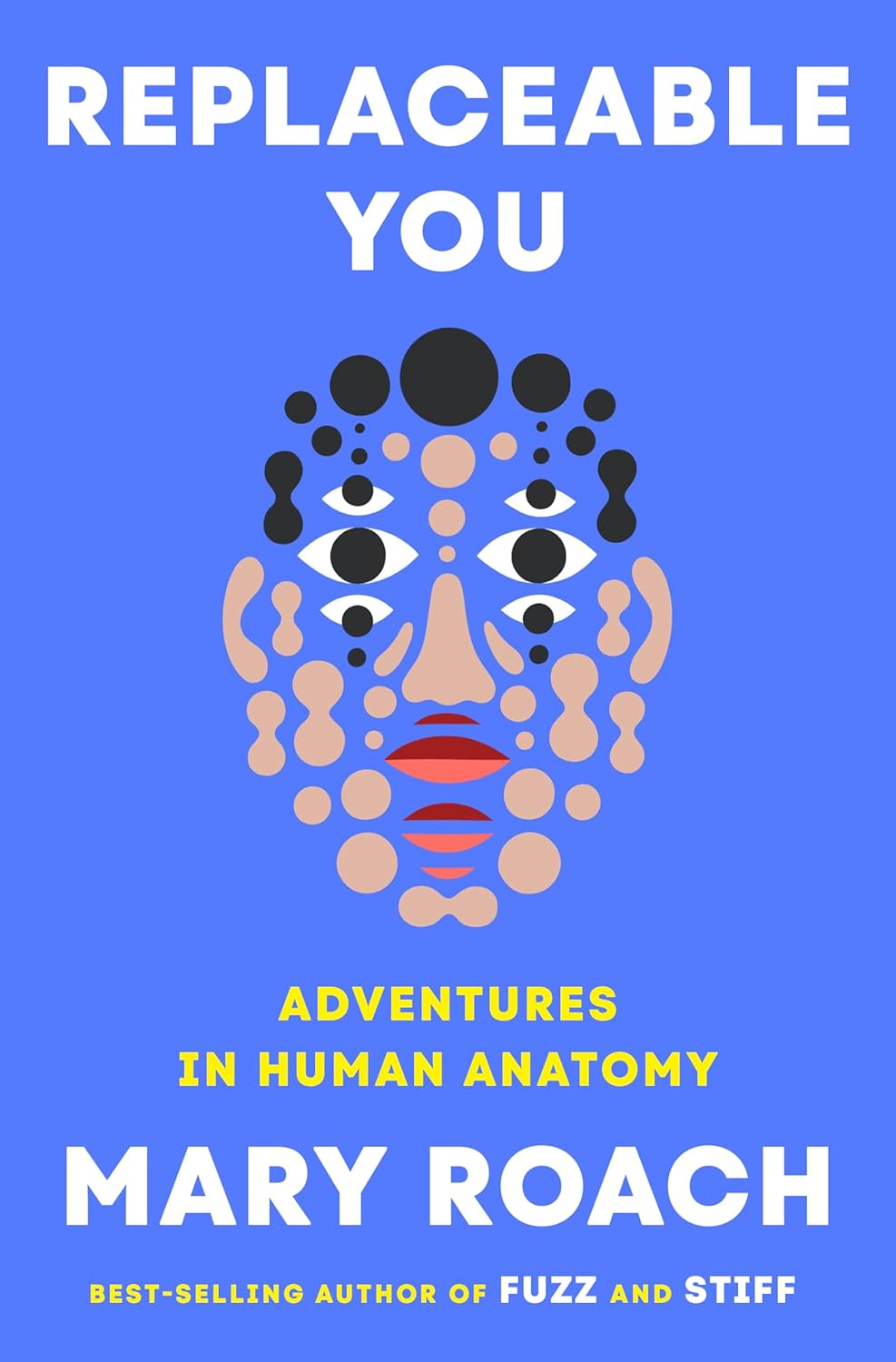
Replaceable You by Mary Roach

book cover

It’s another photograph of the penis [transplanted from the owner’s middle finger], now with a rustic ceramic pitcher hanging off of it. Exactly as you or I could put a hand out, palm up, and hang a pitcher off our middle finger. The pitcher is hand-painted, white with a red and green floral pattern. I’m picturing the man and his partner again, this time having lunch in the kitchen. A little iced tea, my love?

Eventually the day arrives when no further breach is possible. Mr. Baron, wrote his doctor, Richard Martland, “was now informed, the only chance for saving his life was by making an artificial anus . . . the inconveniences resulting from such operation, were candidly pointed out to him.” Mrs. White, on the occasion of her twelfth day without a bowel movement, is presented with the same proposition. Both patients consented. Or rather, as Pring put it, “did not violently object.” And so it went. “An opening was now made . . . and instantly a large quantity of liquid feces and wind escaped,” Martland wrote. Both doctors were impressed by the force with which the matter was expelled, with Pring taking additional note of the “considerable distance” traveled. – There was no mention of a fan in the vicinity.

This book certainly lends new meaning to the expression “an heir and a spare.”

I imagine many of us, certainly folks of my demographic, have had the experience of having parts replaced, probably because of need, but for some because of choice. I know I would happily have my begrudging spine replaced if I had the chance. And there are certainly a few improvements I could use that would be competing for second place on that list. Thus, my interest in Mary Roach’s latest, Replaceable You. (My ex can attest to the truth of the title’s applicability to the entire me.) Of course, I would read anything Mary Roach has written. She is one of my all-time favorite authors. And just in case her work is new to you, she combines a hard-reporting look at a particular scientific realm with a sense of humor that will leave you gasping for breath. Complete swallowing any ingested liquids before reading her work, as they may come blasting out your nose and mouth before you can get a grip. You have been warned.

description
Mary Roach – image from Harvard Bookstore – shot by Jen Siska

Roach has made a career of writing about the human body, from conception (Boink) to grave (Stiff), and beyond (Spook), with travels through the alimentary canal (Gulp), the body’s reaction to space flight (Packing for Mars), to war (Grunt) and even to strangeness having to do with our interactions with animals (Fuzz). This time around, she covers a range of body parts subject to replacing. She sniffs out the history of nose jobs back to the 1500s, and lets us in on why they were in such high demand back then. She brings home the bacon by filling us in on the status of pig research (on, not by) for the purpose of developing organs that can be transplanted into humans, a subject close to my heart.

A formal “miniature swine development” project got underway in 1949, a collaboration between two Minnesota powerhouses, the Mayo Foundation (research arm of the Mayo Clinic) and the Hormel Institute (research arm of pork).

There are sections on the replacement, or enhancement, of sexual organs. One of the opening quotes of this review notes a particular form of actual, not kidding, replacement for a male member. Female anatomy comes in for a bit of consideration as well.

Dow Corning…made the first silicone breast implant, circa 1961, this one at the urging of Texas plastic surgeon Thomas Cronin. Cronin had been “inspired by the look and feel of a bag of blood.” It is hard for me not to picture the scene: Cronin standing around the OR, idly gazing at a bag hanging on a transfusion pole and turning to a colleague: Hey. Does that remind you of something? Cronin contacted Dow, and his resident, Frank Gerow, implanted some prototypes into dogs. The team were “excited” by the outcome—and again, stop me from picturing this.

Continuing downstairs…

Who looks at the human digestive tract and thinks, Moist, tubular, stretchy . . . Might that make a reasonable vagina?

Some, apparently. The derriere comes in for a long look as well. Part of this is a consideration of the changing fashions in tush shape, stretching from sane to anime.

I have made it (well in) to septuagenarian with what is probably an unremarkable range of replacement parts. My right arm was the recipient of two metal plates and a bone graft from my hip after a rather nasty industrial accident in 1970. The plates were removed once they had done their job of helping my bones knit, a few years later. The bone graft helped heal another fracture, and was eventually absorbed back into my skeleton.

Roach tells of prosthetic limbs, and the surprising news that some people prefer them to the original. In fact, the initial inspiration for this book came from a reader who had suggested that Mary take on the exciting world of football referees. Understandably, that failed to score, but it turned out that the woman, who has spina bifida, had a problem with her foot. It had, as a result of her other difficulties, become less than useless. She wanted it removed so she could get a prosthetic, but few surgeons would consider electively removing it. Mary joined her at the Amputation Coalition National Conference, and the game was…um…afoot.

It will come as no shock that using one’s own body bits as a source of transplantation offers the huge advantage of sparing you the need for a lifetime of immunosuppressive drugs. The body’s Studio 54 security guard can take a quick look and wave the new part in as the right sort. It worked for me a second time.

Other recent personal additions were the product of open-heart surgery, three stents and an aortic valve replacement. The stents were made up of material extracted from my right leg, and the valve was contributed by a member of our porcine community. I have yet to experience any desire to go digging for truffles in nearby woodlands.

Roach takes joy in comparing the techniques and tools of hip replacement surgery to woodworking, noting that while patients could actually be conscious during the surgery, the clanging, sawing machinery noise would be so disturbing that it is deemed preferable for patients to remain unconscious for the duration. She says that “Hip replacement has the visual drama of a visit to a Chevron station.”

Sadly, I was born with a mouthful of (well, maybe not born with, which would be weird, but ultimately host to a couple of sets, baby and adult) soft teeth (my dentist’s words). This led, over time, to a need for fillings, caps, bridges and dentures.
.
If you count up all the teeth that are removed and replaced with implants or dentures, I bet they would lead the pack in sheer numbers of replacement bits. Mary leads us on a walk through dentures in history, the up and down sides, as well as the benefits of not using them at all. Yes, Geoge Washington makes an appearance. You will find the section on spring-loaded replacements both fascinating and alarming, and concerning as well is the fact that so many people have elected to remove healthy teeth in order to install dentures.

Replacing hair is big business these days. But not just up top. Pubic hair is also replaceable. Not only can the short and crinkly be replaced, with hair from the head, but the opposite can be done as well. Of course this can present some grooming challenges, as pubic and head hair grow differently and behave inconsistently when treated with grooming products. Mary subjected herself to a bit of hair harvesting in her travels.

My donor site is smeared with bacitracin, but no gauze is taped in place, because my hair would get stuck. On the flight home, I will feel the back of my head start to ooze. Do you fly Southwest? Don’t sit in 11B.

She delves into the growth industry of 3D printing of bodily materials. It turns out that it is not so simple as it might seem. Each muscle and organ has particular abilities and behaviors that are very difficult to replicate, involving twisting, contracting, and reacting to incoming messaging from the brain. The Star Trek replicator might do a great job of producing “Earl Grey, hot,” but fabricating people-pieces is proving a much more complex undertaking than sci-fi writers imagined.

Eye lenses are being replaced at increasing rates. There are even many people who, as with tooth replacement noted above, are having their natural lenses replaced in order to improve their vision.

I have worn glasses since I was eight years old, for distance. The only issue I had with them was losing track of them. But in the last few years, it became obvious that there was a buildup of material on the left lens of my eye (not just the product of inattentive eyeglass wiping) that made night driving particularly challenging. Oncoming headlights, even non-bright ones, spread a glare across my field of view that was problematic. I had cataract surgery earlier this year (2025), left eye only. And it worked like a squeegee on a filthy window. The headlights are still miserable, particularly when people insist on using their brights, and when many newer cars use lights that are brighter than the prior generations of illumination, but the improvement in my vision was immediate.

She writes about the processes involved in recovering bio-materials from the recently dead, the potential for banking our own cells as a source for future replacement materials, a machine for offloading heart and respiration work from the body temporarily, and introducing us to the wonderful world of ostomies, noted up top.

Mary may write about science, but she is not, per se, a scientist. Thus, she can offer us an every-person view into the subjects she investigates. She reacts how we might react when faced with the same discoveries. She brings the oh, wow!, the joy-of-discovery moments to life for readers, and thus makes what she has learned stick for us more than it would from any dry textbook. If she leaves you in stitches, that might just be a part of your replacement work. If you burst with laughter, bust a gut, if you crack up or your laughter is side-splitting, that may be why you needed the work in the first place. Of course, if you laugh your head off, there is probably no short-term solution to that. Replaceable You is the real thing, as is Mary Roach. She is one of a kind. Accept no substitute. She is irreplaceable.

Nana takes a seat at Kuzanov’s desk and starts opening files on his computer desktop. After a few false starts, she locates a folder of photographs documenting a finger transplant performed on a cancer patient. Most of the man’s penis had been amputated, leaving him unable to do two of the things most men like to do with their penis: penetrate and pee while standing. The surgery would restore both. – She missed one.

Review posted – 09/19/25

Publication date – 09/16/25

I received an ARE of Replaceable You from W.W. Norton & Company in return for a fair review. Thanks, folks, and thanks to NetGalley for facilitating. And could you check to see if anyone left any spare spines lying around.

This review is cross-posted on Goodreads. Stop by and say Hi!

===================================EXTRA STUFF

Links to Roach’s personal, Instagram and Twitter pages

Profile – from her site

I grew up in a small house in Etna, New Hampshire. My neighbors taught me how to drive a Skidoo and shoot a rifle, though I never made much use of these skills. I graduated from Wesleyan in 1981 and drove out to San Francisco with some friends. I spent a couple years working as a freelance copy editor before landing a half-time PR job at the SF Zoo. On the days when I wasn’t there in my little cubicle in the trailer behind Gorilla World, I freelanced articles for the Sunday magazine of the local newspaper. One by one, my editors would move on to bigger publications and take me along with them. In the late 1990s, magazines began to sputter out and travel budgets evaporated, and so I switched to books.
People call me a science writer, though I don’t have a science degree and sometimes have to fake my way through interviews with experts I can’t understand.
I have no hobbies. I mostly just work on my books and hang out with my family and friends. I enjoy bird-watching (though the hours don’t agree with me), hiking, backpacking, overseas supermarkets, Scrabble, mangoes, and that late-night “Animal Planet” show about horrific animals such as the parasitic worm that attaches itself to fishes’ eyeballs but makes up for it by leading the fish around.

Interviews
—–Stuff to Blow Your Mind on iHeart – Replaceable You, with Mary Roach by Robert Lamb – audio (36 minutes) with available transcript
—–Peculiar Book Club – MARY ROACH is Un-Replaceable! – video – 1:10:03 – from 5:00
—–NPR – From heart to skin to hair, ‘Replaceable You’ dives into the science of transplant with Brandy Shillace
—–Association of Health Care Journalists – Mary Roach calls herself ‘the gateway drug to science’ by Lesley McClurg

Other Mary Roach books we have enjoyed
—–2021 – Fuzz: When Nature Breaks the Law
—–2016 – Grunt: The Curious Science of Humans at War
—–2013 – Gulp
—–2010 – Packing for Mars
—–2006 – Spook Six Feet Over – recently renamed
—–2004 – Stiff

Items of Interest
—–New York Times – 10 Icky Things Mary Roach Has (Unfortunately) Brought to My Attention – by Sadie Stein – from sundry MR writings, in case you have not laughed enough from reading her latest
—–Bauman Medical – What is a Pubic Hair Transplant?
—–Youtube – A particularly disturbing transplantation scene from the 1973 film Oh Lucky Man

Song
—–Beyonce – Irreplaceable
2 Comments

Filed under History, Non-fiction, Public Health, Science and Nature

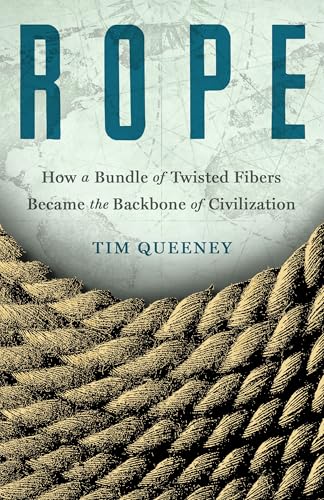
Rope by Tim Queeney

book cover

While many short lengths of rope helped countless individuals through the centuries, rope also was a tool of human innovation writ large through collective action. Just as many small strands come together to form a rope, so, too, did many people gather to perform the biggest of tasks. The exemplar of this from the ancient world is the Egyptian pyramids. While we don’t know exactly how these human-built mountains were assembled, we can be sure that rope was an essential tool in their construction. In this way rope stands as both a tool and a symbol of humans working together to achieve the greatest things.

The concept of rope remains timeless; what changed over millennia was the application of the human mind toward making ever better rope and in devising ways to use it.

Neanderthals used rope 50,000 years ago. Did Homo Erectus, Habilis, Australopithecus, or any of the sundry other homo genus cousins get there first? Dunno. Maybe, but no thread of evidence for any rope-making before Neanderthal has been found. Still, it was a helluva long time ago, and ropy material tends not to survive forever, unlike stone tools, so…maybe. Makes rope rank with fire and stone tools, (although, rope was a form of tool-making, it probably came after stone tools) as basic elements of civilization. (Oh, and let’s not forget Duct Tape)

description
Tim Queeney – image from his site – shot by Molly Haley

The breadth of this book reminds me of the opening scene of
2001:A Space Odyssey, taking us at it does from the dawn of tool-using man (or pre-man) to the futuristic apex of a 21st century space station. Tim Queeney takes us on a past-to-future journey of similar timescale, albeit without the perplexing Star Child ending.

There are books that cover a seemingly narrow subject in vast depth. I have read several of this sort, stovepipe books I suppose one might call them. (Banana, A Perfect Red, The Age of Deer, Eels, Just My Type, or many others) It is usually the case that the information revealed therein broadens our appreciation for the subject matter at hand, generating a lot of reactions like, “I never knew that,” or “wait, what?” Rope could be considered a stovepipe book in that it is focused on a seemingly single thing. Yet, once one dives in, it soon becomes apparent that the subject matter is massively broad, touching on a vast array of human history and enterprise. It seems less a narrow stovepipe look than a Poppins-esque vista of the rooftops of London. For a book of such modest length, it offers a broad, deep, and surprising look at one of the seminal tools of human existence.

description
Image from Disney

For Tim Queeney, this book is an homage to his nautical father, the man who taught him everything he knows about sailing, making manifest the emotional and experiential ties that bind father to son. As one might imagine there is a vast amount here related to seamanship through the ages. And much wisdom to be had for aspiring sailors and fishermen. He notes knots in abundance. Sadly, in the AREs that I read, paper and Kindle, there were no illustrations of these or the other devices and tools that Queeney describes. I cannot say if this is also the case in the hardcover release. I added links to a couple of old seamanship books in EXTRA STUFF if you find yourself wanting some instruction on how to twist and tie (or untie) this or that obscure tangle of rope. And there are sundry images available on Queeney’s site, although not on knot tying, at least not that I found.
description
The Lifeline by Winslow Homer – from the Philadelphia Museum of Art

In a slightly related vein, it was fun to learn of the need for rope skills in the world of entertainment. Maneuvering sets on stage take a set of skills that any sailor would easily recognize, and that any stage pro would need to have mastered.

My personal experience with rope is minimal. I recall as a stripling hanging out with friends in the Morris Heights neighborhood in Da Bronx, a place that offered the presence of sundry empty lots. There was one in particular, a large one that featured a singularly tall tree. I have no idea which foolhardy child undertook the task, but someone had climbed up that tree and slung across a sturdy branch a rope that ended in an engorged knot about fifty feet below. (Well, of course, someone with a strong arm might have just tossed it up and over from the ground, but where’s the fun in imagining that?) The Bronx is a hilly place, so the improvised swing began on the uphill side and swung out over the downhill side. Losing one’s grip at top could result in a slight bruise and a dose of embarrassment. Letting slip on the downhill side, particularly if the drop was unintended, could result in weeks in a cast. I swung out on this very thick knot of rope a time or three, but, being of a risk-averse sort, considered that sufficient. My other related, rope-involved escapade occurred as a much older idiot. I will not repeat it here, but direct you to my review of Rivers of Power for the mortifying details. Otherwise, no further rope-related personal experiences of note pop to mind, so you are spared that.

description
Section of cable showing strands in the cables supporting the Brooklyn Bridge – image from Catskill Archive
There is also a lot having to do with things quite far removed from the briny deep and the boards. Major world constructions of diverse sorts, pyramids, and ancient megaliths, for example. Surprisingly, in Inkan (Queeney’s spelling) traditions, rope, khipu, was used, through an intricate language of knots, to tell stories. One could say that these ropes in particular were used to create yarns. Some might, but not me. You will be surprised to learn who perfected the art of the lasso. And then there is some history on notions of knots in the realm of matrimony. As with so many things, one person’s tool is another person’s weapon. He racks his brain to report on rope as a tool of restraint, pain infliction, and termination. Subjects cover land transportation, the manufacture of rope, construction, communication (sub-Atlantic cables) rope tricks, climbing, space exploration and plenty more. He also provides considerable attention to materials that were used in the past and the materials that make up much of the rope-assigned tasks of our age, from the invention of rayon and nylon to the use of metal like steel, to the superstrength fibers of today, like Kevlar.
description
A drawing of how the steep ramp, poles and ropes could have helped the workers lift the huge blocks of stone used to construct the pyramids. – image from Kids News

Queeney has a very engaging style. Only rarely will you find it necessary to struggle past some technical jargon. His enthusiasm is infectious. No mask needed. He will throw a lariat around your attention and slowly pull you in.

description
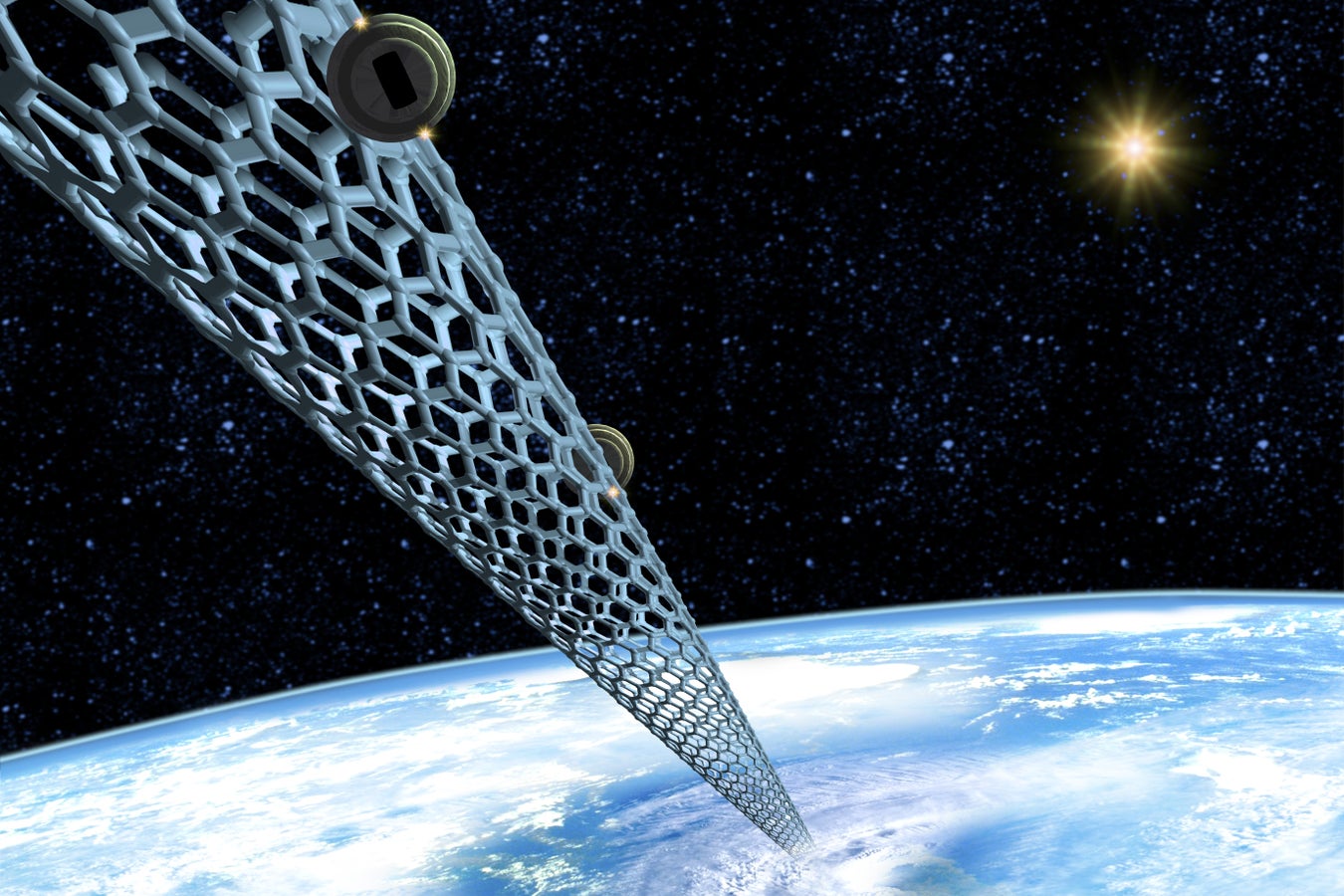
A space elevator made of carbon nanotubes stretches from Earth to space in this artist’s illustration. – image from Scientific American – source: Victor Habbick Visions/Science Source

Whenever anyone proclaims “no strings attached,” you should know better. Rope makes it clear that there are, and for at least 50,000 years always have been, strings attached, and that without them, we might still be traversing waterways powered by oars and muscle, communicating face to face, and satisfying ourselves with building structures of exceedingly modest dimensions. The discovery and implementation of rope technology has allowed us, as in the Indian Rope Trick, to climb into places we had never known before. So does this remarkable book.

Review posted – 08/15/25

Publication date – 08/12/25

I received digital and paper AREs of Rope from St. Martin’s in return for a fair review. Thanks, folks, and thanks to NetGalley for facilitating. And, uh, I held up my end, so could you untie me, please?

This review is cross-posted on Goodreads. Stop by and say Hi!

=======================================EXTRA STUFF

Links to Queeney’s personal, FB, Instagram, Twitter and Blue Sky pages

Profile – from his site

In addition to writing books, I was the longtime editor of and columnist for Ocean Navigator, a magazine for serious offshore sailors. At ON I also taught celestial, coastal and radar navigation as an instructor for the Ocean Navigator School of Seamanship, both in hotel meeting rooms ashore and on tall ships at sea. I love to sail, hike, get lost in museums and spend timeless hours drawing and painting. I’m a dad to three sons and a rescue dog. Am a NE Patriots and Arsenal fan and tend to reference a Stanley Kubrick film every two minutes or so. I’m also that annoying night sky watcher who is always pointing out the constellation Cassiopeia — because its forms a big W, which reminds me of my wonderful wife, Wendy.
I live in Maine and can hear the fog horns of three lighthouses when the fog rolls in.

Interviews
—–History Unplugged – Rope Equals Fire as Humanity’s Most Important Invention: It Allowed Hunting Mammoths and Building Pyramids – with Scott Rank – audio – 58:27
—–Rope Equals Fire as Humanity’s Most Important Invention: It Allowed Hunting Mammoths and Building Pyramids – text extract of the above podcast
—–Maine Calling – Rope by Jennifer Rooks, Jonathan P. Smith – audio – 50:36

Items of Interest from the author
—–The History Reader – Rope’s Role in Colonial America’s Tarring and Feathering
—–Queeney’s blog
—– Dragging a Ship Uphill? Gonna Need Some Rope – On Werner Herzog making Fitzcarraldo
—– Ben Franklin Gets Juiced With a Little Hemp
—–Rope Ends: Moving Massive Stone Blocks the Natural Way

Items of Interest
—– The Kedge Anchor, or, Young Sailor’s Assistant – an 1847 source of knowledge maritime, including instructions for tying dozens of sorts of knots
—–The Ashley Book of Knots – 1944 – thousands of knots, with illustrations
—–Earth-Logs – Earliest evidence for rope making: a sophisticated tool by Steve Drury
—–Arcanth – Making Rope – Medieval to Edwardian technique – video – 2:49 – this is amazing!
—–Wiki – the Indian Rope Trick

2 Comments

Filed under History, Non-fiction, World History

How to Win Friends and Influence Fungi by Chris Balakrishnan, Matt Wasowski

book cover

Nerd Nite is an event usually held at a bar or other public venue where usually two or three presenters share about a topic of personal interest or expertise in a fun-yet-intellectual format while the audience shares a drink. It was started in 2003 by then-graduate student (now East Carolina University professor) Chris Balakrishan at the Midway Cafe in the Jamaica Plain neighborhood of Boston. In 2006 Nerd Nite spread to New York City, where Matt Wasowski was tasked with expanding the idea globally. – from Wikipedia

Be There and Be Square – Nerd Nite logo

There was a nerd magazine in 2012, a Youtube presence, and occasional podcasts. This is the first Nerd Nite book.

Misophonia can attach itself to any repetitive sound, but the most common ones are things, like chewing, breathing, sniffing, and throat clearing. It can be hard for sufferers to talk about because of how difficult it can be to tell someone politely that the sound of them keeping themselves alive is repulsive to you.

There are 71 entries, taken from live presentations done by the authors of each piece. (TED talks for those with short attention spans and a need for alcohol?) Nerd Nites have been held in over 100 cities across the globe. The material here covers eleven scientific areas. (see below) All the entries are brief, so if one does not appeal to your mental tastebuds hang on a couple of minutes for the next one, or just skip past.

description
Chris Balakrishnan and Matt Wasowski – editors – image (from some time ago) from Facebook

You can digest this book a few morsels at a time, and not have to worry about the fate of a fictional hero or put-upon victim. Nope. The heroes here are the scientists, the presenters. One of the great failings of popular science books, IMHO, is the absence of humor, or poor attempts at it. Not here. There are many moments in this one, and humor in almost all of them. That made me very happy. Of the 71 pieces, almost all are very pop-sciency, understandable by most readers, even me. There were only one or two that made my head hurt. It makes an excellent bed-side read. It was an upstairs book for me, to be read before nodding off, hopefully. Sometimes that takes a while. This is not an all-inclusive list of the articles, but lets you know what might be in store in its eleven sections

1 – Creature Features – on weird animals
2 – Mmmm…Brains – strangeness with how we learn and adapt
3 – Bodily Fluids – on things like coping with poo in space. (In space, no one can hear you fart?)
4 – Doing It – like it suggests, on sex, human and non-human, (no, not with each other. Don’t be weird.)
5 – Health and (un)Wellness – human smells (See Paul Giamatti in The Holdovers) – on therapeutic maggots, adolescent medicine, et al
6 – Pathogens and parasites – on birds, bacteria in birds, zombies, the scotch tape test (don’t ask), viruses
7 – Death and Taxes – mass extinction, cancer, algae
8 – Space, the Big and the Beautiful – ignorance, asteroid avoidance and use, life on Europa?, artificial gravity, studying a pristine meteorite, Webb telescope
9 – Tech (High and Low) – GMOs, dating app, human powered flight, cyborging humans, domesticating bacteria, nuclear fusion
10 – Math is fun – a seminal experiment, the math of gossip, the golden ratio, infinity, cryptography
11 – Careers – things removed from dogs, useless inventions, myths about death, animals CSI, amputations, fermentation, flames.

there are approximately 100 trillion microorganisms (mainly bacteria), representing as many as 30,000 different species, living in every crevice, nook, and mucosal cranny of your body that you can imagine.

I would include a list of my favorite articles, but it would wind up as long as the parts list above. But ok, because I have the sense of humor of a twelve-year-old, the one that made me laugh the most was To Boldy Go: Dealing with Poop and Pee in Space. Apollo 10 astronauts were gifted with the visual, and no doubt olfactory, treat of a turd meandering about in their capsule. This begins a talk about how one handles bodily waste in zero G. Another on bladder control, or the absence thereof, was sidesplitting. Others, on camel spiders and hangovers, generated a fair number of LOLs.

Some were fascinating, like one having to do with making a brain on a chip. (Can it be served with Salsa?) The pieces on bacteria and their importance to human life, heck, to all life on Earth, were fascinating.

There is plenty of weirdness, about diverse forms of milk, the proper use of maggots in healing, zombie parasites, asteroids, artificial gravity, and here we go with another bloody list. Sorry. Take my word, there is a wealth of material here that will broaden your knowledge base, and serve up plenty of conversational hors d’oeuvres for cocktail party chatter.

It worked quite well for me. There is a downside, though. Because all the articles here are very short, one is often left hungry for more. On the other hand, that limitation might provoke you to sate that desire with a bit of extra research, which is always a good idea. So, never mind.

If science piques your curiosity, if learning new and diverse things makes your heart race, or if you like to laugh, then this book is for you. How to Win Friends and Influence Fungi is a very filling read, one nibble at a time.

Review posted – 06/14/25

Publication dates
———-Hardcover – 02/01/24
———-Trade paperback – 11/04/25

I received a hardcover of How to Win Friends and Influence Fungi from St. Martin’s Press in return for a fair review. Thanks, folks.

This review is cross-posted on Goodreads. Stop by and say Hi!

=======================================EXTRA STUFF

Author/Editor links

Chris Balakrishnan – Program Director at the National Science Foundation – His personal and FB pages
A list of his articles

Matt Wasowski – Director of New Business and Product Development, Events at SAE International – His FB, LinkedIn and Twitter pages

Items of Interest from the authors (really editors)
—–Soundcloud – excerpt – 5:01
—–Birdsong: How the Twittering Set Learns to Speak
—–“Nerd Nite Published a Book!” by Matt Wasowski – Nerd Nite Austin 155, January 2024

1 Comment

Filed under Non-fiction, Psychology and the Brain, Science and Nature

Seven Deadly Sins by Guy Leschziner

book cover

The ebb and flow of human history is defined by the Seven Deadly Sins: wrath, gluttony, lust, envy, sloth, greed, and pride. From the wrath that has ignited revolutions, to the greed that has re-sculpted the world map. From the sloth that has led to the fall of empires, to the envy that has built them. From the lust that has led to the fall of politicians and the betrayal of national secrets, to the voracious gluttony that has left our environment in ruination, and the pride that has fueled countless conflicts.

Disorders of the brain, of our genes, or other physical conditions, may give rise to gluttony, lust, wrath or pride. The effects of our environment or our upbringing may produce envy, lust or sloth. Crucially, these disorders unmask what is already in us, what already exists in all of us.

William J. Bennet (before he was outed as a compulsive gambler) is reputed to have said “One man’s vice is another man’s virtue.” Pope Gregory, in the sixth century CE, had a different idea, whittling a larger, earlier list down to seven deadly sins. (One wonders if there might be a grander list of [insert number here] bloody annoying sins). I do remember in my Catholic grammar school days Monsignor Marshall giving a sermon on venial sin (non-deadly, but as far as I can recall not presented as a list), in which he offered up the image of Jesus on the cross, and proclaimed that committing a venial sin was like slapping the nailed Christ across the face, albeit not very hard. No Jewish mother ever delivered a more impactful guilt trip.

description
Professor Guy Leschziner – image from The Daily Mail

In his prior book, The Man Who Tasted Words, Professor Leschziner looked at places where the lines between our senses appear to be somewhat porous, sense-A leaking into sense-B for some individuals. Hearing colors, seeing sounds, aphasic things like that. He offered an examination of what is considered usual, and where, in the brain, wires may have become crossed. He looked at individuals who reported such experiences and attempted to trace back into the brain where each sense resided, and connected to others.

Here he uses as his starting point the notion of the seven deadly sins, and offers neurological analysis of behaviors commonly regarded as sinful. Bu the Seven Deadly sins seem to divide into two groups, one based on behavior and one based on emotion. Wrath, Gluttony, Sloth and Greed require action to do actual damage, while Pride, Envy and Lust can remain internal. You may think you are better than everyone else, but unless you do something based on that belief, it makes no difference. Ditto Lust and Envy. In the absence of acting on these feelings, no harm, no foul, so the playing field for looking at The Seven is uneven from the start. The subtext is the question of free will. Are we all functional free agents able to determine right from wrong or are we driven by our biology, by what our brains have, by genetic heritage and experiential conditioning, commanded us to do? And how have the behaviors that have defined our species, that have led to our accomplishments as well as our excesses, our failings, served us? Is there a range within which our less than idyllic urges can function healthfully, and outside of which they constitute pathology?

Look at aberrant behavior. Dive in to see exactly which parts of the brain have been harmed, if any. Map behaviors, needs, urges, inclinations to parts of the brain. In a way, this is a bit like explorations of yore, sailing out to see what lay over the horizon, or, fictionally, heading out on a starship to see what the universe may present. He uses several case studies of people who manifest behaviors illustrative of each of the sins, looking for neurological bases. Just as in his examination of cross-sense irregularities in his prior book, Leschziner looks at these patients with an eye toward identifying which parts of the brain bear the most responsibility for the problematic behaviors. These include a man who had had a brain bleed that changed his personality, a woman who was incapable of feeling satisfied no matter how much she ate, a 34yo man with Parkinson’s and an increasing obsession with sex, a woman who believes her totally faithful husband is cheating on her, a young father who sleeps twenty hours a day, a man has delusions of grandeur until multiple abscessed teeth are removed, oh, and the Panama Papers. Centers of emotional concern include the amygdala, the pre-frontal cortex, a warrior gene, and the hypothalamus internally. He looks at the influence of bacteria, viruses, dopamines, and more impacting from the outside. Increasingly, science can indeed offer some answers to the why of behaviors, to a point.

In his novel, Fleur de Lis, Anatole France wrote. “The law, in its majestic equality, forbids rich and poor alike to sleep under bridges, to beg in the streets, and to steal bread.” There are clearly hypocritical societal interpretations of sin, of what sinful behaviors will be tolerated and which will be sanctioned. (Unless, of course, you are a president with a friendly Congress and SCOTUS, in which case, just go ahead with whatever you are doing there on Fifth Avenue.)

Poor man wanna be rich, rich man wanna be king
And a king ain’t satisfied till he rules everything
– Springsteen – Badlands

And most societies assign moral responsibility to the actor. The question is whether a person is morally responsible for his/her actions or is a slave to, and predetermined by impulses, by one’s underlying and overwhelming personal psychological makeup.

if you believe that the brain is the origin of our personalities and our character traits, the basis of our decisions, be they good or bad, then it is arguable that much of what defines us is outside of our control.

Whether we are all able to make actual free choices or are slaves to our biology, it is clear that society needs to be able to restrict our ability to harm each other, that protecting each other from the worst in people is a reasonable social responsibility.

It is made clear that the drives that we regard as sinful have provided considerable benefit to our evolution as a species. No lust? No reproduction. No envy? No reason to be more productive. No wrath? No defense against attack.

Leaving the question of evil. At first blush is seems that evil serves no obvious Darwinian purpose. On second thought, though, I expect there might be a case made for evil existing as an existential challenge in order to provide a testing ground against which one might measure strength of character and/or the superiority of one’s genes, whether physical or intellectual. In a way, like ice ages, rapid climate change, or a voracious saber-tooth tiger, evil might be seen as a natural force, even if it manifests through human beings.

Leschziner has offered up a provocative, thoughtful brain-candy-ish look at how science, as it advances, keeps finding biological explanations for fraught psychological behaviors. But our impulses and makeup remain what they are. And this is one of the pleasures of reading The Seven Deadly Sins. Learning what a strange creature is homo sapiens, and how we are put together. It seems quite clear that the real original sin is to have been born human.

extrinsic factors – medication, injury, or functional disturbance of the brain – rather than our values can cause us to act in ways that contravene our moral
code. However, that dividing line between what constitutes normality and pathology shifts in the sand. That line is blurred by the prevailing winds of our views on morality, legality, philosophy and medicine.

Review posted – 02/21/25

Publication date – 12/3/24

I received paper and ePub AREs of Seven Deadly Sins from St Martin’s in return for a fair review. Thanks, folks, and thanks to NetGalley for facilitating.

This review is cross-posted on Goodreads. Stop by and say Hi!

=======================================EXTRA STUFF

Links to the author’s personal, Instagram, and Twitter pages
Profile

Interviews
The Guardian – Science Weekly Podcast – Are we hardwired to commit ‘deadly sins’? – podcast
– audio – 23:59
—–The Jewish Chronicle – Were the Nazis inherently evil? ByJennifer Lipman
—–Greed, gluttony, sloth…lust! Why you sinned this Christmas by Anna Maxted

Items of Interest from the author
—–Big Issue – The truth is we’re all sinners – it’s how we survive as human beings
—–Next Big Idea Club – A Scientific Examination of the Seven Deadly Sins

My review of the author’s prior book
—–2022 – The Man Who Tasted Words

=======================EXTRA EXTRA STUFF

George Carlin famously distilled the ten commandments down to two.

It seems pretty clear that the seven deadly sins can likewise be slimmed down as well.

Pride. What does this actually mean?
Believing that you are better than other people? What if you are? Faster, stronger, better looking, smarter. Something more than others. Is recognizing your superiority a sin if it is true? The bible seems to maintain that an “Excessive” self-regard is where the line is crossed, but who gets to determine where the line is drawn between factual and excessive self-regard?

But pride does seem to be a pre-condition for other sins. Wrath, or extreme anger, certainly seems an appropriate response to extreme provocation. Hardly a sin. But in order to get into a sinful bit of wrathful behavior it must be excessive. In order for it to be excessive the deliverer of such wrath must hold a higher view of him or herself vis a vis the target than seems justifiable. Soooo, excessive pride, right? So, scratch wrath, and we are down to six.

Gluttony – excessive consumption to the point of waste.
Wiki tells us that In Christianity, it is considered a sin if the excessive desire for food leads to a lack of control over one’s relation with food or harms the body. But if the desire for food entails loss of control over one’s relation to food, where is free will? Isn’t that a definition of pathology? And a pathological behavior is hardly sinful. And just what constitutes excessive desire? If we remove the pathological from this formula, we are left with a person feeling entitled to consume (and I think it is safe to expand the notion of consumption here from food to all things material) as if they are better or more deserving of such things. Which brings us back to pride. Gluttony eats itself into a coma and we are down to five.

Greed
Catholic.com claims that Greed is the disordered love of riches. Hmmm, who gets to define “disordered?” and doesn’t a love of riches include a personal belief that one deserves such riches? Here we go again. It requires excessive self-regard to crave riches at a “disordered” level, no? Greed crushes itself with massive accumulation of stuff and we are left with four.

For these other sins, we delineate the pathologies that shape our thoughts and behaviours, and set them apart from those underlying character traits through their intensity and consequences. For greed, we do no such thing. Yet greed, like the other sins, is perilous in its most extreme forms, causing harm to individuals and wider society alike.

Is Donald Trump, a career criminal, capable of differentiating between right and wrong, or was he so damaged by his genetics and upbringing and injured by his subsequent business training at the feet of his sociopathic father, that he is incapable of telling or even caring about the difference between good and bad? Similar for Elon Musk. How great would it be were Leschziner able to do a detailed examination of both men’s brains. Because if they are capable of discriminating right from wrong, then we have a pretty clear proof that there are indeed forces of evil loose in the world, which I expect would come as a great shock to few but the most ardent atheists.

Lust and envy seem sub-elements of the same thing, wanting something that someone else has. Surely lust between two unattached people is no sin. It is only when one person (at least) is already attached that lust becomes problematic (presuming a monogamous baseline). So, wanting something (someone) who/which is not yours, but which is attached to, or is owned by someone else. So what? We all want stuff we do not or cannot have. How is this a sin? It seem to me that having feelings like lust and envy is completely natural. It is only when we take actions to effectuate such the desire, to the detriment of others that the sin element is realized. Down to two.

According to Wikipedia Sloth is the most difficult sin to define and credit as sin, since it refers to an assortment of ideas, dating from antiquity and including mental, spiritual, pathological, and conditional states. One definition is a habitual disinclination to exertion, or laziness. Willful laziness is surely not cool. Just ask any married person whose partner declines to hold up his or her end, opting instead to watch football or soaps. This one seems likely to be based in behavior, as the sinner here engages in slothful behavior, doesn’t just feel…um…slothful. I could certainly see many real-world examples, beyond couch potato chore-avoiders. There are many people who cannot be bothered exercising the intelligence they were born with to examine themselves, their community, public issues, religious beliefs, or much of anything. It may well be that they believe themselves not up to such analysis, and maybe they are not. But for many, if not all, it does seem that the disinclination rests on a belief that they are too good to have to bother with such things, that they have it all figured out and need look no further than the perimeter of their personal bubble…so…excessive pride. And poof! We are down to one.

Pride goeth before the fall, and, apparently every other form of sinfulness. There is only one deadly sin, excessive self-regard, which feeds all the others, and becomes problematic only when put into actual real-world action.

Leave a comment

Filed under Non-fiction, Psychology and the Brain, Public policy, Science and Nature

Alien Earths by Lisa Kaltenegger

book cover

Before I started searching for life in the cosmos, I just assumed scientists knew how it started on Earth. We don’t.

…it is sobering to realize that for most of Earth’s history, humans would not have been able to survive on this planet. If we could rewind Earth’s history and start again, it seems unlikely that Earth would produce humans again. A planet with different starting conditions and paths of evolution has no obligation to support life similar to Earth’s, let alone curious humans.

The truth is out there.

Are we alone in the cosmos? The question should have an obvious answer: yes or no. But once you try to find life somewhere else, you realize it is not so straightforward.

At least until the age of permanent haze across the planet, we have always had the stars in our consciousness. Since the second century AD we have had stories about alien worlds. Since Galileo we have been able to see other worlds in the cosmos. A 1792 novel by Voltaire tells of an alien encounter. Concern about extraterrestrial locales has been a part of human consciousness ever since. The concern is certainly fed by the history of strange human invaders helping themselves to land distant from their home soil.

description
Lisa Kaltenegger – image from The Guardian – shot by Naomi Haussmann/The Observer

The interest in things alien certainly kicked up in the twentieth century. Many of us grew up in the space age, witness to the first “Beep-Beep” from orbit, the first peopled orbiters, rapt in front of our televisions when mankind first set foot on the moon. Part of this experience is to be awash in the science fiction of our own and earlier ages, dreaming of strange other-world societies, fearful of invasion, eager to learn the lessons of advanced technology. Some were even impressed and excited enough by the technology and the optimism of the age to begin college careers with the dream of becoming aeronautical engineers, and designing some of the hardware of the future.

description
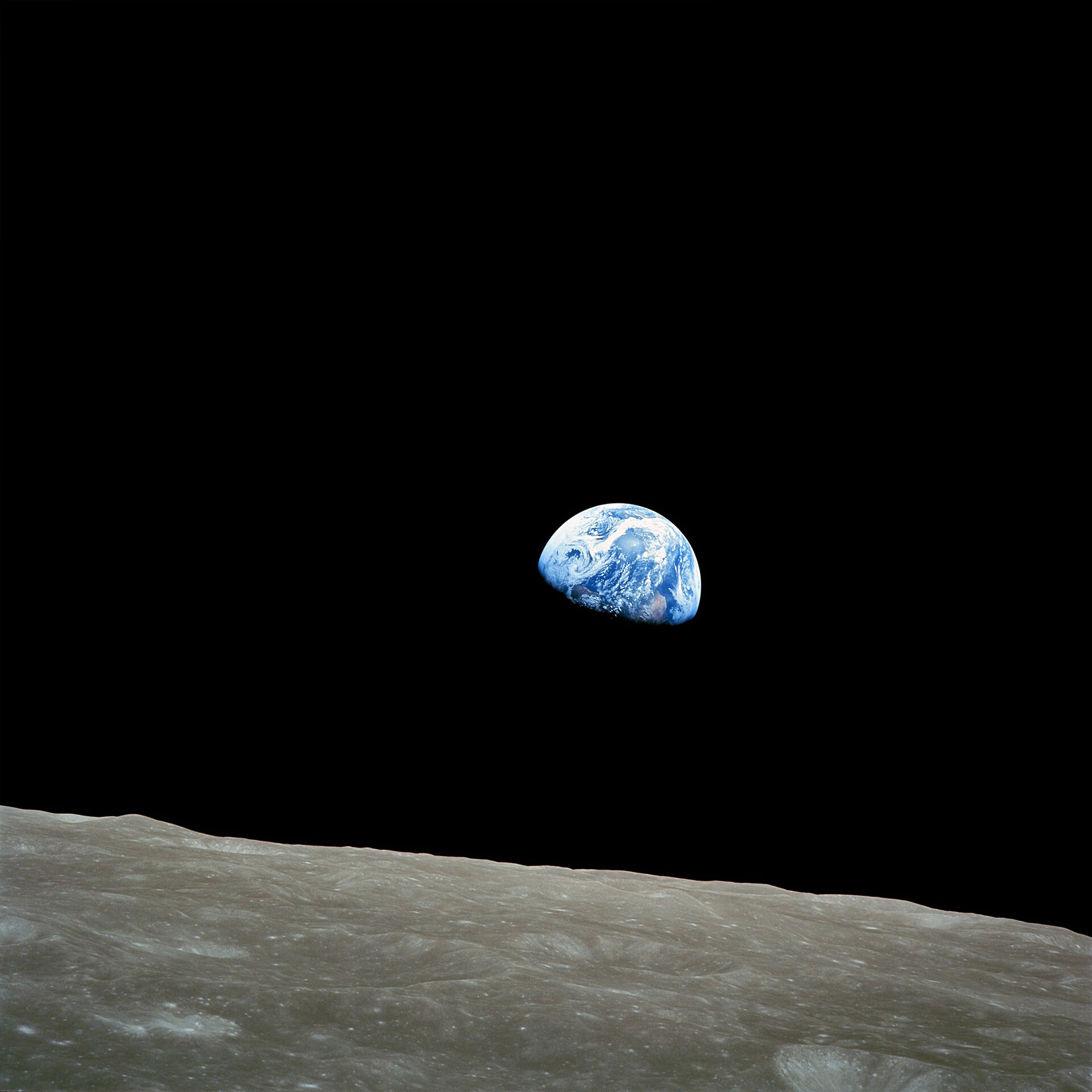
Earthrise – image from Wikipedia

But so much of this was based on fantasy, (including that engineering thing) limited to imagining what might exist out there. Even the early observations of other planets in the solar system generated fantasies in addition to scientific elucidation. But in 1995 scientists discovered the first two exoplanets, and new discoveries are now a nearly daily event. Today, because of the major advances that we have made in telescope technology, we are able to see to the far ends of the universe. Enter Lisa Kaltenegger, founder and head of the Carl Sagan Institute at Cornell University

I spend my days trying to figure out how to find life on alien worlds, working with teams of tenacious scientists who, with much creativity and enthusiasm and, often, little sleep but lots of coffee, are building the uniquely specialized toolkit for our search.

In studying what we have seen, it has become possible to detect stars that have planets around them. In fact, most stars have company. The way this is detected is to measure “wobble” in the light being observed from distant places. As if you were looking at a bright light and someone threw a ball across your field of view. The measured light would change and you could tell that something had been there. Keep looking to see if it repeats. If it does, then you probably have a planet orbiting that star. (or an annoying neighbor tossing something back and forth in front of you) Keep pointing the James Webb Space Telescope (the state of the art in telescopy today) to more and more locations in space. And discover more and more planets.

description
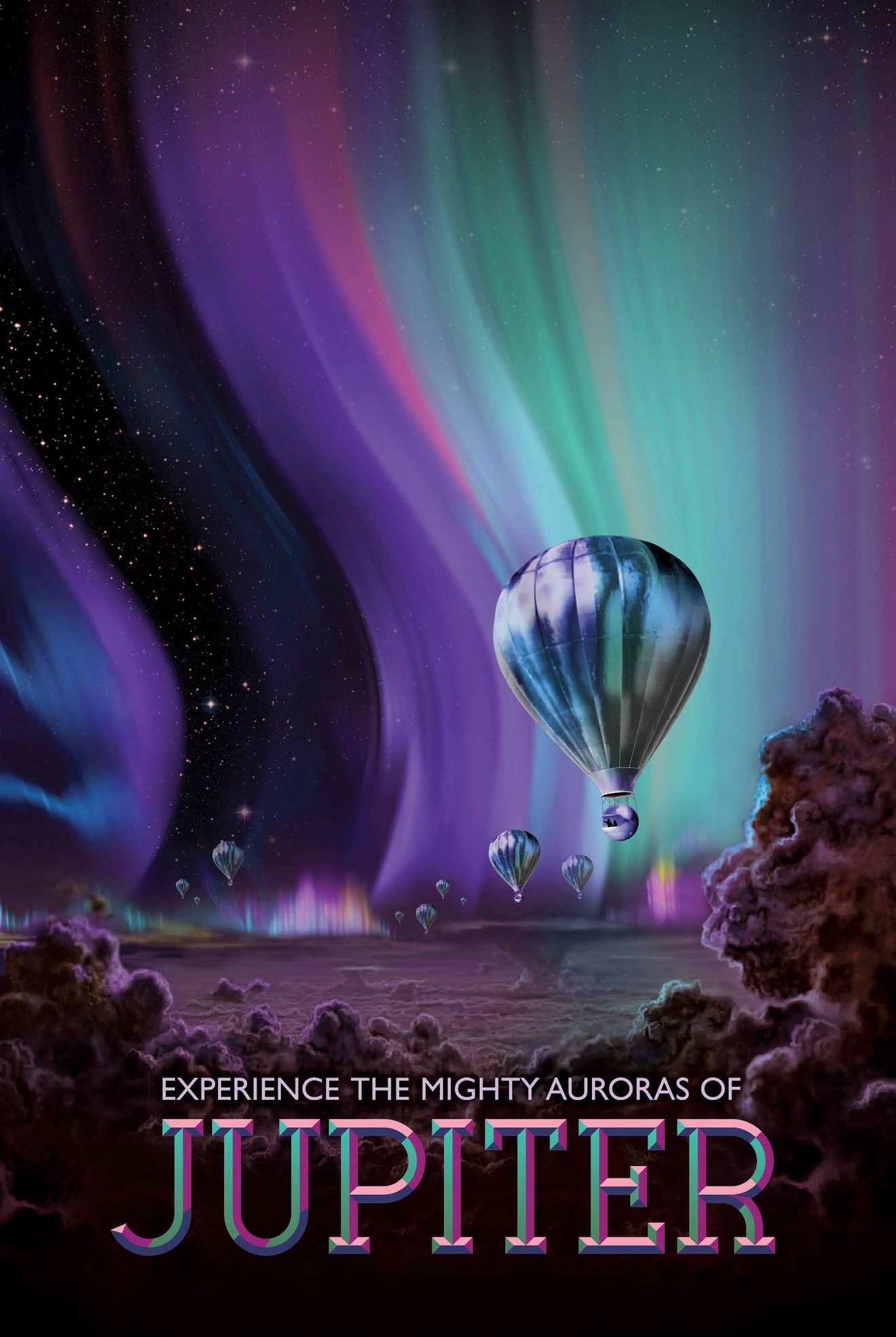
Jupiter – image from Exoplanet Travel Bureau – NASA

Kaltenegger has been looking into the reality of other worlds her entire career, and in doing so, has advanced our knowledge base considerably. She begins this book with a brief visit to an other planet, one that is very different from ours, a star-facing world that has portions in eternal day, night, and dusk, and local life adapted to the local venues, just to get things started on what we might expect out there, just to challenge our assumptions.

description
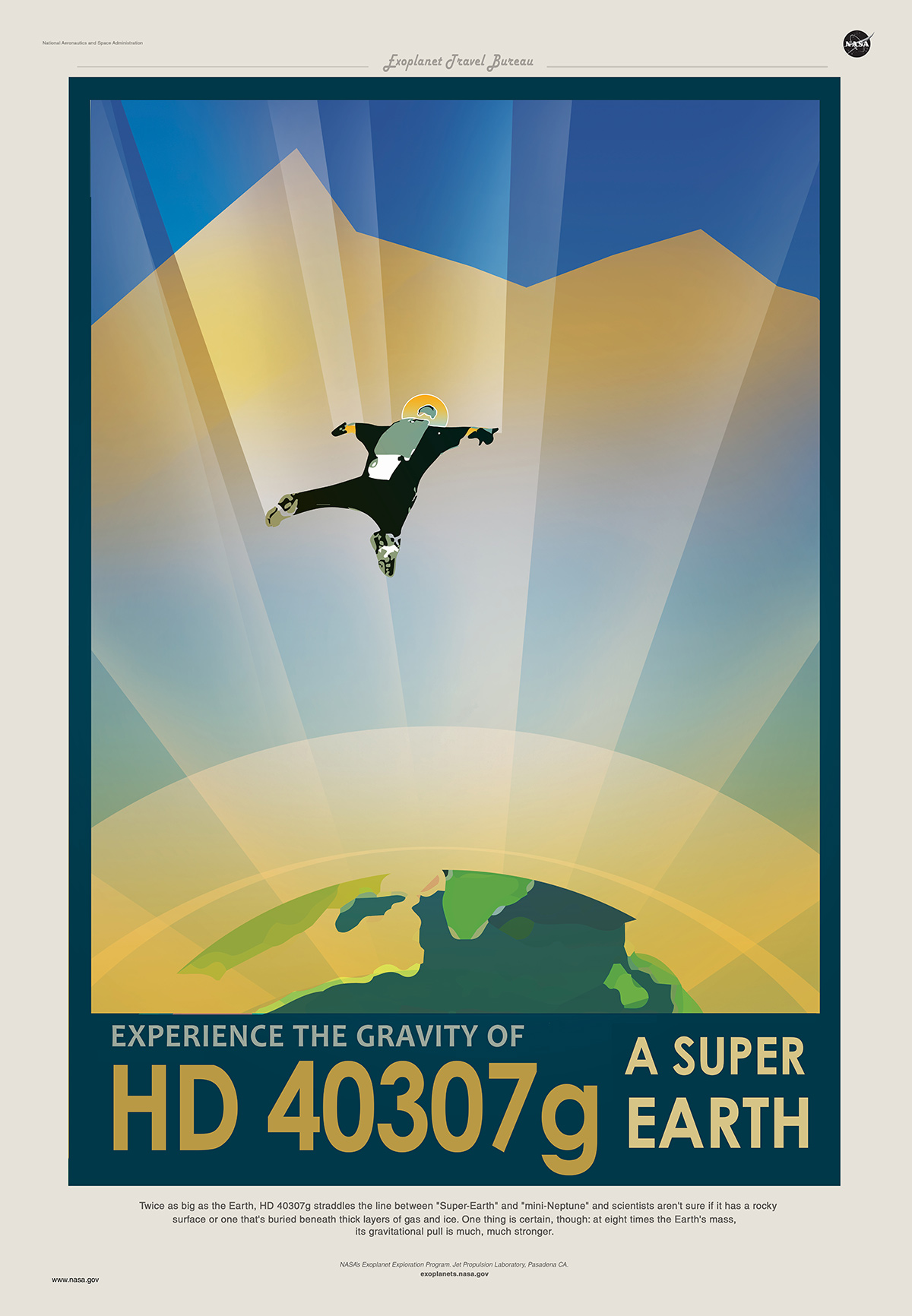
HD 40307g – A Super Earth – image from Exoplanet Travel Bureau – NASA

She follows with a history of Mother Earth, noting major stops along the evolution of our favorite place. She notes how life might have formed, when, and how that event altered the atmosphere and even the color of our atmosphere. The sequence is important, as her discussion of our exoplanet dreams demonstrates that we are a prisoner of time. What we see with our telescopes (and eyes) arrived here on light, and light must travel at or below the universal speed limit. (a leisurely 186,282 miles per second) So, whatever we see from even a nearby star/planet system originated tens or hundreds of years go, or even billions for our more distant neighbors. Anything residents of out there might have seen of us (really only since we started sending signals into the ether maybe a hundred years ago) is quite dated relative to who and what we are today. Absent the invention of a Warp Drive of some sort, we are doomed to be always too far away in years and miles from other intelligent species. Well, maybe.

description
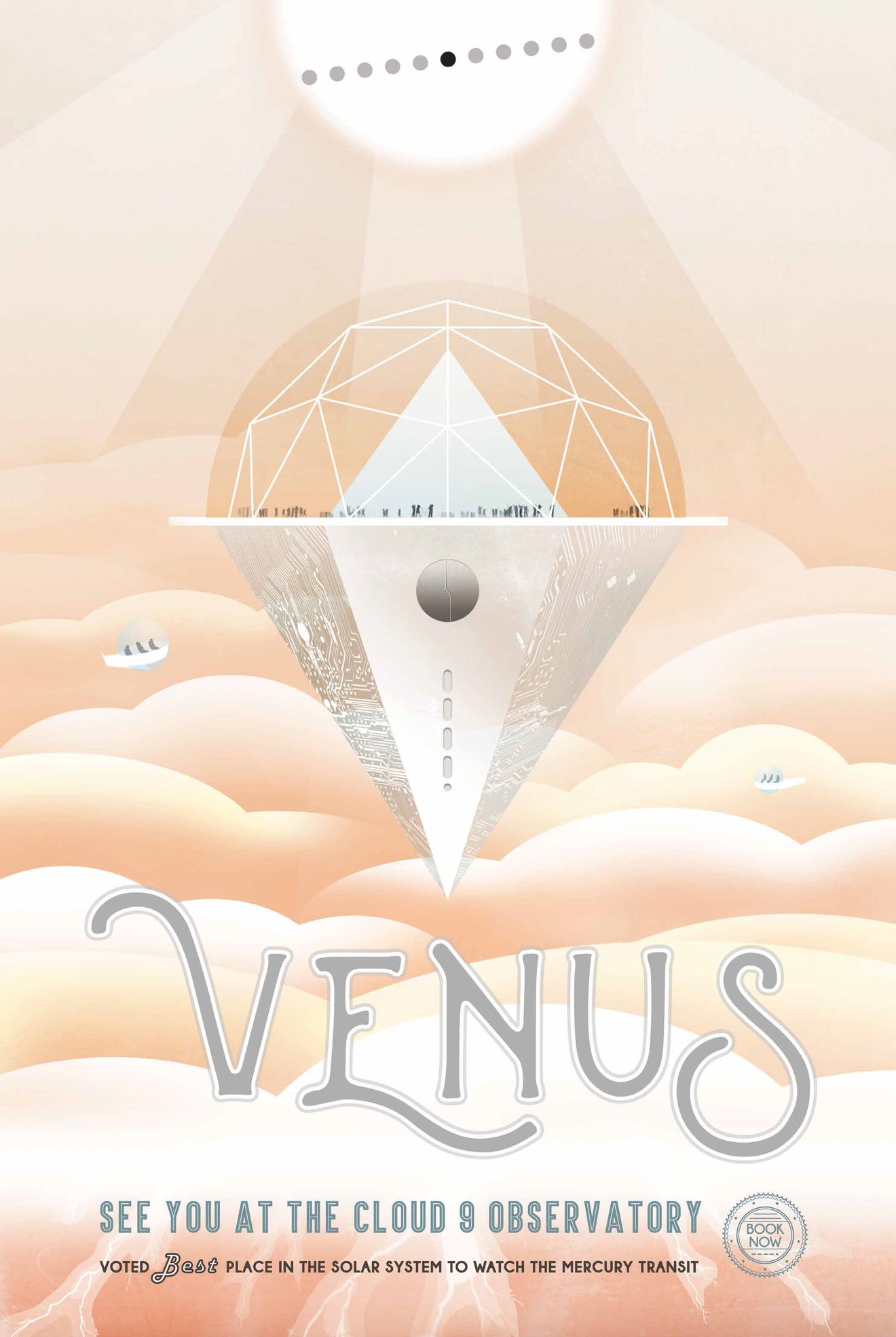
Venus – image from Exoplanet Travel Bureau – NASA

It is possible, I suppose, for a civilization with massive resources to send a desperate one-way mission to save their species from hundreds of light years away. It is unlikely that any visitors from such distant realms would be making reports home. But this need not necessarily apply to all possible visitors. It appears that there are plenty of possible planets within a few light years of us that might present some interplanetary possibilities.

description
Mars – image from Exoplanet Travel Bureau – NASA

Kaltenegger delves into the nearer-earth planets, looks at their characteristics, and offers explanations as to their suitability for life. She looks at probable communication issues should we ever come across an ET, suggesting it might be the equivalent of humans attempting to communicate with a jellyfish

description
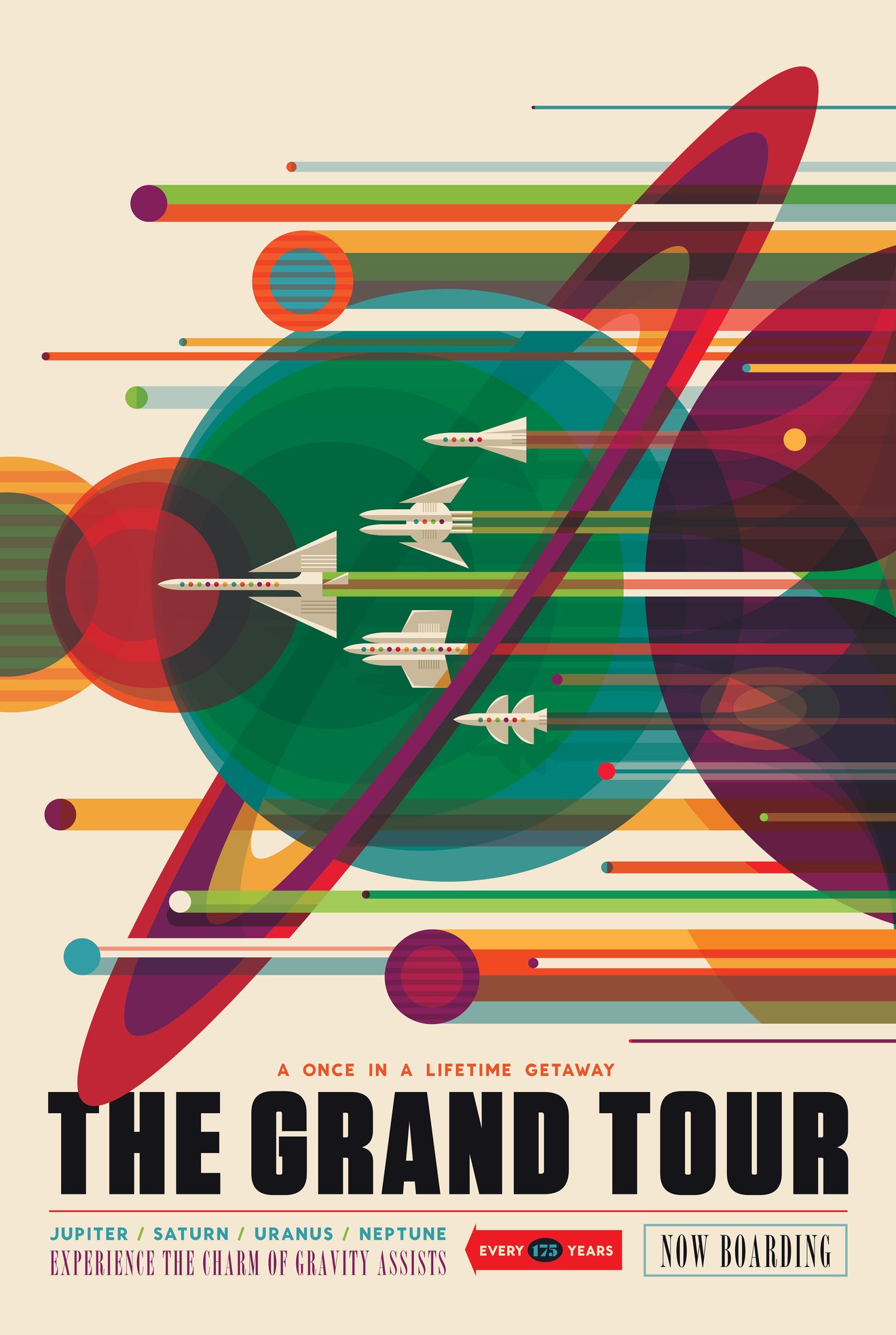
Grand Tour – image from Exoplanet Travel Bureau – NASA

Kaltenegger and her team design computer simulations, based on the hard work of examining concrete materials, inert and biologic, and putting that intel into a database. Check the signature spectrum of every new world and compare it with the growing list of catalogued items.

Today, solving the puzzle of these new worlds requires using a wide range of tools like cultivating colorful biota in my biology lab, melting and tracing the glow from tiny lava worlds in my geology lab, developing strings of codes on my computer, and reaching back into the long history of Earth’s evolution for clues on what to search for. With our own Earth as our laboratory, we can test new ideas and counter challenges with data, inspired curiosity, and vision. This interaction between radiant photons, swirling gas, clouds, and dynamic surfaces driven by the strings of code within my computer, creates a symphony of possible worlds—some vibrant with a vast diversity of life, others desolate and barren.

She notes the core need of life-sustaining planets is to be rocky. Sorry, Jupiter, no gas giants need apply (but their moons might). They also need to be within a certain range of the stars they circle, the so-called “Goldilocks Zone,” not so close as to be too hot nor so distant as to be too cold, and they need to show the presence of key life-sustaining elements.

description
Europa – image from Exoplanet Travel Bureau – NASA

Kaltenegger offers readers info on some topics likely to be new to most of us, Stellar Corpses, for example, warm ice, the Fermi Paradox, the Drake Equation, the Great Silence, tardigraves, and plenty more. All of these are explained clearly and simply. It is as if the author is telling us: This is what we have learned. This is what we expect. This is how we go about gathering information, fusing our fields of expertise, learning more, solving the mysteries that the data present. This is our understanding of what is possible. This is our plan for looking further and farther.

description
Trappist – image from Exoplanet Travel Bureau – NASA

Alien Earths may not point to an actual catalog of life-sustaining exoplanets, but it does offer an accessible pop-science portrait of the current state of the art in the search. This galactic age of exploration has been ongoing for some time, getting a jolt from the discovery of other worlds. It has advanced to where we are now looking for (and expecting to find) evidence of life on other planets. It is likely that what we find will be pretty basic, single-cell critters, maybe even plant life. And it will probably take a good long time before we can move up to the final phase of the game, finding intelligent life. The time scale for any potential interaction is likely to be considerable, but who knows? The universe is full of surprises among its billions and billions of stars.

So far, despite wild claims to the contrary, we have not found any definitive proof of life on other planets. Until we do, we will continue to improve our toolkit and look for signs of alien life the hard way: searching planet by planet and moon by moon.

Review posted – 09/27/24

Publication date – 04/16/24

I received an ARE of Alien Earths from St. Martin’s Press in return for a fair review. Thanks, folks, and thanks to NetGalley for facilitating.

This review is cross-posted on Goodreads. Stop by and say Hi!

=======================================EXTRA STUFF

Links to the author’s personal, FB, Instagram, and Twitter pages

Interviews
—–We live in a golden time of exploration’: astronomer Lisa Kaltenegger on the hunt for signs of extraterrestrial life by Emma Beddington
—–Chris Evans Breakfast Show – Lisa Kaltenegger: Is There Alien Life? – Video – 25:39
—–StarTalk – Distant Aliens and Space Dinosaurs – with Neil DeGrasse Tyson – audio – 50:03
—–StarTalk – Astrophysicists Discuss Whether JWST Discovered Alien Exoplanets – Neil DeGrasse Tyson – video – 48:58

Item of Interest from the author
—–Lisa Kaltenegger. On Looking for Signs of life – Video – 10:36

Items of Interest
—–NASA – Jet Propulsion Laboratory – Visions of the Future
—–The Carl Sagan Institute
—–Unilad.com – NASA discovered -planet bigger than Earth with a ‘gas that is only produced by life’

Song
—–Monty Python’s Galaxy Song

Leave a comment

Filed under History, Non-fiction, Reviews, Science and Nature

Hit ‘Em Where It Hurts by Rachel Bitecofer and Aaron Murphy

book cover

The GOP is a threat to your freedom, health, wealth, and safety. If they gain control of the federal government they plan on passing a national abortion ban, gutting Medicare, destroying Obamacare, raising taxes on working families, and stealing a lifetime of YOUR Social Security money.

Partisanship creates a convenient shortcut that low-interest and low-information voters can rely on to make their vote decisions, and it colors our entire perception of the political world.

There are two things that should never be discussed in polite company, religion and politics. Well, presuming you, gentle reader, to be a reasonably polite person…sorry.

Rachel Bitecofer is a PhD in political science and international affairs. In 2017 she wrote The Unprecedented 2016 Presidential Election, a book analyzing the 2016 US elections. She made her reputation by being one of the few political analysts who correctly predicted Biden’s 2020 victory with impressive specificity, and the size of the Blue Wave in 2018. She has come to some conclusions about why Democrats so frequently lose to Republican candidates whose interests are in opposition to those of their constituents. In order for Dems to make inroads with voters, they will have to take some pages from the GOP campaign playbook. Hit ‘Em Where It Hurts lays out what the other side is doing, and extracts from that lessons to be learned to improve outcomes.

description
Rachel Bitecofer – image from The Telegraph – credit Christopher Newport University

What is it that they do? Well, demagoguing issues and playing the politics of division, lying relentlessly and repeating their lies ad nauseum, of course. Not news. But Bitercofer digs into the specifics of how the GOP goes about this. She also offers analysis of voting groups, with an eye to how one engages different populations.

Ordinary people hate losing, or losing out on things we like or think we might like–with more intensity than we like gaining those things. A simpler way to put it is losing makes us feel twice as bad as winning makes us feel good.

Instead of the usual Democratic campaign of demonstrating to voters why a candidate is better able, better prepared, and maybe a better person, Bitecofer urges Dems to engage in impactful criticism of their opponents. Or, why the other candidates will be bad for you, applying the blame of truth not just to the down-ballot candidates, but to the party as a whole. Voters may or may not recall a candidate’s name, but they’re likely to remember how they feel about Rs and Ds. Where I live, for example, it is not just GOP senatorial candidate Dave McCormick who is a terrible person with terrible plans, it is the entire Republican Party. Frankly, it is not a tough case to make. Not to the exclusion, of course, of promoting better ideas and humans, but with maybe a shifting of campaign resources from all positive to more attack-mode.

When, at the 2016 Democratic convention, Michelle Obama first said, “When they go low, we go high,” it was a rousing moment which spoke to people being and becoming their best selves. Good values matter. But from a tactical perspective it is self-defeating. In basketball, these days, it is called undercutting (back when I was a terrible player, it was called low-bridging), when a defender hits an airborne shooter, causing a dangerous crash to the floor. Going high when the opposition is spending millions going low is a surefire way to ensure a broken back or a losing campaign.

There are two things that low information, and low interest voters (and they are legion) rely on in deciding who to vote for. Most important is party affiliation and second is their familiarity with the names of candidates. So, as a rule, a Republican will vote for the Republican on the ticket, regardless of the candidate’s merits. We can, for example, fully expect that, in addition to his core supporters, Donald Trump will receive tens of millions of votes from people who simply do not care about his 34 felony convictions, his attempt to stage a coup, his stealing of classified documents, his relentless lying and his considerable hostility to democracy. Nope. If he’s got an “R” next to his name, he’s our guy. To be fair, there are some Dem voters would vote for a cheese sandwich if it was on the ballot with a “D” next to its name, but I expect fewer than the “R” non-MAGA voters or leaners. Core voters for both parties will support their team.

But there is a middle ground, comprised of voters who lean and the truly unaffiliated, a small number. This is where the battle is engaged. Campaign ads must portray not only the candidate of the opposing party, but the party he/she represents, in a bad, but honest light. And do it relentlessly. She calls this Negative Partisanship. Instead of proclaiming only the virtues of our candidate, we must also portray the darkness of our opposition, something that has worked quite well for Republicans, but which has met with resistance from many Democratic candidates. Also, this should not be limited to the candidate in a given election, but applied across the board to the Republican Party. It is the party that will see to it that our rights and freedoms are pared back, while the rich get richer, not just the candidate. This has the benefit of being a worthy broad brush, as all Republican pols do whatever their Dear Leader wants.

There are barriers to Democrats progressing in political warfare tactics, primarily money. The right has a well-funded, (by billionaire oligarch sorts like the Koch brothers and major corporations like the big oil producers ) well-oiled machine for spreading their message. Think tanks provide academic cover for nonsensical or dark policies. Check out the Heritage Foundation’s Project 2025 for maybe the best example of this, certainly the most alarming, and probably the most dangerous. The American Legislative Exchange Council (ALEC) is a central clearinghouse for the creation of rightist legislation. It is no accident that the same text is used in state bills across the nation. Dems do not have a comparable entity. Neither do we have Fox News, the primary purveyor of political misinformation, even if it does cost them the odd billion dollars or so in court settlements. It is an uneven playing field.

In the absence of that sort of infrastructure, Dems must rely on improving messaging, making it more pointed. When it comes to public policy, the majority of voters side with Democratic positions, on sensible gun control, abortion rights, the inviolability of Social Security and Medicare, and more recently on the need for Obamacare. It is important, Bitecofer says, to point out to voters just what they are in danger of losing, highlighting the differences between Dems and Republicans. What are they trying to take from you? Pretty easy re SS and Medicare, which have huge national constituencies. Republicans are eager to gut both. People are more likely to respond to a campaign that points to Republicans trying to take away your medical choices, your literal freedoms, than they are to a detailed message about how a religious belief should not be made into public policy. How about the safety of your children? Are they likelier to come home from school in one piece if we allow military grade weapons to be bought by just about anyone? Are you ok with schools having to run active-shooter drills? It is not necessary to get into the corruption of the NRA or point out that that organization has become a funnel for Russian money to right-wing politicians. Simplify, show contrasts, and point out potential personal losses.

In most political books the analysis of why we are where we are is all fine and dandy, but what does it mean for addressing it, given that the dark side has, effectively, limitless funding to spread their lies, the mainstream media has shown itself to be highly resistant to calling out liars, and most voters simply do not give a shit? Are we doomed to relentless right-wing propaganda and spin through their pervasive media capture, aided of course by Putin and other foreign allies of American fascists? What can be done to get people to recognize the existential threat posed to our democracy? Turns out there are some things we can do. This is what makes Hit ’Em Where It Hurts different from most political analyses, and a must read for anyone engaged in political campaigns.

This is not unplowed earth in which Bitecofer toils. There have been plenty of books written about political tactics. Rick Wilson’s wonderful 2020 book, Running Against the Devil, offers advice on how to go about campaigning against Trump. One book that stands out the most for me is Saul Alinsky’s look at how to organize a movement for change, a community organizer guide, based on his decades of experience. In the 1970s many progressive and liberal activists studied his now classic 1971 political strategy book, Rules for Radicals. The benefit of these, and surely many other books is that they offer specifics re how to move forward. While Bitecofer’s book differs in focus from Alinsky’s the intention of both works is to show people how to seek and gain power over their own lives through democratic means. Bitecofer’s Hit ‘Em Where it Hurts is a Rules for Radicals for the 21st century. We have already seen some application of her approach in current and recent campaigns, whether inspired by her or someone else. The tactics she espouses have found their way into the real world and we will see in 2024 if candidates are willing to accept her counsel and do what it takes to win. I truly hope that most of them do.

think of all elections, big and small, as battles in a much larger and far more consequential electoral war, whose victors will determine the future of this nation.

Review posted – 07/12/24

Publication date – 02/06/24

This review is cross-posted on Goodreads. Stop by and say Hi!

======================================EXTRA STUFF

Links to the Bitecofer’s personal Substack, Threads, FB, Instagram, and Twitter pages

Profile – from SALT

Senior Fellow, Elections, The Niskanen Center
Rachel Bitecofer is assistant director of the Wason Center for Public Policy at Christopher Newport University, where she teaches classes on political behavior, elections, & political analysis and conducts survey research and elections analysis. Her research has been featured in many media outlets such as The New York Times, The Washington Post, USA Today, NPR, and she is a contracted commentator on CBC Radio. Her book, The Unprecedented 2016 Presidential Election (Palgrave McMillan) is available via Amazon.
Her innovative election forecasting model predicted the 2018 midterms five months before Election Day, far ahead of other forecasting methods. Her forecasting work argues that American elections have become increasingly nationalized and highly predictable; with partisanship serving as an identity-based, dominant vote determinant for all but a small portion of Americans.

Interviews
—–CSPAN – Washington, DC – Prose & Prose bookstoreHit ‘Em Where It Hurts – How to Save Democracy by Beating Republicans at Their Own Game by Adam Parkhomenk – video – 1:04:00
—–Salon – Rachel Bitecofer’s tough-love lesson for Democrats: Time to fight dirty by Paul Rosenberg
—–The Al Franken podcast – Democratic Strategists Rachel Bitecofer and Justin Barasky on Democratic Messaging
– video – 48:00
—–Morning Joe – Democrats Seek to Recreate Midterm Success in 2024
“Roe is a concrete way to show people you have a right and the Republicans stole it from you”

Items of Interest from the author
—–ResearchGate – A list of her publications from January 2018 to January 2023
—–Web site for the book

Item of Interest
—–PoliticalCharge.org – An Elections Specialist You Should Get to Know by Tokyosand

Leave a comment

Filed under Activism, Non-fiction, Reviews

How to Win Friends and Influence Fungi – edited by Chris Balakrishnan, Matt Wasowski

book cover

Nerd Nite is an event usually held at a bar or other public venue where usually two or three presenters share about a topic of personal interest or expertise in a fun-yet-intellectual format while the audience shares a drink. It was started in 2003 by then-graduate student (now East Carolina University professor) Chris Balakrishan at the Midway Cafe in the Jamaica Plain neighborhood of Boston. In 2006 Nerd Nite spread to New York City, where Matt Wasowski was tasked with expanding the idea globally. – from Wikipedia

Be There and Be Square – Nerd Nite logo

There was a nerd magazine in 2012, a Youtube presence, and occasional podcasts. This is the first Nerd Nite book.

Misophonia can attach itself to any repetitive sound, but the most common ones are things, like chewing, breathing, sniffing, and throat clearing. It can be hard for sufferers to talk about because of how difficult it can be to tell someone politely that the sound of them keeping themselves alive is repulsive to you.

There are 71 entries, taken from live presentations done by the authors of each piece. (TED talks for those with short attention spans and a need for alcohol?) Nerd Nites have been held in over 100 cities across the globe. The material here covers eleven scientific areas. (see below) All the entries are brief, so if one does not appeal to your mental tastebuds hang on a couple of minutes for the next one, or just skip past.

description
Chris Balakrishnan and Matt Wasowski – editors – image (from some time ago) from Facebook

You can digest this book a few morsels at a time, and not have to worry about the fate of a fictional hero or put-upon victim. Nope. The heroes here are the scientists, the presenters. One of the great failings of popular science books, IMHO, is the absence of humor, or poor attempts at it. Not here. There are many moments in this one, and humor in almost all of them. That made me very happy. Of the 71 pieces, almost all are very pop-sciency, understandable by most readers, even me. There were only one or two that made my head hurt. It makes an excellent bed-side read. It was an upstairs book for me, to be read before nodding off, hopefully. Sometimes that takes a while. This is not an all-inclusive list of the articles, but lets you know what might be in store in its eleven sections

1 – Creature Features – on weird animals
2 – Mmmm…Brains – strangeness with how we learn and adapt
3 – Bodily Fluids – on things like coping with poo in space. (In space, no one can hear you fart?)
4 – Doing It – like it suggests, on sex, human and non-human, (no, not with each other. Don’t be weird.)
5 – Health and (un)Wellness – human smells (See Paul Giamatti in The Holdovers) – on therapeutic maggots, adolescent medicine, et al
6 – Pathogens and parasites – on birds, bacteria in birds, zombies, the scotch tape test (don’t ask), viruses
7 – Death and Taxes – mass extinction, cancer, algae
8 – Space, the Big and the Beautiful – ignorance, asteroid avoidance and use, life on Europa?, artificial gravity, studying a pristine meteorite, Webb telescope
9 – Tech (High and Low) – GMOs, dating app, human powered flight, cyborging humans, domesticating bacteria, nuclear fusion
10 – Math is fun – a seminal experiment, the math of gossip, the golden ratio, infinity, cryptography
11 – Careers – things removed from dogs, useless inventions, myths about death, animals CSI, amputations, fermentation, flames.

there are approximately 100 trillion microorganisms (mainly bacteria), representing as many as 30,000 different species, living in every crevice, nook, and mucosal cranny of your body that you can imagine.

I would include a list of my favorite articles, but it would wind up as long as the parts list above. But ok, because I have the sense of humor of a twelve-year-old, the one that made me laugh the most was To Boldy Go: Dealing with Poop and Pee in Space. Apollo 10 astronauts were gifted with the visual, and no doubt olfactory, treat of a turd meandering about in their capsule. This begins a talk about how one handles bodily waste in zero G. Another on bladder control, or the absence thereof, was sidesplitting. Others, on camel spiders and hangovers, generated a fair number of LOLs.

Some were fascinating, like one having to do with making a brain on a chip. (Can it be served with Salsa?) The pieces on bacteria and their importance to human life, heck, to all life on Earth, were fascinating.

There is plenty of weirdness, about diverse forms of milk, the proper use of maggots in healing, zombie parasites, asteroids, artificial gravity, and here we go with another bloody list. Sorry. Take my word, there is a wealth of material here that will broaden your knowledge base, and serve up plenty of conversational hors d’oeuvres for cocktail party chatter.

It worked quite well for me. There is a downside, though. Because all the articles here are very short, one is often left hungry for more. On the other hand, that limitation might provoke you to sate that desire with a bit of extra research, which is always a good idea. So, never mind.

If science piques your curiosity, if learning new and diverse things makes your heart race, or if you like to laugh, then this book is for you. How to Win Friends and Influence Fungi is a very filling read, one nibble at a time.

Review posted – 06/14/24

Publication date – 02/01/24

I received a hardcover of How to Win Friends and Influence Fungi from St. Martin’s Press in return for a fair review. Thanks, folks.

This review is cross-posted on Goodreads. Stop by and say Hi!

======================================EXTRA STUFF

Author/Editor links

Chris Balakrishnan – Program Director at the National Science Foundation – His personal and FB pages
A list of his articles

Matt Wasowski – Director of New Business and Product Development, Events at SAE International – His FB, LinkedIn and Twitter pages

Items of Interest from the authors (really editors)
—–Soundcloud – excerpt – 5:01
—–Birdsong: How the Twittering Set Learns to Speak
—–“Nerd Nite Published a Book!” by Matt Wasowski – Nerd Nite Austin 155, January 2024

1 Comment

Filed under Non-fiction, Psychology and the Brain, Reviews, Science and Nature

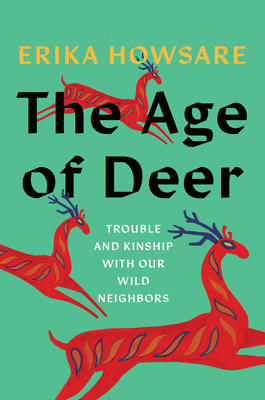
The Age of Deer by Erika Howsare

book cover

…deer…occupy a middle zone between …extremes of domestication and wildness. Far from tame, they are nonetheless experts at living with people, and in many ways, they actually prefer to share habitat with us. All across North America, as in many other parts of the world, we exist in intimate proximity to deer.

The FAA considers white-tailed deer more hazardous to U.S. civil aircraft than any other animal.

Many images might pop to mind when we think about deer. I am sorry to say that the first one in my tiny mind is the sad vision of road kill. The second is the sheer joy of spotting wild deer in woods, or yards, or, more grandly, in national parks, whether the white-tail native to my part of the world, the mule deer and caribou more prevalent in the west, and even moose. I cannot say I have seen reindeer in the wild, unfortunately. Many visits to the Bronx Zoo introduced me to a much wider range of cervids, the family to which deer belong, including the diminutive muntjacs.

description
Erika Howsare – image from her site

Erika Howsare has had more of a connection to deer than, I expect, most of us. She grew up in western Pennsylvania in a family that hunted. In fact, the Monday after Thanksgiving is an unofficial holiday in our state, with most schools, and many businesses closed due to expected high absenteeism. This is one of many foci of interaction between deer and people.

I’d had an inkling, even before writing the book proposal, that deer were involved in all manner of controversies, contradictions, and human strivings. That was what got me interested in them. But I didn’t know too many specifics. When I started researching, one of the first things I did was to set up news alerts on deer and several other related terms.

Within a week, I had a rough outline of some of the major roles deer play in our world. They are victims; they are pests; they are something to hunt as well as something to study and protect. They are the targets of culling operations and the objects of sentimental love. They are trophies and intruders. It was all there in the news cycle. – From the Lithub article

Thankfully, Howsare, a published poet, offers a lot more than the daily deer chyron.

I did start the book from a fairly cerebral place where I thought, “Oh yeah, great subject. Like, this will bring up all kinds of great questions, and I’ll be able to go down all these roads in terms of the research and make these points, and it’s gonna be a really great opportunity to dig into these intellectual questions.”
What I wasn’t expecting was how much it would change me as a person.
– from the Phoebe Journal interview

And a wondrous opportunity it proved. You will learn a lot about the human/deer connection, and a bit about deer behavior as well.

description
White tailed deer – image from PennVet – University of Pennsylvania

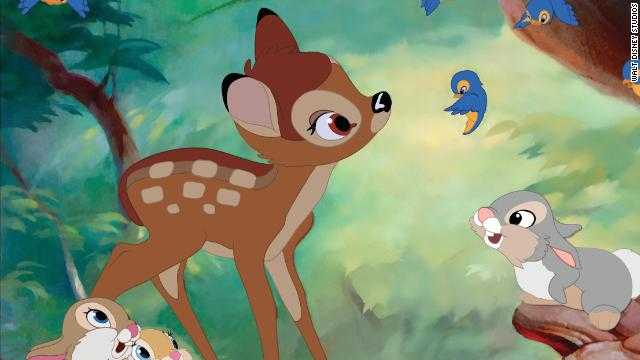
One thing to consider is just how long deer and humans have been interacting. Pretty much as long as there have been people, judging by the content of ancient cave art. They appear in all cultures, and are a rich presence in mythology worldwide. As our first-hand experience of deer is usually liminal, many have come to see deer as ambassadors of the wild world, crossing from theirs to ours, and maybe offering a route away from the world of living humans. Of course, for many of us there is an UR deer image that has been burned into our brains. Really, can you name any other deer this side of Santa’s team?

description
Bambi – image from Disney via KRCA.com

They are beautiful and offer us an image of wildland innocence. But for many they have become pestiferous. Consider having spent months planting and tending your beautiful back yard garden, only to wake one day to find that real-life Bambis and their kin have laid waste to all your work. There is also the carnage caused not just to deer but to people and their vehicles from collisions with deer. There are folks whose job it is to collect the bodies. Howsare spent time with one of them.

Deer have been a crucial source of food for people across the millennia, but also of a wide range of materials. Howsare gets trained in earth skills to find out how to make buckskin, and many other useful items formed from deer parts.

We usually think of reintroduction of wildlife having to do with trout, or other finned creatures. You may have heard of attempts to reintroduce predators, like wolves in Yellowstone. But the largest and most successful reintroduction in US history occurred in the early 20th century when deer, which had been driven near to extinction, were reintroduced in many parts of the nation.

description
Sweet Tooth – image from Netflix via BBC

Ok, this was not at all included in the book but I kinda hoped it would gain at least a mention, as it does speak to the closeness of our species.

Factlets abound. Did you know that deer can suffer from a chronic, deadly disease that we usually associate with cattle, chronic wasting disease? Or that maybe the notion of adorning rulers with crowns was a way of imitating the stag rack? You will gain an appreciation for the use of deer-based imagery in the film Get Out. There are plenty more.

One of the main points to be gained is seeing how deer are actually quite adaptable, and have managed to carve out an ecological niche at the perimeters of human population.

description
Moose – image rom Britannica

A survey course on cervid-sapiens connection makes for an entertaining, informative read on its own. But Howsare incorporates a personal journey into her narrative. Never a hunter, at least not one who shoots anything, she has enough personal connection to folks who do, relations, to want to gain a better understanding of the hunting culture and the rationales of those who kill deer. She looks at her own feelings about deer and hunting. Not all who hunt actually shoot. Hunting can be a group activity, with a diversity of roles, very reminiscent of our prehistoric ancestors. One very appealing element of this learning curve for Howsare was becoming more comfortable with being still, settling into a place and letting herself experience the environment, the moment, fully, a form of meditation almost.

She looks at some of the outrages associate with hunting as well. Like releasing or breeding deer in fenced areas to be killed by people fond of killing things, but not much interested in doing all the research and preparation that serious hunters undertake. Think Dick Cheney hunting quail.

My only gripe about the book is a petty one. I find that science/nature books always go down easier when the information is spiced with a bit of humor. No danger of that here. So, past my personal preferences, The Age of Deer is an easy thumbs up. You will learn a lot and gain a far greater understanding of the relationship between humans and cervids throughout history and our interactions today, finding yourself saying, whether aloud or internally, “I never knew that.”

In the Anthropocene, it seems that far too much of humanity has assumed the position of the prototypical you-know-what frozen in place as the headlights of global doom approach at increasing speed. Deer, at least, have an excuse for such behavior, as their woodland-creature-instinct, however misguided it might be on a paved road, is to become very still so an approaching predator might not see or hear them. Given their abundance on the planet, it is a strategy that has worked out well for them, despite the roadside carnage, as deer remain the last large wild animal in most places. The roaches and rats will not be alone after we are gone. Deer, icons of woodland beauty, are adaptable. They are survivors, and will be keeping them company.

If the American project was, in part, to make a pastoral landscape out of a wilderness, deer benefited from that project in a cultural sleight of hand. We thought of them as part of the wild, but we had misconceived them. Their secret was that they, like us—like squirrels, corn, apple trees, clover, ands sparrows—would flourish in our human garden.

Review posted – 03/22/24

Publication date – 01/20/24

I received a hardcover of The Age of Deer from Catapult in return for a fair review. Thanks, folks.

This review is cross-posted on Goodreads. Stop by and say Hi!

=======================================EXTRA STUFF

Links to the author’s personal, FB, Instagram, and Twitter pages

Profile – from Catapult
ERIKA HOWSARE holds an MFA in literary arts from Brown University and has published two books of poetry. She also worked in local journalism for twenty years, covering culture and environmental issues. She teaches writing and contributes reviews and essays to various national outlets. A native of Pennsylvania, she lives in rural Virginia.

Interviews
—–Poets & Writers – Ten Questions for Erika Howsare by staff
—–Flyleaf Books – Erika Howsare presents THE AGE OF DEER -Howsare reads from the book then takes questions – the sound quality is poor
—–Phoebe Journal – Hungry Deer and Pissed off Gardeners: An Interview with Erika Howsare by Ashlen Renner

Items of Interest from the author
—–The Atlantic – An Incurable Disease Is Coming for Deer – an excerpt – but requires a subscription
—–Orion – Skin to Skin with a Deer – excerpt
—–Virginia Audio Collective – If You See a Deer – a four-episode companion podcast
—–Lithub – Erika Howsare on Finding Inspiration in Headlines

Items of Interest
—–Be vewy, vewy quiet. – Mister Fudd may be hunting a different species, but his approach applies to deer as well
My review of Stephen Graham Jones’s – The Only Good Indian – a wronged elk on the warpath
—–My review of Elizabeth Marshall Thomas’s – The Hidden Life of Deer: Lessons from the Natural World
—–Gutenberg – The Yearling by Marjorie Kinnan Rawlings

Leave a comment

Filed under anthropology, Non-fiction, Science and Nature

Artificial by Amy Kurzweil

book cover

What makes a person the same person over time? Is it our consciousness, the what-it’s-like to be us? Is consciousness like a light that’s either on or off?

What remains of a person once they’ve died? It depends on what we choose to keep.

Amy Kurzweil is a long-time cartoonist for The New Yorker. If the name sounds a bit familiar, but you aren’t a reader of that magazine, it may be because her father is Ray Kurzweil. He is a genius of wide renown. He invented a way for computers to process text in almost any font, a major advance in making optical character recognition (OCR) a useful, and ubiquitous tool. He also developed early electronic instruments. As a teenager he wrote software that wrote music in the style of classical greats. No gray cells left behind there. He happened to be very interested in Artificial Intelligence (AI). It helps to have a specific project in mind when trying to develop new applications and ideas. Ray had one. His father, Fred, had died when he was a young man. Ray wanted to make an AI father, a Fred ChatBot, or Fredbot, to regain at least some of the time he had never had with his dad.

description
Amy Kurzweil – Image from NPR – shot by Melissa Leshnov

Fred was a concert pianist and conductor in Vienna in the 1920s and 1930s. A wealthy American woman was so impressed with him that she told him that if he ever wanted to come to the USA, she would help. The Nazification of Austria made the need to leave urgent in 1938, so Fred fled with his wife, Hannah. (He had actually been Fritz in Austria, becoming Fred in the states.) He eventually found work, teaching music.

Artificial: A Love Story is a physically hefty art book, a tale told in drawings and text. Amy traces in pictures her father’s effort to reconstruct as much of his father’s patterns as possible. To aid in the effort there was a storage facility with vast amounts of material from his life both in Austria and in America. She joins into the enterprise of transcribing much of the handwritten material, then reading it into recordings which are used to teach/train the AI software. It is a years-long process, which is fascinating in its own right. She also draws copies of many of the documents she finds for use in the book.

description
Ray Kurzweil with a portrait of his father – image from The NPR interview – Shot by Melisssa Leshnov

But there is much more going on in this book than interesting, personalized tech. First, there is the element of historical preservation.

I always understood my father’s desire to resurrect his father’s identity as being connected to two different kinds of trauma. One is the loss of his father at a young age in a common but tragic scenario, with heart disease. The other trauma is this loss of a whole culture. Jewish life in Vienna was incredibly vibrant. Literally overnight it was lost. The suddenness of that loss was profound, and it took me a while to appreciate that. My great-aunt Dorit, who died this past year at 98, said they were following all the arbitrary protocols of the Nazis to save all this documentation. Saving documentation is an inheritance in my family that is a response to that traumatic circumstance. – from the PW interview

Kurzweil looks at three generations of creativity, (Fritz was a top-tier musician. His wife, Hannah, was an artist. Ray was also a musician, but mostly a tech genius. Amy is a cartoonist and a writer.) using Ray’s Fredbot project as the central pillar around which to organize an ongoing discussion of concepts. In doing so, she offers up not merely the work of the project, but her personal experiences, showing clear commonalities between herself and her never-met grandfather. This makes for a very satisfying read. Are the similarities across generations, this stream of creativity, the impact not just of DNA, but of lived experience? Nature or nurture, maybe the realization of potential brought to flower by the influence of environment whether external (living in a place that values what one has to offer) or internal (families nurturing favored traits)?

description
Image from the book – posted on The American Academy in Berlin site

One could ask, “what makes us what are?” The book opens with a conversation about the meaning of life. But life is surely less determinative, less hard-edge defined than that. A better question might be what were the historical factors and personal choices that contributed to the evolution of who we have become?

description
Image from the book – it was posted in the NPR interview

Existential questions abound, which makes this a brain-candy read of the first order. Kurzweil looks at issues around AI consciousness. Can artificial consciousness approach humanity without a body? What if we give an AI a body, with sensations? Ray thinks that we are mostly comprised of patterns. What if those patterns could be preserved, maybe popped into a new carrier. It definitely gets us into Battlestar Galactica territory. How would people be any different from Cylons then? Is there really a difference? Would that signal eternal life? Would we be gods to our creations? If we make an AI consciousness will it be to know, love, and serve us? The rest of that catechistic dictat adds that it is also to be happy with him in heaven forever. I am not so certain we want our AIs remaining with us throughout eternity. As with beloved pets, sometimes we need a break. Are we robots for God? Ray thinks such endless replication is possible, BTW. Kurzweil uses the image of Pinocchio throughout to illustrate questions of personhood, with wanting to live, then wanting to live forever.

description
Every Battlestar Cylon model explained – image from ScreenRant

Persistence of self is a thread here. As noted in the introductory quotes, Kurzweil thinks about whether a person is the same person before and after going through some change. How much change is needed before it crosses some line? Am I the same person I was before I read this book? My skin and bones are older. But they are the same skin and bones. However, I have new thoughts in my head. Does having different thoughts change who I fundamentally am? Where does learning leave off and transition take over? Where does that self go when we die? Can it be reconstructed, if only as a simulacrum? How about experiences? Once experienced, where do those experiences go? These sorts of mental gymnastics are certainly not everyone’s cuppa, but I found this element extremely stimulating.

Kurzweil remains grounded in her personal experience, feelings, and concerns. The book has intellectual and philosophical heft, and concerns itself with far-end technological concerns, but it remains, at heart, a very human story.

As one might expect from an established cartoon artist who has generated more smiles than the Joker’s makeup artist, there are plenty of moments of levity here. Artificial is not a yuck-fest, but a serious story with some comic relief. It is a book that will make you laugh, smile, and feel for the people depicted in its pages. Amy Kurzweil has written a powerful, smart, thought-provoking family tale. There is nothing artificial about that.

I used to wonder if I could wake up into a different self. For all I knew, it could have happened every morning. A new self would have a new set of memories.

Review posted – 01/12/24

Publication date – 10/17/23

I received a hard copy of Artificial: A Love Story from Catapult in return for a fair review.

This review is cross-posted on my site, Goodreads. Stop by and say Hi!

=======================================EXTRA STUFF

Links to the author’s personal, FB, Instagram, and Twitter pages

Profile – from Catapult

AMY KURZWEIL is a New Yorker cartoonist and the author of Flying Couch: A Graphic Memoir. She was a 2021 Berlin Prize Fellow with the American Academy in Berlin, a 2019 Shearing Fellow with the Black Mountain Institute, and has received fellowships from MacDowell, Djerassi, and elsewhere.

She has been nominated for a Reuben Award and an Ignatz Award for “Technofeelia,” her four part series with The Believer Magazine. Her writing, comics, and cartoons have also been published in The Verge, The New York Times Book Review, Longreads, Literary Hub, WIREDand many other places. Kurzweil has taught widely for over a decade. See her website (amykurzweil.com) to take a class with her.

Interviews
—–NPR – Using AI, cartoonist Amy Kurzweil connects with deceased grandfather in ‘Artificial’ by Chloe Veltman
—–Publishers Weekly – Reincarnation: PW Talks with Amy Kurzweil by Cheryl Klein
—–PC Magazine – How Ray Kurzweil and His Daughter Brought A Relative Back From The Dead By Emily Dreibelbis
——LitHub – Amy Kurzweil on the Open Questions of the Future by Christopher Hermelin

Songs/Music
—–The Jefferson Airplane – White Rabbit– referenced in Chapter 6

Items of Interest from the author
—–Artificial: A Love Story promo vid
—–The New Yorker – excerpt
—–New Yorker – A List of Amy Kurzweil’s pieces for the magazine

Items of Interest
—–Ray Kurzweil on I’ve got a Secret
—–A trailer for Transcendant Man, a documentary about Ray Kurzweil
—–WeBlogTheWorld – Amy interviews Ray in a Fireside Chat at NASA – sound is poor. You will need to ramp up the volume to hear – video – 23:07
—–Wiki on Battlestar Galactica

Leave a comment

Filed under AI, American history, Artificial Intelligence, Bio/Autobio/Memoir, biography, computers, History, Non-fiction

A Taste for Poison by Neil Bradbury

book cover

… a chemical is not intrinsically, good or bad, it’s just a chemical. What differs is the intent with which the chemical is used: either to preserve life – – or to take it.

Within the annals of crime, murder holds a particularly heinous position. And among the means of killing, fewer methods generate such a peculiar morbid fascination as poison. Compared with hot blooded spur of the moment, murderers, the planned and cold calculations involved in murder by poison, perfectly fit the legal term malice aforethought. Poisoning requires planning and knowledge of the victim’s habits. It requires consideration of how the poison will be administered. Some poisons can kill within minutes; others can be given slowly, over time, gradually accumulating in the body, but still leading inexorably to the victim’s death.

If you are a fan of True Crime, if you are a fan of TV procedurals, if you are a fan of murder mysteries, A Taste for Poison is a must read. You will be much better prepared to keep up with the medical examiners in all venues when you can recognize the victims’ symptoms, at least if the book or show gives you a chance to try figuring it out for yourself before the truth is revealed.

Neil Bradbury grew up fascinated by murder mysteries and poisons. He is a graduate of the University of St. Andrews in Scotland, and the University of Wales School of Medicine, with degrees in Biochemistry and Medical Biochemistry. Although he grew up in the UK, he now lives and works in Illinois, USA, where he’s a scientist, teacher and writer. He also gets to play with nasty chemicals every day (during scientific experiments of course). – from his site

description
Dr. Neil Bradbury – image from his site

He has carefully mixed his interests and profession to produce a fun, informative look at poisons through the ages. One might wonder if he wrote the book using a poison pen. I wouldn’t, but some might. He includes looks at the following: Aconite, Arsenic, Atropine, Chlorine, Cyanide, Digoxin, Insulin, Potassium, Polonium, Ricin, and Strychnine. None would qualify as pretty, although cyanide does gift its victims with a lovely ruddy complexion.

One of the primary themes of the book is that poisoning is the misapplication of healing pharma to dark purpose. Think water. Necessary for human survival, comes in many forms. These days it forms a base layer for a surface layer of every imaginable flavor, nifty literary tool too, right? But water-boarding, or tsunami? Not so much.

Bradbury goes through the medically helpful aspects of multiple poisons, then shows how they have been used to kill, who used them, on whom they were used, how the crimes were figured out and prosecuted, and what happened to the poisoners. In doing this he provides us with a history of when it became possible to diagnose (detect) each poison as a murder weapon, (of particular interest in historical mystery dramas) and details the biology of how each works its dark arts inside the human body.

Sadly, for those with a poison-based homicidal urge, the subjects of Bradbury’s reporting, for the most part, were tried and convicted. And today, in the absence of governments protecting state-sponsored poisoners, very few such crimes go unpunished.

You are unlikely to recognize the names here, at least the names of the killers, attempted killers, and victims, but as with many in the history of medicine, that is not unusual. Nevertheless, the details are here, as many crimes are examined.

Bradbury offers a fun collection of historical odds and ends, like how the telegraph, newly in service, foiled the escape of one poisoner. Or how one particular poison may have been at the root of vampire mythology, or how strychnine was used as a pick-me-up in the early 20th century, or the surprising cost of manufacturing polonium, and even a new take on some Van Goh masterpieces.

The only downside for me was that I tended to get a bit lost in the sections detailing the biological and chemical workings of these substances inside the body. I would not say they are extremely technical. I would say that I was always complete garbage at chemistry, and not a whole lot better at biology, so may have nurtured a disaffection that is unlikely to affect you the same way. There is some humor in the book, but not a whole lot.

Still, As a consumer of a considerable amount of crime-based entertainment, I was particularly drawn to this book. The how-dun-it often is as important as the who, and by detailing victim symptomology as well as poisoner and investigator methodologies, we can all get a greater appreciation for the challenges entailed. I may not have had the right chemical receptors for the scientific details, but there is plenty of intel in here that will enhance your engagement in crime shows, and teach you a bit about the history of these substances, many of which exist in common parlance. So, it may or may not be for you. I guess you will just have to pick your poison.

…in France in the late 1600s, the effectiveness of arsenic and disposing of wealthy relatives who had the temerity to remain alive, was so widespread that it gained the name Poudre de succession, or “inheritance powder.”

Review posted – 11/17/23

Publication dates
———-Hardcover – 2/1/22
———-Trade paperback – 8/15/23

I received a paperback of A Taste for Poison from Griffin in return for a fair review. I am happy to report that the tingling feeling in my hands, which began after I first began to read the book, soon abated. Thanks, folks, and thanks to NetGalley for facilitating.

This review is cross-posted on my site, Goodreads. Stop by and say Hi!

=======================================EXTRA STUFF

Links to the author’s personal and Goodreads author pages

Alas, as far as I was able to find, Bradbury’s on-line presence is slender, limited to his personal site and GR author page. Maybe laying low after having taken care of some personal rivals?

Interview
—–Murder & MayhemTalking Poisons with Dr. Neil Bradbury

Items of Interest
—–Listverse – Top 10 Remorseless Poisoners That History Almost Forgot by Radu Alexander
—–Philadelphia Inquirer –A Pennsylvania nurse is accused of killing 4 patients, injuring others with high doses of insulin by Bruce Shipkowski and Brooke Schultz, Associated Press
—–Wikipedia – List of Poisonings through history – from 399 BC to 2021 – a nifty list

Leave a comment

Filed under History, Non-fiction, Science and Nature, True crime