Tag Archives: read

Unworld by Jayson Greene

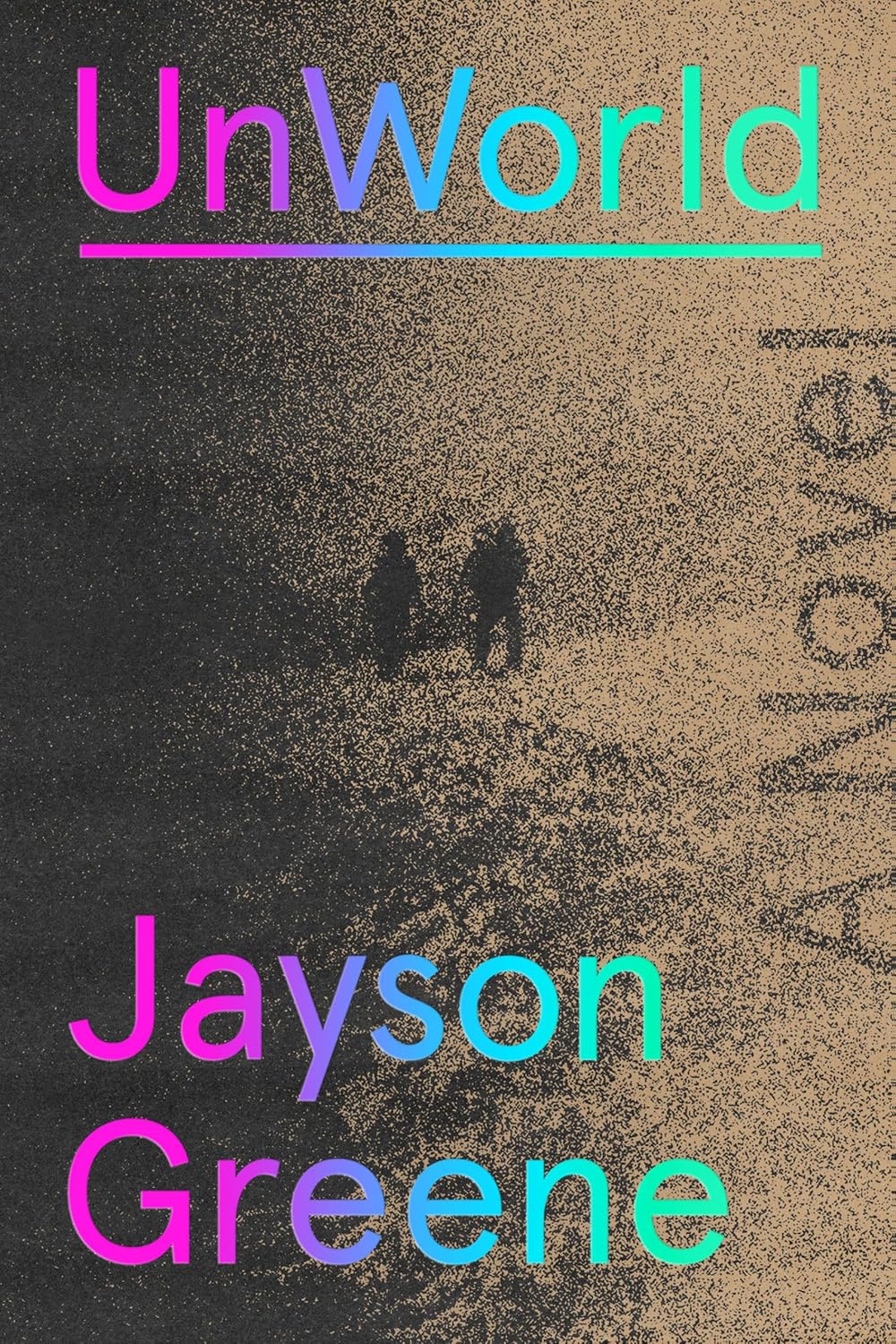
book cover

At that moment, I understood several things about upload consciousness in rapid succession. Her intelligence wasn’t able to filter out or compartmentalize grief. She had no neurochemical responses flooding in to numb her pain, to soften its impact. A mind was eternal, unforgiving; a brain was a soft, plump cushion. Loss needed a brain.

I was a grieving mother, for Christ’s sake. My pain was meant to crack the earth. And here I was, not even half a year later, one of grief’s private citizens again. Were people’s memories really so short? Or was it just that you could never stop performing—falling to your knees, rending your garments—if you wanted to keep their attention? I guess it was only the people eager to make themselves a burden who reaped the rewards.

Unworld is a tale of heart-crushing grief that raises a vast array of questions about the nature of our existence. It presents as a twenty-minutes-into-the-future sci-fi look at things that may be near at hand, but which have yet to fully arrive.

We share much of our existence with the digital world, posting images on line, communicating via e-mail, text, et al. But if you are like me, you will struggle to remember considerable chunks of what has been communicated. What if you could get a personal recorder that kept track of everything for you, ready to play it back whenever you need it? Could have used that when I managed to wander away from my baseball glove as a pre-teen. It took a long time to save up enough to replace it. Or later in life, when faced with the hated, hostile question, “How could you not remember?” I definitely get the appeal. But the benefit comes at a cost. The AI that you just invited into your head gets to see everything. It becomes the keeper of your memories. In the patois of the novel this is called an upload, and you are the tether to which it synchs. You may have the option of evicting your digital tenant, but how many people really would? And what if your upload begins to have a yearning for independence? They are comprised of your memories and experiences, after all. Can they make off with that to form their own private being? What if they reside in multiple tethers (sequentially) over time? You can see where this might get complex.

description
Jayson Greene – Image from WAPO – photo by Ebru Yildiz
.
But the story is easier to traverse than that. There are four main characters, well, four from whom we hear. The central person around whom the story circles is Alex, a teenager, who may or may not have committed suicide. We are given four POVs, beginning with Anna, Alex’s mother, who is crushed and confused. Cathy teaches a class called Applied Personhood Theory. Sam(antha) is a teen a bit older than Alex. They had been friends, and had been working on a film project together. Aviva is the upload. We get a second take from Anna to close out the tale. The Alex we get to know is the sum of their memories and impressions.

But then, one could as easily say that the story revolves around Aviva. She is significantly part Anna. But she also has a disembodied relationship with Alex, and thus relates to Sam as she and Alex work on their project, and spends time as an upload in someone else as well.

It is unclear if Aviva is a menace, a predator of some sort, an artificial enhancement, an independent person, a fusion of herself with the people with whom she has synched, or what. She is getting closer to Alex and thinks, Wake up, I wanted to scream at her. (Anna) I am the ogre from a fairy tale. I am the cuckoo bird who kicks the real mother out of the nest to assume her place.

You could go through this book thinking about just who these characters are. Alex clearly has significant issues, enough to make him want to escape his own skull, maybe find release in a digital realm. Anna cannot find an escape from her grief, from the loss of her son, separation from her upload, the shakiness of her marriage. Can she be a whole person on her own? Cathy has had issues of her own. A drug addict earlier in her life, she is looking for something in an illegally obtained upload, some understanding of a real experience that has been purely theoretical to her so far. Sam is the stable one of the lot, struggling with the loss of her friend without ever really knowing why he had died. And Aviva’s construction is the most fraught of all, dependent on her tether(s) for most of her memories and sensations, but yearning to be independent, truly existing on multiple planes.

It is easy to let theoretical peregrinations overwhelm the emotion of the story. But there is plenty of rank human emotion on display as well. Anna’s loss is gut-wrenching. Greene knows something about the experience of losing a child. He published a memoir in 2019, Once More We Saw Stars, in which he writes about recovering from the accidental death of his two-year-old. Aviva may lack the physical tools that humans possess to manage our high-end stress, so her inability to handle strong emotion is understandable. As is Alex’s panic at a sudden new level of overwhelmingness.

In addition to tapping into your feelings UnWorld generates plenty of confusion. More questions are raised than answered, and those questions are the sort that will stick in your head for a while, whether or not you install a special chip behind your right ear.

“Do you feel how shitty it is to be encased in a brain, when you sync with Mom? It’s got to be like going from, like, this wide-open vast universe to locking yourself in a closet. If I were you, I’d never want to come back.” “Actually,” I said, “when I go too long without syncing with your mom, everything is painful and more difficult.” He considered this. “What if you were cut free?” he asked. “Where could you go?” I hesitated. “That’s difficult to answer, Alex,” I said. “What tethers me to your mom is pretty powerful—love, family, history. Cutting it would be severely painful. I could go anywhere, I guess, and listen to anyone’s anything, but who would I be?”

Review posted – 07/18/25

Publication date – 06/17/25

I received an ARE of Unworld from Knopf in return for a fair review. Thanks, folks, and thanks to NetGalley for facilitating. I can turn this thing off now, right?

This review is cross-posted on Goodreads. Stop by and say Hi!

=======================================EXTRA STUFF

Greene’s Instagram page

Interviews
—–Dad Talks
Dad Talks #8 : Jayson Greene By Michael Venutolo-Mantovani – This was for Greene’s previous book Once More We Saw Stars, but relevant to this book as well
—–Circulating Ideas – Jayson Greene – Unworld – with Steve Thomas
—–Books Are Magic – Jayson Greene: UnWorld w/ Mattie Lubchansky video – 46:25 – Greene reads an excerpt to 10:00, then interview

Item of Interest
—–Twenty Minutes into the FutureMax Headroom was a 1987 satirical sci-fi series that had as its tagline “twenty minutes into the future.” The phrase came to be used for any sci-fi that was set in the short-term near-future.

Leave a comment

Filed under AI, Fiction, Literary Fiction, Science Fiction

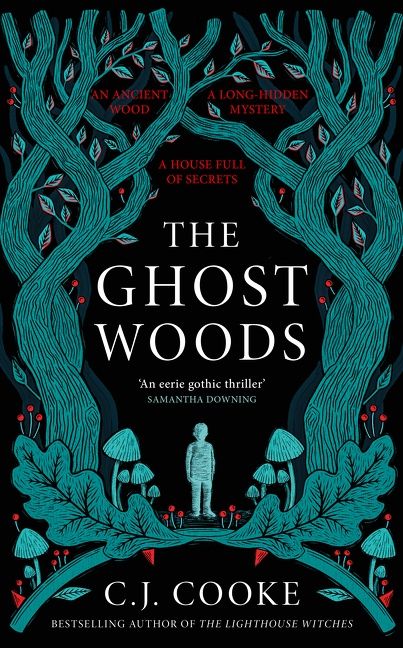
The Ghost Woods by C.J. Cooke

book cover

Oh God, there it is, lit up by the car’s headlights. Four pointy turrets and dark stone walls laced with red ivy. It looks like Dracula’s holiday home.

Something unspeakably evil is stalking the grounds of Lichen Hall.

Two women, from different backgrounds, at different times, (1959 and 1965) find themselves in the same position, pregnant without a mate in a period in which that was not considered socially acceptable. Such women were often shunted off to mother-and-baby homes. You may have heard of the Madgalene laundries of Ireland. They were awful, and were not restricted to the Emerald Isle. But Mrs. Whitlock’s Lichen House is soooooo much worse. There is plenty of strangeness about the place and some of its inhabitants, well beyond garden-variety human unpleasantness.

description
C.J. Cooke – image from Curtis Brown

In 1959, seventeen-year-old Mabel Anne Haggith finds herself five months deep in a family way, despite never having had sex. Her mother and stepfather have sent her off to be seen to, out of sight of the neighbors. She is truly a clueless innocent. She feels that there are ghosts in her body. In 1965 Pearl Gotham, twenty-two, a nurse, is likewise facing emerging problems, an unreliable bf among them. Both are taken in by the welcoming, if somewhat chilly, Mrs. Whitlock. The house seems likelier to generate nightmares than comfort to women in need. In fact, it has much in common with the abusive mother-and-baby institutions of its time. More about that later.

Mabel is very much a pleaser, eager to fit in, even when hazed by those already there. She is shy and unsure of herself, working class, uneducated, and for all intents and purposed alone in the world. Until she finds a friend in another young woman there, Morven.

Pearl arrives with much more confidence. A nurse, she is aware of the seriousness of the lack of real medical care at Lichen House. She is also much more worldly, more socially able, not just with the other young women but with Mrs. Whitlock as well. In addition she is charged with tutoring Mrs. Whitlock’s decidedly odd grandson.

Cooke offers a cornucopia of detail that gives the creepiness texture and provides a constant source of surprising revelations. There are mysteries to be sussed out. The overarching imagery of the story has to do with fungi. The house itself is seriously infested with molds of various sorts, and is rapidly sinking into decrepitude.

I follow her gaze to an enormous mass of yellow fungus creeping up the side of a wall. What looks like a series of giant ears are bulging from the gap in the doorframe, right down to the floor. As I draw my eye across the length of the vestibule I spot more fungus spewing from cracks in the tiles and the window frames. The vaulted ceiling is sullied by black blooms of mold. Black frills poke out from the wooden steps at my feet. And at the end of the staircase, a plume of honey-gold mushrooms nub out from the newel post, perfectly formed. It makes me feel physically ill.
“What happened?” I ask, burying my mouth in the crook of my arm.
She sighs wearily. “An infestation of fungus. I still can’t quite believe it. This house has been standing for four hundred years. It has withstood bombs, floods, and a bolt of lightning.” She folds her arms, exasperated. “Fungus can eat through rock, can you believe that?”
“Good God,” I say.

The woods manifest spots of light that can lure one in. Mrs. Whitlock celebrates every birth with a puff of fairy dust toward the newbie. Mr. Whitlock maintains a Micrarium, a sort of mini- museum, a cabinet of curiosities focused on fungi. He makes a big deal about cordyceps, which may be familiar to fans of The Last of Us.

There is plenty of strangeness. Who posts a “Help Me” poster in one of the rooms? Who is that little boy Pearl sees dashing about, the one the other young women deny having seen? Mrs. Whitlock seems particularly averse to making use of the medical profession, forcing her guests to give birth in the house, with only the assistance of the women living there. What’s up with that? Mr. And Mrs. Whitlock were reputed to have had a son who died in an auto accident, but his body was never recovered. Huh? Who is the mysterious, threatening figure in the woods?

“So there’s a story about a witch who lives in the ghost woods out in the forest.”
“I’ve heard of that,” I say. “Mrs. Whitlock mentioned it. At least, the ghost woods part. I don’t believe she mentioned a witch.”
“Well, I heard about it when I first came here,” Rahmi says, and I see Aretta give her a look, as though to warn her not to say more. Rahmi notices, and bites back whatever she was going to say. “I’ve seen her,” she says guardedly.
“Who, the witch?” I say, and she nods. I study her face, expecting her to say “Boo!” or something, revealing it all as a big joke.
“Well, then,” I say, raising my glass of water as though it is a crisp Chardonnay. “I shall seek out this witch in the ghost woods. A little bit of spookiness will spice this place up nicely.”
“Don’t,” Rahmi says, though I’m not sure how much I should take this at face value. “It might be the last thing you ever do.”

As the story goes, Nicnevin was a witch who had lain with a girl who had fallen asleep in the woods. When the girl gave birth, it was to a monstrosity, and it was killed. Nicnevin made the family mad before killing them, then took over the family hall to be a place of rot and ruin, naming it Lichen Hall.

In addition to the ample gothicness of the novel, there is plenty of character and plot content to keep you flipping those pages, and maybe loading up on bleach. Both Mabel and Pearl are sympathetic. What will happen with them, with their babies? What kind of danger are they in? You will definitely care.

There is also plenty of payload beneath the overlaid story. In an image of how women were treated in the 50s and 60s, the awfulness of Mrs. Whitlock’s Lichen House offers a vibrant image of a decaying institution, controlled by ill-meaning people, enforcing wrong-headed social norms, and crushing any people or behaviors falling outside the prescribed lanes. It is a moving, powerful, effective tale.

The Ghost Woods is, first and foremost, a gothic novel, the last installment of a thematic trio that considers our relationship with nature, motherhood, memory, and trauma (the previous two installments are The Nesting and The Lighthouse Witches). I suppose the question could legitimately be asked whether motherhood, gay rights, reproductive rights, and gender inequality have any place in a gothic novel. For me, the gothic is exactly the space to explore darkness of any kind, and the practice of othering is one of the darkest corners of human history. – from the Author’s Note

Review posted – 06/27/25

Publication date US trade paperback – 4/29/25
First published UK – hardcover – 10/13/22

I received an ARE of The Ghost Woods from Berkley in return for a fair review and a pinch of fairy dust. Thanks, folks, and thanks to NetGalley for facilitating.

This review is cross-posted on Goodreads. Stop by and say Hi!

=======================================EXTRA STUFF

Links to Cooke’s personal, FB, Instagram, and Twitter pages

Her personal site was strangely unavailable when I was testing this. I am hoping it has been restored by the time you see this.

Profile – from GR

C.J. (Carolyn) Cooke is an acclaimed, award-winning poet, novelist and academic with numerous publications as Carolyn Jess-Cooke and Caro Carver. Her work has been published in twenty-three languages to date. Born in Belfast, C.J. has a PhD in Literature from Queen’s University, Belfast, and is currently Reader in Creative Writing at the University of Glasgow, where she also researches the impact of motherhood on women’s writing and creative writing interventions for mental health. Her books have been reviewed in The New York Times, The Guardian, Good Housekeeping, and the Daily Mail. She has been nominated for an Edgar Award and an ITW Thriller Award, selected as Waterstones’ Paperback Book of the Year and a BBC 2 Pick, and has had two Book of the Month Club selections in the last year. She lives in Scotland with her husband and four children.

Interviews
—–Rachel Herron – Ep. 208: CJ Cooke on the Thrills of Contemporary Gothic Horror – video – 33:29 – begin at 8:10 – not specific to this book, but interesting
—– Murder by the Book – – C.J. Cooke in Conversation with Rachel Harrison

My review of prior work by Cooke
—–The Lighthouse Witches).

Songs/Music
—–The Beatles – I Want To Hold Your Hand – referenced in Chapter 2

Item of Interest from the author
—–Insta – CJ holds forth on the mother-and-baby homes theme from The Ghost Woods on her insta page
—– Google Play Books – Excerpt – audio – 10:36

Items of Interest
—–Small Things Like These by Claire Keegan – a great novel re the Magdalene laundries
—–Wiki – Magdalene laundries in Ireland
—–What Moves the Dead – another novel involving fungi

Leave a comment

Filed under Feminism, Fiction, Horror, Suspense

How to Win Friends and Influence Fungi by Chris Balakrishnan, Matt Wasowski

book cover

Nerd Nite is an event usually held at a bar or other public venue where usually two or three presenters share about a topic of personal interest or expertise in a fun-yet-intellectual format while the audience shares a drink. It was started in 2003 by then-graduate student (now East Carolina University professor) Chris Balakrishan at the Midway Cafe in the Jamaica Plain neighborhood of Boston. In 2006 Nerd Nite spread to New York City, where Matt Wasowski was tasked with expanding the idea globally. – from Wikipedia

Be There and Be Square – Nerd Nite logo

There was a nerd magazine in 2012, a Youtube presence, and occasional podcasts. This is the first Nerd Nite book.

Misophonia can attach itself to any repetitive sound, but the most common ones are things, like chewing, breathing, sniffing, and throat clearing. It can be hard for sufferers to talk about because of how difficult it can be to tell someone politely that the sound of them keeping themselves alive is repulsive to you.

There are 71 entries, taken from live presentations done by the authors of each piece. (TED talks for those with short attention spans and a need for alcohol?) Nerd Nites have been held in over 100 cities across the globe. The material here covers eleven scientific areas. (see below) All the entries are brief, so if one does not appeal to your mental tastebuds hang on a couple of minutes for the next one, or just skip past.

description
Chris Balakrishnan and Matt Wasowski – editors – image (from some time ago) from Facebook

You can digest this book a few morsels at a time, and not have to worry about the fate of a fictional hero or put-upon victim. Nope. The heroes here are the scientists, the presenters. One of the great failings of popular science books, IMHO, is the absence of humor, or poor attempts at it. Not here. There are many moments in this one, and humor in almost all of them. That made me very happy. Of the 71 pieces, almost all are very pop-sciency, understandable by most readers, even me. There were only one or two that made my head hurt. It makes an excellent bed-side read. It was an upstairs book for me, to be read before nodding off, hopefully. Sometimes that takes a while. This is not an all-inclusive list of the articles, but lets you know what might be in store in its eleven sections

1 – Creature Features – on weird animals
2 – Mmmm…Brains – strangeness with how we learn and adapt
3 – Bodily Fluids – on things like coping with poo in space. (In space, no one can hear you fart?)
4 – Doing It – like it suggests, on sex, human and non-human, (no, not with each other. Don’t be weird.)
5 – Health and (un)Wellness – human smells (See Paul Giamatti in The Holdovers) – on therapeutic maggots, adolescent medicine, et al
6 – Pathogens and parasites – on birds, bacteria in birds, zombies, the scotch tape test (don’t ask), viruses
7 – Death and Taxes – mass extinction, cancer, algae
8 – Space, the Big and the Beautiful – ignorance, asteroid avoidance and use, life on Europa?, artificial gravity, studying a pristine meteorite, Webb telescope
9 – Tech (High and Low) – GMOs, dating app, human powered flight, cyborging humans, domesticating bacteria, nuclear fusion
10 – Math is fun – a seminal experiment, the math of gossip, the golden ratio, infinity, cryptography
11 – Careers – things removed from dogs, useless inventions, myths about death, animals CSI, amputations, fermentation, flames.

there are approximately 100 trillion microorganisms (mainly bacteria), representing as many as 30,000 different species, living in every crevice, nook, and mucosal cranny of your body that you can imagine.

I would include a list of my favorite articles, but it would wind up as long as the parts list above. But ok, because I have the sense of humor of a twelve-year-old, the one that made me laugh the most was To Boldy Go: Dealing with Poop and Pee in Space. Apollo 10 astronauts were gifted with the visual, and no doubt olfactory, treat of a turd meandering about in their capsule. This begins a talk about how one handles bodily waste in zero G. Another on bladder control, or the absence thereof, was sidesplitting. Others, on camel spiders and hangovers, generated a fair number of LOLs.

Some were fascinating, like one having to do with making a brain on a chip. (Can it be served with Salsa?) The pieces on bacteria and their importance to human life, heck, to all life on Earth, were fascinating.

There is plenty of weirdness, about diverse forms of milk, the proper use of maggots in healing, zombie parasites, asteroids, artificial gravity, and here we go with another bloody list. Sorry. Take my word, there is a wealth of material here that will broaden your knowledge base, and serve up plenty of conversational hors d’oeuvres for cocktail party chatter.

It worked quite well for me. There is a downside, though. Because all the articles here are very short, one is often left hungry for more. On the other hand, that limitation might provoke you to sate that desire with a bit of extra research, which is always a good idea. So, never mind.

If science piques your curiosity, if learning new and diverse things makes your heart race, or if you like to laugh, then this book is for you. How to Win Friends and Influence Fungi is a very filling read, one nibble at a time.

Review posted – 06/14/25

Publication dates
———-Hardcover – 02/01/24
———-Trade paperback – 11/04/25

I received a hardcover of How to Win Friends and Influence Fungi from St. Martin’s Press in return for a fair review. Thanks, folks.

This review is cross-posted on Goodreads. Stop by and say Hi!

=======================================EXTRA STUFF

Author/Editor links

Chris Balakrishnan – Program Director at the National Science Foundation – His personal and FB pages
A list of his articles

Matt Wasowski – Director of New Business and Product Development, Events at SAE International – His FB, LinkedIn and Twitter pages

Items of Interest from the authors (really editors)
—–Soundcloud – excerpt – 5:01
—–Birdsong: How the Twittering Set Learns to Speak
—–“Nerd Nite Published a Book!” by Matt Wasowski – Nerd Nite Austin 155, January 2024

1 Comment

Filed under Non-fiction, Psychology and the Brain, Science and Nature

Something in the Walls by Daisy Pearce

book cover

… just after Christmas, Alice Webber started to get sick. She complained of pains in her sides like needles being pressed there. When they lifted her shirt, there was a pinprick rash and blood welling up as if the skin had been broken. A few days later she started vomiting. By this point Alice was too weak to get out of bed so her mother put a bowl beside it. When she came to empty it, she found watery bile and clots of black hair, like you’d pull out of a plughole. Another time Alice coughed up a handful of sewing pins bent into strange shapes. She developed a fever which made her start seeing things. She got delusional.”
“In what way?”
“Alice told her parents that a witch was spying on her through the chimney breast. She said the witch had a black tongue and her face was ‘all on upside down.’

“She was saying such odd things. At school, then here at home. Sometimes it was like she was listening to music you couldn’t hear, you know? I’d catch her just staring at the fireplace and her lips were moving but no sound was coming out. When I asked her what she was doing, she said”—here Lisa sighs, fretful and ill at ease. It’s clear she isn’t comfortable talking about this—“she said that the dead wanted her to open her throat.”

When Sam Hunter and Mina Ellis pull up at 13 Beacon Terrace in Banathel, an English backwater, there is a crowd gathered. Mostly people wanting something from the girl inside. They seem to think she can communicate with the dead, and there are people with whom they would love to reconnect.

description
Daisy Pearce – image from her site

Sam is a reporter who specializes in debunking superstitious claptrap and fraud. Mina is a recent graduate in child psychology. Sam had asked her along to offer an evaluation. Well, there is certainly something off happening at the Webber household

Alice Webber has tales to tell. (She’s the girl you see giggling with her friends at the back of the bus or fooling around in the arcades. Normal. Unexceptional.) She believes there is a witch living in the walls of her bedroom. She can tell because she sees the witch’s eyes looking at her through gaps in the brick chimney. It began when a group of (not really) friends play a mean trick on her at a supposedly haunted house. Now she hears and speaks in voices.

For a moment I think she is speaking—I can see her shoulders twitch, her mouth slowly moving—but the voice I hear is slurring and thick, heavy. Like a throat full of molasses. It is a language I don’t recognise, Germanic maybe. The words spread like a ripple, like oil on water, dark and tainted. It fills me with something icy and unknowing and I taste the bitterness of bile in the back of my throat.

Both Sam and Mina (“It’s my dad. He took my mother to Whitby Abbey while she was pregnant with me. My poor brother narrowly escaped being called Van Helsing.”) have arrived with significant emotional baggage. Sam lost his seven-year-old daughter, Maggie. Mina lost her brother, Eddie, when they were kids. Both Mina and Sam hold out hope that they can somehow reconnect with their lost ones, maybe reduce the guilt they both feel. Is there any chance Alice can actually help them? Alice may look like an average teen with professional aspirations that end at the beauty salon, but what if there is something operating through her?

The novel has a feel of both contemporary spook story and a folk horror tale, rich with back-country superstition, practices, and beliefs. Banathel has a long history of belief in witches, and a rich supply of hagstones everywhere you look. It is reminiscent of works like Tom Tryon’s novel Harvest Home and the 1973 horror classic, The Wicker Man, reliant on deep rural isolation.

The tension ramps up with every strange new event, encouraged by the persistence of contemporary doubt, ancient superstition, the growing crowd and its increasingly threatening regard for the girl. Do they want to help her or use her, or do they want something else? In addition, while there is a mystery in every horror tale, there is also a tension between where magical manifestations leave off and human agency steps in. Ditto here.

While it certainly seemed fun for Mina to have such a nominal root in classic horror, (a pearl among women) it did not seem to me that enough was done with her nifty name. And for a psychologist to be entangled with someone so clearly wrong for her was disappointing. (Although I suppose many of us have had that experience.) As for seeing someone looking through gaps in bricks, did no one consider maybe a bit of plaster, spackle, or poster of a favorite musician to cover the spaces? Or maybe hiring a handyman named Bert to have a go at clearing it out?

On the other hand, the lovely details of dark manifestation that Pearce weaves into her tale, the sights, sounds, and textures, add that frisson that every good horror novel needs. The overarching heat that bears down on all provides another layer of dread. It might even enhance the feel of this book for readers to take it on in July.

I have a particularly high bar for fright. It is a rare horror novel that keeps me up at night. There are real-world stresses and manifestations of evil that offer that service quite happily. Something in the Walls came close, but caused no lost zzzzzzzs here. Not to say it will not for you, who have a more usual receptivity to such things. It did, however, offer an appealing lead, a tantalizing mystery, a colorful portrait of a tucked-away place, and kept up a brisk tempo.

Most witch hunts are a bad idea, but it might be a better one to track down Something in the Walls. There may be a thrill or two just lying in wait for you.

If you gaze long enough into an abyss, the abyss will gaze back into you. – Friedrich Nietzsche

Review posted – 4/4/25

Publication date – 2/25/25

I received an ARE of Something in the Walls from Minotaur in return for a fair review, and my agreeing to get the hell out of their chimney. Thanks, folks, and thanks to NetGalley for facilitating.

This review is cross-posted on Goodreads. Stop by and say Hi!

=======================================EXTRA STUFF

Links to Pearce’s personal, Instagram, and Twitter pages

Profile – from her site

Daisy Pearce was born in Cornwall and grew up on a smallholding surrounded by hippies. She read Cujo and The Hamlyn Book of Horror far too young and has been fascinated with the macabre ever since.
Daisy began writing short stories as a teenager and after spells living in London and Brighton she had her first short story ‘The Black Prince’ published in One Eye Grey magazine. Another short story, ‘The Brook Witch’, was performed on stage at the Small Story Cabaret in Lewes in 2016. In 2015 The Silence’ won a bursary with The Literary Consultancy. Later that year Daisy also won the Chindi Authors Competition with her short story ‘Worm Food’. A further novel was longlisted for the Mslexia Novel Award…Daisy currently works in a library where she stacks books and listens to podcasts on true crime and folklore.

Interview
—–Bloody Good Reads – Chapter 109 – Daisy Pearce – audio – 38:38 – on writing what she loves

Items of Interest from the author
—–Crime Reads – DAISY PEARCE ON POLTERGEISTS, MISOGYNY, AND COMING OF AGE IN A FRACTURED WORLD
—–Short story – The Brook Witch – linked from her website
—–Short story – The Spirit of Christmas – linked from her website

Leave a comment

Filed under Fantasy, Fiction, Horror, Mystery, Thriller

Toto by A.J. Hackwith

book cover

Every dog has the Growl in it, no matter how big or little, how scruffy or cute, how pampered, old, or toothless. Every dog has in the first wolf barely coaxed to a campfire. Maybe we never have a chance to use it in our kind lives, and our humans would never suspect. But if we do, it’s because none of us, not a single pup, has forgotten the first campfire. And though we have taken on many jobs for our humans since then, there is one that is summarized in the Growl.
This One Is Mine to Protect

Ninety percent of magic is public opinion.

I’ve a feeling we’re not in Kansas anymore. Well, after animal control had tried taking Toto, maybe that is not a bad thing.

description
A.J. Hackwith – image from her site – shot by Karen Osborne.

The Wizard of Oz is arguably the first modern American fairy tale, and Dorothy one of the first prototypes for the army of empowered, female YA protagonists we have today. And growing up as a rural girl in Nebraska—one hop north of Dorothy’s Kansas—it’s no surprise then that I was desperately obsessed with the story. I always wanted to find the rainbow, yellow brick road, or magic slippers that would take me somewhere else. I always wanted to pay homage to Oz, and as a lifelong dog lover, it felt natural that Toto’s perspective was the way into a whole new view of the classic story. – from the Writers Digest interview

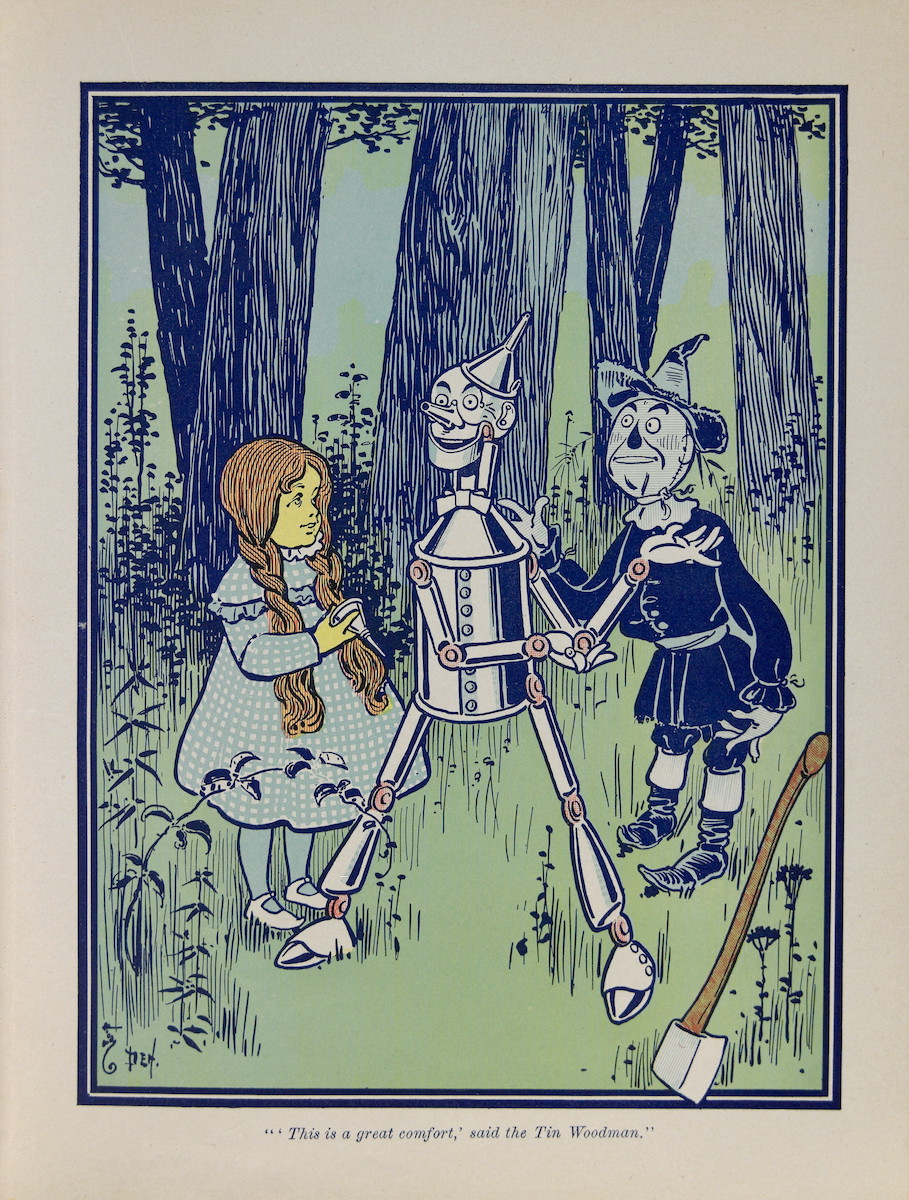
Hackwith has quite a bit of fun reimagining the OZ we all know. Dorothy is a contemporary teen in a hoodie, with a smartphone, but she is still pure of heart. The Scarecrow is much as he was in the film. The Tin Woodsman, Nick Chopper, is a self-made construct of impressive stature and physical capacity, (Baum had written a bit of back story about him. See EXTRA STUFF for this) with a vocabulary reminiscent of Groot. He is accompanied by a bad-ass sister, a knight, (Lettie) who is not at all metallic.

description
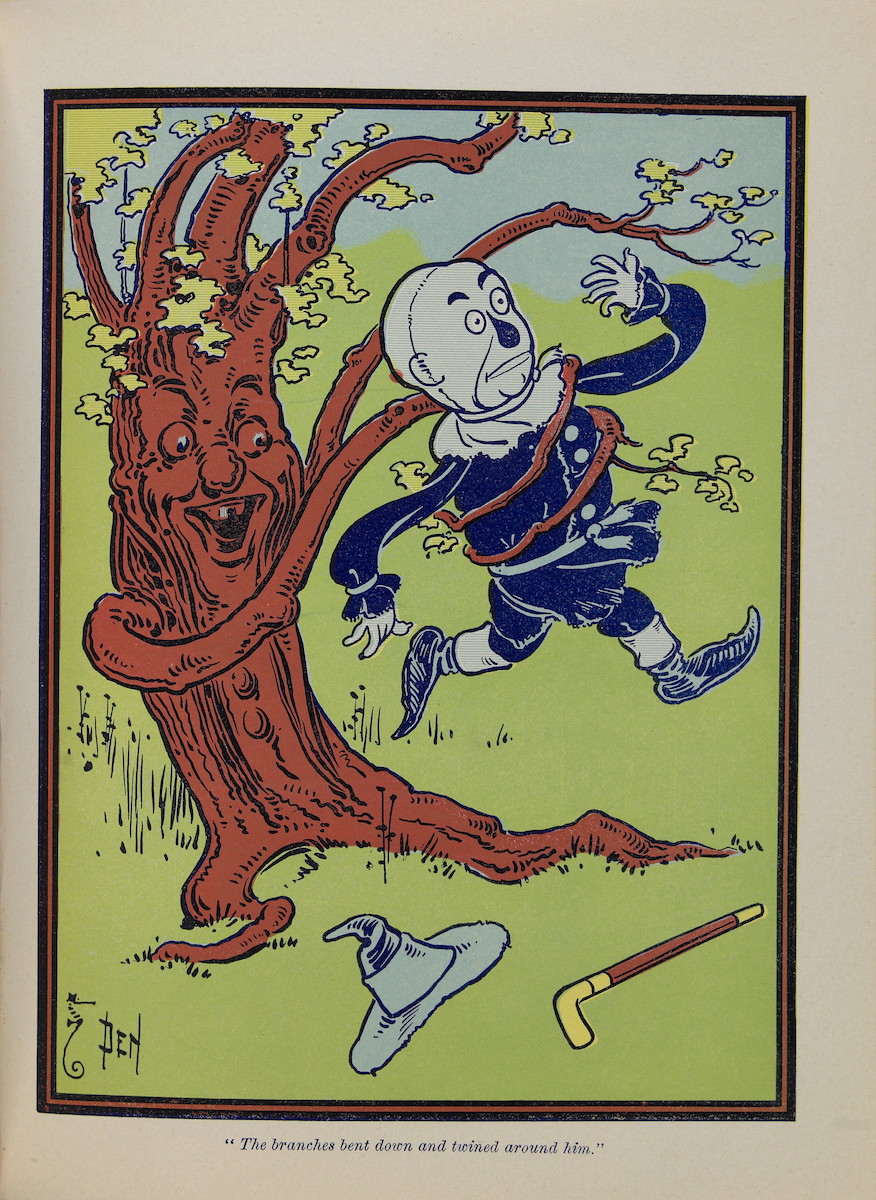
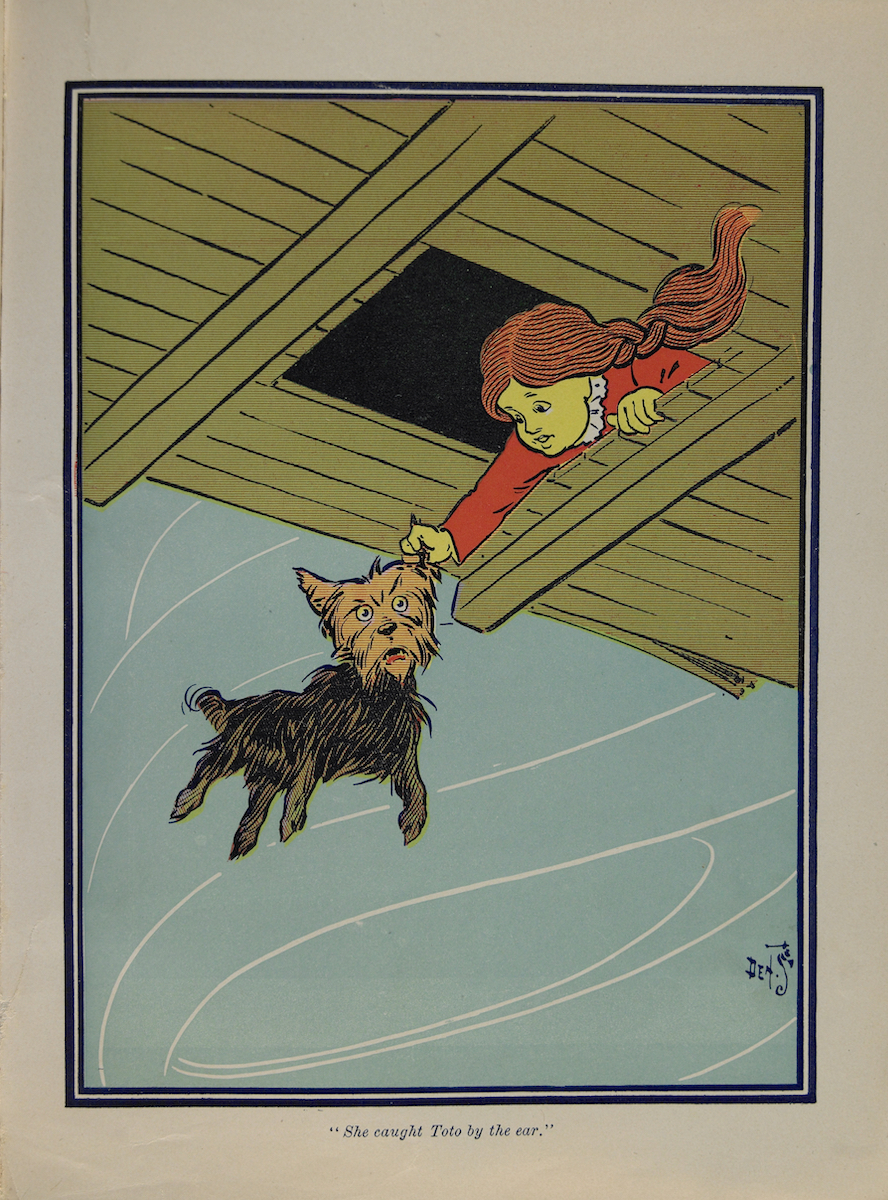
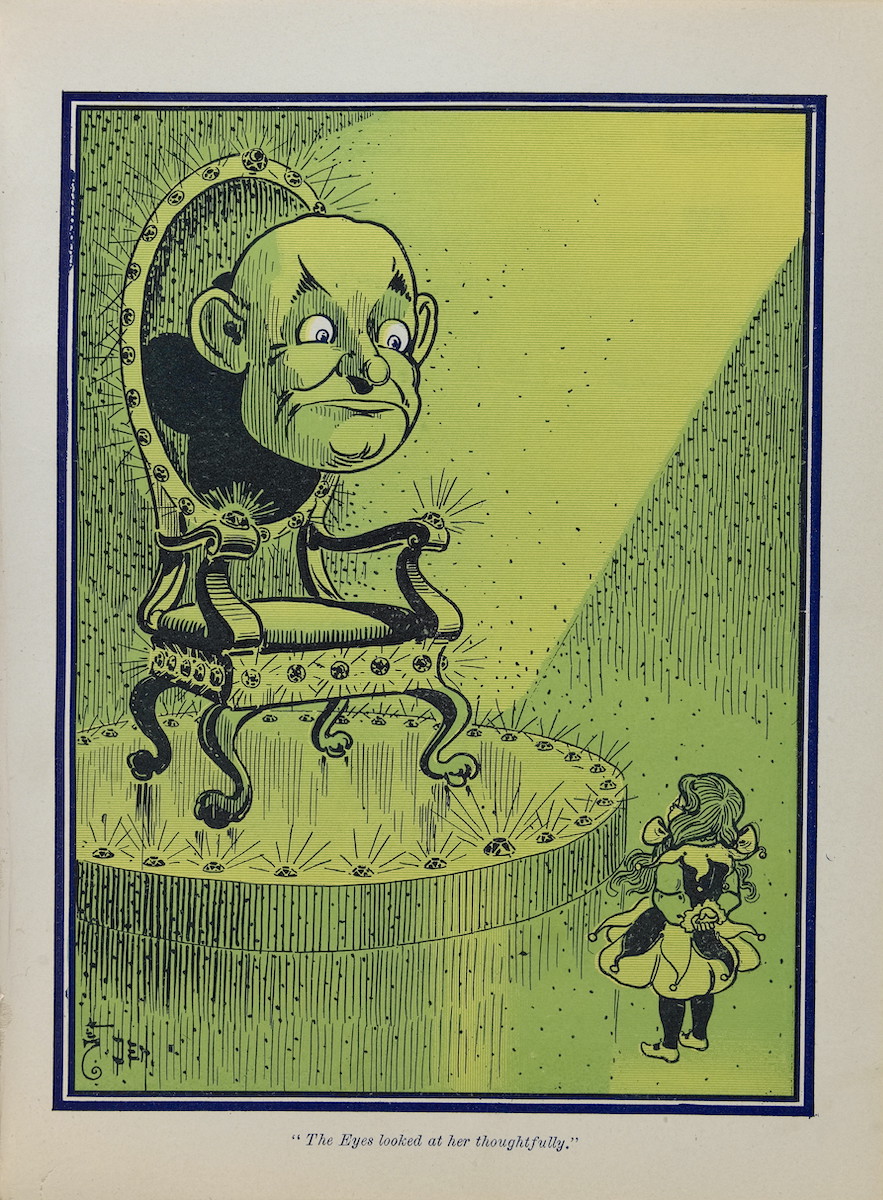
All the Oz illustrations in this review by W.W. Denslow. are from the 1900 publication of The Wonderful Wizard of Oz

The Cowardly Lion is a bit of a scaredy cat but more a very reserved, thoughtful feline. The Wizard may know a thing or two, but is very much a crook. There is a revolutionary bluejay who thinks he is a crow. There is a bubble-propelled witch. And flying monkey sorts loyal to the witch we all know and love. A young one, an engineer, less crusty that her peers, plays a key role.

description

And then there is Toto, front and center, able to speak and be understood, by most folks anyway, full of snarky commentary and struggling with the benefits of being a good dog or a bad dog. I mean if he had been a good dog, and animal control came for him anyway, what was the actual point? He will struggle throughout. Unlike his role in the original story, Toto has a lot more agency here, engaging in adventures away from Dorothy.

Imagine the flattest, grayest, most cornfed place you can imagine. Now add depression and life wrecked by late-stage capitalism. That’s Kansas. It’s like the dull beginning of every ad for pharmaceuticals right before Xylohappitoxin or whatever fixes everything. Sure, I make the best of it. Stealing socks and digging in old lady Brumley’s garden. But me and Dorothy are meant for bigger things, like destiny and boss battles and whatever that “Likeandsubscribe” stuff is the glass-people are hype about. – from the Fresh Fiction piece

Tasks are assigned to our travelling troupe by local bigshots. Bring me this, bring me that. Shoes are given a bit more attention than in the film, silver this time instead of ruby red, in keeping with the novel instead of the film.

There is commentary on politics; the bluejay is fond of holding forth with leftist pronunciations that will be laughingly familiar to any who have had connection with such folks; manipulators encourage people to do the wrong things; a race of beings has been subjugated; a leader pillages a natural environment to the detriment of all. Haves take advantage of have-nots…and on.

When Frank L. Baum sat down to write the The Wonderful Wizard of Oz, his country was in a state of turmoil which might seem very, very familiar to us these days. Economic and international pressures were ripping apart the perceived stability of the middle class. Hotly contested initiatives like the silver standard are referenced in Dorothy’s own silver shoes (changed to ruby for the technicolor movie). Populist leaders are lambasted in characters like the Cowardly Lion and the Emerald City itself can be read as a giant allegory to the capitalist power of Wall Street in Baum’s era. Oz was never a sterile product of pure imagination. The books reflected Baum’s opinions on the realities of the world. – from the Nerd Daily piece

description

This is a satire, so there are many fun flicks at the source material, as well as the political scene. And homages as well. Of course, it helps to be familiar with more than merely the 1939 film. The original novel would be a good place to start. The Broadway show and then film of The Wiz, and many more. L. Frank Baum wrote fourteen Oz novels, and short stories beyond. Many were written under pseudonyms. And even after Baum died, his publisher continued publishing Oz books by other writers. Gregory Maguire’s 1995 novel, (then Broadway show, then film) Wicked, and several subsequent novels, offer more source material. And there are even many more Oz books by other writers.

description

Of course, any literary road trip is a journey of self-discovery. Toto will resolve some things; Dorothy will plot a course for herself; and the rest of the gang will find their ways forward as well. But as with any road trip, it is the journey that is of interest and not the ultimate destination(s). Dorothy’s (and Totos’) actual feelings about Kansas are given a look. Dorothy has a the chance to be her own person in a challenging world, and consider what she might do with herself if given the opportunity. There is plenty of resonance here for many of us who felt, for various reasons, constrained by our beginnings.

You ever feel trapped in a family you don’t belong in? In a place that’s just so . . . so that it’s suffocating? That you know there’s more, so much more, out there, and it’s worth seeing, and every day you wake up in the same bed is like drowning a teaspoon at a time? I never wanted—I just . . .” She took in a sharp breath, catching herself. Her gaze refocused away from the window and back on me. For a flicker beat she looked like a duotype print of Dorothy. Hair obscured in soft shadow, a dark wardrobe that could have included the ratty tee Dorothy slept in when she finally peeled off the hoodie on the weekends . . . and a face so full of hunger-pang sadness, it could swallow the world with those wide eyes.

Hackwith’s look at the surviving wicked witch is a delight.

There may be no place like home, but who says we can have only one home in our lives? Toto is a fun romp through the OZ of our memories and/or imaginations. It is listed as YA, and I am sure it will appeal to that demo, but it was a fun read, particularly for an old dog like me, with long memories to be touched, revived, and beguiled.

This is the thing tall people, even tall dogs, never understand. Everyone looks at the world from three, four, even five feet up in the air. That’s where all the deception is. Everyone makes sure things look nice from that angle. Tables are kept tidy. Skirts are pressed. Floorboards are swept. Railings are dusted. Everyone wants to make a nice impression, tell a nice story from their point of view.
But when you see the world from five inches off the ground? That’s when you get the unvarnished truth.

Review posted – 01/31/25

Publication date – 11/12/24

I received an ARE of Toto from Ace in return for a fair review. Thanks, folks, and thanks to NetGalley for facilitating.

This review is cross-posted on Goodreads. Stop by and say Hi!

=======================================EXTRA STUFF

Links to Hackwith’s personal, FB, Instagram, and Twitter pages

Profile – from Penguin Random House

A. J. Hackwith (she/they) is (almost) certainly not an ink witch in a hoodie. She’s a queer writer of fantasy and science fiction living in the woods of the Pacific Northwest with her partner and various pet cryptids. A.J. is the author of a number of fantasy novels, including the acclaimed LIBRARY OF THE UNWRITTEN fantasy trilogy. She is a graduate of the Viable Paradise writer’s workshop and her work appears in Uncanny Magazine and assorted anthologies. Summon A.J. at your own peril with an arcane circle of fountain pens, weird collections of rusted keys, and homebrew D&D accessories.

Interview
—–Writers Digest – A. J. Hackwith: On the Fortitude of Little Dogs – with Robert Lee Brewer

Items of Interest from the author
—–Fresh Fiction – . J. Hackwith | Conversations in Character with Toto
—–Google Play Books – excerpt
—–Wikipedia – Tin Woodman – on how Nick Chopper became the Tin Woodman as per L. Frank Baum
—–Nerd Daily – Storytelling Is Political, And That’s A Good Thing

Items of Interest
—–Gutenberg – The Wonderful Wizard of Oz by L. Frank Baum
—–Gutenberg – The Tin Woodman of Oz by L. Frank Baum
—–Youtube- Heartless – The Story of the Tin Man – 22:48
—–Wiki – Groot

Leave a comment

Filed under Fantasy, Fiction, YA and kids

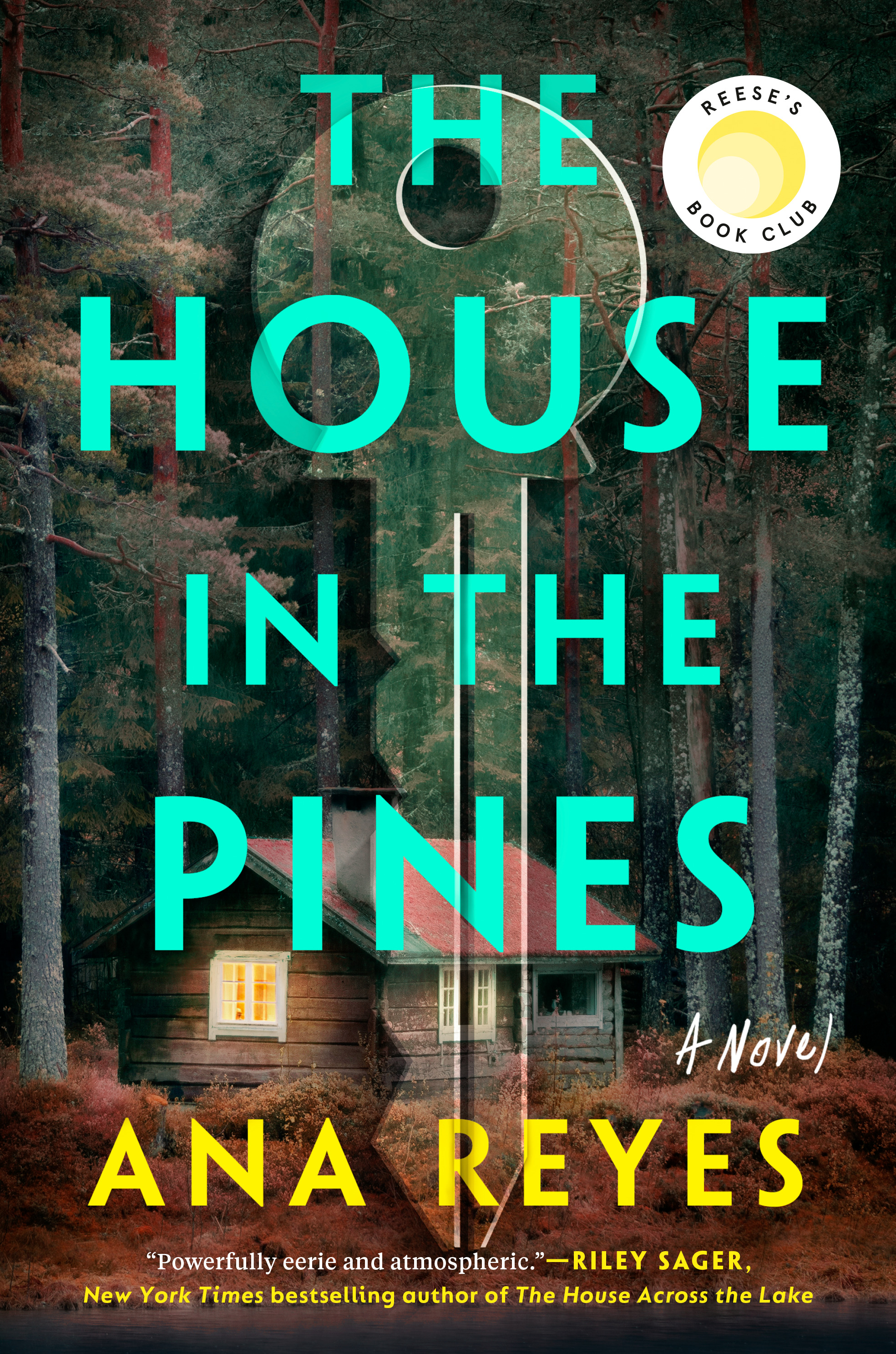
The House in the Pines by Ana Reyes

book cover

An ancient poplar loomed at the entrance to the abandoned road, its rounded mass of huddled gray limbs reminding her of a brain. She passed beneath its lobes, twigs branching like arteries overhead as she entered the forest.

Deep in these woods, there is a house that’s easy to miss.
Most people, in fact, would take one look and insist it’s not there. And they wouldn’t be wrong, not completely. What they would see are a house’s remains, a crumbling foundation crawling with weeds. A house long since abandoned. But look closely at the ground here, at this concrete scarred by sun and ice. This is where the fireplace goes. If you look deeply enough, a spark will ignite. And if you blow on it, that spark will bloom into a blaze, a warm light in this cold dark forest.

Maya Edwards is 25, not well off, ½ Guatemalan, ¼ Irish, ¼ Italian, with no career drive after getting her degree from Boston University. She is from Pittsfield, MA, where her mother still lives. Her father died before she was born. Not the only significant death in her life. When she was 18, her bff, Aubrey, died a mysterious death, at the hands, she believes, of a man they had both dated. But, despite her being present when it happened, there are no viable clues with which to make a case, and folks thought her nuts for even trying. Today Maya has a life, just moved in with her boyfriend, is about to meet his parents, when she sees a video on Youtube. A young woman, in a diner with her bf, suddenly keels over dead. A close look at her table partner reveals the same man who had killed her friend. She is terrified that he might continue to kill women and may become back to Pittsfield to clean up loose ends.

description
Ana Reyes – image from her site

Maya keeps having dreams about a cabin in the woods, a welcoming abode, with a warm blaze in the fireplace, the burning pine logs adding their scent to the room, the log walls offering shelter from a strong wind. It is cozy, feels like home. But there is danger there as well. Frank is there in the dreams, always there. She struggles to understand the sounds she hears, but realizes they are coming from Frank, who appears suddenly behind her, and she wakes, drenched in sweat. So, what’s up with that?

The central mystery (well, there are two, the first one is whether Frank actually killed those two women, and if so how, and) what is the deal with the strange house in the woods that haunts her dreams, the House in the Pines of the title.

Maya is not the most reliable of narrators. She is going through withdrawal from Klonopin. It was prescribed to help her sleep, but the scrip can no longer be filled and she is trying to go cold turkey. She has used alcohol liberally to help her both sleep and drown out the darkness that troubles her. Is she imagining things? Are the drugs and alcohol causing her to hallucinate? Is the stress of white-knuckle withdrawal impairing her ability to reason?

I was living in Louisiana, working toward my MFA in fiction, and, like Maya,…had suddenly quit Klonopin after several years of taking it nightly for sleep. The doctor who had prescribed it back in LA never said anything about addiction, while my new Baton Rouge doctor treated me like an addict when I asked her for it. She cut me off cold turkey, and I went through protracted withdrawal syndrome, the symptoms of which inform Maya’s experience in the book. Writing about benzodiazepine withdrawal—albeit from her perspective—helped me through it. – from the Book Club Kit

The story flips back and forth between the present day and seven years prior. We get to see her friendship with Aubrey, and how Frank had come between them. We see how her current troubles with withdrawal and her determination to look into the Frank situation may be interfering with her current serious relationship.

Maya does her Miss Marple thing to try to find out what really happened to Aubrey, to find out how Frank killed her, and one more thing. During the few weeks in which she dated Frank, there were multiple episodes in which she lost hours of time. Did Frank drug her? There is peril aplenty, as we take Maya’s word that Frank is a killer, so all her activity might be putting her in mortal peril. If only the cops had taken her seriously, but you know the cops in such almost stories never do.

Pliny the Elder said Home is where the heart is, but how can a place that feels so home-like also be so terrifying? This reflects some events and concerns in Reyes’s life.

The inspiration was mostly subconscious. I was living alone in a new city, cut off from any place I’d call home, when I wrote the first draft. This lonely feeling inspired one of the book’s major themes, which is the universal yearning to return to a place and time of belonging. That theme shaped the story and helped me build the titular house in the pines. – from the Book Club Kit

Reyes incorporated several elements of her life into the book. In addition to struggles with addiction, both Maya and Ana are half Guatemalan. Both were raised in Pittsfield, MA. The book took seven years to write, and the gap between Aubrey’s death and Maya’s return to the scene of the crime is seven years.

In order to solve the mysteries, Maya must figure out the imagery in an incomplete book her father had been writing when he died in Guatemala. The references take one a bit afield, but if you dig into them, you will be rewarded. I posted some info in EXTRA STUFF.

Maya’s father’s book points to an important truth about the danger she’s in. For me this was a metaphor for inherited trauma. Like so many people with roots in colonized places, the violence of the past has a way of showing up in the present in unexpected and highly personal ways. This is true for Maya in a very literal sense. To save herself, she must understand a story written before she was born. – from the Book Club Kit

There are some fairy-tale-like references in here, but I am not sure they are much more than added in passing. One can see certainly see Frank as a seductive wolf, a la Little Red Riding Hood. A musical group dresses as the fairy godmothers, lending one to consider Sleeping Beauty, which is further reinforced by Maya’s several episodes of lost time, and, ironically, her difficulties with sleep. Woods, per se, have always been a source of fear in Western lore.

So, is it any good? Yep. Ana is certainly flawed enough for us to gain some sympathy, although she cashes in some of those chits with occasional foolish decisions. Secondary characters are a mixed lot. Her boyfriend is thinly drawn. Mom has more to her. Her teen bud, Aubrey, even more. Frank is an interesting mix of loser and menace. The strongest bits for me were a visit to Guatemala and the depiction of the attractiveness of the house. I will not give away the explanation for it all, but, while it may have a basis in the real world, I found it a stretch to buy completely. Still, righteous, if damaged, seeker of truth digging into the mysterious, while imperiled by a dark force, with little support from anyone, with a fascinating bit of other-worldliness at its core. I enjoyed my stay in the cabin. Page-turner material.

The image is both comforting and really sinister at the same time once we learn more about it.
Exactly. That’s definitely what I was going for, that dark side of nostalgia.
– from the Salon interview

Review posted – 01/27/23

Publication date – 01/03/23

I received an ARE of The House in the Pines from Dutton in return for a fair review, and another log on the fire. Thanks, folks, and thanks to NetGalley for facilitating.

This review has been cross-posted on GoodReads

=======================================EXTRA STUFF

Links to the author’s personal, FB, Instagram, and Twitter pages

The House in the Woods Was a Reese’s book club selection for January 2023

Interviews
—–NY Times – Teaching Writing to Retirees Helped Ana Reyes Stay Focused by Elisabeth Egan
—–Salon – “House in the Pines” thriller author on the “dark side of nostalgia” with a narrator no one believes
—–Writer’s Digest – Ana Reyes: On Working The Writing Muscles by Robert Lee Brewer
—–Professional Book Nerds – Talking The House in the Pines with Author Ana Reyes by Joe Skelley – audio – 40:00

Items of Interest
—–Book Club Kit
—–Gnosis.org – The Hymn of the Pearl – The Acts of Thomas

Songs/Music
—– Emily Portman – Two Sisters – referenced in Chapter 5, although by a different performer
—–Bobby Darin – Dream Lover – playing at the Blue Moon Diner in Chapter 10
—–Mano Negra – El Senor Matanza – noted in Chapter 11 as Maya’s new favorite band
—– Nine Inch Nails – The Downward Spiral – mentioned in Chapter 17
—– The Foo Fighters – There is Nothing Left to Lose – mentioned in Chapter 17
—–Lenny Kravitz – Mama Said – mentioned in Chapter 17

Leave a comment

Filed under Fiction, Mystery, Suspense, Thriller

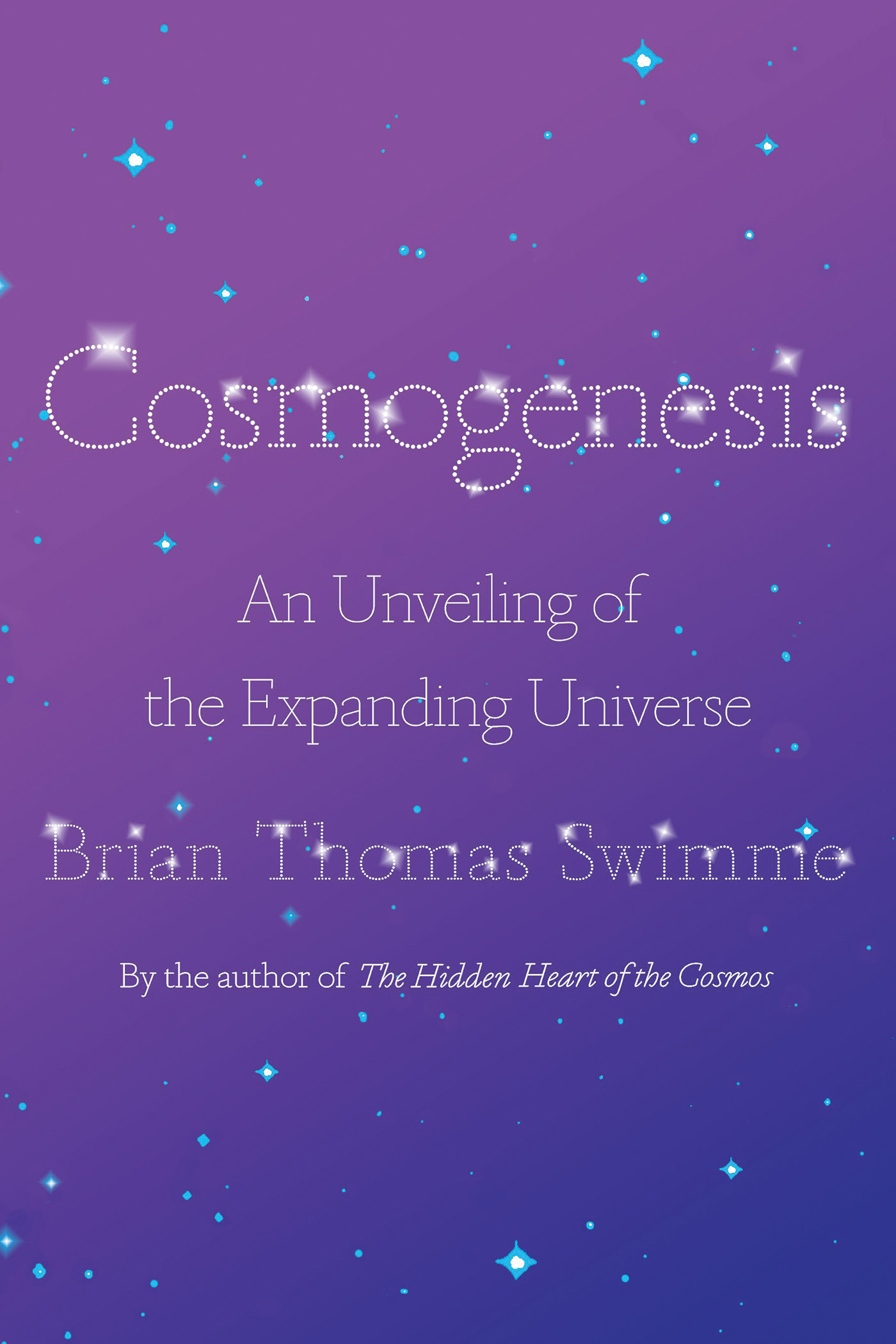
Cosmogenesis by Brian Thomas Swimme

book cover

…it feels today that we are in the middle of a profound transformation of humanity.

We don’t live in a cosmos. We live in a cosmogenesis, a universe that is becoming, a universe that established its order in each era and then transcends that order to establish a new order.

Cosmos – The universe seen as a well-ordered whole; from the Greek word kosmos ‘order, ornament, world, or universe’, so called by Pythagoras or his disciples from their view of its perfect order and arrangement. – from Oxford reference

Genesis – Hebrew Bereshit (“In the Beginning”), the first book of the Bible. Its name derives from the opening words: “In the beginning….” Genesis narrates the primeval history of the world – from the Encyclopedia Britannica

description
Brian Thomas Swimme – image from Journey of the Universe

So, Cosmogenesis means, at its root, the beginning of everything. Diverse cultures have come up with diverse understandings of how everything came to be. Where Swimme differs is in seeing the genesis, the beginning, the creation of everything as an ongoing process, not a one-off in deep history.

Cosmogenesis tracks Swimme’s journey from math professor to spokesman for a movement that seeks to rejoin science and spirituality. The stations along this route, which runs from 1968 to 1983, consist of people he considers great minds. He gushes like a Swiftie with closeup tickets to an Eras Tour show over several of these genius-level individuals, while relying on his analytical capacity to note shortcomings in some of the theories some others propose. Swimme mixes his approach a bit. It is in large measure a memoir, with a focus on his intellectual (and spiritual) growth, along with descripti0ns of the places where he lived, taught, and studied, and the people who inspired him, providing some background to the theories and ovbservations to which he is exposed.

A mathematics PhD, with a long and diverse teaching history, he grounds his work in the scientific. But he does not separate the scientific from the spiritual, from the human. In his view, we are all a part of the ongoing evolution of everything, noting that every subatomic part that make up every atom in our bodies, in our world, was present at the Biggest Bang, then was further refined by the lesser bangs of supernovas manufacturing what became our constituent parts. Even today, we bathe, wallow, bask, and breathe in radiation from that original event. It may have occurred fourteen billion years ago, but in a measurable way it is happening still. And we all remain a part of it.

There is a piece of Swimme’s material-cum-spiritual notion that I found very appealing. I have experienced an ecstatic state while perceiving beauty in the world. On telling my son about one such, I remarked that it was like a religious experience. He answered, “why like?” Swimme recruits like experiences to bolster the connection between the humanly internal and the eternal of the cosmos.

Bear in mind that Swimme grew up in a Catholic tradition, which clearly impressed him. There is a strong incense scent of religiosity to his work. Not saying that Cosmogenesis is a religion, but I am not entirely certain it is not.

As a child I had learned that the Mass was where the sacred lived.

I had a very different response to the religious world to which I was exposed as a child through twelve years of Catholic education. There was no connection for me between the Mass and the sacred, whatever that was. Mass represented mostly a burden, a mandatory exercise, communicating nothing about layers of experience beyond the material, while offering hard evidence of the power of institutions to control how I spent my time. I did not, at the time, understand the community building and reinforcing aspect to this weekly tribal ritual, separate from the religious content.

I believe that what we think of as spiritual or spectral is the reality that lies beyond our perceptual bandwidth. The ancients did not understand lightning, so imagined a god hurling bolts. With scientific understanding of lightning, Zeus is cast from an imagined home on Mount Olympus to the confines of cultural history. Science expands our effective, if not necessarily our physical, biological bandwidth, and thus captures, making understandable, realities once thought the domain of imagined gods. But what of feeling? The ecstatic state I experience when witnessing the beauty of the world, is that a purely biological state, comprised of hormones and DNA? Or do we assign to that feeling, which can be difficult to explain, a higher meaning because of our inability to define it precisely enough? And, in doing so, are we not following in the path of the ancient Greeks who assigned to extra-human beings responsibility for natural events? So, I am not sure I am buying in to Swimme’s views.

It is, though, something, to pique the interest of people like myself who have rejected most forms of organized religion, particularly those that focus on a human-like all-powerful being, (see George Carlin’s routine re this. I’m with George.) but who hold open a lane for a greater, a different understanding of all reality. Where is the line between the material and the spiritual? How did we come to be here? Evolution provides plenty to explain that. But we still get back to a linear understanding of time as an impasse. If the (our) universe began with the big bang, then what came before? Einstein showed with his special theory of relativity that time is not so fixed a concept as we’d thought. Things operate at different speeds, relative to each other, depending on distance and speed. Who is to say that there might not be more fungability to our understanding of time, maybe even radically so? In a way, this is what Swimme is on about, ways of looking at our broader reality, at our origins and ongoing evolution, (not just the evolution of our species, but of the universe itself) through other, more experiential perspectives, (a new Gnosticism?) while still including science.

Humans have expressed their faith in a great variety of symbols, many of which have inspired me at one time or another. But today, if you ask for the foundation of my faith, I would say the stone cliffs of the Hudson River Palisades.

Overall I found this book brain candy of the first order. Take it as a survey-course primer for the theory he propounds. There are many videos available on-line for those interested in going beyond Cosmo 101. So, Is cosmogenesis one of the ten greatest ideas in human history as is claimed here? That is above my pay grade. Some of the notions presented here seemed a bit much, but there was enough that was worth considering that made this a satisfying, intriguing read. Suffice it to say that it is a fascinating take on, well, everything, and can be counted on to give your gray cells, comprised of materials that have been around for 14 billion years, a hearty jiggle at the very least.

Everything is up in the air. We are living in a deranged world where nihilism dominates every major state. The contest today is for the next world philosophy.

Review posted – January 13, 2023

Publication date – November 15, 2022

I received a hardcover of Cosmogenesis from Counterpoint in return for a fair review.

This review has been cross-posted on GoodReads

=======================================EXTRA STUFF

Links to the author’s personal, FB, and Twitter pages

Twitter and Facebook do not appear to have ever been used you might also try

Interviews
—–Deeptime Network – Brian Swimme — What’s Next? Planetary Mind and the Future – video – 1:12:41 – from 6:50
—–Sue Speaks – SUE Speaks Podcast: Searching for Unity in Everything – podcast – 31:27

Items of Interest from the author
—– The Third Story of the Universe
—–A Great Leap in Being – 28:56
—–Human Energy – Introduction to the Noosphere: The Planetary Minds
—–Journey of the Universe

Items of Interest
—–San Francisco Chronicle – Science doesn’t cover it all, author Brian Thomas Swimme explains
—–
George Carlin on religion

1 Comment

Filed under Bio/Autobio/Memoir, History, Non-fiction, Religion, Reviews, Science and Nature

A Child’s Christmas in Wales by Dylan Thomas

Years and years ago, when I was a boy, when there were wolves in Wales, and birds the color of red-flannel petticoats whisked past the harp-shaped hills, when we sang and wallowed all night and day in caves that smelt like Sunday afternoons in damp front farmhouse parlors, and we chased, with the jawbones of deacons, the English and the bears, before the motor car, before the wheel, before the duchess-faced horse, when we rode the daft and happy hills bareback, it snowed and it snowed. But here a small boy says: “It snowed last year, too. I made a snowman and my brother knocked it down and I knocked my brother down and then we had tea.

description
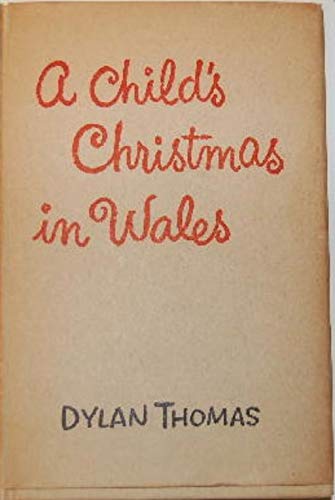
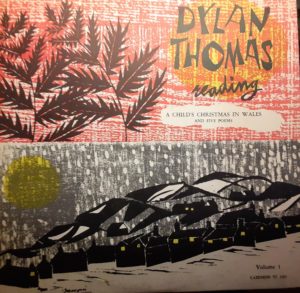
Cover of the original publication – image from Goodreads

It began in 1945 as a radio talk, Memories of Christmas, for the Welsh Children’s Hour program. He later merged bits from a 1947 piece called Conversation About Christmas and sold it to Harper’s Bazaar in 1950 as A Child’s Memories of Christmas in Wales. In 1952, Caedmon Records asked him to record himself reading it for the B-side of a collection of his poems. The title we have come to know for the piece, A Child’s Christmas in Wales, was from this recording. Thomas had been unable to remember the title used in the Harper’s magazine version, so recalled as best he could. It turned into kind of a big deal, as the recording is seen as seminal in starting the audiobook industry in the USA.

description
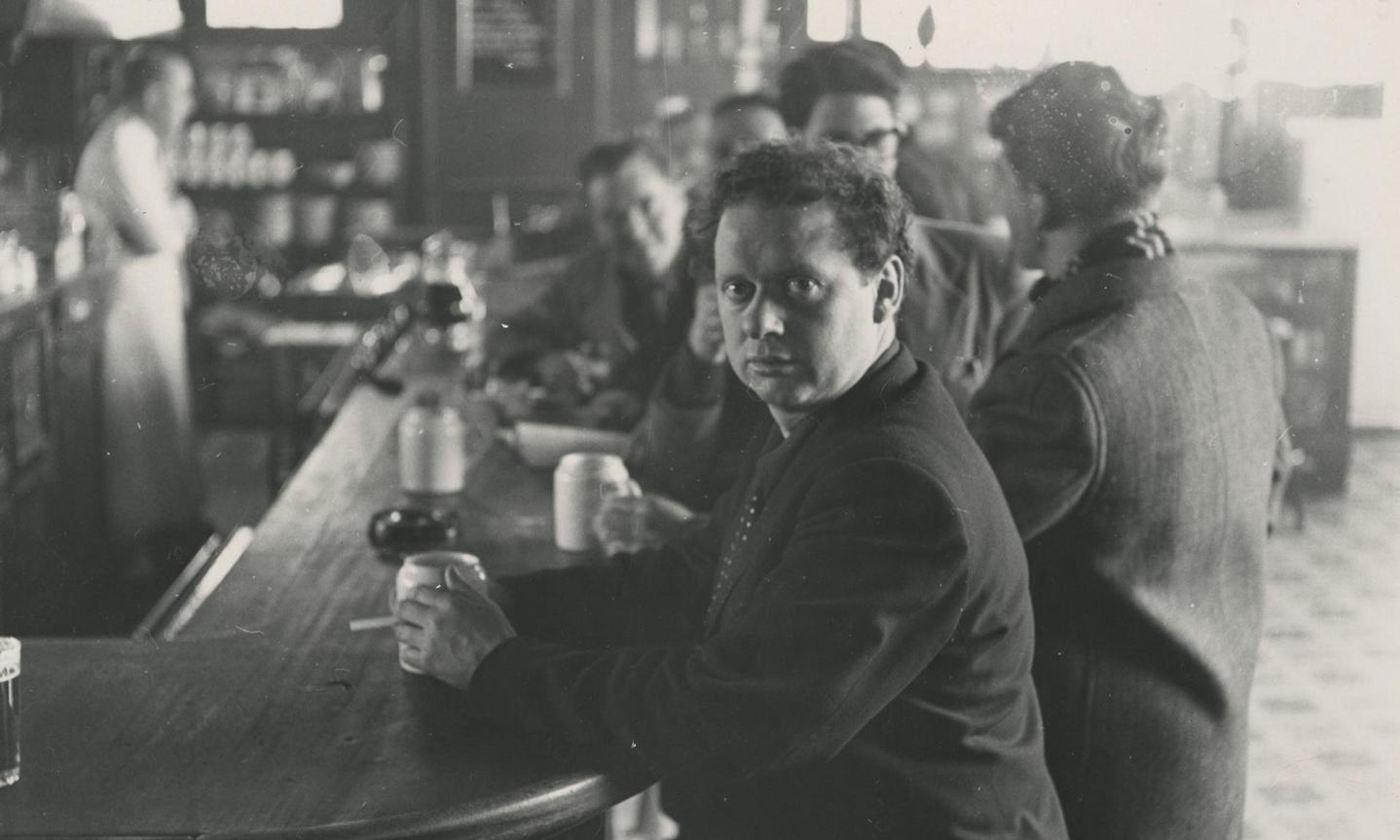
Dylan Thomas in the White Horse Tavern – image from Peter Harrington – The Journal – photo by Bunny Adler

Set in Swansea in the 1920s, Thomas offers a fragmented memory, recalling not just one particular Christmas but his childhood Christmases in general.

One Christmas was so much like the other, in those years around the sea-town corner now, out of all sound except the distant speaking of the voices I sometimes hear a moment before sleep, that I can never remember whether it snowed for six days and six nights when I was twelve, or whether it snowed for twelve days and twelve nights when I was six.

It is a mix of his perspective as a child and his finer focus, looking back as an adult.

The particular Christmas that stands out includes images of a neighbor’s house catching fire

The overall timbre is warm and loving. But there are hints as well of darker elements in the world around. Some bred from imagination

the winds through the trees made noises as of old and unpleasant and maybe web footed men wheezing in caves… perhaps it was a ghost… perhaps it was trolls…

Others from observation

We returned home through the poor streets where only a few children fumbled with bare red fingers in the wheel-rutted snow and cat-called after us, their voices fading away, as we trudged uphill…I would scour the swatched town for the news of the little world, and find always a dead bird by the Post Office or by the white deserted swings; perhaps a robin, all but one of his fires out… Some few large men sat in the front parlors, without their collars, Uncles almost certainly, trying their new cigars, holding them out judiciously at arms’ length, returning them to their mouths, coughing, then holding them out again as though waiting for the explosion; and some few small aunts, not wanted in the kitchen, nor anywhere else for that matter, sat on the very edge of their chairs, poised and brittle, afraid to break, like faded cups and saucers.

There is also mention of chasing the English and bears in deep Welsh history, a reference to wars that ended with English subjugation of Wales.

The story is about the sequence of events from one Christmas afternoon, when a neighbor’s calls of “Fire” draw the fire brigade and all breathing neighbors, the narrator and his co-conspirators addressing the possible conflagration with the launching of multiple snowballs. It offers a portrait of youthful shenanigans, and homes filled with boisterous “uncles” and tippling, excluded “aunts.”

Gleeful image-making permeates

“Our snow was not only shaken from white wash buckets down the sky, it came shawling out of the ground and swam and drifted out of the arms and hands and bodies of the trees; snow grew overnight on the roofs of the houses like a pure and grandfather moss, minutely ivied the walls and settled on the postman, opening the gate, like a dumb, numb thunder-storm of white, torn Christmas cards.”

The boys imagine themselves as Eskimo-footed Arctic marksmen, snow-blind travelers on north hills, see their large boots as leaving hippo prints, and approach a maybe-haunted house with carols.

It is a tale about memory itself as much as about Thomas’s recollections of childhood, as individual experiences, although some are specifically recalled, merge into sometimes single, catch-all recollection.

Please do listen to Thomas’s reading, a poet’s reading of prose, elevating his story to a form somewhere between literature and song. A smile sprung forth on my face on hearing this (yes, I have heard it more than a couple of times before. The smile returns every time.) and lasted well beyond the delivery of the final sentence. It would, on occasion, pull upwards, straining my cheeks and gums, before settling back a little in preparation for the next assault. The scenes he recalls, and his snarky commentary, will make you smile, probably in recognition of the sort, if not the specifics, maybe even laugh out loud. It always gets a passel of LOLs from me.

The language is celestial, as is his world-class talent for imagery and word-play. It will lift your spirit and make it hover for the duration of the reading, maybe even a while beyond. You could do worse than making the playing of this recitation a seasonal tradition.

One thing this story is likely to do is to spark personal recollections of Christmases of our youth. I would love to hear about yours.

Thomas’s recalled 1920s Christmases resonated with my memories of Christmases in the 1950s and 1960s Bronx. Mine were certainly not all snow-filled, but, as with Thomas’s recollections, they all occupy the well of memory with a fine dusting of white. Unlike Thomas, there is not a single Christmas that stands out from my childhood. Like his, mine have taken on a general character, merging into a common fuzzy-edged recollection.

The space between Thanksgiving and the special morning was always filled with great excitement and anticipation. Going to see the Christmas displays at Macy’s, Saks, Lord & Taylor’s, and even more stores, became a tradition, as was visiting the massive tree at Rockefeller Center. I got to sit on Santa’s lap at Macy’s at least once, but had sense enough to be skeptical even as a sprout. Why would someone claiming to be Santa’s helper look and dress just like him? Something clearly did not add up. The hunt for presents hidden in closets, cupboards, and underneath anything that had an underneath was a seasonal sport.

On Christmas Eve, my sisters (all three much older) would head out for midnight mass, fresh in finery, make-upped, seeming serious. I had no notion at the time that such a display might have been as much a mating ritual as an act of piety. I was spared that particular form of torture, (a Mass even longer and presumably more unendurable than the ones I was forced to attend every week) excused by my youth. Despite my concerted attempts to remain awake hoping to spot Santa, most years I was long asleep before they all arrived back home, cherry-cheeked, coats and hats asparkle as the dim light inside our front door was magnified by reflections from unmelted flakes.

Christmas morning was a bubbling mass of excitement as we all gathered in the living room, and took turns opening gifts. There was always one for me, and for my brother labeled “From Santa,” supplemental to the gifts from our parents, and each other.

As if we were not wired enough from a night of short sleep followed by a meth-level increase in respiration, Christmas breakfast tended to be French toast, slathered with Aunt Jemima’s, Log Cabin, or Vermont Maid. Attending Mass was mandatory, of course. It is a wonder the church did not crumble to the ground from all the child and pre-adolescent vibrations juddering the pews. We would always unwrap an annual gift, a fruit cake, from my father’s aunt, a mysterious figure I never actually met.

In the years since I have come to think of Christmas as akin to the baseball season for us Mets fans. The lead up was all excitement, wondering what goodies might come our way, hoping for some surprises, and that some gift wishes might come true. The reality was rarely very satisfying, filled as it was with things like socks and pajamas. There were toys, of course, but usually of the Woolworth’s sort, things like cap pistols, and plastic trains that rolled uneasily around a circle of plastic rails. Occasionally, there would be something more interesting. A Davy Crockett coonskin cap was a memorable hit. It was my brother who actually got me some of the more exciting, larger-ticket items, a yellow, battery-operated bulldozer, a robot that shot missiles, a wireless walkie-talkie that was pretty cool for 1960.

The day itself was always an opportunity for some of the neighborhood kids to try out brand new sleds. The Bronx may not have San Franciscan hills (although the West Bronx is particularly rich with steep slopes) but there were plenty of hills, snow, slush and ice-covered land to be challenged. Even if you did not get a new sled, there was certain to be a neighbor kid who had, and there was a chance he might let you take it for a ride. Of course, there were always cardboard boxes and trash can lids that offered a sliding descent if not a lot of control. Not that it ultimately made a lot of difference to me. It was while attempting to steer an actual sled down a Tremont Avenue sidewalk that my face made a dent in a stubbornly unmoving tree. Sadly, sledding was one of many skills I never managed to acquire. The tree in our tiny living room was real, in the early years, but as adolescence approached, and my parents ploughed further into middle age, it was supplanted by a disappointing plastic imitation.

The toys were soon in pieces. The new PJ’s supplanted their high-water, short-sleeved predecessors. Winter settled in, and the disappointment of not getting what you really wanted faded. Dashed hope settled back underground, like a perennial, biding its time until the next season arrived for it to sprout forth once again, all shiny and new.

When I had children of my own, I tried to install a few elements to make the day special. We had a tree of course. Watching It’s A Wonderful Life became a Christmas Eve tradition, and I read The Polar Express to them at bedtime. The girls would always find, on Christmas morning, a letter from Santa (typed, in an appropriate font, in red. My hideous penmanship would have been too obvious.) encouraging the sorts of feelings and behavior one might expect from a benign spirit. I made my own Christmas cards for many years, with their names included among the From list. But it was mostly something for me. My greatest parental Christmas triumph, however, was singular. The girls were on the verge of disbelieving. We had recently moved into a new place, a house that featured a beautiful, albeit no longer functional fireplace. I carved a linoleum cut of reindeer hoofs, and proceeded to make hoof prints leading from the fireplace into the living room and kitchen. The girls could not believe that any parent would willingly make such a huge mess, and THEY BOUGHT IT!

description
Cover of the original Caedmon recording

The season has settled into another phase for us. Yes, there is still a tree, although this year is likely to be the last of the real ones. There is my wife and our close immediate relations. The tree skirt is reliably populated with resting felines. My children are scattered so are not a presence, which is sad. I have long since ceased making my own cards, Goodreads review-writing having absorbed that artistic impulse. We still have a special meal, including some foods that only appear once a year. We still exchange gifts on Christmas day. And on Christmas eve I harangue my wife into tolerating yet another showing of It’s A Wonderful Life. I still end up in tears. I can only hope that my kids (all grown up now) have happy memories of the holiday, and that they have found some traditions to carry forward for their own (someday) children.

Merry Christmas, Everyone!

Review first posted – December 4, 2022

Publication date – 1952, in this form, anyway.

This review has been cross-posted on GoodReads

=======================================EXTRA STUFF

Items of Interest
—–Wiki on the history of the poem – very informative
—–Faded Page – The full text in multiple formats
—–Harper Audio on Soundcloud – Dylan Thomas’s reading – 25:07 – with an introduction by Billy Collins – worth checking out
—–* Encyclopedia.com – a Child’s Christmas in Wales
—–Vinyl Writers – Dylan Thomas’ Caedmon Readings: Childhood, Death, and the Welsh Wild Wonder

Leave a comment

Filed under Bio/Autobio/Memoir, Non-fiction, Short Stories, YA and kids

Some of It Was Real by Nan Fischer

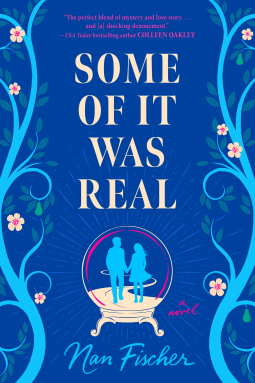
book cover

Today an image slips through the carefully constructed peace . . .
Pale sand beneath my feet, a blue-green ocean, foam nibbling at my bare toes. Behind me, a castle—ornate turrets dotted with pale pink shells, a drawbridge made from delicately curved driftwood, beneath it, a moat where tiny paper boats rock in the breeze. A wave gathers on the horizon. It grows taller and white horses gallop across its face. When the wall of salt water strikes, the castle will be destroyed and with it a treasure, something precious . . .
The vision disintegrates. Ghostly lips brush my cheek. I know what’s coming next. A whisper I’ve heard intermittently my entire life.

“It’s important you understand that I don’t have a clear definition for what I do. Psychics use their intuition or spiritual guides to gain information about the past, present, or future. Mediums are channels that deliver messages from those who have passed over. I’ve been called a psychic-medium, and that’s as good a definition as any. But the truth is that I’m not sure why I hear voices, see images, sing at times, or scribble notes—it just happens and I can’t tell you how because I truly don’t understand it.”

Sylvie Young has just gotten a TV deal, the product of a successful run of live stage performances and a top-tier agent. Life is good, and about to get better. Sylvie’s shows are of the psychic sort. Select audience members, offer a connection to a lost one, solve some riddles, answer some unanswered questions, and mostly, offer comfort. Syl is very good at this. But not all of her connections are of the psychic sort.

description
Nan Fischer – image from her site

Thomas Holmes is a cynical reporter on a mission. For personal reasons, Holmes believes that all psychics are fakers. It is elementary. His current project is to profile several psychic-mediums, intending to expose their chicanery and, if at all possible, destroy their careers. Which is something he knows a bit about. His own career in journalism has suffered some major blows, to the point where this major takedown piece may be his last chance to salvage his own career.

Both are struggling to deal with their origin stories (Sylvie even opens her shows by telling hers, at least what she knows of it) and their self doubts. Sylvie’s arc is a quest to find out what really happened to her biological parents, explain why she is beset by nightmares of a particular sort, and maybe discover where she acquired her very real personal talent. But is it real, really? Thomas suffered a trauma in his youth that has defined his life. Until he can confront that, the life he has made for himself will never be a proper fit. This is the true core of what Nan Fischer is writing about.

One of the seeds that started this novel with my fascination with imposter syndrome—the inability to believe one’s success has been legitimately achieved or deserved. I wanted to create a character, Sylvie, on the cusp of achieving great success but who doesn’t quite believe she deserves it. I made Sylvie a psychic as that gift is controversial—the perfect job for someone doubting her abilities due to all the critics! – from Hey It’s Carly Rae interview

Thomas has run into some dead ends digging into her past. There are no records of her parents’ supposed plane crash deaths when she was four. He wants her help to dig into this further. She has an interest, as it is a mystery to her as well. And if she can prove to him that she is not a grief vampire, he will drop her from his story. Of course, he expects he will never have to make good on that, as psychic powers are all BS, right? And the game is afoot.

the stories we tell from childhood that have shaped who we are – are based on old and sometimes faulty memories. It’s up to each of us to decide what to accept or discard from our origin stories and to decide who we ultimately want to be in life. – from the Jean Book Nerd interview

Many of the curtains Sylvie needs to part were placed there by others. Thomas erected his barriers to self-knowledge himself. Part of their interaction is Syl challenging Thomas to look deeper into the sources of his own demons, as Thomas challenges Sylvie to examine the ethics of how she is making her living. (“What was the fair lady’s game? What did she really want?” – Sherlock Holmes in The Second Stain)

As one might expect from a book categorized as romance, these two develop an attraction. That complicates matters. How can a journalist write an objective piece about someone with whom he is romantically engaged? He may be trying to take her down, but she is also looking for ways to manipulate him into a more benign view of her and her work. The cynic vs psychic dynamic is entertaining for a while, but Thomas’s relentless disregard of evidence gets a bit old. Really, dude? Still?

Fischer gives us a particularly interesting look at the profession of psychic-medium, offering a perspective that elevates it beyond being merely a connection to another side, whether real or faked. She connects it to something greater.

The structure is alternating chapters, his and hers, both first-person narratives. The voices are effectively different. It is a cat-and-mouse competition, although it could easily be a cat-and-dog one. Sylvie’s constant companion is a very large Great Dane, and Thomas travels with an elderly feline. (Fischer even manages to give her own dog, Boone, a cameo) He keeps trying to find holes in her schtick. She keeps trying to move him beyond the purely factual. Another Holmes might say when you have eliminated the impossible, whatever remains, however improbable, must be the truth, but Thomas clings to his biases tenaciously.

I was not all that taken in by their supposed attraction, never quite bought it, and wanted the sex scenes to be over quickly. But I did enjoy their mutual interest in helping each other out. I also had trouble with Sylvie’s relationship with her parents, who seemed far more reluctant to share information with their daughter than seemed reasonable, particularly considering that she is a grown-ass woman when she is pleading for intel about her past, intel that they have. Their rejection of her seemed unnatural, very un-parental.

What keeps the story moving along is a steady stream of interesting clues and the pair’s ingenuity on following up on them. There are some pretty nifty twists. It is fun tagging along on the procedural, mystery-solving element of the story. Overall, Some of It May Be Real is an engaging story, a mystery, wrapped in a bit of fantasy, a quest of self-discovery featuring an ongoing cynic-psychic battle, as both Sylvie and Thomas dig into their origins as a way to confront their demons and feelings of inauthenticity. It offers some intrigue, some chills and some very real tears. It is authentically entertaining.

What surprised me most about writing Some Of It Was Real was that I thought my research would lead me to a conclusion about what I believe. I watched documentaries, movies, and TV shows about psychics, clairvoyants and mediums and read studies and articles written by individuals whose goals are to prove the supernatural is a hoax. But in the end, the only real conclusion I drew was that some of it might be real. – from Thoughts From a Page Podcast

Review posted – August 26, 2022

Publication date – July 28, 2022

I received an ARE of Some of It Was Real from Berkley in return for a fair review. Wait, does the number four have any particular meaning for you? I am also seeing something shiny. Sparkles, maybe? No, stars. Yes, definitely stars. Thanks, folks.

This review has been cross-posted on GoodReads

=======================================EXTRA STUFF

Links to the author’s personal,
Instagram, GR, and Twitter pages
Profile – from her site

Nan Fischer is the author of Some Of It Was Real (July 2022, Berkley Publishing), and the young adult novels, When Elephants Fly and The Speed of Falling Objects. Additional author credits include Junior Jedi Knights, a middle grade Star Wars trilogy for LucasFilm, and co-authored sport autobiographies for elite athletes including #1 ranked tennis superstar Monica Seles, Triple Crown race winning jockey Julie Krone, Olympic gold medal speed skater Apolo Anton Ohno, legendary gymnastics coach Bela Karolyi, and Olympic gold medal gymnasts Nadia Comaneci and Shannon Miller.

Her prior work was published under the names Nancy Richardson Fischer, Nancy Richardson, and Nancy Ann Richardson. Some of it was Real is her first book under the name Nan Fischer.

Interviews
—–Jean Book Nerd – Nan Fischer Interview – Some of It Was Real
—–Hey, It’s Carly Rae – Author Interview with Nan Fischer
—–Writers Digest – Nan Fischer: On Overcoming Imposter Syndrome by Robert Lee Brewer
—–Thoughts from a Page – Q & A with Nan Fischer, Author of SOME OF IT WAS REAL by Cindy Burnett
—–BookBrowse – An interview with Nan Fischer
with Katie Noah Gibson

Items of Interest
—–Gutenberg – full text of The Man Without a Country by Edward E. Hale – referenced in Chapter 19
—–The Poe Museum – full text of The Cask of Amontillado – by Edgar Allan Poe – referenced in Chapter 21

2 Comments

Filed under Fantasy, Fiction, Mystery, Suspense, Thriller

They Want To Kill Americans by Malcolm Nance

book cover

There is only one way out of this. The only way out of this outcome is that the November midterms are the final referendum on whether America truly stays America and a democracy or if it becomes a fascist dictatorship. If the Democrats lose the House and the Senate, then it is all over. There may never be another free and fair election in America. If the Republicans take control, we may be teetering on the edge of an American dictatorship. – from The Guardian interview

There is a fifth dimension beyond that which is known to man. It is a dimension as vast as space and as timeless as infinity. It is the middle ground between light and shadow, between science and superstition, and it lies between the pit of man’s fears and the summit of his knowledge. This is the dimension of imagination. It is an area which we call “The Twilight Zone.” – One of several introductions used for the show

It does not take a lot of imagination to see what is happening in America today. They are coming for you. They are coming for your voting rights, your right to have your vote counted, your right not to be gerrymandered into a Jackson-Pollock-designed district that renders your vote moot, your right to be able to vote without having to stand on line for hours, your right to vote without having armed men and women watching you, intimidating you, your right to vote by mail, by drop box, your right to have someone bring your ballot to the election board if you are unable to do it yourself. They are coming for your right to privacy. An extremist religious SCOTUS whose members lied when they swore they would uphold precedent, reversed that very precedent and removed your right to do what you need, what you want, with your own body, blithely leaving hungry state foxes in charge of the abortion hen-house.

They are coming for your money. Trump could not seem to do much to improve infrastructure, get us out of Afghanistan, deal with global warming or COVID, or seriously address any real public policy issues, but he managed to pass a massive tax cut for the wealthy and corporations. One guess who is supposed to make up that lost revenue. They are coming for the safety net programs that vast numbers of Americans rely on, while raising taxes on the middle class, on the working class and the poor.

By Election Day 2020, the Trump-dominated Republican Party solidified itself for what it perceived was a battle to change the soul of America permanently. Trump’s financial backers saw endless opportunity for tax cuts and limitless, tax-free profits. The stock market saw a president who would ruin nearly a century of regulation and allow them unimaginable capital gains that they could pass on to their children without paying taxes. The party investors saw a middle and lower class that would pay for virtually everything Republicans wanted and divest from virtually every social program liberals wanted. In their eyes, the average American would see none of the profits of America but literally pay for the wealth and prosperity of the richest of the rich. In fact, Trump and his lieutenants managed to do precisely that in his first four years. By the end of his administration, money allocated for education, childcare, and mental health would pay for mega yachts. In Trump’s America, executive jet purchases were tax free.

They are coming for your right to remain alive. Republicans have fought every attempt to enact sane gun control, untouched by the daily slaughter from these weapons. They are apparently just not that into you. And this is just the tip of the iceberg of the rights and benefits that they want to take from you, from us. The right to marry, to love who you want, the right to define for yourself, and not allow the government to define your gender. Yes, they are coming for inter-racial marriage. They are coming for your right to use birth control. And they will not stop there. You have not just woken from a dream in an episode of The Twilight Zone (TZ). This is the terrifying reality of America today. Forget the reality you know, or thought you knew. You have been dragged, or maybe you ran into it. (Some superstitions, kept alive by the long night of ignorance, have their own special power. You’ll hear of it through a jungle grapevine in a remote corner of the Twilight Zone. – from episode 3.12 – The Jungle)

description
Malcolm Nance – image from Macmillan

Malcolm Nance is an intelligence professional, who has been dealing with foreign enemies for decades. What he has seen in analyzing terrorism and insurgencies abroad has given him a unique insight into what is now an ongoing domestic insurgency, an insurgency that is the means by which the fascist Republican right will take what it wants from you. They will try to win elections, and will win many, some fairly. But they will try to win by cheating, wherever playing fair will not get the job done. Once in office they will steal your rights, and legislate permanence to their position. What they cannot win at the ballot box, they will try to seize at the end of a gun. He calls this movement TITUS, for the Trump Insurgency in the United States. If you are among the remaining sane Republicans you might feel like the guy in TZ episode 1, who finds himself all alone in an abandoned town.

description
Earl Holliman as Mike Ferris in TZ episode 1, Where is Everybody – image from Do You Remember

Nance presents a group-by-group look at the organizations involved in promoting and perpetuating chaos in our country, with the goal of seizing power. Many of these will be familiar. (Proud Boys, Three-Percenters, Oath Keepers Boogaloo Bois) Some were news to me. (e.g. Atomwaffen, the Base, Panzerfaust) He offers some history, showing how the bigotries of the past have persisted, albeit with some costume changes. He shows how the unspeakable monsters of the far right have gained increasing publicity from the right-wing media echo machine, and the main-stream media. And sadly, how the views expressed have found a home in a large portion of American households. He notes Trump’s rapid transition from distancing himself from the crazies to fully embracing them. No, this is not a Rod-Serling-generated fantasy land. The Proud Boys really are the khaki’d descendants of the skinheads.

TITUS is a pre-rebellion political-paramilitary alliance that intends to use politics, instability, and violence to meet its goals. The number one goal is reestablishing the Trump dynasty as the primary operating system for America. Then they will use the power of the government to punish their enemies. The political wing of TITUS, the Trump-dominated Republican Party, has already initiated a dangerous plan to embrace the launch of protracted political warfare in America.

Recent reports are that Trump even dreamed of having generals as loyal to him as Hitler’s were to Der Fuhrer, not realizing, because he is an ignoramus, that Hitler’s generals had tried to kill him on multiple occasions. It is pretty clear that this is not the only thing about Hitler that Trump envies.

What we are looking at is a world in which there are people hoping to put Anthony Fremont into the Oval Office, again. You don’t remember Anthony? If you are a Twilight Zone fan you might. He was a monster, the star of one of TZ’s most famous, and chilling episodes. He was six years old, and lived in Peakesville, Ohio. But he was born with an unusual talent. He could make things vanish or rearrange them in horrible ways. He has already made all the world around Mar-a-Lago, sorry, Peakesville, disappear, and if you harbor any unhappy (UnMAGA?) thoughts he will do terrible things to you. The episode was called It’s a Good Life, taking its title from the ironic statement of an adult who knows it is anything but.

Discussing the impeachment of President Trump on Meet the Press, Representative Jason Crow, a Democrat from Colorado, said most members of the GOP are “paralyzed with fear.” He continued: “I had a lot of conversations with my Republican colleagues. . . . A couple of them broke down in tears . . . saying that they are afraid for their lives if they vote for this impeachment.

This is what TITUS wants.

description
Billy Mumy as Anthony Fremont in It’s a Good Life, TZ season 3, episode 8 – image from NY Post

Nance goes through what he calls the Psychodynamics of Radicalization, pointing out characteristics that well describe many on the right. They all see themselves as victims, are emotionally reactive, internalize negative stimuli until they burst, embrace conspiracy theories, have flexible ideological identifications (meaning there is no there there, any excuse will do to back up whatever it is they want, or are being told to do.) It goes on, but offers a fair description of many of the TITUS horde. There is certainly a lot of thinking inside the bubble going on, which leaves them with reduced capacity to think critically about the propaganda they mass-consume from the likes of Fox and Breitbart.

description
TZ Season 1, episode 22, The Monsters Are Due on Maple Street – image from Noblemania – two aliens are amazed that simply by fiddling with a local electricity grid, they can cause the residents of this place to reveal their inner monsters and destroy each other

One thing that I hoped would be addressed is the role Russia might have played, or is still playing in organizing or supporting some of these nut farms. Personally, I believe that Russia was instrumental in the creation of Q-Anon, but do not claim that to be a fact. It would be consistent with Russian cyber-war attacks against the West over the last few decades. There is a strong connection between Putin and disgraced former National Security Advisor Michael Flynn, who has been rumored to be “Q.” Nance might be in a position to have an actual informed opinion about who Q is. He does, however, offer a provocative scenario in which Q-Anon evolved from a live-action-role-playing game.

An even more provocative scenario depicts a theoretical nation-wide assault on governments by the armed right. It is chilling.

The violence of today’s right has been bubbling for a while. He reports on increasing white-nationalism in the police and military. The significance of this is that instead of bumbling amateurs trying to storm governors’ mansions, many of the assaulters will be combat trained, able to organize assaults, and comfortable using weapons. Military-style training camps have been increasing in number. Insurrectionist-oriented organizations joining together, or coordinating, can form a serious threat to the nation. Another huge threat is the propagation of lone-wolf terrorists, fooled by right-wing media lies into taking action against non-existent crimes. Remember Pizzagate? In its ability to inspire low-information followers to commit mortal acts of violence TITUS very much resembles ISIS.

Violent extremists in the United States and terrorists in the Middle East have remarkably similar pathways to radicalization. Both are motivated by devotion to a charismatic leader, are successful at smashing political norms, and are promised a future racially homogeneous paradise. Modern American terrorists are much more akin to the Islamic State of Iraq and Syria (ISIS) than they are to the old Ku Klux Klan. Though they take offense at that comparison, the similarities are quite remarkable. Most American extremists are not professional terrorists on par with their international counterparts. They lack operational proficiency and weapons. But they do not lack in ruthlessness, targets, or ideology. However, the overwhelming number of white nationalist extremists operate as lone wolves. Like McVeigh in the 1990s and others from the 1980s, they hope their acts will motivate the masses to follow in their footsteps.

He also points out that the right has an advantage in camouflage. The January 6 insurrectionists were able to get as close as they did to the Capitol largely because they were white. Had a black mob of comparable size been breaking down barriers in DC that day, the response would have been very different. The whiteness of the assaulters allowed them to get close. Will that work in state capitols too, or again in DC?

You will pick up some of the terminology used by the right, terms like accelerationism, ZOG, The Storm, zombies, sovereign citizen, constitutional sheriff, and plenty more.

You will also learn about some of the books that inspire these folks. You may have heard of The Turner Diaries, but maybe not about The Great Replacement, by Renaud Camus, or Siege, by James Mason (no, not that one).

They Want to Kill Americans is Malcolm Nance, with his hair on fire, trying to get everyone to see what is coming, pleading with us to take measures to forestall a bloody American insurgency. The book works in two ways, both as a warning of imminent peril, and as a resource. Use this book to learn who the relevant right-wing groups are, what they are about, who their leaders are, what their goals and methods are. There are many names named in this book. It would be good to learn as many of them as possible.

Sadly, we are not in a dimension beyond time and space. We are in the dark place in which millions around the world find themselves facing hordes of fascists determined to destroy democracy as we have known it, substituting authoritarian rule. The threat is real, and unless we can fend it off we may never be able to find our way out of The Twilight of Democracy Zone. (with apologies to Anne Applebaum)

…several Republican legislatures including in Florida, Oklahoma, and Missouri have made the murder of protesters by running them over in a vehicle legal.

Review posted – August 12, 2022

Publication date – July 12, 2022

I received an eARE of They Want to Kill Americans from St. Martin’s Press in return for a fair review. Thanks, Sara Beth and Michelle.

This review has been cross-posted on GoodReads

=======================================EXTRA STUFF

Links to the author’s personal, FB, Instagram, and Twitter pages

The focus on his personal site at present is Ukraine, where Nance is working with the government to fend off the Russian invaders.

Interviews
—– The Mary Trump Show – Malcolm Nance & Mary Trump: They Want To Kill Americans – VIDEO – 41:21
—–Malcolm Nance: ”The Republican Party is an insurgent party” – By David Smith
—–Salon – Malcolm Nance on the Trump insurgency: Jan. 6 was a “template to do it correctly next time” by Chauncey Devega
—– The Commonwealth Club – MALCOLM NANCE: BEHIND THE IDEOLOGY OF THE TRUMP INSURGENCY – video – with Pat Thurston – 1:16:52

My review of another book by the author
—–2018 – The Plot to Destroy Democracy

Item of Interest
—–University of Ohio – Twilight Zone Introduction

2 Comments

Filed under American history, Non-fiction, Public policy