Tag Archives: crime

Something in the Walls by Daisy Pearce

book cover

… just after Christmas, Alice Webber started to get sick. She complained of pains in her sides like needles being pressed there. When they lifted her shirt, there was a pinprick rash and blood welling up as if the skin had been broken. A few days later she started vomiting. By this point Alice was too weak to get out of bed so her mother put a bowl beside it. When she came to empty it, she found watery bile and clots of black hair, like you’d pull out of a plughole. Another time Alice coughed up a handful of sewing pins bent into strange shapes. She developed a fever which made her start seeing things. She got delusional.”
“In what way?”
“Alice told her parents that a witch was spying on her through the chimney breast. She said the witch had a black tongue and her face was ‘all on upside down.’

“She was saying such odd things. At school, then here at home. Sometimes it was like she was listening to music you couldn’t hear, you know? I’d catch her just staring at the fireplace and her lips were moving but no sound was coming out. When I asked her what she was doing, she said”—here Lisa sighs, fretful and ill at ease. It’s clear she isn’t comfortable talking about this—“she said that the dead wanted her to open her throat.”

When Sam Hunter and Mina Ellis pull up at 13 Beacon Terrace in Banathel, an English backwater, there is a crowd gathered. Mostly people wanting something from the girl inside. They seem to think she can communicate with the dead, and there are people with whom they would love to reconnect.

description
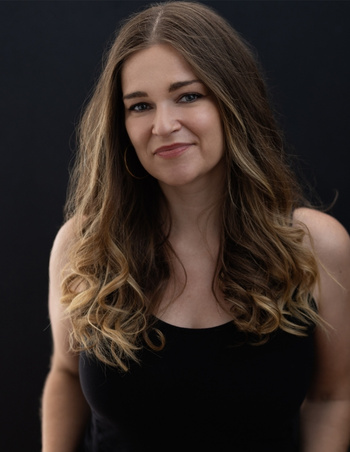
Daisy Pearce – image from her site

Sam is a reporter who specializes in debunking superstitious claptrap and fraud. Mina is a recent graduate in child psychology. Sam had asked her along to offer an evaluation. Well, there is certainly something off happening at the Webber household

Alice Webber has tales to tell. (She’s the girl you see giggling with her friends at the back of the bus or fooling around in the arcades. Normal. Unexceptional.) She believes there is a witch living in the walls of her bedroom. She can tell because she sees the witch’s eyes looking at her through gaps in the brick chimney. It began when a group of (not really) friends play a mean trick on her at a supposedly haunted house. Now she hears and speaks in voices.

For a moment I think she is speaking—I can see her shoulders twitch, her mouth slowly moving—but the voice I hear is slurring and thick, heavy. Like a throat full of molasses. It is a language I don’t recognise, Germanic maybe. The words spread like a ripple, like oil on water, dark and tainted. It fills me with something icy and unknowing and I taste the bitterness of bile in the back of my throat.

Both Sam and Mina (“It’s my dad. He took my mother to Whitby Abbey while she was pregnant with me. My poor brother narrowly escaped being called Van Helsing.”) have arrived with significant emotional baggage. Sam lost his seven-year-old daughter, Maggie. Mina lost her brother, Eddie, when they were kids. Both Mina and Sam hold out hope that they can somehow reconnect with their lost ones, maybe reduce the guilt they both feel. Is there any chance Alice can actually help them? Alice may look like an average teen with professional aspirations that end at the beauty salon, but what if there is something operating through her?

The novel has a feel of both contemporary spook story and a folk horror tale, rich with back-country superstition, practices, and beliefs. Banathel has a long history of belief in witches, and a rich supply of hagstones everywhere you look. It is reminiscent of works like Tom Tryon’s novel Harvest Home and the 1973 horror classic, The Wicker Man, reliant on deep rural isolation.

The tension ramps up with every strange new event, encouraged by the persistence of contemporary doubt, ancient superstition, the growing crowd and its increasingly threatening regard for the girl. Do they want to help her or use her, or do they want something else? In addition, while there is a mystery in every horror tale, there is also a tension between where magical manifestations leave off and human agency steps in. Ditto here.

While it certainly seemed fun for Mina to have such a nominal root in classic horror, (a pearl among women) it did not seem to me that enough was done with her nifty name. And for a psychologist to be entangled with someone so clearly wrong for her was disappointing. (Although I suppose many of us have had that experience.) As for seeing someone looking through gaps in bricks, did no one consider maybe a bit of plaster, spackle, or poster of a favorite musician to cover the spaces? Or maybe hiring a handyman named Bert to have a go at clearing it out?

On the other hand, the lovely details of dark manifestation that Pearce weaves into her tale, the sights, sounds, and textures, add that frisson that every good horror novel needs. The overarching heat that bears down on all provides another layer of dread. It might even enhance the feel of this book for readers to take it on in July.

I have a particularly high bar for fright. It is a rare horror novel that keeps me up at night. There are real-world stresses and manifestations of evil that offer that service quite happily. Something in the Walls came close, but caused no lost zzzzzzzs here. Not to say it will not for you, who have a more usual receptivity to such things. It did, however, offer an appealing lead, a tantalizing mystery, a colorful portrait of a tucked-away place, and kept up a brisk tempo.

Most witch hunts are a bad idea, but it might be a better one to track down Something in the Walls. There may be a thrill or two just lying in wait for you.

If you gaze long enough into an abyss, the abyss will gaze back into you. – Friedrich Nietzsche

Review posted – 4/4/25

Publication date – 2/25/25

I received an ARE of Something in the Walls from Minotaur in return for a fair review, and my agreeing to get the hell out of their chimney. Thanks, folks, and thanks to NetGalley for facilitating.

This review is cross-posted on Goodreads. Stop by and say Hi!

=======================================EXTRA STUFF

Links to Pearce’s personal, Instagram, and Twitter pages

Profile – from her site

Daisy Pearce was born in Cornwall and grew up on a smallholding surrounded by hippies. She read Cujo and The Hamlyn Book of Horror far too young and has been fascinated with the macabre ever since.
Daisy began writing short stories as a teenager and after spells living in London and Brighton she had her first short story ‘The Black Prince’ published in One Eye Grey magazine. Another short story, ‘The Brook Witch’, was performed on stage at the Small Story Cabaret in Lewes in 2016. In 2015 The Silence’ won a bursary with The Literary Consultancy. Later that year Daisy also won the Chindi Authors Competition with her short story ‘Worm Food’. A further novel was longlisted for the Mslexia Novel Award…Daisy currently works in a library where she stacks books and listens to podcasts on true crime and folklore.

Interview
—–Bloody Good Reads – Chapter 109 – Daisy Pearce – audio – 38:38 – on writing what she loves

Items of Interest from the author
—–Crime Reads – DAISY PEARCE ON POLTERGEISTS, MISOGYNY, AND COMING OF AGE IN A FRACTURED WORLD
—–Short story – The Brook Witch – linked from her website
—–Short story – The Spirit of Christmas – linked from her website

Leave a comment

Filed under Fantasy, Fiction, Horror, Mystery, Thriller

If Something Happens to Me by Alex Finlay

book coverNo family is without its secrets.

Ryan Richardson had been pining for Alison Lane (Ali) for years. They have known each other since 9th grade, and cared for each other for a long time. They will be leaving for different colleges soon. Their special night is interrupted by rain. Back to her father’s BMW, it was looking like Paradise by the Dashboard Lights would finally become a reality, two teens parked in a Lover’s Lane in Leavenworth, Kansas. Alison does not hit him with an I gotta know right now, but they are this close to heaven when the car door is ripped open. Ryan takes a heavy blow to the head, and comes to on the wet grass. The car, and Ali are gone.

description
Alex Finlay – image from Amazon

We meet Ryan again, the presumed perp, five years later, long suspected of and hassled about that night. Ali has not been heard from. On vacation in Tuscany, his father notifies him that the missing BMW has been found. As if that is not enough, he receives a note in his hotel room from a mysterious stranger, demanding a meeting, and the game is afoot, sending Ryan on a quest to find out the truth of what had really happened that terrible night.

Poppy McGee is late of the military, an MP, having earned her discharge by standing up for herself in a suitable fashion. She had hoped for a gig on the federal level, FBI maybe, but finds herself stuck, instead, in Leavenworth, Kansas, her home town. Her father’s friend, Sheriff Ken, had offered her a safe landing. Deputy Sheriff McGee soon finds herself up to her neck in the five-year-old disappearance. Way to begin!

Shane O’Leary is a very bad man, a Philadelphia gangster with few qualms about the occasional homicide. We soon learn of his involvement in everything;

These three will twirl around each other for the rest of the book, with chapters alternating among them, as each pursues a goal.

Poppy and Ryan are appealing characters, finding a way forward after having faced some serious challenges. O’Leary has a bit of appeal from his love of family. But really, he is a straight up monster.

Finlay offers us a range of venues, from the small city (under 40k pop.) of Leavenworth to the metropolis of Philadelphia, from Tuscany to a small hamlet in the UK to Paris.

I had never done, really, a European setting and so it is set part in Kansas. I thought a contrast for that would be Ryan on this trip in Italy. It starts with me having a trip in Italy when I was finishing the book What Have We Done?. I always thought this would be a cool setting. And then I finished the novel in Paris, so I naturally wanted to weave that into the story, which I did. And while I was in Paris for this extended period where I had gone just to finish the book, my wife and I went to this small village I had lived in in the UK as a boy. I hadn’t been back in forty years…so that was in the book as well. It was personal travel that inspired settings, but also just things that had stuck with me for forty years. – from the promo

The secondary characters are given sufficient attention, adding depth to the characterization of the primary three. And Finlay has done a wonderful job of giving several of them explanatory, if not exactly exculpatory, three-dimensionality.

Poppy, in particular, confronts frenemy, Agent Fincher, a fed, who wants Poppy to share details on the investigation. She offers up some details of her own, but leaves us wondering if she is for real.

The agent sits there appraising Poppy, watches her eat. Eventually, she says, “Are you familiar with Russian folklore, Deputy Sheriff McGee?”
This is too much. Poppy gives the agent a lazy-eyed stare. “Do I look like I’m familiar with Russian folklore?”
Agent Fincher allows herself a smile. “In Russian folklore there’s someone called the Holy Fool.”
The woman is an oddball or genius, Poppy can’t tell which. It’s possible her schtick is just a tactic to get Poppy to talk.
“The Holy Fool is an outsider—sometimes an eccentric, sometimes crazy, sometimes just a child. But it’s their outsider status that makes them a truth teller.”
“I’m not sure where this is—”
“You heard of the story ‘The Emperor’s New Clothes’?”
What the hell, Poppy decides to bite. “The story about the emperor who’s told he has a magical outfit and everyone plays along even though he’s naked?”
Agent Fincher snaps her fingers. “Everyone except a little boy. He’s a Holy Fool—someone who’s free to state the truth.”
“What’s this have to do with anything?”
“Oh . . . I don’t know. After you punched your commanding officer in the nose, I was hoping you were one.”
“One what?” Poppy asks.
“A Holy Fool.”
Poppy shakes her head. This lady’s been looking into Poppy’s background. Following her. What’s her deal?
“In real life, our Holy Fools are whistle-blowers. People willing to sacrifice loyalty to their job or other institution to expose the truth.”

So, should Poppy trust this person or not?

Many novels offer a thing called payload. What did you learn? This is a look at some real-world thing, how certain activities are carried out, the details of philatelic theft, how drugs are transported, how money is laundered, how even benign activities are undertaken. Although there is a bit of this in looking at how O‘Leary launders his income, this was an area in which the book was lacking. While that mote of depth was absent, this will take nothing away from the pace or fun of the book.

If Something Happens to Me is a tale of murder, bullying, REVENGE, passion, and a core mystery (why was Ali kidnapped?) that explains it all. It will keep you guessing and flipping those pages. The only thing that will happen to you on reading Finlay’s latest is that warm, filling feeling of having just read a very satisfying thriller.

Review posted – 10/11/24

Publication date – 5/28/24

I received a ePub ARE and a hard copy of If Something Happens to Me from Minotaur in return for a fair review. Thanks, folks, and thanks to NetGalley for facilitating.

This review is cross-posted on Goodreads. Stop by and say Hi!

=======================================EXTRA STUFF

Links to Finlay’s personal, FB, and Instagram pages

Profile – From the author’s real-name website

Anthony Franze is a critically acclaimed novelist with St. Martin’s Press, and a lawyer in the Appellate & Supreme Court practice of a prominent Washington, D.C. law firm.
For more than a decade, Anthony was an adjunct professor of law teaching courses in Federal Courts, Legal Rhetoric, and Appellate Practice, and he currently participates in a European faculty exchange program where he teaches at law schools abroad.
He writes legal thrillers under his own name, including THE LAST JUSTICE (2012), THE ADVOCATE’S DAUGHTER (2016), and THE OUTSIDER (2017) He writes commercial fiction under a pen name, [Alex Finley] and his 2021 novel was an Indie Next pick, a LibraryReads selection, an Amazon Editor’s Best Thriller, as well as a CNN, Newsweek, E!, BuzzFeed, Business Week, Goodreads, Parade, PopSugar, and Reader’s Digest best or most anticipated thriller of the year. His work has been translated into more than a dozen languages and optioned for television and film.

Interviews
—–Authors on the Air – Alex Finlay — If Something Happens to Me – by James L’Etoile – video – 20:48
—–The Poisoned Pen Bookstore – Alex Finlay discusses If Something Bad Happens to Me by Barbara Peters – video – 52:15

My review of Finlay’s prior book
—–2023 – What Have We Done

Items of Interest from the author
—–Promo
—–Google Play Books – Audiobook preview – 16:05

Leave a comment

Filed under Fiction, Mystery, Reviews, Suspense, Thriller

Under the Storm by Christoffer Carlsson

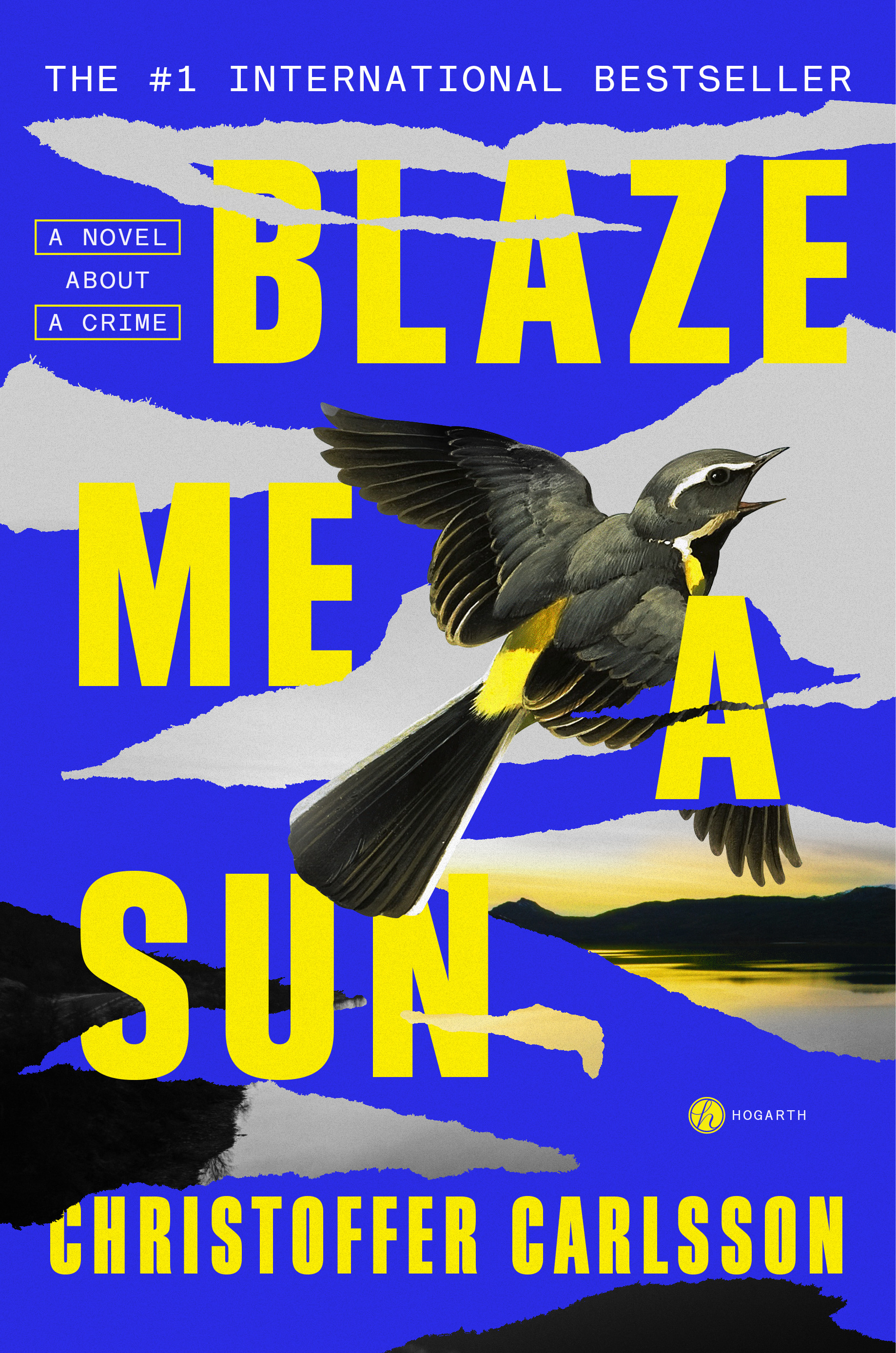
book cover

History doesn’t allow itself to be rewritten that easily.

One single night: A house burned down in Tolarp. There was someone inside, on the kitchen floor. One instant, a before and after: the stillness before the spark appeared, and the inferno that followed. One single event: That was all it took to redirect the path of a life. Like the filament of a root moving through time.

Or, in this case, two lives.

How do you deal when the thing that obsesses you interferes with your life?

Isak Nyqvist is seven years old in 1994. Vidar Jörgensson is a young cop, four years in the police. We will follow them through the next twenty-one years. Both their lives are largely defined by the fire that takes place on a cold night in November. A young woman is found dead inside a torched house. It was not the fire that killed her.

description
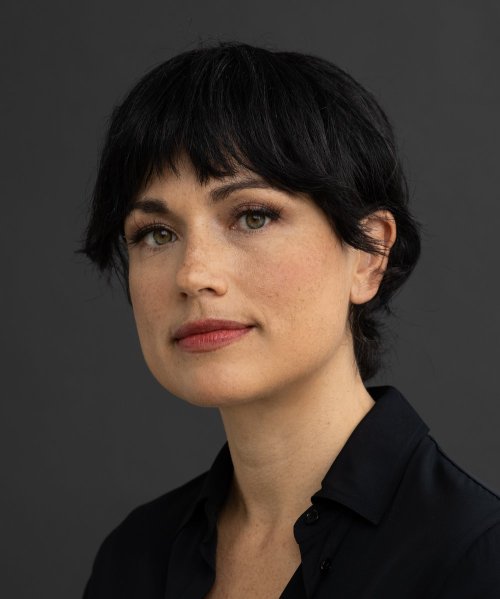
Christoffer Carlsson – image from Frankurter Rundschau – credit Emelie Asplund

Isak loves his uncle Edvard, 25, who has spent a lot of loving time with him, but Edvard has a history of rage, much of it provoked, and a lot of it ascribed to him because his father was a violent person. He had been dating Lovisa Markstrom, was seen leaving the scene of the crime on the night of the fire, and is presumed to have been the one who killed her. There is circumstantial evidence supporting that belief. The town is certain of it, given his family history. The person who had seen him that night was Vidar. But Vidar has his doubts, or will.

Vidar has many local connections and uses those to help his investigation. Isak’s family is known by everyone, not in a good way. Gramps was known as a violent person. Isak’s uncle Edvard was also painted with that same brush, so it is easy to believe that he killed his girlfriend. Isak is only 7 when the murder take place but local biases, and bullies pile on Isak, assigning to him the snap-judgments that were affixed to his uncle

The story is told in three parts, the first being when the death occurred, 1994, the second in 2003 and the third in 2015. Even though Isak has doubts, he still cannot believe his loving, kind uncle could be responsible for a murder. Vidar becomes aware of some problems with the evidence, sees alternate explanations for the crime and becomes obsessed with it for the rest of his police career and beyond. It even threatens his marriage (Wait, didn’t she know this about him when they got together?) The trope of the investigator’s non-understanding significant other gets on my nerves.

Isak is impacted both internally, wondering if Edvard really was a killer, and wondering if genetics are destiny, and externally, as bullies constantly remind him that his uncle is serving time, and provoking him to violence. (Why are provoking bullies never held to account? Is the world really that dumb? Don’t answer that.)

The long expanse of the tale gives us insight into the main characters, how they feel and behave in the world, and what has gone into creating those feelings and behaviors. It is both heart-breaking and illuminating.

The parallelism of Isak and Vidar works well, showing how history ripples forward into the future for both of them, albeit in very different ways. Carlsson offers many specific ways in which their paths run in the same direction. Both their lives are crap, in a way. Both have boxes of clues to their mysteries. Vidar’s wife’s assumptions and lack of understanding re Vidar mirrors the community’s view of Erik. Vidar imagines himself as a child, akin to a dream of Isak’s

In Carlsson’s previous novel (at least as far as USA release dates go) Carlsson had used a similar structure, with Vidar’s father tracking a crime from 1986 to 2019, stopping off at several intermediate years to track the characters and advance our understanding of the very cold case.

This original Swedish language book was released in 2019, before Blaze Me a Sun (2021). Vidar Jörgensson features in this one. But in the later book, it is Vidar’s father who stars, with Vidar being introduced later in the tale. I do not know if Under the Storm was intended as a prequel, or maybe was written later but published earlier. I read the pair in the order in which they were published in the USA, #2, then #1. There is a third, which was released in Sweden in 2023, Levande och döda (The Living and the Dead). I do not know when an English translation will be available.

Family is a major concern, as it was in Blaze Me a Sun. How does the cop’s obsession (or deep commitment to truth) impact his friendships, his work life, his marriage? (“You seem so far away sometimes,” she said at last.) How does Isak’s affection for and connection with a much-loved uncle affect his ability to have a normal social life, to have a family life? How is the rest of Edvard’s family impacted by his travails?

As with Blaze Me a Sun, there is mention of a local superstition. That one had to do with fortune, good or bad, being caused by how one saw a particular bird. Here it is a place where a legendary rich man is buried, a place where ghostly apparitions are said to appear. Under a bridge in Anarp is where The Old Man sleeps, a boogie man who is death to anyone who meets his ghost. Non-superstition-based history is also addressed, as Carlsson tracks town history back to sundry events, like the introduction of manufacturing in the town, its loss and attempt to revive it.

A persistent motif throughout is secrecy, as one might expect in a procedural murder tale. Vidar and Isak, while not alone in this, are robust practitioners. Isak keeps two things to himself from the night of and a short time after. It is never particularly clear why he fails to tell what he knows in time to have an impact. Vidar does not tell his boss what he is working on in the latter parts of the novel. Schtupping a local married lady is also kept on the down-low. Talking separately to Edvard and Isak while not informing either of them of his contact is another. Vidar keeping secret a challenging work-based relationship also requires deceit.

The noir atmosphere gets jiggy when a major hurricane, Gudrun, blows through. Homes are destroyed, people displaced. This was a real storm that caused major damage in Sweden. Details of the experience of such a beast are chilling. Maybe not the same as the assassination of the Prime Minister in the psyche of the nation, but it had a real impact. A heat wave also adds to the tension.

Carlsson succeeds in presenting both detailed character portraits and in giving us a sense of what life was like in this area, a place in which he grew up. He is a PhD criminologist for his day job, publishing papers and teaching. He grew up around things criminal, as mom was a police dispatcher. It is clear that a lot of the conversation on which he eavesdropped at home as a kid made an impact. He knows crime, both real and fictitious, and writes with authority about it.

This is a procedural, however lengthy the duration of the investigation. You will enjoy Vidar picking up on clues and following through, as he spends a lifetime attempting to find out the truth about that night. In the beginning it is a hot, fiery case that becomes a cold-case in the following parts of the novel. (In Sweden are all cases cold cases?) But not to Vidar. He is a flawed guy, but is determined to find out what really happened that night. Under the Storm is a triumph of the genre, tickling your brain with the mystery, engaging you emotionally with the characters, and offering up informed looks at a place and time, well, times. As a smart, accomplished example of Swedish noir, Under the Storm is out of this world.

The world had shown what it was truly capable of. As if a lifeline was suddenly severed, it could take your loved ones away. The world watched without blinking as you fell.

Review posted – 06/28/24

In Sweden – 3/1/2019
English Translation – 2/27/24

I received an ARE of Under the Storm from Hogarth in return for a fair review. Thanks, folks, and thanks to NetGalley for facilitating.

This review is cross-posted on Goodreads. Stop by and say Hi!

=======================================EXTRA STUFF

Links to the Carlsson’s Instagram and Twitter pages

Profile – from Penguin Random House

Christoffer Carlsson was born in 1986 on the west coast of Sweden. He holds a PhD in criminology from the University of Stockholm and is one of Sweden’s leading crime experts. Carlsson is the youngest winner of the Best Swedish Crime Novel of the Year, voted by the Swedish Crime Writers’ Academy, and has been a finalist for the prestigious Glass Key award, given to the best Scandinavian crime novel of the year.

Interview
—–The Occasional Bookwitch Christoffer Carlsson – neither pink nor fluffy

It’s close to where he grew up, where he and his brother used to play. And then, halfway through writing the book, his parents sold up and moved away from his childhood home, moving into a flat in town, enjoying their new life on the 13th floor with marvelous views. ‘The novel became some sort of farewell. It was pretty hard. It’s as if part of my past has moved out of reach.’

My review of another book in this series
—–Blaze Me a Sun

Item of Interest from the author
—–With the Dead – this is a must-read item, as Carlsson details how he became a writer. You will see how his books incorporate elements of his life.

Item of Interest
—–Cyclone Gudrun

Leave a comment

Filed under Fiction, Mystery

The Future by Naomi Alderman

book cover

The road to ruin is paved with certainty. The end of the world is only ever hastened by those who think they will be able to protect their own from the coming storm.

Love is the mind killer.

So what would you do if your super-secret software gave you the alert? End times are afoot. Time to scoot! If you are like most of us, you might seek our your nearest and dearest to see the world out together. But what if you are one of the richest people on the planet? Well, in that case, you would have prepared a plan, an escape, a plane, supplies, a bunker somewhere safe. Buh-bye, and off they go. The they in this case includes three billionaires, the heads of humongous tech companies, some years in the not-too-distant future, Lenk Sketlish, Zimri Nommik, and Ellen Bywater.

They were definitely not inspired by anyone specifically who could sue me for everything I’m worth and barely notice it…They are composite characters made up of some of the ridiculous and awful things that tech billionaires have done and some of it just made up out of my head. But of course the companies are inspired by real companies. – from the LitHub interview

What if you were the number one assistant to one of these folks, or the less-than-thrilled wife of another, or the ousted former CEO and founder of a third one, maybe the gifted child of one? You might have been spending your time trying to see what you could do to mitigate the vast harm these mega-corporations have done to the planet. These are Martha Einkorn, Lenk’s #2, Selah Nommik, Zimri’s Black British wife, Alex Dabrowski, founder and former CEO of the company now headed by Ellen, and Badger, Ellen’s son.

“Margaret [Atwood] has very much covered how bad it can get, so we don’t need a lesser writer doing that,” Alderman says. “I’m interested in the most radical ideas about how we can make things better, and what are the avenues we can pursue.” – from the AP interview

BTW, Atwood mentored Alderman.

What if you were attending a conference in Singapore, having recently met one of group B above for an interview, and gotten entangled in an unexpected way, but now find yourself in the vast mall in which the conference is being held, being chased and shot at by some psycho, probably a religious nut? Lai Zhen is a 33yo refugee from Hong Kong, an archaeologist and well-known survivalist influencer. She had met someone she thinks may be The One, but her immediate survival is taking up all available mental space. Thankfully, she has help, but will it be enough?

description
Naomi Alderman – image from The Guardian

The action-adventure-sci-fi shell encasing The Future is a dystopian near-future that takes an if-this-goes-on perspective re the road we are currently traveling toward planetary devastation, global warming, the increasing greedification of the world economy, and concentration of wealth, at the expense of sustainability and human decency. But Alderman has done so much more with it.

The Future has a brain and a heart, to go along with the coursing hormones, and some serious mysteries as well. Did I mention there is a romance in here also? Good luck shelving this thing. You probably will not have much luck putting it down once you start reading. Well, take that advisedly. I did find that it took a while to settle in, as there is a fair bit to get through with introducing all the characters, but once you get going, day-um, you will want to keep on.

While offering a look at survival post everything, Alderman tosses in some fun high tech and BP-raising sequences. And she gives readers’ brains a workout, providing considerable fodder for book club discussions. To bolster the thematic elements, Aldermen provides plenty of connections to classic tales, biblical and other, that offer excellent starting points for lively discussions.

Martha was raised in an apocalypse-concerned cult, led by her father. As an adult she gets involved in on-line exchanges about questions like what might be learned from the experience of a biblical apocalypse survivor, Lot. Alderman was raised as an Orthodox Jew, studying the Torah in the original, so knows her material well. (God was about to firebomb Sodom when Lot’s kindness to a couple of god’s emissaries earned him and his family a get-out-of-hell-free pass.) In addition, she finds relevance in Ayn Rand, The Iliad, The Odyssey, and more.

She brings in a discussion of the enclosure act in the UK, how the stealing of public land by the wealthy has a mirror in the theft of public space of different sorts in the 20th and 21st centuries. But the biggest issue at work here is trust. In fact, Alderman had intended to title the book Trust. But when Herman Diaz’s novel, Trust, won a Pulitzer Prize, she had to find an alternative. Can Zhen trust her new love interest. Can she trust the AI that is supposedly helping her? Can she trust any of the oligarchs? Can she trust people she has known for years on line, but never met in person? This is a core concept, not just on a personal, but on a societal level. Civilizations are built on trust. It is an issue that touches everyone.

The wealthier you are, the less you have to ask people things and the less you ask people for things, the less you have to discover that you can trust and rely on them. Eventually, that erodes your ability to trust. Then, you’re sunk. – from the Electric Literature interview

Consider a concern that is immediate in early 2024. Can American allies, whose alliances have kept the world out of World War III since the end of World War II, trust the US intelligence services with their secrets, when our next president might give, trade, or sell it to our enemies? Can you trust that the person you are communicating with on-line is being honest with you. (As someone who has met people through Match.com, I am particularly aware of that one.) If you are stuck on a survival island, can you trust that the other people there will not do you in, in order to improve their chances of gaining power once things begin to return to some semblance of global livability?

In today’s culture, technology, particularly social media, “encourages us not to really trust each other,” Alderman explains. “The ways that we use to communicate with each other have been monetized in order to make us as angry at and afraid [of one another] as possible.” And while the internet can all too often amplify “absolute hateful stupidity” to feed our distrust of one another, the author continues, “It can also demonstrably, again and again, multiply our knowledge and capacity to understand.” – from the Shondaland interview

Zhen’s is our primary POV through this, although we spend a lot of time with Martha. She is an appealing lead, a person of good intentions, and reasonably pure heart. She is wicked smart, able, and adaptive. It is easy to root for her to make it through. But, noting the second quote at the top of this review, if Love is the mind killer, might it impair her clarity of thought, her maintenance of necessary defenses? Of might it impair that of the person she is love with?

The concern with dark forces is a bit boilerplate. Two of the oligarchs are cardboard villains; another has some edges.
But it is the conceptual bits that give The Future its heft. Oh, and one more thing. Woven throughout the 432 pages of this book is minor crime, Grand Theft Planet. It should come as no surprise that an author who has had great success with her previous novels, and who has spent some years writing video games, would produce a fast-paced, engaging read, replete with dangers, anxieties, fun toys, and wonderful, substantive philosophical sparks. I cannot predict the future any better than 2016 presidential pollsters, but my personal AI suggests that should The Future will find its way to you, you will be glad it did.

Imagining bad futures creates fear and fear creates bad futures. The pulse beats faster, the pressure rises, the voice of instinct drives out reason and education. At a certain point, things become inevitable.

Review posted – 3/8/24

Publication date – 11/7/23

I received an ARE of The Future from Simon & Schuster in return for a fair review, and the password to my super-secret software. Thanks, folks, and thanks to NetGalley for facilitating.

This review is cross-posted on Goodreads Goodreads. Stop by and say Hi!

=======================================EXTRA STUFF

Links to the author’s personal, Instagram, GR, and Twitter pages

Profile – from Simon & Schuster

Naomi Alderman is the bestselling author of The Power, which won the Women’s Prize for Fiction, and was chosen as a book of the year by The New York Times, The Washington Post, the Los Angeles Times, and was recommended as a book of the year by both Barack Obama and Bill Gates. As a novelist, Alderman has been mentored by Margaret Atwood via the Rolex Arts Initiative, she is a Fellow of the Royal Society of Literature, and her work has been translated into more than thirty-five languages. As a video games designer, she was lead writer on the groundbreaking alternate reality game Perplex City, and is cocreator of the award-winning smartphone exercise adventure game Zombies, Run!, which has more than 10 million players. She is professor of creative writing at Bath Spa University. She lives in London.

Interviews
—–Professional Book Nerds – Dystopian Futures with Naomi Alderman – video, well, mostly audio, with no real video – 41:59
—–Toronto Public Library – Naomi Alderman | The Future | Nov 13, 2023 with Vass Bednar – 45:05 – there is a nice bit in here on tech as neither bad nor good, but a tool which can be used for good or evil.
—–Literary Hub – Naomi Alderman on Creating a Fictional Tech Dystopia by Jane Ciabattari
—–Shondaland – Naomi Alderman Is Still Finding Hope in Humankind by Rachel Simon
—–AP- Naomi Alderman novel ‘The Future’ scheduled for next fall by Hillel Italic
—–Electric Literature – Dystopian Future Controlled by Technology by Jacqueline Alnes
—–Independent – How We Met: Naomi Alderman & Margaret Atwood – by Adam Jacques – Atwood mentored Alderman in 2012 – a fun read

Item of Interest from the author
—–BBC Sounds – audio excerpt – 1.0 – The End of Days – 15:47

Items of Interest
—–Tristia by Ovid – Zhen reads this prior to a trip to Canada
—–The Admiralty Islands
—–inert submunition dispenser – a kind of cluster bomb
—–Wiki on the enclosure act

Leave a comment

Filed under Action-Adventure, AI, Cli-Fi, computers, Fiction, Literary Fiction, Mystery, Reviews, Science Fiction, Thriller, Thriller

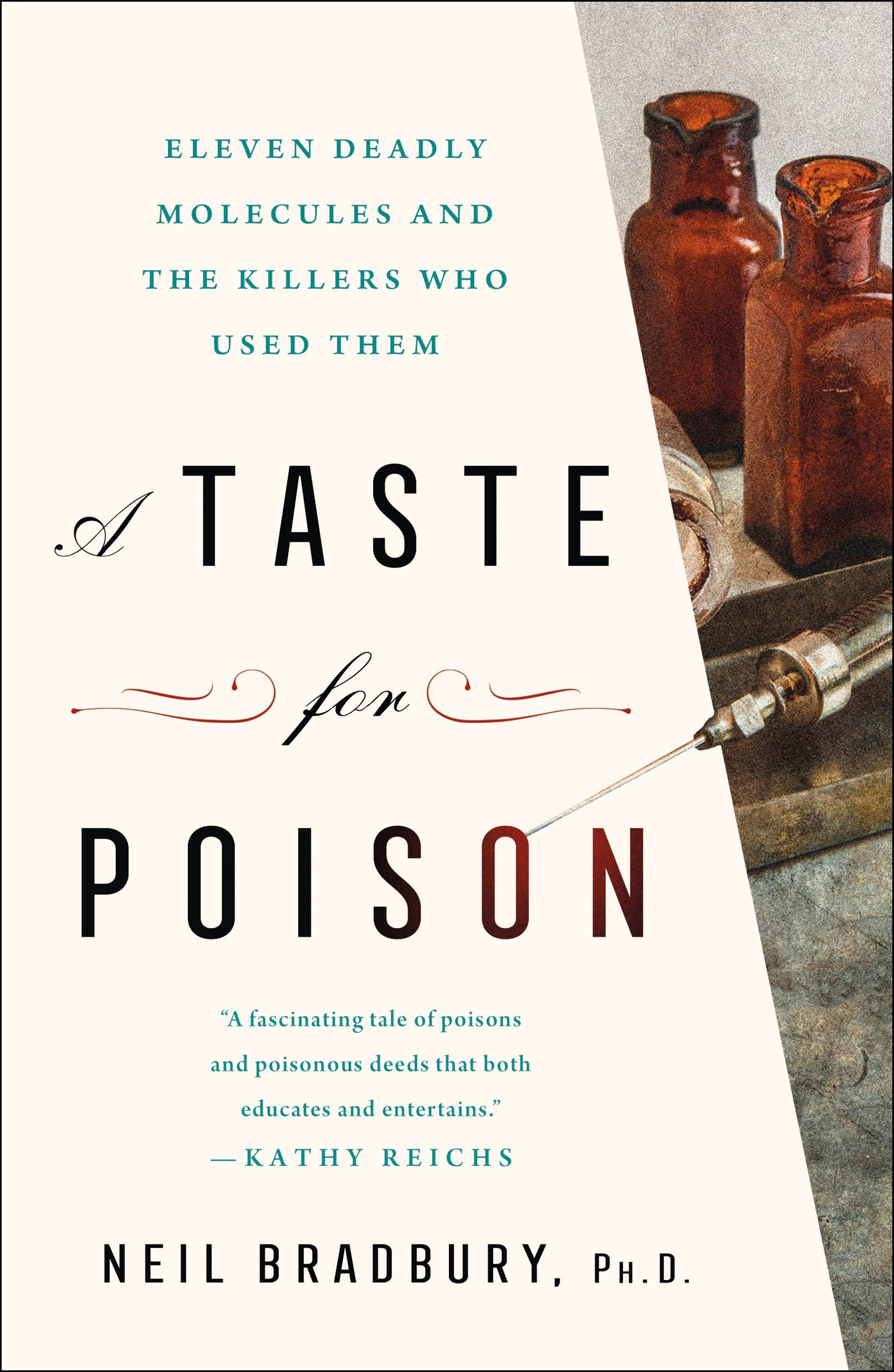
A Taste for Poison by Neil Bradbury

book cover

… a chemical is not intrinsically, good or bad, it’s just a chemical. What differs is the intent with which the chemical is used: either to preserve life – – or to take it.

Within the annals of crime, murder holds a particularly heinous position. And among the means of killing, fewer methods generate such a peculiar morbid fascination as poison. Compared with hot blooded spur of the moment, murderers, the planned and cold calculations involved in murder by poison, perfectly fit the legal term malice aforethought. Poisoning requires planning and knowledge of the victim’s habits. It requires consideration of how the poison will be administered. Some poisons can kill within minutes; others can be given slowly, over time, gradually accumulating in the body, but still leading inexorably to the victim’s death.

If you are a fan of True Crime, if you are a fan of TV procedurals, if you are a fan of murder mysteries, A Taste for Poison is a must read. You will be much better prepared to keep up with the medical examiners in all venues when you can recognize the victims’ symptoms, at least if the book or show gives you a chance to try figuring it out for yourself before the truth is revealed.

Neil Bradbury grew up fascinated by murder mysteries and poisons. He is a graduate of the University of St. Andrews in Scotland, and the University of Wales School of Medicine, with degrees in Biochemistry and Medical Biochemistry. Although he grew up in the UK, he now lives and works in Illinois, USA, where he’s a scientist, teacher and writer. He also gets to play with nasty chemicals every day (during scientific experiments of course). – from his site

description
Dr. Neil Bradbury – image from his site

He has carefully mixed his interests and profession to produce a fun, informative look at poisons through the ages. One might wonder if he wrote the book using a poison pen. I wouldn’t, but some might. He includes looks at the following: Aconite, Arsenic, Atropine, Chlorine, Cyanide, Digoxin, Insulin, Potassium, Polonium, Ricin, and Strychnine. None would qualify as pretty, although cyanide does gift its victims with a lovely ruddy complexion.

One of the primary themes of the book is that poisoning is the misapplication of healing pharma to dark purpose. Think water. Necessary for human survival, comes in many forms. These days it forms a base layer for a surface layer of every imaginable flavor, nifty literary tool too, right? But water-boarding, or tsunami? Not so much.

Bradbury goes through the medically helpful aspects of multiple poisons, then shows how they have been used to kill, who used them, on whom they were used, how the crimes were figured out and prosecuted, and what happened to the poisoners. In doing this he provides us with a history of when it became possible to diagnose (detect) each poison as a murder weapon, (of particular interest in historical mystery dramas) and details the biology of how each works its dark arts inside the human body.

Sadly, for those with a poison-based homicidal urge, the subjects of Bradbury’s reporting, for the most part, were tried and convicted. And today, in the absence of governments protecting state-sponsored poisoners, very few such crimes go unpunished.

You are unlikely to recognize the names here, at least the names of the killers, attempted killers, and victims, but as with many in the history of medicine, that is not unusual. Nevertheless, the details are here, as many crimes are examined.

Bradbury offers a fun collection of historical odds and ends, like how the telegraph, newly in service, foiled the escape of one poisoner. Or how one particular poison may have been at the root of vampire mythology, or how strychnine was used as a pick-me-up in the early 20th century, or the surprising cost of manufacturing polonium, and even a new take on some Van Goh masterpieces.

The only downside for me was that I tended to get a bit lost in the sections detailing the biological and chemical workings of these substances inside the body. I would not say they are extremely technical. I would say that I was always complete garbage at chemistry, and not a whole lot better at biology, so may have nurtured a disaffection that is unlikely to affect you the same way. There is some humor in the book, but not a whole lot.

Still, As a consumer of a considerable amount of crime-based entertainment, I was particularly drawn to this book. The how-dun-it often is as important as the who, and by detailing victim symptomology as well as poisoner and investigator methodologies, we can all get a greater appreciation for the challenges entailed. I may not have had the right chemical receptors for the scientific details, but there is plenty of intel in here that will enhance your engagement in crime shows, and teach you a bit about the history of these substances, many of which exist in common parlance. So, it may or may not be for you. I guess you will just have to pick your poison.

…in France in the late 1600s, the effectiveness of arsenic and disposing of wealthy relatives who had the temerity to remain alive, was so widespread that it gained the name Poudre de succession, or “inheritance powder.”

Review posted – 11/17/23

Publication dates
———-Hardcover – 2/1/22
———-Trade paperback – 8/15/23

I received a paperback of A Taste for Poison from Griffin in return for a fair review. I am happy to report that the tingling feeling in my hands, which began after I first began to read the book, soon abated. Thanks, folks, and thanks to NetGalley for facilitating.

This review is cross-posted on my site, Goodreads. Stop by and say Hi!

=======================================EXTRA STUFF

Links to the author’s personal and Goodreads author pages

Alas, as far as I was able to find, Bradbury’s on-line presence is slender, limited to his personal site and GR author page. Maybe laying low after having taken care of some personal rivals?

Interview
—–Murder & MayhemTalking Poisons with Dr. Neil Bradbury

Items of Interest
—–Listverse – Top 10 Remorseless Poisoners That History Almost Forgot by Radu Alexander
—–Philadelphia Inquirer –A Pennsylvania nurse is accused of killing 4 patients, injuring others with high doses of insulin by Bruce Shipkowski and Brooke Schultz, Associated Press
—–Wikipedia – List of Poisonings through history – from 399 BC to 2021 – a nifty list

Leave a comment

Filed under History, Non-fiction, Science and Nature, True crime

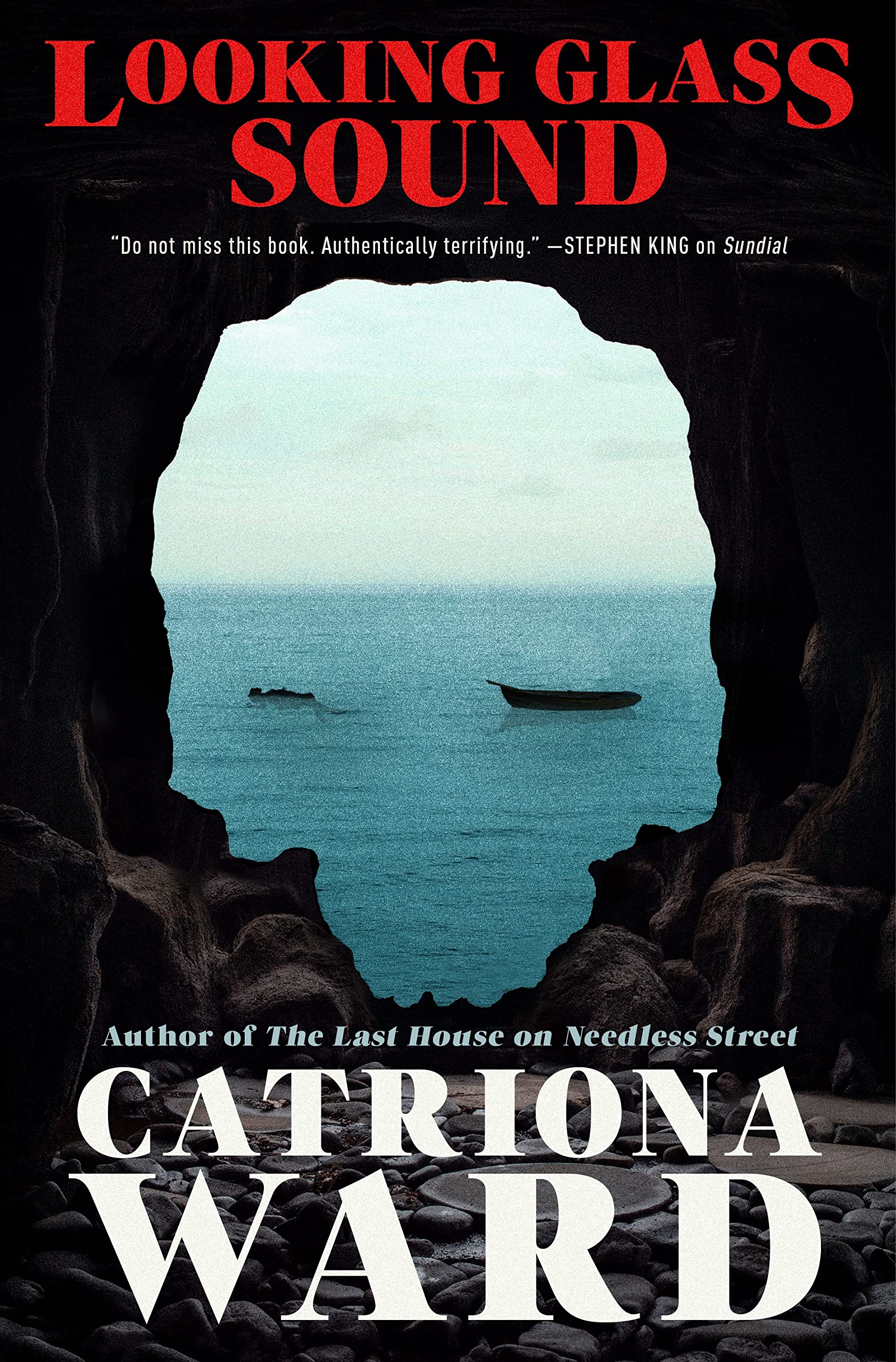
Looking Glass Sound by Catriona Ward

book cover

The sea whispers, faint. It sounds like pages shuffling. A seal barks. I lick a finger and test the breeze. The wind is in the east. A moment later it comes, mournful and high. The stones are singing and I feel it, at last, that I’m home. I listen for a time, despite my tiredness. I think, if heartbreak had a sound, it would be just like this.

She can smell him the way wild animals smell prey.

The visions don’t frighten me anymore. I can usually tell what’s real and what isn’t.

Don’t get comfortable.

Wilder Harlow has returned to the cottage where he stayed as a teen, to write the book he had started over three decades before. He is not entirely well. We meet him in 1989, via his unpublished memoir, which tells of the momentous events of that Summer. He was sixteen. His parents had just inherited a cottage from the late Uncle Vernon, and opt to spend a summer there before deciding whether to sell. It is on the Looking Glass Sound of the title, near a town, Castine, in Maine. Beset in prep school, for his unusual features, particularly pale skin and bug eyes, Wilder is ready for a novel experience. (“I’m looking at myself in the bathroom mirror and thinking about love, because I plan on falling in love this Summer. I don’t know how or with whom.”)

description
Catriona Ward – image from Love Reading

The sound has an unusual…um…sound.

The leaves of the sugar maple whisper—under it, there’s a high-pitched whine, a long shrill note like bad singing…it sounds like all the things you’re not supposed to believe in—mermaids, selkies, sirens…’What’s that sound?’ It seems like it’s coming from inside of me, somehow. Dad pauses in the act of unlocking the door. ‘It’s the stones on the beach. High tide has eaten away at them, making little holes—kind of like finger stops on a flute—and when the wind is in the east, coming over the ocean, it whistles through.’

Sure, dad, but the wind-driven whistling is not the only sound that haunts in these parts.

It does not take long for Wilder to make two friends. Nathaniel is the son of a local fisherman, his mother long gone. Harper is English, her well-to-do parents summer there. Wilder’s relationships with these two will define not only this Summer and the one after, but the rest of his life. Harper is a flaming redhead, with issues. She has been kicked out of many schools, for diverse crimes. So, of course, Wilder is madly in love with her at first sight. Nat, a golden boy in Wilder’s eyes, has a way of describing fishing with a harshness that is unsettling. The three form their own tribe for a time.

Pearl is named for her mother’s favorite jewel. She was only five when mom disappeared. They had been staying at a B&B in Castine. But Pearl’s mother is far from forgotten.

Sometimes her mother talks to Pearl in the night. She learns to keep herself awake, so she can hear her. It always happens the same way. Rebecca’s coming. It starts with the sound of the wind roaring in Pearl’s head, just like that day on the mountain. And then Rebecca’s warm hands close over her cold ears.

The area has a local creep. Dagger Man is the name assigned to whoever is responsible for a series of break-ins of homes occupied by Summer people. He takes photos of kids sleeping. Then sends the polaroids to the parents.x The images include a dagger to the throat. Adding to the creepiness, there is a history of women going missing here. And a legend of a sea goddess luring people to a dark end.

The second summer in Castine, there is an accident in a secret cave, involving Wilder, Nat, and Harper. It leads to a very dark, traumatic discovery, upending their worlds.

When Wilder heads off to college, soon after, he is intent on becoming a writer, but, while there, his closest friend, Sky, steals his story, going on to publish a wildly successful novel using it. Wilder is never able to get past this, thus his final return to the source a lifetime later, to have one last go at writing his true version.

Ward employs some of the usual tricks of creating a discomfiting atmosphere. The sounds emanating from the bay are strong among these. Even underwater I can still hear the wind singing in the rocks. And I hear a voice, too, calling. In describing Harper, Wilder notes Her hair is deep, almost unnatural red, like blood. And The wet sand of the bay is slick and grey. It’s obscene like viscera, a surface that shouldn’t be uncovered. (Well, ok then. Which way to the pool?) Nat describing how his father kills seals is pretty chilling.

Ward has had some eerie experiences,

I suffer from hypnagogic hallucinations. They started when I was about 13, taking the form of a hand in the small of my back as I was falling asleep, shoving me out of bed really hard. I knew there was someone in the room and I knew they didn’t mean me well. With the information I had at the time – pre-Google as well – there was no other explanation for it, was there? I think it’s probably the deepest chasm I have ever looked into. There’s nothing comparable to it in the daylight world. – from the 9/26/22 Guardian interview

which find their way into the story.

So, there are two presenting mysteries, Dagger Man and the missing women. And a bit of magic in the air, whether it is a dark siren luring some to a watery grave, mysterious noises and notes, or teens fooling around with witchy spells. Are the kids just being imaginative, or is there something truly spectral going on?

A feeling of powerlessness is core to the horror genre. The main characters here share a deep sense of vulnerability. This is very much a coming-of-age novel. Adolescence is a prime vulnerable state, a transition between childhood and the mystery of adulthood. Not knowing who you are. Trying on different roles, names, behaviors, hoping for love, of whatever sort, always susceptible to rejection and/or betrayal, and/or disappointment. There is added vulnerability with their families. Any teen going through changes would benefit from a solid base of parental constancy. Wilder’s parents are going through more than just a rough patch. Nat does not seem particularly close to his only parent. Harper refers to a pet dog that protects her from her father. There are enough secrets in the world. Bad families, bad fathers. Pearl’s mother, like Nat’s, is long gone. In addition to whatever else assails them, there is self-harm.

The Dagger Man is wandering about. People disappear. The bay has disturbing aspects to engage all the senses. There are a few more stressors, as well. That certainly sets the stage for an unsettling horror tale. That would all be plenty. But wait, there’s more.

Some books have unreliable narrators This one has an unreliable ensemble, existing in unreliable worlds. Looking Glass Sound is not your usual scare-fest. The terrors here lie deeper than a slasher villain or a vengeful ghost. In addition to the external frights, these have to do with existential concerns, about identity, who, what, where, and when you are. Offering the sorts of thoughts that can interfere with a restful night, with the legs to disturb your sleep for a long time. This would be more than enough, but wait.

This is also a book about writing. A pretty common element in many novels, it’s on steroids in this one, cruising along in the meta lane.

Writers are monsters, really. We eat everything we see.

The book is a mirror and I am stepping through the looking glass.

‘Writing is power,’ she says. ‘Big magic. It’s a way of keeping someone alive forever.’

I think about our three names, us kids, as we were. ‘Wilder,’ I whisper to myself sometimes. ‘Nathaniel, Harper.’ We’re all named after writers. It’s too much of a coincidence. Harper. Wilder. Harlow. The names chime together. The kind of thing that would never happen in real life but it might happen in a book.

‘You wanted to live forever,’ Harper says gently. ‘You both did, you and Wilder. That’s all writers really want, whatever they say.

She also gets into the morality of story ownership. When does your personal tale become a commodity? Who has the right to tell your story?

I cannot say I have ever read a book quite like this one. It is not an easy read. Despite some surface technique that places it in the gothic/horror realm, there is a lot more going on here. You will have to be on top of your reading game to keep track, but it will be worth your time and studied attention. There should be surgeon general’s warning on this book. Stick with it and you will get a very satisfying read, and endure many nights of unwelcome wondering.

I wake to the sound of breath. No hand caressing me, this time. Instead I have the sense that I am being pummeled and stretched, pulled by firm hands into agonizing, geometrical shapes. I scream but no voice comes from my throat. Instead, an infernal scratching—horrible, like rats’ claws on stone, like bone grinding, like the creak of a bough before it breaks. Or like a pen scratching on paper.

Review posted – 7/21/23

Publication date – 08/08/23

I received an ARE of Looking Glass Sound from Tor/Nightfire in return for a fair review. Thanks, folks, and thanks to NetGalley for facilitating. Can you please turn down the volume on that thing?

This review is cross-posted on Goodreads. Stop by and say Hi!

=======================================EXTRA STUFF

Profile – from Wikipedia
Catriona Ward was born in Washington, D.C. Her family moved a lot and she grew up all over the world, including in the United States, Kenya, Madagascar, Yemen, and Morocco. Dartmoor was the one place the family returned to on a regular basis. Ward read English at St Edmund Hall, Oxford. Ward initially worked as an actor based in New York. When she returned to London she worked on her first novel while writing for a human rights foundation until she left to take an MA in creative writing from the University of East Anglia. That novel, Rawblood (distributed in the United States as The Girl from Rawblood), was published in 2015. Now she writes novels and short stories, and reviews for various publications.[1] Ward won the August Derleth Award for Best Horror Novel in 2016 …and again in 2018 for Little Eve, making her the first woman to win the prize twice.
Her most successful novel has been The Last House on Needless Street.

Links to Ward’s FB and Instagram pages

Interviews
—–The Guardian – 9/26/22 – Catriona Ward: ‘When done right, horror is a transformative experience.’ by Hephzibah Anderson
—–The Guardian – 3/13/21‘Every monster has a story’: Catriona Ward on her chilling gothic novel by Justine Jordan
—–Lit Reactor – Catriona Ward: Learning to Fail by Jena Brown
—–The Big Thrill – 8/31/2021 – Up Close: Catriona Ward by April Snellings
—–Tor/Forge – Catriona Ward – What Was Your Inspiration for Looking Glass Sound?
—–Books Around the Corner – Catriona Ward by Stephanie Ross
—–Quick Book Reviews – Episode 206 – April 24, 2023 – Books! Boks! Books! from 26:06 to 42:30

Items of Interest
—–The Novelry – 10/2/2022 – Catriona Ward and the Power of Writing Horror
—–NHS – Charles Bonnet syndrome

Leave a comment

Filed under Fantasy, Fiction, Horror, Literary Fiction, Mystery, psycho killer, Suspense, Thriller, Thriller

The Red Queen by Juan Gómez-Jurado

book cover

The weight on her chest lightens, her breathing slows. The ‘monkeys inside her head screech a little less loudly. That’s what is so brilliant about certainties, even fleeting ones. They offer us respite.

Police Inspector Jon Guttierez of the Bilbao PD, 43, is a large person, a weightlifter who lives with his mother. He ran into a spot of trouble recently when he attempted to plant evidence on a well-known drug dealer, only to be filmed in the act, said film going viral. Oopsy. He stands to lose a lot more than just his badge. When what to his wondering eyes should appear but a get-out-of-jail-free card, in the form of a mysterious personage known as Mentor. But Mentor has a tough, if unusual ask. He wants Jon to persuade someone to return to work. Someone who really, really does not want back in.

description
Juan Gómez-Jurado – image from Zenda

Antonia Scott (her father the British ambassador, her mother a Spaniard) spends three minutes of every day contemplating suicide. (Whatever works for ya, dear.) Her comatose beloved husband has been in a hospital bed for three years. She has been by his side throughout, clearly feeling some responsibility for his condition. (Antonia’s struggle is reminiscent of how JGJ felt when his father was dying during the writing of the book.) Antonia has regular chats with her English grandmother, who encourages her to put her particular set of skills to good use, instead of letting them go to waste. She has some superpowers, but also some limitations, one being a need for a certain medication when she is overwhelmed.

The inspiration for Antonia and Jon inevitably stems from Don Quixote and Sancho Panza. Antonia is that idealistic being, she does not hesitate to face the windmills, because she believes in a better world. Jon, on the other hand, is that pragmatist who has a dreamer hidden inside of him. – from the Hindustani interview

description
Vicky Luengo plays Antonia Scott in the Prime series – image from InStyle

Jon clearly succeeds in drawing Antonia out, or we wouldn’t have a book. And he becomes her partner. Not spoilers. It appears that Antonia is quite special indeed, with a mental capacity well beyond the norm. She had been a member of an elite international police organization, Red Queen, a network across Europe, one unit per country, each led by a Mentor. They exist outside the usual police structures, relying on the local constabulary for on-scene access and intel. Each unit uses a person with special gifts to help solve major crimes. Red Queens are selected for having a set of particular characteristics, which Antonia has. Uber-smart, amazing memory, analytical capacity just this side of a super-computer. (very Lisbeth Salander) But will she be smart enough to foil a criminal mastermind who has already murdered one child of the uber-rich, and has kidnapped another?

description
Hovik Keuchkerian plays Jon Guttierez in the Prime series – image from his Twitter profile

Alvaro Trueba, a teenager, has been dead several days, drained of blood, and laid out with bizarre religious iconography that is clear to the particularly perceptive. The kidnapper calls himself Ezekiel. The house in which his body was found, in a gated community, was one of several owned by his one-percenter parents.

Antonia and Jon must contend with the Abduction and Extortion Unit. (AEU), led by Captain Jose Luis Parra. Far too often, police stories have a dickish supervisor, tacking to political winds at every breeze, and getting in the way of actual investigators. Parra serves that role here, although as someone in a parallel, instead of superior role. He is not a totally incompetent team leader. Still, very dickish.

Just because we’re a unit created to avoid competition and secrets being kept between different police forces doesn’t mean we don’t repeat the same old mistakes.

Carlos Ortiz is the wealthiest man in the world. When his daughter, Carla, is kidnapped, he receives a call. His next call is to Red Queen, and Jon and Antonia are brought in, seeing the obvious connections between the cases.

The story is told in the 3rd person, primarily following Antonia and Jon as they track down leads in pursuit of the baddie. Once Carla is taken hostage, we flip back and forth between the investigation and her experience. There are occasional sidebar chapters in which we get a closer look at some of the supporting characters.

Red Queen is a particularly fun thriller to read. JGJ has a wonderfully droll (snotty?) sense of humor which permeates. Do not expect rolling on the floor hysterics, but you will smile and titter a lot. Jon gets all he knows about children from Modern Family reruns or When his sandwich arrives, Jon confirms that the hospital follows tradition: the grill they use must never be cleaned. Because she is fluent in many languages, Antonia often brings in obscure words or expressions from diverse cultures (aboriginal, South Ghanaian, and others) when that word is particularly descriptive of a situation. This is a wonderful bit, speaking to the limits of communication in a single language. There is also some intel on the ancient, unseen, infrastructure of Madrid, a nifty Dan-Brownish touch.

The supporting cast is also a plus. Corrupt security guards, a feisty nonagenarian granny, a tattoo artist who delights in disrespecting tourist customers, the testosterone-poisoned Captain Parra, an oily reporter, a mad scientist (I am not crazy; my reality is just different from yours.), and an evil baddie. The portrayal of criminal motivation and history was thin, but hopefully later volumes will flesh those out a bit more.

I was hesitant at first to read this one, as it is the opener of a trilogy. Would there be resolution at the end or a cliffhanger? The answer is yes. There are some things that remain to be resolved, but there is enough of an ending here to make it a viable stand-alone read. Every adventure requires a first step.

There are twists and turns aplenty, which always helps. And questions to be answered. Will Carla escape? Will Antonia and Jon uncover who is behind these crimes? Will the usual competitive misery from other forces interfere with the investigation? What is it the kidnappers want and why are those demands not being met? Will Antonia completely fall apart before they can complete their mission? (We’re all mad here)

You will want to know as you flip-flip-flip-flip through these pages. Red Queen is a good beginning at which to begin. I would urge you to go on till you come to the end, then stop. But of course, that will not be possible for most of us. We only received an English-language translation of Reisa Rosa in 2023. It was originally released in Spain in 2018. There are three books in the series. For those fluent in Spanish there will be no waiting, but for those of us who do not speak Spanish, let the panting begin for volumes two (Loba Negra or Black Wolf, due 3/12/24 from Minotaur) and three (Rey Blanco or White King, presumably a year later) in English translation. The trilogy has been a huge international hit. Prime has optioned the series for a Spanish-language production. In the video interview linked below, we learn that primary shooting has completed for at least five episodes. I would guess a probable release in late 2023 or in 2024. I wouldn’t wait, though. Red Queen is a perfect summer read, whatever color roses you might prefer.

A spasm of pure fear convulses Antonia’s body. Fear and loathing. Because she finally understands—with piercing, icy clarity—what has been going on from the very start.

Review posted – June 30, 2023

Publication date – March 14, 2023 – (English translation)
It was first published in Spanish on November 8, 2018

I received an ARE of Red Queen from Minotaur Books in return for a fair review, and releasing my hostage. Thanks, folks.

This review is cross-posted on Goodreads. Stop by and say Hi!

=======================================EXTRA STUFF

Links to Gomez-Jurado’s personal, FB, and Twitter pages

Profile– from EAE Business School

Juan Gómez-Jurado was born in Madrid in 1977. His interest in literature led him to pursue a career in Information Science. No one at TVE, Canal Plus, La Voz de Galicia or COPE Radio Station —where he has worked— could have imagined what he would become in time. It wasn’t until 2006, when he published his novel, God’s Spy, that his talent became known, not only in Spain, but all across the globe.
Since then, he hasn’t stopped writing. Contract with God, The Traitor’s Emblem, The Legend of the Thief, The Patient, Scar… Year after year, his books keep on coming out. No time to rest. And his success keeps on rising and he keeps on breaking records. The trilogy made up of Red Queen, Black Wolf and White King, was the first to have all three books among the best-selling books in Spain simultaneously. In fact, Red Queen has been the most read book in Spain for two years in a row now, which translates into more than two million copies sold.

Interviews
—–Murder by the Book – Live from Madrid: Juan Gomez-Jurado Presents, “The Red Queen” Hosted by Sara DiVello – video – 35:08 – almost all of this is about his writing process, with bits about this book here and there
—–Hindustan Times – Interview: Juan Gomez-Jurado, author, Red Queen by Arunima Mazumdar

Item of Interest from the author
—–Crime Reads – Excerpt – Jon trying to persuade Antonia to return to work

Items of Interest
—–Gutenberg – Alice’s Adventures in Wonderland by Lewis Carroll
—–Gutenberg – Through the Looking Glass by Lewis Carroll
—–Gutenberg – Don Quixote by Miguel de Cervantes Saavedra
—–Bookroo – quotes from Alice in Wonderland

The epigraph of the novel is a quote from Through the Looking Glass, the book title having been taken from that. So, it seemed fitting to sprinkle throughout the review quotes from that and from Alice’s Adventures in Wonderland. I used the Bookroo site above for that.

Leave a comment

Filed under Fiction, Mystery, Suspense, Thriller, Thriller

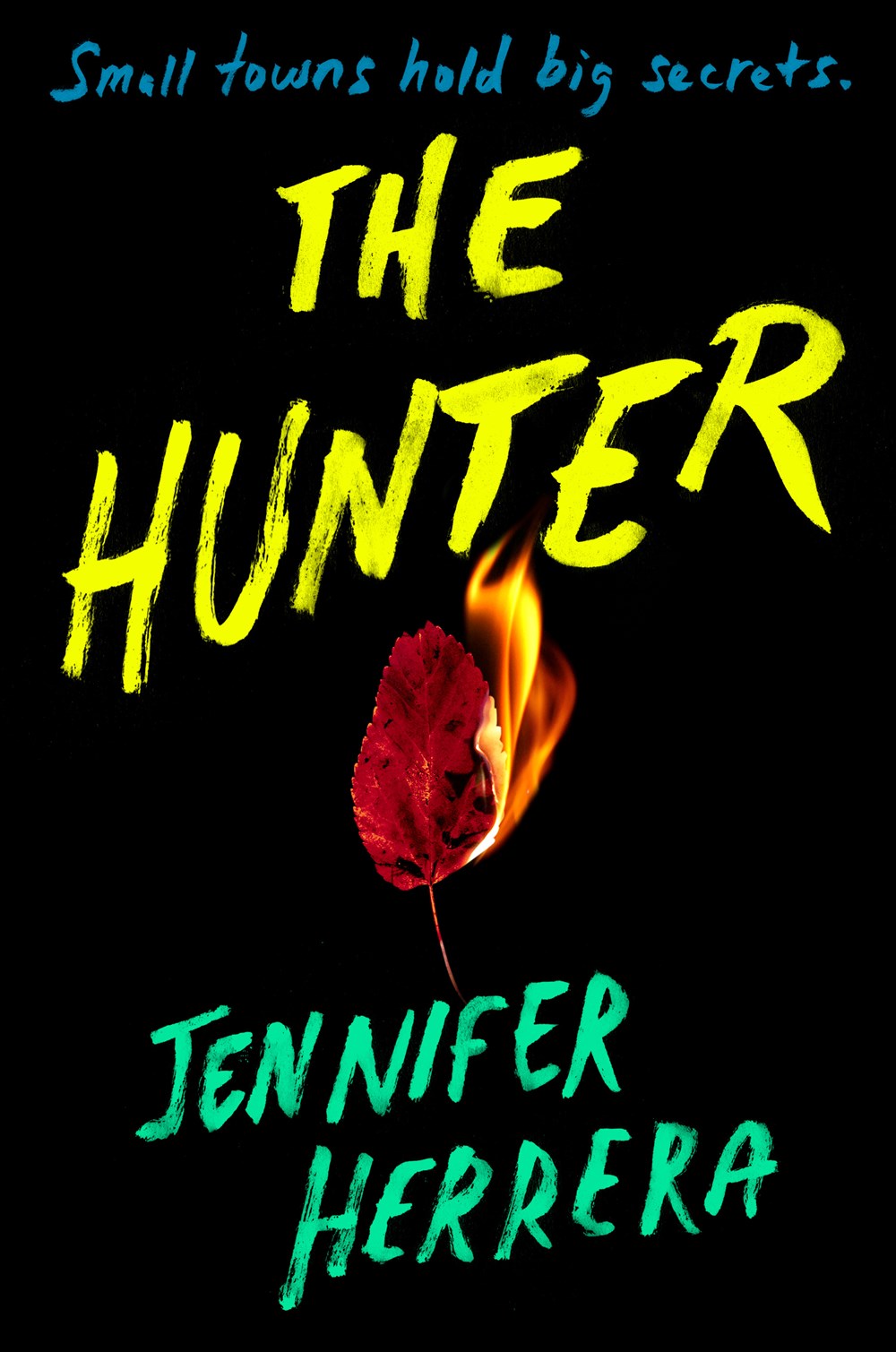
The Hunter by Jennifer Herrera

book cover

Maude’s voice was far away, the way the chime of a bell can feel distant even if it’s right in front of you. “You’re too late,” she said to me, to no one. “Every last one of them is dead.”

“Every gift comes at a price.”

NYPD detective Leigh O’Donnell is on double-secret suspension. Her prospects of returning to her job are about as real as Dean Wormer ever authorizing the return of Delta Tau Chi. On top of that, she is newly separated from her (boss) husband, the person who suspended her. He could not understand why she would pull her gun on a fellow officer, allowing a caught suspect to escape. Thankfully, her brother, Ronan (Ro), gets in touch. Seems that back home in Copper Falls, Ohio, there had been a very suspicious triple death. And they would love it if an actual NYC detective could pop by for a look-see. Leigh takes the opportunity to skip town for a while, bringing along her four-year-old daughter, Simone.

description
Jennifer Herrera – image from her site

Who says you can’t go home again? Oh, Thomas Wolfe, in his novel of that name. Ok. Fine, whatever. Well, Leigh gives it a go anyway, taking the opportunity to introduce Simone to Leigh’s uncles, to Ro, and to the town in which she had grown up. It will come as no shock that author Jennifer Herrera spent much of her childhood in a small Ohio town.

For the first five years of my life, I lived in a trailer park, which, while not economically diverse, was diverse in just about every other way. So when my family moved to a small town in rural Ohio, I wasn’t prepared for how alien I would feel there. Everyone was related. They all looked alike. They went to the same church. They held the same beliefs. If you’re not from there, it’s unbelievable. But those places still exist.


When I was a kid, all I knew was that I didn’t fit in and wanted to get out. When I got older, I started to wonder what it was about this community that made them so afraid of letting the outside world in. – from The Book Club Kit

Herrera comes up with a few possibilities about that, most of them less than complimentary to the residents of her fictionalized version. This is a place with secrets. Pretty tough to make any progress finding out the truth when you are struggling upstream against a torrent of lies.

The first-person story-telling is mostly linear with some flashbacks. Added to the presenting mystery of what happened to these three young men are Leigh’s personal struggles. She wants to save her endangered marriage. She wants to resurrect her career as a detective. But she also wants to get a better handle on who she really is. For better or worse, this Podunk town is a part of her, even if she had left it years before, intending never to return. She has loving family here, in addition to painful memories. This was once a true home for her. Could it ever be that for her again? It would be great for her daughter to have a larger family tree than the few branches Leigh can offer her in NY. So, Leigh is engaging in a journey of self-discovery. But it is also a quest. You can tick off the Campbellian stages, as our hero does battle with dark forces and descends to the equivalent of hell, fending off monsters in order to reach her goal. One of her uncles even thinks of her as a classic Irish hero of legend, Fionn MacCumhaill – aka Finn McCool. The uncles serve multiple roles, connection to and intel on locals, child care for Simone, a warm, familial homey element, and comic relief.

Imagery abounds. Herrera clearly enjoys playing with archetypal images. Snakes put in appearances. There is an apple orchard that, when paired with the snakes, certainly gives one an image of a corrupted Eden. A house tucked away out of sight makes one wonder if there might be someone inside preparing to cook children. A flock of birds massing to protect one damaged member has got to mean something, right?

Shrines figure large. There are said to be shrines in the caves under the waterfall, likely remnants of indigenous people who were driven out by colonizers. The people of the town seriously want to keep their town the way it is, preserved in amber, a sort of shrine to their past, to themselves. Herrera includes a fun reference to a relevant Twilight Zone episode to bolster the image. The title of the book comes in for some use. Early on a character refers to detective Leigh as a hunter. An archetypal native personage figures large. There is even a sly reference to hunter green.

There are peculiarities that grab our attention and demand exploration. For example, threes abound here. Maud had three brothers who perished together a lifetime ago. There were the multiple deaths seven years back of three young men of eighteen. The latest mortal hat trick included men in their twenties, contemporaries of the prior three. Interestingly, the last two trifectas all turned up in the pool at the bottom of the same waterfall. Curious, no? And Leigh’s mother had three brothers, the uncles of this tale. What’s up with all the treys?

Obviously, poking through all this imagery stuff, looking for connections that may or may not be real, digging down into rabbit holes as they appear (What is that rabbit late for, and where is he going?) is great fun. But, pleasurable as that is, the book would not succeed if we did not feel a connection to the lead. Not to worry. Leigh has her issues, but she is definitely relatable.

On the down side, I found it a bit tough to accept that Leigh would do what she did in NYC for the reason that is offered.

The supporting cast is a mixed crew. Some stand out, like the elderly, mysterious Maud. Onetime bf and now reporter, Mason Vogel, is a confusing foil for Leigh. Her brother, Ronan, is a likeable partner. The uncles are fun. Most stand back, as supporting characters do. Means to an end, whether advancing the plot or offering atmospherics. The notion of history, both the immediate and personal history of individuals, and the larger, longer cultural history of a place, and its hold on the present, for good or ill, is palpable. The procedural elements are well done, and the explanations make a dark sort of sense. The lead is someone we can pull for. The Hunter is a fun read, an engaging mystery that will keep you well-entertained, and keep your gray cells firing for the duration.

…most of the businesses in town—the grocery store, the antiques market, the candy shop—they’re all owned by the same seven families. The Wagners are the majority share, sure, but this town? It’s all one big family business.”
“That’s insane.”
“Not really. I’m sure it’s like that in a lot of places. See, those seven families have never left. Some individuals left, sure, but most of them stayed. People give their houses to their kids or their grandkids. Sometimes nephews and nieces. But it’s rare for them to sell to outsiders. Especially the houses close to the center of town. There are ordinances forbidding new construction. We don’t get many new people here.”

Review posted – 2/3/23

Publication date – 1/10/23

I received an eARE of The Hunter from Putnam in return for a fair review. Thanks, folks, and thanks to NetGalley for facilitating.

This review has been cross-posted on GoodReads

=======================================EXTRA STUFF

Links to the author’s personal, Instagram, and Twitter pages

Interviews
—–Oh! Murder – Interview: Jennifer Herrera, The Hunter
—–The Mystery of Writing – The Hunter: Debut Thriller

Items of Interest from the author
—–Book Club Kit
—–Crimereads – MEN ARE THE MOST LIKELY VICTIMS OF HOMICIDE. WHY DO CRIME WRITERS KILL SO MANY WOMEN?

Items of Interest
—–Wiki on Thomas Wolfe’s novel, You Can’t Go Home Again

“You can’t go back home to your family, back home to your childhood … back home to a young man’s dreams of glory and of fame … back home to places in the country, back home to the old forms and systems of things which once seemed everlasting, but which are changing all the time – back home to the escapes of Time and Memory.”

—–Discovering Ireland – Fionn MacCumhaill – aka Finn McCool of Irish legends
—–Twilight Zone Fandom – The Sixteen-Millimeter Shrine
—–ProWritingAid – Deep Dive: Joseph Campbell’s “Hero’s Journey”
—–Wiki on Animal House

Leave a comment

Filed under Fiction, Mystery, Thriller

The House in the Pines by Ana Reyes

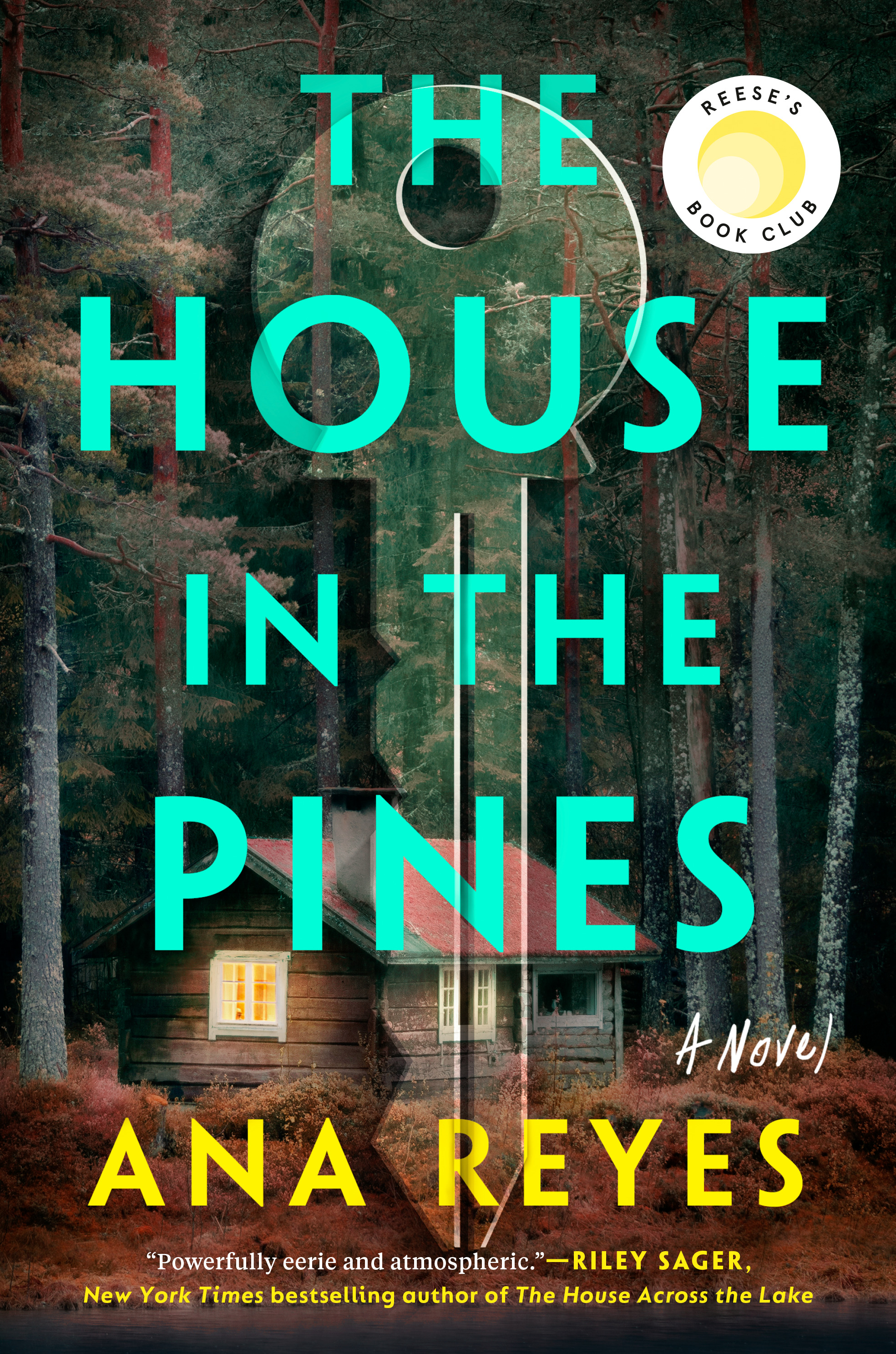
book cover

An ancient poplar loomed at the entrance to the abandoned road, its rounded mass of huddled gray limbs reminding her of a brain. She passed beneath its lobes, twigs branching like arteries overhead as she entered the forest.

Deep in these woods, there is a house that’s easy to miss.
Most people, in fact, would take one look and insist it’s not there. And they wouldn’t be wrong, not completely. What they would see are a house’s remains, a crumbling foundation crawling with weeds. A house long since abandoned. But look closely at the ground here, at this concrete scarred by sun and ice. This is where the fireplace goes. If you look deeply enough, a spark will ignite. And if you blow on it, that spark will bloom into a blaze, a warm light in this cold dark forest.

Maya Edwards is 25, not well off, ½ Guatemalan, ¼ Irish, ¼ Italian, with no career drive after getting her degree from Boston University. She is from Pittsfield, MA, where her mother still lives. Her father died before she was born. Not the only significant death in her life. When she was 18, her bff, Aubrey, died a mysterious death, at the hands, she believes, of a man they had both dated. But, despite her being present when it happened, there are no viable clues with which to make a case, and folks thought her nuts for even trying. Today Maya has a life, just moved in with her boyfriend, is about to meet his parents, when she sees a video on Youtube. A young woman, in a diner with her bf, suddenly keels over dead. A close look at her table partner reveals the same man who had killed her friend. She is terrified that he might continue to kill women and may become back to Pittsfield to clean up loose ends.

description
Ana Reyes – image from her site

Maya keeps having dreams about a cabin in the woods, a welcoming abode, with a warm blaze in the fireplace, the burning pine logs adding their scent to the room, the log walls offering shelter from a strong wind. It is cozy, feels like home. But there is danger there as well. Frank is there in the dreams, always there. She struggles to understand the sounds she hears, but realizes they are coming from Frank, who appears suddenly behind her, and she wakes, drenched in sweat. So, what’s up with that?

The central mystery (well, there are two, the first one is whether Frank actually killed those two women, and if so how, and) what is the deal with the strange house in the woods that haunts her dreams, the House in the Pines of the title.

Maya is not the most reliable of narrators. She is going through withdrawal from Klonopin. It was prescribed to help her sleep, but the scrip can no longer be filled and she is trying to go cold turkey. She has used alcohol liberally to help her both sleep and drown out the darkness that troubles her. Is she imagining things? Are the drugs and alcohol causing her to hallucinate? Is the stress of white-knuckle withdrawal impairing her ability to reason?

I was living in Louisiana, working toward my MFA in fiction, and, like Maya,…had suddenly quit Klonopin after several years of taking it nightly for sleep. The doctor who had prescribed it back in LA never said anything about addiction, while my new Baton Rouge doctor treated me like an addict when I asked her for it. She cut me off cold turkey, and I went through protracted withdrawal syndrome, the symptoms of which inform Maya’s experience in the book. Writing about benzodiazepine withdrawal—albeit from her perspective—helped me through it. – from the Book Club Kit

The story flips back and forth between the present day and seven years prior. We get to see her friendship with Aubrey, and how Frank had come between them. We see how her current troubles with withdrawal and her determination to look into the Frank situation may be interfering with her current serious relationship.

Maya does her Miss Marple thing to try to find out what really happened to Aubrey, to find out how Frank killed her, and one more thing. During the few weeks in which she dated Frank, there were multiple episodes in which she lost hours of time. Did Frank drug her? There is peril aplenty, as we take Maya’s word that Frank is a killer, so all her activity might be putting her in mortal peril. If only the cops had taken her seriously, but you know the cops in such almost stories never do.

Pliny the Elder said Home is where the heart is, but how can a place that feels so home-like also be so terrifying? This reflects some events and concerns in Reyes’s life.

The inspiration was mostly subconscious. I was living alone in a new city, cut off from any place I’d call home, when I wrote the first draft. This lonely feeling inspired one of the book’s major themes, which is the universal yearning to return to a place and time of belonging. That theme shaped the story and helped me build the titular house in the pines. – from the Book Club Kit

Reyes incorporated several elements of her life into the book. In addition to struggles with addiction, both Maya and Ana are half Guatemalan. Both were raised in Pittsfield, MA. The book took seven years to write, and the gap between Aubrey’s death and Maya’s return to the scene of the crime is seven years.

In order to solve the mysteries, Maya must figure out the imagery in an incomplete book her father had been writing when he died in Guatemala. The references take one a bit afield, but if you dig into them, you will be rewarded. I posted some info in EXTRA STUFF.

Maya’s father’s book points to an important truth about the danger she’s in. For me this was a metaphor for inherited trauma. Like so many people with roots in colonized places, the violence of the past has a way of showing up in the present in unexpected and highly personal ways. This is true for Maya in a very literal sense. To save herself, she must understand a story written before she was born. – from the Book Club Kit

There are some fairy-tale-like references in here, but I am not sure they are much more than added in passing. One can see certainly see Frank as a seductive wolf, a la Little Red Riding Hood. A musical group dresses as the fairy godmothers, lending one to consider Sleeping Beauty, which is further reinforced by Maya’s several episodes of lost time, and, ironically, her difficulties with sleep. Woods, per se, have always been a source of fear in Western lore.

So, is it any good? Yep. Ana is certainly flawed enough for us to gain some sympathy, although she cashes in some of those chits with occasional foolish decisions. Secondary characters are a mixed lot. Her boyfriend is thinly drawn. Mom has more to her. Her teen bud, Aubrey, even more. Frank is an interesting mix of loser and menace. The strongest bits for me were a visit to Guatemala and the depiction of the attractiveness of the house. I will not give away the explanation for it all, but, while it may have a basis in the real world, I found it a stretch to buy completely. Still, righteous, if damaged, seeker of truth digging into the mysterious, while imperiled by a dark force, with little support from anyone, with a fascinating bit of other-worldliness at its core. I enjoyed my stay in the cabin. Page-turner material.

The image is both comforting and really sinister at the same time once we learn more about it.
Exactly. That’s definitely what I was going for, that dark side of nostalgia.
– from the Salon interview

Review posted – 01/27/23

Publication date – 01/03/23

I received an ARE of The House in the Pines from Dutton in return for a fair review, and another log on the fire. Thanks, folks, and thanks to NetGalley for facilitating.

This review has been cross-posted on GoodReads

=======================================EXTRA STUFF

Links to the author’s personal, FB, Instagram, and Twitter pages

The House in the Woods Was a Reese’s book club selection for January 2023

Interviews
—–NY Times – Teaching Writing to Retirees Helped Ana Reyes Stay Focused by Elisabeth Egan
—–Salon – “House in the Pines” thriller author on the “dark side of nostalgia” with a narrator no one believes
—–Writer’s Digest – Ana Reyes: On Working The Writing Muscles by Robert Lee Brewer
—–Professional Book Nerds – Talking The House in the Pines with Author Ana Reyes by Joe Skelley – audio – 40:00

Items of Interest
—–Book Club Kit
—–Gnosis.org – The Hymn of the Pearl – The Acts of Thomas

Songs/Music
—– Emily Portman – Two Sisters – referenced in Chapter 5, although by a different performer
—–Bobby Darin – Dream Lover – playing at the Blue Moon Diner in Chapter 10
—–Mano Negra – El Senor Matanza – noted in Chapter 11 as Maya’s new favorite band
—– Nine Inch Nails – The Downward Spiral – mentioned in Chapter 17
—– The Foo Fighters – There is Nothing Left to Lose – mentioned in Chapter 17
—–Lenny Kravitz – Mama Said – mentioned in Chapter 17

Leave a comment

Filed under Fiction, Mystery, Suspense, Thriller

Blaze me a Sun by Christoffer Carson

book cover

I raped a woman in a car. It’s near Tiarp Farm. A brief silence followed. Then: I’m going to do it again. Bye.

Monstrousness was always sleeping right beneath the surface, just out of sight.

1986 – A terrible crime in an out-of-the-way place. A young woman is brutally raped and murdered in her own car. It might have gotten a bit more national attention had there not been another crime that night, the murder of Swedish Prime Minister Olof Palme. The attention would have been merited, as the killer taunted the police with a phone call, boasting of his deed and promising more of the same. He will become known as Tiarp Man. The case falls to Sven Jörgensson. It will consume him.

description
Christoffer Carlsson– image from Ahlander Agency

Blaze Me a Sun has a frame structure. It opens in 2019, with a writer looking into the famous crimes that had taken place in Halland County, in southern Sweden. He is a local, who has been away for a long time, but felt a need to return home. Those who knew him as a kid call him Moth. The primary story is the one that Moth researches and tells. Then we go back to Moth for the final fifth (or so) of the novel.

The book is divided into multiple periods. The first (inside the frame) is 1986, when the first crimes take place. Next is 1988 when the national police take over the investigation. In 1991, there are more violent crimes. Is it the same person? 2019 is when Moth is up front as our narrator, at the beginning and end of the novel.

I was reminded of the true-crime format, in which the host/narrator walks you through all the details of one or multiple crimes, then offers the reveal at the end. But the first-person perspective of the frame is replaced in the core here by a third-person-omniscient perspective. At the back end of the story, the narrator takes center stage again, leading us through his further inquiries.

Mostly, we follow Sven as he looks into several murders and one near-killing. As with the Palme murder, finding the perpetrator is a fraught, frustrating job. Evidence is scarce and the struggle to identify the perpetrator wears down the patience of both Sven and his superiors over time. He is an intrepid detective, someone who takes his responsibility to the victims and their families to heart. He thinks of them every day, even long after he is no longer on the case, even after he is retired. Sven is an easy character to pull for, mostly. A white knight on a worthy quest, but there is tarnish on that armor as well. Sven is far from purely benign.

Even heroes can make mistakes. The dream of a spotless past is, after all, only a dream. No one makes it through unmarked. We have to learn to live with it. If we can.

One element that struck me was that we come to think of the victims by their first names, as Sven does. It gives them a bit of extra presence that enhances our feel for Sven’s struggles, his determination to see justice done.

Even Sven’s son, Vidar, as an adult, gets caught up in the complications, the reverberations of the case. Families are a major focus of the book. The crimes have both immediate and long-term impact on the people who must survive the horrific loss of a loved one. Single crimes echo through time to generate multiple waves of misery and destruction. People come to learn things about those to whom they are the closest. You can see why some folks might be jarred learning those things. The truth doesn’t just hurt, it can break your psychic bones, change your direction in life, make you into a different person than you were. Sven’s relationship with Vidar is both loving and strained, a source of tension that carries through the story.

Carlsson links the Tiarp Man murders to the Palme assassination thematically, rather than concretely.

When the prime minister was shot and the shooter was never more than a shadow heading up the stairs into the dim light of David Bagares Gata, it unleashed something. Distaste. A rage that no one could quite control.
From opinion pages and kitchen tables came an indignant clamor over police and politics, criminality and immigrants, the wretched creature that had become Sweden and one’s own reflection in the mirror. It was clear now. The country could have come through anything unscathed—anything but this. The youthful boy with his smiling eyes, a mother-in-law’s dream who turned out to be a murdering monster up there in the north: Maybe that’s us.
Of course this sort of thing leaves its mark on you. Of course it marks a country. How could it not?

Tiarp Man personified that for this part of Sweden. Things that remained unresolved for far too long. A sense of community comfort that was forever disrupted.

There is no real magical realism at work in this book, but Carlsson does offer up an omen in the form of a local superstition.

As spring arrived, the village came to life. Everything seemed to shimmer, and the colors grew so vivid. Sweet days awaited.
The first white wagtail sighting also brought a moment of uncertainty. We learned to be very cautious. If you saw the bird from the back, which you almost always did, it meant happiness and good fortune. But on those rare instances in which you first happened to catch sight of it from the front, and got a good look at the black spot on its tiny breast, it was a bad omen: Misfortune and sorrow lay ahead.

Carlsson knows a bit about police work and crime. Mom was the Swedish equivalent of a 911 dispatcher. And the author’s day job is putting his Criminology PhD to use as a college professor, and writer of professional papers on criminology. His father was an auto mechanic, a job he hands off to Moth’s father in the book. Carlsson is from the area in which these crimes take place. I suppose only those who know the area can opine on whether he presented it accurately.

Criminology taught me the rough brutal truths about crime: it’s dirty, bloody, messy, painful, raw, costs a lot, and, sometimes, it’s beyond meaning in any reasonable sense of that term. – From Crimereads article

I had only two real issues with the book. There is a gap between some of the crimes that is not really explained, and an authorial disinclination to go into the killer’s motivations. If you are ok with that, then this one should satisfy. It enhances a procedural mystery with a look at family, questioning how well we really know those closest to us, and the limits of what one might do for loved ones. It adds a take on the sense of the place and the times. Best of all, there are some excellent twists.

The one she asks for light is also the one who will bring darkness. Like the face of Janus.

Review posted – 01/20/23

Publication date – 01/03/23 – (English translation) – It was originally published in Swedish in 2021

I received a digital ARE of Blaze Me a Sun from Hogarth in return for a fair review. Tack, gott folk, and thanks to NetGalley for facilitating.

This review has been cross-posted on GoodReads. Stop by and say Hi!

=======================================EXTRA STUFF

Links to the author’s Instagram and Twitter pages

Blaze Me A Sun is Carlsson’s ninth book and American debut.

Interview
—–Penguin Random House – Book Club Kit – there is an excellent interview in this
—–Booktopia – An award-winning crime writer’s advice for aspiring authors. by Anastasia Hadjidemetri – from 2017

Songs/Music
—–Sting – Russians – noted in chapter 23

Items of Interest
—–Wikipedia – Assassination of Olof Palme
—–Oregon State University – frame structure in novels

Items of Interest from the author
—–Google Scholar – Carlsson’s criminology writings
—–Crimereads – 1/11/2023 – With the Dead

Could the worst of crimes be devoid of meaning? Strange things happen all the time, every day, and we don’t think too much of them because they don’t affect us that deeply. They are just “coincidences” or something else, depending on what you believe in. Criminology taught me the rough brutal truths about crime: it’s dirty, bloody, messy, painful, raw, costs a lot, and, sometimes, it’s beyond meaning in any reasonable sense of that term.

Leave a comment

Filed under Mystery