Tag Archives: Nonfiction

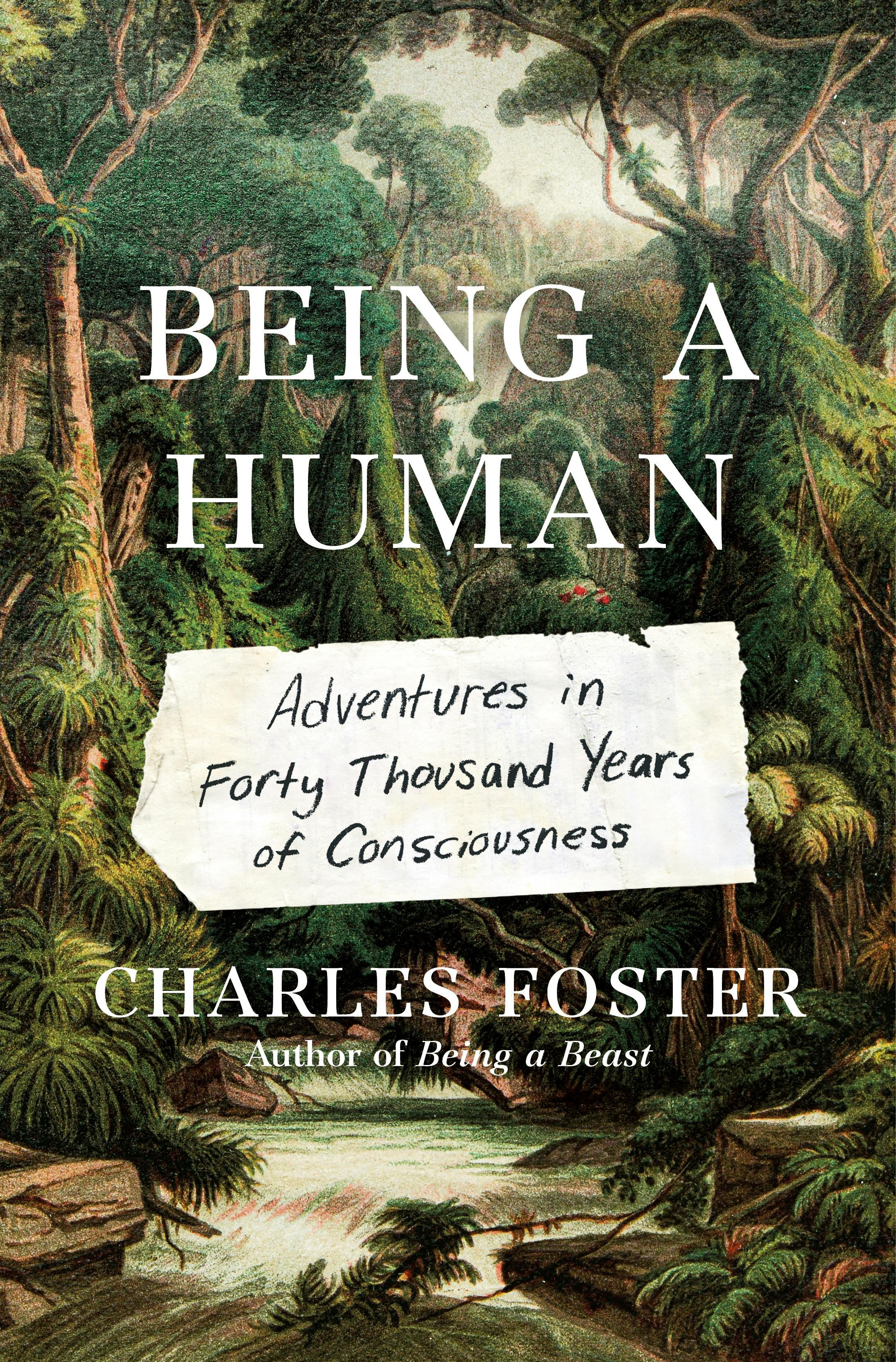
Being There – Being a human by Charles Foster

book cover

We think of wilderness as an absence of sound, movement and event. We rent our rural cottages ‘for a bit of peace and quiet.’ That shows how switched off we are. A country walk should be a deafening, threatening, frantic, exhausting cacophony.


If today’s shorn, burned, poisoned apology for wilderness should do that to us, just think what the real wild, if it still existed, would do. It’d be like taking an industrial cocktail of speed, heroin and LSD and dancing through a club that’s playing the Mozart Requiem to the beat of the Grateful Dead, expecting every moment to have your belly unzipped by a cave bear.

All humans are Sheherazades: we die each morning if we don’t have a good story to tell, and the good ones are all old.

Up for a bit of time travel? No, no, no, not in the sci-fi sense of physically transporting to another era. But in the mostly imaginary sense of picturing oneself in a prior age. Well, maybe more than just picturing, maybe picturing with the addition of some visceral experience. Charles Foster has written about what life is like for otters, badgers, foxes, deer and swifts, by living like them for a time. He wrote about those experiences in his book, Being a Beast. He wonders, here, how experiencing life as a Paleolithic and a Neolithic person can inform our current understanding of ourselves.

I thought that, if I knew where I came from, that might shed some light on what I am…It’s a prolonged thought experiment and non-thought experiment, set in woods, waves, moorlands, schools, abattoirs, wattle-and-daub huts, hospitals, rivers, cemeteries, caves, farms, kitchens, the bodies of crows, museums, breaches, laboratories, medieval dining halls, Basque eating houses, fox-hunts, temples, deserted Middle Eastern cities and shaman’s caravans.

description
Charles Foster – image from Oxford University

His journey begins with (and he spends the largest portion of the book on) the Upper Paleolithic (U-P) era, aka the Late Stone Age, from 50,000 to 12,000 years ago, when we became, behaviorally, modern humans. Foster is quite a fan of the period, seeing it as some sort of romantic heyday for humanity, one in which we were more fully attuned with the environments in which we lived, able to use our senses to their capacity, instead of getting by with the vastly circumscribed functionality we have today.

Interested in the birth of human consciousness, he puts himself, and his 12 yo son, Tom, not only into the mindset of late Paleolithic humans, but into their lives. He and Tom live wild in Derbyshire, doing their best to ignore the sounds of passing traffic, while living on roadkill (well, I guess they do not entirely ignore traffic) and the bounty of the woods. They deal with hunger, the need for shelter, and work on becoming attuned to their new old world.

We’re not making the wood into our image: projecting ourselves onto it. It’s making us. If we let it.

In one stretch Foster fasts for eight days, which helps bring on a hallucinatory state (intentionally). Shamanism is a major cultural element in the U-P portrait he paints. It is clearly not his first trip. He recalls an out-of-body experience he had while in hospital, the sort where one is looking down from the ceiling at one’s physical body, seeing this as of a cloth with a broader capacity for human experience. He relates this also to the cave paintings of the era, seeing them, possibly, as the end-product of shamanic tripping. This section of the book transported me back to the 1960s and the probably apocryphal books of Carlos Castaneda.

Social grooming was important to ancestors of our species. But, with our enlarged brains able to handle, maybe, a community of 150 people, grooming became too cost-intensive.

To maintain a group that size strictly by grooming, we’d have to groom for about 43% percent of our time, which would be deadly. Something else had to make up for the shortfall, and other things have. We have developed a number of other endorphin-releasing, bond-forming strategies that don’t involve touching [social distancing?]. They are…laughter, wordless singing/dancing, language and ritual/religion/story.

It sure gives the expression rubbed me the wrong way some added heft.

He has theories about religion, communication, and social organization that permeate this exploration. He posits, for example, that late Paleo man was able to communicate with a language unlike our own, a more full-body form of expression, maybe some long-lost form of charades. There is an ancient language, thought to have been used by Neanderthals, called HMMM, or holistic, manipulative, multi-modal, musical, and memetic communication. It is likely that some of this carried forward. And makes one wonder just how far back the roots go to contemporary languages that incorporate more rather than less musicality, more rather than less tonality, and more rather than less bodily support for spoken words.

He writes about a time when everything, not just people, were seen as having a soul, some inner self that exists separately, although living within a body, a tree, a hare, a blade of grass. This sort of worldview makes it a lot tougher to hunt for reasons that did not involve survival. And makes understandable rituals in many cultures in which forgiveness is begged when an animal is killed. This becomes much more of a thing when one feels in tune with one’s surroundings, an experience Foster reports as being quite real in his Derbyshire adventure. This tells him that Paleo man was better able to sense, to be aware of his surroundings than almost any modern human can.

Foster has a go at the Neolithic as well, trying to see what the shift from hunting-gathering to agriculture was like, and offers consideration of the longer-term impacts on humanity that emanated from that change. This is much less involved and involving, but does include some very interesting observations on how agriculture revolutionized the relationship people had with their environment.

…the first evidence of sedentary communities comes from around 11,000 years ago. We see the first evidence of domesticated plants and animals at about the same time. Yet, it is not for another 7,000 years that there are settled villages, relying on domesticated plants or fixed fields. For 7,000 years, that is, our own model of human life, which we like to assume would have been irresistibly attractive to the poor benighted caveman, was resisted or ignored, just as it is by more modern hunter-gatherers. Hunter-gatherers only become like us at the end of a whip. Our life is a last resort for the creatures that we really are.

He notes that even when farming took root, many of those newly minted farmers continued living as hunter-gatherers for part of the year.

He finishes up with a glance at the contemporary. More of a screed really. He notes that phonetic writing severed the connection our languages have with the reality they seek to portray. Pre-phonetic languages tend to be more onomatopoeic, the sounds more closely reflecting the underlying reality. He sees our modern brains as functioning mostly as valves, channeling all available sensation through a narrow pipeline, while leaving behind an entire world of possible human experience that we are no longer equipped to handle. To that extent we all have super-powers, of potential awareness, anyway, that lie waiting for someone to open the right valve, presuming they have not been corroded into inutility by disuse. He tells of meeting a French woman in Thailand whose near-death experience left her passively able to disrupt electronic mechanisms. She could not, for example, use ATMs. They would always malfunction around her.

He takes a run at what is usually seen to indicate “modern” humanity.

I’ve come to wonder whether symbolism is all it’s cracked up to be, and in particular whether its use really is the great watershed separating us from everything else that had gone before.

He argues that trackers, for example, can abstract from natural clues the stories behind them, and those existed long before so-called “modern man.”

He calls in outside authorities from time to time to fill in gaps. These extra bits always add fascinating pieces of information. For example,

Later I wrote in panic to biologist David Haskell, an expert on birdsong, begging him to reassure me that music is ‘chronologically and neurologically prior to language.’ It surely is, he replied. ‘It seems that preceding both is bodily motion: the sound-controlling centers of the brain are derived from the same parts of the embryo as the limb motor system, so all vocal expression grows from the roots that might be called dance or, less loftily, shuffling about.

Foster is that most common of writers, a veterinarian and a lawyer. Wait, what? Sadly, there is no telling in here (it is present in his Wiki page, though) of how he managed to train for these seemingly unrelated careers. (I can certainly envision a scenario, though, in which we hear lawyer Foster proclaiming to the court, “My client could not possibly be guilty of this crime, your honor. The forensic evidence at the scene clearly shows that the act was committed by an American badger, while my client, as anyone can see, is a Eurasian badger.”) It certainly seems clear, though, from his diatribes against modernity, where his heart is. In the visceral, physical work of dealing with animals, which lends itself to the intellectual stimulation of a truer, and deeper connection with nature.

The first time (and one of the only times) I felt useful was shoveling cow shit in a Peak District farm when I was ten. It had a dignity that piano lessons, cub scouts, arithmetic and even amateur taxidermy did not. What I was detecting was that humans acquire their significance from relationship, that relationships with non-humans were vital and that clearing up someone’s dung is a good way of establishing relationships.

In that case, I am far more useful in the world than I ever dreamed.

GRIPES
Foster can be off-putting, particularly to those us with no love of hunting, opening as he does with I first ate a live mammal on a Scottish hill. (Well, as least it wasn’t haggis.) I can well imagine many readers slamming the book shut at that point and moving on to something else. Will this be a paean to a manly killing impulse? Thankfully, not really, although there are some uncomfortable moments re the hunting of living creatures.

Sometimes he puts things out that are at the very least questionable, and at the worst, silly. Our intuition is older, wiser and more reliable than our underused, atrophied senses. Really? Based on what data? So, making decisions by feelz alone is the way to go? Maybe I should swap my accountant for an inveterate gambler?

He sometimes betrays an unconscious unkindness in the cloak of humor:

The last thing I ate was a hedgehog. That was nine days ago. From the taste of them, hedgehogs must start decomposing even when they’re alive and in their prime. This one’s still down there somewhere, and my burps smell like a maggot farm. I regret it’s death under the wheels of a cattle truck far more than its parents or children possibly do.

I doubt it.

One stylistic element that permeates is seeing an imaginary Paleo man, X, and his son. Supposedly these might be Foster and Tom in an earlier era. It has some artistic appeal, but I did not think it added much overall.

All that said, the overall take here is that this is high-octane fuel for the brain, however valved-up ours may be. Foster raises many incredibly fascinating subjects from the origins of religion, language, our native capabilities to how global revolutions have molded us into the homo sap of the 21st century. This is a stunning wakeup call for any minds that might have drifted off into the intellectual somnolence of contemporary life. There are simply so many ideas bouncing off the walls in this book that one might fear that they could reach a critical mass and do some damage. It is worth the risk. If you care at all about understanding humanity, our place in the world, and how we got here, skipping Being a Human would be…well…inhuman. It is an absolute must-read.

We try to learn the liturgy: the way to do things properly; the way to avoid offending the fastidious, prescriptive and vengeful guardians of the place. Everything matters. We watch the rain fall on one leaf, trace the course of the water under a stone, and then we go back to the leaf and watch the next drop. We try to know the stamens with the visual resolution of a bumblebee and the snail slime with the nose of a bankvole and the leaf pennants on the tree masts with the cold eyes of kites.

Review posted – 9/17/21

Publication date – 8/31/21

I received an ARE of Being a Human from Metropolitan Books in return for a modern era review. Thanks, Maia.

=============================EXTRA STUFF

Links to the author’s personal, and Twitter pages

By my count this is Foster’s 39th book

Foster’s bio on Wiki

Charles Foster (born 1962) is an English writer, traveller, veterinarian, taxidermist, barrister and philosopher. He is known for his books and articles on Natural History, travel (particularly in Africa and the Middle East), theology, law and medical ethics. He is a Fellow of Green Templeton College, Oxford. He says of his own books: ‘Ultimately they are all presumptuous and unsuccessful attempts to answer the questions ‘who or what are we?’, and ‘what on earth are we doing here?’

Interviews
—–The Guardian – Going underground: meet the man who lived as an animal – re Being a Beast by Simon Hattenston
—–New Books Network – Defined by Relationship by Howard Burton – audio – 1h 30m

Items of Interest from the author
—–Emergence Magazine – Against Nature Writing – on language as a barrier to understanding
—–Shortform – Charles Foster’s Top Book Recommendations

Items of Interest
—–Wiki on Bear Grylls – a British adventurer – mentioned in Part 1 as an example of someone more interested in the technology of survival than the point of it (p 62 in my ARE)
—–Wiki on Yggdrasil – mentioned in Part 1 – humorously (p 85)
—–Wiki on the Upper Paleolithic
—–Dartmouth Department of Music – a review of a book positing that Neanderthals used musicality in their communications Review Feature – The Singing Neanderthals:
the Origins of Music, Language, Mind and Body by Steven Mithen – Foster addresses this in this discussion of the origins of human language
—–Wiki on Carlos Castaneda
—–Discover Magazine – Paleomythic: How People Really Lived During the Stone Age By Marlene Zuk Like it says – an interesting read


1 Comment

Filed under Reviews

Genius Makers by Cade Metz

book cover

[In 2016] Ed Boyton, a Princeton University professor who specialized in nascent technologies for sending information between machines and the human brain…told [a] private audience that scientists were approaching the point where they could create a complete map of the brain and then simulate it with a machine. The question was whether the machine, in addition to acting like a human, would actually feel what it was like to be human. This, they said, was the same question explored in Westworld.

AI, Artificial Intelligence, is a source of active concern in our culture. Tales abound in film, television, and written fiction about the potential for machines to exceed human capacities for learning, and ultimately gain self-awareness, which will lead to them enslaving humanity, or worse. There are hopes for AI as well. Language recognition is one area where there has been growth. However much we may roll our eyes at Siri or Alexa’s inability to, first, hear, the words we say properly, then interpret them accurately, it is worth bearing in mind that Siri was released a scant ten years ago, in 2011, Alexa following in 2014. We may not be there yet, but self-driving vehicles are another AI product that will change our lives. It can be unclear where AI begins and the use of advanced algorithms end in the handling of our on-line searching, and in how those with the means use AI to market endless products to us.

description
Cade Metz – image from Wired

So what is AI? Where did it come from? What stage of development is it currently at and where might it take us? Cade Metz, late of Wired Magazine and currently a tech reporter with the New York Times, was interested in tracking the history of AI. There are two sides to the story of any scientific advance, the human and the technological. No chicken and egg problem to be resolved here, the people came first. In telling the tales of those, Metz focuses on the brightest lights in the history of AI development, tracking their progress from the 1950s to the present, leading us through the steps, and some mis-steps, that have brought us to where we are today, from a seminal conference in the late 1950s to Frank Rosenblatt’s Perceptron in 1958, from the Boltzmann Machine to the development of the first neural network, SNARC, cadged together from remnant parts of old B-24s by Marvin Minsky, from the AI winter of governmental disinvestment that began in 1971 to its resumption in the 1980s, from training machines to beat the most skilled humans at chess, and then Go, to training them to recognize faces, from gestating in universities to being hooked up to steroidal sources of computing power at the world’s largest corporations, from early attempts to mimic the operations of the human brain to shifting to the more achievable task of pattern recognition, from ignoring social elements to beginning to see how bias can flow through people into technology, from shunning military uses to allowing, if not entirely embracing them.

description
This is one of 40 artificial neurons used in Marvin Minsky’s SPARC machine – image from The Scientist

Metz certainly has had a ringside seat for this, drawing from hundreds of interviews he conducted with the players in his reportorial day jobs, eight years at Wired and another two at the NY Times. He conducted another hundred or so interviews just for the book.

Some personalities shine through. We meet Geoffrey Hinton in the prologue, as he auctions his services (and the services of his two assistants) off to the highest corporate bidder, the ultimate figure a bit startling. Hinton is the central figure in this AI history, a Zelig-like-character who seems to pop up every time there is an advance in the technology. He is an interesting, complicated fellow, not just a leader in his field, but a creator of it and a mentor to many of the brightest minds who followed. It must have helped his recruiting that he had an actual sense of humor. He faced more than his share of challenges, suffering a back condition that made it virtually impossible for him to sit. Makes those cross country and trans-oceanic trips by train and plane just a wee bit of a problem. He suffered in other ways as well, losing two wives to cancer, providing a vast incentive for him to look at AI and neural networking as tools to help develop early diagnostic measures for diverse medical maladies.

description
Marvin Minsky in a lab at M.I.T. in 1968.Credit…M.I.T. – image and caption from NY Times

Where there are big ideas there are big egos, and sometimes an absence of decency. At a 1966 conference, when a researcher presented a report that did not sit well with Marvin Minsky, he interrupted the proceedings from the floor at considerable personal volume.

“How can an intelligent young man like you,” he asked, “waste your time with something like this?”

This was not out of character for the guy, who enjoyed provoking controversy, and, clearly, pissing people off. He single-handedly short-circuited a promising direction in AI research with his strident opposition.

description
Skynet’s Employee of the month

One of the developmental areas on which Metz focuses is deep learning, namely, feeding vast amounts of data to neural networks that are programmed to analyze the incomings for commonalities, in order to then be able to recognize unfamiliar material. For instance, examine hundreds of thousands of images of ducks and the system is pretty likely to be able to recognize a duck when it sees one. Frankly, it does not seem all that deep, but it is broad. Feeding a neural net vast quantities of data in order to train it to recognize particular things is the basis for a lot of facial recognition software in use today. Of course, the data being fed into the system reflects the biases of those doing the feeding. Say, for instance, that you are looking to identify faces, and most of the images that have been fed in are of white people, particularly white men. In 2015, when Google’s foto recognition app misidentified a black person as a gorilla, Google’s response was not to re-work its system ASAP, but to remove the word “gorilla” from its AI system. So, GIGO rules, fed by low representation by women and non-white techies. Metz addresses the existence of such inherent bias in the field, flowing from tech people in the data they use to feed neural net learning, but it is not a major focus of the book. He addresses it more directly in interviews.

description
Frank Rosenblatt and his Perceptron – image from Cornell University

On the other hand, by feeding systems vast amounts of information, it may be possible, for example, to recognize early indicators of public health or environmental problems that narrower examination of data would never unearth, and might even be able to give individuals a heads up that something might merit looking into.

He gives a lot of coverage to the bouncings back and forth of this, that, and the other head honcho researcher from institution to institution, looking at why such changes were made. A few of these are of interest, like why Hinton crossed the Atlantic to work, or why he moved from the states to Canada, and then stayed where he was based once he settled, regardless of employer. But a lot of the personnel movement was there to illustrate how strongly individual corporations were committed to AI development. This sometimes leads to odd, but revealing, images, like researchers having been recruited by a major company, and finding when they get there that the equipment they were expected to use was laughably inadequate to the project they were working on. When researchers realized that running neural networks would require vast numbers of Graphics Processing Units, GPUs (comparable to the Central Processing Units (CPUs) that are at the heart of every computer, but dedicated to a narrower range of activities) some companies dove right in while others balked. This is the trench warfare that I found most interesting, the specific command decisions that led to or impeded progress.

description
Rehoboam – the quantum supercomputer at the core of WestWorld – Image from The Sun

There are a lot of names in The Genius Makers. I would imagine that Metz and his editors pared quite a few out, but it can still be a bit daunting at times, trying to figure out which ones merit retaining, unless you already know that there is a manageable number of these folks. It can slow down reading. It would have been useful for Dutton to have provided a graphic of some sort, a timeline indicating this idea began here, that idea began then, and so on. It is indeed possible that such a welcome add-on is present in the final hardcover book. I was working from an e-ARE. Sometimes the jargon was just a bit too much. Overall, the book is definitely accessible for the general, non-technical, reader, if you are willing to skip over a phrase and a name here and there, or enjoy, as I do, looking up EVERYTHING.

The stories Metz tells of these pioneers, and their struggles are worth the price of admission, but you will also learn a bit about artificial intelligence (whatever that is) and the academic and corporate environments in which AI existed in the past, and is pursued today. You will not get a quick insight into what AI really is or how it works, but you will learn how what we call AI today began and evolved, and get a taste of how neural networking consumes vast volumes of data in a quest to amass enough knowledge to make AI at least somewhat…um…knowledgeable. Intelligence is a whole other thing, one of the dreams that has eluded developers and concerned the public. It is one of the ways in which AI has always been bedeviled by the curse of unrealistic expectations.

description
(left to right) Yann LeCun, Geoffrey Hinton, Yoshua Bengio – Image from Eyerys

Metz is a veteran reporter, so knows how to tell stories. It shows in his glee at telling us about this or that event. He includes a touch of humor here and there, a lightly sprinkled spice. Nothing that will make you shoot your coffee out your nose, but enough to make you smile. Here is an example.

…a colleague introduced [Geoff Hinton] at an academic conference as someone who had failed at physics, dropped out of psychology, and then joined a field with no standards at all: artificial intelligence. It was a story Hinton enjoyed repeating, with a caveat. “I didn’t fail at physics and drop out of psychology,” he would say. “I failed at psychology and dropped out of physics—which is far more reputable.”

The Genius Makers is a very readable bit of science history, aimed at a broad public, not the techie crowd, who would surely be demanding a lot more detail in the theoretical and implementation ends of decision-making and the construction of hardware and software. It will give you a clue as to what is going on in the AI world, and maybe open your mind a bit to what possibilities and perils we can all look forward to.

There are many elements involved in AI. But the one (promoted by Elon Musk) we tend to be most concerned about is that it will develop, frighteningly portrayed in many sci-fi films and TV series, as a dark, all-powerful entity driven to subjugate weak humans. This is called AGI, for Artificial General Intelligence and is something that we do not know how to achieve. Bottom line for that is pass the popcorn and enjoy the show. Skynet may take over in one fictional future, but it ain’t gonna happen in our real one any time soon.

Review first posted – April 16, 2021

Publication dates
———-Hardcover – March 16, 2021
———-Trade Paperback – February 15, 2022

I received an e-book ARE from Dutton in return for…I’m gonna need a lot more data before I can answer that accurately.

This review has been cross-posted on GoodReads

=======================================EXTRA STUFF

Links to the author’s personal, FB, and Twitter pages

Interview
—–C-Span2 – Genius Makers with Daniela Hernandez – video – 1:28:17 – this one is terrific

Other Reviews
—–Forbes – The Mavericks Who Brought AI to the World – Review of “Genius Makers” by Cade Metz by Calum Chace
—–Fair Observer – The Unbearable Shallowness of “Deep AI” By William Softky • Mar 31, 2021
—– Christian Science Monitor – Machines that learn: The origin story of artificial intelligence By Seth Stern

Items of Interest from the author
—–A list of Metz’s New York Times articles
—–A list of Metz’s Wired articles
—–excerpt
—–NY Times – Can Humans Be Replaced by Machines? by James Fallows

Items of Interest
—–Public Integrity – Are we ready for weapons to have a mind of their own? by Zachary Fryer-Biggs
—–Wiki on Geoffrey Hinton
—–Wiki for Demis Hassabis
—–Cornell Chronicle – Professor’s perceptron paved the way for AI – 60 years too soon by Melanie Lefkowitz
—–The Scientist – Machine, Learning, 1951 by Jef Akst

Leave a comment

Filed under AI, American history, Artificial Intelligence, business, computers, History, Non-fiction, programming

Life’s Edge by Carl Zimmer

book cover

…the question of what it means to be alive has flowed through four centuries of scientific history like an underground river… More than 150 years later, despite all that biologists have learned about living things, they still cannot agree on the definition of life.

I have had the pleasure of driving up a mountain through mist and cloud, and of walking in London through pea soup fog. Where exactly did the clear air end and the more particulate air begin? It is not entirely…um…clear. Sure, there is a difference between standing, or driving in air that one cannot visually penetrate and looking through a wide outdoor expanse on a cloud-free, crystalline winter day. But it is not a barrier drawn with a straight edge. Thus it appears with the line between living and not-living. With the examples detailed in Life’s Edge, it is clearer than ever that there are more things under heaven and earth than had been dreamed of in our philosophies. There are those, certainly, who proclaim that this or that specific location is where the thing called life begins. Rules have been drawn up to plant markers, to draw lines. But like an outdoor crime-scene police-tape, the fog of what lies within and without wanders freely past those lines, with no regard for the designs or preferences of humans.

description
Carl Zimmer – image from The Psychology Podcast

New York Times science columnist and multiple-award-winning science-writer Carl Zimmer’s fourteenth book takes readers on an exploration to that amorphous borderland between the living and the non-living. It is a journey that raises a lot more questions than it answers. Zimmer employs a tried and true approach, each chapter moving on to the next lab, the next researcher, the next wild bit of research, and filling in with nice chunks of science history, as he circles around the question.

description
Alysson Muotri – image from The Stem Cell Podcast

Many of the things Zimmer reports on are fascinating. Some, however, will disturb your sleep. For an example of the latter, Alysson Muotri, at the Sanford Consortium for Regenerative Medicine, takes skin samples and reprograms them into neurons to study neurological diseases and possible treatments. They are grown into miniature organs called organoids, and are allowed to reproduce, up to a point. When he started growing these things, he assumed that they could never become conscious. “Now I’m not so sure, he confessed.” Zimmer tells, also, of a researcher, a very long time ago, who was notorious for experimenting on living animals.

description
Cerebral organoid – image from European Research Council

Clearly a significant concern for our culture is where “life” begins, and further, where “human life” begins. It all comes down to definitions. Is Thomas Aquinas’s notion of the “ensoulment” of human embryos the same as defining when life becomes human life? There have been other notions employed in the history of Christianity. Zimmer looks at how legal definitions of life, for purposes including supporting abortion laws, and concerning a widening spectrum of medical and legal issues, fail to hold up under scientific scrutiny.

description
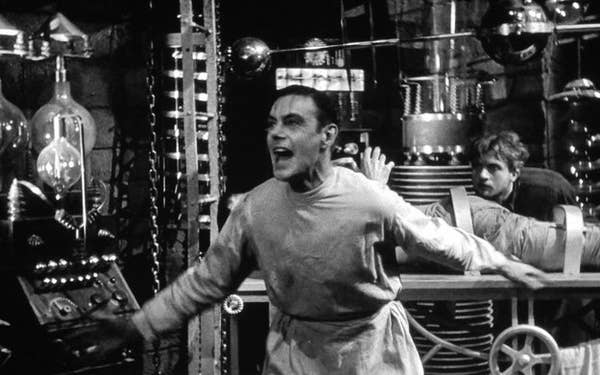
”It’s Alive!” (or is it?) – from Frankenstein – image from Buzzfeed

The concern here is not just what is life, but how can we tell when something actually is alive? He looks at how humans perceive life and react to it. We have a sense of life being present or absent, an intuition that is not unique to our species. Ravens hold what can only be seen as funerals for dead flock members. Chimps engage in group laments for late members, as do many other creatures.

To be alive is to not be dead…Humanity did not come to this realization through logic and deduction. Our understanding of death is not like Darwin’s theory of evolution or Thompson’s discovery of the electron. It has its origins in ancient intuitions.

Zimmer looks at metabolic rate. In the 17th century, there was a widespread fear of being afflicted with a death-like state that might leave its victims without detectable breath or heartbeat, thus generating a rampant terror of being buried alive. This concern inspired a well-known short story.

The boundaries which divide Life from Death are at best shadowy and vague. – Edgar Allan Poe, The Premature Burial

Zimmer reports on a woman who was pronounced dead, twice. (third time’s the charm?) Where is the line between brain death and true, no backsies, total death? Can a person meet the criteria for brain death one day, and later not meet it?

description
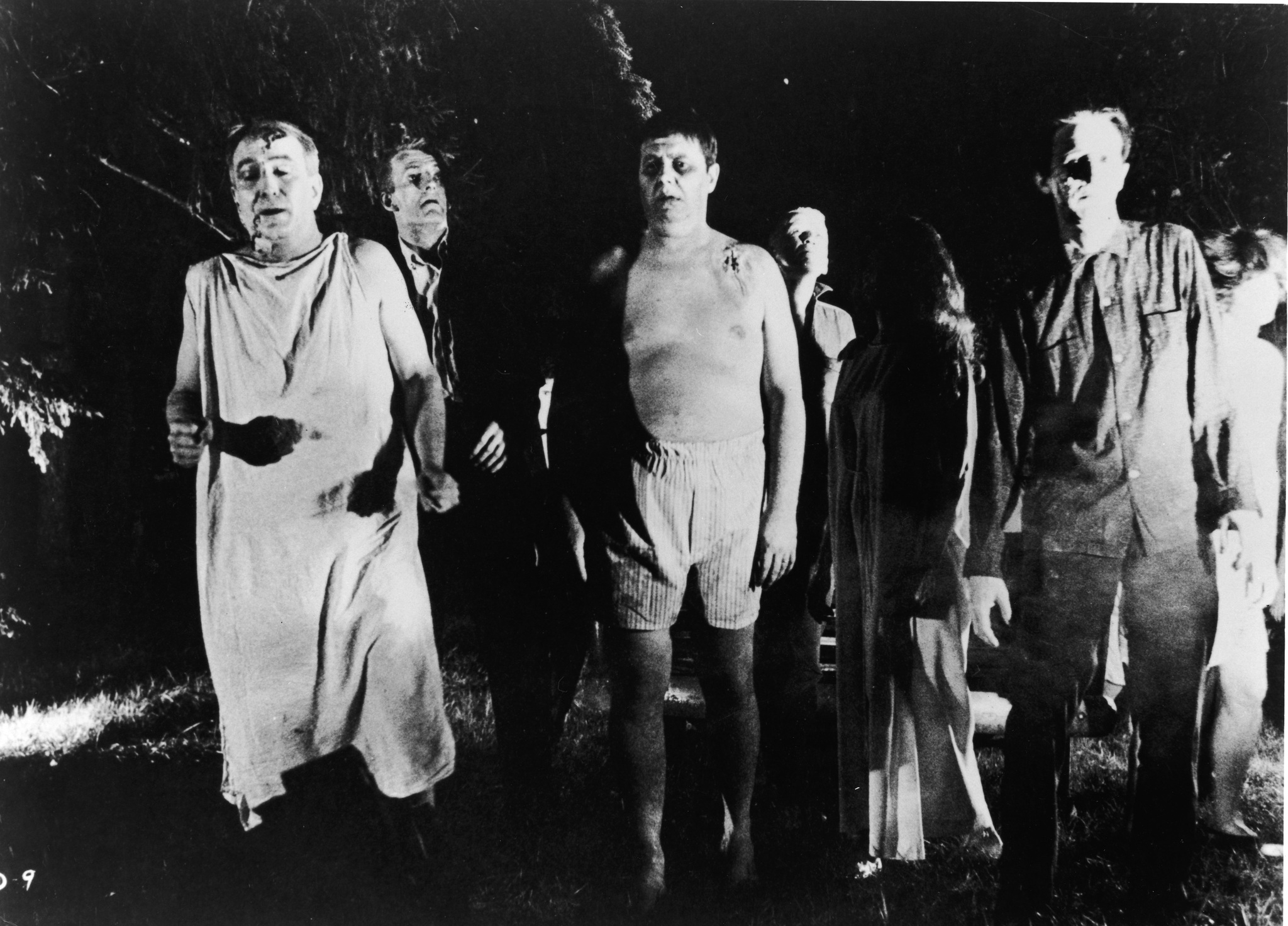
From The Night of the Living Dead – image from Wikipedia

But what constitutes life? How about adding some ingredients to agar, leaving it alone for a few hours and then finding a thriving slime mold, one with remarkable survival skills. What about spores, some of which can survive in space? Are spores alive? Or only potentially alive, or an ingredient in a recipe for making life?

Scientists have been arguing over whether viruses are alive for about a century, ever since the pathogens came to light. Writing last month in the journal Frontiers in Microbiology, two microbiologists (Hugh Harris and Colin Hill) at University College Cork took stock of the debate. They could see no end to it. “The scientific community will never fully agree on the living nature of viruses,” they declared. – from Zimmer’s Secret Life piece in the NY Times

description
“I vunder vut it vood be like to be really dead” – image from The Indy Channel

Whether you prefer your undead to be of the vampiric, zombie, or reanimated sort, or are more inclined to unicellular spore candidates, or maybe pre-conscious organoids, there are plenty of candidates for entities on the fringes of life.

In addition to providing readers with a better handle on the attempt to delineate the line between life and not-life, there are plenty of interesting questions raised and fun facts to be gleaned. We learn, for example, that Erwin Schrödinger was set up by the government at Trinity College. (But he may have simultaneously both been there and not, depending on whether any students saw him give a lecture.) We also learn that when Vitamin C was discovered, the discoverer wanted to name it “Godnose.” And how about meteorites as a possible source of Terran life? Or maybe they contributed one or more of the ingredients necessary for the recipe? I particularly enjoy when science writers imbue their work with a sense of humor. That is mostly lacking here, which is disappointing. But there is plenty of material to keep your brain cells flashing on and off.

Who decides on a definition of life? In an ideal world, science should lead on matters that are subject to physical investigation and repeatable experimentation. And yet…

It may be enough for you to align with Supreme Court Justice Potter Stewart who, when it came time to issue a ruling pertaining to pornography, said that he knows it when he sees it. We as a species tend to think that we know life when we see it. But it would be a good thing to recognize that all extant definitions of life are squishy, relying on philosophy or religion for their support. So I would appreciate it if no one would use their definition to tell me or anyone who does not share their perspective what they can or cannot do. Because when it comes to folks twisting science to political ends, I know it when I see it.

Life’s Edge may not provide a definitive guide to the line between living and nonliving. Such a line does not really exist in biology. But it does point out where the arguments lie about where those lines might be drawn, or, at least, where they might be investigated. It raises the larger question, though, of whether that line can, at least from a scientific perspective, be drawn at all.

Life is what the scientific establishment (probably after some healthy disagreement) will accept as life.

Review first posted – March 19, 2021

Publication dates
———-March 9, 2021 – hardcover
———-March 8, 2022 – trade paperback

I received an e-book ARE if Life’s Edge from Dutton in exchange for an honest review, and some of those interesting things that have been growing, unasked, in my basement.

This review has been cross-posted on GoodReads

=======================================EXTRA STUFF

Links to the author’s personal, FB, Instagram, Tumblr, PInterest, and Twitter pages

I heartily recommend you check out Siddhartha Mukherjee’s amazing NY Times review What Does It Mean to Be a Living Thing?

Items of Interest from the author
—–What is Life – audio – A series of live conversations between writer Carl Zimmer and eight leading thinkers on the question of what it means to be alive.
—–Slate – excerpt – What on Earth are These Things? – on organoids
—–NY Times – The Secret Life of a Coronavirus – is it alive?

Songs/Music
—–From Sondheim’s CompanyBeing Alive
—–Aerosmith – Livin’ On the Edge
—–Opening of Saturday Night Fever – The Bee Gees Stayin’ Alive
—–Madonna – Borderline
—–GaGa – Edge of Glory
—–Shruti Haasan – Edge
—–Monty Python’s The Meaning of Life – Every Sperm is Sacred

Leave a comment

Filed under History, Non-fiction, Public policy, Reviews, Science and Nature

The Babysitter by Liza Rodman and Jennifer Jordan

book cover

”Close your eyes and count to ten,” he whispered. I felt his breath on my cheek. The barrel of the gun was hard and cold against my forehead.
I counted, and when I opened my eyes, he was gone.

I sat up quickly in bed, gasping, my body soaked with sweat. What the hell was that?

Thus begins The Babysitter, a telling of growing up unaware that one of the author’s favorite adults was not who she’d thought.

description
Liza Rodman – image from Simon & Schuster – Photo by Joel Benjamin

In 2005, Liza Rodman, then in her forties, was working on the thesis for her undergraduate degree when she began having frequent nightmares. It was not her first such experience. She had had these for a long time, but all of a sudden they were happening every night. In one, her husband was trying to kill her with a fireplace poker. Another featured a man killing nurses and eating their hearts. The dreams kept coming, with a faceless man chasing her, always with a weapon. She would wake up as her dream self was about to crash through a window, fleeing for her life.

description
Jennifer Jordan – image from her site – photo by Jeff Rhoads

Clearly there was motivation to figure out this puzzle, so she started writing about them, incorporating them into her thesis, over a two year period, drawing out more and more details. One dream-site was The Royal Coachman motel where she, her mother, and sister had lived for a time in Provincetown. Another was Bayberry Bend, a P-town motel her mother had owned.

Slowly the process moved along, six months of regular dreams, more images, months more of nightmares, until she saw the face, a familiar one, someone she hadn’t seen since she was a kid, a handyman hired to work at the motel where her mother was employed. His mother worked at the motel too. He was one of a series of people who took care of her and her sister, a really nice guy, one of the few adults who were kind to them, who never yelled at or hit them, who took them around with him in the motel’s utility truck, on chores, to the dump, to his garden in the woods, but who had disappeared when she was ten. This was not all that unusual for the adult males who scooted through her childhood. Why would she be having dark dreams about that guy? So she decides to ask her mother, then in her 70s, what this might all mean.

“Did something happen to me back then that you’re not telling me?” I said, suddenly wondering if it did.
“What do you mean, happen to you?”
“With Tony Costa.”
“Tony Costa? Why are you still thinking about him?”
“I wasn’t until I had a nightmare about him.”
She was quiet for a moment too long, and I stopped stirring and waited. Mom rarely paused to contemplate her words, so I watched, curious as to what was going to come out of her mouth.
“Well,” she said, watching the gin swirl around the glass. “I remember he turned out to be a serial killer.” She said it calmly, as if she were reading the weather report.

Oh, is that all? Not all that surprising from Betty. Liza’s divorced mom was not exactly the best. While she did manage to keep body and soul together for herself and her two girls, she was frequently cruel to Liza, for no reason that the child could fathom. Mom, in fact is a major focus of the book, as chapters flip back and forth, more or less, between a focus on Tony and a focus on Liza and her relationship with her mother.

description
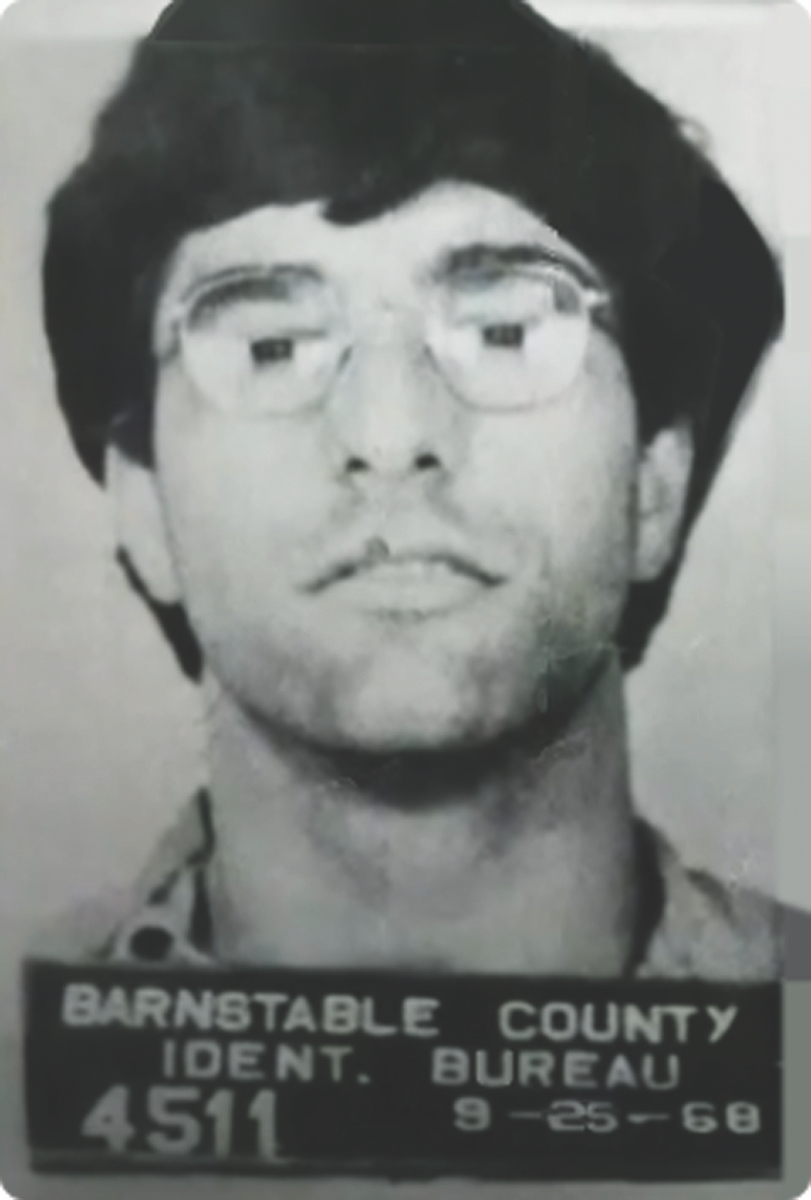
Antone Charles “Tony” Costa, Provincetown handyman and murderer of four young women. (Photo courtesy Barnstable County Identity Bureau) – image from the author’s site

Who was this guy? Tony Costa never got to know his father, who had drowned trying to save a fellow seaman in New Guinea near the end of World War II, when Tony was only eight months old. He would be obsessed with his war hero dad for the rest of his life. There were early signs of trouble with Tony. At age seven he claimed to have been visited regularly by a man in his bedroom at night, an actual intruder? a fantasy? an obsession? He said the man looked like his father. He stood out among his peers during summers in Provincetown, his mother’s birthplace, cooler, smarter, and more “inside himself” than anyone else, according to a kid he hung out with there. Then there was the taxidermy kit. Lots of killing of small animals, neighborhood pets going missing, yet never a successful display of a stuffed animal. There is no mention of bed-wetting in his psychopath Bingo card, but who knows? We know he was raped as a pre-teen, and was probably one of several victims of sexual abuse by a Catholic priest in Provincetown. So his potential for madness certainly had some outside assistance. He was accused of attempting to rape a young girl as a teen.

description
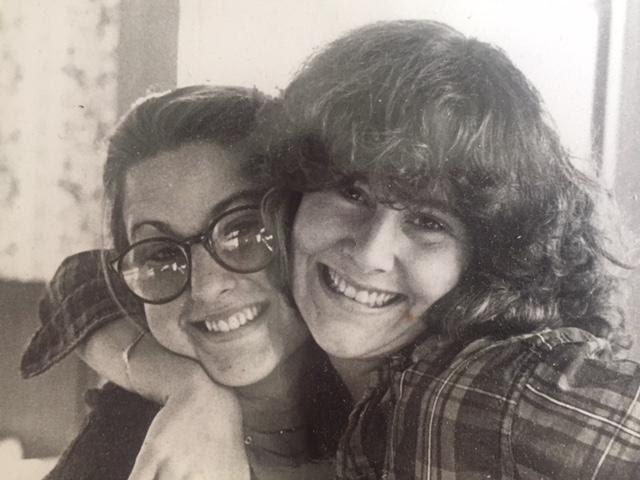
Jen and Liza, Northampton, 1979 – image from Rodman’s site

Tony was smart and handsome, but had terrible judgment, a ne’er do well, capable at work but unable to hold onto a job. He became a heavy drug user and local dealer. Clearly this guy had some charisma (as well as a considerable supply of illegal substances) and a way with young teens. A pedophile who married his pregnant fourteen-year-old girlfriend, he kept a crowd of young acolytes around him unable or unwilling to see through his line of distilled, grandiose, narcissistic bullshit. Cult-leader stuff. There is a Manson-like quality to him. And, like most narcissists, he was never willing to accept any responsibility for his own actions, always insisting that people were out to get him, blaming others for things he had done.

description
The VW Tony stole after murdering its owner. A local spotted it in the woods and notified the local police, which spelled doom for Tony Costa – image from the author’s FB pages

There is more going on here than personal profiles of the major actors. A lot is made of how different from the mainstream Provincetown was, particularly during the tourist season. The ethos was much more accepting of whatever than most places. With people coming and going so much, it was custom-made for a predator. It was the 60s, man, drugs, sex, and rock ‘n roll, and kids taking off for adventures, whether drug-related or not, and thus not necessarily raising instant alarms when they went missing. In 1971, for example, I bought an old Post Office truck at auction for three hundred bucks, and drove across country with three friends. (well, tried, we never actually made it across the continent) No cellphone, no regular check-ins. We didn’t exactly file a flight plan. If we had come to a bad end, no one would have known, or been alarmed back home for weeks. This is something a lot of people did. Of course, we were not runaways, and we were not female. That would have been a whole other order of business. The cops in Provincetown took a lackadaisical attitude toward worried parents looking for missing progeny. “Don’t worry. I’m sure they will turn up in due time.” And they were probably right, mostly. Except, sometimes they weren’t. It took a lot of pushing from those concerned about the missing young women to get the police to pay much attention. Rodman and Jordan provide a very detailed look at the various police departments that became involved in Tony’s case, both the occasional good police work and the ineptitude of inter-departmental communications. Sound familiar?

The locals were slow to allow for the possibility that there was a killer in their midst. Even today, there is an urge to protect one of their own, despite it being fifty years since the events of the book.

“I got threats when I wrote this book,” Liza says. It’s a loving portrait of the town, but not especially flattering. “I have a comfort level there that I don’t have anywhere else. Even in the face of this book.” – from The Provincetown Independent

description
It was her sister’s 8th birthday. At the moment Liza was making a face at the camera, Tony was leading two young women into the Truro woods, where he would murder and bury them. – image from the author’s FB pages

One of the things about true crime books is that there is an element of suspense that is lacking. We know that little Liza will grow up to write this book, so we know that Tony did not kill her. This makes it more like a Columbo episode, knowing that the bad guy will get got, but enjoying seeing how that ultimately happens. That said, this is not a straight-up true crime effort. It is a fusion of true crime with memoir. Half of the book is about Liza’s childhood, her relationship with her mother in particular. It is an interesting look at how someone can survive a bad parent-child relationship. Showing how things were for Liza at home makes her a more sympathetic narrator for the other story. Geez, ya poor kid. I sure hope nothing else bad happens t’ya. And it makes it much more understandable how a kid who was starved for adult affection and attention would be drawn to an adult who was offering kindness and interest.

I did not get the frisson of fear reading this that pervaded in another true crime book, I’ll Be Gone in the Dark. Maybe because the killer in this one was long ago jailed, whereas the California killer had not yet been arrested when that book came out. But there is a certain vertigo, like walking near a cliff edge, blindfolded, only to realize the danger you were in when you take it off. It is distinctly possible that Liza might have found her way into Tony’s special garden if he had managed to stay out of jail for a few more years. Liza was like the little girl playing with Frankenstein’s monster in the movie, not realizing that he was more than just a large playmate, and seemingly friendly soul. Whew!

Rodman had been working on this project for about thirteen years. It happened that, in 2018, Jordan, a professional writer, was casting about for her next book project (She had previously published four books.) when she thought of her dear friend, Liza, (they had met in college) who was thrilled at the suggestion that they collaborate. So, sixteen years of research in all and here it is. An in depth look at a monstrous series of events, a sick individual, an interesting place in a time of upheaval, a difficult childhood, an odd friendship, and a very close call. The Babysitter is an engaging, informative read that will make you appreciate your sane parents, most likely, and appreciate your luck even more in never having had such a person as Tony in your life. (You haven’t, right?)

His coterie of teenagers, his stash of pills, and his marijuana helped mask his ever-increasing feelings of inferiority; by surrounding himself with idolizing acolytes who needed a hero, he could feel more in control, sophisticated, confident, and, of course, more intelligent.

Review posted – March 5, 2021

Publication date – March 2, 2021

I received an ARE of The Babysitter from Atria in return for an honest review. I did not charge them my usual rate of ten bucks an hour and whatever I want to eat from their fridge.

=====================================EXTRA STUFF

Links to Liza Rodman’s ’s personal, FB, Instagram, LinkedIn, and Twitter pages

Links to Jennifer Jordan’s personal and FB pages

Interviews
—–Red Carpet Crash – February 24, 2021 – Interview: Authors ‘Liza Rodman And Jennifer Jordan’ Talk Their Book The Babysitter: My Summers With A Serial Killer – audio – 17:02 – definitely check this one out
—–New York Post – February 27, 2021 – How I discovered my babysitter Tony Costa was a serial killer by Raquel Laneri
—–The Provincetown Independent – February 24, 2021 – Remembrance of Serial Murders Past by Howard Karren
—–WickedLocal.com – February 23, 2021 – In new memoir, local serial killer Tony Costa babysat two youngsters by Susan Blood

Items of Interest
—–Frankenstein playing with sweet young Maria
—–Columbo – or substituting for whodunit the howchatchem
—–My review of I’ll Be Gone in the Dark

Songs/Music
The author’s site provides a link to a considerable list of 39 songs mentioned in the book. But you have to have a membership to hear the full songs on Spotify instead of just the clips that are available on Rodman’s site.

Leave a comment

Filed under American history, biography, History, Non-fiction, psycho killer, Reviews, Thriller

Digging for Truth – We Keep the Dead Close by Becky Cooper

book cover

I’m here because, for the past ten years. I have been haunted by a murder that took place a few steps away. It was told to me my junior year of college like a ghost story: a young woman, a Harvard graduate student of archaeology, was bludgeoned to death in her off-campus apartment in January 1969. Her body was covered with fur blankets and the killer threw red ochre on her body, a perfect recreation of a burial ritual. No one heard any screams; nothing was stolen. Decades passed, and her case remained unsolved. Unsolved, that is, until yesterday.

“Every nation-state wants an important past,” Karl said. So, often the ruling parties will commission archaeologists. But sometimes the past the archaeologists find is not what the powers want them to find.

In Becky Cooper’s gripping true-crime tale, We Keep the Dead Close, there are two mysteries at work. Who brutally murdered Jane Britton and why, and was Harvard University involved in covering up the murder? If so, did they know who the guilty party was?

description
Becky Cooper – from the Boston Globe – photo by Becky Cooper

Ok, so here is how I went about reading the book. In addition to entering into my review file the names of the suspects people connected to the crime, I also kept a running list of the questions I thought needed answering as the book moved along. Here is a sample from reading through page 32:

Questions so far
—–Was Jim H (Jane’s sort-of bf) at her door at 9a as reported by her friends and neighbors, the Mitchells?
—–Where is Jim H now?
—–Who were the two men dashing to a car at 12:30a as reported by neighbor Ravi?
—–Why was Jane’s cat screaming at 8p, and if the place was effectively soundproof how did neighbor Carol Presser hear it?
—–Sounds like the killer was left-handed, given the location of the fatal blow.
—–What’s the deal with the red ochre sprinkled over Jane’s body?

description
Jane Britton – image from Wikimedia

I kept a separate list for the question of whether Harvard engaged in a coverup. In a book of over 400 pages you can see how this list might grow. And grow it did, even as I checked off many of the questions when they were answered. But that was one of the major joys of reading this, or, I guess, any true crime book, or fictional crime book for that matter. Seeing if what strikes the author, or the investigators, is also what strikes you, the reader, the rousing of our inner Sherlock. Aside from the mystery, the whodunit of the story, there is content in abundance. For example, how can an institution like Harvard at the very least appear to be involved in covering up a crime, and yet remain unaccountable. Maybe that is not so surprising given that, after lives of diverse forms of crime, the Trump family remains on the spacious side of prison bars. But still, there is, or at least should be, some shock value to this. Did Harvard leadership hide a capital crime, did Harvard obstruct justice for fifty years? Cooper looks at evidence suggesting that it did.

description
Professor Karl Lamberg-Karlovsky was a prime suspect in Britton’s murder – image from the NY Post – grad students had accumulated a file on him. One of them died under questionable circumstances.

As noted in the opening quote at top, Cooper had come across this story while an undergraduate at Radcliffe. The professor presumed most likely to have done the deed was still teaching at Harvard. Cooper graduated, moved on, was having a life, but the story stuck with her. Ten years after her undergrad days, she returned to the scene of the crime, as a graduate student, determined to find out the truth of Jane Britton’s death.

description
The Dig team in Iran in 1968 – from West Hunter

This is a journey very reminiscent of Michelle McNamara’s amazing I’ll Be Gone in the Dark, in which she helped track down the Golden State Killer. Could Cooper do the same? We follow her through the labyrinth of her investigation, talking with everyone who knew Jane at the time of her death, and then branching out to the people who knew the people who knew her. She keeps trying to get access to official police records, a remarkably difficult undertaking for such a cold case, even moreso as Massachusetts is one of the worst states in the nation on Freedom of Information access, and gets in touch with local and state investigators who were involved back then. Suspects get their time in the spotlight, then are replaced with others. Was it one of these, or maybe someone in Jane’s circle who was never thought of as a suspect, or maybe someone else entirely?

description
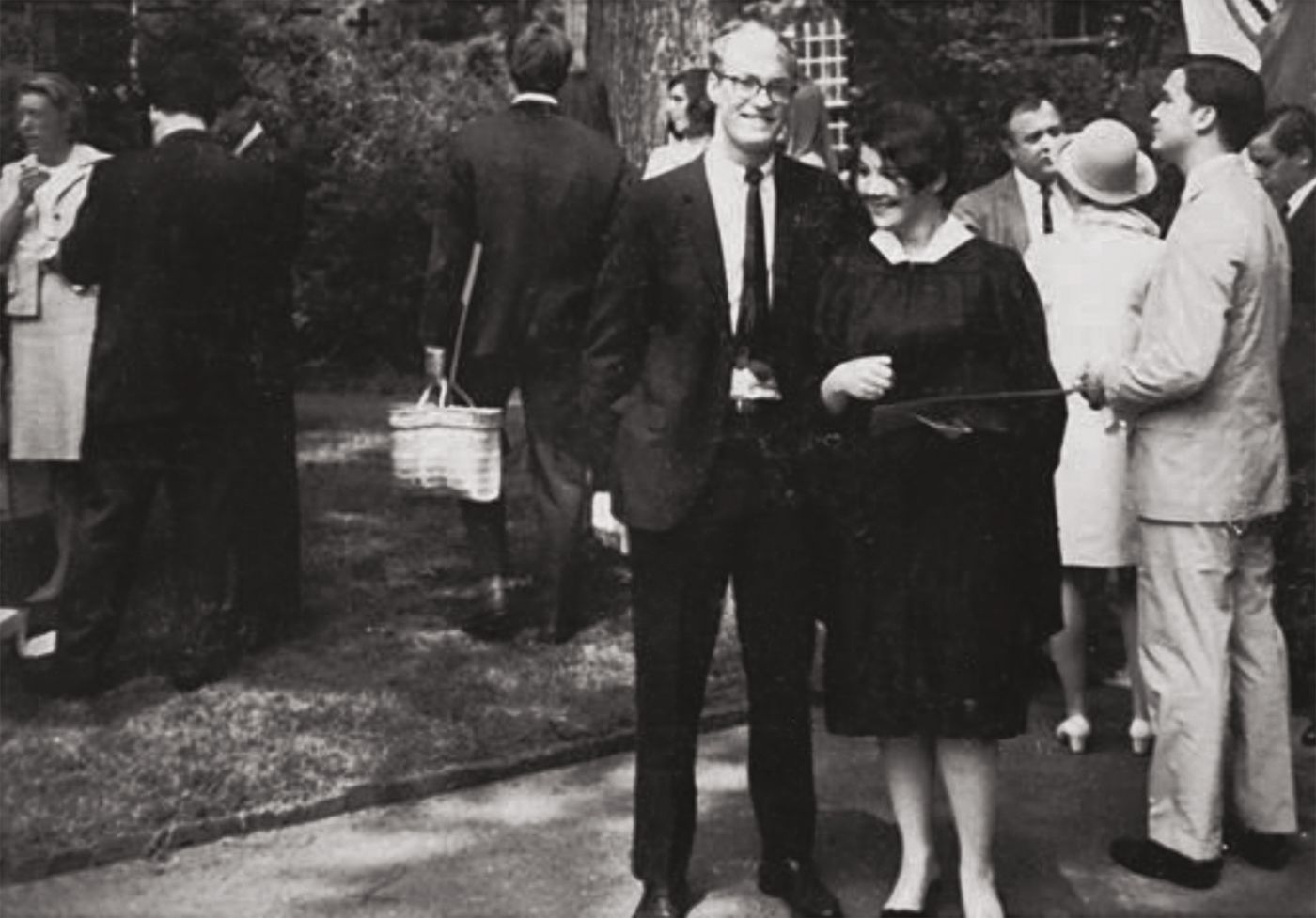
Jane Britton and Ed Franquemont at their college graduation in 1967 – image from Town & Country – source: the Jane Britton Police File – Franquemont, an ex, was universally disliked by Jane’s friends. He may have been physically abusive to her

But there is a whole lot more going on here than a procedural effort to unearth the truth in a nearly fifty-year-old cold case. There is a consideration of historical and all-too-contemporary gender discrimination issues at Harvard, a strong thread about story that permeates, and a subset of that, on rumor as a means of social control.

Cooper documents decades of dismissive treatment of women, not just at Harvard, but in academia well beyond those ivied walls. This manifests in many ways. Women at Harvard in the 1970s learned to dress as sexlessly as possible in order to de-emphasize their gender, lest they be seen as less academically capable than their male clasamates. In the 1980s, women were ushered to positions in the university that were high on administrative duties and low in departmental influence. In 1994 Nancy Hopkins documented the bias against women, showing that only 8 percent of the science faculty at MIT were women, and even lower, 5 percent, at Harvard. In 2005 Hopkins confronted then Harvard president Larry Summers at a conference when he claimed that female under-representation in science faculties was the result of innate biological differences. In the twenty-teens, Associate Professor Kimberly Theidon, was active at Harvard speaking out about sex discrimination and sexual assault, faulting Harvard for its lagging sexual assault policy. When her concerns made it into The Crimson, Harvard’s newspaper, her tenure application, which had already been approved by the authorizing committee, was withdrawn. Behind-closed-door deliberations on tenure decisions shields Harvard from much-needed transparency.

The tenure decision-making process “is an invitation to abuse,” Howard Georgi, a Harvard physicist who has served on tenure committees told Science magazine in 1999. “There’s no question this has affected women.”

The whole notion for the book began, of course, with the story BC heard when she was a Radcliffe undergrad. The police withholding their information made the story of Jane’s death largely oral, and certainly unofficial. And we know from the game Telephone, how stories can change when passed along that way. The file kept by graduate students at Harvard about Karl, with so many elements poorly examined, if researched at all, made that a kind of urban legend. Everybody back at the time of her death had their own experience of Jane and BC tries to make sense of them, learn from their Rashomon-like views the truth of who Jane was. She presents to us a Jane Britton who is not just a body deprived of life, but a three-dimensional person, with a personality, a history, hopes, talents, complications, and ambitions.

description
Jane Britton’s boyfriend, Jim Humphries, was also a possible suspect. – image from the NY Post – source: Jane Britton police file

We construct history from the pieces that are available to us. Artifacts, physical objects, letters, photographs, newspaper reports, police reports, spaces that existed then that are still around today. Cooper pursues all she can find, but some will never be unearthed. Sometimes those pieces might lead in opposing directions. Sometimes the pieces might lead nowhere. Sometimes small pieces might hold large truths. Sometimes what seem large pieces hold little explanatory value. Which are the important shards? And which are just detritus? It takes persistence, sensitivity, intelligence, and creativity to make the story we construct of these pieces reflect the truth of the person, the event, or the time we are attempting to describe. Karl Lamberg-Karlovsky’s claim to fame, for example, was not the high academic achievement of his field research. It was his ability to transform the bits he found into a compelling tale. And what about the missing puzzle pieces, the police reports that were kept hidden, the people there in 1968 and 1969 who had died? We can never really know all there is to know. But hopefully we can, with the evidence we are able to gather, get close enough.
description
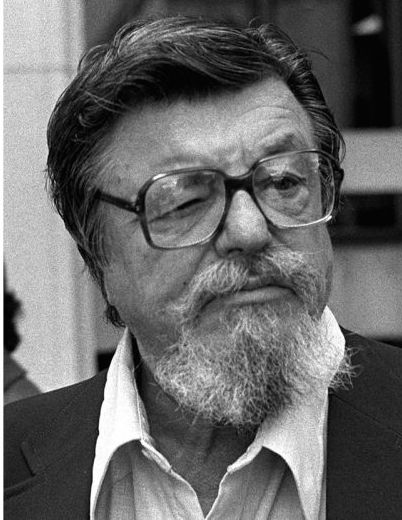
Richard Michael (Mike) Gramly (many years later, obviously) not only knew Jane at the time of her death, but was also on an expedition when another young woman vanished mysteriously – he was known to have serious anger issues

There were rumors bouncing around Jane and her death like neutrons in a nuclear reactor. Many of the people with whom Cooper spoke had a favorite suspect they believed guilty of the crime, offering what they knew or, maybe, had heard or suspected as supporting evidence. Did Ed Franquemont beat her? Was Mike Gramly guilty of maybe two killings? Did Jane have an affair with Karl in Iran? Did Jane threaten to expose a professional lie Karl had told? Did she blackmail him to gain an advantage in her exams, and a place on the next dig? Was Karl a plagiarist? Was Karl a murderer? Did rumors surround him because of his arrogance or because he might be guilty? How about Lee Parsons [sorry, I was unable to find a photo, but Lee is a prime suspect]? Something happened between Lee and Jane at a notorious “Incense Party” at his place. But what? Did Lee confess to killing Jane many years later? In Cooper’s investigative travels she crosses paths with an expert in such things.

As I thought more about [medical anthropologist] Mel [Konner]’s assertion that the rumors were a form of punishment, I found myself reading scholarly work on the social functions of gossip. I eventually worked my way to Chris Boehm, a former classmate of Jane’s who’s studied how gossip works in small-scale societies. He had, in fact, used Jane’s murder as an example in his paper about gossip as a form of social control.


According to Boehm, social groups necessarily have a certain amount of “leakiness“ built in. These are the whisper networks; these are the stories that get swapped in the field and passed quietly between graduate students. Their job is to limit outlier behavior and to keep members of the community safe when what can be said out loud is constrained. Gossip, in other words, is punishment for people who move outside the norms.

There is so much going on here, and it is so accessibly presented that you will be rewarded with much more than the knowledge of who killed Jane Britton. You will learn a lot about Harvard, how academia treats women, how gossip works in the world, and how one might go about solving a very cold case. You may or may not want to read this book in the somewhat OCD manner I pursued, focusing on solving the mystery. That way does add considerably to the reading time, as well as the filling feeling one gets from such activities. But whether you dust off each piece of information as it emerges, or speed through Cooper’s excavation on a mud-spattered Jeep, you will be well rewarded. Once you dig out We Keep the Dead Close from your bookseller’s shelves, you will definitely want to keep it close until you finish reading, exploring, and learning. This is an expedition well worth signing up for.

…the act of interpretation molds the facts in service of the storyteller. I have been burned enough times to know. There are no true stories; there are only facts, and the stories we tell ourselves about those facts.

Review posted – January 8, 2021

Publication dates
———-November 10, 2020 – hardcover
———-September 14, 2021 – trade paperback

I received a copy of the book from Grand Central in return for an honest review, or at least, as honest a review as might be possible given the materials I was able to excavate. Thanks, folks.

And thanks to MC. You know who you are.

=============================EXTRA STUFF

Links to the author’s personal, FB, Instagram, Tumblr, and Twitter pages

Interviews
—–This is an EXCELLENT interview – Wellington Square Bookshop – We Keep The Dead Close by Becky Cooper | Author Interview with Sam Hankin – video – 41:15
—–Grand Central Publishing – Becky Cooper & editor Maddie Caldwell in conversation – video – 56:16 – safe to skip the 2:13 intro

Items of Interest
—–Wiki – Murder of Jane Britton
—–WebSleuths.com

Leave a comment

Filed under American history, Bio/Autobio/Memoir, History, Non-fiction, Reviews

Dig We Must – We Keep the Dead Close by Becky Cooper

book cover

I’m here because, for the past ten years. I have been haunted by a murder that took place a few steps away. It was told to me my junior year of college like a ghost story: a young woman, a Harvard graduate student of archaeology, was bludgeoned to death in her off-campus apartment in January 1969. Her body was covered with fur blankets and the killer threw red ochre on her body, a perfect recreation of a burial ritual. No one heard any screams; nothing was stolen. Decades passed, and her case remained unsolved. Unsolved, that is, until yesterday.

“Every nation-state wants an important past,” Karl said. So, often the ruling parties will commission archaeologists. But sometimes the past the archaeologists find is not what the powers want them to find.

In Becky Cooper’s gripping true-crime tale, We Keep the Dead Close, there are two mysteries at work. Who brutally murdered Jane Britton and why, and was Harvard University involved in covering up the murder? If so, did they know who the guilty party was?

description
Becky Cooper – from the Boston Globe – photo by Becky Cooper

Ok, so here is how I went about reading the book. In addition to entering into my review file the names of the suspects people connected to the crime, I also kept a running list of the questions I thought needed answering as the book moved along. Here is a sample from reading through page 32:

Questions so far
—–Was Jim H (Jane’s sort-of bf) at her door at 9a as reported by her friends and neighbors, the Mitchells?
—–Where is Jim H now?
—–Who were the two men dashing to a car at 12:30a as reported by neighbor Ravi?
—–Why was Jane’s cat screaming at 8p, and if the place was effectively soundproof how did neighbor Carol Presser hear it?
—–Sounds like the killer was left-handed, given the location of the fatal blow.
—–What’s the deal with the red ochre sprinkled over Jane’s body?

description
Jane Britton – image from Wikimedia

I kept a separate list for the question of whether Harvard engaged in a coverup. In a book of over 400 pages you can see how this list might grow. And grow it did, even as I checked off many of the questions when they were answered. But that was one of the major joys of reading this, or, I guess, any true crime book, or fictional crime book for that matter. Seeing if what strikes the author, or the investigators, is also what strikes you, the reader, the rousing of our inner Sherlock. Aside from the mystery, the whodunit of the story, there is content in abundance. For example, how can an institution like Harvard at the very least appear to be involved in covering up a crime, and yet remain unaccountable. Maybe that is not so surprising given that, after lives of diverse forms of crime, the Trump family remains on the spacious side of prison bars. But still, there is, or at least should be, some shock value to this. Did Harvard leadership hide a capital crime, did Harvard obstruct justice for fifty years? Cooper looks at evidence suggesting that it did.

description
Professor Karl Lamberg-Karlovsky was a prime suspect in Britton’s murder – image from the NY Post – grad students had accumulated a file on him. One of them died under questionable circumstances.

As noted in the opening quote at top, Cooper had come across this story while an undergraduate at Radcliffe. The professor presumed most likely to have done the deed was still teaching at Harvard. Cooper graduated, moved on, was having a life, but the story stuck with her. Ten years after her undergrad days, she returned to the scene of the crime, as a graduate student, determined to find out the truth of Jane Britton’s death.

description
The Dig team in Iran in 1968 – from West Hunter

This is a journey very reminiscent of Michelle McNamara’s amazing I’ll Be Gone in the Dark, in which she helped track down the Golden State Killer. Could Cooper do the same? We follow her through the labyrinth of her investigation, talking with everyone who knew Jane at the time of her death, and then branching out to the people who knew the people who knew her. She keeps trying to get access to official police records, a remarkably difficult undertaking for such a cold case, even moreso as Massachusetts is one of the worst states in the nation on Freedom of Information access, and gets in touch with local and state investigators who were involved back then. Suspects get their time in the spotlight, then are replaced with others. Was it one of these, or maybe someone in Jane’s circle who was never thought of as a suspect, or maybe someone else entirely?

description
Jane Britton and Ed Franquemont at their college graduation in 1967 – image from Town & Country – source: the Jane Britton Police File – Franquemont, an ex, was universally disliked by Jane’s friends. He may have been physically abusive to her

But there is a whole lot more going on here than a procedural effort to unearth the truth in a nearly fifty-year-old cold case. There is a consideration of historical and all-too-contemporary gender discrimination issues at Harvard, a strong thread about story that permeates, and a subset of that, on rumor as a means of social control.

Cooper documents decades of dismissive treatment of women, not just at Harvard, but in academia well beyond those ivied walls. This manifests in many ways. Women at Harvard in the 1970s learned to dress as sexlessly as possible in order to de-emphasize their gender, lest they be seen as less academically capable than their male clasamates. In the 1980s, women were ushered to positions in the university that were high on administrative duties and low in departmental influence. In 1994 Nancy Hopkins documented the bias against women, showing that only 8 percent of the science faculty at MIT were women, and even lower, 5 percent, at Harvard. In 2005 Hopkins confronted then Harvard president Larry Summers at a conference when he claimed that female under-representation in science faculties was the result of innate biological differences. In the twenty-teens, Associate Professor Kimberly Theidon, was active at Harvard speaking out about sex discrimination and sexual assault, faulting Harvard for its lagging sexual assault policy. When her concerns made it into The Crimson, Harvard’s newspaper, her tenure application, which had already been approved by the authorizing committee, was withdrawn. Behind-closed-door deliberations on tenure decisions shields Harvard from much-needed transparency.

The tenure decision-making process “is an invitation to abuse,” Howard Georgi, a Harvard physicist who has served on tenure committees told Science magazine in 1999. “There’s no question this has affected women.”

The whole notion for the book began, of course, with the story BC heard when she was a Radcliffe undergrad. The police withholding their information made the story of Jane’s death largely oral, and certainly unofficial. And we know from the game Telephone, how stories can change when passed along that way. The file kept by graduate students at Harvard about Karl, with so many elements poorly examined, if researched at all, made that a kind of urban legend. Everybody back at the time of her death had their own experience of Jane and BC tries to make sense of them, learn from their Rashomon-like views the truth of who Jane was. She presents to us a Jane Britton who is not just a body deprived of life, but a three-dimensional person, with a personality, a history, hopes, talents, complications, and ambitions.

description
Jane Britton’s boyfriend, Jim Humphries, was also a possible suspect. – image from the NY Post – source: Jane Britton police file

We construct history from the pieces that are available to us. Artifacts, physical objects, letters, photographs, newspaper reports, police reports, spaces that existed then that are still around today. Cooper pursues all she can find, but some will never be unearthed. Sometimes those pieces might lead in opposing directions. Sometimes the pieces might lead nowhere. Sometimes small pieces might hold large truths. Sometimes what seem large pieces hold little explanatory value. Which are the important shards? And which are just detritus? It takes persistence, sensitivity, intelligence, and creativity to make the story we construct of these pieces reflect the truth of the person, the event, or the time we are attempting to describe. Karl Lamberg-Karlovsky’s claim to fame, for example, was not the high academic achievement of his field research. It was his ability to transform the bits he found into a compelling tale. And what about the missing puzzle pieces, the police reports that were kept hidden, the people there in 1968 and 1969 who had died? We can never really know all there is to know. But hopefully we can, with the evidence we are able to gather, get close enough.

description
Richard Michael (Mike) Gramly (many years later, obviously) not only knew Jane at the time of her death, but was also on an expedition when another young woman vanished mysteriously – he was known to have serious anger issues

There were rumors bouncing around Jane and her death like neutrons in a nuclear reactor. Many of the people with whom Cooper spoke had a favorite suspect they believed guilty of the crime, offering what they knew or, maybe, had heard or suspected as supporting evidence. Did Ed Franquemont beat her? Was Mike Gramly guilty of maybe two killings? Did Jane have an affair with Karl in Iran? Did Jane threaten to expose a professional lie Karl had told? Did she blackmail him to gain an advantage in her exams, and a place on the next dig? Was Karl a plagiarist? Was Karl a murderer? Did rumors surround him because of his arrogance or because he might be guilty? How about Lee Parsons [sorry, I was unable to find a photo, but Lee is a prime suspect]? Something happened between Lee and Jane at a notorious “Incense Party” at his place. But what? Did Lee confess to killing Jane many years later? In Cooper’s investigative travels she crosses paths with an expert in such things.

As I thought more about [medical anthropologist] Mel [Konner]’s assertion that the rumors were a form of punishment, I found myself reading scholarly work on the social functions of gossip. I eventually worked my way to Chris Boehm, a former classmate of Jane’s who’s studied how gossip works in small-scale societies. He had, in fact, used Jane’s murder as an example in his paper about gossip as a form of social control.


According to Boehm, social groups necessarily have a certain amount of “leakiness“ built in. These are the whisper networks; these are the stories that get swapped in the field and passed quietly between graduate students. Their job is to limit outlier behavior and to keep members of the community safe when what can be said out loud is constrained. Gossip, in other words, is punishment for people who move outside the norms.

There is so much going on here, and it is so accessibly presented that you will be rewarded with much more than the knowledge of who killed Jane Britton. You will learn a lot about Harvard, how academia treats women, how gossip works in the world, and how one might go about solving a very cold case. You may or may not want to read this book in the somewhat OCD manner I pursued, focusing on solving the mystery. That way does add considerably to the reading time, as well as the filling feeling one gets from such activities. But whether you dust off each piece of information as it emerges, or speed through Cooper’s excavation on a mud-spattered Jeep, you will be well rewarded. Once you dig out We Keep the Dead Close from your bookseller’s shelves, you will definitely want to keep it close until you finish reading, exploring, and learning. This is an expedition well worth signing up for.

…the act of interpretation molds the facts in service of the storyteller. I have been burned enough times to know. There are no true stories; there are only facts, and the stories we tell ourselves about those facts.

Review first posted – January 8, 2021

Publication dates
———-November 10, 2020 – hardcover
———-September 14, 2021 – trade paperback

I received a copy of the book from Grand Central in return for an honest review, or at least, as honest a review as might be possible given the materials I was able to excavate. Thanks, folks.

And thanks to MC. You know who you are.

=======================================EXTRA STUFF

Links to the author’s personal, FB, Instagram, Tumblr, and Twitter pages

Interviews
—–This is an EXCELLENT interview – Wellington Square Bookshop – We Keep The Dead Close by Becky Cooper | Author Interview with Sam Hankin – video – 41:15
—–Grand Central Publishing – Becky Cooper & editor Maddie Caldwell in conversation – video – 56:16 – safe to skip the 2:13 intro

Items of Interest
—–Wiki – Murder of Jane Britton
—–WebSleuths.com

Leave a comment

Filed under Reviews

Hollywood Park by Mikel Jollett

book cover

What do you do when you’re a scared-shitless kid that’s been faking it for so long? You bury it. You polish your smile and study until you can’t even focus your eyes. You buy yourself a big red sweater with an S across the chest, just like the superchild you once were. You try to prove them all wrong. You attempt to outrun it. But then you get injured and your mom goes insane and a kind man in a blue shirt with a trim black beard uses the words. Emotional abuse. Crossing physical boundaries, Trauma. Neglect. I feel like a blank space covered in skin.

Who is that masked man? If all of your life you’ve worn a mask, what do you see in the mirror? A reflection of someone you aren’t. How can you know who you really are, or who you might become, if you see your world through cut-out holes? And the world never gets to see you, never gets to relate to you, the real you, behind your facade. Kinda tough to live your best life that way. Kinda tough to live a real life that way. And how did that mask get there in the first place? And how did it impact the nuts and bolts of your life? And is there any hope you can tear it off without losing the you beneath, pull it off slowly, maybe un-sew it from your face, a stitch at a time?

description
Mikel Jollett – image from his Twitter

Who is that masked man, the kid from the cult, the pre-teen looking for thrills, the teenager who nearly killed himself, the long-distance-runner, the Stanford student, the substance abuser, the serial spoiler of relationships, the music-world journalist, the successful rock musician, the wonderful writer? Or are they all just different masks?

description
Synenon leader Charles Dederich – Image from San Diego State University

The impetus to write the book was a recent one. Jollett had been writing and performing music with his band, Airborne Toxic Event, since 2005, a step sideways from his intention to pursue a writing career, and a closely linked redirection from his work as a music journalist.

Then, in 2015, his father died, and Jollett says he was overwhelmed with grief and confusion. “I wondered why it hit me so hard, so I went back into my past—that day my mom took us out of the cult. I went in to lockdown and started to write.” He stayed with it for three years. – from the PW interview

There was a lot to write about. This coming of age story begins when he was five. Jollett had the bad luck to be born into a bad situation. His parents were members of Synenon, a place that came to public prominence in the 1960s in California, a goto drug rehab community for a while. People charged with substance-related crimes were often sent there by California courts. It probably did some good in the beginning, but as the leader of Synenon, Chuck Dederich, became more and more unhinged and power mad, his not totally crazy community became a totally crazy cult. Not the best start for a new life. One of the rules in Synenon was that children were to be raised communally. So, even though mom and/or dad might be around, they were not the ones providing care. Have a nice life.

“It was an orphanage!” Grandma screams. “That’s what you call a place where strangers raise your kids!” Grandma says that mom doesn’t even know who put us to bed or who woke us up or who taught us to read. She says we were sitting ducks. (We did play Duck Duck Goose a lot.) “You made them orphans, Gerry!” Grandma will point at us from her chair as we pretend not to listen.

We follow Mik’s journey from his earliest memories of Synenon, raised by people other than his parents until Mom flees with him and his older brother in the dark of night. Most orphanages do not send goons to track down people, including children, who leave. Even out of the Synenon cult, Mik, his brother, Tony, and his mom, Gerry, were not safe. Mik gets to see a fellow “splittee” get beaten nearly to death by Synenon enforcers outside his new home.

description
Facing your dark side – image from Narcissism and emotional abuse.co.uk

If this decidedly unstable beginning was not enough of a challenge, his mother was not the best of all possible parents.

Is that a mom? Someone who you can’t ever remember not loving you? I know Mom doesn’t think that’s what it is but I do…She tells me I’m her son and she wanted kids so she wouldn’t be alone anymore and now she has us and it is a son’s job to take care of his mother.

Gerry was just a weeeee bit narcissistic, to her children’s decided disadvantage. It would take Mik years to learn that the usual arrangement was that parents take care of children.

description
Image from collectiveevolution.com

Jollett takes us through many stages of his life, successfully modulating the narrative to fit the age he is portraying in each. As he grows, his awareness increases and his interests broaden. It makes him, appropriately, an unreliable narrator as young Mik does not yet have the tools to see past the misinformation he is being given.

It took my brother and I a long long time to piece together the reality that a functional adult might have about the situation, that we’d escaped a cult that had once done good things for addicts (including our father), that our mother was severely depressed, and that these experiences were very unique in some ways and quite common in others. So I wrote the book from that perspective, at least at the beginning: that of a child trying to piece together the reality of the changing world around him; because that’s how I experienced it. There were mysteries. What is a restaurant? (We’d never been in one). What is a car? A city? And, most devastatingly, what is a family? Because we simply didn’t know. – from the Celadon interview

Being born into a cult and having a depressed, toxically narcissistic mother were two strikes already, but then pop, and other paternal family members had spent considerable time behind bars, and in both his paternal and his maternal trees there was a history of substance abuse, of one sort or many. You’d think Mik was destined to wind up an alcoholic and/or a drug addict and in jail. Is genetics destiny? This is a core battle he faced in his life. Another was to come to terms with how his strange upbringing affected how he related to other human beings, particularly to women. He talks a lot about how he presented a façade to the world, while keeping his truest self well back, if he even knew his true self at all.

description
Robert Smith mask – Image from funkyBunky.co

Jollett endured years of poverty, and emotional abuse. He found outlets in criminal acts and substance abuse. But he also found other ways to fill his needs and channel his creativity. A close friend introduced him to the music that would push him in a new constructive direction.

I go to a place in my head where I can be alone. Listening to Robert Smith sing his happy songs about how sad he feels is like he’s there too, like he has his Secret Place in his head where he goes and since he wrote a song about it, he’s right there in my headphones, so we’re in this Secret Place together. Me and Robert. It’s a place where we are allowed to be sad, instead of feeling like freaks of nature, us weirdos and orphans.

A major change in Mik’s life is when he begins spending time with his father, Jimmy, and his father’s significant other, in Los Angeles, first summers, then, at age 11, moving there more permanently, Gerry having moved to Oregon with the boys when they were fleeing Synenon. It is a whole new world for him there, not just offering different ways to get into trouble, but the opportunity to get to know Jimmy and his father’s family, something that was not really possible in his earliest years, particularly as his mother had portrayed Jimmy negatively.

I’d been told so many terrible things about him at a very young age. He was a heroin addict, an ex-con who’d done years in prison. He “left my mother for a tramp.” That was a common refrain. But none of it turned out to matter. He was clean by the time I was born and all I ever knew once I got to spend time with him, was this guy who would do anything for me. He was affectionate. He took us everywhere. He cared so deeply about our basic happiness. He had a great laugh and a quiet wisdom about him. He never cared what I became in life. He wanted me to be honest, to be interesting (or simply funny), and to be around. – from the Celadon interview

The emotional core of the book is connections Jollett has, for good or ill, with the people in his life, friends, and particularly family.

Jimmy was fond of betting on the ponies. He took Mik with him once he started visiting LA. Hollywood Park is the track they attended. It is where Mik has meaningful heart-to-hearts with his father. It is a place that lives in his imagination as well, a place where he can connect with his family across time. Will Mik grow up to be a ”Jollett Man,” a bad-ass tough guy who leans hard toward wildness, or something other? There are certainly strains in him that offer other possibilities. His athleticism, intellectual curiosity, academic licks, creativity, musical talent, and stick-to-itive-ness offer hope for a future different from his father’s.

description
Image from The Smiths and Morrissey FB pages

As an adult, Mik finds a career in music, and gains insights into the musical creative process from some household names. He gains as well insights into his emotional state that help him understand the life he has been living. But the real core is how he got to that place to begin with.

description
Image from Invaluabl.com

Jollett employs literary tools to great effect. For example, as an eight-year-old in Oregon, his family raised and slaughtered rabbits for food. In addition to this being a sign of the family’s poverty, it is clear that young Mik senses that he, too, is being raised in an emotional cage to provide sustenance of another sort. His writing is smooth and often moving. There are sum-up portions at the end of chapters that pull together what that chapter has been about. These bits tend toward the self-analytical, and are often poetic.

…music makes me feel like I belong somewhere, that this person I don’t know, the one who swims beneath his life in a dark, chaotic, unknowable place, this one has a voice too.

Mikel Jollett has written a remarkable memoir, offering not just a look at his dramatic and event-filled personal journey, but a peek out from the masks he wore to the times he lived through. While his actions and experiences covered a considerable swath, there is always, throughout his moving tale, a connection to family, to his mother, father, brother, various step-parents, his extended family, and closest friends. The power of these connections caused him considerable difficulty, but also made it possible for him to weather some major life storms. The odds are you will be moved by Jollett’s celebration of real human bonding, cringe at some of the challenges he had to endure, mumble an “oh, no,” or worse, as you see the missteps along his path, cheer for the triumphs when they come, and luxuriate in the beauty of his writing. Whatever else you may get from the book, it is clear that Mikel Jollett is unmasked as an outstanding writer. Hollywood Park is a sure winner of a read. Bet on it.

One sentence [in The Scarlet Letter] stood out to me as I read on the edge of my bed. I marked the page: “No man, for any considerable period, can wear one face to himself, and another to the multitude, without finally getting bewildered as to which may be the true.” It made me think of the Secret Place, the place I hide with Robert Smith. I know this face. I’ve learned not to tell anyone at school about Synanon or Dad in prison or…Mom in the bed staring up at the ceiling. It’s a mask, this face you create for others, one you hide behind as you laugh at jokes you don’t understand and skip uncomfortable details, entire years of your life, as if they simply didn’t happen.

description
Jollett (l.), with dad Jimmy and brother Tony -image from Publishers Weekly

Review first posted – May 15, 2020

Publication dates
———-May 5, 2020 – hardcover
———-March 22, 2022 – trade paperback

I received an ARE of this book from Celadon in return for an honest review. But, do they really know who they gave this book to? I could be anyone, pretending to be anyone.

Thanks to MC, too.

This review has been cross-posted on GoodReads

=======================================EXTRA STUFF

Links to the author’s Twitter page and a promotional site for the book

Interviews
—–Publishers Weekly – Mikel Jollett Crafts a Heartbreaking Memoir of Staggering Growth by Louise Ermelino
—–Lit Hub – Sheltering: Mikel Jollett Challenges the Memoir Form
by Maris Kreizman – video – 17:58
—–Celadon – Mikel Jollett, Author of Hollywood Park, on Life Inside and Outside a Cult by Jennifer Jackson

My dad was my best friend and when he died it completely derailed my life. It wasn’t just sad, it was confusing. No one tells you that about grief. Or at least no one told me. Just how disorienting it is. And it’s probably the reason I started writing the book: because I couldn’t think about anything else. I was just baffled by how sad I was, how much it felt like the world was actually ending. I emerged from a very deep depression in which I hardly left the house for about six months. I’d put on weight, hadn’t written a word or a single song. I cried every day, and spent so much time just questioning who I was in the world without this guy who was the first person I ever trusted. And all I wanted to do was write about it because it helped me to understand it.

Songs/Music
—–Celadon – Animated Trailer for the album Hollywood Park by the author’s band Airborne Toxic Event – samples from the album songs, with animated backdrop
—–The Cure – Three Imaginary Boys
———-Boys Don’t Cry
—–Bob Dylan – A Hard Rain’s A Gonna Fall
—–The Smiths – The Queen is Dead
———-Please, Please, Please, Let Me Get What I Want
—–Jackson Browne – Running On Empty
———-The Pretender
—–The Airborne Toxic Event – Wishing Well
———-Sometime Around Midnight

Items of Interest
—–Instagram – images from the author and his band
—–The Hollywood Park Book Tour – only for ticket holders
—–The History of Synanon and Charles Dederich

Leave a comment

Filed under American history, Bio/Autobio/Memoir, biography, History, Religion, Reviews

Emperors of the Deep by William McKeever

book cover

…the sensors jammed into a mako’s head resemble the cockpit of an F-35 fighter jet. [presumably without the design flaws and cost overruns] The mako’s sensors are equal in sophistication to the fighter jet’s advanced systems except they are bundled in nerves, flesh, and blood.

Not comforting.

It was the shark tournament that spurred him to action. William McKeever has had a lifelong interest in sharks, ever since his father took him fishing in Nantucket Sound as a kid. An encounter with a caught (and released) dogfish led to long curiosity-driven hours at the library, hunting down, then devouring all he could find on sharks. A few years ago, a lifetime later, on a weekend in Montauk, he got to see appalling scene after appalling scene, large numbers of sharks on display, most thrown away post photo, a Breughelesque scene of mindless genocidal mayhem, otherwise known as the Montauk Shark Tournament. A bit more research revealed that, despite the bad rap sharks have gotten from our popular media, (I mean you, Spielberg) most shark “attacks” are the equivalent of a dog bite. It really is the sharks who are probably wondering if it’s safe to go back into the water.

While sharks kill an average of four humans a year, humans kill 100 million sharks each year. That is not a typo. Humans kill 100 million sharks each year.

description
William McKeever – image from McKeever’s site

Many of us engage in small ways to try to help when we see outrages in the world. Whether that means trying to help elect public officials who share our concerns, contributing to non-profits engaged in doing battle in our particular areas of concern, maybe volunteering to help out in some way. McKeever was a Wall-Street managing director at Paine Webber, UBS, and Merrill Lynch, and an analyst for Institutional Investor magazine, sharing his expertise on NBC, CNBC, the Wall Street Journal. But it turned out he had bigger fish to fry, and his financial success on Wall Street allowed him the means to pursue his passion. Bringing to light the damage that recreational fishing, particularly scenes of carnage like the one he had seen at Montauk, and the even greater mass annihilation of the world’s shark population by commercial fishing, became his mission. In 2018, he founded a conservancy tasked with helping protect sharks and other fish that man is wiping out, by showing sharks in a new light, as the magnificent creatures they are, survivors extraordinaire, who were here before the dinosaurs, and will probably still be here after people are gone, if we don’t wipe them out first.

description
Hammerhead Shark – image from McKeever’s site

In order to put together educational materials. You need to learn what there is to learn. Although McKeever’s interest had been of long-standing, and although he knew a hell of a lot, having produced two documentary films about sharks, McKeever visited major oceanographic facilities across the planet, interviewed leading scientists and conservationists, and distilled what he learned down to a very readable and informative 295 pages. In addition to producing this book, he and his team are working on a documentary film. It should be available in 2020. (hmmm, 2023 and we are still waiting, so not a sure thing.)

description
Tiger Sharks – image from McKeever’s site

His investigative sojourn took two years, and was truly global, from Montauk, and Cape Cod, to the Florida coast and Keys, the Dry Tortugas, and Hawaii. He traveled to Taiwan, Cambodia, Australia, South Africa and the Bahamas. And I am sure I missed a few. He also interviewed experts, without literally diving in, in many other locations.

Bush Key
The Dry Tortugas – Bush Key – from our vault

While occasionally these field trips were duds, not sighting anything more than a descending dorsal fin in Shark Alley, SHARK bloody ALLEY in South Africa, (although to be fair, not seeing sharks in Shark Alley does speak to the impact humans have had on shark population, so maybe not a dud after all), or noting his arrival in a place just to tick the box and then off to some other place. But mostly the first-person accounts of his meetings with a diverse set of experts, and his observations, both land-based and in the water, are illuminating, sometimes very surprising, and sometimes somewhat grim.

description
Shark Alley in rush hour – image from National Geographic

McKeever concentrates on four sharks in particular, the Mako, Tiger, Hammerhead and Great White, offering fascinating information about each.

Numerous popular articles have described the brain of a white shark as being the size of a walnut, a misleading and inaccurate comparison. The brain of an adult white shark is shaped like a “Y,” and from the scent-detecting bulbs to the brain stem, a shark’s brain can measure up to approximately 2 feet in length…relative to the body weight of birds and marsupials…the great white’s brain is massive.

Makos and Great Whites hunt using their blazing speed, then close the deal with insanely powerful jaws, nicely lined with many large, very sharp teeth; Tiger sharks are also deadly fast, but they prefer to swim slowly and ambush prey with a sudden burst of speed.

Tiger sharks like to sneak up on divers, disappearing and reappearing like a magician’s trick, which unnerves many. Can’t imagine why.

description
Mary Lee – a great white with over 75,000 FB followers- image from her site

Sharks serve a very useful function in marine ecology. An impressive list of items found in very omnivorous Tiger shark stomachs, boat cushions, tin cans, license plates, tires, the head of a crocodile, for example, reinforces the notion that the shark is a high-tech machine assigned the modest job of ocean cleanup.

When tigers remove garbage—weak and sick fish—they remove from the ocean bacteria and viruses that can harm reefs and seagrass. However, the tiger’s work extends beyond mere custodial work: as apex predators, tiger sharks play an important role in maintaining the balance of fish species across the ecosystem. Moreover, the research shows that areas with more apex predators have greater biodiversity and higher densities of individuals than do areas with fewer apex predators.

Sorry, no Land Sharks.

description
Land shark – image from from SNL Fandom

Sharks face considerable dangers beyond the risk of chowing down on diverse awful flavors of tire and tags that are not to their liking. You will share McKeever’s outrage when you read his description of the Montauk Tournament. There are gruesome descriptions of the vile, cruel behavior engaged in by people on commercial, and some sport fishing vessels. It makes one ashamed to be a human. You will shudder when you read of the practice of finning, done to satisfy the booming Asian demand for shark fin soup. Sharks face huge perils from sports fishermen, but the greatest danger is from long-lining. Ships drop fishing lines that are sometimes tens of miles long, with a baited hook every few feet. The catch is massive, but only part of what is caught is what the fishermen want. The rest, called bycatch, is thrown overboard, usually dead, sometimes not. It is the equivalent of clearcutting forests or mountaintop-removal mining. Kill them all and toss what you don’t want. Thus the stark disparity in shark-deaths-by-human versus human-deaths-by-shark. McKeever looks at what is likely the impact of climate change on some places where one might expect sharks in abundance but in which they have become scarce.

description
Denticles on a hammerhead – image from hammerheadsharks.weebly.com

There are many details about sharks that may force the word “wow” or “cool” from your lips. Like denticles. Rub a shark’s skin (a small, friendly shark) one way, and it is smooth. Reverse direction and it will feel like sand paper, or worse. Millions of years ago, sharks traded scales in for dermal denticles. These are small scale-like growths that function both as a sort of chain-mail protection and as an aid to swimming speed, as they reduce friction. Ok, you may have known about those, but what about a cephalofoil? Yeah, go ahead, look it up.

description
The Rainbow Warrior – image from Greenpeace

McKeever spends some time on The Rainbow Warrior, Greenpeace’s well-known vessel, learning a great deal about the challenges marine creatures face from unregulated international fishing. The chapter on human trafficking in the fishing industry is must-read material. You will be shocked at what he learned. It is clear that owners of fishing vessels that use and mistreat slave labor have no more regard for human life than they do for the sharks they slaughter by the millions. It was news to me that many of these ships remain at sea for years at a time, offering not even the possibility of escape for desperate captives. I had no idea.

While the book is not suffused with the stuff, McKeever shows a delightful sense of humor from time to time. This is most welcome in a tale that can be quite upsetting at times. His writing is clear, direct, and mostly free of poetic, rapturous description, which is just fine. He tells what he has learned and believes is important for us to know. His personal experiences with close encounters of the shark kind are engaging and relatable.

description
Shark brain -image from wikimedia

You will learn a lot from Emperors of the Deep. Some information may be a bit familiar, but I found that there was a lot in here that was news. I expect most of us have some general knowledge of sharks, and the image in our heads is probably the one created by Steven Spielberg in 1975. One of the best things you will get from this book is at least some appreciation for the range of sharks that share our planet, and what differentiates them from each other, but much more importantly an appreciation for how critical they are to the ecosystem, how much of a threat to people they aren’t, and how quickly we are wiping them out. There is a shark that swim sideways. Whoda thunk? You will gain a new appreciation for the significance of sea grass as a key player in the sustenance of marine ecosystems.

description
Seagrass – image from Florida Keys National Marine Sanctuary

Gripes – The book could really use an index. There is a center section with color photographs. These are fine. I would have preferred graphics, whether drawings or photos, that illustrated the notions he was describing, particularly as regards shark anatomy. There are times when the author seems to lose his focus. For instance, his visit to Brisbane and a bit of attempted kayaking in a rough sea may have been a fun memory for him, but had not much to do with the mission of the book, as he dashes off 340 miles to catch a ferry to the Coral Sea, where the subject at hand is re-engaged. Descriptions of a shark brain, or denticles, differences in the eyes of diverse species, and sundry more items would have been greatly enhanced by the presence of right-there images. More curiosity than a gripe, I wondered about what McKeever had been up to between the time he left Merrill Lynch and when took up conservation. Finally, the book could have used a list of organizations mentioned in the book, with contact information.

description
Lego Mako Shark – image from ideas.lego.com

McKeever, in attempting to rebrand sharks from man-eating monsters to vanishing species, makes the case that we need apex predators to thrive, that they are crucial to maintaining biodiversity, and healthy marine ecosystems. He fills us in on the value of healthy shark populations to the tourism industry. He fills us in on just how amazing and diverse these creatures are, and reports on fishing practices that are certain to push global shark populations to the brink of extinction, if international law, regulation, and enforcement are not directed at the problem. He also offers some hopeful examples of positive programs that are making or seek to make a difference.

description
Cage diving is one way sharks contribute to ecotourism – image from Scubaverse.com

If they were able to articulate the notion, sharks would surely be thinking that, with the attacks they are constantly suffering, they’re gonna need a bigger planet.

When Americans eat canned tuna, they do not realize the destruction of the ocean that their meal represents. Imagine if producing a single hamburger required butchers to kill not only the cow but all the other barnyard animals too.

Review first posted – August 3, 2019

Publication dates
—–June 25, 2019 – Hardcover
—–May 26, 2020 – Trade paperback

=======================================EXTRA STUFF

Links to the author’s personal, and FB pages

McKeever has a Twitter page, last updated in April, 2020, and his LinkedIn page is long out of date.

McKeever also has a documentary in the works on plastics in the oceans -looks like he is still looking for a producer for that.

Interviews
—–NY Post – Why sharks aren’t as bad as ‘Jaws’ makes them out to be – by Eric Spitznagel
—–Feather Sound News – In an interview with CMRubinWorld for Earth Day, April 22, 2019, author, conservationist and filmmaker William Mckeever corrects common misconceptions about the world’s most feared and misunderstood predators. – (not big on snappy headlines, are they)
—–The Cape Cod Chronicle – Researcher Uses Book, Film In Quest To Protect Sharks by Debra Lawless

Items of Interest
—–Excerpt – Fox News William McKeever: Sharks aren’t quite the threat that ‘Jaws’ portrayed
—–Mary Lee’s Facebook page – Mary Lee is noted in the book as a tagged shark that had developed a global following, as her peregrinations were tracked
—–Mary Lee’s Twitter page
—–Adventure Sports Network – Is the Famed Great White Shark, Mary Lee, Gone Forever? – by Jon Coen
—–OCEARCH
—–Discovery schedule for Shark Week, the latest season. There will be a 2024 season, but details are yet to be released (as of August 2023)
—–July 2020 – National Geographic – Sizing Up Sharks, the Lords of the Sea – a fun graphic look at shark size vis a vis us

Videos
—–Baby Shark
—–Lesley Rochat – Rethink the Shark – CHECK THIS OUT!!!
—–Book Trailer

Leave a comment

Filed under Non-fiction, Reviews, Science and Nature

Parkland by Dave Cullen

book cover

It became clear quickly that suburban kids feared violence inside their school—once in a lifetime, but horrific—and the Chicago kids feared violence getting there. At the bus stop on their porch, walking out of church. It could happen anywhere, and it did… Martin Luther King had preached six principles of nonviolence…The Parkland kids were embarking on #4: “Suffering can educate and transform.”

After the seminal Columbine shootings in 1999, Dave Cullen undertook to research the event deeply, to find out what the truth was of the shooters, their motivations, planning, and outcomes, and to dispel the many false notions that had made their way through the media like a Russian virus after the event. In a way it was a whodunit, and a whydunit. His book, Columbine, was an in-depth historical look, examining what had happened, after the fact. This included following up with many of those who survived the attack, for years after.

description
Dave Cullen – image from GR

Columbine and Parkland may have been similar events, but they are very different books. This time, with his reputation as the go-to reporter on stories having to do with mass-shootings, particularly mass school-shootings, Cullen had the credentials to ask the Parkland survivors for access as they worked through it all. Four days after the shooting he called, and spoke with the entire early MFOL (March For Our Lives) group on speakerphone. The next day he was there. Cullen proceeded to cover the emerging stories in person, when possible, and by phone, on-line, and via diverse media, when not, continuing through 2018. What he has produced is a you-are-there account of the birth of a movement.

Archbishop [Desmond] Tutu described March for Our Lives as one of the most significant youth movements in living memory. “The peaceful campaign to demand safe schools and communities and the eradication of gun violence is reminiscent of other great peace movements in history,” he said. “I am in awe of these children, whose powerful message is amplified by their youthful energy and an unshakable belief that children can—no, must—improve their own futures.

One could do worse, if looking at how to begin a movement, than to pore through Cullen’s reporting, as the kids of Marjory Stoneman Douglas High School pivot from the physical and emotional carnage of a brutal armed attack on their school to organizing a regional, then national call for gun sanity.

Parkland tells two stories, the personal actions of the teenagers involved and the broader view of the movement that they helped solidify. Cullen offers not only a look at some of the central people who built this movement, Emma Gonzalez, Jackie Corin, Alex Wind, David Hogg, Cameron Kasky, Dylan Baierlein, and others, but shows how their sudden rise to fame impacted both their movement and them, personally.

There are just so many hours in a day. In very concrete ways, committing large swaths of one’s time to political action meant that there was less time for other parts of what had been their lives. Extracurriculars was the obvious first hit. Theater, music, sports all suffered. But academic ambitions were close behind. Tough to keep up with multiple AP classes, for example, if you are stretched thin organizing a national political bus tour. And tough to maintain perfect grades when you keep getting home on the red-eye after an interview in LA or New York. Friendships suffered, or at the very least shifted. If you were one of the cool kids, but were now hanging out with the nerds, odds are you would get ditched. Of course, the upside is that you replace as friends a bunch of people of low value with people who are actually worth something. And you might imagine that, this being an adolescent-rich environment, jealousy might rear its ugly head. For example, Emma Gonzalez was transformed from just one of the kids at school to a national icon, as Emma and the other MFOL leaders were regularly having meetings with national figures and celebrities to discuss gun control. Might just make the other kids think you have gotten too big for your britches. Some of the organizers even dropped out of school to complete their studies on line. And that does not even begin to touch on PTSD, or death threats.

Hogg, in fact, was frequently not on the bus but traveling separately in a black SUV accompanied by bodyguards. If he were a politician, one of the staffers told me, the intensity of interest in him would merit 24-hour Secret Service surveillance. “We get people armed to the teeth showing up and saying, ‘Where’s David Hogg?’ ” Deitsch told me. An outfit called the Utah Gun Exchange had been following the kids on tour all summer — on what it called a pro–Second Amendment “freedom tour” — sometimes in an armored vehicle that looks like a tank with a machine-gun turret.
The NRA seems to take Hogg’s existence as an affront, having tweeted out his name and whereabouts and inciting its approximately 5 million members by perpetuating the falsehood that the Parkland kids want to roll back the Second Amendment. Hogg’s mother, Rebecca Boldrick, says that in June she received a letter in the mail that read, “Fuck with the NRA, and you’ll be DOA.”
– from Lisa Miller’s New York Magazine article, David Hogg, After Parkland

What does it take to build a movement? Why did this movement catch on, and grow? Was it a propitious confluence of events, right time, right place? If Parkland had happened a year or two years earlier, would it have had the same impact? Would the MFOL movement have gained the traction it has garnered?

description
The March for Our Lives rally in DC drew 800,000, the largest rally crowd in DC history – image from USA Today

The core group was blessed with a considerable concentration of talent. One element was media savvy. Just three days after the shooting, Emma’s ”We call B.S.”speech was a call to…well…arms, a call for those being victimized by our national gun fetish to stand up and demand that the adults in the nation start behaving like they are actually grown-ups, a call to legislators to act. It resonated, and went viral. Cameron came up with the #NeverAgain hashtag (although it had been notably used before) as an appropriate motif for the movement. He was also a natural performer, who had been comfortable in stage settings in front of adults since he was seven. David Hogg’s realtime video of the shooting from inside the school during the attack gained the shooting even more national coverage than it might otherwise have gotten. Jackie Corin was preternaturally adept at organizing the details of the movement, coping with scheduling, getting permissions, learning who needed to be contacted, all the office-manager-plus-organization-leader skills that are totally required but rarely available.

Less than a week after creating her Twitter account, Emma would surpass a million followers—about double that of the NRA. By the summer, Cameron would amass 400,000 followers, David twice that, and Emma at 1.6 million towered over them all.

Another element was the availability of supportive adults. This began, of course, with the parents of the organizers, but also some parents of the shooting victims. And beyond the immediate there was input from interested adults from outside the area, people able to offer not only money but media access. George Clooney got in touch, offering not only a sizeable contribution, but a connection to a high-end PR agency. State and national political people got involved as well. One particularly meaningful connection was made with the Peace Warriors in Chicago, local activists whose work in trying to fend off violence dovetailed particularly well with the Parklanders. The relatively wealthy suburban kids were worried about violence in their schools. The Peace Warriors lived in a world in which getting to and from school unharmed was the challenge. The joining of the school safety movement with an urban gun safety movement, was seminal, changing the focus of the Parklanders from school safety to gun safety. Bet you did not hear much about that in the papers.

The Peace Warriors arrived at just the right moment. They helped shape the MFOL policy agenda and the tenor of their approach. They all kept talking: by email, phone, and text. The Parkland kids peppered the Peace Warriors with questions about the six principles, and then burrowed deeper on their own. The more they learned, the more they found it was like listening to themselves—a better, wiser version of the selves they were fumbling toward. How liberating to discover Martin Luther King Jr. had already done all that work. Brilliantly. He had drawn from Gandhi, and it was amazing how well the principles stood up across time, space, and cultures.

The stages involved in the group’s growth and how the movement shifted focus makes for fascinating reading. Beginning with the initial rally, growing to larger memorials, then a rally at the state capital, then the nation’s capital, then a cross country bus tour in Summer 2018, from coverage in local news media to national, even global news coverage. Cullen gives us enough without overwhelming with too much detail on the challenges involved in the logistics of making rallies, tours, and marches happen, and the upsides and downsides of ongoing national exposure. Some of MFOLs core leaders even decided to keep away from any coverage that might focus on personal portrayals, as media stardom was seen as distracting from the group’s message.

description
Emma Gonzalez is distraught while giving her “We Call B.S” speech in Fort Lauderdale days after the shooting – image from the NY Times

I do not really have any gripes about the book. It was well written, engaging, informative and moving. It also offers up the odd surprise here and there, like the source of national disunity over using April 20th, the date of the Columbine attack, as the day for a national student walkout.

As for why this movement caught fire when it did, the jury is out. It may have to do with the national backlash against the excesses of the Trump-led right, disgust, finally, with expressions of “thoughts and prayers” absent any attempt to address the underlying problem. But yeah, it definitely helps that the victims were mostly white kids in a well-to-do suburb. Of course, this is hardly the first time mostly white suburban children have been so murdered. But maybe it was a final straw. In a way this strikes me as an echo of larger social trends. As the middle class becomes more and more squeezed by flat wages, declining benefits, increasing taxes (it is not our taxes that get cut), and a threatened safety net, the miseries that have long troubled working-class people, particularly urban people of color, have been, more and more, visited on middle class white people. (See Automating Inequality) Just as the opioid epidemic was once a feeder of three-strikes legislation, and widespread carnage, the current opioid crisis, the one visited on more and more white people, portrays addiction as less a failure of personal morality and more a manifestation of biological addiction, or at the very least, predisposition. When black people are getting shot in ghettoes, it’s business as normal, but when white kids are getting mowed down in their schools, it is a national crisis.

It will be interesting to see how the MFOL movement sustains going forward. While there is no certainty of success, in the long or short terms, there is cause for hope. Even though changes in gun regulations MFOL wrested from Florida lawmakers were modest, getting any change at all was a huge success. Wins, of any sort, have been as rare as brave legislators, and this definitely counted as a win. The road ahead, though, remains long, hard, and fraught with impediments and peril. And people keep dying early, wasteful deaths. In his Broadway show one night in Summer 2018, Bruce Springsteen

reached back fifty years, and drew a straight line to Martin Luther King Jr., assuring us that “the arc of the moral universe is long, but tends toward justice”—but adding a stern corollary” “That arc doesn’t bend on its own.” Bending it takes a whole lot of us, bending in with every ounce of strength we’ve got.

Review posted – February 22, 2019

Publication date – February 12, 2019

This review has been cross-posted on GoodReads

=======================================EXTRA STUFF

Links to the author’s personal, Twitter, Instagram, and FB pages and on Youtube

Items of Interest – Reporting
—–3/14/19 – NY Times – Sandy Hook Massacre: Remington and Other Gun Companies Lose Major Ruling Over Liability – by Rick Rojas and Kristin Hussey
—–8/20/18 – New York Magazine – David Hogg, After Parkland – by Lisa Miller
—–2/17/18 – The NewYorker – Calling B.S. in Parkland, Florida – by Emily Witt
—–2/19/18 – The NewYorker – How the Survivors of Parkland Began the Never Again Movement – by Emily Witt
—– 3/8/18 – “We’re Not Your Pawns”: Parkland’s Never Again Movement Meets the Lawmakers – by Emily Witt

[Joe] Kennedy recalled other instances of youth activism in American history: the mill girls of Lowell in the mid-nineteenth century; the Little Rock nine, in 1957; the children who marched for civil rights in the “children’s crusade” and were arrested in Birmingham, in 1963; the four students killed by the National Guard at Kent State, in 1970. “From Stonewall to Selma to Seneca Falls, America’s youth forces us to confront where we have fallen short,” he said.

—–5/25/18 – The NewYorker – The March for Our Lives Presents a Radical New Model for Youth Protest – by Emily Witt
—–2/13/19 – NY Times – Parkland: A Year After the School Shooting That Was Supposed to Change Everything – by Patricia Mazzei
—–2/13/19 – NY Times – Parkland Shooting: Where Gun Control and School Safety Stand Today – By Margaret Kramer and Jennifer Harlan
—–1/16/13 – Business Insider – How the Gun Industry Funnels Tens of Millions of Dollars to the NRA – by Walt Hickey

“Today’s NRA is a virtual subsidiary of the gun industry,” said Josh Sugarmann, executive director of the Violence Policy Center. “While the NRA portrays itself as protecting the ‘freedom’ of individual gun owners, it’s actually working to protect the freedom of the gun industry to manufacture and sell virtually any weapon or accessory.”
There are two reasons for the industry support for the NRA. The first is that the organization develops and maintains a market for their products. The second, less direct function, is to absorb criticism in the event of PR crises for the gun industry.

—–3/22/19 – Daily Beast – Parkland Shooting Survivor Sydney Aiello Takes Her Own Life – by Pilar Melendez

Items of Interest – Other
—–NeverAgainMSD on Facebook
—–Change the Ref – a non-profit set up by parents of one of the victims, to fight the NRA
—– 2/13/19 – NY Times – Would Congress Care More if Parkland Had Been a Plane Crash?
—–March For Our Lives
—–National School Walkout
—–Video for the song Burn the House Down, by AJR. This was MFOL’s anthem on their summer bus tour. AJR did an unscheduled show for them in NYC
—–7/1/18 – Dylan Klebold’s mother in a TED talk about how it is possible to miss the signs of disturbance in those close to you – Sue Klebold: My Son Was a Columbine Shooter. This is My Story
—– Bryan Reardon’s novel, Finding Jake, offers a fictional look at a Columbine-type scenario from a parental perspective
—–Since Parkland

Over the summer, more than 200 teen reporters from across the country began working together to document the children, ages zero to 18, killed in shootings during one year in America. The stories they collected go back to last February 14, the day of the shooting at Marjory Stoneman Douglas High School, when at least three other kids were fatally shot in incidents that largely escaped notice. As the weeks went on, the stories came to include children lost to school shootings, as well as to armed domestic violence, drug homicides, unintentional discharges, and stray bullets. The stories do not include victims killed while fatally injuring someone else or in police-involved shootings, nor children who died in gun suicides, for reasons explained here.

—–March 24, 2019 – Parkland Grieves Again After Two Apparent Teenage Suicides – by Patricia Mazzei
—–April 16, 2019 – Parkland Students Bask in Pulitzer Mention: ‘They Took Us Seriously’ – by Patricia Mazzei
—–July 26, 2019 – Daily Beast – Parkland Shooter Was Searched ‘Every Morning’ While a Student: Guard by Marianne Dodson
—–November 30, 2019 – Parkland is named to the NY Public Library’s list of 2019’s Best Books for Adults (Nonfiction)
—–My review of Cullen’s 2009 book, Columbine

Leave a comment

Filed under Activism, American history, History, Journalism, Non-fiction, Public policy, Reviews, True crime

Chesapeake Requiem by Earl Swift

book coverAll right, USA, who wants to go first? Come on, come on someone, anyone. Let’s see some hands. No? No one? All right then, Mother Nature will just have to choose one of you. Eenie meenie, miney mo, which will be the first to go? All right, Tangier Island, looks like you’re it. Congratulations! You are the premier official global warming refugee site in America. Come on down and receive your prize. Free ferry tickets to the mainland. Don’t let the waves hit you on your way out.

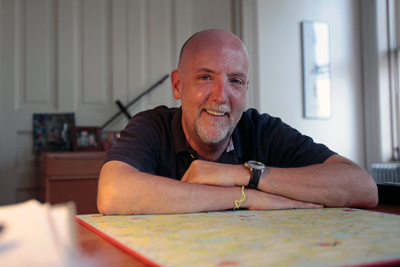
description
Tangier Island – photo credit – Andrew Moore for the NY Times

It is a community unlike any in America. Here live people so isolated for so long that they have their own style of speech, a singsong brogue of old words and phrases, twisted vowels, odd rhythms. Its virtually amphibious men follow a calendar set by the Chesapeake Bay blue crab, and they catch more of the prized delicacy than anyone else. It is a near-theocracy of old-school Christians who brook no trade in alcohol, and kept a major movie from filming in their midst over scenes of sex and beer. And not least, this is one big, extended family: All but a few islanders can trace their lineage to a single man.

For 240 years they’ve occupied a speck of mud and marsh that nowhere reaches more than five feet above the tide, seldom tops three, and most often fails to clear one. Now it is washing ever faster into a bay on the rise.

description
David Schulte, from the Army Corps of Engineers, on the beach in what’s left of the Tangier region called Uppards – image from the NY Times – photo by Andrew Moore

Earl Swift was a reporter for the Virginia Pilot when he got his first briny taste of Tangier island in 1999. He wrote several pieces about this little-known place, that was not only isolated (as isolated as one can be only twelve miles from the mainland), but facing considerable long-term challenges. Tangier had been used by Native Americans for hunting and fishing. It was first mapped in 1608 by one John Smith (you may have heard of him) and not regularly occupied, by Westerners anyway, until 1686, when the Royal Marines built Fort Albion there. It is expected to be claimed by the bay by the mid/late 21st century. It will be rendered uninhabitable long before that. Sparked by a significant item from Scientific Reports in 2015, Swift’s interest was rekindled and he opted to take a closer, deeper look.

…little Tangier is important in one respect. As the Scientific Reports article concluded, it’s likely to be the first to go. That experience—and the uncomfortable questions it forces the country to confront—will inform what the rest of us on and near coasts can expect in the decades to come. What makes a community worth saving? Will its size alone prompt the nation to fight for its survival—or are other, less tangible factors as important? Which such factors count the most? And if size is the chief consideration, what’s the cutoff, the minimum population, that’s worth rescue? What, in short, is important to us?
And there’s the matter of the Chesapeake Bay blue crab: Without Tangier, big-city restaurants will be serving a lot less softshell, and many more will have to substitute imported crabmeat for the genuine article in their crabcakes.

description
Earl Swift – image from the University of Missouri – Saint Louis

For some the potential demise of Tangier is a crying shame, the loss of a culture that has grown its own ways and language, a real community of real people. Not exactly a lost Stone Age Bornean tribe in their differences from the rest of us, but with enough uniqueness to mark some lines between here and there. For others, the loss of Tangier would be just another manifestation of the ongoing global warming that is raising sea levels and making much of the planet hotter, and much of our weather harsher. The question posed by this book is whether the island is worth saving, given that saving it will entail a considerable public investment.

description
A backyard of a home on Tangier Island gives way to marsh, a trend affecting more and more homes, as erosion, land subsidence and sea level rise afflict the island. Photo taken on Saturday, July 1, 2017 – image and text from The Virginian-Pilot – by Steve Earley

To inform our answers Earl Swift spent considerable time on the island getting to know its residents, learn the local culture, patois, values, personalities, values, beliefs, and concerns. His more deskbound research offers us both a history of the place and a look at the climatic and geological conditions that seem certain to doom Tangier to a watery grave. The value of the island, and related islands is not just the human history and culture that is at risk. There are natural features that impact the survival not only of local avian life, but the underwater fauna and flora that support a wide range of species, including the blue crab and oyster. There is value to sustaining existing environments and species, for environmental, aesthetic, and commercial reasons. If (when) this island disappears, how will its loss affect the Chesapeake Bay blue crabs that fill so many bellies? How will that loss affect the men and women who bring this renewable resource to our tables? If the potential crab harvest is severely reduced there will be secondary impact, as the shutting down of a significant economic force sends waves through the adjacent economies. What about, for instance, the truckers who deliver crabs and oysters from the Tangier watermen to the rest of the nation, the shops and restaurants that depend on them for customers and product?

description
The Amanda Lee, a typical Tangier workboat – image from OutsideOnLine.com – photo credit Matt Eich

In reading Chesapeake Requiem, you will pick up some terminology, will learn to differentiate a jimmy from a sook from a peeler, and appreciate the significance of a sponge on a crab. What might a progger be, or a come-here? What is a doubler, and what are the differences between jumbos, primes, hotels, and mediums, and what is a sugar toad?

It is also a place where, when a couple learned that their adopted Asian children had been taken from their birth parents illegally, they gave the kids the chance to meet their biological parents, and choose where to live.

description
Image from The Virginia-Pilot

It is a place where an overzealous cop shot a kid for violating a blue law when he was buying his mother milk on a Sunday. It is also a place where someone later shot dead the cop who had been convicted of a crime for that action, but who had been subsequently pardoned. No one will say who. It is a place where being a cop is a considerable challenge when everyone who calls in a complaint is a friend or relative and every one they are calling about is a friend or relative.

It is a place where, when a pastor, who was deemed insufficiently conservative left the Methodist church and started his own parish, he was vandalized by locals. Outside intervention was needed to make the attacks stop. And when the national Methodist Church expressed support for Palestinians wanting their own state, member of the local Methodist church rebelled, creating a schism.

description
From New Yorker article – photo by Gorden Campbell

It is a place where, when one of their most respected captains went down in a stormy sea, fifty boats launched into awful conditions, Dunkirk–like, to try to rescue him. It is also a place where flinty boat owners sometimes skimped on known needed repairs or safety equipment to their own peril, and the endangerment of those seeking to come to their aid.

It is a place where a clothing factory that employed mostly women was burned to the ground when the local men were put off by the independence this new employment provided to the island women. It is a place where the vast majority of land-based jobs are held by women, and the vast majority of water-based jobs are held by men.

It is a place where plans to build a seawall to protect the island keep getting buried under years of studies, funding denials at federal, state and local levels, and presidential impediments.

description
Wind and waves have ravaged Tangier, including the island’s public beach, shown here – image from The Virginia-Pilot – photo by Steve Eearley

It is a place that welcomes newcomers guardedly, and has benefited mightily from some of the advances those invasive species brought with them. But it is a place that becomes toxic and shunning when those outsiders do not fully accept all the local norms.

As individuals, the islanders are fiercely independent and self-sufficient—modern-day cowboys, or so they like to think. As a group, however, they show precious little initiative.

It is a place where a man called Ooker knows the local ospreys by name, and feeds them, where feral cats abound, where if you have seen a squirrel on the island, it is really the squirrel, not a squirrel. It is a place where a respect for the land is not always obvious.

…objectively speaking, islanders were poor stewards of their island and its waters. The marshes were studded with their discarded kitchen appliances, bicycles. And outboard motors. Litter made eyesores of the ridges. Watermen routinely threw trash, including motor oil, overboard; the harbor’s shallows had acquired a sharp-smelling and colorful sheen. And Tangiermen had nothing but enmity for environmentalists, who warned that the bay’s blue crab population was overfished, teetering on collapse, and would rebound only with tighter regulation of the commercial harvest.

description
Cameron Evans, 17, looks for artifacts from Canaan, one of the communities that once existed on Uppards. This stretch of shoreline, about a 10-minute boat ride from tangier Island’s harbor, has been receding at a rate of 15 feet or more a year recently – image from The Virgina-Pilot – photo by Steve Earley – Friday, June 30, 2017

It is a place that has survived an invasion of parasites that almost wiped out the oyster crop entirely, a place where limits on crab takes were routinely ignored, forcing the state to intervene to keep the resource from being wiped out.

It is a book that generates few gripes. I recommend that if you are poring through this on or near a digital device, you keep a window open with a map of the islands. It makes it much easier to track where things are while reading. Of course, the full, hardcover edition may offer more visual aids than did the ARE I read for this review, so take that concern with a grain of sea salt. At 380 pps it felt long, but not terribly so. I did think, though, that at times there might have been too much local culture. That made it seem a bit longer. But not much else. Swift is a gifted writer, with a smooth style, a keen eye for detail, and a very useful ability to get up close with people he started out hardly knowing.

description
An old deadrise workboat sits in a marsh at Tangier island. The island’s three ridges, where people live, are not much more than 4 feet above sea level – image and caption from The Virginia-Pilot – photo by Steve Earley – taken July 1, 2017

You cannot unthrow a stone into a pond. The ripples from impact move only outward. The impact that will occur from the submergence of Tangier can be planned for, but once effected, cannot be undone. It can be argued that a place that voted overwhelmingly for a known climate-change-denier for president will get what it deserves when that very climate change, with the assistance of a long—term geologic event that is making the island sink, makes their America wet again. It can be argued that a place that relies so much on religion, to the point of seriously blurring the line between church and state, should rely on prayer to save their sorry asses, and leave the rest of us out of it. But it can also be argued that these people are still people, are still Americans, that they were, for the most part, born and/or raised on Tangier, and have as much right as any other Americans to have their countrymen come to their aid when events beyond the control of Tangier residents (whatever their complicity) endanger their homes. It can be argued that in a world of increasing homogenization of culture, retaining the differences we have (within reason, or course. The KKK really should be done in by a rising tide of dark and stormy water) there is absolute merit in preserving unique cultures.

description
An empty lot on Tangier Island shows just how high the local water table has risen – image from the NY Times – photo by Andrew Moore

Wherever you land on such considerations, know that the question will be raised again and again as rising seas endanger more and more islands and coastal communities, both small and large. In order to get a better grip on the subject, it would help to gain some understanding of exactly what is at stake. Earl Swift has done the legwork for us on this first potential American victim, offering a long and close look at a fading place, providing historical and scientific perspective, but focusing primarily on the human face of Tangier Island. Climb aboard and smell the salt air. Try not to slip on the wet deck. Enjoy the tastiest blue crab to be had on earth, and give a thought to whether or not Tangier should be a place from which refugees flee, or for which a major, multi-billion-dollar publicly funded protective effort is warranted. That decision needs to be made by people, not left solely to the vagaries of a rising sea.

PS – It does bear mentioning that in 2013, when it was time for a new cleric to take over Tangier’s Methodist parish, the person selected for the job was one Pastor Flood.

Review first posted – August 10, 2018

Publication date
——August 7, 2018 – hardcover
——February 29, 2020 – trade paperback

This review is cross-posted on Goodreads. Stop by and say Hi!

=======================================EXTRA STUFF

Links to the author’s personal, Twitter and FB pages

Earl Swift reads from the book – from Virginia Humanities – with Q&A – 35 minutes

Articles
—– June 8, 2018 – New Yorker – Tangier, the Sinking Island in the Chesapeake – By Carolyn Kormann
—– August 3, 2017 – The Virginian-Pilot – As waves unearth old graves on the island, Tangier’s past could be a glimpse into its future – by Dave Mayfield
—–July 6, 2016 – NY Times – Should the United States Save Tangier Island from Oblivion
—–December 10, 2015 – Nature.com – Climate Change and the Evolution and Fate of the Tangier Islands of Chesapeake Bay, USA – by David M. Schulte, Karin M. Dridge & Mark H. Hudgins – Scientific Reports volume 5, Article number: 17890 (2015) – This is the report that sparked Swift into action
—–February 12, 2019 – Smithsonian – Checking in on the Health and Vigor of the Chesapeake Bay – by Doug Herman – a Smithsonian geographer checks out the health of the bay

description
Sticks driven into the shallow bottom hold nets in a funnel shape that guides fish into heart-shaped net pockets. This is the same technology used by Indians, who began teaching the Europeans how to do it as early as 1608. (Doug Herman) – from above article

Articles by Earl Swift
—–June 20, 2018 – The Incredible True Story of the Henrietta C. – by Earl Swift – an expanded version of the most exciting chapter from the book.
—–unrelated to Tangier – September 2, 2016 – OutsideOnLine – Murder on the Appalachian Trail

The Harper Book Queen included a look at this book in her TBR Tuesdays FB live broadcast from 8/21/18 – at 24:35

Leave a comment

Filed under American history, History, Non-fiction, Science and Nature, Trump