Tag Archives: books

Artificial by Amy Kurzweil

book cover

What makes a person the same person over time? Is it our consciousness, the what-it’s-like to be us? Is consciousness like a light that’s either on or off?

What remains of a person once they’ve died? It depends on what we choose to keep.

Amy Kurzweil is a long-time cartoonist for The New Yorker. If the name sounds a bit familiar, but you aren’t a reader of that magazine, it may be because her father is Ray Kurzweil. He is a genius of wide renown. He invented a way for computers to process text in almost any font, a major advance in making optical character recognition (OCR) a useful, and ubiquitous tool. He also developed early electronic instruments. As a teenager he wrote software that wrote music in the style of classical greats. No gray cells left behind there. He happened to be very interested in Artificial Intelligence (AI). It helps to have a specific project in mind when trying to develop new applications and ideas. Ray had one. His father, Fred, had died when he was a young man. Ray wanted to make an AI father, a Fred ChatBot, or Fredbot, to regain at least some of the time he had never had with his dad.

description
Amy Kurzweil – Image from NPR – shot by Melissa Leshnov

Fred was a concert pianist and conductor in Vienna in the 1920s and 1930s. A wealthy American woman was so impressed with him that she told him that if he ever wanted to come to the USA, she would help. The Nazification of Austria made the need to leave urgent in 1938, so Fred fled with his wife, Hannah. (He had actually been Fritz in Austria, becoming Fred in the states.) He eventually found work, teaching music.

Artificial: A Love Story is a physically hefty art book, a tale told in drawings and text. Amy traces in pictures her father’s effort to reconstruct as much of his father’s patterns as possible. To aid in the effort there was a storage facility with vast amounts of material from his life both in Austria and in America. She joins into the enterprise of transcribing much of the handwritten material, then reading it into recordings which are used to teach/train the AI software. It is a years-long process, which is fascinating in its own right. She also draws copies of many of the documents she finds for use in the book.
description
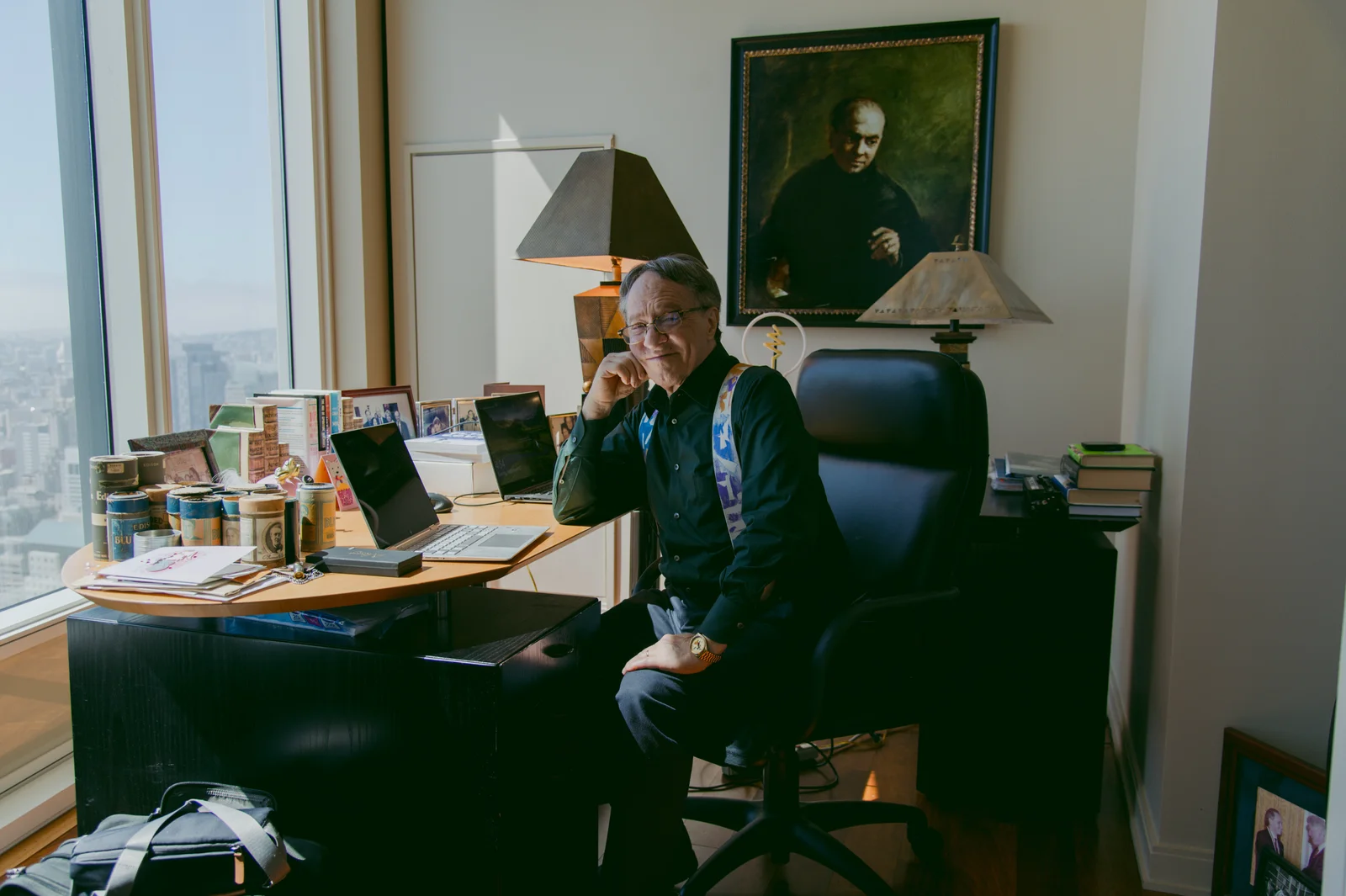
Ray Kurzweil with a portrait of his father – image from The NPR interview – Shot by Melisssa Leshnov

But there is much more going on in this book than interesting, personalized tech. First, there is the element of historical preservation.

I always understood my father’s desire to resurrect his father’s identity as being connected to two different kinds of trauma. One is the loss of his father at a young age in a common but tragic scenario, with heart disease. The other trauma is this loss of a whole culture. Jewish life in Vienna was incredibly vibrant. Literally overnight it was lost. The suddenness of that loss was profound, and it took me a while to appreciate that. My great-aunt Dorit, who died this past year at 98, said they were following all the arbitrary protocols of the Nazis to save all this documentation. Saving documentation is an inheritance in my family that is a response to that traumatic circumstance. – from the PW interview

Kurzweil looks at three generations of creativity, (Fritz was a top-tier musician. His wife, Hannah, was an artist. Ray was also a musician, but mostly a tech genius. Amy is a cartoonist and a writer.) using Ray’s Fredbot project as the central pillar around which to organize an ongoing discussion of concepts. In doing so, she offers up not merely the work of the project, but her personal experiences, showing clear commonalities between herself and her never-met grandfather. This makes for a very satisfying read. Are the similarities across generations, this stream of creativity, the impact not just of DNA, but of lived experience? Nature or nurture, maybe the realization of potential brought to flower by the influence of environment whether external (living in a place that values what one has to offer) or internal (families nurturing favored traits)?
description
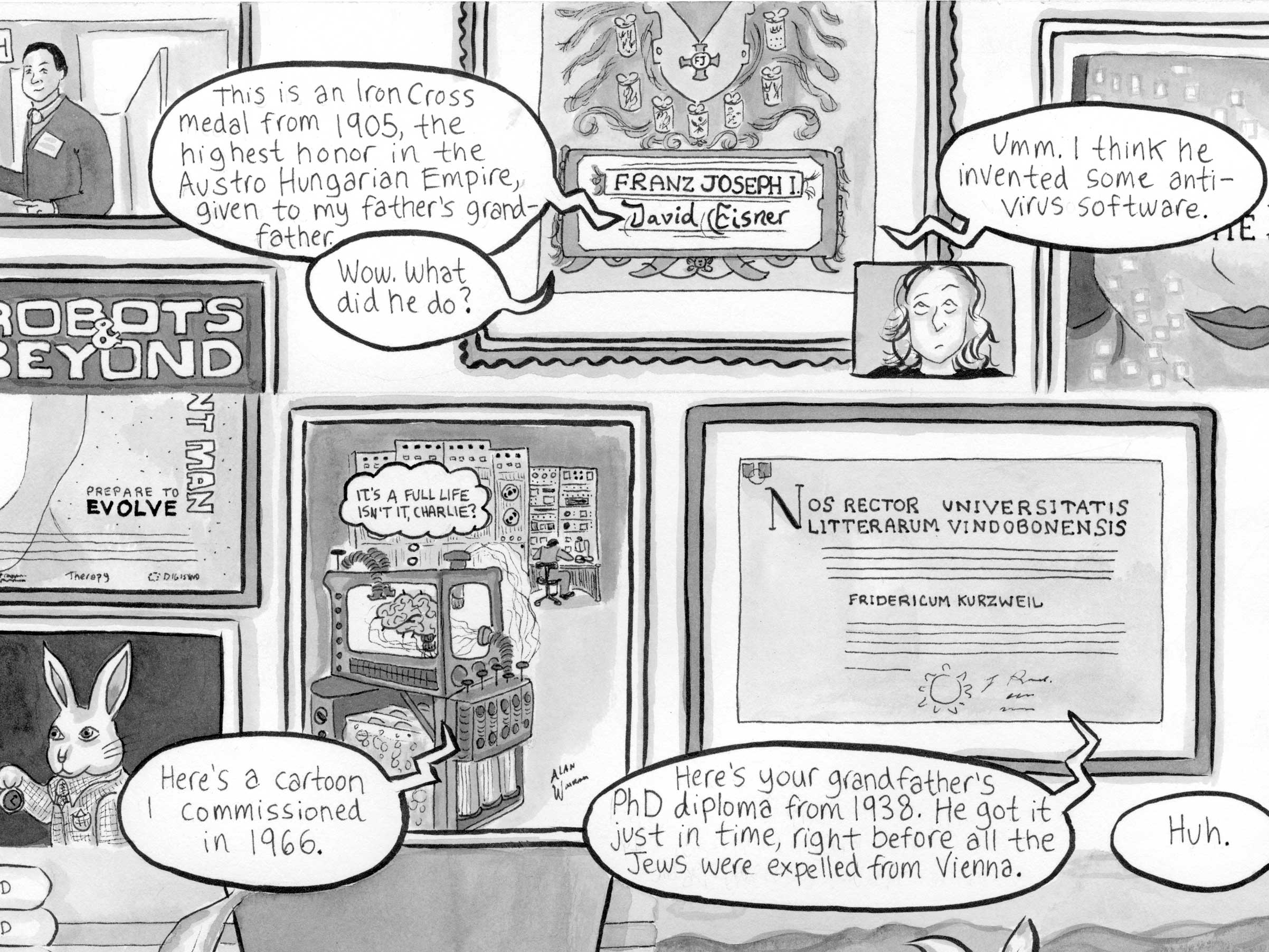
Image from the book – posted on The American Academy in Berlin site

One could ask, “what makes us what are?” The book opens with a conversation about the meaning of life. But life is surely less determinative, less hard-edge defined than that. A better question might be what were the historical factors and personal choices that contributed to the evolution of who we have become?
description
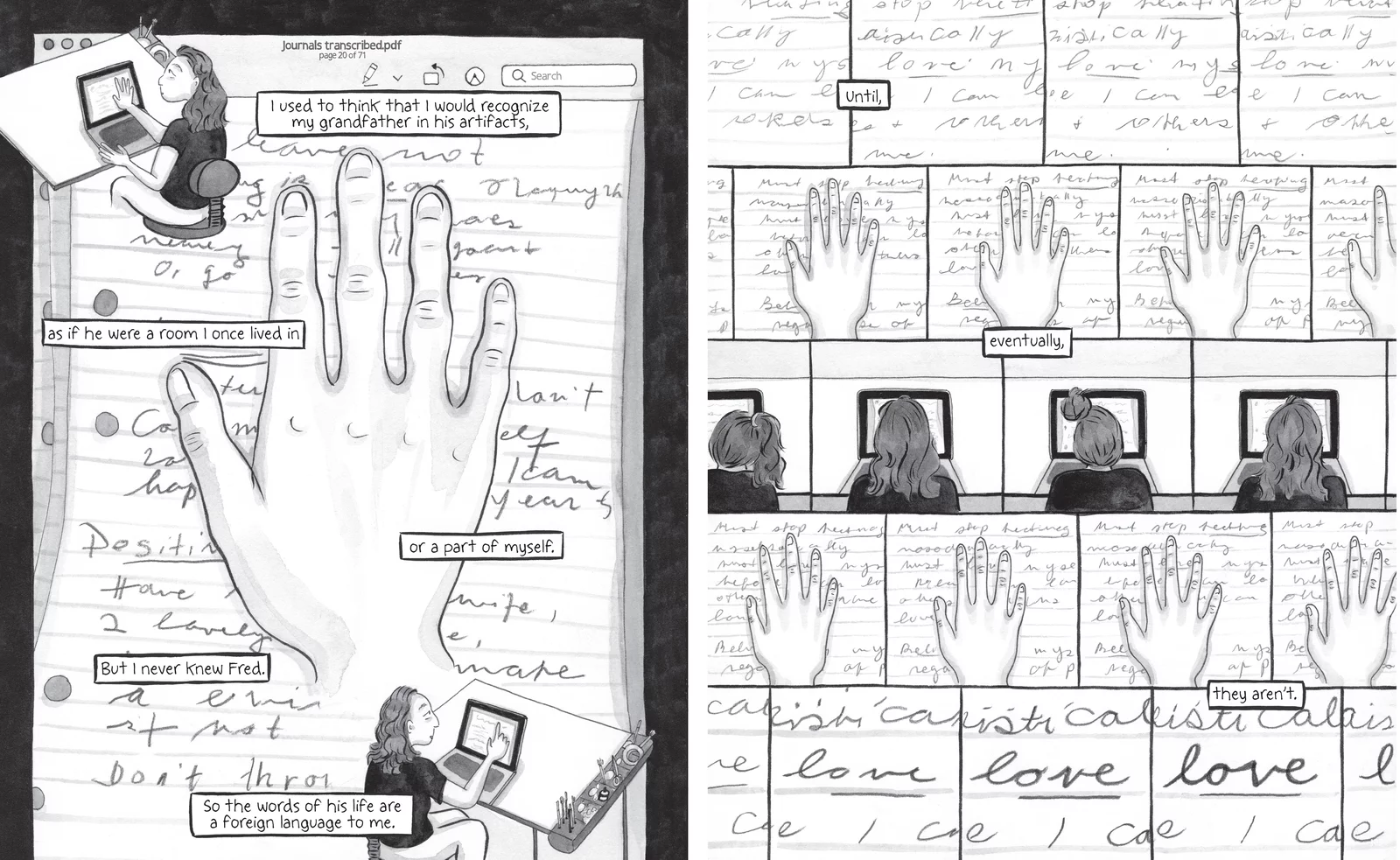
Image from the book – it was posted in the NPR interview

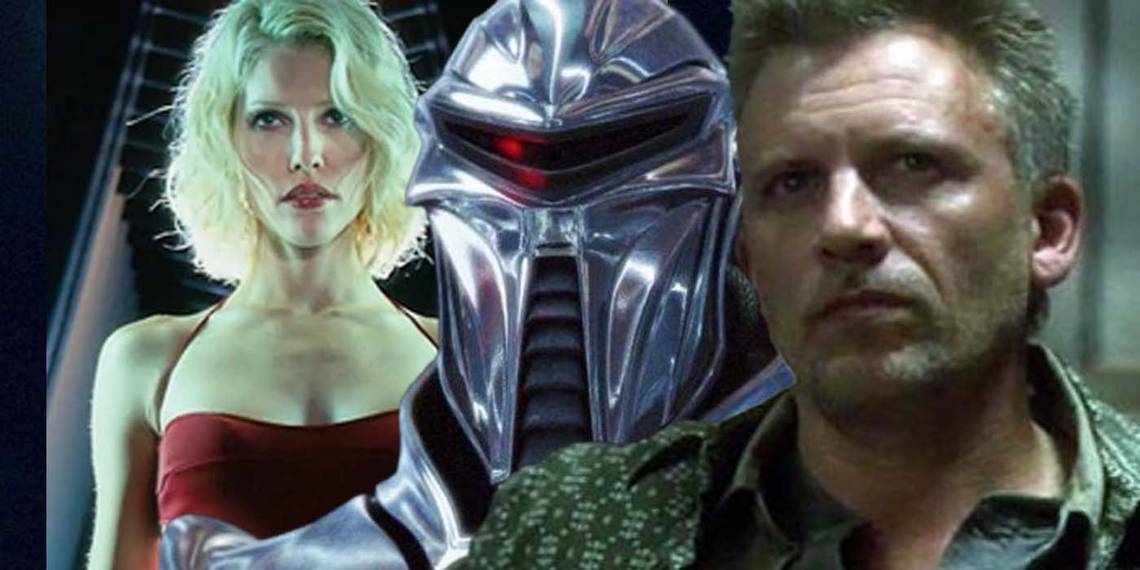
Existential questions abound, which makes this a brain-candy read of the first order. Kurzweil looks at issues around AI consciousness. Can artificial consciousness approach humanity without a body? What if we give an AI a body, with sensations? Ray thinks that we are mostly comprised of patterns. What if those patterns could be preserved, maybe popped into a new carrier. It definitely gets us into Battlestar Galactica territory. How would people be any different from Cylons then? Is there really a difference? Would that signal eternal life? Would we be gods to our creations? If we make an AI consciousness will it be to know, love, and serve us? The rest of that catechistic dictat adds that it is also to be happy with him in heaven forever. I am not so certain we want our AIs remaining with us throughout eternity. As with beloved pets, sometimes we need a break. Are we robots for God? Ray thinks such endless replication is possible, BTW. Kurzweil uses the image of Pinocchio throughout to illustrate questions of personhood, with wanting to live, then wanting to live forever.
description
Every Battlestar Cylon model explained – image from ScreenRant

Persistence of self is a thread here. As noted in the introductory quotes, Kurzweil thinks about whether a person is the same person before and after going through some change. How much change is needed before it crosses some line? Am I the same person I was before I read this book? My skin and bones are older. But they are the same skin and bones. However, I have new thoughts in my head. Does having different thoughts change who I fundamentally am? Where does learning leave off and transition take over? Where does that self go when we die? Can it be reconstructed, if only as a simulacrum? How about experiences? Once experienced, where do those experiences go? These sorts of mental gymnastics are certainly not everyone’s cuppa, but I found this element extremely stimulating.

Kurzweil remains grounded in her personal experience, feelings, and concerns. The book has intellectual and philosophical heft, and concerns itself with far-end technological concerns, but it remains, at heart, a very human story.

As one might expect from an established cartoon artist who has generated more smiles than the Joker’s makeup artist, there are plenty of moments of levity here. Artificial is not a yuck-fest, but a serious story with some comic relief. It is a book that will make you laugh, smile, and feel for the people depicted in its pages. Amy Kurzweil has written a powerful, smart, thought-provoking family tale. There is nothing artificial about that.

I used to wonder if I could wake up into a different self. For all I knew, it could have happened every morning. A new self would have a new set of memories.

Review posted – 01/12/24

Publication date – 10/17/23

I received a hard copy of Artificial: A Love Story from Catapult in return for a fair review.

This review is cross-posted on my site, Goodreads. Stop by and say Hi!

=======================================EXTRA STUFF

Links to the author’s personal, FB, Instagram, and Twitter pages

Profile – from Catapult

AMY KURZWEIL is a New Yorker cartoonist and the author of Flying Couch: A Graphic Memoir. She was a 2021 Berlin Prize Fellow with the American Academy in Berlin, a 2019 Shearing Fellow with the Black Mountain Institute, and has received fellowships from MacDowell, Djerassi, and elsewhere.

She has been nominated for a Reuben Award and an Ignatz Award for “Technofeelia,” her four part series with The Believer Magazine. Her writing, comics, and cartoons have also been published in The Verge, The New York Times Book Review, Longreads, Literary Hub, WIREDand many other places. Kurzweil has taught widely for over a decade. See her website (amykurzweil.com) to take a class with her.

Interviews
—–NPR – Using AI, cartoonist Amy Kurzweil connects with deceased grandfather in ‘Artificial’ by Chloe Veltman
—–Publishers Weekly – Reincarnation: PW Talks with Amy Kurzweil by Cheryl Klein
—–PC Magazine – How Ray Kurzweil and His Daughter Brought A Relative Back From The Dead By Emily Dreibelbis
——LitHub – Amy Kurzweil on the Open Questions of the Future by Christopher Hermelin

Songs/Music
—–The Jefferson Airplane – White Rabbit– referenced in Chapter 6

Items of Interest from the author
—–Artificial: A Love Story promo vid
—–The New Yorker – excerpt
—–New Yorker – A List of Amy Kurzweil’s pieces for the magazine

Items of Interest
—–Ray Kurzweil on I’ve got a Secret
—–A trailer for Transcendant Man, a documentary about Ray Kurzweil
—–WeBlogTheWorld – Amy interviews Ray in a Fireside Chat at NASA – sound is poor. You will need to ramp up the volume to hear – video – 23:07
—–Wiki on Battlestar Galactica

Leave a comment

Filed under AI, American history, Artificial Intelligence, Bio/Autobio/Memoir, biography, computers, History, Non-fiction

Golden Gate by Amy Chua

book cover

“Evil is everywhere. Where you least expect it. It can seep out of the radio. Or a lobster salad.”
“Oh, Issy—why do you say that?”
“Because it talks to me.”
“What talks to you?”
“Evil.”
“Iris talks to you, and evil talks to you?”
“Yes.”
“Are they the same?”

Part of me wanted to shut her up—if there’s one thing I couldn’t stand, it was a rich girl who felt unlucky in life. But another part knew that what she was saying was factually true. Her family was a train wreck, almost as bad as my mine except rich. Meanwhile, a third part of me couldn’t help noticing her long lashes and her lips—she had what they call a rosebud mouth, a perfect version of it. “I may have misjudged you, miss. If I did, I’m sorry.”
“Don’t soften on me,” she said.
“If it was a hundred in the shade, I wouldn’t soften on you, miss.”
“Good. Because I’m bad, Detective. I do terrible things. And if you soften on me, I’ll do them to you.”

There are six primary (fictional) females driving the story in The Golden Gate, with Detective Al Sullivan functioning as the hub to which they all connect and around whom they all spin. There might have been a seventh, but Iris Stafford plunged down a laundry chute in 1930 at age seven, under mysterious circumstances, and appears now mostly in memories, dark visions, and dreams. Her sister, Isabella, all grown up in 1944, is a knockout, as was their mother, Sadie. The Stafford girls have two first cousins. Cassie Bainbridge is an expert hunter, (think Artemis) and a frightening wonder to behold when butchering large game. Nicole is fascinated by the far left, maybe dangerously so. Then there is Genevieve Bainbridge, grandmother to Iris and Isabella, Cassie and Nicole, mother to Sadie and John (who does not much figure in any of this.)

description
Professor Amy Chua – image from AboveTheLaw.com

Genevieve is 62 when we meet her, through a deposition she is writing for the DA. There are eleven parts to this document, sub-chapters, spread throughout the book. It is through these that we learn of the events circa and before 1930. But take her words with a shaker of salt. This Bainbridge is an unreliable narrator. She is faced with a very tough situation. The DA has made clear his belief that one of her three granddaughters is guilty of murder, and he is squeezing her to finger the guilty party, lest all three suffer consequences. The events of the novel take place primarily in two times, 1930, when Iris dies, and 1944, the today of the tale.

Detective Sullivan is having drinks with a young woman in the hotel bar, when he is summoned by hotel management, about a report of gunshots in one of the rooms. Walter Wilkinson, an industrialist running for president, has acquired a new bit of decoration in his room, a bullet hole above his bed. He offers a tale about a Russian Communist assassin, is relocated to another room, and goes about his night, as does Sullivan. Until a call comes in several hours later. The renowned Claremont Hotel in Berkeley, CA, need some assistance dealing with a newly deceased guest. Mr. Wilkinson had clearly had a pretty tough night.

A crew of detectives is called in. Guests, employees and everyone in the vicinity are identified and interviewed, and clues begin to emerge. Timelines and whereabouts are established. Who saw whom emerge from what room, or walk down which hall, at what time, dressed how, gender, ethnicity, age, and so on. The usual procedural digging offers up a list of folks who may have had it in for WW, for a wide range of issues, some personal, some professional.

Complications appear like shadows at dusk. Was it the same shooter both times? And what about the unusual way in which his body was left? Witnesses can be unreliable. You cannot believe everything people tell you. Can you believe anything? In fact, there is a sufficient number of the questionably balanced in this novel that the place could be known as much for its head cases as for its headlands. The constant lying and misdirection offer up enough twists to make this read feel like a very tasty bowl of rotini. And it is indeed very tasty.

There are two levels at play, the payload, a take on the time and place, and the mystery…well, mysteries. We are eager to learn not only what happened to candidate Wilkinson including wondering if he had it coming) but to Iris Stafford. Did she really fall down a laundry chute to her death? Or was there some dark force at play responsible for killing a seven-year-old child? Chua does a great job of keeping us guessing, and there is plenty to guess about. I figured out one element about halfway through, but there were many others I did not see coming at all. There are surprises aplenty.

So, who killed WW (who is loosely based on Wendell Wilkie)? Who was that cowled person seen leaving the scene of the crime? Some people were seen entering and leaving the victim’s room, including an Asian woman and someone answering to the description of the three cousins. Interestingly, Wilkinson had a connection with Madame Chiang Kai-shek.

Speaking of which, Chua peppers her novel with actual historical figures. The First Lady of China did, in fact, live in Berkeley during the period of the novel. Her reason for being there is not known. Chua offers one possible explanation. August Vollmer is a name you are unlikely to know, but he was a seminal figure in the evolution of policing. He served as police chief in Berkeley for a time, and is lightly incorporated into the tale, as Al’s mentor, among other things.

Place is of paramount importance in good detective tales, and Chua further satisfies the historical need by telling us about the construction of the Golden Gate Bridge, offering some of her characters a role in its opening. She also writes about the boom-town growth of the area during World War II, when it replaced Pearl Harbor as the premier shipbuilding location in the states, producing an astounding number of vessels for the war, and in so doing, attracting workers from around the country. Some were more welcome than others, as one might expect. There are union issues, housing shortages, poverty, racism, political intrigue, sexual shenanigans, tong gangs, and appearances by two noteworthy ahead-of-their-time accomplished female professionals.

Bigotry was shameless and rampant, with Mexicans forcibly “repatriated” by the hundreds of thousands, the Chinese Exclusion Act still in place, and hostile derision openly directed at “Okies,” a term then referring to poor white migrants from the Dust Bowl. In the 1940s came the Japanese internment, when full-fledged American citizens were literally caged off. For the first time, Blacks came to the Bay Area in significant numbers, pouring in from the American South in search of jobs, only to find themselves subjected to vicious prejudice, excluded by labor unions, denied entry into restaurants, theaters and hotels, and barred from living in white neighborhoods. Throughout this period, numerous other ethnic groups—such as Italians, Greeks, Poles, Slavs, Hungarians, and Jews—occupied a subordinate position too, not yet considered fully white. – from the Author’s Note

Chua builds this into her characters.

I chose to make Detective Sullivan a light-skinned mixed-race man in part because Berkeley’s police force in the 1940s included almost no women or minorities, but also because I wanted to explore the phenomenon of racial “passing.” Sullivan is part Mexican, part Nebraskan, and part Jewish on his Mexican side…But Sullivan can pass as white and chooses to go by Al Sullivan rather than Alejo Gutiérrez for reasons he has not fully admitted to himself. – from the Author’s Note

In fact, there is enough passing here to make one wonder if Berkeley streets are constructed of all left lanes. In addition to Al, noted above, Japanese characters pass for Chinese. Gay characters pass for straight. One does what one must to survive in a hostile environment. Pathological liars pass for honest citizens. Crazy people pass for sane, and rich kids pass for revolutionaries. But another way to look at some of this is as reinvention. Sometimes you need to change how you present yourself to the world, change how the world sees you, in order to become your truest self.

Al is a good guy, conflicted about his decision to conceal his heritage. In addition to his detective work, Al must handle a family problem. His half-sister does not function well in the world, has issues with substances and decision-making. Somehow, she produced an amazing kid. Miriam is eleven going on thirty, from having to cope with so much. She could use some more schooling, but is uber bright, and she loves her uncle Al, who is put into the position of having to take care of her during of her mom’s absences. The love between these two glows like a lighthouse beacon glaring through thick bay fog. Some of the most wonderful scenes in the book are those between Al and Miriam.

While it is not a large element, there is also occasional humor.

I hate to say it of a fellow Berkeley officer, but Dicky O’Gar was so thick he couldn’t tell which way an elevator was going if you gave him two guesses.

The events take place in the Berkeley Hills, for the most part. So, near to, while not exactly one of, the ground-zeros for hard-boiled detective yarns. There is some nifty noir-ish patois, (the second quote at the top of this review offers an excellent example) but I would not call this a noir novel, per se. While there is plenty of darkness and grim reality, there is enough optimism to float it out of that sub-genre.

Gripes are few. I found the explanation of one of the deaths that occurs less than satisfying. There is a taste of a fantasy element, revolving around the continued presence in the Claremont of the late Iris Stafford. While it adds atmosphere, it suggests more than it actually delivers.

Bottom line is that The Golden Gate is a first-rate entertainment, with fun, quirky, interesting fictional supporting characters, an introduction to some actual historical people of note, an insightful look at a vibrant place in an exciting time, a primary character to care about, and mysteries to keep your gray cells sparking. What’s not to like?

I put my collar up, pulled my hat brim down, and set off through the drizzle, wondering how much I’d been played in the last seventy-two hours and by how many different women.

Review posted – 12/29/23

Publication date – 9/19/23

I received an ARE of The Golden Gate from Minotaur Books in return for a fair review. Thanks, folks, and thanks to NetGalley for facilitating an ePub as well.

This review is cross-posted on Goodreads. Stop by and say Hi!

=======================================EXTRA STUFF

Links to Chua’s personal, FB, Instagram, and Twitter pages

Profile – from Wikipedia

Amy Lynn Chua (born October 26, 1962), also known as “the Tiger Mom“, is an American corporate lawyer, legal scholar, and writer. She is the John M. Duff Jr. Professor of Law at Yale Law School with an expertise in international business transactions, law and development, ethnic conflict, and globalization.[5] She joined the Yale faculty in 2001 after teaching at Duke Law School for seven years. Prior to teaching, she was a corporate law associate at Cleary, Gottlieb, Steen & Hamilton. Chua is also known for her parenting memoir Battle Hymn of the Tiger Mother. In 2011, she was named one of Time magazine’s 100 most influential people, one of The Atlantic’s Brave Thinkers, and one of Foreign Policy‘s Global Thinkers.

The Golden Gate is her first novel.

Interviews
—–Washington Post – Amy Chua says her hard-boiled detective also is a bit of a ‘tiger mom’ By Sophia Nguyen
—–USNews – ‘Tiger Mom’ Amy Chua Writes First Novel, ‘The Golden Gate’

Item of Interest from the author
—–Macmillan – Discussion Questions

Items of Interest
—–Wiki on August Vollmer, mentioned in Chapter 3, and throughout
—–Wiki on The Mann Act – mentioned in Chapter 14.4
—–Wiki on The Golden Gate Bridge

Leave a comment

Filed under Fiction, Historical Fiction, Mystery, Noir, Reviews, Suspense

The Invisible Hour by Alice Hoffman

book cover

in every fairy tale girl who is saved is the one who rescues herself.

people in love were such fools, they made up excuses, they wound up doing as they pleased no matter how much good advice they been given.

The Invisible Hour is a twice-told tale of a mother and a daughter.

Ivy Jacobs’ Beacon Hill family did not exactly treat it as a crimson-letter day when the sixteen-year-old informed her parents that she was pregnant by a feckless Harvard sophomore. Despite her tender years, Ivy wanted to see the pregnancy through and keep the baby. Decisions and plans were made, none of them involving input from Ivy. The newborn would be put up for adoption. Ivy bails, getting as far away as she can, which turns out to be a sort-of commune in western Massachusetts.

description
Alice Hoffman – image from Penguin Random House – shot by Alyssa Peek

Mia Jacob is the daughter Ivy bore. We meet her at 15. Living in the place to which her mother had fled, The Community. More of a cult really, an authoritarian farm where the leader’s will is law. Joel Davis took Ivy in, married her soon after she’d arrived, so is Mia’s step-father. But child-rearing is communal here, so parenting is not what you or I would recognize. You will recognize the cult-leader, control-freak personality Joel wears like the headgear sported by the QAnon Shaman. Vanity is supposedly being punished, but it is accomplishment, growth, intelligence and independence that are the targets. He likes his followers unquestioning and compliant.

Ivy has stolen parenting moments over the years, so has had a hand in helping Mia find her true self, a young woman who is curious about the world, eager to learn, to investigate, to explore, to read. Discovery of her criminal reading marks her for punishment. When we meet Mia she is, as her mother was, a teen about to flee her oppressive environment.

Although we learn about and spend time with both women, it is Mia who is our primary focus. In a dark time, she considers suicide, but, fortuitously, reads a book that saves her, changing her life, giving her hope, The Scarlet Letter.

We follow her coming of age, assisted by her mother and an understanding librarian in the town where The Community sells their produce.

Her passion for Hawthorne is such that she finds in it a magical power. Alice Hoffman loves her some fairy tales, so it will come as no great shock that one fine day Mia finds herself transported back to the 19th century, and into the presence of her literary love object. Complications ensue. In those, however, we get a sense of Hawthorne, his personality, his material conditions, his family and friends, and his writing challenges. Nice looking fellah, too, to go with that oversized talent.

There is some wonderful imagery woven into the novel. The notion of invisibility is large among these. There are times in which it might be useful to go unseen, as in when one is doing something for which one might be punished, or which are simply secret. On the other hand, it is not so wonderful to be unseen in normal human interactions. Like “Yo, dude, human here. Whaddaya? Blind?” There is some literal invisibility as well.

Apples are a core element as well. There is a particular breed of apple grown in the area, which is no Eden. They seem less associated with The Fall than with a push. Joel uses leaves of that apple tree as a threat. One could certainly see his actions as serpentine. Mia even decides never to eat apples, given the associations she has for them with The Community. Howdaya like dem apples? Johnny Appleseed comes in for some attention, with plantings of his effort bearing local fruit.

The woods as a magical place gets a visit or two. Indeed, magical things go on there. Strange people and buildings appear. There is even one “Once upon a time” in the book. The Woods is where Mia goes to escape.

Much of the tension in the book centers around women taking control of their own lives. This happens in various ways. There is the usual disobedience one would expect, with the most daring taking the greatest risks. Reading figures large in this, as subservience is sustained under the lash of forced-ignorance. Reading is the gateway drug to independent thinking, and dreaming of better. Some women even learn herbal medicine, to see to their needs. The comparisons of the modern day with the repressive Puritan world depicted in The Scarlet Letter are clearly drawn. Plus ça change…

I think it’s a bad idea to write for the moment because the moment passes so quickly. The other thing about time is that what’s right and what’s good and what’s accepted suddenly becomes not. I thought about that with the way women were treated in “The Scarlet Letter,” the way that the Puritans blamed women, and they believed in original sin and that women were responsible for that because of Eve. It all changed, but then it changes back. And then it changes again. A lot of the things that women are coping with right now are not that different, really. The judgment against women. – from the Salon interview

There is a garden in town where all the plants are red. It may feel familiar to frequent readers of Hoffman.

This new book [The Invisible Hour] actually takes place in a town where I wrote a book of connecting stories about called The Red Garden, so it’s the same place. It’s just a novel that takes place in that town. – from the Salon interview

I consider myself an Alice Hoffman fan. While I have not read all her books, I have certainly read more than a couple. Any reader of her books knows that there are certain things one can expect. Among other things, there will be an engaging lead, facing difficult choices, and there will usually be bits, at least, of magic, often of a fairy tale sort. So, one cannot really gripe about a time-travel element pushing things too far, particularly when done in the service of giving us a closer look at a literary icon. My sole gripe is that I felt that the baddie was given too much magical license to pursue his dark ends.

Otherwise, despite it’s title, The Invisible Hours very much deserves to be seen. It offers not only an uplifting, engaging tale of empowerment, but an homage to one of the greats of American literature, and long-form praise of the power, the importance, the necessity of reading. I am sure we can all see the value in that.

“Q: Did you set out to write a novel so deeply rooted in women’s empowerment? How did it evolve to include time travel?”

“A: I started to think about The Scarlet Letter and how modern-day issues for women are not that foreign from issues in that time period. I’m not certain I realized when I first read Nathaniel Hawthorne’s great novel what the deeper meaning of his heroine’s situation is—she has no say over her body or her choices and yet, she does make her own choices. It’s a very brave book.
I’ve always wanted to time travel and been drawn to books about time travel. I think during the time of Covid, when I was writing this, more than ever I want it to be in another time period.”
– from A Conversation with Alice Hoffman, an appendix in the book

Review posted – 12/22/23

Publication date – 8/15/23

This review is cross-posted on my site, Goodreads. Stop by and say Hi!

=======================================EXTRA STUFF

Links to the author’s personal, Instagram and FB pages
Profile

Other Hoffman books I have reviewed:
—–1999 – Local Girls
—–2003 – Green Angel
—–2004 – Blackbird House
—–2005 – The Ice Queen
—–2011 – The Red Garden
—–2011 – The Dovekeepers
—–2017 – Faithful
—–2017 – The Rules of Magic
—–2019 – The World That We Knew

Interviews
—–Salon – “I want to believe”: Alice Hoffman is always seeking magic, practical and otherwise by Alison Stine
—–Shondaland – Alice Hoffman Talks Her Latest Novel, ‘The Invisible Hour’ by Sandra Ebejer
—–Harvard Review – An Interview with Alice Hoffman by Christina Thompson

Song
—–Agnes Obel – Brother Sparrow – relevance to the chapter title

Item of Interest from the author
—–Salon – Alice Hoffman: Five amazing tips to help you write your novel

Items of Interest
—–Wiki on Nathaniel Hawthorne
—–Wiki on Johnny Appleseed, mentioned multiple times
—–Gutenberg – full text of The Scarlet Letter
—–Good Will Hunting – Howdaya like dem apples?
—–Wiki on the QAnon Shaman

Leave a comment

Filed under Fantasy, Feminism, Fiction, Historical Fiction, Literary Fiction, Religion

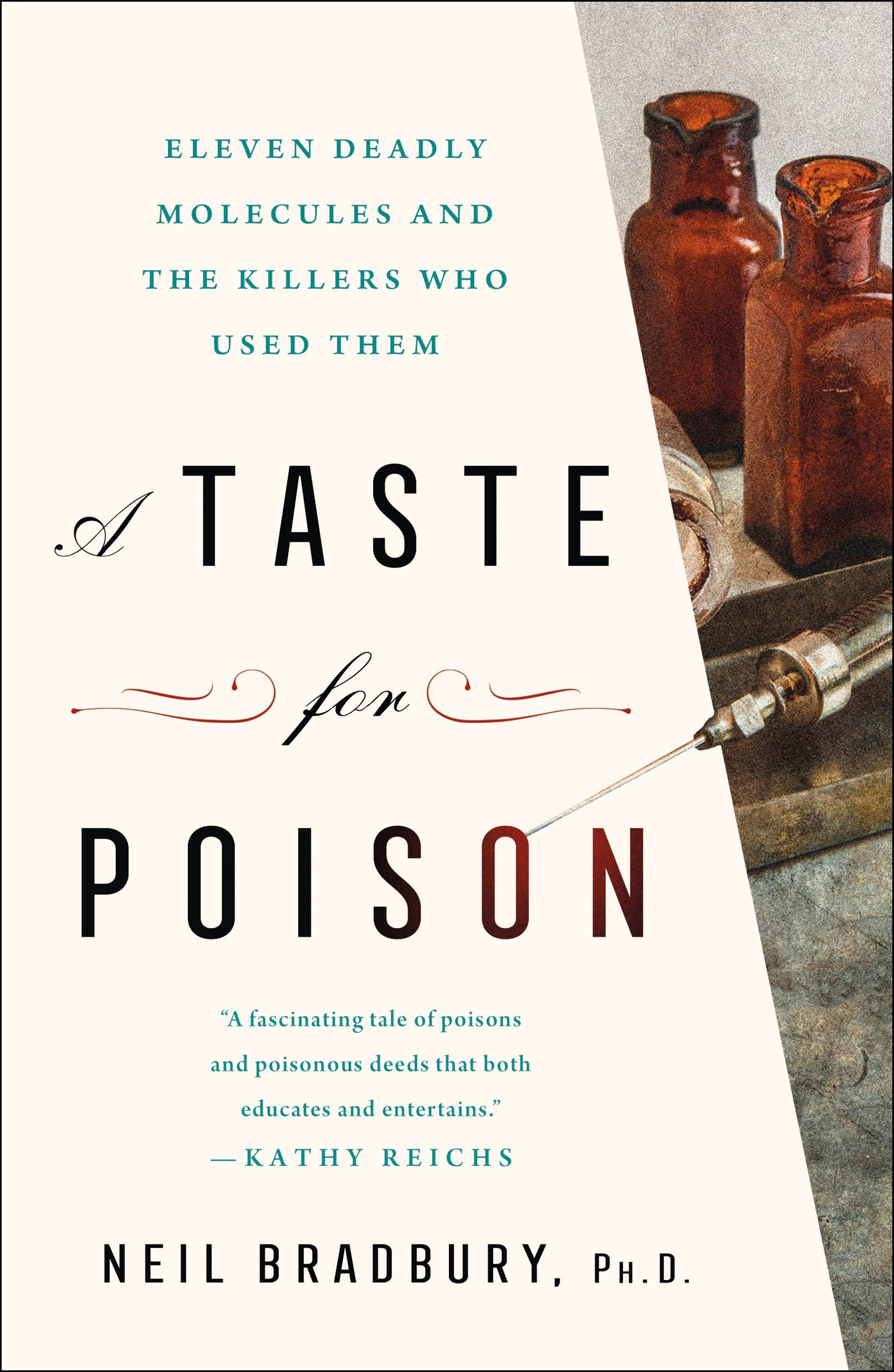
A Taste for Poison by Neil Bradbury

book cover

… a chemical is not intrinsically, good or bad, it’s just a chemical. What differs is the intent with which the chemical is used: either to preserve life – – or to take it.

Within the annals of crime, murder holds a particularly heinous position. And among the means of killing, fewer methods generate such a peculiar morbid fascination as poison. Compared with hot blooded spur of the moment, murderers, the planned and cold calculations involved in murder by poison, perfectly fit the legal term malice aforethought. Poisoning requires planning and knowledge of the victim’s habits. It requires consideration of how the poison will be administered. Some poisons can kill within minutes; others can be given slowly, over time, gradually accumulating in the body, but still leading inexorably to the victim’s death.

If you are a fan of True Crime, if you are a fan of TV procedurals, if you are a fan of murder mysteries, A Taste for Poison is a must read. You will be much better prepared to keep up with the medical examiners in all venues when you can recognize the victims’ symptoms, at least if the book or show gives you a chance to try figuring it out for yourself before the truth is revealed.

Neil Bradbury grew up fascinated by murder mysteries and poisons. He is a graduate of the University of St. Andrews in Scotland, and the University of Wales School of Medicine, with degrees in Biochemistry and Medical Biochemistry. Although he grew up in the UK, he now lives and works in Illinois, USA, where he’s a scientist, teacher and writer. He also gets to play with nasty chemicals every day (during scientific experiments of course). – from his site

description
Dr. Neil Bradbury – image from his site

He has carefully mixed his interests and profession to produce a fun, informative look at poisons through the ages. One might wonder if he wrote the book using a poison pen. I wouldn’t, but some might. He includes looks at the following: Aconite, Arsenic, Atropine, Chlorine, Cyanide, Digoxin, Insulin, Potassium, Polonium, Ricin, and Strychnine. None would qualify as pretty, although cyanide does gift its victims with a lovely ruddy complexion.

One of the primary themes of the book is that poisoning is the misapplication of healing pharma to dark purpose. Think water. Necessary for human survival, comes in many forms. These days it forms a base layer for a surface layer of every imaginable flavor, nifty literary tool too, right? But water-boarding, or tsunami? Not so much.

Bradbury goes through the medically helpful aspects of multiple poisons, then shows how they have been used to kill, who used them, on whom they were used, how the crimes were figured out and prosecuted, and what happened to the poisoners. In doing this he provides us with a history of when it became possible to diagnose (detect) each poison as a murder weapon, (of particular interest in historical mystery dramas) and details the biology of how each works its dark arts inside the human body.

Sadly, for those with a poison-based homicidal urge, the subjects of Bradbury’s reporting, for the most part, were tried and convicted. And today, in the absence of governments protecting state-sponsored poisoners, very few such crimes go unpunished.

You are unlikely to recognize the names here, at least the names of the killers, attempted killers, and victims, but as with many in the history of medicine, that is not unusual. Nevertheless, the details are here, as many crimes are examined.

Bradbury offers a fun collection of historical odds and ends, like how the telegraph, newly in service, foiled the escape of one poisoner. Or how one particular poison may have been at the root of vampire mythology, or how strychnine was used as a pick-me-up in the early 20th century, or the surprising cost of manufacturing polonium, and even a new take on some Van Goh masterpieces.

The only downside for me was that I tended to get a bit lost in the sections detailing the biological and chemical workings of these substances inside the body. I would not say they are extremely technical. I would say that I was always complete garbage at chemistry, and not a whole lot better at biology, so may have nurtured a disaffection that is unlikely to affect you the same way. There is some humor in the book, but not a whole lot.

Still, As a consumer of a considerable amount of crime-based entertainment, I was particularly drawn to this book. The how-dun-it often is as important as the who, and by detailing victim symptomology as well as poisoner and investigator methodologies, we can all get a greater appreciation for the challenges entailed. I may not have had the right chemical receptors for the scientific details, but there is plenty of intel in here that will enhance your engagement in crime shows, and teach you a bit about the history of these substances, many of which exist in common parlance. So, it may or may not be for you. I guess you will just have to pick your poison.

…in France in the late 1600s, the effectiveness of arsenic and disposing of wealthy relatives who had the temerity to remain alive, was so widespread that it gained the name Poudre de succession, or “inheritance powder.”

Review posted – 11/17/23

Publication dates
———-Hardcover – 2/1/22
———-Trade paperback – 8/15/23

I received a paperback of A Taste for Poison from Griffin in return for a fair review. I am happy to report that the tingling feeling in my hands, which began after I first began to read the book, soon abated. Thanks, folks, and thanks to NetGalley for facilitating.

This review is cross-posted on my site, Goodreads. Stop by and say Hi!

=======================================EXTRA STUFF

Links to the author’s personal and Goodreads author pages

Alas, as far as I was able to find, Bradbury’s on-line presence is slender, limited to his personal site and GR author page. Maybe laying low after having taken care of some personal rivals?

Interview
—–Murder & MayhemTalking Poisons with Dr. Neil Bradbury

Items of Interest
—–Listverse – Top 10 Remorseless Poisoners That History Almost Forgot by Radu Alexander
—–Philadelphia Inquirer –A Pennsylvania nurse is accused of killing 4 patients, injuring others with high doses of insulin by Bruce Shipkowski and Brooke Schultz, Associated Press
—–Wikipedia – List of Poisonings through history – from 399 BC to 2021 – a nifty list

Leave a comment

Filed under History, Non-fiction, Science and Nature, True crime

What Feasts at Night (Sworn Soldier, #2) by T. Kingfisher

book cover

I had the unpleasant feeling that I was riding straight down a giant throat.

…the woods of Gallacia are as deep and dark as God’s sorrow.

T. Kingfisher, nom de plume of Ursula Vernon, introduced Alex Easton, the Sworn Soldier of the series title, in her 2022 novella, What Moves the Dead. Easton is a native of the fictional nation of Gallacia, a place with its own language, nasty weather, and plenty of reasons to stay away. Alex travels with Angus, erstwhile batman from military days, and overall assistant these days. It is the late 19th century. The pair managed to survive the creepy challenges offered in the first book in the series, a particularly original and alarming take on Poes’s, The Fall of the House of Usher. They are looking forward to a holiday at Easton’s hunting lodge. But they do have a penchant for finding the unusual and unpleasant.

description
T. Kingfisher, aka Ursula Vernon – image from Edubilla.com

Easton invited Eugenia Potter to be a guest at the lodge. Potter is Beatrix’s aunt, a personage from the prior book, and a love interest for Angus. Easton is hoping that the lodge has been well maintained, as a local had been hired to see to that, but had proven unreachable. Is the place ready? Is it even standing? Who knows?

The focal point on the spectral scale in this volume is an obscure regional spook. According to wiki, a moroi is a phantom of a dead person which leaves the grave to draw energy from the living, so, not a paying guest. Vacation plans are foiled, in fact, replaced with mortal perils

The initial volume in the series introduced Alex Easton as a person with female physical attributes who is established in a traditionally male role. The author even takes on pronoun-ing in the created culture that incorporates such a person into the extant culture. It was an interesting element in the first volume, but is only lightly addressed here.

Kingfisher has fun setting the creepy stage with grim descriptions of Gallacia, and the particularly dreary part of it in which Alex and company find themselves. For examples, see the two quotes at the top of this review. But she also peppers the tale with humor.

…I recognized the smell of livrit, our beloved national paint thinner, made from lichen, cloudberries, and spite. No Gallacian soldier would be without a bottle, in case we ever need to remember what we’re fighting for. (Mostly the opportunity to be somewhere that has better liquor.)

The greatest city in Gallacia is fine, I suppose, but I didn’t feel the need to linger. Imagine if an architect wanted to re-create Budapest, but on a shoestring budget and without any of the convenient flat bits. While fighting wolves.

And Potter butchering the local patois is quite fun.

Alex and company try to figure out what is going on, then how to address the problem. The local woman, whom they hire to take care of the household, should come with a surgeon general’s warning.

The most interesting element in the story is the fuzzing of the lines between reality and the dreamworld. Are battles fought in an unconscious state still deadly? The struggle for self-control, for self-awareness is as significant as the physical (or is it spectral) harm that is risked, and even suffered.

But frankly, this one was a bit of a dud for me. Only occasionally scary at all. I always enjoy a bit of humor and Kingfisher offers up a fair bit here. But there seems far less richness to this book that there was to its predecessor. An enjoyable read but far from a compelling one. It has the benefit of being a short one, a novella, not a full novel, so you can inhale it in a sitting.

Kingfisher/Vernon has a third Sworn Soldier volume in the works, set in the USA, and featuring Dr. James Denton from What Moves the Dead. Hopefully the digging she has been doing for that project will yield a motherlode of fun and horror.

The silence didn’t feel peaceful. It felt thick. Like a layer of fuzz on your tongue after a hard night of drinking, which you can’t see or touch but you can damn well taste. There weren’t even any birds singing.

Review posted – 04/19/23

Publication date – 02/13/23

I received an ARE of What Feasts at Night from Tor/Nightfire in return for a fair review. Thanks, folks, and thanks to NetGalley for facilitating.

This review is cross-posted on Goodreads. Stop by and say Hi!

=======================================EXTRA STUFF

Links to Kingfisher’s personal, Goodreads, and Twitter pages

Profile – from the Fantasy Hive
T. Kingfisher is the adult fiction pseudonym of Ursula Vernon, the multi-award-winning author of Digger and Dragonbreath. She is an author and illustrator based in North Carolina who has been nominated for the Ursa Major Award, the Eisner Awards, and has won the Nebula Award for Best Short Story for “Jackalope Wives” in 2015 and the Hugo Award for Best Novelette for “The Tomato Thief” in 2017. Her debut adult horror novel, The Twisted Ones, won the 2020 Dragon Award for Best Horror Novel, and was followed by the critically acclaimed The Hollow Places.

My reviews of earlier books by Kingfisher
—–2022 – What Moves the Dead
—–2023 – Thornhedge

Items of Interest
—–Wiki on moroi
—–Stone Soup – The Mess That the Editor Fixes: What Feasts at Night by T. Kingfisher – really only so-so

Leave a comment

Filed under Fantasy, Fiction, Horror, Novella, Reviews

Things in Jars by Jess Kidd

book cover

A cloth covers the jar that Bridie took from the bookcase in the nursery, and Ruby is thankful for this. For the contents have the ability to rearrange even a dead man’s sense of reality. As with all terrible, wondrous sights, there is a jolt of shock, then a hypnotic fascination, then the uneasy queasiness, then the whole thing starts again; the desire to look and the desire never to have looked in the first place.

1860s London, the prime of the Victorian age. About fifteen years before Sherlock Holmes begins using his talents to suss truth from mystery, Bridie applies her peculiar talents to helping the police in cases of an unusual nature. A sign outside her door announces:

Mrs Devine
Domestic Investigations
Minor surgery (Esp. Boils, Warts, Extractions)
Discretion Assured

but she is known mostly for her ability to discern the cause of death, when simple observation will not suffice. She would do as well with a sign that says Investigator of the Bizarre. Her Scotland Yard contact and sometime employer is one Inspector Valentine Rose, and business is brisk.

London is awash with the freshly murdered. Bodies appear hourly, blooming in doorways with their throats cut, prone in alleyways with the head knocked in. Half-burnt in hearths and garroted in garrets, folded into trunks or bobbing about in the Thames, great bloated shoals of them.

She is called on to look into inexplicable deaths, primarily among the flotsam of society. London has been undergoing the installation of a world class sewer system, and diggings have turned up some extremely cold cases. The latest calls her to a crypt in Highgate Chapel. A mother and child have been unearthed, the child having significant bodily abnormalities. Around the same time, a dodgy-seeming doctor comes a-calling, seeking her assistance on behalf of his patron, Sir Edmund Athestan Berwick. Seems the baronet’s daughter has been kidnapped. Going to the police is not really an option. And the game is afoot. Any chance the two cases are linked?

description
Jess Kidd – image from Metro.

The purloined child, Christabel, has some peculiarities of her own.

The man, looking up, hesitates and the child bites him, a nip of surprising sharpness. He pulls his hand away in surprise and sees a line of puncture holes, small but deep…The man stands, dazed, flexing his hand. Red lines track from palm to wrist to elbow, the teeth marks turn mulberry, then black…What kind of child bites like this, like a rat? He imagines her venom—he feels it—coursing through him …A blistering poison spreads, a sudden fire burning itself out as it travels…All- the time the creature watches him, her eyes darkening—a trick of lamplight, surely!…He would scream if he could, but he can only reach out. He lies gasping like a landed fish.

Poor unfortunate soul.

description
Image from The Times

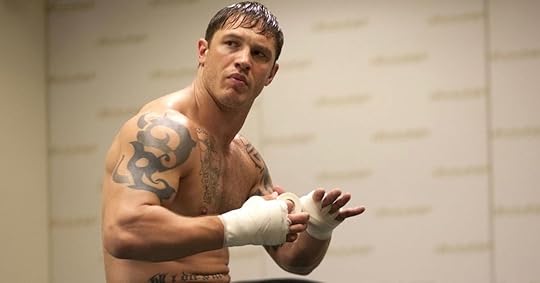
With Sherlockian insight, a talent for disguises, and lots of shoe leather, Bridie sets about following leads and examining clues trying to get to the bottom of a case that is unusually fishy. Like that later consulting detective, Bridie smokes a pipe, which is often enlivened by substances other than pure tobacco, things with names such as Mystery Caravan or Fairground Riot, concocted by Dr. Rumhold Fortitude Prudhoe, a close friend. She shares her quarters with a particularly helpful assistant, the seven-foot-tall Cora Butter, who asks more than once whether Bridie would like this or that person held upside down. The medical bag Bridie totes is her own. The other frequent companion in her investigations is a dead man. While on the job at Highgate Chapel, he first appeared to her in the attached graveyard, notable not only for his transparency, but for his indecorous attire. Ruby Doyle had been a renowned boxer in his day, and appears in shorts, shirtless, sporting a cocked top hat, an impressive handlebar moustache, muscles aplenty, and a considerable number of tattoos, with peculiarities all their own. He seems to know Bridie quite well. One of the mysteries of the book is why she does not seem to remember him, particularly as she finds him very, very attractive.

description
Tom Hardy – add a handlebar moustache, top hat, and some more tats, and Kidd sees him as Ruby

The supporting cast is a delight. Lee refers to those who work with her as Bridie’s Victorian A-team. Beyond those noted above there is a criminal circus owner with a weakness for strong women, psycho killers of both the male and female persuasion, a misshapen sniveling abettor who could have snuck out of a Dickens novel to put some time in here, an honorable street urchin, orphans, a mysterious woman who may be haunting the baronet, and plenty more.

The story is told in two timelines. Bridie investigates the taking of Christabel in 1863, and we get looks back into Bridie’s childhood from 1837 to 1843, the earlier period explaining much of what is to come twenty years later. And explaining how Bridie came to have the skills she possesses. Bridie was born in Ireland, like the author, but I expect Jess Lee’s transition to life in London was a tad less fraught.

description
Image from Foodiggity.com

Among other things, Kidd is interested in presenting a realistic portrait of the period. ( I…wanted to give a basis of a real, gritty, accurate portrayal of Victorian London.) Visually, she offers panoramic looks through the dark eyes of ravens, and Bridie’s pedestrian peregrinations, particularly through less-than-posh parts of the city. She offers a particularly effective olfactory perspective as well.

Breathe in—but not too deeply. Follow the fulsome fumes from the tanners and the reek from the brewery, butterscotch rotten, drifting across Seven Dials. Keep on past the mothballs and the cheap tailor’s and turn left at the singed silk of the maddened hatter. Just beyond, you’ll detect the unwashed crotch of the overworked prostitute and the Christian sweat of the charwoman. On every inhale a shifting scale of onions and scalded milk, chrysanthemums and spiced apple, broiled meat and wet straw, and the sudden stench of the Thames as the wind changes direction and blows up the knotted backstreets. Above all, you may notice the rich and sickening chorus of shit.

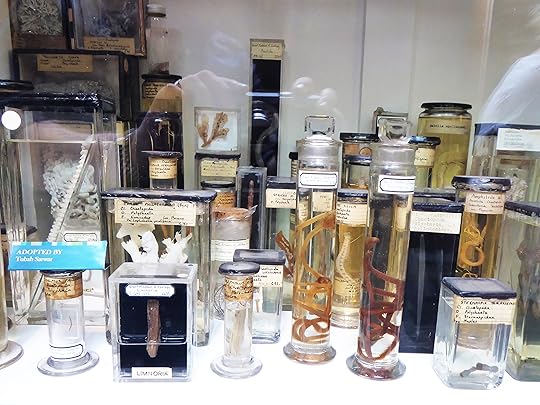
She was greatly influenced by journalist William Mayhew’s encyclopedic 1851 book London Labour and the London Poor. There is a look at the jailhouse, which appears to be guarded by particularly corrupt versions of Tweedle-Dee and Tweedle-Dum. Toss in, (or dig up) some resurrectionists, too. Part of the Victorian culture was a craze for collecting exotic things. One story that fed her interest was that of The Irish Giant, an exceptionally tall gent (7’7”) who became the talk of London for a brief time. But after his early demise, and despite his specific instructions to the contrary, his remains were obtained by a collector and put on display. There is a link to this tale in EXTRA STUFF.

description
Image from Traveldarkly.com

Lee is also interested in Irish folklore and partakes of that richly for the core element of the story. The incorporation of this element brings with it the main fantasy strand of the novel. One look at the cover of the book will inform you that there be mermaids (or something akin) here. Lee adds additional magical elements, as such critters appear here to have considerable power to influence the world about them, and specific powers that we would never associate with The Little Mermaid, although, considering the things we see in jars, we might have to reconsider the implications of the song Part of Your World:

Look at this stuff
Isn’t it neat?
Wouldn’t you think my collection’s complete?
Wouldn’t you think I’m the girl
The girl who has ev’rything?
Look at this trove
Treasures untold
How many wonders can one cavern hold?
Lookin’ around here you’d think
(Sure) she’s got everything

Hmmmmmm.

description
Image from Klyker.com

There is considerable humor in Things in Jars.

Her spectacularly ugly bonnet is curled up before the fire, bristling with feathers. She refused to give it up into the hands of the butler. Not that the butler was overeager to take it. If it comes alive, Sir Edmund thinks, he will do for it with the poker.

My particular LOL favorite is the prayer young Bridie offers up at bedtime.

God grant eternal rest to Mammy, Daddy, James, John, Theresa, Margaret, Ellen, and little baby Owen. God grant that bastard Paddy Fadden a kick up his hole and severe death to him and his gang, of a slow and terrible variety.

How could you not absolutely love such a child?

The disappointments in Things in Jars were few. I wish there had been more provision of clues throughout the book about what the deal was with Ruby. I was ok with the explanation, but it needed a better support structure. A bit more background on Cora would have been welcome. One actual gripe was a scene in which Bridie falls asleep while on the job. No way would this have happened. Booo! Almost all the violence occurs off-stage. In addition to one event described in a quote from the book in the review, we are shown the beginning of one attack by a ruffian on a lady. Tender souls might turn away. That’s really about it for such things.

description
Image from Nickcook.net

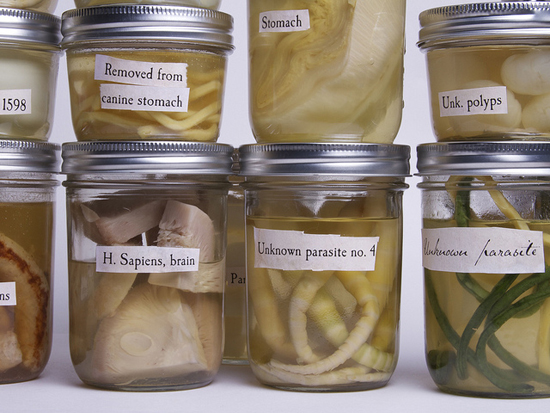
But the delights in Things in Jars could fill a wing of the British Museum. Bridie is a delicious lead, tough as nails without being impervious, bright, with a solid background that explains how she knows what she knows. She is a lot of fun to follow. The Holmesian parallels are a treat. The supporting cast is like a three-ring circus, in the best possible way, diverse, interesting, and fun to watch (both the light and the dark). We feel the fear when appropriate, and see Bridie’s affection for Ruby grow. A taste of Irish folklore is both creepy and educational, and Lee’s portrait of 19th century London offers an exceptionally immersive experience. You really get a feel (and smell) of being there. A real-world mystery with fabulous elements of fantasy. In short, Things in Jars is an absolute delight. For the hours you are reading this book you will be part of that world.

Review first posted – January 17, 2020

Publication date – February 4, 2020

I received an ARE of this book from Atria in return for some specimens I have been keeping in a special place in the lab basement for some years. They promised to return them after a thorough examination.

This review is cross-posted on Goodreads. Stop by and say Hi!

=======================================EXTRA STUFF

Links to the author’s personal, Twitter, Goodreads, Instagram and FB pages

My review of a 2023 book by Kidd
—–The Night Ship

Interviews
—–Savidge Reads – Sinister & Supernatural Shenanigans with Jess Kidd – by Simon Savidge
—–Stitcher – S3E4 – Chatting with Jess Kidd – audio – 1:29:12 – by Tim Clare – you can safely begin at about 46:00 for a focus on Jars
—–Well, not an interview, really, but a piece Kidd wrote for LitHub on her favorite ghost stories – Books That Blur the Lines Between Living and Dead

Items of Interest
—–Waterstones – A look at the Operating Theater – Kidd gives a tour
—–Writing i.e. – On Writing Things in Jars by Jess Kidd
—–Gutenberg – London Labour and the London Poor (1851) by William Mayhew
—–Joseph Bazalgette – engineer of the massive sewer works in London
—–Otherworldly Oracle – Mermen Legends. – a fun bit of fluff
—–Wikipedia – The Irish Giant

Leave a comment

Filed under Fantasy, Fiction, Historical Fiction, Thriller, Thriller

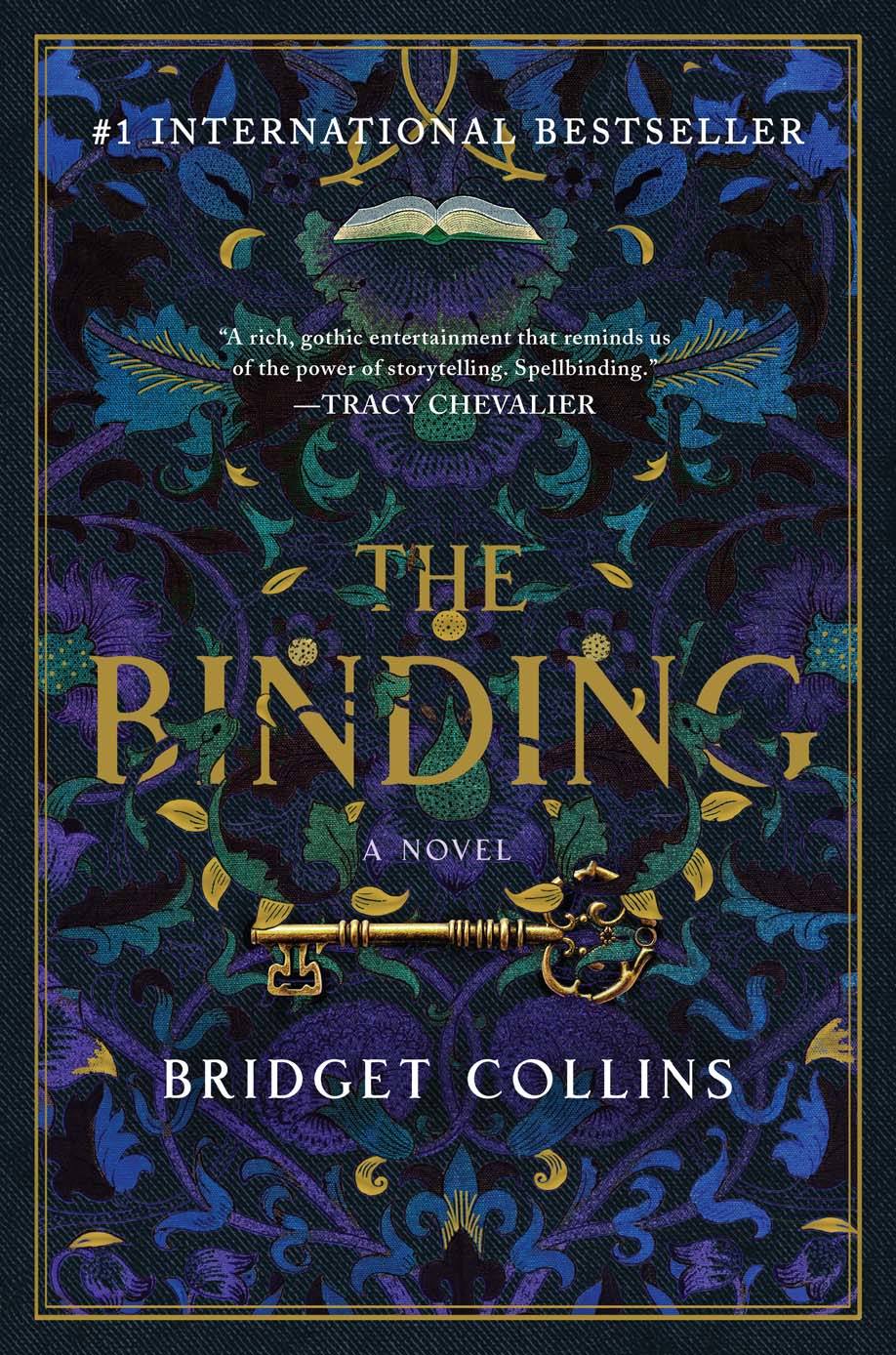
The Binding by Bridget Collins

book cover

We’ve been called witches since the beginning of time. Word-cunning, they used to call it—of a piece with invoking demons…We were burned for it too. The Crusade wasn’t new, we’ve always been scapegoats. Well, knowledge is always a kind of magic, I suppose.

Emmett Farmer is a young man with issues. He used to think that he would inherit his family’s farm. It was the life he was used to and the road he expected to follow to, and beyond, the horizon. But he has not been himself lately. His abilities have deteriorated. He loses himself, in time, suffering dizziness, nausea, and weakness. Some say he was cursed by a witch. When he is offered an apprenticeship with a bookbinder, it offers a way out, however frightening the career and his mentor might be.

description
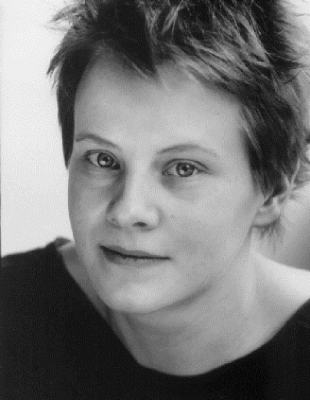
Bridget Collins – image from United Agents, UK

Despite some raw similarities, bookbinding in Bridget Collins’s world is not quite the same as it is in ours. Emmett trains with the elderly Seradith, a woman seen as being a witchy sort by some of the locals. In fact, bookbinding is seen as a dodgy sort of work. What is bound in books here are memories. Instead of sharing recollections or stories, as they do in our reality, the memories bound into beautifully crafted leather books in this world are removed from clients by binders. Unlike books in our world, which are designed to be shared, these books are meant to be hidden. Being on the NY Times Top Ten list would kinda defeat the purpose.

At least that is the intent. Cheat on your taxes? Pay off your mistress to keep quiet at the height of a political campaign? Sell out your nation’s security in return for real estate consideration by a foreign enemy? Awkward. But there is a solution, well, for part of it, anyway. Go to a binder and the memories will be nicely removed, leaving your tiny mind virginally memory and guilt free, and ready for that sit-down with whoever might be heading an investigation. If memory-cleansing bookbinding existed in our world, I imagine there would be a long line of potential clients. Of course, it might be a challenge to find binders with the innate talent to make those memories move from a client’s brain to the page. One can train in how to work the leather, sew the pages, and do all the material steps entailed in constructing such a book, but only those with a special gift can smooth the passage from one medium to the other. Emmett Farmer, it turns out, has such a gift. It does not help much with tilling fields, but is crucial for this special craft.

…the hours passed slowly, full of small, solid details; at home, in the busyness of farm life, I’d never had the time to sit and stare, or pay attention to the way a tool looked, or how well it was made, before I used it. Here the clock in the hall dredged up seconds like stones and dropped them again into the pool of the day, letting each ripple widen before the next one fell.

Emmett acclimates to Seradith’s remote locale (out in the marshes), begins to learn the manual end of the binding craft, and is eager to move beyond to learn what bookbinding is really all about (he does not actually know). He is particularly curious about what goes on beyond certain forbidden doors at Seradith’s emporium, but even glancing inside such doors causes him major episodes of what his boss calls Binder’s Disease, costing him days of consciousness and bringing forth strange visions. These strains increase when certain clients arrive. When he finds a book with his name on it, Emmett realizes that he is less than whole.

Part Two of the novel is Emmett’s bound story as reported in that book. Part Three returns us to Emmett’s now, and how he deals with what he has learned. More than that about the goings on risks spoiling a key plot twist. But it does touch on forbidden love and the dangers of loving outside one’s class, however that may be defined.

The Binding is an engaging page turner of an historical fantasy, particularly the first third, in which we are introduced to Collins’s world, an amalgam of the medieval and circa 1890 rural England. The mystery of Emmett’s affliction is enticing and his experience at Seradith’s is riveting. I found Part Two, Emmett’s bound story, interesting, but nowhere near as gripping. Part three is pretty much a continuation of Part Two, but with Emmett aware of his history, so is more of a cloth with the second than the first part. Not to say that the latter two are not good, just not so fabulous as the opening, in terms of the engagement of the story, at least. In terms of looking at the socio-economic implications of binding, they are wonderful.

One fascinating thing is how Collins came up with her concept. She was working as a volunteer at Samaritans, a non-profit that offers people who will listen for people who need to talk. What would it be like if I could reach out and winch that memory from you? She was also taking a book-binding class at the time, and a happy combination was conceived. In setting her story in late 19th century rural England she uses some history of the era to correspond with events in the created reality. For example, the Binding Law of 1850 in Emmett’s world corresponds to the 1850 legalization of gin (I’ll drink to that!) in English law. The Crusades here, for example, were not about perceived Middle Eastern outrages, addressed with European outrages, but were focused on scapegoating binding for the social and economic disruptions brought about by the rise of capitalism. Binders are viewed as women accused of witchcraft have been in our world, dealers in mysterious practices, necessary for providing needed services, but not to be trusted, and maybe evil.

There are many novels that use memory loss as a core mechanism. Some elements of these are fairly common. How is memory lost? Literature is rich with examples, usually of the traumatic sort, usually involving violence, typically a blow to the head. These tend to populate books in which memory loss features as a Maguffin for propelling a thriller or mystery. Next down the list is memory lost through illness, typically Alzheimers’ disease. Still Alice fits in there nicely. There are stories in which memory loss is via external misadventure of a broader, science-fictiony sort, things like plagues. The Book of M is a wonderful example. Less populous is the sort in which memory is willingly surrendered, Eternal Sunshine of the Spotless Mind pops to mind. (and we elect to keep it there, for now) The Binding relies on the last of these, substituting a bit of magic for the sci-fi explanation offered in Eternal Sunshine.

What lifts The Binding above the crowd of memory-loss novels is its consideration of the societal implications of voluntary forgetting. There are complications, of course, and they are wonderfully explored. Some with power want others to forget what they have done. Think of it as an employment contract, or a user agreement for partaking in pretty much any software. You agree to this and that, and such and such, which will entail the surrender of some inalienable rights. Just click agree at the bottom of the mouse-print form. But damn, you need the job, or want to use the software. However, what if what you are surrendering to the seller, or employer, is the right to your own memories? And what if the person in power has done something they would rather you not remember? You might find yourself (or what is left of you) wearing out a path to the binder’s shop for a bit of a memory trim (Boss just sent me over. Says you should just take a bit off the top, please, and close on the sides, ok?) I will leave to your imagination (and the book of course) how such a system might be abused. So, we have an author who looks at political power in a very personal way. Workers of the world unite! You have nothing to lose but your…wait, what was that again? Continuing the image, what if you are starving and selling your memories as a way to put food on the table, the way many in poverty engage in sex work to make ends meet? Puts me in mind of the Beggarwoman from Sweeney Todd (Hey, don’t I know you, Mister?”) Which of course presumes that there are binders out there with somewhat lower ethical standards than the very righteous Seradith. Shocking, I know.

To lift the novel even higher is a parallel consideration, the significance, the power of books themselves, what it means to write a book, to read a book, and to share the experiences of another through the written page. I was reminded of The Guernsey Literary and Potato Peel Pie Society and The Book Thief.

What if we look at books as a manifestation of self? Not exactly a stretch. Do authors lose a part of themselves when they commit their thoughts to the page? Is reading a book written by someone else a form of voyeurism? Just as in our world, books can be used for benign or malign purposes, books are treated as treasured valuables by some and as a form of personal or mass-produced filth by others. Seradith, essentially, amputates memories, as a physician would take an unhealable limb, a benign act, and saves the bound memory in a beautifully crafted book, kept safe in a vault. Others may make use of such books for corrupt purposes. You, yes you, reading this, you know the power of books, how they can act like a drug, slaking, temporarily, an unquenchable thirst. Very drug-like, no? How about the power of books to heal? Ever read anything that made you feel better? Certainly any well-written memoir can offer one a view of someone’s inner life, but at least in our world, that does not require that the author forget what she has written. Books change lives, whether we read or write them. For writers, a part of themselves definitely finds its way onto the page. And a world in which all books are locked away sounds rather medieval.

Collins offers a bit of wry perspective on writing.

There’s a growing trade in fakes, you know. Does that concern you?” He paused, but he didn’t seem surprised not to get an answer. “I’ve never seen one—well, as far as I know-but I’m curious. Could one really tell the difference? Novels, they call them. They must be much cheaper to produce. You can copy them, you see. Use the same story over and over, and as long as you’re careful how you sell them, you can get away with it. it makes one wonder who would write them. People who enjoy imagining misery, I suppose. People who have no scruples about dishonesty. People who can spend days writing a long sad lie without going insane…My father, of course, is a connoisseur. He claims that he would know instantly if he saw a novel. He says that a real, authentic book breathes an unmistakable scent of…well. He calls it truth, or life. I think maybe he means despair.

I doubt that despair is what you will experience on reading The Binder. This is a marvelous read, a thoughtful, engaging novel, featuring a large dollop of Dickensian social commentary, while following an appealing everyman through the perils of coming of age, and offering in addition insightful observations on memory-as-self and the power of books. I was sure I had something more to say, but I seem to have forgotten what that was.

Review first posted – January 4, 2019

Publication
—–UK – January 10, 2019
—–USA – April 16, 2019
———-April 21, 2020 – trade paper

This review is cross-posted on Goodreads. Stop by and say Hi!

=======================================EXTRA STUFF

Links to the author’s personal, Twitter and GR pages

If you check only one interview with the author, make it this one, in which the author talks with her US editor. The Library Lovefest audio is about 40 minutes long on Soundcloud, and is well worth the time invested. – Editors Unedited: Editor Jessica Williams in Conversation with Author Bridget Collins

Lists
—–GR list of Amnesia and Memory Loss Fiction
—–Popular Memory Loss Books on GR
—–Books featuring amnesia

The Memory Files – film
—–Memento
—–Eternal Sunshine of the Spotless Mind
—–The Bourne Identity (film)
—–The English Patient (film)

The Memory Files – fiction
—– The Bourne Identity (novel)
—–The English Patient (novel)
—–Still Alice
—–The Book of M
—–The Guernsey Literary and Potato Peel Pie Society
—–The Book Thief

Bookbinding
—–from Instructables.com – How to Bind Your Own Hardback Book
—–Self-Publishing Basics: 5 Book Binding Styles Illustrated

Leave a comment

Filed under Fantasy, Fiction, Literary Fiction

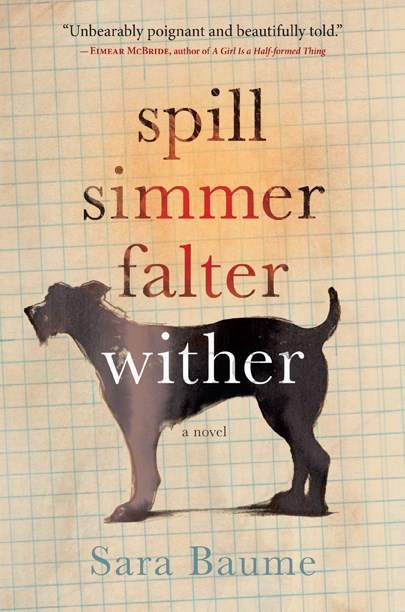
Spill Simmer Falter Wither by Sara Baume

book cover

You’re Sellotaped to the inside pane of the jumble shop window. A photograph of your mangled face and underneath an appeal for a COMPASSIONATE & TOLERANT OWNER. A PERSON WITHOUT OTHER PETS & WITHOUT CHILDREN UNDER FOUR. The notice shares street-facing space with a sheepskin overcoat, a rubberwood tambourine, a stiffed wigeon and a calligraphy set. The overcoat’s sagged and the tambourine’s punctured. The wigeon’s trickling sawdust and the calligraphy set’s likely to be missing inks or nibs or paper, almost certainly the instruction leaflet. There’s something sad about the jumble shop, but I like it. I like how it’s a tiny refuge of imperfection. I always stop to gawp at the window display and it always makes me feel a little less horrible, less strange.

You are unsettled tonight, Mouse. I wonder why that is. Come, let me wrap my arm around you and scratch your tiny head. No? Not ready for that? OK. Well, how about I tell you about this book I just read? Go ahead, hop down to the floor. It’s ok. You’re not ready for holding just now. As for this book, there’s a man, Ray. He’s 57. Too old for starting over, too young to give up, he says. He has had a very sad life. His mother died when he was a baby, so he never knew it was usual to have two parents. He had only his factory-worker Da, who not only raised him alone, he raised Ray away from other children. Practically as a shut-in. Children in this rustic waterfront part of Ireland were cruel to Ray, teased him, tormented him. I guess his father thought that Ray, who was not the sharpest tool in the shed, would manage better at home than hassled at school. But it was a lonely life.

description
Sara Baume – image from The Irish Times

Are you listening, Mouse? I see your ears are still pointing up and forward, so I suppose you are. Ready to come back up? No? not yet? Ok. I will try to tell you about this in as soft a voice as I can. So, one day Ray is out in town and sees a sign in a store window with a photograph of a dog in need of a home. Do you remember when you used to live on the street? It was only for a short time. We found you when you were soooo tiny. But this dog that Ray found was not a baby like you were. He was a full-grown pooch, who had seen some difficult times. He might have been a young aggressive dog, but he could have been an old one too. We don’t really know. He had even lost an eye. Ray thinks he had been trained to go after badgers, and that a badger had gotten the better of him. But Ray sees something of himself in the dog, something less than beautiful, not like you, Mouse. You are soft and gorgeous. So he brings him home and calls him One Eye. It gives him someone to talk to, at least. And maybe something more.

People talk to their pets for all sorts of reasons. But Ray talked to One Eye because he had no one else. In this book, Ray tells One Eye all about his life, how he had lived with his father for most of it, and alone ever since his father passed. It is a pretty unusual thing in a novel, Mouse, for someone to spend all, or most of the book anyway, talking to someone else. Quite the challenge. But it works pretty well here, I thought. Of course, One Eye may be a good companion, but, like Ray, he was not the best schooled. Has issues with attacking. You don’t know about that sort of attacking, Mouse. When you pounce on and wrestle with your brother, Dash, biting and clawing, wrestling, and rolling over each other, it is all in fun. Not with One Eye. He does not seem to know how to behave around others. This makes things a bit tough for Ray. People tend to get upset when dogs are not well trained.

Ray does not think much of himself. He thinks he looks like a troll. Here is how he describes himself. I’ll try to read it to you in an Irish accent.

I’m a boulder of a man. Shabbily dressed and sketchily bearded. Steamrolled features and iron-filing stubble. When I stand still, I stoop, weighted down by my own lump of fear. When I move, my clodhopper feet and mismeasured legs make me pitch and clump. My callused kneecaps pop in and out of my shredded jeans and my hands flail gracelessly, stupidly.

Oh, that is such a big yawn. Are you ready to come up? Yes? Great. Here, I will cross my skinny legs and make a lap for you. I’ve already told you the story, or at least as much as I can without giving too much away. Did I tell you that the story takes place in Ireland? I did? Oh, ok. The lady who wrote it, Sara Baume, is half Irish. Her father is English. And her mother is Irish. They met while he was working in Ireland. The family moved back and forth, but Ms. Baume knows the place.

I like talking to you, Mouse. But not because I am lonely. I have my Sweetie and all your brothers and sisters. I even get out of the house once in a while. And there are scads of people I can talk to through the computer or on the phone. But I do enjoy your attention. I like the way you watch my face while I talk to you. And I love the way your eyelids slowly droop until you are asleep. It reminds me of when I used to read to my human children at night. I wonder what thoughts scamper through your tiny brain. I bet if you lived outside you would take in all the sights and scents in the world you lived in. Ray does this as well. He does get outside, goes to town, to shops, to the beach. He may not be well educated, but he is not without his interests. He was taught to read by a neighbor, and developed a fondness for flora. He can rattle off the names of every sort of plant you could see in that part of the world. Ray marks the seasons by noting what plants are doing, which ones are blooming, wilting, changing shape and color. It is a remarkable skill and he tells us what he sees of nature all through the book. Here is an example:

See the signs of summer, of the tepid seasons starting their handover with subtle ceremony. Now the forest floor is swamped by bluebells, the celandine squeezed from sight. See how the bells hover above the ground, like an earth-hugging lilac mist. Now the oak, ash, hazle and birch are bulked with newly born leaves, still moist and creased from the crush of their buds. The barley is up to my kneecaps and already it’s outgrown you. As we crest the brow of the hill each day, you are shrouded in green blades.

It occurs to me, Mouse, that you have been living with us for about a year which is a lovely coincidence, as Ms. Baume’s story about Ray and One Eye covers a single year too. She made up names for the seasons, and used those as the title for the book, and a way to divvy the book up into four parts. Throughout it all, Ray describes the seasonal changes he sees.

We get to see Ray long enough to get a sense of what sort of person he is. He is far from perfect, even in what seems like his innocence. So, like a lot of us. Even you, Mouse, I see you sometimes lurking on a chair, the better to swat at brothers and sisters who might be passing below. I have seen you be unkind to siblings who joined the family after you. One Eye has some issues as well, more dramatic ones than you. Ray can be unkind, as well. But mostly he is sad, and fearful.

There is a bit of mystery going on here as well. Just how did Ray’s Da die? And how was that handled by local officials? Also, we wonder what happened to Ray’s mother. Did she die in childbirth? What secrets are kept in rooms of the house that Ray never enters? How did it come to be that Ray’s father was raising him alone?

Overall, though, Mouse, this is a bit of a love story. Two lost souls finding and binding with each other, struggling to make ends meet, to survive, but feeling a closeness neither had experienced for a very long time, if ever. Oh, you are almost asleep. One last stretch. Spread those claws, Go ahead now, curl up, right there in the crook of my left arm. You fit there as if you had been custom-designed for the space. There was one thing I thought was not really successful in the book. Ms. Baume tries to tell us about One Eye’s take on things by giving Ray dreams in which he imagines himself as One Eye. It just seemed forced, and not needed. Even Ms. Baume has admitted she’s had second thoughts about including those parts.

Before you are totally asleep, Mouse, I need to let you know that Ms Baume trained to be an artist, and it was a bit of a surprise that she wound up writing a novel. But one thing about artists who write is that they bring an amazing visual sense to their writing, and she does that here. It reminded me of another book by an author who is mostly a visual artist, The Night Circus. Totally different content, of course, but very strong visual sense.

If you could not already tell, my little sweet, I quite loved this book. It has a lot of pain and a lot of sadness in it. It is both funny at times and heartbreaking. But like another book that shows a very dark time, The Road, it lets us in on the love, the connection between two spirits. If any reader is not moved by this book, they must be bolted in place. I cried at the end. It is simply a beautiful, beautiful book. Not as beautiful as you, Mouse, but then, what could be?

Review first posted – 10/27/2017

Published – 2/1/2015

This review is cross-posted on Goodreads. Stop by and say Hi!

=======================================EXTRA STUFF

If Sara Baume can be reached directly on-line it is news to me.

Interviews

—–The Guardian – 2/18/17 – Sara Baume: ‘I always wanted to be an art monster’ – by Alex Clark

she hit upon the character of Ray, in Spill Simmer Falter Wither, as a way of avoiding dialogue, because, she says, she didn’t want to get the voices of Irish people wrong. “I’m like, I need someone who’s not going to talk much, and who’s going to live very much in his own head. And so the way he speaks comes about from the radio and from the television and from the book.” Her caution at depicting “Irish voices” is striking, and derives from her dual heritage. Her English father came to Ireland to lay gas pipelines, and met her mother, an archaeologist, while “they were both in the ground”. They moved to England for a while, doing the same work, moving around a lot and living in a caravan; her elder sister was born in Surrey and she was born in Wigan, because “that just happened to be where the caravan was parked”. The family moved back to west Cork when Baume was a baby, but a sense of being from two places has persisted.

—–The Irish Times – 2/12/15 – Sara Baume: ‘I actually hate writing. It’s really hard’ – by Sinead Gleesopn

The dog was the starting point . . . the dog in the book is my dog, who is a rescue dog with one eye and he’s a real last-chance-saloon dog. He has caused us a lot of trouble; he’s bitten people and I’ve paid them off to stop him being put down. With the narrator, I wanted him to be an older man, and to be afraid of innocuous things, so he’s frightened of children and he doesn’t have normal social skills. He’s slightly based on a man who I see where I live, who walks up and down the seashore. I wanted to create a character who wasn’t fully me, but partially me, who encapsulated things that I felt.

—–NPR – 3/17/16 For A Young Irish Artist And Author, Words Are Anchored In Images – by Lynn Neary

Before she was a writer, Sara Baume set out to be a visual artist. “First and foremost I see; I see the world and then I describe it …” she says. “I don’t know another way to write. I always anchor everything in an image.”

—–The Times Literary Supplement – 2/13/17 – Twenty Questions with Sara Baume

For any interested in a visual of Mouse, you might check here. Try to ignore the troll seated behind her.

2 Comments

Filed under Fiction, Literary Fiction