Tag Archives: book-review

Toto by A.J. Hackwith

book cover

Every dog has the Growl in it, no matter how big or little, how scruffy or cute, how pampered, old, or toothless. Every dog has in the first wolf barely coaxed to a campfire. Maybe we never have a chance to use it in our kind lives, and our humans would never suspect. But if we do, it’s because none of us, not a single pup, has forgotten the first campfire. And though we have taken on many jobs for our humans since then, there is one that is summarized in the Growl.
This One Is Mine to Protect

Ninety percent of magic is public opinion.

I’ve a feeling we’re not in Kansas anymore. Well, after animal control had tried taking Toto, maybe that is not a bad thing.

description
A.J. Hackwith – image from her site – shot by Karen Osborne.

The Wizard of Oz is arguably the first modern American fairy tale, and Dorothy one of the first prototypes for the army of empowered, female YA protagonists we have today. And growing up as a rural girl in Nebraska—one hop north of Dorothy’s Kansas—it’s no surprise then that I was desperately obsessed with the story. I always wanted to find the rainbow, yellow brick road, or magic slippers that would take me somewhere else. I always wanted to pay homage to Oz, and as a lifelong dog lover, it felt natural that Toto’s perspective was the way into a whole new view of the classic story. – from the Writers Digest interview

Hackwith has quite a bit of fun reimagining the OZ we all know. Dorothy is a contemporary teen in a hoodie, with a smartphone, but she is still pure of heart. The Scarecrow is much as he was in the film. The Tin Woodsman, Nick Chopper, is a self-made construct of impressive stature and physical capacity, (Baum had written a bit of back story about him. See EXTRA STUFF for this) with a vocabulary reminiscent of Groot. He is accompanied by a bad-ass sister, a knight, (Lettie) who is not at all metallic.
description
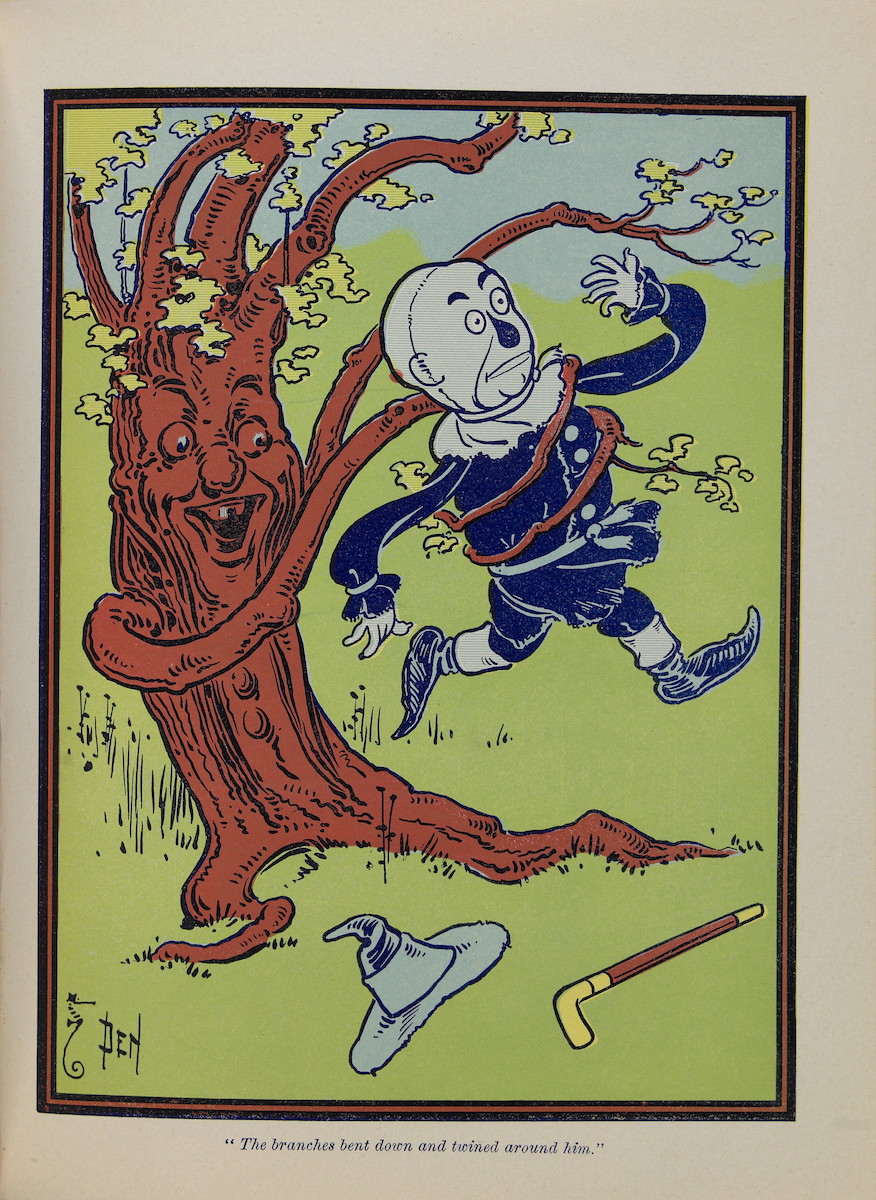
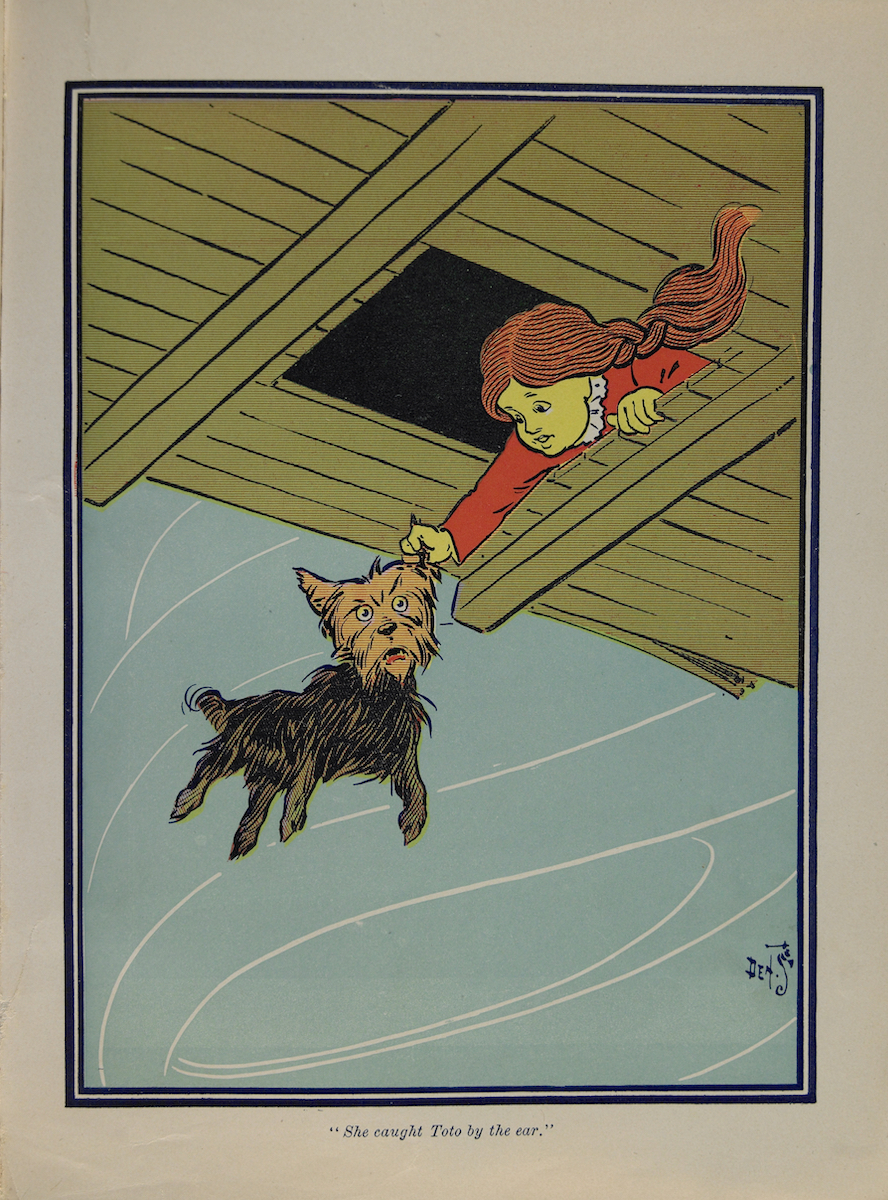
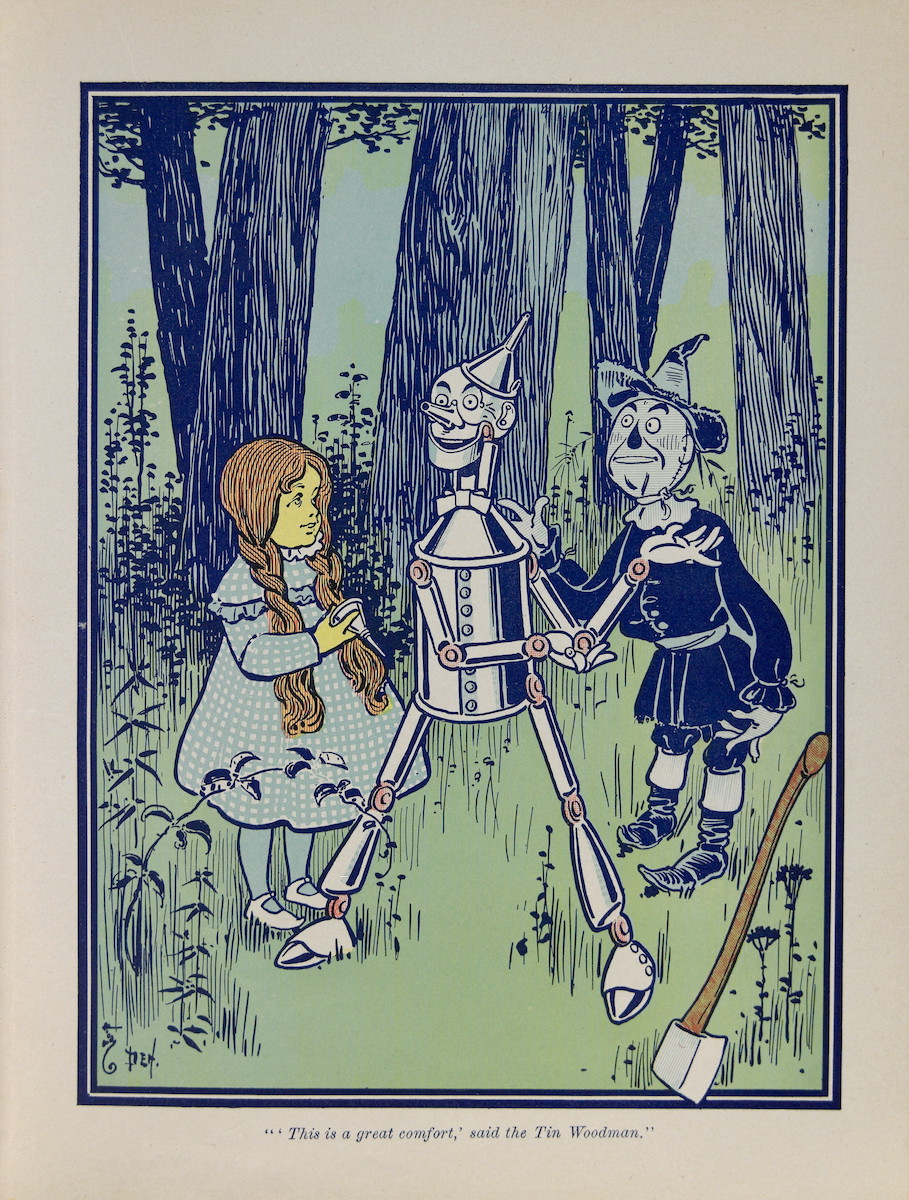
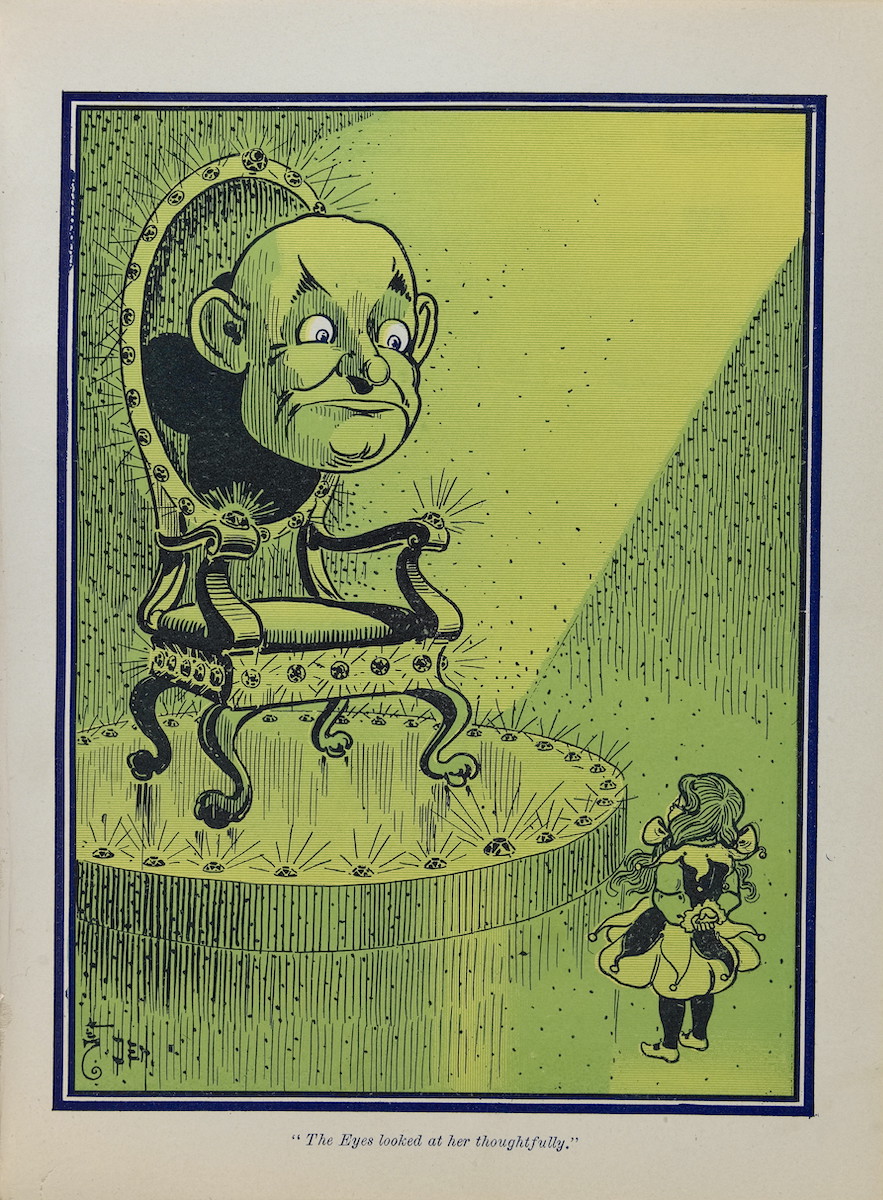
All the Oz illustrations in this review by W.W. Denslow. are from the 1900 publication of The Wonderful Wizard of Oz

The Cowardly Lion is a bit of a scaredy cat but more a very reserved, thoughtful feline. The Wizard may know a thing or two, but is very much a crook. There is a revolutionary bluejay who thinks he is a crow. There is a bubble-propelled witch. And flying monkey sorts loyal to the witch we all know and love. A young one, an engineer, less crusty that her peers, plays a key role.
description

And then there is Toto, front and center, able to speak and be understood, by most folks anyway, full of snarky commentary and struggling with the benefits of being a good dog or a bad dog. I mean if he had been a good dog, and animal control came for him anyway, what was the actual point? He will struggle throughout. Unlike his role in the original story, Toto has a lot more agency here, engaging in adventures away from Dorothy.

Imagine the flattest, grayest, most cornfed place you can imagine. Now add depression and life wrecked by late-stage capitalism. That’s Kansas. It’s like the dull beginning of every ad for pharmaceuticals right before Xylohappitoxin or whatever fixes everything. Sure, I make the best of it. Stealing socks and digging in old lady Brumley’s garden. But me and Dorothy are meant for bigger things, like destiny and boss battles and whatever that “Likeandsubscribe” stuff is the glass-people are hype about. – from the Fresh Fiction piece

Tasks are assigned to our travelling troupe by local bigshots. Bring me this, bring me that. Shoes are given a bit more attention than in the film, silver this time instead of ruby red, in keeping with the novel instead of the film.

There is commentary on politics; the bluejay is fond of holding forth with leftist pronunciations that will be laughingly familiar to any who have had connection with such folks; manipulators encourage people to do the wrong things; a race of beings has been subjugated; a leader pillages a natural environment to the detriment of all. Haves take advantage of have-nots…and on.

When Frank L. Baum sat down to write the The Wonderful Wizard of Oz, his country was in a state of turmoil which might seem very, very familiar to us these days. Economic and international pressures were ripping apart the perceived stability of the middle class. Hotly contested initiatives like the silver standard are referenced in Dorothy’s own silver shoes (changed to ruby for the technicolor movie). Populist leaders are lambasted in characters like the Cowardly Lion and the Emerald City itself can be read as a giant allegory to the capitalist power of Wall Street in Baum’s era. Oz was never a sterile product of pure imagination. The books reflected Baum’s opinions on the realities of the world. – from the Nerd Daily piece
description

This is a satire, so there are many fun flicks at the source material, as well as the political scene. And homages as well. Of course, it helps to be familiar with more than merely the 1939 film. The original novel would be a good place to start. The Broadway show and then film of The Wiz, and many more. L. Frank Baum wrote fourteen Oz novels, and short stories beyond. Many were written under pseudonyms. And even after Baum died, his publisher continued publishing Oz books by other writers. Gregory Maguire’s 1995 novel, (then Broadway show, then film) Wicked, and several subsequent novels, offer more source material. And there are even many more Oz books by other writers.
description

Of course, any literary road trip is a journey of self-discovery. Toto will resolve some things; Dorothy will plot a course for herself; and the rest of the gang will find their ways forward as well. But as with any road trip, it is the journey that is of interest and not the ultimate destination(s). Dorothy’s (and Totos’) actual feelings about Kansas are given a look. Dorothy has a the chance to be her own person in a challenging world, and consider what she might do with herself if given the opportunity. There is plenty of resonance here for many of us who felt, for various reasons, constrained by our beginnings.

You ever feel trapped in a family you don’t belong in? In a place that’s just so . . . so that it’s suffocating? That you know there’s more, so much more, out there, and it’s worth seeing, and every day you wake up in the same bed is like drowning a teaspoon at a time? I never wanted—I just . . .” She took in a sharp breath, catching herself. Her gaze refocused away from the window and back on me. For a flicker beat she looked like a duotype print of Dorothy. Hair obscured in soft shadow, a dark wardrobe that could have included the ratty tee Dorothy slept in when she finally peeled off the hoodie on the weekends . . . and a face so full of hunger-pang sadness, it could swallow the world with those wide eyes.

Hackwith’s look at the surviving wicked witch is a delight.

There may be no place like home, but who says we can have only one home in our lives? Toto is a fun romp through the OZ of our memories and/or imaginations. It is listed as YA, and I am sure it will appeal to that demo, but it was a fun read, particularly for an old dog like me, with long memories to be touched, revived, and beguiled.

This is the thing tall people, even tall dogs, never understand. Everyone looks at the world from three, four, even five feet up in the air. That’s where all the deception is. Everyone makes sure things look nice from that angle. Tables are kept tidy. Skirts are pressed. Floorboards are swept. Railings are dusted. Everyone wants to make a nice impression, tell a nice story from their point of view.
But when you see the world from five inches off the ground? That’s when you get the unvarnished truth.

Review posted – 01/31/25

Publication date – 11/12/24

I received an ARE of Toto from Ace in return for a fair review. Thanks, folks, and thanks to NetGalley for facilitating.

This review is cross-posted on Goodreads. Stop by and say Hi!

=======================================EXTRA STUFF

Links to Hackwith’s personal, FB, Instagram, and Twitter pages

Profile – from Penguin Random House

A. J. Hackwith (she/they) is (almost) certainly not an ink witch in a hoodie. She’s a queer writer of fantasy and science fiction living in the woods of the Pacific Northwest with her partner and various pet cryptids. A.J. is the author of a number of fantasy novels, including the acclaimed LIBRARY OF THE UNWRITTEN fantasy trilogy. She is a graduate of the Viable Paradise writer’s workshop and her work appears in Uncanny Magazine and assorted anthologies. Summon A.J. at your own peril with an arcane circle of fountain pens, weird collections of rusted keys, and homebrew D&D accessories.

Interview
—–Writers Digest – A. J. Hackwith: On the Fortitude of Little Dogs – with Robert Lee Brewer

Items of Interest from the author
—–Fresh Fiction – . J. Hackwith | Conversations in Character with Toto
—–Google Play Books – excerpt
—–Wikipedia – Tin Woodman – on how Nick Chopper became the Tin Woodman as per L. Frank Baum
—–Nerd Daily – Storytelling Is Political, And That’s A Good Thing

Items of Interest
—–Gutenberg – The Wonderful Wizard of Oz by L. Frank Baum
—–Gutenberg – The Tin Woodman of Oz by L. Frank Baum
—–Youtube- Heartless – The Story of the Tin Man – 22:48
—–Wiki – Groot

Leave a comment

Filed under Fantasy, Fiction, YA and kids

The Haunting of Moscow House by Olesya Salnikova Gilmore

book cover

Irina calls her fanciful whenever she mentions ghosts. Still, something isn’t right about the house, hasn’t been right since Uncle Pasha was shot dead there three years before, and Grand-père Sergei succumbed to his illness mere days after.
Though she’s never seen one, Lili has believed in ghosts for quite a long time.
Do you think the dead can rise? Her voice, from a long-forgotten memory.
Of course, Nicky had answered, as if it were the most natural thing in the world.

…with each death, the spirits are more corporeal and alive. And the family is in greater danger.

It is 1921, and the suffering is not yet done. World War I, then the ongoing civil war, now famine. Bolsheviks have taken charge. They use the Cheka to enforce the new norms, inflict the governing biases, and relentlessly add to the general misery. The displaced aristocracy struggles to get by, well, those who were not summarily shot.

description
Olesya Salnikova Gilmore – Image from PRH – credit Nicola Levine Photography

To the new Soviet republic, the Bolsheviks, and the Cheka secret police, they are still countesses Irina and Liliya Goliteva, the people’s class enemy as descendants of one of the greatest and most ancient aristocratic clans of an imperial Russia dead and buried. Like most of their family. But unlike many former people, Irina’s family didn’t flee Russia. They stayed in hope of a return to normalcy. Now it is too late. Even if they could obtain papers, how could a household of women and children brave the danger of travel and exile?

Running out of household valuables to sell, the sisters take jobs with the American Relief Administration (ARA). The ARA is there to provide aid, food in particular. The sisters are managing the challenges, but there is something else. It appears that there are strange, spectral things going on in their home, the once-grand Moscow House. There are sounds, scents, footsteps, the sorts of things one can expect in a gothic novel.

So much of the novel is inspired by some of my favorite gothic stories, particularly by the Russian/Slavic gothic genre and the Ukrainian author who arguably founded it—Nikolai Gogol. – from the Afterward

Gogol and other folk sources are given plenty of recognition in the pages, allowing one the opportunity to do some digging and appreciate the inspirations.

We follow Irina (28) and her sister, Lili (18), as they try to survive through this trying period. Chapters alternate, more or less, between the two. The gothic elements build, from a few inklings to full-blown. It is not just one or two spectres turning up, but a whole host of late family members. The house is commandeered by the government, and the actual family is relegated to the attic. That does not work out well for the occupiers, as one then another is found dead. The work of one of the living inhabitants or ghostly revenge?

There are certainly some creepy bits, a norm for the genre, a few jump-cut scenes, and a spooky soothsayer. But is it scary? Mostly not, for me, (a particularly high bar) although there were some welcome surprises. There is one particular sort of ghost from Russian lore that was a new one on me. A creepy doll offers a tingle or two. That they grow in corporeality with each new death offered a welcome bit of unease. After a while, though, one gets used to the spirits, and in doing so their impact is reduced. Yeah, we’ve got a haunted house. So? The sisters keep coming and going as if it were infested with a more usual sort of pest.

Both become involved in romances, one with a Yank, the other with a childhood sweetheart. This is lovely, particularly in offering the possibility of positive outcomes for the sibs. Of course, it also adds to the ongoing tension between staying to preserve the family history and line, and fighting the good fight, or leaving to preserve their lives. How many people today are faced with comparable choices?

In fairy tales, paupers became princesses, not the other way around. But Soviet Russia is a warped Wonderland, where all is topsy-turvy and not what it should be.

One might, I expect, consider a take in which the Cheka taking charge in Moscow is a lot like the spectres taking over the Moscow House. It does cause one to recall that the Introduction of The Communist Manifesto begins, “A spectre is haunting Europe—the spectre of communism.” Certainly those spooks have landed in Russia and, through bloodshed, are gaining in strength. I have no idea if this was at all on Gilmore’s mind. But maybe. Spectres within and spectres without? Maybe a bit of dialectical materialism (or dialectical immaterialism?) for good measure?

Overall. I enjoyed The Haunting of Moscow House, particularly for the portrait of the time (The ARA was a real non-profit), the depiction of the desperation among Muscovites, and exposure to some unfamiliar gothic Slavic writing and lore. The sisters are engaging. The tension is palpable, and the spook infestation is fun.

I suppose one cannot help but compare this to Gilmore’s freshman offering, The Witch and the Tsar. That one was less reality based, more fantastical, and a bit more fun. But this one is also quite good, rich with extras both historical and literary.

Irina is crossing into the next room when she feels a prickle of cold on her arm. A draft of air. But the damask curtains are sealed tight. No, it is as if someone has moved past her. She turns sharply, as fearful as the other morning. Odd. She has never been afraid in the house. She doesn’t have Lili’s active imagination. Nor is she given over to delusions. It is only the howl and tear of the wind, the rattle of the windows in their casements, the faint give of a latch. With all this noise, she almost doesn’t hear it.
The creak of parquet, somewhere near. And again, unmistakable now. Creak. Creeeaak.
Footsteps. Small, like a child’s.
Irina backs up with wide eyes—when there is a deep growl. Then an earsplitting screech, and a dark shape hurtles across her path. A glint of red, as if red eyes have snapped to hers. The next second, scuffling and the thumping of bare feet, then nothing.
What was that? Some animal, trapped in the house?
That’s when the air implodes all around her.

Review posted – 12/20/24

Publication date – 9/3/24

I received an ARE of The Haunting of Moscow House from Berkley in return for a fair review. Thanks, folks, (Does it feel unnaturally cold to you here?) and thanks to NetGalley for facilitating.

This review is cross-posted on Goodreads. Stop by and say Hi!

=======================================EXTRA STUFF

Links to Gilmore’s personal, FB, Instagram, and Twitter pages

Profile – from her site
Olesya Salnikova Gilmore is the author of The Witch and the Tsar and The Haunting of Moscow House. Originally from Moscow, she was raised in the US and graduated from Pepperdine University with a BA in English/political science, and from Northwestern School of Law with a JD. She practiced litigation at a large law firm for several years before pursuing her dream of becoming an author. Now she is happiest writing speculative historical fiction inspired by Eastern European history and folklore. Her work has appeared in LitHub, Tor.com, CrimeReads, Writer’s Digest, Historical Novels Review, Bookish, Washington Independent Review of Books, among others. She lives in a wooded, lakeside suburb of Chicago with her husband and daughter.

Interviews
—–JeanBookNerd – Olesya Salnikova Gilmore Interview – The Haunting of Moscow House
—–Turn the Page – Episode 314E: Olesya Salnikova Gilmore on THE HAUNTING OF MOSCOW HOUSE – audio – 24:17
—–How Do You Write – Ep. 358: POV Hack: Using Method Acting with Olesya Salnikova Gilmore video – 31:09 – with Rachel Herron (from 5:36) – mostly about her prior novel, but offers a nice sense of the author, her process, how she uses method acting and her lawyerly background

My review of Gilmore’s prior book
—–2022 – The Witch and the Tsar

Items of Interest from the author
—–Crimereads – GOTHIC FICTION WITH A TWIST
—–Writer’s Digest – Finding Magic at the Intersection of Reality and Fantasy in Fiction
—–Reactor – Five Books about Haunted Houses that Crumble

Items of Interest
—–Carol’s Notebook – The Shroud – a Russian fairy tale referenced in Chapter 3
—–Story Telling Institute – Vasilia the Beautiful – a Russian fairy tale referenced in Chapter 11

Leave a comment

Filed under Fantasy, Fiction, Historical Fiction, Literary Fiction

The Mighty Red by Louise Erdrich

book cover

The absence of birds made Diz uneasy, but he wasn’t spraying birds, was he? Yet there were fewer birds around his farm. Used to be robins hunting worms in the furrows. Used to be blackbirds around the green bins. Owls at dawn, rats in their claws. Well, maybe he had a sudden thought those could have been the rats and mice he had to poison. He thought back to how birds used to chatter as the sun rose. Now, a few sparrows, maybe, or more often just the hiss and boom of wind.

While working in her garden, Crystal appreciated how their families were like the Lord’s ivy, a weed ineradicable by human means. It grows low to the ground and can’t be mowed. It throws its stems long and roots straight down every few inches, just like the people along the river. There seems to be a Frechette or a Poe anywhere you land, but low-key, invisible. The Lord’s ivy, or ground ivy, creeping charlie, thrives under the leaves of other plants and goes wherever it is not wanted. It just keeps throwing itself along stem by stem and blooms so modestly you’d hardly mark the tiny purple flowers. People step down and pass, the weed springs up, uncrushable.

But, implanted or not, there is plenty of stress to go around.

description
Louise Erdrich in front of her Minneapolis bookstore – image from The Paris Review – shot by Angela Erdrich

Romantic stress
The core of the novel is an ill-considered relationship. Kismet and Gary are teenagers, rich with hormones and needs. But are they ready to be married? She had planned to go to college. Gary is the star quarterback, but has a need for Kismet that has nothing to do with their romance. And then there is Hugo, brilliant, ambitious, and totally in love with her, (… he closed his eyes and thought about how he was helpless in the tractor beam of love.) centering his life on making himself successful enough to woo her away from Gary. Coming of age is a major element, and is wonderfully portrayed. Erdrich says in the B&N interview that she had really wanted to write a love triangle. Well, among other things. She also wanted to write about …

Financial stress

I really set it in 2008…because I don’t feel our country has ever really dealt with the fallout from 2008. I feel like there was so much that there was so much loss, that people lost homes, people lost jobs, things hollowed out in such a big way and that was never really addressed. We never really came back from that time, 2008, 2009 into the present, because the pandemic happened. – from the B&N interview

Winnie Geist lived through the Reagan era in which her family’s farm was lost, sold for a fraction of its worth. David Stockman is name-dropped from the 1980s.

While she was in high school, the government accelerated her family’s loan payments and blow after blow had landed. They’d lost their home, their farm, everything. Except one another, they kept saying, except us.

Crystal Poe is Kismet’s mother. When ne’er-do-well-actor dad, Martin, goes walkabout, Crystal has to sell off possessions to keep afloat.

description
Erdrich would like to see Irene Bedard as Crystal – from the Hoda & Jenna interview – image from Wikipedia

Ecological stress
Connection to the land is always a feature of Louise Erdrich’s work. The Lord’s ivy quote at the top reflects the root of this. Winnie’s angst at the loss of her family farm offers another. There are multiple instances of characters expressing, and acting on, (or not) concerns for the well-being of the ground on which they live and work. It is the treatment of the land that gets the most attention, the tension between using chemical-based products to maximize production per acre, versus a less corporate approach that supports a more ecologically balanced, restorative brand of farming.

I don’t think about politics when I write. I think about the characters and the narrative. My novels aren’t op-eds. Nobody reads a book unless the characters are powerful—bad or good or hopelessly ordinary. They have to have magnetism. If you write your characters to fit your politics, generally you get a boring story. If you let the people and the settings in the book come first, there’s a better chance that you can write a book shaped by politics that maybe people want to read. – from the Paris Review interview

Parental stress
Erdrich has four daughters, so has had plenty of experience with mother-child interactions. She says she loved being the mother of teens, seeing the excitement of their choices, and trying to be more of a guide than a hard-liner. Crystal struggles to influence Kismet without coming on too strong, which would predictably result in increased resistance. Gary’s mother clearly loves him, and goes out of her way to see to her baby’s happiness, maybe too far out of her way. Crystal and Winnie are definitely both afraid for their children, although for very different reasons.

description
Erdrich would like to see Isabella LeBlanc as Kismet – from the Hoda & Jenna interview – image from Minnesota Native News

A bit of fun
There is a series of flamboyant crimes committed by an outlaw, who acquires a nickname and a fair bit of public fame, in the same way that notorious historical criminals like Billy the Kid drew public interest and admiration.

This book is set during the economic collapse of 2008–09. What Martin does is only what a lot of people wanted to do. I didn’t think of what he did as villainy, but yes, I suppose it was absolutely crazy, and, you know, fun to write. I have to amuse myself. – from the Bookpage interview

There was more that motivated Erdrich. She is from the Red River Valley of North Dakota, has much family in the area and returns frequently. She wanted to write about the changes she had seen there. (like the mighty Red, history was a flood.) One element of this was that her first job was hauling sugar beets. The industry was undeveloped at the time. She wanted to write about how it had evolved over the last thirty years. The original title of the novel was Crystal.

When I started it I thought I would be writing about the 2011 lockout by Crystal Sugar and how it impacted people who were working there. They lost a lot in terms of their insurance and their benefits and wages…it was a really tough lockout. I wanted to write about that at first, but then I started writing something else entirely and I enjoyed writing it more so I kept with that one and it became more about a number of people living along the river. – from the B&N interview

Many of Louise Erdrich’s novels (this is her nineteenth) have centered on Native American history, lore, and contemporary experience. While there are several characters here whose Native roots are noted, this is not really a book about the Native experience, the way that The Round House, LaRose, The Night Watchman, and others are.

Magical realism remains a sharp tool in Erdrich’s kit. Crystal listens to a late-night radio show that centers on strangeness, including angels. A caller wonders if her child is protected by a guardian angel, given the number of close calls they had had. One character is haunted by the ghost of a friend. The aroma of a used dress speaks to its new owner. One character has a presentiment about an imminent danger.

description
Erdrich would like to see Brett Kelly as Hugo – from the Hoda & Jenna interview – image from Alchetron

There is a mystery here as well. what happened at “the party” and why is it such a hush-hush subject? Something terrible is hinted at. There are ripples emanating from this event that inform multiple character arcs.

There are a few literary references applied here. Madame Bovary is one. If you know the story, the echoes will boom at you. If not, it is no trick to pull up an abstract. Ditto for Anna Karenina. (see EXTRA STUFF for links)

As with any work of fiction it requires that we relate, at least somewhat, to at least some of the characters. Erdrich has a gift for writing characters that, whatever they may do, we can appreciate their motives, even if we may not agree with their choices. This is a major strength of the novel. She crafts rounded humans, ambitious, frightened, rational, irrational, loving, thoughtful, feckless, smart in wildly divergent ways, and, ultimately, satisfying. She does this while incorporating a payload of ecological concern, relationship insight, and an appreciation of history’s impact on lived experience, while adding a layer of magic to aid our understanding, and including a few laughs to smooth the way. Louise Erdrich is a national treasure, a reliable source of quality literary fiction, and an ongoing delight to read. The Mighty Red is indeed a mighty read.

Review posted – 12/13/24

Publication dates
———-Hardcover – 10/1/24
———-Trade paperback – 11/04/25

I received an ARE of The Mighty Red from Harper (through my Book Goddess dealer) in return for a fair review. Thanks, folks, dear.

This review is cross-posted on Goodreads. Stop by and say Hi!

=======================================EXTRA STUFF

Interviews
—–*Barnes & Noble Book ClubLouise Erdrich discusses THE MIGHTY RED with Lexie Smyth and Jenna Seery – with Lexi Smyth and Jenna Seery – video 45:37 – This is the one you want to check out
—–Today with Hoda and Jenna – Author Louise Erdrich talks ‘The Mighty Red,’ takes fan questions
—–my link text
—–The Paris Review my link text
—–Book Page – Red is an earth tone by Alice Cary

Other Louise Erdrich novels I have reviewed
—–2021 – The Sentence
—–2020 – The Night Watchman
—–2017 – Future Home of the Living God
—–2016 – LaRose
—–2010 – Shadow Tag
—–2012 – The Round House
—–2008 – The Plague of Doves
—–2005 – The Painted Drum

Items of Interest
—–Project Gutenberg – Madame Bovary – full text
—–GetAbstract – of Madame Bovary
—–Project Gutenberg – Anna Karenina – full text
—–ReWire The West – Anna Karenina: Summary and Analysis
—–North Dakota State University – WHY IS THE RED RIVER OF THE NORTH SO VULNERABLE TO FLOODING?
—–MPR News – 20-month lockout over, sugar workers brace for return to work by Dan Gunderson

Leave a comment

Filed under Cli-Fi, Fiction, Literary Fiction

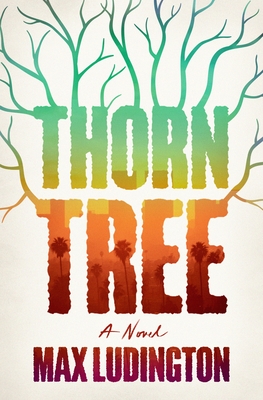
Thorn Tree by Max Ludington

<img src=”book cover” alt=”book cover” width=”187″ height=”300″ align=”left” hspace=”10″ vspace=”10″>

At the base level it’s fear. It’s all about fear. People ask, ‘What are you afraid of?’ and that is not an answerable question. Any time I name a source for my fear I feel it as a deflection. I mean, sure, I can get close. You know, as in: I’m afraid of people because someone I trusted fucked with me when I was a child. I was traumatized, yes, and the fear probably began there, I guess. But I don’t really know because it seems, now, somehow elemental. It embodies some ancient, sleeping doom, and the only escape is self-destruction. You know? Like, if I become my own doom I’ve taken that power away from anything else. It’s preemptive. At least there’s agency in it.”
She felt the laughter spill out of her in a rush. Its piercing volume was at odds with the moment and the release it brought. Leo looked at her dumbfounded.
“Get the fuck out of my head, man,” Celia said.

He had merely done what men had been doing since the primeval birth of jealousy. Just a spoon of love from my forty-five, save you from another man. Howlin’ Wolf was just singing about what thousands had wished they could do, and probably had done, before there were cops and laws and all the rest of the arbitrary bullshit. And it had felt good, hadn’t it?

Daniel is 68, living a quiet life in a Hollywood Hills guest house when a visitor repeatedly appears. Dean is six years old and clearly in need of companionship. He lives with his grandfather, Jack, on the larger house on the property. Jack is not always particularly attentive. And Mom, Celia, is a rising young actress who is often away on prolonged shoots. Daniel is happy for the company.

description
Max Ludington – image from Macmillan – shot by Jennifer Silverman

The novel braids the stories of Jack, Daniel and Celia, mostly Jack and Daniel. The story takes place in multiple times, today being 2017, and the backstory stepping up from 1968 to the seventies, to 1980, and 1988. Celia is not a part of the earlier events.

The sixties events cast a light on a turbulent time, touching on many of the aspects one might expect, young love, drug-dealing, acid trips, communes, San Francisco, wth a very dodgy cult among them. But despite the surface level, there is also consideration of the sort of existential, philosophical searching that was, for many, an important part of those times.

Young Daniel (1960s) makes a youthful mistake and suffers a grievous wrong, which follows him all his life. In the 1970s he finds solace in the desert, constructing a significant work of art, the Thorn Tree of the title. It gets him some notice, gives him a way to express what is inside him, and leads to some stability in his life.

Celia did an image search for the sculpture, and there it was, standing next to the modern art museum, taller than the building itself. It was huge, with thick, meandering branches and bristling snakelike twigs. Most of the branches, while not attempting verisimilitude, were formed with inherently natural shapes and gnarled twists, but here and there some were deliberately hewn into shapes that could never have occurred in nature: curving double on themselves and then back again to form tight willowy S-shapes, or turning straight downward at acute angles for a foot or two before continuing up and outward, as if infused genetically with lightning.

Jack is a very different sort. A predator, a sociopath or something like it, Jack wants what he wants and is not much concerned about who he damages to get it. He is routinely unkind, and worse, but he is also a seeker of truth, becoming connected with a cult and seriously mulling the writings on which the cult bases its outlook, even if the tenets of that group serve to bolster his own self-justification.

Daniel and Jack are linked through these years, the source of that link being one of the mysteries of the book. Jack is definitely a dark force. Daniel exists on a brighter side, despite having made some bad choices. He is a character who grows. But while Jack grows in a way, his widened view of reality is ultimately redirected to his narcissism. Not much is really done with Celia.

There is some lyrical writing which gives the story texture, depth to the two main characters, which makes it engaging, and a look at the times, both 60s and 70s, which gives it some substance. In addition it considers repercussions throughout one’s lives of actions taken in our youth.

Daniel stood for a moment at the threshold of the branches and looked up. The wind was made louder here in contact with the tree. The gravel path went around the south side, and he followed it to where it ended at an overlook. There was a plaque on a post, but he didn’t read it. Instead of standing at the overlook and staring out to sea, as the landscape designer had intended, he turned and went in under the branches, and immediately the world of the tree took over. He was surprised—he’d thought his memory of it was hopelessly colored by LSD and shock and time, that he had probably falsely mythologized every aspect of it and it would be just a place, with soil and roots and air but not the indwelling spirit he’d imbued it with in his mind. But it was as it had been—the wind quieting and the light clarifying, damping the sun into deep greenness—inhabited by a sense of protection and safety unchanged by the years of foot traffic and human attention.

There are many more of this sort. The voice is omniscient narrator, which presents way too many opportunities to tell rather than show. But I doubt this will bother most readers. Some characters come and go, seeming to be throw-aways. It is one of the things that make the book feel over-long. I kept hoping that some of these might be given a deeper look, with Jack getting less.

The alternating timelines, a fairly typical literary device, made sense to me. The Grateful Dead offer a link between now and then. There seemed some interest in other literary devices. For example, a boy appears to have a magical relationship with birds, but the image drops after partial usage.

Thorn Tree is an interesting read, offering some substance, interesting characters, and a strong core mystery. But for a book that is not overlong, at about four hundred pages, it felt like a much longer read because of the excess attention paid to Jack, and some tangential tales. The descriptive writing (I am a sucker for that) gives one a reason to push through, however prickly the passage.

Review posted – 11/01/24

Publication date – 4/15/24

I received an ARE of Thorn Tree from St. Martin’s Press in return for a fair review. Thanks, folks, and thanks to NetGalley for facilitating.

This review is cross-posted on Goodreads. Stop by and say Hi!

=======================================EXTRA STUFF

Links to Ludington’s personal, Goodreads, and Twitter pages

Profile – from Macmillan

MAX LUDINGTON’s first novel, Tiger in a Trance, was a New York Times Notable book, and his fiction has appeared in Tin House, Meridian, HOW Journal, Outerbridge, and On the Rocks: the KGB Bar Fiction Reader. He lives in Brooklyn, New York and teaches in the writing department at Pratt Institute.

Interview
—–The Palisades Newsletter – Max Ludington Reflects on His Second Novel, THORN TREE

Song
—–The Doors – Five To One
—–The Grateful Dead – The Very Best of the Grateful Dead

Leave a comment

Filed under California, Fiction, Historical Fiction, Literary Fiction, Reviews

If Something Happens to Me by Alex Finlay

book coverNo family is without its secrets.

Ryan Richardson had been pining for Alison Lane (Ali) for years. They have known each other since 9th grade, and cared for each other for a long time. They will be leaving for different colleges soon. Their special night is interrupted by rain. Back to her father’s BMW, it was looking like Paradise by the Dashboard Lights would finally become a reality, two teens parked in a Lover’s Lane in Leavenworth, Kansas. Alison does not hit him with an I gotta know right now, but they are this close to heaven when the car door is ripped open. Ryan takes a heavy blow to the head, and comes to on the wet grass. The car, and Ali are gone.

description
Alex Finlay – image from Amazon

We meet Ryan again, the presumed perp, five years later, long suspected of and hassled about that night. Ali has not been heard from. On vacation in Tuscany, his father notifies him that the missing BMW has been found. As if that is not enough, he receives a note in his hotel room from a mysterious stranger, demanding a meeting, and the game is afoot, sending Ryan on a quest to find out the truth of what had really happened that terrible night.

Poppy McGee is late of the military, an MP, having earned her discharge by standing up for herself in a suitable fashion. She had hoped for a gig on the federal level, FBI maybe, but finds herself stuck, instead, in Leavenworth, Kansas, her home town. Her father’s friend, Sheriff Ken, had offered her a safe landing. Deputy Sheriff McGee soon finds herself up to her neck in the five-year-old disappearance. Way to begin!

Shane O’Leary is a very bad man, a Philadelphia gangster with few qualms about the occasional homicide. We soon learn of his involvement in everything;

These three will twirl around each other for the rest of the book, with chapters alternating among them, as each pursues a goal.

Poppy and Ryan are appealing characters, finding a way forward after having faced some serious challenges. O’Leary has a bit of appeal from his love of family. But really, he is a straight up monster.

Finlay offers us a range of venues, from the small city (under 40k pop.) of Leavenworth to the metropolis of Philadelphia, from Tuscany to a small hamlet in the UK to Paris.

I had never done, really, a European setting and so it is set part in Kansas. I thought a contrast for that would be Ryan on this trip in Italy. It starts with me having a trip in Italy when I was finishing the book What Have We Done?. I always thought this would be a cool setting. And then I finished the novel in Paris, so I naturally wanted to weave that into the story, which I did. And while I was in Paris for this extended period where I had gone just to finish the book, my wife and I went to this small village I had lived in in the UK as a boy. I hadn’t been back in forty years…so that was in the book as well. It was personal travel that inspired settings, but also just things that had stuck with me for forty years. – from the promo

The secondary characters are given sufficient attention, adding depth to the characterization of the primary three. And Finlay has done a wonderful job of giving several of them explanatory, if not exactly exculpatory, three-dimensionality.

Poppy, in particular, confronts frenemy, Agent Fincher, a fed, who wants Poppy to share details on the investigation. She offers up some details of her own, but leaves us wondering if she is for real.

The agent sits there appraising Poppy, watches her eat. Eventually, she says, “Are you familiar with Russian folklore, Deputy Sheriff McGee?”
This is too much. Poppy gives the agent a lazy-eyed stare. “Do I look like I’m familiar with Russian folklore?”
Agent Fincher allows herself a smile. “In Russian folklore there’s someone called the Holy Fool.”
The woman is an oddball or genius, Poppy can’t tell which. It’s possible her schtick is just a tactic to get Poppy to talk.
“The Holy Fool is an outsider—sometimes an eccentric, sometimes crazy, sometimes just a child. But it’s their outsider status that makes them a truth teller.”
“I’m not sure where this is—”
“You heard of the story ‘The Emperor’s New Clothes’?”
What the hell, Poppy decides to bite. “The story about the emperor who’s told he has a magical outfit and everyone plays along even though he’s naked?”
Agent Fincher snaps her fingers. “Everyone except a little boy. He’s a Holy Fool—someone who’s free to state the truth.”
“What’s this have to do with anything?”
“Oh . . . I don’t know. After you punched your commanding officer in the nose, I was hoping you were one.”
“One what?” Poppy asks.
“A Holy Fool.”
Poppy shakes her head. This lady’s been looking into Poppy’s background. Following her. What’s her deal?
“In real life, our Holy Fools are whistle-blowers. People willing to sacrifice loyalty to their job or other institution to expose the truth.”

So, should Poppy trust this person or not?

Many novels offer a thing called payload. What did you learn? This is a look at some real-world thing, how certain activities are carried out, the details of philatelic theft, how drugs are transported, how money is laundered, how even benign activities are undertaken. Although there is a bit of this in looking at how O‘Leary launders his income, this was an area in which the book was lacking. While that mote of depth was absent, this will take nothing away from the pace or fun of the book.

If Something Happens to Me is a tale of murder, bullying, REVENGE, passion, and a core mystery (why was Ali kidnapped?) that explains it all. It will keep you guessing and flipping those pages. The only thing that will happen to you on reading Finlay’s latest is that warm, filling feeling of having just read a very satisfying thriller.

Review posted – 10/11/24

Publication date – 5/28/24

I received a ePub ARE and a hard copy of If Something Happens to Me from Minotaur in return for a fair review. Thanks, folks, and thanks to NetGalley for facilitating.

This review is cross-posted on Goodreads. Stop by and say Hi!

=======================================EXTRA STUFF

Links to Finlay’s personal, FB, and Instagram pages

Profile – From the author’s real-name website

Anthony Franze is a critically acclaimed novelist with St. Martin’s Press, and a lawyer in the Appellate & Supreme Court practice of a prominent Washington, D.C. law firm.
For more than a decade, Anthony was an adjunct professor of law teaching courses in Federal Courts, Legal Rhetoric, and Appellate Practice, and he currently participates in a European faculty exchange program where he teaches at law schools abroad.
He writes legal thrillers under his own name, including THE LAST JUSTICE (2012), THE ADVOCATE’S DAUGHTER (2016), and THE OUTSIDER (2017) He writes commercial fiction under a pen name, [Alex Finley] and his 2021 novel was an Indie Next pick, a LibraryReads selection, an Amazon Editor’s Best Thriller, as well as a CNN, Newsweek, E!, BuzzFeed, Business Week, Goodreads, Parade, PopSugar, and Reader’s Digest best or most anticipated thriller of the year. His work has been translated into more than a dozen languages and optioned for television and film.

Interviews
—–Authors on the Air – Alex Finlay — If Something Happens to Me – by James L’Etoile – video – 20:48
—–The Poisoned Pen Bookstore – Alex Finlay discusses If Something Bad Happens to Me by Barbara Peters – video – 52:15

My review of Finlay’s prior book
—–2023 – What Have We Done

Items of Interest from the author
—–Promo
—–Google Play Books – Audiobook preview – 16:05

Leave a comment

Filed under Fiction, Mystery, Reviews, Suspense, Thriller

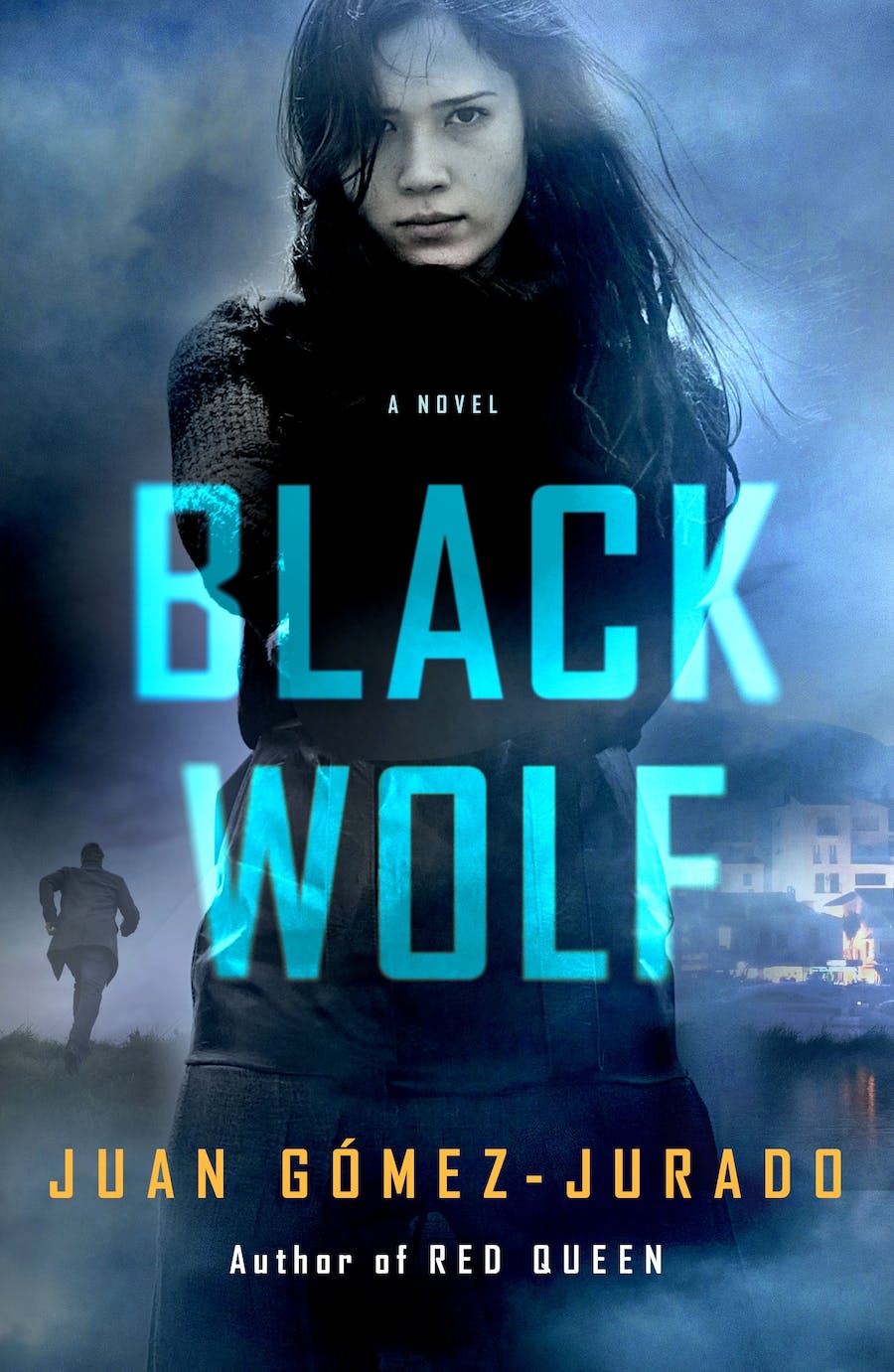
Black Wolf (Antonia Scott, #2) by Juan Gómez-Jurado

book cover

While she may be capable of functioning several levels into the future, her mind is no crystal ball. She may have the ability to visualize dozens of disparate pieces of information simultaneously, but her brain doesn’t work like in those movies where you see a whole string of letters superimposed on the face of the protagonist as they’re thinking.
Antonia Scott’s mind is more like a jungle, a jungle full of monkeys leaping at top speed from vine to vine, carrying things. Many monkeys and many things, swinging past one another in midair, baring their fangs.
Today, the monkeys are carrying dreadful things, and Antonia is afraid.

Antonia is afraid of almost nothing, apart from herself. Afraid of life, maybe. After all, she relaxes by imagining for three minutes every day how she could kill herself.

The Black Wolf is the second in Juan Gómez-Jurado’s Antonia Scott series. If you have not read the first, Red Queen, I would take a break, read that one, then come back. Also, if you have not read the first book in the series, there are some items in this review that might be spoilerish for you. Caveat lector.

Red Queen is a super-secret international anti-crime organization. They specialize in finding and developing a small number of exceptional human beings to become the mental equivalent of super-soldiers, assigned to look into Europe’s worst crimes. Antonia Scott is the Red Queen in Spain. She has an amazing mind, but also some issues, as you might suspect, given the two quotes at the top of this review. She has a pill she takes when it all becomes too much for her. Sometimes she takes too many. Jon Gutierrez is an erstwhile cop from Bilbao who was recruited to assist Antonia with matters of a police sort, and with more baby-sitting types of responsibilities. He is a large man (but not fat) with red hair, and a very good guy. The pair had a nasty adventure in book #1, with a primary villain who remained beyond their reach.

description
Juan Gómez-Jurado – Image from Expansión – photo credit – Luis Malabran

We begin with the extraction of a very water-logged body from a river. Antonia wonders if it might be a major nemesis from the prior book, Sandra Fajardo. She has been on the lookout for this baddie ever since.

The story continues with an assassination attempt at a shopping mall in Marbella, a city on Spain’s southern coast. A mafioso has been killed. His beautiful wife, Lola Moreno, who travels with a bodyguard, is set upon by a professional assassin or two, but the lady has skills, and manages to escape. She will provide one of the two major story lines of the novel. Antonia and Jon are sent to have a look by their boss, the mysterious Mentor, which made me think of M in the Bond novels

We alternate, more or less, between Lola’s flight from henchmen directed by a Russian mafia don, and Antonia’s and Jon’s tracking of clues. This is Antonia’s domain, seeing, or sensing things that others miss. She is somewhere between Sherlock Holmes and Lisbeth Salander of the Millenium series.

There will be blood, unpleasantness with cars, an infuriating discovery, close calls, and twists. We get some backstory on both Lola and Antonia, helping explain how they became who they are.

And then there is a killer, the famed assassin, the Black Wolf, feared even by other professional killers.

description
Vicky Luengo as Antonia and Hovik Keucherian as Jon – image from Amazon UK

Many of the chapters begin with fairy-tale-like recollections. This one is typical.

There was once a little girl who grew up in a sad, loveless home where the food tasted of ashes and the future was black, she tells herself as she waits.

Jorado offers paralleling of characters. For example, the mob boss Orlov with Mentor, and Antonia with the Black Wolf. It is satisfying to see excellent craft like this on display.

He also regularly offers up a collection of interesting foreign words, that describe a particular situation or feeling better than Spanish or English. Here are a couple:

Kegemteraan is in Malay. In Malay it would mean “the joy of stumbling”. The simultaneous feeling of pleasure and grief when you know that you have done something that you shouldn’t.
Curious. You know you are wrong but you keep doing it again and again since it hurts but you also enjoy it.

Bakiginin – In Karelian, a language spoken from the Gulf of Finland to the White Sea, it means “the sadness of a wall builder.” The contrast between the need to keep the world away from your life, and the impossibility of doing so.

Gomez-Jurado did this in the first book in the series. It is a charming element.

description
Alex Brendemühl as Mentor – image from Amazon UK

One thing that irks in tales of this sort is the perpetually stupid local authority. Here the area captain seems to be blaming A&J for the carnage that they are investigating, as if they had somehow caused it. But the author has some fun with this trope, which I will not spoil here.

Antonia’s and Jon’s personal relationships come in for examination, enhancing their appeal, but it is kept to a minimum, so adds color without interfering with the story.

And the story is great fun. A rock’em sock’em thriller, pitting the best mind against the darkest evil, with plenty of conflict, and lots of clues (and some red herrings) to tease you into guesses and theories. Humanizing of (some of) the baddies combines with offering appealing, quirky, leads and a story that speeds along way over the limit. The Black Wolf is an excellent follow-up to Red Queen, leaving one panting for the third entry in the series. That need will be satisfied on March 12, 2025, with the publication in English of The White King. I can hardly wait.

She has a black belt in lying to herself, and only a yellow one in expressing her reality.

Review posted – 07/26/24

Publication date – 3/12/24 – in English
First published in Spain – 10/24/2019

I received an ARE of The Black Wolf from Minotaur in return for a fair review. Thanks, folks, and thanks to NetGalley for facilitating.

<

This review is cross-posted on Goodreads. Stop by and say Hi!

=======================================EXTRA STUFF

Links to Gomez-Jurado’s personal, FB, and Twitter pages

Profile – fromWikipedia

Born in Madrid, Spain on December 16, 1977, Juan Gómez-Jurado, is a Spanish journalist and author. He is a columnist in “La Voz de Galicia” and “ABC”, distributed in Spain, and he participates in multiple radio and TV programs. His books have been translated into 42 languages and he is one of the most successful living Spanish authors, along with Javier Sierra and Carlos Ruiz Zafón. His writing has been described by critics as “energetic and cinematographic”. He worked in various Spanish media outlets, including 40 Principales, Cadena Ser, Cadena Cope, Radio España, Canal + and ABC, before publishing his debut novel, God’s Spy (Espía de Dios) in 200

Interview
—–Radio New Zealand – Spanish author Juan Gomez-Jurado on his best-selling – audio – 23:32 – by Kathryn

My review of Gomez-Jurado’s prior book
—–2023 – Red Queen

Music
—– Joaquín Sabina – 19 Days and 500 Nights – Jon listens to this

Item of Interest
—–Arganzuela Footbridge – appears in Chapter 3

Leave a comment

Filed under Fiction, Mystery, Reviews, Thriller

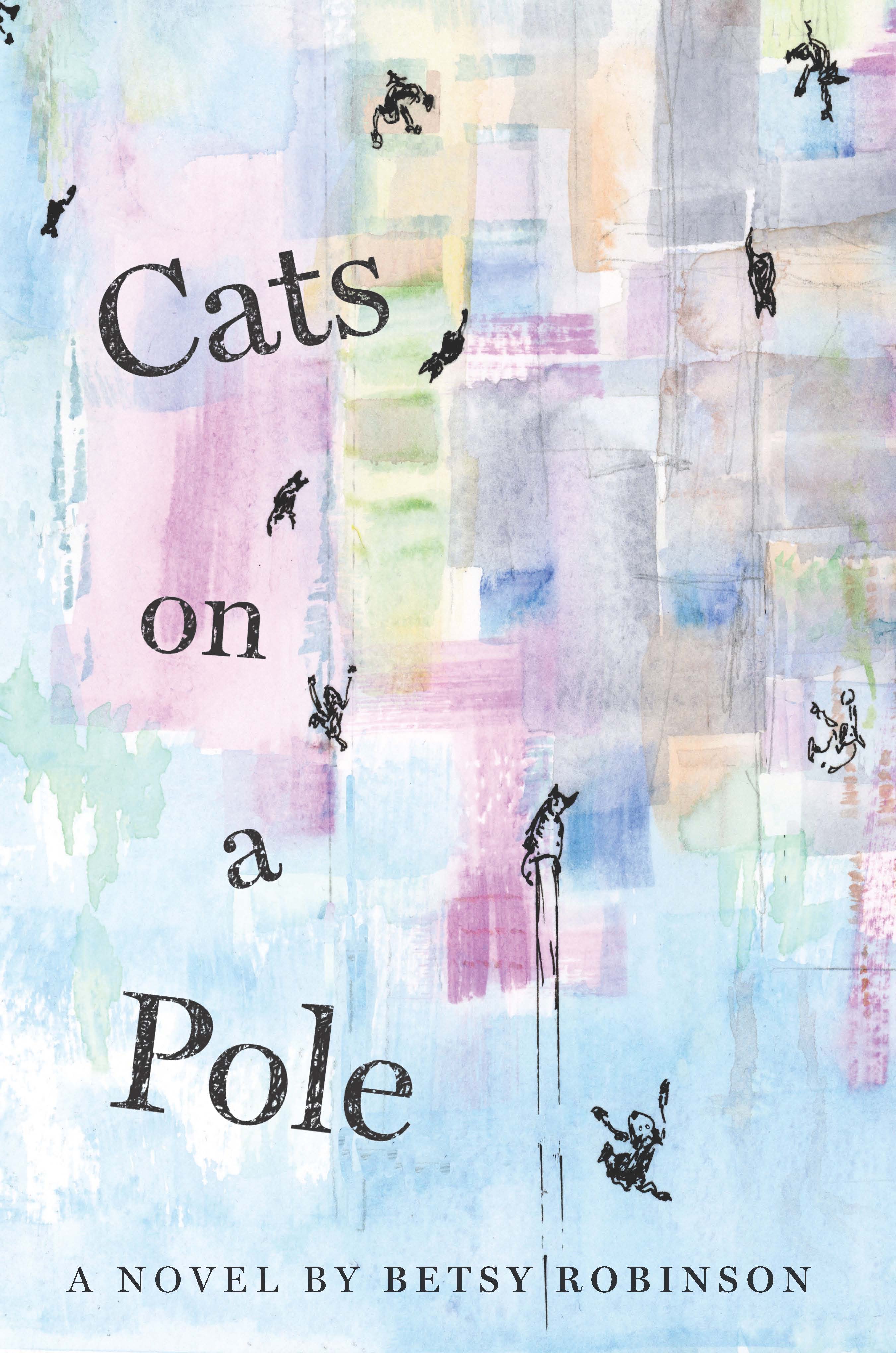
Cats on a Pole by Betsy Robinson

book cover

Harmony thought about cats as she rolled out of bed and staggered to the bathroom. Her favorite cat was the one that used to get stuck on top of a telephone pole in front of the house where she grew up. At least once a month in the warm weather, she’d hear the neighbor kids yelling, “Cat’s on a pole!” as they gathered around to taunt the poor thing.
Harmony would watch the scene from her kitchen window, and a couple of times she tried to thought-talk the cat down. “Are you out of your mind?” the cat would answer. “They’ll kill me.”

When he was forty-three, he met Judy. By then, construction work had taken second seat to massage therapy, where he discovered he had a gift.
He didn’t understand how it worked; he just knew that when he touched people, his hands grew hot, his heart exploded, the room filled with colors, and sometimes helpers in subtle bodies would instruct him where to touch. And the clients felt better.

Harmony and Joshua have special abilities. You might even call them superpowers. As with most such talented people, that has not necessarily led to them being happy. Joshua makes a living running healing classes at his own studio. He has always had what seems a pheromonic gift for attracting women. Woof! But commitment has never been a strong suit. Until he married Judy and they had a baby, Emily. Still, it is tough to resist all those longing gaze from his students and assistants.

description
Betsy with pooch – image from her site

Harmony is forty-something, works at a gardening magazine, is of uncertain ethnicity, having been adopted and having no real memory of her birth parents, and is different from the rest of us. She sees colors around people, auras, and has a sense of smell that allows her to tell about a person’s health, among other things. It is understandable that being in a relationship can be tough if you can pretty much read the other person’s thoughts and feelings. Insightful? Yes, very literally. She thinks of it as being about energy, hers, others, an experiential milieu no stranger to her than seeing the usual colors or hearing the sounds of the world are for most of us. But can you live through every day seeing, sensing the world like that? Harmony is in mourning for her best friend, her late pooch and beloved companion of 18 years, Delilah.

Each believes they are unique, and are destined to remain that way. It is pretty clear that these two crazy kids are destined to get together in one way or another. In this magical rom-com, they meet cute on a Manhattan bus, and we are off to the races.

The story centers on their relationship, which, surprisingly, never gets truly physical. Maybe metaphysical? With or without physical touching it is intensely sexual. They are both, because of their abilities, outsiders. Joshua manages by running a school, trying to help people find the abilities they have, but do not recognize. He is able to direct his energy to healing as well. ”We all have this capacity,” says Robinson in her video promo for the book. She has been involved for a long time with spiritual psychology and healing arts, so brings an interesting perspective to Joshua and Harmony’s capacities.

[In therapy] I was talking about how I reacted to various people in the office. There was one guy there who wanted an office wifey. I couldn’t stand this guy. Every time he would approach me it was like I was getting slimed with ectoplasm. Etheric gunk would come over me. I wanted to take a shower.

Harmony gets more ink of the two, with a large piece of that her interactions with her therapist, Doctor Thompson. These are fabulous.

Spectral beings are also a considerable presence. Ghosts? Angels? Something else? Like Julie Jordan in the musical Carousel, Harmony’s favorite musical, both Joshua and Harmony see or sense presences, which sometimes become active to the point of issuing directions.

Keep an eye out for mirrors, an image that pops up multiple times. Can you actually see yourself? Or does truly getting to know yourself require another person?

There are a few cockroach POV scenes that are hilarious, even to a native of NYC who had to contend with them for a lifetime, sometimes in large numbers. Lord knows, those of us who have spent much of our lives in city apartments can well attest to their persistence, and share Josh’s frustration at their ability to mockingly skitter away from our attempts to extinguish them. Robinson is a funny writer, so there are plenty of LOLs throughout the novel, not all related to bugs.

Cats on a Pole is a moving story about people searching for…something, love, companionship, understanding, truth, connection, release. There will be tears as well as laughs. The novel also offers a deeper perspective on spirituality and the meaning of death. It all builds up to a surprising climax, so buckle in. These cats may be stuck atop a pole, (or multiple poles?) getting some temporary safety, but they also gain a broader view of the world, and so will you.

What was extraordinary were her colors—raw red and orange energy around her torso, a deep indigo, bluer than the bottom of the ocean with radiant purple wafting through it vibrating so fast above her head it made him feel faint just to watch it. But watch it he did. How could he not? Her desire was direct and raw.

Review posted – 07/05/24

Publication date – 07/02/24

I received an eBook version of Cats on a Pole from the author in return for a fair review. Thanks Betsy.

This review is cross-posted on Goodreads. Stop by and say Hi!

=======================================EXTRA STUFF

Links to Robinson’s personal, Twitter and FB pages

(Partial) Profile – from her site

Betsy Robinson was raised an atheist and went on to make her living as a writer and editor of spiritual subject matter: as managing editor of Spirituality & Health magazine for six and a half years and as an editor of spiritual psychology and books about shamans and traditional healers.

She is or has been an actor, a playwright, an essayist, an editor, a freelance writer, messenger, paralegal, legal secretary, chambermaid, IHOP hostess, fortune cookie writer, novelist, and more. Cats on a Pole is her third novel. Plan Z was published in 2001 and The Last Will & Testament of Zelda McFigg came out in 2014.

Interviews
—– Ectoplasmic Inspo + Publisher at 73: Betsy Robinson – mostly on becoming a publisher
—– Why Publish “Cats on a Pole” and “The Spectators” Now? self-interview – video – 4:25

My review of an earlier book by the author
—–The Last Will & Testament of Zelda McFigg

Songs/Music from Carousel – Harmony buys a CD of the 1987 revival
It does make one wonder if Harmony’s last name was an homage to the composer.
—–What’s the use of Wond’rin
—–The Carousel Waltz
—–You’ll Never Walk Alone
—–If I loved You

Items of Interest from the author
—– Her promo video
—–Book trailer
—–Betsy reads from the book

1 Comment

Filed under Fantasy, Fiction, Reviews, Romantic Comedy

Under the Storm by Christoffer Carlsson

book cover

History doesn’t allow itself to be rewritten that easily.

One single night: A house burned down in Tolarp. There was someone inside, on the kitchen floor. One instant, a before and after: the stillness before the spark appeared, and the inferno that followed. One single event: That was all it took to redirect the path of a life. Like the filament of a root moving through time.

Or, in this case, two lives.

How do you deal when the thing that obsesses you interferes with your life?

Isak Nyqvist is seven years old in 1994. Vidar Jörgensson is a young cop, four years in the police. We will follow them through the next twenty-one years. Both their lives are largely defined by the fire that takes place on a cold night in November. A young woman is found dead inside a torched house. It was not the fire that killed her.

description
Christoffer Carlsson – image from Frankurter Rundschau – credit Emelie Asplund

Isak loves his uncle Edvard, 25, who has spent a lot of loving time with him, but Edvard has a history of rage, much of it provoked, and a lot of it ascribed to him because his father was a violent person. He had been dating Lovisa Markstrom, was seen leaving the scene of the crime on the night of the fire, and is presumed to have been the one who killed her. There is circumstantial evidence supporting that belief. The town is certain of it, given his family history. The person who had seen him that night was Vidar. But Vidar has his doubts, or will.

Vidar has many local connections and uses those to help his investigation. Isak’s family is known by everyone, not in a good way. Gramps was known as a violent person. Isak’s uncle Edvard was also painted with that same brush, so it is easy to believe that he killed his girlfriend. Isak is only 7 when the murder take place but local biases, and bullies pile on Isak, assigning to him the snap-judgments that were affixed to his uncle

The story is told in three parts, the first being when the death occurred, 1994, the second in 2003 and the third in 2015. Even though Isak has doubts, he still cannot believe his loving, kind uncle could be responsible for a murder. Vidar becomes aware of some problems with the evidence, sees alternate explanations for the crime and becomes obsessed with it for the rest of his police career and beyond. It even threatens his marriage (Wait, didn’t she know this about him when they got together?) The trope of the investigator’s non-understanding significant other gets on my nerves.

Isak is impacted both internally, wondering if Edvard really was a killer, and wondering if genetics are destiny, and externally, as bullies constantly remind him that his uncle is serving time, and provoking him to violence. (Why are provoking bullies never held to account? Is the world really that dumb? Don’t answer that.)

The long expanse of the tale gives us insight into the main characters, how they feel and behave in the world, and what has gone into creating those feelings and behaviors. It is both heart-breaking and illuminating.

The parallelism of Isak and Vidar works well, showing how history ripples forward into the future for both of them, albeit in very different ways. Carlsson offers many specific ways in which their paths run in the same direction. Both their lives are crap, in a way. Both have boxes of clues to their mysteries. Vidar’s wife’s assumptions and lack of understanding re Vidar mirrors the community’s view of Erik. Vidar imagines himself as a child, akin to a dream of Isak’s

In Carlsson’s previous novel (at least as far as USA release dates go) Carlsson had used a similar structure, with Vidar’s father tracking a crime from 1986 to 2019, stopping off at several intermediate years to track the characters and advance our understanding of the very cold case.

This original Swedish language book was released in 2019, before Blaze Me a Sun (2021). Vidar Jörgensson features in this one. But in the later book, it is Vidar’s father who stars, with Vidar being introduced later in the tale. I do not know if Under the Storm was intended as a prequel, or maybe was written later but published earlier. I read the pair in the order in which they were published in the USA, #2, then #1. There is a third, which was released in Sweden in 2023, Levande och döda (The Living and the Dead). I do not know when an English translation will be available.

Family is a major concern, as it was in Blaze Me a Sun. How does the cop’s obsession (or deep commitment to truth) impact his friendships, his work life, his marriage? (“You seem so far away sometimes,” she said at last.) How does Isak’s affection for and connection with a much-loved uncle affect his ability to have a normal social life, to have a family life? How is the rest of Edvard’s family impacted by his travails?

As with Blaze Me a Sun, there is mention of a local superstition. That one had to do with fortune, good or bad, being caused by how one saw a particular bird. Here it is a place where a legendary rich man is buried, a place where ghostly apparitions are said to appear. Under a bridge in Anarp is where The Old Man sleeps, a boogie man who is death to anyone who meets his ghost. Non-superstition-based history is also addressed, as Carlsson tracks town history back to sundry events, like the introduction of manufacturing in the town, its loss and attempt to revive it.

A persistent motif throughout is secrecy, as one might expect in a procedural murder tale. Vidar and Isak, while not alone in this, are robust practitioners. Isak keeps two things to himself from the night of and a short time after. It is never particularly clear why he fails to tell what he knows in time to have an impact. Vidar does not tell his boss what he is working on in the latter parts of the novel. Schtupping a local married lady is also kept on the down-low. Talking separately to Edvard and Isak while not informing either of them of his contact is another. Vidar keeping secret a challenging work-based relationship also requires deceit.

The noir atmosphere gets jiggy when a major hurricane, Gudrun, blows through. Homes are destroyed, people displaced. This was a real storm that caused major damage in Sweden. Details of the experience of such a beast are chilling. Maybe not the same as the assassination of the Prime Minister in the psyche of the nation, but it had a real impact. A heat wave also adds to the tension.

Carlsson succeeds in presenting both detailed character portraits and in giving us a sense of what life was like in this area, a place in which he grew up. He is a PhD criminologist for his day job, publishing papers and teaching. He grew up around things criminal, as mom was a police dispatcher. It is clear that a lot of the conversation on which he eavesdropped at home as a kid made an impact. He knows crime, both real and fictitious, and writes with authority about it.

This is a procedural, however lengthy the duration of the investigation. You will enjoy Vidar picking up on clues and following through, as he spends a lifetime attempting to find out the truth about that night. In the beginning it is a hot, fiery case that becomes a cold-case in the following parts of the novel. (In Sweden are all cases cold cases?) But not to Vidar. He is a flawed guy, but is determined to find out what really happened that night. Under the Storm is a triumph of the genre, tickling your brain with the mystery, engaging you emotionally with the characters, and offering up informed looks at a place and time, well, times. As a smart, accomplished example of Swedish noir, Under the Storm is out of this world.

The world had shown what it was truly capable of. As if a lifeline was suddenly severed, it could take your loved ones away. The world watched without blinking as you fell.

Review posted – 06/28/24

In Sweden – 3/1/2019
English Translation – 2/27/24

I received an ARE of Under the Storm from Hogarth in return for a fair review. Thanks, folks, and thanks to NetGalley for facilitating.

This review is cross-posted on Goodreads. Stop by and say Hi!

=======================================EXTRA STUFF

Links to the Carlsson’s Instagram and Twitter pages

Profile – from Penguin Random House

Christoffer Carlsson was born in 1986 on the west coast of Sweden. He holds a PhD in criminology from the University of Stockholm and is one of Sweden’s leading crime experts. Carlsson is the youngest winner of the Best Swedish Crime Novel of the Year, voted by the Swedish Crime Writers’ Academy, and has been a finalist for the prestigious Glass Key award, given to the best Scandinavian crime novel of the year.

Interview
—–The Occasional Bookwitch Christoffer Carlsson – neither pink nor fluffy

It’s close to where he grew up, where he and his brother used to play. And then, halfway through writing the book, his parents sold up and moved away from his childhood home, moving into a flat in town, enjoying their new life on the 13th floor with marvelous views. ‘The novel became some sort of farewell. It was pretty hard. It’s as if part of my past has moved out of reach.’

My review of another book in this series
—–Blaze Me a Sun

Item of Interest from the author
—–With the Dead – this is a must-read item, as Carlsson details how he became a writer. You will see how his books incorporate elements of his life.

Item of Interest
—–Cyclone Gudrun

Leave a comment

Filed under Fiction, Mystery

How to Win Friends and Influence Fungi – edited by Chris Balakrishnan, Matt Wasowski

book cover

Nerd Nite is an event usually held at a bar or other public venue where usually two or three presenters share about a topic of personal interest or expertise in a fun-yet-intellectual format while the audience shares a drink. It was started in 2003 by then-graduate student (now East Carolina University professor) Chris Balakrishan at the Midway Cafe in the Jamaica Plain neighborhood of Boston. In 2006 Nerd Nite spread to New York City, where Matt Wasowski was tasked with expanding the idea globally. – from Wikipedia

Be There and Be Square – Nerd Nite logo

There was a nerd magazine in 2012, a Youtube presence, and occasional podcasts. This is the first Nerd Nite book.

Misophonia can attach itself to any repetitive sound, but the most common ones are things, like chewing, breathing, sniffing, and throat clearing. It can be hard for sufferers to talk about because of how difficult it can be to tell someone politely that the sound of them keeping themselves alive is repulsive to you.

There are 71 entries, taken from live presentations done by the authors of each piece. (TED talks for those with short attention spans and a need for alcohol?) Nerd Nites have been held in over 100 cities across the globe. The material here covers eleven scientific areas. (see below) All the entries are brief, so if one does not appeal to your mental tastebuds hang on a couple of minutes for the next one, or just skip past.

description
Chris Balakrishnan and Matt Wasowski – editors – image (from some time ago) from Facebook

You can digest this book a few morsels at a time, and not have to worry about the fate of a fictional hero or put-upon victim. Nope. The heroes here are the scientists, the presenters. One of the great failings of popular science books, IMHO, is the absence of humor, or poor attempts at it. Not here. There are many moments in this one, and humor in almost all of them. That made me very happy. Of the 71 pieces, almost all are very pop-sciency, understandable by most readers, even me. There were only one or two that made my head hurt. It makes an excellent bed-side read. It was an upstairs book for me, to be read before nodding off, hopefully. Sometimes that takes a while. This is not an all-inclusive list of the articles, but lets you know what might be in store in its eleven sections

1 – Creature Features – on weird animals
2 – Mmmm…Brains – strangeness with how we learn and adapt
3 – Bodily Fluids – on things like coping with poo in space. (In space, no one can hear you fart?)
4 – Doing It – like it suggests, on sex, human and non-human, (no, not with each other. Don’t be weird.)
5 – Health and (un)Wellness – human smells (See Paul Giamatti in The Holdovers) – on therapeutic maggots, adolescent medicine, et al
6 – Pathogens and parasites – on birds, bacteria in birds, zombies, the scotch tape test (don’t ask), viruses
7 – Death and Taxes – mass extinction, cancer, algae
8 – Space, the Big and the Beautiful – ignorance, asteroid avoidance and use, life on Europa?, artificial gravity, studying a pristine meteorite, Webb telescope
9 – Tech (High and Low) – GMOs, dating app, human powered flight, cyborging humans, domesticating bacteria, nuclear fusion
10 – Math is fun – a seminal experiment, the math of gossip, the golden ratio, infinity, cryptography
11 – Careers – things removed from dogs, useless inventions, myths about death, animals CSI, amputations, fermentation, flames.

there are approximately 100 trillion microorganisms (mainly bacteria), representing as many as 30,000 different species, living in every crevice, nook, and mucosal cranny of your body that you can imagine.

I would include a list of my favorite articles, but it would wind up as long as the parts list above. But ok, because I have the sense of humor of a twelve-year-old, the one that made me laugh the most was To Boldy Go: Dealing with Poop and Pee in Space. Apollo 10 astronauts were gifted with the visual, and no doubt olfactory, treat of a turd meandering about in their capsule. This begins a talk about how one handles bodily waste in zero G. Another on bladder control, or the absence thereof, was sidesplitting. Others, on camel spiders and hangovers, generated a fair number of LOLs.

Some were fascinating, like one having to do with making a brain on a chip. (Can it be served with Salsa?) The pieces on bacteria and their importance to human life, heck, to all life on Earth, were fascinating.

There is plenty of weirdness, about diverse forms of milk, the proper use of maggots in healing, zombie parasites, asteroids, artificial gravity, and here we go with another bloody list. Sorry. Take my word, there is a wealth of material here that will broaden your knowledge base, and serve up plenty of conversational hors d’oeuvres for cocktail party chatter.

It worked quite well for me. There is a downside, though. Because all the articles here are very short, one is often left hungry for more. On the other hand, that limitation might provoke you to sate that desire with a bit of extra research, which is always a good idea. So, never mind.

If science piques your curiosity, if learning new and diverse things makes your heart race, or if you like to laugh, then this book is for you. How to Win Friends and Influence Fungi is a very filling read, one nibble at a time.

Review posted – 06/14/24

Publication date – 02/01/24

I received a hardcover of How to Win Friends and Influence Fungi from St. Martin’s Press in return for a fair review. Thanks, folks.

This review is cross-posted on Goodreads. Stop by and say Hi!

======================================EXTRA STUFF

Author/Editor links

Chris Balakrishnan – Program Director at the National Science Foundation – His personal and FB pages
A list of his articles

Matt Wasowski – Director of New Business and Product Development, Events at SAE International – His FB, LinkedIn and Twitter pages

Items of Interest from the authors (really editors)
—–Soundcloud – excerpt – 5:01
—–Birdsong: How the Twittering Set Learns to Speak
—–“Nerd Nite Published a Book!” by Matt Wasowski – Nerd Nite Austin 155, January 2024

1 Comment

Filed under Non-fiction, Psychology and the Brain, Reviews, Science and Nature

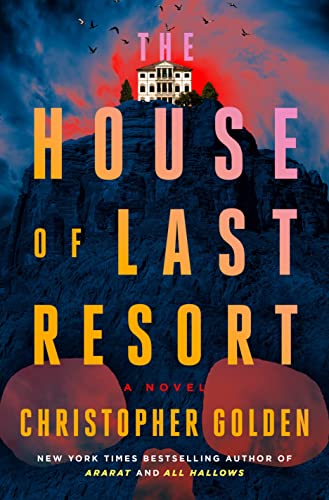
The House of Last Resort by Christopher Golden

book cover

A forty-minute drive from the volcanic Mount Etna, Becchina should have been alive.
Instead, it was the corpse of a town that didn’t even realize it was already dead.

A low scritching noise caught his attention, and he swung the flashlight beam down to the right, where the natural tunnel and the man-made wall formed a dark and jagged corner. Tiny, putrid-yellow eyes glittered in the shadows.
“Jesus Christ!” Tommy hissed, jerking backward in revulsion as the flashlight beam illuminated the foot-long rat crouched in that corner.
Silent, twitching, the rat stared brazenly up at him, unafraid. It watched him with apparent disdain, as if to let Tommy know that he was the intruder here, not the rat.

A deal that is too good to believe. Ownership of an abandoned hilltop house in a Sicilian town (Becchina, a made-up town, – buh-kee-na) for a single euro, as long as you agree to live there for five years and invest 50K euros fixing it up. What could possibly go wrong? Tommy and Kate Puglisi see this as a once-in-a-lifetime opportunity. A chance for a much better future than they could ever afford in Boston.

description
Christopher Golden – Image from MichelleRLane.com

The world seemed to be unraveling every day. American culture seemed to be rotting from the inside out, manipulated by an amoral oligarchy whose worst enemy was young people who didn’t want to play their game, and Kate and Tommy were happy to be counted in that category. The irony had not been lost on them, that the nineteenth and twentieth centuries had been defined by people leaving the so-called Old World to seek their fortunes in the New World, and now she and Tommy were doing the opposite, seeking new life in the Old World. But they both believed that earlier generations had it right—a slower life, a smaller circle, a focus on home.

That Tommy’s family had come from Becchina gave it an additional draw, a chance to spend time with his grandparents, whom he loved and very much wanted to see lot of in their final years. The importance of that is magnified by the fact that both of Tommy’s parents are dead. Tommy and Kate are on extended time off from work, so can attend to getting things fixed up before returning to their jobs, remote jobs, which allows them the freedom to live anywhere. And they do not yet have children.

Of course the house comes with some unadvertised extras. The book opens with:

The rats are like fingers.
No. That’s not right. Fingers can reach out, can grasp and extend. The rats are not like fingers at all. They are periscopes, like those on submarines, each able to give its captain only a limited view of the world above. From their place below, among the dead, the lost ones can see only as far as the rats can see. But they are patient, and so they wait. And they let the rats run.

Uh oh. Squatters. Toss in being within commuting distance of Mount Etna to shake things up. Oh, and that lady down the hill who is always staring daggers at them whenever they pass by. And the family, who is warm and welcoming but not altogether forthright about the history of the town or the house. On the other hand, there is a group of other new arrivals, lured by the same opportunity. They call themselves The Imports. It’s fun seeing Tommy reconnect with famiglia. He and Kate slowly get to know the town and some of its residents, make friends, and come up with a plan to boost the local economy. Can-do Yanks in action.

But things keep happening. Kate thinks she sees someone in the house, but did she really? A tremor arrives soon after they do. There is a part of the house that the R/E agent somehow managed to overlook when showing the place. A door that was locked, but then is mysteriously open. Golden makes generous use of Gothic fiction features (see abbreviated list in EXTRA STUFF) to give you chills.

Tommy and Kate are actually a happy couple. Many horror books use spectral events as manifestations of underlying relationship problems. Not the case here. This is also not a case in which better-off sorts gentrify an old area, forcing out the locals. Instead, they are trying to save, replenish, and reconstruct, infusing new life into a withered, crumbling, forgotten town. The houses The Imports bought were already abandoned. The newbies are looking to build up not just the houses they occupy but the community as well. So, the dark forces here are not cutouts for obvious social criticism. They are pretty much straight up malignancy coming at you in sundry ways. One way is our visceral reaction to vermin.

The rats that feature in the opening lines persist throughout, gaining in their power to induce fear and loathing. It was a specific choice. In the Book Nook interview, Golden talks about how he believes we mortals have a race-memory fear of rats, the result of plagues that wiped large portions of humanity from the planet multiple times, akin to the natural fear most of us have of snakes, from the days when they were in our immediate environment and posed a mortal threat. Rats give us the creeps.

What you get in The House of Last Resort is a likable pair in peril, with a plentiful supply of scary, a cauldron of creepy, and a shipload of shivers. If you think your basement is a mess, you have no idea. There are nifty twists, some local color and action aplenty to keep you turning the pages. Depending on your susceptibility to such books, you may get a sleepless night or two out of this one. A fun read, a pure entertainment, uncluttered by larger sociopolitical concerns, a fabulous summer read. But probably a bad idea to take this along if you plan to visit Sicily.

A voice crying out. Tommy frowned, wondering if that had been a dream or if it had been what woke him.
The wind gusted, rattling the window in its frame. He listened to see if the cry would come again but heard nothing beyond the sighs and creaks of the old house.

Review posted – 04/05/24

Publication date – 01/30/24

I received an ARE of The House of Last Resort from St. Martin’s Press in return for a fair review, and some DNA samples. Thanks, folks, and thanks to NetGalley for facilitating.

This review is cross-posted on Goodreads. Stop by and say Hi!

======================================EXTRA STUFF

Links to Golden’s personal, FB, Instagram, and Twitter pages

Profile

Golden is a monster of an author who got started, and found success, very early. He has a gazillion publications to his credit and an army-size host of teleplay credits from his years writing for Buffy with Joss Whedon, and plenty more. And then there are the comics. You may have heard of Hell Boy, among those. Here is a list of what he has published, from Fiction DB. I personally think he has elves, or more likely, goblins, chained to computers in his basement helping him crank out such volume.

My reviews of Golden’s two prior books
———-2022 – Road of Bones
———-2023 – All Hallows

Interviews
—–Paul Semel – Exclusive Interview: “The House Of Last Resort” Author Christopher Golden
—– WYSO – Book Nook – ’The House of Last Resort,’ by Christopher Golden by Vick Mickunas – audio – 50:04

Checklist – Partial Characteristics of the Gothic Novel
See my review of While You Sleep for more of this sort
Setting – castle or old mansion – oh, Yeah
Secret passages or creaky doors – of course
Atmosphere of mystery or suspense – fuh shoo-uh
Ancient prophecy or legend – sort of
Omens, portents, visions – tremors, hints from neighbors and family
Supernatural or otherwise inexplicable events – ghost sightings?
High, overwrought emotion – you betcha
Women in distress – actually not so much. Both Tommy and Kate are beset
Women threatened by powerful, tyrannical male – see above

Leave a comment

Filed under Fiction, Horror