Tag Archives: art

American Mythology by Giano Cromle

book cover

They reached the far edge of the lake, where the woods grew right up to the shore, making it dark and shadowed. Tree branches seemed to sway and move, even though there was no breeze. Luther stood very still, staring at something deeper inside the forest, a dense knot of branches and limbs braced against each other. Mud was chinked into crevices between logs. Grasses and moss thatched a roof. Jute realized it was a primitive shack, like something out of a fairy tale. Without saying a word, they slowly approached. Once they were upon it, Luther reached out and tugged a gnarled branch, which turned out to be a door. They stepped inside.

…this was what small towns did. They caught you in their nets, kept you from going out into the world and growing into the person you were supposed to be.

The prologue sets the scene. 1853, a trapper crew reports trap lines being cut, members mysteriously disappearing, whispering noises heard in the woods.

description
Giano Cromley – Image from his Twitter profile

Julius (Jute) Ramsey is our leader today. A strange event happened when he was 11 years old, on a hike up to the unmapped Ramsey Lake with his father. Subsequent signs offer more warning than welcome. Dad was clearly afraid, and all but dashed away. He became almost a different person, losing his mood control, and his job, disappearing for increasing durations until he stopped coming back at all when Jute was 16. Jute’s mission today is to return to that place and discover exactly what had so changed his father, as much as he wants to discover proof of something undiscovered

Luther tucked his chin into his Adam’s apple for a moment. “Don’t be surprised if you see some mighty strange stuff up there,” he said. “Ramsey Lake is what some folks call a thin place.” “What’s a thin place?” Jute asked. “Every culture’s got spots like this,” he said. “Where the veil between our world and the spirit world is so thin they practically overlap.”

For Jute Ramsay it is an unmissable opportunity to go on a BigFoot hunt with a major player in the field. For Doctor Marcus Bernard, eager to return to academic acceptability after a long tenure as an expert in Sasquatchology, it is a chance to re-establish his intellectual cred with a bang. He is hoping to be helped along by Vicky Xu, who had started out merely looking to do a film project on Dr. Bernard for her graduate thesis, but who sees the outing as a great opportunity. Vergil Barnes is Jute’s best friend and co-founder of the Basic Bigfoot Society of Basic, Montana, population 484. He has reason to think it may be his last, and he does not want to disappoint his buddy. Vergil’s daughter, Rye, is in from college, and tags along to help look after her father.

description
This zoomed-in image shows a creature resembling bigfoot. Shannon Parker took the photo Sunday, Oct. 8, 2023, while departing Silverton on the Durango & Silverton Narrow Gauge Railroad. She used an SLR camera with a 300 mm lens. (Courtesy of Shannon Parker) – Image from The Durango Herald

There are the usual odd things you might expect on such an adventure. Rapid, unexplained changes in weather, discoveries of clues, such as a casual acquisition of a very old, and relevant notebook. Some mysteries are not well explained, which can be irksome, but, whatever.

So, the bottom line in all such novels comes down to “is there or isn’t there?” I will not spoil it for you here. It is the journey of course that matters, or the journeys, as all six may all be on the same trail but travel their own roads. Is there magic in the world, and if so, of what sorts? Searching for Sasquatch is a journey of self-discovery for all of them.

The journal entries offer a nifty myth-making tool to keep them connected to the past and strange possibility. But the absence of harder evidence roots the tales of BigFoot in oral tradition, where most lore is communicated.

description
Bigfoot allegedly caught on cam near Braxton County, in 2019. (The source has since been determined to be from Jeffrey Stoffel and Jenna Oleson.) – image from West Virginia Explorer

Vergil faces an existential threat. Rye is there to support her ailing dad, but hears the voice of her late mother. Jute’s challenge is his need for the whole truth. Will he find it? He is a good sort, and you sure hope so. Dr. Bernard is up to cynical no-good. His journey is more annoying than not for his eagerness to dismiss all evidence, even any suggestion of possibility. Vicky abets him in this. Her struggle is less fraught than Bernard’s but providing evidence for him is why she is there. Some of the characters’ struggles are more engaging than others, but overall there is enough buy-in to keep you turning the pages for the next twist, surprise, and peril. Their concerns are serious, touching on religion, the endangered planet, and connection to family and community.

description
Image from The Keystone Newsroom

There is an explanation offered at end that was no more unbelievable than any other, maybe even a bit better than most. It is a nice-to-have, but the generally warm-hearted, open-minded, exploratory take of the book makes this an easy Summer read. Whether your piggies are petite or prodigious, and however distant your extremities may be from your face, it will definitely be worth your while to take a large step into American Mythology.

MAGIC PROTECTS THIS SPACE TURN BACK NOW

Review posted – 07/25/25

Publication date – 07/15/25

I received an ARE of American Mythology from Doubleday in return for a fair review, and destroying all copies of that map. Thanks, folks, and thanks to NetGalley for facilitating.

This review is cross-posted on Goodreads. Stop by and say Hi!

=======================================EXTRA STUFF

Links to Cromley’s personal, FB, Instagram, and Twitter pages

Profile – from the book

Author Bio: Born and raised in Montana, GIANO CROMLEY is the author of two young adult novels and a collection of short stories. He is a recipient of an Artist Fellowship from the Illinois Arts Council and was a BookEnds Fellow with Stony Brook University. He is an amateur woodworker, a certified wildlife tracker, and an English professor at Kennedy-King College, where he is chair of the Communications Department. He lives on the Southside of Chicago with his wife and two dogs. Residence: Chicago, IL Hometown: Billings, MT.

Interviews
—–Talking Scared- 245- Giano Cromly & Our Friends in the Forest
—–Chicago Review of Books – The Proof Is Out There: An Interview with Giano Cromley by Rachel Robbins

Item of Interest from the author
—– The Tao of Bigfoot

Items of Interest
—–BFO – The Bigfoot Field Researchers Organization
—–The Keystone – Bigfoot fever grips Pennsylvania as reports of strange footprints and howls surface
—–BFT – BigFoot Times

My other BigFoot book review
—–Devolution by Max Brooks

Leave a comment

Filed under Fantasy, Fiction, Horror

How to Win Friends and Influence Fungi by Chris Balakrishnan, Matt Wasowski

book cover

Nerd Nite is an event usually held at a bar or other public venue where usually two or three presenters share about a topic of personal interest or expertise in a fun-yet-intellectual format while the audience shares a drink. It was started in 2003 by then-graduate student (now East Carolina University professor) Chris Balakrishan at the Midway Cafe in the Jamaica Plain neighborhood of Boston. In 2006 Nerd Nite spread to New York City, where Matt Wasowski was tasked with expanding the idea globally. – from Wikipedia

Be There and Be Square – Nerd Nite logo

There was a nerd magazine in 2012, a Youtube presence, and occasional podcasts. This is the first Nerd Nite book.

Misophonia can attach itself to any repetitive sound, but the most common ones are things, like chewing, breathing, sniffing, and throat clearing. It can be hard for sufferers to talk about because of how difficult it can be to tell someone politely that the sound of them keeping themselves alive is repulsive to you.

There are 71 entries, taken from live presentations done by the authors of each piece. (TED talks for those with short attention spans and a need for alcohol?) Nerd Nites have been held in over 100 cities across the globe. The material here covers eleven scientific areas. (see below) All the entries are brief, so if one does not appeal to your mental tastebuds hang on a couple of minutes for the next one, or just skip past.

description
Chris Balakrishnan and Matt Wasowski – editors – image (from some time ago) from Facebook

You can digest this book a few morsels at a time, and not have to worry about the fate of a fictional hero or put-upon victim. Nope. The heroes here are the scientists, the presenters. One of the great failings of popular science books, IMHO, is the absence of humor, or poor attempts at it. Not here. There are many moments in this one, and humor in almost all of them. That made me very happy. Of the 71 pieces, almost all are very pop-sciency, understandable by most readers, even me. There were only one or two that made my head hurt. It makes an excellent bed-side read. It was an upstairs book for me, to be read before nodding off, hopefully. Sometimes that takes a while. This is not an all-inclusive list of the articles, but lets you know what might be in store in its eleven sections

1 – Creature Features – on weird animals
2 – Mmmm…Brains – strangeness with how we learn and adapt
3 – Bodily Fluids – on things like coping with poo in space. (In space, no one can hear you fart?)
4 – Doing It – like it suggests, on sex, human and non-human, (no, not with each other. Don’t be weird.)
5 – Health and (un)Wellness – human smells (See Paul Giamatti in The Holdovers) – on therapeutic maggots, adolescent medicine, et al
6 – Pathogens and parasites – on birds, bacteria in birds, zombies, the scotch tape test (don’t ask), viruses
7 – Death and Taxes – mass extinction, cancer, algae
8 – Space, the Big and the Beautiful – ignorance, asteroid avoidance and use, life on Europa?, artificial gravity, studying a pristine meteorite, Webb telescope
9 – Tech (High and Low) – GMOs, dating app, human powered flight, cyborging humans, domesticating bacteria, nuclear fusion
10 – Math is fun – a seminal experiment, the math of gossip, the golden ratio, infinity, cryptography
11 – Careers – things removed from dogs, useless inventions, myths about death, animals CSI, amputations, fermentation, flames.

there are approximately 100 trillion microorganisms (mainly bacteria), representing as many as 30,000 different species, living in every crevice, nook, and mucosal cranny of your body that you can imagine.

I would include a list of my favorite articles, but it would wind up as long as the parts list above. But ok, because I have the sense of humor of a twelve-year-old, the one that made me laugh the most was To Boldy Go: Dealing with Poop and Pee in Space. Apollo 10 astronauts were gifted with the visual, and no doubt olfactory, treat of a turd meandering about in their capsule. This begins a talk about how one handles bodily waste in zero G. Another on bladder control, or the absence thereof, was sidesplitting. Others, on camel spiders and hangovers, generated a fair number of LOLs.

Some were fascinating, like one having to do with making a brain on a chip. (Can it be served with Salsa?) The pieces on bacteria and their importance to human life, heck, to all life on Earth, were fascinating.

There is plenty of weirdness, about diverse forms of milk, the proper use of maggots in healing, zombie parasites, asteroids, artificial gravity, and here we go with another bloody list. Sorry. Take my word, there is a wealth of material here that will broaden your knowledge base, and serve up plenty of conversational hors d’oeuvres for cocktail party chatter.

It worked quite well for me. There is a downside, though. Because all the articles here are very short, one is often left hungry for more. On the other hand, that limitation might provoke you to sate that desire with a bit of extra research, which is always a good idea. So, never mind.

If science piques your curiosity, if learning new and diverse things makes your heart race, or if you like to laugh, then this book is for you. How to Win Friends and Influence Fungi is a very filling read, one nibble at a time.

Review posted – 06/14/25

Publication dates
———-Hardcover – 02/01/24
———-Trade paperback – 11/04/25

I received a hardcover of How to Win Friends and Influence Fungi from St. Martin’s Press in return for a fair review. Thanks, folks.

This review is cross-posted on Goodreads. Stop by and say Hi!

=======================================EXTRA STUFF

Author/Editor links

Chris Balakrishnan – Program Director at the National Science Foundation – His personal and FB pages
A list of his articles

Matt Wasowski – Director of New Business and Product Development, Events at SAE International – His FB, LinkedIn and Twitter pages

Items of Interest from the authors (really editors)
—–Soundcloud – excerpt – 5:01
—–Birdsong: How the Twittering Set Learns to Speak
—–“Nerd Nite Published a Book!” by Matt Wasowski – Nerd Nite Austin 155, January 2024

1 Comment

Filed under Non-fiction, Psychology and the Brain, Science and Nature

Artificial by Amy Kurzweil

book cover

What makes a person the same person over time? Is it our consciousness, the what-it’s-like to be us? Is consciousness like a light that’s either on or off?

What remains of a person once they’ve died? It depends on what we choose to keep.

Amy Kurzweil is a long-time cartoonist for The New Yorker. If the name sounds a bit familiar, but you aren’t a reader of that magazine, it may be because her father is Ray Kurzweil. He is a genius of wide renown. He invented a way for computers to process text in almost any font, a major advance in making optical character recognition (OCR) a useful, and ubiquitous tool. He also developed early electronic instruments. As a teenager he wrote software that wrote music in the style of classical greats. No gray cells left behind there. He happened to be very interested in Artificial Intelligence (AI). It helps to have a specific project in mind when trying to develop new applications and ideas. Ray had one. His father, Fred, had died when he was a young man. Ray wanted to make an AI father, a Fred ChatBot, or Fredbot, to regain at least some of the time he had never had with his dad.

description
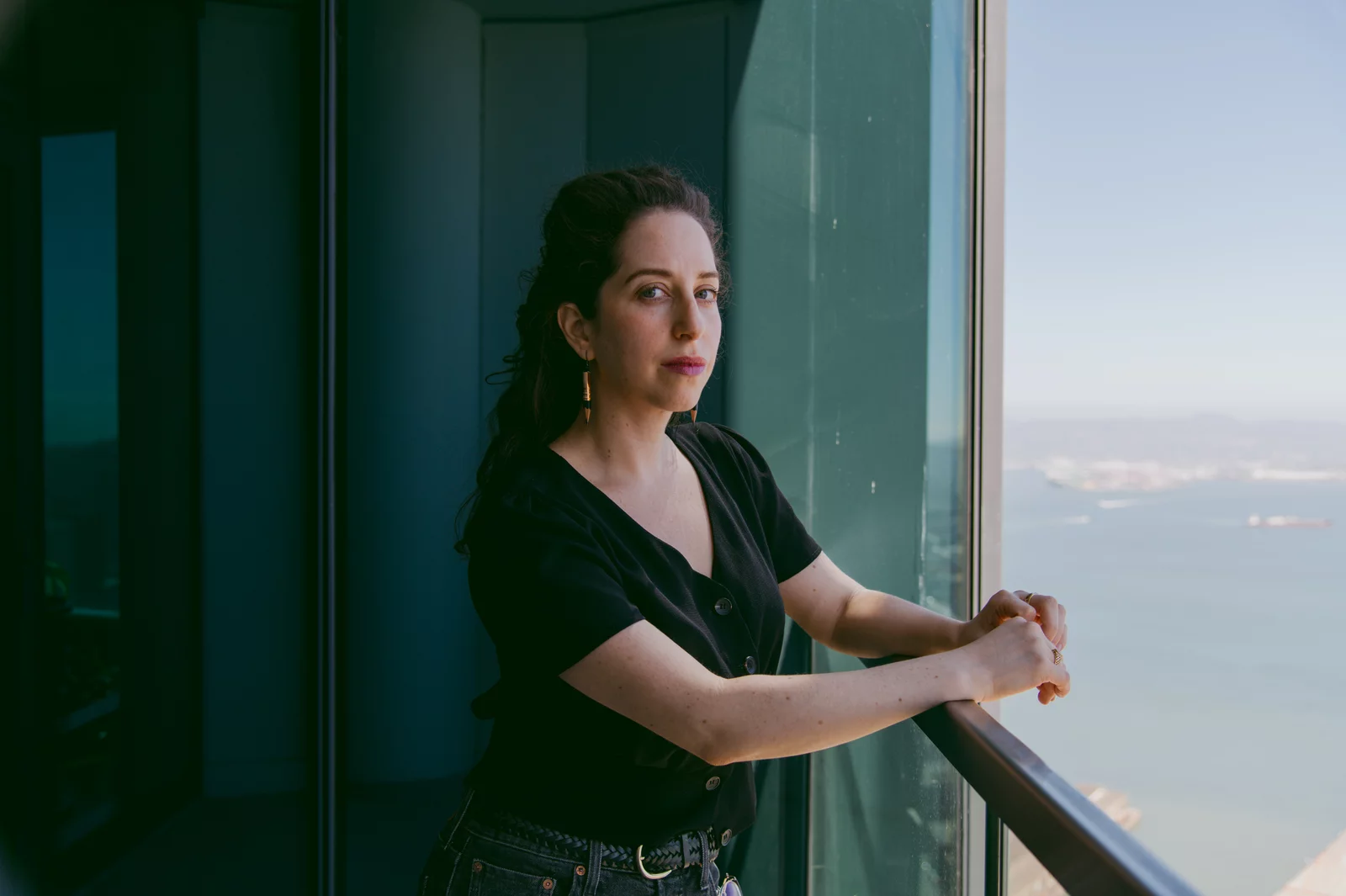
Amy Kurzweil – Image from NPR – shot by Melissa Leshnov

Fred was a concert pianist and conductor in Vienna in the 1920s and 1930s. A wealthy American woman was so impressed with him that she told him that if he ever wanted to come to the USA, she would help. The Nazification of Austria made the need to leave urgent in 1938, so Fred fled with his wife, Hannah. (He had actually been Fritz in Austria, becoming Fred in the states.) He eventually found work, teaching music.

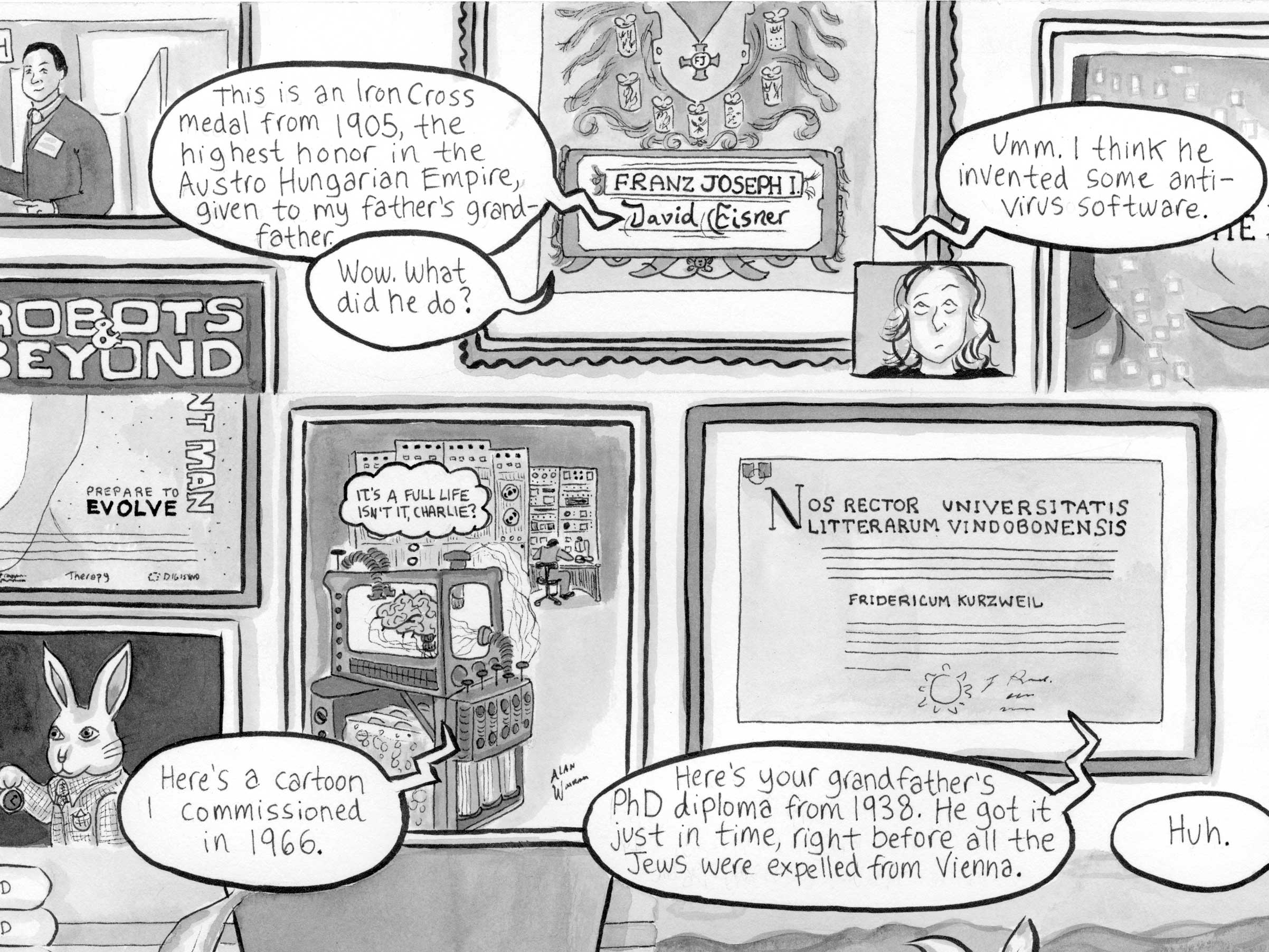
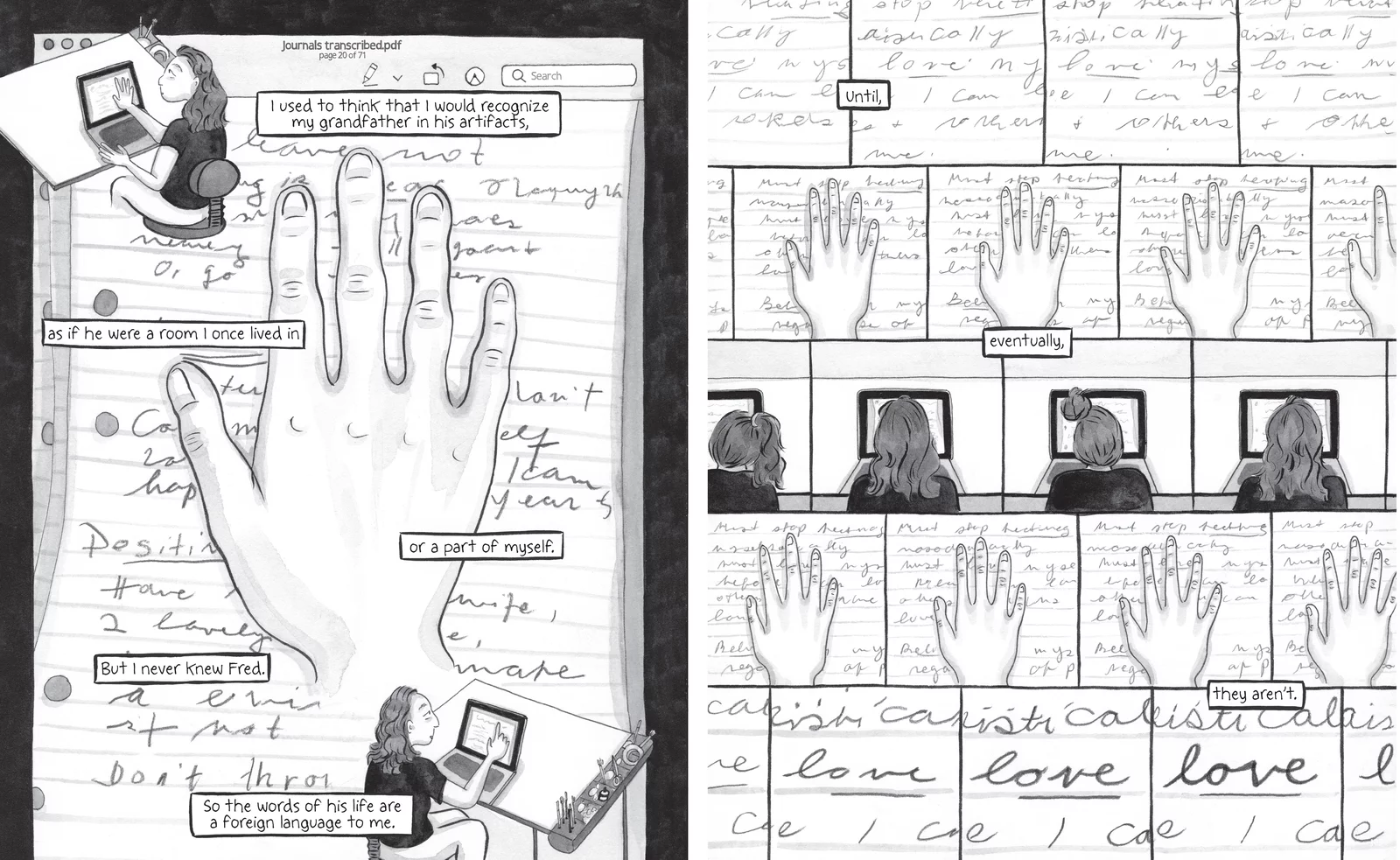
Artificial: A Love Story is a physically hefty art book, a tale told in drawings and text. Amy traces in pictures her father’s effort to reconstruct as much of his father’s patterns as possible. To aid in the effort there was a storage facility with vast amounts of material from his life both in Austria and in America. She joins into the enterprise of transcribing much of the handwritten material, then reading it into recordings which are used to teach/train the AI software. It is a years-long process, which is fascinating in its own right. She also draws copies of many of the documents she finds for use in the book.

description
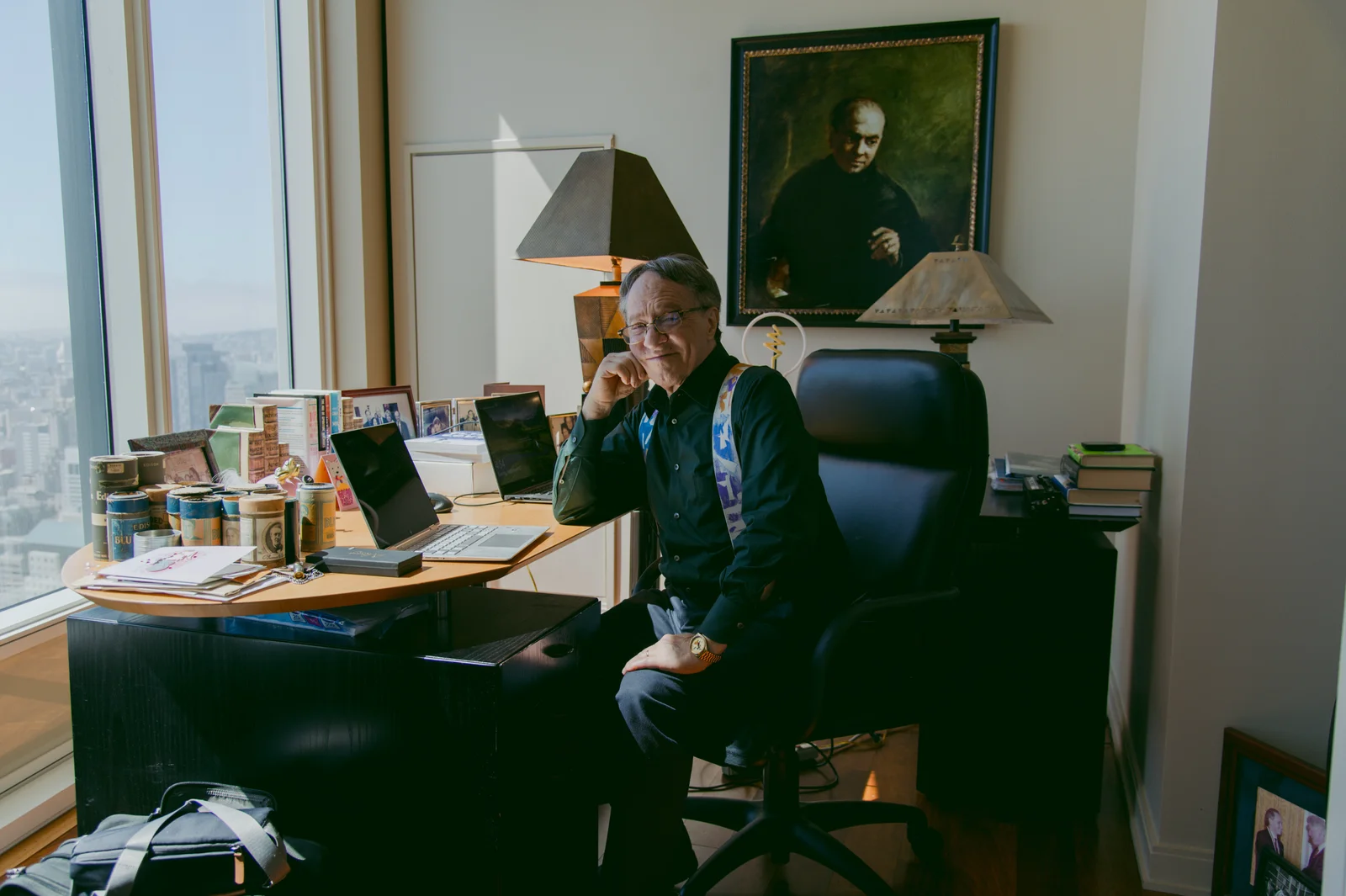
Ray Kurzweil with a portrait of his father – image from The NPR interview – Shot by Melisssa Leshnov

But there is much more going on in this book than interesting, personalized tech. First, there is the element of historical preservation.

I always understood my father’s desire to resurrect his father’s identity as being connected to two different kinds of trauma. One is the loss of his father at a young age in a common but tragic scenario, with heart disease. The other trauma is this loss of a whole culture. Jewish life in Vienna was incredibly vibrant. Literally overnight it was lost. The suddenness of that loss was profound, and it took me a while to appreciate that. My great-aunt Dorit, who died this past year at 98, said they were following all the arbitrary protocols of the Nazis to save all this documentation. Saving documentation is an inheritance in my family that is a response to that traumatic circumstance. – from the PW interview

Kurzweil looks at three generations of creativity, (Fritz was a top-tier musician. His wife, Hannah, was an artist. Ray was also a musician, but mostly a tech genius. Amy is a cartoonist and a writer.) using Ray’s Fredbot project as the central pillar around which to organize an ongoing discussion of concepts. In doing so, she offers up not merely the work of the project, but her personal experiences, showing clear commonalities between herself and her never-met grandfather. This makes for a very satisfying read. Are the similarities across generations, this stream of creativity, the impact not just of DNA, but of lived experience? Nature or nurture, maybe the realization of potential brought to flower by the influence of environment whether external (living in a place that values what one has to offer) or internal (families nurturing favored traits)?

description
Image from the book – posted on The American Academy in Berlin site

One could ask, “what makes us what are?” The book opens with a conversation about the meaning of life. But life is surely less determinative, less hard-edge defined than that. A better question might be what were the historical factors and personal choices that contributed to the evolution of who we have become?

description
Image from the book – it was posted in the NPR interview

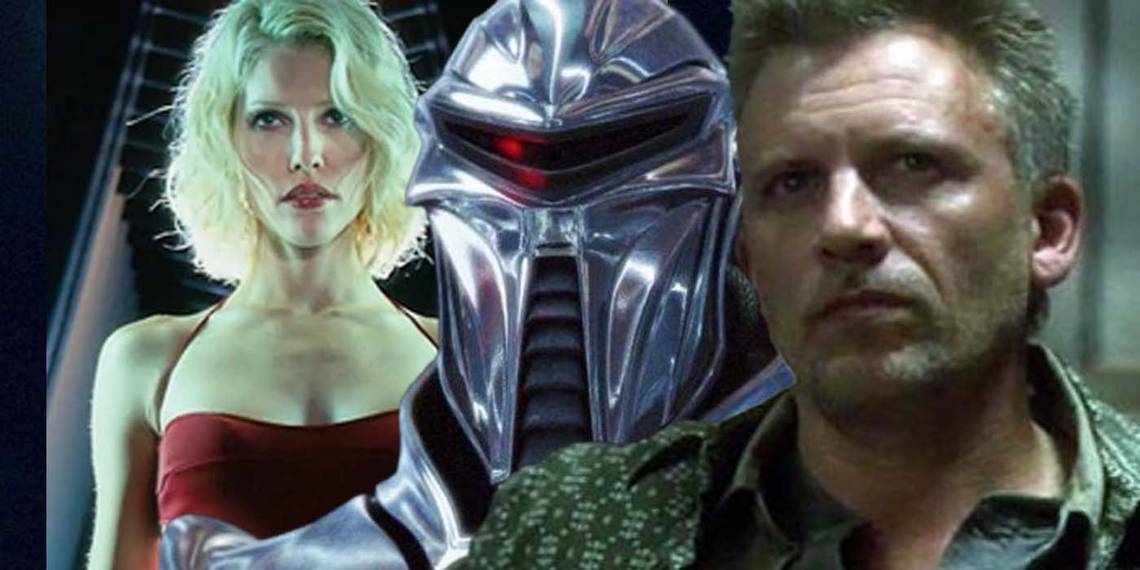
Existential questions abound, which makes this a brain-candy read of the first order. Kurzweil looks at issues around AI consciousness. Can artificial consciousness approach humanity without a body? What if we give an AI a body, with sensations? Ray thinks that we are mostly comprised of patterns. What if those patterns could be preserved, maybe popped into a new carrier. It definitely gets us into Battlestar Galactica territory. How would people be any different from Cylons then? Is there really a difference? Would that signal eternal life? Would we be gods to our creations? If we make an AI consciousness will it be to know, love, and serve us? The rest of that catechistic dictat adds that it is also to be happy with him in heaven forever. I am not so certain we want our AIs remaining with us throughout eternity. As with beloved pets, sometimes we need a break. Are we robots for God? Ray thinks such endless replication is possible, BTW. Kurzweil uses the image of Pinocchio throughout to illustrate questions of personhood, with wanting to live, then wanting to live forever.

description
Every Battlestar Cylon model explained – image from ScreenRant

Persistence of self is a thread here. As noted in the introductory quotes, Kurzweil thinks about whether a person is the same person before and after going through some change. How much change is needed before it crosses some line? Am I the same person I was before I read this book? My skin and bones are older. But they are the same skin and bones. However, I have new thoughts in my head. Does having different thoughts change who I fundamentally am? Where does learning leave off and transition take over? Where does that self go when we die? Can it be reconstructed, if only as a simulacrum? How about experiences? Once experienced, where do those experiences go? These sorts of mental gymnastics are certainly not everyone’s cuppa, but I found this element extremely stimulating.

Kurzweil remains grounded in her personal experience, feelings, and concerns. The book has intellectual and philosophical heft, and concerns itself with far-end technological concerns, but it remains, at heart, a very human story.

As one might expect from an established cartoon artist who has generated more smiles than the Joker’s makeup artist, there are plenty of moments of levity here. Artificial is not a yuck-fest, but a serious story with some comic relief. It is a book that will make you laugh, smile, and feel for the people depicted in its pages. Amy Kurzweil has written a powerful, smart, thought-provoking family tale. There is nothing artificial about that.

I used to wonder if I could wake up into a different self. For all I knew, it could have happened every morning. A new self would have a new set of memories.

Review posted – 01/12/24

Publication date – 10/17/23

I received a hard copy of Artificial: A Love Story from Catapult in return for a fair review.

This review is cross-posted on my site, Goodreads. Stop by and say Hi!

=======================================EXTRA STUFF

Links to the author’s personal, FB, Instagram, and Twitter pages

Profile – from Catapult

AMY KURZWEIL is a New Yorker cartoonist and the author of Flying Couch: A Graphic Memoir. She was a 2021 Berlin Prize Fellow with the American Academy in Berlin, a 2019 Shearing Fellow with the Black Mountain Institute, and has received fellowships from MacDowell, Djerassi, and elsewhere.

She has been nominated for a Reuben Award and an Ignatz Award for “Technofeelia,” her four part series with The Believer Magazine. Her writing, comics, and cartoons have also been published in The Verge, The New York Times Book Review, Longreads, Literary Hub, WIREDand many other places. Kurzweil has taught widely for over a decade. See her website (amykurzweil.com) to take a class with her.

Interviews
—–NPR – Using AI, cartoonist Amy Kurzweil connects with deceased grandfather in ‘Artificial’ by Chloe Veltman
—–Publishers Weekly – Reincarnation: PW Talks with Amy Kurzweil by Cheryl Klein
—–PC Magazine – How Ray Kurzweil and His Daughter Brought A Relative Back From The Dead By Emily Dreibelbis
——LitHub – Amy Kurzweil on the Open Questions of the Future by Christopher Hermelin

Songs/Music
—–The Jefferson Airplane – White Rabbit– referenced in Chapter 6

Items of Interest from the author
—–Artificial: A Love Story promo vid
—–The New Yorker – excerpt
—–New Yorker – A List of Amy Kurzweil’s pieces for the magazine

Items of Interest
—–Ray Kurzweil on I’ve got a Secret
—–A trailer for Transcendant Man, a documentary about Ray Kurzweil
—–WeBlogTheWorld – Amy interviews Ray in a Fireside Chat at NASA – sound is poor. You will need to ramp up the volume to hear – video – 23:07
—–Wiki on Battlestar Galactica

Leave a comment

Filed under AI, American history, Artificial Intelligence, Bio/Autobio/Memoir, biography, computers, History, Non-fiction