Tag Archives: 2025-nonfiction-reader-challenge

Replaceable You by Mary Roach

book cover

It’s another photograph of the penis [transplanted from the owner’s middle finger], now with a rustic ceramic pitcher hanging off of it. Exactly as you or I could put a hand out, palm up, and hang a pitcher off our middle finger. The pitcher is hand-painted, white with a red and green floral pattern. I’m picturing the man and his partner again, this time having lunch in the kitchen. A little iced tea, my love?

Eventually the day arrives when no further breach is possible. Mr. Baron, wrote his doctor, Richard Martland, “was now informed, the only chance for saving his life was by making an artificial anus . . . the inconveniences resulting from such operation, were candidly pointed out to him.” Mrs. White, on the occasion of her twelfth day without a bowel movement, is presented with the same proposition. Both patients consented. Or rather, as Pring put it, “did not violently object.” And so it went. “An opening was now made . . . and instantly a large quantity of liquid feces and wind escaped,” Martland wrote. Both doctors were impressed by the force with which the matter was expelled, with Pring taking additional note of the “considerable distance” traveled. – There was no mention of a fan in the vicinity.

This book certainly lends new meaning to the expression “an heir and a spare.”

I imagine many of us, certainly folks of my demographic, have had the experience of having parts replaced, probably because of need, but for some because of choice. I know I would happily have my begrudging spine replaced if I had the chance. And there are certainly a few improvements I could use that would be competing for second place on that list. Thus, my interest in Mary Roach’s latest, Replaceable You. (My ex can attest to the truth of the title’s applicability to the entire me.) Of course, I would read anything Mary Roach has written. She is one of my all-time favorite authors. And just in case her work is new to you, she combines a hard-reporting look at a particular scientific realm with a sense of humor that will leave you gasping for breath. Complete swallowing any ingested liquids before reading her work, as they may come blasting out your nose and mouth before you can get a grip. You have been warned.

description
Mary Roach – image from Harvard Bookstore – shot by Jen Siska

Roach has made a career of writing about the human body, from conception (Boink) to grave (Stiff), and beyond (Spook), with travels through the alimentary canal (Gulp), the body’s reaction to space flight (Packing for Mars), to war (Grunt) and even to strangeness having to do with our interactions with animals (Fuzz). This time around, she covers a range of body parts subject to replacing. She sniffs out the history of nose jobs back to the 1500s, and lets us in on why they were in such high demand back then. She brings home the bacon by filling us in on the status of pig research (on, not by) for the purpose of developing organs that can be transplanted into humans, a subject close to my heart.

A formal “miniature swine development” project got underway in 1949, a collaboration between two Minnesota powerhouses, the Mayo Foundation (research arm of the Mayo Clinic) and the Hormel Institute (research arm of pork).

There are sections on the replacement, or enhancement, of sexual organs. One of the opening quotes of this review notes a particular form of actual, not kidding, replacement for a male member. Female anatomy comes in for a bit of consideration as well.

Dow Corning…made the first silicone breast implant, circa 1961, this one at the urging of Texas plastic surgeon Thomas Cronin. Cronin had been “inspired by the look and feel of a bag of blood.” It is hard for me not to picture the scene: Cronin standing around the OR, idly gazing at a bag hanging on a transfusion pole and turning to a colleague: Hey. Does that remind you of something? Cronin contacted Dow, and his resident, Frank Gerow, implanted some prototypes into dogs. The team were “excited” by the outcome—and again, stop me from picturing this.

Continuing downstairs…

Who looks at the human digestive tract and thinks, Moist, tubular, stretchy . . . Might that make a reasonable vagina?

Some, apparently. The derriere comes in for a long look as well. Part of this is a consideration of the changing fashions in tush shape, stretching from sane to anime.

I have made it (well in) to septuagenarian with what is probably an unremarkable range of replacement parts. My right arm was the recipient of two metal plates and a bone graft from my hip after a rather nasty industrial accident in 1970. The plates were removed once they had done their job of helping my bones knit, a few years later. The bone graft helped heal another fracture, and was eventually absorbed back into my skeleton.

Roach tells of prosthetic limbs, and the surprising news that some people prefer them to the original. In fact, the initial inspiration for this book came from a reader who had suggested that Mary take on the exciting world of football referees. Understandably, that failed to score, but it turned out that the woman, who has spina bifida, had a problem with her foot. It had, as a result of her other difficulties, become less than useless. She wanted it removed so she could get a prosthetic, but few surgeons would consider electively removing it. Mary joined her at the Amputation Coalition National Conference, and the game was…um…afoot.

It will come as no shock that using one’s own body bits as a source of transplantation offers the huge advantage of sparing you the need for a lifetime of immunosuppressive drugs. The body’s Studio 54 security guard can take a quick look and wave the new part in as the right sort. It worked for me a second time.

Other recent personal additions were the product of open-heart surgery, three stents and an aortic valve replacement. The stents were made up of material extracted from my right leg, and the valve was contributed by a member of our porcine community. I have yet to experience any desire to go digging for truffles in nearby woodlands.

Roach takes joy in comparing the techniques and tools of hip replacement surgery to woodworking, noting that while patients could actually be conscious during the surgery, the clanging, sawing machinery noise would be so disturbing that it is deemed preferable for patients to remain unconscious for the duration. She says that “Hip replacement has the visual drama of a visit to a Chevron station.”

Sadly, I was born with a mouthful of (well, maybe not born with, which would be weird, but ultimately host to a couple of sets, baby and adult) soft teeth (my dentist’s words). This led, over time, to a need for fillings, caps, bridges and dentures.
.
If you count up all the teeth that are removed and replaced with implants or dentures, I bet they would lead the pack in sheer numbers of replacement bits. Mary leads us on a walk through dentures in history, the up and down sides, as well as the benefits of not using them at all. Yes, Geoge Washington makes an appearance. You will find the section on spring-loaded replacements both fascinating and alarming, and concerning as well is the fact that so many people have elected to remove healthy teeth in order to install dentures.

Replacing hair is big business these days. But not just up top. Pubic hair is also replaceable. Not only can the short and crinkly be replaced, with hair from the head, but the opposite can be done as well. Of course this can present some grooming challenges, as pubic and head hair grow differently and behave inconsistently when treated with grooming products. Mary subjected herself to a bit of hair harvesting in her travels.

My donor site is smeared with bacitracin, but no gauze is taped in place, because my hair would get stuck. On the flight home, I will feel the back of my head start to ooze. Do you fly Southwest? Don’t sit in 11B.

She delves into the growth industry of 3D printing of bodily materials. It turns out that it is not so simple as it might seem. Each muscle and organ has particular abilities and behaviors that are very difficult to replicate, involving twisting, contracting, and reacting to incoming messaging from the brain. The Star Trek replicator might do a great job of producing “Earl Grey, hot,” but fabricating people-pieces is proving a much more complex undertaking than sci-fi writers imagined.

Eye lenses are being replaced at increasing rates. There are even many people who, as with tooth replacement noted above, are having their natural lenses replaced in order to improve their vision.

I have worn glasses since I was eight years old, for distance. The only issue I had with them was losing track of them. But in the last few years, it became obvious that there was a buildup of material on the left lens of my eye (not just the product of inattentive eyeglass wiping) that made night driving particularly challenging. Oncoming headlights, even non-bright ones, spread a glare across my field of view that was problematic. I had cataract surgery earlier this year (2025), left eye only. And it worked like a squeegee on a filthy window. The headlights are still miserable, particularly when people insist on using their brights, and when many newer cars use lights that are brighter than the prior generations of illumination, but the improvement in my vision was immediate.

She writes about the processes involved in recovering bio-materials from the recently dead, the potential for banking our own cells as a source for future replacement materials, a machine for offloading heart and respiration work from the body temporarily, and introducing us to the wonderful world of ostomies, noted up top.

Mary may write about science, but she is not, per se, a scientist. Thus, she can offer us an every-person view into the subjects she investigates. She reacts how we might react when faced with the same discoveries. She brings the oh, wow!, the joy-of-discovery moments to life for readers, and thus makes what she has learned stick for us more than it would from any dry textbook. If she leaves you in stitches, that might just be a part of your replacement work. If you burst with laughter, bust a gut, if you crack up or your laughter is side-splitting, that may be why you needed the work in the first place. Of course, if you laugh your head off, there is probably no short-term solution to that. Replaceable You is the real thing, as is Mary Roach. She is one of a kind. Accept no substitute. She is irreplaceable.

Nana takes a seat at Kuzanov’s desk and starts opening files on his computer desktop. After a few false starts, she locates a folder of photographs documenting a finger transplant performed on a cancer patient. Most of the man’s penis had been amputated, leaving him unable to do two of the things most men like to do with their penis: penetrate and pee while standing. The surgery would restore both. – She missed one.

Review posted – 09/19/25

Publication date – 09/16/25

I received an ARE of Replaceable You from W.W. Norton & Company in return for a fair review. Thanks, folks, and thanks to NetGalley for facilitating. And could you check to see if anyone left any spare spines lying around.

This review is cross-posted on Goodreads. Stop by and say Hi!

===================================EXTRA STUFF

Links to Roach’s personal, Instagram and Twitter pages

Profile – from her site

I grew up in a small house in Etna, New Hampshire. My neighbors taught me how to drive a Skidoo and shoot a rifle, though I never made much use of these skills. I graduated from Wesleyan in 1981 and drove out to San Francisco with some friends. I spent a couple years working as a freelance copy editor before landing a half-time PR job at the SF Zoo. On the days when I wasn’t there in my little cubicle in the trailer behind Gorilla World, I freelanced articles for the Sunday magazine of the local newspaper. One by one, my editors would move on to bigger publications and take me along with them. In the late 1990s, magazines began to sputter out and travel budgets evaporated, and so I switched to books.
People call me a science writer, though I don’t have a science degree and sometimes have to fake my way through interviews with experts I can’t understand.
I have no hobbies. I mostly just work on my books and hang out with my family and friends. I enjoy bird-watching (though the hours don’t agree with me), hiking, backpacking, overseas supermarkets, Scrabble, mangoes, and that late-night “Animal Planet” show about horrific animals such as the parasitic worm that attaches itself to fishes’ eyeballs but makes up for it by leading the fish around.

Interviews
—–Stuff to Blow Your Mind on iHeart – Replaceable You, with Mary Roach by Robert Lamb – audio (36 minutes) with available transcript
—–Peculiar Book Club – MARY ROACH is Un-Replaceable! – video – 1:10:03 – from 5:00
—–NPR – From heart to skin to hair, ‘Replaceable You’ dives into the science of transplant with Brandy Shillace
—–Association of Health Care Journalists – Mary Roach calls herself ‘the gateway drug to science’ by Lesley McClurg

Other Mary Roach books we have enjoyed
—–2021 – Fuzz: When Nature Breaks the Law
—–2016 – Grunt: The Curious Science of Humans at War
—–2013 – Gulp
—–2010 – Packing for Mars
—–2006 – Spook Six Feet Over – recently renamed
—–2004 – Stiff

Items of Interest
—–New York Times – 10 Icky Things Mary Roach Has (Unfortunately) Brought to My Attention – by Sadie Stein – from sundry MR writings, in case you have not laughed enough from reading her latest
—–Bauman Medical – What is a Pubic Hair Transplant?
—–Youtube – A particularly disturbing transplantation scene from the 1973 film Oh Lucky Man

Song
—–Beyonce – Irreplaceable
2 Comments

Filed under History, Non-fiction, Public Health, Science and Nature

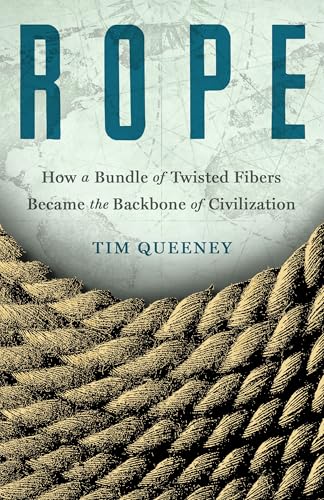
Rope by Tim Queeney

book cover

While many short lengths of rope helped countless individuals through the centuries, rope also was a tool of human innovation writ large through collective action. Just as many small strands come together to form a rope, so, too, did many people gather to perform the biggest of tasks. The exemplar of this from the ancient world is the Egyptian pyramids. While we don’t know exactly how these human-built mountains were assembled, we can be sure that rope was an essential tool in their construction. In this way rope stands as both a tool and a symbol of humans working together to achieve the greatest things.

The concept of rope remains timeless; what changed over millennia was the application of the human mind toward making ever better rope and in devising ways to use it.

Neanderthals used rope 50,000 years ago. Did Homo Erectus, Habilis, Australopithecus, or any of the sundry other homo genus cousins get there first? Dunno. Maybe, but no thread of evidence for any rope-making before Neanderthal has been found. Still, it was a helluva long time ago, and ropy material tends not to survive forever, unlike stone tools, so…maybe. Makes rope rank with fire and stone tools, (although, rope was a form of tool-making, it probably came after stone tools) as basic elements of civilization. (Oh, and let’s not forget Duct Tape)

description
Tim Queeney – image from his site – shot by Molly Haley

The breadth of this book reminds me of the opening scene of
2001:A Space Odyssey, taking us at it does from the dawn of tool-using man (or pre-man) to the futuristic apex of a 21st century space station. Tim Queeney takes us on a past-to-future journey of similar timescale, albeit without the perplexing Star Child ending.

There are books that cover a seemingly narrow subject in vast depth. I have read several of this sort, stovepipe books I suppose one might call them. (Banana, A Perfect Red, The Age of Deer, Eels, Just My Type, or many others) It is usually the case that the information revealed therein broadens our appreciation for the subject matter at hand, generating a lot of reactions like, “I never knew that,” or “wait, what?” Rope could be considered a stovepipe book in that it is focused on a seemingly single thing. Yet, once one dives in, it soon becomes apparent that the subject matter is massively broad, touching on a vast array of human history and enterprise. It seems less a narrow stovepipe look than a Poppins-esque vista of the rooftops of London. For a book of such modest length, it offers a broad, deep, and surprising look at one of the seminal tools of human existence.

description
Image from Disney

For Tim Queeney, this book is an homage to his nautical father, the man who taught him everything he knows about sailing, making manifest the emotional and experiential ties that bind father to son. As one might imagine there is a vast amount here related to seamanship through the ages. And much wisdom to be had for aspiring sailors and fishermen. He notes knots in abundance. Sadly, in the AREs that I read, paper and Kindle, there were no illustrations of these or the other devices and tools that Queeney describes. I cannot say if this is also the case in the hardcover release. I added links to a couple of old seamanship books in EXTRA STUFF if you find yourself wanting some instruction on how to twist and tie (or untie) this or that obscure tangle of rope. And there are sundry images available on Queeney’s site, although not on knot tying, at least not that I found.

description
The Lifeline by Winslow Homer – from the Philadelphia Museum of Art

In a slightly related vein, it was fun to learn of the need for rope skills in the world of entertainment. Maneuvering sets on stage take a set of skills that any sailor would easily recognize, and that any stage pro would need to have mastered.

My personal experience with rope is minimal. I recall as a stripling hanging out with friends in the Morris Heights neighborhood in Da Bronx, a place that offered the presence of sundry empty lots. There was one in particular, a large one that featured a singularly tall tree. I have no idea which foolhardy child undertook the task, but someone had climbed up that tree and slung across a sturdy branch a rope that ended in an engorged knot about fifty feet below. (Well, of course, someone with a strong arm might have just tossed it up and over from the ground, but where’s the fun in imagining that?) The Bronx is a hilly place, so the improvised swing began on the uphill side and swung out over the downhill side. Losing one’s grip at top could result in a slight bruise and a dose of embarrassment. Letting slip on the downhill side, particularly if the drop was unintended, could result in weeks in a cast. I swung out on this very thick knot of rope a time or three, but, being of a risk-averse sort, considered that sufficient. My other related, rope-involved escapade occurred as a much older idiot. I will not repeat it here, but direct you to my review of Rivers of Power for the mortifying details. Otherwise, no further rope-related personal experiences of note pop to mind, so you are spared that.

description
Section of cable showing strands in the cables supporting the Brooklyn Bridge – image from Catskill Archive

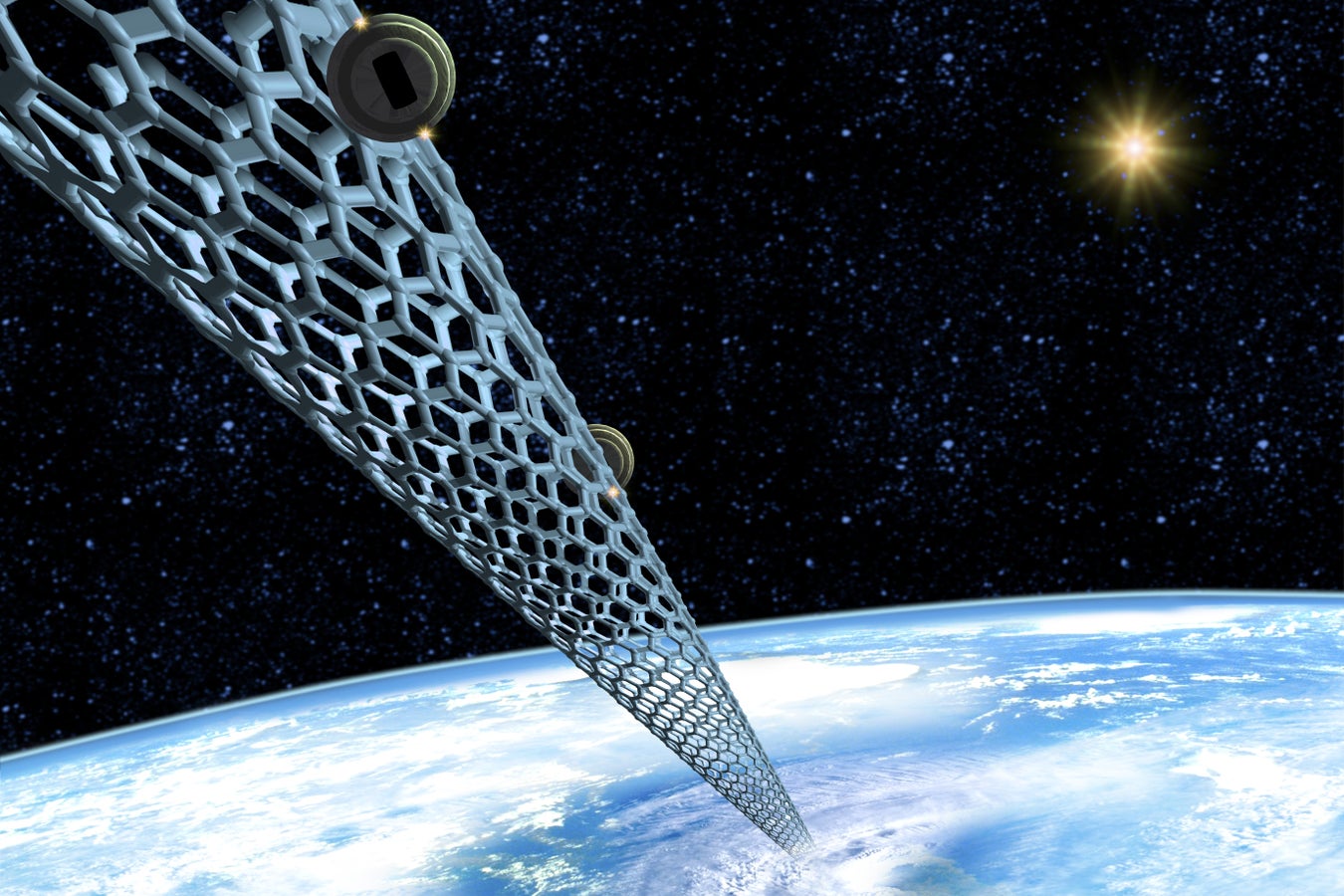
There is also a lot having to do with things quite far removed from the briny deep and the boards. Major world constructions of diverse sorts, pyramids, and ancient megaliths, for example. Surprisingly, in Inkan (Queeney’s spelling) traditions, rope, khipu, was used, through an intricate language of knots, to tell stories. One could say that these ropes in particular were used to create yarns. Some might, but not me. You will be surprised to learn who perfected the art of the lasso. And then there is some history on notions of knots in the realm of matrimony. As with so many things, one person’s tool is another person’s weapon. He racks his brain to report on rope as a tool of restraint, pain infliction, and termination. Subjects cover land transportation, the manufacture of rope, construction, communication (sub-Atlantic cables) rope tricks, climbing, space exploration and plenty more. He also provides considerable attention to materials that were used in the past and the materials that make up much of the rope-assigned tasks of our age, from the invention of rayon and nylon to the use of metal like steel, to the superstrength fibers of today, like Kevlar.

description
A drawing of how the steep ramp, poles and ropes could have helped the workers lift the huge blocks of stone used to construct the pyramids. – image from Kids News

Queeney has a very engaging style. Only rarely will you find it necessary to struggle past some technical jargon. His enthusiasm is infectious. No mask needed. He will throw a lariat around your attention and slowly pull you in.

description
A space elevator made of carbon nanotubes stretches from Earth to space in this artist’s illustration. – image from Scientific American – source: Victor Habbick Visions/Science Source

Whenever anyone proclaims “no strings attached,” you should know better. Rope makes it clear that there are, and for at least 50,000 years always have been, strings attached, and that without them, we might still be traversing waterways powered by oars and muscle, communicating face to face, and satisfying ourselves with building structures of exceedingly modest dimensions. The discovery and implementation of rope technology has allowed us, as in the Indian Rope Trick, to climb into places we had never known before. So does this remarkable book.

Review posted – 08/15/25

Publication date – 08/12/25

I received digital and paper AREs of Rope from St. Martin’s in return for a fair review. Thanks, folks, and thanks to NetGalley for facilitating. And, uh, I held up my end, so could you untie me, please?

This review is cross-posted on Goodreads. Stop by and say Hi!

=======================================EXTRA STUFF

Links to Queeney’s personal, FB, Instagram, Twitter and Blue Sky pages

Profile – from his site

In addition to writing books, I was the longtime editor of and columnist for Ocean Navigator, a magazine for serious offshore sailors. At ON I also taught celestial, coastal and radar navigation as an instructor for the Ocean Navigator School of Seamanship, both in hotel meeting rooms ashore and on tall ships at sea. I love to sail, hike, get lost in museums and spend timeless hours drawing and painting. I’m a dad to three sons and a rescue dog. Am a NE Patriots and Arsenal fan and tend to reference a Stanley Kubrick film every two minutes or so. I’m also that annoying night sky watcher who is always pointing out the constellation Cassiopeia — because its forms a big W, which reminds me of my wonderful wife, Wendy.
I live in Maine and can hear the fog horns of three lighthouses when the fog rolls in.

Interviews
—–History Unplugged – Rope Equals Fire as Humanity’s Most Important Invention: It Allowed Hunting Mammoths and Building Pyramids – with Scott Rank – audio – 58:27
—–Rope Equals Fire as Humanity’s Most Important Invention: It Allowed Hunting Mammoths and Building Pyramids – text extract of the above podcast
—–Maine Calling – Rope by Jennifer Rooks, Jonathan P. Smith – audio – 50:36

Items of Interest from the author
—–The History Reader – Rope’s Role in Colonial America’s Tarring and Feathering
—–Queeney’s blog
—– Dragging a Ship Uphill? Gonna Need Some Rope – On Werner Herzog making Fitzcarraldo
—– Ben Franklin Gets Juiced With a Little Hemp
—–Rope Ends: Moving Massive Stone Blocks the Natural Way

Items of Interest
—– The Kedge Anchor, or, Young Sailor’s Assistant – an 1847 source of knowledge maritime, including instructions for tying dozens of sorts of knots
—–The Ashley Book of Knots – 1944 – thousands of knots, with illustrations
—–Earth-Logs – Earliest evidence for rope making: a sophisticated tool by Steve Drury
—–Arcanth – Making Rope – Medieval to Edwardian technique – video – 2:49 – this is amazing!
—–Wiki – the Indian Rope Trick

2 Comments

Filed under History, Non-fiction, World History

Seven Deadly Sins by Guy Leschziner

book cover

The ebb and flow of human history is defined by the Seven Deadly Sins: wrath, gluttony, lust, envy, sloth, greed, and pride. From the wrath that has ignited revolutions, to the greed that has re-sculpted the world map. From the sloth that has led to the fall of empires, to the envy that has built them. From the lust that has led to the fall of politicians and the betrayal of national secrets, to the voracious gluttony that has left our environment in ruination, and the pride that has fueled countless conflicts.

Disorders of the brain, of our genes, or other physical conditions, may give rise to gluttony, lust, wrath or pride. The effects of our environment or our upbringing may produce envy, lust or sloth. Crucially, these disorders unmask what is already in us, what already exists in all of us.

William J. Bennet (before he was outed as a compulsive gambler) is reputed to have said “One man’s vice is another man’s virtue.” Pope Gregory, in the sixth century CE, had a different idea, whittling a larger, earlier list down to seven deadly sins. (One wonders if there might be a grander list of [insert number here] bloody annoying sins). I do remember in my Catholic grammar school days Monsignor Marshall giving a sermon on venial sin (non-deadly, but as far as I can recall not presented as a list), in which he offered up the image of Jesus on the cross, and proclaimed that committing a venial sin was like slapping the nailed Christ across the face, albeit not very hard. No Jewish mother ever delivered a more impactful guilt trip.

description
Professor Guy Leschziner – image from The Daily Mail

In his prior book, The Man Who Tasted Words, Professor Leschziner looked at places where the lines between our senses appear to be somewhat porous, sense-A leaking into sense-B for some individuals. Hearing colors, seeing sounds, aphasic things like that. He offered an examination of what is considered usual, and where, in the brain, wires may have become crossed. He looked at individuals who reported such experiences and attempted to trace back into the brain where each sense resided, and connected to others.

Here he uses as his starting point the notion of the seven deadly sins, and offers neurological analysis of behaviors commonly regarded as sinful. Bu the Seven Deadly sins seem to divide into two groups, one based on behavior and one based on emotion. Wrath, Gluttony, Sloth and Greed require action to do actual damage, while Pride, Envy and Lust can remain internal. You may think you are better than everyone else, but unless you do something based on that belief, it makes no difference. Ditto Lust and Envy. In the absence of acting on these feelings, no harm, no foul, so the playing field for looking at The Seven is uneven from the start. The subtext is the question of free will. Are we all functional free agents able to determine right from wrong or are we driven by our biology, by what our brains have, by genetic heritage and experiential conditioning, commanded us to do? And how have the behaviors that have defined our species, that have led to our accomplishments as well as our excesses, our failings, served us? Is there a range within which our less than idyllic urges can function healthfully, and outside of which they constitute pathology?

Look at aberrant behavior. Dive in to see exactly which parts of the brain have been harmed, if any. Map behaviors, needs, urges, inclinations to parts of the brain. In a way, this is a bit like explorations of yore, sailing out to see what lay over the horizon, or, fictionally, heading out on a starship to see what the universe may present. He uses several case studies of people who manifest behaviors illustrative of each of the sins, looking for neurological bases. Just as in his examination of cross-sense irregularities in his prior book, Leschziner looks at these patients with an eye toward identifying which parts of the brain bear the most responsibility for the problematic behaviors. These include a man who had had a brain bleed that changed his personality, a woman who was incapable of feeling satisfied no matter how much she ate, a 34yo man with Parkinson’s and an increasing obsession with sex, a woman who believes her totally faithful husband is cheating on her, a young father who sleeps twenty hours a day, a man has delusions of grandeur until multiple abscessed teeth are removed, oh, and the Panama Papers. Centers of emotional concern include the amygdala, the pre-frontal cortex, a warrior gene, and the hypothalamus internally. He looks at the influence of bacteria, viruses, dopamines, and more impacting from the outside. Increasingly, science can indeed offer some answers to the why of behaviors, to a point.

In his novel, Fleur de Lis, Anatole France wrote. “The law, in its majestic equality, forbids rich and poor alike to sleep under bridges, to beg in the streets, and to steal bread.” There are clearly hypocritical societal interpretations of sin, of what sinful behaviors will be tolerated and which will be sanctioned. (Unless, of course, you are a president with a friendly Congress and SCOTUS, in which case, just go ahead with whatever you are doing there on Fifth Avenue.)

Poor man wanna be rich, rich man wanna be king
And a king ain’t satisfied till he rules everything
– Springsteen – Badlands

And most societies assign moral responsibility to the actor. The question is whether a person is morally responsible for his/her actions or is a slave to, and predetermined by impulses, by one’s underlying and overwhelming personal psychological makeup.

if you believe that the brain is the origin of our personalities and our character traits, the basis of our decisions, be they good or bad, then it is arguable that much of what defines us is outside of our control.

Whether we are all able to make actual free choices or are slaves to our biology, it is clear that society needs to be able to restrict our ability to harm each other, that protecting each other from the worst in people is a reasonable social responsibility.

It is made clear that the drives that we regard as sinful have provided considerable benefit to our evolution as a species. No lust? No reproduction. No envy? No reason to be more productive. No wrath? No defense against attack.

Leaving the question of evil. At first blush is seems that evil serves no obvious Darwinian purpose. On second thought, though, I expect there might be a case made for evil existing as an existential challenge in order to provide a testing ground against which one might measure strength of character and/or the superiority of one’s genes, whether physical or intellectual. In a way, like ice ages, rapid climate change, or a voracious saber-tooth tiger, evil might be seen as a natural force, even if it manifests through human beings.

Leschziner has offered up a provocative, thoughtful brain-candy-ish look at how science, as it advances, keeps finding biological explanations for fraught psychological behaviors. But our impulses and makeup remain what they are. And this is one of the pleasures of reading The Seven Deadly Sins. Learning what a strange creature is homo sapiens, and how we are put together. It seems quite clear that the real original sin is to have been born human.

extrinsic factors – medication, injury, or functional disturbance of the brain – rather than our values can cause us to act in ways that contravene our moral
code. However, that dividing line between what constitutes normality and pathology shifts in the sand. That line is blurred by the prevailing winds of our views on morality, legality, philosophy and medicine.

Review posted – 02/21/25

Publication date – 12/3/24

I received paper and ePub AREs of Seven Deadly Sins from St Martin’s in return for a fair review. Thanks, folks, and thanks to NetGalley for facilitating.

This review is cross-posted on Goodreads. Stop by and say Hi!

=======================================EXTRA STUFF

Links to the author’s personal, Instagram, and Twitter pages
Profile

Interviews
The Guardian – Science Weekly Podcast – Are we hardwired to commit ‘deadly sins’? – podcast
– audio – 23:59
—–The Jewish Chronicle – Were the Nazis inherently evil? ByJennifer Lipman
—–Greed, gluttony, sloth…lust! Why you sinned this Christmas by Anna Maxted

Items of Interest from the author
—–Big Issue – The truth is we’re all sinners – it’s how we survive as human beings
—–Next Big Idea Club – A Scientific Examination of the Seven Deadly Sins

My review of the author’s prior book
—–2022 – The Man Who Tasted Words

=======================EXTRA EXTRA STUFF

George Carlin famously distilled the ten commandments down to two.

It seems pretty clear that the seven deadly sins can likewise be slimmed down as well.

Pride. What does this actually mean?
Believing that you are better than other people? What if you are? Faster, stronger, better looking, smarter. Something more than others. Is recognizing your superiority a sin if it is true? The bible seems to maintain that an “Excessive” self-regard is where the line is crossed, but who gets to determine where the line is drawn between factual and excessive self-regard?

But pride does seem to be a pre-condition for other sins. Wrath, or extreme anger, certainly seems an appropriate response to extreme provocation. Hardly a sin. But in order to get into a sinful bit of wrathful behavior it must be excessive. In order for it to be excessive the deliverer of such wrath must hold a higher view of him or herself vis a vis the target than seems justifiable. Soooo, excessive pride, right? So, scratch wrath, and we are down to six.

Gluttony – excessive consumption to the point of waste.
Wiki tells us that In Christianity, it is considered a sin if the excessive desire for food leads to a lack of control over one’s relation with food or harms the body. But if the desire for food entails loss of control over one’s relation to food, where is free will? Isn’t that a definition of pathology? And a pathological behavior is hardly sinful. And just what constitutes excessive desire? If we remove the pathological from this formula, we are left with a person feeling entitled to consume (and I think it is safe to expand the notion of consumption here from food to all things material) as if they are better or more deserving of such things. Which brings us back to pride. Gluttony eats itself into a coma and we are down to five.

Greed
Catholic.com claims that Greed is the disordered love of riches. Hmmm, who gets to define “disordered?” and doesn’t a love of riches include a personal belief that one deserves such riches? Here we go again. It requires excessive self-regard to crave riches at a “disordered” level, no? Greed crushes itself with massive accumulation of stuff and we are left with four.

For these other sins, we delineate the pathologies that shape our thoughts and behaviours, and set them apart from those underlying character traits through their intensity and consequences. For greed, we do no such thing. Yet greed, like the other sins, is perilous in its most extreme forms, causing harm to individuals and wider society alike.

Is Donald Trump, a career criminal, capable of differentiating between right and wrong, or was he so damaged by his genetics and upbringing and injured by his subsequent business training at the feet of his sociopathic father, that he is incapable of telling or even caring about the difference between good and bad? Similar for Elon Musk. How great would it be were Leschziner able to do a detailed examination of both men’s brains. Because if they are capable of discriminating right from wrong, then we have a pretty clear proof that there are indeed forces of evil loose in the world, which I expect would come as a great shock to few but the most ardent atheists.

Lust and envy seem sub-elements of the same thing, wanting something that someone else has. Surely lust between two unattached people is no sin. It is only when one person (at least) is already attached that lust becomes problematic (presuming a monogamous baseline). So, wanting something (someone) who/which is not yours, but which is attached to, or is owned by someone else. So what? We all want stuff we do not or cannot have. How is this a sin? It seem to me that having feelings like lust and envy is completely natural. It is only when we take actions to effectuate such the desire, to the detriment of others that the sin element is realized. Down to two.

According to Wikipedia Sloth is the most difficult sin to define and credit as sin, since it refers to an assortment of ideas, dating from antiquity and including mental, spiritual, pathological, and conditional states. One definition is a habitual disinclination to exertion, or laziness. Willful laziness is surely not cool. Just ask any married person whose partner declines to hold up his or her end, opting instead to watch football or soaps. This one seems likely to be based in behavior, as the sinner here engages in slothful behavior, doesn’t just feel…um…slothful. I could certainly see many real-world examples, beyond couch potato chore-avoiders. There are many people who cannot be bothered exercising the intelligence they were born with to examine themselves, their community, public issues, religious beliefs, or much of anything. It may well be that they believe themselves not up to such analysis, and maybe they are not. But for many, if not all, it does seem that the disinclination rests on a belief that they are too good to have to bother with such things, that they have it all figured out and need look no further than the perimeter of their personal bubble…so…excessive pride. And poof! We are down to one.

Pride goeth before the fall, and, apparently every other form of sinfulness. There is only one deadly sin, excessive self-regard, which feeds all the others, and becomes problematic only when put into actual real-world action.

Leave a comment

Filed under Non-fiction, Psychology and the Brain, Public policy, Science and Nature