Tag Archives: Thriller

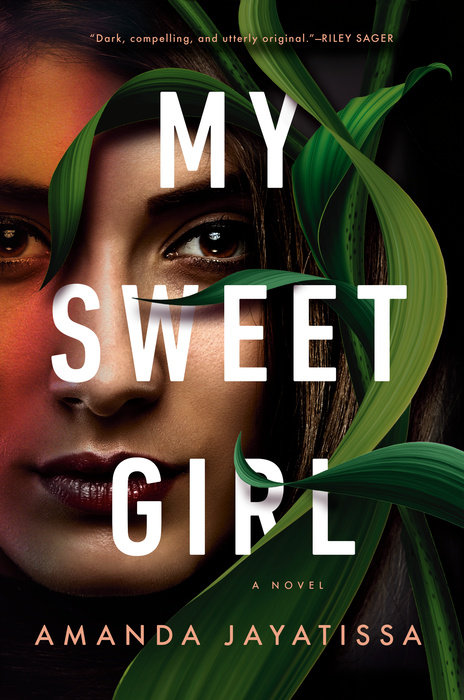
Sweet and Sour – Sweet Girl by Amanda Jayatissa

book cover

It didn’t come easily to me. I had to work at it. But if I learned one thing from Mom, it’s that it was usually worth it being the sweet girl.

“When you die, can I have your skin?” she asked calmly, tracing a finger over my face, before getting up and walking out of the room, leaving me so afraid that I couldn’t move.

Paloma Evans is 30 years old, living in San Francisco. She had been adopted at age 12 out of a Sri Lankan orphanage, the Little Miracles Girls Home. Recently cut off from her parental funds, she engages in dodgy on-line behavior to make a buck, (One of her creepy clients appears to be stalking her) and had to take in a room-mate to help with the insane San Francisco rental costs. But the roomie, an Indian immigrant, learned her big secret, and is blackmailing her, which is bad enough. Arriving home after a few too many, she finds him dead in her kitchen. It gets worse. Chased out of her own apartment by the presumed killer, a seemingly spectral figure, she heads for the stairwell. But fingers close on her neck before she can escape. She wakes up hours later, in the stairway, a scolding neighbor barking at her, presuming she had passed out, drunk…again.

description
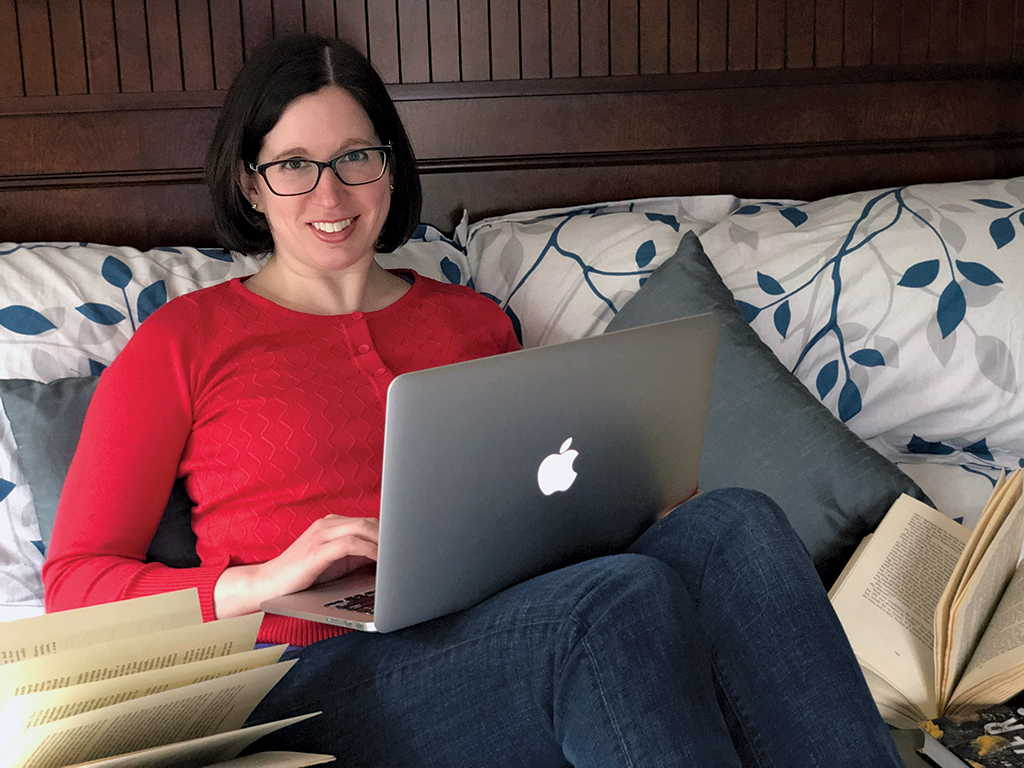
Amanda Jayatissa – image from Artra Magazine

Before she can figure out how to deal, the cops arrive. She tells them what she had seen, but when they look through the apartment, the body is gone. The detective does not believe her, and his skepticism is understandable. Paloma is a blackout drunk, unable to recall events that took place, actions she undertook during her blacked-out hours. She really has no idea what happened to the guy, but does remember that she had fled her apartment, looking around after discovering the body, and was chased out of the place by a ghost from her past.

Paloma may be an adult, but, despite years of therapy, she has carried from childhood a powerful belief in an old-country ghostly being called Mohini, (think the freaky girl who emerges from The Ring in desperate need of a makeover, dressed in white). Seeing that terrifying presence in her apartment just after discovering her roommate’s body reinforces her belief. Losing hours after fleeing her apartment does not help. So what’s going on?

Mohini is my favorite ghost story. She is one of the most famous urban legends here in Sri Lanka, a stereotypical woman in white…It’s a story that is very special to me. It’s a story we grew up whispering to each other around the candle in the night. I have actually dressed up as Mohini…to scare my cousins…It was hilarious. I knew that I needed to include this ghost story element into the book…It was the story that defined a lot of the scary stories of my childhood. – from the Books and Boba interview

The tale takes place in two timelines, alternating chapters, today, presumably 2018, give or take, as Covid is not yet a thing, and 2000, also give or take, when Paloma was a 12yo orphan in Sri Lanka. We follow her story there, her friendships, her interests, her hopes. The home is not a bad place, those in charge are a relatively benign pair, but on occasion the girls are given a class with the terrible, the horrible, the most feared Sister Cynthia, a sadistic witch of a person, who delights in physically harming the girls and threatening them with eternal damnation. (zero stars in RateMyTeachers) She is, unfortunately, in charge of Saint Margaret’s Home for Girls, the place where those who are not adopted will be sent after they age out of Miracles, a terrifying prospect. The Evanses are a wealthy American couple, supporters of the orphanage, and many other charities. They are looking to buy adopt a child. The girls at the orphanage are all prepped for when potential adopting parents stop by for a look-see, orphanage management trying its best to make a good impression, get one of their girls adopted, and hopefully gain some extra financial support and good press from the adopters.

Paloma and Lihini are besties at Miracles. Physically similar, fair-skinned, similar in height, build and overall looks. They sleep together often, in the comforting child-like sense, not that other one. We see how their relationship evolves with each chapter back in Sri Lanka. As only one child will be selected, there is understandable tension between them.

Today, give or take, Paloma is frantic. She goes to stay at her parents’ suburban house, as they are away, and remaining at the scene of the crime seems unwise. Was she hallucinating? This is not entirely impossible as she had been warned by her therapist that drinking on top of her new meds could do really bad things to her. But did we mention that Paloma is a blackout drunk? Paloma goes all Miss Marple trying to figure out what happened to her roomie, and why. Then the mysteries start to breed. A neighbor of her parents vanishes mysteriously, and who is that strange woman who seems to be spying on her?

The story is plenty fun enough on its own merits. But there is more going on here. Racial elements permeate. Lihini and Paloma stand out a bit from the rest of the girls because of their relatively fair skin, seen as an advantage for those hoping to be taken in by a westerner. There is a wonderful scene in a restaurant bathroom in which Paloma is mistaken for another Asian women by a somewhat inebriated white woman, an experience Jayatissa has had, and which many people she knows have had. It is not the only moment in the book in which someone is unable to tell two people of color apart. Toss in discussions with other POCs about stereotypes applied to South Asians. Her shrink, Nina, whom she likes, is raucously white, dressing in white, her office decorated all in white, and it is shocking when Paloma sees her wearing anything with color.

She kept all her pristine white files inside a pristine white filing cabinet, in a corner of her pristine white office. When I say pristine, I mean surgical-level clean. When I say white, I mean eyeball-searing, detergent-commercial white. She even asked her clients to take their shoes off so they wouldn’t mess up the spotless shag carpet. And it always smelled like freshly laundered sheets. She probably had an air freshener tucked behind the couch or something, because there was never any laundry in sight.

Gender and madness permeates. The book opens with Paloma about to lose it, dealing with a bank employee who is not quite up to speed with the institution’s processes.

I was suffering from the worst case of writers’ block, and to say my mood was bleak would be an understatement. And then I had a really annoying experience with a customer service associate at my bank, where I found myself wanting to scream and shout and make a scene, but of course I didn’t. I kept it together, like most of us are trained to do, went into a coffee shop, where I pulled out a notebook and a piece of paper and really let that customer service associate have it. I guess you could say that’s how Paloma came about. – from The Big Thrill interview

Difficult women are often presumed to be nuts, and many have learned to couch their displeasure under a polite veneer. Paloma does that in the book. In fact, while one might think of her as foul-mouthed, the profanity in her internal monologue remains unspoken. This is not to say that Paloma is not abrasive and does not need considerable therapy. She certainly is and she certainly does. Orphanage girls must cope with potential. sexual predation, always knowing that they will be called liars or delusional if they report abuse. And there is the trauma of losing children that can drive women mad with grief. Also the danger of internalizing it when people keep telling her she is losing her mind.

Several classic novels are mentioned, among them Little Women, Anne of Green Gables, Oliver Twist, and, most significantly, Wuthering Heights, all present in the orphanage library, the last being Paloma’s favorite. (Mrs. Evans was going to be my Catherine. She was going to save me.). Unsurprisingly, most have to do with orphans. (Wish she had found a way to fit in a reference to The Pirates of Penzance, as well) Thematically, there are concerns from those books that are reflected here. Sister Cynthia certainly represents a Dickensian nightmare of orphanage management. The girls in these are hassled in other ways by people at an orphanage or a placement. There are other elements of contemporary orphanage life that echo the perils of being parentless in the 19th century, including the timeless emotional pain of losing, or being left by, biological parents.

At first glance, My Sweet Girl offers us an unreliable narrator in the mold of The Girl on the Train’s Rachel Watson, another troubled soul with a drinking problem. Both generally fall into The Madman sort in the classification system to be found here. But Jayatissa takes the unreliable narrator a step further, so that there are times when you are not even certain who the narrator is, let alone the veracity of her reporting.

Unrelated Random thoughts
There is an Agatha Christie, Poirot-ish feel to the story when the facts are laid out near the end.

The preparation the school does with the orphans for the visit by the Evanses reminded me of young women in Austen novels gussying up for the arrival of potential suitors, or going to a meat-market ball.

In addition to the rage at the clerk scene that opens the book, there are other elements taken from the author’s life, some noted above. She named a character for her younger brother, Gavin.

GRIPES
We never get enough of a feel for Paloma’s actual life with the Evanses. She seems not particularly fond of them at age 30. How did that come to be? This could have used more. I had issues with how the POV was handled. It was a bit like one of those time travel stories in which it becomes impossible to keep track of who is where and when. The guilt Paloma experiences is way out of line with what she had actually done. That was a stretch for me.

SUMMARY
Nevertheless, My Sweet Girl is a fun, fast-paced thriller that will encourage you not to drink to excess and be more discriminating in selecting possible roommates. It may offer ideas for how to monetize some used clothing, and offer a perspective on how people perceive people who do not look like they do. It will maybe give you a few chills, and make your head spin like Reagan MacNeil (without the pea soup), with the twistiness of the finale. And you might be forgiven, if, when you get to the end, you feel an urge to hold up your bowl and say, “Please, sir, I want some more.”

…things that don’t feel real during the day have a way of sliding into bed with you at night.

Review posted – September 10, 2021

Publication date – September 14, 2021

This review has been cross-posted on Goodreads

I received an e-ARC of this book from Elisha Katz of Berkley Books in return for an honest review. But then, I may have that wrong. I had imbibed a bit more than usual the day the offer came in, and I was quite distracted by finding that unexpected body in the basement, so…maybe it was her. I am beginning to wonder. And thanks to NetGalley for facilitating.

=======================================EXTRA STUFF

Links to the author’s personal, FB, Instagram, and Twitter pages

Jayatissa was brought up in Sri Lanka, graduated from Mills College in California, moved to the UK, and now lives in Sri Lanka. She is a corporate trainer and an entrepreneur, with a chain of cookie stores. My Sweet Girl is her second novel. Her first was The Other One, released under the name Amanda Jay.

Interviews
—–Books & Boba – on Player FM – audio – #150 – Author Chat with Amanda Jayatissa by Reera Yoo and Marvin Yueh – audio – 51 minutes
The interviewers claim to have read the book but misidentify where half the book takes place. They also keep saying that it is a debut novel. It is not. Nevertheless, there is a lot of good information in here. Roll your eyes and give a listen.
—–The Big Thrill – When Nightmares Follow You Halfway Around the World by Neil Nyren
—–News line – Award winning author Amanda Jayatissa speaks of her experiences – video – 28:50 – this is from 2018 re her first novel, The Other One, with too much focus on her experience winning an award, but there is other intel in here that makes it worthwhile

Items of Interest from the author
—–Excerpt – From Penguin Random House
—–The Nerd Daily – another excerpt

Items of Interest
—–Amaya resorts and spas – Sri Lankan Folklore:Mohini
—–Gutenberg – Wuthering Heights full text
—–Gutenberg – Anne of Green Gables full text
—–Gutenberg – Oliver Twist full text

2 Comments

Filed under Reviews

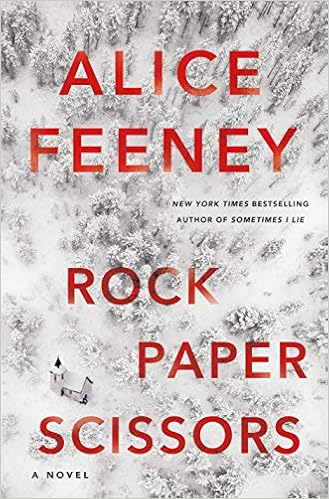
He Lied, She Lied – Rock Paper Scissors by Alice Feeney

book cover

We’ve tried date nights, and marriage counseling, but spending more time together isn’t always the same as spending less time apart. You can’t get this close to a cliff edge without seeing the rocks at the bottom, and even if my husband doesn’t know the full story, he knows that this weekend is a last attempt to mend what got broken.
What he doesn’t know, is that if things don’t go according to plan, only one of us will be going home.

Nothing like having a positive attitude when you’re trying to salvage a troubled marriage.

description
Alice Feeney – image from BBC

I reached a significant benchmark in my marriage while reading this book, a twentieth (china) wedding anniversary. It was the second time, for me. (I am nothing if not tenacious.) So, I appreciate the marital issues that arise in this wonderful thriller. (Sorry, no thriller material in either of my marriages, well, none that I will admit to in court. And no, my wife and I have no weekends planned for some remote snowy locale.) Adam and Amelia are trying to save theirs. (marriage, not thriller). A winter weekend away to a remote part of Scotland. Do or die. He is a successful screenwriter. She works at the Battersea Dogs Home. (Does that make Adam a rescue?)

We’re both pretty good at keeping up appearances and I find people see what they want to see. But behind closed doors, things have been wrong with Mr. and Mrs. Wright for a long time.

All right, this is getting way too close for comfort. (see first marriage noted above) The mutual discomfort in their marriage is clear, to the reader, anyway, but there are mitigating circumstances.

Adam has a neurological glitch called prosopagnosia, which means he cannot see distinguishing features on faces, including his own.

Face blindness makes it tough to deal in a very social world, if one cannot differentiate friend from foe, or lover from casual acquaintance. But, as is the case for many people with unusual qualities, he has learned to compensate. The sound of a voice, a personal scent, individual physical movements. Enough so that he found someone willing, eager even, to marry him.

Adam’s great personal screenplay is Rock Paper Scissors. It won him early acclaim (at 21) but never got made, despite repeated attempts. Now, he adapts novels by other writers, and is good at it, makes a nice living. The Rock Paper Scissors motif repeats from time to time. The notion of the story is incorporated into the structure of the novel. The game is played, sometimes with very serious stakes.

Blackwater Chapel is remote, in the Scottish Highlands (zero bars), quite beautiful landscape thereabouts, on Blackwater Loch. It is indeed a renovated place of worship. The power is not the most reliable, particularly in dire weather. Amelia had won the weekend away in a contest at work. It may not be the best of all possible times for such a visit, an eight-hour drive from London, Amelia doing ALL the driving in her Morris Minor. A tin-can antique on four wheels, is what Adam calls it. While they are there, a huge winter storm seals them in. Travel would be far too risky in the old car. They are quite effectively isolated.

Isolated, yes, but, well, maybe not entirely alone. A supposed housekeeper leaves a few notes for them. Maybe she is the person living in the only other structure within miles, a thatched cottage. There is a flock of local sheep to offer some light scares and barriers. And, of course there is Bob, their giant black lab. (Asked in an interview which of her characters she would choose if she was about to be stranded on a deserted island, Feeney did not hesitate. Bob, she said. Maybe that is because Bob, the author’s creation, so much resembles her real-life black lab, down to their mutual fear of feathers.) But is that it? There have been rumors of odd doings at the chapel, with unseen things calling the name of the more corporeal sorts who show up on the premises. And doors have an odd way of becoming locked or unlocked. There is plenty more of this sort. Mysterious sounds. Evocative scratches on walls. It is definitely a spooky joint. Enjoy!

Feeney offers us plenty of atmospherics.

Adam was right, there are no ghosts or gargoyles, but the place definitely feels spooky. Everything is made of ancient-looking stone—the walls, the ceiling, the floor—and it’s so cold down here that I can see my breath. I count three rusted metal rings embedded in the wall, and do my best not to think about what they were used for.

A basement crypt, reached via trapdoor, has been converted to a wine cellar. Is vino the only spirit down there?

The light from the old-fashioned candlestick holder he is carrying casts ghostly shadows around the bedroom, so that now I feel like I’m in a Charles Dickens novel.

Much of the inspiration for the book derived from a visit Feeney made in 2018, to a creepy renovated chapel in Scotland, a visit that featured a “Beast from the East” snowstorm, and a mysterious face in a window. Some other personal items made it into the book. Feeney does her writing in a garden shed, a characteristic she bestowed on Adam. There was a discomfiting wardrobe in Feeney’s real-world chapel. She imagined secret stairs from there, which became the basement wine-cellar/crypt, accessible only via a trap door.

The book is told from alternating POVs, Adam’s and Amelia’s. It is from these that we know their marriage is in trouble. But wait, there’s more! A third character (fourth if you count Bob) is introduced about a quarter the way in, Robin, residing near the chapel. She is up to something. It seems that there is certainly madness there, but is there a method to match? Finally, there are wifely letters written on the annual wedding anniversary, but never given to Adam. These let us follow the history of his marriage through his wife’s eyes. They are introduced by a “word of the year” that sets the tone for the chapters to come. They also note the category of gift that is considered traditional for each year. (A partial list is in EXTRA STUFF) In each of these entries the gift, at least the sort of gift, is significant in the ensuing narrative.

There is a layer-by-layer unveiling of secrets, from both of them, which gives us a better look at who they truly are. (More of a He-Lied-She-Lied than the more traditional His-v-Hers perspectives.) Well, from all three, if we add Robin. Lots of excellent, very hairpin turn stuff. (Keep both hands on the wheel at all times) Maybe not as dangerous as riding the Do-Dodonpa, but wearing a neck-brace might not be a bad idea while reading towards the end. You may hear yourself utter more than a few “wait, what?s” There are some twists at the finale that seem inter-dimensional in their impact.

So, who is out to get whom? Is anyone, really? Are they both there to salvage their marriage or torpedo it? And what is making all the strangeness at the chapel happen? Is it really haunted? Will they both make it out alive? Will anyone? Will Adam’s screenplay ever get produced?

I do not really have any gripes with the book. It maybe asks us to suspend a bit too much disbelief, no biggie. But I take serious issue with the marketing, which I believe to be dishonest. I will not say what it is about this that is not true, or is unfairly misleading, but after you read the book, I urge you to take a close look at this. You will see for yourself. Having an unreliable narrator is one thing, but this seems a step too far to me. The ff is from Macmillan’s page for the book.

Things have been wrong with Mr and Mrs Wright for a long time. When Adam and Amelia win a weekend away to Scotland, it might be just what their marriage needs. Self-confessed workaholic and screenwriter Adam Wright has lived with face blindness his whole life. He can’t recognize friends or family, or even his own wife. 

Every anniversary the couple exchange traditional gifts–paper, cotton, pottery, tin–and each year Adam’s wife writes him a letter that she never lets him read. Until now. They both know this weekend will make or break their marriage, but they didn’t randomly win this trip. One of them is lying, and someone doesn’t want them to live happily ever after.

Ten years of marriage. Ten years of secrets. And an anniversary they will never forget.

Rock Paper Scissors is a delight of a read. Feeney does an excellent job of inserting hooks at chapter ends to make sure it is a challenge for you to either get up and do things that need doing, or turn off the light and go to sleep.

It seems like it would be a good idea to dress warmly when you read this. The cold of the Feeney’s fictional world might give you a chill. A hot toddy might be an appropriate accompanying refreshment, or maybe some Scotch whiskey. And make sure that neck brace is firmly in place when you are entering your final chunk of reading time. You will need it.

The first match I strike goes out almost instantly—it’s an old box.
I use the second to try and get my bearings, but I still can’t see the steps, and I’m struggling to get enough air into my lungs.
The third match I strike briefly illuminates part of the wall, and I notice all the scratch marks on the surface. It looks like someone, or something, once tried to claw their way out of here.
I try to stay calm, remember to breathe, but then the flame burns the tips of my fingers and I drop the final match on the floor.
Everything is black.
And then I hear it again. My name being whispered. Right behind me.
Amelia. Amelia. Amelia.
My breaths are too shallow, but I can’t control them and I think I’m going to faint. No matter what direction I look in, all I can see is darkness. Then I hear the sound of scratching.

Review posted – September 3, 2021

Publication date – September 7, 2021

I received a free ARC of Rock, Paper, Scissors from Macmillan in an exchange for an honest review, and the keys to my country retreat for a few days.

This review has been cross-posted on Goodreads. Stop by. There are many more where this one came from.

=======================================EXTRA STUFF

Links to the author’s personal, FB, Instagram, and Twitter pages

Feeney was a journalist with the BBC for fifteen years, where she worked as a reporter, news editor, arts and entertainment producer, stealing time where she could to get in some original writing. Rock Paper Scissors is her fourth novel. She has been wildly successful.

As per Variety, the producer of The Crown will be transforming Rock Paper Scissors into a Netflix mini-series.

Interviews
—–Washington Independent – Author Q&A – An Interview with Alice Feeney by Adriana Delgado – from 2018 – on her planning and unreliable narrators
—–Bookbrowse – An interview with Alice Feeney by Elyse Dinh-McCrillis – from 2017 – short but has some nice backgr0und and personal elements

I work in my garden shed now with my cowriter, a giant black Labrador who is scared of feathers.

—–Mystery and Thriller Mavens – 8/30/2021 – Bestselling Author Alice Feeney Hosted by Sara DiVello – Video – 41:06

Unrelated aside
A scene in an old tower made me think of Hitchcock’s Vertigo

Anniversary Gifts – list from Hallmark
• 1st Anniversary: Paper
• 2nd Anniversary: Cotton
• 3rd Anniversary: Leather
• 4th Anniversary: Fruit or Flowers
• 5th Anniversary: Wood
• 6th Anniversary: Candy or Iron
• 7th Anniversary: Wool or Copper
• 8th Anniversary: Pottery or Bronze
• 9th Anniversary: Willow or Pottery
• 10th Anniversary: Tin or Aluminum
• 11th Anniversary: Steel
• 12th Anniversary: Silk or Linen
• 13th Anniversary: Lace
• 14th Anniversary: Gold Jewelry
• 15th Anniversary: Crystal
• 16th Anniversary: Coffee or Tea
• 17th Anniversary: Wine or Spirits
• 18th Anniversary: Appliances
• 19th Anniversary: Jade
• 20th Anniversary: China

2 Comments

Filed under Fiction, Reviews, Thriller

True-Crime Family – The Family Plot by Megan Collins

book cover

My parents named me Dahlia, after the Black Dahlia—that actress whose body was cleaved in half, left in grass as sharp as scalpels, a permanent smile sliced onto her face—and when I first learned her story at four years old I assumed a knife would one day carve me up.

I’m not looking for evil. I’m looking for answers.

You know straight away that this one will be told with tongue firmly attached to cheek. The four siblings are all named after famous murder victims. The Lighthouse family has seen quite a few lives dashed on the rocks, well, not personally, or well, maybe personally. That is the crux of the mystery. There is a never-caught serial murderer on the island, The Blackburn Killer, responsible, so people think, for the murders of seven women over two decades. The family is gathered on this wind-swept, rocky isle when father dies, mostly unlamented, a heart attack,

”Dad’s heart was a real bastard about it. took him out in two seconds flat. Pushed him face down in his venison stew…Mom had to wipe the meat off his cheeks before the paramedics came. It’s poetic really. Dad hunted so many deer in his lifetime, and in the end, he died on top of one. Seems almost…intentional, doesn’t it? Like his heart knew what he’d been up to and murdered him for it.”

summoning the now-grown children (well, three out of four, anyway, as the fourth had left a note ten years back announcing he was leaving for good) back from their definitely-NOT-on-this island homes for his funeral and burial. But when the caretaker of the considerable grounds digs up dad’s assigned plot, he is surprised to find that it is already occupied. The missing brother, Andy, gone ten years, has been found. Oh, dear.

description
Megan Collins – image from Wheaton College

The whole thing stems from the title, which is not how I usually do my books at all. The title usually comes last, and I agonize over it. But I was working on something else, and I was trying to title that, and I asked my husband for some suggestions. And I said I want something that speaks to the family aspect of the book and he just threw out, “I don’t know, The Family Plot?” And I was like, no, that doesn’t work for this, but that is amazing as a title…that just rattled around in my head for a few days, until it was like a burst, that came to me, of a family that came together to bury one family member, only to find another member of the family in that grave. So then from there I thought well, what family would it be most interesting to see in that kind of story? It would be really interesting to see someone who, a family who was so interested in true crime that they built a library. And now they’re in the center of true crime story. – from the World of the Write interview

Interested understates it a bit, as the Lighthouse family, stemming from mom, is obsessed with true crime, so much so that the kids, who were home-schooled, studied famous murders. In place of the usual book reports they were charged with producing murder reports. There is a room in their large, creepy home, that is designated the Victim Room, as it holds the considerable collection of books and reports the family has amassed on the most notorious serial killers, and greatest murders, solved and unsolved, of all time. No wonder the locals refer to it as Murder Mansion.

Our docent in this odd place is Dahlia, 26, returned (Dead leaves skitter around my feet as if welcoming me home – Yikes!) from the mainland where she has been living since she moved out at age 19, obsessed with finding her lost twin, Andy (named for Lizzie Borden’s father).

The trust fund is how I manage the way I do—jobless, hunched over my laptop, scouring photos of any crowd on social media, looking for crinkly eyes, for the cowlick on the back of Andy’s head.

She has always felt that she and Andy had a special twins bond and that, if he were dead, she would know it. Her older sibs have been holed up in New York City since they fled the island, as soon as they could. Charlie (named for the Lindbergh baby) is an actor who appears in off-Broadway, off-off-Broadway, and nowhere-at-all-near-Broadway productions, when he can get cast, and when he is sober. Tate (named for Sharon Tate) has an on-line following of 57,000 for her site @Die-orama, on which she produces miniature reproductions of famous crimes. We all do what we’ve gotta do to cope with what came before in our lives. Am I wrong? Tate continues coping by making a diorama of the finding of her brother’s body. Charlie plans to turn the house into a temporary display, The Lighthouse Memorial Museum, to show the Blackburn island residents that the Lighthouses are actual people, not some homicidal, Addams family knockoff. Even Mom (Lorraine) Lighthouse deflects actual emotional dealing into consistently failed attempts to bake cookies, a running joke.

I just went and threw everything into it that I am obsessed with and that I love. I love true crime. Threw that in. I love secluded, dark little islands. Threw that in. I love mini things, so I had this diorama thing. I love these creepy mansions, so I had that. I went wild with all the things that excite me in the hope that if I am excited about them, hopefully it makes a good story, and other people will be into it. But yes, atmosphere, definitely tons of atmosphere… – from the World of the Write interview

There is a fun supporting cast. A mysterious local girl (Ruby Decker) used to spy on the Lighthouse manse at night when Andy was still around. The local detective on the case is Elijah Kraft, who just happens to be the son of the detective who was in charge of the Blackburn Killer investigation back in the day. He had always been convinced that Daniel Lighthouse (the recently deceased dad) was the killer and junior seems determined to pin Andy’s killing on him as well. At the very least, pin it on some member of the family. We see him mostly while sparring with Dahlia. Fitz, the lifelong caretaker, does not always make it to the ferry for his nightly trip back to the mainland. Why is that? Greta, a friend, runs a café below Dahlia’s apartment, and shares the Lighthouse obsession with true crime, if not the family history. She stands in for the more typically obsessed true-crime aficionados in the world.

I’ve never written plays, but it kinda felt like writing a play sometimes, thinking of like almost every scene in the book takes place in the house except for a few of them, so there is a kind of claustrophobic sense. And so the house really felt like a set to me that I was moving the characters around and now they’re the living room and what’s happening in there, and now they’re in the room that they call the victim room because it has all their books about true crime. – from the World of the Write interview

She also gives us a taste of backwater mentality, and eagerness to believe the worst of people who are different. And the separation from humanity of many true-crime enthusiasts, fixated on details of murders to the exclusion of pain and suffering, the human experience of those personally impacted.

Dahlia is an honest broker, well, mostly. She truly wants to find out who killed her beloved brother, and who the Blackburn Killer might be, even if it turns out to be family. There are twists aplenty, and swaths of atmospherics. Collins clearly had a lot of fun writing this book and it comes across.

I did have one gripe. Are we really expected to believe that a family would construct an entire home-schooling curriculum around murders? It was a bit much to swallow. But if you are willing to suspend belief, and, yes, your honor, I confess to doing just that, The Family Plot is a delicious bit of mystery fluff, a fun, roller-coaster ride of a yarn. If you pick up The Family Plot looking for a very entertaining Summer read, you will be dead on.

…the fact that their bodies were returned to our shore, spit onto sand instead of carried to another coast, is proof that the ocean wants us here, contained to Blackburn Island.

Review posted – August 20, 2021

Publication date – August 17, 2021

I received an ARE of The Family Plot in return for crucial intel on an unsolved case. Thanks to Maudee at Atria.

=======================================EXTRA STUFF

Links to the author’s personal, FB, Instagram, GR, and Twitter pages

Interviews
—–World of the Write Review – – video – 30:09 – by Kerry Schafer – if you have to choose only interview to check out, it would be this one.
—–Player FM – A murderous chat with CT Author Megan Collins! – Renee DeNino – Audio – 16:30
—–Dead Darlings – Interview with Megan Collins, Author of Behind The Red Door by Susan Bernhard – 8/6/20 – this interview was done long before The Family Plot came along, but still has some interesting intel, such as

My instincts as a storyteller are to begin as close to the inciting incident as possible. By the end of the first chapter, I want some sort of bomb—big or small—to have been dropped on my characters, so that the reader has a sense of the stakes right away.

—–Megan Collins: Author of The Winter Sister – also done before Collins’ latest book, but of value nonetheless

Items of Interest from the author
—–Crime Reads – What Scares a Thriller Writer – 8/4/20
—–Collins’ site – links to 22 other pieces

The book site for The Family Plot lists gothic among its genres. It felt like it was close to that on reading, but not quite, so I resorted to this scorecard, which I used a bit more grandly in my review of While You Sleep. So, is it or isn’t it?

Gothic Novel Scorecard

Ticking off the gothic criteria
1 – setting – old mansion – check – secret passages – yep, and more
2 – atmosphere of mystery or suspense – you betcha
3 – ancient prophecy or legend – nothing supernatural here
4 – omens, portents, visions – well, portents maybe (no good tents, though)
5 – supernatural or otherwise inexplicable events – the deaths on the island – Andy’s demise
6 – high, overwrought emotion – for sure
7 – woman in distress – Dahlia – yep
8 – Women threatened by powerful, tyrannical male – murder vics, presumably – there is no living tyrannical male in this telling – and while The Blackburn Killer is assumed to be male, there is no certainty of the killer’s gender for most of the book.

Frequent Gothic Elements
Wind – always
Rain – don’t really recall, so if it was there, it was not particularly memorable
Doors on rusty hinges – I don’t think so, but maybe
Eerie sounds – not really
Character strapped in a room – no
Approaching footsteps – yep
Ruins of buildings – not really

It may not tick off ALL the boxes that define Gothic novels, but it marks enough of them to matter. It is clear that while Collins worked from her notions and was not trying to craft a classic gothic novel, The Family Plot is certainly gothic enough to count.

3 Comments

Filed under Reviews

The Maidens by Alex Michaelides

book cover

It felt as if a kind of pestilence, a plague, were spreading through the college—like in a Greek myth, the sickness that destroyed Thebes; an invisible airborne poison drifting through the courtyards—and these ancient walls, once a refuge from the outside world, no longer offered any protection.

When Zoe calls her aunt from Cambridge to tell her that her best friend has gone missing, Mariana Andros, a group therapist in London, heads to her alma mater immediately. In no time she has ID’d a likely suspect and proceeds to find out everything she can, hoping, expecting to show that Professor Edward Fosca is a murderer.

description
Alex Michaelides – image from The Irish Times – photo by Manuel Vazquez

He certainly seems a likely candidate. A gifted teacher of classics, Fosca (This name derives from the Latin “fuscus”, meaning “gloomy, dark, black, (voice) hoarse, hollow, cavernous, (of thoughts) dark, secret, occult” – uh, oh – from name-doctor.com) has a Svengali-ish charm. He has assembled around him a small cult, female students who dress alike, attend private instruction with him, and who knows what else? They are known as The Maidens. Zoe’s friend, Tara, had been a member. They, under the leadership of Fosca, are into an ancient cult that was particularly focused on the line between life and death.

Mariana couldn’t help but feel a little skeptical—her background in group therapy told her, as a rule, to be suspicious of any group in love with a teacher; those situations rarely ended well.

But, Mariana may not be in the best frame of mind to take this all on. We would expect that a trained psychotherapist would be a good judge of people, but looking at the world from behind the veil of her grief, gives us cause to question her judgements. She is still mourning the loss of her beloved husband, Sebastian, who had drowned a year ago, while they were vacationing on the island of Nexos, a vacation she had pushed him to take. Guilt much?

description
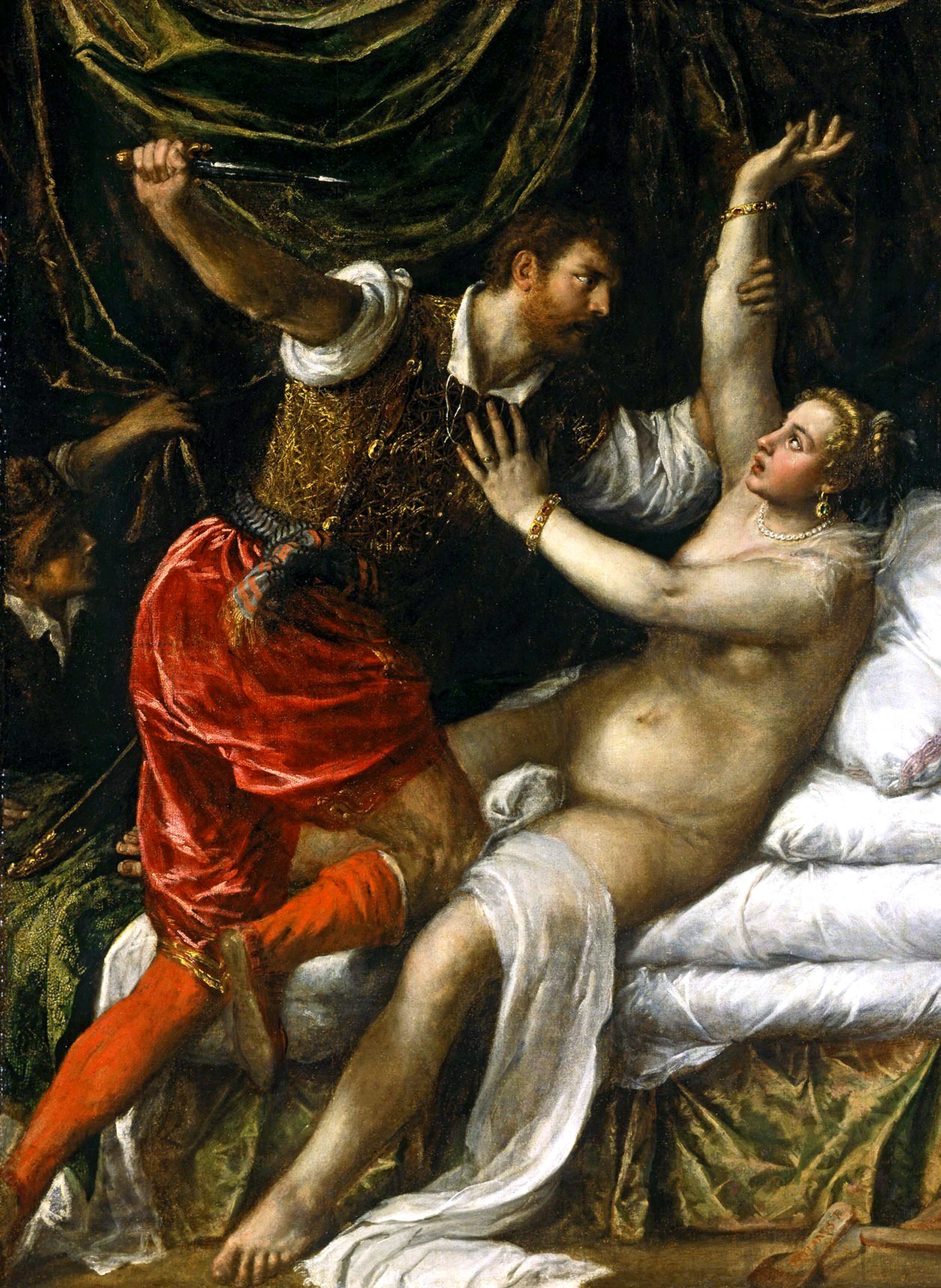
Tarquin and Lucretia – image from Wikimedia

Michaelides offers us a list of alternate suspects. Among them are a dodgy university porter, an obsessed patient of Mariana’s, the Maidens themselves, and a young man who seems particularly enamored of Mariana, persists in wooing her, and who claims an ability to foresee things.

Mariana picks up some collateral support, including a former mentor still at the university, and an erstwhile school chum, who is now consulting with the police. He offers her access to investigation intel, over the objections of his superior, DI Sangha, in the seemingly-mandatory dickish cop role.

description
Tennyson – image from The Daily Mail

There are some of the elements of a cozy here, the amateur sleuth, with a friend on the force, the violence taking place off-screen, local sources that help one suss out the landscape, and quirky secondary characters. But this one is more a thriller, with sharper teeth. It features an undercurrent of dread well beyond the mystery of a simple whodunit. The violence, even though we get no front seat to it, is biting. No Miss Marple, Mariana is not merely an outside observer, but a participant in this drama. And a potential victim.

I thought a lot about the secretive nature of groups as I was writing – especially within Cambridge. There are groups within groups. I studied group therapy myself, that’s what I specialize in. It all goes back to the classic mysteries that I love, from authors like Agatha Christie: Everything is always set in an enclosed location, like an isolated house, a train, a private island. Cambridge is similar.

description
Trinity College – image from The Maidenssociety.com

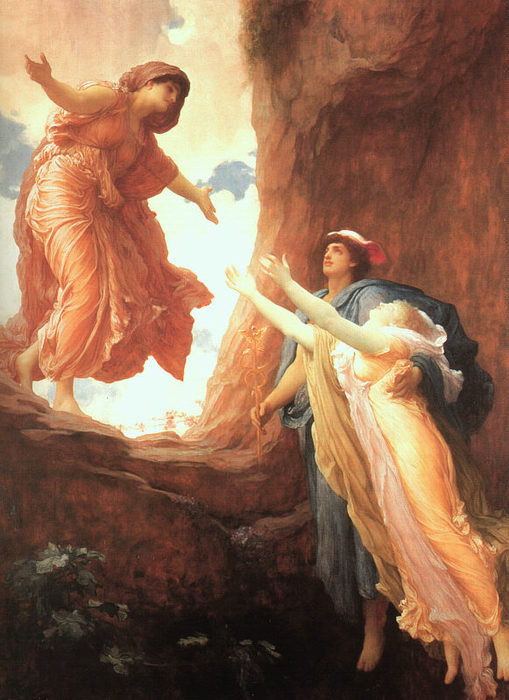
Tennyson comes in for multiple mentions. Greek mythology figures large and Mariana even finds herself succumbing to a bit of atavistic religiosity at times. The mythology that permeates the novel is a particularly fun element, offering an incentive to crank up the search engine of one’s choice and dig in a bit. You may or may not recall the ups and downs of Demeter and Persephone, but there are some other items from ancient Greek stories that I bet you never heard of. It is always fun to learn these things. Michaelides grew up on Cyprus where, he says, Greek mythology was in the air. The old stories were part of general cultural knowledge, with the old plays being regularly restaged, like how we generate new films of Spiderman or Jane Austen novels here.

description
Return of Persephone, by Leighton – image from Holographical Archetypes

Additional spice is provided by seven chapters that offer a psycho-side view of the world, an ongoing battle-royale between the dark side and the fading light. Is this our killer? Michaelides has a background in psychology, specifically group therapy, so writes strongly about both psychopathology, and treatment.

He was a screenwriter for twenty years before his first novel, The Silent Patient, was published to huge success. The lessons he learned from that experience translate into a fast-paced read, strong on visual flair, with excellent atmospherics and tension-building. We can easily engage with our lead. Mariana seems a decent sort. She has suffered a terrible loss, which increases our sympathy for her. It is not hard to root for her to ferret out the killer, and to remain alive.

description
Leda and the Swan, date unknown, by Franz Russ the Younger (1844-1906) – image from the site Mara, Marietta

There were a few things that bothered me in the book. How could Seb, who was fit and a good swimmer be drowned by a stormy sea? Surely, he knew his limits. Why would anyone go to dinner at the private rooms of a suspected murderer and not tell anyone where they were going? Most significantly there are two characters involved in a major plot twist at the end. While there were some breadcrumbs established for one of them, it seemed to me that the hints re the other were sorely lacking.

That said, the bottom line is that The Maidens is a fun read, a real page-turner that will get your blood pumping, and offer an opportunity to refresh, or learn for the first time, some fascinating Greek mythology.

Death was no stranger to Mariana; it had been her traveling companion since she was a child—keeping close behind her, hovering just over her shoulder. She sometimes felt she had been cursed as if by some malevolent goddess in a Greek myth, to lose everyone she ever loved.

Review posted – June 25, 2021

Publication date – June 15, 2021

I received an ARE of The Maidens from Celadon in return for an honest review and some small blood sacrifices. Really, there is no need to involve the police.

Thanks, too, to MC for encouraging the gods and goddesses of ARE distribution on my behalf.

=======================================EXTRA STUFF

Links to the author’s FB, Instagram, GR, and Twitter pages

Interviews
—–Good Morning America – video 3:24
—–Entertainment Weekly – Alex Michaelides on the most unsettling elements of The Maidens by Seija Rankin
—–The Irish Times – ‘I asked myself what Agatha Christie would do, and what she hadn’t already done’
—–Barnes and Noble – Agatha Christie, Sleight of Hand, and Psychological Complexity: An Interview with The Silent Patient Author Alex Michaelides – by Jeff Somers – Obviously mostly focused on Michaelides’ earlier book, but there is material in here that is relevant to this book as well

Items of Interest from the author
—–Criminal Element – The Five Best Plot Twists in Fiction
—–Criminal Element – The Five Best Movies Adapted from Thrillers

Items of Interest
—– Eleusinian Mysteries and Psychedelic Enlightenment
—–Wiki on Eleusinian Mysteries
—–Greeking.Me – Demeter, the Lady of Eleusis – there is a nice summary in here of Demeter and Persephone’s difficult situation
—–Greek Legends and Myths – Leda and Zeus in Greek Mythology
—–Tennyson’s poem – Mariana

Leave a comment

Filed under Fiction, Mystery, psycho killer, Reviews, Suspense, Thriller

The Perfect Daughter by D.J. Palmer

book cover

“When we arrested her, she was covered in blood—it was all over her body, in her hair—so when you come to the station, you should bring a change of clothes.…there are no visible wounds on Penny. But the victim was found deceased at the scene, and we believe it’s the victim’s blood on your daughter’s body.”
Grace got the impression the detective was holding something back.
“She’s calling herself Eve, but that’s not the name on her license.”
Again, a chill ran through Grace. Eve.
“She said she doesn’t remember anything that happened before we showed up. We think maybe she’s in shock, but we’re not sure,” Allio went on. “Is Eve a nickname?”
Grace paused, deciding how to answer. “It’s more complicated than that,” she offered.

It certainly is.

A bucket of ammonia, boats and water, a book with a blue cover. What do they all mean? The clues keep popping up, from different voices throughout the novel. Of course, the voices, however diverse they may be, all reside inside one body. Penny Francone is afflicted (or is it protected?) by a mental health condition now known as DID, or Dissociative Identity Disorder, what we used to call Multiple Personality Disorder. People with this are seen today as a single, splintered personality, rather than separate entire personalities vying for literal face time.

description
D.J. Palmer, or Daniel Palmer or son of Michael Palmer – From Judith D. Collins Consulting

We are presented straight away with a particularly tough scenario. It was sixteen-year-old Penny’s birth mother, Rachel, a woman with a checkered past, who was brutally murdered. Penny had been found, unaccompanied, in a city park when she was four years old. Birth mother and daughter had recently reestablished contact, and Penny had gone to b-mom’s place to meet. Penny was found next to the body, covered in blood, holding the murder weapon. Did Penny kill her mother? Looks pretty open and shut. But perhaps it was one of her alters, Eve, maybe, or Ruby, or Chloe, or even some other, as yet undiscovered, alter. But the question remains. Is Penny a supremely gifted liar, fooling everyone, and truly guilty of slaughtering the woman who had cruelly abandoned her, or is there something else going on?

Grace Francone is terrified for her child. DID is not a fully recognized condition, and there is a strong likelihood that her teenager will spend the rest of her life in prison, for a crime she apparently cannot recall committing. She is currently being held in a less than cushy state institution, largely a grim custodial service for the criminally insane. Penny’s eighteen-year-old brother, Jack, serving the needs of exposition, is planning to make a documentary about his sister. We get his intermittent second-person commentary, as if he is telling Penny about his plans.

Your shrink at Edgewater was a guy named Dr. Dennis Palumbo, who we all despised. Well, maybe all but Ryan, because Palumbo thought the same thing he did: that you didn’t have DID. According to Palumbo, DID wasn’t even a real condition, and didn’t belong in the DSM…It’s thought that DID is just a variant of a borderline personality disorder, or in your case an antisocial personality disorder, and that the appearance of your alters is akin to fantasy play rather than a verifiable neurological state. In short, Palumbo thought you were an expert liar.

Thankfully, Palumbo (The name of this character, BTW, was sold at auction to raise money for The Evelyn Swierczynski Foundation. There is a real-world writer/psychologist named Dr. Dennis Palumbo out there.) is replaced with a different shrink, someone with a more open mind, Dr. Mitchell Hughes, a guy with issues of his own, (does there exist a shrink with none?) but an eagerness to learn the truth about his patient.

In order for Penny to avoid becoming a permanent resident of a penal institution, she will need support for her not-guilty-by-reason-of-insanity plea with an official DID diagnosis. Doc Mitch is skeptical, but willing to look at the facts. He and Grace form a team trying to ferret out the truth, and give Penny at least a fighting chance. Most mysteries entail sleuthing in the concrete world, and there is plenty of that here, for sure, but this Doctor Holmes and Ms. Watson must do a lot of their work inside the world of Penny’s personalities. It is far from elementary.

This was a bit of a change for DJ Palmer.

This was the hardest book I’ve ever attempted. There were so many moving parts and for my first ever mystery (mostly I do crawl out from a hole thrillers, not murder mysteries with clues peppered throughout). – from the Judith D. Collins interview

And nicely done too. It is the author’s third novel under this name. Saving Meghan came out in 2019 and The New Husband was published in 2020. But DJ Palmer is an alter, of a sort, for Daniel Palmer. He is the son of physician and noted author of medical thrillers, Michael Palmer. Daniel even wrote some books that were published under Michael’s name (“with Daniel Palmer”) after his father died. His books as Daniel tended toward the technological thriller sort, building on his years working in the tech industry, while those written as DJ tend more towards the familial and medical. Saving Meghan, for example, is about Munchausen’s by Proxy.

When I switched from writing as Daniel Palmer to writing as DJ Palmer, my themes changed along with my name. The DJ books delve more into family drama and psychological suspense. – from The Nerd Daily interview

As such, DJ can step back from the ready-set-flee that permeates so many thrillers and look at the family dynamics at play. Loyalty, for example, comes in for some attention. Grace is fiercely loyal to and protective of Penny, and her brother, Jack, is on her side as well, but big brother Ryan is more hostile than helpful. A question is raised as to where Penny’s loyalties lie regarding her birth mother.

The story is presented through several non-DID points of view. We see most through Grace, as she girds for battle, and enters the fray. Jack offers some exposition in his once-removed take, as he addresses Penny, as if writing letters to her. Finally, there is Doctor Mitch, who offers us medical expertise, and the step-by-step of exploring a very strange terrain.

Palmer offers not just a medical take on DID, but shows how it impacts in personal, family, legal, and medical ways, and how easily it can be misdiagnosed. He does a great job of showing how DID affects not only how her family relates to Penny, but how the world does. There are serious legal implications for her if the people in a position to decide her future deny the existence of the DID diagnosis entirely. In that case, it is off to jail forever. Life over. In addition, Grace having to take on the out-of-pocket legal costs and spend her time working on the case instead of at the family business (a pizzeria based on Palmer’s experience with owning a small restaurant) has serious implications for the family’s financial welfare, and stress level. It certainly turns on its head the supposed legal presupposition of innocent until proven guilty and shows how families of the accused are punished along with those charged with a crime. A dismissive diagnosis can destroy a life, but also cause collateral damage to all those connected to it. One of Palmer’s aims in the book was to dispel myths about the DID condition. He certainly changed my perception.

The action continues apace, as clues are found, investigated and incorporated or dismissed. This is a very readable, engaging thriller-mystery. But every now and then there are passages that made me break out into smiles.

On that bleak afternoon, Lucky Dog looked anything but. The dark interior had the ambience of a power outage… Four of the nine stools at the dark varnished wood bar were occupied by beefy men, who put the dive in dive bar… Behind the bar stood stacks of bottles that looked sticky even from a distance. The air reeked of booze and cleaners, overlaid by a whiff of desperation.

Just gotta love that.

DJ Palmer has integrated multiple elements, of medical mystery, suspense, family drama, and high-tension-watch-your-back thriller, into an engaging, white-knuckle read. Polly-Eve-Chloe-Ruby Francone may not be the ideal progeny, but The Perfect Daughter is a perfectly fabulous read. Set aside as many hours as it takes. You owe it to your self.

“Dr. Cross, who gave us the DID diagnosis, said that we all start out with multiple personalities when we’re young. Is that something you believe?”
“I do,” said McHugh, nodding. “It’s like learning about life through committee. Those disparate voices in our young minds help us figure out the world and how different environments and stimuli affect us. Do we like things sweet or sour; what’s funny to us; what scares us? By age nine, our experiences tend to mold us into the person we become, and all those likes and dislikes, our moods and disposition, solidify into a single identity—this concept of self.”

Review first posted – April 30, 2021

Publication dates
———-Hardcover – April 20, 2021
———-Trade paperback – April 5, 2022

This review has been cross-posted on GoodReads

=======================================EXTRA STUFF

Links to the author’s personal, other personal, Twitter, Instagram and FB pages

My review of Palmer’s 2022 novel, My Wife is Missing

Interviews
—–The Nerd Daily – Q&A: D.J. Palmer, Author of ‘The New Husband’
—–Three Good Things – D.J. Palmer and Lisa Unger – chatty, offers a feel for the author, but is not particularly informative
—–The Poisoned Pen Bookstore – DJ Palmer in Conversation with Lee Child – This is a really good one
—–Judith D. Collins Consulting – Q & A with D. J. Palmer – there is a fair bit here

Items of Interest
—–The Perfect Daughter Discussion Guide
—–American Psychiatric Association – What Are Dissociative Disorders?
—– American Documentary – Busy Inside – the film is a documentary about people with Dissociative Identity Disorder – this link takes you to the film’s site, but not to the film itself

The following emerged from some inner rhymester

CLUES
Boats and water figure large,
a book with a blue cover,
A bucket of ammonia,
And meanings to discover

Ruby, Chloe, Eve, and Penny,
We’re not sure, in truth, how many,
Did an alter kill her mother
Or could it be it’s someone other?

Tough to question any one
So quickly are they here and gone.
But answers lie behind those screens
All is rarely what it seems.

2 Comments

Filed under Fiction, Mystery, Suspense, Thriller

Mother May I by Joshilyn Jackson

book cover

I woke up to see a witch peering in my bedroom window. She was little more than a dark shape with a predator’s hungry eyes, razor-wire skinny but somehow female, staring in through the partly open drapes. Sunrise lit up the thin, silvery hair that straggled out from under her hat. I should have leaped up screaming. I should have run at her with any weapon I could find. Instead I thought, I hope she’s not standing on my basil plants, hazy and unworried. Even half asleep, I knew that there was no such thing as witches. I’d long forgotten the most important thing the theater had ever taught me—that the human body can hold two truths at once. Even truths that seem to rule each other out: There’s no such things as witches, true. And I was looking at one.

Once upon a time is a familiar beginning. The Brothers Grimm (Jake and Willy) collected a trove of European folklore notable for, among other things, its dark content. Jackson was raised with those stories, (I always reference fairy tales in my books. Ever since I was a young child, I have been an avid reader. I like fairy tales, so I just put them in the stories. – from the No Apologies interview) maybe a bit more than most of us. She lends this part of herself to her desperate lead, with some added brio.

I’d been raised on Grimms’ fairy tales by a mother who saw the world as something huge and wild—carnivorous. Her world was full of witches.

And sometimes the darkness of life matches the depths of grim imagination. Soon after her first witch sighting, there is a second, at her daughters’ school. And all it takes is a momentary lapse of attention and her infant son, Robert, is snatched away. No changeling is left in his place, but there is a message. Follow my instructions to the letter, or else.

All my books, in some way or another, look with varying degrees of hope and cynicism at how far we can walk into the black and still be saved. What are the tiny lights that turn us and call us home, and why do some people see those faint, glowing calls, while others walk straight off the edge of the world and are lost? Many of my dearest people from my lost years are dead, or went into the prison system or disappeared. And me? I have this lovely life, much like Amy’s, where I go to book club, make lasagna and walk the dog. – from the Book Reporter interview

That certainly makes one wonder about Jackson’s wastrel past. The task she is forced to undertake has unexpected and horrifying results that threaten Bree Cabbat’s beautiful life. She had been born poor, but got a scholarship to college and then married well, securing an upper-middle-class utopia with a successful studly lawyer husband, three beautiful kids (well, for now anyway) a lovely home in a well-to-do neighborhood, and a satisfying community life. But, one wrong move and it could all vanish. How fragile life can be, no?

description
Joshilyn Jackson – image from the Atlanta Journal Constitution – photo by Bob Andres of AJC

Poverty, class origins, the randomness of opportunity, the fragility of a happy life, all figure large in Jackson’s novels. Her previous novel, for example, Never Have I Ever, let us know that her lead, Amy, had done things that her family’s means were able to keep under wraps. But her comfortable life is threatened by a blackmailer who knows her big secret. In this one, Bree is stuck having to deal without even knowing what her nemesis is tormenting her about. Jax makes the point that for those with money or damn good luck it is possible to screw up and get a second chance, or a third, fourth and so on, while for those on the lower economic fringe, one mistake and your future becomes a hopeless, eternal present.

I serve on the board of a small non-profit, Reforming Arts (reformingarts.org.). We teach college-level liberal arts classes to people incarcerated in Georgia’s women’s prisons. I try to teach one semester a year, and so far, all my classes have been in the maximum security facility.
Our students are diverse in terms of age and race and orientation. The one thing they almost universally have in common is that they were raised in grinding poverty, often by disordered or abusive families. We punish the poor more quickly and more severely; sometimes it feels as if being poor is itself a crime.
– from Book Reporter interview

A lot of the impetus for Jackson’s writing about mothers derives from her personal experience.

…motherhood was transformative for me…I felt I became a more dangerous animal once my heart was living and breathing and toddling around on little fat legs outside of me, out in the dangerous world. – from the Book Reporter interview

Here we have two mothers at war. One is seeking revenge for a long-ago wrong. Bree is willing to do whatever it takes to protect her baby. Both are in full-on Mama Grizzly mode, and find a sort-of empathy with each other, despite the ongoing horror. Their links are not just through their common concern as mothers, but in their common class background. This bond between enemies is a technique Jackson carries over from her prior novel, Never Have I Ever, in which Amy Whey and her blackmailer, Roux, find themselves to be strangely sympatico, well able to understand each other, while those around them seem not to get them.

Never… represented a redirection of sorts for Jackson, away from romantic comedy-drama. But even in the books she wrote prior to that there were often underlying crimes that drove the action. So the shift to writing thrillers was not really all that big a change. It has been, however, a very effective one. Mother May I is a can’t-stop-reading-page-turning-keep-you-up-all-night domestic thriller. Every time you think you can see the road ahead, there is the squealing of brakes hitting a hairpin curve too fast, and, with a sudden acceleration, you are speeding off in another direction. (Re the books she loves to read, Jackson says, My favorite kind is the first reversal just 25% into the book, then stays windy from there – from the Inside Flap interview) This book has more twists than a box of rotini.

A strong piece of this novel is Jackson’s use of her theatrical background to support her character’s actions and capabilities. She was a theater major in college, has done some acting and even reads audio books professionally, not just her own. She gives Bree her theater training, the better to allow her to lie in public, with her words and her body. That’s what actors do, right? It helps Bree in dire circumstances, but also in lesser ones.

There are several elements that appear in some or all of Jackson’s novels. Deep secrets figure large, whether our lead is looking to penetrate one or defend against one of theirs being exposed. Class and family resources, or lack of same, are frequently core elements. That is very much the case here. There is a duel between antagonists. Check. Redemption turns up a lot. In fact, in the Library Love Fest interview, Jackson refers to herself as “a redemption-obsessed novelist.” Her characters, certainly her lead characters, seem to be in persistent need of cleansing from the wrongs they have done. That is less the case for Bree in this book, per se, but the need for redemption is still a strong element. Jackson has a gift for ending her chapters with hooks that generate many a late night ”goddammit!” as readers know that they will not be able to go to sleep until they can read just one more chapter, and then just one more chapter, and then just one more chapter, and so on. There are usually adolescents involved, although in this novel, they play a secondary role. Jackson is also fond of portraying constructed families. As with the teens, that is here, but in a very small way. She also includes fairy tale elements (check) and says that there is a Stephen King reference in all her books (not telling). Readers familiar with her work will be more than satisfied with Mother May I, holding to the familiar themes and story elements while adding some newer, harder-edged moving parts. Readers new to her work are in for a great treat.

In her Inside Flap interview, Jackson was asked, “Is it one of your goals, to have us think as we read?” She said, “My goal is to write a book that you can pour yourself a giant Marguerita, go down to the beach, have a great time and never think again if you don’t want to. But, if you want to, it’s there for you…there’s those layers. This is a book about class…how class plays into what justice looks like.” Either way, it works quite well.

No one’s personal history is lily-white. Some witches are real; the past never forgets and needs only a little prompting to come after you, teeth-bared; happily ever after is for fairy tales, and sometimes not even there.

Review first posted – April 23, 2021

Publication dates
———-Hardcover – April 6, 2021
———-Trade paperback – April 5, 2022

This review has been cross-posted on GoodReads

=======================================EXTRA STUFF

An aside. In the Book Reporter interview, Jackson said, “I’m working on a book called TWO TRUTHS AND A LIAR right now. The first line is: “The day my baby disappeared, I woke up to see a witch peering in my bedroom window.” I am not sure why the title changed, but I expect that opening line was thought to give away too much too soon. The baby is not swiped until chapter 2 in the final version.

Links to the author’s personal, FB, Instagram, and Twitter pages

Interviews
—–The Inside Flap – Ep. 119 Method Writing With Joshilyn Jackson by Dave Medicus – audio – 1:26:04 – start at 29:30 to 51:00
—–No Apology Book Reviews – Interview with Joshilyn Jackson (Mother May I) by Danielle
—–Library Love Fest – Editors Unedited: Emily Krump in conversation with Joshilyn Jackson, author of MOTHER MAY I – audio – 34:27 – A convo between Jackson and her editor
—–BookReporter – Interview: July 31, 2019
—–Los Angeles Public Library – Interview With an Author: Joshilyn Jackson by Daryl M.
—–Owltail – How Story Works by Lani Diane Rich

Items of Interest from the author
—–Novel Suspects – excerpt
—–The Atlanta Journal Constitution – Paths Not Taken – definitely check this out – it explains a lot

My reviews of other books by Joshilyn Jackson
—–2019 – Never Have I Ever
—–2017 – The Almost Sisters
—–2016 – The Opposite of Everyone
—–2013 – Someone Else’s Love Story

Leave a comment

Filed under Fiction, Mystery, Suspense, Thriller

The Babysitter by Liza Rodman and Jennifer Jordan

book cover

”Close your eyes and count to ten,” he whispered. I felt his breath on my cheek. The barrel of the gun was hard and cold against my forehead.
I counted, and when I opened my eyes, he was gone.

I sat up quickly in bed, gasping, my body soaked with sweat. What the hell was that?

Thus begins The Babysitter, a telling of growing up unaware that one of the author’s favorite adults was not who she’d thought.

description
Liza Rodman – image from Simon & Schuster – Photo by Joel Benjamin

In 2005, Liza Rodman, then in her forties, was working on the thesis for her undergraduate degree when she began having frequent nightmares. It was not her first such experience. She had had these for a long time, but all of a sudden they were happening every night. In one, her husband was trying to kill her with a fireplace poker. Another featured a man killing nurses and eating their hearts. The dreams kept coming, with a faceless man chasing her, always with a weapon. She would wake up as her dream self was about to crash through a window, fleeing for her life.

description
Jennifer Jordan – image from her site – photo by Jeff Rhoads

Clearly there was motivation to figure out this puzzle, so she started writing about them, incorporating them into her thesis, over a two year period, drawing out more and more details. One dream-site was The Royal Coachman motel where she, her mother, and sister had lived for a time in Provincetown. Another was Bayberry Bend, a P-town motel her mother had owned.

Slowly the process moved along, six months of regular dreams, more images, months more of nightmares, until she saw the face, a familiar one, someone she hadn’t seen since she was a kid, a handyman hired to work at the motel where her mother was employed. His mother worked at the motel too. He was one of a series of people who took care of her and her sister, a really nice guy, one of the few adults who were kind to them, who never yelled at or hit them, who took them around with him in the motel’s utility truck, on chores, to the dump, to his garden in the woods, but who had disappeared when she was ten. This was not all that unusual for the adult males who scooted through her childhood. Why would she be having dark dreams about that guy? So she decides to ask her mother, then in her 70s, what this might all mean.

“Did something happen to me back then that you’re not telling me?” I said, suddenly wondering if it did.
“What do you mean, happen to you?”
“With Tony Costa.”
“Tony Costa? Why are you still thinking about him?”
“I wasn’t until I had a nightmare about him.”
She was quiet for a moment too long, and I stopped stirring and waited. Mom rarely paused to contemplate her words, so I watched, curious as to what was going to come out of her mouth.
“Well,” she said, watching the gin swirl around the glass. “I remember he turned out to be a serial killer.” She said it calmly, as if she were reading the weather report.

Oh, is that all? Not all that surprising from Betty. Liza’s divorced mom was not exactly the best. While she did manage to keep body and soul together for herself and her two girls, she was frequently cruel to Liza, for no reason that the child could fathom. Mom, in fact is a major focus of the book, as chapters flip back and forth, more or less, between a focus on Tony and a focus on Liza and her relationship with her mother.

description
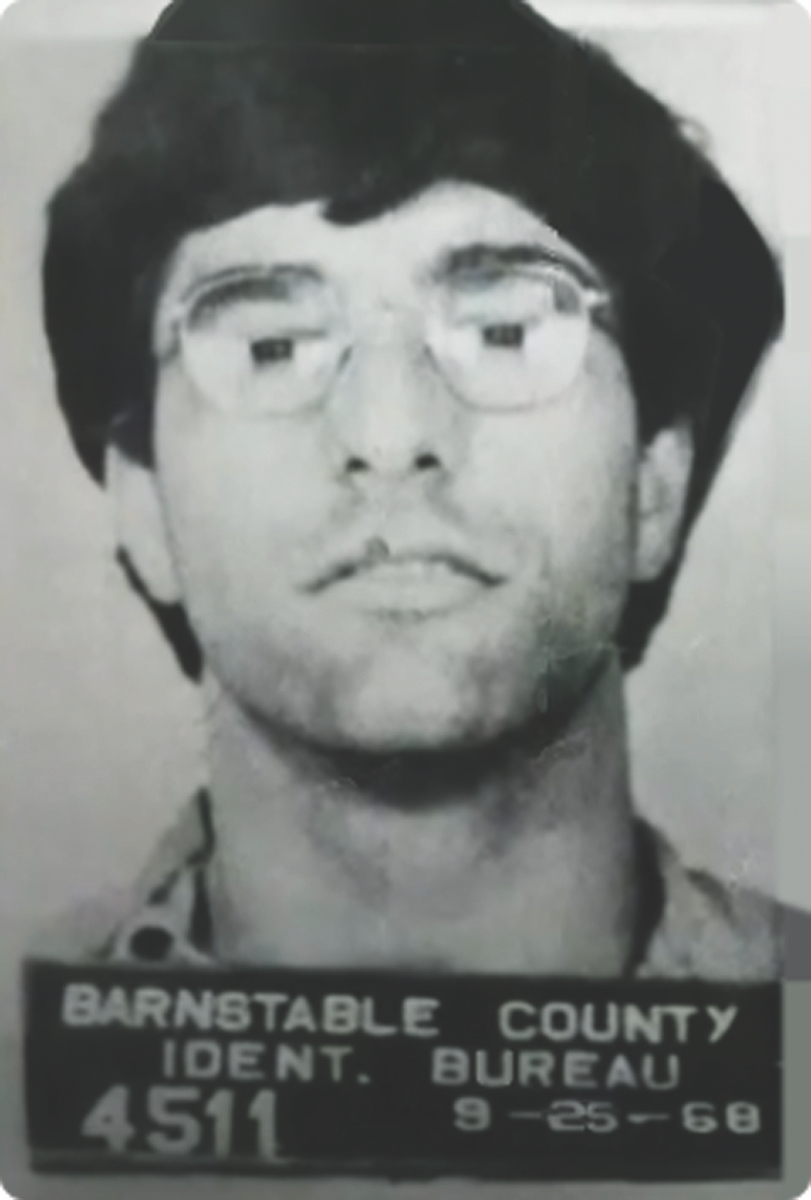
Antone Charles “Tony” Costa, Provincetown handyman and murderer of four young women. (Photo courtesy Barnstable County Identity Bureau) – image from the author’s site

Who was this guy? Tony Costa never got to know his father, who had drowned trying to save a fellow seaman in New Guinea near the end of World War II, when Tony was only eight months old. He would be obsessed with his war hero dad for the rest of his life. There were early signs of trouble with Tony. At age seven he claimed to have been visited regularly by a man in his bedroom at night, an actual intruder? a fantasy? an obsession? He said the man looked like his father. He stood out among his peers during summers in Provincetown, his mother’s birthplace, cooler, smarter, and more “inside himself” than anyone else, according to a kid he hung out with there. Then there was the taxidermy kit. Lots of killing of small animals, neighborhood pets going missing, yet never a successful display of a stuffed animal. There is no mention of bed-wetting in his psychopath Bingo card, but who knows? We know he was raped as a pre-teen, and was probably one of several victims of sexual abuse by a Catholic priest in Provincetown. So his potential for madness certainly had some outside assistance. He was accused of attempting to rape a young girl as a teen.

description
Jen and Liza, Northampton, 1979 – image from Rodman’s site

Tony was smart and handsome, but had terrible judgment, a ne’er do well, capable at work but unable to hold onto a job. He became a heavy drug user and local dealer. Clearly this guy had some charisma (as well as a considerable supply of illegal substances) and a way with young teens. A pedophile who married his pregnant fourteen-year-old girlfriend, he kept a crowd of young acolytes around him unable or unwilling to see through his line of distilled, grandiose, narcissistic bullshit. Cult-leader stuff. There is a Manson-like quality to him. And, like most narcissists, he was never willing to accept any responsibility for his own actions, always insisting that people were out to get him, blaming others for things he had done.

description
The VW Tony stole after murdering its owner. A local spotted it in the woods and notified the local police, which spelled doom for Tony Costa – image from the author’s FB pages

There is more going on here than personal profiles of the major actors. A lot is made of how different from the mainstream Provincetown was, particularly during the tourist season. The ethos was much more accepting of whatever than most places. With people coming and going so much, it was custom-made for a predator. It was the 60s, man, drugs, sex, and rock ‘n roll, and kids taking off for adventures, whether drug-related or not, and thus not necessarily raising instant alarms when they went missing. In 1971, for example, I bought an old Post Office truck at auction for three hundred bucks, and drove across country with three friends. (well, tried, we never actually made it across the continent) No cellphone, no regular check-ins. We didn’t exactly file a flight plan. If we had come to a bad end, no one would have known, or been alarmed back home for weeks. This is something a lot of people did. Of course, we were not runaways, and we were not female. That would have been a whole other order of business. The cops in Provincetown took a lackadaisical attitude toward worried parents looking for missing progeny. “Don’t worry. I’m sure they will turn up in due time.” And they were probably right, mostly. Except, sometimes they weren’t. It took a lot of pushing from those concerned about the missing young women to get the police to pay much attention. Rodman and Jordan provide a very detailed look at the various police departments that became involved in Tony’s case, both the occasional good police work and the ineptitude of inter-departmental communications. Sound familiar?

The locals were slow to allow for the possibility that there was a killer in their midst. Even today, there is an urge to protect one of their own, despite it being fifty years since the events of the book.

“I got threats when I wrote this book,” Liza says. It’s a loving portrait of the town, but not especially flattering. “I have a comfort level there that I don’t have anywhere else. Even in the face of this book.” – from The Provincetown Independent

description
It was her sister’s 8th birthday. At the moment Liza was making a face at the camera, Tony was leading two young women into the Truro woods, where he would murder and bury them. – image from the author’s FB pages

One of the things about true crime books is that there is an element of suspense that is lacking. We know that little Liza will grow up to write this book, so we know that Tony did not kill her. This makes it more like a Columbo episode, knowing that the bad guy will get got, but enjoying seeing how that ultimately happens. That said, this is not a straight-up true crime effort. It is a fusion of true crime with memoir. Half of the book is about Liza’s childhood, her relationship with her mother in particular. It is an interesting look at how someone can survive a bad parent-child relationship. Showing how things were for Liza at home makes her a more sympathetic narrator for the other story. Geez, ya poor kid. I sure hope nothing else bad happens t’ya. And it makes it much more understandable how a kid who was starved for adult affection and attention would be drawn to an adult who was offering kindness and interest.

I did not get the frisson of fear reading this that pervaded in another true crime book, I’ll Be Gone in the Dark. Maybe because the killer in this one was long ago jailed, whereas the California killer had not yet been arrested when that book came out. But there is a certain vertigo, like walking near a cliff edge, blindfolded, only to realize the danger you were in when you take it off. It is distinctly possible that Liza might have found her way into Tony’s special garden if he had managed to stay out of jail for a few more years. Liza was like the little girl playing with Frankenstein’s monster in the movie, not realizing that he was more than just a large playmate, and seemingly friendly soul. Whew!

Rodman had been working on this project for about thirteen years. It happened that, in 2018, Jordan, a professional writer, was casting about for her next book project (She had previously published four books.) when she thought of her dear friend, Liza, (they had met in college) who was thrilled at the suggestion that they collaborate. So, sixteen years of research in all and here it is. An in depth look at a monstrous series of events, a sick individual, an interesting place in a time of upheaval, a difficult childhood, an odd friendship, and a very close call. The Babysitter is an engaging, informative read that will make you appreciate your sane parents, most likely, and appreciate your luck even more in never having had such a person as Tony in your life. (You haven’t, right?)

His coterie of teenagers, his stash of pills, and his marijuana helped mask his ever-increasing feelings of inferiority; by surrounding himself with idolizing acolytes who needed a hero, he could feel more in control, sophisticated, confident, and, of course, more intelligent.

Review posted – March 5, 2021

Publication date – March 2, 2021

I received an ARE of The Babysitter from Atria in return for an honest review. I did not charge them my usual rate of ten bucks an hour and whatever I want to eat from their fridge.

=====================================EXTRA STUFF

Links to Liza Rodman’s ’s personal, FB, Instagram, LinkedIn, and Twitter pages

Links to Jennifer Jordan’s personal and FB pages

Interviews
—–Red Carpet Crash – February 24, 2021 – Interview: Authors ‘Liza Rodman And Jennifer Jordan’ Talk Their Book The Babysitter: My Summers With A Serial Killer – audio – 17:02 – definitely check this one out
—–New York Post – February 27, 2021 – How I discovered my babysitter Tony Costa was a serial killer by Raquel Laneri
—–The Provincetown Independent – February 24, 2021 – Remembrance of Serial Murders Past by Howard Karren
—–WickedLocal.com – February 23, 2021 – In new memoir, local serial killer Tony Costa babysat two youngsters by Susan Blood

Items of Interest
—–Frankenstein playing with sweet young Maria
—–Columbo – or substituting for whodunit the howchatchem
—–My review of I’ll Be Gone in the Dark

Songs/Music
The author’s site provides a link to a considerable list of 39 songs mentioned in the book. But you have to have a membership to hear the full songs on Spotify instead of just the clips that are available on Rodman’s site.

Leave a comment

Filed under American history, biography, History, Non-fiction, psycho killer, Reviews, Thriller

Things in Jars by Jess Kidd

book cover

A cloth covers the jar that Bridie took from the bookcase in the nursery, and Ruby is thankful for this. For the contents have the ability to rearrange even a dead man’s sense of reality. As with all terrible, wondrous sights, there is a jolt of shock, then a hypnotic fascination, then the uneasy queasiness, then the whole thing starts again; the desire to look and the desire never to have looked in the first place.

1860s London, the prime of the Victorian age. About fifteen years before Sherlock Holmes begins using his talents to suss truth from mystery, Bridie applies her peculiar talents to helping the police in cases of an unusual nature. A sign outside her door announces:

Mrs Devine
Domestic Investigations
Minor surgery (Esp. Boils, Warts, Extractions)
Discretion Assured

but she is known mostly for her ability to discern the cause of death, when simple observation will not suffice. She would do as well with a sign that says Investigator of the Bizarre. Her Scotland Yard contact and sometime employer is one Inspector Valentine Rose, and business is brisk.

London is awash with the freshly murdered. Bodies appear hourly, blooming in doorways with their throats cut, prone in alleyways with the head knocked in. Half-burnt in hearths and garroted in garrets, folded into trunks or bobbing about in the Thames, great bloated shoals of them.

She is called on to look into inexplicable deaths, primarily among the flotsam of society. London has been undergoing the installation of a world class sewer system, and diggings have turned up some extremely cold cases. The latest calls her to a crypt in Highgate Chapel. A mother and child have been unearthed, the child having significant bodily abnormalities. Around the same time, a dodgy-seeming doctor comes a-calling, seeking her assistance on behalf of his patron, Sir Edmund Athestan Berwick. Seems the baronet’s daughter has been kidnapped. Going to the police is not really an option. And the game is afoot. Any chance the two cases are linked?

description
Jess Kidd – image from Metro.

The purloined child, Christabel, has some peculiarities of her own.

The man, looking up, hesitates and the child bites him, a nip of surprising sharpness. He pulls his hand away in surprise and sees a line of puncture holes, small but deep…The man stands, dazed, flexing his hand. Red lines track from palm to wrist to elbow, the teeth marks turn mulberry, then black…What kind of child bites like this, like a rat? He imagines her venom—he feels it—coursing through him …A blistering poison spreads, a sudden fire burning itself out as it travels…All- the time the creature watches him, her eyes darkening—a trick of lamplight, surely!…He would scream if he could, but he can only reach out. He lies gasping like a landed fish.

Poor unfortunate soul.

description
Image from The Times

With Sherlockian insight, a talent for disguises, and lots of shoe leather, Bridie sets about following leads and examining clues trying to get to the bottom of a case that is unusually fishy. Like that later consulting detective, Bridie smokes a pipe, which is often enlivened by substances other than pure tobacco, things with names such as Mystery Caravan or Fairground Riot, concocted by Dr. Rumhold Fortitude Prudhoe, a close friend. She shares her quarters with a particularly helpful assistant, the seven-foot-tall Cora Butter, who asks more than once whether Bridie would like this or that person held upside down. The medical bag Bridie totes is her own. The other frequent companion in her investigations is a dead man. While on the job at Highgate Chapel, he first appeared to her in the attached graveyard, notable not only for his transparency, but for his indecorous attire. Ruby Doyle had been a renowned boxer in his day, and appears in shorts, shirtless, sporting a cocked top hat, an impressive handlebar moustache, muscles aplenty, and a considerable number of tattoos, with peculiarities all their own. He seems to know Bridie quite well. One of the mysteries of the book is why she does not seem to remember him, particularly as she finds him very, very attractive.

description
Tom Hardy – add a handlebar moustache, top hat, and some more tats, and Kidd sees him as Ruby

The supporting cast is a delight. Lee refers to those who work with her as Bridie’s Victorian A-team. Beyond those noted above there is a criminal circus owner with a weakness for strong women, psycho killers of both the male and female persuasion, a misshapen sniveling abettor who could have snuck out of a Dickens novel to put some time in here, an honorable street urchin, orphans, a mysterious woman who may be haunting the baronet, and plenty more.

The story is told in two timelines. Bridie investigates the taking of Christabel in 1863, and we get looks back into Bridie’s childhood from 1837 to 1843, the earlier period explaining much of what is to come twenty years later. And explaining how Bridie came to have the skills she possesses. Bridie was born in Ireland, like the author, but I expect Jess Lee’s transition to life in London was a tad less fraught.

description
Image from Foodiggity.com

Among other things, Kidd is interested in presenting a realistic portrait of the period. ( I…wanted to give a basis of a real, gritty, accurate portrayal of Victorian London.) Visually, she offers panoramic looks through the dark eyes of ravens, and Bridie’s pedestrian peregrinations, particularly through less-than-posh parts of the city. She offers a particularly effective olfactory perspective as well.

Breathe in—but not too deeply. Follow the fulsome fumes from the tanners and the reek from the brewery, butterscotch rotten, drifting across Seven Dials. Keep on past the mothballs and the cheap tailor’s and turn left at the singed silk of the maddened hatter. Just beyond, you’ll detect the unwashed crotch of the overworked prostitute and the Christian sweat of the charwoman. On every inhale a shifting scale of onions and scalded milk, chrysanthemums and spiced apple, broiled meat and wet straw, and the sudden stench of the Thames as the wind changes direction and blows up the knotted backstreets. Above all, you may notice the rich and sickening chorus of shit.

She was greatly influenced by journalist William Mayhew’s encyclopedic 1851 book London Labour and the London Poor. There is a look at the jailhouse, which appears to be guarded by particularly corrupt versions of Tweedle-Dee and Tweedle-Dum. Toss in, (or dig up) some resurrectionists, too. Part of the Victorian culture was a craze for collecting exotic things. One story that fed her interest was that of The Irish Giant, an exceptionally tall gent (7’7”) who became the talk of London for a brief time. But after his early demise, and despite his specific instructions to the contrary, his remains were obtained by a collector and put on display. There is a link to this tale in EXTRA STUFF.

description
Image from Traveldarkly.com

Lee is also interested in Irish folklore and partakes of that richly for the core element of the story. The incorporation of this element brings with it the main fantasy strand of the novel. One look at the cover of the book will inform you that there be mermaids (or something akin) here. Lee adds additional magical elements, as such critters appear here to have considerable power to influence the world about them, and specific powers that we would never associate with The Little Mermaid, although, considering the things we see in jars, we might have to reconsider the implications of the song Part of Your World:

Look at this stuff
Isn’t it neat?
Wouldn’t you think my collection’s complete?
Wouldn’t you think I’m the girl
The girl who has ev’rything?
Look at this trove
Treasures untold
How many wonders can one cavern hold?
Lookin’ around here you’d think
(Sure) she’s got everything

Hmmmmmm.

description
Image from Klyker.com

There is considerable humor in Things in Jars.

Her spectacularly ugly bonnet is curled up before the fire, bristling with feathers. She refused to give it up into the hands of the butler. Not that the butler was overeager to take it. If it comes alive, Sir Edmund thinks, he will do for it with the poker.

My particular LOL favorite is the prayer young Bridie offers up at bedtime.

God grant eternal rest to Mammy, Daddy, James, John, Theresa, Margaret, Ellen, and little baby Owen. God grant that bastard Paddy Fadden a kick up his hole and severe death to him and his gang, of a slow and terrible variety.

How could you not absolutely love such a child?

The disappointments in Things in Jars were few. I wish there had been more provision of clues throughout the book about what the deal was with Ruby. I was ok with the explanation, but it needed a better support structure. A bit more background on Cora would have been welcome. One actual gripe was a scene in which Bridie falls asleep while on the job. No way would this have happened. Booo! Almost all the violence occurs off-stage. In addition to one event described in a quote from the book in the review, we are shown the beginning of one attack by a ruffian on a lady. Tender souls might turn away. That’s really about it for such things.

description
Image from Nickcook.net

But the delights in Things in Jars could fill a wing of the British Museum. Bridie is a delicious lead, tough as nails without being impervious, bright, with a solid background that explains how she knows what she knows. She is a lot of fun to follow. The Holmesian parallels are a treat. The supporting cast is like a three-ring circus, in the best possible way, diverse, interesting, and fun to watch (both the light and the dark). We feel the fear when appropriate, and see Bridie’s affection for Ruby grow. A taste of Irish folklore is both creepy and educational, and Lee’s portrait of 19th century London offers an exceptionally immersive experience. You really get a feel (and smell) of being there. A real-world mystery with fabulous elements of fantasy. In short, Things in Jars is an absolute delight. For the hours you are reading this book you will be part of that world.

Review first posted – January 17, 2020

Publication date – February 4, 2020

I received an ARE of this book from Atria in return for some specimens I have been keeping in a special place in the lab basement for some years. They promised to return them after a thorough examination.

This review is cross-posted on Goodreads. Stop by and say Hi!

=======================================EXTRA STUFF

Links to the author’s personal, Twitter, Goodreads, Instagram and FB pages

My review of a 2023 book by Kidd
—–The Night Ship

Interviews
—–Savidge Reads – Sinister & Supernatural Shenanigans with Jess Kidd – by Simon Savidge
—–Stitcher – S3E4 – Chatting with Jess Kidd – audio – 1:29:12 – by Tim Clare – you can safely begin at about 46:00 for a focus on Jars
—–Well, not an interview, really, but a piece Kidd wrote for LitHub on her favorite ghost stories – Books That Blur the Lines Between Living and Dead

Items of Interest
—–Waterstones – A look at the Operating Theater – Kidd gives a tour
—–Writing i.e. – On Writing Things in Jars by Jess Kidd
—–Gutenberg – London Labour and the London Poor (1851) by William Mayhew
—–Joseph Bazalgette – engineer of the massive sewer works in London
—–Otherworldly Oracle – Mermen Legends. – a fun bit of fluff
—–Wikipedia – The Irish Giant

Leave a comment

Filed under Fantasy, Fiction, Historical Fiction, Thriller, Thriller

Pretty Girls by Karin Slaughter

book cover

The world stops for you when you’re pretty. That’s why women spend billions on crap for their faces. Their whole life, they’re the center of attention. People want to be around them just because they’re attractive. Their jokes are funnier. Their lives are better.

Well, there might be some downsides. Pretty Girls is a white-knuckle thriller that will keep you turning the pages long after you should really have gone to sleep. Do not read this while on a train. You will miss your stop.

The story is told from three alternating perspectives. Claire Scott, newly free of that nasty ankle-monitor, has a pretty good life. 38, in great shape, no kids, a studly, attentive hubby who makes much more than a decent living, cool digs. What’s not to like? After a celebratory dinner out, Paul wants to do the nasty in an adjacent alley, way out of character, but, whatever. But sorry, no nookie for you guys. An armed, tattooed criminal element sort robs them. Things go too far and Paul winds up on the sidewalk, tinting the pavement with considerable quantities of red, and the game is afoot. What Claire discovers in going through her late mate’s computer files after the funeral will rock her world.

Lydia Delgado’s life is somewhat different. Single mother, 41, struggling to get by, alienated from most of her family, runs a dog grooming business. Her past would not look very nice on a resume. She’d hit rock bottom a while back and lived there for a spell, with a pick and shovel. But these days she is respectable. Owns a dog-grooming business. Met her pretty nice bf in a 12-step program. Her teenage daughter is a peach. Lydia is on the wrong side of pudge these days, with an addiction to the sort of culinary drugs that come in crinkly bags at supermarkets. Life’s a bitch and then you diet. Lydia used to be a looker. Not surprising, really. Her sisters were easy on the eyes too, but one vanished when she was 19, never to be seen again, and the other one just saw her husband get killed.

Sam is a determined sort, bulldog with a bone. He never believed the official cop line that his Julia had simply run away. So he dedicated his life to finding out what had really happened to his eldest daughter. It cost him his marriage, and maybe even more. We see the progress of Sam’s investigation through his journals, from the time when he was on this quest. Claire and Lydia’s adventure takes place today.

The two sisters join forces to continue searching for the truth about Julia’s disappearance, and must face the consequences of Claire learning some very disturbing secrets about her husband.

description
Karin Slaughter – from her FB pages

Karin Slaughter is not new to the best-seller lists, having sold more than 30 million copies of her crime books books in 32 languages. She was born in a small Georgia town and now lives in Atlanta, where Pretty Girls is set. Her books include six in the Grant County series and nine in the Will Trent series, set in Atlanta. She was working on another book entirely when the notion for this one occurred to her in dream, so she checked in with her publisher, put the planned book on the back burner and dove into this one.

There are several elements at work here. In a book of this sort, if you are not engaged by the characters, the rest does not much matter. Lydia certainly has had her troubles in the past, but she is pretty supportable now, finding her best self in this worst of times. Claire makes us wonder how she could have buried her head in the sand for so long, ignoring what look like warning signs to us. But in wondering, it is worth keeping in mind that we are all sand-dwellers, from the neck up at least. Maybe it is an innate and useful skill to be able to simply ignore warning signs of peril. If we recognize them then we might have to do something about them, which entails personal risk, of either physical or emotional harm. Most of the time most of us prefer to keep a lid on things. Thus we live to ignore another day. So it feels entirely credible that reasonable people can overlook behavior that might stand out to an external observer. Particularly in Claire’s case, as she has tried to keep her head down in most situations for most of her life. We can see her vulnerability, however cloaked it may have been, and can easily feel for her. In addition we see the characters develop over the course of the tale, Claire moving from passive to assertive and Lydia moving from nobody to a sort of anti-hero. Family dynamics plays a major part in the sisters’ struggle, both to find the truth and to find a way back to sisterhood across a very large distance. Check.

The story must be engaging. Will Claire and Lydia find out what really happened to their missing sister? Does Sam? Do we care? If you can’t empathize with this as a driving force, it must be because you are too busy torturing kittens. Check.

Pace must be maintained. Slaughter must have a metronome that is set for increasing tempo. Check.

The baddie must be truly scary, and up to some really awful stuff. You have no idea. Check

The hero/heroine(s) must face believable peril. Is it possible that one or more of our core three might come to harm of the terminal sort? You betcha. Check

A thriller is never without a bit of misdirection, a few fish-hooks hoisting red-herrings for us to consider. Yep. Get your scaling tools ready. Check.

And there is that old favorite, the twist. Let’s just say that Chubby Checker would be pleased. Check. Wait, what’s that? My advisors inform me that not everyone will appreciate my lame boomer refs, so, fine, whatever. For you kids out there, ok, rewind. Start over. Twists. Let’s just say that after reading this book, I was in need of a good neck brace. Ok? Sheesh.

Finally there is the issue of payload. That is the extra information one learns about the world in reading a work of fiction. I suppose there is a bit of that here. I have no idea if the awfulness that is depicted in Pretty Girls (aside from Paul’s questionable taste in décor and labeling) has a real-world basis. Although it does seem that if one can imagine a particularly grotesque form of depravity, there is probably someone, somewhere who is practicing it right now, and with so many folks on the planet, probably more than a few. So if the book is highlighting some actual form of human awfulness, then bad-a-bing. Check

Gripes. You knew there would have to be one or two. The title, Pretty Girls suggests that those on the 10 side of life are more at risk than those closer to the 1 end of things. The theme of prettiness is noted with frequency early on, in comments on the attractiveness of some and the unattractiveness of others. Slaughter seems interested in giving some serious thought to how people react to beauty and to how the beautiful react to the world. Certainly there is peril about for those blessed with pleasing countenances, whether it comes from a wicked witch or the ravages of time. She keeps up the mentions for a while, sometimes offering actual insight. But then it seems to fade, as if she had run out of things to say about prettiness, until it is brought back into the spotlight for a final bow or two. Like, oh, the title is Pretty Girls. I guess I should put something in here to give that some closure. It looked totally like an afterthought. I thought this could have been better handled, maybe spread out a bit more, maybe dig a bit more than skin deep. But that is a quibble. No one is going to read this book to get enlightened about beauty. My second gripe will have to be a bit clouded. I don’t want to spoil anything. I found the particular fixation of the baddie on the specific group that is targeted curious. Why did this person focus on these targets? I did not get that there was a particular reason why the baddie was so set on this particular subset of victims. Perhaps the significance of this is in the eye of the beholder? But no matter, really.

The bottom line here is that you will be ripping through this book, dying (well, almost) to see how things turn out. Pretty Girls is an outstanding thriller, a very engaging, entertaining, and disturbing read, and that is a beautiful thing.

Review posted – 7/31/15

Publication date – 9/29/15

=======================================EXTRA STUFF

Links to the author’s personal and FB pages

How serial killers choose their victims

The Advantages of Being Beautiful
8 Scientifically Proven Reasons Life Is Better If You’re Beautiful – by Dina Spector in Business Insider
—A Smithsonian article on
How Much is Being Attractive Worth
– by Abigail Tucker
10 Pleasures and Pains of Being Beautiful by Dr Jeremy Dean on PsyBlog

A lovely audio interview with the author by Steve White of Literary Week. The sound levels are off a bit, his volume being too loud relative to hers, but it’s worth putting up with.

==============================================SONGS

Offering a bit of further discomfort, after reading this book you might find some of these listens a bit disturbing

Pretty Woman – Roy Orbison and friends

Oh You Pretty Things – David Bowie

PYT (Pretty Young Thing) – Michael Jackson

You’re Beautiful – James Blunt

You are so Beautiful– Joe Cocker

And the all time best stalker theme song – Every Breath You Take – The Police

2 Comments

Filed under Fiction, Thriller

The Girl on the Train by Paula Hawkins

book coverI read this one out of curiosity. Aware that it had been a huge market success, I wondered if it merited the sales. According to Riverhead, The Girl on the Train is, or was, the fastest-selling adult hardcover fiction debut ever. And that is a shame. With so many great books being published every year that do little or no business, for this one to have secured a first class ticket on the book-sales express can only be dispiriting to the good and great writers everywhere toiling away in third class on the oft-delayed local.


I do not mean to say that The Girl… is a bad book. Although I believe it to be seriously flawed, it is most definitely entertaining and will no doubt help hundreds of thousands of readers while away a few hours of their (our) lives, getting from this station to that. But if you want a psychological thriller that doesn’t disregard red signals you would do better to book a seat elsewhere.

description
Paula Hawkins

Rachel Watson has had a tough go of it. When her hopes of having a baby with hubby Tom did not work out, she landed in a trough of post-hope depression, and self-medicated with a steady flow of what seemed happier spirits. It did not work out. Now, divorced and unemployed as a result of her drinking, growing larger and pastier by the day, Rachel rides the commuter train to London on weekday mornings, pretending she is still working, pretending she still has a life. The ride takes her past her old neighborhood, offering a nice, mood dampening view of a stretch of railroad-edge homes. She used to live in one of those, before her ex bought out her interest. A few places away from her former home there is a couple she sees most days. She imagines lives for them, nursing this fantasy for quite some time, until she learns that the woman has vanished, and the game is afoot.

The notion for the story occurred to Hawkins on her regular train ride in London some years back. She calls it “Rear-Window-ish,” noting that it is hardly unusual for train riders to be curious about the lives being lived in the houses they pass, and just as likely for those on the ground to wonder about those passing by.

I used to go to college on the District line,” she said. “It goes very, very slowly and you can look into people’s houses. I did idly wonder about what you would do if you saw an act of violence or something suspicious. It’s quite normal, everyone is curious about other people’s lives.” – from an article in the Standard

This irregular Watson will not make anyone forget the investigative Doctor, let alone his illustrious partner, but Rachel feels compelled to find out whatever she can, using the knowledge she has gleaned from her daily observations. We expect our investigators these days to be a bit down on their luck, and to throw back maybe more than their share of amber liquid. But Rachel Watson doesn’t have a drinking problem, she has a drinking catastrophe. How is she to figure out whither the missing lady has gone, or perhaps who made her go missing, how is she to judge whether the lady’s anger-management-challenged husband, the other man she saw at her place, or someone else might be somehow involved, if her drinking causes her to have more blackouts than London during the blitz.

The tale is told in staggered chronology, from three perspectives. Rachel’s, the missing person’s, and Anna’s, she being the woman with whom Rachel’s ex cheated while he was still with Rachel, and whom he subsequently married. Or she said, she said, and then she said. The timelines converge at the end. Most sections are divided into sub headings of morning, evening, afternoon, that sort. It makes for many short passages, good, appropriately, for reading on a train.

description
This is an example of the S stock used on the District line Hawkins once rode

The pace of the tale is quick, clickety-clacking along without exceeding posted limits, advancing nicely to the big climax. Truthfulness comes in for some attention, as it seems everyone has something to hide. If you are looking for likeable characters, you might try the Hogwarts Express. The folks here tote enough baggage to merit their own cars. I suppose Rachel is sympathetic, but seems almost as much an agent of her misery as a victim. Making her pathetic and annoying was, I expect, a way to make her real, make her sympathetic, and that works, to a point.

Will Rachel find out what happened with the missing woman? Will her ex take out an order of protection against her, as she keeps calling and showing up at his place? Is the missing person merely missing? or worse? Can Rachel stay sober long enough to figure anything out? You might very well care. Clearly, judging by sales, many do. But, while I did, a little, I felt pushed away by this book. I felt cheated, as an actual audience member, as if riding on a disoriented express. I do understand that the unreliable narrator is simply a story-telling mechanism and that Rachel falls into the Madman classification within that, but when she changes her story about a significant piece of information the story went off the rails for me. So, while there is plenty to enjoy about The Girl on the Train, while there is plenty of tension-release-repeat, and while many readers are bound to be transported by the story, relating to or rooting for one or more characters at least some of the time, the one thing a reader demands from an author is honesty, and when trust is lost so is the benefit of the several hours we spend together. The locomotive was transformed, for me, into a hand-car trapped in a siding. It’s elementary.

Review posted – 7/10/15

Publication date – 1/13/15

=======================================EXTRA STUFF

While this may be the first novel by Paula Hawkins, it is not the first novel that Paula Hawkins wrote, or published. She got work writing chick-lit under the name Amy Silver, an experience that she says was great training. Hawkins, born and raised in Zimbabwe, was 17 when her family moved to London. She had wanted to be a foreign correspondent like her father, but decided that war zones were just too scary. Check the Guardian piece if you are interested in getting more info on the author.

Links to the author’s personal, Twitter, Twitter as Amy Silver, and FB pages

Excellent intel in this piece in The Guardian

Here is the article from the Standard cited in the review, ‘My District line commute inspired bestselling thriller,’ says London author Paula Hawkins ,

An interview with the author in Entertainment Weekly The Girl on the Train author Paula Hawkins talks about her next thriller, by Clark Collis

A few great train reads. Now don’t bug me about the brevity of this. I know there are only a gazillion. Do feel free, however to add your favorite train books in the comments. I will be happy to add those to this list if you like. I have not gotten around to installing links for all of these, but I expect you guys can manage

4.50 from Paddington by Agatha Christie’s
Murder on the Orient Express by AC
Closely Watched Trains by Bohumil Hrabal, Edith Pargeter
The Great Train Robbery by Michael Crichton
The Great Railway Bazaar by Paul Theroux, or several other train books by this author
Strangers on a Train by Patricia Highsmith
A Train in Winter by Caroline Moorehead – recommended for inclusion by Dianne

Not to be outdone, train tunes

Casey Jones – this version by Allan Hirsch
Folsom Prison Blues (I hear that train a’comin) – Johnny Cash
I’ve Been Working on the Railroad – Pete Seeger
Last Train to Clarkesville – The Monkees
Last Train to Lhasa – Banco de Gaia – recommended by Rand
Locomotive Breath – Jethro Tull – the vid is cadged together, but this is what it should sound like
Midnight Train to Georgia – Gladys Knight
MTA – The Kingston Trio
Take the A-Train – Duke Ellington
The Train Song – a bit of silliness from Armstrong and Miller

Leave a comment

Filed under Fiction