Tag Archives: Nonfiction

Barracoon by Zora Neale Hurston

book cover

“…I want to ask you many things. I want to know who you are and how you came to be a slave; and to what part of Africa do you belong, and how you fared as a slave, and how you have managed as a free man?”…when he lifted his wet face again he murmured, Thankee Jesus! Somebody come ast about Cudjo! I want tellee somebody who I is, so maybe dey go to tell everybody whut Cudjo says, and how I come to Americky soil since de 1859 and never see my people no mo’. “

Barracoon – An enclosure in which black slaves were confined for a limited period.
-Oxford English Dictionary

Before she was a world-renowned novelist, Alabama-born and Florida-raised Zora Neale Hurston was an anthropologist, an ethnographer, a researcher into the history and folklore of black people in the American South, the Caribbean, and Honduras. She was a central figure in the Harlem Renaissance, producing works of fiction in addition to her anthropological work.

description
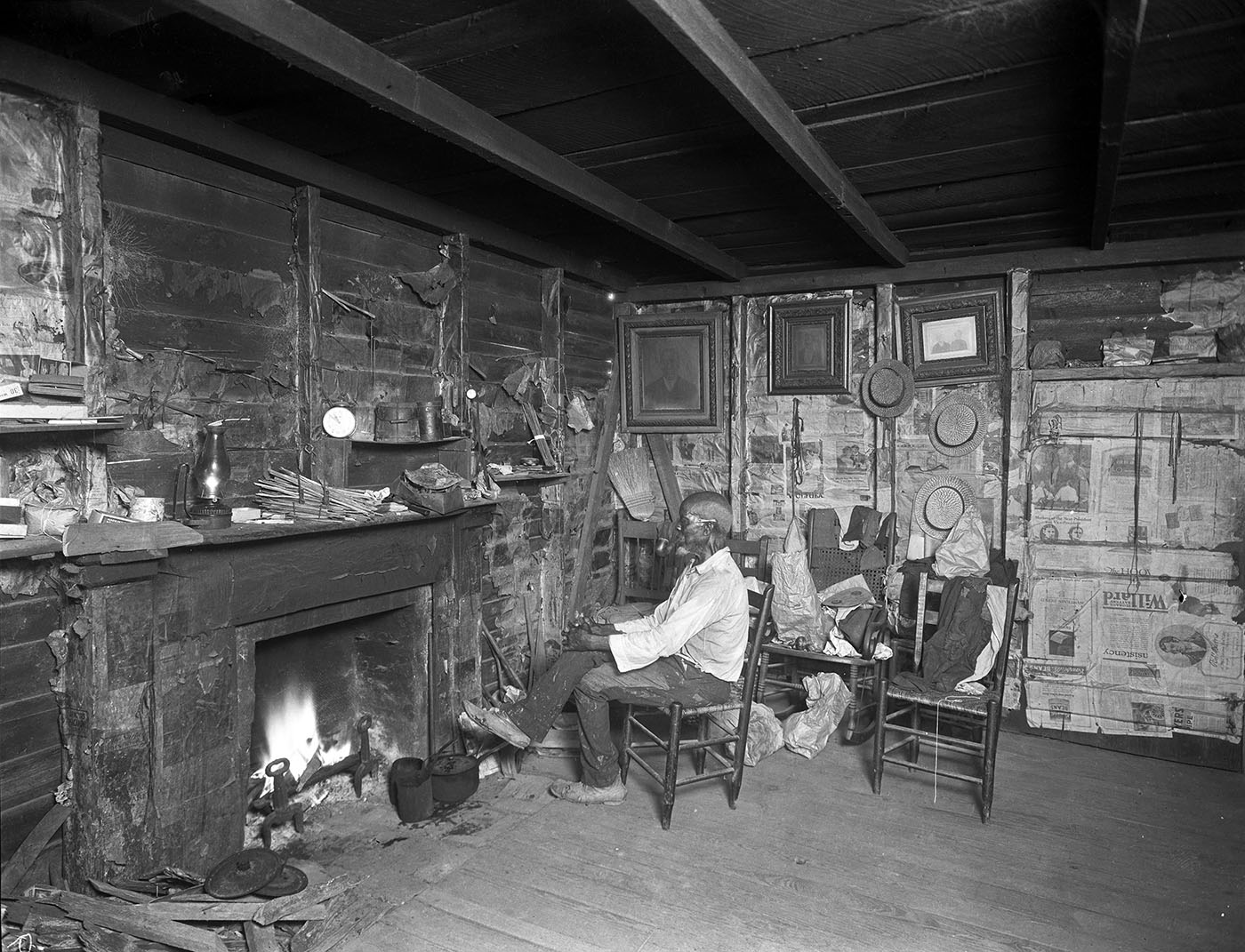
Cudjo at home – from History.com – (Credit: Erik Overbey Collection, The Doy Leale McCall Rare Book and Manuscript Library, University of South Alabama)

It was during this period that she first met the last known black man transported from Africa to America as a slave, Cudjoe Lewis. She interviewed Lewis, then in his 80s, in 1927, producing a 1928 article about his experiences, Cudjoe’s Own Story of the Last American Slaver. There were some issues with that report, including a serious charge of plagiarism. Hurston returned to Lewis in Africatown, Alabama, to interview him at length. It is these interviews that form the bulk of her book, Barracoon, plagiarism no longer being at issue.

description
Zora Neale Hurston – image from Smithsonian

Her efforts to publish the book ran into some cultural headwind, publishers refused to proceed so long as her subject’s dialogue was presented in his idiomatic speech. Thurston refused to remove this central element of the story, and so the book languished. But the Zora Neale Trust did not give up, and a propitious series of events seemed to signal that the time was right

Last fall, on the PBS genealogy series Finding Your Roots, the musician Questlove learned that he descends from people brought over on the Clotilda. Then an Alabama reporter named Ben Raines found a wreck that looked to be the scuttled ship; it wasn’t, but the story made national news….[while] Kossola’s relevance goes beyond any headlines, [there are also] noteworthy links there: one of Kossola’s sons is killed by law enforcement, and his story holds a message about recognizing humanity echoed by Black Lives Matter. – from Time Magazine article

Then there is the story itself. Hurston gets out of the way, acting mostly as Cudjoe’s stenographer and editor, reporting his words as he spoke them. It is a harrowing tale. A young village man in 1859, Kossula (his true name) was in training to learn military skills when his community was attacked by a neighboring tribe. His report of the attack is graphic, and gruesome. Many of those who survived the crushing assault were dragged away and sold to white slave traders. (Definitely not their choice, Kanye) We learn of his experiences while awaiting his transportation, his telling of the Middle Passage, arrival in America and his five years as a slave. He tells, as well, of the establishment of Africatown, after the Civil War ended the Peculiar Institution in the United States, and of the travails of his life after that, having and losing children, running up against the so-called legal system, but also surviving to tell his tale, and gaining respect as a storehouse of history and folklore. This is an upsetting read, rage battles grief as we learn of the hardships and unfairness of Kossula’s life.

“Oh Lor’, I know it you call my name. Nobody don’t callee me Kossula, jus’ lak I in de Affica soil!”

The book stands out for many reasons. Among them is that it is one of very few reports of slavery from the perspective of the slave. There are many documents available that recorded the transactions that involved human cargo, and many reports by slavers, but precious little has been heard from the cargo itself. It is also a significant document in teaching us about the establishment of Africatown, a village set up not by African Americans, but by Africans, Cudjoe and his fellow former slaves. The stories Cudjoe tells are often those he learned in his home culture.

description
‘The Brookes’ Slave Ship Diagram – from the British Library

Barracoon is a triumph of ethnography, bringing together not only a first-person report on experiences in African slave trading, but reporting on slavery from a subject of that atrocity. In addition Kossula adds his triumphant account of joining with other freed slaves to construct an Africa-like community in America, and offers as well old-world folklore in the stories he recalls from his first nineteen years. It is a moving tale for Hurston’s sensitive efforts to reach across the divide of time to encourage Kossula to relive some of the darkest moments any human can experience, sitting with him, calm, caring, and connecting. And finally, it is a truly remarkable tale Kossula tells. It will raise your blood pressure, horrify you, and encourage bursts of tears. You think you’ve had it tough? And for this man to have endured with such dignity and grace is a triumph all its own.

description
Commemorative Marker for Cudjo Lewis – Plateau Cemetery, Africatown, Mobile, AL – image from wiki

The text of the story is short, but Kossula’s tale is epic. Editor Deborah G. Plant has added a wealth of supportive material, including parables and old-world stories Kossula told to his descendants and to residents of Africatown, a description of a children’s game played in his home town in Africa, and background material on Hurston, her professional issues with an earlier piece of work, and her involvement with the Harlem Renaissance, without touching much on Hurston’s unexpected political perspective on segregation. The information adds to our appreciation of the book.

description
Cudjo with great-grand-daughters twins Mary and Martha, born in 1923 – image from
Doy Leale McCall Rare Book and Manuscript Library, University of South Alabama

The ethnographical research Hurston did bolstered a perspective on African culture that different was not inferior, that African culture had great value, regardless of those who believed only in Western superiority. Long before Jesse Jackson, such research proclaimed “I am somebody.” The research Hurston did in the USA, Caribbean and Central America certainly informed and strengthened the portraits she painted in her fiction writing.

The history of slavery is a dark one, however much light has been shone on it in the last century and a half. This moving, upsetting telling of a life that endured it is a part of that history. That this 80-year-old nugget has been buried under the weight of time is a shame. But there is an upside. The pressure of all those years has created something glistening and wonderful for us today, a diamond of a vision into the past.

Review posted – 5/25/18

Publication dates
———-5/8/2018 – hardcover
———-1/7/20 – Trade paperback

This review has been cross-posted on GoodReads

=======================================EXTRA STUFF

VIDEO
—–A film shot by ZNH – Cudjoe appears in the opening scene
—– On the unveiling of a bust of Cudjoe in Africatown – WKRG in Mobile – it also ncludes an interview with Israel Lewis, one of Kossula’s descendants
—–A contemporary profile of Africatown and the challenges it faces, particularly from hazardous industry nearby

EXTRA READING
—–Emma Langdon Roche’s 1914 book, Historic Sketches of the South, includes much on the Clotilde
—–Wiki on Cudjoe – includes images from E.L. Roche
—–Smithsonian Magazine – May 2, 2018 – Zora Neale Hurston’s ‘Barracoon’ Tells the Story of the Slave Trade’s Last Survivor – by Anna Diamond
—– History.com piece on ZNH’s work on Barracoon – The Last Slave Ship Survivor Gave an Interview in the 1930s. It just Surfaced by Becky Little – (the interviewing was actually done in the 1920s)
—–Bitfal Entertainment – A pretty nice brief summary of Cudjoe’s experience, with many uncaptioned illustrations
—–Time Magazine – Zora Neale Hurston’s Long-Unpublished Barracoon Finds Its Place After Decades of Delay – by Lily Rothman
—– On the slave ship Clotilda
—–NY Times – May 26, 2019 – ‘Ship of Horror’: Discovery of the Last Slave Ship to America Brings New Hope to an Old Community – By Richard Fausset
—–National Geographic – January, 2020 – America’s last slave ship stole them from home. It couldn’t steal their identities. – much more information about the Clotilda’s criminal mission, and about the lives of the men and women it transported and their descendants
—–Nw York Times – Last Known Slave Ship Is Remarkably Well Preserved, Researchers Say by Michael Levenson

AUDIO
—–NPR’s Lynn Neary talks with Amistad’s editorial director Tracy Sherrod, and Barracoon’s editor Deborah Plant – In Zora Neale Hurston’s ‘Barracoon’ Language is the Key to Understanding – Definitely listen to the entire interview. It is under four minutes. One wonderful benefit is to get a sample of the audio reading of the book, which sounds amazing.

Tracy Sherrod is the editorial director of Amistad at Harper Collins, which is now publishing the book. She says Hurston tried to get it published back in the 1930s, but the manuscript was rejected. “They wanted to publish it,” Sherrod says, “but they wanted Zora to change the language so it wasn’t written in dialect and more in standard English. And she refused to do so.”


Hurston refused, says Deborah Plant, because she understood that Lewis’s language was key to understanding him. “We’re talking about a language that he had to fashion for himself in order to negotiate this new terrain he found himself in,” she says. “Embedded in his language is everything of his history. To deny him his language is to deny his history, to deny his experience — which ultimately is to deny him, period. To deny what happened to him.”

Leave a comment

Filed under American history, biography, History, Public policy, World History

A Higher Loyalty by James Comey

book cover

All bullies are largely the same. They threaten the weak to feed some insecurity that rages inside them. I know. I’ve seen it up close.

James Comey is a lawyer, and in A Higher Loyalty he has presented a case to the jury of American public opinion. He lays out the steps of his interactions with Swamp Thing, from introduction to long-distance buh-bye. This is what happened, here, here, and there, on this, this, and that dates. This is what was said. This is what I understood those words to mean. And really, who are you going to believe, a public servant with a decades-long reputation for, among other things, honesty, or a feckless serial and possibly pathological liar?

description
James Comey – image from the NY Times

One can argue that it was not Swamp Thing’s clear collusion with Russia that constituted Ground Zero for what would become, in effect, a large-scale impeachment inquiry. Given the spinelessness of GOP legislators and the toadying nature of most of Trump’s appointees, given the clear intention of the Trump administration to install such creatures in as many positions of power as possible, it is a distinct possibility that there might have been no Special Counsel investigation but for a single action, taken by Swamp Thing, and his childish inability to keep his lies straight. We would still have the Quisling sorts like Devin Nunes, who could be counted on to cover their boss’s and their own butt cheeks instead of doing their constitutionally defined job of overseeing the executive branch. The hyper-partisanship and cowardice of most Republicans in the federal government have made a laughing stock of our democracy across the planet. That would have been there in any case. But on May 9, 2017, after having failed to gain a personal loyalty pledge, Swamp Thing fired James Comey as the head of the FBI, with the laughable excuse that Comey had mishandled his job of investigating Hillary Clinton, which is not to say that Comey managed it well, of which more later, but that Swamp Thing had previously praised Comey’s actions as courageous. ( Those who support his dismissal by Swamp Thing will likely succumb to right-wing talking points, preposterous though they are, that Comey was a secret Hillary supporter, whose actions strove to bolster her candidacy. If you believe that, please stop reading now. Your brain has ceased functioning and nothing written here will make any sense to you. Don’t let the door hit you on your way out.) When he subsequently admitted on a nationally televised interview that his reason for doing so was “the Russia thing,” he opened the door to a world of hurt. In the absence of the Comey firing there may never have been a Special Counsel investigation into “the Russia thing,” but by so blatantly obstructing justice by firing Comey, Swamp Thing placed the target, in flashing neon, on his own back.

That is the true starting point of Comey’s book. But, like most well written legal documents, there is considerable backstory, and in a very well written case, there is a central thrust. The tale told here is not just about his few months of interactions with the president. He offers pieces of his life story to let us know the kind of person he is, or at least the kind of person he wants us to see him as, the experiences that molded his character, the personal motivations that informed his adult decisions, and what he portrays as ethical choices made in challenging situations in his career. He wants us to understand that he believes he acted properly, both in doing what he did during the 2016 presidential campaign, and in refusing to do what the tainted president demanded of him. And, ladies and gentlemen of the jury, the decision will be yours.

description
Image from SusieMadrak.com

Here are the charges

—–Did Director Comey tell the truth when he testified that the president had pressured him to drop the case against Michael Flynn?

—–Is Director Comey an egotistical prima donna who put his personal needs and perspective above the needs of the nation and his bosses?

—–Did FBI Director Comey, with forethought and malice, and by choosing to break with FBI protocol, deliberately affect the 2016 presidential election in such a way as to damage the campaign of Hilary Clinton?

Questions

—–Does Swamp Thing really run his White House as if he were a mafia don?

—–Does a guy who’s 6’8” really think he can fade into the woodwork by getting up close and personal with White House drapery that sort of matches his suit?

—–Has Comey behaved in a non-partisan manner in the jobs he has held, in the decisions he made in those jobs?

description
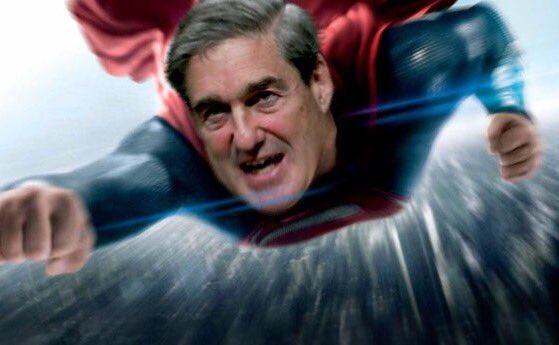
Image from @dumptrump33 – Of course we may be raising our expectations a tad high for RM

As for that central thrust thing, it is alluded to in the opening quote. Comey bloody hates bullies. He had to contend with them as a not-nearly-oversized teen. He was thrilled, when pursuing his legal career, to have an opportunity to go after some of the uber-bullies of our society, members of organized crime. He was also on the scene when one of our major political bullies, Dick Cheney, tried to wrest a signature from a man in a hospital ward, just so he could continue an expiring domestic surveillance program of questionable legality. In a way, all his life had led up to his dealings with Swamp Thing, a person who is the very personification of the coward as bully. Comey knew what he was facing when Swamp Thing was elected. He hoped to be able to avoid conflicts with him, and see out his ten-year term as FBI head. He knew the odds of that happening were small.

We are offered a look into Comey’s upbringing in Yonkers, and then New Jersey.

Being an outsider, being picked on, was very painful, but in hindsight it made me a better judge of people. In my life, I would spend a lot of time assessing threats, judging tone of voice, and figuring out the shifting dynamic in a hallway or locker room crowd. Surviving a bully requires constant learning and adaptation. Which is why bullies are so powerful, because it’s so much easier to be a follower, to go with the crowd, to just blend in.

He walks us through some of his career steps and big moments. These include the successful prosecution of a large chunk of the New York area mafia, prosecuting Martha Stewart, prosecuting Scooter Libby, and the event that made his reputation. He was the acting Attorney General at a time when the Stellar Wind program, an illegal domestic spying undertaking, according to DoJ analysis, was up for renewal. The administration needed a sign-off by the AG, and acting AG Comey refused. Getting wind that Presidential counsel Alberto Gonzalez and Chief of Staff Andy Card were on their way to the hospital to wrest a signature from the barely conscious John Ashcroft, being treated for a life-threatening condition, he dashed to the hospital himself, sirens howling and lights flashing, calling Robert Mueller, then the head of the FBI, to join him in preventing this blatant malfeasance. It is the stuff of legend. And secured him a place in the pantheon of political heroes for his courage under such withering political fire. The passage could have been written by any of today’s best-selling writers of political thrillers, leaving one breathless, even though we know the outcome. Though the broad strokes are at least somewhat familiar to folks who pay attention to the news, there are details I bet you do not know and will be very surprised to learn. The book is worth it just for that section alone.

description
Attorney General John Ashcroft – image from US News

Throughout, Comey talks about trying to do the right, the moral, the ethical thing when confronted with difficult decisions. He is certainly persuasive when he writes about the lessons he has learned over his life from people he has known and respected, and from important people and writers whose work has informed his growth as an ethical person. He cites as a particular influence the writings of religious philosopher Reinhold Nieburh, someone many in government, from both parties, have looked to for inspiration. You may be surprised at some of the other people he notes as influencers.

Also a bit of a surprise is his take on various people he has been connected to, most of whom will be familiar. Rudy Giuliani, who had held the US Attorney position for the Southern District of New York when Comey was a prosecutor there, comes in for a look.

Though Giuliani’s confidence was exciting, it fed an imperial style that severely narrowed the circle of people with whom he interacted, something I didn’t realize was dangerous until much later: a leader needs the truth, but an emperor does not consistently hear it from his underlings. Rudy’s demeanor left a trail of resentment among the dozens of federal judges in Manhattan, many of whom had worked in that U.S. Attorney’s office. They thought he made the office about one person, himself, and used publicity about his cases as a way to foster his political ambitions rather than doing justice. It was a resentment that was still palpable when I became the chief federal prosecutor in Manhattan—and sat in Giuliani’s chair—a dozen years later.

Hizzoner’s fondness for the limelight has not faded a single watt. Comey also talks about his dealing with former AGs and others in government. His meetings with President Obama make for fascinating and surprising reading.

As with anyone who is presenting himself as ethical, and better than the pack in that regard, he offers up some specifics of errors he has made, including one fairly meaningless lie that he told as a young man, which made him feel particularly guilty. He points out an error of insensitivity he had made when addressing the Michael Brown case, but it is presented in such a way as to show how receptive he is to learning something new. It’s a bit like a job interview when the applicant tries to skirt the “What’s your worst quality?” question with how he works too hard for his own good. Eye roll please. Comey offers fleeting mea culpas on having an outsized ego and an eye for the dramatic, then notes several examples of what a wonderful, thoughtful boss he is. It is clear that he wants us to like, and respect him, and take his “aw, shucks,” demeanor at face value. But it is also quite clear that he is a well-armed, and well armored political in-fighter, familiar with his home turf, sharp-edged, and deft in the art of manipulation.

It is a clear thread throughout Comey’s book that his literary RPG is locked, loaded, and aimed at one Donald J. Trump. The things that disgusted him throughout his life, from childhood and in his public career are epitomized by the man who fired him for doing his job. A secondary, related, core is centered on defending his actions in 2016 and 2017, making the case that he should not have been sacked.

So what about the charges and questions?

I’m almost there. But before that, you should know that James Comey, whatever you think of him as a public official or as a political person, is a wonderful writer. He is able to paint a picture and bring you along with him with seeming effortlessness. No doubt this talent has been honed by his many years of preparing and presenting cases. This book is his case to all of us.

Ok, down to the end

—–Does Swamp Thing really run his White House as if he were a mafia don?
Really? Have you heard anything to offer a more accurate description? I haven’t. Spot on, JC, particularly given his familiarity with less powerful dons as a prosecutor in the SDNY.

—–Does a guy who’s 6’8” really think he can fade into the woodwork by getting up close and personal with White House drapery that matches his suit?
Yeah, he kinda thought he could. The drapery is taller than he is and the color matched his suit somewhat.

description
Darth on Twitter had a bit of fun with this

description
As you can see from this image from War News Blogspot, Comey was sure to be spotted

—–Has Comey behaved in a non-partisan manner in the jobs he has held, in the decisions he made in those jobs?
As for being non-partisan, I call BS on that. Comey is a Republican, and, while there have been notable instances in which he has risen above purely partisan perspectives, that bias has, I believe, interfered with his ability to remain consistently above the political fray. He writes, for example,

I wanted to find a way to help Bush. This man, whom I liked and wanted to see succeed, appeared not to realize the storm that was coming. The entire Justice Department leadership was going to quit, and just as he was running for reelection.

A politically disinterested official would have given such a concern zero consideration.

We all bear responsibility for the deeply flawed choices put before voters during the 2016 election…

Rather a false equivalence, no? It is pretty obvious how flawed the Republican candidate was, but the Democratic nominee was one of the most qualified presidential candidates in modern history. The deep flaws some insist on seeing were primarily made up of lies that had been broadcast about her for decades by a well-financed and relentless political attack machine. Like one of those augmented reality games that let you superimpose imaginary characters onto a real-world scene. (Pokémon GOP?) So BS on that, too. Opting to go public with a re-opening of the investigation of Hillary so late in the election season, against protocol, and without the prior knowledge of his AG, knowing it would likely impact the election, while simultaneously keeping under wraps the ongoing investigation of Trump for collusion with Russia was really the kicker. I believe this revealed his partisan stripes, however well he may have tried to disguise them in the tall grass of self-justification. Many will find his explanation persuasive. I am not among them. Bias revealed.

—–Did Director Comey tell the truth when he testified that the president had pressured him to drop the case against Michael Flynn?

Here is piece of how he describes that interaction

He then said, “I hope you can see your way clear to letting this go, to letting Flynn go. He is a good guy. I hope you can let this go.”
At the time, I had understood the president to be requesting that we drop any investigation of Flynn in connection with false statements about his conversations with the Russian ambassador in December.

The preponderance of news coverage, confirmed by Comey’s reporting here, makes it abundantly clear that Swamp Thing did indeed ask for special treatment for his guy, a glaringly illegal no-no. Comey was right to continue with business as usual after getting this appalling directive, which is exactly what it was.

—–Is Director Comey an egotistical prima donna who put his personal needs and perspective above the needs of the nation and his bosses?

IMHO, Yes, but with significant asterisks.

Even Comey’s close friends acknowledge that his great strength is also his great weakness: a belief in his own integrity. “He believes this in a way that creates big blind spots, because he substitutes his judgment for the rules,” says Matt Miller, a former director of public affairs for the D.O.J. – from the Vanity Fair Article

See more on this below.

—–Did FBI Director Comey, with forethought and malice, and by choosing to break with FBI protocol, deliberately affect the 2016 presidential election in such a way as to damage the campaign of Hillary Clinton?

Yes and No. It seems to me that Comey’s identification with the departments to which he has belonged or which he has headed, whether temporarily or long-term, is extremely strong. Not a bad thing, per se. But I believe there have been times when he has proven himself unable to separate where James Comey ended and the FBI or the Department of Justice began, leading to situations where Le département est moi. I believe that in some of his actions, Comey, knowingly or unknowingly, became, in his head, one with the department. Therefore, it is impossible to differentiate where actions intended to protect the reputation of the FBI or the Department of Justice leave off and become actions to defend the ego and reputation of James Comey. And there is a considerable ego involved. I would not be surprised if Comey, at some not necessarily conscious level, saw himself as a sacrificial figure, a Prometheus who gave the nation the fire of just cause to investigate Trump’s Russia dealings, or even a Christ-figure, sacrificed, if perhaps not as intentionally as the original, for the greater good.

Bottom line is that if you have not read this book, really, what the hell are you waiting for? It is a beautifully written picture of one of the most compelling political stories of our time. Even if you have strong party-based feelings about Swamp Thing or Comey, even if you may (as I did) roll your eyes on occasion, it is worth hearing the story from the horse himself. You will learn some things you did not know and be entertained while doing so. You don’t have to swear a loyalty oath to read this book, but you would be doing yourself a disservice to let it slip.

Review first posted – May 11, 2018

Publication date – April 17, 2018

=======================================EXTRA STUFF

Comey on Twitter

Items of interest
—–Vanity Fair The True Story of the Comey Letter Debacle – by Bethany McLean
—– Wiki on Reinhold Niebuhr
—–full transcript of Rachel Maddow’s interview with Comey
—–Stephen Colbert’s interview with Comey
—–The Comey Memos
—–6 Takeaways From the James Comey Memos – by Michael S. Schmidt
—–March 21, 2019 – NYTimes – James Comey: What I Want From the Mueller Report
—–June 14, 2018 – Vox – The long-awaited inspector general report on the FBI, Comey, Clinton, and 2016, explained – by Andrew Prokop

Leave a comment

Filed under American history, Bio/Autobio/Memoir, History, Non-fiction, Public policy, True crime

Automating Inequality by Virginia Eubanks

book cover

If among you, one of your brothers should become poor, in any of your towns within your land that the Lord your God is giving you, you shall not harden your heart or shut your hand against your poor brother, but you shall open your hand to him and lend him sufficient for his need, whatever it may be … For the poor you will always have with you in the land. Therefore I command you, ‘You shall open wide your hand to your brother, to the needy and to the poor, in your land.’ – (Deuteronomy 15:7-11)

The law, it its majestic equality, forbids the rich as well as the poor to sleep under bridges, to beg in the streets, and to steal bread. — Anatole France

The poorhouse. These days, it’s common parlance for extreme financial misfortune. Someone who has had a particularly bad fiscal spell could be said to be heading to the poorhouse. These days, we do not have literal, brick and mortar poorhouses. Those were usually fetid places, ill-maintained, offering meager shelter and food to the detritus of society, the poor, ill, elderly, and disabled, often requiring labor in return. These days, we have something new.

America’s poor and working-class people have long been subject to invasive surveillance, midnight raids, and punitive public policy that increase the stigma and hardship of poverty. During the nineteenth century, they were quarantined in county poorhouses. During the twentieth century they were investigated by caseworkers, treated like criminals on trial. Today we have forged a digital poorhouse from databases, matched algorithms and statistical risk models. It promises to eclipse the reach and repercussions of everything that came before.

The most famous poorhouse resident in literature is one Oliver Twist. In the novel of that name, Dickens intended to highlight the inhumanity of the Poor Law Act of 1834. The world of poverty he described was, while literarily thrilling, a horrifying exposé of man’s cruelty to man. Poorhouses found a home in the USA as well. The first poorhouse in the city of my current residence was established in 1863. In my erstwhile lifelong home, New York, an 1824 law directed the counties of the state to erect poorhouses. Residents could be required to do whatever work the superintendent demanded. Any resistance resulted in being kicked out. Among other sources for the poorhouse population, children younger than 15 caught begging could be legally remanded there until the person in charge of the poorhouse let them out. There were certainly poorhouses in NY earlier than that. The first poorhouse in the USA was in Boston, in 1662.

description
Virginia Eubanks – from her Twitter page

Virginia Eubanks has been involved with economic justice movements for over twenty years. She is an associate Prof of Poli Sci at the SUNY Albany campus. Her writing about tech in social justice has appeared in The American Prospect, The Nation, Harper’s and Wired. She is a founding member of the Our Data Bodies project, which looks at how the gathering and use of digital info by government impacts our rights. In Automating Inequality, Eubanks offers a bit of history on the poorhouse, noting, with particular relevance for the operation of today’s prisons, and other bits of outsourcing of government welfare responsibilities, that privately run poorhouses led to the residents being particularly exploited and deprived of necessities in order to increase profits for the owners, not that the publicly run ones were any great shakes. Her central notion is that the physical poorhouse of the past has been replaced in the 21st century by a modern version.

For all their high-tech polish, our modern systems of poverty management—automated decision-making, data mining, and predictive analytics—retain a remarkable kinship with the poorhouses of the past. Our new digital tools spring from punitive, moralistic views of poverty and create a system of high-tech containment and investigation that I call the digital poorhouse. The digital poorhouse deters the poor from accessing public resources; polices their labor, spending, sexuality, and parenting; tries to predict their future behavior; and punishes and criminalizes those who do not comply with its dictates. In the process, it creates ever-finer moral distinctions between the “deserving” and “undeserving” poor, categorizations that rationalize our national failure to care for one another.

She takes two approaches. First is tracking the history of how the poor have been treated, noting the Dickensian era preference for punishing the poor overtly, by shunting them into miserable institutions, if providing any aid at all, then a revolutionary approach called Scientific Charity, which employed caseworkers applying the methodology of police work in examining the merits of a person’s application for aid,

As Mary Richmond wrote in Social Diagnosis, her 1917 textbook on casework procedures, “the reliability of the evidence on which [caseworkers] base their decisions should be no less rigidly scrutinized than is that of legal evidence by opposing counsel.” Scientific charity treated the poor as criminal defendants by default.

the reversal of reliance on private charity with the New Deal, the paring back of benefits in the 1970s, beginning the use of computer technology to exclude applicants, and sundry mechanisms being used today.

The second is to offer case studies, on-site looks at three locations. Homelessness is the focus in Los Angeles, the outsourcing of welfare systems in Indiana, and child custody issues at the Allegheny County Office of Children, Youth and Families (CYF) in Pittsburgh.

In short, Eubanks offers a history of US public policy on poverty, along with the mechanisms employed in various eras to manage, and limit public outlays to address it, a look at the mechanisms now in use that serve to exclude applicants rather than enhance service, and an analysis of how those systems impact people today. She very successfully bridges the gap between theory and reality with her field studies. This is what’s going on. This is how it affects people.

Instead of being shunted to three-dimensional concrete buildings, today’s poor are far too frequently denied public services, while the state, in addition, often erects barricades to the poor finding a way out of their situation by making it more difficult for them to get a job. Apparently biblical predictions were not considered adequate to the task, so we appear to be committed, as a society, to keeping the poor poor. We apparently prefer for them to remain that way. Hating the poor has been a national addiction since the invasion of North America by religious extremists. We are so addicted to hating on the poor that we have managed, with very few exceptions in our national history, to define poverty at such an insanely low level of income that the majority of poor people are denied even the dubious comfort of fitting the official definition. For example, the US Census Bureau defines its poverty threshold as $12,331 for a single person. So, if you are a single person, earning, say, $12,500 a year, you are not considered poor. Congratulations! And if you are over 65, that line drops to $11,367. I guess we seniors must eat less. Right, whatever.

I am no stranger to such topics, and while the broad strokes of her Bruegelesque depiction of our welfare system might not be all that surprising, as with the painting, there is much to be appreciated by looking at the details. There were pieces of information in here that were surprising. Did you know that the CCC (Civilian Conservation Corps of the New Deal era) imposed a cap of 10% black recruits during the Depression, despite the dramatically higher unemployment rate they experienced? Or that half of us spend at least some portion of our lives in poverty?

Eubanks offers many instances of Kafkaesque, sometimes deadly results of how people are treated by welfare systems. It is amazing to me that there have not been thousands of incidents of people so frustrated by this mean-spirited, cruel system that they go postal on social service agencies across the nation. Probably because they can’t afford the hardware. God knows it’s easy enough to buy.

When you are poor you surrender your rights as a citizen, hell, as a human being. Innocent until proven guilty? Not once you apply for any sort of public assistance. The right to parent your own child? The right to confront your accusers? Not if a hostile neighbor calls in an anonymous false report accusing you of neglecting your kid. The right to choose your sexual partners? Not if the welfare agency deems that person inappropriate. The right to counsel? Nope. You are on your own, with the entire resources of the state aligned against you. Offer any resistance to or question the caseworkers who are assigned your case and you are denied benefits. It’s yes, Massa, no, Massa, or you are out on the street, and in many places you can be fined and/or put in jail for being homeless.

While I am a senior citizen, retired, with only Social Security for my personal income, I am blessed with a spouse who remains employed full time. But I have had my share of interactions with the welfare and legal systems. When I was 18 years old, I had my own apartment. But after a significant industrial accident, (I was working at a large Postal Service facility in Manhattan) I was unable to work for a long time, several months of which was spent in hospitals. I was covered by worker’s comp, but it took so long for benefits to begin that I lost my apartment. Thanks, guys. At least I had a fallback, however unpleasant that may have seemed at the time. I have had just loads of fun dealing with unemployment, having endured that most American of experiences, the layoff, more than once. After one particularly frustrating interaction at an unemployment office, I ripped a large piece of hardware off the wall of the men’s bathroom. (Statute of limitations is passed for that one, right?) In another I was denied benefits, because I made a typo (press 1 to be insulted, press 2 to be denied, press 3 to be put on permanent hold) in an interactive system that would not allow human contact. While out of work for most of four years, and being held responsible for child support (while having joint custody) based on what I had earned in my highest earnings year ever, I had my driver’s license suspended by the state of New York, because I was unable, not unwilling, unable to pay the considerable monthly sum. Not a small thing, as many of the companies that hired people with my skill set were located in suburbia. Way to help. It took several years before the court accepted the fact (helped along by the reams of documentation I produced) that I had been unable to get work in systems, and had taken a shit-paying job as a security guard because it was the only thing I could get. The support arrears that accumulated during this period helped force me into dire financial straits. So, while I am decidedly middle-class by education and inclination, I have first-hand knowledge of how systems that at least purport to be helpful can do their best to make a bad situation worse, permanent even. I live in dread of the day when I have to face these systems again. (It will almost certainly come) And I am doing ok. The people Eubanks writes of are, mostly, not.

Dealing with welfare agencies, with or without their associated, gun-toting uniformed sorts, or their legal enforcers, is horrifying enough. With the expansion of data collection, and monitoring, real and potential, with the widespread sharing of collected information (privacy rights? You’re kidding, right?) with a vast array of other government entities (and private entities too, where service provision or data collection is outsourced) as well as any law enforcement agency that asks for it, Big Brother has become more like the entire Manson Family. They are watching, and any mis-step, real or imagined, any spark of resistance, real or imagined, any error on your part, real or imagined, can get you cut off whatever public benefit you are on, thus increasing your poverty, reducing your life expectancy and increasing your risk of being incarcerated in what has become that contemporary replacement for the poorhouse of old, jail. There are even systems in place that look at projected behavior, that put one darkly in mind of the film (and story) Minority Report.

Virginia Eubanks has written a piercing appraisal of how the new technology of the digital age has given the state unimaginable power over the lives of any who are forced into contact with it. The needs of the poor are not different from the needs of the middle class. But the latter, with the means to take care of those needs in the private market, can minimize contact with the beast that is the welfare/legal system. Once one comes into contact with that beast, a person is marked, indelibly, for decades or forever.

What can be done? As is often the case, big problems do not lend themselves to simple fixes. Eubanks offers an array of actions that might be taken to help in the Dismantling of the Data Poorhouse. She has highlighted truths we should be aware of, and notes groups that should be targeted for a bit of consciousness raising. Mostly the proposed remedies sound sane, but unlikely, not a rare thing in books about sociopolitical ills.

The strengths of this book are many. I was reminded very much of Barbara Ehrenreich’s perceptive writings on diverse important matters of public policy. Eubanks has dug deeply into the underlying realities of being poor in America and filled in a lot of the blanks. (BTW, it make a perfect companion to the excellent book White Trash), and should find a natural home in college and graduate school classes on poverty and public policy. People who are poor already know a lot of what is in here, although even the reader of meager means will still find fascinating information. The middle class, or wealthy reader will, hopefully, have their eyes opened (dare we say their consciousness raised?), finding serial unsuspected revelations in Automating Inequality. But the most significant group of readers who should read this are those who, like me, have lived at least a bit in both worlds, particularly those who, currently not a part of the public welfare/legal system, expect they never will be, and disparage those who are as lazy or morally suspect.

poverty is not an island; it is a borderland. There’s quite a lot of movement in the economic fringes, especially across the fuzzy boundary between the poor and the working class. Those who live in the economic borderlands are pitted against one another by policy that squeezes every possible dime from the wallets of the working class at the same time that it cuts social programs for the poor and absolves the professional middle class and wealthy of their social obligations. – [see recent tax cuts for the 1%]

As the powers in Washington, and in many of our states, seek to dim the lights of our shining city on a hill, it will be up to those who are not wealthy or connected, those who work for low wages, those who are jobless, those who earn, while knowing that a layoff could happen any day, those who can see through the porous barriers between the middle class, the working poor, and the distraught, to comprehend and act on the need to join forces in order to rekindle that flame. As Eubanks points out, and as you probably already know, in your heart of hearts

…systems designed for the poor will eventually be used on everyone.

It’s enough to enrage and/or depress Dickens.

Review first posted – January 19, 2018

Publication date – January 16, 2018

This review has been cross-posted on GoodReads

=======================================EXTRA STUFF

Links to the author’s personal, and Twitter pages

A sample of the book

The Our Data Bodies project

Based in marginalized neighborhoods in Charlotte, North Carolina, Detroit, Michigan, and Los Angeles, California, we look at digital data collection and our human rights, work with local communities, community organizations, and social support networks, and show how different data systems impact re-entry, fair housing, public assistance, and community development.

HISTORY OF 19th CENTURY AMERICAN POORHOUSES

Poorhouse records by state

January 1, 2018 – NY Times – A.I. and Big Data Could Power a New War on Poverty – by Elisabeth A. Mason
This piece posits that AI could better match people with jobs, and improve computer-based education. In the article, she cites the creation of a Commission on Evidence-Based Policy Making, from legislation sponsored by Dem Patty Murray and Rep Paul Ryan. The commission expired in September 2017, but made recommendations

This provides one more indication of the promise of A.I. and big data in the service of positive, purposeful public good. Before we dismiss these new technologies as nothing more than agents of chaos and disruption, we ought to consider their potential to work to society’s advantage.

Yeah, sure. Or another tool the state can use to exclude assistance applicants. Well, you didn’t take that job 150 miles from home that our system indicated would be a perfect fit, so sorry, your application is rejected. Don’t blame me, blame the computer.

December 12, 2017 – The Business Insider – on another automated approach to poverty – Robots are being used to deter the homeless from setting up camp in San Francisco – by Melia Robinson

description

February 3, 2018 – NY Times – Who’s Able-Bodied Anyway? by Emily Badger and Margot Sanger-Katz – a familiar extra-legal method for keeping people from getting needed benefits

In case you missed the link in the review, White Trash

A report by the AI Now Institute of New York University – AI Now 2017 Report

Recommendation #1
Core public agencies, such as those responsible for criminal justice, healthcare, welfare, and education (e.g. “high stakes” domains) should no longer use “black box” AI and algorithmic systems.
this includes the unreviewed or unvalidated use of pre-trained models, AI systems licensed from third party vendors, and algorithmic processes created in-house. The use of such systems by public agencies raises serious due process concerns, and at a minimum they should be available for public auditing, testing, and review, and subject to accountability standards.

January 16, 2018 – Interview with the author on PBS – The Open Mind – well worth catching – 28 minutes

Items Worth Reading
—–February 10, 2018 – NY Times – New research on how single-mother families are treated by different societies can impact poverty levels – pretty interesting material – Single Mothers Are Not the Problem – by David Brady, Ryan M. Finnigan and Sabine Huben
—–February 13, 2018 – NY Magazine – a very perceptive piece on the how the right seeks to control and infantilize the poor in direct contradiction to their stated values – Trump Wants Big Government to Decide What Poor People Get to Eat – by Eric Levitz
—–April 22, 2018 – NY Times – Public Servants Are Losing Their Foothold in the Middle Class – public jobs used to mean security, and decent pay. Today, not so much.
—–April 23, 2018 – NY Times – Paul Krugman on the Republican war on teachers – We Don’t Need No Education
—–April 27, 2018 – NY Times – Paul Krugman on – Trump’s War on the Poor
—–May 20, 2018 – NY Times – A chilling article on how unscrupulous landlords abuse the housing court system in NYC to push poor and working class people out of their apartments, so they can jack rents up to astronomical amounts – Unsheltered: The Eviction Machine Churning
 Through New York City – by Kim Barker, Jessica Silver-Greenberg, Grace Ashford and Sarah Cohen
—–May 30, 2018 – Southern Poverty Law Center – SPLC sues North Carolina DMV for revoking licenses of people who cannot pay traffic tickets
—–June 22, 2018 – NY Times – The Worrisome Future of Policing Technology – by Barry Friedman

Some of the technology has racial injustice baked into it. Algorithms don’t have to look at race to be racist. Whether written by humans or a product of machine learning, algorithms take past facts and magnify them into future police actions. They rely heavily on criminal records. Much of street policing in recent years — stop and frisk, marijuana enforcement, catching fare-beaters — has been deployed disproportionately against minorities and in poor neighborhoods. Police may “go where the crime is,” but because so much focus has been on low-level offenses in disadvantaged areas that are ignored elsewhere, these algorithms make it inevitable that the police will return to these places time and again.

—–November 8, 2018 – Center for Media Justice – No More Shackles – on the growth in use of and profitabiity from electronic monitoring for parolees, and its tilt against minority communities
—–January 9, 2019- NY Times – How Cities Make Money by Fining the Poor – Eye-opening, but not surprising
—–July 3, 2019 – NY Times Magazine – Digital Jail: How Electronic Monitoring Drives Defendants Into Debt – by Ava Kofman – the endless horror continues
—–October 16, 2019 – Propublica – When Medical Debt Collectors Decide Who Gets Arrested – by Lizzie Presser – an eye-opening, if depressing, heart-breaking, and enraging piece about how the courts are being used by lawyers and creditors as collection agencies, with jail on their list of options. Makes a pretty strong case for MFA, certainly for extending health insurance coverage into many of the crannies in which it currently vanishes.
—-January 3, 2020 – Vox – New food stamp rules won’t just hurt my clients. They’ll hurt struggling social workers like me – by Elena Gormley – even those who work to help the poor are being driven into poverty
—-January 27, 2020 – Washington Post – Supreme Court allows Trump administration to proceed with immigration rules – by Robert Barnes – any contact with public services can now result in deportation
—-February 6, 2020 – NY Times – An Algorithm That Grants Freedom, or Takes It Away – By Cade Metz and Adam Satariano
—–June 24, 2020 – NY Times – Wrongfully Accused by an Algorithm by Kashmir Hill
—–December 4, 2020 – MIT Technology Review – The coming war on the hidden algorithms that trap people in poverty by Karen Hao – PLEASE READ THIS ARTICLE!!! – it explains a lot

Credit-scoring algorithms are not the only ones that affect people’s economic well-being and access to basic services. Algorithms now decide which children enter foster care, which patients receive medical care, which families get access to stable housing. Those of us with means can pass our lives unaware of any of this. But for low-income individuals, the rapid growth and adoption of automated decision-making systems has created a hidden web of interlocking traps.

—–February 16, 2021 – NY Times – The New Debt Prisons by Gene B. Sperling – on how our criminal justice system is financed by fees and fines levied on those charged with crimes, seriously impairing their ability to ever escape an endless burden of debt. This is a shocking, and important piece. Read it. Please.
—–July 28, 2021 – The Guardian – ‘We don’t deserve this’: new app places US caregivers under digital surveillance by Virginia Eubanks and Alexandra Mateescu – Per usual, fraud and abuse are the lies being used as excuses for implementing increased burdens on people in need and the workers who care for them.
—–July 31, 2023 – AP – Child welfare algorithm faces Justice Department scrutiny – By SALLY HO and GARANCE BURKE – AI doing damage to families with disabled members

Leave a comment

Filed under American history, History, Non-fiction, Public policy, World History

Fire and Fury by Michael Wolff

book cover

MUELLER IS COMING!
Da-ta da-da-dah-ta da-da-dah-ta da-da-dah-ta
da-da-dah-ta da-da-dah-ta da-da-dah-ta da-da-dah-ta da-da
Daaaa da dadada dah da-dudaaaah
Daaaa da dadada dah dududaaaah

Michael Wolff has given us a drone’s (dragon’s?) eye view of the competing centers vying to be the power behind the throne, with some looking, in the longer term, at carving paths for their own succession to the highest position in the realm. There is a mad king who needs to be handled. Centers of power arise, morph, wage battles both silent and overt, succeed and fail, rise, die, and sometimes rise again. What we see in Michael Wolff’s Fire and Ice Fury, from our lofty perch, is the geography of chaos in the known world of the White House. Games will be played. Backs will be stabbed. Sadly, there is no magic, only sleight of hand. And it remains to be seen if nuclear dragons will be unleashed.

The juicy bits of this book have been everywhere for the last few weeks. It is highly quotable, and the publisher, Holt, the author, their PR people, and the major news outlets have been flooding the zone. Whether on-line or in print, over airwaves on TV or radio, through cable, and probably via the deep-state-news (WDSN?) that beams directly into peoples’ minds, all media have been all agog with the many looks at this elephant to which they have been privy.

With so much blanket coverage coming at you, one might be forgiven for wondering whether you first saw the item you just read in the book, or came across it somewhere else. It is a little bit unnerving. I will spare you the further confusion of adding all those bits here. I really have to put some in, though. I mean you know them already, right? How many synonyms can you find for idiot?

Fire and Fury is the biggest book of the moment, the Wall Street Journal reporting that it had sold a million copies as of Monday, January 8, 2018, a day earlier than its scheduled release. Remains to be seen, of course, with a steady stream of books on Trump being published, how long this frenzy will persist. But the last time I was aware of people standing on line for hours to get a book, it included the words Harry and Potter. This book, in the words of our former vice president, is a big fucking deal.

description
Michael Wolff – image from Mediaite.com

The bottom line of Fire and Fury is that it presents Donald Trump as unfit to serve as president, based not on the dark view and negative press of his opposition, but the been-there-OMG-did-you-see-that experience of his own staff and supporters.

Almost all the professionals who were now set to join him were coming face to face with the fact that it appeared he knew nothing. There was simply no subject, other than perhaps building construction, that he had substantially mastered.

Wolff uses named and unnamed sources. It seems clear that his primary go-to was one Steve Bannon, a weaver of webs, a bomb-thrower, a snake in the grass, a back-stabber, a manipulator, a white supremacist, a gifted media manipulator, and a pretty bright and articulate, if sartorially challenged guy. One might be tempted to dismiss Wolff’s book based on this reliance. Don’t. There are plenty of other sources feeding the narrative. The question is whether the image Wolff generates by making a composite of the incoming bits makes sense. Is it plausible? Is it correct? Having seen Wolff interviewed on multiple news and entertainment shows, and attending to the back-and-forths between him and knowledgeable news people, it seems eminently clear that he got it right. There are probably some details that err a bit here and there. Maybe this person was not at that meeting, or a date may be off. I expect that the only inaccuracies to be found here will be of that sort. Niggling, beside the point. And blown way out of proportion by those with an interest in distracting you from the core content of the book. That the president attempted to stop its publication should tell you something.

What was, to many of the people who knew Trump well, much more confounding was that he had managed to win this election, and arrive at this ultimate accomplishment, wholly lacking what in some obvious sense must be the main requirement of the job, what neuroscientists would call executive function. He had somehow won the race for president, but his brain seemed incapable of performing what would be essential tasks in his new job. He had no ability to plan and organize and pay attention and switch focus; he had never been able to tailor his behavior to what the goals at hand reasonably required. On the most basic level, he simply could not link cause and effect.

Michael Wolff is a veteran author and journalist, with seven prior books to his credit. He has been nominated for the National Magazine Award three times, and accused by people he has written about of fabricating. The absence of actual lawsuits against him suggests that complaints were less than firmly grounded. He is a serious writer and should be taken seriously. It is a bit mind-boggling the access he had to the actual White House, but he lays it out. He hung out in the WH, with a huge degree of access and was able to get input from the people working or passing through there, for months. Was the administration insane for allowing this? You betcha. But they did, another sign of their unpreparedness.

Inauguration day offered a look at what was to come.

Much of the sixteen-minute speech was part of Bannon’s daily joie de guerre patter—his take-back-the-country America-first, carnage-everywhere vision for the country. But it actually became darker and more forceful when filtered through Trump’s disappointment and delivered with his golf face. The administration purposely began on a tone of menace—a Bannon-driven message to the other side that the country was about to undergo profound change. Trump’s wounded feelings—his sense of being shunned and unloved on the very day he became president—helped send that message. When he came off the podium after delivering his address, he kept repeating, “Nobody will forget this speech.”
George W. Bush, on the dais, supplied what seemed likely to become the historic footnote to the Trump address: “That’s some weird shit.”

As noted above, the geography through which Wolff’s tale travels is one of sundry kingdoms. I could not help but imagine the opening credits of Game of Thrones as we approach each power center, the models for each of the city-states animating, offering moving, 3-D representations of each kingdom’s imagery and motifs. The three (sadly, not seven) are the alt-right of Bannon and his allies (clearly White Walkers), the mainstream GOP crowd epitomized by Reince Preibus, and the family wing, considered by Bannon to be of a liberal-democratic bent, in the person of Jared Kushner and the president’s daughter, Ivanka Trump, aka Jarvanka. (Cersei and Jamie?).

description
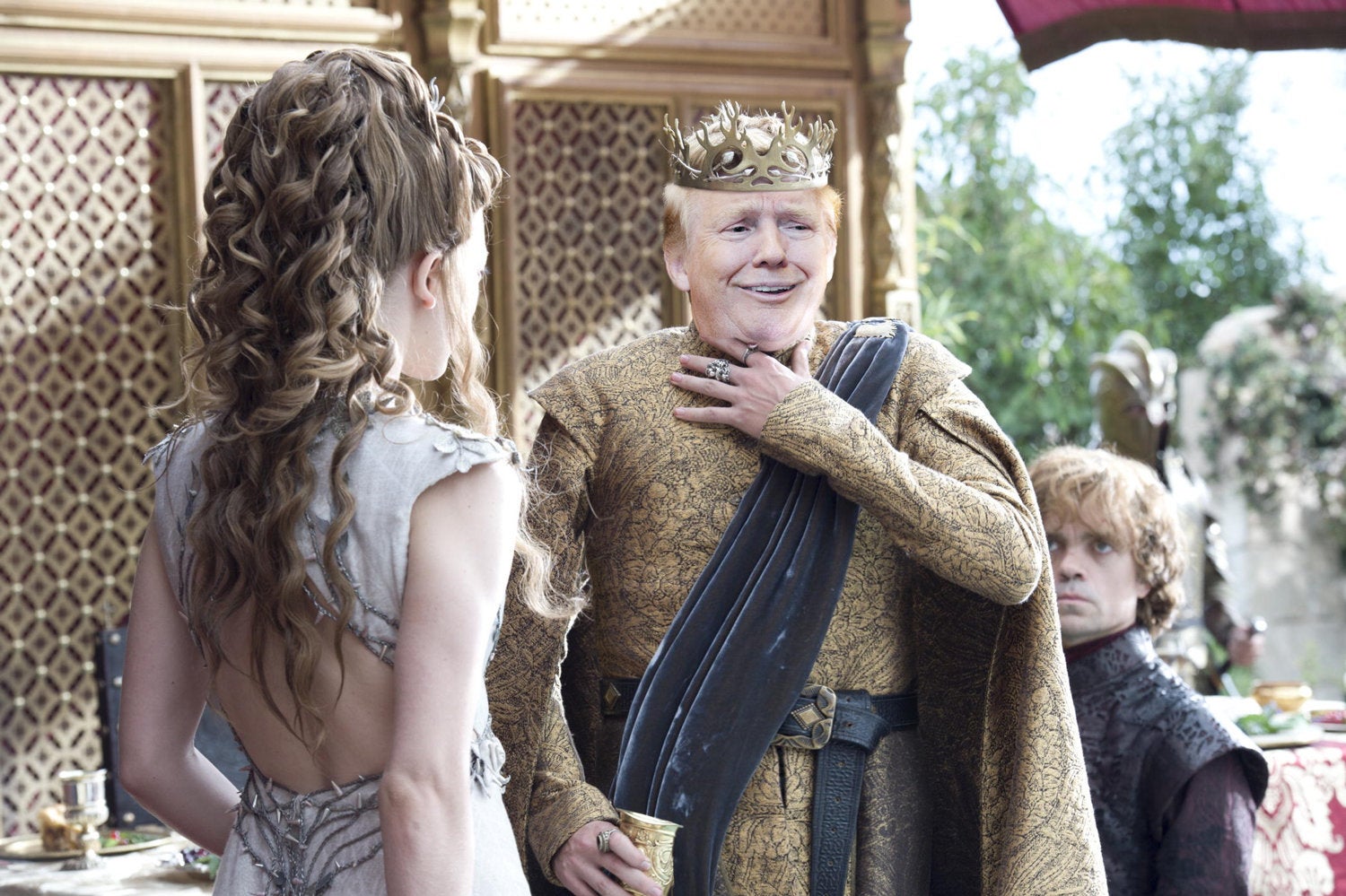
Swamp Thing as Joffrey Baratheon– image from DesignCrowd.com, by way of Huff-Po

The forward motion of the story is the events of Trump’s campaign, but mostly presidency up to October, 2017. I know, I know. One of the problems with political books is that they can often be outdated in fairly short order. The several months between October and the book’s publication is a lifetime in Trump years. It is impressive, given the daily churning of personnel and events in the DC universe (not the multiverse) these days that any book on Trumplandia still has relevance by the time ink on paper makes its way to readers. And yet, the issues raised here, the main issue, is momentous, and sticks.

Wolff has offered a host of quotes from his sources, many named, that question Swamp Thing’s competence, not just to function as president, but to function as a human being. His own staff frequently mention the applicability of the 25th amendment (although in the real world that is a total fantasy) and the likelihood of impeachment. The sound of Robert Mueller’s approaching steps echoes throughout the work, clearly feeding Trump’s paranoia about being treated unfairly, and boosting his fear of being found out, labeled a squatter or deadbeat, and evicted.

In most White Houses, policy and action flow down, with staff trying to implement what the president wants—or, at the very least, what the chief of staff says the president wants. In the Trump White House, policy making, from the very first instance of Bannon’s immigration EO, [executive order] flowed up. It was a process of suggesting, in throw-it-against-the-wall style, what the president might want, and hoping he might then think that he had thought of this himself (a result that was often helped along with the suggestion that he had in fact already had the thought).

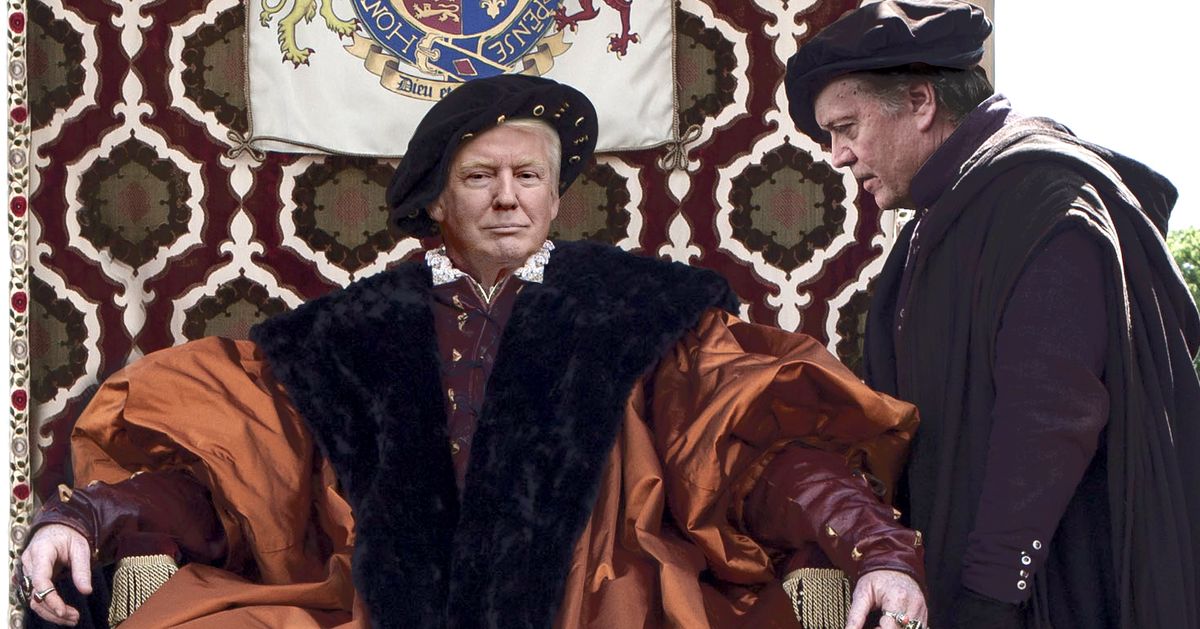
Wolff, with his title, and content, offers a wonderful Game of Thrones image. But there are plenty more that could easily apply. The Producers is one that he mentions, a particularly apt metaphor, given that it seemed clear to many of us, even during the campaign, that Trump, like Bialystock and Bloom, got into the presidential race for the money, and never really intended to win. This is confirmed in the book. Personally, I think Max Bialystock would have made a better president. Another scenario that Wolff mentions is the relationship of Thomas Cromwell to Henry VIII, wonderfully portrayed in the novel Wolf Hall (no relation), with Steve Bannon in the Cromwell role and you-know-who as the guy who made such a gigantic mess, because he simply had to have things his way. One could also consider House of Cards (the original), with all the plotting, back-stabbing, and hunger for power that made that series such fun to watch, although, after Bannon as Francis Urquart, the personnel parallels fade a bit. Alice in Wonderland gives us Trump as the single-minded Queen of Hearts. The Gang That Couldn’t Shoot Straight might offer an image of ineptitude, if one ignores the fact that Trump has overseen the greatest looting by criminals of the national treasury in the nation’s history. For all his intellectual challenges Swamp Thing is a larger than life character with very little core, a made-for-Television president.

description
Swamp Thing and Bannon as Henry VIII and T. Cromwell – image from NY Magazine

One of the things I most enjoyed was Wolff’s take on The Mooch. Anthony Scaramucci is the sort of Damon Runyon hanger-on one might expect to see in Guys and Dolls, or maybe a Batman flick, all puffery and attitude smeared over a core of ignorance, inflated by cartoonishly excessive self-confidence and corruption. From the description in Fire and Fury, it is not hard to imagine him in a too-wide pin-striped suit, shoulder-padded, sporting excessive pancake makeup, swinging a pocket watch from a chain, and laughing uncontrollably as he kicks some poor shmo that his minions are holding down for him, because he was a few dollars short on his protection payment.

There are some things missing from the book, of course. There is not the sort of detailed biographical material better found in an actual biography. Forget seeing an autobiography. Anything Trump truly wrote would probably be close to an actual choose-your-own-adventure kid book, given his inability to remain focused for more than a few minutes. There is not a lot about serious international threats, with one exception. In a press conference at his Bedminster, NJ property:

“His staff had not prepared him for this, but, in apparent relief that he could digress from the opioid discussion, as well as sudden satisfaction at the opportunity to address this nagging problem, he ventured out, in language that he’d repeated often in private—as he repeated everything often—to the precipice of an international crisis.
“North Korea best not make any more threats to the United States. They will be met with the fire and the fury like the world has never seen. He has been very threatening beyond a normal state, and as I said they will be met with fire and fury and frankly power, the likes of which this world has never seen before. Thank you.”

Thus an increased concern about the danger of someone implementing the launch codes in a fit of pique or confusion. A fair bit of that intercontinental exchange of verbal ordnance occurred after the book was written, most notably the “My Button is bigger than your Button” lunacy. There is little discussion, although it gets a mention, of the potential implications of Trump’s autocratic leanings. The telling of the tale is much more about what has already happened as opposed to what might.

It was during Trump’s early intelligence briefings, held soon after he captured the nomination, that alarm signals first went off among his new campaign staff: he seemed to lack the ability to take in third-party information. Or maybe he lacked the interest; whichever, he seemed almost phobic about having formal demands on his attention. He stonewalled every written page and balked at every explanation. “He’s a guy who really hated school,” said Bannon. “And he’s not going to start liking it now.”

This is not a book about policy. It is portrait of a White House as a theater of political warfare, a candidate who never really wanted or expected to be president and a president who is not only completely out of his depth, but who shows not only no capacity, but no interest in learning to swim. Even the people who work for him see him as unintelligent, narcissistic, incurious, and lazy. They even suggest he is losing his grip on reality, presuming he ever had one. It is certainly entertaining, the bits about Trump’s TV addiction, how he manages to cover his bald pate, and his pettiness about not wanting the cleaning staff to pick up his clothes from the floor. I mean, really, is he ashamed of being seen as a slob? Eating burgers in bed in front of the TV will probably gain him more support than criticism. I mean, even I can get on board with that, and I do not have a kind view of the man. But the more serious element is his mental fitness, and the danger this presents to us all.

description
image from Wolff’s Twitter feed, citing the Hollywood Reporter

There is zero chance that the Republican Party will allow their sitting president, however damaged or corrupt he is, to be removed from office under the 25th Amendment. The best chance for his leaving office is for him to suffer a serious physical health crisis, which might force him to resign. As an older, overweight, out of shape man, this is not far-fetched. Even with a Democratically controlled Congress in January 2019, there is no guarantee that the Senate would come up with the sixty-seven votes needed to convict. The significance of this is that until Donald John Trump is removed from the presidency, by impeachment, ill-health, death, or being voted out of office in 2020, we are all at risk.

Michael Wolff’s Fire and Fury is an air-raid siren warning us all of peril, real and potential. It is must-read material for every American. When the GOP stands in the way of investigations into the administration, they are supporting a president who is unable to function at the needed level, a president who is uninterested in the details of governance, a president who is not in control of himself, a president who places not only himself, but the nation, and the entire world at risk. You need to know what they are protecting. It doesn’t take a stable genius to know that you should be afraid, very afraid. As Dubyah said, “That’s some weird shit.”

Published – January 9, 2018

Review first Posted – January 12, 2018

>

This review has been cross-posted on GoodReads

=======================================EXTRA STUFF

The author’s Twitter page

Here’s a book that might come in handy – The Case for Impeachment

I came across this Huff-Po piece in my travels, after I had written the body of my review, buh-leev me. I was looking for images of the rulers of Trumpistan as GoT characters, when I came across this wonderful article by David Moye. I disagree with most of the assignments he shows, (for example, DJT is nowhere smart enough to be The Night King, or Tyrion Lanister) but had to pinch his Joffrey/Trump image for my central trope. I came up with DJT as JB on my own, before reading this, really, really. I swear. Check out the article. Donald Trump is America’s Joffrey Baratheon

The Trump as a Super-Villain trope brought this fun series of faux comic book covers – Trump battles Marvel and DC superheroes on Looper.com

Just in case you missed the link in the body of the review, you ABSOLUTELY MUST SEE this video, from The Jimmy Kimmel ShowTrumped

A response from The Author’s Guild to Trump’s attempt to stop publication of Fire and Fury

On Thursday, January 11, 2018, as I was preparing this review, the Washington Post printed a story that was alarming in the usual way, Trump attacks protections for immigrants from ‘shithole’ countries. Even if a person thinks in such an ignorant and bigoted way, and Swamp Thing clearly does, how addled do you have to be to allow yourself to speak such a thing aloud in a quotable venue? It is amazing he has any toes left given how many times he has shot himself in the foot. And tomorrow it will be another daily outrage.

1/13/18 – NY Times – Mr. President, Your Toga Is Showing – Christopher Buckley’s delicious comparison of Swamp Thing with a Roman Emperor of low repute – Can Incitatus be far behind?

1/17/18 – NY Magazine – Fire and Fury Began After Trump Saw Wolff Ripping Media on CNN – by Adam K. Raymond

—–March 30, 2018 – New York Magazine – a catalog (partial, for sure) of the conflicts of interest and downright corruption of this administration – 501 Days in Swampland – by Joy Crane and Nick Tabor – Introduction by David Cay Johnston

description
Gotta love the illustration that accompanies the above piece

—–Madeline Albright’s book, Fascism: A Warning, is definitely worth a look

—– July 19, 2018 – From Greatist, The Best Way to Identify a Narcissist (and How to Handle Them) – by Sabrina Weiss – relevant not just for those who have to cope with the giant ego in the Oval

—–July 3, 2020 – Independent – Trump has a plan to stay in the White House if he loses election, former senator says by Graig Graziosi – details of one way he might try to do this

—–January 6, 2021 – The Lincoln Project – Bloodlines

Leave a comment

Filed under American history, History, Non-fiction, Public policy

American Wolf by Nate Blakeslee

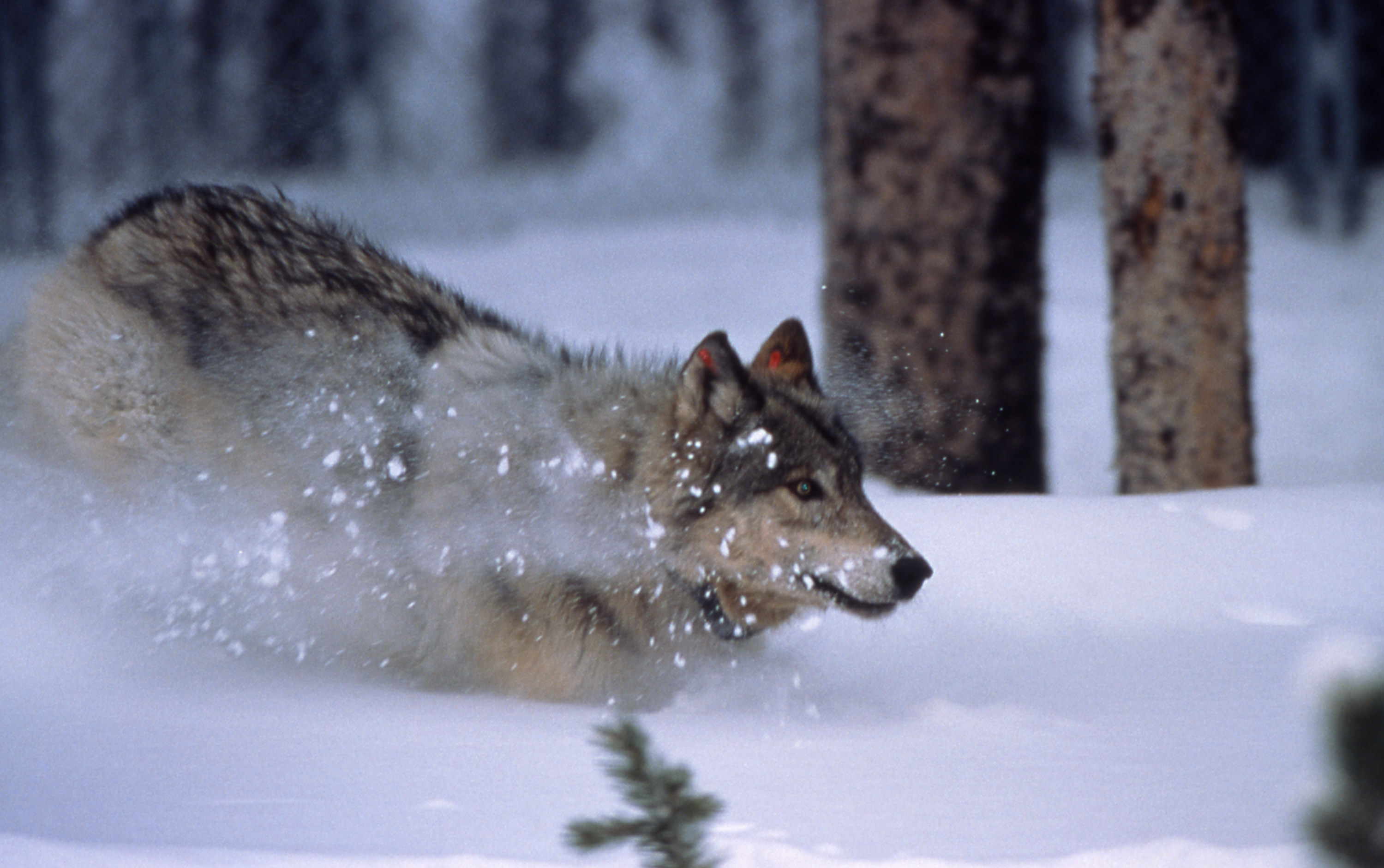
book coverThere was a time when millions of us roamed the continent. We fed when there was need. We played in forests and open places. Our kind lived well, from the warm woodlands of the south to the frosty forests of the north and in the gentler landscapes between. We raised our pups in cozy dens, and raised our voices at night to call out to others. Sometimes, we joined our brothers and sisters in joyous chorus for no reason at all. We lived in a world with many others, hunters, prey, and creatures who seemed to have no great part of our existence. There were people here then. We lived with them, too. But other people came, people with guns, poison, and traps, people armed with fear, hatred, and ignorance. They took our food sources, and when we were forced to look elsewhere to feed, they turned their quivering, murderous hearts toward us. And there came a time when there were practically none of us left across the entire land.

description
Nate Blakeslee – image from Texas Monthly

In Eurasia and North America, at least, where there have been people there have always been wolves. They have been a significant feature in the lore of most cultures, usually in a negative way. While the tale of the she-wolf Lupa nurturing Romulus and Remus gives wolves some rare positive press, and native peoples of North America offer the wolf considerable respect, wolves have not, for the most part, received particularly positive press in the last few hundred years. The obvious cultural touchstone for most North Americans and Europeans would be the story of Little Red Riding Hood, followed closely by tales of lycanthropy, and maybe a shepherd boy who sounded a false alarm a time too many. The wolf is embedded in our culture as something to be feared, a great and successful hunter, a rival. Homo sap is a jealous species and does its best to eliminate other apex predators whenever we take over their turf. Such has been the case with Canis Lupus. And we have been taking over lots and lots of turf.

description
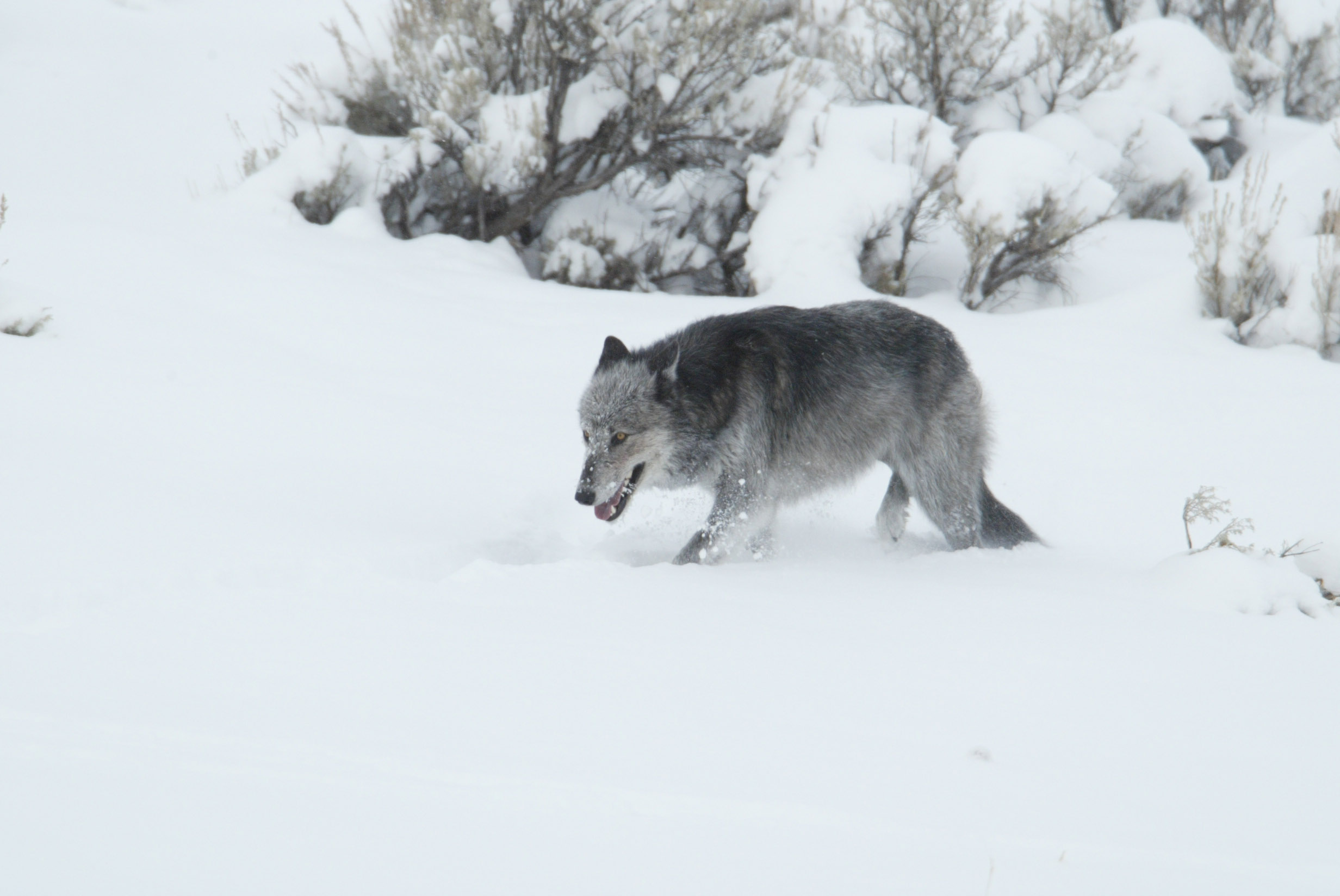
O-Six – image from StudyBreaks.com

As is so often the case when people are involved, action precedes understanding. European settlers in North America, carrying forward Old World biases, saw wolves as a threat to their safety. Incidents of wolf attacks on people are quite rare, though. Settlers feared for their livestock as well. There was certainly some basis for concern there, but not nearly enough to warrant the response. In fact, wolves serve a very useful function in the larger biome, culling the weaker specimens from natural populations, and thus helping secure the continued health of the overall prey population. The settler response was wholesale slaughter, a public program of eradication, a final solution for wolves. But actions have consequences. The result, in Yellowstone Park, was a boom in ungulate population, which had secondary effects. Increased numbers of elk and other prey animals gobbled up way too much new growth, impacting the flora of the area, unbalancing the park’s ecosystem, seriously reducing the population, for example, of cottonwood and aspen trees, with many other changes taking place as well. Where wolves live they contribute to the balance of their environment. When they are removed, that balance is destroyed.

As a science, wildlife management [in the early 20th century] was still in its infancy, and park officials genuinely believed that predators would eventually decimate the park’s prey population if left to their own devices. They didn’t realize that wolves and elk had coexisted in Yellowstone for thousands of years, that the two species had in fact evolved in tandem with each other—which explained why the elk could run just as fast as the wolf but no faster. Wolves were the driving force behind the evolution of a wide variety of prey species in North America after the last ice age, literally molding the natural world around them. The massive size of the moose, the nimbleness of the white-tailed deer, the uncanny balance of the bighorn sheep—the architect of these and countless other marvels was the wolf.

It is eminently clear that people are quite accomplished at ignoring reality, and extremely proficient at substituting the mythological for the actual, often helped along by the unscrupulous self-interested, who promote falsehoods in order to preserve their personal investments, enhance their proprietary interests, or enrich themselves or those they represent. But sometimes science breaks through the veil of obfuscation and is able to get a hearing for the truths it has unearthed. Such was the case with our understanding of how wolves impact our world. It was due to this understanding and the persistent efforts of ecological activists that a plan was approved to reintroduce wolves into a few locations in the lower 48 states. Yellowstone was the primary site for the program.

description
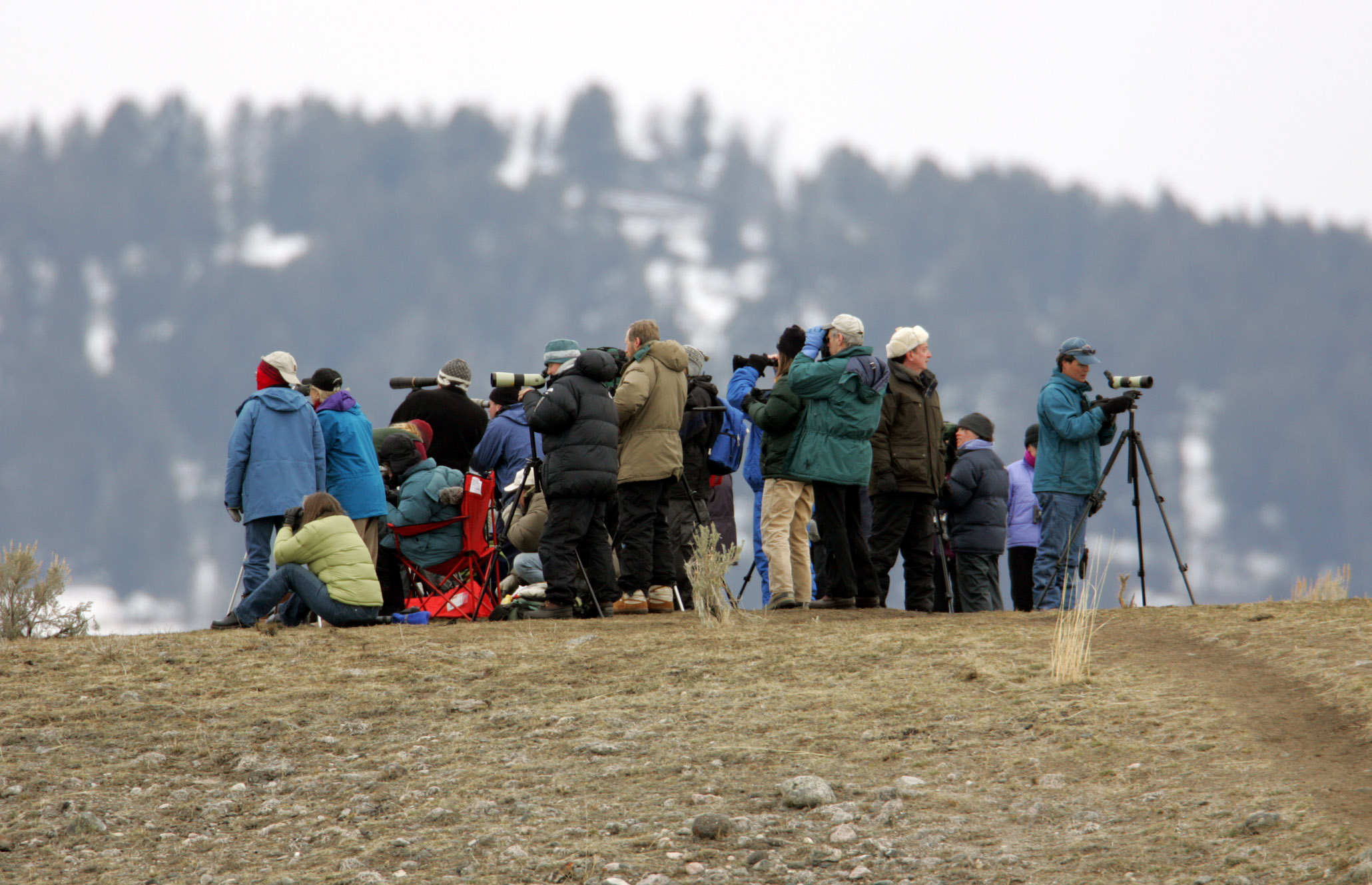
Rick McIntyre – image from Earthjustice.com

The first wolves were reintroduced into Yellowstone in 1995. That year a star was born, “21M.”

Even before 21 left his natal pack, Rick had known he was unusual. One morning in the spring of 1997, two years after Doug Smith and Carter Niemeyer rescued 21 following the death of his father, Rick watched the handsome young wolf returning from a hunt. With him was the big male who had become the pack’s new alpha when 21 was still a tiny pup. The pair had killed an elk, and 21, already an outstanding provider, had brought a massive piece of meat back to the den, where a new litter of pups had been born.

The pups, his new brothers and sisters, showered him with affection, but 21 seemed tense, pacing back and forth across Rick’s scope. Finally the wolf found what he was looking for: a troubled pup that he had recently taken an interest in. There was usually one pup who held the lowest rank in a litter’s pecking order, but this pup was different; he had some physical problem that held him back. Rick couldn’t tell exactly what was wrong with him, though his littermates clearly recognized that he was different and shunned him. But 21 seemed to have empathy for the pup, the way a dog seems to know when his owner is feeling depressed or lonely. As Rick looked on, the strapping 21 played with the tiny wolf as though he were still a pup himself, giving him the attention he so seldom enjoyed from his siblings.

21 becomes the alpha of the Druid pack, manifesting that most important of leadership qualities, empathy. The Druids were like the Kennedys to some, lupine royalty. In 2006, one generation removed, 21’s granddaughter is born, O-Six. It is her tale that Blakeslee tells here. Well, one half of the tale, anyway. There are two paths followed here. One is the life and times of O-Six, a remarkable creature, and another remarkable creature, one who stands upright, Rick McIntyre.

description
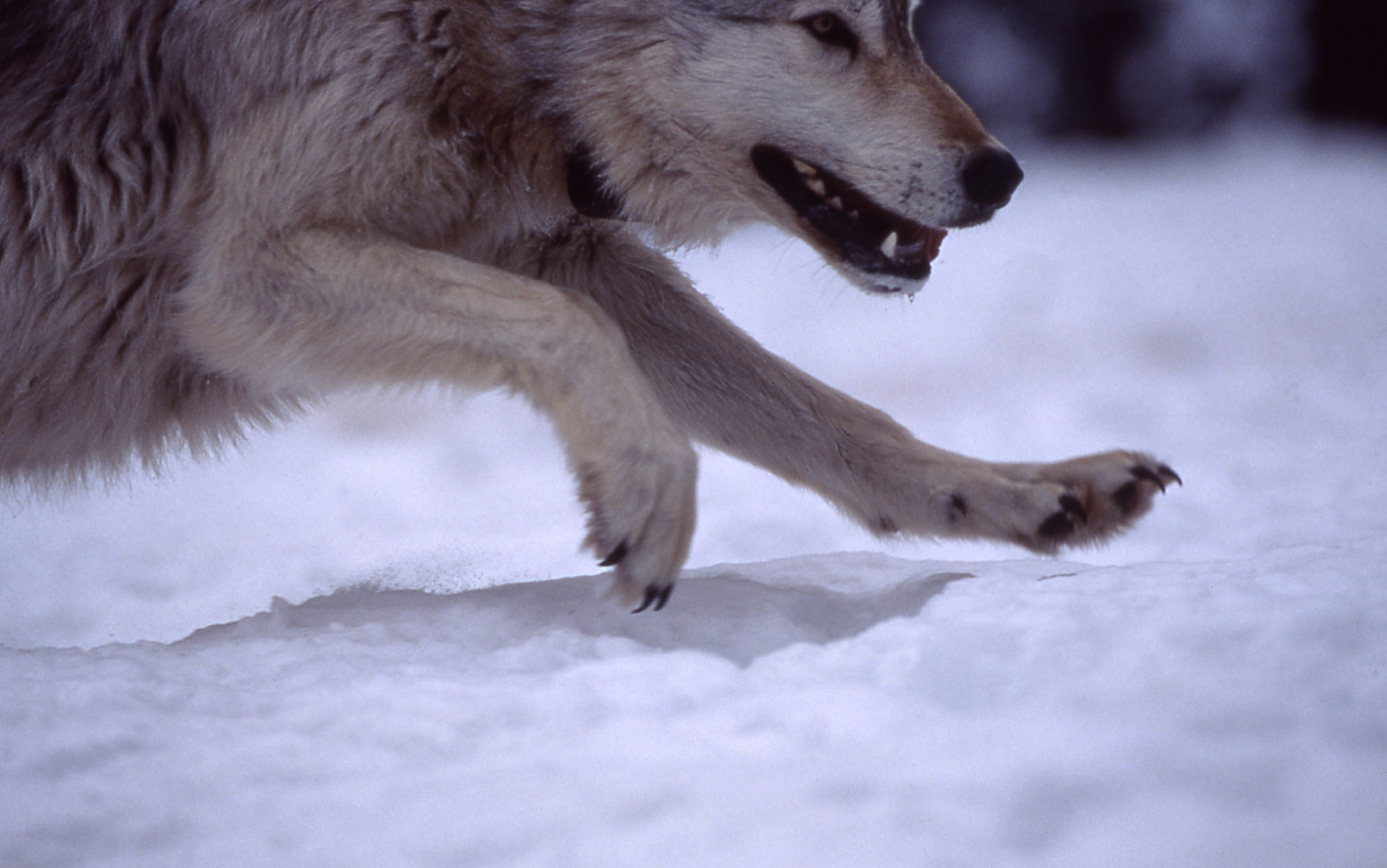
Half Black – a Druid pack female – image from the National Park Service

We follow O-Six’s life from her puppyhood in the Agate Creek pack to her gathering together the wolves that would make up the Lamar Valley Pack. She is a wise leader, a skilled hunter. As she births pups, the pack grows. But there are other packs of wolves in Yellowstone, and conflict among them is a natural condition. In battle, O-Six demonstrates remarkable courage, in one instance standing fast, seriously outnumbered, against an invading pack, and engaging in Hollywood level derring-do to save the day. She succeeds despite having in her pack an Alpha male and his sibling referred to by watchers as Dumb and Dumber for their limited hunting skills. We see her relocate as needed to take advantage of propitious territorial openings, or quarters removed from hostile forces. One of her moves put her in a location where wolf watchers could follow her pack’s exploits from the safe remove of a park road cutout. It is publicity from the group that gathered to ardently keep track of O-Six and her Lamar Pack’s exploits from this convenient watching site, (and others) that made her the most famous wolf in the world.

description
Wolf watchers – image from the National Park Service

Rick McIntyre was constitutionally more of a lone wolf sort, a National Park Ranger, happiest out in the field, whether studying grizzlies in Denali, where he became a top-drawer wildlife photographer, or studying wolves in Yellowstone. He was introduced to wolves by a top wolf biologist, Gorbon Haber, building his expertise and writing A Society of Wolves. The book was published in 1993. It expounded on the culture of wolves, significantly broadening our understanding of the species. His work was instrumental in providing support for reintroduction efforts. This work landed him a spot at Yellowstone, where he slowly improved his people skills, and became a fixture around which study and monitoring of the park packs centered, the leader of the wolf-study pack. He is a charismatic, passionate character and you will enjoy getting to know him.

description
O-Six howling with her mate and his brother – image from NatGeo Wild

There are other elements in the book. The growth of the wolf-watching culture and the Yellowstone watchers club is given plenty of attention. The politics of reintroduction, protection, and attempts to remove protection get their share of ink as well. There is much in here that will raise your blood pressure. Impressively, Blakeslee includes a depiction of the man who shot O-Six. It is not the drooling monster portrayal one might expect. Blakeslee takes pains to consider the perspective of hunters. There is a description of a marauding, death-dealing pack, the Mollies, that will remind you of the Borg, or a zombie apocalypse. It is as tension, and fear-filled a portrayal as you will find in any of the best action-adventure fiction.

description
Yellowstone wolf pup – image from NatGeo Wild

When studying wildlife, researchers are discouraged from forming emotional attachments to the objects of their study. Few animals live nearly so long as people, so your favorite [insert species here] will, as likely as not, perish before you. But readers of this book are under no such caution. Sitting in a laundromat, parked on a backless bench, book on an attached table, looking through the plate glass, rain soaking Hazle Avenue, drops cascading down the window, my eyes join the mass drip on reading Blakeslee’s description of the death of O-Six. I will admit that this happens sometimes when reading about people, but it does not happen often. I am saved from a public exhibition of heaving shoulders and stifled sobs by the buzzer announcing the end of a wash. If you have any tears left after this, you will turn them loose in an epilogue tale of 21’s mountain top trek as he neared death.

description
O-Six – image from NatGeo Wild

I only had one small beef about the book. I understand that researchers are discouraged from naming their study subjects, but it was quite inconsistent in application. Some had names, others were just numbers, and, frankly, it became a bit tough at times, keeping track of which number came from which pack, and was that one with this pack and this one with that pack. Really that’s it. Otherwise, no problemo

description
Wolf #10 of the Rose Creek pack – image from the National Park Service

American Wolf is a complex work, offering some science, some history, some political analysis, some prompts to raise your spirits, some that will make you cheer, and some dark moments that will make you turn away, fold the book closed, and wonder just what is wrong with some people. You will learn a lot, particularly about wolf culture. But primarily, it is a tale of hope, of reason triumphing over ignorance, of courage and heroism besting villainy. It joins the intellectual heft of offering considerable information with the gift of being incredibly moving.

description
Unidentified Yellowstone wolf – 1996 – image from National Park Service

Tail high, standing tall, the gray alpha raises his muzzle and howls a long call. Pack members miles away lift their heads, point their ears toward the siren summons and begin loping home. There are fewer now than there were, an inexperienced young adult having found mortal peril on the fringes of their land. But still, enough of the pack remained, strong and healthy. They would gather. The gray knew where they would go once joined, into the valley. Caribou were plentiful there. They would fill their bellies before grizzlies stole their prize, and then would carry large chunks in their jaws, for the nursing alpha female. It was not the best of all possible world, but it would do, for now.

description
image from wolf.org

Review first posted – October 12, 2017

Published – October 17, 2017

This review is cross-posted on Goodreads. Stop by and say Hi!

=======================================EXTRA STUFF

The author’s Twitter feed and a list of his articles at Texas Monthly

Video
—–a clip from She Wolf
—–Learn to draw a wolf
—–An admirer speaks fondly of wolves howling – what beautiful music they make
—–A familiar item from Duran Duran
—–Another from Sam the Sham
—–Not quite a video, more an an app about wolves with images and sound
—–Yellowstone Wolf History with Rick McIntyre

Articles
—–Heroes: Life Lessons from Yellowstone’s Wolves – by Haleigh Gullion
—–The Call of the Wild – interview with Rick McIntyre
—–July 5, 2018 – NY Times – Who’s Afraid of the Big Bad Wolf Scientist? – Wolf researcher, Rob Wielgus, reports what he can discover, then has to deal with the death threats – by Christopher Solomon

description
Rob Wielgus – Credit – Ilona Szwarc for The New York Times

—–February 9, 2020 – NY Times – The Lonely End to One Gray Wolf’s 8,700-Mile Search for a Mate – by Maria Cramer

description
The female gray wolf known as OR-54, a descendant of the first wild wolf in California in a century. Credit…U.S. Fish and Wildlife Service, via Associated Press – image from the above NYT article

—–April 8, 2020 – Lithub – Did Dogs Choose Us? by Helen Pilcher – an excerpt from her book Life Changing
—–July 10, 2020 – National Geographic – 25 years after returning to Yellowstone, wolves have helped stabilize the ecosystem
—–July 27, 2021 – The Guardian – ‘An abomination’: the story of the massacre that killed 216 wolves by Nate Blakeslee – the killing occurred over a matter of days
—–December 18, 2023 – AP – Colorado releases first 5 wolves in reintroduction plan approved by voters to chagrin of ranchers – by JESSE BEDAYN
—–August 6, 2025 – TWC – How This Animal Helped Save Yellowstone’s Aspen Trees by Jennifer Gray

Other
—–Gray Wolf Conservation
—– The International Wolf Center offers a lot of information
—–Yellowstone’s Photo Collection – wolves
—–The Call of the Wild – free on Gutenberg
—–Get your howl on
—–My review of Charlotte McConaghy’s 2021 novel, Once There Were Wolves in which a small number of wolves are reintroduced to Scotland
—–Of particular relevance to this subject is the Farley Mowat enhanced memoir of his field research experience with wolves, Never Cry Wolf, published in 1963, and the excellent 1983 film that was made of it

description
From the film

November 9, 2017 – American Wolf is among the nominees for Amazon’s book of the year – Science

1 Comment

Filed under Reviews

It’s What I Do by Lynsey Addario

book cover

“Sahafi! Media!! He yelled to the soldiers. He opened the car door to get out, and Quadaffi’s soldiers swarmed around him. “Sahafi!”
In one fluid movement the doors flew open and Tyler, Steve, and Anthony were ripped out of the car. I immediately locked my door and buried my head in my lap. Gunshots shattered the air. When I looked up, I was alone. I knew I had to get out of the car to run for cover, but I couldn’t move.

Click!

description
Lynsey Addario – from CBS News

You may not recognize the name Lynsey Addario, but if you read newspapers, check out magazines, or are aware at all of the imagery that accompanies major events in the world, you have seen her work. Addario is one of the premier photojournalists on the planet and has the portfolio, the Pulitzer, and a MacArthur award to prove it. In 2014, American Photo named her one of the five most influential photographers of the last quarter century. In 2012, Newsweek magazine cited her as one of 150 Women Who Shake the World. Thankfully, she does not shake her camera when she is shooting (unless of course it is for intended effect). Although no one could blame her if she did. Addario has spent a large portion of her career as a conflict photographer, working for extended periods on the scene in Iraq, Afghanistan, Libya, Congo, Sudan, and other garden spots. Wherever people have been shooting at each other in the last two decades there is a good chance that Lynsey Addario has been there. The one place she declares she will not go these days is Syria, which says something. She has been kidnapped in the field twice and has felt her life to be in danger more times than that, so when she says she won’t go to a place, it must be something really special.

ADDARIORETRO002
US Soldiers in the Korengal Valley of Afghanistan

It’s What I Do is Addario’s tale of her journey from growing up in a Connecticut suburb as part of a Bohemian family, to finding and developing a talent for capturing life through a lens, to pursuing a career in photography. While working in New York in 1999, she got a big break, being asked to work on an Associated Press project looking into transgender prostitution in the city, and the spate of homicides with which that community was being afflicted. It turned into a months-long undertaking and brought her work to public notice for the first time. Click!

description
A shot from that series

In 2000, a family friend invited her to go India.

Everything that made India the rawest place on earth made it the most wonderful to photograph. The streets hummed with constant movement, a low-grade chaos where almost every aspect of the human condition was in public view. Click!

It was while there that she was encouraged to go to Afghanistan to shoot the lives of women living under the Taliban. She was able to gain access to a half of Afghani society barred to her male counterparts. Click!

description
Women and girls study and recite the Koran in Peshawar, Pakistan, 2001 – from the Women’s Eye

9/11 brought on a whole new era of conflict. Addario was on the scene when the USA invaded Iraq, having set up shop in Kurdistan when Saddam Hussein was toppled. Of course that required some extra planning. At the time she got the assignment she was in South Korea covering refugees from the north, and enduring the extraordinary humanitarian horrors of the extended karaoke the refugees enjoyed. She needed to get tooled up for the job and it proved challenging. One thing she had to arrange for was body armor. She found herself befuddled by the on-line offerings. She wrote to her editor.

I have checked out the websites you recommended, and am not sure if I just tried to read Korean. Basically, I have no idea what I am looking at—ballistic, six-point adjustable, tactical armor, etc. Please understand that this language is not familiar to me—I grew up in Connecticut, was raised by hairdressers.

ADDARIORETRO020
A woman prays at dawn after the 2010 earthquake that nearly destroyed Haiti

She was kidnapped for the first time while en route to Ramali with other journalists. And was subsequently jarred when Life magazine declined to publish her photographs, because they were too real for the American public. (The New York Times Magazine would later publish some of the work.) The experience of working in the Iraq war zone and coping with the politics of news publishing provided valuable life lessons.

…something in me had changed after three months in Iraq. I was now a photojournalist willing to die for stories that had the potential to educate people. I wanted to make people think, to open their minds, to give them a full picture of what was happening in Iraq so they could decide if they supported our presence there.

Her work has often demonstrated the power of the image. When she got shots of a Sudan massacre she made it impossible for President Bashir to continue denying that the war crime had taken place.

description
Addario’s image of armed boys and men near the Afghan border won her a Pulitzer – from The Women’s Eye

Addario pooh-poohs any notion that she is an adrenalin junkie. She says that she has come to recognize that the photos she takes have the power to inform the public and influence people, so feels a responsibility, a calling to bear witness to much of the awfulness of the world in order to shine some light on it, to bring it to the world’s attention.

description
Addario stopped to help when one of these women was in labor, miles from a hospital. She gave them a ride. – From Itswhatidobook.com

When Addario first submitted her manuscript, she was advised to make it more personal, as in writing about her off-the-field life as well as her experiences behind the lens. She includes in the final version a bit of her love-life history, which entailed some admittedly bad choices. As a dedicated career-woman, sustaining relationships has always taken second place to her work. She says she even walked out on dinner dates when she got an assignment.

Recently, a young photographer asked her how to get into the business. She told him to start traveling, shooting and contacting editors for assignments. When he told her that he didn’t want to travel much because of his girlfriend, Addario told him to break up with her.
“He thought I was insane,” says Addario. “I told him you have to decide what your priorities are. If you are not willing to make that sacrifice, there are 10,000 young photographers who will.”
– from Photo District News article

The book contains many amazing shots Addario has taken over the course of her career. They add significantly to the aura of outsized accomplishment that Addario has earned. One significant thing about the shots Addario takes is that they are not only journalistically effective but expose an impressive artistic talent. She is able to tell troubling stories while at the same time making outstanding art. The book is printed on very high-quality paper, images and text, which adds a very tactile richness to both the visual power on display and the engaging text.

description
An Iraqi woman fleeing a massive fire in Basra in 2003

Although one can piece together information by reading diverse articles about her, and watching sundry videos in which Addario does presentations and is interviewed, those connections are not always spelled out in the book. Particularly in the earlier parts of her photographic sojourn, it was somewhat murky why and how she decided to uproot and move to Argentina, and later to India.

Syrian Refugees;northern iraq
Syrian refugees in Northern Iraq

It’s What I Do is not a photography book. You will not get any technical tips there. While you will see some very nicely printed photographic images, those are there to enhance, to illuminate the text. The main thing here is her story. Lynsey Addario is a rock star in the world of photographic journalism. She takes us frame by frame on her journey from suburban origins as the child of hairdressers to becoming a world traveler covering important events everywhere on the planet in an attempt to illuminate the darkness. It is quite clear that her achievements have come at considerable personal cost, and that she is possessed of a rare personal fire that has driven her to take large risks in order to fulfill what she perceives as her mission in life. For those of us not familiar with the names that appear under all those news photos, It’s What I Do offers particular insight into just how important it is to have photographic boots on the ground wherever important events are occurring. Real-world photography is Addario’s contribution to the world. We are all enriched by her efforts, her sacrifices, her courage and her talent. This book will be an eye-opener for many. It is a perfectly focused, well-framed look at a life well lived, a life that has benefited and promises to continue to benefit us all. Click!

Publication
———-2/5/2015 – hardcover
———-11/8/2016 – paperback

Review first posted – 4/22/2016

BTW, a deal was struck at some point to turn this into a major film, with Jennifer Lawrence as Addario, to be directed by Steven Spielberg. As of 2022, we are still waiting, so who knows?

=======================================EXTRA STUFF

Links to the author’s personal, Twitter and FB pages

She has a separate personal site specifically for the book

Every time I leave my family I wonder why I’ve chosen this life. I leave my two-year-old son and I come home and he won’t speak to me for a few days. And it’s lonely on the road. And I’m in these strange hotel rooms, or tents. It’s not a luxurious life. It’s something that people think that you’re out there for the adrenalin rush. They think you’re out there because it’s glamorous. But it’s not. You’re out there as a photographer who has chosen to cover conflict. It’s a calling. It’s something that sort of takes over who I am. People ask me why I do this and it is what makes me most alive. It is what I believe in. it is my happiness and It’s what I do.

Videos
—–This is must-see – Addario’s presentation, followed by an interview, at Arts and & Ideas at the JCCSF
—–National Geographic – 26 minutes – Lynsey doing a presentation, with focus on her NG assignments. Much info from JFFC presentation is repeated, but there is a lot that is different so this one is also definitely worthwhile
—–The Annenberg Space for Photography – focus on her kidnapping – 10 minutes
—– Item on CBS This Morning linked from LA‘s site
—–Time Magazine – This opens as text, but there are videos embedded

Interviews
—–Photo District News. Among other things this has a lot on breaking into the business
—– The Literate lens – In Love and War: An Interview with Lynsey Addario
—– Photojournalist Lynsey Addario On Her Relentless Pursuit of Truth – from The Women’s Eye

Articles
—–From American Photo – THE INFLUENCERS: LYNSEY ADDARIO
—–National Geographic – December 19, 2017 – Inside a Female Photographer’s Experience Documenting War – by Daniel Stone – Regarding the documentary series The Long Road Home, about the Iraq War

description
Addario watched as Iraqi Shiite followers of Muqtada Al Sadr stood amidst burning tires in Sadr City moments before American tanks opened fire on the area in Baghdad, Iraq April 4, 2004
Image and image text from NatGeo article – Image by Addario, of course

—–July 10, 2020 – A new article by Addario in National Geographic – In the U.K., families of the dead still wonder: was it COVID-19?

—–August 27, 2022 – MSNBC interview with Addario – Photographer Lynsey Addario reflects on 6 months of the war in Ukraine

2 Comments

Filed under Afghanistan, Bio/Autobio/Memoir, biography, History, Journalism, Non-fiction