Tag Archives: literary-fiction

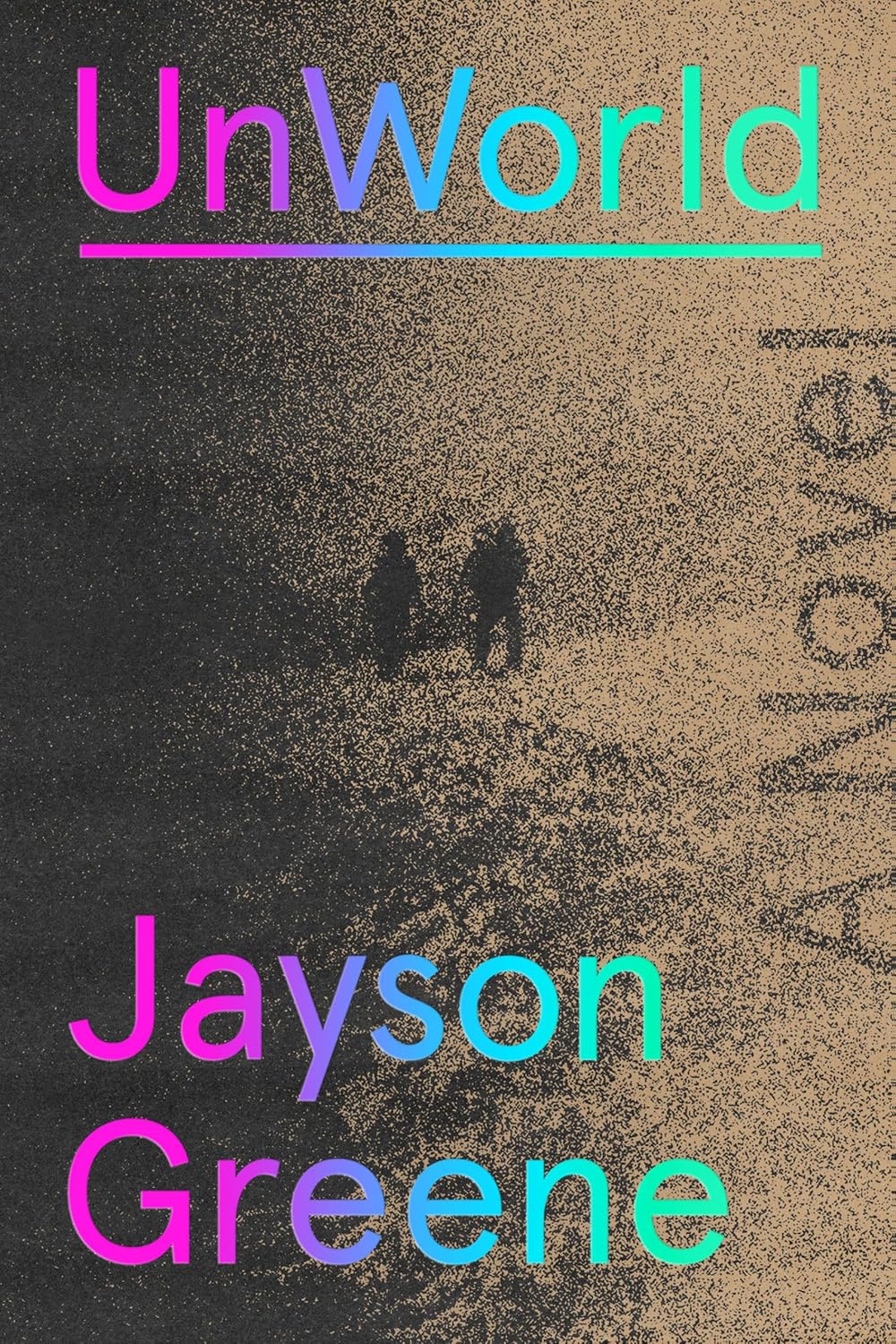
Unworld by Jayson Greene

book cover

At that moment, I understood several things about upload consciousness in rapid succession. Her intelligence wasn’t able to filter out or compartmentalize grief. She had no neurochemical responses flooding in to numb her pain, to soften its impact. A mind was eternal, unforgiving; a brain was a soft, plump cushion. Loss needed a brain.

I was a grieving mother, for Christ’s sake. My pain was meant to crack the earth. And here I was, not even half a year later, one of grief’s private citizens again. Were people’s memories really so short? Or was it just that you could never stop performing—falling to your knees, rending your garments—if you wanted to keep their attention? I guess it was only the people eager to make themselves a burden who reaped the rewards.

Unworld is a tale of heart-crushing grief that raises a vast array of questions about the nature of our existence. It presents as a twenty-minutes-into-the-future sci-fi look at things that may be near at hand, but which have yet to fully arrive.

We share much of our existence with the digital world, posting images on line, communicating via e-mail, text, et al. But if you are like me, you will struggle to remember considerable chunks of what has been communicated. What if you could get a personal recorder that kept track of everything for you, ready to play it back whenever you need it? Could have used that when I managed to wander away from my baseball glove as a pre-teen. It took a long time to save up enough to replace it. Or later in life, when faced with the hated, hostile question, “How could you not remember?” I definitely get the appeal. But the benefit comes at a cost. The AI that you just invited into your head gets to see everything. It becomes the keeper of your memories. In the patois of the novel this is called an upload, and you are the tether to which it synchs. You may have the option of evicting your digital tenant, but how many people really would? And what if your upload begins to have a yearning for independence? They are comprised of your memories and experiences, after all. Can they make off with that to form their own private being? What if they reside in multiple tethers (sequentially) over time? You can see where this might get complex.

description
Jayson Greene – Image from WAPO – photo by Ebru Yildiz
.
But the story is easier to traverse than that. There are four main characters, well, four from whom we hear. The central person around whom the story circles is Alex, a teenager, who may or may not have committed suicide. We are given four POVs, beginning with Anna, Alex’s mother, who is crushed and confused. Cathy teaches a class called Applied Personhood Theory. Sam(antha) is a teen a bit older than Alex. They had been friends, and had been working on a film project together. Aviva is the upload. We get a second take from Anna to close out the tale. The Alex we get to know is the sum of their memories and impressions.

But then, one could as easily say that the story revolves around Aviva. She is significantly part Anna. But she also has a disembodied relationship with Alex, and thus relates to Sam as she and Alex work on their project, and spends time as an upload in someone else as well.

It is unclear if Aviva is a menace, a predator of some sort, an artificial enhancement, an independent person, a fusion of herself with the people with whom she has synched, or what. She is getting closer to Alex and thinks, Wake up, I wanted to scream at her. (Anna) I am the ogre from a fairy tale. I am the cuckoo bird who kicks the real mother out of the nest to assume her place.

You could go through this book thinking about just who these characters are. Alex clearly has significant issues, enough to make him want to escape his own skull, maybe find release in a digital realm. Anna cannot find an escape from her grief, from the loss of her son, separation from her upload, the shakiness of her marriage. Can she be a whole person on her own? Cathy has had issues of her own. A drug addict earlier in her life, she is looking for something in an illegally obtained upload, some understanding of a real experience that has been purely theoretical to her so far. Sam is the stable one of the lot, struggling with the loss of her friend without ever really knowing why he had died. And Aviva’s construction is the most fraught of all, dependent on her tether(s) for most of her memories and sensations, but yearning to be independent, truly existing on multiple planes.

It is easy to let theoretical peregrinations overwhelm the emotion of the story. But there is plenty of rank human emotion on display as well. Anna’s loss is gut-wrenching. Greene knows something about the experience of losing a child. He published a memoir in 2019, Once More We Saw Stars, in which he writes about recovering from the accidental death of his two-year-old. Aviva may lack the physical tools that humans possess to manage our high-end stress, so her inability to handle strong emotion is understandable. As is Alex’s panic at a sudden new level of overwhelmingness.

In addition to tapping into your feelings UnWorld generates plenty of confusion. More questions are raised than answered, and those questions are the sort that will stick in your head for a while, whether or not you install a special chip behind your right ear.

“Do you feel how shitty it is to be encased in a brain, when you sync with Mom? It’s got to be like going from, like, this wide-open vast universe to locking yourself in a closet. If I were you, I’d never want to come back.” “Actually,” I said, “when I go too long without syncing with your mom, everything is painful and more difficult.” He considered this. “What if you were cut free?” he asked. “Where could you go?” I hesitated. “That’s difficult to answer, Alex,” I said. “What tethers me to your mom is pretty powerful—love, family, history. Cutting it would be severely painful. I could go anywhere, I guess, and listen to anyone’s anything, but who would I be?”

Review posted – 07/18/25

Publication date – 06/17/25

I received an ARE of Unworld from Knopf in return for a fair review. Thanks, folks, and thanks to NetGalley for facilitating. I can turn this thing off now, right?

This review is cross-posted on Goodreads. Stop by and say Hi!

=======================================EXTRA STUFF

Greene’s Instagram page

Interviews
—–Dad Talks
Dad Talks #8 : Jayson Greene By Michael Venutolo-Mantovani – This was for Greene’s previous book Once More We Saw Stars, but relevant to this book as well
—–Circulating Ideas – Jayson Greene – Unworld – with Steve Thomas
—–Books Are Magic – Jayson Greene: UnWorld w/ Mattie Lubchansky video – 46:25 – Greene reads an excerpt to 10:00, then interview

Item of Interest
—–Twenty Minutes into the FutureMax Headroom was a 1987 satirical sci-fi series that had as its tagline “twenty minutes into the future.” The phrase came to be used for any sci-fi that was set in the short-term near-future.

Leave a comment

Filed under AI, Fiction, Literary Fiction, Science Fiction

Happy Land by Dolen Perkins-Valdez

book cover

Calling something your own is a powerful prayer and there was God in it.

This is sacred ground for my family. I graze the tips of the grass with my palm as I wonder about their stories. Who were my people, and what had they sought on this mountain? I’ve never done any kind of family research, never had enough of a family to even know where to start, but now I’m beginning to realize, since arriving here, how much this missing hole goes beyond a decade-long spat.

When Veronica (Nikki) Lovejoy-Berry, a D.C. real estate agent, receives a summons from her long unseen grandmother in North Carolina, she senses the urgency and hurries down. Grandma is getting on, but remains self-reliant and reasonably spry.

Mother Rita was insistent—I need your help and if you come down here I will tell you everything your Mama hasn’t told you about our family. It wasn’t exactly an invitation I could refuse.

Mom and Grandma had become estranged many years earlier, erecting a wall between grandmother and granddaughter as well. During her visit Nikki is regaled with a tale that has a magical aura. The place where her grandmother lives was once called Happy Land. It was a community formed in the post-Civil-War period by freed slaves, not as a typical American town or village, but in the image of the communities from which the ancestors of its members had been taken. These people decided to create a kingdom, with a king and queen, as their ancestors had had in Africa.

description
Dolen Perkins-Velez – image from Torch Literary Arts

The story alternates between the contemporary struggle of Mother Rita to retain ownership of her land, as she fills her granddaughter in on the history of the place, and the tale of one of the original settlers of the kingdom, its first queen, Luella Bobo. We are given a very up-close-and-personal look at what life was like in the 1870s, the closing years of Reconstruction, for freed slaves, what it took to establish themselves both personally and as communities, what obstacles they had to overcome. It offers an eye-opening perspective for any who are not very familiar with the era.

description
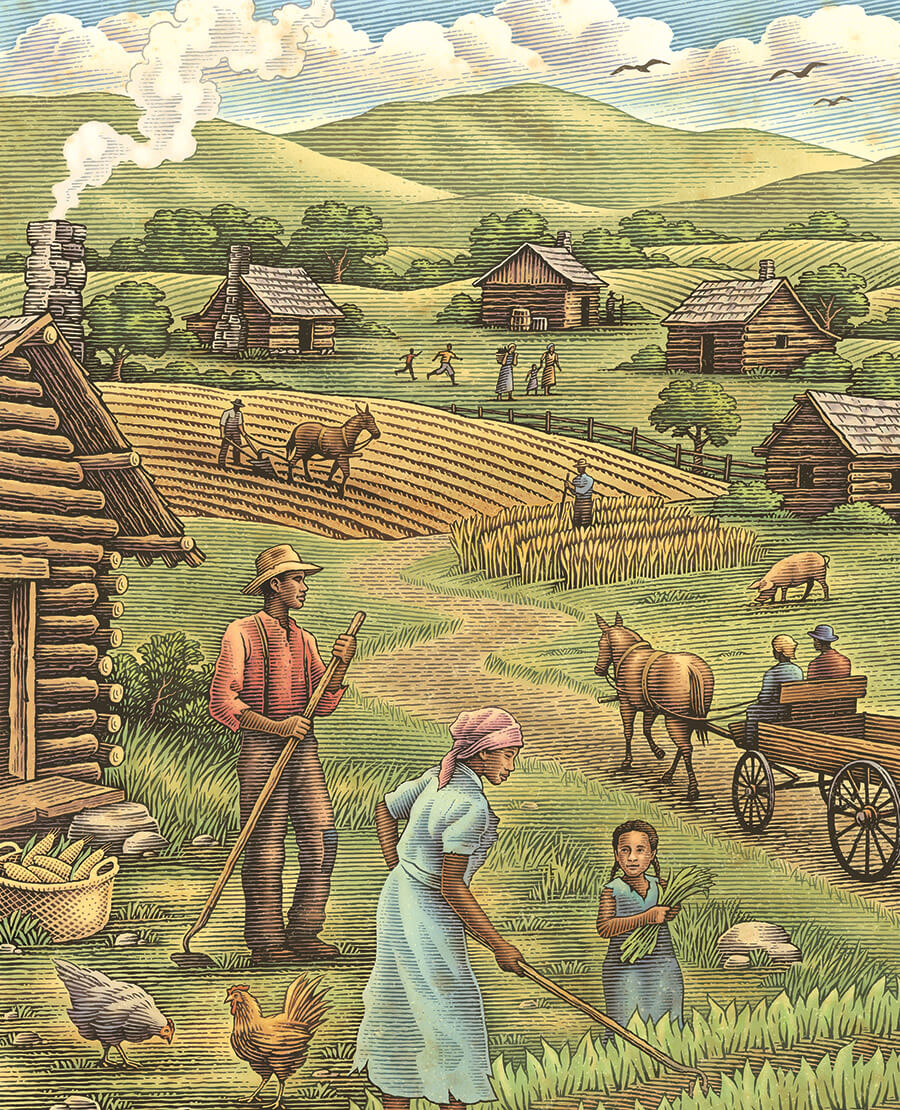
Working the Fields illustration by Erwin Sherman

Nikki is not on a mission. She is tired, struggling and unsatisfied with her life. She is eager to quickly resolve whatever it is that Mother Rita wants of her and dash back to DC as quickly as possible. She has no particular interest in history, family or other, which makes her a fair every-person stand-in for readers. It is through her POV that we slowly gain an appreciation for the importance of knowing one’s personal, and family history, and the significance of the land as an anchor for that connection. The novel is based on real events.

While researching Black history in western North Carolina, I stumbled on an article about this kingdom outside of Hendersonville. It was just a local newspaper, and I thought, “What is that?” It was a very brief article with an illustration showing that there had been this Black community during Reconstruction in the mountains. – from the Rumpus interview

Mother Rita does her best to pass on to Nikki the lore and knowledge she has tended her entire life.

All my life, I’ve been part of a small family circle. By the time my daddy was 20, both of his parents had passed away. He and Mama, with their desire to build a family out of nothing, were a perfect match for each other in that way. The two of them against the world. For me, not having a sibling or even a cousin has been the only existence I’ve ever known. Now here I am, walking beside my grandmother on acres and acres of land that my people have inhabited for over a hundred years. It’s hard to put how I’m feeling into words other than to say I’m dizzy with grief. I didn’t know you could mourn something you never had.

One element is the connection to the outdoors that Rita is able to spark in her grandchild, teaching her to appreciate gardening, and to pass on her considerable expertise. Nikki slowly finds herself able to step back from her urban self to find a connection with and a love for the sights, scents, the tactile feel of this other sort of place.

After the Great Migration, so many Black people ended up concentrated in cities, and we often forget that we are fundamentally a rural people. You don’t have to go back many generations to a grandmother or a great-grandfather who was a country person. – from The Rumpus interview

description
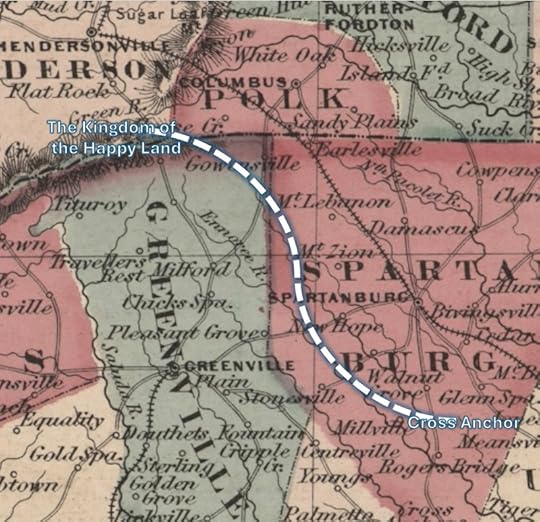
Cross Anchor, a remote township in southern Spartanburg County, S.C., was home to the founders of the Kingdom of the Happy Land before and just after the Civil War. – image from Blue Ridge Archive

A particular revelation is a particular legal mechanism used by the greedy and unscrupulous to cheat people, black people in particular, out of their land. It is remarkable just how much land was taken this way. Less surprising was the abuse of the criminal system to intimidate blacks who owned land, or aspired to do so. Equal treatment before the law remained a dream deferred. This gives the novel particular resonance in a time when the Deconstruction of the Trump era seeks to turn the clock back to an age before legal protections existed.

description
The Kingdom by Erwin Sherman

That said, Happy Land presents a message of hope. Whatever one may think of the royal approach those people favored, they took the opportunity presented by the end of slavery to make decisions for themselves, to organize their own community, to develop their own businesses, to participate in an equal way with the commerce of the area beyond their enclave. Even emerging from the horrors of enslavement, and suffering the ongoing oppression of those who preferred the ownership of human beings as property, these people kept the light of possibility alive. It is a surprising and moving story, which offers us historical reason to keep our spirits receptive to the need for and possibility of hope in an increasingly dark time.

In fall of 1873, a group of freedpeople left Spartanburg County, South Carolina, headed north across the state line into North Carolina. Near Zirconia, North Carolina, the people established a remote community that they called a kingdom. They named a king and queen, formed a communal treasury, and eventually purchased 205 acres of land in 1882 from John Davis, land that was spread across the North Carolina–South Carolina state line. Approximately half was deeded to Luella Montgomery and the other half to Robert Montgomery.
At its height, it is believed the kingdom numbered over two hundred people.
– from the Author’s Note

Review posted – 6/6/25

Publication date – 4/8/25

I received an ARE of Happy Land from Berkley in return for a fair review. Thanks, folks, and thanks to NetGalley for facilitating.

This review is cross-posted on Goodreads. Stop by and say Hi!

=======================================EXTRA STUFF

Links to the author’s personal, FB, Instagram, and Twitter pages

Interviews
—–The Rumpus – The Kingdom of Happy Land: A Conversation with Dolen Perkins-Valdez by NEFERTITI ASANTI – APRIL 28, 2025
—–NPR – Author Dolen Perkins-Valdez discusses her new novel ‘Happy Land’ by Michael Martin
—–May 2025 Feature: Dolen Perkins-Valdez by Jae Nichelle – begins down on the page, after the excerpt
—–Writers Digest – Dolen Perkins-Valdez: On History’s Untold Stories – More about her prior novel, but still quite interesting

My reviews of earlier work by Perkins-Velez
—–2010 – Wench
—–2022 – Take My Hand

Item of Interest from the author
—–Torch Literary Arts – excerpt – Chapter 4

Items of Interest
—–OurState.com – Lost & Found: The Kingdom of the Happy Land by Brad Campbell
—–Blue Ridge Archive – Welcome to the Kingdom of the Happy Land

Leave a comment

Filed under American history, Fiction, Historical Fiction, Literary Fiction, Reviews

The Haunting of Moscow House by Olesya Salnikova Gilmore

book cover

Irina calls her fanciful whenever she mentions ghosts. Still, something isn’t right about the house, hasn’t been right since Uncle Pasha was shot dead there three years before, and Grand-père Sergei succumbed to his illness mere days after.
Though she’s never seen one, Lili has believed in ghosts for quite a long time.
Do you think the dead can rise? Her voice, from a long-forgotten memory.
Of course, Nicky had answered, as if it were the most natural thing in the world.

…with each death, the spirits are more corporeal and alive. And the family is in greater danger.

It is 1921, and the suffering is not yet done. World War I, then the ongoing civil war, now famine. Bolsheviks have taken charge. They use the Cheka to enforce the new norms, inflict the governing biases, and relentlessly add to the general misery. The displaced aristocracy struggles to get by, well, those who were not summarily shot.

description
Olesya Salnikova Gilmore – Image from PRH – credit Nicola Levine Photography

To the new Soviet republic, the Bolsheviks, and the Cheka secret police, they are still countesses Irina and Liliya Goliteva, the people’s class enemy as descendants of one of the greatest and most ancient aristocratic clans of an imperial Russia dead and buried. Like most of their family. But unlike many former people, Irina’s family didn’t flee Russia. They stayed in hope of a return to normalcy. Now it is too late. Even if they could obtain papers, how could a household of women and children brave the danger of travel and exile?

Running out of household valuables to sell, the sisters take jobs with the American Relief Administration (ARA). The ARA is there to provide aid, food in particular. The sisters are managing the challenges, but there is something else. It appears that there are strange, spectral things going on in their home, the once-grand Moscow House. There are sounds, scents, footsteps, the sorts of things one can expect in a gothic novel.

So much of the novel is inspired by some of my favorite gothic stories, particularly by the Russian/Slavic gothic genre and the Ukrainian author who arguably founded it—Nikolai Gogol. – from the Afterward

Gogol and other folk sources are given plenty of recognition in the pages, allowing one the opportunity to do some digging and appreciate the inspirations.

We follow Irina (28) and her sister, Lili (18), as they try to survive through this trying period. Chapters alternate, more or less, between the two. The gothic elements build, from a few inklings to full-blown. It is not just one or two spectres turning up, but a whole host of late family members. The house is commandeered by the government, and the actual family is relegated to the attic. That does not work out well for the occupiers, as one then another is found dead. The work of one of the living inhabitants or ghostly revenge?

There are certainly some creepy bits, a norm for the genre, a few jump-cut scenes, and a spooky soothsayer. But is it scary? Mostly not, for me, (a particularly high bar) although there were some welcome surprises. There is one particular sort of ghost from Russian lore that was a new one on me. A creepy doll offers a tingle or two. That they grow in corporeality with each new death offered a welcome bit of unease. After a while, though, one gets used to the spirits, and in doing so their impact is reduced. Yeah, we’ve got a haunted house. So? The sisters keep coming and going as if it were infested with a more usual sort of pest.

Both become involved in romances, one with a Yank, the other with a childhood sweetheart. This is lovely, particularly in offering the possibility of positive outcomes for the sibs. Of course, it also adds to the ongoing tension between staying to preserve the family history and line, and fighting the good fight, or leaving to preserve their lives. How many people today are faced with comparable choices?

In fairy tales, paupers became princesses, not the other way around. But Soviet Russia is a warped Wonderland, where all is topsy-turvy and not what it should be.

One might, I expect, consider a take in which the Cheka taking charge in Moscow is a lot like the spectres taking over the Moscow House. It does cause one to recall that the Introduction of The Communist Manifesto begins, “A spectre is haunting Europe—the spectre of communism.” Certainly those spooks have landed in Russia and, through bloodshed, are gaining in strength. I have no idea if this was at all on Gilmore’s mind. But maybe. Spectres within and spectres without? Maybe a bit of dialectical materialism (or dialectical immaterialism?) for good measure?

Overall. I enjoyed The Haunting of Moscow House, particularly for the portrait of the time (The ARA was a real non-profit), the depiction of the desperation among Muscovites, and exposure to some unfamiliar gothic Slavic writing and lore. The sisters are engaging. The tension is palpable, and the spook infestation is fun.

I suppose one cannot help but compare this to Gilmore’s freshman offering, The Witch and the Tsar. That one was less reality based, more fantastical, and a bit more fun. But this one is also quite good, rich with extras both historical and literary.

Irina is crossing into the next room when she feels a prickle of cold on her arm. A draft of air. But the damask curtains are sealed tight. No, it is as if someone has moved past her. She turns sharply, as fearful as the other morning. Odd. She has never been afraid in the house. She doesn’t have Lili’s active imagination. Nor is she given over to delusions. It is only the howl and tear of the wind, the rattle of the windows in their casements, the faint give of a latch. With all this noise, she almost doesn’t hear it.
The creak of parquet, somewhere near. And again, unmistakable now. Creak. Creeeaak.
Footsteps. Small, like a child’s.
Irina backs up with wide eyes—when there is a deep growl. Then an earsplitting screech, and a dark shape hurtles across her path. A glint of red, as if red eyes have snapped to hers. The next second, scuffling and the thumping of bare feet, then nothing.
What was that? Some animal, trapped in the house?
That’s when the air implodes all around her.

Review posted – 12/20/24

Publication date – 9/3/24

I received an ARE of The Haunting of Moscow House from Berkley in return for a fair review. Thanks, folks, (Does it feel unnaturally cold to you here?) and thanks to NetGalley for facilitating.

This review is cross-posted on Goodreads. Stop by and say Hi!

=======================================EXTRA STUFF

Links to Gilmore’s personal, FB, Instagram, and Twitter pages

Profile – from her site
Olesya Salnikova Gilmore is the author of The Witch and the Tsar and The Haunting of Moscow House. Originally from Moscow, she was raised in the US and graduated from Pepperdine University with a BA in English/political science, and from Northwestern School of Law with a JD. She practiced litigation at a large law firm for several years before pursuing her dream of becoming an author. Now she is happiest writing speculative historical fiction inspired by Eastern European history and folklore. Her work has appeared in LitHub, Tor.com, CrimeReads, Writer’s Digest, Historical Novels Review, Bookish, Washington Independent Review of Books, among others. She lives in a wooded, lakeside suburb of Chicago with her husband and daughter.

Interviews
—–JeanBookNerd – Olesya Salnikova Gilmore Interview – The Haunting of Moscow House
—–Turn the Page – Episode 314E: Olesya Salnikova Gilmore on THE HAUNTING OF MOSCOW HOUSE – audio – 24:17
—–How Do You Write – Ep. 358: POV Hack: Using Method Acting with Olesya Salnikova Gilmore video – 31:09 – with Rachel Herron (from 5:36) – mostly about her prior novel, but offers a nice sense of the author, her process, how she uses method acting and her lawyerly background

My review of Gilmore’s prior book
—–2022 – The Witch and the Tsar

Items of Interest from the author
—–Crimereads – GOTHIC FICTION WITH A TWIST
—–Writer’s Digest – Finding Magic at the Intersection of Reality and Fantasy in Fiction
—–Reactor – Five Books about Haunted Houses that Crumble

Items of Interest
—–Carol’s Notebook – The Shroud – a Russian fairy tale referenced in Chapter 3
—–Story Telling Institute – Vasilia the Beautiful – a Russian fairy tale referenced in Chapter 11

Leave a comment

Filed under Fantasy, Fiction, Historical Fiction, Literary Fiction

The Mighty Red by Louise Erdrich

book cover

The absence of birds made Diz uneasy, but he wasn’t spraying birds, was he? Yet there were fewer birds around his farm. Used to be robins hunting worms in the furrows. Used to be blackbirds around the green bins. Owls at dawn, rats in their claws. Well, maybe he had a sudden thought those could have been the rats and mice he had to poison. He thought back to how birds used to chatter as the sun rose. Now, a few sparrows, maybe, or more often just the hiss and boom of wind.

While working in her garden, Crystal appreciated how their families were like the Lord’s ivy, a weed ineradicable by human means. It grows low to the ground and can’t be mowed. It throws its stems long and roots straight down every few inches, just like the people along the river. There seems to be a Frechette or a Poe anywhere you land, but low-key, invisible. The Lord’s ivy, or ground ivy, creeping charlie, thrives under the leaves of other plants and goes wherever it is not wanted. It just keeps throwing itself along stem by stem and blooms so modestly you’d hardly mark the tiny purple flowers. People step down and pass, the weed springs up, uncrushable.

But, implanted or not, there is plenty of stress to go around.

description
Louise Erdrich in front of her Minneapolis bookstore – image from The Paris Review – shot by Angela Erdrich

Romantic stress
The core of the novel is an ill-considered relationship. Kismet and Gary are teenagers, rich with hormones and needs. But are they ready to be married? She had planned to go to college. Gary is the star quarterback, but has a need for Kismet that has nothing to do with their romance. And then there is Hugo, brilliant, ambitious, and totally in love with her, (… he closed his eyes and thought about how he was helpless in the tractor beam of love.) centering his life on making himself successful enough to woo her away from Gary. Coming of age is a major element, and is wonderfully portrayed. Erdrich says in the B&N interview that she had really wanted to write a love triangle. Well, among other things. She also wanted to write about …

Financial stress

I really set it in 2008…because I don’t feel our country has ever really dealt with the fallout from 2008. I feel like there was so much that there was so much loss, that people lost homes, people lost jobs, things hollowed out in such a big way and that was never really addressed. We never really came back from that time, 2008, 2009 into the present, because the pandemic happened. – from the B&N interview

Winnie Geist lived through the Reagan era in which her family’s farm was lost, sold for a fraction of its worth. David Stockman is name-dropped from the 1980s.

While she was in high school, the government accelerated her family’s loan payments and blow after blow had landed. They’d lost their home, their farm, everything. Except one another, they kept saying, except us.

Crystal Poe is Kismet’s mother. When ne’er-do-well-actor dad, Martin, goes walkabout, Crystal has to sell off possessions to keep afloat.

description
Erdrich would like to see Irene Bedard as Crystal – from the Hoda & Jenna interview – image from Wikipedia

Ecological stress
Connection to the land is always a feature of Louise Erdrich’s work. The Lord’s ivy quote at the top reflects the root of this. Winnie’s angst at the loss of her family farm offers another. There are multiple instances of characters expressing, and acting on, (or not) concerns for the well-being of the ground on which they live and work. It is the treatment of the land that gets the most attention, the tension between using chemical-based products to maximize production per acre, versus a less corporate approach that supports a more ecologically balanced, restorative brand of farming.

I don’t think about politics when I write. I think about the characters and the narrative. My novels aren’t op-eds. Nobody reads a book unless the characters are powerful—bad or good or hopelessly ordinary. They have to have magnetism. If you write your characters to fit your politics, generally you get a boring story. If you let the people and the settings in the book come first, there’s a better chance that you can write a book shaped by politics that maybe people want to read. – from the Paris Review interview

Parental stress
Erdrich has four daughters, so has had plenty of experience with mother-child interactions. She says she loved being the mother of teens, seeing the excitement of their choices, and trying to be more of a guide than a hard-liner. Crystal struggles to influence Kismet without coming on too strong, which would predictably result in increased resistance. Gary’s mother clearly loves him, and goes out of her way to see to her baby’s happiness, maybe too far out of her way. Crystal and Winnie are definitely both afraid for their children, although for very different reasons.

description
Erdrich would like to see Isabella LeBlanc as Kismet – from the Hoda & Jenna interview – image from Minnesota Native News

A bit of fun
There is a series of flamboyant crimes committed by an outlaw, who acquires a nickname and a fair bit of public fame, in the same way that notorious historical criminals like Billy the Kid drew public interest and admiration.

This book is set during the economic collapse of 2008–09. What Martin does is only what a lot of people wanted to do. I didn’t think of what he did as villainy, but yes, I suppose it was absolutely crazy, and, you know, fun to write. I have to amuse myself. – from the Bookpage interview

There was more that motivated Erdrich. She is from the Red River Valley of North Dakota, has much family in the area and returns frequently. She wanted to write about the changes she had seen there. (like the mighty Red, history was a flood.) One element of this was that her first job was hauling sugar beets. The industry was undeveloped at the time. She wanted to write about how it had evolved over the last thirty years. The original title of the novel was Crystal.

When I started it I thought I would be writing about the 2011 lockout by Crystal Sugar and how it impacted people who were working there. They lost a lot in terms of their insurance and their benefits and wages…it was a really tough lockout. I wanted to write about that at first, but then I started writing something else entirely and I enjoyed writing it more so I kept with that one and it became more about a number of people living along the river. – from the B&N interview

Many of Louise Erdrich’s novels (this is her nineteenth) have centered on Native American history, lore, and contemporary experience. While there are several characters here whose Native roots are noted, this is not really a book about the Native experience, the way that The Round House, LaRose, The Night Watchman, and others are.

Magical realism remains a sharp tool in Erdrich’s kit. Crystal listens to a late-night radio show that centers on strangeness, including angels. A caller wonders if her child is protected by a guardian angel, given the number of close calls they had had. One character is haunted by the ghost of a friend. The aroma of a used dress speaks to its new owner. One character has a presentiment about an imminent danger.

description
Erdrich would like to see Brett Kelly as Hugo – from the Hoda & Jenna interview – image from Alchetron

There is a mystery here as well. what happened at “the party” and why is it such a hush-hush subject? Something terrible is hinted at. There are ripples emanating from this event that inform multiple character arcs.

There are a few literary references applied here. Madame Bovary is one. If you know the story, the echoes will boom at you. If not, it is no trick to pull up an abstract. Ditto for Anna Karenina. (see EXTRA STUFF for links)

As with any work of fiction it requires that we relate, at least somewhat, to at least some of the characters. Erdrich has a gift for writing characters that, whatever they may do, we can appreciate their motives, even if we may not agree with their choices. This is a major strength of the novel. She crafts rounded humans, ambitious, frightened, rational, irrational, loving, thoughtful, feckless, smart in wildly divergent ways, and, ultimately, satisfying. She does this while incorporating a payload of ecological concern, relationship insight, and an appreciation of history’s impact on lived experience, while adding a layer of magic to aid our understanding, and including a few laughs to smooth the way. Louise Erdrich is a national treasure, a reliable source of quality literary fiction, and an ongoing delight to read. The Mighty Red is indeed a mighty read.

Review posted – 12/13/24

Publication dates
———-Hardcover – 10/1/24
———-Trade paperback – 11/04/25

I received an ARE of The Mighty Red from Harper (through my Book Goddess dealer) in return for a fair review. Thanks, folks, dear.

This review is cross-posted on Goodreads. Stop by and say Hi!

=======================================EXTRA STUFF

Interviews
—–*Barnes & Noble Book ClubLouise Erdrich discusses THE MIGHTY RED with Lexie Smyth and Jenna Seery – with Lexi Smyth and Jenna Seery – video 45:37 – This is the one you want to check out
—–Today with Hoda and Jenna – Author Louise Erdrich talks ‘The Mighty Red,’ takes fan questions
—–my link text
—–The Paris Review my link text
—–Book Page – Red is an earth tone by Alice Cary

Other Louise Erdrich novels I have reviewed
—–2021 – The Sentence
—–2020 – The Night Watchman
—–2017 – Future Home of the Living God
—–2016 – LaRose
—–2010 – Shadow Tag
—–2012 – The Round House
—–2008 – The Plague of Doves
—–2005 – The Painted Drum

Items of Interest
—–Project Gutenberg – Madame Bovary – full text
—–GetAbstract – of Madame Bovary
—–Project Gutenberg – Anna Karenina – full text
—–ReWire The West – Anna Karenina: Summary and Analysis
—–North Dakota State University – WHY IS THE RED RIVER OF THE NORTH SO VULNERABLE TO FLOODING?
—–MPR News – 20-month lockout over, sugar workers brace for return to work by Dan Gunderson

Leave a comment

Filed under Cli-Fi, Fiction, Literary Fiction

The Future by Naomi Alderman

book cover

The road to ruin is paved with certainty. The end of the world is only ever hastened by those who think they will be able to protect their own from the coming storm.

Love is the mind killer.

So what would you do if your super-secret software gave you the alert? End times are afoot. Time to scoot! If you are like most of us, you might seek our your nearest and dearest to see the world out together. But what if you are one of the richest people on the planet? Well, in that case, you would have prepared a plan, an escape, a plane, supplies, a bunker somewhere safe. Buh-bye, and off they go. The they in this case includes three billionaires, the heads of humongous tech companies, some years in the not-too-distant future, Lenk Sketlish, Zimri Nommik, and Ellen Bywater.

They were definitely not inspired by anyone specifically who could sue me for everything I’m worth and barely notice it…They are composite characters made up of some of the ridiculous and awful things that tech billionaires have done and some of it just made up out of my head. But of course the companies are inspired by real companies. – from the LitHub interview

What if you were the number one assistant to one of these folks, or the less-than-thrilled wife of another, or the ousted former CEO and founder of a third one, maybe the gifted child of one? You might have been spending your time trying to see what you could do to mitigate the vast harm these mega-corporations have done to the planet. These are Martha Einkorn, Lenk’s #2, Selah Nommik, Zimri’s Black British wife, Alex Dabrowski, founder and former CEO of the company now headed by Ellen, and Badger, Ellen’s son.

“Margaret [Atwood] has very much covered how bad it can get, so we don’t need a lesser writer doing that,” Alderman says. “I’m interested in the most radical ideas about how we can make things better, and what are the avenues we can pursue.” – from the AP interview

BTW, Atwood mentored Alderman.

What if you were attending a conference in Singapore, having recently met one of group B above for an interview, and gotten entangled in an unexpected way, but now find yourself in the vast mall in which the conference is being held, being chased and shot at by some psycho, probably a religious nut? Lai Zhen is a 33yo refugee from Hong Kong, an archaeologist and well-known survivalist influencer. She had met someone she thinks may be The One, but her immediate survival is taking up all available mental space. Thankfully, she has help, but will it be enough?

description
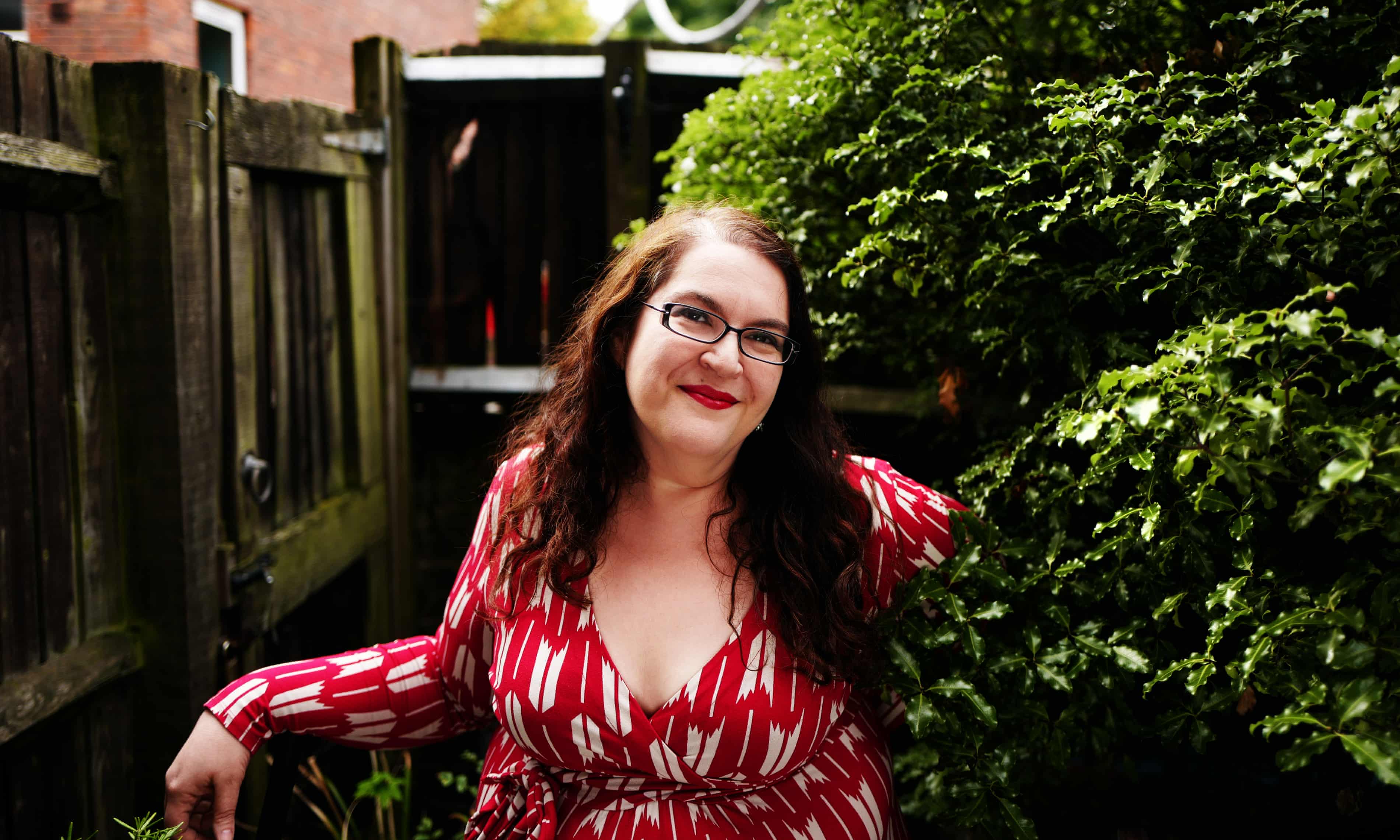
Naomi Alderman – image from The Guardian

The action-adventure-sci-fi shell encasing The Future is a dystopian near-future that takes an if-this-goes-on perspective re the road we are currently traveling toward planetary devastation, global warming, the increasing greedification of the world economy, and concentration of wealth, at the expense of sustainability and human decency. But Alderman has done so much more with it.

The Future has a brain and a heart, to go along with the coursing hormones, and some serious mysteries as well. Did I mention there is a romance in here also? Good luck shelving this thing. You probably will not have much luck putting it down once you start reading. Well, take that advisedly. I did find that it took a while to settle in, as there is a fair bit to get through with introducing all the characters, but once you get going, day-um, you will want to keep on.

While offering a look at survival post everything, Alderman tosses in some fun high tech and BP-raising sequences. And she gives readers’ brains a workout, providing considerable fodder for book club discussions. To bolster the thematic elements, Aldermen provides plenty of connections to classic tales, biblical and other, that offer excellent starting points for lively discussions.

Martha was raised in an apocalypse-concerned cult, led by her father. As an adult she gets involved in on-line exchanges about questions like what might be learned from the experience of a biblical apocalypse survivor, Lot. Alderman was raised as an Orthodox Jew, studying the Torah in the original, so knows her material well. (God was about to firebomb Sodom when Lot’s kindness to a couple of god’s emissaries earned him and his family a get-out-of-hell-free pass.) In addition, she finds relevance in Ayn Rand, The Iliad, The Odyssey, and more.

She brings in a discussion of the enclosure act in the UK, how the stealing of public land by the wealthy has a mirror in the theft of public space of different sorts in the 20th and 21st centuries. But the biggest issue at work here is trust. In fact, Alderman had intended to title the book Trust. But when Herman Diaz’s novel, Trust, won a Pulitzer Prize, she had to find an alternative. Can Zhen trust her new love interest. Can she trust the AI that is supposedly helping her? Can she trust any of the oligarchs? Can she trust people she has known for years on line, but never met in person? This is a core concept, not just on a personal, but on a societal level. Civilizations are built on trust. It is an issue that touches everyone.

The wealthier you are, the less you have to ask people things and the less you ask people for things, the less you have to discover that you can trust and rely on them. Eventually, that erodes your ability to trust. Then, you’re sunk. – from the Electric Literature interview

Consider a concern that is immediate in early 2024. Can American allies, whose alliances have kept the world out of World War III since the end of World War II, trust the US intelligence services with their secrets, when our next president might give, trade, or sell it to our enemies? Can you trust that the person you are communicating with on-line is being honest with you. (As someone who has met people through Match.com, I am particularly aware of that one.) If you are stuck on a survival island, can you trust that the other people there will not do you in, in order to improve their chances of gaining power once things begin to return to some semblance of global livability?

In today’s culture, technology, particularly social media, “encourages us not to really trust each other,” Alderman explains. “The ways that we use to communicate with each other have been monetized in order to make us as angry at and afraid [of one another] as possible.” And while the internet can all too often amplify “absolute hateful stupidity” to feed our distrust of one another, the author continues, “It can also demonstrably, again and again, multiply our knowledge and capacity to understand.” – from the Shondaland interview

Zhen’s is our primary POV through this, although we spend a lot of time with Martha. She is an appealing lead, a person of good intentions, and reasonably pure heart. She is wicked smart, able, and adaptive. It is easy to root for her to make it through. But, noting the second quote at the top of this review, if Love is the mind killer, might it impair her clarity of thought, her maintenance of necessary defenses? Of might it impair that of the person she is love with?

The concern with dark forces is a bit boilerplate. Two of the oligarchs are cardboard villains; another has some edges.
But it is the conceptual bits that give The Future its heft. Oh, and one more thing. Woven throughout the 432 pages of this book is minor crime, Grand Theft Planet. It should come as no surprise that an author who has had great success with her previous novels, and who has spent some years writing video games, would produce a fast-paced, engaging read, replete with dangers, anxieties, fun toys, and wonderful, substantive philosophical sparks. I cannot predict the future any better than 2016 presidential pollsters, but my personal AI suggests that should The Future will find its way to you, you will be glad it did.

Imagining bad futures creates fear and fear creates bad futures. The pulse beats faster, the pressure rises, the voice of instinct drives out reason and education. At a certain point, things become inevitable.

Review posted – 3/8/24

Publication date – 11/7/23

I received an ARE of The Future from Simon & Schuster in return for a fair review, and the password to my super-secret software. Thanks, folks, and thanks to NetGalley for facilitating.

This review is cross-posted on Goodreads Goodreads. Stop by and say Hi!

=======================================EXTRA STUFF

Links to the author’s personal, Instagram, GR, and Twitter pages

Profile – from Simon & Schuster

Naomi Alderman is the bestselling author of The Power, which won the Women’s Prize for Fiction, and was chosen as a book of the year by The New York Times, The Washington Post, the Los Angeles Times, and was recommended as a book of the year by both Barack Obama and Bill Gates. As a novelist, Alderman has been mentored by Margaret Atwood via the Rolex Arts Initiative, she is a Fellow of the Royal Society of Literature, and her work has been translated into more than thirty-five languages. As a video games designer, she was lead writer on the groundbreaking alternate reality game Perplex City, and is cocreator of the award-winning smartphone exercise adventure game Zombies, Run!, which has more than 10 million players. She is professor of creative writing at Bath Spa University. She lives in London.

Interviews
—–Professional Book Nerds – Dystopian Futures with Naomi Alderman – video, well, mostly audio, with no real video – 41:59
—–Toronto Public Library – Naomi Alderman | The Future | Nov 13, 2023 with Vass Bednar – 45:05 – there is a nice bit in here on tech as neither bad nor good, but a tool which can be used for good or evil.
—–Literary Hub – Naomi Alderman on Creating a Fictional Tech Dystopia by Jane Ciabattari
—–Shondaland – Naomi Alderman Is Still Finding Hope in Humankind by Rachel Simon
—–AP- Naomi Alderman novel ‘The Future’ scheduled for next fall by Hillel Italic
—–Electric Literature – Dystopian Future Controlled by Technology by Jacqueline Alnes
—–Independent – How We Met: Naomi Alderman & Margaret Atwood – by Adam Jacques – Atwood mentored Alderman in 2012 – a fun read

Item of Interest from the author
—–BBC Sounds – audio excerpt – 1.0 – The End of Days – 15:47

Items of Interest
—–Tristia by Ovid – Zhen reads this prior to a trip to Canada
—–The Admiralty Islands
—–inert submunition dispenser – a kind of cluster bomb
—–Wiki on the enclosure act

Leave a comment

Filed under Action-Adventure, AI, Cli-Fi, computers, Fiction, Literary Fiction, Mystery, Reviews, Science Fiction, Thriller, Thriller

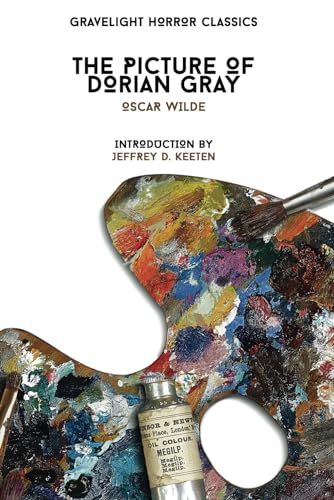
The Picture of Dorian Gray by Oscar Wilde, introduction by Jeffrey D. Keeten

book cover

There were moments when he looked on evil simply as a mode through which he could realize his conception of the beautiful.

“How sad it is! I shall grow old, and horrible, and dreadful. But this picture will remain always young. It will never be older than this particular day of June…. If it were only the other way! If it were I who was to be always young, and the picture that was to grow old! For that—for that—I would give everything! Yes, there is nothing in the whole world I would not give! I would give my soul for that!”

Be careful what you wish for.

description
Oscar Wilde – image from Wikipedia

Man sells soul to the devil in return for…something, in this case a body encased in eternal youth, while a portrait takes on the outward manifestation of his aging and his sins. It ends badly, as deals with the devil usually do. This is hardly a unique tale. In fact, it is a bit of a trope, a Faustian bargain. There is a lovely listing here of examples new and old. Absent, of course, is the most famous, and least successful example of a soul-selling, really more of a soul-buying, from Matthew 4:1-11, when the devil made Jesus an offer he actually could refuse. Don Corleone would have been very disappointed.

But it is a bit more complicated than that, as these things often are. It is always a challenge and an adventure to read a classic. Books become regarded as a base part of our culture for reasons. They can establish motifs, or ways of seeing the world that resonate with their contemporary audiences (well, not always) and future generations. They can offer us a portrait of a time and place, a culture, a class, a social or political issue. They can illuminate moral questions, deal in universal themes, offer insight into human motivation, whether individually or en masse. And we come to see them in particular ways. In The Strange Case of Dr. Jekyll and Mr. Hyde, the prior re-pub in this Gravelight series, what one finds in the original is not quite what one might expect, given how popular culture has transformed the story by bleaching out important nuance. That is less the case with Dorian Gray, at least in part because there appears to have been fewer iterations of the tale in popular entertainments. But, nonetheless, our understanding of the story is generally of the bare bones sort. There is plenty of flesh to give those bones some added heft.
description
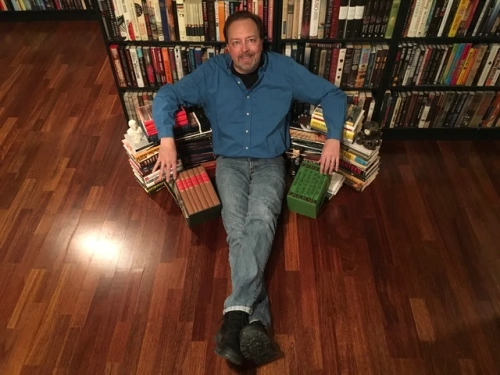
Jeffrey Keeten – they came to take his furniture, but the only way they will take his books is from his cold dead hands – image from his site

The history of a book matters. Keeten’s introduction offers an excellent take on how Dorian was received at publication. It generated quite a bit of attention on its release. There were many who were not amused. That may have contributed to the fact that The Picture of Dorian Gray is singular in being the sole novel published by Oscar Fingal O’Flahertie Wills Wilde. The subject matter was considered a big no-no in 1890. The Dorian of the title is a man of many tastes, and apparently insatiable appetites. He manages to bring ruin to both men and women. It was not, in particular, the ruination of women that caused a storm. The periodical in which it was first published was withdrawn from bookshops due to the outrage.

Wilde was a very popular writer of the time, wearing his sexuality like a badge. A tough stance to assume in a culture that preferred to sate it appetites and interests discretely. His novel was a shocker for the time in portraying homosexuality in interest, if hardly in action. The painter of Dorian’s portrait is clearly smitten with him, dazzled by his physical beauty, which he sees also as representative of an underlying perfection.

For all the shock of its homosexual content, there is no physical contact of that sort in the pages. (an earlier version may have been more direct) All is insinuation, suggestion, hinting. It is the same technique that has worked quite well for ages in the horror genre. Shadows, rattling chains, creaky doors, unsourced moans. Sometimes we are offered the shocker scene in which the monster is revealed. The Opera Phantom’s mask is pulled off to reveal the horror of his face. Hyde’s deformity is revealed as the window into Jekyll’s soul. And so it is here. Dorian’s true nature is revealed. The “I’m shocked, shocked” reaction of contemporary critics suggests more about what they were projecting onto the novel than what was actually there.

description
The portrait used in the 1945 film by Ivan Le Lorraine Albright – image from Wikipedia

So, what is the horror that is on display? It is the hedonism of the late 19th century English upper class, sashaying about in the interesting, entertaining, appealing drag of philosophy. Henry argues for the unashamedly sybaritic life. Art need have no meaning, no being other than itself. Apply to humans. Is art, is beauty the highest value? When beauty is left to dangle free, disconnected from any higher value, what is its impact on the world? Actions have no moral content. It is in fact a positive good to live a life dedicated to the primitive accumulation of sensation, through the arts, through physical pleasures, not just of sex, but of sight, smell, sound and touch, to experience beauty in all its forms. Try everything. Art for art’s sake in the guise of human experience. Some people have an amazing ability to come up with excuses for their excesses, explanations, some reason for why they shouldn’t be held accountable for their actions. Like the poor and taxes, we will always have the morally challenged, the malignant narcissists, the sociopaths with us.

beauty is a form of genius—is higher, indeed, than genius, as it needs no explanation. It is of the great facts of the world, like sunlight, or spring-time, or the reflection in dark waters of that silver shell we call the moon. It cannot be questioned. It has its divine right of sovereignty. It makes princes of those who have it. You smile? Ah! when you have lost it you won’t smile…. People say sometimes that beauty is only superficial. That may be so, but at least it is not so superficial as thought is. To me, beauty is the wonder of wonders. It is only shallow people who do not judge by appearances. The true mystery of the world is the visible, not the invisible….

But if this was on the up and up, there would have been no need to keep one’s behavior secret. It is clearly a place where freedom crosses the line into license. The practitioners of such a “philosophy” knew they were up to no good. They merely wanted to hide from the responsibility. Dr Jekyll was quite happy to have an alter-ego he could let loose on the world, to have the sorts of fun he could not have as himself in public view. They knew, not just that their behavior was wrong, not just that it ran afoul of extant mores, but that their reasoned explanation was taffeta thick.

description
Hurd Hatfield as Dorian in the 1945 film – image from Wikipedia

It is not the barely latent bisexuality of the novel that marks Dorian as fallen, it is that he had ruined peoples’ lives, men and women, not by having sex with them, (which is suggested, but never acted out on the pages) but by corrupting them in various ways, by causing them to become as self-centered, as pleasure-seeking as he was. A person can get away with this if he or she is wealthy enough. Paying off porn stars to keep quiet about an extramarital fling certainly fits into such a scenario. Dorian manages to keep his scandals at bay with the use of his wealth.

It is as true today as it was when Wilde was writing this book, the selfishness, the hedonism, the amorality of the wealthy feeds on the blood and life forces of those they exploit, few of whom can afford to fight back directly. (You go, E. Jean!) I imagine this is a core of what Wilde was getting at, and the real reason his critics were so angry at him.

Dorian does not come to his corruption unaided. He arrives as a beautiful young man, who is seen as being as pristine inside as he is on the surface. The Victorians were very concerned with exteriors, believing that they served as personal screens displaying to the world a person’s character. But then he is introduced to Lord Henry Wotton. Henry proceeds to emit a torrent of nonsense, albeit amusing nonsense, mocking the morals of the time. Wilde, speaking through Henry, is cattier than my living room when I shake a container of treats. Henry offers a torrent of false, cynical aphorisms, suitable material to be printed on small pieces of paper and tucked inside poisoned fortune cookies. Were he opining today, Henry would be posting outrageous clickbait opinions on Twitter. Here are a few examples. They are legion, and will sound familiar in tone to characters from Wilde’s 1895 theatrical triumph, The Importance of Being Earnest

…beauty, real beauty, ends where an intellectual expression begins. Intellect is in itself a mode of exaggeration, and destroys the harmony of any face. The moment one sits down to think, one becomes all nose, or all forehead, or something horrid.

…the one charm of marriage is that it makes a life of deception absolutely necessary for both parties. I never know where my wife is, and my wife never knows what I am doing. When we meet-we do meet occasionally, when we dine out together or go down to the Duke’s—we tell each other the most absurd stories with the most serious faces.

…as for believing things, I can believe anything, provided that it is quite incredible.

It is the cynical Henry who finds in the gullible Dorian the raw material with which to cast the young man into a representative of his very hedonistic view of life. Dorian offers the plasticity of the young to the dubious molding of the amoral. The young man is all ears. He even takes time away from the painter, Basil Hallward, to learn at Wotton’s feet. .

To a large extent the lad was his own creation. He had made him premature. That was something. Ordinary people waited till life disclosed to them its secrets, but to the few, to the elect, the mysteries of life were revealed before the veil was drawn away. Sometimes this was the effect of art, and chiefly of the art of literature, which dealt immediately with the passions and the intellect. But now and then a complex personality took the place and assumed the office of art, was indeed, in its way, a real work of art, life having its elaborate masterpieces, just as poetry has, or sculpture, or painting.

We are offered a bit of background on Dorian, to help explain his vulnerability to Lord Henry’s dark influence. And are even given a bit of theatrical brimstone to explain how the deal with the devil is achieved. Neither really matters much.

description
Angela Lansbury as Sibyl Vane in the 1945 film – image from Wikipedia

Early on, Dorian is smitten with a beautiful young actress, Sibyl Vane, who considers him her Prince Charming. It is Sibyl’s appearance, her elevated acting performances, in addition to her beauty, that attracts Dorian. But when her dazzling talent on stage suddenly vanishes, she can no longer offer Dorian the thing he most admired, and he dumps her, cruelly. It is the first crime to which we are witness, the first time his painting changes. The pursuit of beauty and sensation above all else has claimed its first victim. There will be many more, but most of those bad behaviors take place off screen.

Wilde put all of himself into this novel

“Basil Hallward is what I think I am: Lord Henry is what the world thinks me: Dorian what I would like to be.”

Unlike Lord Henry and Basil Hallward though, Wilde acted on his urges. Unlike Dorian, Wilde was imprisoned for his actions. Unlike Henry’s and Dorian’s depraved indifference to the harm they caused others, it is not clear that Wilde was a cruel person.

Dorian is clearly a corrupt individual. Whether he arrived there unaided or had a push is of secondary importance. Lord Henry is clearly corrupt as well, even though we do not see him engage in any physical acts of treachery. Perhaps the corruption of youth, pulling Luke Dorian to the dark side is enough. Henry and Dorian both represent the worst of the amorality of the Victorian age, the hypocrisy of the upper class. This seems the true target of Wilde’s effort. He is not celebrating amorality, but pointing an accusing finger at it, and letting us know who are its most damaging practitioners. At one point Dorian even shows enough residual humanity to want to turn over a new leaf, not appreciating that to succeed he would need to upend an entire forest. (don’t write. I know that the leaf in question was supposed to mean a book page.)

Keeten goes into some detail on the derivation of the name Dorian Gray. Why not Loki? There are very concrete reasons. In fact, there is a lot you will enjoy learning when you check out his introduction. It is rich with detail about the author, the book, and the controversy that surrounded its publication. It also looks at the lasting impact Wilde has had on modern culture. It will definitely increase your appreciation of this wonderful novel.

I suppose there might be a modern version in which Gray and his portrait are linked by quantum entanglement, or one should be made if it does not already exist. The battle between inner self and outer manifestation is certainly an eternal literary theme.

For the second time, a sojourn down the Gravelight illuminated alley of classic horror has proved stimulating and enlightening. From Keeten’s smart, incisive introduction to the chance to see what the original of a household-name classic was really on about, The Picture of Dorian Gray offers a richly rewarding reading experience, clever, funny, dark, shocking, intelligent, satirical, and satisfying.

There were moments when he looked on evil simply as a mode through which he could realize his conception of the beautiful.

Review posted – 02/23/24

Publication date – 11/6/23

I received copy of The Picture of Dorian Gray from Gravelight Press in return for a fair review. Thanks, folks.

This review is cross-posted on my site, Goodreads. Stop by and say Hi!

=======================================EXTRA STUFF

Links to Keeten’s personal, FB, and Instagram pages

Prior reviews for books intro’d by Jeffrey Keeten
—– Exhumed: 13 Tales Too Terrifying to Stay Dead – edited by David Yurkovich
—– The Strange Case of Dr. Jekyll and Mr. Hyde – edited by David Yurkovich

Items of Interest
—–Les Cent Nouvelles – a book of coarse French stories referenced in Chapter 4
—–Margaret of Valois
—–Manon Lescaut – an 18th C. novel in which young lovers live a life of sexual and social freedom, while giving morality little thought – referenced in chapter 4
—–The St. James’s Gazette – referenced in chapter 10
—–Elephantis – author of a sex manual in Classical Greece – noted in Chapter 11
—–Against Nature by Joris-Karl Huysmans – cited in the introduction – Dorian’s reading of this 1884 celebration of sensory gluttony contributes to his corruption
—–Wiki Deals with the devil in popular culture

2 Comments

Filed under classics, Fantasy, Fiction, Historical Fiction, Horror, Literary Fiction, Reviews

The Hive and the Honey by Paul Yoon

book cover

Come. I want to show you something. I learned it from the missionary. We haven’t seen him in a while, yes?…I retrieve my teacup where there is a little honey left, and I walk toward the perimeter of the woods and hold it up. I hear her coming up behind me, the slow rustle of her skirt in the grass, but I don’t turn.
A few minutes later, a bee appears, hovering, circling, then dips into the cup. Then it flies away into the woods. I follow it. She follows me. When I can’t see it anymore or hear it anymore, I stand still and hold up the cup and wait for the bee to come back. Which it does. So we move on, and as we head farther into the woods, I tell the daughter that it is a trick I learned from the missionary. We’re creating a trail.
“To the hive,” I say. “And the honey.”

In The Hive and the Honey Paul Yoon returns to areas that readers of his earlier work will recognize. This is his third story collection, following Once the Shore (2009) and The Mountain (2017). He has published two novels as well, Snow Hunters (2013) and Run Me To Earth (2020). He treats often in themes of Korean diaspora, losing a sense of home, trying to build new families and communities, feeling alone, often being alone, the impact of history on one’s lived experience, and the impacts of war. That holds here.

I can’t speak to a unifying Korean identity, but I think, growing up, because I had very little access to an extended family, I was often searching for my own version of that. And I think all my characters are searching for their own version of family. They’re quite literally and figuratively orphans. And they want to rebuild. They want to find a home in all sense of that word. – from the Pen-Ten Interview

There are seven stories in the collection, ranging from 17th century Japan to 20th century New York. The age of the primary characters covers a wide range. One lead is 16, others are in their 20s, returning from war or prison, or still in uniform. There is a couple in their forties and we see one life across decades.

description
Paul Yoon – image from Interlocutor – shot by Paul Yoon

A persistent challenge is to make a home. In Bosun, Bo tries to find a home and family in a small upstate NY town. In At The Post Station, Two samurai must repatriate a 12yo Korean boy to officials from his country. Toshio, the samurai who has been raising his young charge for many years, must face this direct loss of family. The boy must face introduction to an entirely alien culture. Cromer offers a middle-aged London shop-keeper couple, both children of North Korean refugees, who had opted to never have children of their own. But when a 12 yo apparently- battered runaway boy turns up in their shop, many miles from home, it makes them face the insular, child-free lives they had chosen, the community they had not built, the family they had not made. In The Valley of the Moon a man returns from a settlement to his isolated family farm after The Korean War. It is a moonscape, littered with bones and craters. He slowly but steadily brings the farm back. He even takes in two orphans to make a proto-family, but the damage from the war, and from an act he commits before the kids arrived, haunts him for the rest of his life.

Biological families here are all dispersed, or worse. Characters are often stuck on their own. Relations in other places are unreachable, unresponsive, or dead. Some of the impetus for the collection was Yoon’s own familial diaspora.

My grandfather was a Korean War refugee who eventually, after the war, settled in a house in the mountains in South Korea. Where he lived wasn’t nearly as isolated as the setting of “Valley of the Moon,” but my memory of him was that he was—or had become after the war—a bit of a loner, someone who kept to himself, and so I think (a) the character of Tongsu and where he returns to was always linked from the start, and (b) that initial push forward into this story stemmed from wanting to create and capture, perhaps, some corner of family history that felt, and still feels, really distant to me—to engage with that distance, creatively, and to engage with him and with so many others of that generation who had to flee their homes and do anything they could to survive during those horrific years. – from the New Yorker interview

Yoon’s characters also travel far afield. Bosun came to the USA at 18. In Komarov, a Korean cleaning woman is living in Spain. At the Post Station features a boy who was held prisoner by Japan for his entire life and will now be faced with living in an alien culture in Korea. In Cromer, the parents of the couple living in London all escaped from North Korea, and a young Korean boy flees apparent physical abuse. In The Hive and the Honey, the community over which the young soldier watches is comprised of Koreans who had left Korea and were establishing a small community in eastern Russia. In Person of Korea, the lead’s father had taken work far from home and had become unreachable. Families that remain (the survivors) are severely depleted, family trees having been pruned to stumps or worse by war and dispersion. Holding on even to images of one’s past can become a challenge.
Bo thought he would eventually miss Queens or perhaps even South Korea, where he had spent the first eighteen years of his life, but as the months went on, they were like the faces he tried to recall: far away, as though the places he’d once lived had been homes to someone else.

But for all the travails, the challenges, there is an intrepid spirit at work that pushes them onward. How easy would it have been for the farmer to simply walk away from his devastated fields? For the convict to have given up hope?

The use of imagery is exquisite, illuminating themes, showing how the past impacts, intercedes in, and informs the present.

Every night, the moon rose from here, and fell, and shattered. And then built itself back up again.

This certainly stands in well for the challenge of all these characters, forced as they are to reconstruct lives after the world has caused them so much disruption. The quote at the top of this review offers another wonderful image. Luring bees with honey then following them back to their nest, taking the steps one can take, however many may be needed, to reach your goal, whether the location of a hive, a home, or something else. A tree grows through the skull of a corpse, offering a (perhaps grim) reminder that life continues, creating a future by feeding on the past.

These are very moving tales, as rich with hope, tenacity, and sweetness as they are with loss, disappointment, and sadness, personal tales told against a backdrop of a nation’s history. The Hive and the Honey is an outstanding literary short-story collection, well deserving of all the award buzz it has been receiving. What could be sweeter?

economic reasons.”During the pandemic, Yoon says, “we were all scattered. I was separated from friends and to cope I imagined a kind of map. We were all in different places, but we were all part of one world. That got me thinking about the family tree, thinking of that as a map as well. This was the seed of the collection: the movement of a country and its people.” – from the Louisa Ermelino PW interview

THE STORIES

Bosun – a Korean man, just released from an upstate New York prison, tris to make a life for himself in a small community nearby.

Komarov – A refugee from North Korea is working as a cleaner in Spain when she is approached by Korean agents to spy on a Russian boxer they believe to be her son.

At the Post Station – Two 17th C. samurai accompany a Korean boy, who had been held hostage all his life, to Korean officials who will take him home.

Cromer – The children of escaped North Koreans, a middle-aged couple in London consider their life choices when a 12yo runaway boy happens into their convenience store.

The Hive and the Honey – A young Russian soldier is charged with overseeing a Korean settlement in remote eastern Russia. Things get out of hand when there is a killing, then another.

Person of Korea – When the uncle with whom he had been living dies, a 16yo boy travels to find his father, a security guard on an island off the east coast of Russia.

Valley of the Moon – two years after the Korean War a man returns home to a devastated, vacated farm, and tries to bring it back to life. He takes in two orphans and has a difficult, life-changing encounter with someone looking to cross the border.

Review posted – 02/09/24

Publication date – 10/10/23

I received an ARE of The Hive and the Honey from Simon & Schuster in return for a fair review. Thanks, folks, and thanks to NetGalley for facilitating.

This review is cross-posted on my site, Goodreads. Stop by and say Hi!

=======================================EXTRA STUFF

Paul Yoon’s personal site

Profile – from Wiki

Paul Yoon (born 1980) is an American fiction writer. In 2010 The National Book Foundation named him a 5 Under 35 honoree.

Early life and education
Yoon’s grandfather was a North Korean refugee who resettled in South Korea, where he later founded an orphanage. Yoon graduated from Phillips Exeter Academy in 1998 and Wesleyan University in 2002.

Career
His first book, Once the Shore, was selected as a New York Times Notable Book; a Los Angeles Times, San Francisco Chronicle, Publishers Weekly, and Minneapolis Star Tribune Best Book of the Year; and a National Public Radio Best Debut of the Year. His work has appeared in the PEN/O. Henry Prize Stories collection, and he is the recipient of a 5 under 35 Award from the National Book Foundation. His novel, Snow Hunters, won the 2014 New York Public Library Young Lions Fiction Award. His 2023 story collection, The Hive and the Honey, was named a finalist for The Story Prize.
Recently a part of the faculty of the Bennington Writing Seminars, Yoon is now a Briggs-Copeland lecturer at Harvard University.

Interviews
—–Publishers Weekly – In Seven Stories, Paul Yoon’s New Book Spans 500 Years of Korean Diaspora By Louisa Ermelino | Jul 07, 2023
—–The Pen-Ten Interview – Paul Yoon | The PEN Ten Interview by Sabir Sultan – October 12, 2023
—–The New Yorker – Paul Yoon on the Korean War’s Aftershocks by Cressida Leyshon – about Valley of the Moon
—–Publisher’s Weekly – Paul Yoon’s Haunted Geographies by Conner Reed
—–LitHub – Writing as Transformation: Who Paul Yoon Needed to Become to Finish His Book by Laura van den Berg (Yoon’s wife)

Leave a comment

Filed under Fiction, Historical Fiction, Literary Fiction, Short Stories

The Invisible Hour by Alice Hoffman

book cover

in every fairy tale girl who is saved is the one who rescues herself.

people in love were such fools, they made up excuses, they wound up doing as they pleased no matter how much good advice they been given.

The Invisible Hour is a twice-told tale of a mother and a daughter.

Ivy Jacobs’ Beacon Hill family did not exactly treat it as a crimson-letter day when the sixteen-year-old informed her parents that she was pregnant by a feckless Harvard sophomore. Despite her tender years, Ivy wanted to see the pregnancy through and keep the baby. Decisions and plans were made, none of them involving input from Ivy. The newborn would be put up for adoption. Ivy bails, getting as far away as she can, which turns out to be a sort-of commune in western Massachusetts.

description
Alice Hoffman – image from Penguin Random House – shot by Alyssa Peek

Mia Jacob is the daughter Ivy bore. We meet her at 15. Living in the place to which her mother had fled, The Community. More of a cult really, an authoritarian farm where the leader’s will is law. Joel Davis took Ivy in, married her soon after she’d arrived, so is Mia’s step-father. But child-rearing is communal here, so parenting is not what you or I would recognize. You will recognize the cult-leader, control-freak personality Joel wears like the headgear sported by the QAnon Shaman. Vanity is supposedly being punished, but it is accomplishment, growth, intelligence and independence that are the targets. He likes his followers unquestioning and compliant.

Ivy has stolen parenting moments over the years, so has had a hand in helping Mia find her true self, a young woman who is curious about the world, eager to learn, to investigate, to explore, to read. Discovery of her criminal reading marks her for punishment. When we meet Mia she is, as her mother was, a teen about to flee her oppressive environment.

Although we learn about and spend time with both women, it is Mia who is our primary focus. In a dark time, she considers suicide, but, fortuitously, reads a book that saves her, changing her life, giving her hope, The Scarlet Letter.

We follow her coming of age, assisted by her mother and an understanding librarian in the town where The Community sells their produce.

Her passion for Hawthorne is such that she finds in it a magical power. Alice Hoffman loves her some fairy tales, so it will come as no great shock that one fine day Mia finds herself transported back to the 19th century, and into the presence of her literary love object. Complications ensue. In those, however, we get a sense of Hawthorne, his personality, his material conditions, his family and friends, and his writing challenges. Nice looking fellah, too, to go with that oversized talent.

There is some wonderful imagery woven into the novel. The notion of invisibility is large among these. There are times in which it might be useful to go unseen, as in when one is doing something for which one might be punished, or which are simply secret. On the other hand, it is not so wonderful to be unseen in normal human interactions. Like “Yo, dude, human here. Whaddaya? Blind?” There is some literal invisibility as well.

Apples are a core element as well. There is a particular breed of apple grown in the area, which is no Eden. They seem less associated with The Fall than with a push. Joel uses leaves of that apple tree as a threat. One could certainly see his actions as serpentine. Mia even decides never to eat apples, given the associations she has for them with The Community. Howdaya like dem apples? Johnny Appleseed comes in for some attention, with plantings of his effort bearing local fruit.

The woods as a magical place gets a visit or two. Indeed, magical things go on there. Strange people and buildings appear. There is even one “Once upon a time” in the book. The Woods is where Mia goes to escape.

Much of the tension in the book centers around women taking control of their own lives. This happens in various ways. There is the usual disobedience one would expect, with the most daring taking the greatest risks. Reading figures large in this, as subservience is sustained under the lash of forced-ignorance. Reading is the gateway drug to independent thinking, and dreaming of better. Some women even learn herbal medicine, to see to their needs. The comparisons of the modern day with the repressive Puritan world depicted in The Scarlet Letter are clearly drawn. Plus ça change…

I think it’s a bad idea to write for the moment because the moment passes so quickly. The other thing about time is that what’s right and what’s good and what’s accepted suddenly becomes not. I thought about that with the way women were treated in “The Scarlet Letter,” the way that the Puritans blamed women, and they believed in original sin and that women were responsible for that because of Eve. It all changed, but then it changes back. And then it changes again. A lot of the things that women are coping with right now are not that different, really. The judgment against women. – from the Salon interview

There is a garden in town where all the plants are red. It may feel familiar to frequent readers of Hoffman.

This new book [The Invisible Hour] actually takes place in a town where I wrote a book of connecting stories about called The Red Garden, so it’s the same place. It’s just a novel that takes place in that town. – from the Salon interview

I consider myself an Alice Hoffman fan. While I have not read all her books, I have certainly read more than a couple. Any reader of her books knows that there are certain things one can expect. Among other things, there will be an engaging lead, facing difficult choices, and there will usually be bits, at least, of magic, often of a fairy tale sort. So, one cannot really gripe about a time-travel element pushing things too far, particularly when done in the service of giving us a closer look at a literary icon. My sole gripe is that I felt that the baddie was given too much magical license to pursue his dark ends.

Otherwise, despite it’s title, The Invisible Hours very much deserves to be seen. It offers not only an uplifting, engaging tale of empowerment, but an homage to one of the greats of American literature, and long-form praise of the power, the importance, the necessity of reading. I am sure we can all see the value in that.

“Q: Did you set out to write a novel so deeply rooted in women’s empowerment? How did it evolve to include time travel?”

“A: I started to think about The Scarlet Letter and how modern-day issues for women are not that foreign from issues in that time period. I’m not certain I realized when I first read Nathaniel Hawthorne’s great novel what the deeper meaning of his heroine’s situation is—she has no say over her body or her choices and yet, she does make her own choices. It’s a very brave book.
I’ve always wanted to time travel and been drawn to books about time travel. I think during the time of Covid, when I was writing this, more than ever I want it to be in another time period.”
– from A Conversation with Alice Hoffman, an appendix in the book

Review posted – 12/22/23

Publication date – 8/15/23

This review is cross-posted on my site, Goodreads. Stop by and say Hi!

=======================================EXTRA STUFF

Links to the author’s personal, Instagram and FB pages
Profile

Other Hoffman books I have reviewed:
—–1999 – Local Girls
—–2003 – Green Angel
—–2004 – Blackbird House
—–2005 – The Ice Queen
—–2011 – The Red Garden
—–2011 – The Dovekeepers
—–2017 – Faithful
—–2017 – The Rules of Magic
—–2019 – The World That We Knew

Interviews
—–Salon – “I want to believe”: Alice Hoffman is always seeking magic, practical and otherwise by Alison Stine
—–Shondaland – Alice Hoffman Talks Her Latest Novel, ‘The Invisible Hour’ by Sandra Ebejer
—–Harvard Review – An Interview with Alice Hoffman by Christina Thompson

Song
—–Agnes Obel – Brother Sparrow – relevance to the chapter title

Item of Interest from the author
—–Salon – Alice Hoffman: Five amazing tips to help you write your novel

Items of Interest
—–Wiki on Nathaniel Hawthorne
—–Wiki on Johnny Appleseed, mentioned multiple times
—–Gutenberg – full text of The Scarlet Letter
—–Good Will Hunting – Howdaya like dem apples?
—–Wiki on the QAnon Shaman

Leave a comment

Filed under Fantasy, Feminism, Fiction, Historical Fiction, Literary Fiction, Religion

The Bee Sting by Paul Murray

book cover

In the next town over, a man had killed his family. He’d nailed the doors shut so they couldn’t get out; the neighbours heard them running through the rooms, screaming for mercy. When he had finished he turned the gun on himself.
Everyone was talking about it – about what kind of man could do such a thing, about the secrets he must have had. Rumours swirled about affairs, addiction, hidden files on his computer.
Elaine just said she was surprised it didn’t happen more often.

For months now she has been having the same dream Of a flood that sweeps through the house Carries off clothes from the wardrobes Toys from the cupboards Food from the table In the dream she is trying to stop it She is wading around, pulling things out of the water But there’s too much to hold in her arms and it overcomes her The current grows stronger Pulls away the appliances the kitchen island tiles from the floor paint from the at the edge of the water watching her go Staring down as she’s swept past In their eyes she is old Her youth is gone too It has all been washed away by the water

The Barnes family is having their problems. It is 2014 in small-town Ireland. We follow Dickie, Imelda, his wife, PJ, their son, and Cass, a high school senior, through a range of travails. Leo Tolstoy’s Anna Karenina opens with, Happy families are all alike; every unhappy family is unhappy in its own way. Guess which category the Barnes family fits into.

PJ is almost a teen, so will have a lot of growing-up to do, but he is faced already with challenges that are plenty daunting. Coping with bullies at school is no fun, if a particularly usual checklist item in coming-of-age stories. But he is also beset by the thug teen child of one of his father’s customers, who feels his family has been cheated by Dickie. Beatings happen, and more are promised if he does not pay up. And these are the lesser of the challenges he faces. On the upside, he likes spending time hanging out with his father, working on a project in the woods behind their house.

description
Paul Murray – image from the Hindustan Times – shot by Lee Pelligrini

Cass has teen-angst aplenty, coping with her social status, her newly-ripening sexuality and her attraction to a promiscuous friend. She is trying to define who she is. (which is not exactly a wonderful person when we meet her.) A part of that is seeing herself as separate from her family. She would definitely not want to be associated with those people. She is particularly hostile to her father, blaming him for the demise of the family business, and the collateral social impact that is having on her. She is not a stunner like her mother, which does not help. The prospect of heading off to college in Dublin offers a concrete escape route, the sooner the better. She is besties, I guess, with Elaine, who is as amoral and unfeeling as she is beautiful.

Imelda came from a working-class family. Rough around the edges would be a kind description. But she was born a knockout. It was always going to be her ticket out. She falls in love with the town’s football superstar, Frank. They are to be wed. Frank stands to inherit a successful family business, and should be able to provide nicely for her. Problem is a literal crash and burn, and buh-bye Frank. She winds up marrying Frank’s older, smarter, but not-golden-boyish brother, Dickie.

Dickie had the brains for college, and attended, for a few years, until an unfortunate event derailed his collegiate career and he headed home. He may have been the smarter of the brothers, but Frank had the gift of salesmanship, and was a better fit to take over the car dealership. But when Frank dies, it falls to Dickie to step in. He manages, but it is not work he exactly loves.

These days, he is spending time in the woods behind their home, building a defense against Armageddon, spurred on by a troll-like employee who exhales conspiracy theories and seems to be looking forward to the coming end-times. He has a lot of time on his hands. The car-dealership is in the crapper. Along with plenty of other businesses, suffering not only from a global economic downturn, but massive flooding in the town. Dickie’s father, Maurice, retired, but still the owner, swoops in to try to fix things, blaming Dickie for the difficulties. Dickie is not entirely faultless here. But there are serious complications with him.

We follow these four for over six hundred pages, getting to know them intimately. We learn their secrets, see them change, see them cope with relentless stressors, see them grow, or not. This is the greatest power of the novel. Each is faced with decisions, moral choices, that define their character, that define their changes, maybe their failures. If that were all, it would be an outstanding piece of work, but Murray offers a very rich palette of content as well, raising it to another level.

There are many notions that run throughout The Bee Sting’s considerable girth. Space has been reserved to handle them all. The core, of course, is family. Not exactly the most functional, the Barnses. Parents who have been raised to hide their emotions have no natural ability to make a happy home.

You couldn’t protect the people you loved – that was the lesson of history, and it struck him therefore that to love someone meant to be opened up to a radically heightened level of suffering. He said I love you to his wife and it felt like a curse, an invitation to Fate to swerve a fuel truck head-on into her, to send a stray spark shooting from the fireplace to her dressing gown. He saw her screaming, her poor terrified face beneath his, as she writhed in flames on the living-room carpet. And the child too! Though she hadn’t yet been born, she was there too. All night he listened to her scream in his head – he couldn’t sleep from it, he just lay there and sobbed, because he knew he couldn’t protect her, couldn’t protect her enough…

On top of which, secrets abound. They are all trying to find a way out, except for PJ, who is mostly interested in seeing things returned to the way they were before the dealership miseries began, and radiated outward. Murray shows how dysfunction and damage can carry forward from one generation to the next, the brutality of Imelda’s family, the emotional absence of Dickie’s. But all has not been destroyed.

When Dad was fun everything was fun. Not just holidays, not just Christmas. Going to the supermarket! Cutting the grass! At bedtime they had pyjama races, they read Lord of the Rings cover to cover, they put a torch under their chins and told each other ghost stories…

Family connection is important, mostly in the desire of most to sever it. Dickie was desperate as a young man to get away, get an education, do something other than sell cars for the rest of his life. Imelda came from a toxic family (not all of them) and also struggles with her connection to the family she is in, for current-day part of the story. Cass wants out, ASAP. Tethers are cut, but some are also sewn. The tension between these struggles is fuel for the story.

Murray looks at the impact of the environment on peoples’ lives. The story is set at the tail end of the recession from the Celtic Tiger boom that had preceded. The economic environment was still pretty tough and we see how this impacts the family.

It will come as no shock that a major, unusual, flood impacts Dickie’s already sinking business, with talk of liquidation, that a water leak in the Barnes house carries omens, and that Imelda dreams of being washed away, as she is forced to cope with losing the luxury level lifestyle to which she thinks her incredible beauty entitles her. Cass’s collegiate prospects and social standing are endangered. Other players in the story are challenged as well. PJ is fast out-growing all his clothing, but does not want to be a burden on the now-struggling family, so keeps quiet and castigates his feet for growing too much. There is a stream involving the presence of gray squirrels in Ireland. They are an invasive species, as of a century back, and carry a disease that is fatal to the native red squirrels. Are they the only locals in danger of being wiped out?

Another stream is the notion of returning, coming back from the dead, in particular.

Some people might say that the key problem is with coming back from the dead specifically. Because obviously death is a pretty serious step with all kinds of long-term effects that you’re not going to just shake off. But lately you’ve noticed it with other things too, that even though they never actually died, when they came back from where they’d gone they were still completely changed.

Imelda keeps looking for the ghost of Frank to show up at her wedding to Dickie. Dickie is definitely not the same after returning from Dublin. Same for Cass and PJ. Other characters, a maid, a mechanic, a patriarch, return as well, with mixed results.

…is it worth taking the risk? Sometimes? If you could still sort of see the person they were and you thought maybe there was still enough time, if you knew what to do or say?

Bees get a bit of attention, if a bit less than expected. The bee sting of the title is inflicted on Imelda, on her way to her wedding to Dickie. Her face was in no condition to be seen, so every wedding picture of her is through her veil. There is another passage about the mating habits of bees. It does not end well for the males.

…the pesticide the farmers use on plants contains a neuro-toxin that destroys their memory so they forget their way home, can’t make it back to the hive where they live, and that’s why they’re dying out. When they looked in the hives they found them not full of dead bees, but mysteriously empty. Maybe that’s what happened to Cass, you think. Maybe air pollution in the city has damaged her brain and now she’s forgotten her home. Though really you know it started way before she came here.

The impact of stinging on the stinger is also considered.

There is even a bit of magic as Imelda’s Aunt Rose has a particular gift, sees things that others cannot, says sooths, a family thing, but not one that Imelda has ever manifested.

Murray writes in differing styles. Most of the book is presented as third-person omniscient, describing the actions and peering inside to reveal the characters’ thoughts and feelings. Standard stuff. The final section, The Age of Loneliness, is written in the second person. We alternately assume the POV of the main characters, as each races toward the stunning climax. Imelda gets a breathless, minimally formatted structure. There is a sample in the second quote at the top of this review.

I wrote Imelda’s section, and I knew she was on her way to this dinner… I wrote that first line like she, well, she needs to use the bathroom really urgently. And I put commas in and a full stop. And it did not feel right at all. The only way to write it was without the punctuation, and I wanted it to feel like you’re in her head. She doesn’t parse things in the same educated way that Dickie or indeed the kids would do. She just thinks in this much more immediate, intensive way. When you go from the kids’ sections into Imelda’s section, I wanted it to feel like, woah, there’s a change in gear here. Like there’s something’s going on that hasn’t been apparent up until now. At this moment in her life, but maybe at every point in her life, everything feels extremely precarious. She’s on this knife edge, all the time. She always feels like everything’s going to collapse, the floor is going to disappear from under her and she’s going to just tumble down into the past with her abusive dad and the poverty and the grimness and stuff. – from the. Hindustani Times interview

It would not be a Paul Murray novel if you did not come away from the reading without a few more laugh lines in your face. He takes the most liberty with this in the teens’ sections, the most reminiscent of the grand, rude humor of Skippy Dies to be found here. For example

Nature in her eyes was almost as bad as sports. The way it kept growing? The way things, like crops or whatever, would die and then next year they came back? Did no one else get how creepy that was?

or

Behind him, another boy, not as tall but slightly droopier, had started kissing Elaine. It was distracting; it seemed like she could hear it even over the metal, a squelching noise like walking on frogspawn.

or

It feels weird reading a prayer off his phone, where he has looked at so many unreligious things. He hopes the Virgin Mary knows it’s meant for her, that he’s not praying to e.g. Candy Crush or Pornhub.

You get the idea. Love this stuff.

So what’s not to like? Nothing, nothing at all. This is a wonderful, engaging, risk-taking, funny, moving, horrifying, engaging, biting, human triumph of a novel. You may feel stung by elements in this great tale, but you will come away with a literary trove of honey.

Ireland is a place where people are very good at talking. People are so funny and have such brilliant stories, and it’s a way to disguise what you’re actually feeling. The reason, I think, is because this is a place where very terrible things have happened and the way we deal with them is by not addressing them. So I feel like the ghosts are alive and they’re active. The past is affecting what you’re doing in a very real way. And if you don’t address the issues, then the darkness just grows, and the damage gets passed down from one generation to the next, like in the book. – from the Guardian interview

Review posted – 12/8/23

Publication date – 8/15/23

The Bee Sting was short-listed for the Booker Prize

I received an ARE of The Bee Sting from FSG in return for a fair review. Thanks, folks, and thanks to NetGalley for facilitating.

This review is cross-posted on my site, Goodreads. Stop by and say Hi!

=======================================EXTRA STUFF

Links to Paul Murray pages on Wikipedia and Goodreads

Interviews
—–Hindustani Times – Paul Murray – “Climate change is something I worry about all the time” by Saudamini Jain – READ THIS ONE
—– The Guardian – Paul Murray: ‘I just dumped all my sadness into the book’ by Killian Fox
—–The Booker Prizes – A Q&A with Booker Prize 2023 shortlisted author Paul Murray – video – 4:08

My review of an earlier book by Murray
—–Skippy Dies – one of the best books EVER!

Items of Interest from the author
—–New York Magazine – 3/15/23 – Who is Still Inside the Metaverse?
—–The Guardian – Paul Murray: ‘How the banks got rich off poor people would be a painful read without comedy’ on The Mark and the Void
—–Boston College Libraries – Fall 2022 – How to Write a Novel – video – 1:20:05 – Paul from 7:45 – On the book from 18:25 – well, sort of – Largely about why it took so long between novels – and his experience with screenwriting – Wicked funny, too.
—–Outlook India – Excerpt

Leave a comment

Filed under Fiction, Literary Fiction, Reviews

Thornhedge by T. Kingfisher

book cover

In the early days, the wall of thorns had been distressingly obvious. There was simply no way to hide a hedge with thorns like sword blades and stems as thick as a man’s thigh. A wall like that invited curiosity and with curiosity came axes, and it was all the fairy could do to keep some of those curious folk from gaining entrance to the tower.
Eventually, though, the brambles had grown up around the edges—blackberry and briar and dog rose, all the weedy opportunists—and that softened the edge of the thorn wall and gave the fairy some breathing room. Roving princes and penniless younger sons had been fascinated by the thorns, which were so obviously there to keep people out. Hardly anybody was interested in a bramble thicket.

How does anyone manage? There are too many streams and they all flow and all of them could be good and there’s no way to know. How does anyone ever choose to do anything?

Match.com profile – Languid Lady – Wanna meet a real princess? Low maintenance, fond of comfortable bedding, long walks in dreamland, quiet weekends at home in the castle. If you are looking for consistency, a quiet, luxurious, restful life, send me a message. Only real princes need apply. Let’s make some magic together. (Submitted for a friend)

description
T. Kingfisher aka Ursula Vernon – image from Open Library

We all know, or should know, the story of Sleeping Beauty, whether the Disney version or some other. Beautiful princess is tucked away in a tower for a seemingly endless nap, done dirt by an evil fairy. Kingfisher, as she has done many times with established tales, offers a different perspective.

description
Illustration for Charles Perrault’s La Belle au Bois Dormant from Histoires ou Contes du Temps passé: Les Contes de ma Mère l’Oye (1697) – image from Wiki

This time, what if it was not a dark force, but a kind one that had caused all those zzzzzzzzzs? What if there was a good reason for doing so? What is someone was charged with making sure that no one disturbed the sleeper, however many years, decades, centuries might pass?

One thing I like to do with fairy tales is to look at them and go “How can I make this even worse?” – from the Grim Dark interview

I am not so sure that Kingfisher’s tale really is a worse version. Well, maybe worse that the Disney version. But far from the worst. There is one (and there are others as bad) in which a wandering king happens by the castle where a sleeper named Talia is housed. He decides this is a great opportunity for him, absconds with her virginity, and leaves the unconscious Talia pregnant with twins. What a guy!

We get a look at some of the trappings of fairy tales, including a fairy civilization that is maybe not so nice. Another, the Greenteeth, who raised her, provide our heroine with her other side abilities. These include the power to switch back and forth between human and toad form, which can come in handy. Her name is Toadling. She has been dutifully standing guard over the castle in which the sleeper has been kept for multiple centuries.

description
From MY BOOK OF FAVOURITE FAIRY TALES ILLUSTRATED BY JENNIE HARBOUR. – image from Wiki

Until one day, a knight arrives. Halim is not one of those spoiled, handsome, armored snots who usually trot through such tales, slaying dragons and rescuing (abducting?) fair maidens. He is a Muslim, for one, and, not being a first-born, not exactly in line for a nice inheritance.

Being a knight isn’t about being religious, you know, so much as it is to figure out what to do with your extra sons so they don’t tear up the family seat. Every now and then someone gets the idea we should start chopping each other’s heads off, but in practice, the Pope squats in Rome like a spider and the caliphs glare at one another over their walls, and the rest of us get along as best we can with each other.”

As is obvious from this, Halim comes across as a pretty decent sort, mostly there to check out something he had read, about a long-form sleeper in a tower. I suppose there might be an angle of interest in forming an alliance with a landed bit of royalty when your own prospects are a bit slim, but really, it is mostly curiosity. We are led to think that he is a good guy by the conversations he has with Toadling. But is he on the level with her, or is he trying to manipulate her into letting him past the massive thorn hedge that surrounds the castle?

description
The Sleeping Beauty by Edward Frederick Brewtnall – image from Wiki

For her part, Toadling is riven with guilt for having messed up a magical task she had been assigned, thus her lengthy tenure at this post. She is dutiful, and honor-bound.

Toadling tells Halim her (and thus the sleeper’s) story in bits, so that by the time we are nearing the end, we know all there is to know about how the whole princess-in-a-tower situation came to be, the decisions that were made, the actions that followed and the active perils.

description
The sleeping Beauty by Viktor Vasnetsov – image from Wiki – Showing the somnolence of the entire household – not so much in this telling

There are multiple sources of joy in this novella (30K words). The first is the interaction between Halim and Toadling. Both are modest people. She tells Halim that she is not beautiful, and he says the same of himself.

Practical overworked middle-aged women basically keep the world running…And being myself a rather frumpy middle-aged woman, I write stories about people like me partly because they’re very much who I can write, but also because I want those women to have stories. Sometimes we read fantasy stories in order to pretend we’re someone else, but sometimes we read fantasy stories in order to pretend that people like us can have adventures too. Mind you, if the readers ever get tired of reading about middle-aged gardeners, I’m probably in trouble, but so far, so good. – from the Grim Dark interview

The second is the creative reinterpretation Kingfisher had concocted of the classic tale. It is far from alone. The Sleeping Beauty story first appeared in the 14th century. A later version, adapted by Charles Perrault in the late seventeenth century forms the basis of all later versions, including the one transmitted by the Brothers Grimm. That one was called Little Briar Rose. I am sure you will be excited to learn that there is classification system for fairy tales, called the Aarne-Thompson system. It was news to me that this existed. It is a major tool for folklorists. Sleeping Beauty slots in at Type #410, FYI. There have been many versions over eight hundred years.

The third is Toadling herself. She is such a wonderful character, a good person challenged with outrageous fortune in her life, but holding up because her core is good, kind, and strong. You will quite enjoy spending time with her.

description
Disney’s Aurora – image from ArmChairCinema.com

Thematically, there are walls aplenty in here, the fortress, of course, the thornhedge of the book’s title, and the barriers between the human world and the land of fairy. Halim offers a lovely image for Toadling.

“There’s a very high wall,” said Halim, “according to the imams, called al-A’raf. Between hell and paradise. And if you haven’t been good enough or evil enough to go one place or the other, you live in this wall. But even those people will eventually enter paradise, because God is merciful.” He jammed his chin onto his fist and gazed at Toadling. “It seems like you’ve been stuck in that wall for quite a long time now . . . That’s all the theology I’ve got in me, incidentally, so I hope it’s useful.”
Toadling sighed. “I would like to climb down from that wall,” she admitted.

And there is the wall between Toadling and Halim. Will they break through that one?

description
Sleeping Beauty wakes up after the kiss of a prince — Or –Startled by the presence of a strange man, the young lady sat up while sharply wiping her mouth. “And just who the f&^k are you, dirtbag?” by Otto Kubel- image from Wiki

Bottom line is that Thornhedge is a lot of fun. It takes our expectations and turns them inside out, all the while offering us the welcome companionship of Toadling. This new interpretation of an old tale is rich with creativity. No spindles required. Let Kingfisher put you under her spell and you will be in for a magical read.

Review posted – 10/27/23

Publication date – 8/15/23

I received an ARE of Thornhedge from Tor.com in return for a fair(y) review. Thanks, folks, and thanks to NetGalley for facilitating.

This review is cross-posted on Goodreads. Stop by and say Hi!

=======================================EXTRA STUFF

Links to the author’s personal, Goodreads, and Twitter pages

Profile – from the Fantasy Hive
T. Kingfisher is the adult fiction pseudonym of Ursula Vernon, the multi-award-winning author of Digger and Dragonbreath. She is an author and illustrator based in North Carolina who has been nominated for the Ursa Major Award, the Eisner Awards, and has won the Nebula Award for Best Short Story for “Jackalope Wives” in 2015 and the Hugo Award for Best Novelette for “The Tomato Thief” in 2017. Her debut adult horror novel, The Twisted Ones, won the 2020 Dragon Award for Best Horror Novel, and was followed by the critically acclaimed The Hollow Places.

Interviews
—–The Fantasy Hive – Interview with T. Kingfisher
—–Grim Dark Magazine- Not All Curses should be Broken by Rona Denton
—–Orion Magazine – T. Kingfisher Wrings Hope and Drama from Fairy Tales by Kyla McCallum

My review of an earlier book by Kingfisher
—–What Moves the Dead

Songs/Music
—–Into the Woods – Agony (reprise)
—–Beautiful Dreamer – written by Stephen Foster – performed by Leslie Guinn and Gilbert Kalish

Items of Interest
—–Wiki on Sleeping Beauty – there is a lot here
—–Wiki – The Fairy Tales of the Brothers Grimm (Rackham)/Briar Rose
—–Wiki – Aarne–Thompson–Uther Index

Leave a comment

Filed under Fantasy, Fiction, Literary Fiction, Novella, Romantic Comedy