Tag Archives: Fiction

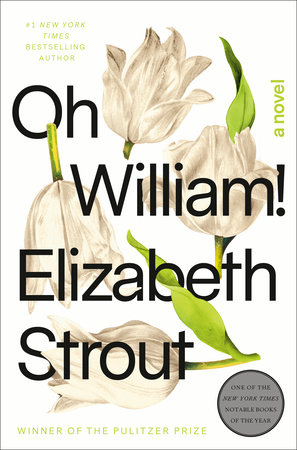
Oh, Yes! – Oh, William! by Elizabeth Strout

book cover

Throughout my marriage to William, I had had the image—and this was true even when Catherine was alive, and more so after she died—so often I had the private image of William and me as Hansel and Gretel, two small kids lost in the woods looking for the breadcrumbs that could lead us home.
This may sound like it contradicts my saying that the only home I ever had was with William, but in my mind they are both true and oddly do not go against each other. I am not sure why this is true, but it is. I suppose because being with Hansel—even if we were lost in the woods—made me feel safe.

People are lonely, is my point here. Many people can’t say to those they know well what it is they feel they might want to say.

My Name is Lucy Barton (2016) had been a very successful novel for Elizabeth Strout. She had even written a followup, Anything is Possible, (2017) a collection of stories, in which Lucy visits her Mid-West relations after a prolonged absence. Laura Linney was starring in a one-woman show of the former. Strout was there for a rehearsal when Laura opined that maybe William, Lucy’s ex, had had an affair. A lightbulb went off for Strout and she realized that William had a story of his own. Thus was born Oh, William!

description
Elizabeth Strout – image from Time magazine

She carried forward details about William from the prior books and built outward, or dug deeper, from there. There were some real-world elements of William’s tale. William’s father was a German POW, held in Maine, and his mother, the wife of a farmer who was using POW labor, fell in love with him and left her husband. The POW camp is a real place.

So my husband and I took a field trip. We went up there, we went to all the places that Lucy and William go on their own trip, and I took furious notes on everything I saw. And when we came back I settled down and wrote their story. – RandomHouse Book Club kit

Caveat Lector
You should know before diving in too far that, while I have read Strout’s Olive books, I have not read her prior Lucy Barton books. As Oh, William! is a third in that stack, this is not a trivial shortcoming. There are likely to be connections between this book and the prior two that I missed. But I have read up on those a bit, and acquired some gist. That said, I believe Oh, William! can be read, enjoyed and, hopefully, reviewed as a stand-alone. Just sayin’, cards on the table.

On the other hand, I felt very personally touched and engaged by the novel. I am of a common demographic with William, (we even share TWO names) and re-viewing the events of a lifetime is a natural hazard of this place in our existence. One thinks about the ages, the events, the people, the possibilities, the chances missed, and caught, the attempts that failed or succeeded, the misreads and the insights, the absence of understanding and the wise perceptions, maybe the bullets dodged, the awful relationships that never happened, the good ones that did, maybe the actual bullets that impacted elsewhere. In a way one might see this novel as a look back over William’s life from the point of his final days. A life examined. It could also be seen as the life of a relationship examined, the intersection of two trunks, Lucy and William, meeting, intertwining, then branching out in separate but linked directions.

In any such examination, whether of a life or relationship, it is natural, I believe, to wonder what might have been. Could we have performed better in the roles in which we were cast, or in which we had cast ourselves. To wonder why the director led us to this spot, to stage right instead of left, and always wondering at the playwright, and whether there was ever a script at all. This question of choices is one Strout takes on here. How much freedom of choice is there, actually, how much decision-making? William and Lucy talk about her decision to leave him.

I would like to know—I really would like to—when does a person actually choose anything? You tell me.”
I thought about this.
He continued, “Once every so often—at the very most—I think someone actually chooses something. Otherwise we’re following something—we don’t even know what it is but we follow it, Lucy. So, no. I don’t think you chose to leave.”
After a moment I asked, “Are you saying you don’t believe in free will?”
William put both hands to his head for a moment. “Oh stop with the free will crap,” he said. He kept walking back and forth as he spoke, and he pushed his hand through his white hair. “…I’m talking about choosing things. You know, I knew a guy who worked in the Obama administration, and he was there to help make choices. And he told me that very very few times did they actually have to make a choice. [
This was taken from a conversation Strout actually had with an Obama official, about how the decisions to be made were so obvious that there was little choosing required] And I always found that so interesting. Because it’s true. We just do—we just do, Lucy.”

And how might it be that so much of our lives is so constrained? A lot of that is based on where we began. Marx would call it class, and that is a very powerful force indeed. Strout digs into the specific roots of this for her characters. Lucy had grown up poor and miserable, (I have no memory of my mother ever touching any of her children except in violence.) and never felt entirely comfortable, persistently invisible even, (I have always thought that if there was a big corkboard and on that board was a pin for every person who ever lived, there would be no pin for me.) in the more middle-class world in which she lived with William, a parasitologist researcher (a nod to her father of the same profession) and teacher, despite her successful authorial career, despite living in a nice neighborhood in Manhattan, despite raising successful children. She is not the only major character haunted by an impoverished childhood. It is made quite clear that this other character had been severely damaged by that experience and that it had driven many life decisions.

The external of the story is William’s discovery at age seventy-one that he has a half-sister he had never known about. William and Lucy had remained on friendly terms, despite their divorce and subsequent remarryings. William’s third wife has left him. Lucy is widowed. He asks her go to Maine with him to look into this never-suspected sibling. Although it seems a bit odd, Lucy agrees to go along. It gives them both opportunities to look back, not just on their own lives, but on the lives of William’s parents. Coming to this revelation so late in life raises an issue. Is it ever really possible to truly know anyone? Lucy had kept much of her early life hidden away. William’s mother, Catherine, a very large presence in their marriage, had done the same. William had kept plenty of secrets during their marriage, including multiple affairs. He covered his true feelings with a friendly façade, and Lucy loathed him for that. But Lucy had kept a part of herself turned away from him as well. Her family’s rejection of her marriage to William left a lasting scar. The externals of their trip reveal some buried truths, but this is a novel about internals, not physical action.

How does one cope with the challenges of dealing with other people, with those to whom we are closest? There is the challenge of knowing who they truly are in the first place. And then there is the challenge of letting our true selves be seen, to allow ourselves to be vulnerable, to trust others with our most delicate emotional parts. This is almost certainly universal. Who among us does not have at least one secret (and I would bet that most have more) that we keep hidden even from our closest friends, our lovers, our mates, parents, children, priests, shrinks, not to mention the police?

There was an amazing film released in 1973, Ingmar Bergman’s Scenes From a Marriage. (Recently remade for HBO) It examines ten years of a union doomed to failure. The original was a revelation for me. My gf at the time urged me not to see it, concerned about the impact on my view of whatever-it-was we had. Oh, William! reminded me of that, less as a forensic analysis of a marital corpse, but as a broader view of a lifelong connection, in their marriage, and beyond it, a friendship. It looks at what went into building their marriage, at what kept it from being more than it was, and at the impact of William’s mother on their lives. Even after they split up, Lucy often says He is the only home I ever had.

One of the many triumphs of Oh, William! is how Strout offers up many small bits, pointing out the things about their interactions with each other that drove them crazy, that show without telling.

He stared at me, and then I realized he wasn’t really seeing me.
“Did you sleep?” I asked him, and he broke into a smile then, his mustache moving, and he said, “I did. How crazy is that? I slept like a baby.”
He did not ask about my sleep and I did not tell him.

The past is our inevitable root. We are not ents, that can simply follow our needs and drag ourselves away from where we sprouted. That past is inescapable, even if we can change our external circumstances, move up in the world, move away from the painful parts that formed us. But we live in the present, and the past often appears to the here-and-now in the form of ghosts, of one sort or another. When William and Lucy visit Fort Fairfield in Maine, it is truly a ghost town, barely even a town any more. Images they see in the local library conjure a long dead era. In a way their marriage, if not their friendship, is a spectral presence, long dead, although still hovering in the room.

I usually try to come up with something that did not sit well in a book, gripes of one sort or another, elements that might have been better. This time, really, I got nuthin’.

There is so much in this novel that is beautifully portrayed, insightful, wise, and moving. A penetrating portrait of two people and their half-century of connection, warts and all. Oh, William! is a masterwork by one of our greatest fiction writers, at the peak of her creative power. Oh, Elizabeth. You’ve done it again.

There have been a few times—and I mean recently—when I feel the curtain of my childhood descend around me once again. A terrible enclosure, a quiet horror: This is the feeling and it was my entire childhood, and it came back to me with a whoosh the other day. To remember so quietly, yet vividly, to have it re-presented to me in this way, the sense of doom I grew up with, knowing I could never leave that house (except to go to school, which meant the world to me, even though I had no friends there, but I was out of the house)—to have this come back to me presented a domain of dull and terrifying dreariness to me: There was no escape.
When I was young there was no escape, is what I am saying.

Review posted – November 5, 2021

Publication date – October 19, 2021

I received an ARE of Oh, William! from Random House in return for a fair review. Thanks, folks, and thanks to NetGalley for facilitating.

=======================================EXTRA STUFF

Links to the author’s personal, Twitter and FB pages

Interviews
—–The Guardian – Elizabeth Strout: ‘I’ve thought about death every day since I was 10’ by Kate Kellaway
—–Time – Elizabeth Strout Knows We Can’t Escape the Past by Annabel Gutterman
—–Entertainment Weekly – Howe a literary conscious uncoupling and Laura Linney helped Elizabeth Strout write Oh, William! – by Seija Rankin
—–Bookpage – Elizabeth Strout: The heart and soul of an emotional spy by Alice Cary – for Anything is Possible
—–WBUR – Author Elizabeth Strout explores marriage, memory and class in ‘Oh William!’ – audio – 9:26

My reviews of other books by the author
—–2019 – Olive, Again
—–2008 – Olive Kitteridge

Items of Interest from the author
—–WBUR – excerpt
—–Random House – Book Club Kit
—–Literary Hub – excerpt

4 Comments

Filed under Fiction, Literary Fiction, Reviews

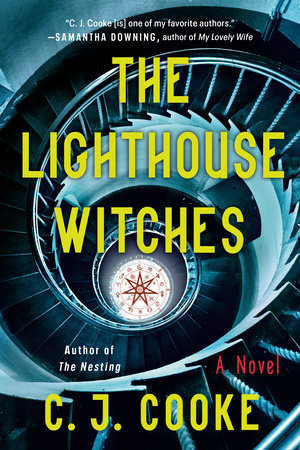
Beacon Hell – The Lighthouse Witches by C.J. Cooke

book cover

He’s tall and rakish, with greasy black hair to his jaw, a tattoo of a panther on his neck, a missing front tooth. A grin.
“You’re Luna Stay?”
She frowns, confused by the shift to a smile. “Yes?”
He steps forward and eyes her coldly. “You’re supposed to be dead.”

2021 – Ok, so maybe not exactly a welcoming committee, with a sparkly, multi-colored sign at the local watering hole, all the residents in attendance, celebrating her return. But I guess it’ll have to do. It wasn’t Luna’s first time on the island of Lòn Haven. She had been there for a spell as a child, and, while her experience was memorable, it was relatively brief, and her exit had been fraught. Now, thirty years old, pregnant for the first time, she is not exactly eager to stick around. But she is there on a mission.

description
C.J. (Carolyn Jess) Cooke – image from The University of Glasgow

1998 – Olivia Stay has just left her home in northern England, dragged her three daughters, Sapphire, Luna, and Clover, with her, and headed north on an hours-long drive to a remote island off the east coast of Scotland. She is an artist, with a commission to paint a mural on the inside of a 149-foot-tall lighthouse, which is in less-than-stellar condition. Her mysterious employer has left drawings for her of what he wants. She and the girls will be staying on the lighthouse property, in a small house, called a bothy. The lighthouse has an intriguing name.

“You’re staying at the Longing?” he said, raising an eyebrow. “Quite a history, that place.”
“I can see that,” I said, flicking through the leaflet, my eyes falling on an artist’s rendition of people being burned at the stake.
“Why’s it called the Longing?” Luna asked him.
“It’s named for the people who lost loved ones,” he said. “Sometimes they’d visit the site where the Longing was built and . . . pay their respects.”

…or something. The lost loved ones tended to be women murdered by the locals, accused of witchcraft and burned alive. The Longing was built directly over the place where the women had been kept and tortured, a broch, which is a circular castle-like structure, as much as two thousand years old. While there have been five major national bouts of witch-burnings in Scotland, the only witches likely to have been about were of the herbalist, rather than spell-casting sort. The ones with the matches provided the very human-sourced evil involved. The historical burning time of note here was 1662.

Olivia (Liv) is our first-person narrator for much of the book. Other chapters offer third-person POVs from Luna and Saffy. A second first-person account is historical. That one provides interceding chapters made up of passages from a book, left in the bothy, referred to as a grimoire. But it serves less as a source for studying the dark arts than it does as a memoir. Written by someone named Roberts, presumably an ancestor of Liv’s employer, it serves mostly as a fourth perspective, offering first-person exposition of historical events the book’s author lived through, events that inform the present.

We follow Liv as she is introduced to the island, and the local oddballs. (and wonder why she suddenly dropped everything and dragged her kids north several weeks ahead of the appointed time) But when she sees a small, almost feral-seeming white-haired child on the property, and the police do not seem to take her seriously, things get more interesting. Local lore has it that condemned witches, in league with the fae realm, created wildlings, copies of island children, who would appear out of nowhere, intent on wiping out family lines. Locals hold that any such beings must be killed ASAP. Then two of her daughters, Saffy and Clover, disappear.

description
St Mary’s Lighthouse – the English lighthouse that provided inspiration for the Longing – image from Photographers Resource UK

In 2021, after twenty-two years of searching for her lost family, Luna is contacted. Her sister, Clover, has been found. But instead of being twenty-nine years old, Clover is still only seven. Is this child even her sister? Or could she be one of the wildlings Luna had heard about when she was a child on Lòn Haven? Her behavior certainly gives one cause for concern.

The story braids the four narratives, alternating Liv, Luna, Saffy, and the grimoire’s Mr Roberts, reporting of their experiences, and the times in which they are in the spotlight, offering nice chapter-ending cliff-hangers to sustain our interest from one strand to the next.

In an interview with The Nerd Daily, Cooke (who is married, with four children) was asked about her inspiration for the book.

I think it came from a range of places – I was thinking a lot (and still am) about how different it is to parent a teenager than it is to parent a baby, and yet the speed with which a baby seems to become a teenager feels like whiplash. So the story of Liv and her 15-year-old Sapphire in the book emerged from that thinking. When we moved to Scotland in 2019, I learned about the Scottish Witch Trials. I’m very interested in women’s lives, and this slice of history is very much concerned with what happened to women – and it also bears a huge relevance to the current moment. Gradually that thinking took shape. Lastly, I was invited to teach at the University of Iceland in 2019, and while I was there – and thinking a lot about the book and how I was going to incorporate all the various ideas I had – I came across 14th century spell books, which blew my mind. As I dug deeper into the history of magic and how it impacted women in particular, the story came out of the shadows.

The fraught relationship between 15yo Saffy and Liv will feel familiar, in tone, if not necessarily in the specific content of Saffy and Liv’s interaction. Cooke relied on her own teenage daughter for much of Saffy’s voice. Add to that the fact that Liv is a single mother, struggling to get by. Many of Liv’s struggles with parenting resonated, guilt versus responsibility versus coping with external limitations. Cooke offers, through the grimoire, a first-person look at the 1661/1662 witch-trial hysteria, providing a persuasive take on its causation, at least in this instance. The spell books notion gave Cooke the tool she needed for exploring the past.

I wanted everything for my children. But every single day I had to confront the glaring reality that I simply wasn’t able to provide the kind of life they deserved. And it crushed me.

There is a hint of prior, off-screen abuse in Liv’s background. This is likely a manifestation of Cooke’s experiences growing up in an abusive household in a council estate in Belfast during The Troubles. The up-front abuse here is in how power is used to protect those who have it from being held responsible for their actions, at the expense of the powerless, both past and present. And in how murderous impulses, combined with ignorance, under the mantle of religion, and official sanction, present a peril to any who do not conform, in any age.

There are elements of informational payload that help support the story. You will pick up a few bits of Scottish terminology, and even a bit of spice on magical symbology and local fairy lore. Cooke has some fun with triangles of various sorts. We get a you-are-there look at an actual historical time of madness. Cooke, in the interview from The Inside Flap, talks about how surprised she was when she moved to Scotland to find that there had been witch trials there, and that there were no memorials at all for the hundreds of people (not all were women) who had been killed.

There were parts of the book that gave me pause. I had trouble, for example, with the police releasing seven-year-old Clover to Luna, given that there was no way the two were the sisters they supposedly were in any normal time line. There seemed some contradiction in the overall take. Where does magic leave off and other factors enter into things? Could an evil-doer, for example, be stricken with an awful affliction at the hands of a spell-caster? And if so, then a scientific-ish explanation for later events seems undercut. What if that scientific-ish situation was created by magic? And round and round we go.

While not exactly a hair-raising read for me, (few are) I did find some scenes in the book pretty scary, less, maybe for the magical terror involved, but for the willingness of people to do terrible things in the name of insane beliefs, a terror we live with every day, and the fear any parent might feel when their child is in danger.

We can feel for Liv even as we might wonder at her judgment. She is clearly stressed beyond reason. And we can feel for Luna trying to solve this intricate puzzle, while taking on parental responsibility for her now-much-younger sib. The mysteries of the book will keep you turning the pages. In this fictional realm, are witches real? And if they are, did they really curse the island? And if they did, were fairy-generated wildlings a part of the plan? And if they were, was there an intent to end family lines? And what’s the deal with Clover showing up twenty-two years after vanishing?

One of life’s great joys is to begin reading a book expecting to be directed from Point A to Point Z with the familiar stops along the way, and then finding oneself in an entirely other alphabet. The Lighthouse Witches has the magic needed to make that trip possible. It is an enchanting read.

She turns her head from side to side, taking in the velvet expanse of the ocean on her left and the rocks and beach on her right. Ahead, surf furls into the bay. Something there catches her eye, and she wonders if it’s the basking shark, Basil, with his weird two fins. Something bobbing in the water. Seals, probably. Except it’s the wrong color. It’s pale.
She squints at the object. It’s about thirty feet away, moving on the waves. A cloud shifts from the moon and for a moment the light finds the object. It’s a face. A human face, its mouth open in a howl, someone in the water.

Review posted – October 8, 2021

Publication date – October 5, 2021

I received an eARC of The Lighthouse Witches from Berkley in return for casting one or two minor spells. Thanks to EK, and NetGalley for facilitating.

=============================EXTRA STUFF

Links to the author’s personal, FB, Instagram, and Twitter pages

From About the Author in the book
C. J. Cooke is an award-winning poet and novelist published in twenty-three languages. She teaches creative writing at the University of Glasgow, where she also researches the impact of motherhood on women’s writing and creative-writing interventions for mental health. Her previous novel is The Nesting.

She has been writing stories since she was seven years old.

Interviews
—– The Inside Flap Ep. 140 The Witching Hour Is Upon Us with C.J. Cooke – podcast = 1:30:00 – from about 30:00
—– The Nerd Daily – Q&A: C.J. Cooke, Author of ‘The Lighthouse Witches’ by Elise Dumpleton
—–Slider –
Episode 2 – Interview with author CJ Cooke – audio – 25:23

Wiki-ons and Other Items of Interest
—–bothy
—–Borromean Ring
—–broch
—–The Great Scottish Witch Hunt of 1661-1662
—–
grimoire
—–On Scottish faeries
—–St Mary’s Lighthouse
—–Cambridge University Press – The Great Scottish Witch Hunt of 1661-1662 – a miuch more detailed look at this abomination – by Brian P. Levack

8 Comments

Filed under Fantasy, Fiction, Historical Fiction, Horror, Reviews, Scotland, Thriller

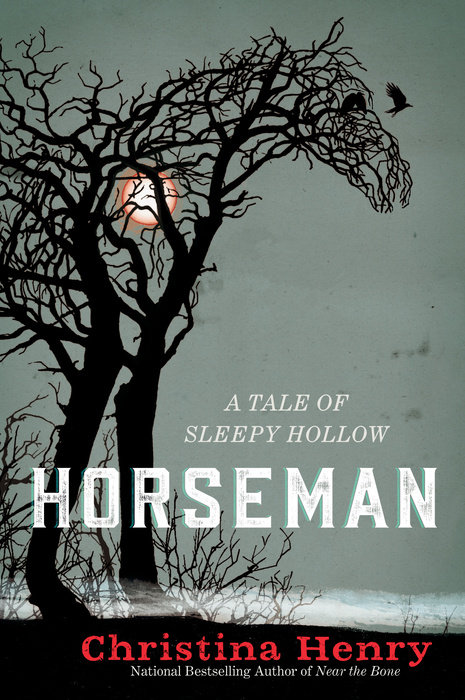
One Horse Town – Horseman by Christina Henry

book cover

Once, a long time ago, I’d stepped off the track close to the deep part of the forest. I remembered Sander going mad with anxiety, calling for me to come back, but I only wanted to know why nobody in the Hollow went any farther than that point. I hadn’t seen any witches, or goblins, or the Horseman. But I had heard someone, someone whispering my name, and I’d felt a touch on my shoulder, something cold as the wind that came in autumn. I’d wanted to run then, to sprint terrified back to the farm, but Sander was watching, so I’d quietly turned and stepped back on the track and the cold touch moved away from me.

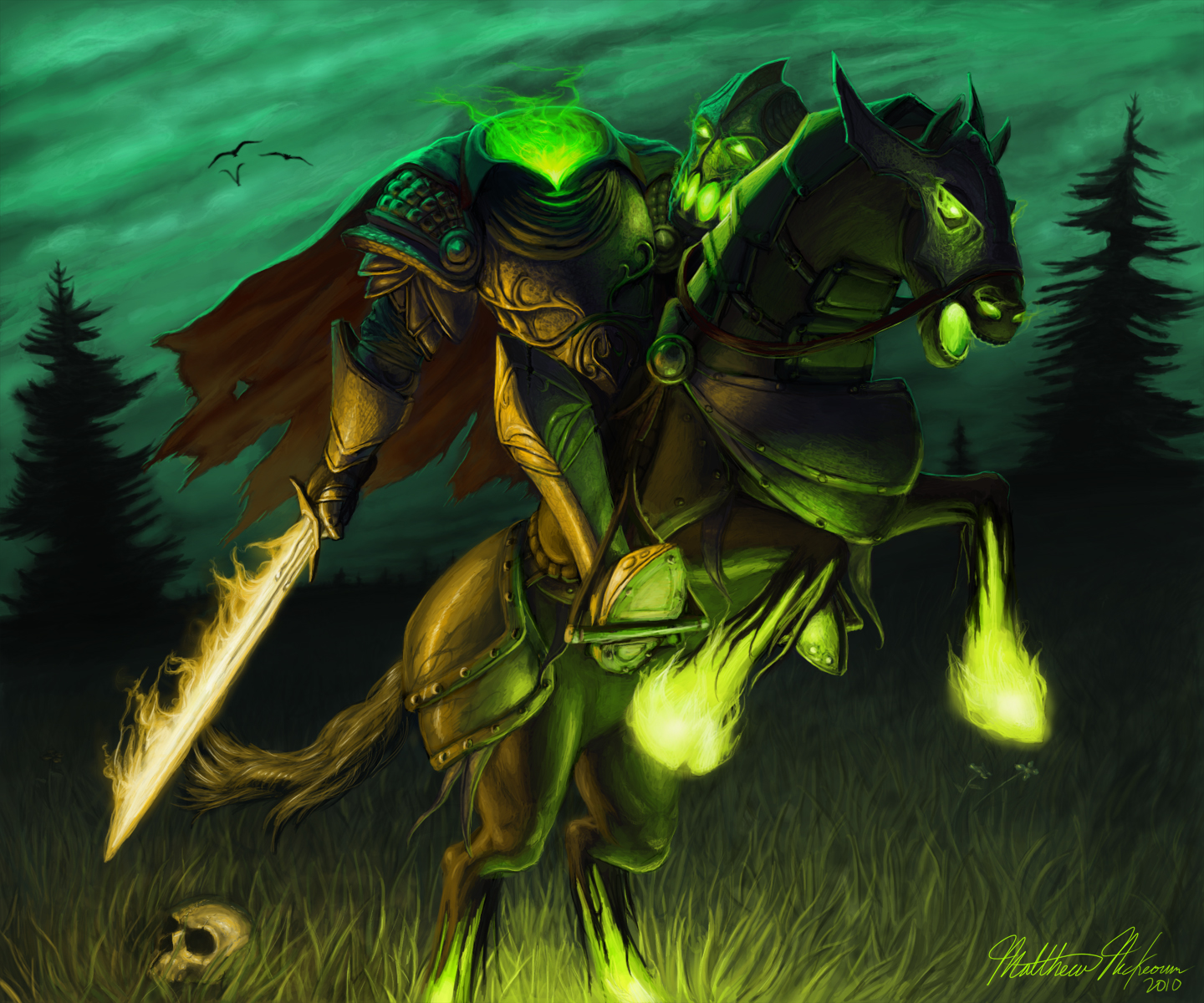
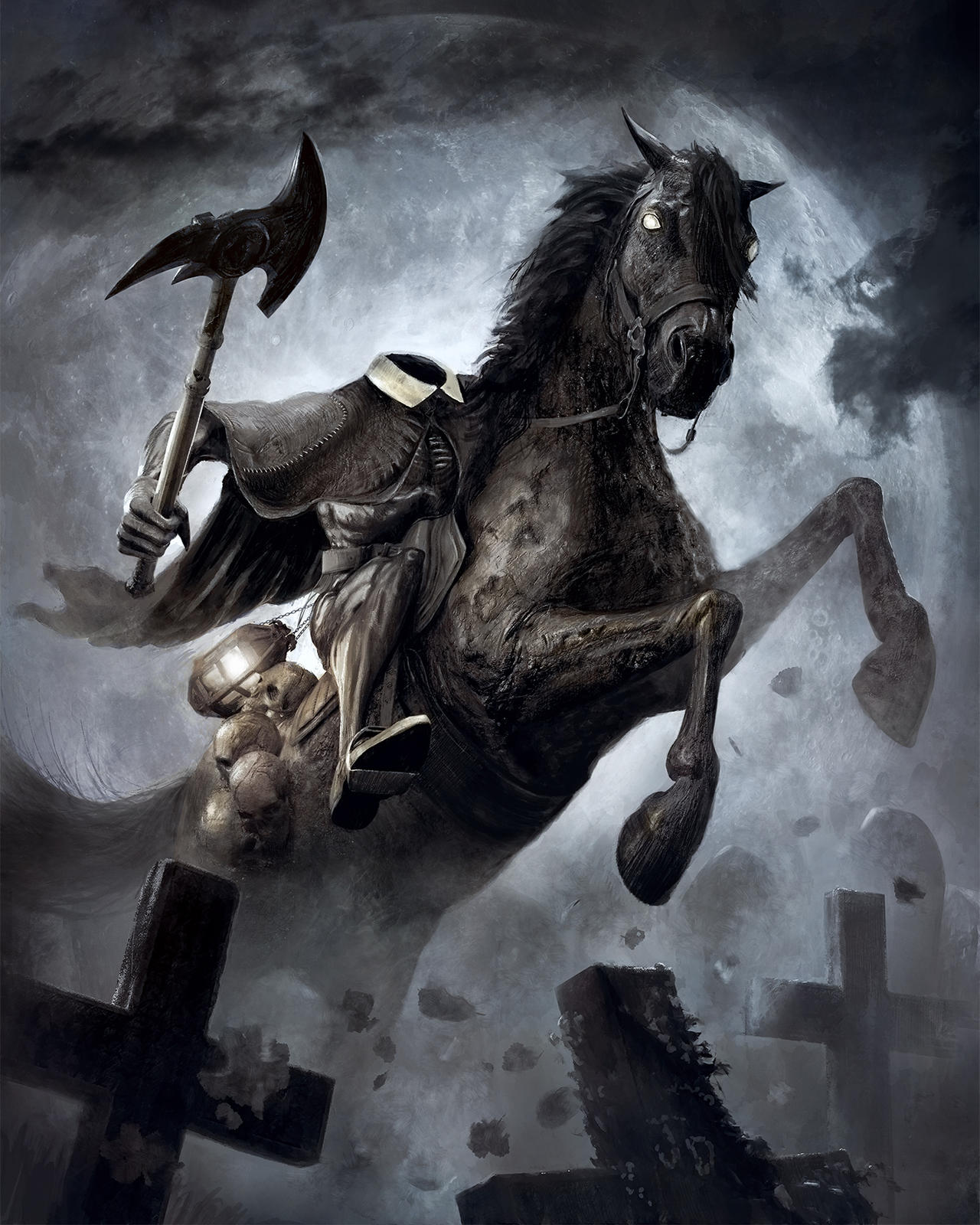
Washington Irving’s short story, The Legend of Sleepy Hollow, (there is a link to the full text of that in EXTRA STUFF) has been read by Americans since it was first published in 1819. What we remember most about it is the image of The Headless Horseman. There is some question about who this very un-pedestrian equestrian might be, a late Hessian, perhaps, whose cranium had had a close encounter with a cannonball, who was eager for revenge, and searched relentlessly for his lost noggin. Or maybe a canny wooer (one Abraham “Brom Bones” Van Brunt) of a local lass looking to frighten the superstitious competition out of town with a bit of over-the-top theatrical horseplay. The story about the horseman had predated Brom and Ichabod vying for the hand (and property) of Katrina Van Tassel, so, was it a real ghost story or just a hugely successful prank?

description
Christina Henry – image from her Goodreads page

In Christina Henry’s Horseman we are brought back to Irving’s one-horse town, Sleepy Hollow, two generations on. Brom and Katrina are grandparents now, managing their land, doing nicely with their farm. Brom remains a big man, both literally and figuratively, a powerful figure in local affairs, as well as someone still able to take on conflict kinetically when needed. Ben, our first-person narrator, Brom and Katrina’s fourteen-year-old grandchild, admires Brom completely, would like nothing more than to grow up to be as much like him as humanly possible.

description
The Headless Horseman Pursuing Ichabod Crane by John Quidor, l858 – image from The Smithsonian American Art museum

Ben and a friend are playing in the woods one day when they hear a group of riders pass, Brom in the lead. Ben is desperate to see what’s up, even though the group is headed to a part of the woods that is considered way too spooky to venture into, with good reason.

Just beyond the circle of men was a boy—or rather, what was left of a boy. He lay on his side, like a rag doll that’s been tossed in a corner by a careless child, one leg half-folded. A deep sadness welled up in me at the sight of him lying there, forgotten rubbish instead of a boy.
Something about this sight sent a shadow flitting through the back of my mind, the ghost of a thought, almost a memory. Then it disappeared before I could catch it… Both the head and hands seemed to have been removed inexpertly. There were ragged bits of flesh and muscle at the wrist, and I saw a protruding bit of broken spine dangling where Cristoffel’s head used to be.

description
Image from ClassicBecky’s Brain Food

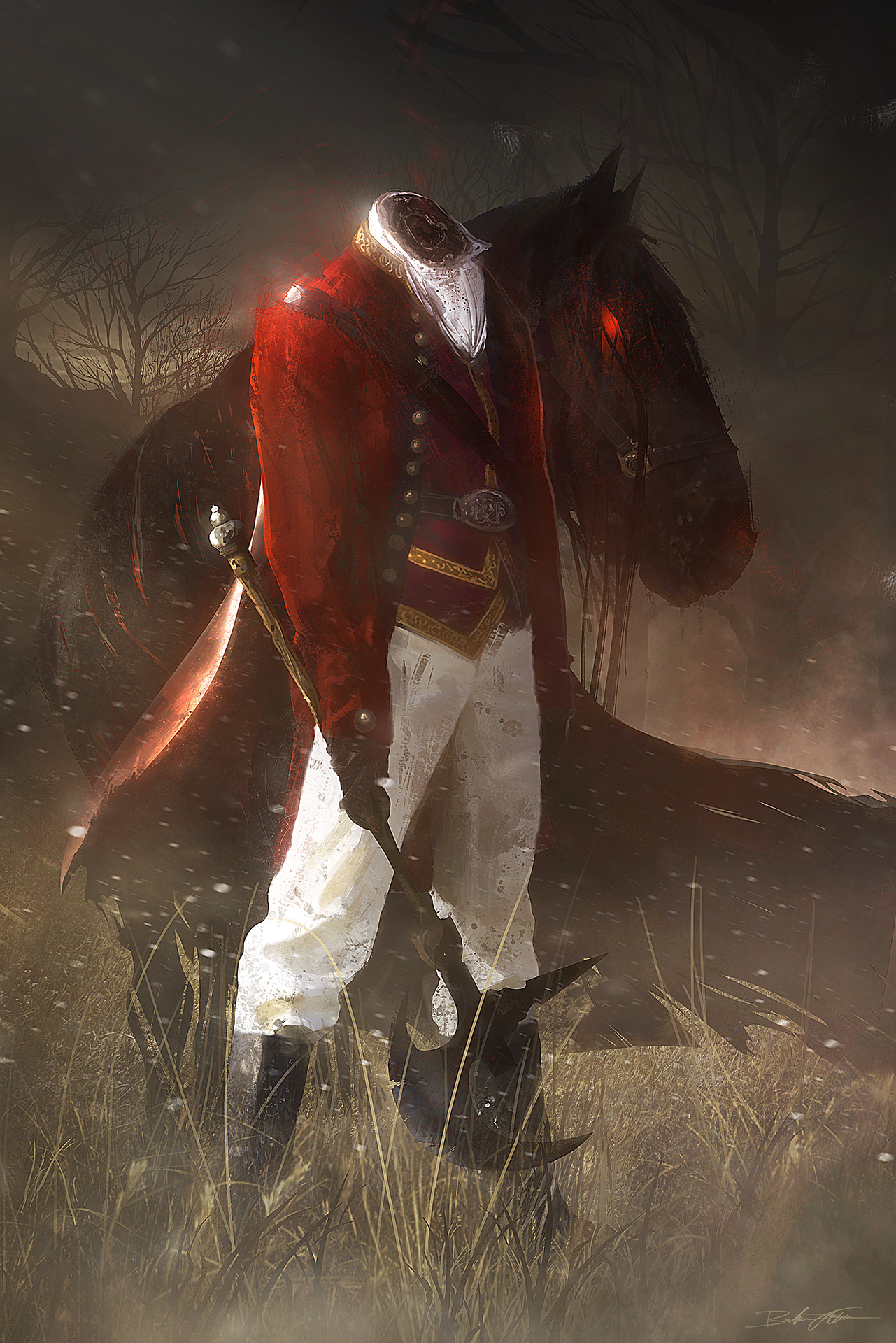
And the game is on. Had this bully of a teen been cut down by a violent spectre or was there a more flesh-laden killer on the loose? There is a second mystery, as well. What’s the deal with the “ghost of a thought, almost a memory” that Ben experiences while witness to the carnage? But wait, there’s more. There were mysteries left over from Washington Irving’s original story, such as was it a ghostly headless Hessian who had driven Ichabod Crane out of town, and what had actually happened to Crane after he fell off his horse and vanished?

description
Image from Deviant Art – from Kanaru92

Irving makes a point of the superstitious bent of the locals in the Hollow.

…the place still continues under the sway of some witching power, that holds a spell over the minds of the good people, causing them to walk in a continual reverie. They are given to all kinds of marvellous beliefs, are subject to trances and visions, and frequently see strange sights, and hear music and voices in the air. – from The Legend of Sleepy Hollow

A belief in the supernatural, justified or not, prompts the locals to believe the worst (including the W-word) about any they find outside the norm, as defined by their constricted minds. They see dark forces and conspiracies where none exist, well, probably. And seek to blame someone, usually someone perceived as different. I know that reminds me of mindless seekers after blame and conspiracy who roam the planet today, but maybe that’s just me. Feeding the blame-and-conspiracy machine, there is a gender identification seam that permeates as one of the characters contends with being seen one way, while feeling internally entirely other. Other is not an entirely ok thing to be in early nineteenth century small-town America.

description
Image from Classic Becky Brain Food – by Jurei-Chan

Family has a lot to do with who we are, who we become, what we might be capable of, for good or ill. Ben’s love for Brom is manifest and a serious source of strength. Ben’s relationship with Katrina is more conflictual, yet with strong underpinnings. But what about other family? There is connection and help to be had in the household, with one of the staff providing a solid core of support. And what about community? Sander is clearly a bff, although not necessarily the best able to offer support in all circumstances. Ben does not seem to have much beyond that. Thus the need for Brom’s strength. Thankfully, Ben has internalized that, so has at least a chance to engage in battle without being entirely over-matched.

We trot along by Ben’s side as dangers present, whether it is obvious or not that they are perilous. Ben does get tingles about certain people, internal red flags of distrust. Are they valid or paranoid?

description
Image from Deviant Art – by Ochreface

The book is not marketed as YA, but it felt like a YA title to me. Henry has written several books that take a new look at classic children’s stories, tending toward a younger readership. Most serious violence remains off screen, although we do get to see its aftermath. Profanity is absent. There is a piece in here about people, not all people, but some people, being susceptible to manipulation by an outside force encouraging the dark piece that resides deep within to come to the surface, to take over, even if only for a time. I had a problem with this, as it exempts some from having that bit. Certainly, some people are better than others, more ethical, more moral, kinder, smarter, more empathic, more honest, more responsible, but even the best of us harbors at least a sliver of darkness. This sort of not-quite black-and-white, but maybe charcoal-gray-and-white view of human potential for unpleasantness added to the YA feel. That said, there are a couple of tough physical battles and issues of sexual attraction and predation are raised, which gives it a bit more bite.

description
Image from Art Abyss – by Gabriel Williams

In literature, The Woods is generally a symbol of the challenges facing young people on the cusp of adulthood. Ben’s adventures fit quite nicely into that, passing through the fires of challenge to reach maturity in a very different and interesting way. Ben, gifted with considerable horse sense, meets those trials head on. I found Ben’s playtime activities, though, a bit off for a child of fourteen, ten maybe. Perhaps Henry was looking to make the distance Ben travels from this to that seem longer than it really was.

description
Image from Disney

But fret not. Though I am well past the YA demo I found this an engaging, fun, creative take on an old favorite. Ben is an appealing lead, struggling with the choices life presents, a dark horse to root for. There are adventures aplenty, head-scratcher mysteries to be solved, clues to be followed, warmth and family love to be appreciated, and a new, quite surprising interpretation of an old mystery. Is it scary? A bit. I am particularly immune to getting the creeps from books, and have a simple metric. Does anything in the book make the hair on my arms stand at attention? For what it’s worth, my pelt remained at ease. But it is clear that there is plenty of creepy material to be had in Horseman, and it is likely that many readers will get more of a frisson from those than might an old oater like me.

description
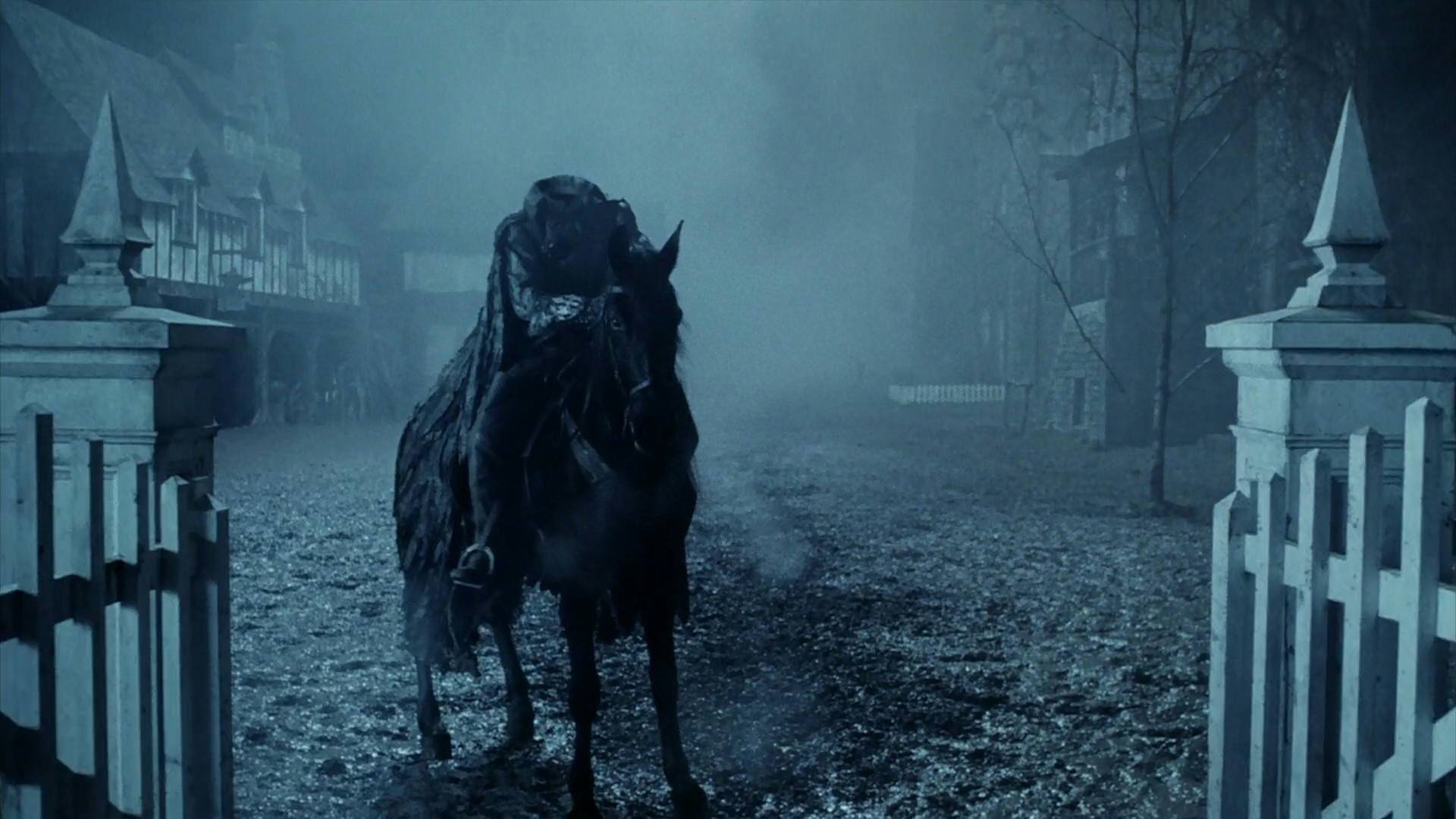
Image from Sleepy Hollow wiki – from the film Headless Horseman

Horseman is a perfect read for the Halloween season. But you might not want to head off to a favorite outdoor reading spot if it is more than just a little way into the woods.

The dark silhouette seemed to unfold—no, unfurl, sinuous and soft—and I thought how can an animal stand like a man?
My breath seized inside my lungs because just for an instant I thought I saw eyes looking back at me, eyes that could not be there because no human was there, no human could possibly have eyes like that—eyes that glowed, eyes that pulled, eyes that seemed to be tugging on my soul, drawing it out through my mouth.

Review posted – October 1, 2021

Publication date – September 28, 2021

I received an e-ARE of Horseman from Berkley, via NetGalley in return for not losing my head writing a review.

This review has been cross-posted on Goodreads. Head on over and say Hi!

=============================EXTRA STUFF

Links to the author’s personal, FB, Instagram, GR, and Twitter pages

Items of Interest from the author
—–from her site – excerpt
—–from her site – Seven Short Stories

Items of Interest
—–Gutenberg – The Legend of Sleepy Hollow
—–Wiki on The Legend of Sleepy Hollow
—–History.com – What Inspired ‘The Legend of Sleepy Hollow’? by Lesley Kennedy
—–Classic Becky’s Brain Food – Legends of the Headless Horseman – Sleepy Hollow’s topless performer was far from the first
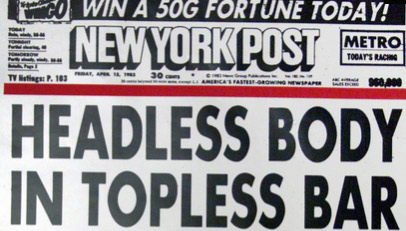
—–One cannot possibly read the The Legend of Sleepy Hollow or Horseman without recalling one of the greatest tabloid headlines of all time, of April 15, 1983, from the always-classy New York Post

description

Songs/Music
—–Argent – Hold Your Head Up
—–Paul Anka – Put Your Head on My Shoulder
—–The Rollingstones – Wild Horses

Leave a comment

Filed under Fantasy, Fiction, Historical Fiction, Horror, Reviews, YA and kids

Sweet and Sour – Sweet Girl by Amanda Jayatissa

book cover

It didn’t come easily to me. I had to work at it. But if I learned one thing from Mom, it’s that it was usually worth it being the sweet girl.

“When you die, can I have your skin?” she asked calmly, tracing a finger over my face, before getting up and walking out of the room, leaving me so afraid that I couldn’t move.

Paloma Evans is 30 years old, living in San Francisco. She had been adopted at age 12 out of a Sri Lankan orphanage, the Little Miracles Girls Home. Recently cut off from her parental funds, she engages in dodgy on-line behavior to make a buck, (One of her creepy clients appears to be stalking her) and had to take in a room-mate to help with the insane San Francisco rental costs. But the roomie, an Indian immigrant, learned her big secret, and is blackmailing her, which is bad enough. Arriving home after a few too many, she finds him dead in her kitchen. It gets worse. Chased out of her own apartment by the presumed killer, a seemingly spectral figure, she heads for the stairwell. But fingers close on her neck before she can escape. She wakes up hours later, in the stairway, a scolding neighbor barking at her, presuming she had passed out, drunk…again.

description
Amanda Jayatissa – image from Artra Magazine

Before she can figure out how to deal, the cops arrive. She tells them what she had seen, but when they look through the apartment, the body is gone. The detective does not believe her, and his skepticism is understandable. Paloma is a blackout drunk, unable to recall events that took place, actions she undertook during her blacked-out hours. She really has no idea what happened to the guy, but does remember that she had fled her apartment, looking around after discovering the body, and was chased out of the place by a ghost from her past.

Paloma may be an adult, but, despite years of therapy, she has carried from childhood a powerful belief in an old-country ghostly being called Mohini, (think the freaky girl who emerges from The Ring in desperate need of a makeover, dressed in white). Seeing that terrifying presence in her apartment just after discovering her roommate’s body reinforces her belief. Losing hours after fleeing her apartment does not help. So what’s going on?

Mohini is my favorite ghost story. She is one of the most famous urban legends here in Sri Lanka, a stereotypical woman in white…It’s a story that is very special to me. It’s a story we grew up whispering to each other around the candle in the night. I have actually dressed up as Mohini…to scare my cousins…It was hilarious. I knew that I needed to include this ghost story element into the book…It was the story that defined a lot of the scary stories of my childhood. – from the Books and Boba interview

The tale takes place in two timelines, alternating chapters, today, presumably 2018, give or take, as Covid is not yet a thing, and 2000, also give or take, when Paloma was a 12yo orphan in Sri Lanka. We follow her story there, her friendships, her interests, her hopes. The home is not a bad place, those in charge are a relatively benign pair, but on occasion the girls are given a class with the terrible, the horrible, the most feared Sister Cynthia, a sadistic witch of a person, who delights in physically harming the girls and threatening them with eternal damnation. (zero stars in RateMyTeachers) She is, unfortunately, in charge of Saint Margaret’s Home for Girls, the place where those who are not adopted will be sent after they age out of Miracles, a terrifying prospect. The Evanses are a wealthy American couple, supporters of the orphanage, and many other charities. They are looking to buy adopt a child. The girls at the orphanage are all prepped for when potential adopting parents stop by for a look-see, orphanage management trying its best to make a good impression, get one of their girls adopted, and hopefully gain some extra financial support and good press from the adopters.

Paloma and Lihini are besties at Miracles. Physically similar, fair-skinned, similar in height, build and overall looks. They sleep together often, in the comforting child-like sense, not that other one. We see how their relationship evolves with each chapter back in Sri Lanka. As only one child will be selected, there is understandable tension between them.

Today, give or take, Paloma is frantic. She goes to stay at her parents’ suburban house, as they are away, and remaining at the scene of the crime seems unwise. Was she hallucinating? This is not entirely impossible as she had been warned by her therapist that drinking on top of her new meds could do really bad things to her. But did we mention that Paloma is a blackout drunk? Paloma goes all Miss Marple trying to figure out what happened to her roomie, and why. Then the mysteries start to breed. A neighbor of her parents vanishes mysteriously, and who is that strange woman who seems to be spying on her?

The story is plenty fun enough on its own merits. But there is more going on here. Racial elements permeate. Lihini and Paloma stand out a bit from the rest of the girls because of their relatively fair skin, seen as an advantage for those hoping to be taken in by a westerner. There is a wonderful scene in a restaurant bathroom in which Paloma is mistaken for another Asian women by a somewhat inebriated white woman, an experience Jayatissa has had, and which many people she knows have had. It is not the only moment in the book in which someone is unable to tell two people of color apart. Toss in discussions with other POCs about stereotypes applied to South Asians. Her shrink, Nina, whom she likes, is raucously white, dressing in white, her office decorated all in white, and it is shocking when Paloma sees her wearing anything with color.

She kept all her pristine white files inside a pristine white filing cabinet, in a corner of her pristine white office. When I say pristine, I mean surgical-level clean. When I say white, I mean eyeball-searing, detergent-commercial white. She even asked her clients to take their shoes off so they wouldn’t mess up the spotless shag carpet. And it always smelled like freshly laundered sheets. She probably had an air freshener tucked behind the couch or something, because there was never any laundry in sight.

Gender and madness permeates. The book opens with Paloma about to lose it, dealing with a bank employee who is not quite up to speed with the institution’s processes.

I was suffering from the worst case of writers’ block, and to say my mood was bleak would be an understatement. And then I had a really annoying experience with a customer service associate at my bank, where I found myself wanting to scream and shout and make a scene, but of course I didn’t. I kept it together, like most of us are trained to do, went into a coffee shop, where I pulled out a notebook and a piece of paper and really let that customer service associate have it. I guess you could say that’s how Paloma came about. – from The Big Thrill interview

Difficult women are often presumed to be nuts, and many have learned to couch their displeasure under a polite veneer. Paloma does that in the book. In fact, while one might think of her as foul-mouthed, the profanity in her internal monologue remains unspoken. This is not to say that Paloma is not abrasive and does not need considerable therapy. She certainly is and she certainly does. Orphanage girls must cope with potential. sexual predation, always knowing that they will be called liars or delusional if they report abuse. And there is the trauma of losing children that can drive women mad with grief. Also the danger of internalizing it when people keep telling her she is losing her mind.

Several classic novels are mentioned, among them Little Women, Anne of Green Gables, Oliver Twist, and, most significantly, Wuthering Heights, all present in the orphanage library, the last being Paloma’s favorite. (Mrs. Evans was going to be my Catherine. She was going to save me.). Unsurprisingly, most have to do with orphans. (Wish she had found a way to fit in a reference to The Pirates of Penzance, as well) Thematically, there are concerns from those books that are reflected here. Sister Cynthia certainly represents a Dickensian nightmare of orphanage management. The girls in these are hassled in other ways by people at an orphanage or a placement. There are other elements of contemporary orphanage life that echo the perils of being parentless in the 19th century, including the timeless emotional pain of losing, or being left by, biological parents.

At first glance, My Sweet Girl offers us an unreliable narrator in the mold of The Girl on the Train’s Rachel Watson, another troubled soul with a drinking problem. Both generally fall into The Madman sort in the classification system to be found here. But Jayatissa takes the unreliable narrator a step further, so that there are times when you are not even certain who the narrator is, let alone the veracity of her reporting.

Unrelated Random thoughts
There is an Agatha Christie, Poirot-ish feel to the story when the facts are laid out near the end.

The preparation the school does with the orphans for the visit by the Evanses reminded me of young women in Austen novels gussying up for the arrival of potential suitors, or going to a meat-market ball.

In addition to the rage at the clerk scene that opens the book, there are other elements taken from the author’s life, some noted above. She named a character for her younger brother, Gavin.

GRIPES
We never get enough of a feel for Paloma’s actual life with the Evanses. She seems not particularly fond of them at age 30. How did that come to be? This could have used more. I had issues with how the POV was handled. It was a bit like one of those time travel stories in which it becomes impossible to keep track of who is where and when. The guilt Paloma experiences is way out of line with what she had actually done. That was a stretch for me.

SUMMARY
Nevertheless, My Sweet Girl is a fun, fast-paced thriller that will encourage you not to drink to excess and be more discriminating in selecting possible roommates. It may offer ideas for how to monetize some used clothing, and offer a perspective on how people perceive people who do not look like they do. It will maybe give you a few chills, and make your head spin like Reagan MacNeil (without the pea soup), with the twistiness of the finale. And you might be forgiven, if, when you get to the end, you feel an urge to hold up your bowl and say, “Please, sir, I want some more.”

…things that don’t feel real during the day have a way of sliding into bed with you at night.

Review posted – September 10, 2021

Publication date – September 14, 2021

This review has been cross-posted on Goodreads

I received an e-ARC of this book from Elisha Katz of Berkley Books in return for an honest review. But then, I may have that wrong. I had imbibed a bit more than usual the day the offer came in, and I was quite distracted by finding that unexpected body in the basement, so…maybe it was her. I am beginning to wonder. And thanks to NetGalley for facilitating.

=======================================EXTRA STUFF

Links to the author’s personal, FB, Instagram, and Twitter pages

Jayatissa was brought up in Sri Lanka, graduated from Mills College in California, moved to the UK, and now lives in Sri Lanka. She is a corporate trainer and an entrepreneur, with a chain of cookie stores. My Sweet Girl is her second novel. Her first was The Other One, released under the name Amanda Jay.

Interviews
—–Books & Boba – on Player FM – audio – #150 – Author Chat with Amanda Jayatissa by Reera Yoo and Marvin Yueh – audio – 51 minutes
The interviewers claim to have read the book but misidentify where half the book takes place. They also keep saying that it is a debut novel. It is not. Nevertheless, there is a lot of good information in here. Roll your eyes and give a listen.
—–The Big Thrill – When Nightmares Follow You Halfway Around the World by Neil Nyren
—–News line – Award winning author Amanda Jayatissa speaks of her experiences – video – 28:50 – this is from 2018 re her first novel, The Other One, with too much focus on her experience winning an award, but there is other intel in here that makes it worthwhile

Items of Interest from the author
—–Excerpt – From Penguin Random House
—–The Nerd Daily – another excerpt
Items of Interest
—–Amaya resorts and spas – Sri Lankan Folklore:Mohini
—–Gutenberg – Wuthering Heights full text
—–Gutenberg – Anne of Green Gables full text
—–Gutenberg – Oliver Twist full text

2 Comments

Filed under Reviews

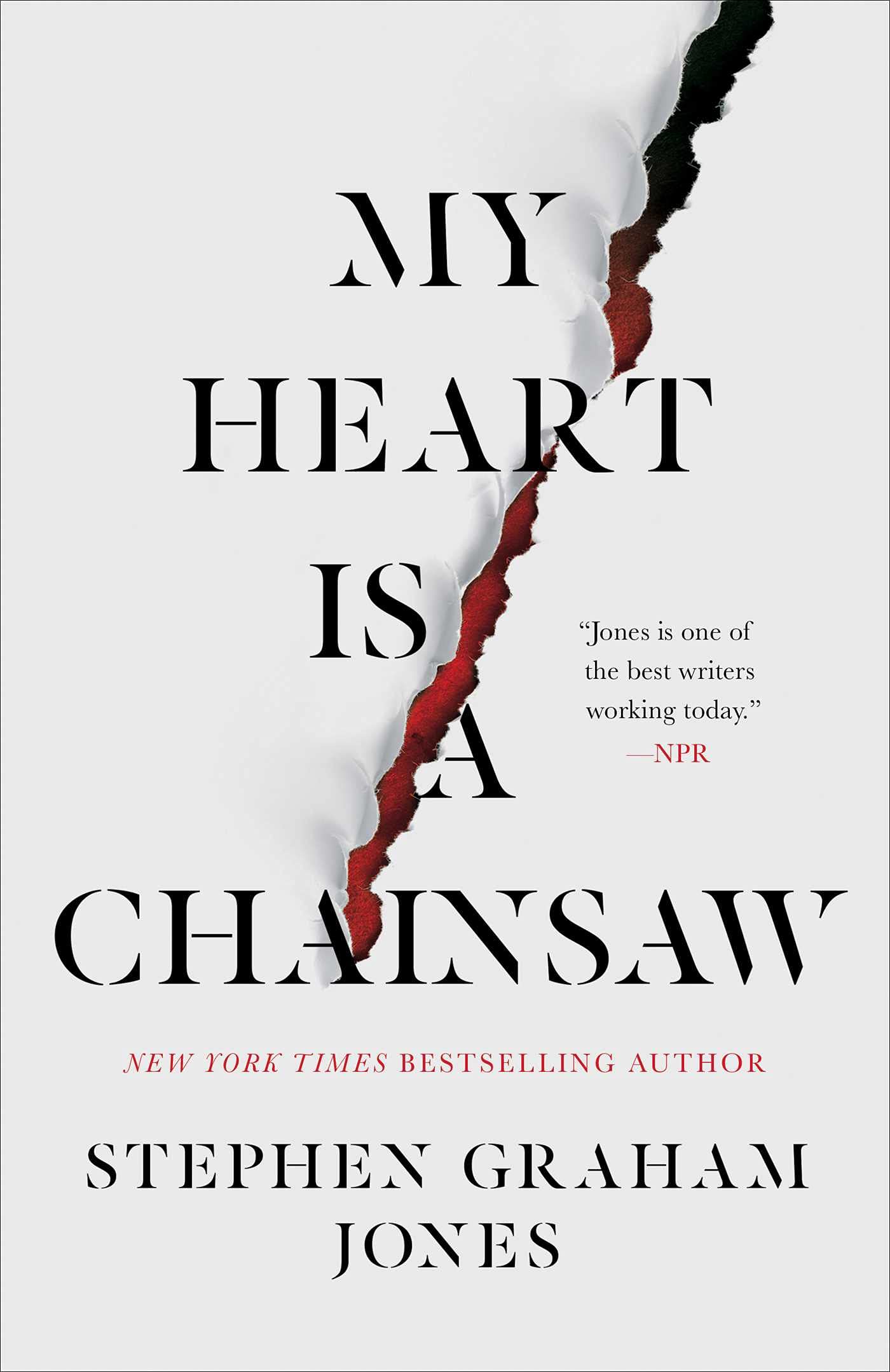
The Slasher Story Goes Meta – My Heart is a Chainsaw by Stephen Graham Jones

book cover

“You sure you should be working around kids?” Jade asks. “Or even around, you know, living people?”
“Tried the morgue in Boise,” he says. “There was . . . an incident. Ask your dad about it sometime, he was there.”
Jade waits for him to guffaw or chuckle, because this has to be a joke, doesn’t it?

“Can’t I just like horror because it’s great? Does there have to be some big explanation?”

Before you sit down to read Stephen Graham Jones’s most recent novel (well, this week, anyway. The man produces King-ian, Asimov-ian volumes of work), My Heart is a Chainsaw, you might want to prepare a large bowl of popcorn, not that microwave crap, actual popcorn, kernels from a jar or bag into a pot with pre-heated oil, and a lid ready to pop over the top, to keep your kitchen floor from getting covered with flying bits. If you’re like me, there will be a second burner dedicated to melting a slab of butter. Once the popping stops, pour some or all of this heavenly treat into a large bowl. (Well it does not have to be too large as you are probably reading alone.) then drip the melted butter across the top, mix it up a bit. Open up a shaker of popcorn salt and apply. This calls for an oversize cold-drink for help in washing it down. It really should be a Friday or Saturday night. And why go to all this trouble for a book? Because Stephen Graham Jones is taking you to the movies.

description
Cutting edge author, Stephen Graham Jones, on his way to work – image from 5280 Magazine – Photo by Aaron Colussi

You may or may not have been around in the 1970s, 80s, 90s, or some of the other decades noted here, but videos of the films made back then have been available for a long time and formed a major part of Jones’s cinematic education as a young person. His life was considerably enriched from seeing a lot of horror movies, slasher films in particular. He loves them.

description
Adrienne King as Alice Hardy in Friday the 13th – image from movieactors.com

In this book, SGJ offers up an introductory class on the genre, or sub-genre. (Can’t say how closely it might mimic the course he taught on the subject in his day gig as a college professor. But I would love to see the syllabus for that.) in the form of chapters titled Slasher 101. These remind us, for example, that the slasher is always driven by revenge. His rage is not mindless. That there is usually a significant gap between the commission of the crime that is being avenged and the execution of that mission. That there is always a “final girl,” the purest of heart, who ultimately (usually) either escapes or bests the baddie, for the moment, anyway. In his 2015 novel, Aquarium, David Vann does something similar, calling attention to the structural girders being put in place as he places them, in his case for the literary novel form. Reads like these are always extra fun.

description
Courtney Cox as Gale Weathers – in Scream – image from Den of Geek

As Jones walks us through the stages in a slasher film, he echoes the tropes in the novel through his lead, Jade Daniels, a damaged seventeen-year-old Native girl who has seen and caused a huge amount of trouble. She seems to be in conflict with the world more or less constantly, but she is not a bad kid. She does janitorial work for the county. She is smart, resourceful, and a huge fan of horror, particularly slasher films, toting with her Jones’s encyclopedic knowledge of the genre. She is maybe a bit too obsessed with this stuff. I mean, if your only tool is a hammer, every challenge begins to look like a nail. But what if you have, by pure chance, made yourself the perfect tool for this very prominent, thin piece of metal sticking straight up out of your town. A bloated tourist body floats to the top of the lake and blood starts flowing like the elevator at the Overlook. Jade knows, or at least thinks she knows, what’s coming.

description
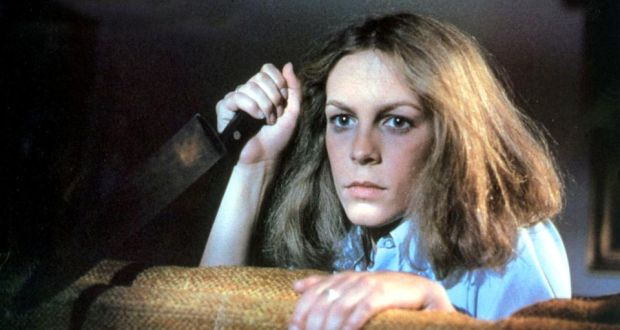
JLC at Laurie Strode in Halloween – you don’t get to choose your family – image from Den of Geek

She writes reports (the twelve Slasher 101 chapters) for a favorite teacher, one Mister Holmes (Grady, (which reminded me of Delbert Grady of The Shining fame) not Sherlock), each one explaining one or more of the tropes of horror films. Each trope is summoned into being in the real world, of course, making this very meta.

Metafiction is a form of fiction which emphasises its own constructedness in a way that continually reminds the audience to be aware they are reading or viewing a fictional work. – definition from Wiki

Jade lives in Proofrock, Idaho, proud possessor of several of the elements native to slasher flicks. Teenagers, of course. A lake (Indian Lake) with its own historical spook, Stacey Graves, bent on avenging wrongs done to her family,

Stacey Stacey Stacey Graves
Born to put you in your grave
You see her in the dark of night
And once you do you’re lost from sight
Look for water, look for blood
Look for footprints in the mud
You never see her walk on grass
Don’t slow down, she’ll get your–

a camp on the lake with its own sanguinary history, and LOL name, Camp Blood, as least that’s what everyone in town calls it. Fifty years ago it earned that designation with extreme prejudice.

description
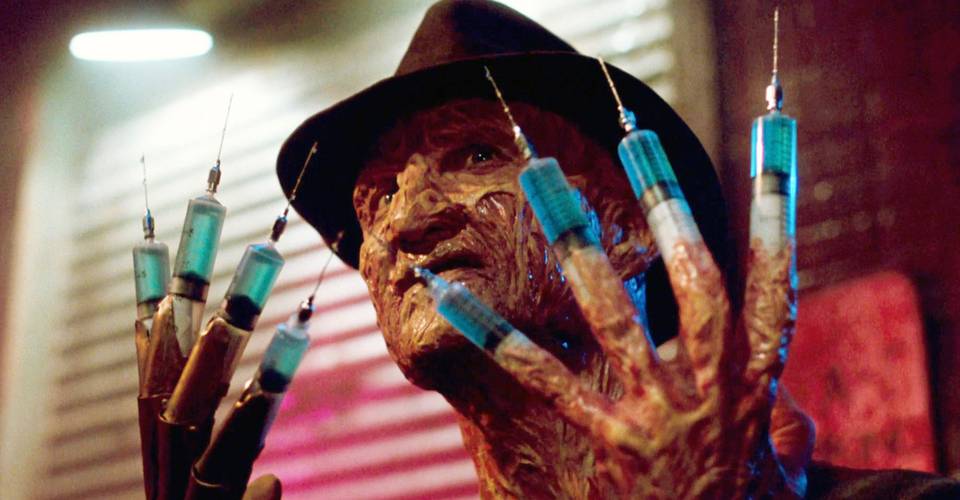
Robert Englund as Freddie Krueger – from Nightmare 3 – What a Rush! – image from Screen Rant

There is not a lot going on in Proofrock, (which MUST BE a reference to T.S. Eliot’s first published poem, The Love Song of J. Alfred Prufrock, which, according to Wiki, is a dramatic interior monologue of an urban man, stricken with feelings of isolation and an incapability for decisive action that is said “to epitomize frustration and impotence of the modern individual” and “represent thwarted desires and modern disillusionment.”) Jade provides that inner take here. She certainly experiences isolation, and endures frustration and impotence, not to mention personal abuse. Jade is both wishing for the slasher to be real and for him not to be real. Great, if it is. You were right all along. Take a bow. On the other hand, you are likely to be killed. Hmmm, decisions, decisions. She is actually eager for the inevitable bloodbath to begin, finding this strangely exciting. Well, maybe not so strange for a kid with suicidal impulses. She’s got her reasons.

description
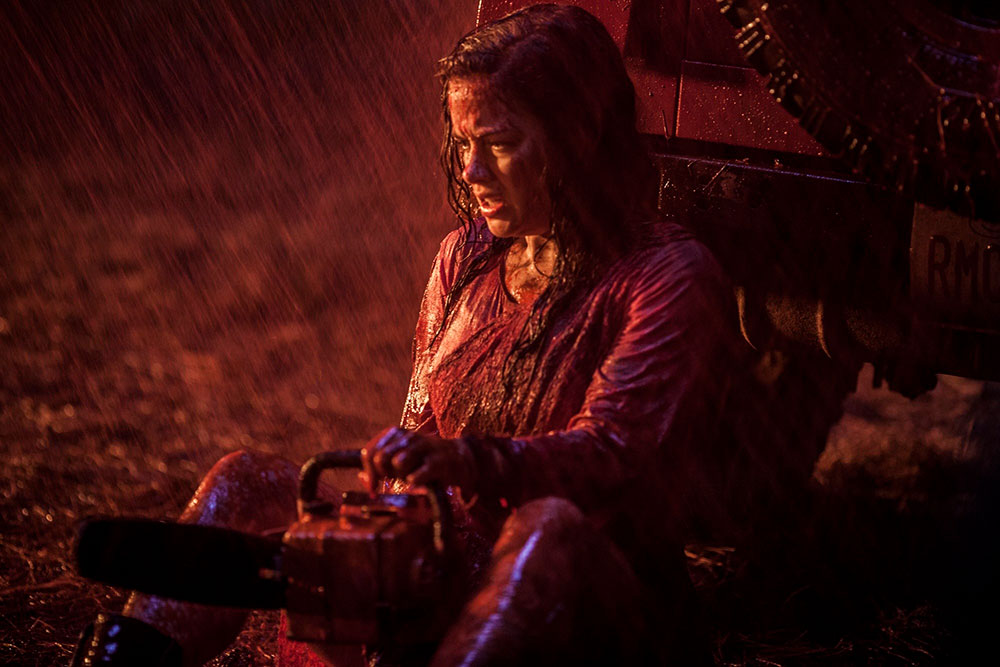
Jane Levy (yes, that Zoe) as Mia Allen in Evil Dead 2013 – Image from Screenrant

Jade is a Cassandra (another slasher film trope) trying to tell everyone that dire days lie ahead, but no one believes her. The new wrinkle in Proofrock, Idaho is the arrival of The Founders, a group of billionaire families who managed to have some of the national forest on the other side of the lake made un-national, and have begun building an enclave, Terra Nova. Yachts and smuggler boats have begun to appear on the lake, homes are being erected. And the daughter of the alpha male of that crowd befriends Jade. Letha Mondragon (are we meant to think or Arthur Pendragon here?) fits right in with Jade’s narrative. She is the supreme final girl. In case you are unfamiliar with the term, it was coined by Carol J. Clover in 1992.

The original meaning of “final girl”, as described by Clover in 1992, is quite narrow. Clover studied slasher films from the 1970s and 1980s (which is considered the golden age of the genre) and defined the final girl as a female who is the sole survivor of the group of people (usually youths) who are chased by a villain, and who gets a final confrontation with the villain (whether she kills him herself or she is saved at the last minute by someone else, such as a police officer), and who has such a “privilege” because of her implied moral superiority (for example, she is the only one who refuses sex, drugs, or other such behaviors, unlike her friends). – from Wiki

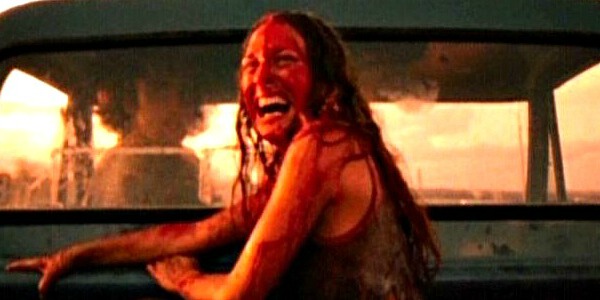
Think Alice Hardy in Friday the 13th, Laurie Strode in Halloween, Nancy Thompson in A Nightmare on Elm Street and on and on and on.

description
Sigourney as Ripley in Alien – Get away from her, you bitch! – image from Yahoo! Entertainment

The good-girl element of the final girl trope eased over time, offering more kick-ass than kiss-ass, with final girls like Ripley in the Alien series, or Jamie Lee Curtis sticking it to Jason in Halloween. Jade spots Letha as the final girl of the upcoming carnival of blood. She is a really good person, and an actual model, with unbelievable skin. She is athletic, morally strong, and seems to have been sent over from central casting. She is also unbelievably hot, and Jade has a bit of a crush on her. Nevertheless, Jade determines to do everything in her power to see to it that Letha has the weapons and knowledge she needs to go to battle in the inevitable final bloodbath, aka The Body Dump.

description
Marilyn Burns as Sally Hardesty in The Texas Chainsaw Massacre – image from WhatCulture.com

But we know, or at least suspect, since the slasher film story is usually told from the perspective of the final girl, that maybe Letha is not the one.

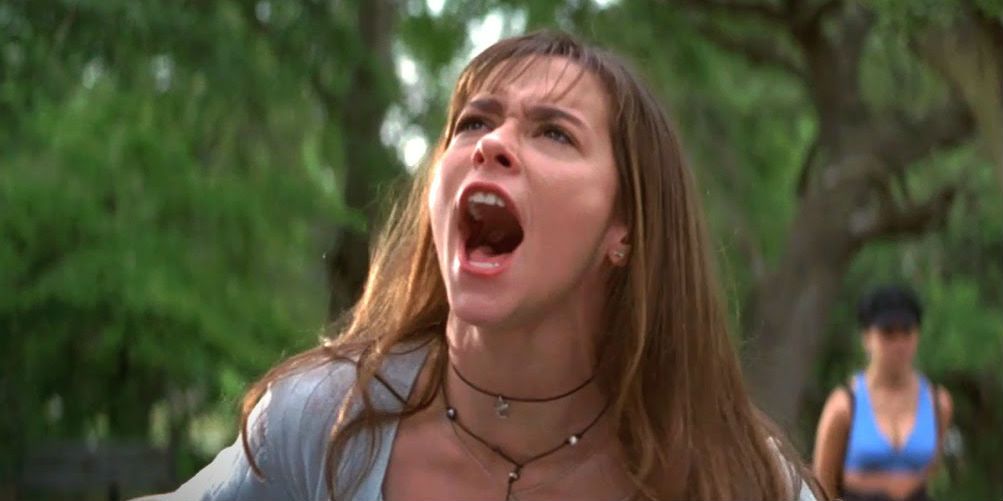
I wanted to push back against the notion of the final girl being a supermodel, valedictorian, or babysitter. Since the 1970s, they’ve all been Jennifer Love Hewitt types. For many girls and women, that’s an impossible ideal. The book’s main character, Jade, has dealt with feelings of inadequacy her whole life. Also, most of the victims are rich and entitled white guys, not 17-year-old cheerleaders. – from the 5280 interview

The mystery is who (or what) is perpetrating mayhem, and why. That satisfies the need, or, certainly, a desire, for a mystery. Slasher movie bloodlettings are acts of revenge. Ok. So, what is it that is being revenged, why, and by whom? The how is where movie directors and novelists get to come up with creative ways to pare back, sometimes waaaaay back, the character list.

description
Heather Langengkamp as Nancy Thompson in Friday the 13th – image from StopButton

Jones always keeps an eye on social content, payload that arrives with the story. It, or at least some of it, usually has to do with Native people and their relationship with the white world in which they are embedded. Very real-world stuff. No Magic Indians need apply. The presenting issue here is gentrification, an invasion by the Uber-rich into a very working class area, upsetting everything, taking public land for private use, trying to buy their way into acceptance, while toting along a significant shortage of moral concern. There is also the existence of racist elements in the town and the Native people getting the lesser end of things economically.

When people in Proofrock can direct their binoculars across the water to see how the rich and famous live, that’s only going to make them suddenly aware of how they’re not living, with their swayed-in fences, their roofs that should have been re-shingled two winters ago, their packed-dirt driveways, their last decade’s hemlines and shoulder pads, because fashion takes a while to make the climb to eight thousand feet.

Secondary characters run a gamut. Some are cannon fodder, of course, but there is a nice collection of understandable town characters. Jade’s teacher, Holmes, is wonderfully understanding, and has plenty of quirk (and anger) to support it. The town sheriff is a remarkably understanding sort, with a soft spot for Jade. He may not understand, or accept what she tells him (she is a Cassandra, after all, and there is the very real possibility that he might be hiding something) but he seems to be quite well-intentioned. Her father is a horror, and his bff may be even worse. There is sympathy for Jade in surprising places. They know something we do not. The Founders are mostly cardboard cutouts, which is fine. And then there is Letha (last name not Weapon). While presented as impossibly perfect, she is the one member of that clan given a closer look. Is she or isn’t she what Jade sees her to be, a paragon of final girlhood?

description
Jennifer Love Hewitt as Julie James in I Know What You Did Last Summer – image from ScreenRant

Throughout the novel, there is a pervasive sense of humor. The quote at the top of the review is a prime example of that. There is more. Not sayin’ you’re gonna shoot your beverage of choice out your nose, but there is plenty here that will make you smile.

…if you don’t have those staged resets, those laughs, then horror just becomes the flat screech, and that’s no fun. – from the GQ interview

GRIPES
Not much. The deus was messing with his ex, machina, a bit too much for my taste. I could not fathom why Jade was not more curious when a stranger’s cell phone falls into her hands. And I was not entirely thrilled with the last bit of the ending. (But then, SGJ has written a sequel, so, maybe put a hold on that.) But these are minor concerns. My Heart is a Chainsaw is both a jaw-dropping, brilliant homage to the slasher genre, and a bonafide member of the club.

description
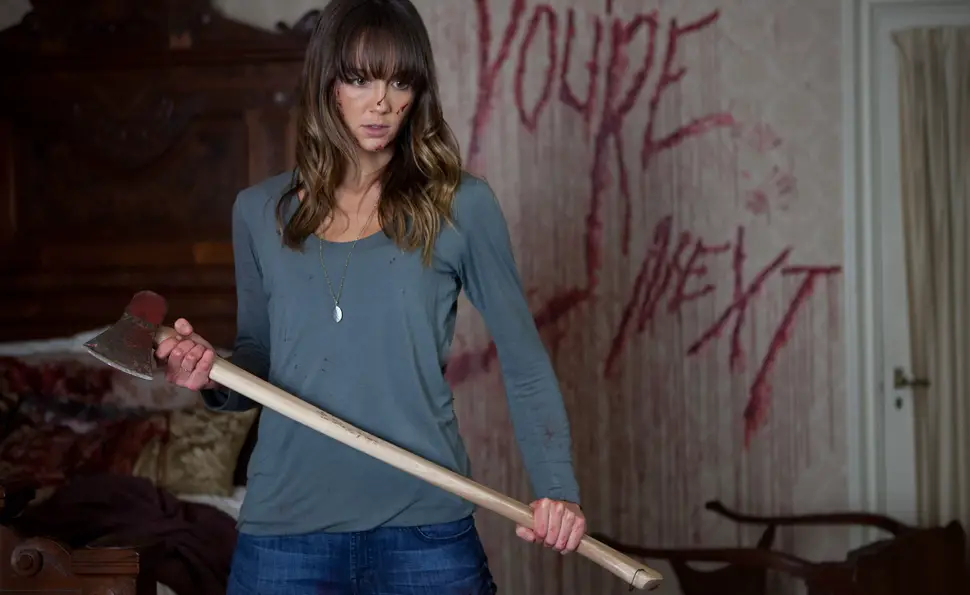
Sharni Vinson as Erin Harson in You’re Next – image from Wicked Horror

So, when you read this, takes notes, consider all that is going on. There will be a test. Pass/Fail. Pass, and you gain three college credits toward your degree. Fail? Well, trust me, you really, really do not want to fail.

She’s everything Jade always wished she could have been, had she not grown up where she did, how she did, with who she did.
It’s going to be epic, the final battle, the final girl against slasher high noon.
Unless Jade’s just making it all up, she reminds herself.

Review first posted – August 27, 2021

Publication dates
———-Hardcover – August 31, 2021
———-Trade paperback – March 29, 2022

I received an eARE of My Heart is a Chainsaw from Saga Press of Simon & Schuster in return for a fair review and some extra-strength fishing-hooks. Thanks to S&S, and NetGalley for facilitating.

======================================EXTRA STUFF

Links to the author’s personal, Twitter and FB pages

Interviews
—–GQ – 8/26/21 – Horror Writer Stephen Graham Jones’s New Nightmare by Colin Groundwater
—–Locus Magazine – 9/9/21 – Stephen Graham Jones: Slasher Cycle
—–Nightmare Magazine – April 2017 (Issue 55) Interview: Stephen Graham Jones by Lisa Morton
—–Nuovo Magazine – Stephen Graham Jones Battles Stereotypes and Serial Killers in His Breakout Novel by James Grainger – about The Only good Indians but still interesting for Jones’s take on the world
—–Vol, 1 Brooklyn – MORNING BITES: STEPHEN GRAHAM JONES INTERVIEWED, VIC GODARD, FRED THOMAS’S MUSIC, BILL GUNN, AND MORE – August 11, 2021
—–5280 Magazine – August 2021 – Colorado Horror Writer Stephen Graham Jones Is Back With a Killer Follow-Up by Philip Clapham

The horror genre is full of books and movies that make a political statement, like the films Dawn of the Dead and The Purge. Which is scarier: real-life terrors or fictional ones?
I think for the last four or five years, we’ve seen people doing reprehensible things and then not being punished for them. The slasher genre is basically a justice fantasy. But the bad thing about living in a slasher world where wrongs are punished is that they’re punished brutally. You might catch a machete to the head.

—–Bull – Stephen Graham Jones by David Tromblay

Before The Only Good Indians, I’d done two slasher novels, I guess—Demon Theory, The Last Final Girl—but I hadn’t said even close to all I wanted to say in and with and around the slasher. So, I committed to the slasher. I wrote this one, then another, and another. But I also wrote a haunted house novel. Oh, and a slasher novella, I guess. And I guess a ghost novella. I just love all the parts of horror, but the slasher, the slasher’s really special for me. I like the sense of justice in it. I like how bad deeds are punished. That’s not the world we live in, but, while reading a slasher, we can pretend for a little bit…

—–Montana Press Monthly – April 2020 Rez Gothic: Stephen Graham Jones by Jay MacDonald – not specific to this book, but good on SGJ
—–Goodreads newsletter – Meet the Writers Behind Those Truly Terrifying Books
—–Colorado Public Radio – Ten Stories Novelist Stephen Graham Jones Says Will Make You Afraid Of The Dark by Stephanie Wolf –
10 stories Jones says are great gateway reads into the horror fiction genre:
• “The Black Cat” by Edgar Alan Poe
• “The Monkey’s Paw” by W. W. Jacobs
• “The Dunwich Horror” by H. P. Lovecraft
• “The Veldt” by Ray Bradbury
• “The Lottery” by Shirley Jackson
• “It’s a Good Life” by Jerome Bixby
• “Where Are You Going, Where Have You Been?” by Joyce Carol Oates
• “Bloodchild” by Octavia Butler
• “The Jaunt” by Stephen King
• “The Night They Missed the Horror Show” by Joe R. Lansdale

My reviews of (sadly, only two) previous books by Jones
—–Mongrels
—–The Only Good Indians

Item of Interest
—–Smithsonian – The 1980 Slasher Movie ‘Friday the 13th’ Was Filmed at This Boy Scout Camp in New Jersey by Kellie B. Gormly – October 26, 2021 – A fun piece for fans of the original

The List
I started keeping track of the names of the mentioned flicks once I had read a bit, so my number is probably not close to the actual total, but even with not beginning from the beginning I came up with 93, the list that follows. I have seen, maybe, 23, enough to be able to follow along without feeling that I was missing out on too much. Not all are slasher films, but all 93 are horror of one sort or another. If I made any mistakes in entering the titles please let me know and I will make the needed repairs.

Alien
Alien 3
All the Boys Love Mandy Lane
Alone in the Dark
April Fools Day
Bay of Blood – from 1971 – a possible grandfather of the slasher genre
Black Christmas
Blue Steel
Burial Ground
The Burning
The Cabin in the Woods
Camp Blood
Candy Man
Child’s Play
Children Shouldn’t Play with Dead Things
Cold Prey
Cold Prey 2
Cold Prey 3
The Craft
Cropsy
Cry Wolf
Curtains
Cutting Class
Dead & Buried
Dead Calm
Deep Star Six, Leviathan
Demons
Donkey Punch
The Dorm that Dripped Blood
Evil Dead
The Exorcist
Exorcist III
Fatal Attraction
Final Destination
Final Destinations
Fire in the Sky
Friday the Thirteenth
Friday the Thirteenth Part II
Friday the 13th Part III
Friday the Thirteenth – The final chapter
Ghost Ship
Girls Nite Out
Grizzly, 1976
Halloween
Halloween III
Hannibal Lecter
Happy Birthday to Me
Hell Raiser
High Tension
The Hitcher
Home Sweet Home
I Know What You Did Last Summer
I Still Know What You Did Last Summer
Jason Takes Manhattan
Jaws
Just Before Dawn
Kristy
The Land that Time Forgot
Last House on the left
Lord of Illusions
Mausoleum
Mortuary
Mother’s Day
My Bloody Valentine
New Nightmare
The Night of the Hunter
A Nightmare on Elm Street
Poltergeist 2
Popcorn
The Prey
Prom night II
Prophecy
Prowler
Reeker
Ringu
Road House – 1988
Rosemary’s Baby
Scream
Scream 2
Slaughter High
The Shining
The Silence of the Lambs
Sleepaway Camp II
SS Lazarus
Stage Fright
Terminator
The Texas Chain Saw Massacre
Triangle
Trick or Treat 1986
Twisted Nightmare
Virus
Wishmaster

In my post-posting travels I came across a site that provides a much more inclusive, and visually appealing, list. Letterboxd shows a total of 154 film mentions (not all of which are horror films, per se) I saw 37 of those.

Articles on Final Girls
The Final Girl is a trope that has come in for some criticism over the years. Below are several articles that address this, and the changes that have taken place in how Final Girls are portrayed from the 1970s to the present. If you know some good pieces on this subject, I would be happy to add them to this list.

—–NY Times – October 22, 2015 – In Horror Films, the ‘Final Girl’ Is a Survivor to the Core by Erik Piepenburg
—–Wiki – Final Girl
—–Cinema de Merde – Is the Final Girl an Excuse?
—–Pretty Scary – Gender Roles within Scary Movies by Alex Boles
—–Ax Wound – Teenie Kill & The Final Girl by Hannah D. Forman

Clover argues we shouldn’t just ask ourselves: “Does this film depict violence against women?” but rather, “Why does it do so? From whose point of view? Creating sympathy with whom? And what final message?” The answers to these questions no doubt are complex and reveal much about how we view the sexes, the double standards that underlie our behaviors and social mores we are brought up to follow.

6 Comments

Filed under Horror, Reviews

True-Crime Family – The Family Plot by Megan Collins

book cover

My parents named me Dahlia, after the Black Dahlia—that actress whose body was cleaved in half, left in grass as sharp as scalpels, a permanent smile sliced onto her face—and when I first learned her story at four years old I assumed a knife would one day carve me up.

I’m not looking for evil. I’m looking for answers.

You know straight away that this one will be told with tongue firmly attached to cheek. The four siblings are all named after famous murder victims. The Lighthouse family has seen quite a few lives dashed on the rocks, well, not personally, or well, maybe personally. That is the crux of the mystery. There is a never-caught serial murderer on the island, The Blackburn Killer, responsible, so people think, for the murders of seven women over two decades. The family is gathered on this wind-swept, rocky isle when father dies, mostly unlamented, a heart attack,

”Dad’s heart was a real bastard about it. took him out in two seconds flat. Pushed him face down in his venison stew…Mom had to wipe the meat off his cheeks before the paramedics came. It’s poetic really. Dad hunted so many deer in his lifetime, and in the end, he died on top of one. Seems almost…intentional, doesn’t it? Like his heart knew what he’d been up to and murdered him for it.”

summoning the now-grown children (well, three out of four, anyway, as the fourth had left a note ten years back announcing he was leaving for good) back from their definitely-NOT-on-this island homes for his funeral and burial. But when the caretaker of the considerable grounds digs up dad’s assigned plot, he is surprised to find that it is already occupied. The missing brother, Andy, gone ten years, has been found. Oh, dear.

description
Megan Collins – image from Wheaton College

The whole thing stems from the title, which is not how I usually do my books at all. The title usually comes last, and I agonize over it. But I was working on something else, and I was trying to title that, and I asked my husband for some suggestions. And I said I want something that speaks to the family aspect of the book and he just threw out, “I don’t know, The Family Plot?” And I was like, no, that doesn’t work for this, but that is amazing as a title…that just rattled around in my head for a few days, until it was like a burst, that came to me, of a family that came together to bury one family member, only to find another member of the family in that grave. So then from there I thought well, what family would it be most interesting to see in that kind of story? It would be really interesting to see someone who, a family who was so interested in true crime that they built a library. And now they’re in the center of true crime story. – from the World of the Write interview

Interested understates it a bit, as the Lighthouse family, stemming from mom, is obsessed with true crime, so much so that the kids, who were home-schooled, studied famous murders. In place of the usual book reports they were charged with producing murder reports. There is a room in their large, creepy home, that is designated the Victim Room, as it holds the considerable collection of books and reports the family has amassed on the most notorious serial killers, and greatest murders, solved and unsolved, of all time. No wonder the locals refer to it as Murder Mansion.

Our docent in this odd place is Dahlia, 26, returned (Dead leaves skitter around my feet as if welcoming me home – Yikes!) from the mainland where she has been living since she moved out at age 19, obsessed with finding her lost twin, Andy (named for Lizzie Borden’s father).

The trust fund is how I manage the way I do—jobless, hunched over my laptop, scouring photos of any crowd on social media, looking for crinkly eyes, for the cowlick on the back of Andy’s head.

She has always felt that she and Andy had a special twins bond and that, if he were dead, she would know it. Her older sibs have been holed up in New York City since they fled the island, as soon as they could. Charlie (named for the Lindbergh baby) is an actor who appears in off-Broadway, off-off-Broadway, and nowhere-at-all-near-Broadway productions, when he can get cast, and when he is sober. Tate (named for Sharon Tate) has an on-line following of 57,000 for her site @Die-orama, on which she produces miniature reproductions of famous crimes. We all do what we’ve gotta do to cope with what came before in our lives. Am I wrong? Tate continues coping by making a diorama of the finding of her brother’s body. Charlie plans to turn the house into a temporary display, The Lighthouse Memorial Museum, to show the Blackburn island residents that the Lighthouses are actual people, not some homicidal, Addams family knockoff. Even Mom (Lorraine) Lighthouse deflects actual emotional dealing into consistently failed attempts to bake cookies, a running joke.

I just went and threw everything into it that I am obsessed with and that I love. I love true crime. Threw that in. I love secluded, dark little islands. Threw that in. I love mini things, so I had this diorama thing. I love these creepy mansions, so I had that. I went wild with all the things that excite me in the hope that if I am excited about them, hopefully it makes a good story, and other people will be into it. But yes, atmosphere, definitely tons of atmosphere… – from the World of the Write interview

There is a fun supporting cast. A mysterious local girl (Ruby Decker) used to spy on the Lighthouse manse at night when Andy was still around. The local detective on the case is Elijah Kraft, who just happens to be the son of the detective who was in charge of the Blackburn Killer investigation back in the day. He had always been convinced that Daniel Lighthouse (the recently deceased dad) was the killer and junior seems determined to pin Andy’s killing on him as well. At the very least, pin it on some member of the family. We see him mostly while sparring with Dahlia. Fitz, the lifelong caretaker, does not always make it to the ferry for his nightly trip back to the mainland. Why is that? Greta, a friend, runs a café below Dahlia’s apartment, and shares the Lighthouse obsession with true crime, if not the family history. She stands in for the more typically obsessed true-crime aficionados in the world.

I’ve never written plays, but it kinda felt like writing a play sometimes, thinking of like almost every scene in the book takes place in the house except for a few of them, so there is a kind of claustrophobic sense. And so the house really felt like a set to me that I was moving the characters around and now they’re the living room and what’s happening in there, and now they’re in the room that they call the victim room because it has all their books about true crime. – from the World of the Write interview

She also gives us a taste of backwater mentality, and eagerness to believe the worst of people who are different. And the separation from humanity of many true-crime enthusiasts, fixated on details of murders to the exclusion of pain and suffering, the human experience of those personally impacted.

Dahlia is an honest broker, well, mostly. She truly wants to find out who killed her beloved brother, and who the Blackburn Killer might be, even if it turns out to be family. There are twists aplenty, and swaths of atmospherics. Collins clearly had a lot of fun writing this book and it comes across.

I did have one gripe. Are we really expected to believe that a family would construct an entire home-schooling curriculum around murders? It was a bit much to swallow. But if you are willing to suspend belief, and, yes, your honor, I confess to doing just that, The Family Plot is a delicious bit of mystery fluff, a fun, roller-coaster ride of a yarn. If you pick up The Family Plot looking for a very entertaining Summer read, you will be dead on.

…the fact that their bodies were returned to our shore, spit onto sand instead of carried to another coast, is proof that the ocean wants us here, contained to Blackburn Island.

Review posted – August 20, 2021

Publication date – August 17, 2021

I received an ARE of The Family Plot in return for crucial intel on an unsolved case. Thanks to Maudee at Atria.

=======================================EXTRA STUFF

Links to the author’s personal, FB, Instagram, GR, and Twitter pages

Interviews
—–World of the Write Review – – video – 30:09 – by Kerry Schafer – if you have to choose only interview to check out, it would be this one.
—–Player FM – A murderous chat with CT Author Megan Collins! – Renee DeNino – Audio – 16:30
—–Dead Darlings – Interview with Megan Collins, Author of Behind The Red Door by Susan Bernhard – 8/6/20 – this interview was done long before The Family Plot came along, but still has some interesting intel, such as

My instincts as a storyteller are to begin as close to the inciting incident as possible. By the end of the first chapter, I want some sort of bomb—big or small—to have been dropped on my characters, so that the reader has a sense of the stakes right away.

—–Megan Collins: Author of The Winter Sister – also done before Collins’ latest book, but of value nonetheless

Items of Interest from the author
—–Crime Reads – What Scares a Thriller Writer – 8/4/20
—–Collins’ site – links to 22 other pieces

The book site for The Family Plot lists gothic among its genres. It felt like it was close to that on reading, but not quite, so I resorted to this scorecard, which I used a bit more grandly in my review of While You Sleep. So, is it or isn’t it?

Gothic Novel Scorecard

Ticking off the gothic criteria
1 – setting – old mansion – check – secret passages – yep, and more
2 – atmosphere of mystery or suspense – you betcha
3 – ancient prophecy or legend – nothing supernatural here
4 – omens, portents, visions – well, portents maybe (no good tents, though)
5 – supernatural or otherwise inexplicable events – the deaths on the island – Andy’s demise
6 – high, overwrought emotion – for sure
7 – woman in distress – Dahlia – yep
8 – Women threatened by powerful, tyrannical male – murder vics, presumably – there is no living tyrannical male in this telling – and while The Blackburn Killer is assumed to be male, there is no certainty of the killer’s gender for most of the book.

Frequent Gothic Elements
Wind – always
Rain – don’t really recall, so if it was there, it was not particularly memorable
Doors on rusty hinges – I don’t think so, but maybe
Eerie sounds – not really
Character strapped in a room – no
Approaching footsteps – yep
Ruins of buildings – not really

It may not tick off ALL the boxes that define Gothic novels, but it marks enough of them to matter. It is clear that while Collins worked from her notions and was not trying to craft a classic gothic novel, The Family Plot is certainly gothic enough to count.

3 Comments

Filed under Reviews

Damnation Spring by Ash Davidson

book cover

He pictured the 24-7 tree herself: a monster, grown even wider now than the twenty-four feet, seven inches that originally earned her the name, three hundred seventy feet high, the tallest of the scruff of old-growth redwoods left along the top of 24-7 Ridge. He’d circled that tree every morning for the last thirty-five years, figuring the best way to fall her, but it had always been just a story he’d told himself, like his father before him, and his granddad before that. Someday, Rich remembered his father saying. As a boy, it had seemed possible, though generations of Gundersens had died with the word on their breath.

“The real timber’s gone,” Lark said. “What’s left, ten percent, including the parks? Two thousand years to grow a forest, a hundred years to fall it. No plague like man.”

It’s 1977 in Klamath, California. Redwood country. Rich Gunderson has rolled the dice. He staked all the money he and his wife, Colleen, have been saving to buy a once-in-a-lifetime piece of property, the 24-7, over seven hundred acres of old growth forest, ripe for logging. But he needs the Sanderson Timber Co., which he has been working for all his life, to build a road close enough to it that he can get the logs out. It seems likely to happen, given that Sanderson is currently logging adjacent parcels. But when a skull is found, all work is halted until it can be determined whether the logging will be allowed to continue. A halt could mean the difference between making back his investment and having land of his own, a place on which he and his family can live, with a nice bit of cash beside, and losing everything.

The pilot had followed the coastline, turning inland at Diving Board Rock. It was Rich’s first and only ¬bird’s-eye view of his life: the small green house with its white shutters set back on the bluff at the foot of Bald Hill, the cedar-¬shingle tank shed. The plane’s ¬engine noise buzzed inside his chest, a hundred McCulloch chainsaws revving at once. They’d flown over 24-7 Ridge, the big tree herself lit by an errant ray of sun, glowing orange, bright as a torch, and, for an instant, Rich had caught a glimmer of the inholding’s potential—an island of private land in a sea of company forest. They’d flown over the dark waves of big pumpkins in Damnation Grove—redwoods older than the United States of America, saplings when Christ was born. Then came the patchwork of clear-cuts, like mange on a dog, timber felled and bucked and debarked, trucked to the mill, sawed into lumber, sent off to the kilns to be dried. The pilot had flipped a switch and spray had drifted out behind them in a long pennant—taste of chlorine, whiff of diesel—Rich’s heart soaring.

description
Ash Davidson – Image from the Grand Canyon Trust

He and Colleen have suffered some serious losses already. They have a five-year-old son, Chub, who is about to start Kindergarten. But they had hoped for a larger brood. Colleen, only thirty-four, has just suffered her eighth miscarriage. Rich does not want for them to go through that again, so is keeping his distance, frustrating Colleen, who is eager to keep trying.

He does not keep his distance from this land, however. Carrying on the tradition of his father and grandfather before him, Rich is a high climber, a particularly perilous specialty in an already dangerous line of work. He is very fortunate to have lasted longer than his forebears, surviving into his fifties. Bunyonesque at over six feet six inches, Rich is a gentle giant, determined to take care of his family. But how he can go about doing that is becoming complicated. He remembers his father taking him up to the 24-7, and pointing out the biggest, (There she is. Twenty-four feet, seven inches across. Someday, you and me are going to fall that tree.) a lifetime ago, when his father had just turned thirty.

description
A high rigger – using just his rope and spiked boots, he must climb the tree sawing off tree limbs as he goes – image and descriptive text from the Washington Historical Society

Colleen works as a midwife. Hers are not the only reproductive anomalies in the area. Miscarriages are rampant, as are birth defects. One woman she had been helping gave birth to a baby that was anencephalic. In the Library Journal interview, Davidson talks about her inspiration for the book.

My family lived in Klamath, California, where the book is set. My parents weren’t loggers—my mom taught school, my dad did carpentry work. But they did rely on a nearby creek for drinking water, similar to Rich and Colleen’s setup in the book, and became so concerned about herbicide contamination in that creek that they stopped drinking from our tap. Still today, not one of us does. I was three when we left Klamath, but I grew up hearing stories about our life there. I’d always wondered: what were those herbicides? – from the Shelf Awareness interview

Daniel Bywater was raised locally. An erstwhile classmate and an old flame of Colleen’s, he is back in the area, doing a postdoc in fisheries biology, testing the water to see what might be causing the significant reduction in fish life. It is pretty clear that the cause is the toxic chemicals that Sanderson sprays relentlessly in the area, making sure the logging roads do not get overgrown, and access to the to-be-logged trees is uninhibited. With the prompt of Daniel, Colleen begins to see that the environment in which she lives may be a factor in her difficulties carrying a baby to term. The Gundersons get their water directly from Damnation Creek.

description
Redwoods – image from homestratosphere.com

The conflict is set. Sanderson, eager to fend off any attempts to prevent them from clear-cutting the lands they control, versus those concerned with the health and safety of the people living and working in the area, and the carnage being wreaked on the local eco-system. The company is not above using bribery, blackballing, physical intimidation, and worse to control the allowable debate.

People are struggling. Deer Creek has dried up. It is probably wise to head indoors when the far-too-frequent company chopper passes overhead spraying something that smells of chlorine. Folks live in single-wides or rent houses they used to own, now property of the government on a 25 year lease, after they were eminent-domained for parkland. Pay has been shifted from production based to a daily rate. Not an idyllic existence

It would be an easy thing to present the company as pure evil (well, it pretty much is here, so scratch that), and the locals who support cutting-uber-alles as ignorant rubes. Some are, and there are those who are willfully ignorant, and willing to go to dark extremes to protect their personal fortunes, but Davidson has offered instead a very close look at the crux of the conflict. Can you really expect people who, for generations, have known only one way of living, to welcome outsiders telling them that they can no longer continue to work the jobs they have worked for decades, to live the way they have been forever? Even if that way of life is harming them (it is), that harm may not be felt immediately. No one except the company owners and upper managers are living well. It is a hard-scrabble existence, even for the fully employed. The loss of that small income would be harsh and sudden. And there is no certainty that other means of getting by will magically appear. For good or ill, people’s livelihoods are tied to the survival of the timber company. To damage that is to imperil them all. In showing the perspective of the people residing in the affected area, Davidson treats the issues she raises in a serious, nuanced, and respectful manner.

”Ask any of these guys. You won’t find a guy that loves the woods more than a logger. You scratch a logger, you better believe you’ll find an ‘enviro-mentalist’ underneath. But the difference between us and these people is we live here. We hunt. We fish. We camp out. They’ll go back where they came from, but we’ll wake up right here tomorrow. This is home. Timber puts food on our tables, clothes on our kids’ backs. You know, a redwood tree is a hard thing to kill. You cut it down, it sends up a shoot. Even fire doesn’t kill it. Those big pumpkins up in the grove, they’re old. Ready to keel over and rot. You might as well set a pile of money on fire and make us watch.”

It is clear that, even though he is in the business of removing trees from the landscape, that Rich does have a feel for, a love of the land. He often brings his son out into the woods to show him the woods, the topography, the beauty of their home. Rich wants to make sure he passes on what he can while he can. A charming element of this is when Rich teaches his son to use his hand as a map of their area. I could not help but think of Rich as a Fess-Parker-as-Davy-Crockett-or-Daniel-Boone sort, substantial, serious. But also kind and educable, interested in doing right by his family. This creates an internal conflict for him. Protect his family by seeing to it that the land he bought gets logged, and thus ensure their financial future, or consider that maybe Colleen is right to be concerned about the perils to them all of Sanderson’s spraying.

description
Image from Santa Cruz Land Trust

It is not spraying alone that is problematic. Hillsides, denuded of the plant life that held firmly onto the ground, lose their ability to absorb the considerable rain that falls in the area, and their ability to remain in place. It has got to be tough to remain connected to the land if the very land itself is washing away.

Colleen suffers additional misery to that of enduring multiple miscarriages from the fact that her sister, Enid, seems to get pregnant at the drop of a condom. Enid uncrosses her legs for two minutes and a baby pops out.

There is imagery aplenty to help things along. The huge lighthouse of a redwood has already been mentioned as a symbol of both permanence and possibility. Rich endures a bad tooth for much of the novel, maybe a conscience, or growing awareness that needs tending to. A dog which has had its vocal cords cut by a heartless owner surely stands in for silencing alarms of impending danger in the wider world. Showing the multigenerational element of the community reminded me of judging the age of a tree by the number of rings, but I am pretty sure that is just my projection.

I think sometimes we assume that working in an industry like logging is a choice easily substituted with another choice, but there is real grief in letting go of a good job that has defined you. Damnation Spring is set forty years ago, but we see parallels in industry today. There are plenty of reasons why a coal miner in West Virginia can’t just pick up and move west to work on a solar farm. When your whole life is in a place, the idea of uprooting it is so overwhelming, it’s understandable that dying in the life you know might be preferable to starting over. – from the Library Journal interview

There are also a larger perspectives one can see here. We can see in the microcosm of a small community what a larger society might look like when there is only one dominant political and economic power source, and it acts in its own interest regardless of the harm it does to all around it, and having no respect for the truth. This is what happens when there is power without accountability. Davidson shows how behavior ripples outward, from industry to community to family to individuals. The feckless, short-term profit-motive of Sanderson Timber forces the community to come to grips (or not) with the ecological and personally biological impacts of its work, which manifests in public (and secretive) behavior, pushing families into hard choices, and impacting individual lives. There is also the larger echo of events over four decades back (and more) impacting the world today. How much carbon in the atmosphere, for example, is not being sequestered because of clear-cutting? How many species of animal and plant life are being exterminated because of short term profit motives? And there is the immediate contemporary echo of so much of the planet still being plundered instead of managed, harvested, and renewed.

description
A 2006 mudslide in Northern California – image from DCBS News

The story is told from the alternating perspectives, Rich, Colleen and Chub.

Damnation Spring started out as a first-person novel in Rich’s voice. But I kept running into walls–things he couldn’t know or wouldn’t notice. Even after I added Colleen, they were both so quiet. I needed Chub. He’s curious. He’s lower to the ground. He’s five at the beginning of the book. I’d worked as a nanny, so I had some experience with children that age. They’re observant, but not judgmental, and still fully alive to the magic of the world, from birds’ nests to Bigfoot. – from the Shelf Awareness interview

This works well to offer a rounded take on the action of the story.

Davidson spent the first three years of her life in Klamath, not of a logging family. Mom was a teacher, dad a carpenter. But they used a nearby creek for drinking water, like Rich and Colleen in the novel. Her parents became concerned about chemicals in the water, so stopped using it. Davidson heard about this later on, but retained curiosity about the experience. The story grew from that to wondering about how families and a whole community might respond when their homes, their communities became unsafe to live in.

Gripes
Throughout the course of the book we are given relentless examples of the horrors being inflicted on people, fauna, and flora, in addition to the huge reproductive issues. Beehives are obliterated, diseased deer stumble through the woods, nosebleeds are ubiquitous. This can get overbearing, as if we are being beaten over the head with it all, over and over and over. Yes, yes. Everything is being poisoned. Do we really need twenty more examples? Got it.

The story-telling is effective. We see the characters and how their relationships with each other work. It is dense with detail, but maybe too much detail, enough so that it makes it, sometimes, tough to see the forest for the trees, and sometimes a slog to read.

There is a response Rich has late in the book to something Colleen does that had me thinking of the real-life Daniel Boone. I understand the possibility of his response, but found it a bit of a stretch to accept in the 20th century, in the culture which is portrayed. He might have reached the destination to which he arrives, but it would have been with considerably more weeping and gnashing of teeth. In this case, maybe, a bit more detail would have been warranted.

Overall, though, Damnation Spring is a powerful example of eco-lit, a humanity-based look at crimes against nature, featuring strongly-drawn characters that you can care about, dastardly doings enough to keep the action moving, some payload on the dynamics within a stressed logging community, and more on the impact of chemical spraying and clear-cutting. The book is printed on recycled paper, but you might feel more comfortable giving the trees a break and reading this one as an e-book.

You can bury us, but you can’t keep us from digging our way out.

Review first posted – July 30, 2021

Publication dates
———-Hard cover – August 3, 2021
———-Trade paperback – May 3, 2022

I received an ARE of Damnation Spring from Scribner, of Simon & Schuster, in return for some seedlings and fertile soil. Thanks to ZC at S&S for providing, Cai at GR for cluing me in to this book, and NetGalley for facilitating.

This review has been cross-posted on GoodReads. Stop by and say Hi!

=======================================EXTRA STUFF

Links to the author’s personal, FB, and Twitter pages

Interviews
—–Shelf Awareness – Ash Davidson: Living and Dying on Timber bny Samantha Zaboski
—–Library Journal – Debut Author Ash Davidson Discusses Her Epic, Immersive Novel Damnation Spring – this was sponsored by Simon & Schuster

Books this one made me think of
—–Annie Proulx – Barkskins – a historical novel, a saga, showing the logging of North America since the 17th century
—–Richard Preston – The Wild Trees – non-fic about tree-climbers, with a lot of interesting intel on the earth’s wooden giants

Song/Music
—–Johnny Cash – My Shoes Keep Walking Back to You from “November 6 – Colleen” chapter

Items of Interest
—–Coast Redwood Ecology and Management
—–Nashville Review – August 1, 2016 – Higher Ground
—–Book Club Guide

Leave a comment

Filed under Cli-Fi, Fiction, Literary Fiction

A Life Revived – Eudora Honeycutt is Quite Well, Thank You by Annie Lyons

book cover

“I am eighty-five years old. I am old and tired and alone. I have nothing I want to do and no one I want to see. I am not depressed, merely done with life. I don’t want to end up dribbling in an old-people’s home, wearing adult nappies in front of a shouting television. I want to leave this world with dignity and respect. Now, can you help me out?”

Life is precious and as long as we have a reason to continue, we should follow that path.

Eudora Honeycutt does not seem to have much reason to go on. She is quite the curmudgeon. Maybe not the broomstick-wielding (or shotgun-toting) crank, screaming “get off my lawn, you damn kids!” Eudora is far too proper for such behavior. But the inner resentment is there. She is uninterested in having the sort of death her mother endured when, a husk of her former self, she died, a frequent flyer (often. needlessly) in the ER, she was kept going by a medical system that cared less about the quality of one’s life than extending it at all costs. Sick of the world, fed up with its rampant and growing narcissism, and seeing no meaningful future ahead, she gets in touch with a clinic in Switzerland that might be able to help her end her life with the dignity she wants.

description
Annie Lyons – image from her site – shot by Harriet Buckingham

everyone is selfish and caught up with themselves these days. They have no time to notice her or others like her. They consume news or food as if they are trying to eat the whole world; they watch and judge and spit out their opinions as if they’re the only ones worth listening to. Eudora is invisible to these people, but she has stopped noticing them, too. They’re welcome to their “post-Brexit, Donald Trump, condemn everyone, be kind to no one” world. There is no helping them now. Soon enough she won’t be around to witness their continuous decline into moral torpor. Good riddance and good night.

But that is not all there is to Eudora. She has seen little kindness in the world, has endured more than her share of its opposite, and yet there is, inexplicably, still a lode of the stuff buried inside her. And she has stumbled across a crew of miners, happy to bring it to the light of day.

description
Dame Maggie Smith – image from Jewish News

There are new occupants in the house next door, primarily a ten-year-old girl. Rose is the bubbles in a bottle of champagne, the chirping birds that welcome dawn, sunshine after days of rain, an iced drink on a hot day, a huge jolt of distilled wonderfulness, rain after a drought, and a rainbow after a shower. The rainbow part of that is not much of an exaggeration, as Rose always seems to be dressed in a garish array of colors that may or may not go with any of the other eye-popping hues she is wearing. One typical ensemble is made up of buttercup yellow, ecclesiastical purple, and neon orange. Rose is exuberantly neighborly, and decides that Eudora is going to be her new best friend.

Rose may have the wearying positivity of a jack-in-the-box, but she is kindness personified.

The next new addition to Eudora’s life is Stanley, a widower, a gentleman of a certain age. It was Stanley who had come to her aid when he’d seen her fall recently. Made sure she was seen to. She remembers him not at all, finds him irritating even. But Stanley persists with Eudora, offering her interest, engagement, and kindness, with a persistence not unlike Rose’s, but without the flamboyance.

description
Haribo Cherries – image from Amazon – Eudora buys some for Rose

Like a wrestling tag-team, Rose and Stanley both engage Eudora individually (and sometimes together), seeing something in her that she does not see in herself. Rose’s exuberance is as delightful as it is persistent and overwhelming. It seems that when it comes to Rose, resistance really is futile. As Eudora, bit by bit, is drawn back into the world, she encounters even more people who offer kindness and understanding. She meets Hannah, a death doula, who gives a talk at a local community center, and has made a career of helping people near the end of their lives. But not all the kindness is delivered to Eudora by local folks reaching out to her. In her dealings with the Swiss clinic that provides help for people choosing a decent death, she engages with Petra, her contact there, who is also welcoming and supportive to Eudora.

description
Dame Judy Dench – image from The Hamilton Spectator

Throughout the novel we get looks back at Eudora’s life, (18 by my count) beginning in 1940, when she was five years old. Her beloved father took her out for a birthday treat, a memory that has lasted a lifetime. He is heading off to war, and mom is pregnant. What happens with her father impacts the rest of Eudora’s life and the lives of those around her. One inspiration for the character of Eudora was:

…my mum, who also lived through the second world war and had that sort of resilience and stoicism, but also that stubbornness and that refusal to ask for help, and I’m just going to get on with it, and I’m ok, and I don’t want to talk about it. My mum was a real sweetie. She was not as difficult as Eudora. But it’s part of that generation I think. To write her story, but then to juxtapose it with Rose was just…I love to read books about inter-generation friendships…It was my way of looking at it in an uplifting way. – from the Better at Home interview

description
Dame Helen Mirren – image from The Mayor’s Fund for London

One of the inspirations for the book was Lyons reaching middle-age (no numbers have been offered), and realizing that half her life was over. It sparked a concern about (an interest in) death and how people view it.

[The book] explores our denial and inability to face death as a reality. However, through Eudora’s honesty and Rose’s curiosity, it also shows different ways to view death – whether it’s through Eudora’s discussions with Petra at the clinic in Switzerland or Hannah, the death doula’s talk on what it is to have a good death or Rose’s enthusiasm for the Mexican Day of the Dead. – from the Book Q&As interview

In alternating past and present, Lyons does an excellent job of linking todays realities to Eudora’s history. We get to see how life’s many disappointments shaped Eudora into the grouch she has become, with each section about her past explaining one of Eudora’s present-day reactions. We see, also, how Rose, Stanley, and others offer Eudora something far greater than resignation.

description
Michael Gambon – image from The Irish Examiner

In the Book Club Girl interview Lyons offered a few dame names for dream actresses to play Eudora. I have peppered the review with images of those. She offered a suggestion or two for Stanley. So, ditto.

This is a beautifully written, heart-warming novel, not just about death, our experiences with it, and thoughts on it, but about the value of kindness, of our connection to others, and what is important in life. Lyons has written characters we not only care about, but love. Trust me. Tears will be shed, more than a few.

description
Jim Broadbent – image from The Indian Express

By the time my father was my age he’d been dead for over a year. Not that I think about that much, not me, no. So, maybe it is easy to imagine that a book about a woman contemplating her personal end times might be of some interest. But, if I go with my maternal DNA instead of my paternal for projecting my likely mortality, it looks like I may have a few good years left. I hope I can fill them reading books as wonderful, as entertaining, hopeful, and uplifting as The Brilliant Life of Eudora Honeycutt. It is a brilliant book and an absolute must-read.

For beauty lives with kindness.

Review posted – July 16, 2021

Publication dates (USA)
———-September 8, 2020 – (USA)
———-October 19, 2021 – Paperback – Morrow

It was published in the UK on September 8, 2020 under the title Eudora Honeysett is Quite Well, Thank You

This review is cross-posted on Goodreads

=======================================EXTRA STUFF

Links to the author’s personal, FB, Instagram, and Twitter pages

Interviews
—–Library Love Fest – An Interview with Annie Lyons, author of THE BRILLIANT LIFE OF EUDORA HONEYSETT – with Virginia Stanley – audio 28:24 – begin at about 1:00
—–Blblio Happy Hour – Talking with Annie Lyons + a dive into the week’s new releases – by Victoria Wood – audio – 29 minutes – begin at the 6 minute mark
—–Better At Home – Annie Lyons
—–Book Club Girl – Discussion with Annie Lyons – Includes her US editor Emily Krump – video – 47:11
—–Book Q&As with Deborah Kalb Q&A with Annie Lyons
—–Library Love Fest – An Interview with Annie Lyons, author of THE BRILLIANT LIFE OF EUDORA HONEYSETT – audio – 28:24 – by Virginia Stanley

Songs/Music
—–Oscar Seagle – Pack Up Your Troubles In Your Old Kit Bag (And Smile, Smile, Smile) – chapter 1
—–Dame Vera Lynn – We’ll Meet Again – chapter 3
—–This is Me – the greatest song from The Greatest Showman, Rose’s favorite film – It really should have won the Oscar for best song.

Items of Interest from the author
—–Writing and Wellness – Featured Writer on Wellness: Annie Lyons
—–Female First – Seven things I learned in lockdown by Annie Lyons

Items of Interest
—–Wiki for It’s a Wonderful Life – mentioned in chapter 4 (and my personal all time favorite film)
—–Wiki on the British TV Quiz show Pointless – referenced in chapter 7
—–Wiki on the film Coco – mentioned in chapter 7
—–BBC – Babycham – a popular drink of the time – Eudora orders one at a dance with her bff Silvie
—–A brochure from lifecircle – a Swiss organization that helps people with end-of-life decision-making. The author references this org as a source for her research on Eudora’s planning.
—–PopMaster – referenced in chapter 11

Recipe
—–Chapter 2 – Cornish fairings

Reminds me of
—–Benediction by Kent Haruf – Dad Lewis is nearing the end of his life when he encounters eight-year-old Alice
—–Should We Stay or Should We Go by Lionel Shriver – a couple deciding whether to end it all when they hit 80 – review pending
—–News of the World by Paulette Giles – a 70-something escorts a difficult 10-year-old back to her family
—–Good Morning, Midnight by Lily Brooks-Dalton – A 78-year-old astrophysicist may be the last man on Earth until he meets a young girl, alone in the Arctic
—–Lillian Boxfish Takes a Walk by Kathleen Rooney – An older woman takes a walk on New Year’s Eve, the stops along her way recalling her life

2 Comments

Filed under Reviews

Re-wilding the Highlands – Once there Were Wolves by Charlotte McConoughy

book cover

I had always known there was something different about me, but that was the day I first recognized it to be dangerous. It was also the day, as I stumbled out of the shed into a long violet dusk, that I looked to the trees’ edge and saw my first wolf, and it saw me.

They’re more dangerous than we are.”
“Are they?” I ask. “They are wilder, certainly.”
“Isn’t it the same?”
“I don’t think so. I think it’s civilization makes us violent. We infect each other.”

Inti Flynn had always had a feel for nature. Her father had been a woodsman, first working for a lumber company, then, later, living a mostly solo subsistence life, in Canada, trying his best not to contribute to the global demise. He taught Inti and her twin, Aggie, about how to live in and with the wild. Their mother, a detective in Australia, was more concerned with teaching them how to contend with the wild in civilization. There is a lot in here about parents, of both the human and lupine persuasion, teaching children or pups how to cope in the world, how to defend against predators. The human sorts offer different approaches, some counseling firm defenses, others advising understanding, and some resorting to extreme kinetic measures. There are plenty of parents teaching questionable lessons.

description
Charlotte McConoughy – image from If.com.au

Dad used to tell me that my greatest gift was that I could get inside the skin of another human. That I could feel what nobody else could, the life of another, really feel it and roll around in it. That the body knows a great deal and I have the miraculous ability to know more than one body. The astonishing cleverness of nature. He also taught us that compassion was the most important thing we could learn. If someone hurt us, we needed only empathy, and forgiveness would be easy.

Inti’s gift is not metaphorical. Her ability to experience what others feel, gives her a unique advantage in understanding both wildlife and people. It also makes her very vulnerable.

I am unlike most people. I move through life in a different way, with an entirely unique understanding of touch. Before I knew its name I knew this. To make sense of it, it is called a neurological condition. Mirror-touch synesthesia. My brain re-creates the sensory experiences of living creatures, of all people and even sometimes animals; if I see it I feel it, and for just a moment I am them, we are one and their pain or pleasure is my own. It can seem like magic and for a long time I thought it was, but really it’s not so far removed from how other brains behave: the physiological response to witnessing someone’s pain is a cringe, a recoil, a wince. We are hardwired for empathy. Once upon a time I took delight in feeling what others felt. Now the constant stream of sensory information exhausts me. Now I’d give anything to be cut free.

McConaghy’s prior novel, Migrations, looked at the demise of wildlife (birds in particular, and even more particularly terns) in a slightly future world. In this one, she continues her interest in the impact of people on the natural environment. Officially, the last wolf in Scotland was killed in 1680. There are reports of wolves being seen as late as 1888, but Scotland has been essentially wolf-free for well over three centuries. Sadly for Scottish woodlands, it has not been farmer, sheep, or climate-change-free. Part of the problem is that the local deer population tends to linger in place long enough to lay waste to new shoots. A great way to keep them moving is to reintroduce wolves. Good for the goal of restoring natural forest, re-wilding at least part of Scotland is good for the health of the deer population as well. Thus, Inti’s presence. She is leading a team charged with re-introducing a small population of wolves to a remote part of Scotland, near the Cairngorms, a mountainous area in the highlands.

description
The Cairngorms – Image from The Royal Society for the Protection of Birds

As one might imagine, there is considerable resistance among farmers concerned about the potential loss of livestock. The minimal-to-non-existent actual danger to humans is played up by those opposed to the reintroduction. Battle lines are drawn. The program has official sanction, but the locals have guns, and itchy fingers. And then someone goes missing. Inti’s primary concern is with the danger to the program, as she expects her wolves to be blamed.

The mystery for us is why, and how this person vanished. After a meet-cute early in the book, Inti and the local sheriff, Duncan MacTavish, team up, in a way, to try figuring out what happened. There are other mysteries as well, albeit of a different sort. What happened to Inti’s sister that had left her so damaged? Is Duncan trustworthy? The book alternates between the present and looking back at two periods in Inti’s and Aggie’s lives, with their father in British Columbia, where they learned how to live off the land, and as adults, when Inti was working on a wolf project in Alaska.

description
Red deer are Scotland’s largest surviving, native, wild land mammal. It’s estimated that there are 400,000 of them in the Scottish Highlands – image and text from Good Nature Travel

Inti struggles with her desire to protect her wolves, and her need to engage with the locals as something other than as a know-it-all outsider. The complexity of the town’s social relations is quite fascinating. Duncan is our eyes on this, and a big help to Inti, knowing so well the people in the community in which he had grown up, understanding motivations, relationships, and local history much better than any outsider could.

Abuse is a central issue, in both the Old and the New World, whether at the hands of the distraught, the damaged, or the downright evil. Multiple characters in Scotland come from homes in which there was violence, whether against spouses, children, or both. It is clear that one of the locals has beaten his wife. Other instances of family violence are important to the story. The abuse that does take place is mostly done off-screen, reported, but not seen first-hand. Inti’s attempt at restoring the Scottish landscape, of giving new opportunities to a much-reviled species mirrors her attempt to heal, to restore the vitality of her own family.

description
A wealthy landowner in Scotland is hoping to bring wolves from Sweden to the Scottish Highlands to thin the herd of red deer. – image and text from Good Nature Travel

One can probably make too much of it (I am sure I did), but I found it fun to look at the wolves for indications of comparison to the human characters. Was Inti like Six (the wolves are given numbers not names, for the most part). Who might be lone wolves? Who is fiercest in protecting their pack/family? Who are the alphas?

There is much resonance with Migrations. Both leads are working far from home. Both are trying to do something to help in a world that seems set against accepting any. Although she has her sister with her in Wolves, Inti is primarily a solo actor. She finds a family of a sort with charming, and not-so-charming locals, in the way that Franny Stone in Migrations teamed up with the fishing boat crew. Like Franny, Inti bears the burden of deep, traumatic family secrets. Like Franny, she is trying to find her true home, whether that be in Scotland, Canada, Australia, or maybe wherever the wolves are. Inti has a near-magical power of sensitivity. Franny had special abilities in the water. Like Franny, Inti teams up with a guy in a position of some power. In Migrations it was Ennis Malone, captain of a fishing boat. Here it is Duncan McTavish, the local sheriff. In both novels McConaghy shows the concerns of those imperiled by the front lines of attempts to correct a bad ecological situation. Of the two, this novel struck me as a bit more optimistic about the possibilities of making meaningful change.

In the real world, wolves have not been officially introduced back into Scotland, but there is one wealthy individual who is looking at doing so in a limited way. Who knows? Maybe the re-wilding of Scotland is not entirely a pipe dream.

Once There Were Wolves offers a close look at the issues involved in programs of this sort. The locals are accorded plenty of respect for and insight into their legitimate concerns, as we get to see past the rejectionist veneer. Very hard choices must be made, and the decision-making is very adult. Inti is a tough young woman with a challenging responsibility. It is easy to care about what happens to her. McConaghy keeps the action flowing, so there is no danger of losing interest. The main mystery is very intriguing and the final explanation is twisty and wonderful, with Inti finding her inner Miss Marple to sleuth her way to the truth. Once you sink your canines into this one, you will not want to let go. There are hankie moments as well. Tears will be shed. Set in a wintry place, it seems an ideal book to cool off with in the hot summer months. (Of course, if you read this in cooler months, it is distinctly possible that you will be wearing some wool, and thus will be reading a book about wolves while in sheep’s clothing. Just sayin’.) It seems appropriate to keep a modest supply of whiskey near to hand, just for ambience, of course. Or for those of the teetotaler persuasion, maybe some Irn-Bru. As for the best place in which to read this book, and read it you should, that should be obvious, in a den.

There is violence in me, in my hands, which vibrate with the need to exert some kind of control, some defiance, and if it is revenge for the things that have been taken from me then fine, I will have that too. I am done with falling prey. I will be predator, at last. I will forget the walls and the self-protection and I will become the thing I hunt and feel it all.

Review posted – July 9, 2021

Publication date – August 3, 2021

I received an E-ARE of OTWW in return for a fair review. Thanks to Amelia at Flatiron, to NetGalley for hosting the book and to MC for facilitating.

=======================================EXTRA STUFF

Links to the author’s personal, Instagram, Twitter and FB pages

Interviews
Interviews with CM re this book have been as tough to find as Scottish wolves, but I did unearth an oldie, from 2014. I am sure after the book is released there will be more interviews available. There are several interview links in my review of Migrations
—–AusRom Today – AUTHOR SPOTLIGHT: Charlotte McConaghy – from 2014 – this relates to her very early, romantic fantasy writing

My review of McConaghy’s previous book
—–2020 – Migrations

Items of Interest
—–Sea Wolves – Panthalassa.Org – mentioned in Chapter 8
—–Good Nature Travel – Bringing Wolves Back to Scotland by Candace Gaukel Andrews
—–The Guardian – Stories to save the world: the new wave of climate fiction by Claire Armitstead
—–Wiki on mirror touch synesthesia – yes, this is a real thing
—–Travel Medium – Why Are There No Trees in Scotland? by Paul McDougal – this is a wonderful overview of how Scotland lost so much of its woodlands over the last 6,000 years
—–Public Domain Review – Werner’s Nomenclature of Colours – Inti’s father kept a copy for use in his work – Chapter 3
—–The Guardian – Rewilding: should we bring the lynx back to Britain? by Phoebe Weston – 8/16/21 – One proposed re-wilding site is the same one used in this book

4 Comments

Filed under Cli-Fi, Reviews

The Maidens by Alex Michaelides

book cover

It felt as if a kind of pestilence, a plague, were spreading through the college—like in a Greek myth, the sickness that destroyed Thebes; an invisible airborne poison drifting through the courtyards—and these ancient walls, once a refuge from the outside world, no longer offered any protection.

When Zoe calls her aunt from Cambridge to tell her that her best friend has gone missing, Mariana Andros, a group therapist in London, heads to her alma mater immediately. In no time she has ID’d a likely suspect and proceeds to find out everything she can, hoping, expecting to show that Professor Edward Fosca is a murderer.

description
Alex Michaelides – image from The Irish Times – photo by Manuel Vazquez

He certainly seems a likely candidate. A gifted teacher of classics, Fosca (This name derives from the Latin “fuscus”, meaning “gloomy, dark, black, (voice) hoarse, hollow, cavernous, (of thoughts) dark, secret, occult” – uh, oh – from name-doctor.com) has a Svengali-ish charm. He has assembled around him a small cult, female students who dress alike, attend private instruction with him, and who knows what else? They are known as The Maidens. Zoe’s friend, Tara, had been a member. They, under the leadership of Fosca, are into an ancient cult that was particularly focused on the line between life and death.

Mariana couldn’t help but feel a little skeptical—her background in group therapy told her, as a rule, to be suspicious of any group in love with a teacher; those situations rarely ended well.

But, Mariana may not be in the best frame of mind to take this all on. We would expect that a trained psychotherapist would be a good judge of people, but looking at the world from behind the veil of her grief, gives us cause to question her judgements. She is still mourning the loss of her beloved husband, Sebastian, who had drowned a year ago, while they were vacationing on the island of Nexos, a vacation she had pushed him to take. Guilt much?

description
Tarquin and Lucretia – image from Wikimedia

Michaelides offers us a list of alternate suspects. Among them are a dodgy university porter, an obsessed patient of Mariana’s, the Maidens themselves, and a young man who seems particularly enamored of Mariana, persists in wooing her, and who claims an ability to foresee things.

Mariana picks up some collateral support, including a former mentor still at the university, and an erstwhile school chum, who is now consulting with the police. He offers her access to investigation intel, over the objections of his superior, DI Sangha, in the seemingly-mandatory dickish cop role.

description
Tennyson – image from The Daily Mail

There are some of the elements of a cozy here, the amateur sleuth, with a friend on the force, the violence taking place off-screen, local sources that help one suss out the landscape, and quirky secondary characters. But this one is more a thriller, with sharper teeth. It features an undercurrent of dread well beyond the mystery of a simple whodunit. The violence, even though we get no front seat to it, is biting. No Miss Marple, Mariana is not merely an outside observer, but a participant in this drama. And a potential victim.

I thought a lot about the secretive nature of groups as I was writing – especially within Cambridge. There are groups within groups. I studied group therapy myself, that’s what I specialize in. It all goes back to the classic mysteries that I love, from authors like Agatha Christie: Everything is always set in an enclosed location, like an isolated house, a train, a private island. Cambridge is similar.

description
Trinity College – image from The Maidenssociety.com

Tennyson comes in for multiple mentions. Greek mythology figures large and Mariana even finds herself succumbing to a bit of atavistic religiosity at times. The mythology that permeates the novel is a particularly fun element, offering an incentive to crank up the search engine of one’s choice and dig in a bit. You may or may not recall the ups and downs of Demeter and Persephone, but there are some other items from ancient Greek stories that I bet you never heard of. It is always fun to learn these things. Michaelides grew up on Cyprus where, he says, Greek mythology was in the air. The old stories were part of general cultural knowledge, with the old plays being regularly restaged, like how we generate new films of Spiderman or Jane Austen novels here.

description
Return of Persephone, by Leighton – image from Holographical Archetypes

Additional spice is provided by seven chapters that offer a psycho-side view of the world, an ongoing battle-royale between the dark side and the fading light. Is this our killer? Michaelides has a background in psychology, specifically group therapy, so writes strongly about both psychopathology, and treatment.

He was a screenwriter for twenty years before his first novel, The Silent Patient, was published to huge success. The lessons he learned from that experience translate into a fast-paced read, strong on visual flair, with excellent atmospherics and tension-building. We can easily engage with our lead. Mariana seems a decent sort. She has suffered a terrible loss, which increases our sympathy for her. It is not hard to root for her to ferret out the killer, and to remain alive.

description
Leda and the Swan, date unknown, by Franz Russ the Younger (1844-1906) – image from the site Mara, Marietta

There were a few things that bothered me in the book. How could Seb, who was fit and a good swimmer be drowned by a stormy sea? Surely, he knew his limits. Why would anyone go to dinner at the private rooms of a suspected murderer and not tell anyone where they were going? Most significantly there are two characters involved in a major plot twist at the end. While there were some breadcrumbs established for one of them, it seemed to me that the hints re the other were sorely lacking.

That said, the bottom line is that The Maidens is a fun read, a real page-turner that will get your blood pumping, and offer an opportunity to refresh, or learn for the first time, some fascinating Greek mythology.

Death was no stranger to Mariana; it had been her traveling companion since she was a child—keeping close behind her, hovering just over her shoulder. She sometimes felt she had been cursed as if by some malevolent goddess in a Greek myth, to lose everyone she ever loved.

Review posted – June 25, 2021

Publication date – June 15, 2021

I received an ARE of The Maidens from Celadon in return for an honest review and some small blood sacrifices. Really, there is no need to involve the police.

Thanks, too, to MC for encouraging the gods and goddesses of ARE distribution on my behalf.

=======================================EXTRA STUFF

Links to the author’s FB, Instagram, GR, and Twitter pages

Interviews
—–Good Morning America – video 3:24
—–Entertainment Weekly – Alex Michaelides on the most unsettling elements of The Maidens by Seija Rankin
—–The Irish Times – ‘I asked myself what Agatha Christie would do, and what she hadn’t already done’
—–Barnes and Noble – Agatha Christie, Sleight of Hand, and Psychological Complexity: An Interview with The Silent Patient Author Alex Michaelides – by Jeff Somers – Obviously mostly focused on Michaelides’ earlier book, but there is material in here that is relevant to this book as well

Items of Interest from the author
—–Criminal Element – The Five Best Plot Twists in Fiction
—–Criminal Element – The Five Best Movies Adapted from Thrillers

Items of Interest
—– Eleusinian Mysteries and Psychedelic Enlightenment
—–Wiki on Eleusinian Mysteries
—–Greeking.Me – Demeter, the Lady of Eleusis – there is a nice summary in here of Demeter and Persephone’s difficult situation
—–Greek Legends and Myths – Leda and Zeus in Greek Mythology
—–Tennyson’s poem – Mariana

Leave a comment

Filed under Fiction, Mystery, psycho killer, Reviews, Suspense, Thriller