The Illusion of Separateness by Simon Van Booy

book cover It happens from time to time that, as with people, the first impression one has of a book changes when one expends some energy, and looks more closely. I remember a girl who glowed like the sun to my heart when light shone through her hair. But I will spare you those details. I was struck with a similar sort of smitten on my first reading of Simon Van Booy’s The Illusion of Separateness, my reaction a Some Enchanted Evening experience. Wow, what a great book. Moving, poetic, artfully constructed. Curves in all the right places. Oh, sorry, yeah, the book. While I may move from point A to some other point over the course of this pondering, I should let you know up front that I end up still liking the book, so there will be no trash-talking, Dear John letters, or years of pain and regret here. Oh, damn, yeah, the book.

Remember the Oscar winning film Crash? Yeah, I think Brokeback should have won too, but the structure was one of separate tales intersecting. Ditto here, with the added element of time, like three-dimensional (or would that be four-dimensional?) chess. There are two primary players.

The book opens in 2010 with Martin, an elderly caretaker at the Starlight Retirement Home in Los Angeles. We learn in short order how he came to be with his adoptive parents in Paris, or at least some of the story. Then how he came to be in the USA. We see Martin learn something significant about his heritage. In 2010 he is awaiting the arrival of a very disfigured man

That would be Hugo. His is the main story here. When we meet Hugo in 1981 he is a middle-aged maintenance man at the Manchester Royal Infirmary. He is asked by a Nigerian immigrant neighbor to watch her seven-year-old son, Danny, and this could be the beginning of a beautiful friendship. (We do follow Danny a bit later) Hugo does not really have friends. A sizeable chunk of his head was blown away during World War II in Paris, and people tend to keep their distance. He grows tomatoes to give away, and seems a decent sort. But he has very troubled dreams, or are they memories?

There are others. John is a US bomber pilot in WW II who crashes in France. Amelia is a blind grand-daughter we meet later.

The core connection here is between Martin and Hugo. There are other goings on, but their impact, IMHO, is either barely related or serves to manipulate events to a foregone conclusion. Still, the first time I read this book I was all choked up at the end. Hanky-worthy it was. And I will not try to take that away. This is a very, very moving story. You will feel, for sure. I will get to my concerns in a bit. But first some internals.

The story connects from character to character like a back-stitch. When one chapter ends, the last bit connects to the following chapter and a different character. And so on. There are plenty of parallels working here. Some characters feel hated, Hugo in different times for different reasons, Danny as a black child in Manchester. Memory and imagination get a lot of attention. Kindness is on display in diverse locales, as some who have feed those who do not. Artistry pops up multiple times too. John draws, as does Danny. Amelia works at an art museum. A briefly noted schoolboy in France also draws. Both Hugo and Martin work as maintenance men. Memory and imagination figure in this story as well, as does a contemplation of the eternal. Van Booy has a gift for language and it is no shock to learn that he publishes poetry as well. So there is plenty here to hang your feeling of content on. It is not only a story, but one that carries some greater weight. It also has its very own tone and cadence. One might associate clipped sentence structure with a writer like, say, Cormac McCarthy. Which carries certain dark implications. But that clippedness is used to very different purpose here.

Sometimes a priest would come and sit with me, talk to me, touch my hand. It felt nice. I wondered if His hand touches all, or if ours touch His. I remembered then, books in an attic. A small hand. Forbidden but they crawled through boxes anyway. Boxes of books and other boxes. Then I thought of the boy who brings cakes to the park for us. I wanted to boast to the priest. I felt proud to know someone like that, he knows Him, but I know Someone too. A child with the power to save us.

On the other hand, some of the sentiments expressed here sounded a bit Hallmarkian

Lives are staged from within

We’re all famous in our own hearts

What people think are their lives are merely its conditions. The truth is closer than thought and lies buried in what we already know.

So what’s the gripe? The title of the book is The Illusion of Separateness and we are meant to see that we are all connected somehow. Six degrees or something. Which is fine. I am sure there are many ways in which the paths of our lives cross each others. Sometimes in meaningful ways, most times not. The gyrations Van Booy went through to link Martin and Hugo seemed to me, on my second reading, forced. Not their first encounter, but latter ones. As with some Spielberg films, you get the sense that the writer/director is leading you by the nose and maybe pulling too hard sometimes on the reins. It felt less like something was being revealed than that something was being constructed. And sometimes it did seem a bit on the goopy side. I know, I know, makes it sound bad. And I do not really mean for the overall take to be a huge negative. We are manipulated by writers all the time. It is part of their job. But sometimes the beams are not well enough hidden behind dry wall or plaster.

So, bottom line is that if you can suspend your disbelief for a short time (I really do mean a short time. This is a short book, and a very fast read.) you will be well-rewarded by an amazing and incredibly moving story, told in beautiful language.

Not so, with the girl. We did get together, but it ended badly, very badly. This book, however, will cause you no harm at all. Who knows? Maybe you will feel a connection and it really will be The One for you and not an illusion at all.

Posted 4/30/13

1 Comment

Filed under Literary Fiction, Reviews

Fevered by Linda Marsa

The Heat is On

As the planet gets hotter, we’ll live sicker and die quicker

All change is a matter of degrees. Up or down, a bit here, a bit there. And in time, with persistence, you really have something. In the Broadway and later film musical, Pajama Game , the cast sings of the accumulating impact of a small change, in this case literal small change. And so it is with global warming. A fraction of a degree here and there, and what with adding that small bit over and over, the overall amount grows significantly. When we think of warming, we tend to think of what is going into the air, water and land right now. When the fact is that we have been making carbon deposits into our environment for a long time, and are beginning to see the result of that. If you will allow another dip into our musical theater history, the show Mary Poppins, offers a lesson on the value of compound interest. In the case of our planet however, the Fidelity Fiduciary Bank in question has grown far too large, its holdings are increasingly comprised of toxic assets and it threatens us all with more than just a fiscal meltdown.

description
The author with a ring-tailed lemur in Sarasota, Florida

Global Warming is a hot topic. When we think of the medical impact of global warming it is usually in terms of coping with personal temperature management, keeping cool in the hot weather. We might think of shrinking polar caps, maybe rising sea levels, more energetic hurricanes and the like. But there are very concrete health impacts that might not be so obvious. What if the breeding season of disease-vector mosquitoes were to be extended? More mosquitoes = more illness. One effect of shifting weather patterns brought on by warming is desertification. Dust storms increase in frequency and severity. While one may think of dust storms as a health threat due to the danger of airborne particulates making their way inside our bodies, such storms also carry fungus spores, and the diseases they can cause. There are many such effects we can look forward to as the short-term focus of corporate and political leaders ensures that our long term is hotter and in need of medical attention. In projecting the likely result of any ongoing situation, the devil is in the details, and the author has collected enough of the pesky horned guys together to raise the global temperature even more.

Science writer Linda Marsa, whose previous book, Prescription for Profits , addressed the impact of corporate culture on medical research, has offered compelling details about how a warming planet will, hell, is already affecting our health. A lot of what she reports will surprise you. I am no stranger to the subject, and found that I was being regularly alarmed at what I had not known or suspected.

description
Superstorm Sandy

Elements of warming that will affect our health include wider extremes and gyrations in weather,

Hot air holds more water, so we will have more torrential rains, more ferocious hurricanes, and, conversely, more dry spells as a result of heat-induced changes in rainfall patterns. Rising temperatures could trigger pestilence, drought-induced food shortages, raging firestorms, massive migrations, political instability, and wars, even the return of the bubonic plague…In the near future, millions might perish and millions more might be sickened by the litany of medical conditions caused or exacerbated by living in a rapidly warming world: heart disease, asthma, severe respiratory infections, heatstroke, and suicidal despair.

faster global spreading of disease with the growth of global access and increasing interconnectivity,

The explosion of international travel on a hotter, wetter planet—more than 60 million Americans travel abroad every year, and an equal number visit the United States—has created the perfect conditions for the increased transmission of lethal pathogens from the tropics to industrialized nations. Hitchhiking parasites and infected individuals carting microbes that can be passed on by mosquitoes can now go anywhere in the world in less than 24 Hours and deliver reservoirs of malaria, dengue, or chikungunya fever, a particularly nasty infection that causes arthritis-like joint pain, to newly temperate regions…These two factors—global movement and changing global weather—are what enabled the West Nile virus to become entrenched in North America.

assaults by air pollution on our ability to breathe,

One component of pollution, diesel fumes, delivers a double whammy for health. The diesel exhaust emitted by factories and big rigs not only damages the lungs, but also makes an excellent transport system for fungal spores, which proliferate in hotter, carbon-enriched environments. They attach themselves like glue to the tiny diesel particles, which scatter them in the wind in a “nasty synergy,” to use a phrase coined by the late Dr. Paul Epstein, a pioneer in environmental health at Harvard. The fungi lurking inside the spores can be lethal… [causing Valley Fever]

Dust storms may exist
By By Quinn Dombrowski

persistent exposure to hotter temperatures,

After 48 hours of constant exposure to temperatures in excess of 90°F, the body’s defenses start to break down. Consequently, the swiftness of the public health system’s response to heat-related illnesses can literally mean the difference between life and death.

and the stress of exploding demand on existing infrastructure:

[re New Orleans post Katrina]…the mental health care infrastructure—which had been inadequate before—was virtually nonexistent at a time when the need couldn’t possible have been greater. At one point there were only 22 psychiatrists in a city of 200,000. Within a year after Katrina, five doctors became so despondent they took their own lives. “It wasn’t just the destitute poor who had no hope, but professional people who didn’t leave New Orleans and who stayed in the middle of it.

It would be easy to look at all the dark sides of our current warming crisis and start looking for a convenient bridge from which to end it all. But wait. There is plenty more between the covers of Marsa’s report. In fact, she goes into some detail about actions that can be taken. Progress is already being made to reduce our carbon footprint, particularly via smart urbanization. She also shows how we can learn from pioneers in confronting the impact of warming, folks in the Netherlands and Australia specifically, who are learning the lessons of coping at the bleeding edge of climatic change.

description

I do not have any gripes about Fevered. Well, ok, maybe a very small and irrelevant one. I am of the opinion that most written work is made more palatable with a dose of humor. I know most of you are not exactly looking for comic relief in a book on global warming, and that is where I happily concede that this is a purely personal bias, and probably needs to be ignored. But the book could have used a smile or two, maybe a Far Side comic, something. But really, feel free to ignore the man behind this paragraph.

Marsa is a seasoned pro who has done her homework and whose experience as a popular science writer is on full display here. Which is a long way of saying that is it an easy-to-read book, rich with information, without being dumbed down.

It is probably the case that folks who are of the rightist persuasion would not bother picking up any book on global warming that did not feature conspiracies and reassurance that nothing is really wrong. Why confuse ideology with facts? But that leaves two thirds of us. For readers with minimal familiarity with warming, Fevered is a good introduction. The audience that will gain the most from the book, I suspect, consists of those of us who have read and studied enough to know just how bloody real this event is, and can always uses some more specifics, both for use in fending off zombie hordes of deniers and in thinking about where public resources should best be directed to cope with the impact.

Hopefully we can apply some heat of our own, get fired up and light a match under the appropriate representatives, senators, mayors, governors, council members and CEOs. Along with us they share responsibility, to a large degree.

description
Global Warming – It’s hee-er!

Posted 8/26/2013

========================================EXTRA STUFF

The author’s website . There is one video in particular that sums up her expectations for the future, in the blog page of the site

Wiki on Valley Fever

It is hard to find an example more directly relevant to Marsa’s thesis than this one, Pollution Costs California Hospitals Millions of Dollars by Gina-Marie Cheeseman – March 23rd, 2010

The September, 2013 issue of National Geographic is focused on Rising Seas. This is MUST READ material, very accessible, very alarming.

More to come…

3 Comments

Filed under Non-fiction, Reviews, Science and Nature

The Ocean at the End of the Lane by Neil Gaiman

The Ocean at the End of the Lane may be Neil Gaiman’s best

Monsters come in all shapes and sizes. Some of them are things people are scared of. Some of them are things that look like things people used to be scared of a long time ago. Sometimes monsters are things people should be scared of, but aren’t.

I turned 7 early in third grade. It was a memorable school year because I had for a teacher a nun with a reputation. Sister Evangelista was about 5 foot nuthin’, and symmetrical. If the what’s black and white, black and white, black and white – a nun rolling down a hill joke were applied to her you would have needed a lot more black-and-whites, as her spherical shape would have kept her rolling a long time. It earned her the nickname Cannonball. She was notorious, not only for her distinctive dimensions, but for having a particularly foul temper. Her starched garb also pinched her face into a state of permanent floridity and pursed her lips into a particularly fish-like shape. It was not a happy year for me at school. There would be more than one instance of raised voices, and more than one rap across the hands with yardsticks. I was even banned from the classroom for a spell, to wander the halls for hours, unaccompanied. But I somehow knew that eventually I would be a third grader no longer and would escape the sharpened claws and flapping habit of this creature. She was unpleasant, for sure, but she did not present an existential threat.

description
Neil on a drainpipe as a lad – from his FB page

When the unnamed narrator of Neil Gaiman’s book, The Ocean at the End of the Lane, turns 7, he has troubles of his own. It begins with zero attendance at his birthday party. The family comes on some hard times and must take in boarders. The boy is given a kitten, Fluffy, to ease the loss of his room, but the pet falls victim to a cab, arriving with a South African opal miner, the latest paying resident. Not long after, the miner takes the family car. It is found soon after, at the end of a nearby lane, with a body in the back seat, and a hose running from the tail pipe to the driver’s window. At the scene, the boy meets an eleven-year-old girl, Lettie Hempstock, who takes charge of him, and brings him to her family’s farm, which borders the lane. And so begins a beautiful friendship. (Members of the extended Hempstock family, btw, turn up in several other Gaiman books)

Lettie lives with her mother and grandmother. When strange events begin to erupt in the area–the boy’s sister is assaulted by flung coins, the boy wakes up choking on a coin, and other strangeness afflicts neighbors–Lettie seems to know what is causing them. She is sent to take care of it and brings the boy, her little friend, along. They travel across the Hempstock property and into what seems another world, (mentions of Narnia and Alice in Wonderland, among others, let us know that lines will be crossed) a place that has some threatening inhabitants. Lettie confronts the troublemaker, but the boy reacts to an event instead of thinking and disobeys her lone order, to keep hold of her hand. That is when the real trouble begins.

description
Image taken from abc.net.au

The boy is far too young for this to be a coming of age tale, but a central element of horror, whether of the Freddie Krueger, Nurse Ratched (or Sister Evangelista) variety, or the flapping beast central to Gaiman’s tale, is one’s helplessness before a greater, and ill-intentioned power. Although he doesn’t characterize his intentions as horror-mongering, Gaiman has laid out what he was up to in writing the book.

It was meant to be just about looking out at the world through the kind of eyes that I had when I was 7, from the kind of landscape that I lived in when I was 7. And then it just didn’t quite stop. I kept writing it, and it wasn’t until I got to the end that I realized I’d actually written a novel. … I thought — it’s really not a kids’ story — and one of the biggest reasons it’s not a kids’ story is, I feel that good kids’ stories are all about hope. In the case of Ocean at the End of the Lane, it’s a book about helplessness. It’s a book about family, it’s a book about being 7 in a world of people who are bigger than you, and more dangerous, and stepping into territory that you don’t entirely understand.

Gaiman was aware that his work might appeal to young readers for which is it not intended. He said that he deliberately made the first few chapters of the book dull as a way to dissuade younger readers, who would be put off by that and disinclined to continue on to the juicy bits.

The world the young boy faces may not be understandable. There is just too much to take in and Gaiman captures that element of childhood quite well.

Changes for the boy at home include the antithesis of Mary Poppins, in the form of one Ursula Monkton, who seems to have arrived on an ill wind, with the added bonus of her having designs on the boy’s father. Adults overall seem pretty careless. But there is some balance in this universe. Lettie’s family seems beyond time itself, a bright light in the darkness, welcoming, comforting, nurturing. And then there’s the ocean. Looks like a pond to you or me, but it has qualities quite unlike other bodies of water. As in his earlier American Gods, there are things that have been brought to this newer world from the place its residents once occupied. You may not be able to go home again, but what if you could take it with you? (Also a theme in American Gods)

description

Gaiman says he usually writes for himself. One thing that was different about this book was that he was writing for someone else. His wife, musician Amanda Palmer, was off in Australia making an album. Where you or I might send along daily, or weekly notes of what was going on, Gaiman sent something else

I will tell my wife, by making stuff up, kind of what it was like to be me when I was seven, from the inside of my head, not in the real world, then put it in the actual landscape that I grew up in.

There really had been a boarder who killed himself in the family ride. Like his young hero, Gaiman climbed drainpipes. There really was a farm down the lane that had been recorded in the DomesDay Book.

And as with such enterprises he did not have a large frame work constructed. It was “like driving at night through the fog” – he knew “three or five pages ahead what would happen”, but no further.

There is some material here that rankled a bit. The substitute parent trope had been used to good effect in Coraline and manifests in many of the Disney animated classics, evil stepmothers in Cinderella, Snow White and the like. Ditto here. Maybe going to that well one time too many? And is dad really that dim? But there is also a nice diversity of conceptual toys at work. The flapping baddie was fun. The magical ocean and ageless Hemplocks are also very engaging. The nothingness created by the creatures referred to, among other things, as hunger birds, reminded me of Stephen King’s Langoliers, also the Nothing of the Never-Ending Story and the Dark Thing of a Wrinkle in Time. Might the three Hemplocks serve as a sort of feminine Holy Trinity? There is a wormhole that involves an actual…you know…worm, which made me smile for a long time. And any time there is a dip into water, one must ponder things baptismal, rebirth, either literal or spiritual.

Letting go is what so much of growing up is about. It is the very thing that must be done in order to be able to grow, to live one’s own life. But sometimes letting go has the opposite effect, and can place you in peril, particularly when you are only 7 and not ready for the consequences. There is a lot in this short book on holding on, and letting go, and the price of both. There is a lot on doing what is right, on personal sacrifice, on permanence and the ephemeral, on remembering and forgetting.

The Ocean at the End of the Lane is a short novel. But do not let go of the notion that this is a book for adults. The ocean in question may look to be a pond, but do not be deceived. Jump in. The water’s fine, and deep.

Posted 8/19/13

========================================EXTRA STUFF

Gaiman’s FB page

A wonderful article on Gaiman in the January 25, 2010 issue of The New Yorker

An excellent audio interview by Jian Ghomeshi of Canadian Broadcasting

1 Comment

Filed under Reviews

The Good Luck of Right Now by Matthew Quick

Matthew Quick’s The Good Luck of Right Now is due out February 2014

I wondered if faith were not a form of pretending

You’re in Luck! Matthew Quick, author of The Silver Linings Playbook, has written an incredibly moving story, populated with his usual range of damaged, quirky, lovable characters, but containing a core of significant philosophical substance.

description
A man called “Q”

Bartholomew Neil is 38 years old. He keeps a journal of interesting things. He has never held a job. He has lived with his mother all his life, and the two have always shared a close bond. His father has never really been in the picture. Bartholomew can probably be found somewhere on the autism scale. Although he has never spoken to her, he is smitten with a young lady at his local library. He calls her the Girlbrarian. He has an angry man in his stomach who keeps telling him awful things. He has no friends. He has a young grief counselor who has troubles of her own. After a prolonged illness, Mom has passed away. For the first time in his life, Bartholomew must take care of himself, a fledgling who needs to grow a pair…of wings.

The Good Luck of Right Now is the story of how Bartholomew creates a new family/home/life/nest for himself out of the shards of the past and the flotsam of the present.

The cast’s oddities are based in their personalities and in their troubles, and there is plenty of damage to go around. Mom is, well, dead. Not much to be done about that. Father McNamee is not just their local parish priest, but a close friend of the family. The padre has issues of his own, and after not hearing God speaking to him for a stretch, decides, from the pulpit, to chuck the collar, and pursue what he believes to be his personal mission from God. And he’s not even one of these guys.

description
from Wikimedia

If Father McNamee is not enough, how about Bartholemew’s new friend, Max, who charmingly uses expletives as adjectives, nouns, and verbs, particularly the f-bomb, and has issues with paranoia, particularly as it pertains to therapists who may or may not be alien abductors.

The Girlbrarian completes the core cast, a quiet, but very dedicated library worker, several steps further outside the norm than that other librarian
you may have heard of. She is very retiring, and with good reason

The story is told by Bartholomew, writing letters to his more or less imaginary friend, Richard Gere (think Woody Allen in Play it Again, Sam). Mom had been a huge fan, and in her waning days imagined that Barthololew was someone other than who he was. Bartholomew played along, pretending, for her sake. Now, he writes to Gere as if they were buds, telling him about his life and ongoing challenges.

description
from http://www.japanese-buddhism.com

He may never have taken care of himself before. He may begin this journey friendless. He may communicate with a person who has no idea he is alive. He may have more than his share of oddities, but Bartholomew is a good egg with an outsized heart, an admirable openness and an eagerness to learn, and to help others.

But there is so much more than quirkiness and warmth to this novel. As with Silver Linings, there is consideration for how one faces the downsides of our existence. Is there some sort of balance in the universe? What is worth dismissing and what is worth believing in? And can believing, or pretending make it so? Where does delusion leave off and faith begin?

Like the haloed saints depicted in stained glass at Saint Gabriel’s, Mom seemed to be guided by divinity. Her madness appeared holy. She was bathed in light.

Some part of Bartholomew believes that Richard Gere cosmically reads the letters he writes. And a part of his affection for Gere has to do with Gere’s Buddhism and alliance with the Dalai Lama. His one-sided communications are reminiscent of how the prayerful might feel about a favored saint. Father McNamee believes that God has spoken to him, and hopes He will again. He spends long hours on his knees, in prayer. Max believes in aliens, and swearing. Others believe that bad and hurt people will get better with counseling.

Lest one think there is nothing but sunshine here, let me disabuse you of the notion. Bartholomew has come in for the sort of treatment one might expect from moron bullies confronted with the unfamiliar. His home has been the object of unpleasantness as well. In fact there is a fair bit of abuse across the cast of characters here, all off-screen. It is how they cope with life’s challenges that is at issue, not the obstacles per se.

You might want to keep an eye out for avian references. I counted thirteen, but stopped counting after a point. They permeate, and work well to illuminate character and events. And if you are fond of cats, there is one scene in particular that is at least as uplifting as a good scratch behind the ears.

Madison
My nominee for a star turn in the role of Max’s cat, Alice, is the female who shares my bed almost every day, the sultry calico, Madison

Toss in some human organs on public display, and peculiar therapeutic environments for good measure.

455 x 799
Charles Guiteau’s brain

650x674
Brother Andre’s Heart from HolyCrossUsa.org

What’s not to like? Very little. There is an event in which Bartholomew’s advisor offers guidance that seemed to me outside the realm of the likely. Just what the Good Luck of Right Now consists of is explained in the book. It has to do, generically, with there being some balance in the universe, but I will not dump details here. I must say, though, that, I do not think this particular philosophical view stands up to close scrutiny, at least not to mine. Yet it certainly is an uplifting, and comforting way of looking at the world, and very much informs the characters and actions of this tale. One can look at the world through one’s own lens and still appreciate the landscape as seen through Quick’s.

This book is a delight, well-paced, moving, (yes, you will need tissues) and content-rich.

You might even feel, when you get around to reading this, that your luck wihastaken a turn for the better.

==================================================EXTRA STUFF

Quick’s web page

The Cats of Parliament Hill figure in the story. I will refer you to the Wikipedia page for that history. Don’t worry. You will not spoil anything about the book by reading this.

Here is a particularly wonderful FB page if you want to see more shots of the place and it’s erstwhile inhabitants. Sadly, it was shut down, (the place, not the website) as of January 2013. So here is a sample of shots from that page.

description
Cat posse


One of the cats of Parliament Hill

description
Standing Guard– well lying down, actually

Full, well partial, well, at least a little disclosure
While I can be bought, this review is not evidence of the fact. I received the ARE from my Book Goddess (no, not Madison) who works at HarperCollins. The opinions expressed here are mine alone.

Leave a comment

Filed under Reviews

The Girl With a Clock for a Heart by Peter Swanson

Peter Swanson’s The Girl with a Clock for a Heart is due out February 2014

George had imagined this moment many times but had somehow never imagined the outcome. Liana was not simply an ex-girlfriend who had once upon a time broken George’s heart; she was also, as far as George still knew, a wanted criminal, a woman whose transgressions were more in line with those of Greek tragedy than youthful indiscretion. She had, without doubt, murdered one person and most likely murdered another. George felt the equal weights of moral responsibility and indecision weigh down upon him.

There are lies, damned lies and then there is Liana Dector, falsehood on feet, the sort of dame who puts the fatale in femme fatale. Of course she was also George’s long lost sweetheart from college, the one. George is a decent sort, an unexceptional guy who had the misfortune to cross paths with the wrong woman at a tender age, and never really recovered. She is the one who has been haunting his dreams ever since, the one for whom he would drop all others, the one for whom he would do anything, really, anything. When she walks back into his life what she asks does not seem all that much, really. Of course if it hadn’t been all that much, then George might have been spared a whole lotta trouble.

He’d known he was going to say yes to Liana even before he knew what it was that she wanted. He’d known the moment he’d let her into his apartment. He also knew that Liana was as trustworthy as a startled snake.

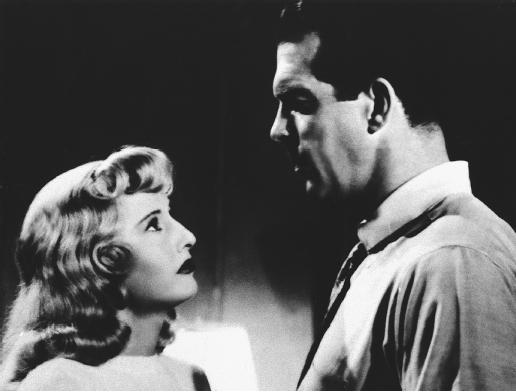
Barbara Stanwyck and Fred MacMurray in Double Indemnity– from filmreference.com

I am sure there are more than a few of us, particularly we gullible guys, who have a page of our private books dedicated to one person in particular, the one who broke our hearts the worst, the ones who came into, or more likely passed through, our lives at a point when the people we were becoming had not yet formed, when the clay was still damp, and left an impression, like a teen tagger in wet concrete. How does that scarring affect the rest of our lives? What directions do we take, or avoid, as a result? Two words work to describe George Foss once Liana returns to wrapping her desires around his dreams, poor bastard

The story is told in two time lines. The earlier covers the time when Liana and George first got together, in college, and George’s attempt to find out what was really going on with his gf of a semester when she takes a powder. This includes learning about Liana’s life in her Florida home. The latter, and larger stream is contemporary, and includes a crooked ex boyfriend from whom Liana snatched half a mill, an impressively violent enforcer sort, George’s on-again-off-again gf, a mysterious house well off the beaten path, and a payload of diamonds.

There is indeed a mystery here. Can anything Liana says be believed? What is the truth of her tales, both now and in the past? What is the nature of her relationship with her erstwhile bf and with the thuggish Donnie Jenks?

Mary Astor and Humphrey Bogart in The Maltest Falcon – Image was taken from Lassothemovies.com

A few cops cross the stage but there is no primary PI in this noir tale. This book is less Raymond Chandler, and more North by Northwest. Liana’s favorite book is Daphne Du Maurier’s <i>Rebecca</i>, and you might extract some value by keeping that in mind. George has a cat named Nora, which might be a nod to The Thin Man, which featured Nick and Nora Charles. But I expect that one is a stretch. Are the references to hot and cold calculated nods to The Postman Always Rings Twice, or are we going all taffy-like again?

Liana is a person with several aliases, and that always makes one suspect there is content in here about identity. How do we become who we are? Can that change? What if people cannot or do not accept us for who we are? Can we ever get away from who we were? Notions of this sort abound.

I had become this different person, this person I’d rather have been—you know, in school, doing well, with a boyfriend, a boyfriend like you—but it was like I had a secret disease, or there was this clock inside of me, ticking like a heart, and at any moment an alarm would go off and [the girl I was then] would no longer exist. She’d die and I’d have to go back to being Liana Dector.

There are always some hesitations. I thought the notion of the book’s title was less than meets the eye. Few of the subsidiary characters come to life, much. But when you are flipping through pages as fast as I did and you will, such things generate as much concern as notions of morality to a sociopath. <i>The Girl With a Clock For a Heart</i> is a must-read thriller. Once you pick it up you will not be able to put it down, unless of course, that special someone from that special time all those years back should show up at your favorite reading spot and ask you for a favor. One look in those eyes and you know you won’t be able to say “no.”

Lauren Bacall – From noirwhale.com

========================================INTERVIEW

Peter Swanson graciously agreed to answer a few questions about his book. The responses here have been only minimally edited:

PLACE

How important is place in The Girl

What’s most important is the difference, class and otherwise, between New England and the fictional Sweetgum, Florida. Liana wants to reinvent herself, and part of that is leaving the town she lived in and never coming back. And when George visits Sweetgum it is important that he is out of his element.

Could it have taken place in locations other than Connecticut, Boston/New Essex, Florida?

The important thing would be the differences between the locations. The book is currently under option by a British film company, and writer/director James Marsh is working on an adaptation. I spoke with him about setting the story in England, which is his plan right now. He wants to substitute Oxford for Boston and a seaside town in East Anglia for Sweetgum. I thought this completely worked.

Why Tulum, and not, say Rio, Cancun, or the French Riviera?

The short answer is that I’ve been to Tulum and haven’t been to Rio or the French Riviera. The longer answer is that I just think there’s something incredibly evocative about Tulum, those Mayan ruins hovering above the ocean.

WRITING

On your blogger profile, you list yourself as a writer of crime fiction and poetry.  Which came first?

Poetry came first. I’ve been writing it since I was a kid, and for most of my twenties and thirties I worked very hard at becoming the best poet I could be. I’m not sure that worked out quite the way I had planned, but I wrote a few poems that, when I read them today, don’t make me physically ill. So that’s good.

Do they get equal time or is one dominant?

Right now, fiction is entirely dominant. I only write poetry now when I get an idea for a poem, and that happens very infrequently. I think I’m tapped out on poems. I don’t really write confessional poetry—e.g. Grandpa’s funeral, running into ex-girlfriend, etc.—so I sometimes feel like I’ve said all I can say in poetry form. This is one of the reasons I decided to do The Hitchcock Sequence, a sonnet for every Hitchcock film. It gave me a subject matter

You have written a lot of short crime fiction. Have you considered other genres, say police procedural, or horror or sci-fi?

I’ve written some horror short fiction and a little bit of sci-fi. It’s a matter of ideas, more than anything, and almost all of the ideas I get fall into the realm of mystery/crime. I like the idea of writing a solid police procedural but that involves a lot of research, and I’m pretty lazy about research.

When did you decide you wanted to write novels?

I started writing novels about ten years ago. At first, I just wanted to see if I could do it. I wrote a classic whodunit in which the amateur detective is a visiting writer/poet at a university. It was hard work, but more than that, it was a lot of fun. I loved spending a year in one fictional world, and I loved the feeling of finishing the novel, getting to the last page.

When did you start working on this one? Was it a prolonged gestation?

The Girl with a Clock for a Heart began life as a novella. It was essentially the college-years section of the book. My agent was the one who suggested that it could be turned into a book. The whole process probably took about two and a half years.

You are writing sonnets for all of Alfred Hitchcock’s films. Is that project complete?

All the sonnets are written, although a few them definitely need to be tweaked, or even re-written. I’ve been sending the poems out individually to journals and online magazines, and several have been published. At some point I’ll see if I can find a publisher for the whole sequence.

What impact did Hitchcock’s work have on your writing in The Girl?

Hitchcock is my favorite filmmaker, and he’s a big influence for that reason alone. Out of his 53 films there are at least ten or so that I re-watch frequently so they just seep in. James Marsh commented to me that he thought there was a real Vertigo vibe going on in The Girl with a Clock for a Heart, and that was news to me, although maybe he’s right. Definitely Irene is based on Midge, the Barbara Bel Geddes character from Vertigo.

THE GIRL

What was the spark that started your engine in writing The Girl?

I was thinking about the difference between going to college now and going to college when I did, back in the 1980s. Nowadays, most teens have an established online identity. When you arrive as a freshman and meet someone new you probably run back to your room and look them up on facebook and find out everything about them. But in the olden days all these kids arrived in college, and they had a real opportunity to reinvent themselves. No one knew anything about anyone. That was the spark that led me to wondering how far a freshman year re-invention could go.

When you were writing did you have particular faces in mind, people you know, relatives, neighbors, actors?

I do and I don’t. Usually, when I start writing a character, I picture what they look like, often using actors, but as I keep writing that connection seems to fade. As I said before, when I pictured Irene in this book I was picturing Midge from Vertigo. Short blonde hair, glasses. But she’s the only character in the book that I had a real specific person I thought about.

Barbara BG
Barbara Bel Geddes as Midge in Vertigo

I heard that there is a sequel in the works,

There actually isn’t. The book I’m working on right now is a new standalone thriller. I would write a sequel but I would need to come up with an idea first that would get the characters back together, and that hasn’t happened yet.

TECHNIQUE

What is your physical writing methodology re when and how long?

I work at home in the morning, on my computer. I write 500 words a day on whatever it is I happen to be working on. That makes it sound like I’m incredibly disciplined but I do a whole lot of procrastinating before I start to write. Sometimes it’s reading, and sometimes it’s looking at mindless stuff online, or playing Candy Crush on my phone, but after doing that for a while, I eventually settle down into writing. I write my 500 words and then I quit. The most important part for me is that I’m writing every day, plus I think it’s important to read what you’ve written that day before you fall asleep. A lot of work can get done during a good night’s sleep.

In that case there are a lot of us who are incredibly productive. Thanks so much, Peter, for so generously offering your time.  Best of luck with The Girl. I hope a lot of people get a chance to read it.

==============================EXTRA STUFF

A fun site that deals in you-know-what, Noirwhale.com includes a lovely list of further links

A short story by Swanson, With the Lights Out

Leave a comment

Filed under Interviews, Reviews

Visitation Street by Ivy Pochoda

Visitation Street is my favorite novel of 2013

If Ivy Pochoda never writes another book, this one would be enough to keep her name on the lips of readers for decades to come. On a hot July night in Brooklyn’s Red Hook neighborhood, (named, BTW, for the color of its soil and an erstwhile geographical point, not for the hook-shaped pier that juts out from it today) two fifteen-year-old girls, Val Marino and June Giotta, looking for a little fun, take a small raft out into the city’s upper bay.

Only one returns, found unconscious under the pylons of a local pier.

What happened?

There is danger in being in love. When we are in love we tend to lift up the things about our beloved that appeal, while minimizing, if we see at all, the things that do not. My feeling about Visitation Street reminds me of that. There is an air of ecstasy about it, as if I have found The One. And maybe there are flaws that I simply cannot see because of the overwhelming feeling of excitement that I experienced while reading this book. For what it’s worth, I have had this feeling several times in the last few years, with The Orchardist, Caribou Island, Billy Lynn’s Long Half-Time Walk, and Skippy Dies, to name a few. I have not felt any regret about declaring my love for them, and do not expect any regrets this time around. But just so’s ya know. Ahm in luuuuv. My wife understands.

This is a magnificent book, very reminiscent in power and achievement to Dennis Lehane’s Mystic River. In fact the book is released under the imprint Dennis Lehane Books, and seeing how reminiscent it is of Mystic River that seems appropriate. Ivy Pochoda has achieved a stunning success in so many ways in Visitation Street that it is difficult to know where to begin. How about characters?

Pochoda clearly has a gift for portraying people. Val is struggling to remember what happened that night, and we feel her pain as she travels from forgetting to remembrance. Eighteen-year-old Acretius James, Cree, struggles to overcome the death of his Corrections Officer father, Marcus, and to find direction in his life. He spends a lot of his time on a beached boat left by his dad.

Was this boat, seen on a pier off Beard Street, the inspiration for this?

Will he remain moored in the rubble of the past or find a way to sail forth? Jonathan Sprouse, a musician and music teacher at a local parochial school, and borderline alcoholic, has a lifetime of descent interrupted by an opportunity to do something worthwhile. He hears the world differently from you and me.

The wino’s voice catches Jonathan’s ear. It’s dissonant, all flats and sharps with no clear words.

and later

Nearly every day Jonathan tells Fadi about a piece of music that’s perfectly suited to the moment. Last week he said, “It’s an afternoon for Gershwin. Mostly sunny, a little snappy, but with a hint of rain.” And two evenings ago he asked. “Did you see the sunset? Only Philip Glass could write a sunset like that.”

Fadi is a bodega owner, invested in helping his community, and he works to try to unravel the mystery of what happened to Laura Palmer June Giotta. (and what is going on across the street from his shop with the owner of that place and the wino who seems always to be hanging out there?)

Here is the real-world place that provided the model for Fadi’s

Finally, Ren is a mysterious protector who appears, seemingly out of nowhere, to watch over Cree and Val. (For those who are familiar, think the Super-Hoodie character in the British TV series, Misfits) Pochoda makes us care about every one of these people. She breathes life into them, giving us reasons to want them to succeed. We feel the love for these characters that their creator obviously does. But they are all, well, except for Fadi, damaged people, sinking, needing a life preserver of one sort or another. Val is a basket case after that night. Jonathan was born playing first violin and somehow finds himself at the back of the orchestra. Cree suffers from the loss of his father and Ren has a dark past that has defined much of his life. But they struggle to rise above the waves, and we cheer their efforts.

Next is the landscape, which, in this case, is the most significant character in the story. When SuperBitch Sandy raised the ocean’s wrath in 2012, devastating large swaths of the East Coast, it was not the first time that Red Hook had been laid waste. The area had once been the primary entryway of grain to the nation. Large proportions of the nation’s sugar was imported and refined in Red Hook, and a considerable swath of the metro area’s beer was processed there. But the dock jobs moved to newer ports, the neighborhood was bisected when Robert Moses carved an elevated trench through it with the construction of the Gowanus Expressway, and the crack epidemic led Red Hook to be declared one of the worst neighborhoods in the nation in 1990. But Red Hook had been making a comeback. A new frou-frou supermarket has been built in a Civil War era waterfront building (it is referred to in the book as Local Harvest, but is in reality a Fairway. I have shopped there and it is fabulous, or at least it was before Sandy destroyed it. It reopened in March 2013) The story is set in 2006. There is now an IKEA in Red Hook, occupying what was an abandoned dockyard at the time of the story. On the next pier down was an abandoned sugar refinery, which was demolished in 2007, so don’t go looking.

This image was found in Gothamist.com and permission was granted to use it here

A cruise ship terminal, imminent for most of the book, is opened by the end.

The Queen Mary II, at the Brooklyn Cruise Terminal – 7/6/13

The change in the neighborhood is part of the world Pochoda describes. There is, by the way, a Visitation Place, on which is located a Visitation rectory.

Visitation and Van Brunt

We presume that the day care center at which the girls worked is there as well. There is a real Red Hook Gospel Tabernacle to match the one in the story. People were indeed killed in this neighborhood from drug-related gang violence, most notably a school principal who had walked out of his public school looking for one of his students, and took a stray round. In the Red Hook Houses, recently devastated by Sandy, reside some 8,000 people, in less than idyllic conditions. It is still a tough place.

So we have amazing characters and a spot-on depiction of a neighborhood in transition from drug center to the next cool place. Next comes plot. There is indeed a compelling mystery, and Pochoda is no less skilled at peeling back the layers in that than she is in revealing her characters, bit by bit. You will want to know what took place and Pochoda will let you know, in due time.

Next is the introduction of a dose of magical realism. Cree’s mother, Gloria, has the sight. Enough of a talent to spend countless days talking (visiting?) with her dead husband, while sitting on the memorial bench that had been erected to his memory. (This was inspired by the death of that public school principal. A school was named for him. Cree’s father must make do with the bench.) Enough of a talent that locals come to her for help in communicating with their dearly departed. That particular strand of DNA did not come to Cree, but his grandmother and his aunt also have the ability, and there may be another family member in line as well. After that night, Val sees and hears things. Is she losing her mind? She is not alone. How the people visited by these incomings handle the stress of it is a significant element of the tale as well. Is it real at all or merely the self-inflicted manifestation of guilt?

The notion of ghosts is prominent here in Pochoda’s Red Hook. Certainly the death of Cree’s father is a spectre that continues to impact both his son and his widow. Jonathan carries with him the burden of a death as well. Val must cope with the death of her friend, and Ren not only has death-related memories that live on for him, but has seen the torment of many others.

There wasn’t a goddamned night on the inside when I wasn’t woken by somebody haunted by the person he dropped. Ghosts aren’t the dead. They’re those the dead left behind. Stay here long enough, you’ll become one of them—another ghost haunting the Hook.

Cree’s mother communes daily with her late husband. And the neighborhood itself echoes with the change from is to was:

As he crosses from this abandoned corner of the waterside back over to the Houses he becomes aware of the layers that form the Hook—the projects built over the frame houses, the pavement laid over the cobblestones, the lofts overtaking the factories, the grocery stores overlapping the warehouses. The new bars cannibalizing the old ones. The skeletons of forgotten buildings—the sugar refinery and the dry dock—surviving among the new concrete bunkers being passed off as luxury living. The living walk on top of the dead—the water front dead, the old mob dead, the drug war dead—everyone still there. A neighborhood of ghosts.

I expect that by including references to sundry locations that have now moved on to another realm, Pochoda is linking the deaths and births on the landscape with the more human ghosts that inhabit this world. All these incredible characters come to life in this book, even though they are walking through a place as haunted as any graveyard.

The final piece here is the power of Pochoda’s writing. Here is a sample.

The women grow grungier and sexier the later it gets. Soon they bear no resemblance to the morning commuters who will tuck themselves into bus shelters along Van Brunt on Monday, polished and brushed and reasonably presentable to the world outside Red Hook. Nighttime abrades them, tangles their hair and chips their nails. Colors their speech. At night, the hundreds of nights they’ve passed the same way begin to show, revealed in their hollowed cheeks and rapid speech. Jonathan wonders how long it takes for their costumes to become their clothes, their tattoos their birthmarks. When will they let the outside world slip away and forget to retrieve it?

Really, what could possibly be added to enhance that?

Ok, there have to be a few chinks in the armor here, somewhere, right? I looked pretty closely at the geography of the events, and it seemed a stretch. For example, did Jonathan really carry the unconscious Val eight blocks to Fadi’s? Well, he is a young guy, 28, 29, so yeah, I guess it is possible. There is no inpatient hospital in Red Hook, and I have not yet found out whether there was one there in 2006. But I continue to search. The four-corners location which includes Fadi’s bodega appears to be located not at the intersection of Visitation and Van Brunt, but a block away at Pioneer Street. These are small items, and I have no trouble with the author using a bit of elastic geography to support her story. Certainly “Visitation “works better than “Pioneer,” the actual name of the street where the bar and bodega intersect Van Brunt, particularly as characters here are visited, in one way or another.

This not a book you will want to begin before bedtime, as you may find yourself reading straight through and costing yourself a good chunk of a night’s sleep. We are in can’t-put-it-down territory here. And you might want to have a good cardiologist nearby when you finish reading this book. It’s gonna break your heart.

It’s no secret. I love this book. But I’m a modern guy and this is not an exclusive love. I am more than happy to share. Don’t let this one sink beneath the waves of your attention. Reach in and pull it out. This is simply an amazing book. You must read it.

==================================INTERVIEW
I exchanged a note or two with the author since posting the review and she very graciously responded, OK’ing the use of her words here. I asked, “Do the names of the characters have personal relevance? Why June, Val, Cree, Jonathan, Ren and so on?”

A writing teacher of mine once told me that names should be simple but also stand out. Cree (Acretius) is the name of a guy I met when I was 11. He was older (19), black, and represented a teenage world that I couldn’t really imagine. It just stuck with me. Val was originally called Viv which seemed too old. Jonathan (based on someone named William who really looks like a Jonathan) was named for that reason and after a music teacher I had in high school.

It seemed to me that the neighborhood of Red Hook was supremely significant here. “Was it your intent to mirror the ghostliness of the human life in Red Hook with the architectural changes that have taken place between 2006 and now, IKEA in place of the crumbling dockyard, Fairway due but not yet arrived, razing of the sugar factory, et al, or was that a happy coincidence?”

I truly meant to capture the ghostliness of Red Hook…Red Hook was as much a character for me as any of the real live people. In my first draft I was writing about the neighborhood more than the people in it, which wasn’t so hot in terms of plot.

And as for the specifics of place in Red Hook

I lived, as I mentioned on Pioneer and Van Brunt. The Greek’s cafe was downstairs and Heba / Hafiz deli was across the street. There’s a Catholic School on Summit and an abandoned one on Henry (I think) that I used as inspiration for St. Bernardette’s. Though in all honestly, some of the interior of St. Bernardette’s is based on my school, St. Ann’s on Pierrepont St. However, the boat was on Lorraine St closer to the projects. How the hell did it get there? That was super strange. It’s so far from the water. The Bait & Tackle most certainly is the Dockyard. In fact, I’ll be doing a reading there this summer. I can’t wait.

The Red Hook Bait & Tackle on Van Brunt and Pioneer

I wondered if she had been inspired by particular art work, as there is a lot of it adorning the public spaces in the neighborhood

I really made up all the artwork in the book — Ren’s murals etc. There’s no basis in real Red Hook graffiti there. Maybe soon!

As for what is next for Ivy

I’m in LA now and it’s getting harder and harder to write about Brooklyn. I am tooling around with a book set here. Wish me luck!

Best of luck, Ivy. Although with talent like hers, I doubt she will need much.

===================================EXTRA STUFF

Ivy Pochoda, a child phenom, and later professional squash player, is a Brooklyn native. She grew up in Cobble Hill, not far from Red Hook, and she lived in Red Hook for a time as well, until signs of gentrification gave her second thoughts. She lives in Los Angeles at present. It sounds like she is there to stay, which is very, very sad. 😦

After reading this book, you might want to keep up with Ivy, so here are links to her website and FB Page.

Ok, I got a little funny in the head, (love will do that to a guy) trying to trace the movements of the characters here. Along those lines I employed Google and made a map that shows many of the locations identified in the book.

Keep in mind that several places cited in Visitation Street have changed or been replaced. The abandoned shipyard is now an IKEA. The abandoned sugar refinery has been razed. The bar on which the Dockyard is based, as we have learned, is the Red Hook Bait and Tackle Shop with maybe an idea or three from other local watering holes. (And there is a new liquor store nearby, named The Dockyard, that looks to be opening ‘ere long)

In addition to the images I splashed all over this review, there are more, on Flickr.com. Some relate to the book more than others, but all the shots in this set were taken in Red Hook.

=======================================UPDATES
3/30/13 – I came across this piece in the NY Times re what the Real Estate types, in a bit of the location renaming that is a plague here, are calling the “Columbia Waterfront District.” Get over yourselves, people. It is still Red Hook. There are some nice shots in the linked slideshow though.

7/4/13 – You must check out a video on Ivy’s site, in which she talks about Red Hook and some of her inspirations for elements of the novel.

7/11/13 – A lovely piece on Ivy in the LA Times

7/12/13 – A fun interview with Ivy in LA Weekly, focusing on bars and eateries – worth a look

7/31/13 – Library Love Fest has an interview with Ivy that get some new details on the genesis of the book

Reviews and the like
VS received starred reviews from PW and Kirkus, was named as one of the summer’s best by Gillian Flynn on Oprah’s site, and received glowing reviews from Entertainment Weekly and The NY Times

7/14/13 reading at the Bait and Tackle – by Joe Angio

2 Comments

Filed under Interviews, Literary Fiction, Reviews

The Tilted World by Tom Franklin and Beth Ann Fennelly

The authors’ first novel together

Dixie Clay woke past noon, and even waking she noted that the world sounded different from when she’d retired at dawn. As she swung her feet off the bed and into rubber boots, she looked out her window. The rain lashing Hobnob had slowed, now just fat drops plopping from greasy-looking leaves. By the time she was drinking instant coffee in her kitchen, the sun was coming out.   This had happened a few times since the big rains had started in November, but Dixie Clay no longer ran to the door. She didn’t look for a rainbow. No, she no longer hoped, merely waited for the rain, and when it came falling harder than ever, as if it’d stored up its strength in the interval, she took a bitter comfort in being right

When we think of great natural disasters in US history some chestnuts of misery pop readily to mind. The worst in terms of official body count (8,000) is the savaging of Galveston in 1900 by a hurricane ( Isaac’s Storm). Many might offer Katrina, with almost 2,000 dead and damage over $100 Billion. How about the Dust Bowl of the 1930s (The Worst Hard Time) or The San Francisco Earthquake of 1906, which killed 3,000. Maybe the Johnstown Flood of 1889. But were you aware of the great flood of 1927? Me either. On not so Good Friday, in 1927, a hundred foot wall of water burst through a levee (there were several breaches along the river) and laid waste to 27,000 square miles of land, applying the force of a couple of Niagaras to land near, and not so near the river, in effect, an inland tsunami.

description

Image taken from The Cotton Bowl Conspiracy blog

Entire towns were erased. A million homes were destroyed. Hundreds of thousands needed rescuing. What might it have been like in the time before, during and after this cataclysm?

The impending transformation of The Big Muddy to the Big Messy forms the backdrop in The Tilted World, the first joint book by husband-and-wife Tom Franklin (Crooked Letter, Crooked Letter) and Beth Ann Fennelly (Great With Child). Ted Ingersoll and Ham Johnson are undercover federal agents sent to Hobnob, Mississippi to find out what happened to two revenue agents who had preceded them, but had never returned. They happen across the results of a failed robbery, several dead participants, but find an infant survivor as well. Ted, raised in an orphanage himself, takes on the task of finding a place for the baby. In doing so, he meets Dixie Clay Holliver, a young woman married to the charming but slithery Jess, an ambitious sort who cares for money in inverse proportion to his regard for his marital vows. He is not above using violence to get his way. Dixie Clay, 22, had lost her own baby to illness. Neither she nor her marriage had ever fully recovered from the loss. Dixie leaps at the opportunity to satisfy her maternal drive. Problem is, Dixie and her Jess are bootleggers the feds are looking to shut down.

Genesis-level relentless rain keeps the river rising and the people nervous. Some rich folks in New Orleans would like nothing better than to blow a levee upstream in order to reduce the risk to their property, and they may have found someone willing to help.

There is plenty to like in The Tilted World. Our co-stars Dixie Clay and Ted Ingersoll (which calls for yet another pairing of the 21st century version of Tracy and Hepburn,  J-Law, and Bradley Cooper) are both very engaging. Evil does battle with good, or,

description

Image, from the film Serena, taken from the blog College Candy

well, some version of good. Babies need saving, huge danger mounts and a vast area is threatened. In telling us the story of Dixie, Ted and the town of Hobnob, Franklin and Fennelly also give us a taste for what the locals experienced in that dreadful time, the daily reports on the water levels, weather reports from up and down the river, news of threats to the security to the levee and the offer by some to actually buy the town in order to destroy it by blowing up the levee. There are also some elements of political historical interest, most particularly concerning the role and intentions of Herbert Hoover in the disaster recovery. (Heck of a job, Herbie.)

It is an interesting, engaging and fast-flowing read. You will care about the two main characters and learn something about the time and place. However, there are significant problems with the book. One is a cartoonishness. Dixie Clay is presented at times with a Disney-like aspect. The authors had already established that Dixie is a good egg, but give in to a princessy urge when they gild that lily by having her free a trapped hummingbird. I guess the dwarves were not available, although a relation of her husband fills some dwarfish roles later.

description

Image taken from the blog BplusMovieBlog.com

Her husband, Jess, is such a black hat he should have been named Snidely Whiplash.

description

There is a corrupt local sheriff who refuses to listen to reason, (where have we seen that before?) and, returning to Disney, there is a particular affinity for orphans here. Toss in an addled flapper who reeks of madness. This is too bad, as the informational payload of the tale is considerable.

Another significant gripe I had with this novel was that a core conflict is resolved off screen, and is related to us by a participant. This should have been in center stage. The ease with which Ted and Dixie locate some missing folks strained credulity as well.

But I do not want to end with a negative slant. There are very compelling scenes of the flood, burning of Atlanta, cinematic opportunities of the highest order. Dixie and Ted are very engaging. Despite her hummingbird moment, Dixie is more Mulan than Snow White, (the cartoon Snow, not the more kick-ass version in the current TV show, Once Upon a Time) a tough and determined survivor with very positive inclinations. If you can retain behind a mental levee concern about some of the questionable choices made by the authors you will definitely enjoy The Tilted World, come hell or high water.

========================================EXTRA STUFF

Here is a Wikipedia entry on the the Great Mississippi Flood of 1927

Archival footage of the event, a signal corps film

Riveting photos of the flood

Leave a comment

Filed under Reviews

And the Mountains Echoed by Khaled Hosseini

Khaled Hosseini’s And the Mountains Echoed reverberates with content and feeling

The tale of how my father lost his sister was as familiar to me as the stories my mother had told me of the Prophet, tales I would learn again later when my parents would enroll me in Sunday school at a mosque in Hayward. Still, despite the familiarity, each night I asked to hear Pari’s story again, caught in the pull of its gravity. Maybe it was simply because we shared a name. Maybe that was why I sensed a connection between us, dim, enfolded in mystery, real nonetheless. But it was more than that. I felt touched by her, like I too had been marked by what had happened to her. We were interlocked, I sensed, through some unseen order in ways I couldn’t wholly understand, linked beyond our names, beyond familial ties, as if, together, we completed a puzzle. I felt certain that if I listened closely enough to her story, I would discover something revealed about myself.

In the opening chapter of And the Mountains Echoed, a poor father tells his children a story. A monster ravished a town until a child was offered to appease him. In order to save the rest of his family and the town, a father sacrifices his favorite child to the monster. Years later, unable to recover from the sorrow of this decision, the father scales a mountain to reach the monster’s fortress, seeking to bring his son home. But, finding that the boy is happy, well-fed, clothed and educated, he reconsiders. In this story is the core of the tales to come. Hosseini writes of the bond between parents and children, and the sacrifices some parents make to see that their children are well looked after. Does the benefit of a more comfortable home, a richer material upbringing, outweigh the loss of that natural parent-child experience? The theme of parenting, with complications well beyond the keep-or-send-away element, permeates.

The son of a wealthy local big-shot comes to realize that his comforts come at the expense of others. A massively scarred girl is left by her mother in the care of someone who is probably better suited to raise her. A young woman sacrifices years of her life to take care of an ailing parent. A war-ravaged child is taken in by one of her caregivers.

I am forever drawn to family as a recurring central theme of my writing. My earlier novels were at heart tales of fatherhood and motherhood. My new novel is a multi-generational family story as well, this time revolving around brothers and sisters, and the ways in which they love, wound, betray, honor, and sacrifice for each other.

There are sibling issues galore here. An ugly duckling twin gets revenge on the favored twin, but takes on a considerable burden. A brother and sister who were very close, are torn apart at an early age, and must cope with the absence, of that missing other part of themselves. Friendships that seem more like sibling-hood sprout like poppies in Helmand. A Greek boy is joined by the daughter of his mother’s best friend. She remains longer than expected. A fast, but fragile friendship forms between a rich boy in Afghanistan and the son of a poor man.

The cast here is international, as is the selection of settings. Hosseini was born in Kabul, but, as his father was an ambassador, he was exposed to the wider world. Dad was posted in Paris when the Soviets invaded Afghanistan. Hosseini’s time in France informs the parts of the book that are set there. Eventually his family immigrated to the USA, taking up residence in California, another site in the novel. He has visited his homeland since growing up in the West, like émigrés we meet in these pages. One Afghani emigrant struggles with the tension between remaining connected to his homeland, in a very concrete way, or maintaining his separation. How much responsibility for dealing with Afghanistan’s problems lies with those who have moved away?

Hosseini, best-selling author of The Kite Runner and A Thousand Splendid Suns returns us to a world, or rather worlds that we have seen before, a harsh Afghanistan as the emotional and table-setting core, and western locales in which are echoed the events of the old world.

…when you grow up in a Third World country, you know, poverty and affluence are juxtaposed. It’s literally next door — you don’t have to go to another zip code. It’s right there when you walk out in the street, and there are beggars and so on and so forth. So it becomes part of your life, and you can either not, just not reflect on it, but I must have, because I remember my stories always had to do with these things. There was always some guy who came from a very affluent background and some person who came from a much less privileged background, and their lives collided in some way, and tragedy would ensue inevitably. I mean, sort of a recurring theme in my stories

One of the points Hosseini makes here is the commonality of East and West, despite outward differences. He mirrors many of his characters’ experiences. People sacrifice themselves to care for those in need of help in both places. Parents are no less stressed in the West than in the East in terms of struggling with decisions about their children. Pain is too much for some in both worlds. In both worlds there are characters who cannot face their futures and opt out. In both worlds young people sacrifice themselves to care for others. In both worlds there are characters who are seriously damaged physically and must cope with adapting to worlds that value beauty or at the very least normalcy. In both worlds parents give up their children. We really are the same beneath our cultures and histories.

I do not have a comparative character count here, but it was my sense that this was a larger book than his first two. Each of those focused mostly on a smaller group of actors. This time it seemed there was more of an ensemble cast, in multiple stories. The links between some of the elements were a bit tenuous, as if a short story that was lying around was modified enough to serve a purpose in this larger tale and inserted. It is a large landscape and I felt that on occasion we wandered too long away from some of the primary characters, maybe lost some parts of their lives. To compensate for this, when we get back to them, we are offered a reader’s digest condensed report of what has happened since last we checked in. This created a bit of distance.
That said, there is vast world of feeling here. Not only the agony of parents who feel they must give up their children, but the pain of other sundered familial connections as well. There are deep scars of guilt for terrible acts, and the pain of love denied. There is also joy in finding a kind of love where hope was slight, in reconnecting with those long lost, with saving and being saved. The echoes in the mountains are the sounds of tears, of both anguish and joy, universal, penetrating, human. Listen.

Leave a comment

Filed under Literary Fiction, Reviews

We Live in Water by Jess Walter

Long-listed for the Frank O’Connor Short Story Prize


Now…you know what we know.” Her voice went even lower. That nobody chooses. That we’re all sick. We’re all here.”

There are various forms of sickness in Jess Walter’s baker’s-dozen collection of bleak stories. Alcoholism, drug addiction, obsession, greed, dishonesty, some zombification, or the most uncurable of all, being born poor. The megafauna all glooped up in La Brea had as much of a chance to escape their situation as the characters in these tales, although some of Walters’ people do make an effort. The setting is mostly Spokane (or in this case Spo-can’t) with a few outings to Seattle and Portland, and even a road trip to Vegas.

The town, btw, is named for the Native American tribe, whose name means “children of the sun.” No sun children here. I am not sure the sun ever breaks through the overcast, but when it does, it is quickly clouded over. Or it might indicate the eye of something unpleasant wandering by.

The first story, Anything Helps, simply knocked me on my ass. Wayne Bittinger, aka Bit, is homeless, reliant on the Jesus beds for an occasional mattress, descending to cardboard when he must, an experienced beggar, a fellow with alcohol issues, and with a son who has been taken in by some religious sorts. He needs permission from the state to see his own kid. The light in his world used to be reading Harry Potter books to his child, but now he has to scrounge nickels and dimes to buy a single book, and then has to break some laws just to get it to his son. Bit may have brought some of his misery onto himself. Choices had clearly been made, bad ones, but were all his problems of his own doing? His rough go pounded on some of my fears. I, too, loved reading Harry to my progeny. And while I have never had to live on the street, it is not beyond the realm of possibility that in today’s compassion-free America I might someday get to have the experience. No substance issues for me, yet, at least not since I stopped smoking in 2002, but I related like a brother to Bit, and sobbed on reading this story, big, heaving, wailing tears, fuh real.

I was reminded of Baskin Robbins while reading this book. Thirty one flavors, it seemed, but of pain, despair and failure. Walter offers a portrait of the underclass, looking at people who have made bad choices, people who have been cast in dark dramas by a hostile director, and relationships that seem likely to be noted on page one headlines of the wrong sort. One saving grace lies in some of the parent-child connections. Bit’s love for his child is palpable, even if his ability to express it is limited. Other fathers attempt to protect their young. But there is an undercurrent. While outcomes are often the result of bad decisions, the environment as a whole seems designed to keep people in their places. This enclosure may not be as concrete as Stephen King’s dome, but it contains its residents quite well anyway. In fact, the core image is one of being trapped. I won’t give away the specifics of it, but let’s just say that the people here might as well have checked into the Hotel California. Hell, most of ‘em were born there.
There are the odd bright spots. One decent guy prevents his boss from screwing a customer. One convict truly wants to do some good in the world. The oft-mentioned Bit really, really does love his kid. A convict on temporary release finds a golden moment on the outside. A father relates his own childhood to that of his kids, in a warm and useful way.

Walter’s characters are significantly flawed, more often than not. You may not feel quite the connection I did to Bit, but there are likely to be at least some folks on these pages who ring your bells, tug at your heart, and maybe lift your wallet.

Along with the dark content, considerable skill is on display here from the author of Beautiful Ruins and The Zero. We Live in Water may offer up a polluted lake, but it is still worth diving in, just to see what else is swimming around.

========================================The Stories

Anything Helps – see above

We Live in Water – a low level crook finds that screwing the boss’s wife and stealing his money is not a good career move. The son he loved and tried to protect, comes back many years later to find out what happened to dad.

Thief – when dad sets out to find who has been nicking change from the vacation savings jar, he must confront his own childhood behavior.

Can a Corn – a con on a medical leave chooses a form of freedom usually denied him. Some powerful imagery in this one.

Ken reeled in a dull catfish, yellow-eyed and spiny. No fight in it. Almost like it didn’t mind.

Virgo – An obsessed and rejected lover uses his position at a local newspaper to make life difficult for his ex, resulting in collateral damage.

Helpless Little Things – Every short story collection, it seems, needs an O Henry entry. In this one, a latter day Fagin meets his match.

Please – A father seeks to remove his son from the mother’s meth-lab home

Don’t Eat Cat – a zombie tale, that says more about how people can become undead (underclass) than it does about their behavior once turned, and how the uppers view of the unders (reminiscent of the UK telly series In the Flesh, which is highly recommended, btw))

The New Frontier – nothing JFK-ish here – a Vegas trip with a pseudo friend looking to save someone who may or may not need saving

The Brakes – a mechanic does a bit of good for an undeserving recipient

The Wolf and the Wild – a white collar criminal doing community service aims to make a better life for himself and those he is assigned to

Wheelbarrow Kings – a couple of down-and-outs scrounging to make a buck and contending with their lack of knowledge

Statistical Abstract for My Hometown of Spokane, Washington – like it says, a portrait of despair, by the numbers, and telling the narrators tale, in numbered paragraphs, mixing stats and personal info

8. I was born in Spokane in 1965. Beginning in about 1978, when was thirteen, I wanted to leave.

9. I’m still here.

Posted July 15, 2013

Leave a comment

Filed under Reviews, Short Stories

Gulp by Mary Roach

Mary Roach’s Gulp goes down easy

When it comes to literature about eating, science has been a little hard to hear amid the clamor of cuisine. Just as we adorn sex with the fancy gold-leaf filigree of love, so we dress the need for sustenance in the finery of cooking and connoisseurship…Yes, men and women eat meals. But they also ingest nutrients. They grind and sculpt them into a moistened bolus that is delivered via a stadium wave of sequential contractions, into a self-kneading sack of hydrochloric acid and then dumped into a tubular leach field, where is it converted into the most powerful taboo in human history. [no, not wearing white after Labor Day]

If I had my own university I would see to it that Mary Roach received an honorary doctorate in Scatology. She does seem to have a predilection for investigating elements of human functions that would be considered indelicate in polite company. Of course, to my not-so-inner-Beavis, this is mother’s milk. (Oh, god, no. Is she going to look into that next?) So far, Ms. Roach, a science writer, has managed to process information and squeeze out books on dead bodies (Stiff), the afterlife (Spook: Science Tackles the Afterlife ), some of the more personal elements of space travel (Packing for Mars) and sex (Bonk: The Curious Coupling of Science and Sex). In Gulp, Ms. Roach looks into the details of how, during our corporal existence, we fuel the engines that allow us to scoot between planets or partners, and which make it possible to contemplate what should be done with our remains.
description
Mary Roach – image from The Reading Lists

Mary takes us on a lively cruise down the alimentary canal, which lies somewhere between Love Canal and Root Canal, but with more jokes. Really though, a canal is what we are. Stuff in, stuff out, and an increasingly complex control mechanism to make sure it keep flowing. Philosophy? Religion? Civilization? Whatever. Feed me. Let me poop and pee and the rest is gravy. Because, you know, if you can’t or don’t eat, everything else is moot. (Insert anorexic model joke here) If you can’t get rid of the final product, everything else is really nastily moot. So, while our trip with Captain Mary may lack the derring do of the good ship Proteus, (and the wooden leg of that other well-known cruise) it is a fantastic journey from here to there, and most definitely not back again.

As with any sightseeing outing, your tour guide will point out the structures along the way that are considered to be of interest. All ahead full and pay no attention to those white particles dangling from the tree roots along the side. We begin our look inside by examining how smell affects the way things taste to us. If you smell a rat, it might be because of its diet, of which more later. Our first stop is the nose, along with our sense of smell, which functions as the body’s TSA, with its own list of items that may not be brought aboard.

description

Hold on for a bit as the captain steers the boat into an unexpected cul-de-sac. While there, you will pick up some info on the food you get for your cats and dogs. Ok, backing out and here we are, looking at the appetite for organ meat in various places and cultures, what is good about it and how many of us consider it nasty. It is in this chapter that we discover that Narwhal skin turns out to be rather tasty.

Around the bend and down the hatch, Ms. Roach spends some time pondering the question of whether, like one jaw-weary fellow in 1903, we might believe that by chewing one’s food very, very thoroughly, one can gain greater nutrition from it than someone could by chewing it a more typical number of times. And while you are mulling that over, Roach goes poking into the strange case of Dr. William Beaumont, the researcher, and Alexis St Martin, his personal guinea pig, the proud possessor of an ill-healed and surprisingly non-fatal gunshot wound to the torso. It scarred up oddly and left the enterprising Doctor Beaumont direct access to Mister St Martin’s stomach. Let the testing begin, and go on and go on. Hey, come back here. I’m not done. For a feature length look at this, up that tributary on the left, you might poke your nose into Open Wound: The Tragic Obsession of Dr. William Beaumont by Jason Karlawish. Next, Captain Mary points out the surprising relationship between spit and laundry detergent, actually between spit (there are two kinds, neither of which is called warm) and a lot of things, and why we like our foods to be crispy and crunchy. And if you were wondering if this little excursion included the risk of being devoured by large living creatures, Roach can fill you in on the odds of surviving inside a leviathan’s stomach.

description
From Heidelblog.net

There are plenty more sights to be seen on this journey, subjects like ways of eating oneself to death, the explosive danger of intestinal gas,

(“I know a case, this was fifteen years ago, where the man ate a huge meal and then took an inordinate amount of Alka-Seltzer.” [Dyspepsia expert Mike] Jones made an exploding sound into the telephone. It was like that Monty Python sketch, the Wafer-Thin Mint, where the guy is gorging himself and finally he goes, “I’ll just have this one wafer-thin mint…’”)

 Animated Gif on Giphy
From GIPHY.COM

and the booming field of flatulence.

description
From Flixter.com
(I bet you thought I was gonna go with the infamous bean scene from Blazing Saddles. I am much too classy for that. You will have to go there on your own. Just click this.)

And did you know that it was not only possible to ignite farts, but are some people who have flammable belches?

Roach gets to the bottom of the practice known as keistering, and hooping. Prison is a likely lab for such research into the use of the rectum as a cargo hold. The storage capacity is impressive, to the point that one inmate was referred to as OD for Office Depot, for his hooping capacity, actually used for keistering office supplies. I’m not using that stapler.

And you will be amazed at how much of a rat’s diet consists of material that…um…emerged from the rat. So on spotting a certain rodent in Orlando, try to stop yourself from asking what it is in that taco he is toting. And you do not want to be downwind of that breath.

The colon comes in for considerable examination, and figures in a surprising theory for the cause of death of a king. She comes clean in a look at the history, reasons for and abuses of enemas. And, of course Mary lets loose when she gets the scoop on pooping. She even notes a chart that delineates the seven different types. You know you want to see it.

description
Ok. Time to squeeze yourself off the boat. Be sure to tip the guide.

Roach always delights in reporting on names that are particularly apt.

my gastroenterologist is Dr. Terdiman, and the author of the journal article “Gastrointestinal Gas” is J. Fardy, and the headquarters of the International Academy of Proctology was Flushing, New York.

I suppose the academy might be better off in Richmond, VA, in the neighborhood called Shockoe Bottom, or maybe in Proberta, CA.

A couple of minor gripes. This book could really have used an index. And the chapter on feeding Spot and Fluffy, while interesting, seemed a bit of a digression from the main journey.

That said, reading Mary Roach is akin to the pure joy one experiences from things like Ripley’s Believe It or Not, with the benefit of knowing that there is no smoke and mirror involvement. Reality is soooooo weird. And we have Mary Roach to thank for refilling our occasionally dwindling mental storehouse of disturbing images, (You will never think of Elvis quite the same way after reading this book) and fascinating scientific facts, like the possible origin for the belief in fire-breathing dragons or the medical efficacy of fecal transplants.

There is never a doubt that Mary Roach will make you laugh and teach you things you never knew before. What could be better? Ok, I mean aside from the Blazing Saddles clip.

===================================EXTRA STUFF

Here is the full vid of the wafer thin mint bit, aka Mr. Creosote. Don’t even try watching this if you get queasy easily. It requires a very strong stomach or a very weak mind.

The May 2013 issue of Smithsonian Magazine features an article by Roach, The-Gut-Wrenching-Science Behind the World’s Hottest Peppers and there is another piece in that issue that may be of interest, Why You Like What You Like by Tom Vanderbilt. BTW, the articles are named differently in the magazine and on the web site.

Other Mary Roach books we have enjoyed
—–2021 – Fuzz: When Nature Breaks the Law
—–2016 – Grunt: The Curious Science of Humans at War
—–2010 – Packing for Mars: The Curious Science of Life in the Void
—–2006 – Spook: Science Tackles the Afterlife
—–2004 – Stiff: The Curious Lives of Human Cadavers

Town Hall Seattle has an excellent audio presentation by Roach

Mary is interviewed on NPR

And in the New York Times

There is a wonderful interview with Mary on The Daily Show, a two parter. Here is Part 1 and here Part 2

Janet Maslin’s NY Times review

2 Comments

Filed under Reviews, Science and Nature