Parents Weekend by Alex Finlay

book cover

They run. Run with a primal fear knowing that if they slow down, all five of them will die.
It’s hard to think in this fog of terror.

Blane puts his hands out, palms down: “Stick to the story like we agreed.”
His gut clenches, but he makes sure to smile reassuringly. He warned Stella—warned them all—that Natasha Belov was bad news. Bad, bad news.

Five students are running for their lives. Will they survive? Why are they running? From whom? We go back three days.
description
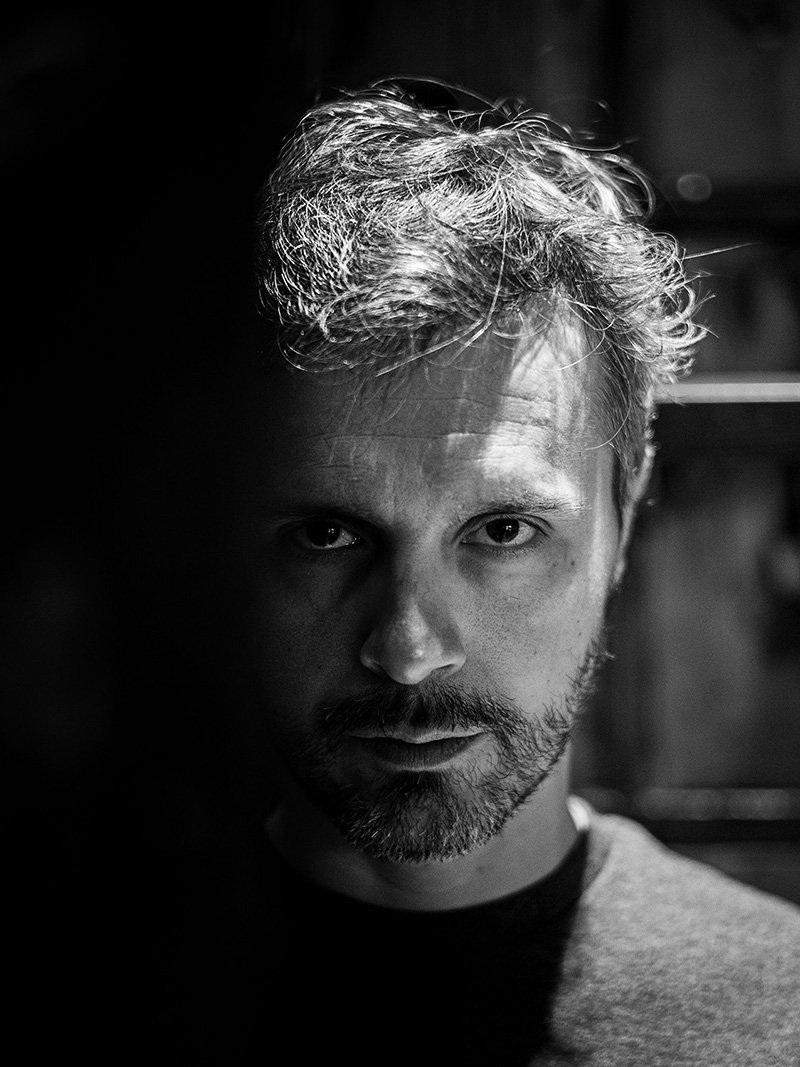
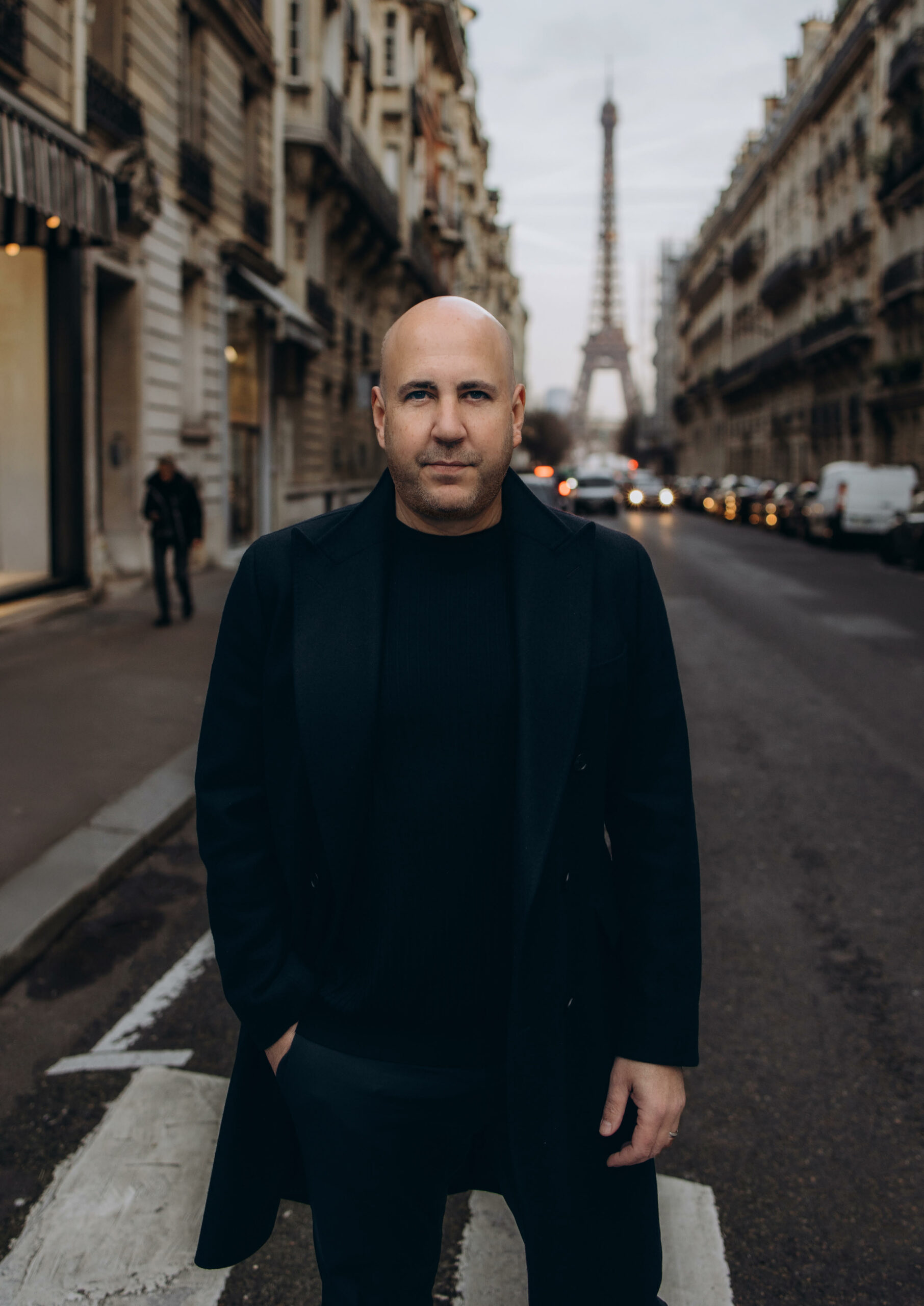
Alex Finlay – image from his site – shot by Julie Litvin

It is parents’ weekend at Santa Clara University, a private institution on the California coast. (There is an actual SCU. The author’s son goes there.) Events are planned. Parents of freshman are invited to join their children for a Friday dinner. We are introduced to the families of the five in their capstone group (Each freshman dorm breaks the residents into small groups of five to six students. They have to complete a project together by the end of the year, but spend most of the time partying.) and will subsequently rotate among them for POVs. This is standard operating procedure for Finlay, albeit with a larger cast than usual. Well, sort of. More on that in a bit. It is a mixed group.

The Roosevelts include an undersecretary of state, Cynthia, her staff and security. This is necessary as her now-college-age son, Blane, has been kidnapped before. You can’t be too careful. The Maldonados are David and Nina. He is a plastic surgeon, but it will take more than a nip and tuck to repair their marriage. Stella is their co-ed. The Goffmans consist of Alice, who is a secretary to Dean Pratt, and her son, Felix. His education is the primary benefit of a job she does not exactly love. The Akanas are Ken, a relatively famous Chief Judge of Superior Court in LA, and wife Amy. The loss of a child to cancer has made their daughter, Libby, all the more precious. The Kellers are special agent Sarah, husband Bob and their twins. Their son is Michael. Readers of Alex Finlay may remember Sarah Keller from The Night Shift and Every Last Fear.

Keller was a surprise reader favorite in Every Last Fear. I wasn’t planning to bring her back, but as I wrote THE NIGHT SHIFT she just appeared. I love writing her and her husband Bob. Both are so decent and supportive of one another, and they provide some needed moments of calm in the storm. – from The Big Thrill interview about the Night Shift, and here she is again.

Although the five families split time, most is devoted to Sarah Keller, as she takes an active role in the investigation, working closely with the head of security at the university. This is our procedural pathway. Going by the numbers, the Kellers (Sarah, really) takes up half of the chapters in the book, thirty-five of seventy. The four other families get five to seven each, and there are eight chapters assigned to individuals or the missing. This is actually a good thing as the Keller family offers a welcome relief from the dysfunction of some of the others. Tolstoy pops to mind: “Happy families are all alike; each unhappy family is unhappy in its own way.” A loving, supportive marriage in service of truth-telling. What’s not to like? This is not to say that there is much deep character study at work here. This is a thriller, after all. But there is always peril in juggling POVs that two or more may begin to sound the same. Finlay has managed that challenge well, as each is presented with a distinctive voice and personality.

There’s people who write wonderful literary fiction, and they can get into the in-depths of the character like I never could… “I don’t have a lot of internal inner monologue. I try and make you know who these characters are by what they do and what they say. – from the Read with Jul interview

They all have their secrets, well, mostly. We get to see them revealed one by one, and must consider if they have any relevance to the dual mysteries at play. It just so happens that another student at SCU, missing for several days, had been found dead, three days before. The five had been messaging each other about sticking to their story, so a core mystery; what had happened to the girl, how, and what was the involvement of the five? The presenting mystery is the disappearance of the five on the night of the Parents Weekend dinner. What is the link between the two?

There are plenty of clues scattered about, not all of them red herrings. We learn of the parents’ and students’ pathologies and strengths over the course of the investigation. There are bad people at work, and we wonder how much damage they will do before they can be identified and stopped.

Finlay sustains a breathless pace, providing the end-of-chapter hooks that keep us turning the pages. Secondary characters fill in needed blanks, sometimes offering more substantive support to notions or particular primary characters.

The tension, informed by factual discoveries and personal revelations, builds to a dramatic climax. You will get to find out if your guesses were correct. Finlay has made a habit of writing fast-paced thrillers that serve the purpose of pure entertainment. You do not need to be a student or a parent to enjoy this Parents Weekend. It would make an excellent beach, (unless you are going to a place with sea caves) or airplane read (commercial, not private jet), or even something to help you get through the down times at an actual college parents weekend. But pay attention. This will count towards your final grade.

Review posted – 06/13/25

Publication date – 05/06/25

I received an ARE of Parents Weekend from Minotaur Books in return for a fair review and a Gentleman’s “C” on that disappointing final exam. Thanks, folks, and thanks to NetGalley for facilitating.

This review is cross-posted on Goodreads. Stop by and say Hi!

=======================================EXTRA STUFF

Links to Finlay’s personal, FB, and Instagram pages

Profile – From the author’s real-name website

Anthony Franze is a critically acclaimed novelist with St. Martin’s Press, and a lawyer in the Appellate & Supreme Court practice of a prominent Washington, D.C. law firm.
For more than a decade, Anthony was an adjunct professor of law teaching courses in Federal Courts, Legal Rhetoric, and Appellate Practice, and he currently participates in a European faculty exchange program where he teaches at law schools abroad.
He writes legal thrillers under his own name, including THE LAST JUSTICE (2012), THE ADVOCATE’S DAUGHTER (2016), and THE OUTSIDER (2017) He writes commercial fiction under a pen name, [Alex Finley] and his 2021 novel was an Indie Next pick, a LibraryReads selection, an Amazon Editor’s Best Thriller, as well as a CNN, Newsweek, E!, BuzzFeed, Business Week, Goodreads, Parade, PopSugar, and Reader’s Digest best or most anticipated thriller of the year. His work has been translated into more than a dozen languages and optioned for television and film.

My reviews of two of Finlay’s prior books
—–2024 – What Have We Done
—–2023 – If Something Happens to Me

Interviews
—–Authors on the Air – Alex Finlay Parents Weekend Authors on the Air with James L’Etoile – video – 17:30
—–Mystery and Thriller Mavens – Special Pre-launch Q&A with Sara DiVello – 28:47
—–Read with Jul – chapter 86. an interview with bestselling thriller author alex finlay
—–The Big Thrill – Up Close: Alex Finlay The Ties That Bind
—–Outliers Writing University – Get To Know Author Alex Finlay with DP Lyle and Kathleen Antrim – video – 19:24 – good bits on writing process and shifting from legal novels to thrillers, and from Anthony FranZe to Alex Finlay

Songs/Music
—– AC/DC – Back in Black – in Chapter 12

Leave a comment

Filed under Fiction, Mystery, Suspense, Thriller

Happy Land by Dolen Perkins-Valdez

book cover

Calling something your own is a powerful prayer and there was God in it.

This is sacred ground for my family. I graze the tips of the grass with my palm as I wonder about their stories. Who were my people, and what had they sought on this mountain? I’ve never done any kind of family research, never had enough of a family to even know where to start, but now I’m beginning to realize, since arriving here, how much this missing hole goes beyond a decade-long spat.

When Veronica (Nikki) Lovejoy-Berry, a D.C. real estate agent, receives a summons from her long unseen grandmother in North Carolina, she senses the urgency and hurries down. Grandma is getting on, but remains self-reliant and reasonably spry.

Mother Rita was insistent—I need your help and if you come down here I will tell you everything your Mama hasn’t told you about our family. It wasn’t exactly an invitation I could refuse.

Mom and Grandma had become estranged many years earlier, erecting a wall between grandmother and granddaughter as well. During her visit Nikki is regaled with a tale that has a magical aura. The place where her grandmother lives was once called Happy Land. It was a community formed in the post-Civil-War period by freed slaves, not as a typical American town or village, but in the image of the communities from which the ancestors of its members had been taken. These people decided to create a kingdom, with a king and queen, as their ancestors had had in Africa.

description
Dolen Perkins-Velez – image from Torch Literary Arts

The story alternates between the contemporary struggle of Mother Rita to retain ownership of her land, as she fills her granddaughter in on the history of the place, and the tale of one of the original settlers of the kingdom, its first queen, Luella Bobo. We are given a very up-close-and-personal look at what life was like in the 1870s, the closing years of Reconstruction, for freed slaves, what it took to establish themselves both personally and as communities, what obstacles they had to overcome. It offers an eye-opening perspective for any who are not very familiar with the era.

description
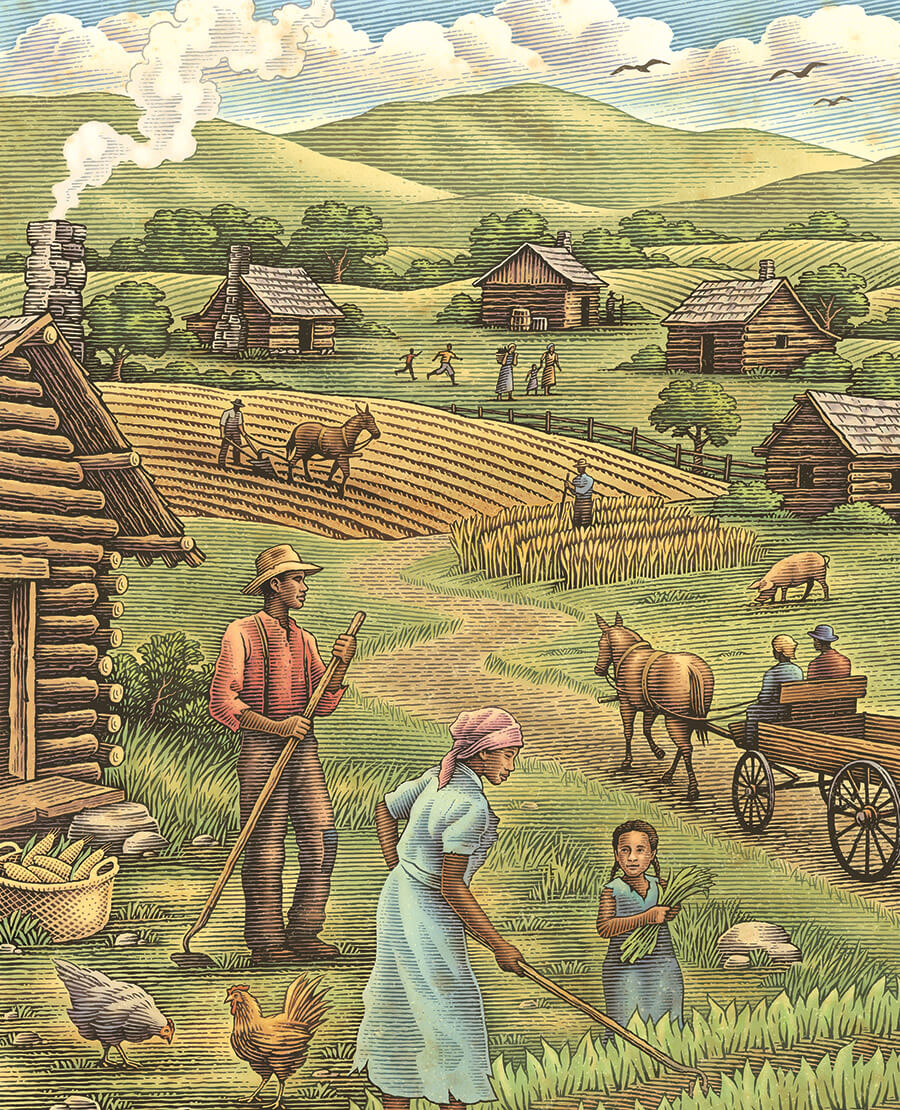
Working the Fields illustration by Erwin Sherman

Nikki is not on a mission. She is tired, struggling and unsatisfied with her life. She is eager to quickly resolve whatever it is that Mother Rita wants of her and dash back to DC as quickly as possible. She has no particular interest in history, family or other, which makes her a fair every-person stand-in for readers. It is through her POV that we slowly gain an appreciation for the importance of knowing one’s personal, and family history, and the significance of the land as an anchor for that connection. The novel is based on real events.

While researching Black history in western North Carolina, I stumbled on an article about this kingdom outside of Hendersonville. It was just a local newspaper, and I thought, “What is that?” It was a very brief article with an illustration showing that there had been this Black community during Reconstruction in the mountains. – from the Rumpus interview

Mother Rita does her best to pass on to Nikki the lore and knowledge she has tended her entire life.

All my life, I’ve been part of a small family circle. By the time my daddy was 20, both of his parents had passed away. He and Mama, with their desire to build a family out of nothing, were a perfect match for each other in that way. The two of them against the world. For me, not having a sibling or even a cousin has been the only existence I’ve ever known. Now here I am, walking beside my grandmother on acres and acres of land that my people have inhabited for over a hundred years. It’s hard to put how I’m feeling into words other than to say I’m dizzy with grief. I didn’t know you could mourn something you never had.

One element is the connection to the outdoors that Rita is able to spark in her grandchild, teaching her to appreciate gardening, and to pass on her considerable expertise. Nikki slowly finds herself able to step back from her urban self to find a connection with and a love for the sights, scents, the tactile feel of this other sort of place.

After the Great Migration, so many Black people ended up concentrated in cities, and we often forget that we are fundamentally a rural people. You don’t have to go back many generations to a grandmother or a great-grandfather who was a country person. – from The Rumpus interview

description
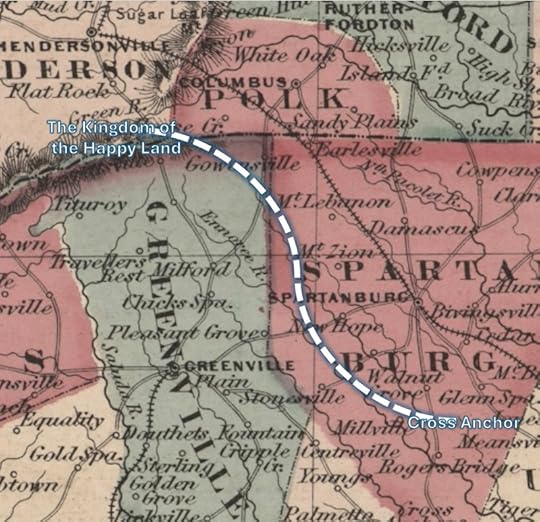
Cross Anchor, a remote township in southern Spartanburg County, S.C., was home to the founders of the Kingdom of the Happy Land before and just after the Civil War. – image from Blue Ridge Archive

A particular revelation is a particular legal mechanism used by the greedy and unscrupulous to cheat people, black people in particular, out of their land. It is remarkable just how much land was taken this way. Less surprising was the abuse of the criminal system to intimidate blacks who owned land, or aspired to do so. Equal treatment before the law remained a dream deferred. This gives the novel particular resonance in a time when the Deconstruction of the Trump era seeks to turn the clock back to an age before legal protections existed.

description
The Kingdom by Erwin Sherman

That said, Happy Land presents a message of hope. Whatever one may think of the royal approach those people favored, they took the opportunity presented by the end of slavery to make decisions for themselves, to organize their own community, to develop their own businesses, to participate in an equal way with the commerce of the area beyond their enclave. Even emerging from the horrors of enslavement, and suffering the ongoing oppression of those who preferred the ownership of human beings as property, these people kept the light of possibility alive. It is a surprising and moving story, which offers us historical reason to keep our spirits receptive to the need for and possibility of hope in an increasingly dark time.

In fall of 1873, a group of freedpeople left Spartanburg County, South Carolina, headed north across the state line into North Carolina. Near Zirconia, North Carolina, the people established a remote community that they called a kingdom. They named a king and queen, formed a communal treasury, and eventually purchased 205 acres of land in 1882 from John Davis, land that was spread across the North Carolina–South Carolina state line. Approximately half was deeded to Luella Montgomery and the other half to Robert Montgomery.
At its height, it is believed the kingdom numbered over two hundred people.
– from the Author’s Note

Review posted – 6/6/25

Publication date – 4/8/25

I received an ARE of Happy Land from Berkley in return for a fair review. Thanks, folks, and thanks to NetGalley for facilitating.

This review is cross-posted on Goodreads. Stop by and say Hi!

=======================================EXTRA STUFF

Links to the author’s personal, FB, Instagram, and Twitter pages

Interviews
—–The Rumpus – The Kingdom of Happy Land: A Conversation with Dolen Perkins-Valdez by NEFERTITI ASANTI – APRIL 28, 2025
—–NPR – Author Dolen Perkins-Valdez discusses her new novel ‘Happy Land’ by Michael Martin
—–May 2025 Feature: Dolen Perkins-Valdez by Jae Nichelle – begins down on the page, after the excerpt
—–Writers Digest – Dolen Perkins-Valdez: On History’s Untold Stories – More about her prior novel, but still quite interesting

My reviews of earlier work by Perkins-Velez
—–2010 – Wench
—–2022 – Take My Hand

Item of Interest from the author
—–Torch Literary Arts – excerpt – Chapter 4

Items of Interest
—–OurState.com – Lost & Found: The Kingdom of the Happy Land by Brad Campbell
—–Blue Ridge Archive – Welcome to the Kingdom of the Happy Land

Leave a comment

Filed under American history, Fiction, Historical Fiction, Literary Fiction, Reviews

Murder at Gulls Nest by Jess Kidd

book cover

This is a house that keeps her secrets well hidden. Her yew trees whisper together in their dour huddles and her windows reflect nothing more than the darkening sky.

Gulls Nest may be quiet but Nora does not feel at peace here. Who knows what dark thoughts are brewing, what chaos is being hatched? In her old life Nora was a ship anchored firmly to the bedrock. Tumultuous waves might come and go but she knew she had a lifeline. At Gulls Nest she feels like a frantically bobbing cork in an unfriendly ocean.

Nora Breen is late of a monastery, having spent the last thirty years as Sister Agnes. A young nun had left the sisterhood, but promised to write back regularly. The sudden absence of these letters is the prompt for Nora’s sudden travels. Frieda had been staying at a seaside hotel, Gulls Nest, in Gore-on-Sea, so that is where Nora begins her search. But what starts out as a missing person inquiry takes a turn when one of the guests catches a bad case of dead. And the game is afoot.

There were several sources of inspiration. The idea of writing a former religious sister came from my childhood. I was taught by a former nun as a child. I was intrigued by her story, in terms of why she joined a religious order and then why she left, but I was never brave enough to ask her about it. The main setting of the first book, Gulls Nest boarding house, was inspired by a disastrous romantic weekend. We booked into an unnamed hotel in Kent, and it was marvellous but not perhaps in the way you’d hope for. There was a formidable landlady, haunted plumbing and eccentric guests. The house would have been beautiful in its day but was shabbily strange when we came to it. But I loved it for its character. – from The Nerd Daily interview

Kidd has planned out a series of eight Nora Breen novels. In the first we are introduced not only to Nora, but to several characters who will be returning. In the Dabble interview, Kidd talks about having a detective who is seeing the world with fresh eyes, after having been shut away for thirty years. Her age, and complete absence of ego also make her seem unthreatening. They do not, however, make her ineffective. While she had to stifle her curiosity and willfulness in the community, she is patient and very deliberate. That said, she remains very much a stranger in a strange world.

description
Jess Kidd – Image from Faber & Faber

1953 England is indeed a strange, gritty place. Still recovering from the war, impacted by the massive loss of men, and the damage done to many of the returning soldiers, and their families. Survival is all. Making things pretty takes a back seat. Gulls Nest is down at the heels, well past its prime. There is a non-zero concern about the safety of the less-than-palatable meals being served at the hotel (very reminiscent of a memorable personal hospital stay). But it is not short on quirky characters. The supporting cast in this one is quite robust. “But Gulls Nest is that sort of a place, isn’t it? Where the dreamers and schemers wash up.”

The hotel residents include Professor Poppy, a Punch and Judy showman, looking the worse for wear, with his own studio and a collection of puppets, Teddy, a well-liked caretaker at the local amusement park, his wife Stella, who clerks at the town hall, Bill Carter, a retired navy chief who works as a bartender at another hotel, Mr. Karel Ježek, a small photographer with a difficult-to-place accent, Irene Rawlings, a resentful housekeeper, the hotel owner, Helena Wells, who sports a posh accent, suggesting a reduction in her circumstances, and then there is Dinah, her daughter, a seemingly feral child who has the run of the hotel and grounds, appears in surprising places, and does not speak. A few locals, including a non-human one, flesh out the roster. Everyone in Gore-on-Sea has secrets, including Nora. Part of the fun of this novel is getting to each one.

Every cozy amateur detective requires a police contact, and DI Rideout serves that role here. We can assume that they will form an alliance. He has the added benefit of rugged good looks, and sundry characteristics that Nora cannot help but observe. But, as in most cozies, there is not much actual flesh on display, of either the steamy or cold variety. Per the genre, bodies are discovered, not actively deprived of their life forces on the page. That said, there are some scary bits.

Nora goes about her detecting business, follows clues, talks to people in the hotel and in town. She keeps her eyes peeled, pokes her nose in places beyond her remit, makes a few friends and develops a very useful local informant. Nora growing parallels Nora finding things out.

While this is a pretty-straight-ahead crime story, Kidd drops in at least one dollop of magical realism, a major feature of her prior work. Personally, I would have liked more of this, fan as I am of Kidd’s magical realism writing, but that’s just me. The 1950s setting is rich with possibility, beautifully achieved here. Kidd is a wonderful writer, and offers not only well-realized characters, but an intriguing mystery or two, and evocative atmospherics.

While it may not hold the same appeal as more exotic vacation spots, if you appreciate a little time away, with quiet days in which to read, walk the beach, enjoy a cuppa, and maybe stumble across the odd body, Gore-on-Sea might be just the place. Jess Kidd will save you a room. You will find yourself eager to return.

Nora tells herself that the world may seem confusing but it is just the sum of its parts. Take it piece by piece until you can work out the whole.

Review posted – 5/9/25

Publication date – 4/8/25

I received an ARE of Murder at Gull’s Nest from Atria in return for a fair review. Thanks, folks, and thanks to NetGalley for facilitating.

This review is cross-posted on Goodreads. Stop by and say Hi!

=======================================EXTRA STUFF

Links to Kidd’s personal, Twitter, Goodreads, Instagram and FB pages

Profile – from Calgary Women’s Literary Club

Kidd holds a Ph.D. in Creative Writing, she has earned numerous literary awards from England and Ireland, and—in addition to her novels, short stories, and children’s books—she is currently developing her own original television project.

Kidd has already written #2 in the series, Murder at the Spirit Lounge. It centers on a famous medium who arrives in Gore-on-Sea and starts taking seances. When one séance goes terribly and mysteriously wrong it seems that Nora might have a supernatural serial killer on her hands.

Interviews
—–The Nerd Daily – Q&A: Jess Kidd, Author of ‘Murder At Gulls Nest’ by Elise Dumpleton
—–Dabble – Writing Historical Cozy Mysteries With Jess Kidd by Hank Garner – video – 56:26

Items of interest – author
—–Writing.ie – Changing Genre by Jess Kidd
—–The Guardian – Jess Kidd: ‘My older sister taught me to read with Mills & Boon’

Item of Interest
—– Death in Paris – this review offers a walk-through on elements in the cozy mystery genre

My reviews of other books by Jess Kidd
—–2020 – Things in Jars
—–2022 – The Night Ship

Leave a comment

Filed under cozy-mystery, Fiction, Historical Fiction, Mystery, Suspense

White King (Antonia Scott, #3) by Juan Gómez-Jurad

book cover

The Café Moran is full. Six tables occupied by the usual kind of people who haunt such places. Antonia scopes them rapidly as she attempts to catch her breath before entering. Three couples acting like they’re listening to one another while checking their Instagram accounts, two hipsters pretending to write novels on their MacBooks, and a psychopathic killer. The last is the easiest to identify: he is the only one holding a book, not an electronic device.

What pisses Jon off about kidnappings is when he’s the one being kidnapped. You can’t walk down the street these days without someone bundling you into a van with a bag over your head, thinks Jon.

Fair Warning, there are spoilerish items in the following review if you have not yet read the first two books in the series.

It all began with Red Queen, the first book in this trilogy, named for a transnational police organization dedicated to solving the most serious, and most challenging crimes. (As with Alice in Wonderland there are games to be played, riddles to be solved) Special people (male and female) have been recruited, nation by nation, to run point on investigations. These folks have intellectual superpowers that have been enhanced by torturous training. Antonia Scott is Spain’s Red Queen. Jon Gutiérrez, late of the Bilbao PD, is her number two. Think Holmes/Watson or Don Quixote/Sancho Panza. He is there to keep her on some sort of even keel. She can get overwhelmed sometimes, and needs her special red pills to get right. Jon is trained on when to act on that need.

description
Hovik Keuchkerian as Jon Gutiérrez and Vicky Luengo as Antonia Scott in a still from Red Queen – image from The Hindu

Their first case set the pair to track the who-and-why when a criminal murdered a child of the ultra-rich and kidnapped another. Book #2, Black Wolf, pits Antonia against a Karla-level assassin, engaged with the Russian mafia. Book #3, White King, brings the mysterious mastermind, Mr. White, into the frame.

Please do not bother trying to read White King without ripping through the first two. It would only hurt your brain. If you have not read those two, stop right here, take care of that and then come back. Ok? Cool. So, you know that the Black Wolf offered the ending cliffhanger of Jon being kidnapped by dark forces.

description
Juan Gómez-Jurado – image from Zenda

As with the first book, the baddies here, for the most part, are presented as cut-out villains. Black Wolf offered the most thoughtful how-they-became-this-way look at the opposition. But you do not read these books for the deep character portraits. You read them because trying to figure out the puzzles, riddles, and mysteries parallels the rush of the repeating sequence of threat-race-resolve-release that keeps the blood pumping.

…when you think about the genre of thriller you have to have three things, social danger, physical danger for your main characters and you have to have a clock around you… – from the FLMADRID23 interview

And here we are back again. In White King, Antonia and Jon are given ridiculously short times in which to solve several cold-case crimes. Or else what? Something reeeeaaaalllly bad will happen. Tick tock.

There is not a lot going on inside the characters in these books other than concern for those close to them. All the action is on the outside, including the manifestation of Antonia’s thought processes, aside from her occasional encounters with the metaphorical monkeys that inhabit her head. Flashbacks to violent episodes from the history of Mentor and Red Queen training are interspersed with the core plot progression. They offer a clear image of one of the characters, without really going much past the basics. We get early on what is going on there, and repetition does not add a lot.

Supporting cast members offer a few surprises, as their presence in this book is enhanced and their significance in the series events is revealed, with a few walk-ons marching across the pages as needed.

Sometimes it can be a bit tough to swallow Antonia’s ability to predict events. But I guess if you give your character superpowers that sort of short-cut is to be expected. Jurado continues peppering the story with words from diverse cultures. This is a fun element.

Dharmaniṣṭhuya – In Kannada, a Dravidic language spoken by forty-four million people in India, the relief of the downhill slope. The sensation an exhausted walker has when they come to a downward stretch of the path.
Mamihlapinatapai, thinks Antonia. In Yaghan, a language spoken by a nomadic people in Tierra del Fuego, the beached eye. A look people exchange when they’re waiting for others to start something they all want but none dares initiate.

There is a persistent, but light touch of humor throughout all three books. Not LOL material, but smirk or smile-worthy for sure. Also, be prepared for some pretty nifty twists. Don’t worry. I won’t tell. But you should be pleased by them. The individual mysteries exist under the arch of a larger, all-encompassing mystery. Jurado looks to tie up the loose ends, mysteries and miseries from the entire series, so you can look forward to some satisfaction there. The pace of White King is relentless. While it seems unlikely there will be more books in the series, given that it has been over five years since this one was published in Spain, but the possibility has been left open, if he ever gets the urge.

Will the Queen take the King? Your move.

Many of us sense there’s something wrong with reality, with everything around us. With the system, other people, ourselves. Yet life bribes us, it buys our silence with the gift of sleep. She, on the other hand, doesn’t forget, can’t forget.

Review posted – 4/11/25

Publication date (USA) – 3/11/25

First published (Spain) – 10/24/19

I received an ARE of White King from Minotaur in return for a fair review, and agreeing to disable that device. Thanks, folks, and thanks to NetGalley for facilitating.

This review is cross-posted on Goodreads. Stop by and say Hi!

=======================================EXTRA STUFF

Links to Gomez-Jurado’s personal, FB, and Twitter pages

Profile – from Wikipedia

Juan Gómez-Jurado (born 16 December 1977) is a Spanish journalist and author. He is a columnist in “La Voz de Galicia” and “ABC”, distributed in Spain, and he participates in multiple radio and TV programs. His books have been translated into 42 languages and he is one of the most successful living Spanish authors…

Interviews
—– Juan Gómez-Jurado on his Antonia Scott thrillers: ‘There are ideas within ideas’ by Mini Anthikad Chhibber
—–FLMADRID23Publishers Weekly en Espanol | Juan Gomez-Jurado – really in English – video – 20:37
—–Hindustan Times – Interview: Juan Gomez-Jurado, author, Red Queen by Arunima Mazumdar

My reviews of Gomez-Jurado’s prior books in the series
—–2024 – Black Wolf – Antonia Scott #2
—–2023 – Red Queen – Antonia Scott #1

Items of Interest
—–Google Play Books – preview – audio – 16:13
—–Wiki – Karla – an assassin in the John Le Carre George Smiley series

Leave a comment

Filed under Fiction, Mystery, Suspense, Thriller

Something in the Walls by Daisy Pearce

book cover

… just after Christmas, Alice Webber started to get sick. She complained of pains in her sides like needles being pressed there. When they lifted her shirt, there was a pinprick rash and blood welling up as if the skin had been broken. A few days later she started vomiting. By this point Alice was too weak to get out of bed so her mother put a bowl beside it. When she came to empty it, she found watery bile and clots of black hair, like you’d pull out of a plughole. Another time Alice coughed up a handful of sewing pins bent into strange shapes. She developed a fever which made her start seeing things. She got delusional.”
“In what way?”
“Alice told her parents that a witch was spying on her through the chimney breast. She said the witch had a black tongue and her face was ‘all on upside down.’

“She was saying such odd things. At school, then here at home. Sometimes it was like she was listening to music you couldn’t hear, you know? I’d catch her just staring at the fireplace and her lips were moving but no sound was coming out. When I asked her what she was doing, she said”—here Lisa sighs, fretful and ill at ease. It’s clear she isn’t comfortable talking about this—“she said that the dead wanted her to open her throat.”

When Sam Hunter and Mina Ellis pull up at 13 Beacon Terrace in Banathel, an English backwater, there is a crowd gathered. Mostly people wanting something from the girl inside. They seem to think she can communicate with the dead, and there are people with whom they would love to reconnect.

description
Daisy Pearce – image from her site

Sam is a reporter who specializes in debunking superstitious claptrap and fraud. Mina is a recent graduate in child psychology. Sam had asked her along to offer an evaluation. Well, there is certainly something off happening at the Webber household

Alice Webber has tales to tell. (She’s the girl you see giggling with her friends at the back of the bus or fooling around in the arcades. Normal. Unexceptional.) She believes there is a witch living in the walls of her bedroom. She can tell because she sees the witch’s eyes looking at her through gaps in the brick chimney. It began when a group of (not really) friends play a mean trick on her at a supposedly haunted house. Now she hears and speaks in voices.

For a moment I think she is speaking—I can see her shoulders twitch, her mouth slowly moving—but the voice I hear is slurring and thick, heavy. Like a throat full of molasses. It is a language I don’t recognise, Germanic maybe. The words spread like a ripple, like oil on water, dark and tainted. It fills me with something icy and unknowing and I taste the bitterness of bile in the back of my throat.

Both Sam and Mina (“It’s my dad. He took my mother to Whitby Abbey while she was pregnant with me. My poor brother narrowly escaped being called Van Helsing.”) have arrived with significant emotional baggage. Sam lost his seven-year-old daughter, Maggie. Mina lost her brother, Eddie, when they were kids. Both Mina and Sam hold out hope that they can somehow reconnect with their lost ones, maybe reduce the guilt they both feel. Is there any chance Alice can actually help them? Alice may look like an average teen with professional aspirations that end at the beauty salon, but what if there is something operating through her?

The novel has a feel of both contemporary spook story and a folk horror tale, rich with back-country superstition, practices, and beliefs. Banathel has a long history of belief in witches, and a rich supply of hagstones everywhere you look. It is reminiscent of works like Tom Tryon’s novel Harvest Home and the 1973 horror classic, The Wicker Man, reliant on deep rural isolation.

The tension ramps up with every strange new event, encouraged by the persistence of contemporary doubt, ancient superstition, the growing crowd and its increasingly threatening regard for the girl. Do they want to help her or use her, or do they want something else? In addition, while there is a mystery in every horror tale, there is also a tension between where magical manifestations leave off and human agency steps in. Ditto here.

While it certainly seemed fun for Mina to have such a nominal root in classic horror, (a pearl among women) it did not seem to me that enough was done with her nifty name. And for a psychologist to be entangled with someone so clearly wrong for her was disappointing. (Although I suppose many of us have had that experience.) As for seeing someone looking through gaps in bricks, did no one consider maybe a bit of plaster, spackle, or poster of a favorite musician to cover the spaces? Or maybe hiring a handyman named Bert to have a go at clearing it out?

On the other hand, the lovely details of dark manifestation that Pearce weaves into her tale, the sights, sounds, and textures, add that frisson that every good horror novel needs. The overarching heat that bears down on all provides another layer of dread. It might even enhance the feel of this book for readers to take it on in July.

I have a particularly high bar for fright. It is a rare horror novel that keeps me up at night. There are real-world stresses and manifestations of evil that offer that service quite happily. Something in the Walls came close, but caused no lost zzzzzzzs here. Not to say it will not for you, who have a more usual receptivity to such things. It did, however, offer an appealing lead, a tantalizing mystery, a colorful portrait of a tucked-away place, and kept up a brisk tempo.

Most witch hunts are a bad idea, but it might be a better one to track down Something in the Walls. There may be a thrill or two just lying in wait for you.

If you gaze long enough into an abyss, the abyss will gaze back into you. – Friedrich Nietzsche

Review posted – 4/4/25

Publication date – 2/25/25

I received an ARE of Something in the Walls from Minotaur in return for a fair review, and my agreeing to get the hell out of their chimney. Thanks, folks, and thanks to NetGalley for facilitating.

This review is cross-posted on Goodreads. Stop by and say Hi!

=======================================EXTRA STUFF

Links to Pearce’s personal, Instagram, and Twitter pages

Profile – from her site

Daisy Pearce was born in Cornwall and grew up on a smallholding surrounded by hippies. She read Cujo and The Hamlyn Book of Horror far too young and has been fascinated with the macabre ever since.
Daisy began writing short stories as a teenager and after spells living in London and Brighton she had her first short story ‘The Black Prince’ published in One Eye Grey magazine. Another short story, ‘The Brook Witch’, was performed on stage at the Small Story Cabaret in Lewes in 2016. In 2015 The Silence’ won a bursary with The Literary Consultancy. Later that year Daisy also won the Chindi Authors Competition with her short story ‘Worm Food’. A further novel was longlisted for the Mslexia Novel Award…Daisy currently works in a library where she stacks books and listens to podcasts on true crime and folklore.

Interview
—–Bloody Good Reads – Chapter 109 – Daisy Pearce – audio – 38:38 – on writing what she loves

Items of Interest from the author
—–Crime Reads – DAISY PEARCE ON POLTERGEISTS, MISOGYNY, AND COMING OF AGE IN A FRACTURED WORLD
—–Short story – The Brook Witch – linked from her website
—–Short story – The Spirit of Christmas – linked from her website

Leave a comment

Filed under Fantasy, Fiction, Horror, Mystery, Thriller

The Buffalo Hunter Hunter by Stephen Graham Jones

book cover

Good Stab fell to his knees, pressed his forehead to the floor and he screamed too, and I daresay our screams harmonized, at least in how much they pained us.
This, I believe, is the story of America, told in a forgotten church in the hinterlands, with a choir of the dead mutely witnessing.
“Your tore out the heart of my people, Three-Persons,” Good Stab said into the floor.
“I’m sorry,” I said back, I knew how weakly. “I’m sorry I’m sorry I’m sorry.”
“Is it wrong to kill?” he asked then, again, sitting back on his haunches, his bared arms hooked around his knees. “Is this what you tell your people who come each Sunday?”
“Yes,” I said.

What I am is the Indian who can’t die.
I’m the worst dream America ever had.

The vampire genre has a new dark star. Far from the European roots we all know, Stephen Graham Jones has created a uniquely American, a uniquely Native American version of the tormented and tormenting blood-sucker. The novel is rich, not only with the horrors of the genre, but with the very un-magical horrors of the time. No vampire could possibly compete with the mass slaughter of the American Bison, nor of the Native American peoples. This envisioning of an American vampire includes a remarkable twist, new to the genre, at least as far as I am aware.

Good Stab’s damnation comes with a wickedly satisfying pair of rules: he must feed on his prey until it’s dry—sometimes causing his side to literally burst open—and he grows to resemble whatever he’s feeding from. – from the PW interview

The structure is frame within a frame within a frame. Etsy Beaucarne is our outermost, in 2012, a struggling academic, the descendant of a pastor from the 19th century. Arthur Beaucarne, a Lutheran, ministered to the religious needs of the residents of Miles City, Montana. His journal, stowed in 1912 was recently found in an old parsonage undergoing renovation (cheekily referred to as revamping). In this journal, Arthur, the second frame, relates the tale told to him by a strange Native American man, Good Stab. The Indian appears at the back of his congregation, in dark clerical garb, wearing sunglasses, and wanting to talk. His tale is terrifying and compelling.

description
Stephen Graham Jones – image from 5280 Magazine – shot by Matthew DeFeo

It is an American history not taught in Western schools. The Marias Massacre took place 1870. A U.S. cavalry troop was sent to do damage to a particular branch of the Pikuni tribe, not the branch that had made an alliance with the incoming settlers. The leader of the troop, despite being shown documentation of the alliance, decided that one Indian is the same as another and proceeded to massacre 217 mostly women, children, and old men, many suffering from small pox.

Good Stab, a Pikuni, named for his nifty defense against an attacker, was 37 when he encountered the creature he calls Cat Man.

The thing had a thin white face with intelligence to it, and at first I thought its chin and mouth were painted for ceremony, but then I saw that it was just that it ate like a sticky-mouth, where it made a mess, and then let that blood stay like it was proud of it, wanted all the other four-leggeds see what it could do. Its mouth looked like it was pushing out too far, too, bringing the nose with it. But I told myself that was just because the dried blood made it look that way.
Its eyes were like mine, like I see you seeing, and its hair was hanging in its face, and it was naked so we could see it was a man, or had once been a man.
But it was no man

We follow Good Stab’s tale through decades, as told to Pastor Beaucarne, as he struggles to survive, and finds purpose in taking down those who seek to kill “blackhorns.” There are many adventures along his journey of discovery, and many internal struggles. He is a complex character who seems at times inured to the havoc he inflicts, but one who manages to sustain a kind, caring heart, at times anyway. We feel his pain in being an outsider as he yearns to connect with his people.

The backdrop for this story is the Western expansion into the west, including the racism, colonial military dominance, destructiveness, wastefulness, genocide, inhumanity and cruelty of the era. Killers, murderers, and thieves preaching a religion of peace. The irony is not lost. Ultimately, this is a revenge tale. Punishment for many who have come west to pillage nature’s bounty, and targeted attacks on those responsible for the Marias Massacre.

As we get most of the story from Good Stab we get his usage as well, words for creatures of the American west. “Blackhorns” for Bison, as well as Whitehorn, Wags-his-tail, Long-legs, Sticky-mouth and plenty more. Part of the fun of reading this is identifying each species as it is introduced.

Part of the joy of reading The Buffalo Hunter Hunter is seeing the coming together of history and horror in a way that is reminiscent of one of America’s most inspired writers. While this is hardly a magical realism version of history, the incorporation of actual Native American history gives it a very Louise Erdrich-y feel. There is another form of joy to be had here. I have a particularly high bar for horror. I lose no sleep, nor do I have scary dreams as a result of reading a horror book. But there was a night, while reading this one, when I felt that I had somehow ingested three fist-size dollops of Vampire and they had taken root in my torso. I knew in the dream that I could, with effort, expel them, but knew also that it would take a supreme effort to do so. That, to me, is the sign of a good scary book.

Stephen Graham Jones is a prolific writer. Even more than Stephen King, maybe into the domain of Isaac Asimov. I have read only a few (listed below in EXTRA STUFF) but of those I have read, this one stands out. The Buffalo Hunter Hunter is most definitely worth whatever time and trouble it takes to track down. Once you sink your teeth into it, you will have a tough time stepping away until you have ingested it all. This is simply a bloody wonderful book.

You don’t know this yet, but once a generation, once a century, someone is born with a kind of blood no one else has. If you drink from that person . . . how to explain it? It’s like the difference between an animal and a person. But the person is the animal now, and this new one is above them. Their blood, you do anything for it. I’ve only tasted it twice so far in all my years. She’s going to be the third time.”

Review posted – 2/27/25

Publication date – 3/18/25

I received an ARE of The Buffalo Hunter Hunter from Saga Press in return for a fair review. Thanks, folks, and thanks to NetGalley for facilitating.

This review is cross-posted on Goodreads. Stop by and say Hi!

=======================================EXTRA STUFF

Links to Jones’s personal, Twitter and FB pages

Interviews
—–NY Times – By the Book – Stephen Graham Jones Says His University Colleagues Aren’t Snobs About Horror
—–PW – Stephen Graham Jones Knows Good Stories Don’t Happen in Heaven
—–Horror Geek Life – Stephen Graham Jones Discusses ‘First Word on Horror’ & Terror on the Reservation (Exclusive)
by Stephen Rosenberg – but not much on this novel
—–The Nerdy Narrative – THE BUFFALO HUNTER HUNTER by Stephen Graham Jones – video – 12:08
—–5280 – Meet Colorado’s Most Prolific Killer, Horror Author Stephen Graham Jones by Spencer Campbell

My reviews of (sadly, only five) previous books by Jones
—–2024 – The Angel of Indian Lake -The Indian Lake Trilogy #3
—–2023 – Don’t Fear the Reaper -The Indian Lake Trilogy #2
—–2021 – My Heart is a Chainsaw -The Indian Lake Trilogy #1
—–2020 – The Only Good Indians
—–2016 – Mongrels

Items of Interest from the author
—–People – excerpt

Items of Interest
—–Wikipedia – Marias Massacre
—–Montana Historical Society – The Pikuni and the U.S. Army’s Piegan Expedition by Rodger C. Henderson

Leave a comment

Filed under Fiction, Historical Fiction, Horror, Native Americans

Seven Deadly Sins by Guy Leschziner

book cover

The ebb and flow of human history is defined by the Seven Deadly Sins: wrath, gluttony, lust, envy, sloth, greed, and pride. From the wrath that has ignited revolutions, to the greed that has re-sculpted the world map. From the sloth that has led to the fall of empires, to the envy that has built them. From the lust that has led to the fall of politicians and the betrayal of national secrets, to the voracious gluttony that has left our environment in ruination, and the pride that has fueled countless conflicts.

Disorders of the brain, of our genes, or other physical conditions, may give rise to gluttony, lust, wrath or pride. The effects of our environment or our upbringing may produce envy, lust or sloth. Crucially, these disorders unmask what is already in us, what already exists in all of us.

William J. Bennet (before he was outed as a compulsive gambler) is reputed to have said “One man’s vice is another man’s virtue.” Pope Gregory, in the sixth century CE, had a different idea, whittling a larger, earlier list down to seven deadly sins. (One wonders if there might be a grander list of [insert number here] bloody annoying sins). I do remember in my Catholic grammar school days Monsignor Marshall giving a sermon on venial sin (non-deadly, but as far as I can recall not presented as a list), in which he offered up the image of Jesus on the cross, and proclaimed that committing a venial sin was like slapping the nailed Christ across the face, albeit not very hard. No Jewish mother ever delivered a more impactful guilt trip.

description
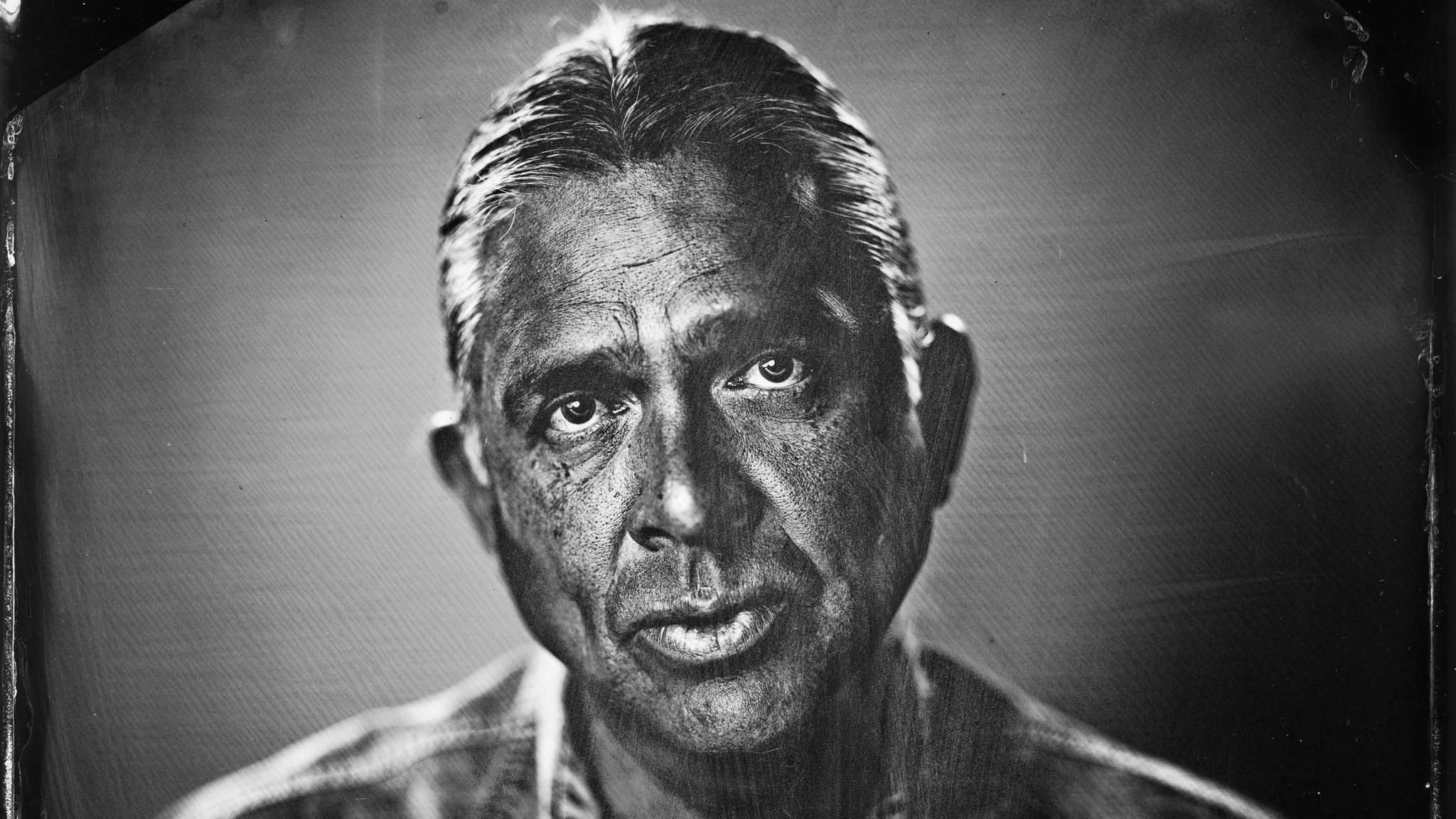
Professor Guy Leschziner – image from The Daily Mail

In his prior book, The Man Who Tasted Words, Professor Leschziner looked at places where the lines between our senses appear to be somewhat porous, sense-A leaking into sense-B for some individuals. Hearing colors, seeing sounds, aphasic things like that. He offered an examination of what is considered usual, and where, in the brain, wires may have become crossed. He looked at individuals who reported such experiences and attempted to trace back into the brain where each sense resided, and connected to others.

Here he uses as his starting point the notion of the seven deadly sins, and offers neurological analysis of behaviors commonly regarded as sinful. Bu the Seven Deadly sins seem to divide into two groups, one based on behavior and one based on emotion. Wrath, Gluttony, Sloth and Greed require action to do actual damage, while Pride, Envy and Lust can remain internal. You may think you are better than everyone else, but unless you do something based on that belief, it makes no difference. Ditto Lust and Envy. In the absence of acting on these feelings, no harm, no foul, so the playing field for looking at The Seven is uneven from the start. The subtext is the question of free will. Are we all functional free agents able to determine right from wrong or are we driven by our biology, by what our brains have, by genetic heritage and experiential conditioning, commanded us to do? And how have the behaviors that have defined our species, that have led to our accomplishments as well as our excesses, our failings, served us? Is there a range within which our less than idyllic urges can function healthfully, and outside of which they constitute pathology?

Look at aberrant behavior. Dive in to see exactly which parts of the brain have been harmed, if any. Map behaviors, needs, urges, inclinations to parts of the brain. In a way, this is a bit like explorations of yore, sailing out to see what lay over the horizon, or, fictionally, heading out on a starship to see what the universe may present. He uses several case studies of people who manifest behaviors illustrative of each of the sins, looking for neurological bases. Just as in his examination of cross-sense irregularities in his prior book, Leschziner looks at these patients with an eye toward identifying which parts of the brain bear the most responsibility for the problematic behaviors. These include a man who had had a brain bleed that changed his personality, a woman who was incapable of feeling satisfied no matter how much she ate, a 34yo man with Parkinson’s and an increasing obsession with sex, a woman who believes her totally faithful husband is cheating on her, a young father who sleeps twenty hours a day, a man has delusions of grandeur until multiple abscessed teeth are removed, oh, and the Panama Papers. Centers of emotional concern include the amygdala, the pre-frontal cortex, a warrior gene, and the hypothalamus internally. He looks at the influence of bacteria, viruses, dopamines, and more impacting from the outside. Increasingly, science can indeed offer some answers to the why of behaviors, to a point.

In his novel, Fleur de Lis, Anatole France wrote. “The law, in its majestic equality, forbids rich and poor alike to sleep under bridges, to beg in the streets, and to steal bread.” There are clearly hypocritical societal interpretations of sin, of what sinful behaviors will be tolerated and which will be sanctioned. (Unless, of course, you are a president with a friendly Congress and SCOTUS, in which case, just go ahead with whatever you are doing there on Fifth Avenue.)

Poor man wanna be rich, rich man wanna be king
And a king ain’t satisfied till he rules everything
– Springsteen – Badlands

And most societies assign moral responsibility to the actor. The question is whether a person is morally responsible for his/her actions or is a slave to, and predetermined by impulses, by one’s underlying and overwhelming personal psychological makeup.

if you believe that the brain is the origin of our personalities and our character traits, the basis of our decisions, be they good or bad, then it is arguable that much of what defines us is outside of our control.

Whether we are all able to make actual free choices or are slaves to our biology, it is clear that society needs to be able to restrict our ability to harm each other, that protecting each other from the worst in people is a reasonable social responsibility.

It is made clear that the drives that we regard as sinful have provided considerable benefit to our evolution as a species. No lust? No reproduction. No envy? No reason to be more productive. No wrath? No defense against attack.

Leaving the question of evil. At first blush is seems that evil serves no obvious Darwinian purpose. On second thought, though, I expect there might be a case made for evil existing as an existential challenge in order to provide a testing ground against which one might measure strength of character and/or the superiority of one’s genes, whether physical or intellectual. In a way, like ice ages, rapid climate change, or a voracious saber-tooth tiger, evil might be seen as a natural force, even if it manifests through human beings.

Leschziner has offered up a provocative, thoughtful brain-candy-ish look at how science, as it advances, keeps finding biological explanations for fraught psychological behaviors. But our impulses and makeup remain what they are. And this is one of the pleasures of reading The Seven Deadly Sins. Learning what a strange creature is homo sapiens, and how we are put together. It seems quite clear that the real original sin is to have been born human.

extrinsic factors – medication, injury, or functional disturbance of the brain – rather than our values can cause us to act in ways that contravene our moral
code. However, that dividing line between what constitutes normality and pathology shifts in the sand. That line is blurred by the prevailing winds of our views on morality, legality, philosophy and medicine.

Review posted – 02/21/25

Publication date – 12/3/24

I received paper and ePub AREs of Seven Deadly Sins from St Martin’s in return for a fair review. Thanks, folks, and thanks to NetGalley for facilitating.

This review is cross-posted on Goodreads. Stop by and say Hi!

=======================================EXTRA STUFF

Links to the author’s personal, Instagram, and Twitter pages
Profile

Interviews
The Guardian – Science Weekly Podcast – Are we hardwired to commit ‘deadly sins’? – podcast
– audio – 23:59
—–The Jewish Chronicle – Were the Nazis inherently evil? ByJennifer Lipman
—–Greed, gluttony, sloth…lust! Why you sinned this Christmas by Anna Maxted

Items of Interest from the author
—–Big Issue – The truth is we’re all sinners – it’s how we survive as human beings
—–Next Big Idea Club – A Scientific Examination of the Seven Deadly Sins

My review of the author’s prior book
—–2022 – The Man Who Tasted Words

=======================EXTRA EXTRA STUFF

George Carlin famously distilled the ten commandments down to two.

It seems pretty clear that the seven deadly sins can likewise be slimmed down as well.

Pride. What does this actually mean?
Believing that you are better than other people? What if you are? Faster, stronger, better looking, smarter. Something more than others. Is recognizing your superiority a sin if it is true? The bible seems to maintain that an “Excessive” self-regard is where the line is crossed, but who gets to determine where the line is drawn between factual and excessive self-regard?

But pride does seem to be a pre-condition for other sins. Wrath, or extreme anger, certainly seems an appropriate response to extreme provocation. Hardly a sin. But in order to get into a sinful bit of wrathful behavior it must be excessive. In order for it to be excessive the deliverer of such wrath must hold a higher view of him or herself vis a vis the target than seems justifiable. Soooo, excessive pride, right? So, scratch wrath, and we are down to six.

Gluttony – excessive consumption to the point of waste.
Wiki tells us that In Christianity, it is considered a sin if the excessive desire for food leads to a lack of control over one’s relation with food or harms the body. But if the desire for food entails loss of control over one’s relation to food, where is free will? Isn’t that a definition of pathology? And a pathological behavior is hardly sinful. And just what constitutes excessive desire? If we remove the pathological from this formula, we are left with a person feeling entitled to consume (and I think it is safe to expand the notion of consumption here from food to all things material) as if they are better or more deserving of such things. Which brings us back to pride. Gluttony eats itself into a coma and we are down to five.

Greed
Catholic.com claims that Greed is the disordered love of riches. Hmmm, who gets to define “disordered?” and doesn’t a love of riches include a personal belief that one deserves such riches? Here we go again. It requires excessive self-regard to crave riches at a “disordered” level, no? Greed crushes itself with massive accumulation of stuff and we are left with four.

For these other sins, we delineate the pathologies that shape our thoughts and behaviours, and set them apart from those underlying character traits through their intensity and consequences. For greed, we do no such thing. Yet greed, like the other sins, is perilous in its most extreme forms, causing harm to individuals and wider society alike.

Is Donald Trump, a career criminal, capable of differentiating between right and wrong, or was he so damaged by his genetics and upbringing and injured by his subsequent business training at the feet of his sociopathic father, that he is incapable of telling or even caring about the difference between good and bad? Similar for Elon Musk. How great would it be were Leschziner able to do a detailed examination of both men’s brains. Because if they are capable of discriminating right from wrong, then we have a pretty clear proof that there are indeed forces of evil loose in the world, which I expect would come as a great shock to few but the most ardent atheists.

Lust and envy seem sub-elements of the same thing, wanting something that someone else has. Surely lust between two unattached people is no sin. It is only when one person (at least) is already attached that lust becomes problematic (presuming a monogamous baseline). So, wanting something (someone) who/which is not yours, but which is attached to, or is owned by someone else. So what? We all want stuff we do not or cannot have. How is this a sin? It seem to me that having feelings like lust and envy is completely natural. It is only when we take actions to effectuate such the desire, to the detriment of others that the sin element is realized. Down to two.

According to Wikipedia Sloth is the most difficult sin to define and credit as sin, since it refers to an assortment of ideas, dating from antiquity and including mental, spiritual, pathological, and conditional states. One definition is a habitual disinclination to exertion, or laziness. Willful laziness is surely not cool. Just ask any married person whose partner declines to hold up his or her end, opting instead to watch football or soaps. This one seems likely to be based in behavior, as the sinner here engages in slothful behavior, doesn’t just feel…um…slothful. I could certainly see many real-world examples, beyond couch potato chore-avoiders. There are many people who cannot be bothered exercising the intelligence they were born with to examine themselves, their community, public issues, religious beliefs, or much of anything. It may well be that they believe themselves not up to such analysis, and maybe they are not. But for many, if not all, it does seem that the disinclination rests on a belief that they are too good to have to bother with such things, that they have it all figured out and need look no further than the perimeter of their personal bubble…so…excessive pride. And poof! We are down to one.

Pride goeth before the fall, and, apparently every other form of sinfulness. There is only one deadly sin, excessive self-regard, which feeds all the others, and becomes problematic only when put into actual real-world action.

Leave a comment

Filed under Non-fiction, Psychology and the Brain, Public policy, Science and Nature

Toto by A.J. Hackwith

book cover

Every dog has the Growl in it, no matter how big or little, how scruffy or cute, how pampered, old, or toothless. Every dog has in the first wolf barely coaxed to a campfire. Maybe we never have a chance to use it in our kind lives, and our humans would never suspect. But if we do, it’s because none of us, not a single pup, has forgotten the first campfire. And though we have taken on many jobs for our humans since then, there is one that is summarized in the Growl.
This One Is Mine to Protect

Ninety percent of magic is public opinion.

I’ve a feeling we’re not in Kansas anymore. Well, after animal control had tried taking Toto, maybe that is not a bad thing.

description
A.J. Hackwith – image from her site – shot by Karen Osborne.

The Wizard of Oz is arguably the first modern American fairy tale, and Dorothy one of the first prototypes for the army of empowered, female YA protagonists we have today. And growing up as a rural girl in Nebraska—one hop north of Dorothy’s Kansas—it’s no surprise then that I was desperately obsessed with the story. I always wanted to find the rainbow, yellow brick road, or magic slippers that would take me somewhere else. I always wanted to pay homage to Oz, and as a lifelong dog lover, it felt natural that Toto’s perspective was the way into a whole new view of the classic story. – from the Writers Digest interview

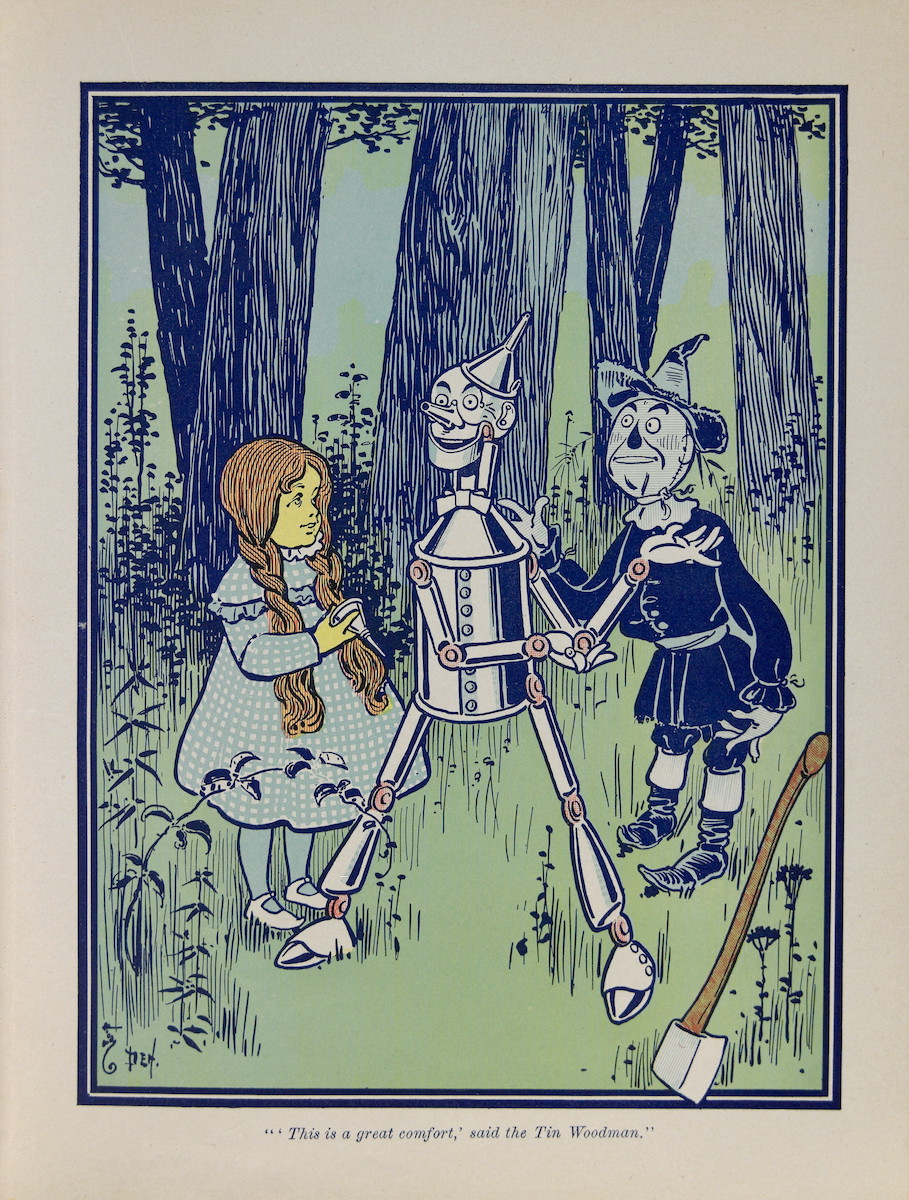
Hackwith has quite a bit of fun reimagining the OZ we all know. Dorothy is a contemporary teen in a hoodie, with a smartphone, but she is still pure of heart. The Scarecrow is much as he was in the film. The Tin Woodsman, Nick Chopper, is a self-made construct of impressive stature and physical capacity, (Baum had written a bit of back story about him. See EXTRA STUFF for this) with a vocabulary reminiscent of Groot. He is accompanied by a bad-ass sister, a knight, (Lettie) who is not at all metallic.

description
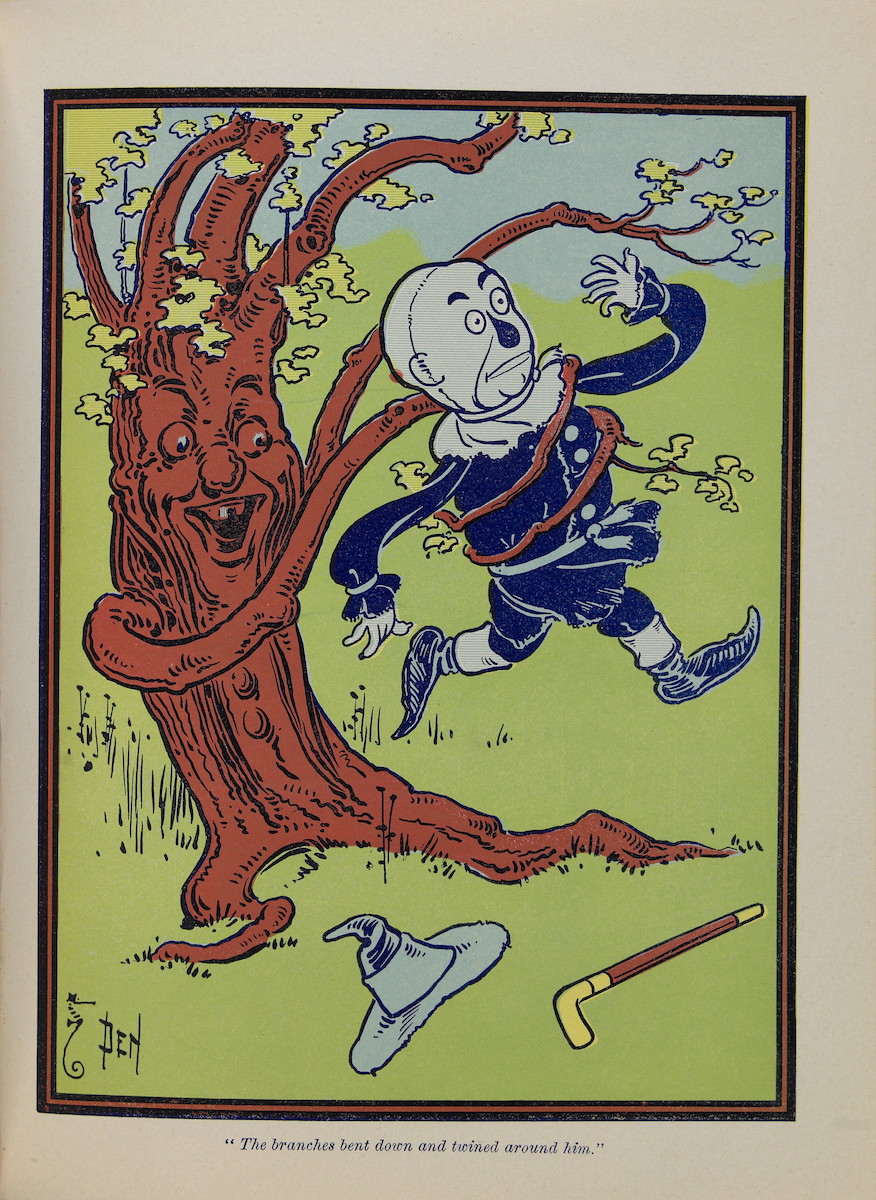
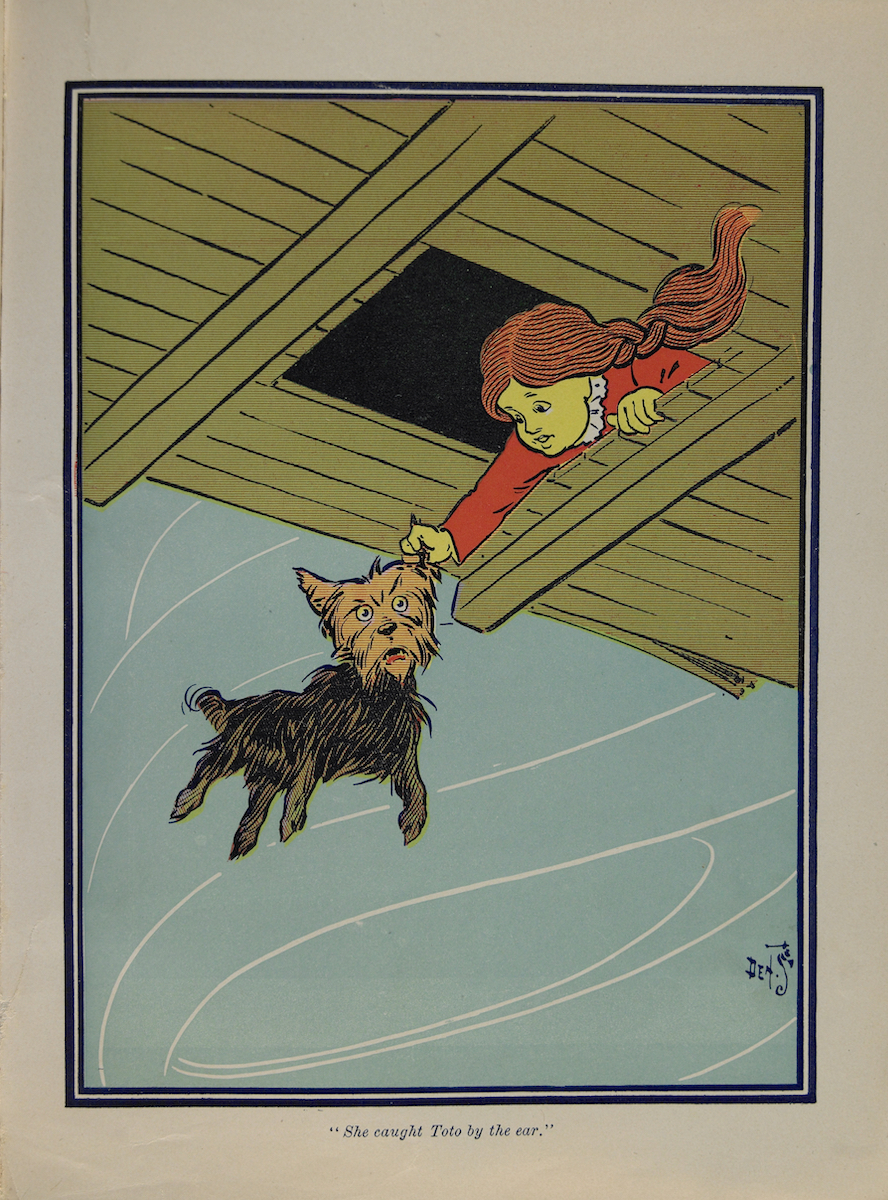
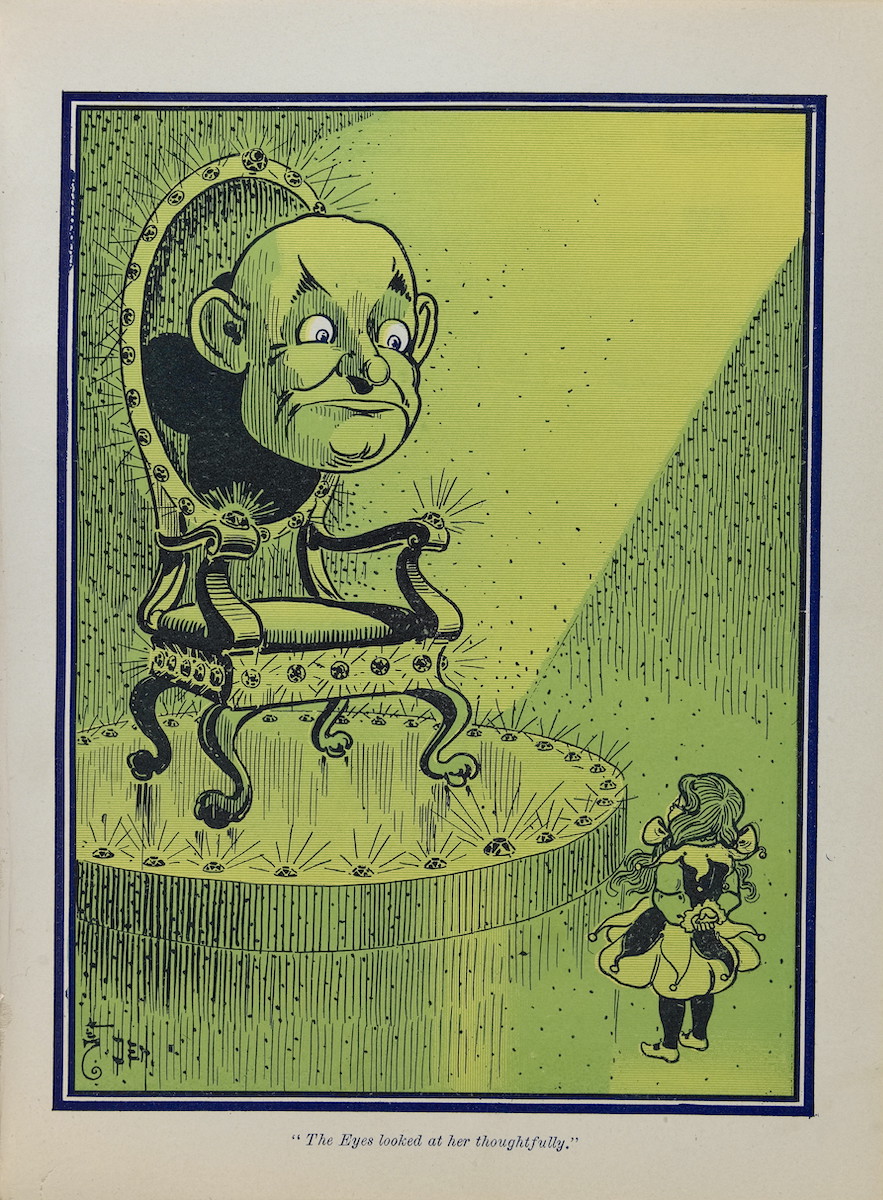
All the Oz illustrations in this review by W.W. Denslow. are from the 1900 publication of The Wonderful Wizard of Oz

The Cowardly Lion is a bit of a scaredy cat but more a very reserved, thoughtful feline. The Wizard may know a thing or two, but is very much a crook. There is a revolutionary bluejay who thinks he is a crow. There is a bubble-propelled witch. And flying monkey sorts loyal to the witch we all know and love. A young one, an engineer, less crusty that her peers, plays a key role.

description

And then there is Toto, front and center, able to speak and be understood, by most folks anyway, full of snarky commentary and struggling with the benefits of being a good dog or a bad dog. I mean if he had been a good dog, and animal control came for him anyway, what was the actual point? He will struggle throughout. Unlike his role in the original story, Toto has a lot more agency here, engaging in adventures away from Dorothy.

Imagine the flattest, grayest, most cornfed place you can imagine. Now add depression and life wrecked by late-stage capitalism. That’s Kansas. It’s like the dull beginning of every ad for pharmaceuticals right before Xylohappitoxin or whatever fixes everything. Sure, I make the best of it. Stealing socks and digging in old lady Brumley’s garden. But me and Dorothy are meant for bigger things, like destiny and boss battles and whatever that “Likeandsubscribe” stuff is the glass-people are hype about. – from the Fresh Fiction piece

Tasks are assigned to our travelling troupe by local bigshots. Bring me this, bring me that. Shoes are given a bit more attention than in the film, silver this time instead of ruby red, in keeping with the novel instead of the film.

There is commentary on politics; the bluejay is fond of holding forth with leftist pronunciations that will be laughingly familiar to any who have had connection with such folks; manipulators encourage people to do the wrong things; a race of beings has been subjugated; a leader pillages a natural environment to the detriment of all. Haves take advantage of have-nots…and on.

When Frank L. Baum sat down to write the The Wonderful Wizard of Oz, his country was in a state of turmoil which might seem very, very familiar to us these days. Economic and international pressures were ripping apart the perceived stability of the middle class. Hotly contested initiatives like the silver standard are referenced in Dorothy’s own silver shoes (changed to ruby for the technicolor movie). Populist leaders are lambasted in characters like the Cowardly Lion and the Emerald City itself can be read as a giant allegory to the capitalist power of Wall Street in Baum’s era. Oz was never a sterile product of pure imagination. The books reflected Baum’s opinions on the realities of the world. – from the Nerd Daily piece

description

This is a satire, so there are many fun flicks at the source material, as well as the political scene. And homages as well. Of course, it helps to be familiar with more than merely the 1939 film. The original novel would be a good place to start. The Broadway show and then film of The Wiz, and many more. L. Frank Baum wrote fourteen Oz novels, and short stories beyond. Many were written under pseudonyms. And even after Baum died, his publisher continued publishing Oz books by other writers. Gregory Maguire’s 1995 novel, (then Broadway show, then film) Wicked, and several subsequent novels, offer more source material. And there are even many more Oz books by other writers.

description

Of course, any literary road trip is a journey of self-discovery. Toto will resolve some things; Dorothy will plot a course for herself; and the rest of the gang will find their ways forward as well. But as with any road trip, it is the journey that is of interest and not the ultimate destination(s). Dorothy’s (and Totos’) actual feelings about Kansas are given a look. Dorothy has a the chance to be her own person in a challenging world, and consider what she might do with herself if given the opportunity. There is plenty of resonance here for many of us who felt, for various reasons, constrained by our beginnings.

You ever feel trapped in a family you don’t belong in? In a place that’s just so . . . so that it’s suffocating? That you know there’s more, so much more, out there, and it’s worth seeing, and every day you wake up in the same bed is like drowning a teaspoon at a time? I never wanted—I just . . .” She took in a sharp breath, catching herself. Her gaze refocused away from the window and back on me. For a flicker beat she looked like a duotype print of Dorothy. Hair obscured in soft shadow, a dark wardrobe that could have included the ratty tee Dorothy slept in when she finally peeled off the hoodie on the weekends . . . and a face so full of hunger-pang sadness, it could swallow the world with those wide eyes.

Hackwith’s look at the surviving wicked witch is a delight.

There may be no place like home, but who says we can have only one home in our lives? Toto is a fun romp through the OZ of our memories and/or imaginations. It is listed as YA, and I am sure it will appeal to that demo, but it was a fun read, particularly for an old dog like me, with long memories to be touched, revived, and beguiled.

This is the thing tall people, even tall dogs, never understand. Everyone looks at the world from three, four, even five feet up in the air. That’s where all the deception is. Everyone makes sure things look nice from that angle. Tables are kept tidy. Skirts are pressed. Floorboards are swept. Railings are dusted. Everyone wants to make a nice impression, tell a nice story from their point of view.
But when you see the world from five inches off the ground? That’s when you get the unvarnished truth.

Review posted – 01/31/25

Publication date – 11/12/24

I received an ARE of Toto from Ace in return for a fair review. Thanks, folks, and thanks to NetGalley for facilitating.

This review is cross-posted on Goodreads. Stop by and say Hi!

=======================================EXTRA STUFF

Links to Hackwith’s personal, FB, Instagram, and Twitter pages

Profile – from Penguin Random House

A. J. Hackwith (she/they) is (almost) certainly not an ink witch in a hoodie. She’s a queer writer of fantasy and science fiction living in the woods of the Pacific Northwest with her partner and various pet cryptids. A.J. is the author of a number of fantasy novels, including the acclaimed LIBRARY OF THE UNWRITTEN fantasy trilogy. She is a graduate of the Viable Paradise writer’s workshop and her work appears in Uncanny Magazine and assorted anthologies. Summon A.J. at your own peril with an arcane circle of fountain pens, weird collections of rusted keys, and homebrew D&D accessories.

Interview
—–Writers Digest – A. J. Hackwith: On the Fortitude of Little Dogs – with Robert Lee Brewer

Items of Interest from the author
—–Fresh Fiction – . J. Hackwith | Conversations in Character with Toto
—–Google Play Books – excerpt
—–Wikipedia – Tin Woodman – on how Nick Chopper became the Tin Woodman as per L. Frank Baum
—–Nerd Daily – Storytelling Is Political, And That’s A Good Thing

Items of Interest
—–Gutenberg – The Wonderful Wizard of Oz by L. Frank Baum
—–Gutenberg – The Tin Woodman of Oz by L. Frank Baum
—–Youtube- Heartless – The Story of the Tin Man – 22:48
—–Wiki – Groot

Leave a comment

Filed under Fantasy, Fiction, YA and kids

The Hitchcock Hotel by Stephanie Wrobel

book cover

Let us begin with an establishing shot. A three-story Victorian house stands alone on a hill in the White Mountains. The house boasts a wraparound porch, mansard roof, and bay windows. Despite the building’s age, her shingles gleam, shutters sparkle. In other words, she is beloved.
We swoop in through an open window on the third floor to reveal a handsome hotel room. A woman with a face of cracked earth leans against the four-poster bed, watching a man in his thirties survey himself in a pedestal floor mirror.
I twist away from the mirror to face my housekeeper.
“How do I look?”
Danny takes her time considering me. “Like Norman Bates,” she jokes.

What if I had never met this group at all? On one hand, they were the cause of my eventual ruin. On the other, these people were fundamental to the man I’ve become. For four years we were family. They shaped my beliefs and sense of humor. They cheered me on. They accepted me. Right up until they didn’t.

A locked room mystery in which the sins of the past are brought into the present, threatening the future. There will be blood. There will be suspense. There will be twists. There will be irony. There will be readerly fun.

description
Stephanie Wrobel – image from Festival of Authors

It was my mother who introduced my very young self (I was four when the show premiered) to Alfred Hitchcock, not so much through his films, which I would get to eventually, but through his TV series, Alfred Hitchcock Presents. Each episode featured Alfie offering often macabre intros, a la Rod Serling, but with considerable tongue-in-cheek humor. As for his films, Psycho remains one of my all-time favorites, as do many others. Consider me a fan, although, like the author, I have seen only a portion of Hitchcock’s 53-feature-film oeuvre.

“I was introduced to Hitchcock via North by Northwest during a film studies course in college. (If you’ve read my book, this will sound familiar.) I’ve been a big fan ever since. What surprised me most as I rewatched some films and watched others for the first time was how much they hold up in 2024—especially the humor. Hitchcock is known as the Master of Suspense, and he is, but I would argue he was just as much a master of comedy. I still can’t believe how funny his movies are. I don’t think humor is something my generation associates with Hitchcock unless you’re a big fan.” – from The Big Thrill interview

Like my mom, Alfred Smettle’s mother was a big fan as well, a gift she passed on to her only child. He carried that interest into college where he became a central figure in a class on film taught by a gifted teacher. (Wrobel had a Dr. Scott as an inspirational teacher in college, and honors him with the naming here.) He even started a film club to take his interest further, sharing his knowledge and enthusiasm with others. These included a band of five fellow students. Alfred was never one of the popular kids, but he found acceptance in the Blue House that they shared. Well, until something went very wrong. There are hints about a debacle in senior year, but we are not let in on what happened until the back end of the book.

description
Edward Hopper’s House by the Railroad – image from Wikipedia

The friends parted after college, but Alfred retained his fascination with Hitchcock, and now, sixteen years later, he has opened a Hitchcock-themed hotel (a B&B really) not far from the New Hampshire college they had attended. It features lots of memorabilia, many filmic artifacts, and considerable atmosphere. It is an old Victorian Alfred had done over. One might be reminded of a Hopper painting, and the infamous house it inspired. He invites them all to a free weekend there, hoping, among other things, to get the place some ta-die-faw publicity. Business needs a boost.

description
The Bates Motel House at Universal Studios – image from Paul Van Sprundel at WordPress

The group (the five guests plus Alfred and his housekeeper, Danny) is made up of the guilt-ridden, the vengeful, the desperate and the forlorn. In The Readers Couch interview, Wrobel talks about aligning her seven main characters with the seven deadly sins. (pride, greed, wrath, envy, lust, gluttony and sloth) It kind of works out, but there is plenty of overlap and double dipping, with one character seeming not to fit very well to any of these human proclivities. Grace is a hedge fund manager; Zoe is a chef who drank her way to a furlough; Julius was born to great wealth and little direction; Samira, newly divorced mom, had started a personal device business that had caught on; TJ is a security specialist who appears to be in some sort of trouble.

description
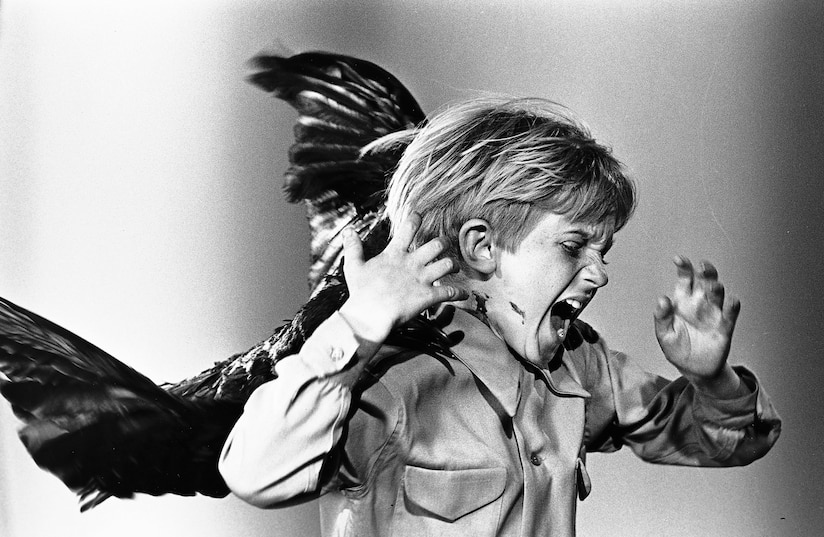
A bird attacking – from the Birds – image from TCM

If you are looking for Hallmark likeability, I can recommend about a thousand films and a gazillion books that will take care of that for you. None of these characters is entirely ok. The closest, I guess is Samira, who seems most eager for everyone to just get along. Alfred is definitely an odd duck, just a weeeee bit obsessive, but is he dangerous? (I am sure he “wouldn’t hurt a fly.”) Grace certainly has some hard edges, and a seeming disregard for others. TJ seems somewhat ok, but is sleeping with a married woman, and who knows what he might do given the external pressure he is under? Zoe has a serious alcohol issue. It has already cost her her job. What is fueling it, and might it lead her to dire blackout behavior? And what’s up with Danny, the housekeeper, who seems maybe a bit too fond of Alfred?

description
From Vertigo – image from The New Yorker

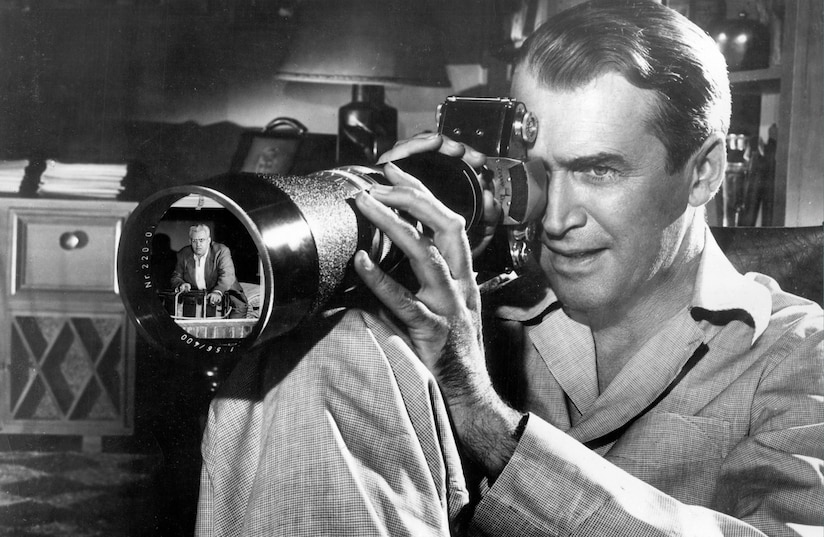
References to Hitchcock films abound throughout the book, beyond the Bates Motel House exterior and screenplay-like opening. Avian life puts in an appearance or two, (The Birds) As do a suspicious glass of milk (Suspicion), high places (Vertigo), voyeurism (Rear Window), rope (Rope) and others. Part of the fun of this read is identifying as many of these as possible, making it a bit of a treasure hunt.

description
Jimmy Stewart as L.B. Jefferies, having a peek in Rear Window – image from TCM

There is an abundance of non-Hitchcockian reference as well, TV and film mostly, from Dracula to Parks and Recreation. Not that these are all key to the plot, but they are fun markers nonetheless.

description
From the film Rope (1948) – image from The Movie Screen Scene

Major twists will keep you off-balance, as the game continues of trying to figure out whodunit, how and why. The Hitchcock Hotel offers a page-turning bit of suspense with a considerable payload of Hitchcockian homage. There may be death in store by the end of this novel, but one thing is for sure. With Stephanie Wrobel’s able assistance, Alfred Hitchcock lives.

What conclusion can a young man draw when he’s the only one who has a hard time making friendships that last? Maybe they stay away for a reason. Maybe his core is rotten. Maybe they all know something he keeps hidden from himself.

Review posted – 12/27/24

Publication date – 9/24/24

I received an ARE of The Hitchcock Hotel from Berkley in return for a fair review, and a few drops of my personal poison stash. Thanks, folks, and thanks to NetGalley for facilitating.

This review is cross-posted on Goodreads. Stop by and say Hi!

=======================================EXTRA STUFF

Links to Wrobel’s personal,FB, Instagram, and Goodreads pages

Profile – from her site

Stephanie Wrobel is the author of This Might Hurt and Darling Rose Gold, an international bestseller that has sold in twenty-one countries and was a finalist for the Edgar Award for Best First Novel. Her third book, The Hitchcock Hotel, is a USA Today bestseller that published in Fall 2024. She lives in New York City.

Interviews
—–The Big Thrill – PAYING HOMAGE TO THE MASTER OF SUSPENSE AND PAYING IT FORWARD by R. J. Belsky
—–BiffBamPop! – my link text by Andy Burns
—–How Do You Write – Ep. 358: POV Hack: Using Method Acting with Olesya Salnikova Gilmore – with Rachel Herron – video – 31:09
—–The Reader’s Couch – Ep. 234 The Hitchcock Hotel by Stephanie Wrobel – audio – with Victoria – 22:00

Items of Interest from the author
—–How to Tackle Editorial Feedback – very informative item for writers – there are many excellent pieces for writers on her site
—–CrimeReads – HOW TO WRITE PERFECT TWIST ENDINGS (THAT WILL SHOCK AND DELIGHT EVEN JADED SUSPENSE READERS)

Hitchcockian Wicki-ons
—–1940 – Rebecca
—–1941 – Suspicion
—–1948 – Rope
—–1954 – Rear Window
—–1955-1965 – Alfred Hitchcock Presents
—–1963 – The Birds
—–1958 – Vertigo
—–1960 – Psycho

Leave a comment

Filed under Fiction, Reviews, Suspense

The Haunting of Moscow House by Olesya Salnikova Gilmore

book cover

Irina calls her fanciful whenever she mentions ghosts. Still, something isn’t right about the house, hasn’t been right since Uncle Pasha was shot dead there three years before, and Grand-père Sergei succumbed to his illness mere days after.
Though she’s never seen one, Lili has believed in ghosts for quite a long time.
Do you think the dead can rise? Her voice, from a long-forgotten memory.
Of course, Nicky had answered, as if it were the most natural thing in the world.

…with each death, the spirits are more corporeal and alive. And the family is in greater danger.

It is 1921, and the suffering is not yet done. World War I, then the ongoing civil war, now famine. Bolsheviks have taken charge. They use the Cheka to enforce the new norms, inflict the governing biases, and relentlessly add to the general misery. The displaced aristocracy struggles to get by, well, those who were not summarily shot.

description
Olesya Salnikova Gilmore – Image from PRH – credit Nicola Levine Photography

To the new Soviet republic, the Bolsheviks, and the Cheka secret police, they are still countesses Irina and Liliya Goliteva, the people’s class enemy as descendants of one of the greatest and most ancient aristocratic clans of an imperial Russia dead and buried. Like most of their family. But unlike many former people, Irina’s family didn’t flee Russia. They stayed in hope of a return to normalcy. Now it is too late. Even if they could obtain papers, how could a household of women and children brave the danger of travel and exile?

Running out of household valuables to sell, the sisters take jobs with the American Relief Administration (ARA). The ARA is there to provide aid, food in particular. The sisters are managing the challenges, but there is something else. It appears that there are strange, spectral things going on in their home, the once-grand Moscow House. There are sounds, scents, footsteps, the sorts of things one can expect in a gothic novel.

So much of the novel is inspired by some of my favorite gothic stories, particularly by the Russian/Slavic gothic genre and the Ukrainian author who arguably founded it—Nikolai Gogol. – from the Afterward

Gogol and other folk sources are given plenty of recognition in the pages, allowing one the opportunity to do some digging and appreciate the inspirations.

We follow Irina (28) and her sister, Lili (18), as they try to survive through this trying period. Chapters alternate, more or less, between the two. The gothic elements build, from a few inklings to full-blown. It is not just one or two spectres turning up, but a whole host of late family members. The house is commandeered by the government, and the actual family is relegated to the attic. That does not work out well for the occupiers, as one then another is found dead. The work of one of the living inhabitants or ghostly revenge?

There are certainly some creepy bits, a norm for the genre, a few jump-cut scenes, and a spooky soothsayer. But is it scary? Mostly not, for me, (a particularly high bar) although there were some welcome surprises. There is one particular sort of ghost from Russian lore that was a new one on me. A creepy doll offers a tingle or two. That they grow in corporeality with each new death offered a welcome bit of unease. After a while, though, one gets used to the spirits, and in doing so their impact is reduced. Yeah, we’ve got a haunted house. So? The sisters keep coming and going as if it were infested with a more usual sort of pest.

Both become involved in romances, one with a Yank, the other with a childhood sweetheart. This is lovely, particularly in offering the possibility of positive outcomes for the sibs. Of course, it also adds to the ongoing tension between staying to preserve the family history and line, and fighting the good fight, or leaving to preserve their lives. How many people today are faced with comparable choices?

In fairy tales, paupers became princesses, not the other way around. But Soviet Russia is a warped Wonderland, where all is topsy-turvy and not what it should be.

One might, I expect, consider a take in which the Cheka taking charge in Moscow is a lot like the spectres taking over the Moscow House. It does cause one to recall that the Introduction of The Communist Manifesto begins, “A spectre is haunting Europe—the spectre of communism.” Certainly those spooks have landed in Russia and, through bloodshed, are gaining in strength. I have no idea if this was at all on Gilmore’s mind. But maybe. Spectres within and spectres without? Maybe a bit of dialectical materialism (or dialectical immaterialism?) for good measure?

Overall. I enjoyed The Haunting of Moscow House, particularly for the portrait of the time (The ARA was a real non-profit), the depiction of the desperation among Muscovites, and exposure to some unfamiliar gothic Slavic writing and lore. The sisters are engaging. The tension is palpable, and the spook infestation is fun.

I suppose one cannot help but compare this to Gilmore’s freshman offering, The Witch and the Tsar. That one was less reality based, more fantastical, and a bit more fun. But this one is also quite good, rich with extras both historical and literary.

Irina is crossing into the next room when she feels a prickle of cold on her arm. A draft of air. But the damask curtains are sealed tight. No, it is as if someone has moved past her. She turns sharply, as fearful as the other morning. Odd. She has never been afraid in the house. She doesn’t have Lili’s active imagination. Nor is she given over to delusions. It is only the howl and tear of the wind, the rattle of the windows in their casements, the faint give of a latch. With all this noise, she almost doesn’t hear it.
The creak of parquet, somewhere near. And again, unmistakable now. Creak. Creeeaak.
Footsteps. Small, like a child’s.
Irina backs up with wide eyes—when there is a deep growl. Then an earsplitting screech, and a dark shape hurtles across her path. A glint of red, as if red eyes have snapped to hers. The next second, scuffling and the thumping of bare feet, then nothing.
What was that? Some animal, trapped in the house?
That’s when the air implodes all around her.

Review posted – 12/20/24

Publication date – 9/3/24

I received an ARE of The Haunting of Moscow House from Berkley in return for a fair review. Thanks, folks, (Does it feel unnaturally cold to you here?) and thanks to NetGalley for facilitating.

This review is cross-posted on Goodreads. Stop by and say Hi!

=======================================EXTRA STUFF

Links to Gilmore’s personal, FB, Instagram, and Twitter pages

Profile – from her site
Olesya Salnikova Gilmore is the author of The Witch and the Tsar and The Haunting of Moscow House. Originally from Moscow, she was raised in the US and graduated from Pepperdine University with a BA in English/political science, and from Northwestern School of Law with a JD. She practiced litigation at a large law firm for several years before pursuing her dream of becoming an author. Now she is happiest writing speculative historical fiction inspired by Eastern European history and folklore. Her work has appeared in LitHub, Tor.com, CrimeReads, Writer’s Digest, Historical Novels Review, Bookish, Washington Independent Review of Books, among others. She lives in a wooded, lakeside suburb of Chicago with her husband and daughter.

Interviews
—–JeanBookNerd – Olesya Salnikova Gilmore Interview – The Haunting of Moscow House
—–Turn the Page – Episode 314E: Olesya Salnikova Gilmore on THE HAUNTING OF MOSCOW HOUSE – audio – 24:17
—–How Do You Write – Ep. 358: POV Hack: Using Method Acting with Olesya Salnikova Gilmore video – 31:09 – with Rachel Herron (from 5:36) – mostly about her prior novel, but offers a nice sense of the author, her process, how she uses method acting and her lawyerly background

My review of Gilmore’s prior book
—–2022 – The Witch and the Tsar

Items of Interest from the author
—–Crimereads – GOTHIC FICTION WITH A TWIST
—–Writer’s Digest – Finding Magic at the Intersection of Reality and Fantasy in Fiction
—–Reactor – Five Books about Haunted Houses that Crumble

Items of Interest
—–Carol’s Notebook – The Shroud – a Russian fairy tale referenced in Chapter 3
—–Story Telling Institute – Vasilia the Beautiful – a Russian fairy tale referenced in Chapter 11

Leave a comment

Filed under Fantasy, Fiction, Historical Fiction, Literary Fiction