Category Archives: Non-fiction

Fire and Fury by Michael Wolff

book cover

MUELLER IS COMING!
Da-ta da-da-dah-ta da-da-dah-ta da-da-dah-ta
da-da-dah-ta da-da-dah-ta da-da-dah-ta da-da-dah-ta da-da
Daaaa da dadada dah da-dudaaaah
Daaaa da dadada dah dududaaaah

Michael Wolff has given us a drone’s (dragon’s?) eye view of the competing centers vying to be the power behind the throne, with some looking, in the longer term, at carving paths for their own succession to the highest position in the realm. There is a mad king who needs to be handled. Centers of power arise, morph, wage battles both silent and overt, succeed and fail, rise, die, and sometimes rise again. What we see in Michael Wolff’s Fire and Ice Fury, from our lofty perch, is the geography of chaos in the known world of the White House. Games will be played. Backs will be stabbed. Sadly, there is no magic, only sleight of hand. And it remains to be seen if nuclear dragons will be unleashed.

The juicy bits of this book have been everywhere for the last few weeks. It is highly quotable, and the publisher, Holt, the author, their PR people, and the major news outlets have been flooding the zone. Whether on-line or in print, over airwaves on TV or radio, through cable, and probably via the deep-state-news (WDSN?) that beams directly into peoples’ minds, all media have been all agog with the many looks at this elephant to which they have been privy.

With so much blanket coverage coming at you, one might be forgiven for wondering whether you first saw the item you just read in the book, or came across it somewhere else. It is a little bit unnerving. I will spare you the further confusion of adding all those bits here. I really have to put some in, though. I mean you know them already, right? How many synonyms can you find for idiot?

Fire and Fury is the biggest book of the moment, the Wall Street Journal reporting that it had sold a million copies as of Monday, January 8, 2018, a day earlier than its scheduled release. Remains to be seen, of course, with a steady stream of books on Trump being published, how long this frenzy will persist. But the last time I was aware of people standing on line for hours to get a book, it included the words Harry and Potter. This book, in the words of our former vice president, is a big fucking deal.

description
Michael Wolff – image from Mediaite.com

The bottom line of Fire and Fury is that it presents Donald Trump as unfit to serve as president, based not on the dark view and negative press of his opposition, but the been-there-OMG-did-you-see-that experience of his own staff and supporters.

Almost all the professionals who were now set to join him were coming face to face with the fact that it appeared he knew nothing. There was simply no subject, other than perhaps building construction, that he had substantially mastered.

Wolff uses named and unnamed sources. It seems clear that his primary go-to was one Steve Bannon, a weaver of webs, a bomb-thrower, a snake in the grass, a back-stabber, a manipulator, a white supremacist, a gifted media manipulator, and a pretty bright and articulate, if sartorially challenged guy. One might be tempted to dismiss Wolff’s book based on this reliance. Don’t. There are plenty of other sources feeding the narrative. The question is whether the image Wolff generates by making a composite of the incoming bits makes sense. Is it plausible? Is it correct? Having seen Wolff interviewed on multiple news and entertainment shows, and attending to the back-and-forths between him and knowledgeable news people, it seems eminently clear that he got it right. There are probably some details that err a bit here and there. Maybe this person was not at that meeting, or a date may be off. I expect that the only inaccuracies to be found here will be of that sort. Niggling, beside the point. And blown way out of proportion by those with an interest in distracting you from the core content of the book. That the president attempted to stop its publication should tell you something.

What was, to many of the people who knew Trump well, much more confounding was that he had managed to win this election, and arrive at this ultimate accomplishment, wholly lacking what in some obvious sense must be the main requirement of the job, what neuroscientists would call executive function. He had somehow won the race for president, but his brain seemed incapable of performing what would be essential tasks in his new job. He had no ability to plan and organize and pay attention and switch focus; he had never been able to tailor his behavior to what the goals at hand reasonably required. On the most basic level, he simply could not link cause and effect.

Michael Wolff is a veteran author and journalist, with seven prior books to his credit. He has been nominated for the National Magazine Award three times, and accused by people he has written about of fabricating. The absence of actual lawsuits against him suggests that complaints were less than firmly grounded. He is a serious writer and should be taken seriously. It is a bit mind-boggling the access he had to the actual White House, but he lays it out. He hung out in the WH, with a huge degree of access and was able to get input from the people working or passing through there, for months. Was the administration insane for allowing this? You betcha. But they did, another sign of their unpreparedness.

Inauguration day offered a look at what was to come.

Much of the sixteen-minute speech was part of Bannon’s daily joie de guerre patter—his take-back-the-country America-first, carnage-everywhere vision for the country. But it actually became darker and more forceful when filtered through Trump’s disappointment and delivered with his golf face. The administration purposely began on a tone of menace—a Bannon-driven message to the other side that the country was about to undergo profound change. Trump’s wounded feelings—his sense of being shunned and unloved on the very day he became president—helped send that message. When he came off the podium after delivering his address, he kept repeating, “Nobody will forget this speech.”
George W. Bush, on the dais, supplied what seemed likely to become the historic footnote to the Trump address: “That’s some weird shit.”

As noted above, the geography through which Wolff’s tale travels is one of sundry kingdoms. I could not help but imagine the opening credits of Game of Thrones as we approach each power center, the models for each of the city-states animating, offering moving, 3-D representations of each kingdom’s imagery and motifs. The three (sadly, not seven) are the alt-right of Bannon and his allies (clearly White Walkers), the mainstream GOP crowd epitomized by Reince Preibus, and the family wing, considered by Bannon to be of a liberal-democratic bent, in the person of Jared Kushner and the president’s daughter, Ivanka Trump, aka Jarvanka. (Cersei and Jamie?).

description
Swamp Thing as Joffrey Baratheon– image from DesignCrowd.com, by way of Huff-Po

The forward motion of the story is the events of Trump’s campaign, but mostly presidency up to October, 2017. I know, I know. One of the problems with political books is that they can often be outdated in fairly short order. The several months between October and the book’s publication is a lifetime in Trump years. It is impressive, given the daily churning of personnel and events in the DC universe (not the multiverse) these days that any book on Trumplandia still has relevance by the time ink on paper makes its way to readers. And yet, the issues raised here, the main issue, is momentous, and sticks.

Wolff has offered a host of quotes from his sources, many named, that question Swamp Thing’s competence, not just to function as president, but to function as a human being. His own staff frequently mention the applicability of the 25th amendment (although in the real world that is a total fantasy) and the likelihood of impeachment. The sound of Robert Mueller’s approaching steps echoes throughout the work, clearly feeding Trump’s paranoia about being treated unfairly, and boosting his fear of being found out, labeled a squatter or deadbeat, and evicted.

In most White Houses, policy and action flow down, with staff trying to implement what the president wants—or, at the very least, what the chief of staff says the president wants. In the Trump White House, policy making, from the very first instance of Bannon’s immigration EO, [executive order] flowed up. It was a process of suggesting, in throw-it-against-the-wall style, what the president might want, and hoping he might then think that he had thought of this himself (a result that was often helped along with the suggestion that he had in fact already had the thought).

Wolff, with his title, and content, offers a wonderful Game of Thrones image. But there are plenty more that could easily apply. The Producers is one that he mentions, a particularly apt metaphor, given that it seemed clear to many of us, even during the campaign, that Trump, like Bialystock and Bloom, got into the presidential race for the money, and never really intended to win. This is confirmed in the book. Personally, I think Max Bialystock would have made a better president. Another scenario that Wolff mentions is the relationship of Thomas Cromwell to Henry VIII, wonderfully portrayed in the novel Wolf Hall (no relation), with Steve Bannon in the Cromwell role and you-know-who as the guy who made such a gigantic mess, because he simply had to have things his way. One could also consider House of Cards (the original), with all the plotting, back-stabbing, and hunger for power that made that series such fun to watch, although, after Bannon as Francis Urquart, the personnel parallels fade a bit. Alice in Wonderland gives us Trump as the single-minded Queen of Hearts. The Gang That Couldn’t Shoot Straight might offer an image of ineptitude, if one ignores the fact that Trump has overseen the greatest looting by criminals of the national treasury in the nation’s history. For all his intellectual challenges Swamp Thing is a larger than life character with very little core, a made-for-Television president.

description
Swamp Thing and Bannon as Henry VIII and T. Cromwell – image from NY Magazine

One of the things I most enjoyed was Wolff’s take on The Mooch. Anthony Scaramucci is the sort of Damon Runyon hanger-on one might expect to see in Guys and Dolls, or maybe a Batman flick, all puffery and attitude smeared over a core of ignorance, inflated by cartoonishly excessive self-confidence and corruption. From the description in Fire and Fury, it is not hard to imagine him in a too-wide pin-striped suit, shoulder-padded, sporting excessive pancake makeup, swinging a pocket watch from a chain, and laughing uncontrollably as he kicks some poor shmo that his minions are holding down for him, because he was a few dollars short on his protection payment.

There are some things missing from the book, of course. There is not the sort of detailed biographical material better found in an actual biography. Forget seeing an autobiography. Anything Trump truly wrote would probably be close to an actual choose-your-own-adventure kid book, given his inability to remain focused for more than a few minutes. There is not a lot about serious international threats, with one exception. In a press conference at his Bedminster, NJ property:

“His staff had not prepared him for this, but, in apparent relief that he could digress from the opioid discussion, as well as sudden satisfaction at the opportunity to address this nagging problem, he ventured out, in language that he’d repeated often in private—as he repeated everything often—to the precipice of an international crisis.
“North Korea best not make any more threats to the United States. They will be met with the fire and the fury like the world has never seen. He has been very threatening beyond a normal state, and as I said they will be met with fire and fury and frankly power, the likes of which this world has never seen before. Thank you.”

Thus an increased concern about the danger of someone implementing the launch codes in a fit of pique or confusion. A fair bit of that intercontinental exchange of verbal ordnance occurred after the book was written, most notably the “My Button is bigger than your Button” lunacy. There is little discussion, although it gets a mention, of the potential implications of Trump’s autocratic leanings. The telling of the tale is much more about what has already happened as opposed to what might.

It was during Trump’s early intelligence briefings, held soon after he captured the nomination, that alarm signals first went off among his new campaign staff: he seemed to lack the ability to take in third-party information. Or maybe he lacked the interest; whichever, he seemed almost phobic about having formal demands on his attention. He stonewalled every written page and balked at every explanation. “He’s a guy who really hated school,” said Bannon. “And he’s not going to start liking it now.”

This is not a book about policy. It is portrait of a White House as a theater of political warfare, a candidate who never really wanted or expected to be president and a president who is not only completely out of his depth, but who shows not only no capacity, but no interest in learning to swim. Even the people who work for him see him as unintelligent, narcissistic, incurious, and lazy. They even suggest he is losing his grip on reality, presuming he ever had one. It is certainly entertaining, the bits about Trump’s TV addiction, how he manages to cover his bald pate, and his pettiness about not wanting the cleaning staff to pick up his clothes from the floor. I mean, really, is he ashamed of being seen as a slob? Eating burgers in bed in front of the TV will probably gain him more support than criticism. I mean, even I can get on board with that, and I do not have a kind view of the man. But the more serious element is his mental fitness, and the danger this presents to us all.

description
image from Wolff’s Twitter feed, citing the Hollywood Reporter

There is zero chance that the Republican Party will allow their sitting president, however damaged or corrupt he is, to be removed from office under the 25th Amendment. The best chance for his leaving office is for him to suffer a serious physical health crisis, which might force him to resign. As an older, overweight, out of shape man, this is not far-fetched. Even with a Democratically controlled Congress in January 2019, there is no guarantee that the Senate would come up with the sixty-seven votes needed to convict. The significance of this is that until Donald John Trump is removed from the presidency, by impeachment, ill-health, death, or being voted out of office in 2020, we are all at risk.

Michael Wolff’s Fire and Fury is an air-raid siren warning us all of peril, real and potential. It is must-read material for every American. When the GOP stands in the way of investigations into the administration, they are supporting a president who is unable to function at the needed level, a president who is uninterested in the details of governance, a president who is not in control of himself, a president who places not only himself, but the nation, and the entire world at risk. You need to know what they are protecting. It doesn’t take a stable genius to know that you should be afraid, very afraid. As Dubyah said, “That’s some weird shit.”

Published – January 9, 2018

Review first Posted – January 12, 2018

>

This review has been cross-posted on GoodReads

=======================================EXTRA STUFF

The author’s Twitter page

Here’s a book that might come in handy – The Case for Impeachment

I came across this Huff-Po piece in my travels, after I had written the body of my review, buh-leev me. I was looking for images of the rulers of Trumpistan as GoT characters, when I came across this wonderful article by David Moye. I disagree with most of the assignments he shows, (for example, DJT is nowhere smart enough to be The Night King, or Tyrion Lanister) but had to pinch his Joffrey/Trump image for my central trope. I came up with DJT as JB on my own, before reading this, really, really. I swear. Check out the article. Donald Trump is America’s Joffrey Baratheon

The Trump as a Super-Villain trope brought this fun series of faux comic book covers – Trump battles Marvel and DC superheroes on Looper.com

Just in case you missed the link in the body of the review, you ABSOLUTELY MUST SEE this video, from The Jimmy Kimmel ShowTrumped

A response from The Author’s Guild to Trump’s attempt to stop publication of Fire and Fury

On Thursday, January 11, 2018, as I was preparing this review, the Washington Post printed a story that was alarming in the usual way, Trump attacks protections for immigrants from ‘shithole’ countries. Even if a person thinks in such an ignorant and bigoted way, and Swamp Thing clearly does, how addled do you have to be to allow yourself to speak such a thing aloud in a quotable venue? It is amazing he has any toes left given how many times he has shot himself in the foot. And tomorrow it will be another daily outrage.

1/13/18 – NY Times – Mr. President, Your Toga Is Showing – Christopher Buckley’s delicious comparison of Swamp Thing with a Roman Emperor of low repute – Can Incitatus be far behind?

1/17/18 – NY Magazine – Fire and Fury Began After Trump Saw Wolff Ripping Media on CNN – by Adam K. Raymond

—–March 30, 2018 – New York Magazine – a catalog (partial, for sure) of the conflicts of interest and downright corruption of this administration – 501 Days in Swampland – by Joy Crane and Nick Tabor – Introduction by David Cay Johnston

description
Gotta love the illustration that accompanies the above piece

—–Madeline Albright’s book, Fascism: A Warning, is definitely worth a look

—– July 19, 2018 – From Greatist, The Best Way to Identify a Narcissist (and How to Handle Them) – by Sabrina Weiss – relevant not just for those who have to cope with the giant ego in the Oval

—–July 3, 2020 – Independent – Trump has a plan to stay in the White House if he loses election, former senator says by Graig Graziosi – details of one way he might try to do this

—–January 6, 2021 – The Lincoln Project – Bloodlines

Leave a comment

Filed under American history, History, Non-fiction, Public policy

Automating Inequality by Virginia Eubanks

book cover

If among you, one of your brothers should become poor, in any of your towns within your land that the Lord your God is giving you, you shall not harden your heart or shut your hand against your poor brother, but you shall open your hand to him and lend him sufficient for his need, whatever it may be … For the poor you will always have with you in the land. Therefore I command you, ‘You shall open wide your hand to your brother, to the needy and to the poor, in your land.’ – (Deuteronomy 15:7-11)

The law, it its majestic equality, forbids the rich as well as the poor to sleep under bridges, to beg in the streets, and to steal bread. — Anatole France

The poorhouse. These days, it’s common parlance for extreme financial misfortune. Someone who has had a particularly bad fiscal spell could be said to be heading to the poorhouse. These days, we do not have literal, brick and mortar poorhouses. Those were usually fetid places, ill-maintained, offering meager shelter and food to the detritus of society, the poor, ill, elderly, and disabled, often requiring labor in return. These days, we have something new.

America’s poor and working-class people have long been subject to invasive surveillance, midnight raids, and punitive public policy that increase the stigma and hardship of poverty. During the nineteenth century, they were quarantined in county poorhouses. During the twentieth century they were investigated by caseworkers, treated like criminals on trial. Today we have forged a digital poorhouse from databases, matched algorithms and statistical risk models. It promises to eclipse the reach and repercussions of everything that came before.

The most famous poorhouse resident in literature is one Oliver Twist. In the novel of that name, Dickens intended to highlight the inhumanity of the Poor Law Act of 1834. The world of poverty he described was, while literarily thrilling, a horrifying exposé of man’s cruelty to man. Poorhouses found a home in the USA as well. The first poorhouse in the city of my current residence was established in 1863. In my erstwhile lifelong home, New York, an 1824 law directed the counties of the state to erect poorhouses. Residents could be required to do whatever work the superintendent demanded. Any resistance resulted in being kicked out. Among other sources for the poorhouse population, children younger than 15 caught begging could be legally remanded there until the person in charge of the poorhouse let them out. There were certainly poorhouses in NY earlier than that. The first poorhouse in the USA was in Boston, in 1662.

description
Virginia Eubanks – from her Twitter page

Virginia Eubanks has been involved with economic justice movements for over twenty years. She is an associate Prof of Poli Sci at the SUNY Albany campus. Her writing about tech in social justice has appeared in The American Prospect, The Nation, Harper’s and Wired. She is a founding member of the Our Data Bodies project, which looks at how the gathering and use of digital info by government impacts our rights. In Automating Inequality, Eubanks offers a bit of history on the poorhouse, noting, with particular relevance for the operation of today’s prisons, and other bits of outsourcing of government welfare responsibilities, that privately run poorhouses led to the residents being particularly exploited and deprived of necessities in order to increase profits for the owners, not that the publicly run ones were any great shakes. Her central notion is that the physical poorhouse of the past has been replaced in the 21st century by a modern version.

For all their high-tech polish, our modern systems of poverty management—automated decision-making, data mining, and predictive analytics—retain a remarkable kinship with the poorhouses of the past. Our new digital tools spring from punitive, moralistic views of poverty and create a system of high-tech containment and investigation that I call the digital poorhouse. The digital poorhouse deters the poor from accessing public resources; polices their labor, spending, sexuality, and parenting; tries to predict their future behavior; and punishes and criminalizes those who do not comply with its dictates. In the process, it creates ever-finer moral distinctions between the “deserving” and “undeserving” poor, categorizations that rationalize our national failure to care for one another.

She takes two approaches. First is tracking the history of how the poor have been treated, noting the Dickensian era preference for punishing the poor overtly, by shunting them into miserable institutions, if providing any aid at all, then a revolutionary approach called Scientific Charity, which employed caseworkers applying the methodology of police work in examining the merits of a person’s application for aid,

As Mary Richmond wrote in Social Diagnosis, her 1917 textbook on casework procedures, “the reliability of the evidence on which [caseworkers] base their decisions should be no less rigidly scrutinized than is that of legal evidence by opposing counsel.” Scientific charity treated the poor as criminal defendants by default.

the reversal of reliance on private charity with the New Deal, the paring back of benefits in the 1970s, beginning the use of computer technology to exclude applicants, and sundry mechanisms being used today.

The second is to offer case studies, on-site looks at three locations. Homelessness is the focus in Los Angeles, the outsourcing of welfare systems in Indiana, and child custody issues at the Allegheny County Office of Children, Youth and Families (CYF) in Pittsburgh.

In short, Eubanks offers a history of US public policy on poverty, along with the mechanisms employed in various eras to manage, and limit public outlays to address it, a look at the mechanisms now in use that serve to exclude applicants rather than enhance service, and an analysis of how those systems impact people today. She very successfully bridges the gap between theory and reality with her field studies. This is what’s going on. This is how it affects people.

Instead of being shunted to three-dimensional concrete buildings, today’s poor are far too frequently denied public services, while the state, in addition, often erects barricades to the poor finding a way out of their situation by making it more difficult for them to get a job. Apparently biblical predictions were not considered adequate to the task, so we appear to be committed, as a society, to keeping the poor poor. We apparently prefer for them to remain that way. Hating the poor has been a national addiction since the invasion of North America by religious extremists. We are so addicted to hating on the poor that we have managed, with very few exceptions in our national history, to define poverty at such an insanely low level of income that the majority of poor people are denied even the dubious comfort of fitting the official definition. For example, the US Census Bureau defines its poverty threshold as $12,331 for a single person. So, if you are a single person, earning, say, $12,500 a year, you are not considered poor. Congratulations! And if you are over 65, that line drops to $11,367. I guess we seniors must eat less. Right, whatever.

I am no stranger to such topics, and while the broad strokes of her Bruegelesque depiction of our welfare system might not be all that surprising, as with the painting, there is much to be appreciated by looking at the details. There were pieces of information in here that were surprising. Did you know that the CCC (Civilian Conservation Corps of the New Deal era) imposed a cap of 10% black recruits during the Depression, despite the dramatically higher unemployment rate they experienced? Or that half of us spend at least some portion of our lives in poverty?

Eubanks offers many instances of Kafkaesque, sometimes deadly results of how people are treated by welfare systems. It is amazing to me that there have not been thousands of incidents of people so frustrated by this mean-spirited, cruel system that they go postal on social service agencies across the nation. Probably because they can’t afford the hardware. God knows it’s easy enough to buy.

When you are poor you surrender your rights as a citizen, hell, as a human being. Innocent until proven guilty? Not once you apply for any sort of public assistance. The right to parent your own child? The right to confront your accusers? Not if a hostile neighbor calls in an anonymous false report accusing you of neglecting your kid. The right to choose your sexual partners? Not if the welfare agency deems that person inappropriate. The right to counsel? Nope. You are on your own, with the entire resources of the state aligned against you. Offer any resistance to or question the caseworkers who are assigned your case and you are denied benefits. It’s yes, Massa, no, Massa, or you are out on the street, and in many places you can be fined and/or put in jail for being homeless.

While I am a senior citizen, retired, with only Social Security for my personal income, I am blessed with a spouse who remains employed full time. But I have had my share of interactions with the welfare and legal systems. When I was 18 years old, I had my own apartment. But after a significant industrial accident, (I was working at a large Postal Service facility in Manhattan) I was unable to work for a long time, several months of which was spent in hospitals. I was covered by worker’s comp, but it took so long for benefits to begin that I lost my apartment. Thanks, guys. At least I had a fallback, however unpleasant that may have seemed at the time. I have had just loads of fun dealing with unemployment, having endured that most American of experiences, the layoff, more than once. After one particularly frustrating interaction at an unemployment office, I ripped a large piece of hardware off the wall of the men’s bathroom. (Statute of limitations is passed for that one, right?) In another I was denied benefits, because I made a typo (press 1 to be insulted, press 2 to be denied, press 3 to be put on permanent hold) in an interactive system that would not allow human contact. While out of work for most of four years, and being held responsible for child support (while having joint custody) based on what I had earned in my highest earnings year ever, I had my driver’s license suspended by the state of New York, because I was unable, not unwilling, unable to pay the considerable monthly sum. Not a small thing, as many of the companies that hired people with my skill set were located in suburbia. Way to help. It took several years before the court accepted the fact (helped along by the reams of documentation I produced) that I had been unable to get work in systems, and had taken a shit-paying job as a security guard because it was the only thing I could get. The support arrears that accumulated during this period helped force me into dire financial straits. So, while I am decidedly middle-class by education and inclination, I have first-hand knowledge of how systems that at least purport to be helpful can do their best to make a bad situation worse, permanent even. I live in dread of the day when I have to face these systems again. (It will almost certainly come) And I am doing ok. The people Eubanks writes of are, mostly, not.

Dealing with welfare agencies, with or without their associated, gun-toting uniformed sorts, or their legal enforcers, is horrifying enough. With the expansion of data collection, and monitoring, real and potential, with the widespread sharing of collected information (privacy rights? You’re kidding, right?) with a vast array of other government entities (and private entities too, where service provision or data collection is outsourced) as well as any law enforcement agency that asks for it, Big Brother has become more like the entire Manson Family. They are watching, and any mis-step, real or imagined, any spark of resistance, real or imagined, any error on your part, real or imagined, can get you cut off whatever public benefit you are on, thus increasing your poverty, reducing your life expectancy and increasing your risk of being incarcerated in what has become that contemporary replacement for the poorhouse of old, jail. There are even systems in place that look at projected behavior, that put one darkly in mind of the film (and story) Minority Report.

Virginia Eubanks has written a piercing appraisal of how the new technology of the digital age has given the state unimaginable power over the lives of any who are forced into contact with it. The needs of the poor are not different from the needs of the middle class. But the latter, with the means to take care of those needs in the private market, can minimize contact with the beast that is the welfare/legal system. Once one comes into contact with that beast, a person is marked, indelibly, for decades or forever.

What can be done? As is often the case, big problems do not lend themselves to simple fixes. Eubanks offers an array of actions that might be taken to help in the Dismantling of the Data Poorhouse. She has highlighted truths we should be aware of, and notes groups that should be targeted for a bit of consciousness raising. Mostly the proposed remedies sound sane, but unlikely, not a rare thing in books about sociopolitical ills.

The strengths of this book are many. I was reminded very much of Barbara Ehrenreich’s perceptive writings on diverse important matters of public policy. Eubanks has dug deeply into the underlying realities of being poor in America and filled in a lot of the blanks. (BTW, it make a perfect companion to the excellent book White Trash), and should find a natural home in college and graduate school classes on poverty and public policy. People who are poor already know a lot of what is in here, although even the reader of meager means will still find fascinating information. The middle class, or wealthy reader will, hopefully, have their eyes opened (dare we say their consciousness raised?), finding serial unsuspected revelations in Automating Inequality. But the most significant group of readers who should read this are those who, like me, have lived at least a bit in both worlds, particularly those who, currently not a part of the public welfare/legal system, expect they never will be, and disparage those who are as lazy or morally suspect.

poverty is not an island; it is a borderland. There’s quite a lot of movement in the economic fringes, especially across the fuzzy boundary between the poor and the working class. Those who live in the economic borderlands are pitted against one another by policy that squeezes every possible dime from the wallets of the working class at the same time that it cuts social programs for the poor and absolves the professional middle class and wealthy of their social obligations. – [see recent tax cuts for the 1%]

As the powers in Washington, and in many of our states, seek to dim the lights of our shining city on a hill, it will be up to those who are not wealthy or connected, those who work for low wages, those who are jobless, those who earn, while knowing that a layoff could happen any day, those who can see through the porous barriers between the middle class, the working poor, and the distraught, to comprehend and act on the need to join forces in order to rekindle that flame. As Eubanks points out, and as you probably already know, in your heart of hearts

…systems designed for the poor will eventually be used on everyone.

It’s enough to enrage and/or depress Dickens.

Review first posted – January 19, 2018

Publication date – January 16, 2018

This review has been cross-posted on GoodReads

=======================================EXTRA STUFF

Links to the author’s personal, and Twitter pages

A sample of the book

The Our Data Bodies project

Based in marginalized neighborhoods in Charlotte, North Carolina, Detroit, Michigan, and Los Angeles, California, we look at digital data collection and our human rights, work with local communities, community organizations, and social support networks, and show how different data systems impact re-entry, fair housing, public assistance, and community development.

HISTORY OF 19th CENTURY AMERICAN POORHOUSES

Poorhouse records by state

January 1, 2018 – NY Times – A.I. and Big Data Could Power a New War on Poverty – by Elisabeth A. Mason
This piece posits that AI could better match people with jobs, and improve computer-based education. In the article, she cites the creation of a Commission on Evidence-Based Policy Making, from legislation sponsored by Dem Patty Murray and Rep Paul Ryan. The commission expired in September 2017, but made recommendations

This provides one more indication of the promise of A.I. and big data in the service of positive, purposeful public good. Before we dismiss these new technologies as nothing more than agents of chaos and disruption, we ought to consider their potential to work to society’s advantage.

Yeah, sure. Or another tool the state can use to exclude assistance applicants. Well, you didn’t take that job 150 miles from home that our system indicated would be a perfect fit, so sorry, your application is rejected. Don’t blame me, blame the computer.

December 12, 2017 – The Business Insider – on another automated approach to poverty – Robots are being used to deter the homeless from setting up camp in San Francisco – by Melia Robinson

description

February 3, 2018 – NY Times – Who’s Able-Bodied Anyway? by Emily Badger and Margot Sanger-Katz – a familiar extra-legal method for keeping people from getting needed benefits

In case you missed the link in the review, White Trash

A report by the AI Now Institute of New York University – AI Now 2017 Report

Recommendation #1
Core public agencies, such as those responsible for criminal justice, healthcare, welfare, and education (e.g. “high stakes” domains) should no longer use “black box” AI and algorithmic systems.
this includes the unreviewed or unvalidated use of pre-trained models, AI systems licensed from third party vendors, and algorithmic processes created in-house. The use of such systems by public agencies raises serious due process concerns, and at a minimum they should be available for public auditing, testing, and review, and subject to accountability standards.

January 16, 2018 – Interview with the author on PBS – The Open Mind – well worth catching – 28 minutes

Items Worth Reading
—–February 10, 2018 – NY Times – New research on how single-mother families are treated by different societies can impact poverty levels – pretty interesting material – Single Mothers Are Not the Problem – by David Brady, Ryan M. Finnigan and Sabine Huben
—–February 13, 2018 – NY Magazine – a very perceptive piece on the how the right seeks to control and infantilize the poor in direct contradiction to their stated values – Trump Wants Big Government to Decide What Poor People Get to Eat – by Eric Levitz
—–April 22, 2018 – NY Times – Public Servants Are Losing Their Foothold in the Middle Class – public jobs used to mean security, and decent pay. Today, not so much.
—–April 23, 2018 – NY Times – Paul Krugman on the Republican war on teachers – We Don’t Need No Education
—–April 27, 2018 – NY Times – Paul Krugman on – Trump’s War on the Poor
—–May 20, 2018 – NY Times – A chilling article on how unscrupulous landlords abuse the housing court system in NYC to push poor and working class people out of their apartments, so they can jack rents up to astronomical amounts – Unsheltered: The Eviction Machine Churning
 Through New York City – by Kim Barker, Jessica Silver-Greenberg, Grace Ashford and Sarah Cohen
—–May 30, 2018 – Southern Poverty Law Center – SPLC sues North Carolina DMV for revoking licenses of people who cannot pay traffic tickets
—–June 22, 2018 – NY Times – The Worrisome Future of Policing Technology – by Barry Friedman

Some of the technology has racial injustice baked into it. Algorithms don’t have to look at race to be racist. Whether written by humans or a product of machine learning, algorithms take past facts and magnify them into future police actions. They rely heavily on criminal records. Much of street policing in recent years — stop and frisk, marijuana enforcement, catching fare-beaters — has been deployed disproportionately against minorities and in poor neighborhoods. Police may “go where the crime is,” but because so much focus has been on low-level offenses in disadvantaged areas that are ignored elsewhere, these algorithms make it inevitable that the police will return to these places time and again.

—–November 8, 2018 – Center for Media Justice – No More Shackles – on the growth in use of and profitabiity from electronic monitoring for parolees, and its tilt against minority communities
—–January 9, 2019- NY Times – How Cities Make Money by Fining the Poor – Eye-opening, but not surprising
—–July 3, 2019 – NY Times Magazine – Digital Jail: How Electronic Monitoring Drives Defendants Into Debt – by Ava Kofman – the endless horror continues
—–October 16, 2019 – Propublica – When Medical Debt Collectors Decide Who Gets Arrested – by Lizzie Presser – an eye-opening, if depressing, heart-breaking, and enraging piece about how the courts are being used by lawyers and creditors as collection agencies, with jail on their list of options. Makes a pretty strong case for MFA, certainly for extending health insurance coverage into many of the crannies in which it currently vanishes.
—-January 3, 2020 – Vox – New food stamp rules won’t just hurt my clients. They’ll hurt struggling social workers like me – by Elena Gormley – even those who work to help the poor are being driven into poverty
—-January 27, 2020 – Washington Post – Supreme Court allows Trump administration to proceed with immigration rules – by Robert Barnes – any contact with public services can now result in deportation
—-February 6, 2020 – NY Times – An Algorithm That Grants Freedom, or Takes It Away – By Cade Metz and Adam Satariano
—–June 24, 2020 – NY Times – Wrongfully Accused by an Algorithm by Kashmir Hill
—–December 4, 2020 – MIT Technology Review – The coming war on the hidden algorithms that trap people in poverty by Karen Hao – PLEASE READ THIS ARTICLE!!! – it explains a lot

Credit-scoring algorithms are not the only ones that affect people’s economic well-being and access to basic services. Algorithms now decide which children enter foster care, which patients receive medical care, which families get access to stable housing. Those of us with means can pass our lives unaware of any of this. But for low-income individuals, the rapid growth and adoption of automated decision-making systems has created a hidden web of interlocking traps.

—–February 16, 2021 – NY Times – The New Debt Prisons by Gene B. Sperling – on how our criminal justice system is financed by fees and fines levied on those charged with crimes, seriously impairing their ability to ever escape an endless burden of debt. This is a shocking, and important piece. Read it. Please.
—–July 28, 2021 – The Guardian – ‘We don’t deserve this’: new app places US caregivers under digital surveillance by Virginia Eubanks and Alexandra Mateescu – Per usual, fraud and abuse are the lies being used as excuses for implementing increased burdens on people in need and the workers who care for them.
—–July 31, 2023 – AP – Child welfare algorithm faces Justice Department scrutiny – By SALLY HO and GARANCE BURKE – AI doing damage to families with disabled members

Leave a comment

Filed under American history, History, Non-fiction, Public policy, World History

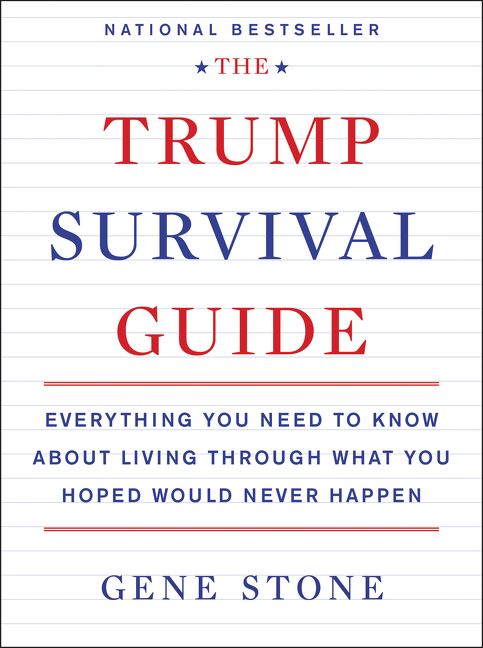
The Next Battle Begins – The Trump Survival Guide by Gene Stone

book cover

Don’t get mad. Get Organized!

With the arrival of Donald J. Trump in the oval office, the nation is faced with a large set of challenges. You may be tempted to throw up your hands and retreat from any sort of engagement. After all, what can one person, without billions of dollars and/or an army, actually do against the organized force of billionaires united in the looting of American financial and natural resources, and acting in concert in waging a one-sided class war on those of us who are not of their inner circle? Gene Stone has some answers.

It was certainly the case that grass roots activity, however much it was of the astro-turf variety, and funded by right-wing money men, was effective in making life for President Obama a living hell for almost all of his two terms. The lessons that were learned by the right came, ironically, from a left-wing organizer named Saul Alinsky. It is time for Democrats, liberals, progressives, moderates, anyone with a conscience to learn those lessons as well, and begin the long journey of political resistance that is our only hope of saving the nation from ruin.

description
Gene Stone – from his Twitter page

Gene Stone offers a very accessible guide to how anyone might go about participating in this. The book covers twelve broad areas of concern; Civil Rights, The Economy, Education, Energy, Entitlement Programs, The Environment, Immigration, LGBTQ Issues, National Security, Obamacare, Political Issues, and Women’s Issues.

The layout is consistent from chapter to chapter. Each of the twelve topic chapters follows a format:
The Background
What Did Barack Obama Do?
What Might Donald Trump Do?
What Can you Do? – There are often subsections to this one. Things like
—–Organizations you can donate to
—–Organizations you can volunteer in
—–Sign Petitions
—–Make use of Social Media to communicate your concerns
Books to Read
The concluding chapter tosses in a potpourri of other subject areas.

As a definitive volume on how to oppose the incoming madness, this is far from complete. However, as an introductory pocket guide to how to get started, an easy intro to anyone looking to do something to oppose the reactionary programs that will be afflicting us all in the years ahead, this is an invaluable book. Short, very easy to read, specific enough on what the issues are, what options one might have for action, where one can look to apply those actions, and it offers extra sources of information for those eager to learn more about each subject area.

And some warnings stand out. For example,

Despite all the advances made in the LGBTQ community, many of them can be rolled back—quickly, easily, and effectively.

There are also some nice extra bits in here that made it an enjoyable as well as a useful read.

In 1812 Massachusetts governor Elbridge Gerry signed a bill that took redrawing he state’s district lines to such extremes that one district looked like a salamander. The term “gerrymander” was born and has been used ever since to describe this practice.

Maybe you knew that. I had no idea

I found the intro sections reasonable, although I did note a few items that merited a bit of correction. The author refers to “The Affordable Care Act, instantly and forever known as ObamaCare to foes and allies alike. “ Actually that was not the case. The right labeled the ACA as “Obamacare” as an insult, the same way they insist on calling the Democratic Party the “Democrat Party.” It was only after some time that Democrats decided to embrace the name. Stone also implies that the Democrats broke new ground by using budget reconciliation to get Obamacare passed, not mentioning that President Bush the second had done the same thing to pass his ruinous tax cuts. Minor gripes to what is, overall, a pretty useful book.

The Trump Survival Guide is no one’s idea of a comprehensive manual for the battles ahead. But it is most definitely an excellent intro, particularly for the vast majority of people who have never engaged in any sort of political activism before. The more people who are involved in fighting back, the likelier it is that crucial victories can be won. If you are at all concerned about what the Trumpinistas have planned, and are thinking about how you might be able to help in the movement to resist, checking this book out would be a great first step.

Review posted – January 20, 2017 – a date that will live in infamy

Publication date – January 10, 2017

=======================================EXTRA STUFF

Links to the author’s personal, Twitter and FB pages

I strongly suggest you also check out a document that was put together by former Congressional staffers, Indivisible. It can be downloaded for free at the linked site.

Leave a comment

Filed under Non-fiction, Reviews

Shop Cats of New York by Tamar Arslanian

book cover
There may be eight million stories in the naked city (well, closer to nine these days). But that only counts people. What about some of our other citizens? How many times have you walked into a shop and spotted the resident mouser strolling down an aisle, busily guarding a shelf, or splayed in the front window? They are so common as to have become an embedded element of the urban landscape. But their very ubiquity has made them somewhat invisible. We accept them as part of our environment, and pay them little attention. But Tamar Arslanian noticed, and decided to write a book featuring these often unnoticed New Yorkers.

It was one of those times when my wife, in a flurry of OMGs, blew through our front door and announced in full capital letters. YOU HAVE GOT TO SEE THIS. The this, of course, was the book under review here, Shop Cats of New York. If she had done this twenty years earlier, I would not have been very interested. And my first wife probably would have wondered just who the hell that woman was. At that time I was not only cat-free, but the proud owner of a considerable cat allergy. Things change.

description
Author Tamar Arslanian interviews the Neergaard Pharmacy representative

The portraits in this collection include brief write-ups about the cats in question, ranging from considerable to pretty-much non-existent, with most falling in the one to three paragraph middle range. There are some moving tales told, along with the sort of cat-as-local-royalty picture one might expect. The photographs look good enough to make you want to rub the side of your head up against them, repeatedly.

As happens with about half the marriages in the USA, my first went the way of dial-up. In late 1998, I was looking for an apartment, but also someone else to share the rest of my life with. I suppose one could say that at the time I was a bit of a stray, not exactly homeless, but certainly unsettled. I partook of Match.com, including the sort of profile millions of other people have penned. Mine was probably typical enough, blah-blah-blah, three kids, blah-blah-blah, systems analyst, blah-blah-blah Mets fan, blah-blah-blah, and Sorry, no cats. Allergic. I met several women, but was particularly intrigued by one. Despite the fact that we had engaged in a considerable series of on-line exchanges, it turned out she had issues with reading.

Shadow on Arrival//embedr.flickr.com/assets/client-code.js
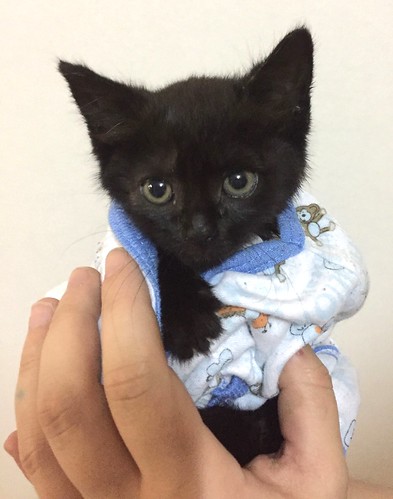
Shadow on arrival – shot by Cat Rescuer pal, Sara

There are 36 chapters in Shop Cats of New York. Most cover individual kitties. Three deal in multiples. One of these looks at a pets supply store that also fosters, one looks at the campus cats of Pratt Institute, and the third tells of The Meow Parlour on the Lower East Side, a “cat cafe” that specializes in adopting cats out to local residents.

The first time I went to visit my new friend at her place, I was in for a surprise. She was sharing her apartment. Her room-mates kept their distance but they made their presence felt anyway. In short order my eyes began to itch. Soon after, my nose began to run. Within thirty minutes of my arrival I was struggling to breathe and bolting for the door. Ummm, about that cat thing.

description
Photographer Andrew Marttila checking in at the Algonquin

Andrew Marttila’s photographs are wonderful, capturing the expressiveness of the featured furries in their now-native habitat. These include a fair range of commercial enterprises, from a copy shop to a brewery, from bookstores to, surprisingly, a boutique for dogs, from a bike shop to a pharmacy. One thing that struck me as a bit odd was the absence of representation from both The Bronx and Staten Island. Hey, wuddah we? Chopped livah?

I guess she was interested enough in me to risk not copping to the kitties. And I guess I was interested enough in her to take on a steady diet of whatever allergy med seemed to work at the time. It also seemed a reasonable thing to try to build up a bit of tolerance. About a year later, I was living in a garden apartment in Park Slope, with access to a back yard, when I started getting a regular visitor. This good-sized black cat showed his puss near my back door more and more. I started putting out some food for him. Then left my back door open until he began risking visits inside. After a few of these. I closed the door behind him. He did not seem to mind. I called him Pitch. He was my first cat.

Julian and Nala - Bosom Buddies//embedr.flickr.com/assets/client-code.js
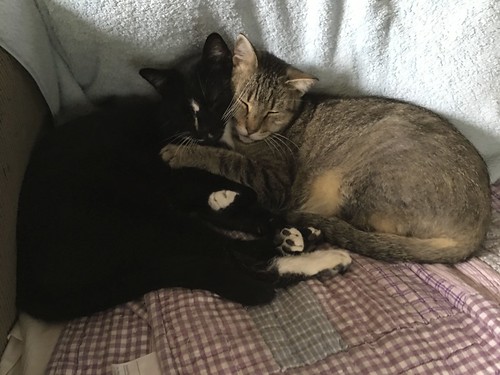
Julian and Nala have been bosom buddies ever since we brought them home – shot by Mary Ann

Arslanian asked the shop owners for their cats’ origin stories. Many are rescues.

According to Neergard pharmacist Lana, “Ivy was found as a wee kitten pulling tricks on the gritty streets of Brooklyn’s Park Slope.”

Geez, talk about mean streets. Some came along with the building or business when a new owner took over.

We moved in together in 2001, marrying later that year. My Pitch joined her Madison, Winnie and Bo. There would be more. One morning a small stray tried to follow Mary Ann into the subway. It was not her first encounter with this kittie. She was so small we believed her to be a kitten. Concerned for her safety, she brought the wee beastie back upstairs before heading out to work again. I was not thrilled at the prospect of yet another cat being added to our pack. We put her in my daughters’ bedroom. That night when Mary Ann got home from work, she came into the room, and there I was like a thief with his hand in the cookie jar, holding this little cat in my arms in the same way I had held my tiny humans not so long ago. Forgotten was the notion of trying to find another home for her. I looked up at my wife, sheepishly, and said, “She had me at meow.” Turned out she was as large as she would ever get. We called her Little Cat. or LC for short.

description
One of many shots available at the FB page for the book

A fair number of these cats have fans, locals who stop by for a scratch-n-rub. But some of these contemporary kitties have on-lion (sorry) presences as well. The shop cats range in temperament from sweet to imperious, from scratch-me-rub-me-love-me attention-whores to full-on Travis Bickle. “Are you lookin’ at me?” Tiny, the cat in charge of the Community Bookstore in Park Slope, seems particularly fearless.

Customers come in with their dogs assuring the staff they are ok with cats, to which the staff responds, “Well, our cat is not ok with dogs. If you see Tiny up in the shelves following you, your dog is being stalked.”

Madison 554//embedr.flickr.com/assets/client-code.js
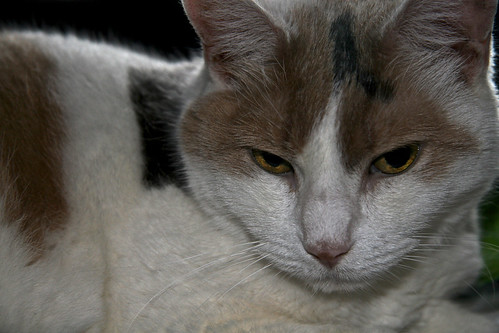
Madison

In the mid aughts, a work friend of Mary Ann’s at Harper was about to relocate out of the country. His wife had gotten a job with the State Department, and they had very little notice before they would have to leave. In order to be able to take their two cats along, they would have had to put them into seriously prolonged quarantine. They were not confident that both would survive the experience. That is how Anakin and Kiki joined our herd.

They may sleep sixteen to twenty hours a day, but these are working cats, with diverse jobs, in addition to their traditional rodent management portfolios.

When I asked the only desk-less guy there [MPH messenger service] if he was security, he nodded in Sammy’s direction. “He’s security.”

One Red Hook cat helps close deals as an assistant sales rep for a glass products company by sitting on customers’ laps.

description
And your total is… – From Shop Cats FB pages

For any who may wonder at the ability of felines to feel, there is a particularly moving tale of one cat mourning the passing of his sister.

In 2011, a surprise was found at my mother-in-law’s place in Wilkes Barre. A stray had taken up residence on the back porch. When Mary Ann, there for a visit, picked her up, there were two babies beneath her. Her mother was actually ok with taking them in. The mom was named Isabelle and the babies were Oscar and Felix. We had intended to head out there for a visit a few weeks later. Get Isabelle to the vet, and have the babies checked out. But Hurricane Irene had other plans, and we did not manage the trip until enough later to matter. Isabelle had managed to get mommified again, this time with Scout and Boo. So we had a triple-A team of cats in residence in Wilkes Barre. It was good company for mom, who was getting on. We helped out with cat costs, buying food, litter and dealing with vets. We had expected to bring them to Brooklyn over time. It was during this period that another arrival turned up. Tabitha had been showing up in the Wilkes Barre back yard looking for food, and getting it. But came inside a time or two when it got very cold. One time was when we were there on a visit. She came into the kitchen, but was so terrified of the other cats that she hid under the stove. To our great surprise mom-in-law asked us to take her back with us, afraid that her brood would harm the outsider. In January 2015, my mother-in-law passed, peacefully, in her sleep, a favorite German shepherd companion at her side. Our triple-A team would be moving up to the majors. Well, somewhat. Some of them were particularly gifted at evading capture. But we did bring home Isabelle, Scout and Oscar.

Scout on the Couch//embedr.flickr.com/assets/client-code.js
Scout on the couch – shot by Mary Ann

Shop Cats may stretch the definition of the word shop a bit, including a chapter on the cats of Brooklyn’s Pratt University. We learn of the attempt by those in charge to make Pratt a cat-free zone, which is enough to make one want to hack up a hairball, and leave it in management’s shoes. But it is certainly a forgivable extension, considering the subject matter.

We have lost several of our four-footed children to the ravages of age. They had lived lives that were respectably lengthy, but it was heart-breaking to lose them. There would be two more sets of incomings. We have a friend in Wilkes Barre who is a registered cat-rescuer. She is a saint, in our view, who has helped many a feline shift from living on the streets to finding a safe, loving home. However, there was a time when she needed a temporary place for many of her wards. Mom’s place in W-B was offered, and a dozen or so squatters took up residence. Two of them took a shine to Mary Ann and me when we were there. The result was Nala and Julian. On another trip to W-B, we had intended to retrieve Felix from the cat angel of W-B, but he was clearly happy to remain where he was. It so happened that at the time there was another resident in that illustrious cat house that was in need of placement. He was young, but no longer a kitten. What set him apart was that he had an extra digit on all four paws. We named him for Ernest Hemingway, as the cats at Papa’s Key West home were known for being polydactyl. So Nesto signed on.

description
King Jeffie of the Brooklyn whiskey distillery – an outtake on the FB page

The stories told here are mostly sweet and adorable. But there are one or two occasions where those stories include reports on the cats’ more predatory inclinations.

But wait. there’s more. In the last few months Mary Ann had been finding other people in our neighborhood who have been feeding some of the local ferals (there are many), and a get-together was arranged. Brunch was had. A plan was made. Ferals were trapped. One was checked out, then brought to a family in upstate NY (not a euphemism). Two others were brought to our rescuer pal in Wilkes Barre. And we are currently fostering a mom and her three babies, and one more, a beautiful tabby, probably under a year old. But it came to pass that one night, after heading out with her fellow trappers, Mary Ann returned home with about three ounces of rescued lovability clutched to her clavicle. Neither of us had ever had a kitten. We do now. Shadow has joined the pride. It will take a while for her to be safe, being set loose among the considerable fully-grown group that ranges free in our apartment. I can well imagine Nala prancing across the living room with a tiny black tail hanging out of her mouth. But eventually Shadow, who is dying to play with the big kids, will find her place among the burgeoning crowd. I still sneeze on occasion, probably because I have not become fully acclimated to the newbies yet. But I have not been driven to an allergy-driven asthmatic panic in so long I cannot actually recall when that last occurred. Our children may throw up on the floor, shred our furniture, knock things from their places, and generate unspeakable aromas at times, but we love them, and expect that the feeling is shared. They are good company, with lots of personality. Their addiction to catnip and laser pointers offers moments of true hilarity. And their fondness for snuggling reinforces our mutual affection. I am glad Mary Ann had issues with reading. I am glad I was able to manage my allergy. It is a considerable, loving family we have patched together. And that is nothing to sneeze at.

Nesto//embedr.flickr.com/assets/client-code.js
Nesto is a polydactyl, which gives him nearly supernatural climbing ability

Shop Cats of New York may be a local look, but it certainly represents a global phenomenon. There are plenty of representatives wherever you live, guaranteed. The next time you stop into a shop, take a look around, and see if there might be a silent prowling proprietor in residence. Odds are he or she will welcome a gentle scratch behind the ears or under the chin, or a gentle cranial rub. You might even sweeten the deal with a cat treat or two (delivered surreptitiously). And if you are feeling particularly bold you might inquire into the cat’s name, where he or she came from and if he or she would mind sitting, standing, or lying down for a photo. For anyone with a fondness for the feline, you might want to give Shop Cats of New York a place in your home. It will make you purrrrrr, now and forever. It’s cat-tastic!

Review First Posted – 11/4/2016

Published – 11/1/2016

This review has been cross-posted on GoodReads

=======================================EXTRA STUFF

Here is the link to the book’s official facebook page.

Tamar Arslanian’s blog is called, fittingly, I Have Cat. You Can find her on Instagram and Twitter as well.

Andrew Marttila’s main site, The Great Went Photo, has some amazing shots. Must see material. You can also find him on instagram, Twitter, and FB

A promotional video for the book

An interesting recent article on an upcoming PBS documentary, Cat Evolution

A New York Magazine piece on working felines at the Javits Center – Feral Cats Are Being Deployed in New York’s War on Rats – by Chas Danner

PS – the author is aware of having managed only three of NYC’s five boroughs, and plans to repair that breach with a sequel. Or several, maybe? Shop Cats, the Litter?

December 3, 2016 – Had to add this one
Nesto at Resto//embedr.flickr.com/assets/client-code.js
Nesto at Resto or Relax (note serendipitous book title at upper right) – shot by Mary Ann – Clearly the boy is all shagged out after a long day at his desk job

February, 2017 – part of a multi-year Photo Ark project to photograph captive species before they vanish from the world, this piece looks at a host of small cats. OMGOMGOMGOMG!!! – Out of the Shadows, the Wildcats You’ve Never Seen – By Christine Dell’Amore – Photographs by Joel Sartore
description
The Iberian Lynx

Leave a comment

Filed under New York City, Non-fiction

This Chair Rocks by Ashton Applewhite

book cover
I have had a life. I married twice, was in the room when two of my three entered the world. I helped them grow through infancy and childhood into beautiful, talented, bright and loving adults. I have lost both parents three sisters, and in-laws as well.

There are two kinds of people in the world, those who are older and those would like to be. Ashton Applewhite’s book, This Chair Rocks, shines a bright light on a labeling system that affects everyone on earth. Whether we are called addled, senior citizens, golden agers, coots, old farts, old fucks, old bitches or a host of other derogatories, we are separated from the rest of humanity when such labels are applied, separated from the presumed (younger) norm. We become outsiders. Just as black athlete is somehow a separate species, a woman president is presumed to be less capable, and an Islamic terrorist more unspeakable than a garden-variety terrorist, we can be cast into the soylent sphere by labels. And such casting harms not only those being tossed but those doing the tossing.

description
Ashton Applewhite – from Seniorplanet.org

I have had a life. I cheered for Mets and Jets since their birth, and wept more times than not. I played on championship teams in my youth and led youth teams as an adult to both glory and painful defeat. I have hit for the cycle and swung and missed.

Applewhite covers a wide array of subjects while considering things like how ageist attitudes legitimize maltreatment of olders, the impact of internalizing false notions of aging, and how the world pathologizes getting on in years. She looks at the language of ageism, the realities of aging and mental acuity (there are some surprises there), and how this impacts health care, physical and mental. She looks at the stigmatization of disability, at sexuality for olders, retirement and self-esteem.

I have had a life. In the 1950s, I watched a black and white from our living room floor, saw it change color, go big, go flat, go small, go cabled, go tubeless and go wireless. I listened to radio dramas on our kitchen radio, saw the arrival of transistors, and now hear bedtime podcasts on a charging iPad. I saw phones go from rotary to digital and watched them cede their wires to the past, and even go all Dick Tracy. I saw as much 50s sci-fi as I could, saw 2001 when it was new, and still in the future, and Star Wars and Star Trek from the Start.

Applewhite goes into considerable detail in showing how the bias towards older people (she uses the term olders, so I am going with that here) that pervades this and many other societies, is based largely on falsehoods, and causes real harm,

Condescension actually shortens lives. What professionals call “elderspeak”—the belittling “sweeties” and “dearies” that people use to address older people—does more than rankle. It reinforces stereotypes of incapacity and incompetence, which leads to poorer health, including shorter lifespans. People with positive perceptions of aging actually live longer–a whopping 7.5 years longer on average—in large part because they’re motivated to take better care of themselves.

She includes several sections titled PUSH BACK, in which she offers suggestions for actions we can take to resist ageism when we encounter it, and things we can do to keep ourselves healthy.

I have had a life. After my world was thrown into turmoil I was fortunate enough, to my great surprise, to find deep love to last the rest of my life.

Lengthening lifetimes is one of the ways we measure human progress, and by that measure, we have done quite nicely. We live ten years longer than our grandparents. In the USA, in the 20th century, life spans increased a jaw-dropping 30 years. But our culture has not yet caught up with the facts. There are many things in here that will surprise you. Applewhite has separated the bull from the…um…poo, and pointed out many of the inaccuracies in what passes for common wisdom.

We reinforce the association with constant nervous reference to forgetfulness and “senior moments.” I used to think those quips were self-deprecatingly cute, until it dawned on me that when I lost the car keys in high school, I didn’t call it a “junior moment.” Any prophecy about debility, whether or not it comes true, dampens our aspirations and damages our sense of self—especially when it comes to brain power. The damage is magnified by the glum and widespread assumption that, somewhere down the line, dementia is inevitable.

I have had a life, but sometimes it is difficult to remember all of it. Of course this is not because of my age, in particular. I began keeping a diary when I was 15 because I could not remember all the New Year’s Eves of my short existence. I recently mislaid my glasses, and was never able to find them. But then, when I was ten years old, I lost my treasured baseball glove. I never found that either. Some traits seem to follow us through the years, however many there may be.

Applewhite points out that there are plenty of ways for labeled groups to move forward together. Social Security is in no danger of going bankrupt or of devastating the nation’s economy. It can be sustained by marginally increasing the range of salary that is subject to Social Security tax. Medicare could fare a lot better if the rules that forbade it from exercising its market power were relaxed. Really, Medicare is not even allowed to try to get the best prices from drug manufacturers? Whose interests are served by that particular form of insanity?

I have had a life. I’ve been Everly’d, Diddly’d, and Valens’d, and Darin’d. Been Elvis’d and Berry’d, and Buddy’d, and Ray’d. I sat in the mud with the hundreds of thousands, alone in the mass as the heavenly played. Near the stage at the Bitter End for Ronstadt and others, and loudly at Max’s KC for the Dolls. There just was so much music, I caught a few notes, but wished there was some way to go hear it all. I’ve been 4-Seasoned, 4-Topped, Beach Boy’d, Supremed. Been ELP’d at Wembley, and at the Garden, I got Creamed. Saw Towshend at the Round House, stood for Tina at the beach. Saw Zeppelin rock in Flushing. And I wish that each and every band I’ve seen up close could keep on playing. Some are gone, but I’m just saying. I’ve been Peter, Paul and Mary’d. I’ve been Dylan’d and been Seeger’d, and seen a stage or two where all the players looked beleaguered. I’ve been Yessed, and been Pink Floyded. I been Bowied and been Banded. I’ve been Beatled, Stoned and Dave Clark Fived, and I’ve been hotly Canneded. I dared to breathe at the Filmore East when the ever Grateful Dead made it seem that life and youth were qualities that we would never shed. I’ve been Ike’d and I’ve been Nixoned, JFK’d and LBJ’d. I’ve been Reaganed, Bushed and Bushed again, and I’ve been MLK’d. I’ve been Cartered and been Clintoned, been Obama’d. Fate decreed that by the time you see this we will all be DJT’d.

Applewhite looks at many of the canards that prevail, like olders taking jobs from youngers, the old benefiting at the expense of the young, the relative flow of resources, the inevitability of cognitive decline. As for the senior boom, that we have so many more older people than we once did should be seen as a benefit not a problem. Older people have experience that can and should be employed to help solve old, new, and ongoing societal problems. Not all old people are wise, any more than all younger people are energetic, but we have a considerable base of been-there-done-that from which to draw. Enough of us have valuable and relevant experience and skills that could be put to good use.

Especially in the emotional realm, older brains are more resilient. As we turn eighty, brain imaging shows frontal lobe changes that improve our ability to deal with negative emotions like anger, envy, and fear. Olders experience less social anxiety, and fewer social phobias. Even as its discrete processing skills degrade, the normal aging brain enables greater emotional maturity, adaptability to change, and levels of well-being.

I have had a life. I’ve gone to college and grad school. I have studied abroad, and had a broad or two study me. (sorry). Been hired, laid off, fired, went back to school and started over, back at the bottom. Then was laid off again. I have toiled in several lines of work over the decades. Drove a cab, went postal, was a planner of health systems and a systems analyst for employers large and small, a guard and a dispatcher, and a few things beside. In 2001, I was laid off from my job as a systems analyst, after spending thirteen years at the firm, and over twenty in the field. I was not only never able to get another job in my chosen profession, I was never able to get an interview. It’s not like I was God’s gift to computer programming. But I was certainly competent enough to have been kept on by one of the largest financial institutions on the planet for over a decade. It’s not that I was priced out. I would have accepted pretty much anything. I was essentially kicked out of my field because of my age. AT 47!!!! All that experience not put to use by some business because they could not see past the age label. What a waste.

We all know, or should know, that Republicans are particularly gifted at the old game of divide and conquer. It worked great in the UK recently, when right wing-xenophobes persuaded working people, yet again, to vote against their own interests by stoking fear of the other. It has worked pretty well in the USA too. It is what’s the matter with Kansas, and has a long and shameful history here. Faced with electing people who would work to bolster union rights and voting for people who promise to keep those damned immigrants and minorities in their place, far too many working people seem more than ready to vote to enslave themselves further. We are as addicted to labels as the residents of a crack house are to their pipe. Fear-mongering is being used today for the same purpose it has always served, as a way to gain working and middle class support for policies that are anti labor, policies that pad the wallets of the already rich. Bush the junior tried his best to persuade the nation that privatizing Social Security would prevent the elderly from taking unfair advantage of the young. Labels are used as a way of manipulating people. They can do real damage, even if they sometimes fail to accomplish their mission.

I have had a life. I saw Rocky in the West End before it crossed the pond and Sweeney Todd and Lovett’s first repast. Sondheim’s a god. Saw Shakespeare in the park, Hair, and Oh, Calcutta, Cats, Les Miz, The Phantom, Cabaret, and more, but really that’s not nearly enough, off Broadway or on. Saw my kids in all their school shows, and survived some of my own.

Homo sap is a species that revels in labels. Us/them, Commie/Nazi, Winner/Loser, Black/White, the more dichotomous the better. And we seem to have more of the negative sort than the positive. Labeling offers shorthand, a macro reference, one word, maybe two, that allows us to redirect our brains away from the difficult and energy consuming task of considering and examining whole lives, freeing them up for the more satisfying activity of indulging our desires and impulses. How many are doomed to invisibility beneath labels? We are labeled because it makes things easier, and we are a species that values simplicity.

I have had a life. I walked London streets in almost Victorian twilight as the energy crisis dimmed English streetlamps. I hitchhiked in the USA, in Britain and the continent. Saw sunset from Ullapool, played guitar and sang in a club in Copenhagen, had the best breakfast of my life in Rotterdam, saw the most beautiful city ever, in Paris, twice. I lived a while in Saint John’s Wood. I have seen a fair portion of North America and visited a decent sample of Europe. I have taken photographs of an active volcano from a helicopter with no doors. I have seen some of the most stunning landscapes on Earth. I’ve been to Coney Island, Hershey Park, and Disney World and Land, and Freedomland, Six Flags and Universal, Palisades and Rye and a World’s Fair or two that raised my spirit high. Seen the sights that one can see in NY, Boston, and DC. There is so much history, in Philly, Baltimore and Maine, New Hampshire and Vermont, as much to learn as you could ever want.

There are many who, if they spotted me sitting or standing in a subway car, or walking down the street would see the color of my hair, note its retreat from my forehead, spot the lines that brace my eyes, and the forward tilt of my spine and see one thing only, age. All the rest would remain forever hidden beneath the large sticky-backed label that fits so nicely over another human being.

I have had a life. My hair has been military short and long enough for a real pony. I have smoked and toked, popped and snorted, but stopped before I self-aborted. I am tall, although not as tall as I once was. I am a little bit fat and my body has less speed and strength than it once possessed. Maybe the additional mass is because I am a storehouse of the history of my time, a sculptor of my experience into an image of my era. I have read thousands of books, tens of thousands of newspapers and magazines, and untold on-line articles. I have participated in a vast number of discussions, attended god-knows-how-many lectures, and watched a gazillion hours of documentary and news on TV. I know a thing or two.

I have had a life. I have been mugged, been in fistfights, and suffered a near catastrophic injury in an industrial accident. I have protested war and inhumanity and been struck with billy clubs for daring to speak. I have seen a thug slam a boy’s head into a brick wall.

There is a wealth of information in this relatively short volume. The chapters are divided up into many short sub-sections, so you can take it in a bit at a time if you like. I found some of the sections repetitive, and found one famous quote misattributed (it was from Anatole France, not Voltaire). There is a significant shortage of humor here, but, then, this is not a particularly funny subject. It is rich with surprising facts, which is one of its great strengths. For example, older people suffer from depression less than younger people.

I have had a life. I was chilled by Sputnik’s beep, and was warmed as I watched, along with all humanity, an ageless dream realized with a single step. I have seen my city burn, flood, and go dark. I stood in the wind-blown unspeakable snow when my city was ravaged, and saw a new tower sprout on the memory of the lost.

I have read quite a lot in my time, and it was inevitable that some of the material here would be old news, but I still found many new things to be learned in This Chair Rocks. I found, also, that Applewhite’s manifesto caused me to reconsider some attitudes and behaviors that I had thoughtlessly indulged. Consciousness raised. Check. It will make you more aware, too, of many things you had not noticed before. I cannot thank Ashton Applewhite enough for writing This Chair Rocks. It most certainly does.

I have had a life. It is diverse and rich with experience, memory, history and emotion. But listen up. I am STILL having a life and intend to for as long as I possibly can. Do not dismiss me because of my white hair. My white hair dazzles in bright light. Do not dismiss me because of my wrinkles. They are the evidence of a lifetime of laughter. Do not dismiss me because I am slightly bent. I can and will straighten up if I need to throw a punch or block a blow. I am a smarter person than I have ever been. I am a more knowledgeable person than I have ever been. I am probably a wiser person than I have ever been. I am a better writer, photographer, and I would say a better person than I have ever been. I have loved and I have hated, and wept until the tears abated. Jimi Hendrix said “I’ll die when it’s my time to die.” I will certainly do that. I may not be wealthy; I may not be important, I may not be particularly athletic; I may not be the sharpest tool in the shed; and I may not be beautiful. But I am somebody, and I have worth. I may be older but I will be here a while yet and I have plenty to offer, a lot left to experience, and a lot still to accomplish. I realize that I may not have had the best of all possible lives. There is much I have not done, much I have not seen, much I have not experienced. But I do not need an angel named Clarence to tell me that it’s been a wonderful life. I may or may not be having the time of my life, but I have definitely had a life of my times. Do not bury me under a label. Do not make me invisible behind a number. I’m still here, much more in store. I am older. Watch me SOAR!!!!

Now get the hell off my lawn, you goddam kids, before I call the cops.

Review First Posted – July 29, 2016

Published – May 23, 2016

Applewhite sent me the book in return for an honest review.

=======================================EXTRA STUFF

Rather than add in a bunch of links here, I suggest you check out Ashton’s site. There are links aplenty there.

Applewhite got her start in an unusual way, writing joke books. Not just any joke books. She wrote Truly Tasteless Jokes One, as Blanche Knott (my kinda woman), had four of these things on the NY Times best seller list at once. But she began writing with a bit more seriousness. In 1997 her book Cutting Loose: Why Women Who End Their Marriages Do So Well , landed her on Phyliss Schlafly’s shit list, a signal achievement for anyone with a brain and a heart. In October, 2016 she is delivering the keynote address at the UN for the 36th International Day of Older Persons. No joke.

Items of Interest from the author
—–9/3/16 – Applewhite has a strong piece in the NY Times, on age discrimination – You’re How Old? We’ll Be in Touch

Items of Interest
—–NY Times – 5/3/2025 – Honey, Sweetie, Dearie: The Perils of Elderspeak by Paula Span
—–NY Times – 7/12/2016 – A pretty interesting piece by Winnie Hu – Too Old for Sex? Not at This Nursing Home
—–NY Times – 9/29/2016 – Who’s Really Older, Trump or Clinton? by Gail Collins
—–NY Times Sunday Review – 4/7/2017 – To Be a Genius, Think Like a 94-Year-Old by Pagan Kenned
—–NY Times – 7/24/2017 – Another Possible Indignity of Age: Arrest by Paula Span
—–Scientific American – Why Does Time Fly as We Get Older? by Jordan Gaines Lewis
—–NY Times – 12/16/2017 – Are You Old? Infirm? Then Kindly Disappear by Frank Bruni – Definitely worth a look
—–NY Times – 12/21/2017 – Facebook Job Ads Raise Concerns About Age Discrimination – by Julis Angwin, Noam Scheiber and Ariana Tobindec
—–AARP Bulletin – December 2017 – Age Discrimination Goes Online – by Kenneth Terrell –

As more jobs are advertised and applied for online, evidence is mounting that it is easier to discriminate against older workers.

Definitely worth checking out.
—–NY Times – 6/22/2018 – NY Times – The Snake Oil of the Second-Act Industry – by Alissa Quart – on how unscrupulous private colleges are taking advantage of those looking to reboot their careers
—–NY Times – 3/11/2019 – The Fight to Be a Middle-Aged Female News Anchor – by Steve Cavendish
—–NY Times – 1/3/2020 –Older People Need Geriatricians. Where Will They Come From? by Paula Span
—–NY Times – 1/11/2020 – Everyone Knows Memory Fails as You Age. But Everyone Is Wrong. by Daniel J. Levitin (a neuroscientist)
—–NY Times – 2/12/2022 – Making ‘Dinobabies’ Extinct: IBM’s Push for a Younger Work Force by Noam Schreiber – IBM caught in their documents soylenting their seniors’ careers

Songs
—–I’m Still Here – Elaine Stritch from Sondheim’s Follies
—– When I was 17
—– Running on Empty
—– When I’m 64 – (a cover)
—–We Didn’t Start the Fire
—–Everything old is new again – from All That Jazz

Leave a comment

Filed under Activism, Non-fiction, Psychology and the Brain, Public Health, Public policy, Reviews

It’s What I Do by Lynsey Addario

book cover

“Sahafi! Media!! He yelled to the soldiers. He opened the car door to get out, and Quadaffi’s soldiers swarmed around him. “Sahafi!”
In one fluid movement the doors flew open and Tyler, Steve, and Anthony were ripped out of the car. I immediately locked my door and buried my head in my lap. Gunshots shattered the air. When I looked up, I was alone. I knew I had to get out of the car to run for cover, but I couldn’t move.

Click!

description
Lynsey Addario – from CBS News

You may not recognize the name Lynsey Addario, but if you read newspapers, check out magazines, or are aware at all of the imagery that accompanies major events in the world, you have seen her work. Addario is one of the premier photojournalists on the planet and has the portfolio, the Pulitzer, and a MacArthur award to prove it. In 2014, American Photo named her one of the five most influential photographers of the last quarter century. In 2012, Newsweek magazine cited her as one of 150 Women Who Shake the World. Thankfully, she does not shake her camera when she is shooting (unless of course it is for intended effect). Although no one could blame her if she did. Addario has spent a large portion of her career as a conflict photographer, working for extended periods on the scene in Iraq, Afghanistan, Libya, Congo, Sudan, and other garden spots. Wherever people have been shooting at each other in the last two decades there is a good chance that Lynsey Addario has been there. The one place she declares she will not go these days is Syria, which says something. She has been kidnapped in the field twice and has felt her life to be in danger more times than that, so when she says she won’t go to a place, it must be something really special.

ADDARIORETRO002
US Soldiers in the Korengal Valley of Afghanistan

It’s What I Do is Addario’s tale of her journey from growing up in a Connecticut suburb as part of a Bohemian family, to finding and developing a talent for capturing life through a lens, to pursuing a career in photography. While working in New York in 1999, she got a big break, being asked to work on an Associated Press project looking into transgender prostitution in the city, and the spate of homicides with which that community was being afflicted. It turned into a months-long undertaking and brought her work to public notice for the first time. Click!

description
A shot from that series

In 2000, a family friend invited her to go India.

Everything that made India the rawest place on earth made it the most wonderful to photograph. The streets hummed with constant movement, a low-grade chaos where almost every aspect of the human condition was in public view. Click!

It was while there that she was encouraged to go to Afghanistan to shoot the lives of women living under the Taliban. She was able to gain access to a half of Afghani society barred to her male counterparts. Click!

description
Women and girls study and recite the Koran in Peshawar, Pakistan, 2001 – from the Women’s Eye

9/11 brought on a whole new era of conflict. Addario was on the scene when the USA invaded Iraq, having set up shop in Kurdistan when Saddam Hussein was toppled. Of course that required some extra planning. At the time she got the assignment she was in South Korea covering refugees from the north, and enduring the extraordinary humanitarian horrors of the extended karaoke the refugees enjoyed. She needed to get tooled up for the job and it proved challenging. One thing she had to arrange for was body armor. She found herself befuddled by the on-line offerings. She wrote to her editor.

I have checked out the websites you recommended, and am not sure if I just tried to read Korean. Basically, I have no idea what I am looking at—ballistic, six-point adjustable, tactical armor, etc. Please understand that this language is not familiar to me—I grew up in Connecticut, was raised by hairdressers.

ADDARIORETRO020
A woman prays at dawn after the 2010 earthquake that nearly destroyed Haiti

She was kidnapped for the first time while en route to Ramali with other journalists. And was subsequently jarred when Life magazine declined to publish her photographs, because they were too real for the American public. (The New York Times Magazine would later publish some of the work.) The experience of working in the Iraq war zone and coping with the politics of news publishing provided valuable life lessons.

…something in me had changed after three months in Iraq. I was now a photojournalist willing to die for stories that had the potential to educate people. I wanted to make people think, to open their minds, to give them a full picture of what was happening in Iraq so they could decide if they supported our presence there.

Her work has often demonstrated the power of the image. When she got shots of a Sudan massacre she made it impossible for President Bashir to continue denying that the war crime had taken place.

description
Addario’s image of armed boys and men near the Afghan border won her a Pulitzer – from The Women’s Eye

Addario pooh-poohs any notion that she is an adrenalin junkie. She says that she has come to recognize that the photos she takes have the power to inform the public and influence people, so feels a responsibility, a calling to bear witness to much of the awfulness of the world in order to shine some light on it, to bring it to the world’s attention.

description
Addario stopped to help when one of these women was in labor, miles from a hospital. She gave them a ride. – From Itswhatidobook.com

When Addario first submitted her manuscript, she was advised to make it more personal, as in writing about her off-the-field life as well as her experiences behind the lens. She includes in the final version a bit of her love-life history, which entailed some admittedly bad choices. As a dedicated career-woman, sustaining relationships has always taken second place to her work. She says she even walked out on dinner dates when she got an assignment.

Recently, a young photographer asked her how to get into the business. She told him to start traveling, shooting and contacting editors for assignments. When he told her that he didn’t want to travel much because of his girlfriend, Addario told him to break up with her.
“He thought I was insane,” says Addario. “I told him you have to decide what your priorities are. If you are not willing to make that sacrifice, there are 10,000 young photographers who will.”
– from Photo District News article

The book contains many amazing shots Addario has taken over the course of her career. They add significantly to the aura of outsized accomplishment that Addario has earned. One significant thing about the shots Addario takes is that they are not only journalistically effective but expose an impressive artistic talent. She is able to tell troubling stories while at the same time making outstanding art. The book is printed on very high-quality paper, images and text, which adds a very tactile richness to both the visual power on display and the engaging text.

description
An Iraqi woman fleeing a massive fire in Basra in 2003

Although one can piece together information by reading diverse articles about her, and watching sundry videos in which Addario does presentations and is interviewed, those connections are not always spelled out in the book. Particularly in the earlier parts of her photographic sojourn, it was somewhat murky why and how she decided to uproot and move to Argentina, and later to India.

Syrian Refugees;northern iraq
Syrian refugees in Northern Iraq

It’s What I Do is not a photography book. You will not get any technical tips there. While you will see some very nicely printed photographic images, those are there to enhance, to illuminate the text. The main thing here is her story. Lynsey Addario is a rock star in the world of photographic journalism. She takes us frame by frame on her journey from suburban origins as the child of hairdressers to becoming a world traveler covering important events everywhere on the planet in an attempt to illuminate the darkness. It is quite clear that her achievements have come at considerable personal cost, and that she is possessed of a rare personal fire that has driven her to take large risks in order to fulfill what she perceives as her mission in life. For those of us not familiar with the names that appear under all those news photos, It’s What I Do offers particular insight into just how important it is to have photographic boots on the ground wherever important events are occurring. Real-world photography is Addario’s contribution to the world. We are all enriched by her efforts, her sacrifices, her courage and her talent. This book will be an eye-opener for many. It is a perfectly focused, well-framed look at a life well lived, a life that has benefited and promises to continue to benefit us all. Click!

Publication
———-2/5/2015 – hardcover
———-11/8/2016 – paperback

Review first posted – 4/22/2016

BTW, a deal was struck at some point to turn this into a major film, with Jennifer Lawrence as Addario, to be directed by Steven Spielberg. As of 2022, we are still waiting, so who knows?

=======================================EXTRA STUFF

Links to the author’s personal, Twitter and FB pages

She has a separate personal site specifically for the book

Every time I leave my family I wonder why I’ve chosen this life. I leave my two-year-old son and I come home and he won’t speak to me for a few days. And it’s lonely on the road. And I’m in these strange hotel rooms, or tents. It’s not a luxurious life. It’s something that people think that you’re out there for the adrenalin rush. They think you’re out there because it’s glamorous. But it’s not. You’re out there as a photographer who has chosen to cover conflict. It’s a calling. It’s something that sort of takes over who I am. People ask me why I do this and it is what makes me most alive. It is what I believe in. it is my happiness and It’s what I do.

Videos
—–This is must-see – Addario’s presentation, followed by an interview, at Arts and & Ideas at the JCCSF
—–National Geographic – 26 minutes – Lynsey doing a presentation, with focus on her NG assignments. Much info from JFFC presentation is repeated, but there is a lot that is different so this one is also definitely worthwhile
—–The Annenberg Space for Photography – focus on her kidnapping – 10 minutes
—– Item on CBS This Morning linked from LA‘s site
—–Time Magazine – This opens as text, but there are videos embedded

Interviews
—–Photo District News. Among other things this has a lot on breaking into the business
—– The Literate lens – In Love and War: An Interview with Lynsey Addario
—– Photojournalist Lynsey Addario On Her Relentless Pursuit of Truth – from The Women’s Eye

Articles
—–From American Photo – THE INFLUENCERS: LYNSEY ADDARIO
—–National Geographic – December 19, 2017 – Inside a Female Photographer’s Experience Documenting War – by Daniel Stone – Regarding the documentary series The Long Road Home, about the Iraq War

description
Addario watched as Iraqi Shiite followers of Muqtada Al Sadr stood amidst burning tires in Sadr City moments before American tanks opened fire on the area in Baghdad, Iraq April 4, 2004
Image and image text from NatGeo article – Image by Addario, of course

—–July 10, 2020 – A new article by Addario in National Geographic – In the U.K., families of the dead still wonder: was it COVID-19?

—–August 27, 2022 – MSNBC interview with Addario – Photographer Lynsey Addario reflects on 6 months of the war in Ukraine

2 Comments

Filed under Afghanistan, Bio/Autobio/Memoir, biography, History, Journalism, Non-fiction

Smoke Gets in Your Eyes by Caitlin Doughty

book cover

There are many words a woman in love longs to hear. “I’ll love you forever, darling,” and “Will it be a diamond this year?” are two fine examples. But young lovers take note: above all else, the phrase every girl truly wants to hear is, “Hi, this is Amy from Science Support; I’m dropping off some heads.”

You have all seen The Producers, right? The version with Zero or Nathan, in the cinema, on TV, on the stage, whatever. Those of you who have not…well…tsk, tsk, tsk, for shame, for shame. Well, there is one scene that pops to mind apropos this book. In the film, the producers of the title have put together a show that is designed to fail. The surprise is on them, though, when their engineered disaster turns out to be a hit. During intermission of the opening performance, to Max and Leo’s absolute horror, they overhear a man saying to his wife, “Honey, I never in a million years thought I’d ever love a show called Springtime For Hitler. One might be forgiven for having similar thoughts about Caitlin Doughty’s sparkling romp through the joys of mortuary science, Smoke Gets in your Eyes. If you were expecting a lifeless look at what most of us consider a dark subject, well, surprise, surprise.

description
Yes we are, and dead-ender Caitlin is happy to help with the cleanup

Caitlin Doughty has cooked up a book that is part memoir, part guidebook through the world of what lies beyond, well, the earth-bound part, at least, and part advocacy for new ways of dealing with our remains. Doughty, a Hawaiian native, is a 6-foot Amazon pixie, bubbling over (like some of her clients?) with enthusiasm for the work of seeing people off on their final journey. Her glee is infectious, in a good way. The bulk of the tale is based on her experience working at WestWind Cremation and Burial in Oakland, California, her first gig in the field. She was 23, had had a fascination with death since she was a kid and this seemed a perfectly reasonable place in which to begin what she believed would be her career. Turned out she was right.

description
Caitlin Doughty from her site

Smoke Gets in your Eyes is rich with information not only about contemporary mortuary practices, but on practices in other cultures and on how death was handled in the past. For example, embalming did not come into use in the USA until the Civil War, when the delay in getting the recently deceased from battlefield to home in a non-putrid form presented considerable difficulties. She also looks at the practice of seeing people off at home as opposed to institutional settings. There is a rich lode of intel in here about the origin of church and churchyard burials. I imagine churchgoers of the eras when such practices were still fresh might have been praying for a good stiff wind.

description
No Kibby, no smoke monsters here

Doughty worked primarily in the cremation end of the biz, and offers many juicy details about this increasingly popular exit strategy. But mixing the factual material with her personal experience turns the burners up a notch.

The first time I peeked in on a cremating body felt outrageously transgressive, even though it was required by Westwind’s protocol. No matter how many heavy-metal album covers you’ve seen, how many Hieronymous Bosch prints of the tortures of Hell, or even the scene in Indiana Jones where the Nazi’s face melts off, you cannot be prepared to view a body being cremated. Seeing a flaming human skull is intense beyond your wildest flights of imagination.

Beyond her paying gig, Doughty has, for some time, been undertaking to run a blog on mortuary practice, The Order of the Good Death, with a focus on greener ways of returning our elements back to the source. (Would it be wrong to think of those who make use of green self disposal as the dearly de-potted?) One tidbit from this stream was meeting with a lady who has devised a death suit with mushroom spores, the better to extract toxins from a decomposing body. I was drooling over the potential for Troma films that might be made from this notion.

description
No, not pizza

One of life’s great joys is to learn something new while being thoroughly entertained. Smoke Gets in Your Eyes offers a unique compendium of fascinating information about how death is handled, mostly in America. Doughty’s sense of humor is right up my alley. The book is LOL funny and not just occasionally. You may want to make sure you have swallowed your coffee before reading, lest it come flying out your nose. I was very much reminded of the infectious humor of Mary Roach or Margee Kerr . Doughty is also TED-talk smart. She takes on some very real issues in both the science and economics of death-dealing, offers well-informed critiques of how we handle death today, and suggests some alternatives.

If the last face you see is Caitlin Doughty’s something is very, very wrong. The face itself is lovely, but usually by the time she gets her mitts on you you should be seeing the pearly gates, that renowned steambath, or nothing at all. Preferably you can see Doughty in one of the many nifty short vids available on her site. You will learn something while being thoroughly charmed. Reading this book won’t kill you, even with laughter, but it will begin to prepare you to look at that event that lies out there, somewhere in the distance for all of us, and point you in a direction that is care and not fear based. If you enjoy learning and laughing Smoke Gets in Your Eyes is dead on.

Review posted – 12/11/15

Publication date – 10/15/2014 (hc) – 9/28/15 – TP

I received this book from the publisher in return for an honest review. Well, not really. I mean they specifically said that there was no obligation to produce a review, so there is no quid pro quo involved, but it does seem the right thing to do, don’tchya think?

=======================================EXTRA STUFF

Links to the author’s personal, Twitter, Instagram and FB pages

You MUST CHECK OUT vids on her site. My favorite is The Foreskin Wedding Ring of St Catherine . All right, I’m gonna stop you right there. Go ahead. I know you wanna ask. No? Fine. I’ll do it for you, but you know this is what you were asking yourself. “If she rubs it does it become a bracelet?” Ok? Are ya happy now? Sheesh!

If you are uncertain about making a final commitment to reading this book you might want a taste of the product first (That sounds sooooo wrong) Here is an article Doughty wrote about her first experience with death as a kid, from Fortnightjournal.com . There are several other Doughty articles on this site as well.

Another book sample can be found here , in The Atlantic

Doughty offers a nifty list of sites to use for dealing with death, your own (presumably, you know, before) or others.

Interview in Wired

You might want to check out one or more of the following
—–The Loved One
—–The American Way of Death
—– The American Way of Death Revisited
—–Six Feet Under

Leave a comment

Filed under Bio/Autobio/Memoir, biography, Non-fiction, Public Health, Reviews

Dark Matter and the Dinosaurs by Lisa Randall

book cover

Give yourself to the Dark Side. It is the only way you can save your friends. – D. Vader

Lisa Randall, a Harvard Science professor, member of the National Academy of Sciences, named one of the 100 Most Influential People by Time Magazine in 2007, and author of three previous books, likes to think big. She also likes to think small. Her areas of expertise are particle physics and cosmology, which certainly covers a range. The big look she offers here is a cosmological take on not only how it came to pass that a large incoming did in the dinosaurs 66 million years ago, but why such decimations of life on Earth arrive with some (on a cosmological scale) regularity. Her explanation has to do with dark matter. It makes for an interesting tale, and offers an excellent example of how the scientific method (how Daniel Day Louis might play Louis Pasteur?) approaches problem-solving. It is a fascinating read that is at times wondrously accessible and at others like trying to bat away a swarm of meteoroids.

description
Dark Matter

As with most good communicators of science. Randall relies on metaphor, and some of hers are quite good. My favorite compared methods of detecting dark matter to detecting the presence of [insert name of your favorite A-list celebrity here]. You can tell that there is something going on, without actually having to see the celebrity, because you can see swarms, gaggles, pods and packs of paparazzi clumping around the object of their lenses as he/she/it walks/primps/flees down the street. Dark matter affects the things around it too, and it is by measuring those effects that we can tell it is there, even though it remains…you know…dark.

book cover

Lisa Randall – from her Twitter pages

She addresses some cosmological questions and offers up the answers that the best current theories provide. One example is that the rotational velocity of stars should be sufficient to make them literally spin out of their galaxies, and yet they don’t. Something must be keeping them in place. Care to guess? There are more like this. They vary in Wow-Cool! levels. Randall takes us from a look at how we know dark matter is out there, and its characteristics, to an overview of our solar system. This is more interesting than a science class slide show of the 8 (or 9 if you are my age) planets circling around our sun. (Well, maybe I should say your sun, but I don’t really want to get into that) There is a lot of other material cruising around out there, and it is significant, as in Please, oh please, do not come crashing into our planet, pretty please.

description
Path of the New Horizons spacecraft into the Kuiper Belt – from NASA

The Kuiper Belt, a group of clumped asteroids, not an award for the baddest Kuiper, and the Oort Cloud (not where Obchestvo Remeslenogo Truda keeps its data) for example, are parts of our solar system, and move through inter-stellar space along with the sun and planets.

description
The Oort Cloud – From NASA

You might think of the sundry members of the Solar System as a family all stuffed into one very, very large car of the Wonder Wheel in Coney Island. Once everyone is in, the whole crew moves through space (or circle in this instance) as one. But what if there were another Wonder Wheel, one that was made, not of the dense ordinary matter, but of the much thinner dark sort. Let’s say that it is not vertical but does its spinning thing at an angle. And let’s say it intersected our Wonder Wheel at one point. And every so often, say every thirty some odd million years, the car our solar system is in intersects the material in that other Wonder Wheel. The result could be unpleasant. The big stuff would probably be ok, our sun, the planets, but some of the smaller bits, say rocks in the Oort cloud and Kuiper Belt, might get knocked out of their usual paths. And voila! Fireworks! Big incomings headed our way yet again.

description

Well, that’s the scoop. I am not giving anything away by laying it out. The value of the book lies in showing how theories are examined, tested and accepted or discarded, the scientific method in action.

But I would not want to make you think the orbit you take while reading Dark Matter and the Dinosaurs is all clear sailing. There are incomings you have to contend with. It is always takes a bit more effort to absorb material when much of it is new to the reader, particularly when there are many new words, acronyms and concepts being thrown at you. I confess that there were points in reading this book when my eyes glazed over. It felt like I was reading a list in a foreign language. My mind went a bit dark in the chapter on how galaxies are born and in a couple of particle physics chapters near the end. On the other hand, enough of the early discussion of dark matter was utterly fascinating. When Randall writes of a second, post-Big-Bang expansion of the universe, it was news to me. I quite enjoyed the tour through our solar system, one that included parts we do not usually think of. And if you ever wondered about how three words are used, the answer is here. Meteors are what we see streaking across the sky. We call them meteoroids if they make it to the ground. (I hereby promise that no meteor will touch the Earth on my watch) In fact any alien object hitting Earth is a meteoroid. (Even Asgardians?) Meteorites are the detritus of meteoroid impact. There is a nifty piece on how we define what is and is not a planet, and some amazing intel on what unexpected materials asteroids and comets might have brought to the Earth over the history of our planet, and another piece on how craters are created. And did you know that there is a multi-national (as in countries not corporations) organization that was set up to watch the skies for the next big thing? These and more such nuggets make the journey with Randall worth the occasional eye-glaze.

And if you are worried about The Big One wiping us out, don’t. We will see to that ourselves long before a big rock does the job for us. The current rate of species extinction is comparable to the one that took place 250 million years ago, the Permian-Triassic extinction. In that one 90% of species were wiped out, including insects. There is always hope that we will, over a period of millions of years, figure out how to keep large floaters from making a mess of our earthly garden. With Dark Matter and the Dinosaurs Lisa Randall, by striving to gain greater understanding of how the universe works, is doing her bit to shine a light in the darkness.

Review posted – 10/30/15

Publication date – 10/27/15

=============================EXTRA STUFF
Links to the author’s Twitter and FB pages

NASA’s Site about the Kuiper Belt

In 2010, the National Academy of Sciences presented their results on asteroids and the threats they pose in a document entitled Defending Planet Earth: Near-Earth Object Surveys and Hazard Mitigation Strategies

A nice article in the June 2013 Smithsonian – Lisa Randall’s Guide to the Galaxy

An interesting set of videos with Randall on BIG thoughts

Although the interview is for a different book, Randall’s Daily Show interviewwith Jon Stewart is fun and informative re things scientific.

Ditto, as Randall is interviewed by Tavis Smiley

A nifty set of videos on the hazards presented by asteroids

The Dark Song from The Lego Movie – It’s Awesome

1 Comment

Filed under Non-fiction, Reviews, Science and Nature

The Devil’s Chessboard by David Talbot

book cover

We often forget how fragile a creation democracy is—a delicate eggshell in the rough-and-tumble of history. Even in the cradle of democracy, ancient Athens, rule by the people could barely survive for a couple of centuries. And throughout its brief history, Athenian democracy was besieged from within by the forces of oligarchy and tyranny. There were secret clubs of aristocrats who hired squads of assassins to kill popular leaders. Terror reigned during these convulsions and civil society was too intimidated to bring the assassins to justice. Democracy, Thucydides tells us, was “cowed in mind.”

Our country’s cheerleaders are wedded to the notion of American exceptionalism. But when it comes to the machinations of power, we are all too similar to other societies and ones that have come before us. There is an implacable brutality to power that is familiar throughout the world and throughout history. And no matter where power rules, there is the same determination by those in high places to keep their activities hidden.

Who killed JFK?

In The Map That Changed the World, Simon Winchester wrote about William Smith, an 18th century canal digger who discovered that beneath the surface of the earth there were hidden layers of fossils, earth and stone that rose and fell connecting one to another and forming an understructure that told a tale of the earth’s history. He spent more than two decades gathering the information to prove his theory and eventually created the map of the book’s title. David Talbot entered into a considerable effort of subterranean digging himself, and has drawn a map of unseen layers that cross the planet and affect everything, a map that shows some of the hidden structures that lie beneath the world we think we know, the history we think we have experienced. The fossils in this case are pieces of evidence showing a history of secrets. When you look at the mass of dark deeds perpetrated by the United States in the latter half of the 20th century, there is one man, more than any other, who appears, Zelig-like, over and over again, Allan Dulles, the evidence of his deeds buried in the fossil accretions of our public and foreign policy past. His older brother, John Foster Dulles, would become a Secretary of State and wield considerable influence on his own. The pair formed a two-headed monster of foreign intrigue while in office at the same time. But the focus here is primarily on Allen Dulles

book cover

David Talbot – from USC

The Devil’s Chessboard reads like a riveting spy novel, peeling back layer after layer as it races to its climax. Dulles was a partner in an international law firm. Foster was chairman. Allen Dulles spent considerable swaths of time in government service, as a diplomat and spy. As such he made contacts all across Europe that would come in handy later.

Foster Dulles became so deeply enmeshed in the lucrative revitalization of Germany that he found it difficult to separate his firm’s interests from that of the rising economic and military power—even after Hitler consolidated control of the country in the 1930s. Foster continued to represent German cartels like IG Farben as they were integrated into the Nazis’ growing war machine, helping the industrial giants secure access to key war materials.

Nazi, schmazi. Foster kept the Berlin offices of the company, Sullivan and Cromwell, open until, in 1935, his partners forced him to shut it down, fearful of horrendous PR problems.

Consider some nuggets dug from the accretions of Allen Dulles’s history:
—WW II – he tries to arrange a separate peace with Nazi Germany despite specific orders from FDR to do no such thing, thus undermining the alliance between the US and Soviet Union, and contributing to suspicion between the Allies.
—Post WW II – he is instrumental in helping known Nazis and Nazi supporters hold on to their ill-gotten treasures and cash, and helps many either evade punishment or get reduced sentences and improved accommodations from the Nuremberg Courts
—He manages a ratline, an underground railroad through which Nazis escape punishment and find comfortable resettlement in other parts of the world
—Dulles uses some of these upstanding citizens to create an intelligence network
—He creates an armed force in France, ostensibly to be used against an imagined Communist takeover, but ready to act in support of an anti-deGaulle coup fomented by generals angry at the government’s decision to step back from the Algerian conflict
—Dulles is instrumental in staging the anti-Mossadegh coup in Iran, installing a reluctant Shah, who had to be dragged back into the country to take over
—He goes ahead with the Bay of Pigs invasion, knowing it will fail, but expecting that the failure would force JFK to commit the USA military to the plot

The list goes on, and on. Talbot proceeds like a prosecutor, laying out the details that set up the final argument. The litany of specifics, of events, of secret, illegal actions, is stunning.

As you might expect, Allan Dulles was a person of questionable human quality, even to his family. His wife, in her diary wrote:

“My husband doesn’t converse with me, not that he doesn’t talk to me about his business, but that he doesn’t talk about anything…It took me a long time to realize that when he talks it is only for the purpose of obtaining something…He talks easily with men who can give him some information, and puts himself out with women whom he doesn’t know to tell all sorts of interesting things. He either has to be making someone admire him, or to be receiving some information worth his while; otherwise he gives one the impression that he doesn’t talk at all because the person isn’t worth talking to.”

He subjected his war-damaged son to bizarre medical treatment in a secret mind-control program he has established. He married his daughter off like a political bargaining chip.

description
Allen W. Dulles – from Foreign Policy Journal – Funny, he doesn’t look like a psycho-killer

But it is in his foreign intrigues, and in illumination of his ties to the rich and powerful, that the way is paved for the book’s payoff. It is David Talbot’s contention that Allan Dulles, acting in league with members of America’s business and military elite, orchestrated the murder of JFK. Kennedy was seen as particularly soft on foreign nations who dared to nationalize property owned by Dulles’s peeps. There were many in the military who were eager to get the next war on, the nuclear one, and Kennedy would not play. (Doctor Strangelove had nothing on these guys.) JFK had decided, because LBJ had failed to deliver the Southern votes he had promised, that he would find a replacement VP for his second term, so Johnson, beholden to Texas oilmen, and looking at the potential termination of his political life, was on board. JFK had also sacked Dulles for his insubordination. Not only was the Dallas murder a political hit, there had been an earlier attempt, in Chicago, in November 1963, that did not come off. The Warren Commission was set up not to investigate the killing but to cover it up. Bobby Kennedy knew this, but also knew that unless he could be elected to the Oval Office, the truth would remain cloaked. It is likely his determination to find the truth that got him killed too. The details Talbot offers to back his claim are compelling. I expect that the usual suspects will raise a hue and cry of that old favorite pejorative, “conspiracy theory.” But as we all do, or should know, sometimes there really is a conspiracy. I’m with Talbot on this one.
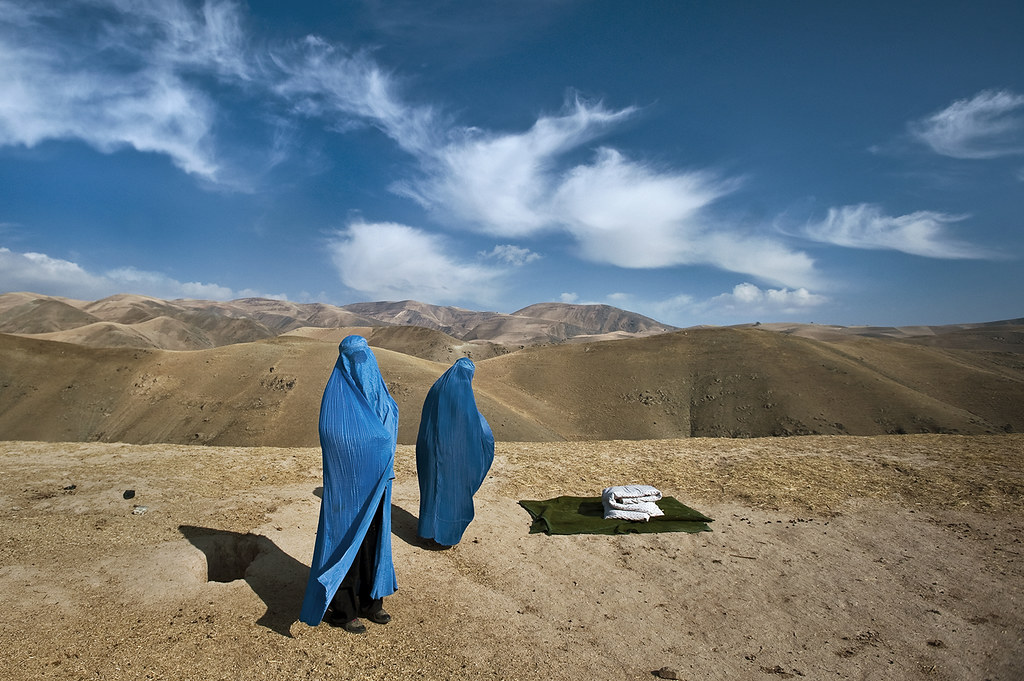
The details of the sundry plots and executive actions, the coups, planned, executed, or foiled, the breadth of Talbot’s gaze make for gripping reading. And I didn’t even go into the CIA’s work in the mind-control biz, an early example of extraordinary rendition, or any of the juicier bits about our old friend Tricky Dick Nixon, or Castro’s stunning political success story in New York City. This is a compelling must-read, filled with colorful characters, intrigue, and a look at the creation and persistence of a mechanism by which an undercover foreign policy is implemented. You will wonder if, today, the White House has any more control over the intelligence apparatus than it did back then. It will change forever how you view history.

During a 1965 tour of Latin America, Robert Kennedy—by then a senator from New York—found himself in a heated discussion about Rockefeller influence in Latin America, during an evening at the home of a Peruvian artist that had been arranged by [Richard] Goodwin [an RFK aide]. When Bobby brashly suggested to the gathering that Peru should “Assert [its] nationhood” and nationalize its oil industry, the group was stunned. “Why, David Rockefeller has just been down there,” one guest said. “And he told us there wouldn’t be any aid if anyone acted against International Petroleum [a local Standard Oil subsidiary].”
“Oh, come on. David Rockefeller isn’t the government,” Bobby shot back, still playing the role of Kennedy family tough guy. “We Kennedys eat Rockefellers for breakfast.”
The Kennedys were indeed more successful at the rough-and-tumble of politics than the Rockefellers. But, as JFK had understood, that was not the full story when it came to evaluating a family’s power. He fully appreciated that the Rockefellers held a unique place in the pantheon of American power, one rooted not so much within the democratic system as within what scholars would later refer to as “the deep state”—that subterranean network of financial, intelligence, and military interests that guided national policy no matter who occupied the White House. The Kennedys had risen from saloon-keepers and ward heelers to the top of American politics. But they were still overshadowed by the imperial power of the Rockefellers.

There is no law, only power. Bobby Kennedy should have known that. We all need to know that. Rule by sociopaths is definitely not the way to go, whether the morally-challenged sit on corporate boards, manage branches of government or direct elements of our military. With The Devil’s Chessboard, David Talbot has written an eye-opening and devastating look at modern American history. Your move.

Review Posted – October 16, 2015

Book Published – October 13, 2015

=======================================EXTRA STUFF

Links to the author’s Twitter and FB pages

An interesting site on keeping up with developments re the JFK hit

Talbot interview in Mother Jones

Lest anyone think the CIA is not in the business of killing, here is the CIA manual on assassination 101 – A Study of Assassination. There will be a quiz.

Amy Goodman interviews Dulles on Democracy Now – Thanks to Natylie for the heads up on this one

Talbot interview with Tavis Smiley – November 16, 2015

Leave a comment

Filed under American history, biography, History, Non-fiction, psycho killer, Reviews

Scream: Chilling Adventures in the Science of Fear by Margee Kerr

book cover

Our threat response is automatic, but what we fear is largely learned. 

…I’m looking at how we experience fear biologically (and the consequences of continuous heightened fear states), how we construct fear socially, and how we interpret it psychologically.

… These are my adventures in fear.

What scares you? It varies for most of us, but certainly death and personal, physical harm will come out at or near the top. It certainly should. Alongside that would be a fear of harm to those close to us. But there are plenty of other things that are probably, ok, certainly listed in a wikiphobia somewhere. Some of our fears are well-grounded, others not so much. Fear of heights makes sense. Fear of open places certainly originated before homo sapiens was the planet-wide apex predator. Fear of snakes sure sounds like a sound Darwinian reaction. Fear of the number thirteen, hmmm. But whatever the cause there is a biological element to fear and that is a primary focus here.

description
That’s Kerr on the splat side addressing a fear of heights

Elizabeth Kubler-Ross may have given us On Death and Dying. Atul Gawande gave us On Mortality, the Sy-Fy network and premium cable keeps us well filled with entertainments designed to scare the bejesus out of us. But Margee Kerr, in Scream, has written a nifty look at fear itself. Kerr is both a scientist and a practitioner of the frightening arts. No, you won’t see her on any version of the Walking Dead, Chiller Theater, Creature Features, American Horror Story, Grimm, Penny Dreadful or any of the other frightfests that fill our cables and airwaves. And you will not find her name on the binding of books occupying the same section of the bookstore or library as Stephen King. But Kerr could probably explain exactly how each of the above does what it does to you. She is your goto gal for figuring out why the long-haired ghosts in j-horror get screams from Japanese audiences and a much more tepid response from Western viewers. She can tell you why it makes sense to hold someone’s hand when you are frightened, and can explain in some detail, on a biological level, not only how being scared can be a really good thing, but how it has steered our evolution.

Kerr, with a doctorate in sociology, has one foot firmly planted in the realm of academia, research of the library and real world varieties, and the other in the realm of applied fear-mongering. No, she does not work for Fox News. But she does want you to be scared, and she knows how to make that happen

thrilling activities provide a safe space to give our impulse-control police a break (and for those who believe that screaming and being scared are signs of weakness, being in a situation in which it is OK to express fear can feel pretty good

She keeps her focus primarily on physical, immediate fear experiences and scoots across the planet to sample the fear menus far and wide. Why would she do this? Well there are two reasons. She has an academic interest in learning the mechanisms of fear. And the other interest is a bit more down-to-earth. She works for one of the nation’s best known haunted house venues, Scarehouse, in Pittsburgh. She has spent umpteen hours studying peoples’ reactions to the frights they receive there. So she was, in addition to pursuing her academic interest, researching ways to improve the Scarehouse product, and reports at the end of the book on how she applied what she learned. Ok, maybe a third reason is that this is huge fun for her.

description

Kerr puts herself through a fair range of scary experiences, not all of which were part of an entertainment venue. She begins with roller-coasters, noting their beginning with 17th century Russian Ice Slides, scary not merely for the usual thrill of sliding downhill very fast, but for the deeper thrill of knowing that reliability and safety were far from certain. These days the rides may be wilder, and perhaps a bit more challenging, not only to one’s sense of balance, but to one’s ability to keep down that regrettable pair of hot dogs you might have scarfed down prior to boarding the roller-coaster car, (an uncle of mine in the wayback was famous for spewing his partaken beer and partially digested Nathan’s Famous over an unfortunate date at Coney Island) and one’s ability to remain conscious. (I confess I passed out momentarily on one such, in Hershey Park) But the fear of mortal peril has been pretty much eliminated.

description
You know who, from you know what

Screaming, appropriately enough, comes in for some attention

There’s something freeing, and even a little bit dangerous, in screaming as loud as you want. Screaming is part of our evolved survivor tool kit, protecting us by scaring away predators and alerting others of danger nearby. Pulling our face into a scream is also believed to make us more alert, intensifying our threat response just as squinching our nose in disgust blocks foul odors from going into our nostril). Adam Anderson at the University of Toronto found that when people made a frightened expression, they increase their range of vision and have faster eye movements and a heightened sense of smell from breathing more rapidly through their nostrils. Not to mention, when we scream, our eyes widen, and we show our teeth, making us appear all the more intimidating to any predators.

She indulges in a range of fears, from leaning out over the top of the CN Tower in Toronto in challenging a fear of heights, to searching for ghosts in some supposedly haunted places, including spending some quality alone time in a notoriously haunted former prison, to looking at infrasound as a possible source for many spectral experiences, to checking out haunted houses in Japan (got scared her out of her wits), to hanging out in a Japanese park noted for the number of suicides that occur there, to fearing imminent personal peril on the streets of Colombia. She also goes to a noted researcher to have her own fear indices checked out, and gets a bit of a surprise there.

description
Kerr has a spooky time at Eastern State Pen – from EasternState.org

Kerr takes a wider view in some chapters, moving past the how-can-we-scare-ourselves-for-fun mode to actual application of scientific insight into fear with a look at PTSD and why some folks are more susceptible than others. In another segment she looks at the impact of a shredded safety net (the GOP 2016 platform?) on how difficult and exhausting it is for people to deal with the chronic stress, fear, trauma and violence that results. She also looks at how memories are formed, and at attempts to erase some of those, and offers some intel on the influence of parental helicoptering on one’s ability to manage stress, and on the significance of and elements that make up “high arousal states.” She offers plenty of hard-science intel which I very much appreciate. But Kerr also gives readers plenty of you-are-there experience, sharing some of her personal material, beyond the immediacy of the location and thrill. It is this combination of science and personality that provides the strength of Scream.

Of course Margee is anything but a scary sort herself. Check out her vids, thoughtfully noted below, and you will see for yourself. Kerr’s bubbly and engaging personality comes through quite well. This does not come through quite so well in the book, which felt a bit meandering, drifting a bit away from her core material at times.

In the CV posted on her site, Kerr says

My current research interests involve understanding the relationship between fear and society. People are reporting they feel more afraid today than 20 years ago and many scholars argue we live I a ‘fear based’ society.

Has she watched the evening news, or read most national or local newspapers? One of the things that modern communications has done most successfully is to create an environment in which fear is the top story, above the fold, below the fold, on page Six, and on the nightly news. If it bleeds it leads. We thrive on fear, or seem to. One of our major political parties has a set of policies based almost entirely on fear. Bowling for Columbine did an excellent job of highlighting the fear culture in which many of us live.

Fear is how those in charge control those who are not. Whether it is fear of the other, of jail or of poverty, death panels, jack-booted federals coming for your freedom, the red menace, yellow peril, illegal immigrants, police, street thugs, alien invaders, the zombie apocalypse or rampaging jihadis, we are a nation driven by fear. The fact is that fear does an excellent job of getting past our filters. We live in a cry wolf economy and business is howling. I suppose on a biological level there is some internal chemistry that says, “Well, it sounds like bullshit, but if it isn’t I could die, so why take the chance?” And it does not have to be about death, although that is the all time best seller. It could be about one’s ability to compete in the world, which really is a subtle message about death, the death of your DNA anyway. Too fat? Too bald? Too gray? Too tall? Too short? Too ugly? No one will love you. You will never have children. Better buy our product to ensure that you attract a mate. Buy our product or you won’t get a job. You and your children, if you have any, will starve. Kerr does not ignore this terrifying element of contemporary culture, particularly in her chapter on Colombia, but I do hope that when she dives into these waters again, she gives it more of a look.

FDR was wrong. There are plenty of real things to fear out there, just maybe not the things we are told to fear. In any case, whether one’s fear is justified or not, how our biology copes with fear is consistent. And it is not only well worth learning about, Scream provides an entertaining, enjoyable way to learn. There’s nothing scary about that.

My beloved picked this item up for me from the author at a book fair in return for an honest review.

Review posted – 10/9/15

Publication date – 9/29/15

=======================================EXTRA STUFF

Links to the author’s personal, Twitter and FB pages

Items Specific to Scarehouse
—–The Scarehouse site
—–A behind the scenes look at Scarehouse by Heather Johanssen
—–The Scarehouse youtube channel
—–Margee’s overview
—–Profile of Margee
—–Margee on Uncanny Valley
—–Why are clowns so scary

A nifty article on the scariness of the simple triangle

One of the places Kerr visited (twice in fact) is Eastern State Penitentiary

1 Comment

Filed under Non-fiction, Psychology and the Brain