Category Archives: Fiction

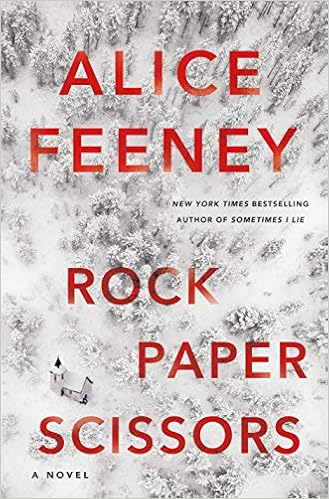
He Lied, She Lied – Rock Paper Scissors by Alice Feeney

book cover

We’ve tried date nights, and marriage counseling, but spending more time together isn’t always the same as spending less time apart. You can’t get this close to a cliff edge without seeing the rocks at the bottom, and even if my husband doesn’t know the full story, he knows that this weekend is a last attempt to mend what got broken.
What he doesn’t know, is that if things don’t go according to plan, only one of us will be going home.

Nothing like having a positive attitude when you’re trying to salvage a troubled marriage.

description
Alice Feeney – image from BBC

I reached a significant benchmark in my marriage while reading this book, a twentieth (china) wedding anniversary. It was the second time, for me. (I am nothing if not tenacious.) So, I appreciate the marital issues that arise in this wonderful thriller. (Sorry, no thriller material in either of my marriages, well, none that I will admit to in court. And no, my wife and I have no weekends planned for some remote snowy locale.) Adam and Amelia are trying to save theirs. (marriage, not thriller). A winter weekend away to a remote part of Scotland. Do or die. He is a successful screenwriter. She works at the Battersea Dogs Home. (Does that make Adam a rescue?)

We’re both pretty good at keeping up appearances and I find people see what they want to see. But behind closed doors, things have been wrong with Mr. and Mrs. Wright for a long time.

All right, this is getting way too close for comfort. (see first marriage noted above) The mutual discomfort in their marriage is clear, to the reader, anyway, but there are mitigating circumstances.

Adam has a neurological glitch called prosopagnosia, which means he cannot see distinguishing features on faces, including his own.

Face blindness makes it tough to deal in a very social world, if one cannot differentiate friend from foe, or lover from casual acquaintance. But, as is the case for many people with unusual qualities, he has learned to compensate. The sound of a voice, a personal scent, individual physical movements. Enough so that he found someone willing, eager even, to marry him.

Adam’s great personal screenplay is Rock Paper Scissors. It won him early acclaim (at 21) but never got made, despite repeated attempts. Now, he adapts novels by other writers, and is good at it, makes a nice living. The Rock Paper Scissors motif repeats from time to time. The notion of the story is incorporated into the structure of the novel. The game is played, sometimes with very serious stakes.

Blackwater Chapel is remote, in the Scottish Highlands (zero bars), quite beautiful landscape thereabouts, on Blackwater Loch. It is indeed a renovated place of worship. The power is not the most reliable, particularly in dire weather. Amelia had won the weekend away in a contest at work. It may not be the best of all possible times for such a visit, an eight-hour drive from London, Amelia doing ALL the driving in her Morris Minor. A tin-can antique on four wheels, is what Adam calls it. While they are there, a huge winter storm seals them in. Travel would be far too risky in the old car. They are quite effectively isolated.

Isolated, yes, but, well, maybe not entirely alone. A supposed housekeeper leaves a few notes for them. Maybe she is the person living in the only other structure within miles, a thatched cottage. There is a flock of local sheep to offer some light scares and barriers. And, of course there is Bob, their giant black lab. (Asked in an interview which of her characters she would choose if she was about to be stranded on a deserted island, Feeney did not hesitate. Bob, she said. Maybe that is because Bob, the author’s creation, so much resembles her real-life black lab, down to their mutual fear of feathers.) But is that it? There have been rumors of odd doings at the chapel, with unseen things calling the name of the more corporeal sorts who show up on the premises. And doors have an odd way of becoming locked or unlocked. There is plenty more of this sort. Mysterious sounds. Evocative scratches on walls. It is definitely a spooky joint. Enjoy!

Feeney offers us plenty of atmospherics.

Adam was right, there are no ghosts or gargoyles, but the place definitely feels spooky. Everything is made of ancient-looking stone—the walls, the ceiling, the floor—and it’s so cold down here that I can see my breath. I count three rusted metal rings embedded in the wall, and do my best not to think about what they were used for.

A basement crypt, reached via trapdoor, has been converted to a wine cellar. Is vino the only spirit down there?

The light from the old-fashioned candlestick holder he is carrying casts ghostly shadows around the bedroom, so that now I feel like I’m in a Charles Dickens novel.

Much of the inspiration for the book derived from a visit Feeney made in 2018, to a creepy renovated chapel in Scotland, a visit that featured a “Beast from the East” snowstorm, and a mysterious face in a window. Some other personal items made it into the book. Feeney does her writing in a garden shed, a characteristic she bestowed on Adam. There was a discomfiting wardrobe in Feeney’s real-world chapel. She imagined secret stairs from there, which became the basement wine-cellar/crypt, accessible only via a trap door.

The book is told from alternating POVs, Adam’s and Amelia’s. It is from these that we know their marriage is in trouble. But wait, there’s more! A third character (fourth if you count Bob) is introduced about a quarter the way in, Robin, residing near the chapel. She is up to something. It seems that there is certainly madness there, but is there a method to match? Finally, there are wifely letters written on the annual wedding anniversary, but never given to Adam. These let us follow the history of his marriage through his wife’s eyes. They are introduced by a “word of the year” that sets the tone for the chapters to come. They also note the category of gift that is considered traditional for each year. (A partial list is in EXTRA STUFF) In each of these entries the gift, at least the sort of gift, is significant in the ensuing narrative.

There is a layer-by-layer unveiling of secrets, from both of them, which gives us a better look at who they truly are. (More of a He-Lied-She-Lied than the more traditional His-v-Hers perspectives.) Well, from all three, if we add Robin. Lots of excellent, very hairpin turn stuff. (Keep both hands on the wheel at all times) Maybe not as dangerous as riding the Do-Dodonpa, but wearing a neck-brace might not be a bad idea while reading towards the end. You may hear yourself utter more than a few “wait, what?s” There are some twists at the finale that seem inter-dimensional in their impact.

So, who is out to get whom? Is anyone, really? Are they both there to salvage their marriage or torpedo it? And what is making all the strangeness at the chapel happen? Is it really haunted? Will they both make it out alive? Will anyone? Will Adam’s screenplay ever get produced?

I do not really have any gripes with the book. It maybe asks us to suspend a bit too much disbelief, no biggie. But I take serious issue with the marketing, which I believe to be dishonest. I will not say what it is about this that is not true, or is unfairly misleading, but after you read the book, I urge you to take a close look at this. You will see for yourself. Having an unreliable narrator is one thing, but this seems a step too far to me. The ff is from Macmillan’s page for the book.

Things have been wrong with Mr and Mrs Wright for a long time. When Adam and Amelia win a weekend away to Scotland, it might be just what their marriage needs. Self-confessed workaholic and screenwriter Adam Wright has lived with face blindness his whole life. He can’t recognize friends or family, or even his own wife. 

Every anniversary the couple exchange traditional gifts–paper, cotton, pottery, tin–and each year Adam’s wife writes him a letter that she never lets him read. Until now. They both know this weekend will make or break their marriage, but they didn’t randomly win this trip. One of them is lying, and someone doesn’t want them to live happily ever after.

Ten years of marriage. Ten years of secrets. And an anniversary they will never forget.

Rock Paper Scissors is a delight of a read. Feeney does an excellent job of inserting hooks at chapter ends to make sure it is a challenge for you to either get up and do things that need doing, or turn off the light and go to sleep.

It seems like it would be a good idea to dress warmly when you read this. The cold of the Feeney’s fictional world might give you a chill. A hot toddy might be an appropriate accompanying refreshment, or maybe some Scotch whiskey. And make sure that neck brace is firmly in place when you are entering your final chunk of reading time. You will need it.

The first match I strike goes out almost instantly—it’s an old box.
I use the second to try and get my bearings, but I still can’t see the steps, and I’m struggling to get enough air into my lungs.
The third match I strike briefly illuminates part of the wall, and I notice all the scratch marks on the surface. It looks like someone, or something, once tried to claw their way out of here.
I try to stay calm, remember to breathe, but then the flame burns the tips of my fingers and I drop the final match on the floor.
Everything is black.
And then I hear it again. My name being whispered. Right behind me.
Amelia. Amelia. Amelia.
My breaths are too shallow, but I can’t control them and I think I’m going to faint. No matter what direction I look in, all I can see is darkness. Then I hear the sound of scratching.

Review posted – September 3, 2021

Publication date – September 7, 2021

I received a free ARC of Rock, Paper, Scissors from Macmillan in an exchange for an honest review, and the keys to my country retreat for a few days.

This review has been cross-posted on Goodreads. Stop by. There are many more where this one came from.

=======================================EXTRA STUFF

Links to the author’s personal, FB, Instagram, and Twitter pages

Feeney was a journalist with the BBC for fifteen years, where she worked as a reporter, news editor, arts and entertainment producer, stealing time where she could to get in some original writing. Rock Paper Scissors is her fourth novel. She has been wildly successful.

As per Variety, the producer of The Crown will be transforming Rock Paper Scissors into a Netflix mini-series.

Interviews
—–Washington Independent – Author Q&A – An Interview with Alice Feeney by Adriana Delgado – from 2018 – on her planning and unreliable narrators
—–Bookbrowse – An interview with Alice Feeney by Elyse Dinh-McCrillis – from 2017 – short but has some nice backgr0und and personal elements

I work in my garden shed now with my cowriter, a giant black Labrador who is scared of feathers.

—–Mystery and Thriller Mavens – 8/30/2021 – Bestselling Author Alice Feeney Hosted by Sara DiVello – Video – 41:06

Unrelated aside
A scene in an old tower made me think of Hitchcock’s Vertigo

Anniversary Gifts – list from Hallmark
• 1st Anniversary: Paper
• 2nd Anniversary: Cotton
• 3rd Anniversary: Leather
• 4th Anniversary: Fruit or Flowers
• 5th Anniversary: Wood
• 6th Anniversary: Candy or Iron
• 7th Anniversary: Wool or Copper
• 8th Anniversary: Pottery or Bronze
• 9th Anniversary: Willow or Pottery
• 10th Anniversary: Tin or Aluminum
• 11th Anniversary: Steel
• 12th Anniversary: Silk or Linen
• 13th Anniversary: Lace
• 14th Anniversary: Gold Jewelry
• 15th Anniversary: Crystal
• 16th Anniversary: Coffee or Tea
• 17th Anniversary: Wine or Spirits
• 18th Anniversary: Appliances
• 19th Anniversary: Jade
• 20th Anniversary: China
2 Comments

Filed under Fiction, Reviews, Thriller

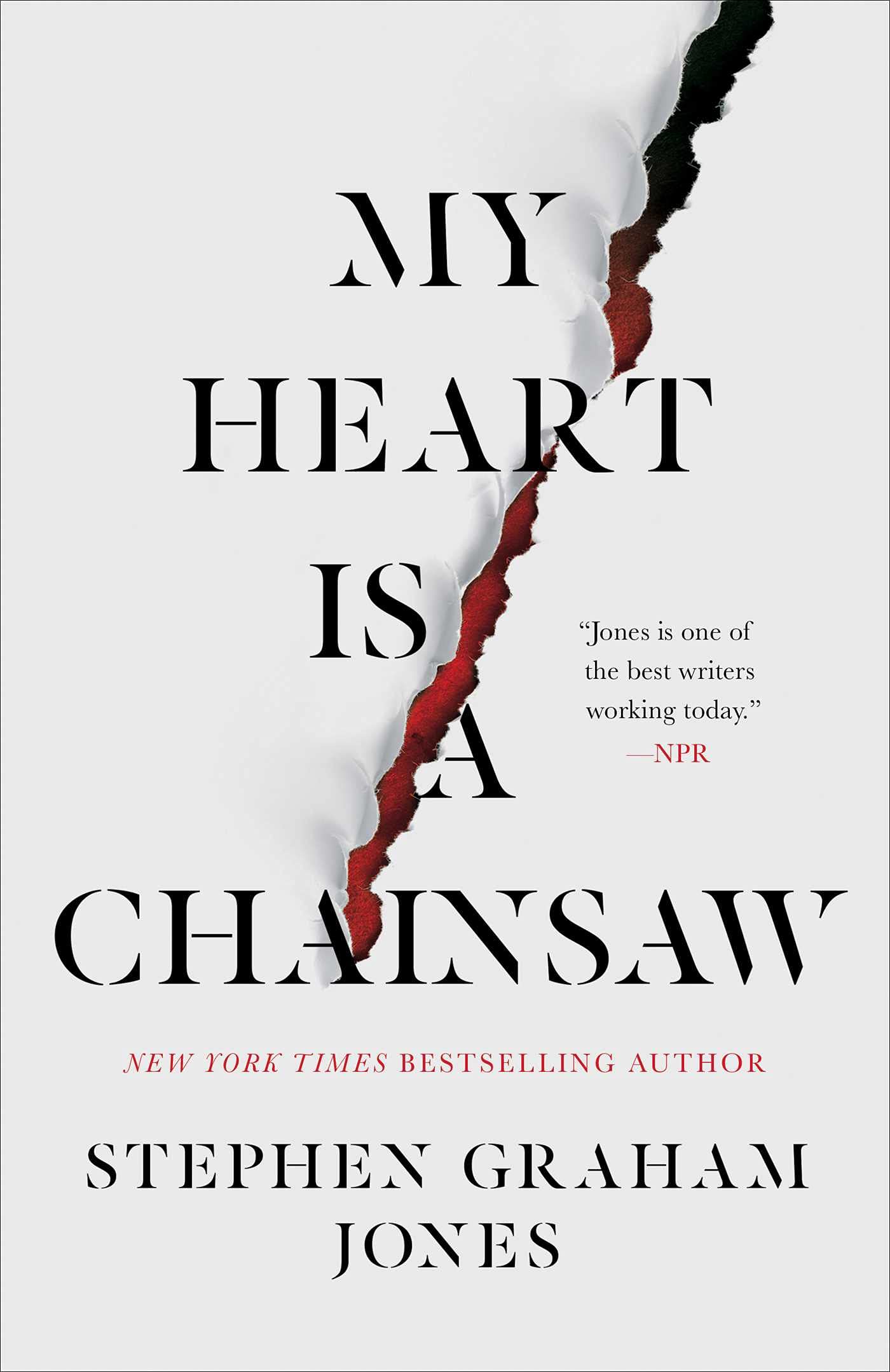
The Slasher Story Goes Meta – My Heart is a Chainsaw by Stephen Graham Jones

book cover

“You sure you should be working around kids?” Jade asks. “Or even around, you know, living people?”
“Tried the morgue in Boise,” he says. “There was . . . an incident. Ask your dad about it sometime, he was there.”
Jade waits for him to guffaw or chuckle, because this has to be a joke, doesn’t it?

“Can’t I just like horror because it’s great? Does there have to be some big explanation?”

Before you sit down to read Stephen Graham Jones’s most recent novel (well, this week, anyway. The man produces King-ian, Asimov-ian volumes of work), My Heart is a Chainsaw, you might want to prepare a large bowl of popcorn, not that microwave crap, actual popcorn, kernels from a jar or bag into a pot with pre-heated oil, and a lid ready to pop over the top, to keep your kitchen floor from getting covered with flying bits. If you’re like me, there will be a second burner dedicated to melting a slab of butter. Once the popping stops, pour some or all of this heavenly treat into a large bowl. (Well it does not have to be too large as you are probably reading alone.) then drip the melted butter across the top, mix it up a bit. Open up a shaker of popcorn salt and apply. This calls for an oversize cold-drink for help in washing it down. It really should be a Friday or Saturday night. And why go to all this trouble for a book? Because Stephen Graham Jones is taking you to the movies.

description
Cutting edge author, Stephen Graham Jones, on his way to work – image from 5280 Magazine – Photo by Aaron Colussi

You may or may not have been around in the 1970s, 80s, 90s, or some of the other decades noted here, but videos of the films made back then have been available for a long time and formed a major part of Jones’s cinematic education as a young person. His life was considerably enriched from seeing a lot of horror movies, slasher films in particular. He loves them.

description
Adrienne King as Alice Hardy in Friday the 13th – image from movieactors.com

In this book, SGJ offers up an introductory class on the genre, or sub-genre. (Can’t say how closely it might mimic the course he taught on the subject in his day gig as a college professor. But I would love to see the syllabus for that.) in the form of chapters titled Slasher 101. These remind us, for example, that the slasher is always driven by revenge. His rage is not mindless. That there is usually a significant gap between the commission of the crime that is being avenged and the execution of that mission. That there is always a “final girl,” the purest of heart, who ultimately (usually) either escapes or bests the baddie, for the moment, anyway. In his 2015 novel, Aquarium, David Vann does something similar, calling attention to the structural girders being put in place as he places them, in his case for the literary novel form. Reads like these are always extra fun.

description
Courtney Cox as Gale Weathers – in Scream – image from Den of Geek

As Jones walks us through the stages in a slasher film, he echoes the tropes in the novel through his lead, Jade Daniels, a damaged seventeen-year-old Native girl who has seen and caused a huge amount of trouble. She seems to be in conflict with the world more or less constantly, but she is not a bad kid. She does janitorial work for the county. She is smart, resourceful, and a huge fan of horror, particularly slasher films, toting with her Jones’s encyclopedic knowledge of the genre. She is maybe a bit too obsessed with this stuff. I mean, if your only tool is a hammer, every challenge begins to look like a nail. But what if you have, by pure chance, made yourself the perfect tool for this very prominent, thin piece of metal sticking straight up out of your town. A bloated tourist body floats to the top of the lake and blood starts flowing like the elevator at the Overlook. Jade knows, or at least thinks she knows, what’s coming.

description
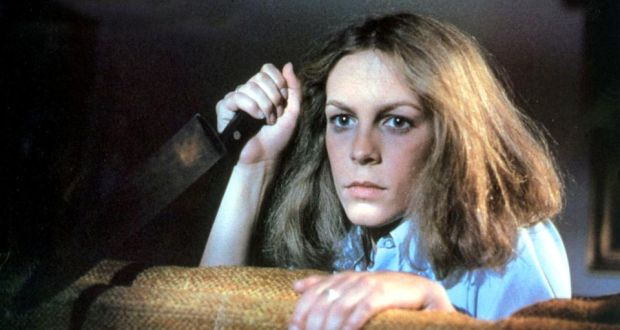
JLC at Laurie Strode in Halloween – you don’t get to choose your family – image from Den of Geek

She writes reports (the twelve Slasher 101 chapters) for a favorite teacher, one Mister Holmes (Grady, (which reminded me of Delbert Grady of The Shining fame) not Sherlock), each one explaining one or more of the tropes of horror films. Each trope is summoned into being in the real world, of course, making this very meta.

Metafiction is a form of fiction which emphasises its own constructedness in a way that continually reminds the audience to be aware they are reading or viewing a fictional work. – definition from Wiki

Jade lives in Proofrock, Idaho, proud possessor of several of the elements native to slasher flicks. Teenagers, of course. A lake (Indian Lake) with its own historical spook, Stacey Graves, bent on avenging wrongs done to her family,

Stacey Stacey Stacey Graves
Born to put you in your grave
You see her in the dark of night
And once you do you’re lost from sight
Look for water, look for blood
Look for footprints in the mud
You never see her walk on grass
Don’t slow down, she’ll get your–

a camp on the lake with its own sanguinary history, and LOL name, Camp Blood, as least that’s what everyone in town calls it. Fifty years ago it earned that designation with extreme prejudice.

description
Robert Englund as Freddie Krueger – from Nightmare 3 – What a Rush! – image from Screen Rant

There is not a lot going on in Proofrock, (which MUST BE a reference to T.S. Eliot’s first published poem, The Love Song of J. Alfred Prufrock, which, according to Wiki, is a dramatic interior monologue of an urban man, stricken with feelings of isolation and an incapability for decisive action that is said “to epitomize frustration and impotence of the modern individual” and “represent thwarted desires and modern disillusionment.”) Jade provides that inner take here. She certainly experiences isolation, and endures frustration and impotence, not to mention personal abuse. Jade is both wishing for the slasher to be real and for him not to be real. Great, if it is. You were right all along. Take a bow. On the other hand, you are likely to be killed. Hmmm, decisions, decisions. She is actually eager for the inevitable bloodbath to begin, finding this strangely exciting. Well, maybe not so strange for a kid with suicidal impulses. She’s got her reasons.

description
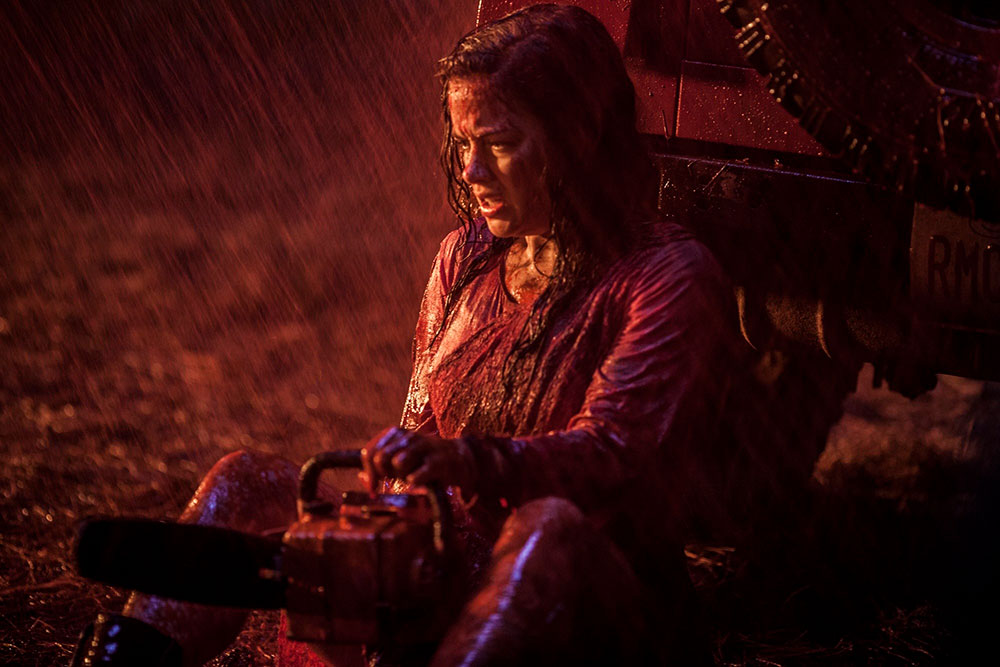
Jane Levy (yes, that Zoe) as Mia Allen in Evil Dead 2013 – Image from Screenrant

Jade is a Cassandra (another slasher film trope) trying to tell everyone that dire days lie ahead, but no one believes her. The new wrinkle in Proofrock, Idaho is the arrival of The Founders, a group of billionaire families who managed to have some of the national forest on the other side of the lake made un-national, and have begun building an enclave, Terra Nova. Yachts and smuggler boats have begun to appear on the lake, homes are being erected. And the daughter of the alpha male of that crowd befriends Jade. Letha Mondragon (are we meant to think or Arthur Pendragon here?) fits right in with Jade’s narrative. She is the supreme final girl. In case you are unfamiliar with the term, it was coined by Carol J. Clover in 1992.

The original meaning of “final girl”, as described by Clover in 1992, is quite narrow. Clover studied slasher films from the 1970s and 1980s (which is considered the golden age of the genre) and defined the final girl as a female who is the sole survivor of the group of people (usually youths) who are chased by a villain, and who gets a final confrontation with the villain (whether she kills him herself or she is saved at the last minute by someone else, such as a police officer), and who has such a “privilege” because of her implied moral superiority (for example, she is the only one who refuses sex, drugs, or other such behaviors, unlike her friends). – from Wiki

Think Alice Hardy in Friday the 13th, Laurie Strode in Halloween, Nancy Thompson in A Nightmare on Elm Street and on and on and on.

description
Sigourney as Ripley in Alien – Get away from her, you bitch! – image from Yahoo! Entertainment

The good-girl element of the final girl trope eased over time, offering more kick-ass than kiss-ass, with final girls like Ripley in the Alien series, or Jamie Lee Curtis sticking it to Jason in Halloween. Jade spots Letha as the final girl of the upcoming carnival of blood. She is a really good person, and an actual model, with unbelievable skin. She is athletic, morally strong, and seems to have been sent over from central casting. She is also unbelievably hot, and Jade has a bit of a crush on her. Nevertheless, Jade determines to do everything in her power to see to it that Letha has the weapons and knowledge she needs to go to battle in the inevitable final bloodbath, aka The Body Dump.

description
Marilyn Burns as Sally Hardesty in The Texas Chainsaw Massacre – image from WhatCulture.com

But we know, or at least suspect, since the slasher film story is usually told from the perspective of the final girl, that maybe Letha is not the one.

I wanted to push back against the notion of the final girl being a supermodel, valedictorian, or babysitter. Since the 1970s, they’ve all been Jennifer Love Hewitt types. For many girls and women, that’s an impossible ideal. The book’s main character, Jade, has dealt with feelings of inadequacy her whole life. Also, most of the victims are rich and entitled white guys, not 17-year-old cheerleaders. – from the 5280 interview

The mystery is who (or what) is perpetrating mayhem, and why. That satisfies the need, or, certainly, a desire, for a mystery. Slasher movie bloodlettings are acts of revenge. Ok. So, what is it that is being revenged, why, and by whom? The how is where movie directors and novelists get to come up with creative ways to pare back, sometimes waaaaay back, the character list.

description
Heather Langengkamp as Nancy Thompson in Friday the 13th – image from StopButton

Jones always keeps an eye on social content, payload that arrives with the story. It, or at least some of it, usually has to do with Native people and their relationship with the white world in which they are embedded. Very real-world stuff. No Magic Indians need apply. The presenting issue here is gentrification, an invasion by the Uber-rich into a very working class area, upsetting everything, taking public land for private use, trying to buy their way into acceptance, while toting along a significant shortage of moral concern. There is also the existence of racist elements in the town and the Native people getting the lesser end of things economically.

When people in Proofrock can direct their binoculars across the water to see how the rich and famous live, that’s only going to make them suddenly aware of how they’re not living, with their swayed-in fences, their roofs that should have been re-shingled two winters ago, their packed-dirt driveways, their last decade’s hemlines and shoulder pads, because fashion takes a while to make the climb to eight thousand feet.

Secondary characters run a gamut. Some are cannon fodder, of course, but there is a nice collection of understandable town characters. Jade’s teacher, Holmes, is wonderfully understanding, and has plenty of quirk (and anger) to support it. The town sheriff is a remarkably understanding sort, with a soft spot for Jade. He may not understand, or accept what she tells him (she is a Cassandra, after all, and there is the very real possibility that he might be hiding something) but he seems to be quite well-intentioned. Her father is a horror, and his bff may be even worse. There is sympathy for Jade in surprising places. They know something we do not. The Founders are mostly cardboard cutouts, which is fine. And then there is Letha (last name not Weapon). While presented as impossibly perfect, she is the one member of that clan given a closer look. Is she or isn’t she what Jade sees her to be, a paragon of final girlhood?

description
Jennifer Love Hewitt as Julie James in I Know What You Did Last Summer – image from ScreenRant

Throughout the novel, there is a pervasive sense of humor. The quote at the top of the review is a prime example of that. There is more. Not sayin’ you’re gonna shoot your beverage of choice out your nose, but there is plenty here that will make you smile.

…if you don’t have those staged resets, those laughs, then horror just becomes the flat screech, and that’s no fun. – from the GQ interview

GRIPES
Not much. The deus was messing with his ex, machina, a bit too much for my taste. I could not fathom why Jade was not more curious when a stranger’s cell phone falls into her hands. And I was not entirely thrilled with the last bit of the ending. (But then, SGJ has written a sequel, so, maybe put a hold on that.) But these are minor concerns. My Heart is a Chainsaw is both a jaw-dropping, brilliant homage to the slasher genre, and a bonafide member of the club.
description
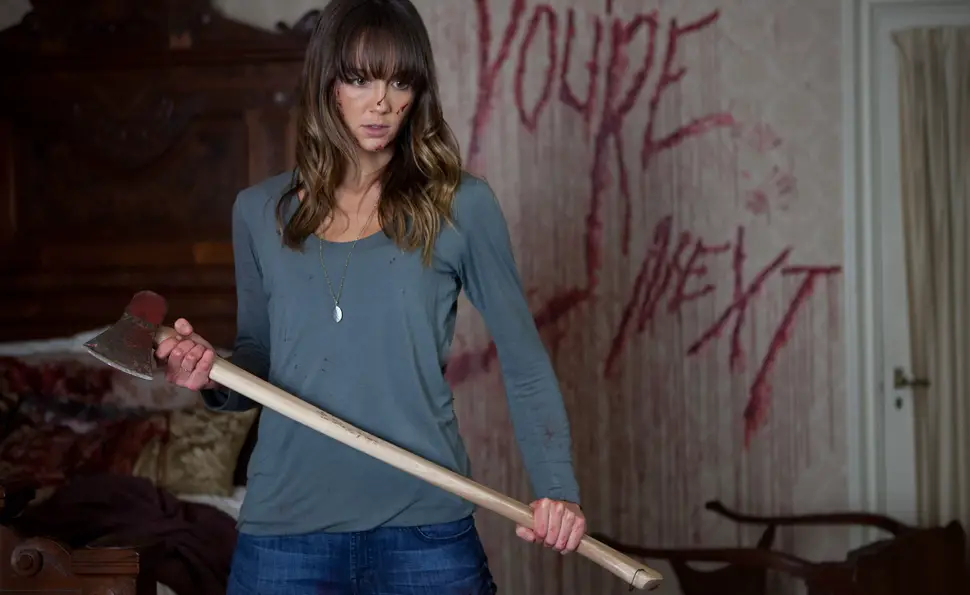
Sharni Vinson as Erin Harson in You’re Next – image from Wicked Horror

So, when you read this, takes notes, consider all that is going on. There will be a test. Pass/Fail. Pass, and you gain three college credits toward your degree. Fail? Well, trust me, you really, really do not want to fail.

She’s everything Jade always wished she could have been, had she not grown up where she did, how she did, with who she did.
It’s going to be epic, the final battle, the final girl against slasher high noon.
Unless Jade’s just making it all up, she reminds herself.

Review first posted – August 27, 2021

Publication dates
———-Hardcover – August 31, 2021
———-Trade paperback – March 29, 2022

I received an eARE of My Heart is a Chainsaw from Saga Press of Simon & Schuster in return for a fair review and some extra-strength fishing-hooks. Thanks to S&S, and NetGalley for facilitating.

======================================EXTRA STUFF

Links to the author’s personal, Twitter and FB pages

Interviews
—–GQ – 8/26/21 – Horror Writer Stephen Graham Jones’s New Nightmare by Colin Groundwater
—–Locus Magazine – 9/9/21 – Stephen Graham Jones: Slasher Cycle
—–Nightmare Magazine – April 2017 (Issue 55) Interview: Stephen Graham Jones by Lisa Morton
—–Nuovo Magazine – Stephen Graham Jones Battles Stereotypes and Serial Killers in His Breakout Novel by James Grainger – about The Only good Indians but still interesting for Jones’s take on the world
—–Vol, 1 Brooklyn – MORNING BITES: STEPHEN GRAHAM JONES INTERVIEWED, VIC GODARD, FRED THOMAS’S MUSIC, BILL GUNN, AND MORE – August 11, 2021
—–5280 Magazine – August 2021 – Colorado Horror Writer Stephen Graham Jones Is Back With a Killer Follow-Up by Philip Clapham

The horror genre is full of books and movies that make a political statement, like the films Dawn of the Dead and The Purge. Which is scarier: real-life terrors or fictional ones?
I think for the last four or five years, we’ve seen people doing reprehensible things and then not being punished for them. The slasher genre is basically a justice fantasy. But the bad thing about living in a slasher world where wrongs are punished is that they’re punished brutally. You might catch a machete to the head.

—–Bull – Stephen Graham Jones by David Tromblay

Before The Only Good Indians, I’d done two slasher novels, I guess—Demon Theory, The Last Final Girl—but I hadn’t said even close to all I wanted to say in and with and around the slasher. So, I committed to the slasher. I wrote this one, then another, and another. But I also wrote a haunted house novel. Oh, and a slasher novella, I guess. And I guess a ghost novella. I just love all the parts of horror, but the slasher, the slasher’s really special for me. I like the sense of justice in it. I like how bad deeds are punished. That’s not the world we live in, but, while reading a slasher, we can pretend for a little bit…

—–Montana Press Monthly – April 2020 Rez Gothic: Stephen Graham Jones by Jay MacDonald – not specific to this book, but good on SGJ
—–Goodreads newsletter – Meet the Writers Behind Those Truly Terrifying Books
—–Colorado Public Radio – Ten Stories Novelist Stephen Graham Jones Says Will Make You Afraid Of The Dark by Stephanie Wolf –
10 stories Jones says are great gateway reads into the horror fiction genre:
• “The Black Cat” by Edgar Alan Poe
• “The Monkey’s Paw” by W. W. Jacobs
• “The Dunwich Horror” by H. P. Lovecraft
• “The Veldt” by Ray Bradbury
• “The Lottery” by Shirley Jackson
• “It’s a Good Life” by Jerome Bixby
• “Where Are You Going, Where Have You Been?” by Joyce Carol Oates
• “Bloodchild” by Octavia Butler
• “The Jaunt” by Stephen King
• “The Night They Missed the Horror Show” by Joe R. Lansdale

My reviews of (sadly, only two) previous books by Jones
—–Mongrels
—–The Only Good Indians

Item of Interest
—–Smithsonian – The 1980 Slasher Movie ‘Friday the 13th’ Was Filmed at This Boy Scout Camp in New Jersey by Kellie B. Gormly – October 26, 2021 – A fun piece for fans of the original

The List
I started keeping track of the names of the mentioned flicks once I had read a bit, so my number is probably not close to the actual total, but even with not beginning from the beginning I came up with 93, the list that follows. I have seen, maybe, 23, enough to be able to follow along without feeling that I was missing out on too much. Not all are slasher films, but all 93 are horror of one sort or another. If I made any mistakes in entering the titles please let me know and I will make the needed repairs.

Alien
Alien 3
All the Boys Love Mandy Lane
Alone in the Dark
April Fools Day
Bay of Blood – from 1971 – a possible grandfather of the slasher genre
Black Christmas
Blue Steel
Burial Ground
The Burning
The Cabin in the Woods
Camp Blood
Candy Man
Child’s Play
Children Shouldn’t Play with Dead Things
Cold Prey
Cold Prey 2
Cold Prey 3
The Craft
Cropsy
Cry Wolf
Curtains
Cutting Class
Dead & Buried
Dead Calm
Deep Star Six, Leviathan
Demons
Donkey Punch
The Dorm that Dripped Blood
Evil Dead
The Exorcist
Exorcist III
Fatal Attraction
Final Destination
Final Destinations
Fire in the Sky
Friday the Thirteenth
Friday the Thirteenth Part II
Friday the 13th Part III
Friday the Thirteenth – The final chapter
Ghost Ship
Girls Nite Out
Grizzly, 1976
Halloween
Halloween III
Hannibal Lecter
Happy Birthday to Me
Hell Raiser
High Tension
The Hitcher
Home Sweet Home
I Know What You Did Last Summer
I Still Know What You Did Last Summer
Jason Takes Manhattan
Jaws
Just Before Dawn
Kristy
The Land that Time Forgot
Last House on the left
Lord of Illusions
Mausoleum
Mortuary
Mother’s Day
My Bloody Valentine
New Nightmare
The Night of the Hunter
A Nightmare on Elm Street
Poltergeist 2
Popcorn
The Prey
Prom night II
Prophecy
Prowler
Reeker
Ringu
Road House – 1988
Rosemary’s Baby
Scream
Scream 2
Slaughter High
The Shining
The Silence of the Lambs
Sleepaway Camp II
SS Lazarus
Stage Fright
Terminator
The Texas Chain Saw Massacre
Triangle
Trick or Treat 1986
Twisted Nightmare
Virus
Wishmaster

In my post-posting travels I came across a site that provides a much more inclusive, and visually appealing, list. Letterboxd shows a total of 154 film mentions (not all of which are horror films, per se) I saw 37 of those.

Articles on Final Girls
The Final Girl is a trope that has come in for some criticism over the years. Below are several articles that address this, and the changes that have taken place in how Final Girls are portrayed from the 1970s to the present. If you know some good pieces on this subject, I would be happy to add them to this list.

—–NY Times – October 22, 2015 – In Horror Films, the ‘Final Girl’ Is a Survivor to the Core by Erik Piepenburg
—–Wiki – Final Girl
—–Cinema de Merde – Is the Final Girl an Excuse?
—–Pretty Scary – Gender Roles within Scary Movies by Alex Boles
—–Ax Wound – Teenie Kill & The Final Girl by Hannah D. Forman

Clover argues we shouldn’t just ask ourselves: “Does this film depict violence against women?” but rather, “Why does it do so? From whose point of view? Creating sympathy with whom? And what final message?” The answers to these questions no doubt are complex and reveal much about how we view the sexes, the double standards that underlie our behaviors and social mores we are brought up to follow.

6 Comments

Filed under Horror, Reviews

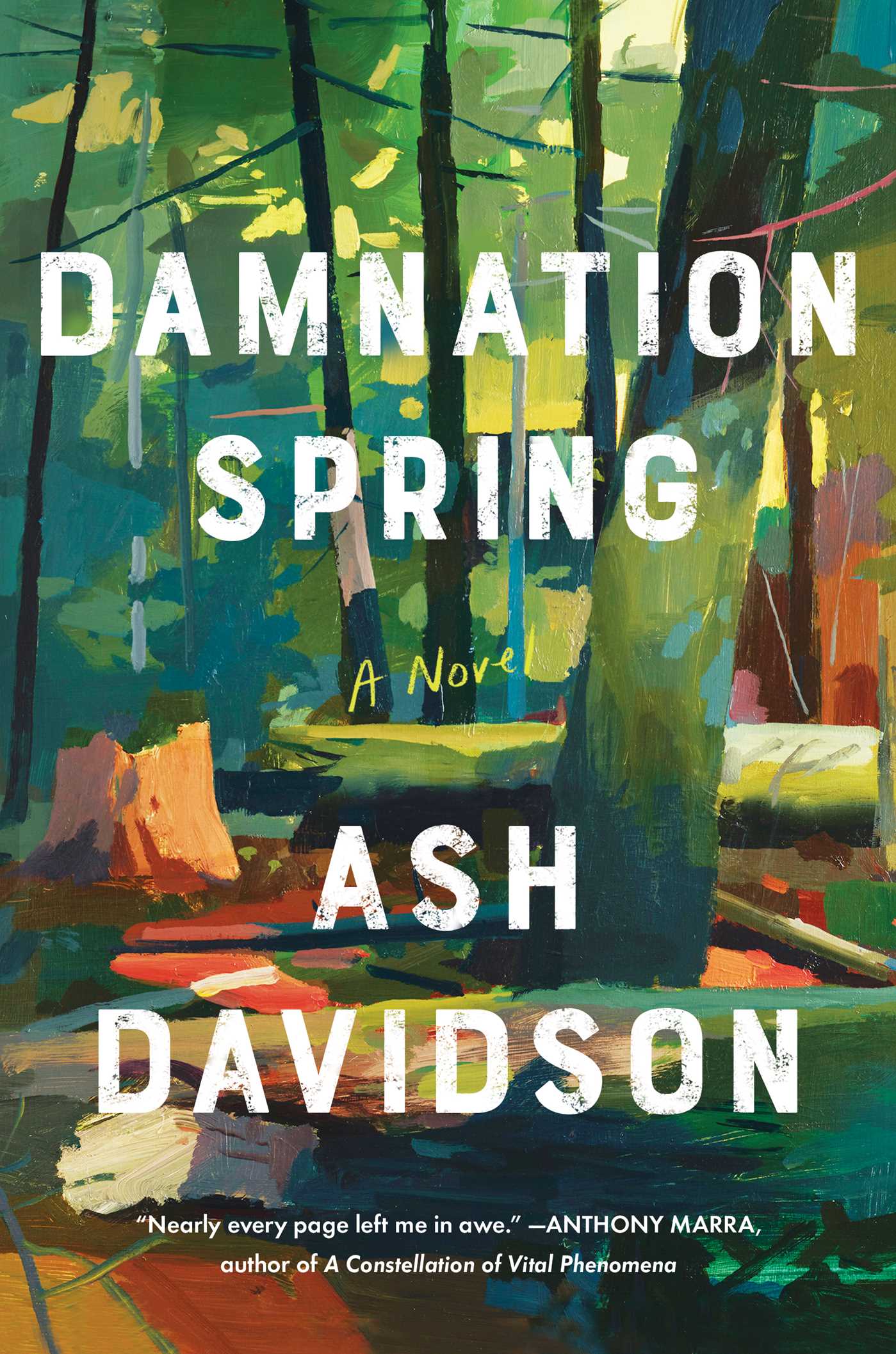
Damnation Spring by Ash Davidson

book cover

He pictured the 24-7 tree herself: a monster, grown even wider now than the twenty-four feet, seven inches that originally earned her the name, three hundred seventy feet high, the tallest of the scruff of old-growth redwoods left along the top of 24-7 Ridge. He’d circled that tree every morning for the last thirty-five years, figuring the best way to fall her, but it had always been just a story he’d told himself, like his father before him, and his granddad before that. Someday, Rich remembered his father saying. As a boy, it had seemed possible, though generations of Gundersens had died with the word on their breath.

“The real timber’s gone,” Lark said. “What’s left, ten percent, including the parks? Two thousand years to grow a forest, a hundred years to fall it. No plague like man.”

It’s 1977 in Klamath, California. Redwood country. Rich Gunderson has rolled the dice. He staked all the money he and his wife, Colleen, have been saving to buy a once-in-a-lifetime piece of property, the 24-7, over seven hundred acres of old growth forest, ripe for logging. But he needs the Sanderson Timber Co., which he has been working for all his life, to build a road close enough to it that he can get the logs out. It seems likely to happen, given that Sanderson is currently logging adjacent parcels. But when a skull is found, all work is halted until it can be determined whether the logging will be allowed to continue. A halt could mean the difference between making back his investment and having land of his own, a place on which he and his family can live, with a nice bit of cash beside, and losing everything.

The pilot had followed the coastline, turning inland at Diving Board Rock. It was Rich’s first and only ¬bird’s-eye view of his life: the small green house with its white shutters set back on the bluff at the foot of Bald Hill, the cedar-¬shingle tank shed. The plane’s ¬engine noise buzzed inside his chest, a hundred McCulloch chainsaws revving at once. They’d flown over 24-7 Ridge, the big tree herself lit by an errant ray of sun, glowing orange, bright as a torch, and, for an instant, Rich had caught a glimmer of the inholding’s potential—an island of private land in a sea of company forest. They’d flown over the dark waves of big pumpkins in Damnation Grove—redwoods older than the United States of America, saplings when Christ was born. Then came the patchwork of clear-cuts, like mange on a dog, timber felled and bucked and debarked, trucked to the mill, sawed into lumber, sent off to the kilns to be dried. The pilot had flipped a switch and spray had drifted out behind them in a long pennant—taste of chlorine, whiff of diesel—Rich’s heart soaring.

description
Ash Davidson – Image from the Grand Canyon Trust

He and Colleen have suffered some serious losses already. They have a five-year-old son, Chub, who is about to start Kindergarten. But they had hoped for a larger brood. Colleen, only thirty-four, has just suffered her eighth miscarriage. Rich does not want for them to go through that again, so is keeping his distance, frustrating Colleen, who is eager to keep trying.

He does not keep his distance from this land, however. Carrying on the tradition of his father and grandfather before him, Rich is a high climber, a particularly perilous specialty in an already dangerous line of work. He is very fortunate to have lasted longer than his forebears, surviving into his fifties. Bunyonesque at over six feet six inches, Rich is a gentle giant, determined to take care of his family. But how he can go about doing that is becoming complicated. He remembers his father taking him up to the 24-7, and pointing out the biggest, (There she is. Twenty-four feet, seven inches across. Someday, you and me are going to fall that tree.) a lifetime ago, when his father had just turned thirty.

description
A high rigger – using just his rope and spiked boots, he must climb the tree sawing off tree limbs as he goes – image and descriptive text from the Washington Historical Society

Colleen works as a midwife. Hers are not the only reproductive anomalies in the area. Miscarriages are rampant, as are birth defects. One woman she had been helping gave birth to a baby that was anencephalic. In the Library Journal interview, Davidson talks about her inspiration for the book.

My family lived in Klamath, California, where the book is set. My parents weren’t loggers—my mom taught school, my dad did carpentry work. But they did rely on a nearby creek for drinking water, similar to Rich and Colleen’s setup in the book, and became so concerned about herbicide contamination in that creek that they stopped drinking from our tap. Still today, not one of us does. I was three when we left Klamath, but I grew up hearing stories about our life there. I’d always wondered: what were those herbicides? – from the Shelf Awareness interview

Daniel Bywater was raised locally. An erstwhile classmate and an old flame of Colleen’s, he is back in the area, doing a postdoc in fisheries biology, testing the water to see what might be causing the significant reduction in fish life. It is pretty clear that the cause is the toxic chemicals that Sanderson sprays relentlessly in the area, making sure the logging roads do not get overgrown, and access to the to-be-logged trees is uninhibited. With the prompt of Daniel, Colleen begins to see that the environment in which she lives may be a factor in her difficulties carrying a baby to term. The Gundersons get their water directly from Damnation Creek.

description
Redwoods – image from homestratosphere.com

The conflict is set. Sanderson, eager to fend off any attempts to prevent them from clear-cutting the lands they control, versus those concerned with the health and safety of the people living and working in the area, and the carnage being wreaked on the local eco-system. The company is not above using bribery, blackballing, physical intimidation, and worse to control the allowable debate.

People are struggling. Deer Creek has dried up. It is probably wise to head indoors when the far-too-frequent company chopper passes overhead spraying something that smells of chlorine. Folks live in single-wides or rent houses they used to own, now property of the government on a 25 year lease, after they were eminent-domained for parkland. Pay has been shifted from production based to a daily rate. Not an idyllic existence

It would be an easy thing to present the company as pure evil (well, it pretty much is here, so scratch that), and the locals who support cutting-uber-alles as ignorant rubes. Some are, and there are those who are willfully ignorant, and willing to go to dark extremes to protect their personal fortunes, but Davidson has offered instead a very close look at the crux of the conflict. Can you really expect people who, for generations, have known only one way of living, to welcome outsiders telling them that they can no longer continue to work the jobs they have worked for decades, to live the way they have been forever? Even if that way of life is harming them (it is), that harm may not be felt immediately. No one except the company owners and upper managers are living well. It is a hard-scrabble existence, even for the fully employed. The loss of that small income would be harsh and sudden. And there is no certainty that other means of getting by will magically appear. For good or ill, people’s livelihoods are tied to the survival of the timber company. To damage that is to imperil them all. In showing the perspective of the people residing in the affected area, Davidson treats the issues she raises in a serious, nuanced, and respectful manner.

”Ask any of these guys. You won’t find a guy that loves the woods more than a logger. You scratch a logger, you better believe you’ll find an ‘enviro-mentalist’ underneath. But the difference between us and these people is we live here. We hunt. We fish. We camp out. They’ll go back where they came from, but we’ll wake up right here tomorrow. This is home. Timber puts food on our tables, clothes on our kids’ backs. You know, a redwood tree is a hard thing to kill. You cut it down, it sends up a shoot. Even fire doesn’t kill it. Those big pumpkins up in the grove, they’re old. Ready to keel over and rot. You might as well set a pile of money on fire and make us watch.”

It is clear that, even though he is in the business of removing trees from the landscape, that Rich does have a feel for, a love of the land. He often brings his son out into the woods to show him the woods, the topography, the beauty of their home. Rich wants to make sure he passes on what he can while he can. A charming element of this is when Rich teaches his son to use his hand as a map of their area. I could not help but think of Rich as a Fess-Parker-as-Davy-Crockett-or-Daniel-Boone sort, substantial, serious. But also kind and educable, interested in doing right by his family. This creates an internal conflict for him. Protect his family by seeing to it that the land he bought gets logged, and thus ensure their financial future, or consider that maybe Colleen is right to be concerned about the perils to them all of Sanderson’s spraying.

description
Image from Santa Cruz Land Trust

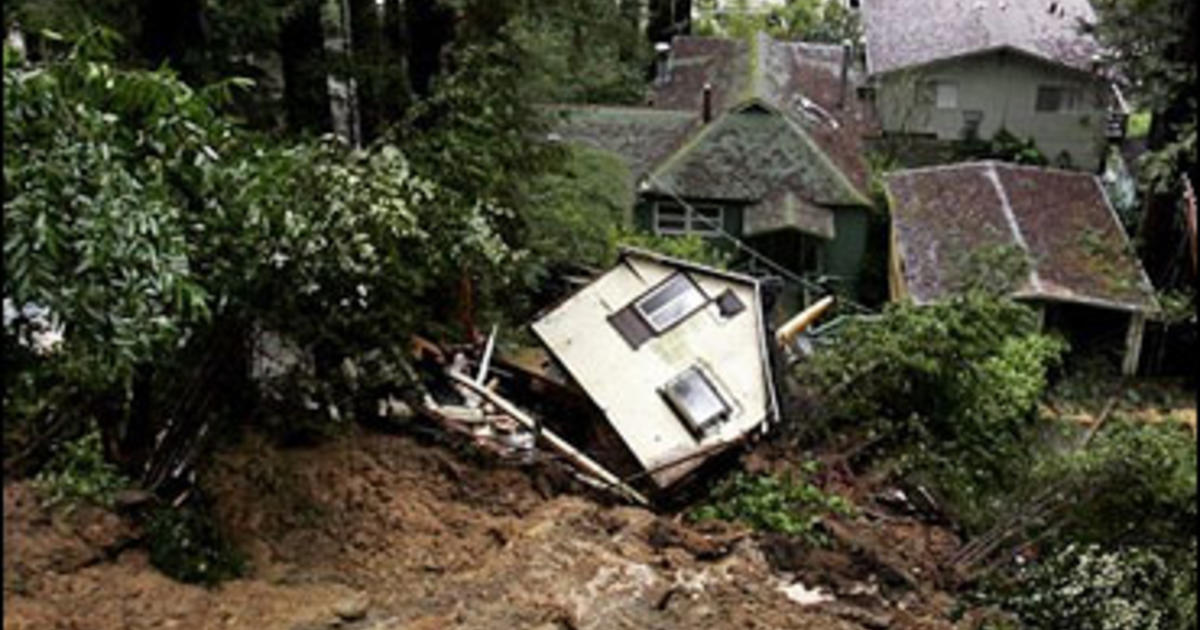
It is not spraying alone that is problematic. Hillsides, denuded of the plant life that held firmly onto the ground, lose their ability to absorb the considerable rain that falls in the area, and their ability to remain in place. It has got to be tough to remain connected to the land if the very land itself is washing away.

Colleen suffers additional misery to that of enduring multiple miscarriages from the fact that her sister, Enid, seems to get pregnant at the drop of a condom. Enid uncrosses her legs for two minutes and a baby pops out.

There is imagery aplenty to help things along. The huge lighthouse of a redwood has already been mentioned as a symbol of both permanence and possibility. Rich endures a bad tooth for much of the novel, maybe a conscience, or growing awareness that needs tending to. A dog which has had its vocal cords cut by a heartless owner surely stands in for silencing alarms of impending danger in the wider world. Showing the multigenerational element of the community reminded me of judging the age of a tree by the number of rings, but I am pretty sure that is just my projection.

I think sometimes we assume that working in an industry like logging is a choice easily substituted with another choice, but there is real grief in letting go of a good job that has defined you. Damnation Spring is set forty years ago, but we see parallels in industry today. There are plenty of reasons why a coal miner in West Virginia can’t just pick up and move west to work on a solar farm. When your whole life is in a place, the idea of uprooting it is so overwhelming, it’s understandable that dying in the life you know might be preferable to starting over. – from the Library Journal interview

There are also a larger perspectives one can see here. We can see in the microcosm of a small community what a larger society might look like when there is only one dominant political and economic power source, and it acts in its own interest regardless of the harm it does to all around it, and having no respect for the truth. This is what happens when there is power without accountability. Davidson shows how behavior ripples outward, from industry to community to family to individuals. The feckless, short-term profit-motive of Sanderson Timber forces the community to come to grips (or not) with the ecological and personally biological impacts of its work, which manifests in public (and secretive) behavior, pushing families into hard choices, and impacting individual lives. There is also the larger echo of events over four decades back (and more) impacting the world today. How much carbon in the atmosphere, for example, is not being sequestered because of clear-cutting? How many species of animal and plant life are being exterminated because of short term profit motives? And there is the immediate contemporary echo of so much of the planet still being plundered instead of managed, harvested, and renewed.

description
A 2006 mudslide in Northern California – image from DCBS News

The story is told from the alternating perspectives, Rich, Colleen and Chub.

Damnation Spring started out as a first-person novel in Rich’s voice. But I kept running into walls–things he couldn’t know or wouldn’t notice. Even after I added Colleen, they were both so quiet. I needed Chub. He’s curious. He’s lower to the ground. He’s five at the beginning of the book. I’d worked as a nanny, so I had some experience with children that age. They’re observant, but not judgmental, and still fully alive to the magic of the world, from birds’ nests to Bigfoot. – from the Shelf Awareness interview

This works well to offer a rounded take on the action of the story.

Davidson spent the first three years of her life in Klamath, not of a logging family. Mom was a teacher, dad a carpenter. But they used a nearby creek for drinking water, like Rich and Colleen in the novel. Her parents became concerned about chemicals in the water, so stopped using it. Davidson heard about this later on, but retained curiosity about the experience. The story grew from that to wondering about how families and a whole community might respond when their homes, their communities became unsafe to live in.

Gripes
Throughout the course of the book we are given relentless examples of the horrors being inflicted on people, fauna, and flora, in addition to the huge reproductive issues. Beehives are obliterated, diseased deer stumble through the woods, nosebleeds are ubiquitous. This can get overbearing, as if we are being beaten over the head with it all, over and over and over. Yes, yes. Everything is being poisoned. Do we really need twenty more examples? Got it.

The story-telling is effective. We see the characters and how their relationships with each other work. It is dense with detail, but maybe too much detail, enough so that it makes it, sometimes, tough to see the forest for the trees, and sometimes a slog to read.

There is a response Rich has late in the book to something Colleen does that had me thinking of the real-life Daniel Boone. I understand the possibility of his response, but found it a bit of a stretch to accept in the 20th century, in the culture which is portrayed. He might have reached the destination to which he arrives, but it would have been with considerably more weeping and gnashing of teeth. In this case, maybe, a bit more detail would have been warranted.

Overall, though, Damnation Spring is a powerful example of eco-lit, a humanity-based look at crimes against nature, featuring strongly-drawn characters that you can care about, dastardly doings enough to keep the action moving, some payload on the dynamics within a stressed logging community, and more on the impact of chemical spraying and clear-cutting. The book is printed on recycled paper, but you might feel more comfortable giving the trees a break and reading this one as an e-book.

You can bury us, but you can’t keep us from digging our way out.

Review first posted – July 30, 2021

Publication dates
———-Hard cover – August 3, 2021
———-Trade paperback – May 3, 2022

I received an ARE of Damnation Spring from Scribner, of Simon & Schuster, in return for some seedlings and fertile soil. Thanks to ZC at S&S for providing, Cai at GR for cluing me in to this book, and NetGalley for facilitating.

This review has been cross-posted on GoodReads. Stop by and say Hi!

=======================================EXTRA STUFF

Links to the author’s personal, FB, and Twitter pages

Interviews
—–Shelf Awareness – Ash Davidson: Living and Dying on Timber bny Samantha Zaboski
—–Library Journal – Debut Author Ash Davidson Discusses Her Epic, Immersive Novel Damnation Spring – this was sponsored by Simon & Schuster

Books this one made me think of
—–Annie Proulx – Barkskins – a historical novel, a saga, showing the logging of North America since the 17th century
—–Richard Preston – The Wild Trees – non-fic about tree-climbers, with a lot of interesting intel on the earth’s wooden giants

Song/Music
—–Johnny Cash – My Shoes Keep Walking Back to You from “November 6 – Colleen” chapter

Items of Interest
—–Coast Redwood Ecology and Management
—–Nashville Review – August 1, 2016 – Higher Ground
—–Book Club Guide

Leave a comment

Filed under Cli-Fi, Fiction, Literary Fiction

Re-wilding the Highlands – Once there Were Wolves by Charlotte McConoughy

book cover

I had always known there was something different about me, but that was the day I first recognized it to be dangerous. It was also the day, as I stumbled out of the shed into a long violet dusk, that I looked to the trees’ edge and saw my first wolf, and it saw me.

They’re more dangerous than we are.”
“Are they?” I ask. “They are wilder, certainly.”
“Isn’t it the same?”
“I don’t think so. I think it’s civilization makes us violent. We infect each other.”

Inti Flynn had always had a feel for nature. Her father had been a woodsman, first working for a lumber company, then, later, living a mostly solo subsistence life, in Canada, trying his best not to contribute to the global demise. He taught Inti and her twin, Aggie, about how to live in and with the wild. Their mother, a detective in Australia, was more concerned with teaching them how to contend with the wild in civilization. There is a lot in here about parents, of both the human and lupine persuasion, teaching children or pups how to cope in the world, how to defend against predators. The human sorts offer different approaches, some counseling firm defenses, others advising understanding, and some resorting to extreme kinetic measures. There are plenty of parents teaching questionable lessons.

description
Charlotte McConoughy – image from If.com.au

Dad used to tell me that my greatest gift was that I could get inside the skin of another human. That I could feel what nobody else could, the life of another, really feel it and roll around in it. That the body knows a great deal and I have the miraculous ability to know more than one body. The astonishing cleverness of nature. He also taught us that compassion was the most important thing we could learn. If someone hurt us, we needed only empathy, and forgiveness would be easy.

Inti’s gift is not metaphorical. Her ability to experience what others feel, gives her a unique advantage in understanding both wildlife and people. It also makes her very vulnerable.

I am unlike most people. I move through life in a different way, with an entirely unique understanding of touch. Before I knew its name I knew this. To make sense of it, it is called a neurological condition. Mirror-touch synesthesia. My brain re-creates the sensory experiences of living creatures, of all people and even sometimes animals; if I see it I feel it, and for just a moment I am them, we are one and their pain or pleasure is my own. It can seem like magic and for a long time I thought it was, but really it’s not so far removed from how other brains behave: the physiological response to witnessing someone’s pain is a cringe, a recoil, a wince. We are hardwired for empathy. Once upon a time I took delight in feeling what others felt. Now the constant stream of sensory information exhausts me. Now I’d give anything to be cut free.

McConaghy’s prior novel, Migrations, looked at the demise of wildlife (birds in particular, and even more particularly terns) in a slightly future world. In this one, she continues her interest in the impact of people on the natural environment. Officially, the last wolf in Scotland was killed in 1680. There are reports of wolves being seen as late as 1888, but Scotland has been essentially wolf-free for well over three centuries. Sadly for Scottish woodlands, it has not been farmer, sheep, or climate-change-free. Part of the problem is that the local deer population tends to linger in place long enough to lay waste to new shoots. A great way to keep them moving is to reintroduce wolves. Good for the goal of restoring natural forest, re-wilding at least part of Scotland is good for the health of the deer population as well. Thus, Inti’s presence. She is leading a team charged with re-introducing a small population of wolves to a remote part of Scotland, near the Cairngorms, a mountainous area in the highlands.

description
The Cairngorms – Image from The Royal Society for the Protection of Birds

As one might imagine, there is considerable resistance among farmers concerned about the potential loss of livestock. The minimal-to-non-existent actual danger to humans is played up by those opposed to the reintroduction. Battle lines are drawn. The program has official sanction, but the locals have guns, and itchy fingers. And then someone goes missing. Inti’s primary concern is with the danger to the program, as she expects her wolves to be blamed.

The mystery for us is why, and how this person vanished. After a meet-cute early in the book, Inti and the local sheriff, Duncan MacTavish, team up, in a way, to try figuring out what happened. There are other mysteries as well, albeit of a different sort. What happened to Inti’s sister that had left her so damaged? Is Duncan trustworthy? The book alternates between the present and looking back at two periods in Inti’s and Aggie’s lives, with their father in British Columbia, where they learned how to live off the land, and as adults, when Inti was working on a wolf project in Alaska.

description
Red deer are Scotland’s largest surviving, native, wild land mammal. It’s estimated that there are 400,000 of them in the Scottish Highlands – image and text from Good Nature Travel

Inti struggles with her desire to protect her wolves, and her need to engage with the locals as something other than as a know-it-all outsider. The complexity of the town’s social relations is quite fascinating. Duncan is our eyes on this, and a big help to Inti, knowing so well the people in the community in which he had grown up, understanding motivations, relationships, and local history much better than any outsider could.

Abuse is a central issue, in both the Old and the New World, whether at the hands of the distraught, the damaged, or the downright evil. Multiple characters in Scotland come from homes in which there was violence, whether against spouses, children, or both. It is clear that one of the locals has beaten his wife. Other instances of family violence are important to the story. The abuse that does take place is mostly done off-screen, reported, but not seen first-hand. Inti’s attempt at restoring the Scottish landscape, of giving new opportunities to a much-reviled species mirrors her attempt to heal, to restore the vitality of her own family.

description
A wealthy landowner in Scotland is hoping to bring wolves from Sweden to the Scottish Highlands to thin the herd of red deer. – image and text from Good Nature Travel

One can probably make too much of it (I am sure I did), but I found it fun to look at the wolves for indications of comparison to the human characters. Was Inti like Six (the wolves are given numbers not names, for the most part). Who might be lone wolves? Who is fiercest in protecting their pack/family? Who are the alphas?

There is much resonance with Migrations. Both leads are working far from home. Both are trying to do something to help in a world that seems set against accepting any. Although she has her sister with her in Wolves, Inti is primarily a solo actor. She finds a family of a sort with charming, and not-so-charming locals, in the way that Franny Stone in Migrations teamed up with the fishing boat crew. Like Franny, Inti bears the burden of deep, traumatic family secrets. Like Franny, she is trying to find her true home, whether that be in Scotland, Canada, Australia, or maybe wherever the wolves are. Inti has a near-magical power of sensitivity. Franny had special abilities in the water. Like Franny, Inti teams up with a guy in a position of some power. In Migrations it was Ennis Malone, captain of a fishing boat. Here it is Duncan McTavish, the local sheriff. In both novels McConaghy shows the concerns of those imperiled by the front lines of attempts to correct a bad ecological situation. Of the two, this novel struck me as a bit more optimistic about the possibilities of making meaningful change.

In the real world, wolves have not been officially introduced back into Scotland, but there is one wealthy individual who is looking at doing so in a limited way. Who knows? Maybe the re-wilding of Scotland is not entirely a pipe dream.

Once There Were Wolves offers a close look at the issues involved in programs of this sort. The locals are accorded plenty of respect for and insight into their legitimate concerns, as we get to see past the rejectionist veneer. Very hard choices must be made, and the decision-making is very adult. Inti is a tough young woman with a challenging responsibility. It is easy to care about what happens to her. McConaghy keeps the action flowing, so there is no danger of losing interest. The main mystery is very intriguing and the final explanation is twisty and wonderful, with Inti finding her inner Miss Marple to sleuth her way to the truth. Once you sink your canines into this one, you will not want to let go. There are hankie moments as well. Tears will be shed. Set in a wintry place, it seems an ideal book to cool off with in the hot summer months. (Of course, if you read this in cooler months, it is distinctly possible that you will be wearing some wool, and thus will be reading a book about wolves while in sheep’s clothing. Just sayin’.) It seems appropriate to keep a modest supply of whiskey near to hand, just for ambience, of course. Or for those of the teetotaler persuasion, maybe some Irn-Bru. As for the best place in which to read this book, and read it you should, that should be obvious, in a den.

There is violence in me, in my hands, which vibrate with the need to exert some kind of control, some defiance, and if it is revenge for the things that have been taken from me then fine, I will have that too. I am done with falling prey. I will be predator, at last. I will forget the walls and the self-protection and I will become the thing I hunt and feel it all.

Review posted – July 9, 2021

Publication date – August 3, 2021

I received an E-ARE of OTWW in return for a fair review. Thanks to Amelia at Flatiron, to NetGalley for hosting the book and to MC for facilitating.

=======================================EXTRA STUFF

Links to the author’s personal, Instagram, Twitter and FB pages

Interviews
Interviews with CM re this book have been as tough to find as Scottish wolves, but I did unearth an oldie, from 2014. I am sure after the book is released there will be more interviews available. There are several interview links in my review of Migrations
—–AusRom Today – AUTHOR SPOTLIGHT: Charlotte McConaghy – from 2014 – this relates to her very early, romantic fantasy writing

My review of McConaghy’s previous book
—–2020 – Migrations

Items of Interest
—–Sea Wolves – Panthalassa.Org – mentioned in Chapter 8
—–Good Nature Travel – Bringing Wolves Back to Scotland by Candace Gaukel Andrews
—–The Guardian – Stories to save the world: the new wave of climate fiction by Claire Armitstead
—–Wiki on mirror touch synesthesia – yes, this is a real thing
—–Travel Medium – Why Are There No Trees in Scotland? by Paul McDougal – this is a wonderful overview of how Scotland lost so much of its woodlands over the last 6,000 years
—–Public Domain Review – Werner’s Nomenclature of Colours – Inti’s father kept a copy for use in his work – Chapter 3
—–The Guardian – Rewilding: should we bring the lynx back to Britain? by Phoebe Weston – 8/16/21 – One proposed re-wilding site is the same one used in this book

4 Comments

Filed under Cli-Fi, Reviews

The Maidens by Alex Michaelides

book cover

It felt as if a kind of pestilence, a plague, were spreading through the college—like in a Greek myth, the sickness that destroyed Thebes; an invisible airborne poison drifting through the courtyards—and these ancient walls, once a refuge from the outside world, no longer offered any protection.

When Zoe calls her aunt from Cambridge to tell her that her best friend has gone missing, Mariana Andros, a group therapist in London, heads to her alma mater immediately. In no time she has ID’d a likely suspect and proceeds to find out everything she can, hoping, expecting to show that Professor Edward Fosca is a murderer.

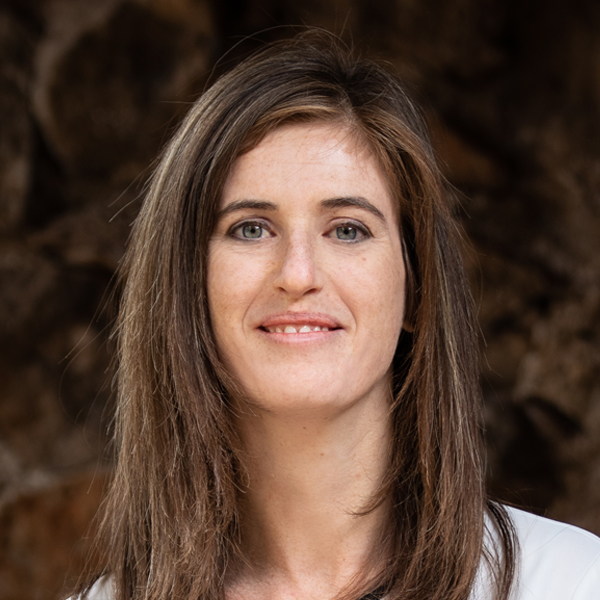
description
Alex Michaelides – image from The Irish Times – photo by Manuel Vazquez

He certainly seems a likely candidate. A gifted teacher of classics, Fosca (This name derives from the Latin “fuscus”, meaning “gloomy, dark, black, (voice) hoarse, hollow, cavernous, (of thoughts) dark, secret, occult” – uh, oh – from name-doctor.com) has a Svengali-ish charm. He has assembled around him a small cult, female students who dress alike, attend private instruction with him, and who knows what else? They are known as The Maidens. Zoe’s friend, Tara, had been a member. They, under the leadership of Fosca, are into an ancient cult that was particularly focused on the line between life and death.

Mariana couldn’t help but feel a little skeptical—her background in group therapy told her, as a rule, to be suspicious of any group in love with a teacher; those situations rarely ended well.

But, Mariana may not be in the best frame of mind to take this all on. We would expect that a trained psychotherapist would be a good judge of people, but looking at the world from behind the veil of her grief, gives us cause to question her judgements. She is still mourning the loss of her beloved husband, Sebastian, who had drowned a year ago, while they were vacationing on the island of Nexos, a vacation she had pushed him to take. Guilt much?

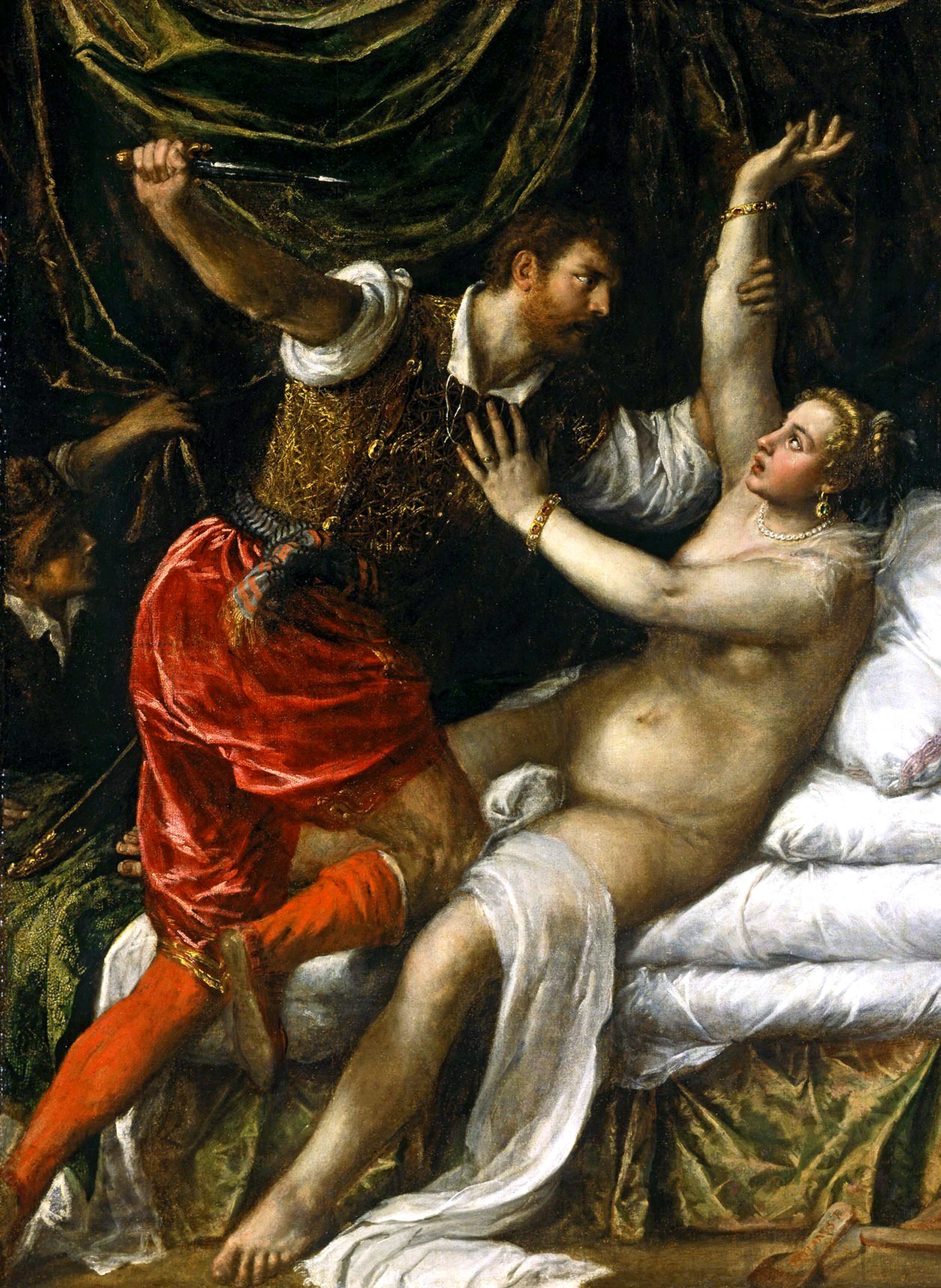
description
Tarquin and Lucretia – image from Wikimedia

Michaelides offers us a list of alternate suspects. Among them are a dodgy university porter, an obsessed patient of Mariana’s, the Maidens themselves, and a young man who seems particularly enamored of Mariana, persists in wooing her, and who claims an ability to foresee things.

Mariana picks up some collateral support, including a former mentor still at the university, and an erstwhile school chum, who is now consulting with the police. He offers her access to investigation intel, over the objections of his superior, DI Sangha, in the seemingly-mandatory dickish cop role.

description
Tennyson – image from The Daily Mail

There are some of the elements of a cozy here, the amateur sleuth, with a friend on the force, the violence taking place off-screen, local sources that help one suss out the landscape, and quirky secondary characters. But this one is more a thriller, with sharper teeth. It features an undercurrent of dread well beyond the mystery of a simple whodunit. The violence, even though we get no front seat to it, is biting. No Miss Marple, Mariana is not merely an outside observer, but a participant in this drama. And a potential victim.

I thought a lot about the secretive nature of groups as I was writing – especially within Cambridge. There are groups within groups. I studied group therapy myself, that’s what I specialize in. It all goes back to the classic mysteries that I love, from authors like Agatha Christie: Everything is always set in an enclosed location, like an isolated house, a train, a private island. Cambridge is similar.

description
Trinity College – image from The Maidenssociety.com

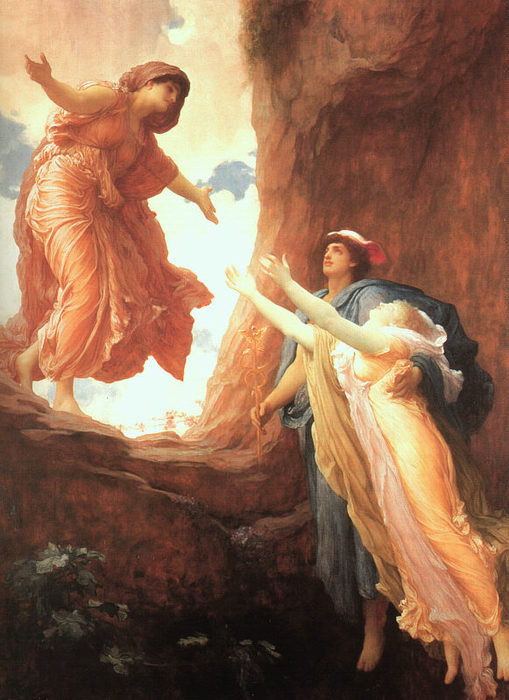
Tennyson comes in for multiple mentions. Greek mythology figures large and Mariana even finds herself succumbing to a bit of atavistic religiosity at times. The mythology that permeates the novel is a particularly fun element, offering an incentive to crank up the search engine of one’s choice and dig in a bit. You may or may not recall the ups and downs of Demeter and Persephone, but there are some other items from ancient Greek stories that I bet you never heard of. It is always fun to learn these things. Michaelides grew up on Cyprus where, he says, Greek mythology was in the air. The old stories were part of general cultural knowledge, with the old plays being regularly restaged, like how we generate new films of Spiderman or Jane Austen novels here.

description
Return of Persephone, by Leighton – image from Holographical Archetypes

Additional spice is provided by seven chapters that offer a psycho-side view of the world, an ongoing battle-royale between the dark side and the fading light. Is this our killer? Michaelides has a background in psychology, specifically group therapy, so writes strongly about both psychopathology, and treatment.

He was a screenwriter for twenty years before his first novel, The Silent Patient, was published to huge success. The lessons he learned from that experience translate into a fast-paced read, strong on visual flair, with excellent atmospherics and tension-building. We can easily engage with our lead. Mariana seems a decent sort. She has suffered a terrible loss, which increases our sympathy for her. It is not hard to root for her to ferret out the killer, and to remain alive.

description
Leda and the Swan, date unknown, by Franz Russ the Younger (1844-1906) – image from the site Mara, Marietta

There were a few things that bothered me in the book. How could Seb, who was fit and a good swimmer be drowned by a stormy sea? Surely, he knew his limits. Why would anyone go to dinner at the private rooms of a suspected murderer and not tell anyone where they were going? Most significantly there are two characters involved in a major plot twist at the end. While there were some breadcrumbs established for one of them, it seemed to me that the hints re the other were sorely lacking.

That said, the bottom line is that The Maidens is a fun read, a real page-turner that will get your blood pumping, and offer an opportunity to refresh, or learn for the first time, some fascinating Greek mythology.

Death was no stranger to Mariana; it had been her traveling companion since she was a child—keeping close behind her, hovering just over her shoulder. She sometimes felt she had been cursed as if by some malevolent goddess in a Greek myth, to lose everyone she ever loved.

Review posted – June 25, 2021

Publication date – June 15, 2021

I received an ARE of The Maidens from Celadon in return for an honest review and some small blood sacrifices. Really, there is no need to involve the police.

Thanks, too, to MC for encouraging the gods and goddesses of ARE distribution on my behalf.

=======================================EXTRA STUFF

Links to the author’s FB, Instagram, GR, and Twitter pages

Interviews
—–Good Morning America – video 3:24
—–Entertainment Weekly – Alex Michaelides on the most unsettling elements of The Maidens by Seija Rankin
—–The Irish Times – ‘I asked myself what Agatha Christie would do, and what she hadn’t already done’
—–Barnes and Noble – Agatha Christie, Sleight of Hand, and Psychological Complexity: An Interview with The Silent Patient Author Alex Michaelides – by Jeff Somers – Obviously mostly focused on Michaelides’ earlier book, but there is material in here that is relevant to this book as well

Items of Interest from the author
—–Criminal Element – The Five Best Plot Twists in Fiction
—–Criminal Element – The Five Best Movies Adapted from Thrillers

Items of Interest
—– Eleusinian Mysteries and Psychedelic Enlightenment
—–Wiki on Eleusinian Mysteries
—–Greeking.Me – Demeter, the Lady of Eleusis – there is a nice summary in here of Demeter and Persephone’s difficult situation
—–Greek Legends and Myths – Leda and Zeus in Greek Mythology
—–Tennyson’s poem – Mariana

Leave a comment

Filed under Fiction, Mystery, psycho killer, Reviews, Suspense, Thriller

Meet Me in Another Life by Catriona Silvey

book cover

Santi steps closer as she holds the light up to the gears. ‘Think we can fix it?’
Thora puts her weight to one of the gears and tries to shove it backwards. ‘No,’ she says, after a few seconds. ‘I’m afraid time has stopped.’
Santi tries to push the gear in the other direction. Giving up, he steps back. ‘I guess it has.’ He smiles at her sideways in the flickering light. ‘Welcome to forever.’
It’s a pretentious thing to say. But Thora has to admit that’s exactly how this feels: a moment taken out of time, with no beginning or end.

Imagine you are looking at the screen in a large cinema. There are blips in the image, fleeting, but present. As the film moves on to the next scene, there are more blips, holes in the image, with another image, another, pentimento film, going on behind the up-front film. Another scene on the big screen, with more blip, until the characters in the front film, look at each other and say, “did you see that?” As they slowly become more and more aware that there is something going on in the film behind them, they turn and watch, and their behavior in the front film changes, to take account of the new knowledge.

description
Catriona Silvey – image from Harper Voyager – photo credit – Hazel Lee

That is what reading Meet Me in Another Life is like. Thora and Santi (Santiago) find themselves in Cologne. (neither is a native) They meet cute, at first, anyway. Until, oopsy, soon after they meet, tragedy. It takes only a short time to know that these two have a special bond, one that will persist through life after life, as one or the other is gone by the end of each of the eighteen chapters, to be reunited in the next. Their ages vary in each iteration. In a few they are the same age. In some, one or the other is older, a little, more than a little, or maybe a lot. Their positions of authority vary as well, parent/child, teacher/student, cop/trainee, patient/caretaker, if there is any such hierarchical relationship between them. They have varying personal relationships, with each other (bf/gf, married, prospects), or he with Heloise, she with Jules. But their passion for learning, for exploration, for science binds them together.

It is clear to us early on that there is a mystery to be solved. Why the recurring lives? Why the disparate ages, roles, and relationships? After a time, it becomes clear to Thora and Santi, too. They begin to realize that they have known each other and remember things from their former lives. Also, there are some consistencies, some places and characters that recur, unchanged.

Recurring elements (Santi’s cat, a tattoo on Thora’s wrist) first gain meaning through repetition, and then become touchstones, triggering inferences for the reader about how the characters have changed and where they might be headed. Once Santi and Thora realize they are trapped in a loop, they (along with the reader) must piece together the clues scattered through the narrative to figure out what might really be going on. – from the LitHub article

The notion that sparked the book is very down to earth. But these are two characters who are reaching for the stars, and Silvey’s solution was very fantasy/sci-fi-ish.

…the question was: can two people ever know each other completely? That led me to the idea of characters who meet again and again in different versions of their lives…I think of the book as an argument: Thora and Santi have very different attitudes to their situation, and that leads them to respond to it in different ways. – from the Deborah Kalb interview

There are obvious similarities to other works that deal in re-iteration. Kate Atkinson’s Life After Life (when Thora refers to herself as the Fox to Santi’s Wolf, is that a nod to that book?) uses the method in consideration of England in the first half or the 20th Century, and looking at the possible branches life might take were one to choose A instead of B, or B instead of C, giving the available choices a go until a desirable path forward is found. Thora, in particular, and Santi try this out, but it is not enough to solve the puzzle. Cloud Atlas is another novel offering common characters in diverse times (and places. This one is all in Cologne). Groundhog Day is the most famous cinematic rom-com loop and Andy Samberg’s Palm Springs gave it a similar go in 2020. 50 First Dates anyone? There is a clear romantic element in this one, too, as Thora and Santi are souls who are clearly meant to be together, (Yeah, I know, some might see them as merely tethered. But my take is that there is greater depth to their connection.) despite the fact that Thora is bisexual and has major hots for a woman, Jules, in many of the stories. Santi and Thora are a couple in others.

Their divergent perspectives offer a fascinating core to their discussions. He is religious, believes in God, an afterlife, and that there is a reason for being, maybe a mission even. Life should make sense. He thinks if he can figure out what God wants of him they can step outside their seemingly endless repetitions. She is an atheist and is having none of that. They talk about faith, determinism, eternity, and plenty more that raises this above the level of a simple entertainment.

Santi has always trusted in fate: that there is one way thing have to go. He isn’t literal enough to believe that the future is written in the stars—he’s doing a PhD in astronomy, after all—but his memories of other skies still unsettle him. The idea that there are other possible configurations for the universe, that God could be running them all in parallel, cuts against everything he believes. The only way he can reconcile what he remembers is to think that it’s a message, one he’s not yet ready to understand. He watches the world like a detective, like a poet, waiting for the meaning to come clear.

Santi’s faith seems more in fate than in the divine, given his inability to allow for a deity capable of managing multiple universes. But the faith he has, of whatever sort, is put to the test, repeatedly.

They struggle to know themselves, as much as they try to understand each other.

”This’ll never work, you know,” she says conversationally.
Santi frowns at her. “Who says?”
“All my exes. Most recently, my ex-girlfriend Jules. She told me when we broke up what my problem is.”
“What’s your problem?”
“I always want somewhere else. I’m never just—content to be where I am.”
He shrugs. “Neither am I.”
She gives him a look. ”What do you mean? You’re, like, Mr Serenity.”
A smile cracks his face. “That may be what it looks like on the outside. But inside, I’m always searching…We’re the same that way.”

As in any good mystery, there are plenty of clues sprinkled throughout the eighteen stories. Making sense of them is the challenge for us readers as much as it is for Thora and Santi. I was only partly successful at sussing out what was going on, even with keeping an excel sheet to track differences and commonalities among the stories. (Don’t judge me!) This is a good thing. Of course, you may be a lot smarter than me and figure it all out early on. That would be too bad. Not knowing, trying to figure it out from the clues provided, was part of the fun.

None of this matters if we do not care about our two leads. Not to worry. While both characters have qualities that raise them well above average, they often find themselves in everyman (and woman) situations and pedestrian lives. Their clear bond with each other is almost a third lead, so strongly does this come across. You will definitely be rooting for them to figure out how to get off what seems an eternal hamster wheel. The novel is as engaging and enjoyable as it is intellectually stimulating.

My only gripe, and it is minor, is that there seemed a bit too much exposition. There is nothing wrong with exposition, but the telling/showing seesaw felt a bit too heavy on one end at times.

Are Thora and Santi two star-crossed lovers or is their connection made in heaven? Only the stars (and the author) know for sure. Allow yourself to be delighted. There is plenty here that can generate that feeling. You may forget about this review, this book, for a while, but I am fairly certain the book, preferably, will turn up again in your life. Try your best. It will be worth your time. Remember.

If God’s test were easy, it would be meaningless.

Review posted – June 11, 2021

Publication date – April 27, 2021

If you are looking for a SUMMER BOOK, this is my rec – no-holds-barred, #1 fab beach read, or anywhere read.

The film rights have been optioned by Atlas Entertainment and Pilot Wave, with Gal Gadot to produce and star. I spotted much news coverage of this that was, IMHO, wrong-headed, in portraying the book as an LGBTQ sci-fi novel. Thora is indeed bi-sexual, with more story time with female than male partners, but that is sooooo not what this book is about. We do know that once Hollywood gets its claws on a novel, the end product can diverge dramatically (or even melodramatically) from the source material. This initial coverage is not encouraging. But then, many film-rights options are never exercised. So we, who favor hewing as closely as possible to written source material, are a long way from having to fret over this.

This review has been cross-posted on GoodReads

=======================================EXTRA STUFF

Links to the author’s personal, GR, and Twitter pages, and her academic site (Silvey has a PhD in language evolution, and has published numerous papers)

Interviews
—–Book Q&As with Deborah Kalb
—–The Royal Institution – Formatted Q/A – thin, but fun

Q/A

I asked Silvey a question on the Ask The Author part of her GR page, to which she offered a response in very short order.

Q – How did your research on the evolution of language manifest in MMiAL?

A – That’s an interesting question! My honest answer is “not really”… I did realise after writing the book that there is a linguistically informed way of thinking about time loops, and why they might be appealing to a reader – I wrote about that in an essay on LitHub: https://lithub.com/on-the-counterintu… But if my experience as a researcher influenced the book at all during the writing, it might be in the way Thora and Santi’s situation mirrors the strange, lonely-together rootlessness of academics – people who are usually foreigners in the place they’re living, brought together by shared passions, using English as a lingua franca but often talking past each other.

Songs/Music
—–Silvey’s Song list for Thora
—– Silvey’s Song list for Santi
—–What Silvey listened to on repeat while working on the book
———-Tom Rosenthal and dodie – Years Years Bears
———-The Mountain Goats – Love Love Love
———-Michael Stipe & Big Red Machine – No Time For Love Like Now

Items of Interest from the author
—–Silvey’s site – Excerpt – Chapter 1 – Welcome To Forever
—–Crimereads – Excerpt – Chapter 8 – 115 – We Are Here
—–Lithub – On the Counterintuitive Appeal of the Literary Time Loop – in this article, linked in Silvey’s Q/A response above, she explains very clearly how time loop narratives work in a literary framework. This is MUST READ material!

Items of Interest
—–Smithsonian – Félicette, the First Cat in Space, Finally Gets a Memorial – referenced in chapter 3, et al
—–Contact – referenced in chapter 7
—–I was intending to provide a link here to the Odysseum in Cologne, a science museum of note in the book, but their site is currently unavailable

1 Comment

Filed under Fantasy, Fiction, Sci-fi, Science Fiction, Science Fiction

The Hidden Palace (The Golem and the Jinni #2) by Helene Wecker

book cover
If you have not yet read The Golem and the Jinni, stop! Right now! Go back. Read that, then we can talk about the sequel. Read it already? Great. Not yet? Ok, I’ll wait, but not for a thousand years, like some.

You’re back? Cool. Great book, right? So Chava, the golem of book #1 and Ahmad, the jinni of that tale, are a bit older, and a bit wiser. They are also a bit more rounded as characters. We’ll get to them in a bit.

The story begins with an extremely devout rabbi, Lev Altschul (very old school) on the Lower East Side (not the guy from the earlier book) He has come across some ancient texts, books with arcane knowledge. He is not the greatest parent in the world, a widower, much more devoted to his studies than his daughter, Kreindel. She is taken care of by, essentially, a committee of congregation members. But she loves her pop and wants to learn, wants to study. Of course, girls were not welcome to imbibe the texts that Jewish boys were encouraged to learn. She spies on lessons and picks up what she can. As it happens there is a pogrom underway in one of the usual places in Eastern Europe. The rabbi, with the help of those old books, can now do something about it. He determines to send to a rabbi in Lithuania a weapon that can be used to defend oppressed Jews there. He works day and night to construct a golem for them. It does seem that Wecker’s golems always run into transit issues. Instead of heading across the Atlantic, as planned, this one, Yossele, remains in New York, due to an untimely building fire. He awaits only wakening.

description
Helene Wecker – image from Fantasy Book Cafe

Speaking of golems, Chava is trying her best to be as human as possible, given her natural limitations.

Q: When you thought about writing a golem character, did you think about other legends and myths about people being created out of inanimate matter? Adam from earth? The famous Golem of Prague, the greek myth of Prometheus, or Pygmalion? Frankenstein’s monster? Or even the idea of creating a modern robot? Did you want to write from those traditions or come up with something completely different?


A: I certainly wrote the Golem’s character with those legends and stories in mind. In fact, in early drafts she was much closer to something like the Golem of Prague. She had less emotion, and less insight into the emotions of others. But it became clear that that wouldn’t do for a main character. So I made her more empathic, more “human” in that sense, and I think that brought her closer to the androids and cyborgs of modern science fiction, like the replicants of Blade Runner and Star Trek’s Lt. Commander Data. But I think all these stories have the same sources at heart, and the same central question, of what happens when we create life that approaches human but isn’t quite. – from LitLovers interview re Book One

Despite being a magical clay being conjured by a spell, Chava still feels the compulsion to help others. And being telepathic allows her to have a pretty good idea of what folks feel, and need. Shutting out the onslaught of telepathic noise remains a challenge, but a much reduced one, as she has learned how to block a lot of it out, and she tries to stay away from overcrowded places. Concerned about people noticing her agelessness, after so long a time at the bakery, where she has been working since she arrived, Chava decides it is wise to move on. After completing a course of study at Teacher’s College, she finds an excellent gig at a Jewish orphanage in Manhattan, teaching cooking.

description
Lt Commander Data of Star Trek NG – image from Wikipedia

Speaking of hot things, in Book One, Ahmad was mostly an elemental character, all fire and immediate gratification. Book Two shows a bad boy who can still bring the heat, but who has gained considerably more awareness, of himself, and of the world around him. He has grown a sense of decency, personal responsibility, and a need for purpose. He remains in business with Arbeely, the man who had released him from his thousand-year imprisonment in a flask. He molds iron with his bare hands. Business is good, booming even, so they expand to grander quarters, where Ahmad’s smoldering creative ambitions ignite to full blast.

Sleepless in Manhattan, Chava and Ahmad walk the streets and rooftops in the wee hours. They are best friends, committed to exclusivity with each other re the benefits of their connection. The young man enamored of Chava in Book One, her husband, is no more, killed off in that earlier tale. She is rightfully concerned about the downsides of having a husband or bf made of flesh and blood, and who might not live, ya know, forever, not to mention the risk of him discovering what she really is. Ahmad has sworn off humans, after the damage he did to Sophia Winston in the first book.

And, speaking of damaged heiresses, Sophia has been promoted to a top-tier character. She struggles to cope with the affliction that resulted from her getting jiggi with a jinni. I guess you could call it an STD, but not the usual sort. (Even had penicillin been invented, it would not have done the trick.) She cannot get warm. Sophia is convinced that only place where there is any hope of succor is the Middle East. She travels to many ancient sites, in a constant search for local experts in pharmacology able to concoct potions that alleviate her perpetual chill. (I suppose one might see in Sophia’s inability to douse her inner flames a symbol of her carrying the torch for someone. I wouldn’t. But some might.)

description
Cleopatra’s Needle, was transported from Egypt and installed in Central Park in 1881 – image from Wikipedia

In case there were not enough magical beings wandering about, Wecker balances the scales, tipped by the weighty presence of Yossele, by adding one more. As it happens, Sophia encounters in her travels yet another fire being, a jinniyeh, Dima. It appears that the iron-bound jinni (Ahmad) is a character of legend in the jinni world. This female jinni has something special about her too, (I mean, aside from being a jinni, and going about her business unimpeded by attire) and is hoping to meet up with the only other jinni she has heard of who is also an outsider in their particular circle. She stands in contrast to Ahmad, presenting as the self-centered ball of fire he used to be.

Everybody wants something. Chava wants to be human; Ahmad wants a purpose; Sophia wants a cure; the jinniyeh wants a compatriot, maybe a partner. And in case that is not enough, Yossele wants to protect his master. Kreindel wants to study Hebrew and learn all that her father had learned. More? Remember Anna, a former workmate of Chava’s at the bakery? Chava had seriously put an end to Anna’s husband whaling on her, and subsequently helped Anna and her son, Toby. Anna is terrified of Chava and wants her to stay away. In this book, Toby is a fifteen-year-old Western Union messenger, who wants to know who his father is, and who that creep in his recurring dreams might be, and what the deal is with Chava and that Arab guy.

description
Replicants from Blade Runner – image from NME

Wecker has seriously kicked up her game for this novel. There was plenty going in in the first book in terms of discussions about serious questions of religion and morality. That is no less the case in this one, with the exception that these characters are better drawn, more complex, and more interesting. They struggle with ethical dilemmas, and are challenged to make difficult decisions. There are some lovely interactions among them that will make you smile, maybe even recognize similar tete-a-tetes from your own experience.

description
Pennsylvania Station – image from Traditional Building

This is not a ha ha funny book, but there are some elements of humor here and there. In a way it is a running joke that Ahmad, while working on a large construction, has continual problems keep the over-sized glass panels he has designed from smashing. Given that the primary ingredient in glass is sand, it seems fair to ask if Ahmad might be trying to build a literal sand-castle.

description
Washington Square Park – circa 1907 – image from NY Public Library

Speaking of palaces, not all are hidden. The newly opened Pennsylvania Station, a glorious structure, is seen as a kind of palatial caravansery, a roadside inn for travelers from all over, where information was exchanged and commerce was conducted. It is a favorite spot for Ahmad on his urban peregrinations. He does not tell Chava about it, however, which makes Penn Station a bit of a hidden palace for him. Enough, certainly to merit being shown on the cover of the book. The ancient city of Palmyra, which we visit in Sophia’s wanderings, had once been a center of trade, and had a caravansary, but was mostly a ruin at the time of her visit. Palatial buildings are not the only old-world structures that echo in early 20th century Manhattan. The famous arch in Washington Square Park, erected in 1895, which was featured on the cover of The Golem and the Jinni, is reminiscent of the famous arch of Palmyra. The Greenwich Village arch is encountered again in Book Two. Cleopatra’s Needle, a two-hundred-ton obelisk, originally built in Egypt in the 15th century, was transported to Central Park in 1881. Sophia’s father visits it often.

description
The arch in Palmyra – image from Wikipedia

There are many historical touchstones, as the book begins in 1900 and ends with the approach of World War I. Wecker notes the completion of the Williamsburg Bridge in 1903, the Triangle Shirtwaist Fire of 1911, the 911 of its time, with mass casualties, and people jumping from the top three floors of the ten-story Asch building to keep from being burned alive. We hear news of the start of World War I in Europe, come across the sinking of the Lusitania in 1915 and see the Arab community in lower Manhattan’s Little Syria neighborhood beginning its move to Atlantic Avenue in Brooklyn.

We also see some of the anachronistic social and legal norms of the time. Kreindel is not allowed to study what Yeshiva boys can. Chava is not allowed to own property. Women walking alone at night are considered suspect. So the women in Wecker’s stories have to be extra strong.

I don’t think I set out to deliberately showcase strong women, but I did consciously work to give every female character her due. I was very aware that I couldn’t be lazy about the women in my book, that the Victorian setting and the “fairytale” aspects might pull me toward more stereotypically weak or flat female characters if I wasn’t careful. At the same time, I couldn’t be anachronistic; I had to be true to the constraints that women lived with in that era. In the end, I became very interested in how they lived with those constraints, how they either chafed against them or found a (perhaps uneasy) peace and a certain amount of self-expression despite them. – from the Fantasy Literature interview in 2013

Secrecy is a theme that permeates. Chava thinks Ahmad would prefer having a jinniyeh to her, but cannot bring herself to ask him. He is hiding from her what he has learned about a huge sacrifice Arbeely had made for him. Kreindel lies about her age, and is hiding the fact that there is a golem under her control in Manhattan. (For my money, Kreindel is the most intriguing character in the novel, a child with limited tools forced to cope with life and death decisions, in an often hostile environment. She generates both admiration for her tough-as-nails exterior and empathy for her suffering.) Sophia is hiding her need for a special potion. Dima hides from her kind what her special characteristic is. In addition to hiding from humans what she actually is, Chava keeps Riverside Park and the streets she walks by day secret from Ahmad, as he keeps Penn Station secret from her. Ahmad is working on a huge project in his building that he will not let anyone see. I suppose one might see each of these characters as their own walking, talking hidden palaces.

description
The Williamsburg Bridge under construction circa 1900-1906 – image from the Library of Congress via Untappedcities.com

The whole Golem/Jinni duology (so far) might have gone in a very different direction. Wecker talks about how it all got started in a lovely interview with the blogger Lady Grey, who has, in fact, been a friend of Wecker’s since childhood. It was during her MFA program that Wecker ran into a problem. She had wanted to write a book of linked stories, family tales of cultural background and immigration. Wecker is Jewish and her husband is Arab-American. She was impressed by how similar their family stories were, and wanted to highlight that.

You don’t pay all that money for them to be nice to you. They’re gonna tell you what they think. I was having this conversation with a friend of mine, Amanda, who was in my workshop with me. She gave me probably the best tough love conversation I’ve had in my life. She said, “Helene, can I ask you a question? Why are you writing like this?” I said “What do you mean, writing like what?” She said, “Ok, you’re doing these very Raymond Carver, very realist short stories. Very MFA model. But that’s not who you are. I’ve been to your apartment. I’ve seen your bookshelves. I know what a nerd you are. And you are always talking in class about injecting the genre into literature, and busting down the barriers and bringing magic into stories and that’s what you groove on. So why are you not doing that?” I honestly had never thought of that. She had taken my head and whipped it around to where I needed to be looking at. You know I’m still like “But that’s not…these stories…don’t…with the,…that, no.“ She said “ok, look. The next thing I see from you in the workshop, I want it to be about your family, but I want it to be magical.” I was like, “Ok…well that’s my marching orders. I’m going to do what she said. I went home and sat and thought about it. It was, literally, two hours later I had the rough outline for what would be The Golem and the Jinni.” – from the Lady Grey interview

It has been eight years since The Golem and the Jinni was published. Why did it take so long to wrote Volume Two? When her first novel was published, Wecker had a one-year-old. That child is now nine and a second has joined the family. Go ahead, try writing a novel with a baby, then giving birth to another, then having small children to take care of, even if you are sharing the duties with your mate. Piece of cake, right? Her editor was pretty understanding, at one point even telling her that if she was not ok with what she had written so far, to take another YEAR! So, supportive beyond belief.

I was lucky, and The Golem and the Jinni was successful enough that, before long, I could start thinking seriously about selling my next book. Readers seemed interested in a sequel; my publisher, too, liked the concept. I had a few vague ideas for other, non-Golem-and-Jinni books, but none of them were clamoring to be told. I was now mother to a two-year-old, with a baby on the way. I was turning forty, and I was tired. The first book had taken me seven years to write. I really, really didn’t want to do that again. Write a sequel, said my weary brain. It’s got to be easier than starting over from the beginning. – from the Fantasy Café interview

I guess that may have provided the needed direction, but her real -world constraints remained, and the work took much longer than hoped. I have seen no affirmation that a third Golem/Jinni book is planned. A third book is expected from Wecker, but there is no certainty that it will be another Golem/Jinni novel. In the interview with Lady Grey, Wecker talks about having a slew of material that was cut from this book. It sounded to me like she was contemplating a volume of stories that could accompany her two novels. But the ending of this one presents several hooks that could be developed into a third novel. I know which direction I hope she takes.

My gripes are minimal. While there is some humor in the book, it could have done with a bit more. The larger concern is that, even with some elements resolved, there are some in need of further exploration, and, in the absence of a third novel in the series, the ending leaves one hanging. While I would place a cautious wager on the series being made into a true trilogy, it is far from a certainty that this will happen, so far as I know.

Her lead characters are complex, and sustain our interest; their wants and challenges are clear; the secondary characters work well to support the narrative stream; Wecker offers an insightful portrait of a place and time; the action keeps us flipping the pages, eager to see what happens next; there are intelligent and emotional discussions about real-world concerns and moral issues; and there are sane outcomes offered to the challenges the characters experience. Ultimately, as will become clear when you read this book, it was worth the extra time it took for The Hidden Palace to find the light of day. It is as intelligent, engaging, and delightful a read as you could possibly wish for. Helene Wecker is a gifted weaver of tales, a fabulous, magical story-teller, and she is only getting better.

Review first posted – May 28, 2021

Publication dates
———-Hardcover – June 8, 2021
———-Trade paperback – June 7 ,2022

This review has been cross-posted on GoodReads

=======================================EXTRA STUFF

Links to the author’s personal, Twitter, GR, Instagram, and FB pages

—–Library Love Fest – An Interview with Helene Wecker, Author of THE HIDDEN PALACE – with Chris Connolly – audio – 36:21
—–Fantasy Literature – Marion chats with Helene Wecker by Marion Deeds – this one is from 2013, and deals directly with the first Golem/Jinni book, but the content of the interview is still very informative for readers of the current book
—–LitLovers – An Interview with Helene Wecker
—–Discovering Magic with Helene Wecker – audio – 42:19 – with Lady Grey – they were friends since grade school – Trek nerds

Items of Interest from the author
—–Fantasy Café – Women in SF&F Month: Helene Wecker – on her challenges in writing The Hidden Palace
—–Jewish Book Council – Excerpt

Items of Interest
—–Odessa pogrom of 1905
—–Wiki on Palmyra
—–The Triangle Shirtwaist Fire
—–The Hotel Earle
—–Penn Station

My review of The Golem and the Jinni

Leave a comment

Filed under Fantasy, Fiction, Historical Fiction, Literary Fiction, New York City

Project Hail Mary by Andy Weir

book cover

Thirty years. I looked out at their little faces. In thirty years they’d all be in their early forties. They would bear the brunt of it all. And it wouldn’t be easy. These kids were going to grow up in an idyllic world and be thrown into an apocalyptic nightmare.
They were the generation that would experience the Sixth Extinction Event.

Knock-knock-knock.
No, that’s not creepy at all. Being in a spaceship twelve light-years from home and having someone knock on the door is totally normal.

At least Mark Watney was in the same solar system. At least Mark Watney had a rescue ship that might, at least, have been on the way. At least the sun that was shining down on Watney’s potato garden was not being nibbled to bits by some intergalactic pestilence. At least life on Mark Watney’s home planet was not looking at an expiration date measured in decades. Pretty cushy situation next to the one in which our astronaut finds himself in this story. At least Mark Watney knew who he was.

I slide one leg off over the edge of my bed, which makes it wobble. The robot arms rush toward me. I flinch, but they stop short and hover nearby. I think they’re ready to grab me if I fall.
“Full-body motion detected,” the computer says. “What’s your name?”
“Pfft, seriously?” I ask.
“Incorrect. Attempt number two: What’s your name?”
I open my mouth to answer.
“Uh…”
“Incorrect. Attempt number three: What’s your name?”
Only now does it occur to me: I don’t know who I am. I don’t know what I do. I don’t remember anything at all.
“Um,” I say.
“Incorrect.”
A wave of fatigue grips me. It’s kind of pleasant, actually. The computer must have sedated me through the IV line.
“…waaaait…” I mumble.
The robot arms lay me gently back down to the bed.

The astronaut struggles to find out not only who he is, but where he is, and how he got there. Part of that is a running joke in which he makes up names to tell the computer. It’s pretty adorable. After working on a pendulum to help with an experiment, for example, he answers the computer with I am Pendulus the philosopher. Incorrect. He does, eventually, remember his name.

description
Andy Weir – image from his Facebook pages

The title of the book may seem opaque to some folks outside the US. Weir is referring, of course, to a last-ditch play to win or tie American football games. It is called the Hail Mary pass. Keep enough blockers back to protect the quarterback while all available receivers head for the end zone as the quarterback lofts a pass, usually of considerable distance, in the hope that one of the receivers can haul it in through an act of divine intercession. The play is named for the prayer of course.

It’s caused a lot of headaches with the translators. Nobody outside the U.S. knows this phrase. Even English-speaking countries like the U.K. don’t have that expression. In most of the language translations, they’re changing the title. In one of them it’s just called The Astronaut or something like that. – from the GR interview

In Andy Weir’s latest novel, the survival of life on planet Earth, and whatever other life might be swimming, flying, creeping, or otherwise meandering about in our solar system, is imperiled by an invasive species. (Not really a spoiler, more of an aside. OK, a pet peeve here. We have a few names for our home planet, and for the rest of the rocky and gaseous chunks floating about our particular star. So why has humanity been so singularly unable to come up with a decent name for our solar system? I mean calling our solar system “the solar system” is like slapping a label on a can that says “food.” (Yes, I know this was done in the movie Repo Man, but it was intended to be ironic. At least I hope it was.) I mean how generic and undescriptive can we be? There are billions of solar systems out there, and I bet there are plenty that have nifty names. So, I am gonna go for it and claim that from now on our solar system should be called the Will Byrnes Planetary System (WBPS). Recognizing that this is in no way deserved, I will happily cede it to a more reasonable name, one grounded in actual achievement or cultural significance…for a cup of coffee (20 oz at least) and a couple of doughnuts (one glazed, one jelly). Until then, it’s mine, all mine. The nasty little buggers have a talent for converting energy to mass and mass to energy. Their little eyes (if they had eyes) light up in the presence of an active power source the way some of us feel compelled by the sight of pastries in a shop window. Which would make our sun a doughnut shop with a few quadrillion hungry customers beating down the door. Not a wonderful situation for the shop. A more apt, if somewhat less entertaining image, is that of a vast swarm of locusts denuding a landscape.

Hoping for an act of god might be worth a shot. His ship, and the project that spawned it, are named for the prayer, even though by way of a sport. Hail Mary full of…um…Ryland? Well, Ryland Grace. It remains to be seen whether or not the Lord is with him, or his ship. But he is not alone, although, after finding that his crew-mates did not travel well, it seems like he would be.

Luckily for Ry, Earth is not the only populated planet imperiled by this galactic pain in the neck. He encounters another, and thus begins a beautiful friendship. I won’t bother with describing Rocky, other than to say that Rocky is not at all humanoid. Through engineering ingenuity and commonality of purpose the two find a way to communicate with and help each other in their mission to save their respective planets. There is a child-like quality to Rocky, as well as a very creative brain, and a universal decency, that will make you care about him/her/it/whatever. There is no one better than Weir at writing adorable.

Weir, the Ted Lasso of science fiction writing, has been trying to work on his character-writing skillset. He is amazed that so many people loved The Martian, despite the fact that his hero goes through absolutely no change during his ordeal. He had given Watney his best personal characteristics, on steroids. Then had a go at a less idealistic character in his novel, Artemis, using what he saw as some of his lesser personal characteristics to inform his lead.

Ryland Grace was my first attempt to make a protagonist not to be based on me. He’s a unique character I’m creating from whole cloth, and so I’m not limited by my own personality or experiences. – from the GR interview

I am not sure he has succeeded. The special energy that powered astronaut Watney was a combination of superior technical skills, a wonderful, wise-ass sense of humor, a can-do attitude, and a deeply ingrained optimism. Mark Watney could have been on the Hail Mary in place of Ryland Grace and I am not sure most of us would have noticed, well, except for a couple of personal downsides. The sense of humor is pretty much the same. Ditto for the technical talent and scientific problem-solving predisposition. He may be a tick down from Watney on the optimism chart, but you will get the same satisfaction from watching Grace as you did his Martian predecessor. But while Weir’s character development skills might still be…um…under development, his story-telling skills remain excellent.

The stakes are high, global extermination, multiple global exterminations actually, and the future of life as we know it, and some life we know very little about at all, is dependent on two creatures working together to solve the biggest problem of all time. No pressure. So, a buddy story. A tale of friendship far from home.

The narration alternates between two timeframes. In the contemporary one, Ry uses his special scientific-method powers plus base of knowledge to figure out the situation he is in, and come up with serial solutions to serial challenges. This is totally like The Martian, although this guy is maybe a bit less funny.

I’m a smartass myself, so smartass comments come naturally to me. For me, humor is like the secret weapon of exposition. If you make exposition funny, the reader will forgive any amount of it. And in science fiction—especially with my self-imposed restriction that I want to be as scientifically accurate as possible—you end up spending a lot of time doing exposition. – from the Publishers Weekly interview

The other is the history of how he came to be there. This will also remind one of the back and forth of the on-Mars and Earth-politics alternating streams of Weir’s mega best seller.

Although his writing is out of this world, Weir’s process ain’t exactly rocket science. Like his characters, he uses available parts, plus a base of knowledge, to build what needs to be built. He had a few lying about in his shop.

After The Martian, I had this idea for this massive space epic—a traditional sci-fi pilot with aliens, faster-than-light travel, and telepathy and a war and, yeah, a ten-book series and everything. I worked on it for about a year; it was going to be called Zhek. I got 70,000 words in, and…I realized that it sucked…But there are a few nuggets in Zhek that were solid. There was one interesting character who was this absolutely no-nonsense woman with a ruthless drive to get what she needs to get done and a tremendous amount of secret authority. And she became Stratt in Project Hail Mary. The other thing is, in Zhek there was this substance called black matter, which was a technology invented by aliens that would absorb all electromagnetic waves, all light, and turn it into mass and then turn it back into light…if humanity got ahold of some of that, it would be neat, but it would suck if we accidentally let any of that get into the sun—that would be a disaster. I’m like, “Wait a minute, that would be a disaster! That’s where books come from!” – from the Goodreads interview

And divorce lawyer billables. Love his evident excitement at this EUREKA moment. There is a decided innocence to it, and a natural-born optimist’s way of seeing the bright side of life, a characteristic with which Weir very successfully endows his leads, well, some of them anyway.

I quite enjoyed The Martian, despite Watney’s immutable self. And I liked Artemis as well, with its more nuanced lead. This one feels like more of a throwback to his earlier work. If you loved The Martian you are gonna love this one. Tough situation, far from home, charming, brilliant, smartass lead, with an adorable, brilliant, very non-human mensch of a pal, lots of mostly accessible science, and some fabulously interesting concepts. For a book that is pretty down to earth in many ways, Project Hail Mary is absolutely out of this world.

Science teachers know a lot of random facts.

Review posted – May 7, 2021

Publication date – May 4, 2021

Thanks to Ballantine books for an early look at Project Hail Mary and to MC (you know who you are) for interceding on my behalf to make that happen. You have been an answer to my prayers.

This review has been cross-posted on Goodreads.

=======================================EXTRA STUFF

Links to the author’s personal, Twitter and FB pages

Interviews
—–GoodReads – The Science (and Math) of Andy Weir’s Sci-Fi Success by April Umminger – a particularly good one
—–Publishers Weekly – Weir(d) Science: PW Talks with Andy Weir by Lenny Picker
—–Writer’s Digest – The Writer’s Digest Interview: Andy Weir, Author of ‘The Martian’ and ‘Artemis’ by Tyer Moss – as is obvious from the title, this 2018 interview was done when Artemis was released. But it still offers a good look at Weir
—–Salon – “I don’t want to be L. Ron Hubbard”: Andy Weir on writing escapism & new book “Project Hail Mary”

I do not put current events or modern analogs or anything of that sort into my stories. My stories are 100% focused on entertaining the reader with no message or moral. I’m not trying to educate you on anything or change your mind about anything. When you’re done with my book, I want you to put it on the shelf, and the only emotion I want you to have is, “That was fun!” and that’s it. Then you move on with life. I’m not so arrogant as to think that I have some duty or even the right to tell people what they should think or how to live their lives. I just want it to be fun. It’s simple. My books are simple light-hearted reading. They’re not deep. They do not have any hidden meaning. I just want you to have fun. That’s all.

My reviews of other work by the author
—–Novels
———-2014 – The Martian
———-2017 – Artemis

—–Short Stories
———-Annie’s Day
———-Diary of an AssCan
———-The Egg

Songs/Music
—–The Beatles – Get Back
—–The Beatles – Sergeant Pepper – Chapter 18 – refs the album – I linked the title song
—–Aretha – Chain of Fools – Chapter 19
—–Monty Python – Always Look On The Bright Side Of Life

Items of Interest
—–A stack of Weir’s writings
—–Amatersu – no, not named for amateurs, but a Japanese sun goddess. This is the name of a Japanese probe that is studying the sun.
—–JAXA – the Japanese space agency
—–Panspermia
—–Spin Drive
—–Poseidon Adventure – Chapter 20
—–Aeon – Proof of Life: How Would We Recognize an Alien If We Saw One? by Samuel Levin

Leave a comment

Filed under Action-Adventure, Artificial Intelligence, Fiction, Reviews, Science Fiction

The Perfect Daughter by D.J. Palmer

book cover

“When we arrested her, she was covered in blood—it was all over her body, in her hair—so when you come to the station, you should bring a change of clothes.…there are no visible wounds on Penny. But the victim was found deceased at the scene, and we believe it’s the victim’s blood on your daughter’s body.”
Grace got the impression the detective was holding something back.
“She’s calling herself Eve, but that’s not the name on her license.”
Again, a chill ran through Grace. Eve.
“She said she doesn’t remember anything that happened before we showed up. We think maybe she’s in shock, but we’re not sure,” Allio went on. “Is Eve a nickname?”
Grace paused, deciding how to answer. “It’s more complicated than that,” she offered.

It certainly is.

A bucket of ammonia, boats and water, a book with a blue cover. What do they all mean? The clues keep popping up, from different voices throughout the novel. Of course, the voices, however diverse they may be, all reside inside one body. Penny Francone is afflicted (or is it protected?) by a mental health condition now known as DID, or Dissociative Identity Disorder, what we used to call Multiple Personality Disorder. People with this are seen today as a single, splintered personality, rather than separate entire personalities vying for literal face time.

description
D.J. Palmer, or Daniel Palmer or son of Michael Palmer – From Judith D. Collins Consulting

We are presented straight away with a particularly tough scenario. It was sixteen-year-old Penny’s birth mother, Rachel, a woman with a checkered past, who was brutally murdered. Penny had been found, unaccompanied, in a city park when she was four years old. Birth mother and daughter had recently reestablished contact, and Penny had gone to b-mom’s place to meet. Penny was found next to the body, covered in blood, holding the murder weapon. Did Penny kill her mother? Looks pretty open and shut. But perhaps it was one of her alters, Eve, maybe, or Ruby, or Chloe, or even some other, as yet undiscovered, alter. But the question remains. Is Penny a supremely gifted liar, fooling everyone, and truly guilty of slaughtering the woman who had cruelly abandoned her, or is there something else going on?

Grace Francone is terrified for her child. DID is not a fully recognized condition, and there is a strong likelihood that her teenager will spend the rest of her life in prison, for a crime she apparently cannot recall committing. She is currently being held in a less than cushy state institution, largely a grim custodial service for the criminally insane. Penny’s eighteen-year-old brother, Jack, serving the needs of exposition, is planning to make a documentary about his sister. We get his intermittent second-person commentary, as if he is telling Penny about his plans.

Your shrink at Edgewater was a guy named Dr. Dennis Palumbo, who we all despised. Well, maybe all but Ryan, because Palumbo thought the same thing he did: that you didn’t have DID. According to Palumbo, DID wasn’t even a real condition, and didn’t belong in the DSM…It’s thought that DID is just a variant of a borderline personality disorder, or in your case an antisocial personality disorder, and that the appearance of your alters is akin to fantasy play rather than a verifiable neurological state. In short, Palumbo thought you were an expert liar.

Thankfully, Palumbo (The name of this character, BTW, was sold at auction to raise money for The Evelyn Swierczynski Foundation. There is a real-world writer/psychologist named Dr. Dennis Palumbo out there.) is replaced with a different shrink, someone with a more open mind, Dr. Mitchell Hughes, a guy with issues of his own, (does there exist a shrink with none?) but an eagerness to learn the truth about his patient.

In order for Penny to avoid becoming a permanent resident of a penal institution, she will need support for her not-guilty-by-reason-of-insanity plea with an official DID diagnosis. Doc Mitch is skeptical, but willing to look at the facts. He and Grace form a team trying to ferret out the truth, and give Penny at least a fighting chance. Most mysteries entail sleuthing in the concrete world, and there is plenty of that here, for sure, but this Doctor Holmes and Ms. Watson must do a lot of their work inside the world of Penny’s personalities. It is far from elementary.

This was a bit of a change for DJ Palmer.

This was the hardest book I’ve ever attempted. There were so many moving parts and for my first ever mystery (mostly I do crawl out from a hole thrillers, not murder mysteries with clues peppered throughout). – from the Judith D. Collins interview

And nicely done too. It is the author’s third novel under this name. Saving Meghan came out in 2019 and The New Husband was published in 2020. But DJ Palmer is an alter, of a sort, for Daniel Palmer. He is the son of physician and noted author of medical thrillers, Michael Palmer. Daniel even wrote some books that were published under Michael’s name (“with Daniel Palmer”) after his father died. His books as Daniel tended toward the technological thriller sort, building on his years working in the tech industry, while those written as DJ tend more towards the familial and medical. Saving Meghan, for example, is about Munchausen’s by Proxy.

When I switched from writing as Daniel Palmer to writing as DJ Palmer, my themes changed along with my name. The DJ books delve more into family drama and psychological suspense. – from The Nerd Daily interview

As such, DJ can step back from the ready-set-flee that permeates so many thrillers and look at the family dynamics at play. Loyalty, for example, comes in for some attention. Grace is fiercely loyal to and protective of Penny, and her brother, Jack, is on her side as well, but big brother Ryan is more hostile than helpful. A question is raised as to where Penny’s loyalties lie regarding her birth mother.

The story is presented through several non-DID points of view. We see most through Grace, as she girds for battle, and enters the fray. Jack offers some exposition in his once-removed take, as he addresses Penny, as if writing letters to her. Finally, there is Doctor Mitch, who offers us medical expertise, and the step-by-step of exploring a very strange terrain.

Palmer offers not just a medical take on DID, but shows how it impacts in personal, family, legal, and medical ways, and how easily it can be misdiagnosed. He does a great job of showing how DID affects not only how her family relates to Penny, but how the world does. There are serious legal implications for her if the people in a position to decide her future deny the existence of the DID diagnosis entirely. In that case, it is off to jail forever. Life over. In addition, Grace having to take on the out-of-pocket legal costs and spend her time working on the case instead of at the family business (a pizzeria based on Palmer’s experience with owning a small restaurant) has serious implications for the family’s financial welfare, and stress level. It certainly turns on its head the supposed legal presupposition of innocent until proven guilty and shows how families of the accused are punished along with those charged with a crime. A dismissive diagnosis can destroy a life, but also cause collateral damage to all those connected to it. One of Palmer’s aims in the book was to dispel myths about the DID condition. He certainly changed my perception.

The action continues apace, as clues are found, investigated and incorporated or dismissed. This is a very readable, engaging thriller-mystery. But every now and then there are passages that made me break out into smiles.

On that bleak afternoon, Lucky Dog looked anything but. The dark interior had the ambience of a power outage… Four of the nine stools at the dark varnished wood bar were occupied by beefy men, who put the dive in dive bar… Behind the bar stood stacks of bottles that looked sticky even from a distance. The air reeked of booze and cleaners, overlaid by a whiff of desperation.

Just gotta love that.

DJ Palmer has integrated multiple elements, of medical mystery, suspense, family drama, and high-tension-watch-your-back thriller, into an engaging, white-knuckle read. Polly-Eve-Chloe-Ruby Francone may not be the ideal progeny, but The Perfect Daughter is a perfectly fabulous read. Set aside as many hours as it takes. You owe it to your self.

“Dr. Cross, who gave us the DID diagnosis, said that we all start out with multiple personalities when we’re young. Is that something you believe?”
“I do,” said McHugh, nodding. “It’s like learning about life through committee. Those disparate voices in our young minds help us figure out the world and how different environments and stimuli affect us. Do we like things sweet or sour; what’s funny to us; what scares us? By age nine, our experiences tend to mold us into the person we become, and all those likes and dislikes, our moods and disposition, solidify into a single identity—this concept of self.”

Review first posted – April 30, 2021

Publication dates
———-Hardcover – April 20, 2021
———-Trade paperback – April 5, 2022

This review has been cross-posted on GoodReads

=======================================EXTRA STUFF

Links to the author’s personal, other personal, Twitter, Instagram and FB pages

My review of Palmer’s 2022 novel, My Wife is Missing

Interviews
—–The Nerd Daily – Q&A: D.J. Palmer, Author of ‘The New Husband’
—–Three Good Things – D.J. Palmer and Lisa Unger – chatty, offers a feel for the author, but is not particularly informative
—–The Poisoned Pen Bookstore – DJ Palmer in Conversation with Lee Child – This is a really good one
—–Judith D. Collins Consulting – Q & A with D. J. Palmer – there is a fair bit here

Items of Interest
—–The Perfect Daughter Discussion Guide
—–American Psychiatric Association – What Are Dissociative Disorders?
—– American Documentary – Busy Inside – the film is a documentary about people with Dissociative Identity Disorder – this link takes you to the film’s site, but not to the film itself

The following emerged from some inner rhymester

CLUES
Boats and water figure large,
a book with a blue cover,
A bucket of ammonia,
And meanings to discover

Ruby, Chloe, Eve, and Penny,
We’re not sure, in truth, how many,
Did an alter kill her mother
Or could it be it’s someone other?

Tough to question any one
So quickly are they here and gone.
But answers lie behind those screens
All is rarely what it seems.

2 Comments

Filed under Fiction, Mystery, Suspense, Thriller

Mother May I by Joshilyn Jackson

book cover

I woke up to see a witch peering in my bedroom window. She was little more than a dark shape with a predator’s hungry eyes, razor-wire skinny but somehow female, staring in through the partly open drapes. Sunrise lit up the thin, silvery hair that straggled out from under her hat. I should have leaped up screaming. I should have run at her with any weapon I could find. Instead I thought, I hope she’s not standing on my basil plants, hazy and unworried. Even half asleep, I knew that there was no such thing as witches. I’d long forgotten the most important thing the theater had ever taught me—that the human body can hold two truths at once. Even truths that seem to rule each other out: There’s no such things as witches, true. And I was looking at one.

Once upon a time is a familiar beginning. The Brothers Grimm (Jake and Willy) collected a trove of European folklore notable for, among other things, its dark content. Jackson was raised with those stories, (I always reference fairy tales in my books. Ever since I was a young child, I have been an avid reader. I like fairy tales, so I just put them in the stories. – from the No Apologies interview) maybe a bit more than most of us. She lends this part of herself to her desperate lead, with some added brio.

I’d been raised on Grimms’ fairy tales by a mother who saw the world as something huge and wild—carnivorous. Her world was full of witches.

And sometimes the darkness of life matches the depths of grim imagination. Soon after her first witch sighting, there is a second, at her daughters’ school. And all it takes is a momentary lapse of attention and her infant son, Robert, is snatched away. No changeling is left in his place, but there is a message. Follow my instructions to the letter, or else.

All my books, in some way or another, look with varying degrees of hope and cynicism at how far we can walk into the black and still be saved. What are the tiny lights that turn us and call us home, and why do some people see those faint, glowing calls, while others walk straight off the edge of the world and are lost? Many of my dearest people from my lost years are dead, or went into the prison system or disappeared. And me? I have this lovely life, much like Amy’s, where I go to book club, make lasagna and walk the dog. – from the Book Reporter interview

That certainly makes one wonder about Jackson’s wastrel past. The task she is forced to undertake has unexpected and horrifying results that threaten Bree Cabbat’s beautiful life. She had been born poor, but got a scholarship to college and then married well, securing an upper-middle-class utopia with a successful studly lawyer husband, three beautiful kids (well, for now anyway) a lovely home in a well-to-do neighborhood, and a satisfying community life. But, one wrong move and it could all vanish. How fragile life can be, no?

description
Joshilyn Jackson – image from the Atlanta Journal Constitution – photo by Bob Andres of AJC

Poverty, class origins, the randomness of opportunity, the fragility of a happy life, all figure large in Jackson’s novels. Her previous novel, for example, Never Have I Ever, let us know that her lead, Amy, had done things that her family’s means were able to keep under wraps. But her comfortable life is threatened by a blackmailer who knows her big secret. In this one, Bree is stuck having to deal without even knowing what her nemesis is tormenting her about. Jax makes the point that for those with money or damn good luck it is possible to screw up and get a second chance, or a third, fourth and so on, while for those on the lower economic fringe, one mistake and your future becomes a hopeless, eternal present.

I serve on the board of a small non-profit, Reforming Arts (reformingarts.org.). We teach college-level liberal arts classes to people incarcerated in Georgia’s women’s prisons. I try to teach one semester a year, and so far, all my classes have been in the maximum security facility.
Our students are diverse in terms of age and race and orientation. The one thing they almost universally have in common is that they were raised in grinding poverty, often by disordered or abusive families. We punish the poor more quickly and more severely; sometimes it feels as if being poor is itself a crime.
– from Book Reporter interview

A lot of the impetus for Jackson’s writing about mothers derives from her personal experience.

…motherhood was transformative for me…I felt I became a more dangerous animal once my heart was living and breathing and toddling around on little fat legs outside of me, out in the dangerous world. – from the Book Reporter interview

Here we have two mothers at war. One is seeking revenge for a long-ago wrong. Bree is willing to do whatever it takes to protect her baby. Both are in full-on Mama Grizzly mode, and find a sort-of empathy with each other, despite the ongoing horror. Their links are not just through their common concern as mothers, but in their common class background. This bond between enemies is a technique Jackson carries over from her prior novel, Never Have I Ever, in which Amy Whey and her blackmailer, Roux, find themselves to be strangely sympatico, well able to understand each other, while those around them seem not to get them.

Never… represented a redirection of sorts for Jackson, away from romantic comedy-drama. But even in the books she wrote prior to that there were often underlying crimes that drove the action. So the shift to writing thrillers was not really all that big a change. It has been, however, a very effective one. Mother May I is a can’t-stop-reading-page-turning-keep-you-up-all-night domestic thriller. Every time you think you can see the road ahead, there is the squealing of brakes hitting a hairpin curve too fast, and, with a sudden acceleration, you are speeding off in another direction. (Re the books she loves to read, Jackson says, My favorite kind is the first reversal just 25% into the book, then stays windy from there – from the Inside Flap interview) This book has more twists than a box of rotini.

A strong piece of this novel is Jackson’s use of her theatrical background to support her character’s actions and capabilities. She was a theater major in college, has done some acting and even reads audio books professionally, not just her own. She gives Bree her theater training, the better to allow her to lie in public, with her words and her body. That’s what actors do, right? It helps Bree in dire circumstances, but also in lesser ones.

There are several elements that appear in some or all of Jackson’s novels. Deep secrets figure large, whether our lead is looking to penetrate one or defend against one of theirs being exposed. Class and family resources, or lack of same, are frequently core elements. That is very much the case here. There is a duel between antagonists. Check. Redemption turns up a lot. In fact, in the Library Love Fest interview, Jackson refers to herself as “a redemption-obsessed novelist.” Her characters, certainly her lead characters, seem to be in persistent need of cleansing from the wrongs they have done. That is less the case for Bree in this book, per se, but the need for redemption is still a strong element. Jackson has a gift for ending her chapters with hooks that generate many a late night ”goddammit!” as readers know that they will not be able to go to sleep until they can read just one more chapter, and then just one more chapter, and then just one more chapter, and so on. There are usually adolescents involved, although in this novel, they play a secondary role. Jackson is also fond of portraying constructed families. As with the teens, that is here, but in a very small way. She also includes fairy tale elements (check) and says that there is a Stephen King reference in all her books (not telling). Readers familiar with her work will be more than satisfied with Mother May I, holding to the familiar themes and story elements while adding some newer, harder-edged moving parts. Readers new to her work are in for a great treat.

In her Inside Flap interview, Jackson was asked, “Is it one of your goals, to have us think as we read?” She said, “My goal is to write a book that you can pour yourself a giant Marguerita, go down to the beach, have a great time and never think again if you don’t want to. But, if you want to, it’s there for you…there’s those layers. This is a book about class…how class plays into what justice looks like.” Either way, it works quite well.

No one’s personal history is lily-white. Some witches are real; the past never forgets and needs only a little prompting to come after you, teeth-bared; happily ever after is for fairy tales, and sometimes not even there.

Review first posted – April 23, 2021

Publication dates
———-Hardcover – April 6, 2021
———-Trade paperback – April 5, 2022

This review has been cross-posted on GoodReads

=======================================EXTRA STUFF

An aside. In the Book Reporter interview, Jackson said, “I’m working on a book called TWO TRUTHS AND A LIAR right now. The first line is: “The day my baby disappeared, I woke up to see a witch peering in my bedroom window.” I am not sure why the title changed, but I expect that opening line was thought to give away too much too soon. The baby is not swiped until chapter 2 in the final version.

Links to the author’s personal, FB, Instagram, and Twitter pages

Interviews
—–The Inside Flap – Ep. 119 Method Writing With Joshilyn Jackson by Dave Medicus – audio – 1:26:04 – start at 29:30 to 51:00
—–No Apology Book Reviews – Interview with Joshilyn Jackson (Mother May I) by Danielle
—–Library Love Fest – Editors Unedited: Emily Krump in conversation with Joshilyn Jackson, author of MOTHER MAY I – audio – 34:27 – A convo between Jackson and her editor
—–BookReporter – Interview: July 31, 2019
—–Los Angeles Public Library – Interview With an Author: Joshilyn Jackson by Daryl M.
—–Owltail – How Story Works by Lani Diane Rich

Items of Interest from the author
—–Novel Suspects – excerpt
—–The Atlanta Journal Constitution – Paths Not Taken – definitely check this out – it explains a lot

My reviews of other books by Joshilyn Jackson
—–2019 – Never Have I Ever
—–2017 – The Almost Sisters
—–2016 – The Opposite of Everyone
—–2013 – Someone Else’s Love Story

Leave a comment

Filed under Fiction, Mystery, Suspense, Thriller