Category Archives: Historical Fiction

The Apartment by Ana Menéndez

book cover

The dead, after all, do not walk backwards but they do walk behind us. They have no lungs and cannot call out but would love for us to turn around. They are victims of love, many of them. – Anne Carson – from the epigraph

We are our own ghosts, dragging our mournful pasts behind us forever.

An apartment in Miami Beach, from 1942 to 2012, seventy years of tenants, eleven of them, each with a story to be told. The conceit of the novel is that the apartment retains some form of consciousness. Nothing particularly overt, mind you. It is handled more like a repository for emotional flotsam, psychic impressions that accumulate and rattle around with the tide of each new resident, to no obvious major purpose, until the final third of the book, when the apartment acquires a spokesperson, a late resident, who is on a mission to save the current one, Lana.

description
Ana Menendez – Image from her site

So, was all the depositing of emotional residue by the prior nine tenants merely substructure on which this final pair could rest? I found that a jarring shift, a sort of unwelcome unreliable narrator, as we are no longer hearing apt 2B, but as if this person proclaimed, “Shove over, flat. I’ll take it from here.”

Menendez’s work is mostly in short form, so it makes sense that her novel is of the linked-story form, as each resident in turn gets anywhere from six to twenty-two pages for their tale. Even though there is a through-arc, it still feels like a short-story collection, which is fine with me. But this form does limit how much one can get invested in any one character. The final chapter, at a novella-length eighty-four pages, changes this dynamic and gives us a bit more to hold on to with its two primaries.

After a prologue, in which an indigenous woman sees the first European invaders on what is now Miami Beach, establishes the roots of the storytelling arc, we jump to the beginnings of World War II. An apartment building called The Helena is still moist with drying paint when it is requisitioned by the military. Major Jack Appleton has been moved from Texas to lead an officers’ school. His wife, Sophie, is not what you might call thrilled. Appleton is controlling and abusive. They are not long for this place.

During their stay a ship is set ablaze and sunk off the coast by a German U-boat, bringing the war home. In fact, while the violence may be almost entirely off-screen, there is plenty of it. It is a pervasive thread in The Apartment, from the genocidal infections brought by the first Europeans, to carnage wrought by German forces. A veteran suffers from PTSD after serving in Viet Nam. A Marielita flees her abusive father, but is being kept by an abusive lover. A woman dreams that her husband is coming to kill her. A couple fear for their lives, concerned that they are being pursued by agents from their home country. A soldier is killed in action. There is a suicide and another tenant who might follow suit. A man is set upon by thugs in the street and is beaten bloody.

Each chapter ends with an interstitial piece, as the apartment is vacant for a time. Cleaners come in to prepare for the next renter. Some offer some wonderful short character pieces. The apartment sees and feels.

The front door closes, and absence returns to apartment 2B. but there is still someone here to record the fact, this unseen eye that moves across the floor as it if were a page, sweeps the bedroom, the naked walls, lingers at the single living room window with its blinds at half-mast.

We get a Cook’s Tour of many significant moments in American history, including foreign events that impact here through the residents of 2B, WWII, tensions between the USA and Cuba, Viet Nam, the Mariel boatlift, the demise of the junta in Argentina, USA involvement in Central American conflicts, 9/11, the demise of printed newspapers, Lebanon, Afghanistan. A lot.

I’ve been interested for a long time in how the trauma of war and displacement plays out across generations. So this was one of the main ideas I wanted to explore in the novel. Many of the conflicts in this novel have ties to the United States, which of course can sadly be said of many conflicts in the world today. We are all implicated. But simply on a craft level, as a writer, there were some conflicts that I wanted to include for personal reasons.
The conflict in Lebanon is one of them, as my great-grandparents fled to Cuba following early conflict there at the turn of the last century. The violence in Cuba and its long aftermath is of course a special obsession as the daughter of Cuban immigrants. And the conflict in Afghanistan looms large for us as Americans and for me personally as I spent ten unforgettable days in the country in 1998.
– from the Lithub interview

Everyone at the Helena is a transplant from someplace else. Many of the characters are foreign-born, carrying with them a sense of mourning for their lost birthplaces. Some have to jump down to the bottom of the work ladder they had ascended back home and begin the climb again, or take on completely alternate work just to get by. Even those who have made successful new lives pine for what was lost.

SHAPIRO: You introduce us very early on in the text to a Spanish word, morrina. What does the word mean? And how did you think about the concept in relation to the narrative you were writing?
MENENDEZ: It’s a concept that I think runs through maybe all of my books – this sense of saudade, as the Portuguese maybe would describe it. Most cultures have a word for this. It’s this sort of bittersweet nostalgia – the sense that the past is sweet and wonderful to wallow in precisely because it cannot be recovered. And I think that that’s an obsession that has run through most of what I write – not consciously but simply as a product of my upbringing and my own situation. My parents, of course, are immigrants. They call themselves exiles from Cuba. And so for me, it speaks to, you know, one doesn’t need to be an exile or a migrant to have this sense that things were sweet in the past and to sort of take refuge in it.
– from the NPR interview

The vast majority of the stories, eight of eleven, center on women. Conflict abroad manifests as abuse or misery at home. Few move on from 2B to a better life. There are exceptions. Relationships are pretty universally strained. Abuse recurs. A marriage of convenience challenges a relationship of love. There are betrayals, problems with gambling, alcoholism, depression, desperation, racism, bigotry of various sorts, and shame. Some are tormented by decisions they have made in the past. Some seem more like lost wanderers, thrown up on shore after being tossed roughly about by an angry sea.

The residents vary in their work lives, with creative arts well represented. There are multiple painters, their models, a journalist and a concert pianist. The most piercing spectral presence of all is a painting one of the residents is working on, as it manifests a particular bit of darkness.

Snakes pop up throughout. The book opens with A serpent coils through the underbrush of palmetto and coco plum…Harmless, this one, this time.. Later “Time, spooky and fickle. Not arrow, but snake.” There are more.

And now back to the apartment designation. Wait, 2B? Or not? Certainly calls up a soliloquy from Hamlet. And informs a fair piece of the book. The Danish Prince wonders if he should keep on keeping on after, learning that dear uncle murdered his father. Certainly many of the characters here have suffered the slings and arrows of outrageous fortune. Some put up a good fight, taking up arms against a sea of troubles. And by opposing [attempting to] end them. Well, some efforts are made. The alternative, the not 2B part, is to end the Heart-ache and the thousand natural shocks that the flesh is heir to. One last “check, please.” And one of ours does indeed choose to find out what dreams may come, when we have shuffled off this mortal coil. Is it the fear of the undiscovered country, of unknowable death, that keeps most grinding through the day-after-day? Or some loftier feeling, hope, or value? May it is simply momentum.

While The Apartment is not a traditionally formatted novel, it is nonetheless a beautiful work of writing. While we may not have much time with many of the characters, Menendez does a lot in a short space, a talent no doubt honed by her history of short story writing. The stories are moving, at times to the point of tears.

Will Sophie get away from her abusive spouse? Will Eugenio find his way to California? Will Sandman find a way to survive his PTSD? Will Isabel make her own life and not remain a kept toy of an older man? Will Margot and her husband evade those who might be after them? How will Susan handle her loss? Will Marilyn stay with her damaged bf? How will Beatrice cope with the change in her circumstances? Will Pilar be able to find journalism work again? Will Lenin succeed in his mission? Will Lana let the many friendly neighbors help her out, or is her secret too much to reveal?

There is poetic beauty in here that deserves to be read, to be appreciated. You may or may not feel impelled to look for deteriorating flats in a soon-to-be submerged part of Florida, but it would be worth your while to check in with your real estate agent and arrange to give 2B a look. It might turn out to be just the right place for you.

In the English novels she studied in school, the characters all seemed masters of their own fates. When they stumbled, it was because of a flaw. The direction their lives took was the direction they determined through their choices. But this was not Margot’s experience of the world. The world so far acted on her without consultation or sympathy. Her life, dictated first by her family’s wealth and now by her husband’s work, lacked the agency she was taught to recognize in great works. Even this latest leaving had been out of her hands. Maybe the only true literature was the old ghost stories her grandmother used to whisper to her on those windy cold nights on the Pampas. Spirit and mortals alike, all subject to unseen forces that swelled beneath them, hidden and untamable.

Review posted – 9/8/23

Publication date – 6/27/23

I received hardcover of The Apartment from Counterpoint in return for a fair review and a one-year lease. Thanks, folks.

This review is cross-posted on Goodreads. Stop by and say Hi!

=======================================EXTRA STUFF

Links to the Menendez’s personal, FB, Instagram, and Twitter, sorry, X pages

Profile – from her site

Ana Menéndez has published five books of fiction: The Apartment (2023), Adios, Happy Homeland! (2011), The Last War (2009), Loving Che (2004) and In Cuba I Was a German Shepherd (2001), whose title story won a Pushcart Prize. She has worked as a journalist in the United States and abroad, lastly as a prize-winning columnist for The Miami Herald.
As a reporter, she wrote about Cuba, Haiti, Kashmir, Afghanistan, and India. Her work has appeared in Vogue, Bomb Magazine, The New York Times and Tin House and has been included in several anthologies, including The Norton Anthology of Latino Literature. She has a BA in English from Florida International University and an MFA from New York University.
From 2008 to 2009, she lived in Cairo as a Fulbright Scholar in Egypt. She has also lived in India, Turkey, Slovakia and The Netherlands, where she designed a creative writing minor at Maastricht University in 2011. For the past 20 years, she has taught at various writing conferences and programs including, most recently, Bread Loaf and the MFA Program for Writers at Warren Wilson College. She lives in Miami and is currently an associate professor at FIU with joint appointments in English and the Wolfsonian Public Humanities Lab.

Interviews
—–NPR – Author Ana Menendez explores stories a single location could tell in ‘The Apartment’ by Linah Mohammad, Ashley Brown, Ari Shapiro
—–Lithub – Ana Menéndez on Crafting a Connected Cast of Characters by Jane Ciabattari

Items of Interest from the author
—–Links to other things she has written

Items of Interest
—–The Poetry Foundation – To Be or Not To Be – from Shakespeare’s Hamlet
—–Wiki – The Mariel Boatlift
—–Museum of Florida History – Florida on the Home Front: The German Submarine Threat off Florida’s Coast – “The most dramatic sinking in Florida waters took place the night of April 10, 1942, when U-123 torpedoed the tanker Gulfamerica off Jacksonville Beach. The resulting fiery explosion was clearly seen onshore and curious crowds gathered to view the ship’s destruction and looked on in shock as the German submarine surfaced and fired its deck gun at the tanker.”

Leave a comment

Filed under Fiction, Historical Fiction, Literary Fiction, Short Stories

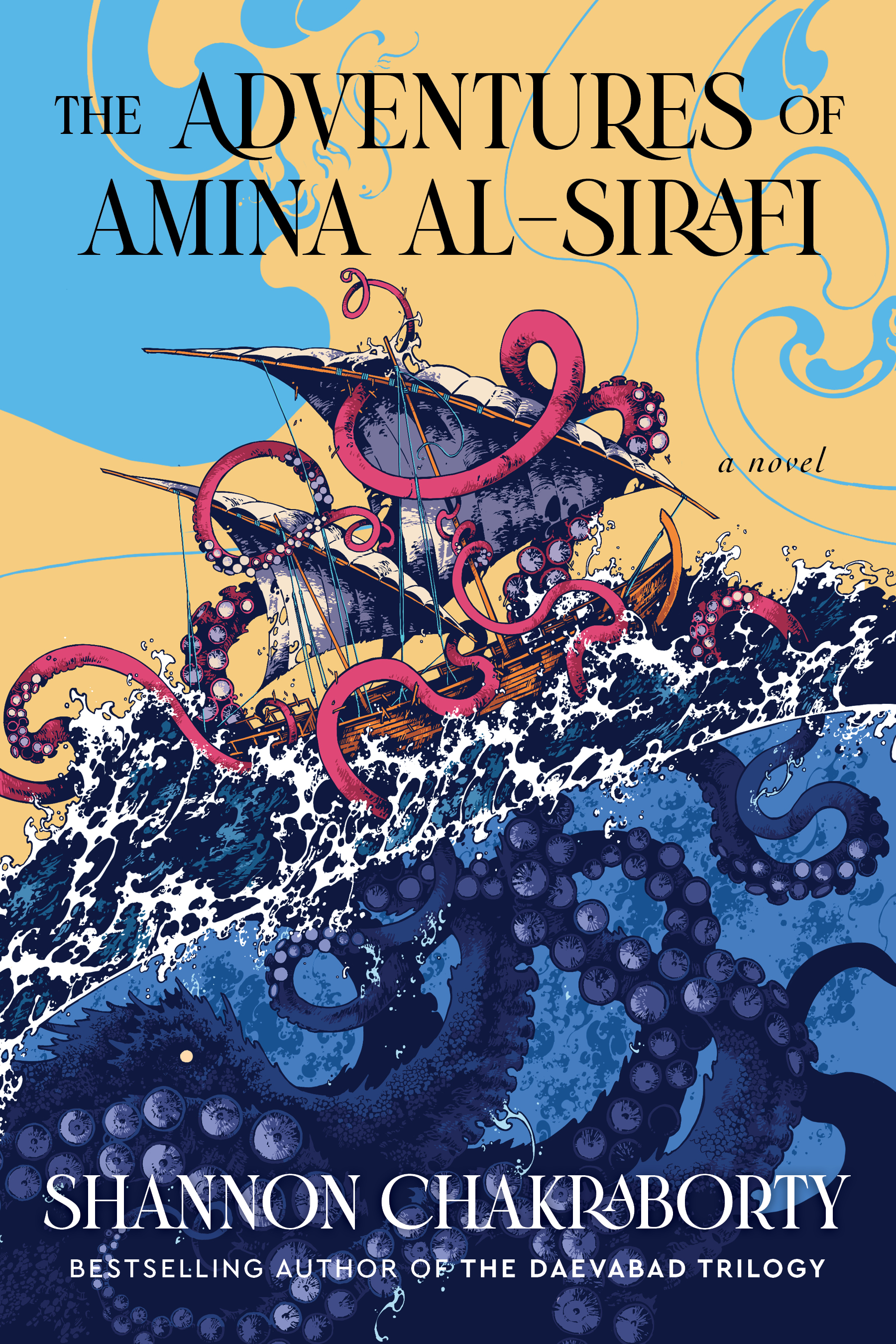
The Adventures of Amina Al-Sirafi by Shannon Chakraborty

book cover

We used to joke that of the three of us, I could kill you up close, Tinbu could kill you from another ship, and Dalila could kill you from a different city three days later.

I’d grown up feeling terribly unusual; out of place and never at peace with the fate afforded young girls. In a hidden corner of my heart, I nursed embarrassing dreams. That I was not the child of my parents, but the daughter of a tribe of female warriors who flew upon winged horses. Or I was heir to a hidden sea kingdom below the waves, and the whispered sighs I heard from the water when we sailed and the strange lightning in the distance were not natural weather phenomena but magic, my true family calling to me. Then I grew into an adult. One who learned the hard way that if there was magic in this world, it could be as brutal and cunning as the worst monsters out of a fairy tale.

We get to see some of that in action.

Amina al-Sirafi has led a storied existence, leaving home at sixteen and making her way on the briny deep, not just a pirate, but a female captain, a nakhudha, notorious for her success at parting the wealthy from their wealth. Not exactly a Robin Hood, not particularly bloodthirsty either. But life moves on. The years take their toll, and one seeks out less perilous enterprises, particularly after a singularly harrowing experience, particularly when pregnant. Years on, Amina is living a sedate existence, raising her ten-year-old daughter. But life comes calling, in a way that might be familiar to Michael Corleone. A rich widow, Salima, the mother of Asif, a crewman of Amina’s who had been lost, wants to hire her to retrieve her granddaughter, 16yo Dunya, Asif’s daughter.

description
Shannon Chakraborty – image from her Twitter pages

Well, maybe not quite lost. An erstwhile Crusader, Falco Palemenestra, a Frank (local speak for European) with a profound lust for magical objects, appears to have made off with young Salima’s greatest treasure, 16yo Dunya. Granny wants her back. She makes Amina an offer she cannot refuse.

And the chase is on. But of course, Amina has to pull together a crew. This is where we meet her erstwhile first mate, Tinbu, who has been in charge of her ship since she went on sabbatical. Much more fun is her good pal Dalila, a professional poisoner. You do not want to sip from the wrong cup in that workshop.

Easily one of the most enjoyable topics to research was criminal activity—specifically overwrought stories and urban legends about criminal activity—in the medieval world. All the cons, tricks, and poisons in this book are pulled from history: there’s actually a thirteenth century charlatan’s guide (recently translated into English by the Library of Arabic Literature) which discusses both the three cups game still used to swindle gullible tourists today and the numerous knock-out drugs Dalila employs. The guild Dalila hails from—the Banu Sasan—was also real, or as “real” as the fantastical odes recited about it were. – From the Fantasy Hive interview

There are jails to break, corrupt local officials to deal with, and a ship to wrest from impoundment. Cons are run, disguises are used, buckles are swashed. And a-sailing we will go. Of course, there are further stops to be made, intel to gather, and some dark magic to encounter. There is a significant supporting cast, with the main characters receiving their due. And then there is Raksh.

Let’s talk about the night I accidentally married a demon.

Oopsy. Amina has issues with relationships. This one did not end well. And now he’s ba-ack. And he is a total hoot, well, except for the darker elements, of course.

So many of the characters in this book are coming to terms with past misdeeds or trying stick to a more righteous path and then you have this utterly selfish, sexy creature of chaos and trickery just waltz in and repeatedly betray them to save his own skin and spin “a better story.” And that’s the very point of him—he’s not human, he’s very much meant to be a relic of a forgotten age when people did tell stories of meddling, petty gods and monsters, a supernatural aspect that naturally feeds on human ambition and wouldn’t even understand why he’s expected to feel remorse for doing so. It was fun to create such a foil for Amina herself and really delve into the almost alien psyche of such a being. – from The Fantasy Hive interview

We learn that Falco is particularly interested in a frighteningly powerful magical object, The Moon of Saba (which has absolutely nothing to do with dropping trou, promise). Can Amina save the teen, and keep Falco from getting his mitts on this very dangerous treasure?

The largest pearl in the world; a miniature moon said to have been snatched from the sky by a lovelorn fairy and gifted to Queen Bilqis, who made it the centerpiece of her crown. A gem believed to bestow upon its owner countless wishes, supernatural sight, and unending good fortune.

description
Map of al-Sirafi’s adventure

Amina stands out from the usual superhero sorts for two reasons. The first is that she is a lifelong criminal, (Make me good, but not yet?) even though she seems to have a good heart. Second is that she is a middle-aged mom. She has to struggle not only with the challenge of her aquatic mission, but with the conflict between her desire to stay at home to raise her daughter and her need for seafaring adventure. Parenting and piracy seem poor partners. There are other ongoing thematic concerns. Coming to terms with one’s past deeds is among them. There are plenty of ledgers to balance.

description
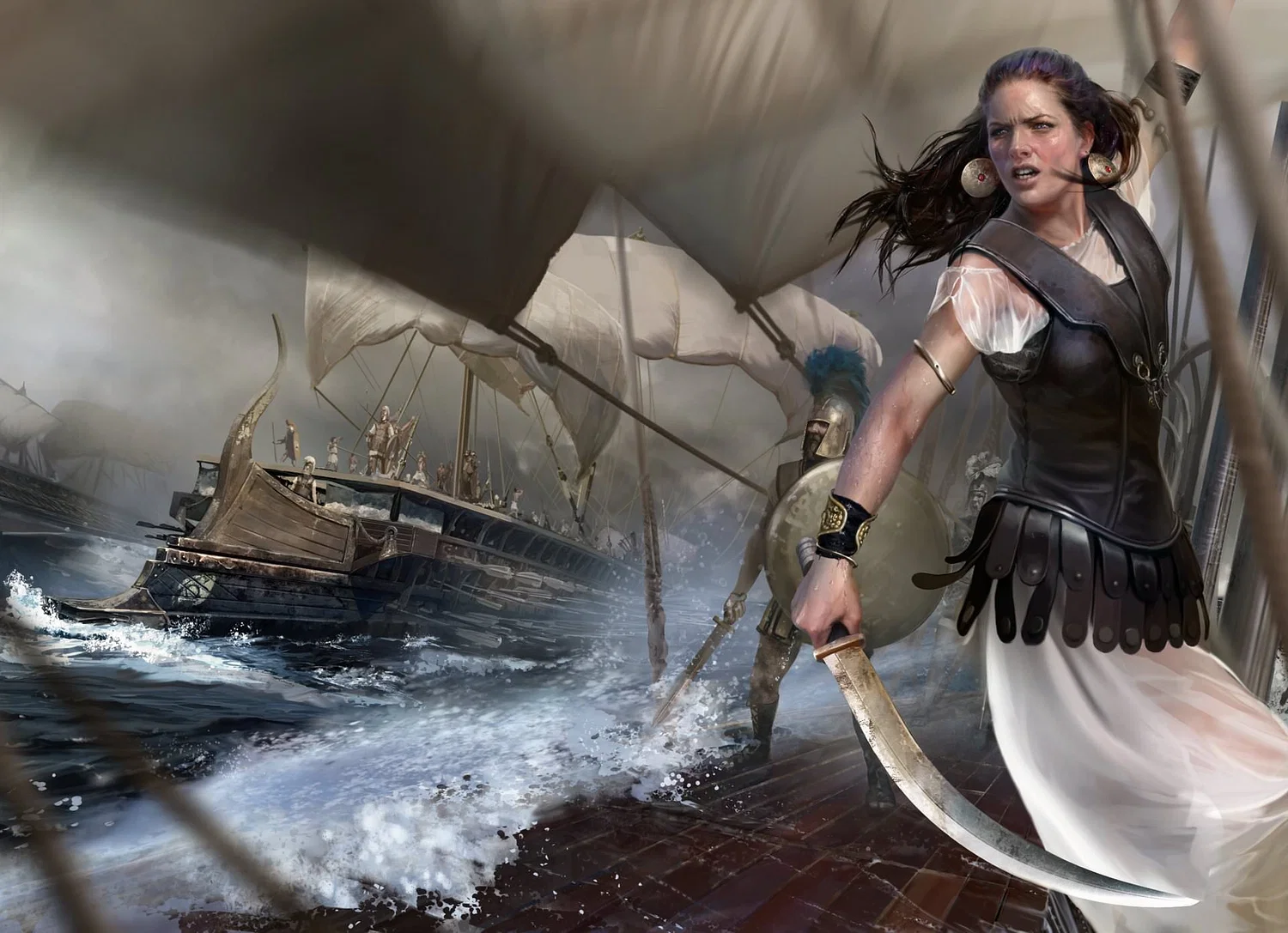
Teuta, Queen of the Illyrian Ardiaei tribe, leads a pirate expedition against rome. – image from WorldHistory.org

The focus of the story is on the humans. Sure, there is a major magical supporting character, and some of the humans dabble in dark arts. But they remain people. That said, there is plenty of magic in the air, and water. Some creatures introduced in the Daevabad trilogy put in appearances here. There is a kaiju-level sea beast, and plenty more. I hesitate to say this, but it seemed at one point that more was less, and that there were maybe too many such roaming and flitting about.

description
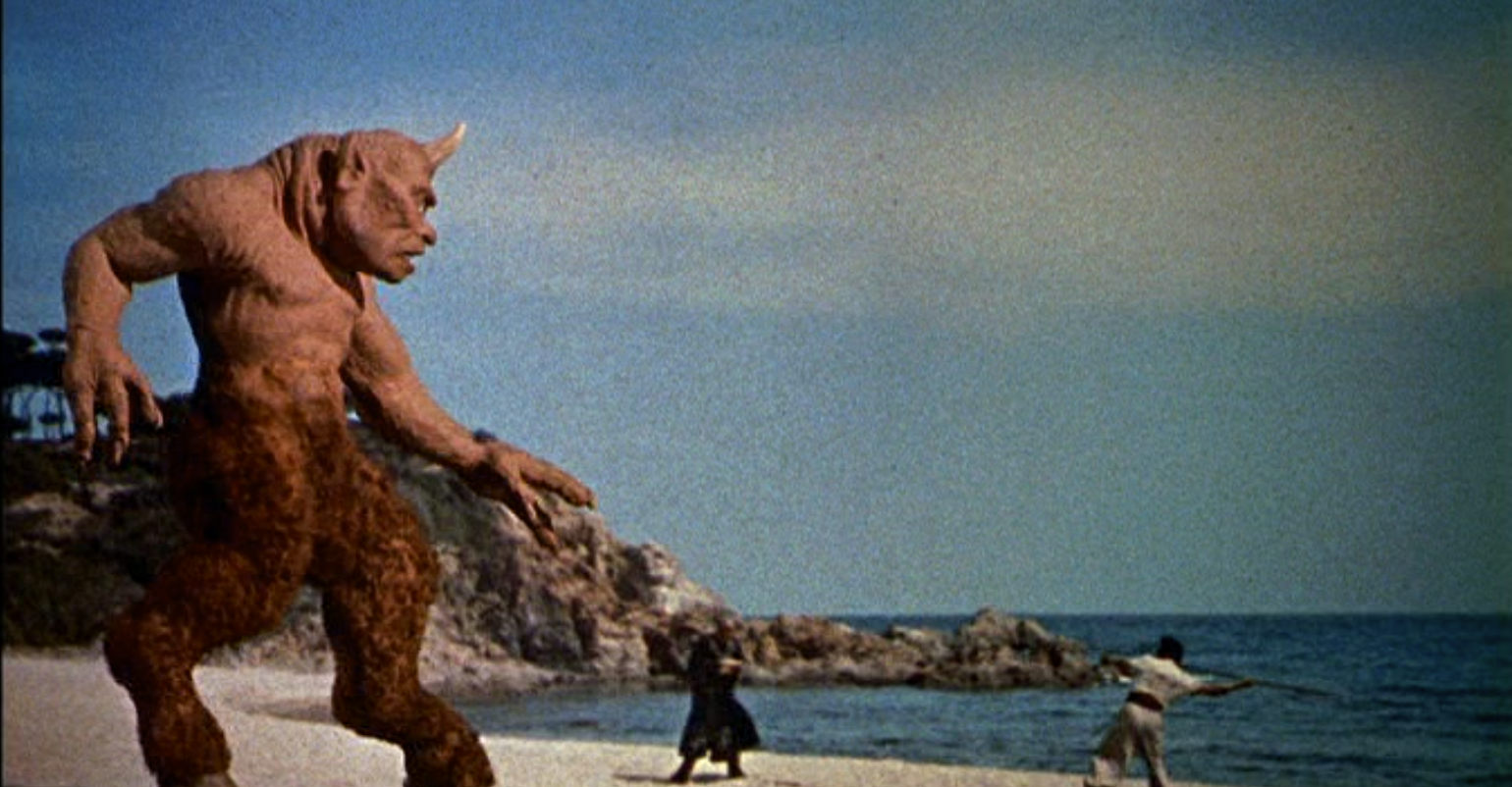
(I can only imagine what Ray Harryhausen would do with such a rich trove of material. Above is a still from The 7th Voyage of Sindbad

There is treasure. There is an island, and there is even a possible reference to Treasure Island, although, really, it may just be me projecting, and islands and treasure are merely standard tropes for the genre.

I straightened up with care, pinching my brow to keep black spots from dancing before my eyes.

Per usual, Chakraborty brings her effervescent sense of humor to her writing. There are plenty of LOL moments, particularly when Amina interacts with Dalila or Raksh.

“What about you, Lady Dalila?” Noor asked. “Is there anyone back home you are eager to return to?”
Dalila picked at her teeth. “I had to abandon a time sensitive experiment with extremely promising indications as a knock-out gas.”
“For pain relief,” I amended quickly. “Dalila is our…healer.”
Noor’s brows rose slightly. “Ah, yes. Majed speaks frequently of how you ‘healed’ him when you first met.”
Dalila rolled her eyes. “It was hardly the worst of my poisons. There are some physicians who actually believe it beneficial to vomit blood every now and then. It balances the humors.”

In addition, because Chakraborty is a historian at heart, she has delivered to us a treasure of intel about the world of this time and place.

When I started working on Amina, the goal I had for myself, and I think I wrote this in the author’s note at the end, was that I wanted to make it completely historically accurate—outside of the plot. I did a ton of research. There’s been an incredible amount of new work done on the medieval Indian Ocean, but you’re still looking at 12th-century texts. It’s almost 1,000 years ago, and there is a great limit to what we know. – from The Portalist interview

The series is set a few centuries before Chakraborty’s Daevabad trilogy, but exists in the same general corner of the planet. Some nods are offered to that world, including a small part for a magical creature from the Djinn tales. And a bit of snark.

“Oh, those weren’t humans. Those were daevas.”
“What in God’s name is a daeva?
He held up a hand. “You don’t want to know, trust me. More overdramatic creatures have never existed. And they’re not even the worst ones here. Everyone likes to complain about humans, but let me tell you…spend a couple centuries with the inhabitants of the unseen realms, and you’ll be aching to haunt a mortal latrine.”

There is a form of ecstasy that occurs in reading some books. Some are serious, (Serena pops to mind) others are more of the entertainment sort. I remember, as a kid, being rapt by some of the great classic adventures, by Robert Louis Stevenson, Jules Verne, and others. I was desperate to continue reading, despite the unwillingness of my eyes, and my mother reminding me, yet again, to turn the flashlight off under my covers. Well settled into middle age, the Harry Potter series offered the same sort of excitement. About six years ago, I was delighted to report that I felt that joy once more, at a grizzled time of life, on reading Shannon Chakraborty’s Daevabad trilogy, about djinns and sundry contemporary creatures and figures. While these books did nothing to iron out the wrinkles that brace my eyes, or straighten a spine that has strayed much too far from the standard shape, they did offer many hours of pure, innocent joy, the sort I experienced when my soul was more truly unstained. I am overjoyed to report that Chakraborty has worked her magic again. The Adventures of Amina el-Sirafi, the first in a promised trilogy, is a treat for the eyes and the imagination. Unlike Michael Corleone, I am eager to be pulled back in. You will be, too. No Shanghaiing required. Climb aboard, me hearties, and let’s set sail. The adventure has just begun.

I wanted to travel the world and sail every sea. I wanted to have adventures, to be a hero, to have my tales told in courtyards and street fairs where perhaps kids who’d grown up like me, with more imagination than means might be inspired to dream. Where women who were told there was only one sort of respectful life for them could listen to tales of another who’d broken away—and thrived when she’d done so.

Review posted – 4/14/23

Publication date – 2/28/23

I received an ARE of The Adventures of Amina al-Sirafi from Harper Voyager (well, my book goddess secured this particular treasure for me) in return for a fair review. Thanks, dear, and thanks HV.

This review has been cross-posted on GoodReads

=======================================EXTRA STUFF

Links to the author’s personal, Twitter and FB pages

My reviews of other books by the author
—–2017 – The City of Brass (The Daevabad Trilogy #1)
—–2019 – The Kingdom of Copper (The Daevabad Trilogy #2)
—–2020 – The Empire of Gold (The Daevabad Trilogy #3)

Interviews
—–Lit Reactor – Shannon Chakraborty: Navigating the Creative Voyage by Jena Brown
—–The Portalist – Shannon Chakraborty Breaks Down Her Writing Process and New Book, The Adventures of Amina al-Sirafi by Jena Brown
—–Bookpage – Shannon Chakraborty sets sail for a new horizon by Linda M. Castellitto
—–The Fantasy Hive – INTERVIEW WITH SHANNON CHAKRABORTY (THE ADVENTURES OF AMINA AL-SIRAFI)
—–Writer’s Digest – Shannon Chakraborty: On Humor and Joy in Fantasy by Robert Lee Brewer

Items of Interest from the author
—–Fantasy Hive – Excerpt – Chapter 1
—–Tor – Excerpt – Chapter 5

Items of Interest
—–Americanliterature.com – Arabian Nights – The Story of Sindbad the Sailor
—– Godfather III – Just when I thought I was out, they pull me back in!
—–World History.Org – Queen Teuta of Illyria

Leave a comment

Filed under Action-Adventure, Fantasy, Feminism, Fiction, Historical Fiction, Literary Fiction, Thriller

Stone Blind by Natalie Haynes

book cover

Perseus…has no interest in the well being of any creature if it impedes his desire to do whatever he wants. He is a vicious little thug and the sooner you grasp that, and stop thinking of him as a brave boy hero, the closer you’ll be to understanding what actually happened.

Who decides what is a monster?

When Natalie Haynes wrote Pandora’s Jar, a collection of ten essays on the women in Greek myths, she included a chapter on Medusa. In nine-thousand words she offered a non-standard view of the story of heroic Perseus slaying the gorgon. But the story stayed with her, well, the rage about the story of how ill-treated this supposed monster had been, anyway. If the feeling remained that powerful for so long, it was a message. She needed to devote a full book to this outrage in order to get any peace. Thus Stone Blind.

description
Natalie Haynes – image from Hay Festival

We learn how Medusa came by her notable do. After being sexually assaulted by Poseidon in one of Athena’s temples, the goddess was appalled. No, not by the rape. I mean a god’s gotta do what a god’s gotta do. But that he raped Medusa in Athena’s temple! Desecration! Well, that cannot go unpunished. So, Athena seeks revenge on Poseidon by assaulting Medusa, figuring, we guess, that this might make Poseidon sad, or something. Uses her goddess powers to turn Medusa’s hair to snakes and her eyes to weapons of mass destruction. Any living creature she looks at will be lithified.

description
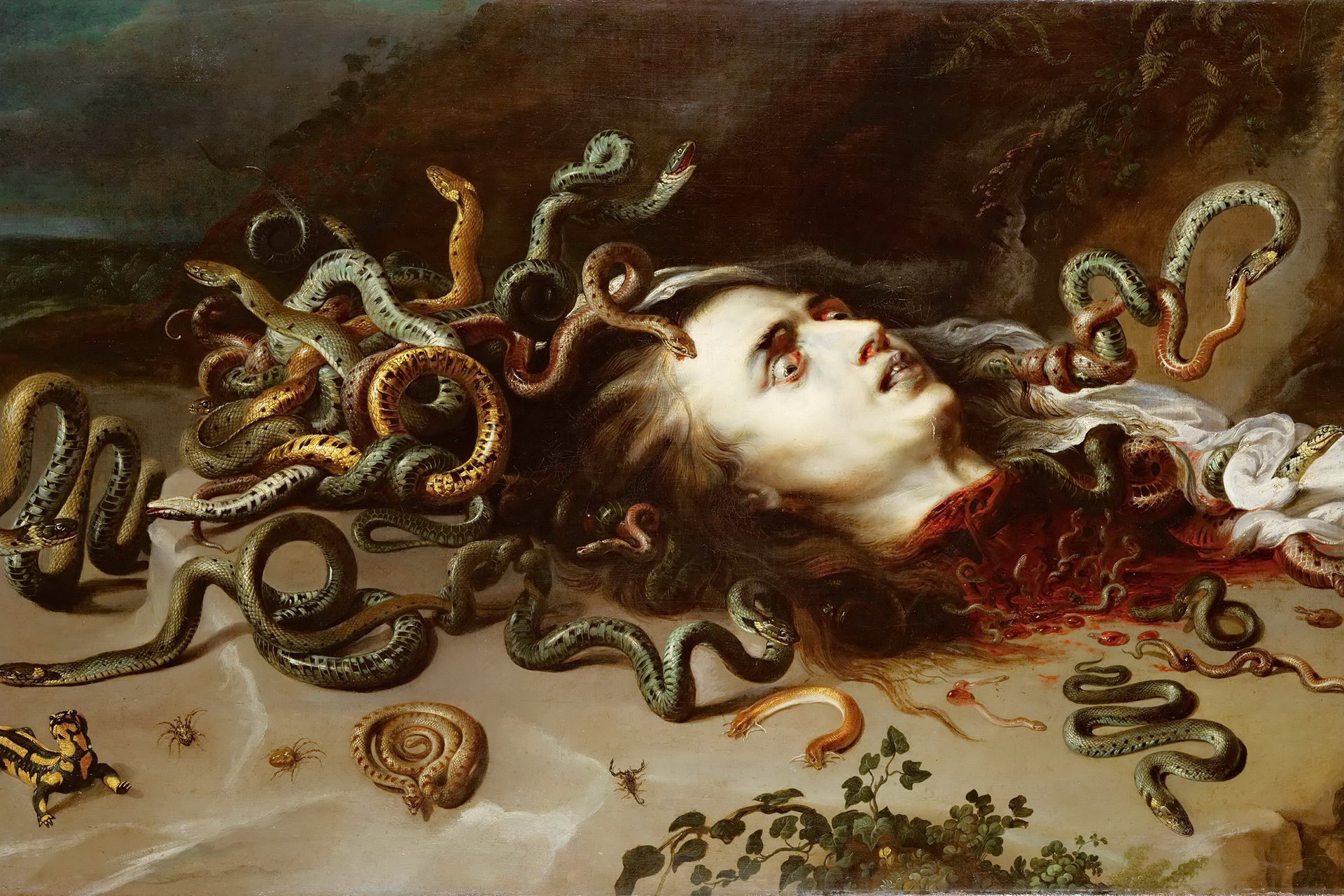
Image from Mythopedia – Head of Medusa by Peter Paul Rubens – 1618

Then there is the other half of this tale, Perseus. We are treated to his dodgy beginnings, another godly sexual assault. He is not portrayed here as the hero so many ancient writings proclaim. Decent enough kid, living with his mom, Danae, and a stepfather sort, until mom is threatened with being forcibly married to the local king, a total douche. Junior tries to make a deal to get her out of it, said douche sending him on a seemingly impossible quest. Good luck, kid. I mean, seriously, how in hell can he hope to bring back a gorgon’s head?

description
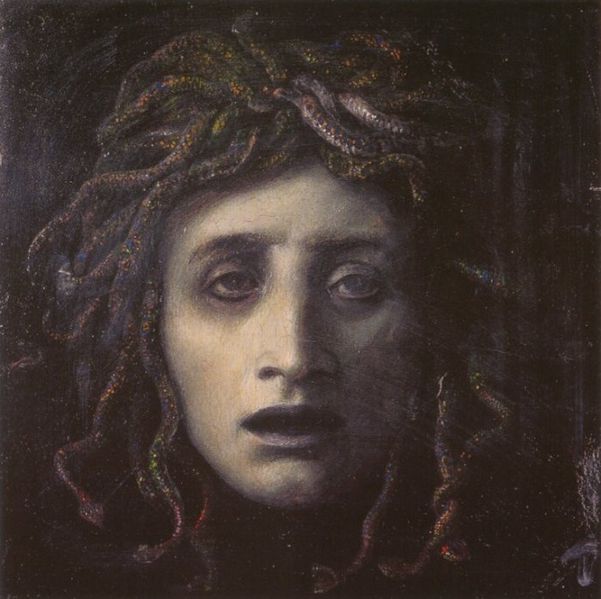
Image from Ancient Origins

Zeus feels a need to help the kid out. I mean, Perseus may be a bastard, but hey, in Greek mythology, that would put him in the majority. Am I right? Still, he is Zeus’s bastard, so Pop does what he can to help him out, sending along two gods to coach and aid the lad as needed. Hermes and Athena snark all over Perseus, pointing out his many weaknesses and flaws, while providing some very real assistance. They may not hold the kid in high regard, but neither can they piss off the boss. Very high school gym, and totally hilarious.

description
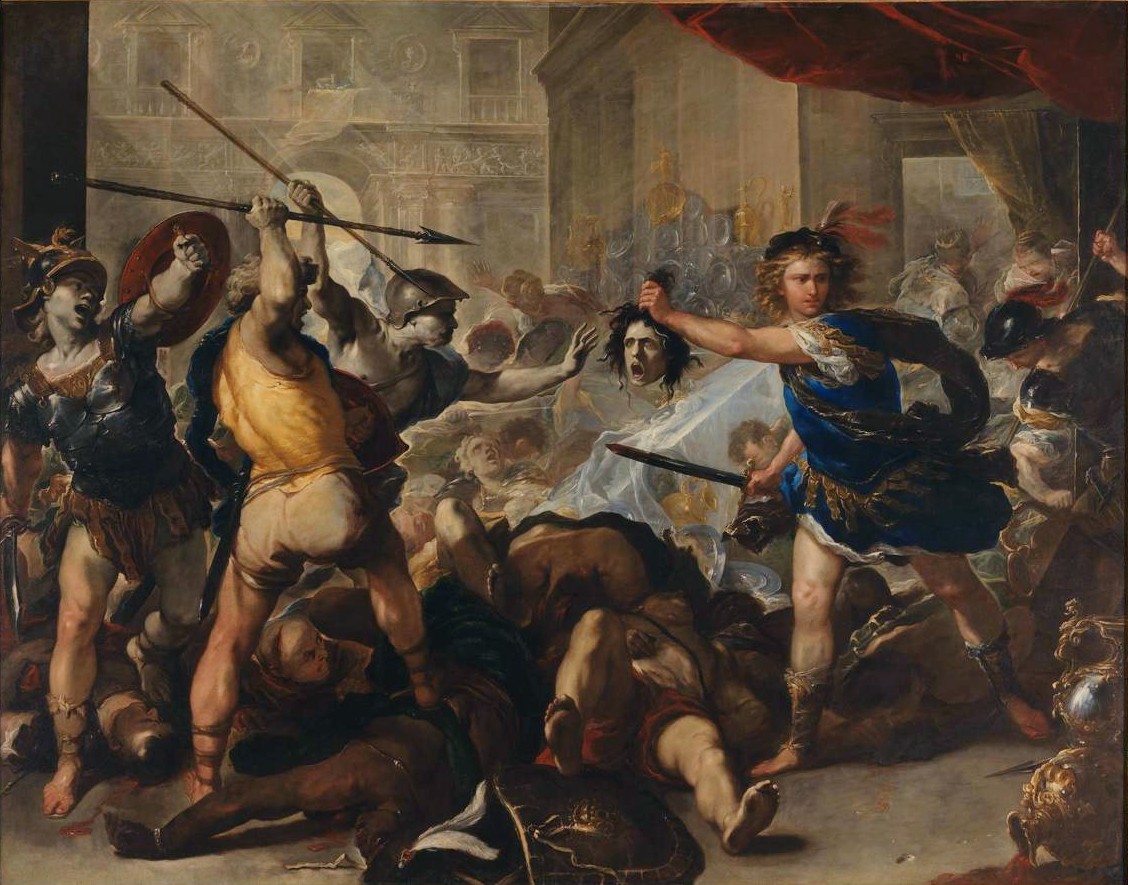
Image from Wiki – Perseus Turning Phineus and his followers to stone by Luca Giordano – 1680s

Which should not be terribly surprising. Haynes is not just an author and classicist, but a stand-up comedian. You can glean what you need to know about her comedic career from the Historical Archivist interview linked in EXTRA STUFF. There is plenty of humor beside godly dissing of Perseus. Athena (referred to as Athene in the book) tries to talk an unnamed mortal into signing on to a huge battle between the Olympian gods and the Giants, new powerhouse versus the current champs. It is clearly a tough sell.

‘If you get trodden on by a giant or a god – which wouldn’t be intentional on our part, incidentally – but in the heat of battle one of us might step in the wrong place and there you’d be. . . . Well, would have been. Anyway, it would be painless. Probably very painful just before it was painless, but not for long.’… ‘Come on. If you do die, I’ll put in a word for you to get a constellation. Promise.’

There are plenty more like these, including a particularly shocking approach to relieving a really bad headache.

description
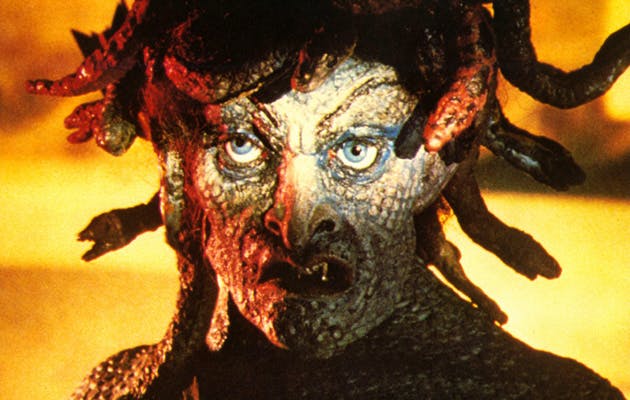
Image from Scary For Kids (reminds me of the nun I had for eighth grade)

But the whole quest experience uncovers Perseus’s inner god-like inclinations. He becomes an entitled rich kid with far too many high-powered connections helping him out. And develops a taste for slaughter. When Andromeda sees a knight in shining armor, come to save her from certain death by sea monster, her parents suggest that “Maybe, Sweetie, you might consider how gleeful he was when he was murdering defenseless people?” Or noting that if he had really been solid on keeping promises he might have headed straight home to save his mom with that snaky head instead of stopping off to frolic in blood for a few days. “This boy’s gonna be trouble, Andy.”

description
Image from Classical Literature

The gods have issues. The Housewives of Olympus could well include some unspeakable husbands, who seem to have a thing for forcing themselves on whomever (or whatever) catches their eye. As a group they are always on the lookout for slights, insults, or minor border transgressions. What a bunch of whiny bitches! But with power, unfortunately, to make life unspeakable for us mere mortals, whose life expectancy is not even a rounding error to their eternal foolishness. Medusa, in that way, was one of us. There is uncertainty about Perseus.

description
Image from Talking Humanities

Sisters abound. Apparently, triple-sister deities was a thing for the ancient Greeks. We are treated to POVs from Medusa’s two gorgon sibs, and look on as Perseus hoodwinks the three hapless Graiai sisters, who are doomed to having to share a single eye and a single tooth among them. (Could you please wipe that thing off before you pass it along?) The Nereids are more numerous (50) and a bit of a dark force here.

description
From Greek Legends and Myths – by Arnold Böcklin (1827–1901)

Never one to stick to a single POV, Haynes offers us many discrete perspectives over seventy-five chapters. Fifteen are one-offs. The Gorgoneion leads the pack with thirteen chapters, followed by Athene with eleven, Andromeda with eight and Medusa with seven. There are some unusual POVs in the mix, a talking head (no, not David Byrne), a crow, and an olive tree among them. Haynes dips into omniscient narrator mode for a handful of chapters as well.

description
Image From Empire

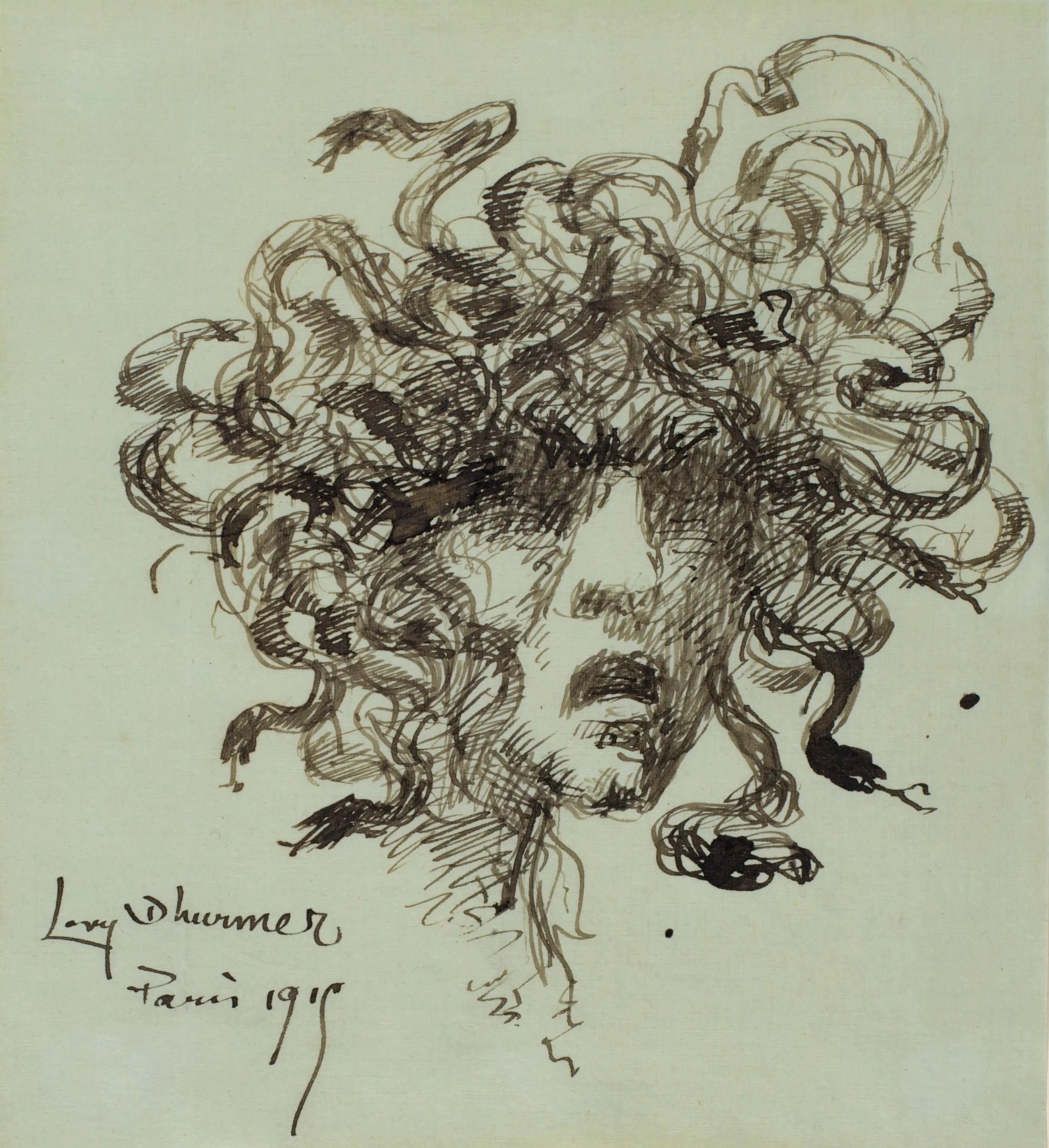
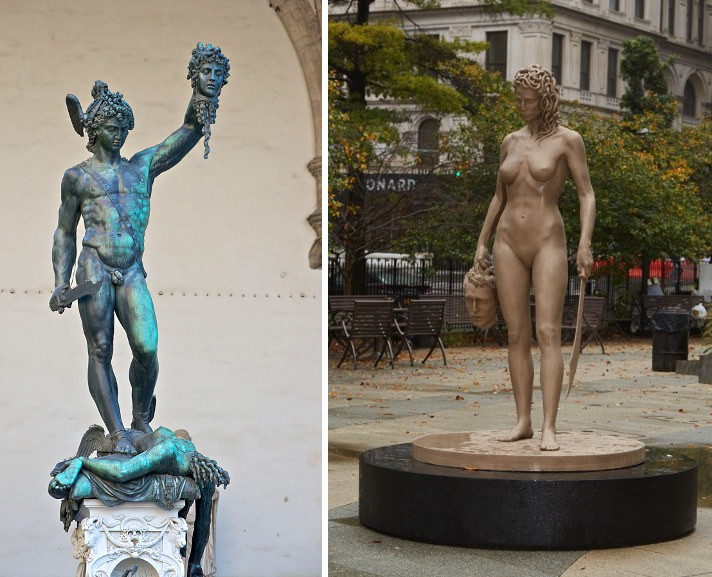
As noted in EXTRA STUFF, there is a particularly offensive sculpture of Perseus holding Medusa’s severed head. Not only has he murdered her, he is standing on her corpse. You can see how this would piss off a classicist who knows that Medusa never hurt anyone. Damage done by her death-gaze was inadvertent or done by others using her head as a weapon. And this supposedly brave warrior killed this woman in her sleep. Studly, no? And with all sorts of magical help from his father’s peeps. What a guy!

description
Image from Smithsonian American art Museum – by Lucien Levy-Dhurmer – 1915

Natalie Haynes set out to tell Medusa’s story, and it is completely clear by the end that the monstrosity here is the treatment this innocent female mortal received, at the hands of abusers both male and female. Haynes keeps the story rolling with the diverse perspectives and short chapters, so that even if you remember most of the classic myth there will be plenty of mythological history you never knew. You will also laugh out loud, which is a pretty good trick for what is really a #METOO novel. The abuse of the powerless, of women in particular, by the powerful has been going on only forever. Haynes has made clear just how the stories we have told for thousands of years reinforce, and even celebrate, that abuse. Next up for her, fiction-wise, is Medea. I can’t wait.

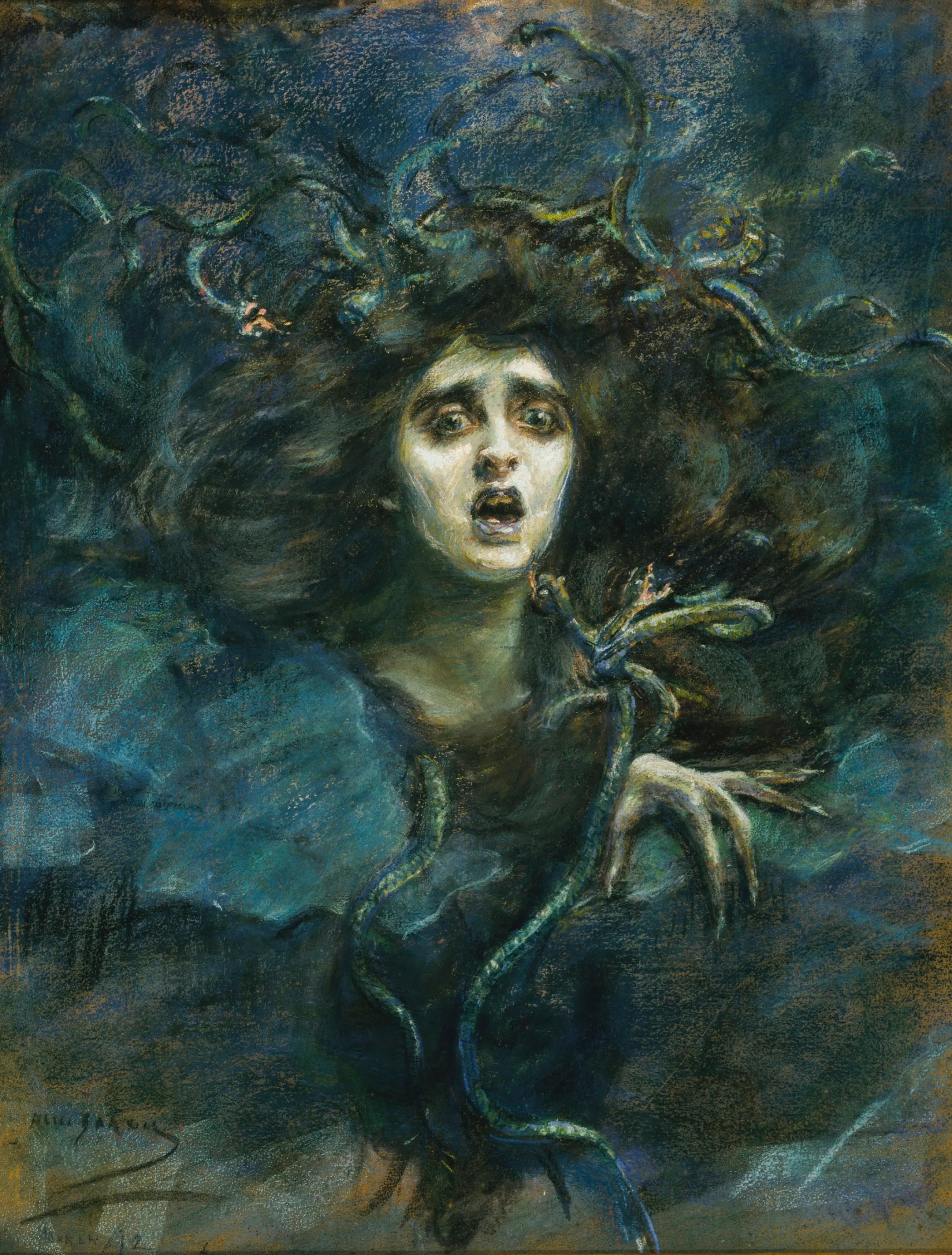
description
Image from Smithsonian American Art Museum – by Alice Pike Barney – 1892

Medusa may not have been a goddess, but it seems quite clear that Natalie Haynes is. This is a wonderful read, not to be missed.

He’s just a bag of meat wandering round, irritating people.’

Review posted – 02/24/23

Publication dates – Hardcover
———-UK – September 15, 2022 Mantle
———-USA – February 7, 2021 – Harper

This review has been cross-posted on GoodReads. Stop by and say Hi!

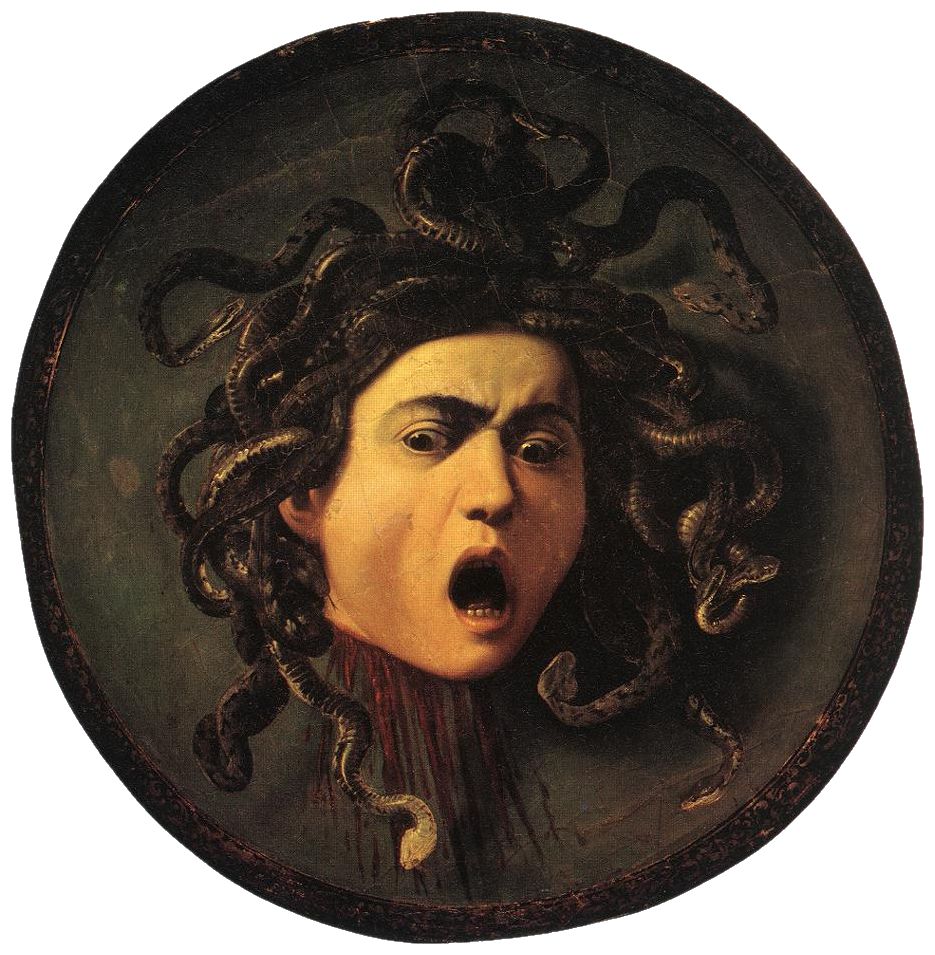
description
Image from Wiki by Caravaggio – 1597

=======================================EXTRA STUFF

Links to the author’s personal, Twitter and Instagram pages

Interviews
—–The Bookseller – Natalie Haynes on challenging patriarchal historical narratives and championing female voices by Alice O’Keeffe
—–CBC – Natalie Haynes on the fantastic and fearsome women of Greek myth
—–LDJ Historical Archivist – Brick Classicist of the Year 2023 Natalie Haynes – video – 16:46 – this is delicious
—–Harvard Bookstore – Natalie Haynes discusses “Stone Blind” – video 1:03:55 – – This is amazing! So much info. You will learn a lot here.

My review of other work by the author
—–2021 (USA) – A Thousand Ships – Helen of Troy and the women of the Homeric epics

Items of Interest
—–Wiki on Gorgoneion
—–The Page 69 Test – Stone Blind – a bit of fluff
—–Widewalls – An Icon of Justice – Or Something Else? A New Medusa in a NYC Park – interesting contemporary sculptural response to a classical outrage.

description
Left: Benvenuto Cellini – Perseus holding the head of Medusa, 1545–1554. Image creative commons / Right: Luciano Garbati – Medusa With The Head of Perseus, 2008-2020. Installed at Collect Pond Park. Courtesy of MWTH Project – images and text from Widewalls article
The MWTH (Medusa with the head) image is sometimes accompanied by the ff: “Be thankful we only want equality and not payback.”

Leave a comment

Filed under Fantasy, Feminism, Fiction, Historical Fiction, Literary Fiction

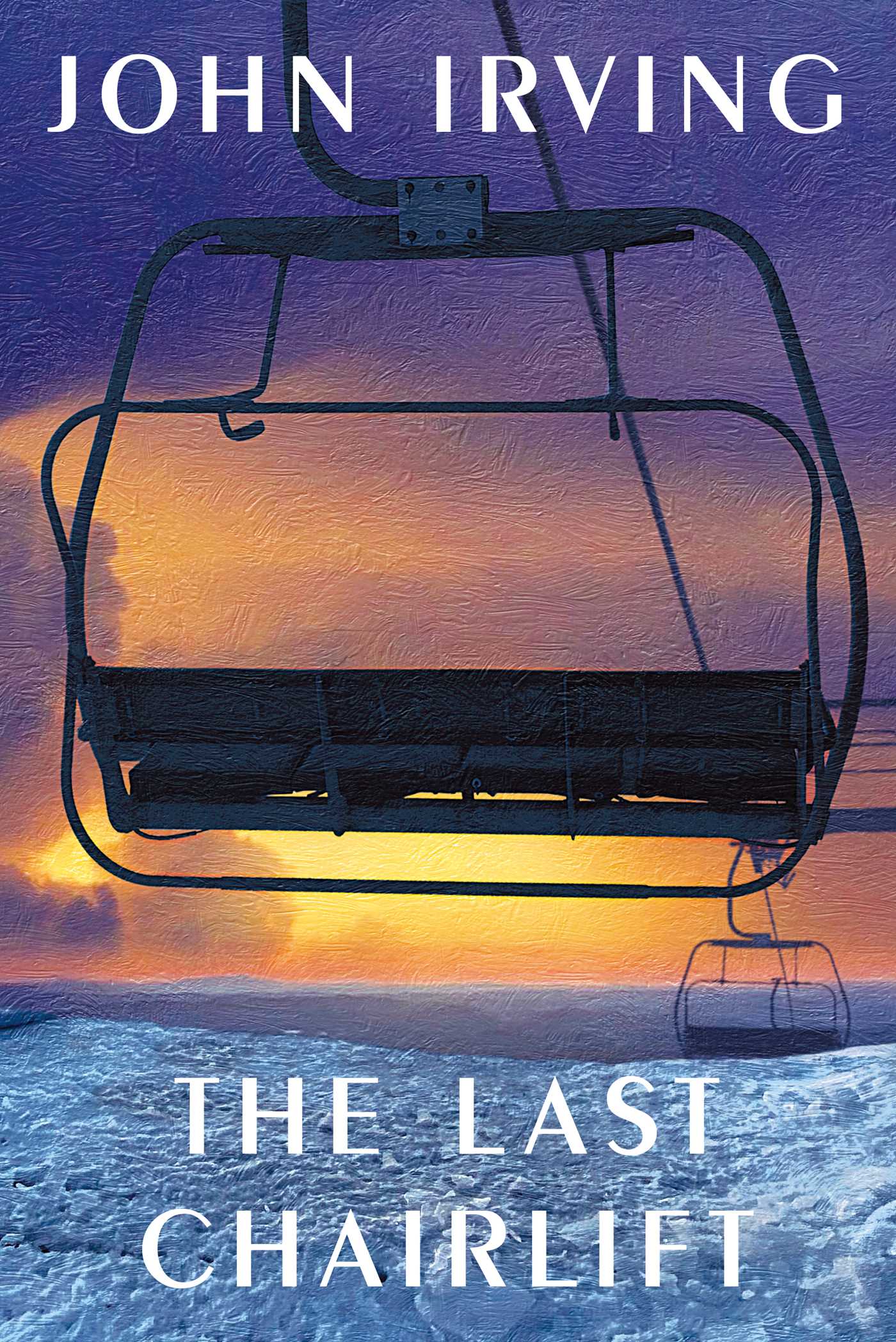
The Last Chairlift by John Irving

book cover

Think of your first good kiss. Was it life-changing, or was it no big deal? Do you remember how old you were? Did it matter, at the time, who gave it to you? Do you even remember who it was?
I’ll tell you this: when you’re thirteen and your mother gives you your first good kiss, you better hope someone matches it or eclipses it—soon. That’s your only hope.

Autobiography just isn’t good or bad enough to work as fiction… Unrevised, real life is just a mess.

The overall format is one of a frame, with Adam Brewster opening by letting us know that this is the story of his life and times, then returning to turn out the lights when the tale has been completed. It is a family saga of Irving’s era, 50’s 60s, (Vietnam) 70s, 80s (Reagan, AIDS) et al, to the mad, reactionary violence of the 21st century. Adam Brewster, a writer and screenwriter, is our narrator for a look at the sexual politics of a lifetime, from his birth in 1941 to his later days some eighty years on.

Adam’s mother, Rachel Brewster (Little Ray), was a nearly-pro ski nut, who spent large parts of every year on the slopes, settling for work as an instructor. That left Adam in the hands of his grandmother for much of his upbringing, assisted by a passel of relations. He would hunger for time with his only known parent for much of his life, a core element of the novel.

description
John Irving – image from Outside Magazine

Readers of John Irving will recognize much that is familiar, from his prior work and his life. The novel is set in Exeter, New Hampshire, Irving’s home town; includes a benign stepparent teaching at Phillips Exeter (as his actual stepfather did); includes the narrator as a student there. Yep, Irving attended. There is wrestling, of course. Bears are limited to a kind of snowshoe shaped like their paws. A hotel figures large. There is an absent biological father, (Irving’s father was in the US Army Air Force. He never met him.); a mother with too many secrets; there is also reference made to an inappropriate relationship between an adult woman and an underage boy. (something Irving himself experienced); considerable attention is directed to feeling like, to being, an outsider.

”That’s just who you are, Adam,” my older cousin said. “There’s a foreignness inside you—beginning with where you come from. The foreignness is in you—that’s just who you are. You and me and Ray—we’re outliers.”

In fact, Irving turns the tables here, as Adam, as the only straight among the main characters, is the outsider in his own family, always the last to get things, he is nonetheless loved and supported by his sexually diverse relations.

His mother’s lifelong lover, Molly, effectively his stepmother, tells Adam, “There’s more than one way to love people, Kid.” It serves as a core message for the book and for Irving’s oeuvre. One of the main characters is transgender. He first wrote a sympathetic trans character in The World According to Garp, in 1978. So, when his son, born many years after the book was published, came out to his parents as trans, she knew her father would be completely supportive.

The politics of divergent sexuality through time manifests in diverse venues. Raucous comedic material performed at a comedy club in one era is considered too much for a later sensibility, a new puritanism of correctness. Safety for being different is a concern. Adam is very worried when his stepfather is out in their town dressed as a woman, even trails him sometimes in case a backup is needed. Reagan’s unwillingness to address AIDS until six years into his presidency is noted. Acceptance increases over time, but increased acceptance sparks increased resistance. A performer of material deemed unacceptable to some becomes a target for violence in a more disturbed climate.

In addition to the overarching theme of looking at sexual politics, sexuality is shown as far less important than the connection between people. Things that may seem sexual actually have a lot less to do with sex than connection. For instance, Adam and his mother often sleep together, in the slumbering, not biblical sense, well past the age where that is generally deemed ok. There is another relationship in which a straight man and a gay woman share a bed, sans fooling around.

There is hilarity aplenty, not least with Adam’s young sequence of damaged or damaging lovers. Lots of cringy LOL material there. I counted a dozen “LOLs” in my notes, some for entire chapters.

And then there are ghosts. Irving calls this a ghost story. I refer you to a piece on his site that addresses this directly.

Ghosts don’t just warn us about the future; they remind us of what we’ve forgotten about the past. All this is to say, I have a history of being interested in ghosts. And here come the ghosts again. In my new novel…the ghosts are more prominent than before; the ghosts, or hints of ghosts, begin and end the novel.

We all have ghosts we live with, but the ones here are visible, well, to some, anyway. They hang out in large numbers at a hotel in Aspen, but also turn up at home. The spectres are historical and familial, with some able to interact with the physical world (sometimes with LOL results) sometimes condemned to remain non-impactful. They do indeed, as noted above, remind us of the past, sometimes darkly so, but some offer direction and comfort. And Irving uses his behemoth of a novel to keep generating new ones. They pass over in a wide range of ways; lightning, murder on a stage, sudden avalanche, cancer, suicide, murder in a hotel, falling from a chairlift, leaping from a chairlift, death in war, et al. Falkner famously said “The past is never dead. It’s not even the past.” I guess it could be said for many characters in The Last Chairlift that even the dead are never entirely dead.

Adam’s profession offers ample opportunity for Irving (winner of a National Book Award AND a screenwriting Oscar) to present a wealth of material about writing, both for the screen and for print.

“My life could be a movie,” you hear people say, but what do they mean? Don’t they mean their lives are too incredible to be real—too unbelievably good or bad? “My life could be a movie” means you think movies are both less than realistic and more than you can expect from real life. “My life could be a movie” means you think your life has been special enough to get made as a movie; it means you think your life has been spectacularly blessed or cursed.
But my life is a movie, and not for the usual self-congratulatory or self-pitying reasons. My life is a movie because I’m a screenwriter. I’m first and foremost a novelist, but even when I write a novel, I’m a visualizer—I’m seeing the story unfold as if it were already on film.

Imagining the stories you want to write, and waiting to write them, is part of the writing process—like thinking about the characters you want to create, but not creating them. Yet when I did this, when I was just a kid at Exeter—when I thought about writing all the time, but I never finished anything I was writing—this amounted to little more than daydreaming.

you don’t see with hindsight in a first draft. You have to finish the first draft to see what you’ve missed.

Fiction writers like what we call truthful exaggeration. When we write about something that really happened—or it almost happened, could have happened—we just enhance what happened. Essentially, the story remains real, but we make it better than it truly was, or we make it more awful—­depending on our inclination.

There are many more—it is a very long book—but this last one in particular speaks very directly to Irving’s process. As noted up top, he returns to familiar themes and situations. In interviews he says that he begins with the same life experiences, but then changes where they go, how they morph, as if his creative process was to take the stem cells of his experiences and direct them to grow into a wide range of possible pieces. Same source, different outcomes.

It is not just the characters and situation that have morphed, it is the form as well. As Adam is a screenwriter as well as a novelist, and as this story is Adam’s, it is fitting that how he perceives the world makes its way into how he presents his story. There are long chapters that are written in screenplay format, complete with fade-ins, fade-outs, off-screen narration, closeups, wide-shots, the whole toolkit. It is an interesting tactic. I found it off-putting, but it does allow for a different approach to the material.

He does not just talk about writing per se, but incorporates into the novel considerable attention to his favorite book of all time, Moby Dick. (he has the last line of Moby Dick tattooed on his left forearm) This book opens with My mother named me Adam…, which resonates with Call me Ishmael and no less with …I am born from David Copperfield, Dickens being a particular Irving favorite. He sees himself as more of a 19th century novelist than a 21st century one.

…because those novels have always represented the model of the form for me. I loathed Hemingway. I thought Faulkner was excessive. Fitzgerald was ok, but lazy at times. I was enamored of the kind of novel all of my classmates at school despised.

References to Melville’s masterpiece (sometimes hilariously), Dickens, Ibsen, and plenty of others abound.

It is pretty clear that John Irving has had an interesting life. Eighty years old at the time of publication, he does not see The Last Chairlift as his last hurrah. In fact, he signed a three-book deal with Simon and Schuster, of which this was merely the first. He promises, though, that the next two will be a lot shorter.

Until then, this one will certainly suffice. Irving has lost none of his sense of humor. This book was more than occasionally laugh-out-loud funny. He has lost none of his feel for writing relatable humans. While some of the supporting cast are painted in broad strokes, to illustrate this or that sociopolitical issue of a given time, the main ones, and even hordes of second-tier characters are drawn with fine lines, and deep sensitivity. He has lost none of his vision, seeing clearly the currents of the eras considered, and how those have impacted social and political possibility for rounded humans who do not fit the square holes of a boilerplate majority. For all that Irving writes about people who are different, he makes it eminently clear that in matters that count we all share the same needs, to be loved, seen, and respected for who we are. Here’s hoping it will not be another seven years until we get to enjoy another of John Irving’s marvelous works.

…the dead don’t entirely go away—not if you see them on the subway, or in your heart.

Review posted – February 17, 2023

Publication date – October 18, 2022

I received an ARE of The Last Chairlift from Simon & Schuster in return for a fair review. Thanks, folks, and thanks to NetGalley for facilitating.

This review has been cross-posted on GoodReads. Stop by and say Hi!

=======================================EXTRA STUFF

Irving’s personal and FB pages

Interviews
—–CBS Sunday Morning – John Irving: A Writer’s Life with Rita Braver – a delight – Sees himself as a 19th century writer
—–Late Night with Seth Meyers – John Irving Doesn’t Write a Book Until He Knows How It’s Going to End
—–Freethought Matters – Freethought Matters: John Irving
– video – 28:08 – with Ann Laurie Gaylor and Dan Barker – Interview begins at 2:57 – focus on chairlift begins at about 18:00
—–NPR Podcasts – Book of the Day – ‘The Last Chairlift’ is John Irving’s latest novel on sexual politics with Scott Simon – Audio – 10:26
—–Hazlift – ‘Hope is an Elusive Quality’: An Interview with John Irving by Haley Cunningham
—–Toronto Star – Hugging us back in the dark: John Irving on making us care about his characters, sexual politics, and the ghosts in his new book ‘The Last Chairlift’ by Deborah Dundas

Items of Interest from the author
—–Here Come the Ghosts Again on ghosts in his novels
—–CBS News – excerpt
—–Lithub – excerpt

My review of another book by Irving
—–In One Person

Items of Interest
—– Moby Dick – Full text – with annotations
—–David Copperfield – Full text – with footnote annotations

Items of Interest from the author
—– Here Come the Ghosts Againon ghosts in his novels

Leave a comment

Filed under Feminism, Fiction, Historical Fiction, Literary Fiction, Reviews

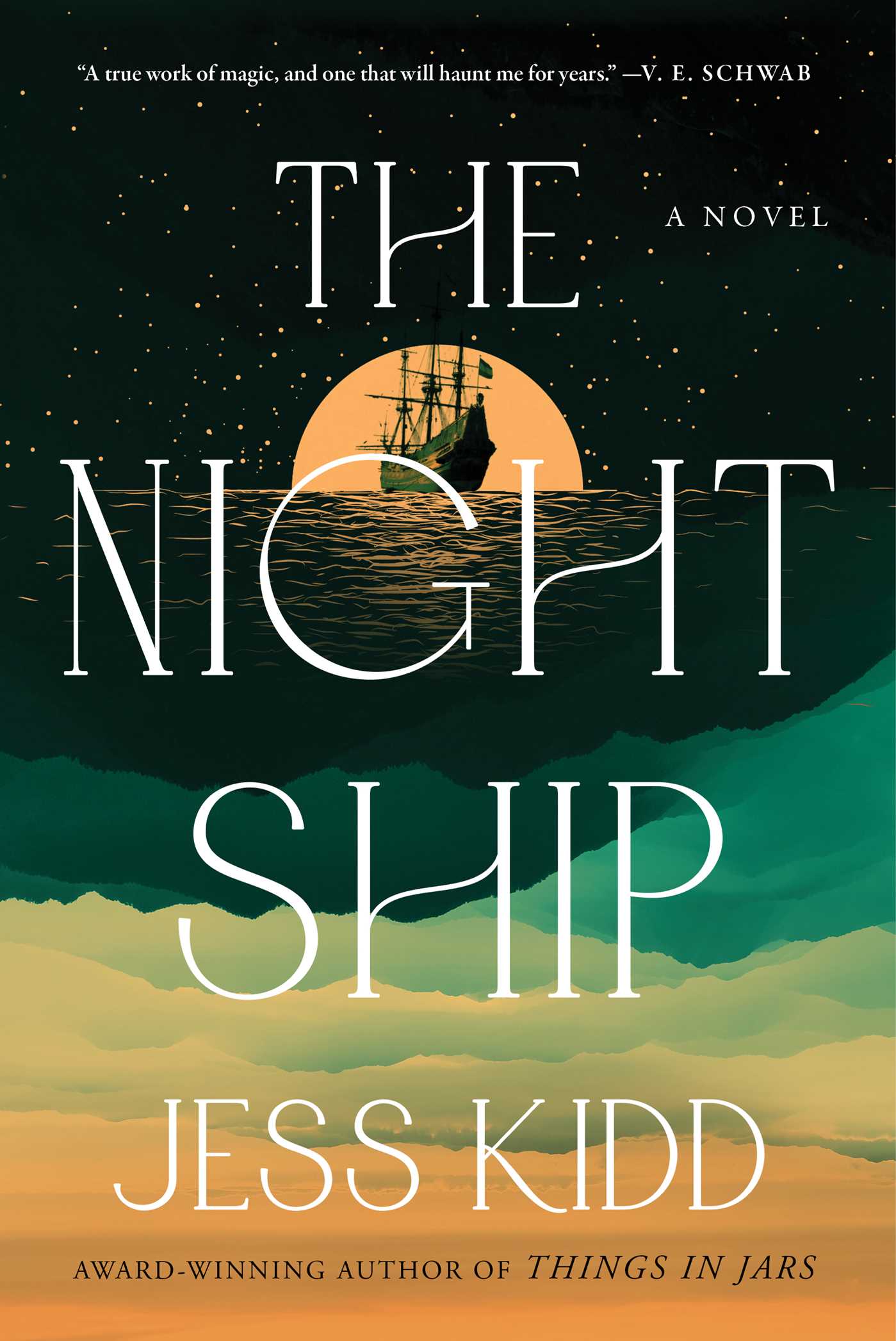
The Night Ship by Jess Kidd

book cover

“Come.” John Pinten turns and puts his palm against the hull. “Do as I do.”
Mayken crawls forward and puts her palm next to his, flat against the planks. She sees how much smaller and cleaner her hand is. Too clean for a cabin boy. But John Pinten doesn’t seem to notice.
“She’s all that lies between us and the deep dark fathoms of the sea.” John Pinten’s voice grows quiet, grave. “Can you feel the ocean pulling at the nail heads, pressing against the planks, prizing the caulking? The water wants in.”

Old superstitions are rife now. The sailors lead the way. Words must be chanted over knots. Messmates must be served in a particular order. A change of wind direction must be greeted. Portents are looked for and translated. The cut of the wake noted. The shape of clouds debated…A lamp taken down into the hold will now burn green. Monstrous births plague the onboard animals. Their issue is hastily thrown overboard to prevent alarm. Eyeless lambs. Mouthless piglets. A litter of rabbits joined together, a mass of heads and limbs. The gardener harvests fork-tailed carrots from his boxed plot outside the hen coop.
“It’s the way of long journeys,” says Creesje. “They alter what people think and see.”

1628 – Mayken van der Heuvel heads out on a long, exciting, but very dangerous adventure. She is setting sail on the grandest ship of the era, the Batavia, to a place by the same name, the capital of the Dutch East Indies. Well, in 1628, anyway. Today, we know it as Jakarta, Indonesia. Her journey is not being undertaken by choice, though. Mayken’s mother died giving birth to a child not her husband’s. The girl is being sent to her father, accompanied by a nursemaid, the kindly, but very superstitious, Imke. Mayken is nine years old.

There are many layers to this child: undergarments, middle garments, and top garments. Mayken is made of pale skin and small white teeth and fine fair hair and linen and lace and wool and leather. There are treasures sewn into the seams of her clothing, small and valuable, like her.
Mayken has a father she’s never met. Her father is a merchant who lives in a distant land where the midday sun is fierce enough to melt a Dutch child.

We follow Mayken’s adventures on this months-long journey across the world. But we know from the beginning that the ship will not complete its trip.

1989 – A nine-year-old boy has just endured a journey of his own.

Gil is made of pale skin and red hair and thrifted clothes. His shoes, worn down on the outsides, lend an awkward camber to his walk. Old ladies like him, they think he’s old-fashioned. Truck drivers like him because he takes an interest in their rigs. Everyone else finds him weird.

He never knew his father, and Mom kept them on the move all of his brief life, until her death. Gil has been sent to live with his crusty fisherman grandfather, Joss. To the place off the west coast of Australia where the off-course Batavia met its inglorious end. Researchers have been retrieving bits of the ship and its contents. The island is said to be haunted by the spirit of a young girl, Little May.

description
Jess Kidd – image from The Bookseller – by Cordula Tremi

Kidd learned about the Batavia while casting about for a subject for her next novel. I will leave you to explore the real-life story here in Wikipedia and in the Sea Museum site.

Mayken and Gil’s stories are told in alternating chapters. The duration of their experiences, however, is not the same. Mayken’s time on the Batavia is considerably longer than Gil’s, on what is now Beacon Island. Kidd handles this disparity well, so that difference is not obvious.

Mayken is a particularly curious and adventurous little girl, exploring and experiencing the ship with a range of partners, despite her caretakers preferring for her to be a demure, proper young lady. She has a talent for gaining trust and affection from those around her, both children and adults. It comes in handy. Being a child, she carries some odd notions with her, and is susceptible to things that challenge credulity. She is convinced that there is a mythical beast in the deep hold of the ship. (The eel creature was an ancient monster and foe of all humankind. Its name was Bullebak.) Is the evidence she spies of its existence sharp perception or childish imagination? Being the child of a wealthy household, she gains a lot more latitude from those in charge than a street urchin might, which allows her to get away with slipping away from the “Above World” of the deck and passengers to the “Below World” where the crew lives and works.

description
The Batavia replica was constructed between 1985 and 1995 at the Bataviawerf (Batavia shipyard) in Lelystad, The Netherlands. Image: Malis via Wiki Commons – image and text from Sea Museum

Gil is a lonely boy, who has seen little stability in his life, and more than his share of horror. Grandpa Joss is less than welcoming, (Gil’s mother had not exactly been a model daughter.) wants him to become a fisherman like him, an occupation to which Gil is ill-suited and strongly opposed. He finds a friend or two. Silvia, the young wife of an older fisherman (and hated rival to his grandfather) takes him under her wing. Dutch, an older deckhand, takes an interest in him as well. In addition, Gil acquires a companion of a different sort, Enkidu, a tortoise named for a bff from ancient literature.

There are challenges to survival for both Mayken and Gil, not just their initial de-parenting trauma and grief. In fact there is enough mirroring of their experiences for a carnival fun house. Both are, effectively, orphaned only children, with dead mothers and absent fathers, sent to live with relations after the death of their mothers. Both explore strange new places, with the assistance of those more familiar. Both have a belief in the reality of supposedly mythical beings, finding it easier to seek explanations for the world in cultural fantasies than in the awfulness of the humans around them. (The shadow-monster darkens and becomes solid. It is terrible. Slime slicks and drips over ancient barnacled scales. Eyes, luminous and bulging. Gills rattling venomously. A great, festering eel-king.) It is called a Bunyip.

Both are outsiders, in peril from people in their community. There is plenty more. But both come into possession of a stone with a hole in it, that is supposed to have special properties, a witch-stone, or hag-stone. The very same one. It is a link across three hundred sixty years, connecting their parallel experiences. As children, neither has control over much of anything, so they are both at the mercy of the adults around them, not all of whom are benign. With limited immediate familial resources, they are trying to create a kind of family for themselves.
description
This engraving depicts three scenes associated with the loss of the Dutch ship Batavia in 1629. Top: Batavia approaches the Houtman Abrolhos Islands off Western Australia at night. Lower right: the vessel aground on a reef with the crew in boats attempting to refloat it. Lower left: the state of the Batavia the next day, and the passengers and crew abandoning the ship. ANMM Collection 00004993

One of the wonderful things about this novel is the view we get of a lengthy ocean voyage in the 17th century.

The physical research helped. “Bumping my head about 400 times as I walked around the ‘Batavia’ replica, it really helped to get a physical sense of the life. The same with the island, walking around and seeing the barrenness and feeling the elements.” – from The Bookseller interview

The demise of the ship is terrifying, but not so much as the demise of civilization that follows for the survivors. Existential threats abound in 1989 as well, for Gil and others.

There are many compelling secondary characters. Several on the ship stand out, a soldier, John Pinten, the ship’s doctor, Aris Jansz, Holdfast, a denizen of the rigging, who snatches Mayken up. Imke the nursemaid is a fun addition, and Creesje, who looks to help Mayken going forward, is a warm, nurturing presence. Those surrounding Gil are likewise interesting. Gil’s colorful grandfather, Joss, goes through some changes. Dutch is a warm force, as is a researcher, on the island looking into the wreck.

While Mayken and Gil are entirely fictional, Kidd has populated her story with many of the actual people who were on the Batavia. The presence of those historical personages gives the events that take place in the novel even greater heft. The kids are very nicely drawn, and will engage your interest and sympathy.

description
Wallabi Island (left), Beacon Island (centre) and Morning Reef (right). Image: Hesperian with NASA satellite photos via Wiki Commons. – image and text from Sea Museum

Tension ratchets up for both Mayken and Gil. While we know the fate of the Batavia, we do not know the fate of all those she carried.

Unlike in her previous book, Things in Jars, which dealt very considerably with things fantastical, the unreality of the creatures May and Gil perceive is much more subtle. The creatures both claim to be real may or may not be. But both creatures serve admirably as metaphors for the awfulness of humanity.

While this may not be the best possible choice for reading on a ship-based vacation, it is a moving and fascinating read for landlubbers. Kidd writes with the touch of the poet, adorning her compelling, moving story with sparkling descriptive finery, while offering us a child’s-eye view of the most remarkable ship of its time, and telling a tale of doom. Both Gil’s and Mayken’s stories are strong enough masts to have sailed alone, but together they make a weatherly craft and catch a strong wind, easily speeding past potential story-telling shoals.

“How do you describe dread, Gil? That’s what the bunyip is: an attempt to give fear a shape.”
Gil thinks on this.
“Everyone’s fear looks different,” Birgit continues. “So everyone’s creature looks different. But they all eat crayfish, women, and children. That seems to be universal.”
“They’re just warnings for kids. Not to play near water or talk to strangers.”

Review posted – December 16, 2022

Publication date – October 18, 2022

I received an ARE of The Night Ship from Atria in return for a fair review, and a small, ancient piece of (maybe) bone, recently dug up in our back yard. Thanks, folks.

This review has been cross-posted on GoodReads

=======================================EXTRA STUFF

Links to Kidd’s personal, Twitter, Goodreads, Instagram and FB pages

Interviews
—–The Bookseller – Jess Kidd discusses her latest novel, new perspectives and maritime disasters by Alice O’Keefe
—–BNBook Club Jess Kidd discusses SCATTERED SHOWERS with Miwa Messer and Shannon DeVito – video – 41:28 – forget the title – they talk about The Night Ship

My review of an earlier book by the author
—–Things in Jars

Items of Interest
—–Wiki on The Batavia
—–Sea Museum – The Batavia
—–Wiki on Beacon Island
—–The Wayback Machine – Batavia’s Graveyard
—–Western Australian Museum – Batavia’s History
—–Dutch Folklore Wikia – Bullebak
—–American Museum of Natural History – The Bunyip
—–Wiki on Bunyip

Leave a comment

Filed under Fantasy, Fiction, Historical Fiction, Literary Fiction

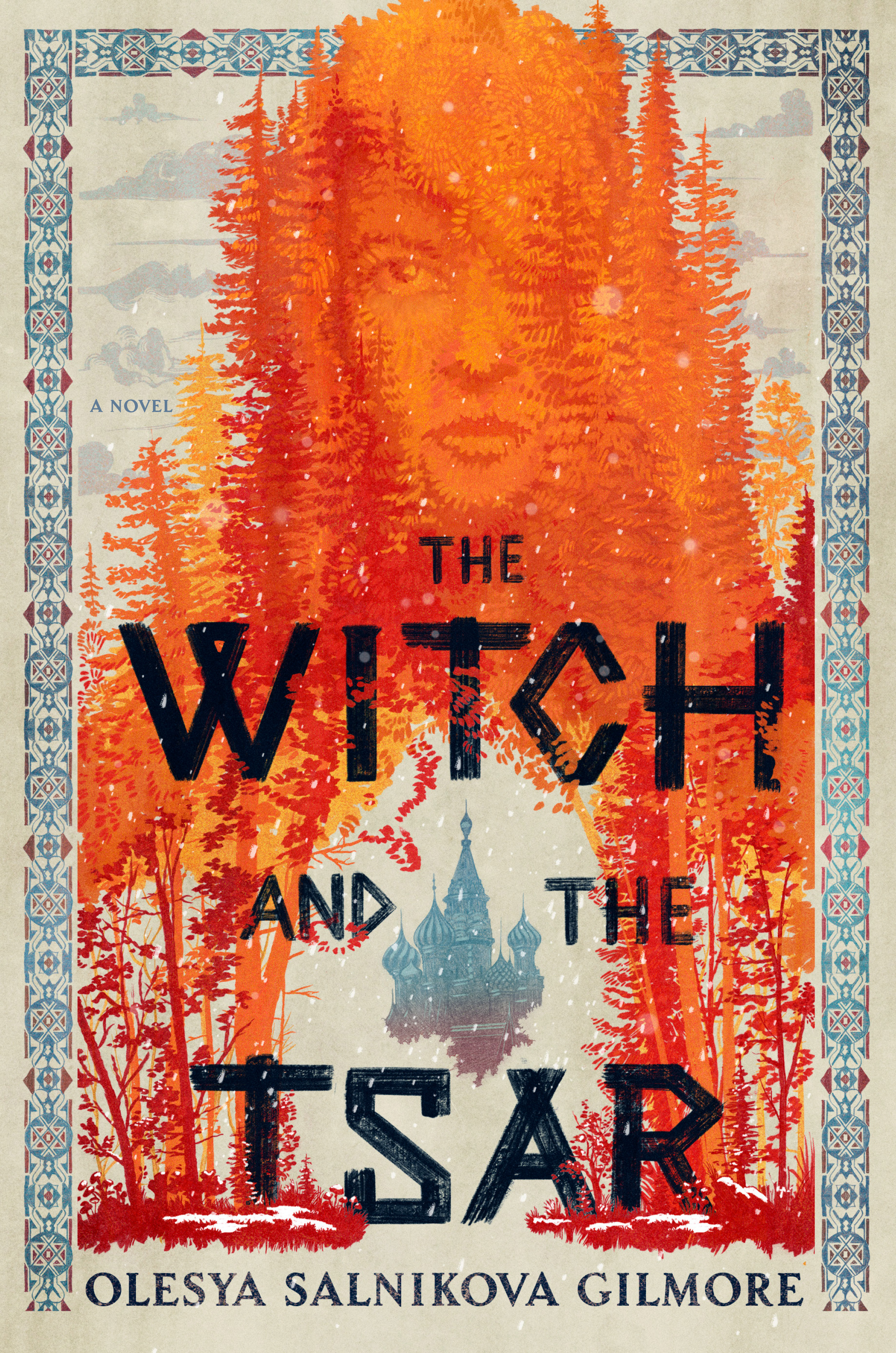
The Witch and the Tsar by Olesya Salnikova Gilmore

book cover

Once war is on men’s minds, Selica had said, it festers within, claiming them.

For a soldier to let his enemy live despite the entrenched inclination to kill touched my heart with a flame. And as he looked out on our land, on the people dying and bleeding on it, no matter if they were Russian or Mongol, I saw pain, deep and endless and raw, open inside him like a ravine about to swallow us. There was light there, light that left me hopeful. Perhaps life, possibly even goodness, did exist, even in a soldier, and it prevailed in the world after all.

Baba Yaga, aka Bony Legs, has gotten a bad rap. Ivan the Terrible, however, deserves all the lousy press that can be heaped upon him. Terrible seems far too tame a word, The monstrous, the psycho-killer, the unspeakable, the mindless slayer of mankind, and on, and on, [insert your pejorative here]. (Of course, this is the portrait presented in the book. The real-life Ivan may have had cause for his paranoia, given the considerable opposition of the gentry to many of his policies. Find out more in this small piece in Britannica.)

description
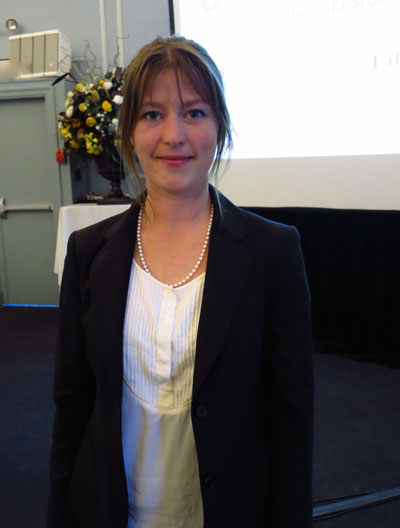
Olesya Salnikova Gilmore – image from her site

The most common images of Yaga are of a frightening witch, tooling about in a strange vehicle, trapping and devouring children, and generally doing dirt to people, a personification of evil. But even in traditional lore, she is sometimes shown with a softer side, a healer instead of a tormenter, a consoler, a comforter instead of a horror. She has been seen as a personification of nature, a Slavic version of Persephone. She appears as a change agent in many stories, a trickster, helping the hero or heroine fulfill their quest.

description
Image from The House of Twigs

I had written two books that had gone nowhere. Totally uninspired, almost desperate, I turned to the Russian folktales I had grown up with as a child. Baba Yaga loomed large in these stories—her elusive and mercurial character, her enchanting chicken-legged hut, her terrific mortar and pestle mode of transport, her sharp tongue and fearsome appearance, unsurprising for a woman of knowledge living alone in the wood.
As it turns out, some scholars believe the Baba Yaga we know—the old, ugly hag from the fairy tales—is based on, or is a descendent of, a fertility and earth goddess worshiped by ancient pagan Slavs. I was instantly fascinated by how a goddess could become a witch and just knew I had to write a book not about the infamous hag, but about the little-known woman named Yaga.
– from the Writer’s Digest interview

description
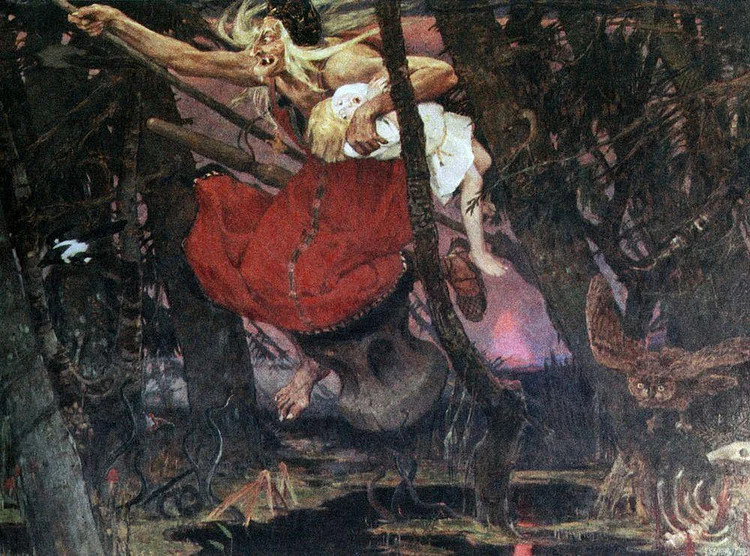
A painting portraying Baba Yaga. According to Slavic folklore, Baba Yaga was a witch who often preys on children to eat them. However, some accounts present her as a wise and helpful creature. The painting was created in 1917 and is now located at the House Museum of Viktor Vasnetsov in Moscow.

Gilmore is looking to give Yaga some better press, make her more human in some ways, more of a bad-ass superhero in others. She has a team, of course. (Y-men?) The house on chicken legs that is the very definition of creepy, has been transformed into Little Hen, a supportive, nurturing friendly character who might have been the original mobile home. When Yaga speaks to Little Hen she regards her as somewhere between a beloved pet and a partner. Dyen (meaning day) is a considerable wolf. He (thankfully) is Yaga’s primary means of high speed transportation, while also offering his considerable fierceness. Noch (meaning night) is an owl. Noch specializes in reconnaissance and intel-gathering. They share Yaga’s immortality.

description
Xénia Hoffmeisterová [cs], Ježibaba [cs] (2000)

As a provider of potions for this and that, Yaga has a following. Among those is the tsar’s wife, the tsaritsa, whom she has known for a long time. She is suffering from an illness that the court physicians cannot seem to touch. Yaga helps her out, but suspects foul play. Although she would prefer to remain safely in her house in the woods, she must go to Moscow to find out who is doing this to Anastasia Romanovna, a kind, sweet young woman. It would appear that Yaga and crew are not the only immortals wandering about. The tsar has fallen under the influence of a dark-hearted ageless sort, someone Yaga knows. And the game is afoot.

description
Image from King Edward’s Music

Tsar Ivan is not exactly the best administrator, and it is not long before he is laying waste to large swaths of the country, under the guidance of a dark force. Whether getting there because of his genetic inheritance, or because his mind had been poisoned by a demonic sort, (The actual Ivan was quite superstitious, taking an interest in witchcraft and the occult.) Ivan, who seems at least somewhat rational when we meet him, is soon barking mad, seeing enemies everywhere, even among friends, and showing no hesitation about slaughtering anyone who displeases him. Yaga loves her Mother Russia and considers it her patriotic duty to defend her against enemies foreign and domestic. Ivan definitely counts among the latter. So, superhero vs supervillain.

description
Ivan Bilibin, Baba Yaga, illustration in 1911 from “The tale of the three tsar’s wonders and of Ivashka, the priest’s son” (A. S. Roslavlev)

There are levels of existence here with diverse characteristics, lands of the dead and living, a glass mountain, with spells aplenty. Yaga’s adventures might remind you of western mythology and Campbellian quest forms having to do with descending to hell in order to emerge better armed to take on whatever. Yaga needs help from other immortal sorts to accomplish her mission, which becomes pointedly clear later in the book. In the shorter term, she is faced with carnage in Russia, and trying to find ways to stop or even just slow it down.

description
Baba Yaga depicted in Tales of the Russian People (published by V. A. Gatsuk in Moscow in 1894)

There is even a bit of romance to counterbalance some of the considerable blood-letting.

After I had witnessed my first birthing not ten years into my life, Mokosh had explained to me the intricacies of lovemaking and child making. “Though immortals can birth other gods and half gods,” she had said, gently, “it is not simple for us, with mortals above all. Most of the time, it happens not. It is even harder for half gods. If it happens, it does so for a reason. It is willed by the Universe.” I had known many men over the centuries, both mortal and immortal. Not once had my trysts ended in anything other than fleeting pleasure or pointless regret. I knew it would never happen for me.

But then she meets Vasily Alekseyevich Adashev, studly warrior, but mortal, which is a problem. It gets complicated. He is probably in his 20s or 30s, she is several hundred. (Baba Cougar?) It is a delightful element.

This is a time of transition in Russia, when the old gods were being replaced by the Christian invader. But local loyalties were sometimes with the old and sometimes with the new. Yet, the old gods were still actively interfering in human activities. Getting a look at such a tumultuous period in Russian history is one of the bonuses of this book.

description
Image from Meet the Slavs

The view of reality Gilmore presents is informed by her childhood exposure to Russian mythology. She was born in Moscow and spent her early years there. Fairy tales from childhood figure large, particularly stories set in Old Russia. (Gilmore would have included even more, but maybe in some future work.) Setting her tale in medieval times felt right, which led to focusing on Ivan as THE medieval tsar. It helped that he made an ideal villain, given his location in history, his interest in the occult, and his apparently mass murderous sociopathy. What makes a guy go there?

This being a book by a Russian-born author, about Russia, you can expect that many characters will be referred to be multiple names. And it can be tricky discerning the good Ivans, Vasilies and Alexes from the bad ones. I read an ARE, so cannot say if the final print (and epub) versions contain character lists. If your copy lacks one, you might want to start your own. My minimal gripes about the book have to do with the attention required to keep everyone straight, and a need for a primer on the structure of everything in Old Russian lore. How many layers of afterlife are there? How does one move from to another? It can be eye-crossing keeping this in order.

description
Image from Amino Apps

That said, I found The Witch and the Tsar a delightful, satisfying read. Yaga was a very appealing character. Gilmore has succeeded in making her relatable, and her companions appealing. The devastation wrought by Ivan and those driving him provide all the motive force anyone might require to do everything possible to stop it, which gives us a lot to root for. The romantic element is a nice touch. Added payload on Russian history, folklore, and old religion is most appreciated. I have provided a few links in EXTRA STUFF to more about Yaga in folklore. I urge you to check those out. Baba Yaga may have had plenty of unpleasant things written about her, and many a hideous image created, but in The Witch and the Tsar, Yaga is looking pretty good.

Mother had taught me the immortal side of earth magic, of doing without awareness, without feeling. With Dusha, I learned to listen to the natural world around me, not only to the sky, the trees, the waters, the very air, but also to myself.

Review posted – 11/25/22

Publication date – 9/20/22

I received an ARE of The Witch and the Tsar from Ace of Berkley of Penguin Random House in return for a fair review. Thanks, folks, and thanks to NetGalley for facilitating.

This review has been cross-posted on GoodReads

=======================================EXTRA STUFF

Links to the Gilmore’s personal, FB, Instagram, and Twitter pages

Gilmore is hard at work on her next novel, with a draft due to her editor in September. This one will be a gothic, set in the 1920s, after the revolution. Two sisters confront their past in their old ancestral house in Moscow. Pub date TBD.

Interviews
—–Malaprop’s Bookstore & Cafe – The Book of Gothel: Mary McMyne in convo with Olesya Salnikova Gilmore – video – Gilmore reads from the beginning of her book – 0:00 to 21:48. Mary McMyne then reads from her book – to 39:43. Then Stephanie Jones-Byrne interviews them from about 40 minutes
—–Writer’s Digest – Olesya Salnikova Gilmore: On Introducing Russian History to Fantasy Readers by Robert Lee Brewer
—–Paulette Kennedy – DEBUT SPOTLIGHT: Olesya Salnikova Gilmore

Items of Interest from the author
—–Paste Magazine – excerpt
—–discussion guide from her site

Items of Interest
—–World History Encyclopedia – Baba Yaga
—–Literary Hub – Baba Yaga Will Answer Your Questions About Life, Love, and Belonging by Taisia Kitaiskaia
—–Britannica on Ivan the Terrible

Leave a comment

Filed under Fantasy, Fiction, Historical Fiction, Literary Fiction

Woman of Light by Kaji Fajardo-Anstine

book cover

The radio smelled of dust and minerals, and in some ways reminded Luz of reading tea leaves. They were similar, weren’t they? She saw images and felt feelings delivered to her through dreams and pictures. Maybe those images rode invisible waves, too? Maybe Luz was born with her own receiver. She laughed, considering how valuable such a thing must be, a radio built into the mind.

Maria Josie insisted Diego and Luz must learn the map, as she called it, and she showed them around first on foot and later by streetcar. She wore good walking shoes, and dressed herself and the children in many layers. It tends to heat up, she had said, another moment, it might hail. The siblings learned to be cautious. It was dangerous to stroll through mostly Anglo neighborhoods, their streetcar routes equally unsafe. There were Klan picnics, car races, cross burnings on the edge of the foothills, flames like tongues licking the canyon walls, hatred reaching into the stars.

There is a lot going on in this novel, so buckle up. Focused on the experiences of 17/18 year-old Luz Lopez–the Woman of Light of the story–in Depression-era Denver, the story alternates between her contemporary travails and the lives of her ancestors. The beginning is very Moses-like, a swaddling Pidre being left by his mother on the banks of an arroyo in The Lost Territory in 1868. We follow Pidre and his children and grandchildren into the 1930s. All have special qualities. Among them, Luz, his granddaughter, reads tea leaves, seeing visions of both past and future. Diego, his grandson, would definitely belong to House Slytherin in a different universe. He tames and performs with rattlesnakes.

description
Kali Fajardo-Anstine in the Western History & Genealogy Department of the Denver Public Library – image from 5280 – photo by Caleb Santiago Alvarado

This is a story about stories, how telling them carries on identity, while ignoring them can help erase the culture of a people. Pidre is noted as a talented story-teller, urged, as he is given away, to remember your line. KFA remembers hers, giving a voice to Chicano-Indigenous history.

My ancestors were incredibly hard working, generous, kind, and brilliant Coloradans. But they were also poor and brown and this meant our stories were only elevated within our communities. When I began writing seriously in my early twenties, I was reading books by James Baldwin, Sandra Cisneros, Edward P. Jones, and Katherine Anne Porter, and many, many others. I saw how these authors shined the spotlight on their people and I also wanted to write work that was incredibly sophisticated that honored my cultural group, making us more visible in the mainstream. – from the Pen America interview

Fajardo-Anstine brings a lot of her family’s history into this novel. Her great-aunt’s name is Lucy Lucero. In addition to the name of our protagonist, a second connection can be found in the name of the stream where Pidre is found, Lucero. An uncle was a snake charmer. An aunt worked in a Denver glass factory, as Luz’s aunt works in a mirror factory in the book. Her family had hidden from KKK, as characters do here. Her Belgian coal-miner father abandoned his family, as Luz and Diego’s father does here.

There is a feel to the book of family stories being told around a table, or in a living room, by elders, passing on what they know to those most recently arrived. Remember these tales, the speaker might say, and in doing so remember where you came from, so you can better know who your people are and ultimately who you are.

As they hopped and skipped in and out of the archway lights, Luz imagined she was jumping between times. She saw herself as a little girl in the Lost Territory with her mother and father walking through snow fields, carrying fresh laundry to the company cabin. Then she saw herself in Hornet Moon with Maria Josie, beside the window to her new city, those few photographs of her parents scattered about the floor, the only remnants of them she had left. She saw herself eating Cream of Wheat for breakfast with Diego in the white-walled kitchen. They were listening to the radio, the summertime heat blowing in from the windows, the mountains far away behind the screen.

The racism that Luz and other confront is not subtle. A public park features a sign

NOTICE
This Park Belongs to WHITE PROTESTANTS
NO GOOKS
SPICS
NIGGERS
Allowed

Luz is denied an opportunity to apply for a job because she is not white. A KKK march has a very pogrom-like, 1921-Tulsa-like feel.

Luz gets a chance to see the range of crimes going on in the city, when she gets a particular job. Sees how the system that is supposed to protect regular folks does anything but. The murder of a Hispanic activist by the police is not just a historical image, but a resonant reminder of police killing of civilians in today’s world, usually with little accountability. The more things change…

There is a magical element in this novel, that, when combined with the multi-generational structure, and richness of language, and, of course, her focus on particular groups of people, makes one think of Louise Erdrich. As to the first, among others, Luz receives visions while reading tea leaves, and at other times as well. An ancestor speaks with the dead. A saintly personage associated with mortality appears in the flesh. People appear who may or may not be physically present.

The ancestry begins with Pidre in 1868, but in his infancy we meet elders who reach back much further.

The generation I knew in real life was born around 1912 and 1918. They would talk about the generation before—their parents, but also their grandparents. That meant I had firsthand knowledge spanning almost two hundred years. When I sat down to think about the novel and the world I was creating, I realized how far back in time I was able to touch just based on the oral tradition. My ancestors went from living a rural lifestyle—moving from town to town in mining camps, and before that living on pueblos and in villages—to being in the city, all within one generation. I found it fascinating that my great-grandma could have grown up with a dirt floor, not going to school, not being literate, and have a son graduate with his master’s degree from Colorado State University. To me, time was like space travel, and so when I decided on the confines of the novel, I knew it had to be the 1860s to 1930s. – from the Catapult interview

Luz is an appealing lead, smart, ambitious, mostly honorable, while beset by the slings and arrows of ethnic discrimination. Like Austen women, she is faced with a world in which, because of her class and ethnicity, making her own way in the world would be very tough without a husband. And, of course, the whole husband thing comes with its own baggage. Of course, the heart wants what it wants and she faces some challenges in how to handle what the world offers her. She does not always make the best choices, a flaw likely to endear her to readers even more than an antiseptic perfection might.

The supporting cast is dazzling, particularly for a book of very modest length (336p hardcover). From a kick-ass 19th century woman sharpshooter, to a civil rights lawyer with conflicting ambitions, from a gay mother-figure charged with raising children not her own to a successful Greek businessman, from Luz’s bff cuz to the men the two teens are drawn to, from an ancient seer to a corrupt politician, from…to…from…to… Fajardo-Astine gives us memorable characters, with color, texture, motivations, edges you can grab onto, elements to remember. It is an impressive group.

And the writing is beautiful. This is the opening:

The night Fertudez Marisol Ortiz rode on horseback to the northern pueblo Pardona, a secluded and modest village, the sky was so filled with stars it seemed they hummed. Thinking this good luck, Fertudez didn’t cry as she left her newborn on the banks of an arroyo, turkey down wrapped around his body, a bear claw fastened to his chest.
“Remember your line,” she whispered, before she mounted her horse and galloped away.
In Pardona, Land of Early Sky, the elder Desiderya Lopez dreamt of stories in her sleep. The fireplace glowed in her clay home as she whistled snores through dirt walls, her breath dissipating into frozen night. She would have slept soundly until daybreak, but the old woman was pulled awake by the sounds of plodding hooves and chirping crickets, the crackling of burnt cedar, an interruption between dawn and day.

Really, after reading that, ya just have to keep on. One of the great strengths of this novel is its powerful use of imagery. There are many references to light, as one would expect. Water figures large, from Pidre’s introduction in the prologue, left by a stream, to our introduction to Luz and her aunt Maria Josie sitting together in Denver, near the banks where the creek and the river met, the city’s liquid center…, to a rescue from a flash flood, to an unborn buried near a river, and more. A bear-claw links generations. This makes for a very rich reading experience.

I felt that the narrative fizzled toward the end, as if, having accomplished the goal of presenting a family and group history, filling a vacuum, there was less need to tidy everything up, a quibble, given that the novel accomplishes its larger aims.

Kaji Fajardo-Astine’s 2019 short-story collection, Sabrina & Corina, made the finals for National Book Award consideration. You do not need to read tea leaves or have visions to see what lies ahead. Woman of Light, a first novel, illuminates that future quite clearly. By focusing a beacon on an under-told tale, Kaji Fajardo-Astine, is certain to have a brilliant career as one of our best novelists.

Celia, Estevan’s sister. Luz listened and watched as she read her own words in her own voice. First in Spanish and then in English. The crowd moved with each syllable, cries of anguish. A lamp unto my feet, a woman yelled behind Luz. A light unto my path.

Review posted – June 17, 2022

Publication date – June 7, 2022

I received a digital ARE of Woman of Light from One World in return for a fair review. Thanks, folks, and thanks to NetGalley for facilitating.

This review has been cross-posted on GoodReads

=======================================EXTRA STUFF

Links to the author’s personal, Instagram, and Twitter pages

Interviews
—–Red – June, 2022 – Q&A: Kali Fajardo-Anstine’s “Woman of Light” with Cory Phare
—–Pen America – 2019 – THE POWER OF STORYTELLING: A PEN TEN INTERVIEW WITH KALI FAJARDO-ANSTINE with Lily Philpott – not specific to this novel, but interesting
—–Catapult – June, 2022 – Kali Fajardo-Anstine Believes Memory Is an Act of Resistance with Jared Jackson

Items of Interest
—–Following the Manito Trail
—–5280 – Inside Denver Author Kali Fajardo-Anstine’s Much Anticipated Debut Novel by Shane Monahan

Leave a comment

Filed under Feminism, Fiction, Historical Fiction, Literary Fiction, Native Americans

The Mad Girls of New York by Maya Rodale

book cover

God save Nellie from the ladies’ pages. If a woman was lucky enough to get a job working for a paper—which spared her from working in a factory, or as a domestic or a wife (shudder)—she would have to spend her days writing about household hints and recipes, garden shows and charity luncheons. It was mind-numbingly tedious and she wanted to avoid it at all costs. It was one reason why she had left Pittsburgh.

There is nothing worse than being told that you don’t know your own mind or body. If you aren’t mad when you go in, chances are you will be by the time you come out.

When twenty-three-year-old Nellie Bly headed to New York City in 1887, she left a message for her boss at The Pittsburgh Gazette.

I’m off for New York. Look out for me.
—Nellie Bly

Good advice. It was no easy task for Elizabeth (Elly) Jane Cochrane. Women in journalism were relegated to the “ladies’ page” when they were hired at all. And often had to use pen names to get their work into print. Persistence paid off, though, and Cochrane finally got a gig with The New York World, by promising to go undercover at the New York City Asylum for the Insane on Blackwell’s Island. (called Roosevelt Island today). The notorious institution had already been the subject of multiple journalistic examinations. But it was a tough place to get into, and, as it had changed from a co-ed institution to a women’s asylum in 1872, it would take a female to be able to get inside, one of the downsides to journalism being such a boys’ club. But Nellie’s self-confidence, and courage, knew no bounds, so she dove right in.

description
Maya Rodale – image from Open Shelf – photo by Elsa Ngan

The Mad Girls of New York is a novelization of Bly’s actual early adventures in NYC. Some of the characters are taken from Bly’s seminal work, Ten Days in an Asylum, which was comprised of and expanded from the articles she had written for the New York World, a series that made her reputation. She persuaded those who needed persuading that she was mad, in order to be institutionalized as a patient. It was surprisingly easy. Once in, she experienced the horrors inflicted on the patients, although inmates would have been more accurate.

The asylum was a physically cold place, and the residents were provided with painfully inadequate clothing and covers. The food was unspeakable, often insect-ridden, the physical accommodations spartan, the doctors dismissive, the nurses abusive, and the cleanliness regimen was cruel. It did not help that some of the help was recruited from the prison that was also on the island.

description
Nellie Bly – image from the Irish Times

We meet several groups of characters. The journalism pack leads off. This includes the editors she interviews during a project on why the papers do not hire women. There is a fair bit of LOL to be had in this as she leaves them spinning and sputtering in their own contradictions. There are the other women journalists with whom she engages, a club of sorts, who help each other out, getting together in an establishment, The Ordinary, that serves women only. Such institutions did exist at the time. She has a competition going with a male reporter, Sam Colton, from Chicago. There is also a simmering attraction between the two, but it is not romancy enough to intrude into the story too much, thankfully. There is also a flirtation with the hunky, single mayor.

When you learn that there was in fact a hot bachelor mayor of New York City named Hugh Grant, you must include it in your novel. – from Rodale’s Twitter feed

Rodale has produced numerous romance novels, (22 by my count, plus some novellas, a children‘s book and a couple of non-fics) so it would have been a shock if there were not some sparks flying in this tale. But if you are hoping for ignition into conflagration, you will have to check out her considerable romance work instead.

description
The New York City Asylum for the Insane – image from Wikipedia – cheery-looking, no?

Then there are the patients. Anne is in need of care, but cannot afford decent treatment at a private institution. The Princess has a regal bearing but will only say three words, Rose, Daisy, and Violet, over and over. Tillie has a nervous condition, truly needs some rest, some peace and quiet, in a warm place, but her friends dumped her off at Bellevue (with friends like that…). Prayer Girl, who pleads with god to kill her ASAP, somehow never takes the initiative herself. Women are committed to this place for a variety of reasons, few of them good. Many devolve to a broad category of their being inconvenient, something Martha Mitchell might recognize. Then there is Mrs Grady, the Nurse Ratched of this enterprise, a cruel overseer, super control freak, eager to inflict pain and punishment and never willing to hear any of the real concerns of her charges. Toss in a few cruel cops and attendants, a clueless doctor, and another who at least shows some bits of humanity.

description
Newspaper Row in Lower Manhattan. That is City Hall in the foreground on the left. The domed building to the east of City Hall is the New York World Building. The Brooklyn Bridge had not yet been built when this shot was taken, but if it had, it would appear to the north (left) of the World Bldg) – image from Stuff Nobody Cares About

Rodale’s focus is on how women were treated, not just in this horrid institution, but in all institutions of the wider world, using her story-telling skills to show us how women were regarded as a lesser life form, in politics, in journalism, in finance, in the overall world of work, well…paid work. Slaving at home for hubby and progeny was still just fine and dandy. She shows the struggles that smart, driven women had to endure in order to access the same level of opportunity and respect as men, just to be able to cover hard news. Bly was one of a group of women called “Girl Stunt Reporters,” daring women journalists who put themselves in peril in order to delve into many of the social wrongs of the late 19th century.

description
Hugh J. Grant two-term NYC Mayor – image from Wikipedia

Rodale spices up the story, as if it needed additional condiments, with a mystery about a high-society spouse gone strangely missing, with the widower chomping at the bit to wed a younger, richer, woman. She incorporates actual historical events and people into the tale, sometimes with name changes, sometimes with tweaking of timelines. Some personages retain their names, including the aforementioned mayor, Hugh Grant, (who did not actually become mayor until 1889, two years after the events of this novel) Hetty Green (The Witch of Wall Street), Harriet Hubbard Ayer, a writer of articles about beauty and health for the New York World, and others.

Despite the harshness of the conditions Bly, and now Rodale, reveal, there is no graphic violence or sexual behavior in The Mad Girls of New York. This helps make it perfectly suitable for younger readers, particularly girls, who may not know about Nellie, and what a pioneer she was. It is a very fluid, quick read.

description
Hetty Green – The Witch of Wall Street – image from wiki

The book is listed as A Nellie Bly Novel #1, so we can presume there are more in the works. I do not have any inside intel on this, but I imagine that Nellie’s around-the-world-in-80-days challenge (she did it in 72) will be among the upcomings. Something to look forward to.

Nellie’s story is a remarkable one. Rodale has done a very nice job of letting modern readers in on what Nellie faced as a gutsy, newbie reporter in New York, and what she accomplished, at least in the short term, encouraging us to learn more about this brilliant, dogged, remarkable woman. You’d have to be crazy to pass this one by.

The madhouse had been horrible, but this part—writing it all down with the promise of seeing the atrocities in print, made it feel worthwhile. When she thought of the public reading her words and knowing about the suffering that happened at Blackwell’s, Nellie felt shivers. Do stunts, Marian had flippantly suggested. But Nellie had found her life’s work.

Review posted – May 6, 2022

Publication date – April 26, 2022

I received an ARE of The Mad Girls of New York from Berkley in return for a fair review. Thanks, folks, and thanks to NetGalley for facilitating. Can I get a warmer blanket, please?

This review has been cross-posted Goodreads.

=======================================EXTRA STUFF

Links to the author’s personal, Instagram, and Twitter pages

Interview
—–Wine, Women and Words – Nerding out about Nellie with Maya Rodale with Michelle Leivas and Diana Giovinazzo

Item of Interest from the author
—–Lithub – The Real-Life Heroines of an Outrageous Era: A Gilded Age Reading List

My obsession with the Gilded Age began with romance novels—I wanted to set a series in old New York in the world of Mrs. Astor’s ballroom and dollar Princesses, which felt like an updated version of the Regency Era. But in researching the time period I discovered that the best stories weren’t just uptown in Fifth Avenue mansions—they were everywhere. I also discovered that the Gilded Age was a golden age for independent, ambitious, boundary breaking real life heroines.
One of my favorites is Nellie Bly…She was the first and most daring of the stunt girl reporters, who found fame and success by going undercover to report stories that detailed women’s experiences as factory girls, or getting abortions, or learning ballet.

Items of Interest
—–Wiki on Nellie Bly
—–Wiki on Hugh J. Grant – NYC’s 88th mayor
—–Wiki on Hetty Green – “The Witch of Wall Street” – Marian goes to see her to get intel on Jay Wallace in chapter 24
—–Wiki on – Harriet Ayer – Nellie’s mentor in the book
—–Library of Congress – Research Guide for Nellie Bly
—–Gutenberg – Ten Days in a Madhouse – the full text
—–Wiki on The Martha Mitchell effect
—–Smithsonian – These Women Reporters Went Undercover to Get the Most Important Scoops of Their Day – an outstanding piece by Kim Todd, author of Sensational: The Hidden History of America’s “Girl Stunt Reporters
—–Wiki on The Ladies Ordinary – a women-only establishment where Nellie meets with other reporters
—–For a real blow to your consciousness, check out this site, for Octagon NYC. This part of the original asylum has been converted, as all things in NYC are, into luxury housing. The prices are insane. (a 540 sq ft studio is $3,028 a month, a 3 BR, 1,316 sq ft goes for $7500 a month)
—–The American Journal of Psychiatry has a brief, but informative, piece – The Lunatic Asylum on Blackwell’s Island and the New York Press

Reminds Me Of
—–Leslie Parry’s 2015 novel, Church of Marvels, includes a look at Blackwell’s when one of the characters spends some time inside.
—–One Flew Over the Cuckoo’s Nest – the film

1 Comment

Filed under Feminism, Fiction, Historical Fiction, New York City

Take My Hand by Dolen Perkins-Valdez

book cover

I had a hand in breaking all of this. I had to have a hand in fixing it.

When does helping become controlling? When does loving become smothering? When does zeal become interference? How does one do what one knows is best without crossing the line? Civil Townsend, a 23-year-old nurse in the Montgomery Alabama of 1973 has to figure all that out. Working for a federally funded family planning clinic, Civil is one of several nurses responsible for administering Depo-Provera shots to young women patients. The Williams family is her first case. They live in a cabin that is little more than a shack on a farmer’s property, Mace, the father, Mrs Williams, his mother, and two girls, Erica and India. Civil does her job, but after having administered the shots learns that neither eleven-year-old India nor thirteen-year-old Erika has had her first period. In fact, neither of the girls has even kissed a boy yet. So why are they receiving birth-control shots? She learns as well that there are questions about the safety of the shots, which had been found to cause cancer in test animals. She starts looking into what might be done about this.

description
Dolen Perkins-Valdez – image from American University

Civil has the hard-charging enthusiasm of a rookie, eager to do all in her power to help those in need. Her background is nothing like that of her patients. Her father is a doctor, and her mother an artist. They raised her to do good, even named her for their aspirations of achieving civil rights for black people.

Civil learns how hard it is to go up against authority
She is complicated. She does not always do the right thing. She stumbles in her zeal.
– from the Politics and Prose interview

Civil does everything she can to help the family, gets them some public services, a decent place to live, schooling. And she has an impact, but, on a day when Civil is not working, the head nurse at the clinic tricks the family into signing papers agreeing to the girls’ sterilization. Civil’s alarm turns to rage, and then to fighting for change, so this outrage can never happen again to other unsuspecting girls and young women.

It is 1973, only a year since the infamous, forty-years-long Tuskegee Syphilis Experiment was finally shut down. In that one, hundreds of black men were supposedly being treated for syphilis, but in fact no one was being treated. Of the four hundred who were diagnosed with the disease, one hundred died of syphilis directly or complications from the disease. Dozens of wives were infected, and children were born already afflicted. All this, to see how syphilis ran its course in the untreated.

Civil’s activity gets a lawsuit started locally. But soon a young civil rights lawyer, Lou Feldman, is brought in. He transforms it into a national cause célèbre, as the case shifts from looking at the individual harm done to the Williams family to the national disgrace of the forced sterilization of tens thousands.

Our research reveals that over the past few years, nearly one hundred fifty thousand low-income women from all over the nation have been sterilized under federally funded programs.

He wants the laws changed, to end this practice. It is a huge concern for the Black community, but the novel makes clear that there were other groups who were victimized by this heinous practice.

The story take place in two, very unequal timelines. The frame is Civil at sixty-seven, a doctor in 2016, returning to Montgomery after a long absence to see the Williams girls. India is dying. This offers us an ongoing where-are-they-now report. The bulk of the novel takes place in 1973 and immediately after.

Civil struggles with her guilt over having played a part in this horror. It is clear that the notions that had supported legislators allowing such things were not entirely unfamiliar. Civil talks with Lou about the history of eugenics.

“So the idea was what . . . to stop us from having children because we were inferior?” I whispered.
“Well, the ideas were often aimed at specific populations that included Black people, yes. But also the poor, the mentally retarded, the disabled, the insane…” Mrs. Seager probably put the girls in three of these misguided categories: poor, Black, and mentally unfit. Had I done the same? I had initially deemed the girls unfit to be mothers, too. Because they were poor and Black. Because they were young. Because they were illiterate. My head spun with shame.
“Did they target poor white folks, too?” Ty asked.
Lou nodded. “Back in 1927, the US Supreme Court ruled that compulsory sterilization of people deemed unfit was constitutional. People in asylums all over this country were sterilized.”

Perkins-Valdez offers a most welcome maturity of perspective. Lou, a young, white lawyer, is viewed with suspicion to begin, but earns the community’s trust with his dedication, brilliance, grueling work habits, and effectiveness. He is lauded as a hero, while Mrs Seager, the head nurse, is shown as a flawed person who, though she was doing something terrible, thought she was doing the right thing. Characters take or avoid difficult decisions for understandable reasons. Even a black Tuskegee librarian whom Civil admires has a hard time understanding how she did not see what was going on right under her nose. There is very little good vs evil going on here in the character portrayals, only in the broader horror of a dark-hearted, racist and classist policy.

One of the many joys of the book is the portrayal of a time and place. There are details that add to the touch and feel.

The first thing that hit me was the odor. Urine. Body funk. Dog. All mixed with the stench of something salty stewing in a pot. A one-room house encased in rotted boards. A single window with a piece of sheet hanging over it. It was dark except for the sun streaming through the screen door and peeking through the holes in the walls. As my eyes adjusted, I saw that there were clothes piled on the bed, as if somebody had stopped by and dumped them. Pots, pans, and shoes lay strewn about on the dirt floor. Flies buzzed and circled the air. Four people lived in one room, and there wasn’t enough space. A lot of people in Montgomery didn’t have running water, but this went beyond that. I had to fight back vomit.

Some are more cultural, like the perceptions middle class black people in Montgomery had of poor black people, and the less fraught parallel football culture in which Alabama vs Auburn, followed by white people, is replaced for the black population with Alabama A&M vs Alabama State. News to me. We also get a taste of the segregation of the time, how bathroom accessibility while on the road could be problematic for those of the wrong skin color, how a beach that used to be open to all, and featured black-owned businesses, now required one to pay a park ranger and display a piece of paper on your car, the businesses now long gone.

The case on which Perkins-Valdez based her novel was a real one, Relf vs Weinberger, filed in July, 1973 in Washington D.C. by the Southern Poverty Law Center. Joseph Levin, one of the Center’s founders, was the young lawyer who prosecuted the case.

Mary Alice was 14 and Minnie was 12 when they became victims of the abusive practice of sterilizing poor, black women in the South. Their mother, who had very little education and was illiterate, signed an “X” on a piece of paper, expecting her daughters, who were both mentally disabled, would be given birth control shots. Instead, the young women were surgically sterilized and robbed of their right to ever bear children of their own. – from the SPLC

The story ultimately is about the horror of forced sterilization on poor black people and other classes deemed unfit to breed. You will learn a lot about a crime against humanity that was perpetrated by our own government, and the story of how this injustice was fought. But if the story does not engage, you may not get the benefit of the new knowledge it delivers. Thankfully, there need be no concern on that score. While we may echo the commentary of others to Civil that she did not bear any responsibility for what was done, that her guilt was helping no one, here is a very full-bodied portrait, of a flawed character. One who makes mistakes. A young person who has not yet learned when to push forward, when to take a step back. We see her learning this and can applaud when she takes steps in the proper direction. We also get to see the difficult family dynamic she must negotiate with her own parents, the burden of expectation that has been fitted to her broad shoulders, and the challenge of loving the Williams family, but not too much. And we have a front row seat to her relationships, her struggles, with friends and colleagues.

Take My Hand is a wonderful addition to the Perkins-Valdez oeuvre, begun with her outstanding 2009 novel, Wench, and followed by Balm in 2015. She has a fourth in the works, due to her publisher in October 2022, set in early 1900s North Carolina. So maybe a 2023 release?

A helping hand is often that, kindly meant, but maybe, sometimes, before you put your hand in another’s, you might want to know where it has been, and where it might be taking you. If the hand is attached to Dolen Perklins-Valdez, grasp it and hold on. It will take you somewhere wonderful.

I had never known that good intentions could be just as destructive as bad ones.

Review posted – April 22, 2022

Publication date – April 12, 2022

I received an ARE of Take my Hand from Berkley in return for a fair review. Thanks to Elisha K., and thanks to NetGalley for facilitating.

This review has been cross-posted on GoodReads

===================================EXTRA STUFF

Links to the author’s personal, FB, Instagram, and Twitter pages

Profile – from Simon & Schuster (mostly) and her site

Dolen Perkins-Valdez, PhD, is the author of the New York Times bestselling novel Wench. In 2011, she was a finalist for two NAACP Image Awards and the Hurston-Wright Legacy Award for fiction. She was also awarded the First Novelist Award by the Black Caucus of the American Library Association. Dr. Perkins-Valdez taught in the Stonecoast (Maine) MFA program and lives in Washington, DC, with her family. She is currently Chair of the Board of the PEN/Faulkner Foundation, and is Associate Professor in the Literature Department at American University.

Interviews
—–Publishers Weekly – Dolen Perkins-Valdez’s ‘Take My Hand’ Reaches for Hard Truths by Jen Doll

there was something about the Relf sisters she kept coming back to. “The thing that struck me about it was that, even though they’re only really mentioned in passing whenever we talk about this, it was a big deal at the time,” she says. The sisters’ ordeal was heavily covered in the press, and they appeared before a Senate subcommittee led by Sen. Ted Kennedy. “There were so many parts of it, to me, that felt absolutely remarkable. I think some people had heard a little bit about it, but they didn’t know enough. I wanted people to know enough.”

—–Politics and Prose bookstore – Dolen Perkins-Valdez — Take My Hand – in conversation with Victoria Christopher Murray
The sound level is uneven, which often makes it difficult to hear. But if you have a sound system the Q/A kicks in

My review of earlier work by the author
—–2010 – Wench

Songs/Music
—– Booker T. and the M.G.s – Behave Yourself – chapter 14
—–Mahalia Jackson – Precious Lord Take My Hand – the epigraph notes MLK requesting this be played on his final day
—–Stevie Wonder – You Are the Sunshine of My Life – chapter 20

Items of Interest
—–Eunice Rivers – re the Tuskegee syphilis experiment
—–Mayo Clinic – Depo-Provera

Depo-Provera is a well-known brand name for medroxyprogesterone acetate, a contraceptive injection that contains the hormone progestin. Depo-Provera is given as an injection every three months. Depo-Provera typically suppresses ovulation, keeping your ovaries from releasing an egg. It also thickens cervical mucus to keep sperm from reaching the egg.

—– Mississippi Appendectomy
—–Southern Poverty Law Center – RELF V. WEINBERGER – the real-world case on which the novel is based
—–Wiki on the Tuskegee Syphilis Study

Leave a comment

Filed under American history, Fiction, Historical Fiction, Public Health

Secret Identity by Alex Segura

book cover

The comics business was messy—a slapdash sprint to meet immovable deadlines, a blur of pages flowing from production to editorial and back before being jettisoned out the door to the printer. Carmen loved it.

Miami was a city, too, Carmen knew—but New York was something else. A disease that bubbled and expanded and multiplied and morphed, like some kind of magical, mystical being that seemed from another world.

Carmen Valdez, late of Miami, is where she wants to be. She may not be exactly doing what she wants, but she is trying to get there. A New Yorker for the last year, Carmen is 28. She works at Triumph Comics, a third-tier publisher of such things, and is living the dream, if the dream is to be working as a secretary to a boss who cannot see past her gender, cannot even imagine a woman, let alone a Hispanic woman, actually writing stories for his press. But the stories are there, the ideas filling notebooks. She gives him some, but even if he bothers to read them, he dismisses the work out of hand. All she needs is a chance. And then one appears.

description
Alex Segura – image from Comicsbeat

Harvey Stern is a junior editor there, young, friendly. They bond over a shared love of the medium (a love she had acquired from her father taking her out for father-daughter bonding that included the buying of comics). They are friendly without being quite friends. The house has a sudden need for a new character; Harvey is given the job of coming up with one, a female hero who will get a rise out of young male Triumph readers. Carmen sees her opportunity and offers to “help.” Their work together goes well. The story is mostly hers, of course, but Harvey has some skills. They produce a pretty good book. It does well. Problem is that no one other than she and Harvey knows the truth about how it came to be. Then Harvey suffers a BLAM! BLAM! leaving him with even less conscious corporeality than an invisible six-foot pooka. Guess who finds the body? And the noir gets dark.

I’ve always been fascinated with Megan Abbott’s work and her ability to bring the tenets of noir to areas where you wouldn’t expect noir to exist—gymnastics, cheerleading, science, and so on. She crafts these narratives that are tense, fraught, and loaded with style outside of the typical noir settings. I remember reading Dare Me and just thinking, huh, wouldn’t it be cool to write a comic book noir? – from The Big Thrill interview

Segura had recently finished writing his Pete Fernandez Miami Mysteries, so has the chops to produce a pretty good whodunit. Carmen sees, in short order, that the police are not up to the task. She also knows that unless she can figure out why Harvey was killed, and by whom, she will never be able to get recognition for her work, or maybe sleep at night. Harvey is not the last person attacked by a mysterious villain.

description
The Legendary Lynx – from the book – image from The Firewire Blog

Secret identities abound here. Carmen hides her true author self from the boss because of the sexism of the age. Everyone seems to have a secret. Harvey certainly does did. Are all the names that we are given really the characters’ true names? Might there be an alias or two creeping around, for dark purposes?

she had to become someone else to survive

Segura has been busy in the comic book industry for many years, working on Archie Comics, while living in Miami, then moving to New York to work for DC. He has written detective novels, and a Star Wars book, stand-alone mysteries, short stories, a crime podcast, and probably an encyclopedia. He is married with kids, and I imagine that he must sleep some…time. Maybe he is one of the characters he writes about and his secret power is eternal wakefulness. Captain Insomnia takes on every request for writerly product, and satisfies them all.

He has a particular soft spot for the 1970s in the comics industry, when the industry’s body was laid out on the street, bleeding money and readers. Who would come to its rescue?

Well the comic book industry was really struggling at that time after the glory years of the 50s and 60s. Comics were struggling. It wasn’t like today, where we have shows about Peacemaker or obscure characters – it was considered a dying industry. So I wanted to use her passion for the medium and contrast it with comics at its lowest point, and then show her fighting to control this one thing she loves. – from the Three Rooms Press interview

This was a time when comic books were sold only on newsstands or in small stores, before there were comic book conventions, before the steady drumbeat of blockbuster films based on comic book characters. There was plenty wrong with the industry at the time (there probably still is), with notorious cases of people stealing credit for the work of others. Some of those are noted here. In fact, there are many references made to well-known names in the comic book industry. I am sorry to say that most just slipped past me, as I am not the maven for such things that Segura and no doubt many readers of this book are. I can report, though, that not knowing all the references did not at all detract from my overall enjoyment, and recognizing the ones I did enhanced the fun. He even tosses in a nod to a character of his from another project, as that character’s story was set in the same time period.

description
The Legendary Lynx – from the book – image from The Firewire Blog

There was plenty wrong with NYC at the time. I know. I remember. Fun City, originally a tossed-off line by a 1960s mayor facing multiple municipal crises (“It’s still a fun city.”) had not completed the shift to The Big Apple, itself a reconstitution of a city logo from the 1920s. The city, a political creation of the state, was starved by the state for the funds needed to provide the services it was required to offer, then was looked down on for that inability. It was a time when graffiti was ubiquitous, crime was up, and gentrification was beginning, as landlords were torching their properties to drive out residents so they could transform their buildings into co-ops. It was a time of white flight and a time when a local tabloid featured the infamous headline: Ford to City: Drop Dead, after NYC had turned to the federal government for aid. We get a taste with Carmen’s arrival.

the drab, claustrophobic walls of the Port Authority giving her the most honest first impression of New York she could expect. As she wandered the cavernous transport hub, a concrete behemoth at the tail end of the Lincoln Tunnel, she got a heavy dose of what she’d only imagined. A city in disrepair, boiled down into this one sprawling bus terminal. Leaky ceilings, shadowy conversations, blaring horns, and unidentifiable smells all coalesced into an unbridled fear that gripped Carmen as she stepped out into the New York sunlight.

description
The Legendary Lynx – from the book – image from The Firewire Blog

Carmen’s mission is to solve the crime of course (When a man’s woman’s partner is killed he’s she’s supposed to do something about it. It doesn’t make any difference what you thought of him. He was your partner and you’re supposed to do something about it.”), but it would not be a noir if Carmen did not have some personal struggles going on as she struggles to figure out whodunit. There are parental issues, which might not be quite noir-ish, but a dark episode from her past stalks her, which certainly is. And there are some romantic bits as well, which definitely fit. She may have been raised Catholic, but Carmen is no nun. All this serves to make for a rounded character, one we can cheer for. Part of that rounding involves some flaws as well, and not the sort we are used to in our primary investigators.

For example, did Carmen really believe that the boss would disbelieve her if she told him the truth about authorship of The Legendary Lynx? There is a scene in which Harvey gets weird and take off after a working-together session. Holy Tunnel Vision, Batman! No freaking out over that? And she lets Harvey take her notebooks, her primary and unbacked up material? Even the Daredevil wasn’t that blind. There was something else, of no real consequence, that really bothered me. There is a scene which entails Carmen walking from the East Side to the West Side of Manhattan without any mention of passing through Central Park, which is directly in the path, or walking around it. That just seemed odd, particularly coming from a guy who lives in New York. Not really a spoiler, just wanted to spare most folks this aside.
I used to live on the West side of Manhattan, for most of the 1970s, West 81st Street, then West 76th Street, and walked across the park to my grad school on the East Side. Walked back, too, so, speaking from experience. Like I said, no consequence.

One thing you will definitely enjoy is the inclusion in the book of seventeen pages from The Legendary Lynx. They presage events in the chapters that follow. It is a perfect addition to the book.

Music permeates, including nods to the venues of the day, The Village Vanguard, CBGBs, The Bottom Line, et al. Her roommate, Molly, is a musician, rubbing shoulders with rising stars, like Springsteen and Patti Smith.

Secret identity covers a fair bit of territory, an homage to a beloved industry in a dire time, a noir mystery, a look at the city where he now lives, when it was on its knees, while saluting the music of the time and the creators of the comic book industry, warts and all. And he tosses in a comic book for good measure. This is a fun read of the first order, even for those, like me, who may not be comic nerds. In producing this very entertaining novel, Alex Segura has revealed his true identity, at least for those who did not already know. Clearly, Seguro really arrived on this planet not in a Miami hospital ward, but probably somewhere in the Everglades, his ship originating in a galaxy far, far away. He may or may not be able to leap tall buildings in a single bound, but he clearly wields otherworldly power as a writer. POW!

If it got published, I’d be ghostwriting it. . . . I mean, I’d get a shot, and if it did well we’d reveal my involvement, but. . . .”
“You’d be anonymous at first? Like his secret partner?”
Carmen waited a beat, letting her mind skim over what she already knew to be true. She nodded at Molly, hoping her friend couldn’t see her resigned expression in the dark.
“Is that what you want?” Molly asked. “To live your dream—in secret?”
Carmen felt her stomach twist into a painful, aching knot.

Review posted – March 11, 2022

Publication date – March 15, 2022

I received an ARE of Secret Identity from, well, I can‘t tell you, in return for a fair review. Thanks, folks. And thanks to NetGalley for facilitating an e-galley copy.

This review has been cross-posted on Goodreads. Stop by and say Hi!

=======================================EXTRA STUFF

Links to the author’s personal, FB, Instagram, and Twitter pages

Interviews
—–Crime Reads – SHOP TALK: ALEX SEGURA IS ALWAYS WRITING, EVEN WHEN HE’S NOT by Eli Cranor
Mostly on Segura’s process and insane productivity
—–The Big Thrill – Up Close: Alex Segura by April Snellings
—–Three Rooms Press – Stand Up Comix:> An Interview with Author Alex Segura

Item of Interest from the author
—–Segura’s Sub-stack

Items of Interest
—–When a man’s partner is killed…
—–pooka

1 Comment

Filed under Fiction, Historical Fiction, Reviews, Suspense, Thriller