Tag Archives: wolves

Re-wilding the Highlands – Once there Were Wolves by Charlotte McConoughy

book cover

I had always known there was something different about me, but that was the day I first recognized it to be dangerous. It was also the day, as I stumbled out of the shed into a long violet dusk, that I looked to the trees’ edge and saw my first wolf, and it saw me.

They’re more dangerous than we are.”
“Are they?” I ask. “They are wilder, certainly.”
“Isn’t it the same?”
“I don’t think so. I think it’s civilization makes us violent. We infect each other.”

Inti Flynn had always had a feel for nature. Her father had been a woodsman, first working for a lumber company, then, later, living a mostly solo subsistence life, in Canada, trying his best not to contribute to the global demise. He taught Inti and her twin, Aggie, about how to live in and with the wild. Their mother, a detective in Australia, was more concerned with teaching them how to contend with the wild in civilization. There is a lot in here about parents, of both the human and lupine persuasion, teaching children or pups how to cope in the world, how to defend against predators. The human sorts offer different approaches, some counseling firm defenses, others advising understanding, and some resorting to extreme kinetic measures. There are plenty of parents teaching questionable lessons.

description
Charlotte McConoughy – image from If.com.au

Dad used to tell me that my greatest gift was that I could get inside the skin of another human. That I could feel what nobody else could, the life of another, really feel it and roll around in it. That the body knows a great deal and I have the miraculous ability to know more than one body. The astonishing cleverness of nature. He also taught us that compassion was the most important thing we could learn. If someone hurt us, we needed only empathy, and forgiveness would be easy.

Inti’s gift is not metaphorical. Her ability to experience what others feel, gives her a unique advantage in understanding both wildlife and people. It also makes her very vulnerable.

I am unlike most people. I move through life in a different way, with an entirely unique understanding of touch. Before I knew its name I knew this. To make sense of it, it is called a neurological condition. Mirror-touch synesthesia. My brain re-creates the sensory experiences of living creatures, of all people and even sometimes animals; if I see it I feel it, and for just a moment I am them, we are one and their pain or pleasure is my own. It can seem like magic and for a long time I thought it was, but really it’s not so far removed from how other brains behave: the physiological response to witnessing someone’s pain is a cringe, a recoil, a wince. We are hardwired for empathy. Once upon a time I took delight in feeling what others felt. Now the constant stream of sensory information exhausts me. Now I’d give anything to be cut free.

McConaghy’s prior novel, Migrations, looked at the demise of wildlife (birds in particular, and even more particularly terns) in a slightly future world. In this one, she continues her interest in the impact of people on the natural environment. Officially, the last wolf in Scotland was killed in 1680. There are reports of wolves being seen as late as 1888, but Scotland has been essentially wolf-free for well over three centuries. Sadly for Scottish woodlands, it has not been farmer, sheep, or climate-change-free. Part of the problem is that the local deer population tends to linger in place long enough to lay waste to new shoots. A great way to keep them moving is to reintroduce wolves. Good for the goal of restoring natural forest, re-wilding at least part of Scotland is good for the health of the deer population as well. Thus, Inti’s presence. She is leading a team charged with re-introducing a small population of wolves to a remote part of Scotland, near the Cairngorms, a mountainous area in the highlands.

description
The Cairngorms – Image from The Royal Society for the Protection of Birds

As one might imagine, there is considerable resistance among farmers concerned about the potential loss of livestock. The minimal-to-non-existent actual danger to humans is played up by those opposed to the reintroduction. Battle lines are drawn. The program has official sanction, but the locals have guns, and itchy fingers. And then someone goes missing. Inti’s primary concern is with the danger to the program, as she expects her wolves to be blamed.

The mystery for us is why, and how this person vanished. After a meet-cute early in the book, Inti and the local sheriff, Duncan MacTavish, team up, in a way, to try figuring out what happened. There are other mysteries as well, albeit of a different sort. What happened to Inti’s sister that had left her so damaged? Is Duncan trustworthy? The book alternates between the present and looking back at two periods in Inti’s and Aggie’s lives, with their father in British Columbia, where they learned how to live off the land, and as adults, when Inti was working on a wolf project in Alaska.

description
Red deer are Scotland’s largest surviving, native, wild land mammal. It’s estimated that there are 400,000 of them in the Scottish Highlands – image and text from Good Nature Travel

Inti struggles with her desire to protect her wolves, and her need to engage with the locals as something other than as a know-it-all outsider. The complexity of the town’s social relations is quite fascinating. Duncan is our eyes on this, and a big help to Inti, knowing so well the people in the community in which he had grown up, understanding motivations, relationships, and local history much better than any outsider could.

Abuse is a central issue, in both the Old and the New World, whether at the hands of the distraught, the damaged, or the downright evil. Multiple characters in Scotland come from homes in which there was violence, whether against spouses, children, or both. It is clear that one of the locals has beaten his wife. Other instances of family violence are important to the story. The abuse that does take place is mostly done off-screen, reported, but not seen first-hand. Inti’s attempt at restoring the Scottish landscape, of giving new opportunities to a much-reviled species mirrors her attempt to heal, to restore the vitality of her own family.

description
A wealthy landowner in Scotland is hoping to bring wolves from Sweden to the Scottish Highlands to thin the herd of red deer. – image and text from Good Nature Travel

One can probably make too much of it (I am sure I did), but I found it fun to look at the wolves for indications of comparison to the human characters. Was Inti like Six (the wolves are given numbers not names, for the most part). Who might be lone wolves? Who is fiercest in protecting their pack/family? Who are the alphas?

There is much resonance with Migrations. Both leads are working far from home. Both are trying to do something to help in a world that seems set against accepting any. Although she has her sister with her in Wolves, Inti is primarily a solo actor. She finds a family of a sort with charming, and not-so-charming locals, in the way that Franny Stone in Migrations teamed up with the fishing boat crew. Like Franny, Inti bears the burden of deep, traumatic family secrets. Like Franny, she is trying to find her true home, whether that be in Scotland, Canada, Australia, or maybe wherever the wolves are. Inti has a near-magical power of sensitivity. Franny had special abilities in the water. Like Franny, Inti teams up with a guy in a position of some power. In Migrations it was Ennis Malone, captain of a fishing boat. Here it is Duncan McTavish, the local sheriff. In both novels McConaghy shows the concerns of those imperiled by the front lines of attempts to correct a bad ecological situation. Of the two, this novel struck me as a bit more optimistic about the possibilities of making meaningful change.

In the real world, wolves have not been officially introduced back into Scotland, but there is one wealthy individual who is looking at doing so in a limited way. Who knows? Maybe the re-wilding of Scotland is not entirely a pipe dream.

Once There Were Wolves offers a close look at the issues involved in programs of this sort. The locals are accorded plenty of respect for and insight into their legitimate concerns, as we get to see past the rejectionist veneer. Very hard choices must be made, and the decision-making is very adult. Inti is a tough young woman with a challenging responsibility. It is easy to care about what happens to her. McConaghy keeps the action flowing, so there is no danger of losing interest. The main mystery is very intriguing and the final explanation is twisty and wonderful, with Inti finding her inner Miss Marple to sleuth her way to the truth. Once you sink your canines into this one, you will not want to let go. There are hankie moments as well. Tears will be shed. Set in a wintry place, it seems an ideal book to cool off with in the hot summer months. (Of course, if you read this in cooler months, it is distinctly possible that you will be wearing some wool, and thus will be reading a book about wolves while in sheep’s clothing. Just sayin’.) It seems appropriate to keep a modest supply of whiskey near to hand, just for ambience, of course. Or for those of the teetotaler persuasion, maybe some Irn-Bru. As for the best place in which to read this book, and read it you should, that should be obvious, in a den.

There is violence in me, in my hands, which vibrate with the need to exert some kind of control, some defiance, and if it is revenge for the things that have been taken from me then fine, I will have that too. I am done with falling prey. I will be predator, at last. I will forget the walls and the self-protection and I will become the thing I hunt and feel it all.

Review posted – July 9, 2021

Publication date – August 3, 2021

I received an E-ARE of OTWW in return for a fair review. Thanks to Amelia at Flatiron, to NetGalley for hosting the book and to MC for facilitating.

=======================================EXTRA STUFF

Links to the author’s personal, Instagram, Twitter and FB pages

Interviews
Interviews with CM re this book have been as tough to find as Scottish wolves, but I did unearth an oldie, from 2014. I am sure after the book is released there will be more interviews available. There are several interview links in my review of Migrations
—–AusRom Today – AUTHOR SPOTLIGHT: Charlotte McConaghy – from 2014 – this relates to her very early, romantic fantasy writing

My review of McConaghy’s previous book
—–2020 – Migrations

Items of Interest
—–Sea Wolves – Panthalassa.Org – mentioned in Chapter 8
—–Good Nature Travel – Bringing Wolves Back to Scotland by Candace Gaukel Andrews
—–The Guardian – Stories to save the world: the new wave of climate fiction by Claire Armitstead
—–Wiki on mirror touch synesthesia – yes, this is a real thing
—–Travel Medium – Why Are There No Trees in Scotland? by Paul McDougal – this is a wonderful overview of how Scotland lost so much of its woodlands over the last 6,000 years
—–Public Domain Review – Werner’s Nomenclature of Colours – Inti’s father kept a copy for use in his work – Chapter 3
—–The Guardian – Rewilding: should we bring the lynx back to Britain? by Phoebe Weston – 8/16/21 – One proposed re-wilding site is the same one used in this book
4 Comments

Filed under Cli-Fi, Reviews

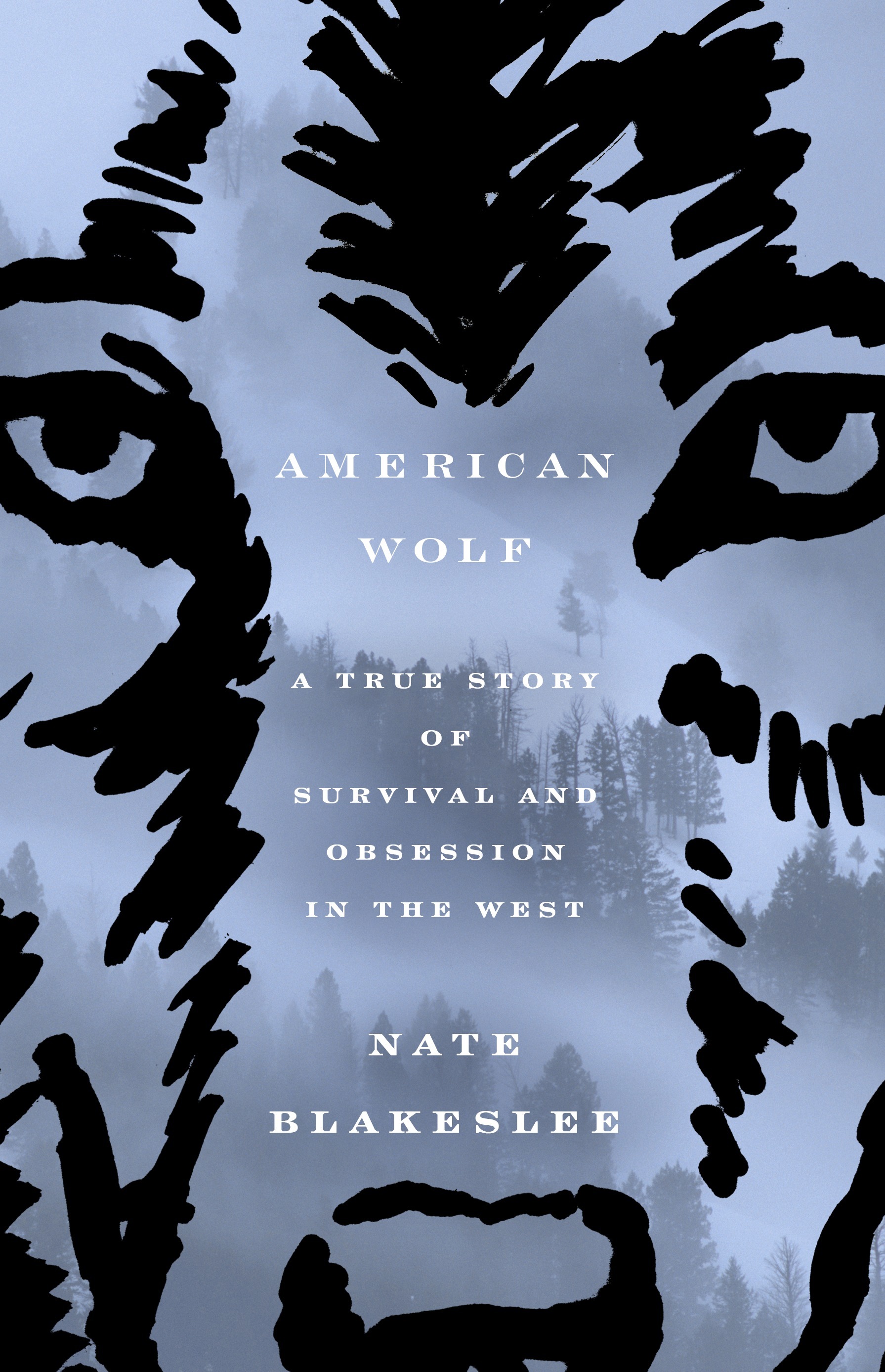
American Wolf by Nate Blakeslee

book coverThere was a time when millions of us roamed the continent. We fed when there was need. We played in forests and open places. Our kind lived well, from the warm woodlands of the south to the frosty forests of the north and in the gentler landscapes between. We raised our pups in cozy dens, and raised our voices at night to call out to others. Sometimes, we joined our brothers and sisters in joyous chorus for no reason at all. We lived in a world with many others, hunters, prey, and creatures who seemed to have no great part of our existence. There were people here then. We lived with them, too. But other people came, people with guns, poison, and traps, people armed with fear, hatred, and ignorance. They took our food sources, and when we were forced to look elsewhere to feed, they turned their quivering, murderous hearts toward us. And there came a time when there were practically none of us left across the entire land.

description
Nate Blakeslee – image from Texas Monthly

In Eurasia and North America, at least, where there have been people there have always been wolves. They have been a significant feature in the lore of most cultures, usually in a negative way. While the tale of the she-wolf Lupa nurturing Romulus and Remus gives wolves some rare positive press, and native peoples of North America offer the wolf considerable respect, wolves have not, for the most part, received particularly positive press in the last few hundred years. The obvious cultural touchstone for most North Americans and Europeans would be the story of Little Red Riding Hood, followed closely by tales of lycanthropy, and maybe a shepherd boy who sounded a false alarm a time too many. The wolf is embedded in our culture as something to be feared, a great and successful hunter, a rival. Homo sap is a jealous species and does its best to eliminate other apex predators whenever we take over their turf. Such has been the case with Canis Lupus. And we have been taking over lots and lots of turf.

description
O-Six – image from StudyBreaks.com

As is so often the case when people are involved, action precedes understanding. European settlers in North America, carrying forward Old World biases, saw wolves as a threat to their safety. Incidents of wolf attacks on people are quite rare, though. Settlers feared for their livestock as well. There was certainly some basis for concern there, but not nearly enough to warrant the response. In fact, wolves serve a very useful function in the larger biome, culling the weaker specimens from natural populations, and thus helping secure the continued health of the overall prey population. The settler response was wholesale slaughter, a public program of eradication, a final solution for wolves. But actions have consequences. The result, in Yellowstone Park, was a boom in ungulate population, which had secondary effects. Increased numbers of elk and other prey animals gobbled up way too much new growth, impacting the flora of the area, unbalancing the park’s ecosystem, seriously reducing the population, for example, of cottonwood and aspen trees, with many other changes taking place as well. Where wolves live they contribute to the balance of their environment. When they are removed, that balance is destroyed.

As a science, wildlife management [in the early 20th century] was still in its infancy, and park officials genuinely believed that predators would eventually decimate the park’s prey population if left to their own devices. They didn’t realize that wolves and elk had coexisted in Yellowstone for thousands of years, that the two species had in fact evolved in tandem with each other—which explained why the elk could run just as fast as the wolf but no faster. Wolves were the driving force behind the evolution of a wide variety of prey species in North America after the last ice age, literally molding the natural world around them. The massive size of the moose, the nimbleness of the white-tailed deer, the uncanny balance of the bighorn sheep—the architect of these and countless other marvels was the wolf.

It is eminently clear that people are quite accomplished at ignoring reality, and extremely proficient at substituting the mythological for the actual, often helped along by the unscrupulous self-interested, who promote falsehoods in order to preserve their personal investments, enhance their proprietary interests, or enrich themselves or those they represent. But sometimes science breaks through the veil of obfuscation and is able to get a hearing for the truths it has unearthed. Such was the case with our understanding of how wolves impact our world. It was due to this understanding and the persistent efforts of ecological activists that a plan was approved to reintroduce wolves into a few locations in the lower 48 states. Yellowstone was the primary site for the program.

description
Rick McIntyre – image from Earthjustice.com

The first wolves were reintroduced into Yellowstone in 1995. That year a star was born, “21M.”

Even before 21 left his natal pack, Rick had known he was unusual. One morning in the spring of 1997, two years after Doug Smith and Carter Niemeyer rescued 21 following the death of his father, Rick watched the handsome young wolf returning from a hunt. With him was the big male who had become the pack’s new alpha when 21 was still a tiny pup. The pair had killed an elk, and 21, already an outstanding provider, had brought a massive piece of meat back to the den, where a new litter of pups had been born.

The pups, his new brothers and sisters, showered him with affection, but 21 seemed tense, pacing back and forth across Rick’s scope. Finally the wolf found what he was looking for: a troubled pup that he had recently taken an interest in. There was usually one pup who held the lowest rank in a litter’s pecking order, but this pup was different; he had some physical problem that held him back. Rick couldn’t tell exactly what was wrong with him, though his littermates clearly recognized that he was different and shunned him. But 21 seemed to have empathy for the pup, the way a dog seems to know when his owner is feeling depressed or lonely. As Rick looked on, the strapping 21 played with the tiny wolf as though he were still a pup himself, giving him the attention he so seldom enjoyed from his siblings.

21 becomes the alpha of the Druid pack, manifesting that most important of leadership qualities, empathy. The Druids were like the Kennedys to some, lupine royalty. In 2006, one generation removed, 21’s granddaughter is born, O-Six. It is her tale that Blakeslee tells here. Well, one half of the tale, anyway. There are two paths followed here. One is the life and times of O-Six, a remarkable creature, and another remarkable creature, one who stands upright, Rick McIntyre.

description
Half Black – a Druid pack female – image from the National Park Service

We follow O-Six’s life from her puppyhood in the Agate Creek pack to her gathering together the wolves that would make up the Lamar Valley Pack. She is a wise leader, a skilled hunter. As she births pups, the pack grows. But there are other packs of wolves in Yellowstone, and conflict among them is a natural condition. In battle, O-Six demonstrates remarkable courage, in one instance standing fast, seriously outnumbered, against an invading pack, and engaging in Hollywood level derring-do to save the day. She succeeds despite having in her pack an Alpha male and his sibling referred to by watchers as Dumb and Dumber for their limited hunting skills. We see her relocate as needed to take advantage of propitious territorial openings, or quarters removed from hostile forces. One of her moves put her in a location where wolf watchers could follow her pack’s exploits from the safe remove of a park road cutout. It is publicity from the group that gathered to ardently keep track of O-Six and her Lamar Pack’s exploits from this convenient watching site, (and others) that made her the most famous wolf in the world.

description
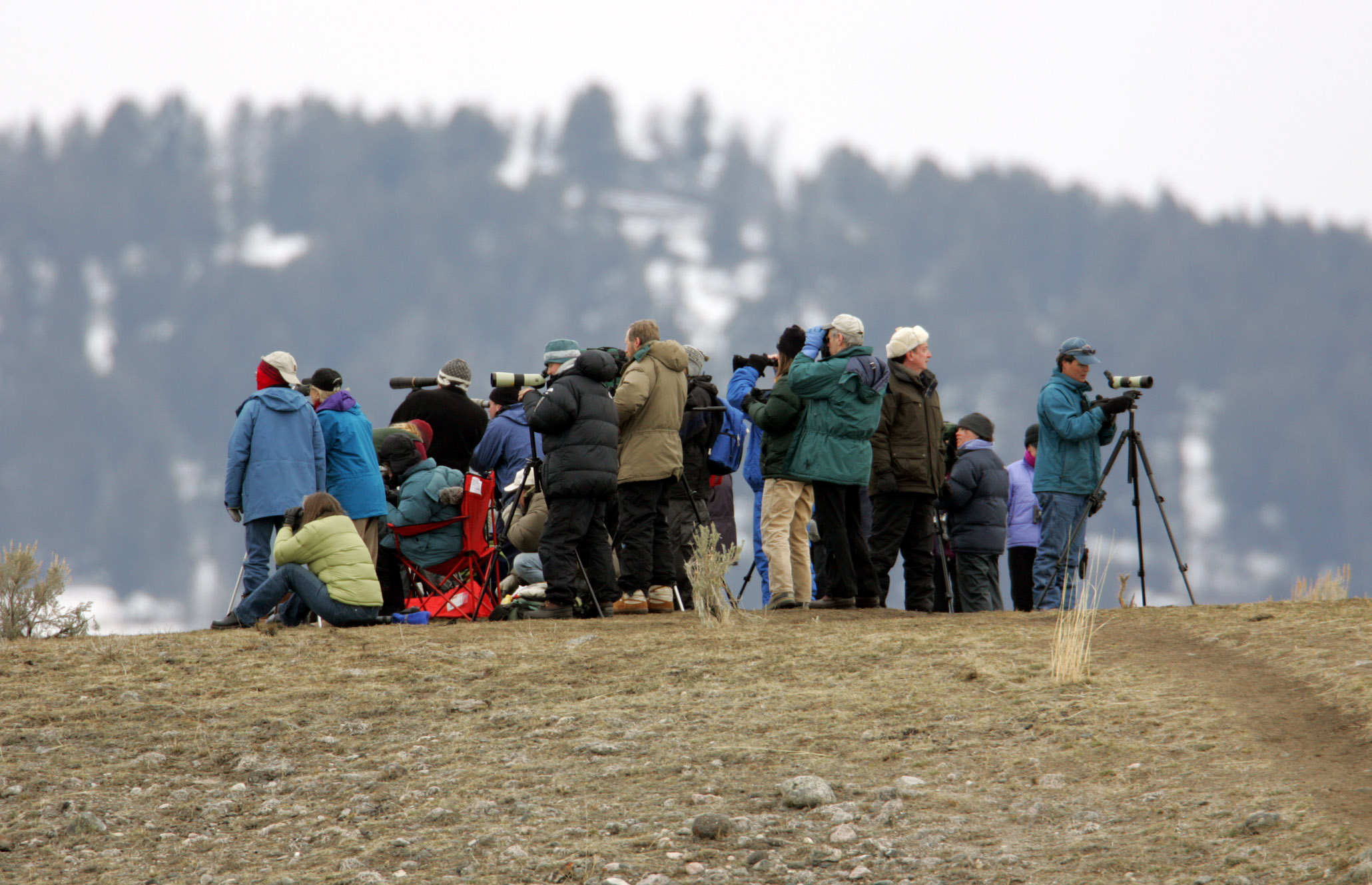
Wolf watchers – image from the National Park Service

Rick McIntyre was constitutionally more of a lone wolf sort, a National Park Ranger, happiest out in the field, whether studying grizzlies in Denali, where he became a top-drawer wildlife photographer, or studying wolves in Yellowstone. He was introduced to wolves by a top wolf biologist, Gorbon Haber, building his expertise and writing A Society of Wolves. The book was published in 1993. It expounded on the culture of wolves, significantly broadening our understanding of the species. His work was instrumental in providing support for reintroduction efforts. This work landed him a spot at Yellowstone, where he slowly improved his people skills, and became a fixture around which study and monitoring of the park packs centered, the leader of the wolf-study pack. He is a charismatic, passionate character and you will enjoy getting to know him.

description
O-Six howling with her mate and his brother – image from NatGeo Wild

There are other elements in the book. The growth of the wolf-watching culture and the Yellowstone watchers club is given plenty of attention. The politics of reintroduction, protection, and attempts to remove protection get their share of ink as well. There is much in here that will raise your blood pressure. Impressively, Blakeslee includes a depiction of the man who shot O-Six. It is not the drooling monster portrayal one might expect. Blakeslee takes pains to consider the perspective of hunters. There is a description of a marauding, death-dealing pack, the Mollies, that will remind you of the Borg, or a zombie apocalypse. It is as tension, and fear-filled a portrayal as you will find in any of the best action-adventure fiction.

description
Yellowstone wolf pup – image from NatGeo Wild

When studying wildlife, researchers are discouraged from forming emotional attachments to the objects of their study. Few animals live nearly so long as people, so your favorite [insert species here] will, as likely as not, perish before you. But readers of this book are under no such caution. Sitting in a laundromat, parked on a backless bench, book on an attached table, looking through the plate glass, rain soaking Hazle Avenue, drops cascading down the window, my eyes join the mass drip on reading Blakeslee’s description of the death of O-Six. I will admit that this happens sometimes when reading about people, but it does not happen often. I am saved from a public exhibition of heaving shoulders and stifled sobs by the buzzer announcing the end of a wash. If you have any tears left after this, you will turn them loose in an epilogue tale of 21’s mountain top trek as he neared death.

description
O-Six – image from NatGeo Wild

I only had one small beef about the book. I understand that researchers are discouraged from naming their study subjects, but it was quite inconsistent in application. Some had names, others were just numbers, and, frankly, it became a bit tough at times, keeping track of which number came from which pack, and was that one with this pack and this one with that pack. Really that’s it. Otherwise, no problemo

description
Wolf #10 of the Rose Creek pack – image from the National Park Service

American Wolf is a complex work, offering some science, some history, some political analysis, some prompts to raise your spirits, some that will make you cheer, and some dark moments that will make you turn away, fold the book closed, and wonder just what is wrong with some people. You will learn a lot, particularly about wolf culture. But primarily, it is a tale of hope, of reason triumphing over ignorance, of courage and heroism besting villainy. It joins the intellectual heft of offering considerable information with the gift of being incredibly moving.

description
Unidentified Yellowstone wolf – 1996 – image from National Park Service

Tail high, standing tall, the gray alpha raises his muzzle and howls a long call. Pack members miles away lift their heads, point their ears toward the siren summons and begin loping home. There are fewer now than there were, an inexperienced young adult having found mortal peril on the fringes of their land. But still, enough of the pack remained, strong and healthy. They would gather. The gray knew where they would go once joined, into the valley. Caribou were plentiful there. They would fill their bellies before grizzlies stole their prize, and then would carry large chunks in their jaws, for the nursing alpha female. It was not the best of all possible world, but it would do, for now.

description
image from wolf.org

Review first posted – October 12, 2017

Published – October 17, 2017

This review is cross-posted on Goodreads. Stop by and say Hi!

=======================================EXTRA STUFF

The author’s Twitter feed and a list of his articles at Texas Monthly

Video
—–a clip from She Wolf
—–Learn to draw a wolf
—–An admirer speaks fondly of wolves howling – what beautiful music they make
—–A familiar item from Duran Duran
—–Another from Sam the Sham
—–Not quite a video, more an an app about wolves with images and sound
—–Yellowstone Wolf History with Rick McIntyre

Articles
—–Heroes: Life Lessons from Yellowstone’s Wolves – by Haleigh Gullion
—–The Call of the Wild – interview with Rick McIntyre
—–July 5, 2018 – NY Times – Who’s Afraid of the Big Bad Wolf Scientist? – Wolf researcher, Rob Wielgus, reports what he can discover, then has to deal with the death threats – by Christopher Solomon

description
Rob Wielgus – Credit – Ilona Szwarc for The New York Times

—–February 9, 2020 – NY Times – The Lonely End to One Gray Wolf’s 8,700-Mile Search for a Mate – by Maria Cramer

description
The female gray wolf known as OR-54, a descendant of the first wild wolf in California in a century. Credit…U.S. Fish and Wildlife Service, via Associated Press – image from the above NYT article

—–April 8, 2020 – Lithub – Did Dogs Choose Us? by Helen Pilcher – an excerpt from her book Life Changing
—–July 10, 2020 – National Geographic – 25 years after returning to Yellowstone, wolves have helped stabilize the ecosystem
—–July 27, 2021 – The Guardian – ‘An abomination’: the story of the massacre that killed 216 wolves by Nate Blakeslee – the killing occurred over a matter of days
—–December 18, 2023 – AP – Colorado releases first 5 wolves in reintroduction plan approved by voters to chagrin of ranchers – by JESSE BEDAYN
—–August 6, 2025 – TWC – How This Animal Helped Save Yellowstone’s Aspen Trees by Jennifer Gray

Other
—–Gray Wolf Conservation
—– The International Wolf Center offers a lot of information
—–Yellowstone’s Photo Collection – wolves
—–The Call of the Wild – free on Gutenberg
—–Get your howl on
—–My review of Charlotte McConaghy’s 2021 novel, Once There Were Wolves in which a small number of wolves are reintroduced to Scotland
—–Of particular relevance to this subject is the Farley Mowat enhanced memoir of his field research experience with wolves, Never Cry Wolf, published in 1963, and the excellent 1983 film that was made of it

description
From the film

November 9, 2017 – American Wolf is among the nominees for Amazon’s book of the year – Science

1 Comment

Filed under Reviews