Tag Archives: psychology

How to Win Friends and Influence Fungi by Chris Balakrishnan, Matt Wasowski

book cover

Nerd Nite is an event usually held at a bar or other public venue where usually two or three presenters share about a topic of personal interest or expertise in a fun-yet-intellectual format while the audience shares a drink. It was started in 2003 by then-graduate student (now East Carolina University professor) Chris Balakrishan at the Midway Cafe in the Jamaica Plain neighborhood of Boston. In 2006 Nerd Nite spread to New York City, where Matt Wasowski was tasked with expanding the idea globally. – from Wikipedia

Be There and Be Square – Nerd Nite logo

There was a nerd magazine in 2012, a Youtube presence, and occasional podcasts. This is the first Nerd Nite book.

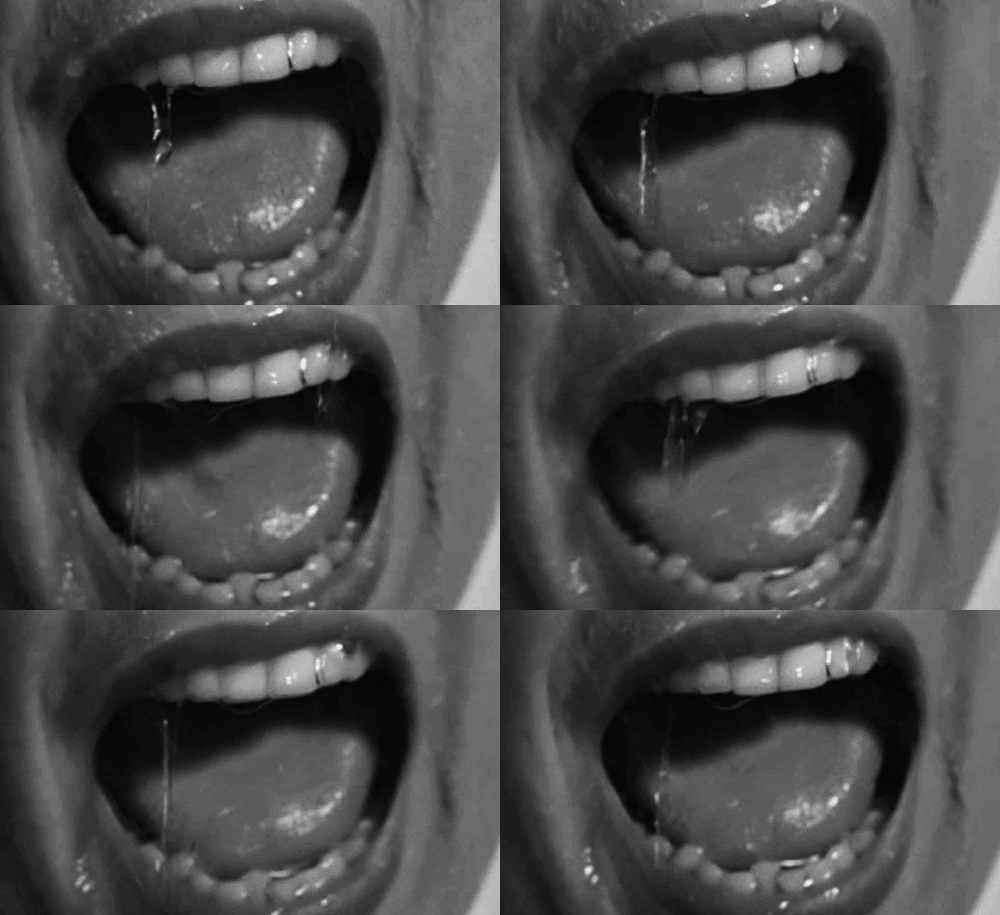
Misophonia can attach itself to any repetitive sound, but the most common ones are things, like chewing, breathing, sniffing, and throat clearing. It can be hard for sufferers to talk about because of how difficult it can be to tell someone politely that the sound of them keeping themselves alive is repulsive to you.

There are 71 entries, taken from live presentations done by the authors of each piece. (TED talks for those with short attention spans and a need for alcohol?) Nerd Nites have been held in over 100 cities across the globe. The material here covers eleven scientific areas. (see below) All the entries are brief, so if one does not appeal to your mental tastebuds hang on a couple of minutes for the next one, or just skip past.

description
Chris Balakrishnan and Matt Wasowski – editors – image (from some time ago) from Facebook

You can digest this book a few morsels at a time, and not have to worry about the fate of a fictional hero or put-upon victim. Nope. The heroes here are the scientists, the presenters. One of the great failings of popular science books, IMHO, is the absence of humor, or poor attempts at it. Not here. There are many moments in this one, and humor in almost all of them. That made me very happy. Of the 71 pieces, almost all are very pop-sciency, understandable by most readers, even me. There were only one or two that made my head hurt. It makes an excellent bed-side read. It was an upstairs book for me, to be read before nodding off, hopefully. Sometimes that takes a while. This is not an all-inclusive list of the articles, but lets you know what might be in store in its eleven sections

1 – Creature Features – on weird animals
2 – Mmmm…Brains – strangeness with how we learn and adapt
3 – Bodily Fluids – on things like coping with poo in space. (In space, no one can hear you fart?)
4 – Doing It – like it suggests, on sex, human and non-human, (no, not with each other. Don’t be weird.)
5 – Health and (un)Wellness – human smells (See Paul Giamatti in The Holdovers) – on therapeutic maggots, adolescent medicine, et al
6 – Pathogens and parasites – on birds, bacteria in birds, zombies, the scotch tape test (don’t ask), viruses
7 – Death and Taxes – mass extinction, cancer, algae
8 – Space, the Big and the Beautiful – ignorance, asteroid avoidance and use, life on Europa?, artificial gravity, studying a pristine meteorite, Webb telescope
9 – Tech (High and Low) – GMOs, dating app, human powered flight, cyborging humans, domesticating bacteria, nuclear fusion
10 – Math is fun – a seminal experiment, the math of gossip, the golden ratio, infinity, cryptography
11 – Careers – things removed from dogs, useless inventions, myths about death, animals CSI, amputations, fermentation, flames.

there are approximately 100 trillion microorganisms (mainly bacteria), representing as many as 30,000 different species, living in every crevice, nook, and mucosal cranny of your body that you can imagine.

I would include a list of my favorite articles, but it would wind up as long as the parts list above. But ok, because I have the sense of humor of a twelve-year-old, the one that made me laugh the most was To Boldy Go: Dealing with Poop and Pee in Space. Apollo 10 astronauts were gifted with the visual, and no doubt olfactory, treat of a turd meandering about in their capsule. This begins a talk about how one handles bodily waste in zero G. Another on bladder control, or the absence thereof, was sidesplitting. Others, on camel spiders and hangovers, generated a fair number of LOLs.

Some were fascinating, like one having to do with making a brain on a chip. (Can it be served with Salsa?) The pieces on bacteria and their importance to human life, heck, to all life on Earth, were fascinating.

There is plenty of weirdness, about diverse forms of milk, the proper use of maggots in healing, zombie parasites, asteroids, artificial gravity, and here we go with another bloody list. Sorry. Take my word, there is a wealth of material here that will broaden your knowledge base, and serve up plenty of conversational hors d’oeuvres for cocktail party chatter.

It worked quite well for me. There is a downside, though. Because all the articles here are very short, one is often left hungry for more. On the other hand, that limitation might provoke you to sate that desire with a bit of extra research, which is always a good idea. So, never mind.

If science piques your curiosity, if learning new and diverse things makes your heart race, or if you like to laugh, then this book is for you. How to Win Friends and Influence Fungi is a very filling read, one nibble at a time.

Review posted – 06/14/25

Publication dates
———-Hardcover – 02/01/24
———-Trade paperback – 11/04/25

I received a hardcover of How to Win Friends and Influence Fungi from St. Martin’s Press in return for a fair review. Thanks, folks.

This review is cross-posted on Goodreads. Stop by and say Hi!

=======================================EXTRA STUFF

Author/Editor links

Chris Balakrishnan – Program Director at the National Science Foundation – His personal and FB pages
A list of his articles

Matt Wasowski – Director of New Business and Product Development, Events at SAE International – His FB, LinkedIn and Twitter pages

Items of Interest from the authors (really editors)
—–Soundcloud – excerpt – 5:01
—–Birdsong: How the Twittering Set Learns to Speak
—–“Nerd Nite Published a Book!” by Matt Wasowski – Nerd Nite Austin 155, January 2024

1 Comment

Filed under Non-fiction, Psychology and the Brain, Science and Nature

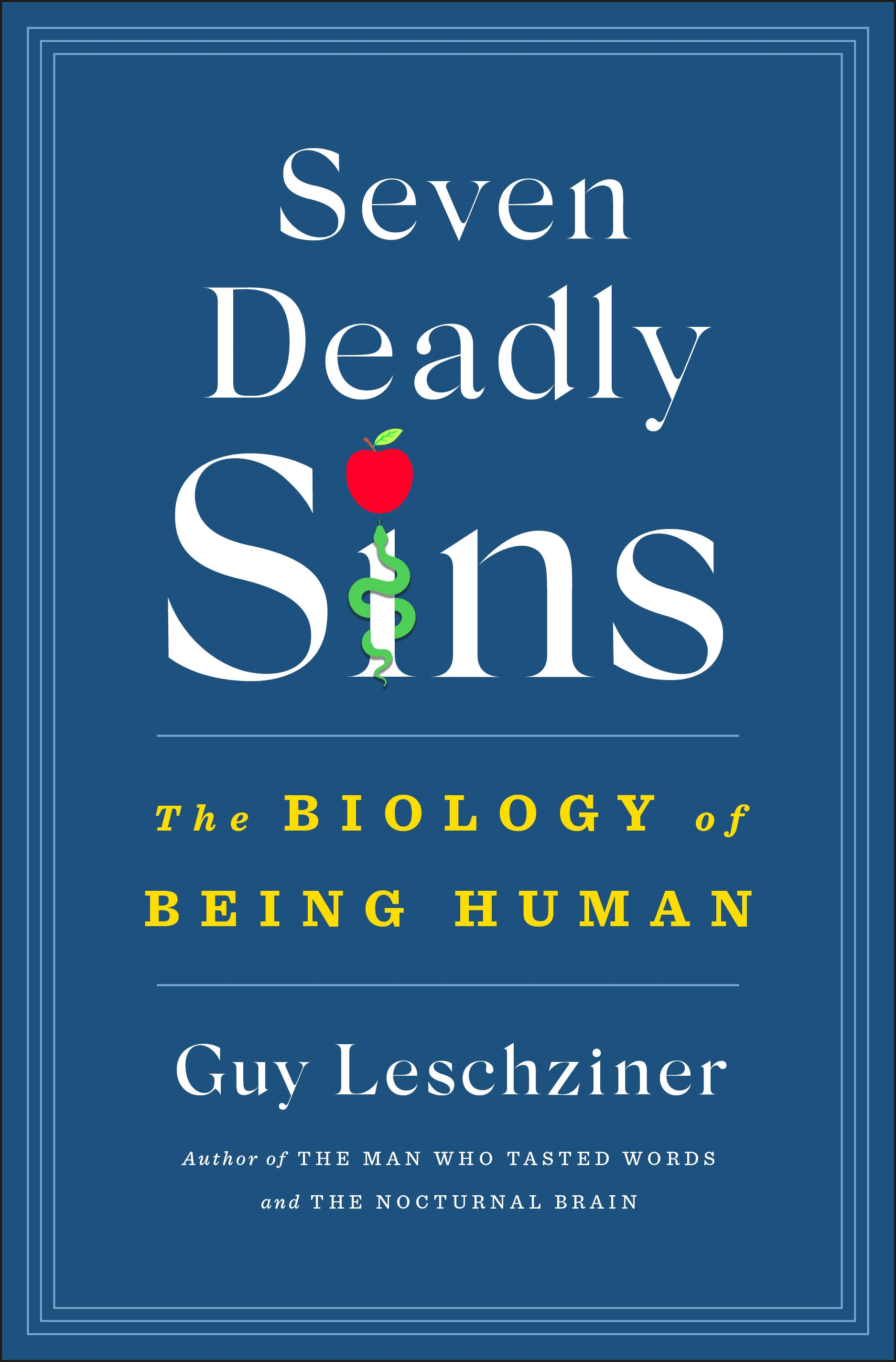
Seven Deadly Sins by Guy Leschziner

book cover

The ebb and flow of human history is defined by the Seven Deadly Sins: wrath, gluttony, lust, envy, sloth, greed, and pride. From the wrath that has ignited revolutions, to the greed that has re-sculpted the world map. From the sloth that has led to the fall of empires, to the envy that has built them. From the lust that has led to the fall of politicians and the betrayal of national secrets, to the voracious gluttony that has left our environment in ruination, and the pride that has fueled countless conflicts.

Disorders of the brain, of our genes, or other physical conditions, may give rise to gluttony, lust, wrath or pride. The effects of our environment or our upbringing may produce envy, lust or sloth. Crucially, these disorders unmask what is already in us, what already exists in all of us.

William J. Bennet (before he was outed as a compulsive gambler) is reputed to have said “One man’s vice is another man’s virtue.” Pope Gregory, in the sixth century CE, had a different idea, whittling a larger, earlier list down to seven deadly sins. (One wonders if there might be a grander list of [insert number here] bloody annoying sins). I do remember in my Catholic grammar school days Monsignor Marshall giving a sermon on venial sin (non-deadly, but as far as I can recall not presented as a list), in which he offered up the image of Jesus on the cross, and proclaimed that committing a venial sin was like slapping the nailed Christ across the face, albeit not very hard. No Jewish mother ever delivered a more impactful guilt trip.

description
Professor Guy Leschziner – image from The Daily Mail

In his prior book, The Man Who Tasted Words, Professor Leschziner looked at places where the lines between our senses appear to be somewhat porous, sense-A leaking into sense-B for some individuals. Hearing colors, seeing sounds, aphasic things like that. He offered an examination of what is considered usual, and where, in the brain, wires may have become crossed. He looked at individuals who reported such experiences and attempted to trace back into the brain where each sense resided, and connected to others.

Here he uses as his starting point the notion of the seven deadly sins, and offers neurological analysis of behaviors commonly regarded as sinful. Bu the Seven Deadly sins seem to divide into two groups, one based on behavior and one based on emotion. Wrath, Gluttony, Sloth and Greed require action to do actual damage, while Pride, Envy and Lust can remain internal. You may think you are better than everyone else, but unless you do something based on that belief, it makes no difference. Ditto Lust and Envy. In the absence of acting on these feelings, no harm, no foul, so the playing field for looking at The Seven is uneven from the start. The subtext is the question of free will. Are we all functional free agents able to determine right from wrong or are we driven by our biology, by what our brains have, by genetic heritage and experiential conditioning, commanded us to do? And how have the behaviors that have defined our species, that have led to our accomplishments as well as our excesses, our failings, served us? Is there a range within which our less than idyllic urges can function healthfully, and outside of which they constitute pathology?

Look at aberrant behavior. Dive in to see exactly which parts of the brain have been harmed, if any. Map behaviors, needs, urges, inclinations to parts of the brain. In a way, this is a bit like explorations of yore, sailing out to see what lay over the horizon, or, fictionally, heading out on a starship to see what the universe may present. He uses several case studies of people who manifest behaviors illustrative of each of the sins, looking for neurological bases. Just as in his examination of cross-sense irregularities in his prior book, Leschziner looks at these patients with an eye toward identifying which parts of the brain bear the most responsibility for the problematic behaviors. These include a man who had had a brain bleed that changed his personality, a woman who was incapable of feeling satisfied no matter how much she ate, a 34yo man with Parkinson’s and an increasing obsession with sex, a woman who believes her totally faithful husband is cheating on her, a young father who sleeps twenty hours a day, a man has delusions of grandeur until multiple abscessed teeth are removed, oh, and the Panama Papers. Centers of emotional concern include the amygdala, the pre-frontal cortex, a warrior gene, and the hypothalamus internally. He looks at the influence of bacteria, viruses, dopamines, and more impacting from the outside. Increasingly, science can indeed offer some answers to the why of behaviors, to a point.

In his novel, Fleur de Lis, Anatole France wrote. “The law, in its majestic equality, forbids rich and poor alike to sleep under bridges, to beg in the streets, and to steal bread.” There are clearly hypocritical societal interpretations of sin, of what sinful behaviors will be tolerated and which will be sanctioned. (Unless, of course, you are a president with a friendly Congress and SCOTUS, in which case, just go ahead with whatever you are doing there on Fifth Avenue.)

Poor man wanna be rich, rich man wanna be king
And a king ain’t satisfied till he rules everything
– Springsteen – Badlands

And most societies assign moral responsibility to the actor. The question is whether a person is morally responsible for his/her actions or is a slave to, and predetermined by impulses, by one’s underlying and overwhelming personal psychological makeup.

if you believe that the brain is the origin of our personalities and our character traits, the basis of our decisions, be they good or bad, then it is arguable that much of what defines us is outside of our control.

Whether we are all able to make actual free choices or are slaves to our biology, it is clear that society needs to be able to restrict our ability to harm each other, that protecting each other from the worst in people is a reasonable social responsibility.

It is made clear that the drives that we regard as sinful have provided considerable benefit to our evolution as a species. No lust? No reproduction. No envy? No reason to be more productive. No wrath? No defense against attack.

Leaving the question of evil. At first blush is seems that evil serves no obvious Darwinian purpose. On second thought, though, I expect there might be a case made for evil existing as an existential challenge in order to provide a testing ground against which one might measure strength of character and/or the superiority of one’s genes, whether physical or intellectual. In a way, like ice ages, rapid climate change, or a voracious saber-tooth tiger, evil might be seen as a natural force, even if it manifests through human beings.

Leschziner has offered up a provocative, thoughtful brain-candy-ish look at how science, as it advances, keeps finding biological explanations for fraught psychological behaviors. But our impulses and makeup remain what they are. And this is one of the pleasures of reading The Seven Deadly Sins. Learning what a strange creature is homo sapiens, and how we are put together. It seems quite clear that the real original sin is to have been born human.

extrinsic factors – medication, injury, or functional disturbance of the brain – rather than our values can cause us to act in ways that contravene our moral
code. However, that dividing line between what constitutes normality and pathology shifts in the sand. That line is blurred by the prevailing winds of our views on morality, legality, philosophy and medicine.

Review posted – 02/21/25

Publication date – 12/3/24

I received paper and ePub AREs of Seven Deadly Sins from St Martin’s in return for a fair review. Thanks, folks, and thanks to NetGalley for facilitating.

This review is cross-posted on Goodreads. Stop by and say Hi!

=======================================EXTRA STUFF

Links to the author’s personal, Instagram, and Twitter pages
Profile

Interviews
The Guardian – Science Weekly Podcast – Are we hardwired to commit ‘deadly sins’? – podcast
– audio – 23:59
—–The Jewish Chronicle – Were the Nazis inherently evil? ByJennifer Lipman
—–Greed, gluttony, sloth…lust! Why you sinned this Christmas by Anna Maxted

Items of Interest from the author
—–Big Issue – The truth is we’re all sinners – it’s how we survive as human beings
—–Next Big Idea Club – A Scientific Examination of the Seven Deadly Sins

My review of the author’s prior book
—–2022 – The Man Who Tasted Words

=======================EXTRA EXTRA STUFF

George Carlin famously distilled the ten commandments down to two.

It seems pretty clear that the seven deadly sins can likewise be slimmed down as well.

Pride. What does this actually mean?
Believing that you are better than other people? What if you are? Faster, stronger, better looking, smarter. Something more than others. Is recognizing your superiority a sin if it is true? The bible seems to maintain that an “Excessive” self-regard is where the line is crossed, but who gets to determine where the line is drawn between factual and excessive self-regard?

But pride does seem to be a pre-condition for other sins. Wrath, or extreme anger, certainly seems an appropriate response to extreme provocation. Hardly a sin. But in order to get into a sinful bit of wrathful behavior it must be excessive. In order for it to be excessive the deliverer of such wrath must hold a higher view of him or herself vis a vis the target than seems justifiable. Soooo, excessive pride, right? So, scratch wrath, and we are down to six.

Gluttony – excessive consumption to the point of waste.
Wiki tells us that In Christianity, it is considered a sin if the excessive desire for food leads to a lack of control over one’s relation with food or harms the body. But if the desire for food entails loss of control over one’s relation to food, where is free will? Isn’t that a definition of pathology? And a pathological behavior is hardly sinful. And just what constitutes excessive desire? If we remove the pathological from this formula, we are left with a person feeling entitled to consume (and I think it is safe to expand the notion of consumption here from food to all things material) as if they are better or more deserving of such things. Which brings us back to pride. Gluttony eats itself into a coma and we are down to five.

Greed
Catholic.com claims that Greed is the disordered love of riches. Hmmm, who gets to define “disordered?” and doesn’t a love of riches include a personal belief that one deserves such riches? Here we go again. It requires excessive self-regard to crave riches at a “disordered” level, no? Greed crushes itself with massive accumulation of stuff and we are left with four.

For these other sins, we delineate the pathologies that shape our thoughts and behaviours, and set them apart from those underlying character traits through their intensity and consequences. For greed, we do no such thing. Yet greed, like the other sins, is perilous in its most extreme forms, causing harm to individuals and wider society alike.

Is Donald Trump, a career criminal, capable of differentiating between right and wrong, or was he so damaged by his genetics and upbringing and injured by his subsequent business training at the feet of his sociopathic father, that he is incapable of telling or even caring about the difference between good and bad? Similar for Elon Musk. How great would it be were Leschziner able to do a detailed examination of both men’s brains. Because if they are capable of discriminating right from wrong, then we have a pretty clear proof that there are indeed forces of evil loose in the world, which I expect would come as a great shock to few but the most ardent atheists.

Lust and envy seem sub-elements of the same thing, wanting something that someone else has. Surely lust between two unattached people is no sin. It is only when one person (at least) is already attached that lust becomes problematic (presuming a monogamous baseline). So, wanting something (someone) who/which is not yours, but which is attached to, or is owned by someone else. So what? We all want stuff we do not or cannot have. How is this a sin? It seem to me that having feelings like lust and envy is completely natural. It is only when we take actions to effectuate such the desire, to the detriment of others that the sin element is realized. Down to two.

According to Wikipedia Sloth is the most difficult sin to define and credit as sin, since it refers to an assortment of ideas, dating from antiquity and including mental, spiritual, pathological, and conditional states. One definition is a habitual disinclination to exertion, or laziness. Willful laziness is surely not cool. Just ask any married person whose partner declines to hold up his or her end, opting instead to watch football or soaps. This one seems likely to be based in behavior, as the sinner here engages in slothful behavior, doesn’t just feel…um…slothful. I could certainly see many real-world examples, beyond couch potato chore-avoiders. There are many people who cannot be bothered exercising the intelligence they were born with to examine themselves, their community, public issues, religious beliefs, or much of anything. It may well be that they believe themselves not up to such analysis, and maybe they are not. But for many, if not all, it does seem that the disinclination rests on a belief that they are too good to have to bother with such things, that they have it all figured out and need look no further than the perimeter of their personal bubble…so…excessive pride. And poof! We are down to one.

Pride goeth before the fall, and, apparently every other form of sinfulness. There is only one deadly sin, excessive self-regard, which feeds all the others, and becomes problematic only when put into actual real-world action.

Leave a comment

Filed under Non-fiction, Psychology and the Brain, Public policy, Science and Nature

How to Win Friends and Influence Fungi – edited by Chris Balakrishnan, Matt Wasowski

book cover

Nerd Nite is an event usually held at a bar or other public venue where usually two or three presenters share about a topic of personal interest or expertise in a fun-yet-intellectual format while the audience shares a drink. It was started in 2003 by then-graduate student (now East Carolina University professor) Chris Balakrishan at the Midway Cafe in the Jamaica Plain neighborhood of Boston. In 2006 Nerd Nite spread to New York City, where Matt Wasowski was tasked with expanding the idea globally. – from Wikipedia

Be There and Be Square – Nerd Nite logo

There was a nerd magazine in 2012, a Youtube presence, and occasional podcasts. This is the first Nerd Nite book.

Misophonia can attach itself to any repetitive sound, but the most common ones are things, like chewing, breathing, sniffing, and throat clearing. It can be hard for sufferers to talk about because of how difficult it can be to tell someone politely that the sound of them keeping themselves alive is repulsive to you.

There are 71 entries, taken from live presentations done by the authors of each piece. (TED talks for those with short attention spans and a need for alcohol?) Nerd Nites have been held in over 100 cities across the globe. The material here covers eleven scientific areas. (see below) All the entries are brief, so if one does not appeal to your mental tastebuds hang on a couple of minutes for the next one, or just skip past.

description
Chris Balakrishnan and Matt Wasowski – editors – image (from some time ago) from Facebook

You can digest this book a few morsels at a time, and not have to worry about the fate of a fictional hero or put-upon victim. Nope. The heroes here are the scientists, the presenters. One of the great failings of popular science books, IMHO, is the absence of humor, or poor attempts at it. Not here. There are many moments in this one, and humor in almost all of them. That made me very happy. Of the 71 pieces, almost all are very pop-sciency, understandable by most readers, even me. There were only one or two that made my head hurt. It makes an excellent bed-side read. It was an upstairs book for me, to be read before nodding off, hopefully. Sometimes that takes a while. This is not an all-inclusive list of the articles, but lets you know what might be in store in its eleven sections

1 – Creature Features – on weird animals
2 – Mmmm…Brains – strangeness with how we learn and adapt
3 – Bodily Fluids – on things like coping with poo in space. (In space, no one can hear you fart?)
4 – Doing It – like it suggests, on sex, human and non-human, (no, not with each other. Don’t be weird.)
5 – Health and (un)Wellness – human smells (See Paul Giamatti in The Holdovers) – on therapeutic maggots, adolescent medicine, et al
6 – Pathogens and parasites – on birds, bacteria in birds, zombies, the scotch tape test (don’t ask), viruses
7 – Death and Taxes – mass extinction, cancer, algae
8 – Space, the Big and the Beautiful – ignorance, asteroid avoidance and use, life on Europa?, artificial gravity, studying a pristine meteorite, Webb telescope
9 – Tech (High and Low) – GMOs, dating app, human powered flight, cyborging humans, domesticating bacteria, nuclear fusion
10 – Math is fun – a seminal experiment, the math of gossip, the golden ratio, infinity, cryptography
11 – Careers – things removed from dogs, useless inventions, myths about death, animals CSI, amputations, fermentation, flames.

there are approximately 100 trillion microorganisms (mainly bacteria), representing as many as 30,000 different species, living in every crevice, nook, and mucosal cranny of your body that you can imagine.

I would include a list of my favorite articles, but it would wind up as long as the parts list above. But ok, because I have the sense of humor of a twelve-year-old, the one that made me laugh the most was To Boldy Go: Dealing with Poop and Pee in Space. Apollo 10 astronauts were gifted with the visual, and no doubt olfactory, treat of a turd meandering about in their capsule. This begins a talk about how one handles bodily waste in zero G. Another on bladder control, or the absence thereof, was sidesplitting. Others, on camel spiders and hangovers, generated a fair number of LOLs.

Some were fascinating, like one having to do with making a brain on a chip. (Can it be served with Salsa?) The pieces on bacteria and their importance to human life, heck, to all life on Earth, were fascinating.

There is plenty of weirdness, about diverse forms of milk, the proper use of maggots in healing, zombie parasites, asteroids, artificial gravity, and here we go with another bloody list. Sorry. Take my word, there is a wealth of material here that will broaden your knowledge base, and serve up plenty of conversational hors d’oeuvres for cocktail party chatter.

It worked quite well for me. There is a downside, though. Because all the articles here are very short, one is often left hungry for more. On the other hand, that limitation might provoke you to sate that desire with a bit of extra research, which is always a good idea. So, never mind.

If science piques your curiosity, if learning new and diverse things makes your heart race, or if you like to laugh, then this book is for you. How to Win Friends and Influence Fungi is a very filling read, one nibble at a time.

Review posted – 06/14/24

Publication date – 02/01/24

I received a hardcover of How to Win Friends and Influence Fungi from St. Martin’s Press in return for a fair review. Thanks, folks.

This review is cross-posted on Goodreads. Stop by and say Hi!

======================================EXTRA STUFF

Author/Editor links

Chris Balakrishnan – Program Director at the National Science Foundation – His personal and FB pages
A list of his articles

Matt Wasowski – Director of New Business and Product Development, Events at SAE International – His FB, LinkedIn and Twitter pages

Items of Interest from the authors (really editors)
—–Soundcloud – excerpt – 5:01
—–Birdsong: How the Twittering Set Learns to Speak
—–“Nerd Nite Published a Book!” by Matt Wasowski – Nerd Nite Austin 155, January 2024

1 Comment

Filed under Non-fiction, Psychology and the Brain, Reviews, Science and Nature

Our Tribal Future by David R. Samson

book cover

Tribalism is governed by a force so motivationally powerful that it predicts more of your behavior than your race, class, nationality, or religion. The formal analysis of this incredible phenomenon has only just begun, but the emerging science reveals that these factors are mere subjugates to our primal instinct to be a member of a tribe. This “Tribe Drive” is an ancient adaptation that has been a prerequisite for survival for 99.9 percent of our species’ evolutionary history. It is a critical piece of cognitive machinery—honed by millions of years of evolution—that gave us the ability to navigate, both cooperatively and competitively, increasingly complex social landscapes. But now that our species spans billions across the globe, does this adaptation continue to serve us, or is it mismatched to its environment? In other words, what happens when humans become either tribeless or destructively consumed by tribalism?

So next time you hear a raving demagogue counseling hatred for other, slightly different groups of humans, for a moment at least see if you can understand his problem: He is heeding an ancient call that—however dangerous, obsolete, and maladaptive it may be today—once benefited our species. — CARL SAGAN AND ANN DRUYAN, 1993

There is a reason birds of a feather stick together, that fish swim in schools, and that gnus migrate in large herds. It increases the survival chances for the group, if not necessarily the individuals within it. So it is with people. We do not have the canines of the saber-tooth, the bulk and muscle of the bear, the speed of the leopard, the poison of the snake or many of the other tools available to creatures eager to dine on the special meat. Even our relatively advanced gray cells were not enough to consistently keep us off the dinner menu. But getting together helped, big-time. E pluribus unum, baby. And grouping together allowed us to hunt in packs, which was much more effective than hunting individually. So, how did we shift from independent contractors to company people?

description
David R. Samson – image from his Facebook pages

It is obvious to any observer that we are a tribal species today. Samson looks at the elements that make up this trait. He wrestles with the lion of the issue, why are we the way we are?
And how what he calls our innate tribal drive, which may have served us well on the savannah, serves us less well in the modern world.

The core of the mismatch is that modern society has made us more physically isolated by decreasing our social support; all the while it has made us more mentally unstable by increasing social pressure, tricking us into thinking that low grade online and institutional social interaction is good enough to live a healthy and fulfilling life. In this sense, the people who dwelled in the first tribes were not challenged as much as we are today. Their units were glued together in a common struggle for survival, not the weak ideological grounds many use as the foundation to their tribal social identities today.

Samson begins by looking at how our tribal drive causes more trouble than it solves. Then heads off into the history of how human organization evolved. For example, before there could be tribes there had to be camps. (The People’s Front of Judea?) This material is fascinating, as he builds up the structure of prehistoric human grouping. There are organizational layers that needed to develop and join together in order to make up early human tribes. He goes into what early human needs were, the reason for being of groups, the need for food, shelter, and avoidance of incest. And beyond that, there was a need to cope with ill fortune. Stuff happens, and your group can survive such stuff more robustly if it is larger. Thus tribes, which still carry within them the need for assurance about who is trustworthy. This leads to a need for some sort of recognition mechanism. When a group gets beyond the magical Dunbar number, how do we know if someone is safe? If they are one of us and not one of a potentially threatening them.

The figure of 150 seems to represent the maximum number of individuals with whom we can have a genuinely social relationship. . . . Putting it another way, it’s the number of people you would not feel embarrassed about joining uninvited for a drink if you happened to bump into them in a bar. — ROBIN DUNBAR, 1996

Well, you can see how this might be endlessly fascinating. And it is. Tribalism is what allowed us to survive as a species. When the going got tough, the tough formed tribes.

He traces the steps that were needed to achieve tribe-dom, and looks at how they functioned once established. He offers considerable intel on how tribalism changed over time, how it developed diverse forms, how we developed ways to tell tribal friend from foe without knowing them personally. Great stuff. I worked my poor mouse and keyboard down to bare metal copying passages from this book.

Part 2 (of two) refocuses on the contemporary. How our need for tribal connection impacts our lives. He talks about how increasing class separation has resulted in the well-to-do being able to buy the social support they need, while us plebes have had to scramble to make do with our declining slices of the national pie. He offers sundry ways in which we can mitigate the impact the world has had on us, how it has deprived us of our tribal needs, primarily of personal contact with a trusted bunch. Samson looks at ways in which we can find a better balance, offering some real-world examples.

There were several times, I was pulled up short by Samson’s social analysis. He quotes Robert Putnam on a decline in family togetherness over the ten year period between 1985 and 1994. Yet he does not seem to consider it worth noting that this corresponds roughly with the Age of Reagan, and a turn away from community and toward the individual. He also does not include any significant discussion on the general decline in religious affiliation, which surely would be relevant to stresses on tribal identification.

A particularly egregious example of both-siderism entails looking at the different responses to a handwriting expert’s analysis of Donald Trump’s signature. The entirety of that can be found under a spoiler tag in EXTRA STUFF, so you can see for yourself. In focusing on how different groups reacted to the analysis, he does zero follow-up to look at whether one group or another turned out, based on observable real-world facts, to have had a better handle on things. That did not kill the book for me, but it was a red flag.

It is often the case that social scientists do a decent job of examining society, ferreting out specific elements that might be causing this or that bad result. But it is just as often the case that the solutions that are proposed fail the political sniff test. Not political as in party affiliation, but political in the sense that any social change has to be applied in a medium that is comprised of human beings. On the other hand, there are myriad nuggets of information in Our Tribal Future that enrich the reading experience, like his look at the basis of ethics, and a dive on how The Dunbar Number came to be.

For many, these days, much of our political discourse appears to be driven more by tribal identity than by rational consideration of policy merits or disbenefits. I was able to glean some significant bits of wisdom to apply to this from Samson’s discussion of tribal psychology, but I had hoped he would have done more with it. Where he does go is to examine some ways of social organization that offer opportunities for improving our lot.

He is wise in noting that community-level engagement is the best way to not only effect direct change, but to gain links to other nearby people, creating or reinforcing social cohesion, and mental health. But then he ignores what might be done for national issues like abortion, national tax policy, national defense and health care coverage and availability. It is a narrower focus, which is certainly Samson’s right, but there seems to be a pretense that local arrangements exist in a bubble, unimpacted by the larger world.

You may have heard of the uncanny valley. The expression refers to the creeped-out feeling one gets when seeing/interacting with an animation or robot that is intended to be very human-like, but is not quite there. (Ron DeSantis?) Likewise, David Samson’s Our Tribal Future tries to be an accessible, pop-science look at a very significant element of contemporary life, particularly in the political sphere. He mostly succeeds when writing about our deep history. But there is some drift into a more academic presentation that shifts towards the science and a bit too far away from the pop. It is when he tries to look past what is to what could be, that the Philistines of reality swarm him. So, if you are academically inclined, by all means, dive in. There is much of value here. But if the hint of textbook makes your blood run cold, you may want to explore elsewhere. A compromise might be to take in Samson’s wonderful presentation on human historical self-organization, then see how you feel moving forward. But if you are looking for a fully accessible pop-science read, you may find yourself in an uncanny valley.

When we grow, develop, and live in a world where everything is geared toward the individual, how can we help but view the world with a more narcissistic lens? When we live with other people, share resources within the environment, and work through problems together, the outcome is an individual that is less self-centered and more psychologically flexible.

Review posted – 08/18/23

Publication date – 05/30/23

I received an ARE of Our Trtibal Future from St. Martin’s Press in return for a fair review, and becoming a member of their group. Thanks, folks, and thanks to NetGalley for facilitating.

This review is cross-posted on Goodreads. Stop by and say Hi!

=======================================EXTRA STUFF

Links to the Samson’s personal, Instagram, and Twitter pages

Interviews
—–Toronto Star – Creating a better future: How to take our instinct to belong to a group and turn it into a force for good By Brian Bethune’
—–The Power of Us – INTERVIEW: David Samson on OUR TRIBAL FUTURE by Dominic Packer and Jay van Bavel
—–The Gray Area – The Future of Tribalism with Sean Illing – podcast – 51:08

Item of Interest from the author
—–Excerpt

Items of Interest
—–The People’s Front of Judea?
—–Wikipedia – Uncanny Valley
—–Handwriting Analysis… example of mirror game psychology. Michelle Dresbold, a handwriting expert who has been trained and worked with the Secret Service, analyzed Donald Trump’s signature. In her analysis, she described his handwriting as “bold, condensed, angular signature shows someone who is rough, tough, aggressive, competitive, can never relax and is not nurturing.”490 She further expounds that his angular writing style with minimal curves shows up in the signatures of some sharp-minded and competitive workaholics that are prone to anger, hostility, and fear. Whether there is truth to her analysis is beside the point. The insight is how people interpreted her observation about Trump’s signature. Dresbold was shocked by the public response, as conservative audiences (corporations, business groups, and entrepreneurs) reacted positively to her analysis of what she considered mostly negative attributes. However, liberals in the academy, at universities, and other progressive hot spots had mirror opposite responses, using the identical data as proof of Trump’s corruption. Dresbold recalls: “When I say something like ‘his check-mark-like stroke, called a tick-mark [in the bottom left-hand corner of the D in Donald], it indicates that Trump has explosive anger and a very bad temper,’ the conservative interpretation is, ‘Of course, he’s angry about what’s happened to America.’ The liberal interpretation is, ‘Yes, he’s a very angry man with childlike temper tantrums.’” Continuing on theme, if Dresbold remarks that his signature is unreadable which indicates that he keeps his feelings hidden from the public, the liberals’ interpretation is that he’s sneaky and untrustworthy, whereas the conservative interpretation is that it he is intelligent because he doesn’t want our enemies to know what is in his mind. Same data, same analysis, two different universes of interpretation.

Leave a comment

Filed under anthropology, Evolution, Non-fiction, Psychology and the Brain

Who Gets Believed by Dina Nayeri

book cover

”Who ya gonna believe, me or your own eyes?” – Chico Marx in Duck Soup

The truth isn’t enough. Most people aren’t even listening for it.

Agent Mulder knew that the truth was out there. But what can one do about those who are incapable or unwilling to see it, or worse, those who have a vested interest in disbelief? And how much responsibility to persuade the unpersuadable must be carried by those whose truth is in question? Aliens do figure large in this book, but not in the Mulder/Scully mode.

description
Dina Nayeri – image from LitHub

Dina Nayeri has been writing about the truth since at least 2012, with a particular emphasis on immigrant issues, more specifically, on refugees, asylum seekers. Her previous book, The Waiting Place, released in 2022, documented life in Katsikas, a Greek refugee camp, mixing tales from the lives of some of the children there with her own experiences as a refugee from Iran. In The Ungrateful Refugee, 2019, she writes of adult refugees she has met, looking at what being a refugee is like for them. She has also written novels and short fiction, centered on the refugee experience. And that is her primary focus here as well.

The aim of that book [The Ungrateful Refugee] was to really look back on my own experience, and what people go through now to make some sense of the modern displacement experience. One of the sections of the book is about asylum storytelling, and I had so many stories of people getting disbelieved for the stupidest reasons, and the way that the asylum officers listen to the stories. It was very shocking. I wanted to write a lot more about that and, with this book, I wanted to expand that out to just how the vulnerable are listened to, versus people who are very privileged. – from the Ms Magazine interview

In Who Gets Believed, Nayeri takes on a broader perspective. She looks at the challenges people face in trying to get their truths believed not only in refugee situations but in many other walks of life.
There are two factual threads that bind the book together, weaving in and out over the course of three hundred or so pages. First is the tale of K, a Tamil torture victim whose evidence includes a back full of scars. Somehow the system tries to persuade itself that K did that to himself in order to gain entry to the UK. If this sounds Kafkaesque to you, it does to Nayeri, as well. She frequently cites that patron saint of bureaucratic horror as she takes us through the nightmare world of mindlessness, and barely disguised racism, sexism, and xenophobia that is the West’s immigration system. It makes a powerful metaphor for how the system treats those whose rights are supposedly guaranteed by international treaty, but who are more typically treated as rightless, and suspect supplicants.

For most migrants [asylum attorney Maleha Haq] explained, credibility isn’t the reason for rejection. In fact, the issue of credibility is cleverly avoided by using the claimant’s own lack of knowledge about the definition of a word. What is a refugee? Before he is believed, an asylum seeker must choose the right story out of many, the relevant part of a complicated life. It’s like being asked to cut a circular disk from a cylinder. You have many stacked circles, but if you cut at the wrong angle, you have an oval. You’ve failed to present the desired thing.

Another thread is her brother-in-law, someone with a lifetime of mental health issues. Making the credibility tale personal, she writes about not believing he was really incapable of providing for himself in the world, seeing him as a leech on his family, a con-artist working the system. This is a powerful approach, bringing in real-world issues, but with names and faces, and humanizing the core questions even more by weaving in how disbelief, even her own, has impacted her life.

One of the many strengths of the book is Nayeri’s commentary on communication. She tells how language is used as a tool of obfuscation and exclusion. Refugees must learn the nuances of the immigration system in order to gain entrance. They must learn to play the game, memorize the exact right words to use, be ready to offer the right presentation. The unpolished truth is typically fraught with openings that officials, whose default is rejection, (UK Home Office workers are given target numbers for rejecting asylum seekers.) can seize on to deny asylum. It is disheartening to learn that the prospects of a refugee gaining asylum correspond very closely with whether they have legal counsel or not, which bodes ill for most. Again Nayeri offers a personal element, reporting on her experiences with having to learn not just what, but how to present, in order to get what she wanted, whether acceptance to a college of her choice, or a job, post college.

Despite all the talk of leadership and change-making, what you actually learn at Harvard Business School is how to be believed—how to be the ones people want to believe, feel safe believing, given their heuristic shortcuts.

The cost to refugees is clearly higher but the parallels in how one must approach large systems with language resonates like Big Ben at the top of the hour.

…belonging is a performance with a script

Nayeri looks as well at a bit of the world of medicine. She notes that many caregivers disparage sufferers of Sickle Cell Disease, who must repeatedly seek help with pain issues, as “Sicklers,” refusing to take seriously the very real pain experienced by those afflicted. And she notes caregiver disparagement of different ways of grieving in different cultures.

She has a tale of her own about her doctors refusing to treat her the way she wanted, as a reflection of how many doctors do not take seriously the wishes and pain reports of many women patients. This one resonated personally. In late 2021, my own sister experienced this, as, for months, she had complained of pain, but was sent home from each medical visit (when she could even get one. Sometimes this entailed months of waiting.) with little or no relief, and no real examination, certainly no effective one, of underlying causation. After all, she was just an old lady, and old people have pain all the time. No big whoop. The pain finally became too much and she was rushed to the ER. Subsequent surgery revealed a return of a stomach cancer after a ten-year-remission, nicely metastasized. She was dead within weeks. The risk entailed in medical professionals ignoring claims of pain is very real.

She takes on The Reid Technique, a widely used interrogation regimen routinely abused by police, with a chargeable outcome being a much higher priority than truth-seeking. She looks at how the methodology is used to generate inconsistencies, which are then portrayed as evidence of dishonesty. The obverse of this is firefighters being granted exceptional credibility when testifying as expert witnesses, despite there sometimes being little scientific merit to what is claimed on the stand.

The Reid Technique begins with an assumption of guilt. It was originally intended to be used only when the interrogator is absolutely certain of guilt. Even then, it was intended not to extract a confession that might condemn the suspect on its own (the technique is, after all, so torturous that even its creators didn’t believe it would cause an innocent person to confess, they seemed aware of that risk), but to uncover new, unknown details—intimate ones about the why and the how—that could then be corroborated. It was that supporting physical evidence that would convict the guilty—a body, a weapon, some real proof.

It might be easy to intone a general rule of Trust No One, but refugees do not have that luxury. Unless an asylum-seeker can somehow get legal representation, they are forced to trust people who are in a position to help or harm their cases.

There is plenty more in here, dives on how we persuade ourselves to believe thing that are not true, how politics creates truths, even alters our bodies, on how we only see what we are looking for, how having stories told publicly makes them more real, how consultants befuddle their clients. You will learn a lot. You will also feel a lot. Nayeri’s stories are moving, upsetting, and hopefully, motivating. They will force you to think, and, hopefully, engage in some introspection. Her willingness to own her own biases shows that she is not looking for justice solely in the world outside, but within herself. Red Smith famously said that writing was easy, All you do is sit down at a typewriter, cut open a vein, and bleed. I imagine there was a lot of cleaning up necessary in Nayeri’s writing places while she worked on this book. Also, she is not trying to get you to like her. This is an honest portrayal of a complicated person, one who struggled trying to fit in with American society as a child, and who maneuvered the ivy halls of Harvard and Princeton, and a premier spot in the consultoverse, in her drive for success.

Who Gets Believed is a powerful look not just at the terrifying refugee experience, but at the wider problems of disbelief that are grounded in biased or unsupported notions. I Want To Believe that the issues raised in this book are being addressed, but while I expect that there are awareness programs being run by some healthcare provider institutions, I seriously doubt there is anything being done by police departments to cope with abuse of the Reid Technique. And I would bet that immigration services, swamped as they are with applicants, and chronically understaffed, are unlikely to have done much about basing asylum denials on firmer reasons than what appears the case today. The truth of what is happening in these parts of our world is definitely out there. Dina Nayeri has brought some of that truth to the rest of us. Belief is only needed if there is no proof. Nayeri offers evidence. These are truths you need to know.

this variability in judicial standards is one of the greatest flaws of the American asylum system. Why should the weight of any kind of evidence vary by judge? Should one’s fate depend on the compassion or politics of the judge assigned? Should it vary by administration?…asylum grant rates go up and down based on who the attorney general is. That’s not just at the judge level but at the screening stage. The number of people found to have credible fear and entitled to be seen by a judge depends on political pressure.

Review posted – 06/02/23

Publication date – 03/07/23

I received a copy of Who Gets Believed? from Catapult in return for a fair review.

This review is cross-posted on Goodreads. Stop by and say Hi!

=======================================EXTRA STUFF

Profile – from Wikipedia
Nayeri was born in Isfahan, Iran. Her mother was a doctor and her father a dentist. She spent the first 8 years of her life in Isfahan but fled Iran with her mother and brother Daniel in 1988 because her mother had converted to Christianity and the moral police of the Islamic Republic had threatened her with execution.[1]Nayeri, her mother and brother spent two years in Dubai and Rome as asylum seekers and eventually settled in Oklahoma, in the United States.[2] Her father remained in Iran, where he still lives. She has written several works of non-fiction, novels for adult and children, and numerous articles.

Links to the Nayeri’s personal, FB, Instagram, and Twitter pages

Interviews
—–NPR – Dina Nayeri wants you to question ‘Who Gets Believed’ | Book of the Day – with Juana summers – audio – 8:44
—–Ms Magazine – Telling the ‘Right’ Story: Dina Nayeri on Refugee Credibility – by Jera Brown
—–LitHub – Manufacturing Lies: DinaNayeri on How Our Cultural and Bureaucratic Norms Often Betray the Truth with Whitney Terrell and V.V. Ganeshananthan

Songs/Music
—–The Weeknd – High for This– mentioned in Chapter 5

Items of Interest from the author
—–PBS – Is the distinction between migrant and refugee meaningful? – Video – 3:02
—–Muck Rack – Articles by Dina Nayeri – links to pieces in diverse publications

Items of Interest
—–NY Times – Many Women Have an Intense Fear of Childbirth, Survey Suggests by Roni Caryn Rabin
—–AP – Why do so many Black women die in pregnancy? One reason: Doctors don’t take them seriously by Kat Stafford
—–Wisconsin Criminal Defense – Understanding the Reid Technique in Police Interrogations – The Law Offices of Christopher J. Cherella
—–Project Gutenberg – The Trial by Franz Kafka – full text for free

Leave a comment

Filed under American history, Bio/Autobio/Memoir, Feminism, History, Non-fiction, Psychology and the Brain, Public policy, Reviews

The Social Leap by William von Hippel

book cover

…dealing with fellow group members is a much greater mental challenge than manipulating objects. For this reason, many scientists have adopted the social brain hypothesis, which is the idea that primates evolved large brains to manage the social challenges inherent in dealing with other members of their highly independent groups.

…lying is a uniquely human form of social manipulation that requires substantially greater cognitive sophistication. To tell a lie is to intentionally plant a false belief in someone else’s mind, which requires an awareness that the content of other minds differ from one’s own. Once I understand what you understand, I’m in a position to manipulate your understanding intentionally to include falsehoods that benefit me. That is the birth of lying.

William Von Hippel’s The Social Leap looks at the crucial importance of our social evolution as we developed from australopithecines to Homo erectus to the Homo sapiens of today. The first phase was cutting out dependence on

Trees – come on down, why don’t ya. Of course, it was more like an eviction than an option, as changes in the environment made it necessary to descend to find greener pastures, or savannahs, actually. (Sure sounds like being kicked out of Eden to me, going from top tier predator to prey, leaving a verdant, arboreal life for a world of danger). And once our great-great-grandparents had been forced down, there was a clear advantage to

Bipedalism – stay up on those legs, and get a better view over the tall, tall grass, big guy. It might give you a heads up on those incoming lions. Of course, that took many millennia to evolve. Those who succeeded at walking on all twos lived to breed and make more little two-steppers. As we no longer had the need to climb, well, constantly anyway, those lower limbs could be re-focused on locomotion.

If we had not become bipedal, we almost assuredly would never have learned to throw so well, in which case the social-cognitive revolution that made us human might not have happened, either.

The physical realignment that resulted over hundreds of thousands of years is why we have creatures like Jacob deGrom walking the earth. It allowed them to do something their predecessors could not, throw things, rocks in particular, but I expect whatever was lying about would do, which came in pretty handy when something with large claws and teeth was coming at them. But being able to hit a moving strikezone from a distance was not, in and of itself, sufficient. It took something more to turn this rather huge change into a formidable force,

Cooperation – Instead of running in all directions from an incoming large kitty, they learned to join together with their fellow homo saps and throw rocks at the invaders. Voila, y’all get to live another day, or at least until the next predator attack, (and you might even get a nice meal out of the exchange) but that is a lot better than it might have been had you not joined together. This confluence of the ability to throw and the ability to throw as a group at a specific target, allowed humankind to claim the throne (iron?) of apex predator. Think of those films about medieval battles in which a phalanx of archers launches five hundred arrows at the enemy at once. More effective than a single archer, no? The only things we needed to fear, as a group, were other groups of Homo erectus.

description
William von Hoppel – image from Singularity University

This combination is a major element in what separates us from our forebears (which sounds uncomfortably ursine in this context) in the primate family tree, cooperation, and learning to kill at a distance. It is not that no other species cooperates, but there is no species that has done so to the astronomical level of Homo sapiens. And that initial cooperation, for self AND group protection has led to a world of change. Also, no other species has mastered the art of long-distance defense, or offense, depending, perhaps the greatest advance in military technology ever.

That change is manifest in the considerable size of our brains. Much larger than our Australopithicus, erectus, habilis, and all our early ancestors. Did we gain our cranial advantage from having to invent methods of coping with the world? von Hippel says not. He argues that most of the cause of our sudden boost in gray matter occurred because when we opted for cooperation for self-defense, that blossomed into cooperation across a passel of other matters as well, and created a social species, and that very pact of cooperation forced us to change.

…dealing with fellow group members is a much greater mental challenge than manipulating objects. For this reason, many scientists have adopted the social brain hypothesis, which is the idea that primates evolved large brains to manage the social challenges inherent in dealing with other members of their highly independent groups.

Cooperation may have been born out of a need for self-defense, but it broadened to form the basis of a community. Instead of only ever thinking of personal survival, our orientation was changed to having to consider the needs of the group at least as much as our own needs. So cooperation within the group was paramount. Anyone found to be slacking in doing their bit to support the group, piss enough of the group off, for whatever reasons, and you would likely be tossed out on your loincloth, and make a fine meal for a large local predator. Ostracism = death = no more babies for you = how natural selection externalizes those whose behavior leads to their death. But there was still

Competition within the group for mates. Von Hippel points out that mate choices were largely driven by females, who had a far greater amount at risk than any male. It is not really so different today, even to the physical characteristics that we find attractive in a mate. And then there was competition with those outside the group, which led to a not groundless

Hating/Fearing of the outsider, the other. When we evolved to the apex predator point that the only real threat to the group was from other groups of Homo erectus, we became particularly wary of outsiders. Not only might they attack us militarily, maybe take prey and other foods in our hunting domain, but they could make us ill. One does not need to have a theory of microbes to learn from experience that contact with certain groups is likely to result in illness. This inclination to be wary of anyone outside our group, however that may be defined, has certainly flourished in our DNA and in our social organizations. Thus racism, xenophobia, and bigotry of all sorts. Part of the development of our groups, clans, tribes, et al, was the development of a

Theory of Mind, meaning a desire, and some ability to see what is in someone else’s mind, gauge what they are thinking, even if the people of that time had no such grad school terminology. They learned to evaluate what other people were thinking and learned how to turn that knowledge to their advantage. The methods for accomplishing this make considerable use of

Lying and Exaggerating

But most of our smarts are going be dedicated to jockeying and manipulating our position among others. And if that’s the case, then the truth is only semi-important. If I can convince you of a world that’s actually favorable to me, then I can get you to back down in conflicts or defer to me when you really shouldn’t; that is a form of power. – from the Vox interview

Sound like something that might be relevant today? Even with our predilections we are not creatures of instinct. Unlike other animals we do not carry inside us a set of instructions on how to get by in the world. And our brains are not even ready to take in the information until we have been around a relatively long time. So we must be taught. Our urges, our impulses will still be there, but we do not have to yield to them. At least 50% of who we are, what we do, is the product of choice, and education. As a result, our genes may not be able to order us around, but they are ever-present, and bossy.

The tale revs up big time when it gets to the beginning of agriculture. I will leave that, and it’s very relevant look at the beginnings of contemporary society, for you to discover for yourself. It explains a lot.

Von Hippel certainly makes a strong case for our cranial ballooning being more the result of having to cope with other people, rather than from having to invent things. We are social creatures, who are both inclined toward cooperation, but also primed for competition, for mates and against outsiders. Thus the aphorism All’s fair and love and war.

This book was written as an attempt to help explain why we behave today in the ways that we do. What evolutionary basis might there be for those behaviors.

…potential ancestors who wandered the woods in the moonlight were less likely to survive and procreate, and thereby less likely to pass on their proclivity for midnight strolls. This is how evolution shapes our psychology, with the end result being that no one needs to tell you to be afraid of the dark; it comes naturally.

There are plenty of roots to be found here to the forest of our current world. Many of the ancestral behaviors described in this book were waaaaay too familiar. I found that throughout the book, while the socio-psychological evolution of humans was totally fascinating, I kept flashing specifically to the politics of today. So much of what von Hippel writes of offers an understanding, or at least some insight into the psychology of politics in the time of Trump. Don’t mistake me, I am not saying this is an anti-Trump screed. It is not. But some of what is in here makes understandable what seems singularly opaque about the motivations of any true Trump (or any other demagogue or authoritarian) supporter (those who are not cynically supporting Trump in order to accrue personal gain in some specific way). As in, how can any sane person buy into Trump’s transparent stream of lies, xenophobia, and demagoguery? There are plenty of group-think practitioners on the left as well, but those tend not to have guns, or to bother, ya know, voting, or threatening to kill people. But the innate need for the approval of the group makes it possible that people will believe whatever they want to believe, regardless of objective truth, and that is a very difficult barrier to breach. Von Hippel may make this dynamic more understandable, but it makes it no less frightening and disheartening.

The similarities between ancestral and contemporary mate selection preferences was quite interesting, as is his discussion of leadership styles, contrasting the styles of those who rule for all (elephants) with those who rule only for themselves (baboons), as is his discussion of how a division of labor enabled early man a great ability to do well in the world, as is his explanation for the basis of politeness.

This is very much a pop-psychology book, aimed at a general audience. It is eminently readable, and offers brain candy of the first order. Von Hippel cites his sources (including his own research) for the sundry opinions offered, without leaving one struggling with obscure charts or mathematical formulae. He is an excellent writer with a friendly, familiar style that will make the information go down very easily. I recommend checking out some of the videos linked in EXTRA STUFF, to get a feel for how he sounds as a lecturer and interviewee. He comes across very much the same in the book. Von Hippel is absolutely the prof you want for your psych classes.

You will not have to get an ok from your group to go ahead and check this book out. The Social Leap will expand your brain, without you having to wait a few hundred thousand years. That counts as real progress.

Of all the preferences that evolution gave us, I suspect the desire to share the contents of our minds played the single most important role in elevating us to the top of the food chain.

Review posted – December 17, 2021

Publication date – November 13, 2018

This review has been cross-posted on GoodReads

=======================================EXTRA STUFF

Links to the author’s personal, FB, LinkedIn, and Twitter pages

Von Hippel was born, raised, and educated in the USA. He taught at Ohio State and Williams College for over a decade. He has been teaching and conducting research in evolutionary social psychology in Australia for more than twenty years, since 2006 as a professor at the University of Queensland. He lives in Brisbane with his family

Interviews
—–Vox – Why humans evolved into such good bullshitters By Sean Illing
—–The Covid Tonic – Autism and Innovation – 2:03
Most folks. Because we are inherently social creatures, will seek social solutions to presenting problems. But people who are much less socially adept, those on the autism spectrum, for example, will, as a group, turn more to technical solutions to problems.
—–Owltail – There are several audio interviews available here
—–Vox – Why humans evolved into such good bullshitters – by Sean Illing
—–London Real – What Women Look for in Men – 3:32
—–London Real – WILLIAM VON HIPPEL-THE SOCIAL LEAP: Who We Are, Where We Come From, and What Makes Us Happy Part 1/2 – 45:37 – begin at 3:20

Items of Interest from the author
—–The Evolutionary Origins of Human Culture – Von Hippel offers a lecture on the origins of culture
—–The Royal Institute of Australia – Seven Deadly Sins: Lust – Is Love Blind? – Bill von Hippel – 26:38 – on how physical differences between males and females result in psychological differences as well, the impacts of testosterone, selecting long-term mates, and the significance of menopause

Just in case the ones linked here are not enough, there are many videos of the author being interviewed or delivering lectures.

Item of Interest
—–Five Early Hominids – Introduction to Hominids

Leave a comment

Filed under Non-fiction, Psychology and the Brain, Reviews, Science and Nature

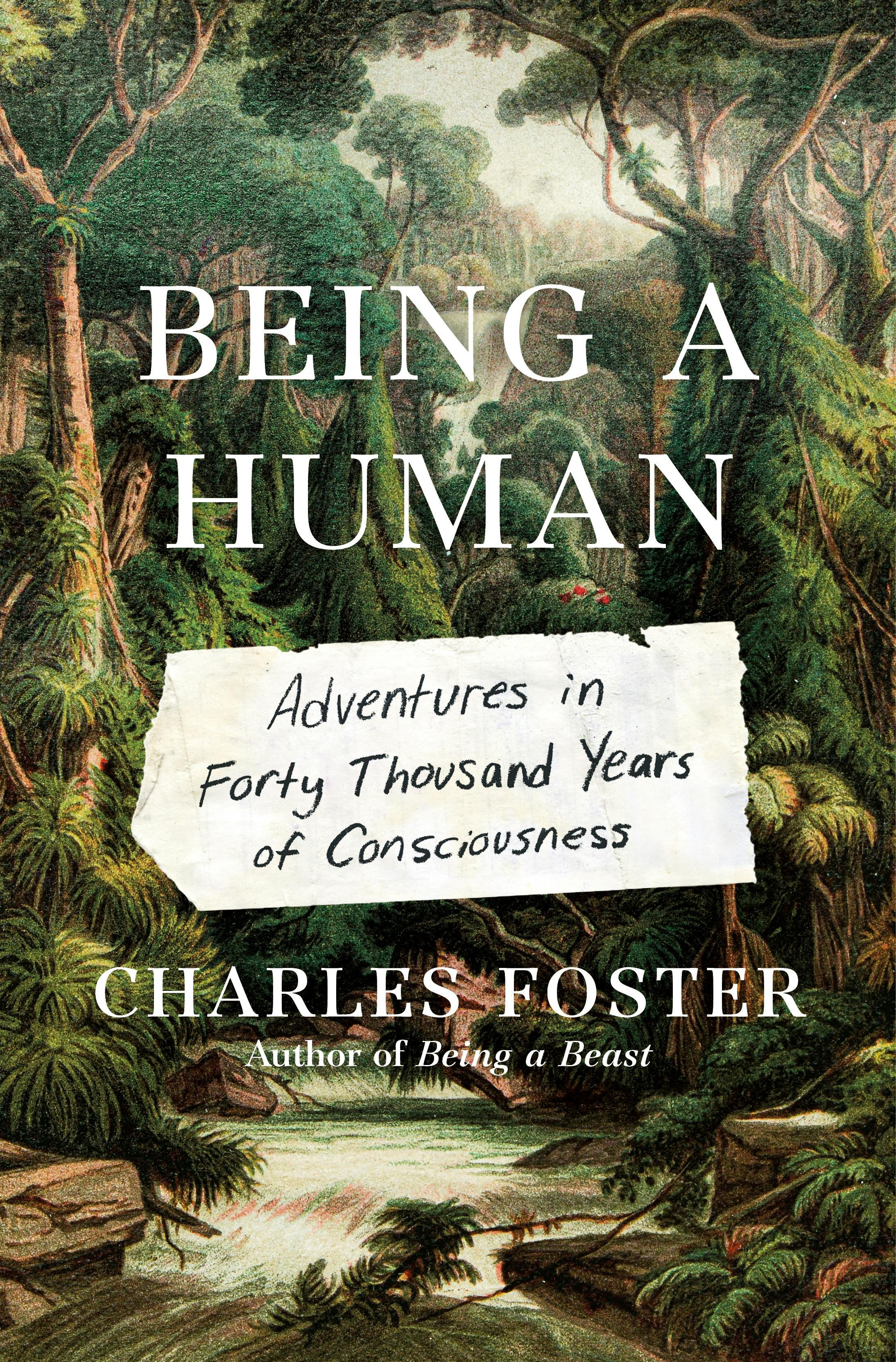
Being There – Being a human by Charles Foster

book cover

We think of wilderness as an absence of sound, movement and event. We rent our rural cottages ‘for a bit of peace and quiet.’ That shows how switched off we are. A country walk should be a deafening, threatening, frantic, exhausting cacophony.


If today’s shorn, burned, poisoned apology for wilderness should do that to us, just think what the real wild, if it still existed, would do. It’d be like taking an industrial cocktail of speed, heroin and LSD and dancing through a club that’s playing the Mozart Requiem to the beat of the Grateful Dead, expecting every moment to have your belly unzipped by a cave bear.

All humans are Sheherazades: we die each morning if we don’t have a good story to tell, and the good ones are all old.

Up for a bit of time travel? No, no, no, not in the sci-fi sense of physically transporting to another era. But in the mostly imaginary sense of picturing oneself in a prior age. Well, maybe more than just picturing, maybe picturing with the addition of some visceral experience. Charles Foster has written about what life is like for otters, badgers, foxes, deer and swifts, by living like them for a time. He wrote about those experiences in his book, Being a Beast. He wonders, here, how experiencing life as a Paleolithic and a Neolithic person can inform our current understanding of ourselves.

I thought that, if I knew where I came from, that might shed some light on what I am…It’s a prolonged thought experiment and non-thought experiment, set in woods, waves, moorlands, schools, abattoirs, wattle-and-daub huts, hospitals, rivers, cemeteries, caves, farms, kitchens, the bodies of crows, museums, breaches, laboratories, medieval dining halls, Basque eating houses, fox-hunts, temples, deserted Middle Eastern cities and shaman’s caravans.

description
Charles Foster – image from Oxford University

His journey begins with (and he spends the largest portion of the book on) the Upper Paleolithic (U-P) era, aka the Late Stone Age, from 50,000 to 12,000 years ago, when we became, behaviorally, modern humans. Foster is quite a fan of the period, seeing it as some sort of romantic heyday for humanity, one in which we were more fully attuned with the environments in which we lived, able to use our senses to their capacity, instead of getting by with the vastly circumscribed functionality we have today.

Interested in the birth of human consciousness, he puts himself, and his 12 yo son, Tom, not only into the mindset of late Paleolithic humans, but into their lives. He and Tom live wild in Derbyshire, doing their best to ignore the sounds of passing traffic, while living on roadkill (well, I guess they do not entirely ignore traffic) and the bounty of the woods. They deal with hunger, the need for shelter, and work on becoming attuned to their new old world.

We’re not making the wood into our image: projecting ourselves onto it. It’s making us. If we let it.

In one stretch Foster fasts for eight days, which helps bring on a hallucinatory state (intentionally). Shamanism is a major cultural element in the U-P portrait he paints. It is clearly not his first trip. He recalls an out-of-body experience he had while in hospital, the sort where one is looking down from the ceiling at one’s physical body, seeing this as of a cloth with a broader capacity for human experience. He relates this also to the cave paintings of the era, seeing them, possibly, as the end-product of shamanic tripping. This section of the book transported me back to the 1960s and the probably apocryphal books of Carlos Castaneda.

Social grooming was important to ancestors of our species. But, with our enlarged brains able to handle, maybe, a community of 150 people, grooming became too cost-intensive.

To maintain a group that size strictly by grooming, we’d have to groom for about 43% percent of our time, which would be deadly. Something else had to make up for the shortfall, and other things have. We have developed a number of other endorphin-releasing, bond-forming strategies that don’t involve touching [social distancing?]. They are…laughter, wordless singing/dancing, language and ritual/religion/story.

It sure gives the expression rubbed me the wrong way some added heft.

He has theories about religion, communication, and social organization that permeate this exploration. He posits, for example, that late Paleo man was able to communicate with a language unlike our own, a more full-body form of expression, maybe some long-lost form of charades. There is an ancient language, thought to have been used by Neanderthals, called HMMM, or holistic, manipulative, multi-modal, musical, and memetic communication. It is likely that some of this carried forward. And makes one wonder just how far back the roots go to contemporary languages that incorporate more rather than less musicality, more rather than less tonality, and more rather than less bodily support for spoken words.

He writes about a time when everything, not just people, were seen as having a soul, some inner self that exists separately, although living within a body, a tree, a hare, a blade of grass. This sort of worldview makes it a lot tougher to hunt for reasons that did not involve survival. And makes understandable rituals in many cultures in which forgiveness is begged when an animal is killed. This becomes much more of a thing when one feels in tune with one’s surroundings, an experience Foster reports as being quite real in his Derbyshire adventure. This tells him that Paleo man was better able to sense, to be aware of his surroundings than almost any modern human can.

Foster has a go at the Neolithic as well, trying to see what the shift from hunting-gathering to agriculture was like, and offers consideration of the longer-term impacts on humanity that emanated from that change. This is much less involved and involving, but does include some very interesting observations on how agriculture revolutionized the relationship people had with their environment.

…the first evidence of sedentary communities comes from around 11,000 years ago. We see the first evidence of domesticated plants and animals at about the same time. Yet, it is not for another 7,000 years that there are settled villages, relying on domesticated plants or fixed fields. For 7,000 years, that is, our own model of human life, which we like to assume would have been irresistibly attractive to the poor benighted caveman, was resisted or ignored, just as it is by more modern hunter-gatherers. Hunter-gatherers only become like us at the end of a whip. Our life is a last resort for the creatures that we really are.

He notes that even when farming took root, many of those newly minted farmers continued living as hunter-gatherers for part of the year.

He finishes up with a glance at the contemporary. More of a screed really. He notes that phonetic writing severed the connection our languages have with the reality they seek to portray. Pre-phonetic languages tend to be more onomatopoeic, the sounds more closely reflecting the underlying reality. He sees our modern brains as functioning mostly as valves, channeling all available sensation through a narrow pipeline, while leaving behind an entire world of possible human experience that we are no longer equipped to handle. To that extent we all have super-powers, of potential awareness, anyway, that lie waiting for someone to open the right valve, presuming they have not been corroded into inutility by disuse. He tells of meeting a French woman in Thailand whose near-death experience left her passively able to disrupt electronic mechanisms. She could not, for example, use ATMs. They would always malfunction around her.

He takes a run at what is usually seen to indicate “modern” humanity.

I’ve come to wonder whether symbolism is all it’s cracked up to be, and in particular whether its use really is the great watershed separating us from everything else that had gone before.

He argues that trackers, for example, can abstract from natural clues the stories behind them, and those existed long before so-called “modern man.”

He calls in outside authorities from time to time to fill in gaps. These extra bits always add fascinating pieces of information. For example,

Later I wrote in panic to biologist David Haskell, an expert on birdsong, begging him to reassure me that music is ‘chronologically and neurologically prior to language.’ It surely is, he replied. ‘It seems that preceding both is bodily motion: the sound-controlling centers of the brain are derived from the same parts of the embryo as the limb motor system, so all vocal expression grows from the roots that might be called dance or, less loftily, shuffling about.

Foster is that most common of writers, a veterinarian and a lawyer. Wait, what? Sadly, there is no telling in here (it is present in his Wiki page, though) of how he managed to train for these seemingly unrelated careers. (I can certainly envision a scenario, though, in which we hear lawyer Foster proclaiming to the court, “My client could not possibly be guilty of this crime, your honor. The forensic evidence at the scene clearly shows that the act was committed by an American badger, while my client, as anyone can see, is a Eurasian badger.”) It certainly seems clear, though, from his diatribes against modernity, where his heart is. In the visceral, physical work of dealing with animals, which lends itself to the intellectual stimulation of a truer, and deeper connection with nature.

The first time (and one of the only times) I felt useful was shoveling cow shit in a Peak District farm when I was ten. It had a dignity that piano lessons, cub scouts, arithmetic and even amateur taxidermy did not. What I was detecting was that humans acquire their significance from relationship, that relationships with non-humans were vital and that clearing up someone’s dung is a good way of establishing relationships.

In that case, I am far more useful in the world than I ever dreamed.

GRIPES
Foster can be off-putting, particularly to those us with no love of hunting, opening as he does with I first ate a live mammal on a Scottish hill. (Well, as least it wasn’t haggis.) I can well imagine many readers slamming the book shut at that point and moving on to something else. Will this be a paean to a manly killing impulse? Thankfully, not really, although there are some uncomfortable moments re the hunting of living creatures.

Sometimes he puts things out that are at the very least questionable, and at the worst, silly. Our intuition is older, wiser and more reliable than our underused, atrophied senses. Really? Based on what data? So, making decisions by feelz alone is the way to go? Maybe I should swap my accountant for an inveterate gambler?

He sometimes betrays an unconscious unkindness in the cloak of humor:

The last thing I ate was a hedgehog. That was nine days ago. From the taste of them, hedgehogs must start decomposing even when they’re alive and in their prime. This one’s still down there somewhere, and my burps smell like a maggot farm. I regret it’s death under the wheels of a cattle truck far more than its parents or children possibly do.

I doubt it.

One stylistic element that permeates is seeing an imaginary Paleo man, X, and his son. Supposedly these might be Foster and Tom in an earlier era. It has some artistic appeal, but I did not think it added much overall.

All that said, the overall take here is that this is high-octane fuel for the brain, however valved-up ours may be. Foster raises many incredibly fascinating subjects from the origins of religion, language, our native capabilities to how global revolutions have molded us into the homo sap of the 21st century. This is a stunning wakeup call for any minds that might have drifted off into the intellectual somnolence of contemporary life. There are simply so many ideas bouncing off the walls in this book that one might fear that they could reach a critical mass and do some damage. It is worth the risk. If you care at all about understanding humanity, our place in the world, and how we got here, skipping Being a Human would be…well…inhuman. It is an absolute must-read.

We try to learn the liturgy: the way to do things properly; the way to avoid offending the fastidious, prescriptive and vengeful guardians of the place. Everything matters. We watch the rain fall on one leaf, trace the course of the water under a stone, and then we go back to the leaf and watch the next drop. We try to know the stamens with the visual resolution of a bumblebee and the snail slime with the nose of a bankvole and the leaf pennants on the tree masts with the cold eyes of kites.

Review posted – 9/17/21

Publication date – 8/31/21

I received an ARE of Being a Human from Metropolitan Books in return for a modern era review. Thanks, Maia.

=============================EXTRA STUFF

Links to the author’s personal, and Twitter pages

By my count this is Foster’s 39th book

Foster’s bio on Wiki

Charles Foster (born 1962) is an English writer, traveller, veterinarian, taxidermist, barrister and philosopher. He is known for his books and articles on Natural History, travel (particularly in Africa and the Middle East), theology, law and medical ethics. He is a Fellow of Green Templeton College, Oxford. He says of his own books: ‘Ultimately they are all presumptuous and unsuccessful attempts to answer the questions ‘who or what are we?’, and ‘what on earth are we doing here?’

Interviews
—–The Guardian – Going underground: meet the man who lived as an animal – re Being a Beast by Simon Hattenston
—–New Books Network – Defined by Relationship by Howard Burton – audio – 1h 30m

Items of Interest from the author
—–Emergence Magazine – Against Nature Writing – on language as a barrier to understanding
—–Shortform – Charles Foster’s Top Book Recommendations

Items of Interest
—–Wiki on Bear Grylls – a British adventurer – mentioned in Part 1 as an example of someone more interested in the technology of survival than the point of it (p 62 in my ARE)
—–Wiki on Yggdrasil – mentioned in Part 1 – humorously (p 85)
—–Wiki on the Upper Paleolithic
—–Dartmouth Department of Music – a review of a book positing that Neanderthals used musicality in their communications Review Feature – The Singing Neanderthals:
the Origins of Music, Language, Mind and Body by Steven Mithen – Foster addresses this in this discussion of the origins of human language
—–Wiki on Carlos Castaneda
—–Discover Magazine – Paleomythic: How People Really Lived During the Stone Age By Marlene Zuk Like it says – an interesting read

1 Comment

Filed under Reviews

Scream: Chilling Adventures in the Science of Fear by Margee Kerr

book cover

Our threat response is automatic, but what we fear is largely learned. 

…I’m looking at how we experience fear biologically (and the consequences of continuous heightened fear states), how we construct fear socially, and how we interpret it psychologically.

… These are my adventures in fear.

What scares you? It varies for most of us, but certainly death and personal, physical harm will come out at or near the top. It certainly should. Alongside that would be a fear of harm to those close to us. But there are plenty of other things that are probably, ok, certainly listed in a wikiphobia somewhere. Some of our fears are well-grounded, others not so much. Fear of heights makes sense. Fear of open places certainly originated before homo sapiens was the planet-wide apex predator. Fear of snakes sure sounds like a sound Darwinian reaction. Fear of the number thirteen, hmmm. But whatever the cause there is a biological element to fear and that is a primary focus here.

description
That’s Kerr on the splat side addressing a fear of heights

Elizabeth Kubler-Ross may have given us On Death and Dying. Atul Gawande gave us On Mortality, the Sy-Fy network and premium cable keeps us well filled with entertainments designed to scare the bejesus out of us. But Margee Kerr, in Scream, has written a nifty look at fear itself. Kerr is both a scientist and a practitioner of the frightening arts. No, you won’t see her on any version of the Walking Dead, Chiller Theater, Creature Features, American Horror Story, Grimm, Penny Dreadful or any of the other frightfests that fill our cables and airwaves. And you will not find her name on the binding of books occupying the same section of the bookstore or library as Stephen King. But Kerr could probably explain exactly how each of the above does what it does to you. She is your goto gal for figuring out why the long-haired ghosts in j-horror get screams from Japanese audiences and a much more tepid response from Western viewers. She can tell you why it makes sense to hold someone’s hand when you are frightened, and can explain in some detail, on a biological level, not only how being scared can be a really good thing, but how it has steered our evolution.

Kerr, with a doctorate in sociology, has one foot firmly planted in the realm of academia, research of the library and real world varieties, and the other in the realm of applied fear-mongering. No, she does not work for Fox News. But she does want you to be scared, and she knows how to make that happen

thrilling activities provide a safe space to give our impulse-control police a break (and for those who believe that screaming and being scared are signs of weakness, being in a situation in which it is OK to express fear can feel pretty good

She keeps her focus primarily on physical, immediate fear experiences and scoots across the planet to sample the fear menus far and wide. Why would she do this? Well there are two reasons. She has an academic interest in learning the mechanisms of fear. And the other interest is a bit more down-to-earth. She works for one of the nation’s best known haunted house venues, Scarehouse, in Pittsburgh. She has spent umpteen hours studying peoples’ reactions to the frights they receive there. So she was, in addition to pursuing her academic interest, researching ways to improve the Scarehouse product, and reports at the end of the book on how she applied what she learned. Ok, maybe a third reason is that this is huge fun for her.

description

Kerr puts herself through a fair range of scary experiences, not all of which were part of an entertainment venue. She begins with roller-coasters, noting their beginning with 17th century Russian Ice Slides, scary not merely for the usual thrill of sliding downhill very fast, but for the deeper thrill of knowing that reliability and safety were far from certain. These days the rides may be wilder, and perhaps a bit more challenging, not only to one’s sense of balance, but to one’s ability to keep down that regrettable pair of hot dogs you might have scarfed down prior to boarding the roller-coaster car, (an uncle of mine in the wayback was famous for spewing his partaken beer and partially digested Nathan’s Famous over an unfortunate date at Coney Island) and one’s ability to remain conscious. (I confess I passed out momentarily on one such, in Hershey Park) But the fear of mortal peril has been pretty much eliminated.

description
You know who, from you know what

Screaming, appropriately enough, comes in for some attention

There’s something freeing, and even a little bit dangerous, in screaming as loud as you want. Screaming is part of our evolved survivor tool kit, protecting us by scaring away predators and alerting others of danger nearby. Pulling our face into a scream is also believed to make us more alert, intensifying our threat response just as squinching our nose in disgust blocks foul odors from going into our nostril). Adam Anderson at the University of Toronto found that when people made a frightened expression, they increase their range of vision and have faster eye movements and a heightened sense of smell from breathing more rapidly through their nostrils. Not to mention, when we scream, our eyes widen, and we show our teeth, making us appear all the more intimidating to any predators.

She indulges in a range of fears, from leaning out over the top of the CN Tower in Toronto in challenging a fear of heights, to searching for ghosts in some supposedly haunted places, including spending some quality alone time in a notoriously haunted former prison, to looking at infrasound as a possible source for many spectral experiences, to checking out haunted houses in Japan (got scared her out of her wits), to hanging out in a Japanese park noted for the number of suicides that occur there, to fearing imminent personal peril on the streets of Colombia. She also goes to a noted researcher to have her own fear indices checked out, and gets a bit of a surprise there.

description
Kerr has a spooky time at Eastern State Pen – from EasternState.org

Kerr takes a wider view in some chapters, moving past the how-can-we-scare-ourselves-for-fun mode to actual application of scientific insight into fear with a look at PTSD and why some folks are more susceptible than others. In another segment she looks at the impact of a shredded safety net (the GOP 2016 platform?) on how difficult and exhausting it is for people to deal with the chronic stress, fear, trauma and violence that results. She also looks at how memories are formed, and at attempts to erase some of those, and offers some intel on the influence of parental helicoptering on one’s ability to manage stress, and on the significance of and elements that make up “high arousal states.” She offers plenty of hard-science intel which I very much appreciate. But Kerr also gives readers plenty of you-are-there experience, sharing some of her personal material, beyond the immediacy of the location and thrill. It is this combination of science and personality that provides the strength of Scream.

Of course Margee is anything but a scary sort herself. Check out her vids, thoughtfully noted below, and you will see for yourself. Kerr’s bubbly and engaging personality comes through quite well. This does not come through quite so well in the book, which felt a bit meandering, drifting a bit away from her core material at times.

In the CV posted on her site, Kerr says

My current research interests involve understanding the relationship between fear and society. People are reporting they feel more afraid today than 20 years ago and many scholars argue we live I a ‘fear based’ society.

Has she watched the evening news, or read most national or local newspapers? One of the things that modern communications has done most successfully is to create an environment in which fear is the top story, above the fold, below the fold, on page Six, and on the nightly news. If it bleeds it leads. We thrive on fear, or seem to. One of our major political parties has a set of policies based almost entirely on fear. Bowling for Columbine did an excellent job of highlighting the fear culture in which many of us live.

Fear is how those in charge control those who are not. Whether it is fear of the other, of jail or of poverty, death panels, jack-booted federals coming for your freedom, the red menace, yellow peril, illegal immigrants, police, street thugs, alien invaders, the zombie apocalypse or rampaging jihadis, we are a nation driven by fear. The fact is that fear does an excellent job of getting past our filters. We live in a cry wolf economy and business is howling. I suppose on a biological level there is some internal chemistry that says, “Well, it sounds like bullshit, but if it isn’t I could die, so why take the chance?” And it does not have to be about death, although that is the all time best seller. It could be about one’s ability to compete in the world, which really is a subtle message about death, the death of your DNA anyway. Too fat? Too bald? Too gray? Too tall? Too short? Too ugly? No one will love you. You will never have children. Better buy our product to ensure that you attract a mate. Buy our product or you won’t get a job. You and your children, if you have any, will starve. Kerr does not ignore this terrifying element of contemporary culture, particularly in her chapter on Colombia, but I do hope that when she dives into these waters again, she gives it more of a look.

FDR was wrong. There are plenty of real things to fear out there, just maybe not the things we are told to fear. In any case, whether one’s fear is justified or not, how our biology copes with fear is consistent. And it is not only well worth learning about, Scream provides an entertaining, enjoyable way to learn. There’s nothing scary about that.

My beloved picked this item up for me from the author at a book fair in return for an honest review.

Review posted – 10/9/15

Publication date – 9/29/15

=======================================EXTRA STUFF

Links to the author’s personal, Twitter and FB pages

Items Specific to Scarehouse
—–The Scarehouse site
—–A behind the scenes look at Scarehouse by Heather Johanssen
—–The Scarehouse youtube channel
—–Margee’s overview
—–Profile of Margee
—–Margee on Uncanny Valley
—–Why are clowns so scary

A nifty article on the scariness of the simple triangle

One of the places Kerr visited (twice in fact) is Eastern State Penitentiary

1 Comment

Filed under Non-fiction, Psychology and the Brain