Tag Archives: ghost

Something in the Walls by Daisy Pearce

book cover

… just after Christmas, Alice Webber started to get sick. She complained of pains in her sides like needles being pressed there. When they lifted her shirt, there was a pinprick rash and blood welling up as if the skin had been broken. A few days later she started vomiting. By this point Alice was too weak to get out of bed so her mother put a bowl beside it. When she came to empty it, she found watery bile and clots of black hair, like you’d pull out of a plughole. Another time Alice coughed up a handful of sewing pins bent into strange shapes. She developed a fever which made her start seeing things. She got delusional.”
“In what way?”
“Alice told her parents that a witch was spying on her through the chimney breast. She said the witch had a black tongue and her face was ‘all on upside down.’

“She was saying such odd things. At school, then here at home. Sometimes it was like she was listening to music you couldn’t hear, you know? I’d catch her just staring at the fireplace and her lips were moving but no sound was coming out. When I asked her what she was doing, she said”—here Lisa sighs, fretful and ill at ease. It’s clear she isn’t comfortable talking about this—“she said that the dead wanted her to open her throat.”

When Sam Hunter and Mina Ellis pull up at 13 Beacon Terrace in Banathel, an English backwater, there is a crowd gathered. Mostly people wanting something from the girl inside. They seem to think she can communicate with the dead, and there are people with whom they would love to reconnect.

description
Daisy Pearce – image from her site

Sam is a reporter who specializes in debunking superstitious claptrap and fraud. Mina is a recent graduate in child psychology. Sam had asked her along to offer an evaluation. Well, there is certainly something off happening at the Webber household

Alice Webber has tales to tell. (She’s the girl you see giggling with her friends at the back of the bus or fooling around in the arcades. Normal. Unexceptional.) She believes there is a witch living in the walls of her bedroom. She can tell because she sees the witch’s eyes looking at her through gaps in the brick chimney. It began when a group of (not really) friends play a mean trick on her at a supposedly haunted house. Now she hears and speaks in voices.

For a moment I think she is speaking—I can see her shoulders twitch, her mouth slowly moving—but the voice I hear is slurring and thick, heavy. Like a throat full of molasses. It is a language I don’t recognise, Germanic maybe. The words spread like a ripple, like oil on water, dark and tainted. It fills me with something icy and unknowing and I taste the bitterness of bile in the back of my throat.

Both Sam and Mina (“It’s my dad. He took my mother to Whitby Abbey while she was pregnant with me. My poor brother narrowly escaped being called Van Helsing.”) have arrived with significant emotional baggage. Sam lost his seven-year-old daughter, Maggie. Mina lost her brother, Eddie, when they were kids. Both Mina and Sam hold out hope that they can somehow reconnect with their lost ones, maybe reduce the guilt they both feel. Is there any chance Alice can actually help them? Alice may look like an average teen with professional aspirations that end at the beauty salon, but what if there is something operating through her?

The novel has a feel of both contemporary spook story and a folk horror tale, rich with back-country superstition, practices, and beliefs. Banathel has a long history of belief in witches, and a rich supply of hagstones everywhere you look. It is reminiscent of works like Tom Tryon’s novel Harvest Home and the 1973 horror classic, The Wicker Man, reliant on deep rural isolation.

The tension ramps up with every strange new event, encouraged by the persistence of contemporary doubt, ancient superstition, the growing crowd and its increasingly threatening regard for the girl. Do they want to help her or use her, or do they want something else? In addition, while there is a mystery in every horror tale, there is also a tension between where magical manifestations leave off and human agency steps in. Ditto here.

While it certainly seemed fun for Mina to have such a nominal root in classic horror, (a pearl among women) it did not seem to me that enough was done with her nifty name. And for a psychologist to be entangled with someone so clearly wrong for her was disappointing. (Although I suppose many of us have had that experience.) As for seeing someone looking through gaps in bricks, did no one consider maybe a bit of plaster, spackle, or poster of a favorite musician to cover the spaces? Or maybe hiring a handyman named Bert to have a go at clearing it out?

On the other hand, the lovely details of dark manifestation that Pearce weaves into her tale, the sights, sounds, and textures, add that frisson that every good horror novel needs. The overarching heat that bears down on all provides another layer of dread. It might even enhance the feel of this book for readers to take it on in July.

I have a particularly high bar for fright. It is a rare horror novel that keeps me up at night. There are real-world stresses and manifestations of evil that offer that service quite happily. Something in the Walls came close, but caused no lost zzzzzzzs here. Not to say it will not for you, who have a more usual receptivity to such things. It did, however, offer an appealing lead, a tantalizing mystery, a colorful portrait of a tucked-away place, and kept up a brisk tempo.

Most witch hunts are a bad idea, but it might be a better one to track down Something in the Walls. There may be a thrill or two just lying in wait for you.

If you gaze long enough into an abyss, the abyss will gaze back into you. – Friedrich Nietzsche

Review posted – 4/4/25

Publication date – 2/25/25

I received an ARE of Something in the Walls from Minotaur in return for a fair review, and my agreeing to get the hell out of their chimney. Thanks, folks, and thanks to NetGalley for facilitating.

This review is cross-posted on Goodreads. Stop by and say Hi!

=======================================EXTRA STUFF

Links to Pearce’s personal, Instagram, and Twitter pages

Profile – from her site

Daisy Pearce was born in Cornwall and grew up on a smallholding surrounded by hippies. She read Cujo and The Hamlyn Book of Horror far too young and has been fascinated with the macabre ever since.
Daisy began writing short stories as a teenager and after spells living in London and Brighton she had her first short story ‘The Black Prince’ published in One Eye Grey magazine. Another short story, ‘The Brook Witch’, was performed on stage at the Small Story Cabaret in Lewes in 2016. In 2015 The Silence’ won a bursary with The Literary Consultancy. Later that year Daisy also won the Chindi Authors Competition with her short story ‘Worm Food’. A further novel was longlisted for the Mslexia Novel Award…Daisy currently works in a library where she stacks books and listens to podcasts on true crime and folklore.

Interview
—–Bloody Good Reads – Chapter 109 – Daisy Pearce – audio – 38:38 – on writing what she loves

Items of Interest from the author
—–Crime Reads – DAISY PEARCE ON POLTERGEISTS, MISOGYNY, AND COMING OF AGE IN A FRACTURED WORLD
—–Short story – The Brook Witch – linked from her website
—–Short story – The Spirit of Christmas – linked from her website

Leave a comment

Filed under Fantasy, Fiction, Horror, Mystery, Thriller

The Haunting of Moscow House by Olesya Salnikova Gilmore

book cover

Irina calls her fanciful whenever she mentions ghosts. Still, something isn’t right about the house, hasn’t been right since Uncle Pasha was shot dead there three years before, and Grand-père Sergei succumbed to his illness mere days after.
Though she’s never seen one, Lili has believed in ghosts for quite a long time.
Do you think the dead can rise? Her voice, from a long-forgotten memory.
Of course, Nicky had answered, as if it were the most natural thing in the world.

…with each death, the spirits are more corporeal and alive. And the family is in greater danger.

It is 1921, and the suffering is not yet done. World War I, then the ongoing civil war, now famine. Bolsheviks have taken charge. They use the Cheka to enforce the new norms, inflict the governing biases, and relentlessly add to the general misery. The displaced aristocracy struggles to get by, well, those who were not summarily shot.

description
Olesya Salnikova Gilmore – Image from PRH – credit Nicola Levine Photography

To the new Soviet republic, the Bolsheviks, and the Cheka secret police, they are still countesses Irina and Liliya Goliteva, the people’s class enemy as descendants of one of the greatest and most ancient aristocratic clans of an imperial Russia dead and buried. Like most of their family. But unlike many former people, Irina’s family didn’t flee Russia. They stayed in hope of a return to normalcy. Now it is too late. Even if they could obtain papers, how could a household of women and children brave the danger of travel and exile?

Running out of household valuables to sell, the sisters take jobs with the American Relief Administration (ARA). The ARA is there to provide aid, food in particular. The sisters are managing the challenges, but there is something else. It appears that there are strange, spectral things going on in their home, the once-grand Moscow House. There are sounds, scents, footsteps, the sorts of things one can expect in a gothic novel.

So much of the novel is inspired by some of my favorite gothic stories, particularly by the Russian/Slavic gothic genre and the Ukrainian author who arguably founded it—Nikolai Gogol. – from the Afterward

Gogol and other folk sources are given plenty of recognition in the pages, allowing one the opportunity to do some digging and appreciate the inspirations.

We follow Irina (28) and her sister, Lili (18), as they try to survive through this trying period. Chapters alternate, more or less, between the two. The gothic elements build, from a few inklings to full-blown. It is not just one or two spectres turning up, but a whole host of late family members. The house is commandeered by the government, and the actual family is relegated to the attic. That does not work out well for the occupiers, as one then another is found dead. The work of one of the living inhabitants or ghostly revenge?

There are certainly some creepy bits, a norm for the genre, a few jump-cut scenes, and a spooky soothsayer. But is it scary? Mostly not, for me, (a particularly high bar) although there were some welcome surprises. There is one particular sort of ghost from Russian lore that was a new one on me. A creepy doll offers a tingle or two. That they grow in corporeality with each new death offered a welcome bit of unease. After a while, though, one gets used to the spirits, and in doing so their impact is reduced. Yeah, we’ve got a haunted house. So? The sisters keep coming and going as if it were infested with a more usual sort of pest.

Both become involved in romances, one with a Yank, the other with a childhood sweetheart. This is lovely, particularly in offering the possibility of positive outcomes for the sibs. Of course, it also adds to the ongoing tension between staying to preserve the family history and line, and fighting the good fight, or leaving to preserve their lives. How many people today are faced with comparable choices?

In fairy tales, paupers became princesses, not the other way around. But Soviet Russia is a warped Wonderland, where all is topsy-turvy and not what it should be.

One might, I expect, consider a take in which the Cheka taking charge in Moscow is a lot like the spectres taking over the Moscow House. It does cause one to recall that the Introduction of The Communist Manifesto begins, “A spectre is haunting Europe—the spectre of communism.” Certainly those spooks have landed in Russia and, through bloodshed, are gaining in strength. I have no idea if this was at all on Gilmore’s mind. But maybe. Spectres within and spectres without? Maybe a bit of dialectical materialism (or dialectical immaterialism?) for good measure?

Overall. I enjoyed The Haunting of Moscow House, particularly for the portrait of the time (The ARA was a real non-profit), the depiction of the desperation among Muscovites, and exposure to some unfamiliar gothic Slavic writing and lore. The sisters are engaging. The tension is palpable, and the spook infestation is fun.

I suppose one cannot help but compare this to Gilmore’s freshman offering, The Witch and the Tsar. That one was less reality based, more fantastical, and a bit more fun. But this one is also quite good, rich with extras both historical and literary.

Irina is crossing into the next room when she feels a prickle of cold on her arm. A draft of air. But the damask curtains are sealed tight. No, it is as if someone has moved past her. She turns sharply, as fearful as the other morning. Odd. She has never been afraid in the house. She doesn’t have Lili’s active imagination. Nor is she given over to delusions. It is only the howl and tear of the wind, the rattle of the windows in their casements, the faint give of a latch. With all this noise, she almost doesn’t hear it.
The creak of parquet, somewhere near. And again, unmistakable now. Creak. Creeeaak.
Footsteps. Small, like a child’s.
Irina backs up with wide eyes—when there is a deep growl. Then an earsplitting screech, and a dark shape hurtles across her path. A glint of red, as if red eyes have snapped to hers. The next second, scuffling and the thumping of bare feet, then nothing.
What was that? Some animal, trapped in the house?
That’s when the air implodes all around her.

Review posted – 12/20/24

Publication date – 9/3/24

I received an ARE of The Haunting of Moscow House from Berkley in return for a fair review. Thanks, folks, (Does it feel unnaturally cold to you here?) and thanks to NetGalley for facilitating.

This review is cross-posted on Goodreads. Stop by and say Hi!

=======================================EXTRA STUFF

Links to Gilmore’s personal, FB, Instagram, and Twitter pages

Profile – from her site
Olesya Salnikova Gilmore is the author of The Witch and the Tsar and The Haunting of Moscow House. Originally from Moscow, she was raised in the US and graduated from Pepperdine University with a BA in English/political science, and from Northwestern School of Law with a JD. She practiced litigation at a large law firm for several years before pursuing her dream of becoming an author. Now she is happiest writing speculative historical fiction inspired by Eastern European history and folklore. Her work has appeared in LitHub, Tor.com, CrimeReads, Writer’s Digest, Historical Novels Review, Bookish, Washington Independent Review of Books, among others. She lives in a wooded, lakeside suburb of Chicago with her husband and daughter.

Interviews
—–JeanBookNerd – Olesya Salnikova Gilmore Interview – The Haunting of Moscow House
—–Turn the Page – Episode 314E: Olesya Salnikova Gilmore on THE HAUNTING OF MOSCOW HOUSE – audio – 24:17
—–How Do You Write – Ep. 358: POV Hack: Using Method Acting with Olesya Salnikova Gilmore video – 31:09 – with Rachel Herron (from 5:36) – mostly about her prior novel, but offers a nice sense of the author, her process, how she uses method acting and her lawyerly background

My review of Gilmore’s prior book
—–2022 – The Witch and the Tsar

Items of Interest from the author
—–Crimereads – GOTHIC FICTION WITH A TWIST
—–Writer’s Digest – Finding Magic at the Intersection of Reality and Fantasy in Fiction
—–Reactor – Five Books about Haunted Houses that Crumble

Items of Interest
—–Carol’s Notebook – The Shroud – a Russian fairy tale referenced in Chapter 3
—–Story Telling Institute – Vasilia the Beautiful – a Russian fairy tale referenced in Chapter 11

Leave a comment

Filed under Fantasy, Fiction, Historical Fiction, Literary Fiction

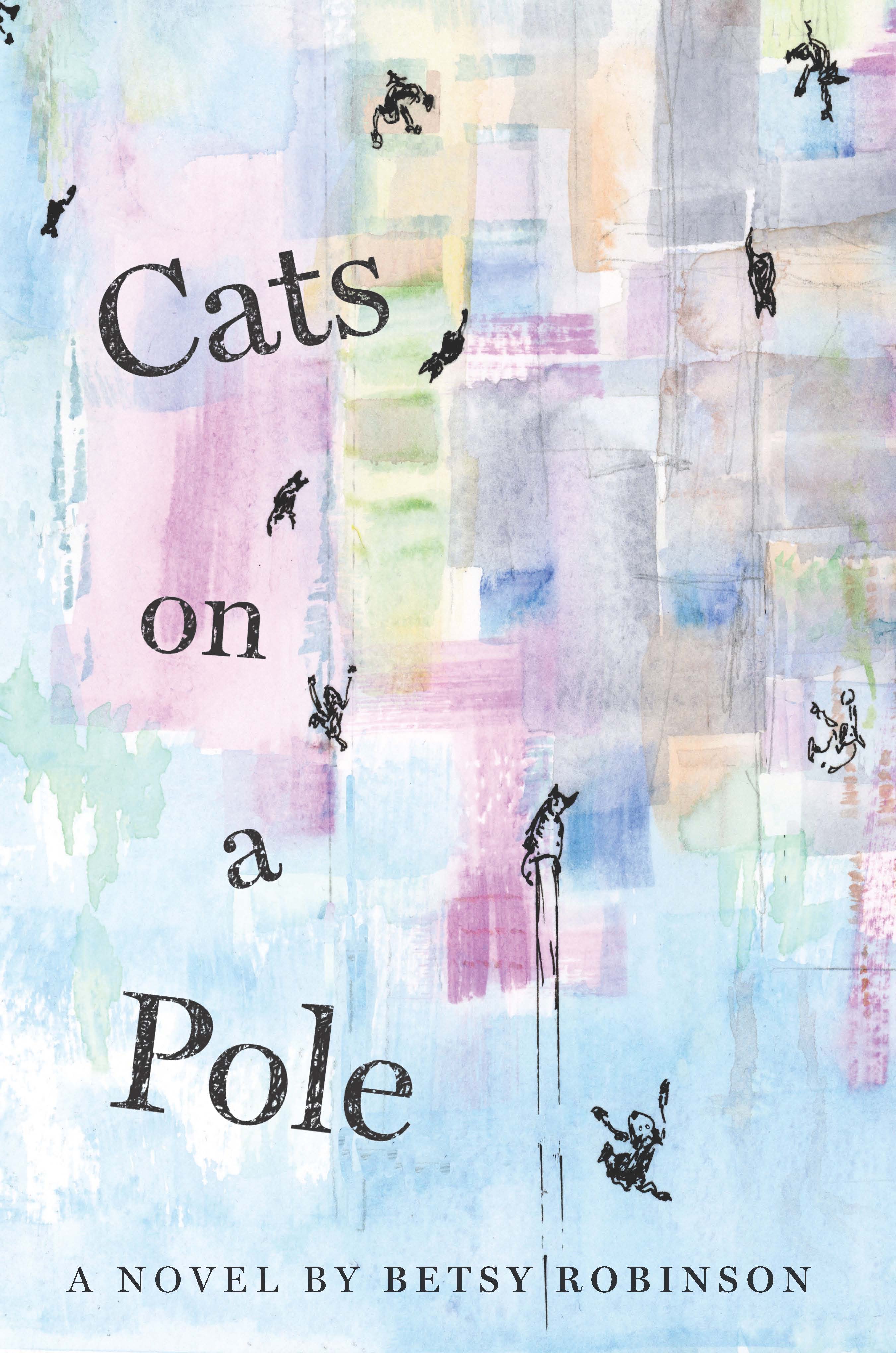
Cats on a Pole by Betsy Robinson

book cover

Harmony thought about cats as she rolled out of bed and staggered to the bathroom. Her favorite cat was the one that used to get stuck on top of a telephone pole in front of the house where she grew up. At least once a month in the warm weather, she’d hear the neighbor kids yelling, “Cat’s on a pole!” as they gathered around to taunt the poor thing.
Harmony would watch the scene from her kitchen window, and a couple of times she tried to thought-talk the cat down. “Are you out of your mind?” the cat would answer. “They’ll kill me.”

When he was forty-three, he met Judy. By then, construction work had taken second seat to massage therapy, where he discovered he had a gift.
He didn’t understand how it worked; he just knew that when he touched people, his hands grew hot, his heart exploded, the room filled with colors, and sometimes helpers in subtle bodies would instruct him where to touch. And the clients felt better.

Harmony and Joshua have special abilities. You might even call them superpowers. As with most such talented people, that has not necessarily led to them being happy. Joshua makes a living running healing classes at his own studio. He has always had what seems a pheromonic gift for attracting women. Woof! But commitment has never been a strong suit. Until he married Judy and they had a baby, Emily. Still, it is tough to resist all those longing gaze from his students and assistants.

description
Betsy with pooch – image from her site

Harmony is forty-something, works at a gardening magazine, is of uncertain ethnicity, having been adopted and having no real memory of her birth parents, and is different from the rest of us. She sees colors around people, auras, and has a sense of smell that allows her to tell about a person’s health, among other things. It is understandable that being in a relationship can be tough if you can pretty much read the other person’s thoughts and feelings. Insightful? Yes, very literally. She thinks of it as being about energy, hers, others, an experiential milieu no stranger to her than seeing the usual colors or hearing the sounds of the world are for most of us. But can you live through every day seeing, sensing the world like that? Harmony is in mourning for her best friend, her late pooch and beloved companion of 18 years, Delilah.

Each believes they are unique, and are destined to remain that way. It is pretty clear that these two crazy kids are destined to get together in one way or another. In this magical rom-com, they meet cute on a Manhattan bus, and we are off to the races.

The story centers on their relationship, which, surprisingly, never gets truly physical. Maybe metaphysical? With or without physical touching it is intensely sexual. They are both, because of their abilities, outsiders. Joshua manages by running a school, trying to help people find the abilities they have, but do not recognize. He is able to direct his energy to healing as well. ”We all have this capacity,” says Robinson in her video promo for the book. She has been involved for a long time with spiritual psychology and healing arts, so brings an interesting perspective to Joshua and Harmony’s capacities.

[In therapy] I was talking about how I reacted to various people in the office. There was one guy there who wanted an office wifey. I couldn’t stand this guy. Every time he would approach me it was like I was getting slimed with ectoplasm. Etheric gunk would come over me. I wanted to take a shower.

Harmony gets more ink of the two, with a large piece of that her interactions with her therapist, Doctor Thompson. These are fabulous.

Spectral beings are also a considerable presence. Ghosts? Angels? Something else? Like Julie Jordan in the musical Carousel, Harmony’s favorite musical, both Joshua and Harmony see or sense presences, which sometimes become active to the point of issuing directions.

Keep an eye out for mirrors, an image that pops up multiple times. Can you actually see yourself? Or does truly getting to know yourself require another person?

There are a few cockroach POV scenes that are hilarious, even to a native of NYC who had to contend with them for a lifetime, sometimes in large numbers. Lord knows, those of us who have spent much of our lives in city apartments can well attest to their persistence, and share Josh’s frustration at their ability to mockingly skitter away from our attempts to extinguish them. Robinson is a funny writer, so there are plenty of LOLs throughout the novel, not all related to bugs.

Cats on a Pole is a moving story about people searching for…something, love, companionship, understanding, truth, connection, release. There will be tears as well as laughs. The novel also offers a deeper perspective on spirituality and the meaning of death. It all builds up to a surprising climax, so buckle in. These cats may be stuck atop a pole, (or multiple poles?) getting some temporary safety, but they also gain a broader view of the world, and so will you.

What was extraordinary were her colors—raw red and orange energy around her torso, a deep indigo, bluer than the bottom of the ocean with radiant purple wafting through it vibrating so fast above her head it made him feel faint just to watch it. But watch it he did. How could he not? Her desire was direct and raw.

Review posted – 07/05/24

Publication date – 07/02/24

I received an eBook version of Cats on a Pole from the author in return for a fair review. Thanks Betsy.

This review is cross-posted on Goodreads. Stop by and say Hi!

=======================================EXTRA STUFF

Links to Robinson’s personal, Twitter and FB pages

(Partial) Profile – from her site

Betsy Robinson was raised an atheist and went on to make her living as a writer and editor of spiritual subject matter: as managing editor of Spirituality & Health magazine for six and a half years and as an editor of spiritual psychology and books about shamans and traditional healers.

She is or has been an actor, a playwright, an essayist, an editor, a freelance writer, messenger, paralegal, legal secretary, chambermaid, IHOP hostess, fortune cookie writer, novelist, and more. Cats on a Pole is her third novel. Plan Z was published in 2001 and The Last Will & Testament of Zelda McFigg came out in 2014.

Interviews
—– Ectoplasmic Inspo + Publisher at 73: Betsy Robinson – mostly on becoming a publisher
—– Why Publish “Cats on a Pole” and “The Spectators” Now? self-interview – video – 4:25

My review of an earlier book by the author
—–The Last Will & Testament of Zelda McFigg

Songs/Music from Carousel – Harmony buys a CD of the 1987 revival
It does make one wonder if Harmony’s last name was an homage to the composer.
—–What’s the use of Wond’rin
—–The Carousel Waltz
—–You’ll Never Walk Alone
—–If I loved You

Items of Interest from the author
—– Her promo video
—–Book trailer
—–Betsy reads from the book

1 Comment

Filed under Fantasy, Fiction, Reviews, Romantic Comedy

Golden Gate by Amy Chua

book cover

“Evil is everywhere. Where you least expect it. It can seep out of the radio. Or a lobster salad.”
“Oh, Issy—why do you say that?”
“Because it talks to me.”
“What talks to you?”
“Evil.”
“Iris talks to you, and evil talks to you?”
“Yes.”
“Are they the same?”

Part of me wanted to shut her up—if there’s one thing I couldn’t stand, it was a rich girl who felt unlucky in life. But another part knew that what she was saying was factually true. Her family was a train wreck, almost as bad as my mine except rich. Meanwhile, a third part of me couldn’t help noticing her long lashes and her lips—she had what they call a rosebud mouth, a perfect version of it. “I may have misjudged you, miss. If I did, I’m sorry.”
“Don’t soften on me,” she said.
“If it was a hundred in the shade, I wouldn’t soften on you, miss.”
“Good. Because I’m bad, Detective. I do terrible things. And if you soften on me, I’ll do them to you.”

There are six primary (fictional) females driving the story in The Golden Gate, with Detective Al Sullivan functioning as the hub to which they all connect and around whom they all spin. There might have been a seventh, but Iris Stafford plunged down a laundry chute in 1930 at age seven, under mysterious circumstances, and appears now mostly in memories, dark visions, and dreams. Her sister, Isabella, all grown up in 1944, is a knockout, as was their mother, Sadie. The Stafford girls have two first cousins. Cassie Bainbridge is an expert hunter, (think Artemis) and a frightening wonder to behold when butchering large game. Nicole is fascinated by the far left, maybe dangerously so. Then there is Genevieve Bainbridge, grandmother to Iris and Isabella, Cassie and Nicole, mother to Sadie and John (who does not much figure in any of this.)

description
Professor Amy Chua – image from AboveTheLaw.com

Genevieve is 62 when we meet her, through a deposition she is writing for the DA. There are eleven parts to this document, sub-chapters, spread throughout the book. It is through these that we learn of the events circa and before 1930. But take her words with a shaker of salt. This Bainbridge is an unreliable narrator. She is faced with a very tough situation. The DA has made clear his belief that one of her three granddaughters is guilty of murder, and he is squeezing her to finger the guilty party, lest all three suffer consequences. The events of the novel take place primarily in two times, 1930, when Iris dies, and 1944, the today of the tale.

Detective Sullivan is having drinks with a young woman in the hotel bar, when he is summoned by hotel management, about a report of gunshots in one of the rooms. Walter Wilkinson, an industrialist running for president, has acquired a new bit of decoration in his room, a bullet hole above his bed. He offers a tale about a Russian Communist assassin, is relocated to another room, and goes about his night, as does Sullivan. Until a call comes in several hours later. The renowned Claremont Hotel in Berkeley, CA, need some assistance dealing with a newly deceased guest. Mr. Wilkinson had clearly had a pretty tough night.

A crew of detectives is called in. Guests, employees and everyone in the vicinity are identified and interviewed, and clues begin to emerge. Timelines and whereabouts are established. Who saw whom emerge from what room, or walk down which hall, at what time, dressed how, gender, ethnicity, age, and so on. The usual procedural digging offers up a list of folks who may have had it in for WW, for a wide range of issues, some personal, some professional.

Complications appear like shadows at dusk. Was it the same shooter both times? And what about the unusual way in which his body was left? Witnesses can be unreliable. You cannot believe everything people tell you. Can you believe anything? In fact, there is a sufficient number of the questionably balanced in this novel that the place could be known as much for its head cases as for its headlands. The constant lying and misdirection offer up enough twists to make this read feel like a very tasty bowl of rotini. And it is indeed very tasty.

There are two levels at play, the payload, a take on the time and place, and the mystery…well, mysteries. We are eager to learn not only what happened to candidate Wilkinson including wondering if he had it coming) but to Iris Stafford. Did she really fall down a laundry chute to her death? Or was there some dark force at play responsible for killing a seven-year-old child? Chua does a great job of keeping us guessing, and there is plenty to guess about. I figured out one element about halfway through, but there were many others I did not see coming at all. There are surprises aplenty.

So, who killed WW (who is loosely based on Wendell Wilkie)? Who was that cowled person seen leaving the scene of the crime? Some people were seen entering and leaving the victim’s room, including an Asian woman and someone answering to the description of the three cousins. Interestingly, Wilkinson had a connection with Madame Chiang Kai-shek.

Speaking of which, Chua peppers her novel with actual historical figures. The First Lady of China did, in fact, live in Berkeley during the period of the novel. Her reason for being there is not known. Chua offers one possible explanation. August Vollmer is a name you are unlikely to know, but he was a seminal figure in the evolution of policing. He served as police chief in Berkeley for a time, and is lightly incorporated into the tale, as Al’s mentor, among other things.

Place is of paramount importance in good detective tales, and Chua further satisfies the historical need by telling us about the construction of the Golden Gate Bridge, offering some of her characters a role in its opening. She also writes about the boom-town growth of the area during World War II, when it replaced Pearl Harbor as the premier shipbuilding location in the states, producing an astounding number of vessels for the war, and in so doing, attracting workers from around the country. Some were more welcome than others, as one might expect. There are union issues, housing shortages, poverty, racism, political intrigue, sexual shenanigans, tong gangs, and appearances by two noteworthy ahead-of-their-time accomplished female professionals.

Bigotry was shameless and rampant, with Mexicans forcibly “repatriated” by the hundreds of thousands, the Chinese Exclusion Act still in place, and hostile derision openly directed at “Okies,” a term then referring to poor white migrants from the Dust Bowl. In the 1940s came the Japanese internment, when full-fledged American citizens were literally caged off. For the first time, Blacks came to the Bay Area in significant numbers, pouring in from the American South in search of jobs, only to find themselves subjected to vicious prejudice, excluded by labor unions, denied entry into restaurants, theaters and hotels, and barred from living in white neighborhoods. Throughout this period, numerous other ethnic groups—such as Italians, Greeks, Poles, Slavs, Hungarians, and Jews—occupied a subordinate position too, not yet considered fully white. – from the Author’s Note

Chua builds this into her characters.

I chose to make Detective Sullivan a light-skinned mixed-race man in part because Berkeley’s police force in the 1940s included almost no women or minorities, but also because I wanted to explore the phenomenon of racial “passing.” Sullivan is part Mexican, part Nebraskan, and part Jewish on his Mexican side…But Sullivan can pass as white and chooses to go by Al Sullivan rather than Alejo Gutiérrez for reasons he has not fully admitted to himself. – from the Author’s Note

In fact, there is enough passing here to make one wonder if Berkeley streets are constructed of all left lanes. In addition to Al, noted above, Japanese characters pass for Chinese. Gay characters pass for straight. One does what one must to survive in a hostile environment. Pathological liars pass for honest citizens. Crazy people pass for sane, and rich kids pass for revolutionaries. But another way to look at some of this is as reinvention. Sometimes you need to change how you present yourself to the world, change how the world sees you, in order to become your truest self.

Al is a good guy, conflicted about his decision to conceal his heritage. In addition to his detective work, Al must handle a family problem. His half-sister does not function well in the world, has issues with substances and decision-making. Somehow, she produced an amazing kid. Miriam is eleven going on thirty, from having to cope with so much. She could use some more schooling, but is uber bright, and she loves her uncle Al, who is put into the position of having to take care of her during of her mom’s absences. The love between these two glows like a lighthouse beacon glaring through thick bay fog. Some of the most wonderful scenes in the book are those between Al and Miriam.

While it is not a large element, there is also occasional humor.

I hate to say it of a fellow Berkeley officer, but Dicky O’Gar was so thick he couldn’t tell which way an elevator was going if you gave him two guesses.

The events take place in the Berkeley Hills, for the most part. So, near to, while not exactly one of, the ground-zeros for hard-boiled detective yarns. There is some nifty noir-ish patois, (the second quote at the top of this review offers an excellent example) but I would not call this a noir novel, per se. While there is plenty of darkness and grim reality, there is enough optimism to float it out of that sub-genre.

Gripes are few. I found the explanation of one of the deaths that occurs less than satisfying. There is a taste of a fantasy element, revolving around the continued presence in the Claremont of the late Iris Stafford. While it adds atmosphere, it suggests more than it actually delivers.

Bottom line is that The Golden Gate is a first-rate entertainment, with fun, quirky, interesting fictional supporting characters, an introduction to some actual historical people of note, an insightful look at a vibrant place in an exciting time, a primary character to care about, and mysteries to keep your gray cells sparking. What’s not to like?

I put my collar up, pulled my hat brim down, and set off through the drizzle, wondering how much I’d been played in the last seventy-two hours and by how many different women.

Review posted – 12/29/23

Publication date – 9/19/23

I received an ARE of The Golden Gate from Minotaur Books in return for a fair review. Thanks, folks, and thanks to NetGalley for facilitating an ePub as well.

This review is cross-posted on Goodreads. Stop by and say Hi!

=======================================EXTRA STUFF

Links to Chua’s personal, FB, Instagram, and Twitter pages

Profile – from Wikipedia

Amy Lynn Chua (born October 26, 1962), also known as “the Tiger Mom“, is an American corporate lawyer, legal scholar, and writer. She is the John M. Duff Jr. Professor of Law at Yale Law School with an expertise in international business transactions, law and development, ethnic conflict, and globalization.[5] She joined the Yale faculty in 2001 after teaching at Duke Law School for seven years. Prior to teaching, she was a corporate law associate at Cleary, Gottlieb, Steen & Hamilton. Chua is also known for her parenting memoir Battle Hymn of the Tiger Mother. In 2011, she was named one of Time magazine’s 100 most influential people, one of The Atlantic’s Brave Thinkers, and one of Foreign Policy‘s Global Thinkers.

The Golden Gate is her first novel.

Interviews
—–Washington Post – Amy Chua says her hard-boiled detective also is a bit of a ‘tiger mom’ By Sophia Nguyen
—–USNews – ‘Tiger Mom’ Amy Chua Writes First Novel, ‘The Golden Gate’

Item of Interest from the author
—–Macmillan – Discussion Questions

Items of Interest
—–Wiki on August Vollmer, mentioned in Chapter 3, and throughout
—–Wiki on The Mann Act – mentioned in Chapter 14.4
—–Wiki on The Golden Gate Bridge

Leave a comment

Filed under Fiction, Historical Fiction, Mystery, Noir, Reviews, Suspense

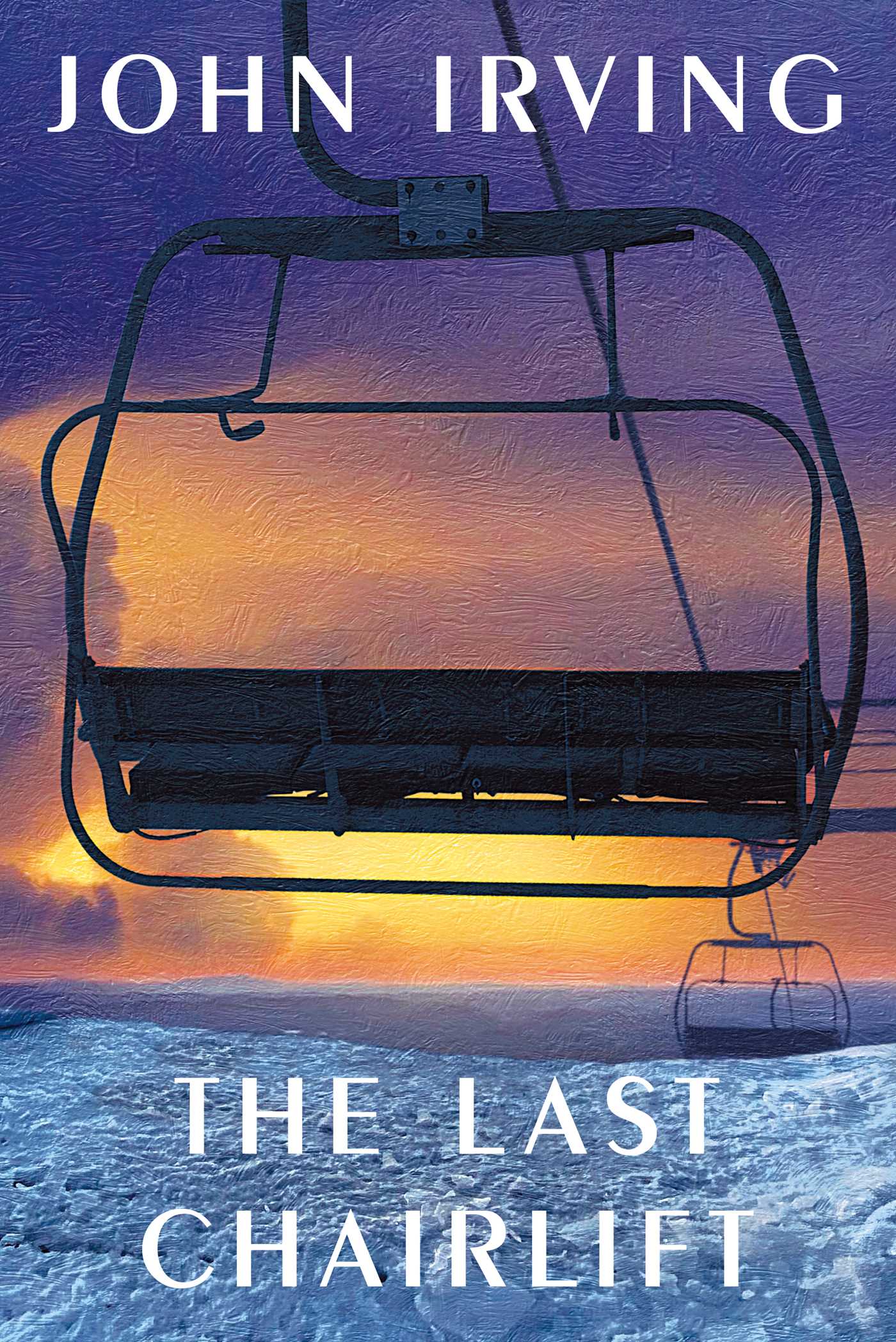
The Last Chairlift by John Irving

book cover

Think of your first good kiss. Was it life-changing, or was it no big deal? Do you remember how old you were? Did it matter, at the time, who gave it to you? Do you even remember who it was?
I’ll tell you this: when you’re thirteen and your mother gives you your first good kiss, you better hope someone matches it or eclipses it—soon. That’s your only hope.

Autobiography just isn’t good or bad enough to work as fiction… Unrevised, real life is just a mess.

The overall format is one of a frame, with Adam Brewster opening by letting us know that this is the story of his life and times, then returning to turn out the lights when the tale has been completed. It is a family saga of Irving’s era, 50’s 60s, (Vietnam) 70s, 80s (Reagan, AIDS) et al, to the mad, reactionary violence of the 21st century. Adam Brewster, a writer and screenwriter, is our narrator for a look at the sexual politics of a lifetime, from his birth in 1941 to his later days some eighty years on.

Adam’s mother, Rachel Brewster (Little Ray), was a nearly-pro ski nut, who spent large parts of every year on the slopes, settling for work as an instructor. That left Adam in the hands of his grandmother for much of his upbringing, assisted by a passel of relations. He would hunger for time with his only known parent for much of his life, a core element of the novel.

description
John Irving – image from Outside Magazine

Readers of John Irving will recognize much that is familiar, from his prior work and his life. The novel is set in Exeter, New Hampshire, Irving’s home town; includes a benign stepparent teaching at Phillips Exeter (as his actual stepfather did); includes the narrator as a student there. Yep, Irving attended. There is wrestling, of course. Bears are limited to a kind of snowshoe shaped like their paws. A hotel figures large. There is an absent biological father, (Irving’s father was in the US Army Air Force. He never met him.); a mother with too many secrets; there is also reference made to an inappropriate relationship between an adult woman and an underage boy. (something Irving himself experienced); considerable attention is directed to feeling like, to being, an outsider.

”That’s just who you are, Adam,” my older cousin said. “There’s a foreignness inside you—beginning with where you come from. The foreignness is in you—that’s just who you are. You and me and Ray—we’re outliers.”

In fact, Irving turns the tables here, as Adam, as the only straight among the main characters, is the outsider in his own family, always the last to get things, he is nonetheless loved and supported by his sexually diverse relations.

His mother’s lifelong lover, Molly, effectively his stepmother, tells Adam, “There’s more than one way to love people, Kid.” It serves as a core message for the book and for Irving’s oeuvre. One of the main characters is transgender. He first wrote a sympathetic trans character in The World According to Garp, in 1978. So, when his son, born many years after the book was published, came out to his parents as trans, she knew her father would be completely supportive.

The politics of divergent sexuality through time manifests in diverse venues. Raucous comedic material performed at a comedy club in one era is considered too much for a later sensibility, a new puritanism of correctness. Safety for being different is a concern. Adam is very worried when his stepfather is out in their town dressed as a woman, even trails him sometimes in case a backup is needed. Reagan’s unwillingness to address AIDS until six years into his presidency is noted. Acceptance increases over time, but increased acceptance sparks increased resistance. A performer of material deemed unacceptable to some becomes a target for violence in a more disturbed climate.

In addition to the overarching theme of looking at sexual politics, sexuality is shown as far less important than the connection between people. Things that may seem sexual actually have a lot less to do with sex than connection. For instance, Adam and his mother often sleep together, in the slumbering, not biblical sense, well past the age where that is generally deemed ok. There is another relationship in which a straight man and a gay woman share a bed, sans fooling around.

There is hilarity aplenty, not least with Adam’s young sequence of damaged or damaging lovers. Lots of cringy LOL material there. I counted a dozen “LOLs” in my notes, some for entire chapters.

And then there are ghosts. Irving calls this a ghost story. I refer you to a piece on his site that addresses this directly.

Ghosts don’t just warn us about the future; they remind us of what we’ve forgotten about the past. All this is to say, I have a history of being interested in ghosts. And here come the ghosts again. In my new novel…the ghosts are more prominent than before; the ghosts, or hints of ghosts, begin and end the novel.

We all have ghosts we live with, but the ones here are visible, well, to some, anyway. They hang out in large numbers at a hotel in Aspen, but also turn up at home. The spectres are historical and familial, with some able to interact with the physical world (sometimes with LOL results) sometimes condemned to remain non-impactful. They do indeed, as noted above, remind us of the past, sometimes darkly so, but some offer direction and comfort. And Irving uses his behemoth of a novel to keep generating new ones. They pass over in a wide range of ways; lightning, murder on a stage, sudden avalanche, cancer, suicide, murder in a hotel, falling from a chairlift, leaping from a chairlift, death in war, et al. Falkner famously said “The past is never dead. It’s not even the past.” I guess it could be said for many characters in The Last Chairlift that even the dead are never entirely dead.

Adam’s profession offers ample opportunity for Irving (winner of a National Book Award AND a screenwriting Oscar) to present a wealth of material about writing, both for the screen and for print.

“My life could be a movie,” you hear people say, but what do they mean? Don’t they mean their lives are too incredible to be real—too unbelievably good or bad? “My life could be a movie” means you think movies are both less than realistic and more than you can expect from real life. “My life could be a movie” means you think your life has been special enough to get made as a movie; it means you think your life has been spectacularly blessed or cursed.
But my life is a movie, and not for the usual self-congratulatory or self-pitying reasons. My life is a movie because I’m a screenwriter. I’m first and foremost a novelist, but even when I write a novel, I’m a visualizer—I’m seeing the story unfold as if it were already on film.

Imagining the stories you want to write, and waiting to write them, is part of the writing process—like thinking about the characters you want to create, but not creating them. Yet when I did this, when I was just a kid at Exeter—when I thought about writing all the time, but I never finished anything I was writing—this amounted to little more than daydreaming.

you don’t see with hindsight in a first draft. You have to finish the first draft to see what you’ve missed.

Fiction writers like what we call truthful exaggeration. When we write about something that really happened—or it almost happened, could have happened—we just enhance what happened. Essentially, the story remains real, but we make it better than it truly was, or we make it more awful—­depending on our inclination.

There are many more—it is a very long book—but this last one in particular speaks very directly to Irving’s process. As noted up top, he returns to familiar themes and situations. In interviews he says that he begins with the same life experiences, but then changes where they go, how they morph, as if his creative process was to take the stem cells of his experiences and direct them to grow into a wide range of possible pieces. Same source, different outcomes.

It is not just the characters and situation that have morphed, it is the form as well. As Adam is a screenwriter as well as a novelist, and as this story is Adam’s, it is fitting that how he perceives the world makes its way into how he presents his story. There are long chapters that are written in screenplay format, complete with fade-ins, fade-outs, off-screen narration, closeups, wide-shots, the whole toolkit. It is an interesting tactic. I found it off-putting, but it does allow for a different approach to the material.

He does not just talk about writing per se, but incorporates into the novel considerable attention to his favorite book of all time, Moby Dick. (he has the last line of Moby Dick tattooed on his left forearm) This book opens with My mother named me Adam…, which resonates with Call me Ishmael and no less with …I am born from David Copperfield, Dickens being a particular Irving favorite. He sees himself as more of a 19th century novelist than a 21st century one.

…because those novels have always represented the model of the form for me. I loathed Hemingway. I thought Faulkner was excessive. Fitzgerald was ok, but lazy at times. I was enamored of the kind of novel all of my classmates at school despised.

References to Melville’s masterpiece (sometimes hilariously), Dickens, Ibsen, and plenty of others abound.

It is pretty clear that John Irving has had an interesting life. Eighty years old at the time of publication, he does not see The Last Chairlift as his last hurrah. In fact, he signed a three-book deal with Simon and Schuster, of which this was merely the first. He promises, though, that the next two will be a lot shorter.

Until then, this one will certainly suffice. Irving has lost none of his sense of humor. This book was more than occasionally laugh-out-loud funny. He has lost none of his feel for writing relatable humans. While some of the supporting cast are painted in broad strokes, to illustrate this or that sociopolitical issue of a given time, the main ones, and even hordes of second-tier characters are drawn with fine lines, and deep sensitivity. He has lost none of his vision, seeing clearly the currents of the eras considered, and how those have impacted social and political possibility for rounded humans who do not fit the square holes of a boilerplate majority. For all that Irving writes about people who are different, he makes it eminently clear that in matters that count we all share the same needs, to be loved, seen, and respected for who we are. Here’s hoping it will not be another seven years until we get to enjoy another of John Irving’s marvelous works.

…the dead don’t entirely go away—not if you see them on the subway, or in your heart.

Review posted – February 17, 2023

Publication date – October 18, 2022

I received an ARE of The Last Chairlift from Simon & Schuster in return for a fair review. Thanks, folks, and thanks to NetGalley for facilitating.

This review has been cross-posted on GoodReads. Stop by and say Hi!

=======================================EXTRA STUFF

Irving’s personal and FB pages

Interviews
—–CBS Sunday Morning – John Irving: A Writer’s Life with Rita Braver – a delight – Sees himself as a 19th century writer
—–Late Night with Seth Meyers – John Irving Doesn’t Write a Book Until He Knows How It’s Going to End
—–Freethought Matters – Freethought Matters: John Irving
– video – 28:08 – with Ann Laurie Gaylor and Dan Barker – Interview begins at 2:57 – focus on chairlift begins at about 18:00
—–NPR Podcasts – Book of the Day – ‘The Last Chairlift’ is John Irving’s latest novel on sexual politics with Scott Simon – Audio – 10:26
—–Hazlift – ‘Hope is an Elusive Quality’: An Interview with John Irving by Haley Cunningham
—–Toronto Star – Hugging us back in the dark: John Irving on making us care about his characters, sexual politics, and the ghosts in his new book ‘The Last Chairlift’ by Deborah Dundas

Items of Interest from the author
—–Here Come the Ghosts Again on ghosts in his novels
—–CBS News – excerpt
—–Lithub – excerpt

My review of another book by Irving
—–In One Person

Items of Interest
—– Moby Dick – Full text – with annotations
—–David Copperfield – Full text – with footnote annotations

Items of Interest from the author
—– Here Come the Ghosts Againon ghosts in his novels

Leave a comment

Filed under Feminism, Fiction, Historical Fiction, Literary Fiction, Reviews

Rooms by Lauren Oliver

book cover

We’ve nested in the walls like bacteria. We’ve taken over the house, its insulation and its plumbing–we’ve made it our own. Or maybe it’s life that is the infection: a feverish dream, a hallucination of feelings. Death is purification, a cleansing, a cure.

If death ever takes a holiday I expect he might vacation in Coral River, the upstate New York locale where Richard Walker lives…well…lived. Richard’s recent passing is what has brought the Walker family back together for a spell. A funeral, a burial, a will-reading, and a chance to go over some of the events, the challenges, the hopes and disappointments, the failings of their lives.

Ex-wife Caroline tries to lubricate the process with a steady ingestion of alcohol. Their children are not faring much better. Twenty-something single-mother Minna has a taste for spirits as well. Failure and desperation to fill the emptiness inside will do that. Even the introduction of cosmetic surgery and various prescription meds seem unable to fill that void. Trenton is Richard and Caroline’s teenage son, and he has issues. He barely survived a car crash that left him feeling even more of an outsider than he already was. Trenton sees things that the rest of us cannot, actual holes in the fabric of reality. He wonders if he might be better off dead. Of course some of the household residents already are.

Sandra, whose gray matter once decorated a wall, and Alice, an abused wife who has also contributed to the body count of the house, have made the place their own, or is it the other way round? These golden girls are not necessarily precious. In addition to remembering their lives and observing the Walkers, they squabble and tell lies. And while they may not be able to exactly tote luggage or dig ditches, it is possible for them to effect small acts in the living world, pushing this, bursting that. Having some unresolved issues keeps them from being able to open a doorway to a less geographically restricted existence. Reports of missing children also figure in, from decades past and right now. There are plenty of secrets to be delved into here. Such as just how did Sandra and Alice die? What happened to the missing girls? Who is that new girl ghost who just showed up? And who is Minna banging now?

book cover

Topper and transparent pals

This is not a scary ghost story sort of tale. No spectres coming to take over anyone’s body. More Topper than The Evil Dead, although not a comedy. A bit of spookery goes on, but there are two elements here that seem dominant, mystery and sadness. In a way, I was reminded of Agatha Christie, as Oliver presents readers with a sequence of mysteries to be solved, offering clues here

book cover

Bruce Campbell in his best-known role

and there, hints, red herrings, the usual tools of that trade. While the ghosts may not be scary, their stories and the stories of the living as well are intensely haunting. Choices, mistakes, regrets, the impact of the past echoes in the present, for both the dead and the living.

Oliver organizes her story into eleven parts, representing diverse rooms in the house. The tales told connect with each room in turn. Rooms features an ensemble cast. Oliver’s characters are well-drawn and very human. It is hard not to sympathize with Alice or relate to Trenton. And it is possible to understand why some of the others behave the way they do, given what we learn of their histories.

There is a lot here about identity, being oneself or wanting to be someone, or something else, to have some other life, and coping with other people’s masks.

It was unfair that people could pretend to be one thing when they were really something else. That they would get you on their side and then do nothing but fail, and fail, and fail again. People should come with warnings, like cigarette packs: involvement would kill you over time.

There is also a lot about being trapped whether as a child in a abusive household, a woman in an abusive marriage, a teen in what seems a dead-end existence, or a ghost in an empty house. There are some moments of humor, although none of the LOL variety, but dollops of charm do seep through the walls from time to time.

In short, Rooms is a fun, engaging and fast read. There is real content in the very believable characters’ attempts to make sense of their lives. While this spirited entry into the adult novel category is not the sort of ghost tale that will cause anyone to leave on the lights at night, there is considerable material here that is indeed quite haunting.

Review posted – 6/13/14

Publication date – 9/23/2014

====================================EXTRA STUFF

description
Lauren Oliver, is the pen name adopted by Laura Schechter, a young 30-something author who has already seen considerable success with her youth-oriented novels, most notably the YA Delirium trilogy. Her latest YA novel, Panic, was released in March, 2014. Rooms is her first novel for adults. Oliver’s parents are both literature professors. Dad is Harold Schechter, who has written many books on true-crime and American popular culture. Oliver lives in Brooklyn.

Here are links to the author’s personal, Twitter and FB pages, and to her blog and Tumblr pages as well.

If that is not enough you can also check her out on YouTube

1 Comment

Filed under Fantasy, Fiction, Reviews