Tag Archives: fantasy

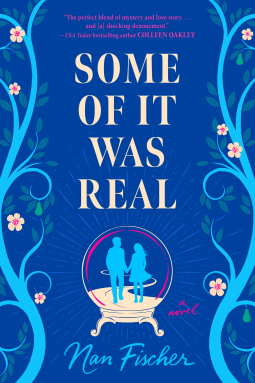
Some of It Was Real by Nan Fischer

book cover

Today an image slips through the carefully constructed peace . . .
Pale sand beneath my feet, a blue-green ocean, foam nibbling at my bare toes. Behind me, a castle—ornate turrets dotted with pale pink shells, a drawbridge made from delicately curved driftwood, beneath it, a moat where tiny paper boats rock in the breeze. A wave gathers on the horizon. It grows taller and white horses gallop across its face. When the wall of salt water strikes, the castle will be destroyed and with it a treasure, something precious . . .
The vision disintegrates. Ghostly lips brush my cheek. I know what’s coming next. A whisper I’ve heard intermittently my entire life.

“It’s important you understand that I don’t have a clear definition for what I do. Psychics use their intuition or spiritual guides to gain information about the past, present, or future. Mediums are channels that deliver messages from those who have passed over. I’ve been called a psychic-medium, and that’s as good a definition as any. But the truth is that I’m not sure why I hear voices, see images, sing at times, or scribble notes—it just happens and I can’t tell you how because I truly don’t understand it.”

Sylvie Young has just gotten a TV deal, the product of a successful run of live stage performances and a top-tier agent. Life is good, and about to get better. Sylvie’s shows are of the psychic sort. Select audience members, offer a connection to a lost one, solve some riddles, answer some unanswered questions, and mostly, offer comfort. Syl is very good at this. But not all of her connections are of the psychic sort.

description
Nan Fischer – image from her site

Thomas Holmes is a cynical reporter on a mission. For personal reasons, Holmes believes that all psychics are fakers. It is elementary. His current project is to profile several psychic-mediums, intending to expose their chicanery and, if at all possible, destroy their careers. Which is something he knows a bit about. His own career in journalism has suffered some major blows, to the point where this major takedown piece may be his last chance to salvage his own career.

Both are struggling to deal with their origin stories (Sylvie even opens her shows by telling hers, at least what she knows of it) and their self doubts. Sylvie’s arc is a quest to find out what really happened to her biological parents, explain why she is beset by nightmares of a particular sort, and maybe discover where she acquired her very real personal talent. But is it real, really? Thomas suffered a trauma in his youth that has defined his life. Until he can confront that, the life he has made for himself will never be a proper fit. This is the true core of what Nan Fischer is writing about.

One of the seeds that started this novel with my fascination with imposter syndrome—the inability to believe one’s success has been legitimately achieved or deserved. I wanted to create a character, Sylvie, on the cusp of achieving great success but who doesn’t quite believe she deserves it. I made Sylvie a psychic as that gift is controversial—the perfect job for someone doubting her abilities due to all the critics! – from Hey It’s Carly Rae interview

Thomas has run into some dead ends digging into her past. There are no records of her parents’ supposed plane crash deaths when she was four. He wants her help to dig into this further. She has an interest, as it is a mystery to her as well. And if she can prove to him that she is not a grief vampire, he will drop her from his story. Of course, he expects he will never have to make good on that, as psychic powers are all BS, right? And the game is afoot.

the stories we tell from childhood that have shaped who we are – are based on old and sometimes faulty memories. It’s up to each of us to decide what to accept or discard from our origin stories and to decide who we ultimately want to be in life. – from the Jean Book Nerd interview

Many of the curtains Sylvie needs to part were placed there by others. Thomas erected his barriers to self-knowledge himself. Part of their interaction is Syl challenging Thomas to look deeper into the sources of his own demons, as Thomas challenges Sylvie to examine the ethics of how she is making her living. (“What was the fair lady’s game? What did she really want?” – Sherlock Holmes in The Second Stain)

As one might expect from a book categorized as romance, these two develop an attraction. That complicates matters. How can a journalist write an objective piece about someone with whom he is romantically engaged? He may be trying to take her down, but she is also looking for ways to manipulate him into a more benign view of her and her work. The cynic vs psychic dynamic is entertaining for a while, but Thomas’s relentless disregard of evidence gets a bit old. Really, dude? Still?

Fischer gives us a particularly interesting look at the profession of psychic-medium, offering a perspective that elevates it beyond being merely a connection to another side, whether real or faked. She connects it to something greater.

The structure is alternating chapters, his and hers, both first-person narratives. The voices are effectively different. It is a cat-and-mouse competition, although it could easily be a cat-and-dog one. Sylvie’s constant companion is a very large Great Dane, and Thomas travels with an elderly feline. (Fischer even manages to give her own dog, Boone, a cameo) He keeps trying to find holes in her schtick. She keeps trying to move him beyond the purely factual. Another Holmes might say when you have eliminated the impossible, whatever remains, however improbable, must be the truth, but Thomas clings to his biases tenaciously.

I was not all that taken in by their supposed attraction, never quite bought it, and wanted the sex scenes to be over quickly. But I did enjoy their mutual interest in helping each other out. I also had trouble with Sylvie’s relationship with her parents, who seemed far more reluctant to share information with their daughter than seemed reasonable, particularly considering that she is a grown-ass woman when she is pleading for intel about her past, intel that they have. Their rejection of her seemed unnatural, very un-parental.

What keeps the story moving along is a steady stream of interesting clues and the pair’s ingenuity on following up on them. There are some pretty nifty twists. It is fun tagging along on the procedural, mystery-solving element of the story. Overall, Some of It May Be Real is an engaging story, a mystery, wrapped in a bit of fantasy, a quest of self-discovery featuring an ongoing cynic-psychic battle, as both Sylvie and Thomas dig into their origins as a way to confront their demons and feelings of inauthenticity. It offers some intrigue, some chills and some very real tears. It is authentically entertaining.

What surprised me most about writing Some Of It Was Real was that I thought my research would lead me to a conclusion about what I believe. I watched documentaries, movies, and TV shows about psychics, clairvoyants and mediums and read studies and articles written by individuals whose goals are to prove the supernatural is a hoax. But in the end, the only real conclusion I drew was that some of it might be real. – from Thoughts From a Page Podcast

Review posted – August 26, 2022

Publication date – July 28, 2022

I received an ARE of Some of It Was Real from Berkley in return for a fair review. Wait, does the number four have any particular meaning for you? I am also seeing something shiny. Sparkles, maybe? No, stars. Yes, definitely stars. Thanks, folks.

This review has been cross-posted on GoodReads

=======================================EXTRA STUFF

Links to the author’s personal,
Instagram, GR, and Twitter pages
Profile – from her site

Nan Fischer is the author of Some Of It Was Real (July 2022, Berkley Publishing), and the young adult novels, When Elephants Fly and The Speed of Falling Objects. Additional author credits include Junior Jedi Knights, a middle grade Star Wars trilogy for LucasFilm, and co-authored sport autobiographies for elite athletes including #1 ranked tennis superstar Monica Seles, Triple Crown race winning jockey Julie Krone, Olympic gold medal speed skater Apolo Anton Ohno, legendary gymnastics coach Bela Karolyi, and Olympic gold medal gymnasts Nadia Comaneci and Shannon Miller.

Her prior work was published under the names Nancy Richardson Fischer, Nancy Richardson, and Nancy Ann Richardson. Some of it was Real is her first book under the name Nan Fischer.

Interviews
—–Jean Book Nerd – Nan Fischer Interview – Some of It Was Real
—–Hey, It’s Carly Rae – Author Interview with Nan Fischer
—–Writers Digest – Nan Fischer: On Overcoming Imposter Syndrome by Robert Lee Brewer
—–Thoughts from a Page – Q & A with Nan Fischer, Author of SOME OF IT WAS REAL by Cindy Burnett
—–BookBrowse – An interview with Nan Fischer
with Katie Noah Gibson

Items of Interest
—–Gutenberg – full text of The Man Without a Country by Edward E. Hale – referenced in Chapter 19
—–The Poe Museum – full text of The Cask of Amontillado – by Edgar Allan Poe – referenced in Chapter 21
2 Comments

Filed under Fantasy, Fiction, Mystery, Suspense, Thriller

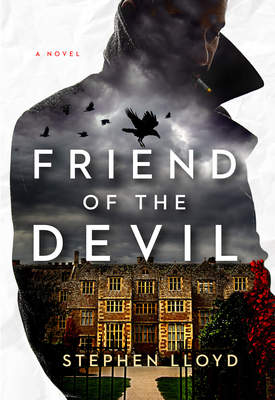
Friend of the Devil by Stephen Lloyd

book cover

“Your problem,” he told himself as he headed back to the Devil’s Vale, “is that you can’t leave well enough the hell alone.”

“Kid walks in here with a bullet lodged in him, I gotta call the cops. Kid walks in showing obvious signs of abuse, I have to contact a social worker. Kid walks in pregnant, I need to inform the parents. Beyond that, for the most part, I’m supposed to keep my trap shut.”
“Who do you call if a kid walks in pregnant, with a bullet wound, showing signs of abuse?” Sam asked.
“A career counselor,” she said, brushing her hair back, “’cause I’m outta here.

Ok, island off the Massachusetts coast, private school, Danforth Putnam. (Thomas Danforth and Ann Putnam were judge and accuser in the Salem trials). Why a high school?

I still think high school is one of the scariest places there is. It’s a place where human beings, who are barely more than children emotionally and mentally, face calamitous, potentially life-ruining choices, while approaching the height of their physical powers and sexual energy…Boarding school is all that with no parental supervision, which just amplifies its Lord of the Flies quality. – from The Big Thrill interview

Friend of the Devil is an enclosed environment thriller of a familiar sort. Think Agatha Christie’s And Then There Were None. (the original book had a different, dodgier title) An eleventh century book has gone missing and SATCO Mutual, (we can imagine what the SAT stands for) the insurer on the hook, has sent Sam (for Sam Spade) Gregory to bring it back. Identifying the perp is not all that challenging for our gumshoe, but there is more to the tale than nabbing a thief. What is a prep school doing with such an ancient book? What is the nature of the book? Why was it stolen? The questions mount. Like what happened to that pre-teen who supposedly returned to the mainland to be adopted? Is he really having a better life?

description
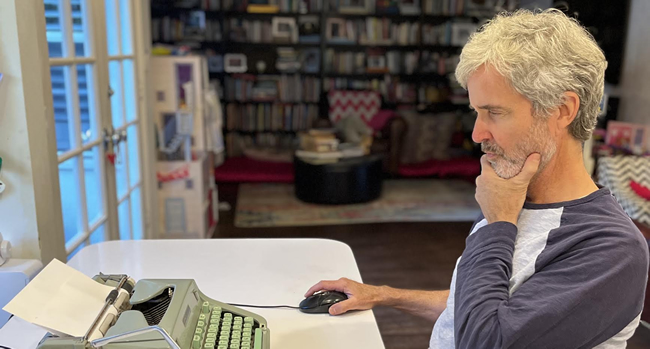
Stephen Lloyd writing on an impressively retro word processor – image from The Big Thrill – image by Stephen Lloyd

Sam is a fun lead, with military hair, a capacity for violence, PTSD hellfire memories of ‘Nam, and not much else, and a determination to see his job through to completion. And then people begin dying, with a hint of brimstone in the air. Sam takes his licks, getting repeatedly knocked out in a running joke, but keeps on keepin’ on, following leads and doing what he does.

Harriet (the spy) is our student cozy investigator, epileptic, a nerd extraordinaire, black, bullied, and dogged. She gets her licks in by writing exposes in the school paper. If Sam fails to get to the very bottom of all there is, Harriet is sure to find her way there. Their paths can be expected to cross, eventually.

It is 1980. No cell phones. Memory of the Vietnam War is still fresh. Reagan has arrived in a sulfurous chariot to do some lasting damage to the nation. There is a specimen of that breed at the school, who behaves as one might expect, receiving some unwanted insight in return.

The references keep on coming. Mr. Chesterton is named for G.K.. There are plenty more, overt and not. Laura Hershlag is named for the title character of one of the classic noir films. Dr. Spellman is named for a character in Sabrina. There are references to Poe’s The Raven, the Tales of Hoffman and plenty more, a veritable cornucopia for those who enjoy playing literary treasure hunt.

The staff at this school are not the friendliest. Sam interviews Ms. (Annabel? ) Lee, the librarian, whose cat is named for Alistair Crowley.

When she saw Sam, her mouth twisted into a citrus pucker. “May I help you?” she asked in a voice that could freeze pipes.

The students are no prize either. We expect rich kids to be spoiled, but even the scholarship kid is up to no good. One palooka hopes to juice his way into the NFL, while using his considerable physical brawn to dark purposes. Others are not much better.

Ok, so I had a forked reaction to this one. First is that there were multiple LOL moments, including one ROFL. This is a HUUUUUGGE plus. Not at all surprising from one of the main writers and executive producers of How I Met Your Mother and Modern Family. And I loved all the references.

Second, was that it felt lean, to the point of gaunt. Not quite a novel in length, FotD settles in at a more novella-ish 45,000 words, give or take. Supporting cast was mostly of the cardboard cutout variety. Yes, some background is offered, but only enough to make them cast shadows. (Well, assuming that the characters are actually capable of casting shadows) This is a product of Lloyd’s very successful TV career, (four Emmy nominations) in which the clock is always ticking and descriptions and self-reflection are seen as tools of the devil’s workshop. (which may be in Iowa) There is plenty of gruesomeness, but it is handled with a light touch which, I know, sounds like an oxymoron, and maybe it is. There is a fabulous twist, which is always a delight.

Sam Gregory is a fun lead, an investigator with a Chandler-esque, noir sense of humor, and a war-veteran’s issues with sleep. Harriet, honor student in the civilian investigator role, is one of the better cast members. Their perspectives alternate throughout. It moves along at an over-the-limit pace, while building up a body count, and revealing more and more witchy elements.

Bottom line is that this a devilishly (helluva?) fun summer read. You will blaze right through, pausing on occasion to fall out of your seat laughing. Your brain can occupy itself with catching as many references as it can. This is a fast, pure entertainment, with only an occasional side-glance at real-world concerns. You will not risk eternal damnation if you read this one, so long as you keep your inner demons where they belong, but you may hurt yourself laughing.

Review posted – May 27, 2022

Publication date – May 10, 2022

I received an ARE of Friend of the Devil from G.P. Putnam’s Sons in return for a fair review, and the tiniest sliver of a soul. Thanks, folks

This review has been cross-posted on GoodReads

————————————————–

Lloyd seems interested in writing a sequel, having set this one up to allow for the possibility. I hope he does.

Possible Titles for Volume 2 – Here, I’ll get you started
Dead Lasso
Demon Elementary
Devil Knows Best
Devil-ish
Distant Relation of the Devil
Everybody Loves the Devil
The Fresh Prince of Level Nine
Flight of the Demons
How I Met Your Devil
Kids Say the Most Demonic Things
Married with Demons
The Marvelous Mrs Scratch
Modern Satanic Family
Young Beelzebub

=======================================EXTRA STUFF

From Penguin Random House

Stephen Lloyd is a TV producer and writer, best known as an executive producer of award-winning shows such as “Modern Family” and “How I Met Your Mother.”

Interviews
—–The Crew Review – Stephen Lloyd | Friends of the Devil – 50:42 – by Sean Cameron, Christopher Albanese, Mike Houtz
—–* The Big Thrill – Up Close: Stephen Lloyd by Allison McKnight

Songs/Music
—–The Grateful Dead – Friend of the Devil
—–The Rollingstones – Sympathy for the Devil

Leave a comment

Filed under Fantasy, Fiction, Horror, Mystery, Noir, Suspense, Thriller, Thriller

The Impossible Us by Sarah Lotz

book cover

I now understand why desperate people find religion, or end up believing in aliens or conspiracy theories. Because sometimes the rational answer doesn’t cut it. Sometimes you have to look outside the box. And my hope-desperation twofer had led me way outside the box, all the way to a Willow Green allotment in fact, where, God help me, I was waiting to meet a bunch of people who even the most charitable among us would label “raging nut-job weirdos.”

You think your relationship is complicated? You have no idea what complicated is. Nick and Bee, now that is a truly complicated pairing. Guy sends a flaming message, raging about (and to) a client who has not paid for editing/ghost-writing services, and it somehow gets misdirected. Woman checking her e-mail receives said message and responds with great, subdued humor. And we have achieved our rom-com meet cute.

description
Sarah Lotz – image from A.M. Heath

Obviously the pair hit it off, as messages go zooming back and forth across the wires, ether, or whatever, and we get to the big Deborah Kerr/Cary Grant rendezvous scene. As this is London instead of New York, it is set under the large clock at Euston Station instead of at the top of the Empire State Building. And, well, as one might expect, it does not come off as planned, putting a huge dent in the “rom.” Pissed, Bee is about to write it all off when her bff convinces her to keep an open mind, and a good thing too. Turns out, her correspondent had indeed shown up, well, in his London, anyway. The two have somehow been the beneficiaries of a first-order MacGuffin, well a variant on one, anyway. Nick and Bee, while they may be able to exchange messages, are actually living in parallel universes. So I guess that makes their connection more of a meet moot?

description
Big Clock at Euston Station image from AllAboard.eu

Still, the connection, divided as they are, is real. They try to figure out what to do. And that is where the next literary angle comes into play. Sarah Lotz adds into the mix references to Patricia Highsmith’s (and Alfred Hitchcock’s) Strangers on a Train. But not for the purpose of knocking off each other’s unwanted spouse. (Although now that you mention it…) If they can’t be together, maybe they can use their insider knowledge to find their side’s version of each other. Boy meets girl, boy loses girl, boy tries for very similar girl? I mean really, what would you do if you found the one, but were precluded by the laws of physics from realizing your dream?

Lotz has fun with literary/cinematic references, even beyond the two noted above. There is a Rebeccan mad mate, chapters with titles like Love Actually and One Wedding and a Funeral, and on. This is one of the many joys of this book. Catching the references, the easter eggs deftly scattered all about. Cary Grant’s Nickie in An Affair… is Nick here. Rebecca of the story of that name is Bee in one world, Rebecca in another.

There are lovely secondary characters, Bee’s bff, Leila, is the sort of strong supporting sort a fraught leading lady needs. Nick engages with a group of oddballs who have some off-the-grid notions about space-time, and what rules should apply when contact is achieved. There is a grade-A baddie in dire need of removal, a harsh landlady, some adorable pooches, and a very sweet young man.

Another bit of fun is the repeated presence of David Bowie references, including an album you have never heard of.

There is some peripheral social commentary as Nick and Bee compare the worlds in which they live, what programs have been enacted, which politicians have gained office, or not, where the world stands with global warming, things of that nature. These offer food for thought, actually more like dessert to go with the main course of the romance.

Time travel romances have made an impressive dent in our overall reading time. The Outlander, and The Time Traveler’s Wife pop immediately to mind. Other stories have been written about people communicating over time, but this is the first use I am aware of that makes use of parallel universes as an impediment to true love. You do not want to look too closely at the explanation for the whole parallel universe thing. Just go with it. suspend your disbelief. In fact, send it off for a long weekend to someplace nice.

Lotz has done an impressive job of delivering LOLs and tears all in the same book. I noted seven specific LOLs in my notes, and I expect there were more that I failed to jot down. On top of that, we can report that copious tears were shed. No count on that one. So Lotz certainly delivers on the feelz front.

Bee and Nick’s relationship may be insanely complicated, but there should be nothing complicated about your decision to check this one out. The Impossible Us is not only very possible, but practically mandatory. This is a super fun read that you should find a way to make happen for you, whether or not you have a tweed suit, a red coat, a rail station with a large clock, or a dodgy internet connection.

Review posted – March 18, 2022

Publication date – March 22, 2022

I received an ARE of The Impossible Us from Ace in return for a fair review in this universe. My much more successful self in that other place will have to handle the review on his side. Thanks, folks. And thanks to NetGalley for facilitating.

This review has been cross-posted on GoodReads

=======================================EXTRA STUFF

Links to the Lotz’s’s personal, FB, Instagram, and GR pages

Sarah Lotz writes under various names. Impossible Us (Impossible in the UK), is her eighth book under that name. Then there are four books written with her daughter, Savannah, as Lily Herne, five with Louis Greenburg as S.L. Grey, three with Helen Moffatt and Paige Nick as Helena S. Paige, and that does not even count screenplays.

Items of Interest
—–Parallel Universes in Fiction
—–MacGuffin
—–Rebecca
—–An Affair to Remember
—–Strangers on a Train

Reminds Me Of
—–Meet Me in Another Life
—–The Midnight Library

Leave a comment

Filed under Fantasy, Fiction, Romantic Comedy, Sci-fi, Science Fiction, Science Fiction

The Book of Cold Cases by Simone St. James

book cover

On the lawn, something moved across the surface of the grass. The touch of a footprint. Inside the house, one of the cupboard doors opened in the dark kitchen, groaning softly into the silence.
In a bedroom window a shape appeared, shadowy and indistinct. The blur, perhaps, of a face. A handprint touched the bedroom window, the palm pressing into the glass. For a second, it was there, pale and white, though there was no one to see.
The wind groaned in the eaves. The handprint faded. The figure moved back into the darkness. And the house was still once more.

“Being a girl is the best,” she said, “because no one ever believes you’d do something bad. People think you’ll do nothing, which means you can do anything. I’ll show you.”

1977 – Claire Lake, Oregon. Two men have been brutally murdered in separate incidents, roadside, no obvious motive. But a witness did see someone leaving the scene of one of the crimes. The description matches a local, a young woman generally regarded as odd. Beth Greer is standoffish, young, attractive, and rich. Parents both dead, Mom from an auto accident in a tree, Dad from a close encounter with fired round, in the kitchen. She has a taste for alcohol and keeping human connections ephemeral. When she is not out at bars and clubs, she is mostly at home, Greer House, not the happiest place on Earth. The bullets that did in the two randos just happen to match the one that laid Julian Greer out on the kitchen floor, a murder, BTW, that was never solved. You can see why the police might be a tad suspicious.

description
Simone St. James – image from her site – credit: Lauren Perry

2017 – Shea Collins is 29, newly (ok, almost a year) divorced. Has worked reception in a doctor’s office in downtown Claire Lake for five years. But her real self is invested in her website, The Book of Cold Cases. Shea is a true crime blogger, been at it for ten years, is certainly up on local crime legends, so she notices when one walks into the office, Beth Greer, forty years after she was believed to be The Lady Killer of tabloid fame, forty years after she was acquitted of the murders, which were never solved. Most think she was guilty. Beth pursues Greer, who, to her great shock, agrees to be interviewed.

And the game is afoot. There are two timelines at work, contemporary and back-then. In the 2017 line, Shea interviews Beth at Greer House, even though the place creeps her out. The décor is from the era of Beth’s parents, which is off-putting enough, but there is clearly a lot more going on there. Objects move without obvious cause. A mysterious girl appears outside a window. Shea does not feel safe there, but the lure of getting the whole story from Beth is too much to resist so she keeps coming back. Also, she and Beth seem to be forming a friendship. Beth may or may not be a killer, but Shea likes her, is fascinated by her. In the earlier time, we follow Beth’s childhood, stretching back to 1960, as events that lead up to the killings are revealed, bit by bit.

The alternate perspectives, Shea’s in first person and Beth’s in third, are not evenly divided. We get more Shea than Beth (26 chapters to 18, if you must know), with a few Others tossed in. They do not alternate in a steady format, but streak at times for one or the other.

Shea has some dark visions from her own past she has had to deal with for the last twenty years. At age nine she was abducted, but managed to escape with her life. The next girl her abductor took was not so lucky. Helps explain why she takes the bus and is reluctant to get into cars. Helps explain why she is way security conscious. Also, helps explain why she is reluctant to date again.

“Do you know how many serial killers dated lonely women in their everyday lives? Some divorcée who just wants companionship from a nice man? She thinks she’s won the dating lottery, and meanwhile he’s out there on a Sunday afternoon, dumping bodies. And now we’re supposed to use internet apps, where someone’s picture might not even be real. People are lying about their faces.”

It took a long time after we met on Match for me to discover my now wife’s history of serial criminal activity, so I get that.

There are mysteries to be solved and in the best True Crime fashion, Shea, along with her sort-of partner-in-crime-solving, PI Michael De Vos, dig into each of the questions as they arise. Very cozy mystery style. There is even a retired detective who offers a bit of help, continuing the cozy format. Of course, there are other elements that make this less of a cozy, the supernatural, for one, and a little more on-screen violence than might fit in that format. In fact The Book of Cold Cases crosses many genre lines, could be gothic, thriller, horror, suspense, or mystery, with a bit of romance tossed in for good measure. This particular mix of genre-salad was not always the Simone St. James brand.

I wrote five books set in 1920’s England, and while I loved writing them, I never intended to write about one period for the rest of my life. I wanted to flex my writing muscles and write something set in the USA—something that had two timelines, one of them contemporary. Creatively, I wanted a new goal and a new challenge while still writing a Simone St. James book. I got my wish! – from the Criminal Element interview

St James has stuck with that. Her first America-set thriller, The Broken Girls (2018), offers a split timeline, 1950/2014, the story centering on a deserted and reputedly haunted school for girls, and a journalist looking into the death of her sister twenty years before. The Sun Down Motel (2020) takes on a haunted establishment in upstate New York, splits between 1982 and 2017, and includes a 35-years-ago missing aunt, a niece eager to dig up the truth, and a slew of killings and disappearances that really need looking into. Keeping the string going, The Book of Cold Cases splits between 1977 and 2017, includes an amateur investigator (a blogger this time), some contemporary frights, some historical killings, and a haunted house. (I did ask her what she was planning to haunt next, but St. James declined to spill)

Strong primary characters can carry a book if the plot is well-thought out, and that would have been enough here. But St. James’ secondary characters were quite good, although we could have used even more of some of them. Detective Black, retired now, but involved in the 1977 investigations, was a strong presence. Shea’s PI, Michael De Vos, was off screen too much, as he was quite engaging when he was in view. I enjoyed the parallelism of relationships, Beth with Black and Shea with Michael.

Gripes – The only real blogging work we see Shea do (yes, there is a session or two noted, but only very much in passing) is on Beth’s case. Might have been a good thing to get a stronger, more fleshed out, look at how Shea has been spending her nights, which would have included a lot more on-line than live and in person investigations. Claire Lake, the town, did not feel strongly realized. This was more than made up for, however, by the seriously creepy haunted house, and the powerful presence of Beth Greer.

Lest you suspect there is some actual true crime in this true crime tale, I asked SSJ that question on her FB page, and she replied, “the cases in the book were all entirely fictional.” So you True Crime obsessives can stop looking for real-world sparks for this one. And as for ghosts in the real world, she has never had a spectral experience. St. James likes putting literary Easter eggs in her work, so keep an eye out for those.

Bottom line is that The Book of Cold Cases is a fun page-turner that delivers what it promises, murder mysteries, an intrepid investigator, some fascinating characters, a taste of the 70s, and a large dollop of the other-worldly. It is even a bit scary. I have a pretty high bar for such things, but there was one moment in which I got chills and the hair on my arms stood up at attention. That is one more than usually occurs, so, kudos. It sustains tension throughout, making you want to either blast through ASAP, or, my preferred approach, savor the fun in relatively low-dose portions night after night. In either case this is a fun, spooky, engaging read that is well worth your time, and should provide most readers with some chills.

some places hold you so that you can’t get free. They squeeze you like a fist.

Review posted – March 4, 2022

Publication date – March 15, 2022

I received an ARE of The Book of Cold Cases from Berkley in return for a fair review, and keeping quiet about a few things. Thanks, folks. And thanks to NetGalley for facilitating.

This review has been cross-posted on GoodReads

=======================================EXTRA STUFF

Links to the author’s personal, FB, Instagram, and Twitter pages

Simone St. James is the nom de plume of Simone Seguin, of Toronto. She worked for many years in TV, for a Canadian sports network, but not as a writer. She worked on budgets. She says she knows nothing about sports, despite the gig. It was only after she had had multiple novels published that she ditched budgeting to become a full-time writer. She had endured six years of rejections before her first book was published. The Book of Cold Cases is her eighth novel.

Interviews
—–Criminal Element – 2018 – Q&A with Simone St. James, Author of The Broken Girls for The Broken Girls by Angie Barry
—–The Inside Flap – 2020 – Ep. 98 How To Spy On People With Simone St. James by Dave Medicus, Andrew Dowd, and Laura Medicus – 1:36:48 – begins about 30:00 – to 58:00

Item of Interest from the author
—–Indigo – Sample – 1st four chapters

Music
—–George Thorogood – Bad to the Bone

Leave a comment

Filed under Fiction, Horror, Mystery, psycho killer, Reviews, Suspense, Thriller

Anatomy: A Love Story by Dana Schwartz

book cover

While Davey tugged the rope, Munro, still in the grave, helped to guide the body out of the small hole in the coffin and back toward the surface world, a strange reverse birth for a body past death. Munro successfully removed the body’s shoes off as it left its coffin, but it was up to Davey to strip off the rest of its clothes and throw them back in the grave. Stealing a body was against the law, but if they actually took any property from the grave, that would make it a felony.

It’s the lesson young girls everywhere were taught their entire lives—don’t be seduced by the men you meet, protect your virtue—until, of course, their entire lives depended on, seduction by the right man. It was an impossible situation, a trick of society as a whole: force women to live at the mercy of whichever man wants them but shame them for anything they might do to get a man to want them. Passivity was the ultimate virtue…Be patient, be silent, be beautiful and untouched as an orchid, and then and only then will your reward come: a bell jar to keep you safe.

Ok, so I screwed up. First off, I thought the pub date was 2/22/22 and scheduled my reading and review accordingly. Uh, sorry. Actual pub date was 1/18/22, so I am coming at this one a bit late. Second, I did not do a very thorough job of reading about the book when it was offered. I somehow managed to overlook the fact that it is a YA novel. I have nothing against YA novels. Some of my favorite books are YA novels, but I usually pass on YA books these days unless there is a compelling reason to take them on. Had I seen that it was a YA, I would probably have skipped this one. Finally, yet another failing on my part. I somehow managed to overlook the romance element in the promotional copy. Again, I have nothing against romance elements in books which are mostly of another sort. Quite enjoy them when they are well done. But did not have my expectations primed for the presence of quite as much as there is here, which is not to say that it is huge. It is not. So, multiple failings, mea culpa, mea culpa, mea maxima culpa. The product of impatience. Won’t happen again. I know the drill, Three Hail Marys and a couple of Our Fathers. Now that I’ve gotten that off my chest ands offered fair warning…on to the book itself.

description
Dana Schwartz – image from her site

Hazel Sinnett is seventeen. She has always lived in a castle an hour outside Edinburgh. It is 1817. She very much wants to study medicine, has read all the books in the family library on the subject, but lacks actual school-based tuition and hands-on experience. When the grandson of a famous doctor is in town to deliver a lecture, she finds a way to attend. Gender attitudes being what they were at the time, people of her sort were not welcome. Still, she finds a way, with some help, and when the doctor announces he will be offering an anatomy class she is desperate to attend.

Medicine is making some advances but the study of the human body requires actual human bodies, preferably lately late. Executions not providing sufficient resources to fill the need, a profession has arisen to satisfy that demand, resurrectionists, who, for a fee, relieve nearby graves of their residents, and deliver same to their clients with the utmost of discretion. Jack Currer, also seventeen, counts that among his several jobs. He happens to be hanging about near the Anatomists’ Society when Hazel is locked out. Meet Cute as Jack shows this clearly well-to-do young lady a secret way in. Think these two might just cross paths again? Of course, there are impediments.

Hazel is not in line to inherit anything, regardless of her parents’ wealth, bypassed in favor of the male heir. The female thing again. The usual way for a young lady from a god family to secure a future is to secure a husband of means. As it happens, she has a first cousin living not too far away, Bernard. They have known reach other forever, played together since early childhood, and it has been presumed that it was only a matter of time before Bernard would propose. He is not a bad sort, but rather dull and a bit too concerned with his appearance. Hazel recognizes that there are problems with her being allowed to make her own way in the world, so more or less anesthetizes herself to the likelihood that Bernard is her likeliest way out of a life of penury. God knows that is what her mother keeps telling her, and telling her, and telling her.

She manages to attend some of Doctor Beecham’s lectures, and is the star pupil, but the female thing again. Guys, catch up, C’Mon! Beecham at least recognizes her intelligence and they come to an agreement. If she can pass the medical exam at the end of the term, she will be able to get real medical training. Unfortunately, there’s that hands-on thing. Books alone will simply not do. But wait! It just so happens she has made the acquaintance of someone who might be able to help her out, and a beautiful friendship blossoms.

I really thought I was going to go be a doctor,” Dana Schwartz says about her time as a pre-med student in college. “Then I had this panicked moment of realizing I was so fundamentally unhappy. My dream was always to be a writer, but I never thought I could make a living that way.” – from the Forbes interview

But it is not all raw sexism and Hallmark moments. There are dark doings in Edinburgh. A plague has struck, a return of the so-called “Roman fever” which had killed over five thousand the last time it hit, two years before. It had even killed Hazel’s beloved brother, George. She had caught it as well, but managed to survive. Is it really Roman
Fever that is boosting the mortality rate? Jack is aware of far too many acquaintances vanishing, and there are strange doings in the local graveyards as a trio of heavies are haunting such areas, terrorizing the poor resurrection men. Then Hazel begins to see some very strange medical problems when she starts getting to study specimens obtained by Jack, and treating some locals. There is also something decidedly off about Doctor Beecham, who never seems to remove his dark gloves, and demonstrates a mind-numbing drug as a road to pain-free surgery. Then there is Doctor Straine, one eye, nasty skin and a worse attitude, a surgeon working with Doctor Beecham. Seems like a nogoodnik from the build-a-creep shop.

It was the gothic elements that had drawn me to the story. And they are indeed present. But Schwartz has had some fun with them. (For the following I used some of a list from Elif Notes.) Usually gothic novels feature a Desolate, haunted Setting, typically a very creepy castle or equivalent. Here, Hazel lives in a castle, which is a pretty benign home for her. Other sites must serve this purpose. Graveyards work, and certainly provide some chills, and any place where human bodies are being cut up, for purposes educational or malign, will also serve, so, check. Dark and Mysterious Atmosphere? You betcha, plenty of suspect characters and unexplained deaths and disappearances. Something supernatural? Well, I do not want to give anything away, so will say only that there is an element here that qualifies the story as fantasy. Emotional Extremes? Fuh shoo-uh. Although the emotional extremes are as much about Hazel’s lot in life as they are about the actual life-and-death shenanigans that are going on. Women as Victims – absolutely, but in the wider, sexism-conscious sense as well as in the way of a damsels being put upon by dastardly males. Curses and Portents – not so much, except what we all might wish upon some of the baddies. Visions and Nightmares – Hazel has some of the latter, but nothing mystical about them, just recollections of horrors she had seen in real life. Frightening Tone – most definitely. There is clearly something sinister going on in Edinburgh. Frightening Weather – not really. There is a fun early bit in which we are waiting for an incoming storm to deliver some life-generating lightning, but mostly, weather is not that big a deal here. Religious Concerns – social mores are more the thing in this one. Good versus Evil – there is some serious evil going on here. And Hazel is definitely a force for good. A Touch of Romance – yes. Well, more than a touch. Hey, Laddy, you’d better keep those hands to yersel ef ya wan ter keep ‘em on the ends uh yer arms.”

There is Romance and then there is Love. The title even highlights it, Anatomy: A Love Story. There is clearly some romance going on here. Hazel and Jack give off sparks which brings their obvious connection to life. But Hazel’s true love may be more the passion she has for learning, for science, for medicine, for anatomy, for surgery. If she were really faced with a choice between being a doctor or being with Jack, and the two were exclusive, are you confident what choice she would make? Is it possible to have your cake and dissect it too? Not so easy in 1817 Scotland.

The real horrors here are the treatment of women as a subordinate level of human and the joys of the class system in early 19th Century Scotland. Even coming from a family of means, Hazel is refused entry into a profession for which she has passion, and a clear capability, simply because of her gender. She must endure belittling by men, in power and not, who are her intellectual and moral inferiors, as she struggles to find a way forward. Contemplating her life options, Hazel sees her future as a life under a bell jar, whatever that may be referring to. The experience of being poor in the Georgian era is shown not only in the life of Jack, but in the ways the poor and working class are held in their place no less than if they were confined to a castle dungeon, and in the depraved indifference the wealthy show to the lives of those less fortunate than themselves.

“The main mystery I wanted to pick at and unravel is who gets forgotten in society and for what purpose,” Schwartz says. “Obviously today, there is a huge wealth gap that continues to grow, but in the 1800s, the aristocracy made that wealth gap explicit. There was a social and cultural line, so I wanted to explore in a way that doesn’t necessarily label the characters as heroes or villains.” – from the San Diego Tribune interview

There are some comedic elements, one of which focuses on a man-eater and is hilarious. There a lovely bit of a secondary romantic sub plot, and some fun references. Hazel is all excited to hear about a lecture/demonstration put on by someone named Galvini. This is a clear reference to the actual Luigi Galvani who was putting on shows in which dead things were animated with electricity from a battery. He provided some of the inspiration for a young writer of that era. The epigraph of the novel is a quote from Mary Wollstonecraft Shelley, whose creation has near universal familiarity. A mention of Mary Wollstonecraft, her mom, serves double duty as a reference to a leading light for women’s rights in the late 18th and early 19th centuries, and as a reminder that the novel deals with matters of life and death, and maybe life again. Hazel’s younger brother is named Percy, which again reminds one of Mary Shelley. A recollection of Walter Scott reciting his Lady of the Lake epic at her Uncle and Aunt’s house is also reminiscent of the Wollstonecraft/Godwin household, in which Coleridge read his Rime of the Ancient Mariner. So, there are many Frankensteinian parts gathered together to help animate the story.

Some parts did not quite fit, however. It was sooo convenient that her father was away on a prolonged naval mission, and that Mum decides to head out of town for an extended period with her other, much more valuable, male child, Hazel’s younger brother. So, Risky Business time for the entire season at Hawthornden Castle. (Although maybe Summer at Bernie’s might be a bit closer, given the issues with dead people.) AND, really? none of the staff rats Hazel out to her mother, the one paying their salary, for running a clinic at the family residence? Maybe we should consider this part of the fantasy element. Re my intro, I was not much excited by the squishy romance bits, but I already told you about that. No biggie, ultimately. It is mostly adorable.

Dana Schwartz has written a strong, literary, YA novel that offers some chills, an historical look at a place and time, and a look at the challenges faced by the poor and by those of the female persuasion, when it was still the rule to treat women as servants, eye candy, or brood mares. It shows a powerful approach and makes me eager to see what she comes up with when she writes a full-on adult novel, but that may not be next up on her board.

…right now, I have an idea for a sequel that I really want to tell and I think will be really fun. I thought this was going to be a one-off, but when I reached the ending, and I sat with that for a few months, I thought that there’s something else here.” – from the San Diego Tribune interview

Review posted – February 11, 2022

Publication date – January 18, 2022

I received an ARE of Anatomy: A Love Story from Wednesday Books in return for a fair review and some help dealing with an uncomfortable neck growth. Thanks, folks, and thanks to NetGalley for facilitating.

This review has been cross-posted on GoodReads

=======================================EXTRA STUFF

Links to the author’s personal, FB, Instagram, TikTok, and Twitter pages

Schwartz came to public notice when she was still in the employ of the New York Observer and Tweeted a criticism of Donald Trump for using anti-Semitic imagery in an anti-Hillary ad. She got viciously trolled by his minions, and wanted to write about that experience. Her boss gave her a green light, but did not really proof the piece, an open letter, which called out Jared Kushner, who owned The Observer, for not interceding with his father-in-law to prevent such things. As an undergrad, she established the “GuyInYourMFA” and “Dystopian YA” parody Twitter profiles. She had internships with Conan and Colbert, and was later was a staff writer for Disney’s She-Hulk, then created and hosted the Noble Blood podcast. Anatomy is her fourth book.

Interviews
—–Time Magazine – Dana Schwartz Wrote the YA Romance She Always Wanted to Read by Simmone Shah
—–Bustle – How My Chemical Romance Inspired Dana Schwartz’s Latest Novel – By Samantha Leach
—–Forbes – 26-Year-Old Dana Schwartz Doesn’t Need To Stick To A Genre by Rosa Escandon
—–San Diego Union Tribune – Dana Schwartz gets skin deep in ‘Anatomy: A Love Story’ by Seth Combs
—–Barnes & Noble – Poured Over: Dana Schwartz on Anatomy by BN Editors

Items of Interest from the author
—–Discussion Questions

Items of Interest
—–Edith Wharton – Roman fever – a short story
—–This very nice bio of Mary Shelley, from The Poetry Foundation, has considerable information about her other works.
—–A nifty web-site on Resurrectionists. Can you dig it?
—–Frankie for free, courtesy of Project Gutenberg
—–3/17/18 – MIT Press has produced an annotated version (Print and on-Line) of Mary Shelley’s classic novel. It is intended for use by STEM students, raising scientific and ethical questions from the original work. The comments are joined from diverse sources, particularly in the on-line version, with some by scientists, and some by students. The print version sticks to annotation articles by professionals. A fun way to approach this book if you have not yet had the pleasure, or a nice pathway back if you are returning for a visit. It is called, appropriately, Frankenbook. You can find the digital version here
—–NY Times – Reporter Calls Out Publisher (Donald Trump’s Son-in-Law) Over Anti-Semitism By Jonathan Mahler
—–My review of The Lady and her Monsters – This is a must-read book for anyone interested in Mary Shelley and the writing of Frankenstein

Leave a comment

Filed under Fantasy, Fiction, Historical Fiction, Horror, Literary Fiction, Reviews, Thriller, Thriller, YA and kids

Road of Bones by Christopher Golden

book cover

It wasn’t the desolation or the darkness or even the climate that had persuaded him to invest in this trip. It was that name…Official maps referred to it as R504. It wasn’t much of a road. The pavement started at both ends but not long thereafter the pavement gave way to packed gravel…In many places, the road was barely wide enough for two cars to scrape the paint off each other as they passed. The landscape consisted of snow, skeletal trees, mountains, and the occasional guardrail, as well as settlements that were considered urban but many of which were made up of a few dozen buildings and the hardy souls who went along with them.

It seemed like these people lived in a haunted, frozen hell.
To them . . . it was just home.

The Russians have a thing for giving characters in novels, and, it appears, real-world things, multiple names. R504, for example, is also known as P504. (no idea, don’t ask). It is also known as Federal Highway R504 and The Kolyma Highway. Locals call it The Kolyma Route. Plenty? Da. Complete? Nyet. It is also known as The Road of Bones. Construction began in 1932, during the Stalin era, using labor camp inmates. It continued using gulag prisoners until 1953. Workers die during construction? Permafrost in Siberia makes digging holes problematic, so the bodies were laid to rest under and near the road. Just a few, only somewhere between 250,000 to one million. Any chance a mother lode like that might attract a ghost hunter?

description
Christopher Golden – image from The Tufts Daily – photo by Shivohn Kacy Fleming

Not all the dead along the road were planted there due to construction. There are probably a million ways to die on the Road of Bones in winter. Run out of gas? You die. Flat tire? You die. Accident? You die. Vehicle breaks down for any reason? You die. Don’t go outside wearing glasses. They will get frozen to your face. Have a medical emergency that cannot wait three hours until you can get to the nearest ER? You die. And guys, don’t even think about stopping by the side of the road to pee. Bring a diaper or a container of some sort. Sounds fun. When are we leaving? (I love writing stories set in places where people shouldn’t live. Like WHY DO YOU LIVE THERE? – from the Dead Headspace interview)

Felix Teigland is a maker of documentaries. He has had some ups and downs in his career. He managed to build his own production company but he is still waiting for the breakout show that will keep him and his company above water for more than just now. He is a charmer and professional bullshitter, who means well, and has a rich imagination, producing a lot of interesting ideas, but far too often he is unable to make good on his promises. Felix needs a hit. But he needs a backer to fund it. Thus, his presence in this godforsaken land. He wants to take enough video, get enough of a story that he can persuade those with deep enough pockets to reach into them and toss enough rubles his way so that he can actually produce the project.

Teig was a fast talker, always with a scheme he would trumpet with unfettered enthusiasm—a feature documentary from a fourteen-year-old director out of Argentina, salvage rights to a Spanish galleon, a TV series about World War II comic book artists who were secretly spies, a mock-umentary in which the history of Scooby-Doo and his gang would be investigated as if they’d existed in real life.

description
Here the broken landscape of Stalin’s Kolyma Highway is pictured. Without a rail link to the city, the highway remains the only major land route into & out of Yakutsk… – image and text from Weather.com – photo by Amos Chapple

And what a project it is. Life and Death on the Road of Bones. Surely there are ghost stories aplenty, not to mention compelling survival tales. Teig has a background in supernatural work, having labored for several years on a TV show called Ghost Sellers.

He had reason to want to find ghosts, but he’d never seen evidence of one, despite the show confirming twenty-seven “official” hauntings while he’d worked with them.

He is skeptical of such things, has doubts, but even more importantly, hopes. Maybe the ghosts he finds in Siberia will help him find the spirit he truly seeks.

The grieving kid who’d lived inside him for more than twenty years had always longed for proof of the supernatural.
Careful what you wish for, idiot.

Teig is joined in this insane adventure by Jack Prentiss, a bear of an American, complete with a beard that would be at home in Brooklyn or the Yukon, a beer belly, and an imposing frame. Teig owes Prentiss a considerable sum of money, which gives Jack a bit of incentive to help make sure this project succeeds. Prentiss may be Teig’s only friend.

description
A view of Stalin’s “Road of Bones”, the route to Oymyakon (Oy-vey-myakon?, is pictured on a -50c evening – image from Weather.com. photo by Amos Chapple

You can probably leave your swimsuit at home. There are only five hours of daylight this time of year, and even when it is above the horizon, it remains hidden behind clouds. Get used to the darkness. The average daily temperature in Winter is -47F.

They begin in the port town of Magadan on the Sea of Okhotsk, heading to the community of Akhust, the coldest inhabited place on Earth. I did not find an actual Akhust in my Googling, so presume it is a made-up name, standing in for Oymyakon, a twenty hour drive according to Google directions. Teig’s journey is supposedly sixteen hours, so maybe it is somewhere between the two locations. Guess it depends on extant conditions.

They make a stop to pick up a twenty-something guide, Kaskil, an actual local. He will not be their last passenger. There is a lovely lady in distress, Nari, with “cherry black hair.” Vehicle broke down and she needs a lift. When they arrive in Akhust, the coldest place on Earth, the entire town of several hundred is abandoned. Only one inhabitant remains, Kaskil’s nine-year-old niece, Ariuna, in a catatonic state. Shock most likely.

description
Oymyakon, Sakah Republic, Russia Avg. temperature of 3 coldest months: -47.0 F Coldest month: January (-53.3 F) – image from USA Today – photo by Zac Allan / Wikimedia Commons

And then there are the odd things they have been seeing in the woods as they drove along. Trees moving strangely, oversized beasts, of uncertain shape, a Siberian tiger, of very certain shape, among them. Teig has odd thoughts urging him to give in to the cold. Whatever had driven or lured the residents of Akhust from their homes was now coming for them. And the chase is on, an army of creatures, led by a very large, human-like shaman is in hot pursuit. But why? Check, please.

The story is told through alternating POVs, not including everyone, but more than a couple. This kept things fresh, while also giving us the characters’ backstories, and reasons to care about their fates, maybe some understanding of their motivations. The action is pretty much non-stop. It is not a long book, but you might be out of breath by the time you finish reading. Lots of peril, lots of fleeing, a fair bit of fighting back. And questions. Um…why? I understand that the victims of Stalin might be pissed, but at people with no role in their killing? Are the members of this spirit army Stalin’s reincarnated roadkill? There is a character Kaskil refers to as ghost he has actually seen, who prays over the frozen dead. Does she have a role in this? The animal-like nature of the pursuers suggests also a rebellion of the natural world against a feckless humanity. Wrong place, wrong time. Who are those guys? Or is it something else? So what is the deal? Why are these spirits-made-material so intent on catching our small company?

Gripes are minimal. While there were multiple POVs, they did not all succeed in generating much interest in the characters. One character’s deep religious feelings define a life in an interesting and unusual way. Teig’s tale is given the most ink, and creates the strongest bond. The others? Some.

This is a chilling, acti0n-filled horror story, and it succeeds very much at that level. There is a lot of creativity on display in portraying these dark forces. And enough nuance to make them less than one hundred percent evil. Sound, in particular, plays a role here, not just in the songs noted in the text, but in the way sound can get into your head.

I’m…always intrigued with the idea of turning the concept of monstrosity on its head, of looking at a conflict through the eyes of the character that we would normally presume to be evil or cruel. – from the Nightmare Magazine interview

You will want to dress warmly while reading this one. You may shudder along with the characters at the death-dealing cold they must face for the entirety of the tale, and add a quiver or three for the spirits on the warpath. Consider having at hand either a mug of something very warm to drink or a bottle of Stoli. A favorite pet on your lap might help as well, at least as long as they do not start to look at you funny.

Here in this little scattering of human structures they could still convince themselves they were in the world of people, but once they passed into the woods, it would have been impossible to pretend they had control or authority over anything. Hunters and herders went into those woods or up that mountain from Akhust, and when they did they were surrendering to the primal nature of the world. Akhust stood as a stark reminder of how small a thing it was to be a human being.

Review posted – January 21, 2022

Publication date – January 25, 2022

I received an ARE of Road of Bones from St. Martins in return for a fair review and some extra warm mittens. Thanks, folks, and thanks to NetGalley for facilitating.

This review has been cross-posted on GoodReads

=======================================EXTRA STUFF

Links to the author’s personal, FB, Instagram, and Twitter pages

Golden is a monster of an author who got started, and found success, very early. He has a gazillion publications to his credit, an encyclopedic host of teleplay credits from his years writing for Buffy with Joss Whedon, and plenty more. And then there are the comics. You may have heard of Hell Boy, among those. Here is a list of what he has published, from Fiction DB. I personally think he has elves, or more likely, goblins chained to computers in his basement helping him crank out such volume.

Interviews
—–Nightmare Magazine – Interview: Christopher Golden by Lisa Morton – January 2014 issue
—–Dead Headspace – Ep. 126 – Christopher Golden – video – 1:51:56 – this is a long, fun interview that covers a wide range of subjects. The part dealing specifically with The Road of Bones goes from about 1:20:00 to about 1:29:00

Items of Interest
—–Wiki on the Kolyma Highway. Yes, it is a real thing
—–Weather.com – Breathtaking Photos of the Coldest City in the World by Nicole Bonaccorso – March 25, 2021

Songs/Music
—–Prince – Purple Rain – chapter 8
—–Bruce Springstein – Drive All Night – chapter 12
—–Bruce – Western Heroes – chapter 12
—–Bruce – Rosalita – chapter 14
—–Bruce – Somewhere North of Nashville – chapter 15
—–Elmira Terkulova – Million Scarlet Roses – English version – chapter 8
—–Alla Pugacheva –Million Roses – Russian version – chapter 8

2 Comments

Filed under Cli-Fi, Fantasy, Fiction, Horror, Suspense, Thriller

The Midnight Library by Matt Haig

book cover

“Between life and death there is a library,’ [Mrs Elm] said. ‘And within that library, the shelves go on for ever. Every book provides a chance to try another life you could have lived. To see how things would be different if you had made other choices . . . Would you have done anything different, if you had the chance to undo your regrets?”

Every second of every day we are entering a new universe. And we spend so much time wishing our lives were different, comparing ourselves to other people and to other versions of ourselves, when really most lives contain degrees of good and degrees of bad.

“The unexamined life is not worth living,” said Socrates. But how much examination can one life stand? Nora Seed has reached bottom. Her cat is dead. And her philosophy degree is at least as dead as Schrödinger’s cat. She is 35, and has been working in a music shop in her home town, Bedford, (not Bedford Falls) for almost thirteen years. Nora’s boss tells her “I can’t pay you to put off customers with your face looking like a wet weekend.” She was in a band, with her brother, but bailed when the going got too promising. She was also a primo swimmer as a teen, one of the fastest in the country. The pressure put her off it. She had also backed out of her wedding to Dan…with two days notice.

description
Matt Haig – Image from Independent – photo by Kan Lailey

Decisions, decisions, decisions. Haig counts down for us the hail of misery descending on poor Nora, the bad choices, the disappointments, the misfortune. Alienating those closest to you does not leave much of a support network, a needed bolster in a tough time. As with George Bailey, we are also introduced to the positive bits in her life. Expect to see them pop up later. But Nora has decided that she is not much use to anyone, that there is no real future for her. Her self image is that of a black hole, collapsing in on herself.

There was an old musician’s cliché, about how there were no wrong notes on a piano. But her life was a cacophony of nonsense. A piece that could have gone in wonderful directions, but now went nowhere at all.

She decides to continue the process to its logical conclusion, and has a go at that.

[I seem to have been on a tear in 2021, reading books that deal with people considering ending it all before life gets even worse. Should We Stay of Should We Go? by Lionel Shriver, The Brilliant Life of Eudora Honeysett by Annie Lyons, and Matt Haig’s How to Stop Time look at older sorts considering the dark deed. Younger folks struggle to cope with the damage in their lives, some of which has been self-inflicted, in Alice Hoffman’s Faithful, and now this one. Was the universe trying to tell me something? I may be getting on but I have had my three COVID shots and am not exactly contemplating a self-propelled early exit. Too many books left to read. Just seems odd, somehow.]

But then she wakes, or something, (apparently, she is not dead yet) has a look around, and finds her way through the mist to a modest-sized building with a clock on it, set to midnight. Mrs Elm, a librarian who’d helped her out as a student, is there to greet her. And the game is on.

For a decade I’ve been wanting to do something about parallel lives. Obviously, this is a well-trodden territory in film and literature, so I thought I didn’t have anything new to bring to the table. It had been done so well, so many times. And it was really just getting the concept of the library. What I liked about the concept of the library is that it managed to be a neat plot device, but it was also the center of what I was trying to do on the philosophical side of it…someone who’d reached this point where they’ve run out of options, everything’s bleak.


Between life and death you get to see all these different branches of how things could have been. So I liked the library because it was literally and metaphorically what I was trying to sort of do with the story as well as it being a little love letter to libraries, because libraries, I suppose, are our portals to other places anyway. – from The Strand interview

The Midnight Library offers immersion of a different sort than the experiences one might expect at a more usual book-lending emporium. Nora can select one element of her life she would change. A book appears applying the specific change and Nora gets to live that life. There is technobabble in here about the multiverse and all possible branches being true in some universe. Fine, whatever. Doesn’t matter. Skim.

Libraries have more than a few books, so Nora gets to make more than a few decisions, live more than a few lives. What if she had stuck with swimming? What if she had stayed with the band? What if she hadn’t bailed on her wedding? What if? What if? What if?

The appeal of the novel is that it makes manifest the thoughts that all of us have had. How would my life have been different if I had done this rather than that, chose to focus on this area of study or skill rather than on another? What if I had asked that girl for a date instead of chickening out? What if I had chosen some other boy than the one I chose? What if I had tried harder to save the relationship instead of calling it quits? What if I had called it quits sooner instead of staying in an unhappy situation? What if I had not made that deal with the dodgy Colombian drug dealer? Wait, what? (Oh, never mind) Go ahead, pick a change, get a book, find out.

Personally, I am pretty Zen about the whole what-if scenario. I am completely convinced that had any of my larger life choices been different, I would have wound up in similar or worse circumstances. Maybe I would not have learned the lessons I learned at place B that I learned at place A. Maybe I would not have grown in certain ways with person C that I did with person D. It is possible, of course, that my life might have been dramatically more successful than it has been, which is not terribly. But could I have handled success, even if it had? I expect the universe is a leveler, in terms of personal choices, anyway. We are who we are and our choices reflect that person. Different choices would reflect that person as well, even if the map of our lives might have been redrawn, presenting different challenges from the ones we have already lived through.

There’s a certain formula to tales of this sort. Character is miserable in his/her life, but gets a chance to see how it could have been different, maybe fulfills all their fantasies, or sees how much worse it might have been, and arrives at the end ok with life as it is, more or less. Maybe with a greater understanding, appreciation for what is. Some offer a single, long view of that alternate possibility like George Bailey’s, in It’s A Wonderful Life or Frank Cross in Scrooged, not to mention the original on which that one was based. Others offer iterations like a programming loop: DO whatever UNTIL some condition is met. EXIT. In Groundhog Day, Phil Connors has to relive a single day over and over until he figures out how to be a better person. In Palm Springs, Nyles is caught in a time loop with a similar path to salvation. Speaking of loops, they seem to have been in my reading list this year too. The Lighthouse Witches by C.J. Cooke and Meet Me In Another Life by Catriona Silvey pop to mind. Maybe the universe wants me to be on the lookout for a time-loop story in which older people consider ending things?

At least Nora gets to have different days, places, and relationships. Of course, it’s tough keeping up when you enter every new sphere not knowing your specific history in it. Where do I work? Is that my kid? I live in this house? Cool. Or not. The stress of trying to figure out who she is in each iteration is both comedic and nerve-wracking. Whenever Nora knows (feels, really) that a particular life is not quite the one for her, she dissipates back to the library for another go.

One life Nora never got to have was being a male. Almost, though. The character of Nora began as a male in draft #1. Haig felt that it was not working, that he was writing too much about himself. He wanted his lead to very much NOT be him. Switching to a female lead took care of that quite nicely. The freedom he felt with the change allowed him to actually insert more of his personal concerns into the character without it really seeming to be him.

One piece that is very much about him is that he gave up piano lessons, even though he was pretty good, at age 13, caving to mindless peers who considered piano lessons so uncool. He imagines an Elton John version of himself in a parallel Universe. In a more serious vein, Haig struggled with depression as a younger man, and knows what it feels like to lose hope.

Nora’s alternate lives are diverse, expressing wishes any of us might have had. There are the grand ones of fame and huge success, but others of a much more modest scope, like owning a pub with your partner, salving ordinary regrets. Some focus on doing good, like studying global warming as a glaciologist. Some of the lives are pretty decent, but are any of them the right one for Nora, the right combination of the same, yet different, keeping the good, while minimizing the awful?

I have only one particular gripe with the book. When Nora finds herself in each of the parallel universes what is supposed to have happened to the Nora that was in that universe before the peripatetic Nora arrived? Did she die? When Nora winks out of each of the lives she leaves, does the Nora who was there before wink back into existence? Is she like the understudy who steps in for a time, to be replaced when the star is all better? I know this is fantasy, and not science fiction, so I should just shut up and get over it, but it bugged me. Thankfully not enough to detract (much) from my enjoyment of the book.

I feel like if you’re putting something out into the universe, why not offer people some sort of nourishment, or hope, or usefulness? Or all the things that are frowned upon in some sort of academic quarters. Why not make people feel good?

The book has been a huge success, selling gazillions and making Haig bags of money. Movie rights are sold. Good for him. In a world impacted way too much by darkness and cynicism, it is a welcome thing to have authors eager to spread some sunshine. Nora Seed is a decent person, not fabulous, mind you, but relatable. And she faces many difficult choices in her many parallel lives, well, really, one choice, many times, stay or go. It is not hard to root for her to find the right mix of ingredients in a life somewhere, that will allow her to escape the increasingly unsatisfactory option of death. If The Midnight Library offers you some impetus to consider the choices you have made in your life, and wonder maybe what alternate experiences might have resulted, so much the better. Or you could simply enjoy it as an engaging, heart-warming tale. And you don’t even have to choose one or the other.

Equidistant. Not aligned to one bank or the other.
That was how she had felt most of her life. Caught in the middle. Struggling, flailing, just trying to survive while not knowing which way to go, which path to commit to without regret.

Review posted – December 10, 2021

Publication date – September 29, 2020

This review has been cross-posted on Goodreads

=============================EXTRA STUFF

Links to the author’s personal, FB, and Twitter pages

Interviews
—–Strand Book Store – Matt Haig with Kristin Hannah: The Midnight Library– video – 1:02:49 – definitely check this one out
—–Independent – Matt Haig: ‘I ignored a phone call from Meghan Markle’ by Olivia Peter

Songs/Music
—–Cher – If I Could Turn Back Time
—–Jim Croce – If I could Save Time in a Bottle

Books noted in the review, and one not noted
—– The Brilliant Life of Eudora Honeysett by Annie Lyons – Life has been very disappointing. An elderly Eudora is determined to see herself off, until life intervenes and offers reasons to reconsider
—–How to Stop Time by Matt Haig – if you lived forever might you welcome death?
—–Should We Stay of Should We Go?<!– by Lionel Shriver – a couple, many years ahead, considering whether to check out at age 80
—–
Faithful by Alice Hoffman – Shelby struggled, following a trauma, to re-start her life after shutting it down for several years, which included a suicide attempt
—–The Lighthouse Witches by C.J. Cooke – too spoilerish to tell
—–Meet Me In Another Life by Catriona Silvey – Thora and Santi experience multiple lives, trying to figure out their relationship and how they can step out of the loop. It also features a prominent public clock.
—–A Christmas Carol by Charles Dickens – skinflint Ebenezer gets some fresh perspectives on his life – full text with illustrations, from Gutenberg
—–Cloud Cuckoo Land by Anthony Doerr – if there is a bigger homage to libraries and librarians, I do not know what it might be

1 Comment

Filed under Fantasy, Fiction, Reviews

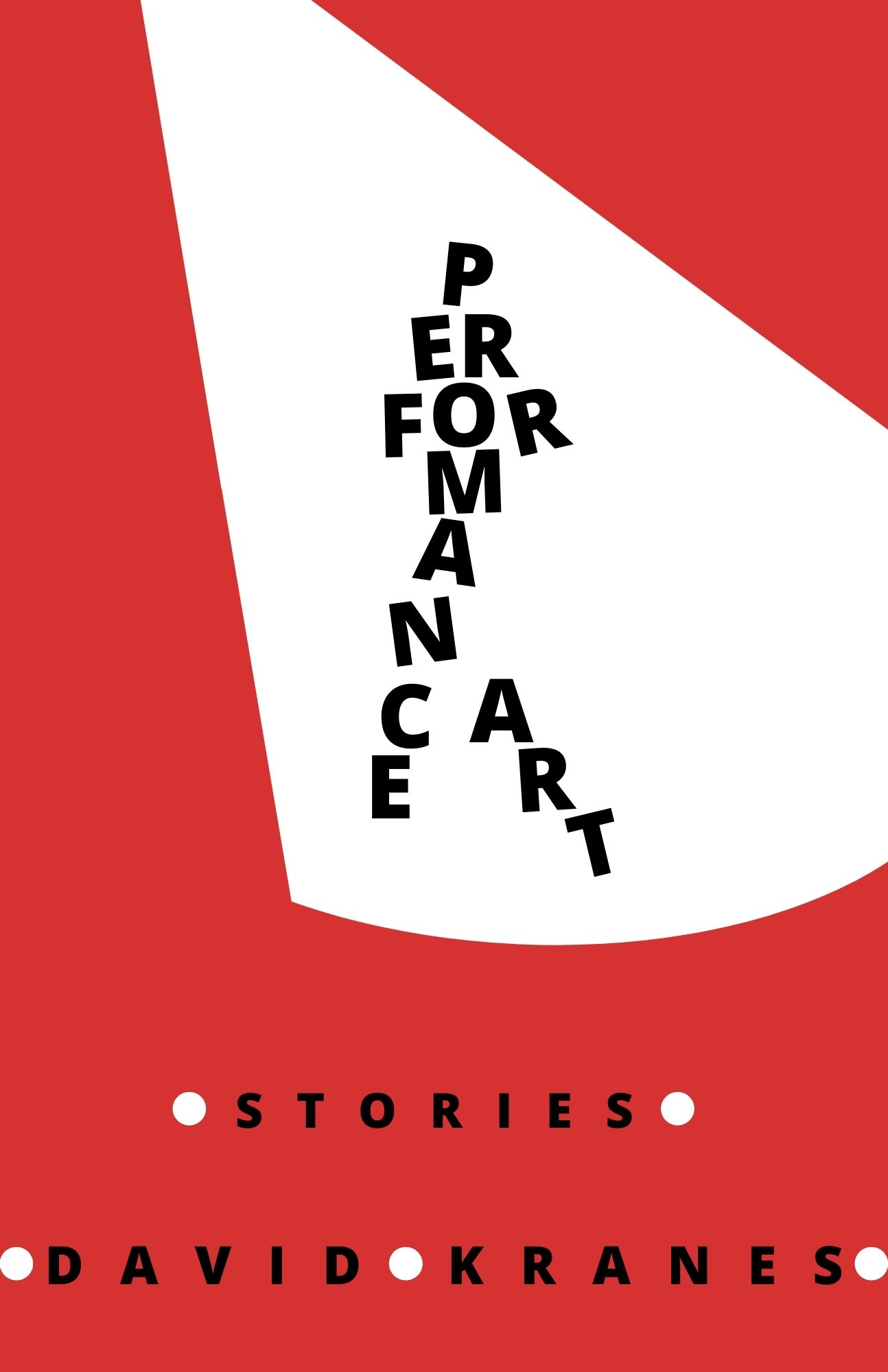
And Now, Presenting… – Performance Art by David Kranes

book cover

I’m missing a dove, he tells me, a small water fountain…half an assistant.
I’ll keep my eyes out, I tell him. 

It’s that awful moment when any of us realize that why we began something is no longer why we’re doing it.

In his latest short story collection, literary lion David Kranes puts on quite the show. Performance Art offers up stories about people who perform in public. Nine of the stories in the collection were published between 1991 and 2015, with four new tales fleshing it out to a baker’s dozen. While offering some new material the collection serves more as an introduction to a powerful literary writer you may not know. Kranes is 84, and has been at this a long time. He writes in whatever vessel seems appropriate for the stories that occur to him, whether that is poety, plays, novels or short stories. Sometimes the stories migrate. One of the included tales here was the inspiration for a novel.

description
David Kranes – image from Continuum

The external focus in this collection is performance, stage performance, for the most part, although the definition is somewhat fluid. The talents on display run quite a gamut, from a daredevil to a stand-up comic, from an actor to an escape artist, from a spokesperson for a weight-loss program to a magician, from a fire and glass eater to a master of sleight of hand, to a world-class photographer, to a carnival knife thrower, and a bit more.

There are some themes, images, and issues that run through, central among which is invisibility. People feeling unseen, maybe even being unseen.

Scott paces four rooms, each one of which, even when he’s in it, seems empty. (A Man Walks Into a Bar)

Nothing about me took up—space or anything else (Target Practice)


Ginger’s twenty-seven and has almost perfected invisibility. (The Weight-Loss Performance Artist)

I turned and moved away. Went. Didn’t stop. Didn’t look back. Instead: became invisible. Became a ghost anchored only by an abiding faith, finally, in the power of absence. (Escape Artist)

Painters permeate. Two of the lead characters paint, and painting is an element in several others. In Daredevil, a character is fascinated with Hans Holbein’s Dance of Death. Target Practice includes a character very into Turner. The Garden of Earthly Delights get some spotlight in Devouring Fire.

Celebrities drift or flash through the stories, and not in a particularly favorable way.

Several characters are faced with potentially life-changing opportunities. A painter has a chance to be a very in-demand actor. Another painter might have a chance to direct a film for a household name producer. A stage performer has a chance to revive a career long thought dead and buried. An obese woman is offered a huge sum to be the public face of weight loss. A drug addict is offered a chance to be the knife instead of the target.

The notion of next comes up. In Daredevil, pop offers useless advice to his son re next steps in life. In Target Practice a social services report on the narrator calls her directionless. (“I had no comprehension of next. I had no next moments; obviously no next month, no next week.”)

The stories are set in Vegas, mostly, the southwest, generically, Idaho a time or three. It is pretty clear that Kranes knows The Strip and Vegas like a local. He lives in Salt Lake City. I do not know if he ever lived in Vegas or maybe spent a lot of time there. Both seem likely.

There are a few tales that include bits of fantasy. Most do not. I would not categorize this as a fantasy collection, per se.

While the circumstances are sometimes extreme, there is still plenty to relate to. How many of us have felt unseen, invisible in the world, or maybe want to be. I can certainly relate to the latter. In my theatrical debut (It was Kindergarten I think) I was called on to walk to center stage and recite Peter Peter Pumpkin Eater. I managed to get the words out, but that was not all. By the time I exited stage left my pants had taken on an unwanted yellow tint. Invisibility cloak, please, NOW!!! And we have probably all felt the sting of feeling completely unseen by that boy or girl, man or woman whom we really, really want to see us.

Bottom line is that this collection may not feature all new material (that said, even the previously published stories were new to me) but it offers a splendid sample of a literary talent of great skill and power. David Kranes is a writer worth getting to know. This is top-tier, star-power material.

Review posted – 10/5/21

Publication date – 10/15/21

I received an e-galley from the University of Nevada Press through NetGalley, in return for a visible, performative review. Thanks.

======================================THE STORIES
The Daredevil’s Son (2010) – imagine your father was Evel Knievel. Imagine he was dead set on you following him in the family business. Imagine you have the body, the build, and the looks. Then imagine you have zero interest in doing that.

“So then, you don’t want to be like…do what your father does?” people asked.
“No, because my father scares people,” Lucas Jr said.

There is a lot here that resonates with Kranes’s life. He grew up in the Boston area, his father a big-shot surgeon at one of the biggest hospitals in the city. He even enrolled in pre-med, but knew it was not for him. Later even tried Yale Law School. Ditto. Dinners at home would feature Nobel Prize winners (as guests, not on the menu). The bar seemed too high, the pressure too intense to succeed, to perform at that level, at things that did not appeal to him all that much. He headed west instead, opting to follow his own inclinations, not those of his father.

The Stand-up Phobic (2015)
Ethan Fallon feels compelled to perform on stage.
The language of the story mimics the sort of stream-of-consciousness that Robin Williams might have launched into in a moment or that George Carlin might have scripted. It is about words, words, words, and associations, free or otherwise There is a manic aspect to Ethan. It is presented as an interview between Ethan and…someone. You feel bad for the guy, with all this verbal churn going on in his head, and only the stage as a venue for relief.

Ethan’s hair is an air show and he’s sweating. Every performance lately seems a conspiracy-theorist’s nightmare. Any room he’s booked into is slack-jawed and oversized and swallows him. Like a bad Jonah dream. Like having a three-day booking at the Whale. AT THE HOUSE OF RIBS. YEAH! PUT Y0UR HANDS TOGETHER—WON’T YOU, PLEASE—for our own sackcloth and ashes! Ethan Fallon!

A Man Walks Into A Bar (2012)
Scott Elias, a dealer (cards, not drugs) and painter, is approached by two men in a Vegas bar. They mistake him for a well-known actor, but offer him a screen test because they like his presence. They see something in him. So Scott is carted off to appear in the film, sorry, project, they are producing, and life gets crazy from there. But is this the life he wants? He has a roomie, a young man, Tory, also a painter, who had been injured in an auto mishap. It is more of a ward and sponsor relationship, not a sexual one. Tory’s paintings reflect Scott’s inner battle.

Escape Artist (2002)
From birth, Lou has been getting out of things. The need comes with some innate capacity. But there are others who would do well to escape unwanted circumstances, yet lack the native tools and even when they learn the learnable skills, opt for the safety of captivity to the freedom of escape. This story includes a bit about escaping the East Coast, and doctor father, which echoes the author’s relationship with his father.

When I was two, a nurse locked me in a closet under a pile of coats. I got out. When I was six, three bullies tethered me with clothesline, filled my mouth with detergent. I escaped, spat the detergent into the sunlight. It turned green in the bright air, hardened into a nugget of turquoise.
At two, six, I had no words, no plan, only knew my need: lift. Rise, break out, court the insane of the world—if that’s what it took.

When the Magician Calls
Daniel Lawrence, or maybe Lawrence Daniel, has tracked Sheila down. (There is a reference in another story to a Sheila who had been at least partly mislaid by a fading magician) He seems to think Sheila will remember him. Sounds like they had had a prior connection. He would like to help her fully disappear from her current, somewhat imprisoned life. Maybe he can conjure a bit of magic, although it may not be his true calling. My stage-self hungers for standing-room-only. Mostly, though. I feel like some kind of bulked tortoise, lumbering to the sea.

Target Practice
The female narrator seems to have almost died too many times to be a coincidence as a kid. Became a target when she got older, for a Sunday school teacher, for boys with an interest and for needles. But when she meets a carnival knife thrower (and former MLB pitcher) she learns, ironically, how not to be a target, but to be the knife, her survival no longer an unexpected miracle.

The Warren Beatty Project (1991)
Ethan Weise has had a bit of success with his painting, sold canvasses to some famous people. He is working on a series of Edward-Hopper-type paintings, set outdoors. Once, he worked as a “visual consultant” with a student at the American Film Institute. And then, one day, Warren Beatty calls, wanting him to direct a project for him. LaLa Land beckons, limo-driven and low on artistic merit, rich with industry glitterati and the suggestion of connection and work, while short on actual delivery. While his girlfriend pulls him in a different direction. Will he gain notice, or remain largely unseen? Is this project the stuff dreams are made of, or something else?

The Weight-Loss Performance Artist (2008)
Ginger is 5’5” and 340 pounds. Two men approach her to take part in a project. They have a weight-loss program called PoundSolve that offers tailored meals to subscribers, and software that can project what someone will look like after reaching certain weight-loss benchmarks. They would like Ginger to be their spokesperson, and will pay her $4k per pound for every sixteen ounces she takes off. It a pretty good deal from where she sits. Ginger’s twenty-seven and has almost perfected invisibility. As she moves up to translucent, and even apparent, life changes in many ways. The question is how she will cope and whether the changes are all welcome.

My Life as a Thief
The narrator here is unnamed. His father is a doctor, working at Mass General (where Kranes’s father worked). He started doing magic at eleven, with a kit his dad bought him. Turns out to be a gateway drug to ever more professional levels of magic. His life as a thief begins when he is thirteen, teamed up with Arthur Foley, a pal, whose father happens to be a criminal. Turns out having a talent for making things disappear offers a direct path to shoplifting. They move on from there.

Devouring Fire—An Interview
Robbie, a young reporter, has a chance to interview an entertainment legend, Anthony Aquila, 89 years young and still scary. Anthony is renowned for his ability to eat both fire and glass.
There is a fun interaction between the two of them, as Anthony totally intimidates the young man, but also sees the potential in him.

I’ll confess here: I was drawn to his image. It was like one I’d seen in my History of Religions course at State; he was an ascetic. A kind of harp with skin. Bare feet. Ribs like a rack of lamb. Deep hollow cavernous eyes. You could almost hear his echos echo. Shabby, torn clothes. I got the sense that whatever he did, at the same time he could stand back and watch himself doing it.

The Resurrection of Ernie Fingers
The Downtown Palace in Vegas seems to be doing everything right, post Covid, yet the players are not showing up. The place needs something

We need an attraction,”Dickie Rice, the GM, said to Tony Padre, Head of Marketing. “We need crowds fighting to get in. We do that and who we offer, what we offer will sell itself.”
Tony Padre agreed, “Attraction! Absolutely! But what? Who?”

They bring a legend back. Ernie Fingers is a fill-the-place-entertaining performer, but he has been out of the business for a while and has gotten way too familiar with a particular brand of hooch. Can Ernie be brought back to his old form? Ernie ha a special ability, though, and his skills may be fading.

The Photojournalism Project (1996)
Melissa Probert is a gifted, very much-in-demand international freelance photographer. Her work has been shown in major national museums. Hunt is a painter, working on a project making tempura images of roadside memorials. They had a thing once but have remained friends. Melissa calls Hunt to help her with a special project, a book. She wants to make a photo history of a binge drunk, her own, she having a history of such antics, sans lens. Hunt and Leah, his wife? gf? have an ongoing conversation while he is at Melissa’s multi-day drunk re what and how he sees and her forbearance of his friends. In offering a stage for the unseen, is Melissa making Leah vanish from Hunt’s life?

The Fish Magician (1997)
Malcolm volunteers from the audience at The Monte Carlo in Vegas to participate in magician Lance Burton’s show. He steps into a Lucite box on the stage and in short order is vanished…well…transported, to Idaho it would appear. Oopsy. And the aging magician cannot recall where he’d sent Malcolm. Some time later his wife, Ginger, alarmed at her husband’s sudden disappearance, and failure to reappear, hires an investigator to find out just WTF happened. This is a fun tale in which the investigator is a psychic former NFL player who dreams of doing standup. The story was the basis for Kranes’s 2018 novel Abracadabra.

=============================EXTRA STUFF

Kranes does not maintain an on-line presence, as far as I can tell.

Here is a profile of him in Mapping Literary Utah

Interview
—–Radiowest – The Legend’s Daughter – by Doug Fabrizio – audio – 52:04 – even though it was recorded eight years ago I found this interview very illuminating re this collection

Songs/Music
—–Arthur Rubinstein – Chopin’s Nocturne in E-Flat – From Ernie Fingers

Items of Interest from the author
—–short story from this collection – The Daredevil’s Son
—–short story – A Figure in a Window
—–a one-act play – Infrastructures

Leave a comment

Filed under Fiction, Literary Fiction, Reviews, Short Stories

Beacon Hell – The Lighthouse Witches by C.J. Cooke

book cover

He’s tall and rakish, with greasy black hair to his jaw, a tattoo of a panther on his neck, a missing front tooth. A grin.
“You’re Luna Stay?”
She frowns, confused by the shift to a smile. “Yes?”
He steps forward and eyes her coldly. “You’re supposed to be dead.”

2021 – Ok, so maybe not exactly a welcoming committee, with a sparkly, multi-colored sign at the local watering hole, all the residents in attendance, celebrating her return. But I guess it’ll have to do. It wasn’t Luna’s first time on the island of Lòn Haven. She had been there for a spell as a child, and, while her experience was memorable, it was relatively brief, and her exit had been fraught. Now, thirty years old, pregnant for the first time, she is not exactly eager to stick around. But she is there on a mission.

description
C.J. (Carolyn Jess) Cooke – image from The University of Glasgow

1998 – Olivia Stay has just left her home in northern England, dragged her three daughters, Sapphire, Luna, and Clover, with her, and headed north on an hours-long drive to a remote island off the east coast of Scotland. She is an artist, with a commission to paint a mural on the inside of a 149-foot-tall lighthouse, which is in less-than-stellar condition. Her mysterious employer has left drawings for her of what he wants. She and the girls will be staying on the lighthouse property, in a small house, called a bothy. The lighthouse has an intriguing name.

“You’re staying at the Longing?” he said, raising an eyebrow. “Quite a history, that place.”
“I can see that,” I said, flicking through the leaflet, my eyes falling on an artist’s rendition of people being burned at the stake.
“Why’s it called the Longing?” Luna asked him.
“It’s named for the people who lost loved ones,” he said. “Sometimes they’d visit the site where the Longing was built and . . . pay their respects.”

…or something. The lost loved ones tended to be women murdered by the locals, accused of witchcraft and burned alive. The Longing was built directly over the place where the women had been kept and tortured, a broch, which is a circular castle-like structure, as much as two thousand years old. While there have been five major national bouts of witch-burnings in Scotland, the only witches likely to have been about were of the herbalist, rather than spell-casting sort. The ones with the matches provided the very human-sourced evil involved. The historical burning time of note here was 1662.

Olivia (Liv) is our first-person narrator for much of the book. Other chapters offer third-person POVs from Luna and Saffy. A second first-person account is historical. That one provides interceding chapters made up of passages from a book, left in the bothy, referred to as a grimoire. But it serves less as a source for studying the dark arts than it does as a memoir. Written by someone named Roberts, presumably an ancestor of Liv’s employer, it serves mostly as a fourth perspective, offering first-person exposition of historical events the book’s author lived through, events that inform the present.

We follow Liv as she is introduced to the island, and the local oddballs. (and wonder why she suddenly dropped everything and dragged her kids north several weeks ahead of the appointed time) But when she sees a small, almost feral-seeming white-haired child on the property, and the police do not seem to take her seriously, things get more interesting. Local lore has it that condemned witches, in league with the fae realm, created wildlings, copies of island children, who would appear out of nowhere, intent on wiping out family lines. Locals hold that any such beings must be killed ASAP. Then two of her daughters, Saffy and Clover, disappear.

description
St Mary’s Lighthouse – the English lighthouse that provided inspiration for the Longing – image from Photographers Resource UK

In 2021, after twenty-two years of searching for her lost family, Luna is contacted. Her sister, Clover, has been found. But instead of being twenty-nine years old, Clover is still only seven. Is this child even her sister? Or could she be one of the wildlings Luna had heard about when she was a child on Lòn Haven? Her behavior certainly gives one cause for concern.

The story braids the four narratives, alternating Liv, Luna, Saffy, and the grimoire’s Mr Roberts, reporting of their experiences, and the times in which they are in the spotlight, offering nice chapter-ending cliff-hangers to sustain our interest from one strand to the next.

In an interview with The Nerd Daily, Cooke (who is married, with four children) was asked about her inspiration for the book.

I think it came from a range of places – I was thinking a lot (and still am) about how different it is to parent a teenager than it is to parent a baby, and yet the speed with which a baby seems to become a teenager feels like whiplash. So the story of Liv and her 15-year-old Sapphire in the book emerged from that thinking. When we moved to Scotland in 2019, I learned about the Scottish Witch Trials. I’m very interested in women’s lives, and this slice of history is very much concerned with what happened to women – and it also bears a huge relevance to the current moment. Gradually that thinking took shape. Lastly, I was invited to teach at the University of Iceland in 2019, and while I was there – and thinking a lot about the book and how I was going to incorporate all the various ideas I had – I came across 14th century spell books, which blew my mind. As I dug deeper into the history of magic and how it impacted women in particular, the story came out of the shadows.

The fraught relationship between 15yo Saffy and Liv will feel familiar, in tone, if not necessarily in the specific content of Saffy and Liv’s interaction. Cooke relied on her own teenage daughter for much of Saffy’s voice. Add to that the fact that Liv is a single mother, struggling to get by. Many of Liv’s struggles with parenting resonated, guilt versus responsibility versus coping with external limitations. Cooke offers, through the grimoire, a first-person look at the 1661/1662 witch-trial hysteria, providing a persuasive take on its causation, at least in this instance. The spell books notion gave Cooke the tool she needed for exploring the past.

I wanted everything for my children. But every single day I had to confront the glaring reality that I simply wasn’t able to provide the kind of life they deserved. And it crushed me.

There is a hint of prior, off-screen abuse in Liv’s background. This is likely a manifestation of Cooke’s experiences growing up in an abusive household in a council estate in Belfast during The Troubles. The up-front abuse here is in how power is used to protect those who have it from being held responsible for their actions, at the expense of the powerless, both past and present. And in how murderous impulses, combined with ignorance, under the mantle of religion, and official sanction, present a peril to any who do not conform, in any age.

There are elements of informational payload that help support the story. You will pick up a few bits of Scottish terminology, and even a bit of spice on magical symbology and local fairy lore. Cooke has some fun with triangles of various sorts. We get a you-are-there look at an actual historical time of madness. Cooke, in the interview from The Inside Flap, talks about how surprised she was when she moved to Scotland to find that there had been witch trials there, and that there were no memorials at all for the hundreds of people (not all were women) who had been killed.

There were parts of the book that gave me pause. I had trouble, for example, with the police releasing seven-year-old Clover to Luna, given that there was no way the two were the sisters they supposedly were in any normal time line. There seemed some contradiction in the overall take. Where does magic leave off and other factors enter into things? Could an evil-doer, for example, be stricken with an awful affliction at the hands of a spell-caster? And if so, then a scientific-ish explanation for later events seems undercut. What if that scientific-ish situation was created by magic? And round and round we go.

While not exactly a hair-raising read for me, (few are) I did find some scenes in the book pretty scary, less, maybe for the magical terror involved, but for the willingness of people to do terrible things in the name of insane beliefs, a terror we live with every day, and the fear any parent might feel when their child is in danger.

We can feel for Liv even as we might wonder at her judgment. She is clearly stressed beyond reason. And we can feel for Luna trying to solve this intricate puzzle, while taking on parental responsibility for her now-much-younger sib. The mysteries of the book will keep you turning the pages. In this fictional realm, are witches real? And if they are, did they really curse the island? And if they did, were fairy-generated wildlings a part of the plan? And if they were, was there an intent to end family lines? And what’s the deal with Clover showing up twenty-two years after vanishing?

One of life’s great joys is to begin reading a book expecting to be directed from Point A to Point Z with the familiar stops along the way, and then finding oneself in an entirely other alphabet. The Lighthouse Witches has the magic needed to make that trip possible. It is an enchanting read.

She turns her head from side to side, taking in the velvet expanse of the ocean on her left and the rocks and beach on her right. Ahead, surf furls into the bay. Something there catches her eye, and she wonders if it’s the basking shark, Basil, with his weird two fins. Something bobbing in the water. Seals, probably. Except it’s the wrong color. It’s pale.
She squints at the object. It’s about thirty feet away, moving on the waves. A cloud shifts from the moon and for a moment the light finds the object. It’s a face. A human face, its mouth open in a howl, someone in the water.

Review posted – October 8, 2021

Publication date – October 5, 2021

I received an eARC of The Lighthouse Witches from Berkley in return for casting one or two minor spells. Thanks to EK, and NetGalley for facilitating.

=============================EXTRA STUFF

Links to the author’s personal, FB, Instagram, and Twitter pages

From About the Author in the book
C. J. Cooke is an award-winning poet and novelist published in twenty-three languages. She teaches creative writing at the University of Glasgow, where she also researches the impact of motherhood on women’s writing and creative-writing interventions for mental health. Her previous novel is The Nesting.

She has been writing stories since she was seven years old.

Interviews
—– The Inside Flap Ep. 140 The Witching Hour Is Upon Us with C.J. Cooke – podcast = 1:30:00 – from about 30:00
—– The Nerd Daily – Q&A: C.J. Cooke, Author of ‘The Lighthouse Witches’ by Elise Dumpleton
—–Slider –
Episode 2 – Interview with author CJ Cooke – audio – 25:23

Wiki-ons and Other Items of Interest
—–bothy
—–Borromean Ring
—–broch
—–The Great Scottish Witch Hunt of 1661-1662
—–
grimoire
—–On Scottish faeries
—–St Mary’s Lighthouse
—–Cambridge University Press – The Great Scottish Witch Hunt of 1661-1662 – a miuch more detailed look at this abomination – by Brian P. Levack

8 Comments

Filed under Fantasy, Fiction, Historical Fiction, Horror, Reviews, Scotland, Thriller

One Horse Town – Horseman by Christina Henry

book cover

Once, a long time ago, I’d stepped off the track close to the deep part of the forest. I remembered Sander going mad with anxiety, calling for me to come back, but I only wanted to know why nobody in the Hollow went any farther than that point. I hadn’t seen any witches, or goblins, or the Horseman. But I had heard someone, someone whispering my name, and I’d felt a touch on my shoulder, something cold as the wind that came in autumn. I’d wanted to run then, to sprint terrified back to the farm, but Sander was watching, so I’d quietly turned and stepped back on the track and the cold touch moved away from me.

Washington Irving’s short story, The Legend of Sleepy Hollow, (there is a link to the full text of that in EXTRA STUFF) has been read by Americans since it was first published in 1819. What we remember most about it is the image of The Headless Horseman. There is some question about who this very un-pedestrian equestrian might be, a late Hessian, perhaps, whose cranium had had a close encounter with a cannonball, who was eager for revenge, and searched relentlessly for his lost noggin. Or maybe a canny wooer (one Abraham “Brom Bones” Van Brunt) of a local lass looking to frighten the superstitious competition out of town with a bit of over-the-top theatrical horseplay. The story about the horseman had predated Brom and Ichabod vying for the hand (and property) of Katrina Van Tassel, so, was it a real ghost story or just a hugely successful prank?

description
Christina Henry – image from her Goodreads page

In Christina Henry’s Horseman we are brought back to Irving’s one-horse town, Sleepy Hollow, two generations on. Brom and Katrina are grandparents now, managing their land, doing nicely with their farm. Brom remains a big man, both literally and figuratively, a powerful figure in local affairs, as well as someone still able to take on conflict kinetically when needed. Ben, our first-person narrator, Brom and Katrina’s fourteen-year-old grandchild, admires Brom completely, would like nothing more than to grow up to be as much like him as humanly possible.

description
The Headless Horseman Pursuing Ichabod Crane by John Quidor, l858 – image from The Smithsonian American Art museum

Ben and a friend are playing in the woods one day when they hear a group of riders pass, Brom in the lead. Ben is desperate to see what’s up, even though the group is headed to a part of the woods that is considered way too spooky to venture into, with good reason.

Just beyond the circle of men was a boy—or rather, what was left of a boy. He lay on his side, like a rag doll that’s been tossed in a corner by a careless child, one leg half-folded. A deep sadness welled up in me at the sight of him lying there, forgotten rubbish instead of a boy.
Something about this sight sent a shadow flitting through the back of my mind, the ghost of a thought, almost a memory. Then it disappeared before I could catch it… Both the head and hands seemed to have been removed inexpertly. There were ragged bits of flesh and muscle at the wrist, and I saw a protruding bit of broken spine dangling where Cristoffel’s head used to be.

description
Image from ClassicBecky’s Brain Food

And the game is on. Had this bully of a teen been cut down by a violent spectre or was there a more flesh-laden killer on the loose? There is a second mystery, as well. What’s the deal with the “ghost of a thought, almost a memory” that Ben experiences while witness to the carnage? But wait, there’s more. There were mysteries left over from Washington Irving’s original story, such as was it a ghostly headless Hessian who had driven Ichabod Crane out of town, and what had actually happened to Crane after he fell off his horse and vanished?

description
Image from Deviant Art – from Kanaru92

Irving makes a point of the superstitious bent of the locals in the Hollow.

…the place still continues under the sway of some witching power, that holds a spell over the minds of the good people, causing them to walk in a continual reverie. They are given to all kinds of marvellous beliefs, are subject to trances and visions, and frequently see strange sights, and hear music and voices in the air. – from The Legend of Sleepy Hollow

A belief in the supernatural, justified or not, prompts the locals to believe the worst (including the W-word) about any they find outside the norm, as defined by their constricted minds. They see dark forces and conspiracies where none exist, well, probably. And seek to blame someone, usually someone perceived as different. I know that reminds me of mindless seekers after blame and conspiracy who roam the planet today, but maybe that’s just me. Feeding the blame-and-conspiracy machine, there is a gender identification seam that permeates as one of the characters contends with being seen one way, while feeling internally entirely other. Other is not an entirely ok thing to be in early nineteenth century small-town America.

description
Image from Classic Becky Brain Food – by Jurei-Chan

Family has a lot to do with who we are, who we become, what we might be capable of, for good or ill. Ben’s love for Brom is manifest and a serious source of strength. Ben’s relationship with Katrina is more conflictual, yet with strong underpinnings. But what about other family? There is connection and help to be had in the household, with one of the staff providing a solid core of support. And what about community? Sander is clearly a bff, although not necessarily the best able to offer support in all circumstances. Ben does not seem to have much beyond that. Thus the need for Brom’s strength. Thankfully, Ben has internalized that, so has at least a chance to engage in battle without being entirely over-matched.

We trot along by Ben’s side as dangers present, whether it is obvious or not that they are perilous. Ben does get tingles about certain people, internal red flags of distrust. Are they valid or paranoid?

description
Image from Deviant Art – by Ochreface

The book is not marketed as YA, but it felt like a YA title to me. Henry has written several books that take a new look at classic children’s stories, tending toward a younger readership. Most serious violence remains off screen, although we do get to see its aftermath. Profanity is absent. There is a piece in here about people, not all people, but some people, being susceptible to manipulation by an outside force encouraging the dark piece that resides deep within to come to the surface, to take over, even if only for a time. I had a problem with this, as it exempts some from having that bit. Certainly, some people are better than others, more ethical, more moral, kinder, smarter, more empathic, more honest, more responsible, but even the best of us harbors at least a sliver of darkness. This sort of not-quite black-and-white, but maybe charcoal-gray-and-white view of human potential for unpleasantness added to the YA feel. That said, there are a couple of tough physical battles and issues of sexual attraction and predation are raised, which gives it a bit more bite.

description
Image from Art Abyss – by Gabriel Williams

In literature, The Woods is generally a symbol of the challenges facing young people on the cusp of adulthood. Ben’s adventures fit quite nicely into that, passing through the fires of challenge to reach maturity in a very different and interesting way. Ben, gifted with considerable horse sense, meets those trials head on. I found Ben’s playtime activities, though, a bit off for a child of fourteen, ten maybe. Perhaps Henry was looking to make the distance Ben travels from this to that seem longer than it really was.

description
Image from Disney

But fret not. Though I am well past the YA demo I found this an engaging, fun, creative take on an old favorite. Ben is an appealing lead, struggling with the choices life presents, a dark horse to root for. There are adventures aplenty, head-scratcher mysteries to be solved, clues to be followed, warmth and family love to be appreciated, and a new, quite surprising interpretation of an old mystery. Is it scary? A bit. I am particularly immune to getting the creeps from books, and have a simple metric. Does anything in the book make the hair on my arms stand at attention? For what it’s worth, my pelt remained at ease. But it is clear that there is plenty of creepy material to be had in Horseman, and it is likely that many readers will get more of a frisson from those than might an old oater like me.

description
Image from Sleepy Hollow wiki – from the film Headless Horseman

Horseman is a perfect read for the Halloween season. But you might not want to head off to a favorite outdoor reading spot if it is more than just a little way into the woods.

The dark silhouette seemed to unfold—no, unfurl, sinuous and soft—and I thought how can an animal stand like a man?
My breath seized inside my lungs because just for an instant I thought I saw eyes looking back at me, eyes that could not be there because no human was there, no human could possibly have eyes like that—eyes that glowed, eyes that pulled, eyes that seemed to be tugging on my soul, drawing it out through my mouth.

Review posted – October 1, 2021

Publication date – September 28, 2021

I received an e-ARE of Horseman from Berkley, via NetGalley in return for not losing my head writing a review.

This review has been cross-posted on Goodreads. Head on over and say Hi!

=============================EXTRA STUFF

Links to the author’s personal, FB, Instagram, GR, and Twitter pages

Items of Interest from the author
—–from her site – excerpt
—–from her site – Seven Short Stories

Items of Interest
—–Gutenberg – The Legend of Sleepy Hollow
—–Wiki on The Legend of Sleepy Hollow
—–History.com – What Inspired ‘The Legend of Sleepy Hollow’? by Lesley Kennedy
—–Classic Becky’s Brain Food – Legends of the Headless Horseman – Sleepy Hollow’s topless performer was far from the first
—–One cannot possibly read the The Legend of Sleepy Hollow or Horseman without recalling one of the greatest tabloid headlines of all time, of April 15, 1983, from the always-classy New York Post

description

Songs/Music
—–Argent – Hold Your Head Up
—–Paul Anka – Put Your Head on My Shoulder
—–The Rollingstones – Wild Horses

Leave a comment

Filed under Fantasy, Fiction, Historical Fiction, Horror, Reviews, YA and kids