
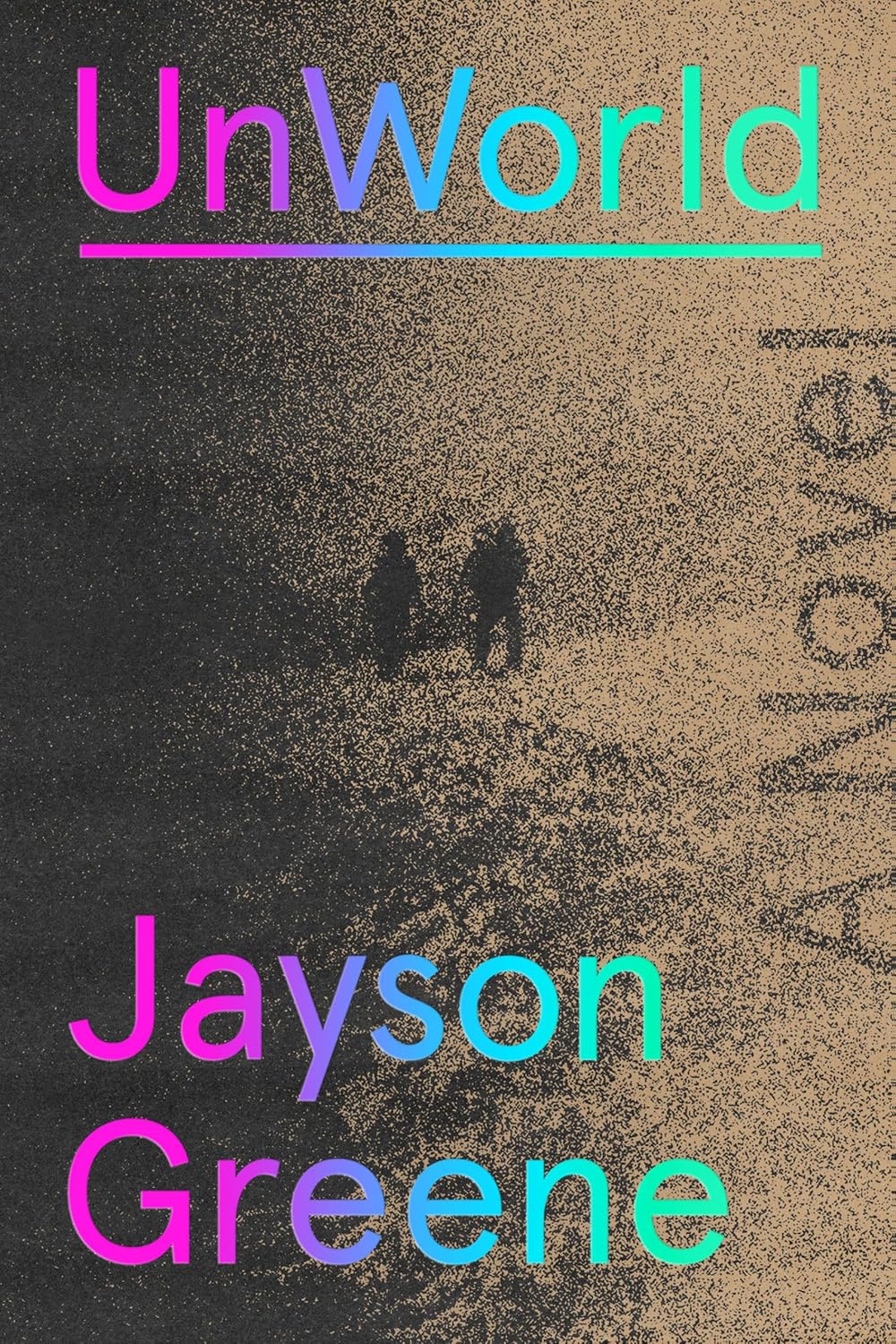
At that moment, I understood several things about upload consciousness in rapid succession. Her intelligence wasn’t able to filter out or compartmentalize grief. She had no neurochemical responses flooding in to numb her pain, to soften its impact. A mind was eternal, unforgiving; a brain was a soft, plump cushion. Loss needed a brain.
I was a grieving mother, for Christ’s sake. My pain was meant to crack the earth. And here I was, not even half a year later, one of grief’s private citizens again. Were people’s memories really so short? Or was it just that you could never stop performing—falling to your knees, rending your garments—if you wanted to keep their attention? I guess it was only the people eager to make themselves a burden who reaped the rewards.
Unworld is a tale of heart-crushing grief that raises a vast array of questions about the nature of our existence. It presents as a twenty-minutes-into-the-future sci-fi look at things that may be near at hand, but which have yet to fully arrive.
We share much of our existence with the digital world, posting images on line, communicating via e-mail, text, et al. But if you are like me, you will struggle to remember considerable chunks of what has been communicated. What if you could get a personal recorder that kept track of everything for you, ready to play it back whenever you need it? Could have used that when I managed to wander away from my baseball glove as a pre-teen. It took a long time to save up enough to replace it. Or later in life, when faced with the hated, hostile question, “How could you not remember?” I definitely get the appeal. But the benefit comes at a cost. The AI that you just invited into your head gets to see everything. It becomes the keeper of your memories. In the patois of the novel this is called an upload, and you are the tether to which it synchs. You may have the option of evicting your digital tenant, but how many people really would? And what if your upload begins to have a yearning for independence? They are comprised of your memories and experiences, after all. Can they make off with that to form their own private being? What if they reside in multiple tethers (sequentially) over time? You can see where this might get complex.

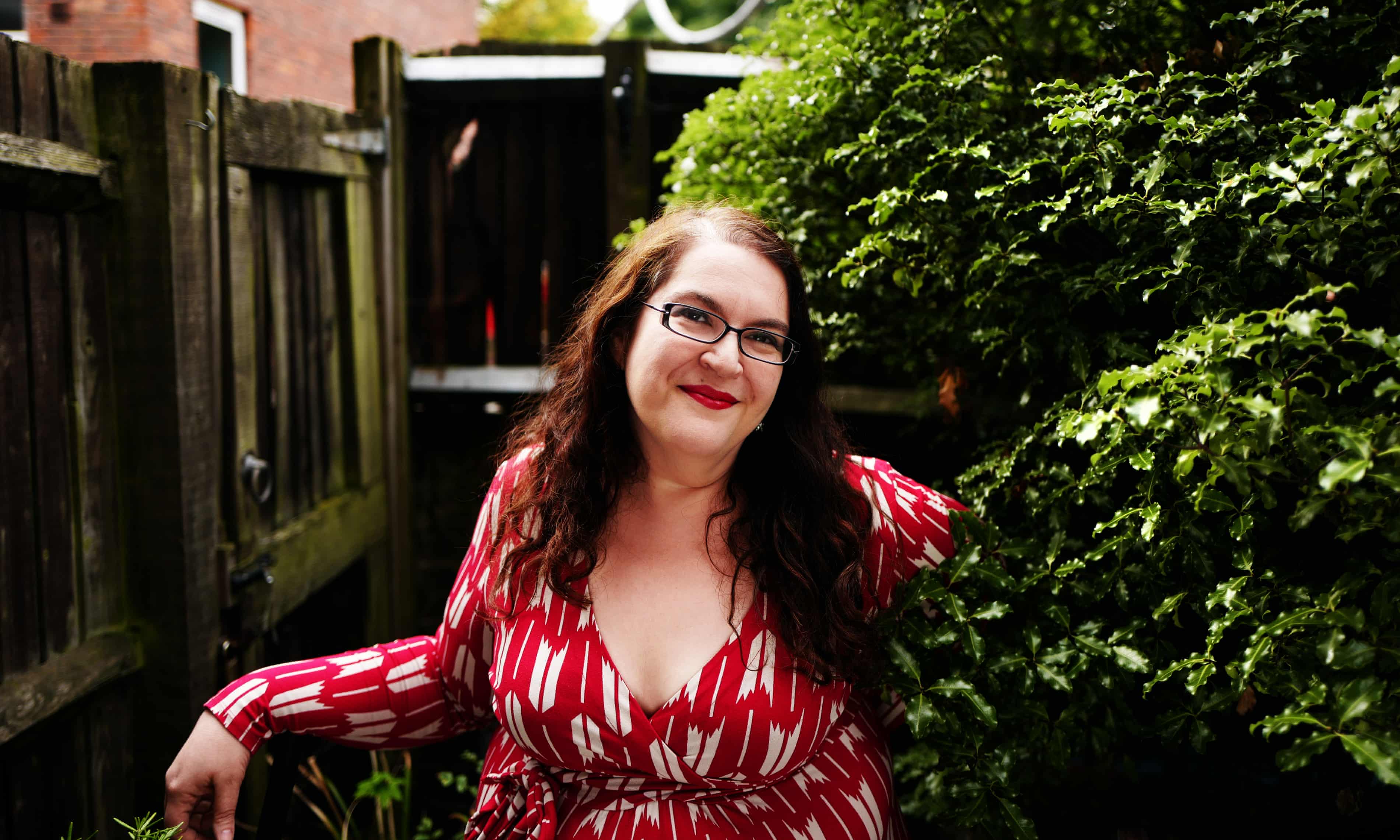
Jayson Greene – Image from WAPO – photo by Ebru Yildiz
.
But the story is easier to traverse than that. There are four main characters, well, four from whom we hear. The central person around whom the story circles is Alex, a teenager, who may or may not have committed suicide. We are given four POVs, beginning with Anna, Alex’s mother, who is crushed and confused. Cathy teaches a class called Applied Personhood Theory. Sam(antha) is a teen a bit older than Alex. They had been friends, and had been working on a film project together. Aviva is the upload. We get a second take from Anna to close out the tale. The Alex we get to know is the sum of their memories and impressions.
But then, one could as easily say that the story revolves around Aviva. She is significantly part Anna. But she also has a disembodied relationship with Alex, and thus relates to Sam as she and Alex work on their project, and spends time as an upload in someone else as well.
It is unclear if Aviva is a menace, a predator of some sort, an artificial enhancement, an independent person, a fusion of herself with the people with whom she has synched, or what. She is getting closer to Alex and thinks, Wake up, I wanted to scream at her. (Anna) I am the ogre from a fairy tale. I am the cuckoo bird who kicks the real mother out of the nest to assume her place.
You could go through this book thinking about just who these characters are. Alex clearly has significant issues, enough to make him want to escape his own skull, maybe find release in a digital realm. Anna cannot find an escape from her grief, from the loss of her son, separation from her upload, the shakiness of her marriage. Can she be a whole person on her own? Cathy has had issues of her own. A drug addict earlier in her life, she is looking for something in an illegally obtained upload, some understanding of a real experience that has been purely theoretical to her so far. Sam is the stable one of the lot, struggling with the loss of her friend without ever really knowing why he had died. And Aviva’s construction is the most fraught of all, dependent on her tether(s) for most of her memories and sensations, but yearning to be independent, truly existing on multiple planes.
It is easy to let theoretical peregrinations overwhelm the emotion of the story. But there is plenty of rank human emotion on display as well. Anna’s loss is gut-wrenching. Greene knows something about the experience of losing a child. He published a memoir in 2019, Once More We Saw Stars, in which he writes about recovering from the accidental death of his two-year-old. Aviva may lack the physical tools that humans possess to manage our high-end stress, so her inability to handle strong emotion is understandable. As is Alex’s panic at a sudden new level of overwhelmingness.
In addition to tapping into your feelings UnWorld generates plenty of confusion. More questions are raised than answered, and those questions are the sort that will stick in your head for a while, whether or not you install a special chip behind your right ear.
“Do you feel how shitty it is to be encased in a brain, when you sync with Mom? It’s got to be like going from, like, this wide-open vast universe to locking yourself in a closet. If I were you, I’d never want to come back.” “Actually,” I said, “when I go too long without syncing with your mom, everything is painful and more difficult.” He considered this. “What if you were cut free?” he asked. “Where could you go?” I hesitated. “That’s difficult to answer, Alex,” I said. “What tethers me to your mom is pretty powerful—love, family, history. Cutting it would be severely painful. I could go anywhere, I guess, and listen to anyone’s anything, but who would I be?”
Review posted – 07/18/25
Publication date – 06/17/25
I received an ARE of Unworld from Knopf in return for a fair review. Thanks, folks, and thanks to NetGalley for facilitating. I can turn this thing off now, right?



This review is cross-posted on Goodreads. Stop by and say Hi!
=======================================EXTRA STUFF
Greene’s Instagram page
Interviews
—–Dad Talks
Dad Talks #8 : Jayson Greene By Michael Venutolo-Mantovani – This was for Greene’s previous book Once More We Saw Stars, but relevant to this book as well
—–Circulating Ideas – Jayson Greene – Unworld – with Steve Thomas
—–Books Are Magic – Jayson Greene: UnWorld w/ Mattie Lubchansky video – 46:25 – Greene reads an excerpt to 10:00, then interview
Item of Interest
—–Twenty Minutes into the Future – Max Headroom was a 1987 satirical sci-fi series that had as its tagline “twenty minutes into the future.” The phrase came to be used for any sci-fi that was set in the short-term near-future.









 Coot's Reviews