Tag Archives: Thriller

Parents Weekend by Alex Finlay

book cover

They run. Run with a primal fear knowing that if they slow down, all five of them will die.
It’s hard to think in this fog of terror.

Blane puts his hands out, palms down: “Stick to the story like we agreed.”
His gut clenches, but he makes sure to smile reassuringly. He warned Stella—warned them all—that Natasha Belov was bad news. Bad, bad news.

Five students are running for their lives. Will they survive? Why are they running? From whom? We go back three days.
description
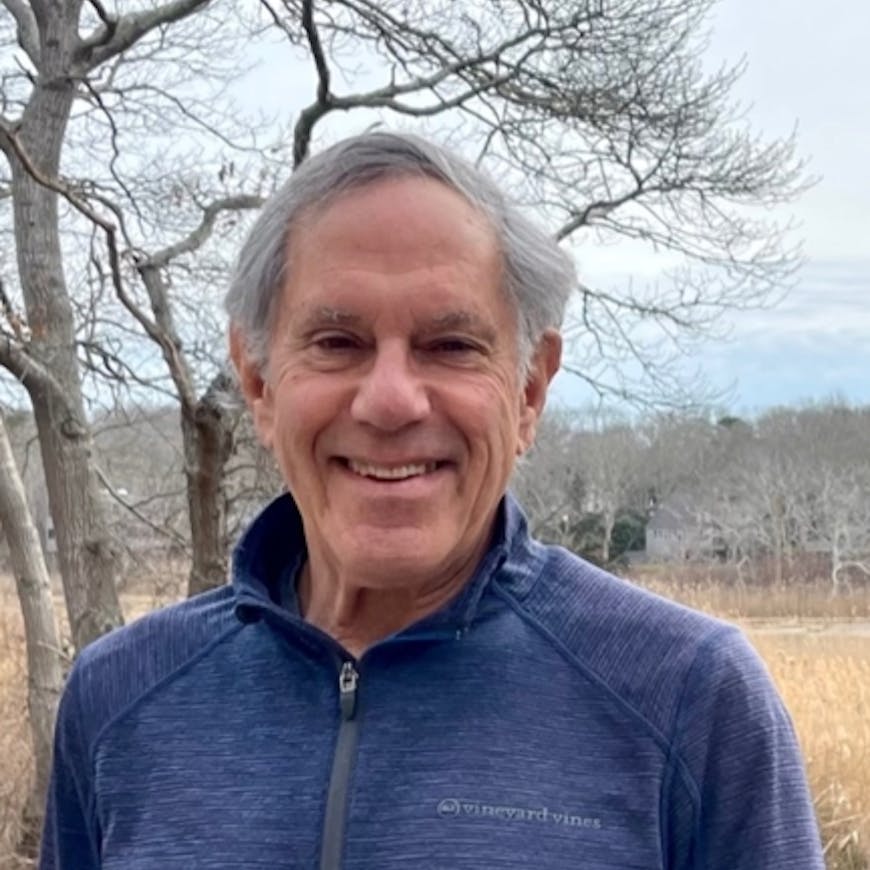
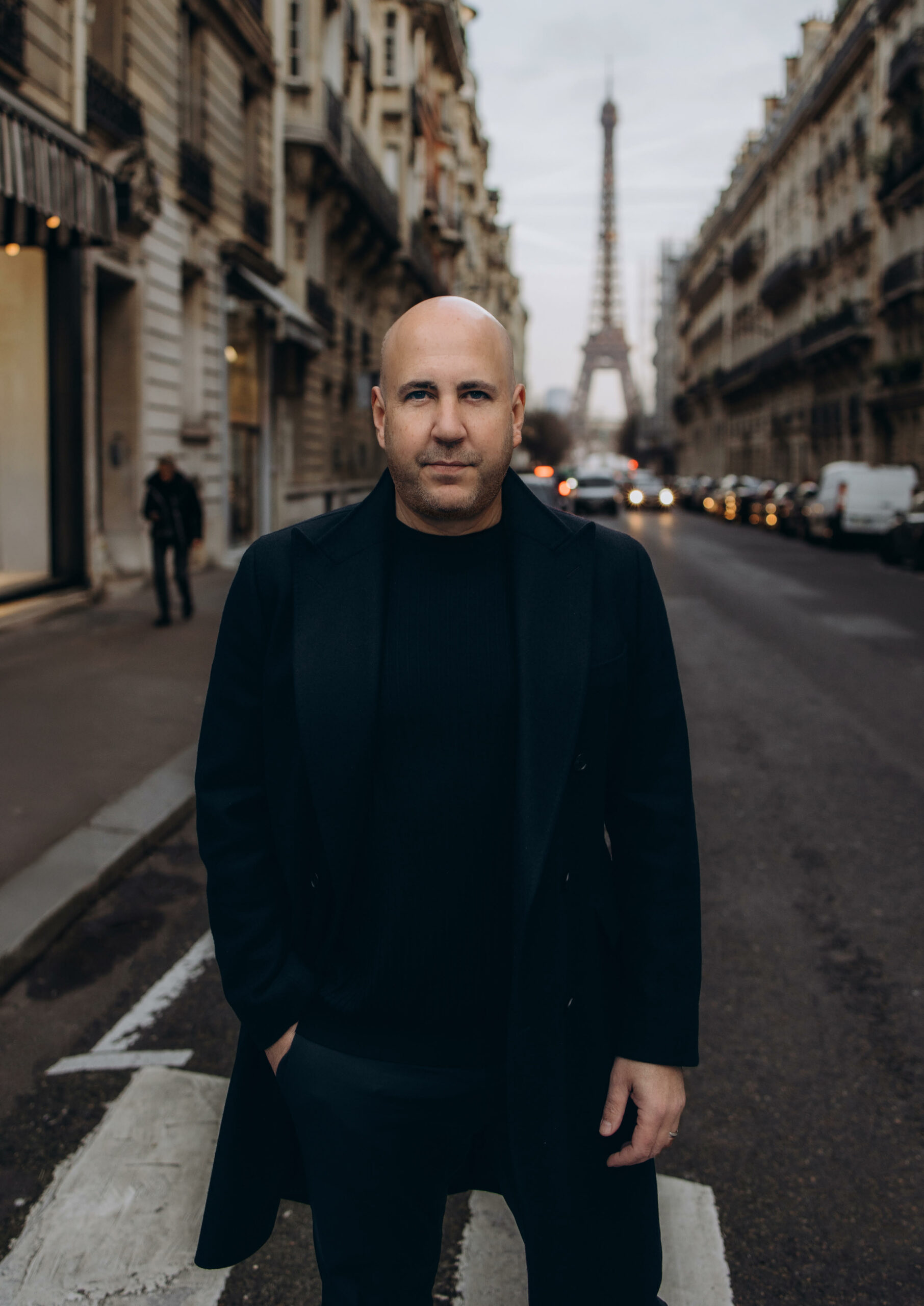
Alex Finlay – image from his site – shot by Julie Litvin

It is parents’ weekend at Santa Clara University, a private institution on the California coast. (There is an actual SCU. The author’s son goes there.) Events are planned. Parents of freshman are invited to join their children for a Friday dinner. We are introduced to the families of the five in their capstone group (Each freshman dorm breaks the residents into small groups of five to six students. They have to complete a project together by the end of the year, but spend most of the time partying.) and will subsequently rotate among them for POVs. This is standard operating procedure for Finlay, albeit with a larger cast than usual. Well, sort of. More on that in a bit. It is a mixed group.

The Roosevelts include an undersecretary of state, Cynthia, her staff and security. This is necessary as her now-college-age son, Blane, has been kidnapped before. You can’t be too careful. The Maldonados are David and Nina. He is a plastic surgeon, but it will take more than a nip and tuck to repair their marriage. Stella is their co-ed. The Goffmans consist of Alice, who is a secretary to Dean Pratt, and her son, Felix. His education is the primary benefit of a job she does not exactly love. The Akanas are Ken, a relatively famous Chief Judge of Superior Court in LA, and wife Amy. The loss of a child to cancer has made their daughter, Libby, all the more precious. The Kellers are special agent Sarah, husband Bob and their twins. Their son is Michael. Readers of Alex Finlay may remember Sarah Keller from The Night Shift and Every Last Fear.

Keller was a surprise reader favorite in Every Last Fear. I wasn’t planning to bring her back, but as I wrote THE NIGHT SHIFT she just appeared. I love writing her and her husband Bob. Both are so decent and supportive of one another, and they provide some needed moments of calm in the storm. – from The Big Thrill interview about the Night Shift, and here she is again.

Although the five families split time, most is devoted to Sarah Keller, as she takes an active role in the investigation, working closely with the head of security at the university. This is our procedural pathway. Going by the numbers, the Kellers (Sarah, really) takes up half of the chapters in the book, thirty-five of seventy. The four other families get five to seven each, and there are eight chapters assigned to individuals or the missing. This is actually a good thing as the Keller family offers a welcome relief from the dysfunction of some of the others. Tolstoy pops to mind: “Happy families are all alike; each unhappy family is unhappy in its own way.” A loving, supportive marriage in service of truth-telling. What’s not to like? This is not to say that there is much deep character study at work here. This is a thriller, after all. But there is always peril in juggling POVs that two or more may begin to sound the same. Finlay has managed that challenge well, as each is presented with a distinctive voice and personality.

There’s people who write wonderful literary fiction, and they can get into the in-depths of the character like I never could… “I don’t have a lot of internal inner monologue. I try and make you know who these characters are by what they do and what they say. – from the Read with Jul interview

They all have their secrets, well, mostly. We get to see them revealed one by one, and must consider if they have any relevance to the dual mysteries at play. It just so happens that another student at SCU, missing for several days, had been found dead, three days before. The five had been messaging each other about sticking to their story, so a core mystery; what had happened to the girl, how, and what was the involvement of the five? The presenting mystery is the disappearance of the five on the night of the Parents Weekend dinner. What is the link between the two?

There are plenty of clues scattered about, not all of them red herrings. We learn of the parents’ and students’ pathologies and strengths over the course of the investigation. There are bad people at work, and we wonder how much damage they will do before they can be identified and stopped.

Finlay sustains a breathless pace, providing the end-of-chapter hooks that keep us turning the pages. Secondary characters fill in needed blanks, sometimes offering more substantive support to notions or particular primary characters.

The tension, informed by factual discoveries and personal revelations, builds to a dramatic climax. You will get to find out if your guesses were correct. Finlay has made a habit of writing fast-paced thrillers that serve the purpose of pure entertainment. You do not need to be a student or a parent to enjoy this Parents Weekend. It would make an excellent beach, (unless you are going to a place with sea caves) or airplane read (commercial, not private jet), or even something to help you get through the down times at an actual college parents weekend. But pay attention. This will count towards your final grade.

Review posted – 06/13/25

Publication date – 05/06/25

I received an ARE of Parents Weekend from Minotaur Books in return for a fair review and a Gentleman’s “C” on that disappointing final exam. Thanks, folks, and thanks to NetGalley for facilitating.

This review is cross-posted on Goodreads. Stop by and say Hi!

=======================================EXTRA STUFF

Links to Finlay’s personal, FB, and Instagram pages

Profile – From the author’s real-name website

Anthony Franze is a critically acclaimed novelist with St. Martin’s Press, and a lawyer in the Appellate & Supreme Court practice of a prominent Washington, D.C. law firm.
For more than a decade, Anthony was an adjunct professor of law teaching courses in Federal Courts, Legal Rhetoric, and Appellate Practice, and he currently participates in a European faculty exchange program where he teaches at law schools abroad.
He writes legal thrillers under his own name, including THE LAST JUSTICE (2012), THE ADVOCATE’S DAUGHTER (2016), and THE OUTSIDER (2017) He writes commercial fiction under a pen name, [Alex Finley] and his 2021 novel was an Indie Next pick, a LibraryReads selection, an Amazon Editor’s Best Thriller, as well as a CNN, Newsweek, E!, BuzzFeed, Business Week, Goodreads, Parade, PopSugar, and Reader’s Digest best or most anticipated thriller of the year. His work has been translated into more than a dozen languages and optioned for television and film.

My reviews of two of Finlay’s prior books
—–2024 – What Have We Done
—–2023 – If Something Happens to Me

Interviews
—–Authors on the Air – Alex Finlay Parents Weekend Authors on the Air with James L’Etoile – video – 17:30
—–Mystery and Thriller Mavens – Special Pre-launch Q&A with Sara DiVello – 28:47
—–Read with Jul – chapter 86. an interview with bestselling thriller author alex finlay
—–The Big Thrill – Up Close: Alex Finlay The Ties That Bind
—–Outliers Writing University – Get To Know Author Alex Finlay with DP Lyle and Kathleen Antrim – video – 19:24 – good bits on writing process and shifting from legal novels to thrillers, and from Anthony FranZe to Alex Finlay

Songs/Music
—– AC/DC – Back in Black – in Chapter 12

Leave a comment

Filed under Fiction, Mystery, Suspense, Thriller

Something in the Walls by Daisy Pearce

book cover

… just after Christmas, Alice Webber started to get sick. She complained of pains in her sides like needles being pressed there. When they lifted her shirt, there was a pinprick rash and blood welling up as if the skin had been broken. A few days later she started vomiting. By this point Alice was too weak to get out of bed so her mother put a bowl beside it. When she came to empty it, she found watery bile and clots of black hair, like you’d pull out of a plughole. Another time Alice coughed up a handful of sewing pins bent into strange shapes. She developed a fever which made her start seeing things. She got delusional.”
“In what way?”
“Alice told her parents that a witch was spying on her through the chimney breast. She said the witch had a black tongue and her face was ‘all on upside down.’

“She was saying such odd things. At school, then here at home. Sometimes it was like she was listening to music you couldn’t hear, you know? I’d catch her just staring at the fireplace and her lips were moving but no sound was coming out. When I asked her what she was doing, she said”—here Lisa sighs, fretful and ill at ease. It’s clear she isn’t comfortable talking about this—“she said that the dead wanted her to open her throat.”

When Sam Hunter and Mina Ellis pull up at 13 Beacon Terrace in Banathel, an English backwater, there is a crowd gathered. Mostly people wanting something from the girl inside. They seem to think she can communicate with the dead, and there are people with whom they would love to reconnect.

description
Daisy Pearce – image from her site

Sam is a reporter who specializes in debunking superstitious claptrap and fraud. Mina is a recent graduate in child psychology. Sam had asked her along to offer an evaluation. Well, there is certainly something off happening at the Webber household

Alice Webber has tales to tell. (She’s the girl you see giggling with her friends at the back of the bus or fooling around in the arcades. Normal. Unexceptional.) She believes there is a witch living in the walls of her bedroom. She can tell because she sees the witch’s eyes looking at her through gaps in the brick chimney. It began when a group of (not really) friends play a mean trick on her at a supposedly haunted house. Now she hears and speaks in voices.

For a moment I think she is speaking—I can see her shoulders twitch, her mouth slowly moving—but the voice I hear is slurring and thick, heavy. Like a throat full of molasses. It is a language I don’t recognise, Germanic maybe. The words spread like a ripple, like oil on water, dark and tainted. It fills me with something icy and unknowing and I taste the bitterness of bile in the back of my throat.

Both Sam and Mina (“It’s my dad. He took my mother to Whitby Abbey while she was pregnant with me. My poor brother narrowly escaped being called Van Helsing.”) have arrived with significant emotional baggage. Sam lost his seven-year-old daughter, Maggie. Mina lost her brother, Eddie, when they were kids. Both Mina and Sam hold out hope that they can somehow reconnect with their lost ones, maybe reduce the guilt they both feel. Is there any chance Alice can actually help them? Alice may look like an average teen with professional aspirations that end at the beauty salon, but what if there is something operating through her?

The novel has a feel of both contemporary spook story and a folk horror tale, rich with back-country superstition, practices, and beliefs. Banathel has a long history of belief in witches, and a rich supply of hagstones everywhere you look. It is reminiscent of works like Tom Tryon’s novel Harvest Home and the 1973 horror classic, The Wicker Man, reliant on deep rural isolation.

The tension ramps up with every strange new event, encouraged by the persistence of contemporary doubt, ancient superstition, the growing crowd and its increasingly threatening regard for the girl. Do they want to help her or use her, or do they want something else? In addition, while there is a mystery in every horror tale, there is also a tension between where magical manifestations leave off and human agency steps in. Ditto here.

While it certainly seemed fun for Mina to have such a nominal root in classic horror, (a pearl among women) it did not seem to me that enough was done with her nifty name. And for a psychologist to be entangled with someone so clearly wrong for her was disappointing. (Although I suppose many of us have had that experience.) As for seeing someone looking through gaps in bricks, did no one consider maybe a bit of plaster, spackle, or poster of a favorite musician to cover the spaces? Or maybe hiring a handyman named Bert to have a go at clearing it out?

On the other hand, the lovely details of dark manifestation that Pearce weaves into her tale, the sights, sounds, and textures, add that frisson that every good horror novel needs. The overarching heat that bears down on all provides another layer of dread. It might even enhance the feel of this book for readers to take it on in July.

I have a particularly high bar for fright. It is a rare horror novel that keeps me up at night. There are real-world stresses and manifestations of evil that offer that service quite happily. Something in the Walls came close, but caused no lost zzzzzzzs here. Not to say it will not for you, who have a more usual receptivity to such things. It did, however, offer an appealing lead, a tantalizing mystery, a colorful portrait of a tucked-away place, and kept up a brisk tempo.

Most witch hunts are a bad idea, but it might be a better one to track down Something in the Walls. There may be a thrill or two just lying in wait for you.

If you gaze long enough into an abyss, the abyss will gaze back into you. – Friedrich Nietzsche

Review posted – 4/4/25

Publication date – 2/25/25

I received an ARE of Something in the Walls from Minotaur in return for a fair review, and my agreeing to get the hell out of their chimney. Thanks, folks, and thanks to NetGalley for facilitating.

This review is cross-posted on Goodreads. Stop by and say Hi!

=======================================EXTRA STUFF

Links to Pearce’s personal, Instagram, and Twitter pages

Profile – from her site

Daisy Pearce was born in Cornwall and grew up on a smallholding surrounded by hippies. She read Cujo and The Hamlyn Book of Horror far too young and has been fascinated with the macabre ever since.
Daisy began writing short stories as a teenager and after spells living in London and Brighton she had her first short story ‘The Black Prince’ published in One Eye Grey magazine. Another short story, ‘The Brook Witch’, was performed on stage at the Small Story Cabaret in Lewes in 2016. In 2015 The Silence’ won a bursary with The Literary Consultancy. Later that year Daisy also won the Chindi Authors Competition with her short story ‘Worm Food’. A further novel was longlisted for the Mslexia Novel Award…Daisy currently works in a library where she stacks books and listens to podcasts on true crime and folklore.

Interview
—–Bloody Good Reads – Chapter 109 – Daisy Pearce – audio – 38:38 – on writing what she loves

Items of Interest from the author
—–Crime Reads – DAISY PEARCE ON POLTERGEISTS, MISOGYNY, AND COMING OF AGE IN A FRACTURED WORLD
—–Short story – The Brook Witch – linked from her website
—–Short story – The Spirit of Christmas – linked from her website

Leave a comment

Filed under Fantasy, Fiction, Horror, Mystery, Thriller

The Hitchcock Hotel by Stephanie Wrobel

book cover

Let us begin with an establishing shot. A three-story Victorian house stands alone on a hill in the White Mountains. The house boasts a wraparound porch, mansard roof, and bay windows. Despite the building’s age, her shingles gleam, shutters sparkle. In other words, she is beloved.
We swoop in through an open window on the third floor to reveal a handsome hotel room. A woman with a face of cracked earth leans against the four-poster bed, watching a man in his thirties survey himself in a pedestal floor mirror.
I twist away from the mirror to face my housekeeper.
“How do I look?”
Danny takes her time considering me. “Like Norman Bates,” she jokes.

What if I had never met this group at all? On one hand, they were the cause of my eventual ruin. On the other, these people were fundamental to the man I’ve become. For four years we were family. They shaped my beliefs and sense of humor. They cheered me on. They accepted me. Right up until they didn’t.

A locked room mystery in which the sins of the past are brought into the present, threatening the future. There will be blood. There will be suspense. There will be twists. There will be irony. There will be readerly fun.

description
Stephanie Wrobel – image from Festival of Authors

It was my mother who introduced my very young self (I was four when the show premiered) to Alfred Hitchcock, not so much through his films, which I would get to eventually, but through his TV series, Alfred Hitchcock Presents. Each episode featured Alfie offering often macabre intros, a la Rod Serling, but with considerable tongue-in-cheek humor. As for his films, Psycho remains one of my all-time favorites, as do many others. Consider me a fan, although, like the author, I have seen only a portion of Hitchcock’s 53-feature-film oeuvre.

“I was introduced to Hitchcock via North by Northwest during a film studies course in college. (If you’ve read my book, this will sound familiar.) I’ve been a big fan ever since. What surprised me most as I rewatched some films and watched others for the first time was how much they hold up in 2024—especially the humor. Hitchcock is known as the Master of Suspense, and he is, but I would argue he was just as much a master of comedy. I still can’t believe how funny his movies are. I don’t think humor is something my generation associates with Hitchcock unless you’re a big fan.” – from The Big Thrill interview

Like my mom, Alfred Smettle’s mother was a big fan as well, a gift she passed on to her only child. He carried that interest into college where he became a central figure in a class on film taught by a gifted teacher. (Wrobel had a Dr. Scott as an inspirational teacher in college, and honors him with the naming here.) He even started a film club to take his interest further, sharing his knowledge and enthusiasm with others. These included a band of five fellow students. Alfred was never one of the popular kids, but he found acceptance in the Blue House that they shared. Well, until something went very wrong. There are hints about a debacle in senior year, but we are not let in on what happened until the back end of the book.

description
Edward Hopper’s House by the Railroad – image from Wikipedia

The friends parted after college, but Alfred retained his fascination with Hitchcock, and now, sixteen years later, he has opened a Hitchcock-themed hotel (a B&B really) not far from the New Hampshire college they had attended. It features lots of memorabilia, many filmic artifacts, and considerable atmosphere. It is an old Victorian Alfred had done over. One might be reminded of a Hopper painting, and the infamous house it inspired. He invites them all to a free weekend there, hoping, among other things, to get the place some ta-die-faw publicity. Business needs a boost.

description
The Bates Motel House at Universal Studios – image from Paul Van Sprundel at WordPress

The group (the five guests plus Alfred and his housekeeper, Danny) is made up of the guilt-ridden, the vengeful, the desperate and the forlorn. In The Readers Couch interview, Wrobel talks about aligning her seven main characters with the seven deadly sins. (pride, greed, wrath, envy, lust, gluttony and sloth) It kind of works out, but there is plenty of overlap and double dipping, with one character seeming not to fit very well to any of these human proclivities. Grace is a hedge fund manager; Zoe is a chef who drank her way to a furlough; Julius was born to great wealth and little direction; Samira, newly divorced mom, had started a personal device business that had caught on; TJ is a security specialist who appears to be in some sort of trouble.

description
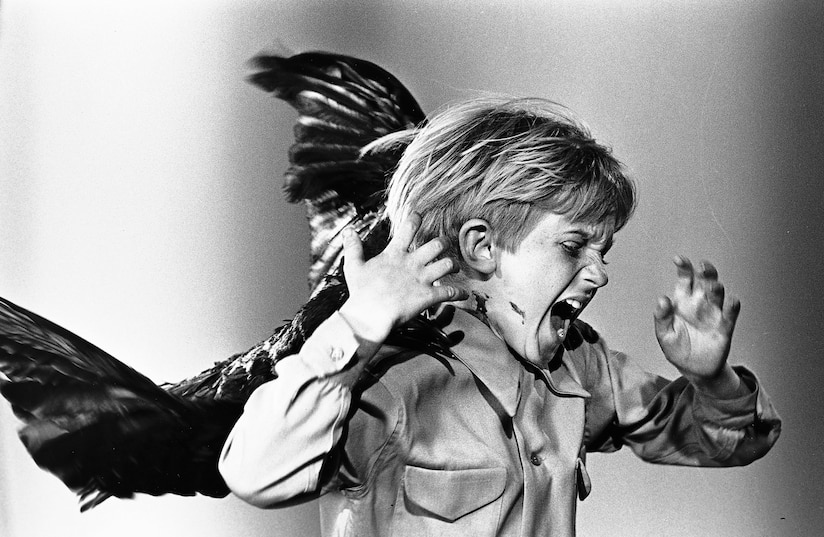
A bird attacking – from the Birds – image from TCM

If you are looking for Hallmark likeability, I can recommend about a thousand films and a gazillion books that will take care of that for you. None of these characters is entirely ok. The closest, I guess is Samira, who seems most eager for everyone to just get along. Alfred is definitely an odd duck, just a weeeee bit obsessive, but is he dangerous? (I am sure he “wouldn’t hurt a fly.”) Grace certainly has some hard edges, and a seeming disregard for others. TJ seems somewhat ok, but is sleeping with a married woman, and who knows what he might do given the external pressure he is under? Zoe has a serious alcohol issue. It has already cost her her job. What is fueling it, and might it lead her to dire blackout behavior? And what’s up with Danny, the housekeeper, who seems maybe a bit too fond of Alfred?

description
From Vertigo – image from The New Yorker

References to Hitchcock films abound throughout the book, beyond the Bates Motel House exterior and screenplay-like opening. Avian life puts in an appearance or two, (The Birds) As do a suspicious glass of milk (Suspicion), high places (Vertigo), voyeurism (Rear Window), rope (Rope) and others. Part of the fun of this read is identifying as many of these as possible, making it a bit of a treasure hunt.

description
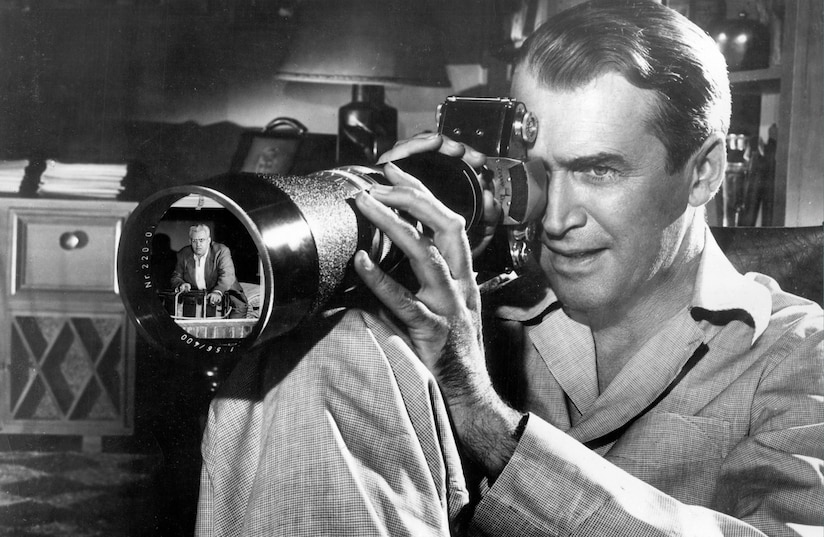
Jimmy Stewart as L.B. Jefferies, having a peek in Rear Window – image from TCM

There is an abundance of non-Hitchcockian reference as well, TV and film mostly, from Dracula to Parks and Recreation. Not that these are all key to the plot, but they are fun markers nonetheless.

description
From the film Rope (1948) – image from The Movie Screen Scene

Major twists will keep you off-balance, as the game continues of trying to figure out whodunit, how and why. The Hitchcock Hotel offers a page-turning bit of suspense with a considerable payload of Hitchcockian homage. There may be death in store by the end of this novel, but one thing is for sure. With Stephanie Wrobel’s able assistance, Alfred Hitchcock lives.

What conclusion can a young man draw when he’s the only one who has a hard time making friendships that last? Maybe they stay away for a reason. Maybe his core is rotten. Maybe they all know something he keeps hidden from himself.

Review posted – 12/27/24

Publication date – 9/24/24

I received an ARE of The Hitchcock Hotel from Berkley in return for a fair review, and a few drops of my personal poison stash. Thanks, folks, and thanks to NetGalley for facilitating.

This review is cross-posted on Goodreads. Stop by and say Hi!

=======================================EXTRA STUFF

Links to Wrobel’s personal,FB, Instagram, and Goodreads pages

Profile – from her site

Stephanie Wrobel is the author of This Might Hurt and Darling Rose Gold, an international bestseller that has sold in twenty-one countries and was a finalist for the Edgar Award for Best First Novel. Her third book, The Hitchcock Hotel, is a USA Today bestseller that published in Fall 2024. She lives in New York City.

Interviews
—–The Big Thrill – PAYING HOMAGE TO THE MASTER OF SUSPENSE AND PAYING IT FORWARD by R. J. Belsky
—–BiffBamPop! – my link text by Andy Burns
—–How Do You Write – Ep. 358: POV Hack: Using Method Acting with Olesya Salnikova Gilmore – with Rachel Herron – video – 31:09
—–The Reader’s Couch – Ep. 234 The Hitchcock Hotel by Stephanie Wrobel – audio – with Victoria – 22:00

Items of Interest from the author
—–How to Tackle Editorial Feedback – very informative item for writers – there are many excellent pieces for writers on her site
—–CrimeReads – HOW TO WRITE PERFECT TWIST ENDINGS (THAT WILL SHOCK AND DELIGHT EVEN JADED SUSPENSE READERS)

Hitchcockian Wicki-ons
—–1940 – Rebecca
—–1941 – Suspicion
—–1948 – Rope
—–1954 – Rear Window
—–1955-1965 – Alfred Hitchcock Presents
—–1963 – The Birds
—–1958 – Vertigo
—–1960 – Psycho

Leave a comment

Filed under Fiction, Reviews, Suspense

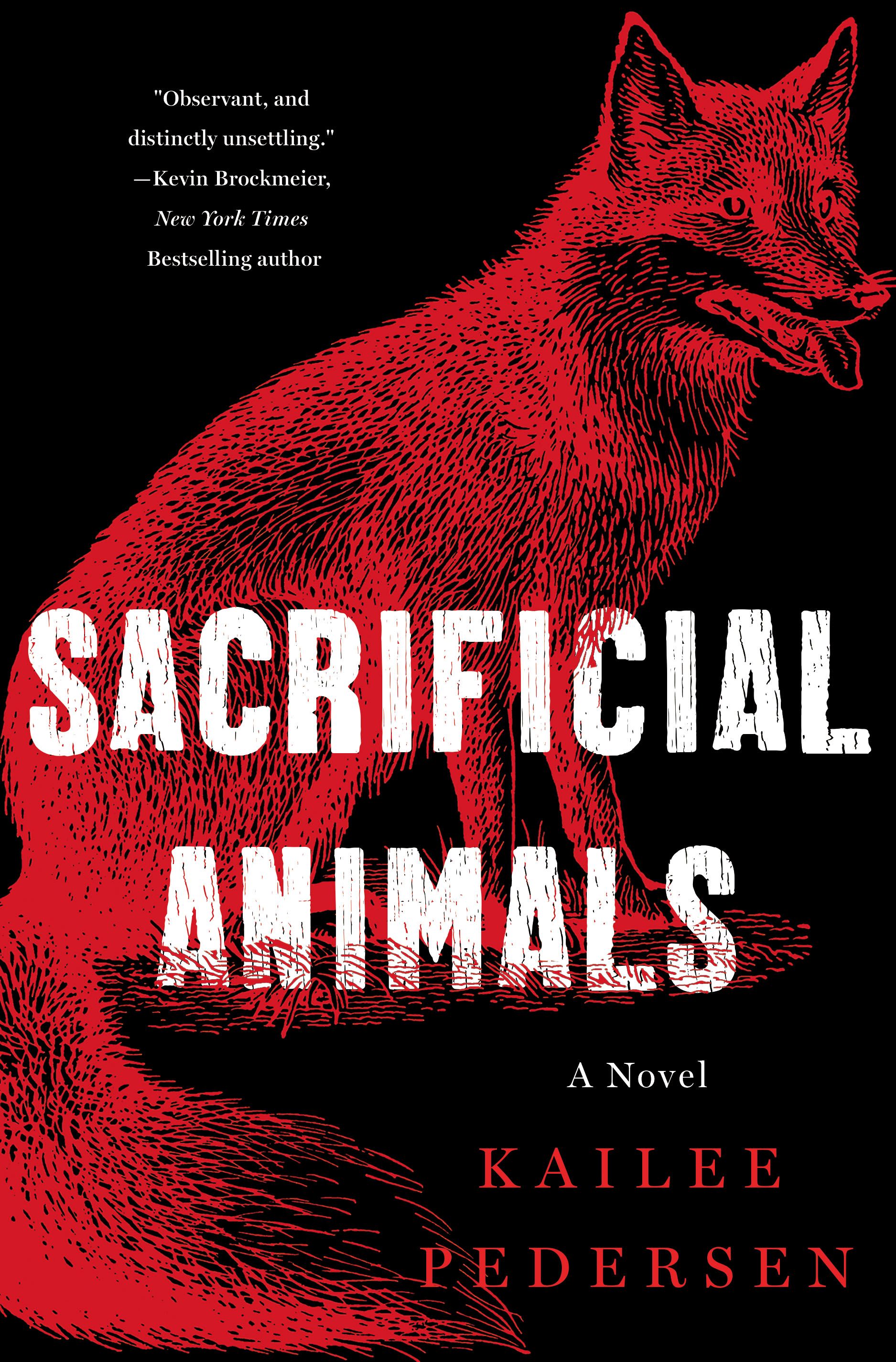
Sacrificial Animals by Kailee Pedersen

book cover

Swiftly and violently as a gunshot a scream pierces the sloped fields lying open and fallow behind the house. Sounding like a woman being murdered in the way he has seen it on television where her agony is drawn out over several breathless and voyeuristic minutes until he changes the channel. Yet he knows it is not a woman but some unnamable beast of the forest come to bewitch and maim. A mother despondent, in all her devastated keening—the fox whose children now reside in the stomachs of the hounds at Stag’s Crossing has finally returned.

The difference between wolves and foxes his father says is that wolves love to hunt and foxes love to play. A tantalizing trail of blood in the half-melted snow. Wolves only have enough foresight to kill and upon their killing they will feed ravenously and strip the bones. But foxes; they are quick-witted and brutal. When they hunt they do so with finesse stalking and pouncing then snapping the spine in their slender jaws.

What goes around comes around.

Life’s a bitch and then you die.

Carlyle Morrow is bitter widower, his third son, Christopher, buried on his land, along with his mother, who died in the attempt to birth him. Morrow is left on his thousand acres in the middle of Nebraska with two sons. Joshua is the golden boy, beautiful, attentive to Carlyle’s every wish, a loyal favorite lapdog. Nick is the second son, plain in appearance, tepid in his embrace of his father’s violent nature. He possesses a bit of his mother’s second sight, his orientation less than that of a purebred. They have both been made to endure a legacy of cruelty passed down from father to son over at least three generations. Carlyle forces him into an act, while hunting, that goes beyond wrongfulness, beyond sin, into the realm of abomination. Nick will live with the guilt the rest of his life, even though the responsibility was not all his. Now in their forties, Nick and Josh have been separated from their father for decades. (Nick still calls) But neither can refuse the summons to return home on news that their father is preparing to die.

description
Kailee Pederson – image from her Twitter profile

We follow Nick as he recalls his life, his struggles with Joshua and Carlyle, mostly the latter. He always found his brother’s wife, Emilia, fascinating, alluring in the mode of a siren. Carlyle is cruel, requiring complete obedience. He expects his sons to love the raw violence that marks his life. He does not raise his boys so much as train them. He even wishes that they could be as faithful and bloodthirsty as his best friends.

If Carlyle could have had dogs for sons he would have been a happy man; but when has a Morrow man ever been happy?

The structure of the novel is a back and forth, with alternating chapters, Then and Now. We learn how the boys’ treatment (Nick’s mostly) brings them to become the men they are in their forties. One would think that with chapters labeled so, there would be a clear differentiation between the internal timelines of each chapter. But no, there are transgressions within, as “Now” chapters, as well as “Then” chapters include lookbacks. Seems not cricket to me, but no biggie. The personal history is clearly a roadmap to the boys’ doom, which is referenced many times, so will not come as a shock. Pederson keeps offering glimpses of the future, a bell being rung louder and louder with each recurrence. There is an unrelenting atmosphere of dread. Awful things will be happening, although we are not let in on the specifics. For example, an early omen.

No thousand acres, no grand inheritance can ever be enough to postpone their destinies. Nick will die as bitter as he came into the world. He knows this just as well at thirteen as he will in thirty years.

Carlyle’s cruelty and monstrous control pushed them both away, Nick to New York, and a career as a cruel literary reviewer, Josh to the other coast with his wife, Emilia, whom Carlyle would not even allow into the house because of her Asian descent.

Yet in only ten years his children will betray him in their own inimitable ways—Joshua marrying out, Nick exiling himself to a foreign land. And in their absence Stag’s Crossing will lie silent and fallow as the fields surrounding it. This place: no place for young men.

or old men, for that matter. This tale displays the violence of a Cormac McCarthy tale. It is not for anyone with an aversion to scenes of death, particularly the death of animals. It comes as no surprise that

Cormac McCarthy is an all-time favorite writer for me, perhaps my favorite of favorites, and his influence is very obvious here.. – from the JamReads interview

References to animals are legion, not in a happy way, for the most part. It is clear that the Morrows fit in well. A sample:

Would he kneel before his father’s magnificence and eat oats from his hand like a wayward steer?
————————————–
Now he and Joshua must return to Stag’s Crossing. Return to that grand two-story house where as children they were left alone for hours at a time savaging each other like wild dogs.
————————————–
Finally, she turned to him. Only the slightest tilt of her neck, elegant as a swan’s.
————————————–
Upon awakening she is languorous as a cat sunning itself in a windowsill.
————————————–
Joshua sees him lying down next to him perfectly still. Breathing through his nose softly like a newborn foal.

There are only a gazillion more of these.

Pederson is masterful with sustaining tension. The reminders of doom help, but there is much more going on here. The tragedy felt very Shakespearean. (Titus Andronicus maybe? King Lear with competing sons instead of daughters?) People make choices, and suffer the results. The language is rich and diverse, from terse Cormac-McCarthy-esque declaratives to languid poetical passages.

Pederson uses much of her background to inform her tale. She was adopted by a Nebraska family, is of Asian descent and uses her experience as a gay kid coming of age to inform her portrayal of Nick’s growing sexual awareness and exploits. She weaves a Chinese myth into the story, providing some early breadcrumbs to lay a foundation for the horror to come. It does.

Given that the characters are so damaged, and so damaging, it can be tough to work up a lot of sympathy for them, even Nick, who carries forward into his writing the cruelty he was bred to in Nebraska. Carlyle is pretty much a pure monster, and Joshua is given much less coverage that the rest of his family. Emilia is mysterious and alluring whenever we see her, which is mostly at the back end.

This is Kaileen Pederson’s first novel It is an impressive debut, a smartly literary horror story. We cannot get enough of these.

Much of the novel’s setting of Stag’s Crossing, the thousand-acre farm owned by the Morrow family, is directly based on my family’s farm in Nebraska. I always found the woods that surround our farm to be a very contemplative, mystical, and mysterious place. I knew I wanted to draw on my Chinese background for Sacrificial Animals, so I started to think about different aspects of Chinese mythology that could be a good fit for this setting. Without giving anything away, I will just say the natural world plays a huge role in the mythological elements of the novel, and foxes — as featured on the cover — are one of my favorite animals.

Review posted – 11/15/24

Publication date – 8/20/24

I received an ARE of Sacrificial Animals from St. Martin’s Press in return for a fair review. Thanks, folks, and thanks to NetGalley for facilitating.

This review is cross-posted on Goodreads. Stop by and say Hi!

=======================================EXTRA STUFF

Links to Pederson’s personal, Instagram, and Twitter pages

Profile – from Macmillan

Kailee Pedersen writes haunted, unsettling speculative fiction. She graduated with a B.A. in Classics from Columbia University, specializing in ancient Greek. Kailee was adopted from Nanning in 1996 and grew up in Nebraska, where her family owns a farm. Her writing on LGBTQ+ and Asian American themes was awarded an Artist Fellowship by the Nebraska Arts Council in 2015. When not scribbling down her next book, you can catch her singing opera, playing video games, or working as a software engineer in New York City. Sacrificial Animals is her first novel.

Interviews
—–B&N Reads – Poured Over: Kailee Pedersen on Sacrificial Animals By Jenna Seery / August 20, 2024 – audio
Sound quality is bad, Kailee is tough to understand.
—–JamReads – Some Thoughts with … Kailee Pedersen – by Jamedi

Items of Interest from the author
—–American Foreign Service Association – 2012 – Burmese Days: Democratization and the U.S. – Burma Relationship
—– KAILEE PEDERSEN: IN PRAISE OF THE DIFFICULT WOMEN OF EAST ASIAN LITERATURE

Leave a comment

Filed under Fiction, Horror, Mystery, Reviews, Suspense, Thriller, Thriller

If Something Happens to Me by Alex Finlay

book coverNo family is without its secrets.

Ryan Richardson had been pining for Alison Lane (Ali) for years. They have known each other since 9th grade, and cared for each other for a long time. They will be leaving for different colleges soon. Their special night is interrupted by rain. Back to her father’s BMW, it was looking like Paradise by the Dashboard Lights would finally become a reality, two teens parked in a Lover’s Lane in Leavenworth, Kansas. Alison does not hit him with an I gotta know right now, but they are this close to heaven when the car door is ripped open. Ryan takes a heavy blow to the head, and comes to on the wet grass. The car, and Ali are gone.

description
Alex Finlay – image from Amazon

We meet Ryan again, the presumed perp, five years later, long suspected of and hassled about that night. Ali has not been heard from. On vacation in Tuscany, his father notifies him that the missing BMW has been found. As if that is not enough, he receives a note in his hotel room from a mysterious stranger, demanding a meeting, and the game is afoot, sending Ryan on a quest to find out the truth of what had really happened that terrible night.

Poppy McGee is late of the military, an MP, having earned her discharge by standing up for herself in a suitable fashion. She had hoped for a gig on the federal level, FBI maybe, but finds herself stuck, instead, in Leavenworth, Kansas, her home town. Her father’s friend, Sheriff Ken, had offered her a safe landing. Deputy Sheriff McGee soon finds herself up to her neck in the five-year-old disappearance. Way to begin!

Shane O’Leary is a very bad man, a Philadelphia gangster with few qualms about the occasional homicide. We soon learn of his involvement in everything;

These three will twirl around each other for the rest of the book, with chapters alternating among them, as each pursues a goal.

Poppy and Ryan are appealing characters, finding a way forward after having faced some serious challenges. O’Leary has a bit of appeal from his love of family. But really, he is a straight up monster.

Finlay offers us a range of venues, from the small city (under 40k pop.) of Leavenworth to the metropolis of Philadelphia, from Tuscany to a small hamlet in the UK to Paris.

I had never done, really, a European setting and so it is set part in Kansas. I thought a contrast for that would be Ryan on this trip in Italy. It starts with me having a trip in Italy when I was finishing the book What Have We Done?. I always thought this would be a cool setting. And then I finished the novel in Paris, so I naturally wanted to weave that into the story, which I did. And while I was in Paris for this extended period where I had gone just to finish the book, my wife and I went to this small village I had lived in in the UK as a boy. I hadn’t been back in forty years…so that was in the book as well. It was personal travel that inspired settings, but also just things that had stuck with me for forty years. – from the promo

The secondary characters are given sufficient attention, adding depth to the characterization of the primary three. And Finlay has done a wonderful job of giving several of them explanatory, if not exactly exculpatory, three-dimensionality.

Poppy, in particular, confronts frenemy, Agent Fincher, a fed, who wants Poppy to share details on the investigation. She offers up some details of her own, but leaves us wondering if she is for real.

The agent sits there appraising Poppy, watches her eat. Eventually, she says, “Are you familiar with Russian folklore, Deputy Sheriff McGee?”
This is too much. Poppy gives the agent a lazy-eyed stare. “Do I look like I’m familiar with Russian folklore?”
Agent Fincher allows herself a smile. “In Russian folklore there’s someone called the Holy Fool.”
The woman is an oddball or genius, Poppy can’t tell which. It’s possible her schtick is just a tactic to get Poppy to talk.
“The Holy Fool is an outsider—sometimes an eccentric, sometimes crazy, sometimes just a child. But it’s their outsider status that makes them a truth teller.”
“I’m not sure where this is—”
“You heard of the story ‘The Emperor’s New Clothes’?”
What the hell, Poppy decides to bite. “The story about the emperor who’s told he has a magical outfit and everyone plays along even though he’s naked?”
Agent Fincher snaps her fingers. “Everyone except a little boy. He’s a Holy Fool—someone who’s free to state the truth.”
“What’s this have to do with anything?”
“Oh . . . I don’t know. After you punched your commanding officer in the nose, I was hoping you were one.”
“One what?” Poppy asks.
“A Holy Fool.”
Poppy shakes her head. This lady’s been looking into Poppy’s background. Following her. What’s her deal?
“In real life, our Holy Fools are whistle-blowers. People willing to sacrifice loyalty to their job or other institution to expose the truth.”

So, should Poppy trust this person or not?

Many novels offer a thing called payload. What did you learn? This is a look at some real-world thing, how certain activities are carried out, the details of philatelic theft, how drugs are transported, how money is laundered, how even benign activities are undertaken. Although there is a bit of this in looking at how O‘Leary launders his income, this was an area in which the book was lacking. While that mote of depth was absent, this will take nothing away from the pace or fun of the book.

If Something Happens to Me is a tale of murder, bullying, REVENGE, passion, and a core mystery (why was Ali kidnapped?) that explains it all. It will keep you guessing and flipping those pages. The only thing that will happen to you on reading Finlay’s latest is that warm, filling feeling of having just read a very satisfying thriller.

Review posted – 10/11/24

Publication date – 5/28/24

I received a ePub ARE and a hard copy of If Something Happens to Me from Minotaur in return for a fair review. Thanks, folks, and thanks to NetGalley for facilitating.

This review is cross-posted on Goodreads. Stop by and say Hi!

=======================================EXTRA STUFF

Links to Finlay’s personal, FB, and Instagram pages

Profile – From the author’s real-name website

Anthony Franze is a critically acclaimed novelist with St. Martin’s Press, and a lawyer in the Appellate & Supreme Court practice of a prominent Washington, D.C. law firm.
For more than a decade, Anthony was an adjunct professor of law teaching courses in Federal Courts, Legal Rhetoric, and Appellate Practice, and he currently participates in a European faculty exchange program where he teaches at law schools abroad.
He writes legal thrillers under his own name, including THE LAST JUSTICE (2012), THE ADVOCATE’S DAUGHTER (2016), and THE OUTSIDER (2017) He writes commercial fiction under a pen name, [Alex Finley] and his 2021 novel was an Indie Next pick, a LibraryReads selection, an Amazon Editor’s Best Thriller, as well as a CNN, Newsweek, E!, BuzzFeed, Business Week, Goodreads, Parade, PopSugar, and Reader’s Digest best or most anticipated thriller of the year. His work has been translated into more than a dozen languages and optioned for television and film.

Interviews
—–Authors on the Air – Alex Finlay — If Something Happens to Me – by James L’Etoile – video – 20:48
—–The Poisoned Pen Bookstore – Alex Finlay discusses If Something Bad Happens to Me by Barbara Peters – video – 52:15

My review of Finlay’s prior book
—–2023 – What Have We Done

Items of Interest from the author
—–Promo
—–Google Play Books – Audiobook preview – 16:05

Leave a comment

Filed under Fiction, Mystery, Reviews, Suspense, Thriller

Under the Storm by Christoffer Carlsson

book cover

History doesn’t allow itself to be rewritten that easily.

One single night: A house burned down in Tolarp. There was someone inside, on the kitchen floor. One instant, a before and after: the stillness before the spark appeared, and the inferno that followed. One single event: That was all it took to redirect the path of a life. Like the filament of a root moving through time.

Or, in this case, two lives.

How do you deal when the thing that obsesses you interferes with your life?

Isak Nyqvist is seven years old in 1994. Vidar Jörgensson is a young cop, four years in the police. We will follow them through the next twenty-one years. Both their lives are largely defined by the fire that takes place on a cold night in November. A young woman is found dead inside a torched house. It was not the fire that killed her.

description
Christoffer Carlsson – image from Frankurter Rundschau – credit Emelie Asplund

Isak loves his uncle Edvard, 25, who has spent a lot of loving time with him, but Edvard has a history of rage, much of it provoked, and a lot of it ascribed to him because his father was a violent person. He had been dating Lovisa Markstrom, was seen leaving the scene of the crime on the night of the fire, and is presumed to have been the one who killed her. There is circumstantial evidence supporting that belief. The town is certain of it, given his family history. The person who had seen him that night was Vidar. But Vidar has his doubts, or will.

Vidar has many local connections and uses those to help his investigation. Isak’s family is known by everyone, not in a good way. Gramps was known as a violent person. Isak’s uncle Edvard was also painted with that same brush, so it is easy to believe that he killed his girlfriend. Isak is only 7 when the murder take place but local biases, and bullies pile on Isak, assigning to him the snap-judgments that were affixed to his uncle

The story is told in three parts, the first being when the death occurred, 1994, the second in 2003 and the third in 2015. Even though Isak has doubts, he still cannot believe his loving, kind uncle could be responsible for a murder. Vidar becomes aware of some problems with the evidence, sees alternate explanations for the crime and becomes obsessed with it for the rest of his police career and beyond. It even threatens his marriage (Wait, didn’t she know this about him when they got together?) The trope of the investigator’s non-understanding significant other gets on my nerves.

Isak is impacted both internally, wondering if Edvard really was a killer, and wondering if genetics are destiny, and externally, as bullies constantly remind him that his uncle is serving time, and provoking him to violence. (Why are provoking bullies never held to account? Is the world really that dumb? Don’t answer that.)

The long expanse of the tale gives us insight into the main characters, how they feel and behave in the world, and what has gone into creating those feelings and behaviors. It is both heart-breaking and illuminating.

The parallelism of Isak and Vidar works well, showing how history ripples forward into the future for both of them, albeit in very different ways. Carlsson offers many specific ways in which their paths run in the same direction. Both their lives are crap, in a way. Both have boxes of clues to their mysteries. Vidar’s wife’s assumptions and lack of understanding re Vidar mirrors the community’s view of Erik. Vidar imagines himself as a child, akin to a dream of Isak’s

In Carlsson’s previous novel (at least as far as USA release dates go) Carlsson had used a similar structure, with Vidar’s father tracking a crime from 1986 to 2019, stopping off at several intermediate years to track the characters and advance our understanding of the very cold case.

This original Swedish language book was released in 2019, before Blaze Me a Sun (2021). Vidar Jörgensson features in this one. But in the later book, it is Vidar’s father who stars, with Vidar being introduced later in the tale. I do not know if Under the Storm was intended as a prequel, or maybe was written later but published earlier. I read the pair in the order in which they were published in the USA, #2, then #1. There is a third, which was released in Sweden in 2023, Levande och döda (The Living and the Dead). I do not know when an English translation will be available.

Family is a major concern, as it was in Blaze Me a Sun. How does the cop’s obsession (or deep commitment to truth) impact his friendships, his work life, his marriage? (“You seem so far away sometimes,” she said at last.) How does Isak’s affection for and connection with a much-loved uncle affect his ability to have a normal social life, to have a family life? How is the rest of Edvard’s family impacted by his travails?

As with Blaze Me a Sun, there is mention of a local superstition. That one had to do with fortune, good or bad, being caused by how one saw a particular bird. Here it is a place where a legendary rich man is buried, a place where ghostly apparitions are said to appear. Under a bridge in Anarp is where The Old Man sleeps, a boogie man who is death to anyone who meets his ghost. Non-superstition-based history is also addressed, as Carlsson tracks town history back to sundry events, like the introduction of manufacturing in the town, its loss and attempt to revive it.

A persistent motif throughout is secrecy, as one might expect in a procedural murder tale. Vidar and Isak, while not alone in this, are robust practitioners. Isak keeps two things to himself from the night of and a short time after. It is never particularly clear why he fails to tell what he knows in time to have an impact. Vidar does not tell his boss what he is working on in the latter parts of the novel. Schtupping a local married lady is also kept on the down-low. Talking separately to Edvard and Isak while not informing either of them of his contact is another. Vidar keeping secret a challenging work-based relationship also requires deceit.

The noir atmosphere gets jiggy when a major hurricane, Gudrun, blows through. Homes are destroyed, people displaced. This was a real storm that caused major damage in Sweden. Details of the experience of such a beast are chilling. Maybe not the same as the assassination of the Prime Minister in the psyche of the nation, but it had a real impact. A heat wave also adds to the tension.

Carlsson succeeds in presenting both detailed character portraits and in giving us a sense of what life was like in this area, a place in which he grew up. He is a PhD criminologist for his day job, publishing papers and teaching. He grew up around things criminal, as mom was a police dispatcher. It is clear that a lot of the conversation on which he eavesdropped at home as a kid made an impact. He knows crime, both real and fictitious, and writes with authority about it.

This is a procedural, however lengthy the duration of the investigation. You will enjoy Vidar picking up on clues and following through, as he spends a lifetime attempting to find out the truth about that night. In the beginning it is a hot, fiery case that becomes a cold-case in the following parts of the novel. (In Sweden are all cases cold cases?) But not to Vidar. He is a flawed guy, but is determined to find out what really happened that night. Under the Storm is a triumph of the genre, tickling your brain with the mystery, engaging you emotionally with the characters, and offering up informed looks at a place and time, well, times. As a smart, accomplished example of Swedish noir, Under the Storm is out of this world.

The world had shown what it was truly capable of. As if a lifeline was suddenly severed, it could take your loved ones away. The world watched without blinking as you fell.

Review posted – 06/28/24

In Sweden – 3/1/2019
English Translation – 2/27/24

I received an ARE of Under the Storm from Hogarth in return for a fair review. Thanks, folks, and thanks to NetGalley for facilitating.

This review is cross-posted on Goodreads. Stop by and say Hi!

=======================================EXTRA STUFF

Links to the Carlsson’s Instagram and Twitter pages

Profile – from Penguin Random House

Christoffer Carlsson was born in 1986 on the west coast of Sweden. He holds a PhD in criminology from the University of Stockholm and is one of Sweden’s leading crime experts. Carlsson is the youngest winner of the Best Swedish Crime Novel of the Year, voted by the Swedish Crime Writers’ Academy, and has been a finalist for the prestigious Glass Key award, given to the best Scandinavian crime novel of the year.

Interview
—–The Occasional Bookwitch Christoffer Carlsson – neither pink nor fluffy

It’s close to where he grew up, where he and his brother used to play. And then, halfway through writing the book, his parents sold up and moved away from his childhood home, moving into a flat in town, enjoying their new life on the 13th floor with marvelous views. ‘The novel became some sort of farewell. It was pretty hard. It’s as if part of my past has moved out of reach.’

My review of another book in this series
—–Blaze Me a Sun

Item of Interest from the author
—–With the Dead – this is a must-read item, as Carlsson details how he became a writer. You will see how his books incorporate elements of his life.

Item of Interest
—–Cyclone Gudrun

Leave a comment

Filed under Fiction, Mystery

The Future by Naomi Alderman

book cover

The road to ruin is paved with certainty. The end of the world is only ever hastened by those who think they will be able to protect their own from the coming storm.

Love is the mind killer.

So what would you do if your super-secret software gave you the alert? End times are afoot. Time to scoot! If you are like most of us, you might seek our your nearest and dearest to see the world out together. But what if you are one of the richest people on the planet? Well, in that case, you would have prepared a plan, an escape, a plane, supplies, a bunker somewhere safe. Buh-bye, and off they go. The they in this case includes three billionaires, the heads of humongous tech companies, some years in the not-too-distant future, Lenk Sketlish, Zimri Nommik, and Ellen Bywater.

They were definitely not inspired by anyone specifically who could sue me for everything I’m worth and barely notice it…They are composite characters made up of some of the ridiculous and awful things that tech billionaires have done and some of it just made up out of my head. But of course the companies are inspired by real companies. – from the LitHub interview

What if you were the number one assistant to one of these folks, or the less-than-thrilled wife of another, or the ousted former CEO and founder of a third one, maybe the gifted child of one? You might have been spending your time trying to see what you could do to mitigate the vast harm these mega-corporations have done to the planet. These are Martha Einkorn, Lenk’s #2, Selah Nommik, Zimri’s Black British wife, Alex Dabrowski, founder and former CEO of the company now headed by Ellen, and Badger, Ellen’s son.

“Margaret [Atwood] has very much covered how bad it can get, so we don’t need a lesser writer doing that,” Alderman says. “I’m interested in the most radical ideas about how we can make things better, and what are the avenues we can pursue.” – from the AP interview

BTW, Atwood mentored Alderman.

What if you were attending a conference in Singapore, having recently met one of group B above for an interview, and gotten entangled in an unexpected way, but now find yourself in the vast mall in which the conference is being held, being chased and shot at by some psycho, probably a religious nut? Lai Zhen is a 33yo refugee from Hong Kong, an archaeologist and well-known survivalist influencer. She had met someone she thinks may be The One, but her immediate survival is taking up all available mental space. Thankfully, she has help, but will it be enough?

description
Naomi Alderman – image from The Guardian

The action-adventure-sci-fi shell encasing The Future is a dystopian near-future that takes an if-this-goes-on perspective re the road we are currently traveling toward planetary devastation, global warming, the increasing greedification of the world economy, and concentration of wealth, at the expense of sustainability and human decency. But Alderman has done so much more with it.

The Future has a brain and a heart, to go along with the coursing hormones, and some serious mysteries as well. Did I mention there is a romance in here also? Good luck shelving this thing. You probably will not have much luck putting it down once you start reading. Well, take that advisedly. I did find that it took a while to settle in, as there is a fair bit to get through with introducing all the characters, but once you get going, day-um, you will want to keep on.

While offering a look at survival post everything, Alderman tosses in some fun high tech and BP-raising sequences. And she gives readers’ brains a workout, providing considerable fodder for book club discussions. To bolster the thematic elements, Aldermen provides plenty of connections to classic tales, biblical and other, that offer excellent starting points for lively discussions.

Martha was raised in an apocalypse-concerned cult, led by her father. As an adult she gets involved in on-line exchanges about questions like what might be learned from the experience of a biblical apocalypse survivor, Lot. Alderman was raised as an Orthodox Jew, studying the Torah in the original, so knows her material well. (God was about to firebomb Sodom when Lot’s kindness to a couple of god’s emissaries earned him and his family a get-out-of-hell-free pass.) In addition, she finds relevance in Ayn Rand, The Iliad, The Odyssey, and more.

She brings in a discussion of the enclosure act in the UK, how the stealing of public land by the wealthy has a mirror in the theft of public space of different sorts in the 20th and 21st centuries. But the biggest issue at work here is trust. In fact, Alderman had intended to title the book Trust. But when Herman Diaz’s novel, Trust, won a Pulitzer Prize, she had to find an alternative. Can Zhen trust her new love interest. Can she trust the AI that is supposedly helping her? Can she trust any of the oligarchs? Can she trust people she has known for years on line, but never met in person? This is a core concept, not just on a personal, but on a societal level. Civilizations are built on trust. It is an issue that touches everyone.

The wealthier you are, the less you have to ask people things and the less you ask people for things, the less you have to discover that you can trust and rely on them. Eventually, that erodes your ability to trust. Then, you’re sunk. – from the Electric Literature interview

Consider a concern that is immediate in early 2024. Can American allies, whose alliances have kept the world out of World War III since the end of World War II, trust the US intelligence services with their secrets, when our next president might give, trade, or sell it to our enemies? Can you trust that the person you are communicating with on-line is being honest with you. (As someone who has met people through Match.com, I am particularly aware of that one.) If you are stuck on a survival island, can you trust that the other people there will not do you in, in order to improve their chances of gaining power once things begin to return to some semblance of global livability?

In today’s culture, technology, particularly social media, “encourages us not to really trust each other,” Alderman explains. “The ways that we use to communicate with each other have been monetized in order to make us as angry at and afraid [of one another] as possible.” And while the internet can all too often amplify “absolute hateful stupidity” to feed our distrust of one another, the author continues, “It can also demonstrably, again and again, multiply our knowledge and capacity to understand.” – from the Shondaland interview

Zhen’s is our primary POV through this, although we spend a lot of time with Martha. She is an appealing lead, a person of good intentions, and reasonably pure heart. She is wicked smart, able, and adaptive. It is easy to root for her to make it through. But, noting the second quote at the top of this review, if Love is the mind killer, might it impair her clarity of thought, her maintenance of necessary defenses? Of might it impair that of the person she is love with?

The concern with dark forces is a bit boilerplate. Two of the oligarchs are cardboard villains; another has some edges.
But it is the conceptual bits that give The Future its heft. Oh, and one more thing. Woven throughout the 432 pages of this book is minor crime, Grand Theft Planet. It should come as no surprise that an author who has had great success with her previous novels, and who has spent some years writing video games, would produce a fast-paced, engaging read, replete with dangers, anxieties, fun toys, and wonderful, substantive philosophical sparks. I cannot predict the future any better than 2016 presidential pollsters, but my personal AI suggests that should The Future will find its way to you, you will be glad it did.

Imagining bad futures creates fear and fear creates bad futures. The pulse beats faster, the pressure rises, the voice of instinct drives out reason and education. At a certain point, things become inevitable.

Review posted – 3/8/24

Publication date – 11/7/23

I received an ARE of The Future from Simon & Schuster in return for a fair review, and the password to my super-secret software. Thanks, folks, and thanks to NetGalley for facilitating.

This review is cross-posted on Goodreads Goodreads. Stop by and say Hi!

=======================================EXTRA STUFF

Links to the author’s personal, Instagram, GR, and Twitter pages

Profile – from Simon & Schuster

Naomi Alderman is the bestselling author of The Power, which won the Women’s Prize for Fiction, and was chosen as a book of the year by The New York Times, The Washington Post, the Los Angeles Times, and was recommended as a book of the year by both Barack Obama and Bill Gates. As a novelist, Alderman has been mentored by Margaret Atwood via the Rolex Arts Initiative, she is a Fellow of the Royal Society of Literature, and her work has been translated into more than thirty-five languages. As a video games designer, she was lead writer on the groundbreaking alternate reality game Perplex City, and is cocreator of the award-winning smartphone exercise adventure game Zombies, Run!, which has more than 10 million players. She is professor of creative writing at Bath Spa University. She lives in London.

Interviews
—–Professional Book Nerds – Dystopian Futures with Naomi Alderman – video, well, mostly audio, with no real video – 41:59
—–Toronto Public Library – Naomi Alderman | The Future | Nov 13, 2023 with Vass Bednar – 45:05 – there is a nice bit in here on tech as neither bad nor good, but a tool which can be used for good or evil.
—–Literary Hub – Naomi Alderman on Creating a Fictional Tech Dystopia by Jane Ciabattari
—–Shondaland – Naomi Alderman Is Still Finding Hope in Humankind by Rachel Simon
—–AP- Naomi Alderman novel ‘The Future’ scheduled for next fall by Hillel Italic
—–Electric Literature – Dystopian Future Controlled by Technology by Jacqueline Alnes
—–Independent – How We Met: Naomi Alderman & Margaret Atwood – by Adam Jacques – Atwood mentored Alderman in 2012 – a fun read

Item of Interest from the author
—–BBC Sounds – audio excerpt – 1.0 – The End of Days – 15:47

Items of Interest
—–Tristia by Ovid – Zhen reads this prior to a trip to Canada
—–The Admiralty Islands
—–inert submunition dispenser – a kind of cluster bomb
—–Wiki on the enclosure act

Leave a comment

Filed under Action-Adventure, AI, Cli-Fi, computers, Fiction, Literary Fiction, Mystery, Reviews, Science Fiction, Thriller, Thriller

West Heart Kill by Dann McDorman

book cover

A scream suddenly pierces the air. Startled glances are exchanged on the porch, a drink is spilled, a baby begins to cry, and your muscles tense; you sense this is one of those plot leaps that writers use to punctuate and propel the narrative, like those bursts of biological creativity that scientists claim shock evolution into action. But you are unsettled; just pages into the book, is it too early? Should a mystery unfold in a more demure fashion? Aren’t the suspense and anticipation the real secret thrill of the book, rather than (let us be honest) the all-too-often disappointing dénouement, the magician turning over his cards for an audience that realizes, bitterly leaving the theater, that they’ve been had?

Other people’s secrets are easy. It’s our own that are hard

I am not particularly a fan of video games, the large immersive, role-playing ones. Nothing against them. They are simply outside my experience for the most part. But I do know that a lot of the experience, the joy of these games, lies in figuring things out. If I do this, what happens? What if I do that? Where might secret intel reside? How can I get to it? It strikes me that for many readers, particularly for readers of detective stories, the experience is comparable, however different the physical approaches might appear. The internal processes are quite similar. Reading West Heart Kill is a bit like having a game designer walking you through the construction of the game as you play it, reminding you of the usual rules, and teasing you a bit about whether you will actually figure things out or not, suggesting tricks and traps that writers (or game designers) employ to keep you off base, while remaining entertained.

I am a bit obsessive when I read mysteries, keeping lists of characters with their attributes, keeping track of timelines, locations, motives, et al, so am primed for such things. The game here is an overt one. The author is challenging you to figure out whodunit. If you accept the challenge you need to figure things out before the final reveal, otherwise it is game over for you. It is not that you finish the book with no points. Figuring out the mystery, the how, why, when and where, may be the top prize, but a skillful writer will offer plenty of rewards along the way, whether you succeed or fail. I did not figure out ahead of time the large murder questions, but I did suss out some of the lesser puzzles, and there was at least some whoo-hoo!-figured-it-out satisfaction to be had in that. There are further benefits to be had.

description
Dann McDorman – image from the NY Times – shot by Maansi Srivastava

The West Heart of the title is a private club (membership fees are exorbitant), high on wealth (well, presumed wealth, at least), and low on morals. Secrets abound, as one might expect. The residents, many of whom spent their summers there as children, have considerable difficulty with marital vows, in particular, and then, of course, with that whole thou shalt not kill thing.

Adam McAnnis is a thirty-something private investigator who has been hired to hang about, keep his eyes open, and see if he spots anything off. His connection is with an erstwhile classmate, from whom he manages to wheedle an invitation. The place is isolated, and will become more so as an expected storm seems likely to close off roads and cut off communications. Sound familiar?

Many of the elements that make up this very meta novel will, particularly as McDorman lays them out for us, addressing readers directly. The weary detective is one:

How often is he both lonely and alone, suspicious of everyone, accepting betrayal as the rule, not the exception? The deceits that begin to unfold the moment the client walks through his office door. Nights spent in parked cars watching illicit silhouettes behind shaded windows, receipts pulled from dripping trash bags, a five-dollar bill waved between two fingers before a junkie’s fixed gaze . . . the debased work of hundreds of cases, a file cabinet full of tragedies and comedies and tales too ambiguous to categorize.

Or one particular character type:

As a general rule, in murder mysteries, the least likable character is the most likely to die. But devious writers can anticipate your knowledge of this cliché and thrust a character like Warren Burr into early prominence to surprise you, later, with an entirely different victim. Or, perhaps, more devious still, circle back and kill him off in a double bluff—destined to die all along, exploiting and perverting your expectations from the start. Of course, some writers, among them not the least skilled, use much the same trick to mask and unmask their murderers . . .

These permeate the story, as McDorman pokes you to figure things out. He even provides lists of characters and clues to help you along.

It does not take too long for first mortality to occur. McAnnis takes on the role of investigator, publicly this time. We tag along as he interviews each of the suspects in turn. McDorman has a bit of fun, even concocting one interview with a dead person.

We are treated to small essays on this and that, methods of killing people, for example, or an etymology of the word Murder, or on Agatha Christie’s mysterious disappearance, or on well-known writers using pseudonyms, or on the rules for mysteries, or on unresolved literary murders, and more. These are small, delightful diversions.

Voice is handled differently from the norm here.

The novel takes place over a long July 4th holiday weekend —Thursday to Sunday — and so I had the idea of writing each day from an additional different perspective: “he”… “I”… “we”… etc. Thus, each section is stamped with its own particular identity. And of course, the “you” voice explores why the perspective suddenly shifts, and how that plays into the intrigue of the plot… – from the Bloomsbury interview

In fact, this works to keep one off-balance a bit. But there was some ambiguity even within the voice, at times, that I found off-putting. For example, there are sections in which the resident population is represented by a sort-of “we” voice. Then it mixed with an omniscient narrator. While there was certainly a purpose to it, it came across as jumbled to me.

Asked what drew him to the 1970s as a time in which to set his novel, McDormand said,

The superficial reason is that it was fun! The hairstyles alone defy belief. Some of the most entertaining hours I spent “working” on the novel involved paging through mid-70s clothing catalogs; that led directly to an entire paragraph early in the book that is just a listing of the trademarked (and fabulously named) artificial fabrics worn by the characters: Acrilan®, Fortrel®, PERMA-PREST®, Sansabelt®, Ban-Lon®…

More substantively, the zeitgeist of the 1970s felt intensely familiar to me. We’d lost trust in institutions and in each other; the old solutions didn’t work; the new ones seemed inadequate; a creeping disillusionment had overtaken the best of us, while the worst seemed full of passionate intensity. As an era, the 1970s seems extraordinarily relevant to writers and readers today. – from the Bloomsbury interview

There are plenty of suggestive atmospherics, like a part of the considerable property that is used for hunting (hunting what, exactly?), or a traditional bonfire that might be used for the destruction of evidence, (or maybe eliminating a pesky witness?) primitive maps, hidden paths, mysterious people seen at a distance on ill-lit trails, a dark and stormy night. All great fun.

Of course, there is another traditional element in the mystery novel. Be sure to bring along your fishing pole. There are red herrings aplenty to land.

I found this to be an entertaining read, but there were bits that did not sit well. There is an event that happens near the end, which I will not spoil, that created a bit of a vacuum, that space being filled in a way that, while very creative, still felt forced and unnatural. Certain scenes are written as plays, which seemed cutesy. Not saying these were not entertaining, but why?

Many of us who read Stephen King continue to do so because there is pleasure to be had in the reading, the engagement, the flow, the scares, even though many readers often find his final reveals to be unsatisfying. In a similar vein here. There is much in West Heart Kill that is great fun, that engages us and prods our brains to kick into gear when a less meta approach might just leave us to cruise through the read in a straight line. It encourages us to play, rather than just watch. That is worth a lot. The elements that bugged me made it less than a five-star read, but it will certainly stand out from the pack for seasoned readers of crime novels for its interactive approach. Game on.

Review posted – 01/26/24

Publication date – 10/24/23

I received an ARE of West Heart Kill from Knopf in return for a fair review. Thanks, folks, and thanks to NetGalley for facilitating.

This review is cross-posted on my site, Goodreads. Stop by and say Hi!

=======================================EXTRA STUFF

Author links – well, McDorman’s social media links definitely remind one of the time in which he located his novel. He did have a Twitter account at some point, but has not posted anything for years. Nada on FB. Here is his GR profile page.

Interviews
—–NY Times – When a Book Deal Feels Like ‘Winning the Middle-Age Lottery’ by Elizabeth A. Harris – nothing on the book itself, solely on his unlikely situation of getting a first novel published.
—–Bloomsbury – “In the end, both the detective and the killer must make a choice, whether to act from hate, or from love”
—–Crimereads – DANN MCDORMAN ON EXPLORING LITERARY HIJINKS AND META MYSTERY by Jenny Bartoy
—–BookBrunch – Q&A: debut novelist Dann McDorman by Lucy Nathan

Items of Interest
—–Publishers Weekly – Knopf Bets on ‘West Heart Kill’
—–Wiki on Angela Atwood – referenced in Chapter 1

2 Comments

Filed under Fiction, Mystery, Reviews, Suspense, Thriller, Thriller

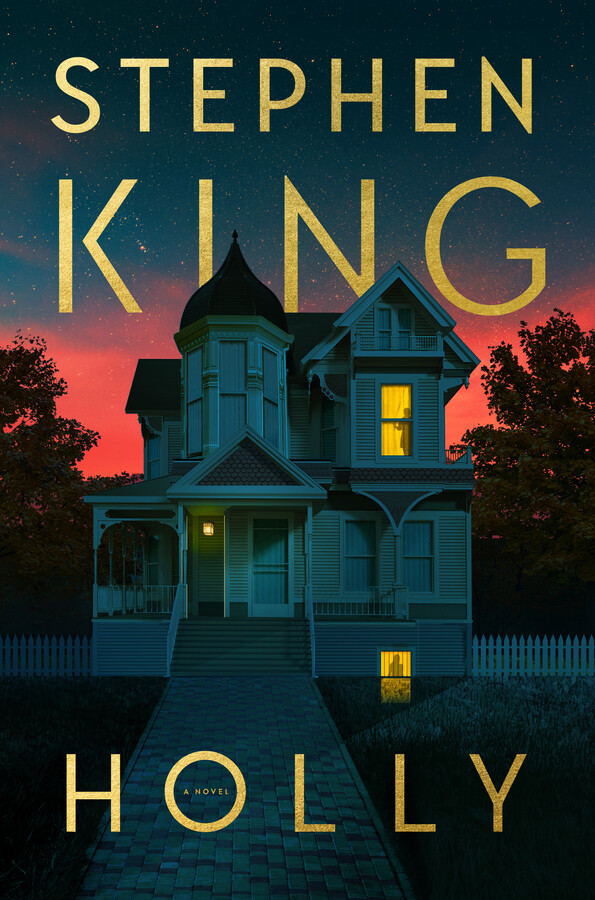
Holly by Stephen King

book cover

I had to write this book to write one scene, which I saw clearly in my mind. Holly attending her mother’s zoom funeral. I didn’t have a story to go with it, which was unfortunate, but I kept my feelers out because I loved Holly from the first and wanted to be with her again. Then one day I read a newspaper story about an honor killing. I didn’t think that could be my story, but I loved the headline, which was something like this: everyone thought they were a sweet old couple until the bodies began turning up in the backyard. Killer old folks, I thought. That’s my story. – from Author’s Note

Holly Gibney, partner in the Finders Keepers Detective Agency she inherited from Bill Hodges, (of the Bill Hodges trilogy, in which Holly first appeared) is called in by a distraught mother, Penny Dahl. Her daughter, Bonnie, has been missing for three weeks, and the police are at the point of washing their hands of the case. A peculiar, ambiguous note had been found on her bicycle. But there was no helmet found. Curious, no?

description
Stephen King – image from New Hampshire Magazine – illustrated by John R. Goodwin

Holly is on her own, as her partner is laid up with COVID. She has just attended her mother’s funeral. So Holly is emotionally laid low. People close to her have urged her to take some time to grieve. Still, a case might be a way to keep moving, so the game is afoot. It is not long before another missing person case shows up in her research, and another. Tough to prove, but Holly suspects there is a serial killer at work. The book opens with

It’s an old city, and no longer in very good shape, nor is the lake beside which it has been built, but there are parts of it that are still pretty nice. Longtime residents would probably agree that the nicest section is Sugar Heights, and the nicest street running through it is Ridge Road, which makes a gentle downhill curve from Bell College of Arts and Sciences to Deerfield Park, two miles below. On its way, Ridge Road passes many fine houses, some of which belong to college faculty and some to the city’s more successful businesspeople—doctors, lawyers, bankers, and top-of-the-pyramid business executives. Most of these homes are Victorians, with impeccable paintjobs, bow windows, and lots of gingerbread trim.

Hmmm, maybe King was not quite done with thought processes from his novel, Fairy Tale. One of those Victorians is home to a couple of octogenarians, mostly-retired professors at the nearby Bell University. They seem ok to a brief glance, but spend time with either one and you might feel the urge to pop up and say, “check please.” Both are considered, at the very least, odd, by those who know them. Some find them creepy. They are far worse.

Holly is assisted in her investigation by two associates from prior cases. Jerome and Barbara Robinson are both game to help, but both have other things going on, so are not entirely available. This is a crucial element in sustaining tension, (along with hoping Holly can figure out what is going on in time to save Bonnie) as their disconnection from Holly keeps her from figuring everything out much sooner. What happens if you have, among the team, all the pieces to the puzzle but simply cannot get them all on the table at the same time?

The story proceeds as, um, a procedural. Discover this clue, follow it, find another clue, follow that, and so on. Keep the unconnected breadcrumbs floating about in one’s consciousness until it becomes clear where they lead. There is nothing paranormal going on in this one, although abnormal would certainly fit.

Two time-lines swap back and forth. In the present, July 2021, Holly pursues her investigation. In the other we flash back to each of the victims, who they were, how they were taken, and how they were treated once captured.

King wrote this book during the height of the COVID pandemic, and wanted to make that a major part of the novel. We encounter Holly when she is disconnecting from her mother’s funeral. She, and others, had attended via Zoom. Mom was a diehard, literally, anti-vaxer. Buh-bye. And from what Holly expresses about the dearly departed, she is not all that sad to see her go. Throughout the story, Holly has to decide, mask-or-no-mask, for every interview. Shake hands or bump elbows? She is maybe OCD, or even somewhere on the autism spectrum, but she certainly has an enhanced intuition that some think might be a form of the shining made famous in the book by that name. Maybe she is just a really gifted detective? There is no overt diagnosing of Holly’s abilities or limitations in the book.

In addition to the presence of COVID, King offers looks at a range of people and their political attitudes. A bowling alley manager is a full-on conspiracy theorist. Emily Harris’s diverse bigotries are baked in. Speaking of bigotries, one that 76-year-old King addresses is ageism. It usually manifests in presuming the elderly to be incapable of or disinterested in this or that based simply on their age. This is a bit of bias that Holly shares, to her own peril.

I know that there are a lot of people out there on X, or whatever you want to call it, that are convinced that Covid is over and it’s not a going concern anymore. What do you think of that idea?
Well, Holly’s mother is a Covid denier, and she dies in the hospital of Covid. And to the very end, she’s saying, “I’ve just got the flu. The flu is what I have.” And I think that it goes back to this is not a new thing. There have been people for years who have just been vaccination deniers who say that if you get a vaccination for a certain kind of thing, you’re going to cause birth defects in your children, this and that. Or if you vaccinate your children, they could have strokes. And you see the same things about the Covid vaccinations. There’s this constant story that thousands of people are dying of heart disease because of the vaccinations. It’s not true, but it’s gained a lot of credence. So there’s a lot of that. And I tried to put that in the book. There are characters in the book who just say, “I don’t believe in this bullshit. It’s all crap.” And that’s the life that we live. And I always try to reflect the time that I’m writing in. – from the Rollingstone interview

It is easy to root for Holly Gibney as she struggles to learn the truth. This keeps us interested in the book. King is right to keep going back to her. (this is the sixth time) She is sooooo engaging. But there is another course in this meal. King points out how holding false beliefs can lead to mayhem, even death. It certainly did for Holly’s mom, and there is at least one criminal motivation in here that is based on a non-COVID-related disproven theory.

This may not be to everyone’s taste. “I’ve had enough” was the note left on Bonnie Dahl’s bicycle. But I bet that by the time you finish reading Holly you will be hungry for a second helping.

The outsider masquerading as Terri Maitland was evil. So was the one masquerading as Chet Ondowsky. The same was true of Brady Hartsfield, who found a way to go on doing dirt (Bill’s phrase) even after he should have been rendered harmless. Rendered that way by Holly herself. But Roddy and Emily Harris were worse.

Review posted – 10/13/23

Publication date – 9/5/23

This review is cross-posted on Goodreads. Stop by and say Hi!

=======================================EXTRA STUFF

SK’s personal and FB pages

my reviews of some other books by this King
—–2022 – Fairy Tale
—–2020 – If It Bleeds
—–2019 – The Institute
—–2014 – Revival
—–2014 – Mr. Mercedes
—–2013 – Doctor Sleep
—–2009 – Under the Dome
—–2008 – Duma Key
—–2006 – Lisey’s Story
—–1977 – The Shining

Other King Family (Joe Hill) books I have reviewed:
—–2019 – Full Throttle
—–2017 – Strange Weather
—–2016 – The Fireman
—–2013 – NOS4A2
—–2007 – Heart-Shaped Box
—–2005 – 20th Century Ghosts

Interviews
—–Rollingstone – Stephen King Knows Anti-Vaxxers Are Going to Hate His Latest Book: ‘Knock Yourself Out’ by Brenna Ehrlich
—–GMA – Stephen King talks new book, ‘Holly’ – lightweight, but with some nice personal details re SK
—–Talking Scared – Episode #155 – Stephen King & Writing From the Nerve Endings with Neil McRobert – audio – 1:08:56

Songs/Music
—–Pretty Little Angel Eyes – chapter 9 – Roddy sings this to Emily while serving her supper

Items of Interest from the author
—–Entertainment Weekly – excerpt from Chapter 2
—–SK reads – excerpt – video- 8:00
—–Entertainment Weekly – excerpt – print

Items of Interest
—–League of Gentlemen – Special Stuff
—–Angela Lansbury and Len Cariou – A Little Priest – original cast recording

Leave a comment

Filed under Fiction, Horror, Mystery, psycho killer, Suspense, Thriller, Thriller

Mrs. Plansky’s Revenge by Spencer Quinn

book cover

Maybe sex made more sense than marriage—or even dating—in old age. Wasn’t courtship for the young?

Meet me at Café des Artistes, eighteen hundred.”
“Is that the address?”
He blew out an irritated-sounding breath. “Six,” he said. “Six o’clock this evening. Your hotel—the Royale, I assume—can give you directions.”
“How will I know you?”
“I’ll wear a billboard with a question mark.”
Click.

Loretta Plansky, widowed, retired, pretty fair tennis player, (particularly considering her new hip, only nine-months in) 71, Florida resident, financially comfortable, wakes one morning to discover that she has been pretty much cleaned out. Bank account, retirement fund, investments, the whole kit and caboodle, well, mostly. It seems that the ten grand she had given to her grandson, Will, overnight went instead to cybercriminals. The real Will had not asked her for anything. (Of course, I am totally in favor of folks sending cash to people named Will, but that’s just me. Any amount gratefully accepted.). The FBI special agent in charge holds out virtually no hope of her ever seeing her lost funds restored, but her number two, about to leave the bureau for a private gig, gives Mrs P one intriguing bit of intel. Unwilling to let this crime stand, she heads out to darkest Romania hoping to do…what? who knows? something.

description
Spencer Quinn (pen name for Peter Abrahams) – image from Macmillan – photo by Diana Gray

Mrs P is an intrepid investigator, with an unusual skill set. She manages to talk to a relevant person at the US embassy in Bucharest, and persists in following up the few clues that float down her way.

The story is told in parallel lanes. Mrs P is the primary of course, but we are also let in on the doings on the other side. Dinu is a teenager with a gift for and enthusiastic interest in American English. He collects colloquialisms and contemporary American slang the way a video-game player collects tokens to gain power. Of course, the power Dinu is amassing causes real harm. His scary uncle has paid to train him, and is now employing Dinu in making calls to American grandparents, pretending to be their stressed-out grandson, in need of emergency cash in order to get out of jail, or whatever. He has a computer whiz bff, Romeo, another teen, who is also employed by the scary uncle. Generally, they do not seem all that morally concerned about what they are doing, and the pay is good.

So, Mrs P makes her way to the relevant town, and stumbles her way through to the sort of cozy resolution one might expect. Along the way there are mysterious passageways, dark deeds, life-threatening adventures, a car chase, a valuable jewel, and some very unpleasant characters. So, I guess this is less of a cozy mystery and more of a cozy adventure tale.

It is a very good-natured story, and Mrs P is a fun lead, a very engaging sort, a good egg, who has been done dirt, but who would prefer to take matters into her own hands rather than leave her fate to the dubious efforts of others. She displays considerable courage, the creativity of an experienced field agent, and a wily serenity in stressful circumstances. One lovely element was her continued connection to her late husband, Norm. No magical realism here, just a pining for the person to whom she had been the closest for most of her life, as she shares thoughts and concerns with his memory, wondering at his theoretical advice. She is also a very kind person, amenable to applying the resources she has…well, had…to helping out her kids, despite that not necessarily being the wisest choice.

You will get a taste of Romania, a very small taste. Most entertaining among these is a hotel festooned with portraits of Bela Lugosi.

There is enough humor in here to generate several actual LOLs, which is always welcome

BUT, as things were winding up to the big finish, there were multiple eye-roller events that took me out of the book. Like running a marathon then tripping over a stick in the road, then another, then another. I did finish the book, and it was a fun read, for the most part. But I found myself saying “Really?” more than once or twice. And that damaged my overall feeling. Bottom line is that you have to be willing to overlook some egregious reliance on coincidence and deus-ex-machina trickery to make the story work out. I expect I am a bit towards the higher end in my sensitivity to such things. But if you are more forgiving, netter at leaping past roadway impediments, then do it, jump in. You will be rewarded with a fun, light read, featuring a very engaging lead. Mrs P will be glad of the company, and so will you.

Review posted – 09/29/23

Publication date – 7/25/23

I received an ARE of Mrs Plansky’s Revenge from Tor Publishing in return for a fair review and the password to my bank account. Hey, now wait a goldarned minute! Thanks, folks, and thanks to NetGalley for facilitating.

This review is cross-posted on Goodreads. Stop by and say Hi!

=======================================EXTRA STUFF

Links to the author’s personal, FB, Instagram, and Twitter pages

Profile

Spencer Quinn is the pen name for Peter Abrahams, the Edgar-winning, New York Times and USA Today bestselling author of the Chet and Bernie mystery series, as well as the #1 New York Times bestselling Bowser and Birdie series for middle-grade readers. He lives on Cape Cod with his wife Diana and dog Pearl.

Interviews
—–The Big Thrill – Up Close: Spencer Quinn by Karen Hugg – all on dog books
—–Famous Writing Routines – Interview with Peter Abrahams: “I love what I do. Love seems to clear a lot of paths.” – nothing particular to this book. More on his methodology.

Songs/Music
—–The Byrds – Eight Miles High – appears in Chapter 13
—–The Chimes – I’m in the Mood for Love – Chapter 20

Items of Interest
—–Excerpt – Chapter One
—–Federal Trade Commission – Consumer AdvicePhone Scams
—–Tor/Forge Blog – Inspiration and Mrs. Plansky’s Revenge by Spencer Quinn! by Ariana Carpenter

Five or six years ago, my dad got a phone call. At the time he was in his early nineties. He died two weeks short of his 97th birthday and was in excellent mental shape and very good physical shape until the end. I want to emphasize that mental part. He was a very smart guy: quick, sharp, clear-headed. Back to the call.
Caller: Hey, Grandpa!
My dad: Jake?
Caller: Yeah, Grandpa, it’s me, Jake.
Cut To: My dad’s wife, noticing he’s putting on his jacket.
Wife: Ed? Where are you going?
My dad: To the bank. Jake’s in trouble and he needs some money.
At that point it was decided to call Jake (living in another city), and he had not called my dad and wasn’t in any trouble. “Jake” never got a penny. But I was amazed that someone like my dad could have been fooled.
And then I got back to writing the Chet and Bernie novel I was working on and thought no more about the two Jakes. Then one day on a bike ride the idea for Mrs. Plansky’s Revenge—indeed the whole set-up, including the Romanian part—came to me in one fell swoop.

Leave a comment

Filed under Comedy, Fiction, Mystery, Suspense, Thriller