Tag Archives: science-fiction

The Future by Naomi Alderman

book cover

The road to ruin is paved with certainty. The end of the world is only ever hastened by those who think they will be able to protect their own from the coming storm.

Love is the mind killer.

So what would you do if your super-secret software gave you the alert? End times are afoot. Time to scoot! If you are like most of us, you might seek our your nearest and dearest to see the world out together. But what if you are one of the richest people on the planet? Well, in that case, you would have prepared a plan, an escape, a plane, supplies, a bunker somewhere safe. Buh-bye, and off they go. The they in this case includes three billionaires, the heads of humongous tech companies, some years in the not-too-distant future, Lenk Sketlish, Zimri Nommik, and Ellen Bywater.

They were definitely not inspired by anyone specifically who could sue me for everything I’m worth and barely notice it…They are composite characters made up of some of the ridiculous and awful things that tech billionaires have done and some of it just made up out of my head. But of course the companies are inspired by real companies. – from the LitHub interview

What if you were the number one assistant to one of these folks, or the less-than-thrilled wife of another, or the ousted former CEO and founder of a third one, maybe the gifted child of one? You might have been spending your time trying to see what you could do to mitigate the vast harm these mega-corporations have done to the planet. These are Martha Einkorn, Lenk’s #2, Selah Nommik, Zimri’s Black British wife, Alex Dabrowski, founder and former CEO of the company now headed by Ellen, and Badger, Ellen’s son.

“Margaret [Atwood] has very much covered how bad it can get, so we don’t need a lesser writer doing that,” Alderman says. “I’m interested in the most radical ideas about how we can make things better, and what are the avenues we can pursue.” – from the AP interview

BTW, Atwood mentored Alderman.

What if you were attending a conference in Singapore, having recently met one of group B above for an interview, and gotten entangled in an unexpected way, but now find yourself in the vast mall in which the conference is being held, being chased and shot at by some psycho, probably a religious nut? Lai Zhen is a 33yo refugee from Hong Kong, an archaeologist and well-known survivalist influencer. She had met someone she thinks may be The One, but her immediate survival is taking up all available mental space. Thankfully, she has help, but will it be enough?
description
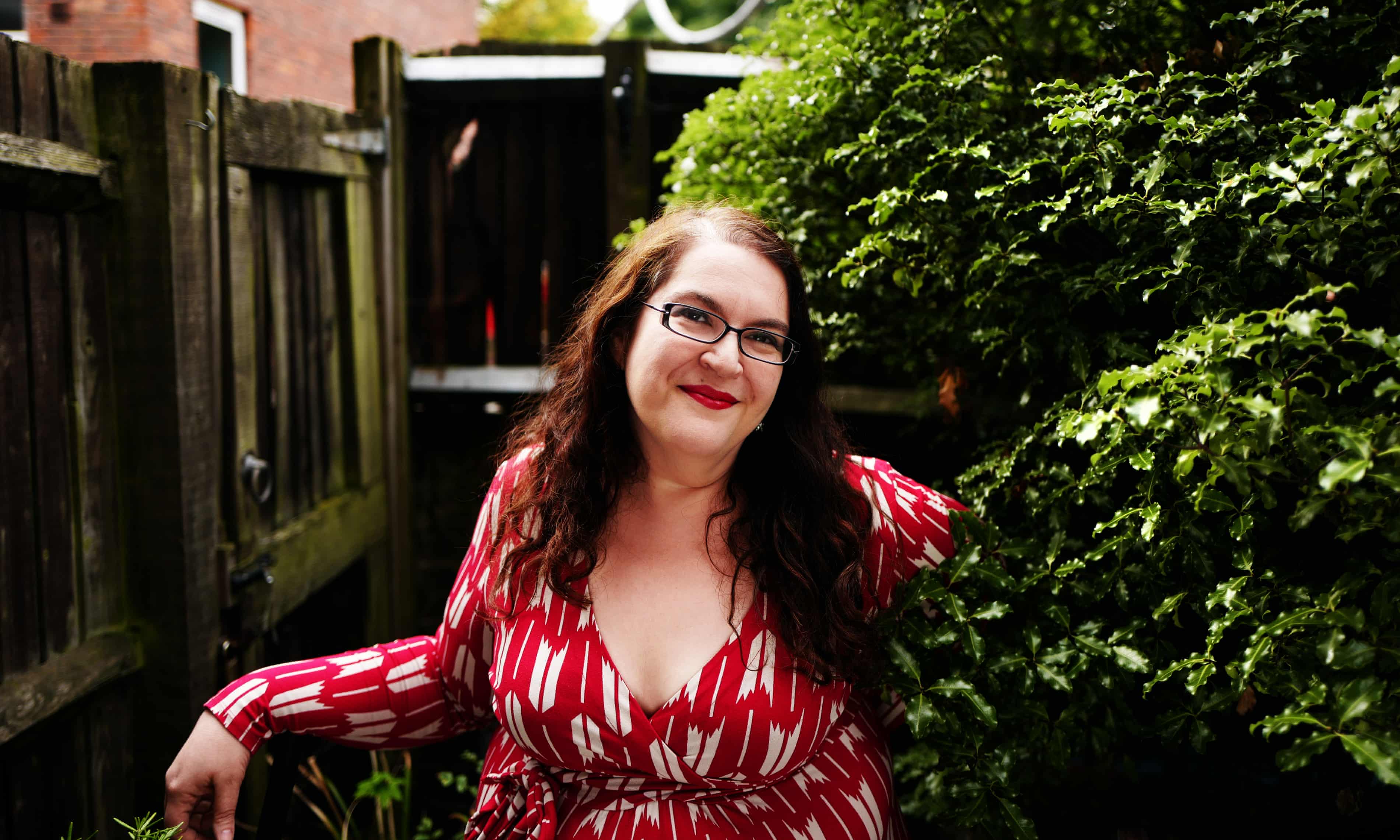
Naomi Alderman – image from The Guardian

The action-adventure-sci-fi shell encasing The Future is a dystopian near-future that takes an if-this-goes-on perspective re the road we are currently traveling toward planetary devastation, global warming, the increasing greedification of the world economy, and concentration of wealth, at the expense of sustainability and human decency. But Alderman has done so much more with it.

The Future has a brain and a heart, to go along with the coursing hormones, and some serious mysteries as well. Did I mention there is a romance in here also? Good luck shelving this thing. You probably will not have much luck putting it down once you start reading. Well, take that advisedly. I did find that it took a while to settle in, as there is a fair bit to get through with introducing all the characters, but once you get going, day-um, you will want to keep on.

While offering a look at survival post everything, Alderman tosses in some fun high tech and BP-raising sequences. And she gives readers’ brains a workout, providing considerable fodder for book club discussions. To bolster the thematic elements, Aldermen provides plenty of connections to classic tales, biblical and other, that offer excellent starting points for lively discussions.

Martha was raised in an apocalypse-concerned cult, led by her father. As an adult she gets involved in on-line exchanges about questions like what might be learned from the experience of a biblical apocalypse survivor, Lot. Alderman was raised as an Orthodox Jew, studying the Torah in the original, so knows her material well. (God was about to firebomb Sodom when Lot’s kindness to a couple of god’s emissaries earned him and his family a get-out-of-hell-free pass.) In addition, she finds relevance in Ayn Rand, The Iliad, The Odyssey, and more.

She brings in a discussion of the enclosure act in the UK, how the stealing of public land by the wealthy has a mirror in the theft of public space of different sorts in the 20th and 21st centuries. But the biggest issue at work here is trust. In fact, Alderman had intended to title the book Trust. But when Herman Diaz’s novel, Trust, won a Pulitzer Prize, she had to find an alternative. Can Zhen trust her new love interest. Can she trust the AI that is supposedly helping her? Can she trust any of the oligarchs? Can she trust people she has known for years on line, but never met in person? This is a core concept, not just on a personal, but on a societal level. Civilizations are built on trust. It is an issue that touches everyone.

The wealthier you are, the less you have to ask people things and the less you ask people for things, the less you have to discover that you can trust and rely on them. Eventually, that erodes your ability to trust. Then, you’re sunk. – from the Electric Literature interview

Consider a concern that is immediate in early 2024. Can American allies, whose alliances have kept the world out of World War III since the end of World War II, trust the US intelligence services with their secrets, when our next president might give, trade, or sell it to our enemies? Can you trust that the person you are communicating with on-line is being honest with you. (As someone who has met people through Match.com, I am particularly aware of that one.) If you are stuck on a survival island, can you trust that the other people there will not do you in, in order to improve their chances of gaining power once things begin to return to some semblance of global livability?

In today’s culture, technology, particularly social media, “encourages us not to really trust each other,” Alderman explains. “The ways that we use to communicate with each other have been monetized in order to make us as angry at and afraid [of one another] as possible.” And while the internet can all too often amplify “absolute hateful stupidity” to feed our distrust of one another, the author continues, “It can also demonstrably, again and again, multiply our knowledge and capacity to understand.” – from the Shondaland interview

Zhen’s is our primary POV through this, although we spend a lot of time with Martha. She is an appealing lead, a person of good intentions, and reasonably pure heart. She is wicked smart, able, and adaptive. It is easy to root for her to make it through. But, noting the second quote at the top of this review, if Love is the mind killer, might it impair her clarity of thought, her maintenance of necessary defenses? Of might it impair that of the person she is love with?

The concern with dark forces is a bit boilerplate. Two of the oligarchs are cardboard villains; another has some edges.
But it is the conceptual bits that give The Future its heft. Oh, and one more thing. Woven throughout the 432 pages of this book is minor crime, Grand Theft Planet. It should come as no surprise that an author who has had great success with her previous novels, and who has spent some years writing video games, would produce a fast-paced, engaging read, replete with dangers, anxieties, fun toys, and wonderful, substantive philosophical sparks. I cannot predict the future any better than 2016 presidential pollsters, but my personal AI suggests that should The Future will find its way to you, you will be glad it did.

Imagining bad futures creates fear and fear creates bad futures. The pulse beats faster, the pressure rises, the voice of instinct drives out reason and education. At a certain point, things become inevitable.

Review posted – 3/8/24

Publication date – 11/7/23

I received an ARE of The Future from Simon & Schuster in return for a fair review, and the password to my super-secret software. Thanks, folks, and thanks to NetGalley for facilitating.

This review is cross-posted on Goodreads Goodreads. Stop by and say Hi!

=======================================EXTRA STUFF

Links to the author’s personal, Instagram, GR, and Twitter pages

Profile – from Simon & Schuster

Naomi Alderman is the bestselling author of The Power, which won the Women’s Prize for Fiction, and was chosen as a book of the year by The New York Times, The Washington Post, the Los Angeles Times, and was recommended as a book of the year by both Barack Obama and Bill Gates. As a novelist, Alderman has been mentored by Margaret Atwood via the Rolex Arts Initiative, she is a Fellow of the Royal Society of Literature, and her work has been translated into more than thirty-five languages. As a video games designer, she was lead writer on the groundbreaking alternate reality game Perplex City, and is cocreator of the award-winning smartphone exercise adventure game Zombies, Run!, which has more than 10 million players. She is professor of creative writing at Bath Spa University. She lives in London.

Interviews
—–Professional Book Nerds – Dystopian Futures with Naomi Alderman – video, well, mostly audio, with no real video – 41:59
—–Toronto Public Library – Naomi Alderman | The Future | Nov 13, 2023 with Vass Bednar – 45:05 – there is a nice bit in here on tech as neither bad nor good, but a tool which can be used for good or evil.
—–Literary Hub – Naomi Alderman on Creating a Fictional Tech Dystopia by Jane Ciabattari
—–Shondaland – Naomi Alderman Is Still Finding Hope in Humankind by Rachel Simon
—–AP- Naomi Alderman novel ‘The Future’ scheduled for next fall by Hillel Italic
—–Electric Literature – Dystopian Future Controlled by Technology by Jacqueline Alnes
—–Independent – How We Met: Naomi Alderman & Margaret Atwood – by Adam Jacques – Atwood mentored Alderman in 2012 – a fun read

Item of Interest from the author
—–BBC Sounds – audio excerpt – 1.0 – The End of Days – 15:47

Items of Interest
—–Tristia by Ovid – Zhen reads this prior to a trip to Canada
—–The Admiralty Islands
—–inert submunition dispenser – a kind of cluster bomb
—–Wiki on the enclosure act

Leave a comment

Filed under Action-Adventure, AI, Cli-Fi, computers, Fiction, Literary Fiction, Mystery, Reviews, Science Fiction, Thriller, Thriller

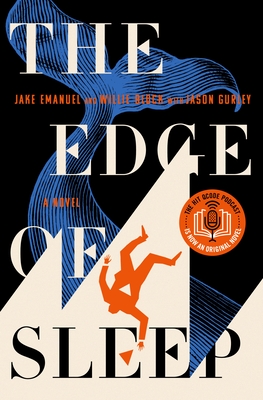
The Edge of Sleep by Jake Emanuel, Willie Block and Jason Hurley

book cover

Here’s what I can say with some certainty. Something is happening. Case in point: WZPE’s AM news show usually ends at 8am. Not today. They’ve basically got the phone lines wide open, and people are calling in by the hundreds. The last caller just sobbed, “They’re dead, they’re dead, they’re dead,” and disconnected.
There are TV and radio stations all over the state that just . . . aren’t on the air at all.
From my window, if I elevate my chair, I usually have a great view of the mile-long gridlock at the intersection of Monaghan and Wolcott. The traffic lights there aren’t even working, but the intersection’s just . . . dead. No cars that I’ve seen.
Usually by now my upstairs neighbor is jazzercising. But the whole building is strangely subdued. I haven’t heard a single other person.
Perhaps it’s my overactive imagination . . . but I really don’t think that’s the case.
If you have any information about what might be happening, I’ll see you in the comments.
—Posted by Eli Broder, 7/4/25 9:12am

Dave Torres is a security guard at Daxalab. He and his co-worker and best friend, Matteo Leon, are having a bad night. After their shift they head, quite late, to a party only to find the guests mostly gone already. Of course, some are more gone than others. Like the one on the couch whom they had thought was passed out. Turns out he had passed on. Dave goes looking for their host only to find him in bed, in no better shape than the couch stiff. What is going on? And why are the roads so empty?

description
Willie Block and Jake Emanuel – image from Deadline.com

Off to the hospital they head, to see that the bodies are handled, or, out of the frying pan…The body count there is impressive, and growing. They meet a tough nurse, Linda, who is doing her best to keep it all together, but things are clearly falling apart. Dave gets that sleep is the trigger and desperately calls his ex to warn her. Katie finally joins them.

A large room, lined with storage bins and shelves, has been transformed into a morgue. Shoved along the west wall are gurneys bearing zippered white bags. Human-sized bags, arranged haphazardly, as though they were rolled into the room and released to drift where they may. Which is exactly what happens next: An orderly in a white smock bangs into the room through an adjacent door, back first, then drags a fresh gurney into the room, pivots, and releases it, sending it spinning across the floor. It thumps into another gurney, and both roll in separate directions. The orderly, not pausing to admire his handiwork, disappears through the door again.

So we have a small group that sets out to decode the situation. There is a separate pair. Eli Broder (of the opening quote) is confined to a wheel chair. Boston is quiet, too quiet. His online messages begging for information on what is happening receive scant response. Millie is a narcoleptic coder, in the process of being fired from her job, who finally responds. She goes to him and they face the situation together.

description
Podcast episode 3 – the Black Triangle – image from Markiplier Wiki

These are our two primary threads. Third is a lookback for Dave to events from this childhood. He has had sleep issues all his life, for which he has received some serious medical intervention. His miseries include nightmares about an elephant and a whale since he was a kid. When his dreams slip into the waking world, his life becomes seriously troubled.

They all figure out in short order that going to sleep is a bad idea. To sleep, perchance to dream? Nah. More like to sleep, perchance to die. Each group goes through challenges in progressing to understanding, and getting, geographically, from where they are to where they want to be. Ergo, road trips. During these, we get more insight into the characters. As they begin to glean some truths behind the sleep-bomb that appears to be wiping out humanity, it becomes harder and harder to function, even to think, as their fatigue become profound. How long can the primaries remain awake? Where can they find answers to the why and how of it all? Even if they find answers will they retain consciousness enough to actually do anything about it?

description
Podcast episode 6 – The Dream – image from Markiplier Wiki

The story is set, primarily, in Santa Mira, California. No, it is not a real place, but it may, still, sound familiar. That is because the fictional place has been used in many films.

Santa Mira felt like a fun nod to Invasion Of The Body Snatchers, a huge influence on the show. And we think it’s a cool tradition that many writers and creators have used the same town. – from Paul Semel interview

The 1956 version of Invasion was set in Santa Mira, as was E.T., a Dean Koontz novel, Phantoms, and several Sharknado sequels.

Edge all began with an eight-episode podcast, the first season airing in 2019. I have listened to some of the podcast, although not all of it, reluctant to spoil the read. There is a link to that in EXTRA STUFF. It was adapted for TV, filmed in Vancouver in 2021. I was unable to find definitive intel on where that might be available. A second podcast season is slated for release this year (2023). Emanuel and Block, authors of the podcast, already rewrote the podcast for the TV series, and with this novel, it is yet another version. They tried to keep it fresh with each rewrite. They even brought in a fresh set of eyes in Jason Gurley to help out. To keep themselves sane, they made changes with each rewrite, so you can expect that this book is not slavishly attached to the original podcast.

After working on The Edge Of Sleep for so long, and in so many different iterations, we needed a fresh set of eyes. Jason had some really creative and cool ideas to expand the story. – from the Paul Semel interview

The authors include a considerable list of one-off characters who struggle with fatigue, and succumb. Were they added for texture, or to establish them for future episodes?

description
Podcast episode 7 – The Pit – image from Markiplier Wiki

The main characters had at least a bit of depth to them, but only Dave was really developed enough to hold much interest. On the other hand, if one looks at this as the first part of a longer series, it is usual to introduce the characters and plan on developing them later.

There are elements that are creative and intriguing, having to do with dreaming, sleep disorders, and things too spoilerish to note here. On the other hand, there are some significant downsides. First is that the ending, while offering some resolutions, feels like too much of a cliffhanger. Explanations were interesting but far too sketchy. If you are interested in continuing on with this series, by all means, dive in. But if you are looking at The Edge of Sleep as a stand-alone read, you are likely to be very disappointed. The characters had a bit of depth to them, but only Dave was really developed enough to hold much interest. On the other hand, if one looks at this as the first part of a longer series, which it certainly is, it is usual to introduce the characters first and develop them later on. While it had conceptual bits that were satisfying, my bottom line on The Edge of Sleep was that it was a bit of a snooze.

“Mama,” Davy, the child, moans.
“This is your fault,” the beast says. Its trunk searches out Davy’s face, presses slick against his cheek, exhales hot, sour breath into his hair. “I warned you, didn’t I.”
Davy looks down at his pajama shirt. Something beneath bulges. Utter panic consumes him as he clutches at his shirt, trying to hold it away from his skin. He looks wildly at the thing above him.
“I can’t stop it now,” the elephant grunts. Its mouth unhinges, and a thick river of mustard-colored bile streams onto Dave’s legs. “I wouldn’t if I could. You aren’t a good boy.”
Davy, blinded by pain, cups his hands over his chest in time to catch the small elephant that bursts from his breastbone. Yellow foam rises in Dave’s throat; he can’t clear it to breathe.
The small elephant stretches in Davy’s little palms, glistening and damp. Davy’s vision blurs; he’s suddenly terribly sleepy, and his hands fall limp.

Review posted – 07/28/23

Publication date – 06/23/23

I received an ARE of The Edge of Sleep from St. Martin’s Press in return for a fair review. I was able to get some shut-eye between reading sessions. Thanks, folks, and thanks to NetGalley for facilitating.

This review is cross-posted on Goodreads. Stop by and say Hi!

=======================================EXTRA STUFF

Jake Emanuel’s Instagram, and Twitter pages

Willie Block’s FB, Instagram, and Twitter pages

Interviews
—–PaulSemel.com – Exclusive Interview: “The Edge Of Sleep” Co-Authors Willie Block & Jake Emanuel
—–Red Cow Entertainment – Discount Film School – Jake Emanuel and Willie Block, on Screenwriting with Frankie Frain

Item of Interest
—–Season 1 of the show, entire

Leave a comment

Filed under Fantasy, Fiction, Horror, Mystery, Sci-fi, Thriller

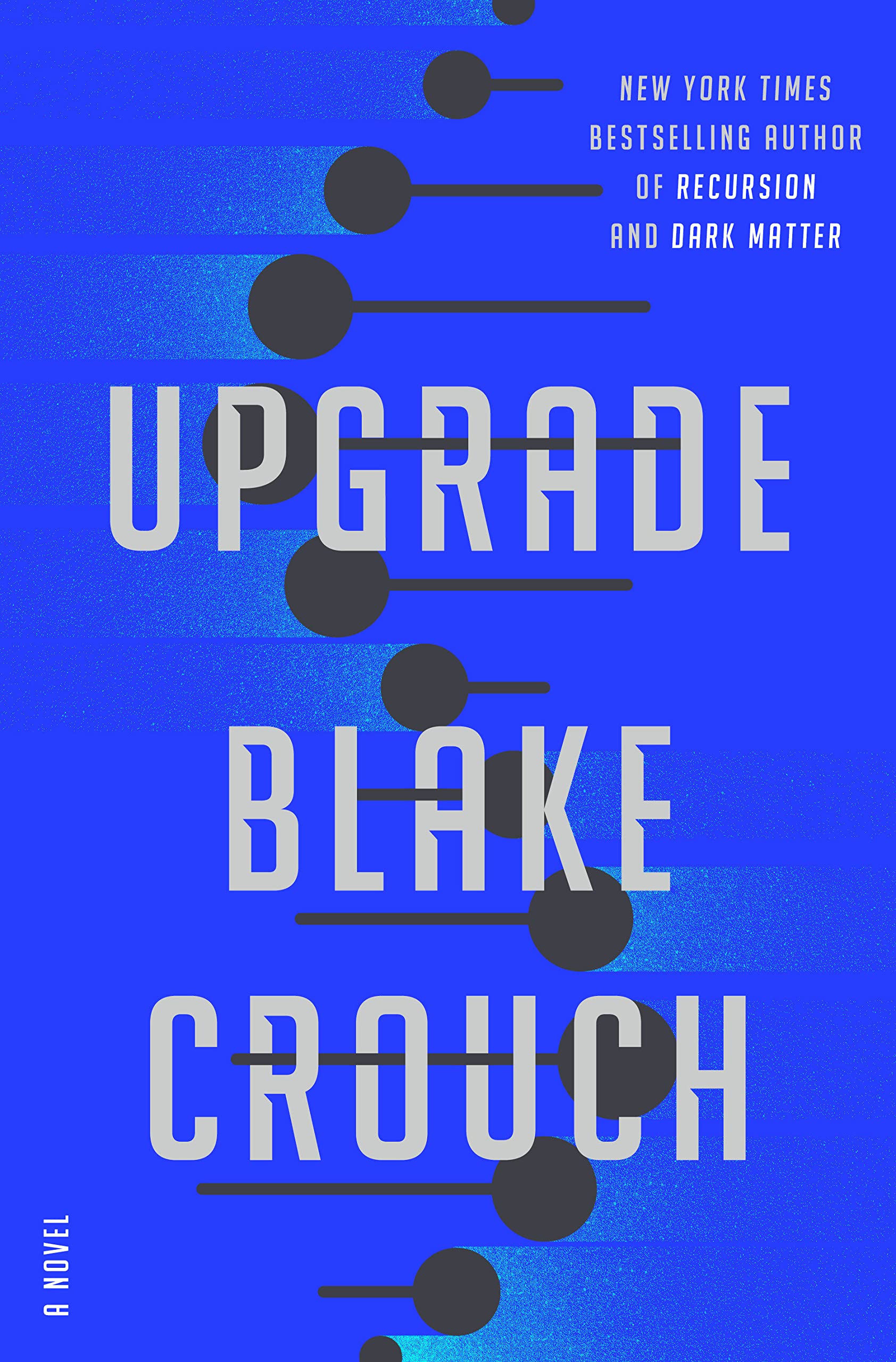
Upgrade by Blake Crouch

book cover

My mother had tried to edit a few rice paddies and ended up killing two hundred million people. What havoc could she wreak—intentionally or through unintended consequences—by attempting to change something as fundamental as how Homo sapiens think?

We were a bunch of primates who had gotten together and, against all odds, built a wondrous civilization. But paradoxically—tragically—our creation’s complexity had now far outstripped our brains’ ability to manage it.

OK, so if you had the chance to upgrade yourself, would you do it? I know I would. There are so many things about me that could be better. But, as we all know from the constant barrage of upgrades offered by the makers of every bloody piece of software, some have downsides. Such as new, bloated code slowing down your app. A feature you liked has been removed. You now have to endure ads. Are the benefits of greater value than the costs? Sometimes, but usually, we won’t actually know until the new version is installed, which can take anywhere from minutes to “really, this fu#%ing thing is still processing?” Sometimes, you have no choice, the app updates whether you want it to or not.

description
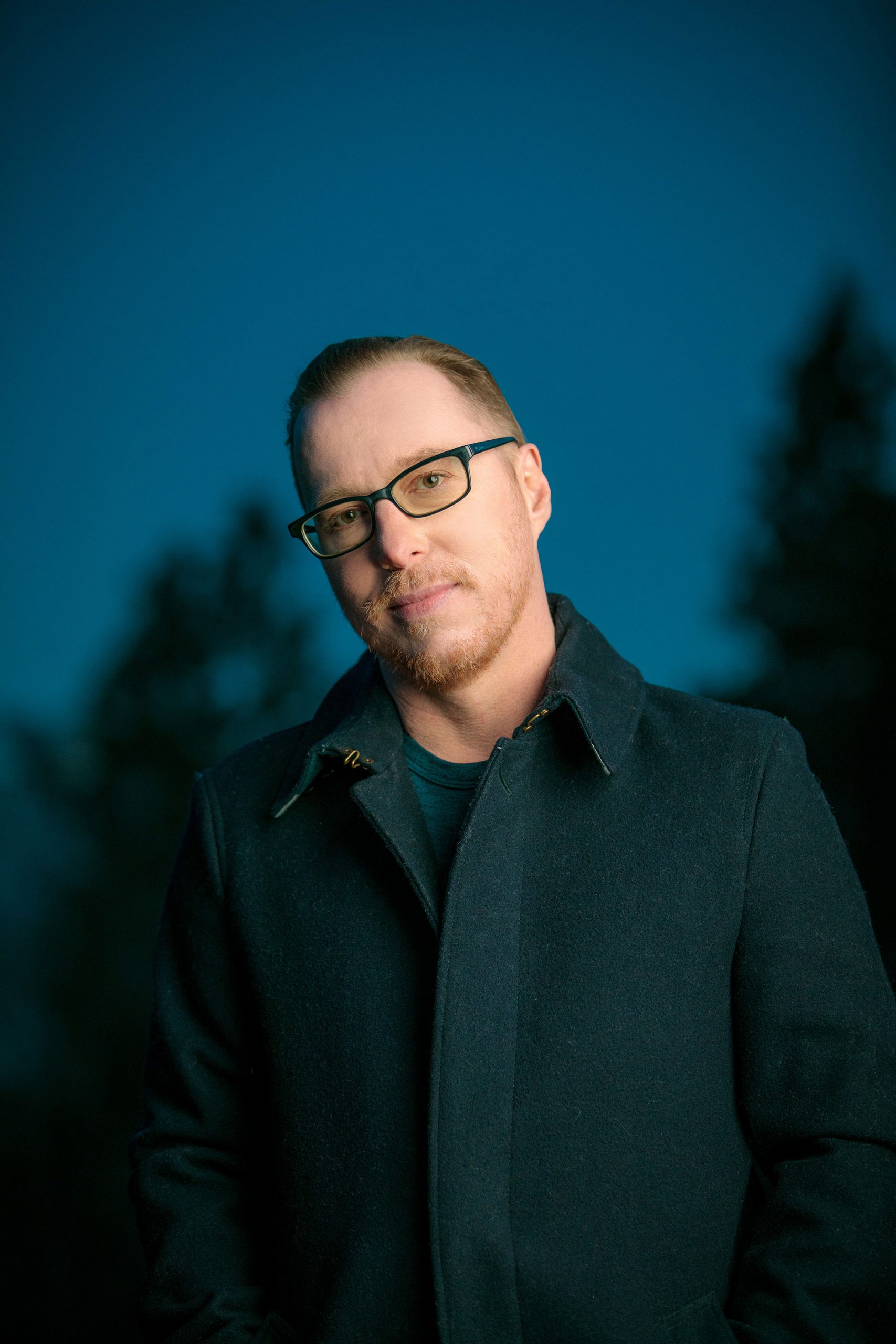
Blake Crouch – image from his site

I suppose agent Logan Ramsay could tell us something about that last case. On a raid, he walks into a planned trap, which goes boom, and Ramsay is infused with version 1.0 of something, which gets busy rewriting his internal code to produce version 2.0 of Logan. There are upsides and downsides. This is no steroidal enhancement, trading zits and rage for increased muscle mass. A nifty bit of tech called a gene driver, (can’t help but see a tiny Uber with double-helix treads) is busy re-writing his actual DNA. (For a new you, no really, a totally, completely new you, call…1 800 FIX-THIS. Of course, we have a la carte if there are only some minor changes you would like. Operators are standing by.)

Logan already had a complicated life. Mom was a geneticist trying to improve crop yields in China when there was a slight bit of collateral damage. Her altered-DNA material went where it was not supposed to. Oopsy. It was known as The Great Starvation. As noted in the quote at top, over two hundred million dead. Junior, who had been working with Mom, dead in the ensuing mess, wound up taking undeserved legal heat in her place, spent time in prison, but was sprung three years in. Now he works as an agent for the federal GPA, or Gene Protection Agency, (too late for Wilder) fiddling with genetic code having become a serious, felonious no-no, and Junior wanting to make amends for his family’s role in the global debacle. He is a geneticist like Mom, now dedicated to seeing that it never happens again.

So, what happens in every single film and book in which our hero is altered by some weird outside force? They are dragged into enforced isolation for relentless study. Or base their subsequent actions (FLEE!!!) on the presumption that this is what the powers that be have planned for them.

Of course among the changes that have been implanted into Logan is a significant increase in IQ. His perceptions have been enhanced as well, giving him a wider bandwidth for incoming sensory information and a much improved ability to process that new flow.

This is both a chase and a pursuit story, as Logan must stay out of the clutches of the government, while searching for a dangerous geneticist, trying to stave off another potential global disaster. His personal upgrades make both running and chasing less of a challenge for him than it might be for an unaugmented person.

Crouch offers a steady, if light, sprinkling of tech changes, letting us know we are in the future, if not necessarily the far distant future. Some seem more distant than others. Hyperloop, for example, is a widespread viable transportation mode. There is a mile-high building in Las Vegas.

The book is set slightly in the future, because I wanted to accelerate where some of the climate change and more in-the-weeds technology was heading, but it’s a mirror of where we might be five minutes from now. – Time interview

Some of the alignments seemed out of kilter. The story takes place in the 2060s. But delivery drones and driverless taxis hardly seem much of an advance for forty years. Ditto electric cars with greater range. Mention is made of a Google Roadster. Google producing its own car has been a project in the works since 2009. So, maybe only five minutes into the future for a lot of the tech Crouch employs. The five-minutes vs forty-years lookahead was jarringly inconsistent at times, which pulled me out of the story.

He also reminds us, with a steady stream of examples, that the underlying issue is humans having screwed up the Earth to the point where the continued viability of Homo Sap is called into question. Lower Manhattan and most of Miami are under water. Glacier National Park no longer features glaciers. Many wildlife species are only memories. It is raining in the Rockies instead of snowing. There are now seven hurricane categories.

There are some things about this book that I would change. There is an escape scene in which I found the means of egress a bit far-fetched, given the year in which it takes place. Surely there is better tech available? I kept wondering who got Logan sprung from prison. If it was revealed, I missed it. I wondered, during a flight from hostile forces, at how little pursuit of the runner there was by the pursuing forces. Really? That easy to get away? I don’t think so. A couple of lost family members merited a bit more attention. And there is a decided absence of humor.

Expected questions are raised. Things like what is it that makes us human? There are those who believe that enhancing, upgrading humanity’s intelligence-related genes to stave off the potential extinction of our species is the only solution, regardless of what collateral damage that might entail. If we are smarter, goes the theory, we will see that what we are doing is madness, and find more sustainable ways of living. While that notion is appealing, it seems pretty glaring that an intelligence boost alone will not cut it. I mean, so you make people smarter. What could possibly go wrong? Logan addresses this:

What if you create a bunch of people who are just drastically better at what they already were. Soldiers. Criminals. Politicians. Capitalists?

The notion has been done a fair bit. Forbidden Planet is the classic of this sort. That most of the genetic manipulators in this tale ignore this suggests that maybe they were not so smart as they thought they were, enhanced or not.

Might it enhance one’s appreciation of Upgrade if one had read his prior sci-fi thrillers? No idea. Have not read them. Cannot say. My unaugmented research capacities tell me, though, that this is a stand-alone, so at least there is no direct story or character connection to his prior work.

Upgrade is a fast-paced thriller that keeps the action charging ahead. I often found myself continuing to read beyond where I had planned to stop. Logan is a decent guy who struggles with moral decisions in a very believable way. There are reasons to relate to him as an everyman, regardless of who his mother may have been. Crouch offers character depth enough for this genre. The tech never gets extreme, a beautiful thing. The concerns raised are very serious. Hopefully, it will boost, if not your muscle mass and speed in the forty, your interest level in the world of genetic manipulation, which, albeit with the best of intentions, could wind up degrading us all.

TIME: You did a ton of research on gene editing for Upgrade. Was there anything you learned that stood out?
Blake Crouch: The big thing I came away with is how afraid scientists are of this research and this technology. I didn’t realize how unnerved everyone was about both the optimistic potential of this technology—but also the pitfalls that await us.

Review posted – August 5, 2022

Publication date – July 19, 2022

I received an ARE of Upgrade from Penguin Random House in return for a fair review, and not trying to change too much. Thanks, KQ, and thanks to NetGalley for facilitating.

This review has been cross-posted on GoodReads

=======================================EXTRA STUFF

Links to the author’s personal, FB, and Twitter pages

From the book
BLAKE CROUCH is a bestselling novelist and screenwriter. His novels include Upgrade, Recursion, Dark Matter, and the Wayward Pines trilogy, which was adapted into a television series for FOX. Crouch also co-created the TNT show Good Behavior, based on his Letty Dobesh novellas. He lives in Colorado.

Interviews
—–Time – Blake Crouch No Longer Believes in Science Fiction – by Anabel Gutterman
—–Paulsemel.com – Exclusive Interview: “Upgrade” Author Blake Crouch

Songs/Music
—–“Träumerei,” from Schumann’s Scenes from Childhood – Noted in chapter 6 as Logan’s favorite tune – if he says so
—–Bowie – Changes – a live version from 1999 – just because
—– Yamer Yapchulay – playing a violin cover of Tonight from West Side Story – one was played in Chapter 15
—–Kyla – I Am Changing – you can thank me later

Items of Interest
—–Carson National Forest – a hideout
—–Quantum annealing computing – mentioned in chapter 7
—–LifeCode is mentioned in chapter 9

1 Comment

Filed under Cli-Fi, Fiction, Sci-fi, Science Fiction, Thriller

Meet Me in Another Life by Catriona Silvey

book cover

Santi steps closer as she holds the light up to the gears. ‘Think we can fix it?’
Thora puts her weight to one of the gears and tries to shove it backwards. ‘No,’ she says, after a few seconds. ‘I’m afraid time has stopped.’
Santi tries to push the gear in the other direction. Giving up, he steps back. ‘I guess it has.’ He smiles at her sideways in the flickering light. ‘Welcome to forever.’
It’s a pretentious thing to say. But Thora has to admit that’s exactly how this feels: a moment taken out of time, with no beginning or end.

Imagine you are looking at the screen in a large cinema. There are blips in the image, fleeting, but present. As the film moves on to the next scene, there are more blips, holes in the image, with another image, another, pentimento film, going on behind the up-front film. Another scene on the big screen, with more blip, until the characters in the front film, look at each other and say, “did you see that?” As they slowly become more and more aware that there is something going on in the film behind them, they turn and watch, and their behavior in the front film changes, to take account of the new knowledge.

description
Catriona Silvey – image from Harper Voyager – photo credit – Hazel Lee

That is what reading Meet Me in Another Life is like. Thora and Santi (Santiago) find themselves in Cologne. (neither is a native) They meet cute, at first, anyway. Until, oopsy, soon after they meet, tragedy. It takes only a short time to know that these two have a special bond, one that will persist through life after life, as one or the other is gone by the end of each of the eighteen chapters, to be reunited in the next. Their ages vary in each iteration. In a few they are the same age. In some, one or the other is older, a little, more than a little, or maybe a lot. Their positions of authority vary as well, parent/child, teacher/student, cop/trainee, patient/caretaker, if there is any such hierarchical relationship between them. They have varying personal relationships, with each other (bf/gf, married, prospects), or he with Heloise, she with Jules. But their passion for learning, for exploration, for science binds them together.

It is clear to us early on that there is a mystery to be solved. Why the recurring lives? Why the disparate ages, roles, and relationships? After a time, it becomes clear to Thora and Santi, too. They begin to realize that they have known each other and remember things from their former lives. Also, there are some consistencies, some places and characters that recur, unchanged.

Recurring elements (Santi’s cat, a tattoo on Thora’s wrist) first gain meaning through repetition, and then become touchstones, triggering inferences for the reader about how the characters have changed and where they might be headed. Once Santi and Thora realize they are trapped in a loop, they (along with the reader) must piece together the clues scattered through the narrative to figure out what might really be going on. – from the LitHub article

The notion that sparked the book is very down to earth. But these are two characters who are reaching for the stars, and Silvey’s solution was very fantasy/sci-fi-ish.

…the question was: can two people ever know each other completely? That led me to the idea of characters who meet again and again in different versions of their lives…I think of the book as an argument: Thora and Santi have very different attitudes to their situation, and that leads them to respond to it in different ways. – from the Deborah Kalb interview

There are obvious similarities to other works that deal in re-iteration. Kate Atkinson’s Life After Life (when Thora refers to herself as the Fox to Santi’s Wolf, is that a nod to that book?) uses the method in consideration of England in the first half or the 20th Century, and looking at the possible branches life might take were one to choose A instead of B, or B instead of C, giving the available choices a go until a desirable path forward is found. Thora, in particular, and Santi try this out, but it is not enough to solve the puzzle. Cloud Atlas is another novel offering common characters in diverse times (and places. This one is all in Cologne). Groundhog Day is the most famous cinematic rom-com loop and Andy Samberg’s Palm Springs gave it a similar go in 2020. 50 First Dates anyone? There is a clear romantic element in this one, too, as Thora and Santi are souls who are clearly meant to be together, (Yeah, I know, some might see them as merely tethered. But my take is that there is greater depth to their connection.) despite the fact that Thora is bisexual and has major hots for a woman, Jules, in many of the stories. Santi and Thora are a couple in others.

Their divergent perspectives offer a fascinating core to their discussions. He is religious, believes in God, an afterlife, and that there is a reason for being, maybe a mission even. Life should make sense. He thinks if he can figure out what God wants of him they can step outside their seemingly endless repetitions. She is an atheist and is having none of that. They talk about faith, determinism, eternity, and plenty more that raises this above the level of a simple entertainment.

Santi has always trusted in fate: that there is one way thing have to go. He isn’t literal enough to believe that the future is written in the stars—he’s doing a PhD in astronomy, after all—but his memories of other skies still unsettle him. The idea that there are other possible configurations for the universe, that God could be running them all in parallel, cuts against everything he believes. The only way he can reconcile what he remembers is to think that it’s a message, one he’s not yet ready to understand. He watches the world like a detective, like a poet, waiting for the meaning to come clear.

Santi’s faith seems more in fate than in the divine, given his inability to allow for a deity capable of managing multiple universes. But the faith he has, of whatever sort, is put to the test, repeatedly.

They struggle to know themselves, as much as they try to understand each other.

”This’ll never work, you know,” she says conversationally.
Santi frowns at her. “Who says?”
“All my exes. Most recently, my ex-girlfriend Jules. She told me when we broke up what my problem is.”
“What’s your problem?”
“I always want somewhere else. I’m never just—content to be where I am.”
He shrugs. “Neither am I.”
She gives him a look. ”What do you mean? You’re, like, Mr Serenity.”
A smile cracks his face. “That may be what it looks like on the outside. But inside, I’m always searching…We’re the same that way.”

As in any good mystery, there are plenty of clues sprinkled throughout the eighteen stories. Making sense of them is the challenge for us readers as much as it is for Thora and Santi. I was only partly successful at sussing out what was going on, even with keeping an excel sheet to track differences and commonalities among the stories. (Don’t judge me!) This is a good thing. Of course, you may be a lot smarter than me and figure it all out early on. That would be too bad. Not knowing, trying to figure it out from the clues provided, was part of the fun.

None of this matters if we do not care about our two leads. Not to worry. While both characters have qualities that raise them well above average, they often find themselves in everyman (and woman) situations and pedestrian lives. Their clear bond with each other is almost a third lead, so strongly does this come across. You will definitely be rooting for them to figure out how to get off what seems an eternal hamster wheel. The novel is as engaging and enjoyable as it is intellectually stimulating.

My only gripe, and it is minor, is that there seemed a bit too much exposition. There is nothing wrong with exposition, but the telling/showing seesaw felt a bit too heavy on one end at times.

Are Thora and Santi two star-crossed lovers or is their connection made in heaven? Only the stars (and the author) know for sure. Allow yourself to be delighted. There is plenty here that can generate that feeling. You may forget about this review, this book, for a while, but I am fairly certain the book, preferably, will turn up again in your life. Try your best. It will be worth your time. Remember.

If God’s test were easy, it would be meaningless.

Review posted – June 11, 2021

Publication date – April 27, 2021

If you are looking for a SUMMER BOOK, this is my rec – no-holds-barred, #1 fab beach read, or anywhere read.

The film rights have been optioned by Atlas Entertainment and Pilot Wave, with Gal Gadot to produce and star. I spotted much news coverage of this that was, IMHO, wrong-headed, in portraying the book as an LGBTQ sci-fi novel. Thora is indeed bi-sexual, with more story time with female than male partners, but that is sooooo not what this book is about. We do know that once Hollywood gets its claws on a novel, the end product can diverge dramatically (or even melodramatically) from the source material. This initial coverage is not encouraging. But then, many film-rights options are never exercised. So we, who favor hewing as closely as possible to written source material, are a long way from having to fret over this.

This review has been cross-posted on GoodReads

=======================================EXTRA STUFF

Links to the author’s personal, GR, and Twitter pages, and her academic site (Silvey has a PhD in language evolution, and has published numerous papers)

Interviews
—–Book Q&As with Deborah Kalb
—–The Royal Institution – Formatted Q/A – thin, but fun

Q/A

I asked Silvey a question on the Ask The Author part of her GR page, to which she offered a response in very short order.

Q – How did your research on the evolution of language manifest in MMiAL?

A – That’s an interesting question! My honest answer is “not really”… I did realise after writing the book that there is a linguistically informed way of thinking about time loops, and why they might be appealing to a reader – I wrote about that in an essay on LitHub: https://lithub.com/on-the-counterintu… But if my experience as a researcher influenced the book at all during the writing, it might be in the way Thora and Santi’s situation mirrors the strange, lonely-together rootlessness of academics – people who are usually foreigners in the place they’re living, brought together by shared passions, using English as a lingua franca but often talking past each other.

Songs/Music
—–Silvey’s Song list for Thora
—– Silvey’s Song list for Santi
—–What Silvey listened to on repeat while working on the book
———-Tom Rosenthal and dodie – Years Years Bears
———-The Mountain Goats – Love Love Love
———-Michael Stipe & Big Red Machine – No Time For Love Like Now

Items of Interest from the author
—–Silvey’s site – Excerpt – Chapter 1 – Welcome To Forever
—–Crimereads – Excerpt – Chapter 8 – 115 – We Are Here
—–Lithub – On the Counterintuitive Appeal of the Literary Time Loop – in this article, linked in Silvey’s Q/A response above, she explains very clearly how time loop narratives work in a literary framework. This is MUST READ material!

Items of Interest
—–Smithsonian – Félicette, the First Cat in Space, Finally Gets a Memorial – referenced in chapter 3, et al
—–Contact – referenced in chapter 7
—–I was intending to provide a link here to the Odysseum in Cologne, a science museum of note in the book, but their site is currently unavailable

1 Comment

Filed under Fantasy, Fiction, Sci-fi, Science Fiction, Science Fiction