Tag Archives: paranormal

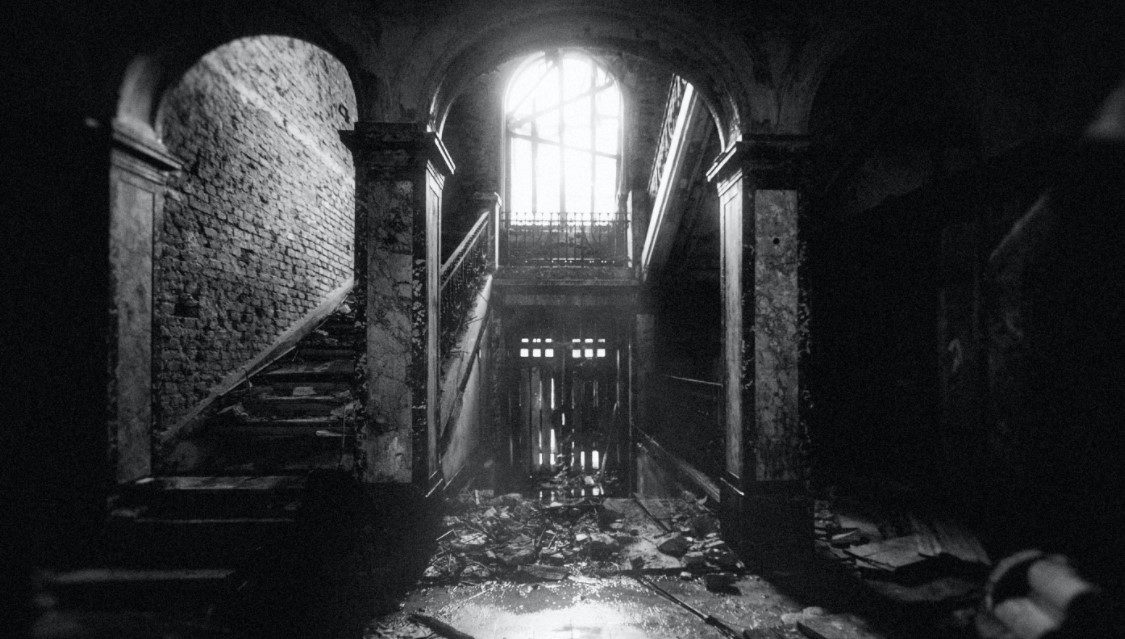
The Haunting of Moscow House by Olesya Salnikova Gilmore

book cover

Irina calls her fanciful whenever she mentions ghosts. Still, something isn’t right about the house, hasn’t been right since Uncle Pasha was shot dead there three years before, and Grand-père Sergei succumbed to his illness mere days after.
Though she’s never seen one, Lili has believed in ghosts for quite a long time.
Do you think the dead can rise? Her voice, from a long-forgotten memory.
Of course, Nicky had answered, as if it were the most natural thing in the world.

…with each death, the spirits are more corporeal and alive. And the family is in greater danger.

It is 1921, and the suffering is not yet done. World War I, then the ongoing civil war, now famine. Bolsheviks have taken charge. They use the Cheka to enforce the new norms, inflict the governing biases, and relentlessly add to the general misery. The displaced aristocracy struggles to get by, well, those who were not summarily shot.

description
Olesya Salnikova Gilmore – Image from PRH – credit Nicola Levine Photography

To the new Soviet republic, the Bolsheviks, and the Cheka secret police, they are still countesses Irina and Liliya Goliteva, the people’s class enemy as descendants of one of the greatest and most ancient aristocratic clans of an imperial Russia dead and buried. Like most of their family. But unlike many former people, Irina’s family didn’t flee Russia. They stayed in hope of a return to normalcy. Now it is too late. Even if they could obtain papers, how could a household of women and children brave the danger of travel and exile?

Running out of household valuables to sell, the sisters take jobs with the American Relief Administration (ARA). The ARA is there to provide aid, food in particular. The sisters are managing the challenges, but there is something else. It appears that there are strange, spectral things going on in their home, the once-grand Moscow House. There are sounds, scents, footsteps, the sorts of things one can expect in a gothic novel.

So much of the novel is inspired by some of my favorite gothic stories, particularly by the Russian/Slavic gothic genre and the Ukrainian author who arguably founded it—Nikolai Gogol. – from the Afterward

Gogol and other folk sources are given plenty of recognition in the pages, allowing one the opportunity to do some digging and appreciate the inspirations.

We follow Irina (28) and her sister, Lili (18), as they try to survive through this trying period. Chapters alternate, more or less, between the two. The gothic elements build, from a few inklings to full-blown. It is not just one or two spectres turning up, but a whole host of late family members. The house is commandeered by the government, and the actual family is relegated to the attic. That does not work out well for the occupiers, as one then another is found dead. The work of one of the living inhabitants or ghostly revenge?

There are certainly some creepy bits, a norm for the genre, a few jump-cut scenes, and a spooky soothsayer. But is it scary? Mostly not, for me, (a particularly high bar) although there were some welcome surprises. There is one particular sort of ghost from Russian lore that was a new one on me. A creepy doll offers a tingle or two. That they grow in corporeality with each new death offered a welcome bit of unease. After a while, though, one gets used to the spirits, and in doing so their impact is reduced. Yeah, we’ve got a haunted house. So? The sisters keep coming and going as if it were infested with a more usual sort of pest.

Both become involved in romances, one with a Yank, the other with a childhood sweetheart. This is lovely, particularly in offering the possibility of positive outcomes for the sibs. Of course, it also adds to the ongoing tension between staying to preserve the family history and line, and fighting the good fight, or leaving to preserve their lives. How many people today are faced with comparable choices?

In fairy tales, paupers became princesses, not the other way around. But Soviet Russia is a warped Wonderland, where all is topsy-turvy and not what it should be.

One might, I expect, consider a take in which the Cheka taking charge in Moscow is a lot like the spectres taking over the Moscow House. It does cause one to recall that the Introduction of The Communist Manifesto begins, “A spectre is haunting Europe—the spectre of communism.” Certainly those spooks have landed in Russia and, through bloodshed, are gaining in strength. I have no idea if this was at all on Gilmore’s mind. But maybe. Spectres within and spectres without? Maybe a bit of dialectical materialism (or dialectical immaterialism?) for good measure?

Overall. I enjoyed The Haunting of Moscow House, particularly for the portrait of the time (The ARA was a real non-profit), the depiction of the desperation among Muscovites, and exposure to some unfamiliar gothic Slavic writing and lore. The sisters are engaging. The tension is palpable, and the spook infestation is fun.

I suppose one cannot help but compare this to Gilmore’s freshman offering, The Witch and the Tsar. That one was less reality based, more fantastical, and a bit more fun. But this one is also quite good, rich with extras both historical and literary.

Irina is crossing into the next room when she feels a prickle of cold on her arm. A draft of air. But the damask curtains are sealed tight. No, it is as if someone has moved past her. She turns sharply, as fearful as the other morning. Odd. She has never been afraid in the house. She doesn’t have Lili’s active imagination. Nor is she given over to delusions. It is only the howl and tear of the wind, the rattle of the windows in their casements, the faint give of a latch. With all this noise, she almost doesn’t hear it.
The creak of parquet, somewhere near. And again, unmistakable now. Creak. Creeeaak.
Footsteps. Small, like a child’s.
Irina backs up with wide eyes—when there is a deep growl. Then an earsplitting screech, and a dark shape hurtles across her path. A glint of red, as if red eyes have snapped to hers. The next second, scuffling and the thumping of bare feet, then nothing.
What was that? Some animal, trapped in the house?
That’s when the air implodes all around her.

Review posted – 12/20/24

Publication date – 9/3/24

I received an ARE of The Haunting of Moscow House from Berkley in return for a fair review. Thanks, folks, (Does it feel unnaturally cold to you here?) and thanks to NetGalley for facilitating.

This review is cross-posted on Goodreads. Stop by and say Hi!

=======================================EXTRA STUFF

Links to Gilmore’s personal, FB, Instagram, and Twitter pages

Profile – from her site
Olesya Salnikova Gilmore is the author of The Witch and the Tsar and The Haunting of Moscow House. Originally from Moscow, she was raised in the US and graduated from Pepperdine University with a BA in English/political science, and from Northwestern School of Law with a JD. She practiced litigation at a large law firm for several years before pursuing her dream of becoming an author. Now she is happiest writing speculative historical fiction inspired by Eastern European history and folklore. Her work has appeared in LitHub, Tor.com, CrimeReads, Writer’s Digest, Historical Novels Review, Bookish, Washington Independent Review of Books, among others. She lives in a wooded, lakeside suburb of Chicago with her husband and daughter.

Interviews
—–JeanBookNerd – Olesya Salnikova Gilmore Interview – The Haunting of Moscow House
—–Turn the Page – Episode 314E: Olesya Salnikova Gilmore on THE HAUNTING OF MOSCOW HOUSE – audio – 24:17
—–How Do You Write – Ep. 358: POV Hack: Using Method Acting with Olesya Salnikova Gilmore video – 31:09 – with Rachel Herron (from 5:36) – mostly about her prior novel, but offers a nice sense of the author, her process, how she uses method acting and her lawyerly background

My review of Gilmore’s prior book
—–2022 – The Witch and the Tsar

Items of Interest from the author
—–Crimereads – GOTHIC FICTION WITH A TWIST
—–Writer’s Digest – Finding Magic at the Intersection of Reality and Fantasy in Fiction
—–Reactor – Five Books about Haunted Houses that Crumble

Items of Interest
—–Carol’s Notebook – The Shroud – a Russian fairy tale referenced in Chapter 3
—–Story Telling Institute – Vasilia the Beautiful – a Russian fairy tale referenced in Chapter 11

Leave a comment

Filed under Fantasy, Fiction, Historical Fiction, Literary Fiction

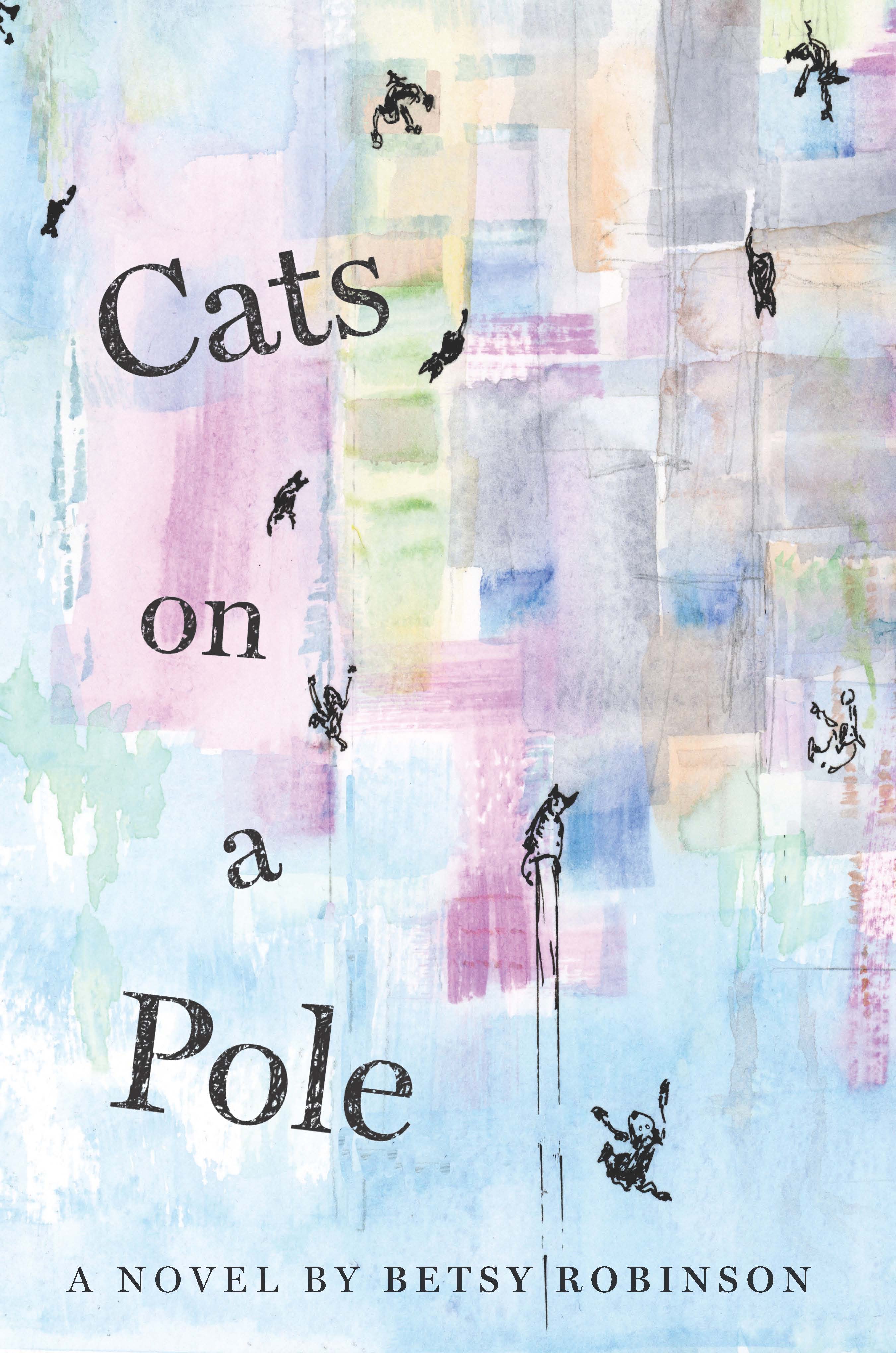
Cats on a Pole by Betsy Robinson

book cover

Harmony thought about cats as she rolled out of bed and staggered to the bathroom. Her favorite cat was the one that used to get stuck on top of a telephone pole in front of the house where she grew up. At least once a month in the warm weather, she’d hear the neighbor kids yelling, “Cat’s on a pole!” as they gathered around to taunt the poor thing.
Harmony would watch the scene from her kitchen window, and a couple of times she tried to thought-talk the cat down. “Are you out of your mind?” the cat would answer. “They’ll kill me.”

When he was forty-three, he met Judy. By then, construction work had taken second seat to massage therapy, where he discovered he had a gift.
He didn’t understand how it worked; he just knew that when he touched people, his hands grew hot, his heart exploded, the room filled with colors, and sometimes helpers in subtle bodies would instruct him where to touch. And the clients felt better.

Harmony and Joshua have special abilities. You might even call them superpowers. As with most such talented people, that has not necessarily led to them being happy. Joshua makes a living running healing classes at his own studio. He has always had what seems a pheromonic gift for attracting women. Woof! But commitment has never been a strong suit. Until he married Judy and they had a baby, Emily. Still, it is tough to resist all those longing gaze from his students and assistants.

description
Betsy with pooch – image from her site

Harmony is forty-something, works at a gardening magazine, is of uncertain ethnicity, having been adopted and having no real memory of her birth parents, and is different from the rest of us. She sees colors around people, auras, and has a sense of smell that allows her to tell about a person’s health, among other things. It is understandable that being in a relationship can be tough if you can pretty much read the other person’s thoughts and feelings. Insightful? Yes, very literally. She thinks of it as being about energy, hers, others, an experiential milieu no stranger to her than seeing the usual colors or hearing the sounds of the world are for most of us. But can you live through every day seeing, sensing the world like that? Harmony is in mourning for her best friend, her late pooch and beloved companion of 18 years, Delilah.

Each believes they are unique, and are destined to remain that way. It is pretty clear that these two crazy kids are destined to get together in one way or another. In this magical rom-com, they meet cute on a Manhattan bus, and we are off to the races.

The story centers on their relationship, which, surprisingly, never gets truly physical. Maybe metaphysical? With or without physical touching it is intensely sexual. They are both, because of their abilities, outsiders. Joshua manages by running a school, trying to help people find the abilities they have, but do not recognize. He is able to direct his energy to healing as well. ”We all have this capacity,” says Robinson in her video promo for the book. She has been involved for a long time with spiritual psychology and healing arts, so brings an interesting perspective to Joshua and Harmony’s capacities.

[In therapy] I was talking about how I reacted to various people in the office. There was one guy there who wanted an office wifey. I couldn’t stand this guy. Every time he would approach me it was like I was getting slimed with ectoplasm. Etheric gunk would come over me. I wanted to take a shower.

Harmony gets more ink of the two, with a large piece of that her interactions with her therapist, Doctor Thompson. These are fabulous.

Spectral beings are also a considerable presence. Ghosts? Angels? Something else? Like Julie Jordan in the musical Carousel, Harmony’s favorite musical, both Joshua and Harmony see or sense presences, which sometimes become active to the point of issuing directions.

Keep an eye out for mirrors, an image that pops up multiple times. Can you actually see yourself? Or does truly getting to know yourself require another person?

There are a few cockroach POV scenes that are hilarious, even to a native of NYC who had to contend with them for a lifetime, sometimes in large numbers. Lord knows, those of us who have spent much of our lives in city apartments can well attest to their persistence, and share Josh’s frustration at their ability to mockingly skitter away from our attempts to extinguish them. Robinson is a funny writer, so there are plenty of LOLs throughout the novel, not all related to bugs.

Cats on a Pole is a moving story about people searching for…something, love, companionship, understanding, truth, connection, release. There will be tears as well as laughs. The novel also offers a deeper perspective on spirituality and the meaning of death. It all builds up to a surprising climax, so buckle in. These cats may be stuck atop a pole, (or multiple poles?) getting some temporary safety, but they also gain a broader view of the world, and so will you.

What was extraordinary were her colors—raw red and orange energy around her torso, a deep indigo, bluer than the bottom of the ocean with radiant purple wafting through it vibrating so fast above her head it made him feel faint just to watch it. But watch it he did. How could he not? Her desire was direct and raw.

Review posted – 07/05/24

Publication date – 07/02/24

I received an eBook version of Cats on a Pole from the author in return for a fair review. Thanks Betsy.

This review is cross-posted on Goodreads. Stop by and say Hi!

=======================================EXTRA STUFF

Links to Robinson’s personal, Twitter and FB pages

(Partial) Profile – from her site

Betsy Robinson was raised an atheist and went on to make her living as a writer and editor of spiritual subject matter: as managing editor of Spirituality & Health magazine for six and a half years and as an editor of spiritual psychology and books about shamans and traditional healers.

She is or has been an actor, a playwright, an essayist, an editor, a freelance writer, messenger, paralegal, legal secretary, chambermaid, IHOP hostess, fortune cookie writer, novelist, and more. Cats on a Pole is her third novel. Plan Z was published in 2001 and The Last Will & Testament of Zelda McFigg came out in 2014.

Interviews
—– Ectoplasmic Inspo + Publisher at 73: Betsy Robinson – mostly on becoming a publisher
—– Why Publish “Cats on a Pole” and “The Spectators” Now? self-interview – video – 4:25

My review of an earlier book by the author
—–The Last Will & Testament of Zelda McFigg

Songs/Music from Carousel – Harmony buys a CD of the 1987 revival
It does make one wonder if Harmony’s last name was an homage to the composer.
—–What’s the use of Wond’rin
—–The Carousel Waltz
—–You’ll Never Walk Alone
—–If I loved You

Items of Interest from the author
—– Her promo video
—–Book trailer
—–Betsy reads from the book

1 Comment

Filed under Fantasy, Fiction, Reviews, Romantic Comedy

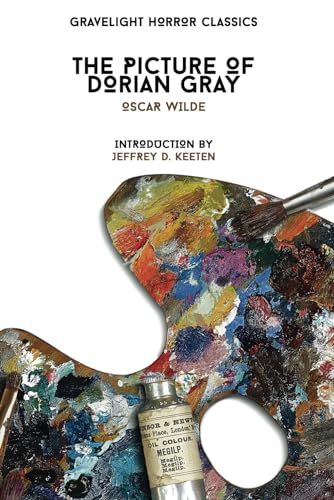
The Picture of Dorian Gray by Oscar Wilde, introduction by Jeffrey D. Keeten

book cover

There were moments when he looked on evil simply as a mode through which he could realize his conception of the beautiful.

“How sad it is! I shall grow old, and horrible, and dreadful. But this picture will remain always young. It will never be older than this particular day of June…. If it were only the other way! If it were I who was to be always young, and the picture that was to grow old! For that—for that—I would give everything! Yes, there is nothing in the whole world I would not give! I would give my soul for that!”

Be careful what you wish for.

description
Oscar Wilde – image from Wikipedia

Man sells soul to the devil in return for…something, in this case a body encased in eternal youth, while a portrait takes on the outward manifestation of his aging and his sins. It ends badly, as deals with the devil usually do. This is hardly a unique tale. In fact, it is a bit of a trope, a Faustian bargain. There is a lovely listing here of examples new and old. Absent, of course, is the most famous, and least successful example of a soul-selling, really more of a soul-buying, from Matthew 4:1-11, when the devil made Jesus an offer he actually could refuse. Don Corleone would have been very disappointed.

But it is a bit more complicated than that, as these things often are. It is always a challenge and an adventure to read a classic. Books become regarded as a base part of our culture for reasons. They can establish motifs, or ways of seeing the world that resonate with their contemporary audiences (well, not always) and future generations. They can offer us a portrait of a time and place, a culture, a class, a social or political issue. They can illuminate moral questions, deal in universal themes, offer insight into human motivation, whether individually or en masse. And we come to see them in particular ways. In The Strange Case of Dr. Jekyll and Mr. Hyde, the prior re-pub in this Gravelight series, what one finds in the original is not quite what one might expect, given how popular culture has transformed the story by bleaching out important nuance. That is less the case with Dorian Gray, at least in part because there appears to have been fewer iterations of the tale in popular entertainments. But, nonetheless, our understanding of the story is generally of the bare bones sort. There is plenty of flesh to give those bones some added heft.

description
Jeffrey Keeten – they came to take his furniture, but the only way they will take his books is from his cold dead hands – image from his site

The history of a book matters. Keeten’s introduction offers an excellent take on how Dorian was received at publication. It generated quite a bit of attention on its release. There were many who were not amused. That may have contributed to the fact that The Picture of Dorian Gray is singular in being the sole novel published by Oscar Fingal O’Flahertie Wills Wilde. The subject matter was considered a big no-no in 1890. The Dorian of the title is a man of many tastes, and apparently insatiable appetites. He manages to bring ruin to both men and women. It was not, in particular, the ruination of women that caused a storm. The periodical in which it was first published was withdrawn from bookshops due to the outrage.

Wilde was a very popular writer of the time, wearing his sexuality like a badge. A tough stance to assume in a culture that preferred to sate it appetites and interests discretely. His novel was a shocker for the time in portraying homosexuality in interest, if hardly in action. The painter of Dorian’s portrait is clearly smitten with him, dazzled by his physical beauty, which he sees also as representative of an underlying perfection.

For all the shock of its homosexual content, there is no physical contact of that sort in the pages. (an earlier version may have been more direct) All is insinuation, suggestion, hinting. It is the same technique that has worked quite well for ages in the horror genre. Shadows, rattling chains, creaky doors, unsourced moans. Sometimes we are offered the shocker scene in which the monster is revealed. The Opera Phantom’s mask is pulled off to reveal the horror of his face. Hyde’s deformity is revealed as the window into Jekyll’s soul. And so it is here. Dorian’s true nature is revealed. The “I’m shocked, shocked” reaction of contemporary critics suggests more about what they were projecting onto the novel than what was actually there.

description
The portrait used in the 1945 film by Ivan Le Lorraine Albright – image from Wikipedia

So, what is the horror that is on display? It is the hedonism of the late 19th century English upper class, sashaying about in the interesting, entertaining, appealing drag of philosophy. Henry argues for the unashamedly sybaritic life. Art need have no meaning, no being other than itself. Apply to humans. Is art, is beauty the highest value? When beauty is left to dangle free, disconnected from any higher value, what is its impact on the world? Actions have no moral content. It is in fact a positive good to live a life dedicated to the primitive accumulation of sensation, through the arts, through physical pleasures, not just of sex, but of sight, smell, sound and touch, to experience beauty in all its forms. Try everything. Art for art’s sake in the guise of human experience. Some people have an amazing ability to come up with excuses for their excesses, explanations, some reason for why they shouldn’t be held accountable for their actions. Like the poor and taxes, we will always have the morally challenged, the malignant narcissists, the sociopaths with us.

beauty is a form of genius—is higher, indeed, than genius, as it needs no explanation. It is of the great facts of the world, like sunlight, or spring-time, or the reflection in dark waters of that silver shell we call the moon. It cannot be questioned. It has its divine right of sovereignty. It makes princes of those who have it. You smile? Ah! when you have lost it you won’t smile…. People say sometimes that beauty is only superficial. That may be so, but at least it is not so superficial as thought is. To me, beauty is the wonder of wonders. It is only shallow people who do not judge by appearances. The true mystery of the world is the visible, not the invisible….

But if this was on the up and up, there would have been no need to keep one’s behavior secret. It is clearly a place where freedom crosses the line into license. The practitioners of such a “philosophy” knew they were up to no good. They merely wanted to hide from the responsibility. Dr Jekyll was quite happy to have an alter-ego he could let loose on the world, to have the sorts of fun he could not have as himself in public view. They knew, not just that their behavior was wrong, not just that it ran afoul of extant mores, but that their reasoned explanation was taffeta thick.

description
Hurd Hatfield as Dorian in the 1945 film – image from Wikipedia

It is not the barely latent bisexuality of the novel that marks Dorian as fallen, it is that he had ruined peoples’ lives, men and women, not by having sex with them, (which is suggested, but never acted out on the pages) but by corrupting them in various ways, by causing them to become as self-centered, as pleasure-seeking as he was. A person can get away with this if he or she is wealthy enough. Paying off porn stars to keep quiet about an extramarital fling certainly fits into such a scenario. Dorian manages to keep his scandals at bay with the use of his wealth.

It is as true today as it was when Wilde was writing this book, the selfishness, the hedonism, the amorality of the wealthy feeds on the blood and life forces of those they exploit, few of whom can afford to fight back directly. (You go, E. Jean!) I imagine this is a core of what Wilde was getting at, and the real reason his critics were so angry at him.

Dorian does not come to his corruption unaided. He arrives as a beautiful young man, who is seen as being as pristine inside as he is on the surface. The Victorians were very concerned with exteriors, believing that they served as personal screens displaying to the world a person’s character. But then he is introduced to Lord Henry Wotton. Henry proceeds to emit a torrent of nonsense, albeit amusing nonsense, mocking the morals of the time. Wilde, speaking through Henry, is cattier than my living room when I shake a container of treats. Henry offers a torrent of false, cynical aphorisms, suitable material to be printed on small pieces of paper and tucked inside poisoned fortune cookies. Were he opining today, Henry would be posting outrageous clickbait opinions on Twitter. Here are a few examples. They are legion, and will sound familiar in tone to characters from Wilde’s 1895 theatrical triumph, The Importance of Being Earnest

…beauty, real beauty, ends where an intellectual expression begins. Intellect is in itself a mode of exaggeration, and destroys the harmony of any face. The moment one sits down to think, one becomes all nose, or all forehead, or something horrid.

…the one charm of marriage is that it makes a life of deception absolutely necessary for both parties. I never know where my wife is, and my wife never knows what I am doing. When we meet-we do meet occasionally, when we dine out together or go down to the Duke’s—we tell each other the most absurd stories with the most serious faces.

…as for believing things, I can believe anything, provided that it is quite incredible.

It is the cynical Henry who finds in the gullible Dorian the raw material with which to cast the young man into a representative of his very hedonistic view of life. Dorian offers the plasticity of the young to the dubious molding of the amoral. The young man is all ears. He even takes time away from the painter, Basil Hallward, to learn at Wotton’s feet. .

To a large extent the lad was his own creation. He had made him premature. That was something. Ordinary people waited till life disclosed to them its secrets, but to the few, to the elect, the mysteries of life were revealed before the veil was drawn away. Sometimes this was the effect of art, and chiefly of the art of literature, which dealt immediately with the passions and the intellect. But now and then a complex personality took the place and assumed the office of art, was indeed, in its way, a real work of art, life having its elaborate masterpieces, just as poetry has, or sculpture, or painting.

We are offered a bit of background on Dorian, to help explain his vulnerability to Lord Henry’s dark influence. And are even given a bit of theatrical brimstone to explain how the deal with the devil is achieved. Neither really matters much.

description
Angela Lansbury as Sibyl Vane in the 1945 film – image from Wikipedia

Early on, Dorian is smitten with a beautiful young actress, Sibyl Vane, who considers him her Prince Charming. It is Sibyl’s appearance, her elevated acting performances, in addition to her beauty, that attracts Dorian. But when her dazzling talent on stage suddenly vanishes, she can no longer offer Dorian the thing he most admired, and he dumps her, cruelly. It is the first crime to which we are witness, the first time his painting changes. The pursuit of beauty and sensation above all else has claimed its first victim. There will be many more, but most of those bad behaviors take place off screen.

Wilde put all of himself into this novel

“Basil Hallward is what I think I am: Lord Henry is what the world thinks me: Dorian what I would like to be.”

Unlike Lord Henry and Basil Hallward though, Wilde acted on his urges. Unlike Dorian, Wilde was imprisoned for his actions. Unlike Henry’s and Dorian’s depraved indifference to the harm they caused others, it is not clear that Wilde was a cruel person.

Dorian is clearly a corrupt individual. Whether he arrived there unaided or had a push is of secondary importance. Lord Henry is clearly corrupt as well, even though we do not see him engage in any physical acts of treachery. Perhaps the corruption of youth, pulling Luke Dorian to the dark side is enough. Henry and Dorian both represent the worst of the amorality of the Victorian age, the hypocrisy of the upper class. This seems the true target of Wilde’s effort. He is not celebrating amorality, but pointing an accusing finger at it, and letting us know who are its most damaging practitioners. At one point Dorian even shows enough residual humanity to want to turn over a new leaf, not appreciating that to succeed he would need to upend an entire forest. (don’t write. I know that the leaf in question was supposed to mean a book page.)

Keeten goes into some detail on the derivation of the name Dorian Gray. Why not Loki? There are very concrete reasons. In fact, there is a lot you will enjoy learning when you check out his introduction. It is rich with detail about the author, the book, and the controversy that surrounded its publication. It also looks at the lasting impact Wilde has had on modern culture. It will definitely increase your appreciation of this wonderful novel.

I suppose there might be a modern version in which Gray and his portrait are linked by quantum entanglement, or one should be made if it does not already exist. The battle between inner self and outer manifestation is certainly an eternal literary theme.

For the second time, a sojourn down the Gravelight illuminated alley of classic horror has proved stimulating and enlightening. From Keeten’s smart, incisive introduction to the chance to see what the original of a household-name classic was really on about, The Picture of Dorian Gray offers a richly rewarding reading experience, clever, funny, dark, shocking, intelligent, satirical, and satisfying.

There were moments when he looked on evil simply as a mode through which he could realize his conception of the beautiful.

Review posted – 02/23/24

Publication date – 11/6/23

I received copy of The Picture of Dorian Gray from Gravelight Press in return for a fair review. Thanks, folks.

This review is cross-posted on my site, Goodreads. Stop by and say Hi!

=======================================EXTRA STUFF

Links to Keeten’s personal, FB, and Instagram pages

Prior reviews for books intro’d by Jeffrey Keeten
—– Exhumed: 13 Tales Too Terrifying to Stay Dead – edited by David Yurkovich
—– The Strange Case of Dr. Jekyll and Mr. Hyde – edited by David Yurkovich

Items of Interest
—–Les Cent Nouvelles – a book of coarse French stories referenced in Chapter 4
—–Margaret of Valois
—–Manon Lescaut – an 18th C. novel in which young lovers live a life of sexual and social freedom, while giving morality little thought – referenced in chapter 4
—–The St. James’s Gazette – referenced in chapter 10
—–Elephantis – author of a sex manual in Classical Greece – noted in Chapter 11
—–Against Nature by Joris-Karl Huysmans – cited in the introduction – Dorian’s reading of this 1884 celebration of sensory gluttony contributes to his corruption
—–Wiki Deals with the devil in popular culture

2 Comments

Filed under classics, Fantasy, Fiction, Historical Fiction, Horror, Literary Fiction, Reviews

The Very Secret Society Irregular Witches by Sangu Mandanna

book cover

…witches were always orphans. According to Primrose, this was because of a spell that went wrong in some bygone era. Mika was certain this tale was a figment of Primrose’s imagination, but she also had no better explanation because the fact remained: when a witch was born, she would find herself orphaned shortly thereafter. It didn’t matter where in the world the witch was born, and the cause of death could be anything from innocuous illnesses to everyday accidents, but it was inevitable.

WITCH WANTED. Live-in tutor wanted for three young witches. Must have nerves of steel. Previous teaching experience not necessary. Witchiness essential.

We have all answered want ads, but I expect there are few (you know who you are) who have come across one like that. But Mika Moon has been looking for an opportunity. There are not many witches in England and they have lived very separate lives in Mandanna’s witchy world. Apparently when they get together, their magic, which manifests as something like those specks you see in the air when bright light shines in an enclosed space, but gold, visible only to those with witch blood, combine and draw attention. (maybe they are scraped from yellow bricks? ) Also, as noted at top, they are all orphans. There are quarterly meetings of England’s witch population, well, a portion of them anyway, but they are living very separate lives. (People come and go so quickly here.) Their cover story, of course, is that they are a book club.

Mika was unusual in the group, being the child of a witch, and the granddaughter of a witch. It appears that most witches in this world were born to parents the Potter-verse might refer to as Muggles. When she was orphaned in India, Primrose Beatrice Everly, maybe the oldest living witch, found her and brought her to England, where she was raised in Primrose’s home. Not the worst life, but a lonely one.

Sometimes, when she looked back on her childhood, Mika had trouble remembering all her nannies and tutors. There had been so very many of them that she would sometimes catch herself forgetting names or struggling to conjure up a face or attaching a memory to the wrong person.


What she did remember, in perfect, crystalline detail, was the loneliness. She remembered how much she’d longed for company. A parent, a sister, a friend. Someone who was there because they wanted to be and not because they were paid handsomely to be.

Mika amuses herself by posting videos on line of her pretending to be a witch, expecting that no one would believe she really is one. But someone does see, thus the Help Wanted ad finding its way to her. And the game is afoot, or maybe a-broom.

description
Sangu Mandanna – image from her site

In a way, Mika’s experience is a bit like Dorothy’s when she first set foot in Oz. Where Am I? What is this place? Although she doesn’t, she could easily, on her arrival, have said, “Circe, [that being her dog] I don’t think we’re in Brighton any more.” There are three young witch girls living there. How is that even possible? Their combined magic is manifest, and a sure sign of imminent peril!

“Too much magic in one place attracts attention,” [Primrose] would say. “Even wards can only hide so much. And attracting attention, as witches have discovered time and time again over the centuries, is dangerous. Alone is how we survive.”

She meets with the four grownups of Nowhere House (yes, really) first. They are very welcoming, well, except for one, who is as crusty as he is handsome. The lady of the house, (Lillian Nowhere, and thus the name of the house. Yes, really. ) absent at present, had adopted the girls from different parts of the world. While it is clear that this is a loving household, it is also clear that someone needs to train the girls in how to manage their unusual gift. In the role of Wicked Witch, there is an accountant, engaged by the absent Lillian, set to arrive in six weeks, and he holds enormous power over them, the girls in particular. If their magic is not locked down it could result in the dissolution of the household. So, no pressure.

One thing Mika brings with her is a true heart and an eagerness to help, and a cheerfulness that runs into some barriers. There is no wondering for us if Mika a good witch or a bad witch as she teaches the girls not only how to better manage their power, gaining some trust and affection. But not all members of the household are convinced. One of the girls is overtly unhappy that Mika is there and does her best to be unpleasant to her, and unengaged.

As for Mika in particular, honestly, I think she represented a ray of sunshine and hope that I needed when I started writing this novel in lockdown. – from the United by Pop interview

Then there is Jamie, the crusty, protective librarian who had the most responsibility for the girls. If you have ever seen a Hallmark movie, you can see what’s coming the instant these two cross paths. I am not saying that I mind this. I have been dragged to the living room to watch (more than) my share of Hallmark movies (Could you loosen those ropes a bit, dear? ) so I speak from a reasonable amount of experience. I will confess that I actually like some of these things, however formulaic. And the romance here is indeed formulaic, albeit charmingly done and with some nice magical elements.

I’ve loved stories with fantasy and magic since I was a little girl, and I was an eager tween when I first discovered my love of romance novels. I think it was inevitable that I would write a book that combined fantasy with romance, but as I’ve grown older, I’ve also discovered a love of stories about found families, outcasts finding a place to belong, and the magic of the everyday. I wanted to write a book with all of these things. – from the United by Pop interview

Thankfully, there are other things going on. In her interview with Verve, Mandanna recalls being in love with the play, Les Miserables as a teen, and acting out all the parts herself, believing that there would never be a chance for someone with brown skin to play any of those roles. Even her favorite characters from classic literature seemed out of reach, and rom-coms and other forms all seemed to feature females of only one sort. So, when she started writing it was with an eye toward including people who looked like her. Thus, Mika was born in India. And the girls are diverse. One is black, one is from Vietnam and another is Palestinian. (I am sure that it is purely a coincidence that there are three children in the novel and Mandanna has three of her own. )

Mika struggles with her need for a family, for acceptance of what she is, for love. She has been raised to believe that attachment is lethal, as once non-witch people in her life learn of her powers, only trouble follows. So, don’t get attached, don’t settle in, keep moving, and stay away from other witches. It makes for a very lonely life. But with that mindset, how can you accept what appears to be a real connection to a loving family if they could yank it away at any time? This applies both to the family and her relationship with Jamie. But she feels herself falling in love with this family. Isolation sucks.

Mandanna wrote this during the COVID lockdowns, so Mika has taken on the additional task of standing in for so many of us who struggled with disconnection, who were unable to have physical contact with family and other people for a long time.

Gripes are modest. Yes, it is a romance, but I found it a bit jarring for a book that was going along reading very much like a YA title to then get a fair bit steamy a time or two. Not surprising that someone who has made her mark writing for a younger audience (The Very Secret Society of Irregular Witches is her first novel for adults) might retain a lot of that sensibility while adding more adult elements. (There is the odd profanity as well) But it felt unnecessary. What we gain from those scenes could have been accomplished with much less detail. I wanted to know so much more about Primrose, and how she located her special orphans. Ditto for Lillian. And maybe how witches who are constantly moving from place to place manage to make a living. While the setup makes sense to establish Mika’s situation and that of the residents of that special place, it does not seem likely to stand up well to much expansion.

I really liked the notion of making magic not only visually manifest, but with its own personality. There is some LOL material here as well. It is not a long book. The story rolls along quickly. It is engaging, as Mika is an appealing lead and her situation is tailor-made to pluck your heartstrings. It is a fast, enjoyable read, perfect for when you might be looking for something to cheer you up. You will be charmed. While reading The Very Secret Society of Irregular Witches I expect there will be Nowhere you would rather be.

She hadn’t understood how exhausting and heartbreaking it had been to hide such a big part of herself all these years, to reshape and contort herself into something more acceptable. She hadn’t realised just how heavy her mask had been until she’d discovered what it was to live without it.

Review posted – September 16, 2022

Publication date – August 23, 2022

I received an ARE of The Very Secret Society of Irregular Witches from Berkley in return for a fair review, and a few obscure ingredients for a potion. Thanks, folks, and thanks to NetGalley for facilitating.

This review has been cross-posted on GoodReads

=======================================EXTRA STUFF

Links to the author’s personal, Instagram, and Twitter pages

Profile – from her site

Sangu Mandanna was four years old when an elephant chased her down a forest road and she decided to write her first story about it. Seventeen years and many, many manuscripts later, she signed her first book deal. Sangu now lives in Norwich, a city in the east of England, with her husband and kids.

Interviews
—–She Reads – August Guest Editor Sangu Mandanna on The Very Secret Society of Irregular Witches
—–Verve – A GIRL LIKE ME: SANGU MANDANNA – from 2019 – so not specific for this book, but interesting intel about the author
—–The Fantasy Hive – INTERVIEW WITH SANGU MANDANNA (THE VERY SECRET SOCIETY OF IRREGULAR WITCHES) by Niles Shukla
—–United by Pop – Sangu Mandanna On Her Bewitching New Rom-Com, The Very Secret Society Of Irregular Witches by Kate Oldfield
—–Writers Digest – Sangu Mandanna: On Writing Her First Novel for Adults by Robert Lee Brewer

Leave a comment

Filed under Fantasy, Fiction, Romantic Comedy

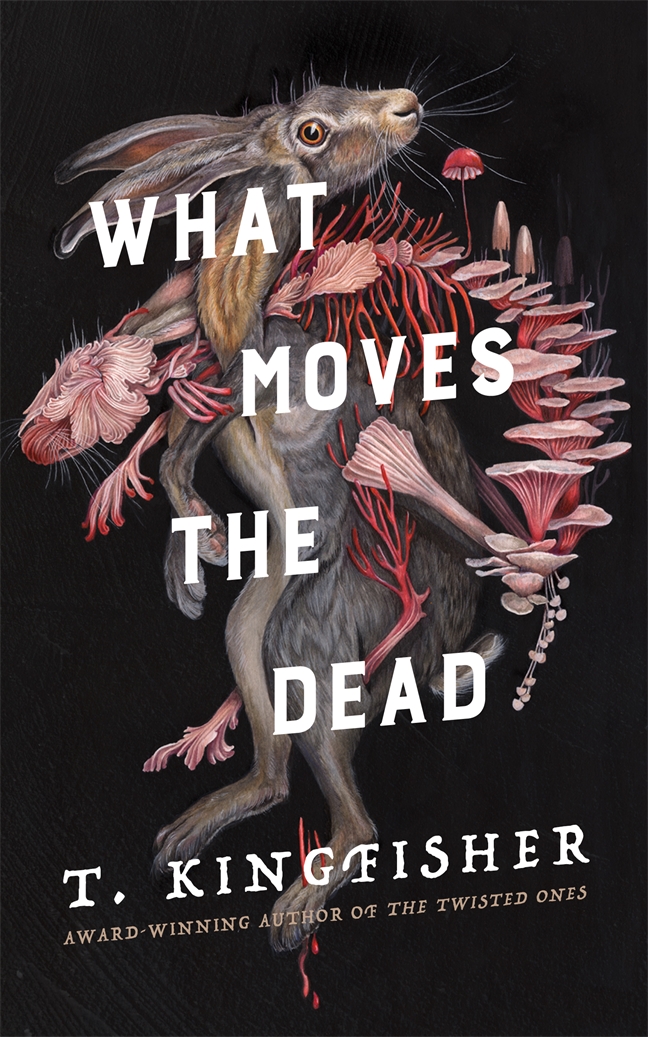
What Moves the Dead by T. Kingfisher

book cover

The dead don’t walk. Except, sometimes, when they do.

It is a cliché to say that a building’s windows look like eyes because humans will find faces in anything and of course the windows would be the eyes. The house of Usher had dozens of eyes, so either it was a great many faces lined up together or it was the face of some creature belonging to a different order of life—a spider, perhaps, with rows of eyes along its head.

How many of you have not read Edgar Allan Poe’s story, The Fall of the House of Usher? Ok, now how many of you read it, but so long ago that you do not really remember what it was all about? All right, the link is right above, so, really, go check it out. Take your time. I get paid the same whether you take half an hour or a year, so no worries on my part. Pop back in when you’re done.

description

All right, I think it has been long enough. Those who have not done the reading can catch up later. As I am sure you get, What Moves the Dead is a pastiche, a reimagining of Poe’s tale. Often these are temporal updates, moving the events to a more contemporary setting. But this one is different. Kingfisher (really Ursula Vernon) keeps Usher in the late 19th century. She supplants Poe’s thick style with a more contemporary, less florid, more conversational presentation.

description
T. Kingfisher – image from her GR page

Poe’s unnamed narrator becomes Alex Easton, of which more in a bit. We first meet the lieutenant examining some disturbing flora.

The mushroom’s gills were the deep-red color of severed muscle, the almost-violet shade that contrasts so dreadfully with the pale pink of viscera. I had seen it any number of times in dead deer and dying soldiers, but it startled me to see it here.

Ok, definitely not good. Continuing on, Alex is alarmed at the state of the Usher manse.

It was a joyless scene, even with the end of the journey in sight. There were more of the pale sedges and a few dead trees, too gray and decayed for me to identify…Mosses coated the edges of the stones and more of the stinking redgills pushed up in obscene little lumps. The house squatted over it all like the largest mushroom of them all.

The invitation (plea) to visit in this version came not from Roderick Usher, but from his twin, Madeline. Neither sibling had had any children, so mark the end of their line, as many prior generations had failed to provide more than a single direct line of descendants. Both Madeline and Roderick look awful, cadaverous, with Maddy, diagnosed as cataleptic, quite wasted away and clearly nearing death. They are having a bad hair life.

description
Redgill Mushroom – image from Forest Floor Narrative

There is another in attendance, Doctor James Denton, an American, whose primary narrative purpose seems to be to provide a conversational and analytical partner for Easton.

We track the demise of Madeline. Given her Poe-DNA, we know her chances for survival are not great. (But was she really dead in that one, or just entombed alive?) Add in a delight of an amateur mycologist, Eugenia, a fictional aunt of Beatrix Potter, who was quite an accomplished student and illustrator of things fungal. Potter is a pure delight upon the page, (maybe she used some spells?) possessed of a sharp mind and wit, and a bit of unkind regard for some. Other supporting cast include Easton’s batman (no, not that one) Angus, and his mount, Hob, who is given a lot more personality than horses are usually allowed.

description
Image from from TV Tropes

So, plenty of dark and dreary, but the atmospherics are not all that is going on here. Kingfisher had read the book as a kid, but rereading it as an adult, found her curiosity piqued. She noted that Poe goes on a fair bit in his story about things fungal, so decided to dig into that as a possible reason for the sad state of the Usher land and clan. The result is a spore-burst of understanding,

…so I was reading old pulp, basically going, is there anything here that grabs me that I can see a story in. And I happened on Usher and I was like, I haven’t reread any Poe in a while. And I read Fall of the House of Usher and it’s obsessed with rotting vegetation and fungus. And it’s really short. And they don’t explain hardly anything…I wanted to know what was wrong with Madeline Usher because you get buried alive, that is a problem. And so I started reading about catalepsy which is what it was diagnosed as at the time and also fungus, there was just so much about fungus and I’m like, okay, obviously these two must be linked somehow.; – from the LitHub interview

There is a particularly creepy element, in the hares around the tarn that sit and stare at people through blank eyes. They do not behave like normal bunnies at all in other unsettling ways I will not spoil here.

description
Image from Television Heaven

It is definitely worth your time to re-read Poe’s original. There are so many wonderful elements. One is a song that Roderick composes, which encapsulates the dark sense of the tale. There are some bits that were changed or omitted from the original. Poe’s Roderick was heavy into painting, an element that Kingfisher opted to omit. And he was particularly taken with Henry Fuseli, whose dark painting, The Nightmare, certainly fits well with the tale. His guitar work in the original was replaced with piano playing.

description
The Nightmare by Henry Fuseli – image from Wikimedia

Kingfisher adds into the story a bit of gender irregularity. What to do if a non-binary person with mammaries wants to become a soldier? Well, these days, can do, but in the late 19th century, not so much. She learned of a practice in the Caucusus, borne of a shortfall of human cannon fodder. A woman could join the military by declaring herself a man, and voila, presto chango, she is legally a dude. Kingfisher took a tangent off that, giving Easton a home in a made-up European nation.

Gallacia’s language is . . . idiosyncratic. Most languages you encounter in Europe have words like he and she and his and hers. Ours has those, too, although we use ta and tha and tan and than. But we also have va and var, ka and kan, and a few others specifically for rocks and God… And then there’s ka and kan. I mentioned that we were a fierce warrior people, right? Even though we were bad at it? But we were proud of our warriors. Someone had to be, I guess, and this recognition extends to the linguistic fact that when you’re a warrior, you get to use ka and kan instead of ta and tan. You show up to basic training and they hand you a sword and a new set of pronouns. (It’s extremely rude to address a soldier as ta. It won’t get you labeled as a pervert, but it might get you punched in the mouth.)

This did not seem particularly necessary to the story, but it is certainly an interesting element.

description
Image from Filo News

So, while you know the outcome in the original, (because you went back and read the story, right?) there is a question of causation. Why is the land so dreary? Why are the Ushers so ill? Why was the family tree more like a telephone pole? Kingfisher provides a delightful answer.

So, What Moves the Dead, in novella length, (about 45K words) provides an intriguing mystery, renders a suitably grim setting, offers up some fun characters, with an interesting take on gender identification possibilities, delivers some serious, scary moments, and pays homage to a classic horror tale, while (didn’t I mention this above?) making us laugh out loud. I had in my notes FIVE LOLs. Add in a bunch of snickers and a passel of smiles. Not something one might expect in a horror tale. Bottom line is that T. Kingfisher has written a scary/funny/smart re-examination (exhumation?) of a fabulous tale. What Moves the Dead moves me to report that this book is perfect for the Halloween season, and a great read anytime if you are looking for a bit of a short, but not short-story short, creepy scare.

DURING the whole of a dull, dark, and soundless day in the autumn of the year, when the clouds hung oppressively low in the heavens, I had been passing alone, on horseback, through a singularly dreary tract of country, and at length found myself, as the shades of the evening drew on, within view of the melancholy House of Usher. – from The Fall of the House of Usher

description
From Otakukart.com – image from Netflix

Review posted – September 9, 2022

Publication date – July 12, 2022

I received an eARE of What Moves the Dead from Tor Nightfire in return for a fair review. Thanks, folks, and thanks to NetGalley for facilitating. Wait, why are you staring at me like that? Stop it! Really, Stop it!

This review has been cross-posted on GoodReads

=============================EXTRA STUFF

Links to the author’s personal, Goodreads, and Twitter pages

Profile – from GoodReads

T. Kingfisher is the vaguely absurd pen-name of Ursula Vernon. In another life, she writes children’s books and weird comics, and has won the Hugo, Sequoyah, and Ursa Major awards, as well as a half-dozen Junior Library Guild selections

Interview
—–Mighty Mu – Spoilers Club 3: T Kingfisher and What Moves the Dead – video – 41:08

Item of Interest from the author
—–Sarah Gailey and T. Kingfisher Talk Haunted Houses, Fantastic Fungi, and the Stories Nonbinary Folks Deserve

Songs/Music
—–Carl Maria von Weber’s Last Waltz is referenced in Poe’s story, in which Roderick played guitar instead of piano
—–John Brown’s Body – Smile-worthy reference to a dead person who still walks among us
—–Ben Morton – Beethoven’s Fifth on piano – …he played dramatic compositions by great composers. (Mozart? Beethoven? Why are you asking me? It was music, it went dun-dun-dun-DUN, what more do you want me to say?)

4 Comments

Filed under Fantasy, Fiction, Horror, Mystery, Novella

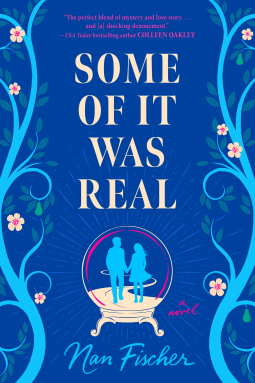
Some of It Was Real by Nan Fischer

book cover

Today an image slips through the carefully constructed peace . . .
Pale sand beneath my feet, a blue-green ocean, foam nibbling at my bare toes. Behind me, a castle—ornate turrets dotted with pale pink shells, a drawbridge made from delicately curved driftwood, beneath it, a moat where tiny paper boats rock in the breeze. A wave gathers on the horizon. It grows taller and white horses gallop across its face. When the wall of salt water strikes, the castle will be destroyed and with it a treasure, something precious . . .
The vision disintegrates. Ghostly lips brush my cheek. I know what’s coming next. A whisper I’ve heard intermittently my entire life.

“It’s important you understand that I don’t have a clear definition for what I do. Psychics use their intuition or spiritual guides to gain information about the past, present, or future. Mediums are channels that deliver messages from those who have passed over. I’ve been called a psychic-medium, and that’s as good a definition as any. But the truth is that I’m not sure why I hear voices, see images, sing at times, or scribble notes—it just happens and I can’t tell you how because I truly don’t understand it.”

Sylvie Young has just gotten a TV deal, the product of a successful run of live stage performances and a top-tier agent. Life is good, and about to get better. Sylvie’s shows are of the psychic sort. Select audience members, offer a connection to a lost one, solve some riddles, answer some unanswered questions, and mostly, offer comfort. Syl is very good at this. But not all of her connections are of the psychic sort.

description
Nan Fischer – image from her site

Thomas Holmes is a cynical reporter on a mission. For personal reasons, Holmes believes that all psychics are fakers. It is elementary. His current project is to profile several psychic-mediums, intending to expose their chicanery and, if at all possible, destroy their careers. Which is something he knows a bit about. His own career in journalism has suffered some major blows, to the point where this major takedown piece may be his last chance to salvage his own career.

Both are struggling to deal with their origin stories (Sylvie even opens her shows by telling hers, at least what she knows of it) and their self doubts. Sylvie’s arc is a quest to find out what really happened to her biological parents, explain why she is beset by nightmares of a particular sort, and maybe discover where she acquired her very real personal talent. But is it real, really? Thomas suffered a trauma in his youth that has defined his life. Until he can confront that, the life he has made for himself will never be a proper fit. This is the true core of what Nan Fischer is writing about.

One of the seeds that started this novel with my fascination with imposter syndrome—the inability to believe one’s success has been legitimately achieved or deserved. I wanted to create a character, Sylvie, on the cusp of achieving great success but who doesn’t quite believe she deserves it. I made Sylvie a psychic as that gift is controversial—the perfect job for someone doubting her abilities due to all the critics! – from Hey It’s Carly Rae interview

Thomas has run into some dead ends digging into her past. There are no records of her parents’ supposed plane crash deaths when she was four. He wants her help to dig into this further. She has an interest, as it is a mystery to her as well. And if she can prove to him that she is not a grief vampire, he will drop her from his story. Of course, he expects he will never have to make good on that, as psychic powers are all BS, right? And the game is afoot.

the stories we tell from childhood that have shaped who we are – are based on old and sometimes faulty memories. It’s up to each of us to decide what to accept or discard from our origin stories and to decide who we ultimately want to be in life. – from the Jean Book Nerd interview

Many of the curtains Sylvie needs to part were placed there by others. Thomas erected his barriers to self-knowledge himself. Part of their interaction is Syl challenging Thomas to look deeper into the sources of his own demons, as Thomas challenges Sylvie to examine the ethics of how she is making her living. (“What was the fair lady’s game? What did she really want?” – Sherlock Holmes in The Second Stain)

As one might expect from a book categorized as romance, these two develop an attraction. That complicates matters. How can a journalist write an objective piece about someone with whom he is romantically engaged? He may be trying to take her down, but she is also looking for ways to manipulate him into a more benign view of her and her work. The cynic vs psychic dynamic is entertaining for a while, but Thomas’s relentless disregard of evidence gets a bit old. Really, dude? Still?

Fischer gives us a particularly interesting look at the profession of psychic-medium, offering a perspective that elevates it beyond being merely a connection to another side, whether real or faked. She connects it to something greater.

The structure is alternating chapters, his and hers, both first-person narratives. The voices are effectively different. It is a cat-and-mouse competition, although it could easily be a cat-and-dog one. Sylvie’s constant companion is a very large Great Dane, and Thomas travels with an elderly feline. (Fischer even manages to give her own dog, Boone, a cameo) He keeps trying to find holes in her schtick. She keeps trying to move him beyond the purely factual. Another Holmes might say when you have eliminated the impossible, whatever remains, however improbable, must be the truth, but Thomas clings to his biases tenaciously.

I was not all that taken in by their supposed attraction, never quite bought it, and wanted the sex scenes to be over quickly. But I did enjoy their mutual interest in helping each other out. I also had trouble with Sylvie’s relationship with her parents, who seemed far more reluctant to share information with their daughter than seemed reasonable, particularly considering that she is a grown-ass woman when she is pleading for intel about her past, intel that they have. Their rejection of her seemed unnatural, very un-parental.

What keeps the story moving along is a steady stream of interesting clues and the pair’s ingenuity on following up on them. There are some pretty nifty twists. It is fun tagging along on the procedural, mystery-solving element of the story. Overall, Some of It May Be Real is an engaging story, a mystery, wrapped in a bit of fantasy, a quest of self-discovery featuring an ongoing cynic-psychic battle, as both Sylvie and Thomas dig into their origins as a way to confront their demons and feelings of inauthenticity. It offers some intrigue, some chills and some very real tears. It is authentically entertaining.

What surprised me most about writing Some Of It Was Real was that I thought my research would lead me to a conclusion about what I believe. I watched documentaries, movies, and TV shows about psychics, clairvoyants and mediums and read studies and articles written by individuals whose goals are to prove the supernatural is a hoax. But in the end, the only real conclusion I drew was that some of it might be real. – from Thoughts From a Page Podcast

Review posted – August 26, 2022

Publication date – July 28, 2022

I received an ARE of Some of It Was Real from Berkley in return for a fair review. Wait, does the number four have any particular meaning for you? I am also seeing something shiny. Sparkles, maybe? No, stars. Yes, definitely stars. Thanks, folks.

This review has been cross-posted on GoodReads

=======================================EXTRA STUFF

Links to the author’s personal,
Instagram, GR, and Twitter pages
Profile – from her site

Nan Fischer is the author of Some Of It Was Real (July 2022, Berkley Publishing), and the young adult novels, When Elephants Fly and The Speed of Falling Objects. Additional author credits include Junior Jedi Knights, a middle grade Star Wars trilogy for LucasFilm, and co-authored sport autobiographies for elite athletes including #1 ranked tennis superstar Monica Seles, Triple Crown race winning jockey Julie Krone, Olympic gold medal speed skater Apolo Anton Ohno, legendary gymnastics coach Bela Karolyi, and Olympic gold medal gymnasts Nadia Comaneci and Shannon Miller.

Her prior work was published under the names Nancy Richardson Fischer, Nancy Richardson, and Nancy Ann Richardson. Some of it was Real is her first book under the name Nan Fischer.

Interviews
—–Jean Book Nerd – Nan Fischer Interview – Some of It Was Real
—–Hey, It’s Carly Rae – Author Interview with Nan Fischer
—–Writers Digest – Nan Fischer: On Overcoming Imposter Syndrome by Robert Lee Brewer
—–Thoughts from a Page – Q & A with Nan Fischer, Author of SOME OF IT WAS REAL by Cindy Burnett
—–BookBrowse – An interview with Nan Fischer
with Katie Noah Gibson

Items of Interest
—–Gutenberg – full text of The Man Without a Country by Edward E. Hale – referenced in Chapter 19
—–The Poe Museum – full text of The Cask of Amontillado – by Edgar Allan Poe – referenced in Chapter 21

2 Comments

Filed under Fantasy, Fiction, Mystery, Suspense, Thriller

The Book of Cold Cases by Simone St. James

book cover

On the lawn, something moved across the surface of the grass. The touch of a footprint. Inside the house, one of the cupboard doors opened in the dark kitchen, groaning softly into the silence.
In a bedroom window a shape appeared, shadowy and indistinct. The blur, perhaps, of a face. A handprint touched the bedroom window, the palm pressing into the glass. For a second, it was there, pale and white, though there was no one to see.
The wind groaned in the eaves. The handprint faded. The figure moved back into the darkness. And the house was still once more.

“Being a girl is the best,” she said, “because no one ever believes you’d do something bad. People think you’ll do nothing, which means you can do anything. I’ll show you.”

1977 – Claire Lake, Oregon. Two men have been brutally murdered in separate incidents, roadside, no obvious motive. But a witness did see someone leaving the scene of one of the crimes. The description matches a local, a young woman generally regarded as odd. Beth Greer is standoffish, young, attractive, and rich. Parents both dead, Mom from an auto accident in a tree, Dad from a close encounter with fired round, in the kitchen. She has a taste for alcohol and keeping human connections ephemeral. When she is not out at bars and clubs, she is mostly at home, Greer House, not the happiest place on Earth. The bullets that did in the two randos just happen to match the one that laid Julian Greer out on the kitchen floor, a murder, BTW, that was never solved. You can see why the police might be a tad suspicious.

description
Simone St. James – image from her site – credit: Lauren Perry

2017 – Shea Collins is 29, newly (ok, almost a year) divorced. Has worked reception in a doctor’s office in downtown Claire Lake for five years. But her real self is invested in her website, The Book of Cold Cases. Shea is a true crime blogger, been at it for ten years, is certainly up on local crime legends, so she notices when one walks into the office, Beth Greer, forty years after she was believed to be The Lady Killer of tabloid fame, forty years after she was acquitted of the murders, which were never solved. Most think she was guilty. Beth pursues Greer, who, to her great shock, agrees to be interviewed.

And the game is afoot. There are two timelines at work, contemporary and back-then. In the 2017 line, Shea interviews Beth at Greer House, even though the place creeps her out. The décor is from the era of Beth’s parents, which is off-putting enough, but there is clearly a lot more going on there. Objects move without obvious cause. A mysterious girl appears outside a window. Shea does not feel safe there, but the lure of getting the whole story from Beth is too much to resist so she keeps coming back. Also, she and Beth seem to be forming a friendship. Beth may or may not be a killer, but Shea likes her, is fascinated by her. In the earlier time, we follow Beth’s childhood, stretching back to 1960, as events that lead up to the killings are revealed, bit by bit.

The alternate perspectives, Shea’s in first person and Beth’s in third, are not evenly divided. We get more Shea than Beth (26 chapters to 18, if you must know), with a few Others tossed in. They do not alternate in a steady format, but streak at times for one or the other.

Shea has some dark visions from her own past she has had to deal with for the last twenty years. At age nine she was abducted, but managed to escape with her life. The next girl her abductor took was not so lucky. Helps explain why she takes the bus and is reluctant to get into cars. Helps explain why she is way security conscious. Also, helps explain why she is reluctant to date again.

“Do you know how many serial killers dated lonely women in their everyday lives? Some divorcée who just wants companionship from a nice man? She thinks she’s won the dating lottery, and meanwhile he’s out there on a Sunday afternoon, dumping bodies. And now we’re supposed to use internet apps, where someone’s picture might not even be real. People are lying about their faces.”

It took a long time after we met on Match for me to discover my now wife’s history of serial criminal activity, so I get that.

There are mysteries to be solved and in the best True Crime fashion, Shea, along with her sort-of partner-in-crime-solving, PI Michael De Vos, dig into each of the questions as they arise. Very cozy mystery style. There is even a retired detective who offers a bit of help, continuing the cozy format. Of course, there are other elements that make this less of a cozy, the supernatural, for one, and a little more on-screen violence than might fit in that format. In fact The Book of Cold Cases crosses many genre lines, could be gothic, thriller, horror, suspense, or mystery, with a bit of romance tossed in for good measure. This particular mix of genre-salad was not always the Simone St. James brand.

I wrote five books set in 1920’s England, and while I loved writing them, I never intended to write about one period for the rest of my life. I wanted to flex my writing muscles and write something set in the USA—something that had two timelines, one of them contemporary. Creatively, I wanted a new goal and a new challenge while still writing a Simone St. James book. I got my wish! – from the Criminal Element interview

St James has stuck with that. Her first America-set thriller, The Broken Girls (2018), offers a split timeline, 1950/2014, the story centering on a deserted and reputedly haunted school for girls, and a journalist looking into the death of her sister twenty years before. The Sun Down Motel (2020) takes on a haunted establishment in upstate New York, splits between 1982 and 2017, and includes a 35-years-ago missing aunt, a niece eager to dig up the truth, and a slew of killings and disappearances that really need looking into. Keeping the string going, The Book of Cold Cases splits between 1977 and 2017, includes an amateur investigator (a blogger this time), some contemporary frights, some historical killings, and a haunted house. (I did ask her what she was planning to haunt next, but St. James declined to spill)

Strong primary characters can carry a book if the plot is well-thought out, and that would have been enough here. But St. James’ secondary characters were quite good, although we could have used even more of some of them. Detective Black, retired now, but involved in the 1977 investigations, was a strong presence. Shea’s PI, Michael De Vos, was off screen too much, as he was quite engaging when he was in view. I enjoyed the parallelism of relationships, Beth with Black and Shea with Michael.

Gripes – The only real blogging work we see Shea do (yes, there is a session or two noted, but only very much in passing) is on Beth’s case. Might have been a good thing to get a stronger, more fleshed out, look at how Shea has been spending her nights, which would have included a lot more on-line than live and in person investigations. Claire Lake, the town, did not feel strongly realized. This was more than made up for, however, by the seriously creepy haunted house, and the powerful presence of Beth Greer.

Lest you suspect there is some actual true crime in this true crime tale, I asked SSJ that question on her FB page, and she replied, “the cases in the book were all entirely fictional.” So you True Crime obsessives can stop looking for real-world sparks for this one. And as for ghosts in the real world, she has never had a spectral experience. St. James likes putting literary Easter eggs in her work, so keep an eye out for those.

Bottom line is that The Book of Cold Cases is a fun page-turner that delivers what it promises, murder mysteries, an intrepid investigator, some fascinating characters, a taste of the 70s, and a large dollop of the other-worldly. It is even a bit scary. I have a pretty high bar for such things, but there was one moment in which I got chills and the hair on my arms stood up at attention. That is one more than usually occurs, so, kudos. It sustains tension throughout, making you want to either blast through ASAP, or, my preferred approach, savor the fun in relatively low-dose portions night after night. In either case this is a fun, spooky, engaging read that is well worth your time, and should provide most readers with some chills.

some places hold you so that you can’t get free. They squeeze you like a fist.

Review posted – March 4, 2022

Publication date – March 15, 2022

I received an ARE of The Book of Cold Cases from Berkley in return for a fair review, and keeping quiet about a few things. Thanks, folks. And thanks to NetGalley for facilitating.

This review has been cross-posted on GoodReads

=======================================EXTRA STUFF

Links to the author’s personal, FB, Instagram, and Twitter pages

Simone St. James is the nom de plume of Simone Seguin, of Toronto. She worked for many years in TV, for a Canadian sports network, but not as a writer. She worked on budgets. She says she knows nothing about sports, despite the gig. It was only after she had had multiple novels published that she ditched budgeting to become a full-time writer. She had endured six years of rejections before her first book was published. The Book of Cold Cases is her eighth novel.

Interviews
—–Criminal Element – 2018 – Q&A with Simone St. James, Author of The Broken Girls for The Broken Girls by Angie Barry
—–The Inside Flap – 2020 – Ep. 98 How To Spy On People With Simone St. James by Dave Medicus, Andrew Dowd, and Laura Medicus – 1:36:48 – begins about 30:00 – to 58:00

Item of Interest from the author
—–Indigo – Sample – 1st four chapters

Music
—–George Thorogood – Bad to the Bone

Leave a comment

Filed under Fiction, Horror, Mystery, psycho killer, Reviews, Suspense, Thriller

Road of Bones by Christopher Golden

book cover

It wasn’t the desolation or the darkness or even the climate that had persuaded him to invest in this trip. It was that name…Official maps referred to it as R504. It wasn’t much of a road. The pavement started at both ends but not long thereafter the pavement gave way to packed gravel…In many places, the road was barely wide enough for two cars to scrape the paint off each other as they passed. The landscape consisted of snow, skeletal trees, mountains, and the occasional guardrail, as well as settlements that were considered urban but many of which were made up of a few dozen buildings and the hardy souls who went along with them.

It seemed like these people lived in a haunted, frozen hell.
To them . . . it was just home.

The Russians have a thing for giving characters in novels, and, it appears, real-world things, multiple names. R504, for example, is also known as P504. (no idea, don’t ask). It is also known as Federal Highway R504 and The Kolyma Highway. Locals call it The Kolyma Route. Plenty? Da. Complete? Nyet. It is also known as The Road of Bones. Construction began in 1932, during the Stalin era, using labor camp inmates. It continued using gulag prisoners until 1953. Workers die during construction? Permafrost in Siberia makes digging holes problematic, so the bodies were laid to rest under and near the road. Just a few, only somewhere between 250,000 to one million. Any chance a mother lode like that might attract a ghost hunter?

description
Christopher Golden – image from The Tufts Daily – photo by Shivohn Kacy Fleming

Not all the dead along the road were planted there due to construction. There are probably a million ways to die on the Road of Bones in winter. Run out of gas? You die. Flat tire? You die. Accident? You die. Vehicle breaks down for any reason? You die. Don’t go outside wearing glasses. They will get frozen to your face. Have a medical emergency that cannot wait three hours until you can get to the nearest ER? You die. And guys, don’t even think about stopping by the side of the road to pee. Bring a diaper or a container of some sort. Sounds fun. When are we leaving? (I love writing stories set in places where people shouldn’t live. Like WHY DO YOU LIVE THERE? – from the Dead Headspace interview)

Felix Teigland is a maker of documentaries. He has had some ups and downs in his career. He managed to build his own production company but he is still waiting for the breakout show that will keep him and his company above water for more than just now. He is a charmer and professional bullshitter, who means well, and has a rich imagination, producing a lot of interesting ideas, but far too often he is unable to make good on his promises. Felix needs a hit. But he needs a backer to fund it. Thus, his presence in this godforsaken land. He wants to take enough video, get enough of a story that he can persuade those with deep enough pockets to reach into them and toss enough rubles his way so that he can actually produce the project.

Teig was a fast talker, always with a scheme he would trumpet with unfettered enthusiasm—a feature documentary from a fourteen-year-old director out of Argentina, salvage rights to a Spanish galleon, a TV series about World War II comic book artists who were secretly spies, a mock-umentary in which the history of Scooby-Doo and his gang would be investigated as if they’d existed in real life.

description
Here the broken landscape of Stalin’s Kolyma Highway is pictured. Without a rail link to the city, the highway remains the only major land route into & out of Yakutsk… – image and text from Weather.com – photo by Amos Chapple

And what a project it is. Life and Death on the Road of Bones. Surely there are ghost stories aplenty, not to mention compelling survival tales. Teig has a background in supernatural work, having labored for several years on a TV show called Ghost Sellers.

He had reason to want to find ghosts, but he’d never seen evidence of one, despite the show confirming twenty-seven “official” hauntings while he’d worked with them.

He is skeptical of such things, has doubts, but even more importantly, hopes. Maybe the ghosts he finds in Siberia will help him find the spirit he truly seeks.

The grieving kid who’d lived inside him for more than twenty years had always longed for proof of the supernatural.
Careful what you wish for, idiot.

Teig is joined in this insane adventure by Jack Prentiss, a bear of an American, complete with a beard that would be at home in Brooklyn or the Yukon, a beer belly, and an imposing frame. Teig owes Prentiss a considerable sum of money, which gives Jack a bit of incentive to help make sure this project succeeds. Prentiss may be Teig’s only friend.

description
A view of Stalin’s “Road of Bones”, the route to Oymyakon (Oy-vey-myakon?, is pictured on a -50c evening – image from Weather.com. photo by Amos Chapple

You can probably leave your swimsuit at home. There are only five hours of daylight this time of year, and even when it is above the horizon, it remains hidden behind clouds. Get used to the darkness. The average daily temperature in Winter is -47F.

They begin in the port town of Magadan on the Sea of Okhotsk, heading to the community of Akhust, the coldest inhabited place on Earth. I did not find an actual Akhust in my Googling, so presume it is a made-up name, standing in for Oymyakon, a twenty hour drive according to Google directions. Teig’s journey is supposedly sixteen hours, so maybe it is somewhere between the two locations. Guess it depends on extant conditions.

They make a stop to pick up a twenty-something guide, Kaskil, an actual local. He will not be their last passenger. There is a lovely lady in distress, Nari, with “cherry black hair.” Vehicle broke down and she needs a lift. When they arrive in Akhust, the coldest place on Earth, the entire town of several hundred is abandoned. Only one inhabitant remains, Kaskil’s nine-year-old niece, Ariuna, in a catatonic state. Shock most likely.

description
Oymyakon, Sakah Republic, Russia Avg. temperature of 3 coldest months: -47.0 F Coldest month: January (-53.3 F) – image from USA Today – photo by Zac Allan / Wikimedia Commons

And then there are the odd things they have been seeing in the woods as they drove along. Trees moving strangely, oversized beasts, of uncertain shape, a Siberian tiger, of very certain shape, among them. Teig has odd thoughts urging him to give in to the cold. Whatever had driven or lured the residents of Akhust from their homes was now coming for them. And the chase is on, an army of creatures, led by a very large, human-like shaman is in hot pursuit. But why? Check, please.

The story is told through alternating POVs, not including everyone, but more than a couple. This kept things fresh, while also giving us the characters’ backstories, and reasons to care about their fates, maybe some understanding of their motivations. The action is pretty much non-stop. It is not a long book, but you might be out of breath by the time you finish reading. Lots of peril, lots of fleeing, a fair bit of fighting back. And questions. Um…why? I understand that the victims of Stalin might be pissed, but at people with no role in their killing? Are the members of this spirit army Stalin’s reincarnated roadkill? There is a character Kaskil refers to as ghost he has actually seen, who prays over the frozen dead. Does she have a role in this? The animal-like nature of the pursuers suggests also a rebellion of the natural world against a feckless humanity. Wrong place, wrong time. Who are those guys? Or is it something else? So what is the deal? Why are these spirits-made-material so intent on catching our small company?

Gripes are minimal. While there were multiple POVs, they did not all succeed in generating much interest in the characters. One character’s deep religious feelings define a life in an interesting and unusual way. Teig’s tale is given the most ink, and creates the strongest bond. The others? Some.

This is a chilling, acti0n-filled horror story, and it succeeds very much at that level. There is a lot of creativity on display in portraying these dark forces. And enough nuance to make them less than one hundred percent evil. Sound, in particular, plays a role here, not just in the songs noted in the text, but in the way sound can get into your head.

I’m…always intrigued with the idea of turning the concept of monstrosity on its head, of looking at a conflict through the eyes of the character that we would normally presume to be evil or cruel. – from the Nightmare Magazine interview

You will want to dress warmly while reading this one. You may shudder along with the characters at the death-dealing cold they must face for the entirety of the tale, and add a quiver or three for the spirits on the warpath. Consider having at hand either a mug of something very warm to drink or a bottle of Stoli. A favorite pet on your lap might help as well, at least as long as they do not start to look at you funny.

Here in this little scattering of human structures they could still convince themselves they were in the world of people, but once they passed into the woods, it would have been impossible to pretend they had control or authority over anything. Hunters and herders went into those woods or up that mountain from Akhust, and when they did they were surrendering to the primal nature of the world. Akhust stood as a stark reminder of how small a thing it was to be a human being.

Review posted – January 21, 2022

Publication date – January 25, 2022

I received an ARE of Road of Bones from St. Martins in return for a fair review and some extra warm mittens. Thanks, folks, and thanks to NetGalley for facilitating.

This review has been cross-posted on GoodReads

=======================================EXTRA STUFF

Links to the author’s personal, FB, Instagram, and Twitter pages

Golden is a monster of an author who got started, and found success, very early. He has a gazillion publications to his credit, an encyclopedic host of teleplay credits from his years writing for Buffy with Joss Whedon, and plenty more. And then there are the comics. You may have heard of Hell Boy, among those. Here is a list of what he has published, from Fiction DB. I personally think he has elves, or more likely, goblins chained to computers in his basement helping him crank out such volume.

Interviews
—–Nightmare Magazine – Interview: Christopher Golden by Lisa Morton – January 2014 issue
—–Dead Headspace – Ep. 126 – Christopher Golden – video – 1:51:56 – this is a long, fun interview that covers a wide range of subjects. The part dealing specifically with The Road of Bones goes from about 1:20:00 to about 1:29:00

Items of Interest
—–Wiki on the Kolyma Highway. Yes, it is a real thing
—–Weather.com – Breathtaking Photos of the Coldest City in the World by Nicole Bonaccorso – March 25, 2021

Songs/Music
—–Prince – Purple Rain – chapter 8
—–Bruce Springstein – Drive All Night – chapter 12
—–Bruce – Western Heroes – chapter 12
—–Bruce – Rosalita – chapter 14
—–Bruce – Somewhere North of Nashville – chapter 15
—–Elmira Terkulova – Million Scarlet Roses – English version – chapter 8
—–Alla Pugacheva –Million Roses – Russian version – chapter 8

2 Comments

Filed under Cli-Fi, Fantasy, Fiction, Horror, Suspense, Thriller

Things in Jars by Jess Kidd

book cover

A cloth covers the jar that Bridie took from the bookcase in the nursery, and Ruby is thankful for this. For the contents have the ability to rearrange even a dead man’s sense of reality. As with all terrible, wondrous sights, there is a jolt of shock, then a hypnotic fascination, then the uneasy queasiness, then the whole thing starts again; the desire to look and the desire never to have looked in the first place.

1860s London, the prime of the Victorian age. About fifteen years before Sherlock Holmes begins using his talents to suss truth from mystery, Bridie applies her peculiar talents to helping the police in cases of an unusual nature. A sign outside her door announces:

Mrs Devine
Domestic Investigations
Minor surgery (Esp. Boils, Warts, Extractions)
Discretion Assured

but she is known mostly for her ability to discern the cause of death, when simple observation will not suffice. She would do as well with a sign that says Investigator of the Bizarre. Her Scotland Yard contact and sometime employer is one Inspector Valentine Rose, and business is brisk.

London is awash with the freshly murdered. Bodies appear hourly, blooming in doorways with their throats cut, prone in alleyways with the head knocked in. Half-burnt in hearths and garroted in garrets, folded into trunks or bobbing about in the Thames, great bloated shoals of them.

She is called on to look into inexplicable deaths, primarily among the flotsam of society. London has been undergoing the installation of a world class sewer system, and diggings have turned up some extremely cold cases. The latest calls her to a crypt in Highgate Chapel. A mother and child have been unearthed, the child having significant bodily abnormalities. Around the same time, a dodgy-seeming doctor comes a-calling, seeking her assistance on behalf of his patron, Sir Edmund Athestan Berwick. Seems the baronet’s daughter has been kidnapped. Going to the police is not really an option. And the game is afoot. Any chance the two cases are linked?

description
Jess Kidd – image from Metro.

The purloined child, Christabel, has some peculiarities of her own.

The man, looking up, hesitates and the child bites him, a nip of surprising sharpness. He pulls his hand away in surprise and sees a line of puncture holes, small but deep…The man stands, dazed, flexing his hand. Red lines track from palm to wrist to elbow, the teeth marks turn mulberry, then black…What kind of child bites like this, like a rat? He imagines her venom—he feels it—coursing through him …A blistering poison spreads, a sudden fire burning itself out as it travels…All- the time the creature watches him, her eyes darkening—a trick of lamplight, surely!…He would scream if he could, but he can only reach out. He lies gasping like a landed fish.

Poor unfortunate soul.

description
Image from The Times

With Sherlockian insight, a talent for disguises, and lots of shoe leather, Bridie sets about following leads and examining clues trying to get to the bottom of a case that is unusually fishy. Like that later consulting detective, Bridie smokes a pipe, which is often enlivened by substances other than pure tobacco, things with names such as Mystery Caravan or Fairground Riot, concocted by Dr. Rumhold Fortitude Prudhoe, a close friend. She shares her quarters with a particularly helpful assistant, the seven-foot-tall Cora Butter, who asks more than once whether Bridie would like this or that person held upside down. The medical bag Bridie totes is her own. The other frequent companion in her investigations is a dead man. While on the job at Highgate Chapel, he first appeared to her in the attached graveyard, notable not only for his transparency, but for his indecorous attire. Ruby Doyle had been a renowned boxer in his day, and appears in shorts, shirtless, sporting a cocked top hat, an impressive handlebar moustache, muscles aplenty, and a considerable number of tattoos, with peculiarities all their own. He seems to know Bridie quite well. One of the mysteries of the book is why she does not seem to remember him, particularly as she finds him very, very attractive.

description
Tom Hardy – add a handlebar moustache, top hat, and some more tats, and Kidd sees him as Ruby

The supporting cast is a delight. Lee refers to those who work with her as Bridie’s Victorian A-team. Beyond those noted above there is a criminal circus owner with a weakness for strong women, psycho killers of both the male and female persuasion, a misshapen sniveling abettor who could have snuck out of a Dickens novel to put some time in here, an honorable street urchin, orphans, a mysterious woman who may be haunting the baronet, and plenty more.

The story is told in two timelines. Bridie investigates the taking of Christabel in 1863, and we get looks back into Bridie’s childhood from 1837 to 1843, the earlier period explaining much of what is to come twenty years later. And explaining how Bridie came to have the skills she possesses. Bridie was born in Ireland, like the author, but I expect Jess Lee’s transition to life in London was a tad less fraught.

description
Image from Foodiggity.com

Among other things, Kidd is interested in presenting a realistic portrait of the period. ( I…wanted to give a basis of a real, gritty, accurate portrayal of Victorian London.) Visually, she offers panoramic looks through the dark eyes of ravens, and Bridie’s pedestrian peregrinations, particularly through less-than-posh parts of the city. She offers a particularly effective olfactory perspective as well.

Breathe in—but not too deeply. Follow the fulsome fumes from the tanners and the reek from the brewery, butterscotch rotten, drifting across Seven Dials. Keep on past the mothballs and the cheap tailor’s and turn left at the singed silk of the maddened hatter. Just beyond, you’ll detect the unwashed crotch of the overworked prostitute and the Christian sweat of the charwoman. On every inhale a shifting scale of onions and scalded milk, chrysanthemums and spiced apple, broiled meat and wet straw, and the sudden stench of the Thames as the wind changes direction and blows up the knotted backstreets. Above all, you may notice the rich and sickening chorus of shit.

She was greatly influenced by journalist William Mayhew’s encyclopedic 1851 book London Labour and the London Poor. There is a look at the jailhouse, which appears to be guarded by particularly corrupt versions of Tweedle-Dee and Tweedle-Dum. Toss in, (or dig up) some resurrectionists, too. Part of the Victorian culture was a craze for collecting exotic things. One story that fed her interest was that of The Irish Giant, an exceptionally tall gent (7’7”) who became the talk of London for a brief time. But after his early demise, and despite his specific instructions to the contrary, his remains were obtained by a collector and put on display. There is a link to this tale in EXTRA STUFF.

description
Image from Traveldarkly.com

Lee is also interested in Irish folklore and partakes of that richly for the core element of the story. The incorporation of this element brings with it the main fantasy strand of the novel. One look at the cover of the book will inform you that there be mermaids (or something akin) here. Lee adds additional magical elements, as such critters appear here to have considerable power to influence the world about them, and specific powers that we would never associate with The Little Mermaid, although, considering the things we see in jars, we might have to reconsider the implications of the song Part of Your World:

Look at this stuff
Isn’t it neat?
Wouldn’t you think my collection’s complete?
Wouldn’t you think I’m the girl
The girl who has ev’rything?
Look at this trove
Treasures untold
How many wonders can one cavern hold?
Lookin’ around here you’d think
(Sure) she’s got everything

Hmmmmmm.

description
Image from Klyker.com

There is considerable humor in Things in Jars.

Her spectacularly ugly bonnet is curled up before the fire, bristling with feathers. She refused to give it up into the hands of the butler. Not that the butler was overeager to take it. If it comes alive, Sir Edmund thinks, he will do for it with the poker.

My particular LOL favorite is the prayer young Bridie offers up at bedtime.

God grant eternal rest to Mammy, Daddy, James, John, Theresa, Margaret, Ellen, and little baby Owen. God grant that bastard Paddy Fadden a kick up his hole and severe death to him and his gang, of a slow and terrible variety.

How could you not absolutely love such a child?

The disappointments in Things in Jars were few. I wish there had been more provision of clues throughout the book about what the deal was with Ruby. I was ok with the explanation, but it needed a better support structure. A bit more background on Cora would have been welcome. One actual gripe was a scene in which Bridie falls asleep while on the job. No way would this have happened. Booo! Almost all the violence occurs off-stage. In addition to one event described in a quote from the book in the review, we are shown the beginning of one attack by a ruffian on a lady. Tender souls might turn away. That’s really about it for such things.

description
Image from Nickcook.net

But the delights in Things in Jars could fill a wing of the British Museum. Bridie is a delicious lead, tough as nails without being impervious, bright, with a solid background that explains how she knows what she knows. She is a lot of fun to follow. The Holmesian parallels are a treat. The supporting cast is like a three-ring circus, in the best possible way, diverse, interesting, and fun to watch (both the light and the dark). We feel the fear when appropriate, and see Bridie’s affection for Ruby grow. A taste of Irish folklore is both creepy and educational, and Lee’s portrait of 19th century London offers an exceptionally immersive experience. You really get a feel (and smell) of being there. A real-world mystery with fabulous elements of fantasy. In short, Things in Jars is an absolute delight. For the hours you are reading this book you will be part of that world.

Review first posted – January 17, 2020

Publication date – February 4, 2020

I received an ARE of this book from Atria in return for some specimens I have been keeping in a special place in the lab basement for some years. They promised to return them after a thorough examination.

This review is cross-posted on Goodreads. Stop by and say Hi!

=======================================EXTRA STUFF

Links to the author’s personal, Twitter, Goodreads, Instagram and FB pages

My review of a 2023 book by Kidd
—–The Night Ship

Interviews
—–Savidge Reads – Sinister & Supernatural Shenanigans with Jess Kidd – by Simon Savidge
—–Stitcher – S3E4 – Chatting with Jess Kidd – audio – 1:29:12 – by Tim Clare – you can safely begin at about 46:00 for a focus on Jars
—–Well, not an interview, really, but a piece Kidd wrote for LitHub on her favorite ghost stories – Books That Blur the Lines Between Living and Dead

Items of Interest
—–Waterstones – A look at the Operating Theater – Kidd gives a tour
—–Writing i.e. – On Writing Things in Jars by Jess Kidd
—–Gutenberg – London Labour and the London Poor (1851) by William Mayhew
—–Joseph Bazalgette – engineer of the massive sewer works in London
—–Otherworldly Oracle – Mermen Legends. – a fun bit of fluff
—–Wikipedia – The Irish Giant

Leave a comment

Filed under Fantasy, Fiction, Historical Fiction, Thriller, Thriller