Tag Archives: eco-fiction

The Mighty Red by Louise Erdrich

book cover

The absence of birds made Diz uneasy, but he wasn’t spraying birds, was he? Yet there were fewer birds around his farm. Used to be robins hunting worms in the furrows. Used to be blackbirds around the green bins. Owls at dawn, rats in their claws. Well, maybe he had a sudden thought those could have been the rats and mice he had to poison. He thought back to how birds used to chatter as the sun rose. Now, a few sparrows, maybe, or more often just the hiss and boom of wind.

While working in her garden, Crystal appreciated how their families were like the Lord’s ivy, a weed ineradicable by human means. It grows low to the ground and can’t be mowed. It throws its stems long and roots straight down every few inches, just like the people along the river. There seems to be a Frechette or a Poe anywhere you land, but low-key, invisible. The Lord’s ivy, or ground ivy, creeping charlie, thrives under the leaves of other plants and goes wherever it is not wanted. It just keeps throwing itself along stem by stem and blooms so modestly you’d hardly mark the tiny purple flowers. People step down and pass, the weed springs up, uncrushable.

But, implanted or not, there is plenty of stress to go around.

description
Louise Erdrich in front of her Minneapolis bookstore – image from The Paris Review – shot by Angela Erdrich

Romantic stress
The core of the novel is an ill-considered relationship. Kismet and Gary are teenagers, rich with hormones and needs. But are they ready to be married? She had planned to go to college. Gary is the star quarterback, but has a need for Kismet that has nothing to do with their romance. And then there is Hugo, brilliant, ambitious, and totally in love with her, (… he closed his eyes and thought about how he was helpless in the tractor beam of love.) centering his life on making himself successful enough to woo her away from Gary. Coming of age is a major element, and is wonderfully portrayed. Erdrich says in the B&N interview that she had really wanted to write a love triangle. Well, among other things. She also wanted to write about …

Financial stress

I really set it in 2008…because I don’t feel our country has ever really dealt with the fallout from 2008. I feel like there was so much that there was so much loss, that people lost homes, people lost jobs, things hollowed out in such a big way and that was never really addressed. We never really came back from that time, 2008, 2009 into the present, because the pandemic happened. – from the B&N interview

Winnie Geist lived through the Reagan era in which her family’s farm was lost, sold for a fraction of its worth. David Stockman is name-dropped from the 1980s.

While she was in high school, the government accelerated her family’s loan payments and blow after blow had landed. They’d lost their home, their farm, everything. Except one another, they kept saying, except us.

Crystal Poe is Kismet’s mother. When ne’er-do-well-actor dad, Martin, goes walkabout, Crystal has to sell off possessions to keep afloat.

description
Erdrich would like to see Irene Bedard as Crystal – from the Hoda & Jenna interview – image from Wikipedia

Ecological stress
Connection to the land is always a feature of Louise Erdrich’s work. The Lord’s ivy quote at the top reflects the root of this. Winnie’s angst at the loss of her family farm offers another. There are multiple instances of characters expressing, and acting on, (or not) concerns for the well-being of the ground on which they live and work. It is the treatment of the land that gets the most attention, the tension between using chemical-based products to maximize production per acre, versus a less corporate approach that supports a more ecologically balanced, restorative brand of farming.

I don’t think about politics when I write. I think about the characters and the narrative. My novels aren’t op-eds. Nobody reads a book unless the characters are powerful—bad or good or hopelessly ordinary. They have to have magnetism. If you write your characters to fit your politics, generally you get a boring story. If you let the people and the settings in the book come first, there’s a better chance that you can write a book shaped by politics that maybe people want to read. – from the Paris Review interview

Parental stress
Erdrich has four daughters, so has had plenty of experience with mother-child interactions. She says she loved being the mother of teens, seeing the excitement of their choices, and trying to be more of a guide than a hard-liner. Crystal struggles to influence Kismet without coming on too strong, which would predictably result in increased resistance. Gary’s mother clearly loves him, and goes out of her way to see to her baby’s happiness, maybe too far out of her way. Crystal and Winnie are definitely both afraid for their children, although for very different reasons.

description
Erdrich would like to see Isabella LeBlanc as Kismet – from the Hoda & Jenna interview – image from Minnesota Native News

A bit of fun
There is a series of flamboyant crimes committed by an outlaw, who acquires a nickname and a fair bit of public fame, in the same way that notorious historical criminals like Billy the Kid drew public interest and admiration.

This book is set during the economic collapse of 2008–09. What Martin does is only what a lot of people wanted to do. I didn’t think of what he did as villainy, but yes, I suppose it was absolutely crazy, and, you know, fun to write. I have to amuse myself. – from the Bookpage interview

There was more that motivated Erdrich. She is from the Red River Valley of North Dakota, has much family in the area and returns frequently. She wanted to write about the changes she had seen there. (like the mighty Red, history was a flood.) One element of this was that her first job was hauling sugar beets. The industry was undeveloped at the time. She wanted to write about how it had evolved over the last thirty years. The original title of the novel was Crystal.

When I started it I thought I would be writing about the 2011 lockout by Crystal Sugar and how it impacted people who were working there. They lost a lot in terms of their insurance and their benefits and wages…it was a really tough lockout. I wanted to write about that at first, but then I started writing something else entirely and I enjoyed writing it more so I kept with that one and it became more about a number of people living along the river. – from the B&N interview

Many of Louise Erdrich’s novels (this is her nineteenth) have centered on Native American history, lore, and contemporary experience. While there are several characters here whose Native roots are noted, this is not really a book about the Native experience, the way that The Round House, LaRose, The Night Watchman, and others are.

Magical realism remains a sharp tool in Erdrich’s kit. Crystal listens to a late-night radio show that centers on strangeness, including angels. A caller wonders if her child is protected by a guardian angel, given the number of close calls they had had. One character is haunted by the ghost of a friend. The aroma of a used dress speaks to its new owner. One character has a presentiment about an imminent danger.
description
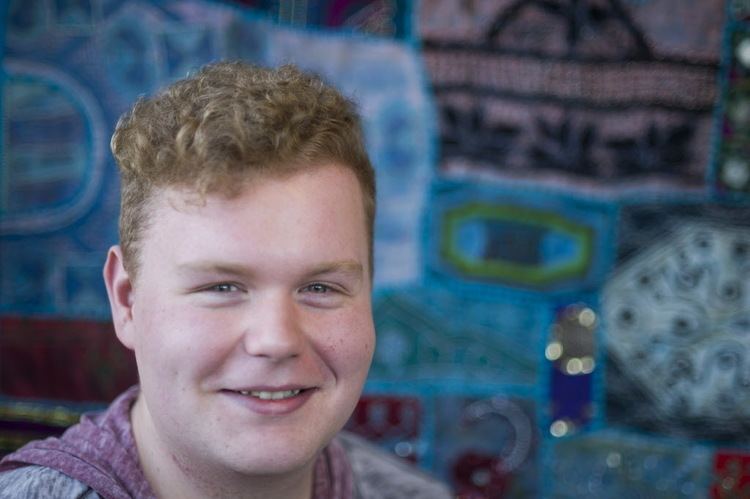
Erdrich would like to see Brett Kelly as Hugo – from the Hoda & Jenna interview – image from Alchetron

There is a mystery here as well. what happened at “the party” and why is it such a hush-hush subject? Something terrible is hinted at. There are ripples emanating from this event that inform multiple character arcs.

There are a few literary references applied here. Madame Bovary is one. If you know the story, the echoes will boom at you. If not, it is no trick to pull up an abstract. Ditto for Anna Karenina. (see EXTRA STUFF for links)

As with any work of fiction it requires that we relate, at least somewhat, to at least some of the characters. Erdrich has a gift for writing characters that, whatever they may do, we can appreciate their motives, even if we may not agree with their choices. This is a major strength of the novel. She crafts rounded humans, ambitious, frightened, rational, irrational, loving, thoughtful, feckless, smart in wildly divergent ways, and, ultimately, satisfying. She does this while incorporating a payload of ecological concern, relationship insight, and an appreciation of history’s impact on lived experience, while adding a layer of magic to aid our understanding, and including a few laughs to smooth the way. Louise Erdrich is a national treasure, a reliable source of quality literary fiction, and an ongoing delight to read. The Mighty Red is indeed a mighty read.

Review posted – 12/13/24

Publication dates
———-Hardcover – 10/1/24
———-Trade paperback – 11/04/25

I received an ARE of The Mighty Red from Harper (through my Book Goddess dealer) in return for a fair review. Thanks, folks, dear.

This review is cross-posted on Goodreads. Stop by and say Hi!

=======================================EXTRA STUFF

Interviews
—–*Barnes & Noble Book ClubLouise Erdrich discusses THE MIGHTY RED with Lexie Smyth and Jenna Seery – with Lexi Smyth and Jenna Seery – video 45:37 – This is the one you want to check out
—–Today with Hoda and Jenna – Author Louise Erdrich talks ‘The Mighty Red,’ takes fan questions
—–my link text
—–The Paris Review my link text
—–Book Page – Red is an earth tone by Alice Cary

Other Louise Erdrich novels I have reviewed
—–2021 – The Sentence
—–2020 – The Night Watchman
—–2017 – Future Home of the Living God
—–2016 – LaRose
—–2010 – Shadow Tag
—–2012 – The Round House
—–2008 – The Plague of Doves
—–2005 – The Painted Drum

Items of Interest
—–Project Gutenberg – Madame Bovary – full text
—–GetAbstract – of Madame Bovary
—–Project Gutenberg – Anna Karenina – full text
—–ReWire The West – Anna Karenina: Summary and Analysis
—–North Dakota State University – WHY IS THE RED RIVER OF THE NORTH SO VULNERABLE TO FLOODING?
—–MPR News – 20-month lockout over, sugar workers brace for return to work by Dan Gunderson
Leave a comment

Filed under Cli-Fi, Fiction, Literary Fiction

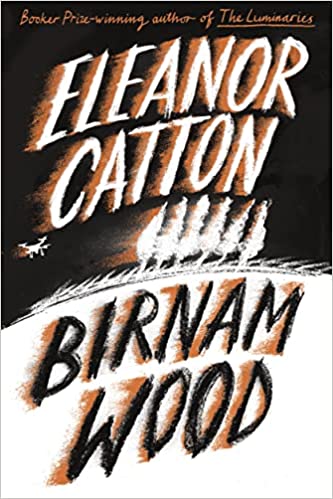
Birnam Wood by Eleanor Catton

book cover

…all the great tragedies are stories ultimately of betrayal. They’re stories where people betrayed the people closest to them but they’re also stories where people betray themselves. They kind of betrayed the better person that they could have become. – B&N interview

Third Apparition –
Macbeth shall never vanquish’d be until
Great Birnam wood to high Dunsiname hill
Shall come against him.


Macbeth –
That will never be.
Who can impress the forest, bid the tree
Unfix his earth-bound root?
The Scottish
Play

Wanna bet?

Birnam Wood is a serious, literary novel, a tragedy, cleverly disguised as an eco-thriller. Mira Bunting, 29, a horticulturist, heads an activist collective called Birnam Wood. They grow food in found plots of land, sometimes with permission, sometimes not. What they grow they consume themselves and give away to any in need. She discovered in childhood an interest in horticulture. It drowns out the relentless patter of self-critique that drives her.

description
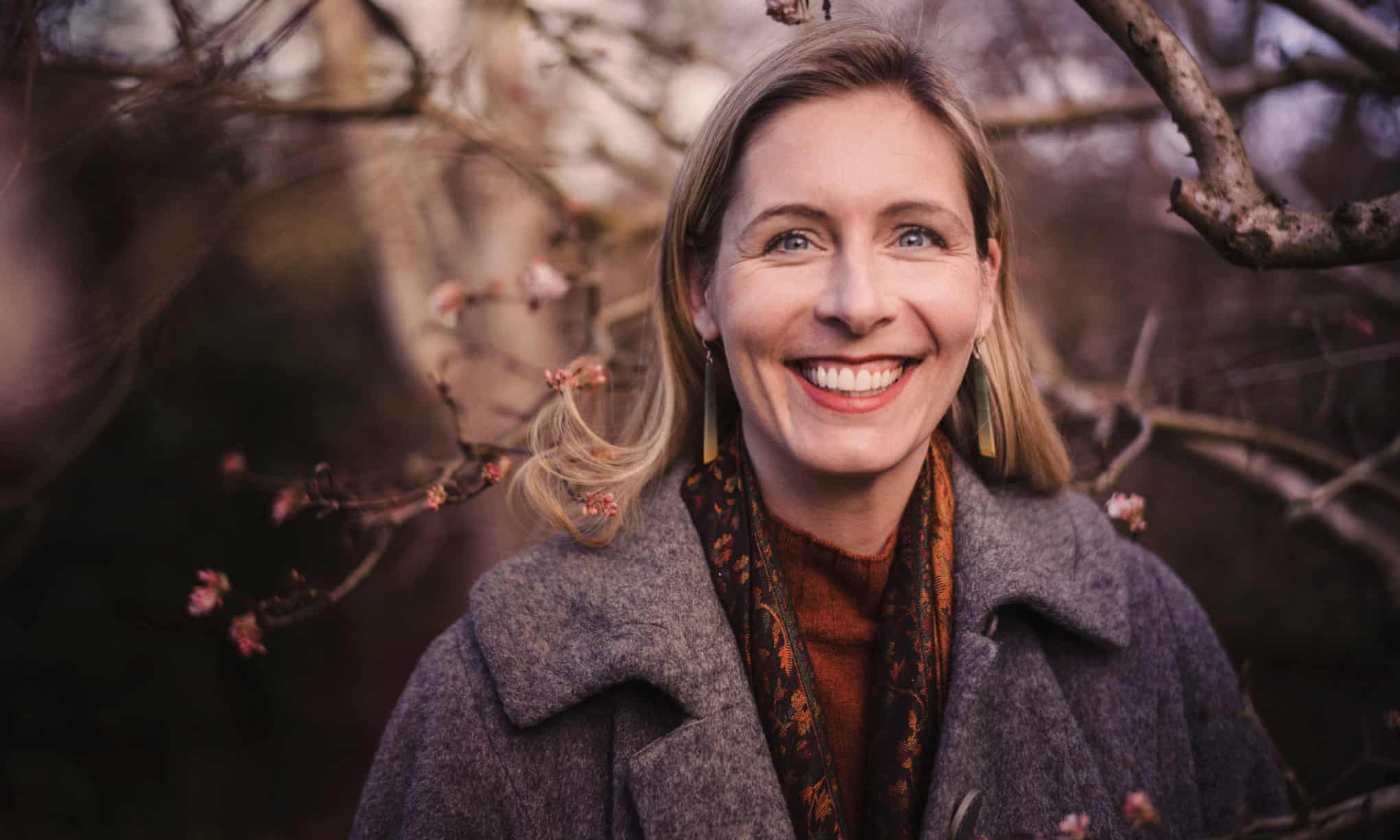
Eleanor Catton – image from The Guardian

Shelley Noakes is number two, the sort of efficient workhorse that most organizations need in order to survive. Though she is Mira’s roomie and bff, Shelley has grown tired of being taken for granted, always relegated to second fiddle, and is determined to leave. She struggles, however, with the knowledge that if she leaves, Birnam Wood will not survive Mira’s laughable incapacity for meat and potatoes organizational management.

Tony Gallo has been away for several years, backpacking, teaching English in Mexico, trying to find himself. He wants to become a freelance journalist, despite a thin volume of actual experience. He is idealistic and insufferable, his ideological lines are not only clear, but electrified. He is carrying a torch for Mira and has returned home to see if there are any sparks left. Eager for a journalistic break, he stumbles across a biggie.

Robert Lemoine is an American billionaire, disgustingly rich from his drone business. He is looking for a bug-out retreat in case of global meltdown, and had found just the place. Is Lemoine a well-meaning rich guy, or a Bond villain?

Owen Darvish, recently knighted, is the owner of that place, a considerable swath, cheek by jowl with a national park. Unfortunately, there was a major landslide there recently, which has cut off the town of Thorndike. Will the sale actually go through now?

The landslide has caught Mira’s attention. What if Birnam Wood could set up shop in a place that was effectively cut off from most ongoing enterprise? Might be a great chance to grow her non-profit into a much larger player, and maybe do a fair bit of good? She decides to make the considerable drive and check it out. While there, she encounters Lemoine. This is where the story really gets going.

The novel flows in two parallel streams, often merging, then separating, then merging again. The first is the eco-thriller. What is Lemoine on about? He can certainly come across as charming, and sincere, but is he really? Is the money he offers Mira for Birnam Wood’s work being given sincerely, or is he up to something? Does the devil speak true? That he has a studly appeal adds to the confusion. The other is a deep dive into personality and motivation, with rich literary technique and a host of thematic concerns.

Privacy, or lack thereof, is a frequent focus in the book. Lemoine, for example, is a developer of drone technology, and is a one-percenter as well in terms of knowledge of and facility with surveillance. (…he took his phone out of his pocket, tapped the screen, then turned it around to show her. Under the list of detectable devices nearby was listed ‘mira’s iPhone’.) It permeates down to the ninety-nine-percenters as well. This, for instance, is our introduction to Shelley:

…the yellow circle labelled ‘Mira’ pulled out into the street and began traversing slowly north. Shelley Noakes reduced the scale of the map until her own circle, a gently pulsing blue, appeared at the edge of the screen, and watched the yellow disc advance imperceptibly upon the blue for almost thirty seconds before turning off the phone and throwing it, suddenly and childishly, into the pile of laundry at the end of her bed.

Mira has a tracker app on Shelley’s phone as well. Mrs Darvish keeps up on where her husband is by tracking his phone. Tony’s research is of the investigative reporter sort, on line and in-the-field which, of course, entails some significant snooping. And, of course, he is snooped on while he investigates.

Catton uses interior dialogue to let us in on the main characters’ struggles with who they are and what they want. Well, not so much Lemoine, who struggles less with a values dialectic than with figuring out how to get what he wants from the world. Tony sees himself as a progressive, but wrestles with his feminist credentials, and sincerely wonders if he is inauthentic in his desire to make a meaningful career for himself, in presenting himself as someone who has to struggle to get by, who criticizes the very system that makes his life possible. Mira struggles to hide (…a vanity, an appetite, a capacity for manipulation that she would rather other people did not see; she knew, and was ashamed to know). Shelly has to reconcile her seemingly permanent peace-maker role in life with her need to be her own person.

Shelley wanted out. Out of the group; out of the suffocating moral censure, the pretended fellow feeling, the constant obligatory thrift; out of financial peril; out of the flat; out of her relationship with Mira, which was not romantic in any physical sense, but which had somehow come to feel both exclusive and proprietary; and above all, out of her role as the sensible, dependable, predictable sidekick, never quite as rebellious as Mira, never quite as free-thinking, never – even when they acted together – quite as brave.

This being a tale not told by an idiot, inspired by a tragedy, there will be familiar tragic elements on display. Tragic flaws for everyone. Come one, come all. But can the mere hoi-polloi really be tragic characters? Isn’t that reserved for the high and mighty? Owen Darvish certainly counts for that, as does Lemoine. But Mira? Shelley? Tony? Or is grandiosity alone sufficient to elevate one to a height sufficient to mark a character as potentially tragic? Catton does make us wonder as we read just who are the tragic characters, and who the schlubs who are guilty of, maybe, a bit of overreach, or garden variety foolishness.

Of course, there is more to them than merely wanting beyond their capacities. There is another element from tragedy to consider. Note the quote that opens this review. Betrayal figures large. There is enough deception in the air here that one might be well advised to don a bee-keeper outfit to fend off the tangled webs that permeate the landscape. Secrets will be kept, some minor, some world-class. Our intro to Mira, for example, shows her using a false identity to research the landslide area. More importantly, is she selling out the collective if she comes to a deal with Lemoine? Shelley tries her best to seduce Tony as a passive-aggressive way of getting Mira to separate from her. Others have their own secrets and betrayals nicely tucked away.

Another tragedic element is that outcomes are the result of actions, not fate or chance. If you look back down the path from end to beginning you will see all the characters’ yesterdays lighting the way to an inescapable end. Although it is not the only influence on the book, Macbeth is clearly the primary one.

[Catton] drew up another intricate masterplan in which each of the main characters could be seen as Macbeth, with a corresponding Lady Macbeth, witches and so on. It sounds tricksier than it is: as the narrative perspective shifts, everybody could be the villain. She wanted to stop readers playing “the polarised blame game we are all used to in contemporary politics,” she explains. “You wouldn’t be able to say: ‘These are my people so they are obviously the good guys. These are the people that I despise so they are obviously the bad guys.’” – from The Guardian interview

You will have to find out for yourself how much of this structure made it into the final draft.

Other significant sources of inspiration were 20th century crime fiction, Jane Austen’s Emma, (the structure and taut language) and even Mary Shelley’s Frankenstein. The character Shelley was named for the author, leaving us to wonder whether this Shelley is creature or creator.

While this is a novel in which actions matter, and have consequences, it is also one in which the omniscient narrator will tell you everything you need to know about each of the characters. This ability to look into (monitor remotely? surveil?) everyone’s deepest inner thoughts and feelings resonates with the surveillance elements in the story. One of the precipitating ideas for the book, the Big-Brother-is-watching element certainly, sprung from a 2015 protest in which New Zealand police were taking photos of protesters as they walked past.

Catton is also interested in inter-generational dealings.

It’s something I have thought about a lot…how my generational placement or position has conditioned me. The book is designed generationally. There are three generations represented in terms of the points of view. And I wanted to really explore the generational differences in terms of how they deal with certain contemporary problems that we’re all kind of facing globally. – from The Toronto Public Library interview

But it is no boomer-bashing party.

“Millennials are quite willing to cosy up to the tech gen Xers,” she says. “We are all personally enriching billionaires like Elon Musk by freely giving away our data…These minerals are in the phones that are around us all the time. I want my iPhone. I want to be able to have the freedoms that it brings. We are all complicit.” – from The Guardian interview

In addition to its literary and thriller aspects, Birnam Wood is a satire, a caricature of diverse sorts. Most glaring is the Birnam Wood members, whose motivations and desires are often less idealistic than what they show to the world. Darvish comes in for an uncomplimentary look, too, as does Lemoine. It is a tale, also, about expectations.

Macbeth is a play that’s all about prophecy. It’s animated by prophecy. So I …re-read it with everything that was happening in terms of world events resounding in my head and suddenly saw it in a really different way, as a play that contains very interesting and loud warnings about what happens when you regard the future with too much certainty if you’re too convinced about what lies just down the road. Because of course Macbeth makes the ending of Macbeth happen. None of that was written on the wall before before he received those prophecies and I and so I kind of wanted to achieve a similar effect in a novel by writing a book about incremental political actions and moral actions that end up kind of having these enormous effects that were avoidable. – from the Barnes & Noble interview

In short (too late, I know), Birnam Wood is a multi-layered triumph, building on classic structures and themes to tell a very contemporary story, offering consideration of how people make very human choices, as they contain battles between morality and desire. The tale does not at all creep in a petty pace, but rolls along at a good clip, shifting into turbo as it nears the end, generating an abundance of sound and fury which certainly signifies something.

Like all self-mythologising rebels, Mira preferred enemies to rivals, and often turned her rivals into enemies, the better to disdain them as secret agents of the status quo.

Review posted – 6/9/23

Publication date – 3/7/23

I received an ARE of Birnam Wood from FSG in return for a fair review. Thanks, folks, and thanks to NetGalley for facilitating, but ever since writing the review, I acquired, and can’t seem to wash off, these bloody spots.

This review has been cross-posted on GoodReads

=======================================EXTRA STUFF

Links to Catton’s Good Reads and Wikipedia pages

Profile – from Wiki

Eleanor Catton MNZM (born 1985) is a New Zealand novelist and screenwriter. Born in Canada, Catton moved to New Zealand as a child and grew up in Christchurch. She completed a master’s degree in creative writing at the International Institute of Modern Letters. Her award-winning debut novel, The Rehearsal, written as her Master’s thesis, was published in 2008, and has been adapted into a 2016 film of the same name. Her second novel, The Luminaries, won the 2013 Booker Prize, making Catton the youngest author ever to win the prize (at age 28) and only the second New Zealander. It was subsequently adapted into a television miniseries, with Catton as screenwriter. In 2023, she was named on the Granta Best of Young British Novelists list.

For those looking ahead

…her next work, “a queasy immersion thriller” that will be called Doubtful Sound, after the remote fjord in the south-west of New Zealand where it is set. She has had the title for a long time – “I just think it is so beautiful” – but it was only in the final months of completing Birnam Wood that the story came to her. – from The Guardian interview

Interviews
—–Poured Over: A Barnes & Noble Podcast – Eleanor Catton on Birnam Wood with Miwa Messer
—–Toronto Public Library – Eleanor Catton – Birnam Wood – Mar 6, 2023 – video – 44:50
—–The Guardian – Eleanor Catton: ‘I felt so much doubt after winning the Booker’ by Lisa Allardice
—–NY Times – Eleanor Catton on ‘Birnam Wood’ with Gilbert Cruz – audio – 35:11
—–Stuff – Eleanor Catton on guilty pleasures, being a slow writer, and whether NZ is still home

Songs/Music
—–Rockwell – Somebody’s Watching Me
—–The Police – Every Breath You Take

Item of Interest from the author
—–Waterstones – Eleanor Catton on Birnam Wood and its influences – video – 6:29 – on Emma as inspiration. There is a lot in here.

Item of Interest
—–The New Yorker – March 13, 2023 – Eleanor Catton Wants Plot to Matter Again by B.D. McCloy

Leave a comment

Filed under Cli-Fi, Fiction, Literary Fiction, Mystery, Thriller

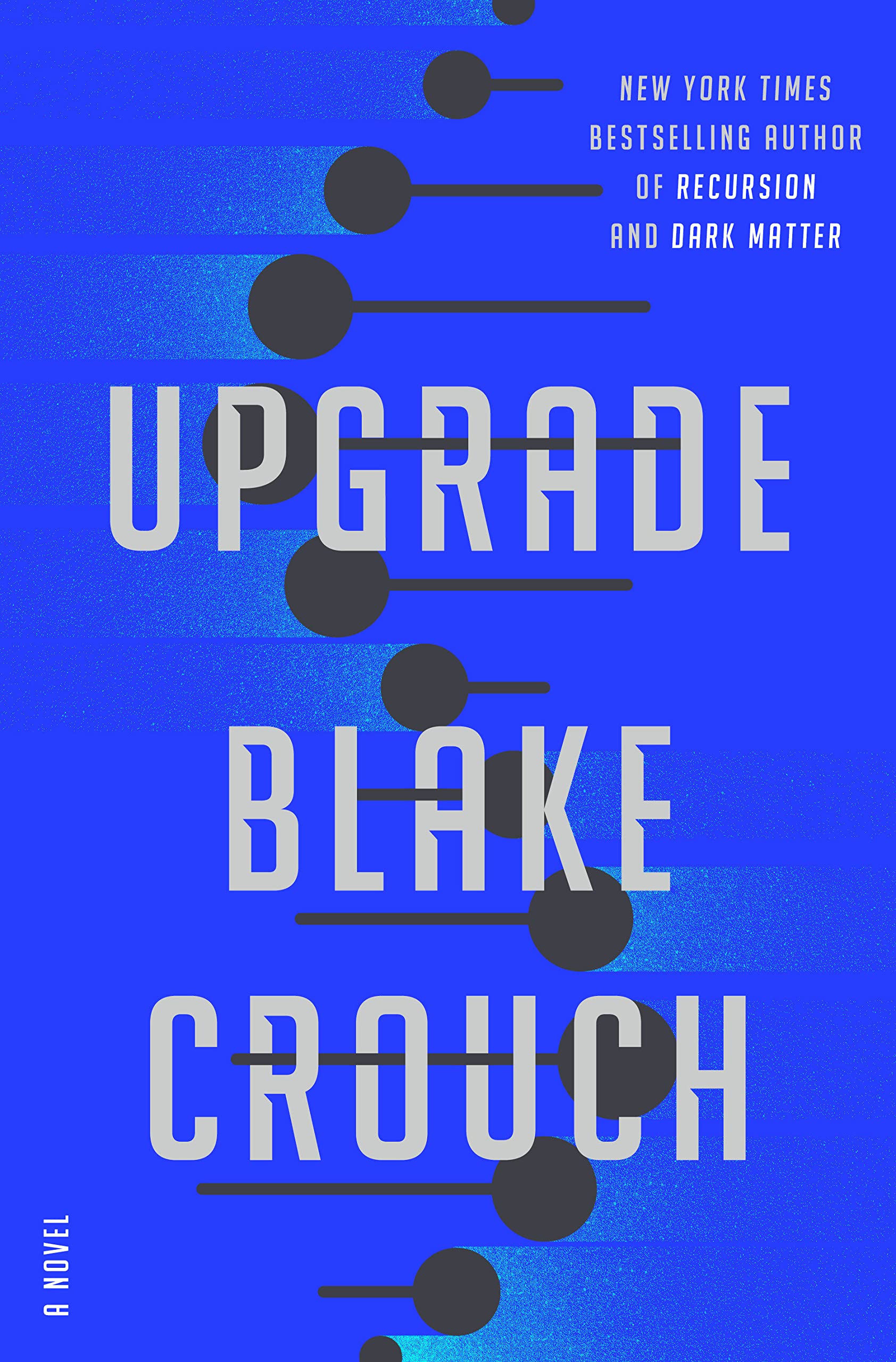
Upgrade by Blake Crouch

book cover

My mother had tried to edit a few rice paddies and ended up killing two hundred million people. What havoc could she wreak—intentionally or through unintended consequences—by attempting to change something as fundamental as how Homo sapiens think?

We were a bunch of primates who had gotten together and, against all odds, built a wondrous civilization. But paradoxically—tragically—our creation’s complexity had now far outstripped our brains’ ability to manage it.

OK, so if you had the chance to upgrade yourself, would you do it? I know I would. There are so many things about me that could be better. But, as we all know from the constant barrage of upgrades offered by the makers of every bloody piece of software, some have downsides. Such as new, bloated code slowing down your app. A feature you liked has been removed. You now have to endure ads. Are the benefits of greater value than the costs? Sometimes, but usually, we won’t actually know until the new version is installed, which can take anywhere from minutes to “really, this fu#%ing thing is still processing?” Sometimes, you have no choice, the app updates whether you want it to or not.

description
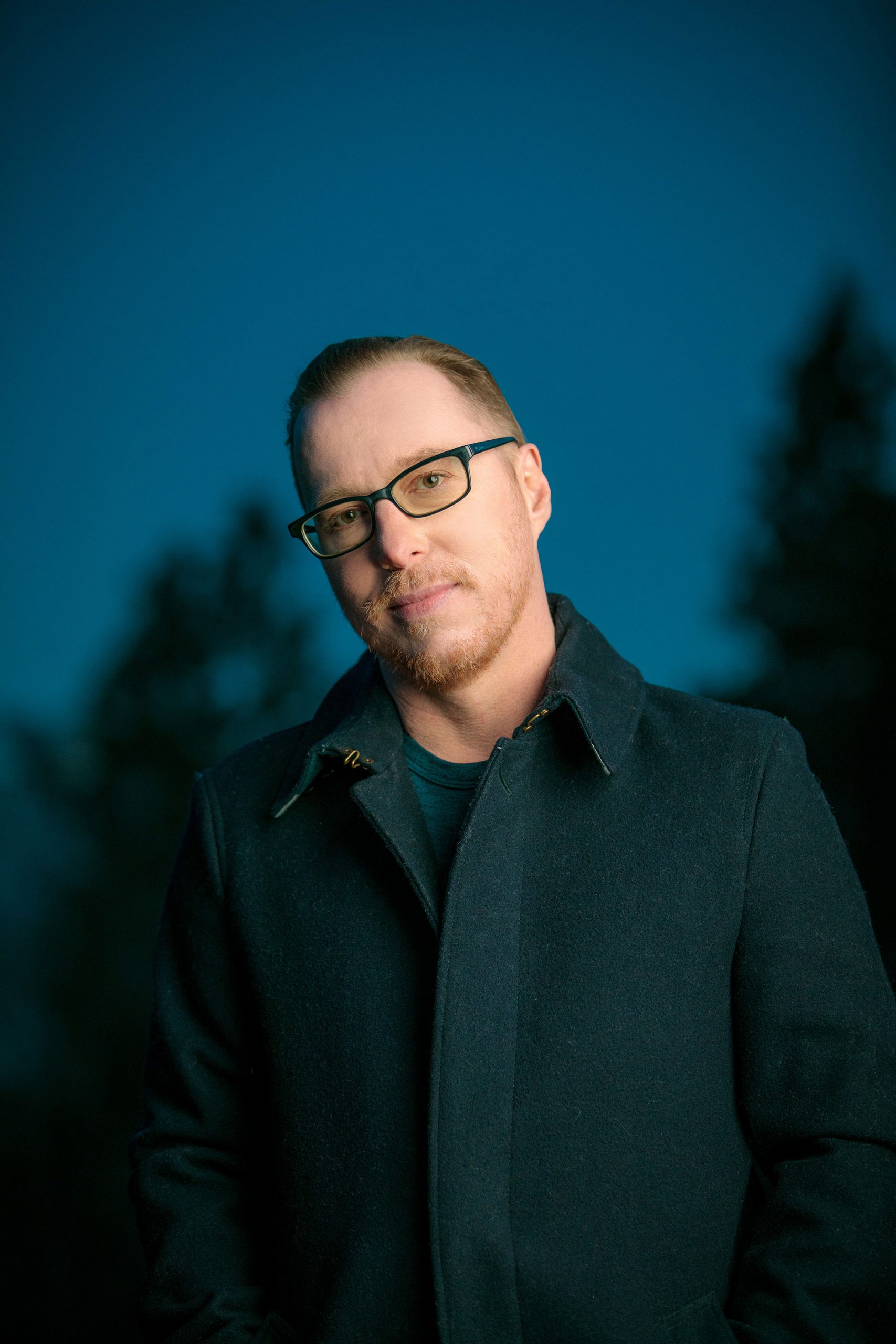
Blake Crouch – image from his site

I suppose agent Logan Ramsay could tell us something about that last case. On a raid, he walks into a planned trap, which goes boom, and Ramsay is infused with version 1.0 of something, which gets busy rewriting his internal code to produce version 2.0 of Logan. There are upsides and downsides. This is no steroidal enhancement, trading zits and rage for increased muscle mass. A nifty bit of tech called a gene driver, (can’t help but see a tiny Uber with double-helix treads) is busy re-writing his actual DNA. (For a new you, no really, a totally, completely new you, call…1 800 FIX-THIS. Of course, we have a la carte if there are only some minor changes you would like. Operators are standing by.)

Logan already had a complicated life. Mom was a geneticist trying to improve crop yields in China when there was a slight bit of collateral damage. Her altered-DNA material went where it was not supposed to. Oopsy. It was known as The Great Starvation. As noted in the quote at top, over two hundred million dead. Junior, who had been working with Mom, dead in the ensuing mess, wound up taking undeserved legal heat in her place, spent time in prison, but was sprung three years in. Now he works as an agent for the federal GPA, or Gene Protection Agency, (too late for Wilder) fiddling with genetic code having become a serious, felonious no-no, and Junior wanting to make amends for his family’s role in the global debacle. He is a geneticist like Mom, now dedicated to seeing that it never happens again.

So, what happens in every single film and book in which our hero is altered by some weird outside force? They are dragged into enforced isolation for relentless study. Or base their subsequent actions (FLEE!!!) on the presumption that this is what the powers that be have planned for them.

Of course among the changes that have been implanted into Logan is a significant increase in IQ. His perceptions have been enhanced as well, giving him a wider bandwidth for incoming sensory information and a much improved ability to process that new flow.

This is both a chase and a pursuit story, as Logan must stay out of the clutches of the government, while searching for a dangerous geneticist, trying to stave off another potential global disaster. His personal upgrades make both running and chasing less of a challenge for him than it might be for an unaugmented person.

Crouch offers a steady, if light, sprinkling of tech changes, letting us know we are in the future, if not necessarily the far distant future. Some seem more distant than others. Hyperloop, for example, is a widespread viable transportation mode. There is a mile-high building in Las Vegas.

The book is set slightly in the future, because I wanted to accelerate where some of the climate change and more in-the-weeds technology was heading, but it’s a mirror of where we might be five minutes from now. – Time interview

Some of the alignments seemed out of kilter. The story takes place in the 2060s. But delivery drones and driverless taxis hardly seem much of an advance for forty years. Ditto electric cars with greater range. Mention is made of a Google Roadster. Google producing its own car has been a project in the works since 2009. So, maybe only five minutes into the future for a lot of the tech Crouch employs. The five-minutes vs forty-years lookahead was jarringly inconsistent at times, which pulled me out of the story.

He also reminds us, with a steady stream of examples, that the underlying issue is humans having screwed up the Earth to the point where the continued viability of Homo Sap is called into question. Lower Manhattan and most of Miami are under water. Glacier National Park no longer features glaciers. Many wildlife species are only memories. It is raining in the Rockies instead of snowing. There are now seven hurricane categories.

There are some things about this book that I would change. There is an escape scene in which I found the means of egress a bit far-fetched, given the year in which it takes place. Surely there is better tech available? I kept wondering who got Logan sprung from prison. If it was revealed, I missed it. I wondered, during a flight from hostile forces, at how little pursuit of the runner there was by the pursuing forces. Really? That easy to get away? I don’t think so. A couple of lost family members merited a bit more attention. And there is a decided absence of humor.

Expected questions are raised. Things like what is it that makes us human? There are those who believe that enhancing, upgrading humanity’s intelligence-related genes to stave off the potential extinction of our species is the only solution, regardless of what collateral damage that might entail. If we are smarter, goes the theory, we will see that what we are doing is madness, and find more sustainable ways of living. While that notion is appealing, it seems pretty glaring that an intelligence boost alone will not cut it. I mean, so you make people smarter. What could possibly go wrong? Logan addresses this:

What if you create a bunch of people who are just drastically better at what they already were. Soldiers. Criminals. Politicians. Capitalists?

The notion has been done a fair bit. Forbidden Planet is the classic of this sort. That most of the genetic manipulators in this tale ignore this suggests that maybe they were not so smart as they thought they were, enhanced or not.

Might it enhance one’s appreciation of Upgrade if one had read his prior sci-fi thrillers? No idea. Have not read them. Cannot say. My unaugmented research capacities tell me, though, that this is a stand-alone, so at least there is no direct story or character connection to his prior work.

Upgrade is a fast-paced thriller that keeps the action charging ahead. I often found myself continuing to read beyond where I had planned to stop. Logan is a decent guy who struggles with moral decisions in a very believable way. There are reasons to relate to him as an everyman, regardless of who his mother may have been. Crouch offers character depth enough for this genre. The tech never gets extreme, a beautiful thing. The concerns raised are very serious. Hopefully, it will boost, if not your muscle mass and speed in the forty, your interest level in the world of genetic manipulation, which, albeit with the best of intentions, could wind up degrading us all.

TIME: You did a ton of research on gene editing for Upgrade. Was there anything you learned that stood out?
Blake Crouch: The big thing I came away with is how afraid scientists are of this research and this technology. I didn’t realize how unnerved everyone was about both the optimistic potential of this technology—but also the pitfalls that await us.

Review posted – August 5, 2022

Publication date – July 19, 2022

I received an ARE of Upgrade from Penguin Random House in return for a fair review, and not trying to change too much. Thanks, KQ, and thanks to NetGalley for facilitating.

This review has been cross-posted on GoodReads

=======================================EXTRA STUFF

Links to the author’s personal, FB, and Twitter pages

From the book
BLAKE CROUCH is a bestselling novelist and screenwriter. His novels include Upgrade, Recursion, Dark Matter, and the Wayward Pines trilogy, which was adapted into a television series for FOX. Crouch also co-created the TNT show Good Behavior, based on his Letty Dobesh novellas. He lives in Colorado.

Interviews
—–Time – Blake Crouch No Longer Believes in Science Fiction – by Anabel Gutterman
—–Paulsemel.com – Exclusive Interview: “Upgrade” Author Blake Crouch

Songs/Music
—–“Träumerei,” from Schumann’s Scenes from Childhood – Noted in chapter 6 as Logan’s favorite tune – if he says so
—–Bowie – Changes – a live version from 1999 – just because
—– Yamer Yapchulay – playing a violin cover of Tonight from West Side Story – one was played in Chapter 15
—–Kyla – I Am Changing – you can thank me later

Items of Interest
—–Carson National Forest – a hideout
—–Quantum annealing computing – mentioned in chapter 7
—–LifeCode is mentioned in chapter 9

1 Comment

Filed under Cli-Fi, Fiction, Sci-fi, Science Fiction, Thriller

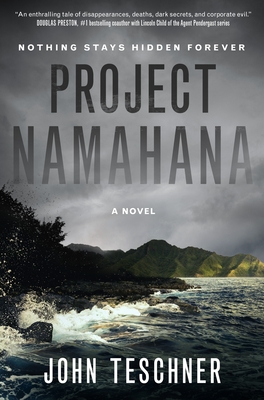
Project Namahana by John Teschner

book cover

They talk about shareholder value because they need to call it something. But there’s no accountability, not to shareholders, not to anyone. It’s chance. You can do everything right, but if there’s a drought in India and orders drop ten percent, you’ll be blamed. Unless you can get transferred in time for the blame to hit the next guy. And it goes all the way up. No matter what anyone tells you, or what they believe about themselves, all anyone is trying to do is make sure there will always be a chair for him to sit on when the music stops.”

“To quote Dr. Wilson,” said Professor Higa, “Selfishness beats altruism within groups. Altruistic groups beat selfish groups. Everything else is commentary. Can anyone explain?”

Project Namahana is a book about responsibility. Who accepts it. Who ducks it. How it is spread around so thinly that it ceases to have any substance. Are you responsible if you shoot someone? Sure thing, unless they were shooting at you first. Are you responsible if people are killed because of decisions you made? It begins to get tougher. What if you’d known there was potential for harm? It can be difficult to assign personal blame, particularly when decisions are made by a range of people.

description
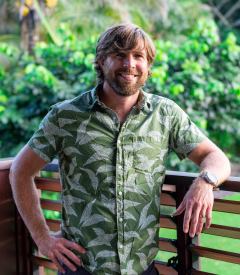
John Teschner – image from The Big Thrill

Jonah Manokalanipo takes his son and two cousins to a nearby dam for a swim. When he returns for them, after a heavy rain, he finds all three dead. What killed them? Jonah has an idea, and raises a huge fuss.

Micah Bernt is a military veteran, a loner mostly, seriously PTSD’d. He uses this to keep people at a distance, for their safety. He is not completely wrong to do so. Bernt is living on the Hawaiian island of Kauai, working selling outboard motors, renting a small place from a friendly older couple. He finds their comity off-putting, not wanting to get too attached and maybe expose them to his darker side. There is one. He did not get his screaming meanies from spending too much time in a knitting circle. There is plenty of guilt to go along with his unwelcome memories.

Michael Lindstrom is an exec with the Benevoment corporation, producers of GMO seeds and bespoke pesticides. There is a particularly promising project underway on Kauai that could yield major gains in production. But it is not quite ready for prime time, and the upstairs suits are eager to try something else, a different genetic mix, that would be particularly harsh on non-buyers. Lindstrom has been in charge of the older product line since its inception, and wants the company to hang on with it just a bit longer. But when it is implicated in the deaths of several local boys in the Namahana area of Kauai, Lindstrom is sent from the home office in Minnesota to get things sorted. Of course, there are additional complications as there might just be a connection to the several locals who have gone missing or worse.

From the sociologist Robert Jackall I learned corporate managers make directives as vague as possible, forcing those lower down the chain to make ever more concrete decisions. And from Stanley Milgram, I learned it’s human nature to shift our model of morality when following orders, justifying actions we would never do on their own. – from Teschner’s Tor/Forge article

Bernt’s landlord, Clifton Moniz, is one of these. The circumstances of his death are seriously hinky. Moniz’s widow, Momilani, knowing that Bernt has some military police background, asks him to look into the death for her. And we are off to races.

Chapters flip back and forth, mostly between Bernt’s local travails and Michael Lindstom’s coming of conscience, as he begins to really feel responsibility for what his company might have done, recognizing that many of the relevant, bad decisions that had been made by the company had been his. He engages not only in an investigation of the problem at Namahana, but in considerable soul-searching.

[the] novel was inspired by a NYT Magazine story of structural violence: for decades, as told by Nathaniel Rich, DuPont factories dumped toxic chemicals in West Virginia streams, abetted by permissive regulators and a corporate bureaucracy that distributed the action of poisoning other human beings into a chain of indirect decisions carried out by hundreds of employees. – from Teschner’s non-fic piece in the Tor/Forge blog

Both Lindstrom and Bernt are on roads that lead to the same place, literally, as well as figuratively. Micah and Michael (maybe the reason for the similarity in names?) are both in great need of redemption, Michael for his managerial sins, Micah for whatever crimes had gotten him discharged from the military with an honorable discharge but maybe not so honorable a final tour.

There is considerable local color, showing a part of Hawaii that is not on the postcards or tourism brochures. Teschner lived on Kauai for seven years, so, while not a native, he knows a bit about the place. This includes not only elements of the local economy, but the relationships among the residents. There is considerable use of local lingo. I read an EPUB, so do not know if the final version includes a glossary. You might have to do some looking-up, but not at a problematic level.

Literally millions of people visit Hawaii every year, but I venture to say that few will find anything familiar in here except for the landscapes. The tourism industry on Hawaii has been so successful, the unique culture of the island itself is almost completely hidden by the stereotypes and the carefully managed visitor experience. – from the Big Thrill interview

Teschner may have presented us with a purely evil Benevoment ag-biz corporation, but his company exec is much more nuanced. We get that he is a well-meaning sort, who sees his work as helping ease world hunger, even if there might be some collateral damage in getting from place A to place B on that road. Micah Bernt is also a good-hearted soul, even if that soul may have acquired some indelible stains. These internal conflicts give the leads some depth. That said, we do not learn enough about Micah Bernt’s challenges while in the military.

Project Namahana looks at systemic, institutional violence foisted on locals by higher-ups in government, the corporatocracy, or both, looks at how personal responsibility fits into that, and fits his two leads with a need for expiation. It is fast-paced and action-packed, with the requisite twists and turns, and even a complicated love interest for Micah. We get to see both the welcoming aloha tradition and the darker side of a brilliant place. It is a fine first novel, showing some serious talent. I expect that the proper reaction to this book is to say Mahalo.

The newest version was the most effective yet, but the tweak in chemistry had made the volatility worse. Morzipronone wouldn’t stay where it was sprayed: a slight breeze carried it miles. It didn’t matter what they put on the label; no application guidelines could prevent drift onto neighboring fields. Any crop that wasn’t genetically modified to resist it would cup and die after just a few exposures.

Review posted – July 22, 2022

Publication date – June 28, 2022

I received an eARE of Project Namahana from Tor/Forge of Macmillan in return for a fair review, and some of that wonderful Kona coffee. Thanks, folks, and thanks to NetGalley for facilitating.

This review has been cross-posted on GoodReads

=======================================EXTRA STUFF
Links to the author’s personal, FB, Instagram, Tumblr, and Twitter pages

Profile – from the Big Thrill interview

John Teschner was born in Rhode Island and grew up in southern Virginia. He has worked as a newspaper reporter, professional mover, teacher, and nonprofit grant writer. He served as a Peace Corps Volunteer in Kenya and rode a bike across the United States. He spent seven years living on the island of Kaua’i with his wife and two boys, where he helped lead Hui O Mana Ka Pu’uwai outrigger canoe club and became a competitive canoe racer. He now lives in Duluth, Minnesota, where he is learning how to stay upright on cross-country skis. PROJECT NAMAHANA is his first novel.

Interview
—–The Big Thrill – Project Namahana by John Teschner

Items of Interest from the author
—– The Non-Fiction Pieces That Inspired Project Namahana by John Teschner
—–Tor/Forge – excerpt

Leave a comment

Filed under Fiction, Mystery, Reviews, Thriller