Tag Archives: books-of-the-year-2015

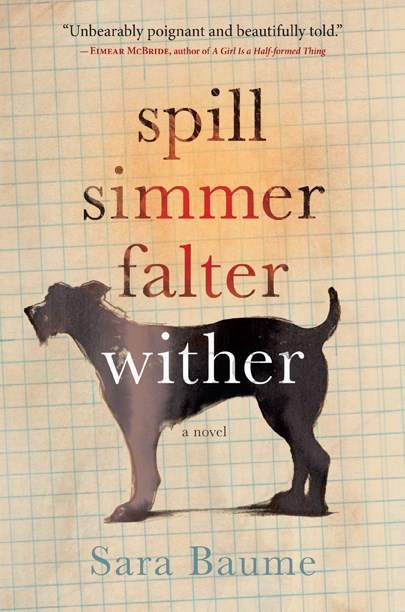
Spill Simmer Falter Wither by Sara Baume

book cover

You’re Sellotaped to the inside pane of the jumble shop window. A photograph of your mangled face and underneath an appeal for a COMPASSIONATE & TOLERANT OWNER. A PERSON WITHOUT OTHER PETS & WITHOUT CHILDREN UNDER FOUR. The notice shares street-facing space with a sheepskin overcoat, a rubberwood tambourine, a stiffed wigeon and a calligraphy set. The overcoat’s sagged and the tambourine’s punctured. The wigeon’s trickling sawdust and the calligraphy set’s likely to be missing inks or nibs or paper, almost certainly the instruction leaflet. There’s something sad about the jumble shop, but I like it. I like how it’s a tiny refuge of imperfection. I always stop to gawp at the window display and it always makes me feel a little less horrible, less strange.

You are unsettled tonight, Mouse. I wonder why that is. Come, let me wrap my arm around you and scratch your tiny head. No? Not ready for that? OK. Well, how about I tell you about this book I just read? Go ahead, hop down to the floor. It’s ok. You’re not ready for holding just now. As for this book, there’s a man, Ray. He’s 57. Too old for starting over, too young to give up, he says. He has had a very sad life. His mother died when he was a baby, so he never knew it was usual to have two parents. He had only his factory-worker Da, who not only raised him alone, he raised Ray away from other children. Practically as a shut-in. Children in this rustic waterfront part of Ireland were cruel to Ray, teased him, tormented him. I guess his father thought that Ray, who was not the sharpest tool in the shed, would manage better at home than hassled at school. But it was a lonely life.
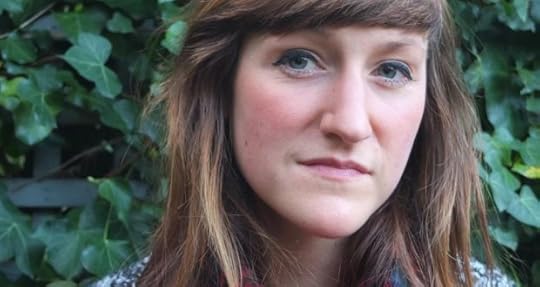
description
Sara Baume – image from The Irish Times

Are you listening, Mouse? I see your ears are still pointing up and forward, so I suppose you are. Ready to come back up? No? not yet? Ok. I will try to tell you about this in as soft a voice as I can. So, one day Ray is out in town and sees a sign in a store window with a photograph of a dog in need of a home. Do you remember when you used to live on the street? It was only for a short time. We found you when you were soooo tiny. But this dog that Ray found was not a baby like you were. He was a full-grown pooch, who had seen some difficult times. He might have been a young aggressive dog, but he could have been an old one too. We don’t really know. He had even lost an eye. Ray thinks he had been trained to go after badgers, and that a badger had gotten the better of him. But Ray sees something of himself in the dog, something less than beautiful, not like you, Mouse. You are soft and gorgeous. So he brings him home and calls him One Eye. It gives him someone to talk to, at least. And maybe something more.

People talk to their pets for all sorts of reasons. But Ray talked to One Eye because he had no one else. In this book, Ray tells One Eye all about his life, how he had lived with his father for most of it, and alone ever since his father passed. It is a pretty unusual thing in a novel, Mouse, for someone to spend all, or most of the book anyway, talking to someone else. Quite the challenge. But it works pretty well here, I thought. Of course, One Eye may be a good companion, but, like Ray, he was not the best schooled. Has issues with attacking. You don’t know about that sort of attacking, Mouse. When you pounce on and wrestle with your brother, Dash, biting and clawing, wrestling, and rolling over each other, it is all in fun. Not with One Eye. He does not seem to know how to behave around others. This makes things a bit tough for Ray. People tend to get upset when dogs are not well trained.

Ray does not think much of himself. He thinks he looks like a troll. Here is how he describes himself. I’ll try to read it to you in an Irish accent.

I’m a boulder of a man. Shabbily dressed and sketchily bearded. Steamrolled features and iron-filing stubble. When I stand still, I stoop, weighted down by my own lump of fear. When I move, my clodhopper feet and mismeasured legs make me pitch and clump. My callused kneecaps pop in and out of my shredded jeans and my hands flail gracelessly, stupidly.

Oh, that is such a big yawn. Are you ready to come up? Yes? Great. Here, I will cross my skinny legs and make a lap for you. I’ve already told you the story, or at least as much as I can without giving too much away. Did I tell you that the story takes place in Ireland? I did? Oh, ok. The lady who wrote it, Sara Baume, is half Irish. Her father is English. And her mother is Irish. They met while he was working in Ireland. The family moved back and forth, but Ms. Baume knows the place.

I like talking to you, Mouse. But not because I am lonely. I have my Sweetie and all your brothers and sisters. I even get out of the house once in a while. And there are scads of people I can talk to through the computer or on the phone. But I do enjoy your attention. I like the way you watch my face while I talk to you. And I love the way your eyelids slowly droop until you are asleep. It reminds me of when I used to read to my human children at night. I wonder what thoughts scamper through your tiny brain. I bet if you lived outside you would take in all the sights and scents in the world you lived in. Ray does this as well. He does get outside, goes to town, to shops, to the beach. He may not be well educated, but he is not without his interests. He was taught to read by a neighbor, and developed a fondness for flora. He can rattle off the names of every sort of plant you could see in that part of the world. Ray marks the seasons by noting what plants are doing, which ones are blooming, wilting, changing shape and color. It is a remarkable skill and he tells us what he sees of nature all through the book. Here is an example:

See the signs of summer, of the tepid seasons starting their handover with subtle ceremony. Now the forest floor is swamped by bluebells, the celandine squeezed from sight. See how the bells hover above the ground, like an earth-hugging lilac mist. Now the oak, ash, hazle and birch are bulked with newly born leaves, still moist and creased from the crush of their buds. The barley is up to my kneecaps and already it’s outgrown you. As we crest the brow of the hill each day, you are shrouded in green blades.

It occurs to me, Mouse, that you have been living with us for about a year which is a lovely coincidence, as Ms. Baume’s story about Ray and One Eye covers a single year too. She made up names for the seasons, and used those as the title for the book, and a way to divvy the book up into four parts. Throughout it all, Ray describes the seasonal changes he sees.

We get to see Ray long enough to get a sense of what sort of person he is. He is far from perfect, even in what seems like his innocence. So, like a lot of us. Even you, Mouse, I see you sometimes lurking on a chair, the better to swat at brothers and sisters who might be passing below. I have seen you be unkind to siblings who joined the family after you. One Eye has some issues as well, more dramatic ones than you. Ray can be unkind, as well. But mostly he is sad, and fearful.

There is a bit of mystery going on here as well. Just how did Ray’s Da die? And how was that handled by local officials? Also, we wonder what happened to Ray’s mother. Did she die in childbirth? What secrets are kept in rooms of the house that Ray never enters? How did it come to be that Ray’s father was raising him alone?

Overall, though, Mouse, this is a bit of a love story. Two lost souls finding and binding with each other, struggling to make ends meet, to survive, but feeling a closeness neither had experienced for a very long time, if ever. Oh, you are almost asleep. One last stretch. Spread those claws, Go ahead now, curl up, right there in the crook of my left arm. You fit there as if you had been custom-designed for the space. There was one thing I thought was not really successful in the book. Ms. Baume tries to tell us about One Eye’s take on things by giving Ray dreams in which he imagines himself as One Eye. It just seemed forced, and not needed. Even Ms. Baume has admitted she’s had second thoughts about including those parts.

Before you are totally asleep, Mouse, I need to let you know that Ms Baume trained to be an artist, and it was a bit of a surprise that she wound up writing a novel. But one thing about artists who write is that they bring an amazing visual sense to their writing, and she does that here. It reminded me of another book by an author who is mostly a visual artist, The Night Circus. Totally different content, of course, but very strong visual sense.

If you could not already tell, my little sweet, I quite loved this book. It has a lot of pain and a lot of sadness in it. It is both funny at times and heartbreaking. But like another book that shows a very dark time, The Road, it lets us in on the love, the connection between two spirits. If any reader is not moved by this book, they must be bolted in place. I cried at the end. It is simply a beautiful, beautiful book. Not as beautiful as you, Mouse, but then, what could be?

Review first posted – 10/27/2017

Published – 2/1/2015

This review is cross-posted on Goodreads. Stop by and say Hi!

=======================================EXTRA STUFF

If Sara Baume can be reached directly on-line it is news to me.

Interviews

—–The Guardian – 2/18/17 – Sara Baume: ‘I always wanted to be an art monster’ – by Alex Clark

she hit upon the character of Ray, in Spill Simmer Falter Wither, as a way of avoiding dialogue, because, she says, she didn’t want to get the voices of Irish people wrong. “I’m like, I need someone who’s not going to talk much, and who’s going to live very much in his own head. And so the way he speaks comes about from the radio and from the television and from the book.” Her caution at depicting “Irish voices” is striking, and derives from her dual heritage. Her English father came to Ireland to lay gas pipelines, and met her mother, an archaeologist, while “they were both in the ground”. They moved to England for a while, doing the same work, moving around a lot and living in a caravan; her elder sister was born in Surrey and she was born in Wigan, because “that just happened to be where the caravan was parked”. The family moved back to west Cork when Baume was a baby, but a sense of being from two places has persisted.

—–The Irish Times – 2/12/15 – Sara Baume: ‘I actually hate writing. It’s really hard’ – by Sinead Gleesopn

The dog was the starting point . . . the dog in the book is my dog, who is a rescue dog with one eye and he’s a real last-chance-saloon dog. He has caused us a lot of trouble; he’s bitten people and I’ve paid them off to stop him being put down. With the narrator, I wanted him to be an older man, and to be afraid of innocuous things, so he’s frightened of children and he doesn’t have normal social skills. He’s slightly based on a man who I see where I live, who walks up and down the seashore. I wanted to create a character who wasn’t fully me, but partially me, who encapsulated things that I felt.

—–NPR – 3/17/16 For A Young Irish Artist And Author, Words Are Anchored In Images – by Lynn Neary

Before she was a writer, Sara Baume set out to be a visual artist. “First and foremost I see; I see the world and then I describe it …” she says. “I don’t know another way to write. I always anchor everything in an image.”

—–The Times Literary Supplement – 2/13/17 – Twenty Questions with Sara Baume

For any interested in a visual of Mouse, you might check here. Try to ignore the troll seated behind her.
2 Comments

Filed under Fiction, Literary Fiction

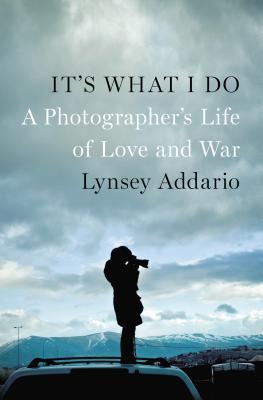
It’s What I Do by Lynsey Addario

book cover

“Sahafi! Media!! He yelled to the soldiers. He opened the car door to get out, and Quadaffi’s soldiers swarmed around him. “Sahafi!”
In one fluid movement the doors flew open and Tyler, Steve, and Anthony were ripped out of the car. I immediately locked my door and buried my head in my lap. Gunshots shattered the air. When I looked up, I was alone. I knew I had to get out of the car to run for cover, but I couldn’t move.

Click!

description
Lynsey Addario – from CBS News

You may not recognize the name Lynsey Addario, but if you read newspapers, check out magazines, or are aware at all of the imagery that accompanies major events in the world, you have seen her work. Addario is one of the premier photojournalists on the planet and has the portfolio, the Pulitzer, and a MacArthur award to prove it. In 2014, American Photo named her one of the five most influential photographers of the last quarter century. In 2012, Newsweek magazine cited her as one of 150 Women Who Shake the World. Thankfully, she does not shake her camera when she is shooting (unless of course it is for intended effect). Although no one could blame her if she did. Addario has spent a large portion of her career as a conflict photographer, working for extended periods on the scene in Iraq, Afghanistan, Libya, Congo, Sudan, and other garden spots. Wherever people have been shooting at each other in the last two decades there is a good chance that Lynsey Addario has been there. The one place she declares she will not go these days is Syria, which says something. She has been kidnapped in the field twice and has felt her life to be in danger more times than that, so when she says she won’t go to a place, it must be something really special.

ADDARIORETRO002
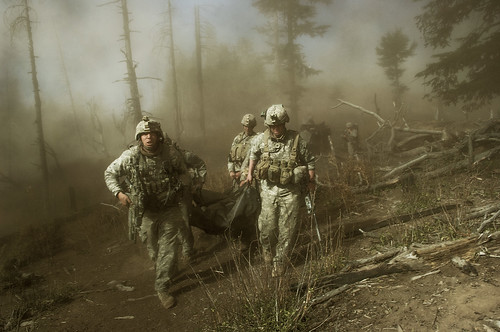
US Soldiers in the Korengal Valley of Afghanistan

It’s What I Do is Addario’s tale of her journey from growing up in a Connecticut suburb as part of a Bohemian family, to finding and developing a talent for capturing life through a lens, to pursuing a career in photography. While working in New York in 1999, she got a big break, being asked to work on an Associated Press project looking into transgender prostitution in the city, and the spate of homicides with which that community was being afflicted. It turned into a months-long undertaking and brought her work to public notice for the first time. Click!

description
A shot from that series

In 2000, a family friend invited her to go India.

Everything that made India the rawest place on earth made it the most wonderful to photograph. The streets hummed with constant movement, a low-grade chaos where almost every aspect of the human condition was in public view. Click!

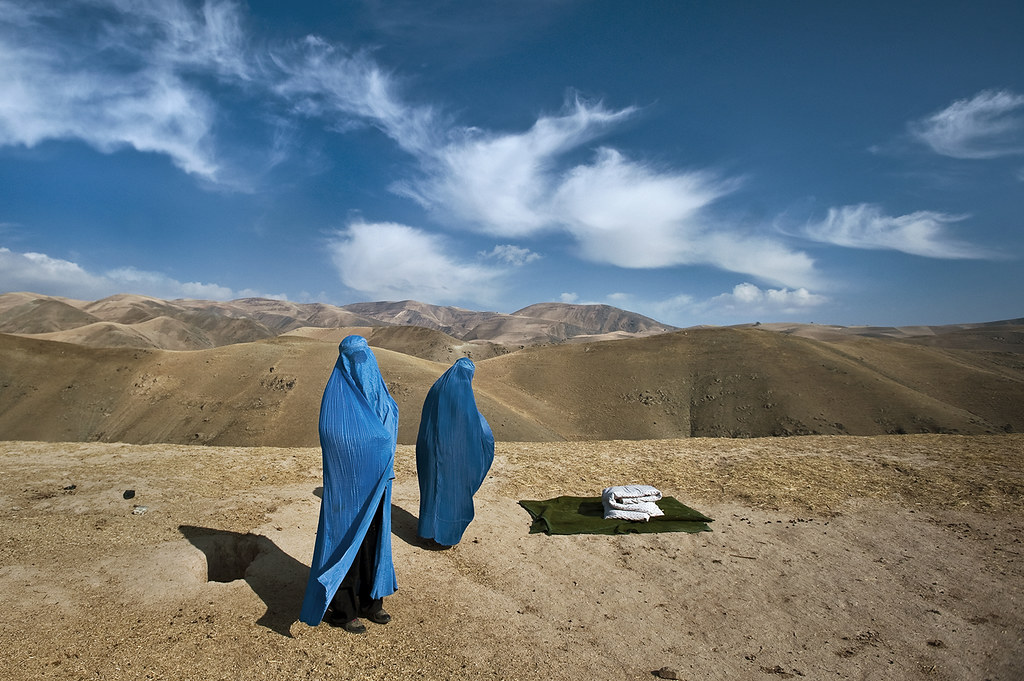
It was while there that she was encouraged to go to Afghanistan to shoot the lives of women living under the Taliban. She was able to gain access to a half of Afghani society barred to her male counterparts. Click!

description
Women and girls study and recite the Koran in Peshawar, Pakistan, 2001 – from the Women’s Eye

9/11 brought on a whole new era of conflict. Addario was on the scene when the USA invaded Iraq, having set up shop in Kurdistan when Saddam Hussein was toppled. Of course that required some extra planning. At the time she got the assignment she was in South Korea covering refugees from the north, and enduring the extraordinary humanitarian horrors of the extended karaoke the refugees enjoyed. She needed to get tooled up for the job and it proved challenging. One thing she had to arrange for was body armor. She found herself befuddled by the on-line offerings. She wrote to her editor.

I have checked out the websites you recommended, and am not sure if I just tried to read Korean. Basically, I have no idea what I am looking at—ballistic, six-point adjustable, tactical armor, etc. Please understand that this language is not familiar to me—I grew up in Connecticut, was raised by hairdressers.

ADDARIORETRO020
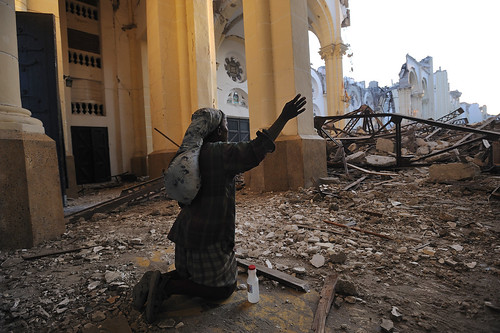
A woman prays at dawn after the 2010 earthquake that nearly destroyed Haiti

She was kidnapped for the first time while en route to Ramali with other journalists. And was subsequently jarred when Life magazine declined to publish her photographs, because they were too real for the American public. (The New York Times Magazine would later publish some of the work.) The experience of working in the Iraq war zone and coping with the politics of news publishing provided valuable life lessons.

…something in me had changed after three months in Iraq. I was now a photojournalist willing to die for stories that had the potential to educate people. I wanted to make people think, to open their minds, to give them a full picture of what was happening in Iraq so they could decide if they supported our presence there.

Her work has often demonstrated the power of the image. When she got shots of a Sudan massacre she made it impossible for President Bashir to continue denying that the war crime had taken place.

description
Addario’s image of armed boys and men near the Afghan border won her a Pulitzer – from The Women’s Eye

Addario pooh-poohs any notion that she is an adrenalin junkie. She says that she has come to recognize that the photos she takes have the power to inform the public and influence people, so feels a responsibility, a calling to bear witness to much of the awfulness of the world in order to shine some light on it, to bring it to the world’s attention.

description
Addario stopped to help when one of these women was in labor, miles from a hospital. She gave them a ride. – From Itswhatidobook.com

When Addario first submitted her manuscript, she was advised to make it more personal, as in writing about her off-the-field life as well as her experiences behind the lens. She includes in the final version a bit of her love-life history, which entailed some admittedly bad choices. As a dedicated career-woman, sustaining relationships has always taken second place to her work. She says she even walked out on dinner dates when she got an assignment.

Recently, a young photographer asked her how to get into the business. She told him to start traveling, shooting and contacting editors for assignments. When he told her that he didn’t want to travel much because of his girlfriend, Addario told him to break up with her.
“He thought I was insane,” says Addario. “I told him you have to decide what your priorities are. If you are not willing to make that sacrifice, there are 10,000 young photographers who will.”
– from Photo District News article

The book contains many amazing shots Addario has taken over the course of her career. They add significantly to the aura of outsized accomplishment that Addario has earned. One significant thing about the shots Addario takes is that they are not only journalistically effective but expose an impressive artistic talent. She is able to tell troubling stories while at the same time making outstanding art. The book is printed on very high-quality paper, images and text, which adds a very tactile richness to both the visual power on display and the engaging text.

description
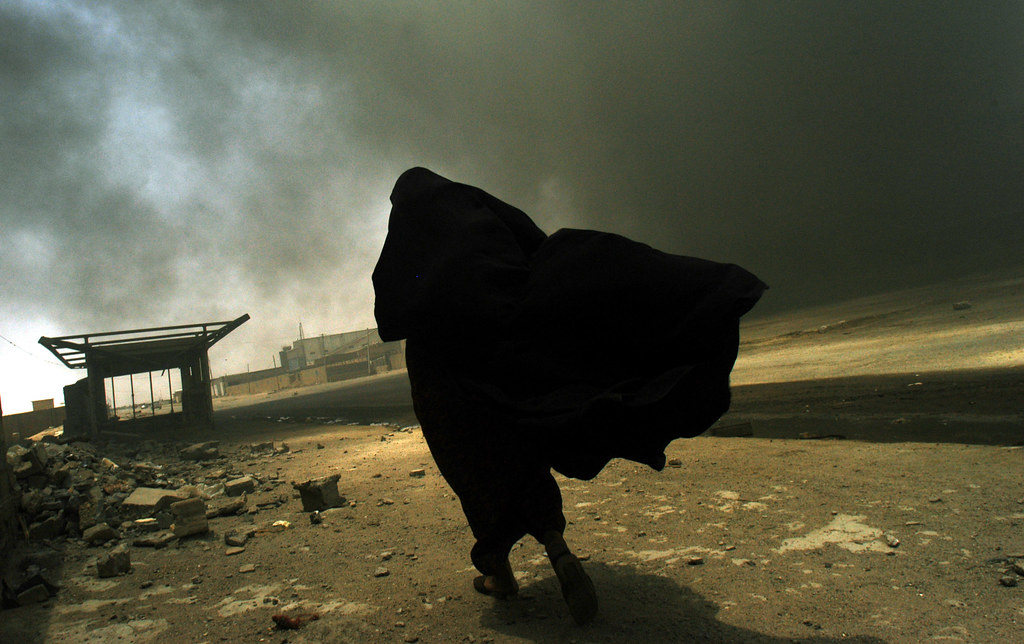
An Iraqi woman fleeing a massive fire in Basra in 2003

Although one can piece together information by reading diverse articles about her, and watching sundry videos in which Addario does presentations and is interviewed, those connections are not always spelled out in the book. Particularly in the earlier parts of her photographic sojourn, it was somewhat murky why and how she decided to uproot and move to Argentina, and later to India.

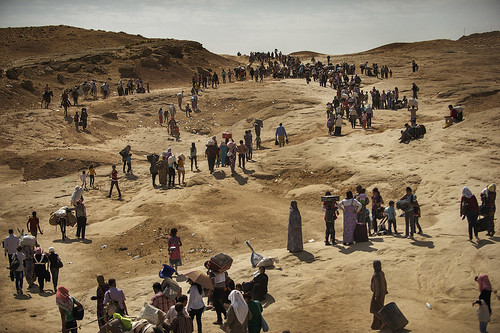
Syrian Refugees;northern iraq
Syrian refugees in Northern Iraq

It’s What I Do is not a photography book. You will not get any technical tips there. While you will see some very nicely printed photographic images, those are there to enhance, to illuminate the text. The main thing here is her story. Lynsey Addario is a rock star in the world of photographic journalism. She takes us frame by frame on her journey from suburban origins as the child of hairdressers to becoming a world traveler covering important events everywhere on the planet in an attempt to illuminate the darkness. It is quite clear that her achievements have come at considerable personal cost, and that she is possessed of a rare personal fire that has driven her to take large risks in order to fulfill what she perceives as her mission in life. For those of us not familiar with the names that appear under all those news photos, It’s What I Do offers particular insight into just how important it is to have photographic boots on the ground wherever important events are occurring. Real-world photography is Addario’s contribution to the world. We are all enriched by her efforts, her sacrifices, her courage and her talent. This book will be an eye-opener for many. It is a perfectly focused, well-framed look at a life well lived, a life that has benefited and promises to continue to benefit us all. Click!

Publication
———-2/5/2015 – hardcover
———-11/8/2016 – paperback

Review first posted – 4/22/2016

BTW, a deal was struck at some point to turn this into a major film, with Jennifer Lawrence as Addario, to be directed by Steven Spielberg. As of 2022, we are still waiting, so who knows?

=======================================EXTRA STUFF

Links to the author’s personal, Twitter and FB pages

She has a separate personal site specifically for the book

Every time I leave my family I wonder why I’ve chosen this life. I leave my two-year-old son and I come home and he won’t speak to me for a few days. And it’s lonely on the road. And I’m in these strange hotel rooms, or tents. It’s not a luxurious life. It’s something that people think that you’re out there for the adrenalin rush. They think you’re out there because it’s glamorous. But it’s not. You’re out there as a photographer who has chosen to cover conflict. It’s a calling. It’s something that sort of takes over who I am. People ask me why I do this and it is what makes me most alive. It is what I believe in. it is my happiness and It’s what I do.

Videos
—–This is must-see – Addario’s presentation, followed by an interview, at Arts and & Ideas at the JCCSF
—–National Geographic – 26 minutes – Lynsey doing a presentation, with focus on her NG assignments. Much info from JFFC presentation is repeated, but there is a lot that is different so this one is also definitely worthwhile
—–The Annenberg Space for Photography – focus on her kidnapping – 10 minutes
—– Item on CBS This Morning linked from LA‘s site
—–Time Magazine – This opens as text, but there are videos embedded

Interviews
—–Photo District News. Among other things this has a lot on breaking into the business
—– The Literate lens – In Love and War: An Interview with Lynsey Addario
—– Photojournalist Lynsey Addario On Her Relentless Pursuit of Truth – from The Women’s Eye

Articles
—–From American Photo – THE INFLUENCERS: LYNSEY ADDARIO
—–National Geographic – December 19, 2017 – Inside a Female Photographer’s Experience Documenting War – by Daniel Stone – Regarding the documentary series The Long Road Home, about the Iraq War

description
Addario watched as Iraqi Shiite followers of Muqtada Al Sadr stood amidst burning tires in Sadr City moments before American tanks opened fire on the area in Baghdad, Iraq April 4, 2004
Image and image text from NatGeo article – Image by Addario, of course

—–July 10, 2020 – A new article by Addario in National Geographic – In the U.K., families of the dead still wonder: was it COVID-19?

—–August 27, 2022 – MSNBC interview with Addario – Photographer Lynsey Addario reflects on 6 months of the war in Ukraine

2 Comments

Filed under Afghanistan, Bio/Autobio/Memoir, biography, History, Journalism, Non-fiction