Tag Archives: book-reviews

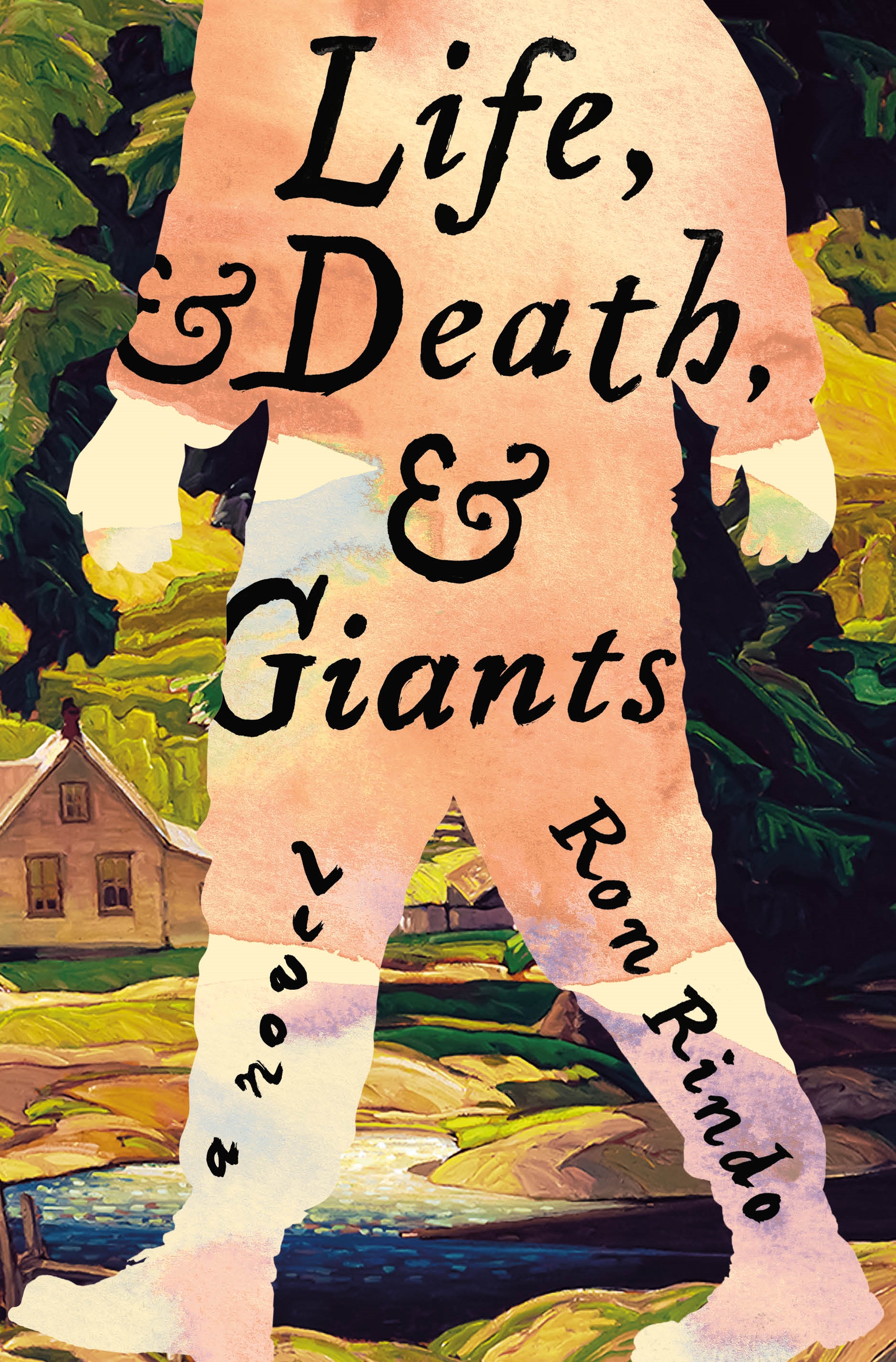
Life, and Death, and Giants by Ron Rindo

book cover

At age one, Gabriel Fisher weighed thirty-four pounds and stood forty-one inches tall. It was not only Gabriel’s unusual size that dazzled Thomas, but also his unusual way with animals. As a three-year-old boy, Gabriel would often sit on a milking stool beside Jasper’s chicken coop with a piece of bread hidden behind his back. He’d wait, watching the chickens scratch in the yard until his favorite hen, a barred rock named Betsy, eased her way close to his feet, and then he’d reveal the bread with a flourish. The other hens would race toward him, but Betsy would immediately hop on his lap and peck at the bread until she’d eaten it all. Afterward, Gabriel would cuddle her while he napped in the afternoon sunshine, and she’d turn her beak into the hollow under his armpit and fall asleep.

I recognized myself inside those pages. In a life devoted to goodness, devoted to God, there can still be yearning. A quiet mouth, a devoted heart, does not mean a quiet mind. Sometimes while reading, I found myself crying, overwhelmed by the depth and breadth of Miss Dickinson’s daring, by the baring of her soul.

Some books you rip through, eager, panting, for the resolution of a conflict and the presentation of the next one. Some books demand that you go through them slowly, a stroll hand in hand. Instead of a 5K. Life, and Death, and Giants is a book you want to take your time with, savor, taste, relish, feel.

description
Ron Rindo – image from Wisconsin Literary Map

Ron Rindo came across the story of the tallest person ever, from the 1920s and 1930s, and wondered how the modern world might react to a someone of like dimensions.

Just eight pounds five ounces at birth, [Robert Pershing] Wadlow stood eight feet 11.1 inches tall, weighed 439 pounds, and had size 37 feet at the time of his death, at age twenty-two, his extraordinary growth driven by hypertrophy of the pituitary gland. For a time, Wadlow toured with the Ringling Brothers Circus and promoted shoes for the International Shoe Company, but he seems to have sought a normal life, resisting efforts to define him exclusively as a circus attraction. He died of an infection in Manistee, Michigan, and is buried in Oakwood Cemetery in Alton, Illinois. My musings about how the twenty-first-century world might react to a giant in its midst provided the initial inspiration for this novel. – from the Acknowledgments

Giants such as these may have a brief stay among us, but, unlike the “beetle at the candle” or the “Hopper of the mill” can maintain more than their mere accidental existence. (The title of the novel is taken from that of the poem by Emily Dickinson. There is a link to it in EXTRA STUFF.) Gabriel Fisher is a magical person, imbued with qualities of a different realm. It is not just his physical characteristics, which mimic those of an actual human being, or the athletic prowess that traveled with his inflated size, but his kindness, considerateness, his gentleness, and his Franciscan affinity for creatures wild and domestic. A Tom Bombadil comparison would also be apt.

He opened his mouth, bayed like a young coyote. “That’s the boy,” Thomas said, smiling. “Let everyone know you’re here.” From the woods just beyond Thomas’s yard, a red fox barked, and squirrels began chattering. A half mile down the road, farm dogs howled; cattle lowed in their sunny pastures.

But, as great a presence as Gabriel is, it is the other characters in the novel who tell us what we need to know about him. He is a central hub around whom all the character spokes attach and it is their stories that make the novel roll.

“It’s a polyphonic novel, told from multiple perspectives, so in a sense, it’s five different stories,” says Rindo. “Hannah, Doc Kennedy, Billy Walton and Trey Beathards tell Gabriel’s story, but in the process, each of them tell their own story, too.” – from the Madison Magazine interview

Hannah Fisher is Gabriel’s grandmother. She loves him unreservedly, but the code of her Amish religion keeps her at a distance for far too long. Gabriel was born out of wedlock, his mother, who dies in childbirth, shunned by the community. Hers is one of the primary voices we hear throughout, as she struggles with the tensions between her faith, her love, and her sense of right and wrong.

Dr. Thomas Kennedy is a veterinarian, and the other primary voice here. Tragedy and unwarranted suspicion had driven him from a more urban life to this rustic town of Lakota, Wisconsin. He forms a life-time bond with Gabriel by virtue of delivering him into the world. Their connection is a thing of beauty, and will warm your heart. He also nurtures a friendship with Hannah. He is as good a person as you will come across anywhere.

Billy Walton manages a youth baseball team, and recruits the very oversized Gabriel to sign on. He is, of course a marvelous and dangerous player, given his power. Billy owns the local bar, and is making a place for himself after a lifetime of screwups.

Trey Beathards used to be someone, a football player, later a coach, then a drug addict and womanizer. There is much of Trey that is in need to rebuilding. He becomes Gabriel’s high school football coach, and guides his next steps. Billy and Trey introduce us to the great sports myth piece of the novel as Gabriel’s prowess exceeds any reasonable expectation, becoming the stuff of legends.

Most of the primary life tales told here share an arc. A past with troubles, self-inflicted or not, then rising from their ashes to find hope, redemption, or something like it. It is in how the characters behave around Gabriel, how they help him, look after him, care about him that we see a community in action. I am trying not to say it takes a village, but it is unavoidable.

There is a set of secondary characters here who add to the community element of the story, a gay couple who take in a stray, a severe Amish husband who does not welcome any “English” influence, a crusty older Amish man who seems to have burned all his bridges, a brotherly caretaker who goes above and beyond in caring for another.

The lines between Amish and “English” can be difficult to traverse, but Gabriel has a foot in both worlds and helps bring them to a common cause. In a different way, Thomas tries to expose Hannah to possibilities beyond her Amish restrictions. Rindo’s handling of religious and secular perspectives is deft.

You will enjoy the occasional book references scattered throughout, both to specific novels and to other unnamed texts. In parallel with the split between seeking fame versus opting for retreat, there is the tension between looking outward for inspiration and looking inward.

In his day job, Rindo teaches, among other things, the poetry of Emily Dickinson. That appreciation makes its way into the novel in two forms, a book of Dickinson’s poems that Hannah’s mother had left for her, and work left by another maternal influence. The poet’s perspective is woven into the tale, in a concern for faith, for nature ,and for the struggle to figure out how to live one’s best life, alone and in community, and the many sorts of love one can enjoy.

There were multiple times while reading this book that I was moved to tears. Not just for the emotional content of the characters’ struggles, but for the poetic descriptions, particularly of natural events.

Sometimes we feel we are on the scent of hidden things, but we doubt ourselves. Sometimes it’s because we believe we must be mistaken. Other times, it’s because we fear we might be right and we don’t want to be, or can’t be, because of who we are or where we live. But then something comes along to reveal that what we have scented with our innermost soul simply is, and our fear subsides. This revelation was my mother’s legacy, a book of poems she’d hidden, like a pheasant in the orchard grass.

There is no need to fear anything here. Life, and Death, and Giants is a heart-warming novel that will bring tears to your eyes, but which will also prompt you to consider just how to live, and just how society might work with a baseline of respect. It is one of the great works of 2025.

Review posted – 09/12/25

Publication date – 9/9/25

I received an ARE of Life, and Death, and Giants from St. Martin’s in return for a fair review. Thanks, folks, and thanks to NetGalley for facilitating.

This review is cross-posted on Goodreads. Stop by and say Hi!

==================================EXTRA STUFF

Links to Rindo’s personal and Instagram pages

Profile – from Wisconsin Literary Map

An English professor at the University of Wisconsin-Oshkosh, Ron Rindo was raised in Muskego, Wisconsin, and lives with his wife, Jenna, on five acres of wooded land in Pickett, where they raised five children and keep an orchard and an array of vegetable and flower gardens. He has published three short story collections, Suburban Metaphysics and Other Stories (New Rivers Press, 1990); Secrets Men Keep (New Rivers Press, 1995); and Love in an Expanding Universe (New Rivers Press, 2005); and a novel, Breathing Lake Superior (Brick Mantel Books, 2022). His short stories and essays have also appeared in a wide variety of journals, and an essay, “Gyromancy,” was reprinted in The Best American Essays, 2010

Interviews
—–ABC National Radio – Greyhounds, dark academia and an Amish community in new fiction by Toni Jordan, R.F. Kuang and Ron Rindo – audio – from 37:22
—–Madison Magazine – This novel set in small-town Wisconsin is more than a ‘tall tale’ by Anna Kottakis

Music
—–Hungarian Rhapsody Number 2 – in Chapter 8

Items of Interest from the author – Links to these short stories can also be found in Rindo’s website
—–Terrain.org – The Return of Migrating Birds
—–The Summerset Review – Horses
—–Wilderness House Literary Review – The Mystery in Summer Rain
—– The Trumpeter – The Song of the Tree Frog
—–Tikkun – A Theory of Everything

Items of Interest
—–All Poetry – Life, and Death, and Giants
—– Eddie Carmel

For what it’s worth, I had the experience, growing up in the West Bronx, of seeing Eddie Carmel every now and again. He and his parents lived there. It’s not like we ever had a conversation. But my pals and I spotted him climbing into a taxi or other car, feet planted in the front passenger seat. Tush in the rear. At that time of his life, he was afflicted with scoliosis, among other maladies, and walked with at least one cane. While it was startling to see someone that large (believe the 8’9″ number. There is no way he was only 7’3″) it was also very sad. It seemed from looking at him, his face, that this was a man who was in great pain. He was someone who was no longer able, if he had ever been able, to be comfortable in his own oversized skin. Awe was replaced with a very large feeling of pity.

2 Comments

Filed under Fantasy, Fiction, Literary Fiction

Killer on the Road / The Babysitter Lives by Stephen Graham Jones

book cover

“Next hundred and fifty miles are—they’re like the Bermuda Triangle for travelers, do you know that?” he says, finally bringing his pasty face around to Harper. “Thought it was the Snow Chi Minh Trail,” Harper says right back. It’s what her dad used to call 80 in the winter. “He’s talking about all the people who go missing, dear,” the woman says. “You’ve seen the posters in the windows at the gas station, haven’t you? Not just . . . walking people either. Drivers too.” “Just because people don’t call to check in doesn’t mean they’re missing,” Harper says. “Just means they don’t want to get found.”

“Thanks for the ride,” the hitcher says, climbing in from the sheeting rain. “What’s the old joke?” the driver says, clocking his mirror to ease back up to speed. “I ask you—no, you ask me if I’m a serial killer, and I say no, I’m not worried about that. The chances of two serial killers randomly being in the same car are through the roof, right?”

Somewhere in a U-Haul storage unit, there is a box or several with the remnant paperbacks of my wastrel youth. Among the volumes doing battle with mites of diverse sorts is a stack of Ace Doubles. From 1952 until 1973 Ace produced a line of paperback books that were printed in what is called the tête-bêche format.

“The ends of the two parts met in the middle, with a divider between them which functioned as the rear cover of both (the two parts were oriented upside-down with respect to each other in order to effect this)”– from Wiki

It was a bit of an oddity, but my need for science fiction was great, and I took my sustenance where I could find it. This format allowed for the publication of two pieces in a single volume. They could be novels, novellas, or abridged publications. (You can see a nice collection of covers from these on Flickr) There were other sorts, mysteries and westerns, for example, but I only cared about science fiction. As part of a celebration of Saga Press’s tenth anniversary, they decided to revive the format. What fun to see the form brought back to life! Stephen Graham Jones was asked to contribute some work. This volume is the result.
description
Image from Simon & Schuster

These SGJ works are not of immediately recent vintage. Both were written in a two-month period in 2018. The Babysitter Lives, was published as an audio book in 2022.

Release date was about when it would fit in the schedule, when is there gonna be a few months when I don’t have a book out to make these two books happen. It was that and we really wanted to do a flip book as part of Saga’s ten-year celebration. I had these two novels ready to go. Seemed like the perfect time. – from the Spotify interview

The two novels are quite different. Killer on the Road is a duel between a serial killer with a special gift and a final girl, as they drive along route 80 in Wyoming, marking a trail of carnage, exit by exit, stop by stop. (Jones has driven this road many a time and can attest to its many dangers, although maybe not the ones depicted here.) Pre cellphone, of course. Harper is 18 and leaving home after a blowup with her family, hitchhiking. She teams up with some friends who are tooling around in a National Park Service Vehicle. Not your usual road trip. Bucketmouth, a living urban legend, drives this road, eager to add to his personal roadkill total. He is also lonely in his particular form of awfulness and is quite loquacious. Harper becomes someone he likes to talk to, and therein lies the ongoing tension. It began as a novella, but Jones needed more space for Bucketmouth to do his thing. He also needed more space for Harper to grow, and voila. I am not sure why this sat around for seven years waiting to be published.

As with many in the genre, young people are done in with some regularity. Some older folks as well. The doings-in are very creative and awful. There is a non-stop pace to it, keeping the characters moving along route 80 and into and away from peril, a battle of wits and creativity, as Jones finds interesting ways for his monster to reduce the population, and challenge his final girl, the actual final solution to serial-killer-slasher-monsters, to make it stop before everyone succumbs.

description
Stephen Graham Jones – image from El Pais – courtesy of Jones

The Flip side book, The Babysitter Lives starts off with the usual creepy vibe. Teen on a sitter gig, wanting nothing more than to see the kiddies off to bed early enough to get some SAT test prep in. No boyfriend waiting for a chance to hook up. But a buddy of the bff sort will be by to make studying difficult. So, stalker? horror-mask guy in the closet with a machete? Not really, although there is very real mortal peril, and a veeeeerrrry creepy jack-in-the-box, that called to mind the Twilight Zone episode It’s a Good Life. This tale merges the haunted house story with the babysitter alone and in danger genre to create a truly nightmarish read.

The house has issues, including hosting the ghost of a psycho-killer, seemingly able to lock and unlock doors at whim, and is fitted with a chutes-and-ladders characteristic that makes it tough to figure out exactly where and when each transit point leads to, and if it will lead there again, as the house tries to eat her.

I confess, it was all too much for me. I did finish reading it, but was on the verge more than once, of throwing up my hands. While I think I am fairly able to keep track of details and actions in any book, I found that I was often perplexed about what had just happened, who was where, who was who, when we were, and what the rules were. While the lead was appealing, I just did not feel involved enough to make the effort to firm up my understanding of the logic and structure of the story by paying closer attention. Ultimately, while I appreciate genre-bending as much as the next reader, am perpetually impressed by the gift SGJ possesses for creating new images while referencing the classic ones, and enjoy a good scare, The Babysitter Lives did not do it for me. This does not lessen my appreciation of SGJ’s creative genius. I will be lining up to read his next new work as soon as it is announced.

I ran into that darkness, and am still running. – from the 5280 interview

Review posted – 08/29/25

Publication date – 07/15/25

I received an ARE of Killer on the Road – The Babysitter Lives from Saga in return for a fair review. Thanks, folks, and thanks to NetGalley for facilitating.

This review is cross-posted on Goodreads. Stop by and say Hi!

=======================================EXTRA STUFF

Links to Jones’s personal, Twitter and FB pages

Profile – from DemonTheory.net

Stephen Graham Jones is the NYT bestselling author of thirty-five or so novels and collections, and there’s some novellas and comic books in there as well. Stephen’s been an NEA recipient, has won the Texas Institute of Letters Award for Fiction, the Los Angeles Times Ray Bradbury Prize, the Mark Twain American Voice in Literature Award, the August Derleth British Fantasy Award for Best Horror Novel, the Independent Publishers Award for Multicultural Fiction, the Western Literature Association’s Distinguished Achievement Award, the American Library Association’s RUSA Award and Alex Award, the 2023 American Indian Festival of Words Writers Award, the Locus Award, four Bram Stoker Awards, three Shirley Jackson Awards, and six This is Horror Awards. Stephen’s also been inducted into the Texas Literary Hall of Fame, he’s been a finalist for the World Fantasy Award, and the Eisner Award, and he’s made Bloody Disgusting’s Top Ten Horror Novels. He’s the guy who wrote Mongrels, The Only Good Indians, My Heart is a Chainsaw, Earthdivers, I Was a Teenage Slasher, The Buffalo Hunter Hunter, and Killer on the Road. Stephen lives in Boulder, Colorado.

Interviews
—–5280 – Meet Colorado’s Most Prolific Killer, Horror Author Stephen Graham Jones by SPENCER CAMPBELL

After his first few novels, Jones realized his book event audience had begun treating him as an authority on Native American culture, just as his teachers had. “I did not like it even a little bit,” Jones says. He made a decision to swerve hard into slashers, zombies, and werewolves, “as a way of telling all those people, I dare you to try to find the Indian stuff in this,” Jones says. At the same time, Jones tried to publish works in the vein of David Foster Wallace. “What happened was about 2006, 2007, I feel like I became two writers,” Jones says. “One was on kind of a literary track, and one was doing the schlockiest genre stuff I could think of.”

—–Writers Digest – The WD Interview: Stephen Graham Jones by Moriah Richard
—–DemonTheory.net – PFDW # 181 – Interview with Stephen Graham Jones on Mapping the Interior
—–Pen.org – Crafting Nightmares: The Art of Horror with Stephen Graham Jones & Paul Tremblay – brief and not specific to this book.
—–Spotify – Episode 37: “A Fish story” with Stephen Graham Jones – by Matthew Jackson – audio – 1:06:57 – from 3:45

My reviews of (sadly, only six) previous books by Jones
—–2025 – The Buffalo Hunter Hunterin Coots Reviews
—–2024 – The Angel of Indian Lake -The Indian Lake Trilogy #3 in Coots Reviews
—–2023 – Don’t Fear the Reaper -The Indian Lake Trilogy #2in Coots Reviews
—–2021 – My Heart is a Chainsaw -The Indian Lake Trilogy #1in Coot’s Reviews
—–2020 – The Only Good Indians
—–2016 – Mongrels

Leave a comment

Filed under Fiction, Horror

The Ghost Woods by C.J. Cooke

book cover

Oh God, there it is, lit up by the car’s headlights. Four pointy turrets and dark stone walls laced with red ivy. It looks like Dracula’s holiday home.

Something unspeakably evil is stalking the grounds of Lichen Hall.

Two women, from different backgrounds, at different times, (1959 and 1965) find themselves in the same position, pregnant without a mate in a period in which that was not considered socially acceptable. Such women were often shunted off to mother-and-baby homes. You may have heard of the Madgalene laundries of Ireland. They were awful, and were not restricted to the Emerald Isle. But Mrs. Whitlock’s Lichen House is soooooo much worse. There is plenty of strangeness about the place and some of its inhabitants, well beyond garden-variety human unpleasantness.

description
C.J. Cooke – image from Curtis Brown

In 1959, seventeen-year-old Mabel Anne Haggith finds herself five months deep in a family way, despite never having had sex. Her mother and stepfather have sent her off to be seen to, out of sight of the neighbors. She is truly a clueless innocent. She feels that there are ghosts in her body. In 1965 Pearl Gotham, twenty-two, a nurse, is likewise facing emerging problems, an unreliable bf among them. Both are taken in by the welcoming, if somewhat chilly, Mrs. Whitlock. The house seems likelier to generate nightmares than comfort to women in need. In fact, it has much in common with the abusive mother-and-baby institutions of its time. More about that later.

Mabel is very much a pleaser, eager to fit in, even when hazed by those already there. She is shy and unsure of herself, working class, uneducated, and for all intents and purposed alone in the world. Until she finds a friend in another young woman there, Morven.

Pearl arrives with much more confidence. A nurse, she is aware of the seriousness of the lack of real medical care at Lichen House. She is also much more worldly, more socially able, not just with the other young women but with Mrs. Whitlock as well. In addition she is charged with tutoring Mrs. Whitlock’s decidedly odd grandson.

Cooke offers a cornucopia of detail that gives the creepiness texture and provides a constant source of surprising revelations. There are mysteries to be sussed out. The overarching imagery of the story has to do with fungi. The house itself is seriously infested with molds of various sorts, and is rapidly sinking into decrepitude.

I follow her gaze to an enormous mass of yellow fungus creeping up the side of a wall. What looks like a series of giant ears are bulging from the gap in the doorframe, right down to the floor. As I draw my eye across the length of the vestibule I spot more fungus spewing from cracks in the tiles and the window frames. The vaulted ceiling is sullied by black blooms of mold. Black frills poke out from the wooden steps at my feet. And at the end of the staircase, a plume of honey-gold mushrooms nub out from the newel post, perfectly formed. It makes me feel physically ill.
“What happened?” I ask, burying my mouth in the crook of my arm.
She sighs wearily. “An infestation of fungus. I still can’t quite believe it. This house has been standing for four hundred years. It has withstood bombs, floods, and a bolt of lightning.” She folds her arms, exasperated. “Fungus can eat through rock, can you believe that?”
“Good God,” I say.

The woods manifest spots of light that can lure one in. Mrs. Whitlock celebrates every birth with a puff of fairy dust toward the newbie. Mr. Whitlock maintains a Micrarium, a sort of mini- museum, a cabinet of curiosities focused on fungi. He makes a big deal about cordyceps, which may be familiar to fans of The Last of Us.

There is plenty of strangeness. Who posts a “Help Me” poster in one of the rooms? Who is that little boy Pearl sees dashing about, the one the other young women deny having seen? Mrs. Whitlock seems particularly averse to making use of the medical profession, forcing her guests to give birth in the house, with only the assistance of the women living there. What’s up with that? Mr. And Mrs. Whitlock were reputed to have had a son who died in an auto accident, but his body was never recovered. Huh? Who is the mysterious, threatening figure in the woods?

“So there’s a story about a witch who lives in the ghost woods out in the forest.”
“I’ve heard of that,” I say. “Mrs. Whitlock mentioned it. At least, the ghost woods part. I don’t believe she mentioned a witch.”
“Well, I heard about it when I first came here,” Rahmi says, and I see Aretta give her a look, as though to warn her not to say more. Rahmi notices, and bites back whatever she was going to say. “I’ve seen her,” she says guardedly.
“Who, the witch?” I say, and she nods. I study her face, expecting her to say “Boo!” or something, revealing it all as a big joke.
“Well, then,” I say, raising my glass of water as though it is a crisp Chardonnay. “I shall seek out this witch in the ghost woods. A little bit of spookiness will spice this place up nicely.”
“Don’t,” Rahmi says, though I’m not sure how much I should take this at face value. “It might be the last thing you ever do.”

As the story goes, Nicnevin was a witch who had lain with a girl who had fallen asleep in the woods. When the girl gave birth, it was to a monstrosity, and it was killed. Nicnevin made the family mad before killing them, then took over the family hall to be a place of rot and ruin, naming it Lichen Hall.

In addition to the ample gothicness of the novel, there is plenty of character and plot content to keep you flipping those pages, and maybe loading up on bleach. Both Mabel and Pearl are sympathetic. What will happen with them, with their babies? What kind of danger are they in? You will definitely care.

There is also plenty of payload beneath the overlaid story. In an image of how women were treated in the 50s and 60s, the awfulness of Mrs. Whitlock’s Lichen House offers a vibrant image of a decaying institution, controlled by ill-meaning people, enforcing wrong-headed social norms, and crushing any people or behaviors falling outside the prescribed lanes. It is a moving, powerful, effective tale.

The Ghost Woods is, first and foremost, a gothic novel, the last installment of a thematic trio that considers our relationship with nature, motherhood, memory, and trauma (the previous two installments are The Nesting and The Lighthouse Witches). I suppose the question could legitimately be asked whether motherhood, gay rights, reproductive rights, and gender inequality have any place in a gothic novel. For me, the gothic is exactly the space to explore darkness of any kind, and the practice of othering is one of the darkest corners of human history. – from the Author’s Note

Review posted – 06/27/25

Publication date US trade paperback – 4/29/25
First published UK – hardcover – 10/13/22

I received an ARE of The Ghost Woods from Berkley in return for a fair review and a pinch of fairy dust. Thanks, folks, and thanks to NetGalley for facilitating.

This review is cross-posted on Goodreads. Stop by and say Hi!

=======================================EXTRA STUFF

Links to Cooke’s personal, FB, Instagram, and Twitter pages

Her personal site was strangely unavailable when I was testing this. I am hoping it has been restored by the time you see this.

Profile – from GR

C.J. (Carolyn) Cooke is an acclaimed, award-winning poet, novelist and academic with numerous publications as Carolyn Jess-Cooke and Caro Carver. Her work has been published in twenty-three languages to date. Born in Belfast, C.J. has a PhD in Literature from Queen’s University, Belfast, and is currently Reader in Creative Writing at the University of Glasgow, where she also researches the impact of motherhood on women’s writing and creative writing interventions for mental health. Her books have been reviewed in The New York Times, The Guardian, Good Housekeeping, and the Daily Mail. She has been nominated for an Edgar Award and an ITW Thriller Award, selected as Waterstones’ Paperback Book of the Year and a BBC 2 Pick, and has had two Book of the Month Club selections in the last year. She lives in Scotland with her husband and four children.

Interviews
—–Rachel Herron – Ep. 208: CJ Cooke on the Thrills of Contemporary Gothic Horror – video – 33:29 – begin at 8:10 – not specific to this book, but interesting
—– Murder by the Book – – C.J. Cooke in Conversation with Rachel Harrison

My review of prior work by Cooke
—–The Lighthouse Witches).

Songs/Music
—–The Beatles – I Want To Hold Your Hand – referenced in Chapter 2

Item of Interest from the author
—–Insta – CJ holds forth on the mother-and-baby homes theme from The Ghost Woods on her insta page
—– Google Play Books – Excerpt – audio – 10:36

Items of Interest
—–Small Things Like These by Claire Keegan – a great novel re the Magdalene laundries
—–Wiki – Magdalene laundries in Ireland
—–What Moves the Dead – another novel involving fungi

Leave a comment

Filed under Feminism, Fiction, Horror, Suspense

Happy Land by Dolen Perkins-Valdez

book cover

Calling something your own is a powerful prayer and there was God in it.

This is sacred ground for my family. I graze the tips of the grass with my palm as I wonder about their stories. Who were my people, and what had they sought on this mountain? I’ve never done any kind of family research, never had enough of a family to even know where to start, but now I’m beginning to realize, since arriving here, how much this missing hole goes beyond a decade-long spat.

When Veronica (Nikki) Lovejoy-Berry, a D.C. real estate agent, receives a summons from her long unseen grandmother in North Carolina, she senses the urgency and hurries down. Grandma is getting on, but remains self-reliant and reasonably spry.

Mother Rita was insistent—I need your help and if you come down here I will tell you everything your Mama hasn’t told you about our family. It wasn’t exactly an invitation I could refuse.

Mom and Grandma had become estranged many years earlier, erecting a wall between grandmother and granddaughter as well. During her visit Nikki is regaled with a tale that has a magical aura. The place where her grandmother lives was once called Happy Land. It was a community formed in the post-Civil-War period by freed slaves, not as a typical American town or village, but in the image of the communities from which the ancestors of its members had been taken. These people decided to create a kingdom, with a king and queen, as their ancestors had had in Africa.

description
Dolen Perkins-Velez – image from Torch Literary Arts

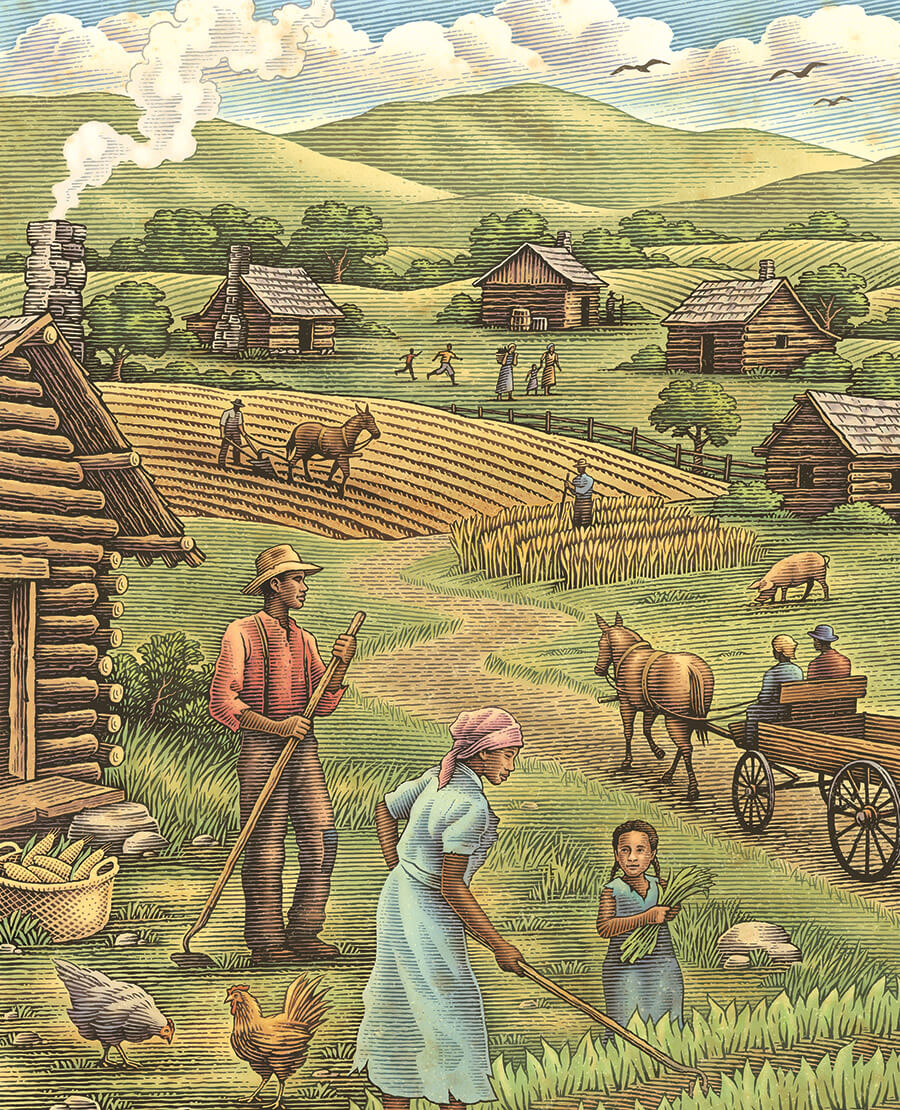
The story alternates between the contemporary struggle of Mother Rita to retain ownership of her land, as she fills her granddaughter in on the history of the place, and the tale of one of the original settlers of the kingdom, its first queen, Luella Bobo. We are given a very up-close-and-personal look at what life was like in the 1870s, the closing years of Reconstruction, for freed slaves, what it took to establish themselves both personally and as communities, what obstacles they had to overcome. It offers an eye-opening perspective for any who are not very familiar with the era.

description
Working the Fields illustration by Erwin Sherman

Nikki is not on a mission. She is tired, struggling and unsatisfied with her life. She is eager to quickly resolve whatever it is that Mother Rita wants of her and dash back to DC as quickly as possible. She has no particular interest in history, family or other, which makes her a fair every-person stand-in for readers. It is through her POV that we slowly gain an appreciation for the importance of knowing one’s personal, and family history, and the significance of the land as an anchor for that connection. The novel is based on real events.

While researching Black history in western North Carolina, I stumbled on an article about this kingdom outside of Hendersonville. It was just a local newspaper, and I thought, “What is that?” It was a very brief article with an illustration showing that there had been this Black community during Reconstruction in the mountains. – from the Rumpus interview

Mother Rita does her best to pass on to Nikki the lore and knowledge she has tended her entire life.

All my life, I’ve been part of a small family circle. By the time my daddy was 20, both of his parents had passed away. He and Mama, with their desire to build a family out of nothing, were a perfect match for each other in that way. The two of them against the world. For me, not having a sibling or even a cousin has been the only existence I’ve ever known. Now here I am, walking beside my grandmother on acres and acres of land that my people have inhabited for over a hundred years. It’s hard to put how I’m feeling into words other than to say I’m dizzy with grief. I didn’t know you could mourn something you never had.

One element is the connection to the outdoors that Rita is able to spark in her grandchild, teaching her to appreciate gardening, and to pass on her considerable expertise. Nikki slowly finds herself able to step back from her urban self to find a connection with and a love for the sights, scents, the tactile feel of this other sort of place.

After the Great Migration, so many Black people ended up concentrated in cities, and we often forget that we are fundamentally a rural people. You don’t have to go back many generations to a grandmother or a great-grandfather who was a country person. – from The Rumpus interview

description
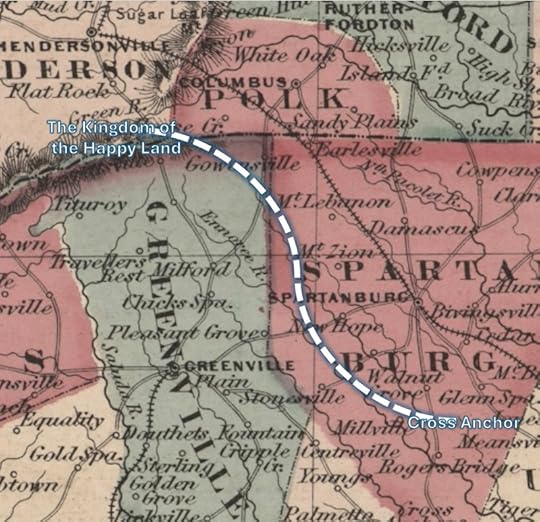
Cross Anchor, a remote township in southern Spartanburg County, S.C., was home to the founders of the Kingdom of the Happy Land before and just after the Civil War. – image from Blue Ridge Archive

A particular revelation is a particular legal mechanism used by the greedy and unscrupulous to cheat people, black people in particular, out of their land. It is remarkable just how much land was taken this way. Less surprising was the abuse of the criminal system to intimidate blacks who owned land, or aspired to do so. Equal treatment before the law remained a dream deferred. This gives the novel particular resonance in a time when the Deconstruction of the Trump era seeks to turn the clock back to an age before legal protections existed.

description
The Kingdom by Erwin Sherman

That said, Happy Land presents a message of hope. Whatever one may think of the royal approach those people favored, they took the opportunity presented by the end of slavery to make decisions for themselves, to organize their own community, to develop their own businesses, to participate in an equal way with the commerce of the area beyond their enclave. Even emerging from the horrors of enslavement, and suffering the ongoing oppression of those who preferred the ownership of human beings as property, these people kept the light of possibility alive. It is a surprising and moving story, which offers us historical reason to keep our spirits receptive to the need for and possibility of hope in an increasingly dark time.

In fall of 1873, a group of freedpeople left Spartanburg County, South Carolina, headed north across the state line into North Carolina. Near Zirconia, North Carolina, the people established a remote community that they called a kingdom. They named a king and queen, formed a communal treasury, and eventually purchased 205 acres of land in 1882 from John Davis, land that was spread across the North Carolina–South Carolina state line. Approximately half was deeded to Luella Montgomery and the other half to Robert Montgomery.
At its height, it is believed the kingdom numbered over two hundred people.
– from the Author’s Note

Review posted – 6/6/25

Publication date – 4/8/25

I received an ARE of Happy Land from Berkley in return for a fair review. Thanks, folks, and thanks to NetGalley for facilitating.

This review is cross-posted on Goodreads. Stop by and say Hi!

=======================================EXTRA STUFF

Links to the author’s personal, FB, Instagram, and Twitter pages

Interviews
—–The Rumpus – The Kingdom of Happy Land: A Conversation with Dolen Perkins-Valdez by NEFERTITI ASANTI – APRIL 28, 2025
—–NPR – Author Dolen Perkins-Valdez discusses her new novel ‘Happy Land’ by Michael Martin
—–May 2025 Feature: Dolen Perkins-Valdez by Jae Nichelle – begins down on the page, after the excerpt
—–Writers Digest – Dolen Perkins-Valdez: On History’s Untold Stories – More about her prior novel, but still quite interesting

My reviews of earlier work by Perkins-Velez
—–2010 – Wench
—–2022 – Take My Hand

Item of Interest from the author
—–Torch Literary Arts – excerpt – Chapter 4

Items of Interest
—–OurState.com – Lost & Found: The Kingdom of the Happy Land by Brad Campbell
—–Blue Ridge Archive – Welcome to the Kingdom of the Happy Land

Leave a comment

Filed under American history, Fiction, Historical Fiction, Literary Fiction, Reviews

White King (Antonia Scott, #3) by Juan Gómez-Jurad

book cover

The Café Moran is full. Six tables occupied by the usual kind of people who haunt such places. Antonia scopes them rapidly as she attempts to catch her breath before entering. Three couples acting like they’re listening to one another while checking their Instagram accounts, two hipsters pretending to write novels on their MacBooks, and a psychopathic killer. The last is the easiest to identify: he is the only one holding a book, not an electronic device.

What pisses Jon off about kidnappings is when he’s the one being kidnapped. You can’t walk down the street these days without someone bundling you into a van with a bag over your head, thinks Jon.

Fair Warning, there are spoilerish items in the following review if you have not yet read the first two books in the series.

It all began with Red Queen, the first book in this trilogy, named for a transnational police organization dedicated to solving the most serious, and most challenging crimes. (As with Alice in Wonderland there are games to be played, riddles to be solved) Special people (male and female) have been recruited, nation by nation, to run point on investigations. These folks have intellectual superpowers that have been enhanced by torturous training. Antonia Scott is Spain’s Red Queen. Jon Gutiérrez, late of the Bilbao PD, is her number two. Think Holmes/Watson or Don Quixote/Sancho Panza. He is there to keep her on some sort of even keel. She can get overwhelmed sometimes, and needs her special red pills to get right. Jon is trained on when to act on that need.

description
Hovik Keuchkerian as Jon Gutiérrez and Vicky Luengo as Antonia Scott in a still from Red Queen – image from The Hindu

Their first case set the pair to track the who-and-why when a criminal murdered a child of the ultra-rich and kidnapped another. Book #2, Black Wolf, pits Antonia against a Karla-level assassin, engaged with the Russian mafia. Book #3, White King, brings the mysterious mastermind, Mr. White, into the frame.

Please do not bother trying to read White King without ripping through the first two. It would only hurt your brain. If you have not read those two, stop right here, take care of that and then come back. Ok? Cool. So, you know that the Black Wolf offered the ending cliffhanger of Jon being kidnapped by dark forces.

description
Juan Gómez-Jurado – image from Zenda

As with the first book, the baddies here, for the most part, are presented as cut-out villains. Black Wolf offered the most thoughtful how-they-became-this-way look at the opposition. But you do not read these books for the deep character portraits. You read them because trying to figure out the puzzles, riddles, and mysteries parallels the rush of the repeating sequence of threat-race-resolve-release that keeps the blood pumping.

…when you think about the genre of thriller you have to have three things, social danger, physical danger for your main characters and you have to have a clock around you… – from the FLMADRID23 interview

And here we are back again. In White King, Antonia and Jon are given ridiculously short times in which to solve several cold-case crimes. Or else what? Something reeeeaaaalllly bad will happen. Tick tock.

There is not a lot going on inside the characters in these books other than concern for those close to them. All the action is on the outside, including the manifestation of Antonia’s thought processes, aside from her occasional encounters with the metaphorical monkeys that inhabit her head. Flashbacks to violent episodes from the history of Mentor and Red Queen training are interspersed with the core plot progression. They offer a clear image of one of the characters, without really going much past the basics. We get early on what is going on there, and repetition does not add a lot.

Supporting cast members offer a few surprises, as their presence in this book is enhanced and their significance in the series events is revealed, with a few walk-ons marching across the pages as needed.

Sometimes it can be a bit tough to swallow Antonia’s ability to predict events. But I guess if you give your character superpowers that sort of short-cut is to be expected. Jurado continues peppering the story with words from diverse cultures. This is a fun element.

Dharmaniṣṭhuya – In Kannada, a Dravidic language spoken by forty-four million people in India, the relief of the downhill slope. The sensation an exhausted walker has when they come to a downward stretch of the path.
Mamihlapinatapai, thinks Antonia. In Yaghan, a language spoken by a nomadic people in Tierra del Fuego, the beached eye. A look people exchange when they’re waiting for others to start something they all want but none dares initiate.

There is a persistent, but light touch of humor throughout all three books. Not LOL material, but smirk or smile-worthy for sure. Also, be prepared for some pretty nifty twists. Don’t worry. I won’t tell. But you should be pleased by them. The individual mysteries exist under the arch of a larger, all-encompassing mystery. Jurado looks to tie up the loose ends, mysteries and miseries from the entire series, so you can look forward to some satisfaction there. The pace of White King is relentless. While it seems unlikely there will be more books in the series, given that it has been over five years since this one was published in Spain, but the possibility has been left open, if he ever gets the urge.

Will the Queen take the King? Your move.

Many of us sense there’s something wrong with reality, with everything around us. With the system, other people, ourselves. Yet life bribes us, it buys our silence with the gift of sleep. She, on the other hand, doesn’t forget, can’t forget.

Review posted – 4/11/25

Publication date (USA) – 3/11/25

First published (Spain) – 10/24/19

I received an ARE of White King from Minotaur in return for a fair review, and agreeing to disable that device. Thanks, folks, and thanks to NetGalley for facilitating.

This review is cross-posted on Goodreads. Stop by and say Hi!

=======================================EXTRA STUFF

Links to Gomez-Jurado’s personal, FB, and Twitter pages

Profile – from Wikipedia

Juan Gómez-Jurado (born 16 December 1977) is a Spanish journalist and author. He is a columnist in “La Voz de Galicia” and “ABC”, distributed in Spain, and he participates in multiple radio and TV programs. His books have been translated into 42 languages and he is one of the most successful living Spanish authors…

Interviews
—– Juan Gómez-Jurado on his Antonia Scott thrillers: ‘There are ideas within ideas’ by Mini Anthikad Chhibber
—–FLMADRID23Publishers Weekly en Espanol | Juan Gomez-Jurado – really in English – video – 20:37
—–Hindustan Times – Interview: Juan Gomez-Jurado, author, Red Queen by Arunima Mazumdar

My reviews of Gomez-Jurado’s prior books in the series
—–2024 – Black Wolf – Antonia Scott #2
—–2023 – Red Queen – Antonia Scott #1

Items of Interest
—–Google Play Books – preview – audio – 16:13
—–Wiki – Karla – an assassin in the John Le Carre George Smiley series

Leave a comment

Filed under Fiction, Mystery, Suspense, Thriller

The Mighty Red by Louise Erdrich

book cover

The absence of birds made Diz uneasy, but he wasn’t spraying birds, was he? Yet there were fewer birds around his farm. Used to be robins hunting worms in the furrows. Used to be blackbirds around the green bins. Owls at dawn, rats in their claws. Well, maybe he had a sudden thought those could have been the rats and mice he had to poison. He thought back to how birds used to chatter as the sun rose. Now, a few sparrows, maybe, or more often just the hiss and boom of wind.

While working in her garden, Crystal appreciated how their families were like the Lord’s ivy, a weed ineradicable by human means. It grows low to the ground and can’t be mowed. It throws its stems long and roots straight down every few inches, just like the people along the river. There seems to be a Frechette or a Poe anywhere you land, but low-key, invisible. The Lord’s ivy, or ground ivy, creeping charlie, thrives under the leaves of other plants and goes wherever it is not wanted. It just keeps throwing itself along stem by stem and blooms so modestly you’d hardly mark the tiny purple flowers. People step down and pass, the weed springs up, uncrushable.

But, implanted or not, there is plenty of stress to go around.

description
Louise Erdrich in front of her Minneapolis bookstore – image from The Paris Review – shot by Angela Erdrich

Romantic stress
The core of the novel is an ill-considered relationship. Kismet and Gary are teenagers, rich with hormones and needs. But are they ready to be married? She had planned to go to college. Gary is the star quarterback, but has a need for Kismet that has nothing to do with their romance. And then there is Hugo, brilliant, ambitious, and totally in love with her, (… he closed his eyes and thought about how he was helpless in the tractor beam of love.) centering his life on making himself successful enough to woo her away from Gary. Coming of age is a major element, and is wonderfully portrayed. Erdrich says in the B&N interview that she had really wanted to write a love triangle. Well, among other things. She also wanted to write about …

Financial stress

I really set it in 2008…because I don’t feel our country has ever really dealt with the fallout from 2008. I feel like there was so much that there was so much loss, that people lost homes, people lost jobs, things hollowed out in such a big way and that was never really addressed. We never really came back from that time, 2008, 2009 into the present, because the pandemic happened. – from the B&N interview

Winnie Geist lived through the Reagan era in which her family’s farm was lost, sold for a fraction of its worth. David Stockman is name-dropped from the 1980s.

While she was in high school, the government accelerated her family’s loan payments and blow after blow had landed. They’d lost their home, their farm, everything. Except one another, they kept saying, except us.

Crystal Poe is Kismet’s mother. When ne’er-do-well-actor dad, Martin, goes walkabout, Crystal has to sell off possessions to keep afloat.

description
Erdrich would like to see Irene Bedard as Crystal – from the Hoda & Jenna interview – image from Wikipedia

Ecological stress
Connection to the land is always a feature of Louise Erdrich’s work. The Lord’s ivy quote at the top reflects the root of this. Winnie’s angst at the loss of her family farm offers another. There are multiple instances of characters expressing, and acting on, (or not) concerns for the well-being of the ground on which they live and work. It is the treatment of the land that gets the most attention, the tension between using chemical-based products to maximize production per acre, versus a less corporate approach that supports a more ecologically balanced, restorative brand of farming.

I don’t think about politics when I write. I think about the characters and the narrative. My novels aren’t op-eds. Nobody reads a book unless the characters are powerful—bad or good or hopelessly ordinary. They have to have magnetism. If you write your characters to fit your politics, generally you get a boring story. If you let the people and the settings in the book come first, there’s a better chance that you can write a book shaped by politics that maybe people want to read. – from the Paris Review interview

Parental stress
Erdrich has four daughters, so has had plenty of experience with mother-child interactions. She says she loved being the mother of teens, seeing the excitement of their choices, and trying to be more of a guide than a hard-liner. Crystal struggles to influence Kismet without coming on too strong, which would predictably result in increased resistance. Gary’s mother clearly loves him, and goes out of her way to see to her baby’s happiness, maybe too far out of her way. Crystal and Winnie are definitely both afraid for their children, although for very different reasons.

description
Erdrich would like to see Isabella LeBlanc as Kismet – from the Hoda & Jenna interview – image from Minnesota Native News

A bit of fun
There is a series of flamboyant crimes committed by an outlaw, who acquires a nickname and a fair bit of public fame, in the same way that notorious historical criminals like Billy the Kid drew public interest and admiration.

This book is set during the economic collapse of 2008–09. What Martin does is only what a lot of people wanted to do. I didn’t think of what he did as villainy, but yes, I suppose it was absolutely crazy, and, you know, fun to write. I have to amuse myself. – from the Bookpage interview

There was more that motivated Erdrich. She is from the Red River Valley of North Dakota, has much family in the area and returns frequently. She wanted to write about the changes she had seen there. (like the mighty Red, history was a flood.) One element of this was that her first job was hauling sugar beets. The industry was undeveloped at the time. She wanted to write about how it had evolved over the last thirty years. The original title of the novel was Crystal.

When I started it I thought I would be writing about the 2011 lockout by Crystal Sugar and how it impacted people who were working there. They lost a lot in terms of their insurance and their benefits and wages…it was a really tough lockout. I wanted to write about that at first, but then I started writing something else entirely and I enjoyed writing it more so I kept with that one and it became more about a number of people living along the river. – from the B&N interview

Many of Louise Erdrich’s novels (this is her nineteenth) have centered on Native American history, lore, and contemporary experience. While there are several characters here whose Native roots are noted, this is not really a book about the Native experience, the way that The Round House, LaRose, The Night Watchman, and others are.

Magical realism remains a sharp tool in Erdrich’s kit. Crystal listens to a late-night radio show that centers on strangeness, including angels. A caller wonders if her child is protected by a guardian angel, given the number of close calls they had had. One character is haunted by the ghost of a friend. The aroma of a used dress speaks to its new owner. One character has a presentiment about an imminent danger.

description
Erdrich would like to see Brett Kelly as Hugo – from the Hoda & Jenna interview – image from Alchetron

There is a mystery here as well. what happened at “the party” and why is it such a hush-hush subject? Something terrible is hinted at. There are ripples emanating from this event that inform multiple character arcs.

There are a few literary references applied here. Madame Bovary is one. If you know the story, the echoes will boom at you. If not, it is no trick to pull up an abstract. Ditto for Anna Karenina. (see EXTRA STUFF for links)

As with any work of fiction it requires that we relate, at least somewhat, to at least some of the characters. Erdrich has a gift for writing characters that, whatever they may do, we can appreciate their motives, even if we may not agree with their choices. This is a major strength of the novel. She crafts rounded humans, ambitious, frightened, rational, irrational, loving, thoughtful, feckless, smart in wildly divergent ways, and, ultimately, satisfying. She does this while incorporating a payload of ecological concern, relationship insight, and an appreciation of history’s impact on lived experience, while adding a layer of magic to aid our understanding, and including a few laughs to smooth the way. Louise Erdrich is a national treasure, a reliable source of quality literary fiction, and an ongoing delight to read. The Mighty Red is indeed a mighty read.

Review posted – 12/13/24

Publication dates
———-Hardcover – 10/1/24
———-Trade paperback – 11/04/25

I received an ARE of The Mighty Red from Harper (through my Book Goddess dealer) in return for a fair review. Thanks, folks, dear.

This review is cross-posted on Goodreads. Stop by and say Hi!

=======================================EXTRA STUFF

Interviews
—–*Barnes & Noble Book ClubLouise Erdrich discusses THE MIGHTY RED with Lexie Smyth and Jenna Seery – with Lexi Smyth and Jenna Seery – video 45:37 – This is the one you want to check out
—–Today with Hoda and Jenna – Author Louise Erdrich talks ‘The Mighty Red,’ takes fan questions
—–my link text
—–The Paris Review my link text
—–Book Page – Red is an earth tone by Alice Cary

Other Louise Erdrich novels I have reviewed
—–2021 – The Sentence
—–2020 – The Night Watchman
—–2017 – Future Home of the Living God
—–2016 – LaRose
—–2010 – Shadow Tag
—–2012 – The Round House
—–2008 – The Plague of Doves
—–2005 – The Painted Drum

Items of Interest
—–Project Gutenberg – Madame Bovary – full text
—–GetAbstract – of Madame Bovary
—–Project Gutenberg – Anna Karenina – full text
—–ReWire The West – Anna Karenina: Summary and Analysis
—–North Dakota State University – WHY IS THE RED RIVER OF THE NORTH SO VULNERABLE TO FLOODING?
—–MPR News – 20-month lockout over, sugar workers brace for return to work by Dan Gunderson

Leave a comment

Filed under Cli-Fi, Fiction, Literary Fiction

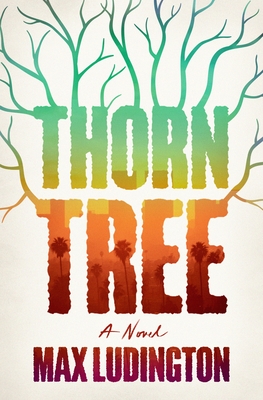
Thorn Tree by Max Ludington

<img src=”book cover” alt=”book cover” width=”187″ height=”300″ align=”left” hspace=”10″ vspace=”10″>

At the base level it’s fear. It’s all about fear. People ask, ‘What are you afraid of?’ and that is not an answerable question. Any time I name a source for my fear I feel it as a deflection. I mean, sure, I can get close. You know, as in: I’m afraid of people because someone I trusted fucked with me when I was a child. I was traumatized, yes, and the fear probably began there, I guess. But I don’t really know because it seems, now, somehow elemental. It embodies some ancient, sleeping doom, and the only escape is self-destruction. You know? Like, if I become my own doom I’ve taken that power away from anything else. It’s preemptive. At least there’s agency in it.”
She felt the laughter spill out of her in a rush. Its piercing volume was at odds with the moment and the release it brought. Leo looked at her dumbfounded.
“Get the fuck out of my head, man,” Celia said.

He had merely done what men had been doing since the primeval birth of jealousy. Just a spoon of love from my forty-five, save you from another man. Howlin’ Wolf was just singing about what thousands had wished they could do, and probably had done, before there were cops and laws and all the rest of the arbitrary bullshit. And it had felt good, hadn’t it?

Daniel is 68, living a quiet life in a Hollywood Hills guest house when a visitor repeatedly appears. Dean is six years old and clearly in need of companionship. He lives with his grandfather, Jack, on the larger house on the property. Jack is not always particularly attentive. And Mom, Celia, is a rising young actress who is often away on prolonged shoots. Daniel is happy for the company.

description
Max Ludington – image from Macmillan – shot by Jennifer Silverman

The novel braids the stories of Jack, Daniel and Celia, mostly Jack and Daniel. The story takes place in multiple times, today being 2017, and the backstory stepping up from 1968 to the seventies, to 1980, and 1988. Celia is not a part of the earlier events.

The sixties events cast a light on a turbulent time, touching on many of the aspects one might expect, young love, drug-dealing, acid trips, communes, San Francisco, wth a very dodgy cult among them. But despite the surface level, there is also consideration of the sort of existential, philosophical searching that was, for many, an important part of those times.

Young Daniel (1960s) makes a youthful mistake and suffers a grievous wrong, which follows him all his life. In the 1970s he finds solace in the desert, constructing a significant work of art, the Thorn Tree of the title. It gets him some notice, gives him a way to express what is inside him, and leads to some stability in his life.

Celia did an image search for the sculpture, and there it was, standing next to the modern art museum, taller than the building itself. It was huge, with thick, meandering branches and bristling snakelike twigs. Most of the branches, while not attempting verisimilitude, were formed with inherently natural shapes and gnarled twists, but here and there some were deliberately hewn into shapes that could never have occurred in nature: curving double on themselves and then back again to form tight willowy S-shapes, or turning straight downward at acute angles for a foot or two before continuing up and outward, as if infused genetically with lightning.

Jack is a very different sort. A predator, a sociopath or something like it, Jack wants what he wants and is not much concerned about who he damages to get it. He is routinely unkind, and worse, but he is also a seeker of truth, becoming connected with a cult and seriously mulling the writings on which the cult bases its outlook, even if the tenets of that group serve to bolster his own self-justification.

Daniel and Jack are linked through these years, the source of that link being one of the mysteries of the book. Jack is definitely a dark force. Daniel exists on a brighter side, despite having made some bad choices. He is a character who grows. But while Jack grows in a way, his widened view of reality is ultimately redirected to his narcissism. Not much is really done with Celia.

There is some lyrical writing which gives the story texture, depth to the two main characters, which makes it engaging, and a look at the times, both 60s and 70s, which gives it some substance. In addition it considers repercussions throughout one’s lives of actions taken in our youth.

Daniel stood for a moment at the threshold of the branches and looked up. The wind was made louder here in contact with the tree. The gravel path went around the south side, and he followed it to where it ended at an overlook. There was a plaque on a post, but he didn’t read it. Instead of standing at the overlook and staring out to sea, as the landscape designer had intended, he turned and went in under the branches, and immediately the world of the tree took over. He was surprised—he’d thought his memory of it was hopelessly colored by LSD and shock and time, that he had probably falsely mythologized every aspect of it and it would be just a place, with soil and roots and air but not the indwelling spirit he’d imbued it with in his mind. But it was as it had been—the wind quieting and the light clarifying, damping the sun into deep greenness—inhabited by a sense of protection and safety unchanged by the years of foot traffic and human attention.

There are many more of this sort. The voice is omniscient narrator, which presents way too many opportunities to tell rather than show. But I doubt this will bother most readers. Some characters come and go, seeming to be throw-aways. It is one of the things that make the book feel over-long. I kept hoping that some of these might be given a deeper look, with Jack getting less.

The alternating timelines, a fairly typical literary device, made sense to me. The Grateful Dead offer a link between now and then. There seemed some interest in other literary devices. For example, a boy appears to have a magical relationship with birds, but the image drops after partial usage.

Thorn Tree is an interesting read, offering some substance, interesting characters, and a strong core mystery. But for a book that is not overlong, at about four hundred pages, it felt like a much longer read because of the excess attention paid to Jack, and some tangential tales. The descriptive writing (I am a sucker for that) gives one a reason to push through, however prickly the passage.

Review posted – 11/01/24

Publication date – 4/15/24

I received an ARE of Thorn Tree from St. Martin’s Press in return for a fair review. Thanks, folks, and thanks to NetGalley for facilitating.

This review is cross-posted on Goodreads. Stop by and say Hi!

=======================================EXTRA STUFF

Links to Ludington’s personal, Goodreads, and Twitter pages

Profile – from Macmillan

MAX LUDINGTON’s first novel, Tiger in a Trance, was a New York Times Notable book, and his fiction has appeared in Tin House, Meridian, HOW Journal, Outerbridge, and On the Rocks: the KGB Bar Fiction Reader. He lives in Brooklyn, New York and teaches in the writing department at Pratt Institute.

Interview
—–The Palisades Newsletter – Max Ludington Reflects on His Second Novel, THORN TREE

Song
—–The Doors – Five To One
—–The Grateful Dead – The Very Best of the Grateful Dead

Leave a comment

Filed under California, Fiction, Historical Fiction, Literary Fiction, Reviews

Black Wolf (Antonia Scott, #2) by Juan Gómez-Jurado

book cover

While she may be capable of functioning several levels into the future, her mind is no crystal ball. She may have the ability to visualize dozens of disparate pieces of information simultaneously, but her brain doesn’t work like in those movies where you see a whole string of letters superimposed on the face of the protagonist as they’re thinking.
Antonia Scott’s mind is more like a jungle, a jungle full of monkeys leaping at top speed from vine to vine, carrying things. Many monkeys and many things, swinging past one another in midair, baring their fangs.
Today, the monkeys are carrying dreadful things, and Antonia is afraid.

Antonia is afraid of almost nothing, apart from herself. Afraid of life, maybe. After all, she relaxes by imagining for three minutes every day how she could kill herself.

The Black Wolf is the second in Juan Gómez-Jurado’s Antonia Scott series. If you have not read the first, Red Queen, I would take a break, read that one, then come back. Also, if you have not read the first book in the series, there are some items in this review that might be spoilerish for you. Caveat lector.

Red Queen is a super-secret international anti-crime organization. They specialize in finding and developing a small number of exceptional human beings to become the mental equivalent of super-soldiers, assigned to look into Europe’s worst crimes. Antonia Scott is the Red Queen in Spain. She has an amazing mind, but also some issues, as you might suspect, given the two quotes at the top of this review. She has a pill she takes when it all becomes too much for her. Sometimes she takes too many. Jon Gutierrez is an erstwhile cop from Bilbao who was recruited to assist Antonia with matters of a police sort, and with more baby-sitting types of responsibilities. He is a large man (but not fat) with red hair, and a very good guy. The pair had a nasty adventure in book #1, with a primary villain who remained beyond their reach.

description
Juan Gómez-Jurado – Image from Expansión – photo credit – Luis Malabran

We begin with the extraction of a very water-logged body from a river. Antonia wonders if it might be a major nemesis from the prior book, Sandra Fajardo. She has been on the lookout for this baddie ever since.

The story continues with an assassination attempt at a shopping mall in Marbella, a city on Spain’s southern coast. A mafioso has been killed. His beautiful wife, Lola Moreno, who travels with a bodyguard, is set upon by a professional assassin or two, but the lady has skills, and manages to escape. She will provide one of the two major story lines of the novel. Antonia and Jon are sent to have a look by their boss, the mysterious Mentor, which made me think of M in the Bond novels

We alternate, more or less, between Lola’s flight from henchmen directed by a Russian mafia don, and Antonia’s and Jon’s tracking of clues. This is Antonia’s domain, seeing, or sensing things that others miss. She is somewhere between Sherlock Holmes and Lisbeth Salander of the Millenium series.

There will be blood, unpleasantness with cars, an infuriating discovery, close calls, and twists. We get some backstory on both Lola and Antonia, helping explain how they became who they are.

And then there is a killer, the famed assassin, the Black Wolf, feared even by other professional killers.

description
Vicky Luengo as Antonia and Hovik Keucherian as Jon – image from Amazon UK

Many of the chapters begin with fairy-tale-like recollections. This one is typical.

There was once a little girl who grew up in a sad, loveless home where the food tasted of ashes and the future was black, she tells herself as she waits.

Jorado offers paralleling of characters. For example, the mob boss Orlov with Mentor, and Antonia with the Black Wolf. It is satisfying to see excellent craft like this on display.

He also regularly offers up a collection of interesting foreign words, that describe a particular situation or feeling better than Spanish or English. Here are a couple:

Kegemteraan is in Malay. In Malay it would mean “the joy of stumbling”. The simultaneous feeling of pleasure and grief when you know that you have done something that you shouldn’t.
Curious. You know you are wrong but you keep doing it again and again since it hurts but you also enjoy it.

Bakiginin – In Karelian, a language spoken from the Gulf of Finland to the White Sea, it means “the sadness of a wall builder.” The contrast between the need to keep the world away from your life, and the impossibility of doing so.

Gomez-Jurado did this in the first book in the series. It is a charming element.

description
Alex Brendemühl as Mentor – image from Amazon UK

One thing that irks in tales of this sort is the perpetually stupid local authority. Here the area captain seems to be blaming A&J for the carnage that they are investigating, as if they had somehow caused it. But the author has some fun with this trope, which I will not spoil here.

Antonia’s and Jon’s personal relationships come in for examination, enhancing their appeal, but it is kept to a minimum, so adds color without interfering with the story.

And the story is great fun. A rock’em sock’em thriller, pitting the best mind against the darkest evil, with plenty of conflict, and lots of clues (and some red herrings) to tease you into guesses and theories. Humanizing of (some of) the baddies combines with offering appealing, quirky, leads and a story that speeds along way over the limit. The Black Wolf is an excellent follow-up to Red Queen, leaving one panting for the third entry in the series. That need will be satisfied on March 12, 2025, with the publication in English of The White King. I can hardly wait.

She has a black belt in lying to herself, and only a yellow one in expressing her reality.

Review posted – 07/26/24

Publication date – 3/12/24 – in English
First published in Spain – 10/24/2019

I received an ARE of The Black Wolf from Minotaur in return for a fair review. Thanks, folks, and thanks to NetGalley for facilitating.

<

This review is cross-posted on Goodreads. Stop by and say Hi!

=======================================EXTRA STUFF

Links to Gomez-Jurado’s personal, FB, and Twitter pages

Profile – fromWikipedia

Born in Madrid, Spain on December 16, 1977, Juan Gómez-Jurado, is a Spanish journalist and author. He is a columnist in “La Voz de Galicia” and “ABC”, distributed in Spain, and he participates in multiple radio and TV programs. His books have been translated into 42 languages and he is one of the most successful living Spanish authors, along with Javier Sierra and Carlos Ruiz Zafón. His writing has been described by critics as “energetic and cinematographic”. He worked in various Spanish media outlets, including 40 Principales, Cadena Ser, Cadena Cope, Radio España, Canal + and ABC, before publishing his debut novel, God’s Spy (Espía de Dios) in 200

Interview
—–Radio New Zealand – Spanish author Juan Gomez-Jurado on his best-selling – audio – 23:32 – by Kathryn

My review of Gomez-Jurado’s prior book
—–2023 – Red Queen

Music
—– Joaquín Sabina – 19 Days and 500 Nights – Jon listens to this

Item of Interest
—–Arganzuela Footbridge – appears in Chapter 3

Leave a comment

Filed under Fiction, Mystery, Reviews, Thriller

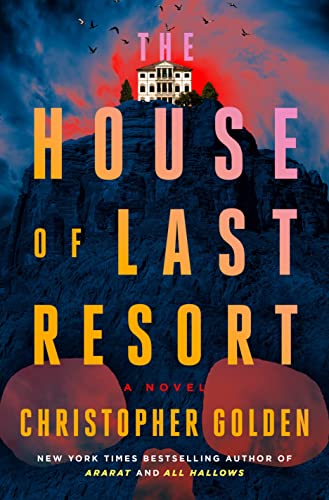
The House of Last Resort by Christopher Golden

book cover

A forty-minute drive from the volcanic Mount Etna, Becchina should have been alive.
Instead, it was the corpse of a town that didn’t even realize it was already dead.

A low scritching noise caught his attention, and he swung the flashlight beam down to the right, where the natural tunnel and the man-made wall formed a dark and jagged corner. Tiny, putrid-yellow eyes glittered in the shadows.
“Jesus Christ!” Tommy hissed, jerking backward in revulsion as the flashlight beam illuminated the foot-long rat crouched in that corner.
Silent, twitching, the rat stared brazenly up at him, unafraid. It watched him with apparent disdain, as if to let Tommy know that he was the intruder here, not the rat.

A deal that is too good to believe. Ownership of an abandoned hilltop house in a Sicilian town (Becchina, a made-up town, – buh-kee-na) for a single euro, as long as you agree to live there for five years and invest 50K euros fixing it up. What could possibly go wrong? Tommy and Kate Puglisi see this as a once-in-a-lifetime opportunity. A chance for a much better future than they could ever afford in Boston.

description
Christopher Golden – Image from MichelleRLane.com

The world seemed to be unraveling every day. American culture seemed to be rotting from the inside out, manipulated by an amoral oligarchy whose worst enemy was young people who didn’t want to play their game, and Kate and Tommy were happy to be counted in that category. The irony had not been lost on them, that the nineteenth and twentieth centuries had been defined by people leaving the so-called Old World to seek their fortunes in the New World, and now she and Tommy were doing the opposite, seeking new life in the Old World. But they both believed that earlier generations had it right—a slower life, a smaller circle, a focus on home.

That Tommy’s family had come from Becchina gave it an additional draw, a chance to spend time with his grandparents, whom he loved and very much wanted to see lot of in their final years. The importance of that is magnified by the fact that both of Tommy’s parents are dead. Tommy and Kate are on extended time off from work, so can attend to getting things fixed up before returning to their jobs, remote jobs, which allows them the freedom to live anywhere. And they do not yet have children.

Of course the house comes with some unadvertised extras. The book opens with:

The rats are like fingers.
No. That’s not right. Fingers can reach out, can grasp and extend. The rats are not like fingers at all. They are periscopes, like those on submarines, each able to give its captain only a limited view of the world above. From their place below, among the dead, the lost ones can see only as far as the rats can see. But they are patient, and so they wait. And they let the rats run.

Uh oh. Squatters. Toss in being within commuting distance of Mount Etna to shake things up. Oh, and that lady down the hill who is always staring daggers at them whenever they pass by. And the family, who is warm and welcoming but not altogether forthright about the history of the town or the house. On the other hand, there is a group of other new arrivals, lured by the same opportunity. They call themselves The Imports. It’s fun seeing Tommy reconnect with famiglia. He and Kate slowly get to know the town and some of its residents, make friends, and come up with a plan to boost the local economy. Can-do Yanks in action.

But things keep happening. Kate thinks she sees someone in the house, but did she really? A tremor arrives soon after they do. There is a part of the house that the R/E agent somehow managed to overlook when showing the place. A door that was locked, but then is mysteriously open. Golden makes generous use of Gothic fiction features (see abbreviated list in EXTRA STUFF) to give you chills.

Tommy and Kate are actually a happy couple. Many horror books use spectral events as manifestations of underlying relationship problems. Not the case here. This is also not a case in which better-off sorts gentrify an old area, forcing out the locals. Instead, they are trying to save, replenish, and reconstruct, infusing new life into a withered, crumbling, forgotten town. The houses The Imports bought were already abandoned. The newbies are looking to build up not just the houses they occupy but the community as well. So, the dark forces here are not cutouts for obvious social criticism. They are pretty much straight up malignancy coming at you in sundry ways. One way is our visceral reaction to vermin.

The rats that feature in the opening lines persist throughout, gaining in their power to induce fear and loathing. It was a specific choice. In the Book Nook interview, Golden talks about how he believes we mortals have a race-memory fear of rats, the result of plagues that wiped large portions of humanity from the planet multiple times, akin to the natural fear most of us have of snakes, from the days when they were in our immediate environment and posed a mortal threat. Rats give us the creeps.

What you get in The House of Last Resort is a likable pair in peril, with a plentiful supply of scary, a cauldron of creepy, and a shipload of shivers. If you think your basement is a mess, you have no idea. There are nifty twists, some local color and action aplenty to keep you turning the pages. Depending on your susceptibility to such books, you may get a sleepless night or two out of this one. A fun read, a pure entertainment, uncluttered by larger sociopolitical concerns, a fabulous summer read. But probably a bad idea to take this along if you plan to visit Sicily.

A voice crying out. Tommy frowned, wondering if that had been a dream or if it had been what woke him.
The wind gusted, rattling the window in its frame. He listened to see if the cry would come again but heard nothing beyond the sighs and creaks of the old house.

Review posted – 04/05/24

Publication date – 01/30/24

I received an ARE of The House of Last Resort from St. Martin’s Press in return for a fair review, and some DNA samples. Thanks, folks, and thanks to NetGalley for facilitating.

This review is cross-posted on Goodreads. Stop by and say Hi!

======================================EXTRA STUFF

Links to Golden’s personal, FB, Instagram, and Twitter pages

Profile

Golden is a monster of an author who got started, and found success, very early. He has a gazillion publications to his credit and an army-size host of teleplay credits from his years writing for Buffy with Joss Whedon, and plenty more. And then there are the comics. You may have heard of Hell Boy, among those. Here is a list of what he has published, from Fiction DB. I personally think he has elves, or more likely, goblins, chained to computers in his basement helping him crank out such volume.

My reviews of Golden’s two prior books
———-2022 – Road of Bones
———-2023 – All Hallows

Interviews
—–Paul Semel – Exclusive Interview: “The House Of Last Resort” Author Christopher Golden
—– WYSO – Book Nook – ’The House of Last Resort,’ by Christopher Golden by Vick Mickunas – audio – 50:04

Checklist – Partial Characteristics of the Gothic Novel
See my review of While You Sleep for more of this sort
Setting – castle or old mansion – oh, Yeah
Secret passages or creaky doors – of course
Atmosphere of mystery or suspense – fuh shoo-uh
Ancient prophecy or legend – sort of
Omens, portents, visions – tremors, hints from neighbors and family
Supernatural or otherwise inexplicable events – ghost sightings?
High, overwrought emotion – you betcha
Women in distress – actually not so much. Both Tommy and Kate are beset
Women threatened by powerful, tyrannical male – see above

Leave a comment

Filed under Fiction, Horror

Goldenseal by Maria Hummel

book cover

Falling into friendship, with Edith was also, for Lacey, inextricable, with falling in love with the northern summer. Never had she woken to birdsong, or plunged headfirst into cool water on a blazing day, or listened to the whispers of the oaks as a thunderstorm, swept in. Never had the sun felt so warm and golden, or rain soaked her so completely. The shrill of crickets, alarming at first, began to soothe her to sleep at night. A toad hunched by a log was so intensely ugly she cried out in shock, while a fox, slipping through the pines, looked like the tip of a paintbrush dipped in orange. Her hands and legs became tan and useful. She could tie three kinds of sailor knots, and she could kick her way up a river current. Her face in the spotty cabin mirror was freckled, it also looked rounder and full. She was gaining weight back, and when one night Edith observed, “You’re not coughing anymore,” Lacey realized it was true.

“When the stranger returned to the city…” are the opening words of Goldenseal, or could be of a fun Western. The description that follows is pure delight, set in 1990 Los Angeles, as Maria Hummel shows off her poet’s gift for description. In The Rumpus interview she talks about having to tone that element down to spend more focus on moving the story forward. A loss for the likes of me. Edith Holle left Lacey, and Los Angeles forty-four years ago. She is back now on a mission known only to herself.

I was interested in creating a novel that had an allegorical Western feel. The stranger comes back to this city for the first time in forty-four years; “the stranger comes to town.” That’s the beginning of the classic Western, and Westerns play an important role throughout the story, as both subject and backdrop, especially in regard to gender. Because in the classic Western, the “stranger” is male, right? But here, it’s Edith, an old woman in a wrinkled skirt and sneaker boots. – from The Rumpus interview

In addition to the western genre references, there is a mystery afoot here, well, a few. What was the nature of Edith’s connection to Lacey? Why did she leave? Why is she back?

description
Maria Hummel – Image from her site

We get an up close look at Lacey’s discomfort, wondering what Edith is up to, stressing over what to wear, as if her sartorial selections might provide a layer of armor, but Lacey is also clearly dying to see her. Once the waiting is done, we get on with the bulk of the story. It is told in two time lines. First is an ongoing conversation between the two women, the frame. Second is the history they recount within it.

Lacey Crane was born in Prague, her parents fleeing before, but not because of, the future Nazi invasion. Middle class, they were able to experience success in the hotel business. We get a look at the impact of the Holocaust on her parents, particularly her Jewish mother. As girls, Lacey and Edith meet at a California camp, where Edith is a bit of a loner, the daughter of the camp caretaker, special for her talent at stage performance, among other things, but seen as too lower class for most of the privileged girls. Not for Lacey. They become instant besties. (see quote at top) Edith’s home life is challenging, and Lacey wants to take her away from all that.

We follow the development of their friendship, and of their lives, together and apart. It is events in adulthood that split them, a final, dramatic schism. Dirty laundry is pulled from their memory bags, and held up for close inspection. Some garments are left unaired.

The contemporary conversation functions as a way for them to both examine the lives they have led. It also illuminates some of the changes women experienced in the 20th century.

The novel germinated over a protracted period, until all the elements finally came together. First was the Biltmore. When she and her husband moved there in the early aughts, Hummel was smitten with the LA hotel culture, particularly that hotel.

[This] combined with a book that I read that came out in American translation in 2001 called Embers …originally published in 1942, is a story about two old friends, males, an old general and a soldier, meeting in a castle in the Carpathians for the first time in forty years. They’re also weighing out friendship. When I read that book, I thought, this is such a great treatise on friendship, but it’s about male friendship. Female friendship is different. Wouldn’t it be great to use this structure but set it in an American castle? There it is. Then the third piece was, as we all experienced, we lived like recluses, particularly for me, the academic year that was 2020/’21. I thought, I know how to write this character now, this person who’s basically a hermit who lives in the hotel and never goes out and is locked in her tower. – from the Moms Don’t Have Time to Read Books interview

Underneath it all is that primal bond, forged in childhood, hardened in adulthood but seriously damaged. We are waiting for the high noon moment when the women unholster their revelations and take aim.

The Lacey-Edith intersection is, in a way, where Old World meets New. Lacey having been born middle class in Europe. Edith living a much more frontier-type of existence in the American far west. Lacey is relatively well-to-do, while Edith is a bit of a Cinderella character, responsible beyond her years, kept as something of a household slave by an unfeeling parent. Maybe Lacey can fit her up with a glass slipper, get her a carriage ride to something better? There are medical remedies from both the Old World and the New that present the strengths of both cultures. Familial tragedies echo across the divide.

Do we care? Each girl faces challenges at home. And both are portrayed as decent kids, so it is not hard to feel for them. The tale of their early friendship is incredibly charming and engaging, a major strength of the novel. The bond between these two is palpable and we want it to be eternal. Each girl finds relief from her personal stresses in having someone with whom to share. We get glimpses of their time together later, as teens, but these are fleeting, and lack the immediacy and impact of their camp days. Their time as adults is also presented in brief glimpses, stroboscopic flashes of events. Sure, there is angst, pain, heartbreak, betrayal, and disappointment, but having stepped back from Lacey and Edith, the impact is dulled. It is not a bad thing to leave readers wanting more of a character but it seemed to me that we got a bit short-changed and should not have needed that much more.

The narrative flow works quite well, switching back and forth between the contemporary and historical. But in a latter section of the novel, the conversation became much less…conversational, transforming into almost straight up exposition. I found this distancing, and thus off-putting.

There is a lot going on in Goldenseal. Thematically, it offers a trove of genre touches, coming of age, mystery, western, domestic drama and probably others. Hummel writes beautiful descriptions. I wish there had been even more of that. She gets us to care about her leads. And offers a persuasive explanation at the end, for most questions. It is a good read for sure, but maybe a Silver Seal instead of a Golden One.

Review posted – 03/29/24

Publication date – 01/09/24

I received a hardcover copy of Goldenseal from Counterpoint in return for a fair review. Thanks, folks.

This review is cross-posted on Goodreads. Stop by and say Hi!

=======================================EXTRA STUFF

Links to Hummel’s personal and Twitter pages

Profile – from her website

Maria Hummel is a novelist and poet. Her books include Goldenseal, Lesson in Red, a follow-up to Still Lives, a Reese Witherspoon x Hello Sunshine pick, a Book of the Month Club pick, and BBC Culture Best Book of 2018; Motherland, a San Francisco Chronicle Book of the Year; and House and Fire, winner of the APR/Honickman Poetry Prize… Hummel worked for many years as an arts editor and journalist, and as a writer/editor for The Museum of Contemporary Art, experience that informed Still Lives and Lesson in Red. She also taught creative writing at Stanford University and Colorado College, and is now a full professor at the University of Vermont. She lives in Vermont with her husband and sons.

Interviews
—–The Mark Twain House & Museum Program – GOLDENSEAL with Maria Hummerl and Barbara Bourland by Omar Savedo – Video – 58:15
—–Moms Don’t Have Time to Read Books – Maria Hummel, Goldenseal by Zibby Owens
—–The Rumpus Friendship Sunset: A Conversation with Maria Hummel by Jenny Bartoy

Items of Interest from the author
—–Reading Group Guide
—–LitHub – The Shadow Self of Domestic Stories: A Reading List of Novels Set in Hotels

Leave a comment

Filed under Fiction, Historical Fiction, Literary Fiction, Mystery