Tag Archives: apocalypse

The Future by Naomi Alderman

book cover

The road to ruin is paved with certainty. The end of the world is only ever hastened by those who think they will be able to protect their own from the coming storm.

Love is the mind killer.

So what would you do if your super-secret software gave you the alert? End times are afoot. Time to scoot! If you are like most of us, you might seek our your nearest and dearest to see the world out together. But what if you are one of the richest people on the planet? Well, in that case, you would have prepared a plan, an escape, a plane, supplies, a bunker somewhere safe. Buh-bye, and off they go. The they in this case includes three billionaires, the heads of humongous tech companies, some years in the not-too-distant future, Lenk Sketlish, Zimri Nommik, and Ellen Bywater.

They were definitely not inspired by anyone specifically who could sue me for everything I’m worth and barely notice it…They are composite characters made up of some of the ridiculous and awful things that tech billionaires have done and some of it just made up out of my head. But of course the companies are inspired by real companies. – from the LitHub interview

What if you were the number one assistant to one of these folks, or the less-than-thrilled wife of another, or the ousted former CEO and founder of a third one, maybe the gifted child of one? You might have been spending your time trying to see what you could do to mitigate the vast harm these mega-corporations have done to the planet. These are Martha Einkorn, Lenk’s #2, Selah Nommik, Zimri’s Black British wife, Alex Dabrowski, founder and former CEO of the company now headed by Ellen, and Badger, Ellen’s son.

“Margaret [Atwood] has very much covered how bad it can get, so we don’t need a lesser writer doing that,” Alderman says. “I’m interested in the most radical ideas about how we can make things better, and what are the avenues we can pursue.” – from the AP interview

BTW, Atwood mentored Alderman.

What if you were attending a conference in Singapore, having recently met one of group B above for an interview, and gotten entangled in an unexpected way, but now find yourself in the vast mall in which the conference is being held, being chased and shot at by some psycho, probably a religious nut? Lai Zhen is a 33yo refugee from Hong Kong, an archaeologist and well-known survivalist influencer. She had met someone she thinks may be The One, but her immediate survival is taking up all available mental space. Thankfully, she has help, but will it be enough?
description
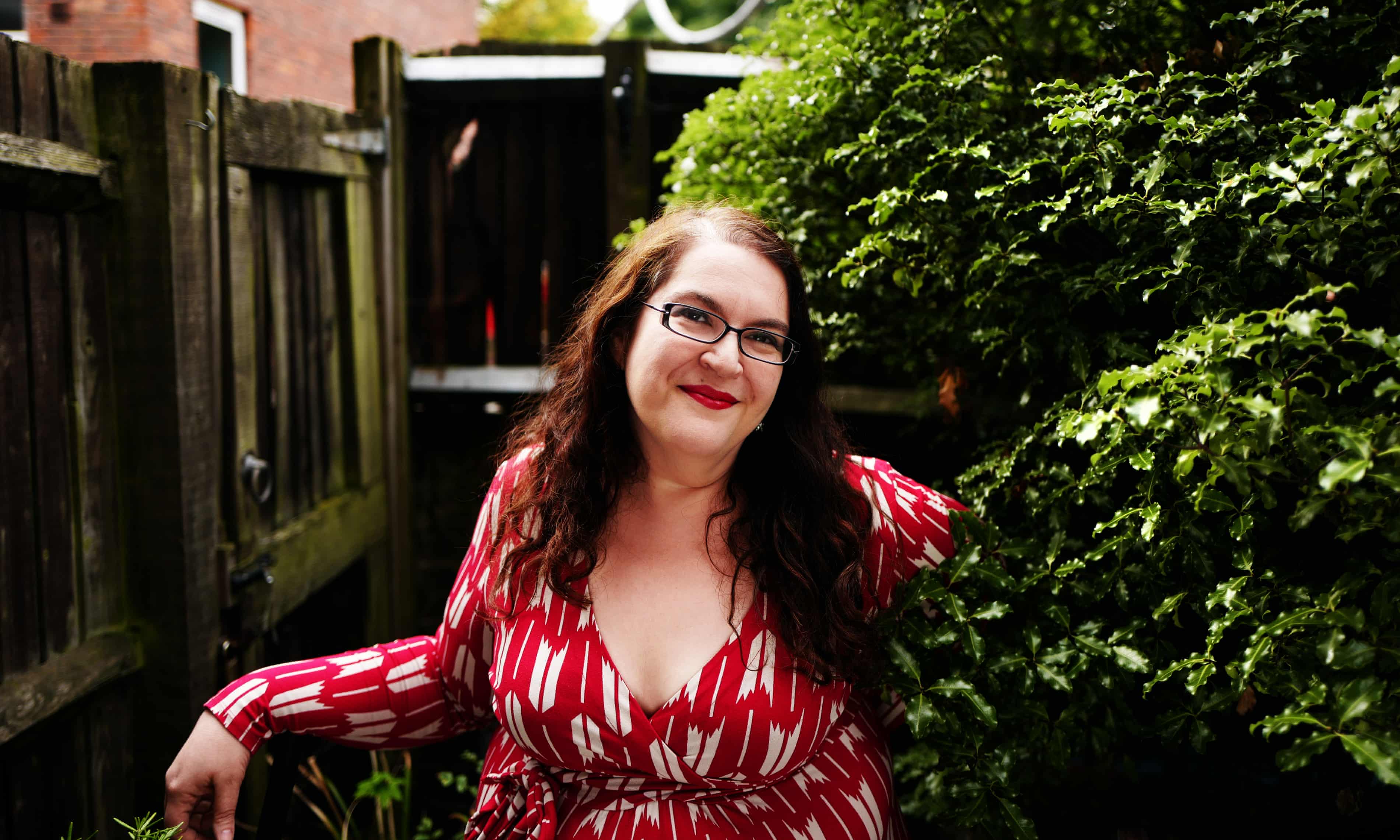
Naomi Alderman – image from The Guardian

The action-adventure-sci-fi shell encasing The Future is a dystopian near-future that takes an if-this-goes-on perspective re the road we are currently traveling toward planetary devastation, global warming, the increasing greedification of the world economy, and concentration of wealth, at the expense of sustainability and human decency. But Alderman has done so much more with it.

The Future has a brain and a heart, to go along with the coursing hormones, and some serious mysteries as well. Did I mention there is a romance in here also? Good luck shelving this thing. You probably will not have much luck putting it down once you start reading. Well, take that advisedly. I did find that it took a while to settle in, as there is a fair bit to get through with introducing all the characters, but once you get going, day-um, you will want to keep on.

While offering a look at survival post everything, Alderman tosses in some fun high tech and BP-raising sequences. And she gives readers’ brains a workout, providing considerable fodder for book club discussions. To bolster the thematic elements, Aldermen provides plenty of connections to classic tales, biblical and other, that offer excellent starting points for lively discussions.

Martha was raised in an apocalypse-concerned cult, led by her father. As an adult she gets involved in on-line exchanges about questions like what might be learned from the experience of a biblical apocalypse survivor, Lot. Alderman was raised as an Orthodox Jew, studying the Torah in the original, so knows her material well. (God was about to firebomb Sodom when Lot’s kindness to a couple of god’s emissaries earned him and his family a get-out-of-hell-free pass.) In addition, she finds relevance in Ayn Rand, The Iliad, The Odyssey, and more.

She brings in a discussion of the enclosure act in the UK, how the stealing of public land by the wealthy has a mirror in the theft of public space of different sorts in the 20th and 21st centuries. But the biggest issue at work here is trust. In fact, Alderman had intended to title the book Trust. But when Herman Diaz’s novel, Trust, won a Pulitzer Prize, she had to find an alternative. Can Zhen trust her new love interest. Can she trust the AI that is supposedly helping her? Can she trust any of the oligarchs? Can she trust people she has known for years on line, but never met in person? This is a core concept, not just on a personal, but on a societal level. Civilizations are built on trust. It is an issue that touches everyone.

The wealthier you are, the less you have to ask people things and the less you ask people for things, the less you have to discover that you can trust and rely on them. Eventually, that erodes your ability to trust. Then, you’re sunk. – from the Electric Literature interview

Consider a concern that is immediate in early 2024. Can American allies, whose alliances have kept the world out of World War III since the end of World War II, trust the US intelligence services with their secrets, when our next president might give, trade, or sell it to our enemies? Can you trust that the person you are communicating with on-line is being honest with you. (As someone who has met people through Match.com, I am particularly aware of that one.) If you are stuck on a survival island, can you trust that the other people there will not do you in, in order to improve their chances of gaining power once things begin to return to some semblance of global livability?

In today’s culture, technology, particularly social media, “encourages us not to really trust each other,” Alderman explains. “The ways that we use to communicate with each other have been monetized in order to make us as angry at and afraid [of one another] as possible.” And while the internet can all too often amplify “absolute hateful stupidity” to feed our distrust of one another, the author continues, “It can also demonstrably, again and again, multiply our knowledge and capacity to understand.” – from the Shondaland interview

Zhen’s is our primary POV through this, although we spend a lot of time with Martha. She is an appealing lead, a person of good intentions, and reasonably pure heart. She is wicked smart, able, and adaptive. It is easy to root for her to make it through. But, noting the second quote at the top of this review, if Love is the mind killer, might it impair her clarity of thought, her maintenance of necessary defenses? Of might it impair that of the person she is love with?

The concern with dark forces is a bit boilerplate. Two of the oligarchs are cardboard villains; another has some edges.
But it is the conceptual bits that give The Future its heft. Oh, and one more thing. Woven throughout the 432 pages of this book is minor crime, Grand Theft Planet. It should come as no surprise that an author who has had great success with her previous novels, and who has spent some years writing video games, would produce a fast-paced, engaging read, replete with dangers, anxieties, fun toys, and wonderful, substantive philosophical sparks. I cannot predict the future any better than 2016 presidential pollsters, but my personal AI suggests that should The Future will find its way to you, you will be glad it did.

Imagining bad futures creates fear and fear creates bad futures. The pulse beats faster, the pressure rises, the voice of instinct drives out reason and education. At a certain point, things become inevitable.

Review posted – 3/8/24

Publication date – 11/7/23

I received an ARE of The Future from Simon & Schuster in return for a fair review, and the password to my super-secret software. Thanks, folks, and thanks to NetGalley for facilitating.

This review is cross-posted on Goodreads Goodreads. Stop by and say Hi!

=======================================EXTRA STUFF

Links to the author’s personal, Instagram, GR, and Twitter pages

Profile – from Simon & Schuster

Naomi Alderman is the bestselling author of The Power, which won the Women’s Prize for Fiction, and was chosen as a book of the year by The New York Times, The Washington Post, the Los Angeles Times, and was recommended as a book of the year by both Barack Obama and Bill Gates. As a novelist, Alderman has been mentored by Margaret Atwood via the Rolex Arts Initiative, she is a Fellow of the Royal Society of Literature, and her work has been translated into more than thirty-five languages. As a video games designer, she was lead writer on the groundbreaking alternate reality game Perplex City, and is cocreator of the award-winning smartphone exercise adventure game Zombies, Run!, which has more than 10 million players. She is professor of creative writing at Bath Spa University. She lives in London.

Interviews
—–Professional Book Nerds – Dystopian Futures with Naomi Alderman – video, well, mostly audio, with no real video – 41:59
—–Toronto Public Library – Naomi Alderman | The Future | Nov 13, 2023 with Vass Bednar – 45:05 – there is a nice bit in here on tech as neither bad nor good, but a tool which can be used for good or evil.
—–Literary Hub – Naomi Alderman on Creating a Fictional Tech Dystopia by Jane Ciabattari
—–Shondaland – Naomi Alderman Is Still Finding Hope in Humankind by Rachel Simon
—–AP- Naomi Alderman novel ‘The Future’ scheduled for next fall by Hillel Italic
—–Electric Literature – Dystopian Future Controlled by Technology by Jacqueline Alnes
—–Independent – How We Met: Naomi Alderman & Margaret Atwood – by Adam Jacques – Atwood mentored Alderman in 2012 – a fun read

Item of Interest from the author
—–BBC Sounds – audio excerpt – 1.0 – The End of Days – 15:47

Items of Interest
—–Tristia by Ovid – Zhen reads this prior to a trip to Canada
—–The Admiralty Islands
—–inert submunition dispenser – a kind of cluster bomb
—–Wiki on the enclosure act
Leave a comment

Filed under Action-Adventure, AI, Cli-Fi, computers, Fiction, Literary Fiction, Mystery, Reviews, Science Fiction, Thriller, Thriller

SevenEves by Neal Stephenson

book cover

The moon blew up without warning and for no apparent reason.

I guess in order to indulge in a bit of world-building one must destroy the world first.

Neal Stephenson is a genius. A polymath with a wide range of interests, he specializes in the big idea, and the more concrete the better. In this way he carries forward the tradition of hard science fiction, in which the best example is probably Arthur C. Clarke. Stephenson eschews FTL transportation, time travel, invading aliens, or any of the other tropes of sci-fi that cannot find a solid basis in contemporary science. Instead he takes what is known, adds what is possible, and extrapolates to what could be. His one concession to the unknown is his opening, noted at top. Although a theory or two are trotted out, we never really learn what caused the moon to explode. Consider it the MacGuffin of the novel, the plot device that gets the action moving. I guess breaking up isn’t hard to do. No exploding moon? No story. Why does it explode? Doesn’t matter. The story is about what happens after.

The kernel around which the story nucleated was the space debris problem, which I had been reading about, both as a potential obstacle to the company’s efforts and as a possible opportunity to do something useful in space by looking for ways to remediate it. Some researchers had begun to express concern over the possibility that a collision between two pieces of debris might spawn a large number of fragments, thereby increasing the probability of further collisions and further fragments, producing a chain reaction that might put so much debris into low earth orbit as to create a barrier to future space exploration. – from Stephenson’s site

And the story is a compelling one, not so much in the sense of classic plot construction, but in terms of how we get from the biggest “OH CRAP” moment in human history, to something not guaranteed to soil pants. Stephenson looks most attentively at the engineering details of what is involved in trying to salvage the human race, once it is clear that the sky will go all to pieces, that the term scorched earth will be applicable to all the land on Earth, that the homeland will become a wasteland. What hardware is necessary? What is available? What can go wrong? How do we get from here to up there? This is his gig. He loves this stuff and it shows. He also does a good job of portraying the ensuing struggles down below. Who will be selected to survive? How will they be picked? How will the politics of the selection be handled? What will the criteria be? Ideas bang into other ideas, which fracture and crash into even more ideas, and so on, until you have an entire layer of nifty concept blanketing your brain.

description
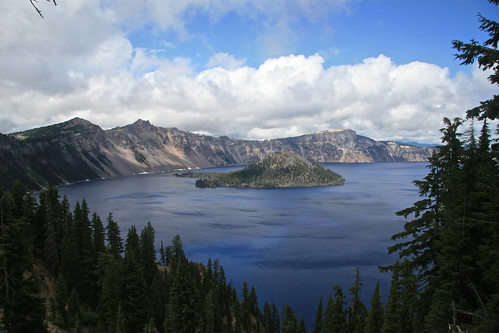
World leaders make the big announcement of imminent doom at Crater Lake, and yes, it really is that blue

I think Stephenson is more optimistic than most and his presumptions about the level of on-the-ground conflict and pure lunacy are out of line with what we know about humans. He gives only a little thought to deniers, but in a country like the USA, for example, in which a quarter of the population does not believe in evolution, in which the Republican base clings to beliefs that would make L. Ron Hubbard scream for mercy, in which Texas lunatics of both the tinfoil-hat and elected variety (I know, no real difference there) persuade themselves that a military exercise is a federal invasion, there would be a lot more going on, denier-wise, than Stephenson projects. All theoretical of course, but do you really think that in the time remaining that birthers and those who believe the Apollo moon landing was a hoax would not make use of their considerable ordnance to make life even more miserable for those with brains?

book cover

Neal Stephenson

The book is divided into three parts, although it breaks down into smaller chapter chunks. The first takes us from the initial event to the beginning of the end of Earth as we know it, how humanity comes together, or doesn’t, to preserve the species. Part two takes on the final days of earth and a whole new world of conflict, resolution, or not, setting the stage for Part three, five thousand years on, when, through forces natural and engineer-enhanced, it is again possible to set foot on Mother Earth without singeing your toes. The seven eves of the title refer to the last orbiting survivors, whose reproductive capacity and DNA is used in an attempt to reconstitute the species, and, hopefully, in time, reclaim the original Mother ship.

description
This inflatable harbinger will be heading to the ISS this year – image from Smithsonian Magazine

Stephenson does action-adventure pretty well, and there is plenty of that here. The end of the Earth is a compelling starting point and survival of the species concerns will keep you engaged. Will this work? Will that? Who will live? Who won’t?

Character is not the thing in Neal Stephenson fiction. His greatest talents lie elsewhere. Although it is definitely fun that he puts an avatar of Neal DeGrasse Tyson aboard. The significance of character here is to consider personality differences and their social, and genetic engineering implications. Given people with certain traits, how are they likely to behave, and how will those behaviors help or harm the survivability of homo sap? There is consideration of the concept of the state of nature. What is natural for people? How is that defined? Pretty interesting stuff. And there is plenty more brain candy in SevenEves. (Not for you, zombies, go away) On the hardware side, how about harnessing asteroids and comets for raw materials? Using robots of unexpectedly small dimensions for space-mining? Making orbiting environments in which humanity could survive, and even expand? How about some notions for terra-forming not only lifeless space rocks, but…um…Terra. How about interesting ways of transporting people and materials between orbiting locations, and between Earth and orbit. How about some advanced notions for individual flight on-planet? Life sciences? How about the challenges of food production in space? Bio-engineering is the biggest item here, not only in selecting who gets to be among those sent into orbit to survive torch-ageddon. But in figuring out how the differences in people can be used to ensure survival of the species, and looking at the results, some of which are quite surprising. Social science? Well, the science is a lot softer here, but the politics of end-times Earth and struggles for power among the spacers offer a look at elements of human nature that will be familiar. Stephenson’s optimism about our ability to think our way to actual survival is balanced by his recognition that we are, as a species, probably certifiable, so will continue having at each other as long as there are others to go after.

description
An O’Neill Cylinder – from the outside

I am certain that those more versed in contemporary sci-fi will have more recent comparisons to make, but the work that I was most reminded of here is the Hugo-Award-winner for Best-All-Time Series, Isaac Asimov’s Foundation series. In both, a core of talented people (a broader range of talent than in Stephenson‘s more engineer-and-hard-science-oriented portrayal) are brought together to preserve human culture in the face of an imminent catastrophe. The specifics are quite different, but they share a grandness of vision. No psychohistory in SevenEves, but the multi-millennial look at humanity offers the opportunity for and realization of a great speculative vision.

There are some commonalities between SevenEves and another recent, and very popular, sci-fi offering of the space variety, The Martian. Not in girth, of course. The Martian, at a mere 384 pps, could dock with and be pulled up on the side of the 880 page SevenEves like a tender boat on a cruise ship. Both deal with life-and-death scenarios in an airless void (no, not the US Congress), although one deals with a single life in jeopardy, while the other takes on a larger target. But there is a heavy emphasis on tech in both. Weir’s wonderful story offered an engaging narrator and way too much detail on how he goes about attempting to survive while stranded on the red planet. Stephenson writes about things that he finds interesting whether or not they clutter up the story with technical minutiae, and at 880 pps, trust me, there is too much detail. Hey, his book, his story. He gets off on the details of mechanics, and it is nowhere as mind-numbing as an endless jeremiad by, say John Galt, but you may find yourself feeling a need to skim from time to time. (Purely an aside – I think Chris Moore should write a novel about the Republican clown car of presidential candidates, called The Galt in our Stars, in which someone gets a life threatening disease and no one cares). I wonder also how the very small number of remnant original eves is supposed to be able to provide the training their progeny will require to master all the skills required to sustain civilization. I am sure there are many other details one could look at in considering the next five thousand or so years, but it might take a few more volumes.

SevenEves is a major contribution to contemporary science fiction. It is engaging enough on a visceral level, but it is crack not just for sci-fi fans, but for futurists, scientists, geneticists, engineers, and those concerned with how humanity will survive the challenges that lie ahead. It is a big book, not only in its physical bulk, but in its ambition and range of interests. Like the great works of his predecessors, Asimov, Clarke and other giants of science fiction, the vision Stephenson has built in SevenEves will be read, I expect, as long as there are still people left alive, whether on Earth or not.

Publication date – 5/19/15

This review posted – 5/15/15

======================================EXTRA STUFF

Links to the author’s personal, Twitter, Google Plus and FB pages

Folks who object to paying their taxes are already interested in working on extra-national, and even extra-terrestrial living spaces. At Island One Society there is information on sundry plans that are currently being considered. Please do not take this as an endorsement of any of the political viewpoints expressed there. I include this link purely because it gathers together a nice list of such projects.

O’Neill Cylinders are mentioned in SevenEves. This link offers a nifty animated fly-through that will offer a better sense than a single graphic image could.

Roboticized mining is the likeliest way we will make use of extra-terrestrial natural resources This example of the coming tech is called Swarmies.

I have read several Stephenson books over the years, but Reamde is the only one I have previously reviewed.

More shots of Crater Lake, among other places in that general neck of the woods

Fascinating piece from The Atlantic Magazine on mining the asteroids, among other things, Robots, Platinum, and Tiny Space Telescopes: The Pitch for Mining Asteroids by Ross Anderson from the May 14, 2012 issue

Leave a comment

Filed under Fiction, Literary Fiction, Science Fiction