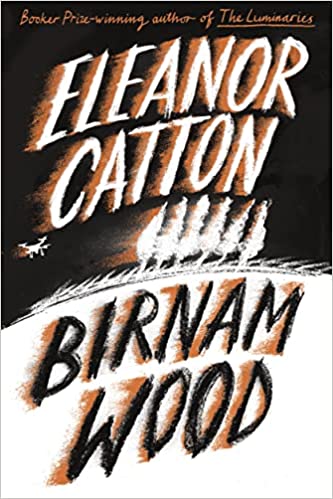
Birnam Wood by Eleanor Catton

book cover

…all the great tragedies are stories ultimately of betrayal. They’re stories where people betrayed the people closest to them but they’re also stories where people betray themselves. They kind of betrayed the better person that they could have become. – B&N interview

Third Apparition –
Macbeth shall never vanquish’d be until
Great Birnam wood to high Dunsiname hill
Shall come against him.


Macbeth –
That will never be.
Who can impress the forest, bid the tree
Unfix his earth-bound root?
The Scottish
Play

Wanna bet?

Birnam Wood is a serious, literary novel, a tragedy, cleverly disguised as an eco-thriller. Mira Bunting, 29, a horticulturist, heads an activist collective called Birnam Wood. They grow food in found plots of land, sometimes with permission, sometimes not. What they grow they consume themselves and give away to any in need. She discovered in childhood an interest in horticulture. It drowns out the relentless patter of self-critique that drives her.

description
Eleanor Catton – image from The Guardian

Shelley Noakes is number two, the sort of efficient workhorse that most organizations need in order to survive. Though she is Mira’s roomie and bff, Shelley has grown tired of being taken for granted, always relegated to second fiddle, and is determined to leave. She struggles, however, with the knowledge that if she leaves, Birnam Wood will not survive Mira’s laughable incapacity for meat and potatoes organizational management.

Tony Gallo has been away for several years, backpacking, teaching English in Mexico, trying to find himself. He wants to become a freelance journalist, despite a thin volume of actual experience. He is idealistic and insufferable, his ideological lines are not only clear, but electrified. He is carrying a torch for Mira and has returned home to see if there are any sparks left. Eager for a journalistic break, he stumbles across a biggie.

Robert Lemoine is an American billionaire, disgustingly rich from his drone business. He is looking for a bug-out retreat in case of global meltdown, and had found just the place. Is Lemoine a well-meaning rich guy, or a Bond villain?

Owen Darvish, recently knighted, is the owner of that place, a considerable swath, cheek by jowl with a national park. Unfortunately, there was a major landslide there recently, which has cut off the town of Thorndike. Will the sale actually go through now?

The landslide has caught Mira’s attention. What if Birnam Wood could set up shop in a place that was effectively cut off from most ongoing enterprise? Might be a great chance to grow her non-profit into a much larger player, and maybe do a fair bit of good? She decides to make the considerable drive and check it out. While there, she encounters Lemoine. This is where the story really gets going.

The novel flows in two parallel streams, often merging, then separating, then merging again. The first is the eco-thriller. What is Lemoine on about? He can certainly come across as charming, and sincere, but is he really? Is the money he offers Mira for Birnam Wood’s work being given sincerely, or is he up to something? Does the devil speak true? That he has a studly appeal adds to the confusion. The other is a deep dive into personality and motivation, with rich literary technique and a host of thematic concerns.

Privacy, or lack thereof, is a frequent focus in the book. Lemoine, for example, is a developer of drone technology, and is a one-percenter as well in terms of knowledge of and facility with surveillance. (…he took his phone out of his pocket, tapped the screen, then turned it around to show her. Under the list of detectable devices nearby was listed ‘mira’s iPhone’.) It permeates down to the ninety-nine-percenters as well. This, for instance, is our introduction to Shelley:

…the yellow circle labelled ‘Mira’ pulled out into the street and began traversing slowly north. Shelley Noakes reduced the scale of the map until her own circle, a gently pulsing blue, appeared at the edge of the screen, and watched the yellow disc advance imperceptibly upon the blue for almost thirty seconds before turning off the phone and throwing it, suddenly and childishly, into the pile of laundry at the end of her bed.

Mira has a tracker app on Shelley’s phone as well. Mrs Darvish keeps up on where her husband is by tracking his phone. Tony’s research is of the investigative reporter sort, on line and in-the-field which, of course, entails some significant snooping. And, of course, he is snooped on while he investigates.

Catton uses interior dialogue to let us in on the main characters’ struggles with who they are and what they want. Well, not so much Lemoine, who struggles less with a values dialectic than with figuring out how to get what he wants from the world. Tony sees himself as a progressive, but wrestles with his feminist credentials, and sincerely wonders if he is inauthentic in his desire to make a meaningful career for himself, in presenting himself as someone who has to struggle to get by, who criticizes the very system that makes his life possible. Mira struggles to hide (…a vanity, an appetite, a capacity for manipulation that she would rather other people did not see; she knew, and was ashamed to know). Shelly has to reconcile her seemingly permanent peace-maker role in life with her need to be her own person.

Shelley wanted out. Out of the group; out of the suffocating moral censure, the pretended fellow feeling, the constant obligatory thrift; out of financial peril; out of the flat; out of her relationship with Mira, which was not romantic in any physical sense, but which had somehow come to feel both exclusive and proprietary; and above all, out of her role as the sensible, dependable, predictable sidekick, never quite as rebellious as Mira, never quite as free-thinking, never – even when they acted together – quite as brave.

This being a tale not told by an idiot, inspired by a tragedy, there will be familiar tragic elements on display. Tragic flaws for everyone. Come one, come all. But can the mere hoi-polloi really be tragic characters? Isn’t that reserved for the high and mighty? Owen Darvish certainly counts for that, as does Lemoine. But Mira? Shelley? Tony? Or is grandiosity alone sufficient to elevate one to a height sufficient to mark a character as potentially tragic? Catton does make us wonder as we read just who are the tragic characters, and who the schlubs who are guilty of, maybe, a bit of overreach, or garden variety foolishness.

Of course, there is more to them than merely wanting beyond their capacities. There is another element from tragedy to consider. Note the quote that opens this review. Betrayal figures large. There is enough deception in the air here that one might be well advised to don a bee-keeper outfit to fend off the tangled webs that permeate the landscape. Secrets will be kept, some minor, some world-class. Our intro to Mira, for example, shows her using a false identity to research the landslide area. More importantly, is she selling out the collective if she comes to a deal with Lemoine? Shelley tries her best to seduce Tony as a passive-aggressive way of getting Mira to separate from her. Others have their own secrets and betrayals nicely tucked away.

Another tragedic element is that outcomes are the result of actions, not fate or chance. If you look back down the path from end to beginning you will see all the characters’ yesterdays lighting the way to an inescapable end. Although it is not the only influence on the book, Macbeth is clearly the primary one.

[Catton] drew up another intricate masterplan in which each of the main characters could be seen as Macbeth, with a corresponding Lady Macbeth, witches and so on. It sounds tricksier than it is: as the narrative perspective shifts, everybody could be the villain. She wanted to stop readers playing “the polarised blame game we are all used to in contemporary politics,” she explains. “You wouldn’t be able to say: ‘These are my people so they are obviously the good guys. These are the people that I despise so they are obviously the bad guys.’” – from The Guardian interview

You will have to find out for yourself how much of this structure made it into the final draft.

Other significant sources of inspiration were 20th century crime fiction, Jane Austen’s Emma, (the structure and taut language) and even Mary Shelley’s Frankenstein. The character Shelley was named for the author, leaving us to wonder whether this Shelley is creature or creator.

While this is a novel in which actions matter, and have consequences, it is also one in which the omniscient narrator will tell you everything you need to know about each of the characters. This ability to look into (monitor remotely? surveil?) everyone’s deepest inner thoughts and feelings resonates with the surveillance elements in the story. One of the precipitating ideas for the book, the Big-Brother-is-watching element certainly, sprung from a 2015 protest in which New Zealand police were taking photos of protesters as they walked past.

Catton is also interested in inter-generational dealings.

It’s something I have thought about a lot…how my generational placement or position has conditioned me. The book is designed generationally. There are three generations represented in terms of the points of view. And I wanted to really explore the generational differences in terms of how they deal with certain contemporary problems that we’re all kind of facing globally. – from The Toronto Public Library interview

But it is no boomer-bashing party.

“Millennials are quite willing to cosy up to the tech gen Xers,” she says. “We are all personally enriching billionaires like Elon Musk by freely giving away our data…These minerals are in the phones that are around us all the time. I want my iPhone. I want to be able to have the freedoms that it brings. We are all complicit.” – from The Guardian interview

In addition to its literary and thriller aspects, Birnam Wood is a satire, a caricature of diverse sorts. Most glaring is the Birnam Wood members, whose motivations and desires are often less idealistic than what they show to the world. Darvish comes in for an uncomplimentary look, too, as does Lemoine. It is a tale, also, about expectations.

Macbeth is a play that’s all about prophecy. It’s animated by prophecy. So I …re-read it with everything that was happening in terms of world events resounding in my head and suddenly saw it in a really different way, as a play that contains very interesting and loud warnings about what happens when you regard the future with too much certainty if you’re too convinced about what lies just down the road. Because of course Macbeth makes the ending of Macbeth happen. None of that was written on the wall before before he received those prophecies and I and so I kind of wanted to achieve a similar effect in a novel by writing a book about incremental political actions and moral actions that end up kind of having these enormous effects that were avoidable. – from the Barnes & Noble interview

In short (too late, I know), Birnam Wood is a multi-layered triumph, building on classic structures and themes to tell a very contemporary story, offering consideration of how people make very human choices, as they contain battles between morality and desire. The tale does not at all creep in a petty pace, but rolls along at a good clip, shifting into turbo as it nears the end, generating an abundance of sound and fury which certainly signifies something.

Like all self-mythologising rebels, Mira preferred enemies to rivals, and often turned her rivals into enemies, the better to disdain them as secret agents of the status quo.

Review posted – 6/9/23

Publication date – 3/7/23

I received an ARE of Birnam Wood from FSG in return for a fair review. Thanks, folks, and thanks to NetGalley for facilitating, but ever since writing the review, I acquired, and can’t seem to wash off, these bloody spots.

This review has been cross-posted on GoodReads

=======================================EXTRA STUFF

Links to Catton’s Good Reads and Wikipedia pages

Profile – from Wiki

Eleanor Catton MNZM (born 1985) is a New Zealand novelist and screenwriter. Born in Canada, Catton moved to New Zealand as a child and grew up in Christchurch. She completed a master’s degree in creative writing at the International Institute of Modern Letters. Her award-winning debut novel, The Rehearsal, written as her Master’s thesis, was published in 2008, and has been adapted into a 2016 film of the same name. Her second novel, The Luminaries, won the 2013 Booker Prize, making Catton the youngest author ever to win the prize (at age 28) and only the second New Zealander. It was subsequently adapted into a television miniseries, with Catton as screenwriter. In 2023, she was named on the Granta Best of Young British Novelists list.

For those looking ahead

…her next work, “a queasy immersion thriller” that will be called Doubtful Sound, after the remote fjord in the south-west of New Zealand where it is set. She has had the title for a long time – “I just think it is so beautiful” – but it was only in the final months of completing Birnam Wood that the story came to her. – from The Guardian interview

Interviews
—–Poured Over: A Barnes & Noble Podcast – Eleanor Catton on Birnam Wood with Miwa Messer
—–Toronto Public Library – Eleanor Catton – Birnam Wood – Mar 6, 2023 – video – 44:50
—–The Guardian – Eleanor Catton: ‘I felt so much doubt after winning the Booker’ by Lisa Allardice
—–NY Times – Eleanor Catton on ‘Birnam Wood’ with Gilbert Cruz – audio – 35:11
—–Stuff – Eleanor Catton on guilty pleasures, being a slow writer, and whether NZ is still home

Songs/Music
—–Rockwell – Somebody’s Watching Me
—–The Police – Every Breath You Take

Item of Interest from the author
—–Waterstones – Eleanor Catton on Birnam Wood and its influences – video – 6:29 – on Emma as inspiration. There is a lot in here.

Item of Interest
—–The New Yorker – March 13, 2023 – Eleanor Catton Wants Plot to Matter Again by B.D. McCloy


Leave a comment

Filed under Cli-Fi, Fiction, Literary Fiction, Mystery, Thriller

Who Gets Believed by Dina Nayeri

book cover

”Who ya gonna believe, me or your own eyes?” – Chico Marx in Duck Soup

The truth isn’t enough. Most people aren’t even listening for it.

Agent Mulder knew that the truth was out there. But what can one do about those who are incapable or unwilling to see it, or worse, those who have a vested interest in disbelief? And how much responsibility to persuade the unpersuadable must be carried by those whose truth is in question? Aliens do figure large in this book, but not in the Mulder/Scully mode.

description
Dina Nayeri – image from LitHub

Dina Nayeri has been writing about the truth since at least 2012, with a particular emphasis on immigrant issues, more specifically, on refugees, asylum seekers. Her previous book, The Waiting Place, released in 2022, documented life in Katsikas, a Greek refugee camp, mixing tales from the lives of some of the children there with her own experiences as a refugee from Iran. In The Ungrateful Refugee, 2019, she writes of adult refugees she has met, looking at what being a refugee is like for them. She has also written novels and short fiction, centered on the refugee experience. And that is her primary focus here as well.

The aim of that book [The Ungrateful Refugee] was to really look back on my own experience, and what people go through now to make some sense of the modern displacement experience. One of the sections of the book is about asylum storytelling, and I had so many stories of people getting disbelieved for the stupidest reasons, and the way that the asylum officers listen to the stories. It was very shocking. I wanted to write a lot more about that and, with this book, I wanted to expand that out to just how the vulnerable are listened to, versus people who are very privileged. – from the Ms Magazine interview

In Who Gets Believed, Nayeri takes on a broader perspective. She looks at the challenges people face in trying to get their truths believed not only in refugee situations but in many other walks of life.
There are two factual threads that bind the book together, weaving in and out over the course of three hundred or so pages. First is the tale of K, a Tamil torture victim whose evidence includes a back full of scars. Somehow the system tries to persuade itself that K did that to himself in order to gain entry to the UK. If this sounds Kafkaesque to you, it does to Nayeri, as well. She frequently cites that patron saint of bureaucratic horror as she takes us through the nightmare world of mindlessness, and barely disguised racism, sexism, and xenophobia that is the West’s immigration system. It makes a powerful metaphor for how the system treats those whose rights are supposedly guaranteed by international treaty, but who are more typically treated as rightless, and suspect supplicants.

For most migrants [asylum attorney Maleha Haq] explained, credibility isn’t the reason for rejection. In fact, the issue of credibility is cleverly avoided by using the claimant’s own lack of knowledge about the definition of a word. What is a refugee? Before he is believed, an asylum seeker must choose the right story out of many, the relevant part of a complicated life. It’s like being asked to cut a circular disk from a cylinder. You have many stacked circles, but if you cut at the wrong angle, you have an oval. You’ve failed to present the desired thing.

Another thread is her brother-in-law, someone with a lifetime of mental health issues. Making the credibility tale personal, she writes about not believing he was really incapable of providing for himself in the world, seeing him as a leech on his family, a con-artist working the system. This is a powerful approach, bringing in real-world issues, but with names and faces, and humanizing the core questions even more by weaving in how disbelief, even her own, has impacted her life.

One of the many strengths of the book is Nayeri’s commentary on communication. She tells how language is used as a tool of obfuscation and exclusion. Refugees must learn the nuances of the immigration system in order to gain entrance. They must learn to play the game, memorize the exact right words to use, be ready to offer the right presentation. The unpolished truth is typically fraught with openings that officials, whose default is rejection, (UK Home Office workers are given target numbers for rejecting asylum seekers.) can seize on to deny asylum. It is disheartening to learn that the prospects of a refugee gaining asylum correspond very closely with whether they have legal counsel or not, which bodes ill for most. Again Nayeri offers a personal element, reporting on her experiences with having to learn not just what, but how to present, in order to get what she wanted, whether acceptance to a college of her choice, or a job, post college.

Despite all the talk of leadership and change-making, what you actually learn at Harvard Business School is how to be believed—how to be the ones people want to believe, feel safe believing, given their heuristic shortcuts.

The cost to refugees is clearly higher but the parallels in how one must approach large systems with language resonates like Big Ben at the top of the hour.

…belonging is a performance with a script

Nayeri looks as well at a bit of the world of medicine. She notes that many caregivers disparage sufferers of Sickle Cell Disease, who must repeatedly seek help with pain issues, as “Sicklers,” refusing to take seriously the very real pain experienced by those afflicted. And she notes caregiver disparagement of different ways of grieving in different cultures.

She has a tale of her own about her doctors refusing to treat her the way she wanted, as a reflection of how many doctors do not take seriously the wishes and pain reports of many women patients. This one resonated personally. In late 2021, my own sister experienced this, as, for months, she had complained of pain, but was sent home from each medical visit (when she could even get one. Sometimes this entailed months of waiting.) with little or no relief, and no real examination, certainly no effective one, of underlying causation. After all, she was just an old lady, and old people have pain all the time. No big whoop. The pain finally became too much and she was rushed to the ER. Subsequent surgery revealed a return of a stomach cancer after a ten-year-remission, nicely metastasized. She was dead within weeks. The risk entailed in medical professionals ignoring claims of pain is very real.

She takes on The Reid Technique, a widely used interrogation regimen routinely abused by police, with a chargeable outcome being a much higher priority than truth-seeking. She looks at how the methodology is used to generate inconsistencies, which are then portrayed as evidence of dishonesty. The obverse of this is firefighters being granted exceptional credibility when testifying as expert witnesses, despite there sometimes being little scientific merit to what is claimed on the stand.

The Reid Technique begins with an assumption of guilt. It was originally intended to be used only when the interrogator is absolutely certain of guilt. Even then, it was intended not to extract a confession that might condemn the suspect on its own (the technique is, after all, so torturous that even its creators didn’t believe it would cause an innocent person to confess, they seemed aware of that risk), but to uncover new, unknown details—intimate ones about the why and the how—that could then be corroborated. It was that supporting physical evidence that would convict the guilty—a body, a weapon, some real proof.

It might be easy to intone a general rule of Trust No One, but refugees do not have that luxury. Unless an asylum-seeker can somehow get legal representation, they are forced to trust people who are in a position to help or harm their cases.

There is plenty more in here, dives on how we persuade ourselves to believe thing that are not true, how politics creates truths, even alters our bodies, on how we only see what we are looking for, how having stories told publicly makes them more real, how consultants befuddle their clients. You will learn a lot. You will also feel a lot. Nayeri’s stories are moving, upsetting, and hopefully, motivating. They will force you to think, and, hopefully, engage in some introspection. Her willingness to own her own biases shows that she is not looking for justice solely in the world outside, but within herself. Red Smith famously said that writing was easy, All you do is sit down at a typewriter, cut open a vein, and bleed. I imagine there was a lot of cleaning up necessary in Nayeri’s writing places while she worked on this book. Also, she is not trying to get you to like her. This is an honest portrayal of a complicated person, one who struggled trying to fit in with American society as a child, and who maneuvered the ivy halls of Harvard and Princeton, and a premier spot in the consultoverse, in her drive for success.

Who Gets Believed is a powerful look not just at the terrifying refugee experience, but at the wider problems of disbelief that are grounded in biased or unsupported notions. I Want To Believe that the issues raised in this book are being addressed, but while I expect that there are awareness programs being run by some healthcare provider institutions, I seriously doubt there is anything being done by police departments to cope with abuse of the Reid Technique. And I would bet that immigration services, swamped as they are with applicants, and chronically understaffed, are unlikely to have done much about basing asylum denials on firmer reasons than what appears the case today. The truth of what is happening in these parts of our world is definitely out there. Dina Nayeri has brought some of that truth to the rest of us. Belief is only needed if there is no proof. Nayeri offers evidence. These are truths you need to know.

this variability in judicial standards is one of the greatest flaws of the American asylum system. Why should the weight of any kind of evidence vary by judge? Should one’s fate depend on the compassion or politics of the judge assigned? Should it vary by administration?…asylum grant rates go up and down based on who the attorney general is. That’s not just at the judge level but at the screening stage. The number of people found to have credible fear and entitled to be seen by a judge depends on political pressure.

Review posted – 06/02/23

Publication date – 03/07/23

I received a copy of Who Gets Believed? from Catapult in return for a fair review.

This review is cross-posted on Goodreads. Stop by and say Hi!

=======================================EXTRA STUFF

Profile – from Wikipedia
Nayeri was born in Isfahan, Iran. Her mother was a doctor and her father a dentist. She spent the first 8 years of her life in Isfahan but fled Iran with her mother and brother Daniel in 1988 because her mother had converted to Christianity and the moral police of the Islamic Republic had threatened her with execution.[1]Nayeri, her mother and brother spent two years in Dubai and Rome as asylum seekers and eventually settled in Oklahoma, in the United States.[2] Her father remained in Iran, where he still lives. She has written several works of non-fiction, novels for adult and children, and numerous articles.

Links to the Nayeri’s personal, FB, Instagram, and Twitter pages

Interviews
—–NPR – Dina Nayeri wants you to question ‘Who Gets Believed’ | Book of the Day – with Juana summers – audio – 8:44
—–Ms Magazine – Telling the ‘Right’ Story: Dina Nayeri on Refugee Credibility – by Jera Brown
—–LitHub – Manufacturing Lies: DinaNayeri on How Our Cultural and Bureaucratic Norms Often Betray the Truth with Whitney Terrell and V.V. Ganeshananthan

Songs/Music
—–The Weeknd – High for This– mentioned in Chapter 5

Items of Interest from the author
—–PBS – Is the distinction between migrant and refugee meaningful? – Video – 3:02
—–Muck Rack – Articles by Dina Nayeri – links to pieces in diverse publications

Items of Interest
—–NY Times – Many Women Have an Intense Fear of Childbirth, Survey Suggests by Roni Caryn Rabin
—–AP – Why do so many Black women die in pregnancy? One reason: Doctors don’t take them seriously by Kat Stafford
—–Wisconsin Criminal Defense – Understanding the Reid Technique in Police Interrogations – The Law Offices of Christopher J. Cherella
—–Project Gutenberg – The Trial by Franz Kafka – full text for free

Leave a comment

Filed under American history, Bio/Autobio/Memoir, Feminism, History, Non-fiction, Psychology and the Brain, Public policy, Reviews

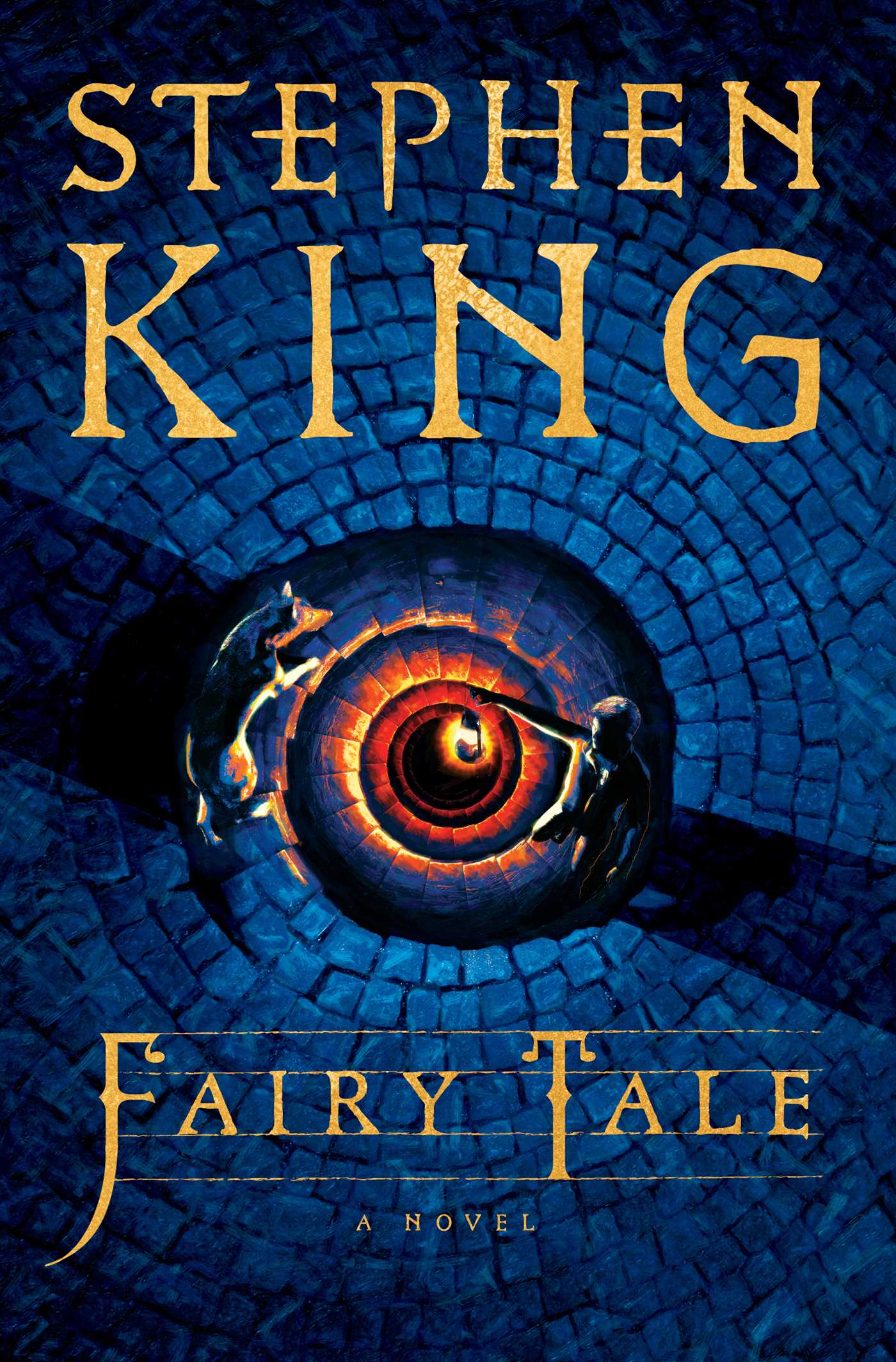
Fairy Tale by Stephen King

book cover

I’d heard of curses—the storybooks are full of them—but this was the first time I’d seen one in action.

You never know where the trapdoors are in your life, do you?

Once Upon a Time, Stephen King decided to write a fairy tale. So, bring in some Brothers Grimm, Disney, Mother Goose, add in some H.P. Lovecraft, for good measure, and plenty more, stir for a good long while in the cauldron that is SKs brain, and “Poof!” There it appears. Being Stephen King, the book is over 600 pages, so not exactly Mother Goose length.

I love all the stuff that Robert E. Howard, Conan the Barbarian and some of the characters in the Edgar Rice Burroughs books, who would find these strange deserted cities, monsters and things. I thought it’s kinda like fairy tales. And I started to kinda get interested in that, and I thought maybe I could combine those two things, Maybe I could take the whole fairy tale riff. – from the Losers Club interview

Charlie Reade is a pretty good kid. But he hit into a bit of bad luck. He was seven when Mom made the mistake of walking across a local bridge on an icy night. Soon after, dad started drinking in earnest, managed to survive in his job for three years, but was ultimately let go. After months of ever worse drinking by his dad, Charlie did something that was alien to him.

description
Stephen King – image from The Financial Times

He prayed to God to help his dad. Help arrives when Charlie is ten in the form of a former workmate introducing pop to AA. Feeling that he must hold up his end of the deal, Charlie is ever on the lookout for the task that he thinks God wants him to take care of. Years later the day arrives, and Charlie, seventeen now, steps up, saving the life of a local crank who had had a bad accident. Mr. Bowditch had more than just a foul temper and a creepy old house. He had an old German Shepherd, Radar, who loved him dearly. Charlie takes on the task of caretaking Radar and Mr. Bowditch, and fast friendships develop. Bowditch had another thing of some significance, a shed covering the entrance to a hidden world.

description
Mr. Bowditch’s house is referred to as “The Psycho House” by the locals – from the book

There comes a time (about 35% of the way in) when it is necessary for Charlie to brave that journey and the story takes off, as Charlie and Radar head down and out of this world. There is a sundial down there that can reverse-age the now-beloved dog. Charlie is determined to save her.

…these books, particularly the Edgar Rice Burroughs books, like John Carter of Mars…they’re supposed to have this hero who’s like, muscular, you know, he played football in college and at the same time he’s got a brain, he’s handsome and got a cleft chin and all that good stuff and I thought I’d like to write a character like that. I’d like to write a character, who’s big, tough, tall, strong, who’s smart, but I want to give him a dose of reality. If he’s a kid, a younger man, who as a younger kid put dogshit on a bad teacher’s windshield, and glued somebody’s ignition shut. In other words I wanted him to have an anti-Disney kind of thing in there. – from the Losers Club interview

King succeeds in giving Charlie some dark sides, but he also gives him a large dose of shame to balance it out.

Fairy Tale follows the familiar Campbellian structure of the Hero’s Journey monomyth, in which a “hero” goes on an adventure, leaving our pedestrian plane to take on challenges in a supernatural world, usually one below ours, engages in victorious battle, and returns home wiser and more powerful than when he or she left, with a newly enhanced ability to help others.

Once down below, in a world called Empis, Charlie encounters many characters who would be quite comfortable in traditional western fairy tales. It is a magical place, as one might expect. There are multiple dealings with Rumpelstiltskin-type characters, (names figure very large here) royalty disguised as commoners, sentient non-human life, (including a cricket who might remind one of another boy on a journey) and a general bleakness darkening the land. I was reminded of C.S. Lewis’s Narnia series opener, in which that troubled land was described as being “Always winter but never Christmas.” More immediate correlations might be to King’s own The Talisman, The Dark Tower, and From a Buick 8, Rose Madder, and Lisey’s Story, which all feature cross-world portals.
Charlie must face and overcome perils in this new (to him) world, in order to achieve his goal of saving Radar. But, Charlie is somehow seen by the locals as some sort of a savior, a prince. (which again reminded me of Peter in Narnia) Charlie finds this odd (who, me?) but also feels a need to help out, so does what he can. Adventure ensues, as does a relentless, and very fun series of references to fairy tales of diverse sorts. King finds his fairy tales in various places. TCM flicks are among them, Niietzsche, Dickens, Kipling, Mark Twain and Thackery, Ray Bradbury, Jung, Lovecraft, Game of Thrones, Piers Anthony, and others.
I tried to put in every goddam fairy tale I could think, including Ariel, the mermaid from the Disney film. – from the Losers Club interview

The Wizard of Oz is a particular favorite, as there are multiple references, including an emerald city, fields of poppies, and a bit on the importance of shoes.

description
Radar and Charlie – from the book

The overall structure of the novel is a frame. Chapter one is Charlie telling us that he is going to tell us a tale–so we know that he will survive–and ends with Charlie letting us know that he is a twenty-something teacher of a seminar on Myth and Fairy Tales. Each chapter is introduced by a drawing of an element to come. These are delightful, adding to the fairy-tale feel of the novel.

Gripes – Charlie keeps reminding us that he is speaking and hearing in a language other than English, a language that he seems to be absorbing by osmosis. Once the initial leap of faith had been requested, and presumably performed, these repetitions only served to remind us over and over again of that leap. Once would have been sufficient. And at 608 pages, it was definitely a bit long. I did not keep track of all the fairy tale, or other literary or filmic references sprinkled across the book, but they are legion, and spotting them offers its own form of satisfaction. Those who have read more of King’s work than I, which will be many of you, will pick up references to other King work that I missed (The Cujo reference is not missable). A weapon used here features large in a King series

There are some passing contemplations in the tale that rise above the simple experience of the plot. In one, Charlie wonders whether it is Empis that is the magical place or the world he was born into, offering some intriguing examples of why one might think that. There are more.

There are familiar Kingian elements. A young man, or boy, forms a friendship with an older man. The man has significant secrets, but teaches his mentee what he can. There is a missing parent, a young person taking on adult responsibilities, issues with alcoholism, other worlds that exist in parallel to ours, coming to terms with our darker side, and more. One primary Kingian element that is particularly appropriate here is that this is a love story. Boy meets dog, and it is love that conquers all. It is also a love letter to story, the stories King read as a kid, the stories he has continued to inhale as an adult, whether of the fairy tale, horror, science fiction or adventure sort, whether taken in from the pages of a book or from screens, large and small. We as individuals are the stories we tell about ourselves.

Our culture is defined by the stories we tell and repeat about our values and history. Story is as important to us as breathing and eating. Many of the fairy tales that King incorporates here are not, like the ones we grew up on, intended for bedtime reading to children. Mother Goose might not feel entirely comfortable with the darker pieces that King has imported into his magical kingdom (not exactly the happiest place on Earth), particularly the Lovecraftian ones, but I bet the Brothers Grimm (before Disney got its paws on their tales) would be all good with it. Whether your fairy tales begin with “Once upon a time or “A long time ago, in a galaxy far, far away…” we have always been taken with stories that transport us to other realms, whether those places are characterized by magic, darkness, bizarre landscapes, alien beings, advanced technology, or some other form of other-ness. I can’t say that once you read this you will live happily ever after but it may show you some roads you can travel to find your way there on your own, or even with a friend or two. Consider yourself transported.

As a kid, I liked all the stories by Robert E. Howard, and I liked Edgar Rice Burroughs. One of the greatest things is The Land That Time Forgot. The story starts with a narrator who finds a manuscript on the beach. The narrator says, to you, the reader, read five pages and I will be forgotten. To me, that’s what fiction’s all about. Particularly fiction where a lot of stuff happens and where you’re kind of on an adventure, and you say to yourself, What I would like to do is for my readers to forget all their problems for a while, and just relax and get totally immersed in the story and get carried away to a different world. – from the Losers Club interview

The novel has been optioned by Paul Greengrass to make a feature film, but it certainly seems better suited to a mini-series. I guess we will see.

Review posted – 05/12/23

Publication date – 9/06/22

This review is cross-posted on Goodreads. Stop by and say Hi!

=======================================EXTRA STUFF

SK’s personal and FB pages

reviews of some other books by this King
—–2020 – If It Bleeds
—–2019 – The Institute
—–2014 – Revival
—–2014 – Mr. Mercedes
—–2013 – Doctor Sleep
—–2009 – Under the Dome
—–2008 – Duma Key
—–2006 – Lisey’s Story
—–1977 – The Shining

Other King Family (Joe Hill) books I have reviewed:
—–2019 – Full Throttle
—–2017 – Strange Weather
—–2016 – The Fireman
—–2013 – NOS4A2
—–2007 – Heart-Shaped Box
—–2005 – 20th Century Ghosts

Interview
—–The Losers Club – A Stephen King Podcast
From 7:00 – 10:45

Songs/Music
—–Keen’V – Rien Qu’une Fois

Item of Interest from the author
—–Stephen reads an excerpt from Chapter 15

Items of Interest
—–Esquire – In Fantasy, Stephen king Gets Personal by Jonathan Russell Clark –Lark offers a fascinating take on some common threads in nis fantasies
—–Booktrib – A Fairy Tale Worthy of a King – by McKenzie Tozan
he finds himself questioning which world is real, and which world is the fairy tale.
—–Wikipedia – Hero’s journey
—–Tor – Breaking Down the Fairy Tale Elements in Stephen King’s Fairy Tale by Rachel Ayers
Ayers goes through the mushy borders between fairy tale, folklore and mythology.

Leave a comment

Filed under Fantasy, Fiction, Horror

What Have We Done by Alex Finlay

book cover

As the bus disappears in a trail of black exhaust, Jenna notices a woman across the street who seems to be staring at her. She’s not one of the usual bus-stop parents. She has a pretty heart-shaped face, high cheekbones. Someone new in the neighborhood maybe. Too young to be a mom. An au pair? Jenna raises her hand to wave, but the woman turns away. Not even fellow outcasts want to be friends. Jenna watches a long moment as the woman crosses the street to avoid the other parents chatting on the sidewalk.

No matter how bad the person, we all cling to the days of innocence we remember from our youth.

Of course, not everyone was innocent. Savior House was less of a group home and more a ring of hell for Jenna, Donnie, and Nico. When they were teens, their female peers were disappearing at an alarming rate. This on top of unhealthy quantities of brutality to endure or evade, not to mention a strange rich person who stopped by occasionally with mysterious purpose. Twenty-five years ago, the three, together with two other friends, committed a homicide. (It’s in the prologue) Today, one of their group is already dead, and the rest are in mortal peril. Can any of them be saved? What goes around…

description
Alex Finlay – image from AnthonyFranzenBooks.com

We follow the three as they try to survive. The action is mostly contemporary, with looks back at their teen experience, which was not pretty, and the events that led up to that fateful day. They did not escape Savior House unscathed.

I love exploring how people deal with, and overcome, trauma. I’d read somewhere about how many people with childhood trauma somehow later channel that into highly successful careers. That was the spark for the idea of a group of teenagers in an abusive foster home growing up and having accomplished lives, but also a secret that will come back to haunt them 25 years later. – from 2023 The Big Thrill interview

Jenna is a DC-suburb stay-at-home stepmom, with a particularly dark past, which she believed she had left behind. Donnie was in a popular band twenty years ago, and is now playing the oldies circuit, currently working a cruise ship. He has issues with substances. Nico is an executive producer for a successful reality TV show, set in a mine. He has issues with gambling. Maybe their troubles are a form of penance. Attempts are made on all their lives.

Asked in the above interview how he came up with the unusual characters in this book, Finlay said,

For Donnie, I’ve long wanted to create an aging rocker as a character. In fact, seven years ago I interviewed the members of a popular 80s band knowing that someday I’d use it for a character. That day came when I wrote my first Donnie chapter for WHAT HAVE WE DONE.
For Nico, I have a friend who’s an executive producer of hit reality TV shows, so I had access to someone with a unique job. And the great fictional characters of others—Jason Bourne, Nikita, and Orphan X to name a few—inspired Jenna.

The book is divided into three parts. In The Targets, we meet and spend some time with each of the three, get to know them, their situations in life, their strengths and their issues. The Reunion brings at least some of the group back together, and The Truth is self-explanatory.

It is a wild ride, as Finlay keeps the action moving, and the pages flipping, as the three do their best to remain alive in a hostile world. There are plenty of white-knuckle passages, and chapter-ending questions left to be answered. Finlay knows how to end his chapters with a hook, to keep you from switching off that bedside lamp (or e-reader). He keeps you wondering who can be trusted.

The chapters are short, averaging a little over four pages per, and many, eighty-six, so you can pop into the book for a few minutes at a time, and still scarf down a chapter or five.

Some moral questions are raised. You will pick up some unexpected bits of intel. A killer uses an unusual weapon for their dark purpose. And there is some useful info on mining safety. You are hardly likely to fall in love with any of the characters, particularly any with a psycho-killer persuasion, but you will like them enough, particularly Jenna, (who, BTW, gets 36 of the 86 total chapters; Donnie and Nico get 22 and 16 respectively) to care about how things go for them, to hope that they can find some redemption, in addition to surviving. But this is pretty much a pure entertainment. Don’t worry about underlying content, themes, or larger issues. Just see what happens next, and then, and then, and then. It is a wonderful beach read. You won’t wonder what you have done once you finish reading. You’ll know. You will have had a good time.

he’s startled by a memory: the four of them at the bank of the river, on their knees, the gun barrel put to the back of Donnie’s head.
Ben’s voice echoes in his head. You don’t have to be scared anymore, Donnie.
A tear rolls down Donnie’s cheek.
I’m not so sure about that, Benny. I’m not so sure.

Review posted – 5/5/23

Publication date – 3/7/23

I received AREs of What Have We Done from Minotaur Books in return for a fair review. Now, would you please tell that person who keeps following me to go away. Thanks, folks, and thanks to NetGalley for facilitating.

This review has been cross-posted on GoodReads

=======================================EXTRA STUFF

Links to Finlay’s personal,
FB, and Instagram, and pages

Profile – From the author’s real-name website

Anthony Franze is a critically acclaimed novelist with St. Martin’s Press, and a lawyer in the Appellate & Supreme Court practice of a prominent Washington, D.C. law firm.
For more than a decade, Anthony was an adjunct professor of law teaching courses in Federal Courts, Legal Rhetoric, and Appellate Practice, and he currently participates in a European faculty exchange program where he teaches at law schools abroad.
He writes legal thrillers under his own name, including THE LAST JUSTICE (2012), THE ADVOCATE’S DAUGHTER (2016), and THE OUTSIDER (2017He writes commercial fiction under a pen name, [Alex Haley] and his 2021 novel was an Indie Next pick, a LibraryReads selection, an Amazon Editor’s Best Thriller, as well as a CNN, Newsweek, E!, BuzzFeed, Business Week, Goodreads, Parade, PopSugar, and Reader’s Digest best or most anticipated thriller of the year. His work has been translated into more than a dozen languages and optioned for television and film.

Interviews
—–The Big Thrill – Up Close: Alex Finlay – A CHILDHOOD DEED TO DIE FOR by K.L. Romo
—–The Big Thrill – 2022 – The Ties That Bind by Dawn Ius
—– Annie’s Book Stop of Worcester – Alex Finlay Interview – on The Night Shift

Item of Interest from the author
—–Criminal element – Excerpt – Chapter 2

Leave a comment

Filed under Fiction, Mystery, Suspense, Thriller

What Feasts at Night (Sworn Soldier, #2) by T. Kingfisher

book cover

I had the unpleasant feeling that I was riding straight down a giant throat.

…the woods of Gallacia are as deep and dark as God’s sorrow.

T. Kingfisher, nom de plume of Ursula Vernon, introduced Alex Easton, the Sworn Soldier of the series title, in her 2022 novella, What Moves the Dead. Easton is a native of the fictional nation of Gallacia, a place with its own language, nasty weather, and plenty of reasons to stay away. Alex travels with Angus, erstwhile batman from military days, and overall assistant these days. It is the late 19th century. The pair managed to survive the creepy challenges offered in the first book in the series, a particularly original and alarming take on Poes’s, The Fall of the House of Usher. They are looking forward to a holiday at Easton’s hunting lodge. But they do have a penchant for finding the unusual and unpleasant.

description
T. Kingfisher, aka Ursula Vernon – image from Edubilla.com

Easton invited Eugenia Potter to be a guest at the lodge. Potter is Beatrix’s aunt, a personage from the prior book, and a love interest for Angus. Easton is hoping that the lodge has been well maintained, as a local had been hired to see to that, but had proven unreachable. Is the place ready? Is it even standing? Who knows?

The focal point on the spectral scale in this volume is an obscure regional spook. According to wiki, a moroi is a phantom of a dead person which leaves the grave to draw energy from the living, so, not a paying guest. Vacation plans are foiled, in fact, replaced with mortal perils

The initial volume in the series introduced Alex Easton as a person with female physical attributes who is established in a traditionally male role. The author even takes on pronoun-ing in the created culture that incorporates such a person into the extant culture. It was an interesting element in the first volume, but is only lightly addressed here.

Kingfisher has fun setting the creepy stage with grim descriptions of Gallacia, and the particularly dreary part of it in which Alex and company find themselves. For examples, see the two quotes at the top of this review. But she also peppers the tale with humor.

…I recognized the smell of livrit, our beloved national paint thinner, made from lichen, cloudberries, and spite. No Gallacian soldier would be without a bottle, in case we ever need to remember what we’re fighting for. (Mostly the opportunity to be somewhere that has better liquor.)

The greatest city in Gallacia is fine, I suppose, but I didn’t feel the need to linger. Imagine if an architect wanted to re-create Budapest, but on a shoestring budget and without any of the convenient flat bits. While fighting wolves.

And Potter butchering the local patois is quite fun.

Alex and company try to figure out what is going on, then how to address the problem. The local woman, whom they hire to take care of the household, should come with a surgeon general’s warning.

The most interesting element in the story is the fuzzing of the lines between reality and the dreamworld. Are battles fought in an unconscious state still deadly? The struggle for self-control, for self-awareness is as significant as the physical (or is it spectral) harm that is risked, and even suffered.

But frankly, this one was a bit of a dud for me. Only occasionally scary at all. I always enjoy a bit of humor and Kingfisher offers up a fair bit here. But there seems far less richness to this book that there was to its predecessor. An enjoyable read but far from a compelling one. It has the benefit of being a short one, a novella, not a full novel, so you can inhale it in a sitting.

Kingfisher/Vernon has a third Sworn Soldier volume in the works, set in the USA, and featuring Dr. James Denton from What Moves the Dead. Hopefully the digging she has been doing for that project will yield a motherlode of fun and horror.

The silence didn’t feel peaceful. It felt thick. Like a layer of fuzz on your tongue after a hard night of drinking, which you can’t see or touch but you can damn well taste. There weren’t even any birds singing.

Review posted – 04/19/23

Publication date – 02/13/23

I received an ARE of What Feasts at Night from Tor/Nightfire in return for a fair review. Thanks, folks, and thanks to NetGalley for facilitating.

This review is cross-posted on Goodreads. Stop by and say Hi!

=======================================EXTRA STUFF

Links to Kingfisher’s personal, Goodreads, and Twitter pages

Profile – from the Fantasy Hive
T. Kingfisher is the adult fiction pseudonym of Ursula Vernon, the multi-award-winning author of Digger and Dragonbreath. She is an author and illustrator based in North Carolina who has been nominated for the Ursa Major Award, the Eisner Awards, and has won the Nebula Award for Best Short Story for “Jackalope Wives” in 2015 and the Hugo Award for Best Novelette for “The Tomato Thief” in 2017. Her debut adult horror novel, The Twisted Ones, won the 2020 Dragon Award for Best Horror Novel, and was followed by the critically acclaimed The Hollow Places.

My reviews of earlier books by Kingfisher
—–2022 – What Moves the Dead
—–2023 – Thornhedge

Items of Interest
—–Wiki on moroi
—–Stone Soup – The Mess That the Editor Fixes: What Feasts at Night by T. Kingfisher – really only so-so

Leave a comment

Filed under Fantasy, Fiction, Horror, Novella, Reviews

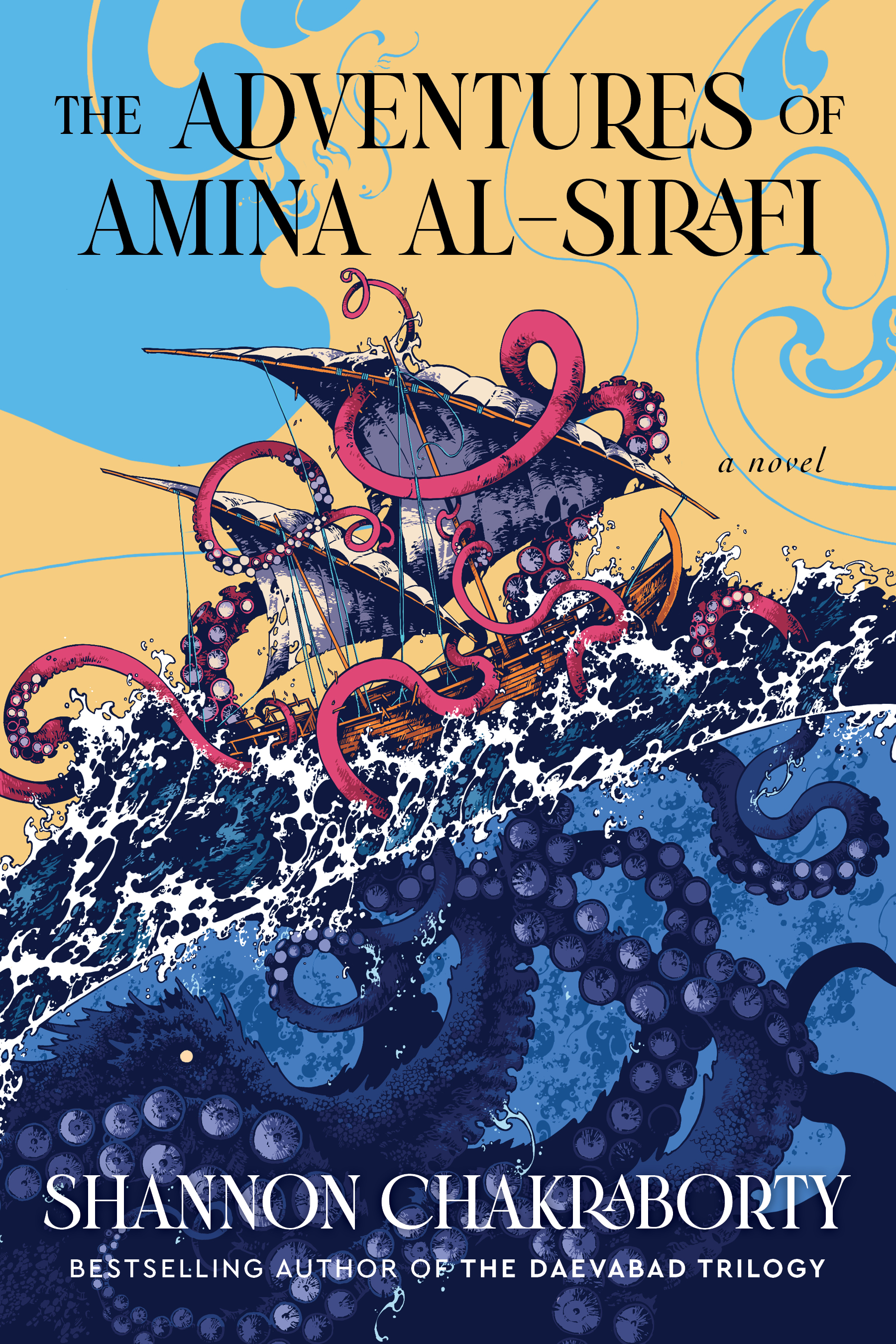
The Adventures of Amina Al-Sirafi by Shannon Chakraborty

book cover

We used to joke that of the three of us, I could kill you up close, Tinbu could kill you from another ship, and Dalila could kill you from a different city three days later.

I’d grown up feeling terribly unusual; out of place and never at peace with the fate afforded young girls. In a hidden corner of my heart, I nursed embarrassing dreams. That I was not the child of my parents, but the daughter of a tribe of female warriors who flew upon winged horses. Or I was heir to a hidden sea kingdom below the waves, and the whispered sighs I heard from the water when we sailed and the strange lightning in the distance were not natural weather phenomena but magic, my true family calling to me. Then I grew into an adult. One who learned the hard way that if there was magic in this world, it could be as brutal and cunning as the worst monsters out of a fairy tale.

We get to see some of that in action.

Amina al-Sirafi has led a storied existence, leaving home at sixteen and making her way on the briny deep, not just a pirate, but a female captain, a nakhudha, notorious for her success at parting the wealthy from their wealth. Not exactly a Robin Hood, not particularly bloodthirsty either. But life moves on. The years take their toll, and one seeks out less perilous enterprises, particularly after a singularly harrowing experience, particularly when pregnant. Years on, Amina is living a sedate existence, raising her ten-year-old daughter. But life comes calling, in a way that might be familiar to Michael Corleone. A rich widow, Salima, the mother of Asif, a crewman of Amina’s who had been lost, wants to hire her to retrieve her granddaughter, 16yo Dunya, Asif’s daughter.

description
Shannon Chakraborty – image from her Twitter pages

Well, maybe not quite lost. An erstwhile Crusader, Falco Palemenestra, a Frank (local speak for European) with a profound lust for magical objects, appears to have made off with young Salima’s greatest treasure, 16yo Dunya. Granny wants her back. She makes Amina an offer she cannot refuse.

And the chase is on. But of course, Amina has to pull together a crew. This is where we meet her erstwhile first mate, Tinbu, who has been in charge of her ship since she went on sabbatical. Much more fun is her good pal Dalila, a professional poisoner. You do not want to sip from the wrong cup in that workshop.

Easily one of the most enjoyable topics to research was criminal activity—specifically overwrought stories and urban legends about criminal activity—in the medieval world. All the cons, tricks, and poisons in this book are pulled from history: there’s actually a thirteenth century charlatan’s guide (recently translated into English by the Library of Arabic Literature) which discusses both the three cups game still used to swindle gullible tourists today and the numerous knock-out drugs Dalila employs. The guild Dalila hails from—the Banu Sasan—was also real, or as “real” as the fantastical odes recited about it were. – From the Fantasy Hive interview

There are jails to break, corrupt local officials to deal with, and a ship to wrest from impoundment. Cons are run, disguises are used, buckles are swashed. And a-sailing we will go. Of course, there are further stops to be made, intel to gather, and some dark magic to encounter. There is a significant supporting cast, with the main characters receiving their due. And then there is Raksh.

Let’s talk about the night I accidentally married a demon.

Oopsy. Amina has issues with relationships. This one did not end well. And now he’s ba-ack. And he is a total hoot, well, except for the darker elements, of course.

So many of the characters in this book are coming to terms with past misdeeds or trying stick to a more righteous path and then you have this utterly selfish, sexy creature of chaos and trickery just waltz in and repeatedly betray them to save his own skin and spin “a better story.” And that’s the very point of him—he’s not human, he’s very much meant to be a relic of a forgotten age when people did tell stories of meddling, petty gods and monsters, a supernatural aspect that naturally feeds on human ambition and wouldn’t even understand why he’s expected to feel remorse for doing so. It was fun to create such a foil for Amina herself and really delve into the almost alien psyche of such a being. – from The Fantasy Hive interview

We learn that Falco is particularly interested in a frighteningly powerful magical object, The Moon of Saba (which has absolutely nothing to do with dropping trou, promise). Can Amina save the teen, and keep Falco from getting his mitts on this very dangerous treasure?

The largest pearl in the world; a miniature moon said to have been snatched from the sky by a lovelorn fairy and gifted to Queen Bilqis, who made it the centerpiece of her crown. A gem believed to bestow upon its owner countless wishes, supernatural sight, and unending good fortune.

description
Map of al-Sirafi’s adventure

Amina stands out from the usual superhero sorts for two reasons. The first is that she is a lifelong criminal, (Make me good, but not yet?) even though she seems to have a good heart. Second is that she is a middle-aged mom. She has to struggle not only with the challenge of her aquatic mission, but with the conflict between her desire to stay at home to raise her daughter and her need for seafaring adventure. Parenting and piracy seem poor partners. There are other ongoing thematic concerns. Coming to terms with one’s past deeds is among them. There are plenty of ledgers to balance.

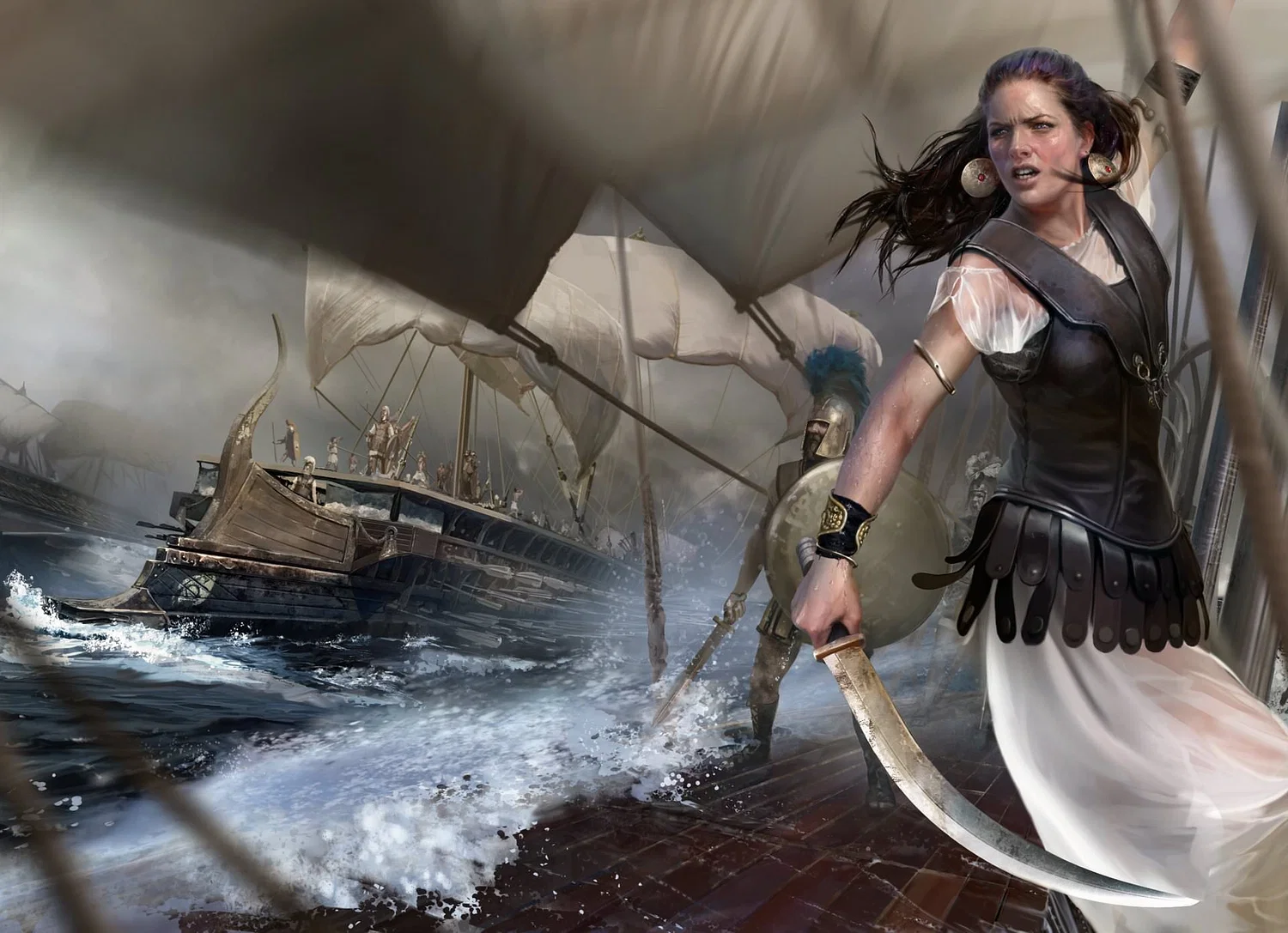
description
Teuta, Queen of the Illyrian Ardiaei tribe, leads a pirate expedition against rome. – image from WorldHistory.org

The focus of the story is on the humans. Sure, there is a major magical supporting character, and some of the humans dabble in dark arts. But they remain people. That said, there is plenty of magic in the air, and water. Some creatures introduced in the Daevabad trilogy put in appearances here. There is a kaiju-level sea beast, and plenty more. I hesitate to say this, but it seemed at one point that more was less, and that there were maybe too many such roaming and flitting about.

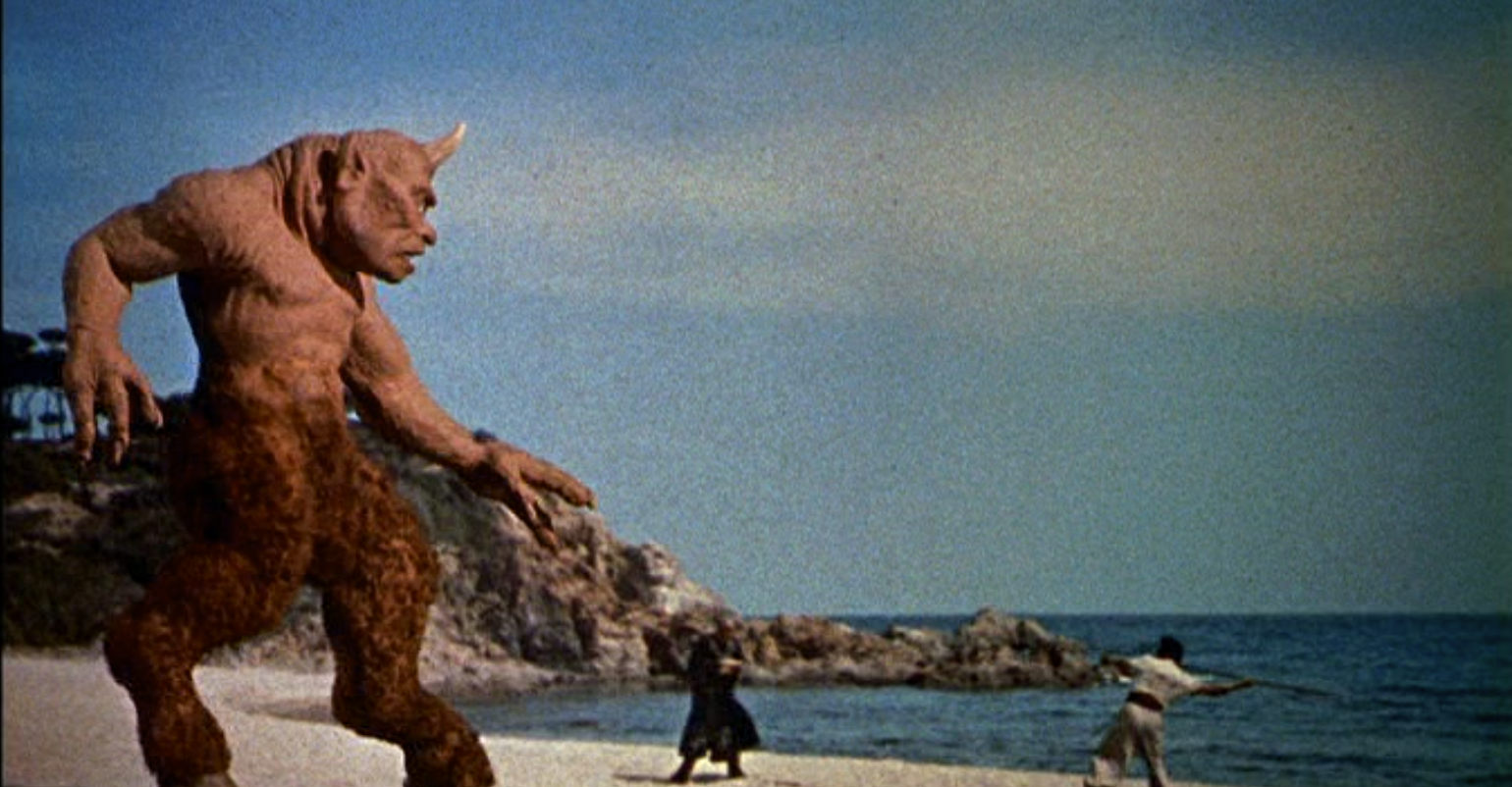
description
(I can only imagine what Ray Harryhausen would do with such a rich trove of material. Above is a still from The 7th Voyage of Sindbad

There is treasure. There is an island, and there is even a possible reference to Treasure Island, although, really, it may just be me projecting, and islands and treasure are merely standard tropes for the genre.

I straightened up with care, pinching my brow to keep black spots from dancing before my eyes.

Per usual, Chakraborty brings her effervescent sense of humor to her writing. There are plenty of LOL moments, particularly when Amina interacts with Dalila or Raksh.

“What about you, Lady Dalila?” Noor asked. “Is there anyone back home you are eager to return to?”
Dalila picked at her teeth. “I had to abandon a time sensitive experiment with extremely promising indications as a knock-out gas.”
“For pain relief,” I amended quickly. “Dalila is our…healer.”
Noor’s brows rose slightly. “Ah, yes. Majed speaks frequently of how you ‘healed’ him when you first met.”
Dalila rolled her eyes. “It was hardly the worst of my poisons. There are some physicians who actually believe it beneficial to vomit blood every now and then. It balances the humors.”

In addition, because Chakraborty is a historian at heart, she has delivered to us a treasure of intel about the world of this time and place.

When I started working on Amina, the goal I had for myself, and I think I wrote this in the author’s note at the end, was that I wanted to make it completely historically accurate—outside of the plot. I did a ton of research. There’s been an incredible amount of new work done on the medieval Indian Ocean, but you’re still looking at 12th-century texts. It’s almost 1,000 years ago, and there is a great limit to what we know. – from The Portalist interview

The series is set a few centuries before Chakraborty’s Daevabad trilogy, but exists in the same general corner of the planet. Some nods are offered to that world, including a small part for a magical creature from the Djinn tales. And a bit of snark.

“Oh, those weren’t humans. Those were daevas.”
“What in God’s name is a daeva?
He held up a hand. “You don’t want to know, trust me. More overdramatic creatures have never existed. And they’re not even the worst ones here. Everyone likes to complain about humans, but let me tell you…spend a couple centuries with the inhabitants of the unseen realms, and you’ll be aching to haunt a mortal latrine.”

There is a form of ecstasy that occurs in reading some books. Some are serious, (Serena pops to mind) others are more of the entertainment sort. I remember, as a kid, being rapt by some of the great classic adventures, by Robert Louis Stevenson, Jules Verne, and others. I was desperate to continue reading, despite the unwillingness of my eyes, and my mother reminding me, yet again, to turn the flashlight off under my covers. Well settled into middle age, the Harry Potter series offered the same sort of excitement. About six years ago, I was delighted to report that I felt that joy once more, at a grizzled time of life, on reading Shannon Chakraborty’s Daevabad trilogy, about djinns and sundry contemporary creatures and figures. While these books did nothing to iron out the wrinkles that brace my eyes, or straighten a spine that has strayed much too far from the standard shape, they did offer many hours of pure, innocent joy, the sort I experienced when my soul was more truly unstained. I am overjoyed to report that Chakraborty has worked her magic again. The Adventures of Amina el-Sirafi, the first in a promised trilogy, is a treat for the eyes and the imagination. Unlike Michael Corleone, I am eager to be pulled back in. You will be, too. No Shanghaiing required. Climb aboard, me hearties, and let’s set sail. The adventure has just begun.

I wanted to travel the world and sail every sea. I wanted to have adventures, to be a hero, to have my tales told in courtyards and street fairs where perhaps kids who’d grown up like me, with more imagination than means might be inspired to dream. Where women who were told there was only one sort of respectful life for them could listen to tales of another who’d broken away—and thrived when she’d done so.

Review posted – 4/14/23

Publication date – 2/28/23

I received an ARE of The Adventures of Amina al-Sirafi from Harper Voyager (well, my book goddess secured this particular treasure for me) in return for a fair review. Thanks, dear, and thanks HV.

This review has been cross-posted on GoodReads

=======================================EXTRA STUFF

Links to the author’s personal, Twitter and FB pages

My reviews of other books by the author
—–2017 – The City of Brass (The Daevabad Trilogy #1)
—–2019 – The Kingdom of Copper (The Daevabad Trilogy #2)
—–2020 – The Empire of Gold (The Daevabad Trilogy #3)

Interviews
—–Lit Reactor – Shannon Chakraborty: Navigating the Creative Voyage by Jena Brown
—–The Portalist – Shannon Chakraborty Breaks Down Her Writing Process and New Book, The Adventures of Amina al-Sirafi by Jena Brown
—–Bookpage – Shannon Chakraborty sets sail for a new horizon by Linda M. Castellitto
—–The Fantasy Hive – INTERVIEW WITH SHANNON CHAKRABORTY (THE ADVENTURES OF AMINA AL-SIRAFI)
—–Writer’s Digest – Shannon Chakraborty: On Humor and Joy in Fantasy by Robert Lee Brewer

Items of Interest from the author
—–Fantasy Hive – Excerpt – Chapter 1
—–Tor – Excerpt – Chapter 5

Items of Interest
—–Americanliterature.com – Arabian Nights – The Story of Sindbad the Sailor
—– Godfather III – Just when I thought I was out, they pull me back in!
—–World History.Org – Queen Teuta of Illyria

Leave a comment

Filed under Action-Adventure, Fantasy, Feminism, Fiction, Historical Fiction, Literary Fiction, Thriller

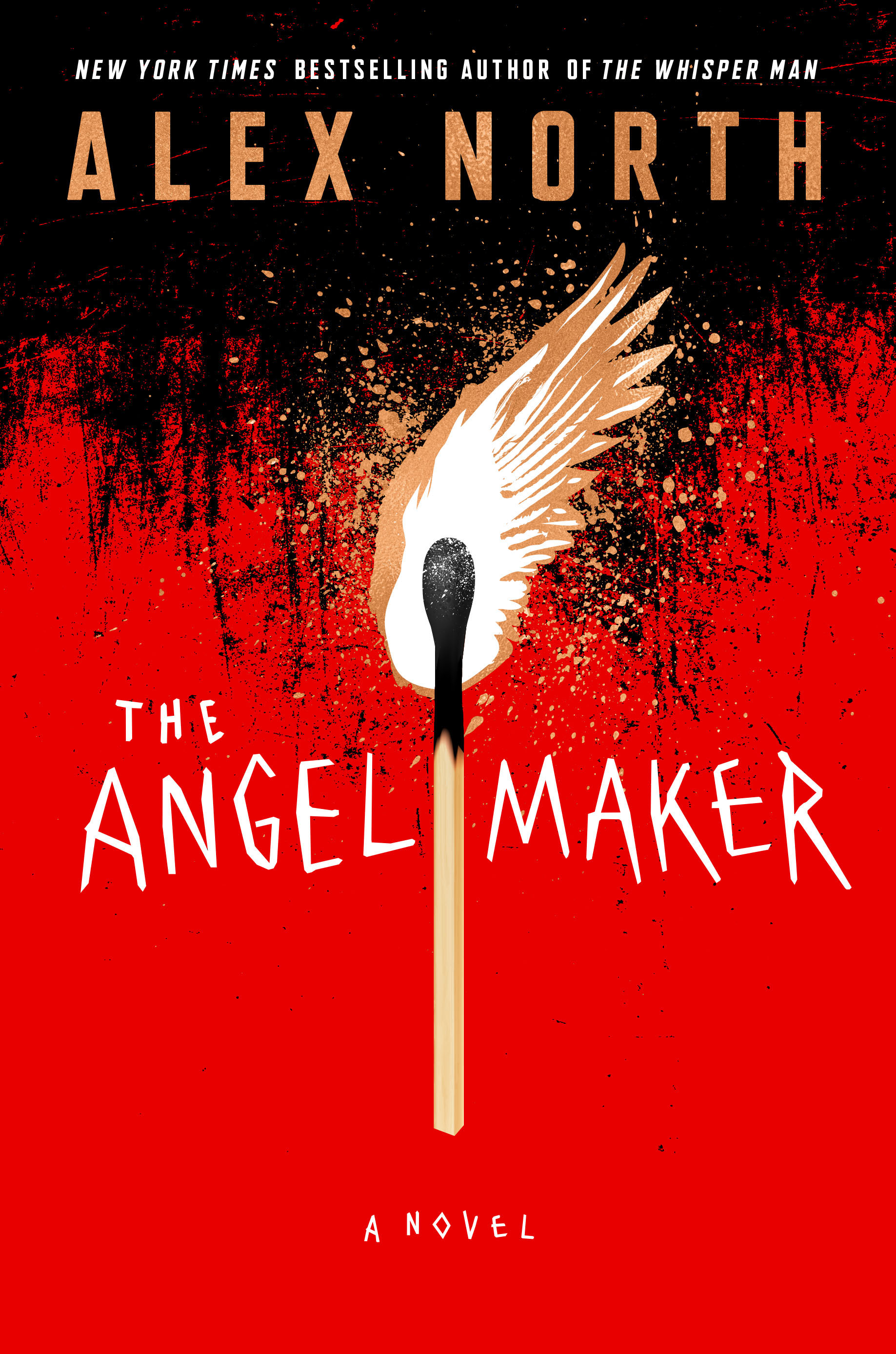
The Angel Maker by Alex North

book cover

Our experiences and fears collect in the backs of our minds like dry kindling…

…there is really no such thing as long ago

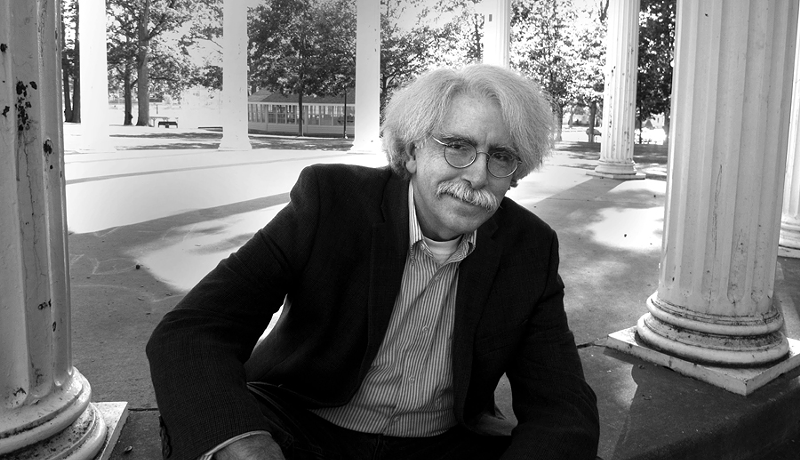
After writing eleven stand-alone mystery/thriller novels, author Steve Mosby shifted course to horror, birthing his nom de doom, Alex North. The Angel Maker is his third under that name. The first, The Whisper Man, was a spine-tingler of the highest order. His second, 2020 – The Shadows, took on lucid-dreaming, bound to garish murders. The Angel Maker returns us to a contemporary setting brought into being by crimes committed a generation ago. It revolves around a spooky book, around one seriously messed-up family, around a young woman, and around a central philosophical theory that fuels a psycho-serial killer.

description
Alex North – image from Hull Noir

Thirty-something Katie Shaw is a caring teacher with a three-and-a-half-year-old daughter, and a shaky marriage to her childhood sweetheart. Her brother, Chris, a couple years younger, has been out of touch for quite a while. Katie had finally reported him to the police after he’d stolen money from her bag during a family event. Drug addiction can do that to a person. But then, if you were 15 when some seemingly random psycho tries to kill you on your own street and literally tear your face off, it can have lifelong repercussions. So, Chris has issues. But he is out now, of jail, of rehab, has been for a while, even has a partner and a life. Which is why Katie is confused when her mother tells her that Chris has gone missing. And the hunt is on, as Katie goes all Miss Marple, trying to track down her little brother.

Professor Alan Hobbes, seventy-something, is getting his affairs in order as he expects to die on October 4, 2017, the present of the novel. He lives, or rather lived in a very large house, one with some decidedly spooky elements.

…at the far end of the room, an archway.
He stared at that for a moment. It clearly led away into some deeper chamber of the house, but the blackness there was impenetrable. [Detective] Laurence [Page] could hear the faintest rush of air emerging from it, and the sound reminded him of something breathing.

This in addition to a section of the upstairs floor that burned decades back, but was never repaired. (The UK title of the book is The Half Burnt House.)

description
Tartini’s Dream by Louis Leopold Boilly – image from Wikipedia – this appears in a lecture Hobbes is giving

Why did Chris disappear? How did Hobbes foresee his own end? And what does all this have to do with notorious child-killer (and possible seer) Jack Lock, who died in prison in 1956? What was Lock writing in his book all those years ago, and why is some rich guy looking to get it? Edward Leland is clearly a nogoodnik, rich, angry, sociopathic, employer of bad people. And he wants that book, whatever it takes.

So, we have our hero, Katie, who is the primary page-getter here. (19 chapters of 50) We follow along as she tries to track down her brother as the threat levels against both her and Chris keep ratcheting up. Oh, and the guy who had tried to kill Chris all those years ago? Out of jail.

When I first started planning and writing The Angel Maker, all I really knew was that I wanted… the characters [to] be searching for a rare and forbidden text. Some of them would end up doing so for innocent reasons, of course, but there would be others who genuinely coveted the dark knowledge they imagined it contained…I settled on the journal of a fictional serial killer called Jack Lock, an item that would be valuable in and of itself to certain damaged people. But I also wanted it to contain some kind of secret knowledge, which raised further questions. What else might drive people to seek this book out?…in the end, I went with an idea that has haunted me more than a little for many years now, and which engages with a number of the themes that have always interested me. Nature versus nurture. The influence of the past on the present. How much control any of us really have. – from the Crimereads interview

North flogs this theme throughout, which is a strength, giving the book more heft than relying solely on a scary story. Here we have a scary philosophical theory. Leads one to wonder, with a shudder, just how many people might hew to this perspective.

Detectives Laurence Page and Caroline Pettifer offer some entertaining banter, but serve mostly as a way of connecting parts of the story. Laurence offers some echoing of parental issues as well.

The story is definitely engaging. Katie is a good egg, and is easy to root for. North provides her with the handicap of an unsupportive, disbelieving husband, which was cause for a bit of eye-rolling. It is such a trope these days. Maybe always has been.

Dangling fantasy items are tossed in, but seem gratuitous. Katie’s daughter reporting that the moon comes to talk to her, for example. There are a few more otherworldly gewgaws added here and there, but they serve, mostly, as window-dressing.

There are elements that permeate. The first is, obviously, the quest for the magical book. Second is Katie’s quest to find her brother. Parent/child relationships are important, particularly when parents display a clear preference for one child over another. Siblings have issues with each other as well. (Don’t we all?) Thematically, the book is about free choice. Are we really free, or is everything laid out, reducing us to actors reading lines? Do events in our past define our options moving forward? And if the future is set, where lies personal responsibility? North has some fun counterpointing characters named Lock and Hobbes, standing in for the immutability of determined events vs the ability of people to effect change via personal decision-making, reflecting their well-known namesakes from Western philosophical history.

The story dips back from the present (2017), with scenes set in the 1950s, ‘70s, 80s, and 90s, offering explanations for what is going on today. Some might find it a bit tough to follow. I did not have a problem. There are fifty chapters in this 336-page book. So, it is easy to read this one in small chunks if that is your style.

There probably are no books that can foretell the future. But, the odds are that by the time you finish reading The Angel Maker, I predict, you will be quivery and exhausted. You are free to read this book, or to pass, a matter of personal choice. But if one believes in God, a god who knows all that has happened, all that is happening, and all that is to come, then the decision was made long before you were ever offered the choice. Are you still responsible for that decision? And if you veer from what is written in God’s plan, are you not defying the Almighty? Read it or not. The choice is up to you?

“If you could see the future,” Sam asked her, “would you want to?”

Review posted – March 31, 2023

Publication date – February 28, 2023

I received an ARE of The Angel Maker from Celadon in return for a fair review and agreeing not to dig up those things in my yard. Thanks, folks, and thanks to NetGalley for facilitating.

This review has been cross-posted on Goodreads. Stop by and say Hi!

=======================================EXTRA STUFF

My reviews of other books by North
—–20219 – The Whisper Man
—–2020 – The Shadows

Songs/Music
—–Cher – If I Could Turn Back Time
—–Jim Croce – Time in a Bottle
—–La Stravaganza – Violin Sonata in G Minor—the Devil’s Trill

Item of Interest from the author
—–Crimereads – Alex North on the Pleasure of Fictional Forbidden Texts

It’s a familiar and recurring motif in fiction: the search for a work of art that may or may not exist. One that is difficult to find. One that is rare because it’s awful, and which is sought after for both reasons. The idea speaks to a human desire to face the forbidden simply because it is forbidden. To be a member of the select few that have gone through an ordeal that others have not. To be let in on a secret even if learning it will ultimately destroy you.

Item of Interest
—–Wiki – Laplace’s Demon
—–CRAM – Hard Determinism and John Locke’s Theory of Human Philosophy

Leave a comment

Filed under Fiction, Horror, Mystery, Suspense, Thriller, Thriller

A Mystery of Mysteries by Mark Dawidziak

book cover

The real Poe considered himself first and foremost a poet. The real Poe was best known in his lifetime as first a tremendously tough critic, second a poet, and third as the author of tales of mystery and horror. Our perception of Poe has reversed that order.

“Poe was no saint, and he wasn’t always easy to be around,” novelist Matthew Pearl said. “He had difficulty with friendships. He could push people away who were genuinely fond of him and wanted to help him. He could be charming, courtly, witty, and gracious, but he also could be sensitive, petty, suspicious, jealous, and resentful. He wanted to be noticed and appreciated, but he had a difficult time with processing appreciation.”

Edgar Allan Poe sure had plenty of challenges in his life. First came the death of both professional actor parents by the time he was three years old, then being raised in a home where the wife was eager to have him, but the husband resented his presence and overtly disliked him. His adult love life featured a string of romances that did not come to fruition, and others that left him mate-less after far too short a time. In addition, even the mother-figures in his life were short-lived. Is it any wonder that so much of his work centered on death, particularly the early demise of young women? But you probably knew that, or had an inkling. What you may not have known was that Poe was also a writer of comedies, of high-seas adventures, a balloon ride, pirates and treasure.

description
Mark Dawidziak – image from CityBeat

In A Mystery of Mysteries, Mark Dawidziak takes on the unenviable task of ferreting out how exactly Edgar Allan Poe died.

It is, in fact, a double-barreled mystery. What was the cause of Poe’s death, and what happened to him during those missing days before he was found “in great distress” on the streets of Baltimore, wearing ill-fitting clothes that were not his own? Why did he look so disheveled, his hair unkempt, his face unwashed, and his eyes “lusterless and vacant”? Pale and alternately described as both cold to the touch and burning up with fever, Poe in his delirium held conversations with what resident physician Moran said were “spectral and imaginary objects on the wall.” Sound like the description of a character in one of his stories? It also sounds like a mystery worthy of Poe’s master detective (and the model for so many super sleuths to follow), C. Auguste Dupin.

How Poe came to die where and how he did is a long-standing mystery, well, the specifics of it, anyway. Theories abound, of course. There is little in the way of physical evidence. But the author works with what evidence there is and gives many of the extant theories a good going-over.

Edgar Allan Poe died on October 7th, 1849. The doctor labeled his cause of death as “phrenitis” (inflammation of the brain) which was commonly used when the true cause of death was unknown. Because of these mysterious circumstances, and the persona of Poe, there is much speculation about the true manner of his death. There are over 26 published theories on his demise, so far. – from The Poe Museum

It is clear that he was in poor health in his final days, that he frequently drank to excess, that he suffered greatly from the loss of his beloved, and that his body was failing. He had struggled with alcohol since he was in school, and the behavior that is attributed to him in his final days fits well with a liver failing because of alcoholism or liver disease of another sort. But that is not the only suspect. He rarely had extended spells in which he was not struggling to get by, so add to his health-challenges the ongoing stress of poverty, with a not infrequent scarcity of sufficient food. He was also afflicted with his share of the widespread diseases of his time. The specifics of where he was on this day or that strikes me as uninteresting, in the absence of concrete evidence of murder most foul, or interference by aliens or time travelers, And even were there such a dark undertaking underway, a bit of patience would have seen to that task unaided.

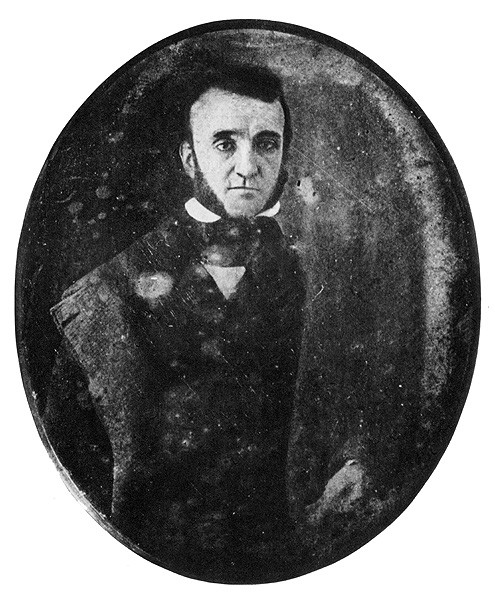
description
Young Poe – image from the Poe Museum

I confess that while I have read a reasonable portion of the better-known Poe works, I have little exposure to his lesser-known works, (there are links to some of these in EXTRA STUFF) and little knowledge of his biography. I suspect that most folks reading this are either in a similar situation, or can empathize with those of us who are.

This is a book, rich as it is with details of the great writer’s life, that welcomes the phrase “you may not have known.” It does not delve into literary analysis of Poe’s oeuvre, beyond the obvious links between his lived experience and the subjects he included in his writing. It follows his struggles from when he was an unloved orphan, then a difficult, if brilliant student. You may not have known that he was a hale, athletic specimen in his youth, and even well into adulthood. Or that the moustache which we always see in images of him was an addition that did not take place until late in his all-too-brief life.

He is seen as the inventor of the modern mystery. You probably knew that. But you may not have known that even the Ur detective, Sherlock Holmes, was inspired by a character written by Poe, and is credited as such by Arthur Conan Doyle. You may not have known that Poe is seen as the inventor of criminal profiling by none other than the originator of the FBI’s profiling division. You may not have known that he made a national name for himself as a literary critic, a perceptive and harsh one, working for magazines.

description
Virginia – image from the Poe Museum

Poe was not just a superstar of a writer, but a legend in his own mind, which made him a particularly high-maintenance employee, leaving him constantly struggling to keep body and soul together, constantly pleading for work and assistance. He perceived himself as an outsider, which he was, denied the material comforts and the social access granted his peers.

Poe scholar Steve Medeiros puts it more vividly: “If you could look through the peephole and see who was knocking, and could see that it was Poe, you wouldn’t answer the door, because he would want something. As much of a genius as he is and as charming as he could be, he could also be a real pain in the ass.”

Dawidziak does an outstanding job of detailing for us the trials and tribulations of Poe’s endless quest for for some sort of familial bliss, whether primarily familial or romantic. It seems clear that he spent his life trying to gain the support and affection of the family life that was denied him as a child. His loneliness was a lifelong condition, even though interrupted by periods of happiness.

description
Poe as you have probably not seen him – image from Poestories.com

Poe married Virginia Liza Clemm when she was thirteen. (He had first met her when she was six) He was twenty-seven. But he called her “Sissy” and it is not known if their relationship was conjugal or exclusively familial. He referred to Virginia’s mother as “Muddy” and related to her as if she were his mother, as well as Virginia’s. Denied the comfort of an actual, warm, supportive domestic upbringing as a child, constructing one may have been his primary motivation for the marriage.

You may not have known that Poe was hardly a dour figure. In fact he could be very charming, coming across as well bred, if not necessarily well-dressed. He displayed excellent licks at readings of his own materials, and had great appeal and success as a lecturer. Maybe having two actors for parents had something to do with that. Even athletic as a young man, despite his privations.

description
A more usual portrait – image from American Masters

He published only fifty poems or so. Of the forms he worked in, this was the one he loved most. You may not have known that he tried his hand at the novel as well, but was advised not to quit his day job after finally managing one. Try a shorter form, he was told, and he managed that transition quite nicely, writing some of the most famous short stories in literary history.

What killed Poe? Not gonna give anything away here, but really, what difference does it make? What is worth caring about here is the insight one can get into Poe’s work from Mark Dawidziak’s fascinating detailing of his life, his deep dive into a troubled, but ultimately artistically triumphant, life. If you were ever curious about Edgar Allan Poe, about what his life was like, about what drove him, you can check out A Mystery of Mysteries and redirect that gap in your knowledge into the bin marked Nevermore.

“Most people think of Poe as a gloomy pessimist, but, in reality, he was the eternal optimist. No matter what life threw at Poe, he always was kind of like Mr. Micawber in David Copperfield, sure that something was going to turn up. He always believed that. He never gives up.”

Review posted – March 10, 2023

Publication date – February 14, 2023

I received an ARE of A Mystery of Mysteries from St Martin’s Press in return for a fair review. Thanks, folks, and thanks to NetGalley for facilitating.

This review is cross-posted on Goodreads. Stop by and say Hi!

=======================================EXTRA STUFF

Links to the author’s personal and FB, pages

Profile – from Dawidziak’s site
Mark Dawidziak is the author or editor of 25 books, including three acclaimed studies of landmark television series: The Columbo Phile, The Night Stalker Companion and Everything I Need to Know I Learned in The Twilight Zone. He also is an internationally recognized Mark Twain scholar, and five of his books are about the iconic American writer…A journalism graduate of George Washington University, Dawidziak worked as a theater, film and television critic for many newspapers across the USA in his 43-year journalism career.

He is also a professor, and frequent lecturer, and an actor, known for his portrayals of Mark Twain. A Mystery of Mysteries is his 25th book.

Interview
—–Publishers Weekly – How Did Poe Die?: PW Talks with Mark Dawidziak

Items of Interest
—–PBS – American Masters – Edgar Allan Poe: Buried Alive– there are many informative clips on this page.
—–The Poe Museum
——The Poetry Foundation – Poems by Poe

Item of Interest from the author
—–Crimereads.com – excerpt

Some lesser-read tales by Poe
—–Poe Museum – Metzengerstein – Poe’s first published short story, in The Saturday Courier
———-The Duc de L’Omelette – published by The Saturday Courier on March 3, 1832
———-Lionizing – a comedy
—–The Edgar Allan Poe Society of Baltimore – Bon Bon – a comedy
———-Hans Pfall – early sci-fi
———-How to Write a Blackwood Article – after the success of Ligea he returns to write a comedy
—–Poe Stories – Berenice
—–University of Virginia- A Tale of Jerusalem – a humorous piece about Roman soldiers attempting to play a joke on the Pharisee and Gizbarim of Jerusalem

Leave a comment

Filed under American history, Bio/Autobio/Memoir, biography, History, Non-fiction

Don’t Fear the Reaper by Stephen Graham Jones

book cover

Dark Mill South’s Reunion Tour began on December 12th, 2019, a Thursday. Thirty-six hours and twenty bodies later, on Friday the 13th, it would be over.

…souls are like livers: they regenerate and regenerate, until you’ve finally poisoned them enough that the only thing they can do is kill you…

First, while I suppose it is possible to read Don’t Fear the Reaper as a stand-alone, I would not advise it. It is the second entry in The Lake Witch Trilogy. I mean, would you read The Two Towers without having first read The Fellowship of the Ring? Sure, Jones fills in enough details here that you could get by, maybe. But why would you want to? There is too much from the first book that you should know before heading into this one. So, if you have not yet read book #1, My Heart is a Chainsaw, settle back in your favorite reading spot, have a go at that one first, then head back here.

description
Stephen Graham Jones – image from The Big Thrill

Well, it had been a quiet week in Proofrock, Idaho, “the little town that time forgot and the decades cannot improve.” But it somehow makes itself the Cabot Cove of slasherdom. A chapter walks us through the place’s dodgy past, which culminated in the Independence Day Massacre of Book #1, four years before Book #2 picks up.

description
Michael Myers of Halloween – image from Vulture

Jennifer Daniels, Jennifer, not Jade, Jennifer, the kick-ass final girl last time, is out of jail, but only if she can keep from destroying any more government property (as if). It just so happens that there is an epically murderous killer also just out of jail, but not from having been released. Dark Mill South is not a typical name for a killer, for anyone really. But then his killings are not usual either, offering, in addition to severe personal carnage, the placing of bodies facing north. He is supposedly seeking revenge for the hanging of thirty-eight Dakota men in 1862. And, in a nod no doubt, to urban legends, DMS is short one hand, while being plus one hook. A very large, burly person as well, up past 6’5” Jason Voorhees, giving him the BMOC title for slashers. Whoo-hoo! And unlike the main killer of book #1, DMS is an actual flesh-and-blood (lots of blood) monstrosity, not an ageless spook. He can be killed.

He wasn’t meant to make it as far as he does in the book. The way I initially conceived him, he was gonna be this big bad killer who comes to town, and then within a matter of minutes, he gets put down. But then I built him too bad. He couldn’t be put down easily. – from The Big Thrill interview

Even wildlife gets involved in this one. Not the first time of course. Jones did present a vengeful ungulate in The Only Good Indians, and unhappy ursines were a presence in My Heart is a Chainsaw.

description
Jason Voorhees of Friday the 13th – image from Vulture

It will give Jade, no, Jennifer, Jennifer, sheesh, the opportunity to go all Final Girl again, but she would rather not, thanks. Who will she identify as the FG this time?

Her fingernails aren’t painted black, and her boots are the dress-ones her lawyer bought for her. The heels are conservative, there are no aggressive lugs on the soles, and the threads are the same dark brown color as the fake, purply-brown leather.

She has gone mainstream, even has long, healthy (Indian) hair now, and a passel of credits from community college correspondence courses. She is back in town after five years of dealing with the justice system from the wrong side of the bars. It is ten degrees, and there is a nasty winter storm making it tough to get around, effectively isolating Proofrock, and it’s unwelcome visitor. The local population will be compressed into a smaller piece of town, as survivors congregate where they might gain some security.

The bodies start piling up in short order, a range of unpleasantries foisted upon them, the local constabulary, per usual in slasher tales, offering a somewhat less than totally effective level of protection to the community.

description
Jigsaw – of Saw – Image from IGN

At age 17, Jade (yes, she was Jade then) offered us a tutorial on slasher norms. And saw how what was happening in her town fit the slasher-film norms (maybe should be ab-norms?) Her encyclopedic knowledge of the genre gave her an edge, allowed her to predict the future by looking at what had been produced in the cinematic past. This was done in chapters titled Slasher 101. That has been much reduced here. Although there are a few essay chapters in which a student writes to her teacher about similar subject matter, replicating the Jade-Holmes connection. Additional intel is presented through several characters who share Jennifer’s encyclopedic knowledge of the genre.

description
Freddie Krueger of Nightmare on Elm Street – image from Vulture

As with its predecessor, DFtR is an homage to the slasher film genre, particularly the product of the late 20th century golden age. I thought about keeping track of the films named, but it was soon clear that this was a fool’s errand. Like Lieutenant Dunbar says in Dances with Wolves, when Kicking Bird asks how many white men will be coming, they are like the stars. I enjoy slasher films as much as most of you, but am not a maven, by any stretch. One can enjoy this book without being familiar with ALLLLL of the gazillion films that are mentioned, but it did detract from the fun of reading this to feel as if the slasher film experts were passing notes behind my back, and that I was missing the significance of this or that flick nod. Sure, some explanations are offered, but the book would have to be twice as long to explain all of the references, in addition to the dead weight it would have added to the forward progress of the story.

There was almost no weight to be added for this novel.

Never planned on My Heart is a Chainsaw being the first installment of a trilogy, nope. But then in revisions, Joe Monti, my editor at Saga, said… what if everybody wasn’t dead at the end?
I hemmed and hawed, didn’t want to leave anyone standing, but gave it a shot anyway. And it worked, was amazing. And it meant Chainsaw felt like it wanted to now open up to a trilogy, which I think is the most natural form for a slasher to take.
– from The Lineup interview

But Jones did not roll out bed knowing how to structure, to write a trilogy, so he studied some of his favorite film series, Star Wars and The Lord of the Rings, to see how it is done. He also corralled a novel into his self-study class and learned a lot, particularly on handling multiple character POVs.

I wrote Don’t Fear The Reaper right at the end of rereading Larry McMurtry’s Lonesome Dove. And that’s in parts, and each part introduces a new character and then it goes into everything else. And it cycles through all their heads. So that’s what I tried to do in Don’t Fear the Reaper—-and following that model was really productive. I don’t think I could have written Don’t Fear the Reaper if I hadn’t just come out of Lonesome Dove. – from the Paste Magazine interview

Part of that cycling includes a peek inside the squirrelly brain of DMS, who, at one point, is in pursuit of two females and relishing the thought of skinning them both alive in a creative way.

description
Leather Face – of Texas Chainsaw Massacre – image from Texas Monthly

There is some other pretty weird material in this one that might take up residence in your nightmares, substances that may or may not be real, that may be or may become human, or humanoid, or some sort of living creature. Thankfully, we do not see things through their eyes. (do they even have eyes?)

Many horror products, films, movies, TV shows, et al, get by with a simple surfacy fright-fest, counting bodies and maybe indulging in creative ways of killing, but the better ones add a layer. Jones looks at things from a Native American perspective, as well as that of a serious slasher-movie fan. Not only is Jennifer a Native American final girl (well, she was in the prior book anyway. We do not know straight away if she will be forced to reprise the role this time.) The Jason-esque killer is a Native American as well. Inclusion all around. As noted above, the literary references SGJ favors are to slasher films, but he is not above tossing in more classical literary references. I particularly enjoyed:

In the summer of 2015 a rough beast slouched out of the shadows and into the waking nightmares of an unsuspecting world. His name was Dark Mill South, but that wasn’t the only name he went by.

Jones is offering here a reference to a world famous poem by William Butler Yeats, The Second Coming, which ends with an end-times image (what rough beast, its hour come round at last, Slouches towards Bethlehem to be born?) of a nightmare realized. (You can read the poem in EXTRA STUFF) It will certainly be end-times for many residents of Proofrock.

description
Ghostface – of Scream – image from Variety

One of the underlying elements of the slasher story is that it is a bubble inside which some form of justice will be meted out.

Now in 2023, I think the reason we’ve been into slashers the last few years….I think the 24-hour news cycle has greatly contributed to that, and also the election in 2016 that resulted in the news feeding us daily images, hourly images of people doing terrible things at podiums, at rallies, and then walking away unscathed. And what the slasher gives us is the ability to engage for two hours, for six hours, whatever, a world that is brutally fair. A world where if you do something wrong, you’re getting your head chopped off. That sense of fairness is so alluring to us – from the Paste interview

Maybe not so alluring for the collateral victims who clog up the streets, buildings, and waterways, but there is usually some justifiable revenge taking place. Bullies get comeuppance, which is always satisfying.

description
Pinhead – of Hellraiser – image from Wired

While Jade/Jennifer does not get our total attention this time ‘round, she remains our primary POV in a town where, really, not all the women are strong, only some of the men are good-looking, and a fair number of the children are, well, different. She is a great lead, having proven her mettle in Book #1, an outsider, that weird kid, charged with challenging a mortal assault on the residents of her town, her superpower her scary knowledge of slasher canon, and a hefty reservoir of guts. Rooting for Jade/Jennifer is as easy as falling off a log, but hopefully without the dire consequences such an event might have in Indian Lake. You will love her to pieces. There are plenty of twists and surprises to keep you in the story. There is creepiness to make you look around your home just to make sure everything is ok. There is a semi’s worth of blood and gore, a bit more tutorial on the genre, and the action is relentless. Once you begin this series one thing is certain. You are sure to get hooked.

slashers never really die. They just go to sleep for a few years. But they’re always counting the days until round two.

Review posted – 3/3/23

Publication date – 2/7/23

I received an ARE of Don’t Fear the Reaper from Gallery / Saga Press in return for a fair review. Thanks, folks, and thanks to NetGalley for facilitating.

This review has been cross-posted on GoodReads

=======================================EXTRA STUFF

Links to the author’s personal, Twitter and FB pages

Interviews
—–The Big Thrill – Between the Lines: Stephen Graham Jones by April Snellings
—–Esquire – How Stephen Graham Jones Is Reinventing the Slasher By Neil Mcrobert
—–Gizmodo – Horror Author Stephen Graham Jones on His Latest Chiller, Don’t Fear the Reaper by Cheryl Eddy
—–The Lineup – Cut to the Heart: An Interview with Stephen Graham Jones/a> by Mackenzie Kiera
—–Litreactor –
Stephen Graham Jones on Trilogies, Deaths, Slashers, and Dog Nipples by Gabino Iglesias
—-* Paste Magazine – Stephen Graham Jones Talks Final Girls, Middle Books, and Don’t Fear the Reaper by Lacy Baugher Milas – This is primo material

Paste Magazine: So, the title Don’t Fear The Reaper —which is one of my favorite songs, by the way—I’m assuming that must come from Blue Oyster Cult.
Stephen Graham Jones:
Well, it does come from Blue Oyster Cult, but really it’s that—in Halloween, Jamie Lee Curtis and her friend are riding in her friend’s Monte Carlo, and they’re listening to (Don’t Fear) The Reaper, and then in 1996 with Scream, a cover of Don’t Fear) The Reaper is playing over Billy and Sid, and so it seemed like that was a kind of momentum. I had no choice but to call it Don’t Fear The Reaper, I was going to honor my heroes. Stephen Graham Jones on Writing, the Pantheon of Horror, and Clowns by Leah Schnelbach – nada on Reaper

If you want even more interviews with SGJ, I posted a bunch in my review of My Heart is a Chainsaw. There are plenty more contemporary (2023) interviews to be had if you feel the urge.

Songs/Music
—–Blue Oyster Cult – Don’t Fear the Reaper
—–Largehearted boy – Stephen Graham Jones’s Playlist for His Novel “Don’t Fear the Reaper”

My reviews of (sadly, only three) previous books by Jones
—–2021 – My Heart is a Chainsawon Coot’s Reviews
—–2020 – The Only Good Indians
—–2016 – Mongrels

Items of Interest
—–Pop Culture – Horror Movie Characters – includes stats on them
—–William Butler Yeats – The Second Coming

Leave a comment

Filed under Fiction, Horror, Mystery, Suspense, Thriller, Thriller

Stone Blind by Natalie Haynes

book cover

Perseus…has no interest in the well being of any creature if it impedes his desire to do whatever he wants. He is a vicious little thug and the sooner you grasp that, and stop thinking of him as a brave boy hero, the closer you’ll be to understanding what actually happened.

Who decides what is a monster?

When Natalie Haynes wrote Pandora’s Jar, a collection of ten essays on the women in Greek myths, she included a chapter on Medusa. In nine-thousand words she offered a non-standard view of the story of heroic Perseus slaying the gorgon. But the story stayed with her, well, the rage about the story of how ill-treated this supposed monster had been, anyway. If the feeling remained that powerful for so long, it was a message. She needed to devote a full book to this outrage in order to get any peace. Thus Stone Blind.

description
Natalie Haynes – image from Hay Festival

We learn how Medusa came by her notable do. After being sexually assaulted by Poseidon in one of Athena’s temples, the goddess was appalled. No, not by the rape. I mean a god’s gotta do what a god’s gotta do. But that he raped Medusa in Athena’s temple! Desecration! Well, that cannot go unpunished. So, Athena seeks revenge on Poseidon by assaulting Medusa, figuring, we guess, that this might make Poseidon sad, or something. Uses her goddess powers to turn Medusa’s hair to snakes and her eyes to weapons of mass destruction. Any living creature she looks at will be lithified.

description
Image from Mythopedia – Head of Medusa by Peter Paul Rubens – 1618

Then there is the other half of this tale, Perseus. We are treated to his dodgy beginnings, another godly sexual assault. He is not portrayed here as the hero so many ancient writings proclaim. Decent enough kid, living with his mom, Danae, and a stepfather sort, until mom is threatened with being forcibly married to the local king, a total douche. Junior tries to make a deal to get her out of it, said douche sending him on a seemingly impossible quest. Good luck, kid. I mean, seriously, how in hell can he hope to bring back a gorgon’s head?

description
Image from Ancient Origins

Zeus feels a need to help the kid out. I mean, Perseus may be a bastard, but hey, in Greek mythology, that would put him in the majority. Am I right? Still, he is Zeus’s bastard, so Pop does what he can to help him out, sending along two gods to coach and aid the lad as needed. Hermes and Athena snark all over Perseus, pointing out his many weaknesses and flaws, while providing some very real assistance. They may not hold the kid in high regard, but neither can they piss off the boss. Very high school gym, and totally hilarious.

description
Image from Wiki – Perseus Turning Phineus and his followers to stone by Luca Giordano – 1680s

Which should not be terribly surprising. Haynes is not just an author and classicist, but a stand-up comedian. You can glean what you need to know about her comedic career from the Historical Archivist interview linked in EXTRA STUFF. There is plenty of humor beside godly dissing of Perseus. Athena (referred to as Athene in the book) tries to talk an unnamed mortal into signing on to a huge battle between the Olympian gods and the Giants, new powerhouse versus the current champs. It is clearly a tough sell.

‘If you get trodden on by a giant or a god – which wouldn’t be intentional on our part, incidentally – but in the heat of battle one of us might step in the wrong place and there you’d be. . . . Well, would have been. Anyway, it would be painless. Probably very painful just before it was painless, but not for long.’… ‘Come on. If you do die, I’ll put in a word for you to get a constellation. Promise.’

There are plenty more like these, including a particularly shocking approach to relieving a really bad headache.

description
Image from Scary For Kids (reminds me of the nun I had for eighth grade)

But the whole quest experience uncovers Perseus’s inner god-like inclinations. He becomes an entitled rich kid with far too many high-powered connections helping him out. And develops a taste for slaughter. When Andromeda sees a knight in shining armor, come to save her from certain death by sea monster, her parents suggest that “Maybe, Sweetie, you might consider how gleeful he was when he was murdering defenseless people?” Or noting that if he had really been solid on keeping promises he might have headed straight home to save his mom with that snaky head instead of stopping off to frolic in blood for a few days. “This boy’s gonna be trouble, Andy.”

description
Image from Classical Literature

The gods have issues. The Housewives of Olympus could well include some unspeakable husbands, who seem to have a thing for forcing themselves on whomever (or whatever) catches their eye. As a group they are always on the lookout for slights, insults, or minor border transgressions. What a bunch of whiny bitches! But with power, unfortunately, to make life unspeakable for us mere mortals, whose life expectancy is not even a rounding error to their eternal foolishness. Medusa, in that way, was one of us. There is uncertainty about Perseus.

description
Image from Talking Humanities

Sisters abound. Apparently, triple-sister deities was a thing for the ancient Greeks. We are treated to POVs from Medusa’s two gorgon sibs, and look on as Perseus hoodwinks the three hapless Graiai sisters, who are doomed to having to share a single eye and a single tooth among them. (Could you please wipe that thing off before you pass it along?) The Nereids are more numerous (50) and a bit of a dark force here.

description
From Greek Legends and Myths – by Arnold Böcklin (1827–1901)

Never one to stick to a single POV, Haynes offers us many discrete perspectives over seventy-five chapters. Fifteen are one-offs. The Gorgoneion leads the pack with thirteen chapters, followed by Athene with eleven, Andromeda with eight and Medusa with seven. There are some unusual POVs in the mix, a talking head (no, not David Byrne), a crow, and an olive tree among them. Haynes dips into omniscient narrator mode for a handful of chapters as well.

description
Image From Empire

As noted in EXTRA STUFF, there is a particularly offensive sculpture of Perseus holding Medusa’s severed head. Not only has he murdered her, he is standing on her corpse. You can see how this would piss off a classicist who knows that Medusa never hurt anyone. Damage done by her death-gaze was inadvertent or done by others using her head as a weapon. And this supposedly brave warrior killed this woman in her sleep. Studly, no? And with all sorts of magical help from his father’s peeps. What a guy!

description
Image from Smithsonian American art Museum – by Lucien Levy-Dhurmer – 1915

Natalie Haynes set out to tell Medusa’s story, and it is completely clear by the end that the monstrosity here is the treatment this innocent female mortal received, at the hands of abusers both male and female. Haynes keeps the story rolling with the diverse perspectives and short chapters, so that even if you remember most of the classic myth there will be plenty of mythological history you never knew. You will also laugh out loud, which is a pretty good trick for what is really a #METOO novel. The abuse of the powerless, of women in particular, by the powerful has been going on only forever. Haynes has made clear just how the stories we have told for thousands of years reinforce, and even celebrate, that abuse. Next up for her, fiction-wise, is Medea. I can’t wait.

description
Image from Smithsonian American Art Museum – by Alice Pike Barney – 1892

Medusa may not have been a goddess, but it seems quite clear that Natalie Haynes is. This is a wonderful read, not to be missed.

He’s just a bag of meat wandering round, irritating people.’

Review posted – 02/24/23

Publication dates – Hardcover
———-UK – September 15, 2022 Mantle
———-USA – February 7, 2021 – Harper

This review has been cross-posted on GoodReads. Stop by and say Hi!

description
Image from Wiki by Caravaggio – 1597

=======================================EXTRA STUFF

Links to the author’s personal, Twitter and Instagram pages

Interviews
—–The Bookseller – Natalie Haynes on challenging patriarchal historical narratives and championing female voices by Alice O’Keeffe
—–CBC – Natalie Haynes on the fantastic and fearsome women of Greek myth
—–LDJ Historical Archivist – Brick Classicist of the Year 2023 Natalie Haynes – video – 16:46 – this is delicious
—–Harvard Bookstore – Natalie Haynes discusses “Stone Blind” – video 1:03:55 – – This is amazing! So much info. You will learn a lot here.

My review of other work by the author
—–2021 (USA) – A Thousand Ships – Helen of Troy and the women of the Homeric epics

Items of Interest
—–Wiki on Gorgoneion
—–The Page 69 Test – Stone Blind – a bit of fluff
—–Widewalls – An Icon of Justice – Or Something Else? A New Medusa in a NYC Park – interesting contemporary sculptural response to a classical outrage.

description
Left: Benvenuto Cellini – Perseus holding the head of Medusa, 1545–1554. Image creative commons / Right: Luciano Garbati – Medusa With The Head of Perseus, 2008-2020. Installed at Collect Pond Park. Courtesy of MWTH Project – images and text from Widewalls article
The MWTH (Medusa with the head) image is sometimes accompanied by the ff: “Be thankful we only want equality and not payback.”

Leave a comment

Filed under Fantasy, Feminism, Fiction, Historical Fiction, Literary Fiction