Uneasy Lies the Head that Wears the Crown

book cover

…he started out with his eyes firmly on the guiding star, his feet planted on the path, but that’s the thing about the life you walk—you start out pointed true North, but you vary one degree off, it doesn’t matter for maybe one year, five years, but as the years stack up you’re just walking farther and farther away from where you started out to go, you don’t even know you’re lost until you’re so far from your original destination you can’t even see it anymore – Don Winslow

Uneasy lies the head that wears a crown – Henry IV Part 2 – W. Shakespeare

After eighteen years in the NYPD, Detective Sergeant Denny Malone has good cause for unease. The de facto king of Manhattan North has seen considerable upheaval in his kingdom. He may be, effectively, the head of this select unit, charged with going after gangs, drugs, and guns. “Da Force” may have unusually free rein to do as they see fit to accomplish their goals. But a turf war between competing providers of recreational pharmaceuticals is growing increasingly kinetic, with one of the combatants looking to purchase a considerable supply of death-dealing hardware. Not OK. The captain is pressing for a high-publicity bust. There is also the perennial political dance one must perform to keep the brass at One Police Plaza and the political suits from interfering with business as usual. Of course, what passes for business as usual might not look all that good splashed across the front pages of the local tabloids.

description
Don Winslow – image from Milanonera.com

Bribery may be the grease that keeps the wheels of civilization turning, but it leaves a lot of cops with very dirty hands. Denny is no saint, and no Serpico. He may mean well for the community he is charged with protecting, but his methods often lack the soft gleam of legality. We first meet him as he arrives in federal lockup. The novel then goes back to show how he got there. Slippery slope stuff. See the greased wheels above.

The street stays with you.
It sinks into your pores and then your blood.
And into your soul? Malone asks himself. You gonna blame that on the street too?
Some of it, yeah.
You’ve been breathing corruption since you put on the shield, Malone thinks. Like you breathed in death that day in September. Corruption isn’t just in the city’s air, it’s in its DNA, yours too.
Yeah, blame it on the city, blame it on New York.
Blame it on the Job,
It’s too easy, it stops you from asking yourself the hard question.
How did you get here?
Like anyplace else.
A step at a time.

Lines are crossed here with the frequency of runners reaching the end of the NYC marathon. Early on, Denny and his crew take out a major distributor, whack the principal, and skim off a significant portion of the captured product, a bit of an extra retirement fund. Some people are a tad upset by this. It’s not exactly much of a secret, though, and there are those who would like to see Denny being saluted by the entire force in Dress Blues and white gloves while someone plays Taps.

One of the great powers of this novel is the perspective offered on diverse forms of human behavior. Is Denny a brute for roughing up a guy who beat up a kid? Definitely outside the law, but are his actions effective? Denny really does care about the people in his kingdom. He cuts slack when possible, and brutalizes when it is called for. But the law seems a lot more of a recommendation than an absolute.

Winslow offers a close up look at a dark element of police culture. How does being on the take work? Who gets what? How is money distributed? Who is it ok to accept bribes from? What is allowed that would otherwise be justiceable? And why do the cops here consider it ok? He offers as well a moving look at the human relationships that make up police life, the code of honor, the power of partnership, the requirement that all members of the team partake of the ill-gotten, if only as a means of self-protection, the wives who turn a blind eye to where that extra cash may have originated, and what their breadwinner may be up to when the crew parties hard, up to a point anyway. The interaction between the police and people in their area is rich with real affection, as well as the expected cynicism. Some of these scenes are stunningly moving, tissue worthy.

How about the relationship between cops and the local criminal element? You might be reminded of those cartoons in which Bugs Bunny and Wile E. Coyote punch a time clock, go at it, then clock out at the end of the day, friends. The cops and criminals often seem cut from the same cloth, although the baddest of the bad guys are certainly much worse than the worst of the cops. And the bullets really kill. Winslow does not spare the one-percent, either, in his look at layers of amorality.

Don Winslow is a seasoned writer at the pinnacle of his craft.

Malone drives past the Wahi diner and the mural of a raven on 155th. Past the church of the Intercession, but it’s too late for Intercession, past Trinity Cemetery and the Apollo Pharmacy, the Big Brother Barber shop, Hamilton Fruits and Vegetables and all the small gods of place, the personal shrines, the markers of his life on these streets that he loves like a husband loves a cheating wife, a father loves a wayward son.

There are wonderful nuggets of law enforcement intel in here. Like the notion of testilying. Or what is considered proper attire for a day on the stand. How about special celebratory nights for a crew? The upside of EMTs not taking a Hippocratic oath. Rules for note-taking on the job. How 9/11 saved the mob. Planning your crimes so they cross as many precinct boundaries as possible, increasing the likelihood that a paperwork snafu will botch a prosecution. On tribes within the force.

Winslow has a Damon Runyon-esque ear for character names. My favorites were a CI named Nasty Ass, and another the cops call Oh No, Henry, and a linguist’s appreciation for the local patois. Or maybe that would be another well-known teller of tales. (I think Dickens is one of the progenitors of noir fiction, writing as he did about the criminal underclass.) He peppers the novel with delicious small side-stories. Tales told in a bar by guys who have been spinning yarns for a lifetime. They give us occasional breathers from the breakneck pace.

He takes on topics that will resonate, from Blue on Black violence, and the resulting reactions, to how the jails are functioning as de facto mental hospitals and detox centers. From a consideration of God and the Church (Denny is not a fan) to the impact of the job on people’s lives. Denny recalls his father. He was a cop on these streets, coming home in the morning after a graveyard shift with murder in his eyes, death in his nose and an icicle in his heart that never melted and eventually killed him. From how cops cope with the daily horrors to how the crime numbers are cooked to support whatever preconceived outcome was desired. On the Iron Pipeline, the route on which legal guns from Texas, Arizona, Alabama and the Carolinas become illegal guns in NYC. The politics of police tactics and voting. The hatred and respect the cops have for the best defense lawyers. Their relationship with reporters. You trust a reporter like you trust a dog. You got a bone in your hand, you’re feeding him, you’re good. Your hand’s empty, don’t turn your back. You either feed the media or it eats you.

Denny may be dirty, but you will be dashing along with him and hoping for the best. Maybe this whole situation can be fixed. He is a rich, multi-faceted character, and you will most definitely care what happens to him. Think Popeye (Gene Hackman) of The French Connection, or Lieutenant Matt Wozniak (Ray Liotta) on the wonderful TV show Shades of Blue.

You might want to secure your seat belt and make sure that your Kevlar is all where is it is supposed to be. This is a non-stop, rock’em, sock’em high-speed chase of a novel, a dizzying dash through an underworld of cops, criminals, and those caught in the middle, screeching stops, and doubling backs, hard lefts, harder rights, and Saturn V level acceleration. Once you catch your breath after finishing the final pages I expect you’ll find yourself realizing just what a treat it has been. The Force is not just a great cop book, it is a great book, period, a Shakespearean tragedy of high ideals brought low, with one of the great cop characters of all time. The Force is an instant classic.

Review posted – February 24, 2017

Publication date – June 20, 2017

=============================EXTRA STUFF

Don Winslow has written many books. Some have been made into films. I have read none of them, so can offer no real insight into what carried forward from his prior work, or where new notions or techniques may have come into play. I read this totally as a stand-alone.

Links to the author’s personal, Twitter and FB pages

This page has many links to related interviews and materials

An article by Winslow in Esquire – EL CHAPO AND THE SECRET HISTORY OF THE HEROIN CRISIS

Interviews
—– Litsack
—–Hi. My name is Don Winslow, and I’m a writing addict – by John Wilkins for the San Diego Union Tribune

1 Comment

Filed under Cops, Fiction, Literary Fiction, New York City, Reviews

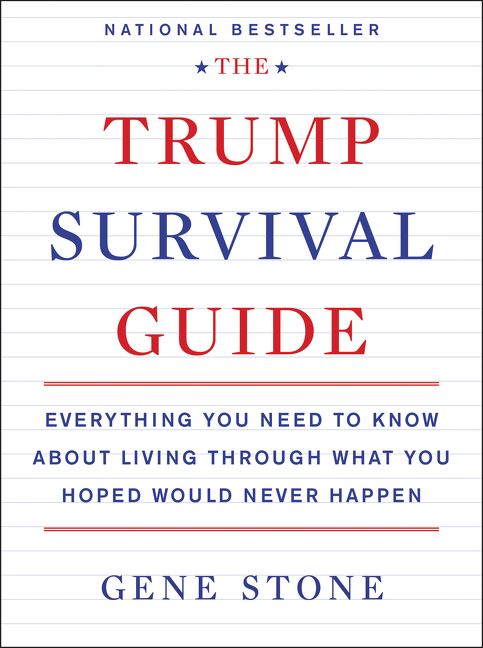
The Next Battle Begins – The Trump Survival Guide by Gene Stone

book cover

Don’t get mad. Get Organized!

With the arrival of Donald J. Trump in the oval office, the nation is faced with a large set of challenges. You may be tempted to throw up your hands and retreat from any sort of engagement. After all, what can one person, without billions of dollars and/or an army, actually do against the organized force of billionaires united in the looting of American financial and natural resources, and acting in concert in waging a one-sided class war on those of us who are not of their inner circle? Gene Stone has some answers.

It was certainly the case that grass roots activity, however much it was of the astro-turf variety, and funded by right-wing money men, was effective in making life for President Obama a living hell for almost all of his two terms. The lessons that were learned by the right came, ironically, from a left-wing organizer named Saul Alinsky. It is time for Democrats, liberals, progressives, moderates, anyone with a conscience to learn those lessons as well, and begin the long journey of political resistance that is our only hope of saving the nation from ruin.

description
Gene Stone – from his Twitter page

Gene Stone offers a very accessible guide to how anyone might go about participating in this. The book covers twelve broad areas of concern; Civil Rights, The Economy, Education, Energy, Entitlement Programs, The Environment, Immigration, LGBTQ Issues, National Security, Obamacare, Political Issues, and Women’s Issues.

The layout is consistent from chapter to chapter. Each of the twelve topic chapters follows a format:
The Background
What Did Barack Obama Do?
What Might Donald Trump Do?
What Can you Do? – There are often subsections to this one. Things like
—–Organizations you can donate to
—–Organizations you can volunteer in
—–Sign Petitions
—–Make use of Social Media to communicate your concerns
Books to Read
The concluding chapter tosses in a potpourri of other subject areas.

As a definitive volume on how to oppose the incoming madness, this is far from complete. However, as an introductory pocket guide to how to get started, an easy intro to anyone looking to do something to oppose the reactionary programs that will be afflicting us all in the years ahead, this is an invaluable book. Short, very easy to read, specific enough on what the issues are, what options one might have for action, where one can look to apply those actions, and it offers extra sources of information for those eager to learn more about each subject area.

And some warnings stand out. For example,

Despite all the advances made in the LGBTQ community, many of them can be rolled back—quickly, easily, and effectively.

There are also some nice extra bits in here that made it an enjoyable as well as a useful read.

In 1812 Massachusetts governor Elbridge Gerry signed a bill that took redrawing he state’s district lines to such extremes that one district looked like a salamander. The term “gerrymander” was born and has been used ever since to describe this practice.

Maybe you knew that. I had no idea

I found the intro sections reasonable, although I did note a few items that merited a bit of correction. The author refers to “The Affordable Care Act, instantly and forever known as ObamaCare to foes and allies alike. “ Actually that was not the case. The right labeled the ACA as “Obamacare” as an insult, the same way they insist on calling the Democratic Party the “Democrat Party.” It was only after some time that Democrats decided to embrace the name. Stone also implies that the Democrats broke new ground by using budget reconciliation to get Obamacare passed, not mentioning that President Bush the second had done the same thing to pass his ruinous tax cuts. Minor gripes to what is, overall, a pretty useful book.

The Trump Survival Guide is no one’s idea of a comprehensive manual for the battles ahead. But it is most definitely an excellent intro, particularly for the vast majority of people who have never engaged in any sort of political activism before. The more people who are involved in fighting back, the likelier it is that crucial victories can be won. If you are at all concerned about what the Trumpinistas have planned, and are thinking about how you might be able to help in the movement to resist, checking this book out would be a great first step.

Review posted – January 20, 2017 – a date that will live in infamy

Publication date – January 10, 2017

=======================================EXTRA STUFF

Links to the author’s personal, Twitter and FB pages

I strongly suggest you also check out a document that was put together by former Congressional staffers, Indivisible. It can be downloaded for free at the linked site.

Leave a comment

Filed under Non-fiction, Reviews

Shop Cats of New York by Tamar Arslanian

book cover
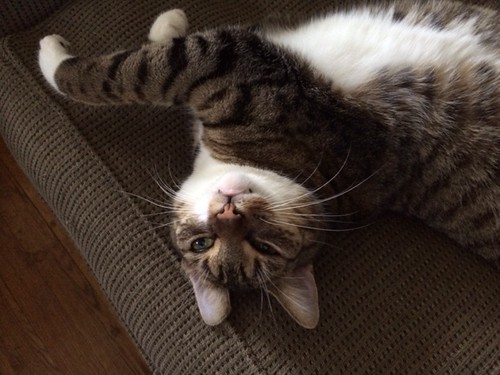
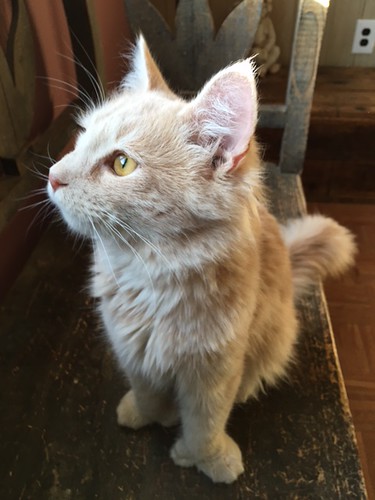
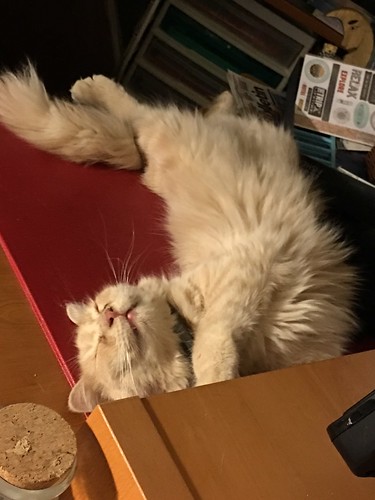
There may be eight million stories in the naked city (well, closer to nine these days). But that only counts people. What about some of our other citizens? How many times have you walked into a shop and spotted the resident mouser strolling down an aisle, busily guarding a shelf, or splayed in the front window? They are so common as to have become an embedded element of the urban landscape. But their very ubiquity has made them somewhat invisible. We accept them as part of our environment, and pay them little attention. But Tamar Arslanian noticed, and decided to write a book featuring these often unnoticed New Yorkers.

It was one of those times when my wife, in a flurry of OMGs, blew through our front door and announced in full capital letters. YOU HAVE GOT TO SEE THIS. The this, of course, was the book under review here, Shop Cats of New York. If she had done this twenty years earlier, I would not have been very interested. And my first wife probably would have wondered just who the hell that woman was. At that time I was not only cat-free, but the proud owner of a considerable cat allergy. Things change.

description
Author Tamar Arslanian interviews the Neergaard Pharmacy representative

The portraits in this collection include brief write-ups about the cats in question, ranging from considerable to pretty-much non-existent, with most falling in the one to three paragraph middle range. There are some moving tales told, along with the sort of cat-as-local-royalty picture one might expect. The photographs look good enough to make you want to rub the side of your head up against them, repeatedly.

As happens with about half the marriages in the USA, my first went the way of dial-up. In late 1998, I was looking for an apartment, but also someone else to share the rest of my life with. I suppose one could say that at the time I was a bit of a stray, not exactly homeless, but certainly unsettled. I partook of Match.com, including the sort of profile millions of other people have penned. Mine was probably typical enough, blah-blah-blah, three kids, blah-blah-blah, systems analyst, blah-blah-blah Mets fan, blah-blah-blah, and Sorry, no cats. Allergic. I met several women, but was particularly intrigued by one. Despite the fact that we had engaged in a considerable series of on-line exchanges, it turned out she had issues with reading.

Shadow on Arrival//embedr.flickr.com/assets/client-code.js
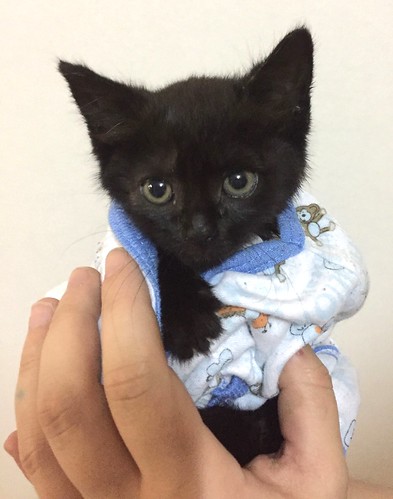
Shadow on arrival – shot by Cat Rescuer pal, Sara

There are 36 chapters in Shop Cats of New York. Most cover individual kitties. Three deal in multiples. One of these looks at a pets supply store that also fosters, one looks at the campus cats of Pratt Institute, and the third tells of The Meow Parlour on the Lower East Side, a “cat cafe” that specializes in adopting cats out to local residents.

The first time I went to visit my new friend at her place, I was in for a surprise. She was sharing her apartment. Her room-mates kept their distance but they made their presence felt anyway. In short order my eyes began to itch. Soon after, my nose began to run. Within thirty minutes of my arrival I was struggling to breathe and bolting for the door. Ummm, about that cat thing.

description
Photographer Andrew Marttila checking in at the Algonquin

Andrew Marttila’s photographs are wonderful, capturing the expressiveness of the featured furries in their now-native habitat. These include a fair range of commercial enterprises, from a copy shop to a brewery, from bookstores to, surprisingly, a boutique for dogs, from a bike shop to a pharmacy. One thing that struck me as a bit odd was the absence of representation from both The Bronx and Staten Island. Hey, wuddah we? Chopped livah?

I guess she was interested enough in me to risk not copping to the kitties. And I guess I was interested enough in her to take on a steady diet of whatever allergy med seemed to work at the time. It also seemed a reasonable thing to try to build up a bit of tolerance. About a year later, I was living in a garden apartment in Park Slope, with access to a back yard, when I started getting a regular visitor. This good-sized black cat showed his puss near my back door more and more. I started putting out some food for him. Then left my back door open until he began risking visits inside. After a few of these. I closed the door behind him. He did not seem to mind. I called him Pitch. He was my first cat.

Julian and Nala - Bosom Buddies//embedr.flickr.com/assets/client-code.js
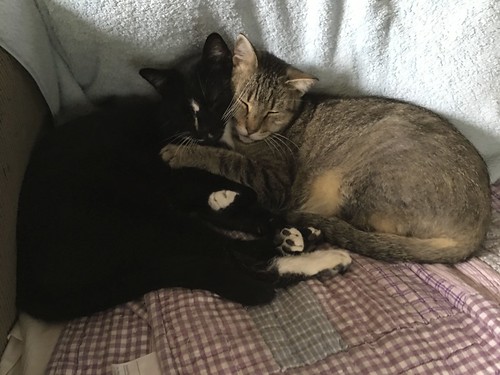
Julian and Nala have been bosom buddies ever since we brought them home – shot by Mary Ann

Arslanian asked the shop owners for their cats’ origin stories. Many are rescues.

According to Neergard pharmacist Lana, “Ivy was found as a wee kitten pulling tricks on the gritty streets of Brooklyn’s Park Slope.”

Geez, talk about mean streets. Some came along with the building or business when a new owner took over.

We moved in together in 2001, marrying later that year. My Pitch joined her Madison, Winnie and Bo. There would be more. One morning a small stray tried to follow Mary Ann into the subway. It was not her first encounter with this kittie. She was so small we believed her to be a kitten. Concerned for her safety, she brought the wee beastie back upstairs before heading out to work again. I was not thrilled at the prospect of yet another cat being added to our pack. We put her in my daughters’ bedroom. That night when Mary Ann got home from work, she came into the room, and there I was like a thief with his hand in the cookie jar, holding this little cat in my arms in the same way I had held my tiny humans not so long ago. Forgotten was the notion of trying to find another home for her. I looked up at my wife, sheepishly, and said, “She had me at meow.” Turned out she was as large as she would ever get. We called her Little Cat. or LC for short.

description
One of many shots available at the FB page for the book

A fair number of these cats have fans, locals who stop by for a scratch-n-rub. But some of these contemporary kitties have on-lion (sorry) presences as well. The shop cats range in temperament from sweet to imperious, from scratch-me-rub-me-love-me attention-whores to full-on Travis Bickle. “Are you lookin’ at me?” Tiny, the cat in charge of the Community Bookstore in Park Slope, seems particularly fearless.

Customers come in with their dogs assuring the staff they are ok with cats, to which the staff responds, “Well, our cat is not ok with dogs. If you see Tiny up in the shelves following you, your dog is being stalked.”

Madison 554//embedr.flickr.com/assets/client-code.js
Madison

In the mid aughts, a work friend of Mary Ann’s at Harper was about to relocate out of the country. His wife had gotten a job with the State Department, and they had very little notice before they would have to leave. In order to be able to take their two cats along, they would have had to put them into seriously prolonged quarantine. They were not confident that both would survive the experience. That is how Anakin and Kiki joined our herd.

They may sleep sixteen to twenty hours a day, but these are working cats, with diverse jobs, in addition to their traditional rodent management portfolios.

When I asked the only desk-less guy there [MPH messenger service] if he was security, he nodded in Sammy’s direction. “He’s security.”

One Red Hook cat helps close deals as an assistant sales rep for a glass products company by sitting on customers’ laps.

description
And your total is… – From Shop Cats FB pages

For any who may wonder at the ability of felines to feel, there is a particularly moving tale of one cat mourning the passing of his sister.

In 2011, a surprise was found at my mother-in-law’s place in Wilkes Barre. A stray had taken up residence on the back porch. When Mary Ann, there for a visit, picked her up, there were two babies beneath her. Her mother was actually ok with taking them in. The mom was named Isabelle and the babies were Oscar and Felix. We had intended to head out there for a visit a few weeks later. Get Isabelle to the vet, and have the babies checked out. But Hurricane Irene had other plans, and we did not manage the trip until enough later to matter. Isabelle had managed to get mommified again, this time with Scout and Boo. So we had a triple-A team of cats in residence in Wilkes Barre. It was good company for mom, who was getting on. We helped out with cat costs, buying food, litter and dealing with vets. We had expected to bring them to Brooklyn over time. It was during this period that another arrival turned up. Tabitha had been showing up in the Wilkes Barre back yard looking for food, and getting it. But came inside a time or two when it got very cold. One time was when we were there on a visit. She came into the kitchen, but was so terrified of the other cats that she hid under the stove. To our great surprise mom-in-law asked us to take her back with us, afraid that her brood would harm the outsider. In January 2015, my mother-in-law passed, peacefully, in her sleep, a favorite German shepherd companion at her side. Our triple-A team would be moving up to the majors. Well, somewhat. Some of them were particularly gifted at evading capture. But we did bring home Isabelle, Scout and Oscar.

Scout on the Couch//embedr.flickr.com/assets/client-code.js
Scout on the couch – shot by Mary Ann

Shop Cats may stretch the definition of the word shop a bit, including a chapter on the cats of Brooklyn’s Pratt University. We learn of the attempt by those in charge to make Pratt a cat-free zone, which is enough to make one want to hack up a hairball, and leave it in management’s shoes. But it is certainly a forgivable extension, considering the subject matter.

We have lost several of our four-footed children to the ravages of age. They had lived lives that were respectably lengthy, but it was heart-breaking to lose them. There would be two more sets of incomings. We have a friend in Wilkes Barre who is a registered cat-rescuer. She is a saint, in our view, who has helped many a feline shift from living on the streets to finding a safe, loving home. However, there was a time when she needed a temporary place for many of her wards. Mom’s place in W-B was offered, and a dozen or so squatters took up residence. Two of them took a shine to Mary Ann and me when we were there. The result was Nala and Julian. On another trip to W-B, we had intended to retrieve Felix from the cat angel of W-B, but he was clearly happy to remain where he was. It so happened that at the time there was another resident in that illustrious cat house that was in need of placement. He was young, but no longer a kitten. What set him apart was that he had an extra digit on all four paws. We named him for Ernest Hemingway, as the cats at Papa’s Key West home were known for being polydactyl. So Nesto signed on.

description
King Jeffie of the Brooklyn whiskey distillery – an outtake on the FB page

The stories told here are mostly sweet and adorable. But there are one or two occasions where those stories include reports on the cats’ more predatory inclinations.

But wait. there’s more. In the last few months Mary Ann had been finding other people in our neighborhood who have been feeding some of the local ferals (there are many), and a get-together was arranged. Brunch was had. A plan was made. Ferals were trapped. One was checked out, then brought to a family in upstate NY (not a euphemism). Two others were brought to our rescuer pal in Wilkes Barre. And we are currently fostering a mom and her three babies, and one more, a beautiful tabby, probably under a year old. But it came to pass that one night, after heading out with her fellow trappers, Mary Ann returned home with about three ounces of rescued lovability clutched to her clavicle. Neither of us had ever had a kitten. We do now. Shadow has joined the pride. It will take a while for her to be safe, being set loose among the considerable fully-grown group that ranges free in our apartment. I can well imagine Nala prancing across the living room with a tiny black tail hanging out of her mouth. But eventually Shadow, who is dying to play with the big kids, will find her place among the burgeoning crowd. I still sneeze on occasion, probably because I have not become fully acclimated to the newbies yet. But I have not been driven to an allergy-driven asthmatic panic in so long I cannot actually recall when that last occurred. Our children may throw up on the floor, shred our furniture, knock things from their places, and generate unspeakable aromas at times, but we love them, and expect that the feeling is shared. They are good company, with lots of personality. Their addiction to catnip and laser pointers offers moments of true hilarity. And their fondness for snuggling reinforces our mutual affection. I am glad Mary Ann had issues with reading. I am glad I was able to manage my allergy. It is a considerable, loving family we have patched together. And that is nothing to sneeze at.

Nesto//embedr.flickr.com/assets/client-code.js
Nesto is a polydactyl, which gives him nearly supernatural climbing ability

Shop Cats of New York may be a local look, but it certainly represents a global phenomenon. There are plenty of representatives wherever you live, guaranteed. The next time you stop into a shop, take a look around, and see if there might be a silent prowling proprietor in residence. Odds are he or she will welcome a gentle scratch behind the ears or under the chin, or a gentle cranial rub. You might even sweeten the deal with a cat treat or two (delivered surreptitiously). And if you are feeling particularly bold you might inquire into the cat’s name, where he or she came from and if he or she would mind sitting, standing, or lying down for a photo. For anyone with a fondness for the feline, you might want to give Shop Cats of New York a place in your home. It will make you purrrrrr, now and forever. It’s cat-tastic!

Review First Posted – 11/4/2016

Published – 11/1/2016

This review has been cross-posted on GoodReads

=======================================EXTRA STUFF

Here is the link to the book’s official facebook page.

Tamar Arslanian’s blog is called, fittingly, I Have Cat. You Can find her on Instagram and Twitter as well.

Andrew Marttila’s main site, The Great Went Photo, has some amazing shots. Must see material. You can also find him on instagram, Twitter, and FB

A promotional video for the book

An interesting recent article on an upcoming PBS documentary, Cat Evolution

A New York Magazine piece on working felines at the Javits Center – Feral Cats Are Being Deployed in New York’s War on Rats – by Chas Danner

PS – the author is aware of having managed only three of NYC’s five boroughs, and plans to repair that breach with a sequel. Or several, maybe? Shop Cats, the Litter?

December 3, 2016 – Had to add this one
Nesto at Resto//embedr.flickr.com/assets/client-code.js
Nesto at Resto or Relax (note serendipitous book title at upper right) – shot by Mary Ann – Clearly the boy is all shagged out after a long day at his desk job

February, 2017 – part of a multi-year Photo Ark project to photograph captive species before they vanish from the world, this piece looks at a host of small cats. OMGOMGOMGOMG!!! – Out of the Shadows, the Wildcats You’ve Never Seen – By Christine Dell’Amore – Photographs by Joel Sartore
description
The Iberian Lynx

Leave a comment

Filed under New York City, Non-fiction

This Chair Rocks by Ashton Applewhite

book cover
I have had a life. I married twice, was in the room when two of my three entered the world. I helped them grow through infancy and childhood into beautiful, talented, bright and loving adults. I have lost both parents three sisters, and in-laws as well.

There are two kinds of people in the world, those who are older and those would like to be. Ashton Applewhite’s book, This Chair Rocks, shines a bright light on a labeling system that affects everyone on earth. Whether we are called addled, senior citizens, golden agers, coots, old farts, old fucks, old bitches or a host of other derogatories, we are separated from the rest of humanity when such labels are applied, separated from the presumed (younger) norm. We become outsiders. Just as black athlete is somehow a separate species, a woman president is presumed to be less capable, and an Islamic terrorist more unspeakable than a garden-variety terrorist, we can be cast into the soylent sphere by labels. And such casting harms not only those being tossed but those doing the tossing.

description
Ashton Applewhite – from Seniorplanet.org

I have had a life. I cheered for Mets and Jets since their birth, and wept more times than not. I played on championship teams in my youth and led youth teams as an adult to both glory and painful defeat. I have hit for the cycle and swung and missed.

Applewhite covers a wide array of subjects while considering things like how ageist attitudes legitimize maltreatment of olders, the impact of internalizing false notions of aging, and how the world pathologizes getting on in years. She looks at the language of ageism, the realities of aging and mental acuity (there are some surprises there), and how this impacts health care, physical and mental. She looks at the stigmatization of disability, at sexuality for olders, retirement and self-esteem.

I have had a life. In the 1950s, I watched a black and white from our living room floor, saw it change color, go big, go flat, go small, go cabled, go tubeless and go wireless. I listened to radio dramas on our kitchen radio, saw the arrival of transistors, and now hear bedtime podcasts on a charging iPad. I saw phones go from rotary to digital and watched them cede their wires to the past, and even go all Dick Tracy. I saw as much 50s sci-fi as I could, saw 2001 when it was new, and still in the future, and Star Wars and Star Trek from the Start.

Applewhite goes into considerable detail in showing how the bias towards older people (she uses the term olders, so I am going with that here) that pervades this and many other societies, is based largely on falsehoods, and causes real harm,

Condescension actually shortens lives. What professionals call “elderspeak”—the belittling “sweeties” and “dearies” that people use to address older people—does more than rankle. It reinforces stereotypes of incapacity and incompetence, which leads to poorer health, including shorter lifespans. People with positive perceptions of aging actually live longer–a whopping 7.5 years longer on average—in large part because they’re motivated to take better care of themselves.

She includes several sections titled PUSH BACK, in which she offers suggestions for actions we can take to resist ageism when we encounter it, and things we can do to keep ourselves healthy.

I have had a life. After my world was thrown into turmoil I was fortunate enough, to my great surprise, to find deep love to last the rest of my life.

Lengthening lifetimes is one of the ways we measure human progress, and by that measure, we have done quite nicely. We live ten years longer than our grandparents. In the USA, in the 20th century, life spans increased a jaw-dropping 30 years. But our culture has not yet caught up with the facts. There are many things in here that will surprise you. Applewhite has separated the bull from the…um…poo, and pointed out many of the inaccuracies in what passes for common wisdom.

We reinforce the association with constant nervous reference to forgetfulness and “senior moments.” I used to think those quips were self-deprecatingly cute, until it dawned on me that when I lost the car keys in high school, I didn’t call it a “junior moment.” Any prophecy about debility, whether or not it comes true, dampens our aspirations and damages our sense of self—especially when it comes to brain power. The damage is magnified by the glum and widespread assumption that, somewhere down the line, dementia is inevitable.

I have had a life, but sometimes it is difficult to remember all of it. Of course this is not because of my age, in particular. I began keeping a diary when I was 15 because I could not remember all the New Year’s Eves of my short existence. I recently mislaid my glasses, and was never able to find them. But then, when I was ten years old, I lost my treasured baseball glove. I never found that either. Some traits seem to follow us through the years, however many there may be.

Applewhite points out that there are plenty of ways for labeled groups to move forward together. Social Security is in no danger of going bankrupt or of devastating the nation’s economy. It can be sustained by marginally increasing the range of salary that is subject to Social Security tax. Medicare could fare a lot better if the rules that forbade it from exercising its market power were relaxed. Really, Medicare is not even allowed to try to get the best prices from drug manufacturers? Whose interests are served by that particular form of insanity?

I have had a life. I’ve been Everly’d, Diddly’d, and Valens’d, and Darin’d. Been Elvis’d and Berry’d, and Buddy’d, and Ray’d. I sat in the mud with the hundreds of thousands, alone in the mass as the heavenly played. Near the stage at the Bitter End for Ronstadt and others, and loudly at Max’s KC for the Dolls. There just was so much music, I caught a few notes, but wished there was some way to go hear it all. I’ve been 4-Seasoned, 4-Topped, Beach Boy’d, Supremed. Been ELP’d at Wembley, and at the Garden, I got Creamed. Saw Towshend at the Round House, stood for Tina at the beach. Saw Zeppelin rock in Flushing. And I wish that each and every band I’ve seen up close could keep on playing. Some are gone, but I’m just saying. I’ve been Peter, Paul and Mary’d. I’ve been Dylan’d and been Seeger’d, and seen a stage or two where all the players looked beleaguered. I’ve been Yessed, and been Pink Floyded. I been Bowied and been Banded. I’ve been Beatled, Stoned and Dave Clark Fived, and I’ve been hotly Canneded. I dared to breathe at the Filmore East when the ever Grateful Dead made it seem that life and youth were qualities that we would never shed. I’ve been Ike’d and I’ve been Nixoned, JFK’d and LBJ’d. I’ve been Reaganed, Bushed and Bushed again, and I’ve been MLK’d. I’ve been Cartered and been Clintoned, been Obama’d. Fate decreed that by the time you see this we will all be DJT’d.

Applewhite looks at many of the canards that prevail, like olders taking jobs from youngers, the old benefiting at the expense of the young, the relative flow of resources, the inevitability of cognitive decline. As for the senior boom, that we have so many more older people than we once did should be seen as a benefit not a problem. Older people have experience that can and should be employed to help solve old, new, and ongoing societal problems. Not all old people are wise, any more than all younger people are energetic, but we have a considerable base of been-there-done-that from which to draw. Enough of us have valuable and relevant experience and skills that could be put to good use.

Especially in the emotional realm, older brains are more resilient. As we turn eighty, brain imaging shows frontal lobe changes that improve our ability to deal with negative emotions like anger, envy, and fear. Olders experience less social anxiety, and fewer social phobias. Even as its discrete processing skills degrade, the normal aging brain enables greater emotional maturity, adaptability to change, and levels of well-being.

I have had a life. I’ve gone to college and grad school. I have studied abroad, and had a broad or two study me. (sorry). Been hired, laid off, fired, went back to school and started over, back at the bottom. Then was laid off again. I have toiled in several lines of work over the decades. Drove a cab, went postal, was a planner of health systems and a systems analyst for employers large and small, a guard and a dispatcher, and a few things beside. In 2001, I was laid off from my job as a systems analyst, after spending thirteen years at the firm, and over twenty in the field. I was not only never able to get another job in my chosen profession, I was never able to get an interview. It’s not like I was God’s gift to computer programming. But I was certainly competent enough to have been kept on by one of the largest financial institutions on the planet for over a decade. It’s not that I was priced out. I would have accepted pretty much anything. I was essentially kicked out of my field because of my age. AT 47!!!! All that experience not put to use by some business because they could not see past the age label. What a waste.

We all know, or should know, that Republicans are particularly gifted at the old game of divide and conquer. It worked great in the UK recently, when right wing-xenophobes persuaded working people, yet again, to vote against their own interests by stoking fear of the other. It has worked pretty well in the USA too. It is what’s the matter with Kansas, and has a long and shameful history here. Faced with electing people who would work to bolster union rights and voting for people who promise to keep those damned immigrants and minorities in their place, far too many working people seem more than ready to vote to enslave themselves further. We are as addicted to labels as the residents of a crack house are to their pipe. Fear-mongering is being used today for the same purpose it has always served, as a way to gain working and middle class support for policies that are anti labor, policies that pad the wallets of the already rich. Bush the junior tried his best to persuade the nation that privatizing Social Security would prevent the elderly from taking unfair advantage of the young. Labels are used as a way of manipulating people. They can do real damage, even if they sometimes fail to accomplish their mission.

I have had a life. I saw Rocky in the West End before it crossed the pond and Sweeney Todd and Lovett’s first repast. Sondheim’s a god. Saw Shakespeare in the park, Hair, and Oh, Calcutta, Cats, Les Miz, The Phantom, Cabaret, and more, but really that’s not nearly enough, off Broadway or on. Saw my kids in all their school shows, and survived some of my own.

Homo sap is a species that revels in labels. Us/them, Commie/Nazi, Winner/Loser, Black/White, the more dichotomous the better. And we seem to have more of the negative sort than the positive. Labeling offers shorthand, a macro reference, one word, maybe two, that allows us to redirect our brains away from the difficult and energy consuming task of considering and examining whole lives, freeing them up for the more satisfying activity of indulging our desires and impulses. How many are doomed to invisibility beneath labels? We are labeled because it makes things easier, and we are a species that values simplicity.

I have had a life. I walked London streets in almost Victorian twilight as the energy crisis dimmed English streetlamps. I hitchhiked in the USA, in Britain and the continent. Saw sunset from Ullapool, played guitar and sang in a club in Copenhagen, had the best breakfast of my life in Rotterdam, saw the most beautiful city ever, in Paris, twice. I lived a while in Saint John’s Wood. I have seen a fair portion of North America and visited a decent sample of Europe. I have taken photographs of an active volcano from a helicopter with no doors. I have seen some of the most stunning landscapes on Earth. I’ve been to Coney Island, Hershey Park, and Disney World and Land, and Freedomland, Six Flags and Universal, Palisades and Rye and a World’s Fair or two that raised my spirit high. Seen the sights that one can see in NY, Boston, and DC. There is so much history, in Philly, Baltimore and Maine, New Hampshire and Vermont, as much to learn as you could ever want.

There are many who, if they spotted me sitting or standing in a subway car, or walking down the street would see the color of my hair, note its retreat from my forehead, spot the lines that brace my eyes, and the forward tilt of my spine and see one thing only, age. All the rest would remain forever hidden beneath the large sticky-backed label that fits so nicely over another human being.

I have had a life. My hair has been military short and long enough for a real pony. I have smoked and toked, popped and snorted, but stopped before I self-aborted. I am tall, although not as tall as I once was. I am a little bit fat and my body has less speed and strength than it once possessed. Maybe the additional mass is because I am a storehouse of the history of my time, a sculptor of my experience into an image of my era. I have read thousands of books, tens of thousands of newspapers and magazines, and untold on-line articles. I have participated in a vast number of discussions, attended god-knows-how-many lectures, and watched a gazillion hours of documentary and news on TV. I know a thing or two.

I have had a life. I have been mugged, been in fistfights, and suffered a near catastrophic injury in an industrial accident. I have protested war and inhumanity and been struck with billy clubs for daring to speak. I have seen a thug slam a boy’s head into a brick wall.

There is a wealth of information in this relatively short volume. The chapters are divided up into many short sub-sections, so you can take it in a bit at a time if you like. I found some of the sections repetitive, and found one famous quote misattributed (it was from Anatole France, not Voltaire). There is a significant shortage of humor here, but, then, this is not a particularly funny subject. It is rich with surprising facts, which is one of its great strengths. For example, older people suffer from depression less than younger people.

I have had a life. I was chilled by Sputnik’s beep, and was warmed as I watched, along with all humanity, an ageless dream realized with a single step. I have seen my city burn, flood, and go dark. I stood in the wind-blown unspeakable snow when my city was ravaged, and saw a new tower sprout on the memory of the lost.

I have read quite a lot in my time, and it was inevitable that some of the material here would be old news, but I still found many new things to be learned in This Chair Rocks. I found, also, that Applewhite’s manifesto caused me to reconsider some attitudes and behaviors that I had thoughtlessly indulged. Consciousness raised. Check. It will make you more aware, too, of many things you had not noticed before. I cannot thank Ashton Applewhite enough for writing This Chair Rocks. It most certainly does.

I have had a life. It is diverse and rich with experience, memory, history and emotion. But listen up. I am STILL having a life and intend to for as long as I possibly can. Do not dismiss me because of my white hair. My white hair dazzles in bright light. Do not dismiss me because of my wrinkles. They are the evidence of a lifetime of laughter. Do not dismiss me because I am slightly bent. I can and will straighten up if I need to throw a punch or block a blow. I am a smarter person than I have ever been. I am a more knowledgeable person than I have ever been. I am probably a wiser person than I have ever been. I am a better writer, photographer, and I would say a better person than I have ever been. I have loved and I have hated, and wept until the tears abated. Jimi Hendrix said “I’ll die when it’s my time to die.” I will certainly do that. I may not be wealthy; I may not be important, I may not be particularly athletic; I may not be the sharpest tool in the shed; and I may not be beautiful. But I am somebody, and I have worth. I may be older but I will be here a while yet and I have plenty to offer, a lot left to experience, and a lot still to accomplish. I realize that I may not have had the best of all possible lives. There is much I have not done, much I have not seen, much I have not experienced. But I do not need an angel named Clarence to tell me that it’s been a wonderful life. I may or may not be having the time of my life, but I have definitely had a life of my times. Do not bury me under a label. Do not make me invisible behind a number. I’m still here, much more in store. I am older. Watch me SOAR!!!!

Now get the hell off my lawn, you goddam kids, before I call the cops.

Review First Posted – July 29, 2016

Published – May 23, 2016

Applewhite sent me the book in return for an honest review.

=======================================EXTRA STUFF

Rather than add in a bunch of links here, I suggest you check out Ashton’s site. There are links aplenty there.

Applewhite got her start in an unusual way, writing joke books. Not just any joke books. She wrote Truly Tasteless Jokes One, as Blanche Knott (my kinda woman), had four of these things on the NY Times best seller list at once. But she began writing with a bit more seriousness. In 1997 her book Cutting Loose: Why Women Who End Their Marriages Do So Well , landed her on Phyliss Schlafly’s shit list, a signal achievement for anyone with a brain and a heart. In October, 2016 she is delivering the keynote address at the UN for the 36th International Day of Older Persons. No joke.

Items of Interest from the author
—–9/3/16 – Applewhite has a strong piece in the NY Times, on age discrimination – You’re How Old? We’ll Be in Touch

Items of Interest
—–NY Times – 5/3/2025 – Honey, Sweetie, Dearie: The Perils of Elderspeak by Paula Span
—–NY Times – 7/12/2016 – A pretty interesting piece by Winnie Hu – Too Old for Sex? Not at This Nursing Home
—–NY Times – 9/29/2016 – Who’s Really Older, Trump or Clinton? by Gail Collins
—–NY Times Sunday Review – 4/7/2017 – To Be a Genius, Think Like a 94-Year-Old by Pagan Kenned
—–NY Times – 7/24/2017 – Another Possible Indignity of Age: Arrest by Paula Span
—–Scientific American – Why Does Time Fly as We Get Older? by Jordan Gaines Lewis
—–NY Times – 12/16/2017 – Are You Old? Infirm? Then Kindly Disappear by Frank Bruni – Definitely worth a look
—–NY Times – 12/21/2017 – Facebook Job Ads Raise Concerns About Age Discrimination – by Julis Angwin, Noam Scheiber and Ariana Tobindec
—–AARP Bulletin – December 2017 – Age Discrimination Goes Online – by Kenneth Terrell –

As more jobs are advertised and applied for online, evidence is mounting that it is easier to discriminate against older workers.

Definitely worth checking out.
—–NY Times – 6/22/2018 – NY Times – The Snake Oil of the Second-Act Industry – by Alissa Quart – on how unscrupulous private colleges are taking advantage of those looking to reboot their careers
—–NY Times – 3/11/2019 – The Fight to Be a Middle-Aged Female News Anchor – by Steve Cavendish
—–NY Times – 1/3/2020 –Older People Need Geriatricians. Where Will They Come From? by Paula Span
—–NY Times – 1/11/2020 – Everyone Knows Memory Fails as You Age. But Everyone Is Wrong. by Daniel J. Levitin (a neuroscientist)
—–NY Times – 2/12/2022 – Making ‘Dinobabies’ Extinct: IBM’s Push for a Younger Work Force by Noam Schreiber – IBM caught in their documents soylenting their seniors’ careers

Songs
—–I’m Still Here – Elaine Stritch from Sondheim’s Follies
—– When I was 17
—– Running on Empty
—– When I’m 64 – (a cover)
—–We Didn’t Start the Fire
—–Everything old is new again – from All That Jazz

Leave a comment

Filed under Activism, Non-fiction, Psychology and the Brain, Public Health, Public policy, Reviews

It’s What I Do by Lynsey Addario

book cover

“Sahafi! Media!! He yelled to the soldiers. He opened the car door to get out, and Quadaffi’s soldiers swarmed around him. “Sahafi!”
In one fluid movement the doors flew open and Tyler, Steve, and Anthony were ripped out of the car. I immediately locked my door and buried my head in my lap. Gunshots shattered the air. When I looked up, I was alone. I knew I had to get out of the car to run for cover, but I couldn’t move.

Click!

description
Lynsey Addario – from CBS News

You may not recognize the name Lynsey Addario, but if you read newspapers, check out magazines, or are aware at all of the imagery that accompanies major events in the world, you have seen her work. Addario is one of the premier photojournalists on the planet and has the portfolio, the Pulitzer, and a MacArthur award to prove it. In 2014, American Photo named her one of the five most influential photographers of the last quarter century. In 2012, Newsweek magazine cited her as one of 150 Women Who Shake the World. Thankfully, she does not shake her camera when she is shooting (unless of course it is for intended effect). Although no one could blame her if she did. Addario has spent a large portion of her career as a conflict photographer, working for extended periods on the scene in Iraq, Afghanistan, Libya, Congo, Sudan, and other garden spots. Wherever people have been shooting at each other in the last two decades there is a good chance that Lynsey Addario has been there. The one place she declares she will not go these days is Syria, which says something. She has been kidnapped in the field twice and has felt her life to be in danger more times than that, so when she says she won’t go to a place, it must be something really special.

ADDARIORETRO002
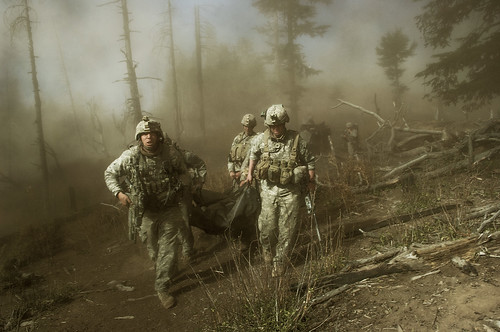
US Soldiers in the Korengal Valley of Afghanistan

It’s What I Do is Addario’s tale of her journey from growing up in a Connecticut suburb as part of a Bohemian family, to finding and developing a talent for capturing life through a lens, to pursuing a career in photography. While working in New York in 1999, she got a big break, being asked to work on an Associated Press project looking into transgender prostitution in the city, and the spate of homicides with which that community was being afflicted. It turned into a months-long undertaking and brought her work to public notice for the first time. Click!

description
A shot from that series

In 2000, a family friend invited her to go India.

Everything that made India the rawest place on earth made it the most wonderful to photograph. The streets hummed with constant movement, a low-grade chaos where almost every aspect of the human condition was in public view. Click!

It was while there that she was encouraged to go to Afghanistan to shoot the lives of women living under the Taliban. She was able to gain access to a half of Afghani society barred to her male counterparts. Click!

description
Women and girls study and recite the Koran in Peshawar, Pakistan, 2001 – from the Women’s Eye

9/11 brought on a whole new era of conflict. Addario was on the scene when the USA invaded Iraq, having set up shop in Kurdistan when Saddam Hussein was toppled. Of course that required some extra planning. At the time she got the assignment she was in South Korea covering refugees from the north, and enduring the extraordinary humanitarian horrors of the extended karaoke the refugees enjoyed. She needed to get tooled up for the job and it proved challenging. One thing she had to arrange for was body armor. She found herself befuddled by the on-line offerings. She wrote to her editor.

I have checked out the websites you recommended, and am not sure if I just tried to read Korean. Basically, I have no idea what I am looking at—ballistic, six-point adjustable, tactical armor, etc. Please understand that this language is not familiar to me—I grew up in Connecticut, was raised by hairdressers.

ADDARIORETRO020
A woman prays at dawn after the 2010 earthquake that nearly destroyed Haiti

She was kidnapped for the first time while en route to Ramali with other journalists. And was subsequently jarred when Life magazine declined to publish her photographs, because they were too real for the American public. (The New York Times Magazine would later publish some of the work.) The experience of working in the Iraq war zone and coping with the politics of news publishing provided valuable life lessons.

…something in me had changed after three months in Iraq. I was now a photojournalist willing to die for stories that had the potential to educate people. I wanted to make people think, to open their minds, to give them a full picture of what was happening in Iraq so they could decide if they supported our presence there.

Her work has often demonstrated the power of the image. When she got shots of a Sudan massacre she made it impossible for President Bashir to continue denying that the war crime had taken place.

description
Addario’s image of armed boys and men near the Afghan border won her a Pulitzer – from The Women’s Eye

Addario pooh-poohs any notion that she is an adrenalin junkie. She says that she has come to recognize that the photos she takes have the power to inform the public and influence people, so feels a responsibility, a calling to bear witness to much of the awfulness of the world in order to shine some light on it, to bring it to the world’s attention.

description
Addario stopped to help when one of these women was in labor, miles from a hospital. She gave them a ride. – From Itswhatidobook.com

When Addario first submitted her manuscript, she was advised to make it more personal, as in writing about her off-the-field life as well as her experiences behind the lens. She includes in the final version a bit of her love-life history, which entailed some admittedly bad choices. As a dedicated career-woman, sustaining relationships has always taken second place to her work. She says she even walked out on dinner dates when she got an assignment.

Recently, a young photographer asked her how to get into the business. She told him to start traveling, shooting and contacting editors for assignments. When he told her that he didn’t want to travel much because of his girlfriend, Addario told him to break up with her.
“He thought I was insane,” says Addario. “I told him you have to decide what your priorities are. If you are not willing to make that sacrifice, there are 10,000 young photographers who will.”
– from Photo District News article

The book contains many amazing shots Addario has taken over the course of her career. They add significantly to the aura of outsized accomplishment that Addario has earned. One significant thing about the shots Addario takes is that they are not only journalistically effective but expose an impressive artistic talent. She is able to tell troubling stories while at the same time making outstanding art. The book is printed on very high-quality paper, images and text, which adds a very tactile richness to both the visual power on display and the engaging text.

description
An Iraqi woman fleeing a massive fire in Basra in 2003

Although one can piece together information by reading diverse articles about her, and watching sundry videos in which Addario does presentations and is interviewed, those connections are not always spelled out in the book. Particularly in the earlier parts of her photographic sojourn, it was somewhat murky why and how she decided to uproot and move to Argentina, and later to India.

Syrian Refugees;northern iraq
Syrian refugees in Northern Iraq

It’s What I Do is not a photography book. You will not get any technical tips there. While you will see some very nicely printed photographic images, those are there to enhance, to illuminate the text. The main thing here is her story. Lynsey Addario is a rock star in the world of photographic journalism. She takes us frame by frame on her journey from suburban origins as the child of hairdressers to becoming a world traveler covering important events everywhere on the planet in an attempt to illuminate the darkness. It is quite clear that her achievements have come at considerable personal cost, and that she is possessed of a rare personal fire that has driven her to take large risks in order to fulfill what she perceives as her mission in life. For those of us not familiar with the names that appear under all those news photos, It’s What I Do offers particular insight into just how important it is to have photographic boots on the ground wherever important events are occurring. Real-world photography is Addario’s contribution to the world. We are all enriched by her efforts, her sacrifices, her courage and her talent. This book will be an eye-opener for many. It is a perfectly focused, well-framed look at a life well lived, a life that has benefited and promises to continue to benefit us all. Click!

Publication
———-2/5/2015 – hardcover
———-11/8/2016 – paperback

Review first posted – 4/22/2016

BTW, a deal was struck at some point to turn this into a major film, with Jennifer Lawrence as Addario, to be directed by Steven Spielberg. As of 2022, we are still waiting, so who knows?

=======================================EXTRA STUFF

Links to the author’s personal, Twitter and FB pages

She has a separate personal site specifically for the book

Every time I leave my family I wonder why I’ve chosen this life. I leave my two-year-old son and I come home and he won’t speak to me for a few days. And it’s lonely on the road. And I’m in these strange hotel rooms, or tents. It’s not a luxurious life. It’s something that people think that you’re out there for the adrenalin rush. They think you’re out there because it’s glamorous. But it’s not. You’re out there as a photographer who has chosen to cover conflict. It’s a calling. It’s something that sort of takes over who I am. People ask me why I do this and it is what makes me most alive. It is what I believe in. it is my happiness and It’s what I do.

Videos
—–This is must-see – Addario’s presentation, followed by an interview, at Arts and & Ideas at the JCCSF
—–National Geographic – 26 minutes – Lynsey doing a presentation, with focus on her NG assignments. Much info from JFFC presentation is repeated, but there is a lot that is different so this one is also definitely worthwhile
—–The Annenberg Space for Photography – focus on her kidnapping – 10 minutes
—– Item on CBS This Morning linked from LA‘s site
—–Time Magazine – This opens as text, but there are videos embedded

Interviews
—–Photo District News. Among other things this has a lot on breaking into the business
—– The Literate lens – In Love and War: An Interview with Lynsey Addario
—– Photojournalist Lynsey Addario On Her Relentless Pursuit of Truth – from The Women’s Eye

Articles
—–From American Photo – THE INFLUENCERS: LYNSEY ADDARIO
—–National Geographic – December 19, 2017 – Inside a Female Photographer’s Experience Documenting War – by Daniel Stone – Regarding the documentary series The Long Road Home, about the Iraq War

description
Addario watched as Iraqi Shiite followers of Muqtada Al Sadr stood amidst burning tires in Sadr City moments before American tanks opened fire on the area in Baghdad, Iraq April 4, 2004
Image and image text from NatGeo article – Image by Addario, of course

—–July 10, 2020 – A new article by Addario in National Geographic – In the U.K., families of the dead still wonder: was it COVID-19?

—–August 27, 2022 – MSNBC interview with Addario – Photographer Lynsey Addario reflects on 6 months of the war in Ukraine

2 Comments

Filed under Afghanistan, Bio/Autobio/Memoir, biography, History, Journalism, Non-fiction

Smoke Gets in Your Eyes by Caitlin Doughty

book cover

There are many words a woman in love longs to hear. “I’ll love you forever, darling,” and “Will it be a diamond this year?” are two fine examples. But young lovers take note: above all else, the phrase every girl truly wants to hear is, “Hi, this is Amy from Science Support; I’m dropping off some heads.”

You have all seen The Producers, right? The version with Zero or Nathan, in the cinema, on TV, on the stage, whatever. Those of you who have not…well…tsk, tsk, tsk, for shame, for shame. Well, there is one scene that pops to mind apropos this book. In the film, the producers of the title have put together a show that is designed to fail. The surprise is on them, though, when their engineered disaster turns out to be a hit. During intermission of the opening performance, to Max and Leo’s absolute horror, they overhear a man saying to his wife, “Honey, I never in a million years thought I’d ever love a show called Springtime For Hitler. One might be forgiven for having similar thoughts about Caitlin Doughty’s sparkling romp through the joys of mortuary science, Smoke Gets in your Eyes. If you were expecting a lifeless look at what most of us consider a dark subject, well, surprise, surprise.

description
Yes we are, and dead-ender Caitlin is happy to help with the cleanup

Caitlin Doughty has cooked up a book that is part memoir, part guidebook through the world of what lies beyond, well, the earth-bound part, at least, and part advocacy for new ways of dealing with our remains. Doughty, a Hawaiian native, is a 6-foot Amazon pixie, bubbling over (like some of her clients?) with enthusiasm for the work of seeing people off on their final journey. Her glee is infectious, in a good way. The bulk of the tale is based on her experience working at WestWind Cremation and Burial in Oakland, California, her first gig in the field. She was 23, had had a fascination with death since she was a kid and this seemed a perfectly reasonable place in which to begin what she believed would be her career. Turned out she was right.

description
Caitlin Doughty from her site

Smoke Gets in your Eyes is rich with information not only about contemporary mortuary practices, but on practices in other cultures and on how death was handled in the past. For example, embalming did not come into use in the USA until the Civil War, when the delay in getting the recently deceased from battlefield to home in a non-putrid form presented considerable difficulties. She also looks at the practice of seeing people off at home as opposed to institutional settings. There is a rich lode of intel in here about the origin of church and churchyard burials. I imagine churchgoers of the eras when such practices were still fresh might have been praying for a good stiff wind.

description
No Kibby, no smoke monsters here

Doughty worked primarily in the cremation end of the biz, and offers many juicy details about this increasingly popular exit strategy. But mixing the factual material with her personal experience turns the burners up a notch.

The first time I peeked in on a cremating body felt outrageously transgressive, even though it was required by Westwind’s protocol. No matter how many heavy-metal album covers you’ve seen, how many Hieronymous Bosch prints of the tortures of Hell, or even the scene in Indiana Jones where the Nazi’s face melts off, you cannot be prepared to view a body being cremated. Seeing a flaming human skull is intense beyond your wildest flights of imagination.

Beyond her paying gig, Doughty has, for some time, been undertaking to run a blog on mortuary practice, The Order of the Good Death, with a focus on greener ways of returning our elements back to the source. (Would it be wrong to think of those who make use of green self disposal as the dearly de-potted?) One tidbit from this stream was meeting with a lady who has devised a death suit with mushroom spores, the better to extract toxins from a decomposing body. I was drooling over the potential for Troma films that might be made from this notion.

description
No, not pizza

One of life’s great joys is to learn something new while being thoroughly entertained. Smoke Gets in Your Eyes offers a unique compendium of fascinating information about how death is handled, mostly in America. Doughty’s sense of humor is right up my alley. The book is LOL funny and not just occasionally. You may want to make sure you have swallowed your coffee before reading, lest it come flying out your nose. I was very much reminded of the infectious humor of Mary Roach or Margee Kerr . Doughty is also TED-talk smart. She takes on some very real issues in both the science and economics of death-dealing, offers well-informed critiques of how we handle death today, and suggests some alternatives.

If the last face you see is Caitlin Doughty’s something is very, very wrong. The face itself is lovely, but usually by the time she gets her mitts on you you should be seeing the pearly gates, that renowned steambath, or nothing at all. Preferably you can see Doughty in one of the many nifty short vids available on her site. You will learn something while being thoroughly charmed. Reading this book won’t kill you, even with laughter, but it will begin to prepare you to look at that event that lies out there, somewhere in the distance for all of us, and point you in a direction that is care and not fear based. If you enjoy learning and laughing Smoke Gets in Your Eyes is dead on.

Review posted – 12/11/15

Publication date – 10/15/2014 (hc) – 9/28/15 – TP

I received this book from the publisher in return for an honest review. Well, not really. I mean they specifically said that there was no obligation to produce a review, so there is no quid pro quo involved, but it does seem the right thing to do, don’tchya think?

=======================================EXTRA STUFF

Links to the author’s personal, Twitter, Instagram and FB pages

You MUST CHECK OUT vids on her site. My favorite is The Foreskin Wedding Ring of St Catherine . All right, I’m gonna stop you right there. Go ahead. I know you wanna ask. No? Fine. I’ll do it for you, but you know this is what you were asking yourself. “If she rubs it does it become a bracelet?” Ok? Are ya happy now? Sheesh!

If you are uncertain about making a final commitment to reading this book you might want a taste of the product first (That sounds sooooo wrong) Here is an article Doughty wrote about her first experience with death as a kid, from Fortnightjournal.com . There are several other Doughty articles on this site as well.

Another book sample can be found here , in The Atlantic

Doughty offers a nifty list of sites to use for dealing with death, your own (presumably, you know, before) or others.

Interview in Wired

You might want to check out one or more of the following
—–The Loved One
—–The American Way of Death
—– The American Way of Death Revisited
—–Six Feet Under

Leave a comment

Filed under Bio/Autobio/Memoir, biography, Non-fiction, Public Health, Reviews

News of the World by Paulette Jiles

book cover

The Latest News and Articles from the Major Journals
Of The Civilized Word
Captain Jefferson Kyle Kidd Will Read a Compendium
From Selected Newspapers
At 8: 00 P.M. At The Broadway Playhouse

Captain Jefferson Kyle Kidd is in his early 70s. He sports a shock of white hair as evidence, but possesses a commanding stature and presence that make him seem years younger. Kidd makes a living as an itinerant newsreader. He visits places far removed from civilization, in this instance northern Texas, and reads to the locals newspaper items from around the world. No internet in 1870. Just as the news today has to take care about stepping on toes, Kidd must employ a keen sense of the crowds who come to hear him for ten cents a pop, informing his decisions on what stories might delight and educate and which ones might prompt a riot. He has begun to find his life thin and sour, a bit spoiled. While making his rounds he is approached by Britt Johnson, a freighter (materials hauler), and his crew. Britt (who appears in other Jiles work) leads him to a ten-year-old girl. She is unnervingly still. I am astonished, he said. The child seems artificial as well as malign. And thus begins a beautiful friendship.

Johanna Leonberger had been abducted four years earlier, at age six, when a Kiowa raiding party slaughtered her parents and sister. She had been taken in by Turning Water and Three Spotted, regarding them as her real parents. She speaks Kiowa but no English. Her aunt and uncle had offered a considerable sum for her to be found and returned. Britt took care of the obtaining part, but a black man transporting a young white girl to southern Texas, where the end of slavery was not entirely accepted, seemed a risk too far. Kidd obliges and takes on the task of restoring the girl who calls herself Cicada to her biological family.

book cover

Paulette Jiles – from Harper

This is a road trip of self-discovery, or some sort of discovery. Kidd slowly tries to gain Johanna’s trust, no mean feat, and see her safely home. There are challenges along the route, of course, brigands, morons, white slavers, unfriendly natural elements, the usual. What is magical here, and I do mean magical, is the growth in friendship between the old man and the young girl, as she slowly sees his kindness and wisdom and he sees her strength, intelligence and character. The language Jiles uses for expressing Johanna’s growing grasp of English is distilled delight.

The other great treasure to be found here is the portrait of a time and a place. A frontier with an actual front, during the transition from Native American control to ouster by Europeans. Jiles offers a compelling look at the challenges faced by the invading whites (hostile locals, for one), without turning a blind eye to the challenges faced by the dispossessed people. She also offers appreciation for the culture from which Johanna had been taken. Jiles uses a few methods to mark the trail the unlikely pair follows. Birds are used liberally, as are descriptions of local landscape and fauna. You are there. The color blue is applied frequently, but I do not know if that is for a particular purpose.

You’d better call United Van Lines. You will be moved. It was all I could do to keep from sobbing aloud on the G train on an autumnal (finally) early morning in November. Maybe I could pretend it was the cool air that raided the car whenever doors opened at each station that was making my eyes leak. Yeah, I’m gonna go with that. But for those of you short on ready excuses, you might want to finish this book at home. Tissue box locked and loaded.

So, not only is this book information-laden with period detail, not only is this book incredibly moving, but it is written with surpassing beauty and sensitivity. It is truly amazing that News of the World weighs in at only a little more than 200 pages, at a word count of about 56K. Don’t be fooled. This is definitely a case where size does not matter. I have no doubt that NotW will find its way onto 2016 top ten lists aplenty, meriting consideration for major awards, and deservedly so. For me, at least, this is the first GREAT book of the 2016. Don’t miss it!

Pub Date – 3/29/16 – As of January, 2016, the pub date for this book has been pushed back to the Fall. When I have a specific new date, I will post it here.

Review posted – 12/3/15

=======================================EXTRA STUFF

The author’s personal website

A Wiki page on the Kiowa

Jiles recommends The Captured by Scott Zesch for a closer look at the experience of returned captives/

An Aside – As with Sweet Girl and True Grit this book features an older man trying to help out a young girl. I am aware of no particular category for this, so will offer up a suggestion. SMYF, pronounced “smiff” (cockney for Smith?) for Senior Male Young Female. I know it might conjure inappropriate associations with other acronyms of a sexual nature, but it was the best I could come up with. Sometimes words fail me. I am open, very open, to something better. It wouldn’t take much. Help me out here, folks. Please. If there isn’t a better title for what is certainly a sub-genre of the road-of-self-discovery type, or the bildungsroman, I’m not an oversized Mic.

SMYF no more. With Sandra’s rec in comment #1, I am throwing my support behind OMYG, unless someone comes with something even better.

Leave a comment

Filed under Fiction, Historical Fiction, Literary Fiction, Reviews

The Nest by Cynthia D’Aprix Sweeney

book cover

He hesitated. Above him, an ear-splitting screech. He looked up to see three enormous crows, perched on the bare branches of one of the few trees that had already dropped its leaves. They were all squawking at once, as if they were arguing about his next move. Directly beneath, in the midst of the stark and barren branches and at the base of a forked limb, a mud-brown leafy mass. A nest. Jesus.

Leo checked the time and started walking.

When Leo Plumb, 46, and very unhappily married, enjoying the benefits of booze, cocaine, and Welbutrin, picks up 19-year-old waitress, Matilda Rodriguez, at a wedding, it’s business as usual. But the joys of the moment come to a crashing halt when the Porsche in which Leo is spiriting her away, the car in which she is putting her hand to good use, is T-boned by an SUV, and Matilda is seriously injured. It’s gonna take mucho dinero to put the lid on this one.

I have good news and bad news. Which do you want first? Good news? OK. The good news, for Leo anyway, is that there is a considerable family inheritance left by his late father, which can be raided for emergencies. Staying out of jail counts, so how much should we make this check out for? The bad news is that the inheritance was intended for four siblings and Leo’s indiscretion has slashed the total considerably. They are very interested in knowing when Leo is going to re-feather the nest he had just raided like a raccoon in the night.

book cover

Cynthia D’Aprix Sweeney – From her Twitter pages

Leo Tolstoy famously said All happy families resemble each other, each unhappy family is unhappy in its own way. The Plumb family is unhappy in diverse ways. Sweeney measures their depths. The family refers to their inheritance as The Nest, and their relationship to it, with Leo’s raiding of it, constitutes the core around which this family tale is woven. His charm and skill at manipulation will not be enough to get Leo out of this mess. He may have bought his way out of a jail sentence, but he still needs to come up with some serious cash to make The Nest whole again. He hasn’t exactly been working in the many years since he sold his on-line media business. And there is his bitch of a trophy wife to keep up. She is very fond of spending.

The Plumbs, despite their father’s financial success, are not wildly wealthy. Melody, nearing 40, is a suburban housewife, struggling to make ends meet in a place where she is very much on the lower economic rungs. She has twin daughters on the verge of college and could really use the money she has been expecting. Beatrice had some success as a writer years ago, but it has been a long time since she produced any writing of quality. She lives in an Upper West Side apartment , a love nest given to her by a late lover, which ain’t nuthin’, especially in NYC, but it’s not like she can sit home and clip coupons either. She has remained in a low-end job long after she should have grown to something more. Finally, Jack has been in a couple with Walter for many years. He runs an antiques shop that specializes in losing money. Walter is the breadwinner of the pair, but Jack would like to be depositing instead of constantly withdrawing. He is in debt up to his eyeballs. The potential absence of his bailout money from The Nest is a blow, so when a shady opportunity presents itself, he has to decide where he is willing to draw the line..

In this ensemble cast, we follow the siblings, along with a smattering of others, through their travails, and see them come to grips, or not, with the possible loss of a nest egg they had all been counting on for a long time. The issues they face are not merely how to cope with a cash flow shortfall. Sweeney has larger targets in her sights. The characters here are faced with moral choices. How would you have managed, given the situation? How would any of us? It is certainly the case, for all but the most blessed (and we hate them) that our hopes and dreams for this or that, whether a relationship, a career direction, parenthood, something, go all to hell. Sometimes, what doesn’t kill us makes us stronger. Which is nice if you are fond of aphorisms. Sometimes, what doesn’t kill us leaves us frightened, damaged, and scarred. (I mean, they don’t call it Post Traumatic Stress Improvement, do they?) Sometimes it can open a door to a new appreciation, offer a new path, uncover an unseen possibility. Or it closes all available doors, locks the windows and drops a match on a kerosene covered floor. I’m just sayin’. Two paths, at least for each of the sibs. Which will they take? What sorts of people do they want to be? And how will they emerge, battered or better?

In addition to the choices having to do with facing up to identity crises, and coping with losses real or theoretical, there are some other items here that are very well handled. Sweeney has painted a portrait of some elements of NYC at a particular place and time. These include a bit of a look at the local literary scene, whether one is doing well or struggling, in on the dot.com or killed by it, mean Glitterary Girl or faded sparkle. Authors, wannabes, publishers of paper and on-line magazines, trip through the pages. Some are more about appearance than substance.

She’d been hiding in a corner of Celia’s enormous living room, pretending to examine the bookshelves, which were full of what she thought of as “fake” books—the books were real enough but if Celia Baxter had read Thomas Pynchon or Samuel Beckett or even all—any!—of the Philip Roths and Saul Bellows lined in a row, she’d eat her mittens. In a far upper corner of the bookcase, she noticed a lurid purple book spine, a celebrity weight-loss book. Ha. That was more like it. She stood on tiptoe, slid the book out, and examined the well-thumbed, stained pages. She returned it to shelf front and center, between Mythologies and Cloud Atlas.

There is a walk through several places in the city, each offering a taste. The Oyster Bar in Grand Central Station, a brownstone in Prospect Heights in Brooklyn, a bit of Central Park, a Westchester suburb. 9/11 is a part of the story as well, as is, although to a lesser degree, the insanity that is the NY real estate market.

The Nest is, ultimately, about stepping off the edge of safety into the air, and either finding out you can fly or flapping uselessly to a sudden end. And, of course, considering whether or not to simply hitch a ride on a passing pigeon.

None of it would mean a lick if the characters were merely raucous chicks, lobbying for the next worm. Sweeney has put together more of an aviary, with each main member of her ensemble fully feathered and flight-worthy. Even a teen-age twin must consider separating from the intense co-nesting of sisterhood, and finding her own flight path. While not all the main characters are people you would care to know, they are all fully realized. Hell, even some of the secondary characters are presented in 3D. Their motivations and actions make sense, whether you agree or not with their decisions. There is nuance and depth even to the more morally challenged. I expect that you will find situations and/or conditions in here that resonate with challenges and decisions you have faced in your own life. The economic downturn has hit many of us, even if we need not look to our own reckless personal behavior as a cause. No need to wonder how most of us will behave when faced with some of the problems raised here. We have already adjusted our expectations. But there is value in seeing how others react.

Cynthia D’Aprix Sweeney’s last book was slightly different from this one, Country Living Easy Transformations: Kitchen With this book. Sweeney takes a step into the open air of literary accomplishment. She has spread her wings and caught a rising thermal. The Nest has not only succeeded in feathering Sweeney’s nest quite nicely, it offers a smart, funny, engaging, and insightful read that will accommodate your peepers quite nicely, and is sure to settle comfortably in many top ten nests lists when those finally begin appearing.

Review posted – 11/27/15

Publication date – 3/22/15

=======================================EXTRA STUFF

Links to the author’s Twitter and FB pages

2 Comments

Filed under Fiction, Literary Fiction, New York City, Reviews

The Opposite of Everyone by Joshilyn Jackson

book cover

I was born blue.
If my mother hadn’t pushed me out quick as a cat, I would have been born dead and even bluer; her cord was wrapped tight around my neck. She looked at my little blue lips, my blue toes and baby fingers, and she named me after Kali, Kali Jai.

So begins the story of Kali Jai, whose grandmother accidentally-on-purpose misheard the instructions KJ’s mother gave her before they locked her back up in juvie, and filled out a birth certificate with the name Paula Jane Vauss instead. Sounds the same, right?

Turns out Paula Jane/Kali Jai had things to be blue about. Life with Mom, for instance. While Kai (aka Karen Vauss) was a loving parent, she had a difficult time with sticking, meandering through serial relationships of varying intensity, Kali by her side. She may have been the inventor of the Go Bag, or at the very least a skilled expert in its use. And if Kali had grown attached to the man in their lives, so sorry, buh-bye, gotta go, see ya later. Off into the wild blue yonder until the next guy comes along. A tough situation for a kid.

book cover

Joshilyn Jackson – from BookTrib.com

Jackson writes of family and faith in her novels, and has a particular fondness for adolescent females.

What a gift, a character whose frontal lobe has not finished developing! Teenagers don’t fully see the consequences of their actions. That’s Christmas for a novelist who likes blowing things up—both relationships and buildings—as much as I do. – from the Writer Unboxed interview

We meet Kali all grown up as she recalls her childhood. She is a fierce warrior of a divorce lawyer, who may seem, at times, to have more than two weapon-wielding arms, and a skirt made of human parts. Of course, Mom had described Kali in a more positive light. “Kali destroys only to renew, to restore justice. Kali brings fresh starts.” The fresh starts Paula/Kali seems most interested in bringing entail a divorce decree and a substantial fee. But there is a large gap in Kali’s life. She is doing well financially, so sends her mother money every month, but that is the extent of their relationship. What happened? The journey that follows is a fabulous story of a grown woman realizing, to her surprise, that she actually wants and needs family, and seeing hers come together, out of a clear blue sky, one orphan at a time.

I’m very interested in the concept of how you make home, how you get it, and how you fight for it, and how you keep it. – from Public Libraries on line interview

In fact much of The Opposite of Everyone is about the coming together and breaking apart of families, about the yearning for home, whatever or wherever that may be, the lengths to which people might go to get that for themselves and how they cope with disappointment when the hope is unfulfilled.

The tale takes place in two time lines. The first is now, in which we see Paula as a professional, on occasion a basket case, unattached, and uninterested in becoming attached, content in her divorce gladiator life. But when her last check to Mom comes back, with a cryptic message attached, it is a bolt from the blue. Where is Kai? Why did she send back the check? What the hell does her message mean? Kali does a bit of digging, a fair bit of thinking, and opts to enlist the assistance of her usual PI, true-blue Zach Birdwine, erstwhile lover, and contributor of emotional complication to her life.

The other timeline is adolescent Kali. We get a look at her time in a group home, while mom was in jail again, showing how she survives, the friends and enemies she makes, the lessons she learns, and bits of the magic of her relationship with Kai. A third narrative thread concerns Paula’s work, dealing with divorce clients and nemeses.

description
The many-armed goddess – from FineArtAmerica.com

The conjoining of Southern storytelling and Indian culture is unusual and effective. It came from a very concrete place.

Three years ago, I started taking classes at Decatur Hot Yoga from the beautiful and excessively bendy Astrid Santana. She often begins class by telling a classic Hindu god pantheon story, but her sentence structure and word choices and even some images come out of the southern oral tradition. It is an odd and compelling blend. Because of Astrid I started dreaming the stories, and then I began reading them. Paula and Kali intersected in my head, and the novel took a sharp turn east.

Jackson was asked once what genre the though her work fit into.”Weirdo Fiction with a Shot of Southern Gothic Influence for Smart People Who Can Catch the Nuances but Who Like Narrative Drive, and Who Have a Sense of Humor but Who Are Willing to Go Down to Dark Places. Upside: Accurate. Downsides: Long. Hard to market,” she said. That sounds about right.

Kali Jai first appeared, as Paula, in Jackson’s prior novel, Someone Else’s Love Story, but there is no plot-line linkage between the books to keep one from reading them independently. She is a wonderful character. Jackson shows how she came to be the person she is without making the faux pas of telling. While a somewhat feral divorce attorney might not sound like someone you would want to want to spend time with, don’t be fooled. There is a heart there, damaged, scarred, protected, but with chinks, openings, vulnerabilities. You will care about Paula/Kali, and be moved by her life and circumstances. Jackson’s weaving in of Kai’s story-telling and iconography is nothing less than magical. The Opposite of Everything is everything you could want in a book, engaging characters, who grow with time and experience, conflicts with resolutions that make sense (and don’t arrive out of the blue), concern over this peril and that, thematic substance, and some insight into elements of real life that are probably outside your experience. This is a read that may cause you to reach for the tissues by the end, but will leave you feeling anything but blue.

Review Posted – 11/20/15

Publication – 2/16/16

=======================================EXTRA STUFF

Note: The original title of the book was Nobody’s Nothing and that title still remains in some of the linked pages, as of the day this review was posted.

Links to the author’s personal, Twitter, FB and PInterest pages

Interviews
—– Writer Unboxed
—–Public Libraries Online
—–MyShelf.Com

Reviews of other Jackson work
—–Someone Else’s Love Story

3 Comments

Filed under Fiction, Literary Fiction, Reviews

Sweet Girl by Travis Mulhauser

book cover

I could see the baby was shrieking, but its cries were buried by the wind. The snow blew in sideways, edged across the floor and dusted the baby’s cheeks with frost. The baby’s eyes darted in a side-to-side panic as it reached up with trembling hands and searched for something to grasp.
I ran toward it.

16 year old Percy James had gone looking for her missing mother, yet again, and both hoped and feared she might find her at the home of Shelton Potter, local source for substances of the illegal sort. Shelton was not exactly the brightest light wherever he happened to be. And he had a propensity to violence. Even did time for hospitalizing a fellow bar patron who committed the social faux pas of calling him “jughead.” Shelton was the tiniest bit sensitive about the size of his admittedly triple-X cranium. Shelton and his gf were on the far side of conscious, so Percy had a look about. Mom was not to be found, but the thought of that baby freezing to death while druggies dozed was too much, so Percy did the right thing, and snatched the infant from the jaws of an icy death. Yeah, I guess she could have, you know, shut the window. But the dead, decaying dog in the house and the state of its adult inhabitants made moving the child to a safe location a no-brainer. And so begins our tale.

book cover

Travis Mulhauser – from his GR page

You might want to dress warmly when you settle in to read Sweet Girl. A sweater at least. Make sure the windows are closed tight, and bring out a throw to toss over your feet and legs. And it probably wouldn’t hurt to have a cup with steaming liquid in it near at hand, enhanced or not.

It was the burning kind of cold. A tear had opened in my lip and I put my tongue to it and tasted the salty, pooling blood. There was already a throb and tingle in my toes and the air torched my lungs just to breathe it. I looked back after a minute and could not see the pinewoods or tell the falling snow in the fields from what was wind-thrown.

Travis Milhauser should know. He grew up there, in Petoskey, a booming metropolis of about 6,000 souls, up about where the fingernail of your ring-finger might be if it were inside the Michigan mitten, and hadn’t gone black and fallen off. He does not live there any longer, but it is damned clear that he remembers how it feels. His ability to portray and sustain the feeling of bloody-fracking-freezing is one of the strengths of Sweet Girl. He is equally adept at communicating a feeling of isolation. Not only are the places where his characters live often at the fringes of what passes for civilization, the characters themselves contend with the remoteness of their existence. You might want to encourage a loved one to sit and read with you, or invite a pet to hang out by your side or on your lap for a bit.

I would leave out the back and head straight for Portis’s place. My truck was just as far away from the farmhouse as the cabin, and all of it uphill. If Shelton or the girl bothered to notice the baby was gone they’d fire up the sleds and the truck and head right for the road I’d come in on. No, the best thing was to go and get Portis. Have him drive us to the hospital in his Dakota.

Another powerful element inSweet Girl Mulhauser’s portrayal of the relationship between Percy and the man to whom she turns for help. If the name Portis rings a bell, it is worth recalling that it was author Charles Portis who wrote a great American novel called True Grit. Young Percy James, like Mattie Ross before her, turns to an older, somewhat dodgy, but trustworthy man to help her with her situation. Portis Dale is the closest thing she has to a father, he having been a much loved one-time cohabitant with her mother for several years. He has had issues with substances himself, mostly of the brown liquid variety, and is not exactly someone you would describe as squeaky clean. But their bond is strong. And while Rooster Cogburn’s motivations may have been at least monetary before developing into something else, this Portis has no financial skin in the game. The conversation between the two crackles, as Percy, while only 16, is a hard 16, having had to cope with her meth-head mother for years and does not shy away from going head-to-head with her champion.

Percy has seen maybe too much of the cold underside of life for someone her age. She is a strong female character, no one’s notion of a flighty teen, pining after some boy. She has her vulnerabilities but has a solid core that guides her through. It is very easy to see in Percy an echo of another working class teen facing dire circumstances, 17-year-old Ree Dolly of Winter’s Bone. Percy is as well-realized.

Of course getting baby Jenna to safety would be difficult enough, given the impending blizzard. But when Shelton comes to and finds the baby gone, he calls in his troops to beat the bushes. Uh-oh

Another strength in Sweet Girl is the portrayal of the culture, or at least a part of it, in the land of the great water. With industry having mostly packed up, the folks left behind have to make do somehow, and tending to the better-off sorts who have been buying up the shorefront for summer vacations is not quite enough. A lively drug trade involves not only the locals, but new Michiganders, from south of the Rio Grande. Who are all these people and how do they live? You get a sense.

While it would have been no trick to have made the thugs cartoonish (ok, a couple of them are, and there a few of comedic moments that might fuel an occasional outburst of “what a schmuck!”), Shelton, while intellectually and morally challenged, is shown to have a third dimension. You could even feel sorry for him at times. As for Percy’s mama, where the hell is she? Can Percy save her if she finds her? Is she worth saving? What does the future hold for Percy? Does she even have a future? Can Percy even save herself?

I had few gripes in reading this book. But one thing that irked was that a significant event that occurs between Portis and one of his thugs is reported to Percy by Portis after the fact. It really should have been shown on stage instead of off. I suppose there are some who will see the connections between this book, True Grit and Winter’s Bone and bemoan any similarities. I did not feel that way. Every tale that pairs a woman-child with a much older man is not the same story. The richness of the characterizations makes this one sing. The accomplished creation of the north Michigan environment as a character as important as Percy or Portis, lends heft to the work.

While the horrors of the world of drug abuse are quite chilling, and while the world in which this battle plays out is numbingly cold, and darkly isolated, Sweet Girl is an incredibly warm read, one that appreciates and communicates both innocence and courage. You will love Percy and Portis and feel engaged in their battles with dark forces, natural and hominid. How sweet it is.

Review posted – 11/13/2015

Publication Date – 2/2/2016

=============================EXTRA STUFF

Links to the author’s personal, and Twitter pages

2 Comments

Filed under Fiction, Literary Fiction, Reviews