Category Archives: Thriller

The Babysitter by Liza Rodman and Jennifer Jordan

book cover

”Close your eyes and count to ten,” he whispered. I felt his breath on my cheek. The barrel of the gun was hard and cold against my forehead.
I counted, and when I opened my eyes, he was gone.

I sat up quickly in bed, gasping, my body soaked with sweat. What the hell was that?

Thus begins The Babysitter, a telling of growing up unaware that one of the author’s favorite adults was not who she’d thought.

description
Liza Rodman – image from Simon & Schuster – Photo by Joel Benjamin

In 2005, Liza Rodman, then in her forties, was working on the thesis for her undergraduate degree when she began having frequent nightmares. It was not her first such experience. She had had these for a long time, but all of a sudden they were happening every night. In one, her husband was trying to kill her with a fireplace poker. Another featured a man killing nurses and eating their hearts. The dreams kept coming, with a faceless man chasing her, always with a weapon. She would wake up as her dream self was about to crash through a window, fleeing for her life.

description
Jennifer Jordan – image from her site – photo by Jeff Rhoads

Clearly there was motivation to figure out this puzzle, so she started writing about them, incorporating them into her thesis, over a two year period, drawing out more and more details. One dream-site was The Royal Coachman motel where she, her mother, and sister had lived for a time in Provincetown. Another was Bayberry Bend, a P-town motel her mother had owned.

Slowly the process moved along, six months of regular dreams, more images, months more of nightmares, until she saw the face, a familiar one, someone she hadn’t seen since she was a kid, a handyman hired to work at the motel where her mother was employed. His mother worked at the motel too. He was one of a series of people who took care of her and her sister, a really nice guy, one of the few adults who were kind to them, who never yelled at or hit them, who took them around with him in the motel’s utility truck, on chores, to the dump, to his garden in the woods, but who had disappeared when she was ten. This was not all that unusual for the adult males who scooted through her childhood. Why would she be having dark dreams about that guy? So she decides to ask her mother, then in her 70s, what this might all mean.

“Did something happen to me back then that you’re not telling me?” I said, suddenly wondering if it did.
“What do you mean, happen to you?”
“With Tony Costa.”
“Tony Costa? Why are you still thinking about him?”
“I wasn’t until I had a nightmare about him.”
She was quiet for a moment too long, and I stopped stirring and waited. Mom rarely paused to contemplate her words, so I watched, curious as to what was going to come out of her mouth.
“Well,” she said, watching the gin swirl around the glass. “I remember he turned out to be a serial killer.” She said it calmly, as if she were reading the weather report.

Oh, is that all? Not all that surprising from Betty. Liza’s divorced mom was not exactly the best. While she did manage to keep body and soul together for herself and her two girls, she was frequently cruel to Liza, for no reason that the child could fathom. Mom, in fact is a major focus of the book, as chapters flip back and forth, more or less, between a focus on Tony and a focus on Liza and her relationship with her mother.
description
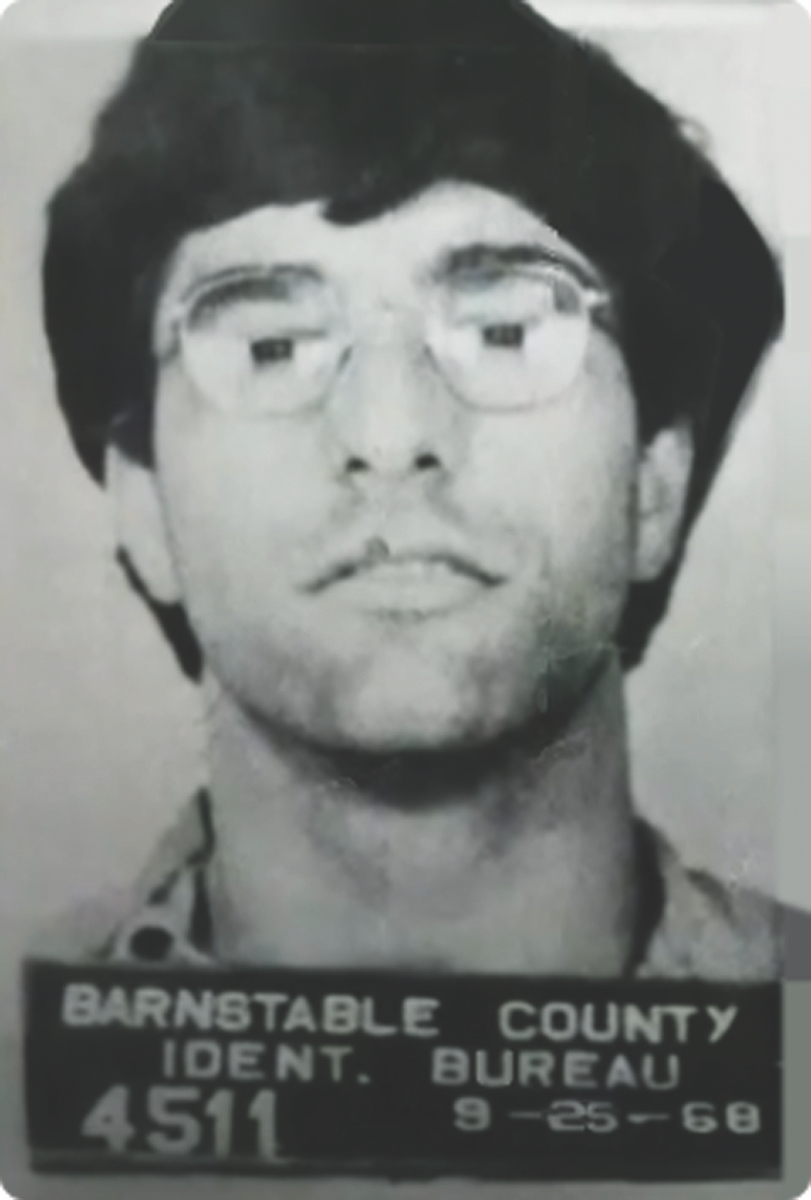
Antone Charles “Tony” Costa, Provincetown handyman and murderer of four young women. (Photo courtesy Barnstable County Identity Bureau) – image from the author’s site

Who was this guy? Tony Costa never got to know his father, who had drowned trying to save a fellow seaman in New Guinea near the end of World War II, when Tony was only eight months old. He would be obsessed with his war hero dad for the rest of his life. There were early signs of trouble with Tony. At age seven he claimed to have been visited regularly by a man in his bedroom at night, an actual intruder? a fantasy? an obsession? He said the man looked like his father. He stood out among his peers during summers in Provincetown, his mother’s birthplace, cooler, smarter, and more “inside himself” than anyone else, according to a kid he hung out with there. Then there was the taxidermy kit. Lots of killing of small animals, neighborhood pets going missing, yet never a successful display of a stuffed animal. There is no mention of bed-wetting in his psychopath Bingo card, but who knows? We know he was raped as a pre-teen, and was probably one of several victims of sexual abuse by a Catholic priest in Provincetown. So his potential for madness certainly had some outside assistance. He was accused of attempting to rape a young girl as a teen.
description
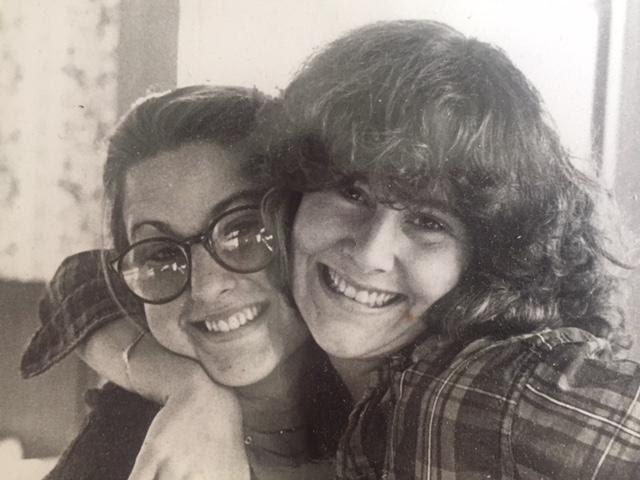
Jen and Liza, Northampton, 1979 – image from Rodman’s site

Tony was smart and handsome, but had terrible judgment, a ne’er do well, capable at work but unable to hold onto a job. He became a heavy drug user and local dealer. Clearly this guy had some charisma (as well as a considerable supply of illegal substances) and a way with young teens. A pedophile who married his pregnant fourteen-year-old girlfriend, he kept a crowd of young acolytes around him unable or unwilling to see through his line of distilled, grandiose, narcissistic bullshit. Cult-leader stuff. There is a Manson-like quality to him. And, like most narcissists, he was never willing to accept any responsibility for his own actions, always insisting that people were out to get him, blaming others for things he had done.

description
The VW Tony stole after murdering its owner. A local spotted it in the woods and notified the local police, which spelled doom for Tony Costa – image from the author’s FB pages

There is more going on here than personal profiles of the major actors. A lot is made of how different from the mainstream Provincetown was, particularly during the tourist season. The ethos was much more accepting of whatever than most places. With people coming and going so much, it was custom-made for a predator. It was the 60s, man, drugs, sex, and rock ‘n roll, and kids taking off for adventures, whether drug-related or not, and thus not necessarily raising instant alarms when they went missing. In 1971, for example, I bought an old Post Office truck at auction for three hundred bucks, and drove across country with three friends. (well, tried, we never actually made it across the continent) No cellphone, no regular check-ins. We didn’t exactly file a flight plan. If we had come to a bad end, no one would have known, or been alarmed back home for weeks. This is something a lot of people did. Of course, we were not runaways, and we were not female. That would have been a whole other order of business. The cops in Provincetown took a lackadaisical attitude toward worried parents looking for missing progeny. “Don’t worry. I’m sure they will turn up in due time.” And they were probably right, mostly. Except, sometimes they weren’t. It took a lot of pushing from those concerned about the missing young women to get the police to pay much attention. Rodman and Jordan provide a very detailed look at the various police departments that became involved in Tony’s case, both the occasional good police work and the ineptitude of inter-departmental communications. Sound familiar?

The locals were slow to allow for the possibility that there was a killer in their midst. Even today, there is an urge to protect one of their own, despite it being fifty years since the events of the book.

“I got threats when I wrote this book,” Liza says. It’s a loving portrait of the town, but not especially flattering. “I have a comfort level there that I don’t have anywhere else. Even in the face of this book.” – from The Provincetown Independent
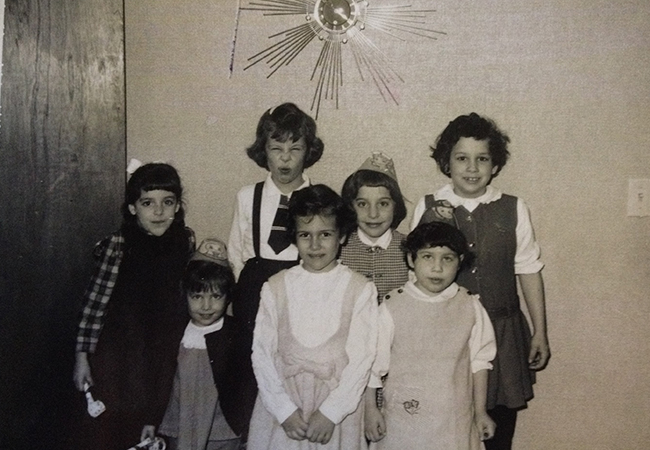
description
It was her sister’s 8th birthday. At the moment Liza was making a face at the camera, Tony was leading two young women into the Truro woods, where he would murder and bury them. – image from the author’s FB pages

One of the things about true crime books is that there is an element of suspense that is lacking. We know that little Liza will grow up to write this book, so we know that Tony did not kill her. This makes it more like a Columbo episode, knowing that the bad guy will get got, but enjoying seeing how that ultimately happens. That said, this is not a straight-up true crime effort. It is a fusion of true crime with memoir. Half of the book is about Liza’s childhood, her relationship with her mother in particular. It is an interesting look at how someone can survive a bad parent-child relationship. Showing how things were for Liza at home makes her a more sympathetic narrator for the other story. Geez, ya poor kid. I sure hope nothing else bad happens t’ya. And it makes it much more understandable how a kid who was starved for adult affection and attention would be drawn to an adult who was offering kindness and interest.

I did not get the frisson of fear reading this that pervaded in another true crime book, I’ll Be Gone in the Dark. Maybe because the killer in this one was long ago jailed, whereas the California killer had not yet been arrested when that book came out. But there is a certain vertigo, like walking near a cliff edge, blindfolded, only to realize the danger you were in when you take it off. It is distinctly possible that Liza might have found her way into Tony’s special garden if he had managed to stay out of jail for a few more years. Liza was like the little girl playing with Frankenstein’s monster in the movie, not realizing that he was more than just a large playmate, and seemingly friendly soul. Whew!

Rodman had been working on this project for about thirteen years. It happened that, in 2018, Jordan, a professional writer, was casting about for her next book project (She had previously published four books.) when she thought of her dear friend, Liza, (they had met in college) who was thrilled at the suggestion that they collaborate. So, sixteen years of research in all and here it is. An in depth look at a monstrous series of events, a sick individual, an interesting place in a time of upheaval, a difficult childhood, an odd friendship, and a very close call. The Babysitter is an engaging, informative read that will make you appreciate your sane parents, most likely, and appreciate your luck even more in never having had such a person as Tony in your life. (You haven’t, right?)

His coterie of teenagers, his stash of pills, and his marijuana helped mask his ever-increasing feelings of inferiority; by surrounding himself with idolizing acolytes who needed a hero, he could feel more in control, sophisticated, confident, and, of course, more intelligent.

Review posted – March 5, 2021

Publication date – March 2, 2021

I received an ARE of The Babysitter from Atria in return for an honest review. I did not charge them my usual rate of ten bucks an hour and whatever I want to eat from their fridge.

=====================================EXTRA STUFF

Links to Liza Rodman’s ’s personal, FB, Instagram, LinkedIn, and Twitter pages

Links to Jennifer Jordan’s personal and FB pages

Interviews
—–Red Carpet Crash – February 24, 2021 – Interview: Authors ‘Liza Rodman And Jennifer Jordan’ Talk Their Book The Babysitter: My Summers With A Serial Killer – audio – 17:02 – definitely check this one out
—–New York Post – February 27, 2021 – How I discovered my babysitter Tony Costa was a serial killer by Raquel Laneri
—–The Provincetown Independent – February 24, 2021 – Remembrance of Serial Murders Past by Howard Karren
—–WickedLocal.com – February 23, 2021 – In new memoir, local serial killer Tony Costa babysat two youngsters by Susan Blood

Items of Interest
—–Frankenstein playing with sweet young Maria
—–Columbo – or substituting for whodunit the howchatchem
—–My review of I’ll Be Gone in the Dark

Songs/Music
The author’s site provides a link to a considerable list of 39 songs mentioned in the book. But you have to have a membership to hear the full songs on Spotify instead of just the clips that are available on Rodman’s site.

Leave a comment

Filed under American history, biography, History, Non-fiction, psycho killer, Reviews, Thriller

Things in Jars by Jess Kidd

book cover

A cloth covers the jar that Bridie took from the bookcase in the nursery, and Ruby is thankful for this. For the contents have the ability to rearrange even a dead man’s sense of reality. As with all terrible, wondrous sights, there is a jolt of shock, then a hypnotic fascination, then the uneasy queasiness, then the whole thing starts again; the desire to look and the desire never to have looked in the first place.

1860s London, the prime of the Victorian age. About fifteen years before Sherlock Holmes begins using his talents to suss truth from mystery, Bridie applies her peculiar talents to helping the police in cases of an unusual nature. A sign outside her door announces:

Mrs Devine
Domestic Investigations
Minor surgery (Esp. Boils, Warts, Extractions)
Discretion Assured

but she is known mostly for her ability to discern the cause of death, when simple observation will not suffice. She would do as well with a sign that says Investigator of the Bizarre. Her Scotland Yard contact and sometime employer is one Inspector Valentine Rose, and business is brisk.

London is awash with the freshly murdered. Bodies appear hourly, blooming in doorways with their throats cut, prone in alleyways with the head knocked in. Half-burnt in hearths and garroted in garrets, folded into trunks or bobbing about in the Thames, great bloated shoals of them.

She is called on to look into inexplicable deaths, primarily among the flotsam of society. London has been undergoing the installation of a world class sewer system, and diggings have turned up some extremely cold cases. The latest calls her to a crypt in Highgate Chapel. A mother and child have been unearthed, the child having significant bodily abnormalities. Around the same time, a dodgy-seeming doctor comes a-calling, seeking her assistance on behalf of his patron, Sir Edmund Athestan Berwick. Seems the baronet’s daughter has been kidnapped. Going to the police is not really an option. And the game is afoot. Any chance the two cases are linked?

description
Jess Kidd – image from Metro.

The purloined child, Christabel, has some peculiarities of her own.

The man, looking up, hesitates and the child bites him, a nip of surprising sharpness. He pulls his hand away in surprise and sees a line of puncture holes, small but deep…The man stands, dazed, flexing his hand. Red lines track from palm to wrist to elbow, the teeth marks turn mulberry, then black…What kind of child bites like this, like a rat? He imagines her venom—he feels it—coursing through him …A blistering poison spreads, a sudden fire burning itself out as it travels…All- the time the creature watches him, her eyes darkening—a trick of lamplight, surely!…He would scream if he could, but he can only reach out. He lies gasping like a landed fish.

Poor unfortunate soul.

description
Image from The Times

With Sherlockian insight, a talent for disguises, and lots of shoe leather, Bridie sets about following leads and examining clues trying to get to the bottom of a case that is unusually fishy. Like that later consulting detective, Bridie smokes a pipe, which is often enlivened by substances other than pure tobacco, things with names such as Mystery Caravan or Fairground Riot, concocted by Dr. Rumhold Fortitude Prudhoe, a close friend. She shares her quarters with a particularly helpful assistant, the seven-foot-tall Cora Butter, who asks more than once whether Bridie would like this or that person held upside down. The medical bag Bridie totes is her own. The other frequent companion in her investigations is a dead man. While on the job at Highgate Chapel, he first appeared to her in the attached graveyard, notable not only for his transparency, but for his indecorous attire. Ruby Doyle had been a renowned boxer in his day, and appears in shorts, shirtless, sporting a cocked top hat, an impressive handlebar moustache, muscles aplenty, and a considerable number of tattoos, with peculiarities all their own. He seems to know Bridie quite well. One of the mysteries of the book is why she does not seem to remember him, particularly as she finds him very, very attractive.

description
Tom Hardy – add a handlebar moustache, top hat, and some more tats, and Kidd sees him as Ruby

The supporting cast is a delight. Lee refers to those who work with her as Bridie’s Victorian A-team. Beyond those noted above there is a criminal circus owner with a weakness for strong women, psycho killers of both the male and female persuasion, a misshapen sniveling abettor who could have snuck out of a Dickens novel to put some time in here, an honorable street urchin, orphans, a mysterious woman who may be haunting the baronet, and plenty more.

The story is told in two timelines. Bridie investigates the taking of Christabel in 1863, and we get looks back into Bridie’s childhood from 1837 to 1843, the earlier period explaining much of what is to come twenty years later. And explaining how Bridie came to have the skills she possesses. Bridie was born in Ireland, like the author, but I expect Jess Lee’s transition to life in London was a tad less fraught.

description
Image from Foodiggity.com

Among other things, Kidd is interested in presenting a realistic portrait of the period. ( I…wanted to give a basis of a real, gritty, accurate portrayal of Victorian London.) Visually, she offers panoramic looks through the dark eyes of ravens, and Bridie’s pedestrian peregrinations, particularly through less-than-posh parts of the city. She offers a particularly effective olfactory perspective as well.

Breathe in—but not too deeply. Follow the fulsome fumes from the tanners and the reek from the brewery, butterscotch rotten, drifting across Seven Dials. Keep on past the mothballs and the cheap tailor’s and turn left at the singed silk of the maddened hatter. Just beyond, you’ll detect the unwashed crotch of the overworked prostitute and the Christian sweat of the charwoman. On every inhale a shifting scale of onions and scalded milk, chrysanthemums and spiced apple, broiled meat and wet straw, and the sudden stench of the Thames as the wind changes direction and blows up the knotted backstreets. Above all, you may notice the rich and sickening chorus of shit.

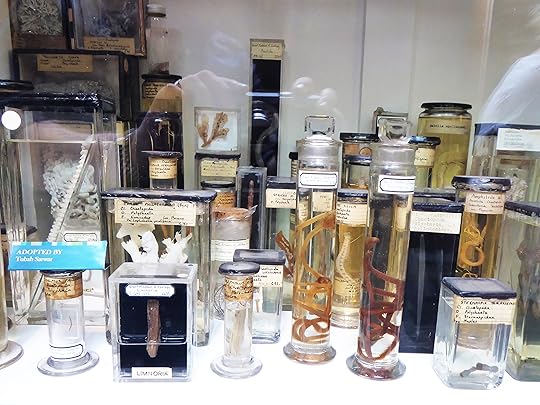
She was greatly influenced by journalist William Mayhew’s encyclopedic 1851 book London Labour and the London Poor. There is a look at the jailhouse, which appears to be guarded by particularly corrupt versions of Tweedle-Dee and Tweedle-Dum. Toss in, (or dig up) some resurrectionists, too. Part of the Victorian culture was a craze for collecting exotic things. One story that fed her interest was that of The Irish Giant, an exceptionally tall gent (7’7”) who became the talk of London for a brief time. But after his early demise, and despite his specific instructions to the contrary, his remains were obtained by a collector and put on display. There is a link to this tale in EXTRA STUFF.

description
Image from Traveldarkly.com

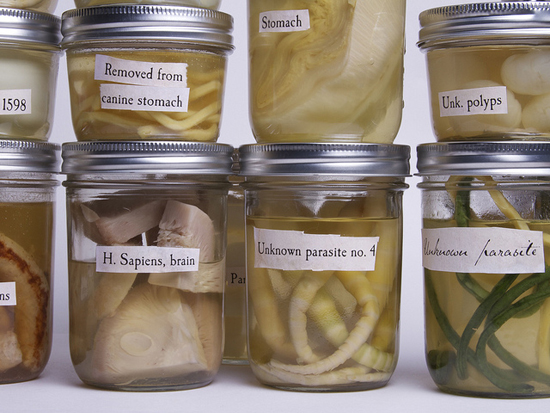
Lee is also interested in Irish folklore and partakes of that richly for the core element of the story. The incorporation of this element brings with it the main fantasy strand of the novel. One look at the cover of the book will inform you that there be mermaids (or something akin) here. Lee adds additional magical elements, as such critters appear here to have considerable power to influence the world about them, and specific powers that we would never associate with The Little Mermaid, although, considering the things we see in jars, we might have to reconsider the implications of the song Part of Your World:

Look at this stuff
Isn’t it neat?
Wouldn’t you think my collection’s complete?
Wouldn’t you think I’m the girl
The girl who has ev’rything?
Look at this trove
Treasures untold
How many wonders can one cavern hold?
Lookin’ around here you’d think
(Sure) she’s got everything

Hmmmmmm.

description
Image from Klyker.com

There is considerable humor in Things in Jars.

Her spectacularly ugly bonnet is curled up before the fire, bristling with feathers. She refused to give it up into the hands of the butler. Not that the butler was overeager to take it. If it comes alive, Sir Edmund thinks, he will do for it with the poker.

My particular LOL favorite is the prayer young Bridie offers up at bedtime.

God grant eternal rest to Mammy, Daddy, James, John, Theresa, Margaret, Ellen, and little baby Owen. God grant that bastard Paddy Fadden a kick up his hole and severe death to him and his gang, of a slow and terrible variety.

How could you not absolutely love such a child?

The disappointments in Things in Jars were few. I wish there had been more provision of clues throughout the book about what the deal was with Ruby. I was ok with the explanation, but it needed a better support structure. A bit more background on Cora would have been welcome. One actual gripe was a scene in which Bridie falls asleep while on the job. No way would this have happened. Booo! Almost all the violence occurs off-stage. In addition to one event described in a quote from the book in the review, we are shown the beginning of one attack by a ruffian on a lady. Tender souls might turn away. That’s really about it for such things.

description
Image from Nickcook.net

But the delights in Things in Jars could fill a wing of the British Museum. Bridie is a delicious lead, tough as nails without being impervious, bright, with a solid background that explains how she knows what she knows. She is a lot of fun to follow. The Holmesian parallels are a treat. The supporting cast is like a three-ring circus, in the best possible way, diverse, interesting, and fun to watch (both the light and the dark). We feel the fear when appropriate, and see Bridie’s affection for Ruby grow. A taste of Irish folklore is both creepy and educational, and Lee’s portrait of 19th century London offers an exceptionally immersive experience. You really get a feel (and smell) of being there. A real-world mystery with fabulous elements of fantasy. In short, Things in Jars is an absolute delight. For the hours you are reading this book you will be part of that world.

Review first posted – January 17, 2020

Publication date – February 4, 2020

I received an ARE of this book from Atria in return for some specimens I have been keeping in a special place in the lab basement for some years. They promised to return them after a thorough examination.

This review is cross-posted on Goodreads. Stop by and say Hi!

=======================================EXTRA STUFF

Links to the author’s personal, Twitter, Goodreads, Instagram and FB pages

My review of a 2023 book by Kidd
—–The Night Ship

Interviews
—–Savidge Reads – Sinister & Supernatural Shenanigans with Jess Kidd – by Simon Savidge
—–Stitcher – S3E4 – Chatting with Jess Kidd – audio – 1:29:12 – by Tim Clare – you can safely begin at about 46:00 for a focus on Jars
—–Well, not an interview, really, but a piece Kidd wrote for LitHub on her favorite ghost stories – Books That Blur the Lines Between Living and Dead

Items of Interest
—–Waterstones – A look at the Operating Theater – Kidd gives a tour
—–Writing i.e. – On Writing Things in Jars by Jess Kidd
—–Gutenberg – London Labour and the London Poor (1851) by William Mayhew
—–Joseph Bazalgette – engineer of the massive sewer works in London
—–Otherworldly Oracle – Mermen Legends. – a fun bit of fluff
—–Wikipedia – The Irish Giant

Leave a comment

Filed under Fantasy, Fiction, Historical Fiction, Thriller, Thriller

Pretty Girls by Karin Slaughter

book cover

The world stops for you when you’re pretty. That’s why women spend billions on crap for their faces. Their whole life, they’re the center of attention. People want to be around them just because they’re attractive. Their jokes are funnier. Their lives are better.

Well, there might be some downsides. Pretty Girls is a white-knuckle thriller that will keep you turning the pages long after you should really have gone to sleep. Do not read this while on a train. You will miss your stop.

The story is told from three alternating perspectives. Claire Scott, newly free of that nasty ankle-monitor, has a pretty good life. 38, in great shape, no kids, a studly, attentive hubby who makes much more than a decent living, cool digs. What’s not to like? After a celebratory dinner out, Paul wants to do the nasty in an adjacent alley, way out of character, but, whatever. But sorry, no nookie for you guys. An armed, tattooed criminal element sort robs them. Things go too far and Paul winds up on the sidewalk, tinting the pavement with considerable quantities of red, and the game is afoot. What Claire discovers in going through her late mate’s computer files after the funeral will rock her world.

Lydia Delgado’s life is somewhat different. Single mother, 41, struggling to get by, alienated from most of her family, runs a dog grooming business. Her past would not look very nice on a resume. She’d hit rock bottom a while back and lived there for a spell, with a pick and shovel. But these days she is respectable. Owns a dog-grooming business. Met her pretty nice bf in a 12-step program. Her teenage daughter is a peach. Lydia is on the wrong side of pudge these days, with an addiction to the sort of culinary drugs that come in crinkly bags at supermarkets. Life’s a bitch and then you diet. Lydia used to be a looker. Not surprising, really. Her sisters were easy on the eyes too, but one vanished when she was 19, never to be seen again, and the other one just saw her husband get killed.

Sam is a determined sort, bulldog with a bone. He never believed the official cop line that his Julia had simply run away. So he dedicated his life to finding out what had really happened to his eldest daughter. It cost him his marriage, and maybe even more. We see the progress of Sam’s investigation through his journals, from the time when he was on this quest. Claire and Lydia’s adventure takes place today.

The two sisters join forces to continue searching for the truth about Julia’s disappearance, and must face the consequences of Claire learning some very disturbing secrets about her husband.

description
Karin Slaughter – from her FB pages

Karin Slaughter is not new to the best-seller lists, having sold more than 30 million copies of her crime books books in 32 languages. She was born in a small Georgia town and now lives in Atlanta, where Pretty Girls is set. Her books include six in the Grant County series and nine in the Will Trent series, set in Atlanta. She was working on another book entirely when the notion for this one occurred to her in dream, so she checked in with her publisher, put the planned book on the back burner and dove into this one.

There are several elements at work here. In a book of this sort, if you are not engaged by the characters, the rest does not much matter. Lydia certainly has had her troubles in the past, but she is pretty supportable now, finding her best self in this worst of times. Claire makes us wonder how she could have buried her head in the sand for so long, ignoring what look like warning signs to us. But in wondering, it is worth keeping in mind that we are all sand-dwellers, from the neck up at least. Maybe it is an innate and useful skill to be able to simply ignore warning signs of peril. If we recognize them then we might have to do something about them, which entails personal risk, of either physical or emotional harm. Most of the time most of us prefer to keep a lid on things. Thus we live to ignore another day. So it feels entirely credible that reasonable people can overlook behavior that might stand out to an external observer. Particularly in Claire’s case, as she has tried to keep her head down in most situations for most of her life. We can see her vulnerability, however cloaked it may have been, and can easily feel for her. In addition we see the characters develop over the course of the tale, Claire moving from passive to assertive and Lydia moving from nobody to a sort of anti-hero. Family dynamics plays a major part in the sisters’ struggle, both to find the truth and to find a way back to sisterhood across a very large distance. Check.

The story must be engaging. Will Claire and Lydia find out what really happened to their missing sister? Does Sam? Do we care? If you can’t empathize with this as a driving force, it must be because you are too busy torturing kittens. Check.

Pace must be maintained. Slaughter must have a metronome that is set for increasing tempo. Check.

The baddie must be truly scary, and up to some really awful stuff. You have no idea. Check

The hero/heroine(s) must face believable peril. Is it possible that one or more of our core three might come to harm of the terminal sort? You betcha. Check

A thriller is never without a bit of misdirection, a few fish-hooks hoisting red-herrings for us to consider. Yep. Get your scaling tools ready. Check.

And there is that old favorite, the twist. Let’s just say that Chubby Checker would be pleased. Check. Wait, what’s that? My advisors inform me that not everyone will appreciate my lame boomer refs, so, fine, whatever. For you kids out there, ok, rewind. Start over. Twists. Let’s just say that after reading this book, I was in need of a good neck brace. Ok? Sheesh.

Finally there is the issue of payload. That is the extra information one learns about the world in reading a work of fiction. I suppose there is a bit of that here. I have no idea if the awfulness that is depicted in Pretty Girls (aside from Paul’s questionable taste in décor and labeling) has a real-world basis. Although it does seem that if one can imagine a particularly grotesque form of depravity, there is probably someone, somewhere who is practicing it right now, and with so many folks on the planet, probably more than a few. So if the book is highlighting some actual form of human awfulness, then bad-a-bing. Check

Gripes. You knew there would have to be one or two. The title, Pretty Girls suggests that those on the 10 side of life are more at risk than those closer to the 1 end of things. The theme of prettiness is noted with frequency early on, in comments on the attractiveness of some and the unattractiveness of others. Slaughter seems interested in giving some serious thought to how people react to beauty and to how the beautiful react to the world. Certainly there is peril about for those blessed with pleasing countenances, whether it comes from a wicked witch or the ravages of time. She keeps up the mentions for a while, sometimes offering actual insight. But then it seems to fade, as if she had run out of things to say about prettiness, until it is brought back into the spotlight for a final bow or two. Like, oh, the title is Pretty Girls. I guess I should put something in here to give that some closure. It looked totally like an afterthought. I thought this could have been better handled, maybe spread out a bit more, maybe dig a bit more than skin deep. But that is a quibble. No one is going to read this book to get enlightened about beauty. My second gripe will have to be a bit clouded. I don’t want to spoil anything. I found the particular fixation of the baddie on the specific group that is targeted curious. Why did this person focus on these targets? I did not get that there was a particular reason why the baddie was so set on this particular subset of victims. Perhaps the significance of this is in the eye of the beholder? But no matter, really.

The bottom line here is that you will be ripping through this book, dying (well, almost) to see how things turn out. Pretty Girls is an outstanding thriller, a very engaging, entertaining, and disturbing read, and that is a beautiful thing.

Review posted – 7/31/15

Publication date – 9/29/15

=======================================EXTRA STUFF

Links to the author’s personal and FB pages

How serial killers choose their victims

The Advantages of Being Beautiful
8 Scientifically Proven Reasons Life Is Better If You’re Beautiful – by Dina Spector in Business Insider
—A Smithsonian article on
How Much is Being Attractive Worth
– by Abigail Tucker
10 Pleasures and Pains of Being Beautiful by Dr Jeremy Dean on PsyBlog

A lovely audio interview with the author by Steve White of Literary Week. The sound levels are off a bit, his volume being too loud relative to hers, but it’s worth putting up with.

==============================================SONGS

Offering a bit of further discomfort, after reading this book you might find some of these listens a bit disturbing

Pretty Woman – Roy Orbison and friends

Oh You Pretty Things – David Bowie

PYT (Pretty Young Thing) – Michael Jackson

You’re Beautiful – James Blunt

You are so Beautiful– Joe Cocker

And the all time best stalker theme song – Every Breath You Take – The Police

2 Comments

Filed under Fiction, Thriller

The Kind Worth Killing by Peter Swanson

book cover

I’d taken enormous risks in the past two weeks, and I was lucky to have gotten away with them. But now I was done. It was over. I would live a quiet life and make sure that no one could hurt me again. I would continue to survive, knowing, as I’d known that night in the meadow, the stars pouring their light down on me, that I was special, that I was born with a different kind of morality. The morality of an animal—of a crow or a fox or an owl—and not of a normal human being.

Peter Swanson, author of The Girl with a Clock for a Heart, has a twisted mind, not that there’s anything wrong with that. He seems to think in curves, bends, dips and sudden, hairpin turns. The feeling is a bit akin to being here, or maybe here. The sudden changes in direction may generate a bit of screaming, but it’s all good.

It starts with a nod to, well, a bit more of a full body embrace of, Strangers on a Train, a 1950 psychological thriller by Patricia Highsmith, in which two men who meet while traveling get to sharing their troubles and decide that permanently eliminating each other’s problems might be the perfect solution. Hitchcock made a beautiful translation of the book to film in 1951. Swanson is a big fan of both Highsmith and Hitchcock.

I like the idea of sudden change. That you or me or anyone could go out to a bar one evening, and the random stranger who sits down beside you changes your life forever. It’s actually something that Hitchcock liked a lot himself. Most of his protagonists are accidental ones, just ordinary people who wind up in extraordinary circumstances.

In his version, Ted Severson a wealthy corporate raider (formerly a dot.com millionaire sort), at a Heathrow bar pre-flight, is approached by Lily, a lovely young thing. They strike up a conversation, and, as strangers might be better able to manage than people who actually know each other, (a theory titled The Rules of Airport Bars) they agree to tell each other the whole truth, and continue their truth-telling all the way back to Boston. The truth is gonna hurt…someone. Seems that Ted spotted his wife en flagrante with the contractor who was working with her on Ted’s Maine McMansion. Not good.

”How long ago was this?” asked my fellow traveler after I’d told her the story.
“Just over a week.”
She blinked her eyes, and bit at her lower lip. Her eyelids were pale as tissue paper.
“So what are you going to do about it?” she asked.
It was the question I’d been asking myself all week. “What I really want to do is kill her.” I smiled with my gin numbed mouth and attempted a little wink just to give her an opportunity to not believe me, but her face stayed serious. She lifted her reddish eyebrows.”
“I think you should.” She said.

And the game is afoot.

book cover

Peter Swanson

An earlier title for this book was The Lonely Lives of Murderers, which, personally, I prefer. We are treated to multiple narrators, not all of whom are psycho-killers. These serve not only to bear witness to events from diverse perspectives, but to bring in the back story as well, offering a sliver of understanding about how at least one of the psycho killers might have become that way. This is a considerable stylistic switch from Swanson’s previous book, which was written in the third person. It is, however, entirely consistent with the madcap dashings-about of that earlier work. Detective Rebecca James carries over from The Girl With A Clock for a Heart, but that did not seem a significant connection between the two books.

One soft spot of note is that it can sometimes be easy to mistake the voice of one sociopath for another. There could have been more of a tonal difference made between Lily and Miranda’s narration. This is not literature, and makes no bones about it. Swanson considers himself a failed poet, and teases himself a bit in the book by giving Ted an urge to write bawdy limericks. It’s cute. But poetry major or not, he has proven, again, that he can write a wonderful, slick entertainment. No sophomore jinx here. If you are the sort who objects to excessive reliance on the sociopath as a crutch, you may have a point, but then you would probably not be reading this sort of book anyway. Peter Swanson has written a twizzler of a novel, a sweet morsel with surprising and satisfying twists that will, when you are finished, leave you wanting more. It is a gripping read, fun, fast, and furious. The Kind Worth Killing is most definitely a psycho logical thriller worth reading. You might pick this up at an airport or rail terminal or maybe take it along for a day at the beach. You will be glad you had. But while you are sitting at that bar, killing time in a waiting room, maybe lounging under a palm tree or an oceanfront umbrella, be careful who you talk to and what truths you tell.

Review posted – 4/10/15

Publication date – 2/3/2015

=============================EXTRA STUFF

Links to the author’s Tumblr, Twitter and FB pages

Swanson’s web site has a cornucopia of samples of his Hitchcock poems, other poetry, short fiction and non-fiction, and is well worth checking out. Armchair Audience is Swanson’s site for writing on “Books read. Movies seen. TV Watched”

He writes 500 words a day, in the morning, then it is off to his paying gig, as a product manager for a non-profit. Hopefully The Kind Worth Killing will bring in enough scratch that he will have the luxury of writing full time. Early results are encouraging. Foreign book rights have been sold in eleven territories, and a film option has already been bought, by Nick Wechsler, producer of Magic Mike and The Road.

Free download of Strangers on a Train , the book

The film of Strangers on a Train can be seen here. The script was written by Czenzi Ormonde and some up-and-comer named Raymond Chandler, and if it is of interest, you can see the script here

I came across a couple of interviews you might like. Nicola Mira’s interview with Swanson for Thriller Book Journal was the source of Swanson’s comment about sudden change that I included in the review. Another is from the Dead Good site, which, while a Random House property, was not half-bad.. No specific interviewer is identified.

Leave a comment

Filed under Fiction, Thriller