Category Archives: Reviews

A Deadly Wandering by Matt Richtel

book cover Hi, welcome. I’m happy to see you are settling in to read this now. But…what?…really?…please…ignore that chirp that just told you a new e-mail arrived. It is probably just another add for Viagra or penile enlargement. It is almost never something critical, so…hey…come back. Son of a bitch. (Taps fingers on desk, plays some solitaire, checks watch) Ah, you’re back. Took long enough. Geez. All right, can we get back to it now? You remember? The book is A Deadly Wandering, a pretty amazing look at attention, the demands on it, how it functions, how it is being compromised, and what the implications are for some aspects of that. Stop, no, do you have to answer the phone now? Can’t it wait? (sighs loudly, checks e-mail on a separate screen; weather.com lets us know upcoming conditions in another tab; who is pitching for the Mets tonight?) Oh, you’re back, sorry. Been there long? I must have wandered off. Focus.

I know a little bit about distraction. My job entails constant blasts of it. I work as a dispatcher for a security company. I have a dozen or more sites checking in every hour to make sure our guards are not sleeping (or that they know how to set the alarms on their cell phones). People call asking for their schedules. People call at 2 in the morning to let us know they will not be showing up for their 6am shift. They call because they just turned the wrong way and the cell phone in their pocket somehow redialed the last number they’d called. They call at 4am to let us know they will not be coming in for their 6am shift. They call asking for direction when there is some event at their site that requires handling. Our clients call, sometimes asking for emergency ASAP coverage in diverse places across the continent, sometimes to add ridiculous increases to the number of guards they want for a morning shift at a large institution. Our security guards call to ask if their check is at the office, or to inquire as to why the totals on their checks did not match what they expected. They call to let us know they have arrived at their post. They call to let us know they have clocked out for the day. They call at 5am to let us know they will not be in for their 6am shift because they have a newly discovered “appointment.” There are many, many calls. It makes it damned tough to keep a log of all the calls, particularly when half a dozen arrive at the exact same moment. It makes it tough to prepare the multiple reports of overnight activity, all of which have to be transmitted during the busiest time of the morning. In the middle of this, the boss comes in, drops papers on my desk and asks when this or that person arrived at or left from a post sometime in the last week or so. For someone who is, shall we say, not comfortable with being interrupted, this presents some challenges. And it presents a real problem. I write the bulk of my reviews while at work. And to enter notes, do research on items, and then compose actual reviews of books during this time can be a bit difficult. Thoughts that have not made their way into a file are in constant danger of vanishing into the ether with the next barrage of incomings. I scream sometimes. I frequently forget what I was doing before the latest set of calls. And, struggling to remember, I am interrupted yet again by the next set. The one good thing about this blitzkrieg of interruption is that I am not enduring it while behind the wheel of a ton-plus hunk of metal hurtling down the road at 60 mph. My sanity may be in jeopardy, (or long gone) but I present no existential threat to the rest of humanity. The same cannot be said for the main character in Richtel’s story.

By all accounts nineteen-year-old Reggie Shaw is a decent young man. A Mormon, he was eager to serve his community by preparing for and then undertaking an LDS mission. His first try had come up short, so he was back home, working until he could build up enough moral credit to try again. In September, 2006, while driving a Chevy Tahoe SUV, Reggie had his Cingular flip-phone with him and was texting with his girlfriend. A witness reported seeing him weaving across the center line multiple times. Finally, Reggie weaved too far. The results were fatal. Reggie came through ok but two scientists were killed as a result of Reggie’s texting, leaving wives and children to pick up the charred pieces of their lives and go on without their breadwinners, husbands, fathers. Reggie denied he was texting when the accident occurred.

Matt Richtel is a novelist and top-notch reporter. He won a Pulitzer for a series of articles, written for the New York Times, in which he detailed the national safety crisis resulting from increasing use of distracting devices by drivers. He has written a few novels and even pens a comic strip. There is nothing at all amusing, however, about the tale he tells here.

book cover

Matt Richtel – from his site

The core of A Deadly Wandering is how constant distraction, particularly while in a car, kills. Richtel looks at the case of Reggie Shaw as a prime example of how the distractions that have become embedded in our lives have unintended consequences. Richtel spends time with Reggie, with the cop who pursued the case when most officials wanted to brush it off and move on, the surviving family members, and a victim’s advocate who pursued prosecution of the case. Richtel also talks with several neuroscientists who have been studying the science of attentiveness. That material is quite eye-opening.

There are legal questions in here regarding where responsibility lies for such events, and how far communities are willing to go to punish violations and even to establish that such behavior is not permissible. Where does your freedom to act irresponsibly interfere with my right to stay alive? There are scientific questions about how the brain functions in a world that seems to demand multi-tasking. How does the brain work in dealing with attentiveness? What is possible? What is not? Where are the edges of that envelope?

When drug companies want to bring to market a product for public use, they must go through a significant review process to make sure their product is safe to use. Before auto manufacturers can bring a vehicle to market they must put it through safety testing.

But neither Verizon nor any other cellphone company supports legislation that bans drivers from talking on the phone. And the wireless industry does not conduct research on the dangers, saying that is not its responsibility – From – Dismissing the Risks of a Deadly Habit

And the corporations know what they are doing with their techolology.

If you take yourself back millennia, and you’re in the jungle or you’re in the forest and you see a lion, then the lion hits your sensory cortices and says to the frontal lobe, whatever you’re doing, whatever hut you’re building, stop and run.
Well, here’s what scientists think is happening in this data era, is that these pings of incoming email, the phone ringing, the buzz in your pocket, is almost like we get little tiny lions, little tiny threats or, let’s say, maybe little tiny rabbits that you want to chase and eat, you get little tiny bursts of adrenaline that are bombarding your frontal lobe asking you to make choices. But these in some ways aren’t these modern bombardments; they’re the most primitive bombardments. They’re playing to these most primitive impulses and they’re asking our brain to make very hard choices a lot.
– from the Terry Gross interview

In addition, and in a chillingly similar impact to other addictive substances, our communications technology knows how to make itself feel crucial to us.

when you check your information, when you get a buzz in your pocket, when you hear a ring – you get what they call a dopamine squirt. You get a little rush of adrenaline. So you’re getting that more and more and more and more. Well, guess what happens in its absence? You feel bored. You’re actually conditioned by a kind of neurochemical response. – also from the NPR interview

Richtel follows Reggie’s story through to the end, at least for some of the players here. Laws have been changed. New knowledge has been gained. Responsibility has been allocated. Amends have been attempted. It is a moving tale. In addition, you will learn a lot about what science has found about how our brains handle multiple concurrent demands. You will learn about change in how distracted driving is being addressed by our legal system. But most of what you will get from reading this book is a chilling appreciation for what is involved in distracted driving. You might even be persuaded to switch off your phone the next time you get behind the wheel. At least I hope you are. I would like to live a bit longer and not be taken out before my time because someone was talking on the phone with their friend, texting with their significant other, or trying to order penile growth products from the road. I would like to live long enough to spend at least a few more nights screaming at the phone to stop ringing at work so I can get some writing done. That call you were thinking of making while in the car can wait. It really is a matter of life and death. A Deadly Wandering is must read material. Please, please pay attention.

Review posted – 7/18/14

Publication date – 9/23/14

This review has been also been posted at GoodReads

=============================EXTRA STUFF

Links to the author’s personal, Twitter and FB pages

A list of Richtel articles in the NY Times’ Bits blog

The Pulitzer site includes links to all the pieces in Richtel’s award-winning series. Very much worth checking out

Another article Richtel did looked at the benefits of uninterrupted face time free of technological intrusion, from August, 2010, Outdoors and Out of Reach, Studying the Brain

There is some great material in Richtel’s 2010 interview with Terry Gross on NPR, Digital Overload: Your Brain on Gadgets

There are some interesting pieces on Oprah’s site. Distracted Driving: What You Don’t See is pretty good. And it is worth checking out Oprah’s No Texting Campaign

Leave a comment

Filed under Non-fiction, Psychology and the Brain, Public Health, Reviews

Crooked River by Valerie Geary

book cover Fifteen-year-old Sam McAlister and her ten-year-old sister, Ollie, have had a crap summer. On the Fourth of July their mother died of a heart attack in Eugene, Oregon. They are staying now with their father, whom they call “Bear.” He has been living for some time in a teepee on a piece of rented land outside the thriving metropolis of Terrebonne, OR, doing odd jobs, raising bees, and mostly keeping to himself. Normally they would have spent only August with their dad, but now it is looking like a more permanent arrangement, if, that is, their mother’s parents can be persuaded that he is up to the task. And just when it looked like it couldn’t get any worse…

We found the woman floating facedown in an eddy where the Crooked River made a slow bend north, just a stone skip away from the best swimming hole this side of anywhere. Her emerald-green blouse was torn half open and her dark, pleated skirt was bunched around her waist, revealing skin puckered and gray, legs bloated and bruised. Her hair writhed like black snakes in the current.

Bear, the odd outsider, is, of course, suspected, arrested, and it looks like he will be successfully railroaded, but Sam has faith in her father. Her sister has something more.

I see things no one else does.
I see them there and wish I didn’t. I want to tell and can’t.

Ollie calls the ghosts she sees The Shimmering. It would be too easy if Ollie could simply report what the ghosts only she sees clue her in on. But Ollie has not spoken since her mother passed several weeks ago. And of course there is a full dose of the Cassandra Syndrome at play, as even when Ollie is able to communicate, no one believes her.

The missing father has been a literary trope for quite some time, in adult as well as in YA literature. The one that jumps up for me is Madeleine L’Engle’s A Wrinkle in Time. While Sam’s father did not vanish while working on a tesseract, and is not actually gone here, at least until he is arrested, he had been largely absent from his children’s lives for many years. Now, in the face of the calamitous loss of their mother, the girls must contend with the possible loss of their father too. There is probably a message here about the need for both the urban (mom) and the natural (mountain man father). Sam is called upon to utilize both her city and country skills to try to save Bear, and in fact engages in a very Campbellian quest to find out who he really is. She must find her inner strength and overcome, or fail before, some very real-world perils in attempting to bring back the knowledge gained in her quest, and put it to use, as she comes of age. But if you want to see her as just getting in touch with her inner Nancy Drew, that works too.

book cover

Valerie Geary – from her Twitter page

The cast includes a kindly elderly couple on whose land Bear had been living, suitable grandparent sorts. There is a young man of diverse intentions. Sam feels drawn to him. Ollie sees him more truly than her sister does. A somewhat reasonable sheriff offers a glint of understanding; a somewhat peculiar artist looking to make a comeback is both sad and scary; his wife is not the most welcoming of shop-keepers; and a local cleric may be up to no good. At core this is a mystery. Who killed the floater and why? And why was Bear living in a teepee on rented land? Why had he abandoned his family years earlier? Sam is certain that Bear is innocent and sets out to prove it. Even Ollie take some dodgy risks trying to find out the truths at play here, but this is no children‘s story.

ART DIRECTION
Every novel incorporates a palette, colors, furnishings, places and/or images that help illuminate elements of the characters, set a mood, pull us through the story with externals that cast light on themes and the characters themselves. In Crooked River, trees are a part of the landscape, serving both to remind us that the setting is rural, and marking some significant locations as well. Bees figure large here. Bear is a bee-keeper. We get to see him as a good daddy taking care of the bees and training Sam to do the same. A bit of bee mythology is noted that might inform events. One bee leads to a clue. A hive comes into play.

Did you know that the ancient Egyptians thought bees were messengers sent from the sun god Ra? The Greeks, though, now they believed bees were souls of the dead come back to keep the rest of us company.

When Ollie sees ghosts they appear in a sparkly aspect. This fireworks-like image appears not only with ghosts but in some other places as well.

As far back as I can remember I’ve seen them. In dim light, they seem almost solid. In bright light, barely visible. If I touch them, it’s ice and fire, energy burning. They are glints and specks, here and then gone. Shimmering. Like heat rising off pavement.

GRIPES
Sam is both an engaging sort and bloody infuriating for all the planning-challenged adolescent choices she makes. You may find yourself shrieking “Schmuck” at the character as I did, but hey, teenager. They are expected to make some bad choices. I was not entirely persuaded about Bear’s decision to live where and how he did and thought some of his decisions were a bit adolescent as well, however well-intentioned. So there is a bit of credibility straining going on. But if you are willing to accept a young girl seeing ghosts, I suppose you give up the right to grouse about less obvious stretches.

SUM
Despite the above, Crooked River is not only a fine example of a classical literary approach, it is a serious page-turner. Sam is a good kid, a character we can admire as well as chastise. You will care about her, and her much-beset younger sib, and will keep turning those pages to see where Crooked River will take them, and you, next. There are plenty of bends here and the water is choppy. But it is a journey well worth taking. Straight business.

Review posted – 6/27/14

Publication date – 10/14/14

This review has also been posted on Goodreads

=======================================EXTRA STUFF

Links to the author’s personal, Twitter, Google + and FB pages

An article on writing Geary wrote for Writer’s Digest, 7 Things I’ve Learned So Far

2 Comments

Filed under Fantasy, Fiction, Reviews

The Confabulist by Steven Galloway

book cover

What no one knows, save for myself and one other person who likely died long ago, is that I didn’t just kill Harry Houdini. I killed him twice.

Stephen Galloway, the award-winning author of The Cellist of Sarajevo, takes on a legendary real-life character and tries to make some magic with his lesser known history.

He tells a tale of Houdini, vaudevillian superstar, greatest magician of his time, escape artist extraordinaire and, maybe, an international spy.

Martin Strauss is none of these things. When we meet him, in the present day of the tale, he has just gotten some bad news:

”Yours is a rare condition,” [the doctor] said, seeming almost excited, “in which the damage that is being done to your brain does not destroy cognitive function but instead affects your brain’s ability to store and process memories. In response to this, your brain will invent new memories.”

Strauss is Galloway’s external, invented character, there to help frame the narrative. So, Harry Houdini meets Memento?

book cover

the author

Strauss, a student in Montreal, is fascinated with magic, although he is not a capable practitioner. He is smitten with a young lady who shares his interest, and when they have a chance to see the great Harry Houdini perform, they avail. Strauss is not the most secure beau and when the object of his desire seems more interested in the famed escape artist than is comfortable, things get heated.

On October 31, 1926, the real-life Houdini died from a ruptured appendix. A few days earlier, in Montreal, a student named Whitehead was granted permission to punch Houdini in the stomach, a test of the performer’s claim that it would not hurt him. Under normal circumstances it might not have, but it turned out that Houdini was compromised with a case of appendicitis. He kept traveling and performing, but was brought to a hospital in Detroit, in severe pain, and died there. Ascribing his death to the student’s blows was really a ploy to get his life insurance to pay double.

“Houdini’s death has always really interested me. What would it be like to be the guy who punched Harry Houdini in the stomach?” from the Globe and Mail interview

There are alternating tale-tellers in The Confabulist. Martin Strauss speaks for himself, and the Houdini chapters are told by an omniscient narrator. The time lines are dual as well, present day alternating with a past that advances from 1897, before Houdini had achieved world-wide renown, to 1927, as Martin recalls and we see for ourselves what transpired. We cover some real estate in The Confabulist, as well, from Canada to New York to sundry locales in Europe.

description
Houdini – image from wikimedia

We get to see how the gifted Erik Weisz, a Budapest-born son of a rabbi, became the amazing Houdini, professionally and theatrically. There are explanations for a few of the stage tricks of the age, and that is a particular bit of fun. There is some insight into how the entertainment business of the early 20th century was run, and a look at the latter day Houdini as an exposer of charlatan psychics and spiritualists.

When asked how he landed on Houdini for his new novel, Galloway says he was fascinated by the showman’s iconic status, but also by the fact that Houdini himself was a sort of fiction. “Most magicians are kind of made-up characters, but him more than any. He’s a Hungarian Jew pretending to be Mr. America. Most of what he said about himself biographically was a total, total lie. So I just kind of arrived there and never left.” – from the Globe and Mail interview

Strauss’s history is far less interesting, but in his musings we get at some of the thematic issues of the novel. Some insight into international intelligence goings on of the period is also noteworthy.

What is real and what an illusion is a consistent theme throughout the tale, on stage and off

How is it we can be so sure that we’ve seen, heard and experienced what we think we have? In a magic trick, the things you don’t see or think you see have a culmination, because at the end of the trick there’s an effect. Misdirection tampers with reconstruction. But if life works the same way, and I believe it does, then a percentage of our lives is a fiction. There’s no way to know whether anything we have seen or experienced is real or imagined

or

a memory isn’t a finished product, it’s a work in progress

So does Galloway succeed in making magic? Only somewhat. There are two issues I had with the book. One is the inherent difficulty of having an unreliable narrator. That this is done openly from the opening chapter does not make it any less problematic. How are we to know if what Strauss reports is true or imagined? And if one cannot know if what he reports is real, it makes for difficulty in relating to his experience, and knowing for ourselves that what we are reading is or is not an accurate rendering of events. The dimorphism between the wonderful tale of Houdini’s and the far less gripping tale of Martin Strauss makes one want to slip the knots of Martin’s chapters to make one’s way back to the real action. And, while the story of Houdini does succeed in holding our interest, it seemed to me that there remained a distance between reader and character, even for Houdini, that kept one from the sort of emotional engagement that is needed if we are to feel much for him. Martin is an obvious literary device, so one does not hope for too much there. But one does want to feel more of an investment in Houdini than was possible here.

There are compelling elements at play in The Confabulist. The contemplation of reality versus illusion counts as a strength. On the other hand, the rationale for Strauss’s attack on Houdini seemed forced. One would expect that there is a marvelous story encased in the available elements. Unfortunately, the tale is only able to extract a limb or two and remains locked up. While there is no obvious tell in the author’s literary sleight of hand, there is certainly enough going on to sustain a reader’s interest, this remains an instance when the magic simply does not quite go poof.

Review posted – 6/20/14

It was first posted on Fantasy Book Critic

Publication date – May 6, 2014

==================================EXTRA STUFF

The condition ascribed to Martin Strauss was discovered by one Sergei Korsakoff, a Russian neuropsychiatrist, who is represented in The Confabulist by a Russian Dr. Korsakoff practicing in the West, presumably New York. Here is some info on the actual condition.

A bit of info on Harry Houdini

Interviews with the author – from The Globe and Mail and The National Post

Houdini’s grave

Leave a comment

Filed under Fantasy, Fiction, Historical Fiction, Reviews

Rooms by Lauren Oliver

book cover

We’ve nested in the walls like bacteria. We’ve taken over the house, its insulation and its plumbing–we’ve made it our own. Or maybe it’s life that is the infection: a feverish dream, a hallucination of feelings. Death is purification, a cleansing, a cure.

If death ever takes a holiday I expect he might vacation in Coral River, the upstate New York locale where Richard Walker lives…well…lived. Richard’s recent passing is what has brought the Walker family back together for a spell. A funeral, a burial, a will-reading, and a chance to go over some of the events, the challenges, the hopes and disappointments, the failings of their lives.

Ex-wife Caroline tries to lubricate the process with a steady ingestion of alcohol. Their children are not faring much better. Twenty-something single-mother Minna has a taste for spirits as well. Failure and desperation to fill the emptiness inside will do that. Even the introduction of cosmetic surgery and various prescription meds seem unable to fill that void. Trenton is Richard and Caroline’s teenage son, and he has issues. He barely survived a car crash that left him feeling even more of an outsider than he already was. Trenton sees things that the rest of us cannot, actual holes in the fabric of reality. He wonders if he might be better off dead. Of course some of the household residents already are.

Sandra, whose gray matter once decorated a wall, and Alice, an abused wife who has also contributed to the body count of the house, have made the place their own, or is it the other way round? These golden girls are not necessarily precious. In addition to remembering their lives and observing the Walkers, they squabble and tell lies. And while they may not be able to exactly tote luggage or dig ditches, it is possible for them to effect small acts in the living world, pushing this, bursting that. Having some unresolved issues keeps them from being able to open a doorway to a less geographically restricted existence. Reports of missing children also figure in, from decades past and right now. There are plenty of secrets to be delved into here. Such as just how did Sandra and Alice die? What happened to the missing girls? Who is that new girl ghost who just showed up? And who is Minna banging now?

book cover

Topper and transparent pals

This is not a scary ghost story sort of tale. No spectres coming to take over anyone’s body. More Topper than The Evil Dead, although not a comedy. A bit of spookery goes on, but there are two elements here that seem dominant, mystery and sadness. In a way, I was reminded of Agatha Christie, as Oliver presents readers with a sequence of mysteries to be solved, offering clues here

book cover

Bruce Campbell in his best-known role

and there, hints, red herrings, the usual tools of that trade. While the ghosts may not be scary, their stories and the stories of the living as well are intensely haunting. Choices, mistakes, regrets, the impact of the past echoes in the present, for both the dead and the living.

Oliver organizes her story into eleven parts, representing diverse rooms in the house. The tales told connect with each room in turn. Rooms features an ensemble cast. Oliver’s characters are well-drawn and very human. It is hard not to sympathize with Alice or relate to Trenton. And it is possible to understand why some of the others behave the way they do, given what we learn of their histories.

There is a lot here about identity, being oneself or wanting to be someone, or something else, to have some other life, and coping with other people’s masks.

It was unfair that people could pretend to be one thing when they were really something else. That they would get you on their side and then do nothing but fail, and fail, and fail again. People should come with warnings, like cigarette packs: involvement would kill you over time.

There is also a lot about being trapped whether as a child in a abusive household, a woman in an abusive marriage, a teen in what seems a dead-end existence, or a ghost in an empty house. There are some moments of humor, although none of the LOL variety, but dollops of charm do seep through the walls from time to time.

In short, Rooms is a fun, engaging and fast read. There is real content in the very believable characters’ attempts to make sense of their lives. While this spirited entry into the adult novel category is not the sort of ghost tale that will cause anyone to leave on the lights at night, there is considerable material here that is indeed quite haunting.

Review posted – 6/13/14

Publication date – 9/23/2014

====================================EXTRA STUFF

description
Lauren Oliver, is the pen name adopted by Laura Schechter, a young 30-something author who has already seen considerable success with her youth-oriented novels, most notably the YA Delirium trilogy. Her latest YA novel, Panic, was released in March, 2014. Rooms is her first novel for adults. Oliver’s parents are both literature professors. Dad is Harold Schechter, who has written many books on true-crime and American popular culture. Oliver lives in Brooklyn.

Here are links to the author’s personal, Twitter and FB pages, and to her blog and Tumblr pages as well.

If that is not enough you can also check her out on YouTube

1 Comment

Filed under Fantasy, Fiction, Reviews

The Story of Land and Sea by Katy Simpson Smith

book coverIn 1793, ten-year-old Tabitha is smitten with the idea of the sea. Her father, John, an erstwhile pirate and soldier in the Continental Army, owns a shop in Beaufort, NC. Tab’s affection for the maritime may have to do with her mother, Helen. John and Helen had eloped, over her father’s objections, and sailed together under a black flag. But her father’s tales are all Tab has of her mother, who died giving birth to her. When she contracts yellow fever John is desperate to find a way to help his daughter.

…to save her from the graveyard he must take her to the sea. He took her mother once, and being on the water only made her bloom.

They board a ship bound for Bermuda. This does not sit well with her grandfather, who believes her chances are best ashore, and well prayed over. Asa owns a plantation, producing turpentine from considerable stands of pines. A religious sort, he is hell-bent on making sure that his legacy is carried forward. When his wife died in childbirth, he focused that need on his daughter. But his attempts to root her to his land failed when she fell in love with John, a man of not much family, but an excellent heart.

The story is told in three parts, beginning with Tabitha’s struggle. Part two goes back to Asa raising Helen, giving her a slave, Moll, for her birthday, and the complicated relationship between Moll and Helen. While the comparison falls very short, both Moll and Helen are chained to their roles in life. Both resent their restrictions. But only Helen can actually act on her desires without being scourged for it. Asa is chained to his land and his attitudes, unable to see past what is to what might be, and unwilling to see beyond self-serving adages to what is right, to ever loosen himself from his own bindings.

Part three returns to John and Asa, Moll, and her son, Davy. It goes into how each of the primary characters ultimately copes or tries to cope, with the challenges of their lives, their losses, and chances.

book cover

Katy Simpson Smith

Katy Simpson Smith has more than enough background for undertaking a look at America in the late 18th century. Before she returned to school to get her MFA, she completed a doctorate in history, and has published an examination of motherhood, We Have Raised All of You: Motherhood in the South, 1750-1835, which covers the period on display in her novel. It was a hard knock life for women in late 18th century America. Not only was the risk from childbirth far greater than it is today, even past that life-threatening event women were treated as chattel. Not to the same extent as actual slaves, but to a significant degree.

He [Asa] had a possessiveness in him that encompassed his house, his land, his women

And he would use marriage as a way to shackle both his daughter and her slave to his land. And what of the reverberations of the lot of females to those around them? Increased peril for their children, for one. Strained existence for their survivors, both emotionally and materially. And various forms of torment as the storms that rise from imprisonment bring forth dark gales. Parents are taken from children and children are taken from parents by the foolishness of custom, the limitations of ignorance and the blind eye of fate.

Thematically there is a lot going on here. Property views figure large. Asa considers Helen a form of property and takes as little heed of her wishes as he does of those of her slave, Moll. Marriage and choice come in for some consideration. Within that larger theme, both Moll and Helen confront the conflict between who their respective owners want them to marry and what they want for themselves.

“I wouldn’t mind if I had some say in who I laid down with.” [says Helen’s slave, Moll]
Helen nods. She puts her chin in her hands, nodding. People want what isn’t given to them. And this is not sin, but hope.
What if God didn’t put us here to accept, but to struggle? Isn’t love itself built on that precise impossible hope?

It is also clear that love is not always allowed to be the greatest consideration in choosing a mate, or to define one’s relationship with a mate after the marriage is made.

“Do you miss your husband, Mrs Randolph?” He had died looking for free land in the frontier, shot through with a Cherokee arrow. His partner had buried him in the west and sent Mrs. Randolph his musket and his spectacles. The gun she keeps hung behind her cabin door, where all the little Randolphs know to find it.
“I mostly miss the money he brought in, to speak frankly. He was a good father to the little ones and did well by us, but there’s something rather nice about one’s own life. Making decisions without someone to tell you ‘no, best not do that.’ He never thought I could do much for myself.”
“We’re lucky to have you,” Helen says.
“There’s no telling what all I can do without him, miss.

There is a tautness to this relatively brief novel. The concept of Checkov’s gun is well implemented. A beaten slave in one scene is employed relevantly in another. A notion of escape by boat is recommended and no sooner done than an actual boat appears. Sometimes this seemed a bit too neat. As is the bludgeoning irony of Asa freeing a panicked bird that is trapped in his house, while denying freedom to enslaved humans.

On the first page of the novel, John interrupts Tabitha’s request for more information about her mother.

He looks down the hall at the shadows whipping across the slats and holds a finger to his lips. “Can you hear any birds?”

This certainly gives one the notion that birds might be related to souls of the dead, or shadows. Could be something else entirely of course. Birds might be functioning as a sort of Greek chorus. In any case, you might want to keep this in mind as you come across the many bird references throughout the book. Land references abound as well, as wood is noted many a time, particularly pine, and flowers.

The writing in The Story of Land and Sea is beautiful, moving, and insightful. The story begins:

On days in August when sea storms bite into the North Carolina coast, he drags a tick mattress into the hall and tells his daughter stories, true and false, about her mother. The wooden shutters clatter, and Tabitha folds blankets around them to build a softness for the storm. He always tells of their courting days, of her mother’s shyness. She looked like a straight tall pine from a distance, only when he got close could he see her trembling.
“Was she scared?”
“Happy,” John says. “We were both happy.”

There is plenty more where that came from.

The Story of Land and Sea is set to launch on August 26, 2104. This is one boat you won’t want to miss.

Review posted – June 6, 2014

Publication dates – 8/26/14 – paperback, e-book, kindle, Audio CD

======================================EXTRA STUFF

The book opens with an abridged version of an Isaac Watts hymn about the joys of heaven offering one a reason not to fear death. It seems an odd intro, given that the focus in the tale is, to a large degree, about the impact of death on those left behind (no, not in the Tim LeHaye way) with no assurance of a heavenly reward waiting. Perhaps it was intended ironically. In any case, the hymn is beautifully set to music by Red Mountain Music here.

From mentalfloss.com – The Historical Horror of Childbirth

The author’s site is now up

1 Comment

Filed under Fiction, Historical Fiction, Literary Fiction, Reviews

How Jesus Became God by Bart D. Ehrman

book cover And it came to pass that I read and ye shall learn of a pretty amazing book. Biblical scholar Bart D. Ehrman takes on the subject of how, in history, the notion of Jesus as god developed. Was it there from the beginning? How did it arise? What does it even mean? Was he considered divine by believers before conception, at conception, at baptism by John, when he died on the cross, when he rose from the dead, when he headed upstairs to the executive offices? And the answer? Yes.

As with many mysteries there is a paucity of physical evidence. One might consider Ehrman’s task a very challenging episode of [Incredibly] Cold Case Files, or maybe fodder for a new version of a favorite show (as if there are not enough already) CSI Antiquity.

Not much to work with here as far as physical evidence goes, but Ehrman does apply his considerable skill to analyzing what documentation we have, tracing provenance, to the extent possible, applying what we know of the period(s), and lasering in on crucial questions.

description
The author

Ehrman makes it very clear that he is not about trying to turn anyone away from a particular set of beliefs.

I do not take a stand on the theological question of Jesus’s divine status. I am instead interested in the historical development that led to the affirmation that he is God.

Or who said what, and when, where and why did they say it? And who saw what, where, when, how and why?

My knowledge of the period is extremely limited. Twelve years of Catholic school taught me a lot more about obedience than it did about biblical scholarship, and while I have read the odd book here and there about the period, I claim no particular expertise, so am not in a position to offer a particularly educated consideration of the information presented here. Ehrman, on the other hand, has written vast amounts on things biblical. I refer you to his considerable bona fides, here. I am inclined to give his very accomplished, educated interpretation of the material he examines a bit more weight than I might the opinions proffered by individuals boasting lesser scholarly accomplishment.

Key, of course, is the belief that Jesus rose from the dead. Without that there is no such thing as Christianity, as prophets and Messiahs were sold by the gross at the dollar-store equivalent of the era. In fact, Ehrman opens his book citing an unnamed individual whom one might expect is JC, as the details are incredibly reminiscent. But no, it turns out to be another prophet entirely. (No, not Brian) His pilot was not picked up by the world at large, so you might find him in the antiquity channel’s version of “Brilliant but Cancelled.” And he was not alone. But, since any Tom, Dick, and Appolonius could claim to be a prophet, it was the claim that Jesus was resurrected that was key to a long run, and Ehrman focuses on that.

He looks into the details of Jesus’s death and supposed return. For example, how likely was it that he was buried at all? The answer will surprise you. How about the likelihood that someone who had just tried to have him done in would arrange a burial? How likely might it be for wanted criminals, as the apostles were, to stick around after their chief had been so harshly treated? It continues, but you get the idea. Each tiny piece needs to be examined.

One of the things that Ehrman does consistently and well is to define terms. Divine? In what sense? There is a lot of variety in levels of divinity. Ehrman points out a pyramidal structure common to many religions, and how supposedly monotheistic faiths shuck and jive trying to explain how the multiple divine entities in their religions do not violate the monotheism-shrink-wrap guarantee covenant (it’s in the mouse print). He applies his piercing logic to notions of resurrection as well.

For [most ancient people—whether Christian, Jewish, or pagan] the human realm was not an absolute category separated from the divine realm by an enormous and unbridgeable crevasse. On the contrary, the human and divine were two continuums that could, and did, overlap.

(Bette Midler knows about that, for sure) So what was it that was supposedly seen?

It was widely believed in antiquity that the spirit we have within us was also made of “stuff.” It was material. But it was very highly refined material that could not be seen with the eyes. (Kind of like what people think when they imagine they’ve seen a “ghost”—there’s something there, made of stuff, since it can be seen, even though it’s pure spirit.) When Paul speaks of a spiritual body, then, he means a body not made up of this heavy, clunky stuff that now makes up our bodies, but of the highly refined, spiritual stuff that is superior I every way and is not subject to mortality.

Who knew there was such a level of detail to consider? Was the risen Jesus made of chunky human flesh or the sort ectoplasm more usually associated with someone like, say, Slimer . Or was he some ethereal non-substance?

And what about the veracity of the stories that were told of the supposed resurrection?

Even apart from the fact that they were written forty to sixty-five years after the facts, by people who were not there to see these things happen, who were living in different parts of the world, at different times, and speaking different languages—apart from all this, they are filled with discrepancies, some of which cannot be reconciled. In fact, the Gospels disagree on nearly every detail in their resurrection narratives

So, we are relying, in the gospels at least, on an inconsistent story, from multiple non-witnesses, that was the end result of a decades-long biblical version of the game telephone? These days, of course, you can probably become a god, or at least obtain, Wizard-of-Oz-style, a document attesting to your divinity, by sending a certain sum to a particular web site. (GodsRUs.com would be my guess). It was so much more complicated back then.

So, what might be less than divine in Ehrman’s examination? Well, we are digging through some very old material here, and it is not surprising that in a book focused in the Middle East a bit of sand gets in. The level of detail does, on occasion, cause one’s eyes to ascend to another level of being. But I found this a fascinating, and educational read, opening up many notions to consideration that I had never really thought about. Whatever it may do for your spirit, this book will definitely stimulate your brain.

Whether you find this examination of history divinely inspired or deserving a place on the lower levels of you-know-where, it is certainly a fascinating look at a critical element of history, and, by implication, religious belief. But don’t take my word for it. See, feel and read it for yourself. And if it doesn’t work for you the first time, hey, you can always come back to it.

Posted May 23, 2014

=============================EXTRA STUFF

Links to the author’s personal, Twitter and FB pages

Ehrman’s blog, Christianty in Antiquity

Check here for a very nifty collection of audio and video clips of the author

1 Comment

Filed under History, Non-fiction, Religion, Reviews

The Bees by Laline Paull

book coverThe Bees is a powerful tale of what life might look like to a hive member. This is not your kids’ Bug’s Life, but a very grown-up, compelling drama that includes both sweetness and considerable sting. There are several elements that might make one think of Game of Thrones Drones. Corruption on high, battles of succession, sinister enemies, both in the hive and outside. Not only must all men die but winter is coming, twice. There is also a lot of religious reference here. This sits atop a marvelous, deep portrayal of a world that is very alien. And to top it off we are led through this journey by a character who, while far from perfect, is a very good egg, or was.

description

Bee life cycle

Of course Flora 717 might not have been considered a wonderful egg to those around her. She was born to the Flora caste, a group responsible for, ironically, cleaning up, a sanitation caste, essentially untouchables. But this Flora is a bit different. She is larger for one, possessed of great determination, curiosity, and a capacity for speech that is mostly suppressed among her peers. Still she is different and that is not usually allowed. The police are about to remove her (Deformity is evil. Deformity is not permitted.) when a Sage intervenes. Sages are the priestess class. Their intentions however, are not entirely holy. This Sage takes Flora under her wing, and the story is on. Sometimes it is good to spare the deviants, and experiment a little. We get to see many aspects of hive life through Flora’s five eyes, but also through her six feet, which are able to interpret vibrations in the floor, and her antennae, which she uses to sense scents and for more direct communication with other bees. That Paull can make the very alien sense environment of bees understandable to those of us with only four limbs and no antennae at all (well except for our friends in intelligence) is a triumph on its own. The Hive Mind is considered for its positive and negative aspects as well.

book cover

Laline Paull

Paull tells about the origin of the story on her web site

A beekeeper friend of mine died, far too young. In the immediate aftermath of her death, I began reading about the bees she loved so much. Very quickly, I realized I was exploring the most extraordinary ancient society that was like a hall of mirrors to our own: some things very similar, others a complete inversion, whilst more were fantastically alien and amazing. The more I read the more I wanted to find out, but when I learned about the phenomenon of the laying worker, I became incredibly excited by the huge dramatic potential of that situation.

Her feeling of loss is very much present here. Bees are not the longest lived creatures on the planet, and more than a few see their end here. But there is another element as well, from a recent interview posted here on Goodreads,

Becoming a mother changed me and made me stronger—but evolution is never easy. I didn’t write Flora from an intellectual perspective but in a very visceral way: Motherhood made me a more passionate person—or allowed me to express that innate side of myself much more. So perhaps that’s why Flora works as a character: There’s primal truth in her motivation. She accepts her life one way, but then a forbidden force takes possession of her. Called love.

description

Religious nomenclature permeates the tale. The Queen is not only a temporal ruler, but is considered divine as well. This is helped along by her ability to produce pheromones in vast quantity that can soothe her hive family. There are sacraments in this world, a catechism, rituals, prayers, some of which will sound familiar. There are also some virgin births. And what would religion be without a little human sacrifice, or in this case bee sacrifice. It is a place in which religion is joined to politics to generate Orwellian mantras like Accept Obey Serve, Desire is Sin, Idleness is Sin, From Death comes Life Eternal, and the like. And, of course, there is some Orwellian behavior. Life is held cheaply, particularly for those not of the favored groups, and the jack-booted police that enforce the rules are definitely a buzzkill. The death penalty is more the norm than the exception, and it is often applied immediately and energetically.

description

Western honey bee

Flora’s explorations of the world are entire adventures on their own, as she encounters not only adversaries like wasps, spiders and crows, but man-made hazards as well. On the other hand she experiences the longing of the flowers, and the expanded internal horizons that result from expanding one’s horizons externally. She has a particular longing of her own, which fires the engines of her determination.

The Bees is a fast-paced, engaging, invigorating tale that will have you flipping pages faster than a forager’s wings. You will come away not only with the warm feeling of having shared a remarkable journey but will find yourself eager to learn more about our buzzy brethren, well, except for Nicolas Cage. And you might even find yourself tempted to get up and do a

description

Waggle Dance

======================================EXTRA STUFF

Links to the author’s personal, Twitter and FB pages

In Paull’s site there is a photo of a Minoan palace map that informed her hive layout. Worth a look .

The May 2014 GR newsletter features a brief interview with Paull

That buzzing in your ear might be more cause for concern that you’d realized. New project aims to upload a honey bee’s brain into a flying insectobot by 2015

Leave a comment

Filed under Fantasy, Fiction, Literary Fiction, Religion, Reviews, Science and Nature

Last Night at the Blue Angel by Rebecca Rotert

book cover

It just came crashing down, she says. Sometimes in life it just all comes crashing down.

There’s all sorts of crashings-down going on here, some real, some not. Some are anticipated, but never arrive, some happen before you know it. Others happen far away but carry a large impact. Naomi Hill has been a singer in Chicago (her kind of town) ten years or so and in a once-important jazz club that has seen better days for less than a year. But when her photograph appears on the cover of Look magazine in 1965, it signals her arrival. On the night of her last performance at The Blue Angel most of the important people in her life, her true family, are gathered. From this stage we look past the footlights to how each of them came to be there. Most important is her daughter, 11-year-old, Sophia.

Mother is a singer. I live in her dark margin.
For the first ten years of my life, I watch her from the wings.

The story is told from alternating perspectives, Naomi’s and Sophia’s. We see Naomi as a disaffected teen in Kansas,

It was just—nothingness. It filled us with nothingness. It made you feel so…trapped. Isn’t that funny? With so much space around you? Trapped? Can you explain that?

and follow her as she finds her way, geographically, musically and sexually. Naomi is driven by her needs like a dust mote before a haboob:

How could I tell Hilda, or anyone, how much I feared such a life, a normal life. How much I feared becoming invisible again, powerless, dependent. I wanted to do the right thing but I wanted something else more. To be known. To be loved.

Just as Naomi’s quest for fame and fear of enclosure drive her, Sophia is driven by a need to be loved by her mother, to be a necessary part of her world.

Tonight I clap so hard I think she’ll look over at me and pull me out of the wing into the spotlight and introduce me as her daughter, whom I love more than anything, she’ll say. But she doesn’t.

Last Night… is a deceptive book. It reads quickly, and weighs in at a modest 325 pages, but this is one of the richest novels I have read in a long time. One could simply follow the melody of the story and hum along, but I suggest you take your time. There is rarely a single voice trilling in a scene. Almost always it is a combo, offering syncopation, harmony, backbeats and meaningful riffs. Take your time, and let all the notes, beats, rhythms, and emotional sound of the book wash over you.

description
The Author

The settings are the 50s in Kansas and Chicago in 1965. It is a volatile era, in which sexual and racial norms are being challenged, a time in which the new is rising and the established is crumbling, although not without a fight. This is highlighted in Kansas (Something is definitely the matter there) with a display of the antediluvian notions extant in Naomi’s home town. In Chicago we see this through Jim, a guy who clings to the belief that someday Naomi will love him back, and in the meantime he is not only always there for her, he serves as the father Sophia never knew. He delights in photographing, while the opportunity remains, great Chicago buildings that have been slated for demolition, (He also photographs Naomi) celebrating the glorious before it is gone.

Why do you love buildings?
He combs his moustache with his fingers while he thinks. This town…it’s all hustlers and thieves from top to bottom. It always has been. But this…He points to the building. I don’t know, kid. Sometimes we do something right. Make something worth taking care of.

It is also a time of fear. Sophia is concerned about a possible nuclear holocaust, so has been compiling a list of items, the workings of which she wants to understand, (streetlamp, toaster, record player, percolator, et al) so that after the worst happens she can begin to re-invent a bit of civilization.

There is a saying that you can’t choose your family. Well, maybe not your DNA-based family. But you can create a heart-based family, and this is how Naomi and Sophia survive in the world. Naomi may have been raised in Eisenhauer America, but she is at core a modern, independent woman, and strives to find fulfillment on her own terms. We are treated (and it is so very much a treat) to seeing how each came into Naomi’s life. Every story its’ own wonderful melody. Of course, the primary relationship we see is that between Naomi and Sophia,

The seed of this story was planted many years ago. I have this very beautiful, dynamic mother. And it seemed, wherever we were she became immediately central. So, to be at her side rendered you a bit invisible, which was of course both wonderful and terrible. If the world was watching mom, I could watch the world, freely and without notice. It carved this automatic space for me, a private world, the world behind another’s wings.

We see Sophia adapting as a daughter to the spotlight that is her mother much more than the other way around. It is not that Naomi wants to be distant to Sophia, but her drives usually urge her in another direction.

One strong thematic current here is wind.

People in Kansas will tell you how beautiful it is but all I can say is that in Kansas, the wind blows everything down or away, it just beats the shit out of it.

There is even a Sister Windy who is a much more beneficent prairie breeze. You will not go more than a few pages without encountering a draft, a flutter or a gust from a wind reference.

It is also amusing to see how people are always racing ahead of other walkers, or struggling to keep up.

Among the many love stories tucked inside …the Blue Angel, a major one is about a love of beauty. Jim loves those great old buildings. And Naomi loves singing

I lay there in the moonlight breathing deep until I was sure she was asleep. Then I just let my head run back to the music, to little phrases I’d committed to memory. I felt my throat move a little as I imagined singing. And I understood that this must be love, to visit a place in your mind where music is playing, to have such a place at all.

And there is another scene of Naomi singing in an unexpected venue that will leave you gasping.

I have two issues with the book. I thought it could have used a bit more humor. It seems that kind-and-gentle moments are used to serve that purpose. There is one surprise revelation scene that also serves well to turn that frown upside down, but a couple of yucks here and there wouldn’t have hurt. Secondly, there is a hint of danger here. No, not the automatic-weapon sort. The romance sort. I am disinclined toward such things, and there are definite aromas that waft through. For good or ill there is a dishy female lead being wooed by (among others) a male yin and yang, a gun-toting bad boy gambler and a camera-toting too-good-to-be-true guy of the doormat persuasion. Such things usually make me wretch, but it was held in enough check here to stave off any unintended regurgitation.

If Rotert is not working on a musical stage production of this, she should work up a tempest and get cracking. This is major Broadway musical material. Whatever awards this book will win, and there should be many, there are Tonies, and then Oscars just waiting to be scooped up. Which requires a casting call. Much as I would love to cast Amy Adams as Naomi, and as great as she looks, Naomi is, maybe 27 or 28 and the actress would have to pass for 17 in a few scenes. Adams is 39, (even Jessica Chastain, who might be wonderful here, is 37) so, for the umpteenth time, we will return to the well and wonder how cool it would be to see Jennifer Lawrence as Naomi, (but she probably lacks the singing licks – ☹) Bradley Cooper as Jim, whose age is not specified in the book. And

book cover

Johnny Sequoyah

Johnny Sequoyah, of the TV show Believe, as Sophia would be just about perfect. (Please don’t let her age!) And if you think I am getting all sexist about age and gender, I had John Hamm in my tiny mind for another character here, but even Don Draper couldn’t sell Hamm as a twenty-something.

Be warned, I don’t care who you are, young or old, big or small, male or female, hell, human or alien, this novel will break your heart (or hearts in that last case). 210 pounds of old guy was sobbing on the couch at the back end of this book. Ok 220. You had better have those tissues handy. You are gonna need ‘em. Ok, ok, 225, geez. And could you hide those jelly beans please? Thanks. Yeah, went major wet-face. Like a baaaaaaaby.

Last Night at the Blue Angel is one of those rare works where craft meets entertainment. It is not only a brilliantly written novel. It is a dazzlingly satisfying read as well. This angel is indeed heaven-sent.

Review posted – May 2, 2014
Publication date – July 1, 2014

=======================================EXTRA STUFF

A few of the many pieces of music mentioned in the text:

Sam Cooke When I fall in Love

Naomi listens to Bird and Diz when she is sad

Saint Cecilia comes in for a look here as well, yes, Saint Cecilia

===============================================AUTHOR

Rebecca Rotert (roe-tear) has been a poet and singer for many years. Her familiarity with stage performance informs much of the novel.

Kinda light on the usual sorts of social media connections, but here is Rotert’s Twitter link

Harper posted on Soundcloud an amazing audio piece. You must check this out, not only does Rotert sing, smoky and sultry, but she talks about elements that went into the story, and reads a passage from the book that simply dazzles

A nice profile of the author from Femmes Folles Nebraska

3 Comments

Filed under Fiction, Literary Fiction, Reviews

The Sleepwalker’s Guide to Dancing by Mira Jacob

book cover
We arrive in this world connected, to people, to places, to cultures. Just because we move on with our lives, emotionally, intellectually, or geographically, this does not mean that our connections are all left behind.

In Mira Jacob’s debut novel, The Sleepwalker’s Guide to Dancing, her characters all struggle with connections, to each other, to their past, to their culture, and ultimately to themselves. For some that struggle includes a connection to reality. The story looks at three places, India, Albuquerque and Seattle, and three times, the late 70s, early 80s and 1998.

When we meet the Eapen family, in 1979, they are visiting the place and family they had left, in Salem, India. Thomas Eapen, a surgeon, had sought a better life for his wife and children in America. Home still has power, though, and his mother, also a physician, tries her best to persuade her son to remain. We meet the family members who had remained, and see some of the strains that might lead one to seek a life elsewhere. The motherland still has a hold, though, and Thomas’s wife Kamala, would like nothing more than to remain.

Amina Eapen is a photographer, working in Seattle in 1998. She had been a successful photojournalist, but has stepped back from that for reasons I will not go into here, and is now shooting events. Amina has a gift for capturing telling moments and is our camera into the history and struggles of the Eapen family. Dr. Thomas Eapen is seriously ill, seeing things that are not there, talking to people who are long dead. It has affected his work. When his wife calls Amina, she returns home to Albuquerque. Eapen’s illness is the maguffin for examining the experience of the Eapen family.

In addition to the strain of emigrating from India and constructing a new life on the other side of the world, the Eapens suffered a huge loss. We learn early on that Amina’s brother, Akhil, died young. The story goes to the early 1980s, where we see Amina and her brother in school, beginning to have relationships, struggling to grow up. Akhil shows some odd behavior, sleeping for vast stretches, falling asleep in inappropriate situations, believing that something glorious is in store for him if only he can complete a particular task. It is not entirely clear whether this is eccentricity or a condition, and neurosurgeon Thomas dismisses it.

So, there is a bit of mystery here. What happened to Akhil? What is going on with Thomas? It also takes some time to learn why it was that Amina stepped away from photojournalism. It is in peeling back the layers of those stories that we learn about the characters. There is a bit of romance as well, but, thankfully, it does not at all take away from the story.

While this is not a laugh-out-loud sort of read, there are plenty of light, even delightful moments that will make you smile. Of course, there are very sad ones as well

book cover

The author – from her web site

Much is made of attachment to place. When Thomas cedes his ownership rights to a family property in India there is a direct connection to be made to a story to which Amina is connected, of Native Americans in the northwest ceding land to the extant society in return for the hope that a large amount of cash can improve their lives. There are also smaller scale elements relating to territory.

To live in the Eapen’s house was to acknowledge the sharpness of invisible borders, the separations that had divided it like two countries since 1983. It had been years since Amina had seen her mother wade into the yellow light of her father’s porch, and as far as she knew, Thomas had never once crossed the gate into Kamala’s garden.

One of the connections made is in the similarities between the old world and the new, between generations. Just as Thomas’s mother schemes to try to keep him in India, Amina’s mother schemes to try to keep her in New Mexico. Just as Thomas’s brother spoke to people who were not there in India, Thomas holds his own conversations with the dead in America. Both Thomas and Akhil balk at the limitations inherent in their conditions. Food is used as a way for old and new to connect

Cooking was a talent of her mother’s that Amina often thought of as evolutionary, a way for Kamala to survive herself with friendships intact. Like plumage that expanded to rainbow an otherwise unremarkable bird. Kamala’s ability to transform raw ingredients into sumptuous meals brought her the kind of love her personality on its own might have repelled.

Bonds are made through feeding as a way of loving.

Another element is secrecy. Amina maintains a private cache of her special photographs, non-commercial ones that epitomize her skill at catching important moments. Thomas keeps his medical situation secret, and a few other things besides. And that ties in to feeling like an outsider, whether one is a native in a land now dominated by European invaders, or a new arrival in America, whether one is a black sheep in a family or an ostracized teen at school.

Amina has a wonderful relationship with her cousin, the wonderfully named Dimple, and there is a supportive, non-parental adult, the cool aunt, Sanji, who is able to bridge the gap between the young and the not so young, offering understanding and support, along with adult wisdom.

As for the sleepwalking element, there is a character who literally sleepwalks, and his connection to dancing is revealed at the end. Thomas’s visions might be seen as a form of sleepwalking. Akhil has big issues with sleep, but sleepwalking is not among them. And there are other characters who see things that are not there, which may be a form of sleepwalking. There is a mention in the book of a sleepwalker’s disregard for her surroundings. It is unclear if the author is suggesting that we are all sleepwalkers in a way, or that we should pay more attention to our effects on the world, or should attend to our visions. Did not get it. Doesn’t matter though. There is plenty to go with here, even if one is not able to cross every thematic t or dot every metaphorical i.

Gripes? I would have liked to have seen more, well anything actually, on the Eapen family’s experience when they had first moved to the USA. We only get to see them once they are already settled.

Amina is engaging, definitely worth caring about. Family is family is family, whether the family in question is from India or Indiana, and you are sure to recognize some folks in Amina’s clan who remind you of members of yours. The story is interesting. One gets a strong sense of the warmth and humor as well as the struggles inherent in these multigenerational family connections. Awake or asleep, the music is playing here, and it wouldn’t hurt to step out onto the dance floor for a while.

I received this book through GR’s First Reads program – thanks guys!

Review posted – April 25, 2014
Pub date – July 2014

=======================================EXTRA STUFF

Mira Jacob co-authored Kenneth Cole’s autobio, wrote VH-1’s Pop-Up Video, and was a co-founder of Pete’s Reading Series, at Pete’s Candy Store, in Williamsburg, Brooklyn, a venue where authors have been reading their work to appreciative audiences for over a decade. She is married to academy award nominated documentarian, Jed Rothstein. They live, with their son, in Brooklyn.

Links to the author’s personal, Twitter and FB pages

The Eapen family are Syrian or Saint Thomas Christians. This Christian sect was news to me. The wiki entry is pretty interesting.

Leave a comment

Filed under Fiction, Literary Fiction, Reviews

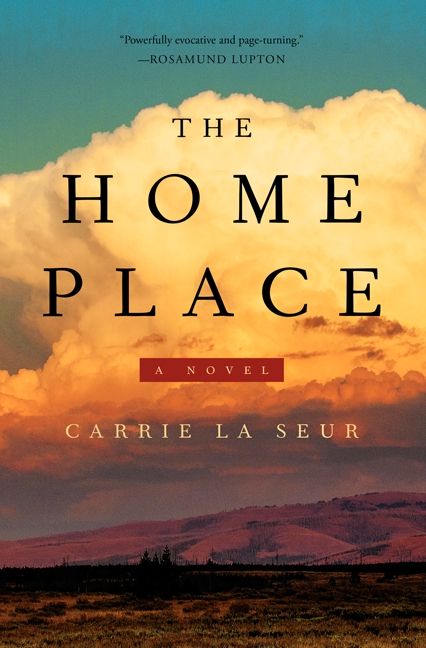
The Home Place by Carrie La Seur

book cover

There’s no place like home. There’s no place like home. Dorothy Gale

Alma Terrebonne is a successful Seattle-based corporate lawyer. She makes a nice living, has a handsome banker bf named Jean Marc, and a promising future that is hers for the taking. But when her little sister dies under suspicious circumstances she races home.

Vicky Terrebonne was a single mother in Billings, Montana. One freezing night, she left the semi-conscious group of substance abusers at her apartment, hoping to score some weed from her ex. Victoria’s frozen, face-down body was found the next day. As soon as her mother had headed out, 11 year old Brittany started calling family members, hoping someone would come to take her away before Vicky returned. When no help came she retreated, in an incredibly moving moment, to find comfort with her imaginary dog.

Maybe Thomas Wolfe was right, but Alma heads back to the place and family she had fled anyway. She figures it would only be a few days. But she plans to keep a keen eye out for the predatory sorts in her office who are eager to take advantage of her absence to steal cases from her. It is no secret that the prairie is not the only place with vultures.

book cover

The author – from her site

Through Alma’s return we get the back story of the Terrebonne family. Alma and Vicky’s parents had died when Alma was 17 and Vicky several years younger. Vicky was taken in by her Aunt Helen and domineering Uncle Walt, but stays away from them now. She had a history of drug-abuse and was constantly calling on all possible family members for help, usually of the financial sort. Alma had managed a nifty escape to a northeast college, then law school and finally a career on the coast. There are plenty of family secrets to go along with the mystery of whether Vicky was the victim of circumstance or foul play.

to him, the home place is beyond quaint. It’s isolated, disconnected, abandoned—and she knows better than he does how many eccentricities it hides. Firearms and whiskey hidden in odd corners, violence and insanity just below the surface, the way that civilization can become nothing but a thin polish over the animal will to survive.

Be it ever so humble, the home place of the title is a property that has been in the family for generations, rural, limited communications capacity, an outhouse, primitive. It was where her father and Uncle Walt had been raised. It is also a place where she and her sister had spent a lot of time as kids. It is the epitome of home, and offers the good earth that is the essence of the family name.

For a Terrebonne, the home place is the safe haven, the convergence of waters, the place where the beloved dead are as real as the living

If home is such a wonderful thing, why do we refer to the unattractive as homely? The home place of Montana, in this portrait, is one that features long-term, unacknowledged PTSD, cooking of books and maybe an illegal substance or two, anti-gay bigotry, violence of various sorts, a dark view of the Mormons, shady business dealings and a somewhat cartoonish bully of a land agent who does everything but kick a dog trying to intimidate mostly elderly people into selling their land to a mining interest. La Seur also offers some description of the relationships between the white residents and the local Native American population, which includes the detective assigned to Vicky’s case.

La Seur is a Billings resident so she knows of what she speaks in describing the place, and the interactions among its residents. The language she employs to give readers a sense of Montana begins at a very lofty place:

The cold on a January night in Billings Montana, is personal and spiritual. It knows your weaknesses. It communicates with your fears. If you have a god, this cold pulls a veil between you and your deity. It gets you alone in a place where it can work at you. If you are white, especially from the old families, the cold speaks to you of being isolated and undefended on the infinite homestead plains. It sounds like wolves and reverberates like drums in all the hollow places where you wonder who you are and what you would do in extremis. In this cold, you understand at last that you are not brave at all.

This wonderfully spun passage goes on for a bit and remains glorious. Such rich description does have the occasional reprise, but it was disappointing that there was not more of it.

La Seur also knows of the rape of landscape. Like Alma, La Seur is an attorney, a working class girl who managed to become a Yale grad and Rhodes scholar. She founded the non-profit organization Plains Justice to give residents a voice to stand up against the power of big mining interests. I expect her descriptions of despoiled landscapes and the tactics of land agents come from personal experience,

So, we have a mystery, an onion of family secrets to be peeled back, some wonderful descriptions, a strong character in Alma, consideration of the best use of the land and what constitutes a home. What’s not to like?

I am particularly allergic to romance books. Although I read plenty of books that have romance in them, I would never read a book that was labeled romance. While there is not nearly the volume of romance here that one might find in an actual specimen of the genre, there was enough to trigger my gag reflex. Part of home for Alma is Chance Murphy (not nicknamed Last or Fat, so far as I know), a cowboy sort with a degree in electrical engineering, sensitive, tough. I think he came from the build-a-guy factory. I could see him introducing himself. “Why, howdy ma’am. My name’s Studly, Studly McMuffin,” as he touches two fingers to the front tip of his Stetson. Or maybe he has a red cape stowed somewhere. Alma is plenty tough, and the story is interesting enough. This not-so-lonely ranger, or at least the degree of him, was a distraction and a downer for me. I understand that his presence was not fluff, as he offered a second draw for Alma and allows for some more detail to her back story. Not only does she have to look at how involved she wants to be in raising her niece, but there is the question of whether she wants to take a chance on rekindling her just-down-the-road adolescent romance with mister perfect, and where she ultimately wants to hang her hat.

With all she knows about the legal world, and conflicts around mining rights on the high plains, combined with her evident ability to weave a story, La Seur has the raw materials that are needed to put together a dazzling sophomore effort. One is already under way. I am looking forward to it.

There is plenty of grit in this very promising freshman novel, enough to compensate for the mush. I get that not everyone starts to sneeze and wheeze when a female character gets the drools for some guy, so it may not irk you as much as it did me. The Home Place offers a detailed look at Big Sky country that is not all bison, trout, mountains and glaciers, a look that synchs pretty well with another recent Montana novel, Fourth of July Creek. La Seur does let us in on the appeal of the place. Whether for good, ill, or both, there probably is no place like home for most of us. So tracking Alma’s decision process should ring at least some bells for plenty of readers. You will learn a bit about a place you most likely do not know well, get to unravel a few mysteries at the same time, and you won’t have to leave the comfort of you-know-where to do it.

Review posted – April 18, 2014
Pub date – July, 2014

=======================================EXTRA STUFF

Links to the author’s personal, Twitter and FB pages

A profile of La Seur from The Rhodes Project

La Seur also posted several energy-related vids on youtube that might be of interest

A quote from Carrie

It doesn’t matter if our elected leaders understand the seriousness of climate change if they lack the balls to face down [the] fossil industry. (4/11/14)

2 Comments

Filed under Reviews