Category Archives: Science and Nature

Gulp by Mary Roach

Mary Roach’s Gulp goes down easy

When it comes to literature about eating, science has been a little hard to hear amid the clamor of cuisine. Just as we adorn sex with the fancy gold-leaf filigree of love, so we dress the need for sustenance in the finery of cooking and connoisseurship…Yes, men and women eat meals. But they also ingest nutrients. They grind and sculpt them into a moistened bolus that is delivered via a stadium wave of sequential contractions, into a self-kneading sack of hydrochloric acid and then dumped into a tubular leach field, where is it converted into the most powerful taboo in human history. [no, not wearing white after Labor Day]

If I had my own university I would see to it that Mary Roach received an honorary doctorate in Scatology. She does seem to have a predilection for investigating elements of human functions that would be considered indelicate in polite company. Of course, to my not-so-inner-Beavis, this is mother’s milk. (Oh, god, no. Is she going to look into that next?) So far, Ms. Roach, a science writer, has managed to process information and squeeze out books on dead bodies (Stiff), the afterlife (Spook: Science Tackles the Afterlife ), some of the more personal elements of space travel (Packing for Mars) and sex (Bonk: The Curious Coupling of Science and Sex). In Gulp, Ms. Roach looks into the details of how, during our corporal existence, we fuel the engines that allow us to scoot between planets or partners, and which make it possible to contemplate what should be done with our remains.

description
Mary Roach – image from The Reading Lists

Mary takes us on a lively cruise down the alimentary canal, which lies somewhere between Love Canal and Root Canal, but with more jokes. Really though, a canal is what we are. Stuff in, stuff out, and an increasingly complex control mechanism to make sure it keep flowing. Philosophy? Religion? Civilization? Whatever. Feed me. Let me poop and pee and the rest is gravy. Because, you know, if you can’t or don’t eat, everything else is moot. (Insert anorexic model joke here) If you can’t get rid of the final product, everything else is really nastily moot. So, while our trip with Captain Mary may lack the derring do of the good ship Proteus, (and the wooden leg of that other well-known cruise) it is a fantastic journey from here to there, and most definitely not back again.

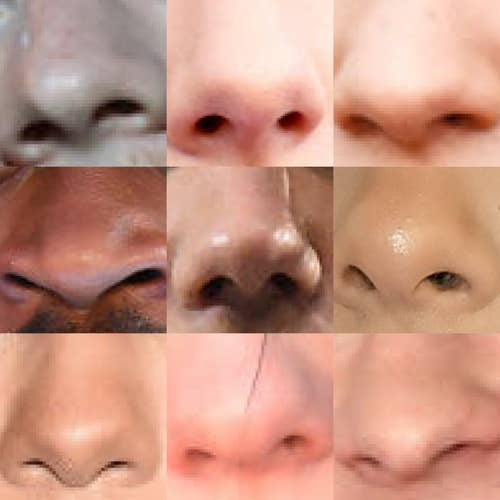
As with any sightseeing outing, your tour guide will point out the structures along the way that are considered to be of interest. All ahead full and pay no attention to those white particles dangling from the tree roots along the side. We begin our look inside by examining how smell affects the way things taste to us. If you smell a rat, it might be because of its diet, of which more later. Our first stop is the nose, along with our sense of smell, which functions as the body’s TSA, with its own list of items that may not be brought aboard.
description

Hold on for a bit as the captain steers the boat into an unexpected cul-de-sac. While there, you will pick up some info on the food you get for your cats and dogs. Ok, backing out and here we are, looking at the appetite for organ meat in various places and cultures, what is good about it and how many of us consider it nasty. It is in this chapter that we discover that Narwhal skin turns out to be rather tasty.

Around the bend and down the hatch, Ms. Roach spends some time pondering the question of whether, like one jaw-weary fellow in 1903, we might believe that by chewing one’s food very, very thoroughly, one can gain greater nutrition from it than someone could by chewing it a more typical number of times. And while you are mulling that over, Roach goes poking into the strange case of Dr. William Beaumont, the researcher, and Alexis St Martin, his personal guinea pig, the proud possessor of an ill-healed and surprisingly non-fatal gunshot wound to the torso. It scarred up oddly and left the enterprising Doctor Beaumont direct access to Mister St Martin’s stomach. Let the testing begin, and go on and go on. Hey, come back here. I’m not done. For a feature length look at this, up that tributary on the left, you might poke your nose into Open Wound: The Tragic Obsession of Dr. William Beaumont by Jason Karlawish. Next, Captain Mary points out the surprising relationship between spit and laundry detergent, actually between spit (there are two kinds, neither of which is called warm) and a lot of things, and why we like our foods to be crispy and crunchy. And if you were wondering if this little excursion included the risk of being devoured by large living creatures, Roach can fill you in on the odds of surviving inside a leviathan’s stomach.

description
From Heidelblog.net

There are plenty more sights to be seen on this journey, subjects like ways of eating oneself to death, the explosive danger of intestinal gas,

(“I know a case, this was fifteen years ago, where the man ate a huge meal and then took an inordinate amount of Alka-Seltzer.” [Dyspepsia expert Mike] Jones made an exploding sound into the telephone. It was like that Monty Python sketch, the Wafer-Thin Mint, where the guy is gorging himself and finally he goes, “I’ll just have this one wafer-thin mint…’”)

 Animated Gif on Giphy
From GIPHY.COM

and the booming field of flatulence.

description
From Flixter.com
(I bet you thought I was gonna go with the infamous bean scene from Blazing Saddles. I am much too classy for that. You will have to go there on your own. Just click this.)

And did you know that it was not only possible to ignite farts, but are some people who have flammable belches?

Roach gets to the bottom of the practice known as keistering, and hooping. Prison is a likely lab for such research into the use of the rectum as a cargo hold. The storage capacity is impressive, to the point that one inmate was referred to as OD for Office Depot, for his hooping capacity, actually used for keistering office supplies. I’m not using that stapler.

And you will be amazed at how much of a rat’s diet consists of material that…um…emerged from the rat. So on spotting a certain rodent in Orlando, try to stop yourself from asking what it is in that taco he is toting. And you do not want to be downwind of that breath.

The colon comes in for considerable examination, and figures in a surprising theory for the cause of death of a king. She comes clean in a look at the history, reasons for and abuses of enemas. And, of course Mary lets loose when she gets the scoop on pooping. She even notes a chart that delineates the seven different types. You know you want to see it.

description
Ok. Time to squeeze yourself off the boat. Be sure to tip the guide.

Roach always delights in reporting on names that are particularly apt.

my gastroenterologist is Dr. Terdiman, and the author of the journal article “Gastrointestinal Gas” is J. Fardy, and the headquarters of the International Academy of Proctology was Flushing, New York.

I suppose the academy might be better off in Richmond, VA, in the neighborhood called Shockoe Bottom, or maybe in Proberta, CA.

A couple of minor gripes. This book could really have used an index. And the chapter on feeding Spot and Fluffy, while interesting, seemed a bit of a digression from the main journey.

That said, reading Mary Roach is akin to the pure joy one experiences from things like Ripley’s Believe It or Not, with the benefit of knowing that there is no smoke and mirror involvement. Reality is soooooo weird. And we have Mary Roach to thank for refilling our occasionally dwindling mental storehouse of disturbing images, (You will never think of Elvis quite the same way after reading this book) and fascinating scientific facts, like the possible origin for the belief in fire-breathing dragons or the medical efficacy of fecal transplants.

There is never a doubt that Mary Roach will make you laugh and teach you things you never knew before. What could be better? Ok, I mean aside from the Blazing Saddles clip.

===================================EXTRA STUFF

Here is the full vid of the wafer thin mint bit, aka Mr. Creosote. Don’t even try watching this if you get queasy easily. It requires a very strong stomach or a very weak mind.

The May 2013 issue of Smithsonian Magazine features an article by Roach, The-Gut-Wrenching-Science Behind the World’s Hottest Peppers and there is another piece in that issue that may be of interest, Why You Like What You Like by Tom Vanderbilt. BTW, the articles are named differently in the magazine and on the web site.

Other Mary Roach books we have enjoyed
—–2021 – Fuzz: When Nature Breaks the Law
—–2016 – Grunt: The Curious Science of Humans at War
—–2010 – Packing for Mars: The Curious Science of Life in the Void
—–2006 – Spook: Science Tackles the Afterlife
—–2004 – Stiff: The Curious Lives of Human Cadavers

Town Hall Seattle has an excellent audio presentation by Roach

Mary is interviewed on NPR

And in the New York Times

There is a wonderful interview with Mary on The Daily Show, a two parter. Here is Part 1 and here Part 2

Janet Maslin’s NY Times review

2 Comments

Filed under Reviews, Science and Nature

Frozen in Time by Mitchell Zuckoff

book coverWinter is coming.

Mitchell Zuckoff seems to be making a habit of looking into the travails of crash victims. His prior book, Lost in Shangri-la , followed three survivors of a WW II era plane crash in New Guinea. They faced the usual sorts of dangers, a step back to the Paleolithic, and a diverse assortment of possible ways to die; cannibals, elements of an enemy army, all sorts of predatory and/or poisonous critters, microscopic invaders that could ruin your day, and help see that it is your last. The whole world was watching and cheering for their safe return.

Reversing his orientation a bit this time Zuckoff, in his latest WW II opus, Frozen in Time, has substituted brutal cold, and a particularly unwelcoming landscape for those other hazards. I’ll take the cannibals every time. (with a nice Chianti) In this instance, the whole world was unaware of the events until well after they had come to a conclusion. Upping his game, Zuckoff deals not with a single crash, but with several, in a cascade.

description
Mitchell Zuckoff – image from the author’s site

I suggest that if you have a choice between death by the fire of a predatory jungle or the ice of an arctic wasteland, you would do well to choose the former. You’d have a better chance of making it. At least you would not have to worry so much that the ground on which you were standing might open up and swallow you whole, that you might lose body parts to the relentless cold of Arctic winter, that you might lose your mind waiting to be brought home, while blizzard-driven snow seeps into your shelter. And of course there is always the danger of becoming a GI-sicle for a prowling polar bear. There are survivors of this experience who lived through 148 days worth of cold days in hell.

Douglas : C-53 : Skytrooper

There is a saying that bad things come in threes. It might have been nice if that had been the case in Greenland, in 1942. Greenland seems to have the same effect on powered vehicles as the Bermuda Triangle. There were at least a dozen crashes there in 1942. The trouble under scrutiny here began on November 5, when a military cargo plane, a C-53 Skytrooper, [above] the equivalent of a civilian DC-3 airliner, was returning to its base from Reykjavik after a “milk run” delivery of war materials. It was carrying a crew of five.

Shortly after the plane reached the southeast cost of Greenland, a location that defined the edge of nowhere, disaster struck: …the Skytrooper went down on the ice cap. By some accounts, the crash occurred when one of the plane’s two engines failed, but other reports were silent on why the C-53 experienced what the military called a “forced landing.” The official crash report declared the cause “unknown and no reason given in radio contacts.” A handwritten notation added, “100 percent undetermined.”

The air over Greenland was a busy locale in those days, with dozens of flights transporting men and materials to the war every day, then returning home to do it again. But Greenland is the largest non-continental island on Planet Earth so, even with a lot of planes searching, locating a downed aircraft was no simple task. Here are some comparisons:

California – 163,696 sq miles
Texas – 268,820 sq miles
Alaska – 663,696 sq miles
Greenland – 836,302 sq miles

In other words, big frackin’ haystack.

On November 9 a B17F, a “Flying Fortress” redirected from its mission in Germany to participate in the search, ran into trouble

When they reached the end of Koge Bay fjord, [the crew] saw that everything outside was the same frightening shade of whitish gray. They couldn’t tell where the sky ended and the ice cap began…When the true horizon disappears in the Arctic haze, a pilot might as well be blind. Pilots fortunate enough to survive the phenomenon describe the experience as “flying in milk.”

It did not end well, and nine more servicemen were unwillingly grounded.


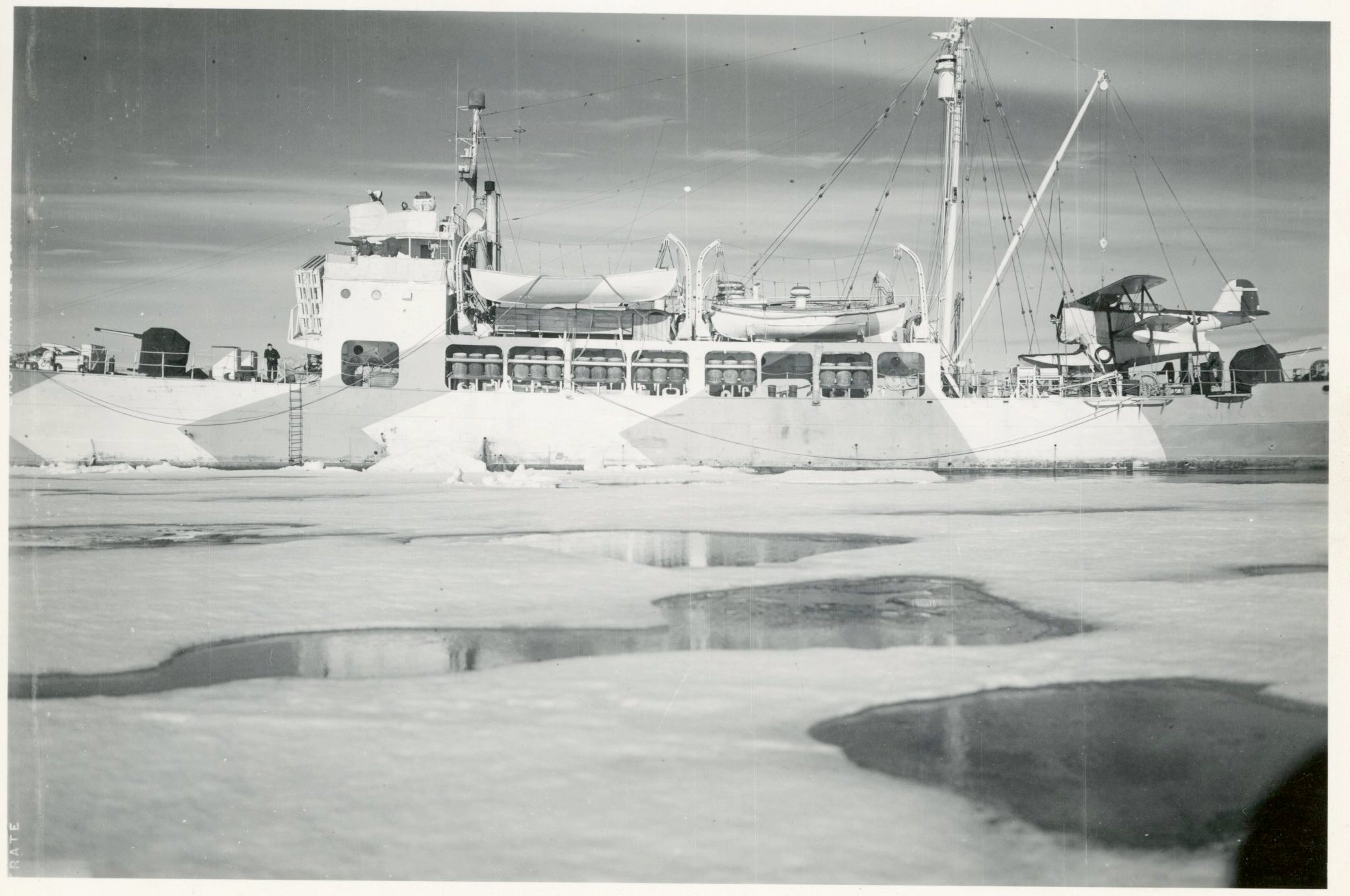
On November 29th, desperate to evacuate members of crews what had been stranded in an arctic wasteland for weeks, a pontooned Grumman seaplane know as a Duck, assigned to the Coast Guard ship Northland was making a second daring run, having already rescued some survivors.
It went back for more. But a storm blew in before the Duck could make it back to its base. The pilot was flying blind. The plane crashed into the ice. This is an image of the very plane, taking off. Not a lucky ducky.

image shows on my blog, see bottom

There is more, but these are the big three bits of awfulness of this tale.

Frozen in Time tells the stories of how the crash survivors fared, how the rescue operations were planned and how those worked out, or didn’t. These stories are both fascinating and chilling. There are many examples told of MacGyver-like creativity on the ground among the crash-ees, among the rescue teams and, decades later, in an expedition looking to bring ’em home. This last is a parallel tale that is given much less than half the book. Not all the men and not all the planes made it back in 1942. The author becomes involved with people who are looking to find and repatriate the remains of the crash victims who did not survive. There are a lot of personalities in play here and a fair bit of politicking. It is not as interesting as the core survival tale, but it is informative. A recovery mission does indeed take place, in 2012, and the author is a full participant in that.

It’s tough enough finding a 60+ year old wreck that stands still, (not counting myself) but in Greenland the ice sheet is a very large moving target. Drop a flag on point A and when you return it could be at Points E, Q or X. And then there is the accumulation of more than half a century’s worth of compacted snow.

Imagine searching for a diamond chip buried deep beneath a frozen football field; your best tool is a straw what makes tiny holes into the ground, through which you peer down to see what’s below; if your holes miss by even a little, you’ll miss it; and you have a brief window to explore ten potential locations before being kicked off the field.

The story of the attempt at recovering remains is certainly interesting. It is no surprise that there are sundry parties at Department of Defense meetings who offer a chilly reception to the contractor who was looking to undertake the mission. We get to be a fly on the wall for a few of these.

But the meat of the story is the tales of survival, how these men (all the crash-ees were men) contended with such a hostile environment, what they did to create livable living spaces, how they coped with hunger, as well as cold, and fear. Some fared better than others. It is a bit frightening to learn that a plane landing on a glacier is in danger of getting frozen to it, like a warm tongue to a frozen pipe. There are uplifting items as well in this dark tale. You will learn about the “Short Snorters Club,” if you are not already a member, and the purpose of a Snublebus. You will also expand your vocabulary a tad with some arctic terms.

You will learn as well, about the dedication of the military to bringing home every reachable service member, and about some of the after-effects of the stranding experience on those who made it out.

Spencer’s family knew him as warm and funny, and they’d remember him as a man who bought toilet paper in bulk long before warehouse stores. When his younger daughter Carol Sue asked why, Spencer explained: “I have been without toilet paper,” he told her, “and I am never going to be without toilet paper again.”

Not Scarlett O’Hara perhaps, but a telling indication of the permanence of the crash experience on the survivors. Many found themselves with increased susceptibility to cold. Not everyone had the luxury of such discomfort. One poor bastard survived a crash in the B-17 only to succumb to another as he was being flown away from the bomber in a rescue plane.

There are several crews to keep track of and I think it would have been useful for there to have been a section listing them by vehicle, rather than, or in addition to the straight alphabetic list provided in an appendix. That said, the volume I read was an ARE so there may be a difference or two between what I saw and what is in the final hardcover edition. Just in case it is not provided there,here is the crew list by craft.

C-53
Captain Homer McDowell, Jr
Lieutenant William Springer – co-pilot
Staff Sergeant Eugene Manahan
Corporal William Everett
Private Thurman Johannessen

A brand new B17F – radio sign PN9E
Pilot – Lt. Armand Monteverde
Co-pilot – Lt. Harry Spencer
Navigator – Lt William “Bill” O’Hara
Engineer – Private Paul Spina
Asst Engineer – Private Alexander “Al” Tucciarone
Radio Operator – Corporal Loren “Lolly” Howorth
Mechanic – Private Clarence Wedel 35,
Tech Sergeant Alfred “Clint” Best and
Staff Sergeant Lloyd Woody Puryear

The Grumman J2F-4, aka the Duck
John Pritchard
Benjamin Bottoms
Corporal Loren “Lolly” Howorth

You are on your own keeping track of other planes, ships and ground-based rescue teams that come into play in this story.

If you liked Lost in Shangri-La, it is a good bet you will find it worth the effort to search for a copy of Frozen in Time and bring it home. Read it in a warm place.

========================================EXTRA STUFF

The author’s web page

The author’s FB page for this book

Harper Collins promo video

Video of the downhole camera. (2012) Uncomfortably similar to a medical scoping

A Coast Guard page on an earlier attempt to locate the Duck

North South Polar – Lou’s site

List of crashes – 1942-44

Leave a comment

Filed under Non-fiction, Reviews, Science and Nature

Among the Cannibals by Paul Raffaele

book cover
What could be worse than a dog eat dog world? Oh.

I was of two very different minds about this book.

Australian Paul Raffaele is a feature writer for Smithsonian. He has covered many parts of the globe in his work for that venerable institution. And he travels far for this work, looking into that darkest of human activities. He investigates special meat-eaters in New Guinea, India, Tonga, ancient Mexico, and Africa. We have a certain image in mind of what cannibals might look like. I mean in the real world, not the dark imagination of Thomas Harris or the psychosis of some of our more aberrant criminals. They would probably live on Pacific Islands, or remotest Africa or South America, use primitive technology and have acquired a taste for missionary over easy. Mostly, but not entirely the case.

Cannibalism of one kind or another had been common around our globe through the millennia, and yet the classic Western image of cannibals is a terrified white Christian missionary in pith helmet crouching in a large outdoor cooking pot, the logs burning fiercely as wild-eyed African warriors in grass skirts dance about him shaking their spears. Their glinting eyes show their eagerness to tuck into their human meal. In truth there is not one record of a missionary ending up in an African cook pot. The cannibals invariably ate one another.

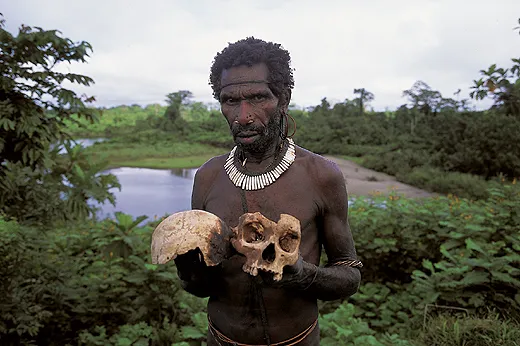
The book offers interesting, surprising, and very disturbing information about a practice most of us (certainly me) thought had vanished from human behavior. The reasons for chowing down on such forbidden fruit vary. High on the list is to degrade and strike fear into one’s enemies. Another is to honor close relations. Some even consider eating human flesh a form of religiousity. The Korowai people of New Guinea justify their practices by maintaining that victims had already been killed by evil spirits and it was only the evil spirits that had taken over the body that was being devoured.

description
Kilikili says he has killed no fewer than 30 khakhua (male witches) – from Smithsonian.com

The practice is supposedly a thing of the past in New Guinea, but I would not like to place too high a wager on that. Raffaele’s looks at the practice in Tonga and Aztec Mexico are more firmly planted in the past. Unfortunately, there are still people-eaters today. There is a Hindu sect in India, the Aghoris, whose holy men chow down on you-know-what “as the supreme demonstration of their sanctity.” They even sit atop rotting corpses as a show of devotion and Raffaele reports some particularly unspeakable acts in which they engage, that I will not report on here.

description
An image of this cheerful Aghori is sure to help you sleep at night – image from Dharma Keng

And no, wiseass, it is not a self-portrait. I cannot really fold my legs like that for any length of time, and I keep my hair and beard much shorter these days. But there is worse to come. His report on the activities of the Lord’s Resistance Army of northern Uganda takes the eating of human flesh to whole new level of depravity, a true heart of darkness. This information is the stuff of nightmares. Very disturbing.

I have a major gripe with the book. The cover is sprightly. It shows a hand reaching up out of a large cooking pot writing the book title. Lower down on the page is an icon that repeats inside as a section divider, a skull and crossbones in which the crossbones have been replaced with a knife and fork. One might get the impression that the information contained within would fulfill the silly graphics. We know that even such darkness can produce smiles. Sondheim’s Sweeney Todd (the stage version, not the very disappointing film), for example, is probably the only Broadway musical to have cannibalism as a central focus. Devouring scenery does not count. And while my personal favorite all-time Broadway show was rather dark, it still maintained a significant level of humor.

Todd: What is that?
Lovett: It’s Priest. Have a little priest.
Todd: Is it really good?
Lovett: Sir, It’s too good, at least.
And of course it don’t commit sins of the flesh
So it’s pretty fresh
Todd: Awful lot of fat
Lovett: Only where it sat
Todd: Haven’t you got poet or something like that?
Lovett: No, you see the trouble with poet is how do you know it’s deceased? Stick to priest.

And so on…

The light touch promised by the cover art for this book does not deliver as promised. There is nothing at all amusing about children living today who are forced to eat human flesh under pain of death. In that way the book offers a bait and switch, promising a light touch, but delivering a deep gouge.

I also found the author at times personally off-putting. While in Tonga, he felt it necessary to comment on his translator’s physical attributes in a way that came across as salacious.

Waiting outside and holding aloft my name printed in marker pen on a pad is a round-faced, bright-eyed girl who looks to be in her early twenties. She is clad in a Congo-style ankle-nudging cotton dress that fits tightly about her neatly rounded thighs, and a short-sleeved top printed with a spray of red orchids that clings to her firm high breasts. She has woven her hair in to strands festooned with colored beads. Unlike most of the women at the airport who are laden with fat and boasting the enormous bottoms that most African men are said to lust for, she is sleek and silky.

Either his editor was not doing a good job, or the author exercised an ill-advised veto.

Raffaele does not come across as a particularly deep thinker and this is not a scholarly investigation of a very dark side of humanity. There is only passing mention of the Catholic sacrament of Communion, in which practicing Catholics consume the body and blood of Christ. There is even less on the sundry cannibalistic psychopaths who have come to public notice. Are there any studies indicating when and where it might have begun? Raffaele does note that it existed in prehistory. Records go back at least as far as Herodotus (well before Soylent Green) of such culinary preferences, and it lasted into the 19th century, at least. How about a comparison with other species? How widespread is the practice in the animal kingdom. Are we really different from what we consider lower orders? For a more analytical look at the subject you might consider Carole Travis-Henikoff’s book, Dinner With a Cannibal: The Complete History of Mankind’s Oldest Tabboo. An NPR interview offers a taste of what she has to offer.

Among the Cannibals definitely offers new and intriguing information. Be forewarned that you will need a strong stomach to get through it all. But, because it was so much not what was expected, it left me with a bad taste in my mouth.

=======================================EXTRA STUFF

To remove the taste, you might consider taking in a bit more of Sweeney. Another gem from the vaults is a song by Sheb Wooley that was actually a #1 hit when I was a tyke.

If you get an invitation to the Donner Party, I would pass.

And of course, every abomination must have an advocate, so you might want to see the modest proposal the folks at Zebra Punch offer, while humming their particular version of Barbara Streisand’s classic tune, about why we should
eat people.

There is an interesting item on cannibalism in Wikipedia

Raffaele’s article for Smithsonian Magazine, Sleeping with Cannibals, was the basis for the book

Leave a comment

Filed under Non-fiction, Religion, Reviews, Science and Nature