Category Archives: Non-fiction

Bottom of the 33rd by Dan Barry

book cover In the song Take Me Out to the Ballgame there is a particular line that comes into play here. Buy me some peanuts and cracker jack. I don’t care if I never get back.

That sentiment was put to the test on April 18, 1981, in Pawtucket, Rhode Island, when the Pawtucket Red Sox and the Rochester Red Wings played the longest game in professional baseball history. Given that the song is generally sung in the middle of the 7th inning, or after six and a half innings of play, the fans, had they been of a mind, could have sung the tune four more times before the game was finally concluded.

Dan Barry, a sports columnist for the New York Times, a guy who had lived in Pawtucket for four years, uses this singular game as a structure around which to build his depiction of minor league baseball, more particularly Triple-A level baseball, using the example here to stand in for the whole.

His approach is one that would give anyone with a generous dose of OCD a thrill. I did not keep track of the number of individuals who are mentioned and for whom Barry offers at least a little biographical info, but I expect it easily squirts past the defenders into triple digit territory. There is no index available for cheating and coming up with a credible number. Leave it that if a cat had wandered into the field during that game, Barry probably interviewed it, and I expect had he been able to identify the gulls that were in attendance, they would undoubtedly be pretty sick of him asking them about the game, and checking their eggs to find out if the unborn heard anything their feathered parental units might have mentioned about it. I do not mean this as a knock, but merely to offer a sense of Barry’s overall approach. It is reminiscent of an actual baseball field, a wide swath, covered in grass, only inches deep, but with particular parts that emerge, and form the more significant elements of his story, the mound, the bases. One or two deserve mention.

In one of the true rarities in baseball, the owner of the Pawtucket Red Sox sounds like he was a pretty decent guy. We learn about him lending a helping hand when the help really was for someone else and not just a roundabout way of helping himself. The best element was Barry’s look at Dave Koza, a career minor-leaguer who was known for his home runs, but whose major league career only had warning track power, a Crash Davis sort. Barry looks at Koza (really, someone must have nicknamed him “Lost”, but we never come across that here.) His story carries all the hope-and-dream elements that drive so many of these young men. Dave was the fellow who would get the game-winning hit in the bottom of the 33rd.

Barry gives us an illuminating look at the history of the stadium in which the game was played, tells us about the umpires, the ball boy, the intern, the security guard, the where-are-they-nows, the whole nine yards innings, or in this case thirty three. In a way it struck me as having something in common with rain delays, when hapless broadcasters (yes, he looks at those guys too) have to work extra hard to come up with material to cover the dead air between pitches. Barry certainly does work hard, and manages not only to fill in the blanks, I think he may have actually created some to give himself more time to fill.

If you are a baseball fan, this is a fun book. It is nice to know that Rich Gedman, Wade Boggs, Bruce Hurst, Cal Ripkin Jr,. Bobby Ojeda, and a few other eventual pros took part in the game, and that a game of such duration was ultimately made possible by a cut-and-paste failure in the updating of the league rule book. It is nice to learn of Bobby O’s role in sparking behavior that had once gotten a batboy ejected from a game. It is fun to hear that Mike Hargrove’s extended at-bat preparations earned him the moniker “The Human Rain Delay.” If you are not a baseball fan, Bottom of the 33rd offers a look at a piece of American culture that is as true today as it was over thirty years ago.

I can tell you from painful personal experience here in New York City that it is generally a bad idea to go to a ballgame in April. Hell, May and maybe even June, can feel like a wind-blown tundra in our stadiums. And farther north and east it must be even worse. It is no shock that only nineteen spectators made it through the entirety of the game. The book will take a lot less time to read than the game took to be played, and you will not be in danger of having bodily parts crystallize and drop off while you are completing it.

Bottom of the 33rd may not be a grand slam, but it is at least a hustle-triple. And it is definitely a good idea to Root, root, root for the home team.

Leave a comment

Filed under Baseball, Non-fiction, Reviews

Our Occulted History by Jim Marrs

book cover I happened on this book in an unusual way. I was visiting my wife at her office in Harper Collins, and while waiting for her to complete this or that task, I looked around for items of interest. My eyes alit on this one. “Looks like weird fun,” said I. Many of the books I review are selected by my esteemed wife dashing in the door and exclaiming, “you’ve gotta read this!” Or one or the other of us catches an interesting TV interview with an author and picks the book up at Barnes and Noble (no, not Amazon, NEVER Amazon, which seeks to devour publishers like the one that employs my wife, not to mention most available book-reviewer sites). But this was more of a found object. And so, over a period of a couple weeks, I read this thing, bits at a time. When I had finally finished Our Occulted History I felt like I had just gotten off a roller coaster designed by a person with no inner ear. I have had diverse reactions to this thing, and it should come as no surprise that the first line that popped into my head while reading the book was: “It’s one thing to maintain an open mind, but maybe not so good to have one so porous it retains nothing of value. Jim Marrs’ brain is so filled with empty space it is unlikely that even a virus could find enough substance to which to attach itself. He puts the pseudo in pseudo-science.” Which may be the tiniest bit harsh. But I do think there is something going on here that bears some looking into.

description

Ok, how many of you have ever been exposed to marijuana? Let’s have a show of hands. You know what I mean by exposed. Don’t get cute. And puh-leez, don’t pretend you never inhaled. Looking out over the group, I can see that almost every hand is raised, which means we have some liars out there. Yeah, my hand is up as well. From the tender age of fifteen. And yet here we stand sit, not a heroine addict, not a crack addict, not an alcoholic, and I have never been any of those, although I was addicted to cigarettes for many years. While I do not see much menace in it, I do not smoke pot any more. No moral high ground here. The stuff, while admittedly a nifty enhancement to Hendrix, Santana and a host of other musical artists, particularly when one ingests music via headphones, puts me to sleep. For me, pot, hash and some other things I will not go into, proclaimed unacceptable by the forces of righteousness, whether or not those proclaimers were peddling cigarettes, alcohol or equally addictive food products, were, for me, gateways to bedtime. I freely admit that I have not partaken since the 80s, and even then it was a rare event. But I do concede that there are situations within which the use of pot, once normalized, might make it easier for one to consider other products that are less benign.

So, let’s steer this vehicle back onto the actual roadway. What has this got to do with Jim Marrs? I’ll tell you. There are all sorts of gateway drugs in the world. Not all will have a pharmacological impact, and not all, as with weed, will necessarily pave a pathway to perdition. Our next example is one of those. And again, it is one I have sampled, probably even more than pot. Alien visitation. No, no anal probes, abductions or anything of an extreme sort. Never met, saw or conversed with an alien. (My personal eX-files have to do with a very Earth-based failed marriage) But I have tasted the out-of-this-world product and I like it. I have read my share of UFO books over the years. Although I am not a regular viewer, I have seen more than one or two episodes of the pseudo-scientific eye-roller Ancient Aliens. I mention this not to say that I buy their particular line of BS, but to note my starting position re alien visitation, namely that the subject matter still draws me. I have seen some freaky petroglyphs, in Hawaii, in Chichen Itza, the Anthropology Museum in Mexico City, in the American southwest. And despite Don Henley’s claim that They’re not here and they’re not coming, I am inclined to believe that they have at least stopped by for a look-see and were spotted by the locals, actually a lot of locals, all across the planet, so maybe it was less of a look-see than a “whoa-ho, what have we here? Let’s check this place out” sort of thing. This requires no more suspension of disbelief than some of our more popular religions. And sustaining such notions does not lead to a suspension of intellectual processing. But the potential exists for this benign belief, given the proper (on in this case improper) influence, to be inflated into something alarming.

description

Just as a druggie friend can push one beyond a little weed into a much darker place, so people like Jim Marrs can take an interesting notion and, through their powers of story-telling, lead the gullible to a vulnerable place. I suspect that Jim Marrs is a lunatic. I fear that he may be a con-man. I can see that he applies the fuzziest of logic in looking for support for his theses. It is obvious that he lives in an echo chamber inhabited by other paranoids and conspiracy theorists and that they reinforce and embolden each other to the point where, as in the right-wing bubble, opposing opinions are routinely disregarded, and whatever theories are being floated by the elect are accepted as revealed truth. This is where the primary problem lies. Step inside the bubble and, like a spacecraft air-lock, eliminate from one’s intake any competing notions. I also know that Jim Marrs is a gifted story-teller. However, you might need a pair of these

and one of these descriptiondescription

to get through the entire book safely.

It is an amazing story he has to tell. Marrs claims that a close look at ancient literature from across our world, particularly from Sumer, reveals not only that aliens have visited our lovely planet, but that, in order to more effectively mine gold, they modified the genetic makeup of the local hominid population to make the homo sap we are today to create a usable labor force. It gets weirder, really. He also posits a magical, and I do mean magical, form of gold that has unnatural properties, like an anti-gravity capacity and maybe even a multi-dimensional one. Guess what was inside the Arc of the Covenant?

description

Funny powder, and not the sort they serve at after-parties on Oscars night. Ok, people. Time to break out your tinfoil hats. But let’s make sure they are tinfoil tri-corner hats. (Sorry, I was unable to come up with a corresponding image) Marrs has a political agenda as well. On his web-site, Jimmarrs.com, I found the following:

Seeing how Paul and Palin are now candidates for the 2012 Republican presidential nomination, the corporatists would love to weaken, if not stop, the so-called Libertarian Tea Party influence on the future direction of the Republican Party. [I guess Paul and Palin are not right-wing enough for Marrs] Live and learn and don’t fall prey to revisionism, usurpation and political/media manipulation.

He makes statements that have the sound of reason, but lack the substance. Here is an example.

In his 2010 book, Babylon’s Banksters, Joseph P. Farrell, as a doctoral graduate of Pembroke College Oxford, who had unparalleled access to old books and manuscripts in Oxford University’s library, said his thesis was both simple to state but difficult to understand. “Since ancient times and with more or less uninterrupted constancy, there has existed an international money power which seeks by a variety of means including fraud, deception, assassination and war to usurp the money- and credit-creating power of various states it has sought to dominate” (implying, of course, that if you find Farrell’s case unconvincing it is because you just don’t understand it. Yeah, I’ve heard that argument before).

What does unparalleled access mean? Is there a double-secret code that Dean Wormer gave Farrell that allowed him access to materials mere mortals were not permitted to see? Who says his access was unparalleled? Any fact-checking done on this? If there was, Marrs isn’t telling. Are we to presume (yes, we are) that having this unparalleled access means that the researcher in question therefore has superior interpretive powers, and was thus able to spot, and interpret this secret info, and incorporate the gained knowledge into his thesis? But what that information might have been we are not told. It goes on. Marrs does not mention that among this great scholar’s publications are Roswell and the Reich and Genes, Giants, Monsters and Men: The Surviving Elites of the Cosmic War and Their Hidden Agenda. Be sure to secure the hatch to the bubble after you step inside.

I could make a list of the outlandish claims that this guy makes, but it would make my usual, wordy reviews seem like headlines. There is a debating technique favored on the right known as Gish Gallop. It entails spewing so much bullshit in a small amount of time that one’s opponent winds up spending all his or her time refuting the bullshit and does not get to make their own case. Marrs’ work has that feel. Replay Romney in the first debate for a taste, if you like. And Marrs seems like such a down-home folksy sort that one might be tempted to indulge in a few puffs. After all, even in his political attire, there are positions he holds that are pretty reasonable. But if you toke down, or snort up too much, you drift past the amber fields of reasonableness, and ascend until you are off in la-la-land and the world is suddenly really out to get you; 9/11 was an Israeli plot; remote viewing psychics in the US Army watched as aliens shot down Russian probes nearing Mars; The Rothschilds (translation: Jews) control the world’s economic apparatus. It was JFKs driver who killed him. And so on. So make sure you load up on personal weapons, and for sure bring along that special hat, because you never know when they might be listening in. I’ll give you an example of Marrs Gish-Galloping later.

Back to the book. So, next step. If they came here, why did they come? Was it to explore strange new worlds, to seek out new life and new civilizations, to boldly go where no one has gone before? Columbus did not sail the ocean blue to check out the Caribbean beaches. He had a concrete, business purpose in mind. Marrs would have us believe that they, a race he calls the Anunnaki, from Sumer legends, came to earth, or at least stuck around on Earth, for the gold. I picture alien spouses asking star-traveler hubby, “So, Gorp, what did you bring me this time? Not another carnivorous flower, Geez!” To which Gorp smiles and hands over vast quantities of the shiny stuff. Lady Gorp blushes, throws her several arms around her main guy and exclaims, “This place is a keeper, Sweetie. When are you going back?”

description

Absence of evidence is not evidence of absence. For instance, in anthropology, just because we do not have rock (or in this case bone) solid examples of each and every step along a path of natural selection, that does not mean that those steps did not take place. Scientists are constantly finding previously undiscovered bones, unthought of species. Here is one that came to my attention just in the time since I began with Marrs’ book. Mr Marrs prefers to fill our knowledge gaps with notions of alien interference. And he is not above the odd lie to bolster his case.

Although Darwin never explicitly stated that man descended from the ape, his devotees advocated that conclusion.

Actually they did not. Apes and humans are evolved from prior species, not from each other and it was only the opponents of Darwinism who characterized his work as claiming humans descended from apes. Erect straw man. Light match. And he continues,

Even after a hundred years of effort, no one has been able to fully substantiate Darwin’s theories through documented fossil exhibits.

Um, well, actually yes they have. It is frequently the case that in any large chunk of science there will be specific steps from, say, point D to point F in a full alphabetic range, for which there is not 100% complete fossil evidence. It is the nature of science to extrapolate from available information. The absence of specific elements in the range of every possible piece of fossil evidence is not evidence that the missing bits do not exist. For a guy who is positing that humans were designed by an alien race, he seems unusually tetchy about insisting that every possible link be found in the theory that scientists across the planet accept as sound. But if Marrs can believe what he wants, why not the rest of us? I am not completely convinced that Jim Marrs is not the product of an alien huckster having bred with a cactus to produce him, I am still waiting for him to disprove that rumor, and he has never denied his questionable, and possibly prickly parentage.

They wanted our gold, so they fiddled with our (homo neanderthal, or maybe homo erectus) DNA to produce a work force trainable enough to to work the mines. It gets better. You may have heard the word Nefilim, basically angel-human hybrids. In the hands of Jim Marrs, it looks like our eight-foot-tall visitors liked a little, very little, relatively, something on the side. I will leave aside all the obvious penis jokes here, although it does pain me to do so. Tall, blue and handsome + human female = the Jim Marrs special, alien/human hybrid children, the Nefillim. Also, the inspiration for a classic film, well maybe not exactly a classic.

description

If you have not yet summoned men in white suits with large nets, here is where the bat really meets the shit. Marrs goes on and feeds into other wing nut paranoid fantasies about a core of thirty-three families (guess what sort of DNA they are protecting) who rule the planet, while, of course, suppressing the discovery of the proof of our alien ancestry. (We wouldn’t want the baby to know who gran really is, would we, not until he is old enough to be able to handle the shock, and then, naturally, dominate his personal section of the planet) Of course what he counts as evidence has not convinced real scientists, and is unlikely to do so.

So what Jim Marrs has done, and has been doing for some time, is to take the nifty notion that they were here at some point in human history and lace it with his own rich blend of opiated Tea Party paranoid delusion, fusing the two. Smoking at this pipe keeps ya coming back, if, that is, you buy in. And here is one final item, before a bit of a detour. He talks a fair bit in his book about a magical substance referred to as powdered gold. Well, it turns out that there are entities more than willing to sell this stuff to the gullible. I have no specific knowledge that Marrs has a financial stake in any of these companies, but let’s just say I have my suspicions.

Not only is he proselytizing stealth political messages in his book, but it becomes much more overt when he lectures. I am separating this out from the already lengthy body of this review, tucking it under a spoiler label. There is enough detail involved that only those who are interested would want to spend the time to read it. It consists of a series of political claims Marrs makes in a lecture and how his claims are lacking in foundation.

MARRS ATTACKS

description

Here is a quote from Jim Marrs: Hidden History Part 1, a lecture you can find on Youtube. This lecture was posted on February 7, 2012.

…global warming, which is turning out largely to be a hoax, because they fudged all the documents…they simply…but there is environmental change and there is a warming. Go outside. You can figure that one out. But, it’s not us. It is solar system wide. Something is happening solar-system wide. The outer planets are becoming more luminescent. The ice, the polar caps on Mars are melting. The ice on the moons of Jupiter, they seem to be melting. So, whatever’s happening, it’s not your SUV, no matter what Al Gore says. By the way Al Gore happens to have been one of the creators of the carbon tax credit company, corporation, out of Chicago, which is gonna handle all the carbon taxes that we’re all gonna have to pay, and manage the sale and trade and exchange of these carbon tax credits, which means that they’ll rake in billions and billions of dollars. So, gee, Al, maybe you had an ulterior motive in pushing this global warming idea.

So we will play Gish Gallop with Marrs here, as time is not much of a factor, but the methodology he uses should be illustrative of the tactic. Throw out enough lies and your opposition will have to spend all their time refuting them, while you move on to more lies. So, here goes.

global warming, which is turning out largely to be a hoax
In 1989, Republican president George H.W Bush proposed and Congress approved a twenty year study of global change. Participants included NOAA, NASA, the Pentagon the National Science foundation, the Departments of Transportation, Interior, Commerce, EPA and a host of others. You can look at a summary of their findings here. This brief summary says it all:

Trends observed in recent decades include rising temperatures, increasing heavy downpours, rising sea level, longer growing seasons, reductions in snow and ice, and changes in the amounts and timing of river flows. These trends are projected to continue, with larger changes resulting from higher amounts of heat-trapping gas emissions, and smaller changes from lower amounts of these emissions. The observed changes in climate are already causing a wide range of impacts, and these impacts are expected to grow.

Really, does anyone outside the bubble take this warming-denial malarky seriously?

it’s not us. It is solar system wide
Claims that the solar system is warming are complete nonsense The sun’s output has declined. This is another case of Marrs spewing politicized nonsense and claiming it to be fact. The supposed warming-induced increase in luminescence in outer planets is nothing more than seasonal change for entities that have a year that is far different in scale from ours. It is as if one were to observe New Hampshire from August through December and conclude that the planet was beginning an ice age.

the carbon tax credit company, corporation, out of Chicago, which is gonna handle all the carbon taxes that we’re all gonna have to pay, and manage the sale and trade and exchange of these carbon tax credits, which means that they’ll rake in billions and billions of dollars
Marrs appears to be making rather definitive presumptions about how the USA will deal with our emissions problem. Cap and trade, and Carbon taxes are both market-based attempts to reduce our emissions. Studies in 1967 and 1970 showed them to be the least costly way to reduce emissions. The 1990 Amendments to the Clean Air Act introduced the first cap-and-trade control mechanism into national law. This was proposed under and signed into law by President George H. W. Bush. These days, with Republicans in the majority in the House there is no chance that any carbon tax or cap and trade legislation will reach the president any time soon.

As for Al Gore’s sinister machinations to profit from theoretical exchanges, none ever existed. Gore’s company was one investor in the Chicago Climate Exchange, a company which was intended to function like the New York Stock Exchange, acting as a market in which corporations could trade carbon allotments in the same way that investors trade stock. It never happened. CCX ceased to exist in 2010, which is too bad. It is called putting his money where his mouth is. Capitalism, ya know? He took a loss. Nothing sinister there at all. No plots required.

If you are ok with just reading this as an entertainment, Our Occulted History delivers the goods. It offers a wild, entertaining, and occasionally thought-provoking tale. But if it strikes deeper in you than that, all I can say is “step away from the hookah.”
description

Posted 3/30/13

Leave a comment

Filed under Non-fiction, Reviews

The Lady and her Monsters

book cover I collected the instruments of life around me, that I might infuse a spark of being into the lifeless thing that lay at my feet. It was already one in the morning; the rain pattered dismally against the panes, and my candle was nearly burnt out, when, by the glimmer of the half-extinguished light, I saw the dull yellow eye of the creature open; it breathed hard, and a convulsive motion agitated its limbs. (Chapter 5 – Frankenstein)

Roseanne Montillo has dug up information about diverse real-world elements that influenced Mary Shelley in the creation of her seminal novel Frankenstein, joined the parts into a cohesive whole and energized them with intelligence, insight and wit, breathing new life into our appreciation of that great tale. She shows also the monster-rich environment that influenced MS, a world that was very well populated with mad scientists, mythical beasts, grave robbers, an actual evil stepmother, and people close to her who had monstrous leanings of their own, long before she added her creation to the list.

Your first experience of Frankenstein probably looked like this.
description

Boris Karloff’s interpretation of the never-named “wretched creature” of the novel, gave him literal baby-steps and a child-like yearning for love and acceptance. Dramatizations of the character that Mary Wollstonecraft Shelley wrote rarely show him possessing the sort of intellectual curiosity and power with which she imbued him. Hollywood is definitely good at keeping things simple and it did so here. Most people think of Frankenstein’s monster as a big, inarticulate lug, who got a raw deal out of life the second time around and succumbed to an angry, pitchfork and torch-wielding mob, like two guys carrying a gay-pride banner at a Tea Party convention. It was not quite that way in the book.

I ought to be thy Adam, but I am rather the fallen angel, whom thou drivest from joy for no misdeed. Everywhere I see bliss, from which I alone am irrevocably excluded. I was benevolent and good; misery made me a fiend. Make me happy, and I shall again be virtuous.

The monster’s plea to his creator shows him to be something other than the grunting fiend of cinema, more of an articulate fiend.

I heartily recommend reading the core material here, before, during or after you take on Montillo’s exposition. In a way, it is like putting on special glasses and seeing the 3d contours of an image when all that one had perceived previously was strictly two dimensional. Or watching a pop-up videos version of a familiar song. You will learn a lot reading Montillo’s book.

The book tells two tales. The first is Mary Shelley’s personal history. The second is a portrait of the world in which she grew up, the external influences on her, and how they contributed elements to her novel. There is, obviously, overlap.

2010 painting of the young Mary by Esao Andrews

Mary Godwin was the daughter of William Godwin, a leading writer and philosopher, and Mary Wollstonecraft, the author of A Vindication of the Rights of Woman (1792), an early manifesto on gender equality. Clearly Mary got pretty high-end brain DNA from both parents. Unfortunately, Mary’s mother died ten days after introducing her to the world.

Mary’s makers

Mary grew up in an intellectually lively environment. As dad was a big cheese in the intellectual world, gatherings at the Godwin manse tended toward the illustrious. Thomas Paine read from his famous work in her home, as did many luminaries of the time, including a well-opiated Coleridge, who read his Rime of the Ancient Mariner while young Mary secretly listened in. This piece of that poem found its way into that little girl’s book.

Like one who, on a lonely road,
Doth walk in fear and dread,
And, having once turned round, walks on,
And turns no more his head;
Because he knows a frightful fiend
Doth close behind him tread.

Dad remarried four years after his wife died, to Mary Jane Clairmont. Mary’s new stepmother was straight from central casting for any of several tales by the Brothers Grimm. One result of this, some years on, was an attempt to keep Mary away from her father after she hit adolescence, and was a threat to absorb too much of daddy’s attention. MJ saw to it that Mary was banished for a stretch to a distant seaport, residing with a family that was only barely among Godwin’s friends. Mary had opportunities while there to hear many a fish story from local seamen.

Her relationship with poet Percy Bysshe Shelley began when she was in her mid-teens. Shelley was married at the time, which was awkward, but that did not prevent the young couple from cementing their relationship. Shelley found Mary to be a true intellectual equal, which more than made up for her average looks. Scandal pursued them, but the young couple seemed not to care. A circle formed, Mary, Shelley, Mary’s half-sister Claire, who was smitten with PBS, and later, Lord Byron. It got complicated. There are bits from Mary’s relationships that contributed material to the book.

Shelley and Byron

As was common at the time, artists and scientists were not the divided clans they tend to be today. The greatest scientists of the age wrote poetry. And Shelley was renowned at his college for the many dangerous experiments he had running in his room. Shelley taught Mary, who had been home-schooled, a lot about science. They had several children together, only one of whom survived. It may be that one element in her story was a desire to bring back a dead child.

Montillo take us through the travels of the pair, and later the group, showing the places they stayed, the routes they took, their stops along the way and the stories Mary is likely to have accumulated at various locations on their journey. Yes, there really was a guy named Frankenstein. Another local alchemist sort had been pursued by angry townspeople after some imagined outrage.

Professor Montillo also offers considerable history and color of the time. The era in which Mary Godwin grew up was the Enlightenment. Science, unchained from the restrictions of superstition, was on the move.

The modern masters promise very little; they know that metals cannot be transmuted and that the elixir of life is a chimera but these philosophers, whose hands seem only made to dabble in dirt, and their eyes to pore over the microscope or crucible, have indeed performed miracles. They penetrate into the recesses of nature and show how she works in her hiding-places. They ascend into the heavens; they have discovered how the blood circulates, and the nature of the air we breathe. They have acquired new and almost unlimited powers; they can command the thunders of heaven, mimic the earthquake, and even mock the invisible world with its own shadows. (from Chapter 3 of Frankenstein)

Resurrectionists
description

Daring scientific experiments were being performed across Europe. There were things in the air at that time that had never been wafting about before. For example, there was a fellow named Galvani, who not only developed a particularly useful battery, but wanted to use his invention to re-animate the newly dead. In fact there was a lot of medical training at the time that required a steady supply of fresh material. As England restricted access to the needed product to the newly executed, that created a considerable market for materials from other sources, giving rise to the growth of so-called Resurrectionists, although flesh-miners might have been a more fitting term. Competition became pretty steep among gangs of grave robbers. The trade was so lucrative that some of the nearly departed were sped on their way by greedy practitioners.

Dissections were often open to the public

Also a lot of this medical work for which the sack-‘em-up-men labored so lustily was done in public fora. Popular entertainment was different in form from what we have today, but I expect the content is particularly consistent. Anatomists vivisected bodies in front of audiences of medical students and the public. Think of it as a monstrous live theater version of CSI. Public hangings were major social events, attended by large throngs ever eager to revel in the misfortune of others, or an early version of reality TV. And of course there is always room to amp up the excitement level, particularly when some of the edgier medical sorts had LARGE ambitions. Giovanni Aldini, nephew to Galvani, performed a particularly gruesome re-animation attempt so shocking that Galvani ultimately had to find some other way of making a living. It does, however, bear remembering that every time the paddles are applied and a doctor yells “Clear” we have mad scientists like Aldini to thank for the many cardiac patients who have been, literally, reanimated by the application of electricity. It’s enough to make you want to scream “It’s Alive!

Montillo also goes into some of the history of alchemy, as Mary makes plentiful reference to practitioners of that art in her book. There is a particularly curious description of how to create a homunculus. (no mention of blond hair and a tan ) Montillo also brings in the obvious connection between Mary’s creation and folkloric notions of golems.

One of the fun bits in the book is a description of a London emporium that sought to capitalize on the growing popular interest in the possible uses of electricity. The Celestial Bed and the Temple of Health was begun by a medical quack interested in the potential benefits of electric stimulation. But the place cloaked its true nature under the guise of providing medical care. I suppose The Celestial Bed did offer plenty of sparks, but the heavenly electricity generated within its walls was produced at least as much by its patrons as by galvanic devices.

The greatest benefit of The Lady and her Monsters is that it lays out many of the elements that Mary was or might have been exposed to in her few years on earth before she took pen in hand to write her contribution to a group ghost-story contest. There is indeed some interesting material offered on Mary’s life after the 1818 publication, most particularly her decision, when revising some years later, to alter Victor’s mode from Promethean arrogance to tool of the gods, reflecting her own denial of responsibility for the events of her life. But other material having to do with the time after publication was not as interesting as that concerning events that inspired the book. Her subsequent life was not a happy one, and I am not sure how much we gain by learning that.

Nevertheless, The Lady and her Monsters is a delightful book, both informative and entertaining. It does a high-voltage job of bringing the story of how Mary made her monster to life.

========================================EXTRA PARTS

This very nice bio of Mary Shelley, from The Poetry Foundation, has considerable information about her other works.

A nifty web-site on Resurrectionists. Can you dig it?

Frankie for free, courtesy of Project Gutenberg

Posted – April 2013

Leave a comment

Filed under Bio/Autobio/Memoir, Non-fiction, Reviews

Fevered by Linda Marsa

The Heat is On

As the planet gets hotter, we’ll live sicker and die quicker

All change is a matter of degrees. Up or down, a bit here, a bit there. And in time, with persistence, you really have something. In the Broadway and later film musical, Pajama Game , the cast sings of the accumulating impact of a small change, in this case literal small change. And so it is with global warming. A fraction of a degree here and there, and what with adding that small bit over and over, the overall amount grows significantly. When we think of warming, we tend to think of what is going into the air, water and land right now. When the fact is that we have been making carbon deposits into our environment for a long time, and are beginning to see the result of that. If you will allow another dip into our musical theater history, the show Mary Poppins, offers a lesson on the value of compound interest. In the case of our planet however, the Fidelity Fiduciary Bank in question has grown far too large, its holdings are increasingly comprised of toxic assets and it threatens us all with more than just a fiscal meltdown.

description
The author with a ring-tailed lemur in Sarasota, Florida

Global Warming is a hot topic. When we think of the medical impact of global warming it is usually in terms of coping with personal temperature management, keeping cool in the hot weather. We might think of shrinking polar caps, maybe rising sea levels, more energetic hurricanes and the like. But there are very concrete health impacts that might not be so obvious. What if the breeding season of disease-vector mosquitoes were to be extended? More mosquitoes = more illness. One effect of shifting weather patterns brought on by warming is desertification. Dust storms increase in frequency and severity. While one may think of dust storms as a health threat due to the danger of airborne particulates making their way inside our bodies, such storms also carry fungus spores, and the diseases they can cause. There are many such effects we can look forward to as the short-term focus of corporate and political leaders ensures that our long term is hotter and in need of medical attention. In projecting the likely result of any ongoing situation, the devil is in the details, and the author has collected enough of the pesky horned guys together to raise the global temperature even more.

Science writer Linda Marsa, whose previous book, Prescription for Profits , addressed the impact of corporate culture on medical research, has offered compelling details about how a warming planet will, hell, is already affecting our health. A lot of what she reports will surprise you. I am no stranger to the subject, and found that I was being regularly alarmed at what I had not known or suspected.

description
Superstorm Sandy

Elements of warming that will affect our health include wider extremes and gyrations in weather,

Hot air holds more water, so we will have more torrential rains, more ferocious hurricanes, and, conversely, more dry spells as a result of heat-induced changes in rainfall patterns. Rising temperatures could trigger pestilence, drought-induced food shortages, raging firestorms, massive migrations, political instability, and wars, even the return of the bubonic plague…In the near future, millions might perish and millions more might be sickened by the litany of medical conditions caused or exacerbated by living in a rapidly warming world: heart disease, asthma, severe respiratory infections, heatstroke, and suicidal despair.

faster global spreading of disease with the growth of global access and increasing interconnectivity,

The explosion of international travel on a hotter, wetter planet—more than 60 million Americans travel abroad every year, and an equal number visit the United States—has created the perfect conditions for the increased transmission of lethal pathogens from the tropics to industrialized nations. Hitchhiking parasites and infected individuals carting microbes that can be passed on by mosquitoes can now go anywhere in the world in less than 24 Hours and deliver reservoirs of malaria, dengue, or chikungunya fever, a particularly nasty infection that causes arthritis-like joint pain, to newly temperate regions…These two factors—global movement and changing global weather—are what enabled the West Nile virus to become entrenched in North America.

assaults by air pollution on our ability to breathe,

One component of pollution, diesel fumes, delivers a double whammy for health. The diesel exhaust emitted by factories and big rigs not only damages the lungs, but also makes an excellent transport system for fungal spores, which proliferate in hotter, carbon-enriched environments. They attach themselves like glue to the tiny diesel particles, which scatter them in the wind in a “nasty synergy,” to use a phrase coined by the late Dr. Paul Epstein, a pioneer in environmental health at Harvard. The fungi lurking inside the spores can be lethal… [causing Valley Fever]

Dust storms may exist
By By Quinn Dombrowski

persistent exposure to hotter temperatures,

After 48 hours of constant exposure to temperatures in excess of 90°F, the body’s defenses start to break down. Consequently, the swiftness of the public health system’s response to heat-related illnesses can literally mean the difference between life and death.

and the stress of exploding demand on existing infrastructure:

[re New Orleans post Katrina]…the mental health care infrastructure—which had been inadequate before—was virtually nonexistent at a time when the need couldn’t possible have been greater. At one point there were only 22 psychiatrists in a city of 200,000. Within a year after Katrina, five doctors became so despondent they took their own lives. “It wasn’t just the destitute poor who had no hope, but professional people who didn’t leave New Orleans and who stayed in the middle of it.

It would be easy to look at all the dark sides of our current warming crisis and start looking for a convenient bridge from which to end it all. But wait. There is plenty more between the covers of Marsa’s report. In fact, she goes into some detail about actions that can be taken. Progress is already being made to reduce our carbon footprint, particularly via smart urbanization. She also shows how we can learn from pioneers in confronting the impact of warming, folks in the Netherlands and Australia specifically, who are learning the lessons of coping at the bleeding edge of climatic change.

description

I do not have any gripes about Fevered. Well, ok, maybe a very small and irrelevant one. I am of the opinion that most written work is made more palatable with a dose of humor. I know most of you are not exactly looking for comic relief in a book on global warming, and that is where I happily concede that this is a purely personal bias, and probably needs to be ignored. But the book could have used a smile or two, maybe a Far Side comic, something. But really, feel free to ignore the man behind this paragraph.

Marsa is a seasoned pro who has done her homework and whose experience as a popular science writer is on full display here. Which is a long way of saying that is it an easy-to-read book, rich with information, without being dumbed down.

It is probably the case that folks who are of the rightist persuasion would not bother picking up any book on global warming that did not feature conspiracies and reassurance that nothing is really wrong. Why confuse ideology with facts? But that leaves two thirds of us. For readers with minimal familiarity with warming, Fevered is a good introduction. The audience that will gain the most from the book, I suspect, consists of those of us who have read and studied enough to know just how bloody real this event is, and can always uses some more specifics, both for use in fending off zombie hordes of deniers and in thinking about where public resources should best be directed to cope with the impact.

Hopefully we can apply some heat of our own, get fired up and light a match under the appropriate representatives, senators, mayors, governors, council members and CEOs. Along with us they share responsibility, to a large degree.

description
Global Warming – It’s hee-er!

Posted 8/26/2013

========================================EXTRA STUFF

The author’s website . There is one video in particular that sums up her expectations for the future, in the blog page of the site

Wiki on Valley Fever

It is hard to find an example more directly relevant to Marsa’s thesis than this one, Pollution Costs California Hospitals Millions of Dollars by Gina-Marie Cheeseman – March 23rd, 2010

The September, 2013 issue of National Geographic is focused on Rising Seas. This is MUST READ material, very accessible, very alarming.

More to come…

3 Comments

Filed under Non-fiction, Reviews, Science and Nature

Gulp by Mary Roach

Mary Roach’s Gulp goes down easy

When it comes to literature about eating, science has been a little hard to hear amid the clamor of cuisine. Just as we adorn sex with the fancy gold-leaf filigree of love, so we dress the need for sustenance in the finery of cooking and connoisseurship…Yes, men and women eat meals. But they also ingest nutrients. They grind and sculpt them into a moistened bolus that is delivered via a stadium wave of sequential contractions, into a self-kneading sack of hydrochloric acid and then dumped into a tubular leach field, where is it converted into the most powerful taboo in human history. [no, not wearing white after Labor Day]

If I had my own university I would see to it that Mary Roach received an honorary doctorate in Scatology. She does seem to have a predilection for investigating elements of human functions that would be considered indelicate in polite company. Of course, to my not-so-inner-Beavis, this is mother’s milk. (Oh, god, no. Is she going to look into that next?) So far, Ms. Roach, a science writer, has managed to process information and squeeze out books on dead bodies (Stiff), the afterlife (Spook: Science Tackles the Afterlife ), some of the more personal elements of space travel (Packing for Mars) and sex (Bonk: The Curious Coupling of Science and Sex). In Gulp, Ms. Roach looks into the details of how, during our corporal existence, we fuel the engines that allow us to scoot between planets or partners, and which make it possible to contemplate what should be done with our remains.

description
Mary Roach – image from The Reading Lists

Mary takes us on a lively cruise down the alimentary canal, which lies somewhere between Love Canal and Root Canal, but with more jokes. Really though, a canal is what we are. Stuff in, stuff out, and an increasingly complex control mechanism to make sure it keep flowing. Philosophy? Religion? Civilization? Whatever. Feed me. Let me poop and pee and the rest is gravy. Because, you know, if you can’t or don’t eat, everything else is moot. (Insert anorexic model joke here) If you can’t get rid of the final product, everything else is really nastily moot. So, while our trip with Captain Mary may lack the derring do of the good ship Proteus, (and the wooden leg of that other well-known cruise) it is a fantastic journey from here to there, and most definitely not back again.

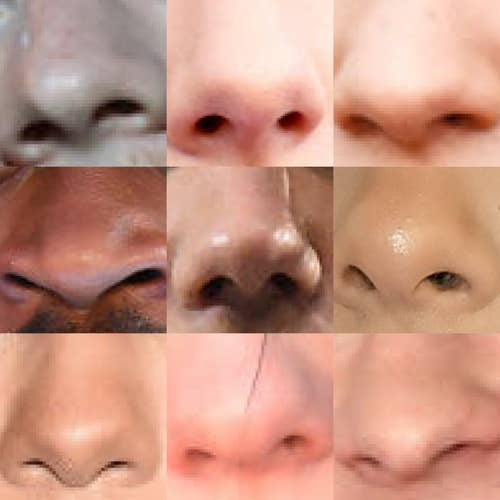
As with any sightseeing outing, your tour guide will point out the structures along the way that are considered to be of interest. All ahead full and pay no attention to those white particles dangling from the tree roots along the side. We begin our look inside by examining how smell affects the way things taste to us. If you smell a rat, it might be because of its diet, of which more later. Our first stop is the nose, along with our sense of smell, which functions as the body’s TSA, with its own list of items that may not be brought aboard.

description

Hold on for a bit as the captain steers the boat into an unexpected cul-de-sac. While there, you will pick up some info on the food you get for your cats and dogs. Ok, backing out and here we are, looking at the appetite for organ meat in various places and cultures, what is good about it and how many of us consider it nasty. It is in this chapter that we discover that Narwhal skin turns out to be rather tasty.

Around the bend and down the hatch, Ms. Roach spends some time pondering the question of whether, like one jaw-weary fellow in 1903, we might believe that by chewing one’s food very, very thoroughly, one can gain greater nutrition from it than someone could by chewing it a more typical number of times. And while you are mulling that over, Roach goes poking into the strange case of Dr. William Beaumont, the researcher, and Alexis St Martin, his personal guinea pig, the proud possessor of an ill-healed and surprisingly non-fatal gunshot wound to the torso. It scarred up oddly and left the enterprising Doctor Beaumont direct access to Mister St Martin’s stomach. Let the testing begin, and go on and go on. Hey, come back here. I’m not done. For a feature length look at this, up that tributary on the left, you might poke your nose into Open Wound: The Tragic Obsession of Dr. William Beaumont by Jason Karlawish. Next, Captain Mary points out the surprising relationship between spit and laundry detergent, actually between spit (there are two kinds, neither of which is called warm) and a lot of things, and why we like our foods to be crispy and crunchy. And if you were wondering if this little excursion included the risk of being devoured by large living creatures, Roach can fill you in on the odds of surviving inside a leviathan’s stomach.

description
From Heidelblog.net

There are plenty more sights to be seen on this journey, subjects like ways of eating oneself to death, the explosive danger of intestinal gas,

(“I know a case, this was fifteen years ago, where the man ate a huge meal and then took an inordinate amount of Alka-Seltzer.” [Dyspepsia expert Mike] Jones made an exploding sound into the telephone. It was like that Monty Python sketch, the Wafer-Thin Mint, where the guy is gorging himself and finally he goes, “I’ll just have this one wafer-thin mint…’”)

 Animated Gif on Giphy
From GIPHY.COM

and the booming field of flatulence.

description
From Flixter.com
(I bet you thought I was gonna go with the infamous bean scene from Blazing Saddles. I am much too classy for that. You will have to go there on your own. Just click this.)

And did you know that it was not only possible to ignite farts, but are some people who have flammable belches?

Roach gets to the bottom of the practice known as keistering, and hooping. Prison is a likely lab for such research into the use of the rectum as a cargo hold. The storage capacity is impressive, to the point that one inmate was referred to as OD for Office Depot, for his hooping capacity, actually used for keistering office supplies. I’m not using that stapler.

And you will be amazed at how much of a rat’s diet consists of material that…um…emerged from the rat. So on spotting a certain rodent in Orlando, try to stop yourself from asking what it is in that taco he is toting. And you do not want to be downwind of that breath.

The colon comes in for considerable examination, and figures in a surprising theory for the cause of death of a king. She comes clean in a look at the history, reasons for and abuses of enemas. And, of course Mary lets loose when she gets the scoop on pooping. She even notes a chart that delineates the seven different types. You know you want to see it.

description
Ok. Time to squeeze yourself off the boat. Be sure to tip the guide.

Roach always delights in reporting on names that are particularly apt.

my gastroenterologist is Dr. Terdiman, and the author of the journal article “Gastrointestinal Gas” is J. Fardy, and the headquarters of the International Academy of Proctology was Flushing, New York.

I suppose the academy might be better off in Richmond, VA, in the neighborhood called Shockoe Bottom, or maybe in Proberta, CA.

A couple of minor gripes. This book could really have used an index. And the chapter on feeding Spot and Fluffy, while interesting, seemed a bit of a digression from the main journey.

That said, reading Mary Roach is akin to the pure joy one experiences from things like Ripley’s Believe It or Not, with the benefit of knowing that there is no smoke and mirror involvement. Reality is soooooo weird. And we have Mary Roach to thank for refilling our occasionally dwindling mental storehouse of disturbing images, (You will never think of Elvis quite the same way after reading this book) and fascinating scientific facts, like the possible origin for the belief in fire-breathing dragons or the medical efficacy of fecal transplants.

There is never a doubt that Mary Roach will make you laugh and teach you things you never knew before. What could be better? Ok, I mean aside from the Blazing Saddles clip.

===================================EXTRA STUFF

Here is the full vid of the wafer thin mint bit, aka Mr. Creosote. Don’t even try watching this if you get queasy easily. It requires a very strong stomach or a very weak mind.

The May 2013 issue of Smithsonian Magazine features an article by Roach, The-Gut-Wrenching-Science Behind the World’s Hottest Peppers and there is another piece in that issue that may be of interest, Why You Like What You Like by Tom Vanderbilt. BTW, the articles are named differently in the magazine and on the web site.

Other Mary Roach books we have enjoyed
—–2021 – Fuzz: When Nature Breaks the Law
—–2016 – Grunt: The Curious Science of Humans at War
—–2010 – Packing for Mars: The Curious Science of Life in the Void
—–2006 – Spook: Science Tackles the Afterlife
—–2004 – Stiff: The Curious Lives of Human Cadavers

Town Hall Seattle has an excellent audio presentation by Roach

Mary is interviewed on NPR

And in the New York Times

There is a wonderful interview with Mary on The Daily Show, a two parter. Here is Part 1 and here Part 2

Janet Maslin’s NY Times review

2 Comments

Filed under Reviews, Science and Nature

Just My Type by Simon Garfield

Might be your type

I am hardly a monogamous sort. I find that I am regularly attracted to different types. Sometimes I like them with big bowls. I am definitely fond of zaftig with strokable, curvy edges, sometimes I prefer something a bit more conservative, upright, familiar. And rarely, slender even, maybe with sharp edges. Occasionally I go for something way out there, maybe with spikes or exploding bits. Ok, you can put your filthy mind back where it belongs now. We are talking about font types, but you knew that, right?

One of the great joys to be had in reading is to learn something new about some aspect of life that has been before your eyes all along. Walking down a street with no fonts on display might lead one to suspect involuntary transport to an unintended time and location, say Soviet era Moscow, or worse, Siberia. (and yes, there is a font called Siberian, a unicase, sans-serif). But for almost all of us, we are surrounded by fonts. Simon Garfield has certainly touched many, particularly in the GR community, with his work. We all do love to read and are probably more susceptible to the attraction of beauty, utility and charm in fonts than most. Yeah, we bad. But not only are fonts significant in the books, magazines, newspapers, and web-sites we read, they demand our attention as we walk down the street, step into an elevator, check the time, unwrap our breakfast, decide what faucet to twist when washing our hands, and they call to us from the labels on our clothing, whether obnoxiously plastered on the outside or applied more decently in clothing interiors. They are on traffic lights, highway signs, airport directives, the sides of police, fire and emergency vehicles. And they have, of course, been around in different times. Fonts do seem to capture elements of the zeitgeist.

description
A favorite haunt of mine back in the day

Thank goodness we have not heard of anyone with an allergy or aversion to fonts. Such an unfortunate would, under the onslaught of type in which we live, soon be reduced to a quivering mound of jelly. Fonts are everywhere and someone not only decided what font needed to be attached to each and every word, someone had to design each and every one. And I am not referring solely to you law-averse sorts (you know who you are) who communicate your needs with literal cut-and-paste design. Really, someone else designed each and every letter.

description
For particularly lazy criminals this Ransom Note Vector font might come in handy

Garfield offers us a laudable overview not just of what is out there in the world of fonting, (See, I didn’t say he was a font of wisdom on the subject) but how each and every bit of it (OK, OK, not each and every bit, but a whole lot of it) came to be, with notice given to many of those who did the hard work of designing and literally casting the dies which have defined printing for hundreds of years.

For those who might only know of Gutenberg from the project that is named after him, it was illuminating to learn that he had been a blacksmith before inventing the printing press. Working with molten metal definitely relates. Garfield offers us a considerable cast of characters (one might say they were all type cast. I wouldn’t. Or that they comprised a cast to die for. No, not me. That would be too low. But some might.) responsible for how words look. Gill Sans, for example was created by, no shock, Eric Gill. (Mister Sans is unaccounted for) Matthew Carter, the founder of Bitstream, designed Verdana among many others. John Baskerville designed the font that was named for him, but there was no mention of his dog. There really is a guy named Bodoni out there, first name, Giambattista. And on it goes. Some of these type-designers’ stories are more interesting than others. But if you find the one you are reading beginning to induce yawns, hang on for a few pages. There will be another that might catch your interest. There is attention given to the development of fonts in various countries, most notably Switzerland, Germany, France and England. Perhaps the most delicious name in the book belongs to a printer from the 1500s. Wynkun de Worde, the first Fleet Street printer, used an expanding range of typefaces, a big innovation at the time.

description
(Brothers Blynkun and Nodde de Worde did not get any ink here.)

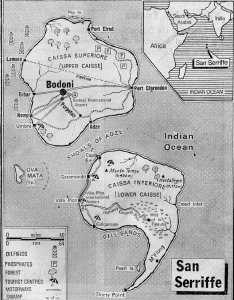
My absolute favorite item in the book has to do with a spoof published in The Guardian on April Fool’s Day in 1977, to mark the 10th anniversary of the Indian Ocean nationhood of San Serriffe. And no, it was not leaked by a twenty-something intelligence worker.

description
Some readers, we are told, tried to book holidays there

There is much information of other sorts as well in Just My Type. Garfield looks at research that says that our brains demand evenness in a font. He looks at the gold rush of printing that followed Gutenberg, at whether a font can be German or Jewish, and at tools for helping identify individual fonts, both books and software. And he offers some intel on how this or that locality selected the font to be used across their cities, for things like airport or street signage. In addition there are some bits on characters (the type type, not the human sort) most of us have never heard of. Doctor Seuss would be thrilled.


Letters from Seuss’s On Beyond Zebra

There are certainly many bad fonts out there. Garfield offers a list of the ten worst fonts in the world. With the explosive growth in the number of such creatures, I imagine this is a list that will be a challenge to maintain.

Ok, so this can be a fun book for us reader-sorts. But I confess it was not a total love fest for me. I found that the illustrations offered for many of the fonts were not sufficient, or even sometimes available. Also, as someone with a memory that is not nearly so well formed as the metal dies in question here, I found that much of the information seemed to slip past, in one eye and out the other. It was a lot to take in. So, that’s my mandatory gripe. If I could give the book four and a half stars I would, for the occasional glazing over I experienced. But there is such a wealth of interesting information that my kinder parts persuaded me to go ahead and submit a fiver.

One can only pray that the new fonts that continue to fill our world and our sensibilities will do at least as well, and hopefully even better than those that have come before. And it seems that we should take no chances with this, so I offer here the beginning of a celestial wish for visibility, clarity and readability

Helvetica, full of grace, the font is with thee…

you know, just in case.

Posted 6/14/13

8 Comments

Filed under Non-fiction, Reviews

Frozen in Time by Mitchell Zuckoff

book coverWinter is coming.

Mitchell Zuckoff seems to be making a habit of looking into the travails of crash victims. His prior book, Lost in Shangri-la , followed three survivors of a WW II era plane crash in New Guinea. They faced the usual sorts of dangers, a step back to the Paleolithic, and a diverse assortment of possible ways to die; cannibals, elements of an enemy army, all sorts of predatory and/or poisonous critters, microscopic invaders that could ruin your day, and help see that it is your last. The whole world was watching and cheering for their safe return.

Reversing his orientation a bit this time Zuckoff, in his latest WW II opus, Frozen in Time, has substituted brutal cold, and a particularly unwelcoming landscape for those other hazards. I’ll take the cannibals every time. (with a nice Chianti) In this instance, the whole world was unaware of the events until well after they had come to a conclusion. Upping his game, Zuckoff deals not with a single crash, but with several, in a cascade.

description
Mitchell Zuckoff – image from the author’s site

I suggest that if you have a choice between death by the fire of a predatory jungle or the ice of an arctic wasteland, you would do well to choose the former. You’d have a better chance of making it. At least you would not have to worry so much that the ground on which you were standing might open up and swallow you whole, that you might lose body parts to the relentless cold of Arctic winter, that you might lose your mind waiting to be brought home, while blizzard-driven snow seeps into your shelter. And of course there is always the danger of becoming a GI-sicle for a prowling polar bear. There are survivors of this experience who lived through 148 days worth of cold days in hell.

Douglas : C-53 : Skytrooper

There is a saying that bad things come in threes. It might have been nice if that had been the case in Greenland, in 1942. Greenland seems to have the same effect on powered vehicles as the Bermuda Triangle. There were at least a dozen crashes there in 1942. The trouble under scrutiny here began on November 5, when a military cargo plane, a C-53 Skytrooper, [above] the equivalent of a civilian DC-3 airliner, was returning to its base from Reykjavik after a “milk run” delivery of war materials. It was carrying a crew of five.

Shortly after the plane reached the southeast cost of Greenland, a location that defined the edge of nowhere, disaster struck: …the Skytrooper went down on the ice cap. By some accounts, the crash occurred when one of the plane’s two engines failed, but other reports were silent on why the C-53 experienced what the military called a “forced landing.” The official crash report declared the cause “unknown and no reason given in radio contacts.” A handwritten notation added, “100 percent undetermined.”

The air over Greenland was a busy locale in those days, with dozens of flights transporting men and materials to the war every day, then returning home to do it again. But Greenland is the largest non-continental island on Planet Earth so, even with a lot of planes searching, locating a downed aircraft was no simple task. Here are some comparisons:

California – 163,696 sq miles
Texas – 268,820 sq miles
Alaska – 663,696 sq miles
Greenland – 836,302 sq miles

In other words, big frackin’ haystack.

On November 9 a B17F, a “Flying Fortress” redirected from its mission in Germany to participate in the search, ran into trouble

When they reached the end of Koge Bay fjord, [the crew] saw that everything outside was the same frightening shade of whitish gray. They couldn’t tell where the sky ended and the ice cap began…When the true horizon disappears in the Arctic haze, a pilot might as well be blind. Pilots fortunate enough to survive the phenomenon describe the experience as “flying in milk.”

It did not end well, and nine more servicemen were unwillingly grounded.


On November 29th, desperate to evacuate members of crews what had been stranded in an arctic wasteland for weeks, a pontooned Grumman seaplane know as a Duck, assigned to the Coast Guard ship Northland was making a second daring run, having already rescued some survivors.
It went back for more. But a storm blew in before the Duck could make it back to its base. The pilot was flying blind. The plane crashed into the ice. This is an image of the very plane, taking off. Not a lucky ducky.

image shows on my blog, see bottom

There is more, but these are the big three bits of awfulness of this tale.

Frozen in Time tells the stories of how the crash survivors fared, how the rescue operations were planned and how those worked out, or didn’t. These stories are both fascinating and chilling. There are many examples told of MacGyver-like creativity on the ground among the crash-ees, among the rescue teams and, decades later, in an expedition looking to bring ’em home. This last is a parallel tale that is given much less than half the book. Not all the men and not all the planes made it back in 1942. The author becomes involved with people who are looking to find and repatriate the remains of the crash victims who did not survive. There are a lot of personalities in play here and a fair bit of politicking. It is not as interesting as the core survival tale, but it is informative. A recovery mission does indeed take place, in 2012, and the author is a full participant in that.

It’s tough enough finding a 60+ year old wreck that stands still, (not counting myself) but in Greenland the ice sheet is a very large moving target. Drop a flag on point A and when you return it could be at Points E, Q or X. And then there is the accumulation of more than half a century’s worth of compacted snow.

Imagine searching for a diamond chip buried deep beneath a frozen football field; your best tool is a straw what makes tiny holes into the ground, through which you peer down to see what’s below; if your holes miss by even a little, you’ll miss it; and you have a brief window to explore ten potential locations before being kicked off the field.

The story of the attempt at recovering remains is certainly interesting. It is no surprise that there are sundry parties at Department of Defense meetings who offer a chilly reception to the contractor who was looking to undertake the mission. We get to be a fly on the wall for a few of these.

But the meat of the story is the tales of survival, how these men (all the crash-ees were men) contended with such a hostile environment, what they did to create livable living spaces, how they coped with hunger, as well as cold, and fear. Some fared better than others. It is a bit frightening to learn that a plane landing on a glacier is in danger of getting frozen to it, like a warm tongue to a frozen pipe. There are uplifting items as well in this dark tale. You will learn about the “Short Snorters Club,” if you are not already a member, and the purpose of a Snublebus. You will also expand your vocabulary a tad with some arctic terms.

You will learn as well, about the dedication of the military to bringing home every reachable service member, and about some of the after-effects of the stranding experience on those who made it out.

Spencer’s family knew him as warm and funny, and they’d remember him as a man who bought toilet paper in bulk long before warehouse stores. When his younger daughter Carol Sue asked why, Spencer explained: “I have been without toilet paper,” he told her, “and I am never going to be without toilet paper again.”

Not Scarlett O’Hara perhaps, but a telling indication of the permanence of the crash experience on the survivors. Many found themselves with increased susceptibility to cold. Not everyone had the luxury of such discomfort. One poor bastard survived a crash in the B-17 only to succumb to another as he was being flown away from the bomber in a rescue plane.

There are several crews to keep track of and I think it would have been useful for there to have been a section listing them by vehicle, rather than, or in addition to the straight alphabetic list provided in an appendix. That said, the volume I read was an ARE so there may be a difference or two between what I saw and what is in the final hardcover edition. Just in case it is not provided there,here is the crew list by craft.

C-53
Captain Homer McDowell, Jr
Lieutenant William Springer – co-pilot
Staff Sergeant Eugene Manahan
Corporal William Everett
Private Thurman Johannessen

A brand new B17F – radio sign PN9E
Pilot – Lt. Armand Monteverde
Co-pilot – Lt. Harry Spencer
Navigator – Lt William “Bill” O’Hara
Engineer – Private Paul Spina
Asst Engineer – Private Alexander “Al” Tucciarone
Radio Operator – Corporal Loren “Lolly” Howorth
Mechanic – Private Clarence Wedel 35,
Tech Sergeant Alfred “Clint” Best and
Staff Sergeant Lloyd Woody Puryear

The Grumman J2F-4, aka the Duck
John Pritchard
Benjamin Bottoms
Corporal Loren “Lolly” Howorth

You are on your own keeping track of other planes, ships and ground-based rescue teams that come into play in this story.

If you liked Lost in Shangri-La, it is a good bet you will find it worth the effort to search for a copy of Frozen in Time and bring it home. Read it in a warm place.

========================================EXTRA STUFF

The author’s web page

The author’s FB page for this book

Harper Collins promo video

Video of the downhole camera. (2012) Uncomfortably similar to a medical scoping

A Coast Guard page on an earlier attempt to locate the Duck

North South Polar – Lou’s site

List of crashes – 1942-44

Leave a comment

Filed under Non-fiction, Reviews, Science and Nature

Among the Cannibals by Paul Raffaele

book cover
What could be worse than a dog eat dog world? Oh.

I was of two very different minds about this book.

Australian Paul Raffaele is a feature writer for Smithsonian. He has covered many parts of the globe in his work for that venerable institution. And he travels far for this work, looking into that darkest of human activities. He investigates special meat-eaters in New Guinea, India, Tonga, ancient Mexico, and Africa. We have a certain image in mind of what cannibals might look like. I mean in the real world, not the dark imagination of Thomas Harris or the psychosis of some of our more aberrant criminals. They would probably live on Pacific Islands, or remotest Africa or South America, use primitive technology and have acquired a taste for missionary over easy. Mostly, but not entirely the case.

Cannibalism of one kind or another had been common around our globe through the millennia, and yet the classic Western image of cannibals is a terrified white Christian missionary in pith helmet crouching in a large outdoor cooking pot, the logs burning fiercely as wild-eyed African warriors in grass skirts dance about him shaking their spears. Their glinting eyes show their eagerness to tuck into their human meal. In truth there is not one record of a missionary ending up in an African cook pot. The cannibals invariably ate one another.

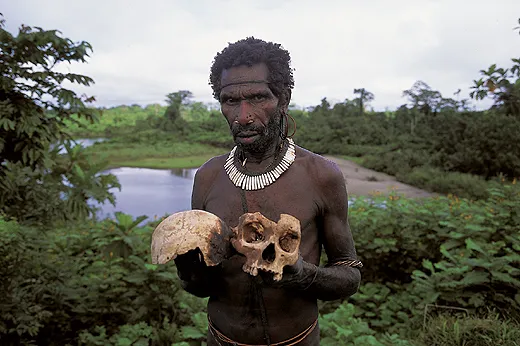
The book offers interesting, surprising, and very disturbing information about a practice most of us (certainly me) thought had vanished from human behavior. The reasons for chowing down on such forbidden fruit vary. High on the list is to degrade and strike fear into one’s enemies. Another is to honor close relations. Some even consider eating human flesh a form of religiousity. The Korowai people of New Guinea justify their practices by maintaining that victims had already been killed by evil spirits and it was only the evil spirits that had taken over the body that was being devoured.

description
Kilikili says he has killed no fewer than 30 khakhua (male witches) – from Smithsonian.com

The practice is supposedly a thing of the past in New Guinea, but I would not like to place too high a wager on that. Raffaele’s looks at the practice in Tonga and Aztec Mexico are more firmly planted in the past. Unfortunately, there are still people-eaters today. There is a Hindu sect in India, the Aghoris, whose holy men chow down on you-know-what “as the supreme demonstration of their sanctity.” They even sit atop rotting corpses as a show of devotion and Raffaele reports some particularly unspeakable acts in which they engage, that I will not report on here.

description
An image of this cheerful Aghori is sure to help you sleep at night – image from Dharma Keng

And no, wiseass, it is not a self-portrait. I cannot really fold my legs like that for any length of time, and I keep my hair and beard much shorter these days. But there is worse to come. His report on the activities of the Lord’s Resistance Army of northern Uganda takes the eating of human flesh to whole new level of depravity, a true heart of darkness. This information is the stuff of nightmares. Very disturbing.

I have a major gripe with the book. The cover is sprightly. It shows a hand reaching up out of a large cooking pot writing the book title. Lower down on the page is an icon that repeats inside as a section divider, a skull and crossbones in which the crossbones have been replaced with a knife and fork. One might get the impression that the information contained within would fulfill the silly graphics. We know that even such darkness can produce smiles. Sondheim’s Sweeney Todd (the stage version, not the very disappointing film), for example, is probably the only Broadway musical to have cannibalism as a central focus. Devouring scenery does not count. And while my personal favorite all-time Broadway show was rather dark, it still maintained a significant level of humor.

Todd: What is that?
Lovett: It’s Priest. Have a little priest.
Todd: Is it really good?
Lovett: Sir, It’s too good, at least.
And of course it don’t commit sins of the flesh
So it’s pretty fresh
Todd: Awful lot of fat
Lovett: Only where it sat
Todd: Haven’t you got poet or something like that?
Lovett: No, you see the trouble with poet is how do you know it’s deceased? Stick to priest.

And so on…

The light touch promised by the cover art for this book does not deliver as promised. There is nothing at all amusing about children living today who are forced to eat human flesh under pain of death. In that way the book offers a bait and switch, promising a light touch, but delivering a deep gouge.

I also found the author at times personally off-putting. While in Tonga, he felt it necessary to comment on his translator’s physical attributes in a way that came across as salacious.

Waiting outside and holding aloft my name printed in marker pen on a pad is a round-faced, bright-eyed girl who looks to be in her early twenties. She is clad in a Congo-style ankle-nudging cotton dress that fits tightly about her neatly rounded thighs, and a short-sleeved top printed with a spray of red orchids that clings to her firm high breasts. She has woven her hair in to strands festooned with colored beads. Unlike most of the women at the airport who are laden with fat and boasting the enormous bottoms that most African men are said to lust for, she is sleek and silky.

Either his editor was not doing a good job, or the author exercised an ill-advised veto.

Raffaele does not come across as a particularly deep thinker and this is not a scholarly investigation of a very dark side of humanity. There is only passing mention of the Catholic sacrament of Communion, in which practicing Catholics consume the body and blood of Christ. There is even less on the sundry cannibalistic psychopaths who have come to public notice. Are there any studies indicating when and where it might have begun? Raffaele does note that it existed in prehistory. Records go back at least as far as Herodotus (well before Soylent Green) of such culinary preferences, and it lasted into the 19th century, at least. How about a comparison with other species? How widespread is the practice in the animal kingdom. Are we really different from what we consider lower orders? For a more analytical look at the subject you might consider Carole Travis-Henikoff’s book, Dinner With a Cannibal: The Complete History of Mankind’s Oldest Tabboo. An NPR interview offers a taste of what she has to offer.

Among the Cannibals definitely offers new and intriguing information. Be forewarned that you will need a strong stomach to get through it all. But, because it was so much not what was expected, it left me with a bad taste in my mouth.

=======================================EXTRA STUFF

To remove the taste, you might consider taking in a bit more of Sweeney. Another gem from the vaults is a song by Sheb Wooley that was actually a #1 hit when I was a tyke.

If you get an invitation to the Donner Party, I would pass.

And of course, every abomination must have an advocate, so you might want to see the modest proposal the folks at Zebra Punch offer, while humming their particular version of Barbara Streisand’s classic tune, about why we should
eat people.

There is an interesting item on cannibalism in Wikipedia

Raffaele’s article for Smithsonian Magazine, Sleeping with Cannibals, was the basis for the book

Leave a comment

Filed under Non-fiction, Religion, Reviews, Science and Nature