Category Archives: Fiction

A Thousand Steps by T. Jefferson Parker

book cover
1968 was certainly an interesting time. Laguna Beach was an interesting place, an artist colony and tourist destination of about 13,000 residents, and, these days anyway, about six million visitors a year for a current local population of a bit over 20,000. So, even with a temporal discount it had to have been a lot back then too. T. Jefferson Parker lived there for a stretch. It inspired his first, very successful, novel, Laguna Heat, so he knows the territory into which he places his young hero.

Sixteen-year-old Matt Anthony is a hard-working, pretty decent kid. Holds down a paper route for money, building muscle and character on his Schwinn Heavy-Duti bike. Single mom, Julie, holds down a crappy job at a Jolly Roger restaurant. (Might be better named Davey Jones’ Locker?) His older brother, Kyle, is a short-timer in ‘Nam, terrified that something will happen to him in his remaining weeks. Their father, Bruce, a former cop, has been mostly out of the picture for years, but maintains occasional contact. Mom has issues with substances, which are dramatically available in southern Orange County, and her issues are growing more alarming. Matt’s body is going through some changes, which is always a joyous experience. And then his sister, Jasmine, a recent High School graduate, gorgeous, straight-A student, in-crowd, rebellious toward the usual authorities, goes poof! Stayed out overnight (not alarming in itself) but has remained MIA and the local fuzz are uninterested.

I was fourteen-years old in 1968 so I experienced the strange, beguiling world of Laguna Beach as a very impressionable, wide-eyed, wonder-struck boy. When it came time to create a hero/protagonist for A Thousand Steps, I just aged myself—that fourteen-year old boy—into a sixteen-year old on the cusp of getting his driver’s license, and let him take off in his mother’s hippie van! – from the Mark Gottlieb interview

Bill Furlong personifies that disinterest, a large officer, with an interest in Julie for things other than possession of illegal substances. Brigit Darnell is the good cop, young, a mom, willing to listen to Matt. It may or may not matter. He knows his sister. Does not accept that she had simply run off. And one more piece. Bonnie Stratmeyer, 18, missing two months, posters proclaiming the fact up all around, has just been found at the bottom of the stairs at the Thousand Steps Beach. (Last time Parker actually went up, or down, or both, he counted 224, but the number changes with each attempt. It’s 219 in the book.) Bonnie had not taken the usual route down. Thus Matt’s panic about Jazz.
description
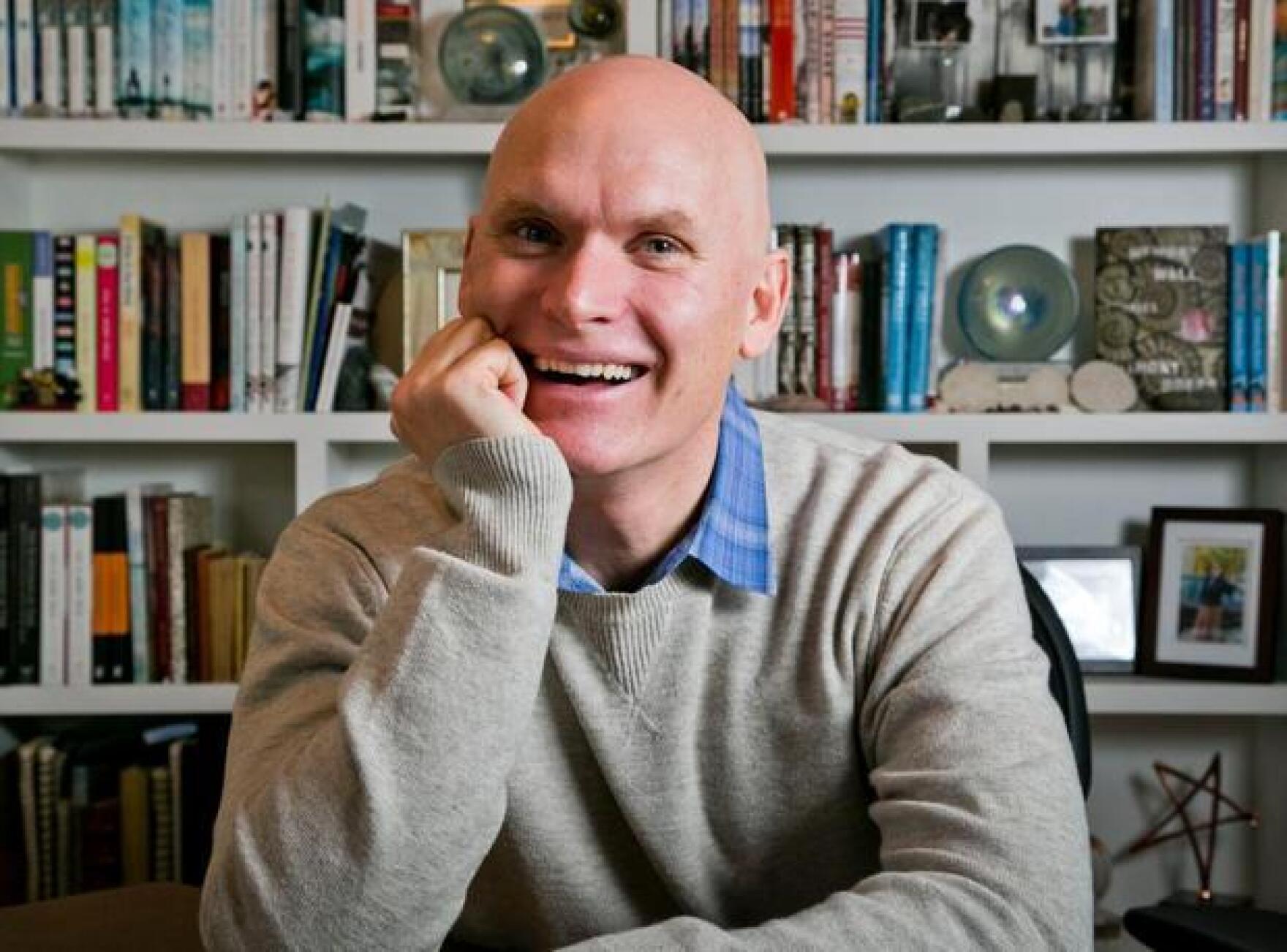
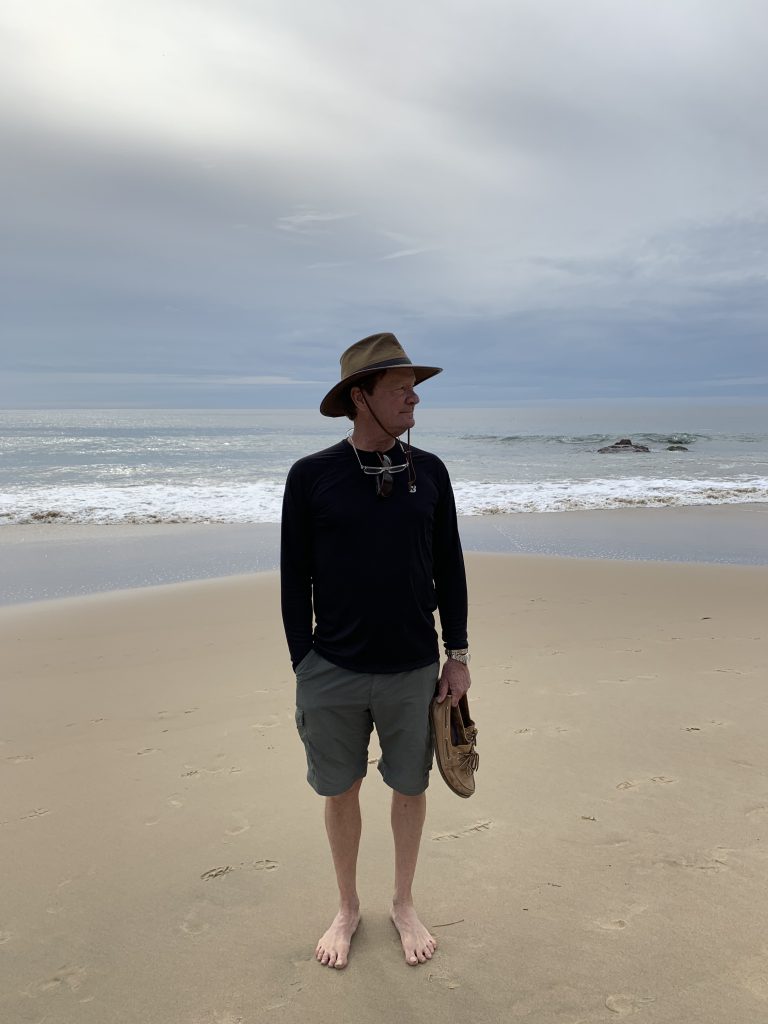
T. Jefferson Parker – image from Laguna Beach Independent – photo by Rita Parker

The thousand steps of the title is a notable waterfront location, but it might also be what Matt sets himself to take on, in the absence of official interest. The plot is Matt continuing to search for his missing sister, continuing to turn up clues, continuing to pester the cops to do their job, while trying to cope with chaos at home, and while coming of age, physically, socially, and emotionally. Although it may be less of a journey for Matt than other teens. He is a pretty grounded kid. And then there is the local color. A holding pen of new agers, con-men, regular crooks, a biker gang, drug dealers, drug abusers, and feckless teens. There are enough shady goings on here to blot out the California sun.

Mystic Arts World is a bookstore/head-shop/local institution that offers classes on meditation, among other things. Johnny Grail, the owner, is a bit of a local legend, a slippery sort, well able to keep a step or two ahead of the police, (who are desperate to catch him holding or doing anything illegal) to the delight of area residents. The whole New Age thing was not particularly popular with the constabulary. Go figure. But despite their clear prejudice, they actually may have something. Johnny is about as clean as a public crash pad.

description
Mystic Arts World (1967-1970), a head shop in Laguna Beach, was ground zero for psychedelic culture in southern California during the late 1960s and early 1970s. It was there that a loosely organized group of artists interested in alternative culture, mystical experience and the transformation of society, “The Mystic Artists”, congregated and exhibited their art. Their artistic expression ranged from Beat assemblage to figuration to psychedelic art. – image and text from The Brotherhood of Eternal Love site

Local color extends to the presence of Timothy Leary, offering lectures at the MAW, and a Swami who has attracted a bit of a following. He offers increasing levels of instruction to his followers. Some reside at his compound, a former seminary. Matt and his brother used to play there when they were kids and it was unused.

The town hosts an annual tableaux vivants, i.e. classic paintings brought to life with people dressed up as characters in the works, and sets made to bring the paintings to life. A few characters in the novel are in it. Matt likes this. He is a budding artist and draws a passel of scenes from his experiences to help police in their frail attempts to look for his sister, and address other crimes. He is particularly fond of the work of Edward Hopper.

Working class life contrasts with the lifestyles of the rich, corrupt, and horny. We get a peek at some excusive locations hosting some very dodgy goings on. Matt fishes less for recreation than for a supply of protein, which mom cannot always provide. They live in a clapboard rental, for which Mom struggles to make rent, Matt sleeping in the garage. But we see great wealth on display as well. There is a part of town called Dodge City, for its casual relationship with the law, general run-down-ness and general hostility toward people toting badges. Get out of Dodge? Sure, ASAP. But up-slope and down-slope have plenty of criminal intent in common.

So what happened to Jazz? Is she still alive? As the days pass the odds seem worse and worse. Is Matt’s mom serious about stopping her drug use? He gathers help where he can, and pedals on, but we wonder if he might be wasting his time. Why does Mom want to move to Dodge City? Will his father ever show up to help? He keeps promising. And even if he does, would he be more hindrance than help? Is the Swami as nice and wise as he seems? Girls are becoming more a part of his life, and maybe even some activities that often accompany such associations. Will Matt’s permanent crush on Laurel ever go anywhere?

I am roughly the same age as Matt, so can relate to being a teen in that era. It never hurts to add that into the reading enjoyment mix. On the other hand, my east coast experience was quite different from his Cali life, including the degree of drug exposure. My older brother was in the army too, but not in Viet Nam. My father was around. My mom’s drugs of choice were Tareytons and tea. But still, we all go through adolescence, so there is the coming-of-age element to relate to. Sounds like Matt skipped the parts where your voice goes to hell, your face resembles a moonscape, and embarrassing body parts pop up for no discernible reason, for all to see. Whatever. It is impossible not to love Matt. There is one gripe I have about him, though. For someone who was so smart and intrepid about tracking down his sister, he is startlingly blind about some items, which I will not spoil here, that were jumping up and down and screaming from the pages. Yeah, he is just an unworldly teen, so could easily miss some things, but he seems pretty sharp about other stuff, so it rankled.

description
Matt’s bike – image from TJP’s Twitter cache

Parker has been at this for a while. Steps is his 27th book. His first, Laguna Heat, was an instant success, and was brought to the screen by HBO. His work includes multiple series, and has earned him THREE EDGAR AWARDS! So, no slouch. He started his writing career as a cub reporter. In the Internet Writing Journal interview Parker was asked how his journalism background informed his writing.

The best thing about journalism is that it teaches a young person how the world works. It’s not the writing itself, because that is fairly straightforward and desirably formulaic. It’s the exposure that’s valuable. When I was 23 I was covering cultural events, movies, books, city hall, school board, fires, police — everything but sports and business. It was a crash course on civics, human nature, bureaucracy. It was also a crash course on how the press and the government and business all interact. Those relationships are at the core of what we are as a republic.

He knew he was not a journalistic long-timer, but being a reporter did hone his skills, and also allowed him a venues in which he could collect plenty of details to include in his fictional writing. His craft has grown as well. Keep an ear out for the soundscape Parker has incorporated. It enriches the reading experience.

I read this one at bedtime, 20-30 pps a night, sometimes more, sometimes less, depending. Every day I was reading this book I was eager, very eager to tuck my lower half under the covers, (also good for hiding the cloven hoofs) crank up the laptop for my notetaking, switch on the lights to make reading my hardcopy ARE possible, and reveled. You all know that feeling when you are truly enjoying a book, and look forward to getting back to it every day. Well, presuming that you do not just scarf down the entire thing in one ginormous gulp. I prefer to spread out that joy. So, a couple weeks, and it delivered every night.

Bottom line is that I totally enjoyed this book. Appreciated the portrait of a time and place well known to the author, loved the lead character, and had fun trying to figure out who had committed (was committing?) which crimes, how, and why. A few of those will quickly succumb to your investigative instincts, but the rest will keep you guessing. Mystery, suspense, thriller, coming-of-age? Use whatever adjective suits or mix and match. Doesn’t matter. Whatever you call it, A Thousand Steps will remain a pretty good read. You will not need any LSD or opiated anything to get off on or get into this book. Go ahead. Be a tourist in Laguna Beach for a bit. It’s a trip you won’t want to miss.

Review posted – January 7, 2022

Publication date – January 11, 2022

This review has been cross-posted on Goodreads. Stop by and say Hi!

I received an ARE of A Thousand Steps from Macmillan’s Reading Insiders Club program in return for a couple of hits of that sweet product. Righteous, man.

=======================================EXTRA STUFF

Links to the Parker’s personal, FB, GR, and Twitter pages

What does the T. stand for?
Not a thing. No, really. Nada. Zip. Nothing. Jeff’s mom always explained it by saying she thought the T. would look good on the President’s door.
– from the Bookbrowse interview

Interviews
—–Mark Gottlieb Talks Books – Three-Time Edgar Award-winner and New York Times Bestselling Author T. Jefferson Parker
—–2007 – Bookpage – Only in California by Jay MacDonald
—–The VJ Books Podcast – T. Jefferson Parker – A Thousand Steps by Roger Nichols
—–2018- Bookbrowse – An interview with T Jefferson Parker
—–The Internet Writing Journal – A Conversation With T. Jefferson Parker by Claire E. White
—–2002 – Orange County Register – THE VIEW FROM ELSEWHERE by Amy Wilson

Songs/Music
—–The Rollingstones – Satisfaction
—–Cream – Tales of Great Ulysses
—–Cream – Sunshine of Your Love
—–Jimi Hendrix – Foxy Lady – Hendrix performs in front of an audience of the sitting dead in Miami
—–The Byrds – Mr. Tambourine Man

Items of Interest
—–The Brotherhood of Eternal Love – their site
—–Brotherhood of Eternal Love – Laguna Beach – Wet Side Story – a bit of Laguna Beach history
—–All That’s Interesting (ATI) – An interesting article about the BEL in the 1960s
—–Wiki on Timothy Leary
—–Wiki on the Pageant of the Masters, an annual event held in Laguna Beach, featuring tableaux vivants, i.e. classic paintings brought to life with people dressed up as characters in the works, and sets made to bring the paintings to life. A few characters in the novel are in it. Here is a nifty video promoting the event today.


Leave a comment

Filed under Fiction, Historical Fiction, Mystery, Suspense, Thriller, Thriller

The Midnight Library by Matt Haig

book cover

“Between life and death there is a library,’ [Mrs Elm] said. ‘And within that library, the shelves go on for ever. Every book provides a chance to try another life you could have lived. To see how things would be different if you had made other choices . . . Would you have done anything different, if you had the chance to undo your regrets?”

Every second of every day we are entering a new universe. And we spend so much time wishing our lives were different, comparing ourselves to other people and to other versions of ourselves, when really most lives contain degrees of good and degrees of bad.

“The unexamined life is not worth living,” said Socrates. But how much examination can one life stand? Nora Seed has reached bottom. Her cat is dead. And her philosophy degree is at least as dead as Schrödinger’s cat. She is 35, and has been working in a music shop in her home town, Bedford, (not Bedford Falls) for almost thirteen years. Nora’s boss tells her “I can’t pay you to put off customers with your face looking like a wet weekend.” She was in a band, with her brother, but bailed when the going got too promising. She was also a primo swimmer as a teen, one of the fastest in the country. The pressure put her off it. She had also backed out of her wedding to Dan…with two days notice.

description
Matt Haig – Image from Independent – photo by Kan Lailey

Decisions, decisions, decisions. Haig counts down for us the hail of misery descending on poor Nora, the bad choices, the disappointments, the misfortune. Alienating those closest to you does not leave much of a support network, a needed bolster in a tough time. As with George Bailey, we are also introduced to the positive bits in her life. Expect to see them pop up later. But Nora has decided that she is not much use to anyone, that there is no real future for her. Her self image is that of a black hole, collapsing in on herself.

There was an old musician’s cliché, about how there were no wrong notes on a piano. But her life was a cacophony of nonsense. A piece that could have gone in wonderful directions, but now went nowhere at all.

She decides to continue the process to its logical conclusion, and has a go at that.

[I seem to have been on a tear in 2021, reading books that deal with people considering ending it all before life gets even worse. Should We Stay of Should We Go? by Lionel Shriver, The Brilliant Life of Eudora Honeysett by Annie Lyons, and Matt Haig’s How to Stop Time look at older sorts considering the dark deed. Younger folks struggle to cope with the damage in their lives, some of which has been self-inflicted, in Alice Hoffman’s Faithful, and now this one. Was the universe trying to tell me something? I may be getting on but I have had my three COVID shots and am not exactly contemplating a self-propelled early exit. Too many books left to read. Just seems odd, somehow.]

But then she wakes, or something, (apparently, she is not dead yet) has a look around, and finds her way through the mist to a modest-sized building with a clock on it, set to midnight. Mrs Elm, a librarian who’d helped her out as a student, is there to greet her. And the game is on.

For a decade I’ve been wanting to do something about parallel lives. Obviously, this is a well-trodden territory in film and literature, so I thought I didn’t have anything new to bring to the table. It had been done so well, so many times. And it was really just getting the concept of the library. What I liked about the concept of the library is that it managed to be a neat plot device, but it was also the center of what I was trying to do on the philosophical side of it…someone who’d reached this point where they’ve run out of options, everything’s bleak.


Between life and death you get to see all these different branches of how things could have been. So I liked the library because it was literally and metaphorically what I was trying to sort of do with the story as well as it being a little love letter to libraries, because libraries, I suppose, are our portals to other places anyway. – from The Strand interview

The Midnight Library offers immersion of a different sort than the experiences one might expect at a more usual book-lending emporium. Nora can select one element of her life she would change. A book appears applying the specific change and Nora gets to live that life. There is technobabble in here about the multiverse and all possible branches being true in some universe. Fine, whatever. Doesn’t matter. Skim.

Libraries have more than a few books, so Nora gets to make more than a few decisions, live more than a few lives. What if she had stuck with swimming? What if she had stayed with the band? What if she hadn’t bailed on her wedding? What if? What if? What if?

The appeal of the novel is that it makes manifest the thoughts that all of us have had. How would my life have been different if I had done this rather than that, chose to focus on this area of study or skill rather than on another? What if I had asked that girl for a date instead of chickening out? What if I had chosen some other boy than the one I chose? What if I had tried harder to save the relationship instead of calling it quits? What if I had called it quits sooner instead of staying in an unhappy situation? What if I had not made that deal with the dodgy Colombian drug dealer? Wait, what? (Oh, never mind) Go ahead, pick a change, get a book, find out.

Personally, I am pretty Zen about the whole what-if scenario. I am completely convinced that had any of my larger life choices been different, I would have wound up in similar or worse circumstances. Maybe I would not have learned the lessons I learned at place B that I learned at place A. Maybe I would not have grown in certain ways with person C that I did with person D. It is possible, of course, that my life might have been dramatically more successful than it has been, which is not terribly. But could I have handled success, even if it had? I expect the universe is a leveler, in terms of personal choices, anyway. We are who we are and our choices reflect that person. Different choices would reflect that person as well, even if the map of our lives might have been redrawn, presenting different challenges from the ones we have already lived through.

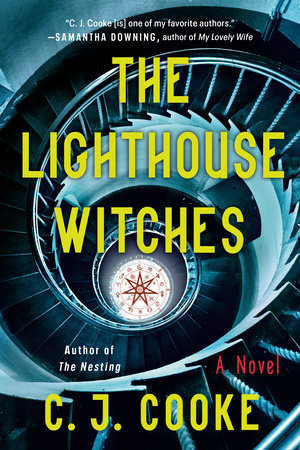
There’s a certain formula to tales of this sort. Character is miserable in his/her life, but gets a chance to see how it could have been different, maybe fulfills all their fantasies, or sees how much worse it might have been, and arrives at the end ok with life as it is, more or less. Maybe with a greater understanding, appreciation for what is. Some offer a single, long view of that alternate possibility like George Bailey’s, in It’s A Wonderful Life or Frank Cross in Scrooged, not to mention the original on which that one was based. Others offer iterations like a programming loop: DO whatever UNTIL some condition is met. EXIT. In Groundhog Day, Phil Connors has to relive a single day over and over until he figures out how to be a better person. In Palm Springs, Nyles is caught in a time loop with a similar path to salvation. Speaking of loops, they seem to have been in my reading list this year too. The Lighthouse Witches by C.J. Cooke and Meet Me In Another Life by Catriona Silvey pop to mind. Maybe the universe wants me to be on the lookout for a time-loop story in which older people consider ending things?

At least Nora gets to have different days, places, and relationships. Of course, it’s tough keeping up when you enter every new sphere not knowing your specific history in it. Where do I work? Is that my kid? I live in this house? Cool. Or not. The stress of trying to figure out who she is in each iteration is both comedic and nerve-wracking. Whenever Nora knows (feels, really) that a particular life is not quite the one for her, she dissipates back to the library for another go.

One life Nora never got to have was being a male. Almost, though. The character of Nora began as a male in draft #1. Haig felt that it was not working, that he was writing too much about himself. He wanted his lead to very much NOT be him. Switching to a female lead took care of that quite nicely. The freedom he felt with the change allowed him to actually insert more of his personal concerns into the character without it really seeming to be him.

One piece that is very much about him is that he gave up piano lessons, even though he was pretty good, at age 13, caving to mindless peers who considered piano lessons so uncool. He imagines an Elton John version of himself in a parallel Universe. In a more serious vein, Haig struggled with depression as a younger man, and knows what it feels like to lose hope.

Nora’s alternate lives are diverse, expressing wishes any of us might have had. There are the grand ones of fame and huge success, but others of a much more modest scope, like owning a pub with your partner, salving ordinary regrets. Some focus on doing good, like studying global warming as a glaciologist. Some of the lives are pretty decent, but are any of them the right one for Nora, the right combination of the same, yet different, keeping the good, while minimizing the awful?

I have only one particular gripe with the book. When Nora finds herself in each of the parallel universes what is supposed to have happened to the Nora that was in that universe before the peripatetic Nora arrived? Did she die? When Nora winks out of each of the lives she leaves, does the Nora who was there before wink back into existence? Is she like the understudy who steps in for a time, to be replaced when the star is all better? I know this is fantasy, and not science fiction, so I should just shut up and get over it, but it bugged me. Thankfully not enough to detract (much) from my enjoyment of the book.

I feel like if you’re putting something out into the universe, why not offer people some sort of nourishment, or hope, or usefulness? Or all the things that are frowned upon in some sort of academic quarters. Why not make people feel good?

The book has been a huge success, selling gazillions and making Haig bags of money. Movie rights are sold. Good for him. In a world impacted way too much by darkness and cynicism, it is a welcome thing to have authors eager to spread some sunshine. Nora Seed is a decent person, not fabulous, mind you, but relatable. And she faces many difficult choices in her many parallel lives, well, really, one choice, many times, stay or go. It is not hard to root for her to find the right mix of ingredients in a life somewhere, that will allow her to escape the increasingly unsatisfactory option of death. If The Midnight Library offers you some impetus to consider the choices you have made in your life, and wonder maybe what alternate experiences might have resulted, so much the better. Or you could simply enjoy it as an engaging, heart-warming tale. And you don’t even have to choose one or the other.

Equidistant. Not aligned to one bank or the other.
That was how she had felt most of her life. Caught in the middle. Struggling, flailing, just trying to survive while not knowing which way to go, which path to commit to without regret.

Review posted – December 10, 2021

Publication date – September 29, 2020

This review has been cross-posted on Goodreads

=============================EXTRA STUFF

Links to the author’s personal, FB, and Twitter pages

Interviews
—–Strand Book Store – Matt Haig with Kristin Hannah: The Midnight Library– video – 1:02:49 – definitely check this one out
—–Independent – Matt Haig: ‘I ignored a phone call from Meghan Markle’ by Olivia Peter

Songs/Music
—–Cher – If I Could Turn Back Time
—–Jim Croce – If I could Save Time in a Bottle

Books noted in the review, and one not noted
—– The Brilliant Life of Eudora Honeysett by Annie Lyons – Life has been very disappointing. An elderly Eudora is determined to see herself off, until life intervenes and offers reasons to reconsider
—–How to Stop Time by Matt Haig – if you lived forever might you welcome death?
—–Should We Stay of Should We Go?<!– by Lionel Shriver – a couple, many years ahead, considering whether to check out at age 80
—–
Faithful by Alice Hoffman – Shelby struggled, following a trauma, to re-start her life after shutting it down for several years, which included a suicide attempt
—–The Lighthouse Witches by C.J. Cooke – too spoilerish to tell
—–Meet Me In Another Life by Catriona Silvey – Thora and Santi experience multiple lives, trying to figure out their relationship and how they can step out of the loop. It also features a prominent public clock.
—–A Christmas Carol by Charles Dickens – skinflint Ebenezer gets some fresh perspectives on his life – full text with illustrations, from Gutenberg
—–Cloud Cuckoo Land by Anthony Doerr – if there is a bigger homage to libraries and librarians, I do not know what it might be

1 Comment

Filed under Fantasy, Fiction, Reviews

Cleanup in Room 401! – The Maid by Nita Prose

book cover
The truth is, I often have trouble with social situations; it’s as though everyone is playing an elaborate game with complex rules they all know, but I’m always playing for the first time.
Today at work, I found a guest very dead in his bed. Mr. Black. The Mr. Black. Other than that, my work day was as normal as ever.
A totally charming lead, Molly the Maid, Molly Gray, is as dedicated a guest-services employee as any hotel could wish for. She is an obsessive cleaner, determined to live up to the hotel’s stated desire to return every room to perfection every day, and particularly after guests have checked out…well…in the usual meaning of the term. Molly has the misfortune of entering a room where a notorious guest, Mr. Black, a hotel regular, and wealthy wife-beater who has been giving his second, trophy wife, Giselle, a miserable time, has checked out in the other meaning of the phrase. Cleanup in Room 401! description Nita Prose – image from her site It is upsetting, of course, but so is the fact that his shoes are misaligned on the floor, and the room is in need of much more cleaning than usual. She calls down to the front desk, where she can be counted on to be ignored, then sees something so alarming that she faints straight away. Returned to consciousness, Molly phones down to the lobby again, this time demanding that the hotel manager, Mr. Snow, be notified. People soon arrive. She has some challenges to overcome, both financial and social. When the police get involved in the hotel killing, her problems only multiply. Thankfully there are some who appreciate her, and are willing to help. Over the course of the book we learn more and more about both the dodgy folks in and about the Royal Grand Hotel, and about Molly herself. It is clear to readers that Molly is on the spectrum, but has found work that she finds satisfying and well-attuned to her proclivities (neat-freak). It has the added element of honoring her beloved, recently-deceased grandmother, who had raised her, following in Gran’s career footsteps. Molly’s penchant for cleanliness stands out in stark contrast to the rather dirty goings on at the hotel. Her social cluelessness makes it tough for her to understand that there is something decidedly rotten about some people she believes to be good eggs. But, while not entirely morally pristine herself, Molly is a decidedly good egg, who values friendship, honesty, and loyalty. Her total recall makes it possible for some of the events of that terrible day to be played back, in detail. This makes it possible to unscramble the mess, at least some, but will anyone listen? Nita Prose (pen name for Canadian editor Nita Pronovost) has a lot of fun with The Maid. In addition to an appealing, first-person narrator to lead us through the action, she decorates the scenery with nicely chosen colors, patterns, and motifs. Starting with colors, Molly is, of course, Gray. The hotel manager is Mister Snow. Molly’s unpleasant landlord is Mr Rosso (red). Her corrupt supervisor is Cheryl Green (notorious for poaching tips intended for other maids) . An unspeakable ex is Wilbur Brown. One of her co-workers is called Sunshine. Coloring applies to people, themselves. The deader sports red and purple pinpricks around his eyes. Giselle has green eyes. Molly has alabaster skin. The palette extends to the surroundings, a black and white background against which some colors can glow. As I place a hand on the shining brass railing and walk up the scarlet steps that lead to the hotel’s majestic portico, I’m Dorothy entering Oz. (The Oz notion is picked up later, beyond the visuals, when Molly thinks of Giselle as bridging two worlds.) The hotel features an obsidian countertop on the front desk, marble floors that glow white, and emerald loveseats in the lobby. Molly’s uniform consists of black trousers and a white blouse. The receptionists, in black and white, look like penguins. A white bathrobe is found on the floor of room 401. Giselle stands out for having a yellow (yolk-colored?) purse. One character wears a wine-colored dress with a black fringe. Molly is sensitive to the colors of her world, and they stand out for her like a blood-red rose against a colorless background. Prose also offers up invisibility as a theme throughout. Molly is invisible to most of the world due to her difficulty with social interactions, and welcomes this invisibility in her job. My uniform is my freedom. It is the ultimate invisibility cloak.; It’s easier than you’d ever think—existing in plain sight while remaining largely invisible; [Mr Black]…often did this—bowled me over or treated me like I was invisible; Discretion is my motto. Invisible customer service is my goal. Molly is always intensely grateful whenever someone makes her feel seen or appreciated. Some find Molly’s invisibility enviable. And she is not the only person at the Regency Grand to be afflicted with translucence. Eggs offer a bit of focus, as Molly thinks of people as good or bad ones. And there is a very different sort of egg that impacts Molly’s life. Someone preparing eggs for someone else is a very clear symbol of affection.
As an editor, Pronovost is always thinking about how a manuscript fits into a specific genre or how a story might bend reader expectations in that genre. For her own novel, she imagined mixing a misfit-character trope – inspired by the titular protagonist of Gail Honeyman’s Eleanor Oliphant Is Completely Fine – with a contemporary locked-room mystery inspired by the work of U.K. thriller writer Ruth Ware. Add in a touch of the film Knives Out and the board game Clue, and there is The Maid. – from the Quill & Quire interview
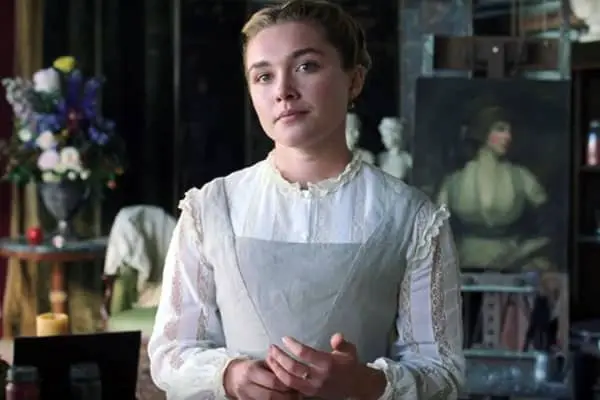
But these are not her only influences. Prose provides some hints to the sort of story we are reading, informing us that Molly enjoys reading Agatha Christie novels. Gran has so many of them, all of which I’ve read more than once. But she adds to that Molly and Gran’s fondness for another mystery entertainment. …we’d eat our meals side by side on the sofa as we watched reruns of Columbo. Expect amateurs to do some sleuthing. No hard-boiled detectives in this one. And you may or may not know who they should be investigating very early in the story. Universal Pictures picked up the film rights to the book. Academy-Award-nominee Florence Pugh is slated to star as Molly. We all know that options are sold all the time, and most are never actually made. So believe it when you see it. description Florence Pugh – image from Daily Actor While reading, I was totally reminded of a TV series, Astrid et Raphaëlle, as it is known in France, and Astrid in its release on Prime in the USA. Sara Mortensen plays an autistic woman drawn into helping the police solve crimes with her unique talents. I kept picturing Mortensen’s Astrid while reading this book. The show is delightful. description Sara Mortensen as Astrid – image from Amazon Hopefully, you will not wait until all your rooms are in a pristine state to give The Maid a look. It is a charming, engaging, cozy mystery, with a wonderful lead, a colorful cast of supporting players, and an effervescent sense of style. Ideal for kicking back and just enjoying while you recover from the holidays. But be sure to put a coaster under that drink. Someone is going to have to clean that up.
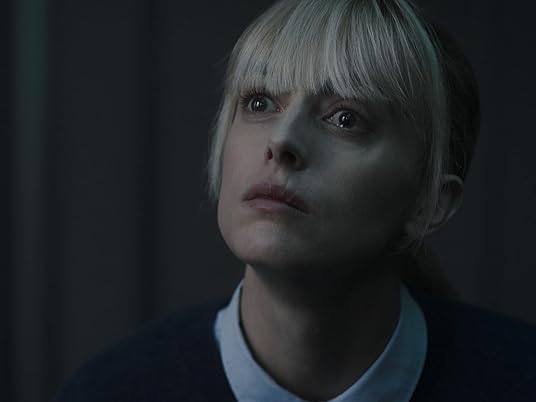
Is now a good time for me to return your suite to a state of perfection?
Review posted – 11/26/2021 Publication date – 1/4/2022 I received an eARE of The Maid from Ballantine Books in return for making a few beds and doing a little vacuuming. Thanks also to NetGalley for calling this book to my attention in their newsletter, and facilitating the download. This review has been cross-posted on GoodReads =======================================EXTRA STUFF Links to the author’s personal, Instagram, and Twitter pages Prose (Pronovost) is a vice president and editorial director with Simon & Schuster’s Canada division. Items of Interest —–A wonderful review of a personal-favorite TV show featuring an unusual crime-solving duo – Astrid – I pictured the Astrid of the title as Molly —–Wiki on Columbo

3 Comments

Filed under Fiction, Mystery, Reviews, Suspense, Thriller

The Sentence by Louise Erdrich

book cover

It was like the beginning of every show where the streets empty and something terrifying emerges from mist or fire.

I passed streams of people with signs, packs, water bottles. I passed squad cars and squadrons. I passed burnt-out stores with walls like broken teeth. I passed a woman with a shopping cart full of children. Down another street, a giant tank was rumbling forward. I turned to get out of the way. Pockets of peace then smoking ruins, then tanks and full-out soldiers in battle gear. I got a cold, sick feeling, and I knew there would be deaths down the road.

Bless me, Father, for I have read. It has been three weeks since I began reading. I am only sorry that I came to the end and could read no more. But I promise to avoid the occasion of reading… this book again, well for a while, anyway.

description
Louise Erdrich – Image from MPR news – by Dawn Villella | AP Photo file

There is magic to be had in the Catholic sacrament of confession. Confess your sins to an invisible presence across a visually impenetrable screen, let the priest know you are truly sorry, promise to do the penance you are assigned (and actually do it. Depending on the severity of one’s sins, this sentence is usually of the parking-ticket-fine level, typically saying a number of Hail Marys and Our Fathers.) and, after a few traditional, if not necessarily magical words, your sins are erased, at least in the eyes of an even more invisible, all-powerful deity. Sins, forgiveness (or not) and redemption all figure large in Louise Erdrich’s seventeenth, and latest novel, The Sentence. The sentences are a bit more significant than the penances doled out in confession.

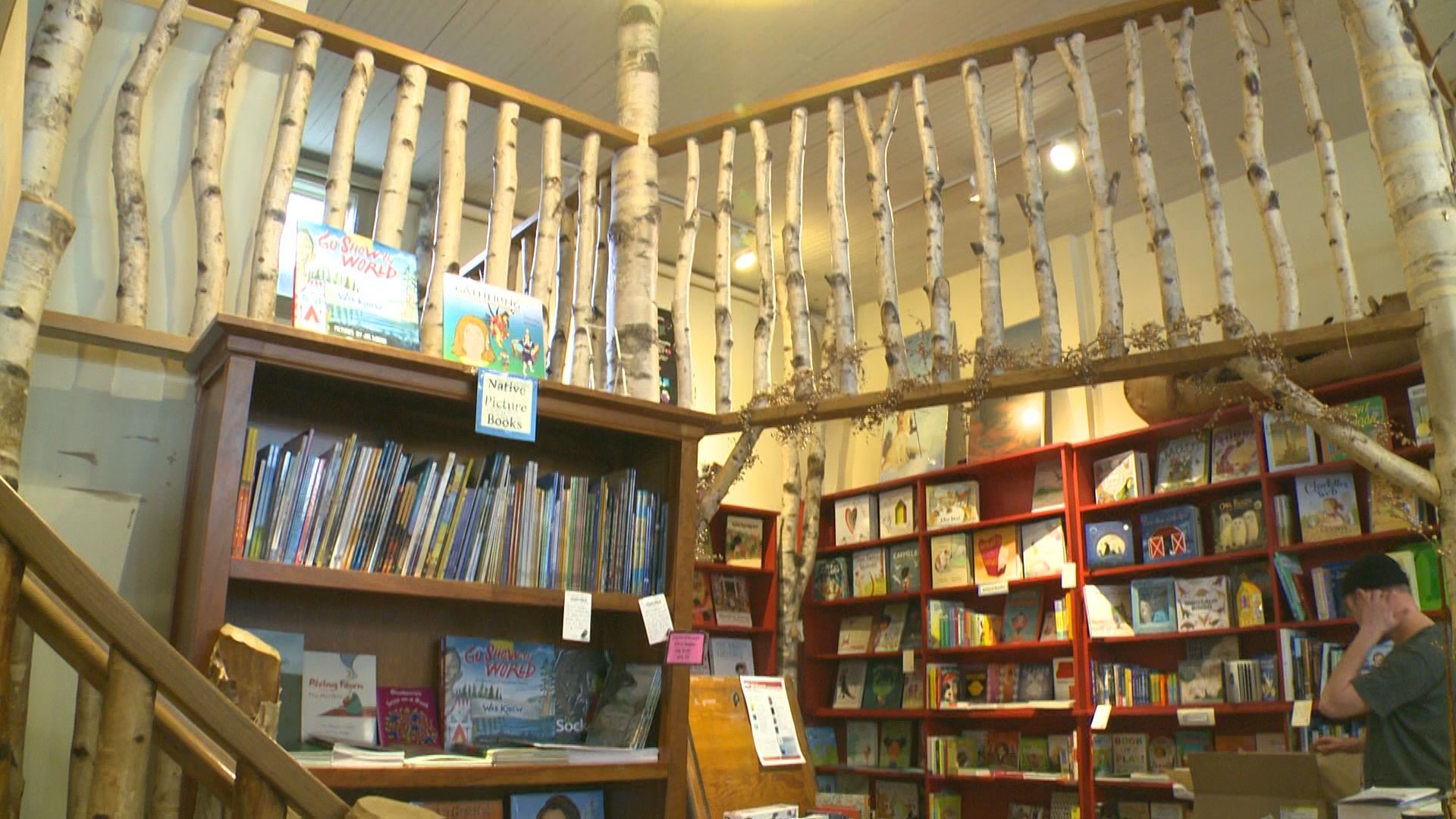
We meet Tookie, an immature thirty-something, early on. A friend manipulates her into stealing her dead-boyfriend’s body, and bringing it back to her. This bit of Keystone Kops body-snatching has the ill-fortune of involving the crossing of state lines…and the corpus delecti had some extra baggage. Her so-called friend throws her under the bus and Tookie is sentenced to 60 years, by a judge who would be right at home in the Kyle Rittenhouse case. A teacher of hers sends her a dictionary when she is in prison, and Tookie spends her time in lockup reading as much as she can. When she gets out, well short of the max sentence, she goes to every bookstore in Minneapolis with her resume and, finding the one where the dictionary-teacher is working, is taken on. This is not just any old bookstore, but a barely-bothered-to-try-disguising-it simulacrum of Louie Erdrich’s Minneapolis shop, Birchbark Books. With her love of reading, Tookie fits right in, becoming a professional bookseller, and thrives.

description
Birchbark books storefront – image from the BB site

Louise Erdrich has made a career writing about the contemporary world in light of the history of indigenous people, how the past continues to impact the present. One might even say to haunt it. The hauntings in The Sentence continue that focus, but add a more immediate presence.

There is just one problem at Tookie’s job. In 2019, four years after she starts, a frequent-flyer of a customer, both engaging (Tookie’s favorite, even) and very annoying, Flora, has passed on, but does not seem to accept this. She sustains enough mobile ectoplasm to make her presence known as she haunts the bookshop. The central mystery of the story is why. Like many who shop at this Indigenous-oriented emporium, Flora seemed a wannabe Indian. Claims some native blood, and did a fair bit to walk the walk. But she never seemed quite the genuine article to folks at the store. For reasons unknown, Flora’s ghost seems to have fixated on Tookie, bugging her more than other store employees, making noises, knocking books off shelves, and worse.

I had always wanted to write a ghost story. There’s this anomaly, “I don’t really believe in ghosts,” but I knew people who had inexplicable experiences and would not admit—as I would not—to believing in ghosts. I sometimes would take a poll when I was doing a reading and I would ask everyone in the audience if they believed in ghosts. Very few hands would come up. And then I would ask, “Have you had an experience or know someone who has had an experience with a ghost?” and almost every hand would go up. We do have some residual sense of the energy of people who are no longer living. They are living in some way. – from the PW interview

description
A handcrafted canoe hangs from Birchbark’s ceiling – Credit…Jenn Ackerman for The New York Times

It becomes a challenge, figuring out how to cope with this unwanted visitor. Why was she there, in the bookstore in particular, and what would it take to get her to leave? Flora had been found with an open book, a very old journal, The Sentence: An Indian Captivity 1862-1883. The book seems to be implicated in Flora’s passing. Tookie tries to figure out if the book had a role to play in Flora’s death. There might be a perilous sentence in the book.

But Flora is not the only unwelcome intruder. Erdrich gives us a look at what life in Minneapolis, and her bookstore, was like (and may be again) paralleling Flora’s growing intrusiveness with the COVID rampup in 2019 and lockdown of 2020. Figuring out how to cope with COVID, both personally and professionally, adds a major layer of challenge. A very present, you-are-there, account of empty streets, closed shops and short supplies, adds to the haunted feel of the entire city during the lockdown. (“This is the first book I have ever written in real time.“)

Sometimes late at night the hospital emitted thin streams of mist from the cracks along its windows and between the bricks. They took the shapes of spirits freed from bodies. The hospital emitted ghosts. The world was filling with ghosts. We were a haunted country in a haunted world.

And then there was George Floyd. Floyd was hardly the first (even in recent history), minority person murdered by police, but what set his example above so many others was the precise documentation of his killing. Also, not alone in current near-history, but the straw that broke the camel’s back, in a way. The outrage that has followed has been driven not just by the phone-videos that now have become commonplace, but by the long history of the same events that lacked such undeniable evidence. The annihilation of native people by Westerners is of a cloth, if at a much greater and intentionally genocidal level. It is amazing there is room enough left for living people with all the ghosts that must be wandering about.

description
The confessional – image from MapQuest – This part of the store figures in the tale

Tookie is our focus throughout, with occasional side-trips to other POVs. Her journey from convict to bookseller, from criminally-minded to good egg, from single to paired up. Hers is a later-in-life-than-usual coming of age. You will like her. She starts out with edge, though, which you may or may not care for.

I am an ugly woman. Not the kind of ugly that guys write or make movies about, where suddenly I have a blast of instructional beauty. I am not about teachable moments. Nor am I beautiful on the inside. I enjoy lying, for instance, and am good at selling people useless things for prices they cannot afford. Of course, now that I am rehabilitated, I only sell words. Collections of words between cardboard covers. Books contain everything worth knowing except what ultimately matters.

In case you are wondering what that final line means, even Erdich is not sure. Tookie may not have been the most glorious flower in the bouquet, but she still has considerable appeal. In addition to being smart and creative, being willing to learn, to grow and to repent her sins are among her finer qualities.

The cast of supporting characters is wonderful, per usual. Pollux is Tookie’s other half, well, maybe more than a half, as he totes along with him an adolescent niece in need of parents. He is a bona fide good man, although he has a bit of a blind spot when it comes to believing in ghosts. One of the truly lovely elements of the book is how Tookie and Pollux express their love for each other through food. His niece, Hetta, is, well, an adolescent, so the emotional interactions can be…um…lively. The shop crew are a fun lot, ranging in age and interests, and we get a look at some of the sorts of customers who patronize a shop that specializes in indigenous-related material. One other supporting cast member is the bookstore’s owner, a famous writer, referred to only as “Louise.” Erdrich has a bit of fun with this, giving herself some wonderful, LOL lines, and letting us in on some of her life under a bookshop-owner’s hat.

description
image from KARE 11 – Credit: Heidi Wigdahl

One tidbit I found interesting from my wanderings through things Erdrich is that she writes to a title, that is, the title is the first element of her books, and the rest is built around that. She first came up with the title for this one in 2014.

I gathered extraordinary sentences. healing sentences, sentences that were so beautiful that they brought people solace and comfort, also sentences for incarcerated people. – from the Book Launch

At some point the weight of her accumulated material justified beginning to flesh it out. This happened in 2019. I did not find any intel on just how many titles she carries about with her at a given moment, or what was the longest gap between title idea and deciding to write the book.

Bottom line is that when you see the name Louise Erdrich on a book, you can count on it being an excellent read. You can count on there being compelling contemporary stories, engaging characters, and a connection with the history of indigenous people. You can count on there being some magical realism. In this one, there is a powerful motif of sins in need of forgiveness. Mistakes need correcting, penance needs to be done, and redemption is a worthy, if not always an attainable goal. The Sentence asks how we can come to grips with the ghosts of the past, and cope with the sins of the present while mass-producing the specters of the future.

description
Protesters gathered at Chicago Ave. and East 38 th Street in South Minneapolis after the death of George Floyd – image and text from Minneapolis Star Tribune

At the end of the sacrament of Confession, the priest says, “I absolve thee from thy sins in the name of the Father, and of the Son, and of the Holy Ghost.” If only forgiveness were all that was needed. Read two literary novels, one thriller, a memoir and a non-fiction, and sin no more.

Many books and movies had in their plots some echoes of my secret experiences with Flora. Places haunted by unquiet Indians were standard. Hotels were disturbed by Indians whose bones lay underneath the basements and floors—a neat psychic excavation of American unease with its brutal history. Plenty of what was happening to me happened in fiction. Unquiet Indians. What about unquiet settlers? Unquiet wannabes?…Maybe the bookstore was located on some piece of earth crossed by mystical lines.

Review posted – November 19, 2021

Publication date – November 9, 2021

This review has been cross-posted on GoodReads

=======================================EXTRA STUFF

Links to the author’s personal and FB pages. Erdrich’s personal site redirects to the site Birchbark Books. She owns the store. There really is a confessional there. According to the store’s FAQ page, it was renamed a “forgiveness booth” after it was rescued from becoming a bar fixture.

A GHOST LIVES IN HER CREAKY OLD HOUSE

This is Erdrich’s seventeenth novel, among many other works. She won the National Book Award for The Round House, the National Book Critics Circle Award for LaRose and Love Medicine, and the Pulitzer Prize for The Night Watchman, among many other recognitions. Her familiarity with cultural mixing is personal, her mother being an Ojibwe tribal leader and her father being a German-American. Familiarity with both native spirituality and western religion also stems from her upbringing. She was raised Catholic.

Interviews
—– Louise Erdrich: The Sentence Book Launch Conversation by Anthony Ceballos
—–PBS – Louise Erdrich’s ‘The Sentence’ explores racial tensions in a divided Minneapolis
—–Publisher’s Weekly – A Ghost Persists: PW Talks with Louise Erdrich by Marian Perales

Other Louise Erdrich novels I have reviewed
—–2020 – The Night Watchman
—–2017 – Future Home of the Living God
—–2016 – LaRose
—–2010 – Shadow Tag
—–2012 – The Round House
—–2008 – The Plague of Doves
—–2005 – The Painted Drum

Songs/Music
—–Johnny Cash – Ain’t No Grave – Flora plays this while haunting Tookie

Items of Interest
—–NY Times – Where to Find Native American Culture and a Good Read By J. D. Biersdorfer
—–Twin Cities Daily Planet – After 17 years Birchbark Books continues to center Native stories, space amid society of erasure By Camille Erickson | April 27, 2017
—–The Catholic Crusade – the traditional Act of Contrition

2 Comments

Filed under American history, Fiction, Historical Fiction, Literary Fiction, Native Americans

Weighing the Cost of Silence – Small Things Like These by Claire Keegan

book cover

It was a December of crows. People had never seen the likes of them, gathering in black batches on the outskirts of town then coming in, walking the streets, cocking their heads and perching, impudently, on whatever lookout post that took their fancy, scavenging for what was dead, or diving in mischief for anything that looked edible along the roads before roosting at night in the huge old trees around the convent.
The convent was a powerful-looking place on the hill at the far side of the river with black, wide-open gates, and a host of tall, shining windows, facing the town.

Bill Furlong is a decent man, risen from a lowly station in life to being a respected pillar-of-the-community sort. Not well off, mind, but a coal and wood supplier who keeps several folks employed, his customers supplied, and his family fed, a George Bailey sort, but from a much less settled foundation. There is never much left over, and always a new cost looming on the horizon. In the course of making his rounds he sees something that presents a powerful moral challenge. The story is Furlong’s struggle to decide, stay silent, or do something.

description
Claire Keegan – image from her FB page – shot by Cartier-Bresson

1985 is a grim time in New Ross. Ireland is in the midst of a long recession. Despairing of ever finding work, people are emigrating in droves, to England, to America, to wherever work can be had. Those who remain hold little hope for any near relief. Those with work know that they could be laid off in a heartbeat. Those running businesses know that their continued survival depends on the continued demand of their customers, and the customers’ ability to pay. Those without work drain their savings, survive on the dole, or what charity they can find. Too many, employed or not, drown their fears in drink. Keegan captures the bleak tone of the time.

the dole queues were getting longer and there were men out there who couldn’t pay their ESB bills, living in houses no warmer than bunkers, sleeping in their coats. Women, on the first Friday of every month, lined up at the post office wall with shopping bags, waiting to collect their children’s allowances. And farther out the country, he’d known cows left bawling to be milked because the man who had their care had upped, suddenly, and taken the boat to Fishguard. Once, a man from St Mullins got a lift into town to pay his bill, saying that they’d had to sell the car as they couldn’t get a wink of sleep knowing what was owing, that the bank was coming down on them. And early one morning, Furlong has seen a young schoolboy eating from a chip bag that had been thrown down on the street the night before

Christmas is coming, and one might wonder if that starving boy was a descendant of Tiny Tim’s. Keegan even summons A Christmas Carol to mind, noting that, as a boy, Furlong had received the book for Christmas.

He had had a difficult start to life, raised by a single mother, his father not known to him. Luckily for them, a well-to-do local woman, Mrs Wilson, took in mother and son, employing mom to work in the house. Things could have been a lot worse. Like many other nations, Ireland was host to a network of Magdalene Laundries. These were institutions run by the Catholic Church, with the complicity of the Irish government. Young women who became pregnant were often cast out of their communities, their families even, and these enterprises took them in. Reports eventually emerged revealing the abuses these girls and young women endured, often being forced to give away their babies, living in degrading conditions, essentially forced laborers in church-state workhouses. Thousands of infants died there, and many of their mothers as well. New Ross was one of the places where a Magdalene laundry was run. It is one of the reasons Keegan chose to set her story there. This is not a tale about these laundries, per se, but one of those constitutes the immediate and very considerable dark force that Bill Furlong is thinking about taking on. While delivering coal to the convent, he sees something he was not supposed to see. To act or not to act, that is the question.

Why were the things that were closest so often the hardest to see?

The language of this novel, the imagery is powerfully effective, celestial even. I felt a need to read a lot of this book out loud. (trying to avoid spoiling it with my terribly fake Irish accent) There is a rhythm, a musicality to the writing that propels its powerful imagery towards the intended targets.

The passage quoted at the top of this review offers a sense not only of a grim time and place, but of the hostile force of the nuns, priests, and the Church, as embodied by the crows. The state, participant in the Magdalene miseries, is given passing notice when a local pol parachutes into town for a Christmas-tree-lighting, if it is possible to parachute in while riding a Mercedes and wearing a rich man’s coat. This is a town that is not being well looked after by the authorities.

When she was 17, she went to New Orleans. “I got an opportunity to go and stay with a family there, and then I wound up going to university. A double major in political science and English literature.”
She remembers well what Ireland was like the year she left.
“I really wanted to get out. It was 1986. Ann Lovett had just died. I felt the darkness that is in Small Things Like These. I felt that atmosphere of unemployment, and being trapped maybe. And things not looking so good for women.
“My parents used to go dancing, and I used go with them, down to the pub. I remember everybody getting really drunk at the bar on a Sunday night.
“I remember looking at all the men at the bar – it was pretty much all men at the bar – and they were getting drunk and saying they couldn’t bear the thought of going back to work in the morning. And then others would say they didn’t have any work in the morning.
– from the Independent interview

When she returned home with her degree, Keegan sent out 300 resumes and did not get a nibble. Erin go Bragh.

The harsh times have not driven from people in New Ross the ability to want things, needed or not. Furlong’s wife, Eileen, wants a proper, going-away vacation, as well as some nice things seen in a shop window. His children have small, mostly manageable desires. The people in town want an end to economic doldrums, some reason to stay around instead of emigrating. The residents of the convent want something more significant. Furlong is in dire need of a new truck to replace the one his business relies on, and which is nearing its last gasp. He also wants to know who his father was.

Of late, he was inclined to imagine another life, elsewhere, and wondered if this was not something in his blood; might his own father not have been one of those who had upped, suddenly, and taken the boat for England.

He is no saint, but workaholic Furlong has that rare capacity to look inside himself critically, consider his life, his actions, in light of his values, even recognize where he might have stepped away from the moral line he believes in following. He had opted to ignore wrongs he had seen before, but for this father of five girls, and son of a single mother, this is a tough one to let pass. However, there are powerful, and insidious forces arrayed against his better angels. He is repeatedly warned, when he mentions his concerns, that crossing the Church could be extremely costly.

The cold of the season will make you shiver and want to add another layer as you read. Some Irish coffee might help as well. Will Furlong cross that bridge and do something or let what he knows sink into nothingness in the dark, frigid waters of the Barrow River below? You will want to know, and will read on until you do.

Keegan is mostly known as a short-story writer. She has won many awards for her work, which is marked by compactness, showing what needs to be shown to tell her tale. Do not dismiss this novel for its brevity. Small Things Like These is huge! You may not need to prepare a manger with fresh hay, but I would definitely make room for this novel in your collection this holiday season. It is an evocative, beautiful, moving novel that deserves to become a Christmas classic.

As they carried on along and met more people Furlong did and did not know, he found himself asking was there any point in being alive without helping one another? Was it possible to carry on along through all the years, the decades, through an entire life, without once being brave enough to go against what was there and yet call yourself a Christian, and face yourself in the mirror?

Review posted – November 12, 2021

Publication date – November 30, 2021

I received an e-ARE of Small Things Like These from Grove Press in return for a fair review, and a few lumps of coal. Thanks, folks, and thanks to Netgalley for facilitating. Bless you, every one.

This review has been cross-posted on Goodreads

=============================EXTRA STUFF

Links to Keegan’s personal, FB, and Twitter pages

On her personal site, there are links to, among other things, two of her short stories, in the Links tab.

Interviews
—–The Guardian – Claire Keegan: ‘Short stories are limited. I’m cornered into writing what I can’ by Sean O’Hagan – 2010
—–New Ross Standard – Claire’s novel examines cult of silence in 1980s New Ross by Simon Bourke – April 2021
—–Claire Keegan: ‘I think something needs to be as long as it needs to be’ by Claire Armistead
—–Independent.ie – Writer Claire Keegan: ‘I think stories go looking for their authors’ by Emily Hourican
—–The Writing Life – Claire Keegan and the art of subtraction by Terence Patrick Winch – video – 28:29 – from 2013 – re her short stories

Items of Interest from the author
—–The New Yorker – Foster – this is an abridged version of her award winning story
—–Hollihoux – a reading of Foster by Evanna Lynch

Items of Interest
—–The Charles Dickens page – A Christmas Carol – the full text
—–BBC – Irish mother and baby homes: Timeline of controversy
—–Wiki about The 2005 Ferns Report on sexual abuse of children by priests in the Diocese of Ferns
—–The actual report
—–Wiki on the Magdalene Laundries in Ireland
—–Report of the Inter-Departmental Committee to establish the facts of State involvement with the Magdalen Laundries
—–George Bailey
—–Ann Lovett

2 Comments

Filed under Fiction, Historical Fiction, Literary Fiction

Oh, Yes! – Oh, William! by Elizabeth Strout

book cover

Throughout my marriage to William, I had had the image—and this was true even when Catherine was alive, and more so after she died—so often I had the private image of William and me as Hansel and Gretel, two small kids lost in the woods looking for the breadcrumbs that could lead us home.
This may sound like it contradicts my saying that the only home I ever had was with William, but in my mind they are both true and oddly do not go against each other. I am not sure why this is true, but it is. I suppose because being with Hansel—even if we were lost in the woods—made me feel safe.

People are lonely, is my point here. Many people can’t say to those they know well what it is they feel they might want to say.

My Name is Lucy Barton (2016) had been a very successful novel for Elizabeth Strout. She had even written a followup, Anything is Possible, (2017) a collection of stories, in which Lucy visits her Mid-West relations after a prolonged absence. Laura Linney was starring in a one-woman show of the former. Strout was there for a rehearsal when Laura opined that maybe William, Lucy’s ex, had had an affair. A lightbulb went off for Strout and she realized that William had a story of his own. Thus was born Oh, William!

description
Elizabeth Strout – image from Time magazine

She carried forward details about William from the prior books and built outward, or dug deeper, from there. There were some real-world elements of William’s tale. William’s father was a German POW, held in Maine, and his mother, the wife of a farmer who was using POW labor, fell in love with him and left her husband. The POW camp is a real place.

So my husband and I took a field trip. We went up there, we went to all the places that Lucy and William go on their own trip, and I took furious notes on everything I saw. And when we came back I settled down and wrote their story. – RandomHouse Book Club kit

Caveat Lector
You should know before diving in too far that, while I have read Strout’s Olive books, I have not read her prior Lucy Barton books. As Oh, William! is a third in that stack, this is not a trivial shortcoming. There are likely to be connections between this book and the prior two that I missed. But I have read up on those a bit, and acquired some gist. That said, I believe Oh, William! can be read, enjoyed and, hopefully, reviewed as a stand-alone. Just sayin’, cards on the table.

On the other hand, I felt very personally touched and engaged by the novel. I am of a common demographic with William, (we even share TWO names) and re-viewing the events of a lifetime is a natural hazard of this place in our existence. One thinks about the ages, the events, the people, the possibilities, the chances missed, and caught, the attempts that failed or succeeded, the misreads and the insights, the absence of understanding and the wise perceptions, maybe the bullets dodged, the awful relationships that never happened, the good ones that did, maybe the actual bullets that impacted elsewhere. In a way one might see this novel as a look back over William’s life from the point of his final days. A life examined. It could also be seen as the life of a relationship examined, the intersection of two trunks, Lucy and William, meeting, intertwining, then branching out in separate but linked directions.

In any such examination, whether of a life or relationship, it is natural, I believe, to wonder what might have been. Could we have performed better in the roles in which we were cast, or in which we had cast ourselves. To wonder why the director led us to this spot, to stage right instead of left, and always wondering at the playwright, and whether there was ever a script at all. This question of choices is one Strout takes on here. How much freedom of choice is there, actually, how much decision-making? William and Lucy talk about her decision to leave him.

I would like to know—I really would like to—when does a person actually choose anything? You tell me.”
I thought about this.
He continued, “Once every so often—at the very most—I think someone actually chooses something. Otherwise we’re following something—we don’t even know what it is but we follow it, Lucy. So, no. I don’t think you chose to leave.”
After a moment I asked, “Are you saying you don’t believe in free will?”
William put both hands to his head for a moment. “Oh stop with the free will crap,” he said. He kept walking back and forth as he spoke, and he pushed his hand through his white hair. “…I’m talking about choosing things. You know, I knew a guy who worked in the Obama administration, and he was there to help make choices. And he told me that very very few times did they actually have to make a choice. [
This was taken from a conversation Strout actually had with an Obama official, about how the decisions to be made were so obvious that there was little choosing required] And I always found that so interesting. Because it’s true. We just do—we just do, Lucy.”

And how might it be that so much of our lives is so constrained? A lot of that is based on where we began. Marx would call it class, and that is a very powerful force indeed. Strout digs into the specific roots of this for her characters. Lucy had grown up poor and miserable, (I have no memory of my mother ever touching any of her children except in violence.) and never felt entirely comfortable, persistently invisible even, (I have always thought that if there was a big corkboard and on that board was a pin for every person who ever lived, there would be no pin for me.) in the more middle-class world in which she lived with William, a parasitologist researcher (a nod to her father of the same profession) and teacher, despite her successful authorial career, despite living in a nice neighborhood in Manhattan, despite raising successful children. She is not the only major character haunted by an impoverished childhood. It is made quite clear that this other character had been severely damaged by that experience and that it had driven many life decisions.

The external of the story is William’s discovery at age seventy-one that he has a half-sister he had never known about. William and Lucy had remained on friendly terms, despite their divorce and subsequent remarryings. William’s third wife has left him. Lucy is widowed. He asks her go to Maine with him to look into this never-suspected sibling. Although it seems a bit odd, Lucy agrees to go along. It gives them both opportunities to look back, not just on their own lives, but on the lives of William’s parents. Coming to this revelation so late in life raises an issue. Is it ever really possible to truly know anyone? Lucy had kept much of her early life hidden away. William’s mother, Catherine, a very large presence in their marriage, had done the same. William had kept plenty of secrets during their marriage, including multiple affairs. He covered his true feelings with a friendly façade, and Lucy loathed him for that. But Lucy had kept a part of herself turned away from him as well. Her family’s rejection of her marriage to William left a lasting scar. The externals of their trip reveal some buried truths, but this is a novel about internals, not physical action.

How does one cope with the challenges of dealing with other people, with those to whom we are closest? There is the challenge of knowing who they truly are in the first place. And then there is the challenge of letting our true selves be seen, to allow ourselves to be vulnerable, to trust others with our most delicate emotional parts. This is almost certainly universal. Who among us does not have at least one secret (and I would bet that most have more) that we keep hidden even from our closest friends, our lovers, our mates, parents, children, priests, shrinks, not to mention the police?

There was an amazing film released in 1973, Ingmar Bergman’s Scenes From a Marriage. (Recently remade for HBO) It examines ten years of a union doomed to failure. The original was a revelation for me. My gf at the time urged me not to see it, concerned about the impact on my view of whatever-it-was we had. Oh, William! reminded me of that, less as a forensic analysis of a marital corpse, but as a broader view of a lifelong connection, in their marriage, and beyond it, a friendship. It looks at what went into building their marriage, at what kept it from being more than it was, and at the impact of William’s mother on their lives. Even after they split up, Lucy often says He is the only home I ever had.

One of the many triumphs of Oh, William! is how Strout offers up many small bits, pointing out the things about their interactions with each other that drove them crazy, that show without telling.

He stared at me, and then I realized he wasn’t really seeing me.
“Did you sleep?” I asked him, and he broke into a smile then, his mustache moving, and he said, “I did. How crazy is that? I slept like a baby.”
He did not ask about my sleep and I did not tell him.

The past is our inevitable root. We are not ents, that can simply follow our needs and drag ourselves away from where we sprouted. That past is inescapable, even if we can change our external circumstances, move up in the world, move away from the painful parts that formed us. But we live in the present, and the past often appears to the here-and-now in the form of ghosts, of one sort or another. When William and Lucy visit Fort Fairfield in Maine, it is truly a ghost town, barely even a town any more. Images they see in the local library conjure a long dead era. In a way their marriage, if not their friendship, is a spectral presence, long dead, although still hovering in the room.

I usually try to come up with something that did not sit well in a book, gripes of one sort or another, elements that might have been better. This time, really, I got nuthin’.

There is so much in this novel that is beautifully portrayed, insightful, wise, and moving. A penetrating portrait of two people and their half-century of connection, warts and all. Oh, William! is a masterwork by one of our greatest fiction writers, at the peak of her creative power. Oh, Elizabeth. You’ve done it again.

There have been a few times—and I mean recently—when I feel the curtain of my childhood descend around me once again. A terrible enclosure, a quiet horror: This is the feeling and it was my entire childhood, and it came back to me with a whoosh the other day. To remember so quietly, yet vividly, to have it re-presented to me in this way, the sense of doom I grew up with, knowing I could never leave that house (except to go to school, which meant the world to me, even though I had no friends there, but I was out of the house)—to have this come back to me presented a domain of dull and terrifying dreariness to me: There was no escape.
When I was young there was no escape, is what I am saying.

Review posted – November 5, 2021

Publication date – October 19, 2021

I received an ARE of Oh, William! from Random House in return for a fair review. Thanks, folks, and thanks to NetGalley for facilitating.

=======================================EXTRA STUFF

Links to the author’s personal, Twitter and FB pages

Interviews
—–The Guardian – Elizabeth Strout: ‘I’ve thought about death every day since I was 10’ by Kate Kellaway
—–Time – Elizabeth Strout Knows We Can’t Escape the Past by Annabel Gutterman
—–Entertainment Weekly – Howe a literary conscious uncoupling and Laura Linney helped Elizabeth Strout write Oh, William! – by Seija Rankin
—–Bookpage – Elizabeth Strout: The heart and soul of an emotional spy by Alice Cary – for Anything is Possible
—–WBUR – Author Elizabeth Strout explores marriage, memory and class in ‘Oh William!’ – audio – 9:26

My reviews of other books by the author
—–2019 – Olive, Again
—–2008 – Olive Kitteridge

Items of Interest from the author
—–WBUR – excerpt
—–Random House – Book Club Kit
—–Literary Hub – excerpt

4 Comments

Filed under Fiction, Literary Fiction, Reviews

Heaven-Sent – Cloud Cuckoo Land by Anthony Doerr

book cover

Sometimes the things we think are lost are only hidden, waiting to be rediscovered.

Anthony Doerr has written a masterpiece of a tale, connecting five characters, over hundreds of years through their relationship to a single book. Cloud Cuckoo Land is an ancient story written by Antonius Diogenes around the first century C.E. (Only in the novel. While the author is real, the book was made up.) It tells of a shepherd, Aethon, seeking a magical, heavenly place in the sky, the “Cloud Cuckoo Land” of the title. Each of the five characters are introduced to this story, and we see how it impacts their lives. Each has characteristics that set them apart. But all have lost, or lose, at least one parent.

description
Anthony Doerr – image from Boise State Public Radio

We meet Konstance, 14, on an interstellar, generational ship, maybe the late 21st century, maybe the 22nd. She is laying out on the floor of a large room the scraps of pages that comprise the book. (Sometimes he [Doerr] would lay out all these micro chapters on the floor so he could see them and discover the resonances between characters across space and time. – from the NY Times interview) She was born on The Argos, and the plan is that she will not live long enough to reach the ship’s destination, but will grow to adulthood and raise a family there, passing down humanity’s culture so that someday, homo sapiens can rebuild on a new, unspoiled home world, Beta Oph2. Hopefully that planet will remain better off once people arrive. She is driven by her need to know, a boundless curiosity, and a willingness to think outside the ship.

Anna is an orphan. In 15th century Constantinople we follow her from age 7 to early adolescence. She and her older sister, Maria, work as seamstresses in the house of Nicholas Kalaphates. It is a Dickensian world of exploitation of diverse sorts. Anna is far too bright to be denied the world of words, and, once exposed to it, she pursues that world doggedly. On her travels through the city on errands she comes across a class of boys being taught Greek, The Odyssey, and attends, surreptitiously. The master agrees to teach her privately in return for modest items. Her literacy makes her a suspect to the adults around her, a criminal to others, and possibly a witch to the most ignorant, but leads her to a ruined library and eventually, to Aethon.

description
The Imperial Library at Constantinople [in better days] – image from Novo Scriptorium

Omeir was born in 1439, like Anna, but with a cleft lip and palate. The superstitious country people in his home town believed him cursed, demonic even, so he is driven out of town, exiled to a remote part of what is now Bulgaria, where he does his best to remain out of sight, to be raised by his grandfather. But Omeir is a survivor. He becomes a marvel at the care of oxen, raising and training two to immense proportions. The team of three are remarkable workers. Downside is that the new sultan demands Omeir, now an adolescent, and his oxen serve in his army. He is planning to lay siege to Constantinople, a city with walls that have withstood such attacks for over eleven hundred years. Omeir will encounter Aethon later.

description
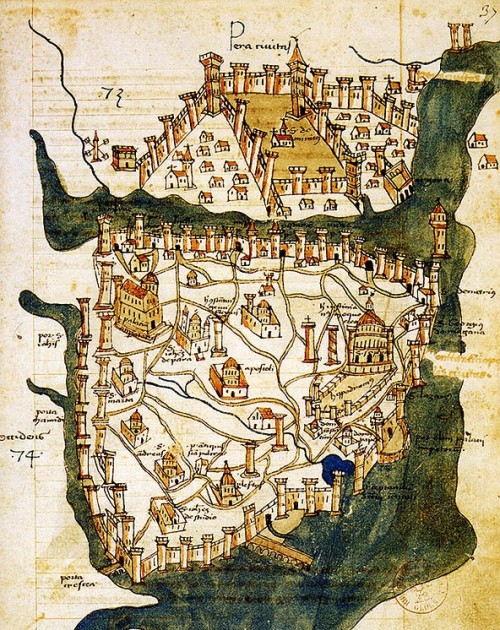
The oldest surviving map of Constantinople, by Cristoforo Buondelmonti, dated to 1422. The fortifications of Constantinople and of Galata, at the northern shore of the Golden Horn, are prominently featured. – image from Wikipedia

Seymour does not fit in. He lives with his mother, who struggles to get by on low-wage jobs. Probably on the spectrum, he struggles with more than the usual travails of growing up. He cannot, for example, tolerate loud sound. He cannot or will not remain in his seat at school. The world overwhelms him and when the pressure of it builds too high, he screams, which is not conducive to a successful school life. A class library outing brings him into contact with a whole new world, when the librarian, Marian, (surely a nod to The Music Man) hooks him up with nature books. He finds comfort in the natural world, befriending a large, amenable owl, and reveling in walks in the woods adjacent to his home. We follow him from childhood into adolescence and into his development as an eco-warrior. Seymour is the avatar of Doerr’s concerns about environmental degradation, presenting a generational cri du coeur, however misguided in its application, about the destruction of a following generation’s natural heritage.

We see Zeno as a child. He realizes he is gay at an early age. But it is the 1940s in Idaho, and this is simply not allowed. He has to keep that part of himself hidden. We see him again as a POW during the Korean War, when he learns Greek, and as an octogenarian teacher. He lives in a small Idaho community, and is leading five students in a stage performance of Cloud Cuckoo Land, a book he translated from the Greek, well, from what bits remained of it.

As with All the Light We Cannot See, Doerr’s 2014 Pulitzer Prize winning novel, his characters here are young. (Not necessarily for the entire book, but for a good chunk) He says writing from a child’s perspective allows one to “to see more nakedly some of the things that we’ve elided or erased in our minds because of age.” (From the NYTimes interview). Each comes to the world with their own personal content, but also with a sense of wonder. Anna is amazed by the vast universe of story that can be reached through literacy. Seymour is dazzled by nature and nature books. Konstance is amazed by the things she can see, the places she can visit, the knowledge she can gain in the virtual library on the ship. Zeno also finds a refuge and a world of possibility in his local library. For Omeir, it is the tales his grandfather tells him when they’re out trapping grouse that capture his imagination.

While all the characters have their individual stories, Zeno and Seymour’s stories converge in today’s Lakeport, Idaho; (Doerr and family spend a lot of time in McCall, Idaho, a likely model for Lakeport) Anna and Omeir’s stories converge in the siege of Constantinople in the fifteenth century, and all their stories converge on the connection to that ancient book up through the somewhat near future of Konstance’s experience.

description
Mural at the Turkish Military Museum of the scene outside the walls of Constantinople in 1453 – image from Europe Between East and West

It is these connections, these convergences, that provide the structure and core mystery of the book. How does this first century story find its way to fifteenth century Constantinople, to the world of today, and to the future in which Konstance lives? How is it preserved, by whom, and why? Asked about the spark for his focus on the preservation of literature, of culture, Doer said:

I’m getting close to 50. And though I still feel and behave like a kid most of the time, my eyesight is fading, I can apparently injure myself while sleeping and my little baby boys are suddenly big hairy-legged job-working car-driving high school kids. I’m realizing that everything—youth, hairlines, memories, civilizations—fades. And the amazing technology that is a printed book seems to be one of the few human inventions that has outlived whole human generations. What a privilege it is to open a book like The Iliad and summon tales that entertained people almost 3,000 years ago.

The folks doing most of the preserving are librarians of one sort or another. Each of the characters has a relationship with a librarian, Zeno and Seymour with the librarians in Lakeport, Idaho, Anna with scribes in Constantinople, Omeir with Anna, and Konstance with the AI controller of her ship.

I hope that my readers will be reminded that librarians serve as stewards of human memory—without librarians, we lose perhaps our most important windows into the human journey. – from the QBD interview

Part of his growing-up environment was spending a lot of time in libraries as his teacher mom often made use of them as a form of day care for Doerr and his brothers. It’s not like he minded. In fact, he even dedicated the book to librarians.

They were a place where I felt completely safe. And just the miracle of them, there’s something that – talk about peeling the scales off your eyes. Like, here’s the work of all these masters available to you for free. And you can take them home. – from the NPR interview

As with All the Light…, Doerr found inspirations for the elements of the book in diverse places. It was while researching the walls at Saint Malo for his prior book that he came across repeated references to the millennium-long impenetrability of the walls of Constantinople, and dug into that a lot deeper. He is also interested in how technology induces change. In All the Light… it was radio. Here it is gunpowder and advanced armaments in the 15th century, allowing a new level of violence in the assault on supposedly impervious walls. In the contemporary world it is the internet allowing in both a world of information and a cannonade of lies and manipulation. He sees the future as being driven by artificial intelligence.

One of the things that most stuck with me was the portrayal of reading, particularly the reading of material to others, as not only an act of kindness, of affection, but also be a source of healing, and certainly comfort. There are several times when characters read to other characters who are ill, to positive effect. We are a species that relies on stories to make sense of our world, and to inspire, to spark imagination. The story of Aethon inspires all the main characters to dream of more, to dream of better, to dream beyond realistic possibility.

Doerr enjoys tossing in a bit of classical reference spice. The ship Argos, of course, recalls Jason and his crew. Zeno is saved by a dog named Athena as Hercules was rescued by the goddess herself. There are plenty more of these.

I would keep an eye out for owl imagery, and roses come in for some repeated attention as well. Walls get special attention. The big one in Constantinople is the most obvious, but Konstance has physical walls of her own she needs to get through. Seymour tries breaching a physical wall, as Zeno tries to defend one. The notion of paradise permeates. The title alone refers to an unrealizable fantasy of heaven. It is the heaven that Aethon pursues. For Zeno it is a place where he can be accepted, loved, while being his true self. Seymour is lured by the promise of a sylvan environmentalist camp where he can embrace nature with others of like mind. A development in his beloved woods is called Eden’s Gate (close enough to make one think of Heaven’s Gate). He and his mother live on Arcady Lane. For Anna it is a dream of a better life outside the city.

How Doerr weaves all this together is a dazzling work of genius. He will leave you breathless, even as he shows you the construction of his multiple threads, bit by bit by bit.

“That’s the real joy,” Doerr said, “the visceral pleasure that comes from taking these stories, these lives, and intersecting them, braiding them.” – from the NY Times interview

Mirroring is employed extensively as the experiences of all five characters (and Aethon) repeat in one form or another for them all.

The book lists at 640 hardcover pages. Do not take this at face value. In terms of actual words, Cuckoo Land is about the same length as All the Light. There are many pages holding only titles or section headings. There is a lot of white space. That does not make this a fast read. It would still be around 500 pages if one stripped it down to word-count alone. But it is less daunting than the presenting length of 640 pages. Also, Doerr writes in small chunks. You can always use a spare minute or two to drop in on this book and still get through a chapter or five. There is a reason for this.

He had hit upon this approach for the most practical of reasons. As a parent, he couldn’t hope to get more than an hour or two of solid work done before having to attend to shuttling the boys to swim practice or some other activity. “I might have stumbled accidentally into that,” he said. – from the NY Times interview

While there are dark events that take place in this novel, the overall feel is one of optimism, of possibility, of persistence, and of the availability of beauty and hope to all, if only we can keep alive our connections to each other through time and place, keep alive hopes for a better place, for a better, meaningful life, and continue to dream impossible dreams. If you read nothing else this year, do yourself a favor and read Cloud Cuckoo Land, and be transported (no wings required) to a literary paradise by this book, which I hope will be read as long as there are people able to read. It is a heavenly book, and an immediate classic.

“Repository,” he finally says, “you know this word? A resting place. A text—a book—is a resting place for the memories of people who have lived before. A way for the memory to stay fixed after the soul has traveled on.”
His eyes open very widely then, as though he peers into a great darkness.
“But books, like people, die too. They die in fires or floods or in the mouths of worms or at the whims of tyrants. If they are not safeguarded, they go out of the world. And when a book goes out of the world, the memory dies a second death.”

Review posted – October 22, 2021

Publication dates
———-Hardcover – September 28, 2021
———-Trade paperback – September 27, 2022

I received an ARE of Cloud Cuckoo Land from Simon & Schuster, but I first learned of it from Cai at GR, who passed on my request to someone at S&S, who sent me an ARE and passed on my request to the person responsible for this e-galley, who ok’d that too. Thanks to all, and thanks to NetGalley for providing an e-ARE.

=======================================EXTRA STUFF

Links to the author’s personal, Instagram, GR, and FB pages

Interviews
—–The Guardian – Anthony Doerr: ‘Rather than write what I know, I write what I want to know’ by Anthony Cummins
—–CBS – Sunday Morning – Novelist Anthony Doerr on “Cloud Cuckoo Land” – with Lee Cowan – video – 7:49
—–NPR – Anthony Doerr On The Spark That Inspired ‘Cloud Cuckoo Land’ – audio – 8:26 – with Scott Simon – text of the interview is on the page as well
—–Seattle Times – Pulitzer winner Anthony Doerr discusses his new novel, the timeless power of books and more by Moira Macdonald
—–New York Times – For His Next Act, Anthony Doerr Wrote a Book About Everything by Gal Beckerman
—–Parade – Anthony Doerr Revels in the Uplifting Messages of Stories in His New Epic Cloud Cuckoo Land by Dillon Dodson
—–QBD Book Club: Cloud Cuckoo Land with Anthony Doerr with Victoria A. Carthew – video – 28:06

My review of Doerr’s prior novel
—–All the Light We Cannot See

Songs/Music
—–Les Miserables I Dreamed a Dream – Anne Hathaway
—–Man of La Mancha – The Impossible Dream – Richard Kiley at the Tony Awards
—–The Music Man – Madam Librarian
—–Edison Lighthouse – Love Grows Where my Rosemary Goes – Playing when Zeno is in London

Items of Interest from the author
—–audio excerpt – 0:58

Items of Interest
—–Interesting Literature – on the etymology of the phrase Cloud Cuckoo Land
Since the late nineteenth century, the phrase has been used more generally to refer to ‘a fanciful or ideal realm or domain’. Indeed, most of the time people use ‘cloud cuckoo land’ they do so without referencing the phrase back to Aristophanes; indeed, many people who use the phrase may well be unaware of the term’s origins in the work of ancient Greece’s greatest comic playwright.
—–Wiki on The Fall of Constantinople
—–Wiki on The Imperial Library of Constantinople
—–Generation Starship – thanks to Derus for the ref

5 Comments

Filed under AI, Artificial Intelligence, Cli-Fi, Fiction, Historical Fiction, Literary Fiction, Reviews, Sci-fi, Science Fiction

And Now, Presenting… – Performance Art by David Kranes

book cover

I’m missing a dove, he tells me, a small water fountain…half an assistant.
I’ll keep my eyes out, I tell him. 

It’s that awful moment when any of us realize that why we began something is no longer why we’re doing it.

In his latest short story collection, literary lion David Kranes puts on quite the show. Performance Art offers up stories about people who perform in public. Nine of the stories in the collection were published between 1991 and 2015, with four new tales fleshing it out to a baker’s dozen. While offering some new material the collection serves more as an introduction to a powerful literary writer you may not know. Kranes is 84, and has been at this a long time. He writes in whatever vessel seems appropriate for the stories that occur to him, whether that is poety, plays, novels or short stories. Sometimes the stories migrate. One of the included tales here was the inspiration for a novel.

description
David Kranes – image from Continuum

The external focus in this collection is performance, stage performance, for the most part, although the definition is somewhat fluid. The talents on display run quite a gamut, from a daredevil to a stand-up comic, from an actor to an escape artist, from a spokesperson for a weight-loss program to a magician, from a fire and glass eater to a master of sleight of hand, to a world-class photographer, to a carnival knife thrower, and a bit more.

There are some themes, images, and issues that run through, central among which is invisibility. People feeling unseen, maybe even being unseen.

Scott paces four rooms, each one of which, even when he’s in it, seems empty. (A Man Walks Into a Bar)

Nothing about me took up—space or anything else (Target Practice)


Ginger’s twenty-seven and has almost perfected invisibility. (The Weight-Loss Performance Artist)

I turned and moved away. Went. Didn’t stop. Didn’t look back. Instead: became invisible. Became a ghost anchored only by an abiding faith, finally, in the power of absence. (Escape Artist)

Painters permeate. Two of the lead characters paint, and painting is an element in several others. In Daredevil, a character is fascinated with Hans Holbein’s Dance of Death. Target Practice includes a character very into Turner. The Garden of Earthly Delights get some spotlight in Devouring Fire.

Celebrities drift or flash through the stories, and not in a particularly favorable way.

Several characters are faced with potentially life-changing opportunities. A painter has a chance to be a very in-demand actor. Another painter might have a chance to direct a film for a household name producer. A stage performer has a chance to revive a career long thought dead and buried. An obese woman is offered a huge sum to be the public face of weight loss. A drug addict is offered a chance to be the knife instead of the target.

The notion of next comes up. In Daredevil, pop offers useless advice to his son re next steps in life. In Target Practice a social services report on the narrator calls her directionless. (“I had no comprehension of next. I had no next moments; obviously no next month, no next week.”)

The stories are set in Vegas, mostly, the southwest, generically, Idaho a time or three. It is pretty clear that Kranes knows The Strip and Vegas like a local. He lives in Salt Lake City. I do not know if he ever lived in Vegas or maybe spent a lot of time there. Both seem likely.

There are a few tales that include bits of fantasy. Most do not. I would not categorize this as a fantasy collection, per se.

While the circumstances are sometimes extreme, there is still plenty to relate to. How many of us have felt unseen, invisible in the world, or maybe want to be. I can certainly relate to the latter. In my theatrical debut (It was Kindergarten I think) I was called on to walk to center stage and recite Peter Peter Pumpkin Eater. I managed to get the words out, but that was not all. By the time I exited stage left my pants had taken on an unwanted yellow tint. Invisibility cloak, please, NOW!!! And we have probably all felt the sting of feeling completely unseen by that boy or girl, man or woman whom we really, really want to see us.

Bottom line is that this collection may not feature all new material (that said, even the previously published stories were new to me) but it offers a splendid sample of a literary talent of great skill and power. David Kranes is a writer worth getting to know. This is top-tier, star-power material.

Review posted – 10/5/21

Publication date – 10/15/21

I received an e-galley from the University of Nevada Press through NetGalley, in return for a visible, performative review. Thanks.

======================================THE STORIES
The Daredevil’s Son (2010) – imagine your father was Evel Knievel. Imagine he was dead set on you following him in the family business. Imagine you have the body, the build, and the looks. Then imagine you have zero interest in doing that.

“So then, you don’t want to be like…do what your father does?” people asked.
“No, because my father scares people,” Lucas Jr said.

There is a lot here that resonates with Kranes’s life. He grew up in the Boston area, his father a big-shot surgeon at one of the biggest hospitals in the city. He even enrolled in pre-med, but knew it was not for him. Later even tried Yale Law School. Ditto. Dinners at home would feature Nobel Prize winners (as guests, not on the menu). The bar seemed too high, the pressure too intense to succeed, to perform at that level, at things that did not appeal to him all that much. He headed west instead, opting to follow his own inclinations, not those of his father.

The Stand-up Phobic (2015)
Ethan Fallon feels compelled to perform on stage.
The language of the story mimics the sort of stream-of-consciousness that Robin Williams might have launched into in a moment or that George Carlin might have scripted. It is about words, words, words, and associations, free or otherwise There is a manic aspect to Ethan. It is presented as an interview between Ethan and…someone. You feel bad for the guy, with all this verbal churn going on in his head, and only the stage as a venue for relief.

Ethan’s hair is an air show and he’s sweating. Every performance lately seems a conspiracy-theorist’s nightmare. Any room he’s booked into is slack-jawed and oversized and swallows him. Like a bad Jonah dream. Like having a three-day booking at the Whale. AT THE HOUSE OF RIBS. YEAH! PUT Y0UR HANDS TOGETHER—WON’T YOU, PLEASE—for our own sackcloth and ashes! Ethan Fallon!

A Man Walks Into A Bar (2012)
Scott Elias, a dealer (cards, not drugs) and painter, is approached by two men in a Vegas bar. They mistake him for a well-known actor, but offer him a screen test because they like his presence. They see something in him. So Scott is carted off to appear in the film, sorry, project, they are producing, and life gets crazy from there. But is this the life he wants? He has a roomie, a young man, Tory, also a painter, who had been injured in an auto mishap. It is more of a ward and sponsor relationship, not a sexual one. Tory’s paintings reflect Scott’s inner battle.

Escape Artist (2002)
From birth, Lou has been getting out of things. The need comes with some innate capacity. But there are others who would do well to escape unwanted circumstances, yet lack the native tools and even when they learn the learnable skills, opt for the safety of captivity to the freedom of escape. This story includes a bit about escaping the East Coast, and doctor father, which echoes the author’s relationship with his father.

When I was two, a nurse locked me in a closet under a pile of coats. I got out. When I was six, three bullies tethered me with clothesline, filled my mouth with detergent. I escaped, spat the detergent into the sunlight. It turned green in the bright air, hardened into a nugget of turquoise.
At two, six, I had no words, no plan, only knew my need: lift. Rise, break out, court the insane of the world—if that’s what it took.

When the Magician Calls
Daniel Lawrence, or maybe Lawrence Daniel, has tracked Sheila down. (There is a reference in another story to a Sheila who had been at least partly mislaid by a fading magician) He seems to think Sheila will remember him. Sounds like they had had a prior connection. He would like to help her fully disappear from her current, somewhat imprisoned life. Maybe he can conjure a bit of magic, although it may not be his true calling. My stage-self hungers for standing-room-only. Mostly, though. I feel like some kind of bulked tortoise, lumbering to the sea.

Target Practice
The female narrator seems to have almost died too many times to be a coincidence as a kid. Became a target when she got older, for a Sunday school teacher, for boys with an interest and for needles. But when she meets a carnival knife thrower (and former MLB pitcher) she learns, ironically, how not to be a target, but to be the knife, her survival no longer an unexpected miracle.

The Warren Beatty Project (1991)
Ethan Weise has had a bit of success with his painting, sold canvasses to some famous people. He is working on a series of Edward-Hopper-type paintings, set outdoors. Once, he worked as a “visual consultant” with a student at the American Film Institute. And then, one day, Warren Beatty calls, wanting him to direct a project for him. LaLa Land beckons, limo-driven and low on artistic merit, rich with industry glitterati and the suggestion of connection and work, while short on actual delivery. While his girlfriend pulls him in a different direction. Will he gain notice, or remain largely unseen? Is this project the stuff dreams are made of, or something else?

The Weight-Loss Performance Artist (2008)
Ginger is 5’5” and 340 pounds. Two men approach her to take part in a project. They have a weight-loss program called PoundSolve that offers tailored meals to subscribers, and software that can project what someone will look like after reaching certain weight-loss benchmarks. They would like Ginger to be their spokesperson, and will pay her $4k per pound for every sixteen ounces she takes off. It a pretty good deal from where she sits. Ginger’s twenty-seven and has almost perfected invisibility. As she moves up to translucent, and even apparent, life changes in many ways. The question is how she will cope and whether the changes are all welcome.

My Life as a Thief
The narrator here is unnamed. His father is a doctor, working at Mass General (where Kranes’s father worked). He started doing magic at eleven, with a kit his dad bought him. Turns out to be a gateway drug to ever more professional levels of magic. His life as a thief begins when he is thirteen, teamed up with Arthur Foley, a pal, whose father happens to be a criminal. Turns out having a talent for making things disappear offers a direct path to shoplifting. They move on from there.

Devouring Fire—An Interview
Robbie, a young reporter, has a chance to interview an entertainment legend, Anthony Aquila, 89 years young and still scary. Anthony is renowned for his ability to eat both fire and glass.
There is a fun interaction between the two of them, as Anthony totally intimidates the young man, but also sees the potential in him.

I’ll confess here: I was drawn to his image. It was like one I’d seen in my History of Religions course at State; he was an ascetic. A kind of harp with skin. Bare feet. Ribs like a rack of lamb. Deep hollow cavernous eyes. You could almost hear his echos echo. Shabby, torn clothes. I got the sense that whatever he did, at the same time he could stand back and watch himself doing it.

The Resurrection of Ernie Fingers
The Downtown Palace in Vegas seems to be doing everything right, post Covid, yet the players are not showing up. The place needs something

We need an attraction,”Dickie Rice, the GM, said to Tony Padre, Head of Marketing. “We need crowds fighting to get in. We do that and who we offer, what we offer will sell itself.”
Tony Padre agreed, “Attraction! Absolutely! But what? Who?”

They bring a legend back. Ernie Fingers is a fill-the-place-entertaining performer, but he has been out of the business for a while and has gotten way too familiar with a particular brand of hooch. Can Ernie be brought back to his old form? Ernie ha a special ability, though, and his skills may be fading.

The Photojournalism Project (1996)
Melissa Probert is a gifted, very much-in-demand international freelance photographer. Her work has been shown in major national museums. Hunt is a painter, working on a project making tempura images of roadside memorials. They had a thing once but have remained friends. Melissa calls Hunt to help her with a special project, a book. She wants to make a photo history of a binge drunk, her own, she having a history of such antics, sans lens. Hunt and Leah, his wife? gf? have an ongoing conversation while he is at Melissa’s multi-day drunk re what and how he sees and her forbearance of his friends. In offering a stage for the unseen, is Melissa making Leah vanish from Hunt’s life?

The Fish Magician (1997)
Malcolm volunteers from the audience at The Monte Carlo in Vegas to participate in magician Lance Burton’s show. He steps into a Lucite box on the stage and in short order is vanished…well…transported, to Idaho it would appear. Oopsy. And the aging magician cannot recall where he’d sent Malcolm. Some time later his wife, Ginger, alarmed at her husband’s sudden disappearance, and failure to reappear, hires an investigator to find out just WTF happened. This is a fun tale in which the investigator is a psychic former NFL player who dreams of doing standup. The story was the basis for Kranes’s 2018 novel Abracadabra.

=============================EXTRA STUFF

Kranes does not maintain an on-line presence, as far as I can tell.

Here is a profile of him in Mapping Literary Utah

Interview
—–Radiowest – The Legend’s Daughter – by Doug Fabrizio – audio – 52:04 – even though it was recorded eight years ago I found this interview very illuminating re this collection

Songs/Music
—–Arthur Rubinstein – Chopin’s Nocturne in E-Flat – From Ernie Fingers

Items of Interest from the author
—–short story from this collection – The Daredevil’s Son
—–short story – A Figure in a Window
—–a one-act play – Infrastructures

Leave a comment

Filed under Fiction, Literary Fiction, Reviews, Short Stories

Beacon Hell – The Lighthouse Witches by C.J. Cooke

book cover

He’s tall and rakish, with greasy black hair to his jaw, a tattoo of a panther on his neck, a missing front tooth. A grin.
“You’re Luna Stay?”
She frowns, confused by the shift to a smile. “Yes?”
He steps forward and eyes her coldly. “You’re supposed to be dead.”

2021 – Ok, so maybe not exactly a welcoming committee, with a sparkly, multi-colored sign at the local watering hole, all the residents in attendance, celebrating her return. But I guess it’ll have to do. It wasn’t Luna’s first time on the island of Lòn Haven. She had been there for a spell as a child, and, while her experience was memorable, it was relatively brief, and her exit had been fraught. Now, thirty years old, pregnant for the first time, she is not exactly eager to stick around. But she is there on a mission.

description
C.J. (Carolyn Jess) Cooke – image from The University of Glasgow

1998 – Olivia Stay has just left her home in northern England, dragged her three daughters, Sapphire, Luna, and Clover, with her, and headed north on an hours-long drive to a remote island off the east coast of Scotland. She is an artist, with a commission to paint a mural on the inside of a 149-foot-tall lighthouse, which is in less-than-stellar condition. Her mysterious employer has left drawings for her of what he wants. She and the girls will be staying on the lighthouse property, in a small house, called a bothy. The lighthouse has an intriguing name.

“You’re staying at the Longing?” he said, raising an eyebrow. “Quite a history, that place.”
“I can see that,” I said, flicking through the leaflet, my eyes falling on an artist’s rendition of people being burned at the stake.
“Why’s it called the Longing?” Luna asked him.
“It’s named for the people who lost loved ones,” he said. “Sometimes they’d visit the site where the Longing was built and . . . pay their respects.”

…or something. The lost loved ones tended to be women murdered by the locals, accused of witchcraft and burned alive. The Longing was built directly over the place where the women had been kept and tortured, a broch, which is a circular castle-like structure, as much as two thousand years old. While there have been five major national bouts of witch-burnings in Scotland, the only witches likely to have been about were of the herbalist, rather than spell-casting sort. The ones with the matches provided the very human-sourced evil involved. The historical burning time of note here was 1662.

Olivia (Liv) is our first-person narrator for much of the book. Other chapters offer third-person POVs from Luna and Saffy. A second first-person account is historical. That one provides interceding chapters made up of passages from a book, left in the bothy, referred to as a grimoire. But it serves less as a source for studying the dark arts than it does as a memoir. Written by someone named Roberts, presumably an ancestor of Liv’s employer, it serves mostly as a fourth perspective, offering first-person exposition of historical events the book’s author lived through, events that inform the present.

We follow Liv as she is introduced to the island, and the local oddballs. (and wonder why she suddenly dropped everything and dragged her kids north several weeks ahead of the appointed time) But when she sees a small, almost feral-seeming white-haired child on the property, and the police do not seem to take her seriously, things get more interesting. Local lore has it that condemned witches, in league with the fae realm, created wildlings, copies of island children, who would appear out of nowhere, intent on wiping out family lines. Locals hold that any such beings must be killed ASAP. Then two of her daughters, Saffy and Clover, disappear.

description
St Mary’s Lighthouse – the English lighthouse that provided inspiration for the Longing – image from Photographers Resource UK

In 2021, after twenty-two years of searching for her lost family, Luna is contacted. Her sister, Clover, has been found. But instead of being twenty-nine years old, Clover is still only seven. Is this child even her sister? Or could she be one of the wildlings Luna had heard about when she was a child on Lòn Haven? Her behavior certainly gives one cause for concern.

The story braids the four narratives, alternating Liv, Luna, Saffy, and the grimoire’s Mr Roberts, reporting of their experiences, and the times in which they are in the spotlight, offering nice chapter-ending cliff-hangers to sustain our interest from one strand to the next.

In an interview with The Nerd Daily, Cooke (who is married, with four children) was asked about her inspiration for the book.

I think it came from a range of places – I was thinking a lot (and still am) about how different it is to parent a teenager than it is to parent a baby, and yet the speed with which a baby seems to become a teenager feels like whiplash. So the story of Liv and her 15-year-old Sapphire in the book emerged from that thinking. When we moved to Scotland in 2019, I learned about the Scottish Witch Trials. I’m very interested in women’s lives, and this slice of history is very much concerned with what happened to women – and it also bears a huge relevance to the current moment. Gradually that thinking took shape. Lastly, I was invited to teach at the University of Iceland in 2019, and while I was there – and thinking a lot about the book and how I was going to incorporate all the various ideas I had – I came across 14th century spell books, which blew my mind. As I dug deeper into the history of magic and how it impacted women in particular, the story came out of the shadows.

The fraught relationship between 15yo Saffy and Liv will feel familiar, in tone, if not necessarily in the specific content of Saffy and Liv’s interaction. Cooke relied on her own teenage daughter for much of Saffy’s voice. Add to that the fact that Liv is a single mother, struggling to get by. Many of Liv’s struggles with parenting resonated, guilt versus responsibility versus coping with external limitations. Cooke offers, through the grimoire, a first-person look at the 1661/1662 witch-trial hysteria, providing a persuasive take on its causation, at least in this instance. The spell books notion gave Cooke the tool she needed for exploring the past.

I wanted everything for my children. But every single day I had to confront the glaring reality that I simply wasn’t able to provide the kind of life they deserved. And it crushed me.

There is a hint of prior, off-screen abuse in Liv’s background. This is likely a manifestation of Cooke’s experiences growing up in an abusive household in a council estate in Belfast during The Troubles. The up-front abuse here is in how power is used to protect those who have it from being held responsible for their actions, at the expense of the powerless, both past and present. And in how murderous impulses, combined with ignorance, under the mantle of religion, and official sanction, present a peril to any who do not conform, in any age.

There are elements of informational payload that help support the story. You will pick up a few bits of Scottish terminology, and even a bit of spice on magical symbology and local fairy lore. Cooke has some fun with triangles of various sorts. We get a you-are-there look at an actual historical time of madness. Cooke, in the interview from The Inside Flap, talks about how surprised she was when she moved to Scotland to find that there had been witch trials there, and that there were no memorials at all for the hundreds of people (not all were women) who had been killed.

There were parts of the book that gave me pause. I had trouble, for example, with the police releasing seven-year-old Clover to Luna, given that there was no way the two were the sisters they supposedly were in any normal time line. There seemed some contradiction in the overall take. Where does magic leave off and other factors enter into things? Could an evil-doer, for example, be stricken with an awful affliction at the hands of a spell-caster? And if so, then a scientific-ish explanation for later events seems undercut. What if that scientific-ish situation was created by magic? And round and round we go.

While not exactly a hair-raising read for me, (few are) I did find some scenes in the book pretty scary, less, maybe for the magical terror involved, but for the willingness of people to do terrible things in the name of insane beliefs, a terror we live with every day, and the fear any parent might feel when their child is in danger.

We can feel for Liv even as we might wonder at her judgment. She is clearly stressed beyond reason. And we can feel for Luna trying to solve this intricate puzzle, while taking on parental responsibility for her now-much-younger sib. The mysteries of the book will keep you turning the pages. In this fictional realm, are witches real? And if they are, did they really curse the island? And if they did, were fairy-generated wildlings a part of the plan? And if they were, was there an intent to end family lines? And what’s the deal with Clover showing up twenty-two years after vanishing?

One of life’s great joys is to begin reading a book expecting to be directed from Point A to Point Z with the familiar stops along the way, and then finding oneself in an entirely other alphabet. The Lighthouse Witches has the magic needed to make that trip possible. It is an enchanting read.

She turns her head from side to side, taking in the velvet expanse of the ocean on her left and the rocks and beach on her right. Ahead, surf furls into the bay. Something there catches her eye, and she wonders if it’s the basking shark, Basil, with his weird two fins. Something bobbing in the water. Seals, probably. Except it’s the wrong color. It’s pale.
She squints at the object. It’s about thirty feet away, moving on the waves. A cloud shifts from the moon and for a moment the light finds the object. It’s a face. A human face, its mouth open in a howl, someone in the water.

Review posted – October 8, 2021

Publication date – October 5, 2021

I received an eARC of The Lighthouse Witches from Berkley in return for casting one or two minor spells. Thanks to EK, and NetGalley for facilitating.

=============================EXTRA STUFF

Links to the author’s personal, FB, Instagram, and Twitter pages

From About the Author in the book
C. J. Cooke is an award-winning poet and novelist published in twenty-three languages. She teaches creative writing at the University of Glasgow, where she also researches the impact of motherhood on women’s writing and creative-writing interventions for mental health. Her previous novel is The Nesting.

She has been writing stories since she was seven years old.

Interviews
—– The Inside Flap Ep. 140 The Witching Hour Is Upon Us with C.J. Cooke – podcast = 1:30:00 – from about 30:00
—– The Nerd Daily – Q&A: C.J. Cooke, Author of ‘The Lighthouse Witches’ by Elise Dumpleton
—–Slider –
Episode 2 – Interview with author CJ Cooke – audio – 25:23

Wiki-ons and Other Items of Interest
—–bothy
—–Borromean Ring
—–broch
—–The Great Scottish Witch Hunt of 1661-1662
—–
grimoire
—–On Scottish faeries
—–St Mary’s Lighthouse
—–Cambridge University Press – The Great Scottish Witch Hunt of 1661-1662 – a miuch more detailed look at this abomination – by Brian P. Levack

8 Comments

Filed under Fantasy, Fiction, Historical Fiction, Horror, Reviews, Scotland, Thriller

One Horse Town – Horseman by Christina Henry

book cover

Once, a long time ago, I’d stepped off the track close to the deep part of the forest. I remembered Sander going mad with anxiety, calling for me to come back, but I only wanted to know why nobody in the Hollow went any farther than that point. I hadn’t seen any witches, or goblins, or the Horseman. But I had heard someone, someone whispering my name, and I’d felt a touch on my shoulder, something cold as the wind that came in autumn. I’d wanted to run then, to sprint terrified back to the farm, but Sander was watching, so I’d quietly turned and stepped back on the track and the cold touch moved away from me.

Washington Irving’s short story, The Legend of Sleepy Hollow, (there is a link to the full text of that in EXTRA STUFF) has been read by Americans since it was first published in 1819. What we remember most about it is the image of The Headless Horseman. There is some question about who this very un-pedestrian equestrian might be, a late Hessian, perhaps, whose cranium had had a close encounter with a cannonball, who was eager for revenge, and searched relentlessly for his lost noggin. Or maybe a canny wooer (one Abraham “Brom Bones” Van Brunt) of a local lass looking to frighten the superstitious competition out of town with a bit of over-the-top theatrical horseplay. The story about the horseman had predated Brom and Ichabod vying for the hand (and property) of Katrina Van Tassel, so, was it a real ghost story or just a hugely successful prank?

description
Christina Henry – image from her Goodreads page

In Christina Henry’s Horseman we are brought back to Irving’s one-horse town, Sleepy Hollow, two generations on. Brom and Katrina are grandparents now, managing their land, doing nicely with their farm. Brom remains a big man, both literally and figuratively, a powerful figure in local affairs, as well as someone still able to take on conflict kinetically when needed. Ben, our first-person narrator, Brom and Katrina’s fourteen-year-old grandchild, admires Brom completely, would like nothing more than to grow up to be as much like him as humanly possible.

description
The Headless Horseman Pursuing Ichabod Crane by John Quidor, l858 – image from The Smithsonian American Art museum

Ben and a friend are playing in the woods one day when they hear a group of riders pass, Brom in the lead. Ben is desperate to see what’s up, even though the group is headed to a part of the woods that is considered way too spooky to venture into, with good reason.

Just beyond the circle of men was a boy—or rather, what was left of a boy. He lay on his side, like a rag doll that’s been tossed in a corner by a careless child, one leg half-folded. A deep sadness welled up in me at the sight of him lying there, forgotten rubbish instead of a boy.
Something about this sight sent a shadow flitting through the back of my mind, the ghost of a thought, almost a memory. Then it disappeared before I could catch it… Both the head and hands seemed to have been removed inexpertly. There were ragged bits of flesh and muscle at the wrist, and I saw a protruding bit of broken spine dangling where Cristoffel’s head used to be.

description
Image from ClassicBecky’s Brain Food

And the game is on. Had this bully of a teen been cut down by a violent spectre or was there a more flesh-laden killer on the loose? There is a second mystery, as well. What’s the deal with the “ghost of a thought, almost a memory” that Ben experiences while witness to the carnage? But wait, there’s more. There were mysteries left over from Washington Irving’s original story, such as was it a ghostly headless Hessian who had driven Ichabod Crane out of town, and what had actually happened to Crane after he fell off his horse and vanished?

description
Image from Deviant Art – from Kanaru92

Irving makes a point of the superstitious bent of the locals in the Hollow.

…the place still continues under the sway of some witching power, that holds a spell over the minds of the good people, causing them to walk in a continual reverie. They are given to all kinds of marvellous beliefs, are subject to trances and visions, and frequently see strange sights, and hear music and voices in the air. – from The Legend of Sleepy Hollow

A belief in the supernatural, justified or not, prompts the locals to believe the worst (including the W-word) about any they find outside the norm, as defined by their constricted minds. They see dark forces and conspiracies where none exist, well, probably. And seek to blame someone, usually someone perceived as different. I know that reminds me of mindless seekers after blame and conspiracy who roam the planet today, but maybe that’s just me. Feeding the blame-and-conspiracy machine, there is a gender identification seam that permeates as one of the characters contends with being seen one way, while feeling internally entirely other. Other is not an entirely ok thing to be in early nineteenth century small-town America.

description
Image from Classic Becky Brain Food – by Jurei-Chan

Family has a lot to do with who we are, who we become, what we might be capable of, for good or ill. Ben’s love for Brom is manifest and a serious source of strength. Ben’s relationship with Katrina is more conflictual, yet with strong underpinnings. But what about other family? There is connection and help to be had in the household, with one of the staff providing a solid core of support. And what about community? Sander is clearly a bff, although not necessarily the best able to offer support in all circumstances. Ben does not seem to have much beyond that. Thus the need for Brom’s strength. Thankfully, Ben has internalized that, so has at least a chance to engage in battle without being entirely over-matched.

We trot along by Ben’s side as dangers present, whether it is obvious or not that they are perilous. Ben does get tingles about certain people, internal red flags of distrust. Are they valid or paranoid?

description
Image from Deviant Art – by Ochreface

The book is not marketed as YA, but it felt like a YA title to me. Henry has written several books that take a new look at classic children’s stories, tending toward a younger readership. Most serious violence remains off screen, although we do get to see its aftermath. Profanity is absent. There is a piece in here about people, not all people, but some people, being susceptible to manipulation by an outside force encouraging the dark piece that resides deep within to come to the surface, to take over, even if only for a time. I had a problem with this, as it exempts some from having that bit. Certainly, some people are better than others, more ethical, more moral, kinder, smarter, more empathic, more honest, more responsible, but even the best of us harbors at least a sliver of darkness. This sort of not-quite black-and-white, but maybe charcoal-gray-and-white view of human potential for unpleasantness added to the YA feel. That said, there are a couple of tough physical battles and issues of sexual attraction and predation are raised, which gives it a bit more bite.

description
Image from Art Abyss – by Gabriel Williams

In literature, The Woods is generally a symbol of the challenges facing young people on the cusp of adulthood. Ben’s adventures fit quite nicely into that, passing through the fires of challenge to reach maturity in a very different and interesting way. Ben, gifted with considerable horse sense, meets those trials head on. I found Ben’s playtime activities, though, a bit off for a child of fourteen, ten maybe. Perhaps Henry was looking to make the distance Ben travels from this to that seem longer than it really was.

description
Image from Disney

But fret not. Though I am well past the YA demo I found this an engaging, fun, creative take on an old favorite. Ben is an appealing lead, struggling with the choices life presents, a dark horse to root for. There are adventures aplenty, head-scratcher mysteries to be solved, clues to be followed, warmth and family love to be appreciated, and a new, quite surprising interpretation of an old mystery. Is it scary? A bit. I am particularly immune to getting the creeps from books, and have a simple metric. Does anything in the book make the hair on my arms stand at attention? For what it’s worth, my pelt remained at ease. But it is clear that there is plenty of creepy material to be had in Horseman, and it is likely that many readers will get more of a frisson from those than might an old oater like me.

description
Image from Sleepy Hollow wiki – from the film Headless Horseman

Horseman is a perfect read for the Halloween season. But you might not want to head off to a favorite outdoor reading spot if it is more than just a little way into the woods.

The dark silhouette seemed to unfold—no, unfurl, sinuous and soft—and I thought how can an animal stand like a man?
My breath seized inside my lungs because just for an instant I thought I saw eyes looking back at me, eyes that could not be there because no human was there, no human could possibly have eyes like that—eyes that glowed, eyes that pulled, eyes that seemed to be tugging on my soul, drawing it out through my mouth.

Review posted – October 1, 2021

Publication date – September 28, 2021

I received an e-ARE of Horseman from Berkley, via NetGalley in return for not losing my head writing a review.

This review has been cross-posted on Goodreads. Head on over and say Hi!

=============================EXTRA STUFF

Links to the author’s personal, FB, Instagram, GR, and Twitter pages

Items of Interest from the author
—–from her site – excerpt
—–from her site – Seven Short Stories

Items of Interest
—–Gutenberg – The Legend of Sleepy Hollow
—–Wiki on The Legend of Sleepy Hollow
—–History.com – What Inspired ‘The Legend of Sleepy Hollow’? by Lesley Kennedy
—–Classic Becky’s Brain Food – Legends of the Headless Horseman – Sleepy Hollow’s topless performer was far from the first
—–One cannot possibly read the The Legend of Sleepy Hollow or Horseman without recalling one of the greatest tabloid headlines of all time, of April 15, 1983, from the always-classy New York Post

description

Songs/Music
—–Argent – Hold Your Head Up
—–Paul Anka – Put Your Head on My Shoulder
—–The Rollingstones – Wild Horses

Leave a comment

Filed under Fantasy, Fiction, Historical Fiction, Horror, Reviews, YA and kids