Category Archives: Native Americans

The Buffalo Hunter Hunter by Stephen Graham Jones

book cover

Good Stab fell to his knees, pressed his forehead to the floor and he screamed too, and I daresay our screams harmonized, at least in how much they pained us.
This, I believe, is the story of America, told in a forgotten church in the hinterlands, with a choir of the dead mutely witnessing.
“Your tore out the heart of my people, Three-Persons,” Good Stab said into the floor.
“I’m sorry,” I said back, I knew how weakly. “I’m sorry I’m sorry I’m sorry.”
“Is it wrong to kill?” he asked then, again, sitting back on his haunches, his bared arms hooked around his knees. “Is this what you tell your people who come each Sunday?”
“Yes,” I said.

What I am is the Indian who can’t die.
I’m the worst dream America ever had.

The vampire genre has a new dark star. Far from the European roots we all know, Stephen Graham Jones has created a uniquely American, a uniquely Native American version of the tormented and tormenting blood-sucker. The novel is rich, not only with the horrors of the genre, but with the very un-magical horrors of the time. No vampire could possibly compete with the mass slaughter of the American Bison, nor of the Native American peoples. This envisioning of an American vampire includes a remarkable twist, new to the genre, at least as far as I am aware.

Good Stab’s damnation comes with a wickedly satisfying pair of rules: he must feed on his prey until it’s dry—sometimes causing his side to literally burst open—and he grows to resemble whatever he’s feeding from. – from the PW interview

The structure is frame within a frame within a frame. Etsy Beaucarne is our outermost, in 2012, a struggling academic, the descendant of a pastor from the 19th century. Arthur Beaucarne, a Lutheran, ministered to the religious needs of the residents of Miles City, Montana. His journal, stowed in 1912 was recently found in an old parsonage undergoing renovation (cheekily referred to as revamping). In this journal, Arthur, the second frame, relates the tale told to him by a strange Native American man, Good Stab. The Indian appears at the back of his congregation, in dark clerical garb, wearing sunglasses, and wanting to talk. His tale is terrifying and compelling.
description
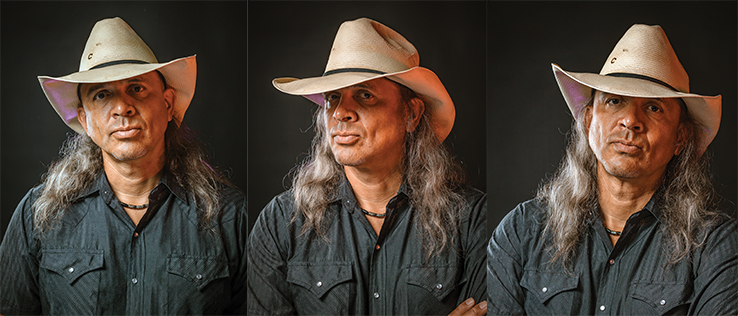
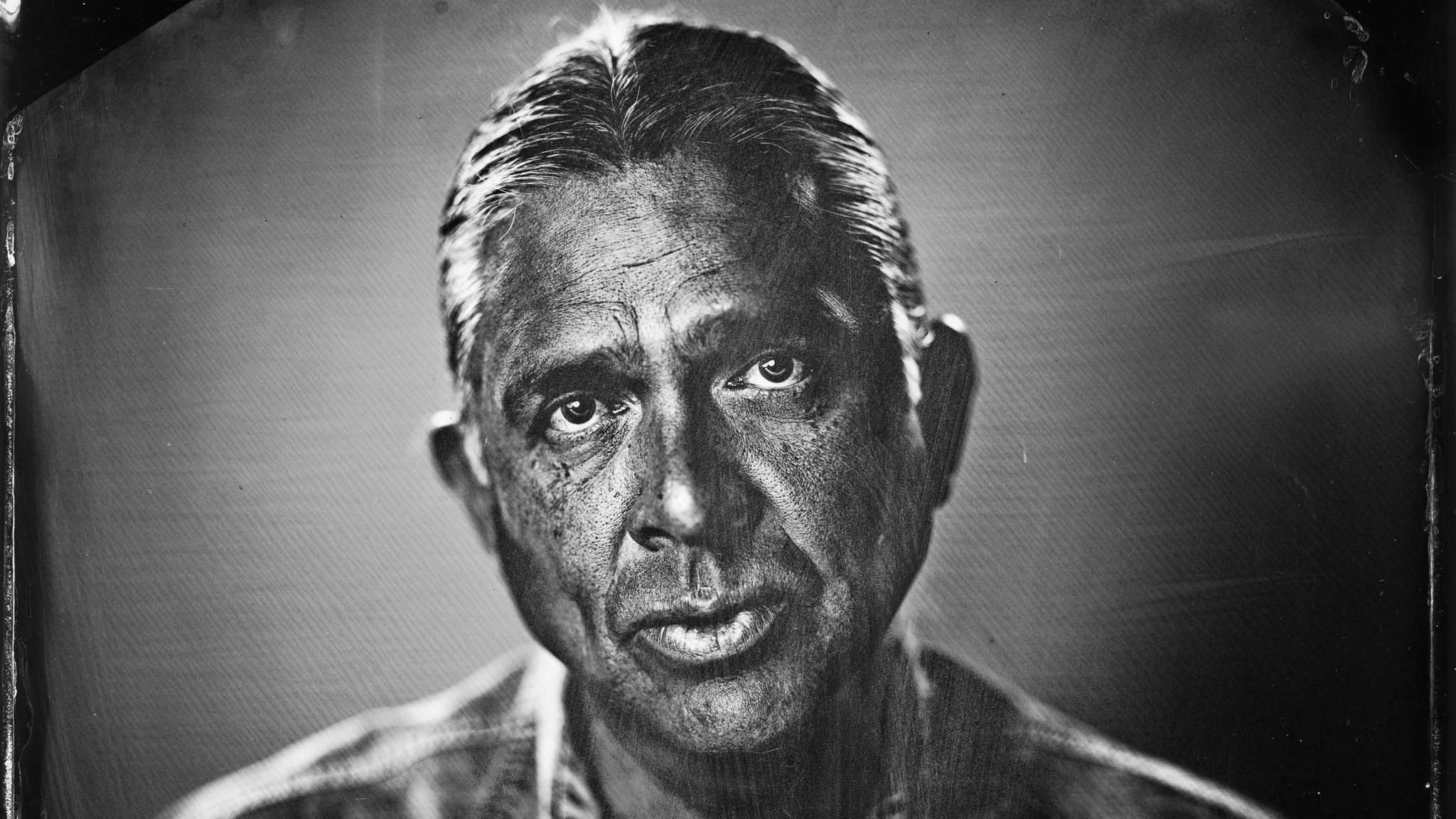
Stephen Graham Jones – image from 5280 Magazine – shot by Matthew DeFeo

It is an American history not taught in Western schools. The Marias Massacre took place 1870. A U.S. cavalry troop was sent to do damage to a particular branch of the Pikuni tribe, not the branch that had made an alliance with the incoming settlers. The leader of the troop, despite being shown documentation of the alliance, decided that one Indian is the same as another and proceeded to massacre 217 mostly women, children, and old men, many suffering from small pox.

Good Stab, a Pikuni, named for his nifty defense against an attacker, was 37 when he encountered the creature he calls Cat Man.

The thing had a thin white face with intelligence to it, and at first I thought its chin and mouth were painted for ceremony, but then I saw that it was just that it ate like a sticky-mouth, where it made a mess, and then let that blood stay like it was proud of it, wanted all the other four-leggeds see what it could do. Its mouth looked like it was pushing out too far, too, bringing the nose with it. But I told myself that was just because the dried blood made it look that way.
Its eyes were like mine, like I see you seeing, and its hair was hanging in its face, and it was naked so we could see it was a man, or had once been a man.
But it was no man

We follow Good Stab’s tale through decades, as told to Pastor Beaucarne, as he struggles to survive, and finds purpose in taking down those who seek to kill “blackhorns.” There are many adventures along his journey of discovery, and many internal struggles. He is a complex character who seems at times inured to the havoc he inflicts, but one who manages to sustain a kind, caring heart, at times anyway. We feel his pain in being an outsider as he yearns to connect with his people.

The backdrop for this story is the Western expansion into the west, including the racism, colonial military dominance, destructiveness, wastefulness, genocide, inhumanity and cruelty of the era. Killers, murderers, and thieves preaching a religion of peace. The irony is not lost. Ultimately, this is a revenge tale. Punishment for many who have come west to pillage nature’s bounty, and targeted attacks on those responsible for the Marias Massacre.

As we get most of the story from Good Stab we get his usage as well, words for creatures of the American west. “Blackhorns” for Bison, as well as Whitehorn, Wags-his-tail, Long-legs, Sticky-mouth and plenty more. Part of the fun of reading this is identifying each species as it is introduced.

Part of the joy of reading The Buffalo Hunter Hunter is seeing the coming together of history and horror in a way that is reminiscent of one of America’s most inspired writers. While this is hardly a magical realism version of history, the incorporation of actual Native American history gives it a very Louise Erdrich-y feel. There is another form of joy to be had here. I have a particularly high bar for horror. I lose no sleep, nor do I have scary dreams as a result of reading a horror book. But there was a night, while reading this one, when I felt that I had somehow ingested three fist-size dollops of Vampire and they had taken root in my torso. I knew in the dream that I could, with effort, expel them, but knew also that it would take a supreme effort to do so. That, to me, is the sign of a good scary book.

Stephen Graham Jones is a prolific writer. Even more than Stephen King, maybe into the domain of Isaac Asimov. I have read only a few (listed below in EXTRA STUFF) but of those I have read, this one stands out. The Buffalo Hunter Hunter is most definitely worth whatever time and trouble it takes to track down. Once you sink your teeth into it, you will have a tough time stepping away until you have ingested it all. This is simply a bloody wonderful book.

You don’t know this yet, but once a generation, once a century, someone is born with a kind of blood no one else has. If you drink from that person . . . how to explain it? It’s like the difference between an animal and a person. But the person is the animal now, and this new one is above them. Their blood, you do anything for it. I’ve only tasted it twice so far in all my years. She’s going to be the third time.”

Review posted – 2/27/25

Publication date – 3/18/25

I received an ARE of The Buffalo Hunter Hunter from Saga Press in return for a fair review. Thanks, folks, and thanks to NetGalley for facilitating.

This review is cross-posted on Goodreads. Stop by and say Hi!

=======================================EXTRA STUFF

Links to Jones’s personal, Twitter and FB pages

Interviews
—–NY Times – By the Book – Stephen Graham Jones Says His University Colleagues Aren’t Snobs About Horror
—–PW – Stephen Graham Jones Knows Good Stories Don’t Happen in Heaven
—–Horror Geek Life – Stephen Graham Jones Discusses ‘First Word on Horror’ & Terror on the Reservation (Exclusive)
by Stephen Rosenberg – but not much on this novel
—–The Nerdy Narrative – THE BUFFALO HUNTER HUNTER by Stephen Graham Jones – video – 12:08
—–5280 – Meet Colorado’s Most Prolific Killer, Horror Author Stephen Graham Jones by Spencer Campbell

My reviews of (sadly, only five) previous books by Jones
—–2024 – The Angel of Indian Lake -The Indian Lake Trilogy #3
—–2023 – Don’t Fear the Reaper -The Indian Lake Trilogy #2
—–2021 – My Heart is a Chainsaw -The Indian Lake Trilogy #1
—–2020 – The Only Good Indians
—–2016 – Mongrels

Items of Interest from the author
—–People – excerpt

Items of Interest
—–Wikipedia – Marias Massacre
—–Montana Historical Society – The Pikuni and the U.S. Army’s Piegan Expedition by Rodger C. Henderson

Leave a comment

Filed under Fiction, Historical Fiction, Horror, Native Americans

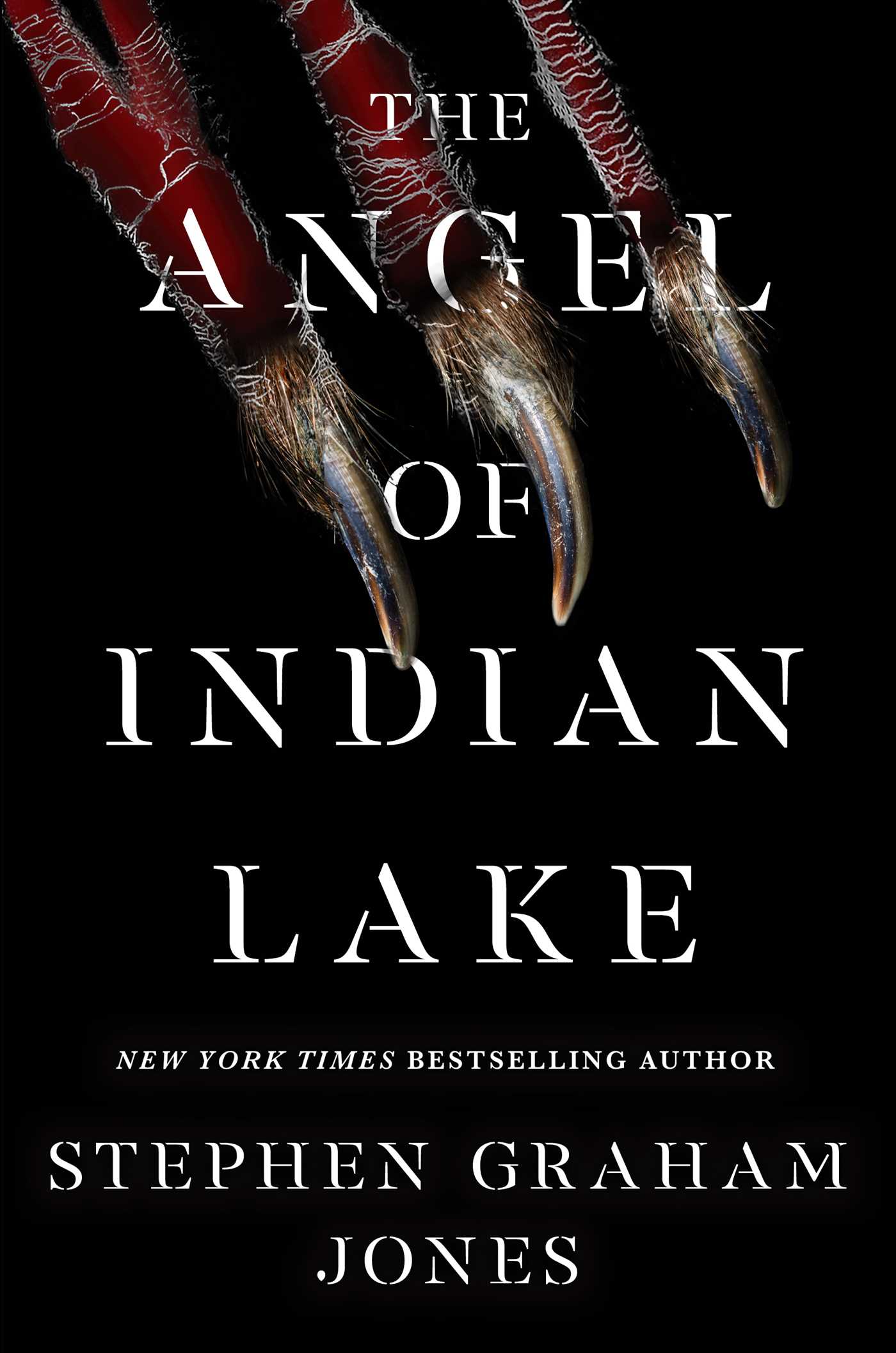
The Angel of Indian Lake (The Indian Lake Trilogy, #3) by Stephen Graham Jones

book cover

Her husband died in the water in 2015, and her son was suffocated with a dry-cleaning bag in 2019.
And now she’s got a chainsaw.

…this is maybe the one thing I believe in in the whole world: that when it’s your time, you don’t run from it—you stand against it, you keep your eyes open, and you rip and claw your whole way down, hope you can at least be a worthy trophy.

Don’t even try to read this unless you have been through Volumes #1 and #2 of the series. There is a lot going on in volume #3. Strap in.

description
Stephen Graham Jones – image from Library Journal

Seventeen in what is now called The Independence Day Massacre, having served undeserved time after the most recent mass slaughter, centered on Dead Mill South, now twenty-four, Jade Daniels is back in town. Did her time. Paid her debt to society and has a job as the history teacher in the local school. Her wealthy bff Letha Mondragon’s sponsorship may have something to do with that. She carries scars both physical and emotional from her tribulations in the first two novels of the trilogy. And plenty from before even that.

…you know the first one is third person of course, but it’s really tight on Jade. I think when people remember My Heart is a Chainsaw, they always say Jade is a narrator, and that’s always weird to me because she’s like our narrative focus, but she’s not actually the one speaking except for in her “Slasher 101” essays. Then when I figured out I was going to do a sequel and then a trilogy, I realized I’ve got to modulate the delivery throughout these three books.
So what I landed on for doing that was in the second one, it’s going to shatter and splinter into a multivocal thing with a lot of people speaking in Reaper, and a lot of people’s angles. To me, that was kind of set up for missing Jade. Like “This is fun, but I wish we had Jade.” So then in the third one, if I were able to, instead of only letting her speak during the [essays], if the main part of the narrative became her voice, then I was hoping that could feel like a return a little bit. Or it could just be as simple as I knew I was having to say goodbye to Jade and I wanted to hang out with her more. And how better to hang out with her than first person?
– from the Paste interview

She is our Virgil through the rings of Proofrock hell.We get the take of the ultimate final girl, (although she does not see herself that way) as she tries to figure out what is going on, as the bodycount rises. As part of that we hear her talk with her much-admired, and quite dead, history teacher, Mister Holmes. We are given access to the weekly sessions with her state-mandated shrink, Sharona, in which they both wear ghostface masks and sit on a swing set, as one does. In addition, we are treated to reports from a seemingly omniscient security agency tracking Jade’s every word and action.

A dad makes the mistake of hanging out in the local school’s hug-n-go lane, as it turns out to be more of a hug-n-get-decapitated lane. More heads will roll. Kids using VCR tech to produce a piece charmingly titled The Savage History of Proofrock, Idaho are lured to a discovery their friend had made, some long-lost victims. Another student makes use of drone tech to support a documentary, turning up some very interesting shots. Fiction soon gives way to fact. And, oh, there are footprints extending from a grave, which is very suggestive. (although odd only in that the risen dead emerged from a grave and not a lake) Speaking of graves, they play a significant role throughout the tale, as Jade visits her favorite late residents with some frequency. There is another graveyard commemorating a particular sub-set of the lost. And an unwanted commercial repurposing of land considered hallowed.

description
Devery Jacobs – image from Vanity Fair. SGJ could see her playing you-know-who.

There are enough bloodbaths in this town that someone could make a killing by opening a place called ProofBaaden, offering free towels, and wet places in which people could conduct unpleasant business.

There are forest fires, herds of panic-stricken animals, a mad recluse set on avenging the loss of his wife, and evil dead who will enlist a host to their ranks. There are many ends, loose and otherwise, that need to be tied up in this 465 page novel. There are murder mysteries to be solved and cold cases to be made warm, including the biggest mystery of them all, What the hell is all this killing about?

There are many substantive elements that poke their heads up from among the carnage. SGJ pays homage to the slasher genre. Jade is not the only character who sees life through the slasher-mask perspective of an afficionado. Appreciators of the form will find plenty to cheer for here.

The third installment of a trilogy always has to up the stakes and kill people we thought couldn’t die. I knew this going in, knew I’d have to do all that. In Chainsaw, Jade was fighting for herself. In Reaper, she was fighting for her friends, for this family she’d cobbled together. In Angel, she’s having to fight for her community—for Proofrock. And of course I had to adhere to Randy’s rules for the third in a trilogy, too. They were very helpful. This is my first time doing this, I mean. I needed a lot of help. – from the Nerd Daily interview

Class comes in for a look, as those who enjoy the advantages of those means are also responsible for much of the destruction that takes place in Proofrock. There is also a very feminist tilt here, as the final girl has always been a hero, but the baddies take on the feminine form as well. There is also an ongoing struggle of ill-treated women fighting back against their abusers. And there is a final twist that will resonate, culturally.

For many, there is pleasure to be had in recognizing the references, the many, many references to slasher films. There might actually be references to every slasher film. While I have seen a fair number of these, I am by no means a maven. This made it a bit of a challenge appreciating the shout-outs in the book without having to constantly google the titles, not to mention the stand-alone character citations.

The pleasure of this book is traveling along with Jade as she tries not only to survive but to get to the bottom of the entire unholy business, while saving her community. No dead ends here. Final girls rule, whether or not they survive.

…justice doesn’t extract itself, you’ve got to pull it bloody and pulsing from the chest of whoever wronged you.

Review posted – 08/30/24

Publication date – 3/06/24

Next up from SGJ is The Buffalo Hunter Hunter, due out March 2025

I received an ARE of The Angel of Indian Lake from S&S/Saga/Press in return for a fair review. Thanks, folks, and thanks to NetGalley for facilitating.

This review is cross-posted on Goodreads. Stop by and say Hi!

=======================================EXTRA STUFF

Links to Jones’s personal, Twitter and FB pages

Interviews
—–Paste – Stephen Graham Jones on The Angel of Indian Lake, Slasher Tropes, and Saying Goodbye to Jade Daniels by Matthew Jackson
—–Cemetery Dance- The Cemetery Dance Interview: Stephen Graham Jones by Cabriel Hart
—–Nerd Daily – Q&A: Stephen Graham Jones, Author of ‘The Angel of Indian Lake’ by Elise Dumpleton
—–Library Journal – LJ Talks to Horror Writer Stephen Graham Jones, Author of ‘Don’t Fear the Reaper’ by Becky Spratford – From 2022, but fascinating, by Becky Spratford
—–Off Book – Off Book: Stephen Graham Jones – video – 14:58 – at 6:45

There’s probably 12-14 beats of the slasher. You got to have the opening blood sacrifice. You got t have the red herrings, you’ve got to have the third rail body dumps. You’ve got to its like you’re going around a carousel and reaching out and hitting 12 or 14 bells as you go around. You got t hit all those bells for sure. But what I think makes a really good slasher movie is if you’re doing a revenge slasher of a mystery slasher, I guess they get called both, delaying knowledge of who the slasher is. That’s the most pleasurable, such that everything crashes to a head at the reveal when the person pulls their mask off and gives their big speech about I did this because you did this to me, or whatever it is.

My reviews of (sadly, only four) previous books by Jones
—–2023 – Don’t Fear the Reaper -The Indian Lake Trilogy #2
—–2021 – My Heart is a Chainsaw -The Indian Lake Trilogy #1on Coot’s Reviews
—–2020 – The Only Good Indians
—–2016 – Mongrels

Item of Interest from the author
—–CrimeReads – Excerpt

Item of Interest
—–ScreenRant – Randy’s Rules

The rules in Scream are a basic set to survive any horror film: you can never have sex, you can never drink or do drugs, and never (ever, under any circumstances) say “I’ll be right back”. Ironically, Randy explains these rules during a party, with half the attendees already drunk. Still, they hold some truth: Sidney has sex with Billy, and although she’s later attacked, it’s Billy the one who ultimately dies. Tatum (Rose McGowan) goes to the basement to get more beers and is killed there, and Stu says “I’ll be right back” right after Randy explains the rules, and is later killed (albeit in self-defense) by Sidney. In Scream 2, the rules for a horror sequel are: the body count is always bigger, the death scenes are more elaborate (“more blood, more gore”), and the third rule is not explained in the final cut, although it was revealed in the teaser trailer to be “never, ever, under any circumstances assume the killer is dead”.

Leave a comment

Filed under Horror, Native Americans, Reviews

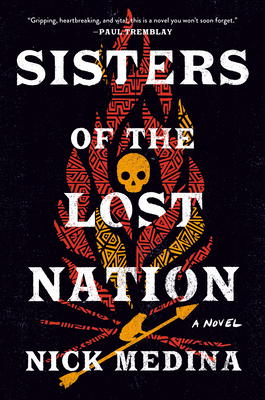
Sisters of the Lost Nation by Nick Medina

book cover

The spirit of a chief, you see, is a powerful thing. The skull became a head again when it was lifted from the grave . . . resurrected.”
“Resurrected?” she echoed.
“Alive again,” he said, his voice measured and grievously low, prolonging every word. “But not like it was before. Not like the old chief. It’s angry now that it’s been ripped from its rest. And ravenous. Hungry for revenge. It’ll eat anyone it encounters. It’ll tear flesh from bone.”
“How?” she said.
“It rolls, gathering mud and moss on its decaying flesh.”

Black bark to her sides and ash beneath her feet, she smelled the earthy odors of dirt, mud, burnt wood, and something so vile her stomach turned. It was the same smell the wind had wafted her way on the nights she’d been chased. Only the odor was stronger now. Inescapable.

Seventeen-year-old Anna Horn is terrified of two things. The first a magical, carnivorous head that gets around by rolling, and is possessed of a set of very nasty teeth. She believes it is determined to eat her. This is the result of a tale her Uncle Ray had told her ten years ago. Her terror about the rolling head permeates, as she fears its arrival every time there is a rustle in the bushes, the main difference in her experience of it being that she can flee faster at seventeen than she could at seven. The second is that she will never see her sister again. Fifteen-year-old Grace has joined the growing list of Native women gone missing.

description
Nick Medina – image from Transatlantic Agency

Anna is in the throes of that perennial challenge of the teen-years, (for some of us, this challenge can go on for decades) figuring out who she is. She is way more mature than most of us were at that age, for sure. She does not exactly dress to impress, favoring her father’s old clothes, and sporting a very unfashionable short haircut. She loves the stories of her tribe, the fictional Takodas, to the point of wanting to start a historical preservation society, to save Takoda history, myths, and traditions for future generations. The considerate and kind classmates at her mostly white school completely understand and support her efforts at self-discovery. As if. They make her school experience a living hell, taking it further than unkind words. Grace is a very different sort, desperate to fit in, wanting attention, focusing on her looks and pleasing others in order to grease the way to hanging with the cool kids. Acquiring a cell phone is the key to her potential rise, and she will do whatever she can to get the money for one.

The story flips back and forth in time, moving forward from Anna’s Day 1 in showing how events came to be, and from the day of Grace’s disappearance, showing the investigation and results. Chapters are labeled in reference to days since Anna’s story begins. Grace does not go missing until well along in those days. Chapters looking at the search for Grace are also labeled with the number of hours since her disappearance.

Medina wanted to highlight the epidemic of Missing and Murdered Indigenous Women and Girls (WWIMG) that has been devastating Native communities for a long time. He shows the all-too-familiar problems residents of tribal lands face when someone goes missing, a viper’s nest of overlapping legal jurisdictions, inadequate police funding, and official indifference among them, not to mention racism. Speaking of which Medina portrays people of all shades as less then admirable. Even the Native manager of the casino assigns Native workers based on their skin color. Fox Ballard, nephew of the tribal leader, is young, handsome, flashy, sculpted, and not at all to be trusted.

Medina pays attention, as well to the impact of modernization on traditional values. The Takoda nation has been significantly changed by the opening of a casino on the reservation. The most obvious contrast is that of Anna (traditional) vs Grace (modern). The new road offers up a steady supply of splatted frogs, a pretty clear image of the cost of replacing treasured values with treasure. Income from the casino is making its way to all the people on the rez, although it is also clear that some Takoda are more equal than others.

As explained in the Author’s note that follows the book, the inspiration for the carnivorous rolling head came from actual Wintu and Cheyenne legends. It reminded me of the relentless ungulate in Stephen Graham Jones’s The Only Good Indians, except that the elk in Jones’s tale is seeking revenge, while the head, though our only real look at it is through Anna’s terrified eyes, seems a more open opportunity attacker. Frankly, scary as it seems to her, it cannot hold a candle to Graham’s hoofed-slasher. It may have been scary to Anna as a character, but did not cause me any lost sleep as a reader.

I did feel at times that this book read more like a YA story than a fully adult one, an observation, not a black mark. The greatest strength of the novel is Medina’s portrayal of his lead, Anna. It is in seeing her social challenges, following her passions, tracking her investigative efforts, admiring her bravery, and rooting for her to mature to a point where she is comfortable in her own skin, that we come to care about her. That alone makes this a good read. The added payload, about the core issue of the book, Missing and Murdred Indigenous Women, about the impact of modernization on traditional values, about gender identity, and about the impact of story on our lives, gives it a far greater heft.

This is Medina’s first novel. He refers to it as a “thriller with mythological horror.” It is an impressive beginning to what we hope is a long and productive career.

She said Frog exemplified transformation. He entered life in one form and left it in another. From egg to tadpole, to tadpole with legs, to amphibian with tail, to tailless frog, he was never the same. He began life in water, only emerging once he was his true self. He symbolized change, rebirth, and renewal, and his spirit could bring rain.
Anna stared down at the ill-fated frog. The reservation was transforming. The asphalt beneath her feet was evidence of that. And yet the very symbol of change had become a victim of it. The absurdity didn’t escape her.

Review posted – 6/23/23

Publication date – 4/18/23

I received an ARE of book name from publisher in return for a fair review. Thanks, folks. Can you get that thing to stop chasing me? And thanks to NetGalley for facilitating.

This review is cross-posted on Goodreads. Stop by and say Hi!

=======================================EXTRA STUFF

Links to the author’s personal, Instagram, and Twitter pages

PROFILE – from The Transatlantic Agency

A Chicago native, Nick Medina is an author and college professor of public speaking and multicultural communication…Nick’s first short story was published in 2009 and he has since had dozens more published by West Pigeon Press, Dark Highlands, and UnEarthed Press, in addition to outlets in the U.S. and the U.K., such as Midwest Literary Magazine, The Washington Pastime, The Absent Willow Review and Underground Voices.

Interviews
—–Paulsemel.com – Exclusive Interview: “Sisters Of The Lost Nation” Author Nick Medina – e-mail interview
—–#Poured Over – The B&N Podcast – Nick Medina on Sisters of the Lost Nation – by Marie Cummings – video – 48:04
—–Murder by the Book – Special Prelaunch Q&A: Nick Medina Presents “Sister of the Lost Nation” by Sara DiVello – video – 33:31
—–FanFiAddict – Author Interview: Nick Medina (Sisters of the Lost Nation) by Cassidee Lanstra

Items of Interest from the author
—–Tor.Com – Excerpt
—–CrimeReads.com – EXPLORING SOCIAL ISSUES THROUGH HORROR

Items of Interest
—–Medina said that his initial inspiration for the novel was from an AP article published in the Chicago Tribune. Here is the article as published by AP – #NotInvisible: Why are Native American women vanishing? by Sharon Cohen
—–CBC – MMIWG cases continued at same rate even after national inquiry began, data shows
—– First People: American Indian Legends – The Rolling Head – A Cheyenne Legend

For horror grounded in the Native experience, I can recommend
—–Stephen Graham Jones – Mongrels
—–Stephen Graham Jones – The Only Good Indians
—–Stephen Graham Jones – My Heart is a Chainsaw
—–Stephen Graham Jones – Don’t Fear the Reaper
—–Cherie Dimaline – Empire of Wild

Leave a comment

Filed under Fantasy, Fiction, Horror, Mystery, Native Americans, Suspense, Thriller

Woman of Light by Kaji Fajardo-Anstine

book cover

The radio smelled of dust and minerals, and in some ways reminded Luz of reading tea leaves. They were similar, weren’t they? She saw images and felt feelings delivered to her through dreams and pictures. Maybe those images rode invisible waves, too? Maybe Luz was born with her own receiver. She laughed, considering how valuable such a thing must be, a radio built into the mind.

Maria Josie insisted Diego and Luz must learn the map, as she called it, and she showed them around first on foot and later by streetcar. She wore good walking shoes, and dressed herself and the children in many layers. It tends to heat up, she had said, another moment, it might hail. The siblings learned to be cautious. It was dangerous to stroll through mostly Anglo neighborhoods, their streetcar routes equally unsafe. There were Klan picnics, car races, cross burnings on the edge of the foothills, flames like tongues licking the canyon walls, hatred reaching into the stars.

There is a lot going on in this novel, so buckle up. Focused on the experiences of 17/18 year-old Luz Lopez–the Woman of Light of the story–in Depression-era Denver, the story alternates between her contemporary travails and the lives of her ancestors. The beginning is very Moses-like, a swaddling Pidre being left by his mother on the banks of an arroyo in The Lost Territory in 1868. We follow Pidre and his children and grandchildren into the 1930s. All have special qualities. Among them, Luz, his granddaughter, reads tea leaves, seeing visions of both past and future. Diego, his grandson, would definitely belong to House Slytherin in a different universe. He tames and performs with rattlesnakes.

description
Kali Fajardo-Anstine in the Western History & Genealogy Department of the Denver Public Library – image from 5280 – photo by Caleb Santiago Alvarado

This is a story about stories, how telling them carries on identity, while ignoring them can help erase the culture of a people. Pidre is noted as a talented story-teller, urged, as he is given away, to remember your line. KFA remembers hers, giving a voice to Chicano-Indigenous history.

My ancestors were incredibly hard working, generous, kind, and brilliant Coloradans. But they were also poor and brown and this meant our stories were only elevated within our communities. When I began writing seriously in my early twenties, I was reading books by James Baldwin, Sandra Cisneros, Edward P. Jones, and Katherine Anne Porter, and many, many others. I saw how these authors shined the spotlight on their people and I also wanted to write work that was incredibly sophisticated that honored my cultural group, making us more visible in the mainstream. – from the Pen America interview

Fajardo-Anstine brings a lot of her family’s history into this novel. Her great-aunt’s name is Lucy Lucero. In addition to the name of our protagonist, a second connection can be found in the name of the stream where Pidre is found, Lucero. An uncle was a snake charmer. An aunt worked in a Denver glass factory, as Luz’s aunt works in a mirror factory in the book. Her family had hidden from KKK, as characters do here. Her Belgian coal-miner father abandoned his family, as Luz and Diego’s father does here.

There is a feel to the book of family stories being told around a table, or in a living room, by elders, passing on what they know to those most recently arrived. Remember these tales, the speaker might say, and in doing so remember where you came from, so you can better know who your people are and ultimately who you are.

As they hopped and skipped in and out of the archway lights, Luz imagined she was jumping between times. She saw herself as a little girl in the Lost Territory with her mother and father walking through snow fields, carrying fresh laundry to the company cabin. Then she saw herself in Hornet Moon with Maria Josie, beside the window to her new city, those few photographs of her parents scattered about the floor, the only remnants of them she had left. She saw herself eating Cream of Wheat for breakfast with Diego in the white-walled kitchen. They were listening to the radio, the summertime heat blowing in from the windows, the mountains far away behind the screen.

The racism that Luz and other confront is not subtle. A public park features a sign

NOTICE
This Park Belongs to WHITE PROTESTANTS
NO GOOKS
SPICS
NIGGERS
Allowed

Luz is denied an opportunity to apply for a job because she is not white. A KKK march has a very pogrom-like, 1921-Tulsa-like feel.

Luz gets a chance to see the range of crimes going on in the city, when she gets a particular job. Sees how the system that is supposed to protect regular folks does anything but. The murder of a Hispanic activist by the police is not just a historical image, but a resonant reminder of police killing of civilians in today’s world, usually with little accountability. The more things change…

There is a magical element in this novel, that, when combined with the multi-generational structure, and richness of language, and, of course, her focus on particular groups of people, makes one think of Louise Erdrich. As to the first, among others, Luz receives visions while reading tea leaves, and at other times as well. An ancestor speaks with the dead. A saintly personage associated with mortality appears in the flesh. People appear who may or may not be physically present.

The ancestry begins with Pidre in 1868, but in his infancy we meet elders who reach back much further.

The generation I knew in real life was born around 1912 and 1918. They would talk about the generation before—their parents, but also their grandparents. That meant I had firsthand knowledge spanning almost two hundred years. When I sat down to think about the novel and the world I was creating, I realized how far back in time I was able to touch just based on the oral tradition. My ancestors went from living a rural lifestyle—moving from town to town in mining camps, and before that living on pueblos and in villages—to being in the city, all within one generation. I found it fascinating that my great-grandma could have grown up with a dirt floor, not going to school, not being literate, and have a son graduate with his master’s degree from Colorado State University. To me, time was like space travel, and so when I decided on the confines of the novel, I knew it had to be the 1860s to 1930s. – from the Catapult interview

Luz is an appealing lead, smart, ambitious, mostly honorable, while beset by the slings and arrows of ethnic discrimination. Like Austen women, she is faced with a world in which, because of her class and ethnicity, making her own way in the world would be very tough without a husband. And, of course, the whole husband thing comes with its own baggage. Of course, the heart wants what it wants and she faces some challenges in how to handle what the world offers her. She does not always make the best choices, a flaw likely to endear her to readers even more than an antiseptic perfection might.

The supporting cast is dazzling, particularly for a book of very modest length (336p hardcover). From a kick-ass 19th century woman sharpshooter, to a civil rights lawyer with conflicting ambitions, from a gay mother-figure charged with raising children not her own to a successful Greek businessman, from Luz’s bff cuz to the men the two teens are drawn to, from an ancient seer to a corrupt politician, from…to…from…to… Fajardo-Astine gives us memorable characters, with color, texture, motivations, edges you can grab onto, elements to remember. It is an impressive group.

And the writing is beautiful. This is the opening:

The night Fertudez Marisol Ortiz rode on horseback to the northern pueblo Pardona, a secluded and modest village, the sky was so filled with stars it seemed they hummed. Thinking this good luck, Fertudez didn’t cry as she left her newborn on the banks of an arroyo, turkey down wrapped around his body, a bear claw fastened to his chest.
“Remember your line,” she whispered, before she mounted her horse and galloped away.
In Pardona, Land of Early Sky, the elder Desiderya Lopez dreamt of stories in her sleep. The fireplace glowed in her clay home as she whistled snores through dirt walls, her breath dissipating into frozen night. She would have slept soundly until daybreak, but the old woman was pulled awake by the sounds of plodding hooves and chirping crickets, the crackling of burnt cedar, an interruption between dawn and day.

Really, after reading that, ya just have to keep on. One of the great strengths of this novel is its powerful use of imagery. There are many references to light, as one would expect. Water figures large, from Pidre’s introduction in the prologue, left by a stream, to our introduction to Luz and her aunt Maria Josie sitting together in Denver, near the banks where the creek and the river met, the city’s liquid center…, to a rescue from a flash flood, to an unborn buried near a river, and more. A bear-claw links generations. This makes for a very rich reading experience.

I felt that the narrative fizzled toward the end, as if, having accomplished the goal of presenting a family and group history, filling a vacuum, there was less need to tidy everything up, a quibble, given that the novel accomplishes its larger aims.

Kaji Fajardo-Astine’s 2019 short-story collection, Sabrina & Corina, made the finals for National Book Award consideration. You do not need to read tea leaves or have visions to see what lies ahead. Woman of Light, a first novel, illuminates that future quite clearly. By focusing a beacon on an under-told tale, Kaji Fajardo-Astine, is certain to have a brilliant career as one of our best novelists.

Celia, Estevan’s sister. Luz listened and watched as she read her own words in her own voice. First in Spanish and then in English. The crowd moved with each syllable, cries of anguish. A lamp unto my feet, a woman yelled behind Luz. A light unto my path.

Review posted – June 17, 2022

Publication date – June 7, 2022

I received a digital ARE of Woman of Light from One World in return for a fair review. Thanks, folks, and thanks to NetGalley for facilitating.

This review has been cross-posted on GoodReads

=======================================EXTRA STUFF

Links to the author’s personal, Instagram, and Twitter pages

Interviews
—–Red – June, 2022 – Q&A: Kali Fajardo-Anstine’s “Woman of Light” with Cory Phare
—–Pen America – 2019 – THE POWER OF STORYTELLING: A PEN TEN INTERVIEW WITH KALI FAJARDO-ANSTINE with Lily Philpott – not specific to this novel, but interesting
—–Catapult – June, 2022 – Kali Fajardo-Anstine Believes Memory Is an Act of Resistance with Jared Jackson

Items of Interest
—–Following the Manito Trail
—–5280 – Inside Denver Author Kali Fajardo-Anstine’s Much Anticipated Debut Novel by Shane Monahan

Leave a comment

Filed under Feminism, Fiction, Historical Fiction, Literary Fiction, Native Americans

The Sentence by Louise Erdrich

book cover

It was like the beginning of every show where the streets empty and something terrifying emerges from mist or fire.

I passed streams of people with signs, packs, water bottles. I passed squad cars and squadrons. I passed burnt-out stores with walls like broken teeth. I passed a woman with a shopping cart full of children. Down another street, a giant tank was rumbling forward. I turned to get out of the way. Pockets of peace then smoking ruins, then tanks and full-out soldiers in battle gear. I got a cold, sick feeling, and I knew there would be deaths down the road.

Bless me, Father, for I have read. It has been three weeks since I began reading. I am only sorry that I came to the end and could read no more. But I promise to avoid the occasion of reading… this book again, well for a while, anyway.

description
Louise Erdrich – Image from MPR news – by Dawn Villella | AP Photo file

There is magic to be had in the Catholic sacrament of confession. Confess your sins to an invisible presence across a visually impenetrable screen, let the priest know you are truly sorry, promise to do the penance you are assigned (and actually do it. Depending on the severity of one’s sins, this sentence is usually of the parking-ticket-fine level, typically saying a number of Hail Marys and Our Fathers.) and, after a few traditional, if not necessarily magical words, your sins are erased, at least in the eyes of an even more invisible, all-powerful deity. Sins, forgiveness (or not) and redemption all figure large in Louise Erdrich’s seventeenth, and latest novel, The Sentence. The sentences are a bit more significant than the penances doled out in confession.

We meet Tookie, an immature thirty-something, early on. A friend manipulates her into stealing her dead-boyfriend’s body, and bringing it back to her. This bit of Keystone Kops body-snatching has the ill-fortune of involving the crossing of state lines…and the corpus delecti had some extra baggage. Her so-called friend throws her under the bus and Tookie is sentenced to 60 years, by a judge who would be right at home in the Kyle Rittenhouse case. A teacher of hers sends her a dictionary when she is in prison, and Tookie spends her time in lockup reading as much as she can. When she gets out, well short of the max sentence, she goes to every bookstore in Minneapolis with her resume and, finding the one where the dictionary-teacher is working, is taken on. This is not just any old bookstore, but a barely-bothered-to-try-disguising-it simulacrum of Louie Erdrich’s Minneapolis shop, Birchbark Books. With her love of reading, Tookie fits right in, becoming a professional bookseller, and thrives.

description
Birchbark books storefront – image from the BB site

Louise Erdrich has made a career writing about the contemporary world in light of the history of indigenous people, how the past continues to impact the present. One might even say to haunt it. The hauntings in The Sentence continue that focus, but add a more immediate presence.

There is just one problem at Tookie’s job. In 2019, four years after she starts, a frequent-flyer of a customer, both engaging (Tookie’s favorite, even) and very annoying, Flora, has passed on, but does not seem to accept this. She sustains enough mobile ectoplasm to make her presence known as she haunts the bookshop. The central mystery of the story is why. Like many who shop at this Indigenous-oriented emporium, Flora seemed a wannabe Indian. Claims some native blood, and did a fair bit to walk the walk. But she never seemed quite the genuine article to folks at the store. For reasons unknown, Flora’s ghost seems to have fixated on Tookie, bugging her more than other store employees, making noises, knocking books off shelves, and worse.

I had always wanted to write a ghost story. There’s this anomaly, “I don’t really believe in ghosts,” but I knew people who had inexplicable experiences and would not admit—as I would not—to believing in ghosts. I sometimes would take a poll when I was doing a reading and I would ask everyone in the audience if they believed in ghosts. Very few hands would come up. And then I would ask, “Have you had an experience or know someone who has had an experience with a ghost?” and almost every hand would go up. We do have some residual sense of the energy of people who are no longer living. They are living in some way. – from the PW interview

description
A handcrafted canoe hangs from Birchbark’s ceiling – Credit…Jenn Ackerman for The New York Times

It becomes a challenge, figuring out how to cope with this unwanted visitor. Why was she there, in the bookstore in particular, and what would it take to get her to leave? Flora had been found with an open book, a very old journal, The Sentence: An Indian Captivity 1862-1883. The book seems to be implicated in Flora’s passing. Tookie tries to figure out if the book had a role to play in Flora’s death. There might be a perilous sentence in the book.

But Flora is not the only unwelcome intruder. Erdrich gives us a look at what life in Minneapolis, and her bookstore, was like (and may be again) paralleling Flora’s growing intrusiveness with the COVID rampup in 2019 and lockdown of 2020. Figuring out how to cope with COVID, both personally and professionally, adds a major layer of challenge. A very present, you-are-there, account of empty streets, closed shops and short supplies, adds to the haunted feel of the entire city during the lockdown. (“This is the first book I have ever written in real time.“)

Sometimes late at night the hospital emitted thin streams of mist from the cracks along its windows and between the bricks. They took the shapes of spirits freed from bodies. The hospital emitted ghosts. The world was filling with ghosts. We were a haunted country in a haunted world.

And then there was George Floyd. Floyd was hardly the first (even in recent history), minority person murdered by police, but what set his example above so many others was the precise documentation of his killing. Also, not alone in current near-history, but the straw that broke the camel’s back, in a way. The outrage that has followed has been driven not just by the phone-videos that now have become commonplace, but by the long history of the same events that lacked such undeniable evidence. The annihilation of native people by Westerners is of a cloth, if at a much greater and intentionally genocidal level. It is amazing there is room enough left for living people with all the ghosts that must be wandering about.

description
The confessional – image from MapQuest – This part of the store figures in the tale

Tookie is our focus throughout, with occasional side-trips to other POVs. Her journey from convict to bookseller, from criminally-minded to good egg, from single to paired up. Hers is a later-in-life-than-usual coming of age. You will like her. She starts out with edge, though, which you may or may not care for.

I am an ugly woman. Not the kind of ugly that guys write or make movies about, where suddenly I have a blast of instructional beauty. I am not about teachable moments. Nor am I beautiful on the inside. I enjoy lying, for instance, and am good at selling people useless things for prices they cannot afford. Of course, now that I am rehabilitated, I only sell words. Collections of words between cardboard covers. Books contain everything worth knowing except what ultimately matters.

In case you are wondering what that final line means, even Erdich is not sure. Tookie may not have been the most glorious flower in the bouquet, but she still has considerable appeal. In addition to being smart and creative, being willing to learn, to grow and to repent her sins are among her finer qualities.

The cast of supporting characters is wonderful, per usual. Pollux is Tookie’s other half, well, maybe more than a half, as he totes along with him an adolescent niece in need of parents. He is a bona fide good man, although he has a bit of a blind spot when it comes to believing in ghosts. One of the truly lovely elements of the book is how Tookie and Pollux express their love for each other through food. His niece, Hetta, is, well, an adolescent, so the emotional interactions can be…um…lively. The shop crew are a fun lot, ranging in age and interests, and we get a look at some of the sorts of customers who patronize a shop that specializes in indigenous-related material. One other supporting cast member is the bookstore’s owner, a famous writer, referred to only as “Louise.” Erdrich has a bit of fun with this, giving herself some wonderful, LOL lines, and letting us in on some of her life under a bookshop-owner’s hat.

description
image from KARE 11 – Credit: Heidi Wigdahl

One tidbit I found interesting from my wanderings through things Erdrich is that she writes to a title, that is, the title is the first element of her books, and the rest is built around that. She first came up with the title for this one in 2014.

I gathered extraordinary sentences. healing sentences, sentences that were so beautiful that they brought people solace and comfort, also sentences for incarcerated people. – from the Book Launch

At some point the weight of her accumulated material justified beginning to flesh it out. This happened in 2019. I did not find any intel on just how many titles she carries about with her at a given moment, or what was the longest gap between title idea and deciding to write the book.

Bottom line is that when you see the name Louise Erdrich on a book, you can count on it being an excellent read. You can count on there being compelling contemporary stories, engaging characters, and a connection with the history of indigenous people. You can count on there being some magical realism. In this one, there is a powerful motif of sins in need of forgiveness. Mistakes need correcting, penance needs to be done, and redemption is a worthy, if not always an attainable goal. The Sentence asks how we can come to grips with the ghosts of the past, and cope with the sins of the present while mass-producing the specters of the future.

description
Protesters gathered at Chicago Ave. and East 38 th Street in South Minneapolis after the death of George Floyd – image and text from Minneapolis Star Tribune

At the end of the sacrament of Confession, the priest says, “I absolve thee from thy sins in the name of the Father, and of the Son, and of the Holy Ghost.” If only forgiveness were all that was needed. Read two literary novels, one thriller, a memoir and a non-fiction, and sin no more.

Many books and movies had in their plots some echoes of my secret experiences with Flora. Places haunted by unquiet Indians were standard. Hotels were disturbed by Indians whose bones lay underneath the basements and floors—a neat psychic excavation of American unease with its brutal history. Plenty of what was happening to me happened in fiction. Unquiet Indians. What about unquiet settlers? Unquiet wannabes?…Maybe the bookstore was located on some piece of earth crossed by mystical lines.

Review posted – November 19, 2021

Publication date – November 9, 2021

This review has been cross-posted on GoodReads

=======================================EXTRA STUFF

Links to the author’s personal and FB pages. Erdrich’s personal site redirects to the site Birchbark Books. She owns the store. There really is a confessional there. According to the store’s FAQ page, it was renamed a “forgiveness booth” after it was rescued from becoming a bar fixture.

A GHOST LIVES IN HER CREAKY OLD HOUSE

This is Erdrich’s seventeenth novel, among many other works. She won the National Book Award for The Round House, the National Book Critics Circle Award for LaRose and Love Medicine, and the Pulitzer Prize for The Night Watchman, among many other recognitions. Her familiarity with cultural mixing is personal, her mother being an Ojibwe tribal leader and her father being a German-American. Familiarity with both native spirituality and western religion also stems from her upbringing. She was raised Catholic.

Interviews
—– Louise Erdrich: The Sentence Book Launch Conversation by Anthony Ceballos
—–PBS – Louise Erdrich’s ‘The Sentence’ explores racial tensions in a divided Minneapolis
—–Publisher’s Weekly – A Ghost Persists: PW Talks with Louise Erdrich by Marian Perales

Other Louise Erdrich novels I have reviewed
—–2020 – The Night Watchman
—–2017 – Future Home of the Living God
—–2016 – LaRose
—–2010 – Shadow Tag
—–2012 – The Round House
—–2008 – The Plague of Doves
—–2005 – The Painted Drum

Songs/Music
—–Johnny Cash – Ain’t No Grave – Flora plays this while haunting Tookie

Items of Interest
—–NY Times – Where to Find Native American Culture and a Good Read By J. D. Biersdorfer
—–Twin Cities Daily Planet – After 17 years Birchbark Books continues to center Native stories, space amid society of erasure By Camille Erickson | April 27, 2017
—–The Catholic Crusade – the traditional Act of Contrition

2 Comments

Filed under American history, Fiction, Historical Fiction, Literary Fiction, Native Americans