Category Archives: Mystery

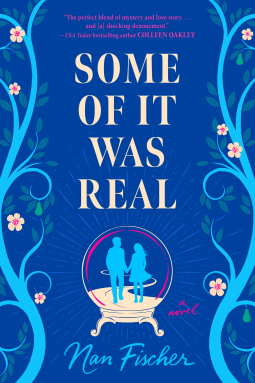
Some of It Was Real by Nan Fischer

book cover

Today an image slips through the carefully constructed peace . . .
Pale sand beneath my feet, a blue-green ocean, foam nibbling at my bare toes. Behind me, a castle—ornate turrets dotted with pale pink shells, a drawbridge made from delicately curved driftwood, beneath it, a moat where tiny paper boats rock in the breeze. A wave gathers on the horizon. It grows taller and white horses gallop across its face. When the wall of salt water strikes, the castle will be destroyed and with it a treasure, something precious . . .
The vision disintegrates. Ghostly lips brush my cheek. I know what’s coming next. A whisper I’ve heard intermittently my entire life.

“It’s important you understand that I don’t have a clear definition for what I do. Psychics use their intuition or spiritual guides to gain information about the past, present, or future. Mediums are channels that deliver messages from those who have passed over. I’ve been called a psychic-medium, and that’s as good a definition as any. But the truth is that I’m not sure why I hear voices, see images, sing at times, or scribble notes—it just happens and I can’t tell you how because I truly don’t understand it.”

Sylvie Young has just gotten a TV deal, the product of a successful run of live stage performances and a top-tier agent. Life is good, and about to get better. Sylvie’s shows are of the psychic sort. Select audience members, offer a connection to a lost one, solve some riddles, answer some unanswered questions, and mostly, offer comfort. Syl is very good at this. But not all of her connections are of the psychic sort.

description
Nan Fischer – image from her site

Thomas Holmes is a cynical reporter on a mission. For personal reasons, Holmes believes that all psychics are fakers. It is elementary. His current project is to profile several psychic-mediums, intending to expose their chicanery and, if at all possible, destroy their careers. Which is something he knows a bit about. His own career in journalism has suffered some major blows, to the point where this major takedown piece may be his last chance to salvage his own career.

Both are struggling to deal with their origin stories (Sylvie even opens her shows by telling hers, at least what she knows of it) and their self doubts. Sylvie’s arc is a quest to find out what really happened to her biological parents, explain why she is beset by nightmares of a particular sort, and maybe discover where she acquired her very real personal talent. But is it real, really? Thomas suffered a trauma in his youth that has defined his life. Until he can confront that, the life he has made for himself will never be a proper fit. This is the true core of what Nan Fischer is writing about.

One of the seeds that started this novel with my fascination with imposter syndrome—the inability to believe one’s success has been legitimately achieved or deserved. I wanted to create a character, Sylvie, on the cusp of achieving great success but who doesn’t quite believe she deserves it. I made Sylvie a psychic as that gift is controversial—the perfect job for someone doubting her abilities due to all the critics! – from Hey It’s Carly Rae interview

Thomas has run into some dead ends digging into her past. There are no records of her parents’ supposed plane crash deaths when she was four. He wants her help to dig into this further. She has an interest, as it is a mystery to her as well. And if she can prove to him that she is not a grief vampire, he will drop her from his story. Of course, he expects he will never have to make good on that, as psychic powers are all BS, right? And the game is afoot.

the stories we tell from childhood that have shaped who we are – are based on old and sometimes faulty memories. It’s up to each of us to decide what to accept or discard from our origin stories and to decide who we ultimately want to be in life. – from the Jean Book Nerd interview

Many of the curtains Sylvie needs to part were placed there by others. Thomas erected his barriers to self-knowledge himself. Part of their interaction is Syl challenging Thomas to look deeper into the sources of his own demons, as Thomas challenges Sylvie to examine the ethics of how she is making her living. (“What was the fair lady’s game? What did she really want?” – Sherlock Holmes in The Second Stain)

As one might expect from a book categorized as romance, these two develop an attraction. That complicates matters. How can a journalist write an objective piece about someone with whom he is romantically engaged? He may be trying to take her down, but she is also looking for ways to manipulate him into a more benign view of her and her work. The cynic vs psychic dynamic is entertaining for a while, but Thomas’s relentless disregard of evidence gets a bit old. Really, dude? Still?

Fischer gives us a particularly interesting look at the profession of psychic-medium, offering a perspective that elevates it beyond being merely a connection to another side, whether real or faked. She connects it to something greater.

The structure is alternating chapters, his and hers, both first-person narratives. The voices are effectively different. It is a cat-and-mouse competition, although it could easily be a cat-and-dog one. Sylvie’s constant companion is a very large Great Dane, and Thomas travels with an elderly feline. (Fischer even manages to give her own dog, Boone, a cameo) He keeps trying to find holes in her schtick. She keeps trying to move him beyond the purely factual. Another Holmes might say when you have eliminated the impossible, whatever remains, however improbable, must be the truth, but Thomas clings to his biases tenaciously.

I was not all that taken in by their supposed attraction, never quite bought it, and wanted the sex scenes to be over quickly. But I did enjoy their mutual interest in helping each other out. I also had trouble with Sylvie’s relationship with her parents, who seemed far more reluctant to share information with their daughter than seemed reasonable, particularly considering that she is a grown-ass woman when she is pleading for intel about her past, intel that they have. Their rejection of her seemed unnatural, very un-parental.

What keeps the story moving along is a steady stream of interesting clues and the pair’s ingenuity on following up on them. There are some pretty nifty twists. It is fun tagging along on the procedural, mystery-solving element of the story. Overall, Some of It May Be Real is an engaging story, a mystery, wrapped in a bit of fantasy, a quest of self-discovery featuring an ongoing cynic-psychic battle, as both Sylvie and Thomas dig into their origins as a way to confront their demons and feelings of inauthenticity. It offers some intrigue, some chills and some very real tears. It is authentically entertaining.

What surprised me most about writing Some Of It Was Real was that I thought my research would lead me to a conclusion about what I believe. I watched documentaries, movies, and TV shows about psychics, clairvoyants and mediums and read studies and articles written by individuals whose goals are to prove the supernatural is a hoax. But in the end, the only real conclusion I drew was that some of it might be real. – from Thoughts From a Page Podcast

Review posted – August 26, 2022

Publication date – July 28, 2022

I received an ARE of Some of It Was Real from Berkley in return for a fair review. Wait, does the number four have any particular meaning for you? I am also seeing something shiny. Sparkles, maybe? No, stars. Yes, definitely stars. Thanks, folks.

This review has been cross-posted on GoodReads

=======================================EXTRA STUFF

Links to the author’s personal,
Instagram, GR, and Twitter pages
Profile – from her site

Nan Fischer is the author of Some Of It Was Real (July 2022, Berkley Publishing), and the young adult novels, When Elephants Fly and The Speed of Falling Objects. Additional author credits include Junior Jedi Knights, a middle grade Star Wars trilogy for LucasFilm, and co-authored sport autobiographies for elite athletes including #1 ranked tennis superstar Monica Seles, Triple Crown race winning jockey Julie Krone, Olympic gold medal speed skater Apolo Anton Ohno, legendary gymnastics coach Bela Karolyi, and Olympic gold medal gymnasts Nadia Comaneci and Shannon Miller.

Her prior work was published under the names Nancy Richardson Fischer, Nancy Richardson, and Nancy Ann Richardson. Some of it was Real is her first book under the name Nan Fischer.

Interviews
—–Jean Book Nerd – Nan Fischer Interview – Some of It Was Real
—–Hey, It’s Carly Rae – Author Interview with Nan Fischer
—–Writers Digest – Nan Fischer: On Overcoming Imposter Syndrome by Robert Lee Brewer
—–Thoughts from a Page – Q & A with Nan Fischer, Author of SOME OF IT WAS REAL by Cindy Burnett
—–BookBrowse – An interview with Nan Fischer
with Katie Noah Gibson

Items of Interest
—–Gutenberg – full text of The Man Without a Country by Edward E. Hale – referenced in Chapter 19
—–The Poe Museum – full text of The Cask of Amontillado – by Edgar Allan Poe – referenced in Chapter 21

2 Comments

Filed under Fantasy, Fiction, Mystery, Suspense, Thriller

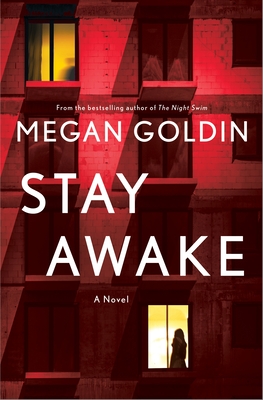
Stay Awake by Megan Goldin

book cover

“Where did you put it?”
“Put what?”
“The knife,” he hisses. “What did you do with the damn knife, Liv? You took the goddamn knife when I was in the bathroom, and you walked off with it.”
“I don’t know what you’re talking about. This must be a wrong number.” I resist the urge to hang up the phone. I feel compelled to know more.
“Don’t tell me you fell asleep and forgot everything again?” he says.
He frightens me with the accuracy of his comment. “How do you know I woke up with no memory?”
“Because you lose your goddamn memory every time you fall asleep. Listen, here’s what I want you to do…”

“Lack of sleep does horrible things to a person’s mind,” said the social worker. “It can make some people psychotic.”

Liv Reese has a problem with sleep. Whenever she nods off, pop go the last two years, wiped clean. Thus the messages she has written to herself on her body, ( I look like a human graffiti board.) reminding her to remain awake at all costs. Not remembering might be useful for coping with a bad, newly lost relationship, but there is no upside to forgetting for Liv. Coming to in a cab crossing the Brooklyn Bridge, she has no understanding of the world in which she now struggles. On trying to get into her brownstone apartment, she finds it occupied, not by her roomie, but by strangers, who are not exactly eager to let her in, and it looks oddly changed. It was Summer last thing she remembers, but seeing her breath in the air challenges that. She finds a clue on her fingers and heads to what seems likely to be a familiar locale, a bar, Nocturnal. At least someone seems to know her there. “You’re afraid of what you do in your sleep.” he tells her. Should she be? That bloody knife she had been toting around does not ease her concerns.

description
Megan Goldin – image from the Sydney Morning Herald

Reese is having a bad day. Over and over and over. Not quite the sort of charming fantasy rom-com-do-over one might see in, say Ground Hog Day or Fifty First Dates. Nope. There are no yucks to be found here. As you no doubt noted from the book quote at the top of this, she is in a bit of trouble. This is much more the Memento vibe, trying to stay alive while also desperate to find out what caused her to go blank two years ago. The same day does not repeat like a video game level. The real world continues on its merry, or not so merry way. It is only Liv who resets.

So what caused her to blank out? That is her quest, the driving force of the novel. All she has to do is figure out what all the writing on her body, and other locales, means, or can lead her to. Prominent among these is an all caps “STAY AWAKE” above her knuckles. “WAKE UP” adorns an arm, coincidentally the very thing painted in blood on the window of a man who had just been murdered.

Goldin must have been driving a Bis Rexx dump truck when she was loading up her protagonist. Being pursued by someone who is probably a psycho-killer, looking like a suspect in the murder, while not being able to recall anything from the past two years, including whether she is or is not, herself, a psycho killer, makes for a wee bit of stress. And then having to cope with all this while completely exhausted from lack of sleep, wired from mass consumption of coffee and anti-sleeping pills, and having no idea who you can trust. On the other hand, loading a character up with such a surfeit of misery makes it almost mandatory to root for her. It’s like Atlas is holding up the world and Zeus decides to toss on a few extra planets for laughs. Awww, c’mon, give the poor thing a break. So, sure, easy peasy. Have a nice day. Sheesh!

We actually get a day and a half with Liv, beginning on Wednesday 2:42 A.M. and ending on Thursday 2:45 P.M. Every chapter begins with a time stamp. It is an intense thirty-six hours. Did she or didn’t she murder that man? Will the cops or won’t they catch her and put her away for the murder? Will she or won’t she find out what caused her memory failure? Will she learn who the psycho is who is pursuing her? Will he catch her? Will she be able to stay awake until answers are found? Is there anyone on her side?

We see two time periods, the present and two years prior. The present is divided pretty much between Liv’s ongoing travails and Detective Darcy Halliday’s investigation of the recent murder. The two-year lookback is a singular third-person telling.

Chapters alternate in the present in groups between Liv’s ongoing travails, and Detective Darcy and her partner working the case. So, a few chaps on Liv, a few on the investigation, and then a lookback. There are sixty-six chapters in the book. Twenty-nine of these consist of Liv’s first-person narrative. Twenty-two follow Detective Halliday and her partner as they investigate. Thirteen look back to the events of two years earlier, as they lead up to the mind-blanking event. (Yes, I know that leaves the total a couple short. There are two that do not fit the major divisions.) All the chapters are short, so you can catch a few pieces of the novel whenever time allows, on the train, at bedtime, while waiting for your next crudité delivery to arrive, and not feel compelled to read on just to finish a long chapter. I mean, you might want to keep on anyway, but because the story had drawn you in, not because of any obsessive need to complete a chapter no matter how lengthy. I don’t know anyone who would do such a thing. Can’t imagine it.

Wait, wait, what is that beeping sound? Oh, no, another load for Liv! Not enough to contend with already, try adding (piling?) on no keys, no purse, no ID, no phone. She is about as isolated as a person can be in a city of eight million. This also counterbalances any hostility we might have toward her for being a food writer for a chichi magazine called Cultura.

Trauma can do terrible things to one’s brain. But wait there’s more. Liv has had that blank spot since her trauma, but was able to have a life anyway. However, that daily reboot problem is of very recent vintage, only a few weeks. Previously, she had been able to form new memories just fine. What changed? I found Goldin’s explanation for this a weak point in the story. I have a few other gripes, which I am marking here as spoilerish, so if you have not read the book, please feel free to skip this. (If the killer had such precise blade work how was that technique not done properly on Liv? The designer clue seemed cheap to me. There is no way a reader could have looked into this and come up with the book’s explanation, which seems not cricket. I managed to correctly figure out who the killer from two years ago, but it was based on totally misreading that clue. Right answer, wrong reason.)

I enjoyed the character of Detective Darcy Halliday, tough, smart, able to access her softer side to find ways to the truth. I also liked following the procedural investigation, but not so much her interaction with her more experienced male partner, Detective LaVelle. Just did not at all care whether they bonded with each other or not.

There are surely many, many films and books that this might be compared to, in addition to the few noted above. Hitchcock’s Spellbound, Tana French’s In the Woods, the latest iteration, Surface, on Apple TV. The Jason Bourne Series is the most famous. Eternal Sunshine of the Spotless Mind is another. Many live in the world of fantasy or science-fiction. But few of the real-world-based (not fantasy or sci-fi) amnesia tales outside Memento incorporate a daily reset. It definitely adds to the stress level. (For a book about a real real-world person afflicted with an inability to form new memories, you might want to check out Patient H.M. by Luke Dittrich)

The tempo goes from frantic to OMG!!! So there is no danger of you drifting off while reading. Does it all come back to her? Oh, puh-leez. I am not gonna spoil that one. But you know how these things go. Sometimes it all comes back, often with another knock to the head. Sometimes nothing comes back, and sometimes parts return, but not the entirety. You will just have to see for yourselves. I am spoiling nothing, however, in telling you that we readers find out why she developed her initial amnesia two years back.

Red herrings are allowed to swim freely, which is perfectly ok. They can be delicious. Most of the supporting cast felt a bit thin. Darcy is well done, but most of the actors were not on the page long enough to develop all that much. A killer’s motivation seemed a stretch. NYC was exploited as a setting far less than it might have been. On the plus side, a (probably-deranged) performance artist adds a particularly poignant bit of menace. But the damsel-in-distress with serious memory issues and darkness descending is a pretty killer core, so the scaffolding erected around it is of lesser importance.

Bottom line is that this was a fun read, a page-turning thriller, an excellent (end-of) Summer treat. Best part is that if you fall asleep while reading, it will still be there for you when you wake up.

The white, as yet unpainted, part of the wall, is graffitied with an array of random sentences. Most are written in pen. A couple are in marker. One appears to be written by a finger dipped in black coffee.


Memories lie.
Don’t trust anyone.
He’s coming for me.

Review posted – August 19, 2022

Publication date – August 9, 2022

I received an eARE of Stay Awake from St. Martin’s Press in return for something, but I just cannot remember what. Thanks, folks, and thanks to NetGalley for facilitating.

This review has been cross-posted on GoodReads. Stop by and say Hi!

=======================================EXTRA STUFF

Links to the author’s personal, FB, and Twitter pages

From MacmillanBlockquote>MEGAN GOLDIN, author of THE ESCAPE ROOM and THE NIGHT SWIM, worked as a correspondent for Reuters and other media outlets where she covered war, peace, international terrorism and financial meltdowns in the Middle East and Asia. She is now based in Melbourne, Australia where she raises three sons and is a foster mum to Labrador puppies learning to be guide dogs.

Songs/Music
—–Paul Simon – Insomniac’s Lullaby – referenced in chap 1
—–Eagles – Hotel California – live, acoustic version – chap 37
—–Alicia Keyes – New York – referenced in chap 48

Item of Interest from the author
—–Book Lover Reviews – Does Suspense Have a Place In A Wired World?

1 Comment

Filed under Action-Adventure, Fiction, Mystery, psycho killer, Suspense, Thriller, Thriller

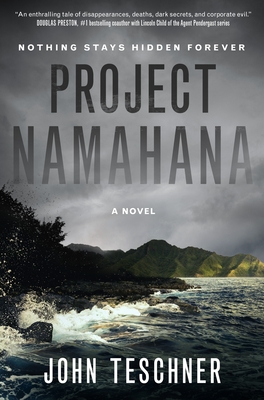
Project Namahana by John Teschner

book cover

They talk about shareholder value because they need to call it something. But there’s no accountability, not to shareholders, not to anyone. It’s chance. You can do everything right, but if there’s a drought in India and orders drop ten percent, you’ll be blamed. Unless you can get transferred in time for the blame to hit the next guy. And it goes all the way up. No matter what anyone tells you, or what they believe about themselves, all anyone is trying to do is make sure there will always be a chair for him to sit on when the music stops.”

“To quote Dr. Wilson,” said Professor Higa, “Selfishness beats altruism within groups. Altruistic groups beat selfish groups. Everything else is commentary. Can anyone explain?”

Project Namahana is a book about responsibility. Who accepts it. Who ducks it. How it is spread around so thinly that it ceases to have any substance. Are you responsible if you shoot someone? Sure thing, unless they were shooting at you first. Are you responsible if people are killed because of decisions you made? It begins to get tougher. What if you’d known there was potential for harm? It can be difficult to assign personal blame, particularly when decisions are made by a range of people.

description
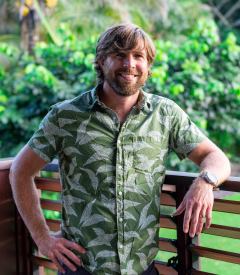
John Teschner – image from The Big Thrill

Jonah Manokalanipo takes his son and two cousins to a nearby dam for a swim. When he returns for them, after a heavy rain, he finds all three dead. What killed them? Jonah has an idea, and raises a huge fuss.

Micah Bernt is a military veteran, a loner mostly, seriously PTSD’d. He uses this to keep people at a distance, for their safety. He is not completely wrong to do so. Bernt is living on the Hawaiian island of Kauai, working selling outboard motors, renting a small place from a friendly older couple. He finds their comity off-putting, not wanting to get too attached and maybe expose them to his darker side. There is one. He did not get his screaming meanies from spending too much time in a knitting circle. There is plenty of guilt to go along with his unwelcome memories.

Michael Lindstrom is an exec with the Benevoment corporation, producers of GMO seeds and bespoke pesticides. There is a particularly promising project underway on Kauai that could yield major gains in production. But it is not quite ready for prime time, and the upstairs suits are eager to try something else, a different genetic mix, that would be particularly harsh on non-buyers. Lindstrom has been in charge of the older product line since its inception, and wants the company to hang on with it just a bit longer. But when it is implicated in the deaths of several local boys in the Namahana area of Kauai, Lindstrom is sent from the home office in Minnesota to get things sorted. Of course, there are additional complications as there might just be a connection to the several locals who have gone missing or worse.

From the sociologist Robert Jackall I learned corporate managers make directives as vague as possible, forcing those lower down the chain to make ever more concrete decisions. And from Stanley Milgram, I learned it’s human nature to shift our model of morality when following orders, justifying actions we would never do on their own. – from Teschner’s Tor/Forge article

Bernt’s landlord, Clifton Moniz, is one of these. The circumstances of his death are seriously hinky. Moniz’s widow, Momilani, knowing that Bernt has some military police background, asks him to look into the death for her. And we are off to races.

Chapters flip back and forth, mostly between Bernt’s local travails and Michael Lindstom’s coming of conscience, as he begins to really feel responsibility for what his company might have done, recognizing that many of the relevant, bad decisions that had been made by the company had been his. He engages not only in an investigation of the problem at Namahana, but in considerable soul-searching.

[the] novel was inspired by a NYT Magazine story of structural violence: for decades, as told by Nathaniel Rich, DuPont factories dumped toxic chemicals in West Virginia streams, abetted by permissive regulators and a corporate bureaucracy that distributed the action of poisoning other human beings into a chain of indirect decisions carried out by hundreds of employees. – from Teschner’s non-fic piece in the Tor/Forge blog

Both Lindstrom and Bernt are on roads that lead to the same place, literally, as well as figuratively. Micah and Michael (maybe the reason for the similarity in names?) are both in great need of redemption, Michael for his managerial sins, Micah for whatever crimes had gotten him discharged from the military with an honorable discharge but maybe not so honorable a final tour.

There is considerable local color, showing a part of Hawaii that is not on the postcards or tourism brochures. Teschner lived on Kauai for seven years, so, while not a native, he knows a bit about the place. This includes not only elements of the local economy, but the relationships among the residents. There is considerable use of local lingo. I read an EPUB, so do not know if the final version includes a glossary. You might have to do some looking-up, but not at a problematic level.

Literally millions of people visit Hawaii every year, but I venture to say that few will find anything familiar in here except for the landscapes. The tourism industry on Hawaii has been so successful, the unique culture of the island itself is almost completely hidden by the stereotypes and the carefully managed visitor experience. – from the Big Thrill interview

Teschner may have presented us with a purely evil Benevoment ag-biz corporation, but his company exec is much more nuanced. We get that he is a well-meaning sort, who sees his work as helping ease world hunger, even if there might be some collateral damage in getting from place A to place B on that road. Micah Bernt is also a good-hearted soul, even if that soul may have acquired some indelible stains. These internal conflicts give the leads some depth. That said, we do not learn enough about Micah Bernt’s challenges while in the military.

Project Namahana looks at systemic, institutional violence foisted on locals by higher-ups in government, the corporatocracy, or both, looks at how personal responsibility fits into that, and fits his two leads with a need for expiation. It is fast-paced and action-packed, with the requisite twists and turns, and even a complicated love interest for Micah. We get to see both the welcoming aloha tradition and the darker side of a brilliant place. It is a fine first novel, showing some serious talent. I expect that the proper reaction to this book is to say Mahalo.

The newest version was the most effective yet, but the tweak in chemistry had made the volatility worse. Morzipronone wouldn’t stay where it was sprayed: a slight breeze carried it miles. It didn’t matter what they put on the label; no application guidelines could prevent drift onto neighboring fields. Any crop that wasn’t genetically modified to resist it would cup and die after just a few exposures.

Review posted – July 22, 2022

Publication date – June 28, 2022

I received an eARE of Project Namahana from Tor/Forge of Macmillan in return for a fair review, and some of that wonderful Kona coffee. Thanks, folks, and thanks to NetGalley for facilitating.

This review has been cross-posted on GoodReads

=======================================EXTRA STUFF
Links to the author’s personal, FB, Instagram, Tumblr, and Twitter pages

Profile – from the Big Thrill interview

John Teschner was born in Rhode Island and grew up in southern Virginia. He has worked as a newspaper reporter, professional mover, teacher, and nonprofit grant writer. He served as a Peace Corps Volunteer in Kenya and rode a bike across the United States. He spent seven years living on the island of Kaua’i with his wife and two boys, where he helped lead Hui O Mana Ka Pu’uwai outrigger canoe club and became a competitive canoe racer. He now lives in Duluth, Minnesota, where he is learning how to stay upright on cross-country skis. PROJECT NAMAHANA is his first novel.

Interview
—–The Big Thrill – Project Namahana by John Teschner

Items of Interest from the author
—– The Non-Fiction Pieces That Inspired Project Namahana by John Teschner
—–Tor/Forge – excerpt

Leave a comment

Filed under Fiction, Mystery, Reviews, Thriller

Local Gone Missing by Fiona Barton

book cover

…my childhood was one long nightmare, really. But this is different. Unfinished business—a time bomb ticking quietly like a second heart in my chest.

He’s been up to his old tricks again.

All is not what it seems. Ebbing is a small coastal community, rich with day-trippers, and increasingly, week-enders. We meet a cast of locals, Dave, the owner of a pub, The Neptune, Toby and Saul, who own The Lobster Shack, the postwoman, Pete Diamond, a new arrival eager to run a music festival, the unspeakable Pauline, and plenty more.

Elise knew that Ebbing wasn’t like its neighbors, Bosham or West Wittering. It didn’t feature in the Bayeux Tapestry or have thousands of visitors surging in like a spring tide on a nice day. An old fish factory with a corrugated roof squatted in the armpit of the curved sea wall guarding the harbor, and the ten thousand inhabitants lived mostly in prefabs, housing estate boxes, and salt-stained bungalows rather than thatched cottages but Elise didn’t mind. It felt a bit more real—and it was all she could afford on her own if she wanted to be by the sea. She’d never really considered it until recently—she was a city girl, through and through—but she’d worked up this fantasy that the sea would be company.

DI Elise King, 43, is on extended leave, still recovering from, and being treated for, a nasty bout of breast cancer. Well, that and a broken heart after the sudden end to a long-term relationship. Being stuck, unable to properly get back to major-crimes work is a hardship of another sort.

description
Fiona Barton – image from the Madeline Milburn Agency

Luckily for her, there just happens to be a notable local person missing in Ebbing. Charlie Perry is 73, silver-haired, (I see Bill Nighy) a particularly friendly sort, a local sweetheart, with an adult disabled daughter on whom he dotes. He is involved in many local charities, and has a kind word for everyone. We meet Charlie in the prologue, affixed to a chair, gagged, waiting for his captors to return, desperate to escape.

The second piece that gets Elise moving is Ronnie, her charming, if intrusive, next-door neighbor. A particularly effervescent sort, she bubbles over on learning that Elise is a murder detective, and nudges her to get involved in solving the mystery of Charlie’s disappearance, unofficially of course, and just by following small leads.

But there are other local curiosities that bear looking into as well. Two young people collapse at a local music festival after consuming some tainted drugs, (how did those drugs get there?) and a local barn catches fire mysteriously. There is a fair bit of unfaithfulness, more than a bit of financial distress, and lots and lots of secrets.

Of course, small leads lead to more questions, which lead to more leads which lead to… and on it grows. This offers Elise a way to test out her weakened physical and mental muscles, building her confidence, as long as she stays in the good graces of her colleagues in the local constabulary.

The structure is to alternate current action (in which Elise, with Ronnie, conducts a private investigation and in which sundry characters try to cope with emerging facts) with a recounting of events that led up to the present unwelcome state of affairs. We go back to seventeen days before Saturday, August 24, 2019, and step up to the present, day by day for the most part. Chapters are labeled with when events take place using the metric of the number of days before August 24. Both current and look-back chapters shift POV. Our primary character, Elise King, takes the most (37) but Dee, her house-cleaner takes up a fair number (19). Charlie gets 8 and 9 chapters are distributed among other characters. Barton is a master at presenting diverse POVs. It is always clear who is speaking, whose eyes are providing our witness.

One lovely element of this Fiona Barton novel was the rise in prominence of place. It has not been a major focus in the past, except in The Suspect, which included a lot about Thailand.

We moved here three years ago and it was lovely because we’d never lived by the sea before. So I had all this new material when we moved here. Lots of new people to watch and y’know, take notes about and so I decided that I would set my next book in Ebbing. Fictitious town. Did not want to get weighed down by a real location…I’ve had a lot of fun…describing this small rundown seaside town…It is not one of the chi-chi ones that everybody wants to buy a property in, but it’s full of characters. – from The Poisoned Pen Bookstore interview

She writes about the tension experienced in any gentrifying place, as locals become economically squeezed by more affluent outsiders. Another change for Barton this time is that her main character is a detective. Her prior series featured a journalist, reflecting Barton’s many years as a pro in that field.

In any mystery there are two general things to look at, the story itself (Is it interesting? Does it make sense?) and the appeal of the lead. Do you want to spend 384 pages with this person? Not to worry. We are introduced to Elise King as she is struggling to work her way back to the love of her life, the thing she is best at, the thing that gives her the most satisfaction, her work. The limitations she experiences are the result of her illness, an act of God essentially, and not the product of substance abuse or moral failing. Another element that is crucial to a satisfying mystery, a subset of story I guess, is that it offers surprises. You may need a neck brace to prepare for the whiplash from the many twists that Barton has woven into her plot. There are a couple of particularly good ones near the end.

The supporting cast is a true strength in this one. Dee gets a lot of screen time, so we get to know her second-best. It is a fun challenge trying to figure out what is going on with her. Pauline, Charlie’s wife, is comedically awful. Ronnie is a wonderful support and much-needed nudge for Elise. I was very happy to learn that Barton plans another Ebbing-based tale, and Elise and Ronnie will both be back.

Bottom line is that I found Local Gone Missing to be an entertaining mystery, with engaging characters, a compelling core story, and a string of related events that is tightly woven into a very readable book. If you can locate a copy you will not be sorry.

“You have to remember that monsters don’t look the part, Ronnie,” she said. “They’re not marked out in any way. If only . . . They live among us in plain sight. In their cardigans and sensible shoes. They have library cards, buy a poppy for Remembrance Day. They’re the man or woman next door who picks up a pint of milk for you, asks after your parents, or takes in parcels from deliverymen.” All the while planning their next act of depravity.

Review posted – July 1, 2022

Publication date – June 14, 2022

I received an ARE of Local Gone Missing from Berkley in return for finding it in myself to write a fair review. Thanks, folks, and thanks to NetGalley for facilitating.

This review has been cross-posted on GoodReads

=======================================EXTRA STUFF

Links to the author’s personal, Twitter and FB pages

Interview
—–The Poisoned Pen Bookstore – Fiona Barton in conversation with Barbara Peters. Barton discusses Local Gone Missing – video
—–Crime Café – Interview with Crime Writer Fiona Barton: S. 8, Ep. 1

My review of an earlier book by Fiona Barton
—–The Suspect (Kate Waters #3)

Songs/Music
—–Nick Cave and the Bad Seeds – Theme song to Peaky Blinders – Red Right Hand – referenced in chapter 14

Leave a comment

Filed under Fiction, Mystery, Reviews, Suspense

A Botanist’s Guide to Parties and Poisons by Kate Khavari

book cover

Dr. Henry glared at Blake and snatched the champagne glass from her hand. “I can pour my wife’s drink well enough, Blake.” He sloshed a dollop of liquid into her glass, refilling what he had just caused to splash out. He smiled obnoxiously at Mrs. Henry as she accepted the glass from him and took a drink.
With a cold smile to her husband, she said, “Thank you, darling.”
Then Mrs. Henry crumpled to the floor and lay quite still.

Saffron Everleigh is Dr Maxwell’s research assistant in London’s University College biology department, the only woman employed there and thus the subject of whispers. Science was making great strides in the post-war world, but 1923 was maybe not the best time to be a young woman trying to build a career in a heretofore male field. It helps that her father was a renowned biologist, but she must face serial sexism and some truly odious individuals in her quest to advance her studies and career. She finds herself facing a very different challenge, though.

…when I taught fifth grade American history, the story of how America developed felt like a story instead of a bunch of names and dates in a book. Writing about the ‘20’s feels the same- so many things were happening as a result of World War One that influenced everyday life. Technology and science were exploding with new discoveries, women were finding their new place in the world, millions were adjusting to horrible new realities of destroyed countries, bodies, and minds, and politics were ever-changing and charged with fear and hope. It’s a fascinating time to write about.

When we meet Saffron, she is enduring a department party at the grand home of a major donor, and meeting-cute the studly, witty, but mysterious Alexander Ashton, who will become her partner in this. Are those sparks igniting between the two of them or maybe just some spores floating in the air? Ashton is a biologist AND a microbiologist, a weird coincidence, as Khavali’s husband just happens to be a biologist AND a microbiologist too.

description
Kate Khavari – image from her site

At the party we are introduced via observations and overheard conversations to a series of characters and potential conflicts. We are let on, for many, to just what we should think of them.

Harry Snyder, Dr. Henry’s assistant, was seated on her other side. With small brown eyes behind wire-rimmed glasses, and thin lips that emphasized his large, impeccable teeth, he looked rather like a rodent. His demeanor, skittish and reticent, matched his mousy appearance.

Probably not setting Snyder up for a heroic role. The excitement of the party turns out to be the sudden collapse, noted in the introductory quote at the top, of Mrs Henry, wife to Lawrence Henry, the man slated to lead an upcoming expedition to the Amazon. Was it an allergic reaction? Young George Bailey might have a good idea just what caused Mrs Henry’s sudden shift from the vertical.

Saffron becomes concerned that the doltish police are settling on her boss as a possible suspect, deciding that since the authorities can be relied on to get everything wrong, it is up to her to find out what really happened at the party. Thankfully, she has considerable knowledge of things biological so the game is afoot, focusing on a particularly poisonous (and fictional) South American plant that her boss had discovered decades ago.

Everleigh keeps pushing to learn more, gaining help from Ashton in her pursuit. There seems to be a connection between the two, but the sexual tension between them seems to blossom, then wilt, blossom then wilt. We are kept in the dark, and thus guessing, about his role in all this. A prospect or a suspect? Is he a reliable partner, or is he using his appeal like that of a carnivorous cobra plant, not as transparent as he appears? This romantic element crops up from time to time in fawning descriptions of the guy.

The tale is of the cozy mystery sort, not much blood and violence on screen, although there is some very definite peril. The investigation is done by rank amateurs. Usually, there is someone with police expertise to advise, but not so much here. The fun feature of this particular book and, I expect, the planned series, is the introduction of botany as the root of all Saffron’s investigations. The possibilities are vast. We are led to suspect first this one and then that one, while maintaining a short list of likely subjects.

Khavari has some fun with names, (I love this stuff) seeding her cast with a veritable garden of botanical references, some obvious, like Saffron, Inspector Green, and Doctor Aster. Alexander Ashton must certainly reference the tree. I am sure there are more. She also has some fun of a different sort with other character names. Does Doctor Berking’s character reflect the etymology of his name? How about Eris Ermine, a femme fatale sort?

She also brings into the tale a consideration much in the world of this era. The long-lasting, personal impact on those involved in the front lines of World War I.

Much has been written about soldiers experiencing shell-shock, so I wanted to explore a lesser known avenue of symptoms and recovery. Alexander’s recovery from the Great War is complex and isn’t straightforward—few cases are—nor it is over. I will just say that many hours of research and consideration went into developing his symptoms and coping strategies… – from The Book Delight interview

Saffron has to deal with MeToo miseries from the more aggressive, and personal and institutional chauvinism all around, even among some thought more advanced. The toxic nature of academia politics is noted. No antidote is prescribed.

This book is hardly a yuck-fest, but there is still considerable humor and the occasional LOL.

Khavari, who grew up in Wichita, Kansas, keeps her characters on the move, and thus holds our interest. Saffron is a decent sort, working hard in multiple ways to produce good results. She is mostly honest, although suffering a bit from a moral disorder that afflicts so many investigators, a willingness to engage in criminal behavior on the grounds of the-ends-justify-the-means.

Ultimately, though, A Botanist’s Guide to Parties and Poisons (which was called Saffron Everleigh and the Lightning Vine earlier in its life. I have no inside intel on why this title was not used, but suspect it was a bit too close for comfort to the Harry Potter book titles format.) is a delightful sapling in the The Saffron Everleigh Mysteries series. Who knows? Maybe you will learn a few tricks for preparing that special drink for that special someone. The second volume, A Botanists’s Guide to Flowers and Fatality is expected to sprout in June 2023. It is something to look forward to. Once you begin spending time with Saffron Everleigh, you will not want to leave.

Her eyes fell on the name of a plant from south-central Mexico, brought back decades ago by Dr. Maxwell. The vine was a sickly yellow color and zigzagged around trees as it grew, clinging tightly to its host. Maxwell had named it the xolotl vine, after the Aztec god of death and lightning, since the growth pattern resembled a fork of lightning and the toxin in its leaves struck as quickly. Saffron had the feeling that Maxwell enjoyed the notorious reputation of his plant, occasionally still telling secondhand stories of people dropping to the ground immediately upon consumption.

Review posted – June 10, 2022

Publication date – June 7, 2022

I received an ARE of A Botanist’s Guide to Parties and Poisons from Crooked Lane Books in return for a fair review, and the secret to my special tea. Thanks, folks. And thanks to NetGalley for facilitating.

This review has been cross-posted on GoodReads

=======================================EXTRA STUFF

Links to the author’s personal, Instagram, and Twitter pages

Interviews
—–The Book Delight – AUTHOR INTERVIEW: KATE AKHTAR-KHAVARI with Jean M. Roberts
—–Wichita Public Library – Read. Return. Repeat. S2E1: The Books are Back in Town – with Sara Dixon and Daniel Pewewardy – video lists as 43 minutes but the KK piece begins at 1:21 and goes to the 28 minute mark

Item of Interest
—–It’s a Wonderful Life – ”It’s poison, I tell ya, poison!”

Item of Interest from the author
—–In her site, Khavari provides A Botanical Index of all the plants referenced in the book

Leave a comment

Filed under Fiction, Mystery, Suspense

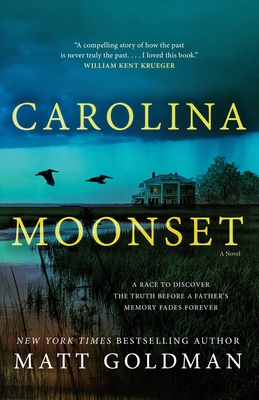
Carolina Moonset by Matt Goldman

book cover

My parents owned dozens of paintings by local artists, but the one in the foyer was the only one that depicted night. And it’s the only painting I remembered from my childhood. It showed the dark marsh in heavy brushstrokes. A sprawling oak in the foreground framed an expanse of reeds. A tidal creek snaked through the reeds. The tide was out, and the creek’s muddy bottom reflected the moonlight. A clump of more oaks in the distance lay dark under the full moon shining above them. And behind those oaks, the dark shadow of an immense home, no light in the windows except for one on the second floor. The marsh is beautiful during the day, changing colors with the angle of the sun. But it’s eerie at night. Too many secrets hiding in its vastness and in its crevices. The sea comes in and the sea goes out. Only it knows what’s hidden in the marsh.

The name of that painting is Carolina Moonset. It always gave him the creeps. Too bad the artist’s signature is smudged.

description
Matt Goldman – image from Amazon

Forty-something Joe Green (not mean at all) is visiting Beaufort, South Carolina (lives and works in Chicago) to help mom, Carol, take care of his ailing father. Marshall Green, 75, is a good guy who had passed on having a lucrative medical career to open a free clinic on Chicago’s South Side. When he retired, he returned to his home town. Dad is suffering with Lewy Body Dementia, second most widespread form of dementia, after Alzheimer’s.

My mother sat down next to me and said, “It’s like when a person loses their sight, their hearing improves. Except with Dad, he’s lost his short-term memory, and his long-term memory has improved. He tells stories I’ve never heard before.”

Well, that’s one element. Another is that he sometimes talks to people who are not there, which can be unnerving. One such is long-late friend Trip Patterson, who died very young, under dodgy circumstances. Joey is curious who this guy was and begins looking into some family history.

“Aw, Joey. You were always a good fisherman. Even when you were tiny you were fascinated by what you couldn’t see below the surface. That’s what fishing is all about. Curiosity and the patience to learn.”

Fishing of all sorts will be done. Soon after Joe’s arrival a local bigwig is shot dead in the street. Pops did not have a high opinion of the man or his family.

Those Hammonds are nasty sons a bitches. Every one of ’em. Stole that island from the blacks. When the Union Army came through, they gave black people their own land. Gave ’em a chance. And it worked, too. The people prospered. Until the goddamn Klan took over and redistributed the land.” My father had venom in his voice. “Redistributed the land with guns and knives and ropes and trees. I wouldn’t live on Hammond Island if you paid me a million dollars. Hope a hurricane wipes it off the face of the earth.”

Despite his considerable impairments, Marshall is considered a suspect. Particularly when the gun that did the dark deed sure looks like dad’s old revolver. And when Joey looks for his father’s gun, why is it not the usual place? Did Pop pop Thomas Hammond, whether he remembers doing it or not? Faces from the past re-emerge, whether in person or in memory alone. Questions remains, like what ever happened to Roy Hammond, Thomas’s brother, who vanished under mysterious circumstances? What’s the deal with Thomas’s much younger glam-wife, Gail?

As a forty-something, in town sans kids, Joe is prime matchmaking material for his parents’ set. It seems that their next-door neighbors just happen to have a forty-something divorced daughter, Leela, in town for a holiday visit. The senior circuit angles to get them together. And lo and behold, Joey and Leela hit it off remarkably fast.

I was single in my mid 40’s like Joey, and people in my parents’ generation, including my parents, would often mention single women they knew of. I think some people in that generation are less comfortable with a younger person being single, so they try to play matchmaker. I also wanted Joey to have a partner in his informal investigation—someone in whom he could confide—and adding a romantic element to that felt not only fun but true in that life presents beautiful magic and brutal reality at the same time. And finally, I recently experienced a Joey/Leela like courtship. I met my wife in February of 2018 and we married that same year in October. I wanted to show how a combination of chemistry and life-experience can lead to that kind of relationship in a grounded way. – DAB interview

Joe and Leela team up to see below the surface to what might be swimming in the deeper waters, as they try to land a killer. I found their relationship delightful. And can attest, from personal experience, to the possibility of a quick connection between mid-life divorced/single people. Leads are followed. Murder suspects make their way across the page, along with their theoretical motives. In a book with fishing as an element, there are, of course, red herrings. Bait is employed to good effect. The who and why-dunnit puzzles will keep you casting a line flipping the pages for more.

The story takes place in the present, but there are many references to mid 20th century, when some long-ago crimes are crying out to be solved. At the center of these, the Hammond and Green brothers were young men with diverse world views, and some serious personal conflicts.

In addition to the fun of the mysteries and the investigation, Goldman also offers a look at the racist, classist realities of South Carolina, both the actions that took place in the past and their ripples forward to the present.

GRIPES
The cops are portrayed as soulless dolts, which is common enough in mysteries, but remains a disappointing accession to default settings. There are several mentions of Joey’s sisters, but they manage to remain off screen and out of mind once noted. Why include them at all if they are to serve no role? There are several instances of what seemed trite wisdom being proferred. Here is a sample

as teenagers, girls grow more complicated and difficult and boys more stoic. That is a generalization. A stereotype. But having been a boy who fit the stereotype, I believe stoicism is a mischaracterization of our behavior. We are not more stoic than girls. We are more ashamed. Of our boy-thoughts and risky deeds, mostly revolving around or inspired by sex or at least the idea of sex. That seemingly unattainable nirvana ignited by blossoming bodies and invisible pheromones. That shame sends us underground. Quiets us. Our vortex of shame is so powerful all our thoughts and deeds get sucked into it, so we share nothing.

another

A friend once told me women have face-to-face relationships and men have shoulder-to-shoulder relationships. Men do things like watch football and go fishing.

Ok, it is starting to seem like the Gripes piece is getting large. I do not want to give the impression that I disliked this book at all. In fact, I quite enjoyed it. The gripes are merely what kept me from adding that final star.

There is a lot in Carolina Moonset that is lovely, nice bits of craft that reinforced the steady forward movement of the plot with some meaningful imagery. Paintings, for example, stand out. Not just the strong image of the book-title work. Joe’s uncle David has a painting over his desk and there is a framed work in the Hammond residence that offers some food for thought. Even the word painting is used in other contexts to offer a perspective.

So fear not. Carolina Moonset is a fun mystery with an appealing dynamic duo of amateurs slogging through a marsh of information trying to figure out multiple crimes, one now, others back then, without much help, in fact with only interference from the po-po. The addition of historical/cultural payload makes it even richer. If you reel this one in, pretty soon you will be the one who’s been hooked.

From where I’m sitting, Thomas Hammond’s motto must have been Think Globally, Destroy Locally.

Review posted – June 3, 2022

Publication date – May 31, 2022

I received an EPUB of Carolina Moonset from Forge/Macmillan in return for a fair review, and a lovely mint julep. Thanks, folks. And thanks to NetGalley for facilitating.

This review has been cross-posted on GoodReads

=======================================EXTRA STUFF

Links to the author’s personalFB, Instagram, and Twitter pages

From About the Author
New York Times bestselling author MATT GOLDMAN is a playwright and Emmy Award-winning television writer for Seinfeld, Ellen, and other shows. Goldman has been nominated for the Shamus and Nero Wolfe Awards and is a Lariat Award Winner. He lives in Minnesota with his wife, two dogs, two cats, and whichever children happen to be around.

Interview
—–Donnell Ann Bell – Author Interview with Matt Goldman & Carolina Moonset

Items of Interest from the author
—–Macmillan – excerpt

Songs/Music
—–Fiddler on the Roof – Matchmaker
—– James Taylor – Carolina in My Mind

A personal aside – a tiny bit spoilerish, nut not enough to hide.
I understand that some might scoff at the speed at which Joey and Leela bond with each other. I can relate to the notion of finding the right person on the second-go-round fairly quickly. I was around the same age as Joey, first marriage done, when I encountered the woman who would become my second wife. It was not a matter of days, as with Joey and Leela, but it was quick as such things go. (I did suggest marriage after our second or third in-person date, if memory serves. But that might have had something to do with a good friend of hers having season tickets to the Mets.) When you reach a certain point in life, you have a sense, in fairly short order, of whether a relationship is likely to work out or not, or at least whether it might be possible. Turns out it was. We have now been married for twenty-one years. (as of 2022)`

Leave a comment

Filed under Fiction, Mystery, Suspense

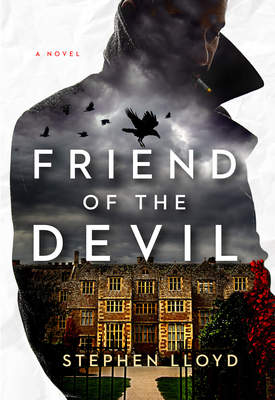
Friend of the Devil by Stephen Lloyd

book cover

“Your problem,” he told himself as he headed back to the Devil’s Vale, “is that you can’t leave well enough the hell alone.”

“Kid walks in here with a bullet lodged in him, I gotta call the cops. Kid walks in showing obvious signs of abuse, I have to contact a social worker. Kid walks in pregnant, I need to inform the parents. Beyond that, for the most part, I’m supposed to keep my trap shut.”
“Who do you call if a kid walks in pregnant, with a bullet wound, showing signs of abuse?” Sam asked.
“A career counselor,” she said, brushing her hair back, “’cause I’m outta here.

Ok, island off the Massachusetts coast, private school, Danforth Putnam. (Thomas Danforth and Ann Putnam were judge and accuser in the Salem trials). Why a high school?

I still think high school is one of the scariest places there is. It’s a place where human beings, who are barely more than children emotionally and mentally, face calamitous, potentially life-ruining choices, while approaching the height of their physical powers and sexual energy…Boarding school is all that with no parental supervision, which just amplifies its Lord of the Flies quality. – from The Big Thrill interview

Friend of the Devil is an enclosed environment thriller of a familiar sort. Think Agatha Christie’s And Then There Were None. (the original book had a different, dodgier title) An eleventh century book has gone missing and SATCO Mutual, (we can imagine what the SAT stands for) the insurer on the hook, has sent Sam (for Sam Spade) Gregory to bring it back. Identifying the perp is not all that challenging for our gumshoe, but there is more to the tale than nabbing a thief. What is a prep school doing with such an ancient book? What is the nature of the book? Why was it stolen? The questions mount. Like what happened to that pre-teen who supposedly returned to the mainland to be adopted? Is he really having a better life?

description
Stephen Lloyd writing on an impressively retro word processor – image from The Big Thrill – image by Stephen Lloyd

Sam is a fun lead, with military hair, a capacity for violence, PTSD hellfire memories of ‘Nam, and not much else, and a determination to see his job through to completion. And then people begin dying, with a hint of brimstone in the air. Sam takes his licks, getting repeatedly knocked out in a running joke, but keeps on keepin’ on, following leads and doing what he does.

Harriet (the spy) is our student cozy investigator, epileptic, a nerd extraordinaire, black, bullied, and dogged. She gets her licks in by writing exposes in the school paper. If Sam fails to get to the very bottom of all there is, Harriet is sure to find her way there. Their paths can be expected to cross, eventually.

It is 1980. No cell phones. Memory of the Vietnam War is still fresh. Reagan has arrived in a sulfurous chariot to do some lasting damage to the nation. There is a specimen of that breed at the school, who behaves as one might expect, receiving some unwanted insight in return.

The references keep on coming. Mr. Chesterton is named for G.K.. There are plenty more, overt and not. Laura Hershlag is named for the title character of one of the classic noir films. Dr. Spellman is named for a character in Sabrina. There are references to Poe’s The Raven, the Tales of Hoffman and plenty more, a veritable cornucopia for those who enjoy playing literary treasure hunt.

The staff at this school are not the friendliest. Sam interviews Ms. (Annabel? ) Lee, the librarian, whose cat is named for Alistair Crowley.

When she saw Sam, her mouth twisted into a citrus pucker. “May I help you?” she asked in a voice that could freeze pipes.

The students are no prize either. We expect rich kids to be spoiled, but even the scholarship kid is up to no good. One palooka hopes to juice his way into the NFL, while using his considerable physical brawn to dark purposes. Others are not much better.

Ok, so I had a forked reaction to this one. First is that there were multiple LOL moments, including one ROFL. This is a HUUUUUGGE plus. Not at all surprising from one of the main writers and executive producers of How I Met Your Mother and Modern Family. And I loved all the references.

Second, was that it felt lean, to the point of gaunt. Not quite a novel in length, FotD settles in at a more novella-ish 45,000 words, give or take. Supporting cast was mostly of the cardboard cutout variety. Yes, some background is offered, but only enough to make them cast shadows. (Well, assuming that the characters are actually capable of casting shadows) This is a product of Lloyd’s very successful TV career, (four Emmy nominations) in which the clock is always ticking and descriptions and self-reflection are seen as tools of the devil’s workshop. (which may be in Iowa) There is plenty of gruesomeness, but it is handled with a light touch which, I know, sounds like an oxymoron, and maybe it is. There is a fabulous twist, which is always a delight.

Sam Gregory is a fun lead, an investigator with a Chandler-esque, noir sense of humor, and a war-veteran’s issues with sleep. Harriet, honor student in the civilian investigator role, is one of the better cast members. Their perspectives alternate throughout. It moves along at an over-the-limit pace, while building up a body count, and revealing more and more witchy elements.

Bottom line is that this a devilishly (helluva?) fun summer read. You will blaze right through, pausing on occasion to fall out of your seat laughing. Your brain can occupy itself with catching as many references as it can. This is a fast, pure entertainment, with only an occasional side-glance at real-world concerns. You will not risk eternal damnation if you read this one, so long as you keep your inner demons where they belong, but you may hurt yourself laughing.

Review posted – May 27, 2022

Publication date – May 10, 2022

I received an ARE of Friend of the Devil from G.P. Putnam’s Sons in return for a fair review, and the tiniest sliver of a soul. Thanks, folks

This review has been cross-posted on GoodReads

————————————————–

Lloyd seems interested in writing a sequel, having set this one up to allow for the possibility. I hope he does.

Possible Titles for Volume 2 – Here, I’ll get you started
Dead Lasso
Demon Elementary
Devil Knows Best
Devil-ish
Distant Relation of the Devil
Everybody Loves the Devil
The Fresh Prince of Level Nine
Flight of the Demons
How I Met Your Devil
Kids Say the Most Demonic Things
Married with Demons
The Marvelous Mrs Scratch
Modern Satanic Family
Young Beelzebub

=======================================EXTRA STUFF

From Penguin Random House

Stephen Lloyd is a TV producer and writer, best known as an executive producer of award-winning shows such as “Modern Family” and “How I Met Your Mother.”

Interviews
—–The Crew Review – Stephen Lloyd | Friends of the Devil – 50:42 – by Sean Cameron, Christopher Albanese, Mike Houtz
—–* The Big Thrill – Up Close: Stephen Lloyd by Allison McKnight

Songs/Music
—–The Grateful Dead – Friend of the Devil
—–The Rollingstones – Sympathy for the Devil

Leave a comment

Filed under Fantasy, Fiction, Horror, Mystery, Noir, Suspense, Thriller, Thriller

My Wife is Missing by D.J. Palmer

book cover

The devil again, perched upon his shoulder. He knew. The past was something Michael carried with him, even when he forgot it was there. His mind flashed on an image sourced from memory, one of blood and gruesome cuts to a body, of eyes open wide but seeing nothing. It wasn’t over. It would never be over.

Michael and Natalie are at a Times Square hotel with their kids, a short vacay from their life in Boston. When Nat had suggested it, Michael jumped at the chance. Healing was needed, not just for Natalie’s too-persistent insomnia, but for their marriage. She had been sure Michael was having an affair, despite his persistent denials. He is hoping she is ready to try patching things up. She sends him out for pizza for the family at a local emporium, but when he returns the family has vanished like a Manhattan parking spot. He does what one might do, but the detectives show him hotel video of Natalie and the kids making tracks. No alien abduction this time. His wife has done a runner. The question is why?

description
D.J. Palmer – image from Amazon

The book follows two characters Michael, as he tries to figure out what is going on, and Natalie in two timelines, before leaving and after, on the run. So three threads to keep straight. Not a challenge.

Secrets abound. Michael has a large one from his past. Natalie has put together a theory, which reflects poorly on Michael and informs her desire to flee. And then there is the murder to consider.

Palmer give us plenty of fodder to munch on. What is that scar on Michael’s arm? Was it really from a bicycle accident when he was a kid? Why does Michael have no family other than Natalie and their kids? Whose long hair was it that Natalie found on his clothes one night? But the Michael we see seems a pretty decent, if flawed, guy, eager to get his family back, and Natalie has some issues. Her insomnia has become severe and persistent. Has her grip on reality suffered from this? Has she become paranoid?

We see in the looks back how Natalie came to think what she thinks. We do not get a lot from Michael’s history side until near the end.

The supporting cast is fun. A detective who is looking into the recent killing attaches himself to Michael when he goes looking for his family. We presume his intentions are less than benign, as he keeps ramping up his questioning. But Michael really wants to find his wife, and the access a detective has to otherwise unavailable resources makes it worth putting up with the guy being fixated on him as Suspect Zero. Natalie has a bff at work. A company investigator from her work spices things up briefly, and a young attractive sort at Natalie’s job passes on through for a while, is exposed to Natalie’s fears, and steps way back.

The tension builds and builds, as we keep hoping to find answers, but when we get them they arrive with a fresh set of questions. The pace sustains at frenetic, and there are severe twists aplenty, which make sense and are satisfying, however jolting.

I was not all that smitten with the leads here. Michael should not have been so secretive with Natalie about his past. And he should have been much more honest about other things as well. Natalie is ragged, which makes her concerns at least somewhat suspect. She may be right or she may be wrong, but it is a bit tough to get fully on board for her. It is possible she is suffering from paranoia., but just because you’re paranoid, that does not mean that they are not really out to get you.

This is only my second book by this author. One thing I preferred about The Perfect Daughter is that there is informational payload in that one about an unusual medical condition. My Wife is Missing is straight up thriller/mystery, payload-free as far as I could tell. It works fine as that, but I do prefer novels that add in some extra, educational material to give them a bit more heft.

This is a perfect beach read. It sustains a page-flipping pace while offering the sorts of twists and turns that make it a fun journey, without demanding to much deep thought. You may go missing for the few hours it will take to read My Wife is Missing, but we know that you are sure to be found.

He couldn’t be in any picture that risked going viral, and certainly couldn’t tell his in-laws why.

Review posted – May 20, 2022

Publication date – May 10, 2022

I received an ARE of My Wife is Missing from St. Martin’s Press in return for a fair review, and sticking around. Thanks, folks, and thanks to NetGalley for facilitating.

This review has been cross-posted on Goodreads. Stop by and say Hi!

=======================================EXTRA STUFF

Links to the author’s personal, other personal, Twitter, Instagram and FB pages

My review of Palmer’s 2021 novel, The Perfect Daughter

Items of Interest from the author
—–Soundcloud – audio excerpt – read by Karissa Vacker – 3:48

1 Comment

Filed under Fiction, Mystery, Suspense, Thriller

The Book of Cold Cases by Simone St. James

book cover

On the lawn, something moved across the surface of the grass. The touch of a footprint. Inside the house, one of the cupboard doors opened in the dark kitchen, groaning softly into the silence.
In a bedroom window a shape appeared, shadowy and indistinct. The blur, perhaps, of a face. A handprint touched the bedroom window, the palm pressing into the glass. For a second, it was there, pale and white, though there was no one to see.
The wind groaned in the eaves. The handprint faded. The figure moved back into the darkness. And the house was still once more.

“Being a girl is the best,” she said, “because no one ever believes you’d do something bad. People think you’ll do nothing, which means you can do anything. I’ll show you.”

1977 – Claire Lake, Oregon. Two men have been brutally murdered in separate incidents, roadside, no obvious motive. But a witness did see someone leaving the scene of one of the crimes. The description matches a local, a young woman generally regarded as odd. Beth Greer is standoffish, young, attractive, and rich. Parents both dead, Mom from an auto accident in a tree, Dad from a close encounter with fired round, in the kitchen. She has a taste for alcohol and keeping human connections ephemeral. When she is not out at bars and clubs, she is mostly at home, Greer House, not the happiest place on Earth. The bullets that did in the two randos just happen to match the one that laid Julian Greer out on the kitchen floor, a murder, BTW, that was never solved. You can see why the police might be a tad suspicious.

description
Simone St. James – image from her site – credit: Lauren Perry

2017 – Shea Collins is 29, newly (ok, almost a year) divorced. Has worked reception in a doctor’s office in downtown Claire Lake for five years. But her real self is invested in her website, The Book of Cold Cases. Shea is a true crime blogger, been at it for ten years, is certainly up on local crime legends, so she notices when one walks into the office, Beth Greer, forty years after she was believed to be The Lady Killer of tabloid fame, forty years after she was acquitted of the murders, which were never solved. Most think she was guilty. Beth pursues Greer, who, to her great shock, agrees to be interviewed.

And the game is afoot. There are two timelines at work, contemporary and back-then. In the 2017 line, Shea interviews Beth at Greer House, even though the place creeps her out. The décor is from the era of Beth’s parents, which is off-putting enough, but there is clearly a lot more going on there. Objects move without obvious cause. A mysterious girl appears outside a window. Shea does not feel safe there, but the lure of getting the whole story from Beth is too much to resist so she keeps coming back. Also, she and Beth seem to be forming a friendship. Beth may or may not be a killer, but Shea likes her, is fascinated by her. In the earlier time, we follow Beth’s childhood, stretching back to 1960, as events that lead up to the killings are revealed, bit by bit.

The alternate perspectives, Shea’s in first person and Beth’s in third, are not evenly divided. We get more Shea than Beth (26 chapters to 18, if you must know), with a few Others tossed in. They do not alternate in a steady format, but streak at times for one or the other.

Shea has some dark visions from her own past she has had to deal with for the last twenty years. At age nine she was abducted, but managed to escape with her life. The next girl her abductor took was not so lucky. Helps explain why she takes the bus and is reluctant to get into cars. Helps explain why she is way security conscious. Also, helps explain why she is reluctant to date again.

“Do you know how many serial killers dated lonely women in their everyday lives? Some divorcée who just wants companionship from a nice man? She thinks she’s won the dating lottery, and meanwhile he’s out there on a Sunday afternoon, dumping bodies. And now we’re supposed to use internet apps, where someone’s picture might not even be real. People are lying about their faces.”

It took a long time after we met on Match for me to discover my now wife’s history of serial criminal activity, so I get that.

There are mysteries to be solved and in the best True Crime fashion, Shea, along with her sort-of partner-in-crime-solving, PI Michael De Vos, dig into each of the questions as they arise. Very cozy mystery style. There is even a retired detective who offers a bit of help, continuing the cozy format. Of course, there are other elements that make this less of a cozy, the supernatural, for one, and a little more on-screen violence than might fit in that format. In fact The Book of Cold Cases crosses many genre lines, could be gothic, thriller, horror, suspense, or mystery, with a bit of romance tossed in for good measure. This particular mix of genre-salad was not always the Simone St. James brand.

I wrote five books set in 1920’s England, and while I loved writing them, I never intended to write about one period for the rest of my life. I wanted to flex my writing muscles and write something set in the USA—something that had two timelines, one of them contemporary. Creatively, I wanted a new goal and a new challenge while still writing a Simone St. James book. I got my wish! – from the Criminal Element interview

St James has stuck with that. Her first America-set thriller, The Broken Girls (2018), offers a split timeline, 1950/2014, the story centering on a deserted and reputedly haunted school for girls, and a journalist looking into the death of her sister twenty years before. The Sun Down Motel (2020) takes on a haunted establishment in upstate New York, splits between 1982 and 2017, and includes a 35-years-ago missing aunt, a niece eager to dig up the truth, and a slew of killings and disappearances that really need looking into. Keeping the string going, The Book of Cold Cases splits between 1977 and 2017, includes an amateur investigator (a blogger this time), some contemporary frights, some historical killings, and a haunted house. (I did ask her what she was planning to haunt next, but St. James declined to spill)

Strong primary characters can carry a book if the plot is well-thought out, and that would have been enough here. But St. James’ secondary characters were quite good, although we could have used even more of some of them. Detective Black, retired now, but involved in the 1977 investigations, was a strong presence. Shea’s PI, Michael De Vos, was off screen too much, as he was quite engaging when he was in view. I enjoyed the parallelism of relationships, Beth with Black and Shea with Michael.

Gripes – The only real blogging work we see Shea do (yes, there is a session or two noted, but only very much in passing) is on Beth’s case. Might have been a good thing to get a stronger, more fleshed out, look at how Shea has been spending her nights, which would have included a lot more on-line than live and in person investigations. Claire Lake, the town, did not feel strongly realized. This was more than made up for, however, by the seriously creepy haunted house, and the powerful presence of Beth Greer.

Lest you suspect there is some actual true crime in this true crime tale, I asked SSJ that question on her FB page, and she replied, “the cases in the book were all entirely fictional.” So you True Crime obsessives can stop looking for real-world sparks for this one. And as for ghosts in the real world, she has never had a spectral experience. St. James likes putting literary Easter eggs in her work, so keep an eye out for those.

Bottom line is that The Book of Cold Cases is a fun page-turner that delivers what it promises, murder mysteries, an intrepid investigator, some fascinating characters, a taste of the 70s, and a large dollop of the other-worldly. It is even a bit scary. I have a pretty high bar for such things, but there was one moment in which I got chills and the hair on my arms stood up at attention. That is one more than usually occurs, so, kudos. It sustains tension throughout, making you want to either blast through ASAP, or, my preferred approach, savor the fun in relatively low-dose portions night after night. In either case this is a fun, spooky, engaging read that is well worth your time, and should provide most readers with some chills.

some places hold you so that you can’t get free. They squeeze you like a fist.

Review posted – March 4, 2022

Publication date – March 15, 2022

I received an ARE of The Book of Cold Cases from Berkley in return for a fair review, and keeping quiet about a few things. Thanks, folks. And thanks to NetGalley for facilitating.

This review has been cross-posted on GoodReads

=======================================EXTRA STUFF

Links to the author’s personal, FB, Instagram, and Twitter pages

Simone St. James is the nom de plume of Simone Seguin, of Toronto. She worked for many years in TV, for a Canadian sports network, but not as a writer. She worked on budgets. She says she knows nothing about sports, despite the gig. It was only after she had had multiple novels published that she ditched budgeting to become a full-time writer. She had endured six years of rejections before her first book was published. The Book of Cold Cases is her eighth novel.

Interviews
—–Criminal Element – 2018 – Q&A with Simone St. James, Author of The Broken Girls for The Broken Girls by Angie Barry
—–The Inside Flap – 2020 – Ep. 98 How To Spy On People With Simone St. James by Dave Medicus, Andrew Dowd, and Laura Medicus – 1:36:48 – begins about 30:00 – to 58:00

Item of Interest from the author
—–Indigo – Sample – 1st four chapters

Music
—–George Thorogood – Bad to the Bone

Leave a comment

Filed under Fiction, Horror, Mystery, psycho killer, Reviews, Suspense, Thriller

The Fields by Erin Young

book cover

Never tell.
It was an oath she had broken first, many months later, the words heaved from her in sobs, her parents’ expressions frozen, Ethan stumbling from the room, his face ashen. The secret once shared—once detonated—had destroyed them. Not in the first blast, but slowly, inexorably. A sickness in the heart of their family. A poison that lived for years, quietly working in each of them.

It’s not heaven. It’s Iowa.
———-Ray Kinsella in Shoeless Joe

Damn, did he have that right. The Iowa of Erin Young’s The Fields is a hell of a lot closer to The Children of the Corn than it is to any Field of Dreams. After spending some time in Cedar Falls and it’s larger sibling, agro-urban-wasteland town, Waterloo, where the rust-belt meets the corn-belt, you might swear off dreaming altogether. Well, town might be down-playing it a bit. Between the two (both are real places) they total about 100,000 souls (not counting livestock), so maybe small cities rather than towns. Abba may have been on to something when they referred to Waterloo. (Couldn’t escape if I wanted to) Some truly can’t. One of those turns up dead in a cornfield.

If not for the University of Northern Iowa—where she’d majored in criminology—with its annual influx of students and money, Riley guessed Cedar Falls would have slumped into the same depression as Waterloo. There had been some brave attempts at regeneration in recent years—microbreweries sprouting on weed-covered lots, kayaks for hire on the Cedar River and an annual Pride festival, fulminated against by local churches. But they were fighting a strong downward pull.

description
Erin Young, nom de plume for Robyn Young, showing off her Thriller-writer pose, or her “You expect me to believe that? Come on now.” face – image from her facebook pages

Riley Fisher is local, mid-thirties, single, grew up in Cedar Falls, her grandfather a former head of the Blackhawk County Sheriff’s Office. She knew early on that she wanted to follow in his footsteps. Now, after a detour or two along the way, she is head of investigations, to the consternation of others who had hoped for the promotion. The new-found body is in a field owned by the Zephyr Farms cooperative.

Cooperatives were how some smaller Iowa farms had been able to survive the relentless advances of Big Ag. By dominating the market in hybrid seeds, fertilizer and pesticides—the holy trinity of crop production—through aggressive trademarking, swallowing up the competition and tactical lobbying at the highest levels of government, giants like Agri-Co had come to control much of the nation’s agricultural wealth.

Been out there for days, been ripped at in an unusual way, was maggoty, ripe, and unsettling. No problems with an ID, though, once Sergeant Fisher arrives on the scene. Chloe Miller (nee Clark) was one of Riley’s besties two decades back, in high school. But they’d gone their separate ways. Seeing Chloe brings back a terrible time from Riley’s youth, a time that had derailed her life, a time she could never forget.

So, we are faced with two mysteries. What happened to Chloe in that field and why, and what is it about Chloe’s death that has brought Riley to such a state of emotional turmoil? Something happened back when they were still friends, something major. And the revived memories are not exactly a source of comfort. Both mysteries are peeled back like leaves on a lovely ear of you-of-what, bit by bit, the present-day crime via procedural investigation; the personal mystery through intermittent, mostly small recollections.

description
Blackhawk County – Image from Lands of America

But wait, there’s more. The discovery of Chloe’s body is the spark that starts the action, but Young has a wider field of view in her sites. A writer of very successful (over two million sold) historical novels, she wanted to have a go at writing thrillers, finding inspiration in

an article she read about the menacing power of Big Agriculture. A decision to set the novel in Iowa, corn-capital of the world, led her to make a fascinating journey across the state – from chance encounters with cops and farmers, and an audience with a local mayor, to shooting Glocks and getting caught in supercell storms. – from her website

A voice is given to concerns about the darker implications of increasing concentration in the age of the agro-industrial complex.

A necessary evil, some called them. Progress, said more. But to those whose forefathers had farmed this land since the days of the first families from New York, Philadelphia, and Virginia, who’d settled here after the Black Hawk War when the Ioway had been driven west, these corporations were vultures, polluters and thieves.

(Entirely unlike the settlers who drove out the natives, I presume.) So, not exactly a tension-free relationship between local growers and the bigger side of the farming industry, personified here by the Agri-co corporation. We get a strong oppo position from an activist determined to head off even more governmental pro-corporation actions.

Companies like Agri-Co only care about profit, not the soil and water they infect with their chemicals, or the wildlife they destroy. Cancer rates are rising from pesticides, and, still, their political allies and lobbyists help them sow their poison.

She blames the current governor, up for re-election, for his role in this. Concern with big-Ag concentrating power at the expense of smaller producers and fouling the environment in the process finds an echo in another part of the country.

It was almost a year since Logan joined the department, moving with his folks from Flint. His father, niece, and nephew had been badly affected by the crisis there—when lead seeped into Flint’s water supply after city officials changed the system in an attempt to save money, then tried to cover up the devastating consequences.

It is clearly impossible to run from the national corporation-led degradation of our environment, or from pervasive public corruption.

Riley is an engaging lead, clever in the way we expect our fictional detectives to be. We also expect our lead to carry some personal baggage, challenges at the very least. Her beloved grandfather, Joe, has been in decline for quite a while, coherent and in possession of his memories on an increasingly part-time basis. Her brother Ethan is a bit of a disaster, divorced, a ne’er do well with some substance issues. Riley can usually count on Ethan to step back whenever she needs him to step up. Ethan’s daughter Maddie is a teenager, a decent sort, overall, in a tough situation, but, you know, a teenager, so offering the family their RDA of stress. And Riley still carries the weight of what happened all those years ago. Unfortunately, Riley is saddled with the addition to her team of Officer Cole, an asshole cop straight from central casting, toting the usual bigotries, inflated self-view, and presumptions, with an extra dose of jealousy. Thankfully, Riley’s other partner, Logan, is another good cop.

And then a second body turns up, (not in a field) also not discovered until well past passing, also in very nasty shape, also featuring some remarkable damage. Is there a serial killer on the loose?

description
Abandoned meat-packing plant – image from sometimes-interesting.com

Thrillers have tropes like Ruffles have Ridges. Black SUVs put in an appearance. Are they good SUVs or bad SUVs? Ya gotta figure, when Riley spots a large poisonous snake on her property, (Chekov’s snake?) that it will rattle into play at some point. The question is how, when, to whom, and to what effect. News of a coming storm is another one. Usually this signals that the violent final resolution will occur against an atmospherically dramatic background. Young preps us with a mention of eight twisters having touched down in Iowa since April. Will one drop down into the mix here? Now, that would be a real twist. The upcoming Iowa State Fair is also noted, and gave me visions of snakes dropping on fair-goers, transported by a tornado, as everything is revealed in a climactic disaster scene. But Chekov surely does not have to take ownership of all these things. They could also just be foreshadowing images or external representations of the fear and turmoil Riley is experiencing, or the dangers she is facing. (But I sure do like that State Fairground snakenado notion).

So how does the historical novelist fare at the thriller genre? Young ticks off many of the usual boxes that make up the type. The author has to make good with the reader on explaining things at the end, the main things, anyway. Check. A ticking clock? “I’ve had the county attorney on the line already. Less than two months from the state fair and with the gubernatorial coming up? You know how vital this next budget is to the department. I want this case handled quickly. Efficiently.”, so, check. Our hero must face an increasingly perilous set of challenges, no escaping, victory can only be had by overcoming. What’s she gonna do when all those snakes start dropping out of the sky (Ok. I got carried away, again.) But yeah, Riley rolls, doing battle on multiple fronts. An element of suspense? Sure. Got that. Whodunit, why, and who’s next. An appealing hero? Sure. A reliable sidekick with an alternate skill set? Yep. Logan fills the bill. Plot twists? Of course. Red herrings? Bring your fishing pole. There are a few swimming about. Alternate POVs? The story is told in third person, but there is one first person POV that appears a few times. Cliffhangers? That is what made it tough to read only 20-30 pages a night of this book. An exciting climax? Yeah, for sure, even though I was really kinda hoping for the snakenado thing, even though I know it would have been really cool silly.

I quite enjoyed Young’s simple, but dark descriptions.

Waterloo was lifeless in the stagnant air. Smoke seeped from factory chimneys and the Cedar flowed sluggish and brown. Although the roads were clogged with trucks and trailers, there were few people about, just a few vagrants shambling along broken sidewalks, and cleaners and hospital workers trudging to or from shifts…It wasn’t long before she saw the old meatpacking plant on the outskirts of the city…Its twin smokestacks were dark fingers against the pallid sky, old bricks the color of rust. The bottom windows were boarded over, the ones higher up mostly shattered. A chain-link fence surrounded the site, bristling with barbed wire…stepping over heaps of rubbish, she found herself in a cavernous hall. Metal steps ascended to gantries that crisscrossed in between pillars and snaking pipes, conveyor belts and wheels. It all looked like some complex ride at the state fair, only made of metal and rust, fractured glass and hooks. She imagined the steers and hogs shuddering round, the iron spike of blood, steam from spilling guts. Parts of the gantries had collapsed. In places, the floor yawned into darkness.

A good book should teach you something about the world while delivering a good story. You will certainly get a sense of the perils of Big Ag, the history of how such concentration got started, and the impact it has had on the economy and the people of this area (presumed to be comparable in all farming states) You will learn a bit about the potential and potential dangers of genetic research for crops. And will learn some Ag lingo.

Good writing is good writing whether it is for historical novels set across the pond (well, across for us in the Western Hemisphere. For her, living in Brighton, the pond is right there.) or for a gritty thriller set in America’s heartland. Young has made the transition smoothly, with an engaging procedural-cum-political-thriller, featuring a strong lead, a diverse supporting cast, well-paced action, and plenty of mystery to keep one’s curiosity on high alert, all while offering a bit of information about the world, and highlighting very real issues concerning Big Agriculture. I am looking forward to the further fleshing out of Riley’s story and those of her supporting cast. Seeds have been planted. The soil is fertile.

The shoots are emerging for the Riley Fisher series, and look very promising. A bountiful annual harvest is forecast. Volume #2 will be set in Des Moines. I am betting that when she writes it, readers will come.

The lifeblood of rural America was being drained, leaving husks of cities, where poverty and crime rushed in to fill the void. It was a legacy all too visible in the boarded-up factories and processing plants that loomed like broken tombs around the city, haunted by vagrants and hookers, and cruised nightly by the squad cars of Waterloo PD.

Review posted – January 14, 2022

Publication date – January 25, 2022

This review has been cross-posted on Goodreads.

I received an ARE of The Fields from Flatiron in return for a review that was not too horribly corny. Well, I tried, ok. Thanks, too to NetGalley for facilitating.

=======================================EXTRA STUFF

Links to the author’s Erin Young and Robin Young personal,
FB, and Twitter pages

Items of Interest
—–Ruffles have Ridges
—–Master Class – Masterclass: What is the Thriller genre?
—–A bit of silliness
—–Reedsy Blog- Chekhov’s Gun: Don’t Shoot Your Story In the Foot
—–Crop Prophet – Corn production by state
Corn Production Rankings: 2020
Rank State Production (M bu)
1 Iowa 2296.2
2 Illinois 2131.2
3 Nebraska 1790.1
4 Minnesota 1441.9
5 Indiana 981.8
6 Kansas 766.5
7 South Dakota 729.0
8 Ohio 564.3
9 Missouri 560.9
10 Wisconsin 516.8
11 Michigan 306.5

Items of Interest from the author
Young has a few items coming up for publication soon, one in CrimeReads on her research trip to Iowa, and another in The Big Thrill Magazine. There is also an interview upcoming on Jeff Rutherford’s Reading and Writing podcast

Leave a comment

Filed under Action-Adventure, Cops, Fiction, Mystery, Suspense, Thriller, Thriller