Category Archives: Literary Fiction

The Invisible Hour by Alice Hoffman

book cover

in every fairy tale girl who is saved is the one who rescues herself.

people in love were such fools, they made up excuses, they wound up doing as they pleased no matter how much good advice they been given.

The Invisible Hour is a twice-told tale of a mother and a daughter.

Ivy Jacobs’ Beacon Hill family did not exactly treat it as a crimson-letter day when the sixteen-year-old informed her parents that she was pregnant by a feckless Harvard sophomore. Despite her tender years, Ivy wanted to see the pregnancy through and keep the baby. Decisions and plans were made, none of them involving input from Ivy. The newborn would be put up for adoption. Ivy bails, getting as far away as she can, which turns out to be a sort-of commune in western Massachusetts.

description
Alice Hoffman – image from Penguin Random House – shot by Alyssa Peek

Mia Jacob is the daughter Ivy bore. We meet her at 15. Living in the place to which her mother had fled, The Community. More of a cult really, an authoritarian farm where the leader’s will is law. Joel Davis took Ivy in, married her soon after she’d arrived, so is Mia’s step-father. But child-rearing is communal here, so parenting is not what you or I would recognize. You will recognize the cult-leader, control-freak personality Joel wears like the headgear sported by the QAnon Shaman. Vanity is supposedly being punished, but it is accomplishment, growth, intelligence and independence that are the targets. He likes his followers unquestioning and compliant.

Ivy has stolen parenting moments over the years, so has had a hand in helping Mia find her true self, a young woman who is curious about the world, eager to learn, to investigate, to explore, to read. Discovery of her criminal reading marks her for punishment. When we meet Mia she is, as her mother was, a teen about to flee her oppressive environment.

Although we learn about and spend time with both women, it is Mia who is our primary focus. In a dark time, she considers suicide, but, fortuitously, reads a book that saves her, changing her life, giving her hope, The Scarlet Letter.

We follow her coming of age, assisted by her mother and an understanding librarian in the town where The Community sells their produce.

Her passion for Hawthorne is such that she finds in it a magical power. Alice Hoffman loves her some fairy tales, so it will come as no great shock that one fine day Mia finds herself transported back to the 19th century, and into the presence of her literary love object. Complications ensue. In those, however, we get a sense of Hawthorne, his personality, his material conditions, his family and friends, and his writing challenges. Nice looking fellah, too, to go with that oversized talent.

There is some wonderful imagery woven into the novel. The notion of invisibility is large among these. There are times in which it might be useful to go unseen, as in when one is doing something for which one might be punished, or which are simply secret. On the other hand, it is not so wonderful to be unseen in normal human interactions. Like “Yo, dude, human here. Whaddaya? Blind?” There is some literal invisibility as well.

Apples are a core element as well. There is a particular breed of apple grown in the area, which is no Eden. They seem less associated with The Fall than with a push. Joel uses leaves of that apple tree as a threat. One could certainly see his actions as serpentine. Mia even decides never to eat apples, given the associations she has for them with The Community. Howdaya like dem apples? Johnny Appleseed comes in for some attention, with plantings of his effort bearing local fruit.

The woods as a magical place gets a visit or two. Indeed, magical things go on there. Strange people and buildings appear. There is even one “Once upon a time” in the book. The Woods is where Mia goes to escape.

Much of the tension in the book centers around women taking control of their own lives. This happens in various ways. There is the usual disobedience one would expect, with the most daring taking the greatest risks. Reading figures large in this, as subservience is sustained under the lash of forced-ignorance. Reading is the gateway drug to independent thinking, and dreaming of better. Some women even learn herbal medicine, to see to their needs. The comparisons of the modern day with the repressive Puritan world depicted in The Scarlet Letter are clearly drawn. Plus ça change…

I think it’s a bad idea to write for the moment because the moment passes so quickly. The other thing about time is that what’s right and what’s good and what’s accepted suddenly becomes not. I thought about that with the way women were treated in “The Scarlet Letter,” the way that the Puritans blamed women, and they believed in original sin and that women were responsible for that because of Eve. It all changed, but then it changes back. And then it changes again. A lot of the things that women are coping with right now are not that different, really. The judgment against women. – from the Salon interview

There is a garden in town where all the plants are red. It may feel familiar to frequent readers of Hoffman.

This new book [The Invisible Hour] actually takes place in a town where I wrote a book of connecting stories about called The Red Garden, so it’s the same place. It’s just a novel that takes place in that town. – from the Salon interview

I consider myself an Alice Hoffman fan. While I have not read all her books, I have certainly read more than a couple. Any reader of her books knows that there are certain things one can expect. Among other things, there will be an engaging lead, facing difficult choices, and there will usually be bits, at least, of magic, often of a fairy tale sort. So, one cannot really gripe about a time-travel element pushing things too far, particularly when done in the service of giving us a closer look at a literary icon. My sole gripe is that I felt that the baddie was given too much magical license to pursue his dark ends.

Otherwise, despite it’s title, The Invisible Hours very much deserves to be seen. It offers not only an uplifting, engaging tale of empowerment, but an homage to one of the greats of American literature, and long-form praise of the power, the importance, the necessity of reading. I am sure we can all see the value in that.

“Q: Did you set out to write a novel so deeply rooted in women’s empowerment? How did it evolve to include time travel?”

“A: I started to think about The Scarlet Letter and how modern-day issues for women are not that foreign from issues in that time period. I’m not certain I realized when I first read Nathaniel Hawthorne’s great novel what the deeper meaning of his heroine’s situation is—she has no say over her body or her choices and yet, she does make her own choices. It’s a very brave book.
I’ve always wanted to time travel and been drawn to books about time travel. I think during the time of Covid, when I was writing this, more than ever I want it to be in another time period.”
– from A Conversation with Alice Hoffman, an appendix in the book

Review posted – 12/22/23

Publication date – 8/15/23

This review is cross-posted on my site, Goodreads. Stop by and say Hi!

=======================================EXTRA STUFF

Links to the author’s personal, Instagram and FB pages
Profile

Other Hoffman books I have reviewed:
—–1999 – Local Girls
—–2003 – Green Angel
—–2004 – Blackbird House
—–2005 – The Ice Queen
—–2011 – The Red Garden
—–2011 – The Dovekeepers
—–2017 – Faithful
—–2017 – The Rules of Magic
—–2019 – The World That We Knew

Interviews
—–Salon – “I want to believe”: Alice Hoffman is always seeking magic, practical and otherwise by Alison Stine
—–Shondaland – Alice Hoffman Talks Her Latest Novel, ‘The Invisible Hour’ by Sandra Ebejer
—–Harvard Review – An Interview with Alice Hoffman by Christina Thompson

Song
—–Agnes Obel – Brother Sparrow – relevance to the chapter title

Item of Interest from the author
—–Salon – Alice Hoffman: Five amazing tips to help you write your novel

Items of Interest
—–Wiki on Nathaniel Hawthorne
—–Wiki on Johnny Appleseed, mentioned multiple times
—–Gutenberg – full text of The Scarlet Letter
—–Good Will Hunting – Howdaya like dem apples?
—–Wiki on the QAnon Shaman

Leave a comment

Filed under Fantasy, Feminism, Fiction, Historical Fiction, Literary Fiction, Religion

The Bee Sting by Paul Murray

book cover

In the next town over, a man had killed his family. He’d nailed the doors shut so they couldn’t get out; the neighbours heard them running through the rooms, screaming for mercy. When he had finished he turned the gun on himself.
Everyone was talking about it – about what kind of man could do such a thing, about the secrets he must have had. Rumours swirled about affairs, addiction, hidden files on his computer.
Elaine just said she was surprised it didn’t happen more often.

For months now she has been having the same dream Of a flood that sweeps through the house Carries off clothes from the wardrobes Toys from the cupboards Food from the table In the dream she is trying to stop it She is wading around, pulling things out of the water But there’s too much to hold in her arms and it overcomes her The current grows stronger Pulls away the appliances the kitchen island tiles from the floor paint from the at the edge of the water watching her go Staring down as she’s swept past In their eyes she is old Her youth is gone too It has all been washed away by the water

The Barnes family is having their problems. It is 2014 in small-town Ireland. We follow Dickie, Imelda, his wife, PJ, their son, and Cass, a high school senior, through a range of travails. Leo Tolstoy’s Anna Karenina opens with, Happy families are all alike; every unhappy family is unhappy in its own way. Guess which category the Barnes family fits into.

PJ is almost a teen, so will have a lot of growing-up to do, but he is faced already with challenges that are plenty daunting. Coping with bullies at school is no fun, if a particularly usual checklist item in coming-of-age stories. But he is also beset by the thug teen child of one of his father’s customers, who feels his family has been cheated by Dickie. Beatings happen, and more are promised if he does not pay up. And these are the lesser of the challenges he faces. On the upside, he likes spending time hanging out with his father, working on a project in the woods behind their house.

description
Paul Murray – image from the Hindustan Times – shot by Lee Pelligrini

Cass has teen-angst aplenty, coping with her social status, her newly-ripening sexuality and her attraction to a promiscuous friend. She is trying to define who she is. (which is not exactly a wonderful person when we meet her.) A part of that is seeing herself as separate from her family. She would definitely not want to be associated with those people. She is particularly hostile to her father, blaming him for the demise of the family business, and the collateral social impact that is having on her. She is not a stunner like her mother, which does not help. The prospect of heading off to college in Dublin offers a concrete escape route, the sooner the better. She is besties, I guess, with Elaine, who is as amoral and unfeeling as she is beautiful.

Imelda came from a working-class family. Rough around the edges would be a kind description. But she was born a knockout. It was always going to be her ticket out. She falls in love with the town’s football superstar, Frank. They are to be wed. Frank stands to inherit a successful family business, and should be able to provide nicely for her. Problem is a literal crash and burn, and buh-bye Frank. She winds up marrying Frank’s older, smarter, but not-golden-boyish brother, Dickie.

Dickie had the brains for college, and attended, for a few years, until an unfortunate event derailed his collegiate career and he headed home. He may have been the smarter of the brothers, but Frank had the gift of salesmanship, and was a better fit to take over the car dealership. But when Frank dies, it falls to Dickie to step in. He manages, but it is not work he exactly loves.

These days, he is spending time in the woods behind their home, building a defense against Armageddon, spurred on by a troll-like employee who exhales conspiracy theories and seems to be looking forward to the coming end-times. He has a lot of time on his hands. The car-dealership is in the crapper. Along with plenty of other businesses, suffering not only from a global economic downturn, but massive flooding in the town. Dickie’s father, Maurice, retired, but still the owner, swoops in to try to fix things, blaming Dickie for the difficulties. Dickie is not entirely faultless here. But there are serious complications with him.

We follow these four for over six hundred pages, getting to know them intimately. We learn their secrets, see them change, see them cope with relentless stressors, see them grow, or not. This is the greatest power of the novel. Each is faced with decisions, moral choices, that define their character, that define their changes, maybe their failures. If that were all, it would be an outstanding piece of work, but Murray offers a very rich palette of content as well, raising it to another level.

There are many notions that run throughout The Bee Sting’s considerable girth. Space has been reserved to handle them all. The core, of course, is family. Not exactly the most functional, the Barnses. Parents who have been raised to hide their emotions have no natural ability to make a happy home.

You couldn’t protect the people you loved – that was the lesson of history, and it struck him therefore that to love someone meant to be opened up to a radically heightened level of suffering. He said I love you to his wife and it felt like a curse, an invitation to Fate to swerve a fuel truck head-on into her, to send a stray spark shooting from the fireplace to her dressing gown. He saw her screaming, her poor terrified face beneath his, as she writhed in flames on the living-room carpet. And the child too! Though she hadn’t yet been born, she was there too. All night he listened to her scream in his head – he couldn’t sleep from it, he just lay there and sobbed, because he knew he couldn’t protect her, couldn’t protect her enough…

On top of which, secrets abound. They are all trying to find a way out, except for PJ, who is mostly interested in seeing things returned to the way they were before the dealership miseries began, and radiated outward. Murray shows how dysfunction and damage can carry forward from one generation to the next, the brutality of Imelda’s family, the emotional absence of Dickie’s. But all has not been destroyed.

When Dad was fun everything was fun. Not just holidays, not just Christmas. Going to the supermarket! Cutting the grass! At bedtime they had pyjama races, they read Lord of the Rings cover to cover, they put a torch under their chins and told each other ghost stories…

Family connection is important, mostly in the desire of most to sever it. Dickie was desperate as a young man to get away, get an education, do something other than sell cars for the rest of his life. Imelda came from a toxic family (not all of them) and also struggles with her connection to the family she is in, for current-day part of the story. Cass wants out, ASAP. Tethers are cut, but some are also sewn. The tension between these struggles is fuel for the story.

Murray looks at the impact of the environment on peoples’ lives. The story is set at the tail end of the recession from the Celtic Tiger boom that had preceded. The economic environment was still pretty tough and we see how this impacts the family.

It will come as no shock that a major, unusual, flood impacts Dickie’s already sinking business, with talk of liquidation, that a water leak in the Barnes house carries omens, and that Imelda dreams of being washed away, as she is forced to cope with losing the luxury level lifestyle to which she thinks her incredible beauty entitles her. Cass’s collegiate prospects and social standing are endangered. Other players in the story are challenged as well. PJ is fast out-growing all his clothing, but does not want to be a burden on the now-struggling family, so keeps quiet and castigates his feet for growing too much. There is a stream involving the presence of gray squirrels in Ireland. They are an invasive species, as of a century back, and carry a disease that is fatal to the native red squirrels. Are they the only locals in danger of being wiped out?

Another stream is the notion of returning, coming back from the dead, in particular.

Some people might say that the key problem is with coming back from the dead specifically. Because obviously death is a pretty serious step with all kinds of long-term effects that you’re not going to just shake off. But lately you’ve noticed it with other things too, that even though they never actually died, when they came back from where they’d gone they were still completely changed.

Imelda keeps looking for the ghost of Frank to show up at her wedding to Dickie. Dickie is definitely not the same after returning from Dublin. Same for Cass and PJ. Other characters, a maid, a mechanic, a patriarch, return as well, with mixed results.

…is it worth taking the risk? Sometimes? If you could still sort of see the person they were and you thought maybe there was still enough time, if you knew what to do or say?

Bees get a bit of attention, if a bit less than expected. The bee sting of the title is inflicted on Imelda, on her way to her wedding to Dickie. Her face was in no condition to be seen, so every wedding picture of her is through her veil. There is another passage about the mating habits of bees. It does not end well for the males.

…the pesticide the farmers use on plants contains a neuro-toxin that destroys their memory so they forget their way home, can’t make it back to the hive where they live, and that’s why they’re dying out. When they looked in the hives they found them not full of dead bees, but mysteriously empty. Maybe that’s what happened to Cass, you think. Maybe air pollution in the city has damaged her brain and now she’s forgotten her home. Though really you know it started way before she came here.

The impact of stinging on the stinger is also considered.

There is even a bit of magic as Imelda’s Aunt Rose has a particular gift, sees things that others cannot, says sooths, a family thing, but not one that Imelda has ever manifested.

Murray writes in differing styles. Most of the book is presented as third-person omniscient, describing the actions and peering inside to reveal the characters’ thoughts and feelings. Standard stuff. The final section, The Age of Loneliness, is written in the second person. We alternately assume the POV of the main characters, as each races toward the stunning climax. Imelda gets a breathless, minimally formatted structure. There is a sample in the second quote at the top of this review.

I wrote Imelda’s section, and I knew she was on her way to this dinner… I wrote that first line like she, well, she needs to use the bathroom really urgently. And I put commas in and a full stop. And it did not feel right at all. The only way to write it was without the punctuation, and I wanted it to feel like you’re in her head. She doesn’t parse things in the same educated way that Dickie or indeed the kids would do. She just thinks in this much more immediate, intensive way. When you go from the kids’ sections into Imelda’s section, I wanted it to feel like, woah, there’s a change in gear here. Like there’s something’s going on that hasn’t been apparent up until now. At this moment in her life, but maybe at every point in her life, everything feels extremely precarious. She’s on this knife edge, all the time. She always feels like everything’s going to collapse, the floor is going to disappear from under her and she’s going to just tumble down into the past with her abusive dad and the poverty and the grimness and stuff. – from the. Hindustani Times interview

It would not be a Paul Murray novel if you did not come away from the reading without a few more laugh lines in your face. He takes the most liberty with this in the teens’ sections, the most reminiscent of the grand, rude humor of Skippy Dies to be found here. For example

Nature in her eyes was almost as bad as sports. The way it kept growing? The way things, like crops or whatever, would die and then next year they came back? Did no one else get how creepy that was?

or

Behind him, another boy, not as tall but slightly droopier, had started kissing Elaine. It was distracting; it seemed like she could hear it even over the metal, a squelching noise like walking on frogspawn.

or

It feels weird reading a prayer off his phone, where he has looked at so many unreligious things. He hopes the Virgin Mary knows it’s meant for her, that he’s not praying to e.g. Candy Crush or Pornhub.

You get the idea. Love this stuff.

So what’s not to like? Nothing, nothing at all. This is a wonderful, engaging, risk-taking, funny, moving, horrifying, engaging, biting, human triumph of a novel. You may feel stung by elements in this great tale, but you will come away with a literary trove of honey.

Ireland is a place where people are very good at talking. People are so funny and have such brilliant stories, and it’s a way to disguise what you’re actually feeling. The reason, I think, is because this is a place where very terrible things have happened and the way we deal with them is by not addressing them. So I feel like the ghosts are alive and they’re active. The past is affecting what you’re doing in a very real way. And if you don’t address the issues, then the darkness just grows, and the damage gets passed down from one generation to the next, like in the book. – from the Guardian interview

Review posted – 12/8/23

Publication date – 8/15/23

The Bee Sting was short-listed for the Booker Prize

I received an ARE of The Bee Sting from FSG in return for a fair review. Thanks, folks, and thanks to NetGalley for facilitating.

This review is cross-posted on my site, Goodreads. Stop by and say Hi!

=======================================EXTRA STUFF

Links to Paul Murray pages on Wikipedia and Goodreads

Interviews
—–Hindustani Times – Paul Murray – “Climate change is something I worry about all the time” by Saudamini Jain – READ THIS ONE
—– The Guardian – Paul Murray: ‘I just dumped all my sadness into the book’ by Killian Fox
—–The Booker Prizes – A Q&A with Booker Prize 2023 shortlisted author Paul Murray – video – 4:08

My review of an earlier book by Murray
—–Skippy Dies – one of the best books EVER!

Items of Interest from the author
—–New York Magazine – 3/15/23 – Who is Still Inside the Metaverse?
—–The Guardian – Paul Murray: ‘How the banks got rich off poor people would be a painful read without comedy’ on The Mark and the Void
—–Boston College Libraries – Fall 2022 – How to Write a Novel – video – 1:20:05 – Paul from 7:45 – On the book from 18:25 – well, sort of – Largely about why it took so long between novels – and his experience with screenwriting – Wicked funny, too.
—–Outlook India – Excerpt

Leave a comment

Filed under Fiction, Literary Fiction, Reviews

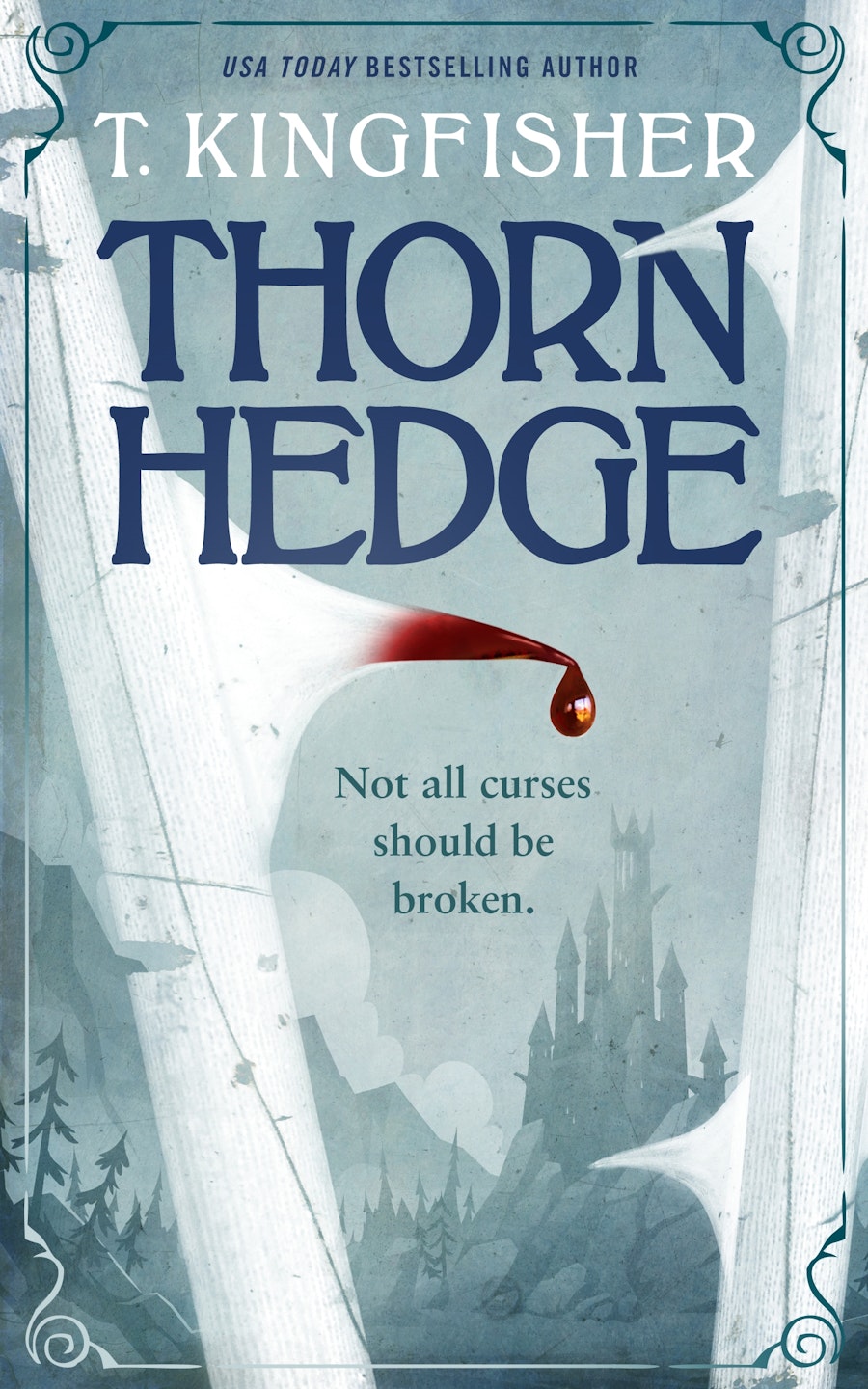
Thornhedge by T. Kingfisher

book cover

In the early days, the wall of thorns had been distressingly obvious. There was simply no way to hide a hedge with thorns like sword blades and stems as thick as a man’s thigh. A wall like that invited curiosity and with curiosity came axes, and it was all the fairy could do to keep some of those curious folk from gaining entrance to the tower.
Eventually, though, the brambles had grown up around the edges—blackberry and briar and dog rose, all the weedy opportunists—and that softened the edge of the thorn wall and gave the fairy some breathing room. Roving princes and penniless younger sons had been fascinated by the thorns, which were so obviously there to keep people out. Hardly anybody was interested in a bramble thicket.

How does anyone manage? There are too many streams and they all flow and all of them could be good and there’s no way to know. How does anyone ever choose to do anything?

Match.com profile – Languid Lady – Wanna meet a real princess? Low maintenance, fond of comfortable bedding, long walks in dreamland, quiet weekends at home in the castle. If you are looking for consistency, a quiet, luxurious, restful life, send me a message. Only real princes need apply. Let’s make some magic together. (Submitted for a friend)

description
T. Kingfisher aka Ursula Vernon – image from Open Library

We all know, or should know, the story of Sleeping Beauty, whether the Disney version or some other. Beautiful princess is tucked away in a tower for a seemingly endless nap, done dirt by an evil fairy. Kingfisher, as she has done many times with established tales, offers a different perspective.

description
Illustration for Charles Perrault’s La Belle au Bois Dormant from Histoires ou Contes du Temps passé: Les Contes de ma Mère l’Oye (1697) – image from Wiki

This time, what if it was not a dark force, but a kind one that had caused all those zzzzzzzzzs? What if there was a good reason for doing so? What is someone was charged with making sure that no one disturbed the sleeper, however many years, decades, centuries might pass?

One thing I like to do with fairy tales is to look at them and go “How can I make this even worse?” – from the Grim Dark interview

I am not so sure that Kingfisher’s tale really is a worse version. Well, maybe worse that the Disney version. But far from the worst. There is one (and there are others as bad) in which a wandering king happens by the castle where a sleeper named Talia is housed. He decides this is a great opportunity for him, absconds with her virginity, and leaves the unconscious Talia pregnant with twins. What a guy!

We get a look at some of the trappings of fairy tales, including a fairy civilization that is maybe not so nice. Another, the Greenteeth, who raised her, provide our heroine with her other side abilities. These include the power to switch back and forth between human and toad form, which can come in handy. Her name is Toadling. She has been dutifully standing guard over the castle in which the sleeper has been kept for multiple centuries.

description
From MY BOOK OF FAVOURITE FAIRY TALES ILLUSTRATED BY JENNIE HARBOUR. – image from Wiki

Until one day, a knight arrives. Halim is not one of those spoiled, handsome, armored snots who usually trot through such tales, slaying dragons and rescuing (abducting?) fair maidens. He is a Muslim, for one, and, not being a first-born, not exactly in line for a nice inheritance.

Being a knight isn’t about being religious, you know, so much as it is to figure out what to do with your extra sons so they don’t tear up the family seat. Every now and then someone gets the idea we should start chopping each other’s heads off, but in practice, the Pope squats in Rome like a spider and the caliphs glare at one another over their walls, and the rest of us get along as best we can with each other.”

As is obvious from this, Halim comes across as a pretty decent sort, mostly there to check out something he had read, about a long-form sleeper in a tower. I suppose there might be an angle of interest in forming an alliance with a landed bit of royalty when your own prospects are a bit slim, but really, it is mostly curiosity. We are led to think that he is a good guy by the conversations he has with Toadling. But is he on the level with her, or is he trying to manipulate her into letting him past the massive thorn hedge that surrounds the castle?

description
The Sleeping Beauty by Edward Frederick Brewtnall – image from Wiki

For her part, Toadling is riven with guilt for having messed up a magical task she had been assigned, thus her lengthy tenure at this post. She is dutiful, and honor-bound.

Toadling tells Halim her (and thus the sleeper’s) story in bits, so that by the time we are nearing the end, we know all there is to know about how the whole princess-in-a-tower situation came to be, the decisions that were made, the actions that followed and the active perils.

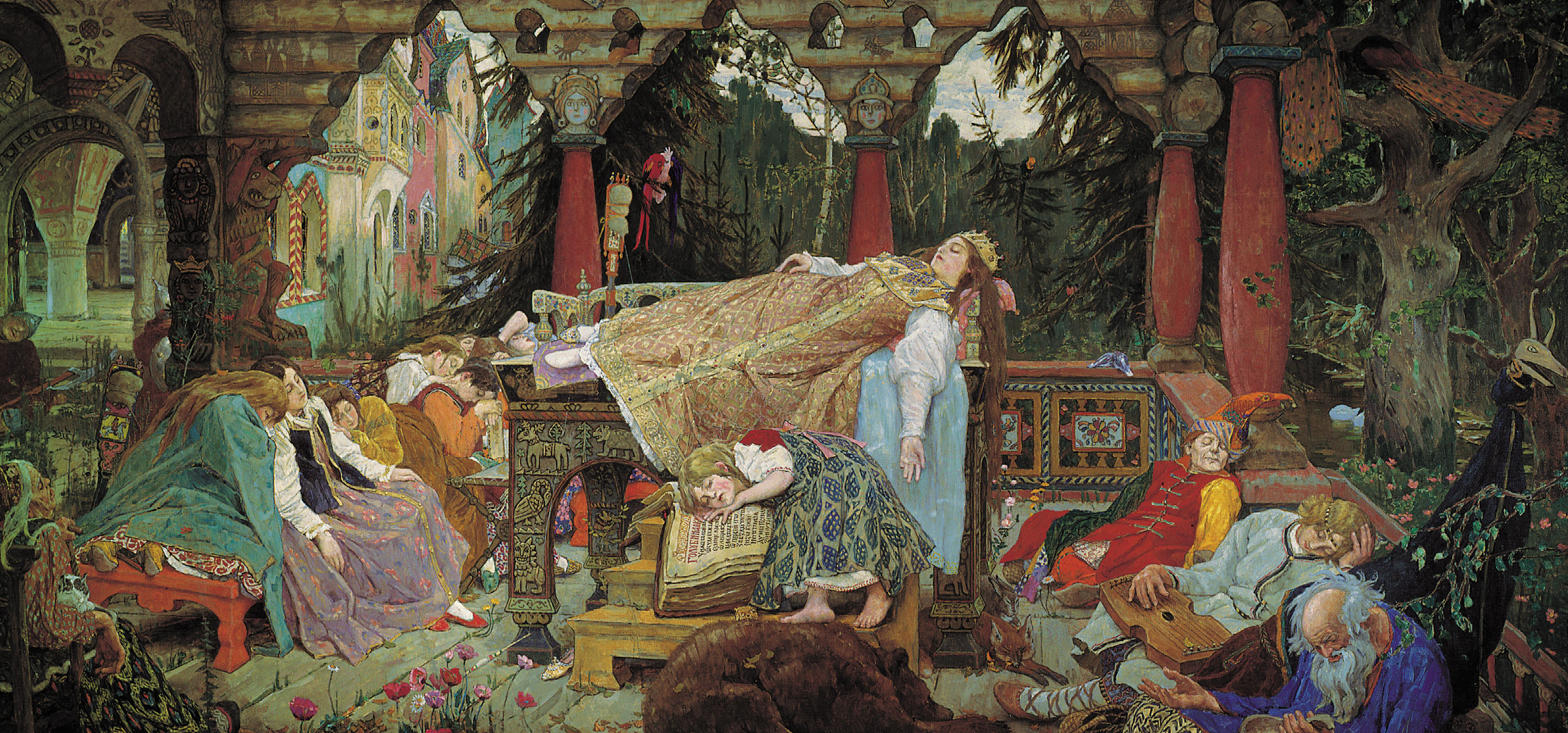
description
The sleeping Beauty by Viktor Vasnetsov – image from Wiki – Showing the somnolence of the entire household – not so much in this telling

There are multiple sources of joy in this novella (30K words). The first is the interaction between Halim and Toadling. Both are modest people. She tells Halim that she is not beautiful, and he says the same of himself.

Practical overworked middle-aged women basically keep the world running…And being myself a rather frumpy middle-aged woman, I write stories about people like me partly because they’re very much who I can write, but also because I want those women to have stories. Sometimes we read fantasy stories in order to pretend we’re someone else, but sometimes we read fantasy stories in order to pretend that people like us can have adventures too. Mind you, if the readers ever get tired of reading about middle-aged gardeners, I’m probably in trouble, but so far, so good. – from the Grim Dark interview

The second is the creative reinterpretation Kingfisher had concocted of the classic tale. It is far from alone. The Sleeping Beauty story first appeared in the 14th century. A later version, adapted by Charles Perrault in the late seventeenth century forms the basis of all later versions, including the one transmitted by the Brothers Grimm. That one was called Little Briar Rose. I am sure you will be excited to learn that there is classification system for fairy tales, called the Aarne-Thompson system. It was news to me that this existed. It is a major tool for folklorists. Sleeping Beauty slots in at Type #410, FYI. There have been many versions over eight hundred years.

The third is Toadling herself. She is such a wonderful character, a good person challenged with outrageous fortune in her life, but holding up because her core is good, kind, and strong. You will quite enjoy spending time with her.

description
Disney’s Aurora – image from ArmChairCinema.com

Thematically, there are walls aplenty in here, the fortress, of course, the thornhedge of the book’s title, and the barriers between the human world and the land of fairy. Halim offers a lovely image for Toadling.

“There’s a very high wall,” said Halim, “according to the imams, called al-A’raf. Between hell and paradise. And if you haven’t been good enough or evil enough to go one place or the other, you live in this wall. But even those people will eventually enter paradise, because God is merciful.” He jammed his chin onto his fist and gazed at Toadling. “It seems like you’ve been stuck in that wall for quite a long time now . . . That’s all the theology I’ve got in me, incidentally, so I hope it’s useful.”
Toadling sighed. “I would like to climb down from that wall,” she admitted.

And there is the wall between Toadling and Halim. Will they break through that one?

description
Sleeping Beauty wakes up after the kiss of a prince — Or –Startled by the presence of a strange man, the young lady sat up while sharply wiping her mouth. “And just who the f&^k are you, dirtbag?” by Otto Kubel- image from Wiki

Bottom line is that Thornhedge is a lot of fun. It takes our expectations and turns them inside out, all the while offering us the welcome companionship of Toadling. This new interpretation of an old tale is rich with creativity. No spindles required. Let Kingfisher put you under her spell and you will be in for a magical read.

Review posted – 10/27/23

Publication date – 8/15/23

I received an ARE of Thornhedge from Tor.com in return for a fair(y) review. Thanks, folks, and thanks to NetGalley for facilitating.

This review is cross-posted on Goodreads. Stop by and say Hi!

=======================================EXTRA STUFF

Links to the author’s personal, Goodreads, and Twitter pages

Profile – from the Fantasy Hive
T. Kingfisher is the adult fiction pseudonym of Ursula Vernon, the multi-award-winning author of Digger and Dragonbreath. She is an author and illustrator based in North Carolina who has been nominated for the Ursa Major Award, the Eisner Awards, and has won the Nebula Award for Best Short Story for “Jackalope Wives” in 2015 and the Hugo Award for Best Novelette for “The Tomato Thief” in 2017. Her debut adult horror novel, The Twisted Ones, won the 2020 Dragon Award for Best Horror Novel, and was followed by the critically acclaimed The Hollow Places.

Interviews
—–The Fantasy Hive – Interview with T. Kingfisher
—–Grim Dark Magazine- Not All Curses should be Broken by Rona Denton
—–Orion Magazine – T. Kingfisher Wrings Hope and Drama from Fairy Tales by Kyla McCallum

My review of an earlier book by Kingfisher
—–What Moves the Dead

Songs/Music
—–Into the Woods – Agony (reprise)
—–Beautiful Dreamer – written by Stephen Foster – performed by Leslie Guinn and Gilbert Kalish

Items of Interest
—–Wiki on Sleeping Beauty – there is a lot here
—–Wiki – The Fairy Tales of the Brothers Grimm (Rackham)/Briar Rose
—–Wiki – Aarne–Thompson–Uther Index

Leave a comment

Filed under Fantasy, Fiction, Literary Fiction, Novella, Romantic Comedy

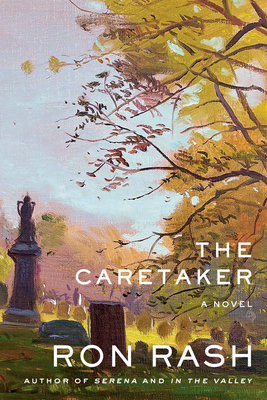
The Caretaker by Ron Rash

book cover

The dead could do nothing worse to him than the living had already done.

He couldn’t shake the inkling that something was about to happen, even as the morning passed undisturbed.

Oh, what a tangled web we weave…

Blackburn Gant has had a tough go of it for such a young man. An unfortunate event when he was six left him with a distorted face and a limp. His parents did for him what they could, Mom, to the extent possible, keeping him away from those who would prey on his otherness, his father tough-loving him into strength and self-sufficiency. He was hired at the tender age of sixteen to be the caretaker of the local cemetery, as his parents were moving to Florida. That was five years ago. He is thoughtful, respectful, and kind.

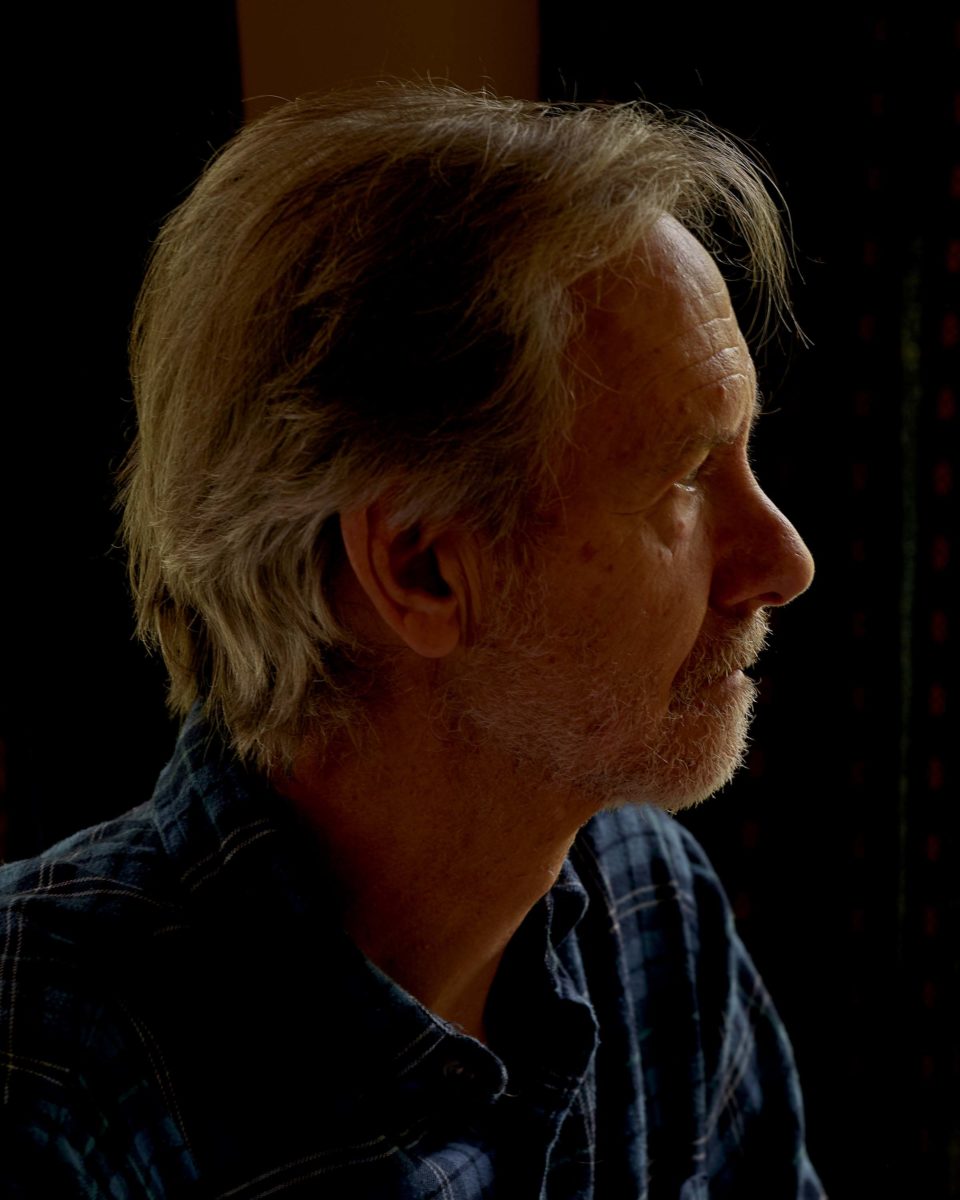
description
Ron Rash – image from Garden & Gun – photo credit Daniel Dent

Blowing Rock (which might bear a slight resemblance to Boiling Spring, where Rash was raised) has some upsides but it is mostly a place that young people leave if they have a choice. For Naomi, seventeen, pregnant, married to a soldier serving in Korea, and the object of hatred by her in-laws, it constitutes a hostile environment.

When we meet Jacob Hampton, he is having a tough time of his own. Enduring unbelievable cold in Korea, he is drawn into hand-to-hand combat with a North Korean soldier in the opening chapter. He is seriously wounded, at minimum.

Jacob is Blackburn’s best friend. He had charged Blackburn with the responsibility of taking care of Naomi in his absence, knowing that his parents wanted no part of her.

The spring his family moved here from Foscoe, Blackburn’s father sent him to catch trout for supper. He’d been fishing on the edge of the Hampton property when Jacob appeared. Blackburn thought he’d come to run him off. Instead, Jacob guided him to the pasture’s best pools tent, and soon Blackburn’s stringer was heavy with fish. He showed Blackburn a pretend fort made of fallen branches, said that together they could build it up even bigger. It was only when Blackburn was about to head home that Jacob acknowledged his face. Does it hurt? Blackburn said no. I’m glad it doesn’t, Jacob had said.

The closeness between Jacob and Blackburn is palpable, but as Blackburn does all he can for his best friend’s wife, their bond grows as well.

Blackburn and Naomi are both outcasts in the town, people who must maintain a low profile just to get by. Most in the town are willing to at least go along with Jacob’s parents in decrying the marriage. Jacob is in no position to oppose them. Naomi is seen as a too-young gold-digger, interested only in the wealth that Jacob is slated to inherit from his successful parents. They are cruel to her, and disinherit their son. Only Blackburn stands with Naomi, seeing that she is safe, and cared for. He has nemeses of his own, a pair of louts whose desire for mayhem and dominance goes beyond teasing and beating.

A terrible thing takes place as the pregnancy progresses, a criminal deception that throws multiple lives into a particularly hurtful turmoil. You will spend the rest of your time reading this book desperate to see how it all plays out, and terrified about what awfulness will descend on characters you have come to care for.

Considering that this is very short for a novel, less than 60,000 words, there is an awful lot going on in it, so much more than gut-clutching and relatable characters. Rash is a master. He offers up poignant imagery to reinforce the story. Blackburn makes note of the fact that different breeds of apple fruit at different times of year. This just might possibly relate to Blackburn being something of a late bloomer. There are signs of hope as well as just cause for despair.

The storm had shaken branches off the white oak. Blackburn picked them up, including one on Shay Leary’s grave. The weathervane shifted. Clearer skies were coming.

But are they, really? I could not help but think of another expression of hopeful anticipation, Something’s Coming from West Side Story. And how did that story of young-love-thwarted play out? Just sayin’. The imagery is not solely applied for the literary weight-bearing, but, directed through the consciousness of his Appalachian characters, the images serve to speak against any uninformed take about the intelligence of the people living in this part of the world. It requires sophistication to think in images. Giving them these thoughts makes it impossible to think of them as hillbillies, or unintelligent, regardless of how many years of school they may have completed. Some are there not so much to broaden the characters, as to toss readers an omen for our consideration. As soon as you see a mention of Barbara Hightower, for example, your antennae will be on alert for some sort of nefarious trade, whether real or theoretical. Mentions of trout might be there to highlight some form of purity.

Place is always a central element in Rash’s fiction, Appalachia in particular. The Caretaker gives us a look at rural North Carolina in the 1950s. His portrait of small-town life includes a look at how residents interconnect, showing how this person might feel indebted to that one, and how this one might feel too intimidated to say no to another, showing shared histories, bonds, and conflicts. He also provides a look at the supportive side of the community.

When Rash was in high school, his father was hospitalized for depression, an illness that tormented him for years. Sue Rash was left alone to look after three children in a small Southern town, one that often felt to her eldest son like its own dwarf planet. But when the family needed support from their neighbors, they got it. “The whole town helped us,” Ron says. “It was a struggle that was never spoken of, but they knew. And people came through for us.” – from the Garden & Gun interview

Friendship is often in Rash’s spotlight. How far would you go for a friend? Where is the line you would not cross? Family dynamics are given a close look, in Jacob’s family and beyond, particularly how parents treat children and why. Character will be sorely tested. Not all will do themselves proud.

I had one gripe, a convenient bit of unconsciousness that seemed very deus-ex-machinery, but really, that is a quibble. This is a wonderful read.

The Caretaker is Ron Rash’s first novel in ten years. It was inspired by a true story he had heard over twenty five years before, about a soldier who had eloped with a woman his parents disapproved of, before he was sent overseas. Rash changed it from WW II to Korea and expanded on the dark event that happened in that tale. In the lecture linked in EXTRA STUFF, he says, It’s been the hardest novel I’ve ever done. He considers himself more of a short-story writer, which goes a ways to explaining the considerable gap since his last novel.

One of the masters of American literature, Ron Rash has struck again, with a story that will not only dazzle you with the strength of the character portrayals, but keep your abs clenched as you worry how the central crime (Rash is so good that you can really understand why the crime was committed, and appreciate the desperate motivation, without necessarily empathizing with the whole undertaking) will resolve for all involved. He will enrich your reading experience with dazzling literary skill, while giving you a look at a time, a place, and a culture. That West Side Story song may or may not portend something wonderful for the characters in this book, but it definitely works for any new work published by Ron Rash

Somethin’s comin’, I don’t know what it is
But it is gonna be great

Yes. Yes, it is.
Review posted – 09/22/23

Publication date – 09/26/23

I received an ARE of The Caretaker from Doubleday in return for a fair review. Thanks, folks, and thanks to NetGalley for facilitating.

This review is cross-posted on Goodreads. Stop by and say Hi!

=======================================EXTRA STUFF

Link to Rash’s personal site. His son, James, set up, and his daughter, Caroline, currently maintains, a Fan Club FB page for him. But the latter does not appear to have been updated since 2020.

Profile – Marky Rusoff Literary Agency

Ron Rash’s family has lived in the southern Appalachian Mountains since the mid-1700’s, and it is this region that is the primary focus of his writing. Rash grew up in Boiling Springs, North Carolina, and graduated from Gardner-Webb College and Clemson University. He holds the John Parris Chair in Appalachian Studies at Western Carolina University. Rash is the author of 9 books: The Night The New Jesus Fell to Earth (short stories), Casualties (short stories), Eureka Mill (poetry), and Among the Believers (poetry), Raising the Dead (poetry), One Foot in Eden (novel), Saints at the River (novel), The World Made Straight (2006), and Serena (2008). His poetry and fiction have appeared in over one hundred journals, magazines, and anthologies, including The Longman Anthology of Southern Literature, Western Wind, Sewanee Review, Yale Review, Georgia Review, Kenyon Review, New England Review, Southern Review, Shenandoah and Poetry.

Interviews
—–Garden & Gun – August 2020 – Meet Ron Rash, the Blue-Collar Bard by Bronwen Dickey – done for his prior book, but still relevant
—–PBS Books – Ron Rash Interview at Miami Book Fair
– by Jeffrey Brown – video 8:34 – from 2014 – on the impact of landscape on stories and authors who have informed his work

My reviews of other Ron Rash books
—–2020 – In the Valley
—–2016 – The Risen
—–2015 – Above the Waterfall
—–2013 – Nothing Gold Can Stay
—–2012 – The Cove
—–2010 – Burning Bright
—–2008 – Serena

Item of Interest
—–Romantic Asheville – Brown Mountain Lights – mentioned in Chapter 20

Item of Interest from the author
—– CCC&TI Writer’s Symposium – 2023: Ron Rash lecture – video – 56:05 – Rash begins at 6:00

Songs/music
—–Red Foley – Chattanooga Shoe Shine Boy – referenced in chapter 6
—–Arthur Smith – Guitar Boogie– noted in Chapter 15
—–West Side Story – Something’s Coming – from 1961 film

Leave a comment

Filed under Fiction, Literary Fiction, Reviews

The Apartment by Ana Menéndez

book cover

The dead, after all, do not walk backwards but they do walk behind us. They have no lungs and cannot call out but would love for us to turn around. They are victims of love, many of them. – Anne Carson – from the epigraph

We are our own ghosts, dragging our mournful pasts behind us forever.

An apartment in Miami Beach, from 1942 to 2012, seventy years of tenants, eleven of them, each with a story to be told. The conceit of the novel is that the apartment retains some form of consciousness. Nothing particularly overt, mind you. It is handled more like a repository for emotional flotsam, psychic impressions that accumulate and rattle around with the tide of each new resident, to no obvious major purpose, until the final third of the book, when the apartment acquires a spokesperson, a late resident, who is on a mission to save the current one, Lana.

description
Ana Menendez – Image from her site

So, was all the depositing of emotional residue by the prior nine tenants merely substructure on which this final pair could rest? I found that a jarring shift, a sort of unwelcome unreliable narrator, as we are no longer hearing apt 2B, but as if this person proclaimed, “Shove over, flat. I’ll take it from here.”

Menendez’s work is mostly in short form, so it makes sense that her novel is of the linked-story form, as each resident in turn gets anywhere from six to twenty-two pages for their tale. Even though there is a through-arc, it still feels like a short-story collection, which is fine with me. But this form does limit how much one can get invested in any one character. The final chapter, at a novella-length eighty-four pages, changes this dynamic and gives us a bit more to hold on to with its two primaries.

After a prologue, in which an indigenous woman sees the first European invaders on what is now Miami Beach, establishes the roots of the storytelling arc, we jump to the beginnings of World War II. An apartment building called The Helena is still moist with drying paint when it is requisitioned by the military. Major Jack Appleton has been moved from Texas to lead an officers’ school. His wife, Sophie, is not what you might call thrilled. Appleton is controlling and abusive. They are not long for this place.

During their stay a ship is set ablaze and sunk off the coast by a German U-boat, bringing the war home. In fact, while the violence may be almost entirely off-screen, there is plenty of it. It is a pervasive thread in The Apartment, from the genocidal infections brought by the first Europeans, to carnage wrought by German forces. A veteran suffers from PTSD after serving in Viet Nam. A Marielita flees her abusive father, but is being kept by an abusive lover. A woman dreams that her husband is coming to kill her. A couple fear for their lives, concerned that they are being pursued by agents from their home country. A soldier is killed in action. There is a suicide and another tenant who might follow suit. A man is set upon by thugs in the street and is beaten bloody.

Each chapter ends with an interstitial piece, as the apartment is vacant for a time. Cleaners come in to prepare for the next renter. Some offer some wonderful short character pieces. The apartment sees and feels.

The front door closes, and absence returns to apartment 2B. but there is still someone here to record the fact, this unseen eye that moves across the floor as it if were a page, sweeps the bedroom, the naked walls, lingers at the single living room window with its blinds at half-mast.

We get a Cook’s Tour of many significant moments in American history, including foreign events that impact here through the residents of 2B, WWII, tensions between the USA and Cuba, Viet Nam, the Mariel boatlift, the demise of the junta in Argentina, USA involvement in Central American conflicts, 9/11, the demise of printed newspapers, Lebanon, Afghanistan. A lot.

I’ve been interested for a long time in how the trauma of war and displacement plays out across generations. So this was one of the main ideas I wanted to explore in the novel. Many of the conflicts in this novel have ties to the United States, which of course can sadly be said of many conflicts in the world today. We are all implicated. But simply on a craft level, as a writer, there were some conflicts that I wanted to include for personal reasons.
The conflict in Lebanon is one of them, as my great-grandparents fled to Cuba following early conflict there at the turn of the last century. The violence in Cuba and its long aftermath is of course a special obsession as the daughter of Cuban immigrants. And the conflict in Afghanistan looms large for us as Americans and for me personally as I spent ten unforgettable days in the country in 1998.
– from the Lithub interview

Everyone at the Helena is a transplant from someplace else. Many of the characters are foreign-born, carrying with them a sense of mourning for their lost birthplaces. Some have to jump down to the bottom of the work ladder they had ascended back home and begin the climb again, or take on completely alternate work just to get by. Even those who have made successful new lives pine for what was lost.

SHAPIRO: You introduce us very early on in the text to a Spanish word, morrina. What does the word mean? And how did you think about the concept in relation to the narrative you were writing?
MENENDEZ: It’s a concept that I think runs through maybe all of my books – this sense of saudade, as the Portuguese maybe would describe it. Most cultures have a word for this. It’s this sort of bittersweet nostalgia – the sense that the past is sweet and wonderful to wallow in precisely because it cannot be recovered. And I think that that’s an obsession that has run through most of what I write – not consciously but simply as a product of my upbringing and my own situation. My parents, of course, are immigrants. They call themselves exiles from Cuba. And so for me, it speaks to, you know, one doesn’t need to be an exile or a migrant to have this sense that things were sweet in the past and to sort of take refuge in it.
– from the NPR interview

The vast majority of the stories, eight of eleven, center on women. Conflict abroad manifests as abuse or misery at home. Few move on from 2B to a better life. There are exceptions. Relationships are pretty universally strained. Abuse recurs. A marriage of convenience challenges a relationship of love. There are betrayals, problems with gambling, alcoholism, depression, desperation, racism, bigotry of various sorts, and shame. Some are tormented by decisions they have made in the past. Some seem more like lost wanderers, thrown up on shore after being tossed roughly about by an angry sea.

The residents vary in their work lives, with creative arts well represented. There are multiple painters, their models, a journalist and a concert pianist. The most piercing spectral presence of all is a painting one of the residents is working on, as it manifests a particular bit of darkness.

Snakes pop up throughout. The book opens with A serpent coils through the underbrush of palmetto and coco plum…Harmless, this one, this time.. Later “Time, spooky and fickle. Not arrow, but snake.” There are more.

And now back to the apartment designation. Wait, 2B? Or not? Certainly calls up a soliloquy from Hamlet. And informs a fair piece of the book. The Danish Prince wonders if he should keep on keeping on after, learning that dear uncle murdered his father. Certainly many of the characters here have suffered the slings and arrows of outrageous fortune. Some put up a good fight, taking up arms against a sea of troubles. And by opposing [attempting to] end them. Well, some efforts are made. The alternative, the not 2B part, is to end the Heart-ache and the thousand natural shocks that the flesh is heir to. One last “check, please.” And one of ours does indeed choose to find out what dreams may come, when we have shuffled off this mortal coil. Is it the fear of the undiscovered country, of unknowable death, that keeps most grinding through the day-after-day? Or some loftier feeling, hope, or value? May it is simply momentum.

While The Apartment is not a traditionally formatted novel, it is nonetheless a beautiful work of writing. While we may not have much time with many of the characters, Menendez does a lot in a short space, a talent no doubt honed by her history of short story writing. The stories are moving, at times to the point of tears.

Will Sophie get away from her abusive spouse? Will Eugenio find his way to California? Will Sandman find a way to survive his PTSD? Will Isabel make her own life and not remain a kept toy of an older man? Will Margot and her husband evade those who might be after them? How will Susan handle her loss? Will Marilyn stay with her damaged bf? How will Beatrice cope with the change in her circumstances? Will Pilar be able to find journalism work again? Will Lenin succeed in his mission? Will Lana let the many friendly neighbors help her out, or is her secret too much to reveal?

There is poetic beauty in here that deserves to be read, to be appreciated. You may or may not feel impelled to look for deteriorating flats in a soon-to-be submerged part of Florida, but it would be worth your while to check in with your real estate agent and arrange to give 2B a look. It might turn out to be just the right place for you.

In the English novels she studied in school, the characters all seemed masters of their own fates. When they stumbled, it was because of a flaw. The direction their lives took was the direction they determined through their choices. But this was not Margot’s experience of the world. The world so far acted on her without consultation or sympathy. Her life, dictated first by her family’s wealth and now by her husband’s work, lacked the agency she was taught to recognize in great works. Even this latest leaving had been out of her hands. Maybe the only true literature was the old ghost stories her grandmother used to whisper to her on those windy cold nights on the Pampas. Spirit and mortals alike, all subject to unseen forces that swelled beneath them, hidden and untamable.

Review posted – 9/8/23

Publication date – 6/27/23

I received hardcover of The Apartment from Counterpoint in return for a fair review and a one-year lease. Thanks, folks.

This review is cross-posted on Goodreads. Stop by and say Hi!

=======================================EXTRA STUFF

Links to the Menendez’s personal, FB, Instagram, and Twitter, sorry, X pages

Profile – from her site

Ana Menéndez has published five books of fiction: The Apartment (2023), Adios, Happy Homeland! (2011), The Last War (2009), Loving Che (2004) and In Cuba I Was a German Shepherd (2001), whose title story won a Pushcart Prize. She has worked as a journalist in the United States and abroad, lastly as a prize-winning columnist for The Miami Herald.
As a reporter, she wrote about Cuba, Haiti, Kashmir, Afghanistan, and India. Her work has appeared in Vogue, Bomb Magazine, The New York Times and Tin House and has been included in several anthologies, including The Norton Anthology of Latino Literature. She has a BA in English from Florida International University and an MFA from New York University.
From 2008 to 2009, she lived in Cairo as a Fulbright Scholar in Egypt. She has also lived in India, Turkey, Slovakia and The Netherlands, where she designed a creative writing minor at Maastricht University in 2011. For the past 20 years, she has taught at various writing conferences and programs including, most recently, Bread Loaf and the MFA Program for Writers at Warren Wilson College. She lives in Miami and is currently an associate professor at FIU with joint appointments in English and the Wolfsonian Public Humanities Lab.

Interviews
—–NPR – Author Ana Menendez explores stories a single location could tell in ‘The Apartment’ by Linah Mohammad, Ashley Brown, Ari Shapiro
—–Lithub – Ana Menéndez on Crafting a Connected Cast of Characters by Jane Ciabattari

Items of Interest from the author
—–Links to other things she has written

Items of Interest
—–The Poetry Foundation – To Be or Not To Be – from Shakespeare’s Hamlet
—–Wiki – The Mariel Boatlift
—–Museum of Florida History – Florida on the Home Front: The German Submarine Threat off Florida’s Coast – “The most dramatic sinking in Florida waters took place the night of April 10, 1942, when U-123 torpedoed the tanker Gulfamerica off Jacksonville Beach. The resulting fiery explosion was clearly seen onshore and curious crowds gathered to view the ship’s destruction and looked on in shock as the German submarine surfaced and fired its deck gun at the tanker.”

Leave a comment

Filed under Fiction, Historical Fiction, Literary Fiction, Short Stories

You Are Here by Karin Lin-Greenberg

book cover

…it’s hard to remember sometimes that no one is only who they appear to be at the moment. It’s hard to remember sometimes all that goes into a life, all the different versions of a person, throughout the years, all the ways in which people are capable of changing.

…sometimes he is utterly exhausted by being an adult, by being someone, expected to explain the world to younger people, as if he’s in possession of the right answers.

Jackson Huang is nine years old. He dreams of being a professional magician. His mom, Tina, does hair at the mall salon in suburban Albany. She is amazing at it. Jackson spends a lot of his afterschool time there. Kevin manages the mall bookstore. He enjoys dressing up in many story-appropriate costumes to read to children at the store. His wife does not understand why he does not complete his ABD (All but Dissertation) doctorate. They live in a tiny house on her mother’s property. Maria is a beautiful seventeen-year-old high school senior. She works at Chickadee Chicks in the food court. Maria wants to become an actress, so is applying to schools with theater programs. Ro is a ninety-year-old widow who still gets around pretty well. Her rep is that of the neighborhood bigot, and there is some truth to that. Ro comes in to see Tina once a week for a bit of work.

I was very interested in showing people who are all different from one another, so I sat down and brainstormed a bunch of different people, who might be working at the mall or go to the mall. I wanted these people to be those whose lives would not otherwise intersect with one another. I also thought about conflict and tension; I have these characters who are extremely set in their ways and believe one thing so strongly. When you put them in scenes with each other, you can see what might happen. It’s also about questioning: are they going to stay static, or is there room for growth? If there is room, how much would feel realistic? With the multiple narrators, I enjoyed being able to get into each of their perspectives. A character might seem a certain way and be really frustrating in one chapter, when viewed through someone else’s thought process. In a later chapter, you might get their own thought process—they might still be frustrating, but you could at least understand why they believe the things that they believe. – from the Electric Lit interview

With the impending closing of the mall as the unifying thread, we get to know each of these five as they work their way through individual conflicts, over ten months, from September to June. Jackson gets hassled at school. Tina, her skills being what they are, can probably get another salon gig when the mall closes, but she has always wanted to be an artist. Maria has a boy who is quite odd interested in her maybe a bit too much. Kevin really needs to decide what he wants to do with his life, whether or not to complete his degree work or something else. He has a scheme for a border collie business that sounds impractical. Ro, after a lifetime of pushing people away, has come to her senses, and is eager to reconnect, to make some amends, regretting her long misanthropy.

description
Karin Lin-Greenberg – Image from her Goodreads profile

With alternating chapters, we get to know each of these five, and a bit of the supporting cast as well. Some interact solely at the mall. With others, there is connection beyond. Kevin and his family, for example, live very close to Ro. Maria helps Jackson with a school performance. A friend of Maria’s helps Tina with her artistic hopes.

The promotional material for the book compares You Are Here to Elizabeth Strout’s Olive Kitteridge. That seems a fair comparison.

I wanted there to be ten chapters in the span of ten months, leading up to the mall’s closing. While writing these stories, I was thinking a lot about Olive Kitteridge and Olive Again, by Elizabeth Strout, and how those circled around a particular place, which was a small town in Maine.

As with Strout, Lin-Greenberg offers us a cast of regular people, but finds what is interesting in each of them. I would add Kent Haruf to the comparables list. As in the work of Strout and Haruf, KLG, using the mall, gives us a look at a place, a time, a community, by looking closely at some of the lives it contains.

It is a novel of personal, very human hopes, of dreams. No one here is looking to save or conquer the planet, or even the nearest mall. But some of those hopes and dreams are secret. Tina is a very practical single-mother focused on taking care of her son, drawing on odd scraps of paper when opportunity presents. Some encourage her to take art classes, but she resists, fearing that dreaming too big might endanger her main role as provider. Jackson tries to keep his magical interest on the down-low with Tina, fearing her disapproval. Kevin has feelings about academia that he does not feel free to share with his wife. Ro has been secretive for almost a century. Old habits die hard.

The book has a very quiet timbre to it, one of the things about it that reminded me of Haruf.

“People who often get the most attention are the loudest, but people who are the quietest often have a lot going on inside. I wanted to explore that in this book. Many of the characters I write about are isolated and lonely. Many are not living the lives they had once wished for. As a writer I can explore the interiors of these people. I can go into their minds and show what they’re thinking and how they’re feeling.” – from the Times-Union interview

My first impression was that this was not so much a novel but a book of linked stories. KLG is an award-winning writer of short stories, so this seemed a natural progression.

I had my first sabbatical during the 2018-19 school year, and that’s when I wrote the first draft of my novel. I tricked myself by saying, ‘It’s not a novel. It’s a series of linked stories.’ – from the Times Union interview

It may at first have the feel of a linked short story collection, but the five-strand plaiting of the main characters, the consistent concern with a singular place and its impending demise, and consistent thematic concerns ensure that it is indeed a novel, and a bloody good one. There is a tragic event that occurs toward the back end of the tale. Some repercussions of that are shown.

Over the lead-up to the closing of the mall, we switch among the five main characters as they approach having to decide what they will do with themselves when it does. With their interactions, they form a small community of their own.

You Are Here was not KLG’s first title for the book.

I can’t take credit for it; my agent came up with it. My original title was Those Days at the Mall, which is a character’s line in the very last chapter. Obviously, the mall map says “You Are Here.” But it’s also so much about place and where people spend their time. So, the question behind the title was thinking about where we spend our days. -from the Electric Lit interview

This is a novel that is both incredibly sad and softly uplifting. KLG offers us a look at five ethnically and chronologically diverse ordinary people, ranging in age from nine to ninety, and delivers insightful, empathic looks at them all. (Well, some more than others, of course) We can appreciate both their challenges and their dreams. Even when their obstacles are self-driven, we can see how they came about, and maybe catch a glimpse of what might be possible ahead. You will feel for them, even if some might make you wince a bit at their decision-making. You will want Jackson to have a magical debut on stage. You will want Tina to find a way to respond to her muse. You will want Kevin to figure out what he wants to do with his life. You will want for Maria to get into the theater program of her dreams. You will want Ro to sail past her long-stout boundaries and realize her dream of human connection in the time left in her life.

KLG made her mark, and won awards as a writer of short stories, but when you read You Are Here, you will be exactly there, at the very beginning of what promises to be a long and wonderful novel-writing career.

She stares at her son, willing him to look at her and tell her about the magic tricks he’s been practicing. She wants him to invite her to his school talent show. She wants him to tell her about the videos he’s been watching. But he just keeps reading. Tina looks down at the desk, sees her sketch of the goose, peeking out from under some menus. Jackson shuffled around, and she grabs the sketch, balls it up, and drops it into the garbage can finish the desk. As the crumpled paper falls from her hand, she thinks it’s not just that Jackson is hiding something from her; it’s that he is imitating her. He’s keeping secret something that’s important to him, maybe because he’s afraid he’s no good or it’s silly or she’d be disappointed to know he cares about such a thing. She feels certain he has learned to be quiet and secretive, and to not allow himself to talk about impractical dreams from her.

Review posted – 8/25/23

Publication date – 5/2/23

I received a copy of You Are Here from Counterpoint in return for a fair review, and promising not to shut my doors for good. Thanks, folks.

This review is cross-posted on Goodreads. Stop by and say Hi!

======================================EXTRA STUFF

Links to Karin Lin-Greenberg’s personal, FB, Instagram, and Twitter pages

Profile – from Wikipedia

Karin Lin-Greenberg is an American fiction writer. Her story collection, Faulty Predictions (University of Georgia Press, 2014), won the 2013 Flannery O’Connor Award for Short Fiction[1] and the 2014 Foreword Review INDIEFAB Book of the Year Award (Gold Winner for Short Stories).[2] Her stories have appeared in The Antioch Review, Bellevue Literary Review, Berkeley Fiction Review, Epoch, Kenyon Review Online, New Ohio Review, The North American Review, and Redivider. She is currently an associate professor of English at Siena College in Loudonville, New York. She has previously taught at Missouri State University, The College of Wooster, and Appalachian State University. She earned an MFA in Fiction Writing from the University of Pittsburghin 2006, an MA in Literature and Writing from Temple University in 2003, and a BA in English from Bryn Mawr College.

Interviews
—–Times Union – Siena’s Karin Lin-Greenberg breaks into new novel, ‘You Are Here’ by Jack Rightmyer – May 10, 2023
—–The Southern Review – A Writer’s Insight: Karin Lin-Greenberg – primarily about her short-story writing
—–Zyzzyva – Q&A WITH KARIN LIN-
GREENBERG, AUTHORCOF ‘YOU ARE HERE’
by VALERIE BRAYLOVSKIY
—–Electric Lit – The Last Days of a Dying Mall in Upstate New York by JAEYEON YOO

Items of Interest from the author
—–LitHub – excerpt
—–Lin-Greenburg’s site – Links to other on-line work she has published
—–Read Her Like An Open Book – Karin Lin-Greenberg, author of YOU ARE HERE, on patience and publishing

Kent Haruf books we have enjoyed
—–2015 – Our Souls At Night
—–2013 – Benediction
—–2004 – Eventide
—–1999 – Plainsong

My reviews of books by Elizabeth Strout
—–2021 – Oh William!
—–2019 – Olive, Again
—–2008 – Olive Kitteridge

Leave a comment

Filed under Fiction, Literary Fiction

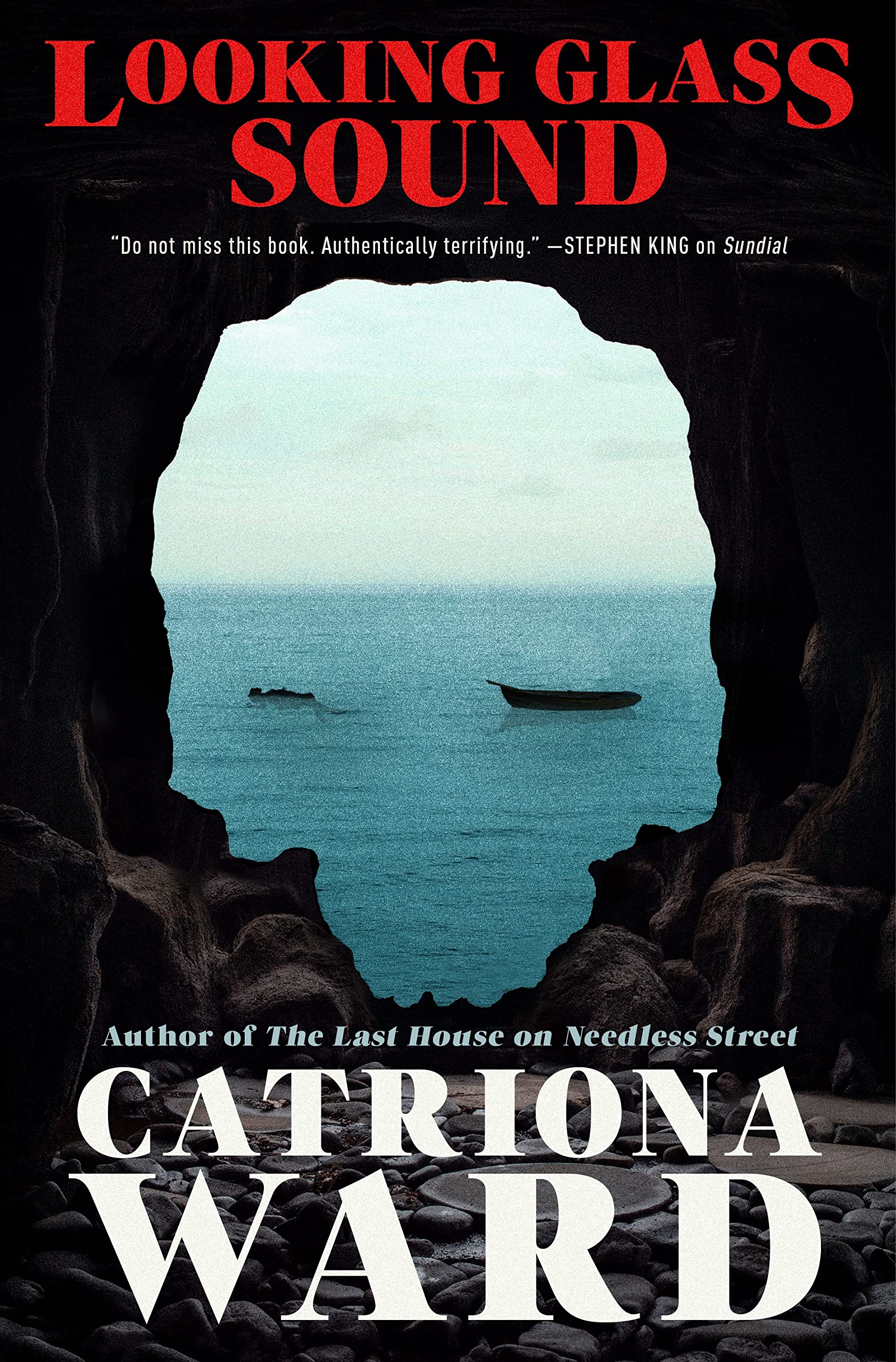
Looking Glass Sound by Catriona Ward

book cover

The sea whispers, faint. It sounds like pages shuffling. A seal barks. I lick a finger and test the breeze. The wind is in the east. A moment later it comes, mournful and high. The stones are singing and I feel it, at last, that I’m home. I listen for a time, despite my tiredness. I think, if heartbreak had a sound, it would be just like this.

She can smell him the way wild animals smell prey.

The visions don’t frighten me anymore. I can usually tell what’s real and what isn’t.

Don’t get comfortable.

Wilder Harlow has returned to the cottage where he stayed as a teen, to write the book he had started over three decades before. He is not entirely well. We meet him in 1989, via his unpublished memoir, which tells of the momentous events of that Summer. He was sixteen. His parents had just inherited a cottage from the late Uncle Vernon, and opt to spend a summer there before deciding whether to sell. It is on the Looking Glass Sound of the title, near a town, Castine, in Maine. Beset in prep school, for his unusual features, particularly pale skin and bug eyes, Wilder is ready for a novel experience. (“I’m looking at myself in the bathroom mirror and thinking about love, because I plan on falling in love this Summer. I don’t know how or with whom.”)

description
Catriona Ward – image from Love Reading

The sound has an unusual…um…sound.

The leaves of the sugar maple whisper—under it, there’s a high-pitched whine, a long shrill note like bad singing…it sounds like all the things you’re not supposed to believe in—mermaids, selkies, sirens…’What’s that sound?’ It seems like it’s coming from inside of me, somehow. Dad pauses in the act of unlocking the door. ‘It’s the stones on the beach. High tide has eaten away at them, making little holes—kind of like finger stops on a flute—and when the wind is in the east, coming over the ocean, it whistles through.’

Sure, dad, but the wind-driven whistling is not the only sound that haunts in these parts.

It does not take long for Wilder to make two friends. Nathaniel is the son of a local fisherman, his mother long gone. Harper is English, her well-to-do parents summer there. Wilder’s relationships with these two will define not only this Summer and the one after, but the rest of his life. Harper is a flaming redhead, with issues. She has been kicked out of many schools, for diverse crimes. So, of course, Wilder is madly in love with her at first sight. Nat, a golden boy in Wilder’s eyes, has a way of describing fishing with a harshness that is unsettling. The three form their own tribe for a time.

Pearl is named for her mother’s favorite jewel. She was only five when mom disappeared. They had been staying at a B&B in Castine. But Pearl’s mother is far from forgotten.

Sometimes her mother talks to Pearl in the night. She learns to keep herself awake, so she can hear her. It always happens the same way. Rebecca’s coming. It starts with the sound of the wind roaring in Pearl’s head, just like that day on the mountain. And then Rebecca’s warm hands close over her cold ears.

The area has a local creep. Dagger Man is the name assigned to whoever is responsible for a series of break-ins of homes occupied by Summer people. He takes photos of kids sleeping. Then sends the polaroids to the parents.x The images include a dagger to the throat. Adding to the creepiness, there is a history of women going missing here. And a legend of a sea goddess luring people to a dark end.

The second summer in Castine, there is an accident in a secret cave, involving Wilder, Nat, and Harper. It leads to a very dark, traumatic discovery, upending their worlds.

When Wilder heads off to college, soon after, he is intent on becoming a writer, but, while there, his closest friend, Sky, steals his story, going on to publish a wildly successful novel using it. Wilder is never able to get past this, thus his final return to the source a lifetime later, to have one last go at writing his true version.

Ward employs some of the usual tricks of creating a discomfiting atmosphere. The sounds emanating from the bay are strong among these. Even underwater I can still hear the wind singing in the rocks. And I hear a voice, too, calling. In describing Harper, Wilder notes Her hair is deep, almost unnatural red, like blood. And The wet sand of the bay is slick and grey. It’s obscene like viscera, a surface that shouldn’t be uncovered. (Well, ok then. Which way to the pool?) Nat describing how his father kills seals is pretty chilling.

Ward has had some eerie experiences,

I suffer from hypnagogic hallucinations. They started when I was about 13, taking the form of a hand in the small of my back as I was falling asleep, shoving me out of bed really hard. I knew there was someone in the room and I knew they didn’t mean me well. With the information I had at the time – pre-Google as well – there was no other explanation for it, was there? I think it’s probably the deepest chasm I have ever looked into. There’s nothing comparable to it in the daylight world. – from the 9/26/22 Guardian interview

which find their way into the story.

So, there are two presenting mysteries, Dagger Man and the missing women. And a bit of magic in the air, whether it is a dark siren luring some to a watery grave, mysterious noises and notes, or teens fooling around with witchy spells. Are the kids just being imaginative, or is there something truly spectral going on?

A feeling of powerlessness is core to the horror genre. The main characters here share a deep sense of vulnerability. This is very much a coming-of-age novel. Adolescence is a prime vulnerable state, a transition between childhood and the mystery of adulthood. Not knowing who you are. Trying on different roles, names, behaviors, hoping for love, of whatever sort, always susceptible to rejection and/or betrayal, and/or disappointment. There is added vulnerability with their families. Any teen going through changes would benefit from a solid base of parental constancy. Wilder’s parents are going through more than just a rough patch. Nat does not seem particularly close to his only parent. Harper refers to a pet dog that protects her from her father. There are enough secrets in the world. Bad families, bad fathers. Pearl’s mother, like Nat’s, is long gone. In addition to whatever else assails them, there is self-harm.

The Dagger Man is wandering about. People disappear. The bay has disturbing aspects to engage all the senses. There are a few more stressors, as well. That certainly sets the stage for an unsettling horror tale. That would all be plenty. But wait, there’s more.

Some books have unreliable narrators This one has an unreliable ensemble, existing in unreliable worlds. Looking Glass Sound is not your usual scare-fest. The terrors here lie deeper than a slasher villain or a vengeful ghost. In addition to the external frights, these have to do with existential concerns, about identity, who, what, where, and when you are. Offering the sorts of thoughts that can interfere with a restful night, with the legs to disturb your sleep for a long time. This would be more than enough, but wait.

This is also a book about writing. A pretty common element in many novels, it’s on steroids in this one, cruising along in the meta lane.

Writers are monsters, really. We eat everything we see.

The book is a mirror and I am stepping through the looking glass.

‘Writing is power,’ she says. ‘Big magic. It’s a way of keeping someone alive forever.’

I think about our three names, us kids, as we were. ‘Wilder,’ I whisper to myself sometimes. ‘Nathaniel, Harper.’ We’re all named after writers. It’s too much of a coincidence. Harper. Wilder. Harlow. The names chime together. The kind of thing that would never happen in real life but it might happen in a book.

‘You wanted to live forever,’ Harper says gently. ‘You both did, you and Wilder. That’s all writers really want, whatever they say.

She also gets into the morality of story ownership. When does your personal tale become a commodity? Who has the right to tell your story?

I cannot say I have ever read a book quite like this one. It is not an easy read. Despite some surface technique that places it in the gothic/horror realm, there is a lot more going on here. You will have to be on top of your reading game to keep track, but it will be worth your time and studied attention. There should be surgeon general’s warning on this book. Stick with it and you will get a very satisfying read, and endure many nights of unwelcome wondering.

I wake to the sound of breath. No hand caressing me, this time. Instead I have the sense that I am being pummeled and stretched, pulled by firm hands into agonizing, geometrical shapes. I scream but no voice comes from my throat. Instead, an infernal scratching—horrible, like rats’ claws on stone, like bone grinding, like the creak of a bough before it breaks. Or like a pen scratching on paper.

Review posted – 7/21/23

Publication date – 08/08/23

I received an ARE of Looking Glass Sound from Tor/Nightfire in return for a fair review. Thanks, folks, and thanks to NetGalley for facilitating. Can you please turn down the volume on that thing?

This review is cross-posted on Goodreads. Stop by and say Hi!

=======================================EXTRA STUFF

Profile – from Wikipedia
Catriona Ward was born in Washington, D.C. Her family moved a lot and she grew up all over the world, including in the United States, Kenya, Madagascar, Yemen, and Morocco. Dartmoor was the one place the family returned to on a regular basis. Ward read English at St Edmund Hall, Oxford. Ward initially worked as an actor based in New York. When she returned to London she worked on her first novel while writing for a human rights foundation until she left to take an MA in creative writing from the University of East Anglia. That novel, Rawblood (distributed in the United States as The Girl from Rawblood), was published in 2015. Now she writes novels and short stories, and reviews for various publications.[1] Ward won the August Derleth Award for Best Horror Novel in 2016 …and again in 2018 for Little Eve, making her the first woman to win the prize twice.
Her most successful novel has been The Last House on Needless Street.

Links to Ward’s FB and Instagram pages

Interviews
—–The Guardian – 9/26/22 – Catriona Ward: ‘When done right, horror is a transformative experience.’ by Hephzibah Anderson
—–The Guardian – 3/13/21‘Every monster has a story’: Catriona Ward on her chilling gothic novel by Justine Jordan
—–Lit Reactor – Catriona Ward: Learning to Fail by Jena Brown
—–The Big Thrill – 8/31/2021 – Up Close: Catriona Ward by April Snellings
—–Tor/Forge – Catriona Ward – What Was Your Inspiration for Looking Glass Sound?
—–Books Around the Corner – Catriona Ward by Stephanie Ross
—–Quick Book Reviews – Episode 206 – April 24, 2023 – Books! Boks! Books! from 26:06 to 42:30

Items of Interest
—–The Novelry – 10/2/2022 – Catriona Ward and the Power of Writing Horror
—–NHS – Charles Bonnet syndrome

Leave a comment

Filed under Fantasy, Fiction, Horror, Literary Fiction, Mystery, psycho killer, Suspense, Thriller, Thriller

The Strange Case of Dr. Jekyll and Mr. Hyde by Robert Louis Stevenson – introduction by Jeffrey Keeten

book cover

The power of this tale is the fact that nearly everyone on the planet knows the story, even though few have actually read the book. For the Victorian reader, Stevenson hides the twist of the book until near the end. For those readers, Hyde and Jekyll were two men until Jekyll’s confessional letter sets them straight. – from the intro

He is not easy to describe. There is something wrong with his appearance; something displeasing, something down-right detestable. I never saw a man I so disliked, and yet I scarce know why. He must be deformed somewhere; he gives a strong feeling of deformity, although I couldn’t specify the point. He’s an extraordinary looking man, and yet I really can name nothing out of the way. No, sir; I can make no hand of it; I can’t describe him. And it’s not want of memory; for I declare I can see him this moment.

There is much to be gained by re-reading the classics. Great works of literature are considered great for a reason, mostly because the truth of their excellence persists over time, as each generation discovers them anew. In a parallel vein many become embedded in our culture, and suffer, in popular application, the erosion of original purpose, of nuance. A 2012 study of memory found that:

Every time you remember an event from the past, your brain networks change in ways that can alter the later recall of the event. Thus, the next time you remember it, you might recall not the original event but what you remembered the previous time. – from the Northwestern article linked in EXTRA STUFF

I expect this can be applied on a grander scale, to society and culture at large. Our recollection of the stories produced by the Brothers Grimm in the 19th century, for example, bears little resemblance to the truly grim tales they actually told, thanks in considerable measure to Disney. On becoming popularized, stories can become simplified, stripped down. Alice might recognize the great peculiarity of reducing complicated things to their elements to the extreme of absurdity.

“Well! I’ve often seen a cat without a grin,” thought Alice; “but a grin without a cat! It’s the most curious thing I ever saw in my life!” – Alice in Alice in Wonderland

What we have achieved in our collective recollection of The Strange Case of Dr. Jekyll and Mr. Hyde is just that, a grin without a cat. Jekyll has been reduced to a well-meaning physician, and Hyde a monstrous container for human evil. Black and white. Jekyll good, Hyde bad. Not so fast.

description
Stevenson in Samoa – image from Britannica

Jeff Keeten, long-time Goodreads superstar reviewer, offers his take on the book in a thoughtful introduction. He points to the existence of an earlier, possibly more lurid version, of the novella, a 19th century Go Set a Watchman. Good or bad, it would have made a fascinating counterpoint to the final. Keeten provides some wonderful details about the writing of the story, and shows a thematic continuation from Stevenson’s prior work.

description
Jeffrey D. Keeten – image from Gravelight Press – it is remarkable what vast amounts of makeup and digital touching up can accomplish

For a quick refresher, there has been a series of dastardly deeds committed in a London neighborhood. We learn of these through Gabriel John Utterson, a lawyer, and friend of Jekyll. A culprit has been identified. Mr. Hyde, a known associate of Doctor Jekyll. Utterson is asked by Jekyll to treat Hyde as his heir. But as knowledge of Hyde’s activities becomes more widespread, Hyde must go into hyding (sorry). Exposition is handled via direct observation, but also via documents from another professional peer, and Jekyll’s final message to Utterson.

I read the original version of this novella (thirty-something thousand words) a lifetime ago. Can’t say that I remember it from that reading all that clearly. But I do recall the sense I have acquired from seeing multiple productions of the story on screens, and in print, both tellings of Stevenson’s story and interpretations of the work that extracted, or tried to extract, the substance of the allegory and apply it in a modern context. In its simplest understanding, the story highlights the conflict between good and evil in human nature.

description
John Barrymore in Hyde mode – 1920 – image from Public Domain Movies

There are many tales that address what the natural state of humanity is, i.e., how might we behave without the benefit of civilization. Lord of the Flies pops to mind as a premier example of the genre. Keeten, in his excellent introduction, points out that Stevenson had shown in his other work an interest in internal moral divisions within people. Britannica describes Treasure Island as at once a gripping adventure tale and a wry comment on the ambiguity of human motives. But divisions are not necessarily slashed in straight lines down the core of our moral being. More than all else, one thing stood out for me in this latest reading. It is not a battle between good and evil. It is much more an attempt at accommodation. There is plenty of cat to go with that conflictual grin. Jekyll is no paragon. (BTW, according to Daniel Evers, of the University of Bristol, the proper Scottish pronunciation of Jekyll is ‘Jee-kul.’ – article on this is linked below.)

description
Spencer Tracy in the dual role, really, really wants you to pay your share of the bar bill – 1941 – image from Fiction Fan Blog

He does not so much conduct objective research into where in people is drawn the line between good and evil. On the contrary, Jekyll knows he has urges and desires that are not considered socially acceptable. He is not so much looking to suppress those by some form of internal bifurcation. No, no no. He is looking to give his dark side free reign, while sparing his Jekyll side the inconvenience of conscience. So, what was Stevenson writing about? What was his intent? To show the hypocrisy of the Victorian upper class? I have not seen any specific report that he was a political writer in the way of Dickens, who used his work to highlight the class horrors of an age. Stevenson’s aim seemed more tilted toward demonstrating the internal conflict between good and evil that permeates us all.

description
Frederic March’s 1932 version ignored Stevenson’s subtle distinction between the two – image from Fiction Fan Blog

And what is the relevance to today? How might we use the lens of this tale to gain a focus on our present? As noted above, classic tales are often reinterpreted to offer us a new take on modern themes. My favorite among these is the 1990s staging of Richard III, with Ian McKellan. I was blessed in being able to see it in person in Brooklyn, and later as a film. It was breathtaking, using a 16th century drama as a vehicle for portraying 20th century fascism. I get chills still, just thinking about it. It became clear to me that RLS’s scenario could be applied, as well, to the contemporary political realm.

description
Richard III as a fascist dictator … Ian McKellen in the 1996 film image from The Guardian – photo by Ronald Grant

In this take, the good doctor might be seen as the Republican Party of the mid-to-late 20th century. No longer the party of Lincoln, the GOP largely abandoned the good work their predecessors might have been proud of. Instead, particularly after the Southern Strategy of Richard Nixon, it became a party that was not only willing to tolerate its excesses, the racism

description
(In 1971 – Dr Jekyll and Sister Hyde offered an interesting twist – image from British Horror Films

that opposed civil rights legislation, the classist hostility that opposed the New Deal and Great Society, and any allegiance to sustaining a fair voting system. They understood that they had these urges and constructed potions meant to separate the worst behavior from the respectable core. This is where we get the Tea Party, Q, Oath Keepers, Proud Boys, Three Percenters, and other on-the-ground kinetic actors, spurred on by demagogues spreading disgraceful lies, the Rush Limbaughs of the world, the Alex Joneses, the demagogues-du-jour on Fox News. The party wanted to let their fascist freak flag fly, but deniably. So, Jekyll wanted to give his dark urges a way to be sated, while maintaining a clear conscience, or, at the very least, deniability. Doctor Jekyll is not a good guy. And, as with the GOP, once you breathe life into your darker side, that darker side will not be satisfied with partial residence for long, no matter how many lies he tells, or how much orange hair dye he might use. As with Jekyll, over time, the GOP feels less and less constrained by decency, as they boldly attack voting rights, civil rights, even the law itself, with a decreasing need for an external beard. What might Jekyll v. Hyde stand for in your understanding of the 21st century? There may be other elements that jump out for you, aspects that shift your take on the dumbed-down vision most of us have of the J/H conflict.

description
In a 1990 production, Michael Caine is really tired of the other actors calling him Alfie. – image from TV Worth Watching

There is a short story added on at the end, Markheim. It is rich with familiar elements and it is clear that, published only a year before J/H, it was a primary source from which the longer tale grew. It would be easy, though, to see it as an alternate ending to the later novella.

description
Eddie Izzard has signed on to play a trans Dr Jekyll in an upcoming production

And, of course, it would be perfectly natural if, at the end of reading, or re-reading The Strange Case of Dr. Jekyll and Mr. Hyde, you are of two minds about it all.

in one of my more wakeful moments, my eyes fell upon my hand. Now the hand of Henry Jekyll (as you have often remarked) was professional in shape and size; it was large, firm, white and comely. But the hand which I now saw, clearly enough, in the yellow light of a mid-London morning, lying half shut on the bedclothes, was lean, corded, knuckly, of a dusky pallor and thickly shaded with a swart growth of hair. It was the hand of Edward Hyde.

Review posted – 7/07/23

Publication date – 4/3/23 – of this volume – J/H was first published in 1886

I received an ARE of The Strange Case of Dr. Jekyll and Mr. Hyde from Gravelight Press in return for a fair review, and a printout of my special formula. Thanks, folks,

This review is cross-posted on Goodreads. Stop by and say Hi!

=============================EXTRA STUFF

It was definitely a fun experience for me to trot down memory lane for a re-look, and a better look at J/H. Keeten’s smart intro definitely helps. You might also check out some of the links below for more. Gravelight promises a slew of horror classics, one new one every six months or so. Upcoming are The Picture of Dorian Gray and Frankenstein, complete with Keeten’s insightful introductions. Nifty collection material for horror afficionados, and ideal gifts for Halloween. No, I do not get a commission!

Links to Keeten’s personal, FB, and Instagram pages

I have written one prior review for a book intro’d by Jeffrey Keeten
—– Exhumed: 13 Tales Too Terrifying to Stay Dead – edited by David Yurkovich

Songs/Music
—–The Who – Dr Jekyll & Mr Hyde
—–Bear McCreary – The Skye Boat Song or Sing Me a Song of a Lad That is Gone – the theme song of the TV series Outlander sets a Stevenson poem to music

Items of Interest
—–British Library – ‘Man is not truly one, but truly two’: duality in Robert Louis Stevenson’s Strange Case of Dr Jekyll and Mr Hyde by Greg Buzzwell
—–Wiki – Adaptations of Strange Case of Dr. Jekyll and Mr. Hyde – There is a wonderful catalog here of J/H productions from 1887 to the present
—–Northwestern Now – Your Memory is like the Telephone Game by Maria Paul
—–Britannica – Robert Louis Stevenson
—–Interesting Literature – The Surprising Truth behind Jekyll and Hyde by Daniel Evers
—–Dark Worlds Quarterly – Classic Monsters in Comics: Dr. Jekyll & Mr. Hyde offers a fun look at comic treatments over the ages
description
What me worry? – from above article

1 Comment

Filed under classics, Fiction, Horror, Literary Fiction

Birnam Wood by Eleanor Catton

book cover

…all the great tragedies are stories ultimately of betrayal. They’re stories where people betrayed the people closest to them but they’re also stories where people betray themselves. They kind of betrayed the better person that they could have become. – B&N interview

Third Apparition –
Macbeth shall never vanquish’d be until
Great Birnam wood to high Dunsiname hill
Shall come against him.


Macbeth –
That will never be.
Who can impress the forest, bid the tree
Unfix his earth-bound root?
The Scottish
Play

Wanna bet?

Birnam Wood is a serious, literary novel, a tragedy, cleverly disguised as an eco-thriller. Mira Bunting, 29, a horticulturist, heads an activist collective called Birnam Wood. They grow food in found plots of land, sometimes with permission, sometimes not. What they grow they consume themselves and give away to any in need. She discovered in childhood an interest in horticulture. It drowns out the relentless patter of self-critique that drives her.

description
Eleanor Catton – image from The Guardian

Shelley Noakes is number two, the sort of efficient workhorse that most organizations need in order to survive. Though she is Mira’s roomie and bff, Shelley has grown tired of being taken for granted, always relegated to second fiddle, and is determined to leave. She struggles, however, with the knowledge that if she leaves, Birnam Wood will not survive Mira’s laughable incapacity for meat and potatoes organizational management.

Tony Gallo has been away for several years, backpacking, teaching English in Mexico, trying to find himself. He wants to become a freelance journalist, despite a thin volume of actual experience. He is idealistic and insufferable, his ideological lines are not only clear, but electrified. He is carrying a torch for Mira and has returned home to see if there are any sparks left. Eager for a journalistic break, he stumbles across a biggie.

Robert Lemoine is an American billionaire, disgustingly rich from his drone business. He is looking for a bug-out retreat in case of global meltdown, and had found just the place. Is Lemoine a well-meaning rich guy, or a Bond villain?

Owen Darvish, recently knighted, is the owner of that place, a considerable swath, cheek by jowl with a national park. Unfortunately, there was a major landslide there recently, which has cut off the town of Thorndike. Will the sale actually go through now?

The landslide has caught Mira’s attention. What if Birnam Wood could set up shop in a place that was effectively cut off from most ongoing enterprise? Might be a great chance to grow her non-profit into a much larger player, and maybe do a fair bit of good? She decides to make the considerable drive and check it out. While there, she encounters Lemoine. This is where the story really gets going.

The novel flows in two parallel streams, often merging, then separating, then merging again. The first is the eco-thriller. What is Lemoine on about? He can certainly come across as charming, and sincere, but is he really? Is the money he offers Mira for Birnam Wood’s work being given sincerely, or is he up to something? Does the devil speak true? That he has a studly appeal adds to the confusion. The other is a deep dive into personality and motivation, with rich literary technique and a host of thematic concerns.

Privacy, or lack thereof, is a frequent focus in the book. Lemoine, for example, is a developer of drone technology, and is a one-percenter as well in terms of knowledge of and facility with surveillance. (…he took his phone out of his pocket, tapped the screen, then turned it around to show her. Under the list of detectable devices nearby was listed ‘mira’s iPhone’.) It permeates down to the ninety-nine-percenters as well. This, for instance, is our introduction to Shelley:

…the yellow circle labelled ‘Mira’ pulled out into the street and began traversing slowly north. Shelley Noakes reduced the scale of the map until her own circle, a gently pulsing blue, appeared at the edge of the screen, and watched the yellow disc advance imperceptibly upon the blue for almost thirty seconds before turning off the phone and throwing it, suddenly and childishly, into the pile of laundry at the end of her bed.

Mira has a tracker app on Shelley’s phone as well. Mrs Darvish keeps up on where her husband is by tracking his phone. Tony’s research is of the investigative reporter sort, on line and in-the-field which, of course, entails some significant snooping. And, of course, he is snooped on while he investigates.

Catton uses interior dialogue to let us in on the main characters’ struggles with who they are and what they want. Well, not so much Lemoine, who struggles less with a values dialectic than with figuring out how to get what he wants from the world. Tony sees himself as a progressive, but wrestles with his feminist credentials, and sincerely wonders if he is inauthentic in his desire to make a meaningful career for himself, in presenting himself as someone who has to struggle to get by, who criticizes the very system that makes his life possible. Mira struggles to hide (…a vanity, an appetite, a capacity for manipulation that she would rather other people did not see; she knew, and was ashamed to know). Shelly has to reconcile her seemingly permanent peace-maker role in life with her need to be her own person.

Shelley wanted out. Out of the group; out of the suffocating moral censure, the pretended fellow feeling, the constant obligatory thrift; out of financial peril; out of the flat; out of her relationship with Mira, which was not romantic in any physical sense, but which had somehow come to feel both exclusive and proprietary; and above all, out of her role as the sensible, dependable, predictable sidekick, never quite as rebellious as Mira, never quite as free-thinking, never – even when they acted together – quite as brave.

This being a tale not told by an idiot, inspired by a tragedy, there will be familiar tragic elements on display. Tragic flaws for everyone. Come one, come all. But can the mere hoi-polloi really be tragic characters? Isn’t that reserved for the high and mighty? Owen Darvish certainly counts for that, as does Lemoine. But Mira? Shelley? Tony? Or is grandiosity alone sufficient to elevate one to a height sufficient to mark a character as potentially tragic? Catton does make us wonder as we read just who are the tragic characters, and who the schlubs who are guilty of, maybe, a bit of overreach, or garden variety foolishness.

Of course, there is more to them than merely wanting beyond their capacities. There is another element from tragedy to consider. Note the quote that opens this review. Betrayal figures large. There is enough deception in the air here that one might be well advised to don a bee-keeper outfit to fend off the tangled webs that permeate the landscape. Secrets will be kept, some minor, some world-class. Our intro to Mira, for example, shows her using a false identity to research the landslide area. More importantly, is she selling out the collective if she comes to a deal with Lemoine? Shelley tries her best to seduce Tony as a passive-aggressive way of getting Mira to separate from her. Others have their own secrets and betrayals nicely tucked away.

Another tragedic element is that outcomes are the result of actions, not fate or chance. If you look back down the path from end to beginning you will see all the characters’ yesterdays lighting the way to an inescapable end. Although it is not the only influence on the book, Macbeth is clearly the primary one.

[Catton] drew up another intricate masterplan in which each of the main characters could be seen as Macbeth, with a corresponding Lady Macbeth, witches and so on. It sounds tricksier than it is: as the narrative perspective shifts, everybody could be the villain. She wanted to stop readers playing “the polarised blame game we are all used to in contemporary politics,” she explains. “You wouldn’t be able to say: ‘These are my people so they are obviously the good guys. These are the people that I despise so they are obviously the bad guys.’” – from The Guardian interview

You will have to find out for yourself how much of this structure made it into the final draft.

Other significant sources of inspiration were 20th century crime fiction, Jane Austen’s Emma, (the structure and taut language) and even Mary Shelley’s Frankenstein. The character Shelley was named for the author, leaving us to wonder whether this Shelley is creature or creator.

While this is a novel in which actions matter, and have consequences, it is also one in which the omniscient narrator will tell you everything you need to know about each of the characters. This ability to look into (monitor remotely? surveil?) everyone’s deepest inner thoughts and feelings resonates with the surveillance elements in the story. One of the precipitating ideas for the book, the Big-Brother-is-watching element certainly, sprung from a 2015 protest in which New Zealand police were taking photos of protesters as they walked past.

Catton is also interested in inter-generational dealings.

It’s something I have thought about a lot…how my generational placement or position has conditioned me. The book is designed generationally. There are three generations represented in terms of the points of view. And I wanted to really explore the generational differences in terms of how they deal with certain contemporary problems that we’re all kind of facing globally. – from The Toronto Public Library interview

But it is no boomer-bashing party.

“Millennials are quite willing to cosy up to the tech gen Xers,” she says. “We are all personally enriching billionaires like Elon Musk by freely giving away our data…These minerals are in the phones that are around us all the time. I want my iPhone. I want to be able to have the freedoms that it brings. We are all complicit.” – from The Guardian interview

In addition to its literary and thriller aspects, Birnam Wood is a satire, a caricature of diverse sorts. Most glaring is the Birnam Wood members, whose motivations and desires are often less idealistic than what they show to the world. Darvish comes in for an uncomplimentary look, too, as does Lemoine. It is a tale, also, about expectations.

Macbeth is a play that’s all about prophecy. It’s animated by prophecy. So I …re-read it with everything that was happening in terms of world events resounding in my head and suddenly saw it in a really different way, as a play that contains very interesting and loud warnings about what happens when you regard the future with too much certainty if you’re too convinced about what lies just down the road. Because of course Macbeth makes the ending of Macbeth happen. None of that was written on the wall before before he received those prophecies and I and so I kind of wanted to achieve a similar effect in a novel by writing a book about incremental political actions and moral actions that end up kind of having these enormous effects that were avoidable. – from the Barnes & Noble interview

In short (too late, I know), Birnam Wood is a multi-layered triumph, building on classic structures and themes to tell a very contemporary story, offering consideration of how people make very human choices, as they contain battles between morality and desire. The tale does not at all creep in a petty pace, but rolls along at a good clip, shifting into turbo as it nears the end, generating an abundance of sound and fury which certainly signifies something.

Like all self-mythologising rebels, Mira preferred enemies to rivals, and often turned her rivals into enemies, the better to disdain them as secret agents of the status quo.

Review posted – 6/9/23

Publication date – 3/7/23

I received an ARE of Birnam Wood from FSG in return for a fair review. Thanks, folks, and thanks to NetGalley for facilitating, but ever since writing the review, I acquired, and can’t seem to wash off, these bloody spots.

This review has been cross-posted on GoodReads

=======================================EXTRA STUFF

Links to Catton’s Good Reads and Wikipedia pages

Profile – from Wiki

Eleanor Catton MNZM (born 1985) is a New Zealand novelist and screenwriter. Born in Canada, Catton moved to New Zealand as a child and grew up in Christchurch. She completed a master’s degree in creative writing at the International Institute of Modern Letters. Her award-winning debut novel, The Rehearsal, written as her Master’s thesis, was published in 2008, and has been adapted into a 2016 film of the same name. Her second novel, The Luminaries, won the 2013 Booker Prize, making Catton the youngest author ever to win the prize (at age 28) and only the second New Zealander. It was subsequently adapted into a television miniseries, with Catton as screenwriter. In 2023, she was named on the Granta Best of Young British Novelists list.

For those looking ahead

…her next work, “a queasy immersion thriller” that will be called Doubtful Sound, after the remote fjord in the south-west of New Zealand where it is set. She has had the title for a long time – “I just think it is so beautiful” – but it was only in the final months of completing Birnam Wood that the story came to her. – from The Guardian interview

Interviews
—–Poured Over: A Barnes & Noble Podcast – Eleanor Catton on Birnam Wood with Miwa Messer
—–Toronto Public Library – Eleanor Catton – Birnam Wood – Mar 6, 2023 – video – 44:50
—–The Guardian – Eleanor Catton: ‘I felt so much doubt after winning the Booker’ by Lisa Allardice
—–NY Times – Eleanor Catton on ‘Birnam Wood’ with Gilbert Cruz – audio – 35:11
—–Stuff – Eleanor Catton on guilty pleasures, being a slow writer, and whether NZ is still home

Songs/Music
—–Rockwell – Somebody’s Watching Me
—–The Police – Every Breath You Take

Item of Interest from the author
—–Waterstones – Eleanor Catton on Birnam Wood and its influences – video – 6:29 – on Emma as inspiration. There is a lot in here.

Item of Interest
—–The New Yorker – March 13, 2023 – Eleanor Catton Wants Plot to Matter Again by B.D. McCloy

Leave a comment

Filed under Cli-Fi, Fiction, Literary Fiction, Mystery, Thriller

The Adventures of Amina Al-Sirafi by Shannon Chakraborty

book cover

We used to joke that of the three of us, I could kill you up close, Tinbu could kill you from another ship, and Dalila could kill you from a different city three days later.

I’d grown up feeling terribly unusual; out of place and never at peace with the fate afforded young girls. In a hidden corner of my heart, I nursed embarrassing dreams. That I was not the child of my parents, but the daughter of a tribe of female warriors who flew upon winged horses. Or I was heir to a hidden sea kingdom below the waves, and the whispered sighs I heard from the water when we sailed and the strange lightning in the distance were not natural weather phenomena but magic, my true family calling to me. Then I grew into an adult. One who learned the hard way that if there was magic in this world, it could be as brutal and cunning as the worst monsters out of a fairy tale.

We get to see some of that in action.

Amina al-Sirafi has led a storied existence, leaving home at sixteen and making her way on the briny deep, not just a pirate, but a female captain, a nakhudha, notorious for her success at parting the wealthy from their wealth. Not exactly a Robin Hood, not particularly bloodthirsty either. But life moves on. The years take their toll, and one seeks out less perilous enterprises, particularly after a singularly harrowing experience, particularly when pregnant. Years on, Amina is living a sedate existence, raising her ten-year-old daughter. But life comes calling, in a way that might be familiar to Michael Corleone. A rich widow, Salima, the mother of Asif, a crewman of Amina’s who had been lost, wants to hire her to retrieve her granddaughter, 16yo Dunya, Asif’s daughter.

description
Shannon Chakraborty – image from her Twitter pages

Well, maybe not quite lost. An erstwhile Crusader, Falco Palemenestra, a Frank (local speak for European) with a profound lust for magical objects, appears to have made off with young Salima’s greatest treasure, 16yo Dunya. Granny wants her back. She makes Amina an offer she cannot refuse.

And the chase is on. But of course, Amina has to pull together a crew. This is where we meet her erstwhile first mate, Tinbu, who has been in charge of her ship since she went on sabbatical. Much more fun is her good pal Dalila, a professional poisoner. You do not want to sip from the wrong cup in that workshop.

Easily one of the most enjoyable topics to research was criminal activity—specifically overwrought stories and urban legends about criminal activity—in the medieval world. All the cons, tricks, and poisons in this book are pulled from history: there’s actually a thirteenth century charlatan’s guide (recently translated into English by the Library of Arabic Literature) which discusses both the three cups game still used to swindle gullible tourists today and the numerous knock-out drugs Dalila employs. The guild Dalila hails from—the Banu Sasan—was also real, or as “real” as the fantastical odes recited about it were. – From the Fantasy Hive interview

There are jails to break, corrupt local officials to deal with, and a ship to wrest from impoundment. Cons are run, disguises are used, buckles are swashed. And a-sailing we will go. Of course, there are further stops to be made, intel to gather, and some dark magic to encounter. There is a significant supporting cast, with the main characters receiving their due. And then there is Raksh.

Let’s talk about the night I accidentally married a demon.

Oopsy. Amina has issues with relationships. This one did not end well. And now he’s ba-ack. And he is a total hoot, well, except for the darker elements, of course.

So many of the characters in this book are coming to terms with past misdeeds or trying stick to a more righteous path and then you have this utterly selfish, sexy creature of chaos and trickery just waltz in and repeatedly betray them to save his own skin and spin “a better story.” And that’s the very point of him—he’s not human, he’s very much meant to be a relic of a forgotten age when people did tell stories of meddling, petty gods and monsters, a supernatural aspect that naturally feeds on human ambition and wouldn’t even understand why he’s expected to feel remorse for doing so. It was fun to create such a foil for Amina herself and really delve into the almost alien psyche of such a being. – from The Fantasy Hive interview

We learn that Falco is particularly interested in a frighteningly powerful magical object, The Moon of Saba (which has absolutely nothing to do with dropping trou, promise). Can Amina save the teen, and keep Falco from getting his mitts on this very dangerous treasure?

The largest pearl in the world; a miniature moon said to have been snatched from the sky by a lovelorn fairy and gifted to Queen Bilqis, who made it the centerpiece of her crown. A gem believed to bestow upon its owner countless wishes, supernatural sight, and unending good fortune.

description
Map of al-Sirafi’s adventure

Amina stands out from the usual superhero sorts for two reasons. The first is that she is a lifelong criminal, (Make me good, but not yet?) even though she seems to have a good heart. Second is that she is a middle-aged mom. She has to struggle not only with the challenge of her aquatic mission, but with the conflict between her desire to stay at home to raise her daughter and her need for seafaring adventure. Parenting and piracy seem poor partners. There are other ongoing thematic concerns. Coming to terms with one’s past deeds is among them. There are plenty of ledgers to balance.

description
Teuta, Queen of the Illyrian Ardiaei tribe, leads a pirate expedition against rome. – image from WorldHistory.org

The focus of the story is on the humans. Sure, there is a major magical supporting character, and some of the humans dabble in dark arts. But they remain people. That said, there is plenty of magic in the air, and water. Some creatures introduced in the Daevabad trilogy put in appearances here. There is a kaiju-level sea beast, and plenty more. I hesitate to say this, but it seemed at one point that more was less, and that there were maybe too many such roaming and flitting about.

description
(I can only imagine what Ray Harryhausen would do with such a rich trove of material. Above is a still from The 7th Voyage of Sindbad

There is treasure. There is an island, and there is even a possible reference to Treasure Island, although, really, it may just be me projecting, and islands and treasure are merely standard tropes for the genre.

I straightened up with care, pinching my brow to keep black spots from dancing before my eyes.

Per usual, Chakraborty brings her effervescent sense of humor to her writing. There are plenty of LOL moments, particularly when Amina interacts with Dalila or Raksh.

“What about you, Lady Dalila?” Noor asked. “Is there anyone back home you are eager to return to?”
Dalila picked at her teeth. “I had to abandon a time sensitive experiment with extremely promising indications as a knock-out gas.”
“For pain relief,” I amended quickly. “Dalila is our…healer.”
Noor’s brows rose slightly. “Ah, yes. Majed speaks frequently of how you ‘healed’ him when you first met.”
Dalila rolled her eyes. “It was hardly the worst of my poisons. There are some physicians who actually believe it beneficial to vomit blood every now and then. It balances the humors.”

In addition, because Chakraborty is a historian at heart, she has delivered to us a treasure of intel about the world of this time and place.

When I started working on Amina, the goal I had for myself, and I think I wrote this in the author’s note at the end, was that I wanted to make it completely historically accurate—outside of the plot. I did a ton of research. There’s been an incredible amount of new work done on the medieval Indian Ocean, but you’re still looking at 12th-century texts. It’s almost 1,000 years ago, and there is a great limit to what we know. – from The Portalist interview

The series is set a few centuries before Chakraborty’s Daevabad trilogy, but exists in the same general corner of the planet. Some nods are offered to that world, including a small part for a magical creature from the Djinn tales. And a bit of snark.

“Oh, those weren’t humans. Those were daevas.”
“What in God’s name is a daeva?
He held up a hand. “You don’t want to know, trust me. More overdramatic creatures have never existed. And they’re not even the worst ones here. Everyone likes to complain about humans, but let me tell you…spend a couple centuries with the inhabitants of the unseen realms, and you’ll be aching to haunt a mortal latrine.”

There is a form of ecstasy that occurs in reading some books. Some are serious, (Serena pops to mind) others are more of the entertainment sort. I remember, as a kid, being rapt by some of the great classic adventures, by Robert Louis Stevenson, Jules Verne, and others. I was desperate to continue reading, despite the unwillingness of my eyes, and my mother reminding me, yet again, to turn the flashlight off under my covers. Well settled into middle age, the Harry Potter series offered the same sort of excitement. About six years ago, I was delighted to report that I felt that joy once more, at a grizzled time of life, on reading Shannon Chakraborty’s Daevabad trilogy, about djinns and sundry contemporary creatures and figures. While these books did nothing to iron out the wrinkles that brace my eyes, or straighten a spine that has strayed much too far from the standard shape, they did offer many hours of pure, innocent joy, the sort I experienced when my soul was more truly unstained. I am overjoyed to report that Chakraborty has worked her magic again. The Adventures of Amina el-Sirafi, the first in a promised trilogy, is a treat for the eyes and the imagination. Unlike Michael Corleone, I am eager to be pulled back in. You will be, too. No Shanghaiing required. Climb aboard, me hearties, and let’s set sail. The adventure has just begun.

I wanted to travel the world and sail every sea. I wanted to have adventures, to be a hero, to have my tales told in courtyards and street fairs where perhaps kids who’d grown up like me, with more imagination than means might be inspired to dream. Where women who were told there was only one sort of respectful life for them could listen to tales of another who’d broken away—and thrived when she’d done so.

Review posted – 4/14/23

Publication date – 2/28/23

I received an ARE of The Adventures of Amina al-Sirafi from Harper Voyager (well, my book goddess secured this particular treasure for me) in return for a fair review. Thanks, dear, and thanks HV.

This review has been cross-posted on GoodReads

=======================================EXTRA STUFF

Links to the author’s personal, Twitter and FB pages

My reviews of other books by the author
—–2017 – The City of Brass (The Daevabad Trilogy #1)
—–2019 – The Kingdom of Copper (The Daevabad Trilogy #2)
—–2020 – The Empire of Gold (The Daevabad Trilogy #3)

Interviews
—–Lit Reactor – Shannon Chakraborty: Navigating the Creative Voyage by Jena Brown
—–The Portalist – Shannon Chakraborty Breaks Down Her Writing Process and New Book, The Adventures of Amina al-Sirafi by Jena Brown
—–Bookpage – Shannon Chakraborty sets sail for a new horizon by Linda M. Castellitto
—–The Fantasy Hive – INTERVIEW WITH SHANNON CHAKRABORTY (THE ADVENTURES OF AMINA AL-SIRAFI)
—–Writer’s Digest – Shannon Chakraborty: On Humor and Joy in Fantasy by Robert Lee Brewer

Items of Interest from the author
—–Fantasy Hive – Excerpt – Chapter 1
—–Tor – Excerpt – Chapter 5

Items of Interest
—–Americanliterature.com – Arabian Nights – The Story of Sindbad the Sailor
—– Godfather III – Just when I thought I was out, they pull me back in!
—–World History.Org – Queen Teuta of Illyria

Leave a comment

Filed under Action-Adventure, Fantasy, Feminism, Fiction, Historical Fiction, Literary Fiction, Thriller