Category Archives: Horror

Atlas of Unknowable Things by McCormick Templeman

book cover

…the world seems especially chaotic and violent to me lately, like basic human decency has gone out the window. Most days I think I’m imagining it, but some nights I wake up with this certainty that it’s real, almost like there’s this slow leak of evil drifting out into the world tainting everything it touches.

I began to understand. I had stepped through a veil of sorts. Hildegard wasn’t like other places. There were rules here I didn’t understand. There were puzzles and clues and mysteries, and even though I felt an almost immediate and palpable sense of danger, some part of me was excited. I’d spent my entire life waiting for something to feel real, to feel important. I’d always wanted to feel at the center of something truly grand. And though I couldn’t say definitively that what was happening to me was necessarily grand, at least it was something.

As for the title, it turns out many of the things at issue are indeed knowable.

Post-grad Robin Quain is going through an identity crisis. She had a bad experience with a bf who had stolen her research to publish as his own. Then she is staying with her cousin, Paloma, in New York when her roomie goes suddenly suspicious and hostile, adding to her disorientation. Robin is looking into the possibility that the witch trials were actually an attempt to squash a long-standing established religion. She finds a clue that might lead her to a great discovery, a particular artifact. While doing this she learns that a woman has died and another, one linked to her research, has gone missing. Both were near a small college in Colorado, one that has an impressive library that might help her find what she seeks, one where the missing woman had taught, one where Robin is now accepted for a summer residency, and the game is on.

description
McCormick Templeman – Image from Lighthouse Writers

Hildegard College really does seem like a game site, not just to us as readers, but also to Robin as a character. The story has a video game feel, find hidden clues, pick up weapons/tools, advance a level, answer riddles, repeat. But she feels less than entirely safe, or welcomed.

I felt like a fawn isolated from the herd as a pack of wolves slowly surrounded it, closing in, preparing for the sacrificial feast.

The student body is gone for the season, leaving the staff, professors mostly. They have a surprising history of connection with the institution. They also seem a particularly unusual collection of brains and beauty.

There is more at stake than the particular bit of history/lore that she is delving into. There are mysteries aplenty in the Rockies, including just what the hell is going on at this very eccentric tucked-away place. It is definitely something significant. There are many hints of things that might be considered supernatural, paranormal, or mythical. (Templeman has a PhD in English lit with a specialty in 19th century horror, so this fits right in) Strange flashes of light and howls in the woods, death of a local from mauling by an unidentified animal, sirens that go off in the wee hours that are most definitely not sounded to warn of loose guard dogs, large horned beings that appear in bedrooms, an island to which no one is allowed access, you know, stuff. Is Robin being paranoid? Is she being paranoid enough? Templeman provides plenty of red-herring clues that keep us guessing. Witches? Vampires? Werewolves? Ghosts? What?

The book makes several mentions of the dubious line that divides science from magic, a major thematic thread.

“Witchcraft and science aren’t as far apart as we’d all like to believe. Some say the supernatural is just natural phenomena for which we don’t yet have a scientific explanation.”

…is it possible to perceive a glimmer of the factual and historical within mankind’s persistent attraction to the supernatural?

…where are we? Where are we really?” In the depth of the night, the trees seemed to be moving in our direction. Or was it something else? He kissed my forehead. “Oh, sweetie, we’re in the place monsters come from.” “Monsters are real?” “They always have been. You just need to venture far enough out into the woods.”

It is not just the line between science and myth that is at issue, but the line between reality and something other. Robin has a real identity challenge, which makes this a more complex than usual journey of self-discovery. It runs the risk of making Robin an unreliable narrator.

There is a lot to enjoy IN Atlas, particularly the research nuggets that enrich the narrative. Templeman fills us in on elements relating to Joan of Arc, Scottish witch trials, ancient religions, a full bouquet of botanical skinny (a PhD in Chinese medicine no doubt helps Templeman here), tarot-like divination, and plenty more.

Robin’s difficulties at the school include a newfound proclivity for somnambulism. This seemed a bit overused, as Robin flits between this and that state whenever it seems convenient for the story to progress. There is a struggle Robin goes through that, while key to our suspension of disbelief, I found less than persuasive. This knocked it down a notch for me. But overall, the genre bending in Atlas is fun. The suspense is palpable. The fodder for imagination is voluminous. The scientific and historical knowledge on display is colossal. Robin is an appealing academic every-woman, a truth-seeker in a challenging place, and thus we can engage with her. It is a knowable thing that Atlas is a fun read that will keep you googling references and flipping pages.

Sometimes no rescue is possible—not when you’re the problem.

Review posted – 10/17/25

Publication date – 10/07/25

I received an ARE of Atlas of Unknowable Things from Saint Martin’s Press in return for a fair review. Thanks, folks, and thanks to NetGalley for facilitating.

This review is cross-posted on Goodreads. Stop by and say Hi!

=======================================EXTRA STUFF

Links to the Templeman’s personal, Instagram, and Goodreads pages

Profile – from her site

McCormick Templeman is a writer, editor, and scholar. A former professor, she has taught a variety of courses in English literature and creative writing. After graduating from Reed College (go Griffins) with a BA in English Literature, she went on to earn an MFA in Creative Writing from Naropa University, and a PhD in English and Literary Arts from the University of Denver where, in addition to creative writing, she specialized in 19th century horror and depictions of medicine in literature.

Possessed of a lifelong interest in the healing arts, she worked for a time as a licensed acupuncturist and herbalist and ran her own clinic in New York City. She holds a doctorate in acupuncture and traditional Chinese medicine from Pacific College of Health and Science, a certificate in plant medicine from Cornell, and she is currently working toward becoming a clinical mental health counselor.

Interviews
—– Dennis James Sweeney’s Substack 2025 – Two Questions with McCormick Templeman, author of Atlas of Unknowable Thing
—–In Walks a Woman – Atlas of Unknowable Things by McCormick Templeman / Special Guest Dr. Rachel Feder – audio – 58 minutes

Items of Interest from the author
—–Eater of Books – Blog Tour Guest Post with McCormick Templeton, Author in Slasher Girls and Monster Boys in which MT lists her top ten under-the-radar horror films
—–Google – preview

3 Comments

Filed under Fantasy, Fiction, Horror, Mystery, Thriller

The October Film Haunt by Michael Wehunt

book cover

Jorie vanished from the scene, from the entire internet. Her connections, her film production and book deal, the screenplay she sold, her agent, the October Film Haunt brand, the two hundred thousand followers scattered across social media—everything drained out of her life a long time ago. She hasn’t so much as watched a trailer for a scary movie since.

“Until it became real. I don’t know if it’s evolution or some Lovecraftian construct, but what is it to know something, really? Belief leads us to something more real than knowing, Jorie. Have you not noticed that everywhere lately?”

Sometimes “belonging” is not such a wonderful thing.

The October Film Haunt is not a book for everyone. If you are a nerd-level horror maven, this will be a bloody fabulous read, with links, left, right, center, up, down and all around for you to catch and relish. For those of us who are just folks who like reading some horror books, it can be disjointed, confusing, and potentially unsatisfying.

About a decade back, Jorie Stroud, a nod to Halloween’s final girl, Laurie Strode, and two friends formed The October Film Haunt. Their schtick was to go to places where horror movies had been filmed, and scope them out for atmospherics, filling their site with reportage and recordings of their outings. Could real places be as creepy or even creepier than the flicks that were made there? Unfortunately, they went a step too far with an indie film, called Proof of Demons, suggesting that there might be more reality to that film than was justified. As a result, some foolish teens tried something out that they should not have, and one of them died.

description
Michael Wehunt – Image from Pseudopod

There was blowback, and Jorie’s film ambitions, of any sort, were buried under a caul of notoriety. Then there was another death in the ripples from the initial fatality. Jorie has lived all these years with a heavy burden of (deserved) guilt. Then one day, a VHS package arrives, a trailer for what appears to be a sequel to the Proof of Demons film that had sparked all the trouble. Why? And why send it to Jorie? Is someone trying to punish her?

The primary stream of the story is final girl Jorie enduring the assaults on her sanity, her person, and those close to her. Who is doing this to her, and why? Is the mysterious PoD director, Helene Enriquez, making a sequel and somehow forcing Jorie to be a part of it?

This novel plays with several horror sub-genres simultaneously. The found-footage form, epitomized by The Blair Witch Project, is one. That film marketed itself as being based on real-world footage left behind by missing documentarians, that was discovered and cobbled together into a narrative. It was nothing of the sort, of course, but many people bought into the PR, which included a documentary style TV special and a website claiming the people who had shot the footage were really missing.

Wehunt adds slasher and demon-possession into the mix. He imbues the former with the sort of faceless, mindless killing machine aspect we would expect of Michael Myers, substituting sheets for disturbing masks. We are not talking KKK sheets here, which should be feared, but hospital sheets (maybe to be feared for different reasons?) featuring crowns worn beneath the bed linen for which the unusual outerwear seems ill-designed. And offers wrinkles on the demon possession motif by blurring the lines between possessor and possessed,

I wanted the book to be, you know, secular. I really wanted to avoid the priest vs. demon Abrahamic Christian typical dynamic of a demon possession story. – from the Talking Scared interview

while tossing into the genre blender cursed films. It is pretty much a part of this story that seeing the VHS tapes that are making the rounds can be lethal for the viewers. Home invasion? Sure, plenty of that. Cult madness? Yup. And probably more.

There are other characters who travel along this dark path with Jorie. Coleman’s brother, Jackson, went missing when he was a kid, in circumstances eerily resonant with the Proof of Demons film. He gets dragged in by a vague promise to find his brother, and maybe rid himself of his cancer.

I wanted to be there as someone who just doesn’t, horror is not on his radar. It’s never been an interest of his. He’s almost 60 years old. He’s not going to become a horror fan now. But he’s chosen for this one element of the book. And so he would have no touchstones.He would have no easy point of reference for the things that are happening to him. And simultaneously, he has been diagnosed with stage four cancer. So, things that happened to his body would to him sort of feel like it’s the cancer, isn’t it? – from the Talking Scared. interview

Beth Kowalczyk was the other survivor of the October Film Haunt trio. Jorie reconnects with her, after a very long estrangement, hoping to gain some support and understanding.

Trevor Henderson created the Pine Arch Creature for the film.

He cheered the modern legend leaking out of the film—but soon became uncomfortable and spoke out against it. “It was a really cool folklore for a minute there,” Henderson says. “A great monster that lingered with you…But then people were pushing these rituals. Some of them were like self-harm. It wasn’t just for fun anymore, so I checked out…Looking back, I can see the root of that kind of thinking that’s everywhere now, that sort of desperation to believe anything you want even when the reality is right there. There’s a difference between make-believe and post-truth. One of them isn’t dangerous.”

Roger Eilertsen was the character actor who played the PoD lead, lending gravitas to the role. He is in his 80s now, and it is unclear why he is being troubled by the sorts of intrusions endured by all the main characters. And the intrusions are considerable, beginning with delivery of a VHS tape and progressing to stalking, home invasion, unwanted filming, assault, kidnapping and worse.

The primary conceptual question that gives this book weight is the notion that belief can create reality. A very different example of such is the musical, The Music Man in which a conman persuades the kids of a midwestern community that they really can play the instruments he has only been pretending to teach. Lo and Behold, the parents somehow perceive their kids as having actually learned to play and construct an idyllic image of their new town orchestra that sounds great to them. But that perception is clearly in the eyes of the receivers. The paranormaling of the world here is quite real. There is plenty that could be made of this in a political analysis, but Wehunt claims no interest in that, so I will take a pass, well mostly, Pathetic followers of QAnon believe some pretty outrageous bullshit, and act on those beliefs in the world. Not to mention the daily flood of lies and provocations spewing from the current administration. And their attempts to create the reality of their fantasies.

The fear level is considerable as common horror trope rules are disregarded and thus expectations are thwarted. The apparent mindlessness of the cult behavior is inexplicable. Not that real-world cult behavior is necessarily understandable. Questions abound, primarily why? Why was this person dragged in to this bizarre undertaking? Why that one? I found the answers less than satisfying. The lines between reality and something else grow increasingly smudged. The portrayal of the Pine Arch Creature, also literally smudged, may offer a suitable metaphor. As does the literal eye in the sky, whether it represents a deity, a film director, or a voyeur. Metafiction can be a difficult thing to pull off, particularly as it makes it a challenge sustaining a reader’s interest in the characters when one so frequently points out the literary and structural underpinnings of the story itself.

There are plenty more details for you to find for yourself, a virtual cornucopia in fact. And catching the references can definitely be fun. But it all seemed too much for me. As noted above, if you are a horror maven, have at it. Enjoy! But it was form over substance, over fear, for me.

“Until it became real. I don’t know if it’s evolution or some Lovecraftian construct, but what is it to know something, really? Belief leads us to something more real than knowing, Jorie. Have you not noticed that everywhere lately?”

Review posted – 10/10//25

Publication date – 09/30/25

I received AREs of The October Film Haunt from Saint Martin’s Press in return for a fair review. Thanks, folks, and thanks to NetGalley for facilitating.

This review is cross-posted on Goodreads. Stop by and say Hi!

=======================================EXTRA STUFF

Links to Wehunt’s personal, FB, Instagram, and Blue Sky pages

Profile – from his site

Michael Wehunt grew up in North Georgia, close enough to the Appalachians to feel them but not quite easily see them. There were woods, and woodsmoke, and warmth. He did not make it far when he left, falling sixty miles south to the lost city of Atlanta, where he lives today, with fewer woods but still many trees. He writes. He reads. Robert Aickman fidgets next to Mary Oliver on his favorite bookshelf.

Interviews
—–Cinemachords – The October Film Haunt Author Michael Wehunt Talks Fandom, Urban Legends, & Digital Mythologizing
– Howard Gorman
—–The Nerd Daily – Q&A: Michael Wehunt, Author of ‘The October Film Haunt’ by Elise Dumpleton
—–Talking Scared – 255 – Michael Wehunt & What If A Horror Film Broke Into Your House? – open in podcasts – then transcript is available

Items of Interest
—– The Philip Experiment: A Benchmark in Paranormal Research by C. Wesley Clough
—–Wikipedia – The Medium is the Message
—–Wikipedia – metafiction

Leave a comment

Filed under Fiction, Horror

Killer on the Road / The Babysitter Lives by Stephen Graham Jones

book cover

“Next hundred and fifty miles are—they’re like the Bermuda Triangle for travelers, do you know that?” he says, finally bringing his pasty face around to Harper. “Thought it was the Snow Chi Minh Trail,” Harper says right back. It’s what her dad used to call 80 in the winter. “He’s talking about all the people who go missing, dear,” the woman says. “You’ve seen the posters in the windows at the gas station, haven’t you? Not just . . . walking people either. Drivers too.” “Just because people don’t call to check in doesn’t mean they’re missing,” Harper says. “Just means they don’t want to get found.”

“Thanks for the ride,” the hitcher says, climbing in from the sheeting rain. “What’s the old joke?” the driver says, clocking his mirror to ease back up to speed. “I ask you—no, you ask me if I’m a serial killer, and I say no, I’m not worried about that. The chances of two serial killers randomly being in the same car are through the roof, right?”

Somewhere in a U-Haul storage unit, there is a box or several with the remnant paperbacks of my wastrel youth. Among the volumes doing battle with mites of diverse sorts is a stack of Ace Doubles. From 1952 until 1973 Ace produced a line of paperback books that were printed in what is called the tête-bêche format.

“The ends of the two parts met in the middle, with a divider between them which functioned as the rear cover of both (the two parts were oriented upside-down with respect to each other in order to effect this)”– from Wiki

It was a bit of an oddity, but my need for science fiction was great, and I took my sustenance where I could find it. This format allowed for the publication of two pieces in a single volume. They could be novels, novellas, or abridged publications. (You can see a nice collection of covers from these on Flickr) There were other sorts, mysteries and westerns, for example, but I only cared about science fiction. As part of a celebration of Saga Press’s tenth anniversary, they decided to revive the format. What fun to see the form brought back to life! Stephen Graham Jones was asked to contribute some work. This volume is the result.
description
Image from Simon & Schuster

These SGJ works are not of immediately recent vintage. Both were written in a two-month period in 2018. The Babysitter Lives, was published as an audio book in 2022.

Release date was about when it would fit in the schedule, when is there gonna be a few months when I don’t have a book out to make these two books happen. It was that and we really wanted to do a flip book as part of Saga’s ten-year celebration. I had these two novels ready to go. Seemed like the perfect time. – from the Spotify interview

The two novels are quite different. Killer on the Road is a duel between a serial killer with a special gift and a final girl, as they drive along route 80 in Wyoming, marking a trail of carnage, exit by exit, stop by stop. (Jones has driven this road many a time and can attest to its many dangers, although maybe not the ones depicted here.) Pre cellphone, of course. Harper is 18 and leaving home after a blowup with her family, hitchhiking. She teams up with some friends who are tooling around in a National Park Service Vehicle. Not your usual road trip. Bucketmouth, a living urban legend, drives this road, eager to add to his personal roadkill total. He is also lonely in his particular form of awfulness and is quite loquacious. Harper becomes someone he likes to talk to, and therein lies the ongoing tension. It began as a novella, but Jones needed more space for Bucketmouth to do his thing. He also needed more space for Harper to grow, and voila. I am not sure why this sat around for seven years waiting to be published.

As with many in the genre, young people are done in with some regularity. Some older folks as well. The doings-in are very creative and awful. There is a non-stop pace to it, keeping the characters moving along route 80 and into and away from peril, a battle of wits and creativity, as Jones finds interesting ways for his monster to reduce the population, and challenge his final girl, the actual final solution to serial-killer-slasher-monsters, to make it stop before everyone succumbs.

description
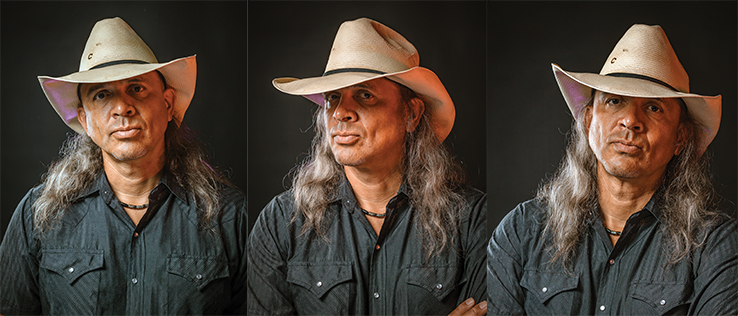
Stephen Graham Jones – image from El Pais – courtesy of Jones

The Flip side book, The Babysitter Lives starts off with the usual creepy vibe. Teen on a sitter gig, wanting nothing more than to see the kiddies off to bed early enough to get some SAT test prep in. No boyfriend waiting for a chance to hook up. But a buddy of the bff sort will be by to make studying difficult. So, stalker? horror-mask guy in the closet with a machete? Not really, although there is very real mortal peril, and a veeeeerrrry creepy jack-in-the-box, that called to mind the Twilight Zone episode It’s a Good Life. This tale merges the haunted house story with the babysitter alone and in danger genre to create a truly nightmarish read.

The house has issues, including hosting the ghost of a psycho-killer, seemingly able to lock and unlock doors at whim, and is fitted with a chutes-and-ladders characteristic that makes it tough to figure out exactly where and when each transit point leads to, and if it will lead there again, as the house tries to eat her.

I confess, it was all too much for me. I did finish reading it, but was on the verge more than once, of throwing up my hands. While I think I am fairly able to keep track of details and actions in any book, I found that I was often perplexed about what had just happened, who was where, who was who, when we were, and what the rules were. While the lead was appealing, I just did not feel involved enough to make the effort to firm up my understanding of the logic and structure of the story by paying closer attention. Ultimately, while I appreciate genre-bending as much as the next reader, am perpetually impressed by the gift SGJ possesses for creating new images while referencing the classic ones, and enjoy a good scare, The Babysitter Lives did not do it for me. This does not lessen my appreciation of SGJ’s creative genius. I will be lining up to read his next new work as soon as it is announced.

I ran into that darkness, and am still running. – from the 5280 interview

Review posted – 08/29/25

Publication date – 07/15/25

I received an ARE of Killer on the Road – The Babysitter Lives from Saga in return for a fair review. Thanks, folks, and thanks to NetGalley for facilitating.

This review is cross-posted on Goodreads. Stop by and say Hi!

=======================================EXTRA STUFF

Links to Jones’s personal, Twitter and FB pages

Profile – from DemonTheory.net

Stephen Graham Jones is the NYT bestselling author of thirty-five or so novels and collections, and there’s some novellas and comic books in there as well. Stephen’s been an NEA recipient, has won the Texas Institute of Letters Award for Fiction, the Los Angeles Times Ray Bradbury Prize, the Mark Twain American Voice in Literature Award, the August Derleth British Fantasy Award for Best Horror Novel, the Independent Publishers Award for Multicultural Fiction, the Western Literature Association’s Distinguished Achievement Award, the American Library Association’s RUSA Award and Alex Award, the 2023 American Indian Festival of Words Writers Award, the Locus Award, four Bram Stoker Awards, three Shirley Jackson Awards, and six This is Horror Awards. Stephen’s also been inducted into the Texas Literary Hall of Fame, he’s been a finalist for the World Fantasy Award, and the Eisner Award, and he’s made Bloody Disgusting’s Top Ten Horror Novels. He’s the guy who wrote Mongrels, The Only Good Indians, My Heart is a Chainsaw, Earthdivers, I Was a Teenage Slasher, The Buffalo Hunter Hunter, and Killer on the Road. Stephen lives in Boulder, Colorado.

Interviews
—–5280 – Meet Colorado’s Most Prolific Killer, Horror Author Stephen Graham Jones by SPENCER CAMPBELL

After his first few novels, Jones realized his book event audience had begun treating him as an authority on Native American culture, just as his teachers had. “I did not like it even a little bit,” Jones says. He made a decision to swerve hard into slashers, zombies, and werewolves, “as a way of telling all those people, I dare you to try to find the Indian stuff in this,” Jones says. At the same time, Jones tried to publish works in the vein of David Foster Wallace. “What happened was about 2006, 2007, I feel like I became two writers,” Jones says. “One was on kind of a literary track, and one was doing the schlockiest genre stuff I could think of.”

—–Writers Digest – The WD Interview: Stephen Graham Jones by Moriah Richard
—–DemonTheory.net – PFDW # 181 – Interview with Stephen Graham Jones on Mapping the Interior
—–Pen.org – Crafting Nightmares: The Art of Horror with Stephen Graham Jones & Paul Tremblay – brief and not specific to this book.
—–Spotify – Episode 37: “A Fish story” with Stephen Graham Jones – by Matthew Jackson – audio – 1:06:57 – from 3:45

My reviews of (sadly, only six) previous books by Jones
—–2025 – The Buffalo Hunter Hunterin Coots Reviews
—–2024 – The Angel of Indian Lake -The Indian Lake Trilogy #3 in Coots Reviews
—–2023 – Don’t Fear the Reaper -The Indian Lake Trilogy #2in Coots Reviews
—–2021 – My Heart is a Chainsaw -The Indian Lake Trilogy #1in Coot’s Reviews
—–2020 – The Only Good Indians
—–2016 – Mongrels

Leave a comment

Filed under Fiction, Horror

American Mythology by Giano Cromle

book cover

They reached the far edge of the lake, where the woods grew right up to the shore, making it dark and shadowed. Tree branches seemed to sway and move, even though there was no breeze. Luther stood very still, staring at something deeper inside the forest, a dense knot of branches and limbs braced against each other. Mud was chinked into crevices between logs. Grasses and moss thatched a roof. Jute realized it was a primitive shack, like something out of a fairy tale. Without saying a word, they slowly approached. Once they were upon it, Luther reached out and tugged a gnarled branch, which turned out to be a door. They stepped inside.

…this was what small towns did. They caught you in their nets, kept you from going out into the world and growing into the person you were supposed to be.

The prologue sets the scene. 1853, a trapper crew reports trap lines being cut, members mysteriously disappearing, whispering noises heard in the woods.

description
Giano Cromley – Image from his Twitter profile

Julius (Jute) Ramsey is our leader today. A strange event happened when he was 11 years old, on a hike up to the unmapped Ramsey Lake with his father. Subsequent signs offer more warning than welcome. Dad was clearly afraid, and all but dashed away. He became almost a different person, losing his mood control, and his job, disappearing for increasing durations until he stopped coming back at all when Jute was 16. Jute’s mission today is to return to that place and discover exactly what had so changed his father, as much as he wants to discover proof of something undiscovered

Luther tucked his chin into his Adam’s apple for a moment. “Don’t be surprised if you see some mighty strange stuff up there,” he said. “Ramsey Lake is what some folks call a thin place.” “What’s a thin place?” Jute asked. “Every culture’s got spots like this,” he said. “Where the veil between our world and the spirit world is so thin they practically overlap.”

For Jute Ramsay it is an unmissable opportunity to go on a BigFoot hunt with a major player in the field. For Doctor Marcus Bernard, eager to return to academic acceptability after a long tenure as an expert in Sasquatchology, it is a chance to re-establish his intellectual cred with a bang. He is hoping to be helped along by Vicky Xu, who had started out merely looking to do a film project on Dr. Bernard for her graduate thesis, but who sees the outing as a great opportunity. Vergil Barnes is Jute’s best friend and co-founder of the Basic Bigfoot Society of Basic, Montana, population 484. He has reason to think it may be his last, and he does not want to disappoint his buddy. Vergil’s daughter, Rye, is in from college, and tags along to help look after her father.

description
This zoomed-in image shows a creature resembling bigfoot. Shannon Parker took the photo Sunday, Oct. 8, 2023, while departing Silverton on the Durango & Silverton Narrow Gauge Railroad. She used an SLR camera with a 300 mm lens. (Courtesy of Shannon Parker) – Image from The Durango Herald

There are the usual odd things you might expect on such an adventure. Rapid, unexplained changes in weather, discoveries of clues, such as a casual acquisition of a very old, and relevant notebook. Some mysteries are not well explained, which can be irksome, but, whatever.

So, the bottom line in all such novels comes down to “is there or isn’t there?” I will not spoil it for you here. It is the journey of course that matters, or the journeys, as all six may all be on the same trail but travel their own roads. Is there magic in the world, and if so, of what sorts? Searching for Sasquatch is a journey of self-discovery for all of them.

The journal entries offer a nifty myth-making tool to keep them connected to the past and strange possibility. But the absence of harder evidence roots the tales of BigFoot in oral tradition, where most lore is communicated.

description
Bigfoot allegedly caught on cam near Braxton County, in 2019. (The source has since been determined to be from Jeffrey Stoffel and Jenna Oleson.) – image from West Virginia Explorer

Vergil faces an existential threat. Rye is there to support her ailing dad, but hears the voice of her late mother. Jute’s challenge is his need for the whole truth. Will he find it? He is a good sort, and you sure hope so. Dr. Bernard is up to cynical no-good. His journey is more annoying than not for his eagerness to dismiss all evidence, even any suggestion of possibility. Vicky abets him in this. Her struggle is less fraught than Bernard’s but providing evidence for him is why she is there. Some of the characters’ struggles are more engaging than others, but overall there is enough buy-in to keep you turning the pages for the next twist, surprise, and peril. Their concerns are serious, touching on religion, the endangered planet, and connection to family and community.

description
Image from The Keystone Newsroom

There is an explanation offered at end that was no more unbelievable than any other, maybe even a bit better than most. It is a nice-to-have, but the generally warm-hearted, open-minded, exploratory take of the book makes this an easy Summer read. Whether your piggies are petite or prodigious, and however distant your extremities may be from your face, it will definitely be worth your while to take a large step into American Mythology.

MAGIC PROTECTS THIS SPACE TURN BACK NOW

Review posted – 07/25/25

Publication date – 07/15/25

I received an ARE of American Mythology from Doubleday in return for a fair review, and destroying all copies of that map. Thanks, folks, and thanks to NetGalley for facilitating.

This review is cross-posted on Goodreads. Stop by and say Hi!

=======================================EXTRA STUFF

Links to Cromley’s personal, FB, Instagram, and Twitter pages

Profile – from the book

Author Bio: Born and raised in Montana, GIANO CROMLEY is the author of two young adult novels and a collection of short stories. He is a recipient of an Artist Fellowship from the Illinois Arts Council and was a BookEnds Fellow with Stony Brook University. He is an amateur woodworker, a certified wildlife tracker, and an English professor at Kennedy-King College, where he is chair of the Communications Department. He lives on the Southside of Chicago with his wife and two dogs. Residence: Chicago, IL Hometown: Billings, MT.

Interviews
—–Talking Scared- 245- Giano Cromly & Our Friends in the Forest
—–Chicago Review of Books – The Proof Is Out There: An Interview with Giano Cromley by Rachel Robbins

Item of Interest from the author
—– The Tao of Bigfoot

Items of Interest
—–BFO – The Bigfoot Field Researchers Organization
—–The Keystone – Bigfoot fever grips Pennsylvania as reports of strange footprints and howls surface
—–BFT – BigFoot Times

My other BigFoot book review
—–Devolution by Max Brooks

Leave a comment

Filed under Fantasy, Fiction, Horror

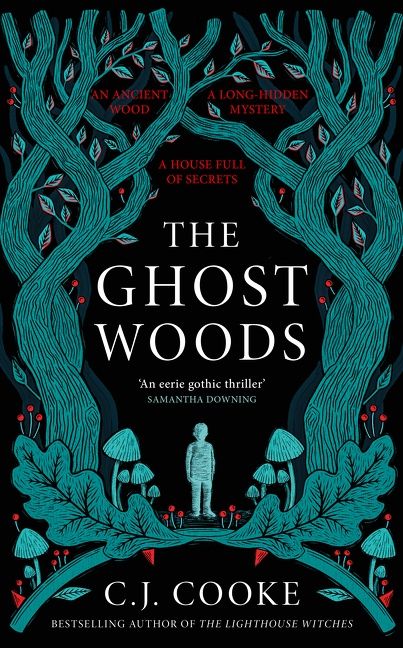
The Ghost Woods by C.J. Cooke

book cover

Oh God, there it is, lit up by the car’s headlights. Four pointy turrets and dark stone walls laced with red ivy. It looks like Dracula’s holiday home.

Something unspeakably evil is stalking the grounds of Lichen Hall.

Two women, from different backgrounds, at different times, (1959 and 1965) find themselves in the same position, pregnant without a mate in a period in which that was not considered socially acceptable. Such women were often shunted off to mother-and-baby homes. You may have heard of the Madgalene laundries of Ireland. They were awful, and were not restricted to the Emerald Isle. But Mrs. Whitlock’s Lichen House is soooooo much worse. There is plenty of strangeness about the place and some of its inhabitants, well beyond garden-variety human unpleasantness.

description
C.J. Cooke – image from Curtis Brown

In 1959, seventeen-year-old Mabel Anne Haggith finds herself five months deep in a family way, despite never having had sex. Her mother and stepfather have sent her off to be seen to, out of sight of the neighbors. She is truly a clueless innocent. She feels that there are ghosts in her body. In 1965 Pearl Gotham, twenty-two, a nurse, is likewise facing emerging problems, an unreliable bf among them. Both are taken in by the welcoming, if somewhat chilly, Mrs. Whitlock. The house seems likelier to generate nightmares than comfort to women in need. In fact, it has much in common with the abusive mother-and-baby institutions of its time. More about that later.

Mabel is very much a pleaser, eager to fit in, even when hazed by those already there. She is shy and unsure of herself, working class, uneducated, and for all intents and purposed alone in the world. Until she finds a friend in another young woman there, Morven.

Pearl arrives with much more confidence. A nurse, she is aware of the seriousness of the lack of real medical care at Lichen House. She is also much more worldly, more socially able, not just with the other young women but with Mrs. Whitlock as well. In addition she is charged with tutoring Mrs. Whitlock’s decidedly odd grandson.

Cooke offers a cornucopia of detail that gives the creepiness texture and provides a constant source of surprising revelations. There are mysteries to be sussed out. The overarching imagery of the story has to do with fungi. The house itself is seriously infested with molds of various sorts, and is rapidly sinking into decrepitude.

I follow her gaze to an enormous mass of yellow fungus creeping up the side of a wall. What looks like a series of giant ears are bulging from the gap in the doorframe, right down to the floor. As I draw my eye across the length of the vestibule I spot more fungus spewing from cracks in the tiles and the window frames. The vaulted ceiling is sullied by black blooms of mold. Black frills poke out from the wooden steps at my feet. And at the end of the staircase, a plume of honey-gold mushrooms nub out from the newel post, perfectly formed. It makes me feel physically ill.
“What happened?” I ask, burying my mouth in the crook of my arm.
She sighs wearily. “An infestation of fungus. I still can’t quite believe it. This house has been standing for four hundred years. It has withstood bombs, floods, and a bolt of lightning.” She folds her arms, exasperated. “Fungus can eat through rock, can you believe that?”
“Good God,” I say.

The woods manifest spots of light that can lure one in. Mrs. Whitlock celebrates every birth with a puff of fairy dust toward the newbie. Mr. Whitlock maintains a Micrarium, a sort of mini- museum, a cabinet of curiosities focused on fungi. He makes a big deal about cordyceps, which may be familiar to fans of The Last of Us.

There is plenty of strangeness. Who posts a “Help Me” poster in one of the rooms? Who is that little boy Pearl sees dashing about, the one the other young women deny having seen? Mrs. Whitlock seems particularly averse to making use of the medical profession, forcing her guests to give birth in the house, with only the assistance of the women living there. What’s up with that? Mr. And Mrs. Whitlock were reputed to have had a son who died in an auto accident, but his body was never recovered. Huh? Who is the mysterious, threatening figure in the woods?

“So there’s a story about a witch who lives in the ghost woods out in the forest.”
“I’ve heard of that,” I say. “Mrs. Whitlock mentioned it. At least, the ghost woods part. I don’t believe she mentioned a witch.”
“Well, I heard about it when I first came here,” Rahmi says, and I see Aretta give her a look, as though to warn her not to say more. Rahmi notices, and bites back whatever she was going to say. “I’ve seen her,” she says guardedly.
“Who, the witch?” I say, and she nods. I study her face, expecting her to say “Boo!” or something, revealing it all as a big joke.
“Well, then,” I say, raising my glass of water as though it is a crisp Chardonnay. “I shall seek out this witch in the ghost woods. A little bit of spookiness will spice this place up nicely.”
“Don’t,” Rahmi says, though I’m not sure how much I should take this at face value. “It might be the last thing you ever do.”

As the story goes, Nicnevin was a witch who had lain with a girl who had fallen asleep in the woods. When the girl gave birth, it was to a monstrosity, and it was killed. Nicnevin made the family mad before killing them, then took over the family hall to be a place of rot and ruin, naming it Lichen Hall.

In addition to the ample gothicness of the novel, there is plenty of character and plot content to keep you flipping those pages, and maybe loading up on bleach. Both Mabel and Pearl are sympathetic. What will happen with them, with their babies? What kind of danger are they in? You will definitely care.

There is also plenty of payload beneath the overlaid story. In an image of how women were treated in the 50s and 60s, the awfulness of Mrs. Whitlock’s Lichen House offers a vibrant image of a decaying institution, controlled by ill-meaning people, enforcing wrong-headed social norms, and crushing any people or behaviors falling outside the prescribed lanes. It is a moving, powerful, effective tale.

The Ghost Woods is, first and foremost, a gothic novel, the last installment of a thematic trio that considers our relationship with nature, motherhood, memory, and trauma (the previous two installments are The Nesting and The Lighthouse Witches). I suppose the question could legitimately be asked whether motherhood, gay rights, reproductive rights, and gender inequality have any place in a gothic novel. For me, the gothic is exactly the space to explore darkness of any kind, and the practice of othering is one of the darkest corners of human history. – from the Author’s Note

Review posted – 06/27/25

Publication date US trade paperback – 4/29/25
First published UK – hardcover – 10/13/22

I received an ARE of The Ghost Woods from Berkley in return for a fair review and a pinch of fairy dust. Thanks, folks, and thanks to NetGalley for facilitating.

This review is cross-posted on Goodreads. Stop by and say Hi!

=======================================EXTRA STUFF

Links to Cooke’s personal, FB, Instagram, and Twitter pages

Her personal site was strangely unavailable when I was testing this. I am hoping it has been restored by the time you see this.

Profile – from GR

C.J. (Carolyn) Cooke is an acclaimed, award-winning poet, novelist and academic with numerous publications as Carolyn Jess-Cooke and Caro Carver. Her work has been published in twenty-three languages to date. Born in Belfast, C.J. has a PhD in Literature from Queen’s University, Belfast, and is currently Reader in Creative Writing at the University of Glasgow, where she also researches the impact of motherhood on women’s writing and creative writing interventions for mental health. Her books have been reviewed in The New York Times, The Guardian, Good Housekeeping, and the Daily Mail. She has been nominated for an Edgar Award and an ITW Thriller Award, selected as Waterstones’ Paperback Book of the Year and a BBC 2 Pick, and has had two Book of the Month Club selections in the last year. She lives in Scotland with her husband and four children.

Interviews
—–Rachel Herron – Ep. 208: CJ Cooke on the Thrills of Contemporary Gothic Horror – video – 33:29 – begin at 8:10 – not specific to this book, but interesting
—– Murder by the Book – – C.J. Cooke in Conversation with Rachel Harrison

My review of prior work by Cooke
—–The Lighthouse Witches).

Songs/Music
—–The Beatles – I Want To Hold Your Hand – referenced in Chapter 2

Item of Interest from the author
—–Insta – CJ holds forth on the mother-and-baby homes theme from The Ghost Woods on her insta page
—– Google Play Books – Excerpt – audio – 10:36

Items of Interest
—–Small Things Like These by Claire Keegan – a great novel re the Magdalene laundries
—–Wiki – Magdalene laundries in Ireland
—–What Moves the Dead – another novel involving fungi

Leave a comment

Filed under Feminism, Fiction, Horror, Suspense

Something in the Walls by Daisy Pearce

book cover

… just after Christmas, Alice Webber started to get sick. She complained of pains in her sides like needles being pressed there. When they lifted her shirt, there was a pinprick rash and blood welling up as if the skin had been broken. A few days later she started vomiting. By this point Alice was too weak to get out of bed so her mother put a bowl beside it. When she came to empty it, she found watery bile and clots of black hair, like you’d pull out of a plughole. Another time Alice coughed up a handful of sewing pins bent into strange shapes. She developed a fever which made her start seeing things. She got delusional.”
“In what way?”
“Alice told her parents that a witch was spying on her through the chimney breast. She said the witch had a black tongue and her face was ‘all on upside down.’

“She was saying such odd things. At school, then here at home. Sometimes it was like she was listening to music you couldn’t hear, you know? I’d catch her just staring at the fireplace and her lips were moving but no sound was coming out. When I asked her what she was doing, she said”—here Lisa sighs, fretful and ill at ease. It’s clear she isn’t comfortable talking about this—“she said that the dead wanted her to open her throat.”

When Sam Hunter and Mina Ellis pull up at 13 Beacon Terrace in Banathel, an English backwater, there is a crowd gathered. Mostly people wanting something from the girl inside. They seem to think she can communicate with the dead, and there are people with whom they would love to reconnect.

description
Daisy Pearce – image from her site

Sam is a reporter who specializes in debunking superstitious claptrap and fraud. Mina is a recent graduate in child psychology. Sam had asked her along to offer an evaluation. Well, there is certainly something off happening at the Webber household

Alice Webber has tales to tell. (She’s the girl you see giggling with her friends at the back of the bus or fooling around in the arcades. Normal. Unexceptional.) She believes there is a witch living in the walls of her bedroom. She can tell because she sees the witch’s eyes looking at her through gaps in the brick chimney. It began when a group of (not really) friends play a mean trick on her at a supposedly haunted house. Now she hears and speaks in voices.

For a moment I think she is speaking—I can see her shoulders twitch, her mouth slowly moving—but the voice I hear is slurring and thick, heavy. Like a throat full of molasses. It is a language I don’t recognise, Germanic maybe. The words spread like a ripple, like oil on water, dark and tainted. It fills me with something icy and unknowing and I taste the bitterness of bile in the back of my throat.

Both Sam and Mina (“It’s my dad. He took my mother to Whitby Abbey while she was pregnant with me. My poor brother narrowly escaped being called Van Helsing.”) have arrived with significant emotional baggage. Sam lost his seven-year-old daughter, Maggie. Mina lost her brother, Eddie, when they were kids. Both Mina and Sam hold out hope that they can somehow reconnect with their lost ones, maybe reduce the guilt they both feel. Is there any chance Alice can actually help them? Alice may look like an average teen with professional aspirations that end at the beauty salon, but what if there is something operating through her?

The novel has a feel of both contemporary spook story and a folk horror tale, rich with back-country superstition, practices, and beliefs. Banathel has a long history of belief in witches, and a rich supply of hagstones everywhere you look. It is reminiscent of works like Tom Tryon’s novel Harvest Home and the 1973 horror classic, The Wicker Man, reliant on deep rural isolation.

The tension ramps up with every strange new event, encouraged by the persistence of contemporary doubt, ancient superstition, the growing crowd and its increasingly threatening regard for the girl. Do they want to help her or use her, or do they want something else? In addition, while there is a mystery in every horror tale, there is also a tension between where magical manifestations leave off and human agency steps in. Ditto here.

While it certainly seemed fun for Mina to have such a nominal root in classic horror, (a pearl among women) it did not seem to me that enough was done with her nifty name. And for a psychologist to be entangled with someone so clearly wrong for her was disappointing. (Although I suppose many of us have had that experience.) As for seeing someone looking through gaps in bricks, did no one consider maybe a bit of plaster, spackle, or poster of a favorite musician to cover the spaces? Or maybe hiring a handyman named Bert to have a go at clearing it out?

On the other hand, the lovely details of dark manifestation that Pearce weaves into her tale, the sights, sounds, and textures, add that frisson that every good horror novel needs. The overarching heat that bears down on all provides another layer of dread. It might even enhance the feel of this book for readers to take it on in July.

I have a particularly high bar for fright. It is a rare horror novel that keeps me up at night. There are real-world stresses and manifestations of evil that offer that service quite happily. Something in the Walls came close, but caused no lost zzzzzzzs here. Not to say it will not for you, who have a more usual receptivity to such things. It did, however, offer an appealing lead, a tantalizing mystery, a colorful portrait of a tucked-away place, and kept up a brisk tempo.

Most witch hunts are a bad idea, but it might be a better one to track down Something in the Walls. There may be a thrill or two just lying in wait for you.

If you gaze long enough into an abyss, the abyss will gaze back into you. – Friedrich Nietzsche

Review posted – 4/4/25

Publication date – 2/25/25

I received an ARE of Something in the Walls from Minotaur in return for a fair review, and my agreeing to get the hell out of their chimney. Thanks, folks, and thanks to NetGalley for facilitating.

This review is cross-posted on Goodreads. Stop by and say Hi!

=======================================EXTRA STUFF

Links to Pearce’s personal, Instagram, and Twitter pages

Profile – from her site

Daisy Pearce was born in Cornwall and grew up on a smallholding surrounded by hippies. She read Cujo and The Hamlyn Book of Horror far too young and has been fascinated with the macabre ever since.
Daisy began writing short stories as a teenager and after spells living in London and Brighton she had her first short story ‘The Black Prince’ published in One Eye Grey magazine. Another short story, ‘The Brook Witch’, was performed on stage at the Small Story Cabaret in Lewes in 2016. In 2015 The Silence’ won a bursary with The Literary Consultancy. Later that year Daisy also won the Chindi Authors Competition with her short story ‘Worm Food’. A further novel was longlisted for the Mslexia Novel Award…Daisy currently works in a library where she stacks books and listens to podcasts on true crime and folklore.

Interview
—–Bloody Good Reads – Chapter 109 – Daisy Pearce – audio – 38:38 – on writing what she loves

Items of Interest from the author
—–Crime Reads – DAISY PEARCE ON POLTERGEISTS, MISOGYNY, AND COMING OF AGE IN A FRACTURED WORLD
—–Short story – The Brook Witch – linked from her website
—–Short story – The Spirit of Christmas – linked from her website

Leave a comment

Filed under Fantasy, Fiction, Horror, Mystery, Thriller

The Buffalo Hunter Hunter by Stephen Graham Jones

book cover

Good Stab fell to his knees, pressed his forehead to the floor and he screamed too, and I daresay our screams harmonized, at least in how much they pained us.
This, I believe, is the story of America, told in a forgotten church in the hinterlands, with a choir of the dead mutely witnessing.
“Your tore out the heart of my people, Three-Persons,” Good Stab said into the floor.
“I’m sorry,” I said back, I knew how weakly. “I’m sorry I’m sorry I’m sorry.”
“Is it wrong to kill?” he asked then, again, sitting back on his haunches, his bared arms hooked around his knees. “Is this what you tell your people who come each Sunday?”
“Yes,” I said.

What I am is the Indian who can’t die.
I’m the worst dream America ever had.

The vampire genre has a new dark star. Far from the European roots we all know, Stephen Graham Jones has created a uniquely American, a uniquely Native American version of the tormented and tormenting blood-sucker. The novel is rich, not only with the horrors of the genre, but with the very un-magical horrors of the time. No vampire could possibly compete with the mass slaughter of the American Bison, nor of the Native American peoples. This envisioning of an American vampire includes a remarkable twist, new to the genre, at least as far as I am aware.

Good Stab’s damnation comes with a wickedly satisfying pair of rules: he must feed on his prey until it’s dry—sometimes causing his side to literally burst open—and he grows to resemble whatever he’s feeding from. – from the PW interview

The structure is frame within a frame within a frame. Etsy Beaucarne is our outermost, in 2012, a struggling academic, the descendant of a pastor from the 19th century. Arthur Beaucarne, a Lutheran, ministered to the religious needs of the residents of Miles City, Montana. His journal, stowed in 1912 was recently found in an old parsonage undergoing renovation (cheekily referred to as revamping). In this journal, Arthur, the second frame, relates the tale told to him by a strange Native American man, Good Stab. The Indian appears at the back of his congregation, in dark clerical garb, wearing sunglasses, and wanting to talk. His tale is terrifying and compelling.

description
Stephen Graham Jones – image from 5280 Magazine – shot by Matthew DeFeo

It is an American history not taught in Western schools. The Marias Massacre took place 1870. A U.S. cavalry troop was sent to do damage to a particular branch of the Pikuni tribe, not the branch that had made an alliance with the incoming settlers. The leader of the troop, despite being shown documentation of the alliance, decided that one Indian is the same as another and proceeded to massacre 217 mostly women, children, and old men, many suffering from small pox.

Good Stab, a Pikuni, named for his nifty defense against an attacker, was 37 when he encountered the creature he calls Cat Man.

The thing had a thin white face with intelligence to it, and at first I thought its chin and mouth were painted for ceremony, but then I saw that it was just that it ate like a sticky-mouth, where it made a mess, and then let that blood stay like it was proud of it, wanted all the other four-leggeds see what it could do. Its mouth looked like it was pushing out too far, too, bringing the nose with it. But I told myself that was just because the dried blood made it look that way.
Its eyes were like mine, like I see you seeing, and its hair was hanging in its face, and it was naked so we could see it was a man, or had once been a man.
But it was no man

We follow Good Stab’s tale through decades, as told to Pastor Beaucarne, as he struggles to survive, and finds purpose in taking down those who seek to kill “blackhorns.” There are many adventures along his journey of discovery, and many internal struggles. He is a complex character who seems at times inured to the havoc he inflicts, but one who manages to sustain a kind, caring heart, at times anyway. We feel his pain in being an outsider as he yearns to connect with his people.

The backdrop for this story is the Western expansion into the west, including the racism, colonial military dominance, destructiveness, wastefulness, genocide, inhumanity and cruelty of the era. Killers, murderers, and thieves preaching a religion of peace. The irony is not lost. Ultimately, this is a revenge tale. Punishment for many who have come west to pillage nature’s bounty, and targeted attacks on those responsible for the Marias Massacre.

As we get most of the story from Good Stab we get his usage as well, words for creatures of the American west. “Blackhorns” for Bison, as well as Whitehorn, Wags-his-tail, Long-legs, Sticky-mouth and plenty more. Part of the fun of reading this is identifying each species as it is introduced.

Part of the joy of reading The Buffalo Hunter Hunter is seeing the coming together of history and horror in a way that is reminiscent of one of America’s most inspired writers. While this is hardly a magical realism version of history, the incorporation of actual Native American history gives it a very Louise Erdrich-y feel. There is another form of joy to be had here. I have a particularly high bar for horror. I lose no sleep, nor do I have scary dreams as a result of reading a horror book. But there was a night, while reading this one, when I felt that I had somehow ingested three fist-size dollops of Vampire and they had taken root in my torso. I knew in the dream that I could, with effort, expel them, but knew also that it would take a supreme effort to do so. That, to me, is the sign of a good scary book.

Stephen Graham Jones is a prolific writer. Even more than Stephen King, maybe into the domain of Isaac Asimov. I have read only a few (listed below in EXTRA STUFF) but of those I have read, this one stands out. The Buffalo Hunter Hunter is most definitely worth whatever time and trouble it takes to track down. Once you sink your teeth into it, you will have a tough time stepping away until you have ingested it all. This is simply a bloody wonderful book.

You don’t know this yet, but once a generation, once a century, someone is born with a kind of blood no one else has. If you drink from that person . . . how to explain it? It’s like the difference between an animal and a person. But the person is the animal now, and this new one is above them. Their blood, you do anything for it. I’ve only tasted it twice so far in all my years. She’s going to be the third time.”

Review posted – 2/27/25

Publication date – 3/18/25

I received an ARE of The Buffalo Hunter Hunter from Saga Press in return for a fair review. Thanks, folks, and thanks to NetGalley for facilitating.

This review is cross-posted on Goodreads. Stop by and say Hi!

=======================================EXTRA STUFF

Links to Jones’s personal, Twitter and FB pages

Interviews
—–NY Times – By the Book – Stephen Graham Jones Says His University Colleagues Aren’t Snobs About Horror
—–PW – Stephen Graham Jones Knows Good Stories Don’t Happen in Heaven
—–Horror Geek Life – Stephen Graham Jones Discusses ‘First Word on Horror’ & Terror on the Reservation (Exclusive)
by Stephen Rosenberg – but not much on this novel
—–The Nerdy Narrative – THE BUFFALO HUNTER HUNTER by Stephen Graham Jones – video – 12:08
—–5280 – Meet Colorado’s Most Prolific Killer, Horror Author Stephen Graham Jones by Spencer Campbell

My reviews of (sadly, only five) previous books by Jones
—–2024 – The Angel of Indian Lake -The Indian Lake Trilogy #3
—–2023 – Don’t Fear the Reaper -The Indian Lake Trilogy #2
—–2021 – My Heart is a Chainsaw -The Indian Lake Trilogy #1
—–2020 – The Only Good Indians
—–2016 – Mongrels

Items of Interest from the author
—–People – excerpt

Items of Interest
—–Wikipedia – Marias Massacre
—–Montana Historical Society – The Pikuni and the U.S. Army’s Piegan Expedition by Rodger C. Henderson

Leave a comment

Filed under Fiction, Historical Fiction, Horror, Native Americans

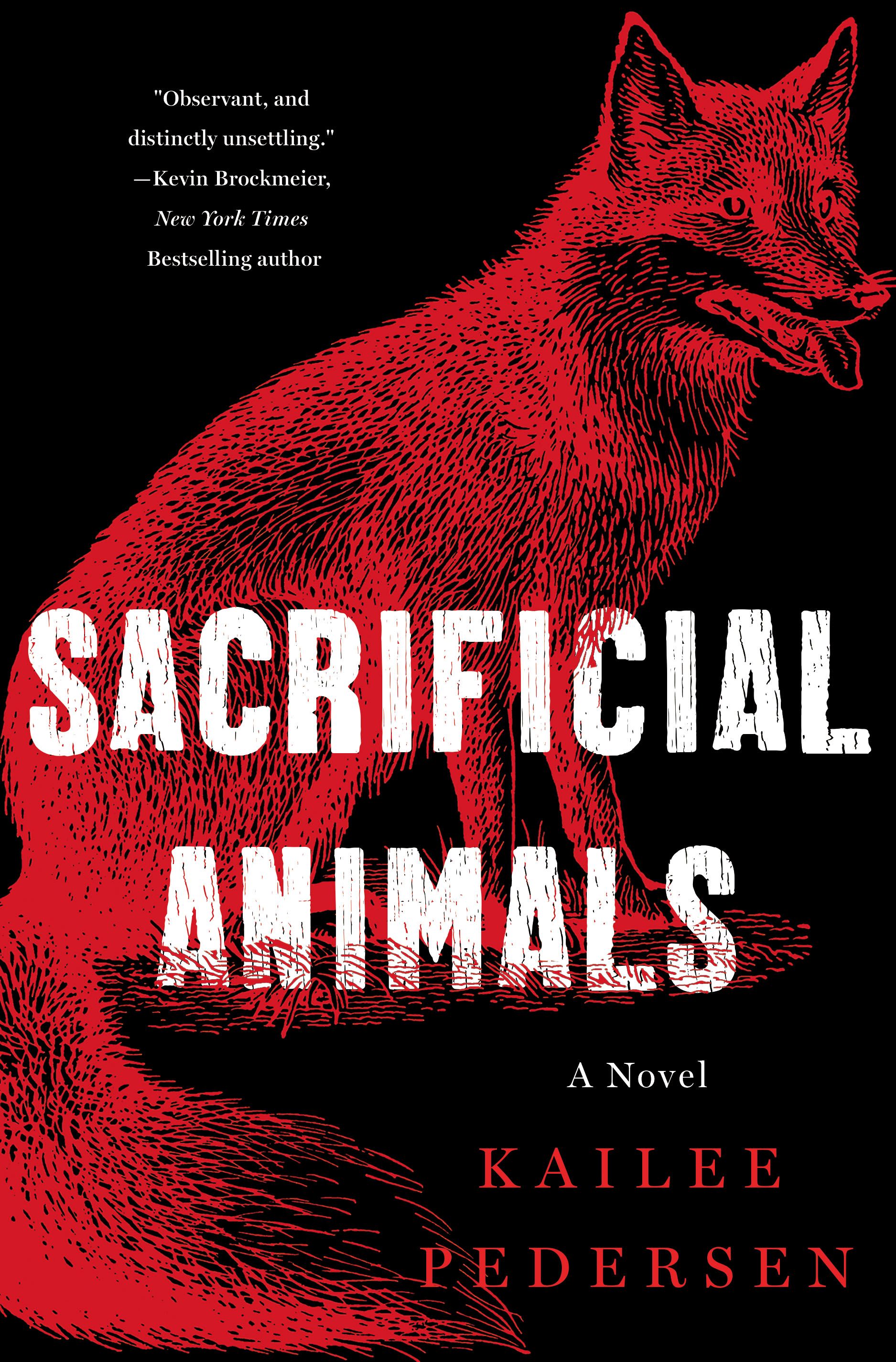
Sacrificial Animals by Kailee Pedersen

book cover

Swiftly and violently as a gunshot a scream pierces the sloped fields lying open and fallow behind the house. Sounding like a woman being murdered in the way he has seen it on television where her agony is drawn out over several breathless and voyeuristic minutes until he changes the channel. Yet he knows it is not a woman but some unnamable beast of the forest come to bewitch and maim. A mother despondent, in all her devastated keening—the fox whose children now reside in the stomachs of the hounds at Stag’s Crossing has finally returned.

The difference between wolves and foxes his father says is that wolves love to hunt and foxes love to play. A tantalizing trail of blood in the half-melted snow. Wolves only have enough foresight to kill and upon their killing they will feed ravenously and strip the bones. But foxes; they are quick-witted and brutal. When they hunt they do so with finesse stalking and pouncing then snapping the spine in their slender jaws.

What goes around comes around.

Life’s a bitch and then you die.

Carlyle Morrow is bitter widower, his third son, Christopher, buried on his land, along with his mother, who died in the attempt to birth him. Morrow is left on his thousand acres in the middle of Nebraska with two sons. Joshua is the golden boy, beautiful, attentive to Carlyle’s every wish, a loyal favorite lapdog. Nick is the second son, plain in appearance, tepid in his embrace of his father’s violent nature. He possesses a bit of his mother’s second sight, his orientation less than that of a purebred. They have both been made to endure a legacy of cruelty passed down from father to son over at least three generations. Carlyle forces him into an act, while hunting, that goes beyond wrongfulness, beyond sin, into the realm of abomination. Nick will live with the guilt the rest of his life, even though the responsibility was not all his. Now in their forties, Nick and Josh have been separated from their father for decades. (Nick still calls) But neither can refuse the summons to return home on news that their father is preparing to die.

description
Kailee Pederson – image from her Twitter profile

We follow Nick as he recalls his life, his struggles with Joshua and Carlyle, mostly the latter. He always found his brother’s wife, Emilia, fascinating, alluring in the mode of a siren. Carlyle is cruel, requiring complete obedience. He expects his sons to love the raw violence that marks his life. He does not raise his boys so much as train them. He even wishes that they could be as faithful and bloodthirsty as his best friends.

If Carlyle could have had dogs for sons he would have been a happy man; but when has a Morrow man ever been happy?

The structure of the novel is a back and forth, with alternating chapters, Then and Now. We learn how the boys’ treatment (Nick’s mostly) brings them to become the men they are in their forties. One would think that with chapters labeled so, there would be a clear differentiation between the internal timelines of each chapter. But no, there are transgressions within, as “Now” chapters, as well as “Then” chapters include lookbacks. Seems not cricket to me, but no biggie. The personal history is clearly a roadmap to the boys’ doom, which is referenced many times, so will not come as a shock. Pederson keeps offering glimpses of the future, a bell being rung louder and louder with each recurrence. There is an unrelenting atmosphere of dread. Awful things will be happening, although we are not let in on the specifics. For example, an early omen.

No thousand acres, no grand inheritance can ever be enough to postpone their destinies. Nick will die as bitter as he came into the world. He knows this just as well at thirteen as he will in thirty years.

Carlyle’s cruelty and monstrous control pushed them both away, Nick to New York, and a career as a cruel literary reviewer, Josh to the other coast with his wife, Emilia, whom Carlyle would not even allow into the house because of her Asian descent.

Yet in only ten years his children will betray him in their own inimitable ways—Joshua marrying out, Nick exiling himself to a foreign land. And in their absence Stag’s Crossing will lie silent and fallow as the fields surrounding it. This place: no place for young men.

or old men, for that matter. This tale displays the violence of a Cormac McCarthy tale. It is not for anyone with an aversion to scenes of death, particularly the death of animals. It comes as no surprise that

Cormac McCarthy is an all-time favorite writer for me, perhaps my favorite of favorites, and his influence is very obvious here.. – from the JamReads interview

References to animals are legion, not in a happy way, for the most part. It is clear that the Morrows fit in well. A sample:

Would he kneel before his father’s magnificence and eat oats from his hand like a wayward steer?
————————————–
Now he and Joshua must return to Stag’s Crossing. Return to that grand two-story house where as children they were left alone for hours at a time savaging each other like wild dogs.
————————————–
Finally, she turned to him. Only the slightest tilt of her neck, elegant as a swan’s.
————————————–
Upon awakening she is languorous as a cat sunning itself in a windowsill.
————————————–
Joshua sees him lying down next to him perfectly still. Breathing through his nose softly like a newborn foal.

There are only a gazillion more of these.

Pederson is masterful with sustaining tension. The reminders of doom help, but there is much more going on here. The tragedy felt very Shakespearean. (Titus Andronicus maybe? King Lear with competing sons instead of daughters?) People make choices, and suffer the results. The language is rich and diverse, from terse Cormac-McCarthy-esque declaratives to languid poetical passages.

Pederson uses much of her background to inform her tale. She was adopted by a Nebraska family, is of Asian descent and uses her experience as a gay kid coming of age to inform her portrayal of Nick’s growing sexual awareness and exploits. She weaves a Chinese myth into the story, providing some early breadcrumbs to lay a foundation for the horror to come. It does.

Given that the characters are so damaged, and so damaging, it can be tough to work up a lot of sympathy for them, even Nick, who carries forward into his writing the cruelty he was bred to in Nebraska. Carlyle is pretty much a pure monster, and Joshua is given much less coverage that the rest of his family. Emilia is mysterious and alluring whenever we see her, which is mostly at the back end.

This is Kaileen Pederson’s first novel It is an impressive debut, a smartly literary horror story. We cannot get enough of these.

Much of the novel’s setting of Stag’s Crossing, the thousand-acre farm owned by the Morrow family, is directly based on my family’s farm in Nebraska. I always found the woods that surround our farm to be a very contemplative, mystical, and mysterious place. I knew I wanted to draw on my Chinese background for Sacrificial Animals, so I started to think about different aspects of Chinese mythology that could be a good fit for this setting. Without giving anything away, I will just say the natural world plays a huge role in the mythological elements of the novel, and foxes — as featured on the cover — are one of my favorite animals.

Review posted – 11/15/24

Publication date – 8/20/24

I received an ARE of Sacrificial Animals from St. Martin’s Press in return for a fair review. Thanks, folks, and thanks to NetGalley for facilitating.

This review is cross-posted on Goodreads. Stop by and say Hi!

=======================================EXTRA STUFF

Links to Pederson’s personal, Instagram, and Twitter pages

Profile – from Macmillan

Kailee Pedersen writes haunted, unsettling speculative fiction. She graduated with a B.A. in Classics from Columbia University, specializing in ancient Greek. Kailee was adopted from Nanning in 1996 and grew up in Nebraska, where her family owns a farm. Her writing on LGBTQ+ and Asian American themes was awarded an Artist Fellowship by the Nebraska Arts Council in 2015. When not scribbling down her next book, you can catch her singing opera, playing video games, or working as a software engineer in New York City. Sacrificial Animals is her first novel.

Interviews
—–B&N Reads – Poured Over: Kailee Pedersen on Sacrificial Animals By Jenna Seery / August 20, 2024 – audio
Sound quality is bad, Kailee is tough to understand.
—–JamReads – Some Thoughts with … Kailee Pedersen – by Jamedi

Items of Interest from the author
—–American Foreign Service Association – 2012 – Burmese Days: Democratization and the U.S. – Burma Relationship
—– KAILEE PEDERSEN: IN PRAISE OF THE DIFFICULT WOMEN OF EAST ASIAN LITERATURE

Leave a comment

Filed under Fiction, Horror, Mystery, Reviews, Suspense, Thriller, Thriller

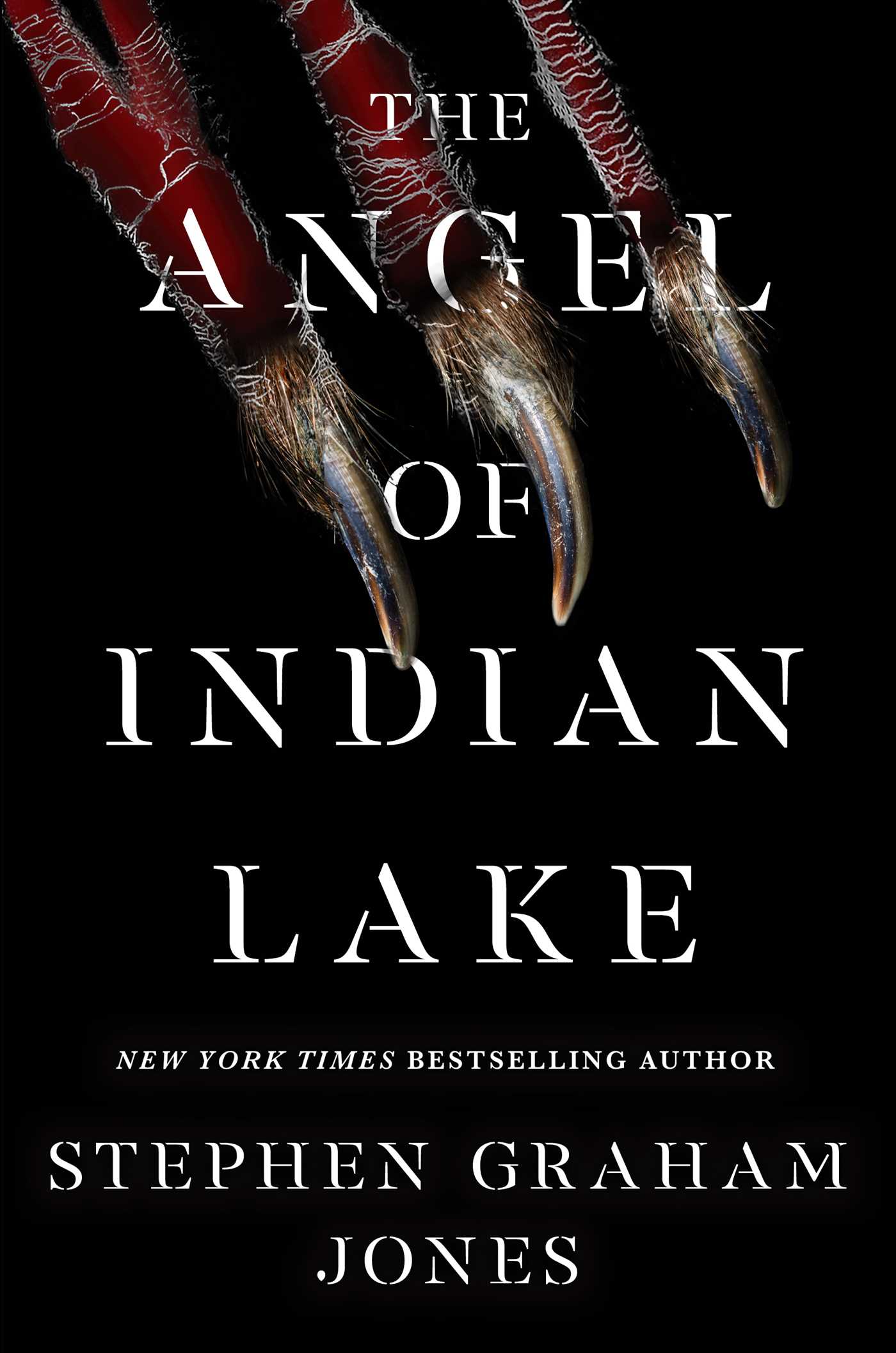
The Angel of Indian Lake (The Indian Lake Trilogy, #3) by Stephen Graham Jones

book cover

Her husband died in the water in 2015, and her son was suffocated with a dry-cleaning bag in 2019.
And now she’s got a chainsaw.

…this is maybe the one thing I believe in in the whole world: that when it’s your time, you don’t run from it—you stand against it, you keep your eyes open, and you rip and claw your whole way down, hope you can at least be a worthy trophy.

Don’t even try to read this unless you have been through Volumes #1 and #2 of the series. There is a lot going on in volume #3. Strap in.

description
Stephen Graham Jones – image from Library Journal

Seventeen in what is now called The Independence Day Massacre, having served undeserved time after the most recent mass slaughter, centered on Dead Mill South, now twenty-four, Jade Daniels is back in town. Did her time. Paid her debt to society and has a job as the history teacher in the local school. Her wealthy bff Letha Mondragon’s sponsorship may have something to do with that. She carries scars both physical and emotional from her tribulations in the first two novels of the trilogy. And plenty from before even that.

…you know the first one is third person of course, but it’s really tight on Jade. I think when people remember My Heart is a Chainsaw, they always say Jade is a narrator, and that’s always weird to me because she’s like our narrative focus, but she’s not actually the one speaking except for in her “Slasher 101” essays. Then when I figured out I was going to do a sequel and then a trilogy, I realized I’ve got to modulate the delivery throughout these three books.
So what I landed on for doing that was in the second one, it’s going to shatter and splinter into a multivocal thing with a lot of people speaking in Reaper, and a lot of people’s angles. To me, that was kind of set up for missing Jade. Like “This is fun, but I wish we had Jade.” So then in the third one, if I were able to, instead of only letting her speak during the [essays], if the main part of the narrative became her voice, then I was hoping that could feel like a return a little bit. Or it could just be as simple as I knew I was having to say goodbye to Jade and I wanted to hang out with her more. And how better to hang out with her than first person?
– from the Paste interview

She is our Virgil through the rings of Proofrock hell.We get the take of the ultimate final girl, (although she does not see herself that way) as she tries to figure out what is going on, as the bodycount rises. As part of that we hear her talk with her much-admired, and quite dead, history teacher, Mister Holmes. We are given access to the weekly sessions with her state-mandated shrink, Sharona, in which they both wear ghostface masks and sit on a swing set, as one does. In addition, we are treated to reports from a seemingly omniscient security agency tracking Jade’s every word and action.

A dad makes the mistake of hanging out in the local school’s hug-n-go lane, as it turns out to be more of a hug-n-get-decapitated lane. More heads will roll. Kids using VCR tech to produce a piece charmingly titled The Savage History of Proofrock, Idaho are lured to a discovery their friend had made, some long-lost victims. Another student makes use of drone tech to support a documentary, turning up some very interesting shots. Fiction soon gives way to fact. And, oh, there are footprints extending from a grave, which is very suggestive. (although odd only in that the risen dead emerged from a grave and not a lake) Speaking of graves, they play a significant role throughout the tale, as Jade visits her favorite late residents with some frequency. There is another graveyard commemorating a particular sub-set of the lost. And an unwanted commercial repurposing of land considered hallowed.

description
Devery Jacobs – image from Vanity Fair. SGJ could see her playing you-know-who.

There are enough bloodbaths in this town that someone could make a killing by opening a place called ProofBaaden, offering free towels, and wet places in which people could conduct unpleasant business.

There are forest fires, herds of panic-stricken animals, a mad recluse set on avenging the loss of his wife, and evil dead who will enlist a host to their ranks. There are many ends, loose and otherwise, that need to be tied up in this 465 page novel. There are murder mysteries to be solved and cold cases to be made warm, including the biggest mystery of them all, What the hell is all this killing about?

There are many substantive elements that poke their heads up from among the carnage. SGJ pays homage to the slasher genre. Jade is not the only character who sees life through the slasher-mask perspective of an afficionado. Appreciators of the form will find plenty to cheer for here.

The third installment of a trilogy always has to up the stakes and kill people we thought couldn’t die. I knew this going in, knew I’d have to do all that. In Chainsaw, Jade was fighting for herself. In Reaper, she was fighting for her friends, for this family she’d cobbled together. In Angel, she’s having to fight for her community—for Proofrock. And of course I had to adhere to Randy’s rules for the third in a trilogy, too. They were very helpful. This is my first time doing this, I mean. I needed a lot of help. – from the Nerd Daily interview

Class comes in for a look, as those who enjoy the advantages of those means are also responsible for much of the destruction that takes place in Proofrock. There is also a very feminist tilt here, as the final girl has always been a hero, but the baddies take on the feminine form as well. There is also an ongoing struggle of ill-treated women fighting back against their abusers. And there is a final twist that will resonate, culturally.

For many, there is pleasure to be had in recognizing the references, the many, many references to slasher films. There might actually be references to every slasher film. While I have seen a fair number of these, I am by no means a maven. This made it a bit of a challenge appreciating the shout-outs in the book without having to constantly google the titles, not to mention the stand-alone character citations.

The pleasure of this book is traveling along with Jade as she tries not only to survive but to get to the bottom of the entire unholy business, while saving her community. No dead ends here. Final girls rule, whether or not they survive.

…justice doesn’t extract itself, you’ve got to pull it bloody and pulsing from the chest of whoever wronged you.

Review posted – 08/30/24

Publication date – 3/06/24

Next up from SGJ is The Buffalo Hunter Hunter, due out March 2025

I received an ARE of The Angel of Indian Lake from S&S/Saga/Press in return for a fair review. Thanks, folks, and thanks to NetGalley for facilitating.

This review is cross-posted on Goodreads. Stop by and say Hi!

=======================================EXTRA STUFF

Links to Jones’s personal, Twitter and FB pages

Interviews
—–Paste – Stephen Graham Jones on The Angel of Indian Lake, Slasher Tropes, and Saying Goodbye to Jade Daniels by Matthew Jackson
—–Cemetery Dance- The Cemetery Dance Interview: Stephen Graham Jones by Cabriel Hart
—–Nerd Daily – Q&A: Stephen Graham Jones, Author of ‘The Angel of Indian Lake’ by Elise Dumpleton
—–Library Journal – LJ Talks to Horror Writer Stephen Graham Jones, Author of ‘Don’t Fear the Reaper’ by Becky Spratford – From 2022, but fascinating, by Becky Spratford
—–Off Book – Off Book: Stephen Graham Jones – video – 14:58 – at 6:45

There’s probably 12-14 beats of the slasher. You got to have the opening blood sacrifice. You got t have the red herrings, you’ve got to have the third rail body dumps. You’ve got to its like you’re going around a carousel and reaching out and hitting 12 or 14 bells as you go around. You got t hit all those bells for sure. But what I think makes a really good slasher movie is if you’re doing a revenge slasher of a mystery slasher, I guess they get called both, delaying knowledge of who the slasher is. That’s the most pleasurable, such that everything crashes to a head at the reveal when the person pulls their mask off and gives their big speech about I did this because you did this to me, or whatever it is.

My reviews of (sadly, only four) previous books by Jones
—–2023 – Don’t Fear the Reaper -The Indian Lake Trilogy #2
—–2021 – My Heart is a Chainsaw -The Indian Lake Trilogy #1on Coot’s Reviews
—–2020 – The Only Good Indians
—–2016 – Mongrels

Item of Interest from the author
—–CrimeReads – Excerpt

Item of Interest
—–ScreenRant – Randy’s Rules

The rules in Scream are a basic set to survive any horror film: you can never have sex, you can never drink or do drugs, and never (ever, under any circumstances) say “I’ll be right back”. Ironically, Randy explains these rules during a party, with half the attendees already drunk. Still, they hold some truth: Sidney has sex with Billy, and although she’s later attacked, it’s Billy the one who ultimately dies. Tatum (Rose McGowan) goes to the basement to get more beers and is killed there, and Stu says “I’ll be right back” right after Randy explains the rules, and is later killed (albeit in self-defense) by Sidney. In Scream 2, the rules for a horror sequel are: the body count is always bigger, the death scenes are more elaborate (“more blood, more gore”), and the third rule is not explained in the final cut, although it was revealed in the teaser trailer to be “never, ever, under any circumstances assume the killer is dead”.

Leave a comment

Filed under Horror, Native Americans, Reviews

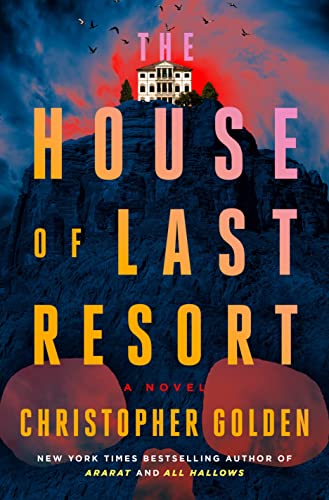
The House of Last Resort by Christopher Golden

book cover

A forty-minute drive from the volcanic Mount Etna, Becchina should have been alive.
Instead, it was the corpse of a town that didn’t even realize it was already dead.

A low scritching noise caught his attention, and he swung the flashlight beam down to the right, where the natural tunnel and the man-made wall formed a dark and jagged corner. Tiny, putrid-yellow eyes glittered in the shadows.
“Jesus Christ!” Tommy hissed, jerking backward in revulsion as the flashlight beam illuminated the foot-long rat crouched in that corner.
Silent, twitching, the rat stared brazenly up at him, unafraid. It watched him with apparent disdain, as if to let Tommy know that he was the intruder here, not the rat.

A deal that is too good to believe. Ownership of an abandoned hilltop house in a Sicilian town (Becchina, a made-up town, – buh-kee-na) for a single euro, as long as you agree to live there for five years and invest 50K euros fixing it up. What could possibly go wrong? Tommy and Kate Puglisi see this as a once-in-a-lifetime opportunity. A chance for a much better future than they could ever afford in Boston.

description
Christopher Golden – Image from MichelleRLane.com

The world seemed to be unraveling every day. American culture seemed to be rotting from the inside out, manipulated by an amoral oligarchy whose worst enemy was young people who didn’t want to play their game, and Kate and Tommy were happy to be counted in that category. The irony had not been lost on them, that the nineteenth and twentieth centuries had been defined by people leaving the so-called Old World to seek their fortunes in the New World, and now she and Tommy were doing the opposite, seeking new life in the Old World. But they both believed that earlier generations had it right—a slower life, a smaller circle, a focus on home.

That Tommy’s family had come from Becchina gave it an additional draw, a chance to spend time with his grandparents, whom he loved and very much wanted to see lot of in their final years. The importance of that is magnified by the fact that both of Tommy’s parents are dead. Tommy and Kate are on extended time off from work, so can attend to getting things fixed up before returning to their jobs, remote jobs, which allows them the freedom to live anywhere. And they do not yet have children.

Of course the house comes with some unadvertised extras. The book opens with:

The rats are like fingers.
No. That’s not right. Fingers can reach out, can grasp and extend. The rats are not like fingers at all. They are periscopes, like those on submarines, each able to give its captain only a limited view of the world above. From their place below, among the dead, the lost ones can see only as far as the rats can see. But they are patient, and so they wait. And they let the rats run.

Uh oh. Squatters. Toss in being within commuting distance of Mount Etna to shake things up. Oh, and that lady down the hill who is always staring daggers at them whenever they pass by. And the family, who is warm and welcoming but not altogether forthright about the history of the town or the house. On the other hand, there is a group of other new arrivals, lured by the same opportunity. They call themselves The Imports. It’s fun seeing Tommy reconnect with famiglia. He and Kate slowly get to know the town and some of its residents, make friends, and come up with a plan to boost the local economy. Can-do Yanks in action.

But things keep happening. Kate thinks she sees someone in the house, but did she really? A tremor arrives soon after they do. There is a part of the house that the R/E agent somehow managed to overlook when showing the place. A door that was locked, but then is mysteriously open. Golden makes generous use of Gothic fiction features (see abbreviated list in EXTRA STUFF) to give you chills.

Tommy and Kate are actually a happy couple. Many horror books use spectral events as manifestations of underlying relationship problems. Not the case here. This is also not a case in which better-off sorts gentrify an old area, forcing out the locals. Instead, they are trying to save, replenish, and reconstruct, infusing new life into a withered, crumbling, forgotten town. The houses The Imports bought were already abandoned. The newbies are looking to build up not just the houses they occupy but the community as well. So, the dark forces here are not cutouts for obvious social criticism. They are pretty much straight up malignancy coming at you in sundry ways. One way is our visceral reaction to vermin.

The rats that feature in the opening lines persist throughout, gaining in their power to induce fear and loathing. It was a specific choice. In the Book Nook interview, Golden talks about how he believes we mortals have a race-memory fear of rats, the result of plagues that wiped large portions of humanity from the planet multiple times, akin to the natural fear most of us have of snakes, from the days when they were in our immediate environment and posed a mortal threat. Rats give us the creeps.

What you get in The House of Last Resort is a likable pair in peril, with a plentiful supply of scary, a cauldron of creepy, and a shipload of shivers. If you think your basement is a mess, you have no idea. There are nifty twists, some local color and action aplenty to keep you turning the pages. Depending on your susceptibility to such books, you may get a sleepless night or two out of this one. A fun read, a pure entertainment, uncluttered by larger sociopolitical concerns, a fabulous summer read. But probably a bad idea to take this along if you plan to visit Sicily.

A voice crying out. Tommy frowned, wondering if that had been a dream or if it had been what woke him.
The wind gusted, rattling the window in its frame. He listened to see if the cry would come again but heard nothing beyond the sighs and creaks of the old house.

Review posted – 04/05/24

Publication date – 01/30/24

I received an ARE of The House of Last Resort from St. Martin’s Press in return for a fair review, and some DNA samples. Thanks, folks, and thanks to NetGalley for facilitating.

This review is cross-posted on Goodreads. Stop by and say Hi!

======================================EXTRA STUFF

Links to Golden’s personal, FB, Instagram, and Twitter pages

Profile

Golden is a monster of an author who got started, and found success, very early. He has a gazillion publications to his credit and an army-size host of teleplay credits from his years writing for Buffy with Joss Whedon, and plenty more. And then there are the comics. You may have heard of Hell Boy, among those. Here is a list of what he has published, from Fiction DB. I personally think he has elves, or more likely, goblins, chained to computers in his basement helping him crank out such volume.

My reviews of Golden’s two prior books
———-2022 – Road of Bones
———-2023 – All Hallows

Interviews
—–Paul Semel – Exclusive Interview: “The House Of Last Resort” Author Christopher Golden
—– WYSO – Book Nook – ’The House of Last Resort,’ by Christopher Golden by Vick Mickunas – audio – 50:04

Checklist – Partial Characteristics of the Gothic Novel
See my review of While You Sleep for more of this sort
Setting – castle or old mansion – oh, Yeah
Secret passages or creaky doors – of course
Atmosphere of mystery or suspense – fuh shoo-uh
Ancient prophecy or legend – sort of
Omens, portents, visions – tremors, hints from neighbors and family
Supernatural or otherwise inexplicable events – ghost sightings?
High, overwrought emotion – you betcha
Women in distress – actually not so much. Both Tommy and Kate are beset
Women threatened by powerful, tyrannical male – see above

Leave a comment

Filed under Fiction, Horror