Category Archives: Fantasy

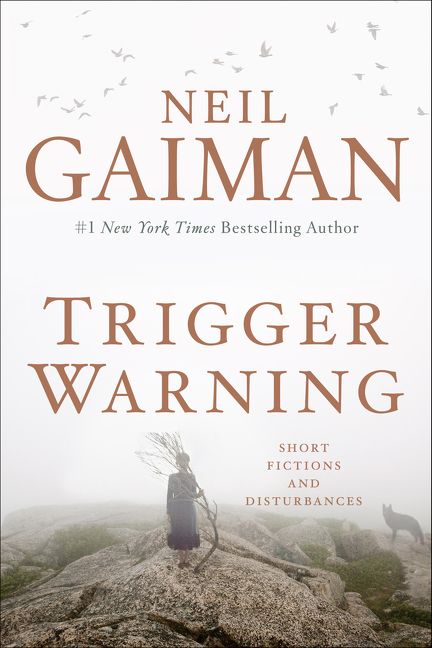
Trigger Warning by Neil Gaiman

book cover

The monsters in our cupboards and our minds are always there in the darkness, like mold beneath the floorboards and behind the wallpaper, and there is so much darkness, an inexhaustible supply of darkness. The universe is amply supplied with night.

There is a diversity of material in Neil Gaiman’s third and latest collection of short fiction, Trigger Warning. It is a potpourri of twenty four pieces, if we take as a single piece the entry called A Calendar of Tales, which, itself, holds a dozen. They are not all, despite the collection title, dark or frightening. He brings in some familiar names, David Bowie, Sherlock Holmes, Doctor Who, Maleficent, Snow White, a traveler from other Gaiman writings, Shadow Moon, twists endings into satisfactory curls for the most part, wanders far afield in setting and content, well, within the UK anyway, tosses in a few poems for good measure, and even offers up a few chuckles. He is fond not only of science fiction as a source, but of Scottish and Irish legends as well. If you are not smitten with the story you are reading at a given moment, not to worry, there is another close behind that is certain to satisfy.

Gaiman is overt in noting the absence of connective tissue among the tales. But there are some themes that pop up a time or three. Living things interred in walls, whether after they had expired or not. A bit of time travelling. Fairy tales are fractured. Favorite writers are admired.

book cover

Neil Gaiman – Photo by Kimberly Butler – on Harper Colllins site

In the introduction, Gaiman tells us a bit about the origins of each of the 24, a nifty item to check back on after one has read them all. Some of the material has been developed for other media. I added a link at bottom to a more-than-text offering re the Calendar of Tales, for one.

Overall I found Trigger Warning is a pretty good survey of Gaiman’s impressive range. He seems able to realize the dreams of the alchemists by transforming what seems every experience he has and every notion that crosses his interior crawl into gold. And some of the stories here are glittery indeed.

I quite enjoyed the collection. The uplift of the best more than made up for the downdraft of the lesser. If you enjoy fantasy, with a good dollop of horror, you could definitely give it a shot.

=======================================THE STORIES

1 – Making a Chair – a poem about the writing process.

2 – A Lunar Labyrinth – a tribute to Gene Wolfe – a traveler who enjoys roadside oddities is brought to a maze that is brought into a form of darkness by the full moon.
Here is a link to a site that will clue you in on roadside oddities in the USA. There is a book on such things for the other side of the pond, but I did not find a comparable link

3 – The Thing about Cassandra – An imaginary connection becomes real, with a delicious twist

4 – Down to a Sunless Sea – an abominable feast, but with some just desserts

5 – The Truth is a Cave in the Black Mountain – A not wholly human dwarf engages a local man to lead him to a cave reputed to be filled with tainted gold – I could not get the image of Peter Dinklage as Tyrion Lannister out of my tiny mind while immersed in this one. Sometimes the truth hurts.

6 – My Last Landlady – the rent is definitely too damn high

7 – Adventure Story – a bit of fun guaranteed to make you smile

8 – Orange – A teen who thinks she’s all that may indeed be – another smile-worthy item

9 – A Calendar of Tales – I won’t go into each – the collection was written from ideas received on-line. I found it a mixed bag, with March (Mom has a big secret), August ( a tale of fire and foolishness), September (a magic ring with the quality of a bad penny), October (a sweet tale, involving a Jinni), and December (a hopeful time-travel piece) my favorites

10 – The Case of Death and Honey – a fantastical tale in which a certain Baker Street resident takes on the mystery of death itself

11 – The Man Who Forgot Ray Bradbury – a tribute to Gaiman’s mentor

12 – Jerusalem – on one of the dangers of visiting the city

13 – Click-clack the Rattlebag – stories can be scary, regardless of the age of the teller

14 – An Invocation of Incuriousity – a time-travel piece – don’t touch the settings

15 – And Weep, Like Alexander – one possible reason why we do not have some of the futuristic inventions we expected long ago – cute, not scary

16 – Nothing O’Clock – a Doctor Who tale with a timely solution

17 – Diamonds and Pearls: A Fairy Tale – a fable with a moral

18 – The Return of the Thin White Duke – the completion of a story begun and abandoned while back for a magazine project on Bowie

19 – Feminine Endings – beware of street statue-performers

20 – Observing the Formalities – Maleficent as narrator of a poem about proper forms

21 – The Sleeper and the Spindle – A fairy tale with a nice twist

22 – Witch Work – a poem on the limits of witchy magic

23 – In Relig Odhrain – a poem on a saint who suffered an awful demise

24 – Black Dog – Shadow Moon stops in an ancient pub and is drawn into some serious darkness, scary fun.

Review posted – 3/20/15

Publication date – 2/3/2015

This review has also been posted on GoodReads

=====================================EXTRA STUFF

Links to the author’s personal, Twitter, Tumblr and FB pages

Here is a link to his separate blog

For a full-on media-rich offering the Calendar of Tales piece in Trigger Warning can be seen here

Harper has an on-line reading guide

Other Gaiman books I have reviewed
The Graveyard Book
The Ocean at the End of the Lane
Stardust

2 Comments

Filed under Fantasy, Fiction, Horror, Short Stories

Church of Marvels by Leslie Parry

book cover

All great shows, she told me when I was little (and still learning to flex the tiny muscles in my esophagus), depend on the most ordinary objects. We can be a weary, cynical lot—we grow old and see only what suits us, and what is marvelous can often pass us by. A kitchen knife. A bulb of glass. A human body. That something so common should be so surprising—why, we forget it. We take it for granted. We assume that our sight is reliable, that our deeds are straightforward, that our words have one meaning. But life is uncommon and strange; it is full of intricacies and odd, confounding turns. So onstage we remind them just how extraordinary the ordinary can be. This, she said is the tiger in the grass. It’s the wonder that hides in plain sight, the secret life that flourishes just beyond the screen. For you are not showing them a hoax or trick, just a new way of seeing what’s already in front of them.

Ladies and Gentlemen, boys and girls, step right up. The show is about to begin. See the four-legged dancer, the half-man-half-woman. See the wheel of death, where knives fly toward a spinning lass. See the sword swallower (no, not that sort, puh-leez) and watch as one of our performers eats actual glass. But you had better be quick. This Coney Island sideshow, the Church of Marvels is about to burn to the ground.

description
1996.164.5-10 bw SL1” by H.S. Lewis – Brooklyn Museum. Via Wikimedia Commons – Remnants of a 1903 fire at Coney Island.

Sylvan Threadgill is 19 years old and living on his own in the bowels of end-of-the-19th century New York City. He earns a meager living as a night-soiler, cleaning up the remains of the day, and picks up some extra cash as a boxer. It is while at the former job that he comes across an unusual discard. Sylvan is a (mostly) good-hearted sort, and he takes the baby in, intending to find it’s mother.

Odile Church, the spinning girl on the Wheel of Death, having lost so much, including her mother, worries about what became of her twin, Isabelle, the star of the Church of Marvels. Belle had vanished before the fire. Odile sets off to the never-seen far away land of Manhattan on a quest to find Belle, following a single clue.

Alphie, a “Penny Rembrandt,” and sometime sex-worker, is in love, having been swept off her feet by an undertaker. His old-world Italian mother does not approve, but he marries Alphie anyway, making for a very tense household. Alphie suddenly finds herself a virtual prisoner in Blackwell’s asylum on what is now Roosevelt Island. It is a lovely place, specializing in order over humanity, with generous doses of cruelty tossed in. Charles Dickens actually visited the real Blackwell’s in the 1840s and did not have anything good to say about it. Alphie encounters another prisoner (who never speaks) with unique skills and they plot their escape. Sylvan pursues the truth about the found infant, as Odile tries her best to track down her sister. Truths are discovered, both wonderful and horrifying and all converge to a thrilling climax.

Leslie Parry has written some wonderful characters, people you will most definitely care about, and she has placed them in a marvelous setting.

book cover

Leslie Parry – from Missouri Review

The New York City of 1899 must have been a particularly bleak place for those at the lower end of things. But it is a marvelous place to read about. Parry has painted a colorful portrait of the time, offering chilling images of the era. She has a Dickensian penchant for naming her characters. A noseless street urchin is Sniff. A servant girl is Mouse. A nightsoil foreman is Mr. Everjohn. Another night-soiler is No Bones. A “widow” working in a bordello is Pigeon. There is much here about seeing what is in plain sight, but it is also clear that the author has done considerable digging to bring to light things that were hidden, or at least only slightly known. Opium dens among other things. The treatment of asylum inmates is as appalling as one might expect. The profession of night-soiler was news to me, as was the presence of a civil-war era floating ship hospital. You will enjoy learning of the professions of penny Rembrandt and JennySweeter, and of the significance of a north star symbol on the facades of local businesses.

There are sundry images that permeate the story. Tigers figure large for the girls, from the quilt their mother made for them as kids, to carnival tigers grooming Odile, to a literal take on Blake, to a notion of the secret in plain sight being a “tiger in the grass.” Church references extend beyond the family and family business name. A floating “church” serves as a venue for boxing matches, complete with a preacher and prayer cards. A sense of divinity is summoned on occasion as well. You might keep an eye out for crescents. Parry offers some passages on passages that certainly remind one of birthing and a sort of Campbellian descent.

…for a moment Sylvan had the dreamy sensation that he was swimming through the vein of a body, toward a lush, warming heart. Ahead of him the man was lumbering and stout, so large he had to duck beneath the doorframes, but he moved quickly, almost gracefully. The passage seemed to turn and fold back on itself, and then it came to an end. The man pulled aside a blue curtain and beckoned Sylvan inside.

One consistent concern is being seen for who one is, being appreciated, or at least, being accepted.

To be seen but not known was perhaps the loneliest feeling of all.

While I adore this book, I do have some gripes. There are enough orphans here to cast a production of Pirates of Penzance. While lost or missing parents may have been a much more common thing in 1899 than it is today, it seemed to me that the rope being used to lower the bucket to this well was getting a bit frayed. Mickey Finn is put to considerable use as well. There are two concerns that are heavily spoilerish, so I urge you to pass these by if you have not already read the book. RED means spoiler. Ok, you have been issued fair warning. We are to believe that Isabelle was de-tongued by one person. But how might that have been possible? Did Belle’s assailant grow extra arms? One set for holding Belle down, another for wielding both tongs and knife, and a third set for holding Belle’s mouth open? Nope. Did not buy that one. Also, we are to believe that Siamese twins, joined at the head, were successfully separated by a non-doctor in the 19th century? I doan theen so.

Church of Marvels offers a richly colorful landscape, although the hues tend to the dark end of the spectrum. The story is riveting and moving. The main characters are very interesting and mostly sympathetic. And there are enough twists to keep a contortionist bent out of shape. The image that Parry conjures of the time is richly detailed enough without being overwhelming, and the whole is presented with a warmth and charm that reminded me of The Golem and the Jinni. No, there is not the literal magical element of that other book, but both look at a historical New York and their characters with warmth and charm. In this case, presenting early New York as a kind of sideshow in and of itself.

I am not a regular attendee at any church, but I can heartily recommend Leslie Parry’s debut novel. This church is both unforgettable and marvelous.

Publication date – May 5, 2015
Review posted – 1/30/15

=======================================EXTRA STUFF

Links to the author’s personal, Facebook and Twitter pages

A 5 minute sample of the audio version, read by Denice Stradling

Flashback: When Roosevelt Island Was Blackwell’s Island


Ten Days in a Madhouse, by Bill De Main – about Nellie Bly’s 1887 undercover commitment to Blackwell’s

Some of Bly’s report is available here

Some of Bly’s report is available here

An intro to Nelly Bly on PBS

Leave a comment

Filed under Fantasy, Fiction, Historical Fiction, Literary Fiction

Heraclix and Pomp by Forrest Aguirre

book cover

…what were the origins of the many pieces of Heraclix? He was like a puzzle to himself, an unknown being or beings, self-aware, yet unaware of the individuals from whom he had been constructed.

Where do we come from? Of what are we made? Who are we? How did we get to be who we are? Can we change? In the case of Heraclix, of the title, all the above apply. H is a big guy. Think Shrek with a bit less green. Usually the golem is a clay creature, but H is more of a group effort, being comprised of parts, a Frankenstein monster with better (than the film) motor skills, and a makeover. Heraclix is riven, as so many of us are, with a complicated nature. His is more physical in it’s manifestation, though. With one arm in particular eager for action, he reminded me a bit of Doctor Strangelove . In a nifty opening, he breaks out of a womb-like vat of liquid (not the last birth event in the book), and does what any newborn might do. He reads everything he can get his paws on. Doesn’t know where the ability came from, but really, really wants to get a handle on his world, and comes across Daddy his maker’s porn private, and very disturbing, notes.

Mattatheus Mowler is not your garden variety sorcerer. Sure he’s a few hundred years old, and is educated enough to animate dead parts, among other nifty tricks, but the boy has some serious ambition, not to mention an issue with aging, and is not to be messed with. That brimstone aroma that may be wrinkling your nose emanates the Faustian bargain he has made. He has a client list that would be the envy of any K Street operative. Of course, evil, connected genius or not, he is still human, more or less, and makes mistakes enough to allow for an actual contest. Not exactly your ideal re-animator, (or would that be assembler?) as daddy dearest rains blows and other abuse down on Heraclix’s large frame with abandon. But one day MM brings a sweet young thing to the lab, in a jar.

Pomp is a pixie with moxie. She encourages H to stand up for himself, and overcome the self-loathing that accompanies his beatings. Mowler has dark plans for her of the sacrificial sort, but the plan flies to pieces, the premises succumbs to fire (always a risk when dealing with hellspawn), and a dynamic dimorphic duo is made.

book cover

The author – please note the shooter on his sleeve

The motive force here is Heraclix trying to find out who he actually is. With information gleaned from Mowler’s premises, he and Pomp set off on a classic journey of self-discovery. They cover a fair piece of European landscape, beginning in Vienna, with stops in Prague, Istanbul, Budapest, and sundry locales in between. Along the way they pick up pieces of the puzzle, as in a video game, that lead them from place to place. The information is sometimes in the form of clues, in Mowler’s papers, say, or in writing along the side of a coin. More often it is in the form of stories told by Gypsies, Cossacks, wizards, an old man in an obscure town, sundry characters they encounter in their quest. As the pair travel, together and separately, they gain points knowledge.

Heraclix comes across as a likeable hulk. He has a pure heart (whomever it might once have belonged to) and is an honest seeker after truth. In trying to discover his true identity he learns a thing or two

…there was something in the quality of sorrow suffered at the hands of another that was different than the sorrow that one brought on others, whether through one’s own stupidity and neglect or by intentional acts of hatred. The latter carried the sharpest stings of guilt, regret, self-berating…

Pomp, while a very valuable partner, is not so much seeking truth herself as she is eager to help Heraclix. Hey, the big lug saved her, so she owes him. But she finds that she, as well, is challenged to consider her view of herself and the world.

Her life isn’t now about playing pranks all day every day. It isn’t about not caring. All this playing pranks and not caring isn’t fun any more. If she goes on like this, her life stays immortally, eternally…boring. Death is sad, but death makes life more worth living.

In addition to H&P there is a parallel story involving Holy Roman Empire royalty, a young lass, and a fair bit of intrigue.

There are some images and themes that run throughout. Birth is addressed multiple times, in both a biological and baptismal way. Heraclix is very clearly being born by breaking out of a watery enclosure in an early scene. There is what might be seen as a baptism by fire, and later in the book, he has what seems another aqueous bursting through or two. History figures large here. Pomp, when we meet her, has no notion of it, not understanding the concept of memory. Heraclix cannot remember anything and wants to find out who he is. The tale is told in a historical context, offering a look at the feel, if not much of the detail, of tension between the Holy Roman Empire and its foreign enemies. Eternal life is addressed in the wizard’s desire for it and in how Pomp, who has it, copes with and gives a lot of thought to the implications of life without end. Changing one’s life is also addressed on multiple fronts. A killer becomes a healer. Pomp is faced with potentially changing her orientation as well, getting to see in person the questionable wages of all-fun-all –the-time.

I am sure there are many references to folk tales I missed in here, but a visit to hell itself surely must conjure Dante. So be on the lookout for references to The Inferno. And heading to the basement certainly seems in synch with a Campbellian structure.

One of the things that most impressed me was the diversity and creativity of Aguirre’s imagination. Heraclix alone is a marvelous concoction, but there are many more. Phantoms haunting the one who killed them, demonflies from Hell, a Godzilla-like Beelzebub, some carnivorous clover, fairies up to no good, a demonized crow, some magic mirrors, a telescope for seeing magic. The list is considerable and the creations quite fun. While some echo familiar elements of fantasy fiction, there is an added layer of the new that gives it all some real sparkle.

Gripes were few. There are a fair number of characters, and it can be a bit tough at times keeping them straight. The ARC I read did not have a list of characters in it. I do not know if the final version might. I find it useful to make my own list as I read to help keep everyone straight. Also there was one escape I had a problem with. H manages to escape from hell, but it is not entirely clear to me how he got from underground to above..

Aguirre has established himself as a top-drawer, award-winning editor of speculative fiction, and a seasoned writer of sci-fi as well. Heraclix and Pomp demonstrates that he is also a confident, creative and imaginative novelist. The journey on which Heraclix and Pomp set out is a consistently interesting and engaging one, offering not only a look at a fantastical world, but adult consideration of eternal, real-world, existential issues. I am sure they would love for you to tag along.

Heraclix and Pomp was sent along by the author, a GR friend, in return for a fair review

Review posted – 9/12/14

Publication date – 10/14/14

This review has also been posted on Goodreads

=======================================EXTRA STUFF

Links to the author’s personal, Twitter, Google+ and FB pages

Aguirre’s blogspot page, Forrest for the Trees, includes a 24:47 sample of the audio book. Some items in the archives are worth a look, including a three-part sneak peek at the second adventure of H&P, and a piece on his writing process (no necromancy involved).

An interesting interview with Forrest on Shelf Inflicted, in which, among other things, he talks about how H&P came to be.

2 Comments

Filed under Fantasy, Fiction

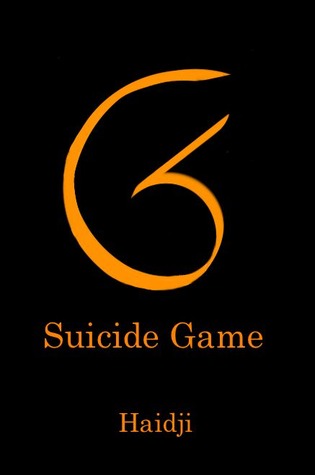
Suicide Game by Haidji

book cover Suicide Game, a first novel by the mononymous Haidji, is an oil and water mixture of intriguing concepts, impressive visual sensibilities, and, at least in the English version, a crying need for a professional, native-English-speaking editor.

The core element here is the Suicide Game itself, a privately run enterprise that takes in 8,000 contestants and produces a single winner, in a more or less contemporary setting. It does put one in mind of the scene in Glengarry Glen Ross when Blake, a bully sent to incentivize the sales staff at a real estate firm, says to them, “As you all know, first prize is a Cadillac Eldorado. Anybody wanna see second prize? Second prize’s a set of steak knives. Third prize is you’re fired.” It might read here “First prize, fame and fortune, with treasures beyond your imagining. Second prize, you die.” In The Hunger Games participants were selected by lottery. In Suicide Game, it is voluntary. One might wonder who in their right mind would willingly participate in such a travesty.

Haidji has put together an ensemble cast. There are game participants, with contemporary and back-story people connected to each, the council that runs the whole thing, the arena designer, and a smattering of game employees. No one character occupies enough time to be considered primary. Oh, and add in a terrorist.

One can take this as a straight ahead story about a social abomination, and the individual tales that feed it, or take it as a metaphor for existing sociological madness. Choose the former and you may find yourself leaping into an abyss.

What country would allow such a thing to take place? At least when nations sponsor the suicide game we call war, they attempt to offer at least the pretense of a reason. Not so much here. Why would anyone choose to participate in any contest with such poor odds unless they had nothing left to lose? And while the lure of fame and fortune might lead one to publicly humiliate oneself, as we see every day on reality programming, it is a whole other level to join a death march. And if one is seeking to kill oneself, the usual reason is despair. What possible appeal might there be to enticing participants with glory when they have already given up all hope? While there are some shenanigans involved in the legitimacy of some of the contestants, I found the justification offered for most of the competitors to be thin. Kinda tough to invest much in relating to characters if the reasons for their actions are unpersuasive. Why choose to die? Why not try to solve your problems? And if you are determined to snuff it, there are plenty of quicker ways to go about it. Why drag it out for several days, and do it in front of a global audience? Lost love figures large here. But then found love figures pretty large as well, with love at first sight a very unconvincing motivator. Maybe in this world there are no second acts, let alone third ones. They might take some advice from Ingrid Michaelson. All the broken hearts in the world still beat. Despite the rampant heart disease our culture breeds, people get over heartbreak, find new loves, new outlets, new satisfactions. I got the feeling that the characters jumping into the game could do with a good talking-to, or an intervention. “You schmuck, sit down! What the hell were you thinking?” Taking the USA as an example there are 39,000 suicides here annually, more or less. Cramming 8,000 of them into a four day span is, well, a stretch, suggesting that it must have been a really bad week when applications were being accepted, or a big week for immigration. I imagine the selection process was probably as selective as that used by the National Geographic Society for individuals nominated for membership. (Although George Bailey certainly deserves to belong.)

book cover

Haidji

In addition to an excess of telling over showing, there are elements there that hint at an eagerness to gloss over problematic details. It is as if the entire world existed in a Judy Garland/Mickey Rooney film in which the neighborhood kids decide, “Let’s put on a play,” and magically a stage, set, costumes, script and time for rehearsal all appear as if out of nowhere. Just think it and it is so. For example, the management of the stadium decides to make a radical change in their food service, and it is changed during a break in the game action. Modifications to significant stage elements of the stadium are likewise implemented as if by divine command. A significant computer programming re-working is done in, it seems, nanoseconds. With over twenty years as a programmer, I can say for fracking sure, no bloody way. The romantic relationships also seemed to lack real-world substance.

Ok, if, however one takes this as a piece of social commentary, it becomes possible to look past the story-telling problems and settle in to a consideration of larger issues. One can look at the heartless exploitation of the participants by corporate entities, and not have to look too far to find contemporary equivalents. In the US, how the NFL treats players is pretty close to amoral disinterest in the well-being of the workers who create the value they are selling. I am sure there are plenty of equivalents in other sports. The entertainment industry offers many examples of people willingly putting themselves, their reputations, and maybe their health, if not their lives, at risk in order to gain their fifteen minutes in the media spotlight. The Suicide Game might be seen as an exaggeration of that reality to make a point. I do not think that major sports organizations descended to a level of exploitation where they process, package and sell bits of loser contestants. But would you really put that past the NFL, or our major networks? One element in all this is the dehumanization of the contestants by putting them all in the same uniform and having makeup artists remove remnant individuality from their faces. This surely speaks to the depersonalization inherent in much of mass media. Outside of committed fans, can you really tell who is wearing a particular football uniform on a given Sunday? Just as players are largely a production factor for corporate owners, parts that can be replaced as needed when they wear out, the suicide game takes the notion to an extreme, and succeeds in making a point.

My biggest gripe about the book is that the English is in need of serious repair. Haidji speaks English. We were pals on GR for a while (until this review was posted) and have exchanged our share of messages, so I can attest that her English is pretty good. But I cannot say whether this book was written in another language (she speaks several) and translated or was written directly in English. In either case, it is in great need of an editor whose native tongue is English. There are many instances in which it is possible to ferret out what the author meant, when the words used did not do that job well enough. Turns of phrase are sometimes simply wrong. Readers are expected to read between the lines for thematic or psychological reasons, but should not have to do so in order to simply correct the text. That said, it is a readable book. Just be aware that you may have to do some extra work to figure out what is being said.

If one can get beyond the language shortcomings, there is fair bit of interesting material tucked into the story. Haidji concocts an umbrella made of air alone that is pretty cool. The notion of making diamonds of the unexpected material cited here is a real thing. The stadium design has some elements that are quite fascinating. Her governing Suicide Game council applies a very unusual voting methodology. A court case involving Big Oil is also reality-based. An early scene involving a terrorist and 9/11 was one of the strongest elements in the story. On the other hand, use is made of a drug referred to as “milk of amnesia.” Such a drug does exist. I have been a personal beneficiary on multiple occasions. (Yes, it is legal, wiseass, and is used in medical work) But it does not act in the real world as it is shown to act here.

There are some mysteries in here as well that add texture. Who is actually in charge of the whole thing? How did a baby get loose in the stadium? Will the smitten connect with the actual objects of their…um…smit? Will everyone be blown to bits?

It is also clear that Haidji has a strong sense of the visual. Color and texture offer a strongly defined background against which the characters do their things. The game logo is wonderful. Candidates are in white face, dressed in shiny black, made up to betray no emotion. The logo is painted in orange. That hare krishnas are in attendance enhances the presence of that color. Ushers who clean up the bodies are dressed in gray. Makeup artists at the game wear matte black, and the game Hostess wears a red femme fatale dress. Designer names for clothing and footwear are rampant, which certainly does not speak to me. I had to look up far too many of these. But readers with more fashion knowledge (pretty much everyone) will have a better shot at appreciating the references.

There are problems for sure with Suicide Game. It really, really needs the assistance of a professional, native-English-speaker editor. There are issues with an overly simplified view of how relationships might progress and even how things work in the world. But if you can make a leap of faith to look past these, there are rewards to be had in the many fascinating notions that live in that world with them. You might enjoy Suicide Game, and without having to pay the ultimate price.

Review posted – August 29, 2014

I received this book from the author in return for an honest review.

=======================================EXTRA STUFF

Links to the author’s personal, Twitter, Google+, FB and Youtube pages

Leave a comment

Filed under Fantasy, Fiction, Reviews

Crooked River by Valerie Geary

book cover Fifteen-year-old Sam McAlister and her ten-year-old sister, Ollie, have had a crap summer. On the Fourth of July their mother died of a heart attack in Eugene, Oregon. They are staying now with their father, whom they call “Bear.” He has been living for some time in a teepee on a piece of rented land outside the thriving metropolis of Terrebonne, OR, doing odd jobs, raising bees, and mostly keeping to himself. Normally they would have spent only August with their dad, but now it is looking like a more permanent arrangement, if, that is, their mother’s parents can be persuaded that he is up to the task. And just when it looked like it couldn’t get any worse…

We found the woman floating facedown in an eddy where the Crooked River made a slow bend north, just a stone skip away from the best swimming hole this side of anywhere. Her emerald-green blouse was torn half open and her dark, pleated skirt was bunched around her waist, revealing skin puckered and gray, legs bloated and bruised. Her hair writhed like black snakes in the current.

Bear, the odd outsider, is, of course, suspected, arrested, and it looks like he will be successfully railroaded, but Sam has faith in her father. Her sister has something more.

I see things no one else does.
I see them there and wish I didn’t. I want to tell and can’t.

Ollie calls the ghosts she sees The Shimmering. It would be too easy if Ollie could simply report what the ghosts only she sees clue her in on. But Ollie has not spoken since her mother passed several weeks ago. And of course there is a full dose of the Cassandra Syndrome at play, as even when Ollie is able to communicate, no one believes her.

The missing father has been a literary trope for quite some time, in adult as well as in YA literature. The one that jumps up for me is Madeleine L’Engle’s A Wrinkle in Time. While Sam’s father did not vanish while working on a tesseract, and is not actually gone here, at least until he is arrested, he had been largely absent from his children’s lives for many years. Now, in the face of the calamitous loss of their mother, the girls must contend with the possible loss of their father too. There is probably a message here about the need for both the urban (mom) and the natural (mountain man father). Sam is called upon to utilize both her city and country skills to try to save Bear, and in fact engages in a very Campbellian quest to find out who he really is. She must find her inner strength and overcome, or fail before, some very real-world perils in attempting to bring back the knowledge gained in her quest, and put it to use, as she comes of age. But if you want to see her as just getting in touch with her inner Nancy Drew, that works too.

book cover

Valerie Geary – from her Twitter page

The cast includes a kindly elderly couple on whose land Bear had been living, suitable grandparent sorts. There is a young man of diverse intentions. Sam feels drawn to him. Ollie sees him more truly than her sister does. A somewhat reasonable sheriff offers a glint of understanding; a somewhat peculiar artist looking to make a comeback is both sad and scary; his wife is not the most welcoming of shop-keepers; and a local cleric may be up to no good. At core this is a mystery. Who killed the floater and why? And why was Bear living in a teepee on rented land? Why had he abandoned his family years earlier? Sam is certain that Bear is innocent and sets out to prove it. Even Ollie take some dodgy risks trying to find out the truths at play here, but this is no children‘s story.

ART DIRECTION
Every novel incorporates a palette, colors, furnishings, places and/or images that help illuminate elements of the characters, set a mood, pull us through the story with externals that cast light on themes and the characters themselves. In Crooked River, trees are a part of the landscape, serving both to remind us that the setting is rural, and marking some significant locations as well. Bees figure large here. Bear is a bee-keeper. We get to see him as a good daddy taking care of the bees and training Sam to do the same. A bit of bee mythology is noted that might inform events. One bee leads to a clue. A hive comes into play.

Did you know that the ancient Egyptians thought bees were messengers sent from the sun god Ra? The Greeks, though, now they believed bees were souls of the dead come back to keep the rest of us company.

When Ollie sees ghosts they appear in a sparkly aspect. This fireworks-like image appears not only with ghosts but in some other places as well.

As far back as I can remember I’ve seen them. In dim light, they seem almost solid. In bright light, barely visible. If I touch them, it’s ice and fire, energy burning. They are glints and specks, here and then gone. Shimmering. Like heat rising off pavement.

GRIPES
Sam is both an engaging sort and bloody infuriating for all the planning-challenged adolescent choices she makes. You may find yourself shrieking “Schmuck” at the character as I did, but hey, teenager. They are expected to make some bad choices. I was not entirely persuaded about Bear’s decision to live where and how he did and thought some of his decisions were a bit adolescent as well, however well-intentioned. So there is a bit of credibility straining going on. But if you are willing to accept a young girl seeing ghosts, I suppose you give up the right to grouse about less obvious stretches.

SUM
Despite the above, Crooked River is not only a fine example of a classical literary approach, it is a serious page-turner. Sam is a good kid, a character we can admire as well as chastise. You will care about her, and her much-beset younger sib, and will keep turning those pages to see where Crooked River will take them, and you, next. There are plenty of bends here and the water is choppy. But it is a journey well worth taking. Straight business.

Review posted – 6/27/14

Publication date – 10/14/14

This review has also been posted on Goodreads

=======================================EXTRA STUFF

Links to the author’s personal, Twitter, Google + and FB pages

An article on writing Geary wrote for Writer’s Digest, 7 Things I’ve Learned So Far

2 Comments

Filed under Fantasy, Fiction, Reviews

The Confabulist by Steven Galloway

book cover

What no one knows, save for myself and one other person who likely died long ago, is that I didn’t just kill Harry Houdini. I killed him twice.

Stephen Galloway, the award-winning author of The Cellist of Sarajevo, takes on a legendary real-life character and tries to make some magic with his lesser known history.

He tells a tale of Houdini, vaudevillian superstar, greatest magician of his time, escape artist extraordinaire and, maybe, an international spy.

Martin Strauss is none of these things. When we meet him, in the present day of the tale, he has just gotten some bad news:

”Yours is a rare condition,” [the doctor] said, seeming almost excited, “in which the damage that is being done to your brain does not destroy cognitive function but instead affects your brain’s ability to store and process memories. In response to this, your brain will invent new memories.”

Strauss is Galloway’s external, invented character, there to help frame the narrative. So, Harry Houdini meets Memento?

book cover

the author

Strauss, a student in Montreal, is fascinated with magic, although he is not a capable practitioner. He is smitten with a young lady who shares his interest, and when they have a chance to see the great Harry Houdini perform, they avail. Strauss is not the most secure beau and when the object of his desire seems more interested in the famed escape artist than is comfortable, things get heated.

On October 31, 1926, the real-life Houdini died from a ruptured appendix. A few days earlier, in Montreal, a student named Whitehead was granted permission to punch Houdini in the stomach, a test of the performer’s claim that it would not hurt him. Under normal circumstances it might not have, but it turned out that Houdini was compromised with a case of appendicitis. He kept traveling and performing, but was brought to a hospital in Detroit, in severe pain, and died there. Ascribing his death to the student’s blows was really a ploy to get his life insurance to pay double.

“Houdini’s death has always really interested me. What would it be like to be the guy who punched Harry Houdini in the stomach?” from the Globe and Mail interview

There are alternating tale-tellers in The Confabulist. Martin Strauss speaks for himself, and the Houdini chapters are told by an omniscient narrator. The time lines are dual as well, present day alternating with a past that advances from 1897, before Houdini had achieved world-wide renown, to 1927, as Martin recalls and we see for ourselves what transpired. We cover some real estate in The Confabulist, as well, from Canada to New York to sundry locales in Europe.

description
Houdini – image from wikimedia

We get to see how the gifted Erik Weisz, a Budapest-born son of a rabbi, became the amazing Houdini, professionally and theatrically. There are explanations for a few of the stage tricks of the age, and that is a particular bit of fun. There is some insight into how the entertainment business of the early 20th century was run, and a look at the latter day Houdini as an exposer of charlatan psychics and spiritualists.

When asked how he landed on Houdini for his new novel, Galloway says he was fascinated by the showman’s iconic status, but also by the fact that Houdini himself was a sort of fiction. “Most magicians are kind of made-up characters, but him more than any. He’s a Hungarian Jew pretending to be Mr. America. Most of what he said about himself biographically was a total, total lie. So I just kind of arrived there and never left.” – from the Globe and Mail interview

Strauss’s history is far less interesting, but in his musings we get at some of the thematic issues of the novel. Some insight into international intelligence goings on of the period is also noteworthy.

What is real and what an illusion is a consistent theme throughout the tale, on stage and off

How is it we can be so sure that we’ve seen, heard and experienced what we think we have? In a magic trick, the things you don’t see or think you see have a culmination, because at the end of the trick there’s an effect. Misdirection tampers with reconstruction. But if life works the same way, and I believe it does, then a percentage of our lives is a fiction. There’s no way to know whether anything we have seen or experienced is real or imagined

or

a memory isn’t a finished product, it’s a work in progress

So does Galloway succeed in making magic? Only somewhat. There are two issues I had with the book. One is the inherent difficulty of having an unreliable narrator. That this is done openly from the opening chapter does not make it any less problematic. How are we to know if what Strauss reports is true or imagined? And if one cannot know if what he reports is real, it makes for difficulty in relating to his experience, and knowing for ourselves that what we are reading is or is not an accurate rendering of events. The dimorphism between the wonderful tale of Houdini’s and the far less gripping tale of Martin Strauss makes one want to slip the knots of Martin’s chapters to make one’s way back to the real action. And, while the story of Houdini does succeed in holding our interest, it seemed to me that there remained a distance between reader and character, even for Houdini, that kept one from the sort of emotional engagement that is needed if we are to feel much for him. Martin is an obvious literary device, so one does not hope for too much there. But one does want to feel more of an investment in Houdini than was possible here.

There are compelling elements at play in The Confabulist. The contemplation of reality versus illusion counts as a strength. On the other hand, the rationale for Strauss’s attack on Houdini seemed forced. One would expect that there is a marvelous story encased in the available elements. Unfortunately, the tale is only able to extract a limb or two and remains locked up. While there is no obvious tell in the author’s literary sleight of hand, there is certainly enough going on to sustain a reader’s interest, this remains an instance when the magic simply does not quite go poof.

Review posted – 6/20/14

It was first posted on Fantasy Book Critic

Publication date – May 6, 2014

==================================EXTRA STUFF

The condition ascribed to Martin Strauss was discovered by one Sergei Korsakoff, a Russian neuropsychiatrist, who is represented in The Confabulist by a Russian Dr. Korsakoff practicing in the West, presumably New York. Here is some info on the actual condition.

A bit of info on Harry Houdini

Interviews with the author – from The Globe and Mail and The National Post

Houdini’s grave

Leave a comment

Filed under Fantasy, Fiction, Historical Fiction, Reviews

Rooms by Lauren Oliver

book cover

We’ve nested in the walls like bacteria. We’ve taken over the house, its insulation and its plumbing–we’ve made it our own. Or maybe it’s life that is the infection: a feverish dream, a hallucination of feelings. Death is purification, a cleansing, a cure.

If death ever takes a holiday I expect he might vacation in Coral River, the upstate New York locale where Richard Walker lives…well…lived. Richard’s recent passing is what has brought the Walker family back together for a spell. A funeral, a burial, a will-reading, and a chance to go over some of the events, the challenges, the hopes and disappointments, the failings of their lives.

Ex-wife Caroline tries to lubricate the process with a steady ingestion of alcohol. Their children are not faring much better. Twenty-something single-mother Minna has a taste for spirits as well. Failure and desperation to fill the emptiness inside will do that. Even the introduction of cosmetic surgery and various prescription meds seem unable to fill that void. Trenton is Richard and Caroline’s teenage son, and he has issues. He barely survived a car crash that left him feeling even more of an outsider than he already was. Trenton sees things that the rest of us cannot, actual holes in the fabric of reality. He wonders if he might be better off dead. Of course some of the household residents already are.

Sandra, whose gray matter once decorated a wall, and Alice, an abused wife who has also contributed to the body count of the house, have made the place their own, or is it the other way round? These golden girls are not necessarily precious. In addition to remembering their lives and observing the Walkers, they squabble and tell lies. And while they may not be able to exactly tote luggage or dig ditches, it is possible for them to effect small acts in the living world, pushing this, bursting that. Having some unresolved issues keeps them from being able to open a doorway to a less geographically restricted existence. Reports of missing children also figure in, from decades past and right now. There are plenty of secrets to be delved into here. Such as just how did Sandra and Alice die? What happened to the missing girls? Who is that new girl ghost who just showed up? And who is Minna banging now?

book cover

Topper and transparent pals

This is not a scary ghost story sort of tale. No spectres coming to take over anyone’s body. More Topper than The Evil Dead, although not a comedy. A bit of spookery goes on, but there are two elements here that seem dominant, mystery and sadness. In a way, I was reminded of Agatha Christie, as Oliver presents readers with a sequence of mysteries to be solved, offering clues here

book cover

Bruce Campbell in his best-known role

and there, hints, red herrings, the usual tools of that trade. While the ghosts may not be scary, their stories and the stories of the living as well are intensely haunting. Choices, mistakes, regrets, the impact of the past echoes in the present, for both the dead and the living.

Oliver organizes her story into eleven parts, representing diverse rooms in the house. The tales told connect with each room in turn. Rooms features an ensemble cast. Oliver’s characters are well-drawn and very human. It is hard not to sympathize with Alice or relate to Trenton. And it is possible to understand why some of the others behave the way they do, given what we learn of their histories.

There is a lot here about identity, being oneself or wanting to be someone, or something else, to have some other life, and coping with other people’s masks.

It was unfair that people could pretend to be one thing when they were really something else. That they would get you on their side and then do nothing but fail, and fail, and fail again. People should come with warnings, like cigarette packs: involvement would kill you over time.

There is also a lot about being trapped whether as a child in a abusive household, a woman in an abusive marriage, a teen in what seems a dead-end existence, or a ghost in an empty house. There are some moments of humor, although none of the LOL variety, but dollops of charm do seep through the walls from time to time.

In short, Rooms is a fun, engaging and fast read. There is real content in the very believable characters’ attempts to make sense of their lives. While this spirited entry into the adult novel category is not the sort of ghost tale that will cause anyone to leave on the lights at night, there is considerable material here that is indeed quite haunting.

Review posted – 6/13/14

Publication date – 9/23/2014

====================================EXTRA STUFF

description
Lauren Oliver, is the pen name adopted by Laura Schechter, a young 30-something author who has already seen considerable success with her youth-oriented novels, most notably the YA Delirium trilogy. Her latest YA novel, Panic, was released in March, 2014. Rooms is her first novel for adults. Oliver’s parents are both literature professors. Dad is Harold Schechter, who has written many books on true-crime and American popular culture. Oliver lives in Brooklyn.

Here are links to the author’s personal, Twitter and FB pages, and to her blog and Tumblr pages as well.

If that is not enough you can also check her out on YouTube

1 Comment

Filed under Fantasy, Fiction, Reviews

The Bees by Laline Paull

book coverThe Bees is a powerful tale of what life might look like to a hive member. This is not your kids’ Bug’s Life, but a very grown-up, compelling drama that includes both sweetness and considerable sting. There are several elements that might make one think of Game of Thrones Drones. Corruption on high, battles of succession, sinister enemies, both in the hive and outside. Not only must all men die but winter is coming, twice. There is also a lot of religious reference here. This sits atop a marvelous, deep portrayal of a world that is very alien. And to top it off we are led through this journey by a character who, while far from perfect, is a very good egg, or was.

description

Bee life cycle

Of course Flora 717 might not have been considered a wonderful egg to those around her. She was born to the Flora caste, a group responsible for, ironically, cleaning up, a sanitation caste, essentially untouchables. But this Flora is a bit different. She is larger for one, possessed of great determination, curiosity, and a capacity for speech that is mostly suppressed among her peers. Still she is different and that is not usually allowed. The police are about to remove her (Deformity is evil. Deformity is not permitted.) when a Sage intervenes. Sages are the priestess class. Their intentions however, are not entirely holy. This Sage takes Flora under her wing, and the story is on. Sometimes it is good to spare the deviants, and experiment a little. We get to see many aspects of hive life through Flora’s five eyes, but also through her six feet, which are able to interpret vibrations in the floor, and her antennae, which she uses to sense scents and for more direct communication with other bees. That Paull can make the very alien sense environment of bees understandable to those of us with only four limbs and no antennae at all (well except for our friends in intelligence) is a triumph on its own. The Hive Mind is considered for its positive and negative aspects as well.

book cover

Laline Paull

Paull tells about the origin of the story on her web site

A beekeeper friend of mine died, far too young. In the immediate aftermath of her death, I began reading about the bees she loved so much. Very quickly, I realized I was exploring the most extraordinary ancient society that was like a hall of mirrors to our own: some things very similar, others a complete inversion, whilst more were fantastically alien and amazing. The more I read the more I wanted to find out, but when I learned about the phenomenon of the laying worker, I became incredibly excited by the huge dramatic potential of that situation.

Her feeling of loss is very much present here. Bees are not the longest lived creatures on the planet, and more than a few see their end here. But there is another element as well, from a recent interview posted here on Goodreads,

Becoming a mother changed me and made me stronger—but evolution is never easy. I didn’t write Flora from an intellectual perspective but in a very visceral way: Motherhood made me a more passionate person—or allowed me to express that innate side of myself much more. So perhaps that’s why Flora works as a character: There’s primal truth in her motivation. She accepts her life one way, but then a forbidden force takes possession of her. Called love.

description

Religious nomenclature permeates the tale. The Queen is not only a temporal ruler, but is considered divine as well. This is helped along by her ability to produce pheromones in vast quantity that can soothe her hive family. There are sacraments in this world, a catechism, rituals, prayers, some of which will sound familiar. There are also some virgin births. And what would religion be without a little human sacrifice, or in this case bee sacrifice. It is a place in which religion is joined to politics to generate Orwellian mantras like Accept Obey Serve, Desire is Sin, Idleness is Sin, From Death comes Life Eternal, and the like. And, of course, there is some Orwellian behavior. Life is held cheaply, particularly for those not of the favored groups, and the jack-booted police that enforce the rules are definitely a buzzkill. The death penalty is more the norm than the exception, and it is often applied immediately and energetically.

description

Western honey bee

Flora’s explorations of the world are entire adventures on their own, as she encounters not only adversaries like wasps, spiders and crows, but man-made hazards as well. On the other hand she experiences the longing of the flowers, and the expanded internal horizons that result from expanding one’s horizons externally. She has a particular longing of her own, which fires the engines of her determination.

The Bees is a fast-paced, engaging, invigorating tale that will have you flipping pages faster than a forager’s wings. You will come away not only with the warm feeling of having shared a remarkable journey but will find yourself eager to learn more about our buzzy brethren, well, except for Nicolas Cage. And you might even find yourself tempted to get up and do a

description

Waggle Dance

======================================EXTRA STUFF

Links to the author’s personal, Twitter and FB pages

In Paull’s site there is a photo of a Minoan palace map that informed her hive layout. Worth a look .

The May 2014 GR newsletter features a brief interview with Paull

That buzzing in your ear might be more cause for concern that you’d realized. New project aims to upload a honey bee’s brain into a flying insectobot by 2015

Leave a comment

Filed under Fantasy, Fiction, Literary Fiction, Religion, Reviews, Science and Nature

The Miniaturist by Jessie Burton

book coverThe death of Nella Oortman’s father left the family in difficult straits, saddled with unexpected debts and a declining standard of living. But the widow finds a suitable match for Nella, in a successful Amsterdam merchant and trader. As he travels extensively, the wedding is a quick affair, and it is a month before he will return to his home. In October of 1686, Nella arrives there, in a very exclusive part of the city. She is greeted by her new husband’s sister, Marin, who makes her feel as welcome as a case of influenza, and who just might make you think of Mrs. Danvers.

As a wedding gift to his 18-year-old bride 39-year old Johannes Brandt acquires for her a cabinet, a kind of doll house that mirrors the Brandt home. Nella engages the services of a miniaturist, a craftsperson, to help fill the spaces. What she receives is far more than she expected, as the pieces reflect a bit too closely persons and events in the family’s life, some frighteningly so. Also, they do not always remain exactly as they were when she’d received them. And they arrive with Delphic messages. Do these tiny constructions predict the future, reflect their owners’ fears and concerns, reveal secrets, tell truths, or offer misdirections? Nella determines to find out who this mysterious miniaturist is and what is behind these small objects.

descriptiondescription
Burton says “When writing my hero, Johannes, I had this guy in mind.”

Burton did considerable research to get her 17th century details right.

I have a bibliography as long as my arm. And then there are first-hand resources—maps, paintings, diaries, prices of food, inventories, wills—and the physical city of Amsterdam itself. I first went in 2009, which is when I saw the house in the Rijksmuseum, and then again August 2012 for my birthday – with a long list of questions and locations to visit post-fourth draft. Where did they bury the bodies in the Old Church? How many windows on the front of a gable? How did they winch furniture in? A lot in the book is all historically true in terms of life in the city… – from the Richard Lee interview

Nella’s search and her coming of age occur in a difficult time and place. The Amsterdam of the late 17th century, the Dutch Golden Age, is a world financial and military capital, a harsh, unforgiving place, where human failing and difference is not be tolerated, where neighbors are encouraged to spy and report on neighbors, (yes, very much like your office) and where it is always a contest whether the worship of gold or god will hold sway in any given circumstance. The two domains cross paths frequently.

It is this city. It is the years we all spend in an invisible cage, whose bars are made of murderous hypocrisy.

It is a time when being a woman was much more of a challenge than it is today. Marriage, paradoxically, was seen by some as the only way for women to secure any influence over their own lives. But what if a woman wanted something more, something of her own, the opportunity to be the architect of her own fortune, and not submit to a life in a golden cage. Nella may have stepped into a wealthy man’s world, but she must still take care for the many traps that have been laid by a cold society and those jealous of her husband’s success and of her. And there are challenges as well with her marriage, which was not quite what she had bargained for.

I wanted to create women who are not more ‘strongly female’ or ‘stronger than other females’, or ‘strong’ because they are braver than men, or can physically lift more saucepans or anything like that. I just wanted some women who for once are not defined by any other ideal than that they are human. – from the Richard Lee interview

descriptiondescription
Images that inspired Nella and Marin

Jessie Burton has written a dazzling first novel. The Miniaturist presents readers with a worthy mystery, and maybe a bit of magic, offering enough twists and turns for a figure skating contest, opening tiny door after tiny door to reveal the secrets of Brandt’s household. This is a look at the Dutch golden age that will resonate with contemporary gender, race, religious and power issues. The author offers just enough imagery to enhance without overwhelming, and breathes life into an array of compelling characters. In addition, Burton paints this world with the eye of a true artist, and does it all in a book that you will not want to put down. It will require no Dutch courage to get through this one. To have crafted The Miniaturist is no small achievement. Jessie Burton has written a book that seems destined to be huge.

description
The dollhouse of the real Petronelle Oortman, currently in the Rijksmuseum in Amsterdam

Review posted – April 4, 2014
Release date in the UK – July 3, 2014
Release date in the US – August 26, 2014

=======================================EXTRA STUFF

One must wonder what London-resident Burton thinks of actors, given how she portrays one here, and given that she has worked as an actress, while toiling as an executive assistant to bring in a few guilders. Here are links to the author’s personal webpage and her Twitter feed. She has a few more historical novels in the works. If she continues writing at this level she will be making history instead of writing about it.

In addition, her Pinterest page is most definitely worth a look

There is a lot of interesting material on Burton in this interview by Richard Lee at the Historical Novel Society site and more here in a piece from The Guardian.

Sugar loaves figure significantly in the story. While I had heard the term Sugarloaf before, my only association with it was with mountains, whether the iconic mound in the Rio de Janeiro harbor, or the host of other mountains across the planet that share the name. Never gave it much thought. But folks with a bit more historical knowledge than me (most of you) would probably know that there was a time when sugar was routinely formed into solid cone shapes for shipping. That Rio hill and its cousins seem a bit more understandably named now.

Here is a link to the wiki entry for sugarloaf, which I found pretty interesting. And another that deals with tools used for handling the stuff. Sweet.

descriptiondescription

3 Comments

Filed under Fantasy, Fiction, Historical Fiction, Literary Fiction, Reviews

Thorn Jack by Katherine Harbour

book cover

In the beginning was nothing. From nothing emerged night. Then came the children of nothing and night

Seventeen-year-old Finn Sullivan has the luck of the Irish, if you consider how the phrase was used during Irish immigration to the New World. When she was living in Vermont, her mother was killed in an auto accident. A move to San Francisco did not improve things for good as her older sister, Lily Rose, committed suicide there. A need for a change of scene brings Finn and her Da back to the town where he was raised, Fair Hollow, in upstate New York. Enrolled in a local college, HallowHeart, she meets the dazzling but mysterious Jack Fata. They may or may not be fated to be together, but the Fata family is very definitely a big deal in this small town, which is not exactly the epitome of exurban serenity.

“So what’s with all the little pixies everywhere? Carved into HallowHeart, the theater…”
“They were worshipped here…”
“Pixies?”
“Fairy folk. Some of the immigrants from Ireland followed the fairy faith. And the Irish had badass fairies.”

The local décor seems to favor the mythological, as if the entire place had brought in the Brothers Grimm and Arthur Rackham to consult on a makeover. The older mansions tend toward the abandoned and the locals tend toward the odd. Finn finds a few friends, and together they try to figure out the enigma that is Fair Hollow, maybe save a few folks from a dark end, and try to stay alive long enough to accomplish both.

book cover

the author

There are twists aplenty and a steady drumbeat of revelation and challenge to keep readers guessing. Finn is easy to root for, a smart, curious kid with a good heart who sometimes makes questionable decisions, but always means well. Jack offers danger and charm, threat and vulnerability. And Reiko Fata, the local Dragon Lady, a strong malevolent force, provides a worthy opponent. Harbour has fun with characters’ names that even Rowling would enjoy. Jane Ivy, for example, teaches botany. A teacher of metal-working is named, I suspect, for a metal band front man.

Each chapter begins with two quotes (well, most chapters anyway). One is from diverse sources on mythology and literature, and the second is from the journal of Finn’s late sibling. They serve to give readers a heads up about some elements of what lies ahead. One of the things that I found interesting about this book was the sheer volume of references to literature and mythology from across the world, not just in the chapter-intro quotes but in the text as well. I spent quite a bit of time making use of the google machine checking out many of these. You could probably craft an entire course on mythology just from the references in this book. In fact the author includes a bibliography of some of the referenced works. There are references as well to painterly works of art. Harbour includes a glossary of terms used by or in reference to the Fata family that comes in very handy. The core mythological element here is Tam Lin, a tale from the British Isles about a man who is the captive of the Queen of the Fairies and the young lady who seeks to free him.

The dream scene where Finn is speaking with her older sister and things grow sinister was an actual dream I had when I was seventeen. The revision was influenced by a book called Visions and Folktales in the West of Ireland, by Lady Gregory, a collection of local stories about some very scary faeries. The Thorn Jack trilogy is influenced by Shakespeare, Alice in Wonderland, Peter Pan, and Frankenstein. – from the author’s site

It is tough to read a book about young attraction of this sort and not think of Twilight, or Romeo and Juliet for that matter. And where there is a school in a place in which there are some odd goings on, and mystery-laden instructors, there will always be a whiff of Hogwarts in the air. But this one stands pretty well on its own.

Gripes-section. I did indeed enjoy the mythology tutorial available here, but sometimes I felt that the author could have pared this element down a bit. One result of this wealth of material was that it made the book a slow read for me. But then I have OCD inclinations, and have to look up every bloody one of these things. You may not suffer from this particular affliction, so may skip through much more quickly than I did. Or, if you are a regular reader of fantasy fiction, you may already know the references that my ignorant and memory-challenged self had to look up. Also, there are a LOT of characters. I tried my best to keep track by making a list and I strongly advise you to keep a chart of your own. It can get confusing. Finally, the quoted passages from Lily Rose’s journal do not much sound like passages from anyone‘s journal and seem to be present primarily to offer a double-dip into mythological reference material.

That said, Thorn Jack was engaging and entertaining, offering mystery, frights, young romance, and a chance to brush up on your mythology. Think Veronica Mars in Forks by way of Robert Graves.

Harbour has two more planned for the series, The Briar Queen and The Nettle King. I would expect she would address some of the questions that linger at the end of this first entry. What did her parents know and when did they know it? Is there an actual core curriculum requirement at HallowHeart College?

Review Posted March 14, 2014

Release Date – June 24, 2014

=====================================EXTRA STUFF

The author’s personal, Twitter and FB pages

Also, definitely check out another of Harbour’s sites, Dark Faery/Black Rabbit , which includes additional entries from Lily Rose’s journal, among other things.

book cover There are some scenes in Thorn Jack that include statuary of magical beings. I wonder if, as Harbour is from Albany, and was certainly exposed to Saratoga Springs, only about 30 miles away, (my wife and I visited in Autumn 2013) she might have been influenced by this Pan statue and/or similar pieces in Congress Park there. On her site, she talks about being inspired by abandoned mansions along the Hudson. Here is a site that shows all sorts of abandoned buildings, along the Hudson and elsewhere.

2 Comments

Filed under Fantasy, Fiction, Reviews, YA and kids