Monthly Archives: June 2025

The Ghost Woods by C.J. Cooke

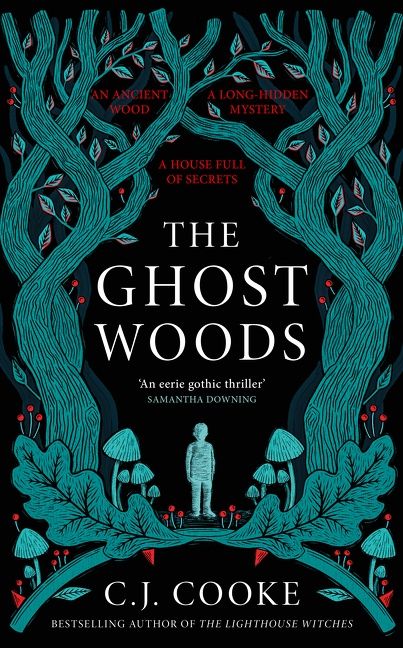
book cover

Oh God, there it is, lit up by the car’s headlights. Four pointy turrets and dark stone walls laced with red ivy. It looks like Dracula’s holiday home.

Something unspeakably evil is stalking the grounds of Lichen Hall.

Two women, from different backgrounds, at different times, (1959 and 1965) find themselves in the same position, pregnant without a mate in a period in which that was not considered socially acceptable. Such women were often shunted off to mother-and-baby homes. You may have heard of the Madgalene laundries of Ireland. They were awful, and were not restricted to the Emerald Isle. But Mrs. Whitlock’s Lichen House is soooooo much worse. There is plenty of strangeness about the place and some of its inhabitants, well beyond garden-variety human unpleasantness.

description
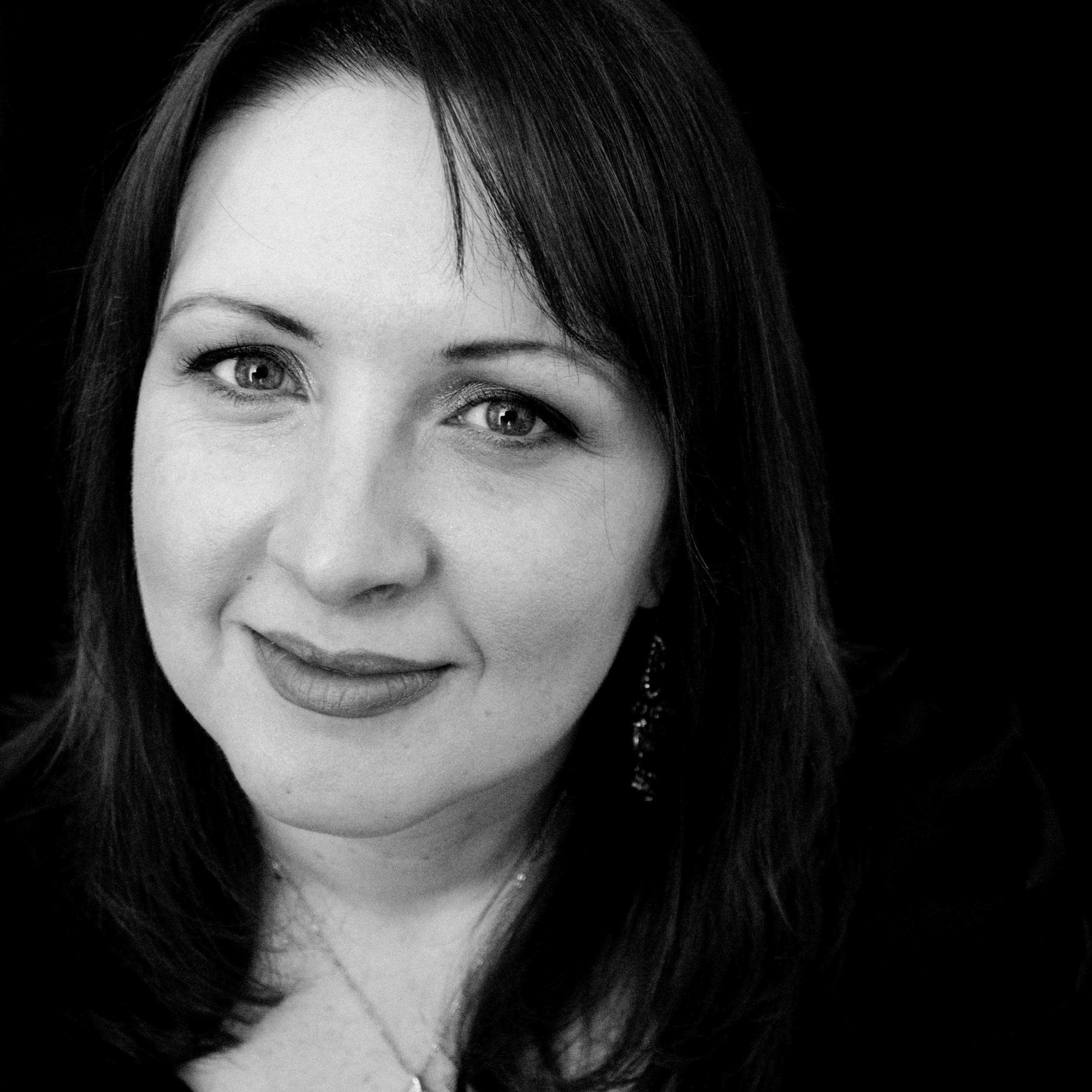
C.J. Cooke – image from Curtis Brown

In 1959, seventeen-year-old Mabel Anne Haggith finds herself five months deep in a family way, despite never having had sex. Her mother and stepfather have sent her off to be seen to, out of sight of the neighbors. She is truly a clueless innocent. She feels that there are ghosts in her body. In 1965 Pearl Gotham, twenty-two, a nurse, is likewise facing emerging problems, an unreliable bf among them. Both are taken in by the welcoming, if somewhat chilly, Mrs. Whitlock. The house seems likelier to generate nightmares than comfort to women in need. In fact, it has much in common with the abusive mother-and-baby institutions of its time. More about that later.

Mabel is very much a pleaser, eager to fit in, even when hazed by those already there. She is shy and unsure of herself, working class, uneducated, and for all intents and purposed alone in the world. Until she finds a friend in another young woman there, Morven.

Pearl arrives with much more confidence. A nurse, she is aware of the seriousness of the lack of real medical care at Lichen House. She is also much more worldly, more socially able, not just with the other young women but with Mrs. Whitlock as well. In addition she is charged with tutoring Mrs. Whitlock’s decidedly odd grandson.

Cooke offers a cornucopia of detail that gives the creepiness texture and provides a constant source of surprising revelations. There are mysteries to be sussed out. The overarching imagery of the story has to do with fungi. The house itself is seriously infested with molds of various sorts, and is rapidly sinking into decrepitude.

I follow her gaze to an enormous mass of yellow fungus creeping up the side of a wall. What looks like a series of giant ears are bulging from the gap in the doorframe, right down to the floor. As I draw my eye across the length of the vestibule I spot more fungus spewing from cracks in the tiles and the window frames. The vaulted ceiling is sullied by black blooms of mold. Black frills poke out from the wooden steps at my feet. And at the end of the staircase, a plume of honey-gold mushrooms nub out from the newel post, perfectly formed. It makes me feel physically ill.
“What happened?” I ask, burying my mouth in the crook of my arm.
She sighs wearily. “An infestation of fungus. I still can’t quite believe it. This house has been standing for four hundred years. It has withstood bombs, floods, and a bolt of lightning.” She folds her arms, exasperated. “Fungus can eat through rock, can you believe that?”
“Good God,” I say.

The woods manifest spots of light that can lure one in. Mrs. Whitlock celebrates every birth with a puff of fairy dust toward the newbie. Mr. Whitlock maintains a Micrarium, a sort of mini- museum, a cabinet of curiosities focused on fungi. He makes a big deal about cordyceps, which may be familiar to fans of The Last of Us.

There is plenty of strangeness. Who posts a “Help Me” poster in one of the rooms? Who is that little boy Pearl sees dashing about, the one the other young women deny having seen? Mrs. Whitlock seems particularly averse to making use of the medical profession, forcing her guests to give birth in the house, with only the assistance of the women living there. What’s up with that? Mr. And Mrs. Whitlock were reputed to have had a son who died in an auto accident, but his body was never recovered. Huh? Who is the mysterious, threatening figure in the woods?

“So there’s a story about a witch who lives in the ghost woods out in the forest.”
“I’ve heard of that,” I say. “Mrs. Whitlock mentioned it. At least, the ghost woods part. I don’t believe she mentioned a witch.”
“Well, I heard about it when I first came here,” Rahmi says, and I see Aretta give her a look, as though to warn her not to say more. Rahmi notices, and bites back whatever she was going to say. “I’ve seen her,” she says guardedly.
“Who, the witch?” I say, and she nods. I study her face, expecting her to say “Boo!” or something, revealing it all as a big joke.
“Well, then,” I say, raising my glass of water as though it is a crisp Chardonnay. “I shall seek out this witch in the ghost woods. A little bit of spookiness will spice this place up nicely.”
“Don’t,” Rahmi says, though I’m not sure how much I should take this at face value. “It might be the last thing you ever do.”

As the story goes, Nicnevin was a witch who had lain with a girl who had fallen asleep in the woods. When the girl gave birth, it was to a monstrosity, and it was killed. Nicnevin made the family mad before killing them, then took over the family hall to be a place of rot and ruin, naming it Lichen Hall.

In addition to the ample gothicness of the novel, there is plenty of character and plot content to keep you flipping those pages, and maybe loading up on bleach. Both Mabel and Pearl are sympathetic. What will happen with them, with their babies? What kind of danger are they in? You will definitely care.

There is also plenty of payload beneath the overlaid story. In an image of how women were treated in the 50s and 60s, the awfulness of Mrs. Whitlock’s Lichen House offers a vibrant image of a decaying institution, controlled by ill-meaning people, enforcing wrong-headed social norms, and crushing any people or behaviors falling outside the prescribed lanes. It is a moving, powerful, effective tale.

The Ghost Woods is, first and foremost, a gothic novel, the last installment of a thematic trio that considers our relationship with nature, motherhood, memory, and trauma (the previous two installments are The Nesting and The Lighthouse Witches). I suppose the question could legitimately be asked whether motherhood, gay rights, reproductive rights, and gender inequality have any place in a gothic novel. For me, the gothic is exactly the space to explore darkness of any kind, and the practice of othering is one of the darkest corners of human history. – from the Author’s Note

Review posted – 06/27/25

Publication date US trade paperback – 4/29/25
First published UK – hardcover – 10/13/22

I received an ARE of The Ghost Woods from Berkley in return for a fair review and a pinch of fairy dust. Thanks, folks, and thanks to NetGalley for facilitating.

This review is cross-posted on Goodreads. Stop by and say Hi!

=======================================EXTRA STUFF

Links to Cooke’s personal, FB, Instagram, and Twitter pages

Her personal site was strangely unavailable when I was testing this. I am hoping it has been restored by the time you see this.

Profile – from GR

C.J. (Carolyn) Cooke is an acclaimed, award-winning poet, novelist and academic with numerous publications as Carolyn Jess-Cooke and Caro Carver. Her work has been published in twenty-three languages to date. Born in Belfast, C.J. has a PhD in Literature from Queen’s University, Belfast, and is currently Reader in Creative Writing at the University of Glasgow, where she also researches the impact of motherhood on women’s writing and creative writing interventions for mental health. Her books have been reviewed in The New York Times, The Guardian, Good Housekeeping, and the Daily Mail. She has been nominated for an Edgar Award and an ITW Thriller Award, selected as Waterstones’ Paperback Book of the Year and a BBC 2 Pick, and has had two Book of the Month Club selections in the last year. She lives in Scotland with her husband and four children.

Interviews
—–Rachel Herron – Ep. 208: CJ Cooke on the Thrills of Contemporary Gothic Horror – video – 33:29 – begin at 8:10 – not specific to this book, but interesting
—– Murder by the Book – – C.J. Cooke in Conversation with Rachel Harrison

My review of prior work by Cooke
—–The Lighthouse Witches).

Songs/Music
—–The Beatles – I Want To Hold Your Hand – referenced in Chapter 2

Item of Interest from the author
—–Insta – CJ holds forth on the mother-and-baby homes theme from The Ghost Woods on her insta page
—– Google Play Books – Excerpt – audio – 10:36

Items of Interest
—–Small Things Like These by Claire Keegan – a great novel re the Magdalene laundries
—–Wiki – Magdalene laundries in Ireland
—–What Moves the Dead – another novel involving fungi

Leave a comment

Filed under Feminism, Fiction, Horror, Suspense

How to Win Friends and Influence Fungi by Chris Balakrishnan, Matt Wasowski

book cover

Nerd Nite is an event usually held at a bar or other public venue where usually two or three presenters share about a topic of personal interest or expertise in a fun-yet-intellectual format while the audience shares a drink. It was started in 2003 by then-graduate student (now East Carolina University professor) Chris Balakrishan at the Midway Cafe in the Jamaica Plain neighborhood of Boston. In 2006 Nerd Nite spread to New York City, where Matt Wasowski was tasked with expanding the idea globally. – from Wikipedia

Be There and Be Square – Nerd Nite logo

There was a nerd magazine in 2012, a Youtube presence, and occasional podcasts. This is the first Nerd Nite book.

Misophonia can attach itself to any repetitive sound, but the most common ones are things, like chewing, breathing, sniffing, and throat clearing. It can be hard for sufferers to talk about because of how difficult it can be to tell someone politely that the sound of them keeping themselves alive is repulsive to you.

There are 71 entries, taken from live presentations done by the authors of each piece. (TED talks for those with short attention spans and a need for alcohol?) Nerd Nites have been held in over 100 cities across the globe. The material here covers eleven scientific areas. (see below) All the entries are brief, so if one does not appeal to your mental tastebuds hang on a couple of minutes for the next one, or just skip past.

description
Chris Balakrishnan and Matt Wasowski – editors – image (from some time ago) from Facebook

You can digest this book a few morsels at a time, and not have to worry about the fate of a fictional hero or put-upon victim. Nope. The heroes here are the scientists, the presenters. One of the great failings of popular science books, IMHO, is the absence of humor, or poor attempts at it. Not here. There are many moments in this one, and humor in almost all of them. That made me very happy. Of the 71 pieces, almost all are very pop-sciency, understandable by most readers, even me. There were only one or two that made my head hurt. It makes an excellent bed-side read. It was an upstairs book for me, to be read before nodding off, hopefully. Sometimes that takes a while. This is not an all-inclusive list of the articles, but lets you know what might be in store in its eleven sections

1 – Creature Features – on weird animals
2 – Mmmm…Brains – strangeness with how we learn and adapt
3 – Bodily Fluids – on things like coping with poo in space. (In space, no one can hear you fart?)
4 – Doing It – like it suggests, on sex, human and non-human, (no, not with each other. Don’t be weird.)
5 – Health and (un)Wellness – human smells (See Paul Giamatti in The Holdovers) – on therapeutic maggots, adolescent medicine, et al
6 – Pathogens and parasites – on birds, bacteria in birds, zombies, the scotch tape test (don’t ask), viruses
7 – Death and Taxes – mass extinction, cancer, algae
8 – Space, the Big and the Beautiful – ignorance, asteroid avoidance and use, life on Europa?, artificial gravity, studying a pristine meteorite, Webb telescope
9 – Tech (High and Low) – GMOs, dating app, human powered flight, cyborging humans, domesticating bacteria, nuclear fusion
10 – Math is fun – a seminal experiment, the math of gossip, the golden ratio, infinity, cryptography
11 – Careers – things removed from dogs, useless inventions, myths about death, animals CSI, amputations, fermentation, flames.

there are approximately 100 trillion microorganisms (mainly bacteria), representing as many as 30,000 different species, living in every crevice, nook, and mucosal cranny of your body that you can imagine.

I would include a list of my favorite articles, but it would wind up as long as the parts list above. But ok, because I have the sense of humor of a twelve-year-old, the one that made me laugh the most was To Boldy Go: Dealing with Poop and Pee in Space. Apollo 10 astronauts were gifted with the visual, and no doubt olfactory, treat of a turd meandering about in their capsule. This begins a talk about how one handles bodily waste in zero G. Another on bladder control, or the absence thereof, was sidesplitting. Others, on camel spiders and hangovers, generated a fair number of LOLs.

Some were fascinating, like one having to do with making a brain on a chip. (Can it be served with Salsa?) The pieces on bacteria and their importance to human life, heck, to all life on Earth, were fascinating.

There is plenty of weirdness, about diverse forms of milk, the proper use of maggots in healing, zombie parasites, asteroids, artificial gravity, and here we go with another bloody list. Sorry. Take my word, there is a wealth of material here that will broaden your knowledge base, and serve up plenty of conversational hors d’oeuvres for cocktail party chatter.

It worked quite well for me. There is a downside, though. Because all the articles here are very short, one is often left hungry for more. On the other hand, that limitation might provoke you to sate that desire with a bit of extra research, which is always a good idea. So, never mind.

If science piques your curiosity, if learning new and diverse things makes your heart race, or if you like to laugh, then this book is for you. How to Win Friends and Influence Fungi is a very filling read, one nibble at a time.

Review posted – 06/14/25

Publication dates
———-Hardcover – 02/01/24
———-Trade paperback – 11/04/25

I received a hardcover of How to Win Friends and Influence Fungi from St. Martin’s Press in return for a fair review. Thanks, folks.

This review is cross-posted on Goodreads. Stop by and say Hi!

=======================================EXTRA STUFF

Author/Editor links

Chris Balakrishnan – Program Director at the National Science Foundation – His personal and FB pages
A list of his articles

Matt Wasowski – Director of New Business and Product Development, Events at SAE International – His FB, LinkedIn and Twitter pages

Items of Interest from the authors (really editors)
—–Soundcloud – excerpt – 5:01
—–Birdsong: How the Twittering Set Learns to Speak
—–“Nerd Nite Published a Book!” by Matt Wasowski – Nerd Nite Austin 155, January 2024

1 Comment

Filed under Non-fiction, Psychology and the Brain, Science and Nature

Parents Weekend by Alex Finlay

book cover

They run. Run with a primal fear knowing that if they slow down, all five of them will die.
It’s hard to think in this fog of terror.

Blane puts his hands out, palms down: “Stick to the story like we agreed.”
His gut clenches, but he makes sure to smile reassuringly. He warned Stella—warned them all—that Natasha Belov was bad news. Bad, bad news.

Five students are running for their lives. Will they survive? Why are they running? From whom? We go back three days.

description
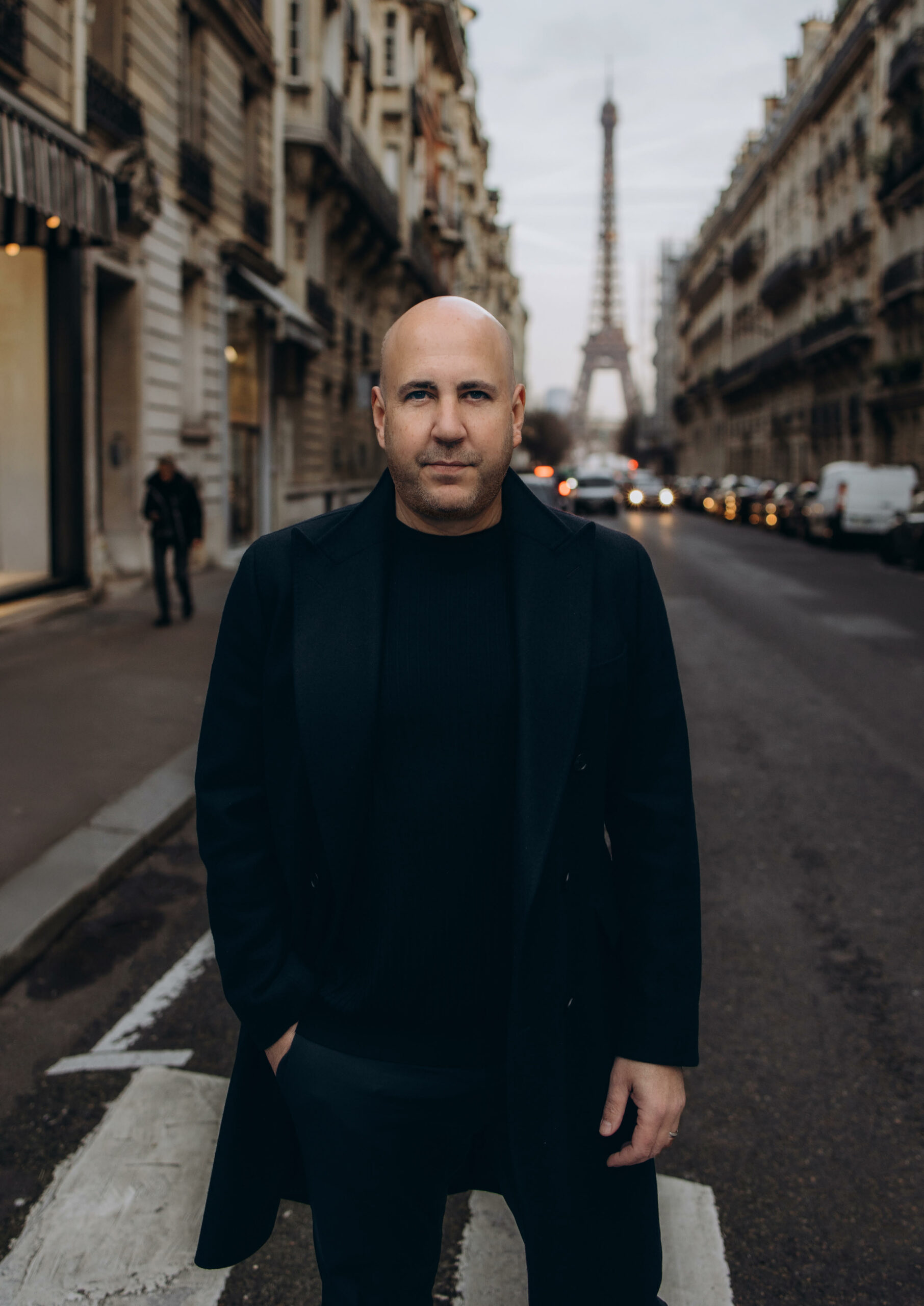
Alex Finlay – image from his site – shot by Julie Litvin

It is parents’ weekend at Santa Clara University, a private institution on the California coast. (There is an actual SCU. The author’s son goes there.) Events are planned. Parents of freshman are invited to join their children for a Friday dinner. We are introduced to the families of the five in their capstone group (Each freshman dorm breaks the residents into small groups of five to six students. They have to complete a project together by the end of the year, but spend most of the time partying.) and will subsequently rotate among them for POVs. This is standard operating procedure for Finlay, albeit with a larger cast than usual. Well, sort of. More on that in a bit. It is a mixed group.

The Roosevelts include an undersecretary of state, Cynthia, her staff and security. This is necessary as her now-college-age son, Blane, has been kidnapped before. You can’t be too careful. The Maldonados are David and Nina. He is a plastic surgeon, but it will take more than a nip and tuck to repair their marriage. Stella is their co-ed. The Goffmans consist of Alice, who is a secretary to Dean Pratt, and her son, Felix. His education is the primary benefit of a job she does not exactly love. The Akanas are Ken, a relatively famous Chief Judge of Superior Court in LA, and wife Amy. The loss of a child to cancer has made their daughter, Libby, all the more precious. The Kellers are special agent Sarah, husband Bob and their twins. Their son is Michael. Readers of Alex Finlay may remember Sarah Keller from The Night Shift and Every Last Fear.

Keller was a surprise reader favorite in Every Last Fear. I wasn’t planning to bring her back, but as I wrote THE NIGHT SHIFT she just appeared. I love writing her and her husband Bob. Both are so decent and supportive of one another, and they provide some needed moments of calm in the storm. – from The Big Thrill interview about the Night Shift, and here she is again.

Although the five families split time, most is devoted to Sarah Keller, as she takes an active role in the investigation, working closely with the head of security at the university. This is our procedural pathway. Going by the numbers, the Kellers (Sarah, really) takes up half of the chapters in the book, thirty-five of seventy. The four other families get five to seven each, and there are eight chapters assigned to individuals or the missing. This is actually a good thing as the Keller family offers a welcome relief from the dysfunction of some of the others. Tolstoy pops to mind: “Happy families are all alike; each unhappy family is unhappy in its own way.” A loving, supportive marriage in service of truth-telling. What’s not to like? This is not to say that there is much deep character study at work here. This is a thriller, after all. But there is always peril in juggling POVs that two or more may begin to sound the same. Finlay has managed that challenge well, as each is presented with a distinctive voice and personality.

There’s people who write wonderful literary fiction, and they can get into the in-depths of the character like I never could… “I don’t have a lot of internal inner monologue. I try and make you know who these characters are by what they do and what they say. – from the Read with Jul interview

They all have their secrets, well, mostly. We get to see them revealed one by one, and must consider if they have any relevance to the dual mysteries at play. It just so happens that another student at SCU, missing for several days, had been found dead, three days before. The five had been messaging each other about sticking to their story, so a core mystery; what had happened to the girl, how, and what was the involvement of the five? The presenting mystery is the disappearance of the five on the night of the Parents Weekend dinner. What is the link between the two?

There are plenty of clues scattered about, not all of them red herrings. We learn of the parents’ and students’ pathologies and strengths over the course of the investigation. There are bad people at work, and we wonder how much damage they will do before they can be identified and stopped.

Finlay sustains a breathless pace, providing the end-of-chapter hooks that keep us turning the pages. Secondary characters fill in needed blanks, sometimes offering more substantive support to notions or particular primary characters.

The tension, informed by factual discoveries and personal revelations, builds to a dramatic climax. You will get to find out if your guesses were correct. Finlay has made a habit of writing fast-paced thrillers that serve the purpose of pure entertainment. You do not need to be a student or a parent to enjoy this Parents Weekend. It would make an excellent beach, (unless you are going to a place with sea caves) or airplane read (commercial, not private jet), or even something to help you get through the down times at an actual college parents weekend. But pay attention. This will count towards your final grade.

Review posted – 06/13/25

Publication date – 05/06/25

I received an ARE of Parents Weekend from Minotaur Books in return for a fair review and a Gentleman’s “C” on that disappointing final exam. Thanks, folks, and thanks to NetGalley for facilitating.

This review is cross-posted on Goodreads. Stop by and say Hi!

=======================================EXTRA STUFF

Links to Finlay’s personal, FB, and Instagram pages

Profile – From the author’s real-name website

Anthony Franze is a critically acclaimed novelist with St. Martin’s Press, and a lawyer in the Appellate & Supreme Court practice of a prominent Washington, D.C. law firm.
For more than a decade, Anthony was an adjunct professor of law teaching courses in Federal Courts, Legal Rhetoric, and Appellate Practice, and he currently participates in a European faculty exchange program where he teaches at law schools abroad.
He writes legal thrillers under his own name, including THE LAST JUSTICE (2012), THE ADVOCATE’S DAUGHTER (2016), and THE OUTSIDER (2017) He writes commercial fiction under a pen name, [Alex Finley] and his 2021 novel was an Indie Next pick, a LibraryReads selection, an Amazon Editor’s Best Thriller, as well as a CNN, Newsweek, E!, BuzzFeed, Business Week, Goodreads, Parade, PopSugar, and Reader’s Digest best or most anticipated thriller of the year. His work has been translated into more than a dozen languages and optioned for television and film.

My reviews of two of Finlay’s prior books
—–2024 – What Have We Done
—–2023 – If Something Happens to Me

Interviews
—–Authors on the Air – Alex Finlay Parents Weekend Authors on the Air with James L’Etoile – video – 17:30
—–Mystery and Thriller Mavens – Special Pre-launch Q&A with Sara DiVello – 28:47
—–Read with Jul – chapter 86. an interview with bestselling thriller author alex finlay
—–The Big Thrill – Up Close: Alex Finlay The Ties That Bind
—–Outliers Writing University – Get To Know Author Alex Finlay with DP Lyle and Kathleen Antrim – video – 19:24 – good bits on writing process and shifting from legal novels to thrillers, and from Anthony FranZe to Alex Finlay

Songs/Music
—– AC/DC – Back in Black – in Chapter 12

Leave a comment

Filed under Fiction, Mystery, Suspense, Thriller

Happy Land by Dolen Perkins-Valdez

book cover

Calling something your own is a powerful prayer and there was God in it.

This is sacred ground for my family. I graze the tips of the grass with my palm as I wonder about their stories. Who were my people, and what had they sought on this mountain? I’ve never done any kind of family research, never had enough of a family to even know where to start, but now I’m beginning to realize, since arriving here, how much this missing hole goes beyond a decade-long spat.

When Veronica (Nikki) Lovejoy-Berry, a D.C. real estate agent, receives a summons from her long unseen grandmother in North Carolina, she senses the urgency and hurries down. Grandma is getting on, but remains self-reliant and reasonably spry.

Mother Rita was insistent—I need your help and if you come down here I will tell you everything your Mama hasn’t told you about our family. It wasn’t exactly an invitation I could refuse.

Mom and Grandma had become estranged many years earlier, erecting a wall between grandmother and granddaughter as well. During her visit Nikki is regaled with a tale that has a magical aura. The place where her grandmother lives was once called Happy Land. It was a community formed in the post-Civil-War period by freed slaves, not as a typical American town or village, but in the image of the communities from which the ancestors of its members had been taken. These people decided to create a kingdom, with a king and queen, as their ancestors had had in Africa.

description
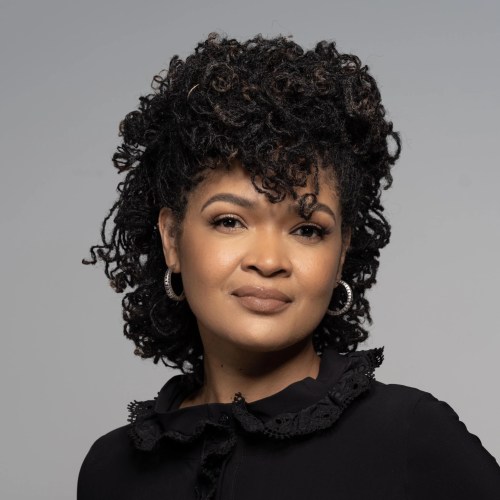
Dolen Perkins-Velez – image from Torch Literary Arts

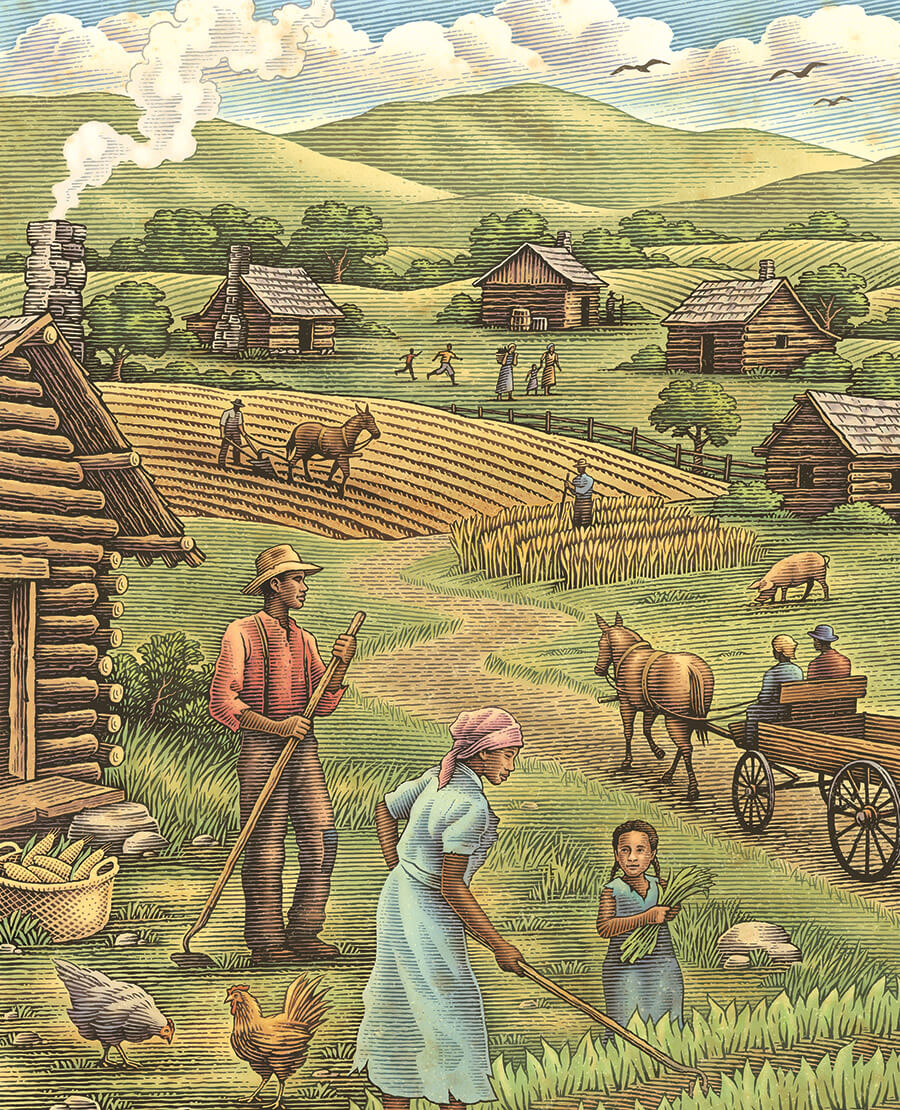
The story alternates between the contemporary struggle of Mother Rita to retain ownership of her land, as she fills her granddaughter in on the history of the place, and the tale of one of the original settlers of the kingdom, its first queen, Luella Bobo. We are given a very up-close-and-personal look at what life was like in the 1870s, the closing years of Reconstruction, for freed slaves, what it took to establish themselves both personally and as communities, what obstacles they had to overcome. It offers an eye-opening perspective for any who are not very familiar with the era.

description
Working the Fields illustration by Erwin Sherman

Nikki is not on a mission. She is tired, struggling and unsatisfied with her life. She is eager to quickly resolve whatever it is that Mother Rita wants of her and dash back to DC as quickly as possible. She has no particular interest in history, family or other, which makes her a fair every-person stand-in for readers. It is through her POV that we slowly gain an appreciation for the importance of knowing one’s personal, and family history, and the significance of the land as an anchor for that connection. The novel is based on real events.

While researching Black history in western North Carolina, I stumbled on an article about this kingdom outside of Hendersonville. It was just a local newspaper, and I thought, “What is that?” It was a very brief article with an illustration showing that there had been this Black community during Reconstruction in the mountains. – from the Rumpus interview

Mother Rita does her best to pass on to Nikki the lore and knowledge she has tended her entire life.

All my life, I’ve been part of a small family circle. By the time my daddy was 20, both of his parents had passed away. He and Mama, with their desire to build a family out of nothing, were a perfect match for each other in that way. The two of them against the world. For me, not having a sibling or even a cousin has been the only existence I’ve ever known. Now here I am, walking beside my grandmother on acres and acres of land that my people have inhabited for over a hundred years. It’s hard to put how I’m feeling into words other than to say I’m dizzy with grief. I didn’t know you could mourn something you never had.

One element is the connection to the outdoors that Rita is able to spark in her grandchild, teaching her to appreciate gardening, and to pass on her considerable expertise. Nikki slowly finds herself able to step back from her urban self to find a connection with and a love for the sights, scents, the tactile feel of this other sort of place.

After the Great Migration, so many Black people ended up concentrated in cities, and we often forget that we are fundamentally a rural people. You don’t have to go back many generations to a grandmother or a great-grandfather who was a country person. – from The Rumpus interview

description
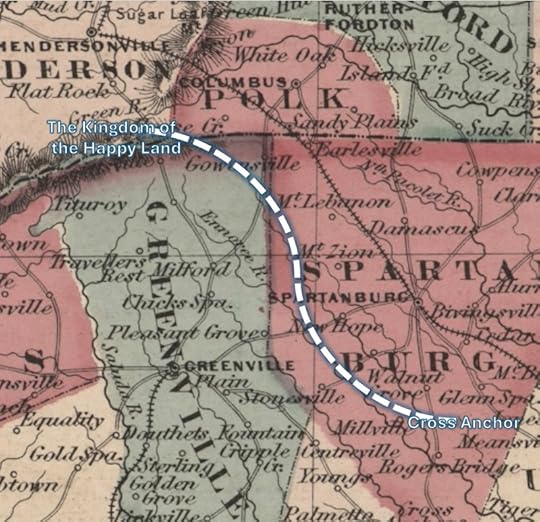
Cross Anchor, a remote township in southern Spartanburg County, S.C., was home to the founders of the Kingdom of the Happy Land before and just after the Civil War. – image from Blue Ridge Archive

A particular revelation is a particular legal mechanism used by the greedy and unscrupulous to cheat people, black people in particular, out of their land. It is remarkable just how much land was taken this way. Less surprising was the abuse of the criminal system to intimidate blacks who owned land, or aspired to do so. Equal treatment before the law remained a dream deferred. This gives the novel particular resonance in a time when the Deconstruction of the Trump era seeks to turn the clock back to an age before legal protections existed.

description
The Kingdom by Erwin Sherman

That said, Happy Land presents a message of hope. Whatever one may think of the royal approach those people favored, they took the opportunity presented by the end of slavery to make decisions for themselves, to organize their own community, to develop their own businesses, to participate in an equal way with the commerce of the area beyond their enclave. Even emerging from the horrors of enslavement, and suffering the ongoing oppression of those who preferred the ownership of human beings as property, these people kept the light of possibility alive. It is a surprising and moving story, which offers us historical reason to keep our spirits receptive to the need for and possibility of hope in an increasingly dark time.

In fall of 1873, a group of freedpeople left Spartanburg County, South Carolina, headed north across the state line into North Carolina. Near Zirconia, North Carolina, the people established a remote community that they called a kingdom. They named a king and queen, formed a communal treasury, and eventually purchased 205 acres of land in 1882 from John Davis, land that was spread across the North Carolina–South Carolina state line. Approximately half was deeded to Luella Montgomery and the other half to Robert Montgomery.
At its height, it is believed the kingdom numbered over two hundred people.
– from the Author’s Note

Review posted – 6/6/25

Publication date – 4/8/25

I received an ARE of Happy Land from Berkley in return for a fair review. Thanks, folks, and thanks to NetGalley for facilitating.

This review is cross-posted on Goodreads. Stop by and say Hi!

=======================================EXTRA STUFF

Links to the author’s personal, FB, Instagram, and Twitter pages

Interviews
—–The Rumpus – The Kingdom of Happy Land: A Conversation with Dolen Perkins-Valdez by NEFERTITI ASANTI – APRIL 28, 2025
—–NPR – Author Dolen Perkins-Valdez discusses her new novel ‘Happy Land’ by Michael Martin
—–May 2025 Feature: Dolen Perkins-Valdez by Jae Nichelle – begins down on the page, after the excerpt
—–Writers Digest – Dolen Perkins-Valdez: On History’s Untold Stories – More about her prior novel, but still quite interesting

My reviews of earlier work by Perkins-Velez
—–2010 – Wench
—–2022 – Take My Hand

Item of Interest from the author
—–Torch Literary Arts – excerpt – Chapter 4

Items of Interest
—–OurState.com – Lost & Found: The Kingdom of the Happy Land by Brad Campbell
—–Blue Ridge Archive – Welcome to the Kingdom of the Happy Land

Leave a comment

Filed under American history, Fiction, Historical Fiction, Literary Fiction, Reviews