Monthly Archives: July 2024

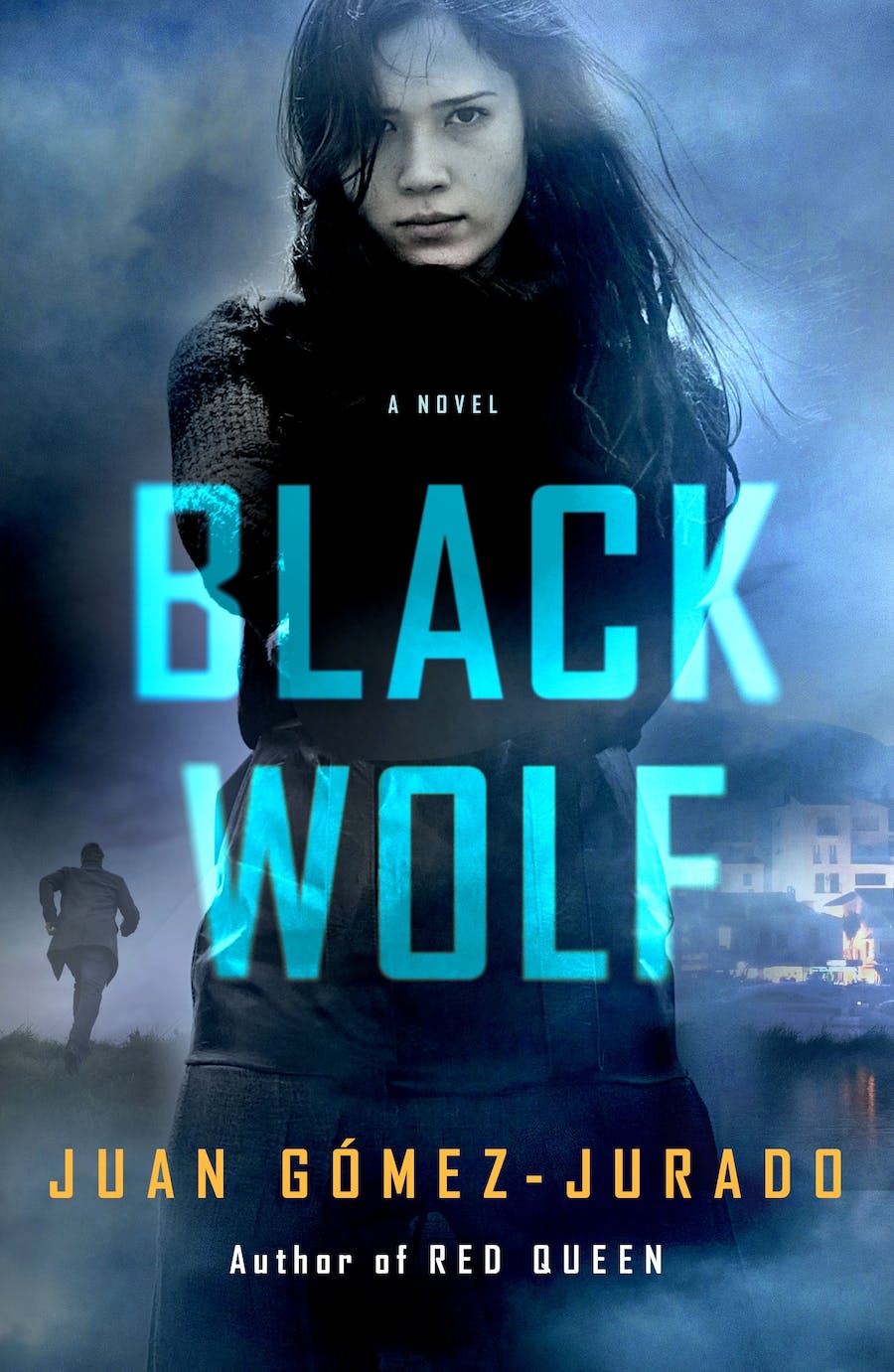
Black Wolf (Antonia Scott, #2) by Juan Gómez-Jurado

book cover

While she may be capable of functioning several levels into the future, her mind is no crystal ball. She may have the ability to visualize dozens of disparate pieces of information simultaneously, but her brain doesn’t work like in those movies where you see a whole string of letters superimposed on the face of the protagonist as they’re thinking.
Antonia Scott’s mind is more like a jungle, a jungle full of monkeys leaping at top speed from vine to vine, carrying things. Many monkeys and many things, swinging past one another in midair, baring their fangs.
Today, the monkeys are carrying dreadful things, and Antonia is afraid.

Antonia is afraid of almost nothing, apart from herself. Afraid of life, maybe. After all, she relaxes by imagining for three minutes every day how she could kill herself.

The Black Wolf is the second in Juan Gómez-Jurado’s Antonia Scott series. If you have not read the first, Red Queen, I would take a break, read that one, then come back. Also, if you have not read the first book in the series, there are some items in this review that might be spoilerish for you. Caveat lector.

Red Queen is a super-secret international anti-crime organization. They specialize in finding and developing a small number of exceptional human beings to become the mental equivalent of super-soldiers, assigned to look into Europe’s worst crimes. Antonia Scott is the Red Queen in Spain. She has an amazing mind, but also some issues, as you might suspect, given the two quotes at the top of this review. She has a pill she takes when it all becomes too much for her. Sometimes she takes too many. Jon Gutierrez is an erstwhile cop from Bilbao who was recruited to assist Antonia with matters of a police sort, and with more baby-sitting types of responsibilities. He is a large man (but not fat) with red hair, and a very good guy. The pair had a nasty adventure in book #1, with a primary villain who remained beyond their reach.
description
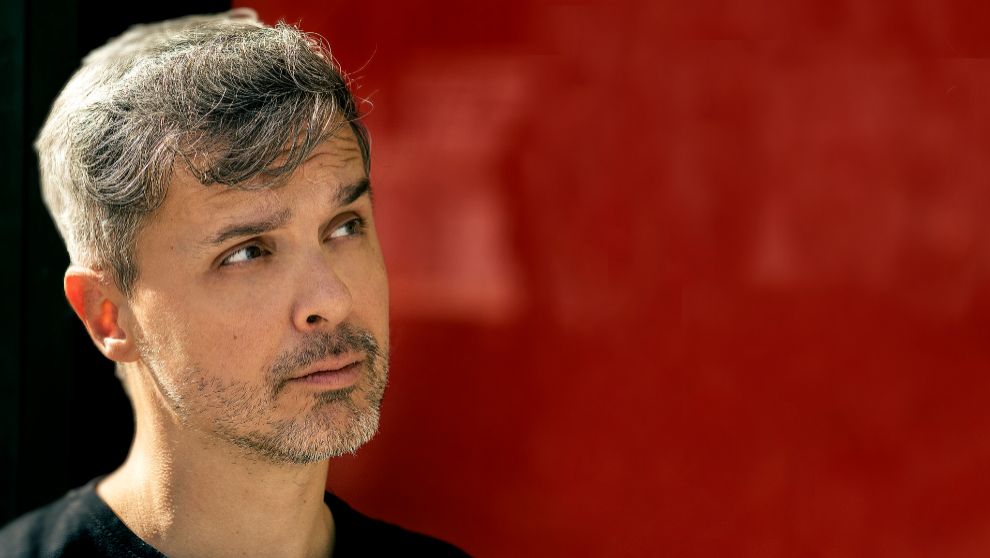
Juan Gómez-Jurado – Image from Expansión – photo credit – Luis Malabran

We begin with the extraction of a very water-logged body from a river. Antonia wonders if it might be a major nemesis from the prior book, Sandra Fajardo. She has been on the lookout for this baddie ever since.

The story continues with an assassination attempt at a shopping mall in Marbella, a city on Spain’s southern coast. A mafioso has been killed. His beautiful wife, Lola Moreno, who travels with a bodyguard, is set upon by a professional assassin or two, but the lady has skills, and manages to escape. She will provide one of the two major story lines of the novel. Antonia and Jon are sent to have a look by their boss, the mysterious Mentor, which made me think of M in the Bond novels

We alternate, more or less, between Lola’s flight from henchmen directed by a Russian mafia don, and Antonia’s and Jon’s tracking of clues. This is Antonia’s domain, seeing, or sensing things that others miss. She is somewhere between Sherlock Holmes and Lisbeth Salander of the Millenium series.

There will be blood, unpleasantness with cars, an infuriating discovery, close calls, and twists. We get some backstory on both Lola and Antonia, helping explain how they became who they are.

And then there is a killer, the famed assassin, the Black Wolf, feared even by other professional killers.

description
Vicky Luengo as Antonia and Hovik Keucherian as Jon – image from Amazon UK

Many of the chapters begin with fairy-tale-like recollections. This one is typical.

There was once a little girl who grew up in a sad, loveless home where the food tasted of ashes and the future was black, she tells herself as she waits.

Jorado offers paralleling of characters. For example, the mob boss Orlov with Mentor, and Antonia with the Black Wolf. It is satisfying to see excellent craft like this on display.

He also regularly offers up a collection of interesting foreign words, that describe a particular situation or feeling better than Spanish or English. Here are a couple:

Kegemteraan is in Malay. In Malay it would mean “the joy of stumbling”. The simultaneous feeling of pleasure and grief when you know that you have done something that you shouldn’t.
Curious. You know you are wrong but you keep doing it again and again since it hurts but you also enjoy it.

Bakiginin – In Karelian, a language spoken from the Gulf of Finland to the White Sea, it means “the sadness of a wall builder.” The contrast between the need to keep the world away from your life, and the impossibility of doing so.

Gomez-Jurado did this in the first book in the series. It is a charming element.

description
Alex Brendemühl as Mentor – image from Amazon UK

One thing that irks in tales of this sort is the perpetually stupid local authority. Here the area captain seems to be blaming A&J for the carnage that they are investigating, as if they had somehow caused it. But the author has some fun with this trope, which I will not spoil here.

Antonia’s and Jon’s personal relationships come in for examination, enhancing their appeal, but it is kept to a minimum, so adds color without interfering with the story.

And the story is great fun. A rock’em sock’em thriller, pitting the best mind against the darkest evil, with plenty of conflict, and lots of clues (and some red herrings) to tease you into guesses and theories. Humanizing of (some of) the baddies combines with offering appealing, quirky, leads and a story that speeds along way over the limit. The Black Wolf is an excellent follow-up to Red Queen, leaving one panting for the third entry in the series. That need will be satisfied on March 12, 2025, with the publication in English of The White King. I can hardly wait.

She has a black belt in lying to herself, and only a yellow one in expressing her reality.

Review posted – 07/26/24

Publication date – 3/12/24 – in English
First published in Spain – 10/24/2019

I received an ARE of The Black Wolf from Minotaur in return for a fair review. Thanks, folks, and thanks to NetGalley for facilitating.

<

This review is cross-posted on Goodreads. Stop by and say Hi!

=======================================EXTRA STUFF

Links to Gomez-Jurado’s personal, FB, and Twitter pages

Profile – fromWikipedia

Born in Madrid, Spain on December 16, 1977, Juan Gómez-Jurado, is a Spanish journalist and author. He is a columnist in “La Voz de Galicia” and “ABC”, distributed in Spain, and he participates in multiple radio and TV programs. His books have been translated into 42 languages and he is one of the most successful living Spanish authors, along with Javier Sierra and Carlos Ruiz Zafón. His writing has been described by critics as “energetic and cinematographic”. He worked in various Spanish media outlets, including 40 Principales, Cadena Ser, Cadena Cope, Radio España, Canal + and ABC, before publishing his debut novel, God’s Spy (Espía de Dios) in 200

Interview
—–Radio New Zealand – Spanish author Juan Gomez-Jurado on his best-selling – audio – 23:32 – by Kathryn

My review of Gomez-Jurado’s prior book
—–2023 – Red Queen

Music
—– Joaquín Sabina – 19 Days and 500 Nights – Jon listens to this

Item of Interest
—–Arganzuela Footbridge – appears in Chapter 3

Leave a comment

Filed under Fiction, Mystery, Reviews, Thriller

Hit ‘Em Where It Hurts by Rachel Bitecofer and Aaron Murphy

book cover

The GOP is a threat to your freedom, health, wealth, and safety. If they gain control of the federal government they plan on passing a national abortion ban, gutting Medicare, destroying Obamacare, raising taxes on working families, and stealing a lifetime of YOUR Social Security money.

Partisanship creates a convenient shortcut that low-interest and low-information voters can rely on to make their vote decisions, and it colors our entire perception of the political world.

There are two things that should never be discussed in polite company, religion and politics. Well, presuming you, gentle reader, to be a reasonably polite person…sorry.

Rachel Bitecofer is a PhD in political science and international affairs. In 2017 she wrote The Unprecedented 2016 Presidential Election, a book analyzing the 2016 US elections. She made her reputation by being one of the few political analysts who correctly predicted Biden’s 2020 victory with impressive specificity, and the size of the Blue Wave in 2018. She has come to some conclusions about why Democrats so frequently lose to Republican candidates whose interests are in opposition to those of their constituents. In order for Dems to make inroads with voters, they will have to take some pages from the GOP campaign playbook. Hit ‘Em Where It Hurts lays out what the other side is doing, and extracts from that lessons to be learned to improve outcomes.

description
Rachel Bitecofer – image from The Telegraph – credit Christopher Newport University

What is it that they do? Well, demagoguing issues and playing the politics of division, lying relentlessly and repeating their lies ad nauseum, of course. Not news. But Bitercofer digs into the specifics of how the GOP goes about this. She also offers analysis of voting groups, with an eye to how one engages different populations.

Ordinary people hate losing, or losing out on things we like or think we might like–with more intensity than we like gaining those things. A simpler way to put it is losing makes us feel twice as bad as winning makes us feel good.

Instead of the usual Democratic campaign of demonstrating to voters why a candidate is better able, better prepared, and maybe a better person, Bitecofer urges Dems to engage in impactful criticism of their opponents. Or, why the other candidates will be bad for you, applying the blame of truth not just to the down-ballot candidates, but to the party as a whole. Voters may or may not recall a candidate’s name, but they’re likely to remember how they feel about Rs and Ds. Where I live, for example, it is not just GOP senatorial candidate Dave McCormick who is a terrible person with terrible plans, it is the entire Republican Party. Frankly, it is not a tough case to make. Not to the exclusion, of course, of promoting better ideas and humans, but with maybe a shifting of campaign resources from all positive to more attack-mode.

When, at the 2016 Democratic convention, Michelle Obama first said, “When they go low, we go high,” it was a rousing moment which spoke to people being and becoming their best selves. Good values matter. But from a tactical perspective it is self-defeating. In basketball, these days, it is called undercutting (back when I was a terrible player, it was called low-bridging), when a defender hits an airborne shooter, causing a dangerous crash to the floor. Going high when the opposition is spending millions going low is a surefire way to ensure a broken back or a losing campaign.

There are two things that low information, and low interest voters (and they are legion) rely on in deciding who to vote for. Most important is party affiliation and second is their familiarity with the names of candidates. So, as a rule, a Republican will vote for the Republican on the ticket, regardless of the candidate’s merits. We can, for example, fully expect that, in addition to his core supporters, Donald Trump will receive tens of millions of votes from people who simply do not care about his 34 felony convictions, his attempt to stage a coup, his stealing of classified documents, his relentless lying and his considerable hostility to democracy. Nope. If he’s got an “R” next to his name, he’s our guy. To be fair, there are some Dem voters would vote for a cheese sandwich if it was on the ballot with a “D” next to its name, but I expect fewer than the “R” non-MAGA voters or leaners. Core voters for both parties will support their team.

But there is a middle ground, comprised of voters who lean and the truly unaffiliated, a small number. This is where the battle is engaged. Campaign ads must portray not only the candidate of the opposing party, but the party he/she represents, in a bad, but honest light. And do it relentlessly. She calls this Negative Partisanship. Instead of proclaiming only the virtues of our candidate, we must also portray the darkness of our opposition, something that has worked quite well for Republicans, but which has met with resistance from many Democratic candidates. Also, this should not be limited to the candidate in a given election, but applied across the board to the Republican Party. It is the party that will see to it that our rights and freedoms are pared back, while the rich get richer, not just the candidate. This has the benefit of being a worthy broad brush, as all Republican pols do whatever their Dear Leader wants.

There are barriers to Democrats progressing in political warfare tactics, primarily money. The right has a well-funded, (by billionaire oligarch sorts like the Koch brothers and major corporations like the big oil producers ) well-oiled machine for spreading their message. Think tanks provide academic cover for nonsensical or dark policies. Check out the Heritage Foundation’s Project 2025 for maybe the best example of this, certainly the most alarming, and probably the most dangerous. The American Legislative Exchange Council (ALEC) is a central clearinghouse for the creation of rightist legislation. It is no accident that the same text is used in state bills across the nation. Dems do not have a comparable entity. Neither do we have Fox News, the primary purveyor of political misinformation, even if it does cost them the odd billion dollars or so in court settlements. It is an uneven playing field.

In the absence of that sort of infrastructure, Dems must rely on improving messaging, making it more pointed. When it comes to public policy, the majority of voters side with Democratic positions, on sensible gun control, abortion rights, the inviolability of Social Security and Medicare, and more recently on the need for Obamacare. It is important, Bitecofer says, to point out to voters just what they are in danger of losing, highlighting the differences between Dems and Republicans. What are they trying to take from you? Pretty easy re SS and Medicare, which have huge national constituencies. Republicans are eager to gut both. People are more likely to respond to a campaign that points to Republicans trying to take away your medical choices, your literal freedoms, than they are to a detailed message about how a religious belief should not be made into public policy. How about the safety of your children? Are they likelier to come home from school in one piece if we allow military grade weapons to be bought by just about anyone? Are you ok with schools having to run active-shooter drills? It is not necessary to get into the corruption of the NRA or point out that that organization has become a funnel for Russian money to right-wing politicians. Simplify, show contrasts, and point out potential personal losses.

In most political books the analysis of why we are where we are is all fine and dandy, but what does it mean for addressing it, given that the dark side has, effectively, limitless funding to spread their lies, the mainstream media has shown itself to be highly resistant to calling out liars, and most voters simply do not give a shit? Are we doomed to relentless right-wing propaganda and spin through their pervasive media capture, aided of course by Putin and other foreign allies of American fascists? What can be done to get people to recognize the existential threat posed to our democracy? Turns out there are some things we can do. This is what makes Hit ’Em Where It Hurts different from most political analyses, and a must read for anyone engaged in political campaigns.

This is not unplowed earth in which Bitecofer toils. There have been plenty of books written about political tactics. Rick Wilson’s wonderful 2020 book, Running Against the Devil, offers advice on how to go about campaigning against Trump. One book that stands out the most for me is Saul Alinsky’s look at how to organize a movement for change, a community organizer guide, based on his decades of experience. In the 1970s many progressive and liberal activists studied his now classic 1971 political strategy book, Rules for Radicals. The benefit of these, and surely many other books is that they offer specifics re how to move forward. While Bitecofer’s book differs in focus from Alinsky’s the intention of both works is to show people how to seek and gain power over their own lives through democratic means. Bitecofer’s Hit ‘Em Where it Hurts is a Rules for Radicals for the 21st century. We have already seen some application of her approach in current and recent campaigns, whether inspired by her or someone else. The tactics she espouses have found their way into the real world and we will see in 2024 if candidates are willing to accept her counsel and do what it takes to win. I truly hope that most of them do.

think of all elections, big and small, as battles in a much larger and far more consequential electoral war, whose victors will determine the future of this nation.

Review posted – 07/12/24

Publication date – 02/06/24

This review is cross-posted on Goodreads. Stop by and say Hi!

======================================EXTRA STUFF

Links to the Bitecofer’s personal Substack, Threads, FB, Instagram, and Twitter pages

Profile – from SALT

Senior Fellow, Elections, The Niskanen Center
Rachel Bitecofer is assistant director of the Wason Center for Public Policy at Christopher Newport University, where she teaches classes on political behavior, elections, & political analysis and conducts survey research and elections analysis. Her research has been featured in many media outlets such as The New York Times, The Washington Post, USA Today, NPR, and she is a contracted commentator on CBC Radio. Her book, The Unprecedented 2016 Presidential Election (Palgrave McMillan) is available via Amazon.
Her innovative election forecasting model predicted the 2018 midterms five months before Election Day, far ahead of other forecasting methods. Her forecasting work argues that American elections have become increasingly nationalized and highly predictable; with partisanship serving as an identity-based, dominant vote determinant for all but a small portion of Americans.

Interviews
—–CSPAN – Washington, DC – Prose & Prose bookstoreHit ‘Em Where It Hurts – How to Save Democracy by Beating Republicans at Their Own Game by Adam Parkhomenk – video – 1:04:00
—–Salon – Rachel Bitecofer’s tough-love lesson for Democrats: Time to fight dirty by Paul Rosenberg
—–The Al Franken podcast – Democratic Strategists Rachel Bitecofer and Justin Barasky on Democratic Messaging
– video – 48:00
—–Morning Joe – Democrats Seek to Recreate Midterm Success in 2024
“Roe is a concrete way to show people you have a right and the Republicans stole it from you”

Items of Interest from the author
—–ResearchGate – A list of her publications from January 2018 to January 2023
—–Web site for the book

Item of Interest
—–PoliticalCharge.org – An Elections Specialist You Should Get to Know by Tokyosand

Leave a comment

Filed under Activism, Non-fiction, Reviews

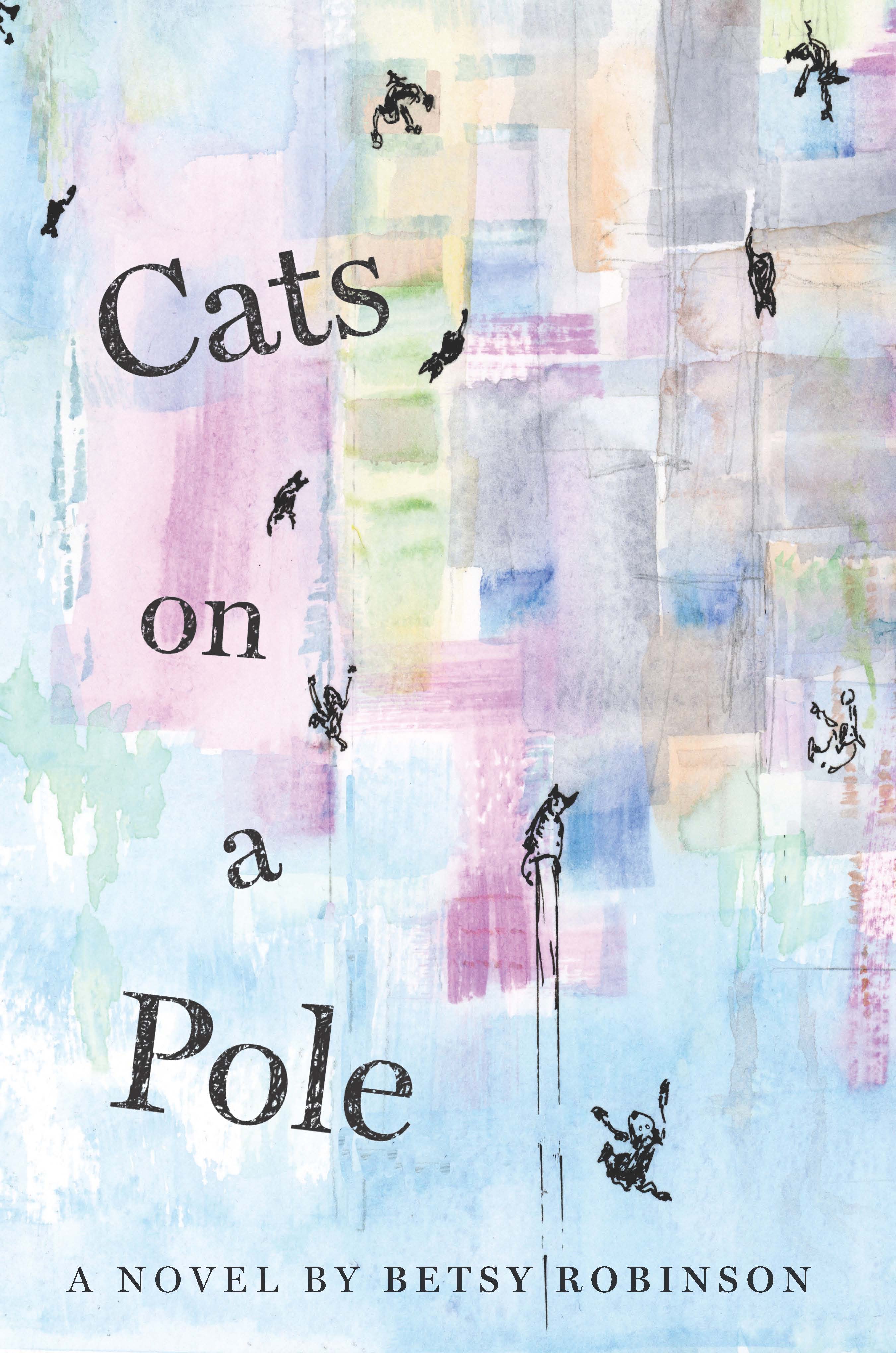
Cats on a Pole by Betsy Robinson

book cover

Harmony thought about cats as she rolled out of bed and staggered to the bathroom. Her favorite cat was the one that used to get stuck on top of a telephone pole in front of the house where she grew up. At least once a month in the warm weather, she’d hear the neighbor kids yelling, “Cat’s on a pole!” as they gathered around to taunt the poor thing.
Harmony would watch the scene from her kitchen window, and a couple of times she tried to thought-talk the cat down. “Are you out of your mind?” the cat would answer. “They’ll kill me.”

When he was forty-three, he met Judy. By then, construction work had taken second seat to massage therapy, where he discovered he had a gift.
He didn’t understand how it worked; he just knew that when he touched people, his hands grew hot, his heart exploded, the room filled with colors, and sometimes helpers in subtle bodies would instruct him where to touch. And the clients felt better.

Harmony and Joshua have special abilities. You might even call them superpowers. As with most such talented people, that has not necessarily led to them being happy. Joshua makes a living running healing classes at his own studio. He has always had what seems a pheromonic gift for attracting women. Woof! But commitment has never been a strong suit. Until he married Judy and they had a baby, Emily. Still, it is tough to resist all those longing gaze from his students and assistants.

description
Betsy with pooch – image from her site

Harmony is forty-something, works at a gardening magazine, is of uncertain ethnicity, having been adopted and having no real memory of her birth parents, and is different from the rest of us. She sees colors around people, auras, and has a sense of smell that allows her to tell about a person’s health, among other things. It is understandable that being in a relationship can be tough if you can pretty much read the other person’s thoughts and feelings. Insightful? Yes, very literally. She thinks of it as being about energy, hers, others, an experiential milieu no stranger to her than seeing the usual colors or hearing the sounds of the world are for most of us. But can you live through every day seeing, sensing the world like that? Harmony is in mourning for her best friend, her late pooch and beloved companion of 18 years, Delilah.

Each believes they are unique, and are destined to remain that way. It is pretty clear that these two crazy kids are destined to get together in one way or another. In this magical rom-com, they meet cute on a Manhattan bus, and we are off to the races.

The story centers on their relationship, which, surprisingly, never gets truly physical. Maybe metaphysical? With or without physical touching it is intensely sexual. They are both, because of their abilities, outsiders. Joshua manages by running a school, trying to help people find the abilities they have, but do not recognize. He is able to direct his energy to healing as well. ”We all have this capacity,” says Robinson in her video promo for the book. She has been involved for a long time with spiritual psychology and healing arts, so brings an interesting perspective to Joshua and Harmony’s capacities.

[In therapy] I was talking about how I reacted to various people in the office. There was one guy there who wanted an office wifey. I couldn’t stand this guy. Every time he would approach me it was like I was getting slimed with ectoplasm. Etheric gunk would come over me. I wanted to take a shower.

Harmony gets more ink of the two, with a large piece of that her interactions with her therapist, Doctor Thompson. These are fabulous.

Spectral beings are also a considerable presence. Ghosts? Angels? Something else? Like Julie Jordan in the musical Carousel, Harmony’s favorite musical, both Joshua and Harmony see or sense presences, which sometimes become active to the point of issuing directions.

Keep an eye out for mirrors, an image that pops up multiple times. Can you actually see yourself? Or does truly getting to know yourself require another person?

There are a few cockroach POV scenes that are hilarious, even to a native of NYC who had to contend with them for a lifetime, sometimes in large numbers. Lord knows, those of us who have spent much of our lives in city apartments can well attest to their persistence, and share Josh’s frustration at their ability to mockingly skitter away from our attempts to extinguish them. Robinson is a funny writer, so there are plenty of LOLs throughout the novel, not all related to bugs.

Cats on a Pole is a moving story about people searching for…something, love, companionship, understanding, truth, connection, release. There will be tears as well as laughs. The novel also offers a deeper perspective on spirituality and the meaning of death. It all builds up to a surprising climax, so buckle in. These cats may be stuck atop a pole, (or multiple poles?) getting some temporary safety, but they also gain a broader view of the world, and so will you.

What was extraordinary were her colors—raw red and orange energy around her torso, a deep indigo, bluer than the bottom of the ocean with radiant purple wafting through it vibrating so fast above her head it made him feel faint just to watch it. But watch it he did. How could he not? Her desire was direct and raw.

Review posted – 07/05/24

Publication date – 07/02/24

I received an eBook version of Cats on a Pole from the author in return for a fair review. Thanks Betsy.

This review is cross-posted on Goodreads. Stop by and say Hi!

=======================================EXTRA STUFF

Links to Robinson’s personal, Twitter and FB pages

(Partial) Profile – from her site

Betsy Robinson was raised an atheist and went on to make her living as a writer and editor of spiritual subject matter: as managing editor of Spirituality & Health magazine for six and a half years and as an editor of spiritual psychology and books about shamans and traditional healers.

She is or has been an actor, a playwright, an essayist, an editor, a freelance writer, messenger, paralegal, legal secretary, chambermaid, IHOP hostess, fortune cookie writer, novelist, and more. Cats on a Pole is her third novel. Plan Z was published in 2001 and The Last Will & Testament of Zelda McFigg came out in 2014.

Interviews
—– Ectoplasmic Inspo + Publisher at 73: Betsy Robinson – mostly on becoming a publisher
—– Why Publish “Cats on a Pole” and “The Spectators” Now? self-interview – video – 4:25

My review of an earlier book by the author
—–The Last Will & Testament of Zelda McFigg

Songs/Music from Carousel – Harmony buys a CD of the 1987 revival
It does make one wonder if Harmony’s last name was an homage to the composer.
—–What’s the use of Wond’rin
—–The Carousel Waltz
—–You’ll Never Walk Alone
—–If I loved You

Items of Interest from the author
—– Her promo video
—–Book trailer
—–Betsy reads from the book

1 Comment

Filed under Fantasy, Fiction, Reviews, Romantic Comedy