Tag Archives: Reviews

The October Film Haunt by Michael Wehunt

book cover

Jorie vanished from the scene, from the entire internet. Her connections, her film production and book deal, the screenplay she sold, her agent, the October Film Haunt brand, the two hundred thousand followers scattered across social media—everything drained out of her life a long time ago. She hasn’t so much as watched a trailer for a scary movie since.

“Until it became real. I don’t know if it’s evolution or some Lovecraftian construct, but what is it to know something, really? Belief leads us to something more real than knowing, Jorie. Have you not noticed that everywhere lately?”

Sometimes “belonging” is not such a wonderful thing.

The October Film Haunt is not a book for everyone. If you are a nerd-level horror maven, this will be a bloody fabulous read, with links, left, right, center, up, down and all around for you to catch and relish. For those of us who are just folks who like reading some horror books, it can be disjointed, confusing, and potentially unsatisfying.

About a decade back, Jorie Stroud, a nod to Halloween’s final girl, Laurie Strode, and two friends formed The October Film Haunt. Their schtick was to go to places where horror movies had been filmed, and scope them out for atmospherics, filling their site with reportage and recordings of their outings. Could real places be as creepy or even creepier than the flicks that were made there? Unfortunately, they went a step too far with an indie film, called Proof of Demons, suggesting that there might be more reality to that film than was justified. As a result, some foolish teens tried something out that they should not have, and one of them died.
description
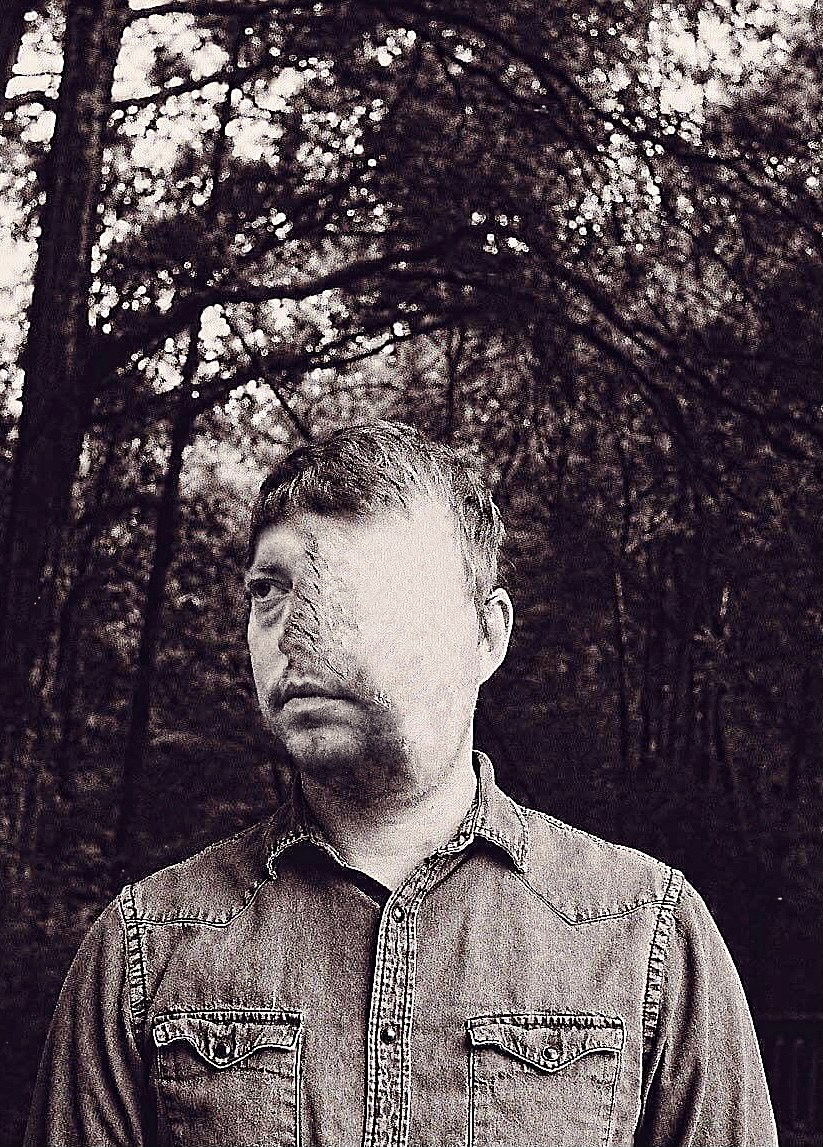
Michael Wehunt – Image from Pseudopod

There was blowback, and Jorie’s film ambitions, of any sort, were buried under a caul of notoriety. Then there was another death in the ripples from the initial fatality. Jorie has lived all these years with a heavy burden of (deserved) guilt. Then one day, a VHS package arrives, a trailer for what appears to be a sequel to the Proof of Demons film that had sparked all the trouble. Why? And why send it to Jorie? Is someone trying to punish her?

The primary stream of the story is final girl Jorie enduring the assaults on her sanity, her person, and those close to her. Who is doing this to her, and why? Is the mysterious PoD director, Helene Enriquez, making a sequel and somehow forcing Jorie to be a part of it?

This novel plays with several horror sub-genres simultaneously. The found-footage form, epitomized by The Blair Witch Project, is one. That film marketed itself as being based on real-world footage left behind by missing documentarians, that was discovered and cobbled together into a narrative. It was nothing of the sort, of course, but many people bought into the PR, which included a documentary style TV special and a website claiming the people who had shot the footage were really missing.

Wehunt adds slasher and demon-possession into the mix. He imbues the former with the sort of faceless, mindless killing machine aspect we would expect of Michael Myers, substituting sheets for disturbing masks. We are not talking KKK sheets here, which should be feared, but hospital sheets (maybe to be feared for different reasons?) featuring crowns worn beneath the bed linen for which the unusual outerwear seems ill-designed. And offers wrinkles on the demon possession motif by blurring the lines between possessor and possessed,

I wanted the book to be, you know, secular. I really wanted to avoid the priest vs. demon Abrahamic Christian typical dynamic of a demon possession story. – from the Talking Scared interview

while tossing into the genre blender cursed films. It is pretty much a part of this story that seeing the VHS tapes that are making the rounds can be lethal for the viewers. Home invasion? Sure, plenty of that. Cult madness? Yup. And probably more.

There are other characters who travel along this dark path with Jorie. Coleman’s brother, Jackson, went missing when he was a kid, in circumstances eerily resonant with the Proof of Demons film. He gets dragged in by a vague promise to find his brother, and maybe rid himself of his cancer.

I wanted to be there as someone who just doesn’t, horror is not on his radar. It’s never been an interest of his. He’s almost 60 years old. He’s not going to become a horror fan now. But he’s chosen for this one element of the book. And so he would have no touchstones.He would have no easy point of reference for the things that are happening to him. And simultaneously, he has been diagnosed with stage four cancer. So, things that happened to his body would to him sort of feel like it’s the cancer, isn’t it? – from the Talking Scared. interview

Beth Kowalczyk was the other survivor of the October Film Haunt trio. Jorie reconnects with her, after a very long estrangement, hoping to gain some support and understanding.

Trevor Henderson created the Pine Arch Creature for the film.

He cheered the modern legend leaking out of the film—but soon became uncomfortable and spoke out against it. “It was a really cool folklore for a minute there,” Henderson says. “A great monster that lingered with you…But then people were pushing these rituals. Some of them were like self-harm. It wasn’t just for fun anymore, so I checked out…Looking back, I can see the root of that kind of thinking that’s everywhere now, that sort of desperation to believe anything you want even when the reality is right there. There’s a difference between make-believe and post-truth. One of them isn’t dangerous.”

Roger Eilertsen was the character actor who played the PoD lead, lending gravitas to the role. He is in his 80s now, and it is unclear why he is being troubled by the sorts of intrusions endured by all the main characters. And the intrusions are considerable, beginning with delivery of a VHS tape and progressing to stalking, home invasion, unwanted filming, assault, kidnapping and worse.

The primary conceptual question that gives this book weight is the notion that belief can create reality. A very different example of such is the musical, The Music Man in which a conman persuades the kids of a midwestern community that they really can play the instruments he has only been pretending to teach. Lo and Behold, the parents somehow perceive their kids as having actually learned to play and construct an idyllic image of their new town orchestra that sounds great to them. But that perception is clearly in the eyes of the receivers. The paranormaling of the world here is quite real. There is plenty that could be made of this in a political analysis, but Wehunt claims no interest in that, so I will take a pass, well mostly, Pathetic followers of QAnon believe some pretty outrageous bullshit, and act on those beliefs in the world. Not to mention the daily flood of lies and provocations spewing from the current administration. And their attempts to create the reality of their fantasies.

The fear level is considerable as common horror trope rules are disregarded and thus expectations are thwarted. The apparent mindlessness of the cult behavior is inexplicable. Not that real-world cult behavior is necessarily understandable. Questions abound, primarily why? Why was this person dragged in to this bizarre undertaking? Why that one? I found the answers less than satisfying. The lines between reality and something else grow increasingly smudged. The portrayal of the Pine Arch Creature, also literally smudged, may offer a suitable metaphor. As does the literal eye in the sky, whether it represents a deity, a film director, or a voyeur. Metafiction can be a difficult thing to pull off, particularly as it makes it a challenge sustaining a reader’s interest in the characters when one so frequently points out the literary and structural underpinnings of the story itself.

There are plenty more details for you to find for yourself, a virtual cornucopia in fact. And catching the references can definitely be fun. But it all seemed too much for me. As noted above, if you are a horror maven, have at it. Enjoy! But it was form over substance, over fear, for me.

“Until it became real. I don’t know if it’s evolution or some Lovecraftian construct, but what is it to know something, really? Belief leads us to something more real than knowing, Jorie. Have you not noticed that everywhere lately?”

Review posted – 10/10//25

Publication date – 09/30/25

I received AREs of The October Film Haunt from Saint Martin’s Press in return for a fair review. Thanks, folks, and thanks to NetGalley for facilitating.

This review is cross-posted on Goodreads. Stop by and say Hi!

=======================================EXTRA STUFF

Links to Wehunt’s personal, FB, Instagram, and Blue Sky pages

Profile – from his site

Michael Wehunt grew up in North Georgia, close enough to the Appalachians to feel them but not quite easily see them. There were woods, and woodsmoke, and warmth. He did not make it far when he left, falling sixty miles south to the lost city of Atlanta, where he lives today, with fewer woods but still many trees. He writes. He reads. Robert Aickman fidgets next to Mary Oliver on his favorite bookshelf.

Interviews
—–Cinemachords – The October Film Haunt Author Michael Wehunt Talks Fandom, Urban Legends, & Digital Mythologizing
– Howard Gorman
—–The Nerd Daily – Q&A: Michael Wehunt, Author of ‘The October Film Haunt’ by Elise Dumpleton
—–Talking Scared – 255 – Michael Wehunt & What If A Horror Film Broke Into Your House? – open in podcasts – then transcript is available

Items of Interest
—– The Philip Experiment: A Benchmark in Paranormal Research by C. Wesley Clough
—–Wikipedia – The Medium is the Message
—–Wikipedia – metafiction

Leave a comment

Filed under Fiction, Horror

The Buffalo Hunter Hunter by Stephen Graham Jones

book cover

Good Stab fell to his knees, pressed his forehead to the floor and he screamed too, and I daresay our screams harmonized, at least in how much they pained us.
This, I believe, is the story of America, told in a forgotten church in the hinterlands, with a choir of the dead mutely witnessing.
“Your tore out the heart of my people, Three-Persons,” Good Stab said into the floor.
“I’m sorry,” I said back, I knew how weakly. “I’m sorry I’m sorry I’m sorry.”
“Is it wrong to kill?” he asked then, again, sitting back on his haunches, his bared arms hooked around his knees. “Is this what you tell your people who come each Sunday?”
“Yes,” I said.

What I am is the Indian who can’t die.
I’m the worst dream America ever had.

The vampire genre has a new dark star. Far from the European roots we all know, Stephen Graham Jones has created a uniquely American, a uniquely Native American version of the tormented and tormenting blood-sucker. The novel is rich, not only with the horrors of the genre, but with the very un-magical horrors of the time. No vampire could possibly compete with the mass slaughter of the American Bison, nor of the Native American peoples. This envisioning of an American vampire includes a remarkable twist, new to the genre, at least as far as I am aware.

Good Stab’s damnation comes with a wickedly satisfying pair of rules: he must feed on his prey until it’s dry—sometimes causing his side to literally burst open—and he grows to resemble whatever he’s feeding from. – from the PW interview

The structure is frame within a frame within a frame. Etsy Beaucarne is our outermost, in 2012, a struggling academic, the descendant of a pastor from the 19th century. Arthur Beaucarne, a Lutheran, ministered to the religious needs of the residents of Miles City, Montana. His journal, stowed in 1912 was recently found in an old parsonage undergoing renovation (cheekily referred to as revamping). In this journal, Arthur, the second frame, relates the tale told to him by a strange Native American man, Good Stab. The Indian appears at the back of his congregation, in dark clerical garb, wearing sunglasses, and wanting to talk. His tale is terrifying and compelling.

description
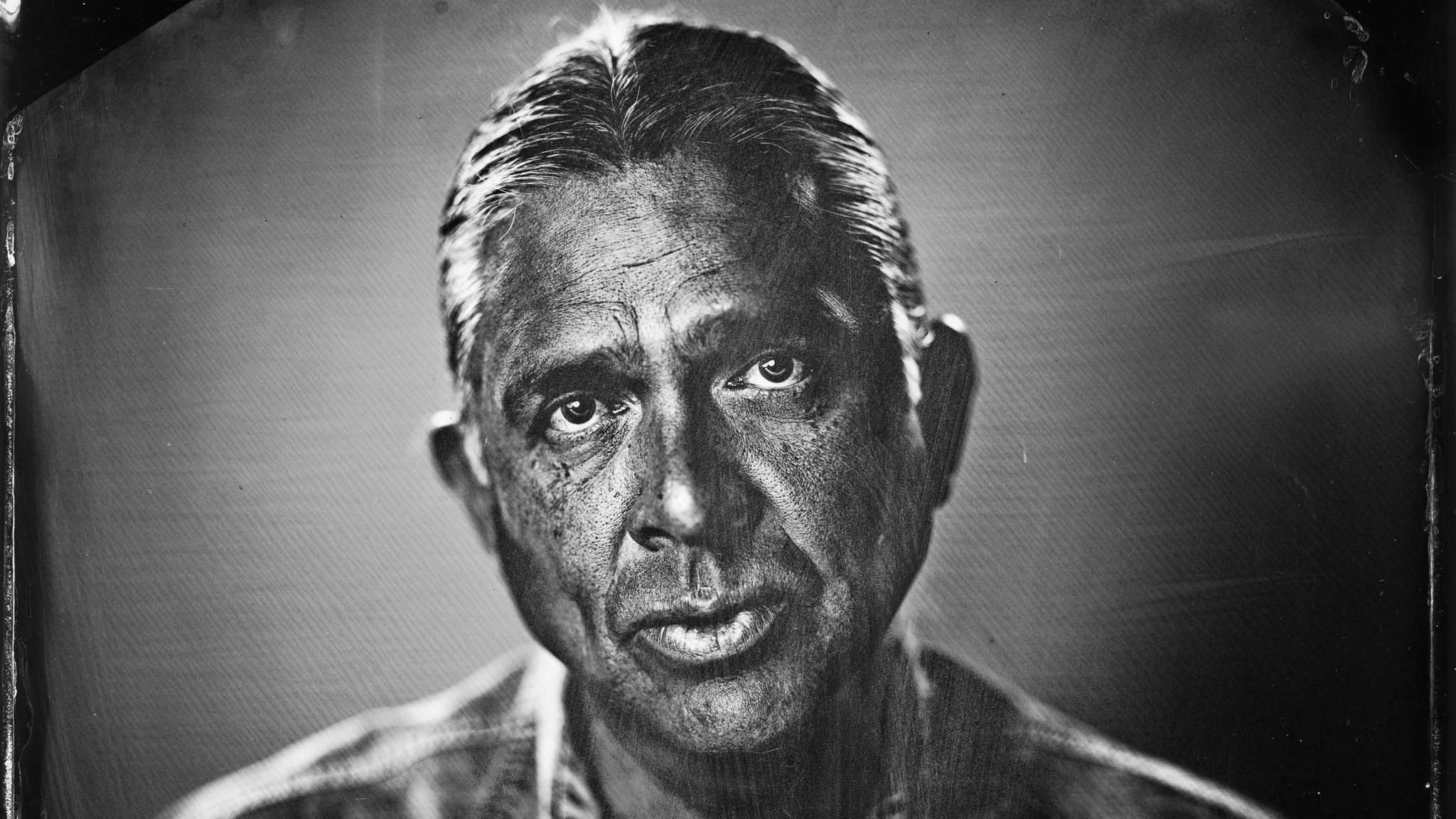
Stephen Graham Jones – image from 5280 Magazine – shot by Matthew DeFeo

It is an American history not taught in Western schools. The Marias Massacre took place 1870. A U.S. cavalry troop was sent to do damage to a particular branch of the Pikuni tribe, not the branch that had made an alliance with the incoming settlers. The leader of the troop, despite being shown documentation of the alliance, decided that one Indian is the same as another and proceeded to massacre 217 mostly women, children, and old men, many suffering from small pox.

Good Stab, a Pikuni, named for his nifty defense against an attacker, was 37 when he encountered the creature he calls Cat Man.

The thing had a thin white face with intelligence to it, and at first I thought its chin and mouth were painted for ceremony, but then I saw that it was just that it ate like a sticky-mouth, where it made a mess, and then let that blood stay like it was proud of it, wanted all the other four-leggeds see what it could do. Its mouth looked like it was pushing out too far, too, bringing the nose with it. But I told myself that was just because the dried blood made it look that way.
Its eyes were like mine, like I see you seeing, and its hair was hanging in its face, and it was naked so we could see it was a man, or had once been a man.
But it was no man

We follow Good Stab’s tale through decades, as told to Pastor Beaucarne, as he struggles to survive, and finds purpose in taking down those who seek to kill “blackhorns.” There are many adventures along his journey of discovery, and many internal struggles. He is a complex character who seems at times inured to the havoc he inflicts, but one who manages to sustain a kind, caring heart, at times anyway. We feel his pain in being an outsider as he yearns to connect with his people.

The backdrop for this story is the Western expansion into the west, including the racism, colonial military dominance, destructiveness, wastefulness, genocide, inhumanity and cruelty of the era. Killers, murderers, and thieves preaching a religion of peace. The irony is not lost. Ultimately, this is a revenge tale. Punishment for many who have come west to pillage nature’s bounty, and targeted attacks on those responsible for the Marias Massacre.

As we get most of the story from Good Stab we get his usage as well, words for creatures of the American west. “Blackhorns” for Bison, as well as Whitehorn, Wags-his-tail, Long-legs, Sticky-mouth and plenty more. Part of the fun of reading this is identifying each species as it is introduced.

Part of the joy of reading The Buffalo Hunter Hunter is seeing the coming together of history and horror in a way that is reminiscent of one of America’s most inspired writers. While this is hardly a magical realism version of history, the incorporation of actual Native American history gives it a very Louise Erdrich-y feel. There is another form of joy to be had here. I have a particularly high bar for horror. I lose no sleep, nor do I have scary dreams as a result of reading a horror book. But there was a night, while reading this one, when I felt that I had somehow ingested three fist-size dollops of Vampire and they had taken root in my torso. I knew in the dream that I could, with effort, expel them, but knew also that it would take a supreme effort to do so. That, to me, is the sign of a good scary book.

Stephen Graham Jones is a prolific writer. Even more than Stephen King, maybe into the domain of Isaac Asimov. I have read only a few (listed below in EXTRA STUFF) but of those I have read, this one stands out. The Buffalo Hunter Hunter is most definitely worth whatever time and trouble it takes to track down. Once you sink your teeth into it, you will have a tough time stepping away until you have ingested it all. This is simply a bloody wonderful book.

You don’t know this yet, but once a generation, once a century, someone is born with a kind of blood no one else has. If you drink from that person . . . how to explain it? It’s like the difference between an animal and a person. But the person is the animal now, and this new one is above them. Their blood, you do anything for it. I’ve only tasted it twice so far in all my years. She’s going to be the third time.”

Review posted – 2/27/25

Publication date – 3/18/25

I received an ARE of The Buffalo Hunter Hunter from Saga Press in return for a fair review. Thanks, folks, and thanks to NetGalley for facilitating.

This review is cross-posted on Goodreads. Stop by and say Hi!

=======================================EXTRA STUFF

Links to Jones’s personal, Twitter and FB pages

Interviews
—–NY Times – By the Book – Stephen Graham Jones Says His University Colleagues Aren’t Snobs About Horror
—–PW – Stephen Graham Jones Knows Good Stories Don’t Happen in Heaven
—–Horror Geek Life – Stephen Graham Jones Discusses ‘First Word on Horror’ & Terror on the Reservation (Exclusive)
by Stephen Rosenberg – but not much on this novel
—–The Nerdy Narrative – THE BUFFALO HUNTER HUNTER by Stephen Graham Jones – video – 12:08
—–5280 – Meet Colorado’s Most Prolific Killer, Horror Author Stephen Graham Jones by Spencer Campbell

My reviews of (sadly, only five) previous books by Jones
—–2024 – The Angel of Indian Lake -The Indian Lake Trilogy #3
—–2023 – Don’t Fear the Reaper -The Indian Lake Trilogy #2
—–2021 – My Heart is a Chainsaw -The Indian Lake Trilogy #1
—–2020 – The Only Good Indians
—–2016 – Mongrels

Items of Interest from the author
—–People – excerpt

Items of Interest
—–Wikipedia – Marias Massacre
—–Montana Historical Society – The Pikuni and the U.S. Army’s Piegan Expedition by Rodger C. Henderson

Leave a comment

Filed under Fiction, Historical Fiction, Horror, Native Americans

The Angel of Indian Lake (The Indian Lake Trilogy, #3) by Stephen Graham Jones

book cover

Her husband died in the water in 2015, and her son was suffocated with a dry-cleaning bag in 2019.
And now she’s got a chainsaw.

…this is maybe the one thing I believe in in the whole world: that when it’s your time, you don’t run from it—you stand against it, you keep your eyes open, and you rip and claw your whole way down, hope you can at least be a worthy trophy.

Don’t even try to read this unless you have been through Volumes #1 and #2 of the series. There is a lot going on in volume #3. Strap in.

description
Stephen Graham Jones – image from Library Journal

Seventeen in what is now called The Independence Day Massacre, having served undeserved time after the most recent mass slaughter, centered on Dead Mill South, now twenty-four, Jade Daniels is back in town. Did her time. Paid her debt to society and has a job as the history teacher in the local school. Her wealthy bff Letha Mondragon’s sponsorship may have something to do with that. She carries scars both physical and emotional from her tribulations in the first two novels of the trilogy. And plenty from before even that.

…you know the first one is third person of course, but it’s really tight on Jade. I think when people remember My Heart is a Chainsaw, they always say Jade is a narrator, and that’s always weird to me because she’s like our narrative focus, but she’s not actually the one speaking except for in her “Slasher 101” essays. Then when I figured out I was going to do a sequel and then a trilogy, I realized I’ve got to modulate the delivery throughout these three books.
So what I landed on for doing that was in the second one, it’s going to shatter and splinter into a multivocal thing with a lot of people speaking in Reaper, and a lot of people’s angles. To me, that was kind of set up for missing Jade. Like “This is fun, but I wish we had Jade.” So then in the third one, if I were able to, instead of only letting her speak during the [essays], if the main part of the narrative became her voice, then I was hoping that could feel like a return a little bit. Or it could just be as simple as I knew I was having to say goodbye to Jade and I wanted to hang out with her more. And how better to hang out with her than first person?
– from the Paste interview

She is our Virgil through the rings of Proofrock hell.We get the take of the ultimate final girl, (although she does not see herself that way) as she tries to figure out what is going on, as the bodycount rises. As part of that we hear her talk with her much-admired, and quite dead, history teacher, Mister Holmes. We are given access to the weekly sessions with her state-mandated shrink, Sharona, in which they both wear ghostface masks and sit on a swing set, as one does. In addition, we are treated to reports from a seemingly omniscient security agency tracking Jade’s every word and action.

A dad makes the mistake of hanging out in the local school’s hug-n-go lane, as it turns out to be more of a hug-n-get-decapitated lane. More heads will roll. Kids using VCR tech to produce a piece charmingly titled The Savage History of Proofrock, Idaho are lured to a discovery their friend had made, some long-lost victims. Another student makes use of drone tech to support a documentary, turning up some very interesting shots. Fiction soon gives way to fact. And, oh, there are footprints extending from a grave, which is very suggestive. (although odd only in that the risen dead emerged from a grave and not a lake) Speaking of graves, they play a significant role throughout the tale, as Jade visits her favorite late residents with some frequency. There is another graveyard commemorating a particular sub-set of the lost. And an unwanted commercial repurposing of land considered hallowed.

description
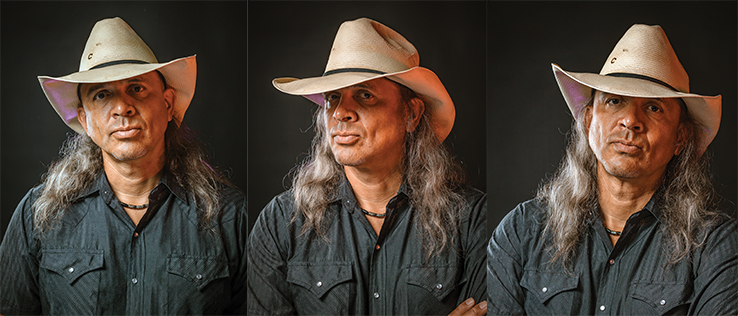
Devery Jacobs – image from Vanity Fair. SGJ could see her playing you-know-who.

There are enough bloodbaths in this town that someone could make a killing by opening a place called ProofBaaden, offering free towels, and wet places in which people could conduct unpleasant business.

There are forest fires, herds of panic-stricken animals, a mad recluse set on avenging the loss of his wife, and evil dead who will enlist a host to their ranks. There are many ends, loose and otherwise, that need to be tied up in this 465 page novel. There are murder mysteries to be solved and cold cases to be made warm, including the biggest mystery of them all, What the hell is all this killing about?

There are many substantive elements that poke their heads up from among the carnage. SGJ pays homage to the slasher genre. Jade is not the only character who sees life through the slasher-mask perspective of an afficionado. Appreciators of the form will find plenty to cheer for here.

The third installment of a trilogy always has to up the stakes and kill people we thought couldn’t die. I knew this going in, knew I’d have to do all that. In Chainsaw, Jade was fighting for herself. In Reaper, she was fighting for her friends, for this family she’d cobbled together. In Angel, she’s having to fight for her community—for Proofrock. And of course I had to adhere to Randy’s rules for the third in a trilogy, too. They were very helpful. This is my first time doing this, I mean. I needed a lot of help. – from the Nerd Daily interview

Class comes in for a look, as those who enjoy the advantages of those means are also responsible for much of the destruction that takes place in Proofrock. There is also a very feminist tilt here, as the final girl has always been a hero, but the baddies take on the feminine form as well. There is also an ongoing struggle of ill-treated women fighting back against their abusers. And there is a final twist that will resonate, culturally.

For many, there is pleasure to be had in recognizing the references, the many, many references to slasher films. There might actually be references to every slasher film. While I have seen a fair number of these, I am by no means a maven. This made it a bit of a challenge appreciating the shout-outs in the book without having to constantly google the titles, not to mention the stand-alone character citations.

The pleasure of this book is traveling along with Jade as she tries not only to survive but to get to the bottom of the entire unholy business, while saving her community. No dead ends here. Final girls rule, whether or not they survive.

…justice doesn’t extract itself, you’ve got to pull it bloody and pulsing from the chest of whoever wronged you.

Review posted – 08/30/24

Publication date – 3/06/24

Next up from SGJ is The Buffalo Hunter Hunter, due out March 2025

I received an ARE of The Angel of Indian Lake from S&S/Saga/Press in return for a fair review. Thanks, folks, and thanks to NetGalley for facilitating.

This review is cross-posted on Goodreads. Stop by and say Hi!

=======================================EXTRA STUFF

Links to Jones’s personal, Twitter and FB pages

Interviews
—–Paste – Stephen Graham Jones on The Angel of Indian Lake, Slasher Tropes, and Saying Goodbye to Jade Daniels by Matthew Jackson
—–Cemetery Dance- The Cemetery Dance Interview: Stephen Graham Jones by Cabriel Hart
—–Nerd Daily – Q&A: Stephen Graham Jones, Author of ‘The Angel of Indian Lake’ by Elise Dumpleton
—–Library Journal – LJ Talks to Horror Writer Stephen Graham Jones, Author of ‘Don’t Fear the Reaper’ by Becky Spratford – From 2022, but fascinating, by Becky Spratford
—–Off Book – Off Book: Stephen Graham Jones – video – 14:58 – at 6:45

There’s probably 12-14 beats of the slasher. You got to have the opening blood sacrifice. You got t have the red herrings, you’ve got to have the third rail body dumps. You’ve got to its like you’re going around a carousel and reaching out and hitting 12 or 14 bells as you go around. You got t hit all those bells for sure. But what I think makes a really good slasher movie is if you’re doing a revenge slasher of a mystery slasher, I guess they get called both, delaying knowledge of who the slasher is. That’s the most pleasurable, such that everything crashes to a head at the reveal when the person pulls their mask off and gives their big speech about I did this because you did this to me, or whatever it is.

My reviews of (sadly, only four) previous books by Jones
—–2023 – Don’t Fear the Reaper -The Indian Lake Trilogy #2
—–2021 – My Heart is a Chainsaw -The Indian Lake Trilogy #1on Coot’s Reviews
—–2020 – The Only Good Indians
—–2016 – Mongrels

Item of Interest from the author
—–CrimeReads – Excerpt

Item of Interest
—–ScreenRant – Randy’s Rules

The rules in Scream are a basic set to survive any horror film: you can never have sex, you can never drink or do drugs, and never (ever, under any circumstances) say “I’ll be right back”. Ironically, Randy explains these rules during a party, with half the attendees already drunk. Still, they hold some truth: Sidney has sex with Billy, and although she’s later attacked, it’s Billy the one who ultimately dies. Tatum (Rose McGowan) goes to the basement to get more beers and is killed there, and Stu says “I’ll be right back” right after Randy explains the rules, and is later killed (albeit in self-defense) by Sidney. In Scream 2, the rules for a horror sequel are: the body count is always bigger, the death scenes are more elaborate (“more blood, more gore”), and the third rule is not explained in the final cut, although it was revealed in the teaser trailer to be “never, ever, under any circumstances assume the killer is dead”.

Leave a comment

Filed under Horror, Native Americans, Reviews