Tag Archives: police

The Red Queen by Juan Gómez-Jurado

book cover

The weight on her chest lightens, her breathing slows. The ‘monkeys inside her head screech a little less loudly. That’s what is so brilliant about certainties, even fleeting ones. They offer us respite.

Police Inspector Jon Guttierez of the Bilbao PD, 43, is a large person, a weightlifter who lives with his mother. He ran into a spot of trouble recently when he attempted to plant evidence on a well-known drug dealer, only to be filmed in the act, said film going viral. Oopsy. He stands to lose a lot more than just his badge. When what to his wondering eyes should appear but a get-out-of-jail-free card, in the form of a mysterious personage known as Mentor. But Mentor has a tough, if unusual ask. He wants Jon to persuade someone to return to work. Someone who really, really does not want back in.
description
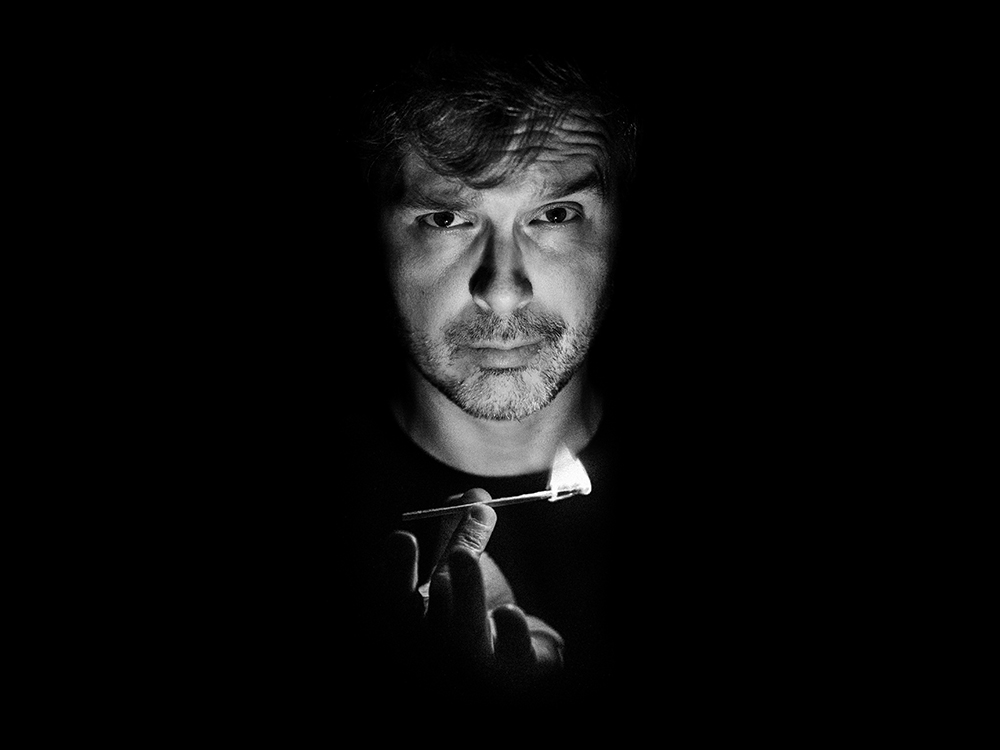
Juan Gómez-Jurado – image from Zenda

Antonia Scott (her father the British ambassador, her mother a Spaniard) spends three minutes of every day contemplating suicide. (Whatever works for ya, dear.) Her comatose beloved husband has been in a hospital bed for three years. She has been by his side throughout, clearly feeling some responsibility for his condition. (Antonia’s struggle is reminiscent of how JGJ felt when his father was dying during the writing of the book.) Antonia has regular chats with her English grandmother, who encourages her to put her particular set of skills to good use, instead of letting them go to waste. She has some superpowers, but also some limitations, one being a need for a certain medication when she is overwhelmed.

The inspiration for Antonia and Jon inevitably stems from Don Quixote and Sancho Panza. Antonia is that idealistic being, she does not hesitate to face the windmills, because she believes in a better world. Jon, on the other hand, is that pragmatist who has a dreamer hidden inside of him. – from the Hindustani interview

description
Vicky Luengo plays Antonia Scott in the Prime series – image from InStyle

Jon clearly succeeds in drawing Antonia out, or we wouldn’t have a book. And he becomes her partner. Not spoilers. It appears that Antonia is quite special indeed, with a mental capacity well beyond the norm. She had been a member of an elite international police organization, Red Queen, a network across Europe, one unit per country, each led by a Mentor. They exist outside the usual police structures, relying on the local constabulary for on-scene access and intel. Each unit uses a person with special gifts to help solve major crimes. Red Queens are selected for having a set of particular characteristics, which Antonia has. Uber-smart, amazing memory, analytical capacity just this side of a super-computer. (very Lisbeth Salander) But will she be smart enough to foil a criminal mastermind who has already murdered one child of the uber-rich, and has kidnapped another?

description
Hovik Keuchkerian plays Jon Guttierez in the Prime series – image from his Twitter profile

Alvaro Trueba, a teenager, has been dead several days, drained of blood, and laid out with bizarre religious iconography that is clear to the particularly perceptive. The kidnapper calls himself Ezekiel. The house in which his body was found, in a gated community, was one of several owned by his one-percenter parents.

Antonia and Jon must contend with the Abduction and Extortion Unit. (AEU), led by Captain Jose Luis Parra. Far too often, police stories have a dickish supervisor, tacking to political winds at every breeze, and getting in the way of actual investigators. Parra serves that role here, although as someone in a parallel, instead of superior role. He is not a totally incompetent team leader. Still, very dickish.

Just because we’re a unit created to avoid competition and secrets being kept between different police forces doesn’t mean we don’t repeat the same old mistakes.

Carlos Ortiz is the wealthiest man in the world. When his daughter, Carla, is kidnapped, he receives a call. His next call is to Red Queen, and Jon and Antonia are brought in, seeing the obvious connections between the cases.

The story is told in the 3rd person, primarily following Antonia and Jon as they track down leads in pursuit of the baddie. Once Carla is taken hostage, we flip back and forth between the investigation and her experience. There are occasional sidebar chapters in which we get a closer look at some of the supporting characters.

Red Queen is a particularly fun thriller to read. JGJ has a wonderfully droll (snotty?) sense of humor which permeates. Do not expect rolling on the floor hysterics, but you will smile and titter a lot. Jon gets all he knows about children from Modern Family reruns or When his sandwich arrives, Jon confirms that the hospital follows tradition: the grill they use must never be cleaned. Because she is fluent in many languages, Antonia often brings in obscure words or expressions from diverse cultures (aboriginal, South Ghanaian, and others) when that word is particularly descriptive of a situation. This is a wonderful bit, speaking to the limits of communication in a single language. There is also some intel on the ancient, unseen, infrastructure of Madrid, a nifty Dan-Brownish touch.

The supporting cast is also a plus. Corrupt security guards, a feisty nonagenarian granny, a tattoo artist who delights in disrespecting tourist customers, the testosterone-poisoned Captain Parra, an oily reporter, a mad scientist (I am not crazy; my reality is just different from yours.), and an evil baddie. The portrayal of criminal motivation and history was thin, but hopefully later volumes will flesh those out a bit more.

I was hesitant at first to read this one, as it is the opener of a trilogy. Would there be resolution at the end or a cliffhanger? The answer is yes. There are some things that remain to be resolved, but there is enough of an ending here to make it a viable stand-alone read. Every adventure requires a first step.

There are twists and turns aplenty, which always helps. And questions to be answered. Will Carla escape? Will Antonia and Jon uncover who is behind these crimes? Will the usual competitive misery from other forces interfere with the investigation? What is it the kidnappers want and why are those demands not being met? Will Antonia completely fall apart before they can complete their mission? (We’re all mad here)

You will want to know as you flip-flip-flip-flip through these pages. Red Queen is a good beginning at which to begin. I would urge you to go on till you come to the end, then stop. But of course, that will not be possible for most of us. We only received an English-language translation of Reisa Rosa in 2023. It was originally released in Spain in 2018. There are three books in the series. For those fluent in Spanish there will be no waiting, but for those of us who do not speak Spanish, let the panting begin for volumes two (Loba Negra or Black Wolf, due 3/12/24 from Minotaur) and three (Rey Blanco or White King, presumably a year later) in English translation. The trilogy has been a huge international hit. Prime has optioned the series for a Spanish-language production. In the video interview linked below, we learn that primary shooting has completed for at least five episodes. I would guess a probable release in late 2023 or in 2024. I wouldn’t wait, though. Red Queen is a perfect summer read, whatever color roses you might prefer.

A spasm of pure fear convulses Antonia’s body. Fear and loathing. Because she finally understands—with piercing, icy clarity—what has been going on from the very start.

Review posted – June 30, 2023

Publication date – March 14, 2023 – (English translation)
It was first published in Spanish on November 8, 2018

I received an ARE of Red Queen from Minotaur Books in return for a fair review, and releasing my hostage. Thanks, folks.

This review is cross-posted on Goodreads. Stop by and say Hi!

=======================================EXTRA STUFF

Links to Gomez-Jurado’s personal, FB, and Twitter pages

Profile– from EAE Business School

Juan Gómez-Jurado was born in Madrid in 1977. His interest in literature led him to pursue a career in Information Science. No one at TVE, Canal Plus, La Voz de Galicia or COPE Radio Station —where he has worked— could have imagined what he would become in time. It wasn’t until 2006, when he published his novel, God’s Spy, that his talent became known, not only in Spain, but all across the globe.
Since then, he hasn’t stopped writing. Contract with God, The Traitor’s Emblem, The Legend of the Thief, The Patient, Scar… Year after year, his books keep on coming out. No time to rest. And his success keeps on rising and he keeps on breaking records. The trilogy made up of Red Queen, Black Wolf and White King, was the first to have all three books among the best-selling books in Spain simultaneously. In fact, Red Queen has been the most read book in Spain for two years in a row now, which translates into more than two million copies sold.

Interviews
—–Murder by the Book – Live from Madrid: Juan Gomez-Jurado Presents, “The Red Queen” Hosted by Sara DiVello – video – 35:08 – almost all of this is about his writing process, with bits about this book here and there
—–Hindustan Times – Interview: Juan Gomez-Jurado, author, Red Queen by Arunima Mazumdar

Item of Interest from the author
—–Crime Reads – Excerpt – Jon trying to persuade Antonia to return to work

Items of Interest
—–Gutenberg – Alice’s Adventures in Wonderland by Lewis Carroll
—–Gutenberg – Through the Looking Glass by Lewis Carroll
—–Gutenberg – Don Quixote by Miguel de Cervantes Saavedra
—–Bookroo – quotes from Alice in Wonderland

The epigraph of the novel is a quote from Through the Looking Glass, the book title having been taken from that. So, it seemed fitting to sprinkle throughout the review quotes from that and from Alice’s Adventures in Wonderland. I used the Bookroo site above for that.

Leave a comment

Filed under Fiction, Mystery, Suspense, Thriller, Thriller

Nobody is Protected by Reece Jones

book cover

In…Almeida-Sanchez v. United States in 1973, Justice Thurgood Marshall, an icon of the civil rights movement and the first Black man to serve on the Supreme Court, asked a series of questions that pressed the government’s lawyers about the true extent of the Border Patrol’s authority on American highways deep inside the United States. Unsatisfied with the response, Marshall finally asked if the Border Patrol could legally stop and search the vehicle of the president of the United States without any evidence or suspicion whatsoever. When the lawyer said “Yes,” Marshall concluded, “Nobody is protected.”

The Border Patrol in their green uniforms, patrols between crossing points. Customs was renamed the Office of Field Operations, its agents, in blue uniforms, work at crossing points and in airports. Agents of a third unit of CBP, Air and Marine Operations (AMO), wear brown uniforms and manage the agency’s aircraft and ships. AMO’s authorization in the U.S. code differs from the Border Patrol in that it does not include any geographical limits, so they are able to operate anywhere in the country.

So a few military-looking sorts in camo, with automatic weapons, rush up to you, grab you by both arms and stuff you into an unmarked van that speeds away. Only a general “Police” insignia on their uniforms, wearing shades at night, covering their faces, no explanation of why you are being abducted. Where are you? Russia? Turkey? The West Bank? How about Portland, Oregon, July 2020? What the hell was the Border Patrol doing in Portland anyway, at a demonstration protesting the police murder of George Floyd, an event having zero to do with immigration?

In Nobody is Protected, Reece Jones explains how it has come to be that an agency created to protect the border, and to deal with immigration issues has seen its domain grow to the point where it can operate in most of the country, and take on missions having absolutely nothing to do with crossing a border. What makes them particularly dangerous is that they do not live by the laws that govern the rest of the police forces in the nation. Do they need probable cause to stop your vehicle? Not really. How about a warrant? A BP agent laughs. Can they use racial profiling for selecting who to stop? Of course. That a problem? Oh, and they are now, taken together in their three parts, adding in ICE, the largest police force in the nation. Sleep tight.

description
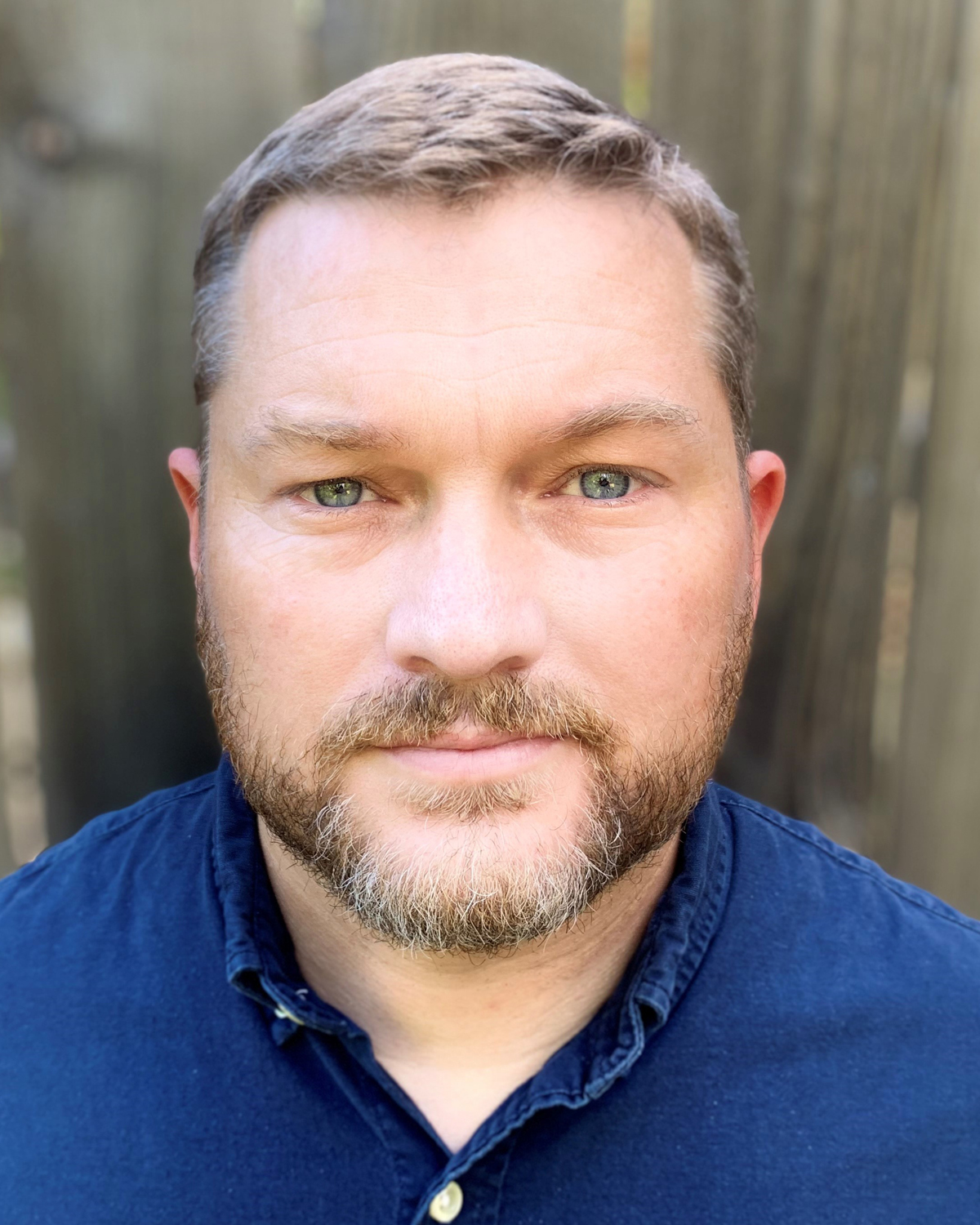
Reece Jones – image from Counterpoint – photo by Silvay Jones

Jones looks at the history of border patrol efforts prior to the establishment of BP in 1924. He tracks the changes in the characteristics of the BP over time, while noting some of the traits that have not changed at all. The Texas Rangers of the early 20th century figure large in this, complete with reports of Ranger atrocities and their considerable representation in the Border Patrol once it was set up. As Mexico outlawed slavery long before the USA, one of the things the Rangers did was intercept American slaves trying to flee the country. The mentality persisted into the BP force, along with those Rangers. Jones offers reminders that the charge of the patrol was often racist, reflecting national legislation that sought to exclude non-white immigrants, with particular focus on Mexicans and Chinese. Exceptions were made, of course, to accommodate Texan farmers during the seasons when labor was needed. A guest worker program was established to compensate for many American men being away during World War II.

Willard Kelly, the Border Patrol chief at the time, told a Presidential Commission in 1950 that “Service officers were instructed to defer apprehensions of Mexicans employed on Texas farms where to remove them would likely result in the loss of crops.” Instead, they would focus on the period after the harvest in order to send the workers back to Mexico. Similarly, during economic downturns, the Border Patrol would step up enforcement to ensure the state did not have to provide for the unemployed laborers. These roundups would often happen just before payday, so agribusinesses got the labor and the agents got their apprehension quotas, but the Mexican workers were not paid.

Outside the illuminating history of the force itself, much of what Jones offers here is a delineation of the laws that define where BP responsibilities and limitations lie, looking particularly closely at several Supreme Court decisions.

We have all heard of Roe v Wade and Brown v the Board of Ed, cases decided (some later undecided) by the Supreme Court (SCOTUS), that were major legal landmarks. Roe established a right of privacy that made abortion legal across the nation. Brown established that separate-but-equal was not a justification for continuing segregation in public schools. There are many such landmark cases. In Nobody is Protected, Reece Jones looks at the rulings that have allowed the Border Patrol to become a dangerous federal police force, subject to far fewer limitations than any other police force in the nation. These cases, while not household names like Roe and Brown, are of considerable importance for the civil rights of all of us, not just immigrants. In Almeida-Sanchez v. United States in 1973, SCOTUS allowed the BP to search a vehicle without any justification. In its 1975 decision in The United States v. Brignoni-Ponce, SCOTUS was ok with agents using racial profiling for selecting vehicles to stop. In 1976, SCOTUS held in The United States v. Martinez-Fuerte that BP could establish checkpoints in the interior of the USA and detain anyone to ask about their immigration status.

So you live nowhere near the border, right? Shouldn’t impact you. But hold on a second. By administrative fiat, BP was granted a one hundred mile border zone. And not just from the expected Mexican and Canadian borders, but from the edge of the land of the USA. So, this means that two thirds of the population of the United States falls within BP’s rights-light border zone. Fourth Amendment? What fourth amendment?

Jones reports on a crusader named Terry Bressi, an astronomer who has been stopped 574 times (as of the writing of the book) while driving to work at an interior checkpoint. He got fed up and started videotaping all his interactions with checkpoint law enforcement, for posting on line. They did not like that. They hated even more that he knew his rights and stood up to bullying by local cops that had been assigned to the checkpoint.

You will learn a lot here. About a policy of Prevention through Deterrence that channeled thousands of would be immigrants and asylum seekers away from normal points of entry, toward perilous crossings. And if they should not survive the effort? Sorry, not our problem. And they try to interfere with people who simply want to save the lives of those coming into our country at risk of their own lives.

In addition to failing to properly search for missing people in the border zone, the Border Patrol also actively disrupts efforts by humanitarian agencies. Beyond the destruction of water drops and aid stations, they often refuse to provide location information to other rescuers, deny access to interview people in Border Patrol custody who were with the missing person, and harass search teams in the border zone.


As No More Deaths volunteer Max Granger, explained, “The agency itself is causing the deaths and disappearances. Any response, even if it is a more robust response, is going to be inadequate. Their entire overarching prevention through deterrence policy paradigm requires death and suffering to work. They are not invested in saving people’s lives.

You will learn of agency mission creep, from border control to drug enforcement to testing for radiation in vehicles (which catches a lot of cancer patients, but so far no dirty bomb terrorists) to actions that are blatantly political in nature and patently illegal.

I expect you will not be shocked to learn that abuse by BP personnel goes largely unpunished. No action against the agent was taken in over 95% of cases of reported abuse. When the Inspector General for the agency tried to investigate the 25% of BP deaths-in-custody that were deemed suspicious, he was stopped (this last bit is from the This Is Hell interview, not the book).

The BP manifests a Wild West mentality that is not much changed from when it was staffed with slave hunters and disgruntled confederates. One thing that has changed is the increasing politicization of immigration by fear-mongering Republican demagogues, and the increased concern over national security brought about by 9/11. There are vastly more agents on the force today. In the 1970s, for example, there were only about fifteen hundred BP agents. Today, just in the BP wing of Customs and Border Patrol (CPB) there are almost twenty thousand. The Field Operations branch adds another twenty thousand, and the Air and Marine Operations branch tops that off with another eighteen hundred. Another twenty thou in ICE, and it gets even larger. Jones may not be entirely correct when he says that the Border Patrol, per se, is the largest police force in the USA, but when these four connected wings are considered as one, ok, yeah, it is.

Jones offers some do-able solutions in addition to proposing legislative changes that might rein in this growing giant, and increasing threat to the rights of all Americans. It is usual for books on policy to toss out solutions that have zero chance of seeing the light of day. So, sensibility here is most welcome.

I have two gripes with the book. There needed to be considerable attention paid to the SCOTUS decisions that have allowed the BP to expand its legal domain. But Jones dug a bit too deep at times, incorporating intel that slowed the overall narrative without adding a lot. In fact, a better title for this might have been The Gateway to Absolute Police Power: SCOTUS and the Border Patrol. Second is that there is no index. Maybe not a big deal if one is reading an EPUB and can search at will, but in a dead-trees-and-ink book, it is a decided flaw.

Bottom line is that Reece Jones had done us all a service in reporting on how a federal police agency has grown way larger than it needs to be, has accumulated more power than it requires to do its job, and has used that power to feed itself, to the detriment of the nation. He points out in the interview that border security has become an “industrial-complex” much like its military cousin, albeit on a smaller scale, with diverse public and private vested interests fighting to sustain and expand the agency, regardless of the value returned on investment. It is a dark portrait, but hopefully, by Jones shining some light on it, changes might be prompted that can rein in the beast before it devours what rights we have left.

Despite the transformation of the border in the public imagination, the people arriving there are largely the same as they always were. The majority are still migrant farm and factory workers from Mexico. In the past few years, they have been joined by entire families fleeing violence in Central America. These families with small children, who turn themselves in to the Border Patrol as soon as they step foot in the United States, in order to apply for asylum, pose no threat and deserve humane treatment. However, that is not what they have received. As journalist Garrett Graf memorably put it, “CBP went out and recruited Rambo, when it turned out the agency needed Mother Teresa.”

Review posted – 7/29/22

Publication date – 7/5/22

I received a hardcover of Nobody is Protected from Counterpoint in return for a fair review. Thanks, KQM.

This review has been cross-posted on GoodReads

=======================================EXTRA STUFF

Links to the Reece Jones’s personal and Twitter pages

Profile – from Counterpoint
REECE JONES is a Guggenheim Fellow. He is a professor and the chair of the Department of Geography and Environment at the University of Hawai’i. He is the author of three books, the award-winning Border Walls and Violent Borders, as well as White Borders. He is the editor in chief of the journal Geopolitics and he lives in Honolulu with his family.

Interview
—–This is Hell – Nobody is Protected / Reece Jones – audio – 52:10 – by Chuck Mertz – this is outstanding!

Items of Interest
—–Borderless – excerpt
—–The Intercept – 7/12/19 – BORDER PATROL CHIEF CARLA PROVOST WAS A MEMBER OF SECRET FACEBOOK GROUP by Ryan Deveaux
—–No More Deaths – an NGO doing humanitarian work at the border
—–Holding Border Patrol Accountable: Terry Bressi on Recording his 300+ Checkpoint interactions (probably over 600 by now)
—–My review of The Line Becomes a River, a wonderful memoir by a former BP agent

Leave a comment

Filed under American history, History, Non-fiction, Public policy