Category Archives: California

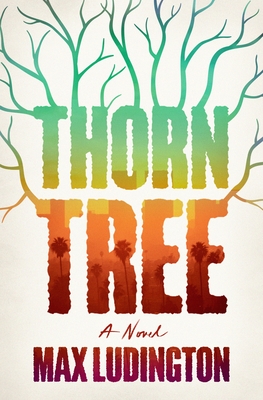
Thorn Tree by Max Ludington

<img src=”book cover” alt=”book cover” width=”187″ height=”300″ align=”left” hspace=”10″ vspace=”10″>

At the base level it’s fear. It’s all about fear. People ask, ‘What are you afraid of?’ and that is not an answerable question. Any time I name a source for my fear I feel it as a deflection. I mean, sure, I can get close. You know, as in: I’m afraid of people because someone I trusted fucked with me when I was a child. I was traumatized, yes, and the fear probably began there, I guess. But I don’t really know because it seems, now, somehow elemental. It embodies some ancient, sleeping doom, and the only escape is self-destruction. You know? Like, if I become my own doom I’ve taken that power away from anything else. It’s preemptive. At least there’s agency in it.”
She felt the laughter spill out of her in a rush. Its piercing volume was at odds with the moment and the release it brought. Leo looked at her dumbfounded.
“Get the fuck out of my head, man,” Celia said.

He had merely done what men had been doing since the primeval birth of jealousy. Just a spoon of love from my forty-five, save you from another man. Howlin’ Wolf was just singing about what thousands had wished they could do, and probably had done, before there were cops and laws and all the rest of the arbitrary bullshit. And it had felt good, hadn’t it?

Daniel is 68, living a quiet life in a Hollywood Hills guest house when a visitor repeatedly appears. Dean is six years old and clearly in need of companionship. He lives with his grandfather, Jack, on the larger house on the property. Jack is not always particularly attentive. And Mom, Celia, is a rising young actress who is often away on prolonged shoots. Daniel is happy for the company.

description
Max Ludington – image from Macmillan – shot by Jennifer Silverman

The novel braids the stories of Jack, Daniel and Celia, mostly Jack and Daniel. The story takes place in multiple times, today being 2017, and the backstory stepping up from 1968 to the seventies, to 1980, and 1988. Celia is not a part of the earlier events.

The sixties events cast a light on a turbulent time, touching on many of the aspects one might expect, young love, drug-dealing, acid trips, communes, San Francisco, wth a very dodgy cult among them. But despite the surface level, there is also consideration of the sort of existential, philosophical searching that was, for many, an important part of those times.

Young Daniel (1960s) makes a youthful mistake and suffers a grievous wrong, which follows him all his life. In the 1970s he finds solace in the desert, constructing a significant work of art, the Thorn Tree of the title. It gets him some notice, gives him a way to express what is inside him, and leads to some stability in his life.

Celia did an image search for the sculpture, and there it was, standing next to the modern art museum, taller than the building itself. It was huge, with thick, meandering branches and bristling snakelike twigs. Most of the branches, while not attempting verisimilitude, were formed with inherently natural shapes and gnarled twists, but here and there some were deliberately hewn into shapes that could never have occurred in nature: curving double on themselves and then back again to form tight willowy S-shapes, or turning straight downward at acute angles for a foot or two before continuing up and outward, as if infused genetically with lightning.

Jack is a very different sort. A predator, a sociopath or something like it, Jack wants what he wants and is not much concerned about who he damages to get it. He is routinely unkind, and worse, but he is also a seeker of truth, becoming connected with a cult and seriously mulling the writings on which the cult bases its outlook, even if the tenets of that group serve to bolster his own self-justification.

Daniel and Jack are linked through these years, the source of that link being one of the mysteries of the book. Jack is definitely a dark force. Daniel exists on a brighter side, despite having made some bad choices. He is a character who grows. But while Jack grows in a way, his widened view of reality is ultimately redirected to his narcissism. Not much is really done with Celia.

There is some lyrical writing which gives the story texture, depth to the two main characters, which makes it engaging, and a look at the times, both 60s and 70s, which gives it some substance. In addition it considers repercussions throughout one’s lives of actions taken in our youth.

Daniel stood for a moment at the threshold of the branches and looked up. The wind was made louder here in contact with the tree. The gravel path went around the south side, and he followed it to where it ended at an overlook. There was a plaque on a post, but he didn’t read it. Instead of standing at the overlook and staring out to sea, as the landscape designer had intended, he turned and went in under the branches, and immediately the world of the tree took over. He was surprised—he’d thought his memory of it was hopelessly colored by LSD and shock and time, that he had probably falsely mythologized every aspect of it and it would be just a place, with soil and roots and air but not the indwelling spirit he’d imbued it with in his mind. But it was as it had been—the wind quieting and the light clarifying, damping the sun into deep greenness—inhabited by a sense of protection and safety unchanged by the years of foot traffic and human attention.

There are many more of this sort. The voice is omniscient narrator, which presents way too many opportunities to tell rather than show. But I doubt this will bother most readers. Some characters come and go, seeming to be throw-aways. It is one of the things that make the book feel over-long. I kept hoping that some of these might be given a deeper look, with Jack getting less.

The alternating timelines, a fairly typical literary device, made sense to me. The Grateful Dead offer a link between now and then. There seemed some interest in other literary devices. For example, a boy appears to have a magical relationship with birds, but the image drops after partial usage.

Thorn Tree is an interesting read, offering some substance, interesting characters, and a strong core mystery. But for a book that is not overlong, at about four hundred pages, it felt like a much longer read because of the excess attention paid to Jack, and some tangential tales. The descriptive writing (I am a sucker for that) gives one a reason to push through, however prickly the passage.

Review posted – 11/01/24

Publication date – 4/15/24

I received an ARE of Thorn Tree from St. Martin’s Press in return for a fair review. Thanks, folks, and thanks to NetGalley for facilitating.

This review is cross-posted on Goodreads. Stop by and say Hi!

=======================================EXTRA STUFF

Links to Ludington’s personal, Goodreads, and Twitter pages

Profile – from Macmillan

MAX LUDINGTON’s first novel, Tiger in a Trance, was a New York Times Notable book, and his fiction has appeared in Tin House, Meridian, HOW Journal, Outerbridge, and On the Rocks: the KGB Bar Fiction Reader. He lives in Brooklyn, New York and teaches in the writing department at Pratt Institute.

Interview
—–The Palisades Newsletter – Max Ludington Reflects on His Second Novel, THORN TREE

Song
—–The Doors – Five To One
—–The Grateful Dead – The Very Best of the Grateful Dead

Leave a comment

Filed under California, Fiction, Historical Fiction, Literary Fiction, Reviews

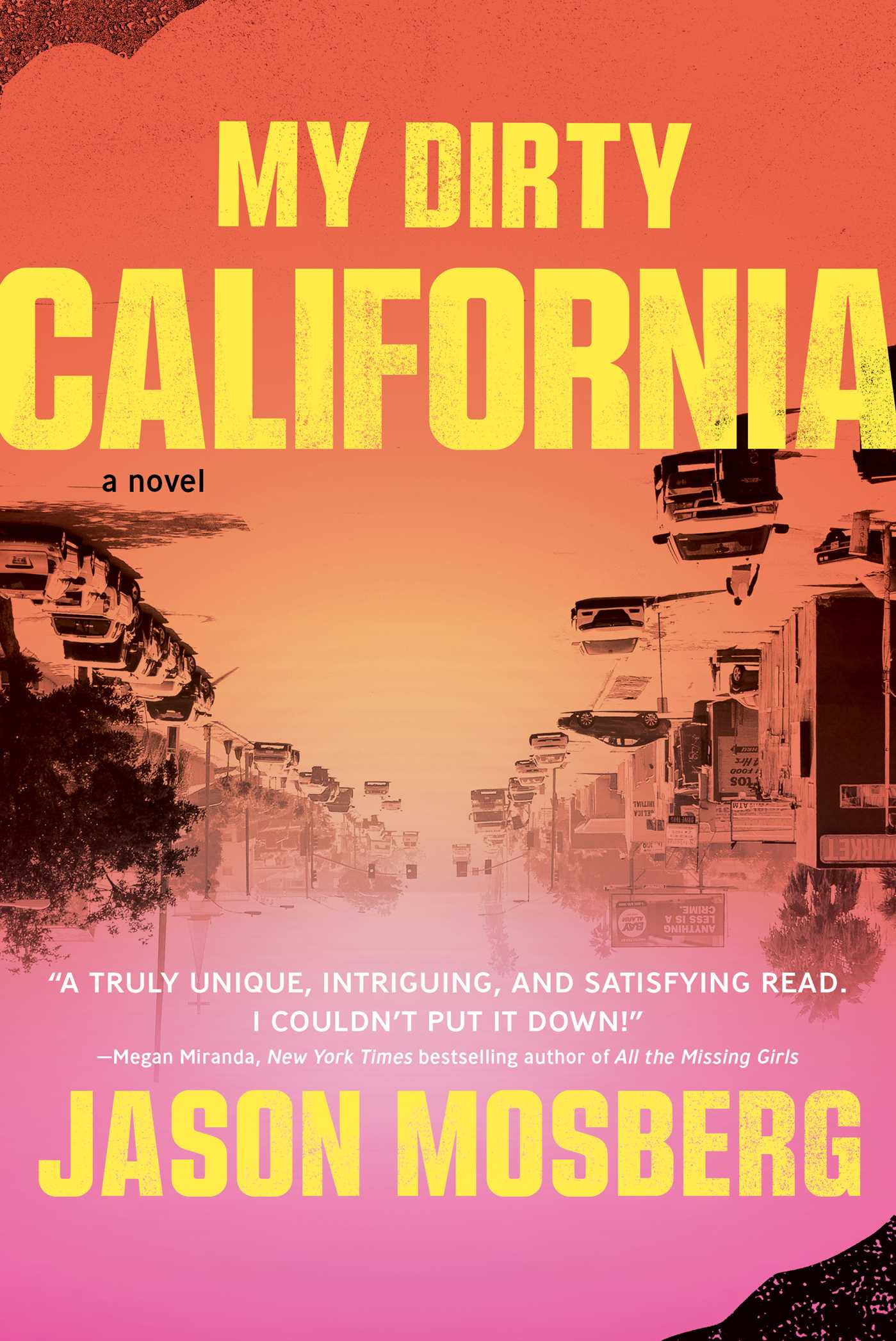
My Dirty California by Jason Mosberg

book cover

I love this state, I really do. Yet, at times, California feels like something hip someone in marketing tried to fit in a bottle to sell. California is the kind of place that can make a person who doesn’t care about flowers care about wildflowers. But there’s a dark history below California’s undeniably beautiful surface. A dark history with how its destiny manifested. Japanese internment. The LA riots. The California Alien Land Law of 1913. The Mexican-American War. Facebook. Sometimes I think California never left the gold rush era. Gold was merely substituted with other treasure to chase. Movies. Fame. Waves. Venture capital. Youth. Wine. Love. Spirituality. Technology. I guess I’m part of the everlasting, ever-changing rush.

When I first moved to LA, I realized no one here goes bowling. There’s too much to do. Marty Morrel did it all. He explored every inch of the city of LA, every crack and crevice of the state of California, and it’s all documented in hundreds of videos, thousands of pictures, and scores of essays and journal entries. Even if there hadn’t been any crimes, I think I would have wanted to make a podcast about Marty. But there were crimes. I thought murders would be the most disturbing part of this podcast, but that was before I learned about Pandora’s House. – from a fictional, unaired podcast

As you can see, My Dirty California opens with a fun, noir narration. The sensibility persists, although there is no troubled detective or PI asking uncomfortable questions, drinking too much, and getting beaten up. After that opening bit, Mosberg leaves the boundless beauty (the clean aspect?) of the state to other writers. This is today’s off-the-tourist-map California, violence, murder, drugs, trafficking, scams, surfer dudes, documentary film-making, outrageous, long-lasting parties, portraits of some Cali subcultures, a bit of mental illness, sleuthing, sex (only a little) and some serious other-worldly notions. There are LOLs to be had here, and even some tears. Jody, Pen, Tish and Renata are all searching for something, and Marty Morrel is at the center of it all.

description
Jason Mosberg – from his site

Unfortunately for Marty he is not around, as he becomes late early on. After a ten-year hiatus he returned to his home near Lancaster, PA, where his father and brother, Jody, live. Soon after, a hooded gunman killed him, for reasons unknown, and his father, for being in the wrong place at the wrong time. But before his demise, he had clued Jody in to a project he had been working on

“I’ve been making this thing. I don’t really know what it is yet. It’s called My Dirty California.”
“What are you talking about?”
“It’s a website. But it’s really just a place I’ve been doing a . . . project. I didn’t even know what it was at first. I wasn’t trying to define it. Eventually it kinda became a video log, about my adventures or whatever. A place to store all the pictures I take. And I kept up with it. Posting these videos online.”
“So it’s a blog.”
“No,” Marty says…“It’s more a place I can store all these photos and videos and essays till I figure out what to do with the project. Maybe at some point I’ll edit them into a documentary or a piece of long-form web video art.”

When Jody decides to heads out to LA to find out what Marty was up to, what got him killed, that collection is his starting point, along with letters and postcards his brother had sent home. Jody is not the only person availing of Marty’s trove.

Penelope Rhodes is a documentary film maker. She’d had some success with an earlier film about a UFO, which gets her several meetings about her new project. The driving force of her life is finding her father, who vanished when she was a kid. However, this is a search with a difference. Pen has a rather peculiar idea of what may have happened to him, involving Matrix-like simulations. Don’t ask. She is fixated on finding a particular place, Pandora’s House, where she believes it might be possible to move from this simulation (the one we are all living in) to another, where her father might be. This obsession has made getting by in this simulation rather a challenge. In her explorations, she comes across Marty’s vast materials, and follows the clues wherever they lead, or wherever she imagines they might lead.

Typhony Carter is young, married, with one son. She works cleaning houses, but cannot get enough work to keep her family afloat. Her husband, Mike, is a dedicated father. But when they go to a rally about cops killing yet another black teen, Mike gets into it with a counter-protester and winds up in jail. Times get even tougher, so when a scheme appears, that involves finding a hoard of art, supposedly secreted away by a recently deceased collector/dealer, she takes on the mission.

Renata, 19, travels from Mexico to the USA hoping for a better life, not, of course, through the legal channels. There is a contact in LA who can help her, a family friend. But things do not go to plan and Renata winds up trying to survive an abduction. Marty had been trying to find out what happened to her. Now there are others looking as well.

The POV alternates among Jody, Pen, Renata, and Typh. Jody is our driving force, where we spend the most time. There are 89 chapters in the book. Jody gets 31, then Pen, 24, Renata, 18, and Typh, 16. The chapters are short, so the four stories move along at a lively clip, clearly a product of a screenwriter’s appreciation of pacing

It also makes it possible to read this whenever you have small bits of available time, if that is something you like to do.

Since this is California, wheeled transportation figures large. Almost all the characters are assigned an auto-trait, like hair or eye color, or age. Jody, for example, drives a gray pickup. Pen drives a Prius. People are tracked, as well as defined, by the cars they drive. There is an Acura, an Accord, an old Lexus sedan, a Ford Focus, even a Tesla, and plenty more. I only started keeping track part way through. It is a small, fun element. There are appealing. surprising cameos by a range of wild creatures. These include a kangaroo, a wobbegong shark, and a jaguar. The notion of moving from one reality to another is given a look beyond Pen’s particular take on it.

Mosberg offers sly commentary on local sub-cultures. He looks a bit at how good intentions are used for dark ends. One thing to be aware of, different characters are on unparallell timelines, although those timelines do intersect. Characters in adjoining chapters could be doing what they do months apart. I found it a wee bit disconcerting at first, as actual dates are not provided, but one soon gets used to it.

Character engagementJody is righteous, on an understandable truth-seeking quest. His motivation makes sense and he is easy to pull for. Pen is also on a quest, although it remains to be seen for us whether there is enough reality basis there for us to go all in with her. Wanting to find your lost father may be a noble ambition, but she may just be nuts. Pandora’s House may be just another conspiracy theory (she nurtures loads of those) Makes it a bit tougher to go all in for her emotionally. Renata is an innocent soul, a pure victim, beset by dark forces, just wanting a better life. But is there enough more about her in here to make us care beyond wanting her to escape? Typh is a decent sort, although, in order to provide for her family, she is willing to go legally and morally rogue. So, depending on what works for ya, you may find one or more of these four worthy of following. I enjoyed the weaving together of the strands, as they all continue to connect through Marty’s storehouse of intel.

There is a considerable cast of supporting actors. Two thuggish sorts were a particular delight, a source of considerable merriment. There are occasional bits in which this character or that is presented in a bit more depth, but that is not what this book is about. It is about the story, and, of course, the state.

Bottom line for me was that I really loved this book. It kept me interested, offered enough characters to care about, gave a peek into places and groups I have never experienced, in short it kept me entertained for the duration. You may or may not ever find your way to Pandora’s House, but you should have no trouble finding your way to a copy of My Dirty California.

“Various rumors exist about Pandora’s House. Some people say the architect Zaha Hadid was paid eight figures to design a top secret underground property in Southern California but she had to sign an NDA, and no one knows where it is. Another rumor suggests the Church of Scientology began building a two-hundred-million-dollar bunker but abandoned the project halfway through and sold the property to a couple millennials whose parents had made billions in the dot-com era, and they use the house to throw elaborate weeklong parties. Some say it’s where the notorious lizard people live underground. Other people say the house was constructed by the US government as a safe house for the top one percent in the case of an apocalyptic event.”
“Has anyone actually seen the house?” asks Matt.
“Lots of people claim to have. It’s difficult to know for sure.

Review posted – September 23, 2022

Publication date – August 30, 2022

I received an DRC (digital review copy) of My Dirty California from Simon & Schuster in return for a fair review, and surrendering certain tapes that had come into my possession. Thanks, folks, and thanks to NetGalley for facilitating.

This review has been cross-posted on GoodReads

=======================================EXTRA STUFF

Links to Mosberg’s personal and Twitter pages

Profile
Jason Mosberg works as a screenwriter and TV creator in Los Angeles. He is the creator of the CBS All Access series One Dollar

Item of Interest from the author
—–Crime reads – Don’t Turn My Book Into a TV Serieson the fixation in Hollywood these days on Intellectual Property, or IP.

I first wrote My Dirty California as a pilot script and I gave it to a producer I knew—let’s call him Bob—a couple years ago. And at the time, Bob said he read the script and it wasn’t for him. A few days after the announcement of the sale of the book My Dirty California to Simon & Schuster, Bob called and said, “I heard you sold a book, what’s it about?” He was interested. And he had no recollection of the script I sent him because he probably didn’t bother to read it. That was just a script. But this? This is a book. This is IP.

2 Comments

Filed under California, Fiction, Mystery, Reviews, Thriller