Monthly Archives: August 2025

Killer on the Road / The Babysitter Lives by Stephen Graham Jones

book cover

“Next hundred and fifty miles are—they’re like the Bermuda Triangle for travelers, do you know that?” he says, finally bringing his pasty face around to Harper. “Thought it was the Snow Chi Minh Trail,” Harper says right back. It’s what her dad used to call 80 in the winter. “He’s talking about all the people who go missing, dear,” the woman says. “You’ve seen the posters in the windows at the gas station, haven’t you? Not just . . . walking people either. Drivers too.” “Just because people don’t call to check in doesn’t mean they’re missing,” Harper says. “Just means they don’t want to get found.”

“Thanks for the ride,” the hitcher says, climbing in from the sheeting rain. “What’s the old joke?” the driver says, clocking his mirror to ease back up to speed. “I ask you—no, you ask me if I’m a serial killer, and I say no, I’m not worried about that. The chances of two serial killers randomly being in the same car are through the roof, right?”

Somewhere in a U-Haul storage unit, there is a box or several with the remnant paperbacks of my wastrel youth. Among the volumes doing battle with mites of diverse sorts is a stack of Ace Doubles. From 1952 until 1973 Ace produced a line of paperback books that were printed in what is called the tête-bêche format.

“The ends of the two parts met in the middle, with a divider between them which functioned as the rear cover of both (the two parts were oriented upside-down with respect to each other in order to effect this)”– from Wiki

It was a bit of an oddity, but my need for science fiction was great, and I took my sustenance where I could find it. This format allowed for the publication of two pieces in a single volume. They could be novels, novellas, or abridged publications. (You can see a nice collection of covers from these on Flickr) There were other sorts, mysteries and westerns, for example, but I only cared about science fiction. As part of a celebration of Saga Press’s tenth anniversary, they decided to revive the format. What fun to see the form brought back to life! Stephen Graham Jones was asked to contribute some work. This volume is the result.
description
Image from Simon & Schuster

These SGJ works are not of immediately recent vintage. Both were written in a two-month period in 2018. The Babysitter Lives, was published as an audio book in 2022.

Release date was about when it would fit in the schedule, when is there gonna be a few months when I don’t have a book out to make these two books happen. It was that and we really wanted to do a flip book as part of Saga’s ten-year celebration. I had these two novels ready to go. Seemed like the perfect time. – from the Spotify interview

The two novels are quite different. Killer on the Road is a duel between a serial killer with a special gift and a final girl, as they drive along route 80 in Wyoming, marking a trail of carnage, exit by exit, stop by stop. (Jones has driven this road many a time and can attest to its many dangers, although maybe not the ones depicted here.) Pre cellphone, of course. Harper is 18 and leaving home after a blowup with her family, hitchhiking. She teams up with some friends who are tooling around in a National Park Service Vehicle. Not your usual road trip. Bucketmouth, a living urban legend, drives this road, eager to add to his personal roadkill total. He is also lonely in his particular form of awfulness and is quite loquacious. Harper becomes someone he likes to talk to, and therein lies the ongoing tension. It began as a novella, but Jones needed more space for Bucketmouth to do his thing. He also needed more space for Harper to grow, and voila. I am not sure why this sat around for seven years waiting to be published.

As with many in the genre, young people are done in with some regularity. Some older folks as well. The doings-in are very creative and awful. There is a non-stop pace to it, keeping the characters moving along route 80 and into and away from peril, a battle of wits and creativity, as Jones finds interesting ways for his monster to reduce the population, and challenge his final girl, the actual final solution to serial-killer-slasher-monsters, to make it stop before everyone succumbs.

description
Stephen Graham Jones – image from El Pais – courtesy of Jones

The Flip side book, The Babysitter Lives starts off with the usual creepy vibe. Teen on a sitter gig, wanting nothing more than to see the kiddies off to bed early enough to get some SAT test prep in. No boyfriend waiting for a chance to hook up. But a buddy of the bff sort will be by to make studying difficult. So, stalker? horror-mask guy in the closet with a machete? Not really, although there is very real mortal peril, and a veeeeerrrry creepy jack-in-the-box, that called to mind the Twilight Zone episode It’s a Good Life. This tale merges the haunted house story with the babysitter alone and in danger genre to create a truly nightmarish read.

The house has issues, including hosting the ghost of a psycho-killer, seemingly able to lock and unlock doors at whim, and is fitted with a chutes-and-ladders characteristic that makes it tough to figure out exactly where and when each transit point leads to, and if it will lead there again, as the house tries to eat her.

I confess, it was all too much for me. I did finish reading it, but was on the verge more than once, of throwing up my hands. While I think I am fairly able to keep track of details and actions in any book, I found that I was often perplexed about what had just happened, who was where, who was who, when we were, and what the rules were. While the lead was appealing, I just did not feel involved enough to make the effort to firm up my understanding of the logic and structure of the story by paying closer attention. Ultimately, while I appreciate genre-bending as much as the next reader, am perpetually impressed by the gift SGJ possesses for creating new images while referencing the classic ones, and enjoy a good scare, The Babysitter Lives did not do it for me. This does not lessen my appreciation of SGJ’s creative genius. I will be lining up to read his next new work as soon as it is announced.

I ran into that darkness, and am still running. – from the 5280 interview

Review posted – 08/29/25

Publication date – 07/15/25

I received an ARE of Killer on the Road – The Babysitter Lives from Saga in return for a fair review. Thanks, folks, and thanks to NetGalley for facilitating.

This review is cross-posted on Goodreads. Stop by and say Hi!

=======================================EXTRA STUFF

Links to Jones’s personal, Twitter and FB pages

Profile – from DemonTheory.net

Stephen Graham Jones is the NYT bestselling author of thirty-five or so novels and collections, and there’s some novellas and comic books in there as well. Stephen’s been an NEA recipient, has won the Texas Institute of Letters Award for Fiction, the Los Angeles Times Ray Bradbury Prize, the Mark Twain American Voice in Literature Award, the August Derleth British Fantasy Award for Best Horror Novel, the Independent Publishers Award for Multicultural Fiction, the Western Literature Association’s Distinguished Achievement Award, the American Library Association’s RUSA Award and Alex Award, the 2023 American Indian Festival of Words Writers Award, the Locus Award, four Bram Stoker Awards, three Shirley Jackson Awards, and six This is Horror Awards. Stephen’s also been inducted into the Texas Literary Hall of Fame, he’s been a finalist for the World Fantasy Award, and the Eisner Award, and he’s made Bloody Disgusting’s Top Ten Horror Novels. He’s the guy who wrote Mongrels, The Only Good Indians, My Heart is a Chainsaw, Earthdivers, I Was a Teenage Slasher, The Buffalo Hunter Hunter, and Killer on the Road. Stephen lives in Boulder, Colorado.

Interviews
—–5280 – Meet Colorado’s Most Prolific Killer, Horror Author Stephen Graham Jones by SPENCER CAMPBELL

After his first few novels, Jones realized his book event audience had begun treating him as an authority on Native American culture, just as his teachers had. “I did not like it even a little bit,” Jones says. He made a decision to swerve hard into slashers, zombies, and werewolves, “as a way of telling all those people, I dare you to try to find the Indian stuff in this,” Jones says. At the same time, Jones tried to publish works in the vein of David Foster Wallace. “What happened was about 2006, 2007, I feel like I became two writers,” Jones says. “One was on kind of a literary track, and one was doing the schlockiest genre stuff I could think of.”

—–Writers Digest – The WD Interview: Stephen Graham Jones by Moriah Richard
—–DemonTheory.net – PFDW # 181 – Interview with Stephen Graham Jones on Mapping the Interior
—–Pen.org – Crafting Nightmares: The Art of Horror with Stephen Graham Jones & Paul Tremblay – brief and not specific to this book.
—–Spotify – Episode 37: “A Fish story” with Stephen Graham Jones – by Matthew Jackson – audio – 1:06:57 – from 3:45

My reviews of (sadly, only six) previous books by Jones
—–2025 – The Buffalo Hunter Hunterin Coots Reviews
—–2024 – The Angel of Indian Lake -The Indian Lake Trilogy #3 in Coots Reviews
—–2023 – Don’t Fear the Reaper -The Indian Lake Trilogy #2in Coots Reviews
—–2021 – My Heart is a Chainsaw -The Indian Lake Trilogy #1in Coot’s Reviews
—–2020 – The Only Good Indians
—–2016 – Mongrels

Leave a comment

Filed under Fiction, Horror

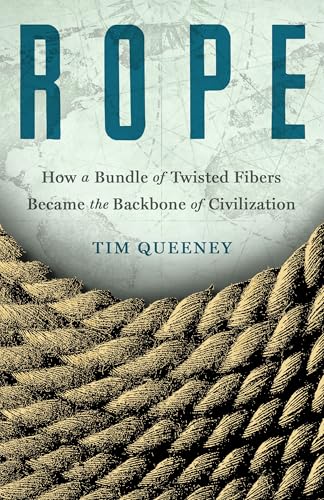
Rope by Tim Queeney

book cover

While many short lengths of rope helped countless individuals through the centuries, rope also was a tool of human innovation writ large through collective action. Just as many small strands come together to form a rope, so, too, did many people gather to perform the biggest of tasks. The exemplar of this from the ancient world is the Egyptian pyramids. While we don’t know exactly how these human-built mountains were assembled, we can be sure that rope was an essential tool in their construction. In this way rope stands as both a tool and a symbol of humans working together to achieve the greatest things.

The concept of rope remains timeless; what changed over millennia was the application of the human mind toward making ever better rope and in devising ways to use it.

Neanderthals used rope 50,000 years ago. Did Homo Erectus, Habilis, Australopithecus, or any of the sundry other homo genus cousins get there first? Dunno. Maybe, but no thread of evidence for any rope-making before Neanderthal has been found. Still, it was a helluva long time ago, and ropy material tends not to survive forever, unlike stone tools, so…maybe. Makes rope rank with fire and stone tools, (although, rope was a form of tool-making, it probably came after stone tools) as basic elements of civilization. (Oh, and let’s not forget Duct Tape)

description
Tim Queeney – image from his site – shot by Molly Haley

The breadth of this book reminds me of the opening scene of
2001:A Space Odyssey, taking us at it does from the dawn of tool-using man (or pre-man) to the futuristic apex of a 21st century space station. Tim Queeney takes us on a past-to-future journey of similar timescale, albeit without the perplexing Star Child ending.

There are books that cover a seemingly narrow subject in vast depth. I have read several of this sort, stovepipe books I suppose one might call them. (Banana, A Perfect Red, The Age of Deer, Eels, Just My Type, or many others) It is usually the case that the information revealed therein broadens our appreciation for the subject matter at hand, generating a lot of reactions like, “I never knew that,” or “wait, what?” Rope could be considered a stovepipe book in that it is focused on a seemingly single thing. Yet, once one dives in, it soon becomes apparent that the subject matter is massively broad, touching on a vast array of human history and enterprise. It seems less a narrow stovepipe look than a Poppins-esque vista of the rooftops of London. For a book of such modest length, it offers a broad, deep, and surprising look at one of the seminal tools of human existence.

description
Image from Disney

For Tim Queeney, this book is an homage to his nautical father, the man who taught him everything he knows about sailing, making manifest the emotional and experiential ties that bind father to son. As one might imagine there is a vast amount here related to seamanship through the ages. And much wisdom to be had for aspiring sailors and fishermen. He notes knots in abundance. Sadly, in the AREs that I read, paper and Kindle, there were no illustrations of these or the other devices and tools that Queeney describes. I cannot say if this is also the case in the hardcover release. I added links to a couple of old seamanship books in EXTRA STUFF if you find yourself wanting some instruction on how to twist and tie (or untie) this or that obscure tangle of rope. And there are sundry images available on Queeney’s site, although not on knot tying, at least not that I found.

description
The Lifeline by Winslow Homer – from the Philadelphia Museum of Art

In a slightly related vein, it was fun to learn of the need for rope skills in the world of entertainment. Maneuvering sets on stage take a set of skills that any sailor would easily recognize, and that any stage pro would need to have mastered.

My personal experience with rope is minimal. I recall as a stripling hanging out with friends in the Morris Heights neighborhood in Da Bronx, a place that offered the presence of sundry empty lots. There was one in particular, a large one that featured a singularly tall tree. I have no idea which foolhardy child undertook the task, but someone had climbed up that tree and slung across a sturdy branch a rope that ended in an engorged knot about fifty feet below. (Well, of course, someone with a strong arm might have just tossed it up and over from the ground, but where’s the fun in imagining that?) The Bronx is a hilly place, so the improvised swing began on the uphill side and swung out over the downhill side. Losing one’s grip at top could result in a slight bruise and a dose of embarrassment. Letting slip on the downhill side, particularly if the drop was unintended, could result in weeks in a cast. I swung out on this very thick knot of rope a time or three, but, being of a risk-averse sort, considered that sufficient. My other related, rope-involved escapade occurred as a much older idiot. I will not repeat it here, but direct you to my review of Rivers of Power for the mortifying details. Otherwise, no further rope-related personal experiences of note pop to mind, so you are spared that.

description
Section of cable showing strands in the cables supporting the Brooklyn Bridge – image from Catskill Archive

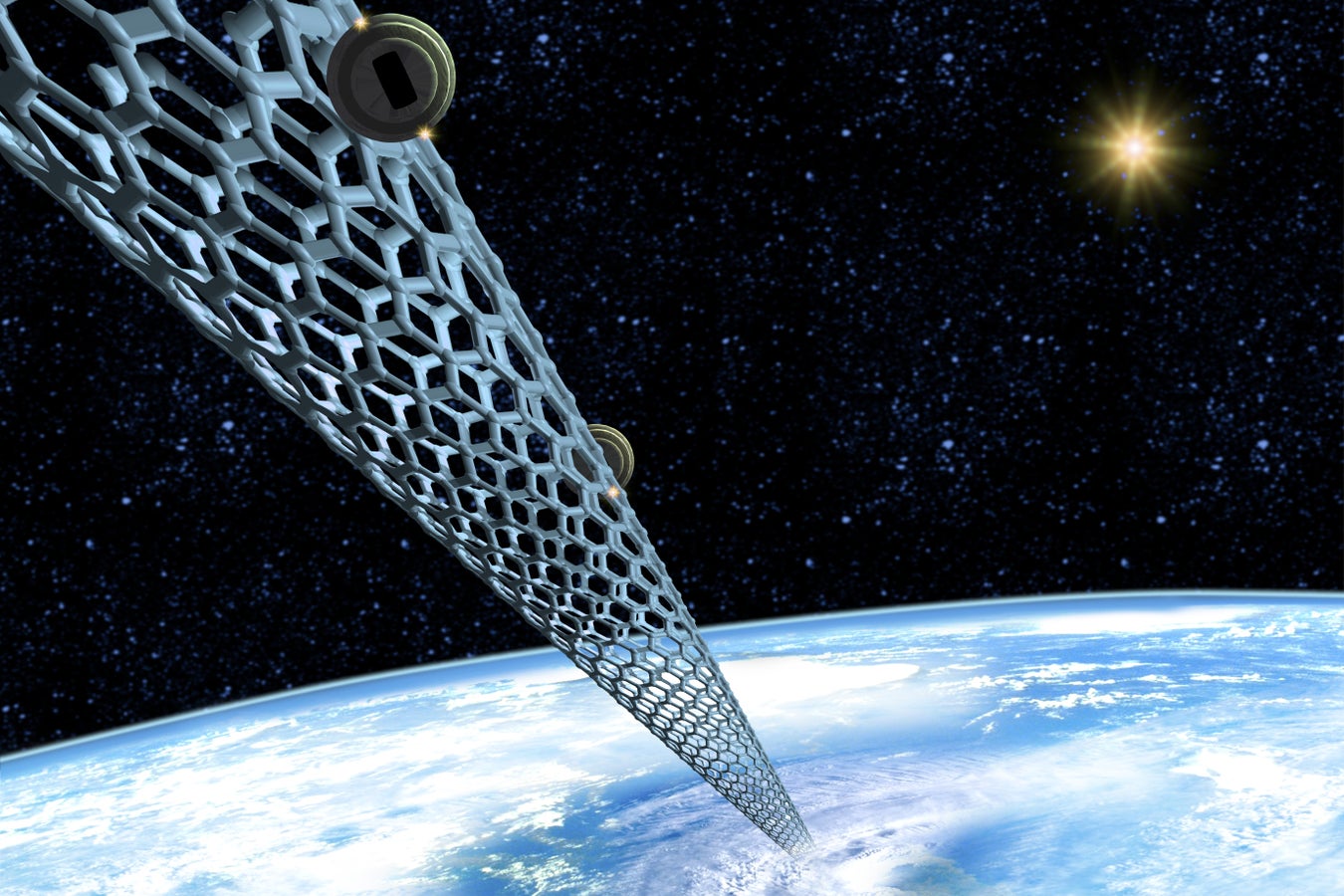
There is also a lot having to do with things quite far removed from the briny deep and the boards. Major world constructions of diverse sorts, pyramids, and ancient megaliths, for example. Surprisingly, in Inkan (Queeney’s spelling) traditions, rope, khipu, was used, through an intricate language of knots, to tell stories. One could say that these ropes in particular were used to create yarns. Some might, but not me. You will be surprised to learn who perfected the art of the lasso. And then there is some history on notions of knots in the realm of matrimony. As with so many things, one person’s tool is another person’s weapon. He racks his brain to report on rope as a tool of restraint, pain infliction, and termination. Subjects cover land transportation, the manufacture of rope, construction, communication (sub-Atlantic cables) rope tricks, climbing, space exploration and plenty more. He also provides considerable attention to materials that were used in the past and the materials that make up much of the rope-assigned tasks of our age, from the invention of rayon and nylon to the use of metal like steel, to the superstrength fibers of today, like Kevlar.

description
A drawing of how the steep ramp, poles and ropes could have helped the workers lift the huge blocks of stone used to construct the pyramids. – image from Kids News

Queeney has a very engaging style. Only rarely will you find it necessary to struggle past some technical jargon. His enthusiasm is infectious. No mask needed. He will throw a lariat around your attention and slowly pull you in.

description
A space elevator made of carbon nanotubes stretches from Earth to space in this artist’s illustration. – image from Scientific American – source: Victor Habbick Visions/Science Source

Whenever anyone proclaims “no strings attached,” you should know better. Rope makes it clear that there are, and for at least 50,000 years always have been, strings attached, and that without them, we might still be traversing waterways powered by oars and muscle, communicating face to face, and satisfying ourselves with building structures of exceedingly modest dimensions. The discovery and implementation of rope technology has allowed us, as in the Indian Rope Trick, to climb into places we had never known before. So does this remarkable book.

Review posted – 08/15/25

Publication date – 08/12/25

I received digital and paper AREs of Rope from St. Martin’s in return for a fair review. Thanks, folks, and thanks to NetGalley for facilitating. And, uh, I held up my end, so could you untie me, please?

This review is cross-posted on Goodreads. Stop by and say Hi!

=======================================EXTRA STUFF

Links to Queeney’s personal, FB, Instagram, Twitter and Blue Sky pages

Profile – from his site

In addition to writing books, I was the longtime editor of and columnist for Ocean Navigator, a magazine for serious offshore sailors. At ON I also taught celestial, coastal and radar navigation as an instructor for the Ocean Navigator School of Seamanship, both in hotel meeting rooms ashore and on tall ships at sea. I love to sail, hike, get lost in museums and spend timeless hours drawing and painting. I’m a dad to three sons and a rescue dog. Am a NE Patriots and Arsenal fan and tend to reference a Stanley Kubrick film every two minutes or so. I’m also that annoying night sky watcher who is always pointing out the constellation Cassiopeia — because its forms a big W, which reminds me of my wonderful wife, Wendy.
I live in Maine and can hear the fog horns of three lighthouses when the fog rolls in.

Interviews
—–History Unplugged – Rope Equals Fire as Humanity’s Most Important Invention: It Allowed Hunting Mammoths and Building Pyramids – with Scott Rank – audio – 58:27
—–Rope Equals Fire as Humanity’s Most Important Invention: It Allowed Hunting Mammoths and Building Pyramids – text extract of the above podcast
—–Maine Calling – Rope by Jennifer Rooks, Jonathan P. Smith – audio – 50:36

Items of Interest from the author
—–The History Reader – Rope’s Role in Colonial America’s Tarring and Feathering
—–Queeney’s blog
—– Dragging a Ship Uphill? Gonna Need Some Rope – On Werner Herzog making Fitzcarraldo
—– Ben Franklin Gets Juiced With a Little Hemp
—–Rope Ends: Moving Massive Stone Blocks the Natural Way

Items of Interest
—– The Kedge Anchor, or, Young Sailor’s Assistant – an 1847 source of knowledge maritime, including instructions for tying dozens of sorts of knots
—–The Ashley Book of Knots – 1944 – thousands of knots, with illustrations
—–Earth-Logs – Earliest evidence for rope making: a sophisticated tool by Steve Drury
—–Arcanth – Making Rope – Medieval to Edwardian technique – video – 2:49 – this is amazing!
—–Wiki – the Indian Rope Trick

2 Comments

Filed under History, Non-fiction, World History